
Online Features
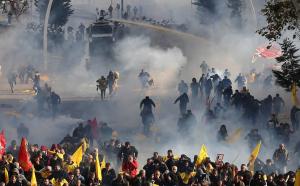
On March 11, 2016, a Turkish prosecutor dropped a complaint against officials for failing to take adequate security measures both before and after the bombing of a peace rally in Ankara that killed more than 100 on October 10, 2015. Two days later, suicide bombers struck in Turkey’s capital city for the third time in five months. A car bomb was exploded in the downtown neighborhood of Kızılay, killing 36 and injuring many more. As with other recent attacks, the government of the Justice and Development Party (AKP) quickly suggested the Kurdistan Workers Party (PKK) was responsible for the attack.
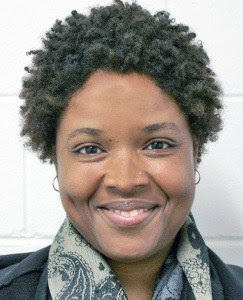
TNS: First question, why were you chosen to be Mimi Soltysik’s running mate?
Mimi reached out to me about the campaign following my run for County Sheriff in Milwaukee. He said that he’d followed my campaign and really liked the fact that we took a very grassroots, people-centered approach. He felt that I would make a good running mate based on work I was involved in in Milwaukee, and the fact that I ran for sheriff unapologetically as a socialist.

This is the third and last of three book reviews that look at what Mexican intellectuals on the left have written in an attempt to understand Ayotzinapa and what it symbolizes and signifies for their country and its future. The first review appeared here and the second here.
Adolfo Gilly and Rhina Roux. El tiempo del despojo: Siete ensayos sobre un cambio de época. Mexico: Editoria Ithaca, 2015. 191pp. Bibliography. Available only in Spanish.
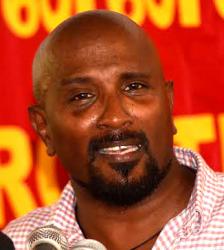 The case of Kumar Gunaratnam (KG) is a typical example of justice turning into its opposite. The Kegalle magistrate gave his verdict on March 31 imposing one year imprisonment and Rs. 50,000 fine on Kumar Gunaratnam for violation of immigration law, i.e., overstaying visa.
It appears to be a simple technical issue. Mr. Noel Mudalige, an Australian citizen, was granted visitor visa to enter Sri Lanka. After a month, he refused to go back and expressed his willingness to stay in Sri Lanka even requesting dual visa status as a first step. He was arrested and the police filed a case against him for defying immigration law of Sri Lanka. Hence, one may argue that the verdict given by the Magistrate is absolutely valid and legal. However, the real story behind this case has revealed time and again the true nature of the Sri Lankan democracy in its neoliberal phase.

“We’re going all the way to the convention,” said Larry Cohen, former President of the Communications Workers of America and Senior Advisor to the Sanders campaign. “We’re working to see that Sanders wins the Democratic Party nomination, but that’s not all we’re doing. We’re going beyond to build a democracy movement in this country.”
Cohen was speaking, just before the opening of the Labor Notes Conference, to some 125 union activists and local leaders who gathered for four hours at the Hilton Hotel in Chicago on Friday, April 1 at the Labor for Bernie and Beyond meeting. They met to discuss the next stages and of the Sanders campaign as well as the future prospects for the movement of union activists who support him. The meeting was convened by Cohen and 23 other national or local union offices.

The Chicago Teachers Union (CTU) strike April 1 is not primarily about increased school funding, standardized testing, pensions for teachers, or even just corporate taxation, though the union is fighting for all of these. The strike is about democracy, especially who owns our society’s resources and how decisions about those resources are made.
A new Jacobin piece by Micah Uetricht and Sarah Chambers is a must-read to understand what's at stake in the April 1 walkout of Chicago teachers. (My own thoughts about the political implications of the strike are in a piece in press.) But for now I want to explain to teachers who may be considering crossing the union's picket lines tomorrow why that would be a very big mistake for them personally.
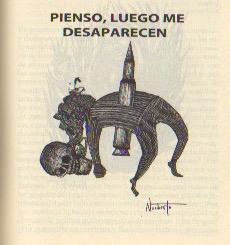
This is the second of three book reviews that will look at what Mexican intellectuals on the left have written in an attempt to understand Ayotzinapa and what it symbolizes and signifies for their country and its future. The first review appeared here. – DL
Manuel Aguilar Mora and Claudio Albertani, eds., La noche de Iguala y el despertar de México. Mexico: Juan Pablos Editor, 2015. Pp. 382. Photographs. Illustrations. Maps. Tables. (Available only in Spanish at this time.)
The Night of Iguala and the Awakening of Mexico (as we translate the title of this book), like Sergio Aguayo’s From Tlatelolco to Ayotzinapa, deals with the horrifying killing of six people and forced disappearance of 43 students of the Ayotzinapa Rural Teachers College in the town of Iguala, Guerrero on September 26, 2014.

Interview by Jim Brash of North Star Editorial Board, February 26, 2016
Questions posed to Rachel Jackson, State Facilitator, Green Party Oklahoma Cooperative Council about their endorsement of Bernie Sanders
1. Is the endorsement of Bernie a tactical move?
Our endorsement of Bernie Sanders in the Oklahoma Democratic Primary accomplishes two goals: 1.) to find a way to participate electorally given our state’s repressive ballot access laws, and 2.) to build a base to strengthen our efforts to reform those ballot access laws.
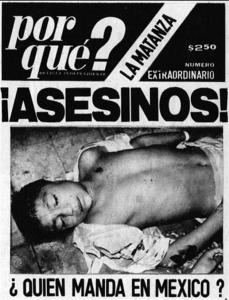
This is the first of three book reviews that will look at what Mexican intellectuals on the left have written in an attempt to understand Ayotzinapa and what it symbolizes and signifies for their country and its future. – DL
Sergio Aguayo. De Tlatelolco a Ayotzinapa: Las violencias del Estado. Editorial Ink, 2015. (This book in Spanish is available in several formats including Kindle, which is how the reviewer read it.)
The horrifying killing of six people and forced disappearance of 43 students of the Ayotzinapa Rural Teachers College in the town of Iguala, Guerrero on September 26, 2014 had a dramatic impact on Mexico.
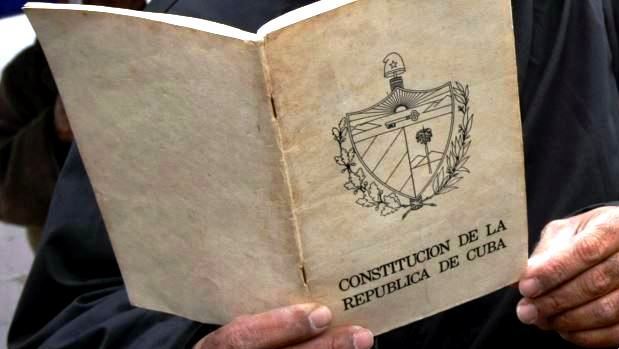
The one-party state is a very controversial question that few of the left-wing critics of the Cuban regime have been willing to address. What follows is an attempt to explore, from the left, some of the issues around this topic.
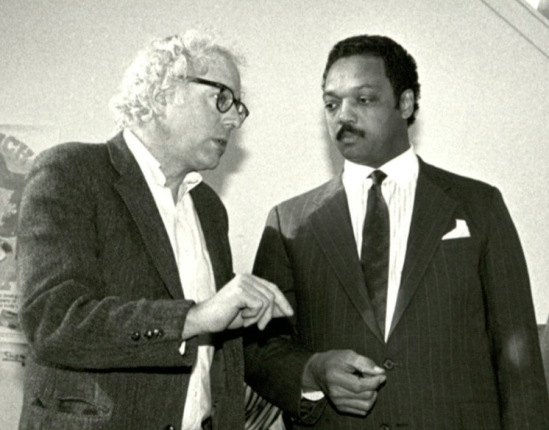
I must admit that I’m somewhat reluctant to write a response to my friend Barry Finger’s response to my article in the Winter 2016 issue of New Politics on Bernie Sanders while the Democratic presidential candidate race between Hillary Clinton and Sanders is still going on. Nevertheless, I will do so.
First, it should now be clear, in the wake of Sanders’ victories in yesterday’s Democratic caucuses, that Barry’s assertion that “the Sanders challenge within the Democratic Party has come to its natural conclusion” is not justified. Let’s not make grand pronouncements of this sort until we’re far closer to the Democratic National Convention.
- « Newer Posts
- 1
- …
- 148
- 149
- 150
- 151
- 152
- 153
- 154
- …
- 227
- Older Posts »
