Category: Social protests
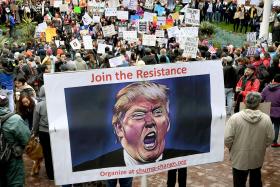
Protests against Trump continue even as new ones are being planned for the future, from the recent Not-My-President Day and Day without an Immigrant protests, to the International Women's Strike planned for March 8.
Thousands of protestors in New York, Chicago, Atlanta, Los Angeles, and some two dozen other cities marched on Monday, Feb. 20 in opposition to President Donald Trump and his policies on what is usually called “President’s Day” but on this occasion was marked by many as Not-My-President Day. On what was in the Midwest and the East a beautiful spring-like day—thanks to climate change—protestors marched to protest Trump’s environmental and immigration policies and just about everything else that the new president stands for.

There is good news in the Boston Globe today for the managers, development directors, visionaries, political hacks and propaganda flacks who run “the Progressive Movement.” More easy-to-earn and easy-to-hide soft money, millions of dollars, will be flowing to them from super rich Democrats and business corporations. It will come clean, pressed and laundered through Organizing for Action, the latest incarnation of the Obama Money Machine which has recently morphed into a “nonpartisan non-profit corporation” that will ‘‘strengthen the progressive movement and train our next generation of leaders.’’

It’s been two weeks since Donald Trump’s inauguration sparked some of the largest rallies in American history. Each week since has also seen demonstrations, culminating in those that broke out at airports across the country at the end of January to protest the president’s new Muslim ban barring travel from seven predominantly Muslim countries. Mass protests are in large measure a bellwether of popular sentiment. They carry an implicit threat that politicians who defy the will of the people will be voted out, but that threat must be channeled strategically, or it will dissipate.
One hundred years ago the most democratic revolution in history took place. Led by the Bolshevik Party, the Russian working class, allied with the peasantry and organized into mass democratic institutions—the soviets—took power.

Donald Trump takes office on January 20, setting up the most right-wing, racist government in modern American history, but he will not go unchallenged. That challenge is already in motion.
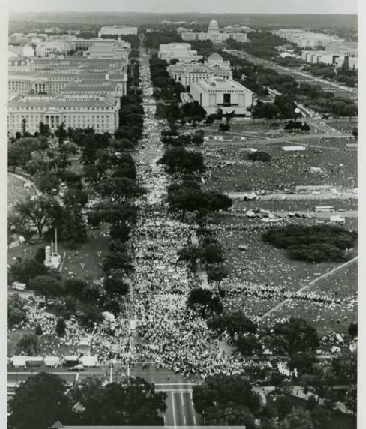 The Women’s March was glorious. Yes, I disagree with much said in the speeches, but that wasn’t an issue because like the vast majority of people who participated, I didn’t go to hear celebrities or politicians talk. I participated to show my rage and frustration at Donald Trump and the policies he and the GOP are preparing to impose on us. Women like me, disgusted, dismayed, enraged at Donald Trump’s misogyny, which the GOP has endorsed, flooded to this demonstration.
We brought family, friends, supporters, male and female, protesting the human rights and climate deniers whom Trump has brought with him into office. There was some diversity but this was primarily a march of young White women who carried signs about their bodies, “Pussy power” being the most prominent at the New York march. “Pussy power” strikes me as especially apt. Like women who fight patriarchy, it’s naughty. It evokes the strength in numbers. Most of all, the march birthed a new social movement which will owe its life to pussy.
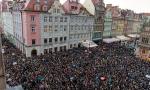
In Poland the law on abortion is one of the most restrictive in the European Union, sex education does not exist, and contraception is both expensive and hard to obtain because a medical prescription is often needed.
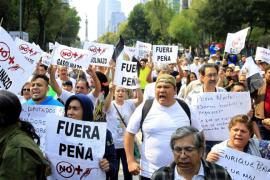
Tens of thousands in every state in Mexico have for the last week joined protests against President Enrique Peña Nieto’s government after it raised prices on gasoline by between 14 and 20 percent and electric rates by 4.5 percent.
The protests so far are not as well organized, as disciplined, or as large as the recent teachers’ strikes over the education reform law or the demonstrations in protest of the forced disappearance of 43 Ayotzinapa Teachers College students, but the demonstrations against the gasolinazo are national in scope and involve broader sectors of society.
Victory….for now
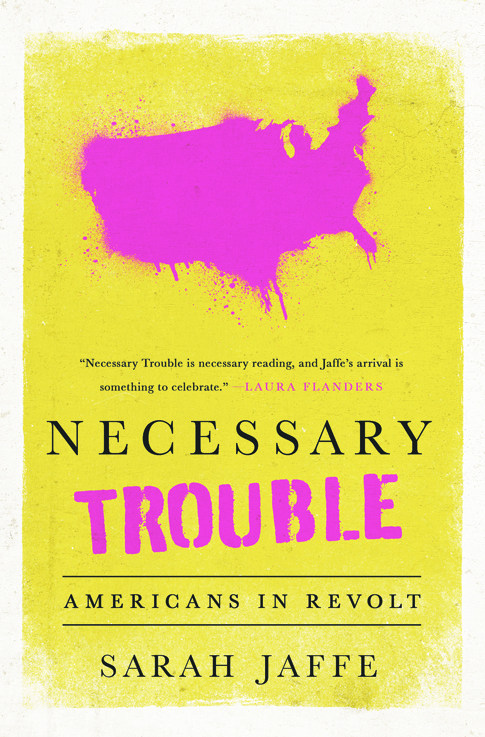
Sarah Jaffe. Necessary Trouble: Americans in Revolt. New York: Nation Books, 2016. 352pp. $26.99
One might be tempted to read Sarah Jaffe’s book with a kind of archaeological nostalgia, to look upon it as a remnant of a bygone-era when the left had confidence in the gains it was making, before a meteor named Trump struck earth.
How Trump Won: Seizing the Anti-Establishment Ground through Racial and Economic Nationalism
On November 8, voters in the United States narrowly elected an openly racist, misogynist and nativist candidate for president. Donald Trump succeeded in defining himself as an anti-establishment candidate who will end dynastic rule in Washington, D.C., by elites who care little for “forgotten Americans.”

1. The election of Donald Trump as president of the United States is a shocking and dangerous turn of events–not only for the U.S., but for the entire world. It is a decisive shift, representing the latest failure of center-right and center-left parties in the advanced capitalist countries in the wake of the Great Recession, opening the way for the triumph of a candidate who used right-wing populism to stoke racism, xenophobia and reaction.

The Black Workers for Justice support the struggles of the indigenous peoples to defend their land and treaty rights and their struggles for environmental justice. And in this moment we are in full support of the resistance of the Standing Rock Sioux to the construction of the Dakota Access Pipeline (DAPL). We call on all people to support them politically and materially.
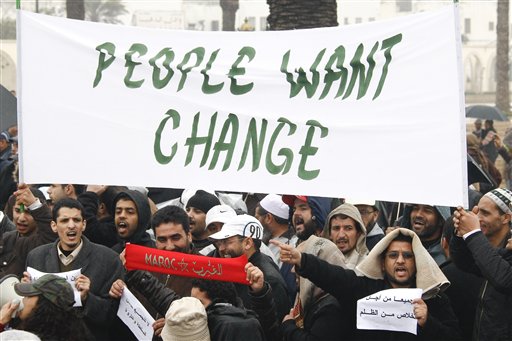 On Wednesday, Oct. 26, the well-known Moroccan historian and human rights activist Maâti Monjib and five of his colleagues were hauled into the High Court at Rabat to answer charges of “attacks on national security” and “receiving foreign funds.” They are facing up to five years in prison for their activities as investigative journalists, human rights advocates and members of the “February 20th Movement” – the Moroccan version of “Arab Spring” of 2011.
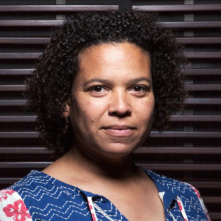
Rachel Herzing lives and works in Oakland, CA, where she fights the violence of policing and imprisonment. She is a co-founder of Critical Resistance, a national grassroots organization dedicated to abolishing the prison industrial complex and the Co-Director of the StoryTelling & Organizing Project, a community resource sharing stories of interventions to interpersonal harm that do not rely on policing, imprisonment, or traditional social services. The following interview was conducted by the True Leap Publishing Collective.
Dear Readers,
On September 18, I wrote, and the New Politics website of which I am an editor, published an article titled “Mexico’s Teachers Movement; From Class War to Death Squads” that argued that three recent killing appeared to be the result of death squads targeting teachers. While the fact that the three killings took place is not in question, well informed readers in Mexico who have been involved in the teachers movement or in solidarity with it suggest these killings do not seem to be the result of death squads.
These readers argue that while the teacher who was killed may have been targeted for union activity, the other two killings may have had other motives having nothing to do with the union. These readers suggest that while some teachers have been murdered because of their involvement in the teachers movement, many killings that have taken place in Oaxaca, Chiapas, and in other states may have political motives, may be related to the drug cartel violence, or to other violence in the region. I have come to the conclusion that my readers are right and that this article should be corrected: death squads do not appear to be a trend at this time.
I welcome and appreciate your comments and criticisms on the original article, on this correction and the issues raised.
In solidarity, Dan La Botz
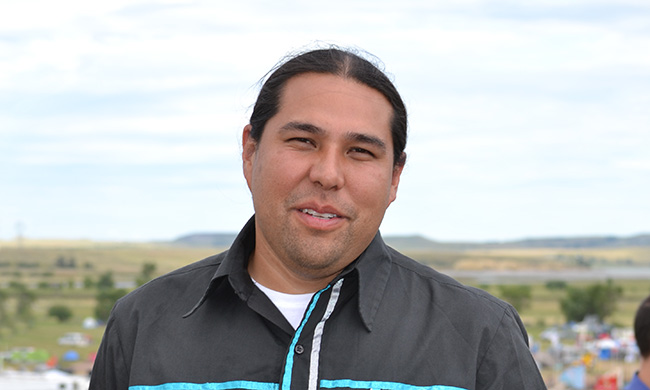
This year’s massive buildup of resistance to the Dakota Access pipeline follows closely on the heels of the victory over Keystone XL pipeline, something often credited to feverish organizing by 350.org. But years before 350’s involvement, there was the Indigenous Environmental Network, which launched that movement and its “Keep It In the Ground” messaging. This time, with nearly 200 tribes unified behind the Standing Rock tribe’s opposition to the pipeline and more than 3,000 people gathered at the Standing Rock Sioux reservation, Native Americans are clearly leading the movement.
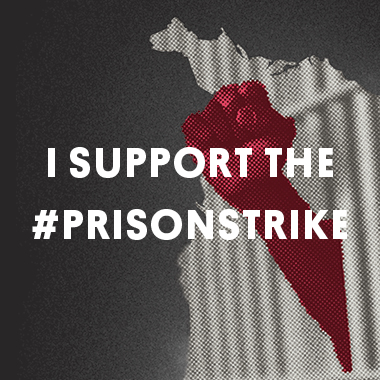
Labor for Black Lives – a multi-ethnic network of workers in solidarity with the movement for Black lives, against capitalist exploitation and racist injustice and all oppression – fully endorses the Prison Strike, to begin on September 9, 2016, in which prisoners across the United States are organizing to end prison slavery and mass incarceration. We join our voices and forces with those, including 800+ prisoner members of the IWW's Incarcerated Workers Organizing Committee (IWOC), who say THIS STOPS TODAY.
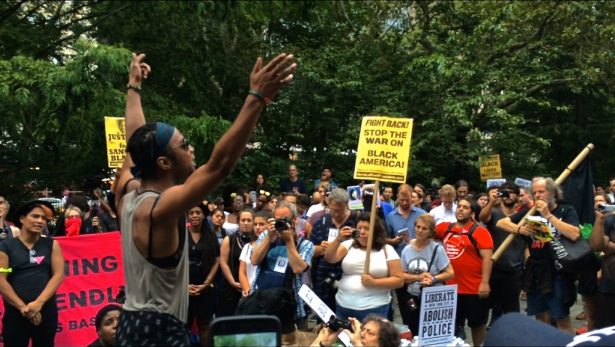
Activists in New York City seeking to defund the police have successfully occupied City Hall Park for a week and seen one of their demands met with the resignation of Commissioner Bill Bratton. While blocking roads and highways has been the tactic of choice for Black Lives Matter since it gained national attention two years ago, the recent deaths of Alton Sterling and Philando Castile have sparked the resurgence of a tactic many thought had been left behind in Zuccotti Park.

The uprising and fighting in Syria have gone on for over five years and your platform doesn’t say a word about it. Delegates to this weekend’s convention, how about adding these five sentences?
- « Newer Posts
- 1
- …
- 12
- 13
- 14
- 15
- 16
- 17
- 18
- …
- 20
- Older Posts »