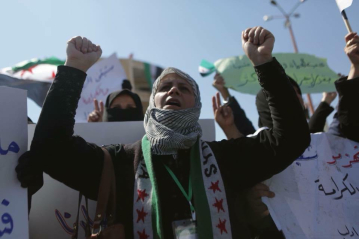

Category: Social protests
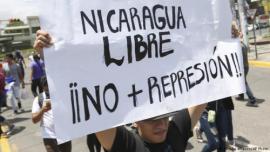 The following statement is from the Articulación de Movimientos Sociales, the coalition of social movements in Nicaragua.
Alert and Request for International Condemnation: Nicaraguan Government Raids the offices of the principal human rights, non-governmental and media organizations.
URGENT COMUNIQUE December 14, 2018. 2PM (CST) Alert and Request for International Condemnation: Nicaraguan Government Raids the offices of the principal human rights, non-governmental and media organizations.
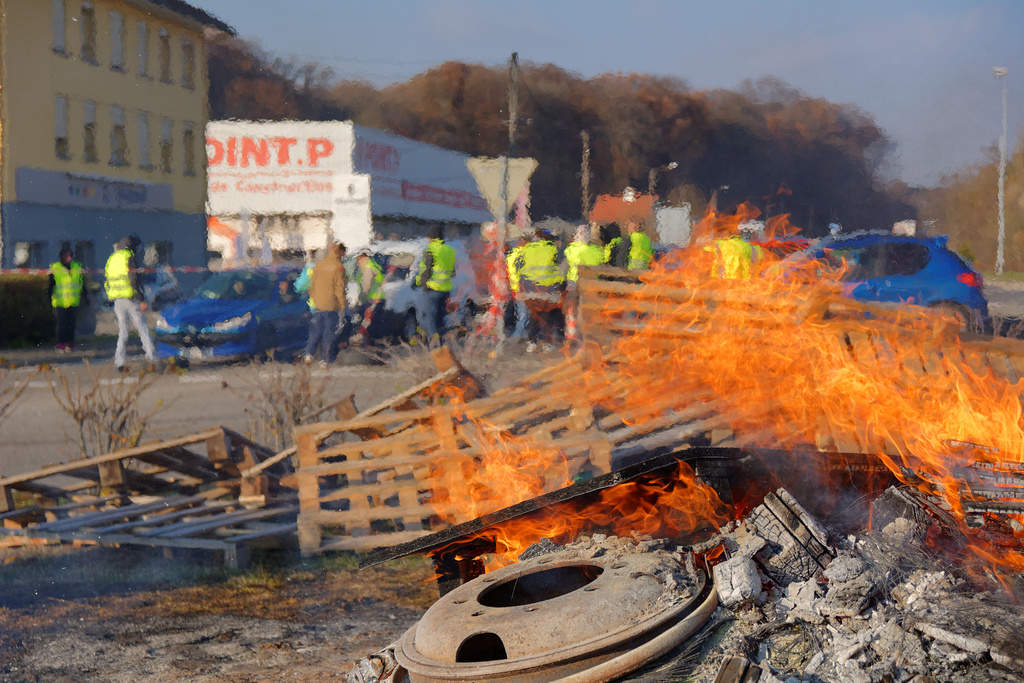
The French government has decided to suspend a planned eco-tax on fuel in response to mass protests. While the movement of the ‘yellow vests’ (gilets jaunes) has turned into a broader revolt against inequality and Macron’s neoliberal reforms, economist and climate activist Maxime Combes (Attac France) argues that as a way to tackle climate change, the tax is neither fair nor effective.
Analysis originally published on the daily internet journal of ideas AOC and translated by Taisie Tsikas.
Central American migrants, both desperate and courageous, have thrust themselves into the center of Mexican and U.S. politics with their demand for refuge and asylum. As the head of the NGO Pueblos Sin Fronteras told a reporter, “This isn’t just a caravan, it’s an exodus created by hunger and death.”

Comrades and Friends of MST (Landless Rural Workers' Movement) around the World,
We would like to share some of our views on this delicate moment of Brazilian politics in the last week of the election campaign:
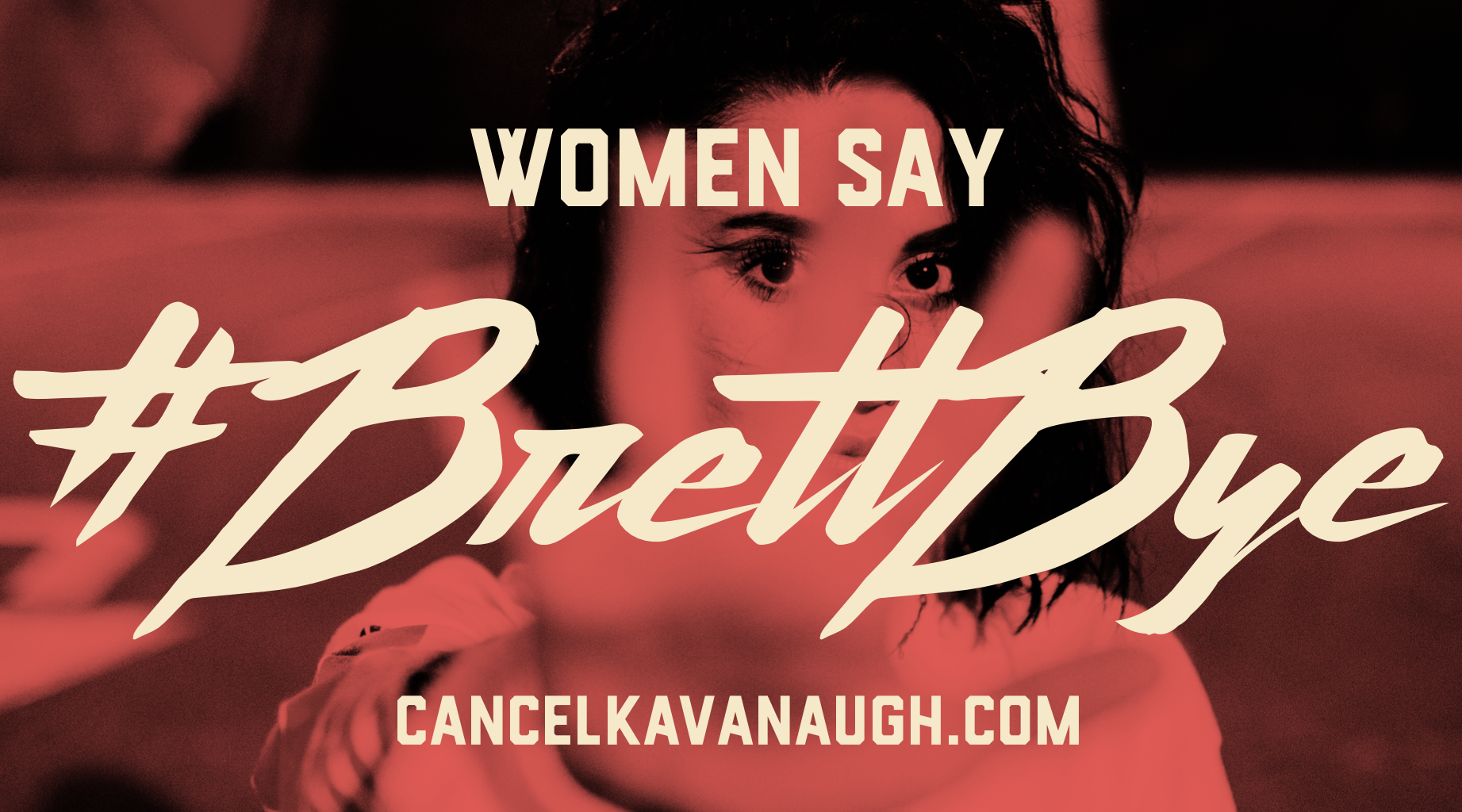
CANCEL KAVANAUGH. WALK OUT AGAINST PATRIARCHY.
WE ARE SURVIVORS, BELIEVE US.

The most popular defense of the NFL players protest argues that Colin Kaepernick, as well as those who have joined him, are not protesting the National Anthem or American identity in general, but only police violence. In kneeling at the start of every NFL game, the players perform a respectful nod to the military while simultaneously calling for a re-thinking of minority status in America.
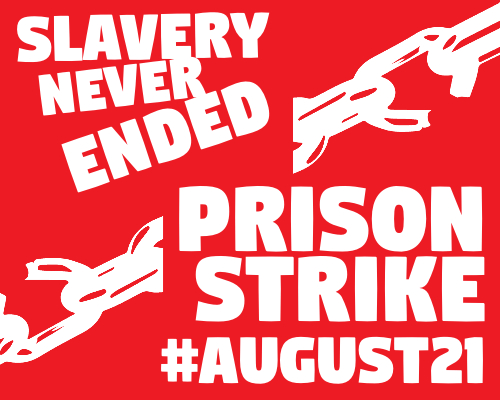 On August 21st, forty-seven years after the assassination of key movement organizer and theoretician George Jackson, prisoners across the country have once again begun mobilizing. Ranging from sit-ins to work stoppages, boycotts to hunger strikes, their actions have followed a nationwide call for sentencing reform, improved living conditions, greater access to rehabilitative programming, and an end to what strike organizers call “modern day slavery.”
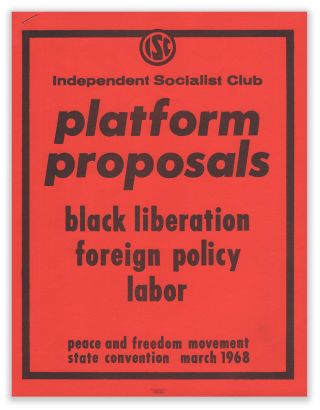
Berkeley (California) was probably a unique political-cultural milieu in the U.S. in the 1960s, both before and after 1968. It was part of the larger political-cultural scene of the San Francisco Bay Area from 1945 onward. The Bay Area at the time was a relative backwater in the U.S., compared to the East coast. The area had, however, seen one of the biggest general strikes of the 1930s, when the Communist Party-influenced ILWU (International Longshore Workers Union) helped bring San Francisco to a halt in 1934, including mass street battles with the police.

For the past 3 months, progressive websites and journals have run articles that paint a picture of the crisis in Nicaragua that is dangerously misleading. Many of these articles have been circulated among people on the left who were in solidarity with Nicaragua and the FSLN during the 1970s and 1980s but haven’t kept up with what has happened over the last 30 years—particularly since 2007, when Daniel Ortega returned to the Presidency and has been there since. I’d like to take a moment to correct some misconceptions about the current crisis in Nicaragua.
Introduction and My Experiences
“It is our duty to fight for our freedom. It is our duty to win. We must love and protect one another other. We have nothing to lose but our chains”.
You may recognize this as the rallying cry for the Black liberation movement in the United States, as written by Assata Shakur.

In May 2017, Left politics in Brazil were pretty bleak. It was almost a year after the impeachment of President Dilma Rousseff of the Brazilian Workers Party (PT), whose ousting from power brought along with it an onslaught of austerity policies.2

— Reprinted from New Politics, vol. VI, no. 3, #23, Summer 1967 (printed June 1968)
At 4 am on April 30 [1968], my wife and I stood with tears streaming down our faces on the corner of Amsterdam Avenue and 117th Street, watching the last of the Fayerweather Hall sit-ins being tossed into waiting police vans. We were not the only ones crying, nor were the tears merely those of pity or self-pity. There was also anger, frustration, and actual joy. The incredible—and inevitable—had happened; the “Big Bust” had come. Seven hundred and twenty student and faculty protesters were under arrest; more than 130 had been beaten up, some quite badly. The last illusions about what was happening were shed.
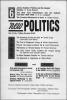
— Reprinted from New Politics, vol. II, no. 2 (new series), #6, Winter 1989 —
Introduction
By Martin Oppenheimer
“The Year of Dangerous Living” was written for the twentieth anniversary of 1968. The “’68ers” were still young in 1988, in the prime of their lives, and memories were fresh. There was an explosion of protests against campus racism, gay-bashing, and increasing corporatization of universities (including union-busting). These baby-boomers, then hitting the big 4-0, were nostalgic. There was a sense that despite a Republican president, the moment was ripe for new efforts that required a serious appraisal of past campaigns.

Right now four small boats are on their way to Palermo, Italy, to dare a crossing to besieged Gaza. Because of the rockets from Gaza on July 13 (whatever the true story behind their launch) the Gaza Flotilla 2018 is in even more peril from a cruel IDF puffed up on its own righteousness. In 2010 the Israelis killed ten on the Mavi Marmara and have often been brutal in captures since.

2,342 refugee and migrant children were kidnapped at the hands of the state at the US-Mexico border between May and June. Attorney General Jeff Sessions announced a zero tolerance policy that separated mainly Central American refugee children from their parents, as migrant adults were criminally prosecuted with many thrown into federal prisons. Hundreds are toddlers under the age of 4 or even babies as young as 4 months old. The average age of the children is 8. The regime also lied and said that parents who asked for asylum at regular border crossings would not be separated from their children while they did exactly that.
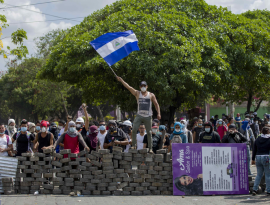
At this moment, the government of President Daniel Ortega and his party, the Sandinista Front for National Liberation (FSLN or Sandinistas), face a popular rebellion from below on a national scale. We look here at the origins of this rebellion, at the alternatives facing it, and at the responsibilities of those of us in the United States toward the people of Nicaragua.
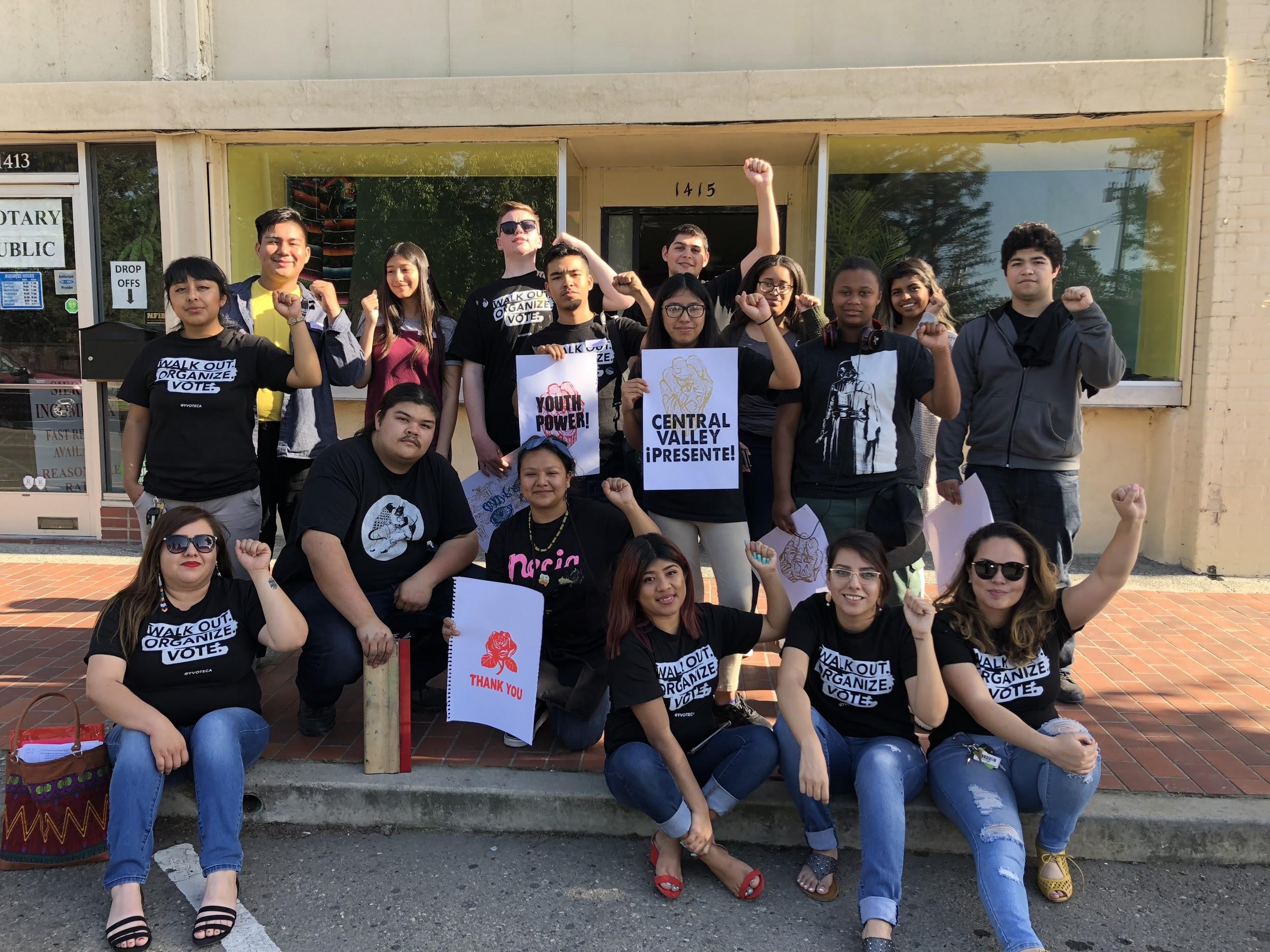
Driving down Route 99 highway, miles upon miles of flat land sprouting grapes, nuts, lemons, and tomatoes line the stretch of land next to the hot asphalt. Highlighted within this landscape of farmland and truck filled, busy highways are youth. Strong, beautiful, Black and Brown young people unapologetically organizing amidst big agriculture and quiet towns. They are organizing for a Central Valley that provides all its residents with what they need to be whole. These young people, full of wisdom and fire, are ready to reclaim the region as their own, creating from the soil rich land a movement that pushes forward their vision of a California for all. At the center of this energy and youth-led, transformative movement is 99Rootz.
Below is the text of Frieda Afary’s presentation to a group of international labor activists on June 10, 2018.
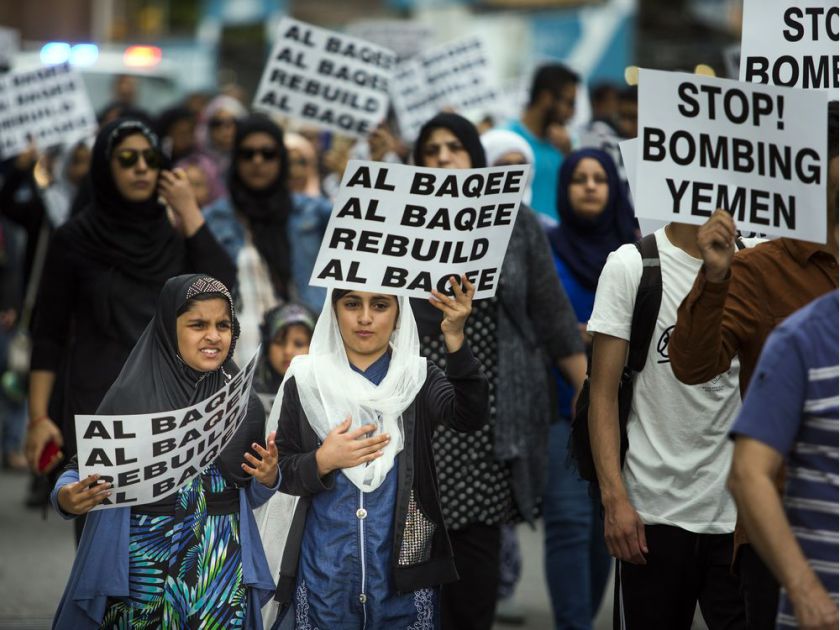
Saudi prince Salman dazzled Wall Street and the glitterati in his three-week U.S. tour this past March. The captains of finance (Stephen Schwartzman, Peter Thiel), tech (Gates, Bezos), politics (Trump, Clinton), and Hollywood (Disney’s Bob Iger, director James Cameron, Morgan Freeman) all met with him. “60 Minutes” did a fawning piece, as did NPR and the Atlantic. The New York Times printed two rapturous articles by Thomas Friedman. Finally, they had a marketable Saudi royal. Mohammad bin Salman was not the usual doddering nonagenarian, but a vigorous take-charge guy, who … get this… is going to let women drive!

It doesn’t take much imagination to associate climate change with revolution. If the planetary order upon which all societies are built starts breaking down, how can they possibly remain stable? Various more or less horrifying scenarios of upheaval have long been extrapolated from soaring temperatures.
- « Newer Posts
- 1
- …
- 10
- 11
- 12
- 13
- 14
- 15
- 16
- …
- 20
- Older Posts »