Category: Social protests
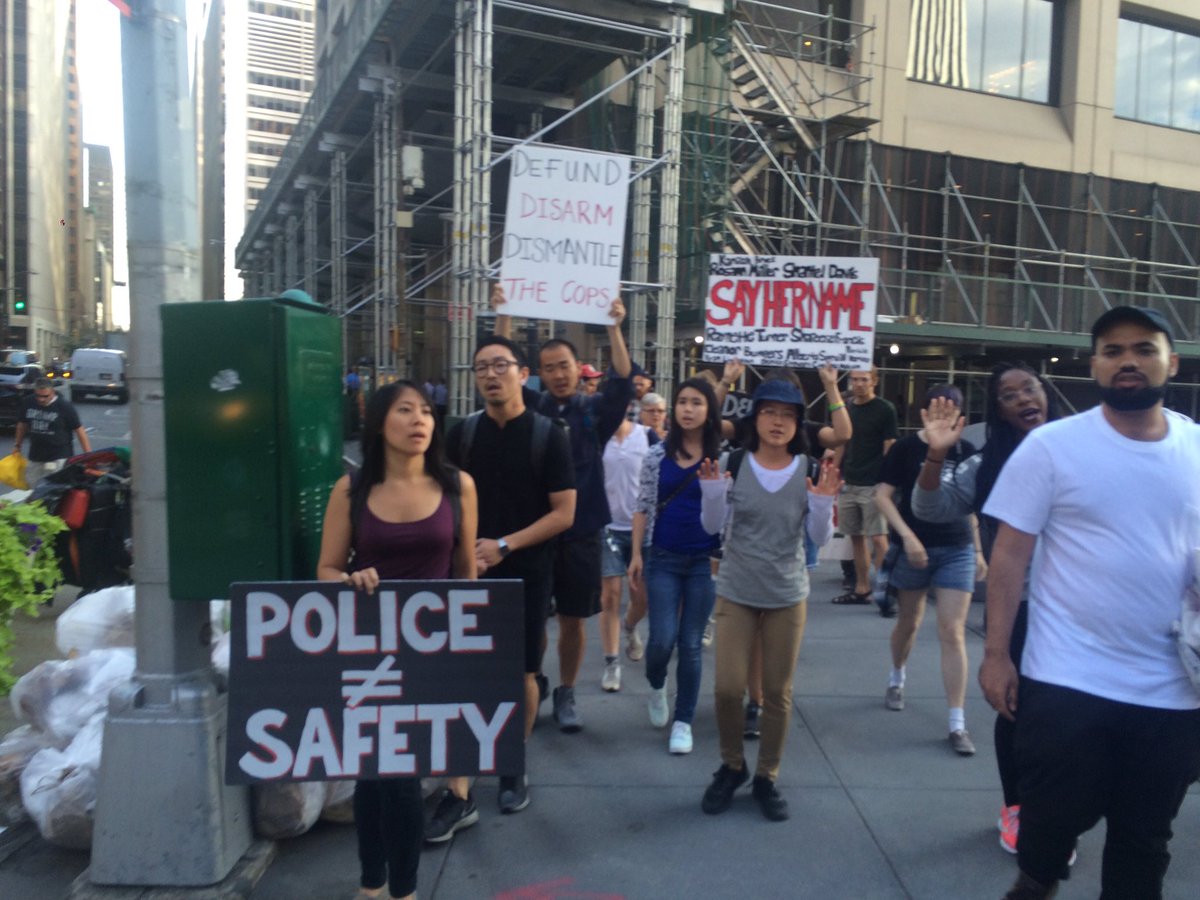 Activists affiliated with the Movement for Black Lives and Black Lives Matter staged a sit-in Wednesday at police union headquarters in Washington, D.C., and New York City, as part of an action to demand police accountability in excessive force cases.
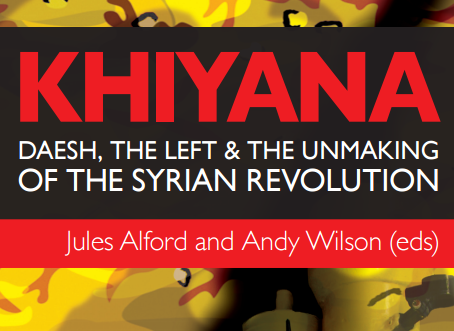
Jules Alford and Andy Wilson (eds.) Khiyana. Daesh, the Left and the Unmaking of the Syrian Revolution. Essays by Muhhamad Idrees Ahmad, Javaad Alipoor, Leila Al-Shami, Mark Boothroyd, Joseph Daher and Shiar Neyo, Sam Charles Hamad, Bodour Hassan, Michael Karadjis, Louis Proyect, Eyal Zisser. London: Unkant, 2016. 278 pp.
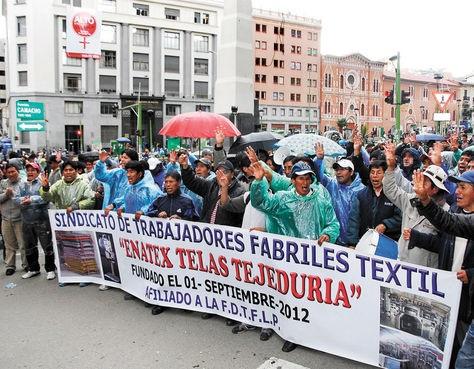
Over the past two weeks, thousands of factory workers, miners, teachers, and health care providers have mobilized and blocked roads in La Paz and Bolivia’s other departmental capitals to protest the firing of 1,000 state textile workers. The workers were abruptly dismissed last month, when Bolivian President Evo Morales announced the closure of Enatex, the state-run textile company.
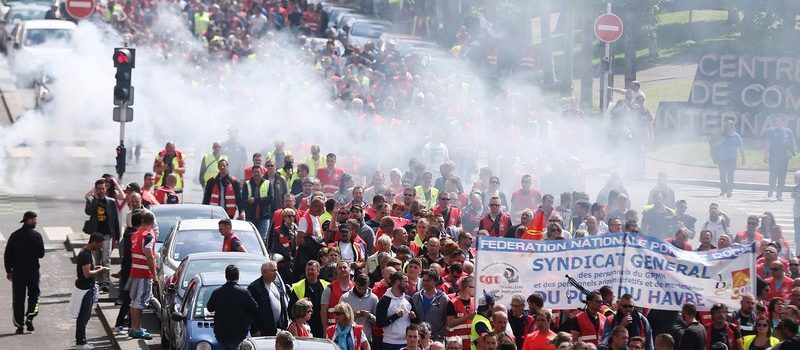
As France prepare to host millions of visitors at the Euro 2016 Football Championships, a state of emergency has been extended in the country as it faces its largest protests in recent history.
Hundreds of thousands of citizens have taken to the streets in France, amounting to what some are calling the new French Revolution amid a total media blackout in Western news outlets.
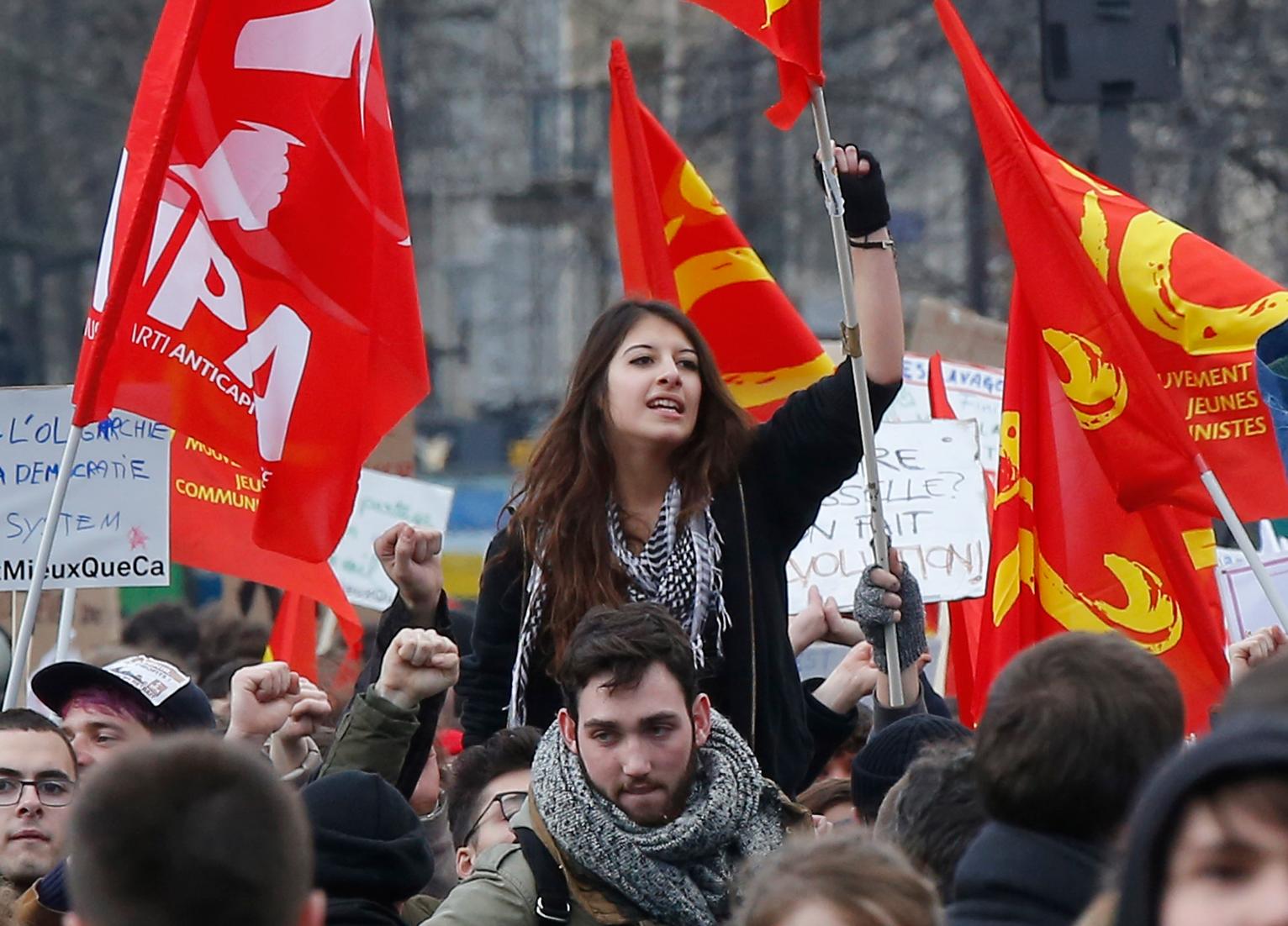
“The 49-3 is a brutality. The 49-3 is a denial of democracy.” Despite François Hollande’s opinions on this article of the French constitution in 2006, his government under Manuel Valls (who had himself been among the MPs proposing it be suppressed in 2008) used it to force through the unpopular law proposed by Minister for Labour Myriam El Khomri on May 10. This provoked an immediate reaction from the coordinating committee of workers’ and students unions calling days of national mobilisation and strikes on May 12, May 17, May 19, to continue on May 26 and June 14. [1]

In a small church in the Albany, New York's low-income, predominantly African-American South End, forty people were gathered for a community meeting. They were organizing a protest against trains carrying potentially explosive oil — dubbed by the residents "bomb trains" — that were running through their neighborhood. City Counselor Vivian Kornegay told the group that many municipalities had opposed the bomb trains and other dangerous fossil fuel infrastructure, but had little power to protect their residents; it was up to a "people's movement" to do so. "What we want is for all of us to be free, healthy, and safe — and for our planet to be a better place to live."
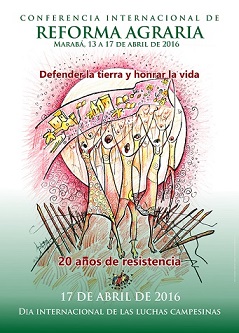
(Marabá, April 17, 2016) We are more than 130 representatives of La Via Campesina member organizations and allies from four continents, 10 regions and 28 countries of the world. We are here in Marabá, Pará, Brazil, to analyze, reflect and continue our collective processes to develop our ideas, proposals, and alternative projects for confronting the offensive of global capital against the peoples and natural goods of the countryside, coasts and seas. More than anything, we come together to struggle for our territories, and for a different kind of society.
 While in Paris in mid-April, I had conversations with a number of mostly older, leftist intellectuals: professors, publishers, editors and writers. These are men and women who historically have had close ties and involvement in the labor and social movements. I also went to political protests and attended a socialist meeting. Here are my impressions, just impressions of a few days in Paris.
Recent mass movements in Middle Eastern and North African countries, despite their defeats and failures, showed prospects and possibilities of a progressive change or a progressive mass organization in the region. Fulfillment of these possibilities requires concentrating on attaining a comprehensive, critical knowledge of the region’s social, political, economic and cultural mechanisms and relations. To achieve these initial goals, Problematica has started a series of interviews with progressive or leftist Middle Eastern and North African intellectuals, activist and MENA scholars. In this interview over Skype, we have put some questions to Gilbert Achcar, Marxist intellectual and scholar of Middle East Studies and Professor of Development Studies at SOAS, University of London. He has published in 2013 The People Want: A Radical Exploration of the Arab Uprising. A sequel will be coming out soon under the title of Morbid Symptoms: Relapse in the Arab Uprising.
When the head of al-Nusra declared back in November that the Free Syrian Army didn't exist, journalist Rami Jarrah went to north Aleppo and asked people what they thought about that and found that despite the claims of al-Nusra and some leftists who should know better, the FSA was still around.
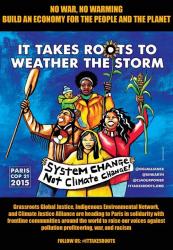 The Paris Agreement is being hailed as a great success. But will it deliver climate justice? After two weeks of tortuous negotiations – well, 21 years, really – governments announced the Paris Agreement. This brand new climate deal will kick in in 2020. But is it really as ‘ambitious’ as the French government is claiming?
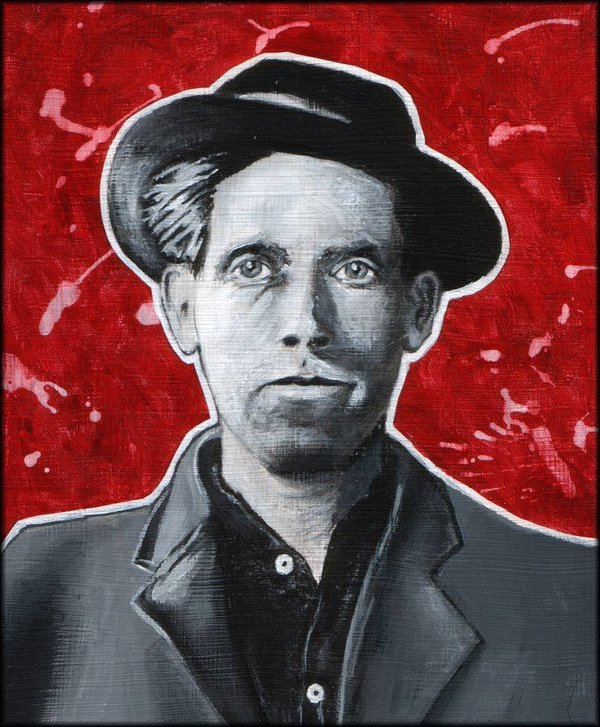
Almost a century ago, the socialist journalist John Reed wrote of the Industrial Workers of the World, popularly known as the Wobblies, “Remember, this is the only American working-class movement which sings. Tremble then at the IWW, for a singing movement is not to be beaten.” On the other hand, the sheriff of San Diego complained of his jails filled with Wobblies, “I do not know what to do. I cannot punish them. Listen to them singing all the time, and yelling and hollering, and telling the jailers to quit work and join the union.”
In response to the failure of the state to manage and dispose of accumulated trash, a series of protests erupted in Lebanon in August 2015 demanding the toppling of the Lebanese corrupt regime and the basic rights for water, electricity and a clean healthy environment. This article provides an overview of the strategies used by the state to dismantle the protest movements, a class reading of the social movements three months into the protests, and an analysis of the strengths and achievements of the demonstrations.
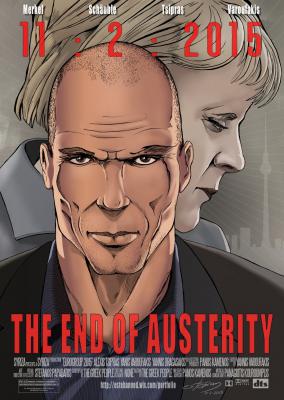
 The radical left strategy of working within broad left parties has suffered a major setback after SYRIZA´s capitulation. The answer to this crisis lies neither in continuing “business as usual,” nor in ignoring the question of political power. SYRIZA´s capitulation to the austerity diktat, the ensuing emergence of Popular Unity and the fresh elections looming ahead, have brought the question of organization for the radical left at the forefront of debate. SYRIZA, which used to be the prime example of left unity against austerity, is giving way to an increasingly fragmented political landscape of the Greek left, as Prime Minister Alexis Tsipras declared his will to implement the new memorandum.
Lebanon had experienced some major protests in early 2011 against the sectarian regime following the regional popular uprisings, but the movement unfortunately ended a few months later, especially after the sabotage of several religious and reactionary parties against the movement and with the complicity of leftist movements of Stalinist tradition.

Review of Michael Gould-Wartofsky, The Occupiers. New York: Oxford University Press, 2015.
Occupy was the largest political mobilization of my lifetime. The explosion of energy it produced gave the feeling of perpetuity, with thousands of volunteers supporting each other through donations of food and standing together in solidarity against the police. But as the encampments became rooted, many had to check their excitement with a growing sense of disillusionment. It was clear that the Occupy strategy, and how it played out in practice, was rife with weaknesses that were ultimately exploited by those who sought to destroy Occupy and the discourse that it created.

Jean Batou’s article Putin, The War in the Ukraine, and the Far Right in Volume XV No. 3 of New Politics, despite briefly acknowledging in its final paragraphs the role of NATO in the Ukrainian crisis, basically echoes the party-line apologists for NATO and American imperialism.
Ecuador’s Indigenous movements have launched an uprising to challenge the government’s opposition to bilingual education and its support for an extractive-based economy.
On August 2, the Confederation of Indigenous Nationalities of Ecuador (CONAIE) began a march from the southeastern Amazonian province of Zamora Chinchipe that will arrive in the capital city of Quito on August 13. Upon its arrival, the Indigenous march will join a general strike called by the Workers United Front (FUT) in opposition to the government’s labor policies.
As those committed to social justice in St. Louis prepare to mark the August 9th killing of unarmed teen Michael Brown Jr. by Officer Darren Wilson in Ferguson, we know that many in the region would like us to just go away. Enough already, they say. Why commemorate something so sad and wrong, anyway? Let’s just move on. But we’re at the beginning, not the end of this struggle. It’s not time to move on, and this day calls for reflection.
While in Athens, I have gotten into the habit of ending the day by enjoying an iced coffee with cream in an outdoor cafe in a park about one mile from my hotel. It is there that I have been writing these dispatches. As I remarked in my first report, the park the cafe is in is filled with children, teenagers, young couples, the middle-aged, and old people until quite late. The cafe does not start to empty until after midnight.
- « Newer Posts
- 1
- …
- 13
- 14
- 15
- 16
- 17
- 18
- 19
- 20
- Older Posts »