
Category: Social Policy
 On March 19th, 2018, Gov. Phil Bryant of Mississippi signed into law the earliest abortion ban in the United States, restricting abortions after 15 weeks in the entire state. The day after, the Supreme Court housed debate on the legality of a California law regulating speech at anti-abortion crisis pregnancy centers, which required that they present information about affordable abortion, contraception, and prenatal care, and to display signs saying that they are not a licensed medical clinic, in cases where they are not. This has re-ignited debate over the appropriate stance for the left to take on abortion, and whether there is space on the left for anti-abortion views.
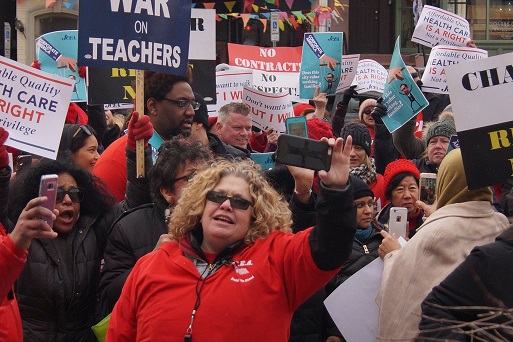 For some, the decision to support workers who strike is a given. We defend the right to join a union and exercise the right to strike in every country, as a human right. Defending the rights of workers to organize and withhold their labor when they need to use this weapon is as much a social justice issue as fighting racism, battling sexism, or protecting immigrants from deportation.
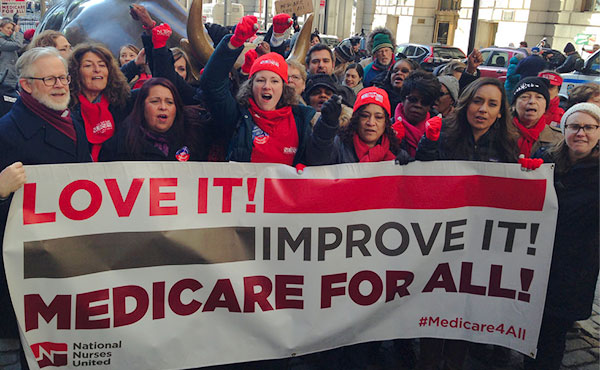 Healthcare is the crossroads where the assault on workers meets the juggernaut of “crony capitalism.” That’s the term used by the mainstream neo-classical and Nobel prize-winning economist Angus Deaton to describe the coziness between the healthcare industry and its government “regulators.” In fact, Deaton argues, how healthcare is financed and delivered is a driver of inequality.
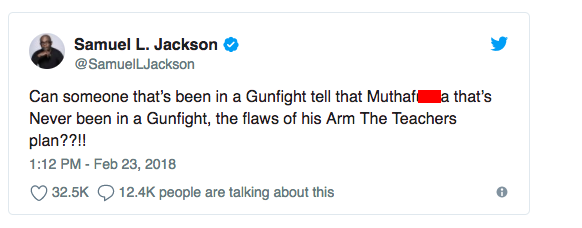
The call to “arm the teachers” started as another stink bomb President Donald Trump lobbed into the crowd at a conservative rally. But somehow, the concept cycled through the 24-hour news loop and, within a few hours, became a ubiquitous meme. Now, the morally repugnant idea of gun-toting teachers in America’s schools has taken center stage in the nation’s macabre debate on gun safety.
Dale L. Johnson. Social Inequality, Economic Decline, and Plutocracy: An American Crisis. Palgrave Macmillan, 2017. 240 pp. Index, Appendix. $159
Social Inequality is not for the faint-hearted. It covers the major political-economic issues of our time, from the structural changes in the economics of capitalism, to class structure, the imperialist state, and the distortions of capitalist culture. The author, a veteran scholar-activist of the New Left generation who now lives in Costa Rica[1], ends with a plea for resistance to our oligarchic “hegemon” and suggests a series of tactics to help us on the road.

As rightwing governments take power in Argentina, Brazil, and elsewhere across the region, Ecuador’s leftwing Alianza País (Country Alliance, AP) and Bolivia’s Movimiento al Socialismo (Movement Towards Socialism, MAS) and Bolivia have managed to hold onto power.
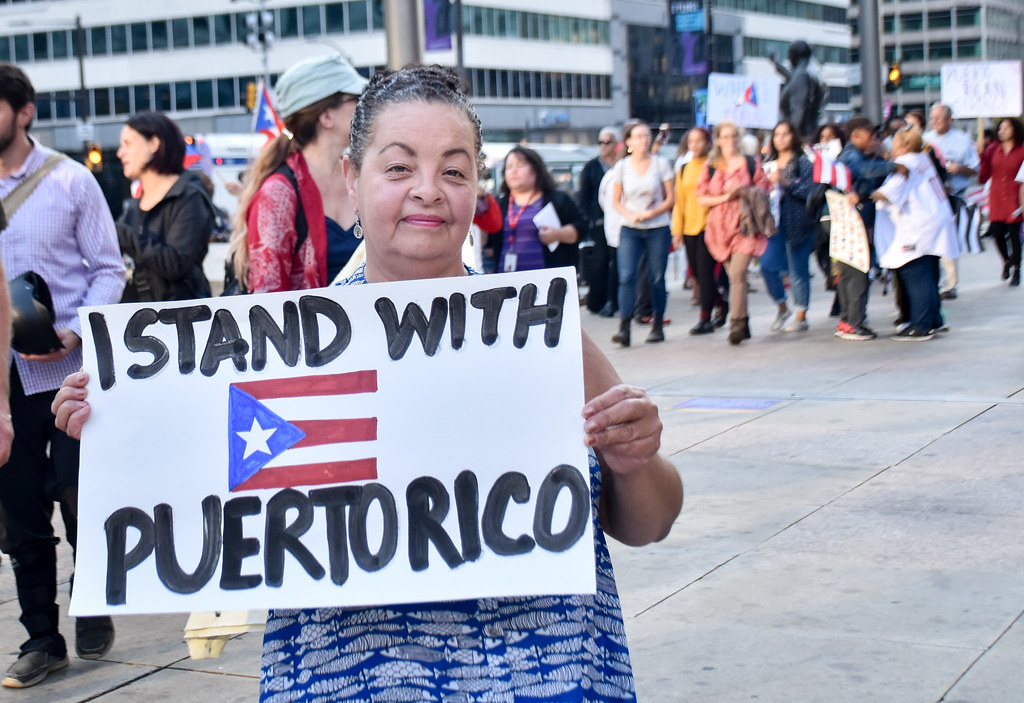
With this dramatic announcement, Governor Alejandro García Padilla transformed the island nation’s long-simmering debt overhang problem into an international spectacle. A financial mess that seemingly concerned only institutional investors, municipal bondholders, and some hedge fund managers exploded into a full-blown debt crisis with disquieting parallels to the situation in Greece.

If you’ve seen any of the documentaries that are critical of U.S. agriculture, then you’re most likely aware of the increase in some innovative and somewhat unconventional experiments in growing food—bee hives and gardens on hospital roof tops, abandoned warehouses turned into greenhouses, farms that double as a local community’s source of fresh produce and the pizzeria.

Bolivia received global attention for its anti-imperialist and anti-capitalist social movements in the twenty-first century. Best known perhaps were the Water Wars, against water privatization, in 2000 and the Gas Wars, demanding nationalization of the gas industry, in 2003. These rebellions entailed a radical rethinking of natural resource use and distribution.

In Poland the law on abortion is one of the most restrictive in the European Union, sex education does not exist, and contraception is both expensive and hard to obtain because a medical prescription is often needed.
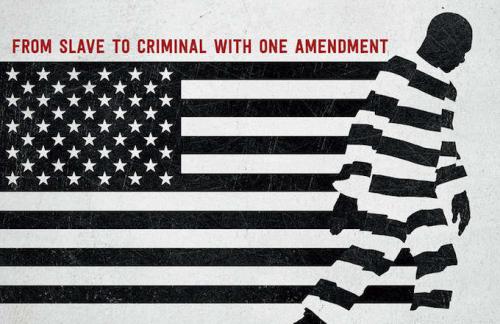
When prisoners in Alabama last spring proposed a national strike to protest “prison slavery,” they called out the infamous clause in the Thirteenth Amendment. The amendment most known for abolishing slavery included a rider that sanctioned slavery “as punishment for a crime wherein the party shall have been duly convicted.”

Dear Friends and Family,
I've been in Salonica just over a month. All my time here has been as a volunteer in the Elpida Refugee Center, working mainly in the communal kitchen or in the food distribution center.
 On October 6, 2008, an executive with Citigroup sent John Podesta, then co-chair of Barack Obama’s transition team, a list of possible cabinet appointments. There were still 29 days left in the hard-fought campaign. But the list, according to the New Republic, was almost entirely on the money; for who went on to fill senior posts in the Obama Administration, including Rahm Emanuel as chief of staff, Eric Holder as attorney general, Susan Rice as U.N. ambassador, and Janet Napolitano to lead Homeland Security.
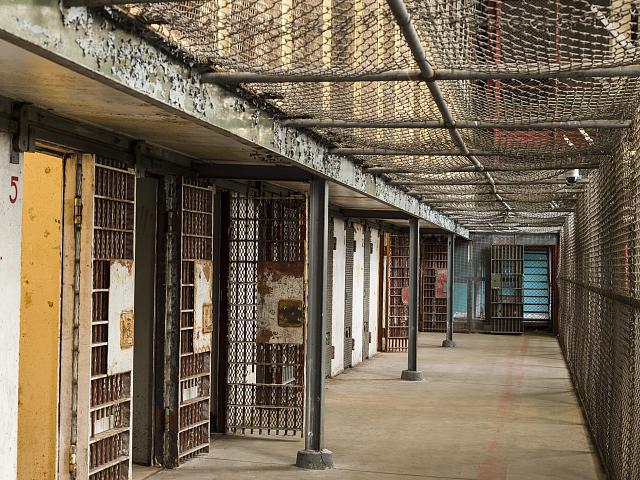
On the 45th anniversary of the Attica Prison rebellion in 1971, Process speaks with seven scholars of the carceral state about prisoners’ organizing in the 1960s and 1970s and movements protesting mass incarceration today. This is the first of a three-part series, guest edited for Process by Jessie Kindig. Check out parts two and three.

Like a spectral apparition from a Shakespeare play or an M. Night Shyamalan film, the dreaded ghost of welfare reform is making a ghoulish comeback on Capitol Hill just in time for its twentieth anniversary.
On Tuesday, March 22, the New York City Council is expected to pass Mayor Bill de Blasio’s housing and zoning plan, which permanently ties the creation of a relatively small amount of not-that-affordable housing to the massive co-production of luxury housing.[i] It is being sold as the best we can do with the tools that we have. It is not. Instead, it puts to work the most lucrative and least effective tools available, and locks the city into repeated cycles of gentrification and displacement.
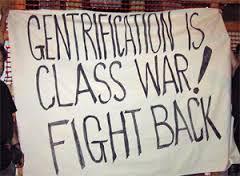
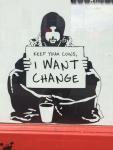 Americans today face a dual crisis: rising rents and increasingly unaffordable housing markets. The housing crisis, far from being over, has metastasized.
 After ten years of economic contraction, many of the citizens of Puerto Rico find themselves watching the secular decomposition of a reality that in its heyday was painted by many as one of relative socio-economic welfare.

Since 1959, the Cuban revolution has been dedicated to racial equality. In a country where slavery was abolished only in 1886, the revolution offered many black Cubans their first access to land and education, through the new universal egalitarian policies, and an explicit commitment to eliminating racial discrimination. Even critical scholars argue that though it falls short of racial democracy, Cuba has done more than any other society to eradicate racial inequality.
Yet since Cuba’s “Special Period” began in the early 1990s, resources have been severely limited. Market-oriented reforms have come at the price of rising inequalities, which are not color-blind: racial tensions have increased substantially. To counter this trend, several black artists and public intellectuals have created a vibrant anti-racist activist scene, partly attached to the government-sponsored “Regional Afro-descendant Articulation of Latin America and the Caribbean, Cuban Chapter” (abbreviated in Spanish to ARAAC).
 The Paris Agreement is being hailed as a great success. But will it deliver climate justice? After two weeks of tortuous negotiations – well, 21 years, really – governments announced the Paris Agreement. This brand new climate deal will kick in in 2020. But is it really as ‘ambitious’ as the French government is claiming?

The English translation of this article was originally published by International Boulevard
From Al Safir Al Arabi
Behind the violence shaking occupied Jerusalem, writes Haneen Naamnih in Al Safir Al Arabi, is a vast colonial enterprise slowly remaking the city.
- « Newer Posts
- 1
- …
- 4
- 5
- 6
- 7
- 8
- 9
- 10
- …
- 16
- Older Posts »