

Category: Culture & History
Many would like to believe that this American period of rampant national-conservatism is nothing more than a short stay in Republican purgatory. It is a reassuring idea that in a few years, as today’s progressive youth becomes a large part of the electorate, the United States will become a shining example of tolerant and progressive prosperity. Just as neo-conservatives envision a global American hegemony built on capitalism and military strength, some progressives have adopted a belief that the United States is destined to reach national political moksha with strong welfare, a prosperous middle class, and minority rights; the nasty racists and homophobes, the “deplorables”, will soon be outnumbered so vastly in the face of common-sense political ideology that the right will simply cease to exist. Unfortunately, this prophecy has proven a myth for millennials—and the nascent Generation Z doesn’t appear to have better prospects.
Joanne Landy (1941-2017) and Thomas Harrison (1948-) became socialists as teenagers and have remained involved in the democratic left ever since. They were active in the student protest movement at the University of California at Berkeley in the 1960s, where they met and became close friends and collaborators. During the 1970s, they became increasingly interested in the issue of labor rights in Central and Eastern Europe, and they worked to link democratic and social justice struggles in the Eastern Bloc with social movements in the United States, the West, and the Third World. Until Joanne Landy’s death in October 2017, they were co-directors of the Campaign for Peace and Democracy (CPD), which was founded in 1982. Initially, the organization was called the Campaign for Peace and Democracy/East and West, but with the end of the Cold War the title was shortened.
Why the United States has not developed a permanent socialist movement has perplexed activists and theorists for more than a century. Paul Le Blanc takes up that query as an activist who wants to see an anti-capitalism mass movement take shape in twenty-first century America. To that end, he investigates some of the moments when the possibility of a significant left presence in the United States seemed at hand. He focuses on what made those movements viable and what thwarted their long-term success. The volume’s fourteen essays were written over a period of thirty years, from 1986 to 2015.

This season’s roundup of nonfiction comics includes self-published and small-press titles as well as noteworthy releases from major trade publishers. Topics covered range from consumer capitalism and imprisoned anarchists to Trinidadian social history and the war in Syria. Each of these titles deploys a distinctive approach to the challenge of folding political themes into visual narrative. In different ways, these books suggest that the forward march of political cartooning continues unabated.

Sitting alone in my room watching videos on YouTube, hearing sounds from across the hall of my roommate watching Netflix, the obvious point occurs to me that a key element of the demonic genius of late capitalism is enforcing a crushing passiveness on the populace.
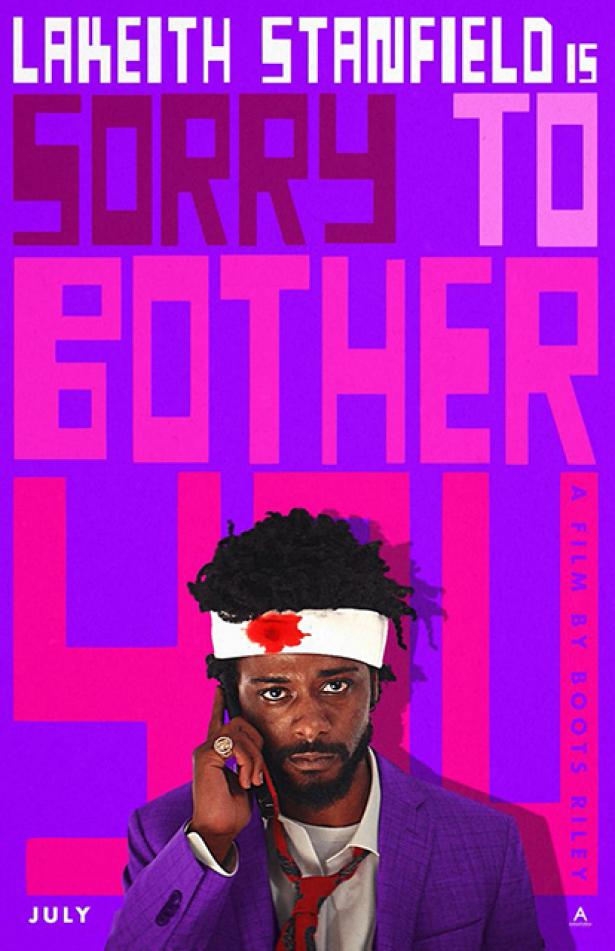
When I was a union rep, one of my most challenging assignments was assisting a Communications Workers of America (CWA) bargaining unit at a Boston-area telemarketing firm. Most CWA members in New England had call center jobs at the phone company, with good pensions, health insurance, and full-time salaries. As service reps, they fielded in-coming calls from customers with problems, questions, or new orders to place. In contrast, the telemarketing staff only interacted with the public, on behalf of various clients, via out-bound calling. Like the workers depicted in Boots Riley’s hilarious new film, Sorry to Bother You, they made cold calls to people who did not want to bothered, at dinner time or anytime, with a pitch for a new product, service, or donation to a political cause.
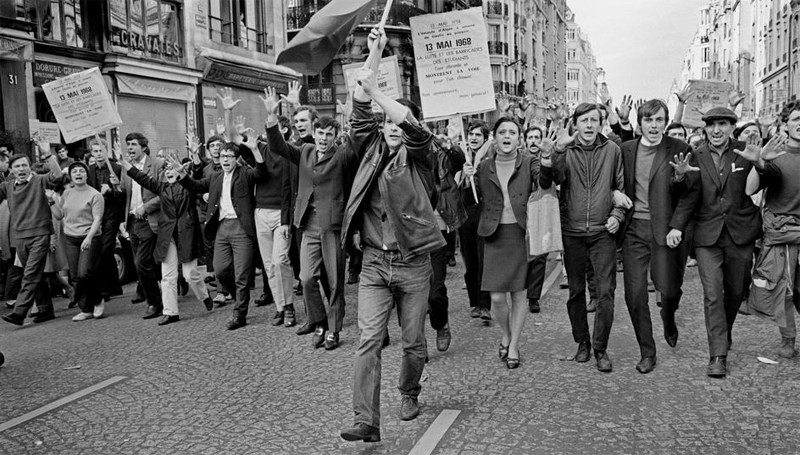
Where Are the Riots of Yesteryear?

While accepting an Honorary Oscar this past November, the great film director Charles Burnett spent some time reflecting on his formative years as a film student at UCLA. It was there that he and his colleagues not only learned

The closing of the era when comic art specialists, not people with PhDs, wrote the outstanding and recognized works on individual artists and genres may have arrived as recently as only a few years ago. Careful biographies of artistic giants, household names (in their own eras, at least) or famed only within the field, Al Capp or Will Elder, have continued to be written by people who could rightly be called “fans”—if the title did not seem insulting. Rather than university presses, Fantagraphics or the comics series at Abrams would be a typical outlet. With each year that passes and with each swelling enrollment in a college course, the scene shifts.

A civil society emerges, mainly, due to citizens’ need to actively involve themselves in the public sphere in order to address processes that impact their daily lives and affect their interests. At the heart of civil society, various social actors, with sometimes remarkable differences, group themselves around common issues that affect or interest all of them. Therefore, civil society is plural, characterized by the spontaneous organization of citizens and based on logics of autonomy, solidarity, and representation of specific identities; it is aimed at addressing collective demands, exploring solutions to issues that affect a given community, and having an impact in the public sphere.

The Work of Art in the Age of Mechanical Reproduction
Walter Benjamin was one of the great analysts of liberal capitalism during a time when its days seemed numbered and fascism was ascendant across Europe. Much of his work is taken up with looking at how the cultural products and processes characteristic of a civilization are reflective of the inner psychic and spiritual tensions roiling beneath the surface of hegemonic ideologies.
 [1]Djuena Tikuna during her performance at the Teatro Amazonas. Image: screenshot, Jornalistas Livres (Youtube)
On 23 August, Djuena Tikuna [2] became the first indigenous singer to perform on the stage of the Teatro Amazonas [3] (“Amazonas Theatre”) — a bastion of European culture in the middle of the world’s largest tropical forest.

At the southern tip of Europe, stretching out its two hands of Ceuta and Melilla to reach Africa, Spain usually goes unnoticed. Our news hardly ever makes world headlines; it’s simply not impactful enough. Over the past month, however, my adopted homeland has been enveloped in one of the most controversial events of the decade, and finally our dirty laundry is being hung out to dry on the international clothesline. The threat of Catalonia breaking away from Spain is juicy. It’s the political equivalent of a marriage gone wrong, complete with steepled-finger scheming, mutual resentment, and fittingly, bouts of domestic violence. But it also serves to show how the choices and actions of politicians turn a prominent issue in need of discussion into a roiling turmoil. The question of Catalonian secession is the result of the thoughtless, petty political practice that is ubiquitous in governments around the world, but that should have no place in the future of governance.

This work is a creative nonfiction work which highlights the imperialist white supremacist capitalist colonial gaze of the Black male body, conventional beauty standards, systemic weightism, and instances of subversion against these oppressive norms in appreciating my body for the way it is.
 In a recent article from Politico, a new poll was discussed that suggests that nearly half, 49 percent, of Trump supporters believe that he won the popular vote in the 2016 election. (He didn’t; he lost by nearly three million votes.) Spurred on by Trump’s claims that millions (!) of people voted illegally in the election, this portion of Trump’s base have been lied to and misled by a politician they think they can trust. What are we to make of this?
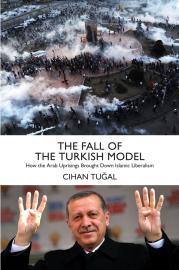
Cihan Tuğal, The Fall of the Turkish Model: How the Arab Uprisings Brought Down Islamic Liberalism (Verso, 2016).
In the short time since the 2016 publication of Cihan Tuğal’s The Fall of the Turkish Model: How the Arab Uprisings Brought Down Islamic Liberalism, Turkey has endured an attempted coup, nearly a year of rule under a state of emergency, the widespread repression of dissent through imprisonment and mass firings of teachers and civil servants, and a (likely fraudulent) referendum that has institutionalized the autocratic rule of President Tayyip Recep Erdoǧan. Yet, unbelievable as it may seem, these developments are part of a continuum rather than a rupture, and Tuğal’s book is essential—if not unproblematic—reading for understanding contemporary politics in Turkey, the Middle East and North Africa.

On the very off chance you haven’t heard, Angela Nagle has come out with her first book: Kill All Normies: Online Culture Wars from 4Chan and Tumblr to Trump and the Alt-Right. Best known for her essays, often on the alt-right, in outlets like Jacobin and The Baffler, the socialist left has been anxious to dive into what appears to be the first book on the alt-right written by one of us — myself included. Ms. Nagle first caught my attention last year with her incredibly insightful essay “The New Man of 4chan,” and I’ve been reading her regularly, and eagerly awaiting this book, ever since.
Reading, actually looking obsessively at the pages of, this volume and non-volume inevitably brings to mind an unpublished, uncompleted 1967 essay by Herbert Marcuse, “Lyric Poetry After Auschwitz,” translated and published after his death. Here Marcuse says, in part,
.jpg)
[This is the second of three articles commemorating the Russian Revolution of 1917 and analyzing its fate under Stalin. The first part, “Glorious Harbinger of a New Society: the Bolshevik Revolution,” was published in the previous issue of New Politics, number 62, winter 2017. The text below is slightly expanded from what appeared in the print issue.]
Soon after the Treaty of Brest-Litovsk was signed on March 3, 1918, the Soviet republic was under siege. Various anti-Bolshevik forces, some supported by the Allies or the Central Powers, were gathering. If these forces succeeded in reversing the October Revolution, what would be the result?
This video in honor of Joanne Landy was made at the request of Piotr Niemczyk, an activist in the 1980’s in the Polish independent peace group “Freedom and Peace.” It was shown at an event in New York City on June 1, 2017, honoring Joanne Landy.
At a distance of one hundred years, the Russian Revolution, which truly shook the world, deserves to be remembered once more in terms of its emancipatory significance and its downfall and betrayal. This revolution would not have happened had it not been for the crucial role played by the Bolshevik party. It is true that the profound crisis affecting the Russian society, worsened by the country’s disastrous participation in World War I, could have sooner or later led to a massive upheaval. But it is questionable that a socialist revolution would have taken place without the organizational skills of the Bolshevik party and the political, strategic, and tactical genius of V.I. Lenin.
- « Newer Posts
- 1
- …
- 4
- 5
- 6
- 7
- 8
- 9
- 10
- …
- 13
- Older Posts »
Please Donate or Subscribe to New Politics!

The New Politics Summer 2026 issue is now in the hands of subscribers, featuring articles on Democracy versus Degeneration in the United States (with contributions by Dan La Botz, Ellen Schrecker on McCarthyism Then and Now interviewed by Elizabeth Rapaport, Ben Silverman on the fascism debate, Samuel Farber on free speech, Samuel Barney on rural prisons, and Raoul Cansino and Bill Kelly on nativism), Imperialism Around the World (with articles by Lisbeth Moya González on Cuba, Husam Mahjoub on Sudan, Siyavash Shahabi and imperialism and the working class, and Matt Benson on the Mapuche in Chile), interviews on labor struggles and Russian political prisoners, a history of the International Socialists, review essays by Frieda Afary on AI, Javier Sethness on Western Marxism, and Peter Drucker on Molly Crabapple, as well as reviews on Ukraine, the Teamsters for a Democratic Union, white rage, South Asia, and Afghanistan, plus a letter on women under the Taliban.