Category: Culture & History

“Revolutions are the mad inspiration of history”
Leon Trotsky, My Life
 In the wake of the 2016 election, Oxford Dictionaries declared “post-truth” to be the 2016 international word of the year.[i] The viral spread of fake news stories (such as the infamous “Pizzagate”[ii] scandal alleging that Hillary Clinton’s campaign chair John Podesta secretly ran an illegal sex trafficking ring out of a Washington D.C. pizzeria) no doubt helped to install America’s lunatic POTUS and his clown car of white supremacist cabinet members into the Oval Office.

When prisoners in Alabama last spring proposed a national strike to protest “prison slavery,” they called out the infamous clause in the Thirteenth Amendment. The amendment most known for abolishing slavery included a rider that sanctioned slavery “as punishment for a crime wherein the party shall have been duly convicted.”
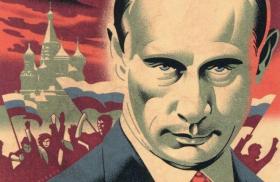 Michel Eltchaninoff. Dans la tête de Vladimir Poutine. Arles: Solin/Actes Sud, 2015. 171pp.
Michel Eltchaninoff’s prize-winning Dans la tête de Vladimir Poutine—In the Head of Vladimir Putin—is a fascinating examination of the development of the Russian president’s ultra-conservative and nationalist ideology from assuming the presidency in 2000 until today.[1] Eltchaninoff, the author of two books about Russian novelist Fyodor Dostoyevsky and many essays, might seem like an unlikely candidate to write an intellectual biography of the twenty-first century president Putin, but as it turns out, Eltchaninoff’s knowledge of nineteenth and twentieth century Russian philosophers makes him the ideal author, because that is where Putin’s ideas come from, Russia’s conservative, religious past.

Sometime in the late 1980s, as Against the Current was doing some cross-promotion with the European socialist magazine International Viewpoint, I was glancing through the list of U.S. subscribers to IV when a name jumped put at me: Connie Crothers.
This was interesting, because I had a wonderful duet recording “Swish” (1982) by jazz pianist Connie Crothers with the percussion giant Max Roach. (This was the inaugural recording of Connie’s New Artists label – an impressive debut!) I immediately wrote to Connie – this was back in the Middle Bronze Age, before we did everything by email – and soon heard back. Indeed, she was the same Connie Crothers and delighted to hear from ATC.

Brazil’s Dance with the Devil: The World Cup, the Olympics, and the Fight for Democracy. By Dave Zirin. Updated Olympics edition. Haymarket Books, 2016. 238pp. + notes and index. $17.95 paperback.
I celebrated with great relief back on October 2, 2009, when my hometown Chicago was the first city eliminated by the International Olympic Committee from consideration for hosting the 2016 games. The scale of the pillage, cronyism and social cleansing that “Mayor One Percent” Rahm Emanuel would have inflicted in the name of preparing for the party was horrible to contemplate. And I wasn’t wrong, as reporter David Haugh has shown in his piece of bidder‘s remorse, “In retrospect, losing 2016 Olympics to Rio a big victory for Chicago” (http://www.chicagotribune.com/sports/columnists/ct-haugh-olympics-spt-0803-20160802-column.html).
This book is a fascinating incursion into the multiple oppositional uses of memory in world cinema. It shows, in a lively and insightful way, how movies bring the memory of past struggles forward into the present, to serve as an inspiration for the future.
Inez Hedges distinguishes eight types of cultural cinematographic memory, which correspond to the eight chapters of the book:
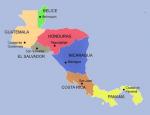
The colonization of Latin America never ended, it merely changed forms. Today this conquest continues, with transnational companies driving neo-colonization grounded in the continued exploitation of natural resources. This is nowhere more true than in Central America. The force of neo-colonization is strengthened by free-trade agreements and development plans that guarantee a company’s right to investment above the rights of the citizenry. Meanwhile, the indigenous populations face renewed dispossession and eviction to make way for global capital’s conquest.
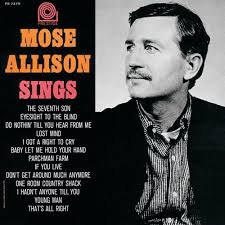
In October 1969, pianist/ singer/composer Mose Allison recorded “Monsters of the Id.” At a time when recent history had witnessed a police riot at the 1968 Democratic Party Convention, the police crackdown on protesters at Berkeley’s People’s Park, and popular backlash against anti-war, New Left, counter-culture, and Black Power sentiment, Allison began by warning that the title characters no longer remain hidden, but have come out in full view. To the accompaniment of a slightly discordant horn section, Allison—singing in his characteristic style, with its idiosyncratic pauses and accents—spins a variety of often ghoulish metaphors that remain just as timely in today’s era of Tea Party, torture reports, Stand Your Ground, and Donald Trump: “They’re sprouting through the cracks … They’re deputizing maniacs / Creatures from the swamp rewrite their own Mein Kampf.”

Surveying the political scene in America, we are now witnessing the shattering of the last remnants of the American ideology that has maintained itself—despite strains—for almost 70 years. The ideas that justified the American economic and political system in the minds of most of our citizens throughout that long period came under stress during earlier storms—from the 1950s to the 1970s in particular—and a few beams and joists cracked but did not give way. Today the manifold crises of capitalism mean that the entire existing intellectual structure of American capitalism is breaking up. And because of the role that the U.S. capitalist class plays in the world, this represents a crisis of world capitalist leadership and legitimacy. The question then arises: What will the country’s rulers attempt to put in its place, and what alternative explanation will we on the left and in the labor movement be able to offer to the country’s workers?

[This interview was originally published in Left History, vol. 18, no. 1 (2014).]
Phyllis Jacobson (1922-2010) and Julius Jacobson (1922-2003) were socialist activists in New York City from the mid-1930s through the first years of the twenty-first century. They were members of a radical generation that came of age during the great depression and embraced the language of socialism, communism, and Marxism. They were also the children of working class Jewish immigrants who grew up in the city’s outer boroughs. For their parents, the First World War, the Bolshevik Revolution, and the general strikes and mass uprisings that convulsed many countries after the war were all recent events. The near collapse of the global economy in the early 1930s confirmed for many of their cohort the basic assumption that capitalism was inherently impermanent. Adopting a socialist outlook in a period characterized by social upheaval and economic crisis was easy; the challenge had to do with selecting a suitable group or tendency from a fissiparous menu of options.
On March 25, 2016, New Politics sponsored a forum centered on its release of a never-before-published lecture by Afro-Trinidadian socialist C.L.R. James on Oliver Cox’s Caste, Class and Race.
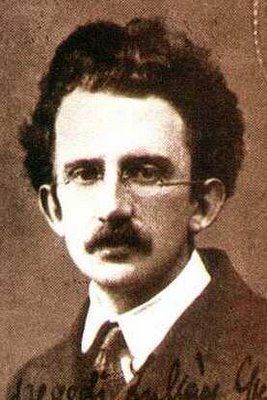
[This petition was sent to us by Zsuzsa Hermann. György Lukács (1885-1971) was a Hungarian Marxist philosopher, aesthetician, literary historian and critic. Best known for his essay collection History and Class Consciousness (1923), he initiated the tradition of "Western Marxism." In 1919 he was the Hungarian Minister of Culture of the government of the short-lived Hungarian Soviet Republic (March–August 1919).]
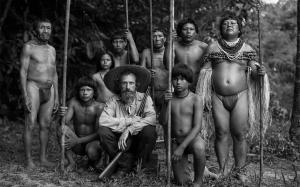 Will we ever get over this thing called civilization? That's what I wondered as I watched The Embrace of the Serpent, directed by Colombian filmmaker Ciro Guerra, a black-and-white film in several indigenous and European languages that has some of the qualities of a documentary. But this is a truer-than-history fiction, fabricated out of the travel diaries of two botanists, Theodor Koch-Grunberg (Jan Bijvoet) and Richard Evan Schultes (Brionne Davis), both of whom traveled in the Amazon region, the former in 1909 and the latter in 1940. The challenging and sometimes horrifying experiences of the two scientists are linked together by the character Karamakate who serves as guide to both and a challenge to each. (Nilbio Torres plays the young Karamakate and Antonio Bolívar the old Karamakate.) Both botanists are looking for yakruna, a rare, sacred, and hallucinogenic plant, and their search takes them into the jungles inhabited by peoples menaced by the encroaching modern world.
Agustín Guillamón is a dedicated anarcho-syndicalist activist whose partisanship has not affected his critical sensitivities nor prevented him from graphically outlining what he regards as the errors and inconsistencies of the Spanish libertarian left.
First, full disclosure: I read most of Jack Ross’s The Socialist Party of America in draft. Although it is normally not good policy to then review the book, I felt I could express my respect for what Jack Ross is attempting and share my concerns in a way that could serve a useful purpose.
First, allow me to come clean: I count Paul Le Blanc as a friend and comrade and am in his debt—along with Peter Hudis, author of Marx’s Concept of the Alternative to Capitalism (Haymarket, 2013)—for inviting me to join the editorial board of the Complete Works of Rosa Luxemburg being published by Verso Books. And I am in agreement with many of the positions on politics and historical matters that Le Blanc expresses in Unfinished Leninism.
 Arthur Henry Young (1866-1943), known to the world as Art, was arguably the most widely recognized and beloved cartoonist in the history of American radicalism. A working cartoonist for sixty years, Art Young drew thousands of simple black-line drawings with biting captions that appeared in big-city newspapers, liberal magazines, and, most importantly, in the socialist, labor, and radical press of the early twentieth century.
 After ten years of economic contraction, many of the citizens of Puerto Rico find themselves watching the secular decomposition of a reality that in its heyday was painted by many as one of relative socio-economic welfare.
 Today, a year after the heroic resistance of Kobani made it to the world news, it is hardly necessary to give an introduction to the Kurdish struggle, which has now taken a central place in the imagination of the international left, both vanguardist and anti-authoritarian.
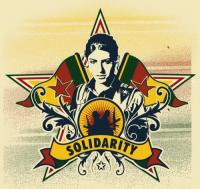 The siege of Kobani by Islamic State (ISIS) brought worldwide attention to the Syrian Kurdish PYD (Partiya Yekîtiya Demokrat, Democratic Union Party), the leading force in the Kurdish-majority areas in northern Syria. The PYD calls this region Rojava—literally meaning “land of the sunset” but also translated as “West Kurdistan.”
- « Newer Posts
- 1
- …
- 5
- 6
- 7
- 8
- 9
- 10
- 11
- …
- 13
- Older Posts »