Place: North America
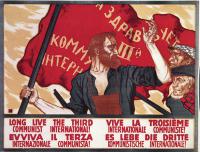
Jacob A. Zumoff. The Communist International and US Communism, 1919-1929. Leiden / Boston: Brill, 2014. 443 pages. Bibliography. Hard Cover $167.
Jacob A. Zumoff has written an impressive scholarly tome that is perfectly described by the title: The Communist International and US Communism, 1919-1929. He makes a reasonably convincing case for a novel thesis that attempts to reframe the major question: the relationship between the Soviet and American Communists. Yet, in my view, he fails to address the central question, the Soviet domination of the Communist International, including its domination of the American Communists in the 1920s.
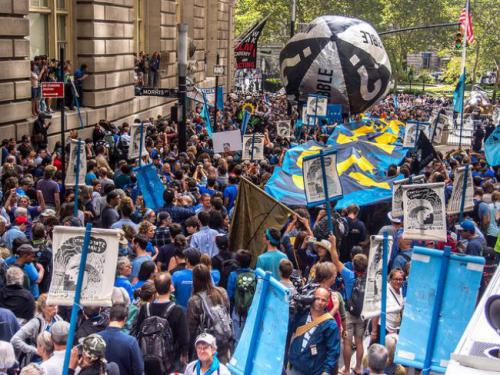
[Eds.: On Monday, March 2, 2015, in New York City a trial begins for eleven activists who are refusing to plead guilty to disorderly conduct and pay fines for taking part in a climate sit-in in Manhattan's Financial District last September. The Flood Wall Street Eleven plan instead to use their trial to illustrate that the bankers who finance climate change are the real harbingers of disorder. Below is a collective statement from the group. You can sign a petition in their support here.]
In order to solve a problem, you must first identify its’ source. . .
A small group of Newark high school students Tuesday night seized the office of state-appointed superintendent Cami Anderson in a protest timed to coincide with her imminent re-appointment to another year, her fifth, as head of the state’s largest school district. The action, which is continuing through the night, stands in stark contrast to the failure of Anderson’s older–and, theoretically, more powerful–critics to do anything to dislodge her from her post.
Surveying the wreckage of his party’s 2014 election campaign, Howard Dean, on the November 9th Meet the Press, was candid, with such sound bytes as, ““Where the hell is the Democratic party …You got to stand for something if you want to win.” The Republicans’ message was, “We’re not Obama.” What was the Democrats’ message? “Oh well, we really aren’t either.”
Translation: “Get my message; we need a message.”
 [Ed. note: Readers of David Finkel's November article on "The Trials of Rasmea Odeh" will be interested in this alert from the Rasmea Defense Committee.]

Mike Alewitz, the internationally famous muralist, is fighting for the installation his mural “The City at the Crossroads of History” at the Museum of the City of New York. Commissioned by the Puffin Foundation, the museum has refused to install the piece because of objections to its content. Alewitz calls this a case of censorship, while the museum argues it is a question of “curatorial standards.” There is a petition campaign in support of the installation of the mural. (Find at the foot of this article links to a slideshow of the mural, an interview with Alewitz, and the petition site.)
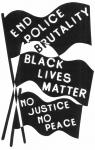
The Black Lives Matter Movement is alive and well. If it has for the moment—under political attack and facing the winter’s sub-freezing temperatures—withdrawn from the streets, it has done so to plan a new stage in the fight for justice for African American victims of police racism and violence. As many as 400 people, mostly young people of color, attended the eight-hour long Black Lives Matter Gathering at the famous Riverside Church in Manhattan on January 30 where in workshops, trainings, and plenary sessions it seemed that a new direction was being set for the movement.
 The fate of the socialist left is tied to that of the working class movement—and the last four decades of one-sided class war have had dire consequences for both. The thread linking today’s generation of young workers to U.S. labor’s proud history of class struggle has been effectively broken and must be developed anew. This is a daunting but necessary task for rebuilding the working-class movement.
 [This article is a reply to David Goodner's "Why Bernie Sanders Needs to Run for President—As an Independent."]
Dear David,
You want the excellent Bernie Sanders to run as an independent in the 2016 presidential. So do I!
 [This article originally appeared in In These Times. See the reply by Michael Hirsch.]
Since the year 2000, victories claimed by death penalty abolitionists have seemed significant. In 1999, the United States executed 98 death-row inmates, the highest number since capital punishment’s reinstatement following the Gregg v. Georgia Supreme Court ruling in 1976. Subsequently, however, executions have been on the decline, with 39 inmates killed in 2013.
Those disturbed by the United States’ largest-in-the-world incarceration rate have some new reasons to be cautiously optimistic. President Obama nominated an opponent of the drug war to the Justice Department’s highest civil rights position, signaling the possibility that the costly and counterproductive imprisonment of drug users may be coming to an end.
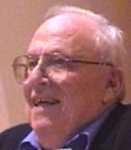
Franklin Fried, who devoted more than 70 years to supporting and fighting for freedom, justice, equality, and liberation for working and oppressed people in the U.S. and around the world, died Tuesday, Jan. 13, at his home in Alameda, California. He was 87.
Norman Finkelstein has made his career taking the nasty assignments. It’s been dirty work, but presumably someone had to do it: plowing through the works of Joan Peters, Daniel Goldhagen, Elie Wiesel, Alan Dershowitz, and a small army of official and unofficial Israeli state propagandists.
In 1994, Pamela Donovan and I wrote an article for the journal Social Justice called “A Mass Psychology of Punishment: Crime and the Futility of Rationally Based Approaches.” We argued that the crime issue had become in that decade—as mass incarceration grew exponentially, and while rates of violence were steadily and contradictorily declining—a key psychosocial mechanism that facilitated redirecting and displacing anger at broad inequalities felt by lower- and middle-class people, among others, onto “criminals” (who were more than likel
 In the first days of August 2014, the Rosa Luxemburg Stiftung—New York Office brought together one hundred influential leftists from across the United States, Canada, and Europe for an “un-conference” on socialist strategies. The retreat was held at the Edith Macy Center, located in Westchester County about an hour north of New York City.
 Rebuilding a U.S. socialist left requires, first of all, coming to grips with the full magnitude of the social crisis and decline in this society.
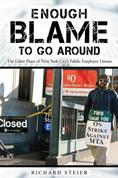 Review of: Richard Steier, Enough Blame to Go Around: The Labor Pains of New York City’s Public Employees. Albany, New York: Excelsior Editions/State University of New York Press, 2014. 304 pp. US$24.95 (paperback).
Two things I know to be true about Richard Steier. He is the best full-time reporter on the New York City labor beat. He is also the only full-time reporter on the New York City labor beat.
The killings of Michael Brown and Eric Garner, by police who were not indicted by grand juries in Missouri and New York, represent only the latest in a string of such police or vigilante killings—sometimes clearly murders—of African-American or Latino men.
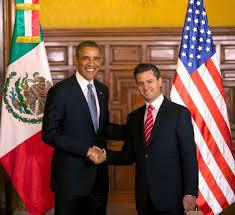
Though little-noticed by the U.S. media, events north of the border bore striking similarities to developments in Mexico in 2014. Like in the mass protests that arose south of the Rio Bravo and then rapidly extended worldwide over the police killings and forced disappearances of the Ayotzinapa rural teachers’ college students in Guerrero, Mexico, the catalyzing issue in El Norte was police violence.
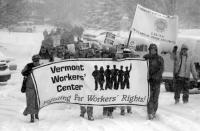 As human rights organizations, representing struggles ranging from disability rights to labor rights to criminal justice reform, from migrant justice to climate justice, we recognize the struggle for black liberation as central to securing all of our human rights in a country founded upon systemic racism.
- « Newer Posts
- 1
- …
- 47
- 48
- 49
- 50
- 51
- 52
- 53
- …
- 73
- Older Posts »