Place: Iran

Donald Trump's withdrawal of the United States from the Iran nuclear agreement has set a path toward another Middle East war. It is not necessarily a war that will erupt right away or in the short term, and it may be averted if the United States is politically isolated and there’s a mass revival of an international antiwar movement. That’s what every sane person, and certainly every socialist and peace activist, should hope and work for.
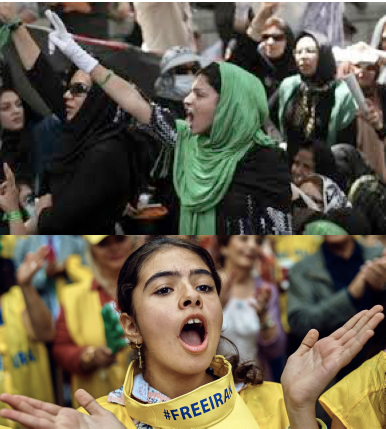
We, the Alliance of Middle Eastern Socialists, support the popular protests in Iran and call on progressives in the region and throughout the world to stand in solidarity with them as well. We believe it is an absolute necessity to build regional and global solidarity with anti-authoritarian struggles for democracy, social justice and equality, and to oppose patriarchy, racism, sectarian or homophobic discrimination and prejudice. We hope that the current protests in Iran will force the Iranian regime to withdraw its military and financial support for the murderous regime of Bashar al-Assad in Syria, and to end its reactionary interventions in the region. We also hope that the efforts by some elements to inject anti-Arab chauvinism into the movement will be rejected in order to reach out to grassroots struggles across the region.
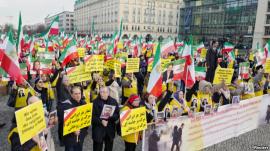
An Alternative to the Politics of “National Security” Emerges
Days of protests in Iran have caught statesmen, analysts and observers by surprise, even though the anti-austerity and anti-establishment sentiments behind this primarily working-class revolt have been brewing for years. All the same, surprise is not a common reaction across the media.
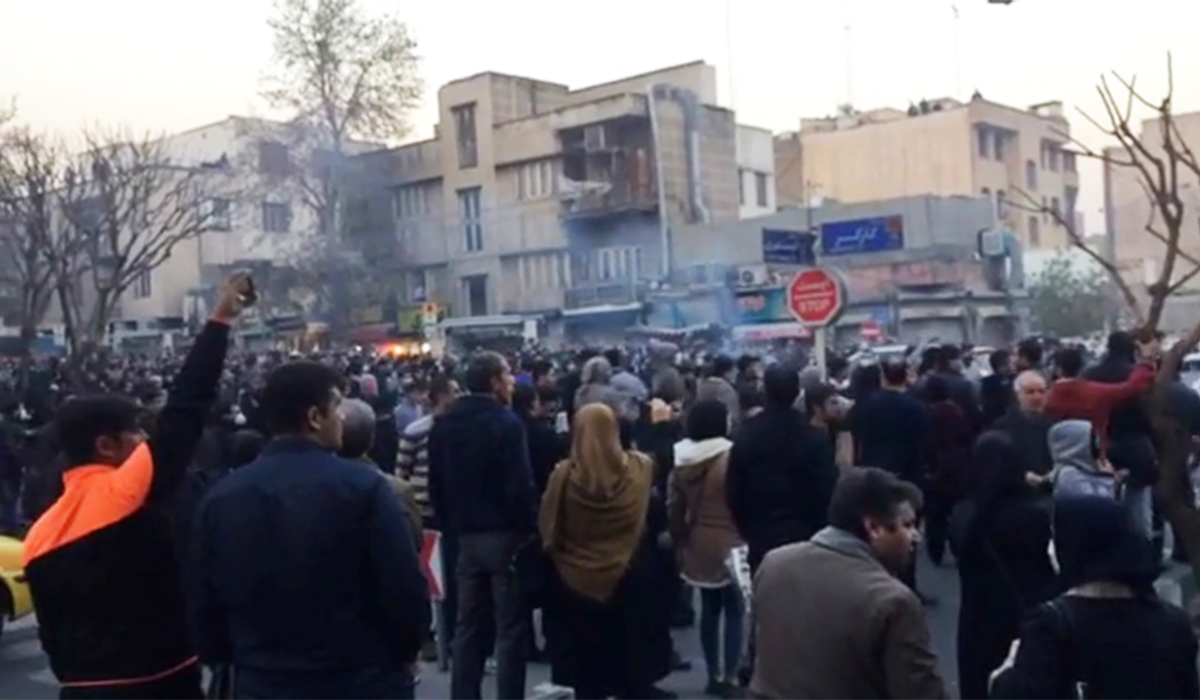
Over the New Year, a wave of protests has erupted in Iran, as people in towns all over the country took to the streets to air their grievances.
Many protests were about basic economics – unemployment or low pay, high prices for basic foodstuffs like eggs – but there have also been reports about political aspects to the protests.
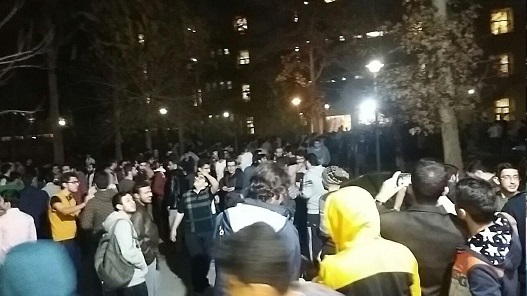
Since Thursday December 28 the Iranian people have engaged in extensive protests against the government of religious despotism in Iran. These protests have continued in full force in tens of Iranian cities, from north to south and from east to west of the country. The protests started with slogans against poverty, rising prices and unemployment, and in no time attacked the entire Islamic Republic as the prime destroyer of people’s lives.
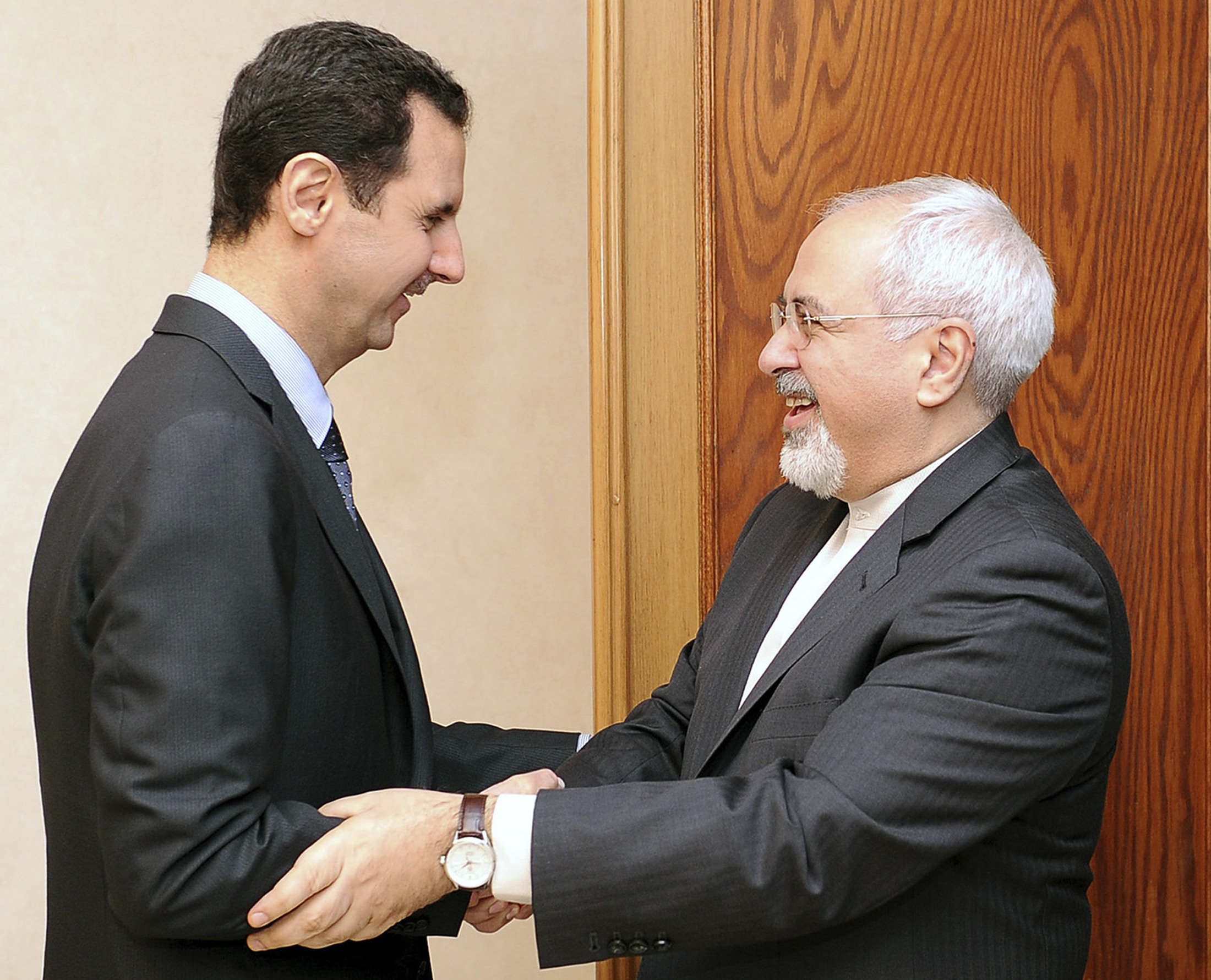
Below we print a summary of a longer article by two Iranian socialists who are opposed to Iran’s military intervention in Syria. Their article is followed by a response from Frieda Afary and Joseph Daher.
Five years after the beginning of the popular Syrian Revolution which demanded democracy and human rights, the Syrian revolutionaries have been decimated through the combined military force of the Assad Regime, the Iranian regime with its sectarian militias, Russian air strikes and military assistance on the one hand, and the ultra-terrorist ISIS and other Salafist – Jihadist organizations on the other hand. Nevertheless a partial reduction of airstrikes by Russia and the Assad regime in early March led to an immediate revival of mass protests of the democratic opposition across the country with banners such as the following in Idlib: “Our peaceful revolution is still in progress until toppling Assad and imposing justice all over Syria.”

Mahmoud Beheshti Langroodi has been on hunger strike in Evin prison since November 26, 2015. His health has severely been deteriorated but he has refused to stop his hunger strike.
In a statement from Evin Prison on December 2, 2015, Mr. Beheshti Langroodi announced: “I hereby declare: I, Mahmoud Beheshti Langroodi, who have spent 25 years of my life teaching children of this land, and have more than 15 years of trade union activities in support of our esteemed teachers, have been on hunger strike since Thursday, November 26, 2015 (Azar 5, 1394), to protest against an unjust verdict of “9 year imprisonment” by Judge Salavati in a trial that lasted a few minutes, hoping that authorities, especially judicial authorities, after hearing my cry for justice, take actions ‘to vacate the prison sentence until a judicial review by a competent court with a jury is conducted publically’.”
(NOTE: For some background, see my previous article: www.solidarity-us.org/node/4058 in Against the Current, January-February 2014.)
 AUGUST 19 — Even while the rhetoric around the P5+1 nuclear deal with Iran seems to be reaching reactor-grade “critical” level, signs are emerging that the fix just may be quietly in.
 Of course Congress should endorse the Iran deal. The renunciation of the agreement by Congress would have disastrous consequences for the Middle East, empowering warmongers everywhere, but especially in Washington, Tel Aviv, and Tehran.
There are three motives driving opponents of the deal.
In much of the global south, teachers are leaders of their communities. In Iran, two teachers are in mortal danger because they have defended their community’s religious freedom. Amnesty International has sent an alert for urgent action to defend them. I’ve sent an email message, reproduced below.
They aim to bring recalcitrant tyrants to their senses, to put an end to their external as well as internal malefaction. With surgical precision, they pull the noose ever closer around the tyrant’s neck, so that in hopeless despair he is compelled to behave reasonably in foreign affairs while, enfeebled, he lifts his bloodied hands from the throat of the oppressed people. It is a morally justified decapitation of evil, the salutary removal of a swelling tumor.
Havaar: Iranian Initiative Against War, Sanctions and State Repression is a grassroots group of Iranians, Iranian-Americans and allies who have joined together to categorically oppose any military action and the U.S.-led sanctions against Iran. They stand in solidarity with the Iranian people’s struggle against war and sanctions and against state repression; all of these forms of violence, they insist, hurt the lives and aspirations of ordinary Iranians.
According to the Israeli government, two Iranian warships plan to sail through the Suez canal en route to Syria. Israel’s foreign minister, Avigdor Lieberman, declared that “this is a provocation that proves that Iranian audacity and insolence are increasing.” The international community, warned Lieberman, “must understand that Israel cannot forever ignore these provocations.”
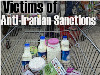
We, the undersigned, oppose the U.S.-led campaign to impose harsher sanctions on Iran, and the ongoing threat of war against that country. Despite Washington’s claims, its policy is clearly not animated by a genuine concern for protecting the world from the threat of nuclear war; otherwise how could Washington support such nuclear-armed states as India, Israel, and Pakistan, or maintain its own huge nuclear arsenal? Nor is U.S. policy driven by the goal of defending democracy.
New Politics readers and friends are invited to sign the Campaign for Peace and Democracy statement “End the War Threats and Sanctions Program Against Iran – Support the Struggle for Democracy Inside Iran.” The statement is being circulated widely in the United States and internationally. To sign on or see the evolving list of signers go to http://www.cpdweb.org/stmts/1015/stmt.shtml.
Joanne Landy and Thomas Harrison, Co-Directors, CPD, cpd@igc.org. The statement along with a selected list of signers is below:
The Persian language blogosphere is rich, varied, and dynamic. Of the 100 million blogs registered around the world in 2005, 700,000 were Persian language, either inside Iran or in the diaspora. Of these, over 60,000 are updated frequently. With over 20 million Iranians connecting to the internet, and over 600,000 Iranians signed up on Facebook by the presidential election of the summer of 2009, the Iranian cyber community is by far the most dynamic such community in the Middle East, and one that is unambiguously diverse.
Recent news about Iran has been dominated by U.S. attempts to increase sanctions, and one could be forgiven for thinking the world hegemonic capitalist power is preparing war against a major nuclear power. The reality is far different: all the fuss is about a country where nine months of mass protests have not only weakened the state but also divided the ruling circles, making reconciliation at the top impossible.
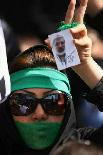
A year has now passed since the explosive appearance of Iran’s Green movement in June 2009. Suspecting malfeasance in the official tally of the country’s June 12 presidential election, millions of Iranians took to the streets. The historian Ervand Abrahamian, author of the classic Iran Between Two Revolutions, described the silent rally of June 15 at Azadi (Freedom) Square in Tehran (London Review of Books, 7/23/09):
February 2004 marked the twenty-fifth anniversary of the Iranian Revolution. From September 1978 to February 1979, in the course of a massive urban revolution with millions of participants, the Iranian people toppled the regime of Muhammad Reza Shah Pahlavi (1941-1979), which had pursued a highly authoritarian program of economic and cultural modernization. By late 1978, the Islamist faction led by Ayatollah Ruhollah Khomeini had come to dominate the antiregime uprising, in which secular nationalists, democrats, and leftists also participated.
"What we're seeing here, in a sense, is … the birth pangs of a new Middle East…."
— Condoleezza Rice, July 21, 2006
- « Newer Posts
- 1
- 2
- 3
- 4
- 5
- 6
- Older Posts »