
Place: Europe
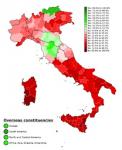
On December 4, 2016, the Italian electorate was asked to vote on a government-proposed constitutional reform, and the vote dealt the government and Prime Minister Matteo Renzi’s plans a ringing blow. The referendum was a political gambit on which the PM bet everything, yet 59.1 percent of voters rejected the reform. Barely an hour after the polls closed, Renzi announced his resignation.
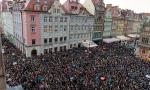
In Poland the law on abortion is one of the most restrictive in the European Union, sex education does not exist, and contraception is both expensive and hard to obtain because a medical prescription is often needed.
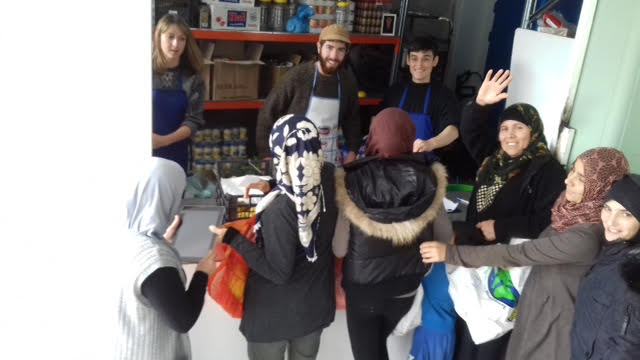
Dear Friends and Family,
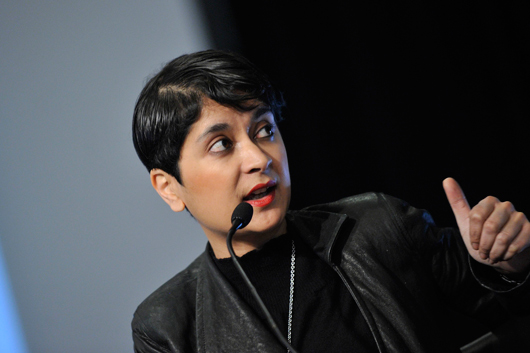
Last April a row engulfed Ken Livingstone, former Labour mayor of London, and Naz Shah, Labour MP for Bradford West, following remarks they made about Israel and Zionism. They were suspended from the Labour Party, with Naz Shah having the parliamentary whip withdrawn. Shah has been reinstated, and though Livingstone has demanded that he too be reinstated, a decision has yet to be made by Labour’s National Constitutional Committee.
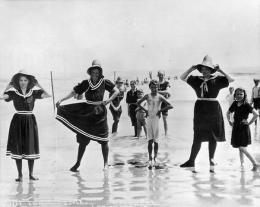
This essay was originally written as a letter to the editor of La Gazette de Montpelier. Translated from the French by Nancy Holmstrom.
As a retired American historian, specialized in French civilization, and for the past 20 a resident at the Mediterranean costal town of Palavers-les-Flots, permit me to remind the mayors of our beach towns as well as the Prime Minister of the Republic, of a little historic fact forgotten by those who make an affair of state of modest women who wish to remain covered when they take their children bathing at the beach. This practice is nothing new. It was in almost identical dress that my grandmother and my aunts went bathing around 1900, without anyone being scandalized. (see the attached photo). On the contrary, in that period and up to the 1960s, the girl who wanted to present herself (except on nudist beaches) in a bikini risked being reprimanded by the police and given a ticket – as happened to a woman in a burkini yesterday at Cannes.
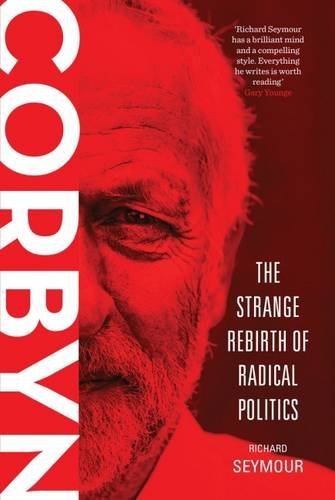
Richard Seymour, Corbyn: The Strange Rebirth of Radical Politics. New York: Verso, $19.95. 256pp.
This time last year I believed Jeremy Corbyn was wrong to stand for the Labour leadership; he would, I thought, get a derisory vote and merely reinforce right-wing hegemony and the marginalisation of the Labour left. Since then the unexpected has happened, and perhaps we should all be a bit cautious in pronouncing on what is and is not possible.
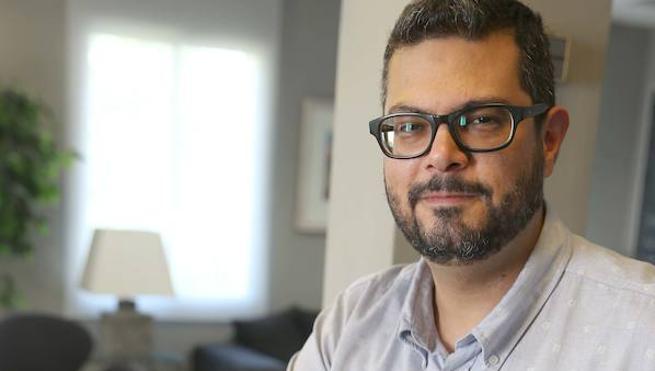
When the 15-M movement broke out onto the streets across Spain in 2011, it didn’t coalesce into a series of political parties on either end of the political spectrum. In fact, there was a common declaration that stood out among all of the indignados: “They don’t represent us”.
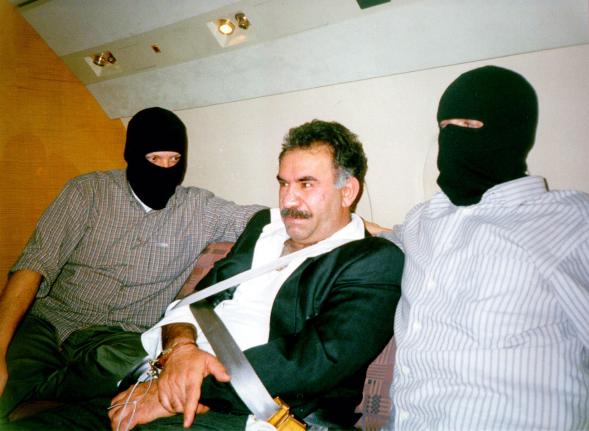
Unite has welcomed the backing from the 400,000 strong US union, the UAW, for the freedom of Abdullah Ocalan, the leader of the Kurdish Workers’ Party who remains imprisoned in Turkey.
When I was writing the following lines two years ago, I was almost able to see the smirk on the face of some of my comrades who would subsequently read them:
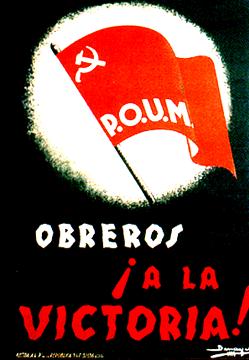
On 18 July 1936, part of the Spanish army, backed by the upper classes and the Catholic church, rose up with the intention of ending the country’s experiment in democracy and social reform (the Second Republic 1931-6). The resulting civil war would be one of the pivotal events of the 20th century. For some it was the rehearsal for the Second World War, for others the “last great cause”.
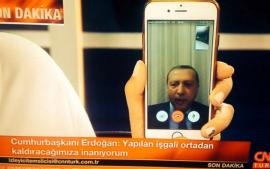
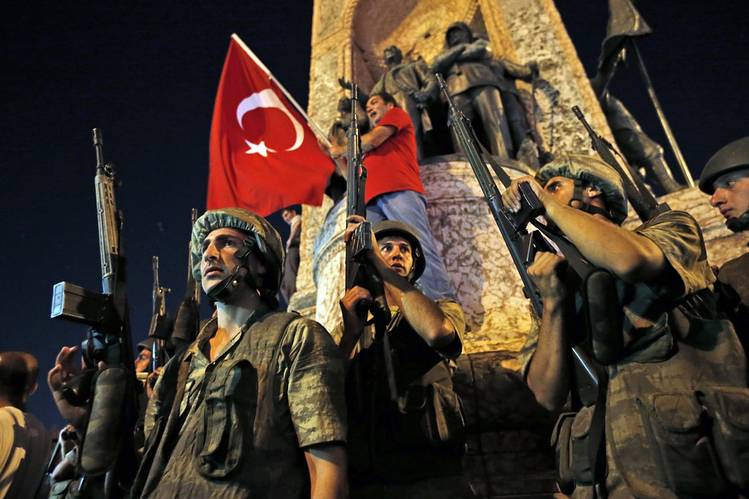
People in Turkey are no strangers to military coups. Following more than twenty-five years of single-party rule after the establishment of the Turkish Republic in 1923, a coup in 1960 toppled the government of the Democratic Party. In 1971, 1980, and 1997 the military either overthrew or deposed sitting governments.
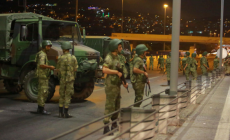
On the night of July 15, the Turkish society watched a military coup attempt, live on TV. For some it was so difficult to make sense of it that they chose to interpret the whole event as “staged”, being a member of a society inclined towards conspiracy theories. How could one call this a real military coup?
With abstention up by 4% from the last parliamentary elections in the Spanish state on December 20, 2016 (69.84% participation against 73.2%), the results of what we might call a “second round”, with the right wing Popular Party (PP) increasing its number of votes (600,000 extra votes and 33% of voters) and its number of seats to 137 (against 123 previously), and a Socialist Party (PSOE) which, despite losing 100,000 votes (22.7% of voters) and five seats, remains the second biggest political force in the country.
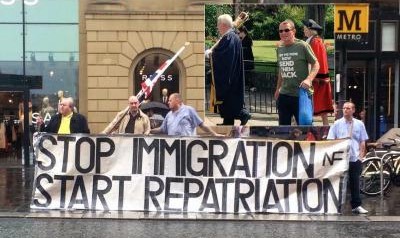
The Leave / Brexit vote in the referendum came in the end as a surprise, a narrow win for Remain was expected. This may be because the core Leave vote was in the run-down white working class communities of the now desolate English and Welsh industrial zones. A population trapped in conditions of long-term unemployment and poverty who no one really pays much attention to anymore.
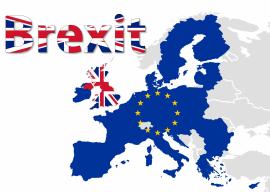
The British electorate issued a stunning rebuke to the establishment by demanding, by a surprisingly respectable margin, withdrawal from the European Union. Just weeks ago, this outcome was considered remote. For David Cameron and the Conservative mainstream, it was – or so it seemed – a clever gamble. Let the nativists of the right, the Tory backbenchers and the UK Independence Party bigmouths test their outsized claims to speak for Britain.
 The month of May witnessed the second round of massive general strikes to hit Greece in 2016. Mobilizations on May Day were followed by four days of strikes in the lead-up to the Syriza government passing its austerity pension bill.
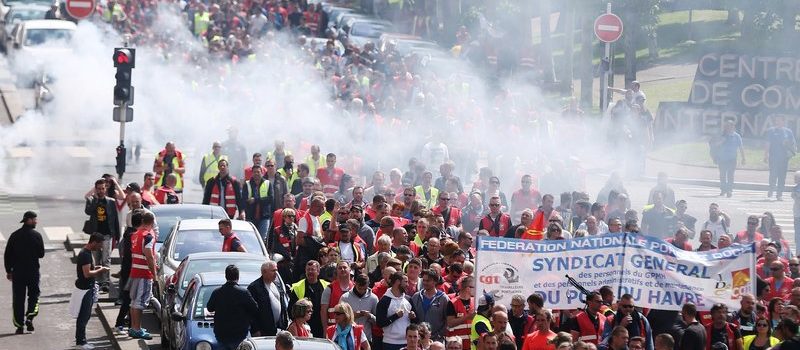
As France prepare to host millions of visitors at the Euro 2016 Football Championships, a state of emergency has been extended in the country as it faces its largest protests in recent history.
Hundreds of thousands of citizens have taken to the streets in France, amounting to what some are calling the new French Revolution amid a total media blackout in Western news outlets.
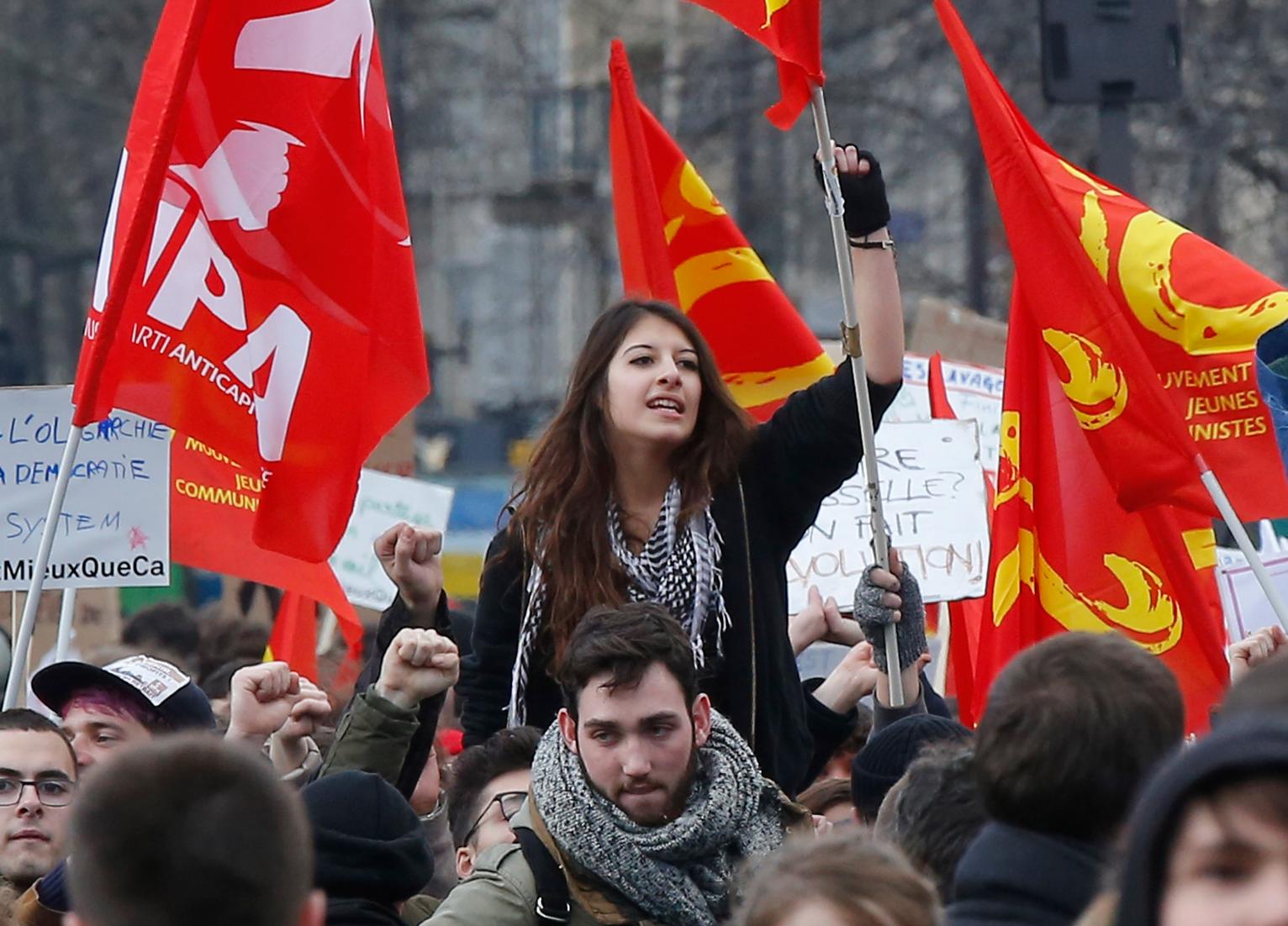
“The 49-3 is a brutality. The 49-3 is a denial of democracy.” Despite François Hollande’s opinions on this article of the French constitution in 2006, his government under Manuel Valls (who had himself been among the MPs proposing it be suppressed in 2008) used it to force through the unpopular law proposed by Minister for Labour Myriam El Khomri on May 10. This provoked an immediate reaction from the coordinating committee of workers’ and students unions calling days of national mobilisation and strikes on May 12, May 17, May 19, to continue on May 26 and June 14. [1]
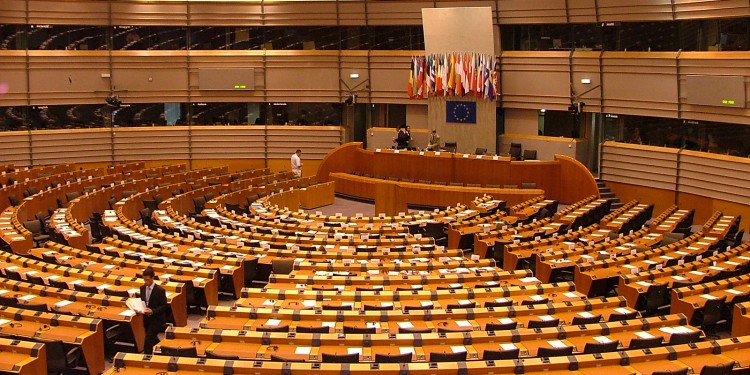
The process of European unification is undergoing a deep crisis, certainly the deepest since it started at the beginning of the 1950s. In less than a year, the EU faced two major tests—first the Greek quarrel, then the refugee crisis — that revealed its true face: a mixture of impotence, unwillingness, egoism, arrogance and cynicism. It is not a pretty spectacle. No illusions can remain about this entity that, far from embodying the federal ideal, has become an empty shell, an object of shame and deserved sarcasm. Those who still ritually proclaim its virtues are the representatives of a highly discredited political elite who seem to no longer have any culture or values. The more they assert their belief in the EU, the more they disqualify it, even in the eyes of the millions of people who have never felt any sympathy for conservatism, nationalism and xenophobia.
[Montpellier, May 26, 2016] “We’ve had enough” is the phrase on everyone’s lips as – against all expectations — the wave of strikes, blockades, disruptions and mass demonstrations begun eleven days ago continues to develop throughout France. Indeed, in the past couple of days, two new strategic groups of workers have joined the protest. Technicians at France’s nuclear power plants are now cutting back on production of electricity, and the railroad workers have massively joined the street protests while cutting back on trains. Meanwhile, there are long lines at the gas pumps as petroleum workers continue to blockade France’s major oil refineries.
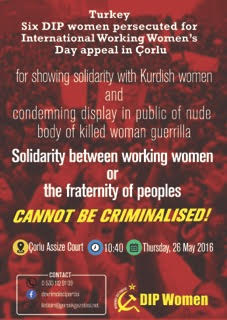 Dear Comrades and Friends,
Six women members of the Revolutionary Workers’ Party (DIP) of Turkey are being persecuted for their activity around the International Working Women’s Day. They are now being tried in court for support to and propaganda of terrorism simply because they have expressed solidarity with Kurdish women brazenly repressed and humiliated by security forces.
- « Newer Posts
- 1
- …
- 15
- 16
- 17
- 18
- 19
- 20
- 21
- …
- 28
- Older Posts »
The New Politics Summer 2026 issue is now in the hands of subscribers, featuring articles on Democracy versus Degeneration in the United States (with contributions by Dan La Botz, Ellen Schrecker on McCarthyism Then and Now interviewed by Elizabeth Rapaport, Ben Silverman on the fascism debate, Samuel Farber on free speech, Samuel Barney on rural prisons, and Raoul Cansino and Bill Kelly on nativism), Imperialism Around the World (with articles by Lisbeth Moya González on Cuba, Husam Mahjoub on Sudan, Siyavash Shahabi and imperialism and the working class, and Matt Benson on the Mapuche in Chile), interviews on labor struggles and Russian political prisoners, a history of the International Socialists, review essays by Frieda Afary on AI, Javier Sethness on Western Marxism, and Peter Drucker on Molly Crabapple, as well as reviews on Ukraine, the Teamsters for a Democratic Union, white rage, South Asia, and Afghanistan, plus a letter on women under the Taliban.