Place: Europe
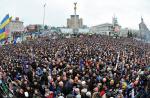 New Politics readers will be interested in this ZNet article “What Happened in Ukraine” by Sam Friedman, an HIV/AIDS researcher who spent time in Ukraine for many years before the recent upheavals in the country.
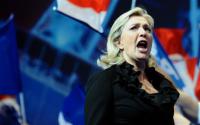 Seventy years after the end of World War II and the defeat of fascism and Nazism, the extreme right is on the rise in almost every European country.
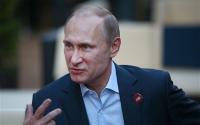 Putin’s Russia is an imperialist state dominated by a capitalist oligarchy that controls the state and that has developed a bellicose attitude toward its neighbors, whom the oligarchy reproaches for having taken advantage of the collapse of the Soviet Union in order to escape its century-long tutelage.
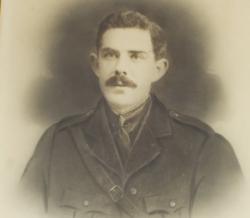
In the Ireland of 1922, a civil war tore through the land and in its path it ripped apart families and friendships. It also created a deeper wedge in an unstable society where the church grappled for top position in an emerging new state.
The Irish Republican Army had fought a War of Independence against British rule for over three years and, led by the young enigmatic Michael Collins, it managed to push the British government to the negotiating table.
.jpg)
On Saturday, June 20, a quarter of a million people marched in London from the Bank of England to the Houses of Parliament in order to protest against the Conservative government’s planned spending cuts to public services. This was the largest single demonstration against austerity to date and reflected to a degree the revival of a radical political left in Britain after decades in the wilderness.

The following is a statement on the Greek Crisis issued by the International Union of Food, Agricultural, Hotel, Restaurant, Catering, Tobacco and Allied Workers' Association (IUF) on July 1, 2105.
A specter is haunting Europe – the specter of a democratic alternative to austerity. The Syriza government of Greece incarnates that alternative, which is why the European Commission and the European Central Bank (ECB) have allied with the IMF to exorcise the challenge it represents. With few exceptions, political parties of every persuasion have tacitly or actively supported the anti-Syriza coalition.
 If the ongoing standoff between the Syriza government and the Troika of the European Union (EU), European Central Bank (ECB), and International Monetary Fund (IMF) could be boiled down to its essentials, it would be this: The “institutions” will only equip the Greek economy with enough operating funds to manage a bare-bones o
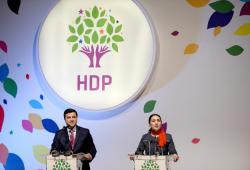
In the weeks leading up to the June 7 parliamentary election in Turkey communities across the country were gripped with a mixture of excitement, anxiety, and fear. Though President Tayyip Recep Erdoğan was supposed to be above the fray of party politics, the former two-term prime minister and co-founder of the Justice and Development Party (AKP) made no secret of his hopes for an AKP victory, as he rallied and spoke continuously in the weeks and months before the election. 367 seats in the 550-member parliament would make possible Erdoğan’s desire to change the Turkish government from a parliamentary to a presidential system, thereby enhancing executive, and Erdoğan’s, grip on political power.
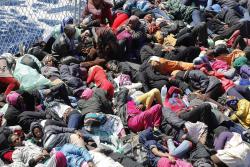
More than 800 migrants died on April 19 this year when their overcrowded boat capsized in the Mediterranean Sea off the Libyan coast. The tragedy sent soaring this year's Mediterranean death toll which was by then around 1,500 – 10 times the deaths during the same period last year.
According to the International Organization for Migration (IOM), between 23,000 and 24,000 migrants had tried to cross over to Italy since the beginning of the year, while just under 21,000 migrants made the same journey between January and April 2014. While the number of migrants rose to some extent, migrants perishing at sea have hit the roof.
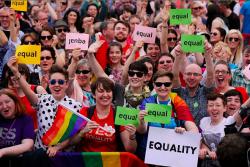
On May 23, 2015 Ireland finally threw off the shackles of a conservative Catholic past and voted in favor of social equality.
The Irish electorate was asked to vote in a referendum to include gay marriage in our constitution and we agreed in great numbers to this proposal.
Many young people who had to leave Ireland in recent years due to austerity, managed to make the journey back home to vote yes. They sailed home and flew home under the hash tag “home to vote” which lit up Twitter and many had aspirations of returning for good once the land of their birth shakes off its recessionary hangover, but for the meantime they can proudly boast they took part in creating a Irish society everyone can live in.
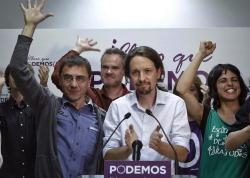
Podemos can still change Spain for the better. But it won’t do so by chasing the political center.
The strategic debate inside Podemos has become a public issue. Pablo Iglesias, the leader of the Spanish party, even recently jumped into the discussionwith an article explicitly inspired by Antonio Gramsci. But beyond the direct leadership of the party, the strategy debate involves something that pertains to everyone — to the scores of people and social sectors who desire a profound transformation of the Spanish political reality.
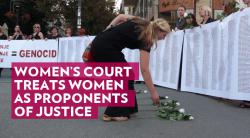
The Women’s Court on war crimes against women during the war in the 1990ies formally started in Sarajevo, Bosnia on May 7.
Women came together from all the corners of the former-Yugoslavia to participate in the Women’s Court in Sarajevo, to demand justice for the crimes committed against them during the wars and the enduring inequalities and suffering that followed.

On May 22 this year, people in the Republic of Ireland will exercise their democratic right by going to the polls to vote on two proposals to change the constitution. The first proposal is to allow same sex couples the right to marry each other. It is a proposal that has created much debate across the nation but one in which many favour and looks set to pass comfortably. The second proposal is one which has sparked less of a debate and it is worrying.
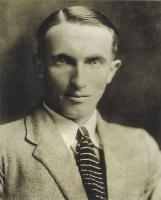
Liam O’Flaherty is regarded as one of Ireland’s finest writers of the twentieth century, but before he rose to literary prominence, O’Flaherty led a little known and short lived occupation of the Rotunda Concert Hall in Dublin city just days after the formation of the Irish Free state in 1922.
Born off the coast of Galway on the Aran Island of Inis Mor in 1896, O’Flaherty served with the Irish Guards during World War I. After experiencing severe shellshock in Flanders he was discharged with a disability pension and led a somewhat nomadic life for the next few years.
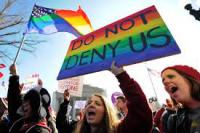 This article was originally written for the Swiss socialist newspaper solidaritéS for which I am a correspondent with the goal of giving activists there some sense of the recent fight for marriage equality in the United States. – DL
The U.S. gay rights movement won a tremendous victory in early April as governors and the state legislatures in Indiana and Arkansas were forced to back down and revise laws that would have discriminated against gay and lesbian couples.
 In the weeks following its historic victory in the Greek elections on January 25, 2015, Syriza has been engaged in a bitter struggle.
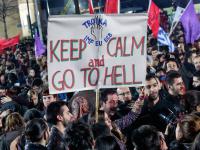 Since the pressures of international financial capital and its subservient political elites will continue with the same if not greater intensity, it is also certain that a new cycle of social mobilization in Greece and the rest of Europe will begin again.
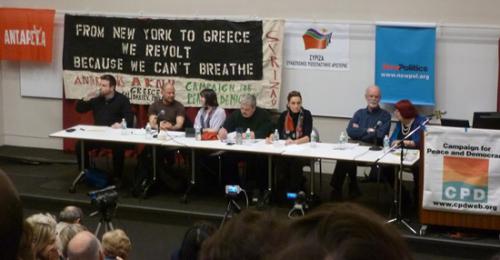
New Politics has previously posted a video version of a Feb. 6 New York City panel discussion sponsored by the Campaign for Peace and Democracy (CPD) entitled “After the Greek Elections: The Future of Austerity in Greece, Europe and Beyond.”
CPD has now posted text versions of the talks, along with separate updates by each of the speakers.
The agreement signed between Greece and the EU after three weeks of negotiations is widely lamented on the left as a setback, if not a defeat, for Syriza. The two sides emerged from the agreement, if that is an accurate description, with different interpretations of the memorandum, signifying perhaps that no real deal was made after all. Greece obtained brief reprieve. Its banks will remain liquid for the next few months. The next phase will not be about what can be extracted from the troika, as much as what Greece can do despite and in defiance of the troika. That is what will be discussed here.
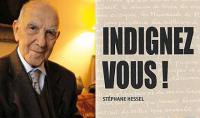
Two years have passed since one of the great political and social thinkers of our time departed this world.
On 26 February 2013 Stephane Hessel died at the age of 95. Hessel enjoyed a long life, from his birth in Berlin to his final breath in Paris, where one of his last works Indignez-Vous! (Time For Outrage) was published.
The Campaign for Peace and Democracy sponsored a panel discussion Friday evening on "After the Greek Elections: The Future of Austerity in Greece, Europe, and Beyond." A standing-room-only audience heard speakers address the success of the Syriza coalition party in the recent Greek elections and how it is dealing with the austerity crisis.
- « Newer Posts
- 1
- …
- 18
- 19
- 20
- 21
- 22
- 23
- 24
- …
- 28
- Older Posts »