Place: Europe
In this article I will analyze the current situation of the Left in Spain, ahead of the forthcoming December 20, 2015 General Elections, by considering how four of its political actors (United Left, Podemos, The Municipalist Platforms and Anti-capitalist Left) have shaped their strategies and agendas in response to the political changes that the 15M Indignados movement brought about.
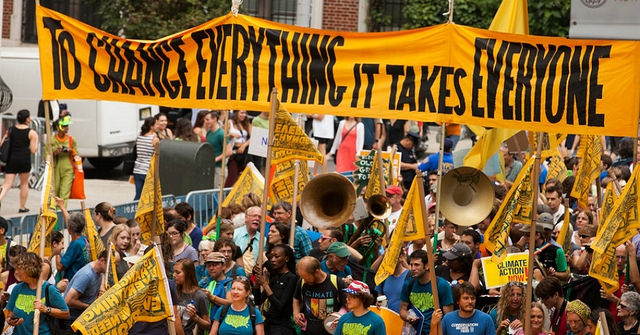
An international coalition of NGOs, civil society groups and political figures such as Naomi Klein and Susan George have called on the French president to lift the ban on protests during the COP 21 climate talks in Paris, which began on November 30th.
Following November’s terror attacks in Paris, the French government has imposed a temporary state of emergency that has prevented any protests from taking place in France. The local coaltion of NGOs and trade unions in in France, Climat 21, had planned a series of protests in Paris before, during and at the end of the climate talks which have now been banned.
It is a far from straightforward decision to found a union in a sector in which such an organisation has never existed before. For the most part, trade unions today have a (long) history: it may not be rare for workers to join a union, but it certainly is for them to participate in one’s founding and initial building. It is acutely challenging when the work itself to be organised is not entirely legal; when most of the workers are migrants in very precarious situations, who are regularly arrested and deported; when the legal context overlooks, and contributes to, high levels of violence and exploitation; and when, as if all of this was not enough, those who should be showing solidarity are on the other side, fighting to increase the criminalisation of the workers’ activity.
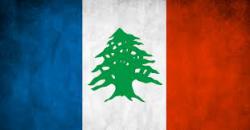
The November 13 attacks in Paris: the terror of the Islamic State, the state of emergency in France, our responsibilities
November 13 represents a change in the national and international political situation. The Islamic State (IS, Daesh) has struck again; and even more strongly. In January, the targets were the journalists of Charlie Hebdo, police and Jews. This time, it was the youth of the country that was the target. They did not kill just anyone, just anywhere: they attacked young people, young people in all their colours, whatever their origins, their religion (if they had one), their political beliefs. At least 130 dead, over 350 wounded – at the very least a thousand direct witnesses of the carnage. Many of us have relatives among the victims and, if not, we have friends who have. The shock wave, the emotion, is profound.
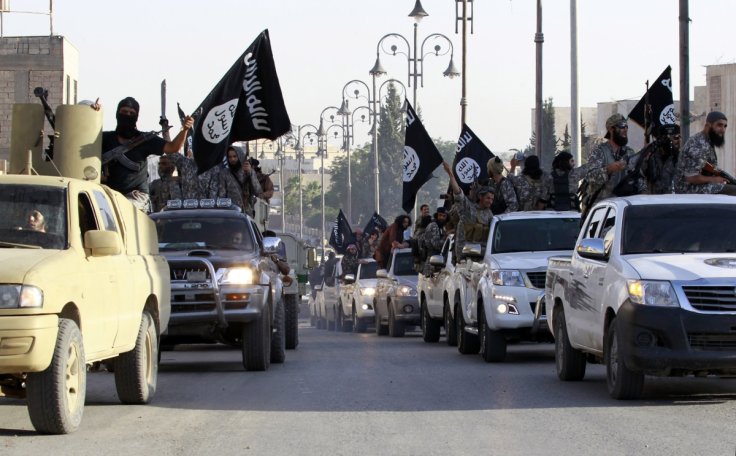
Militant Islamic State fighters parade on military vehicles along the streets of Raqqa (Reuters)
In the wake of the murderous massacres in Paris, the demand for violent retaliation against Islamic State (IS) is gaining momentum. David Cameron now plans a renewed bid to secure parliamentary approval for UK air strikes against IS in Syria.
At one level, this is an understandable reaction to the fascist-like tyranny and brutality of IS. But understandable reactions and effective reactions are often two different things. The desire for retribution, no matter how seemingly justifiable in response to the slaughter of so many innocents, is not a sound basis on which to frame political and military policy.
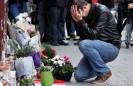
The despicable ISIS attacks on Paris and elsewhere have unleashed intensified war and imperialist machinations over Syria and Iraq, as well as repression of immigrants and renewed Islamophobia. Can the left oppose the carnage on all sides without losing sight of its emancipatory aims?
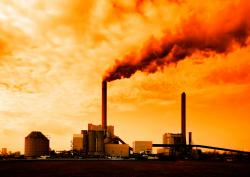
The pace of climate change is relentless. The projected date for the arrival of a 2°C rise in the global average surface temperature over pre-industrial levels is coming down all the time. It’s now estimated to happen by 2038. The earth will warm by at least 4°C by the end of the century, possibly 6°C.
The results of this are catastrophic: intensifying extreme weather events – heatwaves, droughts, floods, water shortages, hurricanes and tornadoes. The sea level is rising as a result of the melting icecaps.
The movie Suffragette is the first feature film that dramatically depicts the monumental struggle for women’s right to vote in pre-World War I England. (Please erase from your memory the horrible, and I mean horrible, portrayal of suffragettes in the Disney monstrosity Mary Poppins.)
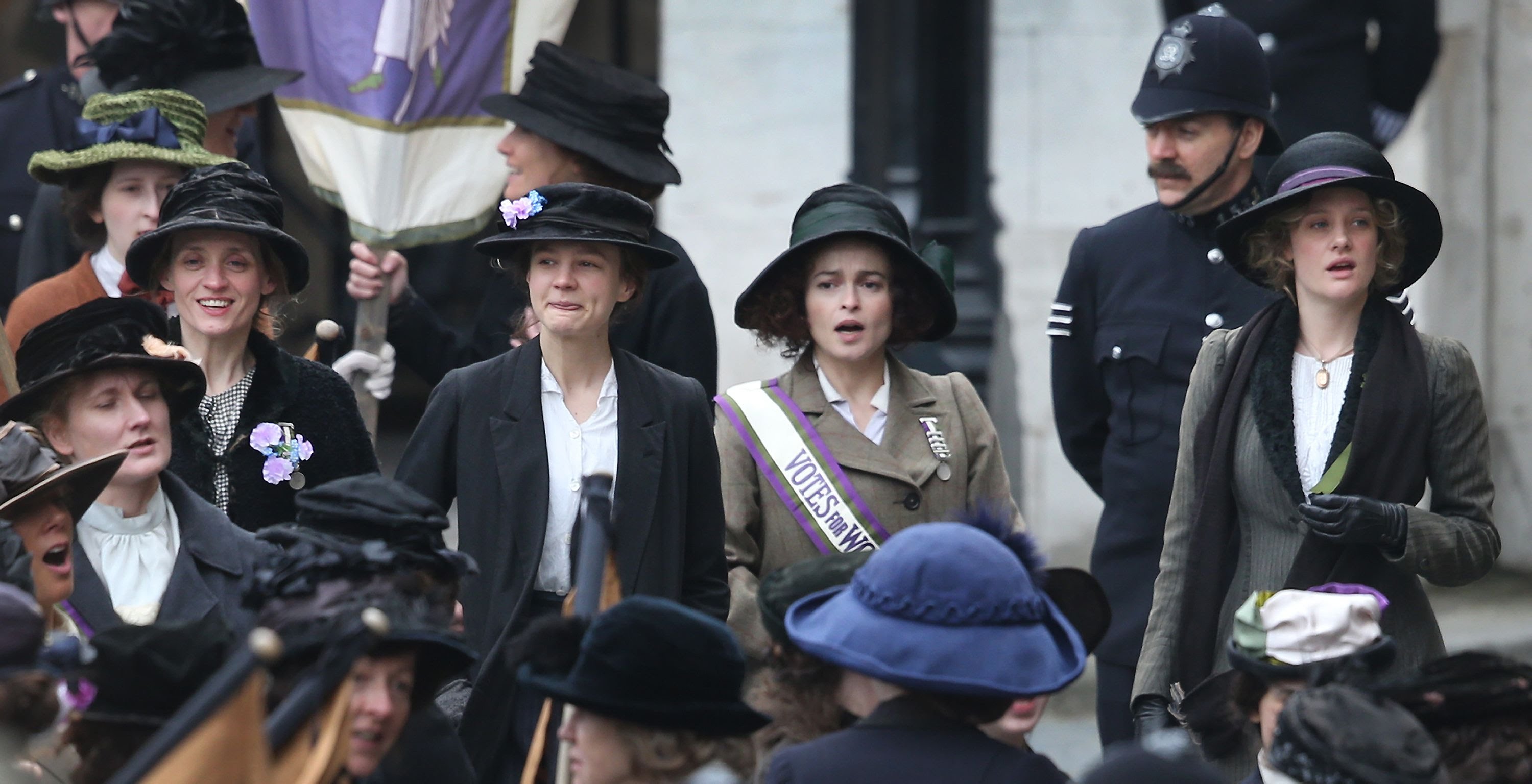
Directed by Sarah Gavron, with screenplay by Abi Morgan, the project also had the support and star power of Meryl Streep in a brilliant-as-always portrayal of Emmeline Pankhurst, the leader of the militant suffragette organization, the Women’s Social and Political Union (WSPU).
 The Portuguese center-right ultraliberal government, which went “far beyond the troika” won a relative majority in the 4th of October general election. With 36.8% of the vote and 1.994 million votes, the previous governmental coalition (PSD and CDS) was the winner. In second place came the Socialist Party, with 32.4% and 1.746 million votes.
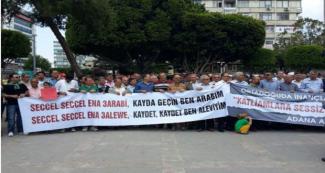
The October 10 Labor, Peace, and Democracy Rally in Turkey’s capital of Ankara was called to demand an end to the violent policies of the Turkish state. Organized by trade union federations and progressive organizations, the demonstration was also supported by the People’s Democracy Party (HDP), a leftwing pro-Kurdish party consistently demonized in recent months by the ruling Justice and Development Party (AKP).
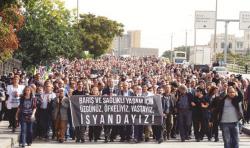
Strikes, boycotts, marches and demonstrations were held throughout Turkey on Oct. 12 in protest against the massacre at the Labor, Peace and Democracy Rally in Ankara on October 10 that killed at least 97 people, with funerals of the victims being held one after another, daily Hürriyet reported.
Turkey’s leading labor unions and professional organization–the Confederation of Public Sector Trades’ Unions (KESK), the Confederation of Progressive Trade Unions of Turkey (DİSK), the Turkish Medical Association (TTB) and the Union of Chambers of Turkish Engineers and Architects (TMMOB)—called for a nationwide strike and boycott for Oct. 12 and 13 to protest the massacre. The Revolutionary Workers Party has issued this statement. – Dan La Botz, Co-Editor
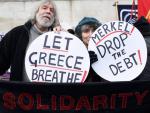 If nothing else, phase one of Syriza’s tenure has revealed the limits of reformism in a period of stagnation and global economic integration.
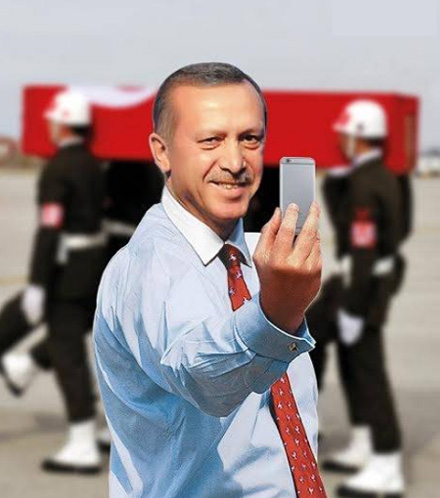
The Kurdish town of Cizre, a settlement with a population of approximately 150 thousand souls in Southeastern Turkey, is now under siege by the Turkish armed forces and the so-called “special operation force” of the police for a second time, after a previous one-week long siege was lifted for an interlude of two days. Around-the-clock curfew is accompanied by power cuts and the interruption of all means of communication including mobile telephones and the Internet. The evidence that came out when the first round of siege was lifted attests to a terrible human drama. Over 30 civilians are dead, ranging from a 35-day old infant to a 75-year old man.
The Greek Drama of 2015: What Next?
a talk by Nicholas Levis (Nikos Evangelos)
The preliminary report of the parliamentary Truth Committee on Public Debt declared the entire Greek debt to be odious, unethical, unsustainable and illegal. Do they have a case?
Sunday, September 13, 2015
2:00 – 3:00pm
International Affairs Building, Room 409
Columbia University, Manhattan
Entrance at 118th Street and Amsterdam
A development which no one expected now appears inevitable. Barring either otherwordly intervention or old-fashioned political dirty tricks, Jeremy Corbyn, long on the left wing of the British Labour Party, is slated to become that party's new leader.
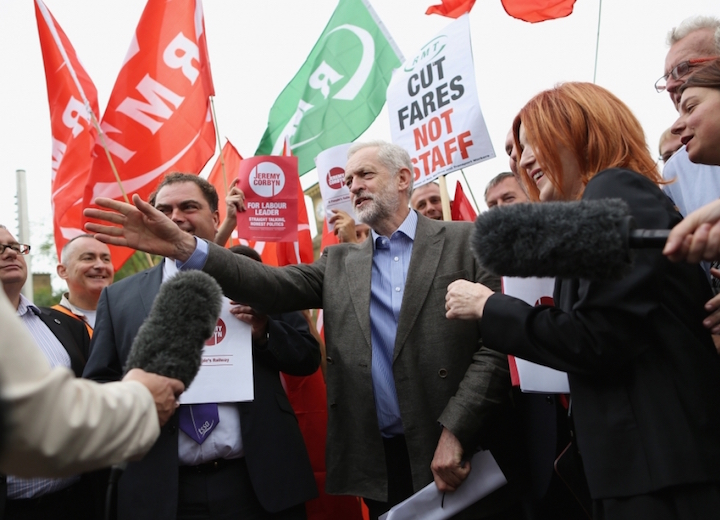
And the rabidly pro-capitalist heirs of long-gone "New Labour" leader Tony Blair, as well as the traditional right wing of the Labour Party, are absolutely apoplectic.
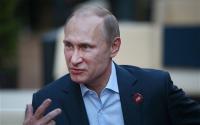
Jean Batou’s article Putin, The War in the Ukraine, and the Far Right in Volume XV No. 3 of New Politics, despite briefly acknowledging in its final paragraphs the role of NATO in the Ukrainian crisis, basically echoes the party-line apologists for NATO and American imperialism.
This is a video of a recent debate between Leo Panitch and Richard Fidler who discuss their differing socialist analyses of the politics of SYRIZA.
The debate was moderated by Susan Spronk.
The video is from Links: Journal for International Socialist Renewal but the debate was organized by the Socialist Project (Canada).
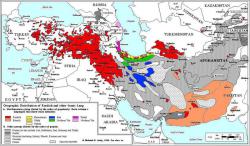
On July 20 at least thirty-two people were killed and at least 100 people were wounded by an ISIS suicide bomber. The attack took place in the Turkish town of Suruç, which stands only thirty miles away from the Syrian border. The victims, members of the Federation of Socialist Youth Associations (SGDF), were part of a 300-person contingent en route to Kobanî to assist in reconstruction efforts. The group consisted of a number of Turkish and Kurdish anarchist and socialist youth. As such, the solidaristic venture represented a major effort to create further bridges between the broader Turkish left and the Kurdish left.
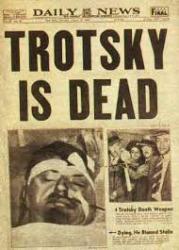
Leon Trotsky, the Russian revolutionary, was murdered seventy-five years ago today—on August 21, 1940—by Ramón Mercader, an agent of Joseph Stalin, Trotsky’s former comrade in the Communist Party and then the ruler of the Soviet Union. Stalin feared that Trotsky might organize a movement to overthrow the new ruling elite in the Soviet Union and that Trotsky’s followers might challenge the leading role of the parties of the Communist International active in working-class movements around the world. So Stalin had Trotsky murdered. The occasion of the anniversary of Trotsky’s assassination provides a moment to reflect on his significance both during his lifetime and for today.
While in Athens, I have gotten into the habit of ending the day by enjoying an iced coffee with cream in an outdoor cafe in a park about one mile from my hotel. It is there that I have been writing these dispatches. As I remarked in my first report, the park the cafe is in is filled with children, teenagers, young couples, the middle-aged, and old people until quite late. The cafe does not start to empty until after midnight.
- « Newer Posts
- 1
- …
- 17
- 18
- 19
- 20
- 21
- 22
- 23
- …
- 28
- Older Posts »