Blog

  • Building Class Power, Not Electoralism, Is the Future of the Left

    Building Class Power, Not Electoralism, Is the Future of the Left

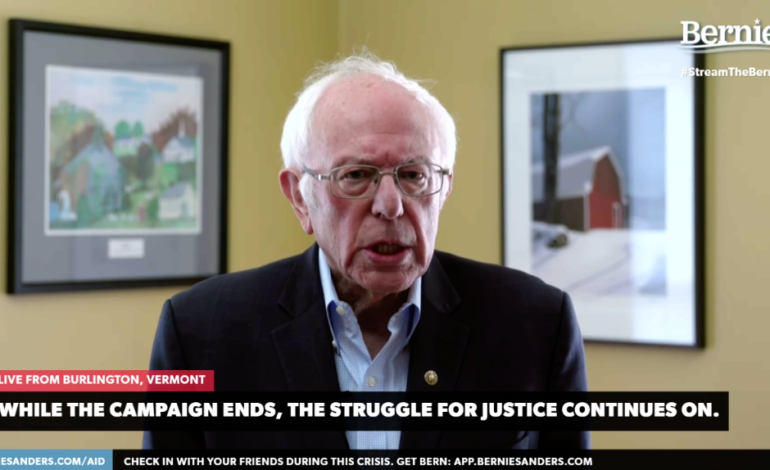
    In his recent piece “Mass Politics, Not Movementism, Is the Future of the Left,”  Paul Heideman aims to convince the Left that a strategy built primarily around “mass politics” (by which he implicitly means national electoral activity) is still the road forward, even though Bernie has ended his campaign. Both Heideman and Jacobin have argued for an “all in for Bernie” strategy, and here Heideman burns straw men rather than engaging in the live debate about what strategy the socialist Left should advance at this impasse.

    “Mass Politics, Not Movementism” falsely counter-poses this “all in for Bernie” strategy to a “retreat to…anti-electoral movementism and the embrace of left politics as a subculture.” If anyone is making this argument, then it is a minority position I have not encountered. There is a general consensus on the Left about the need to engage in electoral activity (even if there are sharp disagreements about how), and also on the need for socialists to root themselves in workplace and community struggles.

    Heideman suggests that the cause of the Left’s isolation for the last four decades was a “fetishism” of building movements, but he says nothing about the political context that opened up the possibilities for broad Left parties and Left electoral campaigns internationally in the last decade (e.g. Syriza, Podemos, Corbyn, Sanders). These openings did not exist in the same way before the crisis that began in 2008-2009.

    I agree that in the aftermath of Bernie Sanders’ announcement that he is ending his campaign, endorsing Joe Biden and handing over his lists, staff and other resources, the Left needs to think about the relationship between movements and elections. Unfortunately, Heideman’s article emphasizes what we should not be doing and says very little about what to do at a moment when there are new openings for building a qualitatively stronger socialist Left in the United States.

    What options for mass national politics are available to us now that the Bernie campaign is over? Is all of the Sanders campaign infrastructure going to become something independent that we can build around? Wasn’t that an expectation going in? Will DSA become the vehicle for this activity now that the Sanders campaign has ended? Is it the 2020 congressional elections that provide a next door to “mass politics?” Is anyone raising questions about this simply written off as pining for “drum circles” and “dumpster diving” while not  engaging with the opportunities of the moment?

    Insisting, as Heideman does, that we must focus on the national political arena and not “retreat” to small movements avoids one of the main strategic problems of the Sanders experience. Namely, that there was no political breakthrough because the forces of movements were too weak to make the Sanders platform seem viable.

    While Bernie’s program remains very popular, the Sanders campaign hit the limit of what the Left can expect to win through an electoral vehicle alone, built primarily around ideological appeals for reforms. However popular these demands are, without class organization, and mass movements behind them giving credibility and successfully struggling and winning things, such demands will seem out of reach and can easily be brushed aside by more conservative narratives about being “realistic” and the threat of Trump being too great to risk a polarizing candidate.

    In avoiding any assessment of this very recent experience, Heideman falls back on an electoralist argument that insists elections are the only arena of “mass politics” and the main way radical consciousness is developed and reforms are won. This is no more helpful than the “movementism” Heidemen describes in his piece, when activists reject electoral activity altogether because they see movements as being the primary source of change. Many credit Bernie with opening up possibilities for the socialist Left that have never existed before. And yet, by focusing exclusively on the “mass politics” side of things, we directed our resources away from building independent movements around these very openings.

    Balance of Class Forces

    Nor can we ignore the fact that the balance of class forces has changed very little since the Sanders’ campaign began. Though millions campaigned for Sanders, we are not yet close to winning his platform, and we are no closer organizationally to the goal of establishing a vehicle for independent working-class politics. Raising popular demands is not the same as sustained vehicles for working-class struggle and conflating electoral campaigns with rebuilding ‘infrastructures of resistance” will not help us develop a mass Left politics in the U.S.

    It is admirable that so many jumped into a Bernie Sanders campaign. But somewhere along the line, the idea that Bernie could win ended up taking primacy over the necessity of independent organizing. While what it might mean to win deserves its own critical assessment, the argument for a dirty break—in which socialists make use of the campaign in order to prepare to bring people with them into an independent formation—has disappeared from the discussion entirely.

    The lesson we should draw from this experience is not that campaigning harder next time, or contesting more local elections through the Democratic Party, will build our forces towards victory. The defeats of both Sanders and Corbyn in Britain demonstrate that an electoral campaign on its own, disconnected from strikes and social struggle, is incapable of transforming the balance of class forces.

    Heideman ends his article, “…electoral politics are [not] uniquely hostile to the Left. After all, if there is anywhere employers have more power than the Democratic Party, it is surely the workplace, and the Left isn’t about to write off struggle in that field.” This is a false comparison. In the workplace, workers have the potential power to disrupt production and profits. What comparable power do we have in Democratic primaries, where corporate funding and lowest-common-denominator appeals to “get out the vote” inevitably win? It is only in the midst of, and acting as the voice of such struggles in workplaces and communities that election campaigns—organized independently of the Democratic Party—can build a new socialist Left.

    Heideman anticipates this argument for emphasizing activism by noting the inherently episodic nature of struggles. He writes: “Without institutions capable of sustaining and directing mass mobilization, the movements inevitably faded.” This is why the primacy must be on social struggle, with an electoral strategy that compliments our primary task of building ‘infrastructures of dissent’ that can build beyond individual protests or strikes.

    This means membership organizations composed initially of activists who attempt to promote struggle even during lulls of national activity, that are accountable to and run by those who support them in a way the Democratic Party is not and never will be; it means rank and file groups in workplaces; ongoing organizations of tenants, women, people of color, immigrants and queer folks; it means putting the power of decisions and action into the hands of as many of the oppressed and exploited as possible; it means organizing the “us” that Bernie so inspiringly speaks to.

    Elections can be a component part of this strategy, but they are a tactic for building our own power, not a means of winning reforms or achieving socialism. Again and again in the past hundred years we have seen that it is mass, disruptive and often illegal struggles that win gains, build popular radicalism and the Left. These are the activities that will put the question of independent electoral organization on the political agenda.

    The economic recession and the COVID-19 pandemic have revealed again how capitalism produces social and economic catastrophes. Despite the pandemic, social isolation and skyrocketing unemployment, we are seeing wild-cat strikes and protests in workplaces around the world, and an overall deepening of the radicalization that began after 2008. The same day that Heideman’s article appeared, Bloomberg ran a piece from a member of its editorial board arguing that COVID-19 will lead to social revolutions.

    Whether the defensive strikes and struggles against the treatment of essential workers and the unnecessary deaths, disproportionately black and brown, served up by an unplanned and chaotic capitalist economy will translate into ongoing organizing (let alone revolutions!) remains to be seen. The outcome of the pandemic and crisis—whether it will deepen hostility to capitalism or promote an even more vicious right-wing, nationalist populism, will depend, among other things, on whether DSA members, working-class radicals, and others, are projecting a politics of struggle and a method of building capacity and organization.

    This training is, arguably, very different from the training required for campaigning for Sanders in a primary election. If we sow the soil and develop such a strategy, including its electoral component, we could get closer to the active working class base that could finally provide the composite parts of a future working class party in the U.S. There is ample evidence that this is possible now, even if our movement is not as strong as we aim to build it.

    Organizing working-class resistance will mean developing a robust strategy that includes both building movements and independent electoral campaigns. We can organize many thousands to exert the class power that can start to win things, which is the most enduring basis for working class and socialist organization and consciousness.

  • COVID-19 in the Age of Bolsonaro

    COVID-19 in the Age of Bolsonaro

    As of April 14, 2020, Brazil has had 23,955 cases of COVID-19, including 1,361 deaths and rising daily mortality rates.1 And that is with only around 11 percent of total cases diagnosed, estimates the Center for Mathematical Modeling of Infectious Diseases of the London School of Tropical Medicine.2 Going further than even Donald Trump in the United States, Brazilian president Jair Bolsonaro has downplayed the threat of the virus and the scale of the global pandemic, flippantly calling it a “little flu” and saying that “we’re all going to die one day.” With an added dose of sexism, he went so far as to tell supporters to confront the virus “like a man, not a boy.”3 Even Twitter, followed the next day by Facebook and Instagram, took down two of Bolsonaro’s posts in which he questioned quarantine measures. In a statement, Twitter explained that it had broadened its definition of harm in its global rules in order to “address content that goes directly against guidance from authoritative sources of global and local public health information.”4

    In one of the deleted tweets—a video showing Bolsonaro proudly flouting his own government’s social distancing guidelines by mixing with supporters in an open market in Brasília—a street vendor tells the president that people are worried that if they “don’t die of the disease, [they] will die of hunger.” Most people’s reality is clearly encapsulated in this sentiment: people can’t stay safe if they have to go to work, but they can’t survive if they don’t. The only government response that makes sense is to guarantee every person the conditions under which they can feasibly stay home: access to food, clean water, shelter, and healthcare. Essential workers like healthcare and food industry workers should be given everything possible to ensure their health, such as adequate protective equipment, like masks; a clean work space; free, accessible, and quick testing; paid sick leave; hazard pay; and more. Bolsonaro’s takeaway, however, was the complete opposite: “What I have been hearing from people is that they want to work.”

    While the senate, against Bolsonaro’s wishes, has approved a monthly emergency R$600 for low-income people for three months, this will do little to alleviate people’s needs, especially given that eligibility for the money has various stipulations, including not being formally employed and not receiving social security, assistance benefits, unemployment insurance, or federal income transfer payments.5 In a victory for the Socialism and Liberty Party (PSOL) and the Democratic Labor Party (PDT) during the negotiation of the emergency payment in the Chamber of Deputies, single working mothers will be able to receive a monthly payment of R$1200 for each of the three months.6

    Under the slogan Brazil Cannot Stop, Bolsonaro has prioritized the increasingly anthropomorphized “economy” over workers’ lives, often in contradiction to the statements of other Brazilian officials, whom Bolsonaro has attacked accordingly. For example, his government’s own health minister Luiz Henrique Mandetta has emphasized the importance of containment as a means of mitigating the virus. The governors of the states of São Paulo and Rio de Janeiro, former Boslonaro supporters in the country’s virus hotspots, have banned public gatherings, closed schools and businesses, and called for strict social distancing. Twenty-five of the country’s twenty-seven governors signed a joint letter demanding Bolsonaro support the safety measures.7 At a time in which the usual forms of protests such as rallies and demonstrations are impossible, self-isolating Brazilians in São Paulo and Rio de Janeiro nevertheless drew on the great Latin American tradition of the cacerolazo, or panelaço in Portuguese, and banged on pots and pans from their windows on many nights to protest Bolsonaro’s handling of the pandemic.

    While Bolsonaro’s direct response to the COVID-19 crisis has been critical, even putting his government at risk of impeachment, so have the structural conditions he helped set in place that have rendered the Brazilian healthcare system—the largest government-run public healthcare system in the world—less rather than more equipped to deal with the current pandemic, as well as any future ones. In 2019 alone, for example, Bolsonaro took away almost R$10 billion meant for the country’s healthcare system.8 That same year, he also vetoed a bill that guaranteed all patients the availability of blood, medicines, and other necessary resources for the diagnosis, prevention, and treatment of their illnesses.9 In another attack on the healthcare system, Bolsonaro gutted the Mais Médicos program established in 2013 that sent doctors to work in small villages, indigenous lands, maroon communities, and the poorest, most under-resourced neighborhoods of Brazil. Around half of the Mais Médicos doctors came from Cuba and were sent back to the island after Bolsonaro became president. As a consequence, twenty-eight million people in Brazil have seen their right to medical attention waived.10

    As public health was under assault, agribusiness—one of the main sectors responsible for the election of Bolsonaro in the first place—boomed. One of the world’s largest producers and exporters of coffee, sugar, orange juice, soybean, corn, ethanol, pork, beef, and poultry, Brazil has been wiping out small family farms to make room for highly capitalized, export-oriented, large-scale commodity growers, which occupy 75.7 percent of the nation’s agricultural land and make up 62 percent of total agricultural output. To put it in starker terms, the top 1.5 percent of rural landowners take up 53 percent of all agricultural land.11 As Rob Wallace, Alex Liebman, Luis Fernando Chaves, and Rodrick Wallace explain:

    However unintended, the entirety of the production line is organized around practices that accelerate the evolution of pathogen virulence and subsequent transmission. Growing genetic monocultures—food animals and plants with nearly identical genomes—removes immune firebreaks that in more diverse populations slow down transmission. Pathogens now can just quickly evolve around the commonplace host immune genotypes. Meanwhile, crowded conditions depress immune response. Larger farm animal population sizes and densities of factory farms facilitate greater transmission and recurrent infection. High throughput, a part of any industrial production, provides a continually renewed supply of susceptibles at barn, farm, and regional levels, removing the cap on the evolution of pathogen deadliness. Housing a lot of animals together rewards those strains that can burn through them best. Decreasing the age of slaughter—to six weeks in chickens—is likely to select for pathogens able to survive more robust immune systems. Lengthening the geographic extent of live animal trade and export has increased the diversity of genomic segments that their associated pathogens exchange, increasing the rate at which disease agents explore their evolutionary possibilities.12

    As he dismantled environmental protections and advanced the destruction of the Amazon, Bolsonaro exceedingly catered to the industrial agribusiness model, where monoculture and profits dominate. The world market, imperialism, ecology, indigenous land, workers’ rights, and the legacy of slavery and land reform have thus come together to render Brazil particularly vulnerable to the spread of disease. As Wallace et al. so succinctly put it: “Agribusiness is at war with public health. And public health is losing.”13

    ~

    Like all capitalist crises, the repercussions of Bolsonaro’s approach to the pandemic (or lack thereof) will not be felt equally among all Brazilians. A research study by Central Única das Favelas and Instituto Locomotiva has shown that favelas, where 13.6 million Brazilians, the majority indigenous and/or Afro-Brazilian, currently live, will be particularly hit hard.

    The study shows that COVID-19 has hurt the jobs of 86 percent of workers in the periphery, the ability to acquire food and other basic necessities of 86 percent, and the family income of 84 percent. On top of the lack of food, the pandemic has worsened the quality of food for almost 60 percent of residents and, of these, 80 percent of parents say they are very scared about not having food to give their kids. Despite this, 71 percent disagree with the president, who is insisting that informal workers would like to go back to work, about ending their quarantines. As Renato Meirelles, president of Instituto Locomotiva, described:

    We have heard the narrative that the epidemic is democratic, that it affects the rich and the poor equally. But the research makes it clear that this is not the case, that there is a section of society that doesn’t have savings, that doesn’t have the resources to maintain their way of life if they can’t work. It’s much easier to be quarantined with a full fridge in a comfortable house than it is when you live in a favela where the fridge is empty, there is no water, and five people live in a space of 20 square meters.14

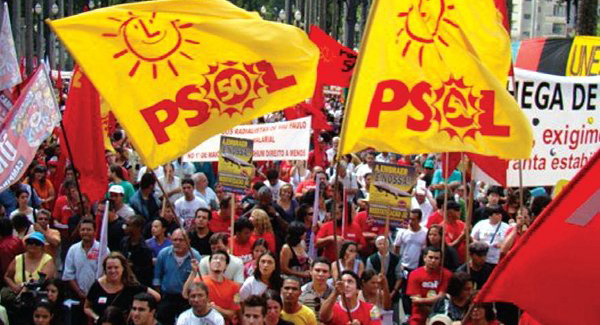
    In an attempt to prevent and address the effects of the crisis on favelas and the periphery, the left-wing PSOL has come out with an emergency plan. The plan includes proposals for a basic emergency income to families, supply of necessary items, distribution of hygiene products such as hand sanitizer and soap, provision of water, and use of hotel and inn rooms for sheltering people in isolation.15

    Indigenous communities are also preparing themselves in the face of the government’s carelessness toward human life. “Coronavirus could wipe us out,” explained Ianucula Kaiabi, an indigenous leader in Brazil’s Xingu national park on the southern edges of the Amazon, home to about six thousand people from sixteen different tribes, and head of the Xingu Indigenous Land Association. From influenza to smallpox, highly infectious diseases, almost always brought by white, well-to-do travelers, have a long history of devastating indigenous communities and are a particular threat to Brazil’s more than one hundred isolated groups.

    Given indigenous groups’ communal ways of life, the effects of the virus would be nothing short of genocide. For now, indigenous communities’ main objective is to prevent COVID-19 from reaching them in the first place. In Brazil as well as across Latin America, indigenous people are sealing off roads into and out of the reserves, blockading their lands, and urging people to leave only in cases of emergencies.16 Despite this, there have been at least seven reported COVID-19 cases among the country’s indigenous population, including one death—that of Yanomami teenager Alvanei Xirixan. In response, the Hutukara Yanomami Association is asking the federal police, the army, and the National Indian Foundation to immediately withdraw mineral prospectors from indigenous land in order to prevent new transmissions of the virus.17

    Kaiabi noted that Brazil’s specialized indigenous health system has faced dramatic cuts under Bolsonaro and that he feared it was “totally unequipped” to deal with the looming catastrophe. Questions of how to quarantine on reserves, as well as regarding the distribution of food, medicine, protective equipment, hygiene products, and more remain unanswered.18

    Similarly bearing the brunt of the current crisis, quilombolas, or maroons, descendants of African slaves who formed their own communities away from slavery, are being devastated during this period. In a federal resolution published on March 27, in the midst of the pandemic, the government announced that it would forcibly (and illegally) remove quilombola communities of Alcântara, in the state of Maranhão, from their lands in order to expand the Alcântara Launch Center, a satellite launching facility of the Brazilian Space Agency, per an agreement between Bolsonaro and the United States. According to the National Coordinating Committee of the Black Rural Quilombola Communities, the removal will harm approximately eight hundred families, communities who have occupied that land since the seventeenth century. The Landless Workers’ Movement, the Alcântara Association of Quilombola Territory, the Movement of Women Workers of Alcântara, among others, have condemned the move.19

    As in all over the world, violence against women has also been drastically exarcerbated by the pandemic in Brazil. According to São Paulo state’s office of the prosecution, restraining orders against male aggressors have gone up by 30 percent.20 This comes following cuts to the government program promoting women’s autonomy and against violence (Políticas para as Mulheres: Promoção da Autonomia e Enfrentamento à Violência). In 2019, the amount invested in the program was the lowest it has ever been since its establishment in 2012. At its peak in 2015, the program received R$290.6 million, compared to 2019’s R$48.2 million—a slashing by almost 84 percent.21

    ~

    Unsurprisingly, Bolsonaro’s appalling treatment of the pandemic has united political figures and activists across parties and tendencies, spanning from the center-left to the revolutionaries. On the morning of Monday, March 30, along with other prominent opponents of Bolsonaro, Fernando Haddad (Workers’ Party), Ciro Gomes (Democratic Labor Party), Guilherme Boulos (PSOL), and Manuela Davila (Communist Party of Brazil)—who all ran against Bolsonaro in 2018—published a manifesto entitled “Brazil Cannot Be Destroyed by Bolsonaro,” calling for the president to step down due to his handling of the COVID-19 crisis:

    In our country, the emergency is exacerbated by an irresponsible president.… Even before the arrival of the virus, public services and the Brazilian economy were already dramatically weakened by the neoliberal agenda that has been imposed on the country. In this moment, we need to mobilize, without restraint, all the public resources necessary to save lives.

    Bolsonaro is in no position to keep governing Brazil and to face this crisis, which compromises public health and the economy.… He should resign.… He needs to be urgently contained and must answer for the crimes he is committing against our people.22

    The demand for Bolsonaro’s resignation has become a galvanizing force, with calls for impeachment picking up steam. The latter included three PSOL congresspeople, Fernanda Melchionna, Sâmia Bomfim, and David Miranda, filing an impeachment request against Bolsonaro in the Chamber of Deputies on March 18. The request was signed by various members of civil society and a petition of support has accrued over one million signatures. Like all political decisions taken by the left, however, the impeachment filing has opened up an important debate about strategy in this moment, with some, including within PSOL, saying that a political and juridical process such as impeachment should not be the main priority.23

    ~

    While other far-right governments around the world, like India’s Narendra Modi and Hungary’s Viktor Orban, have used quarantine measures as an opportunity to restrict civil liberties, Bolsonaro’s approach, based on denying the seriousness of the pandemic and sabotaging social distancing measures, is tied to the legitimacy crisis that has marked his government since taking office in January 2019. Elected on an anticorruption platform, Bolsonaro has permanently clashed with Congress and the Senate as part of a rejection of “old politics”—what he claims was a method of building consensus among different political elites that led Brazil to the moral crisis it was in before he took over.

    While Bolsonaro riled up many of his supporters on the ground, an important part of his right-wing base, especially in São Paulo and Rio de Janeiro, defected. According to recent polls by the Brazilian Institute of Public Opinion and Statistics, one of the country’s biggest polling agencies, Bolsonaro’s support in São Paulo has collapsed. Having won the second round of the 2018 presidential elections in the city with 60 percent of the vote, those who now describe his government as good or excellent amount to a mere 25 percent, with 8 percent describing his government as bad and 40 percent as terrible.24 Even before the impeachment initiative by PSOL representatives, former government supporters like conservative parliamentarians Alexandre Frota and Janaina Pascoal have been openly calling for the president’s impeachment.25 They were joined on March 15 by the governor of Goiás state, Ronaldo Caiado, a physician and one of Bolsonaro’s earliest supporters, who now claims that the federal government has lost authority in his state.

    Isolated from the political establishment and within his own government by continued declarations undermining COVID-19, Bolsonaro has narrowed his support to a core base of Christian fundamentalists and far-right militants. Important sectors of capital also seem to be abandoning him, siding with the governors and Congress. Both of the country’s main newspapers, Folha de São Paulo and Globo, for example, have put forward editorials calling on him to resign.26

    The spiraling crisis between Bolsonaro and the Supreme Court, Congress, and most of the country’s governors over federal government attempts to sabotage curfew initiatives, has led to increased power of the country’s military. There is even growing talk of an army takeover, led by the vice president, retired army general Hamilton Mourão, who would have the support of the unprecedented number of generals named by Bolsonaro as government ministers.27 It is improbable, however, that Bolsonaro will be toppled by maneuvers from above without substantial pressure from below. While there might be little excitement for the president, himself a former army captain, among the top hierarchy of the military, it was he who returned the military to the forefront of Brazilian politics.

    As the left seeks the best strategies to unite against Bolsonaro and prevent mass loss of life, the president’s treatment of the pandemic seems to be fracturing the alliance between Brazil’s traditional conservative elite, responsible for toppling Dilma Rousseff’s Workers’ Party government in 2016, and Bolsonaro’s eclectic political coalition, made up of rebellious noncommissioned military officers, fanatical evangelicals, agribusiness, and businesspeople from the service industry, particularly the retail sector.28 While the political, economic, and public health future of Brazil is uncertain, one thing is clear: Bolsonaro and the system that spawned him have blood on their hands.

    3 Associated Press, “Brazil’s Bolsonaro Downplays Coronavirus Risks: ‘We’re All Going to Die One Day,’” MarketWatch, March 29, 2020.

    4 Vijaya Gadde and Matt Derella, “An Update on Our Continuity Strategy During COVID-19,” Twitter blog, March 16, 2020, updated March 27, 2020.

    5 Simone Kafruni, “Senado aprova auxílio emergencial de R$ 600 a pessoas de baixa renda,” Correio Braziliense March 30, 2020.

    6 Giulliana Bianconi, “Mães solo têm lugar central na inédita renda emergencial,” Azmina, March 28, 2020.

    7 David Biller, “Brazil’s Bolsonaro Makes Life-or-Death Coronavirus Gamble,” AP News, March 28, 2020.

    9 Augusto Fernandes, “Bolsonaro veta pacientes do SUS a acessarem medicamentos,” Correio Braziliense, December 27, 2019.

    10 Shasta Darlington and Leticia Casado, “Veintiocho millones de pacientes afectados: Bolsonaro fracasa en el remplazo de médicos cubanos,” New York Times, June 11, 2019.

    11 Anna Sophie Gross, “As Brazilian Agribusiness Booms, Family Farms Feed the Nation,” Mongabay, January 17, 2019.

    12 Rob Wallace, Alex Liebman, Luis Fernando Chaves, and Rodrick Wallace, “COVID-19 and the Circuits of Capital,” Monthly Review, April 1, 2020.

    13 Wallace, Liebman, Chaves, and Wallace, “COVID-19 and the Circuits of Capital.”

    14 Felipe Betim, “Sem ações específicas, 86% dos moradores de favelas vão passar fome por causa do coronavírus,” El País, March 28, 2020; Nicole Froio, “Brazil’s Vulnerable Left Behind in the Pandemic,” NACLA, March 31, 2020; Fernando Canzian, “Com comida no fim, moradores de favela contestam Bolsonaro,” Folha de São Paulo, April 8, 2020.

    16 Dan Collyns, Sam Cowie, Joe Parkin Daniels, Tom Phillips, “‘Coronavirus Could Wipe Us Out’: Indigenous South Americans Blockade Villages,” Guardian, March 30, 2020.

    18 Collyns, Cowie, Parkin Daniels, Phillips, “‘Coronavirus Could Wipe Us Out’: Indigenous South Americans Blockade Villages.”

    20Violência contra mulher aumenta na pandemia, diz nota do CAOCrim e Núcleo de Gênero,” Ministério Público de São Paulo, April 13, 2020.

    21 Mariana Ribeiro and Marlla Sabino, “Orçamento do programa de proteção à mulher em 2019 é o menor da série,” Poder 360, March 8, 2019.

    22 Mônica Bergamo, “Ciro Gomes, Haddad, Boulos e Dino pedem renúnica de Bolsonaro em manifesto,” Folha de São Paulo, March 30, 2020.

    23 Vladimir Safatle, “A única saída é o impeachment,” El País, March 20, 2020; “Tirar Bolsonaro para salvar o país! Impeachment já!,” Sâmia Bomfim, March 2020; “Nota do PSOL sobre pedido de impeachment de Jair Bolsonaro,” PSOL, March 18, 2020.

    24Resultados para Presidente em São Paulo em São Paulo (SP),” Gazeta do Povo, October 7, 2018; “Governo Bolsonaro tem aprovação de 25% e reprovação de 48% na cidade de São Paulo, diz Ibope,” G1, March 23, 2020.

    25 Carolina Freitas and Marcelo Ribeiro, “Ex-aliados agora pedem impeachment,” Valor Econômico, March 17, 2020.

    26 Editorial “Presidente, retire-se” Folha de São Paulo, March 26, 2020. Editorial “Bolsonaro atenta contra a constituição,” O Globo, March, 26,2020.

    27Demian Mello, “A tutela militar ao governo Bolsonaro,” Esquerda Online,April 3, 2020.

    28 The rift with agribusiness is becoming particularly pronounced as China is one of the main importers of Brazilian agricultural products.

  • Facing Reality: The Socialist Left, the Sanders Campaign and Our Future

    Facing Reality: The Socialist Left, the Sanders Campaign and Our Future

    A little over a month ago, many on the new socialist left expected Bernie Sanders to win the Democratic Party nomination, defeat Donald Trump in the general election, and enact a program of social democratic reform as President of the United States.

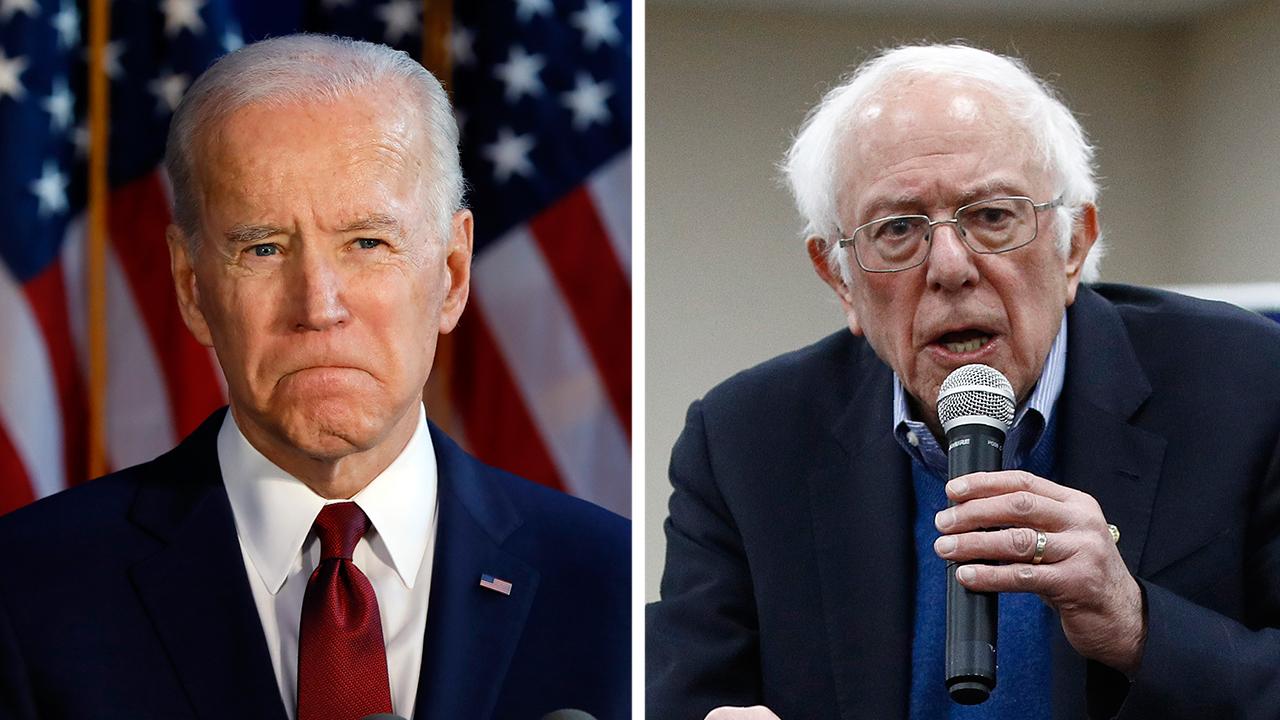
    These expectations hit the shoals of reality. Sanders ran a heroic campaign, championing key demands from Medicare for All to the Green New Deal, raising the profile of socialism even higher than in 2016. Despite widespread sympathy for these demands, Sanders was unable to overcome the Democratic Party establishment’s support for Biden. Sanders not only suspended his campaign, but has endorsed Biden and offered him all of the resources of his campaign—staff, funds, contact lists, access to tens of thousands of volunteers, and his enormous moral capital among young working people.

    Now we face the most unappealing general election in recent memory, pitting Biden against Trump amidst a spiraling pandemic and deepening global recession. Socialists must come to grips with a hard lesson: the Democratic Party remains under the control of the capitalist class and can neither be realigned nor used to prepare for independent politics.

    The Democratic Socialists of the America (DSA) faces many challenges in implementing our commitment to “Bernie or Bust”—the convention resolution pledging that, as an organization, we spend no time, money or energy on supporting any other Democratic candidate for the presidency. DSA needs to put most of its energy into rebuilding mass resistance amidst the pandemic and engaging in electoral work when it advances organizing our power from below—something that is impossible within the Democratic Party.

    Coming to Grips with Electoral Defeat

    Many socialists predicted Sanders would win the Democratic Party’s nomination this year and threw themselves heart and soul into the campaign. Now after the dust has settled, we need to face the fact that Sanders was more decisively defeated this time than in 2016.

    Sanders never won more than 30 percent of the Democratic primary voters. His victories came because the establishment vote was split. He consistently failed to win over older Black voters, or turn out new, young voters.

    Fearing that Sanders would run roughshod over a divided centrist establishment, Obama and others in the Democratic establishment worked behind the scenes to pressure the other centrists to drop out and line up behind Biden after South Carolina. Biden then swept the Super Tuesday primaries, building an insuperable lead in the delegate race.

    The pandemic and recession only deepened support for Biden. He built double digit leads over Sanders in most of the upcoming primaries, including Wisconsin, which he won by over 30 percentage points.

    Misreading the 2016 Campaign

     The socialist left needs to understand the real reasons for this defeat, if we are to avoid worse ones in the future. Many comrades fundamentally misread Sanders’ limited success in the 2016 primaries, and Alexandria Ocasio-Cortez and the “Squad’s” victories in 2018 elections—hoping that a surging majority in the Democratic electorate would sweep Sanders to victory in 2020.

    In 2016, Sanders benefited from the widespread hatred of Hillary Clinton’s record of right-wing neoliberal policies, especially in the rust belt, as well as from the fact that he was the only serious candidate running against her.

    Clinton’s arrogance systematically underestimated and dismissed all of her opponents. She was first caught by surprise by Sanders and then defeated by Trump in the Electoral College (although she won the popular vote), largely because she ignored the key battle grounds states in the Midwest.

    Confusing the Exception with the Norm in 2018

    Many also misread the insurgent victories of AOC and others as further confirmation of the left’s electoral opportunities inside the Democratic Party. These victories should be celebrated, and they have dramatically helped project socialist positions on many issues, but like Sanders in 2016 they benefited from catching the establishment by surprise and from exploiting its divisions.

    However, most of the Democrats elected in the midterms were neither progressives nor socialists, but centrists, many bankrolled by none other than former Republican and Democratic Party pretender for the nomination, Mike Bloomberg. Failing to grasp these facts, many believed the left could be swept to power through the Democratic Party in 2020.

    Faced with Sanders’ defeat, many on left are casting about for explanations. Some argue that the Democratic again stole the nomination from Sanders with dirty tricks like they used in 2016. But there is little to no evidence to support that claim.

    Others point to the pandemic, assuming that voters fled in fear to the supposedly safe choice of Joe Biden. But the turning points were the South Carolina and Super Tuesday primaries, well before COVID 19 changed the terrain of politics and everyday life.

    The establishment, flush with victory, are presenting false explanation for Sanders’ defeat. They claim voters do not support his social democratic program. Actually, his proposals for social reform like Medicare for All are wildly popular and have been for years even before his campaigns for the presidency.

    The Real Reasons for Defeat

    If Sanders’ program is such broad and deep support, why did he lose so badly to perhaps the worst candidate the Democrats have put forward since the forgettable Michael Dukakis?

    First, the establishment, despite the emergence of the “Squad,” has a hammer hold on the Democratic Party. As Kim Moody points out, the Democratic Party is a fundraising cabal, run by an unaccountable layer of elected officials who are the conduits for capitalist donations. They ensure that outsiders like Sanders and the “Squad” are dismissed as “unrealistic” on MSNBC (their Fox News) and marginalized in the party.

    Even more importantly, socialists need to recognize that the level of class and social struggle, despite the wave of teachers’ strikes, has remained very low. Sanders’ program, like former Labour Party leader Jeremy Corbyn’s in Britain, while popular, seemed unattainable for the vast majority of working people. In the absence of fighting and winning through strikes and disruptive street demonstrations, most working people will tend to accept the status quo.

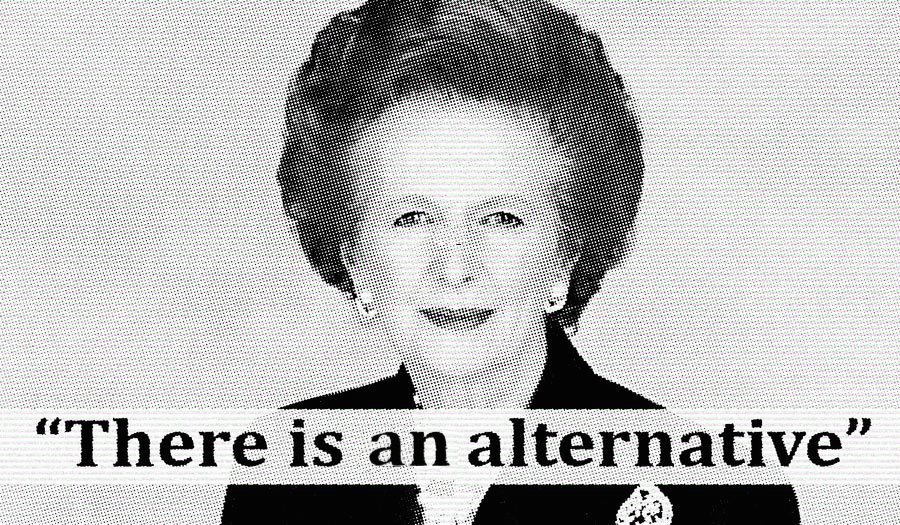
    Mark Fischer called this “capitalism realism”—the widespread acceptance of Thatcher’s proclamation “there is no alternative” to capitalism. The bulk of workers and oppressed people were convinced that however much they liked Sanders’ program, it was “unrealistic”—and that the tepid neo-liberalism of Biden is the only alternative to Trumpism.

    Biden’s claim that he and not Sanders was more electable against Trump thus found purchase in the existing Democratic Party electorate. Sanders was unable to mobilize new young and working-class voters. Instead, increased voter turn-out in the Democratic primaries was among older, middle class layers who supported Biden and other ‘centrists.’

    Can We Use the Democrats to Launch a New Party?

    What does Sanders’ defeat tell us about Seth Ackerman and Eric Blanc’s “dirty break” strategy, as an alternative to both the reformist strategy of realignment/turning the Democrats into social democratic party;  and the revolutionary left’s call for a working-class party independent of the Democrats? They argued that the Democratic Party was not a party but a ballot line that socialists could use to run candidates, build a membership organization, and prepare for a new party in the future. The success of Sanders in 2016 and the Squad in 2018 were proof of the viability of this strategy.

    Unfortunately, these breakthroughs were exceptional events. The Democrats are a bureaucratic machine without a pretense of membership accountability, under the control of capital which commands the unflinching loyalty of the officialdom of the unions and various NGOs that claim to speak for the oppressed.

    The Democrats differ from the Republicans in their relation to the left, working and oppressed people. The Democrats use carrots as well as sticks to integrate socialists and neutralize our movements. They managed to get much more powerful forces in the 1930s and 1960s to obey their commands, throwing them some bones and whipping them when necessary.

    The Democrats, having faced no internal left challenges since Jesse Jackson’s 1988 campaign, were caught with their pants down in 2016 and 2018. However, they regained the initiative by 2020, securing the nomination for Biden. They are even better prepared to meet any left challenges in Congressional and local elections.

    Retreating from Dirty Break to Realignment?

    The utopianism of the dirty break strategy has led many back to the old realignment strategy that they initially rejected.

    Dustin Guastella’s article “After the Nevada Blowout, It’s Bernie’s Party Now” was among the first of the new generation of socialists to slip toward the realignment strategy. Bhaskar Sunkara, who has built Jacobin into the premier venue for socialist discussion and debate for a new generation, criticized Seattle socialist council person Kshama Sawant’s speech at a Sanders’ rally arguing that working people need their own party.

    He tweeted, “I love Kshama, but not sure someone invited to speak at an event for a candidate for a party’s nomination should go off message and talk about the need for a new party.” Even worse, after Sanders’ defeat became clear, Guastella penned, “Where Do We Go After Last Night’s Defeat” that upped the attacks on those who advocate independent politics.

    Guastella pooh-poohed leftists calling for a third-party challenge to Biden, dismissed the idea of protests at the Democratic Party National Convention, and shockingly chocked up Sanders’ defeat to in part advocating the “fringe demands” of oppressed groups. In essence, he argued for socialists to move to the right to win inside the Democratic Party.

    Fortunately, many on the left reject such a perspective, especially its dismissal of demands for oppressed groups in today’s multi-racial, multi-gendered, and international working class. But many others embrace Guastella’s argument to hunker down for another long and pointless fight to transform the Democratic Party.

    Bernie Sanders, unfortunately, embraces this perspective. Despite his official status as an “Independent,” Sanders has not supported third parties runs in decades, has caucused with the Democrats in the Senate, and promoted efforts like his NGO “Our Revolution” whose aim,  reiterated in Sanders’ concession speech, is to  “rebuild the Democratic Party from the bottom up.”

    The Siren Song of Lesser Evilism

    Faced with unbearably bad “choice” between the Biden and the execrable white supremacist Donald Trump, there will be tremendous pressure on the new socialist movement to follow Sanders’ lead and campaign for Biden.

    Instead of giving the Democrats that pound of flesh, DSA members need to maintain their “Bernie or Bust” commitments. We should not repeat the mistakes of earlier generations of socialists—in the Communist Party USA and the New Left—of abandoning independent politics and leading social movements to die in the graveyard of the Democratic Party.

    The pressures toward “lesser-evilism” will only escalate as liberal Democrats, union officials, and the NGOs spending tens of millions of dollars and countless volunteer hours, which could be used to build class and social struggles, to ensure the Democrat’s restoration of business as usual.

    That will not work to defeat the right. As Sanders rightly argued that the Democratic Party establishment is primarily responsible for Trump’s rise to power to begin with. Their bailouts of corporations, their austerity measures, and their vicious scapegoating combined to alienate working class and oppressed people.

    “Lesser-evilism” facilitates this process. If the left folds its tent and campaigns for Biden, it would be forced to downplay our radical alternative to neoliberalism. And should Biden win, he will continue capital’s attacks on working and oppressed people, and then the main voice attacking the “establishment” will not be the socialist left, but forces that will make Trump look like a moderate.

    Socialist Electoral Strategy versus Electoralism

    Another danger facing the new socialist movement after Sanders’ defeat is “electoralism”—doubling down on the predominantly electoral turn DSA has taken since AOC’s victory in mid-2018.

    Many in DSA took seriously Sanders’ rhetoric about “Not me, but us,” and being the “organizer-in-chief.” Those hopes have been dashed as Sanders, over the objection of his former press secretary, not only endorsed Biden, but has given all of his campaign resources to the neoliberal stalwart. Calls to give his resources to “Our Revolution” will further mire socialists in the Democratic Party. Nor has DSA made major organizational and political gains from their involvement in the campaign. As Andy Sernatinger has demonstrated, DSA has spent the bulk of its time, money and energy on electoral campaigns to the detriment of organizing class and social struggle.

    The Sanders campaign, for all of its claims to be a social movement, has intensified electoralism. In his concession speech, Sanders argued that the key battle was “to elect strong progressives at every level of government—from Congress to school board.”

    In reality, decisive social change has rarely if ever come through the elections. In the 1930s and 1960s, big social reforms were driven by waves of disruptive, often illegal strikes and mass demonstrations that extracted reforms from the two capitalist parties and capitalist state.

    As the great socialist historian Howard Zinn argued, “the really critical thing isn’t who is sitting in the White House, but who is sitting in—in the streets, in the cafeterias, in the halls of government, in the factories. Who is protesting, who is occupying offices and demonstrating—those are thing things that determine what happens.”

    Clearly socialists can and have used elections as a compliment to, rather than a substitute for, building movements from below. A “movement-building” election campaign would prioritize educating and generalizing the demands of mass struggles, encourage participation in disruptive actions and building independent organizations—the real source of popular power and radicalism.

    Such campaigns cannot be run within the Democratic Party. The Democrats are an electoral machine with one aim—winning office at all costs. While an occasional Democratic candidate may walk picket lines or even give limited support to struggles, they inevitably exert pressures to downplay radical demands and contain struggles within the bounds of legality. It is only election campaigns independent of the Democrats that can promote and be held accountable to organizations and struggles.

    Sharp Shift to Organizing Struggle and Building a Party of Our Own

    DSA and all socialists should center our activity to organizing and supporting the strikes and protests that have ripped out across the country amidst the pandemic. In particular, we need to promote the demands and actions of undocumented immigrants, people of color, and people in the global south who have and will bear the brunt of the healthcare and economic crises.

    We have been thrust into 1930s conditions, and we have to adopt the approach of radicals and revolutionaries in that era—promoting immediate struggles and building the infrastructure of resistance for the even larger battles to come when the economy recovers. Our enemies are preparing—Bloomberg News is warning that if the ruling class does not grant workers reforms, they will face the radical challenges from below.

    We must start the process of building toward a new socialist party precisely to lead that radical challenge. The brutal lesson of the Sanders’ campaign is the Democratic Party is not ours, but theirs—and they don’t share. We need to organize meetings, discussions, and debates with all the forces on the left about how we can build a new socialist party over the coming years.

    While the forces that could begin organizing a new socialist party will disagree on many strategic and tactical issues, we can agree that we fight for reforms that advance the interests of working class and oppressed people—not as an end in themselves, but a means to building our side’s confidence, consciousness, and organization.

    Our goal is not a kinder gentler capitalism, but international socialism. Today, in the midst of apocalyptic crisis—unprecedented in modern history—we face nothing less than a global choice between socialism and barbarism.

  • Protecting Nature in a Conservation Revolution

    Protecting Nature in a Conservation Revolution

    Bram Büscher and Robert Fletcher, The Conservation Revolution: Radical Ideas for Saving Nature Beyond the Anthropocene. London: Verso, 2020.

    In a welcome contribution to discussions of radical green vision, Bram Büscher and Robert Fletcher propose an intriguing concept called “convivial conservation.” Influenced by scholarship of the degrowth and eco-Marxist movements, the two Wageningen University sociology professors suggest shrinking and redistributing global economic resources and building sustainable landscapes of human-nonhuman cohabitation. Because convivial conservation is such a worthy idea, it’s a shame that Büscher and Fletcher try to attach it to several aspects of the deeply anthropocentric and anti-wilderness “new conservation” movement. In particular, they make an unconvincing case against a popular proposal to protect at least half of the planet’s surface from intensive impact.

    The titular “Conservation Revolution” could not be more crucial, and not only because of the intersecting ecological and climate breakdowns and nuclear threat that conservationists have so far failed to halt. A need to overhaul conservation is equally evident in last year’s disturbing reports that the World Wide Fund for Nature (WWF) employs guards who have tortured and killed people at wilderness parks around Africa and Asia. Far from an anomaly, the news pointed to a violent side of the conservation movement that has historically displaced millions of indigenous and rural residents to establish and maintain protected areas. Today, the WWF, Nature Conservancy, and Conservation International have extensive and compromising ties to fossil fuels and other destructive industries, and rely on ineffective market-based instruments, such as carbon offsets, that Büscher and Fletcher aptly call “fictitious conservation” (23).

    This context makes Büscher and Fletcher’s use of Ivan Illich’s radically anti-industrialist philosophy so pertinent. “The road to hell is paved with good intentions,” Illich famously scolded 1968’s American volunteers for “pretentiously imposing” their lifestyle on rural Mexican villages, and the same advice applies to many well-meaning supporters of today’s frankly colonialist large conservation groups. Büscher and Fletcher cautiously endorse Illich’s call in Tools for Conviviality (Harper & Row, 1973) for society to frugally limit itself to “convivial” (non-compulsory, user-friendly, sustainable) technologies and institutions. Illich praised buses but warned that cars disrupted the mobility of pedestrians and bikers. He praised stationary telephones but would likely detest today’s smartphones that distract and deskill users. Büscher and Fletcher’s emphasis on conviviality marks a welcome departure from their publisher Verso’s recent books—by Alex Williams, Nick Srnicek, Aaron Bastani, and Peter Frase—offering ecologically dubious visions of a fully automated society.

    To make conservation convivial, Büscher and Fletcher propose a democratized structure that gives decision-making power to local residents while compiling resources to target top-level industrial threats to biodiversity (186). They turn to conviviality’s etymological roots of con (with) and vivire (living) to advocate that humans live peaceably with nonhuman surroundings. This vision focuses on five elements: “promoted areas” that “promote nature for, to and by humans”; “celebrating nature” rather than charitably “saving” it; accessible slow-paced travel as opposed to elite, voyeuristic ecotourism; “everyday environmentalism” grounded mainly in immediate surroundings rather than distant landscapes; and “common democratic engagement” instead of “privatized expert technocracy” (163-174).

    To these ends, they helpfully propose specific policies including historic reparations and a “conservation basic income” that enables communities to forgo destructive forms of revenue. They call for expanding and strengthening the existing strategies of community-based-conservation and Indigenous and community conserved areas. Such a bottom-up approach could be effective from a decolonial standpoint. Scientists report that indigenous peoples’ territories, only a quarter of the world’s terrestrial surface, contain 40% of “ecologically intact land” and 80% of “the planet’s biodiversity.”

    Humbly, the authors position their proposal among “many confluent streams contributing to a much larger river” that includes buen vivir (living well), the right to the city, bioregionalism, ecosocialism and other “transition discourses” (147). An excellent introduction to this “larger river” is the anthology Pluriverse: A Post-Development Dictionary (Tulika Books, 2019), whose foreword describes Illich as a spiritus mentor.

    Since I hope it is clear at this point that I recommend The Conservation Revolution, and especially its overview of “convivial conservation” (in chapter five), I devote the rest of this review to a critique. Büscher and Fletcher borrow potentially destructive ideas from the neoliberal “new conservationist” movement and make unconvincing claims against the “half earth” solution.

    Gardening and Developing the Earth?

    Troubling ambiguities emerge when Büscher and Fletcher reject the concepts of “protected areas” and “wilderness.” The authors suggest that their preferred “promoted areas” would allow “extractive and destructive types of enterprise” as long as these activities were not communally deemed “unnecessary or excessive” (164). Although industrial and agricultural impacts are unavoidable in densely populated regions, more stringent protection would be necessary in many places to preserve large carnivores and rare species. Moreover, the book’s theoretical focus leaves somewhat vague how Büscher and Fletcher’s proposed “alternative” development would differ in practice from the capitalist development they condemn as unsustainable (144). My concerns heighten when the authors sympathetically discuss a group of Franken-world promoters, known as “new conservationists,” who want humans to manage the whole planet like a domestic garden. Given the deep anthropocentrism and questionable science of the new protectionists, it is alarming to read Büscher and Fletcher conclude, “we have a lot of sympathy for the new conservation project to break through nature-culture dichotomies” (117).

    Nature/culture dichotomies

    Beyond N/C dichotomies

    Capitalist

    Mainstream conservation

    New conservation

    Beyond-capitalist

    Neoprotectionism

    Convivial conservation

    Four main positions in conservation, according to The Conservation Revolution (7)

    The new conservationists’ opening salvo, “Conservation in the Anthropocene,” was published in 2012 by the staunchly pro-market, pro-fracking, pro-nuclear, and pro-biotechnology Breakthrough Institute. Co-written by scientist Peter Karevia, the manifesto insisted that “conservationists should partner with corporations” rather than “scolding capitalism.” Dismissing the idea of “pursuing biodiversity for biodiversity’s sake,” it proposed an explicitly anthropocentric aim “to benefit the widest number of people.” Kareiva and co-authors continued, “Nature could be a garden […] used for food production, mineral extraction, and urban life.” Most dangerously, they claimed, “Nature is so resilient that it can recover rapidly from even the most powerful human disturbances.”

    New conservationists’ scientific claims were immediately rejected by mainstream conservationists and, more forcefully, by wilderness-loving researchers whom Büscher and Fletcher call “neoprotectionists.” Writing in biology journals, Michael Soulé and Brian Miller warned that new conservation “rests more on delusion and faith than on evidence” and “if implemented, would hasten ecological collapse globally.” E.O. Wilson charged the new conservationists with holding “the most dangerous worldview” (30). Kierán Suckling, director of the Center for Biological Diversity, argued that Kareiva and co-authors “misrepresent, ignore, or obfuscate the science.” For example, while Kareiva optimistically pointed to a resurgence of coyotes in downtown Chicago, Suckling noted that the coyotes’ presence is a symptom of habitat loss and removal of larger predators such as wolves, with “cascading negative changes in the food web.”

    To be sure, Büscher and Fletcher raise important critiques of the neoprotectionists, some of whom vastly overemphasize so-called “overpopulation” and pay insufficient attention to poverty and injustice (164, 202). In fact, I would go further and condemn the prominent neoprotectionist group Nature Needs Half’s partnership with the xenophobic Weeden Foundation.

    Still, checking The New Conservation’s footnotes led me to reject the premise that neoprotectionists as a whole oppose community-based and socially-just approaches to conservation. I frequently found neoprotectionists declaring that conservation and rewilding “should be done with the consent and active engagement of the people who live on and benefit the land” (Monbiot) while “respecting rights, improving livelihoods, and sharing decisionmaking” (Dinerstein et al.). I also found them expressing support for non-wilderness issues such as “urban pollution concerns” and “organic and urban agriculture” (Meine). Even Büscher and Fletcher acknowledge that it’s common for neoprotectionists to view wilderness “as a relative rather than absolute concept” and accept “that humans are part of nature” (57, 64).

    Amidst an even-handed critique of both new conservationists and neoprotectionists (39-40), The Conservation Revolution obscures the fact that neoprotectionists have a firmer grounding in scientific evidence. According to a 2019 report by the IPBES (the UN’s biodiversity equivalent of the IPCC), it is “well established” that expanding protected areas “is important for safeguarding biodiversity.”

    Had Büscher and Fletcher ventured outside of conservation biology discussions and engaged more deeply with grassroots histories, they would have found numerous ways to integrate human and nonhuman nature, and to integrate ecological and social justice struggles, without embracing the new conservationists’ Franken-world. Various indigenous nations, on their own initiative, protect large areas of their lands as explicit “wilderness,” as detailed in Protecting Wild Nature on Native Lands (Fulcrum Publishing, 2008). The ecofeminist Val Plumwood, acknowledging human presence in wild areas, sought to define wilderness not by an absence of people but by the presence of a free and self-willed ecosystem. Earth First! has advocated that rewilding jobs be given to laid-off timber workers and in the 1990s formed a coalition with timber workers to protect northern California’s wild redwood forests. Environmental Justice founder Robert Bullard and social ecologist Murray Bookchin each made clear that their focus on social issues was complementary to, not opposed to, the protection of wild areas. Given these nuanced approaches that assign humanity a sustainable place in wilderness and non-wilderness areas, it is not necessary for Büscher and Fletcher to turn to new conservationists to transcend human-nature dichotomies.

    At Least Half the Earth for Wild Nature

    During its often reasonable critique of neoprotectionism, The Conservation Revolution most strongly opposes a popular vision, among neoprotectionists and the public, of protecting at least half of the world’s lands and oceans as wild areas. Although E. O. Wilson popularized this plan in his book Half Earth: Our Planet’s Fight for Life (Liveright, 2016), earlier precedents include the journal Wild Earth’s 1991 proposal to protect half of North America and the Decheo First Nations’ proposal since 2006 to protect half of their territory in northwestern Canada. Büscher and Fletcher charge that the half-earth solution “ignores what humans are supposed to do in ‘their’ side of earth” and would require massive dispossessions of human beings (94-96). While the authors are likely correct about the pitfalls of implementing the plan through capitalist institutions, the half-earth solution remains an important science-based goal and could be part of the ecosocialist transition that Büscher and Fletcher endorse.

    Acknowledging the half-earth goal’s basis in scientific literature, Büscher and Fletcher quote a landmark 2012 Conservation Biology editorial: “[S]cientific studies and reviews suggest that some 25-75% of a typical region must be managed with conservation of nature as a primary objective to meet goals for conserving biodiversity […] 50 per cent—slightly above the mid point of recent evidence-based estimates—is scientifically defensible as a global target.” They also quote Wilson’s estimation, “[O]nly by setting aside half the planet in reserve, or more, can we save the living part of the environment and achieve the stabilization required for our own survival.” Rather than directly refuting these claims, The Conservation Revolution oddly refers readers to an allegedly “excellent response” that, in naive terms, rejects the “conflation of values and science” and urges scientists to offer only “objective” and “policy-neutral” analyses(33-34). But human survival is hardly a controversial value, and Büscher and Fletcher themselves acknowledge that science is “already political” (48). In fact, they endorse the neoprotectionists’ main normative commitment, to nature’s intrinsic value (41,144-5, 195).

    Perhaps the reason Büscher and Fletcher accuse half-earth supporters of neglecting social issues (202) is precisely because, in their focus on scientific literature, they neglect more grassroots venues where there’s no pressure to be “objective” or “policy-neutral.” “Missing Pathways to 1.5°C,” commissioned by the Climate Land Ambition and Rights Alliance and written by Kate Dooley and Doreen Stabinsky, advocates half-earthing as part of a larger strategy for protecting the climate, biodiversity, and “indigenous and community land rights.” Troy Vettese’s 2018 New Left Review article “To Freeze the Thames” promotes half-earthing as part of a broader eco-Marxist plan modeled on some of Cuba’s policies after the USSR’s collapse. Eileen Crist’s Abundant Earth (University of Chicago Press, 2019) calls for half-earthing as part of a bioregionalist “ecological civilization” close to eco-Anarchism. All three proposals belong to the above-mentioned “river” of transition discourses and could have been usefully discussed by The Conservation Revolution.

    Most unfairly, Büscher and Fletcher malign the half-earth solution as tantamount to “herding half the world’s human population onto half of the earth’s surface” (206). Human beings are not nearly as evenly dispersed as the authors imply. In fact, some 95% of humans live on just 10% of the world’s land. Moreover, in the less-densely populated areas, local residents can contribute to protecting wild nature by staying where they are. The IUCN’s widely-used definition of protected areas, for example, allows on-site and nearby habitation in several of its categories. Even implementing park refugees’ right of return, a moral necessity, would be compatible with protecting these areas. Mark Dowie wrote in Conservation Refugees (MIT Press, 2009) that most displaced people he interviewed would be willing to return to the parks as protectors of wildlife and to restrict harvesting to non-commercial subsistence needs, as long as they didn’t have to live in poverty. Büscher and Fletcher’s proposal for a conservation basic income would be relevant here.

    For a just half-earth solution, the only necessary eviction would be of livestock. It is unfortunate that The Conservation Revolution wholly ignores animal agriculture, since it’s a bit like a book on climate policy ignoring fossil fuels. Highly inefficient with land and other resources compared to vegetable farming, animal agriculture is the leading cause of wild habitat loss, by far the largest contributor to tropical deforestation and, according to a 2015 journal article, “likely the leading cause of modern species extinctions.” Shifts toward a more plant-based diet could be made by securing a just transition for hyper-exploited slaughterhouse workers, starting community gardens and vegetable farms in urban and rural food deserts, and eliminating obscene government subsidies to the meat and dairy industries. A hypothetical vegan world would require 76% less farmland, liberating some 37% of Earth’s ice-free land.

    Adding the 28% of ice-free land that only exhibits minimal human impact, there would already be enough space to surpass the half-earth solution. Other methods could bring the total available land even above 75%. These include halving food waste (5%), eliminating biofuels (2%), reducing wood harvest and improving forestry practices (3%), and agroecological methods that a UN study says would double agricultural yields in regions of the Global South. In the context of a degrowth-based and ecosocialist transition, a majority of the Earth could therefore be protected without dispossessing people.

    In addition to reversing the biodiversity crisis, a half-earth plan would help reverse climate breakdown. In 2018, Troy Vettese convincingly demonstrated that reforesting parts of current pasture lands, in a largely vegan and 100%-renewable-energy world, could bring down atmospheric carbon dioxide to nearly pre-industrial levels. Since then, the claim has found further substantiation in the scientific literature, with high estimates of potential carbon-sequestration from restoring wild forests, grasslands, and oceans.

    In summary, a more effective vision for convivial conservation would shed new conservation’s anthropocentric and anti-wilderness leanings. Without dispossessing any human beings, it would rewild half the Earth or more, and garden the rest. While guaranteeing comfortable living standards, it would trade in the Global North’s consumerism for increased leisure time, local and organic plant-based food, and a healthy planet to live in and enjoy. Despite certain problems, The Conservation Revolution offers many promising ideas for how to re-green the world.

  • Bernie Sanders, Coronavirus, and the Class Struggle Within the Democratic Party

    Bernie Sanders, Coronavirus, and the Class Struggle Within the Democratic Party

    Presumptive Democratic Presidential nominee Joe Biden replied testily to Bernie Sanders during their last debate, saying that the immediate need was to defeat the coronavirus pandemic, that Bernie’s vaunted Revolution could wait. But then Biden went MIA for the next two weeks, and when he did emerge, he made embarrassing gaffes before the media, gaffes so major and embarrassing he even went so far as to cancel a previously scheduled press conference!  (Consider what he said in response to the interrogator from “The View,” who asked Biden his response to Trump’s then pending “reopening” of the U.S. economy, saying that “The cure can’t be worse than the problem.”  Biden responded with this incomprehensible statement, “We have to take care of the cure.  That will make the problem worse, no matter what.  No matter what.”) Biden’s official campaign website (https://joebiden.com) combines ambitious sounding programs with generalized platitudes, and his proposals for dealing with COVID-19, though indeed ambitious sounding, are irrelevant at present, as he is not in any office now with authority to implement or forcefully propose any of them, and won’t be unless he wins in November; then he can begin to act on COVID-19 in January 2021, ten months from the time I originally started writing this article (March 31, 2020)!

    Bernie Sanders, meanwhile, has not only proposed several measures to help working families cope with the coronavirus pandemic and the attendant massive layoffs, but as a Senator in office can actually propose them to his colleagues for action in the here and now; indeed, did so during the debate on the recent coronavirus stimulus legislation, when he took to the floor to chide Republican Senators for not supporting provisions that directly helped working people, but favored corporations and businesses instead. He helped make sure such provisions were in the stimulus bill, which did pass 96-0.  He’s also asked campaign donors to help finance nonprofits on the front lines of combating coronavirus, and has held four coronavirus virtual town halls. He has acted consistently like what we would want in a President, notably in contrast to Joe Biden, who seems more hapless every time he makes a public appearance.

    Yet Biden is the Democratic Presidential front-runner, presumably because he is “safe” and is known, as well as a staunch centrist.  But of all the Democratic centrist Presidential candidates, he is the least distinguished and most inept of the lot; and does indeed noticeably pale in comparison to Amy Klobuchar, Kamala Harris, Cory Booker, and even Pete Buttigieg. This despite being Obama’s Vice President, despite being a U.S. Senator for over three decades. Yet the “never Bernie” forces have coalesced around him as supposedly the most “electable” opponent to run against Donald Trump, presumably because his winning six states in the Super Tuesday primaries, especially South Carolina’s, supposedly clinched it for him, and for his backers.

    Make no mistake about it:  this coalescing of the “never Bernie” forces within the Democratic Party around the hapless but “known” and safely centrist Joe Biden is class warfare within the Democratic Party itself.  Arrayed against Bernie Sanders are not only the DNC (which never did warm to Bernie, despite his drawing palpable, enthusiastic support at the grassroots, particularly among young activists), his obvious drawing power, and his appeal even to the disaffected voters of all races and ethnicities who either voted for Trump, sat out, or else voted third-party, rather than cast their votes for Hillary Clinton in the 2016 election—from which the Democrats are still reeling. This carries down from the DNC to Democratic pols in office and Party stalwarts, fretting about the “down-ticket” anguish a Bernie Sanders at the head of the ticket would supposedly cause.  And it certainly agitates the big-money Democratic donors, who would seemingly prefer another four years of Trump in office rather than risk their fortunes (literally) at the hands of a man who has forcefully called for a “democratic socialist” Political Revolution consistently for forty years!

    Despite the immense popularity among ordinary working people and the young for signature Bernie Sanders programmatic proposals such as Medicare for All, free college at state universities for all who wish to enter, and the abolition of the enormous student debt load that saddles so many of the young for life, these are far too “radical” for those at the top, most notably Bernie’s clarion call for the “rich to pay their fair share” of the tax burden.  No, they’d rather keep their money, their influence, and their power, thank you, even if that risks four more years of Donald Trump.  They’d rather trust in a safe, platitudinous “tinkerer” such as Joe Biden to shield them from such “excesses” as Bernie proposes, even if what Bernie does propose is, in fact, but an extension for the 21st Century of the New Deal and the social welfare provisions of the Great Society.

    They, the top echelons of the Democratic Establishment, respected “moderate” voices within Corporate America, have grown fat and content with decades of neoliberalism, whether Democratic or Republican; they are clearly in the top 1%, and not at all in the 99% beneath them (to invoke terms made famous by Occupy); and they want to keep it that way.  They do, in their own constricted way, truly loathe Donald Trump, but know that another four years of Trump would enable them to keep their money, and much of their power and influence.  They want no part of a “democratic socialist” Political Revolution that would upend this, that would upend a tolerable, if not all that comfortable, or comforting, status quo.  Sadly, many ordinary people, people really of the 99%, feel similarly; especially older persons who do bother to vote, in contrast to the young, who may really like Bernie but don’t bother going to the polls to show that support.  More proof, unfortunately, of the correctness of Abraham Lincoln’s “You can fool some of the people all of the time…”

    All this is given support by an article in the April 1, 2020 New York Times by Astead W. Herndon, ”How ‘Never Bernie’ Voters Threw In With Biden and Changed the Primary” (https://www.nytimes.com/2020/04/01/us/politics/biden-sanders-democratic-voters.html).  In this article, Herndon writes:

    “Rarely has political momentum flipped as quickly as it did in the first half of March, as Mr. Sanders lost serious ground to Mr. Biden before the coronavirus slowed their race. There are well-known reasons for the shift: Moderate candidates like Mr. Buttigieg and Senator Amy Klobuchar of Minnesota rallied around Mr. Biden. He enjoyed demographic advantages, particularly with black voters. And turnout among young voters and liberal nonvoters did not surge, failing to reshape the electorate as Mr. Sanders had hoped.

    But beyond ideology, race and turnout, a chief reason for Mr. Biden’s success has little to do with his candidacy. He became a vehicle for Democrats like Ms. King [a self-identified “progressive” financial investor in Boston, one of the “never Bernie” Democrats interviewed for this article—GF] who were supporting other candidates but found the prospect of Mr. Sanders and his calls for political revolution so distasteful that they put aside misgivings about Mr. Biden and backed him instead.

    In phone interviews, dozens of Democrats, mostly aged 50 and over, who live in key March primary states like Massachusetts, Virginia, Michigan and Florida, said that Mr. Biden’s appeal went beyond his case for beating President Trump. It was his chances of overtaking Mr. Sanders, the only candidate in the vast Democratic field they found objectionable for reasons personal and political.”

    In this, the members of the Democratic Establishment, these studied “moderates” and “centrists,” these big donors heavy on “diversity” and “social liberalism,” show an outright affinity with such reactionaries as William F. Buckley, Jr. and Frederick Hayek. Buckley is, of course, notorious for his expressed views that the “freedom to shop” is really the ultimate freedom, and once wrote that he would gladly give up his voting franchise (which he claimed was diluted to the point of adulteration anyway) for the “right” to have complete control of his money!  Hayek once praised the brutal dictatorship of Pinochet in Chile, quipping that “my personal preference leans toward a liberal dictatorship rather than toward a democratic government devoid of liberalism.”  (Hayek is using “liberal” here in the European sense; what we in the U.S. would call “neoliberal” or “free market-oriented.”)

    The “socially liberal” but “fiscally conservative” “moderates” of the top echelons of the Democratic Establishment have really more of a lover’s quarrel with a Buckley or a Hayek than not, even though, notably during the Civil Rights era of the 1960s, Buckley openly supported segregation.  (During his February 18, 1965 debate with James Baldwin at Cambridge University, England, Buckley upheld “the right guaranteed to an American entrepreneur to refuse to do business with whomever he likes.”)  But the Democratic Establishment doesn’t really want full racial, gender  and social equality for all; it prefers “diversity,” “equitable representation” of blacks, Latinos, women, gays, and other “marginalized groups” in the “meritocracy,” an “equal playing field” for all “able” to enter Harvard or work for Goldman Sachs!  That is why for them it really is “never Bernie,” why they are willing to coalesce behind even a Joe Biden, why they are willing to risk giving even a Donald Trump four more years to wreak havoc—as he has notably done so far!  “But don’t talk about revolution/That’s going a little bit too far,” sang Phil Ochs in his acerbic “Love Me I’m A Liberal.”  That certainly extends to the “democratic socialist” Political Revolution of Bernie Sanders, even if, as Bernie himself says, it owes more to FDR than to V.I. Lenin. But that is part and parcel of the class struggle today, which is taking place in the Democratic Party as much as it is elsewhere.

  • In the Tempest of Coronavirus: Racism and Class Struggle

    In the Tempest of Coronavirus: Racism and Class Struggle

    This article was written for L’Anticapitaliste, the weekly newspaper of the New Anticapitalist Party (NPA) of France.

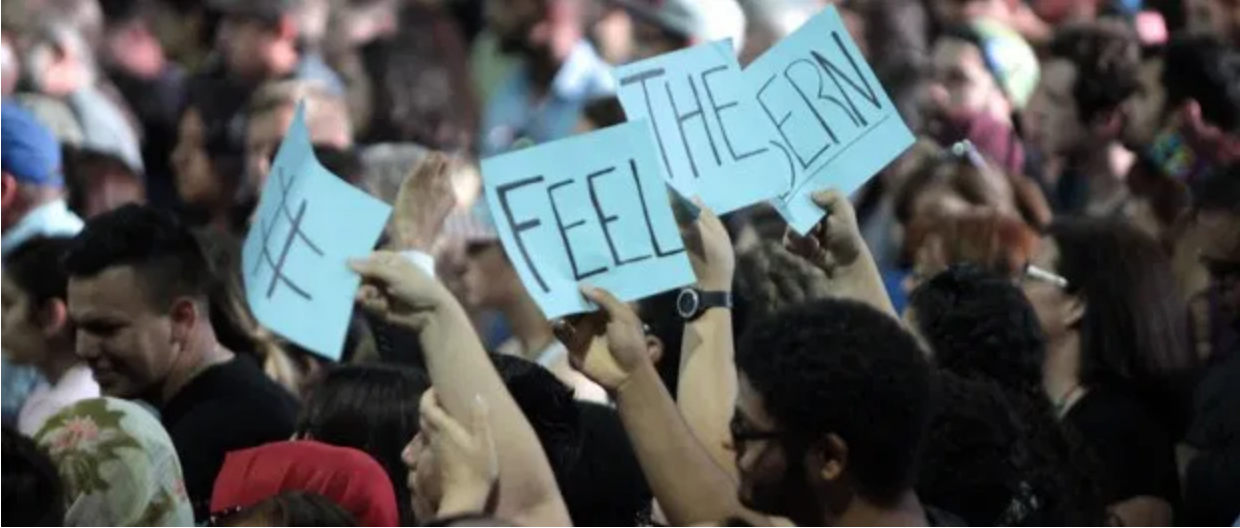
    COVID-19 is now in all U.S. states with 530,026 cases and 20,614 deaths (as of April 12). Statistics suggest that the virus has peaked for now. The debate today revolves around how to restart the economy without triggering a second wave. Electoral politics are on hold. Class struggle is beginning to grow.

    The virus shows the economic and social inequalities in racial disparities. In Chicago black people make 32 percent of the population, but they make up 72 percent of the coronavirus deaths, and statistics are similar in several other cities. In New York both blacks and Latinos are dying at twice the rate of whites. This is largely due to underlying conditions–high blood pressure, diabetes, and respiratory disease–but also to lack of health care and overcrowded housing.

    American racism appears everywhere in this crisis. The United States has virtually closed the southern border to migrants and Latin American refugees seeking asylum in the United States have not been admitted and find themselves waiting in overcrowded camps in Mexico where the coronavirus is spreading. Asian Americans have experienced verbal abuse and violent attacks as the bearers of what Trump called the “Chinese virus.”

    There are now officially 17 million unemployed—more than the Great Recession’s peak of 14.7 million in June 2009. While the jobless will receive state unemployment payments plus $600 until July 31, in the United States the unemployed also generally lose also their health insurance. Many of the unemployed have no food and have turned to food banks. Throughout the country there are lines of cars miles long where desperate families wait to get a box or two of groceries.

    President Trump, the Republican Party, and some businesses want to get workers back on the job, even it means putting their health at risk. Dr. Robert Redfield, director of the the Centers for Disease Control and Prevention (CDC), speaking at the White House, said last week that essential employees–janitors, housekeeping workers, workers in food and agriculture, critical manufacturing, information technology, transportation, energy, and government facilities–who had been exposed to confirmed or suspected cases of Covid-19 could return to work if they were not experiencing symptoms. Some health professionals criticized the directive saying that it violated the CDC’s own standards and would endanger workers.

    The deep economic recession has led to a fiscal crisis, since closed businesses don’t pay taxes to city and state governments. Already many U.S. states and cities have begun to propose budget cuts, ironically often cuts to sanitation, health, transportation, and education. New York City plans to cut 1.3 billion, some $264 million of that from education. The state of Colorado plans to cut $3 billion. The cuts in city and state budgets will lead to the layoff of tens of thousands more workers.

    The working class response to the crisis has become more serious. Workers have carried out 70 wildcat strikes in a variety of industries in several states and cities. Unions such as the Service Employees (SEIU) and the New York Nurses (NYSNA) among others have become involved in organizing workplaces protests over health and safety. Labor Notes, the labor education center, has called for a National Health Care Day of Action on April 15 to encourage such protests. The United Electrical Workers Union (UE) called on the labor movement to take responsibility to organize workers and lead the fight.

    Coronavirus led state governments to close down election rallies and even postpone the elections themselves. Bernie Sanders, the self-proclaimed “democratic socialist,” seeing no way to win, withdrew from the Democratic Party primary election. Joe Biden, a neoliberal, who won most delegates, now becomes the party’s presumptive nominee. In an attempt to appeal to Sanders’ supporters he is adopting reforms such as lowering Medicare eligibility from 65 to 60 and forgiving college debt of students from low-income and middle families.

    The Democratic Socialists of America, which had been heavily involved in the Sanders’ campaign, has pledged to continue to fight for Sanders program: a Green New Deal, Medicare for all, and free college education. DSA says it is running state and local candidates and will be involved in all aspects of the labor and social movements fighting for public health and economic justice in the midst of the crisis.

  • Building an Alternative to the Democratic Party

    Building an Alternative to the Democratic Party

    Bernie Sanders has ended his candidacy

    When we feel our lives are in danger as they are in this pandemic, it can be very hard to look critically at national politics, by which I mean the end of Bernie’s candidacy and Biden’s coronation as the Democratic nominee for President. Maybe we first need time to grieve the end of Bernie’s campaign, the prominence of someone who self-identified as a socialist, and the hope he could win the nomination.  Although I have watched social movements I have supported with my heart, time, and wallet become drowned in the Democratic Party, though I wouldn’t register as a Democrat for that reason, I am feeling this loss. I was smitten by Bernie.

    After enduring Democrats giving away our schools, hospitals, jobs, and planet to the highest bidders for decades, it was glorious to see this reality put on the table in the Democratic primary, to watch socialism discussed, taken up by thousands of young people drawn to political activity.  Hearing Bernie take the stage in debates broadcast on national TV to argue for radical reforms that make such obvious sense but for so long have been derided as impossible, impractical, lunatic, hearing him express these ideas with such clarity and passion, made my heart swell. Seeing so many share that feeling was intoxicating.

    Yet, analysis that contradicted the love has been pushed aside. One accurate observation mostly ignored was how positions identified as socialist were old-time New Deal-style U.S. liberalism.  The campaign wasn’t called on its unwillingness to reject education’s economic purposes, to address straightforwardly what both Democrats and Republicans have refused to say – that  most jobs capitalism is creating are low-paid, a fact that can’t be ameliorated by reforming schools.  The importance of electoral activity itself was overstated among many of Sanders’ supporters, the difference between winning elections and building social movements misconstrued.  Sanders’  foreign policy positions, though more progressive than what the Democrats push both when they have power and don’t, were not what many activists wanted from a spokesperson for the left. Still, a remarkable aspect of this campaign, one that I think was profoundly educative about what we should expect from politicians, was Bernie’s ability to stick to principles and yet grow, to change his positions when confronted to do so.

    Both the strength of Sanders’ campaign as well as the limitations partly stem from a dilemma Ellen Willis described in 2001, progressives’ abusive relationship with the Democrats: “When the Democrats get into power, they compromise with the Right and betray their left supporters; on the other hand, when they’re out of power, they completely collapse and surrender to the Right.”  Willis observed that the Democrats’ and GOP’s convergence on so many issues had delegitimized politics for millions, making them feel hopeless about change. This persuaded her about the importance of intervening in electoral politics, as an auxiliary, not a substitute for building social movements. Electoral activity in turn demanded “changing the winner-take-all system to one that’s more hospitable to multiple parties… so that a dissident party can at least intervene in the debate, whether it can win or not, and not simply be dismissed as a as a spoiler. In other words, the left has to start agitating for such measures as proportional representation and runoff elections, as well as fighting the various kinds of disenfranchisement that take place routinely, not just in Florida 2000. In the present situation, one person one vote has become a radical demand.”

    Here we are twenty years later with the legally-enforced duopoly Willis argued we needed to change, though with far more voter-suppression.  What’s changed?  Bernie’s campaign illuminated for millions of people that ideas dismissed by powerful elites that control both parties are actually what’s realistic, from halting climate change to Medicare for All  to college for all and canceling student debt – and so much more, our dreams and hopes for a better life, changes to be wrested from the ruling class.

    At the same time, we have no vehicle to promote those ideas in national politics.  Bernie ran as an independent when he began his national career (a campaign to which I contributed ) because he knew his principles were indigestible to the Democratic Party.  Though it is a bitter pill to swallow, his campaign for President within the Democratic Party has reinforced that truth. The Democrats will make a verbal nod to some of Bernie’s ideas now that his candidacy has evaporated, but in practice they will continue with business as usual, as they always do because the left has nowhere to go. Biden has shown this in refusing to endorse Medicare for All making a bow to Bernie with his proposal to allow people who are 60 to opt in to Medicare (the insurance companies can’t make money off them so they’re fine with “expanding” Medicare this way) and propping up the “public option,” which has been exposed as a gift to insurance companies.

    I’m not voting for Biden. Nor am I debating about why the arguments we should be trying to make Biden change his politics or should just hold our noses and vote for him as the “lesser evil” have been shown countless times to be a dead-end.   What I think we need to pursue at this moment is how to build a new electoral vehicle, a national party that will be based on principles to which Bernie Sanders devoted his political career.  The discussion can’t be “whether” or “if” but “how.” I’m open to ideas, as is New Politics, which invites thoughtful, informed responses for an exchange, on our website.


    Note: Our forthcoming print issue, Summer 2020, will have a symposium on “Organizing after Sanders.”  There’s still time to subscribe so you can read these original pieces by activists well before the issue’s contents are made public on our website.

  • Class and Race Inequality, Health, and COVID-19

    Class and Race Inequality, Health, and COVID-19

    The demographic data collected and reported in the media for sickness and mortality rates due to COVID-19 has focused on age and to a certain extent gender. While mass hardship from unemployment has been widely reported, we have heard little about sickness or mortality rates by class or race for the coronavirus. There is nonetheless, clear evidence that class and race, and health and disease in general are closely linked. It is very likely therefore that sickness, recovery, and mortality rates for the Coronavirus pandemic will closely mirror class divides within countries and between rich and poor countries. Individual and household incomes, which reflects the class structure in a general way will be a key factor in how different classes experience the pandemic and its aftermath. Workers and the poor and people of color will likely suffer at greater rates than more privileged class and racial groups.

    Sociologists, social epidemiologists and other researchers have long noted the close connections between class, race, and health. However, the two cases for which most data have been reported on COVID-19, China and Italy, gives us little guide to class or race in the current crisis because data on incomes or other measures of class have either not been collected or not have been released, and both are countries without the type of stratified racial structure as the US. While the virus spreads through human contact via close interaction with people and infected surfaces ignoring class distinctions, patterns of those who do become ill, their recovery rates and those who die will very likely be connected to social class. More research may very likely reveal a clear class divide in China and Italy. We can expect clear social epidemiological patterns along race as well as class lines in the US as the epidemic unfolds. We can see the connections between class structure and class inequality on the one hand, and health and illness rates on the other, by comparing data on income with data on measures of health such as infant mortality and life expectancy. These are general estimates in part because income is an imperfect measure of social class.

    Increasing Class Divide

    Over the last few decades, income inequality in the United States has sharply increased. While this has obviously created increasing hardship, especially for the lower levels of the eighty percent of the wage-earning population that experienced a reduction of their slice of the national income since the 1980s, the increasing gap between the top and the bottom income strata is itself a further aggravating factor in the degradation of quality of life measures such as those associated with health and illness. Sociologists like Richard Wilkinson argue that it is the degree of inequality in a society more than GDP that most determines measures of human well-being (Wilkinson, 1996; (Wilkinson and Pickett, 2008). Researchers often use the Gini coefficient to measure inequality across countries. It calculates income inequality on a scale of 0-1; a society with complete equality would have a score of 0.0, and one with complete inequality, that is, with all wealth going to top strata would score 1.0. The US currently scores .49, the greatest overall income inequality among the world’s global north countries (China scores .55, Italy scores .33).

    Since the 1990s, the one to twenty percent has taken increasing percentages of total income and wealth in the US. This is due to tax breaks to upper income strata, declining rates of unionization, neo-liberal deregulation, and continued gains in labor productivity, almost all of which have accrued to capitalist profit rather than higher wages. At the same time, wages and salaries have stagnated for at least three fifths of the income earning population since at least the 1990s.

    Income data collected by the federal government divides the wage-earning population into twenty percent segments, often referred to as the “fifths”, which show percentages of total income for each segment. Speaking generally, since the 1990s the percentage taken by the top 20% of wage earners has grown precipitously, the bottom two have shrunk, and the middle has stagnated. Workers can roughly be said to occupy the first three fifths of the income ladder. The lowest fifth received 4.3% of all total income in 1980 and 3.6% in 2000. The Occupy Wall street movement called attention to class inequality by focusing on the 1%. The 1% have indeed gobbled an increasingly huge percent of income-17% and wealth, 34% in recent years. But the top ten and top twenty percent have increased their share of wages wealth as well. The top fifth took 43.7 % of all salary and wages paid in 1980. By 2000, their share increased to 49.6%, and by 2010 slightly more to just over 51%. At that point the most substantial gains went to the top one percent.

    Let’s take a quick look at the bottom strata of the income hierarchy, those occupying the bottom fifth, especially its lowest earning levels. Poverty is calculated by the U.S. government on the basis of food and other living costs in relation to income (a very faulty formula that vastly underestimates true food and living costs). Currently, the poverty line is around $25,000 for a family of four. The official poverty rate in the US is currently around 12%, or about 36 million people. A more reasonable estimate would be around 25-30% (25% would represent 88.5 million people). Many of these are children or retired people who would not be in the labor force. There are also millions barely above the poverty line whose actual life conditions resemble those under the poverty line, but yet who do not count as such in government statistics and do not qualify for public assistance. For those that do qualify, assistance payments have been slashed by successive waves of “welfare reform” from Clinton’s deep cuts in the 1990s to the latest round of cuts announced by the Trump government just before the pandemic hit the US. Among the working age poor are long term or intermittently unemployed workers, while many others are low wage workers in fast food or retail, members of the informal economy, or “gig” workers. Many of these low-wage workers earn less than the poverty line and have no sick days, pension, or health insurance. Although Obama care added millions to the ranks of the uninsured around 20 million remained uninsured.

    Class and Health

    Against the backdrop of this quick look at the U.S. class structure, we can take a look at health data in relation to class. Overall, the middle and upper-class self-report good and excellent health in far greater percentages than lower income strata. According to a report by the Center for Society and Health, “(p)oor adults are almost five times as likely to report being in fair or poor health as adults with family incomes at or above 400 percent of the federal poverty level . . . and they are more than three times as likely to have activity limitations due to chronic illness . . .Low-income American adults also have higher rates of heart disease, diabetes, stroke, and other chronic disorders than wealthier Americans (Woolf et al, 2015).

    Health in a society can be measured by looking at several factors such as infant mortality, life expectancy, obesity rates, and more, not to mention multiple mental health factors. Here we take a brief look at two of these, infant mortality rates, and life expectancy, (both of which correlate with many other factors). Studies published as early as 1901 in York, England showed clear patterns linking class distinctions, living conditions, and infant mortality. A study conducted in York, England that collected data on infant mortality rates from three distinct working-class populations. The three groups differed according to living conditions and income with the poorest living in the most cramped and crowded conditions.

    The infant mortality rate was highest at 247 per 1,000 live births in the poorest areas, 184 per 1,000, and in the highest, 173. The study noted that the infant mortality rate among servants living in the cleanest and least crowded neighborhoods and homes was 94. Research on 21st century populations reveals the same correlations. According to a a study published in 2001, “In England and Wales infant mortality in 2000 was 3.7 per 1,000 among infants born to fathers in the top social class and 8.1 among those born into the bottom class. Among single mothers, the rate was 7.6. . . ” (National Statistics, 2001).

    Life expectancy is also a prime measure of overall health in a population. Globally, the average life expectancy is 72 years according to the World Health Organization (WHO.) All of the countries with the longest life expectancies are in the global north with Japan and Hong Kong at the top with 84 plus, while all of the countries with the shortest are in the global south. Average life expectancy in the Central African Republic is 52.8 years.

    In the US,” (a)mong men born in 1960, those in the top income quintile could expect to live 12.7 years longer than men in the bottom income quintile” according to a report by the non-partisan Congressional Research Service (Isaacs and Choudary,2017). All of this suggests that in general (individual exceptions aside), the poorer one is, the worse health they can expect; while, the richer one is, the better health they can expect. There is even evidence that the top half of the one percent have better health than the bottom half of the one percent.

    Race and Health

    Race also correlates closely with health and disease but less so than class. African Americans have much lower life expectancy and higher infant mortality rates than whites. Overall life expectancy in the US is around 78 years. Most studies find a 4-5-year gap between whites and blacks in general. Black men live around nine years less on the average than white men. In the US, according to the Center for Disease Control (CDC) the infant mortality rate (percentage) (measured as the number of infants who do not survive until their first birthdays), for African Americans is 11.4%, while the rate for whites was 4.9%.

    Part of the poor health picture of communities of color reflects the overlap of race and class among blacks, Latinx, Asians, and Native people, all of whom are overwhelmingly working class and overrepresented in the ranks of the poor. Blacks and Latinx according to standard data collection are three times more likely to live in poverty than whites (the poverty rate for blacks and Latinx has been around 25% for most of the past few years, as opposed to 8% for whites). Blacks have far higher diabetes rates than whites, and diabetes puts one at a distinct risk for the coronavirus. Research has shown that the connection between race and health is weaker than the relationship between class and health. In other words, “. . . higher-income blacks, Hispanics, and Native Americans have better health than members of their groups with less income, and this income gradient appears to be more strongly tied to health than their race or ethnicity. (Urban Institute,2015).

    The high incarceration rates among African Americans will also result in higher infection and mortality rates in the black community since prisons are hotbeds of communicable disease transmission and prison hospitals are much less equipped to handle a sudden influx of patients. The myriad ways that people of color experience cultural racism in their interactions with health care workers at all levels including with physicians will continue to aggravate conditions for people of color during this crisis. And, all of the problems associated with poverty, malnutrition, and inequality will likely be magnified in unsanitary, closely packed Immigrant detention centers.

    Class, Race, and COVID-19

    The particularities of coronavirus will accentuate class and racial differences. For example, although people of all classes use public transportation in big urban centers, working people are more likely in some areas to take public transportation and less likely to have the option of driving their own cars, making them more vulnerable to infection. The automobile ownership rate per household in Milwaukee’s poor black neighborhoods for example, is 20-30%, while it is 90% in the white and wealthier areas. An article in the March 30 New York Times suggested that the use of long-distance public transportation that people in sprawling Detroit use to get from crowded neighborhoods to work may be factor in the sudden spike in coronavirus infections in that heavily black, working class, and poor city. Drive-up testing will be less effective in cities and counties where larger shares of the population do not have access to vehicles.

    Data on the relationship between class, occupation, and the ability to self-isolate and therefore stay safe, during the pandemic is already being assembled. Information on fifteen million smart phone holders’ movements reported in the New York Times online edition on April 3, shows a clear occupational and class divide (the New York Times article did not discuss sampling issues). “(A)cross America, many lower-income workers continue to move around, while those who make more money are staying home and limiting their exposure to the Coronavirus”. For example, “The wealthiest people, those in the top 10 percent of income, however, have limited their movement more than those in the bottom 10 percent of the same metro areas.”

    According to a study by the Data Center, a research group in southeastern Louisiana, “(i)ncome and poverty measures can indicate the extent to which a community may be able to successfully adhere to COVID-19 mitigation measures (such as “stay at home” and “quarantine family members who are sick”). (Data Center, March 25, 2020).” Allison Plyer, The Data Center’s chief demographer told the New Orleans Sun Herald (April 3, 2020) that “(w)hen people live in poverty, they live in much closer quarters, with potentially four people in a one-bedroom house,” said “That means it’s very hard to quarantine. A major way the virus is spread is among family members.” On the other hand, middle-class white-collar workers on the other hand, often live in larger living spaces. During the 1990s, newly built home size jumped from 1,800 feet to 2,400 feet, giving more room to quarantine a sick household member (Frank, 2015). These homes were most likely bought by those in the upper reaches of the third and lower levels of the fourth fifth.

    Being poor, a person of color, or both makes one more likely to be homeless, or to live in a homeless shelter in close quarters. The vast and sudden unemployment and low wages, particularly in high rent areas, increase the likelihood that people will live in crowded living spaces making maintaining social distancing especially difficult. Living in close quarters during this stressful time is also putting women facing domestic violence at greater risk according to numerous sources that have documented a surge in violence against women and LGBTQ people specifically connected to the COVID-19 crisis (Guardian, April 3, 2020). https://www.theguardian.com/us-news/2020/apr/03/coronavirus-quarantine-abuse-domestic-violence.

    Likewise, blue collar workers often work in closer quarters than white collar workers (some “pink collar” jobs in jobs gender-typed occupations such as secretarial work have also been moved to remote, while others such as house cleaning work, have not). In the current situation large swaths of the work performed by white collar employees has moved to online in comfortable homes (highly paid physicians working with Coronavirus patients are an exception), while working class and most people of color work in blue color jobs that can’t be performed at home, which has led to unemployment for some and the prospect of working under dangerous conditions for others.

    The digital divide puts many poorer and rural working people and people of color without access to internet or quality internet or computers, smart phones, tablets, etc. in danger of not receiving the best and most up to date health related information. It also compromises their ability to follow school work that has now been shifted to a remote online format, which will further aggravate educational inequalities along class and race lines. Twelve percent of all US households lack internet access according to the US census. Only 61% of all households in New Orleans, a city with an overall poverty rate of 23.8% (2018), and one of the worst hit by COVID-19 have broad band. Twenty percent have no internet connection whatsoever (Data Center, 2020).

    According to the Data Center in Louisiana, early studies of morbidity rates in Wuhan, China “have identified high blood pressure, diabetes, . . . coronary heart disease, chronic obstructive pulmonary disease (COPD–often associated with smoking), chronic kidney disease, and cancer as pre-existing health conditions that may increase the likelihood of severe outcomes for people who get infected with COVID-19” (Data Center, 2020; Yang, 2020). African Americans, and to various extents low income people of all races, suffer from these. Approximately, one third of all African Americans in Detroit suffer from asthma and diabetes.

    Education, which overlaps with class, though it is a somewhat independent factor in health, is another fault line of health and social inequality linked to class. Currently, 12% of the US population does not have a high school diploma and 65% do not have a college degree. While 32% of white adults have a college degree, as opposed to only sixteen percent of blacks and nine percent of Latinx.

    Poverty, however measured, is usually accompanied by malnutrition which in turn has a negative effect on many if not all measures of health. It certainly affects infant mortality and ultimately life expectancy. Malnutrition, with its connection to class and race inequality could very well be a significant factor regarding Coronavirus. Even some of the guidelines for who to prioritize in case of ventilator shortages will reflect class and race inequalities. An article published on CNN online on March 27, reported on a letter that held that “patients with severe heart, lung, kidney or liver failure, severe trauma or burns, or terminal cancers may be ineligible for a ventilator or ICU care. These patients will instead receive “pain control and comfort measures.” These conditions are far more prevalent in lower income strata and communities of color.

    Access to Health Care

    The United States is the only country of the global north without a universal health care system.

    In the US the poor and near poor are most likely not insured as most people in the US receive health insurance at workplaces with over 250 employees, and workers of color are more likely to work in smaller businesses that do not offer insurance. Theoretically, unemployed, underemployed, and workers working in small businesses exempt from the ACA would qualify for Medicaid, but many are excluded in part because Medicaid has been cut and Republican governors have refused federal offers to expand it.

    Since lack of regular access to health care compromises overall health and likely weakens the immune system, layers of the population without regular access to health care can be expected to be more susceptible to getting sick from the virus and to experience its worst effects.

    Restricted access to health care would seem therefore to be a major reason for health inequalities along class lines, and certainly plays a big part in class and health disparities. However, sharp health inequalities exist in other highly stratified capitalist countries of the global north, all of whom have some sort of universal health system. It was recently reported In England, a country with universal health care and GINI index lower than the US ( 35 as opposed to the United States’s .49) but still substantial, that the high-income strata in England live ten years longer than working people and the poor. The reasons for this are multiple and cannot all be analyzed here, but the English example points to the great depth and breadth of the destructive nature of and deep unfairness of class inequality.

    The lack of a universal health care system in the US is both an expression of the great class inequality in the United States and a cause for the poorer health of the working class and poor. But, the example of England with its ten-year life expectancy gap from rich to poor attests to the depth of inequality in the sharply stratified societies of contemporary neo-capitalism. All of this means that being poor, a person of color, and/or a wage earner is an occupational health hazard in “normal” times, and even worse in the current crisis, a deep indictment of neo-liberal capitalist society. The much-touted high-quality Italian health care system had been subject to neo-liberal style cuts to public health for years in ways that badly aggravated the COVID-19 crisis.

    According to a recent article on the crisis in Italy:

    Our health care system was ravaged by a decade of funding and provision cuts, leaving it a shadow of its former self. 37 billion euros were cut and more than 70,000 beds vanished into thin air. ICU beds amount today to just 5,090, while the Ministry of Health states 2,500 more ICU beds are needed to tackle the crisis. The beds to population ratio is currently 3.6/1000, down from 5.8/1000 in 1998. . . .

    Last but not least here, as neoliberal cuts were being implemented, the system was increasingly fragmented into regional management, breaking up state management and hampering national funding system. This resulted in economically stronger areas getting more resources while weaker areas fell behind. Worse, in recent years, public financial support has flowed into a growing private health care system. Thus, the Italian healthcare system was not well equipped to respond to the crisis when it hit. Even after all this, the Italian health system’s greatest strength lies in still being a single-payer system . . . (Zecca, 2020).

    Similar deep budget cuts to public health systems have also happened in Britain, France and elsewhere in previously social democratic “cradle to grave” welfare states that are now overwhelmed with Coronavirus patients.

    The deadly combination of deep social inequalities, structural health care inequality, and neo-liberal cuts to the health care systems in the richest countries of the global north that the COVID-19 epidemic has revealed, powerfully underlines the necessity and timeliness of the central points of Bernie Sander’s program in his presidential campaign: universal health care and a redistribution of wealth and income through progressive taxation of the 1, 10, and 20%. His proposal for free college education is also essential because as has been suggested here education is also closely linked to health.

    While a social democratic program would address the twin problems of income inequality and lack of a universal health care system, the tight connections between class inequality and health outlined here show that it is the existence of class divisions and therefore class society itself that inevitably denies the majority of society the means to healthy lives. The class inequalities that the COVID-19 crisis will expose means that only the elimination of penury and the drastic shrinking of social inequality, conditions which can only occur under socialism, can provide safe and healthy lives for all of the planet’s peoples.


    References

    Data Center. 2020. “Demographics of New Orleans and early COVID-19 Hot Spots in the U.S.”

    https://www.datacenterresearch.org/covid-19-data-and-information/demographic-data/

    Frank, Robert H. 2015. Inequality Matters: The Growing Economic Divide in America and it Poisonous Consequences. New York: New Press.

    Isaacs, Katelin, and Choudary, Sharmila. 2017. “The Growing Gap in Life Expectancy by Income: Recent Evidence and Implications for the Social Security Retirement Age.” Urban Institute.

    National Statistics, (Winter 2001) “Infant and Perinatal Mortality by Social and Biological Factors, 2000,” Health Statistics Quarterly.

    Rowntree, B.S. 2001. “Poverty: A Study of Town Life (1901),” in Poverty, Inequality, and Health in Britain, 1800–2000: A Reader , ed. G. Davey Smith, D. Dorling, and M. Shaw (Bristol, England: Policy Press), 97–106.

    R.G. Wilkinson , Unhealthy Societies: The Afflictions of Inequality (London: Routledge, 1996 ).

    —– Wilkinson, Richard and Pickett, Kate. 2008. “Income Inequality and Socioeconomic Gradients in Mortality”. American Journal of Public Health. 2008 April; 98(4): 699–704.

    Woolf, Steven H., Aron, l., Dubay, L., Simon, S., Zimmerman, E., Luk, K. April, 2015. “How Are Income and Wealth Linked to Health and Longevity?” Center on Society and Health.

    Woolf, Steven H., Aron, l., Dubay, L., Simon, S., Zimmerman, E., Luk, K. April, 2015. “How Are Income and Wealth Linked to Health and Longevity?” Center on Society and Health.

    Yang, J., Zheng, Y., Gou, X., Pu, K., Chen, Z., Guo, Q., … & Zhou, Y. (2020). “Prevalence of comorbidities in the novel Wuhan coronavirus (COVID-19) infection: a systematic review and meta-analysis.” International Journal of Infectious Diseases.

    Zecca, Antonello. 2020. “COVID 19 Opens up a New Political Period in Italy”. https://nobordersnews.org/2020/03/22/antonello-zecca-covid-19-opens-up-a-new-political-period-in-italy/


  • Are We “All in This Together”?

    Are We “All in This Together”?

    The coronavirus crisis has provoked different reactions. Many have responded with compassion, kindness, and solidarity. Some have used it as another opportunity for money gouging, scams, and rip offs. Collective human warmth and love has battled cold individual selfishness and hatred. Solidarity has fought racism. Social responsibility has combated hedonism.

    In the face of these reactions, the media and politicians have engaged in a multi-pronged propaganda campaign. Celebrities from LL Cool J to Young Sheldon’s Ian Armitage and everyone in between have repeated “We’re all in this together” over and over on TV.

    But is this mantra true?

    In the most superficial biological sense, yes. we are all in this together. COVID-19 can strike anyone and kill with impunity — the young and old, rich and poor, of any race or gender. That true of the coronavirus and every other pandemic.

    As Frederick Engels noted, programs of public health grew out of this realization in the 1800’s. The rich discovered that they, too, could be felled by pathogens. When the poor in the slums got cholera, tuberculosis, small pox etc., the rich in their mansions were not immune. Hence, society-wide efforts at sanitation and the provision of clean drinking water.

    Though the rich care about their own health and that of their children that is not their only relation to this issue. As Marx noted, each capitalist is the “personification of capital.” Capital is driven by competition to accumulate for the sake of accumulation. The drive for profit dominates all. Each economic unit must exploit its workers as much as possible, cut corners, and reduce expenses. Capitalists, as capitalists are first of all concerned with the survival and expansion of capital.

    The drive for profit impacts every aspect of society. If public health spending cuts into profit, capitalists try to limit it to the minimum necessary to keep the system running. This has clearly played itself out in the coronavirus crisis, in which the near-collapse of the hospital system has been a logical outcome of decades of a neoliberal campaign to increase the concentration of wealth at the expense of workers and the poor.

    Neoliberalism is not an aberration but flowed directly out of the competitive position capitalists found themselves in during the mid- to late 1970s. Their response was to undercut the funding of public services (through reduced taxation) and to privatize them whenever possible.

    Neoliberal policies impacted the whole world and they continue, in one form or another, everywhere. Massive cutbacks in health spending have become a fact of life even in social-democratic countries. While everyone might be guaranteed the right to health care, neoliberalism in practice has meant its reduction in availability and quality. Neoliberalism in medical care has also drawn on “just-in-time” in manufacturing — and approach tat profitability by making production lean and efficient. At the level of the individual hospital, this has taken the form of keeping only limited stockpiles of medically necessary equipment on hand, since storage and pre-ordering cut into the bottom line. Smaller hospital staffs and unsafe nurse-patient ratios also ensured the highest possible quarterly profit.

    These competitive measures have taken effect in the vast majority of hospital — even public hospital and those legally labeled as non-profits, where CEOs, board members, and senior administrators often receive grossly inflated compensation. This is why the health care system as a whole was unprepared for the pandemic.

    Who are “we”?

    The impact of a pandemic varies by class. The rich might not be able to avoid communicable diseases totally, but a mansion enables social distancing whereas a crowded slum does not. The very poor, the homeless, and those living in former colonies are even more susceptible. We are hardly “all in this together” on equal terms.

    What is true of individual health outcomes is also true of economic outcomes. The fear of social unrest and economic collapse has forced the government to provide expanded unemployment compensation and even direct payments to the working class. However, these are limited and bureaucratically distributed. Workers and the poor will continue to suffer from unemployment, eviction, foreclosure, and even worse health conditions as this crisis unfolds. On the other hand, the rich can live in high style for years off of the accumulations they made from exploiting the poor.

    The impact of the crisis will be differential within the working class as well. Some can maintain their salaries by working at home. Others must face disease and possible death by continuing to go to work. Some will not face more racism than usual while others, especially Asians, will. Women are losing their right to abortion. Those already in poor health suffer the most as even normal health care is cut back. Even before the current crisis poor economic health often yielded poor physical health and less access to health care.

    The most profound way that we are NOT all in this together is in solutions. A real solution to the current pandemic and future health crises is collective. It requires focusing resources on human health at the expense of accumulation of wealth. It requires international planning and coordination rather than competitive profit-mongering. It requires asserting the interests of the vast majority against the capitalists. It requires intense class struggle.

    This understanding needs to inform how we fight back against this crisis and future crises. The message trickling down from the top of society is aimed at social stability. “We are all in this together” when spoken from above means: “Don’t fight back, obey the law, listen to your leaders, work harder, and accept new government repression.”etc. It aims at maintaining the status quo that brought us this crisis in the first place.

    For ordinary people, “we are all in this together” can mean solidarity with neighbors and co-workers. It can mean humanitarian aid. We should build on this sentiment while rejecting the ruling class’s spin. We need to support the workers striking and demonstrating for better safety precautions, hazard pay, production of more health equipment , more social spending etc. If workers don’t fight back, the rulers will use this crisis to impose more exploitation and repression, more cut backs and misery. As with every other issue, it is struggle against the system — not acquiescence to it — that improves conditions.

    Finding ourselves “all in this together” does not mean that class collaboration is the answer to this crisis, or any other. The profit-orientation of the current system is the root of the problem. That root must be torn up and destroyed. We need a system based on collective public ownership and workers democratic control so that human needs dominate decisions. That system is international socialism. To paraphrase Marx: Workers of the World Unite, you have nothing to gain but your lives!

  • Global Capitalism, Global Pandemic, and the Struggle for Socialism

    Global Capitalism, Global Pandemic, and the Struggle for Socialism

    We are now in the grip of one of the worst economic crises in the history of modern capitalism. As the Coronavirus pandemic forces people to stay home and businesses to remain shuttered, the St. Louis Federal Reserve has projected 30% of the workforce will become unemployed, significantly surpassing the level during the Great Depression. Meanwhile, Goldman Sachs has forecasted a massive 24% drop in GDP — more than twice as large as the previous postwar record.

    In seeking to manage this unfolding catastrophe, the American state has once again taken radical steps to save the system. The Federal Reserve has not only pumped liquidity into the financial sector, but has also expanded its purview to buying “unlimited” corporate debt. Thus the $2 trillion “stimulus” bill that passed Congress, the largest in US history, is only one part of the picture. The true center of crisis management lies in agencies that have long been shielded from democratic oversight.

    These events have rocked the shaky foundations on which the previous crisis was resolved, and further eroded the legitimacy of neoliberalism. Decades of austerity politics driven by the logic of “There Is No Alternative” have left the state scandalously ill-equipped to address the pandemic. As the death count continues to rise, increasingly drastic measures such as “reopening” the economy are considered — exposing the working class to mortal danger for the benefit of restoring capital accumulation.

    Though the bailout of the banks after 2008 stabilized financial markets, it also led to widespread popular anger that drew neoliberal policies into question in a new way. The project of globalization pursued by the state since World War II, from which capital continued to benefit handsomely, was no longer “common sense.” The American state had succeeded in temporarily containing the crisis, but at the expense of the legitimacy of neoliberalism — which only further crumbled amidst the austerity that followed.

    This also discredited both political parties, which were both complicit in decades of neoliberal restructuring. It created space for Bernie Sanders and Donald Trump to make the case for alternative hegemonic projects, which, at least on the surface, were not at all neoliberal: “America First” nationalism, on the one hand, “democratic socialism,” on the other. With the 2016 election of Donald Trump, as well as the growth of the democratic socialist insurgency, the political crisis reverberated from the political parties throughout the state as a whole.

    That the current crisis has emerged on Donald Trump’s watch opens the possibility that he will use it to further shift politics to the right. The main alternative to this is a beleaguered neoliberal establishment, which has itself supported increasingly authoritarian means to stabilize capitalism. Yet the crisis has also created an opening for the left, as the claim that expansive state policies to support social welfare are unfeasible collapses in the face of the emergency measures enacted in recent weeks. It is up to us to build on this, making the case for a fundamentally different kind of society.

    Two Roads Out of the Crisis?

    The crisis quite obviously points to the inadequacy of the welfare state in the US, as well as the social inequalities capitalism systematically generates. However, the fears and anxieties produced by this crisis do not automatically lead to socialist political conclusions — in fact, they could further empower the right.

    Unlike in the 1930s, the global integration of capitalism today makes it hard to imagine the far right offering a coherent alternative to neoliberalism, even as it rails against “globalism.” Indeed, Trump has thus far been unwilling to challenge capital to the extent that would be necessary to truly break with globalization. There is no better proof of this than the so-called “new NAFTA,” or the USMCA. Before the ink was even dry on the deal, GM announced plant closures across North America, along with new investments in Mexico.

    Similarly, though much rancor has been raised about Trump’s tariffs, these have served not as a means for breaking with globalization, but rather deepening it by forcing the Chinese state to further liberalize. None of this has brought manufacturing jobs back to the Rust Belt, as was the dominant theme of his campaign.

    Yet key centers of power within the American state have already long been insulated from democratic oversight. In this respect, as well, Trump has offered little more than a rebranded neoliberalism. Indeed, his management of the current crisis so far has not substantially differed from the past: empowering the Fed and Treasury to act as global firefighters, largely free from Congressional scrutiny.

    As the economy has come to a screeching halt, the Fed has pumped liquidity into the financial system on a scale comparable to what was done after 2008. It also expanded its role to purchasing “unlimited” corporate debt, as well as financing equity purchases by the Treasury Department. These are to be undertaken and administered by BlackRock — a major private equity firm.

    All this is par for the course under neoliberalism. The European Central Bank has undertaken similar purchases of corporate bonds since 2016, as part of beefing up its own crisis-fighting capacities. Such measures are intended by state officials to forestall broad economic collapse. The state will in no way seek to exercise control over the management or structure of companies in which it takes an ownership stake. This was made especially clear by Trump’s hesitancy even to exercise his powers under the Defense Production Act to compel companies to produce ventilators.

    Nor is contracting BlackRock to manage financial commodities and transactions much different from insisting that manufacturing companies produce needed medical supplies. In both cases, the state is relying on firms with the capacities and expertise to accomplish its objectives. It was for this reason, as well, that the Fed collaborated closely with J.P. Morgan in resolving the 2008 crisis. And moreover, government bonds are already sold by private dealers, who receive a healthy commission for their trouble.

    Although more likely to respect the rule of law, it is unclear how Joe Biden’s strategy for managing the crisis could differ substantially from Trump’s, down to a state-led recovery through an infrastructure initiative. He may also seek to secure some additional benefits for workers, albeit made with the same calculation of “reopening America for business” by compelling them to return to their jobs sooner rather than later.

    No matter which party is in power, the main task the state faces in restarting accumulation is getting people back to work. In addition to the inability to open businesses due to the need for self-quarantine is the collapse in demand as unemployment reaches record levels. This raises the specter of a deflationary spiral, such as that which characterized the Great Depression: falling demand leading to cuts to prices and employment, in turn resulting in further reduction of demand and further layoffs. Deflation would also increase the real value of debts — further compressing working class purchasing power.

    A further danger, therefore, is that even once people are able to return to work, the economy would reach “equilibrium” despite massive unemployment. Avoiding this will require a massive state-led project, such as an infrastructure initiative or a Green New Deal. There is today plenty of space for such a program. Yet the massive deficits that will result from declining growth and stimulus spending, on top of the Trump tax cuts, will surely generate pressure for harsh austerity policies — which would only make things worse.

    Nevertheless, if enacted, any state-led recovery would likely provide ample opportunities for investment, offering public-private partnerships and privatized infrastructure. Particularly in turbulent times, infrastructure is a highly desirable asset class — guaranteeing a stable and crisis-proof revenue stream. The risk is that, with Trump in office, this could create a broader base for his far-right politics — bringing together parts of manufacturing, the extractive sector, finance, and the building trades.

    What this illustrates above all is the extent to which it was the bankruptcy of neoliberalism — and its crisis of legitimacy — that has created the conditions for Trumpism. Its inability to offer anything other than the same precarity that has resulted from four decades of these policies makes it unlikely to reestablish broad popular support. From this void, far-right nationalism and xenophobia offer an alternative source of legitimacy, thriving on the very resentment created by neoliberalism in order to perpetuate it in other key respects.

    For a Left Break with Neoliberalism

    Even if neoliberalism is preferable to its reactionary cousin, addressing this crisis will require policymakers to reach beyond the traditional neoliberal toolkit. Given the scale of the restructuring that is likely to occur, it is plausible that what emerges from the crisis might no longer be what we have known as neoliberal capitalism. But addressing the social and political malaise, which the pandemic has exposed and intensified, demands that we envision a third, more radical possibility: a democratic socialist road out of the crisis.

    We are in an unprecedented situation. The ways the left has historically won concessions from the capitalist state — mass mobilizations and social movements — have been drastically limited by the lockdown of public space and practices of social distancing. A situation where mass gatherings are prevented tilts the balance of power even more toward the elite networks concentrated in the exclusive corridors of the state. The $2 trillion “stimulus” bill, bailing out large corporations while providing little public relief, is evidence of that.

    Nevertheless, just weeks into the crisis, we have already seen encouraging working-class mobilization—as for instance, the strikes at Whole Foods, General Electric, Instacart, and Amazon. Beyond the doctors, nurses, and healthcare professionals on the front lines, the pandemic has exposed how the same workers that are now suddenly recognized as “essential” to the system — sanitation, mass transit, agricultural, food service, and energy sector workers, among others — are treated as expendable in “normal” times.

    We have also seen expressions of solidarity in the form of mutual aid organizing. However, while necessary, mutual aid, strikes, and protests are not enough. Similarly, the pandemic has only made more urgent the mounting calls for Medicare for All, as well as for expanding other desperately needed services. But we must go further. We need a broader strategy for transforming the bases of political and economic power. Rather than merely saving capitalism, we must wage a struggle to democratize both the state and the economy.

    Sustaining even moderate social democratic reforms amidst the pressures of a global capitalism, and inevitable counterattacks both from corporations and within the state itself, requires a radical confrontation with the capitalist class. This must include placing limits on the ability for corporations to move investment around the world through capital controls. And we should demand not merely that this capital stay “at home,” but that it be put to meaningful social use — such as financing a Green New Deal.

    In turn, an ambitious program like the Green New Deal would have little chance of succeeding without mobilizing workers. Plant closures, as capital moves investment to low-wage zones, provides an opportunity to organize workers and communities to take control of our productive capacities. At the same time, converting plants to produce socially necessary goods — such as medical supplies or technologies to address the climate crisis — also requires state investment and support. To address these urgent social needs, we must connect the democratization of production to the struggle to transform the state.

    The democratic socialist project bears no resemblance to Trump’s efforts to manage the crisis. This is true despite the fact that he has increased government involvement in the “private sector,” and has even suggested taking up ownership stakes in some large firms. Similarly, Trump and the GOP have supported increasing some social protections for workers. But crucially, these are not isolated measures. Rather, they are part of the broader project of building far-right hegemony as the legitimacy of neoliberalism evaporates.

    Democratic socialists should not seek merely to acquire ownership of capitalist assets so as to restore capital accumulation and support class power through a crisis. On the contrary, the goal is to establish and deepen democratic control over both the state and the economy. Rather than bailing out the banks or large corporations, these should be nationalized and converted to produce the goods that are necessary for addressing the public health crisis — to say nothing of the ecological emergency.

    Nationalizing firms without democratizing the state is simply to place them under the control of a capitalist state, which reproduces the structural power of capital — especially as it was remade during the neoliberal decades to protect markets from democratic control. This same insulation of the state from popular pressures, aided by new linkages with the financial system and corporations, is what now creates a window of opportunity for Trump. Nor would this change the undemocratic nature of capitalist corporations.

    Instead of only enlarging the “public sector” administered by the capitalist state, we should fight to fundamentally transform it. Above all, this is what sharply differentiates democratic socialism from traditional social democracy. Social democrats have pursued a politics of class compromise that aims to expand social programs for workers — without democratizing state administration, or challenging capitalist social relations.

    Far from expanding the public sector being sufficient, we need to mobilize state workers against capitalist state administrators — much as teachers have begun to do in recent years. These struggles should aim to create a different and more meaningful relationship between these workers and their “public sector” jobs, as well as a more organic connection with the communities they serve. Such a rebellion against the “public sector” as it is currently constituted, supported by extra-parliamentary movements and forces, is central to the transformation of the state.

    Class, Party, and State Transformation

    Despite the scale of the crisis, it is unrealistic to expect a spontaneous uprising to overthrow capitalism. Indeed, as the argument here suggests, there is nothing automatic about coming to socialist conclusions about the systemic failure of capitalism — particularly in a climate of fear and insecurity, and in which the far-right is in power. Nor is capitalism going to simply collapse on its own. Even as the choice between socialism and barbarism seems starker than ever, there is no shortcut to doing the hard work of organizing a socialist party.

    A socialist party remains the essential link between working class formation and the transformation of the state. Encouragingly, a new generation of activists in the Democratic Socialists of America has undertaken in earnest the search for the kind of organization that could give political expression to the contemporary working class. However, the US electoral system makes the emergence of a viable third party incredibly difficult. For this reason, in the context of the delegitimation of both major parties, the new “democratic socialist” movement has emerged from within the Democratic Party while seeking to break with it over the longer-term.

    The achievements of the Bernie Sanders campaign, which has been a major driving force of this movement, have been remarkable. Though he likely will not win the Democratic nomination, Sanders has mobilized people across the country in support of an ambitious “political revolution,” revealing widespread public support for universal healthcare, green infrastructure, and free college education. Yet one of the clearest lessons of the campaign is that the base for left politics is still far from what is necessary to actually enact a radical break with neoliberalism — let alone a socialist transition.

    Though it makes sense to continue using the Democratic Party ballot line to build the electoral left, simply winning elections should by no means be our primary focus. Rather, we should see running for elections and building a base for socialist politics as mutually reinforcing. Electoral campaigns should be pursued to the extent that they help build links between political officeholders, trade unions, social movements, and working-class communities. Similarly, democratic socialists in office should draw strength from, and empower, social movements, rank and file struggles, and community organizations.

    Pursuing these in tandem is the core of a strategy to lay the groundwork for a future socialist party. Yet such a “dirty break” from the Democratic Party depends upon our ability to develop independent working-class political capacities. Rather than aiming to “transform” the Democratic Party by simply becoming a more important part of its coalition, we must consciously lay the foundations for an alternative. Though this goal is still years away, it is imperative that we take steps toward realizing it in the here and now, rather than postponing it into the indefinite future.

    Just as the current crisis has brought opportunities, so too has it intensified the dangers we face. With the legitimacy of neoliberalism in tatters and unable to resolve these mounting crises, the far-right threatens to consolidate its influence through a cross-class alliance. Yet this has also created an opening for a renewed democratic socialist left to craft its own hegemonic and cross-class project. Only by envisioning a society beyond capitalism, and connecting much needed short-term victories to an ambitious project of social transformation, can we turn this crisis from a catastrophe into an opportunity.


  • What Is COVID-19 Teaching Us About Being Human?

    What Is COVID-19 Teaching Us About Being Human?

    Grocery aisles stand devoid of toilet paper rolls, paper towels, meat, and canned products as panic-stricken urbanites stock their pantries and garages to avoid multiple trips to the supermarket, or maybe even to avoid doomsday scarcity. When people do visit such stores, they quickly part, skirt, and dart away from each other—social distancing is something we Americans are quite adept at, we have always liked our private spaces, we have always been studious about not encroaching physical and emotional spaces of our fellow humans leaving such “encroaching” behaviors to doctors and shrinks. We have preferred to live in the suburbs where more distant our homes are from our neighbors, the more valuable our property has been. As a civilization, we Americans have associated happiness and well-being with the accumulation of stuff, protection of private property, and the defense of our individuality. President Trump has applauded Americans for doing really well in taking social distancing seriously, and yet, more recently, under pressure from the ruling class, he also announced that America will be open for business soon. For the first time in recent history, the two key concepts of individual liberalism are in conflict with each other: individual freedom clashes with the pursuit of happiness.

    Irrespective of political policies towards migrants, border porosity, women’s reproductive rights, international relations, war, the Middle East, etc., the heart and soul of Western liberal democracy has always been individual freedom and self-interest. Bentham and Mill had laid out clearly that the theory of life based on individual self-interest is utilitarian where utility refers to the ability of an object to promote pleasure and happiness. Happiness is the experience of pleasure and the absence of pain. Therefore, pleasure and freedom from pain are the only things desirable as ends. All desirable things are desirable because there is pleasure inherent in them, or they are a means to promote pleasure. To be an individual is to be an owner of one’s own capacities and what one acquires through the use of those capacities. The stuff that is acquired is understood as private property, which are commodities that are inherently pleasurable. Ownership as the essence of individuality and freedom means independence from others, and one is considered to be ‘free’ from others when one is allowed to own and use her private property. Ayan Rand’s The Virtue of Selfishness proposes an “objectivist ethics” that is based on “rational-selfishness” as opposed to the “brotherhood of men.” For Rand, altruism is “moral cannibalism” based on the premise that happiness of one member of society is predicated on the sacrifice of another. Thus, taxing the rich and subsidizing college loans involves punishing the rich, hence irrational morality imposed by a government will cannibalize rational and productive members of society.

    Selfishness implies rationality and is the source of all happiness, and freedom, peace, prosperity in a benevolent and civilized society. This happiness which is the foundation of human good includes consumptive functions and also emotional functions, both of which can be acquired through the exchange of value (pursuit of profit through transaction). Of course, all this is inspired by the guru if self-love, Adam Smith, who argued that it will be hard to depend on benevolence of each other, rather, one must appeal to self-love of others and demonstrate to them that it is in their self-interest to help others. Within liberal morality, the concept of freedom is essentially negative, that is, it is usually seen as ‘freedom from’ rather than ‘freedom to.’ Freedom is a state of being in which one is not restricted, not compelled, not interfered with. The state is seen as a primary institution of restriction, interference and compulsion, therefore, the liberals have always obsessed about the freedom from control by the state.

    In the context of the current COVID-19 outbreak, the mad scramble to stockpile toilet paper, meats, and kitchen towels, therefore, represent freedom to pursue happiness and avoid pain through rational self-interest. Sheathes of paper, piles of meat, and cans of baked beans represent ownership of stuff/property that promote freedom and pleasure, and hence, independence from others in freely pursuing individual hygiene, and satisfying carnal cravings. Mad dashing towards the grocery aisles represent our instinctual transactional essence for pursuit of happiness by deferring the pain of crisis (absence of such stuff). Social distancing instantly makes sense for most Americans because suddenly, the freedom to not be interfered with, or the penchant for alienation and isolation, is now medically desirable. The failure to socialize is no longer an antisocial personality disorder, the obsessive love for isolation is no longer a medical condition, depression due to alienation is suddenly self-preservation because, apparently, we are faced with an existential question where the pursuit of individuality is now a societal necessity. We should do really well and seamlessly cope with the COVID-19 crisis because resistance to it involves what we are well versed in: the pursuit of individual self-interest.

    Yet, contradictions manifest, with schools closed and daycare centers seen as too social for safety; families must, often for the first time, actually look up from their cell phones and engage with their children who can no longer be let loose on nannies, in playgrounds and malls. We are therefore forced to take stock of, perhaps for the first time, how much work the minimum-wage employed migrant nanny puts into our kids. As school teachers inquire after our kids and diligently send pictures, online homework, and conduct classes on Zoom, we are compelled to realize how much space and time the school teachers create in our lives so that we can pursue our lucrative careers and spend hours at the gym. In the midst of lock-downs and stay at home orders, we as a society must come to terms with what hundreds of nations go through every day under conditions of war and state sanctions imposed by the U.S. We as a “host society” must also come to terms with what migrants and refugees must go through in the absence of basic hygiene and food in their existential crisis of finding a safe haven.

    In the midst of the Syrian refugee crisis there were reports from refugee shelters in Europe complaining that toilet seats were broken every day because Muslim migrants did not know how to use western toilets as they are used to squatting on holes on the ground. Orientalist imaginations bordered around Islamophobia as the migrant’s body and her daily hygiene was deconstructed as an act of defilement of western norms. In the midst of disappearing toilet paper rolls and the  use of substitutes like kitchen towels leading to clogging of toilets, perhaps the coronavirus is teaching us to ‘re-orient’ our cultural tropes of western modernity, and pushing us to place ourselves in solidarity and empathy with the ‘refugee-other.’

    Protesters demonstrated in front of Wall Street holding signs “we will not die for Wall Street” as President Trump claimed that social distancing would be eased to revive the economy. Profit must be pursued and the ‘wealth of nations’ must be accumulated in order to avoid a national and global economic crisis, but what would that mean for individual self-interest if working means contracting the virus? If, in the true spirit of liberal capitalism, the state may not subsidize individuals by paying salaries and sick leaves in the midst of this crisis because individual freedom is about freedom from control of the state, then profit-making must clash with the pursuit of happiness as pursuing profit (work) would mean irrationally sacrificing personal health.

    The COIVD-19 crisis holds up a mirror to our souls: what does it mean to be a rational human now? What does it mean to pursue happiness in a world where we hang between happiness and pain? Will society be the same again post-cpandemic? What kind of society do we want? Indeed, the world never goes back to where it was for an Afghan child that loses a leg in a war deployed landmine embedded in his backyard. The world never goes back to where it was for a Syrian refugee that loses a baby while crossing the seas, or a Mexican migrant that loses his child while crossing the desert. They all pursue happiness and self interest in scrambling for liminal spaces between life and death. The spaces of the empty shelves in the grocery isles with disappearing toilet paper and their rationing (some stores are selling limited amount to each consumer) perhaps pale into comparison with the plights of scarcity of food and medicine experienced by war torn people, and lives lived in tents in refugee shelters, but the spaces of the supermarkets do open a revolutionary moment for a paradigm shift in self-love.

    Crisis and contradictions force us through difficult liminal spaces to propel societies in new directions: we could choose more paranoia and the geopolitics of fear as we did post-September 11, or we could choose to pursue a different kind of happiness and pivot our desire for a new kind of freedom where we ration to redistribute food, medicine, education for all just like we have consented to rationing of toilet paper in this crisis. We can pivot to a new kind of society where we allow maternity relief for fathers and mothers of all income brackets when life-changing events, like when a new baby is born. We can choose to be more empathetic in cultural and hence policy construction of the ‘migrant other’ and her way of life and sense of self as she yearns for a safe haven here. We can rethink the wages of our caregivers and teachers, making them truly represent the value of the work they do.  We can choose to understand that social distancing is an extreme event, a calamitous condition, not a way of life that nourishes the self or society. It is in our self-interest that we rethink the human condition because the corona virus is holding up a mirror and showing us how much, and to what extent, our happiness depends on each other’s happiness. Happiness of one member of society is predicated on the happiness of another even if it means a little sacrifice for all of us, this is not moral cannibalism, this is a pursuit of happiness based not on the accumulation of stuff, but on the expansion of positive freedom to depend, rely, and interact with each other as human beings.

  • “What if?” COVID-19, Trump and Class Struggle in America

    “What if?” COVID-19, Trump and Class Struggle in America

    When I first wrote this article on Friday, March 27, the Covid-19 death toll in the US had surpassed 1,600, although casualties are mounting so fast this number will seem impossibly old in a day or two. By April 2 the number of deaths passed 5,000. More than 200,000 cases have been confirmed, but the total is likely ten times greater as testing remains criminally restricted by a lack of kits. Nearly half of those cases are within fifty miles of Manhattan and there is no end in sight.

    Additionally, unemployment claims topped 3 million this past week, five times greater than the previous record set in 1982 at the height of the Reagan Recession. The current unemployment number significantly under-counts those who have lost their jobs because the system simply couldn’t process all the claims; millions who do not know they are eligible for benefits; and millions more who are simply crossing their fingers that things will “go back to normal” in a couple weeks.

    Donald Trump, the self-described “stable genius,” didn’t see it coming. “It’s going to disappear. One day it’s like a miracle, it will disappear… maybe go away. We’ll see what happens. Nobody really knows.”

    But front-line health care workers knew we were all skating on thin ice. “I work in a pediatric emergency room,” explains New York City nurse Sean Petty. “When our staffing started to get cut, we complained… We were told explicitly by management that we can longer staff based on a “what if” scenario. Well, of course, an emergency room is one giant “what if” scenario in normal times, but then “what if” a pandemic comes?”

    There is nothing accidental about the fact that the U.S. health care system is uniquely ill-prepared to confront the coronavirus contagion. As Mike Davis, author of The Monster at the Door, explains, “According to the American Hospital Association, the number of in-patient hospital beds declined by an extraordinary 39% between 1981 and 1999. The purpose was to raise profits… But management’s goal of 90% occupancy meant that hospitals no longer had the capacity to absorb patient influx during epidemics and medical emergencies.” Covid-19 does the killing, but two generations of neoliberal austerity drove us to the slaughterhouse doors.

    Health Care in America

    Most obviously, the coronavirus has called the American health care system’s bluff. As socialist presidential candidate Bernie Sanders says in every speech, “30,000 American die every year waiting for health care because of the cost.” Meanwhile, big pharmaceutical companies and private health insurance companies reaped one-hundred billion in profits last year, literally sucking the life out of American workers. All along, Republicans have claimed that America’s health care system was the “best in the world” while Democrats like presidential front-runner Joe Biden claim the system needs minor tweaks, to “expand on Obamacare.” The coronavirus has laid those myths to rest once and for all.

    We’re Capitalists

    Ronald Reagan justified his attacks on working-class living standards by claiming that benefits would “trickle down” from the top to the bottom. Since then, if the Democratic and Republican leadership have agreed on nothing else, they have united behind Margaret Thatcher’s “There Is No Alternative” (TINA) banner, swearing allegiance to free markets and the 1 percent. As Democratic Speaker of the House Nancy Pelosi put it, “we’re capitalists, that’s just the way it is.” Progressive Senator Elizabeth Warren is even more insistent, claiming she is “a capitalist to my bones.”

    The results? Neoliberalism has wrecked working-class life in the United States. Real wages are the same today as in 1970, and they will be driven down significantly in emerging recession. The average college student graduates with $30,000 in debt. 2.3 million people are in prison today, of whom 40 percent are African American. Women make only 82 cents to the dollar compared to men in comparable jobs and 17 military veterans commit suicide every day. 41 percent of transgender people, and 54 percent of transgender people of color, report having attempted suicide. Nearly 12 million workers do not have documents and millions of immigrant workers have been caged and deported by Obama and Trump alike over the last decade. Public schools are radically underfunded to the tune of almost $2 billion per year. And the federal minimum wage has remained stuck at $7.25 per hour for a decade, approximately 50 percent lower than it was in real dollars in 1970.

    On top of all of this, today’s youth live in fear of school shootings, climate disaster, and declining economic prospects. If today’s teenagers and twentysomethings are neoliberalism’s grandchildren, then they are the Great Recession’s children… and they know it.

    The Center Holds, For Now

    Politically, Trump broke the mold. He has rehabilitated white supremacy in official Republican politics, cut the American-led international trade regime to ribbons, up-ended the “norms” of the U.S. state (the real motivation behind Pelosi’s failed impeachment bid), and adopted a far-right, isolationist view.

    Yet, despite all this, Republicans and Democrats in Congress, along with Trump himself, put aside their cold war to unite behind the largest economic bail-out package in history in little more than a week. It is true that they bickered around the edges, but when the coronavirus posed a threat to Wall Street and big business, there was never any doubt they would come to a consensus whose tracks were laid back in 2009 under the Obama bail-out, which included the $700 billion Troubled Asset Relief Program.

    Although more than four times as large, Trump’s bail out is built around the same core as Obama’s bail out: $500 billion for corporate relief with little to no oversight. Republican Senate leader Mitch McConnell claimed the crisis called for “a wartime level of investment into our nation,” which is true enough insofar as McConnell sees the “nation” as an interlocking boys club of CEOs. Meanwhile, the Federal Reserve has pledged to provide Wall Street and the big banks virtually unlimited free credit to protect their balance sheets.

    Alongside the torrent of aid to big business, the deal directs $100 billion towards emergency aid for hospitals and $350 billion to small businesses, extends unemployment benefits and increase payments by up to $600 per worker – thanks to Sanders fighting for it – and will send one-time $1200 checks to most workers, with an additional $500 per child. Undoubtedly, the emergency measures will be popular in the short term (Trump is betting his reelection on federal largesse), but as Laia Facet predicts with respect to Spain, “If the government continues its elevated public spending policies without taking any extraordinary measures to tax big business in order to raise money, then the public debt will rise and, just like in 2008, they will turn to austerity to cover it.”

    Remember, what followed Obama’s bail out was not a return to prosperity and a rise in living standards, but rather a remorseless cut in living standards and emergence of Occupy Wall Street. “The banks got bailed out, we got sold out!” went the cry. The 1 percent is preparing to repeat the trick this time around, but the 99 percent today is angrier, poorer, and better organized than in 2009-2011 and the system’s TINA song rings hollower than ever.

    Socialism, Mutual Aid, and Fight or Die

    During the Great Depression, the Communist Party USA popularized the slogan “Fight or Starve.” All around the world today, the coronavirus is forcing workers to fight or die. Strike actions have proliferated as those workers not laid off are forced to work under increasingly dangerous conditions. Workers have responded to Trump’s desire to have the country “open by Easter” by making #Dontdieforthedow go viral and, more importantly, going on strike to demand that their non-essential businesses close or for medically-necessary protective gear if they have to keep working.

    Many corporate chiefs aren’t even willing to wait as long as Trump. UPS package driver Nick Perry writes that “My employer isn’t concerned about exposure. In fact, they are excited for all the business opportunities it will bring… I interact with 75-100 people daily; 300-500 packages move through my hands on a given day. I open who knows how many door handles and touch even more handrails. Two thousand people move through a guard shack at work which you have to push your body against, and all of this is done without a single care from my employer to sanitize anything.” This kind of corporate recklessness has unleashed a wave of wildcat strikes in auto, agriculture, Amazon, fast food (including Starbucks), public transportation, and shipbuilding, spreading the lessons learned in strikes by teachers, nurses, and university workers over the last two years.

    At the same time, tens of millions of ordinary people are establishing mutual aid groups to help their neighbors, even as they are subject to quarantines or “shelter in place” orders. And with schools closed, educators are working to “thicken networks of collaboration and collective action with parents and students” by continuing classes online, maintaining relationships with their students to counteract isolation and stress, and working alongside school food service workers to deliver tens of millions of free meals to students and their families every day. In the midst of this outpouring of working-class solidarity, the growth of socialist ideas and organization will only accelerate.

    Can Bernie Beat the Odds?

    All this seemingly stands in contrast to Sanders’ string of losses to Joe Biden in the Democratic Party primary elections in March, but this is easily explained.

    While Sanders’ insistence on Medicare for All (a single-payer system) and his calls to tax the rich, strengthen trade unions, raise wages, and embark on a transformative Green New Deal – all under the banner of democratic socialism – have won enormous sympathy, they have not yet won active majority support in the face of withering (and unified) criticism from the right and the centrists. As noted above, not even the very liberal Elizabeth Warren was willing to endorse Sanders after she withdrew from the race. Thus, so long as the centrists divided support amongst themselves, Sanders managed to win important victories based on his plurality of the votes in Iowa, New Hampshire, and Nevada. Yet once the Democratic leadership culled the herd and united behind Biden, Sanders’ plurality became a minority.

    Paradoxically, African-American voters – the backbone of Biden’s wins in South Carolina and after – have suffered disproportionately at the hands of the Democratic Party over the last thirty years. And though Obama’s election a signaled a blow against racism, African-Americans were the last to benefit from his neoliberal policies. And if Biden himself inspires little enthusiasm among Black voters, serving as Obama’s vice president still carries weight. However, as Keeanga-Yamahtta Taylor argues, Biden’s success amongst Black voters is complex.

    “To many of those marginalized voters, the notion of the political revolution [one of Sanders’ main slogans] is an abstraction when they have yet to see any social movement win meaningful reforms. Struggles today remain defensive…. Recall that when teachers across the nation went out on strikes, they were mostly to forestall further cuts, privatization and attacks on the living standards. Black Lives Matter arose in response to debilitating police abuse and violence, but was unable to end it. It doesn’t mean that those efforts were futile, but it demonstrates the scale of the challenges to changing, let alone transforming, the status quo.”

    Taylor concludes that “It’s not that [Bernie’s issues] are unpopular — particularly among younger African-American voters — but in the current moment they can seem hopeless.”

    So, if before the coronavirus, Bernie’s policies had earned the sympathy of majorities, but not yet their active support, what now? Biden’s “expand Obamacare” appears ludicrous as tens of millions of people lose their employer-provided health insurance. And he’s not helping his case by virtually disappearing during the crisis. Pelosi’s “We’re capitalists, that’s just the way it is,” makes even less sense when your boss is telling you to risk infection in order to deliver junk for Amazon without protective gear. And Trump’s “open by Easter” will soon be buried by the crisis. In contrast, Bernie’s proposals now appear as prophecies and there is no doubt that his steadfast gospels of Medicare for All, Green New Deal, and Political Revolution are winning over millions of new disciples. But will it be enough to turn the election?

    It is impossible to know what the next two weeks will bring, never mind the next two or four months. On the one hand, there is the real-world problem of how to hold an election during a pandemic. Further, as Biden holds a narrow lead as of now, the Democratic Party leadership will most likely try to shut down, or at least constrain, the remaining primary elections making mounting a comeback all but impossible. Not to mention that the crisis and the bailout (and it’s “bi-partisan” natures) will tend to call the Democratic Party elite to order behind their corporate funders and centrist leadership. In fact, if Biden cannot find a way to present himself as a competent alternative, one can already hear whispers of a campaign to draft New York State Governor Andrew Cuomo to take over (on a river of cash for billionaire Michael Bloomberg) as the party’s candidate. This would be easier said than done and would risk a revolt from Sanders’ army of supporters.

    Fear and Solidarity

    Perhaps a bigger obstacle for Sanders is the nature of crisis itself. Millions are enraged, but we are also quarantined, isolated, and soon-to-be unemployed. We cannot mobilize or march, we can’t even knock on doors or go to the voting booths. And worse still, alongside rising anger, there is real (and rational) fear. And when faced with disaster, fear on a mass scale often overshadows solidarity. This is not to say that this crisis will not produce a bigger, better-organized, more-rooted, anti-capitalist left. It certainly will. But scale and timing matters when socialist politics moves beyond principles and programs and tries to enter the field of power. And, while we may be proven right, we may not have time to make ourselves strong enough to inspire a working-class upsurge strong enough to push Bernie into the winner’s circle. Trotsky once usefully described the dynamics of defeat and confusion under different circumstances, “The fact that our forecast had proven correct might attract one thousand, five thousand, or even ten thousand new supporters to us. But for the millions, the significant thing was not our forecast, but the fact of the crushing of the Chinese revolution” of 1925-27.

    If Trump manages to win reelection in November, he will owe his victory to this dynamic. In fact, Trump’s bet is that he can pour money into the credit system to prevent it from freezing, while claiming just enough credit for the scraps doled out to the population for just long enough to beat the lackluster Biden (“Sleep Joe,” Trump taunts) in the fall. It is not an impossible bet, but there is no guarantee today’s $2 trillion package will stem the tide and things may spin out of control.

    Socialists in Covid-19 America

    All we can say for certain is that there is no going back. The next five or ten years will determine whether or not the rage brewing among millions of workers – especially amongst a generation from whom not only their future, but their youth itself, is being robbed – can transform that emotion into action, into organization, and into a political party that puts human need ahead of corporate greed.

    Within that context, the rise of the Democratic Socialists of America looms large. The vast majority of DSA’s 60,000 members joined in the last three years and the organization has all the difficulties one might expect with such explosive growth. But it has hundreds of locals and branches and working groups in all 50 states. It is open and democratic and its members have drawn strength from how Sanders and its handful of elected officials – including Alexandria Ocasio-Cortez and Rashida Tlaib – have conducted themselves during this crisis. DSA will grow during this crisis, not as an empty vessel into which thousands looking for an alternative will flow, but because thousands of members have thrown themselves into social solidarity in mutual aid campaigns, they are assisting workers taking action on the job, and they do not have it in them to fall instep behind Biden or Cuomo or anyone else. They will keep fighting for Sanders, but as the title of Meagan Day and Micah Uetricht’s new books says, this is “Bigger than Bernie.”

    Over the next few weeks and even months, the response to the coronavirus contagion will be dominated on the national scale by the powers that be. Our side will suffer shock after shock and it will be difficult to get our bearings, even as we fight where we can. But as we fight, the socialist and working-class movement must also think and plan and figure out how to unite behind a focused set of demands that allows us to maximize our strength: How do we win Medicare for All in place of temporary subsidies for Covid-19 testing and subsidies for the private insurance companies? How do we win a massive new jobs program under the umbrella of the Green New Deal in place of one-time $1,200 checks? How do we include international solidarity in our social solidarity so the Pentagon budget is transferred into no-strings-attached global health investment?

    Socialism will emerge from this crisis as a powerful moral force. Learning how to transform that goodwill in the coming years into concrete victories, large and small, is the difference between life and death. And it is the difference between settling for a socialist movement of dissidents and building a socialist movement with enough social forces behind it to win.

    Originally posted at Rebel.

  • Saint Paul Teachers’ Strike on the Eve of COVID-19

    Saint Paul Teachers’ Strike on the Eve of COVID-19

    After over nine months of negotiations, on March 10, 2020 members of Saint Paul Federation of Educators (SPFE) took to the streets to fight for the schools our students deserve. Then, just one week later, we were back in our classrooms, packing up everything we would need to transition to distance learning, due to COVID-19.

    To say that the last several weeks have been a whirlwind is putting it very lightly, but the last month has taught us a lot. We feel a sense of urgency around understanding and generalizing those lessons.To that end, I want to take some time to reflect on what happened during the Saint Paul teachers strike, and draw out some things that the last few months have shown us.

    SPFE had been in negotiations with Saint Paul Public Schools since May of 2019, in order to settle the contracts that would cover teachers and support staff for the 19-20 and 20-21 school years. The union brought over 30 proposals to the table, including establishing mental health teams at every site, increased hiring of multilingual staff, increasing support for English language learners and for students that receive specialized services, as well as raises for teachers and support staff that would actually keep up with the rising cost of living.

    The district also brought a number of proposals including, among other things, making it easier to put teachers on improvement plans, requiring union leadership and staff to check in with an administrator when entering a school building, reducing the rate at which support professionals–primarily people of color–accrue sick time, and changing the grievance procedure in a way that the union believed would complicate ensuring union representation.

    Our proposals were a major strength for us going into the strike, because they spoke to urgent needs that educators around the district were feeling, as well as responding to the needs of students and families. Neoliberalism has created a social crisis where working class families are struggling to meet basic human needs like food, housing, education, and health care. One impact of this on schools is that we are seeing more students who are struggling with instability and trauma. Constant cuts to public education have meant that there are also less staff available to respond to students’ needs.

    Throughout the process of building for the strike, one of the things we centered the discussion around was the overall mental health crisis that is affecting schools all over the United States, including Saint Paul. Austerity measures that have undercut the ability of the working class to access basic services, a job market that offers workers little more than poverty wages, and a society that is racist from top to bottom, have put many families in a constant state of crisis.

    This has a profoundly negative impact on student mental health, and school is often the only place where they have access to any form of mental health care. However, the crisis continues to deepen and broaden, and schools do not have the staff or resources to adequately respond. One of the most profound parts of building towards the strike was hearing the stories of educators who felt like they were put in a position of having to choose which student who may be experiencing a severe mental health crisis they can respond to, not knowing what will happen with the students they simply cannot attend to that day. And this is not just happening in secondary schools; many of the educators I talked to work in a K-5 setting, and they feel the same way.

    One of SPFE’s other priorities in this round of negotiations was ensuring access and support for multilingual students and families. There are over 125 languages spoken by students and families in Saint Paul Public Schools. In a district with that degree of linguistic diversity, it is a challenge for teachers and parents to keep open the lines of communication necessary to adequately support students. The union proposed a significant increase in the hiring of multilingual staff, which would help educators to communicate with parents, who frequently end up having to use older children as interpreters.

    Throughout history, language has been used as a tool to define who is allowed to be included in the national group and who is excluded from political and economic power. That is why it is so important for educators to demand this push to remove linguistic barriers that many of our students face every day. Our students deserve are schools where their cultural and linguistic backgrounds are empowering, rather than being seen as a hindrance.

    These, as well as SPFE’s other student-centered proposals, sent a message that was clearly heard by parents and the Saint Paul community at large. In much of the coverage of the contract negotiations and the strike, it was clear that Saint Paul teachers were fighting for their students. The district had even agreed that our proposals were responding to important needs in our schools. According to district leadership, educators were making important and even necessary demands, but, the administration claimed, Saint Paul Public Schools simply lacked the available funds to do what educators were proposing.

    Educators were told that the district had budgeted a specific amount of money to resolve these negotiations. The money amounted to a 1.5% raise for the first year, and 2% for the second year of the two-year contract. But anything SPFE wanted for our students (mental health supports, multilingual staffing, etc.) had to come out of that money. In other words, we were told that we could either take the raises or get our students some of what they need. Many educators resented being forced into choosing between the needs of their own families and the needs of their students.

    Between May of 2019, when negotiations started, and the beginning of 2020, little to no progress was made at the bargaining table. SPFE would come with a set of proposals to discuss, and the district would respond that they would love to do what teachers were proposing, but money simply was not there. SPFE members, of course, understood that budgets are tight. Afterall, we are the people on the frontlines, who see the effects of slashed budgets in our classrooms everyday. Rather, educators argued that this was a question of priorities. The resources that the district has should be focused on meeting students’ needs, rather than expanding district-level administration and adding positions that do not have direct contact with students.

    Negotiations having stalled, the union moved to hold a strike authorization vote, which was passed by an overwhelming majority, with 82% voting to strike. A little less than two weeks later, we walked off the job.

    Going on strike is incredible. You really gotta try it. Since it was cold, we organized warming houses near our schools–churches, community centers, people’s homes, which we could use as bases of operations for our morning pickets. Some mornings we spent in front of our buildings, or we marched to nearby intersections. As we marched through our schools’ neighborhoods we chanted. We hung banners from the walking bridges that span I-94. I work in a building where there are four different programs in one enormous building. For many of us, the strike was the first time that we actually got to know the people that work in some of those other programs, despite working alongside them for years.

    Each afternoon of the three-day strike, we held district-wide marches and rallies. At each one, we had thousands of educators, students, parents, and community members in the streets. These marches were really important, because they showed the unity among Saint Paul educators and the public support that we had behind us. One of the important lessons I learned is that going on strike is actually really hard! Feeling the support and solidarity of those afternoon rallies was essential to keep up our morale and energy..

    Things were going really well. Our members were energetic and motivated, figuring out new, creative ways to picket, and our rallies were powerful and inspiring. However, by the third and final day of the strike, concerns were starting to be raised about Covid-19 virus. At that point, just a few people had been infected in Minnesota, but it was rumored that Governor Tim Walz was preparing to close schools across the state, and members were rightly getting nervous about what this would mean for us on the picket lines. Early the next morning, it was announced that a deal had been made to settle the contract and end the strike. We heard that concerns about Covid-19 had played a significant role.

    The agreement at least made progress on all of our most important priorities. We won $4.7 million to establish mental health teams in every school. The district committed to hiring 10 new multilingual support positions, is creating a list of available interpreters and translators, and made changes to ensure that interpreters would be more available for conferences. Schools that are chronically unable to get substitute teachers, which is a common problem in the district, will now get a full-time building substitute. All of that and more is in addition to the 1.5% and 2% raise from the districts earlier offer, when we were told we would have to choose between a raise for ourselves, and services for our students.

    According to SPFE President Nick Faber, “Only an unprecedented pandemic and concern over the health and safety of our students and staff stopped St. Paul educators from fighting harder and longer for more resources for our children. Still, this strike demonstrated the power educators have when they use their collective voice.”

    Educators in Saint Paul were absolutely ready to keep fighting had Covid-19 not made it unsafe to go on. Personally, I believe it is likely that we would have won a lot more had it been possible to continue. However, the safety of members, many of whom are in high-risk categories, had to take priority. We returned to work midday on Friday, March 14. Classes were officially cancelled in Saint Paul on the following Monday.

    As of this writing, we have not seen our students since March 9th. We went on strike to fight for them, as an act of love, because if there is one universal truth in teaching, it is that teachers love their kids. The prospect of not having them back in our classrooms, perhaps for the rest of the year, is easily one of the hardest aspects of this whole ordeal.

    The confluence of the end of our strike and the onset of social distancing in response to Covid-19 brings up some important points that I want to draw out. The first of these is that in many ways the Covid-19 crisis proved a lot of what we were saying during the strike. As schools closed around the country, those in power suddenly realized what parents and teachers already knew: schools play a fundamental role in the lives of students and their families, as a source of childcare, regular meals, health care, mental health support, and much more. The strike in Saint Paul was really about how we must understand all of the things that schools do and budget in a way that ensures we are able to meet the needs of every student who walks through our doors.

    This is crucial because it applies to so many of the jobs workers do in society. We are not simply providing a service. We are a part of the social ecosystem that is supposed to allow us all to get our basic needs met, and more. The strikes that teachers have waged over the last few years, beginning with Chicago Teachers Union’s heroic fight in 2015, have shown that we can raise our expectations of what is possible through a union contract. We can fight to make sure that necessary services are available to all, and that our students’ needs are met in and outside the classroom. And we can win.

    Another lesson the last few weeks have shown us is that regardless of what those in power say, they do have the money, and it is simply a question of priorities. Moreover, if those in power feel the pressure, their priorities can be shifted radically and quickly. We saw this during the strike in Saint Paul, when the district ended up finding the money to fund our student-centered proposals, as well as paying for a raise for educators. And far more profound examples of this have come out of the crisis created by Covid-19, with massive government expenditures being directed at things like housing the homeless in London, or providing immediate transfer payments to taxpayers in the US.

    This is something we need to keep with us when all of this is over. The things that we have been demanding are actually possible, and it really does simply come down to priorities. Barriers to access to education and health care, homelessness, hunger, and poverty, exist because those that have the power and resources to end them make the conscious choice not to. They do this, because they would rather live in a world where billionaires exist than in one where everyone can thrive. The last few weeks have given us a glimmer of what is possible when the powerful are forced to change their priorities, if only momentarily. We need to keep our eyes open right now, because this crisis cuts both ways, and the ruling class will not want to miss this opportunity to increase their profits at the expense of the working class.

    The strike in Saint Paul was an important reminder of the power that workers have when they come together and fight back. Now the COVID-19 crisis is raising urgent questions about what mass struggle can be right now. We can take inspiration from workers at Amazon, GE, Instacart, and other companies, who have been on the frontlines of fighting for safe and just workplaces.It is essential right now that we are discussing and understanding the quickly-changing moment we find ourselves in. We need to be prepared to resist the inevitable ruling class assault, but even more than that, we need to find new ways to fight for a society that actually prioritizes human need. After all, we still have a world to win.

  • Lashed by the Storm

    Lashed by the Storm

    This article was written for L’Anticapitaliste, the weekly newspaper of the New Anticapitalist Party (NPA) of France.
    The United States is now being lashed by the storm of the coronavirus pandemic with hundreds of thousands of cases and 8,400 deaths (as of April 5), millions are unemployed, and federal relief payments have not yet arrived, so millions cannot pay their rent or mortgages. As of today, New York City is the epicenter with over 63,000 cases and 2,254 deaths. The disease here in New York is growing exponentially, and is expected to peak between April 9 and April 15. Yet despite the conditions, workers organize and fight back.

    Altogether 41 of 50 states, the District of Columbia, three counties, eight cities, and Puerto Rico now have stay-at-home orders, affecting at total of 311 of about 330 million Americans. Shutdowns and quarantines have put an estimated 12 million people out of work, which raises the unemployment rate to 12 percent, already two percent higher than during the recession of 2008—and the economic crisis is just beginning. The United States is entering another great depression that could be worse than that of the 1930s. At the same time, millions of “essential workers,” often low-paid service workers, desperate for a wage, continue to labor putting themselves in danger of contracting the disease.

    Racial and economic inequality in American society mean that the virus is having a greater impact on people of color and the poor. The poor in America are more likely to have health conditions—diabetes, asthma, and cardiovascular disease—that make them more vulnerable to Covid-19. They also live in more crowded conditions, meaning coronavirus spreads more rapidly. Maps show that black and Latino areas in New York and other cities are being harder hit, with proportionally more cases. White communities have had more access to testing than black and Latino communities.

    The U.S. Congress will consider another bailout package beyond the two trillion already allocated principally to support big business, but also for health care, and financial support for workers. From laws passed so far, millions of workers should receive the first of six weeks of payments on April 17 though others will get them later—but the rent for most was due on April 1. Worker will get $600 a week above their state unemployment benefits, but those vary from $275 to $713 dollars.

    The United States also has eight million undocumented immigrant workers, most of whom will be ineligible for any federal relief payment. And immigrants who have visas that allow them to work will receive unemployment and federal payments for only 60 days, after which they lose their visas if they are unemployed.

    President Donald Trump has continued to provide misleading or confusing information in contradiction to health authorizes. When the Centers for Disease Control has recommended that people wear a mask when going outside to prevent non-symptomatic people from spreading the disease to other, but Trump said it was voluntary and that he would not. Governors in Delaware, Florida, Michigan, New Mexico, Ohio, Texas and West Virginia have also confused the situation, calling for social distancing but allowing church services.

    Workers—with or without unions—have carried strikes large and small, principally over health and safety issues raised by the pandemic. Autoworkers in Detroit, garbage collectors in Philadelphia, chicken processing workers in Georgia, shipyard workers in Maine, grocery warehouse workers in Memphis, and servers at a bar and restaurant in Portland, Oregon have struck. At Amazon, a non-union company with 750,000 workers, there has been a series of strikes in New York, Chicago, and the Detroit area.

    Those of us in Solidarity and in the Democratic Socialists of America, meeting through video conferences, are involved in organizing among teachers, nurses, warehouse workers, and other workplaces, as well as in communities. We are calling for legislation to protect everyone’s health and well-being. We fight for reforms and we are fighting for socialism.


  • Trump Threatens Venezuela under Cover of Coronavirus

    Trump Threatens Venezuela under Cover of Coronavirus

    Although Venezuela is only reporting 153 coronavirus infections and seven Covid-19 deaths as of April 4, that is likely a radical underestimation of the contagion’s spread. Venezuela’s healthcare system has been pushed to the breaking point by years of U.S. sanctions and has meager means for mass testing. The collapse of world oil prices and the decision by Russia’s state oil firm Rosneft to sell off its holdings in Venezuela will only compound these problems. Worse, even if the coronavirus count is relatively low today, neighboring Brazil and Colombia already have more than 10,000 cases and over 400 deaths and there is a real danger that xenophobic regimes in those nations will push to repatriate hundreds of thousands of impoverished Venezuelan migrants, opening the doors to coronavirus transmission on a terrifying scale. 

    And if this were not enough, this week President Donald Trump ordered the U.S. Navy Southern Command into the Caribbean to turn the screws on Venezuelan President Nicolás Maduro’s government, “We must not let malign actors exploit the [coronavirus] situation for their own gain,” Trump claimed. In fact, it is Trump’s administration that aims to “exploit the situation for their own gain.” As Julian Borger wrote in the Guardian, “At a time when all of humanity is facing a common, invisible, enemy, world leaders have called for a suspension of economic sanctions that have increasingly become the pursuit of war by other means. The Trump administration has responded so far by ignoring those appeals and intensifying punitive measures on the two nations it has identified as America’s greatest enemies: Iran and Venezuela.”

     Marea Socialista (Socialist Tide) is based in Venezuela and has critically championed the Bolivarian revolutionary process since President Hugo Chavez’s election in 1999. Here, No Borders News publishes Luis Meiners’ translation of Marea Socialista’s statement denouncing Trump’s latest threats and calling for international solidarity as part of our ongoing international coronavirus coverage.

    Marea Socialista, which is a Venezuelan, anti-capitalist organization that opposes bureaucratic rule and a member of the International Socialist League, appeals to the solidarity of all peoples to strongly reject the deployment of the U.S. Navy’s Southern Command against Venezuela. This provocation was ordered by Donald Trump’s regime in the middle of the Covid-19 pandemic under the hypocritical guise of controlling drug trafficking in the Caribbean. It only goes to show the administration’s lack of respect for the sovereignty of Latin American nations.

    The action announced by the US government is all the more criminal and genocidal given the pandemic that people in both Venezuelan and American are suffering, especially when freedom of movement within a country is necessary to transport medical equipment, medicines, and food to its population and dedicate all possible resources to dealing with this emergency.

    Trump’s regime will use this siege by the U.S Navy as a lever to intensify the blockade against Venezuela and, at the same time, to prepare future military action with the aim of imposing a compliant government in a foreign country through blood and fire.

    This threat must obviously be taken seriously, even if Trump’s tendency to resort to farce to provide cover for his own political crises, or to use such operations to aid his electoral campaign, is also well known. He is now doing this in the midst of a terrible pandemic that is ravaging both his country and on ours.

    Trump’s actions not only run counter to the Venezuelan people’s interests. They also constitute crimes against his own people by dedicating significant resources to military deployments, resources that are needed to respond to this disease which has taken the American people by surprise thanks to the indolence of an irrational billionaire. Unfortunately, the United States lacks the necessary means to face the pandemic. That is why we are also reaching out to the working class and ordinary people in the United States, asking them to raise their voices and help prevent their irresponsible president from committing atrocities.

    Trump’s meddling in our internal affairs is absolutely unacceptable for the working class and the people of Venezuela, and for people of all nationalities who value independence and national sovereignty. As is his administration’s use of blackmail or military intervention to remove or install governments to its liking.

    Trump’s regime will find us ready and willing to defend our country and our self-determination under the banner of popular sovereignty that gives us the power to determine Venezuela’s government ourselves.

    We are fully aware that the Venezuelan people need to settle many scores with our own government, however, our priority at this moment must be to confront and overcome the pandemic. We have no doubt that those policies implemented by President Nicolás Maduro´s government which attack the working class and cripple democratic rights – far from being “revolutionary” or “socialist” – are equivalent to those applied by neoliberal capitalist governments. These policies have contributed to opening the door to Trump’s imperialist offensive.

    But it must be our own struggles and our own democratic decisions, and never Trump or any other imperialist chief or local puppet, that decide our destiny and how we deal with our governments.

    We declare that, in order to genuinely exercise our sovereignty, we must preserve ourselves as an independent nation. At the same time, we must organize and develop our capacity for autonomous struggles as a people and as a working class, as well as building up the social and political instruments and organizations of our class.

    Without placing any trust in the government that suppresses us, we insist on confronting the pandemic as workers and as people while, at the same time, putting an end to interventionist threats.

    Withdraw the U.S Navy’s Southern Command from Venezuela´s coast!

    Oppose imperialist obstacles to Venezuela’s fight against the pandemic!

    Immediate suspension of sanctions and the blockade!

    Let us unite all peoples in the struggle against this global plague!

    It is time for solidarity and not for war!

    We condemn the local puppets of the empire lining up behind self-professed president Juan Guaidó and the national bourgeoisie!

    No to coups, sanctions, blackmail, and Trump’s blockade!

    No more U.S. intervention against Venezuela!

  • The UK’s National Health Service, COVID-19, and the Price of Tory Austerity

    The UK’s National Health Service, COVID-19, and the Price of Tory Austerity

    One of the most astounding statistics to emerge from the escalating coronavirus pandemic is how the death rate from the virus in Germany is markedly lower than other countries.

    As of March 26, 2020, Germany had recorded more than 35,000 COVID-19 cases, and just 181 deaths, putting the fatality rate at approximately 0.4%. This compares to Italy, where the death rate is 9%, and the UK, which, on March 26, had recorded 8,328 confirmed cases and a fatality figure of 4.6%.

    The reason for Italy’s high fatality rate and Germany’s comparatively low number of deaths in relation to confirmed COVID-19 cases have been the subject of much speculation and debate.

    One theory behind Italy’s high mortality rate is that, in terms of the median age of the population, it is the second oldest country in the world and the oldest nation in the European Union. Germany has the second oldest median age in the EU, standing at of 46.0 years, just behind Italy’s 46.3 years.

    Despite both Italy and Germany having the oldest populations in the EU their extremely different COVID-19 death rates are associated with the quality of the different nations’ healthcare systems and how medical facilities are coping with the pandemic.

    The World Health Organisation’s (WHO) emergency coordinator Michael Ryan affirmed that the better prepared hospitals are for pandemics and health emergencies, the more lives can be saved.

    “When hospitals are overwhelmed by the number of patients, it’s a simple question of how far adequate care can be provided and whether you can respond to any change in the patient’s condition in the intensive care unit,” said Ryan.

    Richard Pebody, an expert from WHO, describes three crucial factors in responding to this emergency as being the number of intensive care beds, well-trained staff in intensive care units and sufficient protective clothing.

    According to Italian authorities, Italy had 5,000 intensive care beds before the pandemic to accommodate a population around 60 million. More beds have since been created. The UK’s National Health Service (NHS) had 4,100 intensive care beds, with a population of around 66 million.

    Within the EU, Germany is the top healthcare spender. In 2015, Germany allocated 11.1% of its GDP on its healthcare system, well above the EU average of 9.9%. In the same year, when the then Prime Minister David Cameron pledged another round of austerity, the UK’s spending on healthcare was 9.8%, just below the EU average.

    Austerity costs lives

    Since 2010, when a Conservative/Liberal coalition was formed in Britain which announced a £40 billion austerity budget, the number of people waiting longer than four hours in Accident & Emergency (A&E) has soared. In 2016 – 17, 2.5m people waited in A&E for more than four hours. This compared to just over 350,000 in 2009 – 10.

    The Conservative government’s relentless austerity measures continue to come at the expense of the NHS. For much of the past decade, NHS staff pay increases have been capped at just 1%, meaning many suffered a pay cut in real terms.

    Alongside real term pay cuts, NHS staff have had to endure cuts to training and changes to pensions, while patient demand has been rising. In 2019, the Royal College of Nursing’s (RCN) acting chief executive, Dame Donna Kinnair, said the NHS was losing thousands of dedicated staff because chronic staff shortages meant care was being compromised.

    As Tory austerity continues to overwhelm the NHS, saving the UK’s crumbling health service has been a primary focus of activists and political opposition.

    In 2018, tens of thousands of protestors gathered in London to protest the government’s crippling cuts to the NHS. The demonstration was organised by the People’s Assembly and Health Campaigns Together and came in response to what was then touted as the “worse winter on record for the NHS.”

    In early March 2020, Britain’s recently formed Tory government delivered its first budget. The new chancellor, Rishi Sunak, pledged billions of pounds to soften COVID-19 impact. In response to the March Budget, Labour leader Jeremy Corbyn condemned the move as “too little too late” to make up for ten years of budget cuts. Corbyn also claimed the budget was an acknowledgement by the Tories that austerity had failed.

    In 1948, when the NHS was founded, the then health secretary, Aneurin Bevan, proudly boasted that the NHS would become “the envy of the world.” At the time, Bevan’s claim held sizeable substance, with few other nations having any kind of functioning healthcare is place, let alone one that was universal and free.

    Today’s NHS tells a different story.

    The UK’s overstretched health service is resorting to desperate measures to accommodate for the influx of sick patients as the COVID-19 epidemic intensifies. Millions of planned operations are being postponed, patients are being urgently discharged and tens of thousands of retired medics are being asked to return to the NHS to help tackle the coronavirus outbreak.

    The government’s latest move to help the NHS cope with the crisis was calling upon volunteers to work at the NHS to help the vulnerable. More than half a million people signed up to the volunteer scheme in less than two days.

    On the evening of March 26, millions of Britons took part in a “Clap for Carers” tribute, a mark of thanks and respect for frontline NHS and care workers dealing with the COVID-19 pandemic. As posts of the emotional tribute flooded social media, so too were angry reminders of a time when, in 2017 in the wake of the Grenfell disaster in London, which saw residents of a tower block lose their lives in a fire, the Tories cheered in the House of Commons when they defeated Labour’s motion to give the NHS and emergency service workers a long-overdue pay rise.

    While no-one predicted that a deadly virus was to ravish the world in 2020, taking thousands of lives in the process, the COVID-19 crisis cruelly underlines that healthcare can’t be economised.

  • Thinking Critically About Regional Uprisings: A Roundtable

    Thinking Critically About Regional Uprisings: A Roundtable

    The new wave of large-scale popular uprisings across the Middle East, coming less than ten years after those of 2011, challenge journalistic and academic analyses that view them as a set of individual and largely unconnected cases—the Iraqi Intifada, the Egyptian Revolution, the Lebanese protests, and so on—save perhaps some “contagion effect” across the region. Many analyses examine each uprising within a nation-specific, protest life-cycle narrative—that is, each discrete case “begins” with a moment of mass mobilization within national boundaries, evolves along some trajectory, and then “ends” with either success (transition to democracy) or, most often, failure (civil war, counter-revolution). While this framework produces some insights, the focus on the nation-state level—a kind of methodological and epistemological nationalism–obscures other processes, dynamics and explanations that link or distinguish these uprisings across both time and space.[1]

    Sudanese holding Algerian and Sudanese flags protest at the Defense Ministry, Khartoum, Sudan, April 17, 2019. Umit Bektas/Reuters

    Both the 2011 and 2019 protest waves highlight similar combinations of grievances across diverse geographies, suggesting not only shared regional but also global processes at play. Moreover, these mobilizations occur within a variety of dimensions of the past, present and future not reducible to any pre-determined national lifecycle, and protestors and regimes alike learn from other regional and even global uprisings. The diverse and transformational grievances expressed in these movements also indicates the necessity to go beyond structural determinism or overlooking complex forms of power that include the interweaving of political and economic spheres and to question the epistemological and methodological investments that analysts have and perform in explaining (and sometimes, explaining away) uprisings in the region.

    In order to broaden our frameworks for thinking critically about the new round of uprisings, MERIP editorial committee member Jillian Schwedler asked a number of critical scholars for their perspectives on how we should be thinking about regional protests and what is often overlooked or misunderstood. Their responses have been edited and condensed for publication.


    John Chalcraft teaches Middle East history and politics at the London School of Economics. He is secretary of the British Society for Middle Eastern Studies.

    Since December 2018, mass mobilization has taken place in four countries where it was relatively absent during the Arab uprisings of 2011.[2] In Sudan, mass protests—dubbed the Sudanese Revolution—began on December 19, 2018, and demanded economic reform, the resignation of the long-standing president, representative institutions and an end to military rule. In Algeria, mass protests known as al-hirak, or movement, broke out on February 16, 2019, ten days after an incapacitated president announced his candidacy for a fifth presidential term.[3] In Iraq, the “intifada” began on October 1, 2019 with protests beginning around unemployment, corruption and poor public services; they quickly evolved into demanding the fall of the regime and the end of Iranian intervention into Iraq’s domestic politics. In Lebanon, subaltern and middle-class constituencies went into the streets in large numbers on the night of October 17, 2019. Triggered by a new tax, they began protesting more broadly against economic crisis, the failure of socioeconomic provision, corruption and sectarianism; they are calling for the fall of a ruling class entrenched since the civil war.[4]

    Just as in 2011, many have been surprised by these mass protests, and explanations based on standard comparative politics methods seeking to isolate decisive variables based on the country-by-country analysis of sameness and difference have proven difficult to sustain. Many analysts (including myself) had maintained, for instance, that an important reason for the lack of mass political uprisings in Algeria, Iraq, Lebanon, Sudan and Algeria in 2011 had to do with recent histories of civil war, painful memories that deterred those worried about instability and violence from protest. But recent histories of civil war and violence are still present in these four countries, and negative views about the consequences of mass uprising have actually been reinforced in many quarters by civil war and violence in Libya, Syria and Yemen since 2011 and counter-revolution elsewhere.

    Similarly, explanations based solely on political economy, social media or globalization can be overly deterministic. While it is undoubtedly true that all of these countries suffer from acute inequality, political corruption, economic crisis and drastic failures in social provision, these features were also present in all four countries in 2011. As for social media, the epoch of internet puffery is surely over: Increased government and security surveillance, use and manipulation of the internet has surely put paid to the idea of the internet as a privileged space of autonomy and freedom undergirding challenges to domination.

    If these approaches have limits, the alternative is not a wholesale rejection of generalization in favor of particularism and contingency—the idea that each case is simply unique. We might think instead about alternate critical frameworks of action-embedded understanding. Antonio Gramsci, the communist revolutionary and philosopher of praxis—even as he studied 1917 and the revolutionary protests across Europe from 1918–1920—hewed away from comparative politics and socioeconomic determinism alike. Gramsci’s work, together with the mass uprisings of 2018–2019, confront us with the importance of maintaining a place in our analysis for leadership, historical protagonism and political initiative.

    We might think instead about alternate critical frameworks of action-embedded understanding.

    Gramsci’s writings on leadership, the crisis of authority, popular explosion, cultural transformation and the dangers in the situation are particularly suggestive. Algeria, Iraq, Lebanon and Sudan present many features of such a crisis of authority, a crisis in the hegemony of the state—for example, in the capacity of the dominant classes to maintain consent in the national social formation. These republics, for different reasons, have certainly failed in major undertakings—to deliver bread, dignity and freedom to their populations over the decades. Vast and diverse masses have become politically active and advanced major demands. But the demands—although revolutionary in their sweeping rejection of the established order, their transgressive mobilization and their many forms of what Gramsci called subversivism—are not organically formulated: They are not yet substantially developed as an alternative form of hegemony, fusing the economic-corporate with the ethico-political and capable of becoming universal nationally or regionally. The result is thus a crisis (of hegemony), an uprising, not a revolution.

    Indeed, Gramsci’s concept of a popular or syncretic explosion, replete with anti-government sentiment, has considerable relevance for understanding the current uprisings. Such a syncretic explosion is not in Gramsci spontaneous, except in the sense that it is not under the organizational control of an established actor. Instead, it is a movement whose subaltern leaders are often unknown, the fruit of a much longer preparation. It also comprises repeated experiences of abuse, economic struggle and speechlessness among subaltern populations, as well as the persistent activism of alienated activists and intellectuals.

    Even amid effervescence, there are great dangers in the crisis of authority, just as there are in the current uprisings. As Gramsci writes, anti-government sentiment can be fleeting, mass energies can dissipate and the ruling class can re-organize faster and more effectively than first-time protesters, who may lack organization, strategy and mental preparation. The protesters may, as in recent times, put their trust in the military, for instance, or cleave to an abstracted faith in the will of the national people.

    Further, Gramsci’s writings weave together different kinds of temporality, reminding us to not confuse a short-term popular explosion with a long-term cultural change. The latter beats to a slower rhythm and involves a protracted cultural and organizational war of position in civil society, the molecular transformation of quantity into quality, the circulation of ideas and the re-working of conceptions of the world more broadly—including among subaltern groups. Gramscian optics suggest that we should pay attention to longer-term temporalities around cultural struggle, the role of organic intellectuals, civil society and subaltern cultural politics in our critical interpretation of these uprisings.

    Finally, Gramsci’s embrace of leadership and democratic centralism—as against both spontaneism and vanguardism—and his appreciation of the importance of political society and the state alerts us in the present to the cultural, socioeconomic, political, organizational, and strategic weaknesses of horizontalism—the idea of popular organizing without any leadership. Many of these weaknesses shape the disappointing post-2011 trajectories, as a number of activists have learned.

    More insightful than analyses of the uprisings based on cross-national variation or political economy are critical frameworks that eschew mechanical determinism and allow for historical protagonism, understood as transformative activity challenging subordination and hegemony. Such alternative frameworks can grasp processes of revolutionary learning, even across national borders. Protest organization crossing national borders is still only embryonic, and nationalist and statist imaginaries and practices remain all too directive in the insurgent imagination. Nonetheless, these uprisings have involved the transnational social life of ideas, strategies and tactics, a transnationalism which, beyond the methodological nationalism of academics and populist nationalism more generally, has been and could be an ever more significant feature of popular challenges to subordination in the region and beyond.


    Adam Hanieh teaches development studies at SOAS, University of London.

    I certainly agree that much analysis of the uprisings (and the Middle East in general) is marked by a kind of methodological nationalism, where the borders of the nation-state are assumed to be a natural, pre-given container of social relations. The 2011 uprisings (and those of today), however, not only confirm the striking commonalities that exist across different states in the region but also help highlight the crucial importance of moving beyond such state-centric frameworks to place regional developments within a broader transnational framework of understanding.

    The profound cross-border flows of people, capital, ideas and resources mean that many of the social science categories we typically use to describe the region need to be re-considered. How do we fit, for example, the millions of people who have recently been displaced across borders in the Middle East—or the millions more who are temporary migrant workers lacking basic rights of citizenship—into our thinking about labor and working classes in the region? Likewise, does it make sense to speak of a national bourgeoisie (as parts of the Arab Left continue to do) when we see such significant levels of cross-border ownership and investments in the region, and where for many of the region’s largest businesses their national territory is often no longer the main space of their accumulation?

    I also think the uprisings have confirmed the close interweaving of the political and economic spheres in a way that runs against the grain of much mainstream policy and theorizing around the Middle East—where free markets are said to promise greater political freedoms and the region’s problem is viewed as simply one of authoritarianism, corruption or nepotism. I think we can now clearly see that there is no essential contradiction between neoliberal economic policies and political authoritarianism—indeed, the opening up of markets and the steady creep of neoliberal policies throughout the region depended precisely upon authoritarian rulers (as it still does). This reliance is not an anomaly globally—indeed, the term authoritarian neoliberalism is increasingly used to describe this twinning of authoritarian and repressive states and free-market capitalism. The supposed authoritarian exceptionalism of the Middle East now seems like an anachronism given these global trends.

    In this sense, I think we should understand the uprisings that swept the region throughout 2011 as targeting both the neoliberal economic policies that were so heavily promoted by Western financial institutions over the last few decades as well as the political structures with which they were twinned. Not all uprising participants thought about the protests in this manner, of course, but the demands that emerged through the uprisings—the focus on social justice, wealth inequalities and autocracy—make this fusion of the economic and political spheres quite evident. For these reasons, I think one of the clear lessons of the last decade is the necessity of reversing the extreme disparities in the control and distribution of wealth in the region. It’s not enough to focus solely on political demands such as new elections or governmental corruption without simultaneously addressing the question of socio-economic power. And as John observes, what has been interesting over the last few months is the ways in which key countries that were to a degree outside the protests of 2011 have now seen their own uprisings–Sudan, Algeria, Iraq, Lebanon and Morocco. In all these cases, the interweaving of the political and economic spheres has been an essential driver of the protests.

    At the same time, it is important to think about these uprisings (those of today and years past) in a global frame. First, the 2011 uprisings were related to the effects of the 2008–2009 global economic collapse and the ways that this crisis was transmitted throughout the region. Today’s mobilizations are also occurring at a moment when global economic growth has slowed considerably, and many analysts are predicting a re-run of the global crash a decade ago. Second, the protests of 2011 were an integral part of—and helped to shape—other global struggles at the time. I’m not just talking here about the high-profile cases of Occupy, the Indignados in Spain and so on, but also about the less widely acknowledged protests, particularly throughout the African continent. Indeed, an overly restrictive geographical rendering of the 2011 Arab uprisings was the subject of an excellent book edited by Firoze Manji and Sokari Ekine in 2011, which drew attention to the protest movements in Benin, Gabon, Senegal, Swaziland, Ethiopia, Djibouti and Uganda that were contemporaneous with the uprisings in Tunisia and Egypt but largely ignored at the time.[5] Likewise, the Middle East today is part of a wider set of international mobilizations, be it in Chile, Hong Kong, Haiti, Colombia, Ecuador, Spain and elsewhere.

    These protests are a global phenomenon, and for this reason, it’s important to situate the current uprisings in the Middle East within the complex transition of the world system that we are currently living through.

    These protests are a global phenomenon, and for this reason, it’s important to situate the current uprisings in the Middle East within the complex transition of the world system that we are currently living through. Are we witnessing a relative decline of US power and the rise of new global challengers? If so, what does this mean for the Middle East and popular protest? The attempts by foreign powers to project and protect their influence in the Middle East are yet another confirmation of the strategic significance of the region to global politics.

    Closely connected is the struggle for regional hegemony by local powers. My own work has particularly looked at the role of the various Gulf states, which has a political economy dimension related to the outcomes of neoliberal restructuring over the previous period—a process that accentuated the weight of the Gulf throughout many key economic sectors in the region.[6] One of the conspicuous features of the current protests is the prominence of slogans against Saudi Arabia and the United Arab Emirates, something that was much less apparent in 2011. Obviously, we can also see these regional power struggles reflected in the various interventions of Turkey and Iran. In general, I think we need a much better understanding of how these regional and international dynamics intersect. We need to take local struggles seriously and avoid trying to explain everything through geopolitics.

    It’s striking how the current protests closely echo the same concerns and demands of the 2011 uprisings. At the same time, I hope the anti-sectarian impulse that seems to be evident in today’s protests (at least for now!) speaks to an internalization of the experiences of the earlier uprisings. And we need to place these waves of protest in much longer time frames—we can’t understand the current moment without looking at the roll-out of neoliberal structural adjustment packages from the 1980s and 1990s, or the disastrous consequences of the decade-long US invasions and blockade of Iraq from 1991 onwards. Indeed, the current protests in Iraq are just as much about the constitutional system foisted on Iraq by the US occupation post-2003, as they are about Iran’s sectarian domination of the current political establishment.

    Thinking about diverse time-frames, or temporality, Walter Benjamin spoke of the non-linear and discontinuous moments that occur at moments of rebellion—which recuperate and validate earlier periods of struggle—contrasting this to the kind of homogenous, empty time that we typically experience. He also emphasized the importance of seeing the traces of the past in the present. I’ve always liked these ideas, as they speak to the ways in which the effects of protest and rebellion persist in ways that may not be immediately obvious (even when these movements have been apparently unsuccessful). One of these effects, which I think is often underappreciated in our rush to talk about success or failure at the level of the state, are the profound personal changes that often occur in individuals during their participation in mass political action. People experience a kind of shaking-off of apathy and breaking down of the individualized and competitive ways in which we are accustomed to live our lives—the potential to get a small glimpse of a different future. This experience may only last a short period of time, but these moments live on in how people think and act and can thus help form the ground for future movements.

    I agree with John that the work of Gramsci can really help in understanding these processes, particularly his critical assessment of the relationship between consciousness, social movements and political leadership. It has become fashionable in some circles to speak of leaderless movements or to counterpose horizontalism to vanguardism as forms of political organization. Gramsci helps us see that all social movements are about the contention of different leaderships. What matters is the politics of those leaderships and their ability to connect with, learn from and articulate the interests of particular subaltern classes. In this respect, I feel something often obscured in academic work on Gramsci is that his writing was primarily concerned with the category of class—what are the class interests represented in particular movements, which classes have leadership and how is this leadership maintained? As Maya points out, class is key to understanding the current uprisings. Looking at Iraq, for example, where we saw a general strike by oil workers in support of the demonstrations and also strikes by teachers’ unions in the south. In Lebanon, the demands around nationalizing banks similarly help to identify where actual power is held in Lebanese society and how capitalism works in the country.

    But Maya is also absolutely right to stress that we can’t think of class simply in economic terms. In any concrete place, as anti-racist Marxist feminists such as Angela Davis have long noted, classes are simultaneously constituted through gender and other relations (including that of race). We need a much better understanding of how this works in the Middle East. It’s no accident that one of the features of the counter-revolution in places such as Egypt has been the violent reassertion of particular gender roles and norms of sexuality.

    We also need to recognize the many smaller and less visible protests that have taken place over the last decade. Huge numbers of strikes, protests and other actions across the region barely register in media coverage, such as the recent women’s protests in Palestine. Even as the mass uprisings subsided, protest never disappeared despite war, mass displacement and the apparent restoration of authoritarian rule. When we rush to periodize uprisings we can overlook these continuities of mobilization and organization that are essential to the emergence of large demonstrations such as the ones we see today.


    Maya Mikdashi teaches gender studies and Middle East studies at Rutgers University, New Brunswick.

    Methodological nationalism and other intellectual blinders manifest themselves in several ways in analyses of the 2011 and 2019 popular, anti-regime uprisings in the Middle East. At the metatheoretical level, there is a particularly Euro-American academic nationalism about its own authoritative role in producing methods and knowledge related to the uprisings. On a different scale, the national frame obscures what Adam elaborates upon—that nation-states in the region are themselves already trans- and multi-national. Finally, these forms of contemporary analysis often privilege particular understandings of political difference and transition that circumscribe our ability to understand not only the content of protestor demands, but also the varied methods protestors are employing, and the knowledge they are producing across the region.

    Scholars have devoted considerable attention to whether this or that uprising in the Middle East meets the definition of a revolution. This scholarly debate has not been value-neutral, but rather reveals the investments of the Euro-American academy in its authority to define the terms of the mass protests demanding political, economic and social change. If people are claiming the mantle of a revolution or an uprising, who are we to explain to them (most of the time from far away) why they are wrong?

    Moreover, why must uprisings in the region (and in the global south more generally) be measured as successes or failures according to the dominant theoretical and epistemological frameworks in the Euro-American academy? Why not ground new theory or thinking about the meaning of political protest and revolution from the region? After all, our archive for the term “revolution” is partially produced through obscuring and silencing—in Michel Rolph Trouillout’s terms[7]—the enslaved-led Haitian revolution and other historical events that were not led—or theorized—by white men of all classes. The terms we use and the histories we draw on to understand and to measure mass protests in the Middle East are themselves produced through political, methodological, epistemological, economic and ideological power. This power amplifies particular histories as much as it silences others.

    The limitations of the nation-state frame of analysis prevents us from recognizing how the 2019 uprisings—from Iran to Hong Kong—are all in some part against global neoliberal austerity and wealth concentration on the one hand, a hyper-connected international political and economic elite who are benefiting from this regime on the other hand, and an increasingly global, digital and highly personalized and efficient security apparatus on yet a third hand. If we take the examples of Iran, Iraq and Lebanon, important differences and similarities emerge. First is the role that the United States and international sanctions play (and did play in Iraq) in the economic crises felt most acutely by ordinary people in Lebanon and Iran. Iran has been in a long-running proxy war with the Saudi-American alliance that manifests in post-US invasion and occupation Iraq and in Lebanon. Both Iran and Iraq have resource-rich economies, while Lebanon is primarily a service-based economy in which the banking sector plays an oversize role.

    Both the prime ministers of Iraq and Lebanon have resigned, although these resignations have different effects structurally and politically. The Lebanese state has yet to repress protesters with the scale and intensity of violence we are seeing in Iran and Iraq, partially because protesters themselves have not forced the armed forces to show their hand. In addition, the protests in Iraq and Lebanon share many demands, such as ending corruption, holding political elites accountable and rolling back political sectarianism. In addition, personal status law in both Iraq and Lebanon is an intensifier of sectarianism, with feminist and anti-sectarian protestors in Iraq drawing attention to the dangers of passing separate personal status laws for different religious and sectarian groups.    

    As John notes, Lebanon, Iraq, Algeria, Sudan and Iran are all post-war countries, and the wars of the past animate the uprisings and embolden them. Protesters acutely feel that they have suffered too much, and for far too long—and that many civil, regional and international interests prefer civil wars or violence to regime change. The Lebanese model was cited as an antecedent to American-imposed political sectarianism in Iraq. This model facilitates corruption, as leaders seek to control access to state services through cultivating sectarian-clientelist networks. It is important to note here that the “Lebanese model” is in fact a French imperial model of rule through difference, recalibrated decades later by American imperial power in Iraq. Comparative or regional analysis must pay close attention to historical difference and similarity, as well as to international and regional articulations of power and rivalry.

    As Adam notes, the uprisings’ demands of 2019 are not only resonant with those of the 2011 uprisings: They bear the lessons and warnings of 2011. Protesters in Lebanon, for example, have learned from Egypt the unique threats that the army poses and the ways that sexual violence was weaponized by counter-revolutionary forces. They are likewise wary of the ways in which Syria’s uprising evolved into a protracted civil war marked by heavy foreign intervention. Protesters across the region also share tactical and strategic knowledge, such as how to deal with tear gas, how to effectively occupy public space and how to mobilize and distribute alternative legal, media and medical support.

    If the regime in Lebanon is understood as neoliberal, patriarchal and constituted through political sectarianism—the logic and practices that make this regime cohere is what I have called “sextarianism.”

    Methodological nationalism obscures not only connections across states but also complex dynamics within them. In Lebanon, unemployment and weak public services and institutions were endemic to post-civil war economic restructuring, which led to the hollowing out of the middle class and its spending power. The class and social interests of the professional and remaining middle- and upper-middle classes are closer to those of the elite than they are to the 30 percent of the country living in poverty. Elite universities and private K-12 schools are both containers and incubators of economic and social segregation. Economic segregation—and the resulting class alignments and polarizations between poor, working, middle and upper classes—has social and political consequences, some of which are beginning to be seen on the ground.

    Furthermore, a third of Lebanon’s residents are not Lebanese citizens but migrant workers and refugees from wars in Syria, Iraq, Sudan and Palestine. The oft-repeated statistic that a third or even half of the Lebanese population is in the streets discursively erases a third of the population by not counting migrant workers and refugees as part of the population. In fact, 2019 saw not one but two uprisings in Lebanon. The first was a Palestinian uprising against a xenophobic and punitive labor law and against the conditions of neglect and corruption under which Palestinians live. The second and more widely recognized uprising began months later, in October 2019, and has yet to substantively address non-Lebanese concerns. The nation-state framework works to further obscure revolutionary and mass movements of peoples in the region for self-determination, including Kurdish-led movements that have also been invigorated in the region post-2011.

    Life-cycle analysis, as Jillian put it, also limits our temporal understanding of political uprisings and transitions. The October 2019 protests in Lebanon are years in the making: They have important antecedents in the 2011 anti-regime Hirak and the 2015 YouStink Protests. Life-cycle analyses also generate the unwarranted confidence of scholars to declare each uprising either a success or a failure, based primarily on whether there has been regime change at the time of their writing. Yet regime change is not the only measure of whether or not an uprising has been successful, just as structural transition should not be the only measure of the effects of an uprising. An uprising is a temporal order in and of itself, and it causes a temporal break—there is a before and after 2011 Egypt, just as there will be a before and after 2019 in Iraq and Lebanon. Moreover, regimes are not only made of laws, policies, bureaucracies, constitutions and institutions. Regimes are also ideological and affective—they are the logic, relations and practices that course through and define the relationships between a government and a state and a body public.

    Thus, if the regime in Lebanon is understood as neoliberal, patriarchal and constituted through political sectarianism—the logic and practices that make this regime cohere is what I have called “sextarianism.”[8] Simply put, sextarianism unpacks how the political technologies of the state articulate sectarian and sexual difference together legally, bureaucratically and ideologically. This co-constitutive nature of sectarian and sexual difference is self-evident to those who have studied the law and bureaucracy of Lebanon, but epistemological and methodological nationalisms and hierarchies are so strong that analysts can at once see and unsee that co-constitution. Political sectarianism is a system built on two poles: 1) Personal status law and the system of census registration to which it is tied, which produce the legal and bureaucratic architecture of separate and measurable “sects,” and 2) a power-sharing agreement between these bureaucratically and legally differentiated sects and citizens. Sects and citizens and sectarian-citizens are not naturally occurring phenomena. We must understand the ways that political difference is structurally reproduced in order to both analyze and mobilize effectively, a point that feminist and legal groups have stressed throughout.

    Political sectarianism also has a temporal register—it claims to represent and channel pre-existing and discrete sectarian interests until the population is made ready by the state for liberal democracy. This forever temporary nature of political sectarianism should be understood as securing the liberal, redemptive and pedagogical work of the Lebanese nation-state, as well as its futurity. In short, the forever temporality actively reproduces the future tense of the nation-state precisely because it keeps citizens suspended within the temporality of the temporary, backed by a fear of the tyranny of the majority if political sectarianism is ended before national citizens have been successfully made out of sectarian citizens. According to such logic, political sectarianism should end only when citizens are no longer sectarian.

    Thus far, protesters have made gains in putting these two aspects of the regime under stress—its sextarian nature and its temporal order. Protesters are refusing the temporality of the temporary, and they are drawing attention to the ways that sectarian difference is structurally produced through masculinist and patriarchal bureaucracies and policies. These seemingly small achievements stand outside conventional academic notions of structural change, yet they are crucial precisely because they strike at the affective and ideological edifice of the power regime in Lebanon.

    In sum, sectarianism, neoliberalism, patriarchal power (authoritarian or not) and corruption are co-travelers in protestors’ minds across the region and should be in the forefront of our analyses as well. Comparative analysis is an invitation to develop new analytics as to how and why political uprisings take shape, and what the culture of neoliberalism has come to be associated with beyond economic and political policy and practice across different locations. The intifadas of 2019, and of 2011 before them, should inspire us to intellectual intifadas that refuse to naturalize the ways that our analysis of power and of uprisings in the Middle East are always already bound to the structural conditions and stakes of producing knowledge about the Middle East in the Euro-American academy.


    ENDNOTES

    [1] Schwedler develops this critique further in “Comparative Politics and the Arab Uprisings,” Middle East Law and Governance 7/1 (April): 141–152.

    [2] Chalcraft analyses the 2011 uprisings in the context of more than a century of resistance in Popular Politics in the Making of the Modern Middle East (Cambridge University Press, 2016).

    [3] See Robert P. Parks in this issue.

    [4] See Rima Majed and Lana Salman in this issue.

    [5] Sokari Ekine and Firoze Manji, eds., African Awakening: The Emerging Revolutions (Pambazuka Press, 2011).

    [6] See Hanieh, Money, Markets, and Monarchies: The Gulf Cooperation Council and the Political Economy of the Contemporary Middle East (Cambridge University Press, 2018), winner of the 2019 British International Studies Association International Political Economy Group Book Prize.

    [7]Michel-Rolph Trouillot, Silencing the Past: Power and the Production of History (Beacon Press, 1995).

    [8] See Mikdashi, “Sextarianism: Notes on the Studying the Lebanese State,” in Amal Ghazal and Jens Hanssen, eds., The Oxford Handbook of Contemporary Middle-Eastern and North African History (Oxford University Press, 2018).

  • How China contained Covid-19 and the dangerous world to come

    How China contained Covid-19 and the dangerous world to come

    This interview with Kevin Lin explains how medical personnel in Wuhan, China sounded the alarm in late December as the coronavirus began to spread. After an initial period of denial and scapegoating, Chinese leaders took decisive actions to contain the virus, even as some of those actions produced unintended consequences. As Covid-19 deaths spike around the world, China faces a potential resurgence of the pandemic and a mounting economic crisis that will test the Communist Party. And although civil society in mainland China and street protests in Hong Kong have been quashed, the crisis may open a path for labor, feminist, and democratic organizing to spread among the youth, even as nationalist tensions rise between the US and China. Kevin Lin is an activist and researcher in the Chinese labor movement, a member of the editorial board of New Politics, and a member of Democratic Socialists of America’s International Committee. He is a contributor to Jacobin, Labor NotesNew PoliticsDemocratic LeftNew Labor Forum, International Viewpoint, and Socialist Forum. He co-edits the open-access journal Made in China. This interview is part of No Borders News‘ ongoing international coronavirus coverage. 

    People wear protective masks as they walk in an area usually busy with tourists in Beijing. Photo credit – Newsweek KEVIN FRAYER/GETTY

    No Borders News: Can you describe the initial outbreak of the coronavirus in Wuhan? How was it identified and what actions did authorities take, or fail to take, to address it in the first days and weeks?  

    Kevin Lin: First indications of something novel and highly contagious could be traced back in December 2019, although it was later suspected that infections might have started earlier. Doctors in Wuhan were the ones who noticed a possible new virus that they thought was similar to SARS, but the suspicions were mostly shared only among friends and colleagues. The Wuhan government’s first reaction was to quash what they branded as rumors, taking a number of them into police custody and coercing them into signing a confession to denounce the rumors.

    But with increasing cases in Wuhan and surrounding cities, the Wuhan government submitted information to the national government to request instructions. It took the national government days to deliberate and make a decision to take the virus seriously. Between the identification of the earliest cases and any national government action, weeks were lost to contain the outbreak. The prioritization of social stability, of stopping any socially explosive online “rumors,” over timely and careful investigations is widely believed to have cost valuable time.

    NBN: Once the severity of the outbreak was understood, what measures did the local and national governments take? How complete was the lockdown in Wuhan? How widespread was testing and what happened to people who tested positive?

    KL: Once the severity was recognized, the national government went into panic mode and locked down Wuhan and then the entire Hubei province. People were given little time to prepare for the lockdown, and some 5 million people fled the city in panic very likely then carrying the virus to other parts of China. By that time, options were limited as to what actions could be taken, but even then the extremity of the lockdown was criticized from within China. Media censorship followed to stop public criticism.

    The lockdown on Wuhan was highly restrictive. No one could come in or out of the city. Within the city, people’s movements were similarly controlled. Individual apartments and even entire apartment blocks could be sealed off if cases were confirmed. Testing lagged, and hospitals were simply overwhelmed. Those who tested positive either stayed at home or received treatment at hospitals, including requisitioned locations and newly-built prefabricated hospitals. But those with other illness suffered as hospitals prioritized treating coronavirus patients.

    NBN: Why didn’t the coronavirus spread to the rest of China? What is the current danger of a second round of infections?  

    KL: The coronavirus did spread to the rest of China but only in limited terms compared to what we have seen in other countries. The total lockdown of Wuhan might have helped contain the spread, but also sent people into fleeing the city and thus spreading it to other parts of the country. But outside of Hubei, tight restriction of people’s movement (enforced by China’s grid system of social management at the level of apartment blocks), pervasive temperature checks, the use of digital surveillance to trace people’s interactions, as well as the police powers underlying such enforcement, implemented what appears to have been effective social distancing. People also rapidly adapted to the contagion and exercised caution.

    The likely single source of the coronavirus in one city also limited its spread. In contrast, other countries are subsequently dealing with international travelers, first from China and then from all over the world. They therefore have to deal with multiple sources of spread. This makes it much harder to contain locally. China has now claimed to have almost zero domestic transmission, and the only transmissions are by international travelers. This is a challenge other Asian countries are now facing too. For this reason, China has imposed extreme measures to test and quarantine all inbound travelers in government-arranged facilities, while banning all foreign nationals except for diplomats.

    NBN: Can you describe the state of the health care system in China? Are there large discrepancies between what workers and the poor have access to compared to the elite? Did these distinctions impact the quality of care in Wuhan?

    KL: China’s healthcare system has been in flux in recent decades. It emerged out of the Maoist universal healthcare system where healthcare covered everyone for free despite inadequacies in terms of the quality of care. In the Mao era, health clinics affiliated with urban workplace and barefoot doctors in the countryside improved health outcomes. Since the 1980s, the capitalist transition has dismantled this system over time and replaced it with a commercialized system. The government withdrew subsidies and made hospitals responsible for their own revenues.

    This led to corruption of medical professionals who began chasing profits and kickbacks from drug companies, leading to a serious decline of public trust in hospitals and doctors. In the 1990s and 2000s, media reports were full of horror stories of seriously ill patients being turned away by doctors because they could not afford the treatment fees. Recognizing these problems as socially explosive, in recent years the government has expanded health coverage for the population, but obstacles to migrant workers’ access to quality healthcare remain.

    NBN: Explain the scale of the economic crisis facing China today both in terms of restarting production and transportation and in terms of how the global shutdown will impact China’s workers and businesses.  

    KL: China’s economic growth has already been slowing down for a decade ever since the Great Recession from over 10 percent to 8 percent and now 5-6 percent a year. But up until the outbreak, China largely managed to stay afloat, despite multiple problems associated with industrial overcapacity, local government and bank debt, and a housing bubble. It has also been grappling with an industrial restructuring from low-end to high-end manufacturing under the Made in China 2025 policy and the shift to a service economy. The economic freeze since the end of January disrupted not only local businesses but also the global supply chain. For a while, major international automakers could not continue production due to disruption in the supply of auto parts from China. By early February, the Chinese government worried the lockdown was too extreme, but the severity of the outbreak kept workers from coming back to work. Since late February, China has been slowly restarting the economy and people are returning to work, though many are still working from home and travel restrictions remain in some places, especially for migrant workers. There may be a delayed effect too, and it may take a little while before we know the full scale of the economic crisis.

    NBN: How will the Communist Party respond to the crisis at the level of national economic policy? Do they have the reserves to repeat the massive 2009 stimulus that buffered China from the Great Recession?  

    KL: This could very well be the worst economic crisis since China’s capitalist transition. China’s growth rate may not only decline, it may actually turn negative. So far it has responded with piecemeal monetary policies to support businesses. While the US and Europe are now providing large stimulus and aid packages, it is unclear if the Chinese government still has the capacity and willingness to roll out a stimulus package as it did during the Great Recession, that intervention not only saved the Chinese economy but probably the global economy as well. But it also led to local government debt that the government is still dealing with. The trade war between the US and China similarly weakened China’s economic capacity. And, as China has been betting on a soft transition from manufacturing to a service economy in order to create employment that can absorb the loss of factory jobs, the economic downturn – both in China and globally – could produce massive unemployment which we are already seeing elsewhere. During the Great Recession, an estimated 20-30 million migrant workers lost their jobs but the stimulus saved them. China may not be as lucky this time.

    NBN: Has the crisis opened space for a grassroots response by neighbors or health care workers or other networks of people in trade unions, community organizations, or students? Has the Communist Party monopolized the crisis response or has the crisis opened up cracks within the party bureaucracy? 

    KL: The crisis hit China at a time when civil society has been under sustained attack and muffled. From labor and feminist movements to human rights and civic freedom movements, state authorities have been cracking down on them for half a decade. Civil society was already severely restrained prior to that, but the last few years have seen a more concerted effort to repress social movements and all serious dissent of any kind. In fact, in late December just as the coronavirus was spreading, state authorities were in the process of arresting a group of civil rights activists and lawyers simply for gathering to discuss politics. Labor activists, too, were detained over the past year and half and their organizations closed down. All this seriously undermined a more organized grassroots response, even as the government’s humanitarian efforts were distrusted.

    Despite all this, Chinese citizens mobilized to buy and donate protective equipment to hospitals and medical workers, and mutual aid volunteers supported the most vulnerable in society. A campaign by feminists against domestic violence helped highlight an issue only made worse by confinement. This is definitely a moment of political awakening for the people, especially young people. The scale of the pandemic and the unnecessary loss of a large number of lives inevitably made everything political, just as happened elsewhere. If young people are able to channel their energy into progressive efforts after the crisis, we may see a revival of the movements that have been weakened for many years.

    But overall, absent of a strong civil society and political organizing spaces, the government monopolized the crisis response and the narrative through increased censorship and state-directed media reporting. The strict lockdown measures at the neighborhood level, limiting people’s movement in and out of their homes, also sharply constrained grassroots’ mutual aid efforts, making people dependent on the state for crisis management. At the same time, this also means any success or failure will be squarely placed on the government. So far, the Chinese state seems disciplined and no serious and organized opposition within the state has developed. But there may yet be a reckoning in the coming months with respect to how the government handled the crisis.

    NBN: As we have only scratched the surface, can you recommend resources and websites for readers to continue following developments in China? 

    KL: Chuang magazine has a great article on the coronavirus, and in general has lots of useful analysis of China. Positions has served as a space for some of the more theoretical engagements. Humans of Wuhan offers stories of individuals from a variety of backgrounds. There is also a resource page cataloging Chinese volunteers’ mutual aid experience, which could be of practical use to people in other countries. For more general analyses, the Made in China journal, which I co-edit, covers many aspects of social, political and cultural developments in China.

    NBN: Can you say a few words about how the coronavirus crisis has impacted the mass movement for democracy in Hong Kong? 

    KL: The mass protest movement in Hong Kong was already transforming at the end of 2019 – before the outbreak of coronavirus – from street protest to more everyday forms of struggles. For example, the yellow economic circle of businesses that have supported the movement became preferred choices for those sympathetic to the movement. A wave of unionization has swept a range of industries and produced many new militant unions and organizers. But street protests have quieted down because the government has arrested so many of the protesters, and others were exhausted after many months of continuous protests. The outbreak made it harder to stage street protests. However, the newly unionized hospital workers managed to organize a strike in early February to demand better protection and the closing of borders between Hong Kong and mainland China. But the outbreak has also led to a more nationalistic response within the movement, for example, yellow restaurants supporting the movement refused to serve people from mainland Chinese on the basis of preventing coronavirus. In Hong Kong, as elsewhere, the virus has been racialized which strengthens the localist and nativist currents within the movement. Perhaps the most significant development is the growing US-China conflict. The Trump administration has exploited the pandemic to ramp up nationalist and racist rhetoric against China, while China has tried to hit back at the US. This could only mean a more dangerous world after the pandemic.

  • Essential Workers: Class Struggle in the Time of Coronavirus

    Essential Workers: Class Struggle in the Time of Coronavirus

    A newscast on SUR Peru Sunday showed residents of Lima at their windows clapping and thanking the masked sanitation workers loading bags of trash into a garbage truck. The screen read, “Coronavirus: Cleaning in Lima, Anonymous Heroes.” Residents knew whose labor they were counting on to stay safe from the pandemic and knew the risks the workers were taking.

    With the coronavirus pandemic now spreading across the United States — and local and national government officials belatedly cobbling together a response — naked truths about contemporary American capitalism have been laid bare.

    For one, the existing privatized, patchwork health care system in the United States relying on just-in-time supply chains is incompatible with the needs of a globally integrated, healthy society. It has also become painfully clear that we can no longer endure the lack of a comprehensive public welfare infrastructure in this country (e.g., universal paid sick leave, income assistance, etc.).

    Other components of American capitalism that are being exposed are the class divide and the social relations which inform production and distribution. Usually obscured by exaltation of the rich and powerful of society, the shutdown of all “non-essential” services has rendered obvious the essentiality of a particular subgroup of the American population.

    In just a short time, the stoppage of American business-as-usual is revealing that the nation fundamentally relies on this indispensable subgroup — or class — of people to carry out the work essential for society’s functioning. This class of people comprises those engaged in labor without which all other social, economic, and political activities would grind to a halt. Indeed, without the labor of these individuals, such emergency measures as social distancing, lockdowns, and widespread self-quarantining would be impossible to maintain.

    Who is “Essential”?

    The question of who counts as “essential” is proving to be ad hoc, inconsistent and contested. Multiple governmental bodies and private employers are treating different sets of workers as essential. Companies like GameStop instructed employees to tell any official who came to shut them down that they were essential workers (GameStop finally closed stores on March 21). Meanwhile, some Starbucks employees are petitioning the company to stop considering them essential so they can go home with paid leave. The concept also tends to reinforce the devaluation of domestic work, disproportionately done by women, despite it being necessary for society’s continuation.

    From a working class standpoint, we can rightly observe that nurses, delivery drivers and grocery store workers are showing the world how essential their work is, whereas advertising execs and app developers can safely stay home without any real cost to ordinary people.

    While the ‘frontline’ essential workers who remain on the job do not encompass the entire working class, they nonetheless clearly compose a core part of it. Though disproportionately underrepresented in the political bodies of government, undercompensated in their share of national income and wealth, and underprivileged in their access to the nation’s education, health, and social security resources, these workers — along with the rest of the working class — bear upon their shoulders the entire edifice of American society.

    This section of the working class is made up of grocery store workers, food and delivery service workers, package and postal delivery workers, CVS and Walgreens workers, warehouse workers, sanitation workers, workers in the energy and telecom industries, farmworkers, childcare and personal care assistants, and of course emergency and medical service workers. This list is not exhaustive; but it starkly depicts the nature and scale of the labor which American capitalism rests upon, and even more so in times of crises.

    Strip away the parasitical class of financial speculators and idle owners of corporate capital, the quasi-aristocratic families with immense dynastic wealth and power, the leisure class who can simply choose not to work and still live comfortably; strip away the pomp, circumstance, and chauvinism of the elites who comprise the ruling class of America, and you have lost nothing that is essential to the basic functioning of society.

    Class Matters

    What is the significance of pointing this out? First of all, it cuts through the veil of myth-making which has disguised the true nature of the world in which we live. Before the financial collapse of 2008 it was rare to hear a mainstream politician even mention the word “working class.” They spoke only of “saving the middle class” — a mantra which they repeated ad nauseam.

    Sundry intellectuals and television news talking heads reinforced this paradigm, opining that even the notion of a working class was a Marxist anachronism in today’s postmodern American society. It was purported that the United States was a post-class technocracy, fluid and flat, and the populace was just one giant middle class sandwiched between two tiny and mildly bothersome populations of the very rich and the very poor. America was the suburbs and young urban professionals; the dishwashers and delivery drivers were a mere imaginary number in the equation.

    Coronavirus is rattling the cage. As society “pauses” and relies on essential workers to get us through the crisis, we are forced to ask, for instance, why it is that those engaged in the basic, necessary work of our society are so often the most marginalized, maligned, underpaid, and disempowered?

    Now we are beginning to hear grumbles from Wall Street and its political servants in government that the price — and they mean literal monetary price — of the current preventative economic standstill is simply too high. These corporate villains declare that they want all workers – “essential” or not — to return to work, regardless of the danger posed by the virus. They readily admit that ending social distancing will lead to countless unnecessary deaths. To the financial barons of the American stock exchange, a billion dollars in profit lost on the S&P 500 is far more important than a million human lives lost to an unflattened curve.

    Essential Power

    For now, it is the “essential” working class which remains on the front lines. The upshot, from the standpoint of class struggle, is that these workers now find themselves in a potentially pivotal position. With all of society resting upon their labors, the question is whether they will feel empowered by their newly visible importance and flex their collective muscles.

    The alternative is that the humans who compose the ‘essential’ class will simply be ground down and sacrificed by the ruling class. This is being proven by the utter failure of bosses and governments to provide workers with adequate protective equipment, safety protocols, or hazard and sick pay

    While the class itself and the labor it performs are indispensable to the functioning of society and to the profits of capitalists, the discrete human laborers, which the working class comprises, are deemed individually dispensable by the ruling class. Provided other human laborers are on the market and willing to take their place, the loss of a single set of hands is of no concern to the corporate owners. The work must go on, they insist, regardless of the cost in human lives. Thus, the only solution is for workers to collectively usurp control over the work itself.

    Indeed, the mere threat of a strike or work slowdown on the part of essential workers at this moment could be sufficient to win major concessions from CEOs and governments. Across the country we’re already beginning to see ‘wildcat’ job actions and strikes planned by Amazon, city sanitation, and Instacart workers.

    In short, the vulnerabilities of capitalism — both its abject failure to prepare for and contain the coronavirus, and its utter dependence on the labors of a class which it treats as little more than an expendable resource — means that it will be more possible than ever for America’s essential workers to fundamentally change the landscape of American class relations.

    Witness the fact that some employers have already strategically offered certain limited concessions to workers, from one-time $300 cash bonuses ($100 for part-timers) to $1 an hour wage increases. Such scant boons, however, amount to a mere drop in the bucket when it comes to the cost of COVID-19 treatment.

    Looking Deeper

    Ultimately the crisis of the coronavirus, which is a crisis of capitalism from the virus’s origin to its spread, forces us to reflect upon the very way that work is organized throughout society.

    Many people have taken to offering moving and heartfelt public commendations for the labor of essential workers amidst the crisis. Such praise is well earned for those who are soldiering on for the benefit of others despite hazardous conditions, like those Peruvian trash collectors. However, we would be remiss to ignore the insidious forms of economic intercourse that belie purely anodyne gestures of gratitude.

    Labor in capitalist society is not a function of genuine free choice. Rather, the work people do is heavily determined by wealth, racial, gender, and other inequalities. Most Americans — perhaps apart from the middle and upper classes — don’t end up in the job they want in order to fulfill a dream, but the job they get in order to meet basic financial obligations; or, employers exploit their dreams to persuade them to work for little pay and grueling hours. That is, many workers in essential services industries enter or remain due to their financial vulnerability. It is not feasible for them to abruptly quit or stay home without pay; nor are they flush with access to a variety of different jobs.

    Capitalism relies upon a form of coercion in which some humans are sufficiently more desperate than others so as to accept employment in hazardous conditions, for less pay, and with less job security. Especially in the absence of the basic protections afforded by unions, workers in essential sectors are often compelled to work entirely according to the whim and discretion of their employer.

    There is a reason why wealthier people tend to avoid taking such essential jobs as sanitation work and grocery delivery. There is a reason why nurses tend to come from lower socioeconomic backgrounds than hospital executives, and why those who clean the hospitals tend to be disproportionately of a darker complexion than either of the above.

    What would it mean to organize the work of society differently? Is it possible to have an equitable, democratically planned, and socially owned structure of work and consumption? The prevailing economic system is one in which the owners of capital hold despotic sway over the productive nodes of the economy. Consequently, they also hold ruling sway over all decisions about work and production: what gets produced, how the work is done, who the work is done by and for, and the manner in which the work is compensated.

    When socialists call for a society based on workers’ power, it is in subversion of the above regime. The majority who do the work for society to function should have a ruling share in the decision-making power over the vital political, economic, and social questions of that society. Further, the economic and living conditions of the working class should be secure, elevated, and liberated to a degree that is inversely proportional to how insecure, depressed, and circumscribed they are at present.

    Present conditions in the U.S. remain far removed from such a socialist vision. We have a long struggle ahead of us, not only to survive and navigate the immediate pandemic crisis, but also to fight to fundamentally remake society itself.

    For the moment, many workers in low-paying and vulnerable jobs are receiving the recognition and respect that they have long deserved. We must never allow that recognition to be lost again and we must fight to turn recognition into power, and power into transformation.

    Let us use this opportunity to push for everything that essential workers and all people need to live dignified and healthy lives in the twenty-first century: A twenty-five dollar minimum wage with full benefits; grocery chains converted into co-ops with safety and health protections regulated by the workers; the mass expansion of occupant-run, affordable public housing; transforming the largest banks into a national utility so as to stabilize people’s finances and fund general human needs; nationalization of hospitals, and the implementation of universal social services such as Medicare for All, Public Power, and internet access.

    As the subheading of a recent New York Times op-ed asserted, “Everyone’s a socialist in a pandemic.” We know humanity can do better than this and that the welfare of each is dependent upon the welfare of all. We should proudly project this vision and use the “essentiality” of our class to win the lasting and necessary changes we deserve.

  • Bailouts are class warfare

    Bailouts are class warfare

    The global capitalist economy has quickly stumbled into recession, a process already unfolding before the COVID-19 pandemic came into full view. The effects of the spreading virus have led to rolling closures and shutdowns to large swathes of different international economies, inducing a full-blown crisis that is now breathlessly impacting people across the world.

    The first phase of the crisis was triggered by the panic of the global 1%, especially within in the US,  as investor confidence in the functioning of the “free market” began to dissolve. The richest within the centers of power desperately scrambled to withdraw their stacked fortunes from speculative markets in an attempt to grab and hoard their wealth amid the gathering clouds of instability and impending collapse.

    This occurred before most of us even began to consider how many toilet paper rolls we had left.

    Profitability supersedes well-being

    The structures of the global capitalist system—or lack thereof—have already exacerbated and extenuated the effects. The widely implemented neoliberal model of capitalism has rendered the state into an instrument of naked class rule and aggressive accumulation, while hollowing out its social functions. This is especially the case in the United States, where the ruling capitalist class has subsumed and now controls much of the political system directly. In the driver’s seat, the trajectory of the capitalist state has been to elevate the pursuit of profit and wealth over any semblance of planning, investment, or preparedness that does not offer a “return on investment.” State management has come to mirror economic management through a culture of down-sizing and cost-cutting, corporatizing top-down decision-making, and recalculating the usefulness of all functions based on measures on performance, productivity, output, and gain.


    The widely implemented neoliberal model of capitalism has rendered the state into an instrument of naked class rule and aggressive accumulation, while hollowing out its social functions.


    This crisis has been compounded internationally by the incapacity or unwillingness of governments to supersede the role of multi-national corporations and financial capitalists that treat every crisis as a business transaction and growth opportunity.   As the head economist for the OECD recently lamented,

    Financial markets have…[become]…destabilized by the immense uncertainty regarding the evolution of the virus, the largely uncoordinated global health response and its economic and financial consequences. Because of this uncertainty, markets are unable to price risks or economic expectations. Some scientists suggest the outbreak may recur later in the year, either because of an uncoordinated response or if no vaccine or cure is available.

    As industries and whole economies began to shut down, it became clear that without labor, accumulation comes to a halt, profits dry up, and widespread bankruptcies follow. This then triggered a secondary panic that spread through the rest of the population, the majority of whom own no stocks, mutual funds, or investment portfolios. Ordinary people scrambled to acquire food, necessities, and a sense of security while facing a different type of uncertainty: scarcity, hunger, unemployment, displacement from their homes; and of course, their own mortality.

    A third phase is now unfolding in the form of a battle between capital labor and labor. Across many countries, states and individual capitalists are pushing millions of workers to risk their lives by returning to work without basic and necessary protections, or continuing to work amid an unfolding pandemic that is spreading across workplaces. Workers across several countries have begun to conduct strikes and other protest actions in order to stay alive.

    Disposable People

    The way this crisis has unfolded reveals its underlying nature. In class societies defined by the capitalist mode of production, the ruling class sees itself as both the nation and the economy. It therefore behaves accordingly, by seeking to preserve itself, its interests, and the system that maintains their power. Resolving the crisis, therefore, becomes one of how to restart the process of accumulation, and restore profitability.

    From this perspective, the crisis is not the result of a lack of resources or solutions that can preserve the maximum number of lives, maintain social health and security, or otherwise ensure the well-being of the majority of the population. In practice, this point of view treats the vast majority of people, i.e., the working class, as objects that exists only as an instrument for accumulation. If not “producing”, workers become extraneous and expendable.

    As such, the initial responses from the most powerful centers of global capitalism reveal that the only solution is to preserve and restore the existing model of capitalism. All other considerations are secondary. This has opened up debates among policymakers about which method to follow in order to “save the system.”

    For instance, a growing chorus of Republicans are now arguing to let unproductive people die in order to keep the economy going. This position sees keeping “productive” people working while letting the sickness spread and “non-productive” people die (a fascistic approach to the development of “herd immunity”). The other side of the debate is represented by the Democrats. The Party’s national leadership also wants to prop up the capitalist system at all costs, but recognizes the social volatility at stake with open and unabashed class warfare. They formally oppose the neo-Malthusian “let-them-die” approach, and have pushed for inclusion of small-scale pay-outs and short-term benefits to working class families. Nevertheless, the insignificance of this support in proportion to the unprecedented scale of bailouts being rapidly unloaded for the capitalist class, shows where their priorities and class interests lie.

    Meanwhile, the U.S. economy is shrinking at rates far worse than the 2008 global recession. Analysts are projecting the US economy to shrink by up to 24% by the end of the second quarter of 2020, which would make it the largest single drop on record. Other predictions are even starker, ranging from 30-50%.

    This type of collapse will produce an unprecedented scale of suffering for people that will likely extend into for years or even generations—if they too are not rescued. Unemployment is projected to spiral in the US, affecting up to 37 million workers within the next year. Millions of working people and their families will be facing loss on all fronts, starting with the ravages of the COVID-19 virus itself. Models of scarcity are already haunting people under lock-down and quarantine, with dread and uncertainty concerning the inevitable fallout including the crush of accumulating debt, prolonged unemployment or underemployment, loss of homes, lack of sufficient health care, and further undefined threats down the road.


    Through their states the global 1% are preparing lifeboats to save themselves and capitalism as we know it—and preparing to cut the rest of us loose to fend for ourselves.


    Through their states the global 1% are preparing lifeboats to save themselves and capitalism as we know it—and preparing to cut the rest of us loose to fend for ourselves.

    Bailouts are the “new normal” of capitalism

    The corporations and investors that are poised to get mass infusions of public money in the weeks ahead are not anemic and on the verge of collapse. They are engorged with cash, a phenomenon that has only increased since the Great Recession of 2008. While there is debate and disagreement about the total costs of the bailouts carried out under the Bush and Obama administrations (keeping in mind that this is after calculating “pay-back,” after the return to profitability for bailed-out firms), an MIT study concludes that the lion’s share of the estimated $500 billion pay-out went to finance capitalists, i.e., large, unsecured creditors of large financial institutions. While their exact identities have not been made public, most are likely to have been large institutional investors such as banks, pension and mutual funds, insurance companies, and sovereigns.

    Furthermore, the wealthy have been handed massive tax cuts over the last two decades. The Bush Tax cuts which ran from 2001-2010 gave an estimated $2.5 trillion back to the richest. Trump’s 2017 tax cut was another handout to the super-wealthy, worth an estimated $2 trillion through 2028.

    In fact, there are already measures that capitalists can take to soften the blow long before running out of reserves. It is estimated the world’s richest already store about 10% of the total global gross domestic product, about $8 trillion dollars, in non-taxed offshore accounts.

    Since the last financial crisis the largest US banks alone accumulated $2.9 trillion in “high-quality liquid assets.” Many firms and individual investors have accumulated so much in reserves that they don’t know what to do with it, accept find inventive ways of using it to further accumulate greater individual fortunes for their class.

    For instance, many of the richest companies have been participating in a “stock buy-back” frenzy in recent years. This a practice used by companies’ flush with cash to buy back their own stocks from the marketplace instead of saving or investing in more productive capacity. This is a tactic used to transfer wealth back to their top executives and shareholders by increasing the rate of “capital gains” income earned, which amounts to a higher yield and lower overall tax rate. Many firms have even taken on loads of new debt in recent years in order to finance these wealth transfers. Cheap loans became widely available as so much money was being made and re-invested in speculative lending with ultra-low borrowing costs. One observer astutely observed, this is now playing out for some corporations who are crying for bailouts: “the failure to save for a rainy day means many companies are now holding out for help from the taxpayer.”

    Some nervous economists were already concerned that this capitalist casino was going to run into trouble in the eventual advent of recession. As the Harvard Business Review reported,

    The root cause of this concern is the trillions of dollars that major U.S. corporations have spent on open-market repurchases — aka “stock buybacks” — since the financial crisis a decade ago. In 2018 alone, with corporate profits bolstered by the Tax Cuts and Jobs Act of 2017, companies in the S&P 500 Index did a combined $806 billion in buybacks, about $200 billion more than the previous record set in 2007. The $370 billion in repurchases which these companies did in the first half of 2019 is on pace for total annual buybacks that are second only to 2018. When companies do these buybacks, they deprive themselves of the liquidity that might help them cope when sales and profits decline in an economic downturn.

    Companies have also just began cutting back on their generous dividend disbursements to investors, only adjusting because of the unsavory optics of paying out billions to stockholders while simultaneously appealing for government support. The cuts announced so far by US companies this year have totaled $10 billion, which amounts to only a 1.9% total reduction so far. The richest, cash-soaked finance capitalist enterprises, such as Goldman Sachs, have already demonstrated that they can easily move around billions of dollars to plug holes without even blinking.

    Insurance companies, who ostensibly exist to help people during times of crisis, are also positioning for bailout money. This is despite the fact the largest companies have made immense profits and acquired a diverse range of assets over the last two decades. A recent survey of the largest international life insurance companies shows that their stocks are collapsing not because of payouts to casualties of COVID-19, but because they have invested their previous gains back into speculative markets! They have already calculated that they have the existing funds to weather the payouts for deaths (based on recent projections), but will not be able to recoup the massive losses of their investments.

    The greatest heist in history

    The crisis is beginning in the richest centers of capitalism, and subsequently spreading through the rest of the world in a fatal dance with the Covid-19 virus. In sequence, capitalist ruling classes in other countries are quickly marshaling public resources into self-serving bailouts on an unprecedented scale. The US government has so-far allocated or pledged upwards of $4-6 trillion to US capitalists in the forms of loan guarantees, debt-buying sprees, stimulus packages, and other multiform methods to directly or indirectly transfer public wealth to capitalist investors and firms.

    For instance, the Federal Reserve bank moved into position as the backbone and guarantor of the collapsing for-profit banking system, bringing its full-weight to ensure and underwrite the stability and recovery of the biggest banks and investment companies through the crisis. In the last few weeks it has cut interest rates, eliminated reserve requirements on all banks, lowered the rate it charges banks to lend, extended the length of loans, and infused $1.5 trillion into money markets to “supply liquidity to the banks so they can meet credit drawdowns and relieve initial balance-sheet strain.” In other words, keep them in operation.

    The US Federal Reserve has also committed to unlimited purchases of US Treasuries and most mortgage-backed securities (initially offering up to $700 billion), and has vowed to directly buy corporate debt if and when necessary. The Fed has also coordinated with the central banks of its allied partners in Japan, Europe, the UK, Canada and Switzerland to lower the cost of borrowing dollars internationally.

    Companies in almost every industry have taken advantage of these subsidized credit offerings—not to keep workers employed in the spirit of “we-are-all-in-this-together”—but to shore up their own reserves and weather the coming storm. Already, 130 multinational companies operating in Europe and the Americas have withdrawn at least $124.1 billion through this quick cash handout. After acquiring this money, many then shuttered their operations and laid off workers. For example, “Ford borrowed $15.4bn and announced it would shut down factories to preserve cash, Anheuser-Busch InBev raised $9bn as taps stopped flowing, and TJ Maxx-owner TJX and Kohl’s each drew $1bn as they closed stores.”

    The US government then agreed in principle to a bipartisan $2 trillion “stimulus” that mostly amounts to cash payouts to for-profit business operations. The US airline corporations, for instance, had demanded $50 billion dollars in taxpayer subsidies as a condition for shutting down their operations to comply with a travel ban—and now they are to receive $50 billion. A half-trillion dollars of the bailout have been earmarked for bailouts for virtually every industry.


    Governments around the world… are following suit in directly bailing out their capitalists, collectively carrying out on behalf of private interests the greatest heist of public treasuries in history.


    For its part, the European Central Bank has pledged €750 billion euros (over $818 billion) to buy government and corporate debt through the end of 2020 alone. This comes on the heels of an initial €120 billion euro ($130 billion) infusion the week before and after already offering lenders some €3tn of cash at negative interest rates. Governments around the world, from New Zealand to Saudi Arabia are following suit in directly bailing out their capitalists, collectively carrying out on behalf of private interests the greatest heist of public treasuries in history.

    “A great investment opportunity”

    This current bailout model is not just designed to prop up the failed system of capitalism, but to do so by following the familiar pattern of transferring public wealth to private interests. Like after 2008, this means by further enriching the existing 1% and even adding a new crop to the ranks of the criminally rich. The composition of the Trump Administration illustrates the result of the last cycle of this process in various ways. For example, the current Secretary of the Treasury, Steve Mnuchin, was an investment banker and former Goldman Sachs executive that emerged from the last economic crisis crowned as a billionaire. This was due to a combination of his fortunate family “placement,” and a government bailout lifeline to his private investment group. This group was given inside access to purchase thousands of foreclosed or foreclosing homes for pennies on the dollar, only to then re-sell them for huge gains, in many cases by pushing out destitute families. It’s not a surprise that he referred to the current pandemic as “a great investment opportunity.”

    This latest crisis of capitalism is already transferring the harshest consequences onto the working classes and poor. To date, there is no substantial discussion of providing direct aid for the millions of people, other than a promised government check of up to $1,200. For those actually able to get this insubstantial amount of money, it will provide only temporary relief and will quickly pass back into the hands of same creditors while the structural problems remain. These include: how to keep people employed, in their homes, in school, and healthy.

    There is no capitalism-based solution available for the crisis afflicting working people, except to regurgitate the false and empty notion that “what is good for the employers, is good for the employees.” After all, re-distributing wealth to from the bottom-up goes against the very nature of the capitalist economy. The lifeblood of capitalism depends on the majority of people being exploited for their labor, made expendable when they can’t work, and made to shoulder the burden of debt over their course of their existence.

    An alternative solution to the crisis, socialism, puts people over profit in all calculations. This requires that the means of production—currently the sinking flagships of the capitalist economy—be nationalized and production and planning democratized. It would also necessitate that the vast reserves of wealth that are currently being mustered by states and hoarded by the global 1%, be socialized and redistributed on the basis of meeting the needs of all of the people.

    This article originally appeared in puntorojo.

    People hold signs at an Amazon building in Staten Island, New York, on 30 March. Photograph: Jeenah Moon/Reuters

  • The Coronavirus Strikes and their Significance, So Far

    The Coronavirus Strikes and their Significance, So Far

    Across the United States we are seeing workers walk off the job in wildcat strikes in response to the employers’ failure either to shut down the workplace or to make it safe. The strikes are too few to call them a strike wave, but we should be aware that on their own initiative workers are taking what practically is the most powerful action they can: withdrawing their labor. The strikes are taking place in both the private and public sector, in both unionized and non-union workplaces large and small.

    For 150 years workers have struck over safety and health in myriad industries, most memorably in the twentieth century the miners’ strike over black lung. But we have not seen anything exactly like this before, wildcat strikes over health and safety in response to an epidemic, with workers making strong demands on the employers and sometimes winning. And these strikes are taking place in the midst of politicians’ ignorant and sometimes deceitful statements and government failures at all levels, consequently these strikes—even when only directed at a particular employer—have not only an economic but also a political character.

    We’re now seeing such strikes in a variety of industries in several states.

    • Declaring that their workplaces were not safe, Fiat-Chrysler workers “pulled wildcat work stoppages at Fiat-Chrysler’s Sterling Heights Assembly Plant (SHAP) in Michigan” in mid-March while workers also walked off the job at Fiat-Chrysler’s Windsor Assembly Plant in Ontario, pressure the big three auto companies (Ford, GM, and Fiat-Chrysler) to shut down the plants.
    • After a coworker’s wife tested positive and the worker had been put in quarantine, in Pittsburgh sanitation workers stopped work on March 25, parked trucks, and blocked entrances to their workplaces demanding masks, better gloves, and a second pair of work boots. The union denied that a strike had taken place and attributed the walkout to a misunderstanding.
    • Workers at the Purdue chicken processing plant in Kathleen, Georgia walked off the job on March 23 demanding that the plant be sanitized. “We’re not getting nothing—no type of compensation, no nothing, not even no cleanliness, no extra pay—no nothing. We’re up here risking our life for chicken,” said Kendaliyn Granville.
    • At General Dynamics’ Bath Iron Works shipyard on the Kennebec River in Bath, Maine, half of the plant’s 6,800 workers refused to show up for work on March 24 after the company revealed that a worker had tested positive for coronavirus. While it is not clear that the union organized the stay-home, the union officers have asked that the shipyard be closed and employees be allowed to go home with pay.
    • A group of mostly African-American workers, members of Teamsters Local 667, went on a wildcat strike at a Kroger grocery warehouse in Memphis on March 27, after a co-worker tested positive for Covid-19. “We really in a hazardous situation and we scared,” Maurice Wiggins, a forklift driver told the press. “Half the workers have gone home. They scared for their safety. The ones that is here, they so tense they scared to touch the equipment.”
    • At the Amazon warehouse in Staten Island, about 100 workers, out of a workforce of 2,500, walked off the job on March 30, after a fellow workers tested positive for corona virus. They demanded that the company clean the facility and make it safe.
    • Apparently no workplace is too small for a strike or a sit-in. On March 21, at Crush Bar and the connected Woody’s Cafe and Tavern In Portland, Oregon, 12 workers occupied the premises to protest the layoff of the entire staff of 27. Asked why they sat-in rather than pursue their pay demands through legal channels, Hannah Gioia said, “We do not predict that we can wait out a government agency’s abilities to process this charge. We need resources now,” she said. “Getting laid off is already devastating, but during a public health crisis it’s catastrophic. We are out of options, and we expect this owner to do what is legally required and what is right by us.”

    Surely there must be other such strikes and sit-ins that haven’t been covered by the press, and we know there are many other protests by all sorts of workers, particularly important among them teachers and nurses, though we do not include those in this discussion, important as they are. The wildcat strike holds a particular place in the history and theory of the labor movement, as well as today reaction to the bosses and the government during the coronavirus pandemic.

    We notice that these strikes involve are both highly skilled and highly paid workers—such as those at the General Dynamics’ Bath shipyard—and also lower paid workers such as those at the Purdue chicken processing plant in Georgia and the bar and restaurant in Portland, Oregon. One can make the case that black workers—Pittsburgh sanitation, Kathleen, Ga., Purdue chick, and Memphis, Teamsters—play a leading role in the strikes. Yet workers at Bath shipyard are overwhelmingly white, while autoworkers are black, Arab, white. No doubt workers of all genders can be found in these protest, and we hear both men and women giving voice to the workers’ concerns. While the central demands are about workers’ health, we can see that already they begin to raise demands about wages, benefits, and working conditions, as well as job security.

    What is most extraordinary about these actions is that union officials have not called them. In some cases there is no union. In other cases, such as auto, there is a union and workers are forced to strike against it as well as the company. In certain cases such as the Bath shipyard, it seems that union officials may have tacitly supported the workers’ walkouts, though the situation is unclear. Sometimes these unofficial strikes violate a union’s contractual non-strike provisions or in the case of public employees such walkouts may also violate the law. Yet workers have organized themselves to carry them out with few resources beyond social media and traditional word-of-mouth, in order to protect their health and to save their jobs.

    The Two Sides of the Wildcat

    Wildcat strikes can be looked upon from two sides. The wildcat strike usually erupts either because there is no union or the union’s leaders have failed to provide leadership to fight the boss. Leftists have sometimes romanticized the wildcat as the authentic expression of the workers’ will, an act that developed spontaneously out of the workers’ resistance to the boss. Some see it as the harbinger of the general strike that will overthrow capitalism and bring the workers to power. At the same time, one has to recognize that workers had to go on a wildcat strike because they hadn’t taken control of their union and couldn’t use the union as the expression of their power. The wildcat is both an expression of workers’ direct power at the point of production, but also a demonstration of their failure—because of the power of the bosses and the labor bureaucracy—to build a democratically controlled union that could express their will.

    When workers recognize this, at least in a period of social upheaval, they have in the past sometimes attempted to take power in their unions and turn them into fighting organizations. Wildcat strikes then can become the source of energy that fuels rank-and-file movements, as has been the case in heavy industry of more than century and among public employees for 75 years. The great advance of American workers in the 1930s that led to the founding of the Congress to Industrial Organizations (CIO) and a vast expansion of the American Federation of Labor (AFL) derived from just such wildcat strikes in the rubber plants, the auto industry, among electrical workers and many others. Workers walked out by the thousands, some occupied their plants, while others created mass picket lines, fought scabs and police. Wildcat strikes spread during the depression decade like a virus through the United States, drawing in small industrial shops and retail workers. A similar thing happened in the 1960s and 1970s with teachers and public employees who walked out in illegal strikes to found their unions. Rank-and-file upheavals also transformed the United Mine Workers in the 1970s and shook up other unions as well.

    The coronavirus that precipitated the current recession (likely to become a second Great Depression) has become the cause of conflicts between the employers who fight to preserve their businesses and profits and the workers who fight for their health and their lives, for their jobs and their standard of living. We can expect these strikes to continue as the “essential workers,” as their being called, feel their power. As the pandemic—which we should remember is is just now beginning to take off in the United States—expands and as the depth of the economic crisis and its long-term impact becomes clear, the strikes will take on other forms that we cannot foresee.

    But we should remember that unemployment, which some see reaching 20 or 25 percent of the workforce, could become a damper on such actions. Historically the rise of unemployment as in 1975 and 1980 has acted to slow or even stop struggles from below such as we are discussing here. Still, if wildcat strikes continue and grow they could propel new rank-and-file movements that rise to seize the leadership of the union and to turn them into fighting organizations of the working class. If that happens on a massive scale, we enter a new era where many other possibilities could appear on the horizon, most important the possibility of independent political action or a working class political party. We should keep our eyes on these wildcat strike movements, support them, hope that they spread and grow, offer our solidarity, and hope that they become movements to democratize the unions and turn them into class struggle organizations fighting for both economic ad political power.