Interview by Nao Hong (she/them) from the Revolutionary Communist International Tendency, 4 March 2022, www.thecommunists.net
Currently Russian forces are conducting military operation near Kyiv and have made a number of attempts to surround the city. We interviewed a left-wing activist from Social Movement (https://rev.org.ua/) and the Territorial Defense Forces (VTO) in Kyiv.
Question: Greetings! We thank you for finding time in such a difficult situation to give us an interview! Please introduce yourself.
Answer: My name is Fedor Ustinov. I am a member of Social Movement. I was working for the last year as a welder in a small Polish town. I supported the organization [Social Movement] from a distance. I received news of the beginning of the war on the way to Warsaw, where my comrade and I went to speak to the Polish Sejm [parliament] about the need to end Ukraine’s external debt. So, since that time I’ve been in the Ukraine. I went to Kyiv and joined the ranks of one of Territorial Defense Forces.
Q: How do you see the current situation in Kyiv? How do you estimate the mood of the local population? And how does the population of Kyiv look at ongoing events?
A: It is quite obvious that the original plan of the Russian military staff for fast capture of the capital has failed. Currently the occupying forces are trying to surround the capital. There are clashes with the Armed Forces of Ukraine near the North and West parts of Kyiv. Another unit of troops from Nizhyn was stopped in the east. Heavy artillery, bombers and rockets have fired at civilian targets including infrastructure as well as military installations. Sometimes some detachments of the Russian Army have broken through and gotten deep into the capital, about five kilometers in. However, they have been all eliminated. There are some “sleeper cells” of saboteurs in the city who had been brought here a few months before and were then activated. A significant part of the population of Kyiv has been evacuated. However, there are those who remain and actively support the city’s defense. The general mood is anxious but remains determined.
Q: We heard there was a distribution of arms in Kyiv. There were also local residents who joined VTO militia. How widely does VTO consist of people who are political activists? Are socialists and leftists active in the militia? Are there independent militia units outside VTO?
A: I do not have full information. However, I can say that the VTO is already staffed above the planned limits. Fifteen percent of all members of my platoon are people with a political background. About four of them are leftists. Most of the platoon is made up of local inhabitants. As far as I understand from the information from the activist chat rooms, there are now several hundred left-wing activists inside the VTO units of the capital city. Among those about a hundred are combatants. There are activists of our organization and friendly associated groups involved in the defense of other cities and towns, including some which are surrounded and are experiencing devastating shelling.
Q: What is the mood of the militia members in VTO? How do you estimate the willingness of the militia to fight against the invaders? Are progressive views against Moscow’s imperialism widespread among the members of the militia?
A: The mood is clearly for an uncompromising struggle. There are many military veterans in VTO. Everyone expects that the finale of this military confrontation would be the ending of the occupation of Crimea and Donbass. According to my observations, our battalion is dominated by people with democratic political views. It is a quite common notion here that we are fighting not just against the army of a neighboring country but against an authoritarian, imperialist regime in Russia. People believe that the goal of this war is democracy and the right of free determination of own future. Actions of local population in the occupied cities confirm this and are in sharp contrast with the mass repressions against protests in Russia itself.
Q: Kremlin propaganda emphasizes the role of “fascist” elements and their influence inside the Armed Forces of Ukraine and in the government as a whole. How this assessment is true? How much are right wing forces represented in different branches of the military?
A: As you know, right-wing political forces have very little electoral support. However, they are represented disproportionately in many combat units. Nevertheless, they make up the majority only in AZOV, DUK PS [Praviy Sector units] and in few other lesser-known combat units. For instance, they [right-wing forces] constitute the core representation of Warta Municipal in Kyiv.
Q: How would you rate the popular support for Zelensky? How do you think the population is divided into supporters of the government and its opponents and supporters of invaders?
A: It seems to me that support for Zelensky has grown significantly since the beginning of the escalation. Perhaps such support even exceeds today’s pre-election level. In my opinion, the main point is that he always focuses on public sentiment and performs actions that would bring him short-term political dividends. It is in many cases difficult to reconciles these moves with any single political line. However, now he acts very responsibly and understands current situation quite well. To some extent it is possible to consider that at this moment he has become the public personal representative of the Ukrainian’s people political views. Today, his political support is higher than during 2019 presidential election. Also, if we talk about public sentiment according to yesterday’s opinion poll about 80 percent of the population Ukraine is ready to defend the state with arms in hand. Basically, I have nothing more to add to this number.
We tell you our words and thoughts about what is currently happening in the geography you call Europe:
First: There is an aggressor force, the Russian army. There are big capital interests at stake, on both sides. Those who now suffer from the delusions of some and the cunning economic calculations of others, are the peoples of Russia and Ukraine (and, perhaps soon, those of other geographies near or far). As Zapatistas, we do not support one state or another, but those who fight for life against the system.
When the multinational invasion of Iraq (almost 19 years ago), with the US army at the head, there were mobilizations around the world against that war. No one in their right mind thought that opposing the invasion was siding with Saddam Hussein. Now it is a similar situation, although not the same. Neither Zelensky nor Putin. Stop the war.
SECOND.- Different governments have aligned themselves with one side or the other, doing so by economic calculations. There is no humanistic assessment in them. For these governments and their “ideologues” there are good interventions-invasions-destructions and there are bad ones. The good ones are those made by their relatives, and the bad ones are perpetrated by their opposites. The applause for Putin’s criminal argument to justify the military invasion of Ukraine will become a lament when, with the same words, the invasion of other peoples whose processes are not to the liking of big capital is justified.
They will invade other geographies to save them from “neo-Nazi tyranny” or to end neighboring “narco-states.” They will then repeat Putin’s same words: “we are going to denazify” (or its equivalent) and abound in “reasoning” of “danger to their peoples”. And then, as our comrades in Russia tell us: “Russian bombs, rockets, bullets fly towards Ukrainians and do not ask them about their political opinions and the language they speak”, but the “nationality” of one and the other will change.
THIRD. Then, when the invasion began, they waited to see if Ukraine would resist, and making accounts of what could be extracted from one or another result. As Ukraine resists, then they do begin to issue “aid” bills that will be collected later. Putin is not the only one surprised by the Ukrainian resistance.
Those who win in this war are the great arms consortia and the big capitals that see the opportunity to conquer, destroy/rebuild territories, that is, to create new markets for goods and consumers, for people.
FOURTH.- Instead of going to what the media and social networks of the respective sides disseminate – and that both present as “news” – or to the “analyses” in the sudden proliferation of experts in geopolitics and sighing for the Warsaw Pact and NATO, we decided to look for and ask those who, like us, they are engaged in the struggle for life in Ukraine and Russia.
After several attempts, the Sixth Zapatista Commission managed to make contact with our relatives in resistance and rebellion in the geographies they call Russia and Ukraine.
Fifth.- In short, these our relatives, who also raise the flag of the @libertarian, stand firm: in resistance those who are in the Donbas, in Ukraine; and in rebellion those who walk and work the streets and fields of Russia. There are detainees and beaten in Russia for protesting against the war. There are murdered in Ukraine by the Russian army.
It unites them among themselves, and them with us, not only the NO to war, but also the repudiation of “aligning” with governments that oppress their people.
In the midst of confusion and chaos on both sides, they are held firm by their convictions: their struggle for freedom, their repudiation of borders and their nation states, and the respective oppressions that only change flags.
Our duty is to support them to the best of our ability. A word, an image, a tune, a dance, a fist that rises, a hug – even from distant geographies – are also a support that will animate their hearts.
To resist is to persist and it is to prevail. Let us support these relatives in their resistance, that is, in their struggle for life. We owe them and we owe it to ourselves.
SIXTH.- For the above, we call on the national and international Sixth that has not yet done so, to, according to their calendars, geographies and ways, manifest themselves against war and in support of l@s ucranian@s and rus@s who fight in their geographies for a world with freedom.
We also call for financial support for the resistance in Ukraine in the accounts that will be indicated to us in due course.
For its part, the EZLN’s Sixth Commission is doing the same, sending some aid to those in Russia and Ukraine who are fighting the war. Contacts have also been initiated with our relatives in SLUMIL K’AJXEMK’OP to create a common economic fund to support those resisting in Ukraine.
Without bending, we shouted and called to shout and demand: Out with the Russian Army of Ukraine.
The war must be stopped now. If it is maintained and, as is to be expected, scale, then perhaps there will be no one to account for the landscape after the battle.
The thousands of signers of this petition risk their studies, careers and possibly imprisonment. We, students, graduate students, teachers, staff and graduates of the oldest university in Russia, Moscow State University named after M.V. Lomonosov, we categorically condemn the war that our country unleashed in Ukraine.
Russia and our parents gave us a strong education, the true value of which lies in being able to critically evaluate what is happening around, weigh arguments, hear each other and be faithful to the truth – scientific and humanistic. We know how to call a spade a spade, and we cannot stand aside.
Acting on behalf of the Russian Federation, which its leadership calls a “special military operation” is war, and in this situation there is no room for euphemisms or excuses. War is violence, cruelty, death, loss of loved ones, powerlessness and fear that cannot be justified by any goal. War is the most cruel act of dehumanization, which, as we studied within the walls of schools and the University, should never be repeated. The values of the absolute human life, humanism, diplomacy and peaceful resolution of contradictions, which we absorbed at the University, were trampled upon and thrown away in an instant, when Russia treacherously invaded the territory of Ukraine. The lives of millions of Ukrainians have been threatened every hour since the invasion of the military forces of the Russian Federation into Ukraine.
We express our support to the people of Ukraine and categorically condemn the war that Russia unleashed against the Ukrainians.
As graduates of the oldest university in Russia, we know that the losses inflicted during the six days of a bloody war – first of all, human, but also social, economic, cultural – are irreparable. We also know that war is a humanitarian catastrophe, but we cannot imagine the depth of the wound that we, as the people of Russia, are inflicting on the people of Ukraine and ourselves right now.
We demand that the leadership of Russia immediately cease fire, leave the territory of the sovereign state of Ukraine and end this shameful war.
We ask all Russian citizens who care about its future to join the peace movement.
We are against war!
#No war
## The appeal was signed (at 00:10, March 5, 2022) by more than 7,500 graduates, staff and students of Moscow State University. Name signatures are temporarily hidden, but are at the disposal of the authors of the appeal.
The Russian invasion of Ukraine is the second defining moment of the New Cold War in which the world has been plunged since the turn of the century as a result of the US decision to expand NATO. The first defining moment was the US-led invasion of Iraq in 2003. It ended in complete failure to achieve US imperialist goals. The price that Iraq paid – and is still paying along with neighbouring countries – has been enormous, but the propensity of US imperialism to invade other countries has been severely curtailed, as confirmed by the recent US withdrawal from Afghanistan.
The fate of Russia’s invasion of Ukraine will determine the propensity of all other countries for aggression. If it fails in turn, the effect on all global and regional powers will be one of powerful deterrence. If it succeeds, that is if Russia manages to “pacify” Ukraine under Russian boots, the effect will be a major slide of the global situation toward unrestrained law of the jungle, emboldening US imperialism itself and its allies to resume their own aggressive stances.
For now, the heroic resistance of the Ukrainian people has thrown into disarray the whole spectrum of reactionary admirers of Vladimir Putin, from the global hard right and far right to pseudo-left supporters of Russian imperialism. A victory for Putin in Ukraine would tremendously bolster this range of reactionary politics.
Beyond general condemnation of the Russian invasion, there has also been some confusion in the ranks of the true anti-imperialists about the specific position to take on issues related to the ongoing war. It is important to clarify these issues.
1. It is not enough to call for Russia to stop its attacks and to call for “an immediate ceasefire and a return to the negotiating table”. We did not use such UN-like language when the United States invaded Iraq but demanded the immediate and unconditional withdrawal of the aggressors, as we have done in every instance of invasion of one country by another. Likewise, we should demand not only the cessation of the aggression but also the immediate and unconditional withdrawal of Russian troops from Ukraine.
2. The demand of Russian withdrawal applies to every inch of Ukraine’s territory – including the territory invaded by Russia in 2014. When there is a dispute on the belonging of any territory anywhere in the world – such as Crimea or provinces in Eastern Ukraine, in this instance – we never accept that it be solved by naked force and the law of might, but always only through the free exercise by the people concerned of their right to democratic self-determination.
3. We are against calls for direct military intervention of one imperial force against another, be it with boots on the ground or the imposition of a No-Fly Zone from a distance. As a matter of general principle, we are against direct military intervention by any imperialist force anywhere. Asking for one of them to clash with another is tantamount to wishing a world war between nuclear powers. Moreover, there is no way that such an intervention could be effectuated within the boundaries of international law since most major imperialist powers have a veto right at the UN Security Council. Even if one can easily understand that Ukrainian victims of the aggression may make such calls out of despair, they are nevertheless irresponsible demands.
4. We are in favour of the delivery of defensive weapons to the victims of aggression with no strings attached – in this case to the Ukrainian state fighting the Russian invasion of its territory. No responsible anti-imperialist did call for the USSR or China to enter the war in Vietnam against the US invasion, but all radical anti-imperialists were in favour of increased arms deliveries by Moscow and Beijing to the Vietnamese resistance. To give those who are fighting a just war the means to fight against a much more powerful aggressor is an elementary internationalist duty. Blank opposition to such deliveries is contradictory with basic solidarity with the victims.
5. We have no general attitude on sanctions in principle. We were in favour of sanctions targeting the South-African Apartheid state and we are in favour of sanctions targeting the Israeli settler-colonial occupation. We were against the sanctions imposed on the Iraqi state after it had been destroyed by war in 1991, for they were murderous sanctions serving no just cause but only the subjugation of a state to US imperialism at a quasi-genocidal cost for its population. Western powers have decided a whole set of new sanctions against the Russian state for its invasion of Ukraine. Some of these may indeed curtail the ability of Putin’s autocratic regime to fund its war machine, others may be harmful to the Russian population without much affecting the regime or its oligarchic cronies. Our opposition to the Russian aggression combined with our mistrust of Western imperialist governments means that we should neither support the latter’s sanctions, nor demand that they be lifted.
6. Finally, the most obvious and straightforward issue of all from a progressive perspective is the demand that all borders be opened to the Ukrainian refugees, as they should be for all refugees fleeing war and persecution from whichever part of the world they come. The duty of welcoming and accommodating refugees and the cost of this must be equitably shared by all rich countries. Urgent humanitarian aid should also be provided to the internally displaced persons within Ukraine’s borders.
Solidarity with the Ukrainian people!
Pictured: People look at the exterior of a damaged residential block hit by an early morning missile strike on February 25, 2022 in Kyiv, Ukraine. Chris McGrath—Getty Images
Kyiv, a beautiful city before Russia invaded and bombed it, destroying many buildings, killing many Ukrainians, battles in which Russian also died.
The ‘anti-imperialism of idiots’ meant people turned a blind eye to Russia’s actions
I am writing these lines in Kyiv while it is under artillery attack.
Until the last minute, I had hoped that Russian troops wouldn’t launch a full-scale invasion. Now, I can only thank those who leaked the information to the US intelligence services.
Yesterday, I spent half the day considering whether I ought to join a territorial defense unit. During the night that followed, the Ukrainian president Volodymyr Zelenskyi signed a full mobilization order and Russian troops moved in and prepared to encircle Kyiv, which made the decision for me.
But before taking up my post, I would like to communicate to the Western Left what I think about its reaction to Russia’s aggression against Ukraine.
First of all, I am thankful to those Leftists who are now picketing Russian embassies – even those who took their time to realise Russia was the aggressor in this conflict.
I am thankful to politicians who support putting pressure on Russia to stop the invasion and withdraw its troops.
And I am thankful to the delegation of British and Welsh MPs, unionists, and activists who came to support us and hear us in the days before the Russian invasion.
This article is about the other part of the Western Left. Those who imagined ‘NATO aggression in Ukraine’, and who could not see Russian aggression – like the New Orleans chapter of the Democratic Socialists of America (DSA).
Or the DSA International Committee, which published a shameful statement failing to say a single critical word against Russia (I am very thankful to US professor and activist Dan La Botz and the others for their critique of this statement).
Or those who criticised Ukraine for not implementing the Minsk Agreements and kept silent about their violations by Russia and the so-called ‘People’s Republics’.
Or those who exaggerated the influence of the far-Right in Ukraine, but did not notice the far-Right in the ‘People’s Republics’ and avoided criticizing Putin’s conservative, nationalist and authoritarian policy. Part of the responsibility for what is happening rests with you.
This is part of the wider phenomenon in the Western ‘anti-war’ movement, usually called ‘campism’ by critics on the Left. British-Syrian author and activist Leila Al-Shami gave it a stronger name: the “anti-imperialism of idiots”. Read her wonderful 2018 essay if you haven’t done so yet. I will repeat only the main thesis here: the activity of a large part of the Western ‘anti-war’ Left over the war in Syria had nothing to do with stopping the war. It only opposed Western interference, while ignoring, or even supporting, the engagement of Russia and Iran, to say nothing of their attitude to the ‘legitimately elected’ Assad regime in Syria.
“A number of anti-war organizations have justified their silence on Russian and Iranian interventions by arguing that ‘the main enemy is at home,’” Al-Shami wrote. “This excuses them from undertaking any serious power analysis to determine who the main actors driving the war actually are.”
Unfortunately, we have seen the same ideological cliché repeated over Ukraine. Even after Russia recognized the independence of the ‘People’s Republics’ earlier this week, Branko Marcetic, a writer for American Left magazine Jacobin, penned an article almost fully devoted to criticizing the US. When it came to Putin’s actions, he went only as far as remarking that the Russian leader had “signal[led] less-than-benign ambitions”. Seriously?
I am not a fan of NATO. I know that after the end of the Cold War, the bloc lost its defensive function and led aggressive policies. I know that NATO’s eastward expansion undermined efforts directed at nuclear disarmament and forming a system of joint security. NATO tried to marginalize the role of the UN and the Organization for Security and Co-operation in Europe, and to discredit them as ‘inefficient organizations’. But we cannot bring back the past, and we have to orient ourselves on the current circumstances when seeking a way out of this situation.
How many times did the Western Left bring up the US’s informal promises to the former Russian president, Mikhail Gorbachev, about NATO (“not one inch eastward”), and how many times did it mention the 1994 Budapest Memorandum that guarantees Ukraine’s sovereignty? How often did the Western Left support the “legitimate security concerns” of Russia, a state that owns the world’s second-largest nuclear arsenal? And how often did it recall the security concerns of Ukraine, a state that had to trade its nuclear weapons, under the pressure of the US and Russia, for a piece of paper (the Budapest Memorandum) that Putin trampled conclusively in 2014? Did it ever occur to Leftist critics of NATO that Ukraine is the main victim of the changes brought about by the NATO expansion?
Time and again, the Western Left responded to the critique of Russia by mentioning US aggression against Afghanistan, Iraq and other states. Of course, these states need to be brought into the discussion – but how, exactly?
The argument of the Left should be, that in 2003, other governments did not put enough pressure on the United States over Iraq. Not that it is necessary to exert less pressure on Russia over Ukraine now.
An obvious mistake
Imagine for a moment that, in 2003, when the US was preparing for the invasion of Iraq, Russia had behaved like the US has in recent weeks: with threats of escalation.
Now imagine what the Russian Left might have done in that situation, according to the dogma of ‘our main enemy is at home’. Would it have criticized the Russian government for this ‘escalation’, saying that it ‘should not jeopardize inter-imperialist contradictions’? It is obvious to everyone that such behavior would have been a mistake in that case. Why was this not obvious in the case of the aggression against Ukraine?
In another Jacobin article from earlier this month, Marcetic went as far as saying that Fox News’s Tucker Carlson was “completely right” about the “Ukrainian crisis”. What Carlson had done was question “Ukraine’s strategic value to the United States”. Even Tariq Ali in the New Left Review approvingly quoted the calculation of German admiral Kay-Achim Schönbach, who said that giving Putin “respect” over Ukraine was “low cost, even no cost” given that Russia could be a useful ally against China. Are you serious? If the US and Russia could reach an agreement and start a new Cold War against China as allies, would that really be what we wanted?
Reforming the UN
I am not a fan of liberal internationalism. Socialists should criticise it. But this does not mean that we have to support the division of ‘spheres of interest’ between imperialist states. Instead of looking for a new balance between the two imperialisms, the Left has to struggle for a democratization of the international security order. We need a global policy and a global system of international security. We have the latter: it is the UN. Yes, it has plenty of flaws, and it is often the object of fair criticisms. But one can criticize either to refute something or to improve it. In the case of the UN, we need the latter. We need a Leftist vision of reform and democratization of the UN.
Of course, this does not mean that the Left should support all of the UN’s decisions. But an overall reinforcement of the UN’s role in the resolution of armed conflicts would allow the Left to minimize the importance of military-political alliances and reduce the number of victims. (In a previous article, I wrote how UN peacekeepers could have helped to resolve the Donbas conflict. Unfortunately, this has now lost its relevance.) After all, we also need the UN to solve the climate crisis and other global problems. The reluctance of many international Leftists to appeal to it is a terrible mistake.
My perspective
After Russian troops invaded Ukraine, Jacobin’s Europe editor David Broder wrote that the Left “should make no apologies for opposing a US military response”. This was not Biden’s intention anyway, as he said multiple times. But a large part of the Western Left should honestly admit that it completely fucked up in formulating its response to the “Ukrainian crisis”.
I will finish by briefly writing about myself and my perspective.
Over the past eight years, the Donbas war has been the main issue that has divided the Ukrainian Left. Each of us formed our position under the influence of personal experience and other factors. Thus, another Ukrainian Leftist would have written this article differently.
I was born in the Donbas, but in a Ukrainian-speaking and nationalist family. My father became involved in the far-Right in the 1990s, observing Ukraine’s economic decay and the enrichment of the former Communist Party leadership, which he had been fighting since the mid-1980s. Of course, he has very anti-Russian, but also anti-American views. I still remember his words on 11 September 2001. As he watched the Twin Towers falling on TV, he said that those responsible were ‘heroes’ (he does not think so anymore – now he believes that the Americans blew them up on purpose).
When the war began in Donbas in 2014, my father joined the far-Right Aidar battalion as a volunteer, my mother fled Luhansk, and my grandfather and grandmother stayed in their village which fell under the control of the ‘Luhansk People’s Republic’. My grandfather condemned Ukraine’s Euromaidan revolution. He supports Putin, who, he says, has “restored order in Russia”. Nevertheless, we all try to keep talking to each other (though not about politics) and to help each other. I try to be sympathetic towards them. After all, my grandfather and grandmother spent their whole life working on a collective farm. My father was a construction worker. Life has not been kind to them.
The events of 2014 – revolution followed by war – pushed me in the opposite direction of most people in Ukraine. The war killed nationalism in me and pushed me to the Left. I want to fight for a better future for humanity, and not for the nation. My parents, with their post-Soviet trauma, do not understand my socialist views. My father is condescending about my ‘pacifism’, and we had a nasty conversation after I showed up at an anti-fascist protest with a picket sign calling for the disbanding of the far-Right Azov regiment.
When Volodymyr Zelenskyi became president of Ukraine in the spring of 2019, I hoped this could prevent the catastrophe that is unfolding now. After all, it is difficult to demonize a Russian-speaking president who won with a program of peace for Donbas and whose jokes were popular among Ukrainians as well as Russians. Unfortunately, I was mistaken. While Zelenskyi’s victory changed the attitude of many Russians towards Ukraine, this did not prevent the war.
In recent years, I have written about the peace process and about civilian victims on both sides of the Donbas war. I tried to promote dialogue. But this has all gone up in smoke now. There will be no compromise. Putin can plan whatever he wants, but even if Russia seizes Kyiv and instals its occupational government, we will resist it. The struggle will last until Russia gets out of Ukraine and pays for all the victims and all the destruction.
Hence, my last words are addressed to the Russian people: hurry up and overthrow the Putin regime. It is in your interests as well as ours.
This article was originally published in Open Democracy.
Earlier today Vladimir Putin ordered an invasion of Ukraine, an act of naked aggression in violation of every democratic norm. Russia has launched cyberattacks and its planes, missiles, and artillery have bombed targets in many Ukrainian cities, as its troops have invaded the country from the North, East, and South. Already there have been many deaths and great damage to the country’s infrastructure.
Russia’s invasion is an act of blatant imperialism aimed at dismembering Ukraine by taking parts of its territory—and perhaps even at seizing the entire country and installing a Russian puppet government in Kyiv. Putin claims that Ukraine is not a real nation, that it is a tool of the United States and NATO, that it has a Nazi government, and that it is carrying out genocide against Russian-speakers in Donetsk and Luhansk. None of these claims are true. All of them are lies to justify Putin’s imperial ambitions to expand Russia and recreate something like the old Tsarist and Soviet empires.
As socialists in the United States, we condemn Putin for this invasion of Ukraine. We support Ukraine’s independence and territorial integrity, and the Ukrainian people in their resistance to the invasion. We declare our solidarity and our aspiration to work with the Ukrainian left, labor unions, and popular organizations in their struggle for national defense, peace, democracy, and democratic socialism. We also stand with Russian anti-war activists.
At the same time, we condemn the expansion of NATO into Eastern Europe, a willfully provocative policy that has allowed Putin to invoke threats to Russia’s security as an excuse for his aggression. And we call for restraint by the United States, NATO, and the EU. Russia’s invasion must not be allowed to trigger a wider European war or, worse, a world war, with the appalling danger of the use of nuclear weapons.
We demand the immediate withdrawal of all Russian troops and mercenaries from inside Ukraine, including Crimea, and from the Ukrainian border. We call for immediate negotiations involving Ukraine, Russia, the EU, and the United States to establish a truce. We call for a genuine neutralization of Ukraine. Not only must Ukraine be free of Russian domination. NATO must also guarantee that Ukraine will not become a member.
While Russia continues its aggression against Ukraine, we call for protests at Russian embassies and consulates around the world. Global protest and solidarity are absolutely essential for stopping Putin, restoring and safeguarding Ukraine’s independence, and bringing a progressive resolution to the crisis. We must rebuild the U.S. peace movement on the basis of opposition to U.S. imperialism and to the imperialism of all other powerful states, and on the basis of solidarity with people in every country who are struggling for freedom and social justice.
(affiliations for identification only)
Frieda Afary, Producer of Iranian Progressives in Translation
Aaron S. Amaral, New Politics editorial board, Tempest Collective
Sherry Baron, Professor, Queens College, City University of New York
Samuel Farber, Emeritus Professor of Political Science, Brooklyn College of CUNY
David Finkel, member, Against the Current editorial board
Daniel Fischer, New Politics editorial board
Phil Gasper, New Politics editorial board
Thomas Harrison, New Politics editorial board
Nancy Holmstrom, New Politics editorial board
Dan La Botz, New Politics editorial board
Stephen R. Shalom, New Politics editorial board
Richard Smith, System Change, Not Climate Change
Stephen Soldz, Boston Graduate School of Psychoanalysis
Promise Li, DSA, Solidarity
Scott McLemee, New Politics editorial board
Joel Beinin, DSA
Paul Hodel – President Emeritus, Promoting Enduring Peace
Stanley Heller – Administrator, Promoting Enduring Peace
Jason Schulman, NYC Democratic Socialists of America
Jennifer Scarlott, NYC Democratic Socialists of America
Peter Bohmer, Economics for Everyone, Olympia DSA
Onyịnye Alheri, LMSW, Critical Resistance
Lois Weiner, New Politics editorial board
Last week, in the wake of Neil Young’s spat with Spotify and Joe Rogan, hand-wringing about misinformation on tech platforms reached new heights. The “M” word was everywhere. The Boston Globe, New York Times, Guardian, Washington Post, and several other papers all ran op-eds decrying Spotify’s complicity with it. Roxanne Gay’s piece in the Times, “Why I’ve Decided to Take My Podcast Off Spotify,” used the word seven times. The musicians at the heart of the controversy also tried it on for size. “Spotify has recently become a very damaging force via its public misinformation and lies about COVID-19,” wrote Neil Young in the first sentence of his public statement. “[I cannot] continue to support Spotify’s life threatening misinformation to the music loving public,” he added later. Joni Mitchell and others concurred.
They’re not wrong, of course. As the chorus has noted ad nauseum, Spotify is helping Joe Rogan to fuel flames that are in some instances killing people, and that’s tragic. But like so many appeals to the truth by well-meaning celebrity-artists who are nonetheless of a privileged class, these outcries are ultimately distractions, revealing unflattering things about our political priorities while treating only symptoms and not the cause. What is it, for instance, that has allowed misinformation to flourish in the first place? For Branko Marcetic, it is the failures of our institutions to cultivate and sustain public trust—a problem that, by several orders of magnitude, exceeds the damage done by the blatherings of a single moronic podcast host and a handful of his guests.
But to the above question, I’d add another that not enough commentators—particularly musician commentators—have been asking this week: what is it that allows Joe Rogan’s show to exist on Spotify in the first place? The answer is money. And more specifically, money that the company has earned by normalizing the exploitation of thousands of musicians behind its benevolent techno-utopian facade.
In other words, Spotify’s entire existence is a form of misinformation.
Stream by stream, the platform legitimates the false notion that music isn’t the product of work done by workers who deserve to be adequately compensated for what they produce. At the very least, it legitimates the ludicrous idea that $10/month (or, for artists, an average of just $0.003 per stream) is enough to pay for it all. This is misinformation in the sense that any product of capitalism is misinformation: the promissory allure of the commodity—in this case, frictionless access to all of the world’s music for a low price, just an inconsequential click away—conceals the very consequential realities behind its production. Add in the fact that the service’s global reach would seem to indicate some sort of moral rectitude and you have a perfect recipe for deception.
To be sure, music streaming in general has contributed to this devaluation of music (and thus of musicians) by detaching it from its more tangible media—CDs, LPs, mp3s, and other discrete things that must be paid for and that have traditionally stood in as material proxies for the musical work itself. But let’s not complicate things: we’re talking about simple compensation here. What Spotify and other services have done is to take advantage of this frictionless music reality to hook consumers, exploit thousands of artists, and reap huge profits—$11 billion in revenue for 2021 alone—while distorting the value of creative work for society at large.
Again, this is a kind of misinformation. And what makes it a kind of misinformation is precisely what makes it difficult to see as such: the fact that we have entirely normalized it. It is so normalized, in fact, that this misinformation has few places left to spread; Spotify has over 406 million users, and among them are presumably the critics who rail against the podcasts it chooses to host. Of course, this isn’t to put the blame on consumers. If misinformation requires belief to propagate, then Spotify is itself a form of belief, one that, in its ubiquity, does our believing for us. It doesn’t matter how individual users feel about Spotify’s ethics; its sheer reach represents belief on a more consequential terrain, a belief that, underwritten by capitalism, is baked into the social subconscious itself.
But we can just as well leave it at the fact that Joe Rogan’s misinformation is paid for by the embodied corporate misinformation of the service itself. Spotify’s latest abuse of its power stems from its power to abuse artists. Joe Rogan’s podcast is underwritten by a form of theft. If these connections between Spotify and COVID-related misinformation seem too tenuous for some, we can always link the company’s exploitative practices to the virus in more direct ways. Consider the fact that musicians have increasingly had to look to touring to make up for the income lost to reductions in streaming royalties. We can only assume that a significant number of those same musicians, desperate for cash amid the pandemic, have returned to gigging in unsafe conditions when they otherwise might have been able to wait it out. And surely many of those musicians have paid a price.
When spokespeople and talking heads take on Spotify, they’re hardly obligated to address each and every one of the company’s wrongs. And failing to mention some of those wrongs does not necessarily mean endorsing them. Yet critics must understand—and some have this week—that by allowing themselves to get sucked into these stories of the minute while allowing deeper structural problems to go unaddressed, they do little but give the company cover to continue doing deeper, more malicious forms of damage. Because of the recent hand-wringing over Joe Rogan, Spotify’s greatest sin right now—at least in the public eye—is letting a charismatic dufus and his guests recklessly peddle bullshit for a few minutes each week, not contributing to the immiseration of an entire creative class for over a decade. We know how this story ends: toothless symbolic actions will be taken. The blowback will blow over. And the company will get on with its exploitative ways.
It certainly hasn’t helped that, somewhat confoundingly, it is artists themselves giving the company its cover of late. And what better cover could there be? If artists are speaking out against Spotify but not mentioning the company’s exploitative practices, then surely the issue of inadequate compensation is old news. But what type of artist? It’s an essential question if we’re to understand the full ideological nature of this controversy. That musicians like Neil Young and Joni Mitchell, who do actually make some cash from Spotify, are the ones getting pissy over Rogan without so much as mentioning the issue of payment is a perfect example of a culture-wars crusade that is also a covert class politics: the politics of the class that has lost sight of material concerns. In criticizing Spotify, Neil Young isn’t speaking for artists; he’s speaking for the professional class and the rich.
If this reading strikes anyone as a stretch, consider the fact that Young, in his statement about pulling his catalog, went so far as to thank his record label, Warner, which brought in $5.2 billion in 2021, for “taking a hit.” He repeated this thanks three more times. It’s the major record labels, of course, that are largely the reason that lesser-known musicians get paid a pittance on the service; big labels use their leverage to negotiate better deals for their artists, using secretive contracts to secure spots on playlists that ensure streams, among other de facto pay-to-play inequities. They also hog royalties that are easier to miss when you don’t have Young’s millions. Between streaming services and labels, then, the latter are just a lesser evil. Thanking a major label only adds to the sense of unease musicians should feel amid this latest drama.
This week, in an effort to push listeners to other streaming services, Young piled on the corporate love: “Amazon has been leading the pack in bringing hi-res audio to the masses, and it’s a great place to enjoy my entire catalog [sic] in the highest quality available. Thanks also to Apple Music (I LOVE APPLE) and Qobuz for sticking with my high res music,” he tweeted. Sure. Lavish praise on the corporate giants whose pay practices are hardly better than Spotify’s. If you can’t beat ‘em, join ‘em. I have no doubt that Neil Young, if asked, would say that he resents the way artists are paid by Spotify; his public politics have always at least gestured to the left. And I have no doubt that, if asked, many of the journalists covering this story would as well. But by not drawing attention to the larger picture here, a failure that has such consequences for a politics rooted in material concerns, they are helping to spread a form of misinformation themselves.
Spotify couldn’t have asked for a better distraction from its wretched business model.
The year 2021 ended with floods inundating parts of Brazil’s northeastern state of Bahia, killing over 20 people and leaving thousands without homes . Rui Costa, Bahia’s governor, told reporters that this was the “biggest disaster in the history of Bahia.” While on vacation in the southern state of Santa Catarina and knowing that Bahia needed all the help they could get, Brazil’s president, Jair Bolsonaro, rejected aid being offered from Argentina (what amounted to 10 men to help with disaster response efforts), stating in a tweet that it was “very expensive for Brazil” and that the “armed forces in coordination with the Civil Defense were already providing those types of assistance.”
Bolsonaro had likely rejected Argentina’s disaster relief assistance for other reasons given that he had shown no such concerns about costs when Israel had sent 11 firefighters to help contain forest fires in the state of Amazonas back in 2019 coupled with the fact that Argentina’s president, Alberto Fernandez, sits on the opposite side of the political aisle — someone who Bolsonaro once called a “red bandit.” Following backlash from his decision to reject aid from Argentina, Bolsonaro announced a R$700 million (~$126.5 million USD) credit line to help those affected by the floods. Bolsonaro’s languid response to Bahia’s floods — all while one of Brazil’s deadliest pandemics overwhelms the healthcare system and decimates the economy — may serve as both a reflection of the presidency of the former army captain and an omen for what is yet to come.
Bolsonaro’s time in office has been marred by controversies ever since he was sworn in back in 2019 following “Lava Jato”, one of Brazil’s most high-profile corruption investigations, partially funded by the US Department of Justice, that led to the imprisonment of his political rival: former Brazilian president Luiz Inácio da Silva (or “Lula” as he is more commonly referred to). By the time elections were taking place, Brazilians were tired of the corruption that had long plagued Brazilian politics. At the time, a poll from the Brazilian Institute of Public Opinion and Statistics (IBOPE) found that corruption topped the list of Brazilians’ concerns.
Appealing to the frustrations of the population, Bolsonaro appointed Sergio Moro, the federal judge who convicted Lula on corruption charges, to head the Ministry of Justice. Moro’s time serving as the head of the Ministry of Justice was short, quitting 15 months later citing Bolsonaro’s inappropriate interference with the federal police. Following Moro’s departure, the Brazilian real lost nearly 4% of its value the day of his resignation. Daniela Casabona, a financial advisor at FB Wealth, pointed out that: “We see a government that’s collapsing in the middle of a pandemic.” That was back in April of 2020 when the number of COVID-19 cases in Brazil was nearly 53,000 and the number of deaths was 3,670. Fast forward to 2022, and it is clear that the COVID-19 pandemic was neglected at the federal level.
As Brazil’s total number of recorded cases of COVID-19 surpasses 22.3 million, Bolsonaro’s now infamous moment when he called COVID-19 a “little flu ” has aged poorly as his neglect of the pandemic has lowered over 633,000 Brazilians into their graves. The pandemic has driven the Brazilian healthcare system to the brink of collapse. Ana de Lemos, the executive director of Doctors Without Borders in Brazil, said “We have never seen a failure of the health system of this magnitude.” She also added that: “we don’t see a light at the end of the tunnel.” The northern and northeastern states, where human development index scores are lower than the rest of the country, saw some of the worst in-hospital mortality rates in the country . In January of 2021, hospitals in the northern city of Manaus had run out of oxygen supply. As a result, Venezuelan President Nicolas Maduro sent a convoy of trucks carrying supplies of oxygen to Manaus . Brazil’s Air Force had also sent over 8 tons of equipment, including beds and oxygen tanks, to the northern city.
Even though Bolsonaro has remained skeptical of COVID-19 vaccines — even going as far as to claim that the vaccines may raise the chances of contracting AIDS — over 69% of the population has been fully vaccinated, which has helped to bring down the number of daily deaths from COVID-19. Former Minister of Health, ” Bolsonaro’s response to the COVID-19 pandemic and the subsequent suffering from his failure to adopt a science-based approach may be one nightmare; however, his imploding economy is another nightmare that he cannot vaccinate his way out of.
Even before the COVID-19 pandemic, Bolsonaro’s economy was in the decline. He inherited an economy that was on a decade-long downward trend, with a GDP that peaked in 2011 at about $2.616 trillion dropping substantially to $1.878 trillion by 2019. To try and reverse this trend, Bolsonaro picked economist Paulo Guedes to be the secretary of the economy. The Guedes appointment seemingly contradicted Bolsonaro’s campaign rhetoric of anti-corruption given that when Bolsonaro selected him, he was under 2 different investigations for fraud involving investment funds . Guedes’ economic agenda was clear: privatize, privatize, privatize. In 2020, Privatization Secretary Salim Mattar announced the government’s plan to sell off state companies like Correios (postal service), Telebras (telecommunications operator), and Casa da Moeda (mint).
Some of the only success Bolsonaro has seen with his privatization-oriented agenda was the selling off of some of Petrobras’ subsidiaries like BR Distribuidora, Transportadora Associada de Gas, and Liquigas . The government also sold off Rio de Janeiro’s water and sewage treatment for R$22.7 billion (~$4.1 billion USD).
When Bolsonaro was entering office, his privatization plan was partly focused on paying off public debt. Brazil’s debt had hit nearly 76% of GDP which Bolsonaro’s administration intended to help alleviate by using funds obtained from selling off state enterprises. But as Bolsonaro’s presidency enters its last year, Brazil’s debt relative to GDP has climbed to over 90% while the population grapples with an inflation-battered economy coupled with high interest rates.
Just when things could not get any worse for Bolsonaro’s re-election prospects, another problem emerged (or reemerged): Lula. The former president and founder of Brazil’s Workers’ Party or Partido dos Trabalhadores (PT) had returned to the forefront of Brazil’s political limelight after he was released from prison following the Brazilian Supreme Court’s decision to annul his corruption convictions. Lula’s return has engendered nostalgia for a time when Brazil had seemingly reached its apogee. When Lula left the presidency in December of 2010, his approval rating had reached 87%, according to a survey from IBOPE . His administration had seen a GDP increase of $2 trillion, turning Brazil into the 7th largest economy in the world. Lula pursued policies that accelerated Brazil’s economic growth while also reducing poverty and inequality. This economic boom was helped, in part, by soaring demand for commodities, especially from China.
As it stands, Brazilians seem to favor a Lula presidency over four more years of Bolsonaro. A poll conducted by Inteligência em Pesquisa e Consultoria (IPEC) back in December found that 48% of respondents would vote for Lula. The same poll found that only 21% of respondents would vote for Bolsonaro. Bolsonaro’s failure to deliver on the economy and his atrocious response to the COVID-19 pandemic may be the main reasons why his approval rating, as of November, sits at 19%. As the oxygen around Bolsonaro begins to thin, the sitting president has less than a year to sway voters to support him this upcoming October. But as the price of staple foods and gasoline continue to increase and over 633,000 Brazilians dead from COVID-19, his prospects for re-election seem slim.
For a free and sovereign Ukraine for working men and women!
On Thursday 24 February, Russia began its military operation in Ukraine after Vladimir Putin recognised the independence of the territories of Donetsk and Luhansk.
Russian troops have invaded the territory of Donbass, attacking suspected military installations. There are reports and records of shelling and ground attacks across Ukraine, including in the capital Kiev.
The Putin government’s offensives are aimed at weakening the military resistance in order to overthrow the Zelensky government, which is subordinate to the imperialist interests of the US, NATO and the EU.
We cannot accept the military repression and intervention against the people that is being carried out by Russia; it is equally unacceptable to open any space for the representatives of imperialism who seek to extend their domination with wars that guarantee profit and more power for the capitalists.
The Russian military invasion has dramatic consequences in terms of displacement of populations, regression of workers’ living conditions, regression of trade union and other democratic freedoms.
War only benefits the powerful, the arms dealers and the capitalists. The workers, the people will suffer death, deprivation of freedom, rape and pillage, destruction. The military and economic consequences go beyond the territory of Ukraine.
But contrary to what the European governments, bosses and bourgeoisie would have us believe, there are already many other wars in the world! They are fueled by the arms sales of those who pretend to regret this war in Ukraine. To be against war is to reject militarism, the arms race, arms sales…..
We condemn and denounce Russia’s aggression against Ukraine and express our full solidarity with the attacked people. For the self-determination of the peoples of Ukraine and for a Ukraine free from the clutches of Russia, NATO and the US and European imperialists!
Russian troops out of action Ukraine!
Disband NATO. Let’s get rid of US troops and bases in Western and Eastern European countries!
We call on the organizations of the International Labour Network of Solidarity and Struggles to join the anti-war mobilizations in the coming days.
Support for those in Russia who reject Putin’s policies because they are fighting for peace, solidarity between peoples, against nationalism and the extreme right. Support for those in Ukraine who reject xenophobic, exclusionary and fascist policies.
Solidarity with the independent trade unionists of Ukraine, Russia, Belarus, Poland, …
whose demands and expressions we rela\y on the International Labour Network of Solidarity and Struggles’s website.
International Labour Network of Solidarity and Struggles
Russian scientists demonstrate against their government’s war against Ukraine.
Open letter from Russian scientists and science journalists against the war with Ukraine
We, Russian scientists and science journalists, declare a strong protest against the military action initiated by the armed forces of our country on the territory of Ukraine. This fatal step entails enormous loss of life and undermines the foundations of the established international security system. The responsibility for starting a new war in Europe lies entirely with Russia.
There is no reasonable justification for this war. Attempts to use the situation in Donbas as a pretext to deploy a military operation are not credible. It is clear that Ukraine does not pose a threat to the security of our country. A war against it is unjust and frankly useless.
Ukraine was and remains a country close to us. Many of us have relatives, friends and colleagues in Ukraine. Our fathers, grandfathers and great-grandfathers fought Nazism together. The outbreak of war over the geopolitical ambitions of the Russian leadership, driven by dubious historiosophical fantasies, is a cynical betrayal of their memory.
We respect Ukraine’s statehood, which is based on democratic institutions that actually work. We are sensitive to the European choice of our neighbors. We are convinced that all problems in relations between our countries can be resolved peacefully.
By unleashing the war, Russia condemned itself to international isolation, to the position of a pariah country. This means that we scientists will no longer be able to do our job properly: scientific research is inconceivable without full cooperation with colleagues from other countries. Isolating Russia from the world means a further cultural and technological degradation of our country, without positive prospects. The war with Ukraine is a step towards nothingness.
We are bitterly aware that our country, which made a decisive contribution to the victory over Nazism, has become the instigator of a new war on the European continent. We demand an immediate halt to all military action against Ukraine. We demand respect for the sovereignty and territorial integrity of the Ukrainian State. We demand peace for our countries. Signatures keep pouring in, we add as many as possible (there are over 370 signatures now).
Joint Statement of the Ukrainian Sectoral Trade Unions on Situation in Ukraine
Logo of Ukrainian Union Federation
1. Ukraine has been resisting the Russian Federation (RF) aggression since 2014.
As a result of the aggression Ukrainian Crimea was annexed, parts of Lugansk and Donetsk regions of Ukraine were occupied. Over the last eight years of RF aggression Ukraine has lost dozens of thousands of human lives, more than 1,5 million of our citizens were forced to become internally displaced persons.
At the same time the war and the threat of a large-scale invasion undermine the Ukrainian economy. These are the losses of industrial and infrastructure facilities on the occupied territory, stopping of investment. All these are reflected in the income and employment of workers who strive for peace and democratic development of their country.
2.The President of RF V.Putin by his decree of February 21, recognized the self-proclaimed Luhansk and Donetsk Republics as sovereign and independent states.
The recognition of self-proclaimed republics of the DNR/LNR is a violation of the international law and the destruction of the security system which has been developed after the Second World War and the collapse of the USSR, as well as an act of violation on sovereignty, independence and territorial integrity of Ukraine with the de facto exit of RF from Minsk Agreements.
Besides, on February 21, RF started the official bringing of Russian troops into the occupied territory of Luhansk and Donetsk Regions of Ukraine.
(The mercenary army and the occupational Russian forces with the identification signs of armed forces of self-proclaimed Luhansk and Donetsk Republics already have been deployed illegally on the occupied territories)
4.The Ukrainian armed forces strictly observe the ceasefire regime. They conduct neither military nor unlawful actions in the occupied territories.
At the same time, in the territory controlled by Ukraine civilians of the Donetsk and Luhansk regions have been suffering from the constant artillery shelling from the side of the occupied territories over the las week.
Moreover, the RF is carrying out a rabid campaign to discredit the Ukrainian Military by spreading of mass disinformation, provocations, false flag shelling in Luhansk and Donetsk Regions in order to find a casus belli to start a large-scale war.
5.The official position of Ukraine, which has been announced many times, is grounded on the search of a political and diplomatic way of returning of occupied territories.
6.On behalf of trade unions organizations we express our deep gratitude for the countries, organizations, politicians and people, who have been supporting Ukraine all these years.
7.We appeal with the request to the trade unions and public organizations to provide the solidarity and information support to the Ukrainian public in the fight against the Russian Federation aggression, and to prevent a large-scale war in Europe, which can change instantly the European countries way of development and the architecture of the world order.
We request tge dissemination of this Statement of Ukrainian unions on trade unions’ web resources, in social media and messengers.
The People of Ukraine will resist and win the struggle for independence, territorial integrity and their civilizational choice. #StopRussianAggressionInUkraine
Nuclear Power and Industry Workers of Ukraine
Trade Union of Workers of Metallurgical and Mining Industries of Ukraine
Independent Trade Union of Miners of Ukraine
Union of Energy and Electrotechnical Industry Workers of Ukraine
Oil and Gas Industry Workers Union of Ukraine
Chemical and Petrochemical Industry Workers Union of Ukraine
Trade Union of Aircraft and Machine Building Workers of Ukraine
Trade Union of Defence Industry Workers of Ukraine
Radio Electronics and Mechanical Engineering Workers’ Trade Union of Ukraine
Automobile and Agricultural Machinery Workers Union of Ukraine
Trade Union of Machine Building and Metalworking of Ukraine
State Employees Union of Ukraine
Health Workers’ Union of Ukraine
Trade Union of Municipal Economy, Local Industry, Population Services of Ukraine
URGENT STATEMENT! Russia attacked and started the invasion into Ukraine
Dear Sisters and Brothers!
On 24 of February, at 5 a.m (Kyiv time) Russia in a cowardly fashion attacked and started the invasion into Ukraine.
The main Ukrainian cities Odessa, Mariupol, Kharkiv, Chernihiv, and Donetsk and Luhansk oblasts are under attack. The airports near Kyiv were attacked too. The Ukrainian army and people are defending their land.
Today we have to fight for our freedom, democracy, and peace.
The Confederation of Free trade Unions of Ukraine calls all global trade union organizations, brothers and sisters from t trade unions in different countries for solidarity.
The KVPU calls to continue and strengthen international diplomatic and economic pressure on the Russian Federation and provide all possible measures to stop war and force withdraw her forces from the territory of Ukraine. An effective package of sanctions must be imposed immediately against the Russian Federation. We call to provide all possible assistance to Ukraine.
We must unite to stop the war and ensure peace in Ukraine, in Europe, and the whole world.
As we informed before, the President of RF V.Putin by his decree of February 21, recognized the self-proclaimed Luhansk and Donetsk Republics as sovereign and independent states. Besides, on February 21, RF started the official bringing of Russian troops into the occupied territory of the Luhansk and Donetsk Regions of Ukraine.
Thus, according to international humanitarian law, Russia has admitted to being a party to an international armed conflict.
We want to emphasize again Ukraine observed the ceasefire regime and respected agreements, didn’t conduct military or unlawful actions in the occupied territories. It was Russia that started aggression in 2014. It was russian forces that have been shelled the cities of the Donetsk and Luhansk region this week. Also, we call not to believe Russian propaganda.
Not only the independence of Ukraine but also the security of entire Europe and the future of the world depend on our joint response and solidarity.
In unity is our strength!
The Chairperson of the Confederation of Free Trade Unions of Ukraine
Statement from Swiss Solidarity, a socialist organization.
A few days after Moscow recognized the independence of Ukrainian separatist territories in Donbass, Vladimir Putin’s army launched a massive attack on Ukraine on February 24, with airstrikes and ground invasion. A few hours after the start of this military offensive, there were already several dozen dead with fighting close to all major Ukrainian cities and the Chernobyl nuclear power plant. The Russian military offensive comes eight years after Moscow annexed Crimea and backed separatists’ takeover of areas of Donbass, sparking a conflict that has left more than 14,000 dead and 2 million refugees. In this context, the solidarity movement condemns the Russian imperialist military aggression and calls for an end to the bombing and withdrawal of Russian troops from the occupied Ukrainian territories, and an end to Russian interference in Ukraine. We affirm our solidarity with the civilian populations attacked.
At this very moment, Europe is very close to a generalized and deadly war that can affect the peace and security of all its nations. Putin is openly engaging in nuclear blackmail. The Federal Council denounces, condemns, regrets and offers its good offices. However, it does not take direct sanctions, the freezing of accounts is not on its agenda. But by the way, why is Switzerland squirming ? One third of the funds held by Russian companies and individuals abroad are located in Switzerland. 98% of Russian managers surveyed said their clients cited Switzerland as the country of choice to keep their money safe. Some 80% of Russian raw materials are sold from Switzerland. Three quarters of Russian oil would be sold in Geneva.
Switzerland plays a central role in the sale of raw materials and the management of Russian assets. It is also Switzerland that can prevent the catastrophe from happening. The question of whether the lives of thousands of Ukrainians, as well as the maintenance of peace in Europe, are worth such a sacrifice. This is an ethical question rather than a financial question, which the Federal Council must ask itself. It is time for her to assume her responsibilities.
We call on the Federal Council to take political sanctions against the Russian government, which is directly responsible for this war. We call for targeted economic sanctions, as severe as possible, against Russian oligarchs who use Switzerland’s financial services to protect their fortunes. The Federal Council must freeze the funds of the latter present in the banks in Switzerland. The Swiss authorities should also abolish the tax privileges granted to oligarchs close to the Putin regime.
We also call on the Federal Council to welcome with dignity those threatened by the Russian military offensive and to provide humanitarian aid to the displaced populations.
We support the progressive forces fighting for democracy and social justice in Ukraine, building international solidarity from below against the invasion of the Russian military. We also affirm our solidarity with the organizations and personalities that are mobilizing in Russia against the war.
We support the right to self-determination of the Ukrainian people and the protection of the rights of the country’s national minorities. Neither Russia nor NATO will defend these rights. We call for the dismantling of all military bases outside their home countries, the liquidation of the US-led NATO and the Russian-led CSTO.
These extremely serious events remind us more than ever of the need to build an internationalist mobilization to give peoples a voice different from those of states and in solidarity with the Ukrainian people against all policies that attack and oppress them. Governments will not initiate this march towards peace. We have to organize it ourselves.
No to Russia’s imperialist aggression against Ukraine!
Statement of the Executive Committee of the Independent Belarusian Labor Union BKDP
There is no nation in the world that wants war. The Russian, Ukrainian and Belarusian peoples are no exception. Few people in the world have suffered such terrible losses, sacrificed in their history the lives of tens of millions of their citizens, as three peoples close to each other. And the fact that the Russian government started a war against Ukraine today cannot be understood, justified or forgiven. The fact that the aggressor invaded Ukraine from the territory of Belarus with the consent of the Belarusian authorities cannot be justified or forgiven.
Irreparable things have happened, and their consequences for a long time, on the lives of several generations, will poison relations between Russians, Ukrainians and Belarusians. On behalf of the members of the independent trade unions of Belarus, the workers of our country, we bow to you, our Ukrainian brothers and sisters. We apologize for the shame, the shame that the Belarusian government has imposed on all Belarusians, becoming an ally of the aggressor and opening the border with Ukraine.
But we want to assure you, dear Ukrainians, that the vast majority of Belarusians, including workers, condemn the adventure of the current Belarusian regime, which tolerates Russian aggression against Ukraine. We demand the immediate cessation of hostilities and the withdrawal of Russian troops from Ukraine, as well as from Belarus. In this difficult time of fate, we declare that we are with you of heart and mind, dear Ukrainians. We wish you perseverance and win.
This petition now circulating among Chinese academics on Chinese social media is being now censored by China’s Internet overseers.
The war began in darkness.
In the early hours of February 22, 2022 (the evening of February 21 in Moscow), Russian President Vladimir Putin signed a decree recognizing the Donetsk People’s Republic and the Lugansk State, as independent states, that had been proclaimed by civilian armed groups in eastern Ukraine. Then on February 24, the Russian Federation launched its air, land and sea forces on a massive invasion of Ukraine.
The international community was shocked that a permanent member of the United Nations, a major power with nuclear weapons, would fight against a weaker brother. What will this war lead to? Will it lead to a large-scale world war? Great catastrophes in history often started with local conflicts. International public opinion is worried.
For days, the Internet has live-streamed this war: ruins, the sound of artillery, refugees,… We are deeply pained to see Ukraine’s wounds. As citizens of a country that has suffered from ravages, broken families, starving people, and been compeled to give up part of its national territory….we recall that these kinds of sufferings and humiliations forged our own historical consciousness, and we share the pain of the Ukrainian people as if it were own own.
Over the past few days, Ukranian people from all quarter have been speaking out against this war. The Ukrainian people have stood up. Old Ukrainian mothers are sternly reprimanding these unwanted guests, old Ukrainian fathers are deploring the evils of war, and nine-year-old Ukrainian daughters are tearily calling for peace. In Moscow, in St. Petersburg, in other cities, citizens took to the streets amd scientists have issued anti-war statements. The voices of peace, peace, and protest against war have moved hearts and minds across international borders.
Over the past few days we have been following the developments closely. We have been thinking about the past and about the future. In the midst of this clamor, we feel that we too need to make our voices heard.
We strongly opposed Russia’s war against Ukraine. Russia’s invasion of a sovereign state by force, no matter how many reasons or excuses Russia may have for its acctions, is a violation of the norms of international relations based on the United Nations Charter and a breach of the existing international security system.
We strongly support the actions of the Ukrainian people in defense of their country. We are concerned that Russia’s use of force will lead to destabilization of the situation in Europe and the world as a whole and lead to a wider humanitarian disaster.
We strongly appeal to the Russian government and to President Putin to stop this war and settle the dispute through negotiations. Power politics will not only destroy the achievements of civilization and the principles of international justice, but will also bring great shame and disaster to the Russian nation.
Peace begins with the desire of the human heart. We oppose unjust wars.
Initiator:
Sun Jiang Professor, Nanjing University
Wang Lixin Professor, Peking University
Xu Guoqi Professor, University of Hong Kong
Zhong Weimin Professor, Tsinghua University
Prof. Chen Yan, Fudan University
Letter of protest to President Putin of Russia via the Russian Embassy in Tokyo.
Stop the war NOW!
President Vladimir Putin
Russian Federation
February 25, 2022
Letter of Protest:
We firmly protest against the outrageous invasion of Ukraine;
President Putin must immediately cease military operations and withdraw Russian troops
Dear President,
Despite the protests of citizens and governments all over the world, you have forced the recognition of the “independence” of two regions in eastern Ukraine and the deployment of Russian troops, and on February 24th you launched a military attack on Kiev and other parts of Ukraine. This is a clear act of aggression and we reiterate our protest.
Whatever the reason, a unilateral military attack on a sovereign state is a grave criminal offence against the UN Charter, and we urge an immediate halt to the military operation and the withdrawal of Russian troops.
At the start of the military invasion of Ukraine, you have threatened to use nuclear weapons, saying that Russia is now one of the most powerful nuclear powers in the world and that a direct attack on Russia would lead to the destruction of the aggressor and disastrous consequences.
The use of nuclear weapons can only lead to mass destruction and inhumane and catastrophic consequences, as the bombings of Hiroshima and Nagasaki have shown. Your statement is a challenge to humanity and the world, and contrary to the Joint Statement of the Five Nuclear-Weapon States, which you yourself signed: “Nuclear war has no winners and must never be fought”. As a movement of the A-bombed nation, we firmly protest and urge you to act for the total abolition of nuclear weapons.
The Coalition for Nuclear Disarmament and Peace (CNDP) India, expresses its grave concern at the situation in Ukraine. The
CNDP calls for an immediate end to the invasion and for wide-ranging peace talks covering all the relevant issues—including security guarantees for the Russian Federation, the freedom and rights of the people of Ukraine which includes the legitimate concerns of the Russian-speaking regions in Ukraine.
We are concerned about statements made by the Ukrainian government about the acquisition of nuclear weapons. We are further concerned that Russia, which has nuclear weapons, has actually hinted at their possible use. Both Russia and the United States, that backs the Ukrainian government, are armed to the hilt with nuclear weapons. Even a misunderstanding can easily have devastating consequences. Moreover, should there be any bombing by accident or otherwise on the still highly radioactive zone around Chernobyl or at any other nuclear plant the consequences would be disastrous.
The CNDP urges the Government of India to play an active role towards seeking a peaceful resolution to the conflict, and also to take requisite steps to safeguard the interests of Indian citizens residing in Ukraine.”
On Behalf of the CNDP
Lalita Ramdas
N.D Jayprakash
Achin Vanaik
Suvrat Raju
Sukla Sen
Arun Mitra
Hong Kong University – Science and Technology Campus
With a Tsarist Russia dream and for the purpose of competing for global hegemony, the Kremlin Putin officially launched an imperialist invasion war against Ukraine on Thursday (February 24). Since the Revolutions of 1989 in Eastern Europe, the world has once again entered a crossroads : either the liberation of the oppressed, or the abyss of barbaric tyranny. As university students, looking around the world while on Hong Kong ground is one of our responsibilities. We would like to give responses to the global crisis as follows,
1. Insisting on the anti-war stance
Since the beginning of the war, there had been different rhetoric about the Russian invasion, the pro-Russian Chauvinists spectate the escalation of situation with joy, the western countries and East Asia take no substantial actions, and even the Taliban, which suppressed the Afghan people by force, has performed as a peacekeeper and calls for negotiation. Aggression, civil war, and subsequent status of anarchy have always been the tricks of imperialism, and in such a state of chaos, the people who have been tormented by war and oppressed by different regimes need to unite once again, and rebuild the anti-war fronts that we have once seen in the Vietnam War and the Iraq War – we oppose not only the military aggression commanded by Putin, but also NATO, which has led to the crisis in Ukraine ; we stand in solidarity with thousands of anti-war demonstrators in Russia to insist an internationalist anti-war stance.
2. Opposing the hypocritical attitude which is represented by the United States
After the outbreak of the war, the Western countries, led by the United States, have not provided any substantial contribution for the dissolution of the conflict except its provocative condemnation of Russia. They claimed that there will be serious consequences after Russia’s offensive military invasion. These nonsensical condemnations have little impact on Russia’s adventuristic decisions and have little contribution to an equal political compromise. From 1945 to 1989, over 300 wars have taken place globally. The United States alone has launched 30 major military operations, while the Western-led United Nations had given no strong opposition to these invasive operations. How many innocent and underprivileged people have been sent to the battlefield ? How much contribution had been given by the Western condemnations during these wars ? What Ukraine needs is definitively not the empty checks that Western society has been issuing since last century. What Ukraine needs is substantial support that aims at an equal and sustainable political agreement that takes all Ukrainian citizens’ welfare into consideration.
III. Supporting the Self Determination of Ukrainian People
Struggling between the Great-Russian Chauvinism and NATO’s expansionary ambitions are the Ukrainian people and the divided and oppressed ethnic minorities who bear the cost of the failed negotiations between the two populist governments. The Soviet Republic established by Russia after the October Revolution in 1917 advocated the establishment of a voluntary national alliance. Ukraine, which had been oppressed by imperial Russia for a long time, was then freed from the shackles of being a subordinate nation and the hatred of nationalism, and was able to self-determine. However, under Stalinist dictatorship, Ukraine fell into the hands of fascism and imperialism. In today’s post-Soviet era, Ukraine is still a battleground for Putin’s imperial Russia and NATO forces. It is clear that neither collusion with Russia nor reliance on the Western powers could lead to the way out of the predicament. Ukraine should never be a pawn in the contestation of great powers. We therefore firmly support the self-determination of the Ukrainian people, just as the Ukrainian revolutionary government fought for “freedom of association”, “internationalism” and “national liberation” in the early 20th century.
IV. What can the international community do?
The best way for the international community to assist Ukraine while exerting pressure on Russia is : (i) to confiscate the property and assets of Russian oligarchs and officials ; (ii) to draw up a plan which aims to restore the war-affected areas and to support the local population with the properties had been confiscated from the Russian and Ukrainian oligarchs that were accumulated through plundering and exploitation at the first place ; (iii) to abolish Ukraine’s foreign debt and support the War-torn Ukrainian economy. It is clear that the spontaneous self-condemnation of the government will not be enough to execute all these actions of justice. The international community cannot count on the bureaucratics, but to unite and pressure their governments: just like those truly meaningful acts that had been shown by thousands of anti-war demonstrators in Russia, who protested against the atrocity of their government.
V. What can we do in Hong Kong?
Whereas the civil society in Hong Kong is also in retreat, there are still countless Hong Kong people concerned about the situation in Ukraine. Some courageous journalists volunteered to document the truth in the local area, some people donated to the Ukrainian government and companies, hoping to help Ukraine fight against Russia. While putting all the efforts into helping Ukraine, we should not forget to investigate the causes and consequences of this war of aggression, and to probe deeper into the multi-ethnic history of Ukraine that has been intentionally distorted or even erased. We should also equip and empower ourselves, and forge connection with all the oppressed in the world.
We stand with all the oppressed in the world.
A group of Hong Kong university students
February 26, 2022
The statement is signed by scores of student organizations and students.
[This letter was reprinted by LeftEast with the following introduction:
The following open letter to the Russian anti-war movement was sent today by over 275 anti-war activists in Israel. The LeftEast collective is glad to amplify this voice, which we hope will help spark a movement by Russian conscripts, reservists, and soldiers to refuse to serve in occupied Ukrainian territories. We take this opportunity reiterate our condemnation of Russia’s war of aggression against Ukraine, as well as Israel’s settler-colonial violence and apartheid against Palestinians, opposition to Zionism, and support for decolonization. No to military occupation! No war but class war! No justice without the right of return for all refugees!]
Open letter to the Russian anti-war movement
Dear friends,
We are writing to you as citizens of Israel who oppose the Israeli occupation of the West Bank, East Jerusalem and Gaza Strip, and are committed to the struggle against Jewish supremacy and for the rights of the Palestinian people. Many of us have experience in resisting the occupation through actions such as refusal to serve in the military, public testimony regarding its crimes, street protests and public pressure; and within left-wing, feminist, anti-militarist and other organizations. Like you, over the last few days we have watched with dismay and disgust as the Russian army launched its criminal invasion of Ukraine, but besides the firm resistance of the Ukrainian people, the striking activity of the anti-war movement in Russia has also been a great light in the darkness. Without comparing our situation to yours – and the differences are many – we take inspiration from your resistance. The courage with which you are acting proves that the Putin regime has not been able to break the spirit of Russian society, which continues to harbor real hope for an immediate homecoming of the troops, a return to the negotiation table and a peaceful solution. We wish you success and promise to do all we can to amplify your voice in the public sphere in Israel and abroad. Please do not hesitate to get in touch if we can be of any assistance to you.
We are descendants and friends of the exiles of republican Spain. Our relatives, our friends, suffered 86 years ago foreign interventions without which a squad of putschist generals could not have imposed on the Spanish people a bloody dictatorship that lasted for more than forty years.
War must not be the pursuit of politics by other means
As such, we can only condemn the military aggression decided by President Putin against a sovereign state, Ukraine.
It is under the aegis of the United Nations, with respect for the principles of international law and the diversity of the populations of the sovereign States constituting the international community, that possible conflicts must be resolved and not through war and occupation.
Descendants and friends of the republican exile, we know the suffering caused by the war. For many of us it was at the origin of a definitive exile.
Solidarity with those who suffer is a duty
Human rights organizations in France welcomed exiles from the Spanish Republic in often inhuman and undignified conditions.
Already hundreds of thousands of Ukrainians, women and children, are fleeing fighting seeking refuge in neighboring states.
We demand that our country, France, fulfills its humanitarian duties and finally respect a right of asylum that has unfortunately been undermined in connection with the recent conflicts in the Middle East and Africa.
Motion Passed by the Caminar Coordination after its General Assembly of 26 February 2022
Many Africans fleeing the war in Ukraine claimed on social media that they had been rejected at the Polish border because of their skin color. At Lviv train station in western Ukraine, France 24 met several African students who had been turned away for no reason at the Medyka border crossing. Discrimination denied by Kiev and Warsaw.
Are civilians prevented from fleeing the war in Ukraine because of their skin color? In any case, Africans claim to have been turned away at the border with Poland while other people, white, were allowed to cross. Discrimination that could tarnish the great outpouring of solidarity displayed by the countries of the European Union, while hundreds of thousands of refugees continue to flow to the Polish, Hungarian, Slovak and Romanian borders of Ukraine.
The blockade of the Polish border for Africans is not total because some groups were able to cross, which suggests instead an arbitrary screening of local border guards.
But during a report on Sunday, February 27 at the station of Lviv, a large city in western Ukraine located about 80 kilometers from the Polish border, France 24 met several African students who claim to have been prevented from entering Poland by Ukrainian border guards.
“We were blocked at the border, we were told that black people don’t come back. However, we saw the whites coming back…”, recalls Moustapha Bagui Sylla, a Guinean who studied medicine in Ukraine. The young man fled his university residence in Kharkiv from the first bombings to embark on a mad race to the west.
Like tens of thousands of Ukrainian civilians, he endured hours of walking and waiting in the cold on the road to Medyka in Poland. But his journey was met with the intransigence of the Ukrainian border guards, who ordered him to turn back.
A Nigerian student queuing up to buy train tickets described a similar scene at the same location. Her group, which included women, stood in front of the gates of the border crossing while Ukrainian guards smuggled in whites.
“They don’t let Africans through. Blacks who do not have European passports do not pass… They push us away just because we’re black!” exclaims Michael. “We’re all human, we’re born that way, they shouldn’t discriminate against us on the color of our skin.”
According to Moustapha Bagui Sylla, the Ukrainian guards justified their refoulement with instructions from their Polish counterparts, who reportedly told them “that there was no more room for migrants” in Poland.
Warsaw has firmly denied any discrimination. “I don’t know what’s going on on the Ukrainian side, but we admit everyone regardless of nationality. I’ve been making false allegations like this for two days,” Anna Michalska, spokeswoman for the Polish border guards, told France 24. A second Polish statement confirmed that no visa was required, that identity cards or passports, even if expired, were accepted.
A Ukrainian border guard official also denied the reports, insisting that there was no nationality favored more than another to cross the border. The main exit restriction currently targets men of Ukrainian nationality between the ages of 18 and 60, who are mobilized to defend the country against the Russian invasion.
“I don’t know what happened, these people may have been turned away because they were trying to grill the priority in the queue,” added Andriy Demchenko, spokesman for the Ukrainian border guard.
The humanitarian situation on the Ukrainian side of the Medyka border crossing is extremely precarious for all displaced persons, as illustrated in one of our recent reports. According to an internal European Commission document cited by Le Figaro, it now takes between twenty and seventy hours to cross Poland’s border posts.
For those most concerned, these arbitrary returns resemble a double penalty. Being sent back to the status of economic migrant is a real cold shower for these young Africans who have come to do advanced studies, with papers in order and brilliant job prospects. On Sunday, most of the Africans stranded at Lviv station were now seeking to flee through Romania, Hungary, or Slovakia.
No to war: immediate withdrawal of Russian troops, solidarity with the Ukrainian people
Our organizations, CGT, FSU and Solidaires, condemn the invasion of Ukraine by the Russian armies, in violation of Ukrainian sovereignty and the Charter of the United Nations. The responsibility for the ongoing war lies with Vladimir Putin and his regime: his decision is tipping international relations into an unstable and dangerous period. Lasting peace in Eastern Europe requires an immediate withdrawal of Russian troops from Ukrainian soil and a return to diplomacy in order to find a solution that respects the rights of peoples.
Since 24 February, shelling and fighting have already claimed several hundred civilian lives, including more than a dozen children and thousands of wounded. Civilians become targets of war. In this alarming context, our organizations affirm their solidarity:
with the Ukrainian people who courageously resist the aggression, and in particular with the Ukrainian workers and trade union organizations;
with refugees who by the hundreds of thousands are fleeing the conflict. European borders must be open and assistance guaranteed for all refugees, regardless of their nationality or skin color;
with those in Russia and Belarus courageously opposing the war, braving political repression.
Our organizations recall their opposition to any military escalation, the consequences of which, unpredictable, can lead to a spiral and a confrontation of imperialisms to the detriment of the peoples. The path to long-term peace is through diplomacy, negotiated disarmament, funding for social and climate justice plans that should be the priority of states rather than reviving military budgets or expanding NATO.
On this basis, our organizations, CGT, FSU and Solidaires, call to participate in the demonstrations for peace that will take place throughout France on Saturday, March 5 and thereafter. In the immediate future, our organizations also express their readiness to organize, in an inter-union manner, concrete solidarity operations for the populations affected by the conflict.
Paris, 3 March 2022
Please Donate or Subscribe to New Politics!
The New Politics Summer 2026 issue is now in the hands of subscribers, featuring articles on Democracy versus Degeneration in the United States (with contributions by Dan La Botz, Ellen Schrecker on McCarthyism Then and Now interviewed by Elizabeth Rapaport, Ben Silverman on the fascism debate, Samuel Farber on free speech, Samuel Barney on rural prisons, and Raoul Cansino and Bill Kelly on nativism), Imperialism Around the World (with articles by Lisbeth Moya González on Cuba, Husam Mahjoub on Sudan, Siyavash Shahabi and imperialism and the working class, and Matt Benson on the Mapuche in Chile), interviews on labor struggles and Russian political prisoners, a history of the International Socialists, review essays by Frieda Afary on AI, Javier Sethness on Western Marxism, and Peter Drucker on Molly Crabapple, as well as reviews on Ukraine, the Teamsters for a Democratic Union, white rage, South Asia, and Afghanistan, plus a letter on women under the Taliban.
You can help us by making your tax-deductible donation here. Or by subscribing (see options here). Or by doing both. If you’ve already done so, you can close this annoying box with the satisfaction of knowing that you’ve helped us to persist in defending and exploring “socialism from below.”



 The thousands of signers of this petition risk their studies, careers and possibly imprisonment. We, students, graduate students, teachers, staff and graduates of the oldest university in Russia, Moscow State University named after M.V. Lomonosov, we categorically condemn the war that our country unleashed in Ukraine.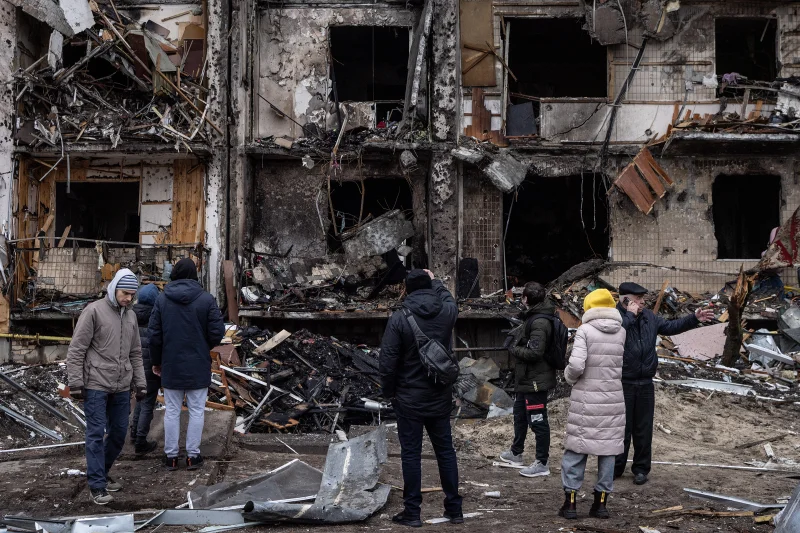
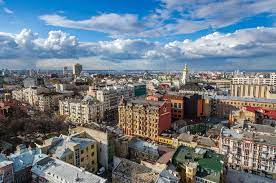
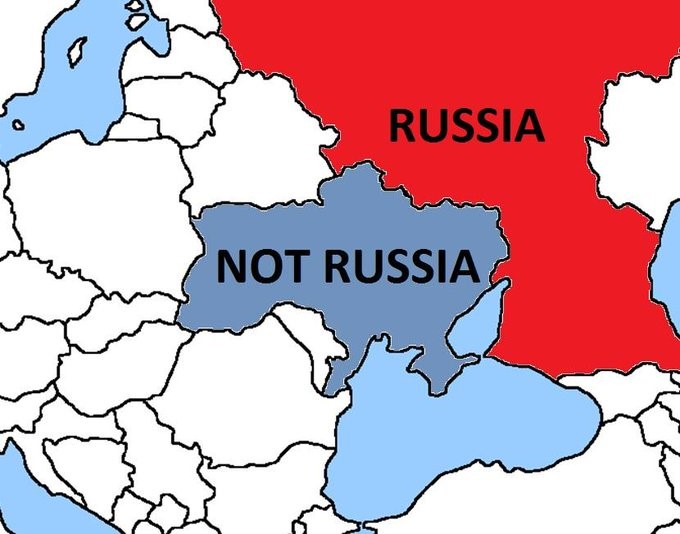
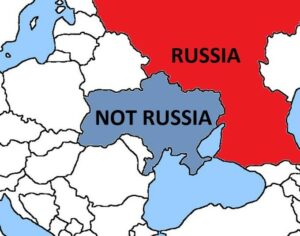 Earlier today Vladimir Putin ordered an invasion of Ukraine, an act of naked aggression in violation of every democratic norm. Russia has launched cyberattacks and its planes, missiles, and artillery have bombed targets in many Ukrainian cities, as its troops have invaded the country from the North, East, and South. Already there have been many deaths and great damage to the country’s infrastructure.
 Last week, in the wake of Neil Young’s spat with Spotify and Joe Rogan, hand-wringing about misinformation on tech platforms reached new heights. The “M” word was everywhere. The Boston Globe, New York Times, Guardian, Washington Post, and several other papers all ran op-eds decrying Spotify’s complicity with it. Roxanne Gay’s piece in the Times, “Why I’ve Decided to Take My Podcast Off Spotify,” used the word seven times. The musicians at the heart of the controversy also tried it on for size. “Spotify has recently become a very damaging force via its public misinformation and lies about COVID-19,” wrote Neil Young in the first sentence of his public statement. “[I cannot] continue to support Spotify’s life threatening misinformation to the music loving public,” he added later. Joni Mitchell and others concurred.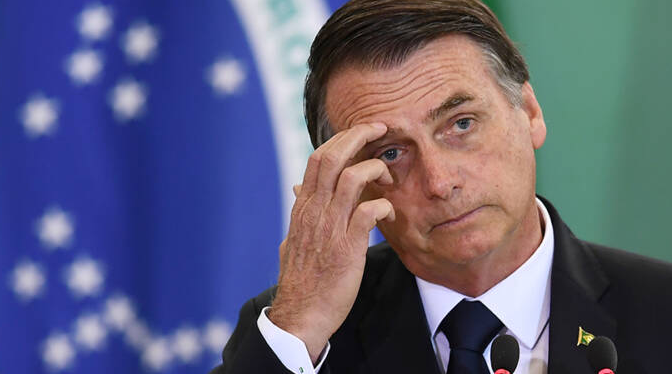
 The year 2021 ended with floods inundating parts of Brazil’s northeastern state of Bahia, killing over 20 people and leaving thousands without homes . Rui Costa, Bahia’s governor, told reporters that this was the “biggest disaster in the history of Bahia.” While on vacation in the southern state of Santa Catarina and knowing that Bahia needed all the help they could get, Brazil’s president, Jair Bolsonaro, rejected aid being offered from Argentina (what amounted to 10 men to help with disaster response efforts), stating in a tweet that it was “very expensive for Brazil” and that the “armed forces in coordination with the Civil Defense were already providing those types of assistance.”
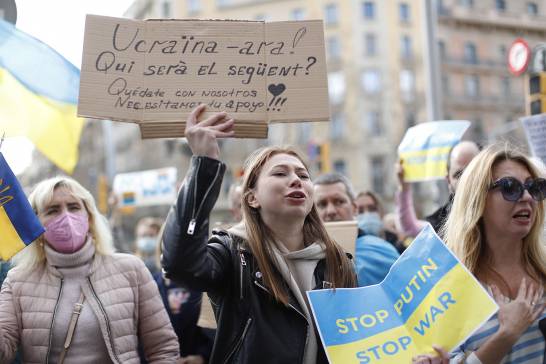
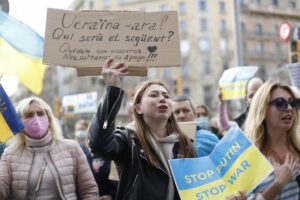

 Statement from Swiss Solidarity, a socialist organization.
 Saturday 26 February 2022,
 Letter of protest to President Putin of Russia via the Russian Embassy in Tokyo.
 The Coalition for Nuclear Disarmament and Peace (CNDP) India, expresses its grave concern at the situation in Ukraine. The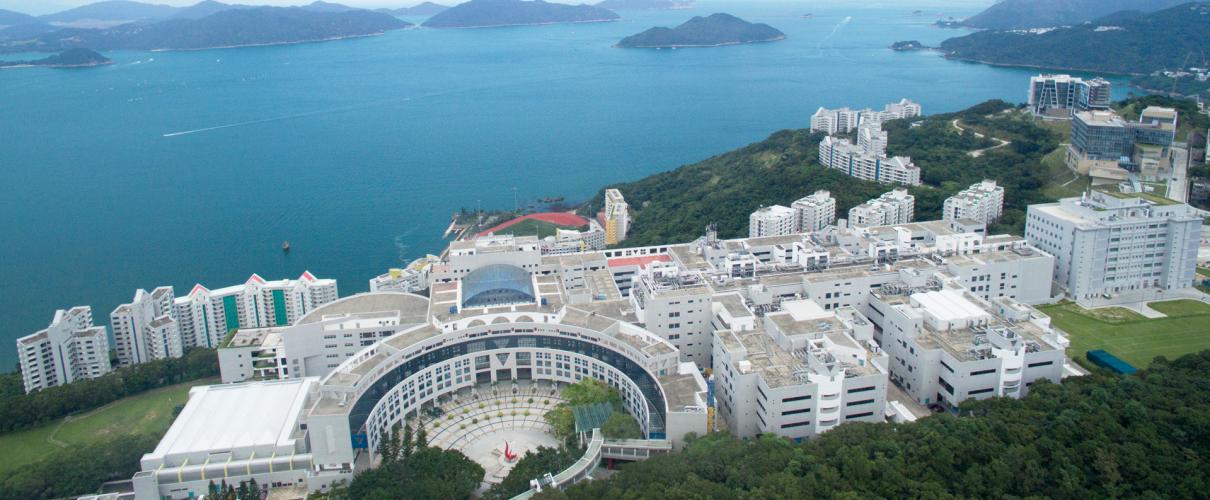

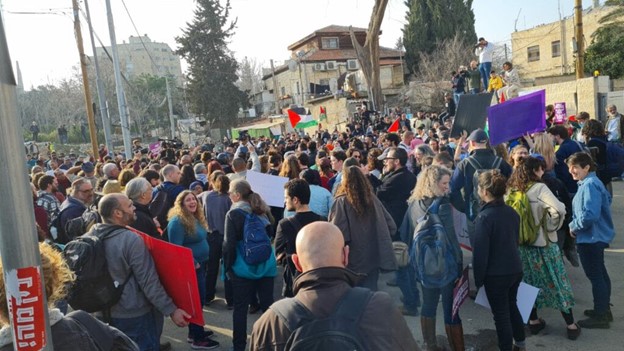
 We are descendants and friends of the exiles of republican Spain. Our relatives, our friends, suffered 86 years ago foreign interventions without which a squad of putschist generals could not have imposed on the Spanish people a bloody dictatorship that lasted for more than forty years.