Online Features
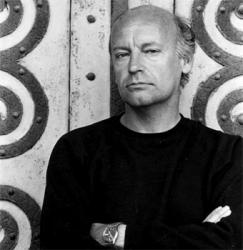
Eduardo Galeano, the world-renowned leftist Uruguayan journalist and writer made famous with the publication in 1971 of his book The Open Veins of Latin America: Five Centuries of the Pillage of a Continent, died today at the age of 74 in Montevideo, Uruguay, where he lived. Long admired as a journalist, with his three-volume Memory of Fire in 1982, Galeano also became known as a writer of non-fiction prose who might be compared to writers of fiction such as Gabriel García Márquez, author of the novel One Hundred Years of Solitude or Isabel Allende who wrote House of the Spirits. Like their novels, his trilogy captures the real spirit of Latin America’s magical history.

NOTE: The original version of this article quoted a claim that no voter registration drive was conducted. Since we did not take the time to fact-check this claim before publication, the article has been altered to omit the claim. – Bruce A. Dixon
The results are in, and the truth hurts. Rahm Emanuel will sit in the mayor's office on the fifth floor of Chicago's City Hall four more years. Despite fudging police stats to make murders disappear, despite stonewalling on police torture and atrocities, despite deliberately shortening red light camera intervals to raise revenue for his buddies, despite closing and privatizing more than 50 public schools, almost exclusively in black and brown neighborhoods, than anywhere in the country, and despite his facing a solid progressive Democrat challenger, Rahm Emanuel carried every single ward in black Chicago, not by big margins, but by enough.
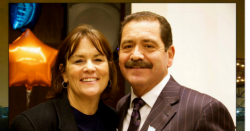
Chicago teachers now have one of their own on the city council. Susan Sadlowski Garza, school counselor and Chicago Teachers Union executive board member, declared victory this week over incumbent John Pope. Absentee ballots are still being counted, but signs indicate she will squeeze past by less than 100 votes.

Once again, a major election in the US has brought out the specter of lesser-evilism–the call to vote for the least bad option–and once again this strategy has been a complete failure, regardless of which candidate actually wins. Usually it is a Republican against a Democrat, although in Chicago in 2015 it was a neoliberal Democrat, Rahm Emanuel, against a slightly less neoliberal Democrat, Jesus “Chuy” Garcia.

The protestors marched through the streets of Los Angeles on April 7 carrying 617 coffins representing the death of 617 individuals killed by Los Angeles law enforcement since 2000. Participants convened on the L.A. County Board of Supervisors from the north, south, east, and west, staging die-ins at strategic locations along the way. Family members of those murdered along with individuals who have suffered at the hands of the LAPD delivered powerful messages of anger, hope, and sadness, urging the need for continued and escalated community response to LAPD oppression and brutality.
A headline in a recent news story about Los Angeles teachers, calling the district’s teaching force “old and costly,” is a companion piece to the New York Times front page article about the Success Academy chain headed by Eva Moskowitz.
 This article was originally written for the Swiss socialist newspaper solidaritéS for which I am a correspondent with the goal of giving activists there some sense of the recent fight for marriage equality in the United States. – DL
The U.S. gay rights movement won a tremendous victory in early April as governors and the state legislatures in Indiana and Arkansas were forced to back down and revise laws that would have discriminated against gay and lesbian couples.
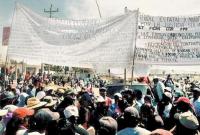
The strike by farmworkers in the San Quintín Valley of Baja California, which began on March 17 stopping production and shipments on 25 farms and costing the companies tens of millions of dollars, has been stalled as the Alliance of National, State, and Municipal Organizations for Social Justice (AONEMJS or Alliance) which leads the movement faces challenges from the state government, the employers, and corrupt labor unions.
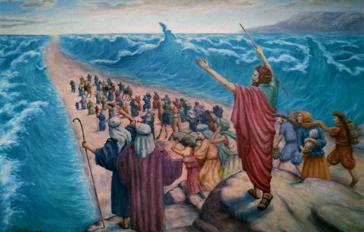
Hilton Obinzenger is a poet and a long-time informed critic of Zionism and Israeli policy toward the Palestinians. His new poem, Treyf Pesach (Dirty Passover), is a blunt speaking and not unhumorous effort to ask fellow Jews how they can celebrate the slave insurrrection in Egypt millennia ago and yet be struck dumb by the Israeli government's dissembling and bloody practices toward "the stranger in our midst" today. You can read Obinzenger's smart, snappy work here, and visit his website here.
 In the weeks following its historic victory in the Greek elections on January 25, 2015, Syriza has been engaged in a bitter struggle.
Dedicated to Indiana’s new Religious Freedom Restoration Act
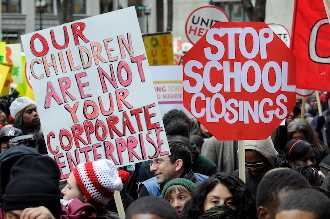 It’s encouraging that US unions are acknowledging the deep crisis facing labor and even the need for union democracy, as Labor Notes contributor Mark Brenner observes in his March 2015 column about the conference organized and hosted by the Albert Shanker Institute, an arm of the American Federation of Teachers (AFT).
- « Newer Posts
- 1
- …
- 166
- 167
- 168
- 169
- 170
- 171
- 172
- …
- 227
- Older Posts »