Online Features
 To the givers of this beautiful reward, my thanks, from the heart. My family, my agents, my editors, know that my being here is their doing as well as my own, and that the beautiful reward is theirs as much as mine.
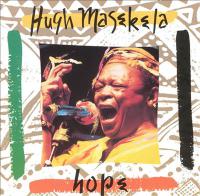
Hugh Masakela, the great South African trumpet player was joined by Vusi Mahlasela, the guitarist and singer in a “Twenty Years of Freedom” concert at Queens College on February 19, 2015. They played many of Masakela’s classics of the 1960s and 70s such as the lovely 1968 hit “Grazin’ in the Grass,” the joyful and inspiring“Bring Back Nelson Mandela”, and the sad “Stimela – the Coal Train”, to an audience many of whom had been supporters of the freedom struggles against apartheid in South Africa until its overthrow in 1994.
A small group of Newark high school students Tuesday night seized the office of state-appointed superintendent Cami Anderson in a protest timed to coincide with her imminent re-appointment to another year, her fifth, as head of the state’s largest school district. The action, which is continuing through the night, stands in stark contrast to the failure of Anderson’s older–and, theoretically, more powerful–critics to do anything to dislodge her from her post.
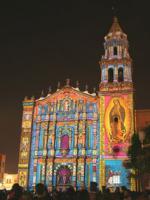
With the left by and large failing to provide political leadership in the critical political situation that has developed in Mexico following the kidnapping of 43 students in Iguala, Guerrero and the “white house” scandal surrounding President Enrique Peña Nieto, Catholic priests have been attempting to fill the void. Several Catholic priests—Padre Gregorio (Goyo) López, Padre Alejandro Solalinde Guerra, and Archbishop Raúl Vera most prominent among them—have in different ways been playing the role of spokespersons for the oppressed. These priests have been speaking out against government corruption and the politicians’ links to the drug cartels, defending local armed self-defense organizations, demanding an investigation into the role of the Mexican Army, and even calling for a constituent assembly to refound the country on a new and more democratic basis.
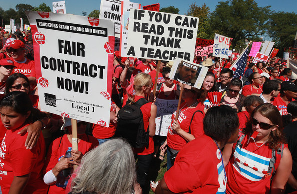 I’m struck by how many of the skills and understandings good teachers acquire can also make them fine union activists. Though they may not realize it, teachers have already learned a great deal about organizing – through their work as teachers.
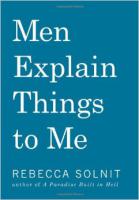
Rebecca Solnit, Men Explain Things to Me. Chicago: Haymarket Press, 2014. 130pp.
The word “mansplaining” refers to the condescending tendency of men to lecture women, despite the man’s lack of knowledge—or even despite the woman’s own expertise—on the subject at hand. It entered into the popular feminist lexicon sometime around 2009, and although Rebecca Solnit didn’t coin it, her essay, “Men Explain Things to Me,” is largely cited as the inspiration.
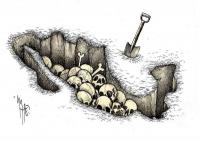
Robert Joe Stout. Hidden Dangers: Mexico on the Brink of Disaster. Sunbury Press: Mechanicsburg, Pennsylvania, 2014. 209 pages. Notes. Bibliography.
Shannon K. O’Neil. Two Nations Indivisible: Mexico, the United States, and the Road Ahead. A council on Foreign Relations Book. Oxford University Press, 2014 [2013]. 239 page. Notes. Bibliography. Index. Map.
“Mexico is undergoing economic and political changes that lie like landmines ready to explode beneath the troubled and often discordant impulses of the two countries to satisfy their divergent social and political needs,” writes Robert Joe Stout in Hidden Dangers: Mexico on the Brink of Disaster.

Eric Toussaint, analyses Syriza’s first days at the head of the Greek government for Le Courrier. He was interviewed by Benito Pérez (of the daily Le Courrier, Geneva. 1]
Eric Toussaint is visibly exhausted at the end of a difficult week. But his mind is clear and his enthusiasm is intact: Syriza’s victory in the Greek legislative election has opened one of those parentheses within which History accelerates and is written as we watch. A political scientist who is experienced in economic matters, founder and spokesman of the Committee for the Abolition of Third World Debt (CADTM), Toussaint is a key observer of the battle now going on between Greece and its creditors—mainly the governments of Northern Europe. That is evident from the interest that was shown in his presentations Saturday, in Geneva, during a day of discussions on the economy organized by Le Courrier. A former adviser to the government of Ecuador and the president of Paraguay (Fernando Lugo), the Belgian native has also been approached by Syriza. Pending his possible involvement, Eric Toussaint is speaking out freely and observing the Greek experiment with a benevolent but critical eye.
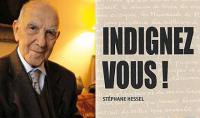
Two years have passed since one of the great political and social thinkers of our time departed this world.
On 26 February 2013 Stephane Hessel died at the age of 95. Hessel enjoyed a long life, from his birth in Berlin to his final breath in Paris, where one of his last works Indignez-Vous! (Time For Outrage) was published.
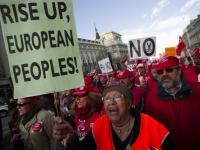
Greece's left-wing government is on a collision course with the rulers of Europe over the commitment of the Coalition of the Radical Left, or SYRIZA, to reverse drastic austerity measures imposed under the Memorandums negotiated with the European Union (EU).
SYRIZA won a tremendous victory in the January 25 elections because it promised an alternative to the catastrophic economic and social crisis that Greece has endured for more than five years. But with the government of Prime Minister Alexis Tsipras only two weeks old, the political and financial elite of Europe, from Germany's Angela Merkel and Wolfgang Schäuble to Mario Draghi, head of the European Central Bank (ECB), have rejected all proposals to negotiate Greece's huge foreign debt or relax the austerity conditions imposed as a condition for the bailout of the country's economic system. With a showdown approaching, all eyes are on the struggle in Greece and the hope it hold for the future.
Surveying the wreckage of his party’s 2014 election campaign, Howard Dean, on the November 9th Meet the Press, was candid, with such sound bytes as, ““Where the hell is the Democratic party …You got to stand for something if you want to win.” The Republicans’ message was, “We’re not Obama.” What was the Democrats’ message? “Oh well, we really aren’t either.”
Translation: “Get my message; we need a message.”
The Campaign for Peace and Democracy sponsored a panel discussion Friday evening on "After the Greek Elections: The Future of Austerity in Greece, Europe, and Beyond." A standing-room-only audience heard speakers address the success of the Syriza coalition party in the recent Greek elections and how it is dealing with the austerity crisis.
- « Newer Posts
- 1
- …
- 168
- 169
- 170
- 171
- 172
- 173
- 174
- …
- 227
- Older Posts »