Online Features
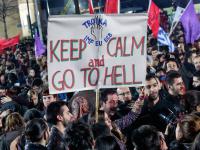 Since the pressures of international financial capital and its subservient political elites will continue with the same if not greater intensity, it is also certain that a new cycle of social mobilization in Greece and the rest of Europe will begin again.

[This article was originally published by Waging Nonviolence.]
Angela Davis, revolutionary activist and philosopher, is a committed yogi. She began practicing in prison when a doctor working with the Black Panther Party passed along a book on yoga to help her deal with chronic headaches.
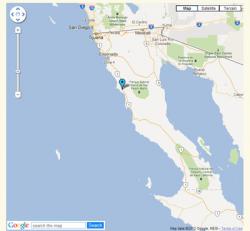
Thousands of farmworkers in the San Quintín Valley of Baja California, just 185 miles south of the U.S. border, struck some 230 farms, including the twelve largest that dominate production in the region, on March 17 interrupting the picking, packing, and shipping of zucchini, tomatoes, berries and other products to stores and restaurants in the United States. The strikers, acting at the peak of the harvest, were demanding higher wages and other benefits to which they are legally entitled such as membership in the Mexican Institute of Social Security (IMSS), the public health system. While there have over the last two decades been several large scale protests by workers in San Quintín, usually riots over the employers failure to pay their employees on time, this is the first attempt by workers to carry out a such strategic strike.
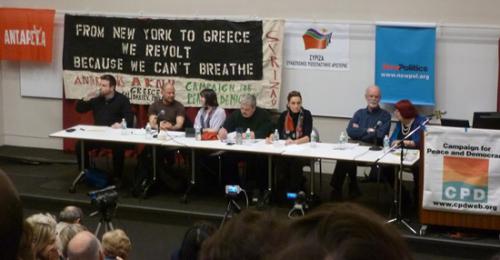
New Politics has previously posted a video version of a Feb. 6 New York City panel discussion sponsored by the Campaign for Peace and Democracy (CPD) entitled “After the Greek Elections: The Future of Austerity in Greece, Europe and Beyond.”
CPD has now posted text versions of the talks, along with separate updates by each of the speakers.
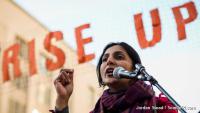 I’m still frozen in the moment. Has it really been 15 months since revolutionary socialist Kshama Sawant brought her unique brand of municipal socialism back to a major American city after winning an at-large seat in Seattle’s nonpartisan City Council race?
.jpg)
Activists and candidates from around the country will come together on May 2-3 in Chicago to share their experiences and to launch a network for future cooperation at the Future of Left/Independent Electoral Action Conference.
The past few years have seen a significant uptick in independent political initiatives on the left, from election campaigns to new local electoral and social movement formations, to referenda campaigns.

The agreement signed between Greece and the EU after three weeks of negotiations is widely lamented on the left as a setback, if not a defeat, for Syriza. The two sides emerged from the agreement, if that is an accurate description, with different interpretations of the memorandum, signifying perhaps that no real deal was made after all. Greece obtained brief reprieve. Its banks will remain liquid for the next few months. The next phase will not be about what can be extracted from the troika, as much as what Greece can do despite and in defiance of the troika. That is what will be discussed here.
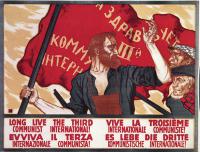
Jacob A. Zumoff. The Communist International and US Communism, 1919-1929. Leiden / Boston: Brill, 2014. 443 pages. Bibliography. Hard Cover $167.
Jacob A. Zumoff has written an impressive scholarly tome that is perfectly described by the title: The Communist International and US Communism, 1919-1929. He makes a reasonably convincing case for a novel thesis that attempts to reframe the major question: the relationship between the Soviet and American Communists. Yet, in my view, he fails to address the central question, the Soviet domination of the Communist International, including its domination of the American Communists in the 1920s.
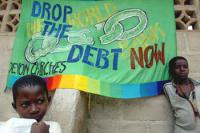
The lion’s share of indebtedness in this world is invalid and immoral. Forgiveness is not what is called for; it’s liberation.
Talk of a “debt jubilee” leaves open whether the debts are valid or not, but talking about debt forgiveness raises the question of whether a debt is valid from a moral point of view.

Cafes bring memories of the unpleasantly bleak days of my undergraduate studies in which I sought my peace of mind in the rough and stormy sea of Jean-Paul Sartre’s world, his philosophy and his novels shining light on the notion of loneliness for me. And I lived inside his books and through the characters he created. However, the more I grew critical, the stranger I found Sartre’s intellectual legacy.
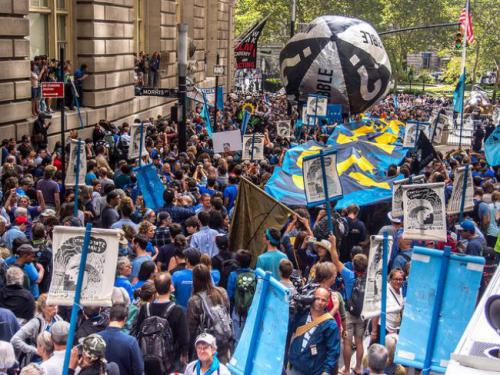
[Eds.: On Monday, March 2, 2015, in New York City a trial begins for eleven activists who are refusing to plead guilty to disorderly conduct and pay fines for taking part in a climate sit-in in Manhattan's Financial District last September. The Flood Wall Street Eleven plan instead to use their trial to illustrate that the bankers who finance climate change are the real harbingers of disorder. Below is a collective statement from the group. You can sign a petition in their support here.]
In order to solve a problem, you must first identify its’ source. . .
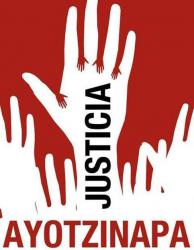
Militant protests by teachers, students, and others, some of them violent, continue in Guerrero on Mexico’s southern Pacific coast where the state government seems to have completely lost control. Since six students were killed, 25 wounded and 43 kidnapped in Iguala, Guerrero on September 26, 2014–with the 43 still remaining still not credibly accounted for—there have been nearly continuous protests. Teacher protests over other issues have also taken place in Mexico City and in other parts of the country and have been militant, but not violent.
- « Newer Posts
- 1
- …
- 167
- 168
- 169
- 170
- 171
- 172
- 173
- …
- 227
- Older Posts »