Online Features
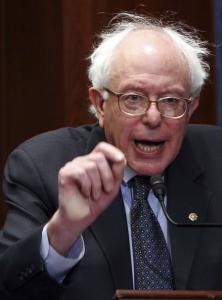 It’s all over the news, mainstream and left/alternative alike, as well as social media, and is certainly one of the most important items of political news of recent vintage: after much consideration and testing of the political waters, Bernie Sanders (whom only the staid New York Times refers to as “Bernard”!), Independent Senator from Vermont and self-proclaimed “democratic socialist,” is running for the Democratic Presidential nomination.
The upcoming presidential contest was shaping up to be one of the most underwhelming in electoral history. An heir to the Bush dynasty, real estate magnate Jeb, looked like the safest bet to become the Republican presidential nominee, and challenge the anointed frontrunner from the Democrats' leading dynasty, corporate drone Hilary Clinton.

Some 200 political activists from a variety of independent political organizations, as well as individual activists, carried out a rich discussion and an amicable debate about how to collaborate in the work of building a large political alternative to the left of the Democratic Party. Participating in the Future of the Left/Independent Politics Conference, in an unprecedented spirit of cooperation, national, state, and local candidates and activists, as well as elected officials from the Green Party, the Peace and Freedom Party, the Richmond Progressive Alliance, Socialist Alternative, and the Vermont Progressive Party discussed the challenges of campaigning and the difficulties of actually holding office while trying to both build movements and push progressive policies. Also at the conference were members of Progressive Democrats of America and the Justice Party.
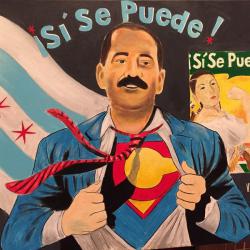
This is the fifth in a series of articles about the Chicago mayor and council elections. Scroll down to find others. – Eds.
Chicago hasn’t seen such electoral contention since the days of Dick and Jane – and Harold. Even in defeat, the Jesús “Chuy” Garcia challenge brought a familiar spirit back to the city by the lake. No one expected the immigrant from Durango to challenge the abrasive Rahm in a run off. Nor could we have have predicted the surprising synergy that would result from over a dozen insurgent ward campaigns and Chuy’s crusade. In the 12th ward on the Southwest side, we learned that politics is local.
.jpg)
More than three hundred Mexican American community activists marched through New York City from Union Square to the United Nations on April 26, marking the seven-month anniversary of the killing of six and forced disappearance of 43 students from the Ayotzinapa Rural Teachers College in Guerrero, Mexico.
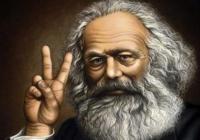
It is extraordinary how relevant Marxist thought is becoming at a time of lingering financial crisis in the US and abroad. The financial debacle of 2008, and its continuous scourge, has at least meant that the words socialism and Marx are no longer distained but fashionable. In fact, the conventional capitalist analysis of Marxism that sees it as nothing but totally irrelevant and not applicable to a modern free and liberal social order is now in question.
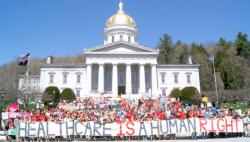
Liz Nikazmerad is a rarity in American labor: a local union president under the age of 30, displaying both youth and militancy. For the last two year years, she has led the 180-member Local 203 of the United Electrical Workers (UE), while working in the produce department of City Market in Burlington, Vermont. Thanks to their contract bargaining, full-time and part-time employees of this bustling community-owned food cooperative currently enjoy good medical benefits.
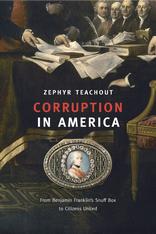 Review of: Corruption in America: From Benjamin Franklin’s Snuff Box to Citizens United, by Zephyr Teachout. Harvard University Press, 2014
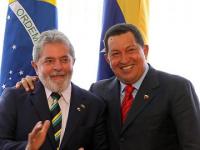
Steve Ellner, editor. Latin America’s Radical Left: Challenges and Complexities of Political Power in the Twenty-first Century. Rowman and Littlefield, 2014. Notes. Index. Paper: $29.95.
George Ciccariello-Maher, We Created Chavez: A People’s History of the Venezuelan Revolution. Duke University Press, 2013. 352 pages. Notes. 17 photos and 1 map. Index.
“There’s somethin’ happenin’ here, What it is ain’t exactly clear” – Stephen Stills
With the Middle East in flames, NATO trying to start World War III in Ukraine while the European Union’s economy stagnates, Africa torn by low-level wars, and China re-entering the world stage in an assertive manner, there’s one region of the world that is relatively quiet: South America. (Oops—Obama just blew that by declaring Venezuela a “national security threat” to the US. But, never mind.) Yet some of the most interesting and far-reaching changes in the world are taking place in this region. And these two books are excellent entries into understanding current developments in the region.
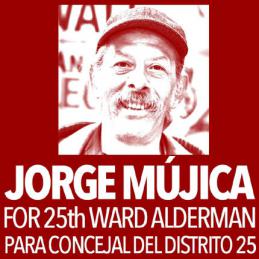
The usual practice for lefties defeated in electoral politics is to claim victory, victory in the sense of having spread the word, victory in the sense of building an organization, victory in the sense of whatever plausible argument comes to hand. In the case of Jorge Mujica's campaign for 25th Ward Alderman, we can safely assert it was a successful proof of concept: The "socialist" label, in some neighborhoods, is not a handicap even if it is not an asset. Begging your pardon but I've been saying as much for years. Through our participation, Chicago DSA did earn a reputation as an organization that delivers on its commitments. But the campaign intended to establish a socialist presence in Chicago government and that requires victory.
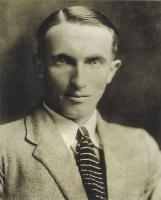
Liam O’Flaherty is regarded as one of Ireland’s finest writers of the twentieth century, but before he rose to literary prominence, O’Flaherty led a little known and short lived occupation of the Rotunda Concert Hall in Dublin city just days after the formation of the Irish Free state in 1922.
Born off the coast of Galway on the Aran Island of Inis Mor in 1896, O’Flaherty served with the Irish Guards during World War I. After experiencing severe shellshock in Flanders he was discharged with a disability pension and led a somewhat nomadic life for the next few years.
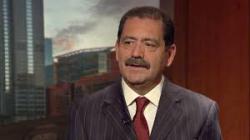
The “See, we told you so!” reaction by socialists to Rahm Emmanuel's victory over Jesús "Chuy" García in the recent mayoral runoff was as predictable as it was hypocritical. Scott Jay's article in New Politics is but one example of this kind of reaction which combines self-vindication and bravado with an utter lack of awareness of Chicago's political terrain. This know-it-all know-nothingism becomes painfully obvious when Jay writes:
- « Newer Posts
- 1
- …
- 165
- 166
- 167
- 168
- 169
- 170
- 171
- …
- 227
- Older Posts »