Online Features

Reflecting on the days I spent as a delegate during the AFT national convention in Pittsburgh (held July 13-16), I was reminded of the fall of the Berlin Wall and the collapse of Soviet Communism in 1989-90. No one predicted it, and it seemed to come out of nowhere. But peace activists in the West who organized international support for struggles of dissidents in the Soviet Union and Eastern Europe saw the social ferment.

Right now four small boats are on their way to Palermo, Italy, to dare a crossing to besieged Gaza. Because of the rockets from Gaza on July 13 (whatever the true story behind their launch) the Gaza Flotilla 2018 is in even more peril from a cruel IDF puffed up on its own righteousness. In 2010 the Israelis killed ten on the Mavi Marmara and have often been brutal in captures since.

This presentation was given at the June 30, 2018, DSA Lower Manhattan Branch meeting/picnic.
When I was in college and the Vietnam War was raging, I was president of the campus’s SDS chapter. I remember lunching with the head of our local Young Democrats. He was a decent enough liberal who also opposed the war but told me he could never be a radical because he didn’t believe in class struggle. I told him it was less a matter of what he and I believed than in what leading sections of the ruling class thought and did.
David Camfield. We Can Do Better: Ideas for Changing Society. Halifax & Winnipeg: Fernwood Publishing, 2017. 168 pp.
The breathtakingly rapid changes in the capitalist world around us has left basic political education by the revolutionary left trailing behind.

The leftist candidate Andres Manuel López Obrador, has been carried to victory in the Mexican presidential election by an enormous popular outpouring of voters hoping to improve their lives and those of their fellow citizens. Promising to drive out the political mafia that runs the country, to end the pervasive corruption in government, and to bring an end to the violence that in the last dozen years has taken more than 250,000 lives, AMLO, the left’s perennial candidate, won such a decisive victory this time that the Mexican establishment finally had to recognize his achievement.

2,342 refugee and migrant children were kidnapped at the hands of the state at the US-Mexico border between May and June. Attorney General Jeff Sessions announced a zero tolerance policy that separated mainly Central American refugee children from their parents, as migrant adults were criminally prosecuted with many thrown into federal prisons. Hundreds are toddlers under the age of 4 or even babies as young as 4 months old. The average age of the children is 8. The regime also lied and said that parents who asked for asylum at regular border crossings would not be separated from their children while they did exactly that.

When I was a union rep, one of my most challenging assignments was assisting a Communications Workers of America (CWA) bargaining unit at a Boston-area telemarketing firm. Most CWA members in New England had call center jobs at the phone company, with good pensions, health insurance, and full-time salaries. As service reps, they fielded in-coming calls from customers with problems, questions, or new orders to place. In contrast, the telemarketing staff only interacted with the public, on behalf of various clients, via out-bound calling. Like the workers depicted in Boots Riley’s hilarious new film, Sorry to Bother You, they made cold calls to people who did not want to bothered, at dinner time or anytime, with a pitch for a new product, service, or donation to a political cause.

Jacobin published on June 9 an essay by Catarina Príncipe under the title “The Portuguese Myth.” We’ve deeply appreciated her thoughts on the political changes in the country since 2015, considering it was written by a spokesperson for a minority current inside the Left Bloc, a status Príncipe failed to mention. This should have been stated, for transparency’s sake, since Príncipe offered an alternative political resolution and a competing list for the leadership of the Party in 2016, which were defeated.1
This article will appear in the Summer 2018 issue of New Politics.

Rohini Hensman. Indefensible: Democracy, Counterrevolution, and the Rhetoric of Anti-Imperialism. Haymarket Books, 2018. 400 pp.
Rohini Hensman starts off her book with two simple questions: How has the rhetoric of anti-imperialism come to be used in support of anti-democratic counterrevolutions around the world? And what can we do about it?
Gayle McLaughlin. Winning Richmond: How a Progressive Alliance Won City Hall. Hard Ball Press, 2017. 306 pp.
On August 6, 2012, an elephantine plume of black smoke rose over Richmond, California, sending some 15,000 people suffering from respiratory distress to area hospitals. Most of the city’s 110,000 inhabitants received “shelter-in-place” warnings to stay indoors and tape their windows shut to avoid breathing the deadly fumes. The smoke came from a massive fire at Chevron’s giant fuel-processing facility in the city, caused by slack maintenance and slacker management oversight. It wasn’t the first or the last mishap at the refinery. Since 1989, 14 such eruptions have been reported. In Richmond at least, the enemy has a name and a besmirched face.
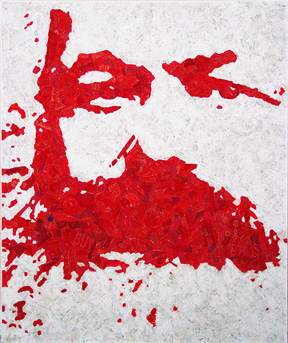
No one should underestimate the changes in the social world occurring since Marx’s day, or overestimate to what extent we find ready-made answers to contemporary issues in his writings. Nonetheless, Marx’s analysis uncovers essential features and defining tendencies of capitalism far better than alternative frameworks.
- « Newer Posts
- 1
- …
- 114
- 115
- 116
- 117
- 118
- 119
- 120
- …
- 227
- Older Posts »