Online Features
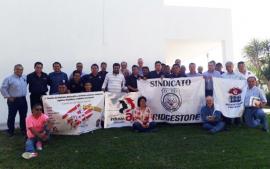
Mexico’s auto workers are for the first time forming a national federation in what is a very significant development both for Mexican labor and for Mexican society as a whole. Ten organizations representing over 25,000 Mexican workers have committed to the new organization.

I appreciate Dan La Botz' well-reasoned article, but do not agree with his conclusion.
As usual, Dan's argument is judicious and clear, courteous to other points of view. Such civility is essential to maintaining the health and vitality of a diverse big tent organization like the Democratic Socialist of America (DSA).

Many would like to believe that this American period of rampant national-conservatism is nothing more than a short stay in Republican purgatory. It is a reassuring idea that in a few years, as today’s progressive youth becomes a large part of the electorate, the United States will become a shining example of tolerant and progressive prosperity. Just as neo-conservatives envision a global American hegemony built on capitalism and military strength, some progressives have adopted a belief that the United States is destined to reach national political moksha with strong welfare, a prosperous middle class, and minority rights; the nasty racists and homophobes, the “deplorables”, will soon be outnumbered so vastly in the face of common-sense political ideology that the right will simply cease to exist. Unfortunately, this prophecy has proven a myth for millennials—and the nascent Generation Z doesn’t appear to have better prospects.

For the past 3 months, progressive websites and journals have run articles that paint a picture of the crisis in Nicaragua that is dangerously misleading. Many of these articles have been circulated among people on the left who were in solidarity with Nicaragua and the FSLN during the 1970s and 1980s but haven’t kept up with what has happened over the last 30 years—particularly since 2007, when Daniel Ortega returned to the Presidency and has been there since. I’d like to take a moment to correct some misconceptions about the current crisis in Nicaragua.

A Forum on the Teachers Rebellion in the United States with Tithi Bhattacharya, Eric Blanc, Kate Doyle Griffiths, Lois Weiner. Edited and introduced by Jeffery R. Webber
Few anticipated a labour upsurge in the United States in early 2018, and fewer still expected a blaze to ignite among teachers in West Virginia, or for it to spread to Oklahoma, Arizona, Kentucky, and Colorado. Ellen David Friedman poses one of the questions which immediately springs to mind: “why is this stunning revolt occurring where unions are weak, where labor rights are thin, and where popular politics are considered to be on the Right?”[1]
Joanne Landy (1941-2017) and Thomas Harrison (1948-) became socialists as teenagers and have remained involved in the democratic left ever since. They were active in the student protest movement at the University of California at Berkeley in the 1960s, where they met and became close friends and collaborators. During the 1970s, they became increasingly interested in the issue of labor rights in Central and Eastern Europe, and they worked to link democratic and social justice struggles in the Eastern Bloc with social movements in the United States, the West, and the Third World. Until Joanne Landy’s death in October 2017, they were co-directors of the Campaign for Peace and Democracy (CPD), which was founded in 1982. Initially, the organization was called the Campaign for Peace and Democracy/East and West, but with the end of the Cold War the title was shortened.

For more than 10 weeks, Palestinians have gathered in protest every Friday at the Israeli-Gaza Strip buffer zone, located in the perimeter of the 1949 armistice lines. Called by organisers the Great March of Return, the mobilisations have demanded an end to the crippling Western state-Israeli economic and political blockade of the Gaza Strip and that families expelled for generations from their homelands be allowed to return.

On June 26th, Alexandria Ocasio-Cortez defeated, against all odds, the incumbent Congressman from New York’s 14th district, a safe Democratic seat, in the party’s primary. Spectacular as it was to see a Democratic political boss (the “King of Queens”) humbled by a left-wing challenger, the real spoils of this victory do not lie in the House seat itself.

The Democratic Socialists of America (DSA) has emerged as the largest socialist organization in the United States since the collapse of the Communist Party (CP) in the mid-1950s. While Bernie Sanders’ ‘democratic socialist’ campaign for president in 2016 laid much of the groundwork for DSA’s growth, it was Donald Trump’s election to the presidency that boosted its membership from 6,700 in 2016 to around 48,000 members today.

Dan's sober and sobering comment on why he opposed an endorsement by DSA of the Cynthia Nixon campaign to dethrone Andrew Cuomo, New York's corporate deny-the-corporate-class-nothing's two-term governor [see "Why I voted Against Endorsing Cynthia Nixon"] is sharply and smartly posed. It deserves a similar if brief reply, one crafted in what I hope encapsulates the same spirit.

What is the state of the popular rebellion in Nicaragua? What brought about the rebellion? Who is involved in the rebellion? Who are the most important national and international actors? And what is the nature of the Left’s debate over Nicaragua?
President Daniel Ortega’s government has succeeded—for now—in stopping the Nicaragua’s popular rebellion after four months of the most severe repression, including killings, kidnappings, and torture of the regime’s opponents by both the police and paramilitary forces.
 Dehumanization is the word that best captures our present moment. How else to describe separating children as young as two or three from their parents and throwing them in cages and detention centers just because their families are fleeing severe persecution? It isn’t just about Trump; it’s also about the tens of millions in the U.S. who are avidly supporting his policies. How could this be happening?
- « Newer Posts
- 1
- …
- 112
- 113
- 114
- 115
- 116
- 117
- 118
- …
- 227
- Older Posts »