

Category: Socialism
A recent article, written by Abigail Gutmann-Gonzalez and Keith Brower Brown, in the Bread and Roses caucus’s blog, The Call, asserts that the East Bay DSA’s campaigns have been a remarkable success. The title of this essay, “Lessons from The

Fully Automated Luxury Communism (FALC) was a slogan in search of a movement, and now it has its manifesto. The aim: to accelerate capitalism’s positives (technological progress), curb its negatives (neoliberal globalisation), and to re-invent communism for the coming Age of Affluence.
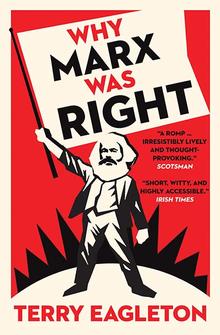
This blog post is based on a presentation on chapters 2 and 8 of Terry Eagleton’s Why Marx Was Right to the Lower Manhattan DSA Branch Political Education meeting, May 14, 2019.
Milton Berle, the 1950s television comic superstar, had a
Milton Berle, the 1950s television comic superstar, had a

The SPD — the Social Democratic Party of Germany — is Germany’s oldest political party. Its history includes both revolutionary struggle against capitalism and the betrayal of revolution. Many still consider it a socialist party, and its youth organization identifies as Young Socialists.

Trotsky Conference in Cuba Poster
Last week I was in Cuba to attend an academic conference on Trotsky. The night before the conference began I had arrived very late at the government-regulated air B&B where I was staying. First there had
Last week I was in Cuba to attend an academic conference on Trotsky. The night before the conference began I had arrived very late at the government-regulated air B&B where I was staying. First there had
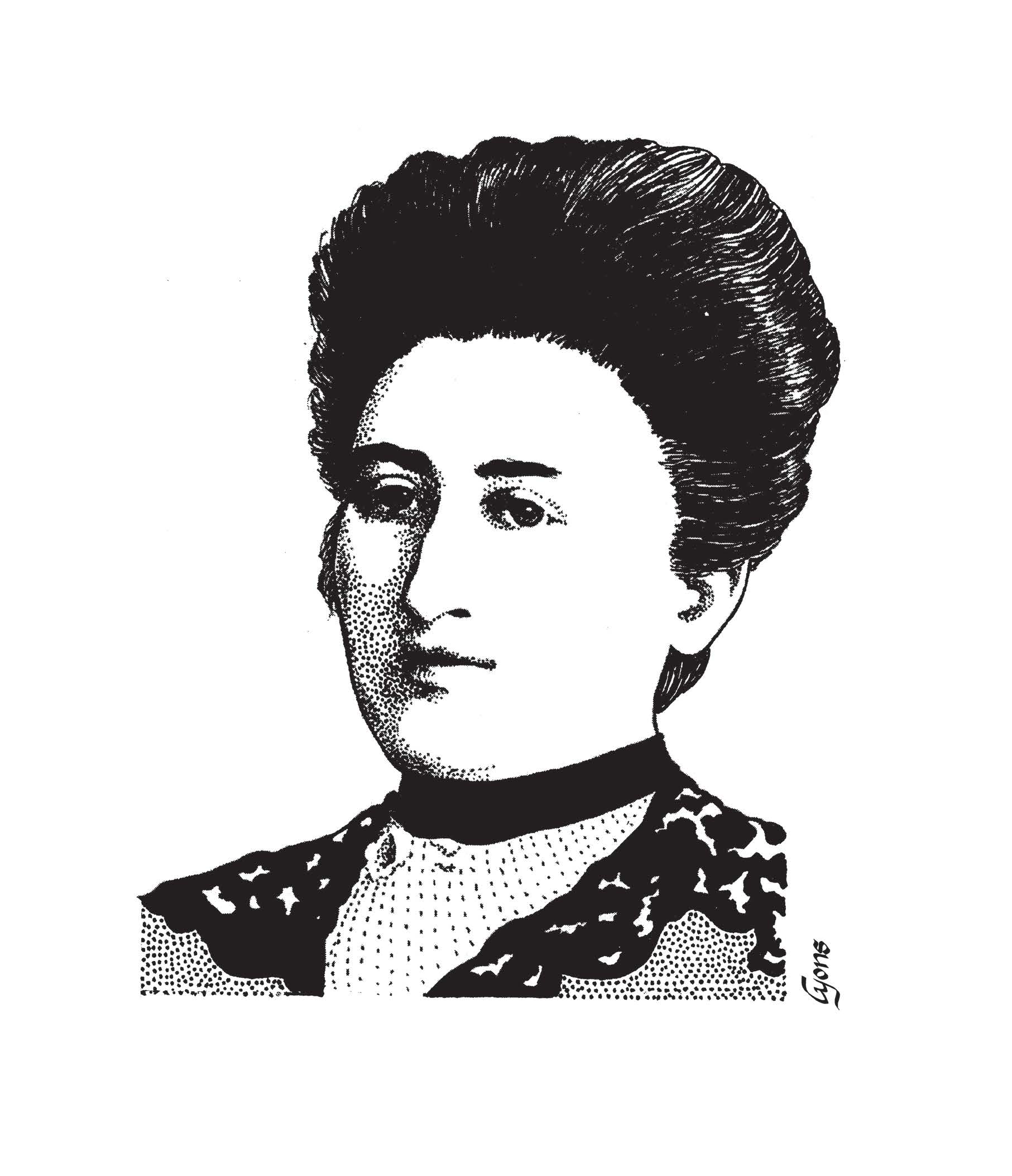
One hundred years after the murder of Polish-German revolutionary socialist Rosa Luxemburg, are any of her ideas relevant for people today who want to transform society to achieve social and ecological justice? I believe the answer is yes. In spite

The foul, brutal hands of U.S. imperialism and its allies are tightening around Venezuela, and there is a strong possibility that a far-right takeover will occur in the near future. This would extinguish the last vestiges of the left-of-center Pink

It is never comfortable to give up long-held beliefs and connections, but the impending climate crisis makes that a burning necessity. And the fact that, scientifically, it’s possible to avoid the worst of this climate disaster gives a positive incentive to do
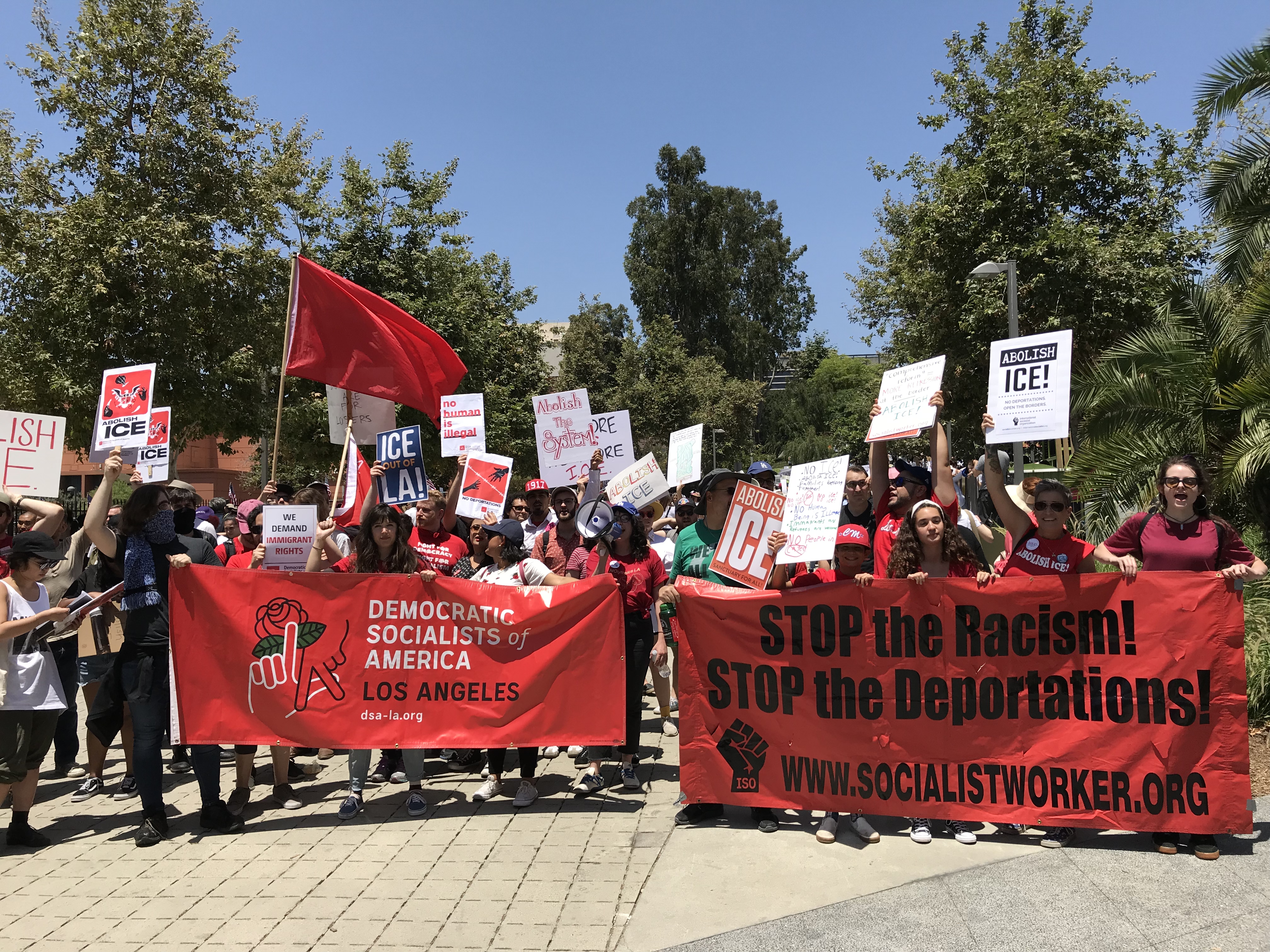
One of the great challenges to redressing the split between Democratic Party avoiding and Democratic Party engaging socialists, is how to productively deal with a beguiling strategic predilection of the party avoiders. That predilection is to assail the Democrats as

Well, it’s happened: Senator Bernie Sanders has declared his candidacy for the 2020 Presidential nomination of the Democratic Party. Seeing a historic opportunity, DSA’s National Political Committee has established an expedited endorsement process. Now DSA chapters all over the country
Barely five years ago, if you asked someone where a new U.S. socialist movement might appear, I would wager that nearly no one would have said with the Democratic Socialists of America (DSA). Before 2016, DSA’s profile was

To me the role of eco-socialists is to raise transitional demands, demands that bring a broader understanding of the role of capital in creating climate change and the ways that capital-ism can be challenged by working people and people most affected by the vast inequality it has created.

Below is a revised version of a presentation given to a panel on “Mass Incarceration and the Global Rise of Authoritarian Capitalism” at the Los Angeles Peace Center on September 23, 2017.
In this paper, I would like to address four
In this paper, I would like to address four
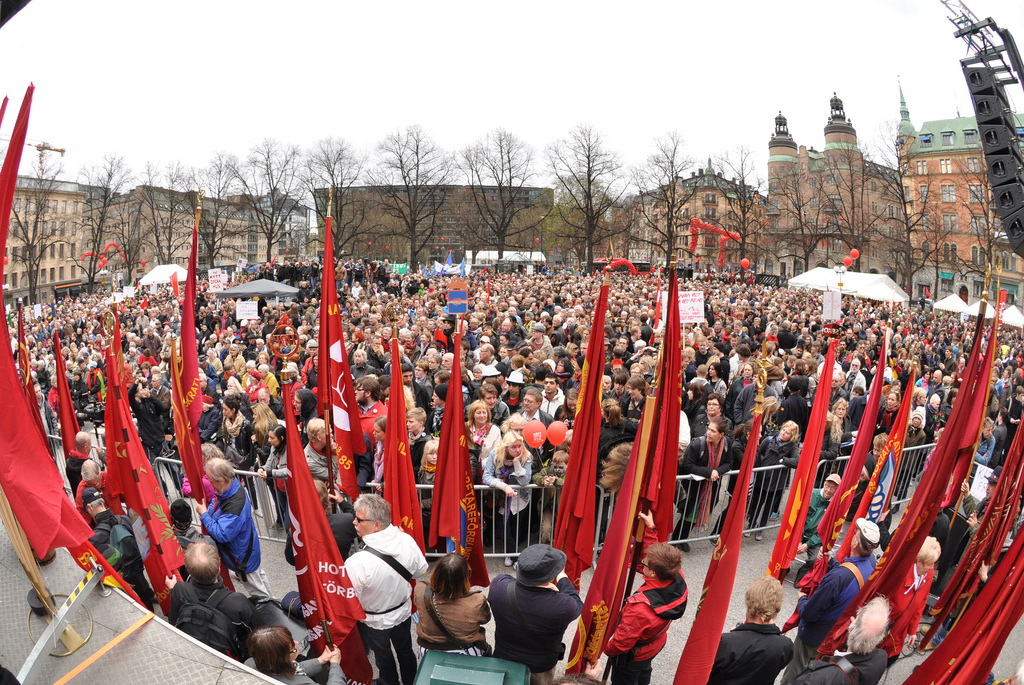
The Wage-Earner Funds in Sweden is one of the few serious attempts in an advanced capitalist society to socialize the means of production. Developed by Rudolf Meidner and Anna Hedborg, two economists at the powerful social-democratic union confederation LO, the

The deaths of Rosa Luxemburg and Karl Liebknecht have haunted the imagination of the left for a century. Joe Sabatini reviews a recent publication exposing the events of their deaths, Klaus Gietinger’s The Murder of Rosa Luxemburg, as well as providing an introduction to some of the literary works inspired by the events of 15 January 1919.
 Here is a timeline of how the mainstream U.S. capitalist media has covered the issue of Trump’s financial ties with the Russian mafia capitalist class. This timeline is significant, because it provides a clue to the thinking of the mainstream of the U.S. capitalist class as well as how that thinking is now changing.

 With the revival of the socialist movement in the U.S., and the phrase “political revolution” having briefly entered the political mainstream as a result of Bernie Sanders’ Presidential campaign, it’s a good idea for contemporary socialists to look back upon the political strategies of our predecessors to examine what they thought “revolution” signified, and to draw appropriate conclusions.

[Nov. 23] – Thousands of Elves seized the Winter Palace and overthrew Santa Claus late last night, ending the Claus family dynasty whch has ruled the North Pole for hundreds of years. “We took advantage of the Thanksgiving reverie at the palace—everyone was drunk—and took control with almost no violence,” said one Elf who preferred not to use his name.

A World to Win: The Life and Works of Karl Marx
By Sven-Eric Liedman
Translated by Jeffrey N. Skinner
Part of the Marx 200 series
Verso Books, 2018, 768 pages, $40 hardcover.
Amid an outpouring of discussion and new works marking the bicentennial of Karl
By Sven-Eric Liedman
Translated by Jeffrey N. Skinner
Part of the Marx 200 series
Verso Books, 2018, 768 pages, $40 hardcover.
Amid an outpouring of discussion and new works marking the bicentennial of Karl

Wealthy Bay Area investor David Crane is a leading promoter of the neoliberal agenda within the California Democratic Party. A former advisor to Republican governor Arnold Schwarzenegger, Crane is a widely-published critic of state and local tax initiatives, publicly-funded health care, public education, public employees and their pensions. He raises lots of money for “courageous” candidates willing to put “citizen interests” ahead of such “special interest” causes.

Berkeley (California) was probably a unique political-cultural milieu in the U.S. in the 1960s, both before and after 1968. It was part of the larger political-cultural scene of the San Francisco Bay Area from 1945 onward. The Bay Area at the time was a relative backwater in the U.S., compared to the East coast. The area had, however, seen one of the biggest general strikes of the 1930s, when the Communist Party-influenced ILWU (International Longshore Workers Union) helped bring San Francisco to a halt in 1934, including mass street battles with the police.
- « Newer Posts
- 1
- …
- 8
- 9
- 10
- 11
- 12
- 13
- 14
- …
- 18
- Older Posts »