
Category: Racism
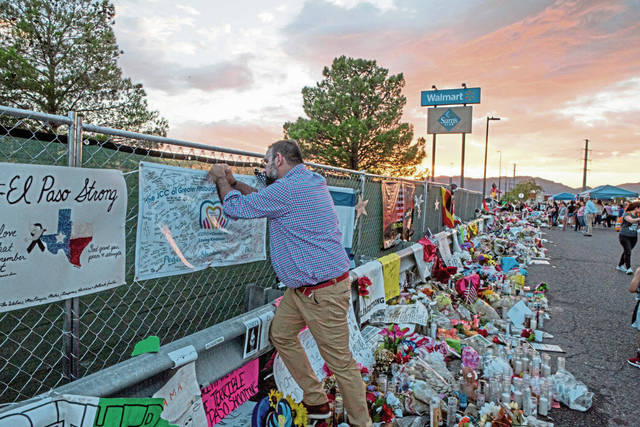
The intense revulsion over the horrific slaughter in El Paso has shifted politics. But beware of ruling class solutions to crises caused by the ruling class.
The revulsion at white supremacy has even forced a temporary change in Trump’s rhetoric. On August
The revulsion at white supremacy has even forced a temporary change in Trump’s rhetoric. On August

Let’s build on all the new elements and openings created by the Sudanese and Algerian uprisings. Let’s create regional and international links on this basis to change the course of events in the Middle East and North Africa from endless wars, authoritarian capitalism, religious fundamentalism and imperialism to an emancipatory direction.
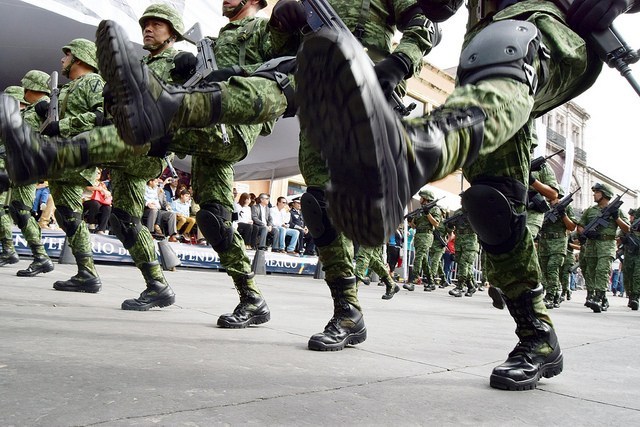
President André Manuel López Obador has deployed several thousand troops of the newly created National Guard to the state of Chiapas to deter Central American immigrants from entering Mexico from Guatemala and in that way to please U.S. President Donald

Seemingly overnight, politicians are tripping over themselves as they clamor for prison reform in a climate where cases of police murder and prison abuses have drawn thousands in protests onto the streets. Today, few would doubt that America’s criminal justice
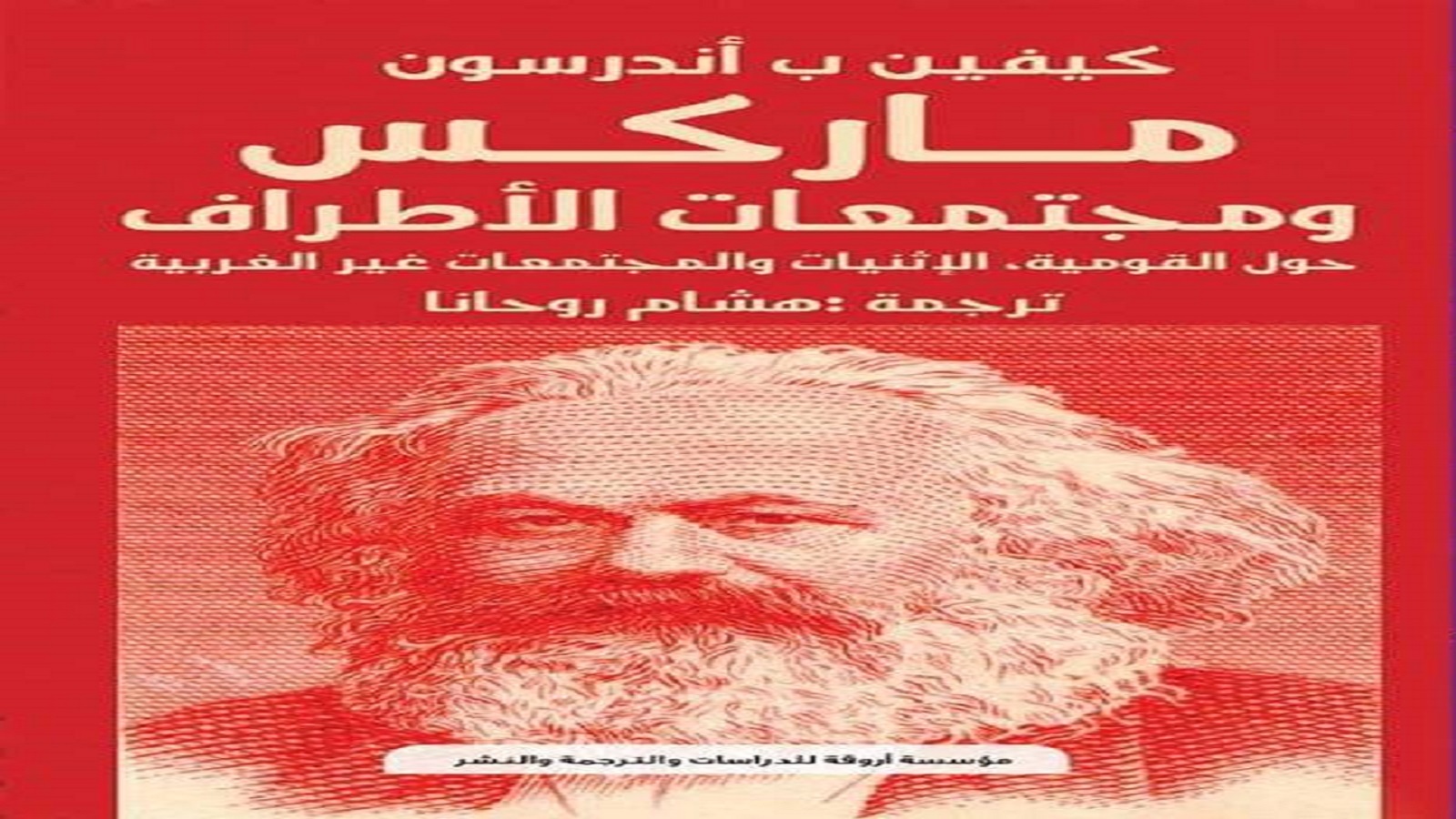
Published as “Letter to My Arab Readers” for the new translation into Arabic, Cairo: Arweqa Institution for Studies, Translation, and Publishing, 2019, translated by Hisham Rouhana.
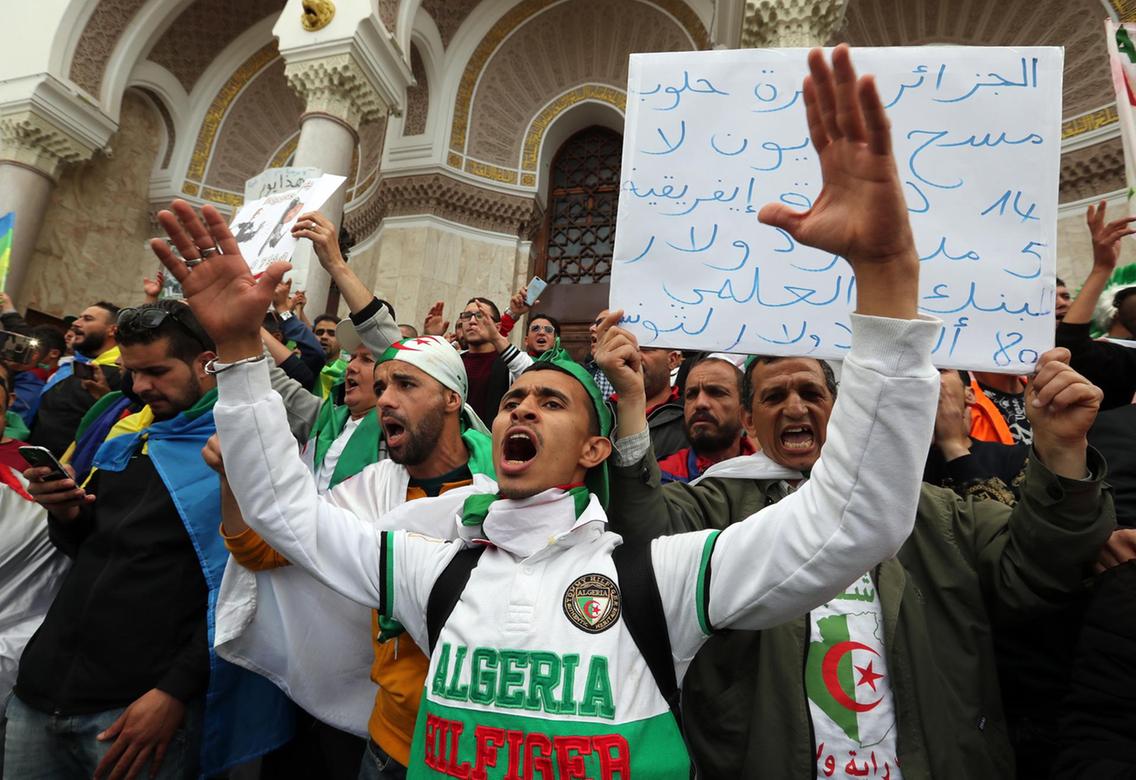
What sparked these latest uprisings, and what has made them so successful thus far? What are the balance of forces today in Algeria and Sudan? And what has changed since 2011 that may allow for a different outcome than the bleak reality we have seen across the Middle East for the past six years?

My central contention with both White and Moody lies in their reluctance to engage in meaningful class analysis of black political life.

Stories have a life of their own. Merriam-Webster describes a meme as “an idea, behavior, style, or usage that spreads from person to person within a culture”. It doesn’t matter who the carrier of the meme is or the way that they pass it on: all that matters is that the story is reproduced and given new life with each telling.
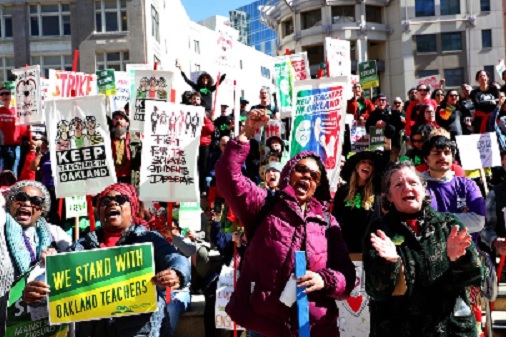
Editor’s note: This article responds to analysis New Politics has already published on the Oakland teachers’ strike. In hosting different viewpoints on the strike, New Politics continues its tradition of opening its pages (and now its website) to debates about
Momentum for building a post-neoliberal U.S. has been gaining strength with each passing day. However, despite the rise of new and exciting figures, such as Alexandria Ocasio-Cortez and the tide of striking teachers in even GOP dominated states, we must remain aware that whenever there has been potential for revolutionizing government and politics, there has always followed a reactionary and brutal backlash.
There is something politically familiar in Cedric Johnson’s two essays in Catalyst (Vol. 1, No. 1, Spring 2017) and New Politics (No. 66, Winter 2019). Because his political conclusions are very general, even vague, ones that build “on broad solidarity

Johnson asks the reader not to pivot on certain ethnically motivated political affiliations lest we lose our class-conscious focus, and yet I find myself thinking about the ways Blackness is constructed in the arguments presented and how that matters.
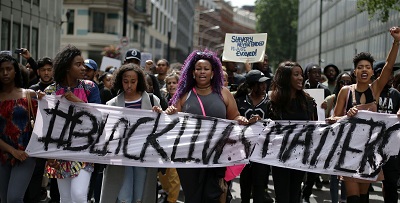
Cedric G. Johnson’s “The Panthers Can’t Save Us Now” is a compelling, historically grounded critique of contemporary anti-racist campaigns against police brutality and mass incarceration. While Johnson is encouraged by the swell of organized opposition to the carceral state and
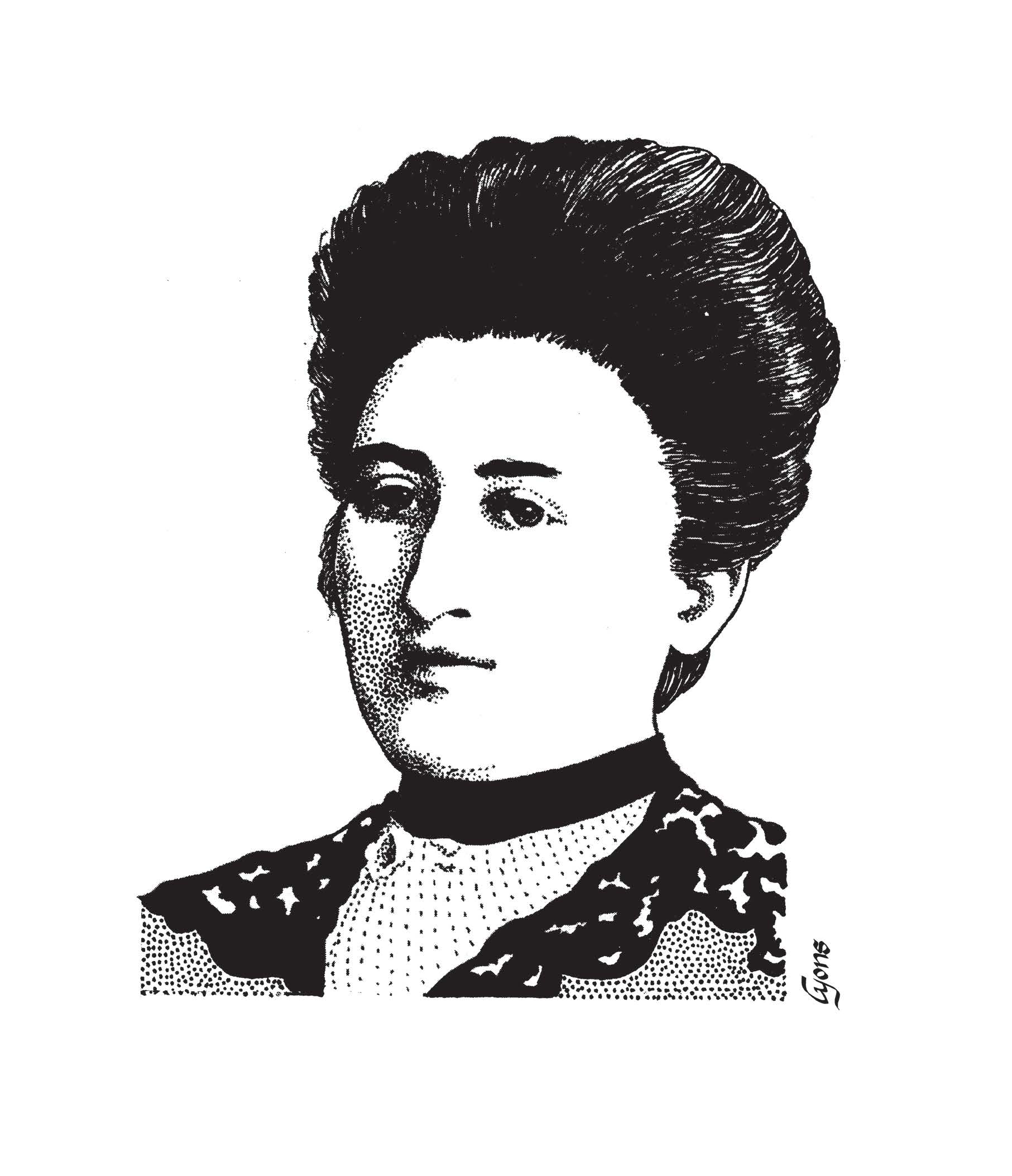
How Johnson’s critique of the Black Lives Matter movement elaborates on Luxemburgist themes and provides a path to addressing not only police killings, but also the larger capitalist assault that drives them.

My 2017 Catalyst article, “The Panthers Can’t Save Us Now,” was addressed to a specific conundrum within contemporary left politics and anti-policing struggles in particular: that is, the strategic problem of building a counterpower capable of winning in the context

Perhaps the difficulty in capturing and defining the phenomenon of white supremacy lays in its ubiquity. Throughout American society (and more generally, across the Western world), ‘whiteness,’ symbolizes a status quo, a dominant set of norms and behaviors to which individuals are expected to adhere.

Bill Fletcher, Jr. The Man Who Fell From the Sky. Hard Ball Press, $15, trade paperback, 350 pp.
“Race” as a biological category differentiating humans has been a spurious and discredited marker for more than a century. From Franz Boas’ early pioneering studies of the Inuit to Barbara Fields’ contemporary savaging of race-based ideology, we should all understand that humans are one race, end of discussion!

Scott McLemee considers Leo R. Chavez's Anchor Babies and The Challenge of Birthright Citizenship, which makes clear how little has been added to the stock of anti-immigrant rhetoric over the past century.
Reports of the forcible separation of parents and children at the border by U.S. immigration authorities tell only part of the story of the violence now being directed against hard-won norms of civil society.
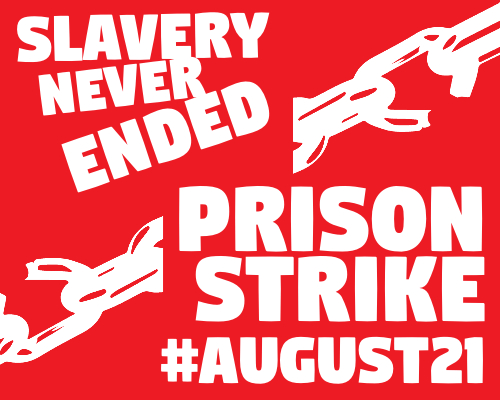 On August 21st, forty-seven years after the assassination of key movement organizer and theoretician George Jackson, prisoners across the country have once again begun mobilizing. Ranging from sit-ins to work stoppages, boycotts to hunger strikes, their actions have followed a nationwide call for sentencing reform, improved living conditions, greater access to rehabilitative programming, and an end to what strike organizers call “modern day slavery.”
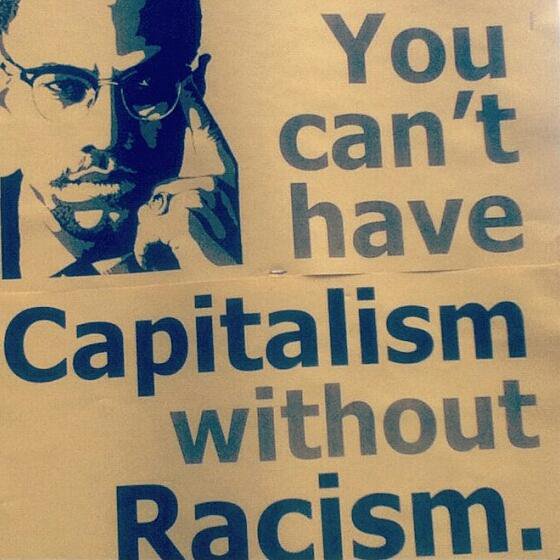
Introduction and My Experiences
“It is our duty to fight for our freedom. It is our duty to win. We must love and protect one another other. We have nothing to lose but our chains”.
You may recognize this as the rallying cry for the Black liberation movement in the United States, as written by Assata Shakur.
- « Newer Posts
- 1
- …
- 4
- 5
- 6
- 7
- 8
- 9
- 10
- …
- 13
- Older Posts »