Place: Latin America
[Introduction by Todd Chretien: In the run-up to Argentina's national elections in October, a scramble for power has divided the incumbent Peronista party into warring factions. Founded by Juan Perón in 1946, the Partido Justicialista ruled through sometimes radical nationalism, state intervention in the economy, clientelist patronage and control over trade unions, and the loyalty of sections of the bourgeoisie and an elite political class of bureaucrats.
Despite widespread d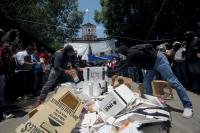 isillusionment with the political system, an organized attempt to prevent the election from taking place in a few states, and continuing economic doldrums, President Enrique Peña Nieto and his Institutional Revolutionary Party (PRI) were the big winners in the Mexican election, followed by the conservative National Action Party (PAN).
Mexico’s latest elections are threatened by drug cartel violence, social protests, and the mass resignation of election officials. The left, which in the past has succeeded in rallying a third or more of the nation’s voters for a single party, goes into this election deeply divided, prompting expectations of a win for the ruling party.
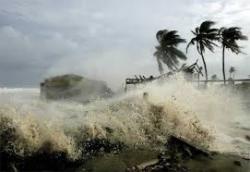
A hurricane is barreling down on Baja California threatening to interfere with Mexico’s June 7 elections on the peninsula, but the far greater storm is the combination of criminal violence and widespread social protests, which could disrupt and possibly prevent the election in several states.
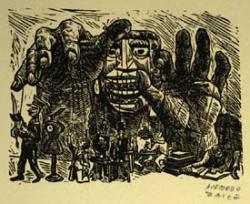
The Mexican left is more divided than at any time since the early 1980s as some 80 million Mexican voters will go to the polls on June 7 to elect 500 federal representatives, nine governors 641 state legislators, 993 mayor and 16 borough chiefs in Mexico City.
Four rival leftist parties will be competing for votes—the Party of the Democratic Revolution (PRD), the Workers Party (PT), the Citizens Movement (MC), and the Movement for National Regeneration Party (MORENA)—though is some cases they will ally with each other and in others with one of the two dominant parties: the Institutional Revolutionary Party (PRI) or the National Action Party (PAN). The Zapatista Army of National Liberation (EZLN), one of the country’s important left organizations, remains opposed to elections as always. Some in the Ayotzinapa protest movement—protesting over the killing of six and disappearance of 43 students at a rural teachers college in Guerrero–have called upon voters to abstain altogether.
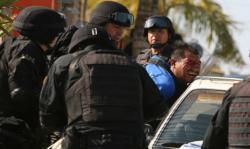
In another attempt to break a strike and keep agribusiness products rolling north into the United States, the Mexican Army and State Preventive Police again attacked hundreds of striking farm workers in the San Quintín Valley of Baja California who had blocked the Trans-Peninsular Highway on May 9. Workers blocked the highway to protest Governor Francisco de Lamadrid’s cancellation of a promised meeting between his government and farm worker leaders.
.jpg)
More than three hundred Mexican American community activists marched through New York City from Union Square to the United Nations on April 26, marking the seven-month anniversary of the killing of six and forced disappearance of 43 students from the Ayotzinapa Rural Teachers College in Guerrero, Mexico.
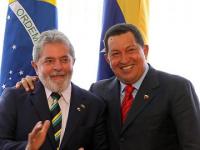
Steve Ellner, editor. Latin America’s Radical Left: Challenges and Complexities of Political Power in the Twenty-first Century. Rowman and Littlefield, 2014. Notes. Index. Paper: $29.95.
George Ciccariello-Maher, We Created Chavez: A People’s History of the Venezuelan Revolution. Duke University Press, 2013. 352 pages. Notes. 17 photos and 1 map. Index.
“There’s somethin’ happenin’ here, What it is ain’t exactly clear” – Stephen Stills
With the Middle East in flames, NATO trying to start World War III in Ukraine while the European Union’s economy stagnates, Africa torn by low-level wars, and China re-entering the world stage in an assertive manner, there’s one region of the world that is relatively quiet: South America. (Oops—Obama just blew that by declaring Venezuela a “national security threat” to the US. But, never mind.) Yet some of the most interesting and far-reaching changes in the world are taking place in this region. And these two books are excellent entries into understanding current developments in the region.
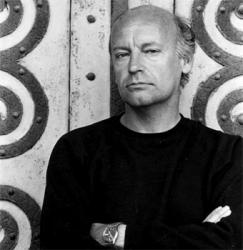
Eduardo Galeano, the world-renowned leftist Uruguayan journalist and writer made famous with the publication in 1971 of his book The Open Veins of Latin America: Five Centuries of the Pillage of a Continent, died today at the age of 74 in Montevideo, Uruguay, where he lived. Long admired as a journalist, with his three-volume Memory of Fire in 1982, Galeano also became known as a writer of non-fiction prose who might be compared to writers of fiction such as Gabriel García Márquez, author of the novel One Hundred Years of Solitude or Isabel Allende who wrote House of the Spirits. Like their novels, his trilogy captures the real spirit of Latin America’s magical history.
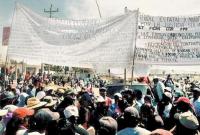
The strike by farmworkers in the San Quintín Valley of Baja California, which began on March 17 stopping production and shipments on 25 farms and costing the companies tens of millions of dollars, has been stalled as the Alliance of National, State, and Municipal Organizations for Social Justice (AONEMJS or Alliance) which leads the movement faces challenges from the state government, the employers, and corrupt labor unions.
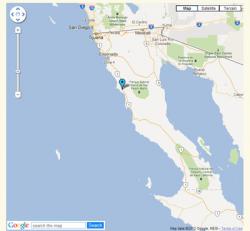
Thousands of farmworkers in the San Quintín Valley of Baja California, just 185 miles south of the U.S. border, struck some 230 farms, including the twelve largest that dominate production in the region, on March 17 interrupting the picking, packing, and shipping of zucchini, tomatoes, berries and other products to stores and restaurants in the United States. The strikers, acting at the peak of the harvest, were demanding higher wages and other benefits to which they are legally entitled such as membership in the Mexican Institute of Social Security (IMSS), the public health system. While there have over the last two decades been several large scale protests by workers in San Quintín, usually riots over the employers failure to pay their employees on time, this is the first attempt by workers to carry out a such strategic strike.
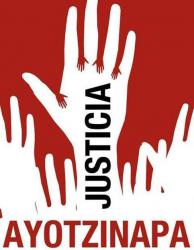
Militant protests by teachers, students, and others, some of them violent, continue in Guerrero on Mexico’s southern Pacific coast where the state government seems to have completely lost control. Since six students were killed, 25 wounded and 43 kidnapped in Iguala, Guerrero on September 26, 2014–with the 43 still remaining still not credibly accounted for—there have been nearly continuous protests. Teacher protests over other issues have also taken place in Mexico City and in other parts of the country and have been militant, but not violent.
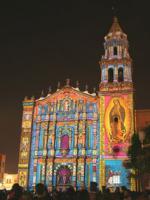
With the left by and large failing to provide political leadership in the critical political situation that has developed in Mexico following the kidnapping of 43 students in Iguala, Guerrero and the “white house” scandal surrounding President Enrique Peña Nieto, Catholic priests have been attempting to fill the void. Several Catholic priests—Padre Gregorio (Goyo) López, Padre Alejandro Solalinde Guerra, and Archbishop Raúl Vera most prominent among them—have in different ways been playing the role of spokespersons for the oppressed. These priests have been speaking out against government corruption and the politicians’ links to the drug cartels, defending local armed self-defense organizations, demanding an investigation into the role of the Mexican Army, and even calling for a constituent assembly to refound the country on a new and more democratic basis.
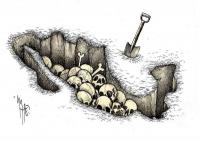
Robert Joe Stout. Hidden Dangers: Mexico on the Brink of Disaster. Sunbury Press: Mechanicsburg, Pennsylvania, 2014. 209 pages. Notes. Bibliography.
Shannon K. O’Neil. Two Nations Indivisible: Mexico, the United States, and the Road Ahead. A council on Foreign Relations Book. Oxford University Press, 2014 [2013]. 239 page. Notes. Bibliography. Index. Map.
“Mexico is undergoing economic and political changes that lie like landmines ready to explode beneath the troubled and often discordant impulses of the two countries to satisfy their divergent social and political needs,” writes Robert Joe Stout in Hidden Dangers: Mexico on the Brink of Disaster.
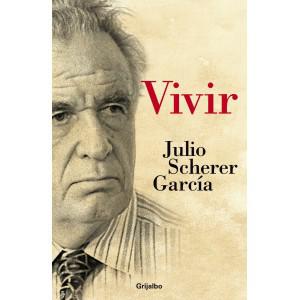 Julio Scherer, who worked as a journalist for 70 years, will be most remembered for founding Proceso, the weekly news magazine that transformed Mexican journalism and helped to contributed to the ongoing struggle for democracy in Mexico.
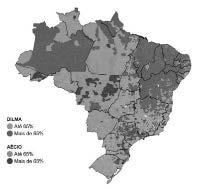 Election day came lazily in Santarém, a mid-sized city and trading entrepôt at the junction of the Amazon and Tapajós rivers, the halfway point between Amazônia’s primary metropolises of Manaus and Belém. The internet was out of service in this sleepy Amazonian town, as were two out of the four major cellphone carriers, and the streets were nearly empty.
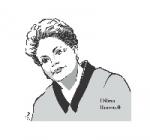 Dilma Rousseff of the Workers Party (PT) won Brazil’s presidential election on October 26, meaning that when her term ends her party will have held the nation’s top office for a remarkable 16 years, longer than any party in Brazilian history.
 “¿Qué Nueva, Qué Nueva, Qué Nueva Mayoría? ¡Si van a gobernar pa’ la misma minoría!” (“What New Majority? They’ll rule for the same old minority!”)
FEL student demonstrators
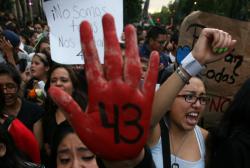
President Enrique Peña Nieto, who had been so successful in advancing his fundamentally conservative economic program during his first year and a half in office, suddenly faced a serious challenge beginning in September 2014 when police apparently cooperating gangsters killed six students, injured at least 25 injured, and kidnapped 43 in the town of Iguala in the state of Guerrero.
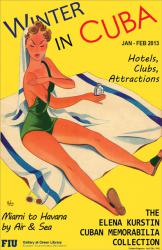
On December 17, 2014, Washington and Havana agreed to a path-breaking change in a relationship that, for more than fifty years, was characterized by the United States’ efforts to overthrow the Cuban government, including the sponsorship of invasions, naval blockades, economic sabotage, assassination attempts, and terrorist attacks.
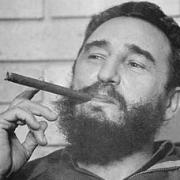
When in 1959 I was fourteen, my socialist, pacifist father gave me a gift subscription to Liberation, the leftist magazine sponsored by the War Resisters League that was published from 1956-1977. My parents had divorced and I lived with my mother in the town of Imperial Beach, California, on the Pacific Ocean and the Mexican border, while my father lived in Chicago. Liberation was my father’s way of seeing to my political education from a distance. In the pages of Liberation I first read C. Wright Mills’ essay (later a book) “Listen Yankee” as well as other articles about the revolution in Cuba.
- « Newer Posts
- 1
- …
- 13
- 14
- 15
- 16
- 17
- 18
- 19
- …
- 21
- Older Posts »