Blog

  • Reports on the Resistance: Demonstrations Across the Country in Solidarity with Charlottesville

    Image

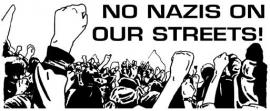
    Thousands demonstrated in dozens of cities and universities across the United States to protest the “Unite the Right” racist march and rally in Charlottesville Virginia and the automobile terrorist attack on anti-fascists that took the life of Heather Heyer on Aug. 12.

    The demonstrations took the form of vigils, rallies, and marches that took place on Aug. 13 and 14. In New York City, thousands demonstrated at Trump Tower as he returned from the golf links to New York. In Durham, North Carolina, anti-fascists pulled down a statue of a Confederate soldier. In some cities there were multiple events called by a variety of progressive and leftist organizations.

    Everywhere demonstrators expressed their opposition to the Ku Klux Klan, the Nazis, and the alt-right and their sympathy with Heyer and the many others who were injured some of them critically.

    The protests have been accompanied by renewed calls for Trump to fire White House aides Steven Bannon, Stephen Miller, and Sebastian Gorka, whom the peace and justice group Code Pink called the “neo-Nazi axis of evil.”

    The far right’s racist attack and the murder of Heyer have moved some who have stood on the sidelines to speak out and to stand up. As Siva Vaidhyanathan, professor of media studies at the University of Virginia, who with his wife and family had decided not to attend the anti-fascist protest wrote afterwards in a remarkable op-ed in the New York Times:

    I now believe we made the wrong choice. Does my status as a parent make me special? It shouldn’t. A young man named Dre Harris was ambushed in a parking lot and took dozens of blows by club-wielding thugs. He took them so I wouldn’t have to. Next time I will stand on the street with my neighbors, even at the risk of injury or death. It’s the least I can do to repay those who stood bravely this time.

    Many other Americans must be being touched by these events in a similar fashion. We may see more ordinary Americans go into motion if the far right continues its fight.

    President Donald Trump initially condemned the violence, but refused to speak out against white supremacists, clearly for fear of alienating the white racist element in his base. Criticized by both Democrats and high level Republicans, the White House issued an unsigned statement condemning the Ku Klux Klan, neo-Nazis, and white supremacists.

    Only after two days did Trump himself finally make a statement condemning those groups. But that was followed on Aug. 15 by a statement condemning violence on all sides, by both the alt-right and the “alt-left.” The allusions to the alt-left could be the very beginning of a new era or red-baiting such as the United States experienced in the 1920s and the 1950s.


  • We Will Replace You


    ImageThe “Unite the Right” rally held in Charlottesville, Virginia this past weekend attracted several hundred white men from the "alt-right," the neo-Nazis, and the Ku Klux Klan who marched with torches through the University of Virginia chanting, “You will not replace us.” Nothing better explains the fear at the root of their racist movement than that chant. They fear, as their political ancestors feared, that they will be replaced by blacks. They have now come to fear also that they will be replaced by Latinos and by Asians. They fear too that they will be replaced by women, by gay men or lesbians or bisexuals. Or by trans people or the disabled. Above all, they fear.

    The next day the white nationalists, arriving with guns on their shoulders and armed with tear gas rallied at the statue of Rober E. Lee. There they were surrounded by anti-fascists and faced a fight. Filled with fear and hatred, one of the right-wing racists drove his car into the crowd of counter-protestors and killed Heather Heyer, a young anti-fascist activitist.

    Tacitly encouraged by President Donald Trump and his "alt-right" advisor Steven Bannon, the fearful imbibe racist rants like liquid courage, and trembling inside march their white faces under Confederate flags and swastika-like banners to the statue of Robert E. Lee, the slave owner who became the symbol of defeat of the lost cause. What better symbolizes the desperateness of their desire to return to a mythical past of white power than the fact that they march to a monument to a loser, whose Confederate Army was destroyed by abolitionists, black soldiers, and the forward march of freedom.

    Of course demography tells us that white people are gradually being displaced and in some areas eclipsed by the growth of populations of various people of color. And the civil rights movements of blacks, Latinos, women, and LGBT people have allowed them to push forward to try to claim their place in American society. In the face of this a small group of white men, shaken to their quick by fear, adopts hatred as their shield and racism as their sword and marches through America.

    Even under the protective shadow of Trump’s White House and the racist Attorney General Jeff Sessions, a small number of white men showed up. White nationalism is their rallying cry, but we intend to make it the death rattle of white supremacy. Their small “Unite the Right” rally could bring together only a few hundred demonstrators, compared to the tens and perhaps hundreds of thousands who marched in the Black Lives Matter protests.

    The counter-protestors stood firm against the racist right, one person losing their life and several others injured. They stood strong for us. We stand now for them. Throughout the country rallies are being held to protest against the neo-Nazis, the Klan, and the "alt-right," to support the anti-fascist movement, and to express our support for justice.

    They chanted “you will not replace us” and sometimes “Jews will not replace us.” But they will be replaced. We will replace them, we—white people and people of color, women and men, straight and queer—who are building a movement for democracy and socialism. We will rebuild the unions not only as workers organizations fighting for better wages and conditions, but also as organizations that stand for racial justice, democracy and workers' power. We will organize in our communities to defend the Muslims and Mexicans so feared and hated by the neo-fascists. We will march with women and the LGBT movement for full equality. We will while doing all of that also fight to stop climate change. We will build the Resistance to Trump, the Republicans and the neoliberal Democrats, and we will defeat them.

    To the far right we say: We will replace you. We will replace racism with a diverse but united society. We will replace fear with security. We will replace hate with love. We will replace you. And America and even you will be better for it.

  • DSA Convention: Mapping a Strategy, Avoiding Dead-Ends

    Image

    After reaching 25,000 members, DSA held its largest bi-annual National Convention with the hopes of creating the political clout necessary to shift the country toward a socialist vision that exceeds that of social-democratic capitalism. The four days reenergized old chapters and allowed new chapters to recognize the potential of a national organization. Overall, DSA has effectively begun resurrecting the socialist movement in the United States. All DSA members should be proud of this achievement. We should, however, be cautious in overestimating the outcomes of the convention. For behind the great rejuvenation that occurred in Chicago there were also ideological and structural currents that may limit DSA in the long run.

    First, DSA has yet to claim an electoral strategy to organize against the Democratic Party or try to reform it. Although 25,000 members is a minute percentile to that of the country’s population, at one point or another DSA will have to make a national statement over the political question: Can DSA have an effective political strategy that works on a state-by-state basis while simultaneously organizing a national organization leading us out of the Democratic Party? Can DSA flip Texas and Iowa into "blue states"? How will DSA split from the Democrats in California and New York? We did not provide an answer at the convention. Come 2020, and once Texas becomes ground game for such national electoral work, DSA will need to answer this question. While DSA strategically uses the Democratic ballot line, DSA should also claim and desire a national future outside the Democratic Party even while attempting to reform some state Democratic Parties.

    Second, while DSA approved a national single-payer campaign, the method by which we build the health care campaign has by and large been lost to localism. The decision by the convention to strike setting metrics and goals for our national campaign came out of an ill-conceived localism that may ultimately cause DSA to lose momentum. The National Office would have created a national committee specifically to create those metrics which would build a national campaign that takes into account concrete conditions in different areas across the country. Setting metrics and goals accelerates national capacity by making it rather easy for chapters to adapt goals and metrics to the concrete organizing on the ground. Metrics and goals are encouraged by national for chapters to consider without the power to enforce those objectives. They simply allow the national organization to set higher expectation and solidify the organization. DSA was structurally created as a federation, not a "democratic centralist" organization, in order to provide such national expectations while avoiding falling into a top-down structure.

    The drift toward localism in DSA has come out of fear of a centralist body. This fear can be healthy, but in this case it seemed almost antithetical to building a mass organization. This localism has less to do with any anarcho-syndicalist roots, with which I identified with in my early teens, and much more to do with conservative union consciousness and liberalism today. Localism multiplies the workload of the organization whereas goals and metrics are set time and time again only to appear similar to those created in other chapters. It would have been easier to just allow the National Political Committee to set those goals and metrics and then chapters could decide which ones they would emphasize. But now chapters now have to create their own goals and metrics and the National Office will only have the ability to create broad guidelines that get interpreted through a localist framework. Going into the long haul, DSA members need to begin to differentiate between chapter autonomy and localism or risk falling into regional conflicts instead of solidifying how the national organization consolidates our different concrete struggles.

    Third, the growing emphasis on creating an organizing training strategy as proposed in Resolution 28 ironically pushes us toward the structures and politics of Saul Alinksy, an infamous anti-communist and true "democratic centralist." DSA is not like most nonprofits in that it is not staff centered but member-based. A national training strategy cannot be staff-based or we will fall into a long-term financial trap. The organizing model to take at a national level is not that of a top-down service-ism like Alinskyism, SEIU or UNITE-HERE, but that of relationship building between nearby chapters and regions which will eventually build state federations and regional councils from the bottom up. The best organizers learn through struggle, constant failure, and ultimtaely achieving victory, not through broad basics taught by a distant body of professional organizers.

    Luckily, the kids are alright. During the Young Democratic Socialists (YDS) conference students and youth felt the necessity to build a stronger relationship to the larger DSA organization and now call themselves YDSA. They endorsed a college-for-all national campaign without falling into localism. Moreover, they elected its most diverse and radical coordinating committee yet. They recognize the potential for the Fall Campus drive to increse our membership while building a national campaign.

    The best outcome of the DSA national convention was the establishment of the Democratic Socialist Labor Commission (DSLC) which was unanimously supported in its original language. DSA once had a Labor Commission, but over the years it failed to establish a permanent infrastructure that maintained relationships to the labor movement, established ongoing organizing with the rank-and-file, and organized our non-union membership into the labor movement. It eventually withered away. This time, however, through the DSLC, DSA will have a chance at building regional, state and nationwide campaigns that can build strong relationships between chapters and the National Office. If effective, the Labor Commission can provide a much-needed infrastructure to push the labor movement to the left, democratize unions, and organize the unorganized.

    In conclusion, DSA members need to see themselves as part of a national organization in both ideological and structural terms, and not only as part of their local or region. The national convention helped to develop a national organization, but it also revealed the areas where all DSA members need to improve. Only a national organization can develop a strong electoral strategy, support chapters in dire financial and structural need, and set higher expectations and accountability for all DSA members. DSA members should not "sideline" to their regions, let alone their locals, or they will risk not building a truly national organization.

    *Jack Suria Linares was a delegate to the DSA Convention and a candidate for DSA's National Political Committee.

  • So, about this Googler’s manifesto

    Image

    On August 5 a Google employee named James Damore published a 3,500 word manifesto entitled “Google’s Ideological Echo Chamber,” in which he agued the biological inferiority of women, making them incapable of being equally talented computer engineers. First circulated internally among Google’s thousands of employees, the manifesto was posted in its entirety on the web by Gizmodo on August 5. Google fired Damore, the manifesto’s author, on August 7.

    On August 5, Yonatan Zunger, a former Google employee who had only recently left the company, wrote a response to Damore, published by Medium, which we republish here. – DL

    You have probably heard about the manifesto a Googler (not someone senior) published internally about, essentially, how women and men are intrinsically different and we should stop trying to make it possible for women to be engineers, it’s just not worth it.

    Until about a week ago, you would have heard very little from me publicly about this, because (as a fairly senior Googler) my job would have been to deal with it internally, and confidentiality rules would have prevented me from saying much in public.

    But as it happens, (although this wasn’t the way I was planning on announcing it) I actually recently left Google — for entirely unrelated and actually really-good-news reasons which you can read about here. So when all of this broke, I was just as much on the outside as everyone else, and I know what was written in this only because it leaked and was published by Gizmodo.

    And since I’m no longer on the inside, and have no confidential information about any of this, the thing which I would have posted internally I’ll instead say right here, because it’s relevant not just to Google, but to everyone else in tech.

    * * *

    So it seems that someone has seen fit to publish an internal manifesto about gender and our “ideological echo chamber.” I think it’s important that we make a couple of points clear.

    (1) Despite speaking very authoritatively, the author does not appear to understand gender.

    (2) Perhaps more interestingly, the author does not appear to understand engineering.

    (3) And most seriously, the author does not appear to understand the consequences of what he wrote, either for others or himself.

    1. I’m not going to spend any length of time on (1); if anyone wishes to provide details as to how nearly every statement about gender in that entire document is actively incorrect,¹ and flies directly in the face of all research done in the field for decades, they should go for it. But I am neither a biologist, a psychologist, nor a sociologist, so I’ll leave that to someone else.

    2.What I am is an engineer, and I was rather surprised that anyone has managed to make it this far without understanding some very basic points about what the job is. The manifesto talks about making “software engineering more people-oriented with pair programming and more collaboration” but that this is fundamentally limited by “how people-oriented certain roles and Google can be;” and even more surprisingly, it has an entire section titled “de-emphasize empathy,” as one of the proposed solutions.

    People who haven’t done engineering, or people who have done just the basics, sometimes think that what engineering looks like is sitting at your computer and hyper-optimizing an inner loop, or cleaning up a class API. We’ve all done this kind of thing, and for many of us (including me) it’s tremendous fun. And when you’re at the novice stages of engineering, this is the large bulk of your work: something straightforward and bounded which can be done right or wrong, and where you can hone your basic skills.

    But it’s not a coincidence that job titles at Google switch from numbers to words at a certain point. That’s precisely the point at which you have, in a way, completed your first apprenticeship: you can operate independently without close supervision. And this is the point where you start doing real engineering.

    Engineering is not the art of building devices; it’s the art of fixing problems. Devices are a means, not an end. Fixing problems means first of all understanding them — and since the whole purpose of the things we do is to fix problems in the outside world, problems involving people, that means that understanding people, and the ways in which they will interact with your system, is fundamental to every step of building a system. (This is so key that we have a bunch of entire job ladders — PM’s and UX’ers and so on — who have done nothing but specialize in those problems. But the presence of specialists doesn’t mean engineers are off the hook; far from it. Engineering leaders absolutely need to understand product deeply; it’s a core job requirement.)

    And once you’ve understood the system, and worked out what has to be built, do you retreat to a cave and start writing code? If you’re a hobbyist, yes. If you’re a professional, especially one working on systems that can use terms like “planet-scale” and “carrier-class” without the slightest exaggeration, then you’ll quickly find that the large bulk of your job is about coordinating and cooperating with other groups. It’s about making sure you’re all building one system, instead of twenty different ones; about making sure that dependencies and risks are managed, about designing the right modularity boundaries that make it easy to continue to innovate in the future, about preemptively managing the sorts of dangers that teams like SRE, Security, Privacy, and Abuse are the experts in catching before they turn your project into rubble.

    Essentially, engineering is all about cooperation, collaboration, and empathy for both your colleagues and your customers. If someone told you that engineering was a field where you could get away with not dealing with people or feelings, then I’m very sorry to tell you that you have been lied to. Solitary work is something that only happens at the most junior levels, and even then it’s only possible because someone senior to you — most likely your manager — has been putting in long hours to build up the social structures in your group that let you focus on code.

    All of these traits which the manifesto described as “female” are the core traits which make someone successful at engineering. Anyone can learn how to write code; hell, by the time someone reaches L7 or so, it’s expected that they have an essentially complete mastery of technique. The truly hard parts about this job are knowing which code to write, building the clear plan of what has to be done in order to achieve which goal, and building the consensus required to make that happen.

    All of which is why the conclusions of this manifesto are precisely backwards. It’s true that women are socialized to be better at paying attention to people’s emotional needs and so on — this is something that makes them better engineers, not worse ones. It’s a skillset that I did not start out with, and have had to learn through years upon years of grueling work. (And I should add that I’m very much an introvert; if you had asked me twenty years ago if I were suited to dealing with complex interpersonal issues day-to-day, I would have looked at you like you were mad.) But I learned it because it’s the heart of the job, and because it turns out that this is where the most extraordinary challenges and worthwhile results happen.

    * * *

    3.That brings us, however, to point (3), the most serious point of all. I’m going to be even blunter than usual here, because I’m not subject to the usual maze of HR laws right now, and so I can say openly what I would normally only be allowed to say in very restricted fora. And this is addressed specifically to the author of this manifesto.

    What you just did was incredibly stupid and harmful. You just put out a manifesto inside the company arguing that some large fraction of your colleagues are at root not good enough to do their jobs, and that they’re only being kept in their jobs because of some political ideas. And worse than simply thinking these things or saying them in private, you’ve said them in a way that’s tried to legitimize this kind of thing across the company, causing other people to get up and say “wait, is that right?”

    I need to be very clear here: not only was nearly everything you said in that document wrong, the fact that you did that has caused significant harm to people across this company, and to the company’s entire ability to function. And being aware of that kind of consequence is also part of your job, as in fact it would be at pretty much any other job. I am no longer even at the company and I’ve had to spend half of the past day talking to people and cleaning up the mess you’ve made. I can’t even imagine how much time and emotional energy has been sunk into this, not to mention reputational harm more broadly.

    And as for its impact on you: Do you understand that at this point, I could not in good conscience assign anyone to work with you? I certainly couldn’t assign any women to deal with this, a good number of the people you might have to work with may simply punch you in the face, and even if there were a group of like-minded individuals I could put you with, nobody would be able to collaborate with them. You have just created a textbook hostile workplace environment.

    If you hadn’t written this manifesto, then maybe we’d be having a conversation about the skills you need to learn to not be blocked in your career — which are precisely the ones you described as “female skills.” But we are having a totally different conversation now. It doesn’t matter how good you are at writing code; there are plenty of other people who can do that. The negative impact on your colleagues you have created by your actions outweighs that tremendously.

    You talked about a need for discussion about ideas; you need to learn the difference between “I think we should adopt Go as our primary language” and “I think one-third of my colleagues are either biologically unsuited to do their jobs, or if not are exceptions and should be suspected of such until they can prove otherwise to each and every person’s satisfaction.” Not all ideas are the same, and not all conversations about ideas even have basic legitimacy.

    If you feel isolated by this, that your views are basically unwelcome in tech and can’t be spoken about… well, that’s a fair point. These views are fundamentally corrosive to any organization they show up in, drive people out, and I can’t think of any organization not specifically dedicated to those views that they would be welcome in. I’m afraid that’s likely to remain a serious problem for you for a long time to come. But our company is committed to maintaining a good environment for all of its people, and if one person is determined to thwart that, the solution is pretty clear.²

    I’m writing this here, in this message, because I’m no longer at the company and can say this sort of thing openly. But I want to make it very clear: if you were in my reporting chain, all of part (3) would have been replaced with a short “this is not acceptable” and maybe that last paragraph above. You would have heard part (3) in a much smaller meeting, including you, me, your manager, your HRBP, and someone from legal. And it would have ended with you being escorted from the building by security and told that your personal items will be mailed to you. And the fact that you think this was “all in the name of open discussion,” and don’t realize any of these deeper consequences, makes this worse, not better.

    ——-

    ¹ Nearly, but not every. One very important true statement which this manifesto makes is that male gender roles remain highly inflexible, and that this is a bug, not a feature. In fact, I suspect that this is the core bug which prompted everything else within this manifesto to be written. But the rest of the manifesto is basically about optimizing around the existence of this bug! Don’t optimize your bugs; fix them.

    ² Those of you wondering about the “paradox of tolerance” can check out this essay for more.

    ***Yonatan Zunger is a former Google employee and writer.


  • The Founding Fathers: “Neoliberals” Avant le Mot

    Image

    “Who is to blame for the election of Donald Trump?” It’s a question that was asked more than a few times after November. We’re all familiar with the answers that were given: James Comey, the electoral college, the DNC’s leaked—not hacked—emails, the characteristically shameful performance of the mainstream media in its focus on personalities rather than substance, the stupefying incompetence of Hillary Clinton’s campaign, the elitist insularity and corruption of the Democratic Party, etc.

    Longer-term causes (which are intertwined) include the decline of organized labor, which has always served as a bulwark against fascism or semi-fascism; deindustrialization, which has contributed to the economic insecurity that apparently motivated many of Trump’s supporters; and the almost total capture of the Democratic Party by the corporate sector of the economy. But one group of people has tended to escape blame, even despite widespread disgust with the electoral college: the U.S.’s “Founding Fathers.” While they are distant in time from the political obscenity that was Trump’s election, they are far from innocent.

    This is clear from two books that every American should read, published in 2008 and 2009 respectively: Woody Holton’s Unruly Americans and the Origins of the Constitution and Terry Bouton’s Taming Democracy: “The People,” the Founders, and the Troubled Ending of the American Revolution. These books reveal the extent to which nearly all the Founders loathed and feared democracy, at least between the 1780s and the first decade of the nineteenth century. (Their attitudes were more complex in the 1770s, and in their later years such (former) anti-democrats as James Madison and John Adams were repulsed by the excesses of the capitalist aristocracy.) The popular attitude of reverence for the Founders is a product of deep misunderstanding and ignorance, for it is the viciously antidemocratic structure of the political system the Founders created that has helped make possible our new Gilded Age, and thus the political success of someone like Donald Trump.

    In fact, I think it’s important to spread the idea that, far from being “liberators,” the Founders were, in essence, the first in America’s long line of usurpers and oppressors. This idea is a simplification, but it contains a large kernel of truth. The hackneyed narrative that history textbooks still teach about the greatness and nobility of Washington, Madison, Adams, Hamilton, and the others is nothing but nationalist propaganda that serves to obscure the malignity of these people’s historical impact and legacy. One might even say that their most potent legacy was the precise opposite of what we’ve been trained to think (and what they thought): rather than having been great figures of anti-authoritarian revolution, heroic fighters against tyranny, in effect they did much to clear the ground for the most rapacious tyranny in history, the national and eventually global tyranny of capital.

    The 1780s: the Founders vs. the People

    These judgments might seem excessively harsh, but consider the facts. Across the American colonies, the revolutionary 1770s were a time of relative democracy. In the struggle against the British, the gentry and the lower classes to some extent united around the banner of white male popular empowerment. States adopted strikingly democratic constitutions, none more impressive than Pennsylvania’s in 1776, which established a unicameral legislature, annual elections for every representative, a weak governorship that could not veto laws the legislature passed, the election rather than appointment of most offices in the state and county governments, and the enfranchisement of nearly all adult men, even those who owned no property.

    But things changed in the 1780s. The gentry had “tired of an excess of democracy,” to quote Alexander Hamilton—others were less restrained, decrying “democratical tyranny,” a “republican frenzy,” a “prevailing rage of excessive democracy”—and tried to take total control of state governments. Given the shortage of gold and silver, during the war with Britain governments had issued paper money, which soon led to high inflation. This was blamed, simplistically, on the democratic character of the governments, the “imbecility” of popularly elected politicians; and most of the elite “gentlemen” came to view all government-issued paper money as an evil to be done away with. They also disliked the social and cultural manifestations of democracy, the leveling spirit that raised commoners in their own eyes and lowered the gentry. The ultra-rich financier Robert Morris represented his class when he resolved to strip power from all these “vulgar Souls whose narrow Optics can see but the little Circle of selfish Concerns.”

    The political and economic agenda that Morris and his associates championed bore a remarkable, if hardly surprising, resemblance to neoliberalism. “Morris wanted government to channel money to the wealthy,” Terry Bouton writes, “either through direct payouts or by privatizing the most lucrative parts of the state and turning them over to new for-profit corporations owned and run by the gentry.” One of the most powerful figures in American history, Morris founded in 1781 the first private bank in the United States—the Bank of North America—in part to remove finance from democratic control: not governments, but banks would issue paper money. Private corporations, unlike governments, would be immune to public pressure for a greater supply of money, and would therefore be able to prevent inflation. Actually, the acute shortage of money during the 1780s showed that Morris was too pessimistic: even in states where legislatures did on occasion print money, they certainly did not do so to the extent that “the people” desired.

    The 1780s were a time of ferocious class conflict, with most of the eventual framers of the U.S. Constitution facing off, alongside Robert Morris and the majority of the gentry, against the middling and lower classes, overwhelmingly agrarian. On one side were the wealthy speculators in government IOUs, who had bought these bonds for pennies on the dollar from the farmers, artisans, and soldiers to whom they had been given during the war as payment for goods and services. Their original holders, expecting the bonds to depreciate and needing money right away, sold them for whatever they could get. Speculators, on the other hand, could afford to wait years for the government to redeem the bonds, and had the political clout to insist that they be paid at or near the certificates’ full face value even though at the time of issuance the certificates’ market value was far below this. The state and federal war debt most of which speculators thus bought up was enormous, about $27 million.

    To pay interest on the war debt, many states tended to impose the same type of fiscal and monetary regime on the populace that more recently the IMF has favored: oppressive taxes, a tight money supply, and the curtailing of public services (such as government-run “loan offices” that gave cheap credit to farmers and artisans). Since both private creditors and bond speculators were averse to paper money, governments compelled debtors and taxpayers to pay with gold and silver. But the war years had drained the country of gold and silver, making it impossible for people to pay. The nationwide tragedy that resulted has been compared to the Great Depression of the 1930s: tsunamis of property foreclosures swept up hundreds of thousands of families, and economic activity plummeted. “Public Trade and Private transactions of Human Life,” petitioners in Pennsylvania protested, “[are] nearly reduced to a total Stagnation.”

    On the other side of the economic divide, then, were masses of ordinary people who found that their troubles were much worse in the 1780s than they had been in the last years of British rule, when their hardships had driven them to rebellion and war. “Have we not expended our blood and our treasure to expel from the land a set of invaders who sought to rule over us as taskmasters,” they exclaimed in the mid-1780s, “and shall we now become bondsmen to people of our own country?” The irony was appalling, and the victims fought back.

    In fact, they were able to extract significant concessions and relief measures. In some states, by electing legislators sympathetic to their plight, farmers and artisans benefited from temporary suspensions of tax collection. Violent resistance, such as Shays’ Rebellion in Massachusetts in 1786 and ’87, frightened governments into being more lenient in their fiscal and monetary policies. Local and county officials often were sympathetic to the suffering of their neighbors and refused to enforce the law or carry out orders: for example, county tax officers would delay collection; some sheriffs obstructed or prevented property foreclosures; justices of the peace refused to prosecute people for nonpayment of taxes. Nor were state militias always of use in enforcing tax collection, for it was frequently militiamen who were leading the anti-tax protests. All this protest in the mid-1780s substantially mitigated the hardships of “the 99 percent” (so to speak)—which means that it was a tremendous irritant to the elite. For one thing, it prevented bondholders and creditors from being paid as much and as regularly as they wanted. For another, it fostered economic and political uncertainty, which made for a bad investment climate. European investors, in particular, were leery of sending their capital to a land that was so riven by conflict. How could a country develop if it couldn’t attract investment?

    Various solutions were possible to the political and economic instabilities of the 1780s, and spokesmen of the aggrieved masses made reasonable proposals that were relatively fair to both sides of the class struggle. They called for a revaluation of war debt certificates, progressive taxation, limits on land speculation, bans on for-profit corporations, and other measures that would alleviate spiraling wealth inequality and strengthen democracy. Such proposals were consistent with the popular understanding of republicanism, an understanding that differed from that of aristocrats like Madison, Washington, Adams, Hamilton, and Edmund Randolph. As Gordon Wood describes in The Radicalism of the American Revolution, these latter men considered it axiomatic that, because only an elite of disinterested, virtuous, propertied gentlemen was capable of pursuing the public good over selfish private ends, the success of a republic required that such men hold power. It was necessary to tame the wildness of democracy—i.e., to effectively disenfranchise the majority—in order for enlightened civic virtue to flourish.

    “The people,” on the other hand, tended to have a less naïve view of the world. As yeomen from Pennsylvania said in one of their many petitions to the state government, “No observation is better supported, than this that, a country cannot long preserve its liberty, where a great inequality of property takes place.” Some of their legislators agreed: they declared that for-profit corporations were “totally destructive of that equality which ought to prevail in a republic.” Farmers wrote that “We observe, with great anxiety, wealthy incorporated companies taking possession of public and private property,” and condemned processes that made “a few men…sufficiently powerful by privileges and wealth, to purchase, or to destroy, the property and rights of their fellow citizens.” Evidently these farmers had a more sophisticated political understanding than James Madison and his idealistic colleagues did, at least insofar as they understood that the real danger to republicanism was not democracy but rather a sharp inequality of property.

    The Constitution: Triumph of Reaction

    Needless to say, it was not the farmers’ democratic vision that ultimately prevailed. Robert Morris and other anti-democrats across the states organized a new Constitutional Convention in 1787 to remedy the defects of the Articles of Confederation, which is to say to write a new Constitution that would more adequately insulate government from democratic control. The convention was not sold this way to the people, of course; its purpose, instead, was supposed to be to find ways to give government more power to protect shipping and to negotiate trade deals with foreign nations. Secretly, though, nearly all the delegates had one goal mainly in mind: to make America more attractive to investment, as Woody Holton argues. “And the linchpin to that endeavor,” he says, “was taking power away from the states and away from the people.”

    In other words, the U.S. was founded from the motive, and on the principle, of serving capital. The very structure of its political system was chosen so as, chiefly, to attract investors, i.e., to be a tool of capital accumulation. It is probably the only country in history of which this is the case. But to those who are familiar with U.S. history, so full of subservience to capitalism, such a revelation should not be surprising.

    Many of the devices that the Constitution’s framers proposed to limit democracy were not adopted at the convention in Philadelphia. The delegates had to navigate between two contradictory imperatives: on one hand, they wanted to make it forever impossible for states to adopt the kinds of debtor-relief and taxpayer-relief legislation that the 1780s had seen; on the other hand, they could not make the Constitution so antidemocratic that the states and the people would not ratify it. Because of this second consideration, for example, Madison’s proposal that the U.S. Senate be able to veto state legislation “in all cases whatsoever” was rejected. The same fate befell Hamilton’s extreme proposal that the Senate and President be elected for life, as a way to provide the government with maximum protection against democracy. Nearly all the delegates strongly favored Hamilton’s plan, but they knew it would prevent the Constitution from being ratified.

    Nevertheless, in its finished form the Constitution was hardly a model of democracy. While senators’ terms were not nine years long, as Madison wanted, six years was long enough to considerably insulate the Senate from the popular will. The Senate’s very existence, of course—as a body explicitly reminiscent of Britain’s House of Lords—was a significant “check and balance” against the people. As was the indirect election of its members, and of the president (by means of the electoral college). The Constitution’s framers even managed to limit democracy in the House of Representatives, by making election districts so large that ordinary people would have a hard time getting elected. Men of wealth would be much more successful than others in making their names and views known in a large district. To say it differently, large districts would “divide the community,” as Madison said, and make it difficult for the non-wealthy to “unite in the pursuit [of a] common interest.”  

    Furthermore, members of the House and the Senate could not be recalled, and constituents were not given the right to instruct their representatives on how to vote on particular issues (a right that even as British colonists many of them had had).

    As for the presidency, it would be a very powerful position that could veto any dangerously democratic law that somehow made it through the gauntlet of the deliberately cumbersome and convoluted machinery for passing legislation in Congress. The president would also be responsible for making most major appointments in the national government, a power that under the Articles of Confederation had resided in the legislative branch.

    The Supreme Court—appointed, not directly elected—had its part to play in “check[ing] the imprudence of democracy” (to quote Hamilton): through judicial review it could overturn both federal and state legislation. In this way, Madison’s proposal that the national government have some means of vetoing inconveniently democratic state laws was salvaged.

    In case such protections were not enough, language was written into the Constitution that expressly forbade most of the pro-debtor, pro-taxpayer laws states had passed in the 1780s. Article I deprived states of control over the war debt, thus preventing them from paying war debt speculators the market worth rather than the much higher face value of the certificates they held. (As Secretary of the Treasury, Hamilton, who had been mentored by the ultra-conservative Robert Morris, gave these speculators a tremendous windfall, to the outrage of farmers.) Congress was granted the power to directly tax citizens instead of relying on states to do so, and it could break mass resistance to tax policies by bringing in militias from surrounding states. Section 10 of Article I was especially momentous: it reads, in part, “No State shall…emit Bills of Credit; make any Thing but gold and silver Coin a Tender in Payment of Debts [nor] pass any…Law impairing the Obligation of Contracts.” In one swoop, this established a political-economic regime that overwhelmingly favored creditors. It prohibited states from issuing their own paper currency—“effectively destroying state-run land banks [i.e., loan offices],” as Bouton notes, “and the system of public, long-term, low-cost credit” that had been very effective and enormously popular with farmers. Debt arbitration was outlawed. In general, states were prohibited from rescuing debtors.

    (It is worth noting, parenthetically, that the recent fashions of “originalism,” “original intent,” “strict constructionism,” and such tendencies in legal interpretation of the Constitution are predictable in a neoliberal context, given that the framers and their contemporaries thought of the now-revered document as thoroughly antidemocratic. Originalism can be a useful tool of hyper-capitalism.)

    The majority of ordinary citizens were none too fond of this radically elitist Constitution. But they were so scattered and had so few resources compared to the “Federalists” who supported it that it was difficult for them to mount an effective opposition. Federalists, moreover, did not play nice. They were prepared to go to almost any length to get the Constitution ratified. In some states, such as Pennsylvania, they organized a ratification convention before the opposition had a chance to mobilize, and they gave districts that favored ratification a disproportionately large number of delegates. Their ownership of most newspapers allowed them to conduct a major propaganda campaign that suppressed the voices of Anti-Federalists. Violent threats were made against Anti-Federalist printers; offending pamphlets and newspapers were “stopped & destroyed”; Federalist postmasters intercepted and suppressed Anti-Federalist mail; writers resorted to lies about the provisions that the Constitution contained and the process that had brought it into being.

    On the other hand, many people were reconciled to it on the basis of legitimate considerations. For one thing, since the national government would have the power to impose tariffs on imports, most people’s taxes would likely be reduced. The government could rely primarily on tariffs for its revenue, not direct taxation of citizens (as had been the case in the 1780s). Even more importantly, Federalists committed to adding a Bill of Rights to the Constitution after it was ratified. This was something that middling citizens from across the country insisted on. Woody Holton makes an apt observation on this point: “It is a remarkable but rarely noted irony,” he says, “that Americans owe their most cherished rights—among them freedom of speech and religion, the right to trial by jury, and protection against self-incrimination and illegal search and seizure—not to the authors of the Constitution but to its inveterate enemies.” The Bill of Rights was a concession to the rabble.

    If the farmers of the 1780s were alive today, however, they might feel vindicated. This isn’t the place to review the entire history of the U.S.’s capitalism-on-steroids, but it should hardly be controversial to say that the antidemocratic, anti-“working class” political framework the Founders put in place has been perfectly adapted to the ambitions of a predatory economic system. It is almost as if capitalism had reached back from the future to move its pawns like chess pieces against capital’s early opponents, who were finally checkmated when the Constitution was, through fair means and foul, ratified. After that, it could be smoother sailing for a developing American capitalism—although even then its development had to continually confront mass resistance. Eventually, and always with the decisive aid of the peculiar structure of the American polity, a point was reached where wealth could be so concentrated, the political system could be so captured by the corporate oligarchy, and ordinary people could be so desperate for change that they would elect a monstrosity like Donald Trump.

    So here we are in 2017 still burdened with political leaders who, like the Constitution’s framers, are concerned above all to protect creditors, financiers, and investors; who have the same “wisdom” as most of the Founders in their desire to undermine democracy, whether through gerrymandering, major propaganda campaigns, arcane Congressional tricks of obstructing popular legislation, or simply the appointment of wealthy friends to important government posts. The growing democratic resistance is in the tradition not of the “great men” who wrote the Constitution but of their enemies.

    *Chris Wright has a Ph.D. in U.S. history from the University of Illinois at Chicago, and is the author of Notes of an Underground HumanistWorker Cooperatives and Revolution: History and Possibilities in the United States, and Finding Our Compass: Reflections on a World in Crisis. His website is www.wrightswriting.com. 

  • The 1997 Teamster Victory at UPS Twenty Years Later

    Image

    Twenty years ago this month the reform leadership of the Teamsters union, led by President Ron Carey, with the assistance of Teamsters for a Democratic Union (TDU), a reform caucus within the union, led a successful strike against United Parcel Service (UPS) that paralyzed the company, inspired labor unionists, and seemed to open up new opportunities for the workers movement. The UPS strike remains a model of strike strategy, organization, and tactics.

    A few months later, however, in November 1997, the United States government removed president Ron Carey from office, because of illegal financial contributions to his union election campaign, though he had not been found personally guilty of any wrongdoing, and was in fact fond innocent by the courts. In December 1998, the attorney James P. Hoffa, son of former Teamster Jimmy Hoffa, was elected president of the union. Hoffa junior failed to enforce the UPS contract and many of the gains won by the Teamster rank-and-file in their strike were lost. The ousting of Carey from office demonstrated the importance of building not only rank-and-file power, but also a powerful political organization in the union based on that power in the workplace.

    Those interested in these issues will want to attend this event on the “UPS Strike’ 20th Anniversary in New York City tonight where Teamster activists will talk about the significance of the strike and its relevance for today.

    I republish here the pamphlet that I wrote in November1997. In this article I attempted to explain the Teamster strike’s context as well as the strategy and tactics used to win it. Those particularly interested in the Teamster reform movement may also want to read my book Rank-and-File Rebellion: Teamsters for a Democratic Union. I have also written a chapter about the role of socialists in helping to organized TDU that can be found in Rebel Rank and File: Labor Militancy and Revolt from Below During the Long 1970s.

    Almost forty years since it was founded, Teamsters for a Democratic Union continues to organize rank-and-file workers to fight for decent contracts and a more democratic union. In 2016, TDU as part of a coaliton effort to unseat Hoffa, saw Teamsters United and Fred Zuckerman win nearly 50% of the vote. Teamsters United carried strong majorities at UPS and other major Teamster jurisdictions. That bodes well for reform efforts going forward and will be important to monitor in the run up to the expiration of the 2018 UPS contract.

    The Fight at UPS:

    The Teamsters Victory and the Future of the "New Labor Movement"

    The Teamsters’ victory over United Parcel Service in August 1997 represents the biggest strike and the most important labor union victory in the United States in the last twenty-five years. Building on the recent struggles and smaller victories of other workers-particularly autoworkers, farmworkers and university employees-the Teamsters victory at UPS has created a new sense of momentum in the American labor movement.

    The size and scope of this strike—185,000 workers on strike from coast to coast in virtually every town and city of the country—put the UPS workers and their union in the public eye. This strike held the nation’s attention in part because it dealt with some of the most important and vexing questions posed by contemporary capitalism and its organization of work: part-time jobs and the contracting out of services. Our jobs seemed to be slipping through our fingers; now we see a way to get a grip on them again.

    This victory’s significance comes in part from the public’s perception that this was a strike for everybody, the labor movement fighting for us all. When UPS workers went out, they not only fought for themselves, but—with their demand that the company create more full-time jobs for part-time workers—they also fought for millions of other people. Studs Terkel, author and radio commentator, pointed out that “with the Teamsters’ astonishing victory against United Parcel Service, a word long considered quaint-solidarity-has found a new resonance among the great many, hitherto unconcerned.”

    The UPS workers’ sixteen-day strike was seen by the public as a fight between ordinary working people and a gigantic multinational, multibillion dollar company greedily demanding concessions from its workers—and so it was. Millions of ordinary people identified with the strikers-and partly because of that broad if amorphous support, the workers won.

    After years of frustration and failures for the union movement, what an amazing change!

    Rival Interpretations

    As with any important social and political event, our understanding and interpretation of the event—what we make of it—can be nearly as important as the event itself. How we analyze this strike and the social forces involved in it is vitally important, because it will shape our actions in the future. The most important question without a doubt is: Who won this strike and how did they do it?

    Labor officials and politicians have rushed forward to claim the UPS workers’ victory for themselves. “America’s labor unions are back” AFL-CIO President John Sweeney told a Labor Day rally. Clearly he meant, labor was back, he was in charge and he would take the credit. U.S. vice-president Al Gore told workers at that same event that the United States has a “new unionism.” Gore linked the UPS workers victory to the recent increase in the minimum wage. The insinuation was that the Democrats had somehow made it all happen. Such an interpretation keeps the union, the workers and the strike safely within a “status quo” based on the corporate domination of our society.

    We offer another interpretation. We believe that to understand this strike one has to look not at the top, but at the bottom. The victory belongs not to Sweeney and the AFL-CIO leaders—although they helped-nor to Gore and the Democratic Party, but rather to the union’s rank-and-file members. The Teamsters union and the UPS workers won in large measure because of the existence within their union of a rank-and-file movement.

    For nearly a generation, rank-and-file Teamsters—led by Teamsters for a Democratic Union (TDU)—have been working at the grassroots, laying the basis for the rebuilding of their union, the International Brotherhood of Teamsters. In doing so, they have also been laying the foundation for rebuilding the U.S. labor movement.

    A grassroots movement like TDU has profoundly radical implications for the union, the workplace, and society. The thrust of TDU’s work, over the long haul, is to place power in the hands of ordinary working people. As a rank-and-file group, TDU fights for democracy so workers can make their own decisions in their union. TDU fights both to make the ranks more powerful within the union, and the union more powerful within the workplace, and thus to make workers more powerful within society. TDU and other such grassroots movements in other unions (as well as in communities) work to shift the balance of power toward working people and away from the corporations.

    In a society where corporations dominate the government, control our culture, and shape every aspect of our lives nothing is more radical than the demand for democracy, for people’s power in the workplace, society and politics.

    How to Make the Possible A Reality?

    The Teamsters victory thus illustrates the potential for a new social movement for economic and political change in American society. Were such a movement to emerge, the Teamsters victory over UPS could be considered the opening battle. What are the stakes involved? What would it take to make that possibility a reality?

    The strike against UPS was not only about full-time jobs, pensions, subcontracting and wages. It was also a strike against the authoritarian character of the workplace. Implicitly it was about dignity, democracy and workers’ control.

    Values such as democracy, dignity and control have radical implications that challenge not only UPS, but all corporations. Employers want top-down authority, hierarchy, and insecurity among the workers to keep them hunkered down. Democracy, dignity and the idea of workers’ control over their jobs and lives challenge the entire social system we live in, a system that places profit as the ultimate value. Any strike, but especially a strike with the size and scope of the UPS strike, questions the employer and, implicitly, the corporations’ domination of our lives.

    A militant labor movement—rebuilt around ideas like democracy and workers’ power in the workplace—would have a tremendously radicalizing impact upon our society. That is why we should look closely at this strike and its implications.

    The Teamsters Prepare

    UPS on the one side, and Teamster President Ron Carey and the New Teamsters on the other, approached the negotiations with an equally aggressive posture. In itself this tended to level the playing field. The key to the Teamsters’ success, as the New York Times explained, was a year-long effort to mobilize its members.

    Taking a cue from TDU, the Teamsters began preparing for the contract a year before. They developed a “Countdown to the Contract” booklet that provided tips on how to pressure the company and how to build an effective communications network. They began with a survey of all UPS workers, asking them what they wanted in the contract. In the survey, 90% of the part-timers expressed their desire for full-time jobs. Responding to the members’ views, that became the union’s central demand. By taking up the issue of full-time jobs for part-time workers, the Teamsters had chosen a demand that found broad support both in the organized labor movement and among those who had never been in a union.

    The union also decided to take a stand against the contracting-out of union tractor-trailer drivers’ jobs.

    Finally, the union took a strong position against company control of the pensions. The Teamsters demanded that UPS stay in the multi-employer plans to help provide pensions to workers whose companies had gone bankrupt because they were driven out of business by other companies.

    The pension issue was by no means simple. During the 1990s, many UPS workers had become dissatisfied with their pensions. Rank-and- file UPS workers had held meetings involving hundreds of workers who had collected thousands of dollars to promote withdrawal from the multi-employer plan, hoping to raise their own pensions in an independent plan. The company was aware of the dissatisfaction and hoped to use it.

    Once the members had been consulted, the union moved on to collect 100,000 signatures in support of the union’s demands. Eighteen full-time field representatives were freed up to organize work sites and encourage visible, do-able actions such as wearing “Ready to Strike” T-shirts to work. All shop stewards received a seven-minute video about the UPS negotiations.

    Months in advance the Teamster research department put out packets explaining to the news media the union’s demand for full-time jobs for part-time workers. And in preparation for a series of rallies, the Teamsters distributed tens of thousands of “It’s Our Contract. We’ll Fight for It.” stickers and 50,000 whistles in order to “blow the whistle on UPS.” On March 7, four days before negotiations opened, representatives from each of the 206 UPS locals attended a rally in Chicago. On March 10 there were ten rallies at UPS workplaces; thirty more took place on March 30.

    Carey also created a fifty-member UPS bargaining committee, several members of which had been long-time TDU activists. The committee also included four UPS rank and filers and part-timers, something virtually unknown in union bargaining committees.

    By mid-July, when negotiations were stalled, a strike vote was conducted. UPS workers voted 95% for to 5% against authorizing a strike.

    The Teamsters were also prepared to pay $55 dollars a week to each UPS striker. Given the number of people on strike, this would have amounted to ten million dollars a week. To meet this big cash outlay, Carey went to John Sweeney, the new head of the AFL-CIO, and asked for a multi-million dollar loan to sustain the Teamsters in their strike. Sweeney promised the Teamsters $10 millon a week in loans to sustain the strike for many weeks if necessary.

    Once out on strike, the union kept members informed by faxing bulletins to Teamster locals, setting up a toll-free hot line for strikers and updating its World Wide Web site every few hours. In addition to pulling picket-line duty, UPS drivers were encouraged to drive their route and introduce a part-timer to their customers and explain the strike. Strikers also distributed pro-Teamster score cards at baseball games.

    But perhaps most impressively, just about every Teamster interviewed by the media explained the issues of the strike in their own unique way. A national press conference in Washington, D.C. in the middle of the strike led off with two rank-and-file workers explaining why they felt a strike was necessary. They were confident and articulate but obviously not “professionals” hired to do a job.

    The Teamsters had certain advantages in facing UPS that were not of their own making. The American economy was booming, with the lowest unemployment rate in years at 4.8%. UPS workers were not so afraid to strike as Teamsters and other workers had been between 1979 and 1997. In addition, a demographic change had taken place in the workforce. The first born of the baby-boom generation (1940-50) were now beginning to retire, opening jobs for other workers. For the first time in decades, the working class employed in industry and services was growing younger.

    The UPS workers were among the youngest workers in the country; most sorters, loaders and package car drivers were in their twenties and thirties. This may also have made a difference. During the bitter strikes of the 1980s and 1990s workers like those at the Staley sugar plant had asked themselves, “What do I have to give up to keep this job?” Young workers like those at UPS asked themselves different questions, like: “Do I want to be a part-timer earning ten dollars an hour for the rest of my life?” UPS management was shocked to find these young, part-time workers prepared to fight.

    Nevertheless it should be recognized that the backbone of the UPS Teamster locals and of the strike were the full-time package car and feeder drivers.

    Finally it should be mentioned that the UPS workforce nationally as well as in many particular cities was extremely diverse ethnically. Racial divisions have often undermined the struggle of American workers, but not in this strike. Black, white, Asian and Latin workers worked in all job categories, and while the workforce experienced the usual racial tensions present in American society, this was a group united through its union and in its commitment to the strike. No racial antagonisms divided these workers. While women represented a smaller part of the workforce, they too could be found in all job categories, and also felt an equal stake in the struggle.

    Labor’s Twenty Years in Retreat


    To fully appreciate the importance of the UPS victory, we should step back and take a look at the experience of the U.S. labor movement over the last twenty-five years. Despite some victories, the balance sheet shows a series of defeats.

    The process began in 1979 when the leadership of the United Auto Workers (UAW) accepted the Carter administration’s Chrysler “bailout,” and negotiated the contract which broke the “Big Three” pattern agreement covering workers at GM, Ford and Chrysler. Thus autoworkers lost their master contract, setting a precedent for the steelworkers and other industrial unions that would also soon lose theirs.

    The Chrysler bailout was followed immediately by Ronald Reagan’s attack on the Professional Air Traffic Controllers (PATCO) in 1980. When PATCO went out on strike, Reagan (following a plan developed by Jimmy Carter) fired all 13,000 controllers, in what was a devastating and shocking defeat for the labor movement. Although European air traffic controllers showed tremendous solidarity in the opening days of the strike, U.S. labor didn’t aggressively support the PATCO workers.

    The Chrysler bailout and the destruction of PATCO opened an era of government and employer attacks on labor unions.

    The events of 1979 and 1980 broke what had been a forty-year labor-management truce (like all truces interrupted from time-to-time by hostilities). From the end of World War II generally unions won higher wages and increased benefits with each new contract, even as they gave up control over working conditions on the shop floor.

    The Employers’ Assault

    The Chrysler bailout became the model for corporations. They demanded “takeaways” or “givebacks” from labor unions and aggressively conducted what business schools call “concession bargaining.” Throughout the 1980s employers demanded that workers take wage cuts, accept two-tier wage systems, pay a larger portion of their health care costs, and accept lower pensions as their price for having jobs.

    A few employers went so far as to bring in union-busting law firms to eliminate labor unions altogether or got “loyal” employees to call for representation elections and vote out the union. Some employers, especially in the trucking industry, opened parallel non-union lines, a practice called double-breasting. Other employers entering the market, simply fought to keep labor unions out. Thus labor union representation fell from its high of 35% in 1955 to 14.5% in 1996.

    At the same time Presidents Carter and Reagan, and later Bush and Clinton-that is both Democrats and Republicans-supported legislation that gave big tax breaks to corporations and the very wealthy, while putting the tax burden on working-class people. Social programs that protected workers and the poor: workers’ compensation, unemployment benefits, public welfare, public health programs, and public education were cut. The combined result of all of these policies was a redistribution of power and wealth away from working people towards the corporations and the wealthy.

    The Employers’ Partner

    What was the response of the labor union leaders to the employers’ attack and the government’s policies? In general-though there were some important exceptions-most national labor union officials provided little or no leadership in dealing with this government and employer onslaught. Few labor unions had any political, contract or shop floor strategy for fighting back in self-defense. Doug Fraser, when he was head of the UAW, complained that the corporations were conducting a one-sided class war, but he certainly never developed a strategy of fighting back.

    Why didn’t the labor movement fight back? What had happened to the unions? During the 1930s workers had organized sit-down strikes, seized factories, put up massive picket lines and faced down the police and the national guard. Out of that experience had come the Congress of Industrial Organizations (CIO), a new industrial union movement led by people with a broad social vision. Many of those who were pivotal in the CIO had been activated in the unemployed movement. What had happened to that radical union movement?

    The fact is that the government played a significant role in taming the unions. During World War II (1941-1945), the government, employers and the unions cooperated to increase production and prevent strikes. Government agencies and the employers convinced union officials that they should help maintain discipline over workers in order to win the war. Soon union officials began to see their job as policing the working class, for example, by preventing strikes during the war.

    After the war a wave of strikes broke out. Workers were no longer willing to delay their demands, while it was clear that corporate profits were going through the roof. By 1947 Congress reacted to the growth in the unions’ power by passing the Taft-Hartley Act, which prevented solidarity strikes, limited boycotts and outlawed Communists in the labor unions. During the Cold War that followed Senator Joseph McCarthy launched an anti-Communist witch hunt that successfully drove radicals out of workplaces. Generally their unions did not defend them; the CIO itself aggressively purged alleged or actual Communists from the unions.

    Prosperity also acted as a conservatizing force. During this period, when the United States dominated the world markets and the U.S. economy was powerful and prosperous, employers were generally and grudgingly prepared to give pay increases with every new union contract in order to prevent strikes, or—in the cases where there were strikes—to get production rolling again.

    During the 1950s there were plenty of strikes but they were more often situations in which the union threw up a token picket line. The total work force and the surrounding community were not mobilized to defend the union and win the battle for the hearts and minds of the larger public. These strikes were more limited and more self-contained than the post-World War II battles.

    During this period too, most unions leaders could claim that they could “deliver the goods” to their members. In turn, national union officials demanded and got higher salaries, luxurious automobiles, expense accounts, golden parachutes, multiple salaries and pension funds.

    With this new life style labor union leaders, especially the national leaders and the professional staff, became a bureaucracy, a social caste within the unions. With secure, well-paid positions, these leaders no longer shared the experience of the workers they represented. They became incapable of effectively representing people with whom they had little in common.

    The Concept of Partnership

    The company and the union officials had a kind of partnership, as they saw it. Union leaders tried to convince the employers that the union was good for business. The company and the union undertook the joint enforcement of the contract, working together to prevent or suppress strikes or to eliminate absenteeism (and thus increase production and profit).

    In the worst of cases, unions—which had started by protecting the workers—gradually began protecting the employers from the workers. But more typically union officials saw their role as mediating between workers and management, arbitrating their differences. In any case, they no longer saw their job as fighting for the workers and against the employers-and even against the government when necessary.

    During the prosperous years in fact the union bureaucracy developed a rather comfortable and cozy relationship with management. Few union leaders—outside of farmworkers, teachers and public employees unions that had fought for their rights in the 1960s and `70s—had much experience leading major strikes or mobilizing the membership. Rank-and-file movements among miners, teamsters, postal workers, and autoworkers radicalized sections of the union members-but, with the exception of the miners, the movements were not able to obtain their objectives.

    The vision of a union as a social movement fighting for its members and working people in general was replaced by the union as a kind of insurance company.

    So when in the mid-70s management began to turn on the unions, the labor bureaucracy was completely surprised and utterly unprepared. 

    The Re-Engineering of America

    Why did management suddenly change its policies? By the 1970s, the U.S. economy no longer dominated the world. The economies of Germany and Japan had begun to rival that of the United States. To meet the challenge, U.S. corporations had to become more competitive. One of their strategies was to invest in new technologies. But the other, and equally important, tactic was to lower their labor costs through a concerted attack on their workers.

    The attack on labor during the `70s and `80s was multifaceted. Corporations closed their old steel mills and factories, throwing hundreds of thousands of union workers out of jobs. Companies ended pattern bargaining and began concession bargaining, taking away wages, benefits, and conditions won by unions over decades of struggle and pitting workers in one plant against workers organized by the same national union in another. Management spent millions on new technologies, completely altering the organization of the workplace and disrupting union rules and past practice. The pace of change was dizzying.

    By the 1980s personnel departments adopted new methods intended to undermine the unions and win over the workers. These practices included Quality Circles, Team Concept and Total Quality Management. Within a decade American society and the workplace had been transformed-and the losers were working people. With unions in retreat, between 1973-97 real wages fell by 18%. In most working-class families husbands and wives both had to work to pay the bills.

    Before 1980 the number of strikes had never fallen below 200 in any given year. In 1980 the number fell to 187 and by 1982 it tumbled below 100. During the ‘90s, in fact, the annual number of strikes plunged below 50. For example, in 1994 there were 45 strikes involving 322,000 workers and in 1995 192,000 workers participated in 31 separate strikes.

    The media questioned whether strikes were outdated, but the real issue was that the days of the routine strike were past. With injunctions and the right to use “replacement” workers, the corporations were more combative than ever. Any union voting to go out on strike had to be prepared with a strategy to win, including a willingness to defy court injunctions and a capacity to unify and mobilize its members and supporters.

    Supporting Democrats as an Alternative

    The union leadership was baffled, bewildered, and battered at the bargaining table. Unable and unwilling to resist the employers in the workplace or in the collective bargaining arena, many union officials put their hopes in the Democratic Party.

    Despite a long tradition of voting for working-class candidates in local labor parties—or for socialist candidates—by the end of the 1930s the CIO entered into partnership with the Democrats. After the CIO’s merger with the American Federation of Labor in 1955, the AFL-CIO became an important part of the Democratic Party. If labor unions could “deliver” the votes of its membership to the party, then presumably the candidates would “take care” of labor once elected. But it didn’t work out that way, particularly not since the crunch of concessions in the 1970s.

    Carter, Clinton and the Democratic Congress proved nearly as conservative as the Republicans, and the union bureaucracy’s political strategy proved to be a failure. For example, the most important piece of legislation Clinton and a Democratic-led Congress passed is NAFTA-a piece of legislation every trade union and grassroots community group opposed. That, not outlawing the use of scabs in strikes, was the Democratic Party’s priority.

    During these years, regional and local leaders, and rank-and-file workers in many areas resisted the government and employer attack. The P-9 United Food and Commercial Workers at the Hormel plants, United Auto Workers at Caterpillar, the workers at the Staley sugar processor, the Detroit newspaper workers, and many others fought long, difficult strikes against the employers.

    But without the backing of a national union, and without an organized rank and file within the union, it was almost impossible to win. In fact, most of these strikes—despite the workers’ often heroic efforts—were defeated. In the case of P-9, the UFCW International leadership itself actively worked to break the strike. With national union leaders who failed to defend the union, to negotiate decent contracts, and to ensure passage of pro-worker legislation, many workers had lost faith in unions.

    The Mafia and Sweetheart Contracts

    But if the 1980s were difficult for most unions, for the Teamsters they were tragic. A combination of politicians, Mafia-connected union officials, and trucking employers came to dominate the highest levels of the Teamsters. Under the control of these outsiders, during the worst years of the employers’ attack on the unions in the 1980s, the Teamsters negotiated a series of sweetheart contracts. These contracts sold out the interests of the union members and weakened the labor movement as a whole.

    How had such a situation come about? The Teamsters had been founded back in the 1890s as a craft union-like the carpenters or plumbers-made up of local cartage drivers. Under the leadership of Dan Tobin, the Teamsters formed an important part of the American Federation of Labor (AFL). But Tobin was a conservative leader, dedicated to the AFL’s craft union model, uninterested in organizing immigrants, African Americans, or industrial workers whom he called riff-raff.

    The Teamsters’ heroic years began in 1934 when rank-and-file truck drivers and warehouse workers from Minneapolis, Minnesota led a series of strikes, culminating in a citywide truck-drivers’ strike. The leader of that strike was Farrell Dobbs, a socialist and a brilliant strategist, who went on to organize over-the-road freight drivers and other dock workers and warehousemen throughout the Midwest.

    In this way Teamsters underwent a transformation from a craft union to a kind of industrial union of the transportation industry, a development that paralleled the rise of the auto, rubber, and electrical workers’ unions of the Congress of Industrial Organizations (CIO). Dobbs trained other Teamsters in his strategy of organizing the rank and file to hit the economic weak points of the companies. One of his students was Jimmy Hoffa.

    Dobbs and the team around him provided political leadership within the Teamsters from 1934 until the eve of World War II. They played a decisive role in organizing Teamsters throughout the Midwest and in making Minneapolis a union town. They also forged ties with the unemployed movement, helping Minneapolis-area workers in government programs to win the highest wages in the country.

    But the government, in concert with Tobin, orchestrated a witch-hunt with the approach of World War II. Dobbs and more than two dozen militant trade unionists and socialists were the first to be indicted under the newly passed Smith Act. Eighteen were eventually convicted and sentenced. With the leadership core of the Minneapolis Teamsters out of the way, the door was open for other elements to come to the foreground.

    Jimmy Hoffa-and the Mafia

    Jimmy Hoffa rejected Dobbs’ socialism and his rank-and-file approach, but adopted the strategy of analyzing the economic linkages between companies. Hoffa extended Dobbs’ organizational work throughout the Midwest and the South, and also won the Teamsters first health, welfare and pension funds. On the basis of these achievements-and with the support of some of the mob’s “paper” locals (so called because they had no members)-Hoffa was elected Teamster president in 1957.

    In addition to being an aggressive organizer, Hoffa also established close ties to Mafia figures, like Allen Dorfman, whom he brought in to manage the Teamsters’ Central States Pension, Health and Welfare plans. Hoffa’s lieutenants included Mafia-connected union officials such as Roy Williams in Kansas City and William Presser in Cleveland.

    Hoffa and the corrupt union officials he supported or put into power cut dirty deals with employers, including payoffs for labor peace. Hoffa also bought trucking companies in his wife’s name and became an employer.

    To keep his control of the union, Hoffa established a kind of dictatorship, where the General President held all the power. He could put locals into trusteeship, he effectively controlled the pension plan—using it to build his image as a labor leader who could produce for the membership but also through his access to the money, could corrupt union officials at the local or regional level. Even the master contracts—which take labor in one area out of competition with another, and are therefore an important step forward for worker—were used by Hoffa to build his base of power. Through these various carrot and stick mechanisms local unions found it impossible to resist Hoffa’s machine; democracy disappeared from the Teamsters.

    By the 1950s a series of Congressional investigations brought the Teamsters’ corruption before the public. The public outcry forced the AFL-CIO to expel the Teamsters for corruption in 1957. By the early `60s President John F. Kennedy and Attorney General Robert Kennedy decided to go after Hoffa.

    While Hoffa was guilty of corruption, the politicians’ interests were not entirely altruistic. Employers and the government both saw the prosecution of Hoffa as a way to weaken the Teamsters and the labor movement.

    After several indictments and trials, Hoffa was finally convicted of jury tampering and stealing Teamster members’ pension funds in 1964. He remained out on appeal until 1967 when he was finally imprisoned.

    During the decade that Hoffa had headed the union, the Mafia had first cast a shadow, and then cast a net over the organization. Ensnared by the mob, first the union stumbled and then it fell.

    Fitzsimmons and Nixon Make a Deal

    Hoffa went off to prison, leaving the union in the hands of Frank Fitzsimmons. Hoffa believed Fitzsimmons a loyal flunkey who would give the union back when he got out of jail. But Fitzsimmons proved more ambitious than Hoffa had imagined.

    Fitzsimmons made a deal with President Richard Nixon to let Hoffa out of jail on the condition that Hoffa be banned from all union activities for ten years. With Hoffa thus ineligible to run for union office, Fitzsimmons would continue to head the union. In return for keeping Hoffa out of the union, Fitzsimmons and the Teamsters supported President Richard Nixon and the Republican Party. Even after the Watergate revelations, which exposed Nixon’s illegal wire-tapping activities, the Teamsters stuck with Tricky Dick.

    When Hoffa got out of prison in 1970 he began a campaign to take back control of the union, appealing both to his corrupt Teamster official friends and the Mafia. Perhaps Hoffa threatened to blow the whistle on somebody, or maybe his return just created unwanted problems. In any case, in July of 1975 Hoffa disappeared, and is presumed to have been murdered by the mob.

    The Dictators, the Mob and the FBI

    As head of the Teamsters, Fitzsimmons let union officials with ties to the Mafia, such as Roy Williams in Kansas City and William Presser’s son Jackie Presser in Cleveland, dominate union affairs. As the employers turned up the pressure in the 1980s, Fitzsimmons, Williams and Presser negotiated a series of sweetheart deals permitting the trucking companies to rewrite the contracts in their own interests.

    Fitzsimmons died in 1981 and was succeeded in office by Williams and then by Presser. In this manner the Mafia thus came to control the presidency and the highest councils and the coffers of the union. Williams was indicted and convicted of corruption, while Presser, to save his skin, became an informant for the Federal Bureau of Investigation (FBI). Presser and Harold Friedman were indicted for racketeering, but Presser died before the trial, while his co-conspirator Friedman was convicted.

    During the `70s and `80s, the people with the most influence over Teamsters’ national policy were Presidents Richard Nixon and, later, Ronald Reagan, Mafia bosses Williams and Presser, the FBI, and the trucking employers to whom the union was rapidly selling out. Everybody was involved in the Teamsters leadership-politicians, bosses, and the Mafia -everybody but the workers.

    The Beginnings of Rank-and-File Rebellion

    Faced with such corruption and seeing their union fail to represent the needs of its membership, rank-and-file Teamsters began to organize. Local unions had resisted Jimmy Hoffa in the 1950s and `60s as he extended his dictatorial control over the union and in 1970 freight workers organized wildcat strikes in several states against Frank Fitzsimmons’ attempt to sell them a sweetheart contract. That same year workers came together to found Teamsters United Rank and File (TURF), an important, but short-lived effort to create a national rank-and-file organization.

    Then the union’s older activists were infused with some young blood. The early 1970s were years of important social movements throughout the United States. A powerful national movement that had begun in the 1960s continued to fight against the war in Vietnam. African Americans worked to extend the gains made by the civil rights movement of the 1950s and 60s. Women organized an important feminist movement fighting for, among other things, the Equal Rights Amendment. Many college students and other young people, transformed by the experience of the anti-war movement became committed reformers, radicals and socialists.

    These rebel youth argued that business interests dominated U.S. society, while the working people’s interests took second place. They wanted a country where people, rather than the corporations and the rich, would control the economy democratically. Some of these young idealists entered the labor movement, either taking jobs with labor unions, or going to work in a variety of industries. They believed that the U.S. labor movement could be a great force for social justice, if only it could be reformed.

    One group, the International Socialists–one of the forerunners of Solidarity–had members in the trucking industry and in the Teamsters union. Those socialists sought out the union’s long-time activists, and together they began to organize around local union democracy issues and union contracts.

    In 1975 a group of Teamster activists from around the country, some of them young radicals and others older, long-time fighters, created a coalition called Teamsters for a Decent Contract (TDC) to fight for a decent freight contract the following year. At the same time, they created a parallel organization called UPSurge to organize UPS workers to fight for their 1976 UPS contract.

    During 1975 and `76 both TDC and UPSurge organized hundreds of workers in cities throughout the United States in the movement for a decent contract. TDC and UPSurge pressured both the employers and their union officials with demonstrations at trucking companies and union halls and resolutions at local union meetings. The contract campaign planted seeds of change.

    Teamsters for a Democratic Union

    The relative success of the TDC and UPSurge contract campaigns led a number of activists to decide to create an on-going rank-and-file organization. At a convention in Cleveland in 1976, a couple hundred Teamsters founded Teamsters for a Democratic Union, committed to returning the control of the union to its members.

    TDU had grown out of a contract campaign, but the recessions of 1974-75 and 1979-80 took much of the militancy out of the labor movement. Teamsters were afraid to engage in militant action on the job or to strike for fear of losing their jobs. They also knew that they could not count on their union officials to back them up. In this more conservative climate, TDU began a long, slow task of fighting for rank-and-file workers’ rights: the right to elect stewards and business agents, the right to vote on contracts. TDU also organized campaigns throughout the 1980s against the sweetheart contracts negotiated by Fitzsimmons, Williams and Presser.

    TDU organized among all kinds of Teamster workers: freight drivers and dock workers, carhaulers, grocery warehousemen, and Mexican-American cannery workers out West. TDU created special committees to analyze the problems in the industry, survey the workers, and come up with rank-and-file contract demands. TDU worked with Teamsters from coast to coast, and in Puerto Rico and Canada. One of the companies TDU organized workers to fight was United Parcel Service.

    What TDU was doing was building a militant minority within the Teamsters. The history of the labor movement is the history of such militant minorities who take the lead, and by doing so bring others up behind them. The militant minority acts as the leaven in the loaf.

    If we look back, for example, at the history of the great sitdown strikes of the 1930s, we find that in most cases only a few thousand or even a few hundred workers occupied the plants. But thousands of workers marched outside. And tens of thousands of workers offered their moral support by staying away from work. Later, when union elections were held, those tens of thousands of less active supporters voted to uphold the union. The fact that they did not participate in the factory occupations did not mean that they were unconvinced or uncommitted.

    The key thing is often to create that militant minority that through its courage, its dedication and its perseverance convinces the larger majority to give its moral support and take action. Teamsters for a Democratic Union over its twenty-year history has built a structure whereby Teamsters can become organizers and thus part of that militant minority.

    United Parcel Service

    United Parcel Service was founded in Seattle in 1907 by James E. Casey, a messenger boy. Casey bought some bicycles and went into the business of delivering department store merchandise to customers. By 1919 Casey had expanded to California; in 1930 he moved the company headquarters to Manhattan. In the 1950s UPS became a common carrier, that is, a freight company specializing in packages. When Casey retired in 1962, younger UPS managers took over the company, following his management methods. By the 1990s UPS had become a multinational company with operations not only in the United States but in a number of other countries throughout the world.

    Back in the twenties, Casey had adopted what is called “scientific management.” The founder of scientific management, Frederick Taylor, believed that managers, not workers, should completely control the work process. Managers had to study how workers work, analyze that work process, and break it down into separate pieces. Managers and supervisors could then control the work process and instruct workers on the most efficient way to work.

    Later Henry Ford combined Taylor’s methods with the machinery of the modern assembly line factory. In Ford’s factories, the machines set the pace and drove the human beings. Taylor and Ford influenced Casey and his successors.

    UPS management attempts to control the worker completely from the moment of arrival until departure. The UPS worker’s every move is planned precisely by company managers, from picking up the keys to loading the package.

    UPS became a fabulously successful corporation largely through its oppressive management techniques. The day begins with a management pep talk and ends in exhaustion. Under the threat of discipline and with the promise of promotion, UPS package car drivers run all day, racing up and down the streets of America, spending their energy on making managers happy and stockholders rich.

    With its control not only over the worker’s actions, but also its intrusion into the worker’s mind, UPS could be called a totalitarian management. It may be said that UPS has mastered the art of managing fatigue. Workers are pushed to their physical and psychological limits, leading to a high incidence of accidents, injuries and occupational illnesses. The pressure to perform is so great that some workers even donate their unpaid time before and after work or work through their lunch break to meet production goals.

    The pressure, tension, and sweat of the UPS workers are transformed first into organizational efficiency, and then into more than one billion dollars a year in corporate profits shared by about 20,000 UPS managers who are also stockholders.

    But UPS profits have not been shared with the workers. During the 1970s and 1980s, UPS began to expand the number of part-time workers and negotiated contracts that allowed the company to pay them lower wages and fewer benefits. The combination of the efficient exploitation of the package car and over-the-road drivers and the lower-wage and benefit packages for the backbreaking work of the sorters and loaders earned millions for the company and fueled its international growth.

    UPS managers also attempt to learn about the workers’ off-the-clock activities through eavesdropping on workers’ conversations, taking notes and making diagrams of workers’ friends and associates. UPS sends spies to labor union or TDU meetings.

    Campaigning for a Decent UPS Contract

    Frank Fitzsimmons, Roy Williams and Jackie Pressure negotiated substandard, sweetheart contracts against the wishes of UPS workers. But Teamsters for a Democratic Union and its UPS contract committees fought against these deals year after year. TDU organized rank-and-file UPS workers into a national network, created national contract campaigns for a decent contract, and mobilized the ranks to vote against the poor contract proposals of the Teamster leadership.

    In addition to TDU, UPS management had another thorn in its side. Ron Carey, the President of Local 804 in New York, also resisted UPS management. Carey went to work at UPS in 1955, following in his father’s footsteps—Joseph Carey was a UPS worker for forty-eight years. Thirteen years later, Carey was elected president of Local 804, a union of 5,000 members.

    Carey led his local in several strikes for higher wages and better conditions in the 1960s and `70s. When Local 804 was brought into regional and national contract bargaining, Carey became an outspoken critic of the sell-out contracts negotiated by Fitzsimmons, Williams and Presser. When TDU organized against UPS and the national Teamster leadership, Carey too could be expected to oppose the Mafia-dominated national leadership. Carey never joined TDU, but was an ally in the struggle against the company and the Teamsters corrupt Old Guard.

    The RICO Suit and Ron Carey for President

    In 1988, the U.S. government decided to take action against the corrupt Teamster leadership. Using the Racketeer Influenced and Corrupt Organization (RICO) Act, the U.S. Justice Department floated the idea that it would take over the Teamsters. TDU intervened, arguing that rather than putting the union into trusteeship, the government should simply oversee elections in order that Teamsters could democratically elect their president and other top officers.

    TDU launched a national Right-To-Vote campaign that gathered 100,000 signatures, held rallies around the country, and organized members at the local level to support this position. It also outlined how a fair and honest election could be conducted. In March 1989 the government dropped the trusteeship idea and the Justice Department and the union agreed to the alternative: a one-member, one-vote for the top union officers. The agreement also included the Justice Department’s continuing to monitor the union for corruption.

    Two months after Carey announced his candidacy for president, TDU’s members voted to support Carey. Carey, in turn, picked several TDU leaders to run with him for positions on the union’s General Executive Board.

    Carey was the underdog in the three-way race. The other two candidates-R.V. Durham, supported by the majority of the General Executive Board, and Walter Shea, supported by the minority of the board, especially those who had closer ties to organized crime-had enormous financial resources. But the Old Guard made a critical mistake: it never dreamed an “outsider” like Carey could win, and therefore it didn’t go into the election unified.

    TDU provided the Carey campaign with a ready-made national campaign organization. As Carey toured the country in `89 and `90, the national TDU office and local TDU chapters organized meetings and rallies in his support. With TDU’s support, the first Carey campaign for the union presidency had the feel of a rank-and-file movement. Workers themselves passed out literature, made phone calls, organized rallies and got out the vote. TDU played an important role, arguably the crucial role, in winning Carey’s first election.

    The Carey slate won the election with 48% of the vote in the three-way race, much to the Old Guard’s shock-and the surprise of some in the reform movement itself! Shortly after the election, TDU leaders met to discuss the future.

    Perhaps some observers thought that now that a reform leader had been elected president and even some TDU members were elected to national office, TDU was no longer needed. But most TDUers disagreed. Even with a reform leadership in power, it was all important to have a rank-and-file movement from below to push for the complete democratization of the union and to make demands upon the employers. TDU decided to continue as a force for change within the union.

    With Carey’s reform administration pushing down from above, and TDU and the rank and file pushing up from below, it would be possible to squeeze the mobsters and the sleaze out of the union. As some TDU leaders put it, the situation was like a sandwich, or perhaps more like a vice.

    Carey Holds Out an Olive Branch

    In office as General President, Carey called his administration “The New Teamsters,” giving that name to the union’s magazine. Carey took some important measures at the very beginning of his regime, important both in substance and symbolism: He cut the salaries of the top union officials, including his own. He ended the officers’ practice of “double-dipping,” that is taking multiple salaries for holding various offices. He sold off the Teamsters’ Lear jet planes.

    Beyond those initial actions, Carey had two tasks before him: the reform of the union and the fight against the employers.

    Carey’s strategy for union reform was cautious. First, Carey made a tactical decision to hold out an olive branch to the Teamster leaders who had been associated with the old regime. Except in flagrant cases of corruption, he attempted to win over his former opponents. Considering the closeness of the vote, Carey’s strategy-to break-up the opposition, win part of it over and neutralize another part-was critical to moving the Teamsters forward. The broadest possible unity is always a desirable goal, but it was particularly important for Carey since immediately after the election sections of the Old Guard-such as Larry Brennan, president of Michigan Joint Council 43-threatened to withhold dues payments from the International.

    Unlike most other unions, the Teamsters is formally a decentralized union and the Old Guard network continued to control most of the centers of organizational power even after their surprising defeat in the elections. For example, only 13% of the dues money goes to the International.

    While a strategy toward established officials was essential, the details were difficult. Where to draw the lines? How to pose the issues? How to draw in local officials without alienating and demoralizing supporters and more militant forces?

    Carey’s olive-branch-strategy was partially successful. He won over a few of his former opponents. It also demonstrated to a significant portion of the membership those who stood in the way of Teamster unity. At the same time his administration became somewhat more conservative and, in some cases, unable to mobilize the membership. Sometimes it seemed as if Carey tried to keep TDU and its leaders at a distance. Although not repudiating TDU and its support, Carey attempted to incorporate more of the typical union officials.

    Following his own vision, Carey pushed his olive branch strategy as far as he could. Only when most Old Guard Teamster leaders made it clear that they wanted nothing to do with Carey, and moreover that they would do everything they could to sabotage both his regime and union reform in general, did Carey challenge the Old Guard by abolishing the regional Teamster Conferences that formed their power base. The Teamster Conferences represented a great drain on the union’s economic resources, served no useful function, and helped prop up Carey’s political opponents.

    Among its many challenges, the Carey administration faced one particularly difficult problem: the handling of corrupt local unions. Where the U.S. Justice Department or the Carey administration had removed corrupt union officials, the Teamsters International union had to take over the unions and run them, a practice known as trusteeship. Out of about 600 local unions, by 1997 approximately sixty unions had been put in receivership. (The Courts directly oversaw two trusteed locals.)

    While corrupt local unions had usually been dominated by the mob, employers and corrupt officers, the problem of corruption often reached down into the membership. Corrupt officers may have involved some local members in labor-peace payoffs, embezzlement from health, welfare or pension funds, extortion, hijacking, robbery, gambling, drugs, prostitution or other crimes. The majority of rank-and-file members were often fearful of gangsters, union officials and the employers, ignorant of their union rights and without any experience in union democracy.

    The goal of a good trustee is to weed out the crooks, establish democratic functioning of the union, and help to develop local leaders who can manage their own affairs. Under any circumstances it would have been difficult to find scores of honest, reform-minded, effective, strong leaders to undertake this difficult work. Unfortunately, Carey appointed some trustees and trustee supervisors who came over from the old regime when he held out the olive branch, and who are not committed to union reform. Partly because of this, the clean-up and reform of the sixty trusteed locals has not been altogether successful.

    Looking at the union as a whole, while several important local unions remained in the hands of Old Guard Teamsters with their authoritarian, conservative and sometimes corrupt practices, the International union underwent a dramatic change. Carey, with several TDU leaders on the General Executive Board, opened up the union to local leaders and the membership. Carey adopted many of TDU’s programs of education, information, and organization. He worked with local officers and rank-and-file members to begin to reverse the years of criminal control, corruption, and conservative unionism that had plagued the Teamsters.

    The Teamsters Take on the Employers

    During those first five years in office, Carey put the employers on notice that the old sweetheart deals were at an end. He prepared the union for strikes but showed he was flexible enough to negotiate contracts without them whenever possible.

    • The national carhaul contract, covering 17,000 Teamsters, had already expired when Carey took office. A previous tentative settlement, with a two-tier wage scheme and other concessions, had been rejected by the membership with a 74% margin. The main issue was double-breasting, that is, when a company opens a non-union subsidiary and transfers work from its union to non-union operations.

    The new leadership took a harder stance at the bargaining table and attempted to mobilize the membership through contract bulletins. They launched a corporate campaign against Ryder, the largest carhaul corporation and the worst double-breasting offender. Although prepared for a strike, the Teamsters were able to reach an agreement in April 1992 that prohibited the corporations’ parent companies from using non-union subsidiaries.

    • In 1993, after sluggish negotiating, UPS got serious about a tentative contract only when the membership voted 94% in favor of strike authorization and the Teamsters decided to stop extending the old contract. The agreement won the use of Teamster drivers for the new three-day select service and the union negotiated into the national contract an “innocent until proven guilty” clause that was a first for a U.S. union.

    But the big problem remained: a work force in which the majority were part-time workers with a wage half that of the full-timers.

    • During the 1993 contract talks, when the union raised the issue of weight limits, UPS had stated it had no intention of increasing the weight limits. But in January 1994 UPS announced its intention to increase the weight limit on packages from seventy to 150 pounds. Negotiations between UPS and the Teamsters made no progress and the new weight was scheduled to take effect on February 7. So Carey set February 7 as the strike deadline.

    The company sought a temporary restraining order against the strike, and a federal judge issued one. But Carey felt the issue important enough to break the injunction and defend the union members’ health and safety. For their part, the Old Guard used the order as an excuse to keep their locals from participating. Consequently only about 30-40% of the Teamsters at UPS struck. The action, however, forced the company to negotiate a settlement: the higher weight limit stands, but UPS agreed to bargain over how the heavier packages will be handled. In the meantime, Teamsters are not required to lift packages over seventy pounds without help from another member of the bargaining unit.

    Violating the restraining order was a bold step that forced the company to compromise. It also demonstrated the willingness of the membership to participate in a job action, paving the way for the successful 1997 strike.

    • On April 6, 1994, 120,000 Teamsters began a twenty-four day strike against Trucking Management, Inc. TMI is the largest of several employer groups in the freight industry, comprising twenty-two national companies. The union signed interim agreements with nineteen of the twenty-two, who agreed to accept whatever the other TMI companies negotiated. In exchange, the Teamsters allowed them to continue operating.

    In the end the union forced TMI to withdraw the demand to replace 15,000 full-time dock workers with part-timers. On other issues the settlement was mixed, with some union gains and some concessions.

    The freight and UPS strikes proved to be modest successes, despite the attempt of some union officials to undercut the Teamsters’ stance by charging that the issues weren’t worth striking over. Carey, on the other hand, showed himself to be a leader willing to mobilize the membership against the employer. As a result, employer opposition to Carey hardened.

    Carey’s First Five Years: An Assessment

    During his first five years in office, Ron Carey proved to be a daring leader on a few fronts. As a matter of principle, Carey opposed employers’ cooperation schemes-Quality Circles, Team Concept, Total Quality Management. He called them by their right name: an attempt to undermine the union and negate the contract. Carey discouraged Teamster locals from entering into such agreements and encouraged the union’s education department to organize an educational campaign against them.

    Unlike most other labor leaders, Carey did not see the boss as a partner. In taking this position, Carey prepared the ground for the UPS strike. Had he not taken this stand, UPS management would have been in a far better position to demand “loyalty” from its workers.

    Unlike his predecessors Fitzsimmons, Williams and Presser who had a partnership with the trucking companies and other employers, Carey saw his job as fighting the company to win economic improvements for the workers. To win the fight with the company, Carey was prepared to mobilize the workers, even if it meant an illegal strike. While he did not share TDU’s more radical rank-and-file perspective, Carey’s brand of unionism opened up more space for the ranks.

    Carey also became the foremost labor leader in the struggle against the North American Free Trade Agreement (NAFTA) and its destructive impact upon American and Canadian workers’ lives, as well as those of Mexicans. While the Teamsters’ initial statements about Mexico and Mexican workers were sometimes awkward and insensitive, the union learned quickly from its mistakes. Soon the Teamsters entered into an alliance with several Mexican trucking associations and labor unions, and adopted the language of international labor solidarity.

    Within the labor movement, Carey’s New Teamsters played a progressive role. When Lane Kirkland retired from the presidency of the AFL-CIO he picked Tom Donahue as his successor. However, when John Sweeney, head of the Service Employees International Union (SEIU) decided to challenge Donahue-resulting in the first contested election in the AFL-CIO executive board’s history-Carey and the Teamsters backed Sweeney. Whatever Sweeney’s weaknesses and limitations, and there are many, his election-together with Rich Trumka of the United Mine Workers and Linda Chavez-Thompson of the American Federation of State, County and Municipal Employees (AFSCME)—represented an important shift in the AFL-CIO leadership.

    On the political front Carey turned the Teamsters union away from its decades-long support for Republican presidents including Nixon and Reagan. Carey steered the Teamsters straight into the Democratic Party. But if others might have preferred Carey to join with Bob Wages, President of the Oil, Chemical and Atomic Workers union and build an independent labor party, such a project found no resonance for Carey.

    Yet the Teamsters was the only prominent AFL-CIO union that did not endorse Bill Clinton’s re-election in 1996. They held back an endorsement because of Clinton’s role in the passage of NAFTA.

    The Old Guard and Jimmy Jr.

    The Old Guard Teamsters, the conservative and often corrupt holdovers from the old regime, had every interest in opposing union reform. The Old Guard’s goal was the re-establishment of the status quo ante. Their slogan might have been: “Forward to the past.”

    The Old Guard knew they had to unite behind one candidate, who could hopefully defeat Carey. Their preferred candidate was Jimmy Hoffa, Jr., son of the former Teamster President. Hoffa Jr. had never been a working Teamster and had never held elected office in the Teamsters. An attorney, much of his business came through the Old Guard Teamsters with whom he associated, and everyone recognized the name.

    Hoffa decided to run against Carey in the 1996 election, and hired Richard Leebove to help manage his campaign. Leebove was a former follower of the kooky, but dangerous right-wing extremist Lyndon LaRouche.

    Hoffa and Leebove sought out the support of businessmen, the Republican Party, and conservative newspapers. In media interviews Hoffa criticized Carey and the Teamsters for their mobilizing of the membership in the freight and UPS contracts, sending a clear signal to employers that his regime would mean labor peace.

    While Leebove and the Old Guard leaders who controlled some big Teamster locals used mud-slinging and red-baiting to attack Carey, Hoffa projected the image of a negotiator who would be able to handle all problems. His image projected the feeling that it wasn’t necessary to do anything except back him-he’d make sure the union got the best contract possible. His slogan was “Restore the Power,” an effective slogan that harkened back to the days when his dad was “in charge.”

    Ken Paff, National Organizer of TDU, explained the appeal Hoffa had for Teamsters:

    “The allure of a strong leader who will slay the corporate dragon still resonates. “Hoffa’s rap to the 100,000 freight Teamsters who struck in 1994 to stop the introduction of part-time workers to handle freight was, `You struck for 24 days and your companies are still jacking you around.’ And many Teamsters nodded.

    “Without internalizing that the contract represents the truce line between corporate power and union power, some Teamsters fell prey to Hoffa’s `I will personally negotiate your contracts’ appeal.’“

    Unlike the first Carey campaign, which depended upon Teamsters for a Democratic Union and Local 804 in New York City for support, in the second campaign Carey turned toward professional public relations firms like the November Group. The hiring of the November Group, with its ties to the Democratic Party, would prove to be a huge mistake.

    In the 1996 election-where 456,707 Teamsters voted out of the 1.4 million eligible-Carey succeeded in winning by a narrow margin, receiving 51.71% of the vote to Hoffa’s 48.28%. What really won the election for Carey was not his professional public relations firm—which sent out a last-minute mailing that arrived days after the ballots were received—but his record over the past years and the support he had from fellow Teamsters. TDU loyalists and rank-and-file activists campaigned for Carey, and this time around he received increased support from many local officials.

    On Strike for a Job and a Pension

    The strike against UPS, which began on August 4, was completely effective in stopping the operations of the company from coast to coast. Out of the work force of 185,000, UPS management suggested that between 5,000 and 10,000 workers had crossed the picket line to scab. That is, the company could command the loyalty of between 3-6% of the workers, while the union had the support of 94-97%.

    While UPS did use management employees and a few scabs to move some trucks, UPS never attempted during the strike’s duration to hire replacement workers. Given the company’s strict methods of operation, it would have been a difficult process to recruit, hire, train and mobilize enough workers to really move significant amounts of freight. UPS would not have wanted to put just anybody in its complex carousel conveyors, behind the wheel of its package cars and tractors, or in charge of millions of dollars worth of merchandise.

    Where UPS did use scabs, the results were sometimes disastrous. One UPS manager accidentally drove a truck off an overpass and was killed.

    Another essential element in UPS’ inability to conduct business as usual were the UPS pilots, who themselves have been locked in battle with UPS, and have been without a contract. The 4,000 pilots wholeheartedly pledged themselves to support the Teamsters’ strike. Their active participation in strike solidarity verified for the U.S. public the intransigence of UPS management. (Should UPS be foolish enough to force the pilots out on strike, the Teamsters have pledged to honor their picket lines.)

    UPS certainly played hardball with the strike. In many parts of the country, the company sought and got injunctions to limit picketing. The company fired some workers, and in some places, such as the Boston area where picket lines were more militant, workers were arrested.

    Once the strike occurred, UPS banked on the possibility of government intervention. While the company got local injunctions, President Clinton never invoked the Taft-Hartley Act, which would have permitted him to stop the strike at least temporarily. Clinton realized that it would look absurd to argue that the UPS strike constituted a “national emergency.” This hands-off position no doubt helped the Teamsters maintain a strong position. At the same time, it should be pointed out that Clinton never spoke out against the company’s part-time jobs policy or pension grabbing, and did nothing to assist the union or the UPS workers. Clinton’s was a policy of benign neglect.

    Waving the flag of democracy, the other strategy UPS employed was to demand that the union–in the middle of the strike-conduct a referendum vote on the company’s last offer. This demand was designed to fool people-both strikers and the public at large. In this scenario UPS was supposed to be viewed as the democratic beacon flooding light on the union leadership, who were undemocratically trying to prevent the rank and file from voting. But the whole campaign fell flat, brushed aside by union spokespeople and rank-and-filers the media interviewed.

    Throughout most of the country, the tone of the strike was in keeping with the particular work force at UPS. Known for politeness, the workers used their “familiar face” to advantage. That strategy paid off when the media began to interview small businesspeople. Instead of finding a group of people angry at the strikers, the general response was “While this strike inconveniences me, I know my driver needs to win this one.”

    The War of Wits and Words

    UPS had a great deal at stake in this strike, hundreds of millions of dollars in lost business each week, and the possibility of losing customers to other carriers in the long run. As soon as the strike began, freight companies, the air-freight companies, and the U.S. Postal Service all nibbled away at the UPS quasi-monopoly of the small package express business. Workers at Emery Air Freight reported being inundated with UPS freight, and with some UPS workers who were temporarily hired to move it.

    With the union’s strike effective, and the company prepared to take losses to win, the strike became in part a matter of public relations. The Teamsters won the war of words, not because they adopted the deceitful public relations techniques, but because they mobilized the members.

    The union turned the company’s own image-making upside down. The polite UPS workers who usually appeared at your home or business to take your package now appeared in the press and on radio and TV to explain their union’s demands. Who could deny these young American men and women, Black and white, Asian and Latino, the right to a full-time job? Who would take away their pensions?

    The UPS corporation, however, with its demands to continue part-time jobs, outsource union work, and make a grab for the workers’ pension funds appeared to be what it really is—money-hungry, insensitive, uncaring, ruthless.

    Opinion polls showed that over 50% of the American people supported the UPS strikers, while less than 30% supported management. The Teamsters campaign for the hearts and minds of the people was so successful that one tends to forget that other outcomes were possible. Often the media portrays people on strike as high-paid workers who have it so much better than lower-paid workers, so what are they complaining about?

    Clearly one of the lessons of the UPS strike is that when the union makes demands that have an appeal to working people and society at large, it can win broad public support.

    The Settlement

    As an internally-owned corporation, UPS was in good financial shape to withstand a lengthy strike. But after two weeks of a solid strike, UPS management decided to cut their losses. Surely one important factor in their decision must have been the public’s support to the Teamsters. In negotiating, the company pulled back from its aggressive stance and agreed to meet virtually all of the union’s demands:

    First, UPS agreed to create 10,000 new full-time jobs by combining existing, low-wage, part-time jobs. In addition, the company and the union expect another 10,000 full-time jobs to be created through normal growth. The agreement provides that five out of six new full-time jobs must go to UPS workers, up from four out of five in the previous agreement.

    Second, UPS agreed that it would remain within the multi-employer pensions funds. The Teamsters stated that, “Under the Teamsters’ largest fund, the Central States Pension Fund, a UPS worker will be able to retire after thirty years of service with a pension of $3,000 per month-50% more than the current amount.

    Third, UPS agreed to limits on subcontracting demanded by the union. This means that UPS will not subcontract the feeder (over- the-road) drivers’ jobs.

    Fourth, the union also won substantial wage increases for UPS workers. But while the union fought for more full-time jobs, it was unable to end the huge gap between full-time and part-time wages, and the new contract reinforces that gap. Full-time workers won $3.10 an hour, or 15%, which will bring them to $23 by the end of the contract. The part-timer won an extra dollar an hour, raising them from $11 to $15 an hour by the time this contract expires.

    Fifth, one of the big health hazards at UPS is lifting. The union also won an agreement from UPS that if the company increased weight limits, it would first negotiate with the union a safe way to do so.

    At the same time, the company forced the union to extend the new contract to five years (the previous contract had lasted four years and many major industrial contracts last only three years). This gives the company a long period in which to consolidate its position before facing a possible strike. Members, who may not strike during the life of the contract, may become demobilized. 

    The Biggest Victory in Twenty-five Years

    The Teamster-UPS strike and the new contract represented the most important victory for organized labor in a quarter century. Certainly there have been other recent victories-the United Auto Workers (UAW) members at General Motors who struck for more jobs, the drywall workers in California, or the Justice for Janitors campaigns. But the Teamsters’ UPS strike, as nearly everyone has recognized, has taken on a special significance.

    The Teamsters have shown that organized labor can represent not only the needs of its members, but working people as a whole. Nothing is more crucial to the well-being of our society than the creation of well-paid jobs with decent benefits. The Teamsters put that issue at the forefront of their demands. When the Teamsters stood up for the working class, the working class and the public stood by the Teamsters.

    As important perhaps as the victory, was the public perception of victory. Unlike so many of the labor conflicts of the 1980s and `90s, management was unable to humiliate the Teamsters. UPS management won over no significant portion of the workers to scab or to the demand that their leadership organize a vote on the employers’ last offer. UPS workers were not starved out in a prolonged strike but stood up for their rights and won in a relatively short and sweet struggle. Nothing moves a movement forward so much as a victory.

    The Teamsters victory at UPS had an immediate impact upon the labor movement. At Labor Day picnics, parades, and demonstrations around the country, UPS workers took center stage.

    Whose Victory Was It?

    What accounts for the victory? There is of course no one simple answer. As a high-profile company always in the public eye, with terminals throughout the country interacting with hundreds of thousands of customers, UPS was under national scrutiny.

    In political terms, the benign absence of President Clinton and the federal government helped. John Sweeney and the AFL-CIO solidarity loan made a difference. Of course it was Ron Carey, the Teamster executive board and the UPS bargaining committee who organized, led and won this strike.

    But Carey would never have been elected, the strike would never have taken place, and the members would never have given it their support had there not been a tradition of rank-and-file activism in the Teamsters.

    The existence of Teamsters for a Democratic Union played a critical role in this strike. Twenty years of organizing had given UPS workers and other Teamsters the confidence to stand up and talk about their views. Year after year TDU had reached out to the newer, younger workers, drawing them into the fight for union democracy and economic justice. Only an on-going rank-and-file organization could have incorporated wave after wave of new hires into the movement.

    TDU had taught Teamster members how to make a leaflet, how to put out a local rank-and-file paper, and how to run for steward, business agent or local officer. TDU has organized contract campaigns even when voting down the contract meant defeating it by more than two-thirds. TDU has created a militant minority within the union, a small social movement, and that movement had helped to change the direction of the union.


  • Successful Convention Moves DSA to Left

    Image

    The socialist movement in the United States took a big step forward this past weekend as almost 700 delegates representing over 25,000 members of the Democratic Socialists of America (DSA) met at the organization’s biennial national convention in Chicago. This convention, the first since DSA more than tripled in size following last year’s election, brought together delegates from all of the country’s major cities and many towns large and small.

    Most were new members who had joined in the last year either came out of the Bernie Sanders campaign or joined in reaction to the frightening prospect of the Donald Trump presidency. The convention cohered the hundreds of new members into a national organization in what was virtually a re-founding of the DSA. It gave them the experience of beginning to run their own organization, and the delegates adopted constitutional changes and policy resolutions that moved the organization to the left.

    DSA was founded in 1982 by the merger of Old Left activists from the Democratic Socialist Organizing Committee (DSOC) led by Michael Harrington and by New Left activists of the 1970s who had created the New American Movement (NAM). Inspired by Harrington’s notion (called the “realignment strategy”) that it would be possible to reform the Democratic Party by driving out both the big city political machines and the South’s white racist Democratic Party politicians, from the 1970s to the early 2000s DSOC and DSA were oriented toward the progressive labor union officialdom, the leadership of the civil rights movement, and the liberal wing of the Democratic Party. DSA was affiliated with the Socialist International and identified with the Scandinavian Social Democratic parties that had successfully constructed welfare states with impressive programs of health, education, and housing. By the 1990s it was clear that Harrington’s strategy had failed and without a clear alternative perspective, a smaller, weaker DSA stumbled into the twenty-first century.

    A New DSA

    The Bernie Sanders campaign with its call for a “political revolution” and a fight against the “billionaire class”—and especially Sanders definition of himself as a “democratic socialist”—created a tremendous political upsurge, especially among the youth, and revived the DSA. Longtime DSA leaders, the organization’s small staff, and the leaders of DSA’s youth group, the Young Democratic Socialists (who renamed themselves the Young Democratic Socialists of America at the convention), seized the opportunity and recruited thousands out of the Sanders movement. When Trump won the presidential election and took office in January, thousands more joined. It is these mostly young activists who made up the delegates to the convention—one out of five a person of color, two out of five women—determined to make themselves into socialists and to make DSA their own. Naturally in such an organization the levels of movement involvement, of socialist education, and of political experience were highly uneven, but the convention—thanks to its “Socialism 101” style workshops went a long way in providing a common basis for what is virtually a new organization.

    A Move to the Left

    Like most conventions, DSA’s had plenary sessions with featured speakers, educational workshops, and opportunities to caucus, but the members demanded more time to discuss and debate the resolutions. With so many members new to both left politics and parliamentary procedure, at times the meeting was tedious, frustrating, even aggravating, but under the guidance of an experienced chairs who combined patience with firmness, it was a tremendous learning experience for the group. Through the long hours of debate with points of information and myriad motions, in the end the convention adopted a national priorities document that made the fight for a single-payer health care program a national objective.

    The convention also voted to adopt several constitutional amendments and resolutions that moved the organization significantly to the left. The delegates:

    ·      Voted to leave the Socialist International (SI), based on arguments that the European Social Democrats had become the enforcers of neoliberalism and austerity, that the other member parties around the world included many authoritarian governments, and, finally, that the SI was disintegrating.

    ·      Voted to support the Boycott, Divest, Sanctions movement and to oppose efforts to criminalize it.

    ·      Voted to establish a People of Color Caucus.

    ·      Voted to establish a Labor Commission.

    ·      Voted to establish a forum for political debate within the organization.

    The Democratic Party and Labor

    DSA members by and large oppose both Trump and the neoliberal Democrats. As I argued before the convention, I view the progressive wing of the Democratic Party as the central issue. Two different motions—I was involved with both—attempted to get DSA to adopt a more critical attitude toward the Democratic Party and especially toward the progressive Democrats in groups such as Indivisible, MoveOn.org, and Our Revolution. The motion failed, but received about two-fifths of the vote, another sign of the growing radicalization of the DSA membership. A third resolution that called for DSA to begin to transform itself into a political party was tabled on the grounds that there were legal questions about running candidates. And, finally, a motion to draft Bernie Sanders for a People’s Party also went down to defeat by an overwhelming vote.

    DSA labor activists had pushed for the creation of the labor commission. That commission begins with 350 labor union members, while according to one of its organizers there are in DSA some 1,440 rank-and-file union members, or about 6 percent of the total membership, based on an extrapolation from a survey of 5,000 members. There was one labor gathering during the convention as about twenty teachers met to discuss rank-and-file labor perspectives.

    The convention agenda, determined by earlier surveys of the members and delegates, recommendations from the convention committee, and by the delegates themselves was focused on health care and politics, and as was pointed out by delegates during the last session, did not include the critical issue of climate change. And, as one activist pointed out, there was not one motion on LGBT issues. DSA members, of course, are involved in both of those issues already and will no doubt continue to bring up them up at the chapter level as well as making demands on the new National Political Committee (NPC) in the future.

    When at one point the chair moved an untimely disability resolution out of order, a small, short protest by a group of disabled members chanting “Nothing about us without us,” led to a motion to overturn the chair, another to suspend the rules, and then to the adoption of a resolution to add disability language acceptable to the disability caucus to the priorities resolution.

    There were also moments of tremendous enthusiasm. Not only did DSA break with the Socialist International, but it made symbolic moves to identify itself with the broad left parties of the left in Europe and Latin America. At the banquet held on Saturday night DSA delegates cheered wildly the spokespersons from the Socialism and Liberty Party (PSOL) of Brazil, of France Insoumise, of Podemos of Spain, the Left Bloc (BE) of Portugal, and the British Labour Party. The Labour Party spokesperson could hardly speak over the riotous singing of “O Jeremy Corbyn.”

    Election of a New Leadership

    There were 42 candidates for DSA’s 16-member National Political Committee. The DSA Constitution specifies that, “Of the elected members, at least eight shall be women and at least four shall be racial or national minority members of DSA.” (A motion to expand the committee to 24 failed on Friday.)

    Throughout most of its history DSA has had no history of caucuses, but this convention was different. Going into the convention there was a statement titled “Unity and Diversity” signed by a number of DSA members, which if not exactly a caucus represented an attempt by some longtime members to join with younger members around a reaffirmation of DSA’s “big tent” conception. A group of young DSA members—several of whom had been friends in YDS a few years back—created the left-leaning Momentum slate which emphasized a rank-and-file labor perspective and the Medicare for All campaign. There was also a Praxis slate, which promoted NGO-style training, combined with an emphasis on localism. Most of the candidates ran as individuals, some with little or no political platform. I ran as an advocate of a more critical attitude toward the progressive Democrats, which I had argued was the central issue facing DSA.

    In the end, the convention elected six Momentum delegates and another independent close to Momentum, five Praxis delegates, and four DSA members from the old leadership team. I was not among those elected. (The election results can be found here where the winning candidates names are given in bold face.)

    The new leadership team will head the largest socialist organization in the United States since the Communist Party of the 1940s and the Socialist Party of the early 1900s. The challenges are many, above all the Trump administration and the neoliberal Democrats, but the opportunities are also great. Future developments—the 2018 elections, a possible economic downturn, a turn to a more authoritarian government—will test DSA. If it can meet the challenges, DSA will lay the foundations for the first really mass socialist party in twenty-first century America.

    The convention ended with the singing of the “Internationale.” I was delighted to be one of those leading the singing of the workers’ anthem. The Portuguese Left Bloc comrade turned to me and said, “It’s just so exciting, you are teaching them the Internationale!” And we both knew that she meant, we are helping a new generation of socialists in America to come to come into its own.

    —–

    *Dan La Botz was an elected delegate from New York City to the DSA Convention and a candidate for the National Political Committee (NPC). He is a co-editor of New Politics.

  • The Venezuelan Constituent Assembly Election–What's at Stake?

    Image

    On Sunday 30 July, so-called elections took place to a so-called Constituent Assembly in Venezuela. It is important, for the future, the revolution, and democracy, not to fool ourselves about the meanings of the words being used here.

    For all Venezuelans, there can be no doubt: what was elected today has nothing in common with a sovereign constituent assembly. By “a sovereign constituent assembly.” we mean one which exercises power.

    In order to submit the constitution to the whole of the people, in a sovereign manner, it is necessary that the assembly rule over any President, any internal or external guardian, any military or bureaucratic pressure: in other words, that the state-capitalist apparatus be defeated or dismantled. Because it is wholly democratic, the demand for a sovereign constituent assembly is revolutionary. The soviets and workers' councils are in fact organs of the same sort, which exercised power at the level of production, or over a smaller territorial area.

    Maduro's assembly has been convened by a President with disproportionate powers, under the guardianship of, and threatened by, the army; it is to contain 364 deputies elected by municipal constituencies (the first piece of gerrymandering, which opens the door to cronyism in underpopulated rural areas, compared with an under-represented urban population, including the mixed-race “Chavista people” of Caracas), 173 designated by “social groups” as accredited by the state (company- or state-run unions, various organisations of the crisis-wracked Chavista milieu, bosses) and 8 representatives of indigenous peoples; and the kicker: the candidates may not be members of any political party!

    Neither a constituent assembly, nor a soviet, but a plebiscitary and manipulated chamber which looks much more like the Chamber of Fasci and Corporations of Italian Fascism.

    This being posed clearly, the accepted version of events in Venezuela which is doing the rounds contains two opposing accounts, which mirror each other. The dominant media in Western countries explain that there is a “democratic opposition.” which is being repressed by a totalitarian socialistic regime. The “anti-imperialists” like to tell themselves that the opposition is the CIA and the petit bourgeoisie which is aiming for a re-run of Chile 1973. They are jamming the real present situation into a false schema which is taken from Chile, by way of the failed attempt to depose Chavez in 2002, and which was, above all, an imperialist operation.

    The predominance of these myths and mythical representations indicates the level of stultificaiton afflicting broad swathes of “the left.” 28 years on from the fall of the Berlin Wall. The Latin American left has much work to do after the failures of PTism [i.e. the politics of the Brazilian Workers' Party or PT] and Chavismo. Without putting class front and centre in an analysis of what's really going on, it won't manage it.

    The point of departure of the current crisis of Venezuela is the total erosion of Chavismo, as it has not, at any point, threatened capitalism (its conflict with North American imperialism is real but it has never posed any threat to capitalist social relations). With Chavez dead, Maduro was elected on a slim margin, and later suffered a major defeat in legislative elections at the end of 2015, where the rightwing and centrist opposition groups around the MUD (platform of democratic unity, which is made up of the remains of the two pre-Chavez capitalist parties, which were the “social democratic party” and the Christian Democrats, plus the Primero Justicia party, the main force of the right wing today, along with various smaller parties) took around 60% of the votes (on a 74% turn-out).

    In short, in order to get such a result, the MUD's electorate could not be limited to the “purely” bourgeois portion of the population, but the greater part of the population, including the poor, peasants and wage workers who had supported Chavez, but who now were moved to vote against Maduro and the policies of corruption and plunder pursued by the PSUV (the “Chavista” party). However, this by no means proves that the whole people wants to put the MUD in power and see the liquidation of the fragile social gains made since the 2000s (essentially, food allocations, however inadequate, and free school meals).

    Abandoned and delegitimised, Maduro, with the backing of the gang of military types and wheeler-dealers that make up the “Bolivarian bourgeoisie.” never contemplated calling on the people and their democratic self-organisation to respond to the challenges; at the same time, he dismissed the suggestion made by the MUD leaders and some currents of “Chavista” opinion of a “national union.” favouring instead a Bonapartist flight forward. And so he went on an authoritarian offensive. This offensive is aimed against the Venezuelan people: it aims to confiscate any free election, and, soon enough, to ban them entirely.

    While undertaking this offensive, Maduro (drawing on the catalogue of stupidities of the Putinist conspiracy theorists and “anti-imperialists” who provide him with his ideological baggage) supported Trump in the US Presidential elections (unlike the Cuban Communist Party, which put out pro-Clinton “signals”). He never made any kind of threat to discontinue payments of “external debt.” first and foremost to imperialist American banks; he never proposed to change the situation whereby US oil companies Chevron, Halliburton and Schlumberger hold roughly 40% of shares in the Venezuelan state oil company (what anti-imperialism!).

    The victory that Maduro won thanks to his fake constituent assembly and with the goodwill of the army does not in any sense represent the preservation of the “gains of socialism.” or even of the few social gains from the Chavista period. On the contrary: elementary logic would seem to indicate that Maduro's triumphant assumption of full powers will now permit their complete elimination.

    A victory for the MUD would also have given them every opportunity to turn on the poor and toiling majority of the population. The demonstrations, which have been rolling on for months, are supported by a substantial portion of the latter, but not by broader layers. When the broader masses intervene, it tends to be for “pillages” – that is, hunger riots. But the method of “general strikes” called by the MUD, with the support of a large swath of private-sector employers consists of setting up roadblocks guarded by young Guarimbas, who have brutalised, murdered, or burned alive several people who “looked Chavista.” that is, were mixed-raced people of a slightly-too-dark complexion.

    On the other hand, since 2015, the regime has been running a “Popular Liberation Operation” (OLP), made up of armed groups who wear a death's-head mask, who aim to murder alleged hooligans, in the manner of similar killings in the Philippines and Indonesia. The bloodiest repression doesn't make the headlines of the world press. One way or another, the gangs of petit-bourgeois “whites” who go out hunting down “Chavista-looking types”; and the gangs of cops and lumpen “Chavistas” both represent elements which tend in the direction of the formation of fascist bands: and in any case they don't fight each other, but the population is oppressed by, fears, and hates both sides in equal measure.

    In terms of the opinions of the majority of the people, we can glean some clues from an article by Zoila Mara published here, which indicates that the Party of Socialism and Liberty tendency around Orlando Chirino (one of the few who fought unceasingly for three decades against repression and for the independence of the workers' and trade union movement [see his position: Venezuela: Coup d'État or popular revolt? here ) has “lost its class compass” because it says “Maduro out.” which means, according to the tendency writing here (Nuevo MAS of Argentina), calling for power to the MUD. In the same article, it writes that the population: “no longer wants this government”. If an article from Venezuela, for political reasons, condemns a current which contemplates the overthrow of the government, but nonetheless says that the popular masses who were Chavista once don't want the Chavistas any more, then it must be true…

    But of course it is up to the workers of the nation of Venezuela to do away with the one who, at the present moment, represent the spear-tip of capitalist interests, who are sowing famine, murder and corruption: Nicolas Maduro. And the political question which we have to debate is this: how can we help them?

    The virtual certainty of a majority abstention in the “constituent assembly” elections gives a clue. Finding a way out of the catastrophe requires the independent organisation of the workers. And they have the right to say to Maduro, from their point of view, for their rights and without entailing any kind of support to the MUD, a simple command: get out!

    This article was originally published in French by Arguments pour la lutte sociale.

  • Bolsheviks and Beyond: Revisiting John Reed’s "Ten Days that Shook the World"

    By John Reed
    (Introduction by Vladimir Ilyich Lenin and A. J. P. Taylor)
    Penguin Classics / Random House, 368 pages
    revised ed., 2007 (originally published 1919)
    Paperback:  $13.44 (available from numerous retailers)
    ISBN: 978-1420-930-252

    On the centennial of the Russian Revolution, John Reed’s first-hand look at the uprising of workers, peasants, soldiers and sailors is fit reading about a mass movement that overthrew the old aristocracy and then the bourgeois class itself. An exposition on ordinary people making history for themselves, the book is a gripping account of events in Petrograd, when Lenin and the Bolsheviks lead the various workers’ councils in finally seizing state power.

    John (“Jack”) Reed wasn’t looking backward to the French Revolution or even the Paris Commune when he chronicled the seizure of power of the Russian Revolution of 1917. As a 30-year-old independent radical journalist, he was looking at it with fresh eyes. What he saw was not just the overthrow of a repressive monarchist oligarchy and its attendant bourgeois class, but a vast democratic, majoritarian movement based on “soviets,” or councils, made up of workers, soldiers, and peasants. Although he had been embedded in Pancho Villa’s rebel army in Mexico and covered Industrial Workers of the World strikes in New Jersey and miners’ struggles in Colorado, it was witnessing the cataclysmic events in Russia that confirmed him as a revolutionary.

    The role that revolutionaries—and not just Bolsheviks but Menshevik Internationalists and Left Social Revolutionaries—played in displacing the post-tsar, all-party Provisional Government was catalytic. It was, as Reed saw it, a social revolution that outstripped its purely political implications. Its program—largely articulated by the Bolsheviks—was to break up the giant landholdings and distribute land to the peasants, to move toward socializing industry, and for an immediate armistice without annexations to end the First World War. Above all, it was to have no truck with any of the bourgeois parties, which in their own ways supported the war, opposed workers’ rights, and even looked to a return of the hated Romanov dynasty.

    In this centennial year, there is much to herald in the revolution, if not in its aftermath, and Reed dramatically shows why. It was the first revolution in which the working class played an outsized, critical role. Both workers and peasants rebelled against a regime in which they were, in Marxist terms, “objects of accumulation” and not its subjects; they were historical actors, not acted upon by elite political formations. What the revolutionaries understood was that its ruling class can wheedle its way out of any crisis if the working class allows it.

    So, what did the Bolsheviks do? As a mass party by 1917, they were in a position to learn from the masses and generalize strategies and tactics from there. The party was, in labor-union terms, rank-and-file shop stewards beholden to their base. A libertarian Marxist (like me, for one) would say that a party has to lead the class, but above all it has to be in a position and a frame of mind to learn from it. Reed’s book is a testament to a class and a party in a unique historical moment getting the balance right.

    In the Communist Manifesto, Marx and Engels lay out their analysis: “All previous historical movements were movements of minorities or in the interest of minorities. The proletarian movement is the self-conscious independent movement of the immense majority, in the interest of the immense majority.”

    It is in the context of a real class upsurge that a party matters; the conundrum is that the party can’t be wished into existence overnight, yet it stagnates in periods of low fight-backs, either lapsing into a glorified study group, a newspaper-selling sect, a purely reform-orienting lobbying effort or turning into a group of action freaks—in the most extreme cases, a cult. Witness the disaggregation of Students for a Democratic Society in the late 1960s or the German and Italian New Lefts of the 1970s. What does it mean to be a revolutionary in the age of Trump, or even a progressive reformer? It’s an open question we reds struggle with daily.

    The Hegelian maxim—via Engels—that freedom is the recognition of necessity takes its best expression in revolutionary situations, and Reed paints the moment vividly. As Lenin understood it, it was “an extremely unique historical situation,” one in which “absolutely dissimilar currents, absolutely heterogeneous class interests, absolutely contrary political strivings” merged in a strikingly “harmonious” manner. Today, such an event sounds like magical thinking, but it happened, and in a nation where 80% of the population were landed peasants or soldiers and sailors from the peasantry and the bulk of the others were primarily urban working class. There is no deus ex machina in Reed’s history, no factors independent of human agency, and no manipulative puppet masters, least of all the Bolsheviks, who, I would argue, learned as much from the workers’ movement as they taught. What Reed describes is no less than what Marx analyzed: the basis on which a class can emancipate itself.

    The two great classes had different origins and goals. The oppressed peasantry were ripe for revolt; they wanted to expropriate the private property of the large estate owners, but they also wanted their own small privateproperties. Socialism was not their goal, but it was the goal of growing numbers of workers. Both groups united behind the slogan of “Peace, Land, and Bread,” none of which interested the provisional government, which could not even supply food to the starving army and masses.

    What to do?

    Reed cites Maxim Gorky, editor of the independent newspaper Novaya Zhizn (New Life) as “pointing out that the Bolshevik insurrection meant one thing very clearly; that all illusions about coalition with the bourgeoisie were henceforth demonstrated vain.” Reed also noted that the idea that “the Bolsheviki would remain in power longer than three days never occurred to anybody—except perhaps to Lenin, Trotsky, the Petrograd workers and the simple soldiers.”

    For Reed, these soldiers, themselves peasants or workers in uniform, were hardly simple. What they needed was a tactical way forward, something the Bolsheviks provided. Timing was everything. As Lenin said, “Yesterday was too soon; tomorrow is too late.”

    Reed summarizes in what could be the book’s coda:

    Not by compromise with the propertied classes, or with the other political leaders; not by conciliating the old Government mechanisms, did the Bolsheviki conquer the power. Not by the organized violence of a small clique. If the masses all over Russia had not been ready for insurrection, it must have failed. The only reason for Bolshevik success lay in their accomplishing the vast and simple desires of the most profound strata of the people, calling them to the work of tearing down and destroying the old, and afterward, in the smoke of falling ruins, cooperating with them to erect the framework of the new…

    What was the outcome of the revolution? Reed can’t tell us. A protracted civil war, stoked in large part by the British, French, and U.S. governments still smarting over Russia’s exit from the war, left the country in a parlous condition. Reed’s projected three-volume history was never written, and he died in Moscow of typhus in October 1920, one of thousands of victims of the Allied boycott of medical and other supplies to the devastated nation.

    Would Jack Reed have remained a Soviet Union sympathizer, especially once Stalin completely destroyed working-class power in Russia? Who knows? It is indicative that in Reed’s book, replete with laudatory mentions of Lenin, Trotsky, and other Bolsheviks, as well as of dissidents within the party, Stalin is mentioned just twice, in passing. More telling is that in the USSR during the Stalin years, possessing copies of Ten Days That Shook the World was considered a crime against the state. In capitalist Europe and the United States, with official enmity toward all things revolutionary, Reed’s book has rarely been out of print. As thick description and analysis, it is still a classic.

    Michael Hirsch is a member of NYC DSA and of its labor branch. A longtime union staffer, activist, and labor writer, he is on the editorial boards of New Politics and Democratic Left and one of Portside’s culture moderators.

    This article originally appeared in the Summer 2017 issue of Democratic Left magazine.

  • DSA’s Convention – Back to the Democratic Party or an Independent Course?

    Image

    When the Democratic Socialists of America (DSA) meets in convention in Chicago this weekend the central question will be this: Will DSA return to the Democratic Party or chart an independent course? DSA members Joseph M. Schwartz and Bhaskar Sunkara have written an article in which they argue that DSA should follow the example of the Communist Party USA in the Popular Front period of the 1930s when it supported Democratic Party president Franklin D. Roosevelt.

    As they write:

    In the final analysis, socialists must be both tribunes for socialism and the best organizers. That’s how the Communist Party grew rapidly from 1935-1939. They set themselves up as the left wing of the CIO and of the New Deal coalition, and grew from twenty thousand to one hundred thousand members during that period.

    They do go on to criticize the Communist Party, writing that

    by following Moscow’s line on the Hitler-Stalin Pact and then the no-strike pledge during World War II, the party abandoned the most militant sectors of the working class. Thus, the Communists put themselves in a position that prevented them from ever winning hegemony within the US working-class movement from liberal forces.

    Still, this does not recognize the fundamental problem of that period: the Communist Party of the 1930s and 1940s and throughout the rest of the century, lost its independent political identity and to all intents and purposes became simply a group on the left fringe of the Democratic Party. The CP supported progressive Democrats, but also regular Democrats, and over decades it had no significant impact on the Democratic Party and its capitalist and imperialist policies.

    The Democratic Party has been the problem of the Left forever. Thanks to William Jennings Bryan, the Populist Party of the 1890s entered the Democratic Party and died there. The Congress of Industrial Organizations (CIO), made up of the unions that had been created by the great labor upheaval from 1934 to 1939 did the same. The black civil rights movement of the 1960s also entered the Democratic Party, where it too passed away. Likewise with the Latino movement and the women’s movement of the 1970s. None of these organizations developed a strategy that would have allowed them to maintain their own political ideology, identity, and organization while sometimes supporting Democrats. All of those movements went into the Democratic Party hook, line, and sinker. And they disappeared for decades.

    The Democratic Party was also the Achilles heel of DSA from its founding until yesterday, that is until its recent transformation into a mass organization of thousands of young people radicalized by the Sanders campaign and the Trump presidency. Michael Harrington, the leading figure of the predecessor organization the Democratic Socialist Organizing Committee (DSOC) and then of the Democratic Socialists of America, believed that socialists could play a catalytic role in bringing together the civil rights movement, the old CIO labor unions, and the anti-war liberals and drive the big city machines and the racist southern leadership out of the Democratic Party. He sometimes suggested and his followers often interpreted his position as meaning that socialists could reform or even take over the Democratic Party. The result was that by the 1980s and into the 1990s DSA members supported not only progressive Democrats but also regular Democrats.

    At the same time, it should be pointed out that for decades other leftists worked on building independent political parties to the left of Democrats: the Peace & Freedom Party since 1968, environmentalist Barry Commoner’s Citizens Party, the Green Party, the Labor Party led by Tony Mazzocchi of the Oil, Chemical and Atomic Workers Union, and any number of socialist parties and candidacies (including my own for the U.S. Senate in Ohio in 2010). Clearly this strategy proved to be no more successful than working in the Democratic Party. The best of these efforts over 50 years was that of Ralph Nader and Winona Duke in 2000, which won only 2.7 percent of the vote. So, like the CP and DSA strategy of working in the Democratic Party, this version of independent political action also failed.

    We Are Socialists—Not Democrats

    DSA’s new members, I believe, do not want to reenact the history of either the Communist Party or of the early DSA. Nor are they interested in the Green Party. Bernie Sanders' campaign—on which so many of us worked together—inspired them. They came to hate Debbie Wasserman-Schultz and the Democratic National Committee (DNC) for their treatment of Sanders. Many would not vote for Hillary Clinton whom they correctly viewed as the candidate of the American capitalist establishment. Of course, they hated Trump, rightly feared him, and wanted to fight him, so they joined DSA. DSA’s members have become part of the Resistance, but many and perhaps most of us want to resist not only Trump, but also the Clinton-Obama wing of the party. We are certainly not looking forward to the rise of Kamala Harris, now anointed by Clinton money and the media machine.

    What then should DSA do? DSA’s first responsibility, of course, is to build the labor and social movements. If we are to challenge capitalism and the United States government, we will need a much higher level of class struggle. We cannot create that—only economic and political conditions can—but we can contribute to it. We want the Resistance movement to develop its own independent political identity, separate from the Democratic Party and the progressive groups with which we will work such as Indivisible, MoveOn.org, and Our Revolution.

    Schwartz and Sunkara criticize the Democratic Party’s neoliberal—that is, economically conservative, politics—and that’s all well and good. But we in DSA much also criticize the progressive organizations, which will be both our sometime allies but also our competitors. We must make it clear to our members, even while working with the progressive groups, that we are socialists not Democrats, and that we have our own political agenda.

    Should we support progressive Democrats? We should only if they make clear their opposition to American imperialism, their criticisms of the financial and corporate system, their refusal to accept corporate money, or to accept any support from corporate Democrats, their financial networks, and their PACs. We should, of course, also support candidates who run as open socialists in the Democratic Party or in some cases outside of the Democratic Party. Or we might support Green Party or other independent candidacies.

    We should do so, however, only while building our own political organization. The most political issue facing DSA today is the development its own independent political ideology and organization, whether it is supporting the rare, genuine progressive or supporting socialist or other left candidates. As we enter the congressional election season in 2018 and later the presidential election period of 2020, there will be tremendous pressure on DSA and others on the left to back progressive Democrats; and if and when the progressives lose thee will be pressure to ourselves into the campaigns of corporate Democrats who can be counted on to frustrate the needs and desires of working people and the poor. We must resist the tendency to be carried by the progressives back into the Democratic Party, which is dominated by the banks and corporations. We should not participate in the internal life of the Democratic Party and we must steer clear of the party’s financial resources that can only have a corrupting influence on DSA.

    For many years, DSA had the reputation of being simply another progressive group in the Democratic Party. It is time for DSA to assert its independence and to adopt its own political identity as a radical socialist organization. At its convention, we in DSA should make clear that while working in coalition with groups such as MoveOn.org, Our Revolution, and Indivisible, we have different aims. Or goal is the abolition of capitalism, of the banks and corporations, and the creation of socialism. We should understand that the central issue for DSA at this time is our ability to compete with those groups for the hundreds of thousands of newly radicalized young people. We should offer them a socialist alternative, not a liberal or progressive agenda. Or self-definition as socialists who stand with our own program to the left of the progressives will give DSA a strong, new political identity around which our membership can cohere as we become a mass socialist party that can begin to challenge capitalism.

    *Dan La Botz is a New York City delegate to the DSA Convention and a candidate for DSA's National Political Committee.


  • The State of the Left in Latin America: Ecuador and Bolivia After the Pink Tide

    Image

    As right-wing governments take power in Argentina, Brazil, and elsewhere across the region, Ecuador’s left-wing Alianza País (Country Alliance, AP) and Bolivia’s Movimiento al Socialismo (Movement Towards Socialism, MAS) and Bolivia have managed to hold onto power.

    Despite early gains in poverty reduction and social mobility, the left wing in both countries has faltered in recent years, since the end of the commodity boom and an economic downturn has led to a decrease in social spending and services among popular classes. Meanwhile, an ongoing reliance on extractive industries has driven wedges between social and indigenous movements and their governments who rely on transnational capital and megaprojects to finance their state vision – a vision that these movements see as increasingly disconnected from their own.

    In Ecuador, President Lenín Moreno, once Rafael Correa’s Vice President, scraped an electoral victory this Spring, as his party faces contradictions and clashes with social movements that Correa’s government increasingly repressed. In Bolivia, the once-wildly popular Evo Morales, the country’s first indigenous president, has also embraced extractivism, losing the support of the social bases that brought him to power.

    In this panel discussion, Thea Riofrancos, Professor of Political Science at Providence College and Linda Farthing, an independent researcher based in Bolivia, discuss the current state of the left in these two Andean countries.

    Thea Riofrancos on Ecuador:

    Althougth Lenin Moreno managed to win his election campaign, his Left party and the party of former president Rafael Correa, Alianza Pais (AP), no longer enjoys a legislative supermajority and has lost several important elections at the municipal and provincial levels.

    As a result, the party’s capacity to govern has been reduced. Of course, there are many reasons for this. But one very important reason is the economic recession, brought on by the precipitous decline in oil prices in 2014, and the resulting budget cuts. According to the finance minister himself, it’s an “austere budget.” So this has been a big change for public policy in Ecuador.

    I will focus on three features of the Ecuadorian conjuncture: the tense relationship between social movements and the state; the persistent challenge of left party building and the double-edged sword of commodity dependency. Each of the features will help explain the Left’s position, and, furthermore, why it has been unable to substantiate, or even move towards, the promise of “twenty-first century socialism.”

    The first notable feature is the very polarized relationship between social movements and the leftist government. Across the continent, with the Pink Tide and the Left in power, there is a wide variety of relationships between leftist elected governments, on the one hand, and social movements and popular organizations that have long struggled against neoliberalism and imperialism, on the other.

    Once the Left was elected, the question of how to actually relate to those movements that brought the Left to power became pivotal. In Ecuador, this relationship has been incredibly polarized — I would argue it is probably most divisive in the region. Groups like the national indigenous federation (CONAIE), which for decades had resisted neoliberal policies and also struggled to decolonize and democratize the state, declared themselves very early on to be in opposition to Correa’s government. And, along with other groups, they’ve been protesting Correa’s policies ever since.

    At issue for the indigenous federation, and allied campesino and environmental groups, is the extractive model of development, which they view the government as entrenching. It predates the Correa administration, but they see the Correa administration as reproducing it. This model of development, which relies on the rapacious extraction of natural resources, entails environmental destruction and the fragmentation of indigineous territory. These are the key points of contention between movements and the state.

    In response, Correa and his ministers have rightfully pointed out that these increased oil and (soon) mining revenues have allowed the state to increase social spending and to reduce poverty. But the Correa administration has also unnecessarily polarized the conflict, arresting hundreds of indigenous and campesino activists for what have been, by all accounts, peaceful protests against oil and mining policies.

    This came to a head in December through February, when the government declared a state of emergency in the province of Morona Santiago in the Amazon, where there has been a great deal of violent mining-related conflict, using military and police forces to forcefully displace and dispossess Shuar indigenous people whose territory overlaps with mining projects.

    The conflict has been militant on the part of the activists, and the state response has become more and more violent. Such actions have bred extreme distrust and polarization between movements and the state. Meanwhile, these indigenous, campesino, and environmental movements have been unable to mobilize a mass popular movement of the size, scale, or political capacity of the anti-neoliberal uprisings of the 1990s and 2000s.

    So the conjuncture is this: on the one hand, the government lacks movement support. But on the other, movements have been unable to mount a viable left alternative to Alianza Pais.

    The second factor is the challenge of left party building. The lack of a political party suited to the very challenging task of confronting oligarchic forces has undermined the Left’s political power. Not just the existing oligarchy, but the inevitable deployment of oligarchic power that is always going to come about whenever you try to transition away from capitalism, or to socialism.

    Ideally, such a party would function as a vehicle for popular mobilization and cadre and leadership formation. It would be democratically controlled by its members, with popular organizations afforded a decision-making role, and would develop programmatic unity through popular assemblies and conventions

    Alianza Pais lacks all of these features. Instead, it was created as electoral vehicle during Correa’s first presidential campaign to get him elected to office. It has no democratic mechanism for choosing candidates, is run by very small cadre of leadership, and has no accountability to popular organizations.

    In addition, AP has made a number of questionable local alliances that have further diluted programmatic coherence. As a result, AP reproduces its own centralized leadership rather than serving as a political force to forge popular unity.

    A mobilized, militant, and politically organized Left grounded in popular sector organizations is the only way to fight the conservative backlash. But intra-left disputes over resource extraction and indigenous rights have made this task impossible in Ecuador in the absence of a viable Left party. Despite Moreno’s presidential victory, the weakness of the Left’s institutional structure does not bode well for its electoral future — or, more fundamentally, for the possibility of a transition towards socialism.

    Third is the issue of commodity dependency and how it has proved a double-edged sword for the Left in power, in Ecuador and elsewhere in Latin America.

    Leftist governments — in South America, especially, more so than the region as a whole — have governed during a global commodity boom, which started in 2000 and lasted until about 2011. Leftist governments — in South America, especially, more so than the region as a whole — have governed during a global commodity boom, which started in 2000 and lasted until about 2011. While historically high prices of oil, minerals, soy, and other commodities have provided the Left in power with the fiscal room to maneuver and actually govern from the Left, in the longer term this primary export model of accumulation is an obstacle to achieving twenty-first-century socialism.

    Leftist governments have channeled revenues from the extraction and export of primary commodities into social spending and infrastructure investment, leading to huge reductions in poverty, as well as reductions in income inequality and great strides in terms of health and education outcomes, access to clean water — all sorts of developmental outcomes that we care about.

    In political terms, this is also very important. The Left, once elected, was actually able to follow through on campaign promises. It’s one thing to be elected and say “we’re going to pay off social debt,” but then find yourself governing in a time of austerity and be unable to do that. That was the fate of left governments that came to power in the 1980s and early 1990s — they had no room to maneuver fiscally.

    It’s quite another thing to actually have the resources at your disposal to make good on those promises. This has made a huge difference, and is one of the reasons why the Left has been able to win as many electoral victories as it has in multiple countries.

    But the other side of this prosperity, the other edge of this sword, is that left governments’ reliance on this model of accumulation — the very one that has prevailed since conquest and especially since the independence era, has re-entrenched ruling class power.

    In Ecuador during the boom years, this model provided crucial revenues for social spending. But in the context of an economy like Ecuador’s, which is still dominated by oligopolistic markets, these revenues, for the most part, were transformed into private sector profits.

    They provided people with spending money, but they spent it in private sector controlled markets. It was the private sector that truly reaped the benefits of that increased social spending.

    You don’t have to take things away from wealthy people if you have money coming in from extractive activities. In addition, for the Left in power, it is the very availability of these resources to address social needs that obviates the need for deeper transformations in class relations. Revenues from oil and mining can fund social and welfare spending without any major redistribution of property. You don’t have to take things away from wealthy people if you have money coming in from extractive activities.

    This has resulted in what I call a “hydrocarbon-fueled social-democratic bargain.” The income of the poor has increased without expropriating the wealth of the rich. This is very much the case in Ecuador. I know things are a little different in other places, where there has been a little more expropriation, but in Ecuador the amount of redistribution of actual assets has been minimal to none.

    What this means is that the income of the poor has increased with very little actual outright expropriation. There is still very persistent inequality in land ownership, for example. If you go to the countryside — and, aside from its oil resources, Ecuador is an agricultural economy in many ways — land tenure and peasants’ access to water is terrible and land ownership remains very unequal.

    In addition, because of the way oil revenues have circulated in the economy, you have the increasing concentration of capital in several sectors.

    These three features — the tense relationship between social movements and the state, the challenge of left party building, and the ambivalent realities of commodity dependency — are intimately related. The transition away from the extractive model of accumulation and from capitalism itself, and their replacement with the popular and solidary economy that the government has promised, would require militant popular organizations allied with but autonomous from the state willing and able to confront oligarchy.

    Thus, in Ecuador, the persistence of ruling class economic power is enabled by the weakness of popular sector political power.

    Linda Farthing on Bolivia:

    In Bolivia, the tale is very similar to what’s going on in Ecuador, but with two fundamental differences. One is that social movements actually put the Evo Morales government into power. It wasn’t like there was a party that was created as a vehicle simply to move a social democratic or left president into power. And the other, which I think really is fundamental to understanding Bolivia, is that Bolivia is a majority-indigenous country. So the dominant paradigm of struggle within the Bolivian context is the struggle for indigenous rights and indigenous people. Indigenous people have resisted colonization — fought against the light skinned elites that have run Bolivia — for over 500 years.

    This [Bolivia] has been a mining country, completely dependent on export mining until recently when natural gas surpassed it in importance. Whether organized through indigenous peasant unions (or labor unions, since the 1950s) or the more recent coalition of indigenous, neighborhood, and labor organizations, the way that politics is done and has been done consistently in Bolivia, perhaps more than almost any other country in the world, is in the streets. This has created a political system in which there may be backroom deals between elites, but any kind of progressive process has almost always occurred when people in large numbers have taken over public spaces.

    These are the movements that thrust Evo Morales into government. His party — Movement Toward Socialism (MAS) — did not consider itself a political party. It defined itself as the political instrument of social movements, which is a very different project than the formation of a left political party

    The government quickly semi nationalized natural gas production and extended services and infrastructure, particularly for rural poor. It framed a lot of its discourse around concepts of decolonization and buen vivir, “living well,” a model also used in Ecuador. And it pushed forward a constituent assembly — which was a demand of the social movements — that came up with one of the most radical constitutions that the world has ever seen, which legislated parity for women and a broad extension of indigenous rights, including indigenous autonomy within the state. Unprecedented numbers of women, indigenous people, and working-class people were appointed to high positions in government, including as ministers.

    Eleven years later, Bolivia’s middle class has grown by over a million people — which is 10% of the population of about 10 million — and both the government and the economy, thanks in large part to the commodity boom, have tripled in size. The government had big successes in reducing poverty in South America’s poorest country with conditional cash transfers (CCTs), which have been used widely throughout Latin America mostly by the Left but also by the Right. Poverty has dropped by half and income equality, like in Ecuador, has declined by a fifth, an impressive rate in eleven years in any society.

    By 2017, this small country had the region’s highest growth rate and its highest financial reserves per capita. By any measure, and certainly compared to its predecessors, what the MAS has achieved is remarkable. By 2017, this small country had the region’s highest growth rate and its highest financial reserves per capita. By any measure, and certainly compared to its predecessors, what the MAS has achieved is remarkable.

    Nevertheless, the underlying economic structure remains largely untouched. While a new class of (often indigenous) traders and small miners has become wealthy, the traditional elites have not been displaced.

    The MAS government has also paid very little attention to reforming government and politics, especially after it expanded into urban areas. This is interesting from a party-building perspective: it had been mostly a rural party, based in rural unions. Membership in the MAS was indirect; it came through whatever popular organization you were affiliated with. But when the MAS moved into urban areas it became more like a traditional political party, where you would sign up and become affiliated on an individual basis. And that, of course, attracts people who were party operatives — people who would climb on board any train leaving the station so long as they felt they could do well by it.

    This started reinforced the MAS increasingly doing politics the traditional way: very much based on clientelism and political patronage. So over time the number of women and indigenous people in government started to decline as light-skinned urban professionals, who were usually far better educated, replaced them. Meanwhile, power became more concentrated in a small entourage around the president and vice president.

    “Now it’s our turn” was a commonly heard refrain, particularly in the early years. What this meant is that the union leaders and party militants felt they had the right to share in the spoils of political power, in a continuation of the way politics has always been conducted.

    The focus on expanding extraction as the easiest way of increasing infrastructure and services, brought the government gradually, but steadily, closer to an alliance with the traditional elites. By 2017 the government had replaced its original discourse of societal transformation with one focused on the newfound economic stability it had delivered to the country, which has long been notoriously unstable. In the process, its political agenda became far more centrist; it moved away from its older commitment to communitarian socialism and towards policies that encourage capitalist growth that fuels government re-distribution.

    The opposition is very divided, so it is likely that Evo Morales will win again in 2019 even in the face of declining commodity prices and voter fatigue after what will be 13 years of the MAS in power. The opposition is very divided, so it is likely that Evo Morales will win again in 2019 even in the face of declining commodity prices and voter fatigue after what will be 13 years of the MAS in power.

    The MAS inherited a country that was impoverished and where relentless resource extraction had left a legacy of environmental destruction. Bolivia now has the highest rate of deforestation in Latin America, although it should be noted that this reflects the slow exploitation of its forest resources in previous decades compared to its neighbors such as Brazil. The MAS government, like the Correa government, has been locked in an endless tug-of-war between providing more services — which responds to its political commitment but also ensures it will continue to be elected — and limiting the destructive extraction that is ravaging the country.

    Economically speaking, Bolivia is still dependent, as it always has been. But it is no longer as dependent on European countries and the United States as it has been historically. Instead its economic dependency has shifted to Brazil and China.

    Bolivia’s social movements were once unrivaled in the region, and this handed the MAS government an opportunity and a challenge that was not found elsewhere, even in other Pink Tide countries.

    With no viable right-wing opposition, I would argue the MAS has squandered the opportunity for more far-reaching social transformation, by coopting the social movements. By 2014, the social movements were a shadow of their former selves, with many leaders critical of the MAS demoralized and isolated.

    The weakening of the social movements in a place like Bolivia, given its political culture of the streets, has been devastating. Social movements still aligned with the government have been coopted, in the process losing the ability to launch any sort of viable progressive challenge. Social movements and intellectuals opposed to the MAS have been targeted for harassment and spurious legal suits, limiting their ability to launch criticism. They find themselves at risk of being lured into alliances with the rightwing.

    Today, the country is characterized by an overdependence on a charismatic leader controlling a weak party: the classic Latin American caudillo. In such circumstances, preserving the party and its leader becomes a central goal.

    All in all, opportunity for progressive change the social movements in Bolivia once promised has been compromised. At the same time, though, material conditions for a large percentage of the impoverished population have improved substantially, and as progressives, this key goal is something we should never lose sight of.


    Linda Farthing is a journalist and independent scholar who mostly works in Bolivia. She has written for The Guardian, Ms. Magazine, Al Jazeera, and The Nation. Her latest book is Evo’s Bolivia: Continuity and Change.

    Thea N. Riofrancos is an Assistant Professor of Political Science at Providence College. Her research focuses on the politics of resource extraction in South America, social movements, and radical democracy.

    Originally from a discussion on the state of the Left in Latin America, presented at Left Forum in a panel sponsored by NACLA and Jacobin Magazine in New York City on June 2, 2017. First posted here

  • The Crisis of the Latin American Left: A Marxist Account

    Image

    Jeffery R. Webber. The Last Day of Oppression, and the First Day of the Same: The Politics and Economics of the New Latin American Left. Chicago: Haymarket, 2017. 327 pages. Index. Tables.

    Beginning in the late 1990s the Pink Tide began to roll in across much of South America, bringing to power elected leftist governments in Argentina, Bolivia, Brazil, Chile, Ecuador, Uruguay and Venezuela. While these administrations were not all the same—Argentina and Brazil appeared to be more social democratic and Bolivia and Venezuela more radical—they represented a new moment in the history of the Latin American Left.

    Unlike Cuba in 1959 and Nicaragua in 1979, these governments did not have their origins in revolutionary guerrilla movements; they were the result of tumultuous social movements of workers, peasants, the indigenous, and the urban poor had given rise to new political parties, or set new directions to old parties, that won power through elections.

    If many of the political parties that took power had charismatic leaders they were not—with the exception of Hugo Chávez—the military caudillos of earlier times, such as General Lázaro Cárdenas in Mexico in the 1930s and General Juan Perón in Argentina in the 1950s. Some of the new leaders, of course, were politicians, like Nestor Kirchner and Kristina Fernández de Kirchner both president of Argentina and President Rafael Correa of Ecuador. But others put a new face on the Left. Brazilian president Lula, Luiz Inácio da Silva, had been a factory worker. Bolivian President Evo Morales was an indigenous coca farmer and organizer of peasant unions. And Chilean President Michel Bachelet, was a former leftist who had been tortured and exiled, returned home, became a physician, married, had three children, separated from her husband, became a politician and won the presidency.

    While there were significant differences in the experiences of these governments and the dynamic movements in their countries, one can say that for more than a decade they expanded democracy, extended the systems of social welfare, and in a period of economic expansion distributed more of the nation’s wealth to working people and the poor than in the past. While Communism had collapsed in the Soviet Union and Eastern Europe to be succeeded in many cases by conservative and authoritarian governments, and while European Social Democracy had given up on the universal welfare state and taken up neoliberalism and austerity, South America appeared to be the one region moving in a progressive direction. In Venezuela, arguably the most radical of the South American governments, Hugo Chávez proclaimed that he and his allies on the left were fighting for “twenty-first century socialism.” Even the 2008 Great Recession that paralyzed in North America and Europe did not have an impact on South America—until 2010.

    Then suddenly South America economies began to contract while the Leftist governments began to tremble and then to tumble. The tide began to go out. At the same time, it became apparent that while there had been significant democratic reforms, important social programs for the poor, and greater opportunity for all in expanding economies, the fundamental structure of the capitalist state and economy had remained in place, while state bureaucracies that thrived on corruption, and politicians and opportunistic political parties flourished. We watched in shock as Lula’s handpicked successor Dilma Rousseff of the Workers Party was impeached and removed from office in May of 2016.

    What had happened?

    Why had the Pink Tide governments apparently been so successful for more than a decade and then suddenly gone into crisis, with rightwing forces driving the left from power in Argentina and Brazil and now looking to do so in Venezuela? It is those questions that Jeffery R. Webber seeks to answer in his book The Last Day of Oppression, and the First Day of the Same: The Politics and Economics of the New Latin American Left, a collection of essays dealing with Bolivia, Chile, and Venezuela in particular, but also providing a survey of developments across much of the continent.

    Webber, who teaches politics and international relations at Queen Mary, University of London and is the author of several books on Latin America, has given us in this one a collection of essays that while discussing several South American left governments focuses its attention on Bolivia and Venezuela. His Marxist analysis, informed by a grasp not only of the extensive literature on contemporary Latin American politics but also firsthand experience of many of the continent’s social movements, offers a complex and subtle analysis the rise to power and then the crisis of these leftist governments, parties, and societies. At the risk of oversimplification, his thesis is this: The leaders of the various left governments—but particularly Morales and Chávez—proved able to manage difficult and turbulent relationships between the state and the social movements while also renegotiating relations with the capitalist class, and in the case of Morales even overseeing the reconstitution of the national bourgeoisie, but they could do so only as long as the prosperity based on rising commodity prices due to the expansion of China lasted.

    Each of the half dozen cases mentioned in the book was different of course, but the trajectory was generally the same. These governments, riding the rising tide of worker, peasant, indigenous, and poor peoples’ movements often used leftist language and talked of “socialism,” but their shrewd populist leaders took advantage of the prosperous times to realign relations between the government, international capital, large-scale national capital, a rising petty bourgeoisie, and even indigenous small business. While Bolivia nationalized power companies and Venezuela renationalized the state steel company, in general the left governments left finance, industry, and agriculture in private hands while at the same time encouraging those extractive export industries that prospered from rising commodity prices, largely due to China’s spectacular growth. Interestingly, while the economy expanded, some of these countries actually saw a reduction in the industrial manufacturing sector. Rising profits and taxes provided the wherewithal for the creation of health, education, and social welfare programs that benefited the poor. Once established in power, however, the Pink Tide governments generally strove to divide the very social groups that had put the there and worked to demobilize those movements, and in some cases, such as Ecuador, systematically repressed opposition, imprisoning its leaders. I put all of this in cruder terms than Webber does, but I think this is a fair summary of his views.

    Gramsci's "Passive Revolution"

    Webber’s preferred theoretical framework for explaining these complicated developments is Italian Marxist Antonio Gramsci’s concept of “passive revolution,” as interpreted by Adam David Morton, author of Revolution and State in Modern Mexico: The Political Economy of Uneven Development (2014) and Italian-Mexican theorist Massimo Modonesi, author of Subalternity, Antagonism, Autonomy: Constructing the Political Subject (2014). (One should say that while not often mentioned, Leon Trotsky’s intellectual ghost seems ever present in these pages.)

    Gramsci had used the “passive revolution” term to discuss fascism, while Morton found it useful in understanding the rise of the modern Mexican state. The notion is that the problems of combined and uneven development under capitalism lead to situations in which there is a “revolutionary” rupture with the old regime, but also a “restoration” of bourgeois class relations. (Here I am paraphrasing Morton, Revolution and State, p. 4) So Webber in his essays in this book (as he has in others) uses the term “passive revolution” to explain the changes in the Bolivia of Evo Morales, sometiemes with help as well of Bolivian intellectuals such as Luis Tapia (author of El estado de derecho como tiranía – The Rule of Law as Tyranny), and generally inspired by the twentieth-century Bolivian and Pruvian Marxists respectively René Zavaleta Mercado and José Carlos Mariátegui. So, for Webber, Morales, a leader of indigenous farmers’ movements, can break with the old criollo order, while broadening the base of Bolivian capitalism, and renegotiating its place in the world capitalist order. Webber’s explanation is compelling, especially for Bolivia, but also sheds light on critical situations from Brazil to Venezuela.

    Webber does a lot of things in this book, and most of them very well. Those interested in anarchist theory will intrigued by his appreciative Marxist critique of George Ciccariello-Maher’s We Created Chávez. Personally, I find his attempt to use Mariátegui’s “romantic Marxism” to criticize Álvaro Garcia Linera, Evo Morales’ “Marxist” apologist, to be a stretch. His short essay on Chile’s new left is very nice, while his chapter on agrarian capitalism in Bolivia’s east will be tedious for all but the experts. In some of his essays, Webber provides fascinating short biographies and some words from a grassroots activists, but attributes to them more explanatory power than I see in them. Still, whatever my particular appreciations, which are partly a matter of intellectual taste, one might say, this is a very useful book indeed.  

    Today, with many of these states in profound economic and political crises, Webber’s new book, most accessible for Latin American specialists and those interested in leftist political theory, provides us with a guide to understanding the challenges and in some cases the catastrophes they face today. Professors of Latin American studies will want to use this in their graduate seminars, as I am this fall, while those interested in contemporary Latin American situation or in the application of Marxist political theory to actual contemporary situations will find this book to be stimulating.    

  • Argentine Workers’ Fight to Keep Jobs at Pepsi Plant Becomes a National Cause

    Image

    The story of the workers of a PepsiCo factory in Vicente Lopez, Buenos Aires, Argentina may be slightly confusing to those in America where it seems normal for a factory to close, as many did in the financial crash of 2008, without the workers organizing, despite losing valuable employment in a harsh economy. Yet the actions of the nearly 700 laid-off workers since PepsiCo, the second largest food and beverage corporation in the world, decided to move their production to another city south of Buenos Aires, could teach American workers a thing or two.

    Indeed, it can be difficult to imagine a world in which workers are protected from the whims of multinational corporations, but many workers in Argentina seem to expect that bosses need to have a justification to fire employees, and a factory cannot legally close unless it files for bankruptcy. Now these factory workers fight for their jobs and their rights against corporate strength, in the labor world and in politics.

    Los Despidos — The Layoffs

    If the name PepsiCo is not quite familiar, surely many of its trademarks are: PepsiCo owns nearly all the brands we expect to see in any general store around the world, including Pepsi, Lay’s, Quaker, Dorito, Starbuck’s Ready-to-Drink, 7UP, Cheetos, Aquafina, Mountain Dew, Gatorade and Tropicana. The sheer corporate strength of the second largest food and beverage company in the world makes the struggle of over 600 workers in Buenos Aires against a PepsiCo snack factory both an uprising against great odds and an inspiring stand against corporate dominance.

    On June 20, 2017 PepsiCo announced the relocation of its snack production from Vicente Lopez in Buenos Aires to a factory in Mar del Plata, a city over 250 miles south of the Argentine capital. 691 employees arrived to work to find a sign on the closed entrance announcing the relocation of the factory, in which only 155 of them would be offered jobs in the new location. In the following days, workers voted in committees to take over the plant, blocking the entrance to the factory and demanding their jobs instead of the compensation PepsiCo offered.

    The company cited obstacles “inherent” to the location of the factory in northern Buenos Aires as the reasons for the closure. Complaints included complex costs and logistical requirements, and the neighborhood being primarily residential. The workers, after their union leader Rodolfo Daer refused to resist the closure, voted to take over the factory and have been protesting the closure ever since. Daer is the union leader for STIA (the Argentine food industry labor union whose influence extends to PepsiCo, Kraft foods factories and many more). Daer is known to have strong ties to corporate interests and generally works to prevent worker dissent against corporate management instead of defending workers’ rights. Workers view the true reasons for PepsiCo’s decision to move to be economically and politically driven, citing recent labor organizational activities as a reason for the factory to leave Buenos Aires. Indeed, the relocation of the factory to Mar del Plata would guarantee the company easier, cheaper and less protected labor, without the strength of labor organization within and without the factory in Vicente Lopez.

    Labor Organizing in the PepsiCo Factory

    Labor organizing is considerably more extensive in Argentina than in the United States. Workers’ rights are protected not only by strong unions but also by representatives within the factory or company itself. These rank-and-file comisiones internas (essentially internal committees) are elected by workers at a particular workplace in order to represent the workers in negotiations with their bosses at each factory, as well as within the union in the event of a labor dispute. Workers therefore vote in elections for the direction of their organization, which often dictates whether the union will demand improved conditions for employees or favor corporate management, positions which are represented by different groups that run for leadership positions in the union. These caucuses, or listas, have varying interests and agendas: some are closer to the government and/or businesses and some are closer to workers and workers’ rights.

    For a caucus like La Lista Bordó, which fights for better wages, shorter hours and increased benefits, winning an election in the union is an uphill battle. This left caucus includes socialist militants from the PTS (Party of Socialist Workers), as well as independent workers in the factory. Rodolfo Daer, leader of union bureaucrats’ slate (which has controlled the union for the past 30 years) known as the “green list,” has been accused of corruption and weakness in resisting business dominance. La Lista Bordó challenges Daer directly each election season, even winning 40% of the union vote in 2012, but the connection between STIA (the food industry labor union) and business interests through Daer’s leadership survives. In the factories, however, where the smaller quantity of votes leads to a simpler democratic process, La Lista Bordó has more opportunities to lead. After winning the last several elections at this particular PepsiCo snack factory, the workers who support La Lista Bordó feel that the factory closure is a direct violation of their organization. The move to Mar del Plata would give leverage to the corporation against workers, who have much less protection and security in Mar del Plata.

    The dire situation that the PepsiCo workers now find themselves in has gotten the attention and sympathy of many people in Buenos Aires and beyond. Workers from other factories as well as 200 intellectuals and educators, among others, have joined the growing movement against PepsiCo with the rallying hashtag #NoALosDespidosEnPepsico (“No to the PepsiCo Dismissals”). Representatives of the Left Front, the socialist political coalition, have joined protests outside the factory and in downtown Buenos Aires, expressing solidarity and direct support for the workers. Nathalia González Seligra, a congresswoman of the Socialist Workers’ Party, gave 30,000 pesos, the equivalent of roughly $1,830, to the group of workers as they fight to retain their positions in the factory. Many feel the workers at PepsiCo are fighting for more than jobs: they are fighting for the financial security and in the interessts of workers in Argentina, who too often fall victim to negotiations between businesses and unions who fail to represent the true interests of workers.

    PepsiCo, a Struggling Business?

    Owning nearly every brand of snacks one can think of, PepsiCo surely has enough money to pay their employees a living wage and protect them from closures such as this. According to La Izquierda Diario, PepsiCo CEO Indra Nooyi collected $29.8 million from her work in 2016 alone. The company’s revenue is up 2 percent from last year, making $17.2 billion, including foreign currency impact. Meanwhile poverty rates in the greater Buenos Aires area have risen from 22% at the end of President Kirchner’s term in 2015 to 35.5% in the end of April 2016, according to a study at the University of Buenos Aires(1). With the accompanying increased percentage of individuals at risk of falling below the poverty line (51.3 in the suburbs and 34.9 in the city) the abandonment of factory workers by a steady employer such as PepsiCo is particularly troubling.

    Eviction and a Legal Victory

    In the early morning of July 13th, after nearly a month spent occupying and protesting outside the closed factory and after a cold winter’s night camped on the street, workers and supporters faced roughly 500 policemen in full riot gear. Thus began a three hour battle as the police evicted the protesters from the premises, first giving them five minutes to leave without police action. The protesters proceeded to build roadblocks with wooden pallets and burning tires. The brutality of the police in response took many by surprise: tear gas was used, causing one protester to vomit and require medical attention, protesters were shot with rubber bullets at close-range, and were beaten and chased by police. The workers escaped to the roof of the factory, refusing to leave even as the police broke a gas pipe to force them out.

    Residents of the Vicente Lopez neighborhood showed their support for the workers by banging pots and pans in protest and taking in injured protesters, giving them first aid and shelter in the surrounding residences. Human rights lawyers and political representatives, such as Nicolás del Caño of the Left Front, negotiated with police to allow protesters to leave peacefully. By the end of the day, eight protesters were detained and later released. Workers, represented by Camilo Mones, the internal commission delegate, vowed to continue fighting. Despite losing the the factory, another victory would give many renewed hope for the struggle.

    Hours after the police force violently evicted workers from the factory premises, a court ruling from the National Labor Court of Appeals stated that PepsiCo had violated the National Law of Employment by laying off the workers without initiating a Crisis Prevention Procedure before the factory closure. The court ordered the workers’ reinstatement with a fine of $5,000 against the company, for each worker every day of non-compliance. Under Section 158 of the Argentine Penal Code, the factory closure and layoffs were unjustified and thus constitute an “offensive lock-out”, classified as a criminal offense. The closure, which PepsiCo claims was due to various local complications and financial constraints, was clearly in response to labor organizing within the factory. Lawyers defending the workers argue that the closure was discriminatory and ultimately unjust, demanding the workers’ reinstatement.

    The court ruling, which came immediately after the violent dispersion of the factory occupation, is undoubtedly an major victory for the workers and their supporters. Yet the battle isn’t over. Workers are calling for more support and greater resistance. Solidarity from unions, labor groups and supporters around the world increased dramatically after video footage emerged of the violence on Tuesday. July 18th was be a day of protests, roadblocks and strikes in support of the workers of PepsiCo in this final battle for reinstatement.

    No one put it better than delegate Camilo Mones: “After the violent eviction, we received immense solidarity. We believe this is because millions of workers saw that it was possible to confront the big monopolies and Macri’s government that supports them. If all the unions fight against layoffs with the same strength, the government and the companies will not be able to advance as they have until now. So on this day of action, we want all the unions that oppose the national government to take to the streets with us and mobilize thousands of workers from all of those organizations. If we do this, we can start to change history and show that it is possible to fight against all these attacks against working people.”

    Solidarity

    The struggle of 691 workers against a factory closure in Vicente Lopez, Buenos Aires, may seem insignificant to a country faced with the nefarious agenda of one Donald J. Trump. Yet the movement holds greater implications for labor rights in general. The motion of workers to take the fate of their jobs into their own hands and out of the control of both PepsiCo and the bureaucratic union invites widespread support. They stand united against the harmful capitalist policies of multinational corporations and those who defend them, and fight instead for the rights of workers who bring us the products we have come to enjoy.

    *Mira Craig-Morse is a US-born student of journalism doing an internship at La Izquierda Diario/Left Voice in Argentina. @miracraigmorse

  • Who Are These Anime Nazis, Anyway?

    Image

    On the very off chance you haven’t heard, Angela Nagle has come out with her first book: Kill All Normies: Online Culture Wars from 4Chan and Tumblr to Trump and the Alt-Right. Best known for her essays, often on the alt-right, in outlets like Jacobin and The Baffler, the socialist left has been anxious to dive into what appears to be the first book on the alt-right written by one of us — myself included. Ms. Nagle first caught my attention last year with her incredibly insightful essay “The New Man of 4chan,” and I’ve been reading her regularly, and eagerly awaiting this book, ever since.

    The question the book best answers is, “Who the fuck are these people?” If that’s what you want to know, but you just can’t read “Fap, Don’t Fornicate” on the Alternative Right Blogspot, this book is an excellent investment. It clocks in at just over one hundred pages, and is a whirlwind tour of the fever swamps of the alt-right. Some of us know a bit about a few of these factions, but only Ms. Nagle knows most everything about all of them, and how they overlap. From male separatists to white supremacists, from austere Pat Buchanan to flamboyant Milo, from enraged mass-shooter Elliot Rodger to pensive French philosopher Alain de Benoist, this book is a surreal but digestible tour of it all. You even pay a visit to the genderfluid otherkin of Tumblr. Readers get a safari of nearly all of it with the confidence and nuance of an anthropologist. By the end the book, you’ll be so immersed you’ll even stop raising your eyebrows when she quotes people talking about “cock-carousels.” Maybe more importantly, the author manages to never fall into the leftist cliché of using unnecessary academic jargon at every turn. Unlike the lesser academics of our time, it’s always clear this writer wants you to know what she’s talking about.

    Another question the book addresses is, “Why now?” Why not the paleoconservatives or the Christian Coalition in the mid-1990s? How come Tom Tancredo, the vehemently anti-immigrant Colorado Congressman, got no traction whatsoever in his 2008 bid for the presidency? Where was Pepe when Rick Santorum needed him in 2012? The consensus now seems to be that it was a mix of the way “online culture” evolved, the intensification of identity politics across the left, and a quarter century of economic stagnation (at best) for huge swaths of America. In addressing this question, Kill All Normies is enlightening, but incomplete. Ms. Nagle tackles the story of how the internet arrived at where it is today better than anyone else who’s written on the topic. She addresses the rise of the identitarian left well, albeit too quickly.

    But the economics behind it all receives only a sentence or two. This is unfortunate given the constant back-and-forth between neoliberals and socialists since late 2015 over how much of support for Donald Trump’s was animated by racism or by economic anxiety. While Nazis on 4chan are certainly more racist, and less sympathetic, than the Obama-Trump voters of Cambria County, the question is still there. Is the alt-right more poor kids who found a scapegoat and went nuts, or more nihilistic rich kids? How much of what we’re dealing with is a particularly demonic false-consciousness, and how much is it a late-capitalist elite going fully vampiric on its way to history’s dustbin? The answer matters, and I know I am not the only one looking for data on how much of “frog Twitter” is populated by guys raised by single mothers working in the service industry, and how many are as filthy-rich as Richard Spencer. Unfortunately, Ms. Nagle doesn’t go there.

    The final question the book tackles is, of course, “What is to be done?” On the one hand, she righteously criticizes the aggressive new wave of leftist identitarianism — what she calls “Tumblr-liberalism.” She condemns what we all see on Twitter every day: folks hoping to get offended, eager to attack other leftists . . . and not doing much else. Carrying the torch of the late Mark Fisher’s work, especially his essay, “Exiting the Vampire Castle,” she writes with erudition on this destructive purity spiraling:

    "[t]he key driving force behind it is about creating scarcity in an environment in which virtue is the currency that can make or break the career or social success of an online user in this milieu . . . . a culture of purging had to take place, largely targeting those in competition for this precious currency. Thus, the attacks increasingly focused on other liberals and leftists often with seemingly pristine progressive credentials, instead of those who engaged in any actual racism, sexism, or homophobia. (76-77)

    It fills me with hope that a well-reviewed book by a respected leftist is taking this head-on and with such earnestness and clarity.

    Curiously, on the subject of what to do with a problem like the alt-right, Ms. Nagle is less forward. She does say that less identitarianism on the left will mean less of it on the right, but she does not actually, as detractors are sure to claim, suggest that if we just get rid of Tumblr then Richard Spencer will disappear too. There are moments in the book that suggest she believes the solution is stepping above it all with a broad, class-based political movement that eschews the pigeon-holes of posturing about gender and racial identity while seeking material improvements for all. Ms. Nagle’s writing online certainly more openly show she thinks on these terms. But strangely, the book’s very short conclusion does not drive that point home fully. I suspect she hoped muting that perspective would help the book be better received by moderates interested in the alt-right, but I am sure she’ll be derided as a “Bernie Bro” all the same. Furthermore, a more emboldened conclusion, envisioning a better politics that could get us all out of this mess and build a better world would tie it off nicely. The book can be depressing in its romp across the most demented corners of the web, and as-is, leaves the reader a bit adrift.

    A final point is that the book is lamentably under-edited. Readers will have to forgive an annoying number of typos, including the misspelling of “Barack Obama” in the first sentence and the misspelling of “Pat Buchanan” throughout — including in a chapter with his name in it. No doubt that anyone who has read a zine or an eccentric blog has seen worse. But in a book published professionally, with such well-polished and well-researched ideas and analysis, stupid errors like “right-wig” and “Trumblr” really jump out at you. It deserved a much better copy-editor, and I fear folks who have never heard of Ms. Nagle will think less of her intellect, or dismiss her entirely because of these errors. The alt-right has already noticed.

    Having said that, you should still read the book if you’re curious about how we collectively got to 2016. Not only is it the best of its kind, it is the only of its kind. Whitepapers from anti-racist think-tanks and elitist condemnation from MSNBC are not a good way of truly understanding anything — and finally we have a more useful guide. Furthermore, if there was ever a time to do more than point and scream, “racist,” it is now. Let’s hope it proves so popular there is another, more widely distributed, typo-free printing.


  • Venezuela: for sale to the highest bidder?

    Image

    The Bolivarian revolution led by Hugo Chavez from 1999, opened a new chapter in the global struggle for social justice. For anti-capitalists across the world, his ‘21st century socialism’ pointed ahead to a new kind of power, defined in the Bolivarian Constitution as “participativa y protagonista” – a participatory democracy in which the people were the active subjects.

    It is hard to reconcile that hope with the realities of Venezuela today. The spokespersons of the new State continue to proclaim their revolutionary credentials. Yet they oversee a society in profound and worsening crisis, where hunger has reappeared in a country which just four years ago was congratulated by the U.N. for its virtual elimination of extreme poverty. The right wing media – nationally and internationally – have taken great delight in publishing photographs of food queues marshalled and overseen by armed National Guards. The supporters of Chavismo instinctively refuse to believe the images. But the social crisis they symbolize is real.

    An economy in crisis

    The levels of inflation in Venezuela have reached catastrophic proportions. The annual figure for 2015 was over 300% and in 2016, even official sources recognize that it is approaching 600% or more. Translated into real lives, it means that a basket of basic goods and services for a family is now calculated at 400,000 bolivars– set against average wages of around 60,000. The government responds by pointing to the fair prices it regularly announces. But in reality the basic products to which those fair prices are attached are rarely available, and it is even less likely that they will be sold at those prices. It is universally recognized that the various commissions and ministries set up to oversee price regulation have failed completely. In fact a number of people appointed to ensure them have been dismissed for involvement in fraud. The Local Committee of Supply and Production (known by its Spanish acronym CLAP), much heralded by the president, which promised that baskets of basic goods would be delivered directly to consumers, has been a failure. They are administered by the government party, the PSUV, and distributed among its supporters – or to some of them at least. The CLAPs are not reaching their recipients, and when they do, are rarely complete. In many areas they are trafficked – as on the island of Margarita.

    The enormous queues at practically every supermarket start to form at three or four in the morning. The minimum wait is four to five hours, but there is no guarantee of what will be available when you reach the shelves. The supplies of products at regulated prices are limited, and there are reports that the National Guard controlling the queues themselves take a proportion of the products for resale.

    A glance at the contents of a plastic bag carried by a weary shopper finally emerging from the supermarket after a five or six-hour wait is telling. It will contain only basics – flour, oil, washing powder, perhaps rice or beans (central to the national diet), margarine (butter is a distant memory), perhaps milk or milk powder. Where there are vegetables and fruit available at farmers markets, their price is ten or twenty times what it was a year ago. Ten kilos of fruit and vegetables a week will cost at current prices around 30% of the monthly wage. Bread at the maximum allowed of two loaves per person, (assuming ten per week for a family) will amount to another 16% or so.

    A number of external commentators in Europe and the U.S. have insisted that there is no hunger in Venezuela. There is. The calorific intake of most Venezuelans is falling. Electricity, transport, hospitals, schools are falling into physical disrepair and are increasingly unable to offer the services they promise. Water is rationed (to once a week), and electricity severely curtailed (public offices run three days a week, schools, four days). The situation of medicines and drugs is particularly distressing. Whole ranges of necessary medication are simply unavailable, and that includes aspirins and plasters, birth control pills and anti-convulsants. The growing number of incidents of looting, now a daily occurrence, are evidence enough of mounting frustration.

    The crisis has been accelerating since late 2014. What is astonishing is that there is no sign of any strategic response from the state or indeed the National Assembly. Instead, Nicolas Maduro, who is fond of long combative speeches, delivers daily denunciations of the “economic war”, the conspiracy that he insists is responsible for the dire situation most Venezuelans are now living through. The reality is a great deal more complex. The groups that dominate the supplies of food and drink are almost certainly hoarding goods, as happened in Chile before the coup against Allende in 1973. Then as now, the purposes are both economic and political. Prices are raised arbitrarily, and each time goods reappear on supermarket shelves after a long absence, their price has risen. Black beans are part of the basic diet; the fair price for half a kilo is 60 bolivars – they are currently on sale at 4000. This is one example of many, but the proportions are roughly the same for most products.

    At the same time, the absence of the most basic goods, and the total unpredictability of their supply, adds to an atmosphere of collective anxiety and insecurity. Because wages cannot buy what is necessary, the phenomenon of “bachaqueo” has spread through every level of the society; it refers to the reselling of goods, acquired by a range of means, through networks. Some of those goods are bought at fair prices and then resold, in the poor barrios, at higher prices, but still less than those of the local shop. This applies to everything, from food through spare parts to cement or cars. And if there is an economic war waged against the population, those responsible come from both the business sector and the state. Many members of government, of the state, and of the armed forces, are deeply enmeshed in the involved in circuits of contraband and resale. These extend across the frontiers to Colombia, where vast quantities of goods of every kind are resold at even higher prices with the complicity of the military, the National Guard and in many cases local politicians too. Medicines unavailable in Venezuela are freely available in Colombian pharmacies, some (including the one where I bought medication in Bogota) are in fact Venezuelan-owned.

    The heart of the problem, however, is the trade in currency, the buying and selling of dollars. The reality is that there exist two economies here, a bolivar economy and an unacknowledged dollar economy. The exchange system established under Chavismo offered dollars at a preferential rate to importers – a dollar can be bought from the Central Bank for 6 or 12 bolivars. The unofficial dollar price in 2016 has hovered around 1000, and the prices charged for imported goods reflect their black market dollar value. The profits to be made by speculators are enormous. 1000 dollars bought at official prices (for, say, 12000 bolivars) could bring in over 1,000,000 when translated into goods or invested abroad. It was too tempting a prize to resist for all concerned, from functionaries, bank directors, importers to politicians.

    Furthermore, the state itself is a major importer of services, technology and increasingly of materials and consumer goods. Every multimillion dollar trade involved equally gargantuan ‘commissions’ (bribes), money laundering and capital flight. The actual figures are hard to come by, given the extreme scarcity of government data. But the ex-Minister of the Economy, Jorge Giordani, in a letter signed by several leading ex-members of Chavez’s government, estimated that at least $460 billion had “disappeared” in this way. The real figure is likely to be far higher.

    A second consequence of this combination of disinvestment and capital flight was the collapse of domestic production. Some capitalists, like the enormously powerful head of the Polar group, Lorenzo Mendoza, moved production outside the country (in his case to Colombia and later Miami). Others simply abandoned production altogether. In these cases the government bought the plants– it did not expropriate them, since it paid market rate compensation. But in every case production fell, as a result of mismanagement and corruption – even in the flagship EPS (social enterprise) sector. This is not a phenomenon exclusive to Venezuela – the ‘Dutch disease’ as it is called, appears to afflict all oil-producing economies. There is, however, a fundamental difference here. The Bolivarian project assumed that oil revenues would be socialized and redistributed for the social good, and that a proportion (up to 60%) would be reinvested in new industries to diversify the economy and address the dependence on oil of which the Dutch disease was a manifestation.

    If there is in fact an ‘economic war’ under way, then a radical government should surely respond by taking control of production, establishing control over foreign trade, aggressively preventing currency speculation and genuinely controlling prices. More importantly still, it would act resolutely against the corruption which has financed the emergence of a new ruling class. It includes both the private capitalists and the new Chavista bourgeoisie who have collaborated to create a reorganized Venezuelan state capitalism. (The definitive proof of this reversal of the Chavista project is the Arco Minero programme, to which I return below.) Instead, the profiteers have continued to make their huge gains and the working population has faced increasing misery – while a ‘socialist’ government has looked on and done nothing.

    The Plan de la Patria

    Hugo Chavez’s last document was his economic programme for 2013-19, called the Plan de la Patria. In his introduction, Chavez recognized that the transformation of the state, to make it transparent and accountable to the society as a whole, had failed. His successors, including Nicolas Maduro, often cite the Plan de la Patria, but they ignore this key demand regarding the state. Far from fulfilling Chavez’s last request, they have consolidated a state based on patronage, clientilism and corruption – the very ills that Chavez denounced in his successful presidential campaign in 1998.

    After long delays, Maduro has announced a series of measures to address the crisis, none of which have been effective. The creation of a new vice-presidency for the economy, headed by a neo-liberal economist, Perez Abad, was one. The new vice-president immediately announced that the crisis would be even worse next year. The Fair Prices Ministry has failed. Maduro then called on the urban population to grow their own vegetables.

    What was never acknowledged was the collapse of production, both agricultural and industrial. In agriculture a number of problems have combined to bring about a collapse of productivity. State credits rarely arrived and when they did they were often diverted into private accounts; the lack of fertilisers, or their mismanagement, has created disasters in many areas. Yet fortunes have been made by leading Chavistas in agricultural supplies and fertilisers. In addition, a number of agricultural and fishing communities have fallen under the control of drug traffickers.

    In industry, the same problems apply. Imported raw materials have simply not appeared, even where funds were allocated for them. Inexperienced managements were more often political appointments. But most importantly of all, the failure of domestic production meant more imports, and increasing profits for all those involved in currency speculation as well as the import of goods.

    The elections of 2015

    On 6 December 2015, elections to the National Assembly produced a two-thirds majority for a coalition of right wing parties, the MUD or Democratic Unity Coalition. Its leader, Henry Ramos Allup, belongs to the Democratic Action Party which dominated Venezuelan politics for 40 years through a system of patronage. The 2015 vote doubled the parliamentary representation of the right , reducing to 30% the previous overwhelming majority held by the Chavistas. The MUD’s programme, insofar as they had one, boiled down to removing Maduro through a recall referendum, and reprivatizing the oil corporation (PDVSA) whose nationalization had been the heart of the Chavista project. Yet since taking control of parliament, and removing Chavez’s portrait from the chamber, they have offered no alternative strategy for the economy at all, concentrating most of their energy on gathering the 1.2 million signatures needed to launch the recall referendum to remove Maduro, and on mobilising for the release of Leopoldo Lopez, leader of the right wing party Voluntad Popular, who is currently in jail for his role in organizing the violent protest of April 2013 – the guarimbas.

    Maduro never offered any explanation for their victory, nor did any other leading Chavista figures. They simply ratcheted up the level of public rhetoric and announced that the Chavista state would ignore the Assembly and continue to operate through the wide decree powers given by the presidential enabling law (ley habilitante). Yet the figures were significant. The right won only 300,000 more votes than in the 2013 election. Its large parliamentary majority reflected the widespread abstention of Chavista voters – probably some two million who simply did not vote. It was unmistakably a protest against an economy running out of control and the accelerating decline in both public services and the social order. The large majorities won by Chavez were clear signs of his credibility among the Venezuelan majority; and even though Maduro won the presidency by just over 1% in 2013, it was the Chavez legacy that sustained his support. For over a year afterwards any unsuspecting new arrival in the country would have assumed that Chavez was still alive and addressing the crowds, so often were his speeches and TV programmes rebroadcast.

    The Bolivarian project had always assumed high oil prices- but the levels they reached between 2011-13 – up to $140 a barrel at one point – could not have been predicted. This was a bonanza for Venezuela, and financed high levels of public spending as well as fuelling corruption. The result of both was a rising import bill (from $14 billion in 2003 to $78 billion in 2012). Of those profits 60% were ostensibly to be invested in the national economy. Yet the boom coincided with a decline in production which was expressed in increasing imports of products previously supplied internally – milk, cement, plastics and even petrol, imported to cover domestic demand. Several years earlier the head of PDVSA had promised production levels of 5 million barrels a day by 2015; yet in fact production was hardly greater than the 2.5 million barrels that were produced ten years earlier. No explanations were offered, nor figures published; it was clear, however, that the causes were a combination of problems of maintenance, technical faults and mismanagement. But the important figure was that imports reached double the value of exports.

    The real scale of the impending economic crisis was veiled by increased public spending on housing and large scale vanity schemes (most of them still unfinished or simply abandoned), as well as by a growing level of Chinese investment in a number of funds only one of which (Fonden) published accounts. The Chinese investments were clearly partly in exchange for oil (500,000 barrels a day and rising) but were also loans.

    The collapse in the world price of oil exposed the fault lines and the massive cracks in a dramatic way. The per capita gross national product collapsed in 2015 and will fall by 25% in 2016. (Manuel Sutherland “Crisis económica de 2016” in www.aporrea.org). Gross domestic product, which rose annually until 2013, has fallen for three years running. It is clear that the fall in world oil price had political as well as economic causes. Yet Venezuela has continued to supply a million barrels a day to the U.S. It is in one sense obvious that there will be fluctuations in the world oil price. It was a recognition of the impact that it can have that impelled Chavez’s vigorous advocacy of a Latin American regional economy on the one hand, and of economic diversification on the other. The key issue is how the self-proclaimed socialist regime of Maduro prepared for and reacted to the crisis. In fact there has been little if any preparation; it was as if Chavismo believed that the oil price would rise eternally, even though the claim was that the national budget was calculated on a basis of $60 a barrel. It certainly did not anticipate prices below $30!

    But given the crisis and its devastating impact on working class living standards, it would be expected that a radical government would move quickly to protect its working class base as a priority, whether out of principle or even out of political expediency. And the repayment of loans to the IMF and others would not be an obvious socialist priority. Yet the service on the external debt was promptly paid, and the reserves depleted.

    2016: the political decline of Chavismo

    The central principle of Chavismo, which was incorporated into the 1999 Bolivarian Constitution written and passed by an elected Constituent Assembly, was a new relationship between state and society. Echoing the Paris Commune, the new state would be participatory and serve the people, to whom it would be answerable through a network of grassroots organisations. As in the Commune, the right of recall of public officials was fundamental. (There was no suggestion, however, that they should receive only an average wage!). Critically, it would represent the end of a notoriously corrupt Venezuelan state which had functioned through patronage and clientilism, lubricated by the oil economy.

    The Bolivarian movement’s point of origin was always identified as the Caracazo of February 1989, the mass rising of Venezuela’s poor in response to the imposition of IMF austerity measures. It was a reference both because it had exposed the inequality which the oil boom had hidden, and because it marked the moment when a mass movement exploded onto the stage of history – and was brutally repressed. The new state, and its Constitution would address the inequality and acknowledge the role of mass mobilisations in the political process.

    The opposition evoked the recall referendum in 2004, in an attempt to oust Chavez after the failure of its two previous attempts to do so, by a military coup (in April 2002) and a bosses strike to sabotage the economy (December 2002 to February 2003). The mass mobilization of the grassroots at that time was, to my mind, the highest expression of the potential of the Venezuelan Revolution. The recall was defeated by a huge majority.

    The right-wing controlled National Assembly has now evoked a recall referendum with the intention of bringing down Maduro. It has gathered the 1.2 million signatures needed to set the process in motion, and it now requires the support of 20% of voters for the referendum to go ahead. The Electoral Commission and the Supreme Court, whose membership is entirely Chavista, have systematically delayed the process. In that way they have ensured that when it finally does take place, possibly in February 2017, the decision can only be Maduro’s replacement by his vice-president. Meanwhile it is not clear whether gubernatorial elections in December will go ahead.

    The right of recall was a fundamental democratic principle and a genuine advance. It has already been used over 100 times at local and provincial levels to remove ineffective and corrupt officials. This time, however, leading figures in the Chavista regime have denounced the recall referendum in increasingly threatening terms. Diosdado Cabello and Jorge Rodriguez, leading figures in the state and the PSUV, have asserted that it will never happen; Elias Jaua, leader of the Chavista bloc in the Assembly, has insisted that “it was never meant to be used against a popular government”.

    The difference between 2004 and today is that the mass base of Chavismo has melted away. It is easy enough to fill squares with state functionaries and party activists who will shout and wave banners as required. But the message of the 2015 election was very clear, and every poll and survey since then, whoever it is conducted by, has shown that Maduro cannot win. But where Chavez, whatever his contradictions, took the challenge on to the political terrain, Maduro’s response has been entirely bureaucratic. The right of recall was a key element of the popular democracy Chavez promised. It was not conditional on a foregone conclusion – and it is cynical in the extreme for one leading Chavista to suggest that “some parts of the Constitution are optional”. You cannot claim to be a popular democracy and then, in Brecht’s famous lines, dissolve the people and elect another when they fail to do your bidding.

    Article 62 of the Constitution is clear and definitive:

    Every citizen has the right to participate freely in public affairs, directly or through their representatives. The participation of the people in the formation, execution and control of public affairs is the necessary means for ensuring their protagonist role that will guarantee their full development, both individually and collectively. It is the obligation of the state to facilitate the creation of the most favourable conditions to make this possible.

    The motivations of the right are unmistakable. It was the mobilized masses who brought Chavez to power and who beat off the challenges of the right three times. But after two years of crisis, and in the face of the corruption whose scale and pervasiveness every Venezuelan knows, Chavismo can no longer mobilise its disillusioned base. The final straw, perhaps, was the development of the United Socialist Party of Venezuela (PSUV) set up by Chavez in 2006. He promised a party that would express the kind of grassroots democracy he had baptized with the name of ‘21st century socialism’, a party that was profoundly democratic and transparent. The reality, however, is that within weeks of encouraging six million Venezuelans to join, the highly centralized and top-down nature of the party became very clear. It is a bureaucratic apparatus, mimicking the Cuban Communist Party (which was its model) in its autocratic nature. Its leadership is accountable to no-one – and in fact it barely meets now, having been replaced by the tiny cabal around Maduro, his wife Cilia Flores, and Diosdado Cabello which now runs both the state and the party from secret weekly meetings.

    The PSUV is the expression of the state apparatus. It functions in the same way that the pre-Chavez state, which was so discredited, once functioned, as an instrument for distributing privileges and lucrative public offices in exchange for power. The CLAPs (the baskets of basic goods to which I referred earlier) were an example. They were distributed by the PSUV as prizes for loyalty. Only Chavistas, it would seem, need to eat! It is an instrument for mobilizing support as and when required. But it is not, and perhaps never was, a means for communicating the interests and aspirations of the grassroots.

    As the crisis has deepened, and the collapse of the Chavista project with it, the response has not been to address the growing disaster affecting the majority of ordinary people, but to deny its existence. At the same time, the refusal to acknowledge the National Assembly – whose sessions consist of long shouting matches – has led to a government by decree, increasingly unaccountable and increasingly capricious. Power has become concentrated in a shrinking group that increasingly depends, politically as well as materially, on the military. Maduro himself, his extremely powerful wife Cilia Flores, ex president of the Assembly, has distributed her enormous extended family throughout the administration. Beside them is the sinister figure of Diosdado Cabello, a military colleague of Chavez whose lucrative roles in various infrastructural ministries has given him endless opportunities for enrichment. He also has a critical controlling place among the military. Throughout 2016, furthermore, the places at the cabinet table have been increasingly occupied by uniforms. Elsewhere, Maduro family members have been carefully allocated key roles in ministries, presidential commissions and in the leadership structures of the PSUV. In ways that are all too familiar, well known and equally powerful figures in the Chavista hierarchy have disappeared from view, most notably Rafael Ramirez, ex-president of PDVSA – though they did not leave naked. His rumoured assets in various banks around the world are enormous.

    This new bureaucratic class is not only politically dominant; it is also economically powerful. Many of those who claim working class origins, like Maduro himself, are telling the truth – which makes it all the more remarkable that in such a short time they have accrued, collectively, such vast wealth. It is not, however, so surprising, given the trillion or so dollars that passed largely through their hands in the form of oil revenues. As discontent has grown, the response from Maduro and those around him has been a combination of rhetoric and repression. The state functions through presidential decrees and states of emergency. At the same time, however, the new ruling bureaucracy has absorbed members of the capitalist class. The new president of PDVSA, Eulogio del Pino, was brought back from the disgraced layer of technocrats who were responsible for the so- called bosses strike of 2002-3; he has recently appointed to a key post in the corporation a businessman thrown out for corrupt dealings by Chavez himself, Wilmer Ruperti. Lorenzo Mendoza, of Polar, has met with Maduro on many occasions.

    The state itself has become increasingly militarized. It is obvious, in that military personnel are visible everywhere, especially in Caracas and on the Colombian frontier. In government, the familiar face of Aristóbulo Isturiz, a wily but popular old style politician, who was appointed to the vice-presidency, has disappeared as suddenly as it appeared. He has been replaced by Padrino Lopez, a senior general who has been named as vice president as well as the minister in charge of supplies and production. He in turn has surrounded himself with generals who fill posts as they become vacant. If the referendum goes ahead, it is Padrino Lopez who will now take over from Maduro.

    There have been persistent rumours of what has been called an “autogolpe”, an internal coup with which Maduro would be complicit, to anticipate the referendum result. That seems to me unlikely, in part because the military have already taken control of the Chavista machine, between Padrino and Cabello. Maduro seems more and more dilatory and insecure, though he remains the face of the regime. His social base in the past, the trade unions, has been sidelined, while the PSUV exists to carry out policies but not to debate them. Today, there is new bourgeoisie running a capitalist economy from the state. It has little or no regard for the quality of life of those who carried them to power, and even less connection with them. Its interests are better served by its careful protection of the military, whose living areas contain supermarkets with full shelves of goods at controlled prices. A full scale military coup would have posed the dangerous question of the loyalty of rank and file troops. What I see as an ongoing quiet internal reinforcement of military controls is less risky, though still perilous. But the recent announcements concerning the Arco Minero mineral rights have made abundantly and harshly clear the line of march of future Chavista governments.

    The Arco Minero: the fall

    The ‘Arco Minero’ is a region in Venezuela’s Amazonian region, in the states of Bolivar and Guayana. It comprises 12% of the national territory (an area larger than Cuba), and is the territorial home of several major indigenous peoples. It contains the sources of much of Venezuela’s fresh water as well as massive reserves of oil and minerals – gold, copper, silver and coltan among others.

    There are probably 150,000 people in the area, many of them involved in illegal and uncontrolled mining. The region’s infrastructure – roads, transport and so on – is minimal and the conditions of life and work there are appalling. A lawless region famous for its violence and beyond the reach of civil institutions, it is dominated by shadowy criminal organisations and local bosses; increasingly it is the drug cartels that have taken control, particularly since it offers uncontrolled passage to the Caribbean and the external markets for cocaine.

    Global capital, however, has had no compunction about taking advantage of the situation, and has been buying gold and diamonds there, illegally, for decades. The presence of the military in the region has done nothing to change the situation. On the contrary, they have become part of the problem – corruption pervades both the local military and political structures.

    Some months ago, Nicolas Maduro announced that the state had reached an agreement with between 130 and 150 companies to exploit the mineral resources of the area (which are enormous). There was no public discussion of the decision, and no further information was provided at the time. But two further announcements were made to coincide with this presidential decree. First, the creation of a non-state (i.e. private) company to develop mineral and oil resources in the region which would be based within the Ministry of Defence and be run by the military. Second, the whole area would become a Special Economic and Military Zone. The model here would seem, in my view, to be Cuba, where the armed forces control a major part of the economy, and where significant areas, most importantly the port of Mariel, have been ceded to foreign companies under extremely favourable conditions, including state subsidy and tax exemptions, as well as the suspension of labour laws.

    In Venezuela, the creation of a special military and economic zone has even more far-reaching consequences – most significantly the suspension of the Bolivarian Constitution.

    The state of Bolivar is home to some of Venezuela’s most important indigenous communities, whose rights and territories, after decades of violence and persecution, were finally protected under the constitution of 1999. The planned development of large scale mining will destroy those territories and expel those communities. Whatever promises or assurances may be given, the real and immediate effects of mining on communities are there to be seen in Peru, Ecuador, Bolivia and Brazil – where the same companies now negotiating concessions with the Chavista state have been and continue to be responsible for the expulsion of indigenous peoples and the wanton destruction of their territories.

    The constitution also protects the environment, as Chavez repeatedly claimed and reaffirmed. It was for those reasons, for example, that Chavez took the decision while he was alive not to exploit the mineral resources of the Arco Minero. The impact on the environment of the level of exploitation that is proposed will be devastating. It is important to remember that the Orinoco and the Choroni rivers are the source of most of the country’s fresh water. Mining will pollute the river systems, as it has done throughout the Amazonian region, particularly with the use of cyanide in gold mining and the wholesale elimination of tree cover which has already caused so much environmental damage in Brazil and Peru in particular. And the Venezuelan rivers are part of the vast network of Amazonian streams, interconnected across the entire region irrespective of the arbitrary frontiers drawn on maps by government functionaries.

    The region was previously offered to Chinese companies, but they withdrew – arguing that the conditions of the region did not guarantee the security of their investment. Presumably the militarization of the region will provide those guarantees for future investors; these include Gold Reserve International and Bracko, possibly the world’s largest gold mining company. It is especially significant that Bracko’s directors include Cisneros, Venezuela’s largest private capitalist, who owns the Coca Cola franchise as well as major media interests in Venezuela and beyond. He has been notably silent throughout the confrontations of recent years.

    Maduro has claimed that the Arco Minero project falls within the environmental undertakings of Chavez’s Plan de la Patria and will guarantee indigenous rights. The communities themselves, however, have no illusions and continue to protest against the decision. Maduro argues that 60% of external investment will be productively employed. Earlier assurances by Chavez, using the same figure, produced no investment at all. The area is now a military zone, where constitutional guarantees to not apply. In recent weeks, the army has moved in to forcibly remove whole communities, the very ones whose rights were ostensibly guaranteed.

    The protests against the project in fact involve indigenous communities, leading academics all of them sympathetic to Chavismo, trade unions, community activists and historic leaders of the grassroots movements. The right, by contrast, has been noticeably silent on the issue. Since this project represents the reintegration of the Venezuelan economy into a global extractive industry, this is hardly surprising.

    There is a powerful case for establishing democratic control over the region and protecting its vulnerable populations. But it will not come from opening the region to multinational corporations whose role elsewhere in the continent leaves no doubt at all about how they will conduct their operations, the impact they will have on the environment or the treatment local communities can expect from them.

    On 8 August , the executive of a key player – Gold Reserve – announced the terms of the deal to shareholders. (See Edgardo Lander in Aporrea 16th August 2016). Gold Reserve owned and ran the Las Brisas Mining Project, involving 10 million ounces of gold (at something like $1500 an ounce) and 14 billion pounds of copper. In 2009, the contract was cancelled by the Venezuelan state. Gold Reserve then sued Venezuela for $774 million in compensation, an amount the Venezuelan government has now agreed to pay, plus another $240 million for technical assistance. The terms of its agreement are extraordinarily favourable. The company will be exempt from taxation for the ten years before extraction begins; it will be able to buy fuel and associated inputs at the subsidized prices paid by state enterprises. It will then provide half of the $2 billion capital required to relaunch the project – the other half will come from the Venezuelan state. The company will be guaranteed first payment on any outstanding debt with priority over any other creditor. It will then pay 5% royalties on all mineral extracted with the right to sell abroad and retain its profits in dollars in an offshore account. Yet just months earlier, a presidential decree made it compulsory for all profits to go to the Venezuelan Central Bank. And if the state negotiates more favourable terms with any other company, Gold Reserve will be guaranteed the same terms. And finally the state undertakes to pay for any environmental damage.

    It is inconceivable that any government should be ready to sell its patrimony so cheaply, never mind a state that still claims to be revolutionary. This will be the largest gold mine in Latin America when it is finally working; it will occupy 18,000 hectares (45,000 acres) of land. Gold exploration has a history of contamination and pollution. The government claims there will be no mercury used in the mining. This is blatantly untrue. But it makes no mention of the cyanide that is essential to gold mining. To put it in context, 20 tons of rock must be moved to provide the gold for a single ring. Excavation will go at least 50 feet into the earth and vast amounts of forest cover cut down. Mercury and cyanide will flow into rivers and rise into the air as forest cover is removed.

    The Venezuelan state is operating as a collective capitalist, seeking joint or mixed enterprises with global capital. Maduro claims that a proportion of earnings will go to protecting the environment and creating cooperatives. He has even attempted to justify the decision by arguing that it represents state intervention against the local mafia. In reality it is an exchange of one mafia for another, larger and more powerful one. There is a long history in the state of Bolivar of collusion between the state and the so-called mafia from the highest to the lowest levels. The second company to announce its involvement is Bracko, the world’s largest gold mining company. It is unlikely that they will be offered less favourable conditions than their smaller rival, Goldcrest!

    The decision has clearly been made with the aim of compensating for the loss of oil revenue. The level of royalties the companies will eventually pay are similar to those paid by the multinational companies who exploited Venezuela’s oil prior to its nationalization under Chavez.

    The environmental assurances of the state are not credible, given what it has failed to achieve over the last 17 years. And the promise to reinvest in social projects is hardly convincing when social investment has collapsed over the last few years, even when oil prices were reaching unprecedented heights.

    The creation of the new private military-led company to oversee oil and mining investment represents the definitive reversal of the Chavista project. The state, operating as a collective capitalist, is creating joint enterprises with global capital. There are no guarantees offered or sought for the way in which profits – in ten years or so – will be used. To describe these operations as “mixed” is to suggest a socially responsible component. In reality what the multinationals have been promised are high returns on their investment without conditions. Private capital is returning, for example to PDVSA, and the new state capitalist class involves both old and new bourgeoisie.

    The Arco Minero decision has reversed and destroyed the whole Bolivarian project. It is not only an economic decision; it is a political one, a return to the most brutal sector of the global economy, an acceptance of the most exploitative conditions possible for that involvement and an abandonment in theory and practice of that most fundamental principle – that a nation’s resources must be used for the benefit of all its citizens and not for the enrichment of a tiny minority of capitalists who own and/or administer those resources for profit.

    The political implications are even more devastating. The Bolivarian Constitution, the symbol and the instrument of a participatory democracy, has been to all intents and purposes abandoned in favour of the interests of a ruling class pursuing its own. The ‘Special Zone’ places 12% of the national territory formally under military control. The Constitutional provisions protecting workers, indigenous communities and the natural environment and its resources are now inoperable here. The announcement of a state of emergency some weeks ago extended that situation to the country as a whole.

    The democracy to which Chavismo laid claim is now compromised beyond redemption. Behind the discourses and the states of emergency, democratic procedures are simply ignored. Political decisions are made within the ruling circles and announced amid rhetorical flourishes. The appointment of Defence Minister Padrino Lopez to an unelected but all-powerful role was not exposed to public approval, nor discussed. Like every other Maduro decision, it was announced without explanation at a Cabinet meeting replete with uniforms. Gradually, the key roles in government– and not just Padrino’s – are being placed in military hands. Padrino now runs not only the vice-presidency but also a Defence Ministry which contains the newly created autonomous oil and mineral enterprise. He is also purportedly in charge of ensuring food supplies and the productive sector.

    And Maduro? His one credential was the seal of approval given by Chavez before his death. He has proved to be incompetent and ineffective, overseeing a corrupt system which has included his own family members. He is a wholly unconvincing leader for a population whose loyalty to Chavez was unequalled – a loyalty he has squandered. And he has proved inconsistent and vacillating in his decision making – witness the number of top level changes in personnel he has overseen and the number of programmes and missions he has announced that have disappeared without trace.

    Concluding remarks

    Whatever the result of the recall referendum, the cabal of Chavista leaders who now run the state will continue to conduct government in alliance with the upper echelons of the military. They will also share economic control among themselves and with key elements of the old capitalist class. Corruption combined with a silent but effective repression, exercised jointly by the military and the PSUV, will maintain the power structure.

    For an observer, the most poignant and devastating consequence of the crisis of the last two years is not just the desperation of millions of Venezuelan queueing for food but the disappearance of the most inspiring feature of the Chavista experience – the active sense of a collective interest, the social solidarity celebrated in so many ways and certainly encouraged and motivated by Chavez’s particular charisma. In a society where people are struggling and competing to feed their families, that solidarity is the first casualty. The refusal to act on behalf of those millions of ordinary people, to use the state to defend and extend popular democracy, is nothing less than criminal. And the worst of it is that those who have claimed to rule in the name of the people will walk away from power with enormous bank accounts and with their future assured by the investments they have carefully made inside and outside the country.

    So Venezuela offers two lessons. In the first, an example of the corruption of power and how a group of people for whom power was the sole objective wore the symbols of socialism while accumulating both wealth and political control. The second and most important lesson is the example of what can be achieved when the mass movement organizes from below and creates the kind of grass roots democracy which Chavez called 21st century socialism. The new ruling class has systematically demobilised that movement through corruption and patronage on the one hand and repression on the other. The leading voices against the Arco Minero have been removed from their jobs, for example. But the spirit of the Chavista project remains in the hearts and minds of large numbers of people, though it is tinged with bitterness as the crimes committed in its name are revealed. It is that spirit that will, over time, inform a new movement against familiar enemies – and rediscover its capacity to bring about change through its own actions.

    Introduction

    The Bolivarian revolution led by Hugo Chavez from 1999, opened a new chapter in the global struggle for social justice. For anti-capitalists across the world, his ‘21st century socialism’ pointed ahead to a new kind of power, defined in the Bolivarian Constitution as “participativa y protagonista” – a participatory democracy in which the people were the active subjects.

    It is hard to reconcile that hope with the realities of Venezuela today. The spokespersons of the new State continue to proclaim their revolutionary credentials. Yet they oversee a society in profound and worsening crisis, where hunger has reappeared in a country which just four years ago was congratulated by the U.N. for its virtual elimination of extreme poverty. The right wing media – nationally and internationally – have taken great delight in publishing photographs of food queues marshalled and overseen by armed National Guards. The supporters of Chavismo instinctively refuse to believe the images. But the social crisis they symbolize is real.

    An economy in crisis

    The levels of inflation in Venezuela have reached catastrophic proportions. The annual figure for 2015 was over 300% and in 2016, even official sources recognize that it is approaching 600% or more. Translated into real lives, it means that a basket of basic goods and services for a family is now calculated at 400,000 bolivars– set against average wages of around 60,000. The government responds by pointing to the fair prices it regularly announces. But in reality the basic products to which those fair prices are attached are rarely available, and it is even less likely that they will be sold at those prices. It is universally recognized that the various commissions and ministries set up to oversee price regulation have failed completely. In fact a number of people appointed to ensure them have been dismissed for involvement in fraud. The Local Committee of Supply and Production (known by its Spanish acronym CLAP), much heralded by the president, which promised that baskets of basic goods would be delivered directly to consumers, has been a failure. They are administered by the government party, the PSUV, and distributed among its supporters – or to some of them at least. The CLAPs are not reaching their recipients, and when they do, are rarely complete. In many areas they are trafficked – as on the island of Margarita.

    The enormous queues at practically every supermarket start to form at three or four in the morning. The minimum wait is four to five hours, but there is no guarantee of what will be available when you reach the shelves. The supplies of products at regulated prices are limited, and there are reports that the National Guard controlling the queues themselves take a proportion of the products for resale.

    A glance at the contents of a plastic bag carried by a weary shopper finally emerging from the supermarket after a five or six-hour wait is telling. It will contain only basics – flour, oil, washing powder, perhaps rice or beans (central to the national diet), margarine (butter is a distant memory), perhaps milk or milk powder. Where there are vegetables and fruit available at farmers markets, their price is ten or twenty times what it was a year ago. Ten kilos of fruit and vegetables a week will cost at current prices around 30% of the monthly wage. Bread at the maximum allowed of two loaves per person, (assuming ten per week for a family) will amount to another 16% or so.

    A number of external commentators in Europe and the U.S. have insisted that there is no hunger in Venezuela. There is. The calorific intake of most Venezuelans is falling. Electricity, transport, hospitals, schools are falling into physical disrepair and are increasingly unable to offer the services they promise. Water is rationed (to once a week), and electricity severely curtailed (public offices run three days a week, schools, four days). The situation of medicines and drugs is particularly distressing. Whole ranges of necessary medication are simply unavailable, and that includes aspirins and plasters, birth control pills and anti-convulsants. The growing number of incidents of looting, now a daily occurrence, are evidence enough of mounting frustration.

    The crisis has been accelerating since late 2014. What is astonishing is that there is no sign of any strategic response from the state or indeed the National Assembly. Instead, Nicolas Maduro, who is fond of long combative speeches, delivers daily denunciations of the “economic war”, the conspiracy that he insists is responsible for the dire situation most Venezuelans are now living through. The reality is a great deal more complex. The groups that dominate the supplies of food and drink are almost certainly hoarding goods, as happened in Chile before the coup against Allende in 1973. Then as now, the purposes are both economic and political. Prices are raised arbitrarily, and each time goods reappear on supermarket shelves after a long absence, their price has risen. Black beans are part of the basic diet; the fair price for half a kilo is 60 bolivars – they are currently on sale at 4000. This is one example of many, but the proportions are roughly the same for most products.

    At the same time, the absence of the most basic goods, and the total unpredictability of their supply, adds to an atmosphere of collective anxiety and insecurity. Because wages cannot buy what is necessary, the phenomenon of “bachaqueo” has spread through every level of the society; it refers to the reselling of goods, acquired by a range of means, through networks. Some of those goods are bought at fair prices and then resold, in the poor barrios, at higher prices, but still less than those of the local shop. This applies to everything, from food through spare parts to cement or cars. And if there is an economic war waged against the population, those responsible come from both the business sector and the state. Many members of government, of the state, and of the armed forces, are deeply enmeshed in the involved in circuits of contraband and resale. These extend across the frontiers to Colombia, where vast quantities of goods of every kind are resold at even higher prices with the complicity of the military, the National Guard and in many cases local politicians too. Medicines unavailable in Venezuela are freely available in Colombian pharmacies, some (including the one where I bought medication in Bogota) are in fact Venezuelan-owned.

    The heart of the problem, however, is the trade in currency, the buying and selling of dollars. The reality is that there exist two economies here, a bolivar economy and an unacknowledged dollar economy. The exchange system established under Chavismo offered dollars at a preferential rate to importers – a dollar can be bought from the Central Bank for 6 or 12 bolivars. The unofficial dollar price in 2016 has hovered around 1000, and the prices charged for imported goods reflect their black market dollar value. The profits to be made by speculators are enormous. 1000 dollars bought at official prices (for, say, 12000 bolivars) could bring in over 1,000,000 when translated into goods or invested abroad. It was too tempting a prize to resist for all concerned, from functionaries, bank directors, importers to politicians.

    Furthermore, the state itself is a major importer of services, technology and increasingly of materials and consumer goods. Every multimillion dollar trade involved equally gargantuan ‘commissions’ (bribes), money laundering and capital flight. The actual figures are hard to come by, given the extreme scarcity of government data. But the ex-Minister of the Economy, Jorge Giordani, in a letter signed by several leading ex-members of Chavez’s government, estimated that at least $460 billion had “disappeared” in this way. The real figure is likely to be far higher.

    A second consequence of this combination of disinvestment and capital flight was the collapse of domestic production. Some capitalists, like the enormously powerful head of the Polar group, Lorenzo Mendoza, moved production outside the country (in his case to Colombia and later Miami). Others simply abandoned production altogether. In these cases the government bought the plants– it did not expropriate them, since it paid market rate compensation. But in every case production fell, as a result of mismanagement and corruption – even in the flagship EPS (social enterprise) sector. This is not a phenomenon exclusive to Venezuela – the ‘Dutch disease’ as it is called, appears to afflict all oil-producing economies. There is, however, a fundamental difference here. The Bolivarian project assumed that oil revenues would be socialized and redistributed for the social good, and that a proportion (up to 60%) would be reinvested in new industries to diversify the economy and address the dependence on oil of which the Dutch disease was a manifestation.

    If there is in fact an ‘economic war’ under way, then a radical government should surely respond by taking control of production, establishing control over foreign trade, aggressively preventing currency speculation and genuinely controlling prices. More importantly still, it would act resolutely against the corruption which has financed the emergence of a new ruling class. It includes both the private capitalists and the new Chavista bourgeoisie who have collaborated to create a reorganized Venezuelan state capitalism. (The definitive proof of this reversal of the Chavista project is the Arco Minero programme, to which I return below.) Instead, the profiteers have continued to make their huge gains and the working population has faced increasing misery – while a ‘socialist’ government has looked on and done nothing.

    The Plan de la Patria

    Hugo Chavez’s last document was his economic programme for 2013-19, called the Plan de la Patria. In his introduction, Chavez recognized that the transformation of the state, to make it transparent and accountable to the society as a whole, had failed. His successors, including Nicolas Maduro, often cite the Plan de la Patria, but they ignore this key demand regarding the state. Far from fulfilling Chavez’s last request, they have consolidated a state based on patronage, clientilism and corruption – the very ills that Chavez denounced in his successful presidential campaign in 1998.

    After long delays, Maduro has announced a series of measures to address the crisis, none of which have been effective. The creation of a new vice-presidency for the economy, headed by a neo-liberal economist, Perez Abad, was one. The new vice-president immediately announced that the crisis would be even worse next year. The Fair Prices Ministry has failed. Maduro then called on the urban population to grow their own vegetables.

    What was never acknowledged was the collapse of production, both agricultural and industrial. In agriculture a number of problems have combined to bring about a collapse of productivity. State credits rarely arrived and when they did they were often diverted into private accounts; the lack of fertilisers, or their mismanagement, has created disasters in many areas. Yet fortunes have been made by leading Chavistas in agricultural supplies and fertilisers. In addition, a number of agricultural and fishing communities have fallen under the control of drug traffickers.

    In industry, the same problems apply. Imported raw materials have simply not appeared, even where funds were allocated for them. Inexperienced managements were more often political appointments. But most importantly of all, the failure of domestic production meant more imports, and increasing profits for all those involved in currency speculation as well as the import of goods.

    The elections of 2015

    On 6 December 2015, elections to the National Assembly produced a two-thirds majority for a coalition of right wing parties, the MUD or Democratic Unity Coalition. Its leader, Henry Ramos Allup, belongs to the Democratic Action Party which dominated Venezuelan politics for 40 years through a system of patronage. The 2015 vote doubled the parliamentary representation of the right , reducing to 30% the previous overwhelming majority held by the Chavistas. The MUD’s programme, insofar as they had one, boiled down to removing Maduro through a recall referendum, and reprivatizing the oil corporation (PDVSA) whose nationalization had been the heart of the Chavista project. Yet since taking control of parliament, and removing Chavez’s portrait from the chamber, they have offered no alternative strategy for the economy at all, concentrating most of their energy on gathering the 1.2 million signatures needed to launch the recall referendum to remove Maduro, and on mobilising for the release of Leopoldo Lopez, leader of the right wing party Voluntad Popular, who is currently in jail for his role in organizing the violent protest of April 2013 – the guarimbas.

    Maduro never offered any explanation for their victory, nor did any other leading Chavista figures. They simply ratcheted up the level of public rhetoric and announced that the Chavista state would ignore the Assembly and continue to operate through the wide decree powers given by the presidential enabling law (ley habilitante). Yet the figures were significant. The right won only 300,000 more votes than in the 2013 election. Its large parliamentary majority reflected the widespread abstention of Chavista voters – probably some two million who simply did not vote. It was unmistakably a protest against an economy running out of control and the accelerating decline in both public services and the social order. The large majorities won by Chavez were clear signs of his credibility among the Venezuelan majority; and even though Maduro won the presidency by just over 1% in 2013, it was the Chavez legacy that sustained his support. For over a year afterwards any unsuspecting new arrival in the country would have assumed that Chavez was still alive and addressing the crowds, so often were his speeches and TV programmes rebroadcast.

    The Bolivarian project had always assumed high oil prices- but the levels they reached between 2011-13 – up to $140 a barrel at one point – could not have been predicted. This was a bonanza for Venezuela, and financed high levels of public spending as well as fuelling corruption. The result of both was a rising import bill (from $14 billion in 2003 to $78 billion in 2012). Of those profits 60% were ostensibly to be invested in the national economy. Yet the boom coincided with a decline in production which was expressed in increasing imports of products previously supplied internally – milk, cement, plastics and even petrol, imported to cover domestic demand. Several years earlier the head of PDVSA had promised production levels of 5 million barrels a day by 2015; yet in fact production was hardly greater than the 2.5 million barrels that were produced ten years earlier. No explanations were offered, nor figures published; it was clear, however, that the causes were a combination of problems of maintenance, technical faults and mismanagement. But the important figure was that imports reached double the value of exports.

    The real scale of the impending economic crisis was veiled by increased public spending on housing and large scale vanity schemes (most of them still unfinished or simply abandoned), as well as by a growing level of Chinese investment in a number of funds only one of which (Fonden) published accounts. The Chinese investments were clearly partly in exchange for oil (500,000 barrels a day and rising) but were also loans.

    The collapse in the world price of oil exposed the fault lines and the massive cracks in a dramatic way. The per capita gross national product collapsed in 2015 and will fall by 25% in 2016. (Manuel Sutherland “Crisis económica de 2016” in www.aporrea.org). Gross domestic product, which rose annually until 2013, has fallen for three years running. It is clear that the fall in world oil price had political as well as economic causes. Yet Venezuela has continued to supply a million barrels a day to the U.S. It is in one sense obvious that there will be fluctuations in the world oil price. It was a recognition of the impact that it can have that impelled Chavez’s vigorous advocacy of a Latin American regional economy on the one hand, and of economic diversification on the other. The key issue is how the self-proclaimed socialist regime of Maduro prepared for and reacted to the crisis. In fact there has been little if any preparation; it was as if Chavismo believed that the oil price would rise eternally, even though the claim was that the national budget was calculated on a basis of $60 a barrel. It certainly did not anticipate prices below $30!

    But given the crisis and its devastating impact on working class living standards, it would be expected that a radical government would move quickly to protect its working class base as a priority, whether out of principle or even out of political expediency. And the repayment of loans to the IMF and others would not be an obvious socialist priority. Yet the service on the external debt was promptly paid, and the reserves depleted.

    2016: the political decline of Chavismo

    The central principle of Chavismo, which was incorporated into the 1999 Bolivarian Constitution written and passed by an elected Constituent Assembly, was a new relationship between state and society. Echoing the Paris Commune, the new state would be participatory and serve the people, to whom it would be answerable through a network of grassroots organisations. As in the Commune, the right of recall of public officials was fundamental. (There was no suggestion, however, that they should receive only an average wage!). Critically, it would represent the end of a notoriously corrupt Venezuelan state which had functioned through patronage and clientilism, lubricated by the oil economy.

    The Bolivarian movement’s point of origin was always identified as the Caracazo of February 1989, the mass rising of Venezuela’s poor in response to the imposition of IMF austerity measures. It was a reference both because it had exposed the inequality which the oil boom had hidden, and because it marked the moment when a mass movement exploded onto the stage of history – and was brutally repressed. The new state, and its Constitution would address the inequality and acknowledge the role of mass mobilisations in the political process.

    The opposition evoked the recall referendum in 2004, in an attempt to oust Chavez after the failure of its two previous attempts to do so, by a military coup (in April 2002) and a bosses strike to sabotage the economy (December 2002 to February 2003). The mass mobilization of the grassroots at that time was, to my mind, the highest expression of the potential of the Venezuelan Revolution. The recall was defeated by a huge majority.

    The right-wing controlled National Assembly has now evoked a recall referendum with the intention of bringing down Maduro. It has gathered the 1.2 million signatures needed to set the process in motion, and it now requires the support of 20% of voters for the referendum to go ahead. The Electoral Commission and the Supreme Court, whose membership is entirely Chavista, have systematically delayed the process. In that way they have ensured that when it finally does take place, possibly in February 2017, the decision can only be Maduro’s replacement by his vice-president. Meanwhile it is not clear whether gubernatorial elections in December will go ahead.

    The right of recall was a fundamental democratic principle and a genuine advance. It has already been used over 100 times at local and provincial levels to remove ineffective and corrupt officials. This time, however, leading figures in the Chavista regime have denounced the recall referendum in increasingly threatening terms. Diosdado Cabello and Jorge Rodriguez, leading figures in the state and the PSUV, have asserted that it will never happen; Elias Jaua, leader of the Chavista bloc in the Assembly, has insisted that “it was never meant to be used against a popular government”.

    The difference between 2004 and today is that the mass base of Chavismo has melted away. It is easy enough to fill squares with state functionaries and party activists who will shout and wave banners as required. But the message of the 2015 election was very clear, and every poll and survey since then, whoever it is conducted by, has shown that Maduro cannot win. But where Chavez, whatever his contradictions, took the challenge on to the political terrain, Maduro’s response has been entirely bureaucratic. The right of recall was a key element of the popular democracy Chavez promised. It was not conditional on a foregone conclusion – and it is cynical in the extreme for one leading Chavista to suggest that “some parts of the Constitution are optional”. You cannot claim to be a popular democracy and then, in Brecht’s famous lines, dissolve the people and elect another when they fail to do your bidding.

    Article 62 of the Constitution is clear and definitive:

    Every citizen has the right to participate freely in public affairs, directly or through their representatives. The participation of the people in the formation, execution and control of public affairs is the necessary means for ensuring their protagonist role that will guarantee their full development, both individually and collectively. It is the obligation of the state to facilitate the creation of the most favourable conditions to make this possible.

    The motivations of the right are unmistakable. It was the mobilized masses who brought Chavez to power and who beat off the challenges of the right three times. But after two years of crisis, and in the face of the corruption whose scale and pervasiveness every Venezuelan knows, Chavismo can no longer mobilise its disillusioned base. The final straw, perhaps, was the development of the United Socialist Party of Venezuela (PSUV) set up by Chavez in 2006. He promised a party that would express the kind of grassroots democracy he had baptized with the name of ‘21st century socialism’, a party that was profoundly democratic and transparent. The reality, however, is that within weeks of encouraging six million Venezuelans to join, the highly centralized and top-down nature of the party became very clear. It is a bureaucratic apparatus, mimicking the Cuban Communist Party (which was its model) in its autocratic nature. Its leadership is accountable to no-one – and in fact it barely meets now, having been replaced by the tiny cabal around Maduro, his wife Cilia Flores, and Diosdado Cabello which now runs both the state and the party from secret weekly meetings.

    The PSUV is the expression of the state apparatus. It functions in the same way that the pre-Chavez state, which was so discredited, once functioned, as an instrument for distributing privileges and lucrative public offices in exchange for power. The CLAPs (the baskets of basic goods to which I referred earlier) were an example. They were distributed by the PSUV as prizes for loyalty. Only Chavistas, it would seem, need to eat! It is an instrument for mobilizing support as and when required. But it is not, and perhaps never was, a means for communicating the interests and aspirations of the grassroots.

    As the crisis has deepened, and the collapse of the Chavista project with it, the response has not been to address the growing disaster affecting the majority of ordinary people, but to deny its existence. At the same time, the refusal to acknowledge the National Assembly – whose sessions consist of long shouting matches – has led to a government by decree, increasingly unaccountable and increasingly capricious. Power has become concentrated in a shrinking group that increasingly depends, politically as well as materially, on the military. Maduro himself, his extremely powerful wife Cilia Flores, ex president of the Assembly, has distributed her enormous extended family throughout the administration. Beside them is the sinister figure of Diosdado Cabello, a military colleague of Chavez whose lucrative roles in various infrastructural ministries has given him endless opportunities for enrichment. He also has a critical controlling place among the military. Throughout 2016, furthermore, the places at the cabinet table have been increasingly occupied by uniforms. Elsewhere, Maduro family members have been carefully allocated key roles in ministries, presidential commissions and in the leadership structures of the PSUV. In ways that are all too familiar, well known and equally powerful figures in the Chavista hierarchy have disappeared from view, most notably Rafael Ramirez, ex-president of PDVSA – though they did not leave naked. His rumoured assets in various banks around the world are enormous.

    This new bureaucratic class is not only politically dominant; it is also economically powerful. Many of those who claim working class origins, like Maduro himself, are telling the truth – which makes it all the more remarkable that in such a short time they have accrued, collectively, such vast wealth. It is not, however, so surprising, given the trillion or so dollars that passed largely through their hands in the form of oil revenues. As discontent has grown, the response from Maduro and those around him has been a combination of rhetoric and repression. The state functions through presidential decrees and states of emergency. At the same time, however, the new ruling bureaucracy has absorbed members of the capitalist class. The new president of PDVSA, Eulogio del Pino, was brought back from the disgraced layer of technocrats who were responsible for the so- called bosses strike of 2002-3; he has recently appointed to a key post in the corporation a businessman thrown out for corrupt dealings by Chavez himself, Wilmer Ruperti. Lorenzo Mendoza, of Polar, has met with Maduro on many occasions.

    The state itself has become increasingly militarized. It is obvious, in that military personnel are visible everywhere, especially in Caracas and on the Colombian frontier. In government, the familiar face of Aristóbulo Isturiz, a wily but popular old style politician, who was appointed to the vice-presidency, has disappeared as suddenly as it appeared. He has been replaced by Padrino Lopez, a senior general who has been named as vice president as well as the minister in charge of supplies and production. He in turn has surrounded himself with generals who fill posts as they become vacant. If the referendum goes ahead, it is Padrino Lopez who will now take over from Maduro.

    There have been persistent rumours of what has been called an “autogolpe”, an internal coup with which Maduro would be complicit, to anticipate the referendum result. That seems to me unlikely, in part because the military have already taken control of the Chavista machine, between Padrino and Cabello. Maduro seems more and more dilatory and insecure, though he remains the face of the regime. His social base in the past, the trade unions, has been sidelined, while the PSUV exists to carry out policies but not to debate them. Today, there is new bourgeoisie running a capitalist economy from the state. It has little or no regard for the quality of life of those who carried them to power, and even less connection with them. Its interests are better served by its careful protection of the military, whose living areas contain supermarkets with full shelves of goods at controlled prices. A full scale military coup would have posed the dangerous question of the loyalty of rank and file troops. What I see as an ongoing quiet internal reinforcement of military controls is less risky, though still perilous. But the recent announcements concerning the Arco Minero mineral rights have made abundantly and harshly clear the line of march of future Chavista governments.

    The Arco Minero: the fall

    The ‘Arco Minero’ is a region in Venezuela’s Amazonian region, in the states of Bolivar and Guayana. It comprises 12% of the national territory (an area larger than Cuba), and is the territorial home of several major indigenous peoples. It contains the sources of much of Venezuela’s fresh water as well as massive reserves of oil and minerals – gold, copper, silver and coltan among others.

    There are probably 150,000 people in the area, many of them involved in illegal and uncontrolled mining. The region’s infrastructure – roads, transport and so on – is minimal and the conditions of life and work there are appalling. A lawless region famous for its violence and beyond the reach of civil institutions, it is dominated by shadowy criminal organisations and local bosses; increasingly it is the drug cartels that have taken control, particularly since it offers uncontrolled passage to the Caribbean and the external markets for cocaine.

    Global capital, however, has had no compunction about taking advantage of the situation, and has been buying gold and diamonds there, illegally, for decades. The presence of the military in the region has done nothing to change the situation. On the contrary, they have become part of the problem – corruption pervades both the local military and political structures.

    Some months ago, Nicolas Maduro announced that the state had reached an agreement with between 130 and 150 companies to exploit the mineral resources of the area (which are enormous). There was no public discussion of the decision, and no further information was provided at the time. But two further announcements were made to coincide with this presidential decree. First, the creation of a non-state (i.e. private) company to develop mineral and oil resources in the region which would be based within the Ministry of Defence and be run by the military. Second, the whole area would become a Special Economic and Military Zone. The model here would seem, in my view, to be Cuba, where the armed forces control a major part of the economy, and where significant areas, most importantly the port of Mariel, have been ceded to foreign companies under extremely favourable conditions, including state subsidy and tax exemptions, as well as the suspension of labour laws.

    In Venezuela, the creation of a special military and economic zone has even more far-reaching consequences – most significantly the suspension of the Bolivarian Constitution.

    The state of Bolivar is home to some of Venezuela’s most important indigenous communities, whose rights and territories, after decades of violence and persecution, were finally protected under the constitution of 1999. The planned development of large scale mining will destroy those territories and expel those communities. Whatever promises or assurances may be given, the real and immediate effects of mining on communities are there to be seen in Peru, Ecuador, Bolivia and Brazil – where the same companies now negotiating concessions with the Chavista state have been and continue to be responsible for the expulsion of indigenous peoples and the wanton destruction of their territories.

    The constitution also protects the environment, as Chavez repeatedly claimed and reaffirmed. It was for those reasons, for example, that Chavez took the decision while he was alive not to exploit the mineral resources of the Arco Minero. The impact on the environment of the level of exploitation that is proposed will be devastating. It is important to remember that the Orinoco and the Choroni rivers are the source of most of the country’s fresh water. Mining will pollute the river systems, as it has done throughout the Amazonian region, particularly with the use of cyanide in gold mining and the wholesale elimination of tree cover which has already caused so much environmental damage in Brazil and Peru in particular. And the Venezuelan rivers are part of the vast network of Amazonian streams, interconnected across the entire region irrespective of the arbitrary frontiers drawn on maps by government functionaries.

    The region was previously offered to Chinese companies, but they withdrew – arguing that the conditions of the region did not guarantee the security of their investment. Presumably the militarization of the region will provide those guarantees for future investors; these include Gold Reserve International and Bracko, possibly the world’s largest gold mining company. It is especially significant that Bracko’s directors include Cisneros, Venezuela’s largest private capitalist, who owns the Coca Cola franchise as well as major media interests in Venezuela and beyond. He has been notably silent throughout the confrontations of recent years.

    Maduro has claimed that the Arco Minero project falls within the environmental undertakings of Chavez’s Plan de la Patria and will guarantee indigenous rights. The communities themselves, however, have no illusions and continue to protest against the decision. Maduro argues that 60% of external investment will be productively employed. Earlier assurances by Chavez, using the same figure, produced no investment at all. The area is now a military zone, where constitutional guarantees to not apply. In recent weeks, the army has moved in to forcibly remove whole communities, the very ones whose rights were ostensibly guaranteed.

    The protests against the project in fact involve indigenous communities, leading academics all of them sympathetic to Chavismo, trade unions, community activists and historic leaders of the grassroots movements. The right, by contrast, has been noticeably silent on the issue. Since this project represents the reintegration of the Venezuelan economy into a global extractive industry, this is hardly surprising.

    There is a powerful case for establishing democratic control over the region and protecting its vulnerable populations. But it will not come from opening the region to multinational corporations whose role elsewhere in the continent leaves no doubt at all about how they will conduct their operations, the impact they will have on the environment or the treatment local communities can expect from them.

    On 8 August , the executive of a key player – Gold Reserve – announced the terms of the deal to shareholders. (See Edgardo Lander in Aporrea 16th August 2016). Gold Reserve owned and ran the Las Brisas Mining Project, involving 10 million ounces of gold (at something like $1500 an ounce) and 14 billion pounds of copper. In 2009, the contract was cancelled by the Venezuelan state. Gold Reserve then sued Venezuela for $774 million in compensation, an amount the Venezuelan government has now agreed to pay, plus another $240 million for technical assistance. The terms of its agreement are extraordinarily favourable. The company will be exempt from taxation for the ten years before extraction begins; it will be able to buy fuel and associated inputs at the subsidized prices paid by state enterprises. It will then provide half of the $2 billion capital required to relaunch the project – the other half will come from the Venezuelan state. The company will be guaranteed first payment on any outstanding debt with priority over any other creditor. It will then pay 5% royalties on all mineral extracted with the right to sell abroad and retain its profits in dollars in an offshore account. Yet just months earlier, a presidential decree made it compulsory for all profits to go to the Venezuelan Central Bank. And if the state negotiates more favourable terms with any other company, Gold Reserve will be guaranteed the same terms. And finally the state undertakes to pay for any environmental damage.

    It is inconceivable that any government should be ready to sell its patrimony so cheaply, never mind a state that still claims to be revolutionary. This will be the largest gold mine in Latin America when it is finally working; it will occupy 18,000 hectares (45,000 acres) of land. Gold exploration has a history of contamination and pollution. The government claims there will be no mercury used in the mining. This is blatantly untrue. But it makes no mention of the cyanide that is essential to gold mining. To put it in context, 20 tons of rock must be moved to provide the gold for a single ring. Excavation will go at least 50 feet into the earth and vast amounts of forest cover cut down. Mercury and cyanide will flow into rivers and rise into the air as forest cover is removed.

    The Venezuelan state is operating as a collective capitalist, seeking joint or mixed enterprises with global capital. Maduro claims that a proportion of earnings will go to protecting the environment and creating cooperatives. He has even attempted to justify the decision by arguing that it represents state intervention against the local mafia. In reality it is an exchange of one mafia for another, larger and more powerful one. There is a long history in the state of Bolivar of collusion between the state and the so-called mafia from the highest to the lowest levels. The second company to announce its involvement is Bracko, the world’s largest gold mining company. It is unlikely that they will be offered less favourable conditions than their smaller rival, Goldcrest!

    The decision has clearly been made with the aim of compensating for the loss of oil revenue. The level of royalties the companies will eventually pay are similar to those paid by the multinational companies who exploited Venezuela’s oil prior to its nationalization under Chavez.

    The environmental assurances of the state are not credible, given what it has failed to achieve over the last 17 years. And the promise to reinvest in social projects is hardly convincing when social investment has collapsed over the last few years, even when oil prices were reaching unprecedented heights.

    The creation of the new private military-led company to oversee oil and mining investment represents the definitive reversal of the Chavista project. The state, operating as a collective capitalist, is creating joint enterprises with global capital. There are no guarantees offered or sought for the way in which profits – in ten years or so – will be used. To describe these operations as “mixed” is to suggest a socially responsible component. In reality what the multinationals have been promised are high returns on their investment without conditions. Private capital is returning, for example to PDVSA, and the new state capitalist class involves both old and new bourgeoisie.

    The Arco Minero decision has reversed and destroyed the whole Bolivarian project. It is not only an economic decision; it is a political one, a return to the most brutal sector of the global economy, an acceptance of the most exploitative conditions possible for that involvement and an abandonment in theory and practice of that most fundamental principle – that a nation’s resources must be used for the benefit of all its citizens and not for the enrichment of a tiny minority of capitalists who own and/or administer those resources for profit.

    The political implications are even more devastating. The Bolivarian Constitution, the symbol and the instrument of a participatory democracy, has been to all intents and purposes abandoned in favour of the interests of a ruling class pursuing its own. The ‘Special Zone’ places 12% of the national territory formally under military control. The Constitutional provisions protecting workers, indigenous communities and the natural environment and its resources are now inoperable here. The announcement of a state of emergency some weeks ago extended that situation to the country as a whole.

    The democracy to which Chavismo laid claim is now compromised beyond redemption. Behind the discourses and the states of emergency, democratic procedures are simply ignored. Political decisions are made within the ruling circles and announced amid rhetorical flourishes. The appointment of Defence Minister Padrino Lopez to an unelected but all-powerful role was not exposed to public approval, nor discussed. Like every other Maduro decision, it was announced without explanation at a Cabinet meeting replete with uniforms. Gradually, the key roles in government– and not just Padrino’s – are being placed in military hands. Padrino now runs not only the vice-presidency but also a Defence Ministry which contains the newly created autonomous oil and mineral enterprise. He is also purportedly in charge of ensuring food supplies and the productive sector.

    And Maduro? His one credential was the seal of approval given by Chavez before his death. He has proved to be incompetent and ineffective, overseeing a corrupt system which has included his own family members. He is a wholly unconvincing leader for a population whose loyalty to Chavez was unequalled – a loyalty he has squandered. And he has proved inconsistent and vacillating in his decision making – witness the number of top level changes in personnel he has overseen and the number of programmes and missions he has announced that have disappeared without trace.

    Concluding remarks

    Whatever the result of the recall referendum, the cabal of Chavista leaders who now run the state will continue to conduct government in alliance with the upper echelons of the military. They will also share economic control among themselves and with key elements of the old capitalist class. Corruption combined with a silent but effective repression, exercised jointly by the military and the PSUV, will maintain the power structure.

    For an observer, the most poignant and devastating consequence of the crisis of the last two years is not just the desperation of millions of Venezuelan queueing for food but the disappearance of the most inspiring feature of the Chavista experience – the active sense of a collective interest, the social solidarity celebrated in so many ways and certainly encouraged and motivated by Chavez’s particular charisma. In a society where people are struggling and competing to feed their families, that solidarity is the first casualty. The refusal to act on behalf of those millions of ordinary people, to use the state to defend and extend popular democracy, is nothing less than criminal. And the worst of it is that those who have claimed to rule in the name of the people will walk away from power with enormous bank accounts and with their future assured by the investments they have carefully made inside and outside the country.

    So Venezuela offers two lessons. In the first, an example of the corruption of power and how a group of people for whom power was the sole objective wore the symbols of socialism while accumulating both wealth and political control. The second and most important lesson is the example of what can be achieved when the mass movement organizes from below and creates the kind of grass roots democracy which Chavez called 21st century socialism. The new ruling class has systematically demobilised that movement through corruption and patronage on the one hand and repression on the other. The leading voices against the Arco Minero have been removed from their jobs, for example. But the spirit of the Chavista project remains in the hearts and minds of large numbers of people, though it is tinged with bitterness as the crimes committed in its name are revealed. It is that spirit that will, over time, inform a new movement against familiar enemies – and rediscover its capacity to bring about change through its own actions.

    This article originally appears in RS21.

    *Mike Gonzalez is a historian and activist based in Glasgow, who has written widely on Latin America, especially Cuba and Venezuela, which he regularly visits. His most recent book The Last Drop: The Politics of Water (2015) was co-authored with Marianella Yanes.


  • Sanctuary: In a Great American and International Tradition

    Image

    Author's note: "I was asked at a recent New York City Democratic Socialists of America meeting of the  Immigration Justice Working Group to say a few words to put our work in historical context and then asked to write up my brief talk so that it might be useful to others."

    Our sanctuary work is in a great national and global tradition of humanitarianism and it is consistent with our international socialist principles. Our work, while fighting for the reform of the immigration system, has as its goal the abolition of the capitalist system that causes involuntary mass migration. And while using existing law to defend immigrants and fighting for better laws, we stand opposed to the concept of the national state, which will never respect and defend immigrants as equals in our society.

    We are at present working with the New Sanctuary Coalition in New York City. New Sanctuary’s method is—while never telling anyone to do anything illegal—to organize immigrant communities, the documented and the undocumented, to protect each other. In each community a place of worship is identified (a church, temple or mosque) as the local safe place. While places of worship have no special legal protection, Immigration and Customs Enforcement (ICE) is reluctant to raid such places because it will outrage the community and lead to bad publicity. Other places such as local business are also asked to become sanctuaries in an emergency and to refuse to open their doors except if there is a judge-signed warrant.

    Working with the community, we in New Sanctuary, some of us immigrant ourselves, teach immigrants methods to protect themselves such as always showing a New York City ID, declining to offer information and avoiding revealing one’s birth place, speaking in one’s native language, and going inside one’s home and locking the door, opening it only if the authorities present a warrant signed by a judge. We ask: If you don’t need to have a passport, which is evidence of foreign birth, why keep it? If at some future date a passport is needed, one can go to the consulate and apply for a new passport. Legal techniques like these protect immigrants. Teaching these techniques we build community organization, political consciousness, and a movement of resistance to injustice.

    A Great American Tradition

    As I said, in doing this work we in the Immigrant Justice Working Group (IWJG) are in a great American tradition. We can find the roots of a sanctuary movement in the Undergound Railroad organized by people such as Harriet Tubman which rescued black Americans from slavery and moved thousands of them to the North and then to Canada and to freedom. After the passage of the Fugitive Slave Act of 1850, abolitionists lobbied for and passed personal liberty laws and activists organized to rescue runaway slaves from slave-catchers and federal marshals. The Supreme Court’s Dred Scott v. Sanford decision (1857), upholding the right of slave-owners to take their slaves in and out of free states only further enraged abolitionists, who continued to resist the U.S. government’s unjust laws.

    In the 1980s, during the presidency of Ronald Reagan, the United States government, working with rightwing forces in the region, carried out a war against the left in Guatemala and El Salvador and worked to overthrow the government of Nicaragua. The war displaced tens of thousands. Rightwing paramilitaries issued death warrants and carried out the assassination of leftist organizers. In Guatemala entire indigenous communities were targeted for extermination and thousands were killed. Thousands, then tens of thousands, fled to the United States, but not all were welcome. In response American churches, both Catholic and Protestant, organized a new underground railroad that brought undocumented immigrant activists or victims into the country and hid them, moving some on to Canada later. One of our Brooklyn DSA members provided sanctuary to one such person in that period.

    A Great International Tradition

    Our sanctuary work is also in a great international tradition. New Sanctuary’s method could be characterized as “non-cooperation,” that is, declining to cooperate with the immigration authorities. Non-cooperation, which may also become civil disobedience, has its roots of course in American Henry David Thoreau’s famous essay “On Civil Disobedience,” an essay and an idea that was taken up by Mohandas K. Mahatma Gandhi, the leader of the Indian independence movement from the 1920s to the 1940. Indians refused to cooperate with the British in any way, while calling for independence. A movement at the origin of the non-cooperation tradition.

    Non-cooperation was taken up in 1960 by Nelson Mandela and the African National Congress (as well as by the rival Pan Africanist Congress), which organized an anti-pass campaign against the government’s requirement that black people carry passes. Mandela himself publicly burned his pass, for which he was imprisoned for five months, only part of his longer struggle and later decades long imprisonment. In doing our sanctuary work, we put ourselves in this tradition.

    A few years ago my wife Sherry and I visited France and met with activists of the Rêseaux de éducation san frontières, the Education without Borders Network. Leftist high school teachers at the Jean Jaurès publc high school in Paris were the original organizer of the network. (Jaurès was, by the way, the principal leader of the Socialist Party in France at the beginning of the twentieth century.) They began to organize to protect the African and Arab and mostly Muslim children of their schools from deportation. They were not the first children be snatched from schools.

    In France on many older school buildings you will see black marble plaques with gold lettering that remember and honor the Jewish students who were taken from the schools by the Nazis during the World War II occupation of France. The plaques typically say something like, “To the memory of the children – students of this school, deported from 1942 – 1944 because they were born Jewish.” The teachers of the network said, “Never again,” and organized to protect their Arab and African students. In France at the time the local prefect of police was responsible for the deportation of the children, so when the teachers got word of a possible deportation they would speak to the parents, offering to hide and protect their child until the network could pressure the local prefect not to deport the child. We joined them at a rally in Versailles to protest against a French airline for having fired a pilot who refused to fly such children back to their countries. We in the IWJG place ourselves in this tradition.

    Capitalism the Source of the Problem

    We work in the New Sanctuary Coalition with Latino or Haitian churches and other community groups who may not share our socialist analysis. As over time we get to know the leaders and activists in these communities we should let them know that we are socialists and what socialism means for us. We should be frank that we see capitalism and the capitalist government as the problem.

    Capitalism is the cause of migration. For the last 150 years or more capitalist economic development and capitalist booms and busts have ruined the lives of millions of peasants and worker, forcing the to leave their countries in search of jobs and higher wages elsewhere. Capitalism and its imperialist wars have been another major cause of migration, though more recently drug cartels (the capitalism of contraband) and their violence have been perhaps a greater contributor to migration. And, finally, now we have climate change with rising waters in lowlands and higher temperatures everywhere making it impossible for some—and soon for many—to stay home.

    We in DSA see immigrants simply as people who like ourselves who need a place to live, a way to make a living, and a decent life. We see most of the immigrants as coming to form part of our increasingly ethnically diverse working class. We are proud to join them in the fight for reforms to protect their communities from attack. As socialists we welcome them to join us in the struggle to end capitalism and in the fight to create an altogether different kind of government, a government of and for working people. We are happy to join with them and we welcome them to join with thus. That too is part of our great tradition.

    *Dan La Botz is a member of Solidarity and of the Democratic Socialists of America and a co-editor of New Politics.

  • The Venezuelan Dilemma: Progressives and the "Plague on Both Your Houses" Position

    ImageIn recent weeks, a number of Venezuelan specialists on the left side of the political spectrum have published and posted pieces that place them in an anti-Chavista, “ni-ni” position that consists of “a plague on both your houses” with regard to Maduro and the Venezuelan opposition. Certainly, at this moment the Chavistas are playing hard ball; the options available to them are limited.

    I consider myself a “critical Chavista.” It’s not an easy position to be in, particularly because the last thing I would want to do is to act in any way that would favor the right (that is the Venezuelan opposition and its allies abroad). On the other hand, I have always opposed (even in my writing) the position of some people on the left who feel that U.S. leftists should not publicly express criticisms of socialist governments. Criticism (including public criticism) is necessary as it is part of the process of assimilating lessons.

    The recent articles that harshly attack the Maduro government have been published in Jacobin magazine by Gabriel Hetland and another by Mike Gonzalez as well as Hetland’s piece posted by NACLA: Report on the Americas in which he uses the expression “que se vayan todos.” More recently NACLA posted an interview with Alejandro Velasco that was originally published in the magazine Nueva Sociedad.

    I know a number of people in Venezuela and academia in the U.S. and elsewhere who I used to see eye to eye on with regard to Chavez and I now find them expressing total rejection of and even animosity toward the government. The only thing that binds us now is our common support for the need to defend Venezuelan sovereignty, and sometimes not even that.

    WHAT ARE THE ARGUMENTS OF THE NI-NI POSITION THAT I AGREE WITH AND WHAT ARE THE ONES I DISAGREE WITH:

    AGREE:

    1. CORRUPTION IS AN EXTREMELY SERIOUIS PROBLEM IN VENEZUELA, which the government has not done nearly enough to combat, though some timid measures have been taken (eg. over the last 6 months in the oil industry).

    2. THE GOVERNMENT HAS VIOLATED CERTAIN DEMOCRATIC PRINCIPLES – the decision to strip Henrique Capriles of the right to participate in elections on grounds of corruption; and the delay of the gubernatorial elections; but not the decision not to hold the recall in 2016 (since the opposition didn’t have their act together on that one).

    3. THE NEGATIVE ROLE OF THE “STATE APPARATUS AND THE CHAVISTA ELITE” – Velasco begins his interview with these words. I agree that the state bureaucracy and Chavista elite have stifled internal Chavista democracy and in doing so have discouraged mobilization. Nevertheless, I also recognize that this bloc (the Chavista bureaucrats) buttresses the Chavista hold on power as it has a mobilization and organizational capacity that would be lost should Maduro unleash a “revolution within the revolution.” Hastily turning power over to the rank and file would have disastrous immediate consequences. Thus, for instance, Chavez’s decision to implement the Plan Guayana Socialista in which the workers chose the presidents (known as “worker presidents”) of state companies in the Guayana region was a failure because the labor movement in those firms, almost 100 percent Chavista, went at each other’s throats.

    4. THE CHAVISTA MOVEMENT HAS LOST A LARGE NUMBER OF ITS ACTIVE SUPPORTERS. In addition to the factors named by the “ni-nis” (corruption, government bungling, etc.) there is the factor of “desgaste” (wearing down process over time) which is inevitable and doesn’t in itself reflect negatively on the Chavista leadership. Eighteen years is a long time.

    DISAGREE:

    1. THE MADURO GOVERNMENT IS AUTHORITARIAN OR HEADING IN AN AUTHORITARIAN DIRECTION, which at this point is my most important disagreement with the “ni-nis.” Those who make this statement never acknowledge the importance of context. They recognize, though in some cases they play down (not so in the case of Hetland’s Jacobin piece), the violent activity unleashed by the opposition, but don’t relate the state’s police actions to the challenges it is facing. Just to provide one example. A totally anti-government hostile communications media encourages the audacity and extremism of the opposition for two reasons. First the police and National Guard are held back from responding firmly and without hesitation and thus they lose their dissuasive capacity. And second, the protesters themselves feel empowered. Both factors play on each other. In the U.S. or any other country, the corporate media (and some of the alternative media) would be completely sympathetic to the actions of security forces, even their excesses, in a situation of urban paralysis and urban violence over such an extended period of time (it’s been three and a half months). Furthermore, to use the term “authoritarian” when the local media is so supportive of the opposition, is simply misleading. It is true that the national TV channels (specifically Televen, Venevision, and Globovsion) are less hostile to the government than in 2002-2003 but they (perhaps with the exception of Venevision) are still more pro than anti-opposition. But almost all of the important written media both nationally and locally are vocally anti-government. And in the case of the international media, the bias has no limits.

    Finally, there are valid criticisms of the Chavista-chosen methodology for the Constituent Assembly election to be held on July 30, but that doesn’t make Venezuela authoritarian. In 18 years of Chavista rule, there has never been plausible evidence of electoral fraud. Compare that with the dubious legitimacy of last month’s elections in the state of Mexico City, hardly unique for that nation.

    The real elephant in the room is the gubernatorial election of December of this year, which the Maduro government is committed to holding. Those contests, to be held in just five months from now, will measure popular support. And they will put to the test the democratic commitment of both the government and the opposition. In my opinion the radical fringe of the opposition would prefer to reach power through force in order to crush the Chavista movement and impose neoliberal policies – “shock-treatment” style – rather than reach power through electoral means, in which case their options would be more limited.

    2. THE GOVERNMENT IS NOT SINCERE ABOUT DIALGOUE, according to Velasco – there is no evidence one way of the other on this one.

    3. THE CHAVISTA RANK AND FILE HAS LITTLE REASON TO ACTIVELY SUPPORT THE MADURO GOVERNMENT and for that reason two million of them abstained in December 2015. Although obviously disillusionment is widespread, there are many important reasons for progressives and popular sectors to support the Maduro government: nationalistic foreign policy, rejection of neoliberal type agreements with international financial institutions, social programs that involve community participation; zero-sum-game policies that favor the popular sectors (example: the Bus Rapid Transit – BRT – that in Barcelona-Puerto La Cruz reserves one of two lanes on the main drag connecting the two cities to accordion-type buses at the expense of automobile traffic); and finally Maduro (in spite of all of his shortcomings as an administrator and failure to take necessary bold decisions) has proven to be a fighter and to convince his base that he’s not going to go down without a struggle to the end. He has also attempted to mobilize his base; the failure to attempt to do so by Lula and Dilma Rousseff is a major reason why the impeachment against the latter went through.

    4. VENEZUELA’S ECONOMIC DIFFICULTIES ARE NOT ABOUT LOW OIL PRICES BUT ABOUT GOVERNMENT INEPTNESS. In fact, there are three causes of the economic crisis and they all have approximately the same weight: low oil prices, the economic war (with Julio Borges’s public campaign against multinational investments in Venezuela, the existence of an economic war is clearer to see than in the past), and erroneous government policies. With regard to the latter (and here I probably diverge somewhat from Mark Weisbrot), I believe that decisions on economic policies were necessary and urgent, but that there were no easy and obvious choices and any one that was made would have come with a price, both politically and economically.

    5. GOVERNMENT INTRANSIGENCE IS DUE TO THE FACT THAT THE CHAVISTA LEADERS DON’T WANT TO LOSE THEIR PRIVILEGES. This statement is misleading, even while there is undoubtedly an element of truth in it. But the statement assumes that Chavista leaders are all cynics and without any sense of idealism. Where is the scientific evidence to support this claim?

    6. ATTORNEY GENERAL LUISA ORTEGA DIAZ REPRESENTS A NUETRAL POSITION WHICH THE MADURO GOVERNMENT IS UNWILLING TO TOLERATE. In fact, regardless of her motives, she has assumed an explicitly pro-opposition position. In such a critical situation in which the opposition openly proposes anarchy as a means to unseat Maduro, it makes sense that the Chavistas are attempting to remove her from office.

    In short, I believe in the conclusive need to support the Venezuelan government in spite of the numerous criticisms that I have (some more profound than others). With that, I am not arguing for non-discussion of the errors. Everything to the contrary, the Venezuelan experience needs to be analyzed from a critical perspective, especially because of the plausibility of the criticisms formulated by critical progressives and the thorniness of many of the issues that have been raised. But there is a long tradition of purism on the left that runs counter to the position of “critical support” that I advocate.

    Steve Ellner, teaches at the Universidad de Oriente in Venezuela in 1977. He is the author of several books on Venezuela and Latin America.

    First published by teleSUR English, adapted and expanded for Venezuelanalysis.

  • Rosa Luxemburg in China: Ninety Years of Ups and Downs

    ImageIn recent years, Rosa Luxemburg’s name has gradually become more prominent in Chinese academia. A number of influential academic journals have even opened up research columns paying tribute to the revolutionary theorist, nearly a century after the first discussion of her work in China. This should be regarded as a second revival of the research on her in China. Compared with the other leading figures in the history of the international communist movement, whether worldwide or just in China, the present “Rediscover Luxemburg” phenomenon is unique. Regarding other leading figures, there have not been so many ups and downs.

    What is the cause of this phenomenon? And does it also have some significance? Understanding and reflecting on the unique ups and downs of “Luxemburg in China” may help give us a more in-depth and comprehensive grasp of the trajectory of Luxemburg studies, and of the whole history of Marxism in terms of the history of ideas.

    The State of Research on Rosa Luxemburg in China

    Luxemburg was already known as a martyr and heroine in China in the early 1920s. For example, in a parade by the nationalist revolutionary movement in Guangzhou, her portrait was held aloft in this period. However, due to the former Soviet Union having taking a negative attitude toward her, for a long time she was not recognized in China as an original Marxist theorist. However, by the late 1950s, with the death of Stalin, the view of Luxemburg began to be reversed, and part of her works and letters started to be gradually translated and published. Among these were Accumulation of Capital, Social Reform or Revolution?, and Letters from Prison. However, in most Chinese textbooks on the history of Marxism, Luxemburg was still seldom mentioned, and when she was mentioned, she was referred to as a revolutionary who had drawn close to Lenin.

    During the upsurge of international research on Luxemburg in the 1960s and 1970s, China was suffering the Cultural Revolution, and the presentation and translation of Luxemburg ground to a halt, as did studies of her.

    Research on Luxemburg in China really began after the end of this decade-long calamity. As theoretical research became active again China in the late 1970s, the upsurge of research on Luxemburg abroad had reached its peak. At this point, Luxemburg, who had made a profound exposition of socialist democracy, was undoubtedly popular among Chinese scholars, for they just experienced catastrophe due to the fanatical cult of personality. Therefore, it was with a bit of a lag in terms of the international discussion of Luxemburg that, in the 1980s, the Chinese journal, Research on the History of the International Communist Movement, commissioned an issue entitled “Luxemburg Dossier,” with a detailed presentation of relevant research overseas. In 1984, volume one of the Selected Works of Luxemburg was published. However, the second volume in this series only appeared after a lapse of seven years, with an extremely limited print run. These lags of in the publication of her original documents clearly affected the domestic research on Luxemburg. Generally speaking, research on Luxemburg during this period remained in the introduction and presentation phase. It was not until 1994 that Chen Renqian, a professor at Shanxi University, published the first comprehensive and objective Chinese language introduction in his Rosa Luxemburg’s Life and Thought.

    Entering the new century, with the acceleration of capitalist globalization, China’s “socialist construction” was faced with severe challenges. At this point, domestic scholars focused their attention on Luxemburg once again, because the theory of capital accumulation she had developed nearly a century before now helped people to truly recognize capital as the driving force behind globalization. At the same time, her perspectives on socialist democracy appeared even more valuable for enhancing the vitality of socialism today.

    This current round of discussion has expanded in both breadth and depth. Some have focused on specific aspects of her perspectives, some have emphasized that she had achieved a theoretical paradigm shift, some have stressed the importance of an overall grasp of her theory from a methodological standpoint, and some have tried to explore the importance of her thought in terms of theories closely connected with hers. In addition, progress in the research on Luxemburg during this period was also reflected in a further enrichment of the literature, such as the translation and publication of different versions of her letters, which enabled researchers to gain a more comprehensive understanding of Luxemburg’s thought and a stronger appreciation of her charisma. Increasing interest was also illustrated by frequent interactions with Luxemburg scholars from abroad, as in the international conference on Rosa Luxemburg held in Guangzhou in 2004; the international conference on Rosa Luxemburg’s Theory and Its Contemporary Significance held in Wuhan in 2006; and in the Seminar on Rosa Luxemburg and the World held in Wuhan in 2015. All of these laid the foundation for further and deeper exchanges.

    Significance of the “Rediscover Luxemburg” Phenomenon

    As the outline above shows, in the more than ninety years since her death, Chinese scholars have sometimes belittled Luxemburg and sometimes praised her. She has been passed over again and again, and then revived and rethought again and again as well. In this connection, the pattern of research on Luxemburg appears a bit hard to discern. Let me try to interpret this pattern of research up to now.

    First, it should be noted that ups and downs in the research on Luxemburg are due to a constant change in the criteria used to judge Luxemburg. At a general level, Luxemburg exhibited an individualized, creative Marxism fraught with struggles and frictions, while her economic theory, her political theory, and her overall understanding of Marxism all illustrated her openness. As a Marxist with a strong critical spirit, she dared to question what she saw as contradictions in Marx’s Capital. She also carried out decades of debate with Lenin on forms of revolutionary organization, nationalism and ethnicity, and revolutionary democracy. In addition, she angrily rebuked Karl Kautsky and Eduard Bernstein for their treachery against Marxist principles. Therefore, the criteria employed to judge, measure, and grasp this most open and critical of thinkers was bound to affect one’s position on Luxemburg and her intellectual contributions, thereby affecting the rise and fall of Luxemburg research.

    What criteria did Chinese scholars use with regard to Luxemburg? Generally speaking, they can be divided into roughly two categories. One group of scholars has evaluated her from a rigid, conservative dogmatism. In terms of this criterion, Luxemburg was usually seen as deviant and anachronistic, she constituted a threat to the authority of Marx and Lenin, and her failure in the real political struggle simply proved that she aimed too high.

    Fortunately, there is another standard of measure, which Georg Lukács called that of “orthodox Marxism” in terms of dialectical method ([1923] 1971, p. 1), and which can be deduced from Luxemburg herself (Lukács [1923] 1971, p. 1). It always put issues in historical and comprehensive perspective. In terms of this criterion, Luxemburg is clearly among the staunchest defenders of the spirit of Marxism and a most faithful practitioner of the Marxist method, someone who really developed Marxism both in scope and in spirit. Therefore, to the “Western Marxism” represented by Lukács and others, Luxemburg meant a return to the original, not to a distorted Marxism. Moreover, this return is not aimed at getting back to the specific conclusions and opinions of the founders of Marxism, but at getting back to their methods and the spirit embodied in them, and at using them to explore the issues of one’s own time. For those researchers who intend to place Luxemburg and Marx on the same plane in order to compare them, exploring the contemporary importance of the differences between them is more important than merely looking for evidence of their identity.

    Second, the ups and downs of Luxemburg research were also related to the high sensitivity of the topics she discussed. From the present standpoint, Luxemburg is regarded not only a radical leftist and Marxist, but also as a prophet foreseeing the nature of the contemporary world, both as logical inference concerning the relentless drive of capital accumulation and as an intelligent pioneer giving a forceful warning of the grave consequences of a lack of socialist democracy. However, it is precisely these two basic issues in Luxemburg that have caused huge controversies, determining the fluctuations of Luxemburg’s ideas in specific eras.

    Finally, from the perspective of the whole historical development of Marxism in China, we can begin to find an answer to the ups and downs of the “Rediscover Luxemburg” phenomenon. As Raya Dunayevskaya once pointed out, “Indeed, she comes alive every time we are in a deep new crisis” (1991, p. 76). Nowadays, when we reflect on the historical process of research on Luxemburg, we find that this is indeed a fact. And what caused this fact? A major reason is that in her era, Luxemburg created some problems at the margins of the standpoint of the founders of Marxism, and she was concerned with these so-called “marginal issues.” In this way, she expanded the field of vision of Marxism by restoring the way of thinking of real “orthodox Marxism.” On the one hand, this gave her thought deep historical insight that the dominant Marxist thinkers of her time could not match; on the other hand, it meant that a theoretical perspective with such features was destined to face a fluctuating fate in the long river of history. When a perspective ahead of the times is originally proposed, it faces most people’s indifference, misunderstanding, or even strangling; but when the predictions come true, such perspectives might bear upon burning issues linking ordinary people with the focus of academic excavations. In fact, history seems always to go on this way: when the river of history is slowly flowing along its bed in a pattern of inertia, beneath its placid surface precious theories with sharp edges are gradually buried by the sands of time; but when the river of history takes a sharp turn and flows fast, the billowing waves will raise up the sands, highlighting the thought of those like Rosa Luxemburg.

    Therefore, the ups and downs of Luxemburg at several junctures in modern China are partly due to the inherent value of her thought, and partly due to the deeper social and historical background. This means that “reversions to Luxemburg” reflect the development of contemporary capitalism and the postwar evolution of the international communist movement, and also the changes in the perspectives and the thought processes of researchers. In short, research on Luxemburg has followed a similar trajectory to that of her bumpy life, and the ups and downs of the research and evaluation on her reflect the unique features of her theoretical heritage and the rich possibilities for its development. In a certain sense, the ups and downs of Luxemburg research are a reflection of twists and turns of the development of Marxism itself. In the process of rediscovering and reinterpreting the Marxism of Rosa Luxemburg, “to grasp the essence of Marxism” is no longer a blurry slogan, but something truly experienced yet seldom practiced. Here and now, the last utterance of Luxemburg seems so resounding: “I was, I am, I shall be!” (2004, p. 378).

    [Originally presented at the Left Forum, New York, June 2015.]

    References:

    Dunayevskaya, Raya. 1991. Rosa Luxemburg, Women’s Liberation, and Marx’s Philosophy of Revolution. Second Edition. Urbana: Illinois Press.

    Lukács, Georg. [1923] 1971. History and Class Consciousness. Trans. Rodney Livingstone. Cambridge: MIT Press.

    Luxemburg, Rosa. 2004. “Order Reigns in Berlin.” The Rosa Luxemburg Reader, ed. Peter Hudis and Kevin B. Anderson. New York: Monthly Review Press.

  • The Return of the Public Execution

    Image

    The videoed executions of Philando Castille, Eric Garner, Tamir Rice, and the many, many other heroes whose lives were ended by State violence and class war have resurrected an old ghost of capital punishment in the developed Western World: Public Executions.

    In Michel Foucault’s book Discipline and Punish, he argues that the discontinuation of public executions in Capitalist Western Society was much more sinister than when they were actually performing public executions. He argues this because the reasons this discontinuation of public violence was put forth was not because we had become a much more humane and civilized society, but instead had simply put the barbarity of state violence in places it could not be seen by the public, behind the metal doors of prisons. This is a problem for Foucault for 2 reasons. 1. It allows the enforcers of the State to hide their violent functions and roles behind a veneer of humanity. 2. In the past when someone was publicly executed by the state, it often united and incited rebellion among the people because its true face had been shown. But with the invention of the more ‘humane’ methods of capital punishment, this call of rebellion against tyranny has up until this point really been put on hold. It was not until the invention of the video camera and its mass distribution that the civilized makeup our society wears started to smear.        

    Everyone in America knew the policing of minorities was barbaric, but because its evidence was hidden in graphs and public relation firms no one wanted to acknowledge it. But with the execution of Mike Brown and the endless streams of videos of police killings, a reawakening in class-consciousness occurred. A universality to oppose tyranny struck the hearts of not only the communities affected by the deaths of the victims but across the world.  The barbarity that was hidden for so long came rushing out of our phones and computers, and soon the truth of the nature of the police and the state was well known by all. With the ability for everyone to have a video camera, a resurrection of the spectacle of public executions has returned.

    But unlike the public executions in the past, the ones that occur today are not great spectacles to show state power. They are private intimate affairs of violence that cannot be justified. They are executions that show the inadequacy of the discipline and punishment for the enforcers that break the laws they are ‘sworn to protect.’ They have no script like a show trial to prove one’s guilt. What we see is a private execution made public by our technology and people who still retain their humanity.  They are extrajudicial executions not meant to enter white working class consciousness. They are an inversion of what they are meant to be, because the executions although occurring in public spaces are not meant to reach out beyond the people who witnessed the events. But when they do, a new public spectacle of injustice is created, and the divisions that make certain classes of people blind to the barbarianism of the state are torn down.

    This is unlike the sham judicial executions brought on by the death penalty, which instead of tearing down the divisions through a public spectacle, are used to enforce them. When someone is served the death penalty; the intention of the state is to justify and prove a person’s guilt to the entire population. The execution that has been prescribed is dated, planned out, and on public record. But when the state flexes its instruments of violence it does not do it in a spectacle to show its power to its citizens. Instead, it occurs in a small-bricked room where only a small group of witnesses are allowed to watch. When the execution is over, no one but that small group can ever know the barbarity that occurred. The execution thus changes its nature from public into private, and the execution remains out of the minds of the majority of the population.

    This is how law enforcement continues to justify itself. It does not attempt to show its power through the great bravado of the public execution. It does so by ensuring that its violence is hidden from the minds that will one day rise in a unified class-consciousness. But now that the truth that was hidden has now been revealed, the possibility of going back to the way things once were must become an impossibility.  The veneer of humanity our state once proudly wore is now constantly being questioned on a mass level, and it is up to us to push this questioning until the state can no longer hide behind ‘civility.’ Because it cannot be allowed to continue to justify the 2 million plus prisoners it keeps behind its metal doors. It cannot be allowed to continue its private executions. Its contradiction just cannot be allowed to persist. So to the executioners, judges, and powers that be, I say this, “go ahead and make your move, we are watching.”


  • French Elections Install a New Political Order, But Is It Built on Sand?

    Image

    At one level, France’s 2017 elections were a huge triumph for global capital. A young and very modern neoliberal candidate, Emmanuel Macron, won huge majorities for his new political party, On the Move (En Marche), in both the presidential and the legislative elections.   At another level, however, Macron’s pathway forward is fraught with challenges, both from a long stagnant economic and a restive French public, many of whom stayed away from the final round of voting.

    Macron’s France on the Move Party Realigns French Politics

    Macron soundly defeated the neofascist Marine Le Pen in the final round of the presidential election, removing a rightwing populist danger not only for France, but globally.  This was no idle threat.  Le Pen, although moving to distance herself from the outright fascist stances of her party like Holocaust denial, nonetheless stressed immigrant bashing, Islamophobia, and other racist appeals. Her support seemed only to increase after two ISIS-inspired terrorist attacks in 2015 and 2016, which together claimed over 800 lives. She also attacked neoliberalism, the European Union (EU), NATO, and free trade pacts.  Related to these stances, the National Front has for years received funding from Putin’s Russia. After decades of economic, many French youth have opted out of the labor market altogether, a trend that has only increased since the Great Recession. With Trump almost openly supporting Le Pen, some feared she would pull off an upset, as had happened in the U.S. presidential elections and Britain’s Brexit vote last year.  But Trump’s support, like Putin’s Internet attacks on Macron’s campaign, may have weakened Le Pen in the end.  Still, she received 34% of the vote in the final round, a gain over any previous score for her party, which bodes ill for the future.

    Macron is no progressive, however. As Minister of the Economy under Socialist Party President François Hollande, his 2015 “Macron law” undercut workers’ rights, causing Hollande’s popularity to plummet.  Then Macron split from the right with the Socialist Party to found On the Move in order to mount a presidential run in 2017.  He campaigned on lower taxes for the rich, “reform” of French labor law, i.e., the removal of a number of social protections from the working class. His proposals included “flexibility” in the 35-hour-week, i.e., a longer workweek for many French workers, weakening the bargaining powers of the national trade union federations, and lower wages for young workers entering the labor market. In short, he plans to lower the standard of living of French workers and their social protections in order to achieve greater economic “competitiveness,” out of which he promises renewal and eventual prosperity.

    If Macron is no progressive, he is not a complete reactionary either. Rather, he is an economic and social liberal in the British or U.S. sense. He included a significant number of women and people of color in his legislative slate. He has also supported immigrant and refugee rights to a degree, and has opposed some of the most virulent forms of Islamophobia.  Moreover, he advocated extra education funds to make class sizes smaller in the public schools in poorer communities. He took strong pro-European Union (EU) positions and openly criticized Trump for leaving the Paris Climate Accord. He also criticized Putin for his military encroachments in Ukraine and intervention in Syria. To his most fervent supporters in the global dominant classes and their media, Macron almost seemed to be the second coming of Blair and Clinton in the 1990s, a person who could modernize the country along neoliberal lines.  Such advocates miss the fact that both the global economic situation and popular social consciousness are in a very different place today than in the 1990s, with seething anger against economic inequality in the wake of the Great Recession.

    At the same time, those on the Left who held to the view that one had to stave off Le Pen, but then prepare to fight hard against Macron’s neoliberalism, including this writer, certainly have their work cut out for them. This is the case not only because of Macron’s political agenda, or his strong parliamentary majority, but also because of an elitist, even authoritarian streak that he has exhibited since assuming office.  Within days of his victory in the final round of the legislative elections in June, Macron began to act in what many are terming a Gaullist, even Bonapartist fashion.  He has announced that he will bypass parliament, enacting some of his anti-labor reforms by presidential decree.  He also plans to make permanent the state of emergency that Hollande put into place after the 2015 terrorist attacks. At a more symbolic level, Macron convened and addressed both of branches of the national legislature at Versailles palace, an almost monarchical gesture not seen since the Bonapartist regime of 150 years ago.  More quietly, one of his aides reportedly told Le Monde, France’s leading and left-of-center newspaper, that Macron won’t be giving interviews because his “complex thoughts” cannot be conveyed in such a setting.  And he also inexplicably invited Trump to attend Bastille Day, an invitation that the beleaguered U.S. president readily accepted. (See, for example, Adam Nossiter, “‘Lion and Fox,’ Macron Unsettles Some in France by Assembling Power,” New York Times, July 1, 2017; Françoise Fressoz, “Macron, plus Bonaparte que Montesquieu,” Le Monde, June 25, 2017).

    Mélenchon’s France Unbowed Party: Going to the Left of the Socialist Party

    Macron’s authoritarian gestures and rapid moves to implement his agenda may be as much a sign of weakness as of strength, however, especially when one examines the whole process that unfolded during the two rounds of the presidential and then the legislative elections.

    Going back to the first round of the presidential elections, in April, one finds no overwhelming mandate for Macron or his agenda.  Four candidates received 20% or more in that vote, in a turnout of nearly 75%: Macron (24%), Le Pen (21%), the traditional neo-Gaullist conservative François Fillon (20%), and the leftwing populist Jean-Luc Mélenchon (just under 20%), with the Socialist Party candidate Benoît Hamon trailing with just over 6%.  It is also worth noting that while far-left New Anti-Capitalist Party candidate Philippe Poutou garnered only 1% of the vote, his forceful class-based attack on Le Pen as a member of the French establishment in the presidential debate certainly rattled her and may have opened up a gulf between her and her supporters.  Besides the emergence of Macron, the most important new development in 2017 is the collapse of the Socialist Party and the surge of the left-wing populist Mélenchon and his France Unbowed party. Not since the 1970s has a party to the left of the Socialists gotten anywhere near 20% of the vote. 

    While Mélenchon has the support of the Communist Party, he and France Unbowed are by no means its creature. Originally a social democrat, Mélenchon broke with the Socialist Party from the left in 2008 to form the Left Party. In 2012, his presidential candidacy garnered 11% of the vote. In 2016, he formed France Unbowed, a leftwing populist party that opposes the EU and stakes out neo-Keynesian economic policies as the answer to neoliberalism and economic inequality. While he no longer uses the language of socialism, Mélenchon speaks forcefully of the gulf between the people and the elite, and of economic inequality and exploitation.  He relentlessly attacks privatization, youth unemployment, NATO, and U.S. imperialism.  One result is that his support among young voters reached over 40% in some polls, a group his candidacy also motivated to turn out in larger than usual numbers. The youth dimension was also seen in the media-savvy efforts by France Unbowed to bypass the traditional media, especially through a YouTube channel with some 300,000 followers and through the use of holographic images.  One result is that France Unbowed has the youngest group in the National Assembly.

    Mélenchon’s candidacy also gained strong support in the impoverished and racially oppressed quartiers or banlieus (suburbs) that ring French cities. One factor here was Mélenchon’s call for the firing of brutal and abusive police officers. According to an analysis published anonymously in a webzine devoted to these communities [quartiers populaires], “The vote totals in impoverished communities…. show something that many have forgotten: a class-based vote exists in France.  That Jean-Luc Mélenchon’s scores in certain impoverished communities went over 40%, as seen in his first place showing in the poorest and most racialized community in France, is not insignificant. This does not signal support or identification with France Unbowed but it corresponds to a leftist ‘social’ vote, in short a class-based vote.” In this sense, France Unbowed was able, at least to an extent, to bridge the class/racial divide between, on the one hand, trade unionists and students, and, on the other hand, France’s ghetto dwellers, who are the victims of mass unemployment, poverty, police brutality, racism, and Islamophobia,

    As the article underlines, this was not due to any strong organized effort to get out the vote in these communities: “No activist network from France Unbowed or the remnants of the French Communist Party organized the vote in these impoverished communities.  There was no army of France Unbowed going door to door in these communities.” Instead, “a leftist self-radicalization” took place (“Au Quartier on vote La Classe,” Quartiers Libres, April 28 2017 https://quartierslibres.wordpress.com/2017/04/28/au-quartier-on-vote-la-classe/ ).  Although there was no such organization, the results of the election point to the possibility of leftist organizations sinking deep roots not only in student and trade union sectors, but also in these deeply alienated — and potentially revolutionary — communities of color. 

    Mélenchon’s politics are not without their contradictions, however. He advocates at best a Keynesian radical reform of capitalism and no longer uses the terms socialism or even anti-capitalism. His opposition to the EU sometimes takes on nationalist, anti-German overtones. He also leans toward Putin and Assad in the Syrian war.  In short, he is a left-wing populist with nationalist overtones, who tends to counterpose “the people” as an undifferentiated category to the elites. (See Patrick Le Moal and Ugo Palheta, “Premier tour des présidentielles 2017: le système politique français dans la tempête,” Contretemps: Revue de critique communiste, April 28, 2017 https://www.contretemps.eu/presidentielles-macron-lepen-melenchon-hamon-poutou/.)  Mélenchon, unlike his Communist Party allies, also failed to call upon his supporters to vote for Macron in order to stop the neofascist Le Pen in the final round of the presidential election, when only those two candidates remained on the ballot.

    Overall, though, the Mélenchon candidacy has tapped into a deep well of anti-capitalist sentiment, similar to the Corbyn and Sanders campaigns in the U.S. and the UK, albeit with some particularly French characteristics. This has exploded the false choice between the neoliberalism of the political establishment, both neo-Gaullist and Socialist, and rightwing populism with fascist overtones.

    What Next?

    In France today, the Socialist Party is in free fall, the consequence of its decades of compromise with neoliberalism and betrayal of its traditional base among workers and youth.  The neo-Gaullist conservatives are doing better, but not by much.  Three political currents have the wind in their sails: Macron’s neoliberal centrism, Mélenchon’s leftwing populism, and Le Pen’s rightwing populism with fascist overtones. The first two of these forces are entirely new, at least for France. This shows the political system’s overall instability, which is rooted in the economic and social stagnation and uncertainty that have marked the twenty-first century, in France and globally. 

    Macron’s victory in the second round of the presidential election saw his percentage of the vote rise from 24% to 66%, but the vast majority of this increase was not so much pro-Macron as anti-Le Pen. Moreover, as Mélenchon hammers home almost daily, there were a large number of blank or null ballots in the second round, reaching an unheard-of 11.5% of the total. (Frédéric Lemaître, interview with Céline Braconnier and Jean-Yves Dormagen, “Présidentielle 2017: ‘L’explosion du vote blanc ou nul est spectaculaire,” Le Monde, May 9, 2017.)  Mélenchon has also emphasized the fact that the legislative elections saw a record abstention rate of 57% in the second round. He therefore shouts to the skies that Macron lacks “the legitimacy to perpetrate a social coup” that would wipe out decades of gains for French workers (Michel Noblecourt, “Jean-Luc Mélenchon, la légitimité à géométrie variable,” Le Monde, June 24, 2017). 

    France Unbowed and the Communist Party have formed a parliamentary group that is sure to use that platform to denounce Macron’s anti-labor austerity policies, as well as his incipient authoritarianism.  It is also unclear if all of the newly recruited deputies in Macron’s party will follow him in a disciplined fashion on every policy, or whether they will be swayed by public opinion.

    On the streets, the powerful General Confederation of Labor (CGT) has called for mass actions on September 12 against Macron’s anti-labor changes to French labor laws.  Other social protests are sure to emerge as well.

    To be sure, with Macron’s victory, the French political party system has undergone a major reorientation, which has all but destroyed the Socialist Party and severely weakened the neo-Gaullist conservatives as well.  But Macron’s victory is built on sand. It is hardly likely that his mix of youthful energy and neoliberalism will be able to fulfill extravagant promises of a modern technocratic economy that will bring vast improvement in the conditions of life and labor of the French people, this in a period when global capitalism has produced decades of economic stagnation and diminution of the living conditions of working people. Nor are the forces of the left exemplified by the Mélenchon campaign going away, whether at the ballot box or in the streets. 

  • On Listening to Seymour Hersh Ramble about His "Inside Knowledge about Syria"

    Image

    Journalist Seymour Hersh was interviewed by Aaron Maté of the Real News Network on June 26 after he wrote an article called "Trump's Red Line."

    Hersh tells Maté that the U.S. runs an elaborate system to keep Russian and U.S. planes out of each other's way as they bomb Syria. Supposedly the Russians told the U.S. about the April 4 attack in advance, that the Syrians were going to bomb a "command and control" center with a laser controlled bomb and that if the U.S. had any spy in the building they should tell to "get him out gracefully." It was done early in the morning, he says because command and control centers "have lots of people around, shops…" 

    Hersh says the Russians had identified this center in Idlib and it had lots of supplies inside and that's how al-Nusra could maintain control of the population. He says there was lots of stuff there including disinfectant that's chlorine-based and also cooking oil which is in plastic containers and maybe the pre-cursors of sarin or "local sarin." When all this was hit by a bomb it could have created the toxic cloud that killed people, he says. 

    Then Hersh says he doesn't know what happened, just what didn't happen. "Syria did not drop a sarin bomb," he declares. 

    He says we don't know what happened because "no independent unit, no UN unit has been allowed in the area, it's too dangerous" because "you'd lose your head…literally." (A bit of Islamaphobia here? Kareem Shaheen, reporter for the British paper the Guardian, was in the city within a day.) 

    No independent investigation? The UN's partner, the Organization for the Prohibition of Chemical Weapons (OPCW) issued a finding on April 19 that there was "Incontrovertible Laboratory Results" and that sarin was used on April 4. It wrote that its work was based "interviews, evidence management and sample acquisition." That sounds like an independent investigation to me. Hersh never mentions it. 

    Maté never asks Hersh how he knows all the things he's claiming. For that you have to look at Hersh's article "Trump's Red Line" that had been published in a German newspaper, Welt. Reading through it you realize the entire article is based on one anonymous source, "a senior adviser to the American intelligence community." 

    Hersh (who has won two Pulitizer Prizes) used to write for the New York Times and the New Yorker and most recently had several pieces on Syria in the London Review of Books. Even that magazine turned him down on this article and you can see why. One anonymous source? Give me a break. 

    Now, consider what Hersh is arguing. He says Nusra had this command and control center in the middle of a crowded area with lots of shops and the center was filled with all kinds of stuff and the Assad air force blew it up and the resulting toxic cloud killed 80 people. Huh? Nusra put all it had together in a combination from the Pentagon and Walmart and that's where it held meetings? It sounds like utter crap. 

    Hersh says the Russians had a drone circulating around the "command and control" center for days observing who was coming and going. So where are the photos of the building? Where are the before and after photos from the Russian or Assad drone? None has ever been produced. When right after the April attack Guardian reporter Kareem Shaheen did go to the depot the Russians had said was bombed, he found the building still standing and only rubble, wheat and fertilizer inside. 

    For more about the deficiencies of Hersh's article see Elliot Higgins on his blog Bellingcat

    Postscript. At 02:50 in the interview Hersh talks about Idlib province: "This is the last outpost, the last sort of holding place, outside of Raqqa, for the rebel oppo…the crazies, the jihadists, the salfists, al Nusra is very big there, ISIS is big in Raqqa. Bashar is going to hold on, he's going to hold the country together, he's going to start a rebuilding program, whether we like him or don't like him …" 

    Is there any doubt where Hersh's sympathies lie? All the opposition to Assad is "the crazies." Hersh has the same hangdog "realism" of Stephen Cohen, touting Assad as the lesast of all the evils. 

    Can't wait for Hersh's next article, probably appearing first in the "The Duran" or the "Mint Press." 

    Postscript, June 30: By sheer coincidence the same day this piece was written the OPCW issued a statment confirming their earlier finding that sarin was used in Khan Shaykhun. They explain for reasons of security their team did not actually get into the city, but they tell how they investigated. "The rapid deployment to a neighbouring country, however, enabled the team to attend autopsies, collect bio-medical samples from casualties and fatalities, interview witnesses and receive environmental samples. A rigorous methodology was employed for conducting an investigation of alleged use of chemical weapons that took into account corroboration between interviewee testimonies; open-source research, documents, and other records; and the characteristics of the samples including those provided by the Government of the Syrian Arab Republic." 

    Will the "anti-imperialists" now reject Hersh's fantastical explanation? They can always go back to the theory that the people in the city gassed their own children and relatives to gain sympathy. After all, everyone knows Trump is so friendly to Muslims that he'd rush to bomb Assad once he saw the pictures of the writhing victims… 

    Originally posted here