Blog

  • What’s behind the protests in Iran and what can you do?

    Image

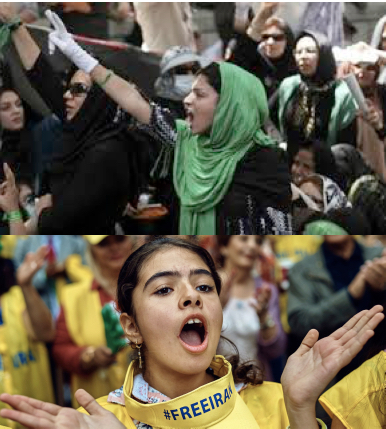
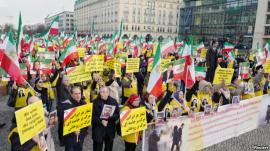
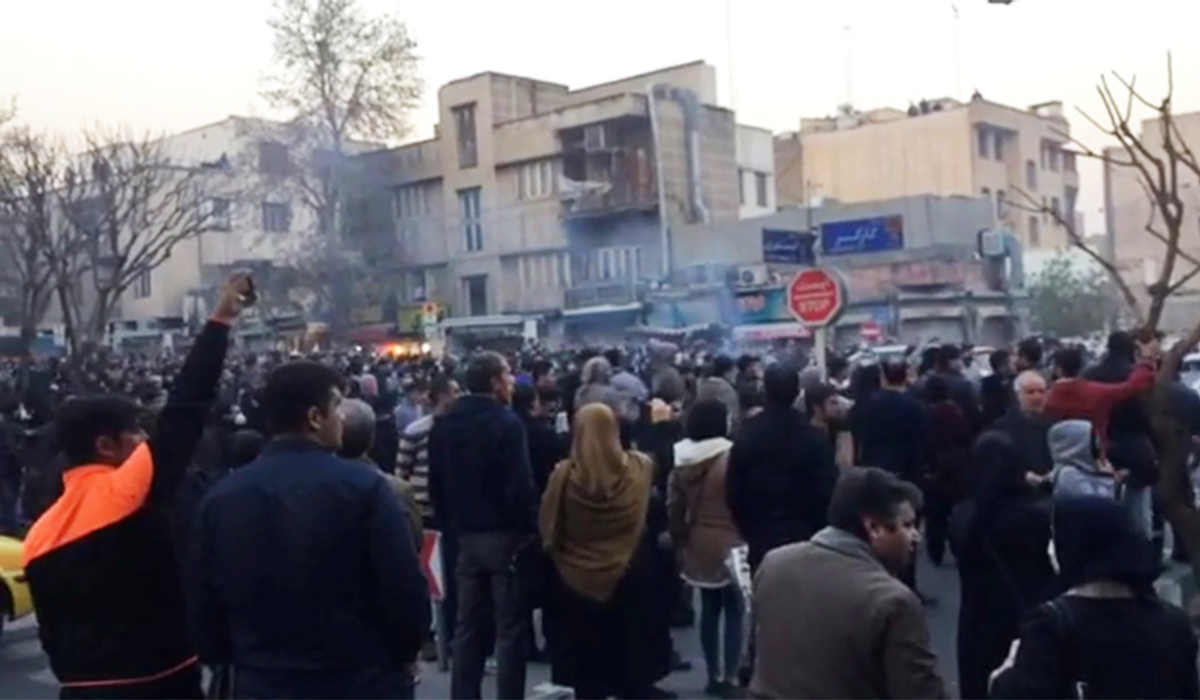
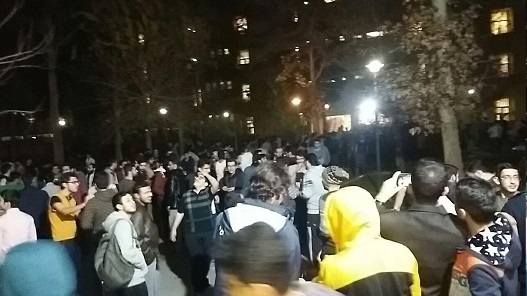
    Over the New Year, a wave of protests has erupted in Iran, as people in towns all over the country took to the streets to air their grievances.

    Many protests were about basic economics – unemployment or low pay, high prices for basic foodstuffs like eggs – but there have also been reports about political aspects to the protests.

    And because the protests have been led by ordinary Iranians (unlike protests led by students, whose language skills make them easier for some western journalists to report), they have proved more difficult to interpret, allowing people like President Trump to impose their own agenda.

    So what’s really going on in Iran, and what can you do about it?

    The emergence of these street protests is no surprise to trade unionists working on Iran. We have been reporting on the situation facing Iranian workers for years, and supporting the struggles waged by a small but important group of independent trade unions in the country. The International Trade Union Confederation has ranked Iran a ‘category five’ country – the worst level for a non-failed state – because there is no guarantee of workers’ rights.

    Despite western portrayals of the regime as an Islamic theocracy, the struggles of trade unionists in Iran show that the country is in fact more of a kleptocracy. Iran’s rulers represent people who want to loot the economy by refusing to pay decent wages or, in some cases, any wages at all.

    Workers’ protests over non-payment of wages – one of the causes of the current demonstrations – have been commonplace, although other workplace issues are also problematic. Workers often go without wages for as much as three months, and companies intimidate them, harass them and dismiss them for protesting.

    Trade unionists at the Haft Tapeh sugar refinery have not received wages for more than four months. And when worker Aube Aghaabi recently took the company to court after a serious workplace accident, management retaliated by firing him along with 50 relatives or workers with a similar last name. The factory is under constant surveillance by the security forces.

    Police violence is common. On 19 September 2017, workers protesting against non-payment of wages were attached with sticks in Arak. They were employed at Hepco and Azarwater companies and were arrested.

    The Revolutionary Guard which has thrown itself into attacking protesters is not just an Islamic militia, but a huge business organisation, defending not just its political influence, but also its economic position at the heart of the kleptocracy.

    There is a ban on independent trade unions in Iran. The only authorised national workers’ organisation is the Workers’ House, set up and backed by the authorities and employers. The 1990 Labour Law stipulates that an Islamic Labour Council can be established at any workplace, or alternatively a workers’ representative can be appointed. The Ministry of Labour and Social Affairs is obliged to form the Islamic Labour Councils in units which have more than 35 permanent employees.

    But the regime has reacted to the formation of independent trade unions by jailing its leaders, not for any actual crimes but for their expression of loyalty to each other, to other workers, rather than to the regime itself. Hence the use of ‘revolutionary’ rather than civil courts to convict trade unionists, and charges such as ‘enmity to god’ which usually means practicing and promoting solidarity rather than unquestioning loyalty to the regime itself.

    Trade unionists have been arrested and given harsh prison sentences on trumped-up charges, including ‘spreading propaganda against the system’, ‘gathering and colluding to commit crimes against national security’ and ‘forming a group with the purpose of disrupting national security’.

    Court verdicts against trade unionists reveal that Iran cites peaceful activities as ‘evidence’ of ‘acts against national security’ and ’anti-revolutionary propaganda’. These activities include organising peaceful gatherings, attending peaceful protests against low wages, receiving invitations to international meetings, or simply meeting with international trade union figures.

    Trade unionists in jail

    One of the first protests in Iran this season was not reported by the global media. It was a protest rally on Boxing Day outside the Ministry of Labour in Tehran, to address the deteriorating health conditions of Reza Shahabi, the jailed Treasurer of the Syndicate of Workers of Tehran and Suburbs Bus Company.

    The gathering was brutally attacked by security forces and 51 people, including many women such as Robabeh Rezaee, Reza’s wife, were arrested and later released. Others were hospitalised. Earlier, on 22 September 2017, members of the Tehran bus union undertook peaceful actions in solidarity with Reza. Actions included flashing headlights and slowing down their vehicles. In response, several vehicles were seized and one worker was detained for distributing pamphlets.

    Reza is just one of the trade unionists we have been supporting for years. He was imprisoned in 2010 on charges of ‘propaganda against the regime and conspiracy against national security’. After spending four years in prison, and after solidarity campaigns around the world, Shahabi was released on medical leave on 6 October 2014.

    On November 2016, Shahabi began to face pressure to return to prison to complete his sentence (initially for a further three months then extended unilaterally by the prosecution for five months). On 9 August 2017 Shahabi was forced to return to prison. He started a hunger strike to protest against his unjust imprisonment, and suspended it after 49 days, on 27 September 2017 after receiving promises about improvements to his conditions. The Boxing Day protest resulted from a failure to honour those commitments. He is believed to have suffered a stroke in the last few weeks.

    Another jailed trade union leader is Esmail Abdi, a Maths teacher from the Iranian Teacher Trade Association. He was sentenced to six years in jail on false charges in October 2016 after organising peaceful protests. On 30 April 2017, Abdi started a hunger strike to protest against the continued, unlawful repression. After 38 days of hunger strike he was transferred to hospital for two days, then returned again to prison. He was released on a bail in June but rearrested on 27 July 2017.

    On 1 November, security forces went to Alireza Saghafi’s house to arrest him on a 3 years imprisonment verdict for organizing May Day gathering in Laleh Park on International Labour Day 2009. Around 150 workers and labour rights activist were arrested on May Day 2009.

    And the regime continues to attack leaders of Reza Shahabi’s bus workers’ union. Ebrahim Madadi, vice-president, was sentenced to five years and three months in August 2016. He been summoned to appear at Branch 36 of the Revolutionary Court’s Appeals Court of the Islamic Revolutionary court on 3 December 2017.

    And Davoud Razavi, a member of the board of directors of the union, was sentenced to five years in prison in February 2016.  He appeared in the Appeals Court of the Islamic Revolutionary court on 4 November 2017, without the presence of his lawyer.

    But what can we do?

    First, of course, we can reject the crocodile tears of those like President Trump whose tweets about the Iranian masses struggling for freedom mask an agenda of external interference in the country. He still wants to unstitch the deal over Iran’s nuclear ambitions put together by the EU which have led to the lifting of sanctions on Iran.

    Iranian workers opposed to the current regime are rightly also opposed to the intervention of outsiders. They know that opposing such interference would be the regime’s best defence against internal calls for democracy and workers’ rights.

    Instead, we can show practical solidarity with those Iranians who are and have been calling for a change in the rules governing Iran. That means backing the independent trade unionists who are suffering state repression for their views and activities.

    Until recently, Mahmoud Salehi would have been on the list of jailed trade unionists above. But, partly as a result of international trade union campaigns, he was released from jail on 23 November 2017.Mahmoud has spent several periods in prison for over a decade because of their legitimate and peaceful activities as trade union activists and human rights defenders. He is the spokesperson for the Organisational Committee to Establish Trade Unions, representing bakery workers in Saqez.

    He was originally arrested after a peaceful demonstration to celebrate May Day 2004. He was sentenced to five years’ imprisonment and three years’ internal exile in the city of Ghorveh, Kordestan. At his trial, the prosecutor reportedly cited his trade union activities as evidence against him, and referred to a meeting he had held with officials from international trade unions shortly before the May Day demonstrations.

    He has been in and out of jail ever since, becoming an Amnesty International prisoner of conscience along the way. But as his recent release shows, solidarity campaigns can work.

    So here are some actions you can take today

    Esmail Abdi has become the latest Iranian trade unionist prisoner of conscience who is the subject of an Amnesty International campaign with global union support. You can craft your own message or simply sign up to the Amnesty call for his conviction to be quashed.

    The global food workers’ union IUF is campaigning to help the Haft Tapeh sugar refinery workers mentioned above. You can join their campaign to call on the authorities to ensure that all current and retired workers are paid the wages they are due and that all charges against workers protesting wage arrears be dropped.

    And closer to home, the Iranian regime is not just attacking workers in Iran. One of the best sources of information about what is currently going on in Iran comes from the BBC Persian staff – members of our own National Union of Journalists – who are facing reprisals for their work, including asset freezes and blocks on international transactions and the harassment of their families in Iran. See the NUJ website for updates and ways to back the campaign.

    And you can keep up to date on what’s going on in Iran – with media reports from the BBC, and with trade union reports on LabourStart.

    Originally posted at the Trade Union Congress (UK) website.

  • To The People of the World

    Image

    Since Thursday December 28 the Iranian people have engaged in extensive protests against the government of religious despotism in Iran. These protests have continued in full force in tens of Iranian cities, from north to south and from east to west of the country. The protests started with slogans against poverty, rising prices and unemployment, and in no time attacked the entire Islamic Republic as the prime destroyer of people’s lives.

    Skirmishes have occurred between government forces and the protesting people on the third day of these protests and several people have been killed and wounded in the city of Doroud in Lorestan province as a result of shooting by the police. The protesting people have responded to such violent acts by attacking centres of government suppression and by setting fire to the pictures of Khomeini and Khamenei as symbols of the system, and by shouting slogans against Khamenei and Rouhani and the government and it two factions as a whole.

    The fundamental truth is that the Iranian people do not want the Islamic Republic, and are screaming this in these protests through slogans such as “Down with the Islamic Republic!”, “Death to Khamenei and Rouhani!”, “Death to the dictator!” and, “Bread, jobs, freedom!” Various ranks of the people who have had enough of economic pressures and political and religious injustice, and women who have been deprived of their most basic rights, are participating in these demonstrations. These protests are the rightful response to thirty nine years of deprivation, disenfranchisement, poverty, disrespect and execution and torture. The people want to topple this government and establish a non-religious, free and secular state that would guarantee the welfare of the people and equal rights for women, and commit itself to all political and civil rights of the citizens.

    The active participation of women in these demonstrations is an important and proud aspect of these protests. Women were also in the forefront of the protests to challenge the government of sexual apartheid in the 2009 uprising of millions of Iranians. One day before the start of the recent protests in Iran a young woman in Enghelab Avenue in the centre of Tehran, in protest at the compulsory veil, took her headscarf off and waved it in the air as a banner. And now, the supporters of women’s rights have called on women to discard their head cover as symbols of their disenfranchisement.

    We call on you to support the just protests of the courageous men and women in Iran. Show your solidarity by participating in the gatherings that will be organised in various cities in support of the struggle of the Iranian people. Put pressure on European governments to desist from making concessions to the Islamic Republic, cut off their diplomatic ties with this government and shut down their embassies; to demand the release of political prisoners and those arrested in the recent gatherings, and to condemn the violent reaction of the Islamic government to the protestors. The Islamic Republic is an important bastion of the reactionary and terrorist movement of Political Islam. Its overthrow in Iran would, within a short period of time, shorten the lifespan of this vicious movement elsewhere in the world. The Iranian people deserve your support throughout the world.

    Worker-communist Party of Iran

    December 31, 2017

    Originally posted at the Worker-communist Party of Iran website.

  • On the One Hundredth Anniversary of Two Revolutions: Russia and Georgia, Bolshevism or Menshevism

    Image

    Eric Lee. The Experiment: Georgia’s Forgotten Revolution, 1918-1921. London: Zed Books, 2017. 259 pages. Timeline. Notes. Index. (For further information see: http://www.ericlee.info/theexperiment/)

    In his new book The Experiment: Georgia’s Forgtten Revolution, 1918-1921 the journalist and historian Eric Lee does two things. First, he tells the little known and complicated story of the Georgian Revolution and the short-lived independent state that it created.

    Second, Lee uses the Georgian experience of those years to argue for the superiority of its Menshevik Social Democratic government over the Bolshevik or, later, Communist government of Soviet Russia. Lee argues that the Georgian Menshevik government was more both democratic and therefore more genuinely socialist than the Communist government of Russia. While Lee, who has been writing about this subject since 1987, does an admirable job of telling the story of the Georgian revolution, and does so in a highly readable and engaging fashion, I find his arguments for the superiority of Menshevism unconvincing and, in fact, the evidence he provides out of a scrupulous adherence to the facts often undermines the case he wishes to make.

    The Background

    Georgia, which had voluntarily become a Russian protectorate in 1783, had started by 1801 to become absorbed by the Tsarist Empire. Without a doubt Georgians became an oppressed national minority within the Russian “prison house of nations,” as it was often called. The circumstances and events leading to the collapse of the Tsarist Russian empire are well known: the authoritarian government, the country’s backwardness, the tremendous economic and social inequality, the country’s failures in World War I, and then the February Revolution of 1917. All of that made possible the revolutions in both Russia and in what had been the imperial province of Georgia. In Russia, including Georgia, the elections to the Constituent Assembly were held and the Menshevik, or more moderate faction, of the Russian Social Democrats (for some years actually an independent party) was victorious in Georgia.

    In Russia, however, the Bolshevik faction, also now an independent party, overthrew the provisional government, thrust power on to the soviets or councils of workers, peasants, and soldiers, and then dispersed the new elected Constituent Assembly. The Bolsheviks would have been the second most important party (24 percent) in the Constituent Assembly after the Social Revolutionary Party (40 percent), while support for the Mensheviks throughout the former empire as a whole was quite small (less than 3 percent). But the Bolsheviks overthrew the Constituent Assembly arguing that the soviets, where they had a majority, represented a more democratic form of organization that empowered the laboring classes. Vladimir Lenin, head of the new government of soviets in which the Bolsheviks had won a majority, declared that Soviet Russia was beginning the construction of socialism. The Georgian Mensheviks rejected the Bolsheviks as usurpers who had carried out a coup d’état in Russia and established a dictatorship of their party. This view strengthened their determination to go on their own independent course.

    As the Tsarist regime collapsed, the Ottoman Empire moved into Georgia, while at the same time the Georgians, Armenians, and Azerbaijanis formed the short-lived Transcaucasian Democratic Federative Republic led by the Menshevik Nikolay Chkheidze. The federal state lasted only a few months and on May 26, 1918 Georgia declared independence; it held elections for a Constituent Assembly, in which the Mensheviks won the majority, with the party’s leader Noe Zhordania becoming prime minister. It was in this context of war and revolution that, under the leadership of the Mensheviks, Georgia convoked its own Constituent Assembly, established its own military, and began to govern along the lines advocated historically by European Social Democracy.

    The Georgian Ordeal

    The Georgian project was fraught with difficulties and surrounded by dangers. First, Georgia was a small, backward, agricultural nation located between two much larger nations: the Ottoman Empire (later Turkey) and Imperial Russia (later Soviet Russia). Second, as World War I ended and Russia’s control collapsed, the other great powers, first the Ottoman Empire, next Germany, and then Great Britain attempted to take control of Georgia. Third, Georgia was part of the Caucasus region that included the people of Armenia and Azerbaijan, as well as smaller groups of Ossetians and Abkhazians, each of which had their own national aspirations. Attempts to create a transcaucasian federation failed both because of ethnic rivalry and great power maneuvering, including by Soviet Russia. All of this meant that the Mensheviks, like the Bolsheviks, would attempt to create a nation in the midst of virtually continuous peasant rebellion, ethnic uprisings, and international warfare.

    Who were these Mensheviks who aspired to lead a national revolution in Georgia? Who were their leaders? What was their social base? And what was their program? Unlike European Social Democratic Parties, which were almost always based on the labor unions, the Georgian Menshevik leaders, as Lee explains, were upper or middle class and mostly intellectuals. He quotes one historian who describes them as “former nobles, merchants, lawyers, graduates of Church seminaries and children of priests.” The leading German Social Democrat Karl Kautsky, a friend of the Georgian Mensheviks, enumerated the occupations of the 102 Mensheviks in parliament: “thirty-two workers, the rest intellectuals: twenty teachers, fourteen journalists, thirteen lawyers, seven doctors, three engineers and thirteen officials.” (p.  114) The Mensheviks’ petty-bourgeois leadership had, however, established strong ties to the labor unions and to the peasantry, giving their party the power to shape the national political agenda.

    Like other Social Democrats, the Mensheviks believed that a workers’ socialist revolution could only take place once capitalism and bourgeois democracy had been established. That then was their program: the establishment of capitalism and democracy. But just as had happened in Russia, the revolution created both a parliament and a soviet, and consequently a contest between bourgeois democracy and workers power. While Lee suggests that no dual power existed in Georgia because the Mensheviks coordinated an alliance between the parliament and the soviet, other historians disagree. Ronald Grigor Suny argues that the Bolsheviks had a following both among the soldiers and among the Russian workers in Georgia, and that the Bolshevik presence tended to grow and become more significant.[i] Be that as it may, the Georgian Constituent Assembly led by the Mensheviks did become dominant and stood as a bulwark against soviet power. The Menshevik leader Noe Zhordania stated at the time, “The present revolution in its content is not the affair of some class; the proletariat and the bourgeoisie are together directing the affairs of the revolution.” (p. 35). As Lee writes, this was classic Menshevism, classic social democracy.

    The Georgian Mensheviks’ social democratic program included the establishment of a republic, the carrying out of an agrarian reform that would distribute land to the peasantry, recognition of the labor unions, and universal suffrage for both men and women. Under the circumstances much of this program was more aspirational than realizable, though they did briefly make good on a good deal of it. Land was taken from large landowners without compensation and then sold to peasants, but the nobility held on to much of its land and remained intact as a social class. Zhordania explained to Ethel Snowden of the British Labour Party (she was the wife of Philip Snowden, a Labour Party leader), that the agrarian reform “was for all alike, the rich as well as the poor, and those who had more must give to those who have none” (p. 179). The Mensheviks did not nationalize significant private property, but they encouraged the creation of cooperatives. The Mensheviks called on the unions to produce more in order develop the country economically and were largely successful in winning the workers’ support, even though the coal and manganese mines and other industries remained in private hands.

    The Georgians Mensheviks, while fighting against domination by Turkey or Soviet Russia, were nationalists who at the same time fought to dominate the other ethnic groups in the Caucasus, leading to wars or minor conflicts, not only with Armenia but also Abkhazia, Adjara, and Ossetia. They did better with the Jews who had no territorial ambitions, though they kept a Zionist party out of parliament. As the author concedes, the Georgians became a minor imperial power in their region, unwilling to concede independence to the national minorities and dealing violently with them when they rebelled. As Lee writes, the Georgians relations with the other ethnic groups in and around their republic constituted the Mensheviks’ Achilles heel, making it impossible for them to establish the transcaucasian unity that might have provided the political basis for military resistance to their enemies.

    More important, from the beginning, the Georgian Mensheviks faced a decision: support the Bolsheviks in Russia or to ally with one or another of the imperial powers that were striving to crush Bolshevism? Leading a national revolution in a small country and seeking to maintain their independence from Turkey and from Soviet Russia, they sought an arrangement first with the German Imperial government and then with the British Empire, both of which were interested in the resources of the Caucasus: the oil field of Baku (today the capital of Azerbaijan) located on the Caspian sea and in the manganese mines in Chiatura and other areas of western Georgia. First the Germans, whom the Mensheviks preferred, and then the British—both of which expressed a willingness to protect Georgia from foreign intervention—intervened, carrying out a military occupations of Georgia and other parts of the Caucasus as they took control of the mines and oil. In his conclusion, Lee writes, “By 1921 the Georgians had demonstrated an over-reliance on diplomacy, in particular regarding the great powers, as part of their survival strategy” (p. 234). This is understatement indeed. In allying with one and then another of other imperial powers, the Mensheviks were, of course, simply repeating the disastrous history of the complicity of Social Democracy in the World War. They stood with imperialism against the attempt in Russia to create a socialist society with the aid of European workers’ revolutions.

    Stalin and Georgia

    While Lee generally takes the high road and writes his history and makes his argument for Menshevism from the facts, even facts that undermine his case, he does occasionally disappoint us. For example, he spends two and a half pages discussing whether or not Stalin had been a Tsarist police agent, an accusation which, he concedes, historians have rejected. This should have been a sentence and a footnote, not a textual discussion. Lee’s prejudices, generally subdued, do nevertheless intrude at various points. When Mensheviks lead peasant revolts, they are providing leadership, but when Bolsheviks do so, they are manipulative. When the Bolsheviks organize the soldiers, they are preying upon their exhaustion and bitterness, which Mensheviks presumably did not do. When the Bolsheviks repress the Mensheviks, it is unjust; but when the Mensheviks repress the Bolsheviks it is not only acceptable but in fact right do to so, because the Bolsheviks represent a foreign power and—note that we are talking about the period from 1918 to 1921 here—a totalitarian system. While the Soviet Union did become a totalitarian state, it was not yet such a regime in the period of 1918-1921.

    Lee has to be commended for quoting extensively from Trotsky’s critiques of the Georgian Mensheviks, even though he disagrees with the politics. And while he condemns the Soviet invasion and conquest of Georgia in 1921 as an expression of Communist totalitarianism, Lee points out that Soviet attack on Georgia was not initiated and carried out by Soviet leaders; Lenin was by then “sick and inactive” while Leon Trotsky, the head of the Red Army, was on an inspection tour in the Urals. It was Joseph Stalin, himself a Georgian but utterly unsympathetic to both the Mensheviks and Georgian aspirations for independence, who decided to invade, organizing an internal uprising and calling it a civil war in order to justify the military invasion. Lee concedes that “[i]n Moscow, the Bolshevik leaders themselves were also late to learn about what was happening in Georgia” (p. 196). Lenin and Trotsky, presented with a fait accompli, were both surprised and angry, but because the intervention was being justified by Stalin as support for Communists in a civil war, they did not act to stop if. Following a five week war, Georgia had become a Soviet Republic led by the Georgian Communist Party and part of what would become the Soviet Union.

    One wishes that Lee had continued his book through 1922 in order to deal with the “Georgian affair;” that is, the conflict between Stalin and Lenin over the relationship between Soviet Georgia and the Soviet Union. The Georgian affair, which is discussed in detail in Moshe Lewin’s Lenin’s Last Struggle (1968), refers to Stalin’s attempt to thwart the Georgian Communist Party’s aspirations for national autonomy within the new Soviet Union, established in 1922. Lenin, who was a genuine advocate of the right to self-determination, though he was quite ill, opposed Stalin. A discussion of the Georgian affair in Lee’s book would have demonstrated the difference between Lenin and Stalin on the national question, and as Lewin makes clear would have shown that these moments of Lenin’s “last struggle” represented the beginnings of Stalinism and the setting in place of the foundation what indeed became a totalitarian system. In my view, the Russian Revolution did eventually lead to a bureaucratic counter-revolution and totalitarianism, but that did not begin until the late 1920s and was not complete until a decade later.

    Lee’s The Experiment is both a good read and basically a good history, though in my view he fails at his defense of Menshevism. We should know more about the Georgian experiment. And at this moment, as we are watching the Kurdish and Catalan struggles for independence, thinking about the Georgian case might make us more sensitive to the many issues involved in the world’s many questions of ethnic or national autonomy or independence.

    Thanks to Eric Blanc for his suggestion that I read the Ronald Grigor Suny article. – DL


    [i] Ronald Grigor Suny, “Social Democrats in Power: Menshevik Georgia and the Russian Civil War,” in: Diane P. Koenker, William G. Rosenberg, and Ronald Girgor Suny, Party, State, and Society in the Russian Civil War (Bloomington: Indiana University Press, 1989), pp. 324-48.


  • Hugo Blanco: The Future Is Indigenous

    Image

    On a gray Saturday afternoon in Lima, Peru, this past April, I received a phone call from Hugo Blanco, veteran guerilla and survivor of multiple death sentences. “You wanted to talk?” he asked. “Come over now.” An hour later, after a ride through the city’s torturous streets, I was in the plaza in front of his house, an unpretentious single-level in a middle-class neighborhood north of the colonial center. I knocked and collected myself; I hadn’t actually expected him to respond to my request.

    Blanco is a peer of the Marxist Latin American revolutionaries Fidel Castro and Che Guevara (he and Guevara were on opposite sides of a few debates). In the early 1960s, he organized peasant unions to seize land from feudal-style hacienda owners in the central Andean sierra. He was imprisoned for years by the Peruvian government, charged with the murder of a policeman who was killed during the struggles (Blanco has denied the charge). While in prison, he wrote Land or Death, a book that proposed how to build a communist insurgency on the back of land reform efforts in the Andes. His radical ideas earned him death threats from many quarters, and he spent years in exile in Chile, Sweden, and Mexico. In recent years, he’s been able to return to Peru.

    What drew me to Blanco was not so much his insurgent past as his activist present. Spurred by the global environmental crisis and the encroachment of private industry on native-held land—a pattern that played out recently in the confrontations in the US at Standing Rock—Blanco has become an advocate for indigenous movements across the world.

    Blanco grew up in the Cusco region of Peru, speaking the indigenous language, Quechua. In 2007, he founded the periodical Lucha Indígena (Indigenous Struggle), which covers the political and economic forces that conflict with indigenous groups. He continues to trumpet the successful ways in which indigenous communities have countered global neoliberal forces that threaten the environment. “The indigenous movement is in the vanguard,” Blanco told the journal Sin Permiso. “[I]t’s the most advanced sector in the struggle against the system and in the construction of an alternative organization of society.”

    Now, at eighty-three years old, Blanco told me that he doesn’t get out much anymore, even though he had just returned from a month-long trip to Mexico to visit anti-mining activists.His home was sparsely decorated, filled with old books and magazines; his manner was low-key and inviting. We sat alone at his dining room table. In conversation, he is polite but direct, anchoring his ideas with anecdotes culled from years of travel and exile.

    The era of Latin American Marxist insurgency may seem distant now, but Blanco sees connections to the issues of today. During our discussion, in Spanish, he spoke passionately about Trump, global warming, nature rights, and the significance of indigenous movements in today’s global political climate.

    —Ted Hamilton for Guernica

    Guernica: For years you’ve focused your efforts on wealth distribution and social justice. Why is climate change a pressing issue for you now?

    Hugo Blanco: I’ve always fought for social equality. But now there’s a more important problem: the survival of my species. One hundred more years of rule by transnational companies and they’re going to exterminate the human species as they’ve exterminated other species.

    The objective of these large transnational companies is to make the greatest amount of money possible in the shortest time possible. To this end they attack nature. They use technological and scientific advances with this objective, including in the United States, where fracking poisons the water that people have to drink. Governments, to a greater or lesser degree, also represent the interests of international companies. Even the progressive ones capitulate to them.

    Guernica: You’ve said that indigenous groups can play an important role in combating global warming. How so?

    Hugo Blanco: These days the attack on nature is strong, so there are more people defending ecosystems. And ecologists have respect for the indigenous because they defend nature, and give less importance to things like money. I’m a Quechua indigenous person, and we have a principle of love and the worship of nature, which in Quechua we callPachamama, or Mother Nature. But there are indigenous people all over the world in Oceania, in Africa, in Asia, and in the north of Sweden and Finland. And the characteristics of indigenous peoples are that they have a great love for nature, solidarity, and collective rather than individual mandates.

    For example, there is a story of an anthropologist who was working with indigenous children in South Africa. He put some candies and fruit in a tree and he told the children, “Run, and the first one to get there gets everything.” The children ran there holding hands and split everything among themselves. “Why are you so silly? I said the first one to get there gets everything.” And they answered him: “If there were one of us who was left without candy or fruit, we’d all suffer. I exist because you exist.”

    The faculty members at a university in Cusco who study agronomy have learned that when they go to the agricultural fairs of the campesinos [peasants], they shouldn’t give prizes to the person who makes the biggest potato, or the largest quantity of potatoes, but instead to whomever produces the most varieties, because the indigenous think that’s more important. And when you ask, “What do you produce on your land?” they say, “Everything,” because they’ve got avocado next to the river, all the way up to the potato at the peaks.

    There are certain mushrooms that only appear during the rainy season in Peru. And there was a campesina selling little mountains of them in the Cusco market. I told her, “I’ll buy all of them without asking for a discount,” which was a good deal for her, because usually you pay less for more quantity. But she told me, “No. If I sell you all of them, what am I going to sell everyone else?” Selling wasn’t just business, but a social relationship.

    I cite these examples to show that there is something to being “indigenous.” Some people call us indigenous people “primitives,” and they’re right. Because we preserve the primitive organization that all of society once had, which is horizontal. They call us “savages,” and I think they’re right there, too, because the savage is the one who’s not domesticated. The condor is a wild animal, but the rooster is domesticated. I’d rather be a condor than a rooster.

    Guernica: Is it possible to harness that type of collective power on an international scale?

    Hugo Blanco: I’m for the idea that the global population self-governs. It’s the only salvation against global warming and against the destruction of nature. For that reason, indigenous peoples have more esteem than ever.

    There is a philosophical principle that Marx got from Hegel. First is the affirmation, which is the thesis; then there’s the negation, which is the antithesis; then there’s the synthesis, which brings back the thesis and incorporates some of the elements of the antithesis. The thesis is primitive society: horizontal, not hierarchical. After came [the antithesis], civilization: caste systems, and in Europe vertical classes, led by those who command and who rule to their own benefit. And the synthesis is the resurrection of the thesis, or once again horizontal society, enriching it with some of the elements of the antithesis, or all the advances of society that have not put the survival of the species at risk. I think we need to arrive at this synthesis. And we’ll be there when all of society governs.

    I don’t believe in leaders or caudillos [strongmen] or managers. But I think that what we need to push forward is the movement for collectivity. That’s what I believe in: power from below. And that organized society can be like that.

    Guernica: Can you give me some examples?

    Hugo Blanco: I’ve seen it in Limatambo, a district of campesinos near Cusco, in Mexico, and in Greece. In Limatambo, the campesinos asked, “Why are the mayors always the sons of thehacienda owners? Why can’t we nominate ourselves?” So they had a secret ballot, and they won their elections. But it wasn’t so that the individuals could govern. It was so that the community assemblies could govern. This is the mandate of the people, which is the same thing that the Zapatistas in Mexico have.

    The Zapatistas have three levels of government: the community, the municipality, and the region. Many thousands of indigenous people govern themselves democratically with the principle of “lead by obeying.” The people choose a group of women and men as governors, but they don’t choose a president or a secretary general; all those chosen have the same rank. After a period of time they change out everyone, there’s no reelection, so everyone is at the head and there’s no indispensable person. When there’s a very important question, they convene a general assembly so that the collective decides. No authority at any level gets a cent. They’re like farmers and each gets their ration. Drugs and alcohol are forbidden. I don’t know if you would call this socialism, anarchism, or communitarianism. Nor does it interest me.

    I liked what one comrade told me: “They elected me. If they’d elected me as a community manager, it wouldn’t have mattered, because then I could still cook for my husband and my kids. But they elected for the municipality. So what was I going to do? I had to travel. I had to teach my kids how to cook, and that was good, because now my sons’ wives can accept a post far away, and my sons know how to cook.” So they’re advancing.

    We were there [with the Zapatistas] and they were explaining how they feed themselves, how they take care of themselves, how they’ve brought back indigenous knowledge. But they haven’t rejected Western medicine, so they’ve gathered surgeons and doctors from other areas who taught them how to build and operate a clinic. And they also accept not just Zapatistas, but partidistas [people affiliated with political parties]. But the partidistas have to pay for their medicine—the Zapatistas are treated completely for free. And recently a Zapatista told me, “Well, in the clinics there are more partidistas than Zapatistas—because since we feed ourselves well, we don’t get sick.”

    There are also indigenous people in a town called Cherán, in Mexico, who chose to self-govern. One day, when there were municipal elections across Mexico, and parties came to do campaign propaganda in Cherán, the citizens said, No, we don’t want parties, we don’t accept any propaganda. And then they decided to elect somebody of their own choice, so they elected another governing council, also without general secretary or president who governed everything. And Mexican President Peña Nieto had to recognize them and say, “Well, since they’re an indigenous population, they have the right to follow their customs and traditions.” And so they have the municipal council, which has at its command the armed municipal guard protecting the frontier and the internal order.

    In Greece, I’ve seen that in face of the government austerity, there’s a rise in activity from the base. For example, the government abandoned the state television channel and in Thessaloniki the workers took it in their power and they interviewed me. Later, because they were closing clinics, health workers—nurses and doctors—met up and made clinics. There is also a publishing house in the hands of its workers. There are many restaurants in Athens that are in the hands of their workers. There is a cooperative that receives goods from the countryside and sells them, avoiding intermediaries. And I told them, “You’re doing here in the city what the Zapatistas are doing in the countryside: creating power.”

    So that’s it. The government of everyone. Not the government of one party, one person, or one leader.

    Guernica: Are indigenous groups the only groups well-suited to fight capitalist interests?

    Hugo Blanco: Of course not. You can see activism in the United States with the fight against the [Keystone] pipeline, where not just the indigenous but other defenders of the water came from all over the US. Of course, Trump has now ordered that they [build the pipeline]. But there is resistance. What’s more, I believe that the strongest part of the resistance has been the Women’s March. The greatest anti-Trump protest was the Women’s March. In Peru, the biggest march in the history of the country was the Ni Una Menos march in Lima, a women’s march. In Rosaria, Argentina, there was a march of women. In Poland, too, they’re fighting for their right to abortion. I think that women are an important part of the vanguard now.

    We’re constructing a new world here. Not only us, the fighters for social justice, but also those who work to produce ecological products, those who practice alternative medicine and alternative education, those who take over factories and become their own managers. All of them, too, are fighting for a new world.

    Guernica: An Indian court recently recognized the Ganges and Yamuna Rivers as having legal rights. The rights of nature also appear in the constitutions of Ecuador and Bolivia, and they’re considered important by many indigenous groups. What do you think of the idea?

    Hugo Blanco: We have to defend [nature rights] because we form part of nature.

    The New Zealand authorities have taken an important step in the defense of nature and humanity, which should be followed by other governments. The Whanganui River [on the North Island of New Zealand] is now a “legal person,” and as such it has rights and obligations under a pioneering agreement signed by the New Zealand Parliament. This means that the river, which has been venerated by the Maori people for a long time, will have the same rights as a person. The Maori Whanganui tribe has been fighting for about 150 years for the river, the third-largest in the country, to be recognized as an ancestor—that is, a living entity. And now the parliament has finally approved a law that recognizes it as such.

    Also, in 2014, Alberto Acosta [former minister of energy and mining in Ecuador] called for recognition of nature rights here in Lima. He said we’re not going to wait for the neoliberal governments to do this, because they’re never going to recognize them. And he organized a meeting for the defense of nature here in Lima.

    Guernica: What are your hopes for indigenous groups in the coming years?

    Hugo Blanco: There are indigenous struggles on all continents against the racist and colonial mentality and politics that defend the capitalist system. What’s been happening for twenty-three years in Chiapas, Mexico, in the Zapatista zone, makes me optimistic. I hear what the Zapatistas say: “Please don’t copy us. Everyone in their place and in their time will know how it’s done.”

  • The Workers of the World Do Need to Unite

    Image

    Mohsen Abdelmoumen: You have written a book about the city of Richmond, California, where you live, prefaced by Senator Bernie Sanders: Refinery Town: Big Oil, Big Money, and the Remaking of an American City. This book shows us the experience of this city that has won struggles such as raise the local minimum wage, defeat a casino development project, challenge home foreclosures and evictions, and seek fair taxation of Big Oil and Big Soda. Can we say that the Richmond experience should inspire progressive activists in other cities around the world?

    Steve Early: The struggle to revitalize and democratize Richmond, CA, a multi-racial, working class city of 110,000 near San Francisco, is part of a larger municipal reform trend in the U.S. This current emerged during a period of political deadlock at the state and federal level during the Obama Administration.

    Under Donald Trump, we’ve gone from bad to worse, forcing progressive city hall leaders to deploy the limited resources of local government to fight poverty, inequality, and environmental degradation because government at higher levels is failing to address such problems or, in the Trump era, making them worse.

    In other countries, there is a similar trend toward “going local”—for example, left-wing mayors and city council members have been elected in cities like Barcelona and Madrid, on a similar program of promoting direct citizen participation in municipal affairs.

    In electoral politics at the national level in the U.S., those with the most donor clout—what Bernie Sanders calls “the billionaire class”—are well positioned to win, whether their preferred presidential candidate comes in first or second.

    The longer-term success of current grassroots “resistance” to Trump depends on building a broader organizational base for the U.S. left in local politics, labor organizing, and social movement building. “What we need,” Sanders argues, “is a 50-state strategy, which engages people—young and working class people—to stand up and run for school board, to run for city council, and the state legislature, so government, at all levels, starts listening to ordinary people instead of campaign contributors.”

    “Taking over city hall in Richmond or any other city won’t, by itself, keep big money out of politics,” Sanders points out. “It can’t stop climate change, eliminate economic injustice and racism, or stop all law enforcement abuses. Addressing those problems requires broader movement building, national and global in scale.” But “rebel cities” are one key place where that movement building can develop and become stronger.

    According to you, doesn’t the fight against big capital pass today by local struggles against multinationals, banks, etc.? Isn’t there a need to reinvent the struggle?

    I think progressives today are not so much re-inventing this struggle as reviving a political tradition and organizing strategy more than a century old.

    Before World War I, we had a mass-based Socialist Party in our country that boasted nearly one hundred thousand dues paying members. It grew in part through labor militancy but also by challenging local business interests for control of city hall.

    Socialist mayors were elected in seventy-five cities in twenty-four states. Overall, about twelve hundred socialists served in public office and used their municipal positions to improve services for workers and the poor, including public housing, sanitation, and street repair. They also encroached on the private market by taking over local power and water companies and making them publicly owned utilities, some of which survive to this day.

    These left-wing gains were reversed when the U.S. government cracked down on socialists opposed to military conscription and US participation in the imperialist slaughterhouse of World War I.

    To curb radical influence at the local level, many cities, like Richmond, also switched to a city manager form of government. The number of elected, full-time mayors, whether socialist or not, was reduced throughout the nation. More city council members became part-time, were elected at large, citywide (rather than from their own working class neighborhoods) and, in office, were limited to setting general policies carried out by trained, business-oriented professionals.

    Only after the movements of the 1960s, did U.S. radicals begin regaining ground in local politics—first, in university towns like Berkeley and Santa Cruz, CA., Madison, Wisconsin, and Burlington, Vermont. Socialist Alternative city councilor Kshama Sawant in Seattle, Richmond’s two-term Green Mayor Gayle McLaughlin, black radical mayor Chokwe Antar in Jackson, Miss. and many others like them represent a more recent and larger wave of left-wing insurgents.

    What they all have in common today is a commitment to challenging corporate power—and the corporate Democrats and conservative Republicans who are its equally dutiful servants.

    From what I read about you, you advocate an original idea, namely to organize struggles at the local level, in particular by structuring the progressive forces at the city level, and then build a large national movement. For you, are local struggles necessary as a first step towards a general change?

    I don’t want to make too much of a virtue out of the momentary necessity of “municipalism.” One way that progressives in Richmond have responded to Trump’s election last Fall is by joining forces with like-minded former Bernie supporters in the post-Sanders campaign network known as Our Revolution (OR).

    In November 2016, Our Revolution helped raised thousands of dollars for the two city council candidates backed by the Richmond Progressive Alliance. Both won seats on the council, giving it a RPA “super-majority” of five out of seven members.

    If OR is going to achieve its full potential as a force for change inside or outside the Democratic Party, it will need two, three, many local groups like the RPA’s or the Vermont Progressive Party, the very successful third party formation in Vermont inspired by Sanders own career in the state.

    The RPA voted to formally affiliated with OR in January and is now doing outreach to other like-minded local groups in California. Richmond progressives know they have to become part of a broader progressive movement to defend past municipal gains and make real change at levels of government higher than Richmond city hall. So one founder of the RPA, former Richmond mayor Gayle McLaughlin is running for Lieutenant Governor of California as a progressive independent; vice-mayor Jovanka Beckles is campaigning, with RPA support, as a “corporate free” candidate for the state legislature.

    In your book The Civil Wars in US Labor: Birth of a New Workers’ Movement of Death Throes of the Old, you put your finger on the wound by showing the shortcomings of the American union movement which, instead of defending the interests of the workers, has lost itself in internal struggles which are prejudicial to the workers’ struggle. Can we say that we must reform or radically change the functioning of the American union movement?

    In the early 1950s, nearly of third of the U.S. workforce was unionized. Today, that’s down to less than 7% in private industry and 12% overall.

    Until recently, union militants here often made a distinction between “external organizing”—the process of recruiting workers currently lacking collective bargaining rights—and “internal organizing.” The latter refers to shop floor efforts among existing union members aimed at strengthening their collective agreements with employers through workplace mobilization activity, including strikes or other protests on the job.

    This distinction doesn’t exist, of course, in many other countries, like France, where union membership is voluntary, more fluid, and multiple unions compete and/or cooperate in the same workplace or enterprise. Building organizational strength in a workplace, new or old, where there is little or no union presence requires the same kind of one-on-one recruitment of co-workers, followed by displays of solidarity.

    In the U.S., as a result of mounting legal and political setbacks, virtually all labor organizations now face the same challenge as French unions. Throughout the country, right-wing forces have made it harder for unions to secure financial support from the 14.6 million workers they still represent in the private and public sector.  To survive, much less succeed, in this new workplace environment, unions must return to their roots and begin to function again like they did before passage of the 81-year old Wagner Act, the federal law enacted under the pressure of left-led industrial union organizing in the 1930s.

    One downside of the Wagner Act model was making unionization too much of an “all or nothing” phenomena; if an organized minority of workers tried to act collectively in an otherwise “non-union” workplace, management was not legally obliged to address their demands and, very often, unions provided little sustained backing for the shop-floor activity of non-dues payers.

    In addition, federal labor law in the U.S. greatly favors incumbent unions, which means it’s much too difficult for workers to switch from one union to another, if they are dissatisfied with their workplace representation and support. Once insulated from the threat of membership defection, U.S. union officials became much too free to ignore rank-and-file complaints and problems, while promoting, in some industries, labor-management “partnerships” of questionable value to workers.

    Doesn’t your essential book Save our Unions: Dispatches from A Movement in Distress call for a re-founding of the trade union movement for more combativeness and efficiency in order to defend the interests of the working class against big capital?

    There is a now nearly 40-year old network of labor activists in the US that has promoted such a “re-founding” through the vehicle of Labor Notes.

    Along with others from my union, I have been a longtime time Labor Notes supporter. It functions as an independent, rank-and-file oriented labor education project producing a monthly newsletter and holding local, regional, and national training sessions which promote greater union democracy and militancy to better defend the interests of workers against big capital.

    The next Labor Notes conference—attended in recent years by more than 2,000 trade unionists, from the U.S. and abroad—will be held in Chicago, on April 6 to 8. For more information, see here. There’s no better crowd to be part of, if you want to put “the movement back in the labor movement.”

    Embedded with Organised Labour: Journalistic Reflections on the Class War at Home goes over the history of the union movement in the USA and how it has been able to crystallize the struggles of the working class in the past. In your opinion, can we say that the labor movement must learn the lesson of its past experiences in order to be efficient? Is there a need to give a new impetus to the trade union movement?

    The increasingly defensive battles of U.S. workers suggest that a new model of union functioning is both possible and necessary for labor movement survival. As more unions come under attack, rank-and-file members are realizing they can’t just be passive consumers of union services. In workplaces lacking “union security” or formal collective bargaining, workers themselves are taking greater leadership and initiative, while depending far less on full-time officials and staff.

    Throughout the U.S., it will take far wider and more concerted worker mobilization for “organized labor” to remain “organized” without the state or federal legal protections of the past. In politics, as well as on the job, it’s time for new directions and less dependence on Democrats who have been largely useless in the fight against union busting and resulting open shop conditions.

    In Democratic presidential primary voting during the spring of 2016, many labor militants were among the 13 million Americans who cast their ballots for the most pro-worker member of the U.S. Congress and its only socialist—Senator Bernie Sanders from Vermont.

    Sanders left-wing electoral insurgency has attracted support from disillusioned Democrats, independents, and even some working class Republicans. By focusing attention on “billionaire class” domination of both major political parties, Sanders’ grassroots campaign fostered long-overdue debate and discussion among labor militants about the need for union transformation—in the workplace, the community, and politics too.

    The national network that some of us helped form to assist his campaign—known as “Labor for Bernie”—has morphed into a group called “Labor for Our Revolution.” In the six or seven national unions that backed Bernie and the far greater number of AFL-CIO affiliates that settled for Hillary Clinton, there is continuing questioning of labor’s past approach to politics.

    You have a long experience in the union movement, especially in the Communications Workers of America (CWA). What can you tell us about your experience with this organization?

    I’m proud to report that the union I’ve belonged to for 37 years was the largest in the U.S. to support Sanders for president. When I first went to work for CWA in 1980, it was not the type of union to endorse a Jewish socialist atheist, former anti-war activist who’s never been a Democrat.

    So that’s one sign of change within labor right there. It reflects, in CWA’s case, a broadening of the union’s membership based over the last four decades. What began as an enterprise-based union within the telephone industry—composed almost entirely of telecom workers—is now a far more diverse, amalgamated organization of private and public sector workers, white collar and blue collar employees, with members in manufacturing, the media, higher education, health care, and the airlines.

    That greater diversity has contributed to greater political pluralism and support for progressive politics.

    In your opinion, can we appeal for the establishment of a union front on the global level to counter global neoliberalism and imperialism?

    Globalization, corporate restructuring, deregulation or privatization, and myriad forms of outsourcing have created new workplace terrain that’s distinctly unfavorable for workers, in the U.S. and many other countries. Labor organizations, rooted in a single nation-state, have been forced to re-think their organizing and bargaining strategies, and how they’re structured.

    More have come to realize the importance of cross-border solidarity and international union ties. My own union, CWA has invested a lot of resources in sustaining relationships with like-minded labor organizations in Canada, Mexico, Germany, and other countries where we deal with common employers, like T-Mobile, the cellular phone service provider.

    The workers of the world do need to unite, as a famous 19th century radical economist once argued. And, fortunately, in the 21st century, we have a lot more tools for faster communication, better information, and closer coordination of union action on a cross-border basis. The challenge, of course, is making sure those linkages actually do involve workers themselves, as opposed to just the labor officialdom.

    Don’t you think that a corrupt union is the best ally of the ruling classes?

    In a country lacking any statutory entitlement to universal health insurance, pensions, vacations, or other paid time off, collective bargaining still makes a big difference in the lives of 16 million people. Union contracts spell out wages, employment conditions, “fringe benefits,” and a procedure for contesting unfair discipline; most non-union workers have nothing like it and powerful employers are free to dictate terms of employment, as they see fit. Or redefine the nature of employment, leaving millions of people mistreated and exploited as casualized labor in all its various forms.

    Whenever unions themselves are guilty of organizational misbehavior—particularly in the form of leadership involvement in financial corruption—that greatly undermines and discredits the idea that collective action is absolutely necessary for workplace improvements and improving working class living standards.

    So, in that sense, a corrupt union is an ally of the corporate ruling class in its never-ending fight to reduce union influence in the U.S.

    Don’t you believe that capitalist society and its mode of consumption only lead to the alienation of the dominated classes?

    I’m not much of a theorist but that formulation sounds right to me.

    Can humanity survive another capitalist century?

    I’m not a futurologist, but if I was, I would say the future does not look good, for planetary survival, after another capitalist century.

    Are not the reformers of the capitalist system sellers of the mirage and the dream? In your opinion, can the capitalist system be reformed?

    To save the planet from the devastating human and environmental impact of climate change is going to take more than “reform” of the system. There have always been lots of reasons—worker exploitation, imperialism, war, et al.—to replace capitalism with something better. Global warming, rising sea levels, extreme weather leading to drought, famine, fires, and/or flooding, plus animal species extinction, provide an over-arching rationale for fundamental economic change.

    You are both a man of action and a man of theory and your career is very rich and atypical: labor activist, journalist, author, lawyer, you serve on the editorial advisory committees for four labor-related publicationsLabor Notes, New Labor Forum, WorkingUSA and Social Policy, you are a member of the Richmond Progressive Alliance (RPA) in your city and you are involved in struggles within the local community. For you, as a modern leftist and trade unionist, is it a necessity to be at one and the same time on several fronts?

    In Richmond, as I describe in Refinery Town, there’s a lot of overlap and inter-connection between labor, community, and environmental issues—so it’s a good place to be remain involved in union solidarity, while becoming more active in local campaigns for environmental and economic justice.

    Originally posted at the American Herald Tribune.

  • Walter Benjamin and the Political Practices of the Alt-right

    Image

    The Work of Art in the Age of Mechanical Reproduction

    Walter Benjamin was one of the great analysts of liberal capitalism during a time when its days seemed numbered and fascism was ascendant across Europe. Much of his work is taken up with looking at how the cultural products and processes characteristic of a civilization are reflective of the inner psychic and spiritual tensions roiling beneath the surface of hegemonic ideologies.

    In his seminal 1936 essay “The Work Of Art in the Age of Mechanical Reproduction” Walter Benjamin discusses how works of art are created and reproduced in different era. He traces how works of art were once meticulously reproduced by craftsmen working under a master, and compares that to the modern world where art can be reproduced and disseminated with incredible rapidity.  Benjamin also discusses the impact that this has on society. Because art can now be reproduced and spread across the body politic with incredible speed, it has become and powerful tool for the maintenance of power structures. Those who have power in society can quickly and cheaply produce ideologically loaded aesthetic works, which can quickly be deployed as tools of distraction and propaganda. 

    But notably, Benjamin made another and far deeper point at the conclusion of his essay. Noting how the rise of reactionary fascism was in part dependent on the paradoxical use of the most powerfully modern technologies to deploy propaganda, he pondered what this said about the subjects of fascist regimes. His conclusion was quite striking. The capacity of modern societies to reproduce artistic materials had become so pronounced that in fascist countries it had produced a very new type of social organization. Fascism was essentially a society that had transformed itself into entertainment. The alienated masses of people were turned to self-distraction to prevent them from recognizing the insidious forces of exploitation that continued to efface their individuality. As he puts it in the Epilogue:

    “The growing proletarianization of modern man and the increasing formation of masses are two aspects of the same process. Fascism attempts to organize the newly created proletarian masses without affecting the property structure which the masses strive to eliminate. Fascism sees its salvation in giving these masses not their right, but instead a chance to express themselves. The masses have a right to change property relations; Fascism seeks to give them an expression while preserving property. The logical result of Fascism is the introduction of aesthetics into political life. The violation of the masses, whom Fascism, with its Führer cult, forces to their knees, has its counterpart in the violation of an apparatus which is pressed into the production of ritual values.”

    Benjamin’s essay was published in 1936 as the cinema was just cresting in its cultural influence. Films such as Triumph of the Will overtly deployed technology to produce a new aesthetics of distraction, most of which reached a pitch in the call for war and violence. Anticipating Stanley Kubrick’s black comedy Dr. Strangelove many years in the future, Benjamin suggests that we would so plunge into the distraction of our darkest impulses that even acts of wanton destruction and annihilation would increasingly be regarded as acceptable because they drew people out of themselves for a brief period of time.  The connection between such an aesthetics and support for an increasingly authoritarian and paranoid political culture isn’t hard to discern.  Moreover, as we shall see, it also plays an integral role in the formation of broader historical narratives which must also be analyzed and challenged.

    The Modern Aesthetics of Distraction and the Alt-Right          

    Benjamin’s endlessly provocative essay is a useful starting point for thinking about the modern aesthetics of distraction deployed by the alt-right and its various affiliates.  But while Benjamin is a useful place to start, we need to go beyond his analysis. We must examine how what is effectively post-modern conservatism uses the now exponentially more powerful technological tools of digital media and communications to disseminate its paranoid messages.

    The alt-right emerged as the product of complex conditions in society, but its first instantiations were online. Individuals felt increasingly alienated in a society which no longer conformed to their expectations, often dealing with disappointment at their inability to live up to the American Dream in a climate of economic decline. Moreover, they came to feel that the triumphalist historical narratives about American supremacy, often affiliated the ascendency of white protestant norms to the status of universal ideology, were increasingly being challenged. The psychic protection these alienated individuals felt by affiliating with this triumphalist historical narrative about American greatness was undercut by counter narratives about the persistence of past wrongs towards groups like women, African Americans, and the developing world more broadly.  These counter narratives were promulgated by seemingly alien groups within society who were simultaneously both all-pervasive and hegemonic, while also not embodying the traits of “real” Americans.

    As the historical narratives about American greatness were undercut, and the psychic defense it provided against alienation faded, many in the future alt-right turned to distraction to express their resentment. This took the form of a dizzying and growing array of right wing aesthetics whose primary purpose was no longer to present a clear and consistent political ideology.  Classical conservatism, while certainly preceding the alt-right, was at least concerned for present itself as an intellectually consistent system of thought. William F. Buckley’s snide pretensions shouldn’t distract from the fact that many took his unique blend of moralistic Protestantism, support for unbridled individualistic capitalism, and robust international interventionism, to be a genuinely plausible worldview. But the alt-right was never concerned with that. This is why, despite its apparent hatred of post-modernity, the alt-right is very much a post-modern movement. Its relativism and distrust of any “truth” but that which flows from the communications bubble is indicative of the conditions of its birth.

    Digital technologies, with their capacity to simultaneously open up new spaces for thought while enabling individuals to increasingly live within a communications bubble, meant that most alt-righters never needed to concern themselves with the intellectual salience of their ideology.  They could concern themselves increasingly with distraction; the most satisfying of which was often to undermine and stereotype all those they felt were responsible for their sense of alienation. Intellectuals, Women, LGBTQ individuals, Muslims, Democrats, Hollywood celebrities. Each was targeted in turn by memes, pod-casts, videos, fake news.  This was all designed to present a minimum of intellectual content in the most affective manner possible. In other words it was designed as ideological entertainment which played to the psychic desires of alt-righters to have their resentments stokes. 

    Of course many the alt-right could not give plausible reasons why these groups were dangerous.  The most offered was that these groups were taken as representative of everything that was holding back “real” Americans; an idealization drawn from stereotypes and clichés that never had much basis in reality.  But that is what Benjamin taught us long ago, and what is more clearly important than ever before. The aesthetics of distraction is designed for affect on the masses; it distracts feelings of resentment and anger towards reactionary actions rather than the critical evaluation of power.  In the immediacy of resentment one can temporarily efface the loneliness of alienation.  But once one steps beyond immediacy, the greater historical problems of an aesthetics of distraction become clear.

    The aesthetic tools of distraction do more than just provide an outlet for the resentments of the alienated. Though this is their day to day function, they serve another purpose. They allow the alt-right the opportunity to reconstruct an account of history which superficially redeems and resurrects the formerly triumphalist narrative.  “Make America Great Again” is a call to return to a triumphalist narrative by ridding the state of those whose mere presence increasingly challenges it by serving as a reminder of American sins past and present.  This also demonstrates the fundamental impotence of the alt-right, what Hannah Arendt might have called its “impotent bigness.” It wishes to redeem a triumphalist historical narrative by removing those who threaten its credibility.  But removing and attacking those same people one serves to reinforce their point about American shame. Few things demonstrate this better than the very election of Donald Trump; sending a trust fund sex-offender to the White House to stick it to those progressives who say rich white men tend to get ahead.

    Conclusion

    I will conclude by looking at another dimension of Benjamin’s work; that concerned with history as a whole and its potential redemption.  In his Theses on the Philosophy of History, Benjamin innovatively pushed against the idea of historical progress.  Unlike liberal narratives which parroted the inevitable triumph of world-wide capitalism, and even their Marxist counterparts who remained firmly committed to the utopian belief in the communist society to come, Benjamin presents us with a far more pessimistic image of the past as a chaos yet to be redeemed.

    “There is a painting by Klee called Angelus Novus. An angel is depicted there who looks as though he were about to distance himself from something which he is staring at. His eyes are opened wide, his mouth stands open and his wings are outstretched. The Angel of History must look just so. His face is turned towards the past. Where we see the appearance of a chain of events, he sees one single catastrophe, which unceasingly piles rubble on top of rubble and hurls it before his feet. He would like to pause for a moment so, to awaken the dead and to piece together what has been smashed. But a storm is blowing from Paradise, it has caught itself up in his wings and is so strong that the Angel can no longer close them. The storm drives him irresistibly into the future, to which his back is turned, while the rubble-heap before him grows sky-high. That which we call progress, is this storm.”

    Benjamin’s solution to the problem of historical progress as chaos is messianic; we can only redeem the broken history of the past by effacing its alienation in the present.  In doing so, we establish a present in which “splinters of messianic time” are shot through.  Accomplishing this means turning people from the aesthetics of distraction and to confrontation with the real sources of their alienation and the complex histories underpinning them.  We can start by demonstrating that as long as the alt-right attempts to redeem a false narrative of American greatness through embodying the must ugly characteristics found in America’s history, it is doomed to impotent failure. 


  • Right Hooks

    Image

    David Neiwart, Alt-Right: The Rise of the Radical Right in the Age of Trump. Verso Books, 2017.

    Think of this book as a basket of deplorables. It’s thick on illuminating descriptions of renascent white nationalists, gun-enamored militia poseurs, conspiracy-theory mongers, Ku Klux Klansmen and women, Christian Identitarians and proto-Nazis benefitting from and legitimized by the sordid presidency of Donald Trump. It’s thin on explaining why such phenomena persist or have arisen as political thuggery in 21st-century America.

    Journalist David Neiwert’s Alt-Right: The Rise of the Radical Right in the Age of Trump is certainly required reading. He’s a widely respected expert on the American far right, author of five previous books on the right and repression of immigrants, as well as a frequent guest on CNN and MSNBC and a contributor to the Washington Post. The book’s breadth of detail is exhaustive and almost singular in focusing on the racist far-right movement that has often been presumed dead, but got a jolt of growth hormones from the Trump campaign, who mainstreamed what Neiwert calls their “eliminationist rhetoric” as applied to immigrants, people of color and Jews.  Some even refer to Trump as “Glorious Leader,” language the author doesn’t harp on but that harkens back to the fuhrerprinzip, or notion of the leader as above all law. Neiwert also notes the munificent funding of far-right causes from wealthy grandees like the Coors family and the Koch brothers.

    Where Neiwert is at his best is in charting and quantifying the mainstreaming of white-nationalist ideas, where even Nazis were free to join and lead Tea Party efforts. Teabagger ideology was broadcast not just by lunatics like Alex Jones, obvious racists like David Duke and pervasive social-media trolls, but by seemingly respectable Fox News. The Oathkeepers, in effect a revived ’90s-style militia, could masquerade and be accepted as “just another community-watch organization.”

    Trump’s condemnation of “dangerous Mexicans” and his fancied immigrant crime wave won him unwavering support from white nationalists, including Nazi wannabe Andrew Anglin, who wrote on his website “The Daily Stormer” (named after a fanatical 1930s Nazi newspaper), “I urge all readers of this site to do whatever they can to make Donald Trump president.” (Luke O’Brien also ably profiles Anglin in the December 2017 Atlantic.) Peter Brimelow’s white-nationalist website, vdare.com followed suit, headlining “We Are All Donald Trump Now,” while Richard Spencer’s Radix Journal, in acknowledging it considered Trump “a troll,” claimed he was their troll. “We need someone who can break open public debate,” Spencer wrote. “The fact that Trump himself is part of this same farce is utterly irrelevant.”

    “White people are realizing they are becoming strangers in their own country and they do not have a major political voice speaking for them,” Rachel Pendergraft, a national organizer of the Knights Party of the Ku Klux Klan, told Neiwert. “Trump is one example of the alternative-right candidate [whom] Knights Party members and supporters have been looking for. And we feel that through continued grassroots mobilization, more candidates will arise who will speak out for white Christian America.”

    As Neiwert commented, “All the long-suppressed hatreds and resentments, all the deep anger and black fears about the nation and the changing shape of American society, came bubbling up and bursting into public view in predictably ugly ways. Trump’s rhetoric seemingly gave permission for the unleashing of an eliminationist flood.” Meanwhile, the right-wing media set the scene by “creating a self-affirming community.”

    Alt-Right: The Rise of the Radical Right in the Age of Trump is a thorough review. It’s not the first work to posit the connection between Trump and the mainstreaming of white nationalist movements; Neiwert and Sarah Posner anticipated some of the book’s revelations in an October 2016 article in Mother Jones, as did Andrew Marantz’s October 2017 New Yorker profile of fascist shock-jock and virulent Jew-hater Mike Enoch. But Neiwert’s book masterfully exposes so many of the interstices between Trump, the far-right nationalists and the toxic manipulators of social media, each feeding off the others.

    Illustration by Oliver Martinez.

    The book, however, never tries to give a theoretical explanation of why such banal ideas fester. Why, for example, does a movement so tied to Christian Identitarianism ignore Jesus’s key injunction that “what you do unto the least of them, you do unto me?” Why the fetishistic clinging to a “white” identity and a “white European” heritage? Neiwert does digress briefly to explore a useful distinction by the psychologist Robert Altmeyer between authoritarian “followers” and “dominators,” the former looking only for order and peace, while the latter lust for power. That might be the beginning of a useful discussion, but it would be aided by referring to some standard works on authoritarianism, such as Theodor Adorno’s The Authoritarian Personality and Wilhelm Reich’s The Mass Psychology of Fascism.

    For all its keen attention to right-wing movements—much of Neiwert’s sourcing is augmented by the excellent work of the Southern Poverty Law Center — the book is decidedly apolitical. It does not acknowledge a left-wing movement arising precisely as resistance to Trump and the far right. It rejects the idea of physical opposition to a mobilized far right, despite a proud leftist history of such resistance. Nor does it give credence to the idea that mainstream liberalism has failed, making great cultural strides since the 1970s but being beaten back politically and economically by international capital. Trump may be a false solution to a real problem, but Neiwert doesn’t acknowledge that capital, its depredations and its enablers in the two major parties are the cause of that problem.

    Neiwert’s only attempt at a political solution to an emboldened far right is for liberals — he makes no mention of a left — to talk nicely and persuasively to right-wing neighbors and associates, starting with family members at the Thanksgiving table. If only it were that simple.

    Originally posted at The Indypendent.

  • Alliance of Middle Eastern Socialists – Founding Statement of Principles

    ImageWe are an alliance of Middle Eastern socialists opposed to all the international and Middle Eastern regional imperialist powers and their wars, whether the U.S., Russia and China or Israel, Saudi Arabia, Iran and Turkey. We also oppose other authoritarian regimes such as Assad’s in Syria and El Sisi’s in Egypt as well as religious fundamentalism whether of ISIS, Al Qaeda, Hezbollah or the Muslim Brotherhood. Although the Muslim Brotherhood and Hezbollah consider themselves gradualists and oppose the Jihadism of Al Qaeda and ISIS, all of these organizations share the goal of establishing a state based on Shari’a Law and preserving the current capitalist order.

    We oppose capitalism, class divisions, patriarchy/sexism, racism, ethnic and religious prejudice and speak to the struggles of women, workers, oppressed nationalities such as Kurds and Palestinians, oppressed ethnic and religious minorities, and sexual minorities. We also oppose Islamophobia and anti-Semitism.

    We stand for socialism as a concept of human emancipation and an affirmative vision distinguished from the authoritarian regimes that called themselves “Communist.”

    The effort to create an Alliance of Middle Eastern Socialists, originally started in March 2016 as an Alliance of Syrian and Iranian Socialists with a trilingual website (English/Arabic/Persian) to help express the aspirations of “the Other Middle East” and to offer analyses of critical issues and new dialogues and bonds of solidarity between Syrians and Iranians opposed to their authoritarian regimes.

    Since the destinies of people are linked across borders, important developments in the region –some terrifying and some hopeful—have compelled the formation of a broader Alliance.

    *What was left of the Syrian revolution has been completely destroyed. The Assad regime, with the help of Iran and Russia has declared victory and is being recognized as a “legitimate” government despite the fact that it is responsible for the death of over 500,000 innocent people and the internal and external displacement of over 12 million or half of Syria’s population. One million people remain under siege by this regime and at least 100,000 political prisoners are facing daily torture and dying mostly in the Assad regime’s prisons.

    *The claim by many on the left that the Rojava project of Kurdish democratic confederalism in Northern Syria could continue in co-existence with the Assad regime, seems increasingly unsustainable as the Assad regime has stepped up its pressure on Kurdish areas ever since it was reassured of having crushed the Syrian revolution. At the same time, all regional and international states have refused to support the self-determination of the Kurdish people, in Syria, Iraq, Turkey and Iran. Turkey has increased its threats and interventions against Kurdish areas in Syria and continues to assault Kurdish areas in Turkey itself. The Israeli government supports the idea of an independent Iraqi Kurdistan for opportunistic reasons to find a new ally in the region against Iran.

    *Regionally, authoritarian regimes are engaging in more repressive campaigns and consolidating their forces against the interests of the popular classes. This drive can be seen in Saudi Arabia’s bloody war in Yemen; the Turkish government’s campaign of mass arrests and imprisonment of all opposition forces; and the Egyptian military government’s imposition of a level of repression that even exceeds that of the Mubarak regime before 2011. In the case of Egypt, some leftists supported the 2013 military coup against the Muslim Brotherhood government at the time. Instead of presenting a democratic and principled opposition to all forms of state and non-state repression, they sided with the new military government’s repression of the Muslim Brotherhood.

    *Two new coalitions, one consisting of Saudi Arabia and its allies, now including Israel, and the other consisting of Iran, Turkey, Qatar and their allies are vying for control of the region and its capital. Saudi Arabia and its allies count on the support which Donald Trump’s recent trip to the Middle East and a $110 billion U.S. arms contract with Saudi Arabia has offered them. Iran and its allies are counting on support from Russia. Russia and China have also found ways to benefit from helping both sides.

    *The new U.S. president Donald Trump and Israeli prime minister Benjamin Netanyahu are intensifying their war threats against Iran. While the Trump administration claims to be against the Assad regime, its imperialist intervention is in fact helping the Assad regime and further intensifying the bombing of innocent civilians in Syria, Iraq and Afghanistan, which began with the Bush and Obama administrations. Trump’s and Netanyahu’s call for “regime change” in Iran are for their own imperialist gains. Their campaign will only lead to war and the destruction of genuine progressive struggles inside Iran.

    * Israel’s colonialism, militarism, apartheid and racism is repressing and killing Palestinians in the West Bank, Gaza, East Jerusalem and what was Historic Palestine or “Palestinian territories of 1948.” The Occupation and militarization are also normalizing increasing class inequality, sexism and racism within Israel. Neither the two-state solution nor the secular one-state solution seems realizable given the Israeli occupation, Israel’s extreme right-wing leadership, and the alliance between Israel, Saudi Arabia and the U.S. which aims to destroy the Palestinian struggle for self-determination.

    Some hopeful developments however show that the desire for human emancipation has not been quelled in the region:

    *New and persistent labor protests in Iran are opposing the increasing poverty and horrible working conditions that the Iranian regime wants to hide in its effort to expand its imperialist intervention in Syria, Iraq, Lebanon and Yemen. Although the existing labor struggles are not directly connecting the impoverishment of the bulk of the population to Iran’s militarism and regional imperialism, they do offer a potential for a progressive mass movement for social justice.

    * Labor struggles and struggles for democratic rights continue in Egypt, Tunisia and Bahrain, despite increasing repression.

    *Feminist and LGBT struggles have expressed themselves in Turkey as part of the mass protests against the authoritarian and reactionary Erdogan regime which has aimed to create a virtual police state after the July 2016 coup attempt. In Egypt, feminist/human rights activists such as Mahienour El-Massry and LGBT activists fight for social justice despite imprisonment by the state. In Lebanon, women’s rights activists organized a campaign to repeal the “marry your rapist” law. In Iraq, women are fighting against a parliamentary amendment that aims to abolish women’s rights in family law. In Iran, imprisoned feminists such as Narges Mohammadi, Golrokh Ebrahimi Iraee and Kurdish women’s rights activist, Zeynab Jalalian continue to speak out for human rights.

    * Popular mobilization in the Moroccan Rif continued throughout 2017, has spread to several of the country’s towns, despite repression by security forces and the regime’s attempts to discredit the movement.

    * The Kurdish struggle for self-determination continues and needs to be defended. This struggle has taken diverse forms such as the call for independence, federalism, confederalism or the demand for the recognition of the Kurdish people as an entity with equal rights within a state. All socialists do not agree with the idea of an independent Kurdistan, and some have valid criticisms about various Kurdish parties for their authoritarian policies/practices and collaboration with various imperialist countries. However, critical solidarity with Kurdish parties and organizations that oppose capitalism/imperialism and defend women’s rights, secularism and the rights of other oppressed minorities is urgently needed.

    In the face of these developments, we have come together in an Alliance of Middle Eastern Socialists on the basis of the following goals.

    1.Opposition to capitalism, militarism, authoritarianism, imperialism, religious fundamentalism, patriarchy/sexism/heterosexism, racism, ethnic and religious prejudice.

    2. Developing connections and active forms of solidarity between labor, feminist, anti-racist, LGBT, student and environmental struggles in the Middle East region and internationally.

    3. Tackling the deep and historical problems of Middle Eastern socialism. The region has been so plagued by the politics of “the enemy of my enemy is my friend” that any effort to develop an affirmative vision of a humanist alternative to capitalism around universal concepts and goals has been missing. As a result, revolutionary or progressive movements that do emerge, most recently those that arose in 2011, have been destroyed by authoritarian capitalist systems, religious extremism and sectarianism, with the assistance of various regional and global imperialist forces.

    We have come together to address these issues in a collective way in a joint website and through joint conferences and other possible activities. We see this Alliance as a place for debate toward the aim of finding real solutions that are not trapped within the capitalist mindset. Those who wish to join us can contact us at info@allianceofmesocialists.org

    Signatories:

    Omar Abbas, Syrian student, U.S.A.

    Frieda Afary, producer of Iranian Progressives in Translation, U.S.A.

    Said Afshar, Iranian journalist, Europe

    Masud Amiri, Holland

    Leila Asadi, Student, U.S.A.

    Roya Assadpour, Iranian member of Swedish Left, Europe

    Joey Ayoub, Lebanese scholar and writer, Europe/Lebanon

    Bibi, Syrian artist and writer, Occupied Tongva, North America

    Sara Dehkordi, Lecturer in Political Science and activist at Manjanigh, Europe

    Joseph Daher, Swiss-Syrian academic & activist and creator of Syria Freedom Forever, Europe

    Walid Daou, Lebanon

    Mahtab Dehqan, Iranian sociologist and journalist, Europe

    Amin Doroudgar, Iranian scholar, translator and journalist, Europe

    Razan Ghazzawi, Syrian Palestinian scholar and activist, Europe

    Hushang Golab, Iranian Sociology graduate, writer and poet, Sweden

    Iranian jurist

    Latith Itmaiz, Writer and Journalist, Ramallah, Palestine

    Hamid Jahanbakhsh, Iranian journalist, Europe

    Idrees al-Jeddah, Lebanon

    Marwan El Khazen, Socialist Forum, Lebanon

    Amir Kianpour, Iranian philosophy scholar and journalist, Europe

    Farah Koubaissy, Researcher, Socialist Forum, Lebanon

    Rima Majed, Sociology professor, Lebanon

    Ghassan Makarem, Socialist Forum, Lebanon

    Nisreen Mazzawi, Anthropologist and Eco-Feminist activist, Palestine

    Fatemeh Mostufi, Iranian history scholar, Europe

    Nahid Misaghi, Iranian psychologist, U.S.A.

    Yasser Munif, Syrian sociology professor, U.S.A.

    Peshraw Mohammed, socialist leading activist from Socialist Center Review in Iraqi Kurdistan and Germany

    Hossayn Nedavash, Labor Activist, Iran

    Ahmad R., Syrian student, Europe

    Abdul Rahman Rasul, Kurdish author and journalist, France,

    Fouad Roueiha, Syrian Italian journalist, Europe

    Tareq Samman, Syrian activist

    Azadeh Shurmand, Iranian women’s studies scholar, Europe

    Socialist Forum, Lebanon

    Sina Zekavat, Anti War Committees in Solidarity with Struggles for Self-Determination, U.S.A.

    Women’s Rights Activist, Iran

    Originally posted by the Alliance of Middle Eastern Socialists.


  • US vs Free Syrian Army vs Jabhat al-Nusra (and ISIS)

    The US administration has annexed the Syrian conflict to its own war on terror. It has tried to impose its battle on Syrians so that they will abandon their own battle against the tyrannical discriminatory Assadist junta. … [but] the war on terror is centred around the state; it is a statist conception of the world order which strengthens states and weakens communities, political organizations, social movements, and individuals… In the record of this endless fight against terrorism there has not been a single success, and thus far three countries have been devastated over its course (Afghanistan, Iraq and Syria).”[1]

    – Yassin al-Haj Saleh, former Syrian Communist dissident who spent 16 years in Assad’s dungeons

    Introduction

    Image

    This article deals with a specific aspect of the US role in the Syrian conflict: its drive to co-opt the Free Syrian Army (FSA) into a proxy force to fight only the jihadist forces of Jabhat al-Nusra (now Jabhat Fatah al-Sham, or JFS) and the Islamic State (ISIS/Daesh), while giving up their fight against the Assad regime.

    This reality sharply contrasts with the comic-book view widely expressed in tabloid journals of the mainstream, left and right, that alleges the Syrian rebellion against the dictatorship of Bashar Assad is a conspiracy involving both the US, al-Qaida, the Gulf states, Turkey, Israel, George Soros and many others.

    In reality, the US and the al-Qaida spin-offs have been involved in Syria on opposite sides from the outset. It is a particularly bad case of “alternative news” when the US is depicted as “supporting” the forces it bombs in Syria – the Islamic State and Nusra/JFS (and often mainstream rebel groups[2]) – while supposedly “trying to overthrow” the Assad regime which is untouched by US bombing.

    Both the US and Nusra/JFS are enemies of the Syrian revolution and the FSA; yet both act to undermine it through maintaining some kind of relationship with it. In this they play a different tactical role to the direct counterrevolutionary role of Russian imperialism and Iran, and also of the Islamic State.

    But in this process of “soft” undermining of the revolution from within, the US and Nusra/JFS have been in radical conflict with each other, forcing the FSA and other rebels to walk a fine line, given the overwhelming military superiority of their enemy.

    Overview: US policy on Syria

    This story of deceit, conflict and betrayal involving the triangle US-FSA-Nusra is only one aspect of the US role in the Syrian conflict, so an overview of general US policy on Syria will be presented first.

    Fundamentally, the US has always been hostile to the revolution, for the same reason imperialist powers generally oppose people’s uprisings against “stable” capitalist regimes that serve their interests. The starting point needs to be an understanding that the long-term, multi-faceted, all-encompassing Syrian uprising is a revolution, regardless of the limitations of political leadership; and even more so, when looking at where the revolution has been at its strongest, that class has been the more decisive factor than sect and other issues that often appear to superficially dominate.

    Yassin al-Haj Saleh sums up the regime as “an obscenely wealthy and atrociously brutal neo-bourgeoisie, which has proved itself ready to destroy the country in order to remain in power forever”. Moreover, “in its relationship with its subjects, this regime reproduces the structure of imperial domination” which “is a thousand times more telling than any anti-imperialist rhetoric”.[3]

    This is central to understanding the American view, which was highlighted when US State Secretary Hilary Clinton’s asserted that Bashar Assad was a “reformer”[4] as Assad was gunning down peaceful protest in early 2011.

    At the same time, the US has no special love for particular representatives of such a “brutal neo-bourgeoisie”, if in destroying its country it cannot crush the masses and instead only intensifies the revolutionary instability – the US assassination of its client, South Vietnamese dictator Ngo Diem in 1963 being a case in point. So eight months and thousands of deaths later, President Obama finally called on Assad to “step aside”.

    This “Yemeni solution” – named after the arrangement in Yemen whereby former dictator Saleh ceded power to his deputy to preserve a cosmetically ‘reformed’ regime – was spelled out when US Defence Secretary Leon Panetta, in July 2012, stressed that when Assad leaves, “the best way to preserve stability is to maintain as much of the military and police as you can, along with security forces, and hope that they will transition to a democratic form of government”.[5] This has been US policy from Geneva I and II through recent rounds in close cooperation with Russia, in which even Assad himself could remain in a “transitional” government.[6]

    US leaders understood that Assad cannot completely crush the uprising, and if the FSA were crushed it could only lead to further growth of Islamist and jihadist formations to absorb the dispossessed Sunni majority, given the real divisions among the population and the exploitation of them by the regime.

    For a reformed capitalist regime to stabilise the country for capitalist rule would therefore, in this context, require it to incorporate some conservative sections of opposition leadership. Therefore, the more ideologically heterogeneous sections of the opposition, such as the FSA, should not be crushed, but weakened enough to be susceptible to co-optation; the search was on for a Syrian Abbas.

    Thus bare survival for the FSA was the purpose of US aid: and the minimal level of this aid demonstrated this: it was never even remotely of the quantity or quality necessary for the FSA to win even tactical victories on the ground (let alone win outright), or to allow a permanent “balance” with the regime.

    Till late 2013, the US only provided non-lethal aid (which was regularly cut off),[7] such as binoculars, radios, “ready-meals” and tents.[8] When the CIA arrived on the Turkish and Jordanian borders in mid-2012, its role was blocking others from supplying the advanced weapons that the FSA needed,[9] especially anti-tank and anti-aircraft weapons;[10] often the US blocked any weapons getting to the FSA.[11]

    The US embargo on anti-aircraft weapons remains today; given that Assad has been waging an air war since 2012, this is a fundamental aspect of US intervention; even when FSA groups tried to buy portable anti-aircraft missiles (manpads) on the black market, “somehow, the Americans found out and our purchase was blocked”.[12]

    When the US finally began providing some “vetted” rebels with light arms in late 2013 – i.e. the kind of weaponry which they already manufactured or captured[13] – reports of rebels being supplied 16 bullets a month exemplified the limited objectives of this “support”.[14] As for the concurrent CIA training program, many rebels who already knew how to fight felt the main American interest was surveillance.[15]

    The rest of the essay will look at the main purpose of this “aid” to some Syrian rebels: the main US aim has been to try to re-direct them away from fighting Assad into its own “war on terror” as a deliberate counter-revolutionary strategy.

    Some background: the US-FSA-Nusra triangle of conflict

    Two lines on the question of dealing with jihadism have been in conflict throughout the war.

    The first is the Syrian revolutionary line. The rebels see the Assad regime as their main enemy, and believe attempting to defeat the jihadists without defeating Assad would be unsuccessful, because the regime is responsible for conditions leading to jihadism. However, they have clashed with Nusra/JFS throughout the conflict on their own terms, defending themselves or their communities against Nusra/JFS attacks. At the same time, they often cooperate militarily against the massively more powerful regime; and have refused US prodding to launch a frontal attack on Nusra/JFS, which they see as suicidal for the anti-Assad forces. However, the dramatically more violent terror against the Syrian people launched by ISIS led the rebels to make their own decision in late 2013 to launch an all-out frontal attack on it; but did not view this war as taking precedence over their war against the regime: they fight the dual counterrevolution.

    The opposing US-backed line was the imperialist-Sawhat line, named after the Sunni militias recruited by the US in 2006-07 to defeat al-Qaida in Iraq. Mobilising Sunni fighters to fight Sunni jihadists was a positive step for the US compared to its previous reliance on Iranian-backed Shiites, which encouraged sectarian slaughter. However, the US-Iranian backed Shia-led regime dropped its promises to incorporate Sunni into the regime once al-Qaida was defeated, hence its negative connotations. In Syria, the Sawhat’s key differences with the revolutionary position are that, firstly, the US has pushed the FSA to launch a full frontal attack on Nusra as well as ISIS, and secondly, to gain US support even for their own war against ISIS, the US demands the rebels fight ISIS only and end their fight against the regime.

    For most part the FSA has walked this fine line successfully – defensively fighting Nusra attacks, while rejecting US demands to launch a frontal offensive on Nusra, launching its own war against ISIS while rejecting US demands to stop fighting the regime – highlighting the absurdity of claims that the FSA is either a CIA or an al-Qaida front.

    The FSA is the armed expression of the 2011 uprising, composed of troops who decided to protect fellow Syrians rather than killing them, and popular forces who armed themselves for protection against Assad’s violence. Its main goal is the overthrow of the Assad dictatorship. But the Islamic State set up its own murderous dictatorship which also must be overthrown. The problem with the US line – of fighting ISIS only – is that the very conditions that led to the rise of ISIS in eastern Syria and western Iraq – the large-scale political and social dispossession of Sunni Arabs by the Assad regime and its allied, US-backed Iraqi sectarian regime – are thereby entrenched. Syrian revolutionaries therefore see the overthrow of Assad as a prerequisite for the destruction of ISIS – the very reverse of the US strategy.

    Sporadic early FSA clashes with Jabhat al-Nusra

    To demonstrate this, we will first review the early clashes between the FSA and Nusra. The first main cause was when Nusra tried to capture FSA-controlled regions. In March 2013, for example, fighting broke out between the FSA-aligned Farouk Brigades and Nusra in Tal Abyad, as the latter attempted to seize the Turkish border post from the FSA.[16]

    The other reason for clashes was to defend communities from Nusra, accompanied by popular demonstrations against theocratic repression. In Idlib, protests and clashes began in late 2012.[17] In Raqqa, liberated in March 2013, demonstrations broke out against Nusra, including women’s demonstrations;[18] heated discussions between FSA and Nusra cadres highlighted the tensions, but also the fact that Nusra was unable to forcibly impose its rule.[19] When Nusra executed three captured military officers, local coordination committees organised demonstrations, chanting “Not Sunni and not Alawite, our revolution is for civil freedom”. In Kafranbel in Idlib, demonstrators raised a banner reading “Executions in Raqqa, and lashing in Saraqib. Who’s given you legitimacy to rule the people?” In Aleppo they chanted “The Sharia Committee has become the Air Force Intelligence”, or “What a shame, what a shame, shabbiha have become revolutionaries”.[20]

    FSA units often went to the aid of protestors. In June 2013, in the Jabal al-Wastani region of Idlib, Nusra assassinated two civilians, accusing them of owning a bar, and tried to arrest someone they accused of working for the regime. Fighters from the National Unity Brigade of the FSA prevented them, and seven FSA battalions forced Nusra out. When Nusra tried to force a checkpoint in another village, they were arrested and barred them from the region.[21]

    During a battle in the Damascus region, an FSA soldier got angry and cursed God. When a Nusra chief demanded he be charged with blasphemy, the local FSA battalion kicked Nusra out of the area. An FSA activist stated “If Nusra are going to be extremist, their services are not wanted”. In the village of Museifra in Daraa, Nusra executed a local man they accused of working for the regime. Civilians “surrounded the al-Nusra court with heavy weapons and forced the jihadists out of the village”. In in the village of Medineh, when a local was ordered to appear before a Nusra “sharia council”, he “drove his car by the relevant building and threw a bomb inside, killing five Nusra militants”.[22]

    In September 2013, FSA units defeated Nusra in the eastern city of Abu Kamal. The ceasefire forced Nusra to expel foreign fighters, established that security would be handled by FSA-affiliated groups, prohibited Nusra checkpoints, and stipulated that a court order was required for house-raids, which could only be performed by FSA brigades. These clashes make nonsense of assertions that the FSA is part of a “jihadi” conspiracy. But they also revealed that Nusra was unable to impose its full control, and that it could be defeated. Following the Abu Kamal events, Nusra issued a two-page apology to the people of Abu Kamal![23]

    This was the start of a softening of Nusra views and actions. Nusra leader al-Jouliani “denounced transgressions by al-Nusra fighters and called for redressing how the civilians in Nusra-controlled areas are dealt with”.[24] The context was the split between Nusra and the Islamic State of Iraq and al-Sham (ISIS) around mid-2013. Nusra’s most reactionary elements, and most foreign fighters, went with ISIS. Nusra’s relative moderation reflected the pressure of its mostly Syrian base, many of whom only joined Nusra due to its superior funds, arms and organisation compared to the FSA, rather than due to ideological commitment;[25] many quit FSA units to join Nusra for these reasons. “If you join al-Nusra, there is always a gun for you but many of the FSA brigades can’t even provide bullets for their fighters”, according to a fighter in Idlib.[26]

    In September 2013, the entire 11th Division of the FSA, based in Raqqa, joined the smaller, but better-armed Nusra branch, to better resist ISIS.[27] When a rebel coalition led by this “Nusra”, stuffed with FSA ranks, briefly liberated Raqqa from ISIS in January 2014, they removed the black flags which ISIS had placed on the spires of Christian churches.[28] In April 2014, this Raqqa Revolutionaries Brigade re-emerged from “Nusra”, and became the main FSA ally of the Kurdish People’s Protection Units (YPG) defending Kobani against ISIS.

    This highlights the contradiction between the sectarian Nusra leadership and many of its ranks.

    From mid-2013 until late 2014, FSA-Nusra clashes virtually ceased; both focused on fighting the regime, alongside various mainstream Islamist brigades.

    US drive to turn FSA into the ‘Sawhat’ against Jabhat al-Nusra

    These sporadic clashes with Nusra demonstrate that the FSA is not some “jihadi” organisation. But the other side of this equation was the policy being pushed by the US.

    As shown above, the limited US “support” to the FSA demonstrated its hostility to the latter’s revolutionary objectives, but the US is also hostile to the jihadist forces. However, this hostility to the latter is used as cover for its hostility to the whole revolution. “We can’t send arms to the FSA because they might end up with the jihadists.” Yet when this becomes “we need to send some arms to FSA moderates to boost them against the jihadists”, such arms are severely inadequate.

    What better way to deal with both than to prematurely set the “moderate” FSA against the jihadists, and let them kill each other, in the face of the regime’s overwhelming power, sapping the FSA’s revolutionary potential by turning it into a Syrian “Sawhat”?

    When rebel commanders met US intelligence officers in late 2012 to discuss getting US arms, the US officers were only interested in discussing drone strikes on Nusra, and enlisting the rebels to join the attack. When the FSA members said that unity against Assad’s more powerful forces was paramount at present, the US officers replied: “We’d prefer you fight Al Nusra now, and then fight Assad’s army” [later].[29] This has been the main condition on which the US has offered to send a few guns to select FSA units ever since.

    The G8 communique in June 2013 made no mention of the regime but called for the expulsion from Syria of “al Qaida and any other non-state actors linked to terrorism”, while French president Francois Hollande demanded rebels expel “extremist” groups as a condition for getting any French arms.[30]

    So, if the FSA’s clashes with Nusra showed it was not a “jihadist” organ, was it a “CIA” organ willing to carry out these US orders? Not at all: FSA clashes with Nusra had been on their own terms, and defensive in nature. According to FSA Colonel Akaidi, from the Aleppo military council, if the US wants to turn the FSA “into the Sahwat” and thus “help us so that we kill each other, then we don’t want their help”.[31]

    The FSA wanted to avoid full-scale war with Nusra to prevent anti-Assad fighters killing each other in the context of Assad’s massive military superiority; the contradictory nature of many of Nusra’s anti-Assad ranks was another reason. It was Nusra that was provoking conflict with its reactionary consequences, while the US, from the opposite side, was also pushing for a full-scale confrontation.

    Even when the US first listed Nusra as a “terrorist organisation” in December 2012, many Syrians took to the streets claiming “There is no terrorism in Syria except that of Assad”,[32]though other revolution activists disapproved of slogans which could imply sympathy for Nusra. But their message was that, given Assad’s greater terror, the US could not tell them who their enemy was: hardly the message of CIA proxies.

    Thus the imaginary US-FSA-al-Qaida conspiracy against Assad collapses on both sides.

    The FSA and rebel war on ISIS

    But the period of relative peace with Nusra was not the end of the FSA’s war on jihadism. While Nusra’s Syrian base acted to partially moderate its behaviour, the split had the opposite effect on ISIS, whose base among foreign jihadi fighters, whose very presence in Syria was dependent on their sponsor, facilitated its imposition of open terror.

    While Nusra focused on fighting the regime, ISIS and the regime largely ignored each otherto concentrate their fire on the rebels.[33] The second half of 2013 saw a growing war as the FSA acted to defend the masses in liberated zones from ISIS attempts to impose theocratic tyranny.

    From the outset, ISIS was far more brutal than Nusra, firing into demonstrations with live ammunition and brutally killing rebels.[34] When ISIS assassinated senior FSA leader Kamal al-Hamami in Latakia on July 11 2013, the FSA declared “war” on ISIS.[35] When it seized control of Raqqa, ISIS acted with wanton violence, leading the FSA Raqqa Revolutionaries Front to launch resistance.[36] In August, ISIS drove the Ahfad al-Rasoul brigades out of Raqqa by destroying their headquarters with car bombs, and in September launched a campaign of “Purification of Filth“ aimed at destroying the FSA. Clashes erupted in Deir Ezzor; in Aleppo, where 44 fighters were killed in October; in Azaz, where the FSA Northern Storm resisted an ISIS drive to seize the border; and throughout the country. [37]

    The survival of the revolution required decisive action. On January 2014, the major FSA and Islamist brigades launched a full-frontal war on ISIS throughout Syria,[38] Significantly, this was triggered by nation-wide demonstrations against ISIS on January 3,[39] calling ISIS “alien invaders” and demanding their expulsion.[40] This was evidence of a continued link between the civil uprising and its military reflection.

    Within weeks, the rebels had driven ISIS entirely from Idlib, Hama, Latakia and most of Aleppo, then in the east from Deir Ezzor and briefly even Raqqa, the biggest and most rapid defeat suffered by ISIS any time in the war. Western Syria has remained free of ISIS ever since.

    Not only did the rebels achieve this without US air support, the Assad regime bombed them in support of ISIS, even helping ISIS reconquer towns it had been driven from.[41] Areas that were untouched by regime bombs while under ISIS control were immediately subjected to regime bombing once under rebel control.[42]

    After refusing to arm the FSA because jihadists who fight alongside the FSA might get their hands on the arms, now the US refused to arm the FSA because these jihadists might get their hands on the arms while fighting against the FSA! Although the FSA attacked ISIS with its own agenda, one might assume US leaders would be pleased it was doing what they had been demanding, yet the US was reluctant “to boost assistance to moderate groups battling ISIS until the fighting in northern Syria ends”.[43]

    The New York Times explained that “neither of the two sides in the rebel fighting presents a particularly attractive face to Western policy makers”,[44] while James Clapper, US director of national intelligence, asserted that Nusra, then aiding the rebels against ISIS, had aspirations to attack the US – an absurd proposition.[45]

    An explanation more in keeping with US policy was that the US refused to aid the rebels even against ISIS unless the rebels dropped the fight against the regime.

    This same pattern – Assad bombing to help ISIS against the rebels and the US refusing to aid the rebels against ISIS – continued when ISIS made a comeback in eastern Syria following its windfall of advanced US weaponry seized in Mosul in June. In June-July, rebels held out in the city of Deir Ezzor for weeks against an ISIS siege, during which the Assad regime bombed the rebels in tandem with ISIS, helping it seize the city.[46]

    The US, already bombing ISIS in Iraq, refused to aid the Deir Ezzor rebels against ISIS. Yet, from the time conflict between the regime and ISIS over Deir Ezzor began in November 2014, the US has been bombing on the side of the regime.[47]

    The myth that the CIA and Pentagon programs were in conflict

    The secret CIA program of supplying light arms and “training” to “vetted” FSA groups from late 2013 is often contrasted to the $500 million Pentagon program, launched later in 2014, to equip an armed force to fight ISIS only and not the regime.

    As we will see, the Pentagon’s “full Sawhat” collapsed: attracting anti-Assad fighters to a force banned from fighting Assad was a logical disaster.

    The CIA program, by contrast, is usually presented as anti-Assad, aimed at helping the rebels exert military pressure on the regime. We even read that the CIA and Pentagon were working at cross purposes.

    However, a closer look shows that this was façade: not only because the weapons were grossly inadequate for the purpose of pressuring a regime with such massively superior killing equipment, or for defending already held positions; but also because the purpose of the CIA’s co-optation was for a more round-about, yet more effective, route to the same destination as the absurd Pentagon program. The CIA understood the need to “sweeten up” viable rebel groups first before bending them into a viable Sawhat.

    CIA’s TOW program: Helping fight Assad or same old Sawhat?

    Once the rebel war on ISIS had reached its limits, the US did begin a program of tightly controlled delivery of “TOW” anti-tank guided missiles (ATGMs) to several of the “vetted” FSA groups who had defeated ISIS.

    The delivery of TOWs does not prove the US is supplying them; most are supplied by Saudi Arabia from its own stocks.[48] However, it is understood that the Saudis must have US permission to deliver US-made weapons, though the reality may be more tug-o-war at times.

    This followed a two-year CIA-enforced embargo on US allies supplying anti-tank weapons to the rebels[49] (meanwhile, the US has continued to vigorously maintain its embargo on anti-aircraft weapons).[50] But the rebels’ increasing ability to capture anti-tank weapons from the regime anyway, [51] and use them effectively, pushed the US to change direction and instead try to take some control of this supply as a co-option tool (and the TOWs were less efficient than Russian-made Konkurs and Kornets which the rebels have captured).[52]

    The first TOWs were delivered in April 2014, and the number of groups receiving TOWs soon spread to nine,[53] though they only received “a few dozen TOW antitank missiles” between them, “resulting in a minimal effect on the battlefield”.[54] By the end of the year it was down to only four groups,[55] with few weapons actually being delivered to anyone.[56]What occurred in between?

    The large Idlib-based FSA coalition, the Syrian Revolutionaries Front (SRF), is often referred to as one of the “US-backed” TOW recipients. However, it was not on the initial list of groups receiving TOWs, and its leader, Jamal Maarouf, claimed “We have received lots of promises from the US, but so far nothing more”.[57] The SRF, which had successfully driven ISIS from Idlib, was also dedicated to overthrowing Assad.

    But while Maarouf’s “immediate group of fighters” did not receive TOWs, “some of the other factions who pledged allegiance to his front did”. An April video depicting cadre from an SRF component, the Ghab Wolves Brigade, training in the use of TOWs, helps explain why, when a fighter reveals: “The weapons are sent by the Americans…and they only give weapons to those who specifically fight ISIS. They are not giving us weapons to fight Assad, they give us weapons to fight ISIS”.[58]

    In June 2014 Nusra suddenly ended the year-long truce and launched a murderous attack on the SRF in Idlib. In response, the SRF, Harakat Hazm and other local FSA groups (Division 13, Division 101, Fursan al-Haq, etc.) decided to “suspend any and all forms of cooperation and coordination with the Jabhat al Nusra”.[59]

    However, there was a difference between not cooperating with Nusra and the US demand to wage war against it. The SRF stressed that “despite al-Nusra’s atrocities, the SRF has no intention to carry weapons against al-Nusra, as it is busy fighting the Syrian regime”,[60] thus refusing to become a Sawhat brigade.

    The US initially had more faith in another northern FSA coalition, Harakat Hazm (some of whose member groups had quit the SRF), to which the first TOWs were delivered in April 2014. But the TOWs were few and far between, with shipments containing “only three or four missiles”, which were “no better than the Russian weapons” they captured from the SAA. Hazm leaders admitted to still fighting alongside Nusra, despite the declaration ending cooperation, since “the failure of the U.S. to deliver adequate weapons leaves them unable to refuse whatever allies come their way, including those with opposing politics”.[61]

    Hazm was caught in a vice: the paucity of US support forced them to maintain some cooperation with Nusra; yet this cooperation was used by the US to wind down support.

    The real goal of this US “support” was explained by a former Hazm member: “by September 2014 the United States started to pressure us to leave the battle field against Assad and to send all our forces to fight ISIS. We had no problem to go fight ISIS, but wouldn’t agree to stop fighting Assad. From then on, our relations with the Americans went from bad to worse and eventually they stopped backing us. When Jabhat al-Nusra attacked us, we had already lost all foreign support…because we dared to disobey the Americans”.[62]

    US launches war on ISIS and Nusra and dumps FSA

    The test came when the US-led Coalition started bombing ISIS in September; the US also bombed Nusra from the first day, even though Nusra, with all its faults and crimes, was not engaged in the kinds of near-genocidal activities that ISIS and the regime were. Since Nusra was based in many of the same regions as the rebels, US bombs hit other rebels, especially Ahrar al-Sham,[63] and killed numerous civilians. The regime was untouched by US bombs, and welcomed the US intervention,[64] collaborating with it via intelligence sharing[65] and coordinated bombing.[66]

    Now was the time for “US-backed” groups who had received handfuls of TOWs to aid the US in destroying the jihadists. Yet despite their own war against ISIS, and conflict with Nusra, they refused to endorse a campaign that targeted only these groups but not the regime.

    Harakat Hazm issued a powerful statement condemning the US bombing as “a violation of national sovereignty and an attack on the revolution”.[67] The SRF joined a dozen large FSA-linked and Islamist brigades and denounced the US air strikes as aiding Assad.[68] Most FSA and rebel brigades denounced the US intervention.[69]

    Failing this US proxy test, the FSA was excluded from the start from any voice in the US-led coalition to fight ISIS;[70] John Allen, the general in charge of the coalition, confirmed that “there is no formal coordination with the FSA”,[71] while Pentagon spokesman John Kirby declared the US does not “have a willing, capable, effective partner” in Syria.[72] This lack of coordination led to near-strikes against the FSA.[73]

    This was the background to the reports by late 2014 showing the US had virtually halted all support to the FSA.[74]

    Nusra launches war on the FSA, US throws them under a bus

    The US attack on Nusra also provides background to Nusra’s destruction of the SRF in Idlib in November and Harakat Hazm in in Aleppo in January 2015. Most Nusra cadres in Deir Ezzor had fled to Idlib following their defeat by ISIS in July; battle-hardened fighters, weapons and experience flooded in, suddenly making Idlib a new Nusra stronghold. But the SRF was a competitor in Idlib, and Nusra does not like competition.

    The bombing led to a surge in support for Nusra, seen as the martyr of an unjust US attack that benefited Assad. In mass demonstrations throughout Aleppo, Idlib, and Homs, demonstrators chanted “We are all Nusra” or “Nusra came to support us when the world abandoned us”.[75]

    Nusra used this surge in moral authority to turn on the SRF and Hazm. Its propaganda claimed that any groups that had accepted US weapons were US proxies. Despite their refusal to be the Sawhat, Nusra’s case was helped by the very vocal way in which the US advocated the FSA use its weapons against Nusra.

    Demonstrations in support of the SRF broke out in the SRF heartland, with a strong role played by women,[76] but Nusra’s martyr status neutralised opposition to Nusra’s attack elsewhere in Idlib. It also militated against the SRF putting up stiff resistance; it maintained its established policy to avoid soaking the province in fratricidal bloodshed.

    Meanwhile, the winding down of US support meant that the SRF, Hazm and the FSA were in a weaker military position had they wanted to confront Nusra, while in a weaker position politically due to Nusra being bombed by what was seen as their US backer. As one FSA official put it, “We have a huge American flag our back but not a gun in our hand”.[77]

    Faysal Itani sums up this US policy:

    US airstrikes on JAN immediately produced a new and powerful rival to already vulnerable moderate forces. By striking JAN without sufficiently strengthening its moderate counterparts first, and promising (publicly, no less) to use them to fight JAN and not the regime, the United States made the opposition appear just threatening enough to provoke JAN, but not so threatening as to deter the jihadist group.[78]

    State of the Free Syrian Army at the outset of 2015

    Nusra’s crushing of the SRF and Harakat Hazm did not end the FSA in the north. There were other large FSA units in the Idlib and Aleppo regions (e.g. Division 13, Fursan al-Haq and others who formed the 5th Brigade coalition) and countless smaller units. In addition, there were various rebel groups with some kind of “Islamist” reference but were not “Salafist”, such as Jaysh al-Mujahideen, Jabhat al-Shamiya and the MB-linked Faylaq al-Sham.

    The 10-20,000 SRF and Hazm troops did not just disappear. Many went to these other FSA groups; many Hazm cadre in Aleppo joined Jabhat al-Shamiya; some SRF cadre in Idlib joined an expanded Ahrar al-Sham (Nusra’s aggression against the SRF was condemned by Ahrar al-Sham leaders).[79] Some SRF cadre deserted to Nusra at the outset, but even some cadre who had opposed Nusra’s takeover subsequently fought under Nusra purely as a powerful vehicle to keep fighting the regime, another indication of the fluidity of group membership.[80]

    Relative strengths led to markedly different military coalitions. In Aleppo, the Fatah Halab (Aleppo Conquest) coalition of over 30 major brigades – FSA, soft-Islamist, and Ahrar al-Sham – excluded Nusra from membership. Nusra’s disagreements with other rebels led it to largely withdraw from northern Aleppo province and Aleppo city.[81] Nusra remained in a strong position in south-west Aleppo bordering Idlib, but even there was continually challenged by popular protest, especially in towns such as al-Atarib.[82]

    In contrast, Idlib now became Nusra’s main base. While it did not “rule” Idlib, the exclusion it faced in Aleppo was impossible. The new military coalition, Jaysh al-Fatah (Army of Conquest), comprised eight groups, of which Nusra and Ahrar al-Sham were the two largest. Others (Faylaq al-Sham, Ajnad al-Sham) were part of the ‘soft-Islamist’ middle; while Jaysh al-Sunna was a “non-ideological” brigade of Homsi exiles.[83] In the string of major victories in early 2015 (Idlib city, Jush al-Shugr, etc.), the major FSA Idlib brigades (Division 13, Fursan al-Haq) fought alongside Jaysh al-Fatah, but were not members.

    South of Idlib, FSA brigades were more prominent: in northern Latakia province, the FSA First Coastal brigade; in northern Hama, the FSA Nasr Brigades; in Homs, the new Homs Liberation Front.

    US allies and proxies against ISIS: whoever does not fight Assad

    When the US ground down its support to northern FSA groups in late 2014, it shifted its support in several directions. What these different forces had in common was that they did not fight Assad.

    In the north, the Pentagon announced its $500 million plan to train and equip “vetted” individual rebels (rather than FSA units) to form a new force from scratch to fight ISIS.[84] It collapsed in a heap. The vetting process reduced the initial 1200 fighters interested to 125, the rest either rejected by the US or quit. While more than willing to fight ISIS, they rejected the US demand that they sign a declaration pledging that their weapons would only be used against ISIS and not against the regime.[85]

    Even worse, the Pentagon first engaged in a week of bombing Nusra in northern Syria before dispatching the first 54 fighters of “Division 30” into that very region.[86] Not surprisingly, they were captured by Nusra. In a statement concerning the attack on Division 30, Nusra claimed the captured fighters admitted that their job was to fight Nusra “and other terrorist groups”, and accused them of spotting for the US air strikes.[87]

    Of course, “confessing” while Nusra captives is hardly reliable, but the context makes these assertions plausible. They also blend with suspicions among Syrian rebels; several weeks earlier, the MB-connected Liwa al Haqq warned that “all the checkpoints need to inspect those coming from Turkey. There are stray dogs the Americans have finished training that will enter Syria soon. Their mission is spying and assassinations”.[88]

    Whether this disaster was US incompetence or malice was the only question. One local activist noted that “sending in the 54 and then bombing JAN a few miles away from their positions – implying the 54 acted as spotters for the US Air Force – looks like constructing a case that “See, all our well-meant support is hopeless”, justifying the US abandonment of the FSA even for Sawhat purposes.[89]

    Meanwhile, in the south, the US cobbled together the New Syrian Army. In November 2015, the NSA, backed by US air strikes, expelled ISIS from the al-Tanf border crossing with Iraq, releasing a video showing copious US weaponry. Later it launched a failed raid on Abu Kamal, where the going was tough, because many Deir Ezzor rebels “distrust its American backers”, especially because the NSA’s introductory video made no mention of fighting the regime.[90]

    Meanwhile, while backing these toothless ventures, the Pentagon refused to provide air cover the FSA and allied rebel forces in their ongoing conflict with ISIS east of the strategic frontline rebel-held towns Mare and Tal Rifaat in northern Aleppo province. In June 2015, the Syrian air force bombed the rebels “assisting an Islamic State offensive on rebel-held areas”.[91]

    Explaining why the US did not aid the rebels against ISIS, Pentagon spokesman Colonel Steven Warren said the rebels are not a “willing partner on the ground”.[92] But according to the Syrian American Council, US officials gave “the astounding reason that aiding the rebels in Aleppo would hurt Assad, which would anger the Iranians, who might then turn up the heat on U.S. troops in Iraq”.[93]

    However, a year later, the US did launch several air strikes in support of a new north Aleppo rebel brigade attacking ISIS. The Mu’tasim Brigade also became the first ever rebel brigade in Syria to receive airdropped weapons from the US, insignificant quantities. This US support is explained by the views of the brigade’s leader, Mu’tasim Abbas: “When extremist groups started festering in our society… We redirected our battles just to fighting ISIS and other extremists … Once we get rid of ISIS, then the regime will crumble”.[94]

    However, by late 2014 the main US ally on the ground had shifted to the Kurdish-based Peoples Protection Units (YPG), led by the Democratic Union Party (PYD), already involved in its own war against ISIS in northeast Syria. In 2015, the US helped hammer together the Syrian Democratic Forces (SDF), consisting overwhelmingly of the YPG alongside small numbers of Arab fighters from rebel or non-rebel groups in northeast Syria.

    Since late 2014, every YPG (and SDF) offensive against ISIS has been heavily backed by fully coordinated US air strikes; the YPG/SDF is the only group in Syria with the right to call in US air strikes; US arms have been dropped directly to them in the field; hundreds of US special forces have been sent in to work with them;[95] and several US air bases have been built in their territory.[96]

    The YPG/SDF are not US proxies. They have their own goals, centred around a Kurdish autonomy expanded into what they call a ‘democratic confederalist’ entity that incorporates non-Kurds and promises a revolutionary model for post-Assad Syria. It is not the aim of this essay to assess the realities of this project. The point is merely that the US and the YPG/SDF are currently allied as their interests have converged.

    Spokespeople for both sides claim that the US provides air cover for the YPG/SDF because they are the “most effective” fighters against ISIS. They were indeed effective, especially when fighting to liberate Kurdish-populated territory from ISIS tyranny. However, as we saw above, the FSA/rebels drove ISIS out of the whole of western Syria without any US air strikes to aid them.

    Thus both the FSA/rebels and the YPG/SDF have been effective fighters against ISIS, due to their real roots among the populations they represent. Both have done a much better job than the Assad regime, whose only victory against ISIS was the reconquest of Palmyra (after spectacularly losing it), with the aid of Russian air strikes; Assad then lost it again, and the second reconquest was carried out with the aid of both Russian and US air strikes.[97]

    Rather, the issue is what the YPG/SDF has in common with the US proxy forces: it fights only ISIS, and not the Assad regime. In its case, this is their own decision; the Assad regime made a pragmatic deal with the PYD in 2012 to withdraw its forces from the three main concentrations of Kurdish-majority territory, leaving them to the PYD. This was not due to Assad’s love for Kurdish autonomy; it merely enabled Assad to concentrate his fire on revolutionary forces elsewhere; nor to any PYD love for Assad –not getting barrel-bombed like everyone else has its advantages.

    Nevertheless, this policy of not fighting the Assad regime meant that the US condition imposed on ex-rebel proxies was already met by this far more significant fighting force of its own accord. Thus the US-PYD alliance makes war on ISIS in eastern Syria, while both can ignore Assad and Russia bombing the revolutionary populations in western Syria.

    US subversion of the Southern Front

    Though the main US shift, when it dumped the FSA in the north, went towards proxies or the YPG, another subtle shift was towards the real FSA in the south, the Southern Front, based in Daraa province. With 35,000 troops in over 50 brigades, the SF carried out a string of victories in in late 2014 and early 2015.

    The SF’s democratic, secularist anti-sectarian politics,[98] alongside its dominance over jihadist groups in the south, is often cited as the reason for this new US support, as the numbers of TOWs increased among SF groups, as they were drying up in the north.

    However, like the abandoned SRF and Hazm, and unlike the YPG and the Pentagon proxies, the SF’s main enemy was the regime. Did this indicate actual US support for anti-Assad resistance in the south?

    In mid-2015, the SF released a declaration rejecting “any military or [ideological] cooperation or rapprochement with the Al-Nusra Front or any takfiri [ideology] adopted by any group among the ranks of the Syrian rebels”,[99] provoked by Nusra claiming “victories” that had been made by the SF. Like all Syrian rebels, the SF vigorously condemned the massacre of some 20 Druze in Idlib by a Nusra unit and announced “its readiness to protect Druze villages”.

    However, this was well within FSA-revolution, rather than ‘Sawhat’, parameters. The SF made clear that ceasing cooperation with Nusra “is not a declaration of war” and would not “face off” with Nusra.[100] So, like the SRF-Hazm-FSA non-cooperation statement in Idlib, and the exclusion of Nusra from Fatah Halab in Aleppo, this highlights the fine line the FSA tries to walk between the demands of the jihad and the demands of the Sawhat.

    US support to the southern FSA, coordinated via the Military Operations Centre (MOC) in Amman, consisting mostly of US, Jordanian and Saudi intelligence officers, had not always been forthcoming. In May 2013, for example, MOC deliberately held back arms to rebels facing a strategic battle in the southern town Khirbet Ghazaleh, leading to its capture by Assad.[101] Throughout summer 2013, the US failed to supply “a single rifle or bullet to the FSA in Daraa”, and “actively prevented deliveries” of Saudi arms and ammunition.[102] It also involved training a group of people to maintain order in the event of a catastrophic collapse of the Assad regime, rather than to fight Assad.[103]

    The new US interest in arming the SF was connected to the war on ISIS. Unlike the Pentagon shambles, the CIA wanted to work through viable military organisations, all of which were fighting the regime. The US strategy appears to have been to allow the SF to feel some victories, then once a level of dependence was created, turn on the screws.

    After the SF’s string of victories in early 2015 (taking the Jordanian border crossing at Nasib, Sheik Miskeen, Nawa, the historic town of Bushra al-Sham, and regime base 52), the US and MOC imposed a series of “red lines”, where the SF was not to go.[104] These included the central area of Daraa city, the neighbouring province Suweida, north towards the city of Sasa, and any attempt to link up with the rebel-held suburbs of Damascus.

    SF offensives to take Daraa city, and the Thala airbase, were unsupported,[105] or blocked.[106] According to some reports, if the SF violated the “red line” against advancing towards Damascus, it would come under US attack.[107]

    By mid-2015 the MOC had scaled back support for the SF,[108] and use of TOWs trickled off in late 2015 “and totally vanished in the first two weeks of 2016”, though SF spokesman Isam El Rayyes denied this was new; rather “MOC-licensed resupplies have remained as low as they ever were”.[109] Reports in early 2016 indicated that Jordan had “forced the Southern Front to halt all military actions”. The context included Jordan’s acquiescence with the Russian invasion, and indications that Jordan would be happy with the Assad regime re-taking the entire region from the SF. [110]

    When the US and Russia jointly tasked Jordan with listing “terrorist” organisations to be excluded from talks, Jordan’s list included some 160 rebel groups.[111]

    However, a full regime reconquest of Daraa would be a major undertaking; as long as the SF is held back by red lines and arms freezes, it posed no problem to the regime’s aim of destroying the main revolutionary centres there (East Ghouta, Moadamiya, Darayya, etc.).

    The US-Jordan strategy involved the familiar Sawhat: in January 2016, MOC officials told the SF to stop attacking regime forces and instead focus their efforts on the jihadists, and fighting Nusra was even more important than fighting ISIS. If they did as demanded, they were promised new weaponry.[112]

    In May, the MOC tasked some 4500 SF troops with driving ISIS-connected militia out of some pockets around Daraa, telling the SF it was “tired of your excuses” for “delaying” these operations, and warning it would cut cash flows until they scored victories over ISIS.[113]

    In March 2016, the SF took part in the US-Russia facilitated nation-wide ceasefire. In reality, however, it was only a lull in bombing: so while the regime continued bombing at lower intensity – particularly in Aleppo and Darayya in the Damascus suburbs – “maintaining the ceasefire” became the new rationale for holding back the SF.

    In May 2016, new US/MOC “red-lines” were set in a meeting with rebel groups from around the country, deeming the “destruction of military and security structures” in Syria a “red line”, and called on rebels, as part of a peace process, to “join the ranks of the Syrian Army in its fight against Jabhat al-Nusra and all armed groups that refuse to join the Army”.[114]

    The betrayal of Darayya

    In mid-2016 Assad’s troops marched into the iconic revolutionary town of Darayya, one of the key centres remaining wedded to the ideals of the 2011 uprising. Thousands of residents still remaining after years of bombing, starvation and dispossession, but also heroic resistance, were deported to other parts of Syria.

    While 748 barrel bombs were dropped on Darayya in June 2016 alone,[115] and the other Damascus suburbs were also being furiously bombed, besieged and starved, just a little to the south the once mighty Southern Front was forced to abide by the “ceasefire”.

    Many popular forces demanded the SF reactivate the fronts against Assad. According to one pro-Islamist rebel declaration, “conspiracies against the Revolution can’t be foiled except by opening up the Damascus front. … And Deraa [i.e. the SF] won’t act except with a “white/soft coup” against the MOC”.[116]

    How this US/MOC intervention against the SF betrayed Darayya is explained by this piece that appeared just a few weeks before the surrender:

    [T]he MOC summoned leaders in the Southern Front for an emergency meeting in which they were warned against launching an offensive to seize Sheikh Maskin, a town lies along a motorway that run northward from Daraa’s provincial capital toward Damascus… The same month that the town fell into government hands, the MOC ordered the Southern Front to halt its operations against the Syrian regime in the Daraa province in order to focus its fight on ISIS-affiliated groups in the region.

    [A]n official in Ahrar al-Sham issued a fiery warning to Free Syrian Army-affiliated rebels in southern Syria, saying they were culpable for the regime’s recent advances into the besieged western Damascus suburb of Darayya.[117]

    Conclusion: CIA and Pentagon programs had same goal

    To sum up, therefore, as with the CIA-program and the delivery of TOWs in the north, the much heralded CIA “support” to the once magnificent Southern Front turned out to be a long way round to the same goal as the Pentagon program: to end the rebel war against Assad and turn them into US proxies against the jihadists only. With results such as the crushing of two large FSA coalitions in the north, the demobilisation of the Southern Front, and the crushing of Darayya, the CIA program was more effectively counterrevolutionary than the Pentagon program, precisely because the latter could mobilise no significant forces (except the YPG) from the start.

    So let’s lay to rest the myth of the “anti-Assad” CIA program being at odds with the anti-ISIS Pentagon program.

    Return to the north: How does Euphrates Shield fit this picture?

    Between the crushing of Darayya and the crushing of eastern Aleppo later that year, attention must swing back to the north. Does Turkey’s Euphrates Shield operation fall within the “Sawhat” strategy?

    Turkey’s Erdogan regime had been one of the strongest supporters of the anti-Assad rebellion. While Turkey’s anti-Kurdish policy is usually given as a main objective of its intervention in Syria, this explains little. Erdogan had a very strong relationship with Assad until 2011, and Assad could be relied upon to crush Kurdish Rojava once he crushed the rest of the rebellion; and until mid-2015, Erdogan had been involved in a half-hearted “peace process” with the PKK anyway.

    But Turkey could not sit by as millions of refugees from Assad’s slaughter poured across the border. Overwhelmed, Turkey’s government eventually decided that the cause of this massive instability needed to be removed. And a regime pushing a soft-Islamist discourse at home and regionally allied to the Muslim Brotherhood would lose credibility if it ignored Assad’s wholesale slaughter of mostly Syrian Sunnis.

    Turkey initially put forward its plan to evict ISIS from Azaz to Jarablus in the northern Aleppo border region and set up a “safe zone” in mid-2015. Erdogan’s plan was partly to relieve the refugee burden by allowing refugees to settle, safe from air strikes, in northern Syria. However, his alliance with the rebels, who were to patrol the zone, meant that Turkey’s intervention threatened to go beyond its border issues, and provide back-up for the rebels war against the regime. Therefore this was rejected by the US, which insisted “there are no U.S. plans for a safe zone, a no-fly zone, an air-exclusionary zone, a humanitarian buffer zone or any other protected zone of any kind”.[118]

    Yet in mid-2016, when Turkey launched the Euphrates Shield operation in alliance with FSA and Islamist militia to evict ISIS from the Azaz to Jarablus strip, it was supported by both US and even Russian airstrikes, even though its theoretically resolute anti-Assad policy clashed with both US and Russian objectives.[119]

    Ironically, it was YPG actions that laid the basis of this US/Russian. In February 2016, the YPG seized a chunk of Arab-majority northern rural Aleppo from the FSA and rebel groups with the direct aid of Russian air cover, including the iconic revolutionary town of Tal Rifaat. This cut rebel-held eastern Aleppo city off from rebel-held northern Aleppo regions around Mare and Azaz and from the Turkish border.

    So the Azaz-Mare rebels, squeezed between the Turkish border, the YPG to the west and south and ISIS-held northeast rural Aleppo, attacked east and seized the border town of al-Rai from ISIS.[120] Turkey meanwhile had been gathering rebels across the border to drive ISIS from Jarablus.[121] Turkey’s decision to evict ISIS from this zone thus coincided with the need of the Azaz-Mare rebels to break their isolation.

    However, because the YPG was occupying Tal Rifaat, and ISIS held al-Bab, there was no route for the Turkey-FSA offensive to link up with and help defend fellow rebels in Aleppo city from Assad.

    Therefore, as it had no way of fighting Assad, this FSA operation against ISIS could gain both US and Russian support, regardless of the rebels’ desires; they could support an “unintentional Sawhat”.

    However, for Erdogan it may have been less unintentional. Following the botched coup attempt in mid-2016, the AKP began moving in a more conventional Turkish nationalist direction, symbolised by its new alliance with the far-right Turkish-chauvinist MHP. This push into northern Syria offered this nationalist consensus an influence in this heavily Turkmen-populated region, an opportunity to block the YPG’s threat to “link” its Kurdish cantons of Kobane and Afrin by seizing this non-Kurdish zone in between, and a potential zone to push Syrian refugees into[122]– while offering no danger of a clash with Assad.

    This new Turkish policy made it easier for Erdogan to reconcile with Putin, and Turkey became a key partner, with Russia and Iran, in a new “peace process” launched in the Kazak capital Astana. For Russia, ensuring the process worked in the regime’s favour involved facilitating Assad’s victory in Aleppo, meaning the rebels entered the process drastically weakened.

    The question then was whether Euphrates Shield weakened the rebels in the face of the decisive Aleppo showdown. One might argue that, given the Azaz-Mare rebels were already cut off from Aleppo, driving back ISIS was the best they could do, and did no harm to the Aleppo front.

    However, Euphrates Shield not only involved the Azaz-Mare rebels, but also several thousand rebels Turkey had recruited from across its northwest border, from rebel-held Idlib and southwest rural Aleppo, while “60 percent of Turkmen fighters pulled out of Aleppo [city] in August to take part in Euphrates Shield”.[123] This left east Aleppo drastically weakened when Assad reimposed total siege.

    Accusations of Turkish betrayal came from various quarters. Abu Abd, the final leader of rebel forces in Aleppo city claimed that due to “the orders of the sponsor a lot of fighters from Aleppo left it to fight in the northern countryside;”[124] Ahmed Hussein, from Ahrar al-Sham, noted that despite the regime’s “worst attack so far … we have not received any significant support to counter them;”[125] while Abdul Ilah al-Fahed, the opposition National Coalition, claimed that “Aleppo’s fall was facilitated in an international agreement”.[126]

    Possibly some of the rebels who moved north imagined that expelling ISIS from northeast Aleppo could open the front against Assad from the north. This would have required Euphrates Shield seizing al-Bab from ISIS, yet that operation only began once Aleppo was crushed. Whatever the subjective intentions of the rebels or Turkey, the effect was the same: Aleppo was abandoned.

    Turkey was also abandoning traditional positions. Turkish leaders now stated their agreement with the US position that Assad could play a role in the “transitional government”,[127] a point on which they had previously differed. During the siege, Turkish leaders repeated the demand made by the US [128] and Russia that the rebels “separate themselves” from JFS and expel it from Aleppo.[129] Yet there were only 8-900 JFS fighters of the rebel force ten times that number in Aleppo, and were only inside the city at all due to their role in breaking Assad’s first siege of Aleppo from the outside. In the context of apocalyptic regime and Russia bombing, the demand to expel JFS was a demand on the rebels to weaken their own defences.

    Clashes between Syrian rebels and HTS jihadists early 2017

    In this context of Euphrates Shield, the crushing of Aleppo, Astana, the intensified US war on Nusra, and Donald Trump’s new pro-Putin US administration, new clashes erupted between different groups of rebels in Idlib and western Aleppo in early 2017.[130] On one side was the new Hay’at Tahrir al-Sham (HTS) alliance, formed by JFS (which split from al-Qaida in mid-2016) and four small rebel groups. On the other were the majority of rebel groups, including Ahrar al-Sham, which expanded as six moderate Islamist brigades joined it,[131]and the FSA.

    These clashes did not last long; the need to avoid all-out conflict, in order to focus on Assad, the Russian and Iranian invaders and ISIS, reasserted itself. At the time, however, analyses of this conflict ranged from the idea that it represented a “new revolution against al-Qaida”,[132] to the claim that HTS was leading a struggle against rebel leaderships trying to end the revolution in the service of Turkey, Russia and the US.[133]

    As we have seen, the struggle against Nusra/JFS in Idlib both by the FSA/rebels and popular struggle has been ongoing, sharpening with Nusra attacks on demonstrations bearing the flag of the revolution and on FSA Division 13 early in 2016.[134] This legacy lends legitimacy to the “new revolution” discourse.

    Complicating this picture, however, was that Turkey’s Euphrates Shield operation was allied to a range of rebel groups most of whose Idlib chapters were in conflict with JFS, while Turkey was involved with the Astana process with Russia and Iran. Astana aimed to trap the opposition into accepting a “transitional” role for the Assad regime, while pushing them to turn all their guns against both ISIS and JFS: classic Sawhat.

    After the Astana meeting of January 23-24, Russia, Turkey and Iran released a statement that “reiterate[d] their determination to fight jointly against ISIL/DAESH and Al-Nusra [i.e. JFS] and to separate from them armed opposition groups”.[135] According to one source, this clause “transformed the positions held by al-Nusra into a cake that the regime forces and opposition factions are trying to annex”.[136]

    However, while taking part in the discussions, the rebel leadership resisted capitulation at Astana. Stressing they “were not party to this agreement”, the FSA’s Osama Abu Zaid noted that the “three countries can sign any agreements they want to”.[137]

    The opposition delegation “refused to talk about confrontation with Jabhat Fateh al-Sham in Syria, before removing the foreign, “Iraqi, Afghan and Iranian” militias from Syria”.[138]Likewise, the Syrian Coalition stressed that only “areas controlled by the ISIS extremist group”, should be excluded from the ceasefire, i.e., not areas with JFS presence.[139]

    The rebels also continued to reject any role for Assad in a “transitional” regime,[140] and declared their aims at Astana were to achieve basic preconditions for real negotiations, including the release of captives and an end to regime sieges.[141]

    However, caught in a bind, the rebels abided by the ceasefire for the sake of the civilian population, despite its terms legitimising regime, Russian and US attacks on JFS-controlled territory; yet the Assad regime refused to abide by any ceasefire, and continued to furiously bomb East Ghouta and Wadi Barada.[142]

    Furthermore, some statements from the exile-based Syrian Coalition were less principled than the rebels’ positions. For example, in one statement the Coalition called for “the formation of an international coalition to oust all terrorist organizations from Syria”.[143]

    JFS began its attacks on rebel groups that very week; either JFS believed it had to pre-emptively attack the rebels before they coveted its territory, or could use this clause as a pretext to attack its adversaries.

    Astana was in full accord with the US position. Over December 2016 and January 2017 the US stepped up its war against JFS, killing hundreds their cadres,[144] as well as allied fighters from the Nour ed-Din al-Zinki brigade,[145] and plenty of civilians, though it also bombed Ahrar al-Sham, JFS’s main opponent.[146]

    Along with being the main target of US bombing, JFS was also the only significant armed group that opposed the Turkish intervention and Astana process.[147] Together with a small degree of moderation which has crept into its governance [148] and its discourse [149] since breaking with al-Qaida, this has allowed JFS to project itself as the only true “resistance” to Astana and capitulation.

    Trump continues and intensifies the Obama-Kerry legacy

    While Trump’s Syria policy shows much continuity with the Obama legacy, his open praise for Putin’s and Assad’s alleged “fight against ISIS” suggested an even greater counterrevolutionary role for the US.[150]

    Under Trump, the bombing of JFS in Idlib and western Aleppo reached its most horrific point with the slaughter of some 57 worshippers in a mosque in western Aleppo [151]– which Trump’s Russian friends defended as aimed at “terrorists”,[152] while the nature of the “war on ISIS” was highlighted with massacre of dozens of displaced people in a school in Raqqa,[153] and the mass killing of hundreds of civilians in Mosul.[154] Meanwhile, the US role alongside Assad, Russia and Iran in the latest reconquest of Palmyra was widely reported;[155] and a calculation US bombings in February from CentCom (i.e. the US-led Coalition bombing Syria) shows that while 60 percent were carried out in coordination with the SDF, most of the other 40 percent was in alliance with Assad in Deir Ezzor, Palmyra and Idlib, some 195 of the 548 strikes.[156]

    Then in the very days before Assad’s chemical attack on Khan Sheikhoun, three prominent US leaders announced that the US was “no longer” (sic) focused on removing Assad, whose “longer term status will be decided by the Syrian people”, but is for now “a political reality that we have to accept”.[157]

    Assad mistook this encouragement to mean that even the use of sarin would pass, resulting in the first ever US strike on the regime, on the airfield from where the sarin was launched. After this singular US “credibility” strike on Assad – following 7,899 strikes on anti-Assad targets – all wings of the US leadership scrambled to emphasise that it was a one-off, that “we’re not going into Syria”, that it was only in response to sarin, that the US had no interest in Assad’s continued use of his other weapons of mass destruction, that defeating ISIS remains the priority, that tensions with Russia would “not spiral out of control”,[158] and that there was “no change in US policy”.[159]

    National Security Advisor HR McMaster clarified that if there were any “regime change” it would be carried out by Russia, and that the US goal was limited to “a significant change in the nature of the Assad regime and its behavior in particular”.[160]

    Conclusion

    It is not surprising that key revolutionary centres that continually resist the jihadists – Ma’arrat al-Numan,[161] Atareb,[162] Kafranbel, Darayya and so on – centres where revolutionary councils have been most successful, have been continually targeted by regime airstrikes.

    It is also not surprising that the US again cut off its meagre “support” to the rebels when the latest conflict erupted with JFS, allegedly “to ensure that supplies do not fall into extremist hands”.[163] This may seem counterintuitive, given US pressure on the rebels to fight Nusra, but is logical when we remember that the rebels refused to drop the fight against Assad.

    These facts indicate that both the US and Assad see the real revolution as the main threat, with “anti-jihadism” a useful propaganda device. But this regime, Russian and US bombing boosts the standing of JFS amid false ‘ceasefire’ processes. As Felix Legrand points out, “the very inverse dynamic” from that intended has resulted from these ceasefires, as Nusra/JFS “emerged indisputably strengthened from the failure of the agreement between the regime and the non-jihadist opposition”.[164] Because Assad continues to slaughter through the ‘ceasefires’, when the rebels try, for good reason, to respect them, JFS gains points as the “true resistance”.

    genuine ceasefire, especially one based on a more positive relationship of forces than at present, would aid the democratic revolutionary forces, because the jihadists thrive on military struggle; every time there is some lull in the fighting, the masses return to the streets with the flag and slogans of the revolution. A revival of the civil movement would provide a chance to overcome the sectarian atmosphere; massive slaughter is not conducive to rebuilding harmony.

    At this point, the military side of the struggle appears to be largely lost; the long-term US drive to divert the revolution to the “war on terror” and other forms of sabotage, and the undermining of the struggle by other alleged foreign “friends”, alongside the massive Russian and Iranian intervention and the rise of ISIS, have all led to this point.

    Of course, there is no military “solution” (and the arguments that some Syrians fear certain rebel formations “taking power” in Damascus are as unreal as fears of Hamas emerging from Gaza to rule in Tel Aviv). However, the military balance on the ground is a decisive factor: it is the difference between a ceasefire leading to a political arrangement in which the opposition can demand the release of political prisoners, the end of sieges, keeping their weapons, providing security and democratic governance to the areas they control and so on, compared to one in which the regime is able to deny these basics: in other words, the difference between a ceasefire that leaves the door open to non-military revolutionary possibilities and one that slams it fully shut.

    At the same time, the severe political limitations of the opposition leaderships are also crucial factors; the issue is not merely military. But it is beyond the scope of this article to analyse this question; the point here, however, is that the sabotage of the FSA’s military position has also had profoundly negative impacts on the relationship of political forces within the Syrian opposition. It imposes a false choice between total capitulation, dressed up as the only acceptable form of “moderate” politics (so reminiscent of Palestine), and nihilistic rejectionism and jihadism as the as the face of “continuing the struggle”.

    Such an evolution of the political situation within the anti-Assad camp does not bode well for the revolutionary possibilities of a genuine ceasefire, even one based on a more favourable military balance than at present. However, from afar, we can do little but provide solidarity with both the military and political struggles that do presently continue, and not give up on the revolution while its sparks continue to rage throughout Syria, in some cases to amaze.


    Read more on Syria by Michael Karadjis at his Syrian Revolution Commentary and Analysisblog.


    Notes


    [1] Yassin al-Haj Saleh, “The Syrian Cause and Anti Imperialism”, Al-Jumhuriya, 5 May 2017, http://aljumhuriya.net/en/critical-thought/the-syrian-cause-and-anti-imperialism.

    [2] Michael Karadjis, “Who Has the US Bombed, Bombed For and Bombed Within Syria?”, Syrian Revolution Commentary and Analysis, 3 September 2015, https://mkaradjis.wordpress.com/2015/09/03/who-has-the-us-bombed-for-in-syria/.

    [3] Yassin al-Haj Saleh, “The Syrian Cause and Anti Imperialism”, Al-Jumhuriya, 5 May 2017, http://aljumhuriya.net/en/critical-thought/the-syrian-cause-and-anti-imperialism.

    [4] Patrick Goodenough, “Syrian President Assad Regarded As a ‘Reformer,’ Clinton Says”, CNSNews, 28 March 2011, http://www.cnsnews.com/news/article/syrian-president-assad-regarded-reformer-clinton-says.

    [5] “U.S. defense chief: Syria military must remain intact when Assad goes”, Reuters, 30 July 2012, https://www.reuters.com/article/uk-syria-crisis-usa-idUKBRE86T1KF20120730.

    [6] “US sees Assad staying in Syria until March 2017”, The Daily Star, 6 January 2016, http://www.dailystar.com.lb/News/Middle-East/2016/Jan-06/330448-us-sees-assad-staying-in-syria-until-march-2017.ashx.

    [7] Serene Assir, “Western-backed Syria rebels in disarray as aid halted”, The Daily Star, 12 December 2013, http://www.dailystar.com.lb/News/Middle-East/2013/Dec-12/240840-syrian-rebel-spokesman-decries-us-uk-aid-decision.ashx#ixzz2oVu4wg8J.

    [8] Lauren Williams, “U.S. to tighten mechanisms for FSA aid delivery”, The Daily Star, 25 November, 2013, http://www.dailystar.com.lb/News/Middle-East/2013/Nov-25/238779-us-to-tighten-mechanisms-for-fsa-aid-delivery.ashx#axzz2lSxxMMwy.

    [9] Nour Malas, “Syrian Rebels Get Missiles; Fears Rise That Portable Antiaircraft Weapons Could Wind Up With Terrorists”, The Wall Street Journal, 17 October 2012, https://www.wsj.com/articles/SB10000872396390443684104578062842929673074.

    [10] John Follain and Tony Allen-Mills, “CIA polices weapons entry to Syria as spooks invade Turkey”, The Australian, 13 August 2012, http://www.theaustralian.com.au/news/world/cia-polices-weapons-entry-to-syria-as-spooks-invade-turkey/story-fnb64oi6-1226448705909.

    [11] Joanna Paraszczuk, “The US-Saudi Conflict over Arms to Insurgents”, EA Worldview, 23 June 2013, http://eaworldview.com/2013/06/syria-special-the-us-saudi-conflict-over-arms-to-insurgents/.

    [12] Charles Lister, “Russia’s Intervention in Syria: Protracting an Already Endless Conflict”, The Huffington Post 2015, http://www.huffingtonpost.com/charles-lister/russias-intervention-in-s_b_8350266.html.

    [13] Caitlin Hu, “Syrian rebels’ homemade weapons are getting bigger”, Quartz Media, 19 March 2015; Marlin Dick, “Syria’s ‘Western-Backed’ Rebels? Not in Weapons”, The Daily Star, 31 May 2014, https://qz.com/365934/syrian-rebels-homemade-weapons-are-getting-bigger/.

    [14] Adam Entous, “Covert CIA Mission to Arm Syrian Rebels Goes Awry”, The Wall Street Journal, 26 January 2015, https://www.wsj.com/articles/covert-cia-mission-to-arm-syrian-rebels-goes-awry-1422329582.

    [15] Raja Abdulrahim, “Syria rebels, once hopeful of U.S. weapons, lament lack of firepower”, Los Angeles Times, 7 September 2014, http://www.latimes.com/world/middleeast/la-fg-syria-harakat-hazm-20140907-story.html#page=1.

    [16] David Enders, “Islamists, secular rebels battle in Syria over Nusra Front’s call for Islamic state”, The Miami Herald, 26 March 2013, http://www.miamiherald.com/latest-news/article1948577.html.

    [17] Hanna Mourtada and Anne Barnard, “Jihadists and Secular Activists Clash in Syria”, The New York Times, 26 January 2013, http://www.nytimes.com/2013/01/27/world/middleeast/syria-war-developments.html.

    [18] “Raqqa: Women against Al-Nusra front”, Syria Untoldhttp://www.syriauntold.com/en/2013/07/raqqa-women-against-al-nusra-front/.

    [19] Rania Abouzeid, “A Black Flag in Raqqa”, The New Yorker, 2 April 2013, http://www.newyorker.com/news/news-desk/a-black-flag-in-raqqa.

    [20] Joseph Daher, “Syria or elsewhere, there are no pure revolutions, just revolutions”, Syria Freedom Forever, 7 June 2013, https://syriafreedomforever.wordpress.com/2013/06/07/syriaor-elsewhere-there-are-no-pure-revolutions-just-revolutions/.

    [21] Bassma Kodmani and Felix Legrand, Empowering the Democratic Resistance in Syria, (pdf), Arab Reform Initiative, Beirut-Paris, September 2013, pp26-27, http://www.arab-reform.net/en/node/593.

    [22] Michael Weiss, “The Southern Front, Part I”, Now, 15 August 2013, https://now.mmedia.me/lb/en/commentaryanalysis/the-southern-front.

    [23] Hassan Hassan, “Rebel Vs. Rebel”, Foreign Policy, 18 September 2013, http://foreignpolicy.com/2013/09/18/rebel-vs-rebel/.

    [24] Tareq Al-Abed, “The Impending Battle Between FSA, Islamic State of Iraq and Syria”, Al-Monitor, 31 July 2013, http://www.al-monitor.com/pulse/security/2013/07/syria-possible-battle-fsa-islamic-state-iraq-syria.html.

    [25] Vera Mironova, Loubna Mrie and Sam Whitt, “Islamists at a Glance: Why Do Syria’s Rebel Fighters Join Islamist Groups? (The Reasons May Have Less to Do With Religiosity Than You Might Think)”, Political Violence At a Glance, 13 August 2014, http://politicalviolenceataglance.org/2014/08/13/islamists-at-a-glance-why-do-syrias-rebel-fighters-join-islamist-groups-the-reasons-may-have-less-to-do-with-religiosity-than-you-might-think/.

    [26] Mona Mahmood and Ian Black, “Free Syrian Army rebels defect to Islamist group Jabhat al-Nusra”, The Guardian, 9 May 2013, https://www.theguardian.com/world/2013/may/08/free-syrian-army-rebels-defect-islamist-group.

    [27] Alison Tahmizian Meuse, “Raqqa’s FSA Brigades Join Jabhat al-Nusra”, Syria Deeply, 20 September 2013, https://www.newsdeeply.com/syria/articles/2013/09/20/raqqas-fsa-brigades-join-jabhat-al-nusra.

    [28] Robin Yassin-Kassab, “The rise and fall of ISIL in Syria”, Al Jazeera, 19 January 2014, http://www.aljazeera.com/indepth/opinion/2014/01/rise-fall-isil-syria-201411572925799732.html.

    [29] Phil Sands, “America’s hidden agenda in Syria’s war”, The National, 9 May 2013, http://www.thenational.ae/news/world/middle-east/americas-hidden-agenda-in-syrias-war.

    [30] “Hollande urges Syria rebels to retake extremist zones”, The Daily Star, 23 June 2013, http://www.dailystar.com.lb/News/Middle-East/2013/Jun-23/221321-hollande-urges-syria-rebels-to-retake-extremist-held-zones.ashx#axzz2X5dwF4Mo.

    [31] Roula Khalaf, “The west is losing friends who will matter after Assad”, Financial Times, 27 April 2013, https://www.ft.com71e492d0-acdd-11e2-9454-00144feabdc0.

    [32] “Syrian protesters slam U.S. blacklisting of jihadist group”, The Daily Star, 14 December 2012, http://www.dailystar.com.lb/News/Middle-East/2012/Dec-14/198527-syrian-protesters-slam-us-blacklisting-of-jihadist-group.ashx#axzz2F62w5Yns.

    [33] Ammar Cheikh Omar, and Cassandra Vinograd, “Syria, ISIS Have Been ‘Ignoring’ Each Other on Battlefield, Data Suggests”, NBC News, 11 December 2014, http://www.nbcnews.com/storyline/isis-terror/syria-isis-have-been-ignoring-each-other-battlefield-data-suggests-n264551.

    [34] Bassma Kodmani and Felix Legrand, Empowering the Democratic Resistance in Syria, (pdf), Arab Reform Initiative, Beirut-Paris, September 2013, p27, http://www.arab-reform.net/en/node/593.

    [35] “FSA ‘at war’ with Al-Qaeda militants following assassination”, Now, 12 July 2013, https://now.mmedia.me/lb/en/nowsyrialatestnews/new-front-opens-in-syria-as-rebels-say-al-qaeda-attack-means-war.

    [36] Bassma Kodmani and Felix Legrand, Empowering the Democratic Resistance in Syria, (pdf), Arab Reform Initiative, Beirut-Paris, September 2013, p28, http://www.arab-reform.net/empowering-democratic-resistance-syria.

    [37] Michael Weiss, “Islamists Assemble”, Now, 25 September 2013, https://now.mmedia.me/lb/en/commentaryanalysis/islamists-assemble.

    [38] Leila Al-Shami, “Syria: Revolution within the revolution: The battle against ISIS”, Tahrir-ICN, 7 January 2014, https://tahriricn.wordpress.com/2014/01/07/syria-the-battle-against-isis/.

    [39] Joseph Daher, “Protests against ISIS January 3 2014”, Syrian Freedom Forever, 3 January 2014, http://syriafreedomforever.wordpress.com/2014/01/03/protests-against-isis-january-3-2014/.

    [40] Joanna Paraszczuk, “ISIS Are Alien Invaders Say Kafranbel Activists”, EA WorldView, 4 January 2014, http://eaworldview.com/2014/01/syria-isis-alien-invaders-say-kafranbel-activists/.

    [41] Leila Al-Shami, “Syria: Revolution within the revolution: The battle against ISIS”, Tahrir-ICN, 7 January, https://tahriricn.wordpress.com/2014/01/07/syria-the-battle-against-isis/.

    [42] Kyle Orton, “The Assad Regime’s Collusion With ISIS and al-Qaeda: Assessing The Evidence”, 24 March 2014, https://kyleorton1991.wordpress.com/2014/03/24/assessing-the-evidence-of-collusion-between-the-assad-regime-and-the-wahhabi-jihadists-part-1/.

    [43] Sam Dagher and Maria Abi-Habibin, “Fighting Among Rebels Boosts Syrian Regime”, The Wall Street Journal, 13 January 2014, https://www.wsj.com/articles/fighting-among-rebels-boosts-syrian-regime-1389651944?mg=reno64-wsj&url=http%3A%2F%2Fonline.wsj.com%2Farticle%2FSB10001424052702303819704579318732940300704.html&tesla=y.

    [44] Ben Hubbard, “Syrian Rebels Deal Qaeda-Linked Group a Reversal”, The New York Times, 8 January 2014, https://www.nytimes.com/2014/01/09/world/middleeast/syrian-rebels-said-to-oust-qaeda-linked-group-from-its-aleppo-headquarters.html?_r=0.

    [45] Spencer Ackerman, “Al-Qaida faction in Syria contemplating US attack, intelligence officials warn”, The Guardian, 30 January 2014, https://www.theguardian.com/world/2014/jan/29/al-qaida-syria-nusra-front-intelligence-threat.

    [46] “ISIS, regime close in on Deir e-Zor rebels”, Syria Direct, 18 January 2014, http://syriadirect.org/news/isis-regime-close-in-on-deir-e-zor-rebels/.

    [47] US Embassy of Syria, 5 December 2014, https://twitter.com/usembassysyria/status/540972704741220352; Leith Fadel, “Nowhere to Retreat for ISIS Militants in Deir Ezzor; Syrian Army Intensifies Their Attacks in the West”, Al-Masdar News, 26 September 2014, https://www.almasdarnews.com/article/nowhere-retreat-isis-militants-deir-ezzor-syrian-army-intensifies-attacks-west/.

    [48] Arabi Souri, “Anti tanks technology fsa hands”, Syria News, 18 April 2014, http://www.syrianews.cc/anti-tanks-technolgy-fsa-hands/.

    [49] John Follain and Tony Allen-Mills, “CIA polices weapons entry to Syria as spooks invade Turkey”, 13 August 2012, The Australianhttp://www.theaustralian.com.au/news/world/cia-polices-weapons-entry-to-syria-as-spooks-invade-turkey/story-fnb64oi6-1226448705909

    [50] Charles Lister, “Russia’s Intervention in Syria: Protracting an Already Endless Conflict”, The Huffington Post, 2015, http://www.huffingtonpost.com/charles-lister/russias-intervention-in-s_b_8350266.html?ir=Australia.

    [51] David Axe, “How to Take Out 1,800 Tanks in Two Years”, War is Boring, 18 November 2013, https://medium.com/war-is-boring/how-to-take-out-1-800-tanks-in-two-years-74ecd413cb93.

    [52] Michael Weiss and Pierre Vaux, “Are U.S. Missiles Taking Out High-Ranking Russian Military Officials?”, Daily Beast, 2 May 2016, http://www.thedailybeast.com/are-us-missiles-taking-out-high-ranking-russian-military-officials.

    [53] Scott Lucas, “Syria: The 9 Insurgent Groups with US-Made TOW Anti-Tank Missiles”, EA Worldview, 9 May 2014, http://eaworldview.com/2014/05/syria-9-insurgent-groups-us-made-tow-anti-tank-missiles/.

    [54] Raja Abdulrahim, “Syria rebels, once hopeful of U.S. weapons, lament lack of firepower”, Los Angeles Times, 7 September 2014, http://www.latimes.com/world/middleeast/la-fg-syria-harakat-hazm-20140907-story.html#page=1.

    [55] “FSA North’s New Vids Show US TOWs Still Arriving”, 17 December 2014, https://notgeorgesabra.tumblr.com/post/105371128803/fsa-norths-new-vids-show-us-tows-still-arriving.

    [56] Josh Rogin, “Syrian Rebels See U.S. Abandoning Them”, 13 December 2014, https://www.bloomberg.com/view/articles/2014-12-12/syrian-rebels-see-us-abandoning-them.

    [57] Ari Soffer, “‘Moderate’ Rebel Leader Says ‘Al Qaeda is Not Our Problem’”, Arutz Sheva, 2 April 2014, http://www.israelnationalnews.com/News/News.aspx/179200.

    [58] “Syria’s Unending Rebel Conflict: Wolves of the Valley”, Vice News, 25 April 2014, https://www.youtube.com/watch?feature=player_detailpage&v=9Cb3OURdl3g.

    [59] “Hazm Movement and Syrian Revolutionary Front: Suspending All Forms of Cooperation with Nusra”, Democratic Revolution Syrian Style, 21 July 2014, https://notgeorgesabra.wordpress.com/2014/07/22/hazm-movement-and-syrian-revolutionary-front-suspending-all-forms-of-cooperation-with-nusra/.

    [60] “After ISIL, Jabhat al-Nusra announces Islamic Emirate in Syria”, Ara News, 22 July 2014, http://aranews.net/2014/07/isil-jabhat-al-nusra-announces-second-islamic-emirate-syria/.

    [61] Raja Abdulrahim, “Syria rebels, once hopeful of U.S. weapons, lament lack of firepower”, Los Angeles Times, 7 September 2014, http://www.latimes.com/world/middleeast/la-fg-syria-harakat-hazm-20140907-story.html#page=1.

    [62] Felix Legrand, Foreign Backers and the Marginalization of the Free Syrian Army, Arab Reform Initiative, 13 November 2016, http://www.arab-reform.net/en/node/1007.

    [63] Michael Karadjis, “Who Has the US Bombed, Bombed For and Bombed Within Syria?”, Syrian Revolution Commentary and Analysis, 3 September 2015, https://mkaradjis.wordpress.com/2015/09/03/who-has-the-us-bombed-for-in-syria/.

    [64] “Syria Direct: News Update”, Syria Direct, 24 September 2014, http://syriadirect.org/news/syria-direct-news-update-9-24-14/.

    [65] Jack Khoury, “Report: U.S. Providing Assad Regime With anti-Islamic State Intelligence”, Haaretz, 15 September 2014, http://www.haaretz.com/middle-east-news/.premium-1.615892.

    [66] Kellie Strom, “Raqqa: to appease Iran, Obama gives Assad’s air force a free pass for slaughter”, Left Foot Forward, 1 December 2014, http://leftfootforward.org/2014/12/raqqa-to-appease-iran-obama-gives-assads-air-force-a-free-pass-for-slaughter/.

    [69] Michael Karadjis, “Syrian rebels overwhelmingly condemn US bombing as an attack on revolution”, Syrian Revolution Commentary and Analysis, 25 September 2014, https://mkaradjis.wordpress.com/2014/09/25/syrian-rebels-overwhelmingly-condemn-us-bombing-as-an-attack-on-revolution/.

    [70] Josh Rogin, “No Syrian Rebels Allowed at ISIS War Conference”, Daily Beast, 14 October 2014, http://www.thedailybeast.com/no-syrian-rebels-allowed-at-isis-war-conference.

    [71] Hannah Allam, “U.S. won’t work with current Syrian rebel groups to battle Islamic State”, The News & Observer, 15 October 2014, http://www.newsobserver.com/news/nation-world/world/article10097267.html.

    [72] Josh Rogin, “No Syrian Rebels Allowed at ISIS War Conference”, Daily Beast, 14 October 2014, http://www.thedailybeast.com/no-syrian-rebels-allowed-at-isis-war-conference.

    [73] Josh Rogin, “Exclusive: America’s Allies Almost Bombed in Syrian Airstrikes”, Daily Beast,30 September 2014, http://www.thedailybeast.com/exclusive-americas-allies-almost-bombed-in-syrian-airstrikes.

    [74] Josh Rogin, “Syrian Rebels See U.S. Abandoning Them”, 13 December 2014, https://www.bloomberg.com/view/articles/2014-12-12/syrian-rebels-see-us-abandoning-them.

    [77] Josh Rogin, “Syrian Rebels See U.S. Abandoning Them”, 13 December 2014, https://www.bloomberg.com/view/articles/2014-12-12/syrian-rebels-see-us-abandoning-them.

    [79] Aron Lund, “‘Our Enemy Is Bashar al-Assad’: An Interview With Ahrar al-Sham’s Mohammed Talal Bazerbashi”, Carnegie Middle East Center, 12 November 2014, http://carnegie-mec.org/diwan/57201?lang=en.

    [80] https://twitter.com/archicivilians/status/546782618503499776; Anne Barnard, “As Syria’s Revolution Sputters, a Chaotic Stalemate”, New York Times, 27 December 2014, https://www.nytimes.com/2014/12/28/world/as-syrias-revolution-sputters-a-chaotic-stalemate.html?smid=tw-share&_r=3.

    [81] “Nusra withdraws from Turkey border”, Now, 10 August 2015, https://now.mmedia.me/lb/en/NewsReports/565709-nusra-withdraws-from-turkey-border.

    [82] Joseph Daher, “Demonstrations in al-Atareb, Aleppo countryside, against attempts by jihadist group of Jabhat Fateh al-Sham to take over the oven of the town”, Syria Freedom Forever, 3 February 2017, https://syriafreedomforever.wordpress.com/2017/02/03/demonstrations-in-al-atareb-aleppo-countryside-against-attempts-by-jihadist-group-of-jabhat-fateh-al-sham-to-take-over-the-oven-of-the-town-مظاهرة-في/.

    [83] Scott Lucas, “Why Southern Rebels Distanced Themselves from Jabhat al-Nusra”, EA Worldview, 16 April 2015, http://eaworldview.com/2015/04/syria-interview-why-southern-rebels-distanced-themselves-from-jabhat-al-nusra/.

    [84] Josh Rogin, “No Syrian Rebels Allowed at ISIS War Conference”, Daily Beast, 14 October 2014, http://www.thedailybeast.com/no-syrian-rebels-allowed-at-isis-war-conference.

    [85] Scott Lucas, “Did the US Abandon Its 54 Trained Rebels?”, EA Worldview, 31 July 2015, http://eaworldview.com/2015/07/syria-daily-did-the-us-abandon-its-54-trained-rebels/.

    [86] “U.S.-led air strikes kill 8 people, including 4 Nusra Front fighters, in Idlib”, Zaman Al Wasl, 29 July 2015, https://en.zamanalwsl.net/news/10948.html?utm_campaign=shareaholic&utm_medium=twitter&utm_source=socialnetwork.

    [89] Scott Lucas, “Did the US Abandon Its 54 Trained Rebels?”, EA Worldview, 31 July 2015, http://eaworldview.com/2015/07/syria-daily-did-the-us-abandon-its-54-trained-rebels/.

    [90] Sam Heller, “Syria’s Newest Rebel Army Has Its Sights on the Islamic State”, Vice News, 1 December 2015, https://news.vice.com/article/syrias-newest-rebel-army-has-its-sights-on-the-islamic-state.

    [91] Scott Lucas, “Assad’s Bombs Aid Islamic State Offensive in Aleppo Province”, EA Worldview, 2 June 2015, http://eaworldview.com/2015/06/syria-daily-assads-bombs-aid-islamic-state-offensive-in-aleppo-province/.

    [92] Roy Gutman and Mousab Alhamadee, “Rebels call for U.S. airstrikes as Islamic State advances near Aleppo”, Miami Herald, 1 June 2015, http://www.miamiherald.com/news/nation-world/world/article22838910.html#storylink=cpy.

    [93] Michael Weiss, “Exclusive: Syrian Rebels Backing Out of U.S. Fight Vs. ISIS”, Daily Beast, 31 May 2015, http://www.thedailybeast.com/exclusive-syrian-rebels-backing-out-of-us-fight-vs-isis.

    [94] Michael Weiss, “They’ve Got U.S. Guns. Can They Stop ISIS?” Daily Beast, 22 June 2016, http://www.thedailybeast.com/theyve-got-us-guns-can-they-stop-isis.

    [95] Scott Lucas, “US Puts More Troops Into North”, EA Worldview, 10 March 2017, http://eaworldview.com/2017/03/syria-daily-us-puts-more-troops-into-north/.

    [96] “US Sets up New Military Base in Syrian Kurdistan”, Basnews, 22 January 2017, http://www.basnews.com/index.php/en/news/middle-east/325757.

    [97] Scott Lucas, “With Russian & US Help, Regime Takes Palmyra from ISIS”, EA Worldview, 3 March 2017, http://eaworldview.com/2017/03/syria-daily-regime-with-russian-us-help-retakes-palmyra-from-isis/.

    [98] The Free Syrian Army Southern Front, “Statement No. 4: The Transition Phase”, RFS Media Office, 10 December 2014, https://rfsmediaoffice.com/en/2014/12/15/the-free-syrian-army-southern-front-transitional-phase/.

    [99] “FSA moves against Nusra in south Syria”, Now, 15 April 2015, https://now.mmedia.me/lb/en/NewsReports/565114-fsa-moves-against-nusra-in-south-syria.

    [100] Scott Lucas, “Why Southern Rebels Distanced Themselves from Jabhat al-Nusra”, EA Worldview, 16 April 2015, http://eaworldview.com/2015/04/syria-interview-why-southern-rebels-distanced-themselves-from-jabhat-al-nusra/.

    [101] Suleiman Al-Khalidi, “Assad’s forces capture strategic town in southern Syria”, Reuters, 7 May 2013, http://www.reuters.com/article/us-syria-crisis-town-idUSBRE94703H20130508.

    [102] Joanna Paraszczuk, “The US-Saudi Conflict over Arms to Insurgents”, EA Worldview, 23 June 2013, http://eaworldview.com/2013/06/syria-special-the-us-saudi-conflict-over-arms-to-insurgents/.

    [103] Julian Borger and Nick Hopkins, “West training Syrian rebels in Jordan”, The Guardian, 9 March 2013, https://www.theguardian.com/world/2013/mar/08/west-training-syrian-rebels-jordan.

    [104] Scott Lucas, “Report: US Restricting Rebel Offensive in Daraa City”, EA Worldview, 23 August 2015, http://eaworldview.com/2015/08/syria-daily-regime-carries-out-another-mass-killing-in-douma/#daraa.

    [105] Mohanad Mezghiche, “Why is Operation Southern Storm failing?” 11 July 2015, http://syria4rev.blogspot.com.au/2015/07/why-is-operation-southern-storm-failing.html.

    [106] Scott Lucas, “Joint Operations Room in Jordan Halted Rebel Assault on Key Regime Airbase”, EA Worldview, 17 June 2015, http://eaworldview.com/2015/06/syria-feature-joint-operations-room-in-jordan-halted-rebel-assault-on-key-regime-airbase/.

    [107] @FreeDaraa11 – “Unconfirmed – We have Been Warned in the south by USA not to advance to Damascus otherwise they will attack FSA”, July 2015, http://imgur.com/a/oTwnu.

    [108] “Daraa rebels ordered to stop fighting Syria regime: report”, Now, 22 January 2016, https://now.mmedia.me/lb/en/NewsReports/566514-daraa-rebels-ordered-to-stop-fighting-syria-regime-report.

    [109] Michael Weiss and Pierre Vaux, “Are U.S. Missiles Taking Out High-Ranking Russian Military Officials?”, Daily Beast, 2 May 2016, http://www.thedailybeast.com/are-us-missiles-taking-out-high-ranking-russian-military-officials.

    [110] Osama Al Sharif, “Has Jordan Acquiesced to Assad Regime Offensive in Southern Syria?” Middle East Institute, 12 January 2016, http://www.mei.eduarticle/has-jordan-acquiesced-assad-regime-offensive-southern-syria.

    [111] Linah Alsaafin, “Syria talks face mounting pressure as rebels refuse to negotiate with Assad”, Middle East Eye, 18 December 2015, http://www.middleeasteye.net/news/jordan-presents-list-160-terrorist-groups-syria-international-council-2106399989.

    [112] “Daraa rebels ordered to stop fighting Syria regime: report”, Now, 22 January 2016, https://now.mmedia.me/lb/en/NewsReports/566514-daraa-rebels-ordered-to-stop-fighting-syria-regime-report.

    [113] Phil Sands and Suha Maayeh, “Far from Raqqa and Fallujah, Syria rebels open new front against ISIL in the south”, The National, 28 May 2016, http://www.thenational.ae/world/middle-east/far-from-raqqa-and-fallujah-syria-rebels-open-new-front-against-isil-in-the-south#full.

    [114] Scott Lucas, “Claim – US-Led Operations Center Sets Conditions on Support for Rebels”, EA Worldview, 2 May 2016, http://eaworldview.com/2016/05/syria-feature-us-operations-center-conditions-support-rebels/.

    [115] “748 TNT barrels on Daraya on June 2016”, Yallasouriya, 2 July, 2016, https://yallasouriya.wordpress.com/2016/07/01/syria-748-tnt-barrels-on-daraya-on-june-2016/.

    [117] Albin Szakola, “South Syria rebels ordered to not attack regime-held town: report”, Now, 17 August 2016, https://now.mmedia.me/lb/en/NewsReports/567284-south-syria-rebels-ordered-to-not-attack-regime-held-town-report.

    [118] Josh Rogin, “U.S. Shoots Down Idea of Syria Safe Zone”, 29 ‎July 2015,‎ https://www.bloomberg.com/view/articles/2015-07-28/u-s-shoots-down-idea-of-syria-safe-zone.

    [119] Michael R. Gordon and Eric Schmitt, “Airstrikes by Russia Buttress Turkey in Battle vs. ISIS”, New York Times, 8 January 2017 https://www.nytimes.com/2017/01/08/us/politics/russia-turkey-syria-airstrikes-isis.html?smid=tw-share&_r=0.

    [121] “Syria: Rebels, Kurds ‘racing’ to retake IS-held border town”, The New Arab, 22 August 2016, https://www.alaraby.co.uk/english/indepth/2016/8/22/syria-rebels-kurds-racing-to-retake-is-held-border-town.

    [122] “Turkey to build refugee cities on security zone vacated by Daesh”, Yeni Şafak, 26 August 2016, http://www.yenisafak.com/en/news/turkey-to-build-refugee-cities-on-security-zone-vacated-by-daesh-2517694.

    [123] Humevra Pamuk and Nick Tattersall, “As Syrian rebels squeezed in Aleppo, Turkish backers’ eyes are elsewhere”, Reuters, 29 November 2016, http://uk.reuters.com/article/uk-mideast-crisis-syria-turkey-idUKKBN13O294.

    [125] Haid Haid, “Did Turkey abandon Aleppo to fight Syrian Kurds?” Now, 4 October 2016, https://now.mmedia.me/lb/en/commentaryanalysis/567401-did-turkey-abandon-aleppo-to-fight-the-syrian-kurds.

    [126] “Opposition secretary says Aleppo collapse was ‘regional deal’: Interview” Zaman Al Wasl, 4 January 2017, https://en.zamanalwsl.net/news/21880.html.

    [127] “‘No longer realistic’: Turkey admits U-turn on policy to rid Syria of Assad”, Middle East Eye, 20 January 2017, http://www.middleeasteye.net/news/turkey-confirms-u-turn-policy-rid-syria-assad-165657783.

    [128] Patrick Wintour, “Aleppo could be ‘bombed into smithereens’, warns John Kerry”, The Guardian, 1 November 2016, , https://www.theguardian.com/world/2016/oct/31/aleppo-syria-john-kerry-russia-diplomacy.

    [129] “Erdoğan, Putin agree to clear Aleppo of Nusra” Hurriyet Daily News, 13 June 2017, http://www.hurriyetdailynews.com/erdogan-putin-agree-to-clear-aleppo-of-nusra.aspx?pageID=238&nid=105125.

    [130] Scott Lucas, “Rebel Battle v. Jihadists of Jabhat Fatah al-Sham in Northwest”, EA Worldview, 24 January 2017, http://eaworldview.com/2017/01/syria-developing-rebels-fighting-v-jihadists-of-jabhat-fatah-al-sham-in-northwest/.

    [131] Alex MacDonald, “Analysis: Why Fateh al-Sham is lashing out at Syrian rebels”, Middle East Eye, 26 January 2017, http://www.middleeasteye.net/news/why-jabhat-fateh-al-sham-fighting-other-rebels-syria-1902636393.

    [132] Leila Alwan, “Anti-Nusra Front demo in Idlib ‘start of new revolution’”, Al Arabiya, 4 February 2017 https://english.alarabiya.net/en/News/middle-east/2017/02/04/Activist-says-anti-Nusra-Front-demo-in-Idlib-beginning-of-new-revolution-.html.

    [134] Sadik Abdul-Rahman, “Rebel Idlib’s 100 Days of Protest Against Al Qaeda”, Al-Jumhuriyah, 16 August 2016, accessed at isqatannizam blog, https://isqatannizam.wordpress.com/2016/08/16/rebel-idlibs-100-days-of-protest-against-al-qaeda/.

    [135] “Joint Statement by Iran, Russia, Turkey on the International Meeting on Syria in Astana, January 23-24, 2017”, Al Jazeera, 25 January 2017, http://www.aljazeera.com/news/2017/01/astana-joint-statement-iran-russia-turkey-full-170124133951063.html.

    [136] Paula Astih and Nazeer Rida, “Nusra Confronts Syrian Factions in Response to ‘Secret’ Astana Clause”, Asharq Al Awsat, 25 January 2017, https://english.aawsat.com/paula-astih-and-nazeer-rida/news-middle-east/nusra-confronts-syrian-factions-response-secret-astana-clause.

    [137] Scott Lucas, “Russia-Turkey-Iran Pledge Ceasefire, But Assad Regime Says No”, EA Worldview, 25 January 2017, http://eaworldview.com/2017/01/syria-daily-russia-turkey-iran-pledge-ceasefire-assad-regime-no/.

    [138] “The Opposition Delegation in Astana refuses to talk about “JFS” till Iran-backed militias Get out of #Syria”, Eldorar Alshamia, 23 January 2017, http://en.eldorar.com/node/4536.

    [139] National Coalition of Syrian Revolution and Opposition Forces, “Nirabiya: We Reject Iran as Guarantor of Ceasefire Agreement”, 23 January 2017, http://en.etilaf.org/all-news/news/nirabiya-we-reject-iran-as-guarantor-of-ceasefire-agreement.html.

    [140] “Jaysh Al-Mujahideen: We will not accept of al-Assad in a transitional phase”, Eldorar Alshamia, 10 January, 2017, http://en.eldorar.com/node/4375.

    [141] Adham Kako, “Syrian opposition negotiator speaks to Anadolu Agency”, Anadolu Agency, 20 January 2017, http://aa.com.tr/en/middle-east/syrian-opposition-negotiator-speaks-to-anadolu-agency/731380.

    [142] Scott Lucas, “Russia-Turkey-Iran Pledge Ceasefire, But Assad Regime Says No”, EA Worldview, 25 January 2017, http://eaworldview.com/2017/01/syria-daily-russia-turkey-iran-pledge-ceasefire-assad-regime-no/.

    [143] National Coalition of Syrian Revolution and Opposition Forces, “We Call on our People to Denounce Terror and Support Establishment of One Legitimate Military Front”, 27 January 2017, http://en.etilaf.org/press/we-call-on-our-people-to-denounce-terror-and-support-establishment-of-one-legitimate-military-front.html.

    [144] “Pentagon: We killed 250 members of al-Qaeda in Idlib since the beginning of this year”, Eldorar Alshamia, 21 January 2017, http://en.eldorar.com/node/4506.

    [145] Scott Lucas, “US Claims Airstrike Killed 100+ Jihadists and Rebels”, EA Worldview, 21 January 2017, http://eaworldview.com/2017/01/syria-daily-us-claims-airstrike-killed-100-jihadists-and-rebels/.

    [146] Scott Lucas, “Report: US-Led Airstrike Kills Ahrar al-Sham Commander”, EA Worldview5 February 2017, http://eaworldview.com/2017/02/syria-daily-the-race-to-capture-al-bab-from-islamic-state/#almasri.

    [147] Alex MacDonald, “Former al-Qaeda affiliate urges Syrian rebels to oppose Turkish invasion”, Middle East Eye, 23 September 2016, http://www.middleeasteye.net/news/former-al-qaeda-affiliate-calls-opposition-oppose-turkish-invasion-324667843.

    [148] Ammar Shawki and Roy Gutman, “A Letter From Rebel Controlled Idlib, Syria”, The Nation, 1 December 2016, https://www.thenation.com/article/letter-from-rebel-controlled-idlib-syria/.

    [149] Murtaza Hussain, “Militant Leader Talks About Break With Al Qaeda and Possible Syrian Rebel Merger”, The Intercept, 24 August 2016, https://theintercept.com/2016/08/23/militant-leader-talks-about-break-with-al-qaeda-and-possible-syrian-rebel-merger/.

    [150] Bethan McKernan, “Donald Trump signifies he will end US support for Syrian rebels despite their pleas to him for help”, The Independent, 12 November 2016, http://www.independent.co.uk/news/world/middle-east/us-president-elect-donald-trump-support-assad-putin-syria-remove-rebel-backing-a7413346.html.

    [151] Christiaan Triebert, “Confirmed: US Responsible for Aleppo Mosque Bombing”, Bellingcat, 16 March 2017, https://www.bellingcat.com/news/mena/2017/03/16/us-missile-remains-reportedly-recovered-from-site-of-aleppo-mosque-bombing/.

    [152] “Russian Foreign Ministry No doubt US airstrikes in Syrian village targeted terrorists”, Tass, 17 March 2017, http://tass.com/politics/936193.

    [153] “Dozens dead in US-led north Syria airstrike as coalition meets”, Daily Star, 22 March 2017, http://www.dailystar.com.lb/News/Middle-East/2017/Mar-22/398618-33-dead-in-us-led-airstrike-on-north-syria-activists.ashx.

    [154] Alessandro Accorsi, “US coalition ‘kills hundreds’ of Mosul civilians in one week: Report”, Middle East Eye, 8 March 2017, http://www.middleeasteye.net/news/us-led-coalition-already-killed-hundreds-civilians-west-mosul-one-week-march-1271386570.

    [155] Scott Lucas, “With Russia & US Help, Regime Takes Palmyra from ISIS”, EA Worldview, 3 March 2017, http://eaworldview.com/2017/03/syria-daily-regime-with-russian-us-help-retakes-palmyra-from-isis/.

    [157] Michael Gordon, “White House Accepts ‘Political Reality’ of Assad’s Grip on Power in Syria”, The New York Times, 31 March 2017, https://www.nytimes.com/2017/03/31/us/politics/trump-bashar-assad-syria.html; Michelle Nichols, “U.S. priority on Syria no longer focused on ‘getting Assad out’: Haley”, 30 March 2017, http://mobile.reuters.com/article/idUSKBN1712QL; “Tillerson says Assad’s fate up to Syrian people”, Daily Mail, 31 March 2017, http://www.dailymail.co.uk/wires/afp/article-4364592/Tillerson-says-Assads-long-term-status-Syrian-people.html.

    [158] Varghese K. George, “Mattis No danger of conflict with Russia; Defeating ISIS still main priority”, The Hindu, April 12 2017, http://www.thehindu.com/news/international/no-danger-of-conflict-with-russia-mattis/article17957314.ece.

    [159] Brooke Seipel, “Tillerson: Strikes don’t signal change in military action policy in Syria”, The Hill blog, 6 April 2017, http://thehill.com/blogs/blog-briefing-room/news/327741-tillerson-strikes-dont-mean-weve-changed-our-policy-posture-on.

    [160] Colin Wilhelm, “McMaster: U.S. eager for regime change in Syria”, 9 April 2017, http://www.politico.com/story/2017/04/hr-mcmaster-syria-regime-change-237038.

    [161] Sadik Abdul-Rahman, “Rebel Idlib’s 100 Days of Protest Against Al Qaeda”, Al-Jumhuriyah, 16 August 2016, accessed at isqatannizam blog, https://isqatannizam.wordpress.com/2016/08/16/rebel-idlibs-100-days-of-protest-against-al-qaeda/

    [162] Joseph Daher, “Demonstrations in al-Atareb, Aleppo countryside, against attempts by jihadist group of Jabhat Fateh al-Sham to take over the oven of the town”, Syria Freedom Forever, 3 February 2017, https://syriafreedomforever.wordpress.com/2017/02/03/demonstrations-in-al-atareb-aleppo-countryside-against-attempts-by-jihadist-group-of-jabhat-fateh-al-sham-to-take-over-the-oven-of-the-town-مظاهرة-في/

    [164] Felix Legrand, “The strategy of Jabhat Al-Nusra / Jabhat Fath Al-Sham in regarding the truces in Syria”, 2 October 2016, Noria, http://www.noria-research.com/strategy-regarding-truces-in-syria/.

    Originally posted at Marxist Left Review.

    Creative Commons License
    This work is licenced under a Creative Commons Licence.

  • Bolshevism, Real and Imagined: A Reply to Mitchell Cohen

    Image

    The greatest flaw of Mitchell Cohen’s “What Lenin’s Critics Got Right” in the most recent Dissent is that it repeats what Lars T. Lih, independent researcher and author of Lenin Rediscovered:‘What Is To Be Done’ In Context (Haymarket, 2008) and a biography of Lenin (Reaktion Books, 2011), calls the “standard textbook interpretation” of Lenin’s thought and, by extension, Bolshevism as a movement.

    Cohen reprises the usual claim that via the publication of What Is To Be Done? (hereafter WITBD?) in 1902 and the 1904 split in the Russian Social-Democratic Labor Party (RDSLP) Lenin and his “Bolsheviks” (the 1904 majority faction) created a “party of a new type”— a despotically centralized “vanguard” party of “professional revolutionaries” (supposedly ex-student intellectuals, not “real workers”) dominated by an all-powerful central committee. Cohen contrasts this “Leninist” vision of the Marxist party to that of a democratic Marxist party to which the Bolsheviks’ rivals in the Menshevik (minority) faction of the RSDLP, like Julius Martov, purportedly held. Lih calls this the “worry about the workers” reading, based on Lenin’s supposed view that workers, through their daily political struggles, would never achieve “revolutionary consciousness.”

    I’m afraid that Cohen just isn’t “up” on the latest research on Lenin and Bolshevism; for that matter he doesn’t consult older sources that might contradict, say, Orlando Figes. At least since Marcel Liebman’s Leninism Under Lenin (1975) it’s been evident that the 1904 Bolshevik-Menshevik split did not create two separate parties, only public factions of the RSDLP; hence, the authoritarian “vanguard party” allegedly outlined in WITBD? didn’t, and in fact couldn’t, exist in real life before White Terror and the Russian Civil War led to what would best be called “panic” on the part of Bolshevik leadership. And considering that Lenin himself became uninterested in defending WITBD?, claiming in 1907 that “The basic mistake made by people who polemicise with What is to be Done?…is that they tear this production completely out of specific historical context, out of a specific and by now long-past period in the development of [the RDSLP],” one is left wondering what to make of this ostensibly important pamphlet that “gave birth” to “Leninism.”

    In Lenin Rediscovered Lih offers the first logical explanation for the “peculiarity” of WITBD?: it is the victim of mistranslation of key Russian terms. All that Lenin was actually arguing for, Lih clarifies, was a Marxist working-class party modeled after the German Social Democratic Party (SPD). Lih calls Lenin’s political orientation “Erfurtian,” after the Erfurt Program adopted by the SPD in 1891. Lenin may have used the phrase “vanguard party,” but as Lih explains, this term merely described “the common understanding of what Social Democracy was all about.[…] WITBD did not advocate hyper-centralism or an elite, conspiratorial party restricted to professional revolutionaries from the intelligentsia. The positions advanced in WITBD were not the cause of the [RSDLP] split in 1904. The centrality of political freedom [emphasis added] in Lenin’s platform makes it impossible to draw a direct link between WITBD and Stalinism,” as Cohen does.

    Yes, Russian Marxists faced conditions of illegality and police persecution. Hence, building a revolutionary party involved a significant activist cadre becoming professial'nyi revoliutsioneri. Normally translated as “professional revolutionaries,” it really means “revolutionaries by trade.” In the late 19th and early 20th century professii or professial'nyi were words applied in Russian to skilled workers “in an efficient organization.” There’s nothing innately elitist about such terms. Following the SPD model, these underground activists “will rise from worker ranks.” Such revolutionaries must become expert in the skills of konspiratsiia. This term doesn’t actually mean an elitist “conspiracy,” merely “the techniques of illegal political work.” If for the underground as a whole, Lih elucidates, the “professional revolutionary” gains authority because he’s “tough enough to be arrested and escape,” for Lenin “the revolutionary by trade gains authority because he is smart enough not to get arrested in the first place.”

    But what about the dismissal of “trade unionism” and “spontaneity” in WITBD? Doesn’t Lenin say that mere “spontaneous” trade unionism reinforces bourgeois dominance? No. Tred-iunionizm doesn’t mean “trade unionism” in the general sense of supporting or creating trade unions, but the specific politics of the right wing of the British labor movement, which—when WITBD? was written—opposed forming a labor party and lacked a class-struggle orientation to politics. Today we might call such an orientation “business unionist.” It’s this particular type of trade unionism that Lenin considers “bourgeois” and ultimately apolitical, not all trade unionism. Moreover, he believes that Russian Marxists can effectively challenge tred-iunionizm precisely because, in Lih’s words, he has “more confidence in the [Russian] workers than his opponents [in the Russian revolutionary movement].”

    As for “spontaneity,” the original Russian term is stikhiinost. Lih explains that stikhiinost refers to elemental forces: “stikhiinost connotes the self's lack of control over the world, while spontaneity connotes the world’s lack of control over the self.” Russian Marxists used stikhiinyi and stikhiinost prior to WITBD? in two ways: negatively, in reference to “elemental,” purposeless eruptions of mass anger which didn’t represent working-class self-organization; and positively, in reference to the rise of the “worker masses that are straining at the bit…toward socialism and political struggle.” Lenin was actually arguing for the notion that Social Democrats must catch up with those workers whose “spontaneous” struggle was progressing briskly and might leave the RSDLP behind.

    What about the “democratic centralist” party, which—even before the Civil War—supposedly involved quasi-military discipline, gave extraordinary powers to its central committee, and—if it allowed internal dissent at all—didn’t allow dissidents to express their views publicly? At this point Rosa Luxemburg’s criticism of Lenin’s “ultra-centralism” is usually quoted (Cohen cites the Luxemburg of 1918, not 1904, but his aim is the same). Apparently Cohen doesn’t know that the Mensheviks were the first Russian socialists to invoke “democratic centralism.” Lenin merely adopted the idea for the Bolsheviks. Before the Second Congress of the Comintern in 1920, when it was redefined, for both RSDLP factions “democratic centralism” merely meant that democratically-elected party congresses had the power to make binding decisions on all party committees and members. This isn’t authoritarian. Moreover, Alexander Rabinowitch’s The Bolsheviks Come to Power (1976) already made it clear that the Bolsheviks had public debates. Why does Cohen repeat what’s been long discredited? Why doesn’t he question the incongruity between Lenin’s initial objective of political freedom in Russia and the “vanguardist” strategy he supposedly favored as a way to reach that goal? Was Lenin stupid? He was certainly never stupid enough to advocate “socialism in one country” a la Stalin, as Cohen implies. (And can we please finally admit that Luxemburg was misinformed about “Leninism” in 1904?) The evidence is clear: for most of his life Lenin was merely an “Erfurtian,” a “Kautskyist,” no more authoritarian than Karl Kautsky himself (Lenin would never have called Kautsky a “renegade” from Marxism had he not loved Kautsky’s writings for so long). He was not an original political theorist.

    Space in this blog doesn’t permit an interrogation of Lenin’s The State and Revolution and its flaws (its naïveté, for one) or other writings, most of which are of no contemporary relevance. But let’s state some facts. The soviets of 1917 through mid-1918 consisted of legal rival parties. In November 1917 Lenin also promoted the idea that workers’ and peasants’ organizations should be entitled to free press resources. (Cohen should also investigate how the Bolsheviks treated General Krasnov and his soldiers, who attempted armed overthrow of the Soviet government on October 31. It was very “soft.”) I won’t justify every action the Bolsheviks took during the Civil War. And of course the October Revolution was a “gamble” on Western European proletarian revolution. That failed. But Martov’s alternative—a Menshevik-Socialist Revolutionary government based on the Constituent Assembly—was impossible. The actual alternative was either many policies the Bolsheviks implemented, including coercion of the peasantry to provide food, Red Terror (partly designed to control and restrain terror “from below” by peasants), etc., or the rule of White generals and White Terror. The main “tragedy” isn’t the Bolsheviks’ actions; it’s the ad-hoc justifications of these actions as norms in Comintern resolutions, adopted by “Leninist” organizations. Those, of course, must be thoroughly rejected if we’re to have a democratic radical left.

    Cohen will surely disagree, but Lenin was simply never a sufficiently innovative theorist to merit his own “ism.” But for those of us who are sure that humanity’s ultimate choice really is socialism or barbarism and that if the global working class (now larger than ever before) doesn’t take political power we are condemned to continued economic and ecological crises, studying the history of Bolshevism—for both negative and positive lessons—is a must.

    Jason Schulman is co-editor of New Politics and the editor of Rosa Luxemburg: Her Life and Legacy (Palgrave Macmillan, 2013). He is the author of Neoliberal Labour Governments and the Union Response: The Politics of the End of Labourism (Palgrave Macmillan, 2015).

  • Marx’s Capital After 150 Years: Revolutionary Reflections

    Image

    What does it mean to celebrate and concretize for today Marx’s greatest work, Capital, Vol. I? Such a discussion is terribly important at this juncture, when we are in a new situation where even some sectors of the right have started to attack neoliberalism. The Brexit vote in the UK, the large vote for Le Pen in France despite her eventual defeat by a neoliberal candidate, and above all, the Trump campaign have placed on the agenda a new form of right-wing populism with neofascist overtones that breaks with some key features of neoliberalism, such as free trade pacts, somewhat more open borders, and “humanitarian” intervention.  At the same time, Trump as president has put forth an incoherent agenda that contains major continuities with neoliberal austerity and old-style militarism, above all in the attempt to gut Obamacare. 

    The open racism, misogyny, Islamophobia, and nativism that marked the Trump campaign have if anything intensified, while his administration has made only fitful gestures toward the economic nationalism and protectionism that helped to win him a decisive swath of white working class voters. Whether we are on the cusp of a new era of capitalism, or whether this is more of a rhetorical turn, remains to be seen, especially in the case of Trump. But at the very least, the ideological underpinnings of capitalism seem to be undergoing an alteration. This makes it more urgent than ever that we on the left target capitalism as such, root and branch, not merely one form or another of it like neoliberalism.[1]

    As we mark the 150th anniversary of Capital I, another ideological challenge to Marxism centers on gender and race, issues that have come to the fore even more since the election of Trump.  Within progressive circles that have opposed neoliberalism, especially in academia, some of the most prominent critics of Marx have claimed that he says little or nothing of value on race or gender and that therefore he is not a thinker of our times. From the Marxist side, this is sometimes countered with a sort of economic and class reductionism, but neither of these positions captures what Marx was really about, including in Capital.

    In response, I would note that Marx takes up gender in a revolutionary manner throughout his life, from the 1840s through his late Ethnological Notebooks. Here is what he says at one point in Capital I, referring to how capitalism undermines the family:

    However terrible and disgusting the dissolution of the old family ties within the capitalist system may appear, large-scale industry, by assigning an important part in socially organized processes of production, outside the sphere of the domestic economy, to women, young persons, and children of both sexes, does nevertheless create a new economic foundation for a higher form of the family and of relations between the sexes. (Marx 1976, 620-21)

    This “higher form” of the family is not the one that exists under capitalism, which does “terrible and disgusting” things to the family; it is what would come about only after capitalism’s transcendence.  While this passage is remarkable for its dialectical treatment of the family in and beyond capitalism, it is far from the only place where Marx discusses working women in Capital I. As Heather Brown argues in her Marx on Gender and the Family, “while many feminists have criticized Marx for not adequately dealing with gender in his work,” in the lengthy chapter on machinery, “Marx not only traces out the changing conditions of the male worker, but also gives significant emphasis to the role of women in this process” (2012, p. 90).  Nor does Marx deal with gender only in terms of working women, for in his early essay/translation on suicide, he centers the discussion on women from the middle and upper classes who are driven to suicide by oppressive familial relations (Marx 1999).

    Since the Black movement in the U.S. has never separated itself from Marxism to the extent that the modern feminist movement has — and the responsibility for that has to be shared by Marxists who ignored or minimized gender and sexuality — Marx’s writings on race are somewhat better known. In Capital, the most dramatic passage concerning race is this one, written just after our Civil War:

    In the United States of America, every independent workers’ movement was paralyzed as long as slavery disfigured a part of the republic. Labor in a white skin cannot emancipate itself where it is branded in a black skin. (Marx 1976, 414).

    I have taken up these points in my Marx at the Margins (2010) and in a more recent Jacobin essay (Anderson 2017).

    Two points follow from the above: 1) the frequent accusation that Marx writes only of the white male worker in Capital is demonstrably false; 2) everything I have to say from now on includes working people of all colors, genders, and sexualities. What, then, are some of the central points of Capital I and related writings from the same period, at least for a brief account like this?

    Fetishism and Dehumanization

    One core theme is the theory of commodity fetishism, which centers on the dehumanization of the worker – and really of all human relations – under capitalism. As we know, capitalism features waged and salaried labor, where capital not the worker owns and controls the means of production. This creates a subject-object reversal, where the inanimate production apparatus becomes the active subject and the worker the mere object. (It’s as if the hoe, rather than being a tool controlled by the workers, jumped up and started hitting them, telling them to work faster.) Commodities produced in this manner have a “mystical character,” as they take on a life of their own, interacting with other commodities once they are separated from their producers. What develops is a social relationship not between people, but rather “between the products of labor” (Marx 1976, 164). What we reach ultimately is a situation, really a whole society, of “material relations between persons and social relations between things” (166). And the location where this is most pervasive is the capitalist workplace itself, where technology in the service of capital rules over the workers. These material relations between people and social relations between things not only form a distorting lens, wherein capitalism forces us to view human relations this way; they also form an actual reality. For here, he writes, social relations “appear as what they are” (Marx 1976, 166).[2] This dehumanization is an actual reality that the system encourages us to view in a matter-of-fact manner, as nothing unusual.

    But that is exactly the logic of capital that Marx wants to break us away from. How to do so? Obviously, we have to create a society beyond capitalism to escape its logic completely. However, we can also begin to transcend it theoretically, and it is very important to do so. It is important not only in terms of whether capitalism is permanent or can be replaced, but also because we don’t want to replace it by something similar or even worse.

    Taking account of the 20th century, long after Marx wrote, let me add that this dehumanization of the workers certainly does not change fundamentally if the capitalist production apparatus is controlled by the state rather than held as private property, as we saw in the Soviet Union and see today in China, or even in Cuba and Venezuela. Nor can dehumanization be eliminated by worker-owned coops, although these do point us in the right direction.

    A Visionary Alternative to Capitalism

    This takes us to the second point from Capital I that I want to single out here: Marx’s visionary theoretical alternative to capitalism. We can of course transcend capitalism theoretically by looking at non-capitalist modes of production. Marx looks briefly at European feudalism, where the raw exploitation of the working people, the peasants, was not hidden behind formal political equality and formal freedom of choice of occupation. Under feudal rule there was no distorting lens and exploitation was clear, with the King Donalds openly calling themselves by those titles, and calling the people their beloved children who needed to love and obey them … or else.

    Obviously, feudalism is not a positive alternative to capitalism. That positive form comes out of a type of dialectical imagination, where Marx takes revolutionary aspirations and trends inside the present order — like the Paris Commune of 1871 — and moves them much further, into a revolutionary communist future: “Let us finally imagine, for a change,” he writes, “an association of free human beings [Menschen],[3] working with the means of production held in common…” (Marx 1976, 171). In contrast to capitalism’s distorting lens of fetishism, “social relations … are here transparent in their simplicity” (Marx 1976, 172). Let me add parenthetically that linking transparency to justice and freedom is as old in philosophy as Plato’s cave, in whose shadowy recesses one experienced both injustice and an obscuring of one’s real situation. And of course Plato also advocated a form of communism, albeit a hierarchical and non-egalitarian one.

    As for Marx, he writes in the fetishism section of Capital that the distorting and obscuring lens of capitalism “is not removed” until the production process changes, “until it becomes production by freely associated human beings, and stands under their conscious and planned control.” That is communism in the positive sense.[4]

    I cannot underline enough that Marx’s critique of capitalism is forward-looking, from the vantage point of the not yet. In the same way, those who wanted to abolish slavery 200 years ago had to imagine an “impractical” future without slavery, given that the “great” civilizations of the past had exhibited mainly different varieties of slavery and unfree labor for the mass of the population, something that pro-slavery ideologists constantly mentioned.

    Permanent Unemployment, Technology, and Economic Crisis

    A third point I want to mention from Capital I that is particularly salient today is the massive unemployment that accompanies both the development and the continued existence of capitalism. As Raya Dunayevskaya argued, in lines that could have anticipated our recent electoral shock, “The failure to give ‘full employment’ to labor shakes the whole structure of capitalist society” (1988 [1958], 124). Marx develops this point at length in his discussion of the accumulation of capital.

    As capitalism develops, he writes, the amount of capital invested in machinery and other inanimate aspects (constant capital) increases, compared to that invested in labor power, in living labor, which he calls variable capital. In other words, capitalism is constantly eliminating workers as it moves to ever more complex and expensive technology. This changes what he calls the organic composition of capital, toward an ever-higher ratio of constant capital (mainly machinery) to variable capital (labor power in the process of production). This in turn leads to mass unemployment even in non-recessionary periods, creating what Marx calls “a relative surplus population” (Marx 1976, 789). This seldom means fewer hours of work, however, given “the condemnation of one part of the working class to enforced idleness by the over-work of the other part…” (Marx 1976, 789). The “industrial reserve army” of the unemployed, he writes, “weighs down the active army of workers; during the periods of over-production and feverish activity, it puts a curb on their pretensions” (Marx 1976, 792). However, beyond a certain point, as whole districts and neighborhoods are visited by mass unemployment, as the prisons fill up and homelessness increases, the situation can become explosive – even more so when, as now, the element of racial and ethnic oppression becomes part of the mix.

    The change in the technical composition of capital also has other negative consequences, this time for capital itself, even if it can manage to stave off the social unrest resulting from mass unemployment. As Marx notes in the chapter on machinery, since living labor is the source of value, as capital’s composition changes to the point of less and less living labor power being incorporated into the process of production, this also undercuts its ceaseless quest for surplus value and ultimately, profit. Because living labor is the source of all value, “It is impossible, for instance, to squeeze as much surplus value out of two as out of twenty-four workers…. Hence there is an immanent contradiction in the application of machinery to the production of surplus value” (Marx 1976, 531). This brief discussion in Capital I is of course related to what he develops in Vol. III, the tendency of the rate of profit to decline over time as capitalism develops.[5] And this of course is at the root of economic crises like the great recession of 2008, the effects of which have not completely ended even now.

    Globalization, Colonialism, and Capital Accumulation

    The fourth point I would like to emphasize is how capital accumulation devastates the global environment and the world’s people: “Accumulate, accumulate! That is Moses and the prophets! Accumulation for accumulation’s sake, production for production’s sake” (Marx 1976, 742). It is a system that will literally die without this. Not only does it need to extract surplus value off the backs of the working people, but the rate of surplus value extraction also needs to increase for the system to function without stagnation. Hence the obsession with economic growth.

    All this has particularly brutal effects in the colonies, as seen in Marx’s discussion of the accumulation of capital in Ireland by British capital. As the Irish were driven off their subsistence farms by British capitalist agriculture, the results were of genocidal proportions. Given the already precarious and worsening conditions faced by Irish peasants under the rule of British capital, when the potato famine struck in the 1840s, out of a population of only 8 million, 1 million died and 3 million emigrated.

    Ireland was not only an oppressed nation dominated politically by a foreign power, Britain. It was also a victim of a particularly capitalist form of colonialism, which radically uproots the entire local economic system, dispossessing the peasantry. As Marx noted repeatedly in Capital I, this turned the island into an impoverished agricultural dependency of British capitalism, all in the service of capital accumulation.

    Anti-Colonial Revolt and Working Class Revolution

    This takes us to my fifth and last point, an example of Marx’s theory of revolution in the epoch of Capital I, but not in the text itself. In 1867-70, just after Capital came off the press, Marx came out strongly in support of the Fenian movement, a progressive form of Irish nationalism based among the peasantry rather than the upper or middle classes, and which kept a degree of independence from the Roman Catholic Church.

    In 1870, Marx wrote of how the Irish working people – both inside Britain as immigrant labor in capitalist factories and in in their home country under equally brutal colonial rule – were victimized by what would today be termed stereotyping and racism. This drove a wedge between English and Irish workers, to the benefit of capital, something he compares explicitly to race relations between the former slaves and the “poor whites” in the U.S. However, in a magnificent example of dialectical reason, Marx also saw an emancipatory side to these contradictions among the working classes. Thus, he wrote (in French) in early 1870 – in a little-known “Confidential Communication” of the First International – that an Irish agrarian uprising might serve as a “lever” to challenge the overwhelming power of the British ruling classes, which were the most powerful in the world at that time:

    Although revolutionary initiative will probably come from France, England alone can serve as the lever for a serious economic Revolution. It is the only country where there are no more peasants and where landed property is concentrated in a few hands. It is the only country where the capitalist form, that is to say, combined labor on a large scale under the authority of capitalists, has seized hold of almost the whole of production. It is the only country where the vast majority of the population consists of wage laborers…. The English have all the material conditions for social revolution. What they lack is a sense of generalization and revolutionary passion. It is only the General Council [of the First International, which Marx effectively headed — KA] that can provide them with this, that can thus accelerate the truly revolutionary movement in this country, and consequently everywhere…. If England is the bulwark of landlordism and European capitalism, the only point where official England can be struck a great blow is Ireland” (Marx 1985, 118-19, trans. amended, emphasis in original).

    Stressing that the British ruling class was composed of landlords as well as capitalists, he added:

    In the first place, Ireland is the bulwark of English landlordism. If it fell in Ireland, it would fall in England. In Ireland this is a hundred times easier because the economic struggle there is concentrated exclusively on landed property, because this struggle is at the same time national, and because the people there are more revolutionary and angry than in England. (Marx 1975, 119, emphasis in the original)

    Thus, a peasant revolution in Ireland sparks a working class revolution in England, somehow connected to revolutionary events in France. (Recall that Irish revolutionaries maintained close ties to France.) This agrarian revolution in Ireland would presumably spread to the English working class via Irish emigrant labor in the English industrial centers.

    This is Marx’s mature theory of revolution and capital accumulation at a specific juncture, Britain and Ireland in 1870. The argument about revolution emanating from Ireland is not taken up explicitly in Capital I.  Instead, Marx’s most prominent conceptualization of the process of revolution in Capital I is posed at a more general and abstract level,[6] where he focuses only on technologically developed countries like Britain in what many regard as the true conclusion[7] of Capital I:

     Along with the constant decrease in the number of capitalist magnates, who usurp and monopolize all the advantages of this process of transformation, the mass of misery, oppression, slavery, degradation and exploitation grows; but with this there also grows the revolt of the working class, a class constantly increasing in numbers and trained, united and organized by the very mechanism of the capitalist process of production. (Marx 1976, 929)

    Over time, all these developments of (1) productive forces and (2) a united working class become “incompatible with their capitalist integument.” Next comes the death knell of “capitalist private property” where “the expropriators are expropriated.” In a nod to the Hegelian dialectic, he adds: “Capitalist production begets, with the inexorability of a natural process, its own negation. This is the negation of the negation” (Marx 1976, 929).

    Capital I thus ends with a dialectical thunderclap.

    How might we reach that point today, when the various contradictions of capitalism that Marx writes about are deeper than ever, and yet so are the contradictions inside the movement against it? But that is why we need to undertake this type of discussion, not only on the nature of capital but also on its alternative in a positive sense, even as we hit the streets again and again in our expressions of discontent and revolutionary aspiration.

    And we need to do so very concretely, not in the empirical but in the dialectically concrete sense. How can the universal of free and associated labor, of communism in the modern democratic sense, be achieved through the actions of a working class unified across all races, genders, and sexualities? And yet that universal form of anti-capitalist revolution will necessarily take on a different coloration depending upon the social, ethno-racial, and political context in which the expropriation of the capitalist magnates by the working classes can come onto the historical agenda and then actually fulfill its aims.

    In my discussion of Capital I and related writings in this article, I have focused upon two main types of revolution, (1) the abstractly sketched notion of a united working class rising up against a centralized capitalist economic apparatus and (2) the notion of a British working class divided by the ethnic condescension of the English toward the Irish, but also connected, at least potentially, to the revolutionary aspirations of the Irish people.  As I intend to argue in another study that will be a further development of this one, Marx discusses — or at least hints at — three other notions of revolution in Capital I: (3) revolution from both above and below during the Civil War and Reconstruction periods in the U.S., imbued with the dialectics of race and class, (4) revolution against the state and moving toward freely associated labor in the Paris Commune of 1871, and (5) agrarian revolutions in non-Western communal villages connecting to working class revolutions Western Europe.

    Thus, there are multiple notions of revolution in Capital I, two of which have been taken up here.


    References:

    Anderson, Kevin B. 2010. Marx at the Margins: Nationalism, Ethnicity, and Non-Western Societies. Chicago: University of Chicago Press.

    _______. 2017. “Slavery, War, and Revolution,” Jacobin (May 16) (https://www.jacobinmag.com/2017/05/civil-war-marx-slavery-capital-race-reconstruction).

    Brown, Heather. 2012. Marx on Gender and the Family: A Critical Study. Leiden: Brill.

    Chattopadhyay, Paresh. 2016. Marx’s Associated Mode of Production: A Critique of Marxism.New York: Palgrave.

    Cutler, Sofia, Sarah Farah and Emanuel Guay. 2017. “Neoliberalism in Crisis” [Interview with Kevin B. Anderson and John Bellamy Foster]. 3:AM Magazine (July 13) (http://www.3ammagazine.com/3am/neoliberalism-in-crisis/ )

    Dunayevskaya, Raya. 1988 [1958]. Marxism and Freedom: From 1776 Until Today. New York: Columbia University Press.

    Hudis, Peter. 2012. Marx’s Concept of the Alternative to Capitalism. Leiden: Brill.

    _______. 2016. “Trump’s Electoral Victory Signals Dangerous Turn in Capitalism.” Pluto Press Blog (Dec. 6). (https://plutopress.wordpress.com/2016/12/06/trumps-electoral-victory-signals-dangerous-turn-in-capitalism-by-peter-hudis/ )

    Jacques, Martin. 2016. “The Death of Neoliberalism and the Crisis in Western Politics.” Guardian (August 21). (https://www.theguardian.com/commentisfree/2016/aug/21/death-of-neoliberalism-crisis-in-western-politics )

    Marx, Karl. 1962. Das Kapital, comprises Marx-Engels Werke, Vol. 23. Berlin: Dietz Verlag.

    _______. 1976. Capital, Vol. I. Trans. Ben Fowkes. New York: Penguin.

    _______. 1985. “Confidential Communication.” Marx-Engels Collected Works, Vol. 21. New York: International Publishers, 112-24.

    _______. 1999. Marx on Suicide. Edited by Eric A. Plaut and Kevin B. Anderson. Evanston: Northwestern University Press.

    Ollman, Bertell. 1993. Dialectical Investigations. New York: Routledge.

    Kevin B. Anderson teaches at University of California, Santa Barbara and is the author of Lenin, Hegel, and Western Marxism (1995) and Marx at the Margins (2010/2016). He is a member of the International Marxist-Humanist Organization.

    [1] I discuss these issues at somewhat greater length in a recent interview (Cutler et al. 2017). There have been several other discussions of these points, but would like to single out in particular Jacques (2016) and Hudis (2016).

    [2] The German term Marx uses here for “appear” is erscheinen, a form of appearance that reflects a phenomenon’s underlying essence, as opposed to scheinen — “appear” in the sense of “seem,” with overtones of an appearance that is merely illusory (Marx 1962, 89).

    [3] The two existing translations of Capital I were carried out before gender neutrality became the norm in intellectual discourse; therefore, translators rendered the gender-neutral German term Mensch as “man,” when they could as easily (and more accurately) have written “human being,” taking account of the fact that German has a distinct term for the male person: Mann.

    [4] Several recent books have shown the centrality of this alternative to Marx’s work as a whole, chief among them Peter Hudis, Marx’s Concept of the Alternative to Capitalism(2012) and Paresh Chattopadhyay, Marx’s Associated Mode of Production (2016).

    [5] Actually, Marx wrote the drafts of what is now Vol. III before Vol. I, but Vol. III was not published until over a decade after his death, by Engels in 1894.

    [6] Bertell Ollman (1993) has underlined the various levels of abstraction Marx employs.

    [7] The block quote that follows is from the last lines of chapter 31 of the present English edition; it is followed by the rather anodyne chapter 32, on white settlers in North America.

    This article was originally posted at The International Marxist-Humanist.


  • The Campus Antifascist Network’s United Front Against Fascism

    ImageSince Donald Trump’s election in November, 2016, more than 150 university campuses in North America have been postered or fliered by white supremacist, neo-Nazi, or white nationalist groups.  Most common have been flierings by American Vanguard, a Neo-Nazi formation with paramilitary characteristics, and Identity Europa, a self-proclaimed white nationalist fraternity founded by a former acolyte of Ku Klux Klan leader David Duke.

    The fliers seek to recruit college students into an aspirant fascist movement.  Common themes are white victimization at the hands of racial minorities and immigrants; the dominance of a worldwide Jewish conspiracy; white racial purity and fear of foreigners; and rejection of so-called “cultural Marxism,” a term first popularized on the right in the 1980s by anti-semite and Holocaust denier William Lind.  As used by groups like Identity Europa, “cultural Marxism” is a catch-all to describe tolerance of other cultures, respect for religious difference and diversity, especially for Jews and Muslims, gender equality, and a cosmopolitan intellectual and political outlook on the world.

    A parallel tactic used by neo-fascist movements are campaigns of harassment, intimidation, smears and bullying of progressive faculty and students.  Since last November, Drexel University Professor George Cicciarello-Maher; Princeton University African-American Studies Professor Keeanga Yamahtta-Taylor; Trinity University Professor Johnny Williams; Stockton University Professor Adam Miyashiro; Syracuse University Professor Dana Cloud; Dartmouth University Professor Mark Bray, and University of Nebraska-Lincoln Professor Amanda Gailey, have all been targets of coordinated attack campaigns because of their public anti-racist or otherwise progressive scholarship or social media commentary.  In the case of Yamahtta-Taylor, an African American woman, on-line death threats, threats of rape, racial slurs, and slurs against her sexuality caused her to cancel two public lectures.  In the cases of Cicciarello-Maher and Williams, both were put on temporary “leave” by University administrations that caved to right-wing intimidation and bullying.

    The most significant organizing tool by the new fascist movement, however, has been efforts to force Universities to allow fascist speakers a presence on campus.  This campaign began with a horrific flourish in August when Richard Spencer, neo-Nazi founder of the alt.right movement, helped lead a march of torch-bearing fascists across the University of Virginia campus.  The march brought together disparate elements of the U.S. fascist movement that had come to Charlottesville to participate in the next day’s “Unity Rally.”  That is the rally in which protestor Heather Heyer was murdered when James Fields drove his car into her.

    The Virginia march was the “kick off” to a coordinated alt.right effort to seize University campuses as spaces for fascist thought, ideas, and organizing.  Since then, Spencer has successfully spoken at the University of Florida and is scheduled to speak at University of Cincinnati.  Other campuses, like Ohio State University and Texas A & M, have refused Spencer a platform.  In response, Spencer’s legal team has sued, arguing that public universities are obligated to represent all political viewpoints under the First Amendment. Critical, generally, to the alt.right’s attempts to inculcate fascist ideas on campus has been using “free speech” and First Amendment claims as both cover and protection.

    It was in response to such events that the U.S.-based Campus Antifascist Network was formed this summer.  Initially a group of approximately 40 U.S. scholars, the Network grew exponentially after Charlottesville.  More than 450 people now subscribe to the Network’s google group; nearly 2,000 participate in its Facebook page.

    From inception, CAN has dedicated itself to a unity politics.  Its mission statement defined fascism broadly as an attack on multiple vulnerable populations, including Muslims, Jews, immigrants, racial minorities, LGBTQ+, indigenous and differently abled.  Its central organizing principle was a “united front” vision: “CAN looks to mass counter-mobilizations and broad-based coalitions as key to the fight against these forces. We have diverse political views on multiple issues, but are united in our commitment to stopping fascist intimidation from taking root in our campus communities.”

    In practice, this has meant several things.

    Each time CAN members have confronted fascist or alt.right threats at its campuses, its members have worked to build the broadest possible coalitions.  For example, CAN members at California State University Fullerton organized against a speech by Milo Yiannapolous by working in close coalition with students who are trans, queer, non-binary, alternatively abled, undocumented, and students of color, or who self-identified as belonging to any number of a combination of those communities.  At the University of Michigan, CAN members used a united front approach to protest the appearance of pseudo-social scientist Charles Murray, author of the notoriously racist The Bell Curve.  CAN members coordinated a collective effort agreed upon by representatives of different groups as equals, with an understanding that not all groups have to agree on political matters beyond the need to fight white supremacy and its fascist tendencies.

    In both of these instances, unity politics were an important strategic alternative to create the widest mobilization and minimize the chance for spontaneous disruptions or adventurism by small groups.

    CAN has also undertaken direct defense of faculty under attack by the alt.right. It has formed a Defense Committee appointed to respond immediately and directly to faculty under siege.  CAN has organized support and petitions of support for several of the aforementioned faculty under attack: Mark Bray, Adam Miyashiro and Amanda Gailey.  CAN also sent a letter to University of Florida President Kent Fuchs asking the University to refuse Spencer a speaking engagement. This was consistent with CAN’s position that speakers or organizations openly embracing fascist ideas and politics (Spencer gave the “Heil Hitler” salute at an American Enterprise Institute meeting in Washington D.C. last November should not be given a platform to speak.

    Because so many North American campuses have been fliered, CAN has taken a grassroots or bottom up approach to organizing, encouraging faculty and students to build their own Network chapter on campus in accord with local conditions.  As with the national Network, chapters are charged with building alliances on campus around anti-fascist politics, and working to defend individuals and organizations who may be directly targeted, or feel threatened by, fascist propaganda (fliers) or speakers. To date there are 13 CAN chapters in the U.S., Canada and U.K.

    Finally, in the service of building chapters and a general anti-fascist presence, CAN has promoted study groups, workshops and Teach-Ins on the meaning of fascism drawing from a broad tradition of writing on the topic.  The CAN Syllabus available at its website includes writing on fascism by the likes of Leon Trotsky, Hannah Arendt and Enzo Traverso.  The Syllabus is a living public document available to anyone seeking to educate and build a local chapter of CAN or to prepare for a fascist speaker coming to campus. We welcome new, contemporary reflections, which may be sent to cannetwork.fighttheh8@gmail.com.

    For more information about CAN, or to build your own chapter, visit the CAN website http://campusantifascistnetwork.com or write to cannetwork.fighttheh8@gmail.com

    The time for solidarity is now.

    This article originally appeared at New Socialist

  • Academic Freedom Goes to Court

    ImagePeaceful protest carries no guarantee against violence. In mid-May, Recep Tayyip Erdoğan, the president of Turkey, came to the United States to meet with Donald Trump, who had made haste to congratulate him on winning a referendum in April. Its provisions would  according to the Venice Commission of the Council of Europe  undercut “the model of a democratic presidential system based on the separation of powers” and thereby “risk degeneration into an authoritarian presidential system.”

    By most standards, the risk was already a fait accompli, though the referendum (which had passed narrowly and with voting irregularities) further tightened the screws. What it could not do was prevent critics from assembling outside the Turkish ambassador’s residence in Washington. Erdoğan’s bodyguards responded by attacking the demonstrators  punching them, throwing them to the ground, kicking them  and also managed to injure D.C. police and Secret Service agents who got in the way.

    In fact, things were just picking up where they’d left off one year earlier, during Erdoğan’s appearance at the Brookings Institute, a few blocks away. “His security detail abused Brookings’s hospitality,” says the account from April 2016 on the institute’s website. “They picked fistfights with demonstrators and attempted to evict Turkish journalists,” and found themselves threatened with a cancellation of the event “if they did not desist with their thuggish behavior.”

    The whole experience was unsettling to think-tank staff, who are not often called on to serve as bouncers. “The president and his security detail clearly failed to recognize the protests for what they were,” reads Brookings’s assessment of the event: “a natural and accepted activity in a democracy rather than an imagined conspiracy against Turkey.” The same could be said about the skirmish in May  although chiding a swarm of goons for failing “to recognize … natural and accepted activity in a democracy” seems to carry politeness a little too far.

    Inside Higher Ed has reported on the campaign of repression against Academics for Peace, an organization of Turkish scholars and educators with the temerity to criticize the state’s ongoing violence against the country’s Kurdish population. The situation is worsening. On Dec. 5, hearings began in Istanbul for 36 of the 148 signatories scheduled for trial through May 2018. If convicted, they face prison sentences of up to seven and a half years.

    Currently there is an open letter appealing for academics abroad “to show their solidarity by joining delegations to Turkey as international observers at the trials and by sending financial support.” It has already been endorsed by numerous professors and is gathering more signatures here.

    A paper appearing in the journal Critical Studies on Terrorism earlier this year acknowledges that “prison time has often served as punishment for academics challenging the state’s narrative on the Kurdish Question or the Armenian Genocide, which together constitute the ‘third rail’ in Turkish politics.” But prosecution of such thoughtcrimes tended to be “sporadic and unsystematic” before the Academics for Peace petition circulated in January 2016, drawing 1,128 signatories. Among them were the two of the three authors of the paper, which, if not disinterested, is certainly informative. (All three now work outside Turkey.)

    The state’s response was to broaden the definition of terrorism. In Erdoğan's words, “It might be the terrorist who pulls the trigger and detonates the bomb, but it is these supporters and accomplices who allow that attack to achieve its goal. The fact their title is politician, academic, writer, journalist or head of a civil society group doesn’t change the fact that individual is a terrorist.” In fact, the petition called on the Turkish state to honor its own treaties and obey international law. Really bloodcurdling stuff.

    While awaiting trial on terrorism charges, signatories often faced the loss of jobs and passports, as well a wave of attacks in mass media  leading, in turn, to death threats from enraged social-media users. It may bear mentioning that Erdoğan has also prosecuted people for criticizing him via Twitter.

    The paper in Critical Studies on Terrorism posits the attack on Academics for Peace as an instance of “a broader wave of ‘democratic retrenchment’ across the [globe] since the 2000s,” leading to authoritarian regimes that hold elections to legitimate themselves while concentrating power in the hands of “a ‘dominant leader’ through the instrumentalisation of state apparatuses and the ruling [party’s] hegemony over civil society and the media.”

    The recent open letter in support of the persecuted Turkish academics has been endorsed by, at last count, seven Nobel laureates, three Fields medalists and two Pulitzer Prize recipients. Solidarity organizers tell me the signatures will be periodically updated on the English-language part of the Academics for Peace site, along with other statements of support and news about developments in the case.

    Academics for Peace is soliciting video statements by international colleagues who condemn the persecution, such as one by Steven Pinker. A group of academics, trade unionists, artists and politicians from abroad is being assembled to attend the hearing scheduled for Jan. 18. To inquire about submitting a video, observing the hearing or helping to finance the delegation, contact the organizers.

    Financial donations in support of the persecuted academics themselves are also urgently welcome and may be made here.

    This article first appeared at Inside Higher Ed.

  • Why should we care about the Consumer Financial Protection Bureau?

    Image

    In the early hours of November 27th, employees at the Consumer Financial Protection Bureau (CFPB) woke up to a world of contested allegiances. Advocated by Senator Elizabeth Warren and set up by the Dodd-Frank Wall Street Reform and Consumer Protection Act, CFPB was created in 2011 as an independent Federal agency tasked with protecting consumers in the financial sector. Since it was this sector’s predatory exploitation of low-income racialized communities that triggered the subprime mortgage crisis, this agency was intended to regulate finance across consumer services like mortgages, student loans, and credit cards. As such, the founding of the agency received large support from consumer groups and their Democratic allies in the Federal administration. Republicans, for their part, dutifully (and unsurprisingly) rendered the agency as another burden on the “free” market.[i] Such conflicts are hardly news and government employees are in this sense always in the precarious position that their jobs might be discarded with every new administration. Rarely, however, do these conflicts take the absurd character we could witness the following few days.

    A holdout against the de-regulatory agenda of President Donald Trump, the CFPB was until as late as November 24 still directed by Obama-appointed Richard Cordray. Deciding to resign, however, the former director, who is now expected to run for Ohio governor, appointed his chief of staff Leandra English to Deputy Director. This would in accordance with Dodd-Frank regulation make her acting director of the agency until a permanent replacement had been found. While this seemed to be in order, just a little later that same day Trump intervened. Citing the Federal Vacancies Reform Act of 1998, the President claimed the right to override the conventional succession order and appointed White House budget director Mick Mulvaney to the post.[ii] Mulvaney, who had made himself famous as a critic of CFPB when he in a 2014 interview called the agency a “sick, sad” joke, [iii] now found himself competing for an unlikely job. In addition, his contender English had late on Sunday night filed for a restraining order to try to keep him out of office. No wonder Mulvaney brought doughnuts with him when he showed up for his first day of work. [iv]

    Arriving in the office early, however, Leandra English had already introduced herself to the agency’s 1600 employees with an email signed “Acting Director.” The confusion was complete. Throughout most of Monday, the situation on the ground was still unclear; although tweets of empty doughnut boxes indicated that at least some employees had chosen sides.[v] Mulvaney would in a competing email claim the title of “Acting Director” for himself while English sought support from Senators Warren and Chuck Schumer. Finally, on Tuesday 28, Trump-appointed Judge Timothy Kelly gave his verdict on the restraining order, predictably denying the request and installing Mulvaney as Codray’s legitimate successor despite loud protests from demonstrators who had gathered outside the agency’s headquarters. Temporary order was restored and Mulvaney, who the Washington Post now calls “one of the most powerful bureaucrats in the country,”[vi] proceeded by putting a freeze on new regulations and hires.

    The seeming absurdity of D.C. politics was hard to escape. In the pages of the Los Angeles Times, Doyle McManus called the conflict a “bizarre standoff”[vii] while financial market commentator Megan McArdler called the struggle “pointless” as, “in the final analysis, [Mulvaney and English are] battling for brief control over a minor agency with limited impact on the economy.”[viii] The doughnuts, the competing emails and the restraining order only further reinforced the farce-like qualities of the episode. In all its absurdity, however, this debacle within the D.C establishment is simply the surface expression of a much deeper set of contradictions. Beyond legal battles and administrative intrigue, Mulvaney’s coupe-d’état at the CFPB is a particularly striking example of what Greek Marxist Nicos Poulantzas (1936-1979) argued to be the internalization of class contradictions within the capitalist state.

    Poulantzas, the State, and the CFPB

    First becoming known to an English-speaking audience as the “structuralist” antagonist to Ralph Miliband in the late-1960s “State Debate,” Poulantzas would go on to develop a sophisticated analysis of the relationship between state power and class power over the course of the 1970s. Cumulating in State, Power, Socialism,[ix] the last book before his untimely death in 1979, Poulantzas’ work drew inspiration from Marx insistence on treating capital as a social relation. This orientation pitted him against both orthodox Marxist theorists who saw the state simply as an instrument in the hands of capitalists and those mainstream political theorists who thought of it as a subject with absolute autonomy and a rationality of its own. Instead, Poulantzas argued that the state was best understood as a class relation, writing that “[t]he (capitalist) state should not be regarded as an intrinsic entity: like ‘capital’, it is rather a relationship of forces, or more precisely the material condensation of such a relationship between class and class fractions, such as this is expressed within the State in a necessarily specific form” (pp. 128-29).

    Rather than seeing the state as external to society, Poulantzas positioned the state and its myriad contradictions within the class relations of capitalism writ large. While recognizing the gravitational pull of capitalist imperatives, Poulantzas did not see capitalist control over the state as foreordained or automatic. Instead, he saw the state as a terrain of struggle, with class contradictions deeply inscribed in its institutional make up. These contradictions, he argued, were condensed in intra muros bureaucratic quarrels over competing policies and administrative fiefdoms. This view is consequential for social strategy. Rather than regarding the state as a monolithic entity to be encircled and crushed, Poulantzas suggest that by struggling against the state as well as inside the state, socialists can favorably shift the conflictual balance of forces already inscribed in its institutions. This formulation allows for a notion of state power that, instead of simply decrying the state as an almost metaphysical evil, highlights how it is traversed by contradictions that range from its executive heights to the street-level bureaucracy of service provision. When these contradictions surface, they often take the character of the CFPB-affair.

    The role of CFPB is to regulate the financial sector in favor of the “little guy” and, for a liberal regulatory body, it has aggressively pursued this agenda, helping nearly 29 million consumers to reclaim funds of around $12 billion from banks, debt collectors and mortgage lenders.[x] As late as November 17 of this year, it mandated a new rule that would require payday lenders to take steps to ensure their customers could actually repay their loans before extending credit. The appointment of Mulvaney, who in the 2015-2016 federal campaign cycle received $31,700 from payday lenders alone, has, however, made the industry more confident and its representatives are now planning on suing the agency, hoping that with a new director it would be less combative in court.[xi] Indeed, Mulvaney himself has stated that his new job is to makes sure the CFPB does not “interfere with capitalism.”[xii]

    Creditor-Debtor Relations and the Financialized Economy

    If the capitalist state is, per Poulantzas, a contradictory class relation, the CFPB-affair has uncovered a very particular set of contradictions: those emanating from the creditor-debtor relation. Since the subprime mortgage crisis, an increasing number of activists[xiii] and academics[xiv] have argued that this relation constitutes a central– if not the central – contradiction of financialized capitalism. Maybe most explicitly, Italian sociologist Maurizio Lazzarato[xv] has criticized received notions of finance as chiefly being characterized by excessive speculation or greed, instead conceptualizing it as at heart a power relation between creditors and debtors. Lazzarato accordingly prefers to speak about the “debt economy” rather than the “financialized economy,” as a way of putting this power relation at the center of attention. Taking the increased indebtedness of American university students as the paradigmatic example, Lazzarato argues that this social contradiction has become modern capitalism’s most important power relation. Rather than simply replacing old contradictions in a blanket fashion, however, the debt relation now permeates all other social relations, remaking conflicts between workers and capitalists, the welfare state and its service users, businesses and consumers through the medium of debt. In this sense, Lazzarato argues, “[d]ebt creation, that is the creation and development of the power relation between creditors and debtors, has been conceived and programmed as the strategic heart of neoliberal politics” (p. 25).

    Although we should resist some of the strongest claims that financialization constitutes a completely new world of completely new contradictions, centering of the creditor-debtor relation at contemporary capitalism’s “strategic heart” can be instructive when thinking through contradictions of Trumps Federal state.  While the New York Times characterize the conflict over the leadership of the CPFB as “encapsulating dueling visions of how the American financial system should be regulated”[xvi] putting Lazzarato in conversation with Poulantzas shows us that it runs even deeper than that. Together they allow us to see such “dueling visions” as the internalization of the creditor-debtor contradiction within the institutions of the state itself, highlighting the possible cracks in what often appears a monolithic bureaucracy.

    Rather than constituting a neutral terrain for struggle, however, the cards are usually not stacked in our favor. Poulantzas insistence on the state as not simply a social relation, but a “material condensation” of social relations indicated that the state (while riddled with contradictions) still has an inbuilt bias favoring some social forces over others. In this sense, McManus might be correct when characterizing the entire CPFB affair is a “guerilla theater” in which “[a]lmost everyone involved know how the story will turn out in the end.”[xvii] The judicial response, favoring the view that the President has the right to determine Federal appointments, seems to confirm this. But, after all, whoever thought it would be easy? In the face of such challenges, there is no reason for the left to dismiss the affair as merely bureaucratic squabble. Instead we need to recognize it as the expression of the real class contradictions of financialized capitalism, those between the creditors of Wall Street and all those of us who through our interest payments enable their wealth.

    This conflict isn’t just reflective of the contradictions within the Federal state apparatus, however, but also within the parties that have monopolized its administration. In particular, the Democratic Party’s “progressive neoliberalism”[xviii] temporarily allowed it to set up the CPFB as Senator Warren’s pet project during finance’s immediate weakness after the subprime mortgage crisis. In this way, a party outlier could be satisfied while its establishment continued to court the banks and the hedge funds. For democrats who are still coping with the fallout from Bernie Sanders challenge, defending the CFPB now seems to open the possibility of regaining credibility in the “resistance.” Radical challenges to Trump’s plutocratic onslaught will therefore have to be careful not to become foot soldiers in a desperate attempt to cling onto the remains of the Obama administration. Neither should we simply defend an agency that has brought some protection to working class communities, important as that is. Conservatives might downplay the episode as a “Washington comedy,”[xix] but, as Poulantzas argued, “the establishment of the State’s policy much be seen as the result of the class contradictions inscribed in the very structure of the State” (p. 132).  Popular movements need to grab onto those contradictions and try to split open the cracks. 

    *Mikael Omstedt is a geographer at the University of British Columbia. 

    Photo of Nicos Poulantzas thanks to Verso press.


  • Jones Victory in Alabama's Senate Race: Pause in that Sigh of Relief

    Image

    Though we wouldn’t know it from mainstream media coverage, the sigh of relief many progressives will breathe at Moore’s defeat should be tempered with the knowledge that Jones will likely not be a reliable ally on issues on which the Democrats should all be expected to fight the GOP and Trump. An exit poll of voter opinions showed over 40% of Alabama voters, Democrats and Republicans alike, gave an unfavorable rating to both parties.

    The upcoming issue of New Politics (subscribe and get the first look at the Winter issue! Note our new, low rates for digital subscriptions!) will carry a lively exchange on the Democratic Party and independent politics. In the meantime, this piece by a young member of Democratic Socialists of America in Alabama will give you food for thought. 

    We are in the midst of our annual fund appeal. Please contribute to help us continue to bring long-time readers and the new generation of activists radicalized by Trump’s election and the Sanders campaign provocative analysis about “socialism from below.” We intend to encourage debate about a “new politics,” a conversation needed online and in print now more than ever. We make it easy for you to part with your money, by donating in many different ways, any sum you wish.

  • Standing Up for Palestine: BDS More than Ever!

    Image

    IF THERE WAS any “Israel-Palestine peace process,” Donald Trump torched it with his December 6 announcement recognizing Jerusalem as the capital of Israel and the transfer of the U.S. embassy to that bitterly contested city. But there are two more important underlying realities.

    First, there is no “peace process” and hasn’t been for a long time. Endless blather about “the two-state solution” has only covered up the destruction of any viable two-state possibility — through Israeli settlement expansion, demolition of Palestinian homes and neighborhoods in Jerusalem itself, the expansion of “Greater Jerusalem” and “Metropolitan Jerusalem” to slice the West Bank in half, the annexation Wall and apartheid roads for the settlers, and brutal repression of Palestinian protests including the Israeli Army’s deliberate targeting of children.

    Israel’s crimes against human rights and international law, well-documented by Palestinian, Israeli and international human rights and legal organizations and on-the-ground reporting, have been systematically enabled by U.S. administrations of both parties – Bill Clinton, George W. Bush, Barack Obama – with relatively inconsequential differences in rhetoric. The difference now is that the rightwing extreme Israeli settler movement is now directly engaged in setting White House policy, through Trump’s son-in-law Jared Kushner, his bankruptcy lawyer David Friedman whom he appointed ambassador to Israel, billionaire backer Sheldon Adelson – all corrupt figures in their own right – and a cohort of Christian Zionist fanatics spearheaded by vice-president Mike Pence.

    Announcing the embassy move rips away what’s been a convenient fig leaf of U.S. “peace” posturing and isolates Washington from the rest of the world including its major allies, but it changes little on the ground except to encourage even greater Israeli military and settler violence.

    Second, there should be no surprise about Trump’s announcement, coming from the same thief-in-chief who has pulled the United States out of the Paris climate accord, threatens to start trade wars with Canada and Mexico, terrorizes immigrant communities and destroys their families, intends to cancel the multilateral nuclear agreement with Iran, threatens North Korea with “total destruction” (meaning nuclear war), and is looting the treasury of the American people with tax cuts for the super-rich, the destruction of priceless national monuments – and so much more besides.

    Here, the difference is that many liberal Democrats who oppose Trump on other issues think it’s just fine to recognize Jerusalem as “Israel’s eternal capital” and treat the lives and the rights of the Palestinian people as minor collateral damage. That’s another whole discussion of its own.

    For social justice and Palestine solidarity activists, the big question of course is: What can we do? Many important emergency appeals have been made, all worth supporting, by CODEPINK, Jewish Voice for Peace, the U.S. Campaign for Palestinian rights, numerous Arab, Palestinian and Muslim organizations and progressive Christian church bodies – to call Congressional representatives and Senators, to write letters to newspapers, to demonstrate in the streets and proclaim in social media, “Not in Our Name!” in response to Trump’s latest atrocity.

    But we believe that one ongoing grassroots campaign stands out: The Boycott, Divestment and Sanctions (BDS) movement has been growing in strength on U.S. campuses, in communities and internationally. The BDS campaign was launched in 2005 by Palestinian civil society organizations around three fundamental demands: an end of the post-1967 Occupation, full equal rights for Palestinians who are treated as second-class citizens inside Israel, and the right of return for Palestinian refugees. (Read the call at https://bdsmovement.net/call)

    It’s not that BDS has the power to severely impact the Israeli economy (much of which is based on high-tech and military exports). Rather, it brings the issues of the Occupation and of racist policies inside Israel, and particularly the complicity of U.S. corporations, to the attention of ordinary people in a way they can do something about it. The U.S. Campaign for Palestinian Rights has a summary of BDS activism and victories at https://uscpr.org/campaign/bds/bdswins/.

    That’s why Zionist forces, state legislatures and the U.S. Congress (yes, both parties) are attempting to suppress and criminalize BDS activism. That’s perhaps the best indicator of its growing importance and success. Those of us outside Palestine and Israel can’t produce “the solution.” What we can do is show that the Palestinian people have allies in their struggle for dignity, survival and self-determination. BDS now more than ever!

    We particularly recommend the following sources of analysis and calls for action:

    Phyllis Bennis on Trump’s announcement, https://www.commondreams.org/views/2017/12/06/no-peace-process-exists-destroy-trumps-jerusalem-decision-dangerous-hell

    News from the US Palestinian Community Network, www.uspcn.org

    “Tell Trump No” at https://jewishvoiceforpeace.org

    CODEPINK’s petition at www.codepink.org/JERUSALEM

    News from the Israeli peace bloc Gush Shalom: http://zope.gush-shalom.org/index_en.html

    Originally posted at the website of Solidarity.


  • A Greek Tragedy Foretold

    Image

    Adults in the Room: My Battle with the European and American Deep Establishment
    By Yanis Varoufakis
    Farrar, Straus and Giroux, 2017

    And The Weak Suffer What They Must?
    By Yanis Varoufakis
    Nation Books, 2016

    Along with French economist Thomas Piketty, former Greek finance minister Yanis Varoufakis is making economics sexy again. Journalists enjoyed snapping photos of Varoufakis, clad in a black leather coat, commuting to the finance ministry’s offices on his Yamaha motorcycle. But his short tenure in the Greek government was marked by clashes with the country’s creditors and ultimately with the leadership of Syriza, the left-wing party that came to power in Greece in early 2015.

    Varoufakis, a self-described “erratic Marxist,” also happens to be a gifted storyteller who can deftly relate personal experiences to larger themes without sacrificing analytical rigor. It’s not something you would expect to find in your average finance minister, but he is no ordinary government bureaucrat.

    He opens Adults in the Room, his memoir about his short time in government, by describing a late-night meeting in a Washington bar in which former U.S. Treasury Secretary Larry Summers asks him if he would behave as an insider or outsider. It is a sly narrative construct, as Varoufakis tells all from the outsider-insider perspective and recounts the negotiations over Greece’s debt with the “Troika”: the International Monetary Fund, the European Commission and the European Central Bank (ECB).

    Varoufakis names the individual actors in the Greek tragedy, but where he really shines is in explaining the central economic and political forces that created Europe’s economic crisis.

    Greece’s population is 10.75 million but its public debt is around 330 billion euros ($390 billion). He argues that Greece is in a modern-day debtor’s prison and cannot pay its sovereign debt without a serious restructuring. Adults in the Roomtakes pains to describe his attempts to end the country’s “fiscal waterboarding” at the hands of the Troika. Varoufakis demanded new debt terms and some debt cancellation — “haircuts” for the banks and other institutions that held Greece’s bonds. One problem was that the ECB’s charter explicitly prohibited debt cancellation and bailouts, thus stacking the deck against the debtor nation.

    An outsider’s tale of crashing the ultimate insiders’ club.

    Once in power, Varoufakis got creative. He offered to convert Greece’s unsustainable debt payments to perpetual bonds that paid lower but perpetual interest, and the country would be able to choose when to pay off the principal, sometime in the distant future. Another novel but workable idea was that Greece would swap its largest debt obligations for new 30-year bonds that had crucial provisions: Annual payments would be suspended until Greece’s national income increased, and would then be linked to its economic growth.

    It would have been a win-win solution for both sides, but the Troika rejected all of Varoufakis’ proposals. It held the upper hand: It could close Greece’s banks and turn off the liquidity spigot. Varoufakis wanted Greece to play hardball and default on its ECB debt if that happened. He was convinced German Chancellor Angela Merkel did not want to force Greece to leave the Eurozone, the 19-nation group that shares a common European currency. He believed a “Grexit” would have spurred a stampede out of the Eurozone by other debtor countries like Italy, Spain and Portugal. However, the Syriza government lost its nerve and did not default. The chapter “Lions Led By Donkeys” details what happened when the Troika shut Greece’s banks down and the Syriza government capitulated.

    Adults in the Room unflatteringly portrays Greek Prime Minister Alexis Tsipras and how he cracked in the face of intense diplomatic pressure, bank closures and the threat of being kicked out of the Eurozone. When Tsipras agreed to impose a new round of austerity on his country in order to procure a new loan from the Troika, Varoufakis resigned and sped away on his motorcycle. He was finance minister for just five and a half months.

    Readers should pair Adults in the Room with Varoufakis’ And The Weak Suffer What They Must?

    The title of the latter is derived from an infamous scene in the Greek historian Thucydides’ recounting of the Peloponnesian War, in which the Athenians demand that their weaker rivals unconditionally surrender or else face complete annihilation, because “the strong do as they like while the weak suffer what they must.” More than 2,000 years later, Varoufakis contends, this same merciless logic can be found in today’s neoliberal global economy. He does us the favor of showing us how we came to this moment.

    In his retelling, the United States shifted in the 1970s from an industrial powerhouse that ran large trade surpluses to a debtor nation, within which economic and political power shifted from industrialists to Wall Street.

    “The trick for America to gain the power to recycle other countries’ surpluses… was to persuade foreign capitalists to voluntarily send their capital to Wall Street,” he writes. Wall Street offered high returns on investment in the form of higher interest rates to attract Japanese, German and eventually Chinese capital. Higher interest rates meant American manufacturers’ costs jumped and consumer purchasing power nosedived.

    Then the party stopped with the financial crash of 2008. Varoufakis thinks the United States can no longer effectively manage the global economy. The Great Recession decimated Americans’ already stagnant incomes, so they do not have the purchasing power to absorb surpluses and recycle money that they did in previous generations.

    Varoufakis warns that unstable, debt-ridden countries are a breeding ground for fascism. While Greece’s neo-Nazi Golden Dawn party is hobbled by murder trials and corruption charges, elsewhere the far right is capitalizing on economic insecurity by blaming immigrants for society’s problems.

    Varoufakis, like Piketty, advocates a federal European Union system that would socialize debts, stabilize debtor countries’ economic growth and democratize the EU bureaucracy. After his stint as finance minister, he came away convinced that no one country by itself could successfully challenge Europe’s powers that be. He cofounded DiEM25 (Democracy in Europe Movement 2025) — “a pan-European, democratic, humanist movement” — that seeks to transform the European project while preventing it from sliding into a 21st-century version of fascism.

    It won’t be an easy task. But from his writing, it is clear Varoufakis knows exactly who and what he is up against.

    Originally printed in The Indypendent.

  • Punitive Neoliberalism in Puerto Rico

    ImageIsolating the situation of Puerto Rico is one of the mechanisms used to seek acceptance of the austerity policies that are now being imposed on the Island.(1) If the crisis is seen as the result of actions by Puerto Ricans or their government — if the responsibility lies, exclusively or fundamentally, in Puerto Rico — then it is logical that it bears the consequences of its own deeds or misdeeds, painful as they may be.

    On the contrary, to recognize that the crisis of indebtedness is a global phenomenon, that the debate over fiscal crises and austerity policies spans the planet, indicates that the crisis in Puerto Rico, with all its colonial particularities, is in fact not unique. This also suggests that the crisis has structural, systemic roots, linked to the contradictions of the dominant economic order in its present stage. It cannot be attributed to some specifically Puerto Rican pathology.

    From this, two conclusions may follow. First, just as austerity policies are resisted elsewhere, we should not acquiesce to them in Puerto Rico. Second, we need to connect with resistances elsewhere, including of course the United States.

    Here I examine current debates in Puerto Rico using two concepts, punitive neoliberalism and financial melancholia, elaborated by several students of similar debates in Great Britain, among them William Davies and Liam Stanley (see references below).

    I begin with some general points regarding unemployment and debt.

    A Global Ideology …

    Unemployment is a normal aspect of capitalism. During its recurrent recessions and depressions, unemployment increases above normal levels.

    In colonial and underdeveloped economies, unemployment is typically much higher, not periodically but chronically. In response to this, and often thanks to labor and social reform movements, many governments have instituted programs that lessen the privations provoked by lack of employment in a market economy.

    Nevertheless, we are all aware of the popularity of the notion that unemployment results from the fact that “people don’t want to work” and that welfare, that is to say, programs that compensate for no or low income, promote and reward “laziness.”

    According to this logic, the problem is laziness, not capitalism or colonial capitalism; the poor, not the system that impoverishes them; welfare, not the system that does not generate employment.

    It would be hard to exaggerate the reach of this ideology that exonerates capitalism while blaming others — indeed blaming some of its victims — for its consequences. This misrepresentation of reality, perfectly fitted to the reproduction of the existing social system, has penetrated all social sectors.

    Something similar happens in the case of debt, over-indebtedness and fiscal crises. To put it briefly: in its present epoch capitalism cannot exist without very high levels of debt.

    For example, capital seeks to lower its tax burden and to freeze or cut real wages, yet it must increase its sales to individuals and the state. The bridge between these contradictory impulses is built on debt.

    Meanwhile, deregulation frees speculation with debt-based financial instruments, one of the key factors leading to the financial meltdown of 2008, at which point governments organized massive bailouts of their banking and financial sectors, for which they incurred new and massive debts.

    This is the real source of the present fiscal crises: not excessive spending or overgenerous social programs, but three decades of corporate tax cuts; not fiscal excesses, but the cost of rescuing capital from its speculative irresponsibility and excesses.

    Yet personal over-indebtedness is not attributed to the dominant economic system, but to individual negligence. The system is not the problem, but rather the individuals who have irresponsibly “lived beyond their means.”

    Similarly, the fiscal crisis is blamed on excessive spending, high public sector wages, and over-generous social programs or subsidies. Capital is again exonerated: the source of the crisis is the irresponsibility of individuals and governments.

    All this has practical consequences. If welfare and a bloated public sector are considered to be the causes of unemployment and of the fiscal and debt crises, the solution must then consist of welfare and public spending cuts. This may be painful — so we are told — but it is inevitable.

    Yet there is a discordant fact: austerity policies do not have the promised effect. In country after country they have had a depressive impact. Thus, justifying them in spite of their manifest failure requires turning the economic debate into a moral drama: perhaps austerity policies do not function as well as expected, but they are morally deserved. Austerity is the deserved if bitter consequence of our irresponsibility.

    William Davies thus speaks of a third stage of neoliberalism: punitive neoliberalism, characterized by the justification of austerity as punishment, a deserved punishment for past excesses that must be administered regardless of other considerations.(2)

    From that punitive perspective, to protest against austerity seems particularly perverse: such protests perpetuate the very same irresponsible behavior that lies at the root of the crisis, affirming the infantile desire to live whichever way without facing any consequences. There’s more: individuals and governments must regain the “trust” of the financial markets. That is to say: capital, which has caused the crisis, becomes the moral authority, the arbiter of probity whose absolution we must seek.

    Furthermore, if the fiscal and debt crisis is the result of the irresponsible actions of citizens or politicians, then it must be concluded that both the electorate and its representatives are part of the problem (either because elected officials obey an irresponsible electorate or because they seek its support by enacting popular but unaffordable programs, or both). As they can hardly be expected to lead in the solution if left without proper guidance, an authority “above electoral pressures” is needed to impose the required discipline.

    For neoliberalism, people have a tendency to demand interventions that interfere with the infallible discipline of the market, and democratic governments tend to yield to those “populist” pressures.

    Thus, from its inception neoliberalism demands reduced democratic accountability, as it shifts key policy decisions to unelected bodies (such as the independent powers conferred on central bank directors). This is often done and justified in the name of “depoliticizing” decisions, of creating “non-party,” “non-partisan” or technocratic institutions or placing decisions in the hands of professionals or so-called “experts.”

    … And its Puerto Rican Version

    All this applies to the crisis in Puerto Rico. I already referred to the widespread notion of chronic unemployment as the result of purported laziness and of the demoralizing impact of welfare.

    Regarding debt it is no different: Public debt, we are told, is the consequence of fiscal excess, government overspending or government overexpansion. (“Gigantismo gubernamental” is the most common term in Puerto Rico.)

    Individually and collectively we have lived “beyond our means.” But the unavoidable day of reckoning is upon us. This is the logic that is to be found in editorials, opinion columns, radio and TV programs, policy papers and interventions in public hearings.(3)

    The “party is over,” the “mirage” we tried to inhabit, the “false glitz” covering our misery has dissolved: readjustment will be painful, but deserved. To protest is unrealistic, irresponsible and infantile.

    Davies and Liam Stanley have also studied what they call “financial melancholia,” which afflicts persons who internalize the guilt for their situation of over-indebtedness, who blame themselves for it in spite of evidence that speaks to the contrary and who feel they deserve punishment for it.(4)

    Needless to say, this is the mindset that best corresponds to an attitude of acceptance toward the policies of austerity typical of punitive neoliberalism. And this is the mentality incessantly promoted by editorialists, columnists, commentators and analysts.

    In Puerto Rico this comes with an additional twist. As mentioned above, Puerto Rico is usually portrayed as isolated from the global crisis, as if this were the only place undergoing a fiscal and debt crisis.

    What allegedly we face is not a particular case in a global crisis, but a strictly Puerto Rican disaster, rooted in the incapacity of Puerto Ricans to adequately manage their own affairs.

    The alleged specifically Puerto Rican pathology at the root of the crisis justifies that an external agent, such as the Federal Fiscal Control Board created by Congress in 2016 through the Puerto Rico Oversight Management and Stability Act (PROMESA), be put in charge of rectifying Puerto Rico’s fiscal practices. (As the cynicism of Congress has no limits, the promesa means “promise” in Spanish.)

    In our case, the neoliberal explanation of the debt crisis as the result of personal or public irresponsibility — and therefore austerity enforced by non-elected, undemocratic bodies as the necessary corrective — both draws upon and reaffirms colonial notions of native inadequacy for self-government that long pre-dated this crisis.(5)

    But we know that austerity policies have an unjust and counterproductive impact. Economist Sergio Marxuach, associated with the mainstream Center for a New Economy, recently calculated that the budget cuts adopted by Governor Rosselló in collaboration with the Federal Control Board will depress Puerto Rico’s GNP by at least 6.5%.(6) Under existing policies, most economists predict continued stagnation of Puerto Rico’s economy through 2024.(7)

    This is not the place to detail the present austerity program; suffice it to say that it includes more than halving the state’s contribution to Puerto Rico’s public university.

    Resistance: To Act and Connect

    The struggle against punitive neoliberalism and its ideology begins with the rejection of its myths. Unemployment is not the result of laziness, but an aspect of capitalism and of colonial and dependent capitalism. Debt and over-indebtedness are not caused by personal irresponsibility or over-generous public spending, but are inherent to capitalism, particularly in its most recent period, with its anti-labor policies, corporate tax cuts and bailouts.

    People and states “owe” capital but only because capital owes all of society. In Puerto Rico this manifests itself in a paradox: a stagnant economy with a bankrupt government still generates massive profits for a handful of primarily U.S. corporations.

    The fiscal and debt crisis is not a Puerto Rican particularity but a global process. Austerity is not inevitable, it is the policy that global capital seeks to impose to make us pay for its crisis. The extent to which it is imposed is not preordained, but rather depends on the outcome of the clash, or series of clashes, between its promoters and the resistance to it.

    In Puerto Rico, the prevailing orthodoxy repeats that since austerity and neoliberal policies have been adopted globally, we cannot do otherwise. This discourse is deployed everywhere: since such policies are dominant elsewhere they must be adopted everywhere.

    To break the chain of global neoliberalism — ultimately an international task, if there ever was one — we need two things. First, nobody anywhere, no people, can afford or should wait for others to resist or struggle.

    If all wait for others to act elsewhere, then nobody will act anywhere. If all wait for a more favorable international situation, then the international situation will remain unfavorable. We must act, wherever we are, even when initially isolated, if such is the case.

    Admittedly, this is a more challenging task in small and economically weak countries, since it is harder for them to alter the international balance of forces. This is a reason to discard any facile optimism and to prepare for a long struggle, not for quietism or passivity. Help will only come to those who help themselves.

    Second, we must understand that nobody, no people can succeed on their own. We cannot wait for anybody to initiate the struggle, yes, but we must count on others and immediately seek to link our struggle with resistance elsewhere, beginning in our case with U.S. struggles.

    Puerto Rico urgently needs (a) a program of economic reconstruction; (b) the political powers necessary for it; (c) a movement capable of formulating and pressuring for the former and of demanding and attaining the latter; (d) international allies without which no alternative to the dictates of capital can succeed; and (e) a true process of decolonization and national self-determination.

    In other texts, I have summarized some of the key aspects of Puerto Rican society under U.S. rule. Allow me to restate six of them.(8)

    First, since 1900 Puerto Rico’s economy has been shaped by the priorities and preferences of U.S. capital. It has been, and remains, a classically dependent and colonial economy.(9)

    Secondly, while specializing in the production for export, largely controlled by U.S. capital, the island has imported most of the consumer goods needed for its reproduction. An example this one-sidedness is the destruction of Puerto Rico’s agriculture. Today Puerto Rico imports around 85% of our food.

    Thirdly, a further consequence of the domination by U.S. capital has been the outflow of a significant portion of the income generated in Puerto Rico. Presently, around $35 billion leave every year, in the form of payments to external investors. This is around 35% of Puerto Rico’s Gross Domestic Product.

    Needless to say, this is capital that is not reinvested in Puerto Rico, leading to a fourth feature of its economy since 1900: Puerto Rico’s dependent economy has never been able to provide sufficient employment for its workforce. At present, Puerto Rico has a 40% labor participation rate. The official unemployment rate is 12%.(10)

    Fifth: Given the lack of employment, considerable migration has been another feature of Puerto Rican life since the early 20th century.(11)

    High unemployment also conspires against higher wages, which deepens economic inequality and ensures high levels of poverty. This helps explain the sixth feature: the persistence of the wide gap in living standards between Puerto Rico and the U.S. mainland. Puerto Rico’s per capita income is a third of the U.S. figure. It is half of the per capita income of the poorest state.

    Around 45% of the people in Puerto Rico live under the U.S. poverty level. The corresponding figure in the mainland is 15%.

    Whatever material progress Puerto Rico has made over the last century, and that progress is undeniable, must be tempered by the acknowledgement of these limitations and contradictions. They are not, it should be underlined, the result of restrictions on movement of capital or goods between Puerto Rico and the United States. They are, if anything, the result of free trade, of unfettered capital, not of restrictions to it.(12)

    In other words, the dogmas of free trade are part of the problem, not the solution. We need a planned reconstruction of our economy, with broadened public and cooperative sectors. Unfortunately, nothing could be further from the proposals emanating at present from Puerto Rico’s government, the Federal Fiscal Control Board or Congress, for that matter.

    To orient our resistance to their punitive neoliberal agenda, we have presented a program that, in general terms, includes:

    • Revoke PROMESA.

    • Maintain the stay on the claims by creditors on Puerto Rico’s public debts.

    • Audit, annul the illegitimate portion, and renegotiate the remainder of the debt with three priorities: protecting pensions, essential public services and retaining resources required for economic renewal.

    • Declare a moratorium on all debt payments until the audit has been completed.

    • Adopt an economic reconstruction plan centered on reinvesting profits generated in the Island that must include a reconsideration of the existing tax-exemption policies.

    • Democratically reform the public sector with active labor and citizen participation.

    • Self-initiate a process of decolonization and self-determination through a constitutional status convention.

    • Seek and obtain sizable funding from Congress for Puerto Rico’s economic reconstruction as well as action for Puerto Rico’s decolonization.(13)

    Mobilization and Alliances

    Are these goals attainable? Yes, but only through consistent and growing mobilization on the Island and of our allies in the U.S. mainland. Is it possible to find such allies? Yes, although that alliance can and should be based not only on sympathy for Puerto Rico, not only on links with the Puerto Rican Diaspora, important as these are, but on a shared agenda of resistance against policies that affect all working, poor and oppressed peoples in the United States.

    There is a solid objective basis for such a shared agenda: Working and poor people in the United States today face the impact of several decades of neoliberal corporate tax, fiscal, social and economic policies, to which we must now add the frankly racist and universally reactionary agenda of the Trump administration.

    As much as we in Puerto Rico, they need a vast program of economic reconstruction, geared toward the creation of jobs and the satisfaction of basic social needs. Such a project that would require an expansion (and transformation) of the public sector and which must be financed through a radical redistribution of wealth.(14)

    We must connect with all movements pointing in that direction. We should ensure that our program and demands for economic reconstruction and political self-determination become part of their program, which begins by mobilizing for them in Puerto Rico.

    The fact that these movements are still minority forces in both the United States and Puerto Rico makes it all the more urgent that those seeking to build them join forces and collaborate as effectively as possible.

    Notes

    1. I thank Maritza Stanchich for her help in editing this text. I am solely responsible for all mistakes.
      back to text
    2. William Davies, “The New Neoliberalism” (New Left Review 101, Sept.-Oct. 2016, 121-134).
      back to text
    3. It is to be found, for example, in the editorials and news items of El Nuevo Día, in the articles of economists such as Elías Gutiérrez, Gustavo Vélez and Juan Lara, of columnists such as Mayra Montero, of political commentators such as Carlos Díaz Olivo, to mention some, among many others.
      back to text
    4. Will Davies, Johna Montgomerte, Sara Wallin, Financial Melancholia: Mental Health and Indebtedness (PDF Edition, 2015); Liam Stanley, “’We’re reaping what we sowed’: Everyday crisis narratives and acquiescence to the age of austerity” (New Political Economy, Vol. 19, issue 6, 2014, 895-917).
      back to text
    5. Economist Gustavo Vélez was one of the earliest proponents of a federal control board. His logic was as follows: for years, Puerto Rico has been mismanaged by its two ruling parties; it needs administrative and policy changes; ergo, Congress must create a board to oversee the situation. Could the people of Puerto Rico organize to bring about the required changes? The possibility is not even considered: native impotence is taken for granted.
      back to text
    6. This, he warns, “would be a devastating blow to an economy as weak as Puerto Rico’s economy.” Sergio Marxuach, “Ante el ajuste fiscal y la realidad económica” (Nuevo Día, 12 marzo 2017).
      back to text
    7. See Lara Merling, Kevin Cashman, Jake Johnston, Mark Weisbrot, Life After Debt in Puerto Rico: How Many More Lost Decades? (Washington D.C.: Center for Economic and Policy Research, 2017).
      back to text
    8. For more background on Puerto Rico’s present crisis see my book with César Ayala, Puerto Rico in the American Century. A History Since 1898 (Chapel Hill: University of North Carolina, 2006).
      back to text
    9. Such was the case before WWII, when sugar production was the main industry, during the expansion of light-manufacturing from the 1940s to the 1970s, and during the following period, characterized by capital intensive manufacturing (pharmaceuticals, for example).
      back to text
    10. Even between 1950 and 1964, the period of rapid postwar growth, the number of jobs fell. Manufacturing was never able to compensate for the jobs lost in agriculture and the needlework industry.
      back to text
    11. This was the case in the 1910s and 1920s, when the first Puerto Rican colonia took shape in New York, as well as in the mass migration of the 1950s and during the last decade.
      back to text
    12. Contrary to the doctrines of market fundamentalism, these are the results we should expect. Economist Anwar Shaikh: “Simply opening up the markets of a developing country exposes its businesses to powerful international competition, whether or not they are internationally competitive. And if they are not, they will lose out on a large scale. This can be offset to some extent by foreign investment… But… the unemployment created by the displaced domestic industries need not be absorbed by any new production by foreign firms, for the latter will generally be far less labor intensive… Without the intervention by appropriate institutions that counter these tendencies of free trade, the problems will tend to be chronic.” Globalization and the Myth of Free Trade (London/New York: Routledge, 2007), 63-64.
      back to text
    13. The recent study by the Center for Economic and Policy Research, quoted above, concludes that “there is a substantial case for federal aid to Puerto Rico, as well as sufficient debt cancellation, to allow for speedy economic recovery.”
      back to text
    14. In the 1930s, during the Great Depression, the Puerto Rico Reconstruction Administration sought to redistribute land, diversify production, operate mills as public corporations, promote cooperatives, electrify and build other infrastructure. We need a suitably modified equivalent of those initiatives. Allow me to underline the word modified in the previous sentence. I bring up the P.R.R.A. merely as an example of federal funding for a plan of economic reconstruction, not as a project to be mechanically copied with its many limitations (beginning with its control by federally appointed officials). Needless to say, those projects emerged in the context of the New Deal and of an upsurge of labor organization and struggles in the United States. We need the 21st century equivalent of those too, if the interests of working people in the United States and Puerto Rico are to advance.
      back to text

    Related/background publications

    Puerto Rico: crisis y alternativas, (Río Piedras: Huracán, 2014)
    ”¿Desahogo contra el espejismos o los espejismos del desahogo?” (17 July 2014) http://www.80grados.net/desahogo-contra-el-espejismo-o-espejismos-del-desahogo/

    ”Ni Kruegger, ni Krugman” (7 August 2015) http://www.80grados.net/ni-krueger-ni-krugman/

    ”La amnesia del capital” (26 September 2014) http://www.80grados.net/la-amnesia-del-capital/

    ”La noche oscura del neoliberalismo” (21 July 2015) http://www.80grados.net/la-noche-oscura-del-neoliberalismo/

    ”Detrás de la crisis de la deuda de Puerto Rico” (30 July 2015) http://www.cadtm.org/Detras-de-las-crisis-de-la-deuda

    ”El régimen de los acreedores y la crisis de la deuda” (21 August 2015) http://www.80grados.net/el-regimen-de-los-acreedores-y-la-crisis-de-la-deuda/

    ”The End of an Era: From Dependence to Self-Propelled Development” (Caribbean Business, 2 September 2016) http://caribbeanbusiness.com/the-end-of-an-era-from-dependence-to-self-propelled-development/

    Originally posted at Against the Current.

  • John E. Chiaradia, 1926 – 2017: Political Activist

    Image

    John E. Chiaradia was a longtime reader and sometime contributor to New Politics.

    How does one come to political activism? Are we influenced by the times, by our personal experiences, by some innate quality within us, or are each of these just the necessary ingredients of activism? John (Giovanni) Emilio Chiaradia left Italy as a child, a political refugee from mid-20th-century Italian fascism. His family escaped the turmoil engulfing their country for the welcoming haven of the United States, landing in New York City and eventually settling in central California. There they were once again confronted by nationalist politics and uprooted from their home. They were compelled to leave California following the bombing of Pearl Harbor as John’s mother, Antoinette, was not yet a naturalized citizen. In the wake of the war, the US government deemed all non-naturalized people from Axis countries, and even citizens in the case of Japanese Americans, to be potential threats to national security. They were commanded to vacate a 100-mile exclusion zone from the west coast. The family was forced to leave what few possessions they had and return to the Bronx.

    The son of a stonemason and a seamstress, John struggled through the poverty of the Great Depression, finding relief by enlisting in the army. Coming into the war near its end, he first saw action at the battle for Okinawa. Following the Japanese surrender, he was mobilized as part of the military occupation of South Korea. To understand how he found himself in Korea: Korea was part of Imperial Japan’s colonial empire, and at the end of World War II, U.S. forces occupied the southern portion of the country while the Soviet Union occupied the north. In a preamble to the coming cold war, the Korean peninsula was bifurcated in the same fashion as Germany.

    Still in his teens, John watched firsthand as a newly installed Korean government and its American overseers turned a blind eye to corruption and the violent clashes for control and the suppression of ideas contrary to the ruling authority. He watched as the political aspirations of many Koreans for rule by an independent government composed of Koreans was crushed. The occupying U.S. force justified its complicit attitude to this oppression with a policy that was later known euphemistically as, “they may be bastards, but they are our bastards.”

    Returning home at the completion of his service, John made good use of the GI Bill and attended City College. There he found a hotbed of radical and progressive thinking that gelled his political activism and colored his views for the rest of his life. At that time, City College was filled with young men and women who had experienced war, traveled the world, and survived the Great Depression. In this post-war environment, these energized individuals learned a common language that articulated their ideas, expressed their insights, and voiced their burgeoning progressive ideology. It was here that John’s political activism was fully born.  

    Educational aspirations led John to a master’s degree from Columbia University and then a doctorate from New York University. His chosen profession was that of an educator. He spent most of his career in New York City high schools such as Bronx Vocational (now Alfred E. Smith High School) and George Washington High School in Manhattan. He lived between New Paltz, NY and New York City. He was a strident supporter of the professionalization of teachers and initially an advocate for the teacher’s union (United Federation of Teachers). He changed this stance when the United Federation of Teachers moved away from putting educators in the forefront of teaching and mandating content over educational outcomes. He was known for raising his voice in dissent within the UFT when he felt it swayed from its commitment to the classroom teacher.

    John was responsible for the importation into the United States of film footage showing the devastating after effects of the destruction of Nagasaki and Hiroshima. At the time, the U.S. government was suppressing the documentary footage of the bomb’s aftermath. This action earned John both an FBI and a CIA file. When he obtained these files, via a FOIA request, they were heavily redacted. Based upon the information he was able to read, he surmised that there was a personal acquaintance that informed the agencies about his whereabouts and activities. He never knew who that was.

    In the early 1960s he brought Oliver Tambo to the Bronx to speak with the students at Bronx Vocational High School. From my understanding this was way before the African National Congress became a cause celebre. I recall he told me that the school wouldn’t pay the $25 honorarium that Mr. Tambo asked for, so John paid for it out of his own pocket.

    In true iconoclast tradition, John spoke at the Antonio Gramsci Project of the Swiss artist Thomas Hirschhorn. This participatory sculpture/complex was built within a courtyard of a South Bronx housing development in 2013. There, he gave a talk about Amadeo Bordiga, an early Italian Marxist and contemporary of Gramsci. Bordiga’s contribution has gone mostly underappreciated, as he was extremely critical of the move by Italian Communists, like Gramsci, to embrace Soviet ideology. It was Bordiga’s assessment that such a shift was a step away from fundamental Marxist thought.

    John was a member of the Green Party towards the end of his life. He also ran for political office as a Democrat. Ulster County, NY, is a very conservative county (apart from the Village of New Paltz), where even a Democrat is considered far to the left.

    While it would be nice to believe that our struggles result in heroic achievements and revolutionary actions, in reality we must accept that social change – between historic moments – is realized by incremental steps. Each of us must do our part, invest our energies, and exploit opportunities, to advance socially worthy causes and ideas. My parents insisted that their children accompany them (sometimes dragging them) to anti-war demonstrations in the 1960s and 1970s, to participate in civil actions to protest nuclear armaments in the 1980s, or to support candidates with progressive legislative agendas. They did this, if for no other reason than to offer an alternative narrative to those that are popularly held. As the son of an activist, I was regularly reminded that I have a responsibility to do my part and raise my voice whenever and wherever it is called for. This is what I try to do as a parent for my children as well.

    I consider myself extremely fortunate to have had my father for as long as I did. He lived independently up until the very last few months of his life. Having him present in my life for so long meant that there were constant ongoing discussions and debates about political analyses and worldly events. It is here that I found the value of New Politics. It is those debates and discussions that I will miss most. 

    John married a likeminded woman, Marcia Stein, a special education teacher from Brooklyn, and started a family in the Bronx. His political activism never diminished with time. He was an adjunct professor of European history, ran two unsuccessful campaigns to be an Ulster County legislator, and was always generous with money and time to the social causes in which he believed. His progressivism is shared by his two sons, André and Pier, their wives, his eight grandchildren, and three great grandchildren. John died peacefully at his home a few days past his 91st birthday.

    – Ribelli André Chiaradia


  • Is Change Possible in Mexico?

    Image

    Mexicans, worse off than at any time in the last 100 years, are asking themselves as the July 2018 elections approach: Can Mexico change? Can an election change Mexico?

    Mexico is a disaster. It has become increasingly violent, the economy grows too slowly to absorb the ever-expanding workforce, and wages are below those of China, though costs are more like those in the United States.

    The Candidates

    Today, Enrique Peña Nieto of the Institutional Revolutionary Party (PRI) sits in the Eagle Throne of the presidency, but the Mexican Constitution permits only one term. In the time honored method of the country’s authoritarian ruling party he has “tapped” or “unveiled” his successor, chosen by the party’s inner circle. While many had thought the candidate might be Miguel Ángel Osorio Chong, the Secretary of the Interior, in fact the Peña Nieto and the PRI leadership chose José Antonio Meade Kuribreña, the Secretary of the Treasury. Under Mexican law, Meade has to resign his current office into order to run for president.

    The choice of Meade, a Mexican of Irish and Lebanese descent, represents an affirmation of Mexico’s commitment to the neoliberal economic agenda that the country adopted in the 1980s. With the PRI’s powerful patronage machine behind him and support from the media, Meade will be a strong contender for the presidency, though because of the country’s disgust with Peña Nieto and the PRI he begins 14 poits behind in the polls.

    Leading in various polls by anywhere between 5 and 15 percent is Andrés Manuel López Obrador of the Movement for National Regeneration or MORENA Party, a populist candidate on the left. López Obrador was the head of the government of Mexico City (the Federal District) from 2000 to 2005, best known for the building of the second level of the city’s freeway system and for establishing pensions for the elderly. He ran for president in 2006, when he is widely believed to have lost because of governmental fraud. He ran and lost again in 2012.

    López Obrador, who argues that the country has been taken over a political Mafia, puts the emphasis of his campaign on ending corruption and, while promising austerity, also advocates an expansion of infrastructure programs to improve the economy. His recently released a 415-page platform called “Project for the Nation” calls for combatting poverty, restoring peace, financial viability and austerity, gender equality, national reconstruction, sustainable development and wholesome lives for all.

    The National Action Party (PAN) is expected to nominate its president and unrivaled leader Ricardo Anaya Cortés. He will not only be the candidate of the PAN, but will head up the Citizens Front for Mexico, a coalition that includes the left-of-center Party of the Democratic Revolution (PRD) and the centrist Citizens Movement (MC). Though he is the candidate of the historically religiously conservative and pro-business party, Anaya, who is only 38 years old, has called for a universal basic income for all Mexicans that would allow them to live with dignity. Over the last few decades it has been common for the conservative PAN to align with the PRD, which is part of the Socialist International, in order to defeat the dominant PRI. Yet the creation of his coalition in a presidential race is unprecedented.

    There is also a radical candidate in the race, currently gathering signatures to qualify. The Zapatista Army of National Liberation (EZLN), which led an armed uprising in Mexico’s southern-most state of Chiapas in 1994, and which has since then spent its time organizing autonomous communities in that state, is now putting forward an indigenous woman, María de Jesús Partricio, as candidate for president in the 2018 elections. Chosen as candidate by the EZLN and by 1,500 delegates to the National Indigenous Congress (CNI), María de Jesús Partricio of the Nahua people, known as Marichuy, is not a prominent national figure, but rather a traditional healer who workers at La Casa de Salud Calli Tecolhuacateca Tochán, a community health center in Tuxpan, Jalisco.

    While they are putting forward health worker Partricio for president, they are not actually trying to elect her. The Zapatistas hold the Mexican government and the country’s political parties in utter disdain, both for their corruption and for their disregard for the people they supposedly represent. They also reject elections and voting on principle. Patrico’s campaign will be symbolic and have virtually no impact on electoral politics.

    Interestingly, the Political Organization of Working People (OPT), an alliance between the small Mexican Electrical Workers (SME), the Revolutionary Workers Party (PRT) and other working peoples and left organizations has backed the candidacy of Marichuy. In the 2012 election the OPT had supported López Obrador the candidate of MORENA. Today the OPT argues that Marichuy's campaign represents the candidate of Mexico's many movements of the indigenous, the farmers, and the workers, an alternative for Mexico's many exploited and oppressed peoples.

    The Crisis

    Who ever becomes president will find his or her self confronting the most challenging circumstance the country has faced since the Mexican Revolution of 1910-1920. Violence is rife and poverty plentiful.

    In the last several years, Mexico has seen about 30,000 people killed each year in the drug wars, or about 300,000 since the wars began in 2006. There have also been about 30,000 forced disappearances, that is, people who have been kidnapped and possibly murdered. So many women are disappeared or killed that they have a word for it: femicidio—femicide. Reporters are frequently killed in Mexico, some 39 since 1992 and five of them in 2017. Why don’t the police do something, people frequently ask, but the police are frequently complicit in the killings and kidnappings, and routinely torture those they arrest to wring out of them false confessions for crimes the drug cartels or police themselves commit.

    Mexico’s economy remains stagnant. The Mexican GDP is growing at a rate of less than 2 percent, and in the last quarter available (July) it shrunk by 0.3 percent. While Mexico’s official unemployment rate, which is highly unreliable, is only about 3.3 percent, some 60 percent of all Mexicans work in the informal economy. And wages are low. Some seven million Mexicans live on the minimum wage of $3.86 per day, but even those who earn two or three terms remain very low-wage workers. Food alone for a family of four costs about $10.50 per day. It is this economic situation that has led almost 12 million Mexicans—that is 10 percent of the country’s total population–to migrate to the United States to seek employment at higher wages.

    The clase política, that is, the Mexican establishment made up of the upper echelons of PRI and PAN, serves the oligarchy of a dozen of Mexico’s wealthiest families, all multi-billionaires, as well as protecting the interests of foreign banks and corporations, most of them American. This is the group that López Obrador calls the Mafia. It has no interest in solving the problem of poverty and no ability to solve the problem of violence except through the greater power of the military.

    We can get a sense of the Mexican government’s political program by looking at what’s taking place in the country’s Congress at this moment. Mexico’s lower house just passed yesterday the Law of Internal Security, a piece of legislation that deals with the question of violence by the complete militarization of the country on a permanent basis. The vote found the PRI and the PAN united against MORENA, the PRD, and the MC, 248 in favor, 115 against, and 48 abstaining. Mexican human rights groups have warned that the law will lead to continuing military abuse of Mexican citizens, such as the extra-judicial killings, torture, and rape that have occurred over the decade of the drug wars.

    As for poverty, the PRI and PAN would continue with the neoliberal free trade agenda, while MORENA seeks what has been called social liberalism, that is neoliberal with social reforms. And the Zapatistas hope the country will awaken, reject electoral politics, push capitalism away, and establish the self-governing community of the producers.

    Can Mexico change? And can an election change Mexico? We will be watching on July 1, 2018.

  • Business warms to Corbyn: getting our bearings in a new political world

    Image

    It is now seven months since Theresa May called a general election with the aim of increasing her majority and the Daily Mail published a front page headlined “Crush the Saboteurs”. The spring of this year, as regards parliamentary politics, seems like another world.

    Following May’s disastrous election results the Tories, far from recovering, are caught up in a perfect storm without parallel for decades, a disaster for which they have no solution. The Tory administration is so extraordinarily divided and incompetent that sections of the ruling class are doing something no one could have predicted in April – they are not only starting to come to terms with a future Corbyn government, but to regard Corbyn as preferable to May. The left needs to begin thinking through how we respond to this remarkable shift in political fortunes.

    The Tories’ perfect storm

    Every day now opens up some fresh hell for the Conservative government. The Observer of 19 November revealed that half of the electorate think Boris Johnson is a bad Foreign Secretary, and before lunchtime on the same day Phil Hammond had told the BBC’s Andrew Marr that there were no unemployed people in the UK.

    The first week of November saw May lose two cabinet ministers. The enquiry continues into the “extreme pornography” on the computer of Damian Green, effectively May’s deputy. Ahead of Wednesday’s Autumn Statement Tories were urging Hammond to take bold action to restore Conservative popularity – but his minor manoeuvres on Stamp Duty, Brexit preparations and the NHS will do little to address his embattled position in relation to one faction or another of a deeply divided party. It is only a week, after all, since the leak of a letter from Johnson and Gove to May calling for a firmer pro-Brexit position – a barely-veiled attack on Hammond.

    Overall, May is clearly unsuited to the role of Prime Minister, but if she steps down a leadership election will only expose her party’s divisions and enlarge them further. Her government has been defeated in the Commons seven times in the last two months alone – Thatcher was defeated four times in eleven years, Blair four times in ten.

    The last Tory government in anything like a comparable situation was that of John Major, who took over from Thatcher in 1990. Soon after his victory in the General Election of 1992, Major suffered a double setback. On Black Wednesday the government spent billions in a futile attempt to keep the pound in the Exchange Rate Mechanism, the precursor of the euro. Huge protests also responded to the government’s decision to close most British coal mines. The Tories’ reputation for financial competence was destroyed and their popularity gone, but the Major government continued – though divided over Europe and beset by sexual scandals – until the spring of 1997, when Blair won a landslide victory for Labour.

    Could May continue on a similar basis, in the hope that, somehow, things will improve? So many unexpected things have actually happened in the last six months that anyone trying to predict future events must do so with a good deal of caution. But there are two ways in which her position is even worse than Major’s, so that it’s hard to see her leading a zombie government until 2022.

    The first factor is Brexit. Almost eighteen months since the referendum vote, and over six months since May invoked Article 50, there have been no significant steps forward in negotiations between Britain and the EU. In the absence of certainty about their future in London, banks are getting ready to move elsewhere: Goldman Sachs has leased eight floors in a new office block in Frankfurt, where increased demand has pushed office rents to record levels. The Bank of England says that, as far as finance companies are concerned, a transitional deal with the EU can’t be delayed much later than Christmas. With financial services accounting for 7 percent of the British economy and employing a million people, May needs the issue resolved.

    But the Tories have to please the incompatible demands of two groups of stakeholders. Most of British business was against Brexit in the first place, and would prefer a version which involves as few changes as possible, and a lengthy transitional period which delays those changes far into the future. Many Tory voters, however, are UKIP-style nostalgic nationalists, eager for a Brexit which they believe will transform Britain and hostile to any attempt to delay it or water it down. Negotiating Brexit with a hostile EU would be hard enough were the Tories united – but the different interests of these two stakeholder groups, reflected in the divisions among Tory MPs, make it all but impossible for May to develop a coherent strategy. With a cabinet divided between Hammond on the one hand and Johnson on the other, it’s hard to see how the Tories can deliver Brexit successfully.

    The second element which makes it hard to see May leading a government for a full term is austerity. George Osborne, announcing his first budget in 2010, predicted that the books would be balanced and austerity over by 2015. But, two years past that deadline, austerity is set to continue indefinitely. Indeed, most people’s lives have taken a turn for the worse in a way unprecedented for decades or even longer. For all Thatcher’s attacks on working people, wages under her premiership continued to rise, as they did almost every year between 1975 and 2009. Real hourly earnings – earnings after inflation – almost doubled in this period.

    Since 2009, however, hourly pay has first fallen and then remained stable, but not returned to the growth which characterised the previous 35 years. Indeed, one survey calculated that the last decade has seen the lowest growth in wages for 200 years. This decline is one of the key factors underlying the different political fortunes of Thatcher and May. When Thatcher claimed that unregulated capitalism would lead to prosperity for working people, modest but regular increases in pay suggested to many of those people that, on this point at least, she was right. Whether it was a pay increase, a small windfall from buying and reselling shares in public utilities, or proud home ownership from buying your council home, Thatcher could point to justifications for the claim that capitalism would improve people’s lives. May can make no such claims, and these economic fundamentals were one of the root causes of her electoral disaster, as millions of people – especially young people, beset by student debt and unable to buy homes – have turned to Corbyn.

    The ruling class warms to Corbyn

    Corbyn successfully exploited the Tories’ deep-rooted problems to extend greatly Labour’s share of the vote in June. His election as Labour leader and his electoral performance are hugely positive developments. They bring to an end a period stretching back to Cameron’s election as Tory leader in 2005, and in some ways before that to Blair’s as Labour leader in 1994, in which a large measure of consensus prevailed between all the parliamentary parties. It was accepted that markets bring prosperity, that state involvement in the economy should be limited by privatisation and that Britain’s role as a junior partner to the US should be made clear through participation in American wars, however senseless. For all that the proposals in Labour’s election manifesto were, by historical standards, modestly reformist, Corbyn’s success means an end to those decades of consensus. Politics begins again, and indeed socialism is one of the alternatives on the agenda.

    Corbyn’s electoral success, however, is also having more contradictory effects, both inside the Labour Party and as regards Labour’s relationship with the ruling class. Inside the Labour Party, many MPs and councillors spent the first two years of Corbyn’s leadership in more or less open revolt against him. They disagreed with his politics – but that disagreement was inseparable from their view that he was certain to prove an electoral disaster. As such, he stood in the way of them both changing society for the better through parliament and advancing their own careers.

    Now that Corbyn is revealed as a possible election winner, it becomes possible for more common ground to exist between himself and those to his right. Inhabiting that common ground we find, for example, Shadow Brexit Secretary Keir Starmer, an enthusiast for the soft Brexit business would prefer, or Shadow Foreign Secretary Emily Thornberry – a personally congenial politician, but only last week the guest of Labour Friends of Israel in the Middle East, who pronounced the week before that Corbyn supported a two-state solution in Palestine and was, as such, a Zionist. If part of the reason Corbyn works with such figures is a lack of more consistently left-wing Labour MPs to form a Shadow Cabinet, he has also throughout his leadership attempted to develop a centre ground, increase the unity of the Labour Party and reduce his own isolation – a strategy which goes back to his initial decision when first elected leader that Hilary Benn could continue as Shadow Foreign Secretary.

    However, even more striking than the development of common ground between Corbyn and some Labour MPs are the positive noises now being made about a Corbyn-McDonnell government by members of the British ruling class. A remarkable Observer article last weekend described the positive reception given to Corbyn’s speech at CBI conference, and makes the assessment that, with the Tories in chaos, the Shadow Cabinet looks increasingly to business like “a stable outfit and the basis for a government in waiting.” Labour’s ability to deliver a coherent strategy in favour of a soft Brexit is mentioned as a key part of its appeal.

    While businesses increasingly like the look of Labour, Corbyn for his part wound up his speech by saying that “I value the day-to-day relationship we have with the CBI, as does John McDonnell, and others in my team. And I look forward to working with all of you in the future, whenever the general election comes, and we, I hope, are in government, to continue working with you.” You have to assume that some of this is public rhetoric which doesn’t match Corbyn’s own views. But there is also beginning to cohere some notion of an identity of interests – no doubt partial and conflicted, but still real – between Corbyn, Labour MPs some way to his right (if not hardened Blairites) and the British ruling class.

    If this is the case, is this development of some common ground not a good thing? After all, a future Corbyn government will have to deal from day to day with the Parliamentary Labour Party and the CBI. If Corbyn and McDonnell face something less than total hostility as they seek to tax the rich and renationalise the railways, for example, isn’t that better than the kind of unceasing attacks that marked the period from Corbyn’s election as Labour leader to the 2017 election?

    What strategy for the left?

    The problem with Corbyn adopting such a strategy, of simply reciprocating the more constructive approach of the PLP or the CBI, is the question of where the power lies in such a de facto alliance. Ten days after the election, Corbyn stated that Labour would remain in “permanent campaign mode”. If that meant continuing the political excitement and involvement of the election campaign after the vote, it was never likely to happen – in a parliamentary democracy like ours, the main way that masses of people become involved in politics is through the polling booth. But still, the Tories are in crisis and Tory policies are causing appalling suffering – as with the case of Elaine Morrall, found dead in her freezing home, wearing a coat and scarf because she could not afford to put the heating on. There is both a need and an opportunity to bring the government down as soon as possible. If Corbyn went outside the normal limits of electoral politics – organising rallies and demos saying that the Tories are incapable of governing and have lost their mandate to do so – he could put himself at the head of a movement involving millions of people, which really could make the country ungovernable and bring down the Tories.

    The more Corbyn can become a Prime Minister like this, at the head of a popular movement, the stronger his position. The more he is supported by a widespread popular mobilisation that involves as many different groups of people as possible, the more strongly rooted his government will be and the more likely it is that the reforms it stands for will become reality.

    Yet such an approach – creating networks which can organise and support popular protest – seems to form an increasingly small part of the agenda of Corbyn and those around him. Instead, Labour’s strategy is a much more conventional electoral one – of waiting for the Tories to exhaust themselves and collapse, so that power fall into the laps of Labour as the only possible alternative. For example, Simon Hannah, author of a history of the Labour left to be published next spring, has highlighted the way that Momentum’s description of its own purpose has changed in the last eighteen months. In July 2016 the statement, entitled “What does Momentum want to do?”, began:

    “Organise in every town, city and village to secure the election of a progressive left Labour Party at every level, and to create a mass movement for real transformative change…”

    Specific references to a mass movement and social transformation are replaced in the current version by a commitment to:

    “Organise with communities across the country to put forward Labour’s ambitious plan for Britain and secure a Labour Government…”

    This focus on electoralism has been matched by Momentum’s practice – the most influential work the organisation has done has been its election campaigning, especially its innovative use of social media.

    If the focus of the Labour left is not on building a mass movement outside the Labour Party, it does also seem that there is a lack of organisation to coordinate the left inside Labour structures and to discuss the issues Corbyn will face as Prime Minister. While Momentum is portrayed in the mainstream media as the key organisation of the Corbynite left, its lack of internal democracy has led many activists to be sceptical about it. The impression to be gained from outside the party is that a patchwork of networks and discussion groups exists. But there are few forums – in terms of online discussions, magazines/websites or national organisations – where Corbyn-supporting Labour members can discuss their priorities and key strategic issues, such as those raised by John McDonnell at Labour conference – “what happens when or if they come for us? … What if there is a run on the pound?”

    This lack of discussion about strategy could create serious problems for a Corbyn government – and such a government, after all, could be in office within months. Millions of people are investing in Corbyn their hopes for better lives, and there’s no doubting his commitment to significant reforms. But, while sections of the ruling class may regard a deal with Corbyn as a price worth paying, they will still fight tooth and nail over the terms of that deal – and there will be others from the same class, and the right-wing media, utterly opposed to any such approach. So we can expect Corbyn to face opposition from day one.

    What we can do now is to begin to develop strategies for that time. The organised forces of the radical left are small, inside and outside the Labour Party. Can we do more to develop networks that can both support a Corbyn government and hold it to account if it begins to wobble under the huge pressures it will face? Can we do more to develop our understanding of the current political situation and debate the best ways to respond? Overall, can we increase the active engagement of the forces that support Corbyn in activity or debate, so that they are more actively engaged and less inclined to wait passively for reforms to be delivered from above? Those are the new and vital tasks in front of us after seven months which have transformed politics in Britain.

    Originally posted at rs21