Blog

  • Teacher walkouts in Oklahoma and Kentucky challenge GOP legislatures

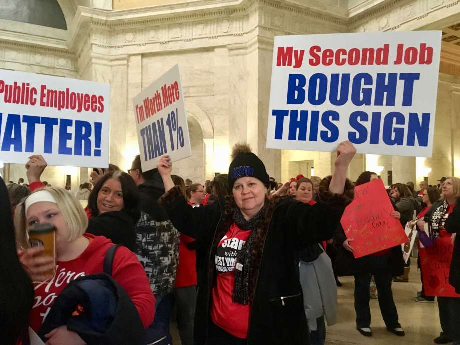
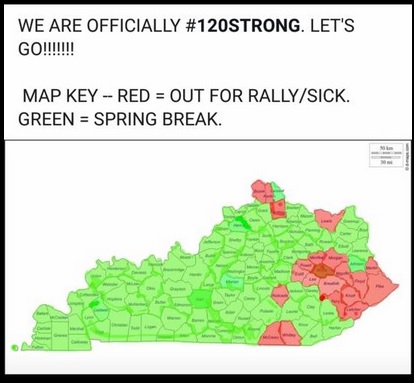
    Kentucky school districts shut todayTeachers in Oklahoma and Kentucky massed in their respective state capitols on April 2, to demand GOP legislatures revoke  bills damaging to education passed in virtual stealth. The spark plug in Kentucky is a group of activist parents with teachers, #SaveOurSchools Kentucky.  In both states the movement has been organized outside the official teachers unions, using social media as well as traditional organizing techniques of talking with colleagues and neighbors about the issues. Another struggle of teachers is simmering, near boil, in Arizona.

    Each of these movements has characteristics that emerge from their specific political (and geographic) setting, but they share an amazing energy and a commitment of teachers to be heard. These struggles cannot and should not be pushed into the mold of traditional strikes.  Videos of the protests show that this is a movement of women, both in the ranks and the leadership. My longer, fuller analysis of what these struggles portend for labor and national politics is in the works.  In the meantime, you can learn what I think the media, corporate and Left, are getting right – and wrong – when you follow me on Twitter and Facebook.

  • Like Our Lives Depend On It

    Image

    Teenagers in this country are under constant attack.

    Whether it is their taste in music, fashion, or, it seems, simply wanting to attend classes without the fear of meeting their sudden death in a hail of bullets, there are always commentators who are willing to wag their fingers in disapproval. The demands placed on kids, when you think about it, are outrageous.

    Yet here we are, watching these teenagers lead a movement to end school shootings in our time. It is a cause that they should never have had to fight in the first place, but it is a fight that this group of kids seem determined to finish. It is incredible to watch, and within the context of the other radical actions being taken by teachers in West Virginia and Oklahoma; graduate students in Illinois, Toronto, and the United Kingdom; and a working class that also seems to be finding its voice, we could be witnessing a new era in agitation for social, political, and economic change.

    All that said, however, the wheels started coming off a bit today.

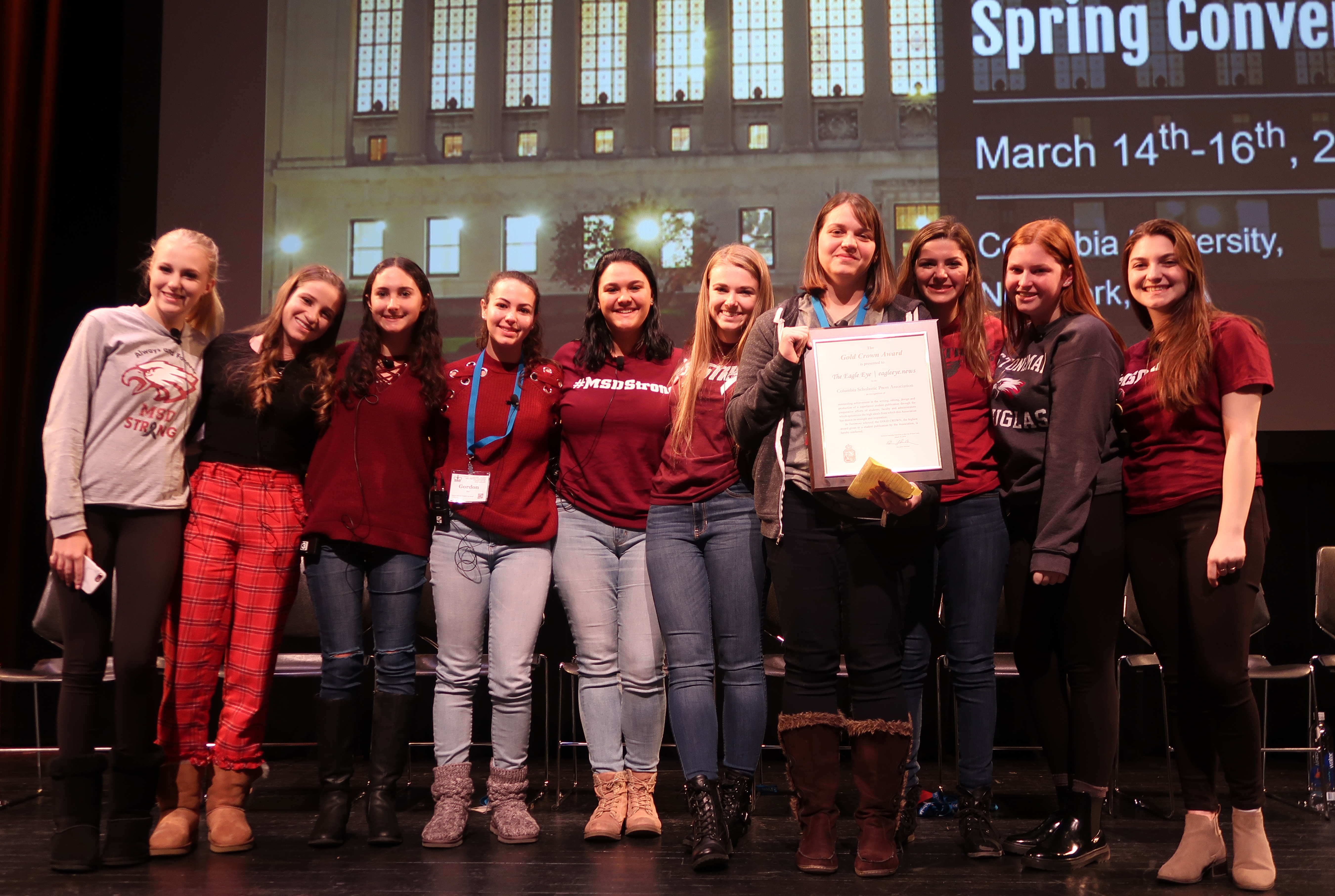
    Given control over the Guardian US for the day, the editorial staff of the Stoneman Douglas Eagle Eye published a manifesto of their demands for what should happen in the wake of the massacre at their school. One of the proposals is good and necessary, most of them are acceptable as harm reduction, and two of them are absolutely awful and a threat to marginalized folks. Regrettably, they also are silent on several salient issues raised the mass murders perpetrated by Nikolas Cruz and others that need to be addressed.

    The best suggestion of the manifesto is the proposal to fund more research and care for mental health in this country. Stating that “[s]chools specifically should receive more funds in order to hire more psychologists and guidance counselors who can aid students suffering from PTSD, depression and other debilitating mental illnesses,” this has the potential to be transformative, especially in communities of color most afflicted by violence. This has become so vital that communities in the Chicago area are funding their own mental health services.

    Unfortunately, this demand came after probably the worst suggestion in the document: a call to weaken patient confidentiality for those under treatment for mental health. They wrote:

    As seen in the tragedy at our school, poor communication between mental healthcare providers and law enforcement may have contributed to a disturbed person with murderous tendencies and intentions entering a school and gunning down 17 people in cold blood.

    We must improve this channel of communication. To do so, privacy laws should be amended. That will allow us to prevent people who are a danger to themselves or to others from purchasing firearms. That could help prevent tragedies such as the Parkland massacre.

    They could not be any more wrong about this. This notion is specifically rebutted by mental health professionals all over the place. Further, there is absolutely no indication that the murderer who attacked their school would have been prevented from purchasing a weapon given the fact that he refused further mental health treatment from the school in 2016. In fact, people with mental illness are more likely to be the victims of violence than they are the perpetrators. The only thing that giving police carte blanche access to people’s mental health information would do is undermine medical professionals’ ability to treat their patients and create what amounts to a registry of mentally ill folks across the country.

    Given the increasingly fascist nature of the current American government, is that something you really want to give the ghouls running things?

    The other proposal is more conventional if just as galling: spending more money on school security, specifically hiring more school resource officers. Writing, “We believe that schools should be given sufficient funds for school security and resource officers to protect and secure the entire campus,” they go on to state that the one school resource officer they had hesitated because he lacked backup and it cost lives. Given that at least three deputies were present while the shooting was still ongoing, it’s questionable as to whether throwing more cops at the problem would have stopped this murderer.

    What’s more, the NAACP Legal Defense and Education Fund produced this brief as part of a coalition in 2013 in the wake of the massacre at Sandy Hook Elementary about hiring more police to defend schools nationwide. Unsurprisingly, the brief concludes that more police is no answer to this problem. Given that schools already inequitably punish Black and brown students more than white ones, the only thing that more school resource officers will do is reinforce the school to prison pipeline.

    The rest of what they propose is essentially standard liberal public policy around gun control, which is adequate as harm reduction but nothing else. Things like raising the minimum age to purchase firearms to 21, banning certain types of weapons, and universal background checks are all sound suggestions for harm reduction, but they do not fundamentally address the violent foundations our society is built upon.

    One aspect of this was on display when the perpetrator of the Stoneman Douglas massacre was arrested, as he was wearing the shirt of his JROTC team during the massacre, and he was on a JROTC marksmanship team funded by grants from the National Rifle Association. Given that JROTC is a military indoctrination program for children and potentially against international law, and given that a third of all mass shootings from 1984 to 2016 were perpetrated by military veterans while making up no more than 13% of the population during that time period, it seems obvious that the harm inflicted by this country’s imperial activities overseas inevitably rebound home. This did not get addressed in this manifesto.

    Another thing that the Eagle Eye’s editors did not broach is the issue of intimate partner violence. The most common denominator between all of these massacres is the perpetrator was an abuser, including this one. While you could argue that expanding background checks would serve to catch these murderers, it ignores the number of abusers who never face criminal sanction for their actions. This oversight is even more baffling given that there are existing legal approaches to reduce the risk of gun violence from domestic abusers.

    While convincing the Guardian US to present these bitter pills to their mostly liberal and middle class readership would not have been easy, there was no better moment than now to force these painfully hard discussions out into the open. That this was not done can only be seen as a lost opportunity.

    Given the issues with the solutions outlined in the Guardian piece, socialists and other allied community organizers would be absolutely correct in calling these proposed policies what they are: tools that would be used by a state that is steeped in reaction and repression to further oppress marginalized communities. We can all laugh at a buffoon like Dinesh D’Souza for his abominable stance towards the Parkland students, but it should be known that there are likely hundreds just like him at institutions such as the Bureau of Alcohol, Firearms, Tobacco, and Explosives or in police departments nationwide who would love nothing more than a carte blanche to run into the East Side of Detroit or the South Side of Chicago and start kicking in doors.

    As the murder of Stephon Clark at the hands of Sacramento Police shows, such a license is one that could end up deadly for people of color.

    Another worrying trend comes out of the March For Our Lives in Greensboro, North Carolina. There, the local branch of the North Carolina Piedmont chapter of the Democratic Socialists of America (DSA) sought to table at the event alongside the myriad other groups who would be at such an event and had gotten permission to do so. Late on Friday night, however, they received an email from the organizers of the Greensboro march informing them that they would not be allowed to table at the event. This was due to the “advice” of “legal partners”, who also advised that the Greensboro chapter of the International Socialist Organization (ISO) should be prevented from tabling at the event as well.

    It is unknown who specifically advised the local March For Our Lives organizers to rescind DSA and ISO’s permission to table, but if the national-level coordination is any indication, it is a group like the Los Angeles-based public relations firm 42Westwhich has been handling PR for the march nationwide. While NC Piedmont DSA and Greensboro ISO both proudly participated in the march, the fact that organizations who were in early and frequent contact with the Movement For Our Lives organizers in Greensboro — ISO especially — were not allowed to table and hand out their literature shows that this nascent movement is in danger of being steered towards a dead-end liberalism that will do little to fix the problem of gun violence.

    If such steering were to be successful, it would repeat the errors of 2006, where the Democrats very adroitly stole energy from the anti-war movement to win the midterm elections. And with big-money organizations, like Moms Demand Action and Everytown USA that are bankrolled by the billionaire former Mayor of New York City Mike Bloomberg, helping to steer this conversation towards a carceral vision of gun control, it is entirely possible that history will repeat itself and a vibrant protest movement will get shunted into a political blind alley only to be betrayed at the first opportunity.

    The Democratic Party would like nothing more than for this to remain a moment, an outrage that lasts just long enough to help deliver it gains in this November’s election. But if the lessons of the labor movement’s engagement with the Democratic Party can bear any lessons at all for these organizers, it should be that campaign rhetoric dies a hard and lonely death once the bright lights of the horse race have dimmed.

    When all of this is considered, the impulse amongst leftists to see moves like this and dismiss the movement out of hand will be strong. We know where this road leads, and it is nowhere good.

    But for this, the stakes are high. They are high because of the wide reach of gun violence, and the potential for solutions to this problem to actually exacerbate the issue. Gun violence that comes from a policeman’s bullet rather than a bullied — or bigoted — high schooler still leaves families with loved ones to bury and communities to mourn. The only thing separating Darren Wilson and Jeronimo Yanez from Nikolas Cruz and George Zimmerman are uniforms and geography.

    The approach from socialists and their comrades in community struggle, then, must be different.

    Remember who we are talking about.

    This moment sprung from a former classmate walking into their high school and killing 17 of their friends, and wounding 17 others. The students who were shot and survived face the possibility of a long and arduous physical recovery, and that is to say nothing of the psychological toll that such an event has on every survivor, as detailed in this harrowing 2015 article in the Washington Post.

    We are not only talking about kids, but kids who have been through a trauma that most of us will never experience. Through all of that, they are working to build a movement because the aforementioned Adults In The Room have been derelict in their responsibilities to keep these kids safe.

    Organizers use many tools in their work. One of those tools is empathy. We should, without question, demand that the policies advocated by this movement be holistic and understanding of the role that a racist and reactionary state plays in gun violence domestically and overall violence abroad. It is possible to do this, however, while keeping in mind that discussions on these topics are generally circumscribed by local school boards and constrained by curriculums handed down from the same state governments that have been increasingly dominated by the far right since 2010.

    We live in a society whose ideas are reactionary at best, and it takes time and struggle for people to unlearn them. Most of us adults did not come to leftist politics until long after we left high school, and we still make many mistakes even now. Have some patience with them.

    Let the youth lead on this one.

    Every socialist organization either has a youth branch — the Young Democratic Socialists (YDSA) for DSA or Socialist Students for Socialist Alternative — or a dedicated cadre of young people who emerge from leftist formations on college campuses. These are the folks who should be leading the conversations with their peers on how to make this moment into a movement, and one with transformative potential.

    This is part of why Bryan wrote this guide that was republished and distributed to every YDSA chapter. These students do not need to be condescended to, but they do need guidance and mentorship. If you have not been brought up in a political household, organizing is not something you have much experience with. This means engagement, and it means fair-minded criticism.

    This is something that has already borne fruit, as some of the student leaders from Parkland sat down with their peers from the South Side of Chicago after the media’s coverage of the Stoneman Douglas massacre was compared to its wholesale neglect (or luridly exploitative coverage) of gun violence in communities of color. As Mariame Kaba has been saying since February 14, “What resources have you developed? How are you offering these resources to newly engaged and emerging leaders? What opportunities for one on one engagement are you offering in your communities right now?

    This movement is growing beyond the initial organizers.

    With hundreds of thousands of people in the streets nationwide and no formal organization aside from some general talking points and imagery provided to those electing to take action under the March For Our Lives banner, it is abundantly clear that this movement is growing beyond any kind of meaningful control of the people it started with if it hasn’t done so already. This is not to say that what these young people are saying is unimportant, but as with Black Lives Matter the movement has grown well beyond any kind of effective direction from its originators.

    This does not mean these leaders are irrelevant, nor does it mean that they should be immunized from criticism. That three Parkland survivors spoke in Tel Aviv without discussing the brutal and ongoing violence of the Israeli occupation of Palestine, especially from state-sanctioned private colonists, is something that needs to be noted and criticized.

    In gun culture parlance, “printing” occurs when the outline of a concealed handgun appears through the clothes the person carrying concealed wears. It is a moment where the potential for violence bleeds through the careful and frequently expensive efforts to hide it. This frequently happens when the weapon being carried is too big for the clothes being worn or the holster it is placed in.

    American life is filled with violence, but most of us tune it out. When we read about the police violence that wreaks havoc in urban communities, we dismiss it as being something that comes part-and-parcel with urban life since Black life is cheap. When the news details the devastation from the bombs being dropped by American and Saudi planes in Syria and Yemen, we are complacent as it is something that is happening Over There™ and not in our own communities. Even when we bear witness to extreme acts of hatred here at home, most typified by the 2015  Mother Emanuel AME massacre that claimed the lives of nine Black churchgoers in Charleston, South Carolina, our commentariat are quick to reassure us that this isn’t in any way in keeping with the American Values™ have been put place since the Founding Of Our Republic™.

    But it is in moments such as this one, or the massacres at Columbine, or Virginia Tech, or the Pulse nightclub in Orlando, or Sutherland Springs in Texas, or Las Vegas that the violent roots of the American experiment we have been all too willing to ignore begins to print upon our collective psyche. The massacre at Marjory Stoneman Douglas High School is one more instance where the outline sharpens a bit more, and the obvious becomes a bit more so to a few more people.

    What the students of Parkland — in coalition with the students and victims of American violence both here and abroad — are attempting to do is nothing less than the cutting back of the bloody roots of the American project. That is a tall ask of kids who should be preparing for college, going to their proms or ring dances, and gearing up for another summer lost to the laughter and love that characterizes what it means to be young.

    It is inevitable that mistakes will be made given the nature of this undertaking. Much as we have learned through them, these young activists and leaders need to learn themselves, and we should be open with our knowledge and our hearts.

    The lives of so many depend on it.

    Originally posted at The South Lawn.

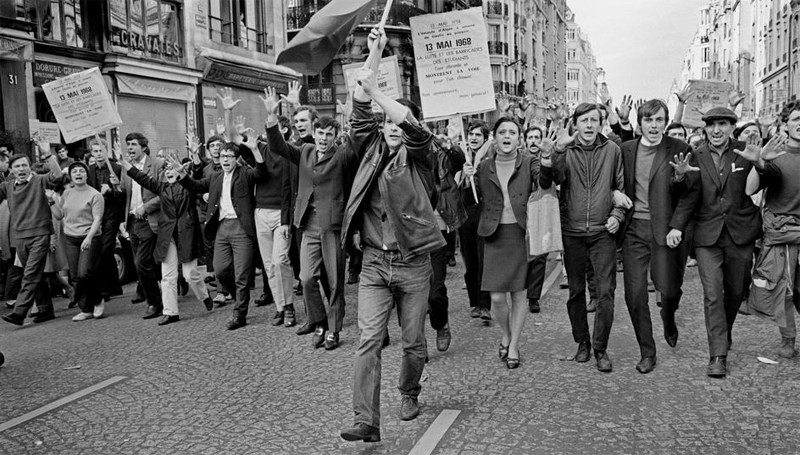
  • 50 Years After 1968: Student Strikers Attacked Again

    Image

    Not an April Fool’s joke. Here are the facts: Four days ago (March 29) the ultra-conservative Dean of the Montpellier University Law School was summoned to police headquarters, interrogated, hauled into court, and held over in jail for arraignment by the Chief Prosecutor – all on the complaint of nine student strikers, who claim to have been brutally assaulted with Dean Philippe Pétel’s active complicity while ‘occupying’ a school auditorium.

    The students, backed by live videos, described Dean Pétel encouraging masked thugs with wooden staves to burst into a Law School auditorium and violently expel a few dozen students who were ‘occupying’ it as part of the University-wide student strike. The thugs were videoed brutally beating students, even on the ground, and several were injured. The thugs then returned to the antechamber, where a counter-demonstration of conservative anti-strike law students including Pétel and several other faculty, was waiting. The Dean was videoed congratulating the bulked-out masked aggressors, whom no one was able to identify as students. The building was locked, but Pétel had the key to the antechamber from which the attackers issued. The complicity of other faculty members present is under police examination, and one has been arrested. [1]

    Within hours, the Law School attacks were all over the social networks, and student strikers, human rights groups, civil rights lawyers were busy organizing demonstrations and protests for the next day, framing it as a ‘fascist aggression.’ This epithet is less of an exaggeration then it may seem, as the tradition of law students supplying the thuggish muscle for extreme-right groups here in France goes back for over a century (as I recall from my student days in Paris opposing the Algerian War). As we all know, student striker complaints of police brutality normally go unheeded, and protests against them may bring down even more police punishment. Deans who ‘stand firm’ against occupiers get promoted. How then to explain this “man bites dog” reversal in Montpellier University (founded 1279)?

    Today in France, twelve universities are already on strike, and the social and labor situation is heating up rapidly. Here in Montpellier, Université Paul Valéry, the Liberal Arts University, just voted an open-ended strike and blockade of classes at an outdoor General Assembly attended by over 2,000 students. So far, the mood has been temperate. Support for the strike is near unanimous, but there is deep division over the tactic of blocking classes, especially among first-year students who are worried about their exams (which will probably now be put off). Some profs are offering their courses on line and a radical ‘free university’ called “Vincennes 2.0” in memory of Paris in May 1968 has been set up. The local high schools are also full of agitation, with two or three “on strike” and riot cops hanging around and making arrests. The situation is tense.

    What’s At Stake for the Macron Government?

    The paradox in this story is not the Dean Pétel’s more-or-less traditional role in the attack[2], but the Prosecutor’s outlandish decision to hold a venerable Law Dean in the clink. To be sure, Pétel, a youngish cocksure neo-conservative, was ‘asking for it.’ He at first openly bragged of his role, oblivious to circumstances and the consequences, and made the national TV news and the front page of the big Paris papers. But my guess is that the order to lock him up came from Paris. In centralized, hierarchical France the Prosecutor answers to the Prefect who answers to the Minister of Justice who answers to the President. President Macron, who has laid down a major long-term challenge to both the students and public service workers, wants to push through his reforms as quickly and as smoothly as possible. The social situation is heating up, and Macron is too smart to polarize the situation further and waste political capital on a far-right loser. He also wants to be seen as impartial and as willing to strike his enemies on the Right as on the Left (as he no doubt will when the student and worker struggles really heat up).

    The immediate issue for the university students is President Macron’s educational ‘reform,’ which like all of his ‘reforms’ will be imposed buy administrative decree, rather than through the legislative process (which normally includes lengthy discussion and amendments). Macron seems to prefer ruling by decree, although he has a solid majority of followers in the National Assembly, having split and evinced the parties of both the Left and the Right. All his moves seem carefully timed, and perhaps he fears delay. Macron prefers the ‘fast track’ method, and his authoritarian, technocratic style definitely pisses off many many French people, but especially “the people,” who have long been fed up and are suffering cutbacks while the super-rich get subsidies (sound familiar?).

    Macron has already pissed off France schoolteachers, on whom he is imposing – without discussion – yet another new K-12 national curriculum so confusing that nobody can figure out how to implement it. Meanwhile classes are huge (35 students), young people are getting harder and harder to teach, and support for teaching, supplies aids etc. is being cut way back. At the university level, the goal of Macron’s reform is to introduce “selection” in university admissions, which traditionally have been open to all who have earned the classical Baccalaureat diploma and the end of secondary school (just like the New York City colleges a generation ago).

    France now has five million students, and thanks to constant cutbacks, there aren’t enough places for about 20% of the incoming class. Hence the creation of ‘competition’ and U.S.-style admissions offices at each school. Moreover, although all French universities are under the administration of the national Ministry of Education, Macron wants to make them ‘competitive’ with each other, like in the U.S. So some schools will be “easier” to get into, but their degrees will be “worth” less. Both these ‘reforms’ are obviously unfavorable to underpriviledged students, and favorable to the privileged. They are by definition “unpopular.”

    Macron has also laid down the gauntlet to public service workers  including to the venerable CGT railway workers union whose militancy is legendary. Last Spring, despite militant protests, Macron succeeded in pushing through, by decree, his reformed Labor Code, taking away seniority rights and legal protections enjoyed by private sector workers and making it easier and cheaper for bosses to fire them. This Spring, instead of relying on the traditional divide-and-rule precept, Macron proposes to take on both the five million students and the five million public sector workers (about 20% of the total labor force) together. He may have bit off more than he can chew, especially with the general population in a hostile anti-government mood and ready to support these popular struggles.

    For in attacking the public sector workers’ alleged ‘privileges’ and proposing to dismiss them in large numbers, Macron is effectively attacking precious, popular public services which are used by the large numbers among the popular classes. Trains, subways, hospitals, social services, public offices, roads, etc. These services have all been subject to cutbacks, which make life harder and lines longer for regular folk, and now it is obvious to all that Macron is downgrading them in preparation for privatizing them to sell off cheap to corporations, as has already happened to the French Electric Company, the French Gas Company and to most of the French Post Office.  They fear he will privatize the SNCF French railroad as Margaret Thatcher, his spiritual guide, did to British Rail (which is now expensive, dangerous and mostly late).

    March 22: the First Skirmish

    The social struggle got off to a militant start last week on March 22 (also the date of the attack on the Montpellier Law School occupiers) with 180 demonstrations by students and public workers across France. Air flights were down by 30%. Over 5,000 railway workers from all over converged on Paris, held a march during which they set off loud industrial firecrackers, and then conducted a spontaneous mass General Assembly where they pledge to go beyond the announced schedule of staggered strikes planned by officials of the three railroad unions, beginning April 3.[3] The day began with a huge morning demonstration of students converging from all over the Paris region. The students then joined up with thousands of various public service workers demonstrating under their union banners, and this demonstration ultimately merged with the railroad workers. Hundreds of thousands are said to have been in the streets.

    Remarkable, too, were the spontaneous actions of autonomous groups known as “March-Headers” (Tête de cortège) who come together at the very front of the legal, planned, well-organized and policed demonstrations with the aim of break the mass movement out of the routine of being led around like sheep by union organizers, subjected to prescribed slogans on signs and loudspeakers, and then sent home with being about to express themselves. Their goal is to bring together students and workers, younger and older people, workers from different sectors and to encourage discussion and self-organization.

    Many of these activists, young and old, are veterans of the struggles of 2016 and 2017, recognize each other today, are forming networks and have experience in self-organization. Although they are also characterized as “black-blockers,” whose role has often been divisive and provocative, the March-Headers movement seems to me promising in its push to open up political space for anti-government, anti-system demonstrators to come together, exchange ideas, build relationships and learn self-organization through direct action. 

    Heretofore, big official protest movements in France have been kept separate, divided into interest groups, and regimented by union officials whose basic tactic has been to space out useless, symbolic one-day national mass mobilization until people got tired, summer vacation arrived and the government won. To be sure, spontaneous (and sometimes violent) wildcat movements have often broken out of this straightjacket. But today’s students, union members and others are much more open to coming together spontaneously and to linking through social media.

    “From One Wild May to Another?”

    Fifty years ago, in 1968, the highpoint of the French May Revolt was the conjuncture of the student movements occupying the universities and the organized working class occupying the factories under the discipline of the Communist CGT and other unions: the “student-worker uprising”, as it came to be known. But to those who lived it, the conjuncture never quite jelled, as the union leaderships mostly kept the workers barricaded inside the occupied and their student supports outside, minimizing contact and exchange. A big disappointment, as recalled by a number of 1968 activists questioned by Mitchell Abidor in his lively just-published book of interviews May Made Me (AK Press, US; Pluto, GB)Perhaps today’s student and worker activists are ahead of the game and will not let themselves be ‘divided-and-ruled’ like previous generations. Also, today they have the advantage of social media which allows them to bypass the establishment media, get out their information and organize themselves in real time.

    Here in Montpellier, the movement augers well. The student strikers at Paul Valéry have invited workers, homeless, elders into their assemblies and have received worker support and interest . Their action committees include not just students, but professors and campus workers as well. This is a good start. Moreover, they have harnessed social media to the extent of being well informed about what is happening locally and in touch with other universities. The record number of people that attended the last General Assembly (up to 2,500) is in part attributable to organization through social media (which are sometimes blamed for keeping people at home behind a screen.)

    Ironically, both this first mass demonstration and the Montpellier Law School incident took place on March 22. That date marks the 50th anniversary of the 1968 student occupation of the Administration building of Nanterre University which eventually set off a national general strike that shook de Gaulle’s authoritarian regime and send the General scurrying to Germany for Army support. Might something similar be in store for Macron’s France today? The public mood is somber, after long years of high unemployment, stagnant wages, neo-liberal chipping away of hard-fought social support systems and privatization of social services under Sarkozy (now also on trial!) and the “Socialist” government of François Hollande.

    The echoes of the May 1968 uprising reverberate in the air. A website calling itself lespaves (cobblestones) has issued an international “call to converge in Paris on May 1st” with the slogan: “They are commemorating May ’68. We are re-starting it!”[4]


    [2] Personal recollection: In Hamilton Hall during the first night the April 1968 Columbia Unversity occupation, we were informed that Dean David Truman was making the rounds of the fraternities and dorms, organizing gangs of jocks to drive out the occupiers.


  • From Jackson to Richmond: How Radical Mayors Left Their Mark

    Image

    Well before the Trump era, U.S. presidents from both major parties failed to address urban problems or made them worse. Governors, members of Congress, and state legislators didn’t perform much better. So the difficult job of fighting poverty, inequality, and environmental degradation shifted to the municipal level, where activist mayors have tried to mobilize the limited resources of local government on behalf of neglected causes and constituents.

    When the U.S. Conference of Mayors came to San Francisco several years ago, our local paper, the Chronicle, congratulated its members for “shaking up the national agenda” by “tackling issues like climate change, education and police brutality.” In his keynote address to the group, then-President Barack Obama proclaimed that: “Mayors get the job done. It’s not sufficient to blather on—you actually have to do something.”

    Under Obama’s successor, many municipal leaders—even some pretty crummy ones—have joined “the resistance” to federal attacks on immigrants, union members, or the urban poor. But, in cities across the country, powerful private interests and the local politicians they support still thwart progressive policy initiatives.

    To overcome corporate opposition and “get the job done,” left-leaning mayors or city councilors must take a nontraditional approach to running for and holding office, as Socialist Alternative leader Kshama Sawant has done in Seattle. Two new books about making change in smaller cities are worthy of close study by anyone hoping to push their own city hall in a similar left-wing direction.

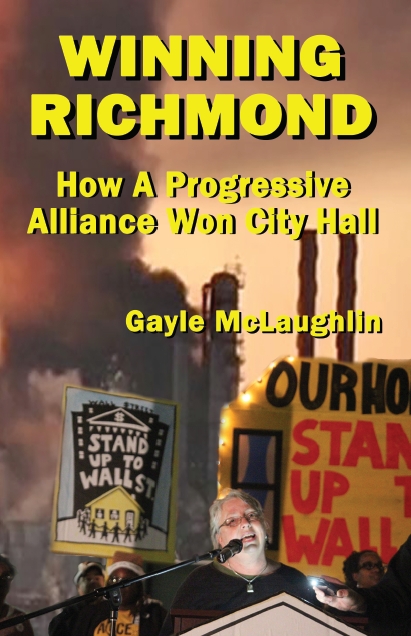
    Winning Richmond: How A Progressive Alliance Won City Hall (Hard Ball Press) is Gayle McLaughlin’s memoir of her 14-year career, as mayor and city councilor, in Richmond, California, a blue-collar community in the Bay Area whose largest employer is a Chevron refinery. Jackson Rising: The Struggle for Economic Democracy and Black Self-Determination in Jackson, Mississippi (Daraja Press) is a collection of essays, interviews, and programmatic statements, co-edited by Kali Akuno and Ajamu Nangwaya. From various political perspectives, near and far, the book documents the municipal insurgency led by the late Chokwe Lumumba, an African-American radical, now succeeded, as mayor of Jackson, by his son, Antar.

    Old Guard Politicians

    Mississippi and California aren’t much alike but the demographics of Richmond and Jackson share one thing in common: both cities are 80% non-white and voter registration is overwhelmingly Democratic. In both majority minority communities, corporate Democrats of color long ruled the roost, thanks to strong backing from local developers and manufacturers, other downtown business interests, and socially conservative black churches.

    Richmond’s old guard took its first hit from the left when Gayle McLaughlin, a white newcomer from Chicago and Green Party protégé of Peter Camejo, unexpectedly won a city council seat in 2004. As she recalls in her memoir, “the political culture was vastly different from anything” she had previously encountered as a movement activist. All six of Richmond’s black and Latino city councilors, including the city’s African-American mayor, were business-oriented Democrats backed by Chevron.

    On issues like promoting renewable energy or improving refinery safety, McLaughlin had, at most, only one reliable ally; when she was elected mayor in 2006, she was still the only Richmond Progressive Alliance (RPA) member on the council. “I was a working class person consciously representing the voices of many people living in a system dominated by the rich,” she writes. “One of the first things I realized was that I wasn’t going to get anything done without an organizing campaign on each issue.”

    This realization informed the work of the RPA, which McLaughlin co-founded and describes in the book, and her use of city hall as a catalyst for change, mobilizer of public opinion, and ally of constituent groups. When she became mayor, Richmond was best known, in the Bay Area, for its street crime, gun violence, poverty, and pollution. During her eight years in office, the city acquired a different reputation—for battling Big Oil, Big Soda, Big Banks, and the landlord lobby. 

    Today, Richmond is a cleaner, greener, safer, and more equitable place because its new leaders hired a top-notch city manager and reform-minded police chief, boosted the minimum wage, adopted rent control, curbed police misconduct, defended immigrants, and sought increased tax revenue and environmental justice from its largest employer, a Chevron refinery.

    Once elected, most politicians just try to maintain a personal fan base for future electoral campaigns. In contrast, McLaughlin never stopped being a real movement-builder. She remained accountable to the RPA, a multi-racial political formation, with its own elected leaders, dues-paying membership, and year-round, multi-issue organizing program. And she helped inspire younger activists who also became successful candidates for local office by relying on Bernie Sanders-style small donations and local public matching funds, rather than corporate contributions.

    As a result, Richmond Progressives now have a super-majority of five on the city council (that McLaughlin left last year to run for Lieutenant Governor of California, as a progressive independent). All are people of color who supported Sanders in 2016; four come from immigrant backgrounds and two are under 30. They won by running as part of RPA slates, committed to popular reforms like rent regulation and the requirement that landlords have just cause before evicting tenants.

    A Southern State Capital

    The political landscape of Jackson—the state capital and largest urban center in Mississippi— was equally challenging for activists who turned their attention to municipal politics after prior involvement in civil rights activity, black nationalist causes, or other radical organizing.

    When criminal defense lawyer Chokwe Lumumba, co-founder of the Malcolm X Grassroots Movement (MXGM), gained a Jackson city council seat in 2009, it was, he reports, “my first election to anything.” As Lumumba noted later, his seven opponents, all black as well, had few ideas about how to:

    “overcome decades of economic divestment, de-industrialization, suburban flight, a declining tax base, chronic under-and un-employment, poorly performing schools, and an antiquated and decaying infrastructure.”

    In a contest between an “outspoken revolutionary nationalist” and what Jackson Rising contributor Kamau Franklin calls “the politics of careerism and moderation,” voters in Jackson Ward 4 opted for beginning “the process of transforming local government into a vehicle for economic and political change, guided by the principle of self-determination.”

    Four years later, according to contributor Carl Davidson, Lumumba again caught “Jackson’s political elite off guard” by making “use of the Mississippi Freedom Democratic Party to run as an independent in the Democratic primary for mayor, defeat the incumbent, and force a run-off…which he then won overwhelmingly.”

    Lumumba’s brief tenure in office illustrated not only how city hall can become a laboratory for visionary ideas, but also the fiscal constraints and legal restrictions facing modern day “sewer socialists.”  Jacobin editor Bhaskar Sankara visited Jackson and then interviewed the new mayor in February, 2014, just several days before his sudden death of heart failure at age 66. In Jackson Rising, Sunkara recalls that:

    “Lumumba had just passed a one cent local sales tax to fund Jackson’s infrastructure. The taps ran brown and many roads were in disrepair…{T]he Environmental Protection Agency had threatened action if waste water systems weren’t upgraded. There was nothing especially radical about the tax, except for the fact that Lumumba took his case to the people, explaining the situation and winning consent for the measure in a referendum.”

    In a special election held six weeks later, Lumumba’s son, Antar tried to succeed him. He lost to a black minister, who soon ditched his predecessor’s plans for recycling measures, city-supported cooperatives, and more exercises in participatory democracy to help Jackson residents re-shape public policy.  Several contributors to Jackson Rising tell the story of how the MXGM and Cooperation Jackson, an allied initiative, rebounded from this tragic set-back.

    One vehicle was a Jackson Rising: New Economies Conference,” held in May 2014, which brought together 500 participants, including organizers of a community land trust and other cooperative ventures like recycling and laundry businesses, a five-acre urban farm, and a worker-owned construction firm. The city continued to attract activists, like the many co-founders of Cooperation Jackson, who, according to reporter Katie Gilbert, “moved to Jackson from cities outside of Mississippi” to be part of a “new society experiment” which “tries to help people unlearn the lessons the old economy taught them and train them to be democratic in every aspect of their lives.”

    Last summer, Antar Lumumba ran again for mayor in a field of sixteen Democrats. This time, he defeated, without a run-off, the floundering incumbent, Rev. Tony Yarber.  Lumumba won 55% of the primary vote—ten thousand more ballots votes than his father received four years earlier, making the general election a shoe-in.  His primary competitor was state senator John Horhn who, according to Gilbert, raised the specter of a state-takeover of Jackson “if the city’s finances didn’t take a few steps back from the edge of potential bankruptcy, if crime didn’t abate, and the schools didn’t improve their outcomes.”

    There was understandable rejoicing on the left, locally and nationally, about MXGM’s comeback and the new mayor’s post-election declaration that he was going to make Jackson “the most radical city on the planet.” Behind the scenes, Gilbert reports, activists continue to debate whether their focus should be “to capably govern the city or to altogether re-imagine it,” a project continually hampered by “the very real problem of insufficient resources.” 

    Meanwhile, since Mississippi state legislators and its Republican governor also conduct public business in Jackson, pre-emption is a big threat right within the city limits. As Rukio Lumumba, sister of the current mayor notes in her Foreword to Jackson Rising, conservatives in state government have already diverted some of the city’s new sales tax revenue in other directions.  Nor is there much legislative enthusiasm for amending state law that currently restricts cooperatives to farms, utilities, and credit unions, categories not broad enough to permit wider development of a “solidarity economy” in the city or state.

    In addition, GOP legislators have proposed that Jackson be stripped of control over its airport and related commerce and that downtown business interests be allowed to shape development plans. The latter arrangement—par for the course elsewhere—would have eventual electoral consequences. As Akuno argues, “the forces behind the gentrification of Jackson are deliberately trying to dilute the numerical strength of the Black working class in order to change the political character of the city.”

    Despite the wealth of information and insight in Winning Richmond and Jackson Rising, each book has some puzzling omissions. In her memoir, McLaughlin barely mentions the critical behind-the-scenes work of Richmond’s professional city manager Bill Lindsay or former police chief Chris Magnus, who turned the RPD into a widely acclaimed model for community policing. Changing local law enforcement behavior, even under a progressive city administration, is no easy task. As the first Mayor Lumumba explained to Sunkara, it took careful maneuvering to get Jackson Police Chief Lindsey Horton more “in line with our vision” of how “jobs and other programs could reduce the need for crime.” While McLaughlin does describe the key role of progressive unions in supporting the RPA, the Akuno-Nangwaya collection sheds little light on the backing that both Lumumbas received from the Mississippi Alliance of State Employees (MASE), which includes Jackson city employees whose labor-management relations were improved as a result.

    Set in a state where politics remains much dominated by rich, famous, or corporate-connected Californians, McLaughlin’s story stresses working class leadership development, female empowerment, and grass-roots base building instead. Anyone else of modest means—a tenant, a worker, a union or community organizer—who hopes to succeed in electoral politics against the usual well-funded foes (i.e., doctors, bankers, corporate lawyers, developers, and other multi-millionaires)—will be much inspired by the former Richmond mayor’s compelling personal story.

    Similarly, the MXGM experience shows how patience, persistence, and deep roots in the community can pay off—not just at the polls, but in day-to-day organizing and political consciousness raising around a wide range of issues. In Jackson Rising, Chokwe Lumumba warns of the tendency among some urban activists to “put their movement on hold and to rely exclusively on the mayor and the mayor’s staff to get things done for the people.” As these case studies of Richmond and Jackson demonstrate, electing left-wing mayors has a lot more impact if their campaign supporters remain mobilized, post-election, and don’t leave the governing to them.

    Steve Early is a member of the Newspaper Guild/CWA and the Richmond Progressive Alliance. He is the author of four books, including, most recently, Refinery Town: Big Oil, Big Money, and the Remaking of an American City from Beacon Press. He can be reached at Lsupport@aol.com.

  • An unforgettable five-day Freedom Fast culminates with 2,000-strong Time's Up Wendy's March through the Heart of Manhattan!

    Image

    A fast, when done in protest, is a call to arms. While eminently non-violent, it is a battle cry, issued in a whisper.

    For five days last week, nearly 100 farmworkers and their allies fasted outside the offices of Nelson Peltz’s hedge fund investment firm, Trian Partners, at 280 Park Avenue in Manhattan. They did so because Wendy’s has not only refused to join the Fair Food Program — widely recognized as the only human rights monitoring program to have successfully eliminated forced labor and sexual assault in the agricultural industry — but has shifted its tomato purchases from Florida to Mexico, where slavery and sexual assault remain all too common, and workers are intimidated into silence by a culture of violence, fear and corruption. 

    And they did so because Wendy’s is structured in such a way that Mr. Peltz is the single most important decision-maker in the company. Mr. Peltz’s Trian Partners is not only the company’s largest shareholder, but Mr. Peltz is also the Chairman of Wendy’s Board of Directors, his son and partners at Trian are members of the Board, and Mr. Peltz is the head of the Board’s committee on social responsibility. For all intents and purposes, Mr. Peltz is Wendy’s and Wendy’s is Mr. Peltz, particularly when it comes to the question of social responsibility and, specifically, ending violence against women.

    And so, for five days, nearly 100 farmworkers and their allies fasted outside Mr. Peltz’s offices in the heart of Manhattan, broadcasting their call to action to all who would hear their demand: Wendy’s, stop sexual violence in your supply chain, now, by joining the Fair Food Program!

    And on the fifth day, their call was answered. The fasters’ battle was joined by nearly 2,000 consumers, a crowd as, at once, fierce and joyous as any that has ever taken the streets of midtown Manhattan in protest. With a wildly successful “Time’s Up Wendy’s March,” the Freedom Fast came to a close, the fasters broke bread in a beautiful nighttime ceremony, and a new chapter was written in the story of the Wendy’s Boycott and the Campaign for Fair Food…


  • Beyond Fake News

    Image

    1. “All Governments Lie”

    As 1950s investigative reporter I.F. (“Izzy”) Stone famously stated: “All governments lie.”[1] Fake news has historically been the weapon of the rulers, especially when in need of excuses for military aggression.

    The mainstream media have traditionally gone along with the official line. For example, in 2003 in order to invade Iraq, the Bush administration falsely asserted that Saddam Hussein was complicit in the September 11, 2001 attack on the U.S. and that Iraq was hiding weapons of mass destruction. Despite public evidence to the contrary, the mainstream media propagated what was soon revealed to be fake news. Fifteen years later, the U.S. is still mired in Iraq.

    Similarly, in August 1964, the Johnson administration deceived Congress into voting a blank check to escalate the war in Vietnam by playing up a fake news story about two North Vietnamese naval attacks. This emergency “Bay of Tonkin Resolution” was the legal basis for eleven more years of particularly bloody, unwinnable war wreaking havoc on millions of Vietnamese civilians North and South. Only two Senators, and writers like I.F. Stone questioned the fake news.

    The first North Vietnamese “attack” was a brief skirmish between U.S. destroyer Maddox patroling close to the territorial line. It later came out that the U.S. vessel fired first damaging the smaller two Vietnamese PT boats, which may have fired back as a single bullet hole was found in the hull of the Maddox, otherwise undamaged. Since this incident failed to generate sufficient war hysteria, LBJ came up with a second attack, this one, as Sec. McNamara, later admitted, was entirely imaginary. But it did the dirty job.

    The classic historical example of fake news is the famous “Ems telegram” of July 1870 when Prussia’s Iron Chancellor Otto von Bismarck tricked French Emperor Napoléon III into declaring war on Prussia, by leaking to the newspapers a provocatively insulting telegram adressed to the French Emperor. The Prussians were already mobilized and prepared to fight; the French, hardly at all. France was soon over-run and Napoléon III captured.

    The paradox of today’s situation is that Donald Trump, arguably the world’s biggest liar, has appropriated the term “fake news” to discredit the New York Times and other “legitimate” mainstream media. Up until Trump’s declaration of war, the “failing” Times had consistently backed up the U.S. government’s lethal lies, including Bush’s WMDs, JFK’s “secret” Bay of Pigs attack on Cuba, and LBJ’s fake news Bay of Tonkin attack. Today, since Trump declared them “public enemies,” they are at least fact-check official pronouncements more, and Trump gives them plenty of opportunities. At least as far as the Administration is concerned, the mainstream media have stopped acting like lap dogs, although they are still hardly watch dogs on issues like “national defense.” Long before Trump came along, people were growing more and more cynical about the establishment press’ elitist bias, and Trump’s accusations of “fake news” seemed plausible to many.

    To add to the confusion, foreign governments like Putin’s Russia have injected fake news stories designed to spread confusion, discredit the Democrats and aid Donald Trump to win the 2016 election. The Kremlin’s propaganda machine has also managed to bamboozle a large section of the western Left into supporting Russian aggression in Ukraine and Syria with fake news characterizing the White Helmets volunteers in Syria as CIA operatives and presenting Bashar al-Assad as a progressive anti-imperialist leader. Amid all this confusion, who to believe? Many Leftists active in the blogosphere have naively assumed that if the U.S. imperialists are lying, the Russians must be telling the truth. In their indignation at frequent U.S. aggression, they have succumbed to the fallacy that “the enemy of our enemy is our friend.”

    But I.F. Stone had it right in the first place: “all governments lie.” In 2016, Putin’s Petersburg troll factories obviously did inundate U.S. social media with disruptive posts designed to discredit the U.S. system and help Trump win the election. This is just business as usual. Remember that in 2014, it was the U.S. under Obama who massively intervened during revolution in Ukraine in order to impose hand-picked candidates on the new government. What’s new? Twenty years after the collapse of the Soviet Union, Russia and America are back to playing Cold War propaganda games. Back then, America sponsored Radio Free Europe and the CIA financed anti-Communist intellectual journals, while Stalin’s Communist agents financed The Daily Worker and influenced a whole generation of writers including Hemingway. During the 1930s Hitler had supporters all over the U.S., and Mussolini’s fascist government spent millions buying up French newspapers and flooding them with Italian propaganda designed to soften up France for the coming invasion.

    Today, Putin’s trolls manipulate social media and the blogosphere. Big deal. How many Americans actually believed the crude, ungrammatical, mechanically-produced Russian postings on which the Kremlin spent a few million dollars during a campaign when U.S. billionaires, using the most sophisticated PR firms, were spending billions? Few today believe the Russians actually succeeded in influencing the outcome of the election.

    The real scandal behind the release by the Russians (among others) of the Democratic National Committee’s secret emails was the truthful news that the Clinton leadership was secretly sabotaging the primary campaign of Sen. Bernie Sanders, the surprizingly popular socialist insurgent threatening their noe-liberal hegemony. Ultimately, the DNC’s vicious and ultimately fatal interference in the U.S. electoral process, the open Primary, did more to get “President” Trump elected than Russian interference. How many voters who went for Bernie Sanders in the primaries ended up voting for Trump?

    With his hypocritical accusations of fake news, Trump has seized upon a classic populist demagogue’s bullying tactic — ridiculing his critics, accusing them of lying, and discrediting their liberal world-view as an elitist conspiracy. By declaring war on the mainstream press (which remains devoted to the ‘normal’ capitalist political establishment in whose name it excoriates Trump’s excesses) and by raising the issue of “fake news” perhaps Donald Trump has inadvertantly done the American public a favor.

    Is “cynicism” about governments (which all lie) and the media (which generally support them) all bad?  Maybe the public will start thinking more critically about what we’re told by T.V. ‘experts’ (always the same ones). Maybe we’ll start taking seriously the warnings persecuted whistle blowers like Chelsea Manning and marginalized investigative journalists like I.F. Stone (whose writings have been anthologized), Noam Chomsky[2] and The Intercept.

    One can hope, for example, that the next time a U.S. administration goes to the brink of war over some phoney pretext backed up by fake news about inexistant WMDs  or imaginary attacks, people, and even the media, will start asking questions before it is too late. And if the truth is revealed before the blood starts flowing, the chance are that it will be thanks to the Internet and sites like WikiLeaks.

    2. Fake News and the Internet

    Mainstream media pundits frequently blame the Internet for this latest epidemic of “fake news” that is allegedly destroying our democracy. As we have seen, to some extent this is just “the pot calling the kettle black.” On the other hand, the algorithms that control the flow of information on Internet social media tend to favor sensationalism and exaggerate the importance of the two ends of the political spectrum.

    Let’s look at one obscenely egregious example of fake news concerning the grieving teenage survivors of the 2018 Parkland, FL. Valentine’s day shooting, many of whom had spoken out in favor of gun control. On Feb. 20, a homemade video accumulated more than 200,000 views overnight by slandering David Hogg, the handsome, articulate student spokesman and his fellow-students as “crisis actors” hired to do the bidding of left-wing activists. Of course many of these “hits” were propagated by the pro-gun, right-wing, viewer networks and conspiracy sites like Infowars, which went one step further by suggesting that the mass shooting itself was a “false flag” operation orchestrated by anti-gun groups. Rush Limbaugh, the right-wing radio pundit, took up the accusation: “Everything they’re doing is right out of the Democratic Party’s various playbooks. It has the same enemies: the NRA and guns.”

    So yes, social media, eager for maximum number of clicks, does encourage sensationalistic fake news and wild conspiracy theories, but they are part of a continuum which includes right-wing pundits and highly organized, well financed, propaganda machines from from think tanks like the American Enterprise to Fox News to far-right Sinclair Media’s billionaire buyout of local radio stations and newspapers across the country.

    It has now been revealed that billionaire Republican donor and Steve Bannon acolyte Robert Mercer gave $15 million to Cambridge Analytica, a voter-profiling company which promised to give him Internet tools “that could identify the personalities of American voters and influence their behavior […] the firm harvested private information from the Facebook profiles of more than 50 million users without their permission.”[3] Their idea was that the Trump campaign could target specific messages to specific profiled by analysing this Facebook data.

    Again, I doubt this tactic won many voters for Trump, but it reminds us that Facebook and other social media get rich by selling advertising space to anyone who’s willing to pay. To quote the Times: “Facebook makes money by profiling us and then selling our attention to advertisers, political actors and others. These are Facebook’s true customers, whom it works hard to please.” The beauty of this lucrative business model is that unlike the press and broadcast media, who must pay writers, actors, reporters for the content they broadcast, we users supply Facebook with all its content — and our personal information — for free.

    To what extent do the thousands of internauts who click on these fake news stories actually believe them? Impossible to tell. Many of these clicks simply reflect the extent of existing networks — whether of gun lovers, racists, or Putinite anti-imperialists — acting as echo chambers. Others merely mirror the momentarily curiosity of folks who like to surf the Net. In any case, according to the latest studies, the largest influence on people’s beliefs remains personal conversations with their family, friends, neighbors and colleagues.

    3. Fake News and the Big Lie

    As Hitler proclaimed, if you repeat a big lie over and over again, people will believe it. The bigger the lie the better:

    “The broad masses of the nation in the primitive simplicity of their minds more readily fall victims to the big lie than the small lie, since they themselves often tell small lies in little matters but would be ashamed to resort to large-scale falsehoods. Even though the facts which prove this to be so may be brought clearly to their minds, they will still doubt and waver and will continue to think that there may be some other explanation. For the grossly impudent lie always leaves traces behind it, even after it has been nailed down, a fact which is known to all expert liars in this world and to all who conspire together in the art of lying. These people know only too well how to use falsehood for the basest purposes” (Mein Kampf, 1925).

    By “these people” Hitler meant the Jews. The irony is that Hitler’s first and biggest lie was that the “Jewish conspiracy” was responsible for all of Germany’s problems, including military defeat in WWI. When you tell a big lie, it helps if you accuse your opponent of doing the same thing. Stalin for example accused his rival Trotsky of conspiring with the Nazis at the very moment he himself was preparing to sign the notorious 1939 Stalin-Hitler Pact. In our time Trump, who proclaimed that Barack Obama was a Kenyan and calls global warming a “Chinese Hoax,” delights in re-tweeting all kinds of fake news items while delegitimizing the fact-checkers and blanketly accusing them of propagating “fake news.”

    Of course the Big Lie technique works best when the Big Liars have the power to dominate the media — plus gangs of bullies on the street to back it up, as Hitler proved in the 30s. Today such bullies can also dominate social media and intimidate others through threats and the use of trolls and bots to amplify their voices. Trump’s labeling of the mainstream media as “fake news” is a bullying tactic designed to disrupt reasonable discourse and discredit all attempts to bring out factual truths that contradict the rulers’ Big Lies. It also lends credibility to all kinds of far-out secret conspiracy theories. But there are conspiracies, powerful ones, and most often they are hidden in plain sight, right out in the open.

    Let’s take one example. What is the biggest Big Lie of the past half-century? Climate denial: the persistant fake news that global warming and catastrophic climate change are myths cooked up by a conspiracy of liberals, left-wing scientists and/or the Chinese. Of course today, the visible effects of global warming (droughts, floods, forest fires, ice melts) can no longer be hidden. So we have Scott Pruitt, the head of Trump’s Environmental Protection Agency, proclaiming that global warming is good for us (as he removes environmental regulations).  So since global warming has actually appeared, the updated Big Lie is that human activity — specifically burning coal and petroleum — has no negative effect on the climate, despite increasingly pessimistic and near-unanimous testimony of climate scientists predicting imminent catastrophe if we don’t cut back.

    This is a life and death, existential question for the future of humanity. Yet the independent scientists are not believed, and their conclusions routinely dismissed by world leaders who continue to push for more fossil fuel production, to block even the feeblest attempts to limit it (e.g. the Paris agreement), and to fight bloody wars over the domination of petroleum-rich countries. As Hitler reminds us: “The grossly impudent lie always leaves traces behind it, even after it has been nailed down, a fact which is known to all expert liars in this world and to all who conspire together in the art of lying.” The “conspiracy of expert liars” in the case of climate change includes the petroleum corporations, the government and the mainstream press who have been suppressing or obfuscating the truth — although the facts have been “nailed down” for nearly half a century.

    Already in the 1970s, scientists working for the petroleum giant Exxon were warning management in private memos about impending climate catastrophe, as was recently revealed by the nonprofit news organization Inside Climate News. “More damagingly, the company set a model for the rest of the industry. Today, scientists who say the exact same thing are ridiculed in the business community and on the editorial page of The Wall Street Journal.” [4] Exxon, rather than change its business plan, chose the path of disinformation, denial and delay – just like the tobacco industry faced with the evidence of cancer. But the petroleum lobby proved to be far more powerful than the tobacco lobby.

    Like Hitler’s Big Lie about the Jews, big petroleum’s climate denial lie is backed up by bullies who intimidate potential truth tellers. For example, the geology departments of the major research universities are largely funded by petroleum money, and so professors who want to keep their jobs and their grants are hardly encouraged to speak out on the necessity to stop burning oil. Similarly the major media, dependent on advertising revenues from petroleum and related industries (auto, highway construction, agrobusiness, shipping), are roped into the climate-denial “conspiracy of expert liars.” So it is hardly an accident that although weather reporting fills up more than 20% of news broadcast time in the U.S., TV “meteorologists” avoid such tainted “politicized” expressions as “global warming” and the “greenhouse effect” and devote almost no air time to the causes of the increasing climate chaos whose consequences they are describing.

    As for government, oil states dominate the U.S. Congress; the White House has been controlled by oilmen since at least LBJ; Exxon CEO Tillerson was Trump’s first Secretary of State; and Oklahoma oil-lobbyist Pruitt rules the EPA. Pruitt, who made his career as a paid “expert liar” for the oil companies and who is not very bright, apparently actually believes climate denial, and so this month he naively proposed a “public debate” on the forbidden topic. Pruitt’s great idea was promptly quashed by the White House as such a public debate would be a “damaging spectacle, creating an unnecessary distraction from the steps the administration has taken to slash environmental regulations.”[5] Any such public debate would inevitably implicate the military, a major consumer of petroleum, whose primary mission has long been to protect (and if possible expand) U.S. petroleum interests around the world and whose massive budget depends on serving the global interests of the petroleum lobby.[6]

    4. What is it about oil?

    Why do these powerful leaders, special interests, and institutions conspire to lead the planet to self-destruction by any means necessary, including war and fake news? Alas there is only one possible answer to this question: to preserve the wealth and power of that fraction of the capitalist 1%-ers whose wealth is tied up in carbon deposits beneath the soil.

    Why, since they are so rich and powerful, don’t they even now reverse the course of denial and domination they chose in the 1970s and invest their capital in renewable energy sources? The answer is that their vast wealth takes the form of fossil minerals in the ground whose value can only be realized when they are burned. At the pump a gallon of gas may be worth two or three dollars. In the ground it is worthless. As with all commodities, the value of carbon deposits is based on what financiers call “futures” – the expected price they will bring when brought to market at some future time. If governments make the decision to save the planet by going renewable before it is too late, that “future time” of sales and profits will never come. The buried minerals will become what economists call “stranded assets.” Their monetary value, on which the wealth and power of the petroleum corporations depend, would rapidly sink and with it the price of petroleum shares. Petroleum shareholders would soon be as broke as the owners of buggy whip factories the year after Ford introduced the Model T.

    Naturally the carbon interests are desperate. For them — and for the military industrial complex which they dominate — there is no turning back. They can only go forward into increased petroleum production, taking their profits now while leading the rest of us like lemmings over the cliff of climate catastrophe. They can have no thought for the human future. Only for petroleum futures. Hence the need to keep repeating the same Big Lie of climate denial. Hence the need to silence all opposition from what the Bush administration — on the eve of invading oi-rich Iraq — disdained as the “reality-based community.”

    So, as we have seen, behind the hysteria around an alleged fake news epidemic – popularized by liar-in-chief Donald Trump – and behind the mainstream denigration of so-called “conspiracy theorists” there is a very real and very powerful capitalist conspiracy, perfectly legal, “hidden” in plain sight. But rather than denouncing it, most liberal pundits tend to blame fake news on the ignorance of the masses and the evils of social media which they accuse of destroying liberal democracy. As if the liberal imperialism of so many Democratic administrations under the thumb of the petroleum lobby had not already discredited that notion.

    Today’s anti fake news campaign is so much the signature tactic of the Trump administration, that the Republican Party is actually sponsoring the annual presentation of the Fake News Awards, attacking journalists from the Times and CNN. Meanwhile the liberals in the mainstream press, blind to the big picture, wring their hands and blame the unwashed public for its cynicism and susceptibility to sensational tales.

     5. Back to cyberspace

    Once again, we observe that the Internet is a two-edged sword with advantages and disadvantages for the two opponents in the class struggle: the 1% and the 99%. On the one hand the Internet is so vast that you can find any amount of far out political opinion and crazy conspiracy on it, and well-heeled right-wing groups in particular can manipulate the algorithms of social media in such a way as to appear more popular and influential than they may actually be. These deceptions are small potatoes compared to the mammoth decades-long conspiracy of silence imposed by corporations, governments and major media, in order to suppress the truth of profitable carbon-fueled climate catastrophe. Big deal if high schooler David Hogg becomes a “crisis actor” for 24 hours in one dark corner of the Internet, and Trump gets his rocks off in the wee hours of the morning retweeting warmed over Fox News bullshit and insulting his critics.

    In the same news cycle as the fake news “crisis actor” Parkland high-school smear, came the story of the underpaid teachers of West Virginia, where collective bargaining is illegal, who were able to use a Facebook page to organize and win an eight-day, statewide strike. Through person to person and online communication, the teachers were able to  win over the sympathy of the parents, unite with other school personnel (bus drivers and janitors), spread their movement to teachers in neighboring states and force the conservative State Legislature to grant a 5% raise to all state workers, not just teachers.

    This remarkable page of U.S. labor history bodes well for the future. It also reminds us of the power of social media to overcome obstacles of geographical isolation, lack of information, bureaucratic foot-dragging and institutional obstacles. Thus, thanks to their Facebook page, teachers in 55 dispersed counties were able to unite, receive information about politicians’ lies from teachers in the State Capitol, reject the surrender agreement made in their name by their (suddenly recognized) unions, and address their just and popular cause directly to the legislators, whose positions were certain to be remembered the following November. Awesome!


    [1] Personal disclosure: “Izzy” was my boyhood hero, role model as a writer and mentor as a young man. A star reporter for the then-liberal New York Post and The Nation, Stone was blacklisted in the 1950s and barred from press conferences. With the help of his wife Esther he began to produce a newsletter in their garage , I.F. Stone’s Weekly, for about 5,000 loyal subscribers (including my parents) who paid $5 a year for eight pages a week of top notch investigative journalism which was later recognized by multiple awards. We got a bargain and the Stone family lived moderately well throughout the McCarthy period.

    [6] The same is true for the power of oil dictatorships like Saudi Arabia, the Emirates, Putin’s Russia, even Venezuela, not to mention the imperialist powers like the U.S., France and Britain who still dominate their former colonial possessions. Apparently the carbon-based sectors of the capitalist economy have taken control of the world economy and the world state system, which is becoming more and more militarized and repressive as the ecological, financial and political crisis deepens.


  • Brazil: Marielle’s death was not just more of the same

    Image

    On 14 March, Marielle Franco, a city councillor in Rio de Janeiro, Brazil, of the Socialism and Freedom Party, was assassinated. In a piece originally published on the website of the Brazilian New Socialist Organisation (NOS) and republished here from the website Esquerda Online, Giambatista Brito argues that her death marked a new low in the country’s descent into political repression following the coup d’état of 2015. Translation by Max Leak.

    The death of Marielle Franco was one more killing in the violent capital of a violent state within a violent country in violent Latin America. But it was not just more of the same. It wasn’t a random slaying, a killing over “suspicious behaviour”, a firefight, death following from assault, or anything so typical as these. It wasn’t everyday violence which killed Marielle. These were four bullets to the head, fired very proficiently in a premeditated attack. The bullets which took the life of Marielle also took that of Anderson [Anderson Pedro Gomes, her driver], but we shouldn’t lose sight of the fact that these bullets were meant solely for her. Anderson, a precarious worker like so many others busting a gut to help feed his family, was an unreplaceable loss to his loved ones, but he, in an assassin’s lexicon, was “collateral damage” – she was the “target”.

    There has been no shortage of voices affirming that Marielle was killed for being a woman, for being black, for being a favela dweller, and for being LGBT. And yes, this much is true. But it’s also important to say that this is just one part of the truth. Women, black people, favela dwellers, and LGBT people are killed in Brazil every day. This death forms a part of that reality, but that reality is not the last word. Women, black people, favela dwellers, and LGBT people are killed because, in the daily brutality of Brazilian existence, their lives are seen as worthless. Marielle could not possibly be seen thus, and the assassins knew it. They waited two hours outside a meeting she was attending before they killed her. Those who took her life did it not because her life “was worth nothing”, but because, to them, her death was worth a great deal.

    It has also been said that she was killed for being an activist and a defender of human rights. And once again, this is true, but once again, that is not the whole truth. Brazil has been killing community leaders, peasant leaders, indigenous leaders, Afro-Brazilian leaders, left, right and centre since forever. Chico Mendes, Zé Maria do Tomé, Dorothy Stang, and an endless list of such men and women. Marielle’s death forms a part of that list, but that, too, is not the whole story. Marielle was one of the principal voices in the fight against police violence and the power-grab of the federal government in Rio de Janeiro.

    Everything said up till this point is true, but even together they aren’t sufficient, nor do they give an image of the gravity of this pitiless slaying. This was not just “more of the same”, and if we fail to understand that, we run the risk of being caught up in the discourse and the narrative of those who want us frightened, divided, on our knees – and, if not this, dead.

    They killed a PSOL (Socialism and Freedom Party) councillor, an elected leader of the socialist left, and that is, indeed, new. Brazilian democracy was always very violent, but it had never yet done something like this. It was different from, for instance, Mexican democracy, where 111 mayors have been killed over the last 12 years, the great majority assassinated in cold blood. It is true that, here too, in cities gripped by drug trafficking, albeit in small proportions compared with what’s faced by our brothers in Mexico, political candidates are even elected officials are killed as part of disputes over power and territory, as criminal enterprises lash out against rivals who have involved themselves in politics. But this is not a case of that. It’s necessary to clarify that a rubicon has been crossed here. The death of Marielle was an assassination with openly and overtly political motives, and one which may very well have been carried out by agents of the state.

    Until the night of the 14 March, the elected councillors of big capital cities were “big fishes” to an extent that protected them from murder. We are not facing “just one more” of the many murders committed against our people over continual years. Not a bit of it. This was a first. And that fact is why the squares and streets of the whole country were occupied, even putting some in mind of the protest movement of June 2013.

    This movement must grow larger and more potent, with a unity of the socialist left and the other movements that have arisen. If it does not, then either, on the one hand, the narrative of “tackling violence” will win out, with the strengthening of the federal government presented as an escape, or, on the other, this kind of event will become routine, and after Marielles, there will be Sônias, Marcelos, Renatos and Guilhermes too.

    This was not “more of the same”, and it cannot be responded to as such. Indeed, this would be a bad moment to allow any discourse of division to gain ground among us, or to ask for silence from any voice of indignation, no matter who they are or where they come from. It is not the time to allow space to an “apolitical” discourse of any kind. We need the courage to fight in unity against those with power, who are advancing against us.

    For our dead, not a moment’s silence, but an entire life of struggle. Let these not be empty words.

    Originally published by rs21.

  • Janus and the Rank-and-File Strategy: A Reply to La Botz

    Image

    Dan La Botz's article “Trump and the Labor Movement” in the Winter 2018 of New Politics is based on an oral presentation, with the limitations that go with oral presentations. For example, La Botz simplifies the plaintiff’s argument in Janus to the point of missing what is key and unique in it. He states, “The conservatives argue that the union forces workers to financially support political causes with which they may disagree, and so violates their free-speech rights.” This was the issue in the 1977 Abood case.

    At that time, the Supreme Court ruled that unions in the public sector could not use dues to support political candidates or causes. They also ruled that workers who were covered by a collective bargaining agreement but chose not to join the union could be required to pay their 'fair share' of the cost of administering the collective bargaining agreement and providing representation. That's the part the rightwing wants to overturn via the Janus case.

    What’s new about Janus is the argument that, in the public sector, a union’s contract demands are political speech. Improved wages and benefits, pension fights, merit pay versus across the board raises, etc., all involve questions about how public resources will be spent. Therefore, the plaintiffs argue, unions should not be able to require anyone to support that kind of speech if they don’t agree with the union’s position. Or, as I’ve put it to stewards in TWU, Mark Janus might say he does not want a raise because he would prefer the money that would go for his raise go to paving his street. (More likely, he wants a raise for himself, but not for the person working next to him.)

    This is different from what “political speech” is commonly understood to mean and needs to be teased out. (Teachers in West Virginia have just shown that there is some validity to the argument that demands for a raise are political speech. Validity to the argument, not to the solution the right seeks.)

    Will a ruling against the unions lead them to become more independent and militant? Don't count on it. In a post-Janus world, a likely response for public sector unions in many states will be to bind themselves even more closely to the Democratic Party. They’ll figure that electing friendly Democratic governors and state legislators is the surest way to protect themselves from loss of dues check-off, limits on what they can bargain over, etc.

    Rank and File Strategy

    La Botz wrote:

    The left’s program for labor for many years has been the building of a rank and file movement to transform business unions into democratic and militant organizations. Many leftists entered the unions in the 1970s with a variety of strategies, everything from working with “progressive” union officials to trying to create a revolutionary alternative to existing leadership. The rank and file strategy aimed at organizing workers to challenge the existing union leadership and transform the union into a class-struggle organization. One group, the International Socialists, had a goal of uniting rank and file groups in different unions, as well as in the social movements, into a small, mass revolutionary socialist party. This strategy—though subsequently disconnected from building a revolutionary organization—was carried by the IS when it merged with other socialist groups to form Solidarity. Not only Solidarity, but also the International Socialist Organization and more recently the Democratic Socialists of America have also sometimes adopted this strategy.

    The rank and file strategy existed precisely to overcome the union bureaucracy and to make it possible for workers to come together to fight the employer. That meant taking up shop-floor grievances, organizing contract campaigns, and running for local and national office, always with the goal of a more democratic and militant union. Building up such a labor movement was at the center of a conception of building a socialist labor party. As Kim Moody, who most articulately explained the theory, writes, “The notion of a bridge between rudimentary class consciousness or trade-union militancy and socialist consciousness is the cornerstone of transitional politics and the rank and file strategy.”20

    I was a member of Solidarity (or a predecessor group) for about 30 years. I think this is a good thumbnail statement of the rank-and-file (R&F) strategy as practiced by the IS and later Solidarity. La Botz makes the important points that the strategy had become “disconnected” from party-building AND that it remained connected to the development of socialist consciousness. (Looking back, I don’t think we had a decent theory about how that transition from trade-union militancy to socialist consciousness happens.) I’d like to add an element the summary leaves out.

    The R&F strategy as I understood it (and worked to apply it in the Transport Workers Union in the 1980s and 90s) was about building the capacity (organizational and political) of workers to fight the boss regardless of who the officers were. Our focus was not on winning control of the union in order to pursue the fight so much as it was on building the networks on the job, and a membership caucus, that could enforce some control on the job and take the initiative to push back against management — whether the union’s officers wanted to or not. That said, we learned that we couldn’t avoid trying to win office and control of the union. Our supporters among the rank and file expected it of us. So, the strategy became one of “here’s the best way to reform the union and make it more democratic and militant,” but that’s not where we started. It seems to me that there might be some value to the “build organization to fight the boss,” as opposed to the “build organization to win control of the union to fight the boss” approach in the right-to-work economy we are heading for.


  • “60 Minutes” Airs Dreadful Segment on Prince Salman

    Image

    Hopefully this piece will be a bit of help to those demonstrating against Prince Salman’s #TrillionaireTour of the U.S.  (Aramco, the kingdom/Saudi family-owned oil company is valued at $2 trillion.)  Another piece I wrote about Saudi Arabia and the colleges that take Saudi elite money is at The Nation.

    Millions of people saw “60 Minutes” on Sunday March 18 or saw it online.  It featured an interview with Saudi Crown Prince Mohammad Bin Salman.  It was just awful.  The journalist who interviewed the prince was Norah O’Donnell.  The segment consisted of a bunch of softball questions mixed with admiring views of his offices and Saudi shopping malls. 

    O’Donnell tells us that the prince is “cracking down on corruption.”  How are we to know this?  We do know he arrested a bunch of billionaires and princes, kept them locked up in a hotel for months without bail, and only let them out when they forked over huge sums in settlements.  The prince said it all was a matter of Saudi law, but we (and the Saudi people) never heard what they were accused of and what laws they supposedly broke.  As far as we can tell they never had access to lawyers.  Were there any judges involved or was it all up to Salman?  O’Donnell never asks. Is there anything like “due process of law” in any of this?  

    Prince Salman says he got $100 billion out of the people arrested.  Where did this money go?  The prince is widely known to spend lavishly on houses and paintings etc.  His brother, the Saudi ambassador to the U.S., bought a $12 million mansion in Great Falls, Virginia, and flies around regularly in a Boeing 767 at $30,000 an hour.  Who pays for all this?  Is there a division between the funds of the monarchy and that of the government of Saudi Arabia or is it all in one big pot?

    Is my carping just cultural blindness, a Westerner ignorant of sharia?  I confess I do not know Islamic Law, but I strongly suspect sharia doesn’t allow such high-handedness.  Salman’s “anti-corruption” drive sounds more like a good old-fashioned shakedown.

    O’Donnell then helps him along and frames this in language an American can understand.  She suggests that the prince’s goal was to show “there's a new sheriff in town?”  He replies “Absolutely.” 

    O’Donnell and Salman go into the question of whether Saudi Arabia is “harsh” and “intolerant.”   His response (and he said the same thing to flatter New York Times journalist Thomas Friedman last year) is to agree, but claim that the harshness only started in 1979 as a reaction to events in Iran. That sounds preposterous, but let’s say it’s all true. What has Salman changed? In her introduction O’Donnell said, “his reforms inside Saudi Arabia have been revolutionary. He is emancipating women.”  Emancipation is a rather big word.  It usually means freeing people from slavery.  So what is the nature of this “emancipation”?  

    Well, women will be allowed to drive (in June).  Women can go to soccer matches. They don’t have to wear headscarves in public (except “60 Minutes” does air video online where O’Donnell’s crew shows how religious police stopped one of them and told her to cover up her hair). Some students (given permission from their university head) are willing to speak on camera.  They can vote in municipal elections and it will be easier for them to start businesses. Anything else?

    What about getting rid of the guardianship laws?  O’Donnell briefly brings them up.  She says, “But there have also existed these guardianship laws that, in order to travel, a woman has to get the permission of a male in her household. It seems so throwback.”

    Prince Salman answers, “Today, Saudi women still have not received their full rights. There are rights stipulated in Islam that they still don't have. We have come a very long way and have a short way to go.” A “short way” to go, he says.

    Except the guardianship laws involve much more than travel.  In 2016 Human Rights Watch had an article about the laws in a piece called “Boxed In.” It starts: “In Saudi Arabia, a woman’s life is controlled by a man from birth until death. Every Saudi woman must have a male guardian, normally a father or husband, but in some cases a brother or even a son, who has the power to make a range of critical decisions on her behalf.”

    A guardian needs to give permission for a woman to marry, to apply for a passport, or to study abroad.  If a woman is abroad she needs to live with a male guardian.  It’s legal for employers to require a guardian’s permission before hiring a woman.  And get this, if a woman was in prison, a guardian has to give permission for her to be freed and allowed home!  

    In the interview the question of “intolerance” never goes past women’s rights.  O’Donnell doesn’t ask if the prince intends to make it legal for Christians or Jews to practice their religion openly in the kingdom.  More importantly she never raises a question about the situation of Shia Saudis and their gross mistreatment.  Nor does she ask about critics of the monarchy’s religious practices like Raif Bidawi who is in prison for ten years and sentenced to 1,000 lashes for ideas written on his blog. Capital punishment is unmentioned, not even the case of Sheikh Nimr al-Nimr, the Shia cleric who was beheaded in 2016 and whose corpse was never returned to his family.

    They talk briefly about the war against Yemen, the massive bloodletting which she minimizes as a “quagmire.”  He gives a reason for his bombing campaign.  He talks about the insurgent group Ansar Allah commonly called the Houthis.  He refers to them only as “this militia.”  He says, “this militia was conducting military maneuvers right next to our borders and positioning missiles at our borders.”  As a justification for war this is transparently false.  In the early years of this decade the Yemeni group Ansar Allah was busy fighting other Yemenis.  It wasn’t the slightest threat to Saudi Arabia.  In the U.N. Security Council resolution of April 2015 many charges against the “Houthis” are laid out, but threats to Saudi Arabia are not even mentioned. 

    The prince further justifies his war by talking about missiles coming from the “miltia” and says, “I can't imagine that the United States will accept one day to have a militia in Mexico launching missiles on Washington D.C., New York and LA while Americans are watching these missiles and doing nothing.” When he said that I immediately thought he was plagiarizing what Netanyahu said about Palestinians in the Gaza Strip. Actually it’s worse.  The handful of missiles that were sent into Saudi Arabia were launched long after the Saudis bombed Yemen.

    O’Donnell does ask him if he admits that there has been a “humanitarian catastrophe” in Yemen.  She talks about 5,000 dead civilians (a number far too low. UNICEF back in 2016 said over 10,000 children had died from effects of the war.).  Salman’s answer is that it’s all the “militia’s” fault.  O’Donnell doesn’t press him on this. She doesn’t talk about the one million cases of cholera in Yemen in 2017.

    They next focus on Iran and Salman says that Iran’s Ayatollah, Khamenei is the “new Hitler.” He says the comparison is valid because Iran is trying to “expand.”  Incredibly Norah O'Donnell then asks, “Does Saudi Arabia need nuclear weapons to counter Iran?”  I found that staggering. She brings it up, not him.  I’m not saying she’s giving him ideas, but she’s legitimizing the notion that an aggressive absolute monarchy should have atomic bombs.

    Later they talk about schools and “extremism” and Salman blames it all on the Muslim Brotherhood. Absurd.  This excuse has never been brought up before in all the years of complaints about the content of Saudi textbooks And why, as scholar Juan Cole points out, have the meager projects of ecumenism with Shia under the last king come “undone” under their reign of Prince Salman’s father?  Why was the Saudi Mufti for the Interpretation of Muslim Law not chastised or dismissed for declaring that Iranian Shiites are not Muslims?

    What about the extremism of Saudi Arabia being an absolute monarchy with all state councils being merely advisory to the king?  As Mehdi Hasan points out in his fine piece on The Intercept, O’Donnell never raises the question of democracy or elections in Saudi Arabia and appears to be “positively giddy” at the prospect that Salman will rule the country for another 50 years.

    As O’Donnell’s segment concludes she says, “Just as American society transformed during the 1960's, the Saudis are in the midst of their own cultural revolution.”  Piffle.

    What if O’Donnell had grilled Salman like another “60 Minutes” reporter, Leslie Stahl, did when she interviewed Madeline Albright in 1996 over the Iraqi sanctions or as Stahl did when questioning Betsy DeVos about education just a couple of weeks ago?  Could it have swayed more Senators to support Bernie Sanders’ bill to shut down U.S. support for the U.S. war on Yemen?  That bill was narrowly “tabled” just two days after the “60 Minutes” broadcast. Unfortunately, we’ll never know.


    Stanley Heller is host of the TV program “The Struggle” and Administrator of Promoting Enduring Peace.  He’s written the book The Uprising We Need.


  • History, Solidarity Come Alive in Unprecedented UIUC Strike

    ImageAmidst an upsurge of militancy among educators in places like West Virginia and the UK, graduate students in the US Midwest carried through the longest strike in University of Illinois history.

    Members of the Graduate Employees’ Organization, which represents about 2,700 teaching and graduate assistants on the U of I Urbana-Champaign campus, started withholding their labor on February 26 and did not pack up their picket signs until a tentative agreement was reached with the administration on March 8. They voted at the Urbana-Champaign Independent Media Center that night, and the union announced the next day that the agreement was approved by 98% of voting members.

    The strike was over. In addition to securing a raise and improving healthcare coverage, the union obtained contract language protecting tuition waivers for graduate student employees. The latter had been a major sticking point in negotiations and became a major impetus for the strike.

    “Before the strike the administration wanted to bust our union,” said Marilia Correa, a PhD student in history and the co-president of GEO. “I believe they were committed to changing the language on tuition waivers to weaken our union. Together, we stopped their efforts. We stayed out for a long time.”

    During that time, union members tried a variety of tactics. Dozens occupied the president’s office on March 6.

    Not the university president, nor the chancellor, nor the provost, had ever been to a single bargaining session with GEO, Correa said.

    “Since they refused to meet with us, we went to them,” she added.

    Using the hashtag “#occupyUI” on Twitter, GEO announced members brought their sleeping bags and would stick around until they got a fair contract.

    The union tweeted that police were stationed at all entrances once the occupation was underway, and police prevented a professor from entering the building to join the demonstration.

    Officers and union members did not have any clashes with police, though, Correa confirmed.

    The lack of confrontation prevailed even though Andreas Cangellaris, vice chancellor for academic affairs and the university provost, sent a message to students advising them to “please contact the department that offers the affected class or call the University of Illinois Police Department” if they had “concerns” or experienced “any difficulties” during the strike.

    In addition to the occupation, members continued picketing entrances to several buildings on campus until the union reached their tentative agreement with the university, Correa said.

    Historical Precedent Serves as Inspiration for Unprecedented Action

    The 2018 GEO strike started the same week that 150 years prior Illinois Industrial University, the precursor to UIUC, opened its doors to students. While the duration of the late February-early March strike was unprecedented for UIUC, the graduate student workers had several examples in history, recent and otherwise, to draw inspiration from.

    Lecturers were in their second of a strike against pension cuts and the privatization in the United Kingdom when graduate student employees in Illinois hit the picket lines on campus. As the GEO strike neared its end, Oklahoma teachers – who, like West Virginia educators, have been some of the lowest paid in the country – announced that they would walk out of classrooms on April if they were unable to get a raise. In West Virginia, teachers defied restrictions on the right to strike and rejected the initial agreement between their official union leadership and the state legislature.

    “Administrators all around the world are trying to make education more profitable,” Correa said about the concurrent struggles. “We all need to push back on this effort no matter where we are. Education is not supposed to be a product for profit. It should be accessible to all. Our fight in Champaign-Urbana is a fight for access to education, and so is the fight in West Virginia and the UK.”

    Educators in West Virginia were able to draw inspiration from the stories about militant miners who made news during their state’s infamous “coal wars” in the early 20th century, which culminated in the Battle of Blair Mountain, the largest armed uprising since the Civil War.

    Likewise, graduate students in Urbana-Champaign could draw on a militant labor history of their own.

    Illinois is notably the grave site of the Haymarket Martyrs of the late 19th century who helped popularize May Day as an international workers’ day after labor organizer August Spies made remarks before being hanged that have been etched into labor history.

    “If you think that by hanging us you can stamp out the labor movement – the movement from which the downtrodden millions who toil in want and misery, the wage slaves expect salvation – if this is your opinion, then hang us! Here you will tread upon a spark,” he said, but here, and there, and behind you, and in front of you, and everywhere, flames blaze up. It is a subterranean fire. You cannot put it out.”

    Those metaphorical flames Spies spoke of rose about a century later in Central Illinois, about an hour from Champaign, where in 1995 an estimated one in four households were directly affected by strikes against A.E. Staley, Bridgestone/Firestone and the equipment manufacturing giant Caterpillar, as historian Sharon Smith documented. Decatur, Ill., Smith noted, was termed a “war zone” by those in the labor movement at the time. Those strikes, as Smith suggests, occurred following workers’ struggles against the three industrial titans that had started in the early 1990s, when many graduate students now attending the state’s premiere public institution were kids.

    The UIUC campus itself also has a recent history of labor unrest.

    In 2009, the GEO staged a strike that lasted a single day.

    As with the more recent and protracted work stoppage, tuition waivers were the “focal point” back then too, according to Kevin Taylor, who was a master’s student in philosophy and a GEO steward at the time.

    “Because a place like U of I relies so heavily on teaching assistants” – in fall 2015, the school ranked among the top 10 universities nationwide wherein TAs teach the most classes – undergraduate students often formed a stronger bond with graduate students than they did with professors, Taylor said. “They saw us more than they saw them.”

    Seven years later it was the non-tenure track faculty’s turn to withhold their labor, which they did for two days in April 2016, after more than 18 months of negotiations failed to produce an agreement on issues like multi-year contracts and reappointment notifications.

    Shawn Gilmore, who was president of the Non-Tenure Faculty Coalition Local #6546 when they organized their two-day action, said then that his union had “a lot of solidarity” with the GEO when they went on strike several years prior. Gilmore said his union worked with the secretarial pool to process room switch requests for classes that would be affected.

    Correa said that this time around many organizations not affiliated with UIUC offered space to professors who did not want to hold classes in picketed buildings.

    Gilmore, who is now secretary of NTFC Local #6546, said his organization urged the university to bargain with GEO in good faith during this last strike.

    “While we are prohibited from striking in solidarity,” Gilmore said during the recent graduate employees’ strike, “we have provided support for our fellow unionists in GEO, including donating to their strike fund, supplying materials, food, and strategy support, and by urging our members to participate in their pickets, and honor the buildings they are striking as fully as possible, while still honoring our collective bargaining agreement. GEO has clearly expressed its members’ concerns and now is exercising its legal option to strike. NTFC had to do the same in 2016 to settle its first contract; the parallels between these situations, as well as the faculty strike at UIC in 2014 and faculty strike at UIS in 2017, are striking. It is fair to say that GEO’s struggle is our struggle.”

    Assistance from other unions was not limited to UIUC campus – or even to the Midwest. The union representing graduate student workers and undergraduate tutors across the University of California system, UAW Local 2865, which organized its own two-day strike on UC campuses in 2014, contributed $1,000 to the strike fund GEO created.

    Closer to home, GEO members on the University of Illinois-Chicago campus, along with several allied organizations, carried out a solidarity action on March 6, distributing letters addressed to three members of the University of Illinois Board of Trustees, calling on them to settle a fair contract with graduate employees in Urbana-Champaign.

    Challenges Faced, Lessons Learned 

    Solidarities aside, the term “labor struggle” remained apt in the organizing work GEO activists did before and during their ~11 day action.

    The hardest part had to do with educating the entire bargaining unit about the strike, Correa said.

    “Although we have many members who are engaged with the union, many grad workers have many responsibilities and are not able to always stay connected with the union so closely,” she said. “Thus, we had to go on office visits and tell people about the strike and what was at stake for all graduate workers. These visits required a lot of time from members.”

    Despite this, the word spread. By the first day picketing had effectively shut down Lincoln Hall, one of the most frequented buildings on campus.

    Correa, whose doctoral research has focused on Latin American dictatorships, said graduate students on campus showcased what great things can come from collective action.

    “Before the strike the administration wanted to bust our union,” she said. “I believe they were committed to changing the language on tuition waivers to weaken our union. Together, we stopped their efforts. We stayed out for a long time. This was the longest strike in U of I’s history. This long strike showed me that we can combat injustice together.”

    James Anderson is an adjunct professor working in Southern California. He is from Illinois but now tries each semester to cobble together classes to teach at various colleges and universities in Southern California. He has worked as a freelance journalist for several online news outlets.

    Originally posted at ZNet.

  • Crossroads and Country Roads: Wildcat West Virginia and the Possibilities of a Working Class Offensive

    ImageDuring the four days I spent in West Virginia, I was repeatedly thanked for coming to support teachers from out of state, though mostly people seemed a bit surprised that I cared. Perhaps it was because I arrived at the exact moment that most of the national media was leaving town following the first – false – announcement that an agreement had been reached.

    But it was also because the strike seemed, at the time, to be a very local affair to those participating. Then, over thirteen days of striking, it became clear the world was watching, and we had our own reasons. Since the West Virginia Teachers’ strike ended in a victory last week, WV teachers have been actively engaged with and supporting teachers from around the country – particularly in Oklahoma – who, too, are poised to strike. Winning made it clear, in a way that few other things could, that West Virginia teachers are at the center of something that goes beyond West Virginia. The strike has opened space for concrete understandings of shared problems teachers – and public sector workers – face across the country, as well as for practical solidarity between them. West Virginia teachers burst on to the national political stage in the last days of February with a statewide strike. It began when teachers and school support staff quickly escalated from walking into the state house to walking out of work in a stoppage that swept all fifty five counties in the state and lasted nine days, before ending in an agreement for a 5% across-the-board raise for all public sector workers.

    The action already appears to be a turning point for the renewed power of militant worker action in a country that has seen drastic declines in union membership, wages that were until recently stubbornly stagnant, and soaring health care costs. As strikes of teachers and nurses loom in Oklahoma, Arizona, Kentucky, Pittsburgh and California, West Virginia illustrates why care workers in education and health are at the center of a new upsurge in worker militancy.

    They demonstrate the potential for strikes to spark a wave of struggle that can break through the limits of political possibility that have constrained labor and social movements since the era of the Ronald Reagan presidency, and his crackdown on the labor movement and unions. The period was defined by the disastrous 1981 PATCO strike, and an ideological consensus on the importance of “balanced budgets” for government expenditure at the federal and state levels. When the Bill Clinton-era “third way” doubled-down on this framework of fiscal austerity, the federal government and states slashed public funding of education, health and welfare. Together these two moments frame the conditions that teachers still, today, are forced to respond.

    It is clear that West Virginia has given us much to hope for. But if we’re to take the proliferation of the strike as a serious possibility, the stuff of a new practice of politics, it’s imperative to map its internal dynamics, and to grasp the micro-levels of organization that made its exuberant victory possible.

    Social Reproduction Crisis: Women, Health and Decades of Cuts

    What grievances catalyzed the strike? The school workers walked out demanding a raise for themselves and public employees as well as a funding “fix” for the state health insurance plan, PEIA (Public Employees Insurance Agency), that has been underfunded for more than three decades and has, over time, raised patient costs from zero in 1988 to over four hundred dollars a month today. For teachers, many of whom earn between $34,000-$45,000 a year and support staff who earn substantially less, between $19,000 and $29,000 a year, the monthly costs were unsustainable and poised to rise.

    As costs rose to astronomical levels with no signs of slowing, teachers and staff were offered the “opportunity” to defray costs by submitting biometric data to the private company in charge of the Go365 “preventative health” program; for a discount on access to health care, workers were asked to upload their daily “steps” as well as individual body measurements, weight, height and updates about sensitive health tests. Teachers believed the “voluntary” program was likely to become compulsory, a trajectory they have often seen with “improvements’ to school testing and assessment agendas mandated by the state and federal government. While this small humiliation was the proverbial spark that ignited the fire of strike action, denial of claims also played a crucial role. An oft-repeated and possibly apocryphal tale from the picket line involved a striker who fell, hitting her head on the marble steps of the state house; with blood pouring, she was rushed to to the hospital and promptly denied coverage for a CT scan by PEIA gatekeepers. Whether or not the unconfirmed picket line rumor is factually true, in each instance I heard the story was repeated, it was followed up by more parochial tales of claims for basic medicines and treatment and outrage at paying high costs for lack of access to care.

    For teachers and education workers, the increasing pressure of social reproduction doesn’t stop at their individual health and safety. Many of West Virginia’s education workers, 75% of which are women and mostly born in West Virginia, are also often parents and caregivers for elderly relatives; in several cases, I met teachers who were also the children of retired teachers who themselves depend on PEIA for health care access for treatment of the serious ailments likely to develop in old age. The effects of cuts are intensified in families where more than one member works for the state, which in turn multiplies the burden on women struggling to cover the gaps as breadwinners as well as caregivers for people they love.

    At the same time, family and community networks connect a large number of people in the general public directly to school staff and the PEIA. In my short visit to West Virginia, three people asked me if I was “a teacher from out of state here for the strike.”

    The first was an Uber driver who turned out to be married to a school speech pathologist. He “admired” both her work in schools and her second job aiding stroke victims in recovery – his mother had been plagued by strokes at the end of her life – and had proposed marriage so she might be relieved of her third job as a waitress. So he proposed, asking her to meet him the following day at the courthouse, where he waited with some trepidation to find out if she would arrive. She did. Now he works two jobs himself: a weekday electrician and a weeknight and weekend Uber driver.

    Later, when I was leaving the state, a TSA agent in late-middle age also correctly guessed my profession and reason for visiting West Virginia; she explained that her husband was a retired school teacher and that both she and he had resumed working to pay for health care costs. She thanked me for coming and said “they have to hold the line on PEIA.” Not the usual case of airport profiling.

    Beyond their family networks, school employees also live and work in cities in towns in the rural state that are wracked by poverty. In 2015, just under half of children in the state lived at or below federal poverty levels, already a flawed measure of families’ basic ability to attain a stable livelihood. And teachers care about their students. In addition to the regular demands of teaching, one elementary school teacher, Lynn,* expressed her frustration: “It’s like we are also social workers. There’s not a lot of resources for these kids. If a student needs extra help, I try to give it, whether its for keeping up with exams or something more. It’s not legal but I know of teachers in my own school who have taken kids into their homes or found other families to do so.” Long bus routes take drivers to the poorest and most inaccessible parts of each county, where the often hidden poverty of West Virginia “hollers” comes into full view.

    One driver explained how the 2018 strike differed – and why it was stronger – than a previous teacher strike that took place in 1990, also primarily over health care funding, the year after cuts to PEIA were initiated. “In 1990, we didn’t go out. But we also didn’t cross picket lines. I just drove my route, and maybe one or two kids would get on the bus, I’d drive to the school and turn around, and take them back home.” This time around, because drivers and cooks were also on strike, the total closure of schools was less tenuous. According to strikers, 10 teachers absent can shutter a school for safety reasons, but a cook or bus driver walking off the job closes the whole school. In contrast, this strike had “more hands on deck” for supporting students and families during the nine-day work stoppage. Strikers prepared food for students who rely on free lunch and breakfast programs and, where needed, delivered the packages directly to student’s homes. This tactic expanded support for the strike among families, and pushed the strike past a conflict at the point of social reproduction, to one in which reproduction is partially reorganized, albeit temporarily, on the basis of workers’ control for the benefit of the broader working class. Ultimately, students returned the support, with a student march that wrapped around the state house on Friday, March 2, bolstering teacher and staff morale amidst the insistence of lawmakers that the strike was “losing public support,” and a sense of urgency around the looming end of the legislative session.

    Interestingly, Oklahoma teachers also walked out in 1990, over similar issues of education funding and pay. Like in West Virginia, the 2018 strike already appears more unified than the last action 28 years ago, when only part of the state participated in the walk out and teacher-members of the AFT went to work.

    Women and others in education, in health and other paid sectors doing the work of social reproduction find themselves at an untenable crossroads. That is why they must be and are now leaders in working class struggle. The increasing demands of their jobs intersect with increasing pressures at home and in their communities in such a way that makes it evident to them that not only are their personal standards of living at stake, but so is their ability to educate, to heal, to parent and to participate in their families and communities. Even to the degree that this burden is increasingly shared across genders, the tension is not resolved. Instead, men are brought into the struggle for changing the conditions that have produced a crisis of social reproduction of the working class as a whole.


    Right to Work, Forced to Strike: How the Strike was Won

    Social strike tactics (like free lunch and breakfast provided by teachers) and school-wide strikes represent an escalation since the 1990 West Virginia teacher stoppage, reflecting the amplified pressures on teachers and staff. Not only do schools themselves face funding shortages, but the work of teachers has become increasingly intense, as new tasks related to evaluation and testing wring control of the education process out of their hands. The imposition of these external benchmarks on teacher and student performances restructure how time is spent in the classroom, intensifying state command over labor-power and training pupils receive.

    These combined pressures have caused many teachers to leave the state for higher pay. Nearly one fifth of teachers who start in West Virginia public schools leave after one year, a “brain drain” centered on the poorest and most inaccessible areas. As a result, the schools rely on a number of “long-term” substitute teachers who may or may not meet the standard qualifications. One less-often discussed demand of the strike, won in its early days, centered on maintaining standards for teacher certification in the face of a rule change that would liberalize them.

    The teacher shortage increased teachers’ workloads, but also became a source of power. In comparison with other state workers, teachers felt they could not easily be replaced and, thus, threats of injunctions about an illegal strike had little sticking power. Teachers and other state workers reported that the threats had a much stronger impact on workers outside of schools.

    Strike discussions initially emerged in a “secret” Facebook group for WV public sector employees that eventually had over 20,000 members – nearly the total number of workers who ultimately went on strike. From that group, smaller Facebook groups developed, focused on each county, and in some cases on individual schools. Teachers moved discussion from Facebook to “IRL” and face-to-face discussions in schools, but Facebook remained central to the organization of the strike. While most of the crucial votes to strike took place in mass meetings in each school or county, in one case a small school took the crucial wildcat vote via Facebook Live, sending a tally of unanimous comments in support of continuing the strike in to the school superintendent, alerting him that no school would be held tomorrow. On Twitter, in a public debate with high stakes, teachers and staff, supporters and some detractors, could be seen openly debating the merits of various proposals floated by the governor, union leaders and other teachers, using strike specific hashtags #55strong and #FixPEIA among others. One teacher told me that, in her view, taking the “wrong” position on Twitter or Facebook was in-and-of-itself tantamount to crossing a picket line. Social media also made it possible to coordinate between strikers on picket lines and those in the capitol, to share news and photos of inter-state and international solidarity and significant developments in negotiations broadly and quickly.

    In addition to its facilitation by social media, the bottom-up organization of the strike had several specific, historic roots that are worth exploring. First, West Virginia became the 26th state to adopt “Right-to-work” legislation in 2016, an anti-union measure that was once law-of-the-land only in states of the Deep South. In recent years, former union strongholds like West Virginia, Wisconsin, and Michigan have adopted the measure, which makes “closed shop” organizing illegal, drastically reduces already falling union membership and drains union coffers. One reason the West Virginia strike resonates beyond the state is that union members nationwide are expecting a ruling soon in the Supreme Court of the United States on Janus vs AFSCME, which would generalize “Right-to-work” to every state in the country, and particularly decimate public sector union membership in states where the right to collective bargaining for public sector workers is not specifically preserved.

    Additionally, public sector workers in West Virginia have no legal right to collectively bargain with the state, making any strike action, as the Attorney General Patrick Morrisey carefully declared, “unlawful.” As a result education workers are members of one of three unions acting as “employee associations” – the AFT (American Federation of Teachers), the NEA (National Education Association) or the WVSSPA (West Virginia School Service Personnel), a local independent union – rather than bargaining agents. Though the two teachers’ unions compete for membership, union staff and leaders cooperated in negotiating with the state in response to pressure from a united workforce ready to act. The weak organization of national unions at the WV state level made possible the democratic, rank-and-file organization of the strike. Though unions leaders acted as bargaining agents, their power to negotiate depended entirely on in the heat of the moment, on the power of the strike, and on self-organized teachers, union member status aside, rather than on the independent power of more robust union bureaucracies that exist in other states. At the level of schools and county, whether one was a member in a particular union or not played no role in a workers ability to vote on the crucial questions of the strike. At least 700 teachers signed or resigned union cards during the course of the first week of the strike.

    It remains to be seen whether teachers themselves will continue to lead in West Virginia, or in new states that go on strike. Can the teachers movement retain its grassroots organization by replacing the union leadership that failed to represent them? Or should they devote their energies to building something entirely new? Whether the movement remains self-organized and led by regular teachers will determine how far it can go. We can look to the organization of the WV strike to see why, when it comes to the power of a strike, there’s no substitute for working class self-activity.

    The grassroots organization of the strike was visually represented in the capitol by groups of strikers moving in small-to-medium sized cliques of 3-10, usually wearing matching t-shirts that named their county or town and represented its specific characteristics: from Boone County’s “UNION THUGS” to Lake, WV shirts that highlighted parent support for and student benefit from teacher action. Many shirts sported maps of the state and slogans of unity, like #55strong. If you were to compliment someone’s shirt, they were sure to let you know who had been responsible for designing and ordering the shirt, and from what company they secured the bargain from. (Teachers take pride not only in their incredible sign and costume-making skill, but also in bargain shopping.) The result was something noticeably different than the visual optics of top-down union “mobilization,” often characterized by a sea of matching and often ill-fitting t-shirts handed out by staff organizers. Unity between different categories of workers was also made visible with teachers wearing red bandanas, staff wearing yellow and other public sector workers in blue. Senators and delegates who supported the strike wore “badges” which had a ribbon representing each color to show their support.

    Along with the constant, visual reminder of unity, strikers stuck together in the face of an initial agreement announced on Tuesday, February 27th, by Governor Jim Justice and union leaders that would have granted teachers a 5% pay raise with lower 3% raises for non-education public sector workers. When the deal was announced at a press conference, strikers booed the governor, as well as presidents of the AFT-WV and WVEA, Christine Campbell and Dale Lee, ultimately rejecting the deal the following day, defying the period designated for “cooling off.” The vote launched a wildcat strike, amid concerns about divide-and-rule-tactics, lack of motion on PEIA funding, and fear that Justice didn’t have the power to force Republicans to bring a new bill to the floor, let alone pass one, and after Republican Senate President Mitch Carmichael indicated that he didn’t accept the proposed deal. To many, the quick announcement of “victory” amounted to a bait-and-switch designed to get the national media spotlight off West Virginia and break the strike.

    That night, the map of school closings on the state department of education website was watched by bar patrons in a downtown pub as intently as an electoral college map during any presidential election. The combination of support from superintendents bound by “school safety” concerns to shutter schools that wouldn’t have enough staff, and a kind of competitive solidarity that would have publicly embarrassed teachers from hold-out counties, propelled the map to go full red for “closed” over the course of several hours. In the end, this was the crucial moment that paved the way for a second deal – one that granted a significant raise to the whole state, rather than just school staff, and which establishes a basis for broader solidarity in the future.

    But without the strike spreading beyond schools, it was impossible to win on the strikes main demand: fixing PEIA and funding health care. The experience of building statewide unity between and among sectors of work and parts of the state that are usually divided by infraclass politics is one that can be learned from and built on.

    Teachers also credited West Virginia’s history of militant coal miners’ strikes – particularly the Battle of Blair Mountain – as a living memory that inspired unity and militancy in the strike. That argument was borne out in the particular militancy of “radicals” from counties in the south of the state, including Mingo county, remembered by labor historians for the 1920 Battle of Matewan and the John Lewis and Mother Jones period of UMWA history. More prosaically, but more importantly, not a few 2018 strikers had previously walked out in 1990, while many more second generation teachers credited their parents with their understanding of the history of teacher struggle in the state; the direct experience and legacy of struggle means that there is a strong culture opposed to “scabbing” and crossing picket lines among union members, non members and the public at large. Over the last three decades, for instance, a small group of dedicated public sector workers and advocates have manned “PEIA watch,” keeping track of cuts and their consequences and exposing the complicity of elected representatives from both parties in draining West Virginia’s working class of basic resources for survival.

    Some of these factors that strengthened the strike – self-organization on social media, independence from but cooperation with union officials, open voting and debate, and support from school superintendents (who were under direct pressure from teachers on a day-to-day basis during the strike) – are already being replicated in elsewhere. Others, like the lived experience of striking and participating in militant union struggle, are harder to replicate.

    Bernie or Bust?: On Red and Blue in West Virginia

    Much commentary and reportage of the strike has emphasized that it took place in “Trump country” in a “red” state with a GOP-dominated state legislature. Red was also the overwhelming color of the strike: from teachers’ shirts and bandanas to the county-by-county maps showing schools shut down statewide over the course of nine days. More than one teacher called up a deeper significance to the choice of red, asking me if I “know what ‘redneck’ really means,” before proceeding to explain that red bandanas harken back to the days of coal mine militancy, when the term was coined as a pejorative by coal bosses to describe striking miners identifiable not by the combination of sunburn and white skin as people often think, but by the red bandanas they wore to signify union membership and radicalism.

    The contrast suggests the contradictions underneath the surface-level characterization of West Virginia as a Republican stronghold. Governor Jim Justice himself is a recent convert to the party, and whether it was a display of “good cop/bad cop” tactics during the course of the strike or a genuine difference of opinion, he certainly did not appear to hold sway over a Republican-led Senate. At one point on Thursday, Justice was confronted directly by teachers as he rolled into the state house at 1 pm in a two-SUV motorcade where he promised to address the Senate with teachers’ concerns. The Republican caucus not only blocked him from doing so, but they rejected his attempt to simply address the caucus. Explaining his weak negotiating position to teachers, he simply said, “well, I’m not the king!”

    Until 2000, West Virginia was a “blue” state in Presidential elections, if unreliably so, having gone for Reagan in 1985. At the national level, the WV shift took place in the first term of the Bush/Cheney era. At the same time, at the state house level West Virginia was mostly blue until ten years later in 2010. In the same vein, West Virginia is one of the states in which Bernie Sanders won the Democratic Party primary while in the general election Donald Trump came out on top.

    Strikers tend to describe the lack of political loyalty to a given party or candidates as “not about politics”; this was true even as Republican state delegates and senators remained recalcitrant party-line voters in the early days of the strike. Instead, the goal for strikers in directly negotiating with legislators was not only to pass a resolution for raises and (and health care funding) but to make the natural gas companies in the state pay for the increased costs. In the days leading to the strike, a striker was removed from the senate chamber for reading out a list of campaign contributions by gas companies to senators. In line on a rainy day Lynn* explained “we haven’t learned from our history: from coal and timber. We cant let the natural gas people take our resources and our people and give nothing back. And the way they do natural gas… they get in, they get out. It’s fast; it’s stealing.”

    It’s true. West Virginia has recently become the leading natural gas producer in the country, up from ninth three years ago. While coal extraction remains significant in the state and an important symbol of its reliance on energy production (including the governor’s own unpaid taxes on coal extraction), natural gas is becoming increasingly important to the economy. And it’s an industry characterized by short-term “boom” investments often involving capital-intensive rather than labor-intensive processes and a high level of environmental damage along with reliance on a mobile, temporary workforce. In West Virginia, with its single-industry, energy-based economy, it’s patently clear who the enemy is in working class struggle, and teachers are clearly taking aim.

    If any figure in state house politics represents this perspective, it is Democrat Richard Ojeda. In the first days of the strike, he introduced a bill that would have increased the “severance” tax on natural gas companies. It was quickly shut down in a party-line vote. As a result, his presence in the state house during the strike had a rock-star quality; he provoked cheers on appearance and could be seen holding court with strikers on session breaks. Once a Trump voter himself, Ojeda has recently moved visibly to the left on social issues: a tattooed, buzz-cut, ex-military, former social conservative, he brought down the house at an Rally for Women’s Lives outside the statehouse while teachers chanted inside. Confessing his changed position on abortion rights, he said his “life would end” if he ever lost his wife to pregnancy complications. At the same time his appeal underscores a danger of turning working class action in the state back toward a populist game of ping-pong between two ruling class parties.

    Justice’s move to the Republicans and Ojeda’s move to the left represent opposing trajectories of West Virginia’s historically mixed partisanship – a kind of ruling class centrist consolidation around the far-right-led Republican Party and the possibility of left populism in the Democratic Party. The teachers’ strike exposed the weakness of right-populism in the state, rooted mostly in folksy aesthetic put-ons by energy execs like Justice and attacks on women’s rights like the ongoing attempt to ban abortion in the state. First, disappointed by “3rd wave” Democrats using coalition politics to attack workers’ rights and livelihoods it’s increasingly clear to teachers that Republicans are not the solution, but part of the problem that will not be solved through friendly local demeanor and promises of trickle-down prosperity. On the picket line, issues of women’s and queer rights seemed low priority, but also surprisingly uncontroversial. While there was an obvious effort to bridge differences between “socially liberal” and “socially conservative” strikers, a live and let live attitude held sway. A few clocked me as some kind of gay and told me about lesbians they knew and loved or at least liked and tolerated.

    At the same time, a glance at the history of state politics and the history of teachers’ struggles there helps to explain the weakness of the Democratic Party; for twenty-two years, Democrats were the party primarily responsible for underfunding PEIA even after teachers settled the 1990 strike in good faith with an unfulfilled “plan” to fix rising health care costs. If teachers make good on their frequently repeated chant-threat to unsympathetic statehouse politicians that they will “vote [you] out,” and vote Democrats in, its is apparent that they are likely to quickly register and reject Democratic betrayal. Nothing inspires action like winning. It seems unlikely that teachers will wait again for three decades to see if underfunded post-strike promises are fulfilled. The basis for a new political paradigm has been laid and suspicion of the Democratic Party has not been alleviated. That said, the intimacy and influence of direct contact with politicians means people have a “wait and see” attitude and openness to any politician who will take up their concerns, rather than a hardened stance against ruling class parties.

    Even in their success, we saw how this particular relationship to the state curbed the scope of the teacher’s probable victories. The deal they cut, for instance, does not fully address PEIA funding. Instead, in a move that echoes the conclusion of the previous WV teachers strike 28 years ago, it grants a temporary freeze on hikes and promises to establish a committee that will investigate the issue of full funding. Meanwhile, Governor Justice and other WV Republicans floated the idea (not written into the teacher pay bill) that the raise would be funded through Medicare cuts. West Virginia strike leaders insist that plan is a non-starter for them, that it goes “against everything they struck for.” It seems to be still just a rumor, but one that demonstrates politicians’ real and grounded fear that classwide and statewide unity between respectable teachers and people addicted to opiates, between public employees and the unemployed could get well out of hand.

    Though the deal passed through the senate this week doesn’t fully address the question of PEIA funding, Republican lawmakers insist that they plan to take state worker pay raises out of the hide of Medicare recipients in the state. To be clear, the pay raise bill doesn’t specify any Medicare funding cuts. Concretely, one possibility is that the networks of social reproduction already organized in the victory of an across-the-board pay raise, along with the relationships reinforced through a social strike, can empower teachers to escalate actions that could break through the balanced budget consensus.

    One reason Republican divide-and-rule baiting about Medicaid and and a drug epidemic draining the state of resources found fairly weak purchase in the soil of teacher politics is the degree to which teachers and school staff are not only personally familiar with but socially intertwined with the state’s most poor and vulnerable. At the same time, nothing impresses like success; its possible that the teachers example will embolden other groups of workers in the public as well as private sectors. Already, we’ve seen CWA (Communications Workers of America) members who work at Frontier Communications take strike action, now on its 8th day.

    Social Reproduction Strikes and the Limits of the Possible

    What happens next in West Virginia, OklahomaKentuckyArizona, and California has broader strategic consequences. It remains an open question if strikes at the point of social reproduction can push the past the the horizons of contemporary American politics: “balanced” budgets that shift costs between different sectors of the proletariat. Can the rolling wave of teacher strikes clear a path toward the political recomposition of the American working class?

    The victory in West Virginia is already a startling display of the power and promise of broad based solidarity. It was organized, crucially, through the intergenerational memories of solidarity in struggle. Popular unity from below was also built through the classwide demands raised by school workers. Winning an across-the-board pay raise for all public employees, after rejecting a deal that tried to pit striking education workers against the rest of the state, proved to be a strategic wager worth repeating across the country. Finally, the strike was socialized because of its location at a concentrated point of reproduction: schools. Like other care workers, school employees often have possess highly articulated relationships with a wide range of society. Schools and hospitals simply interface with more people than most other workplaces do, at least in an immediate sense. That these workplaces are connected to other ‘kinship networks’ mean that there’s an imminent possibility that they can be activated politically, becoming a privileged site of class organization.

    Now teachers across the country will test whether the West Virginia model can be made a pathway to victories in health care, working conditions and the deteriorating character of social life outside of schools. These teachers share the overlapping pressures of reproducing themselves, their families and their students along with the increasing intensification and deskilling of work. Like their predecessors in Appalachia, they have deployed social media as an arena of organization, where the appeals of a militant minority is echoed by comments from West Virginia teachers egging them on. In both Oklahoma and Arizona, teachers have already pushed back on union leaders’ moderating suggestions, such as a late-semester strike date and rolling walkouts, opting instead for sooner, more militant strike action. All over the map, it seems that all are just as “fed up” and “fired up” as those in WV.

    But this new trench of struggles is unfolding in states that are bigger, more diverse demographically and economically, and often with state governments that have been solidly red from top-to-bottom for almost a decade. As a result, each has been a “Right-to-work” state for at least ten years, and has a deeper history of racist, sexist and xenophobic legislation that will make building unity within the strike, as well as potentially beyond it, more difficult than in WV. For these reasons, the strike action is also potentially more powerful.

    With these challenges, it remains to be seen to what degree strikes there can repeat the social aspects of the WV teachers strike that built public support for and accountability from striking teachers from the ground up. A deep culture of solidarity explicitly rooted in a history of struggle is hard to replicate. That too may have to be built from the group up, though, as in West Virginia, inspiration may be located in the repressed histories of these states and revived for this moment. A second, even partial, victory for Oklahoma or another of these looming strikes will mean a “wave” is well underway – and perhaps, after decades of defeat, not just the labor movement but the working class has turned a corner, led by women striking for our lives and theirs.

    *Names with asterisks changed for those who preferred to keep their quotes anonymous. This report is based on 15 formal, open-ended interviews with strikers including teachers, two bus drivers, one long-term substitute and one teacher’s aid. It’s also based on 35 informal conversations with strikers and supporters of the strike.  

    Originally posted at Viewpoint Magazine

  • Why support the strike of Jersey City teachers?

     ImageFor some, the decision to support workers who strike is a given.  We defend the right to join a union and exercise the right to strike in every country, as a human right. Defending the rights of workers to organize and withhold their labor when they need to use this weapon is as much a social justice issue as  fighting racism, battling sexism, or protecting immigrants from deportation.

    The Right has been able to erode these ideas, through its use of brutal force in breaking unions, its control of the corporate media, and its purchase of politicians in both parties.  Powerful elites have pushed the story that public employees and their unions are selfish, lazy, and care only about themselves, the public be damned.  But public employee unions have handicapped themselves in fighting these attacks, acting as if two decades of right-wing propaganda can be ignored. 

    The Jersey City teachers are on strike over hikes in health care costs that have cut deeply into their real wages.  Their union, the JCEA (Jersey City Education Association), an affiliate of NJEA (the New Jersey Education Association) has said their struggle is about quality health care being a right. It is. Jersey City teachers have a right to quality, affordable health care. So do residents of Jersey City, many of whom are low-income people of color, who have the same right.  But they don’t have employers that provide affordable health care, and that’s the reason our present system of benefits being linked to employers is morally and politically wrong.  Labor for Single Payer observes “The time has come to take healthcare off the bargaining table by making it a right for everyone in America.”  I hope the JCEA will say this loud and clear: “Public employees are fortunate to have access to healthcare that they/we and everyone else deserves – and we will fight hard for "single payer" so that our students and their parents have what we all need.”  I also hope that in the next contract the union will demand improvements in teaching conditions that directly affect their students.  I know JCEA members care about this. Their union needs to find ways to fight for improvement in the classroom in contract negotiations.    

    Why support the Jersey City teachers in their strike? First, an injunction has been issued against their strike, demanding they return to work on Monday. This injunction is a violation of a fundamental human right, and for that reason alone we should support the strikers.

    Second, the attacks on teachers unions have been orchestrated by the wealthy and powerful to give them control over what our kids learn. By destroying  teachers unions , the Right gets a powerful triple whammy: it weakens public employee unions and labor as a whole;  it removes the most powerful impediment to its dream of destroying school boards and democratic control of public education;  and it removes the obstacle to profits from privatization of  education. 

    The Right doesn’t want teaching to be a career for our kids. It wants a revolving door of low-paid, minimally trained workers who will teach to tests (tests corporations create and parents and teachers have no power to review or revoke) so as to produce a docile workforce that will not stand up for its rights.

    For teaching to be a profession and career, we have to pay salaries that keep people in the job and give them supports to do their job well. Kids who most need experienced teachers are the ones most hurt by teacher “turnover” and “shortages,” conditions that wealthy districts avoid by paying their teachers well and giving kids access to support services.  Though the union itself hasn’t said it, this strike is about the dignity of teaching as a profession, and our obligation to protect teaching as a career. 

    If residents of Jersey City want children to be taught by people who are knowledgeable, caring, seasoned, and aren’t afraid to speak up when they see something not right in the school, they’ll support Jersey City teachers who are on strike.  I do.

  • A Labor-Based Movement For Medicare for All

    ImageHealthcare is the crossroads where the assault on workers meets the juggernaut of “crony capitalism.” That’s the term used by the mainstream neo-classical and Nobel prize-winning economist Angus Deaton to describe the coziness between the healthcare industry and its government “regulators.” In fact, Deaton argues, how healthcare is financed and delivered is a driver of inequality. 

    Registered Nurses see that inequity everyday in hospitals and clinics, where the standard of care patients receive depends on the quality (and cost) of the health plan they buy. Not only the benefits but access to treatments, prescription drugs, certain facilities, the latest technologies, all depend on what you can pay. And guess who has the money to buy the best: the wealthy. So for the first time, after the Great Recession two unprecedented trends occurred: the 1% increased their share of income spent on healthcare, and the average life expectancy people in the US declined.

    Historically, the labor movement has stepped into this breach of injustice and inequality. Yet in 2017, the union membership rate overall in the US was just 10.7%. In the private sector it was 6.5% and in the public sector it was 34.4%. Unions established the system of job-based health benefits after World War II, in part to provide better coverage to encourage new memberships, and now employers run it for the benefit of the insurance industry’s bottom line.

    “Controlling” healthcare costs for businesses has meant a huge cost shift to workers. Rather than pay the annual double-digit insurance premium increases out of their profits – soon to go up under the tax bill – companies raise the workers’ share, increase deductibles and co-pays, and promote employee-funded health savings accounts. Though it expanded coverage for low-wage workers, the ACA also lessened the “union advantage” in health benefits, established new taxes on union plans and created incentives via an excise tax to lessen benefits. 

    The decades of incremental erosion of health benefits, escalating costs, deferring wages in favor of funding benefits, and the thousands of strikes over just keeping the health plans workers have fought to win, has taken a huge toll on the quality of those plans and on attitude toward unions. In short, “unions have become the bearers of bad news,” unable to stem the tide of concessions. And the incremental progress – expansions of insurance for kids, limits on the worst abuses by HMO’s, expanded private coverage under Medicare for prescription drugs, the ACA itself – none has slowed the increasing costs or the decreasing numbers of employers providing benefits, or the decline in membership of unions.

    A defensive posture and incremental demands have not worked. Let’s play offense instead. In the face of existential threats to unions’ ability to fund their operations, and the continuing assault on health benefits, let’s unite with the growing public demand for Medicare for All. We don’t need insurance, we need healthcare.  This is the strategy that can turn the tide:  building a broad movement of workers to demand economic and health justice. That’s not an alliance with insurers and employers to “fix” the system in order to stabilize the healthcare industry. Rather, based on the economic interests of workers, we need to make healthcare a public good. Only if it is not compromised by high premiums, deductibles, and co-pays, without narrow networks and “gatekeeping” that restrict access, can we guarantee healthcare as a human right. Parsing out healthcare through insurance based on ability to pay simply means we’ll only get the healthcare we can afford.

    The labor movement exists to stop money from being the metric of value and power. Healthcare is exhibit A for money as the metric (see Elizabeth Rosenthal’s book, “American Sickness”). Unions derive power from members, engaged in fights to win a better life at work, home and in society. Medicare for All enjoys strong majority support among the general public, and overwhelming support among union members and Democrats (70-80% in recent polls). Medicare works and is popular. A movement led by labor, inspired like the Fight for 15 by a broad, popular demand for fairness and security, can build the solidarity we need. A movement positioned as the 99%, can assert that all workers are part of the labor movement.

    Let’s understand this movement moment: the uprising in Wisconsin, Occupy Wall Street, Black Lives Matter and now #MeToo have created social movements and a political/ideological context  that infused the Sanders campaign for President, and provides the well-spring for a broader health justice demand, linked to and reinforcing the demands for social and economic justice. Medicare for All can be the health wing of the broader justice movements.

    In the most personal area of public policy – whether we will get the healthcare we need – Registered Nurses, who are predominantly women, bring the values of caring, compassion and community to work and to their advocacy. Let that inspire others to join this movement for guaranteed healthcare based on our shared humanity. Promoting these values combined with organizing workers for health and economic security can overcome the deep pockets of the healthcare industry; it is only through mobilizing public opinion that people have overcome politically powerful economic forces.

    In demanding guaranteed healthcare through Medicare for All, we are demanding a more just and humane society. Socio-economic status is the major factor in determining health status, and disparities based on race are rampant in healthcare access and outcomes. Here we see the confluence of addressing race-specific barriers to equality in healthcare and in society and the need for economic and health justice.  Addressing the causes of poverty, overcoming structural racism, establishing $15/hour as the minimum wage, building more affordable housing and winning guaranteed healthcare are necessarily linked – we cannot achieve them individually in isolation.  A fighting labor movement – that encompasses the broadly defined working class – is in the best position to make those connections and organize on a multi-racial basis to win. Medicare for All not only motivates millions to organize for justice, but winning it would help win justice for all.

    Michael Lighty is the Director of Public Policy for National Nurses United, where he has worked since its founding in 2009, and for the California Nurses Association since 1994. He has served on the Oakland Planning Commission, and on community, education and political organizations’ boards of directors. He was the first openly LGBTQ Commissioner for the Port of Oakland.

    Originally posted on the website of the Sanders Institute

  • The problem with leftist myths about Syria

    Image

    Why are voices on the left still justifying the Syrian regime's indiscriminate bombardment of Eastern Ghouta?

    As the death toll in the Damascus' suburb of Eastern Ghouta reached nearly 700 in two weeks and continues to rise, many so-called progressive voices continue to justify the carnage.

    Many are dead convinced that the regime is fighting al-Qaeda in Eastern Ghouta, which is using civilians as human shields – hence the hundreds of dead are not really the regime's fault.

    A great number of leftists in the West and the East have been buying into regime propaganda for years now. From Australian academic Tim Anderson, who's claimed that Bashar al-Assad has not been involved in mass killings of civilians and was simply demonised by the imperial West to British and US journalists Robert Fisk and Seymour Hersh who have claimed the regime did not use chemical weapons in various attacks on civilians, leftist public figures continue to believe that the Assad dictatorship is a bastion of anti-imperialism in the region and needs to be supported.

    They refuse to accept that over 500,000 people have been killed in the war, the vast majority by the regime, which, unlike the rebels, possesses, and uses indiscriminately, airpower (including the notoriously destructive barrel bombs dropped from helicopters).

    Though there are historical reasons for these misconceptions by large sections of the left, in the middle of the current atrocious destruction and loss of life in Syria, they are simply inexcusable.

    For me, it is unfathomable how people who have stood up for social justice and human rights across the world remain in support of a regime that has exploited its population economically and tortured and killed innocent civilians in the most horrendous ways possible. Or how people who had seen through US imperial war propaganda cannot see through the Russian equivalent of it.

    Since I fled Syria in 2014, I have heard two common leftist myths about what is going on in my country. I want to address both of them below.

    It's a regime change plot against a legitimate government.

    Many people who didn't follow Syria back in 2011 and 2012 might not realise that the current conflict started with a true uprising in the country.

    In March 2011, Syrians, including myself, joined the Arab Spring, and we had every reason to.

    We dreamt of political and socioeconomic change, fair elections, and a state that respects us and our rights. And no one can tell us, especially no one from the "free world", that our revolt was not justified. 

    The current president, Bashar Al-Assad, came to power in 2000. No, not through elections or even consultations with parties or consensus of community and religious leaders. He simply "inherited the throne" from his father, Hafez, after his death.

    Hafez, too, was unelected: He came to power in 1970 in a military coup. 

    Syrians my age, and the three generations older than me, never voted in their adult lives. The only thing I ever voted in was Arab Idol.

    The Syria of my childhood was a repressive police state. I grew up believing that the walls had ears and that you couldn't criticise the regime, even in your own house.

    In schools, we were brainwashed daily. I attended Baathist schools, where the president's portrait adorned every wall. During the flag salute every morning, we called for the immortality of Hafez al-Assad before heading to class. We memorised songs praising him and the Baathist Party, we had to recite his speeches. He was our leader and father. When Hafez died in 2000, I was 9 years old. I cried because the person who I'd always been told was immortal had died like a normal human.

    The country belonged to the Assad family. You could not do business without going through them. Assad's relatives and close associates had direct control over all import licenses and government contracts.

    Bashar's cousin, Rami Makhlouf, is the richest man in Syria. Makhlouf controls the major mobile phone company, TV channels, pro-government newspapers and used to control the oil and gas industry of the country before the war.

    Before 2011, no political activities were allowed, to the extent that even attending political meetings could get you jailed and tortured for years. After the brief "Damascus spring" in the early 2000s, where we dared to hope things would change under Bashar, and the subsequent crackdown, we realised he will be just like his father.

    Only, he turned out to be worse.

    So in March 2011, when we saw Tunisians and Egyptians rising up and toppling their dictators, we thought we could also demand change. Despite all the institutionalised repression and propaganda, Syrians still took the risk and went out into the streets. People of all walks of life and background joined the protests – Christian, Druze, Muslim, Sunni, Alawite, Ismaili, Palestinians, Circassians, etc, young and old men and women demanded change.

    We knew that the price for change would be high, but we had no idea it would be this high. Protesters were shot dead with live ammunition. I lost many of my friends, I was shot at. I witnessed people getting shot in the back by snipers and the police. People started disappearing en masse, never to come back; some turned up dead after arrests. And it was at that moment that Bashar lost whatever little legitimacy he might have had as a dictator.

    So no, this is not a regime change imposed by the West. This is an uprising against an illegitimate dictator. We had and still have every reason to demand change. 

    We couldn't care less where the US stood on our struggle. Regime change when it's demanded by people, who suffered under authoritarianism, is legitimate. That various powers, like the US and its allies in the Gulf and Turkey, have gotten involved in the conflict (and in fact, militarised it) does not delegitimise our struggle. And we expect international leftist movements to support us, not ignore or mock us.

    The jihadis are hiding in Ghouta. The Syrian regime is fighting them.

    Like in any chaotic conflict, radicalisation found fertile ground in the Syrian struggle. When people are exposed to tremendous pressure and injustice, tragically some will become radicalised. 

    The fact that there are some who took a more radical path in the past seven years, doesn't mean that everyone who is anti-Assad is also a terrorist.

    In Syria – in Ghouta in particular – we have armed groups like Jaish-al Islam and Failaq al Rahman, Ahrar al-Sham, Hay'et Tahrir al-Sham (which has a very small presence, despite what Assad might have you believe) and others – all of which have committed violations and human rights abuses. 

    However, this doesn't mean that Ghouta is populated by terrorists. Plenty of Syrians, not only in Ghouta but also across rebel-held areas, have stood their ground and resisted extremism and oppression from all sides. A good example are the activists Razan Zeytouneh and Samira al-Khalil, who were documenting violations on all sides in Eastern Ghouta, for which they were threatened both by the regime and armed groups in the area. They were abducted in December 2013 and have not been seen since then; their families have held Jaish al-Islam responsible.

    So yes, there have been violations by the armed groups, and yes, they have also shelled civilian areas in Damascus. But by looking at the abuses of only one side, you are missing the point: first, the general population in Eastern Ghouta – which suffers the most – is not fighting; two, the regime is killing on a massive scale. Shelling by rebels killed 64 civilians in February in the whole of Syria, while regime bombardment killed 852. The regime, too, has arrested, forcibly disappeared, tortured and executed tens of thousands of people.

    And the Russian accusations that the armed groups are holding civilians back as human shields sound all too familiar. Every time the Israelis bombs Gaza, they slip into the same narrative; those 1,500 civilians who died in the summer of 2014 were also all "human shields victims". The US, too, said the same about the nearly 1,000 people who lost their lives during the offensive on Raqqa.

    Saudi Arabia, Qatar, Turkey, the US and Israel have all been involved in this conflict, but so have Russia and Iran. Rebel groups have killed civilians, and so has the regime – on a massive scale, too. You cannot condemn the crimes of one side without condemning the crimes of the other and still think you are a proponent of justice.

    Loubna Mrie is a Syrian photojournalist and writer. She has been covering the conflict in East Aleppo and Idlib and other parts of Syria. She's currently seeking asylum in the US and finishing her MA in Middle Eastern Studies at NYU.

    This article first appeared at Al Jazeera. The views expressed in this article are the author's own and do not necessarily reflect Al Jazeera's editorial stance.


  • Max Blumenthal and the Streisand Effect

    Image

    On the Southern Poverty Law Center website, this rather odd statement can be read:

    Yesterday, Friday, March 9, we published an article entitled “The multipolar spin: how fascists operationalize left-wing resentment.” After receiving some concerns about the article from Max Blumenthal that evening, we took it down, pending further review.

    The article was written by Alexander Reid Ross as a follow-up to earlier articles for SPLC titled “The Internet Research Agency: behind the shadowy network that meddled in the 2016 Elections” and “The far-right influence in pro-Kremlin media and political networks.”  Subsequent to the removal of the latest, the other two have been removed as well.

    The three articles are all focused on the real problem we face from Putin, which is much less about the 2016 elections that Clinton was mostly responsible for subverting, than it is about his outreach to the American left. If our main goal is to overthrow American capitalism, how do we reconcile that with the growing ties between those viewing themselves as radicals and a regime that is promoting fascism everywhere in the world, including the USA.

    Ross is not the only investigative reporter looking at these ties. In a book-length post on the Ravings of a Radical Vagabond blog titled “An Investigation Into Red-Brown Alliances: Third Positionism, Russia, Ukraine, Syria, And The Western Left,” you can discover the same kind of research that Ross credits in the deleted article that can still be read here. (Make sure to adjust the embedded links since they concatenate the web archive URL, where it is located, with the original URL’s.)

    Despite the SPLC’s massive treasury based on donations made by wealthy liberals, I doubt that they will be publishing the article even after its dubious “review.” Most people surmise that Max Blumenthal, who is the main target of Ross’s article, has threatened legal action that we can assume his daddy Sidney will support. Sidney is not that rich (only $4 million according to some analysts) but his ties to American liberal elite circles would certainly make those same elites at SPLC think twice about antagonizing.

    Since the purging of Ross’s article has touched a nerve, there is every possibility that more people are reading it than would have been the case if Max Blumenthal had simply ignored it. Someone described this as the Streisand Effect as Wikipedia described it:

    The Streisand effect is the phenomenon whereby an attempt to hide, remove, or censor a piece of information has the unintended consequence of publicizing the information more widely, usually facilitated by the Internet. It is an example of psychological reactance, wherein once people are aware that some information is being kept from them, their motivation to access and spread it is increased.

    It is named after American entertainer Barbra Streisand, whose 2003 attempt to suppress photographs of her residence in Malibu, California, inadvertently drew further public attention to it. Similar attempts have been made, for example, in cease-and-desist letters to suppress files, websites, and even numbers. Instead of being suppressed, the information receives extensive publicity and media extensions such as videos and spoof songs, often being widely mirrored on the Internet or distributed on file-sharing networks.

    Why was Blumenthal so worked up about Ross’s piece?

    In another Tweet, Blumenthal characterizes it as part of a new “red scare” and has referred to past articles tying him to the Kremlin’s propaganda offensives over Syria, Ukraine, etc. as “red-baiting.” McCarthyite, a red scare, red-baiting? People were red-baited in the 1950s because they signed a petition supporting the Spanish Republic in 1938 and even lost jobs. Meanwhile, people all across the political spectrum write articles in praise of Bashar al-Assad without consequence, from Stephen Kinzer in the Boston Globe to David Bromwich in the New York Review of Books. Does Bromwich have to worry about being fired from Yale because of this?

    When a “red” supports war criminals like Putin and Assad, the only thing they have to fear is getting attacked by an anarchist like Alexander Reid Ross or a Marxist like me, something that poses no risk to their tawdry careers.  What rankles Blumenthal is being exposed as being on the same side of the barricades as Pamela Geller, David Duke and Richard Spencer – all of them Assad propagandists just like him. It is all driven by an Islamophobia that sees the clean-shaven Bashar al-Assad as the Middle East’s best hope.

    You have to ask why Blumenthal gets the red carpet treatment on the Tucker Carlson show unlike other leftists who get baited mercilessly. What is going on? You can ask the same question about how Stephen F. Cohen became one of WABC radio show arch-conservative host John Batchelor’s favorites. The three most frequent guests on the Batchelor show are Cohen, Sebastian Gorka and Malcolm Hoenlein, the one-time executive vice chairman of the Conference of Presidents of Major American Jewish Organizations and about as rabid a Zionist you can find.

    Perhaps the bigger question is whether there is anything particularly “red” about Blumenthal himself. The main topic Ross addresses in his purged article is the shared preference for a “multipolar” world by outright fascists like Aleksandr Dugin and people supposedly on the left like Blumenthal. In websites such as Global Research and Katehon, there is zero interest in world revolution. They are preoccupied with defending Russian and to some extent Chinese foreign policy because it reduces American power. In its most naked formulation, it devolves into a defense of the Russian takeover of Crimea because it had to protect strategic military interests on its border. Does that ring a bell? It should because that was the same excuse JFK made for the Cuban missile crisis. Indeed, even Noam Chomsky acknowledged Russia’s right to bully Ukraine on this basis.

    Socialists, on the other hand, don’t approve of either JFK or Putin’s neocolonial trampling on the rights of weaker nations. People like Max Blumenthal have zero interest in socialism. Their opposition to imperialism is a reductionist one viewing any struggle against the USA as progressive, whether it is Fidel Castro standing up to JFK or Bashar al-Assad standing up to Barack Obama. Since Obama feared the Syrian rebels more than the Baathists, his “support” for the FSA consisted of light arms that could have easily been purchased on the black market (and was) but also positioning the CIA on the borders of Syria to make sure that anti-aircraft missiles did not reach the FSA. If the CIA had minded its own business, the war probably would have ended in 2014.

    Fundamentally, Blumenthal et al function in the same way as the Daily Worker did in the 1930s but without any regard for the class distinctions that at least explained how a CPer might have been doing wrong with the best of intentions. That’s a whole lot better than his doing wrong with the worst of intentions.

    Louis Proyect is the moderator of the Marxism mailing list. This post originally appeared on his blog

  • A Socialist Case Against Climate Geoengineering

    Image

    Since the 2015 UN Paris Agreement, climate geoengineering – the intentional large-scale manipulation of the earth’s natural systems – has shifted from the margins to the mainstream of climate policy discussions. The idea counts among its supporters both liberal technocrats and neoconservatives like U.S. Rep. Lamar Smith, a notorious climate denier who sees geoengineering as an alternative to “forcing unworkable and costly government mandates on the American people.”

    Geoengineering has also found a supporter in Jacobin editorial board member Peter Frase. In an article from the “Earth, Wind, and Fire” issue, Frase raises the “prospect of geoengineering in a left context…as part of a larger portrait of eco-socialism” – calling on leftists to embrace geoengineering as part of a “realistic and appealing” vision of a better world in the future.

    Occupation of a eucalyptus plantation by the Landless Workers’ Movement of Brazil (MST). Translation: “Eucalyptus = Drought and Famine. Agrarian Reform = Work and Food.” Photo: World Rainforest Movement.

    Frase is correct to call for a vision of ecological reconstruction along socialist lines. But his notion that geoengineering would benefit society – or, more strangely, that support for geoengineering will win working-class people to the socialist project – is as politically naive as it is under-researched.

    Far from bringing about an ecological transition, allowing the ruling class to gain control of the global thermostat would more likely result in new commodity frontiers and capitalist expansion, along with the development of new weapons to be used against opponents of empire – as the US attempted in Vietnam through weather modification. A review of the most prominent geoengineering technologies reveals that the impacts of deployment would disproportionately fall on peasant and poor communities in the Global South. Socialist support for geoengineering would be a striking reversal for a political tradition based on international solidarity with the oppressed and exploited.

    Geoengineering is generally broken into two categories: technologies aiming to block or reflect sunlight, and those that would suck carbon out of the atmosphere.

    Carbon dioxide removal builds on the neoliberal logic of carbon markets – mobilizing resources for projects intended to function as “carbon sinks”. Climate finance is already supporting monoculture tree plantations for carbon sequestration, which erode biodiversity and soil health, deplete groundwater, and incentivize land grabs. Other proposals range from dumping iron filings into the ocean to stimulate algae blooms, to carbon capture and storage projects like the Kemper County coal plant in Mississippi – a $7 billion boondoggle which soaked up over $1 billion in government and ratepayer funding before being forced to burn natural gas and abandon CCS.

    The most prominent CDR technology is bioenergy with carbon capture and storage (BECCS) – an idea that is expected to be central to the Intergovernmental Panel on Climate Change’s special report on achieving 1.5°C due out shortly. In order for BECCS to achieve the emissions targets laid out in the Paris Agreement, 25 to 80 percent of total current global cropland, or up to eight percent of the earth’s land area, would need to be dedicated to bioenergy production.

    BECCS faces potentially insurmountable hurdles to commercial-scale deployment. But even the hype alone is likely to generate speculative investment in arable land, accelerating a land grab that has led to the dispossession and proletarianization of peasant and Indigenous communities in South America, Africa, and Southeast Asia since the financial crisis of 2008. While organizations like the Landless Workers’ Movement (MST) in Brazil and COPINH in Honduras are leading courageous struggles for Indigenous land rights and popular agrarian reform, land defenders often face severe repression and criminalization. US and European leftists should be aiming to build links of solidarity with these movements, rather than providing support, if indirect, for the reactionary forces arrayed against them.

    While liberals line up behind carbon markets and CDR, neoconservatives see solar radiation management as an opportunity to continue with capitalist business as usual, and if necessary, hire Halliburton to dim the sky.

    In its most prominent form, SRM involves spraying sulfur into the upper atmosphere to shade out incoming sunlight – a practice that would have to be repeated indefinitely to avoid a catastrophic spike in global temperatures once the sulfur shade dissipated. Models predict that SRM deployment would alter global precipitation patterns, shifting monsoons critical to millions of people across Africa and South Asia or exacerbating drought in the Sahel region of Africa.

    Geoengineering is currently prohibited under a de facto UN moratorium. But the possibility of unilateral action by the US or another superpower should compel leftists and all opponents of imperialism to fight for an immediate ban on solar radiation management, given the risks. Strengthening ties with movements fighting to defend territory from the carbon commodity frontier, on the other hand, will require rejecting mindless faith in technology with concrete strategy that recognizes peasants and landless rural workers as key players in an international anti-capitalist historic bloc.

    Leftists should welcome the opportunity to debate real solutions to climate change. As Jacobin editor Alyssa Battistoni points out, “[c]limate change more than any other issue demonstrates the need for socialism. It points to the need for more democratic political control over industry, technology, and infrastructure; more conscious intention about how we build our world, why, and for whom.”

    Climate geoengineering, on the other hand, is science-fiction fantasy bankrolled by the ruling class – a project to be roundly rejected by all those committed to social justice and a livable planet.

    Keith Brunner is an organizer, researcher and member of the Vermont Workers’ Center living in Burlington, Vermont.

    This article was originally posted on the Institute for Social Ecology website.

  • These Teachers Refuse to Be Weaponized

    Image

    The call to “arm the teachers” started as another stink bomb President Donald Trump lobbed into the crowd at a conservative rally. But somehow, the concept cycled through the 24-hour news loop and, within a few hours, became a ubiquitous meme. Now, the morally repugnant idea of gun-toting teachers in America’s schools has taken center stage in the nation’s macabre debate on gun safety.

    The idea of weaponizing teachers was incendiary bait for Trump’s base. But some progressive educators are seizing the chaotic political moment to address the deeper social problems that breed violence and fear among students. These advocates believe that achieving real “security” is not merely a matter of eliminating guns, but must also involve social transformation to promote peace within—and beyond—school communities.

    Rosie Frascella, an English teacher at International High School at Prospect Heights in Brooklyn, says violence pervades her students' everyday lives, but in a different social context than the Parkland massacre. Her students face the routine brutality of oppressive policing in their streets, including the constant threat of brutality and arbitrary arrests of Black and Latino youth, as well as institutionalized segregation in the city's school and housing systems. Those everyday aggressions, along with a media culture flooded with glamorized images of violence and masculinity, pose a more present social threat than the prospect of an “active shooter” on campus. Frascella sees her job not just as a teacher, but as a “life coach”—a caregiver and trusted adult who provides emotional guidance. She doesn't want to add “security guard” to that job description.

    “Our job is to deescalate, to protect, to listen, to love, care for our students," Frascella says. Achieving real safety is “not about having more security, or having more police or metal detectors,” she argues. “It's more about having more staff to be able to have one-on-one conversations, licensed therapists … who can be there, who can listen.” In Frascella’s district and across the country, many disadvantaged students have already been victimized by violence—whether it takes the form of interpersonal conflict and bullying or punishment from the criminal legal system. For young men wrestling daily with masculine identity in a culture that values patriarchy and force over care and respect, many teachers fear that more school securitization only fuels a toxic school climate.

    “If we really want to stop the violence that's happening in our society,” Frascella emphasizes, “I think we need to deal with the trauma that a lot of our students are facing.”

    Lois Weiner, Director of the Urban Education and Teacher Unionism Project at New Jersey City University, says that the conversation around school safety should lead with educators seeking "to frame the whole issue of these school shootings not just in terms of gun control, which has been the exclusive focus, but in terms of violence in our society.”

    Under a broader framework of school safety, Weiner says, "a safe environment means people feel protected, everybody feels valued, everybody feels respected, and problems with behavior are dealt with in an appropriate way for those kids and for the people who've been harmed. It's a totally different discussion … And that's what I want to see leadership from the national unions on."

    Weiner cautions against the liberal impulse to panic over mass shooting events, without confronting underlying drivers of youth violence, including cruel austerity budgets, conservative ideology that promotes inequality and a highly militarized public culture. “This is an extremely violent society,” Weiner says, “and that violence has been exacerbated by cutbacks in social services and stresses on families that are put on families and individuals.”

    As civic institutions, teachers’ unions could help lead the school security conversation at a time when education is itself under attack. In West Virginia, as lawmakers across the country muse about arming school personnel, unionized teachers are mobilizing for economic justice by going on strike—demanding fair working conditions and more resources for some of the nation’s poorest school districts.

    School safety should be tackled cooperatively, says Weiner, with school staff engaging the wider community by building mutual trust. Effective solutions might even originate from within communities through dialogue with young people, families and advocacy groups working together on programs to address violent situations involving youth. These programs could include restorative justice initiatives to promote conflict resolution, or reforms to security policies to limit the role of police intervention in public schools.

    Rehabilitative solutions are crucial in neighborhoods where over-policing is a chief source of violence against young people. Today, even without armed teachers in classrooms, patterns of punitive brutality have inflicted disproportionate harm against children of color, as well as those with disabilities, under zero-tolerance school policing and harsh disciplinary programs. These hardline agendas have resulted in disparate expulsion rates for Black students and widespread use of forceful restraints of “defiant” children.

    “The idea of arming teachers ignores the fact that in schools serving low-income kids of color, often school’s already like prison,” Weiner says.

    A steroidal version of this enforcement-heavy approach in now being showcased in Florida, where lawmakers recently approved legislation aimed at deploying 37,000 trained school “marshals,” teachers deputized as armed guards, to schools across the state.

    Educators warn that the further militarization of schools will almost certainly endanger more children than it protects.

    As a teacher in a city known for zero-tolerance police crackdowns on young men of color in schools and on the streets, Frascella says, “Arming people is just going to create more heartbreak, and people making really poor decisions, because they haven't actually dealt with the racism or the sexism that they've been taught in society.”

    Activists say that ending violence in young people’s lives isn't about locking them down but raising them up to the challenges of a hostile world. For Frascella and her fellow teachers, building peace means working with city policymakers, who have been moving to transition from zero-tolerance school-safety approaches to a more proactive concept of “school justice.” But the task of reconstructing the framework of justice in city schools is mired in the everyday challenges of chronic understaffing, academic pressure from test-driven curricula, and budgets that deprive schools of funds for basic supplies—much less extra counselors.

    But there's one resource that progressive teachers can always draw upon for free: the strength that radicalized Parkland students showed as they launched massive protests and inspired waves of solidarity actions nationwide, demanding that lawmakers act to curb gun violence. "Right now, I want to just listen to the youth,” Frascella says. “I feel very inspired by the organizing that's happening, and to see so many students come out and be passionate about this issue, and really being empowered to make changes. I think that's the really beautiful thing that came out of this tragedy."

    After Parkland, young people’s bravery in the face of systemic hostility offers a lesson educators and politicians can learn from. Perhaps that’s the only kind of education that can truly disarm society.

    Michelle Chen is a contributing writer at In These Times and The Nation, a contributing editor at Dissent and a co-producer of the "Belabored" podcast. She studies history at the CUNY Graduate Center. She tweets at @meeshellchen.

    Originally posted at In These Times

  • China Can’t Save Capitalism From Environmental Destruction

    Image

    A year ago at the World Economic Forum, China’s president, Xi Jinping, won plaudits from Davos elites for his commitment to open trade. Of course, because China’s economy is heavily dependent on exports, so-called “free trade” is in its interest, so President Xi’s stand was no surprise.

    What has drawn less attention are President Xi’s statements on the environment, something the elites of capitalism find rather less convenient. This past October, at the 19th Chinese Communist Party Congress, for example, he delivered this statement: “Man and nature form a community of life; we, as human beings, must respect nature, follow its ways, and protect it. Only by observing the laws of nature can mankind avoid costly blunders in its exploitation. Any harm we inflict on nature will eventually return to haunt us. This is a reality we have to face.” He set a goal of “restor[ing] the serenity, harmony, and beauty of nature” and elevated the environmental-protection agency to the level of a ministry.

    Given China’s huge contribution to global warming and the heavy pollution it suffers from, such statements are welcome. But does this truly mean that China will now become a country that puts the environment first and, perhaps, save capitalism from its excesses? That is very unlikely, given Beijing’s integration into the world capitalist system and the dynamics of capitalism, in which all incentives are for more growth — a system that requires growth.

    Air Pollution in Hong Kong (photo by Yym1997)

    In addition to the basic laws of capitalism, an interesting paper by Richard Smith, an economic historian who frequently writes on the impossibility of “green capitalism,” argues that the nature of China’s system is a further barrier to any turn toward environmental primacy. In his paper, “China’s drivers and planetary ecological collapse,” Dr. Smith argues that despite the power that President Xi has seemingly gathered into his hands, changing the country’s economic incentives are far beyond his capability. Dr. Smith writes:

    “Xi Jinping cannot lead the fight against global warming because he runs a political-economic system characterised by systemic growth drivers — the need to maximise growth beyond any market rationality, the need to maximise employment, and the need to maximise consumerism — which are, if anything, even more powerful and even more eco-suicidal than those of ‘normal’ capitalism in the West, but which Xi is powerless to alter. These drivers are responsible for China’s irrational ‘blind growth,’ ‘blind production’ and out-of-control pollution, what Xi himself describes as ‘meaningless development at the cost of the environment.’ ” [pages 4-5]

    Three factors drive Chinese growth, Dr. Smith writes: import-substitution industrialization (the need to compete successfully as a national economy against the U.S. and other leading capitalist countries); employment generation (the main reason for Chinese authorities to not allow companies to go out of business); and consumerism. In his paper, he argues that, for all the market reforms introduced in recent decades, China’s state-owned enterprises don’t operate by the rules of the market. He writes:

    “For all the market reforms since 1978, the government has not allowed a single major SOE to fail and go bankrupt, no matter how inefficient, no matter how indebted, because those industries serve a different purpose. They do not exist just to make money. They exist to fulfil the wishes of China’s Communist Party rulers, especially as they contribute to import substitution and national industrialisation.” [page 6]

    Tens of millions laid off from state enterprises

    Ensuring social stability is unarguably a goal of Chinese leaders, but Dr. Smith appears to under-estimate the extent of ordinary capitalist behavior of Chinese state-owned enterprises (SOEs). A 2006 paper published by the China Labour Bulletin, “Swimming Against the Tide,” notes not only the continuing consolidation of SOEs, but the resulting mass loss of jobs resulting from those restructurings. The report says:

    “In the late 1990s, however, the government massively intensified the restructuring of SOEs. This process disenfranchised and marginalized tens of millions of workers, while at the same time creating a new class of powerful capitalists with close and highly influential links to local government. Crucially, at this time, the central government seemed to abandon any thoughts of additional remedial measures and basically gave local government officials and SOE managers free rein to carve up the state’s assets between them.

    From 1995 to 2002, SOEs cumulatively laid off as many as 30 million workers. … Meanwhile, SOE managers used their power and connections with local governments to work behind the scenes to secure enterprise assets at ridiculously low prices, elevating themselves from being mere managers to actual owners of the enterprise. According to one survey, over 20 percent of the private enterprises created in the first half of 2006 emerged from the restructuring of state-owned and collective enterprises.”

    Beijing (photo by ahenobarbus)

    Minqi Li, in his book, The Rise of China and the Demise of the Capitalist World Economy, in examining the development of the Chinese economy, pulled no punches in describing the lack of concern for working people:

    “Throughout the 1990s, most of the state and collective-owned enterprises were privatized. Tens of millions of workers were laid off. The urban working class was deprived of their remaining socialist rights. Moreover, the dismantling of the rural collective economy and basic public services had forced hundreds of millions of peasants into the cities where they became ‘migrant workers,’ that is, an enormous, cheap labor force that would work for transnational corporations and Chinese capitalists for the lowest possible wages under the most demanding conditions. The massive influx of foreign capital contributed to a huge export boom.” [pages 64-65]

    By July 2017, SOEs accounted for just 16 per cent of China’s jobs and less than a third of industrial output, according to an HSBC report.

    Capitalist dynamics are firmly in place in China’s economy, a development that will only intensify, given the Communist Party leadership switching the role of the market from “basic” to “decisive” in 2013 at a key Central Committee plenum, and the continuity with this course that was laid down by the party at the October 2017 party congress, again stressing the “decisive role” of the market.

    Waste, planned obsolescence add to consumerism

    Nonetheless, Dr. Smith is correct is noting that there is more state guidance of the economy than in ordinary capitalist economies. China is by far the biggest consumer of industrial raw materials, a function of the country’s frenzied pace of investment. Wastefulness extends to consumer items as well, he writes. Planned obsolescence is out of control. Because of the incentives to produce beyond any rational demand, unnecessary infrastructure, to the point of “ghost cities,” is built; buildings are demolished after a couple of decades; and large appliances, such as refrigerators, are designed to break down within only a few years to spur more consumption.

    He argues that the introduction of market reforms has amplified, instead of reducing, tendencies in the old bureaucratic economy toward redundant investment. Provincial and local officials seek to build their own industrial bases, which discourages cooperation and efficiency. Although the Communist Party can remove millions of people to clear the path for construction projects, it can’t enforce dictates on the environment or excess development. There are too many interests, according to Dr. Smith:

    “[M]inisterial officials, provincial governors, local officials, and SOE bosses mostly need not worry. Why is that? How is it that a highly centralised neo-totalitarian police state cannot force its own subordinate officials to obey its own orders, laws, rules, and regulations? This is a most interesting question. The answer, I suggest, is to be found in the collective nature of China’s ruling class. Beijing can’t systematically enforce its writ against resistance from below because it can’t systematically fire subordinates for insubordination: they’re not just employees, as in capitalism. They’re Communist Party members, members of the same ruling class as the leaders in Beijing.

    If you’re head of a ministry or an SOE, especially a big ‘national champion’ SOE that Beijing wants to forge into a world-beating industrial competitor, then Beijing is willing to overlook your pollution. … China’s coal and oil ministries and its giant SOEs are very powerful and profitable, with millions of party bureaucrats and employees. Heads of large SOEs have ministerial rank. Of the 120 SOEs directly managed by the central government, fully fifty-four heads of those firms enjoy ministerial rank. They like things the way they are and they intend to keep them that way.” [page 16]

    China’s de-centralized administration leaves each province striving to achieve as high a measure of self-sufficiency as possible. This includes energy, meaning that energy is produced for local consumption, and not necessarily in an economically rational manner:

    “In 2015, China spent a record $102 billion on wind, solar, geothermal, and other low- or no-carbon renewable energy. Yet in 2016 wind turbines produced just 4 percent of China’s electricity generation, and solar barely reached 1 percent. By comparison, the US invested just $44 billion in 2015 but in 2016 wind produced 6.9 percent of its electric generation — nearly double China’s production with less than half the investment. The reason China produces so little renewable energy despite all the investment is that so much of its renewable energy is ‘curtailed’ (wasted). Nationally, the government concedes that about 21 percent of wind energy is curtailed, as much as 40 percent in some provinces and even more than 60 percent in Xinjiang (ironically, the province with the most installed wind power).” [page 22]

    Enough housing for half the world’s population

    That investment will continue at a breakneck pace is exemplified by news that when all the plans for new housing are added up, there will be enough housing in China for 3.4 billion people by 2030, which an article reporting this in Shanghaist dryly notes “seems a tad excessive.” The source of this overdevelopment, Shanghaist reports, is “more than 3,500 county-level new urban areas planned by local governments.”

    Just one project, the Xiongan New Area, will cover an area three times the size of New York City, The Guardian reports. This planned city, near Beijing, set off a real estate frenzy so intense that it was said to create gridlock on roads leading to the area, and land prices were reported to have doubled in hours after the government announced its plans. And of course Chinese investment is not limited to within its borders. People’s Daily Onlineestimates that as of 2016, approximately 30,000 Chinese companies had invested $1.2 trillion in China’s “One Belt, One Road” infrastructure initiative.

    People’s Grand Hall in Chongqing (photo by Chen Hualin)

    Private profit, and all the problems that revolve around that, has become the driving force of the Chinese economy. Timothy Kerswell and Jake Lin, in their recent Socialism and Democracy article, “Capitalism Denied with Chinese Characteristics,” noted that SOEs operate like like private firms and are controlled by “a handful of wealthy businessmen and executives, who mostly are the [party] princelings and their families.” By the early 21st century, they wrote:

    “Urban China had gone from a highly protected ‘iron rice bowl’ system that guaranteed state workers’ permanent jobs, cradle-to-grave benefits — and a relatively high degree of equality — to a market-determined contract-based employment system at its core, and massive informal and unprotected sectors at its periphery.” [page 45]

    Land speculation on the part of local governments is rapidly paving over farmlands, another contributor to global warming. Land sold to commercial interests can be 40 times higher than what is paid to farmers, Dr. Kerswell and Dr. Lin write:

    “In many respects, urbanization in China can be understood as the process of local government driving farmers into buildings while grabbing their land. The pseudo-collective-ownership of rural land has also increasingly become a front for rural cadres’ rampant corruption and cronyism in pursuit of personal interest in the process of transferring use rights. From 2005, surveys have indicated a steady increase in the number of forced land requisitions, and about 4 million farmers were losing their land annually.” [page 39]

    Incentives for more investment, more global warming

    This is not a system that is going to give priority to the environment. And because so much of China’s sweatshop-based economy is built on assembling parts made elsewhere into final products — first the parts are shipped from around the world and then the final product is sent elsewhere as well — the transport inherent in these global production chains hugely contributes to pollution and global warming. So however much we might quibble with Dr. Smith’s characterization of SOEs, he is quite correct that all incentives are for China’s contribution to global warming to continue to increase and thus Beijing can not contribute to reversing global warming and future environmental collapse.

    There is no substitute to consuming less. Dr. Smith concludes his paper with these lines:

    “[T]he only way to effectively meet the climate emergency we face is with an emergency shutdown of useless, superfluous, unnecessary and harmful industrial production around the world, but most particularly in China and the United States, the biggest polluters. … If the Chinese don’t organise a rationally managed retrenchment and shutdown of unsustainable industries, Mother Nature is going to shut those industries down for them and in a much less pleasant manner. There’s no way around this very inconvenient truth: Making too much staff has to stop.” [page 27]

    Not that Beijing should be asked to shoulder all blame. Western multi-national corporations willingly moved their production to China, greatly adding to global warming. Nor should Western capital’s role in facilitating Chinese projects be soft-pedaled. The World Bank provided loans for the Three Gorges Dam project that displaced 1.3 million people, and Canadian, French, German, Swiss, Swedish and Brazilian capital were also necessary to build the dam.

    It’s hard to avoid the argument that the Western peoples were allowed to enjoy highly consumptive lifestyles, and it would be unfair to force lower living standards on those in the global East or South. That is a reasonable argument. But we only have one Earth, and humanity is consuming resources far beyond sustainability — at the rate of 1.6 Earths. If the entire world consumed at the rate that the U.S. does, we’d need four Earths. (Kuwait is tops in this category, with a ratio of 5.1 Earths, followed by Australia at 4.8.)

    Such consumption is quite impossible in the long run. Those living in the advanced capitalist countries are going to have to consume much less. Yet that is impossible in a global economic system that requires growth, and will not provide jobs for those dependent on polluting industries. Industrializing the solar system, even if that proves possible, would only delay the inevitable. We can have a sustainable future with production geared toward human need, or we can continue to produce for private profit until we find out the hard way that you can’t eat money.

    Note: be sure to look out for Richard Smith’s forthcoming book China’s Engine of Ecological Apocalypse (Verso, 2018), in which he argues that built-in drivers and barriers of China’s hybrid bureaucratic-collectivist capitalism severely limit President Xi Jinping’s options, rendering his ambitions impossible and reinforcing China’s role as the world’s leading driver of global warming and thus planetary ecological collapse. 

  • West Virginia’s strike is no “wildcat”

    National City, CA teachers, in a contract fight themselves, show solidarity

    National City, CA teachers, in a contract fight themselves, show solidarity


    The New York Times is scurrying to learn how to report on labor when it becomes a social movement, after it botched its coverage and declared incorrectly, the West Virginia strike was over.  The Times assumed “union” meant “union officers” and “strike” meant “union controlled.” In reality, this was a strike and movement organized outside the union apparatus.  County representatives were more in touch with activists but they were not in control.

    This strike took shape as it did because the existing unions had neither the credibility nor legal authority to represent the workers.  West Virginia teachers and school workers have no collective bargaining, nor the right to strike. The three unions to which teachers and school employees belong have very few members.  As in many unions, individual officers are well-intentioned. At the same time, the organizations they head are tired, out of touch, and viewed as irrelevant.  When workers have no contract or collective bargaining and do not belong to the union that says it represents them, they have not organized a “wildcat” strike because they are not violating the "no strike" provision of the contract, nor are they "defying" the union officers, whom they have never elected to speak for them, when union officers say the strike has been settled.

    The union officialdom doesn’t speak for the movement. The workers speak for themselves. Let's not use the Wikipedia definition, as more than one writer has. Collective bargaining is a legal framework, and the legal definition clarifies that "wildcat" does not describe this strike.  Confusion on nomenclature reflects how remarkable this phenomenon is: we don't know how to name a movement of workers that is self-organized, not confined by the strictures of collective bargaining. There is no legally prescribed procedure for ending the strike because the vast majority of people striking aren’t union members and strikes are not legal. The strikers will have to decide when to return.

    Almost all workers are affected by state and federal law to some extent, but teachers’ work is enormously influenced by state laws, from the credentials they need to get their job and keep it, to their benefits and pension.  When teachers want deep change, they come up against state power.  Because of the way schools are funded in West Virginia, teachers had to make their economic demands heard in the state legislature.  The government that denied their right to have a union that could bargain over salary and benefits  was faced by an uprising that union officials struggled to control. The legislature has moved a bit, reluctantly, on salary, a traditional union issue in contract negotiations. Will the strike continue? What’s next? At this writing no one knows. From my knowledge of what has been occurring, I don’t think the schools will reopen unless the Republicans give in to the salary demands of this popular, unlawful movement, a movement that could spark much, much more in these volatile times in a state that voted for Sanders in the primaries but went "red" in the election.

    As one activist has explained to me, they are negotiating with, that is, fighting both union honchos and the state, trying to use the union apparatus while not allowing it to control their movement. While we don't know what will happen on salary, it seems the other lesson of this awesome movement is that an individual union or even a social movement of workers in one sector likely cannot win significant improvements on benefits (health care and pensions) that should be provided by the government. We’re too weak now to gain those in contract campaigns.  This is especially true of public employees whose boss is the state. The demand to “Fix PEIA,” the public employee health care system, probably requires a more sustained struggle than even this powerfully solid movement can muster on its own. To revamp its broken health care system, West Virginia teachers and school workers need to join with activists to win a single-payer system.  That’s a tall order for a movement that mushroomed over a period of months, and we should not be disappointed if it doesn’t do so – yet. The real leaders of this strike teachers and school workers, not union officials. 

    One reason this strike has had such staying power is that teachers and other school workers are supporting one another – it’s a movement of workers organized across job categories as well as competing organizations.  They have deep support from their communities, resonating with memories of struggles in the coal mines. But another key factor is the gendered nature of teachers’ work and the people who do it.  Teachers do “women’s work” – caring for children – even if they’re male. Most teachers are women. Teachers unions often have leaders who come from high schools, men who are “political.”  Female elementary school teachers generally choose to become teachers because they love kids, and their schools are generally smaller than high schools or middle schools, so they know one another better.  Teachers as a group are very law-abiding, and elementary teachers even more so. They generally must feel very strongly to "defy" authority.  However, in my experience, when elementary teachers feel they must become “political,” they show a  breathtaking determination and solidarity in their union work.  At school they care for “their kids," and that nurturing carries into union work once their fire is lit. This is a #MeToo moment and movement although the strikers might not identify it that way.

    Neither AFT or NEA, the two national teachers unions, both with state organizations in West Virginia, have given this movement the support it deserves. They can and should give a hefty donation to the strike fund to compensate for their lack of support so far. You can too. This movement has taught all of labor and the Left enough for us to subsidize the instruction.

    West Virginia’s teachers and school workers have shown unions what a mass workers’ movement looks like.  They have inspired teachers all over the country, who are feeling frustration, even rage, at the loss of professional autonomy, overwork, and the lack of respect. That’s the tinder for strikes. It's a movement in search of leadership. Oklahoma teachers are now organizing a state-wide walkout.  The walkout is being discussed on a closed Facebook page and one suggestion gaining support is to hold it for the week when the state’s standardized tests are given

    It's still too early to know whether organized labor is learning what it should from West Virginia, but teachers certainly are.

    I’ll analyze this new era of teacher unionism in my forthcoming article, “Teachers unions in the time of Trump.” Please support the writing I and others do in New Politics, in our print edition and blog, material you won’t find anywhere else. Please subscribe and/or donate.


  • “A Troll at the Bridge”: Trump, Trumpism, and White Identity Politics

    ImageThe rise and rule of Donald Trump embodies much that is disturbingly new from his almost daily narcissistic rants on Twitter to his overt racist, misogynist, and xenophobic public pronouncements.  On the other hand, there are historic roots to many of the positions articulated by Trump during his presidential campaign and adopted during his presidency.

    Thus, as argued by Naomi Klein, “Trump is not a rupture at all, but rather a culmination – the logical end point – of a great many dangerous stories our culture has been telling for a very long time.  That greed is good. That the market rules.  That money is what matters in life.  That white men are better than the rest.  That the natural world is there for us to pillage.  That the vulnerable deserve their fate and the one percent deserve their golden towers.  That anything public or commonly held is sinister and not worth protecting.  That we are surrounded by danger and should only look after our own.”[1]

    It is these “dangerous stories” anchored in material conditions and ideological orientations that constitute the phenomenon known as Trumpism.  In order to illuminate further the contexts out of which Trumpism emerged I want to highlight several overlapping domains from the socio-economic to the socio-cultural to the socio-psychological.  Then, I will consider how these domains informed Trumpism as an electoral and governmental project, especially, but not exclusively, as a representation of white identity politics.  Finally, I will assess the forms of resistance that have challenged Trumpism and what the future of democracy might be given the persistence of white supremacy.

    One cannot separate Trumpism from the reign of the neoliberal order that has marked capitalism in the United States and around the world since the 1970’s.  This rendering of neoliberalism follows the insights of Thomas Piketty on the growth of inequality inherent in contemporary global capital and David Harvey on how capital, through a variety of fixes, has continued to accumulate through dispossession. Citing the “unholy alliance between state powers and the predatory aspects of finance capitalism,” Harvey identifies this variant of neoliberalism as “vulture capitalism.”[2]  Further intrinsic to neoliberalism are those policies that are particularly, although not exclusively, embedded in the Republican political project since the Reaganism and now “accelerated” by the Trump presidency: “deregulating restrictions on corporate power, cutting taxes for the rich, expanding the military, privatizing public education, suppressing civil liberties, waging a war against dissent, treating Black communities as war zones, and dismantling all public goods.”[3]

    Another mechanism in the “dismantling all public goods” is the way in which vulture capitalism has imposed forced bankruptcy on cities, such as Detroit, and countries, such as Greece.  By seizing public assets, vulture capitalism rewards those financial institutions that hide behind the ideological cloak of “market fundamentalism.” In turn, this hollowing out of public treasuries by private enterprises further exacerbates the income inequality that is a trademark of contemporary capital.  Such inequality has a profound impact beyond just the socio-economic domain.  According to Sasha Abramsky, “the more unequal our society becomes, the more common understandings…cease to function.  At a certain point the bonds of empathy collapse, to be replaced by suspicion and fear.”[4]

    Before exploring more in depth the suspicion and fear that demarcate the socio-psychological domain, I want to underscore how the socio-economic order of neoliberalism bleeds into the socio-cultural domain.  In its “obsession with commodities, productivity, and disposability” neoliberalism engenders “consumerist logics that travel far beyond shopping centers and the workplace and find their way into personal relationships…Human values of kindness, love, compassion, and the need for communion with others are eventually reduced to mere afterthoughts in the wake of our market driven culture.”[5] In commenting on the popularity of “reality” television series like “Survivor” that foreground the devaluation of “trust, compassion and mercy,” Zygmunt Bauman opines that “if you are not tougher and less scrupulous than all the others, you will be done in by them, with or without remorse.”[6]

    This social Darwinist code of ethics (if, indeed, one can call it ethics) certainly was at the root of Donald Trump’s television personality on the reality show, “The Apprentice.”  Having built his “reputation on insults, humiliations, and a discourse of provocation and hate,” Trump translated his cultural capital achieved through television into political capital during the Republican primaries and beyond.[7]  As part of a media culture and the Society of the Spectacle, television, in particular, has lent itself to the trivialization and corruption of discourse censured by media critics like Neil Postman and Thomas Frank. Television and social media have become breeding grounds for what Henry Giroux calls “civil illiteracy” which “mistakes opinion for informed arguments, (and) erases collective memory.”  Giroux notes that the election of Trump “is a case study in how politics has been emptied of any viable meaning and civic illiteracy has been normalized…His victory makes clear that ignorance rather than reason, emotion rather than informed judgment, and the threat of violence rather than critical exchange appear to have more currency in the age of civic collapse.”[8]

    On another level, as Cornel West contends, there is a critical link between Trump’s victory and prior connections of both the Republican and Democratic Party establishments to an “imperialist meltdown.” While Trump is a “sign of our spiritual bankruptcy – all spectacle and no substance, all narcissism and no empathy, all appetite and greed and no wisdom and maturity, his triumph flows from the implosion of a Republican party establishment beholden to big money, big military and big scapegoating of vulnerable peoples of color, LGBTQ peoples, immigrants, Muslims, and women….It also flows from a Democratic party establishment beholden to big money, big military, and the clever deployment of peoples of color, LGBTQ peoples, immigrants, Muslims, and women to hide and conceal the lies and crimes of neoliberal policies here and abroad; and from a corporate media establishment that aided and abetted Trump owing to high profits and revenues.”[9]

    Another factor for Trumpism within the socio-cultural domain is anti-intellectualism. While anti-intellectualism has been part of US culture for some time, as historian Richard Hofstadter discussed in his classic work of the 1950’s, Anti-intellectualism in American Life, more recent analyses of its persistence, especially among religious fundamentalist, bears out the connections between Trumpism and the new wave of anti-intellectualism.[10] Even in the face of Trump’s clear disdain for the supposed tenets of religious fundamentalism, it is not surprising that he garnered 81% of the evangelical vote in the 2016 presidential election.  Furthermore, as public education has been eroded and diminished by the neoliberal state and religious fundamentalists, the antipathy to education, especially at the college level, has grown.  A recent Pew research poll indicates that only 36% of Republicans believe that colleges “do more good than harm.”

    Of course, there is a significant class cultural component to this antagonism to college education and the role of elite professionals.  While the costs for many working class families for high education has become prohibitive, the belief in the value of such education has diminished.  Moreover, as Joan Williams and Arlie Hochschild remind us in their studies of the white working class, the cultural wars, stoked by right-wing media and politicians, take aim not at the financial elite but at supposed arrogant professionals who disparage and talk down to white workers.[11]

    As the hidden injuries and humiliations built into the class cultural system have taken their toll on significant segments of the white working class, the increase of fear, anger, and resentment have opened up the political space for demagogues like Trump.  “Primed to fear a long list of despised ‘others’ by endless exposure to sensational cable television news reports, to social media, and to talk radio, a critical mass of voters in such an anxious age will throw their lot in with demagogic figures who pander to their anxieties.”[12]  This socio-psychological domain is especially awash with racial resentments that have been nurtured by politicians and pundits since the so-called age of racial backlash under Nixon and revamped in the so-called post-racial age of Obama.  As argued by Henry Giroux: “In an age of armed ignorance, racism is back both as a spectacle and as a driving force of American politics and has once again come to life as a result of a racist populist discourse that leaves nothing hidden in its blitzkrieg of rhetorical hate, bigotry, and invective.”[13]

    Of course, the long trajectory of racism, nativism, and xenophobia in American politics almost guarantees demagogic appeals, especially during times of economic and social dislocation.  Indeed, tracing those persistent currents back into the nineteenth century, as historians like David Roediger, Alexander Saxton, and Ronald Takaki, among others, have done, invariably raises questions about historically-constructed racial identities.  While seemingly invisible for much of its history, given its normalized hegemonic rule, white racial identity has become more visible as it has assumed a more “aggrieved” posture.  According to Mike King: “Aggrieved whiteness is a white identity politics aimed at maintaining white socio-political hegemony through challenging efforts to combat actual material racial inequality, while supporting heavily racialized investments in policing, prisons, and the military, and positing a narrative of antiwhite racial oppression loosely rooted in an assortment of racialized threats.”[14]

    White identity politics is, thus, a historical and social construct that is oppressive when premised, either consciously or unconsciously, on race-based hierarchies of power mediated, in turn, by class, gender, sexuality, geographic, and national identity privileges.  Further, as noted by Ruth Frankenberg, “whiteness as a site of privilege is not absolute but rather cross-cut by a range of other axes of relative advantage or subordination; these do not erase or render irrelevant race privilege but rather inflect or modify it.”[15]  Unlike the representations of white supremacist hate groups, like the KKK and neo-Nazis, “white identity politics is packaged much more decorously and clearly part of mainstream opinion.”[16]  On the other hand, while Trump’s appeal to white identity politics clearly contained white supremacist tropes, not all of those who voted for Trump did so out of a sharing of that white supremacy.

    Certainly, in attempting to account for Trump’s electoral appeals to the white working class, one is confronted with a number of contradictions.  When one considers the loss of manufacturing jobs, especially in small manufacturing towns of the Rustbelt, it is not surprising that in their desperation, significant numbers of white workers voted for Trump in the 2016 presidential election.  From the perspective of one analyst: “A generation of working-class stagnation and political decline (deunionization, deindustrialization, social service cuts, shifting the tax burden of the rich and onto the better paid segments of the working class) has symbiotically coincided with a nativist white politics of cacerality and class hatred for the racialized poor who have been hit the hardest by these political-economic shifts.”[17]  Furthermore, “disenchanted by… a political and economic culture of exploitative greed and gridlock,” these white working class, Rustbelt voters were responsive to Trump’s denunciations of unfair trade deals, like NAFTA and the TPP, and corporate and Washington corruption.[18] The white nationalist mythology embedded in these campaign promises, especially under the slogan of “making America great again” also was compensatory for the loss of economic and political status at the local, national, and international level.  Although racial resentment was a major factor in Trump’s electoral victory, for many white workers their “quest for recognition in the context of their downward mobility” was also key.[19]

    On the other hand, the vast majority of Trump voters, coming from suburban and rural locations, were either upper middle class, self-employed, or non-unionized workers.  Furthermore, according to the Pew Research Center, Trump’s advantage among those whites without a college degree was almost forty percentage points, the largest margin since the 1980 exit polls. While Trump’s faux populism resonated with some of these voters, others, having bought into the constant Republican attacks on public sector workers, consisting of large numbers of women and people of color, constituted the white majority of men and women who gave Trump his electoral, but not popular vote, victory.  This white majority was aided by years of elaborate voting restrictions that purged African-Americans and Latinos and erected strict and repressive voter ID laws.  In Wisconsin, alone, a state won by Trump by around 23,000 votes, an estimated 200,000 voters were purged from the election rolls.[20]  Added to the purges and disenfranchisement of ex-felons of color, fewer blacks and more whites comprised the 2016 electorate.[21]

    Once Trump became president, he lost little time in enacting a reactionary Republican agenda.  That reactionary agenda, cultivated over decades and represented by Trump’s Vice President, Mike Pence, was immediately evident in a number of executive orders signed by Trump.  Among these was the re-institution of the so-called “gag rule” which eliminated any funding for international agencies and NGO’s that include among their family services abortion, even if only as an option.  According to the World Health Organization the prior funding policy saved an estimated 289,000 women from pregnancy or childbirth related ills.  One NGO dealing with family planning projected that the loss of income would result in 2.1 million unsafe abortions.  Another example of this misogyny can be found in Trump’s effort to eliminate the Violence Against Women programs in the Department of Justice.  Programs ranging from funding for local rape crisis centers to the National Domestic Violence Hotline to educational seminars on sexual assault have been demolished by an executive order, promoted and supported by the Attorney General, Jefferson Sessions III, and a Republican-dominated Congress.

    What Trump has also undertaken with the termination of the TPP and the re-negotiating of NAFTA suggests an opportunistic populist posturing, albeit within the confines of his white nationalist agenda.  Meeting with certain labor leaders from the building trades for discussions about infrastructure investment suggests that he may be following Nixon’s gambit with construction workers as a way to drive a wedge into the white working class.  Indeed, with much of labor still wedded to the fossil fuel economy, Trump can further co-opt this sector with continuing support for the Keystone pipeline and other projects like his fantasy of a massive wall along the border with Mexico.

    Of course, embedded in the reference to the wall is a white supremacist appeal to stopping so-called illegal immigration, especially of Latinos attempting to escape from dire economic circumstances and/or massive violence.  While Trump is a catalyst for and conveyor of such white supremacy, that ideology may not be explicitly shared by those who voted for him.  However, the sense of “aggrieved whiteness” that informs many whites who mistakenly believe that jobs are being stolen away by Latino immigrants does feed the demands for border “security.”  In addition, Trump’s Islamophobia, shared by many in the right-wing Republican base, has been particularly evident in all of the attempted bans on refugees coming from predominantly Islamic countries.  On the other hand, a much smaller percentage of that base and Republican Party elites share Trump’s apologies for neo-Nazi attacks in Charlottesville for which he was almost universally rebuked.

    Nonetheless, when one considers the composition of Trump’s Cabinet, consisting of billionaires, militarists, and know-nothings, there is little that separates Trump’s politics and policies from all of the constituencies of the Republican Party.  From vulture capitalists like Treasury Secretary Steve Mnuchin and Commerce Secretary Wilbur Ross to the militarists like Secretary of Defense “Mad Dog” Mattis and Homeland Security Chief John Kelly to fossil fuel advocates like Secretary of State Rex Tillerson and EPA Secretary Scott Pruitt to religious fundamentalists like Education Secretary Betsy DeVos and HEW Secretary Ben Carson, the Trump Cabinet touches all of the bases of the reactionary Republican agenda.  Indeed, as pointed out by Naomi Klein, the Cabinet is representative of the “political and economic project” of Trumpism in government: “the deconstruction of the regulatory state; a full-bore attack on the welfare state and social services (rationalized in part through bellicose racial fearmongering and attacks on women for exercising their rights); the unleashing of domestic fossil fuel frenzy (which requires the sweeping aside of climate science and the gagging of large parts of the government bureaucracy); and a civilizational war against immigrants and “radical Islamic terrorism” (with expanding domestic and foreign theaters).”[22]

    Throughout his first year in office, Trump has used the aptly named “bully pulpit,” greatly expanded through the deployment of Twitter, to mobilize racial and class resentments of his shrinking base.  In particular, Trump’s public denunciations of protesting NFL players, led by ex-Forty-Niner’s quarterback, Colin Kaepernick, targets a league of well-paid mostly African-American players (estimated to be at seventy percent).  Trump rarely misses an opportunity to launch either racially-coded or explicit racial verbal assaults on people of color, whether those in the Black Lives Matter movement or dark-skinned immigrants, in the case of the latter, in particular, forwarding outrageous white supremacist conspiracy theories.  The most recent egregious racist remark is Trump’s reference in a meeting with lawmakers to Haiti and certain African countries as “shitholes.”[23]

    Certainly, Trump’s deviation into bizarre white supremacist tropes only resonates with a hard-core racist right wing.  Moreover, as Mike Davis argues, “Trumpism, whatever its temporary successes cannot unify millennials economic distress with that of older white workers because it counterposes geriatric white privilege as the touchstone of all its policies…The real opportunity for transformational political change belongs to the Sanderistas but only to the extent that they remain rebels against the neoliberal Democratic establishment and support the resistance in the streets.”[24]  The resistance in the streets has been impressive from Trump’s opening day in office when millions around the country, led by a revitalized women’s movement, marched in massive numbers in Washington, DC and cities around the country. Following these demonstrations, many then poured into airports protesting Trump’s travel bans and onto the frozen fields around Standing Rock.  Emerging from all of these mobilizations were the outlines of multi-racial alliances, building on other movements like BLM, that have challenged Trump, if not yet Trumpism.

    Nonetheless, there still remains the problem of white identity politics, in either its explicit or implicit form.  As noted by Joel Olson, “Today there is still the white problem – its expectations, its power, its solidarity, its imagination.  Even after the civil rights movement, whiteness stands at the path to a more democratic society like a troll at the bridge.  The political task…is to chase the troll away, not to ignore it or invite it to the multicultural table.”[25]  Unless or until white identity politics is confronted head-on, little can be expected from a resistance that shies away from the troll at the bridge.


    [1] Naomi Klein, No is not Enough: Resisting Trump’s Shock Politics and Winning the World we Need (Chicago: Haymarket Books, 2017), 257-8.

    [2] David Harvey, The New Imperialism (New York: Oxford University Press, 2005), 136.  For Harvey’s analysis of “accumulation by dispossession,” see ibid., 137-82.  Thomas Piketty, Capital in the Twenty-First Century (Cambridge, MA: Harvard University Press, 2014).

    [3] Henry A. Giroux, The Public in Peril: Trump and the Menace of American Authoritarianism (New York: Routledge, 2018), 9.

    [4] Sasha Abramsky, Jumping at Shadows: The Triumph of Fear and the End of the American Dream (New York: Nation Books, 2017), 202.

    [5] Ejike Obinene, “Ideas? The Debate Over Cornel West’s Critique of Ta-Nehisi Coates,” Truthout, January 4, 2018 http://www.truth-out.org/opinion/item/43100-too-terrified-to-enter-an-arena-of-ideas-the-debate-over-cornel-west-s-critique-of-ta-nehisi-coates

    [6] Zygmunt Bauman, Liquid Love: On the Frailty of Human Bonds (Cambridge: Polity Press, 2003), 88-9.

    [7] Giroux, The Public in Peril, 151-2.

    [8] Ibid., 197 & 90.

    [9] Cornel West, “America is Spiritually Bankrupt. We Must Fight Back.” The Guardian, January 14, 2018 https://www.theguardian.com/commentisfree/2018/jan/14/america-is-spiritually-bankrupt-we-must-fight-back-together

    [10] See Susan Jacoby, The Age of American Unreason (New York: Vintage, 2009).

    [11] Arlie Russell Hochschild, Strangers in Their Own Land: Anger and Mourning on the American Right (New York: The New Press, 2016); and Joan C. Williams, White Working Class: Overcoming Class Cluelessness in America (Boston: Harvard Business Review Press, 2017).

    [12] Abramsky, Jumping at Shadows, 15.  See also, Christopher H. Achen and Larry M. Bartels, Democracy for Realists: Why Elections Do Not Produce Responsive Government (Princeton, NJ: Princeton University Press, 2016), 316.

    [13] Giroux, The Public in Peril, 142-3.  For an exploration of the contradictions of post-racial politics in the Obama era that locates the longer political history of racism, see Desmond S. King and Rogers M. Smith, Still a House Divided: Race and Politics in Obama’s America (Princeton, NJ: Princeton University Press, 2011); and Thomas J. Sugrue, Not Even Past: Barack Obama and the Burden of Race (Princeton, NJ: Princeton University Press, 2010). For an inclusive overview of racism in the United States, see Joe R. Feagin, Racist America: Roots, Current Realities, and Future Reparations, third ed. (New York: Routledge, 2014).  For an in-depth analysis of the expansion of white racial resentments during and after the Obama presidency, see Michael Tesler, Post-Racial or Most-Racial: Race and Politics in the Obama Era (Chicago: The University of Chicago Press, 2016).  On the links between Obama’s neoliberalism and Trump’s neo-fascism, see West, “America is Spiritually Bankrupt.”

    [14] Mike King, “Aggrieved Whiteness: White Identity Politics and Modern American Racial Formation,” Abolition Journal, May 4, 2017 https://abolitionjournal.org/aggrieved-whiteness-white-identity-politics-and-modern-american-racial-formation

    [15] Ruth Frankenberg, The Social Construction of Whiteness: White Women, Race Matters (Minneapolis: The University of Minnesota Press, 1993), 76.  On the historic “privileging” of white identity politics, see Ira Katznelson, When Affirmative Action was White: An Untold History of Racial Inequality in Twentieth-Century America (New York: W.W. Norton & Co., 2005); and George Lipsitz, The Possessive Investment of Whiteness: How White People Profit from Identity Politics (Philadelphia: Temple University Press, 2006).

    [16] Ashley Jardina, “White Identity Politics Isn’t Just About White Supremacy,” Washington Post, August 16, 2017.

    [17] King, “Aggrieved Whiteness.”

    [18] Justin Gest, The New Minority: White Working Class Politics in an Age of Immigration and Inequality (New York: Oxford University Press, 2016), 191. For the most developed critical analysis of Trump’s appeal to white workers, see Mike Davis, “The Great God Trump and the White Working Class,” Jacobin, February 7, 2017.  Also, see Caroline Freund, “The Working Class’s Role in Trump’s Election,” Vox, June 1, 2017.

    [19] Michele Lamont, et. al. “Trump’s Electoral Speeches and His Appeal to the American White Working Class,” The British Journal of Sociology, 68 (November 2017), 153-80. Also, see Glenn Perusek, “Class, Race, and Political Strategy in the Rust Belt,” Stansbury Forum, May 30, 2017. http://stansburyforum.com/class-race-and-political-strategy-in-the-rust-belt

    [20] Ari Berman, “Rigged: How Voter Suppression Threw Wisconsin to Trump,” Mother Jones (Nov/Dec 2017) < http://www.motherjones.com/politics/2017/10/voter-suppression-wisconsin-election-2016>

    [22] Klein, No is Not Enough, 5-6.  For additional comments on Trump’s Cabinet, see Giroux, The Public in Peril, 182-5.

    [23] Karine Jean-Pierre, “Trump’s Racism,” Common Dreams, January 12, 2018 https://www.commondreams.org/views/2018/01/12/problem-isnt-just-trumps-racist-its-he-keeps-acting-his-racism  For the historical roots and contemporary expressions of the white supremacist xenophobia embraced by Trump, see Jane Coaston, “The Scary Ideology Behind Trump’s Immigration Instincts,” Vox, January 18, 2018 https://www.vox.com/2018/1/18/16897358/racism-donald-trump-immigration

    [24] Davis, “The Great God Trump and the White Working Class.”

    [25] Joel Olsen, The Abolition of White Democracy (Minneapolis: University of Minnesota Press, 2004), 37.


  • Theoretical Lessons of the Russian Revolution

    Image

    Often, it seems that the legacy of the Russian Revolution of November 1917 lays like a dead weight upon the living. Everywhere voices are raised – from anarchists to social democrats and from liberals to conservatives – telling us that we need to jettison its legacy of authoritarian socialism, of prison camps, and ultimately, of economic and social collapse. At the same time, the left of today stands for grassroots democracy, opposition to war and imperialism, opposition to racial and gender oppression, and once we move to the left of social democracy, abolition of capitalism and of the state.

    Against the current of contemporary opinion, I want to argue that such notions of the left today also constitute core elements of the theoretical legacy of November 1917, as seen especially in the best writings of Lenin and, to and extent, Trotsky and Luxemburg. However, I will also argue that these ideas and theories were articulated in a far more revolutionary form in 1917 than is usually the case in today’s debates on the left.

    I. Liberation for “Hundreds of Millions of People” under Colonial Domination

    I will not go into detail on war and imperialism, except to say that November 1917 was above all an antiwar revolution. Lenin, Trotsky, and Luxemburg were among the leaders of the far left of international socialism. With some exceptions like the U.S. and Russian parties, the socialist leadership betrayed its principles by backing the First World War in its respective countries: French socialists did so while decrying German militarism, German socialists did so while decrying Russian Tsarist despotism allied with France, etc., etc.  Lenin, the future leader of November 1917, went further than even the rest of the far left in calling not so much for peace as for class war inside the warring powers, for the soldiers not only to stop being cannon fodder – some 10 million died in the trenches – but also to turn their guns on their officers, transforming the imperialist war into a civil war against imperialism, the state, and capital.

    I will not go into Lenin’s original theory of imperialism here, expounded in his 1916 book, Imperialism: The Highest Stage of Capitalism, which also theorizes why war among imperialist powers is inevitable in the era of imperialism. But I would like to mention that for Lenin, imperialism was a deeply dialectical concept. For just as imperialism transformed the nature of capitalist domination, helping to create a new stage based on finance capital, monopoly capitalism, it also changed the character of the opposition to capitalism.  Imperialism not only impacted the working classes inside the industrialized capitalist societies. It also set in motion a whole series of events outside the core capitalist powers of Europe and North America, events that brought into being one of the great revolutionary forces of the whole twentieth century, anti-imperialist national movements, from Ireland to India and from China to the Middle East, Africa, and Latin America. As Lenin saw it then, while imperialism immensely strengthened capitalism, at the same time, in dialectical fashion, it created these new contradictions that opened up revolutionary possibilities.

    From then on, his writings were peppered with this kind of language, as found in a 1918 “Letter to American workers”: “‘civilized’ bloodsuckers are still oppressing and holding in colonial slavery hundreds of millions of people in India, Egypt, and all parts of the world” (Lenin, Collected Works [LCW] 28, p. 55). Lenin noted not only the oppression of people of the Global South under colonialism, but he also wrote presciently as early as 1916 of their subjectivity, their agency: “The dialectics of history are such that small nations, powerless as an independent factor in the struggle against imperialism, play a part as one of the ferments, one of the bacilli, which help the real anti-imperialist force, the socialist proletariat, to make its appearance on the scene” (LCW 22, p. 357). Unlike the complacent reform socialists of his day, who condescended to colonial subjects and who purported to see positive as well as negative sides to imperialism, Lenin is unequivocal in his opposition to imperialism and his support for anti-colonial liberation movements.

    However, he added two caveats: (1) That the colonized cannot liberate themselves completely on a national basis, that as cited above, in order to do so they will need to ally with forces inside the industrialized imperialist nations, “the socialist proletariat.” Thus, they might even win independence, but will not be able to create in full a new humanist society by themselves in a technologically underdeveloped nation. (2) That the national liberation movement needs to be actually liberatory in its content, not necessarily fully anticapitalist, but at least not retrogressive and backward looking. In this regard, he singles out “Pan-Islamism” as a non-liberatory form of opposition to imperialism in his 1920 “Draft Theses on the National and Colonial Questions,” where, on the other hand, he mentions the emancipatory struggles of “Negroes in America” (LCW 31, p. 144). On this basis, the new Soviet Union was able to form alliances with progressive nationalist movements in places like China.

    On this score, Lenin met vociferous opposition from fellow revolutionary Marxists.  Even Trotsky took a while to agree to Lenin’s position, while Luxemburg and Bukharin, both of them important revolutionary Marxist theorists, argued against Lenin’s position, claiming that in the era of imperialism, all nationalism is reactionary.  Some today would say that Lenin’s position is either invalid or outdated, and that one just has to look at the outcome of anti-colonial movements once they come to power.  Look, they say, at Jacob Zuma or Robert Mugabe or Nicolas Maduro. But that’s like saying that the labor movement is invalid or outdated because once unions gained some power, their successful labor bureaucracy channeled the workers away from revolution and toward integration with capital. This is of course true, not only of the pitiful U.S. labor bureaucracy, but even of ones with more left-wing reputations, like France’s CGT, for years associated closely with the Communist Party. Recall that 50 years ago, in 1968, the CGT helped save the system from a revolution (French workplaces and schools were occupied on a mass scale) by agreeing to a compromise with the beleaguered government that convinced many workers to abandon their strikes and occupations in return for a big wage increase and the promise of new elections. But these setbacks and betrayals, as severe as they were, do not invalidate the class struggle, or its revolutionary potential. Nor does the outcome of anti-colonial movements invalidate the principle of national liberation as a positive force against capital, in alliance with other emancipatory forces.

    II. On the State: “Raze It to the Ground”

    A second set of theories emanating from November 1917 centered on the state and revolution, on working class vs. bourgeois or parliamentary democracy, on whether we should smash or take over the state. While Stalinism validated the strong state and the strong leader, this was not part of the immediate theoretical legacy of November 1917. Quite the contrary! The Bolsheviks were swept into power in 1917 on a decidedly anti-statist as well as antiwar political program. The key text here is Lenin’s State and Revolution, published shortly after the November 1917 revolution. But other articles Lenin published on the eve of the revolution already had placed its main lines of argument before the public. Here is a key but not atypical passage from State and Revolution, which excavated from obscurity many of Marx’s arguments concerning the Paris Commune of 1871:

    “The workers, after winning political power, will smash the old bureaucratic apparatus, shatter it to its very foundations, and raze it to the ground; they will replace it by a new one, consisting of the very same workers and other employees, against whose transformation into bureaucrats the measures will at once be taken which were specified in detail by Marx and Engels: 1) Not only election, but also recall at any time; 2) pay not to exceed that of a workman; 3) immediate introduction of control and supervision by all, so that all may become ‘bureaucrats’ for a time and that, therefore, nobody may be able to become a ‘bureaucrat’” (LCW 25, p. 486).

    In “Can the Bolsheviks Retain State Power?,” published in Russia a month before the November 1917 revolution, Lenin specifies some of this further, showing that once the old apparatus of the state and capital starts to recede, the question becomes one of encouraging the downtrodden from the deepest layers of the masses to gain enough confidence to take history into their own hands, to help create the new society.  Referring to “every laborer, every unemployed worker, every female cook (the English edition obscures this point, seen in French edition, cuisinière [f.] https://www.marxists.org/francais/lenin/works/1917/10/bol-pou/vil19171001-22.htm ), every ruined peasant,” he writes that they can participate in running the new society, and that this will give it a new strength, because it will release the energy of “new fighters who had been politically dormant, writhing in the torments of poverty and despair, having ceased to believe they were human, that they had the right to live….” (LCW 26, p. 126). When I read those lines, I can’t help but think of the Occupy movement, which managed to tap into the energy of tens of thousands across the country.  But what if Occupy LA had persisted longer and had involved not thousands, but hundreds of thousands of the most downtrodden people of the LA area, organized and disciplined with the help of union and leftist groups?  And what if it had not only occupied streets and parks, but also workplaces, schools, and military bases? That is the kind of thing that was happening in 1917.

    I always appreciate the concreteness with which Lenin describes starting to solve a problem, on the day after the revolution, one that plagues 21st century capitalism as much as ever, the housing crisis. And remember, they were about to come to power in the midst of the Russian winter: “The proletarian state has to forcibly move a very poor family into a rich man’s flat. Let us suppose that our squad of workers’ militia is fifteen strong; two sailors, two soldiers, two class-conscious workers (of whom, let us suppose, only one is a member of our Party, or a sympathizer), one intellectual, and eight from the poor working people, of whom at least five must be women, domestic servants, unskilled laborers, and so forth. The squad arrives at the rich man’s flat, inspects it and finds that it consists of five rooms occupied by two men and two women—’You must squeeze up a bit into two rooms this winter, citizens, and prepare two rooms for two families now living in cellars. Until the time, with the aid of engineers (you are an engineer, aren’t you?), we have built good dwellings for everybody, you will have to squeeze up a little. Your telephone will serve ten families. This will save a hundred hours of work wasted on shopping, and so forth. Now in your family there are two unemployed persons who can perform light work: a citizeness fifty-five years of age and a citizen fourteen years of age. They will be on duty for three hours a day supervising the proper distribution of provisions for ten families and keeping the necessary account of this. The student citizen in our squad will now write out this state order in two copies and you will be kind enough to give us a signed declaration that you will faithfully carry it out’” (LCW 26, p. 112).

    The November 1917 revolution toppled the parliamentary republic set up by the March revolution. The November revolution took place around some very concrete slogans: end the war, land the the peasants, and soviet power. The latter referred to the councils of workers, peasants, and soldiers/sailors that had sprung up in March and that constituted a dual power alongside the elected provisional government. By fall 1917, the vast majority of the soviets had gone over to the Bolsheviks, whereas the ruling parties, including various socialists, had wanted to continue the war and to delay land distribution to the peasants.

    Once in power, the new revolution faced a violent backlash, not only from internal forces bent on rolling it back, but also from all the allied powers of World War I, who invaded Russia on the side of the counterrevolutionaries, touching off three years of civil war. In the course of that war, the new revolutionary regime gradually moved toward a more centralized, bureaucratic military and state, and the soviets were sidelined in favor of a more centralized apparatus. And even from the beginning, the Soviet Union did not do enough to draw other revolutionary groupings into the new state, something Luxemburg pointed out in her 1918 article on the Russian revolution, which decried the establishment of a one-party state. On his deathbed in 1922-23, Lenin himself attacked the bureaucratization of the revolution and called explicitly for the removal of Stalin from his position as organizational secretary of the Communist Party, but to no avail.

    I would also like to mention that even State and Revolution presents a somewhat distorted picture of Marx’s concept of the new society. As Hudis notes in his recent book, in his discussion of Marx’s Critique of the Gotha Program in State and Revolution, Lenin merged together the transitional society, which is not yet communist, and which has a state and possibly even value production, with Marx’s first phase of communism. This muddied the waters for later generations, allowing statist communists to use Lenin, albeit in a distorted manner, to justify retaining a centralized, hierarchical state indefinitely, and mixing this concept with Marx’s notion of the first phase of communism, which was its very opposite, a society free of value production and the state, and guided by free and associated labor.

    III. Organization… and Dialectical Philosophy

    To many, the very definition of Leninism is tied up with his 1902 notion – in the book What Is To Be Done? – of the vanguard party to lead, an elitist concept he inherited from the Second International, which maintained that the workers could not get beyond a trade union consciousness without assistance from theoretically trained Marxist intellectuals. Lenin himself later rejected aspects of this organizational model, but he never broke with it openly or completely. After his death, it became a core feature of what both Stalinists and Trotskyists, as well as non-Marxist scholars, identified as Leninism. We Marxist-Humanists have therefore largely abstained from calling ourselves Leninists, while at the same time grounding ourselves in some of Lenin’s enduring revolutionary concepts. We have drawn even upon aspects of What Is To Be Done? ourselves, particularly versus what Lenin later called the circle spirit. In particular, as Dunayevskaya argued in Marxism and Freedom, one positive aspect of even these vanguardist writings of Lenin is that the kind of organization he envisions means not just formal adherence, with the intellectuals remaining behind university walls and the workers in their domain, but worker and intellectual meeting together on a regular basis as an organization, where both theory and practice are debated and actions by the whole organization agreed upon.

    If vanguardism is, sadly, Lenin’s best-known theoretical contribution, his work on Hegel and the dialectic is his least-known one. As World War I began, and the parties of the Second or Socialist International betrayed the revolution by backing the wars of their respective nation states, Lenin, as we have seen, hit out at war and imperialism and called for revolution. At the same time, he began to investigate his own basic assumptions by carrying out an in-depth study of Hegelian dialectics, something no major figure in Marxism had done since Marx himself. In studying Hegel, Lenin amassed hundreds of pages of notes and observations. He soon concluded that the simplistic separation between Marx the materialist and Hegel the idealist obscured more than it enlightened, for these elements were mixed together in both of these thinkers. He began to term other leading Marxists “vulgar materialists” rather than dialecticians. Whereas these crude versions of Marxism, including his own earlier work, had tended toward a form of reductionism wherein theory merely reflected the material world, now Lenin stressed that revolutionary dialectics meant that, as he put it, “Man’s cognition not only reflects the objective world, but creates it” (LCW 38, p. 212). He also wrote famously: “It is impossible completely to understand Marx’s Capital, and especially its first chapter, without having thoroughly studied and understood the whole of Hegel’s Logic,” adding immediately in what was also probably a self-criticism: “Consequently, half a century later none of the Marxists understood Marx!” (LCW 38, p. 180).

    Lenin did not publish his Hegel notebooks or any of this kind explicit call for a Hegelian Marxism. However, he did call publicly for the direct study of Hegel and dialectics by Marxists, and he made enough other indications of this sort that he helped tto inspire important Marxist dialecticians like Lukács and Korsch. At the same time, he never directly and publicly attacked vulgar materialism, thus leaving an ambivalent legacy despite his own private rethinking of core dialectical concepts.

    These kinds of philosophical contradictions in Lenin’s thought have preoccupied our Marxist-Humanist tradition from its founding in the 1950s, and they continue to do so. At her death in 1987, Dunayevskaya was working on an unfinished book, “Dialectics of Organization and Philosophy,” which was an attempt to transcend the false dichotomy between decentralized committee forms of organization and vanguard party ones. Perhaps it is time to delve back more into our roots, not only in terms of Lenin in general and the overall path of Marxism since Marx, but more specifically going into some of those debates over the dialectics of organization and philosophy, how they are linked together, or at least need to be linked together.  In this effort, Lenin is in part an inspiration, for he grounded himself in Hegelian dialectics as he embarked upon his most creative theoretical work on imperialism, war, national liberation, and the state and revolution.  On the other side, he is, using a term Dunayevskaya developed in the 1980s, a post-Marx Marxist in the pejorative sense, in that he did not fully live up to Marx’s philosophical legacy.  Still, we ignore Lenin and November 1917 at our peril, and at the very least, we have to work through Lenin’s Marxism as part of our own ongoing efforts to rethink and to concretize Marxism for our time, in both theory and practice.

    Presented at a panel sponsored by the International Marxist-Humanist Organization at the Westside Peace Center, Los Angeles, February 18, 2018.