This article was written for L’Anticapitaliste, the weekly newspaper of the New Anticapitalist Party (NPA) of France.
The U.S. Congress has passed and President Joseph Biden has signed his $1.9 trillion American Rescue Plan (ARP) to address the twin issues of the coronavirus pandemic and the economic crisis. Not only is this the largest such relief measure in the country’s history, but some of the bill’s programs should lift millions out of poverty. While the bill passed both houses of Congress, all Republicans voted against it, even though 70 percent of Americans support it, including 45 percent of Republicans. Today across the political spectrum people are asking: Is this the end of neoliberal austerity? Is this the beginning of a new era of American reform? Does this represent the start of a genuine social democratic welfare state for America?
The ARP provides billions to deal with the pandemic, relief for the unemployed and workers, aid to state and local governments, and support for various industries from restaurants to airlines. There are funds for childcare, education, an expansion of affordable health care, including mental health, an expansion of food programs, housing assistance and help for the homeless, as well as aid to public transportation. While the primary function of the bill is to relieve the crisis of the last year, many believe that it will lead to permanent programs that represent the country’s third great American social reform in the last 100 years.
The United States’ first modern era of social reform came in the 1930s when President Roosevelt achieved his New Deal legislation. In the depth of the Great Depression, as unemployment reached 25%, Roosevelt created jobs programs that employed millions. More important, FDR passed the National Labor Relations Act (NLRA) that for the first time gave workers the right to organize unions and the Social Security Act that created government pensions. These two reforms represented America’s social welfare state, a less comprehensive version than Europe would later create. FDR’s New Deal set the standard for meaningful, structural reform in America.
Thirty years later, in the 1960s, Lyndon B. Johnson’s Democratic administration created the Great Society reforms. Johnson’s pushed Congress to pass the Civil Rights and Voting Rights Acts, which together ended Jim Crow disfranchisement and segregation in the South. He also won Medicare, national health insurance for people over 65; Medicaid, health care assistance for those with low incomes; and the food stamp program offering nutrition assistance. Johnsons’ “War on Poverty” also created the Office of Economic Opportunity, which managed jobs programs, early childhood education, and community assistance programs. Republican Ronald Reagan dismantled the Great Society programs in the 1980s and under Democrat Bill Clinton neoliberalism and austerity followed.
Democrats claim that Biden’s ARP continues the work of Roosevelt and Johnson and that it will transform America. Yet, while these reforms are much needed, none of the programs begins to transform the fundamental structures of American capitalism, a system that generates an economy and a society among the most unequal in the world. The ARP programs fall far short of any social democratic welfare state. We still have no national healthcare system, relatively little public housing, and a public education system that fails millions. Biden’s ARP does, however, suggest that in the face of the multiple crises of our society, neoliberal austerity is being attenuated.
With the ARP, Biden may have unified many Democratic and Republican working people in support of government aid, but passively in the absence of a workers’ movement. Most important there are no controls on capital, no regulation, no socialization. Biden’s reforms are a far cry from the democratic socialist society that we need to address our social problems, one that can only be built by a working-class movement that undertakes to socialize finance and industry.
Israeli Jews and Palestinians protest apartheid in Tel Aviv. (Oren Ziv, +972 Mag)
More than six thousand Israeli Jews and Palestinians assemble in Tel Aviv, waving Palestinian flags and denouncing Israeli policy as apartheid. Thousands of young Ethiopian-Israelis march against police brutality, blocking highways, even throwing stones at police, and some chanting, “Free Palestine.” Mizrahi Jews petition Israel’s High Court to reject the Nation-State Law as anti-Arab and therefore both anti-Palestinian and anti-Mizrahi. An increase in draft-dodging leads Israel’s army to lament a “decreased motivation to serve” among the population.
Such incidents from the last couple years remain absent from Haymarket’s anthology Palestine: A Socialist Introduction, published in December 2020, and from Steve Leigh’s review published late last month in New Politics. The book’s section titled “Workers of the World Unite” does not invite masses of Israeli Jewish workers to join the Palestinian liberation struggle. In fact, one of the book’s contributors, Daphna Thier, even declares the Israeli working class “Not an Ally.” Likewise, Leigh insists that “the Israeli working class is not a potential revolutionary force.”
Thier, Leigh, and the Haymarket book’s editors Sumaya Awad and brian bean [spelled lower-case], all based in the United States like myself, come from a position I share, that of supporting the Boycott Divest Sanctions (BDS) movement as one component of democratizing the Middle East from below. Backed by 86% of Palestinians in the West Bank and Gaza Strip, BDS has been called a “strategic threat” by the Israeli establishment which has spent millions combating it. The anthology’s contributors, editors, and reviewer are right to insist that Israeli Jews’ present opposition to BDS is not sufficient reason for the world’s Left to stop supporting the movement and its demands for social equality. However, when they appear to altogether discount Israeli workers’ revolutionary potential, they overlook the importance of joint mass struggle between Palestinians and Israeli Jews.
Common Revolutionary Aims
Thier begins the chapter “Not an Ally” by summarizing the Marxist theorist Hal Draper’s argument that the working class generally has the “interest and ability to overthrow capitalism.” Nonetheless, Thier argues that the Israeli Jewish working class is “an exception to this rule” and is “incapable of solidarizing with Palestinians” due to “their material conditions.” It is unfortunate that the chapter does not mention what Draper wrote specifically about Israel. In 1954, Draper argued that Zionism went against ordinary Israeli Jews’ material self-interest and well-being.
A Zionist state “will be a hell for the Jews,” Draper argued, “as long as it insists on being a Jewish ghetto in an Arab world.” Therefore, Draper proposed that Jews and Arabs could engage in “joint struggle from below, cemented by common national-revolutionary aims and common social interests.” What Draper contended in 1954 is still true today; the reality is that the Zionist state has been a disaster for Israel’s Jews.
Zionism has enriched Israeli elites, but it has not liberated Israeli Jewry from financial precarity. Some 18% of Israeli Jews live below the poverty line. Despite the Israeli government’s frequent invocations of Holocaust history, even a quarter of Israel’s Holocaust survivors live in poverty. This impoverishment is connected to Israeli militarism. As Israeli refuseniks—who choose jail time over performing their mandatory military service—point out in their 2021 open letter, Israel’s high military and police spending takes away from funding on “welfare, education, and health.”
Although Thier claims that Israel’s occupation of the West Bank and Gaza has been “beneficial to the Israeli capitalists, state, and workers,” the occupation has been the main cause of terrorist violence against ordinary Israelis. The West Bank settlements, consistently expanded throughout decades of Left and Right Zionist administrations alike, have been a common complaint in Hamas’s public statements. The repeated bombings of Gaza, also supported across Israel’s political establishment, have actually boosted popular Palestinian support for Hamas.
Overall, Zionism has failed to provide a situation of safety and well-being for Israeli Jews, creating instead what Draper called a “hell for the Jews.” The refuseniks’ letter declares that “Zionist policy” is “poisoning Israeli society–it is violent, militaristic, oppressive, and chauvinistic.” The endlessly militarized atmosphere has been a cause of major distress for Israeli teenagers, some 73% of whom report mental health problems. Increasing numbers of Israelis are discharged from the army due to mental illness. The age-adjusted suicide rate for Israeli Jews is 2.4 times higher than it is for Israeli-Palestinians.
Israel’s Mizrahi (ethnically Middle Eastern) Jews, who have faced persistent racism from Ashkenazi (ethnically European) Jews throughout Zionism’s history, have even more reason to support revolutionary change. Israeli Mizrahi scholar Smadar Lavie has gone so far as to describe “intra-Jewish apartheid” within Israel. Most infamously, Israeli authorities in the 1950s kidnapped Mizrahi children and gave at least some of them to Ashkenazi Jewish families to raise. As the New York Times reports, this horrific episode of Israeli history has been corroborated by DNA tests and acknowledged by an Israeli cabinet member.
Israeli Black Panthers hold a sign telling Prime Minister Golda Meir, “Fly away / We’ve had enough of you” (Electronic Intifada)
In downplaying Mizrahi Jews’ potential to turn against Zionism, Thier minimizes the powerful legacy of the Mizrahis’ 1970s group the Israeli Black Panthers. Thier writes that “they too subordinated the question of Zionism to the economic issues they faced.” In fact, as Jaclyn Ashly reports in Electronic Intifada, the Israeli Black Panthers “took a clear stand against Zionism.” Protesting the 1972 World Zionist Congress, the group believed that the “Zionist movement was the cause of their socioeconomic conditions in Israel.” They were the first Israelis to meet with the Palestine Liberation Organization.
“The Nature of a Settler Working Class”
In arguing that Israeli Jewish workers form a necessarily reactionary class, Thier and Leigh point out characteristics that also apply to U.S. non-Indigenous workers. Thier writes, “[I]t is the nature of a settler working class and its unique relationship to the state that distinguishes the Israeli proletariat from other working classes.” Leigh describes “the overwhelming privilege of the Israeli working class in relation to the Palestinians.” As these authors surely know, the U.S. working class is also settler-colonial and has overwhelming privilege in relation to Native Americans.
Sadly, despite the editors’ location in the United States, Native Americans are barely mentioned in Palestine: A Socialist Introduction and appear only twice in the index. One of these mentions correctly points out, “the Nakba [displacement of Palestinians] is reminiscent of the United States’ dispossession and erasure of indigenous Americans.” The United States has been more successful so far at eliminating the native population than Israel has, but does that somehow give U.S. workers more potential to be revolutionary?
Leigh, Thier, Awad, and bean lack consistency when they deny the revolutionary potential of Israeli Jewish workers but advocate revolutionary class struggle here in the United States. In a previous New Politics article, Leigh wrote that Americans “need to stress both a united front approach and the need to build revolutionary organization.” Awad and bean title the book’s conclusion “Revolution Until Victory,” and they center U.S. workers in their proposed revolution. They even propose organizing American “workers involved directly or indirectly in the military industrial complex.” But when it comes to Israel, Thier writes, “Israeli workers are now rewarded through the arms economy.” If U.S. workers in the military-industrial complex can be revolutionaries, then why can’t Israeli Jewish workers in the military-industrial complex? And while Thier is right to criticize Israel’s 2011 tent protests for ignoring Palestinian rights, perhaps opposing it outright is a step too far. Didn’t our own Occupy Wall Street also fail, at least initially, to advance a decolonial platform? Didn’t the very name gloss over the fact that Wall Street existed on stolen Lenape territory? Living in somewhat of a glass house, U.S. leftists should be careful not to apply a standard to Israelis that we wouldn’t apply also to ourselves. Perhaps with a leftist intervention of critical support rather than dismissal, Israelis’ protests against elites could have developed robust demands for Palestinian freedom.
Draper wisely distinguished between anti-Zionism, which opposes a regime, and anti-Israelism, which opposes a country and its people. He compared being anti-Zionist to being anti-Soviet or anti-Nazi, whereas being anti-Israel is like being anti-Russia or anti-Germany. Unfortunately, some in the Palestine solidarity movement conflate anti-Zionism and anti-Israelism. Anti-Israelism is Roger Waters conjuring up a false story about Israeli concert attendees failing to applaud his call for regional peace. Anti-Israelism is the now-defunct Socialist Worker (then affiliated with Haymarket) declaring “unconditional” support for Hamas, a far-right group that intentionally kills Israeli civilians. Anti-Israelism is Judith Butler bizarrely remarking, “Yes, understanding Hamas, Hezbollah as social movements that are progressive, that are on the Left, that are part of a global Left, is extremely important.” Maybe more Israeli Jews would join the global Left if they felt as invited as their theocratic enemies are.
Joint Struggle Against False Consciousness
To be fair, the Haymarket anthology is correct that Israeli Jews presently exhibit shockingly high levels of anti-Arab racism. Polls report that about 90% of Israeli Jews would be disturbed if their child befriended an Arab of the opposite sex, and about 80% think Jews should get preferential treatment over non-Jews. In both the Israeli and U.S. cases, racist nationalism can be a powerful form of false consciousness. “Since we can remember, we have been brainwashed with hatred and fear of our Palestinian neighbors,” the Israeli group Anarchists Against the Wall declared in 2004. Similar mechanisms have taken place in the United States, with Indigenous people denigrated as “savages” and “red—ns” and demeaned through sports logos and mascots across the country. Although opinions are shifting, there continues to be widespread support among U.S. workers for celebrating Columbus Day and for building dirty energy projects that further encroach on Indigenous communities’ lands.
“Return Serve,” a photograph by Hamde Abu Rahma, from a 2013 art show benefiting Anarchists Against the Wall (Crimethinc)
Whether in the United States or Israel, the best way to break through false consciousness is, as Draper suggested, through “joint struggle from below.” During years of high-profile Indigenous-led joint direct action against the Keystone XL and Dakota Access pipelines, between 2012 and 2017, the percentage of Americans opposing these pipelines doubled, from 23 to 48 percent. Starting in 2003, there were militant joint Palestinian and Israeli direct actions blocking construction of the Separation Barrier. In the first three years of these protests, Israeli opposition to the wall in principle (not just to the wall’s route) also roughly doubled, from 7 to 13 percent. While that growth may not seem like much, it was large in proportion to the number of Israelis who took part in the protests, and it pointed a powerful strategic path forward. Joint struggle proved sufficiently impactful, Israeli activist Uri Gordon explains, that even more moderate Israeli peace groups began adopting the strategy and seeking out Palestinian partners.
If Thier is right that the anti-Zionist Israeli Black Panthers were “more brutally and violently suppressed than any other social justice movement in Israeli history,” then it demonstrates how much of a threat Israel considered joint struggle to be. Chicago’s Black Panthers also faced swift repression, including assassinations, after they tried building a Rainbow Coalition with Indigenous, Puerto Rican, and white radicals. By disrupting elites’ divide-and-conquer tactics, coalitions between the Israeli Panthers and the PLO, and between the U.S. Panthers and the American Indian Movement among other groups, posed a significant threat to the status quo.
Although the current number of Israeli Jewish BDS supporters is apparently only a couple hundred, and although Israeli Jewish support for a shared, democratic country is shrinking, down from 19% in 2018 to 10% in 2020, this could change. Anarchists Against the Wall activist Yossi Bartal explains that, “In such a blatantly racist atmosphere, the most radical act is to break this separation by demonstrating together with Palestinians, living together, talking to each other, loving and caring for each other–even making love with each other.” Jointly organized direct action helps tear down walls, physical and mental, between the two populations. By struggling together, the two groups can demonstrate—to each other, themselves, the world—a capacity to share a country.
In his book Capital in the Twenty-First Century, [1] Thomas Piketty has gathered his data meticulously and provided a useful analysis of the unequal distribution of wealth and income, yet some of his definitions are somewhat confusing and even questionable. Consider, for instance, his definition of capital: “In all civilizations, capital has served two great economic functions: on the one hand to provide dwellings (that is to say, to produce “housing services,” the value of which is measured in terms of the rental value of the dwellings: this is the value of well-being of having a roof over one’s head as opposed to being outside); and, on the other hand, as a factor of production for producing other goods and services.” He continues: “Historically, the early forms of capitalistic accumulation seem to concern tools (from flint, etc.), agricultural infrastructure (fences, irrigation, draining, etc.), and rudimentary dwellings, before evolving into more sophisticated forms, such as industrial and professional capital and increasingly elaborate dwellings. [2] Piketty proposes a scenario that suggests capital has been present from the origins of humanity and that revenue from a savings account held by a limited-income retired person is the same as revenue derived from capital.
Capital according to Thomas Piketty
This major confusion is present in the heart of his analysis he develops in Capital in the Twenty-First Century. For Piketty, an apartment worth €80,000 or €2,000 on a savings account [3] may be defined as capital, in the same way as a factory or commercial premises worth €125 million. The ordinary citizen who owns an apartment, has some reserves in a savings account and a life insurance policy worth, say, €10,000 will readily agree with Piketty’s definition, which corresponds with those found in standard economic textbooks and repeated by their bank manager. However, they are wrong, because capital in our capitalist society is much more complex than these simple definitions. Capital is a social relationship that enables a minority (the richest 1%), to get richer by exploiting the labor of others (see below).
Yet when Piketty talks of a progressive tax on capital, he makes no distinction between the kind of “wealth” represented by a €1,000 savings account and the fortune of a Jeff Bezos, a Bill Gates or an Elon Musk.
The same confusion is to be found in his analysis of income: Piketty considers that the income from renting out an €80,000 apartment is a capital gain of the same kind as the income Mark Zuckerberg, the boss of Facebook, derives from his empire.
As far as wages are concerned, Piketty considers that all income declared as wages is wages, whether this means the €3 million salary package of the CEO of a banking group (an amount that is in fact revenue from capital and not a wage or salary [4]) or the €30,000 salary of a bank employee.
Capital according to Karl Marx
We should question the meaning Piketty gives to words like “capital” and define revenue from capital and revenue from labor differently. Piketty presents capital as something that exists in all civilizations and that has necessarily always existed. In this he is in tune with the political economy of the 18th and early 19th century, as found in the writings of Adam Smith in particular, before Karl Marx threw light on what Capital (and wages) really are and developed his critique of the political economy of his time.
Karl Marx has ironical comments on contemporary writers who, like Piketty does, considered the first silex tools to be the original form of capital or just capital: “By a wonderful feat of logical acumen, Colonel Torrens has discovered, in this stone of the savage the origin of capital. “In the first stone which he [the savage] flings at the wild animal he pursues, in the first stick that he seizes to strike down the fruit which hangs above his reach, we see the appropriation of one article for the purpose of aiding in the acquisition of another, and thus discover the origin of capital.” (R. Torrens: “An Essay on the Production of Wealth” &c., pp. 70-71.)» [5]
In his Capital, he states: “We know that the means of production and subsistence, while they remain the property of the immediate producer, are not capital. They become capital only under circumstances in which they serve at the same time as means of exploitation and subjection of the laborer.” [6] Marx explains that an artisan who owns his/her own tools and works for her/himself does not own capital and does not receive a wage. During the centuries that preceded the victory of the capitalist class over the old order, the overwhelming majority of producers worked for themselves, both in towns and in the country. Artisans organized into corporations and peasant families made up the majority of producers, who owned their tools of production, and in the countryside the majority of peasant families owned land, and in addition could make use of communal lands to feed their livestock or glean firewood. Between the end of the 15th century and the end of the 18th century in Western Europe, the developing capitalist class needed the support of the State to dispossess this mass of producers of their tools and/or their land [7] and force them to submit to becoming wage-workers in order to survive. The capitalist class needed to take organized action in order to impoverish and dispossess the working classes and thus force them to accept being wage-workers. That process did not take place all by itself. Karl Marx analyzes the methods that enabled the primitive accumulation of capital in a detailed and rigorous way. In Volume One of Capital, he reviews all the methods used to dispossess producers of the means of production, and thus of their means of subsistence. [8]
Marx draws an anecdote from a book by Edward Gibbon Wakefield (20 March 1796 – 16 May 1862) to illustrate the idea: “Mr. Peel, he moans, took with him from England to Swan River, West Australia, means of subsistence and of production to the amount of £50,000. Mr. Peel had the foresight to bring with him, besides, 300 persons of the working class, men, women, and children. Once arrived at his destination, ’Mr. Peel was left without a servant to make his bed or fetch him water from the river.’” [9] Marx comments ironically: “Unhappy Mr. Peel who provided for everything except the export of English modes of production to Swan River!” This is because in Australia at the time there was a profusion of land available and the workers were able to find a patch of land on which to set themselves up. Marx, through his comment regarding this fiasco experienced by the capitalist Peel, wants to show that as long as producers have access to the means of subsistence — in this case land —, they are not forced to submit to serving a capitalist. [10]
Marx concludes “So long, therefore, as the laborer can accumulate for himself — and this he can do so long as he remains possessor of his means of production — capitalist accumulation and the capitalistic mode of production are impossible. The class of wage laborers, essential to these, is wanting.“(…)”the expropriation of the mass of the people from the soil forms the basis of the capitalist mode of production.”
He adds: “the capitalist mode of production and accumulation, and therefore capitalist private property, have for their fundamental condition the annihilation of self-earned private property; in other words, the expropriation of the laborer.”
Karl Marx writes: “property in money, means of subsistence, machines, and other means of production, does not as yet stamp a man as a capitalist if there be wanting the correlative — the wage-worker, the other man who is compelled to sell himself of his own free will.”
We should also point out that Marx, in the same section of Capital dedicated to primitive accumulation, vehemently denounced the extermination or forcible subjugation of the indigenous peoples of North America and the other regions that fell victim to colonial domination and the primitive accumulation of capital: “The discovery of gold and silver in America, the extirpation, enslavement and entombment in mines of the aboriginal population, the beginning of the conquest and looting of the East Indies, the turning of Africa into a warren for the commercial hunting of black-skins, signalized the rosy dawn of the era of capitalist production.”
Consequences of Thomas Piketty’s definition of capital
To return to Piketty, the definition of capital he gives introduces complete confusion. Let’s look at his definition again: “In all civilizations, capital has served two great economic functions: on the one hand to provide dwellings (…) and, on the other hand, as a factor of production for producing other goods and services.” So, for Piketty, Capital has existed in all civilizations; he goes all the way back to prehistory when he writes: “Historically, the early forms of capitalistic accumulation [11] seem to concern tools (from flint, etc.) (…) and rudimentary dwellings, before evolving into more sophisticated forms, such as industrial and professional capital and increasingly elaborate dwellings.“ For Piketty, a prehistoric flint tool, a cave, and a computer assembly plant are all capital. If we believe him, “capitalistic” [sic] accumulation goes back as far as the first assembly of a few pieces of flint that had been chipped and shaped. That definition throws no light on the historic specificity of capital, its genesis, how it is reproduced and accumulated, to which class it belongs, or the social and property relations to which it corresponds. The list of examples of capital Thomas Piketty gives resembles a supermarket catalogue; in a way it’s an inventory like the one in Jacques Prévert’s poem”Inventory“… with only the raccoons missing. [12]
Speaking of capitalist accumulation today, Piketty limits the discussion almost exclusively to the role of inheritance and fiscal policies that are favorable to capitalists; but in reality these factors, though they play a tangible role in transmitting and strengthening capital, are not what create it. Historically, for the capital held by the capitalist to begin a process of enormous accumulation, it was necessary to forcibly dispossess producers of their tools and their means of subsistence and exploit their labor power. The accumulation of capital as it continues today requires the continuing exploitation of working people and of Nature. Capital plays no useful role for society; on the contrary, continuing the accumulation of capital and the activities that generate it is literally deadly. Piketty’s failure to acknowledge that leads him to make a statement such as this: “If capital plays a useful role in the production process it is natural that it earns a return.” [13]
Piketty’s confusion is undoubtedly the result of his fundamental convictions: “I am not interested in denouncing inequalities or capitalism as such (…) social inequalities are not a problem in themselves if they may be justified, that is to say for the common good. (…)” [14]
My critique of Piketty’s definitions in no way minimizes the interest of the monumental portrait his research has drawn of the wealth and income inequalities that have developed over the last two centuries. And, putting aside undeniable fundamental disagreements regarding the notion of capital, it is important, if anti-neoliberal fiscal reform is to be achieved, that we endeavour to bring together a broad spectrum of movements and individuals ranging from Thomas Piketty to movements of the anticapitalist Left. And if it is also possible to come together to demand cancellation of the public debts held by the European Central Bank (for a total amount of over 2,500 billion euros), it must be done. I do not regret having co-signed the call for the cancellation of sovereign debts held by the ECB [15] in February 2021 along with Thomas Piketty. But like the other members of the CADTM who signed that text, I consider that more must be done — beginning, for example, with levying a large CoViD tax on wealthy individuals and major corporations. The CADTM feels that cancellation of public debts must be accompanied by a series of anticapitalist measures, and it is not certain that Thomas Piketty would support all of them.
Thanks to Anne-Sophie Bouvy, Christine Pagnoulle, Brigitte Ponet, Claude Quémar and Patrick Saurin for their readings.
[1] Thomas Piketty, Capital in the Twenty-first Century, trans. Arthur Goldhammer, Cambridge (MA): Harvard University Press, 2013.
[2] Thomas Piketty, Capital in the Twenty-first Century, p. 337.
[3] Note that according to Piketty, the amounts held in France in savings accounts, check-book accounts, etc. account for only 5% of (private) assets!
[4] It’s very convenient for capitalists to include the very high revenues of a corporation’s executives, which also include dividends and stock options, in calculating total payroll.
[5] Source: Note 9 to Capital, Book One: The process of production of capital. Part VII, Part III: The Production of absolute surplus-value, Chapter 7: The Labor-Process and the Process of Producing Surplus-Value, available on the Internet: https://www.marxists.org/archive/marx/works/1867-c1/ch07.htm. Also available in audiobook form, see next note. In the German original and the French translation, Marx jokingly adds a note of wild etymology, suggesting that stock as a reference to capital derives from the German word for stick.
[7] Confiscation of land by capitalists began in England in the 15th century with what is known as the “Enclosure Movement,” which consisted in ending the traditional right of use of the land and the commons via the Enclosure Acts and turning them over as private property to wealthy aristocrats and bourgeois. Read Chapter 27 of Volume 1 of Marx’s Capital: Expropriation of the Agricultural Population From the Land: https://www.marxists.org/archive/marx/works/1867-c1/ch27.htm, available as audio – http://www.archive.org/download/capital_vol1_0810_librivox/capitalvol1_75_marx.mp3
[8] The section of Capital in which Marx details the various sources of primitive accumulation of capital is Book One: The Process of Production of Capital –Part VIII: Primitive Accumulation (First English edition of 1887, translated: Samuel Moore and Edward Aveling, edited by Frederick Engels). There is an audiobook version of Part Eight (see link in earlier note).
[9] E. G. Wakefield: England and America, vol. Il, p. 33. Cited by Karl Marx.
[10] Writing of the specific situation of North American and Australia in the early 19th century, Marx explains that the possibility for colonists from Europe to become owners of land or begin working for themselves enables “The wage-worker of to-day [to become] to-morrow an independent peasant, or artisan, working for himself.” In North America, Australia and other regions colonized by Europe, the situation gradually changed over the course of the 19th century and the early 20th century, and the great mass of independent producers whose ancestors had emigrated from Europe were also dispossessed of their means of production.
[11] Author’s bold.
[12] Excerpt from the poem”Inventaire“(”Inventory”) by Jacques Prévert (published 1946): “A stone two houses three ruins four gravediggers a garden flowers
This article was written for L’Anticapitaliste, the weekly newspaper of the New Anticapitalist Party (NPA) of France.
Can little David beat Goliath? That’s the question in Bessemer, Alabama, where 5,800 warehouse workers will vote this month on whether or not they want a union at the Amazon facility there. If they vote to unionize, it will be the first successful union campaign at Amazon in the United States. For the union, the vote will be a real contest, since unionization rates are low in the South and only 8% of Alabama’s workers have a union. A network of workers’ organizations is calling for solidarity demonstrations around the country on March 24.
Amazon e-commerce, Amazon Prime Video, and its Whole Foods grocery stores have made the company enormously wealthy, powerful, and influential. Driven largely by the COVID pandemic, Amazon’s 2020 net sales were up 38 percent, to $386.1 billion and Jeff Bezos, the company’s founder and CEO, has a fortune valued at $190 billion.
The pandemic led millions during this last year to order clothing and household goods through Amazon, to buy food delivered by Whole Foods, and to stay home and watch movies on Amazon Prime. To meet this demand, the company hired 427,300 employees during the period from January to October, bringing its global employment to 1.2 million. These new workers—1,400 per day—represented a 50% expansion of its workforce. In addition, Amazon employs another 500,000 contract employees.
In the United States workers may win recognition of their union through an election conducted by the National Labor Relations Board. First the union, in this case the Retail, Wholesale and Department Store Union, had to prove the workers’ interest, which it did by convincing 2,000 workers to sign cards saying they wanted an election. Now workers are voting, a process that will continue until the end of March. Meanwhile union organizers distribute literature at the plant and the company holds meetings with the workers where it tells them that the union will cost them too much money in dues.
The Amazon union drive has captured national attention. President Joseph Biden released a video in which he expressed solidarity with the workers, saying, “There should be no intimidation, no coercion, no threats, no anti-union propaganda.” And actor Danny Glover has visited the union picket lines at the company to show his solidarity and offer encouragement.
Amazon employees in the warehouse—some of whom must scan up to 300 items per hour—make $15.00 per hour, more than they would make in retail work, but less than most warehouse workers make. Workers also receive health benefits and 401(k) pension plans, though rapid labor turnover means many will never collect such benefits. Amazon workers complain of musculoskeletal problems from repetitive lifting and bending together with miles of hiking on concrete floors.
Over the last few years two different groups have been organizing Amazon workers, one, a coalition of unions and Black and Latino groups called Amazonians United, and another called Athena, made up of workers, communities, and consumers. These two have organized some small walkouts at Amazon in various states. RWDSU, the union organizing the Amazon warehouse in Bessemer, represents retail workers at Macy’s and Bloomingdale’s and is part of the United Food and Commercial Workers Union. RWDSU has been successful organizing poultry plants in the region. Workers’ concerns about health during the COVID crisis have helped to fuel workers interest in this Amazon union campaign.
Amazon is the latest in a string of high profile, high stakes union organizing campaigns at auto plants and at Walmart stores over the last several years. Those campaigns failed largely for three reasons. First, the South, once the home of slavery and Jim Crow, remains a largely union free, low-wage region. Second, in the South the anti-union Republican Party dominates government at all levels. Third, many workers have been indoctrinated over the years in rightwing ideas, including opposition to unions.
If the union is to win this time, workers will have to overcome all of that in the fight for dignity. We believe they can, but it will not be easy.
Rosa Luxemburg, the Polish-born revolutionary of Jewish heritage who was born 150 years ago on March 5th this year, had no reason in her frenetic political, intellectual and literary activism to attend to an inconsequential island in the Indian Ocean.
However, decades after her murder in Berlin on 15th January 1919, Ceylon (renamed Sri Lanka in 1972) would become “a chief outlet, for a little while, of Luxemburg’s pamphlets in the English language”, as Paul Buhle observes in his Afterword to Kate Evans’ marvelous graphic biography Red Rosa.
Rosa Luxemburg’s polemics on socialist transformation in conditions of capitalist development, militarism and imperialism, and the institutionalization of trade unions and political parties of the working class – in debate with leading personalities of the European socialist movement including Eduard Bernstein, Karl Kautsky and V. I. Lenin – were originally written in German between 1898 and 1918.
As Norman Geras commented: “The diagnosis of the tendencies of capitalist development and the articulation to it of a strategy for socialism; the nature of revolutions outside the advanced capitalist countries and the relationship of democratic to socialist tasks; the place of extra-parliamentary, mass struggle in the battle for socialism; the nature of socialist democracy …” are questions she opened.
After her tragic death at 47 years of age, the authority of the Communist Party of the Soviet Union (CPSU), victorious unlike its German comrades in the overthrow of the old order and endowed with state power, contributed to the suppression of the circulation of her writings, particularly where critical of Bolshevik viewpoints.
Later, Joseph Stalin’s pronouncement in 1931 that Rosa Luxemburg was a co-author of the “utopian … schema of the permanent revolution” – diametrically opposed to his perspective of constructing socialism in one country, beginning with the Soviet Union – signaled to Communists everywhere that she was an implacable foe.
It was up to independent Marxists and dissident Communists, who did not enjoy the resources and patronage extended to the Moscow-based Progress Publishers and Foreign Languages Publishing House that published Marx and Engels, Lenin and Stalin, in many languages, to translate, print and distribute her writings in constrained circumstances.
The Russian revolutionary Leon Trotsky admired Rosa Luxemburg, and defended her against political slander by Stalin. His supporters in New York began carrying translations of her articles in their journals, the New International succeeded by The Fourth International. These publications traveled, sometimes as contraband during the Second World War, wherever there were contacts with other Trotskyists.
Odd corners
One of the “oddest” of the “odd corners”, as Buhle justifiably remarks, which publicized Rosa Luxemburg to Anglophone Marxists in the 1960s and 1970s, was Ceylon.
In the mid-1930s in a British imperial possession, a group of young radical men and women formed the Lanka Sama Samaja Party (LSSP), subsequently an affiliate of Trotsky’s ‘World Party of Socialist Revolution’, the Fourth International.
It campaigned for workers and peasants’ rights and against colonialism and imperialism, amidst repression and imprisonment by the colonial state, investing a small party with societal respect and trade union support disproportionate to size (never more than 1000 before 1970).
From 1950 onwards, the LSSP had an active publications program printing pamphlets and short books by Leon Trotsky; in contest with the Ceylon Communist Party (CCP) for hegemony on the Left in the workers’ movement and electoral politics.
However, all the quotes from Trotsky were no defense to the LSSP’s embrace of reformism. To borrow from Luxemburg (writing in 1904 with reference to the German Social Democratic Party—SPD): the “…tendency in the party to regard parliamentary tactics as the immutable and specific tactics of socialist activity” became pre-eminent.
The LSSP adapted to the long-standing perspective of the CCP on the need for an alliance between the Left and the ‘progressive national capitalist’ Sri Lanka Freedom Party (SLFP) against the ‘reactionary comprador capitalist’ United National Party and imperialism (symbolized by the presence of British military bases and US oil companies). In 1960, the LSSP and the CP separately entered into no-contest and mutual support pacts with the SLFP. Four years later, both Left Parties joined a popular front government led by the SLFP. Once described as a tactic by the leadership of the ‘Old Left’, it is to the present day their staunch strategy, except now only as pitiful leftovers from the past.
By 1961, some on the LSSP Left began publishing a non-party journal called Young Socialist, its name inspired no doubt by the newly formed youth organizations of the US Socialist Workers Party and the British Labour Party (in which the Trotskyist Socialist Labour League was active). They assumed their audience to be the Youth Leagues of the LSSP, which is how sympathizers and candidate members of the Party were organized.
Its first editorial explained that there was much talk of socialism in Ceylon but no clarity on what it meant. “ … what are the essential foundations and features of such a [socialist] society and how can they be laid and developed? Indeed, what precisely is the nature and organization of the society in which we live and which we seek to change?”
The co-editors were May Wickremasuriya and Sydney Wanasinghe, occasionally joined by Osmund Jayaratne, R. S. Baghavan and Wilfred Pereira. The journal folded in 1970 as its supporters went their separate ways. A revival in 1980 only managed to put out two issues. Rosa Luxemburg’s essay on The Progress and Stagnation of Marxism (1903), translated by Eden and Cedar Paul, was to appear in its pages in 1967.
The animator of the Young Socialist was the indefatigable Sydney Wanasinghe. In addition to the magazine, he issued pamphlets by Trotsky including the out-of-print English translation of The War and The International (1915/1971). Wanasinghe was also the local distributor of Pioneer Press, Monthly Review Press and Merlin Press books. He founded the Suriya Bookshop in 1964, which he ran until near his death in 2007, mostly out of his home.
Among the titles sold by him was Rosa Luxemburg’s The Accumulation of Capital (1913/1951), subtitled ‘A Contribution to an Economic Explanation of Imperialism’ and translated by Agnes Schwarzschild; with an introduction by the British left-wing economist Joan Robinson who visited Ceylon in 1958 to advise the government’s Planning Secretariat.
Dissemination
However, Wanasinghe’s main involvement in the dissemination of Rosa Luxemburg’s writing outside of Sri Lanka, was to publish what remain her best-known writings in the portable pamphlet form.
Socialism and the Churches (1905) was issued in 1964, based on the translation by Socialist Review (Birmingham, England). The Mass Strike, The Political Party and The Trade Unions (1906) appeared in 1964, as translated by Patrick Lavin. Social Reform or Revolution (1900) was released in 1966, from the translation by the anonymous Integer. Spartacus (1918) appeared in 1966, as translated by Eden and Cedar Paul. ‘The Crisis in the German Social Democracy’ better known as ‘The Junius Pamphlet’ (1915) followed in 1967, based on the translation by the New York-based Socialist Publication Society. What is Economics? (1954) was released in 1968, as translated by Theodore Edwards (pseudonym of Edmond Kovacs).
What is missing from this list are two of her important contributions to revolutionary theory: Organizational Question of Social Democracy (1904) and The Russian Revolution (1918). Neither of these texts were published by the US Trotskyists who were the primary source of the English-language translations relied upon by Sydney Wanasinghe, until 1970. Both articles were under copyright having been published by the University of Michigan Press in 1961, as The Russian Revolution and Leninism or Marxism?, based on Bertram D. Wolfe’s 1940 translation in the Workers Age newspaper.
Nevertheless, both in the US and Ceylon, there must have been discomfort in Luxemburg’s critique of the Bolshevik organizational model valorized by Trotskyists; and on the first steps of the Russian Revolution under Lenin’s leadership. In her estimation, and affected by the 1905 revolution in Russia, it was not the leaders and leading bodies of socialist parties, but the “great, creative acts of the often spontaneous class struggle seeking its way forward” that rightly shaped the policy of the socialist movement.
Her prescient warning to the Bolsheviks on the dangers of an ultra-centralized party (conditioned of course by illegality and tsarist persecution), which she argued concentrated power in the ‘intellectuals’ staffing its highest administrative structures haunt us still. “Historically, the errors committed by a truly revolutionary movement are infinitely more fruitful than the infallibility of the cleverest Central Committee”.
Years later in 1918, writing from a German prison cell, Luxemburg hailed the party of Lenin as the only one which by its demand – ‘All power in the hands of the proletariat and peasantry’ – took the Russian revolutionary movement forward towards socialism. Welcoming the October 1917 uprising, she nonetheless cautioned the Bolsheviks against counter-posing the ‘dictatorship of the proletariat’ with ‘democracy’.
Socialist democracy
“Socialist democracy begins simultaneously with the beginnings of the destruction of class rule and of the construction of socialism. It begins at the very moment of the seizure of power by the socialist party. It is the same thing as the dictatorship of the proletariat”.
She insisted that, “Freedom only for the supporters of the government, only for the members of one party—however numerous they may be—is no freedom at all. Freedom is always and exclusively freedom for the one who thinks differently … Without general elections, without unrestricted freedom of press and assembly, without a free struggle of opinion, life dies out in every public institution, and becomes a mere semblance of life in which only the bureaucracy remains as the active element.”
The intention here is not to disown Lenin in order to deify Luxemburg. It is instead, as she demonstrated by example, to have a critical appreciation of socialist theory and praxis. Any renewal of the socialist project in the 21st century must assimilate her insights on democracy and freedom as both means and end.
Through her experiences in the class struggle and socialist movement, her theorization explain why and how the individual event or isolated fact must be interpreted in relation to the social whole of (capitalist) development. We learn from her that to be opposed to reformism, is not the same as being opposed to social and democratic reforms. She explained that the economic crises of capitalism are no guarantee that the alternative will not be an even more horrific barbarism, without the conscious actions of the exploited and oppressed for a better world.
So much for the role of the Young Socialist in the production and dissemination of Rosa Luxemburg’s writings in English, in a genuinely internationalist undertaking. What of their reception in Ceylon/Sri Lanka? That tale must wait another time. For now, on this 150th anniversary of her birth, it is enough to apply her epitaph on the lost revolution in Germany to herself: “I was, I am, I shall be!”
New Politics editor’s note: Already suffering from liver disease and hepatitis C, the incarcerated journalist and former Black Panther Mumia Abu-Jamal has tested positive for COVID-19 and has congestive heart disease. Supporters are calling for Abu-Jamal and other medically vulnerable prisoners to be immediately released and allowed to recover in freedom (Free Mumia, War Resisters League, Democracy Now!). We post from the New Politics archives a 2000 article on Abu-Jamal by labor historian Dave Roediger. Proposing an anti-racist direction for the U.S. labor movement, Roediger highlighted instances of labor solidarity with the Free Mumia movement, including a 1999 shut down of 30 ports, and Abu-Jamal’s solidarity with labor including a refusal to cross a television network technicians’ picket line. Abu-Jamal was taken off death row in 2011 but continues to serve a life sentence without parole following a 1982 trial widely denounced by human rights groups as unfair and racially charged.
THEEXTENTOFTWO-WAYSOLIDARITYbetweenAbu-Jamalandthelabormovementdeservespublicityforthewaysinwhichitgivesthelietorecentslandersagainst theFreeMumiamovement.Accordingtotheseslanders,Abu-Jamal’scausehas irrationallyattractedthesupportofacult-likefollowingofnaivemusicians,NewLeftoversandinternetgeeks,whofinditeasiertochampionthedefenseofa charismatic ex-Black Panther than to agitate around “real” class issues. (In anutterlyoverwroughtNationcolumn,thepopulistfilmdirectorMichaelMoorerecentlyofferedaparticularlydistressingversionofthechargethatMumiasupportersareunserious.}ThattheFreeMumiaforcesenjoysignificantlaborsupportcutsagainstanysucheffortstocharacterizethecampaignassuperficialandsentimental.
ILWULocal10executiveboardmemberJackHeymanhasemphasizedthatsupportforAbu-Jamalconnectshisuniontoboth“thestrugglesofminoritieshereandthedockworkers’movementinternationally.”Atthepro-MumiademonstrationintheBayArea,heaskedthe20,000assembled,““IftheILWUgoesonstrike,willyoubethereforus?”Theresponsewasresoundinglyaffirmative.However,thepointwhichIwishtomakeinthebalanceofthesepagesgoesquitebeyondtheargumentthatlaborsupportforAbu-Jamalissignificant,inspiredandinspiring.Myfurtherclaimisthatlabor’ssolidaritywithMumia,and his with labor,best locate the terrain on which our boldest hopes for a newlabormovementoughttobegrounded.MyfriendGeorgeLipsitz,inspiredbybothhiphopandR&B,hasinsistedthat“Whattimeisit?”oughttobeacentralquestionforanyonewritingandthinkingaboutclassandrace.Forme,itis“Mumia Time”whennewpotentialitiesfortheU.S. labormovementareunder consideration.
USINGSWEENEY TOMARK LABOR’STRANSFORMATIONAND POSSIBILITIESalsocoincides withatroublingnostalgia.EricFonerandBettyFriedan,forexample,voicehopesforarelativelyunproblematicreturntolabor’sformergloriesintheirAudaciousDemocracyessays.Inthewordsoftheformer,theunionsarepoisedto be “once again a voice both for the immediate interests of . . . members and thebroaderneedsofofworking- and middle-classAmericans.”Suchbackwardgazes fixonalong,mythicperiodinwhich,asSteveFraserandJoshFreemanputit,classwasthe“primordialsocialquestion”—onewhose“capaciousembrace”could“absorb...thefateofwomenandchildren,racialandethnichatred.”
ToemphasizethatitisMumia Timealsoopenscriticalquestionsconcerningthestateandlabor.WhilethelargestinitiativesandgreatestclaimsofsuccessbytheSweeneyleadershiphavecenteredontheelectionofmoreDemocratstonationaloffice,significantlaborsupportforAbu-Jamalregistersadeepeningsuspicionofstatepower.Thesemobilizationsidentifywithanaccusedcop-killerwhoisutterlyunsparinginhisinexcoriationofthecompletecorruption and unspeakable crimesof the government and of its deep complicity withcorporatepower.
WITHAFRICANAMERICANS AMONGTHEMOSTPRO-UNION SEGMENTSoftheU.S.population,andwithwhitemalesprojectedtoconstitutejust37%ofthelaborforceby2005,unionscannotsurvive,letalonegrow,asaninstitutiondominatedbywhitemen.Thewhitemaleidentitypolitics—takingformsrangingfromhatestrikesagainsttheemploymentofworkersofcolor,toanti-Asianrioting,tofamilywagecampaigns,tothemorepervasiveinabilitytoseethata“class”politicsarticulatedsolargelybywhitemencouldneither“absorb”norevenrecognizequestionsofracialandgenderjustice—neednotsocrushinglyburden thelabormovementofthefuture.Whitetradeunionistswilloftenbeaminorityornear-minorityinlocals—thepositionfromwhichtheyhavehistoricallymovedinthemostegalitariandirections.Atthesametime,thesharplylimitedbutreal protections which a white male membership base accorded the unions willapplylessandless.Thesavageattacksonorganizingbyundocumentedworkersandonthediverse,pro-genderequitypublicemployeeunionspresageatimewhenlaborwillrepresentthosewhoareineverysenseoutsiders.
IfitisSweeneyTime,rebuildingaDemocraticPartymajorityandrefurbishinglabor’simageasavoicerepresentingtheU.S.middleclassgivesusa clearagendaandplentytodo.IfitisMumiaTime,wewouldenterfarmoreunchartedterritory,inwhichweacknowledgethatthelabormovementcannotsimplyberebuiltbutmustandcanbebuiltonnewfoundations.Wewouldsearch,locallyandinternationally,forwaystoembraceandnurtureworkers’organizationswhichdrawtheirpoetryfromthefutureandwhichexpresswhatAbu-Jamalhassetouttocaptureinhisjournalism—“thevoiceofthevoiceless.”The fight to keep Mumia’s own voice from being stilled, now more urgentthanever,islabor’sfight.
AbuJamal’sdefenserequiresurgentactionandstrongsupport,financialandotherwise.Donationsmaybemadeto[Donation info from 2000 article removed. The current info for Abu-Jamal’s support team can be found at freemumia.com.]
Contrary to many expectations President Trump was unable to launch a coup d’etat in order to remain in power. The January 6, 2021 putsch against the U.S. Capitol demonstrated that violent fascists pose an ongoing threat to the left and to protest movements. However, the opposition of the entire Federal repressive apparatus and the capitalist class in the US, allowed a quick clamp down, even after some initial bungling. Put simply, the rioters are a threat to working people, but not to the state.
Despite presidential tweets and lies, culminating in the bungled assault on Congress, the 2020 presidential elections proceeded, and Joe Biden was sworn in on schedule, flanked by 25,000 National Guard soldiers. Trump’s failures offer important lessons about the stability of the capitalist state in the United States and the centrality of the legal and constitutional order to state functioning in the current period.
Those of us on the left who doubted that Trump could remain president after losing the elections were proven right. We were not alone. The Democratic Party leadership, including Joe Biden himself, never took the threat seriously. The Party deployed lawyers to challenge voter suppression and ease restrictions on absentee voting. Yet, there is no evidence of a Democratic campaign to lobby local election officials or state legislators to prevent the kind of legislative coup about which Barton Gellman sounded the alarm. Nor is there any evidence that Biden deployed his vast network of supporters among retired defense establishment figures from the Obama, Bush, and Clinton administrations to intercede with current defense or justice department staff to thwart a military coup.
Biden’s uninterrupted victory: November 3, 2020 through January 5, 2021
Trump failed in each and every effort to retain power or even to disrupt the process of finalizing the election results. Because of historic rates of absentee voting it took far longer than usual for media outfits to project a winner. In the days between November 3 and November 7 the predicted “red mirage,” in which Trump appeared to lead because of his advantage in election-day voting, was gradually overshadowed by the “blue shift,” in which Democratic leads in absentee voting eventually sealed Biden’s victory.
News media had long predicted this scenario and, as expected, the president cited the changing vote totals as evidence of fraud. Trump’s lawyers attempted to convince judges to stop the vote count in the days after November 3 but failed every time. Republican leaders supported Trump’s right to challenge the results, but the Senate leaders — whose acquiescence Trump would have needed in order to overturn the results — never echoed the accusations of “voter fraud.” There were several small “stop the steal” rallies, but unlike the “Brooks Brothers riot” of 2000, they were unable to even slow the vote count.
While the major news networks projected Biden the winner on November 7, Trump, as expected, refused to concede. He insisted he had won the election and instructed his lawyers to file numerous suits in both state and federal courts. He lost more than sixty cases, winning only the right of Republican campaign observers to be physically closer when watching the count in Philadelphia.
Trump’s lawyers were willing to humiliate themselves at press conferences. However, they were unwilling to present several of the wild allegations they made in public in court. Even Rudy Giuliani told a Pennsylvania judge that he was not claiming election fraud, after telling the public that he was. Lying to the media is routine for politicians. Doing so in court carries legal risks. Evidently, Trump could not find lawyers willing to jeopardize their law licenses on his behalf. Were they confident that he could seize power, they might have weighed the risks differently.
By late November several Trump lawyers quit on him. Perhaps they feared the effects a Trump association would have on their ability to attract future clients. Or maybe they were afraid they would never be paid.
All states certified their results according to the legally prescribed timelines, despite recounts in a few states. Republican state officials in Georgia and Arizona declared Biden the winner of their states’ electoral votes, ignoring Trump’s pressure to invalidate their own elections. Even Trump’s Tony Soprano-like phone call on January 2, 2021 failed to budge Georgia’s Secretary of State Brad Raffensperger. The General Services Administration issued its ascertainment on November 23, declaring Biden the likely winner and beginning the transition process. The electoral college ratified the results on December 14, and Senate majority leader Mitch McConnell congratulated the President-elect on the following day.
Defying liberal fears, even the most Republican-leaning federal courts were unwilling to overturn the results of any state’s elections. Instead, they were deferred to state legislatures’ processes established prior to the elections. Three US Supreme Court cases from earlier in the fall of 2020 should have dispelled any suspicions that they would act otherwise. Before the November election Republicans did succeed in overturning a delay in the deadline for the receipt of absentee ballots in Wisconsin because the legislature had not authorized it. However, the court upheld such extensions in Pennsylvania and North Carolina because they were the products of state legislative action. There was no basis for the assumption that the Supreme Court would overturn the system of appointing electors “in such manner as the Legislature thereof may direct.” (US Constitution, Article 2)
Finally, the attempts to enlist state legislatures to overturn the election results in their own states, as predicted in Gellman’s sensational article, went nowhere. Not a single state legislative leader in Michigan, Pennsylvania, Wisconsin, Georgia, or Arizona advocated the appointment of a rival slate of electors. And not a single chamber of any of those legislatures even convened to discuss the matter.
January 6, 2021
Dan LaBotz termed the January 6 Capitol assault a “failed coup.” Mike Davis argues that the rioters had no clear plan to seize power and prefers to describe the events of that day as a “riot with deadly intent.” However, we describe the incident, left activists should recognize that although the alt-right suffered a setback on January 6, it is likely to eventually recover and pose an ongoing threat to our movements. The discussion of how to respond is an important one, although it is beyond scope of our argument.
To the extent that it was an effort to overturn the election results the January 6 attack on Congress was a disastrous failure and never had any possibility of success. A few thousand lightly armed protesters may have been able to overwhelm an ill-prepared police detail, but the federal state responded within hours and the Congressional proceedings resumed the same day. In an unusual display of class unity, capitalists from various corners publicly condemned the riot, the President, and those House and Senate members who encouraged the assault. Rarely do U.S. capitalists speak as one, but the violence on January 6 drove them to express their disdain for the former president and, though it may prove temporary, their preference for the Democrats.
Why the coup was doomed from the start
Those who imagined that Trump could steal the election vastly overestimated the malleability of the capitalist state and the instability of capitalist rule in the United States today. They underestimated the ability of state institutions to resist Trump’s efforts to subordinate them to his personal ambition. Equally importantly, they underestimated the centrality of the constitutional structure and a bourgeois conception of “the rule of law” to the functioning of capitalist rule in the United States.
Many on the US left tend to view the constitutional order as a remnant of pre-capitalist or pre-modern politics. In reality, the US state has become the model for “democratic” capitalist rule around the world. All of its familiar features– the bi-cameral legislature with its undemocratic Senate, the electoral college which has allowed the losers of the popular vote to become President, the Federal bureaucracy and military that is almost unaccountable to elected officials, the unelected judiciary with the power to overturn legislation, and the fifty state governments, each with their own executive, judiciary and legislative institutions modeled on the Federal state — were crafted to and have succeeded at isolating political officials from the popular will and resolving conflicts within the ruling class for most of the last two hundred thirty odd years.
The restructured capitalist state established in 1787 was able to successfully deflect and repress struggles by subsistence farmers and artisans for debt relief, low taxes and cheap lands; and to contain conflicts among merchants, manufacturers and slaveholders until the US Civil War. Since the Civil War, the strengthening of the unelected Executive bureaucracy and the centralization of the state have allowed capitalists in the US to both resolve their internal differences and ensure the disorganization of working people. The US state today is impervious to both attempts by working people to affect their interests or to right-wing demagogues like Trump who articulate the grievances of the middle classes.
Despite being a (wildly unsuccessful) capitalist, Trump never secured the support of most of the US capitalist class. In 2020, important sections of the US capitalist class supported Biden against Trump. After the election capitalists rallied to the defense of the election results and the transition to a Biden presidency. In a late November letter to the president, one hundred top CEOs warned that “[w]ithholding resources and vital information from an incoming administration puts the public and economic health and security of America at risk.” In all likelihood they would have supported a transition to a second Trump term, had the president won reelection.
There is no strong capitalist incentive to maintain what Marxists often refer to as “bourgeois democracy” — the right to vote, protest, or form unions. Quite the contrary, most of the rights we on the left value were wrested from the state as the products of historic struggles. Today state agents routinely restrict the right to vote and assemble and courts have gradually limited the scope of union activities. And no sector of capital appears intent on reigning in the police.
The Constitutional order, however, establishes a framework for clarification of important rules for business operations. At the lowest levels the state establishes zoning regulations, sanitation codes, and health and safety laws. While individual businesses often resent state intrusions in these areas, unambiguous regulations allow businesses to accurately anticipate costs of production and protect them from capricious state bureaucrats. Federal patent laws help protect capitalist property rights and international trade licensing creates a framework through which transnational investors can rely on the state to represent them before foreign governments.
The state resolves day-to-day disputes between capitalists by enforcing contract and property laws and defending firms against corporate espionage. Courts and justice departments defend capitalists within the United States, while the U.S. State Department assists them on the international stage.
A reliable, predictable capitalist state, founded on a bourgeois conception of “the rule of law” allows for multiple entry points through which capitalists can influence state activity. Capitalists are able to yoke elected officials to them with campaign contributions, Political Action Committees, and high-priced lobbyists. Ironically, the deregulationist agenda of the past forty years has actually strengthened direct capitalist influence over the state. Unable to control private investment decisions, state agents are compelled to anticipate capitalist choices and craft policies that will not deter investment and, therefore, tax revenues. Both Congress and state legislatures, for example, design fiscal policies with an eye toward their impact on investment patterns. In doing so they acknowledge their own subordination to capital, and capitalists’ ultimate authority to determine what, where, and how much is invested. State and local officials are loath to enact policies that would discourage investment or encourage capitalists to move away. A state with strong and consistent legal protections for capital, protected by courts which can check administrative whim, is far more subject to capitalist control than is an authoritarian state with a weak legal system.
The Constitutional provisions for routine transfers of political office have allowed for the creation of a layer of public-private professionals who regularly circulate between government offices and corporate boards. They develop expertise in both realms and become important conduits between capitalists and government officials. They help write regulations and legislation. President-elect Biden utilized these professionals in November 2020 to lure General Motors to support part of his energy agenda and away from Trump’s efforts to challenge California’s emission standards. The new Biden administration is already being stacked with administrators steeped in the corporate-to-government world. Such professionals understand that their tenure in government is likely short-lived. However, the contacts they make while working for the state make them very valuable to corporate head-hunters after they leave government. Such personnel often move back and forth between the public and private sectors depending on which party is in office. However, their ability to play that role on capital’s behalf depends on their certainty that changes in administration will never result in their arrest or in threats to their livelihoods. U.S. political leaders have understood that and been reluctant to prosecute their predecessors or members of their administrations. President Obama blocked criminal investigations of the Bush administration, and even Trump’s Justice Department declined to pursue indictments of Barack Obama or Hillary Clinton, despite being urged to do so by the President.
Neither the Gellman article nor any other variants of the coup warnings that we cited elsewhere anticipated what the consequences would have been for the US state had Trump been allowed to retain power after losing the election. However, such a seizure of power would have shattered the Constitutional order and disrupted the relationship between the capitalist class and state institutions. State judges who disregarded state election laws would live in fear of impeachment and disbarment. State legislators who illegally named rival electoral slates might have faced criminal prosecution from Demorcratic attorneys general. And all conspirators at the federal level would have had to fear a future Justice Department under a post-Trump Democratic administration. Had the January 6 rioters actually been able to “hang Mike Pence” and reverse the electoral outcome, Trump and his allies would have had to live with the knowledge that someday they too might be escorted to the gallows.
They would have been left with no option but to steal all future elections in order to prevent Democrats from ever winning. In short, the Constitutional provisions which allow for periodic orderly transfers from one administration to another would have been shattered as state bureaucrats and politicians would have had to cling to their offices in order to maintain their livelihoods and avoid prison or even death.
It does not require a capacious imagination to envision a capitalist society with an autocratic regime and a weak legal structure. And there is no evidence that capitalists in the United States would prefer such a political system. In Vladimir Putin’s Russia for example, capitalists have been able to accumulate enormous wealth but their position is relatively precarious. They depend for their survival on remaining on the autocrat’s good side, accommodating the whims of lower-level bureaucrats, and paying bribes, the total costs of which are difficult to calculate in advance.
In the United States, by contrast, corporations have been able to utilize the courts to fend off state interference. Microsoft, for example, dragged out its defense against antitrust actions in the 1990s brought by the Clinton Justice Department, long enough to see them dropped by the Bush administration. Similarly, Exxon lawyers fended off liability for the company’s 1989 Valdez oil spill before settling for a smaller penalty twenty-four years later. In Russia, by contrast, even the wealthiest capitalists face potential ruin with no redress available should they find themselves on the wrong side of the president. The autocratic state allows many capitalists to prosper but it also subjects them to bureaucratic caprice and political retaliation.
Ironically, the US Constitutional system may be even more effective than the Russian autocratic version at maintaining social control and policing dissent. The Russian dictatorship invites corruption and generalized thievery. The recent Russian attempts to murder and prosecute dissident journalist Alexey Navalny illustrate the extent to which state corruption hobbles the government’s ability to maintain state secrets and gather intelligence. Aided by the independent news agency Bellingcat, Navalny was able to determine which Russian state security agents had attempted to poison him and which ones had been following him for years. They were able to purchase all the investigative information they needed because corrupt officials routinely sell state secrets. Even the travel records and telephone logs, including geosite information, for the highest ranked-agents of the FSB — Russia’s state security agency — can be purchased on the black market. Such a state will prove exceptionally brittle and easy to undermine should it ever face a powerful revolt from below or an attack from abroad. In sum, there would be no discernible advantages to US capital in a transition from the current constitutional order to an autocratic or patrimonial alternative.
Putin’s regime, like other historical forms of capitalist dictatorships — civilian dictatorships (what Marx called “Bonapartism”), military dictatorships and fascism — are what the Marxist political theorist Nicos Poulantzas called “exceptional states.” In these dictatorships capitalists give up their traditional political ties to elected and unelected officials and allow groups with weak ties to the capitalist class — civil servants, military officers, middle class street-fighters — to run the state. These groups are prone to using the state to enrich themselves under regimes commonly described as “crony capitalism.” However, they are not well suited to the process of resolving conflicts among the ruling classes.
Capitalists are willing to tolerate such regimes under two circumstances. First, dictatorships prevail in situations where capitalism as an economic system is weakly implanted, such as in most of the global South prior to the advent of neoliberalism or in the former bureaucratic “Communist” societies today. Second, ruling classes temporarily embrace dictatorships when the working classes have threatened capitalist rule but failed to lead successful revolutions, such as in Italy in the 1920s, Germany in the 1930s, or Chile in the early 1970s. Neither condition exists in the United States today. Capitalist class relations have dominated US economic development since the Civil War and, unfortunately, the US working class has yet to seriously threaten capitalist class rule.
Although capitalists in the US remain wedded to the Constitutional order, significant sectors of the white middle classes and a minority of white workers have embraced a radical, right-wing nationalist-populism. The crisis of capitalist profitability that began in 2008, and will continue even after the end of the pandemic, has wrought havoc on the lives of the vast majority of people in the United States. Not only have working people experienced falling real wages, the continued intensification of work (“speed-up”) and growing insecurity of employment; but much of the traditional middle class of small business people and the new middle class of managers, supervisors and professionals face ballooning rates of business failures, shrinking salaries and benefits and non-existant career paths for themselves and their children.
The downward spiral of living and working conditions has fueled a political polarization in the United States and around the world, as different segments of the population search for radical alternatives to the neo-liberalism which has made their lives hell. There have been important solidaristic, left-wing and anti-capitalist responses– the Wisconsin Uprising, Occupy, the “red-state” teachers revolt, the revival of socialist organizations and arguably the largest social movement in US history, the Black Lives Matter uprising of 2020. However, these struggles have yet to produce substantive or enduring organizations of struggle. In particular, they have not yet yielded a revival of a militant labor movement.
The historic weakness of organizations of working and oppressed people has created the space for radical right-wing politics. Older, white middle class small business people, managers, supervisors and semi-professionals have increasingly been drawn to right-wing demagogues like Trump who promise a restoration of their social position (“Make America Great Again”) at the expense of those in a weaker social position, in particular people of color and immigrants.
As Samuel Farber has recently pointed out, Trump left the White House on January 20th, but Trumpism will persist. On the one hand, there is clearly a wing of the Republican party that sees its future not with the “establishment”– the traditionally Republican wing of the capitalist class — but the enraged white middle classes that hope to save themselves from both the “elites,” whom they identify as “Jewish financiers” such as George Soros and Michael Bloomberg, and immigrants, people of color and Queer folks. On the other hand, the actual fascist gangs, such as the street-fighting groups like the Proud Boys, have grown in number and confidence over the past four years. While the latter are too few and too divided to take power, they have and will pose a physical threat to organized and organizing working and oppressed people. A key task for the socialist left in the coming period will be to mobilize against this real threat– to outnumber, overwhelm and disperse them on the streets. In this task, we will find few if any allies among the Democratic establishment that claims to have saved us from Trumpism. State and federal justice departments will likely continue to investigate and prosecute the Capitol rioters but they will not purge police forces of fascist sympathizers and show no sign of dealing any less harshly with anti-racist protesters.
Limits on both the Trump and Biden presidencies
The structures of the US state circumscribed the Trump presidency and limited what he could accomplish throughout his administration. With Republican control of Congress Trump was able to pass substantial corporate tax cuts, which capitalists certainly appreciated. The executive branch was able to reduce regulations on business and open public lands for energy exploration. Thus Trump’s achievements place him within the modern neoliberal-neoconservative consensus. They disrupted neither capitalist accumulation nor state authority. His withdrawal from the Paris Climate Accords and the abandonment of efforts to normalize relations with Cuba and Iran marked a break from the Obama era, but were policies any Republican president likely would have pursued. Trump was able to interfere with investigations into his own conduct by ignoring Congressional subpoenas and pardoning allies and co-conspirators. How much this will help him in his post-presidency is still to be determined.
Trump ran into significant obstacles when he attempted to implement policies outside the mainstream of capitalist politics. While major business institutions have long advocated a version of “comprehensive immigration reform” that would include a guest worker program and a path to citizenship for those who are here, Trump attempted to shut off immigration and build a wall along the Mexican border. We should not downplay the misery the White House imposed on immigrants from around the world, particularly those seeking asylum or temporary protected status. Nonetheless, Trump was unable to change any immigration laws or get Congressional Republicans to fund his wall. In the end he got only small sections built and some other parts reinforced.
Nor was Trump able to make much headway in his campaign to end global wars or US participation in international agencies. Under his watch the United States remained in NATO and the WTO. Instead of eliminating NAFTA he replaced it with a similar agreement and then boasted that he had kept his promises. In short, although Trump’s bombast often targeted long-held capitalist interests and the political consensus of state policy-makers, he made little headway when he fought for anything beyond traditional Republican goals. He was unable to overcome Congressional resistance to his border policies, corporate resistance to his trade policies, or bureaucratic resistance to his efforts to end “endless wars.”
President Biden also acts within the limits that the state and the capitalist economy impose. Biden differs from his predecessor primarily because of his embrace of those limitations. As we write it is still unclear how much of his COVID relief package the new President will get Congress to adopt. After 40 years of austerity, his proposals appear generous, but are within what “the business community” can accept today. Unlike his predecessor he takes the pandemic seriously, is willing to invest in vaccine distribution, encourages mask wearing, and has a team of people with at least minimal levels of competence. But he is also committed to restoring private-sector profitability as quickly as possible and so will not consider federal programs to pay most workers to stay home until the virus is defeated. And he wants to reopen schools as quickly as possible so that working parents can return to work. Working within the mainstream of pro-business policy-makers Biden is stuck with an irresolvable contradiction: he wants to reopen the economy quickly and also safely. If the vaccination program is successful in suppressing the pandemic he will shorten the pain and probably gain politically.
Even in that best-case scenario, however, tens of thousands more will die. The White House and Congress refuse to shut down the economy and enable most workers to stay home by guaranteeing everyone financial security until the pandemic is over. Instead, they are continuing to sacrifice more lives to restore profitable production. Joe Biden is about as closely tied to the corporate establishment as any politician in modern history. He is, therefore, the last government official we’d expect to think outside the box. However, the absence of any significant pressure from within his own party to put workers’ safety above corporate profitability indicates the limits that even a more audacious Democrat would confront.
Conclusion: the state and the presidency
Trump’s attempts to retain office despite losing the election failed for a simple reason: the complete absence of any interest among leading capitalists or state bureaucrats to eradicate or even weaken the Constitutional order in order to extend Trump’s presidency. Trump was never the ideal choice for business leaders or government functionaries. His 2016 campaign received considerably less corporate support than Hillary Clinton’s did and his 2020 campaign fundraising did not demonstrate the benefits that incumbency typically confers.
His efforts to circumvent state and federal laws to retain his office garnered widespread media attention but made little headway within the courts, state legislatures, the electoral college, or the U.S. Congress. Many Republican politicians joined the “stop the steal” chorus. However, those in a position to alter electoral results didn’t do so. Republican governors Brian Kemp of Georgia and Doug Ducey of Arizona resisted the president’s entreaties. So did state legislative leaders in Michigan, Wisconsin, and Pennsylvania. Even the U.S. Department of Justice refused to pressure states to change their vote counts and the military indicated no interest in getting involved.
Quite the contrary, National Guard forces intervened only after the January 6 riots, when Donald Trump was still Commander-in-Chief, in order to protect the U.S. Congress and the Biden inauguration. None of the players Trump needed to play central roles in his efforts to hold on to power had any incentive to cooperate. Quite the contrary, their futures were bound up with the stability of the capitalist state, a state whose limits can not easily be stretched by a single politician. Not even by a president with charisma, disdain for the rules, and adoring fans.
Editors’ Note – We recognize that some U.S. readers will be familiar with some of the history, organizations, and other issues presented here, but we publish this translation of the article as it originally appeared in La Joven Cuba [Young Cuba] so that a U.S. audience can get a sense of this important discussion taking place in Cuba.
Author’s Note – This is a translation of an article that appeared in Spanish on February 17, 2021 in La Joven Cuba, a left-wing critical blog and one of the most important in Cuba, as a contribution to the ongoing debates among Cuban critics, dissidents and oppositionists about U.S. financing of Cuban political groups. The Cuban government has so far failed to entirely control the Internet, which remains the main outlet for critical political views in the island. – SF
U.S. Politics and the Financing of Political Groups in Cuba
The attack on the Capitol in Washington on January 6 of this year, highlighted the existence of important extreme right-wing forces in the United States ready to strike down the constitutional order on behalf of their racism and anti-immigrant resentment. This was the main reason why a broad spectrum of individuals and institutions normally disinclined to participate in political protests joined hands in a categorical and very public rejection of the attack. These people were part of a group that included the influential conservative congressional representative Liz Cheney, who occupies the third place in the Republican hierarchy in the House of Representatives, and who shares the imperialist and conservative agenda of her father, super “hawk” Dick Cheney who, as the vice president under George W. Bush, played a very important role in the invasion and destruction of Iraq. It also includes the very powerful and conservative NAM (National Association of Manufacturers), the umbrella organization of the most important U.S. industrial corporations, who also publicly and in hard-hitting terms repudiated Donald Trump for having incited the attack.
NAM, Cheney and their allies have been part of the choir singing paeans to Trump, among other things, for his having significantly reduced their taxes, and eliminated, with a stroke of the pen, many of the rules protecting the environment, the security and welfare of the workers, and the civil rights of minorities. As I said, they joined to defend the U.S. constitutional order; but not to defend democracy, an entirely different thing. The constitutional order certainly includes elections and important democratic rights. But these conservative forces now united in the defense of that order have used and continue to use the constitution to promote their own economic and political interests, not to defend and much less to expand the democratic rights of all. In fact, they have been part of the forces trying to limit those rights.
In the last decades, and even more so in the last few years, as the racial and ethnic composition of the country has become more diverse and therefore less white, a great democratic struggle has been taking place to protect the people’s right to vote. Taking advantage of the fact that the federal and state elections in this country are generally administered by the states, the white conservatives that govern in most of them have resorted to all kinds of tricks to reduce minority suffrage. These include reducing the number of voting locations and ballot boxes in minority neighborhoods, the days and hours during which the right to vote may be exercised; purging the electoral rolls of citizens who for one reason or another may not have voted in one or more previous elections, denying the right to vote to former felons, and especially what in the United States is called “gerrymandering.”
This term refers to the practice used by politicians who control state legislatures to draw the lines of the electoral districts (a task that only a few states assign to independent commissions) with the purpose of minimizing the possibilities of the opposition–most times involving the Democratic Party—especially that of the ethnic and racial minorities and liberals. It is a very old practice that primarily consists in concentrating within the smallest possible number of electoral districts certain groups, like African Americans and citizens of Latin American origin, who tend to vote for the Democratic Party. This results in a smaller number of representatives elected by those minority groups, compared with the greater number elected by the white Republicans who are distributed in a greater number of electoral districts. Thus, in Wisconsin, for example, Democrats have to obtain a substantially greater proportion of votes than a simple majority to obtain control of the state legislature.
The NAM has never said a word to defend the democratic rights of those minorities. And the Cheneys – father and daughter – have in fact supported, along with their fellow conservatives, those anti-democratic practices.
If the members of this alliance formed to defend the constitutional order are not interested in defending democracy inside the United States, they are much less interested in opposing the systematically interventionist purposes of U.S. foreign policy, be it in Iraq, Afghanistan, Yemen or in Latin America. U.S. imperialism has counted not only with the support of the extreme right, but also with a broad range of conservatives and liberals.
The case of the Vietnam War is very illustrative. Very few of the members of the “Establishment”–Republicans as well as Democrats (Lyndon Johnson, the president who most expanded the war, was a Democrat)–opposed that war until two things happened: 1) it became increasingly evident that there was little probability that the U.S. would vanquish the Vietnamese resistance and win the war, and 2) the movement against the war and against the military draft, then the most important source for recruitment into the armed forces, continued to grow rapidly. This movement, together with the African American militant movement in support of racial equality, created an untenable internal situation in this country. It was only then that the principal newspapers, television stations and other media, along with other forces of the “Establishment” began to demand the end of the U.S. armed intervention in Vietnam, which for a time involved the presence of over half a million troops.
What NAM and the other forces backing the status quo in the US care about above all is the stability that the constitutional order has sustained for more than two centuries (with some important exceptions, like the Civil War of the 1860s). Predictability and certainty are key requirements for capitalist investment, as well as the existence of an independent and trustworthy legal system independent from the government-of-the-day to insure the enforcement of contracts. These characteristics of the system are sacred to big capital and its supporters. That is why if, on the one hand, the capitalists and rich Americans celebrated and benefited from the tax and regulatory policies of Trump, on the other hand, they progressively withdrew their trust from him due to his unpredictability, arbitrariness, his threats to the electoral system, and his closeness to the extreme right groups stoking political insecurity and instability in the country.
It was no accident that 60 percent of the monetary contributions of big capital went to Biden and not to Trump in the 2020 general elections. It is true that there have been situations of crisis where a good part of big capital has become desperate enough to support the extreme right, as in the case of the German Weimar Republic in the late twenties and early thirties. But the existing situation in the U.S.A. is far from being as extreme as that of the Germany of the Great Depression so, at least for now, most of American big capital has not needed, nor seems to want to support movements of the extreme right.
Civil Society and the events of January 6
Not surprisingly, a large number of civil society organizations categorically condemned the attack on the Capitol, including the ACLU (American Civil Liberties Union), numerous labor unions and even the conservative American Legion, a major organization of US veterans. Other organizations joined in the condemnation, such as Freedom House and the NED (National Endowment for Democracy). But these organizations depend on the U.S. government for its finances; they are therefore not part of civil society, a term that by definition only includes independent organizations and groups not associated with the state.
Organizations such as Freedom House and especially the NED (founded by a law approved by the US Congress in 1983) are part of the “soft power” strategy implemented by the US government to project its influence in other countries, including its conception of what democracy is and should be, and which at the very least implicitly excludes any socialist, anti-imperialist and radical notions. The “soft” strategy is, by its very nature, aimed at persuading, and operates in the cultural and ideological realms. It differs from the “hard line” strategy that distinguishes the CIA’s and the US armed forces, as in the case of its interventions in Latin America, such as the overthrow of the democratically elected governments of Jacobo Arbenz in Guatemala in 1954, and of the Chilean Salvador Allende in 1973. That was also the case of the Bay of Pigs in 1961, as well as of the numerous, decades-long terrorist attacks that took place on Cuban soil.
To implement its hardline projects in Cuba, Washington has channeled a great deal of support to a variety of groups and individuals through the Cuban American National Foundation. This is an organization that, throughout its since its inception has supported many anti-Castro groups, including terrorist groups. Needless to say, that the distinction between the “soft” and “hard line” strategies also applies, mutatis mutandis, to the operations of the Cuban government. The strategies of, for example, the ICAP (Instituto Cubano de Amistad con los Pueblos-Cuban Institute of Friendship with Peoples) are of a different kind than those of the Cuban State Security, although both state organizations aim at perpetuating the anti-democratic regime ruling over the island.
American Civil Society and Cuba
It is very important to distinguish organizations such as the NED and Freedom House, which are financed by the American government, from those that are not and can therefore be considered as legitimate organizations of U.S. civil society. This is the case, for example, of the Open Society Foundations led and financed by the liberal billionaire George Soros, and of the Human Rights Watch, the principal human rights organization in the United States. These organizations are independent of the US government financially, as well as organizationally and in their general political orientation. That does not mean, however, that they never coincide with US government policy. But the fact that they have coincided in several occasions is due, for the most part, to their liberal (in the American sense of the term) ideology and politics which is not anti-imperialist, although in numerous occasions they have strongly criticized US policies.
That means that the collaboration of democratic anti-imperialist Cubans with this type of US independent organizations does not automatically detract from their commitment to the sovereignty and self-determination of the Cuban nation. Yet,it is possible that there will be political differences that will negatively impact their collaboration with these independent organizations. Thus, for example, in my book Cuba Since the Revolution of 1959: A Critical Assessment, I criticized Human Rights Watch for its proposal, in its 2009 annual report, to have the US liberalize its economic blockade of Cuba in exchange for having the Cuban government implementing democratizing measures in the island. To promote such an agreement, Human Rights Watch proposed that before softening the Cuban blockade, the U.S. obtain a commitment from its Latin American allies, Canada and the European Union to collectively pressure the Cuban government to immediately and unconditionally free all its political prisoners.
The problem with this proposal is not that we are opposed to the liberation of Cuban political prisoners or to the democratization of the island. Quite the opposite. The problem is, that the “exchange” policy proposed by Human Rights Watch presupposes that the United States has the legal and moral right to impose conditions to liberalize and eliminate a blockade that is illegal and immoral in itself. The logic of this “exchange” also implies that the US blockade exists because the Cuban political system is antidemocratic, which is a bad joke when we consider the long history of the political, military and economic support that the United States has given to very bloody pro-capitalist dictatorships.
In addition, the “exchange” logic perversely justifies the position taken by supporters of the Cuban government claiming that the abolition of internal repression in Cuba depends on the abolition of the U.S. blockade. This position assumes that the Cuban one-party state modeled after the USSR exists as a result of the US blockade. This implies that the Cuban revolutionary leaders were a kind of political and ideological tabula rasa who adopted their political point of view as a mere reaction to the foreign policy of the United States, and who did not have their own political and ideological preferences, including their own convictions concerning the political and economic systems that they considered desirable.
The above-mentioned problem with the Human Rights Watch reportonly suggests that any collaboration with any independent organization of civil society in the U.S. will depend on the political nature of concrete projects related to Cuba. The issue is to find out with which organizations it is possible to work without infringing, in any way, upon Cuban sovereignty and self-determination. For example, a few years ago the Open Society Foundationsprovided material support to the Catholic social democrats associated with the publication, in the island, of Cuba Posible. This publication tried to maintain a critical but not openly hostile political stance vis-à-vis the Cuban regime, and thus play the role of a “loyal opposition.”
It is not yet known whether the Open Society Foundations —or, for that matter, any other independent organization of US civil society–will be willing to also support an openly oppositionist Cuban group with a decidedly democratic and pro human rights politics, who in addition stands on the left, is clearly opposed to imperialism and to the reestablishment of capitalism in Cuba. In any case, however, we must bear in mind that the material support of U.S. civil society organizations is only a short-term solution. In the longer run, it will be necessary to organize progressive Cubans abroad to support the Cubans struggling inside the island for a truly emancipatory democracy, as José Martí did with the Cuban tobacco workers in Florida during the decade of the 1890s.
The politics of this article does not in any way involve any attempt to excuse the Cuban government and its conduit, the official media. That media will of course ruthlessly attack any opposition, independently of its specific politics and, as we well know, will lie as often as it considers it necessary. However, it is not what the Cuban government thinks and says about us, but what the Cuban people think of us, that should be the center of our attention. That is why it is crucial to present ourselves before that people as a totally independent voice, free of obligations or debts to the great foreign powers, and absolutely committed to Cuba’s national independence and sovereignty.
Pachakutik supporters rally in Quito, Ecuador on February 3rd.
New Politics editor’s note: Last month, grassroots Indigenous and youth-led movements helped the ecosocialist Indigenous candidate Yaku Pérez and his Pachakutik party make surprising gains in Ecuador’s election. Pérez finished in 3rd place, narrowly missing the chance to participate in a runoff against the Pink Tide leader Rafael Corea’s protégé Adres Arauz. In this context, the U.S. socialist magazines Jacobin and Monthly Review published spirited attacks on Yaku Pérez and the anti-extractivist views of his supporters. The Monthly Review article, republished from the website Grayzone, has since been removed but can be read through an archived version. In response to these articles, nearly 200 people have signed the following open letter to Jacobin and Monthly Review‘s editors. Signatories include many prominent scholars and activists with expertise in Latin American, Indigenous, and ecosocialist politics. We invite you to add your thoughts and comments below.
Open Letter
–Stop Racist and Misogynist Attacks on the Emergent Indigenous, Eco-Feminist Left in Latin America
–Address the Crisis in Today’s Ecuador
March 1st, 2021
Dear Editors of Jacobin Magazine and Monthly Review,
We, the signatories of this letter, have to come together to demand the retraction or clarification of two recent articles that smear political movements and leaders in Ecuador. The gains of Yaku Pérez and the coalition around the Pachakutik party in the 7 February 2021 elections represent an exciting and emergent new left comprised of Indigenous organizations, eco-socialist politics, feminist and LGBTQ+ activists, anti-racist movements, and anti-extractivist causes. On 24 February 2021, these movements came together in the streets of Ecuador, to demand that every vote be counted. Silencing and discrediting Ecuadoran voices as well as new popular movements—while demanding fealty to state capitalist leaders associated with the extractivist “left” in Ecuador and across the region—must end. Ben Norton’s“HowEcuador’s US-backed, coup-supporting ‘ecosocialist’ candidate Yaku Pérez aids the right-wing,” (republished by the Monthly Review on 8 February 2021) [1] and Denis Rogatyuk’s “Ecuador’s Election Was a Massive Repudiation of Neoliberalism” (published in Jacobin Magazine on 18 February)[2] do not reflect the traditions of Monthly Review—the “longest continuously published socialist magazine in the United States.” [3] Both articles contradict Jacobin’s founders’goal to develop a “product of a younger generation not quite as tied to the Cold War paradigms that sustained the old leftist intellectual milieu.” [4] The editors’ openness to new generations is at odds with the sustained offensive against a new Indigenous eco-socialist and feminist political left in Latin America.
Rogatyuk’s article in Jacobin condemns the eco-socialist candidate Pérez and his partner, Manuela Picq, pointing out they “have for years attempted to portray Correa as an anti-Indigenous, anti-environment leader that pursues an ‘extractivist’ model of development.” Yes, they have, as have most independent social scientists who have looked at the wreckage of the Correa legacy. [5] There is a vibrant, Indigenous, and youth-led coalition of leftists who have critiqued Correa’s misuse of “el buen vivir” principles in his policies. These policies nourished new extractive industries. Under Correa, the state criminalized Indigenous groups,[6] LGBTQ+ populations, and exploited new mining resources and areas such as Yasuní.[7] Rogatyuk mocks the new left in Ecuador as a “ragbag” and “surreal” group who “absurdly” make claims about the partiality of electoral commissions. Rogatyuk overlooks the extensive and historic struggles of Indigenous identity, genocide and sovereignty, as well as the multiple battles against extractivism and ecological devastation, gendered injustices, political/social misogyny, [8] and homophobia. The article willfully ignores the organizational and social momentum and innovation that fueled Pérez’s electoral success. It ignores these movements’ critiques of extractivist statism and monolithic personalism. Rogatyuk suggested that “Pérez’s political record suggests he is a Trojan horse for the left’s most bitter enemies.”
Similarly, Norton’s Monthly Review article disdainfully dismisses environmentalists, whose critiques of extractivism or racist policies of the statist left he portrayed as “opening up space for the right.” The author singles out “Extinction Rebellion” as a right-wing tool.He rages against the language of “decoloniality” and the eco-socialist left’s critique of statist leaders’ complicity with whiteness and colonial-economic and social legacies. In a typically authoritarian thrust, the article demonizes anyone who allies themselves with NGOs, branding them as supporters of imperialism.
Norton’s widely circulated Monthly Review article aimed at fracturing the left and eroding social movement support for Pérez as an alternative. The piece was published at a crucial moment in the Ecuadorian presidential election. Conventional mediaoutlets have used it to discredit and damage a candidate of the eco-socialist/Indigenous/feminist left. Norton’s article wove together a series of Pérez’s tweets critiquing the statist and extractivist left.Of course, many members of the progressive left, including some of us writing this letter, disagreed with these proclamations as well as Pérez’s support of neoliberal candidates as a strategy to defeat authoritarian elements.But we contextualize these positions. The Monthly Review article spotlightsManuela Picq, Pérez’s partner, in a misogynist and homophobic diatribe that mocks and attacks her feminist, queer studies, and eco-social politics. Generating absurd conspiracy narratives, this article designates her body as evidence of Pérez’s imperialist complicity.It stinks of rumor-mongering, noting that she took classes at Princeton in a building named after Ronald Reagan, as if this would prove that she was a stooge of the Reagan administration. At age 25, Picq was part of a civil society dialogue in the FTAA negotiation process where she organized critics of the FTAA. Instead of mentioning this history of radical praxis, she is accused of being a “CIA cutout” and an agent of “billionaire George Soros,” a familiar anti-Semitic accusation. She is also incriminated for teaching classes in queer studies and feminist theory.The author claims that because Picq teaches “Latinx Studies” and “Queering Notions of Modernity,” she is an enemy of global class struggle and complicit with imperialism. Norton does not acknowledge the long list of Picq’s other publications on queer theory, international relations, social movement struggles, or resistance to authoritarianism. Most tellingly, the author does not mention that Picq was arrested and deported from Ecuador by the Correa government for having participated in united Indigenous, feminist, and anti-extractivist protests.[9]
These two articles do not explore in detail the context of Pérez’s political momentum in the organization and revitalization of CONAIE—the Indigenous confederation that led the largest set of protests in Ecuadorian history in October 2019, uniting Indigenous groups, feminists, students, and workers movements to fight back against the imposition of a wrenching IMF accord and to demand the end to ecocidal plunder and land dispossession. This moment consolidated the leadership of a younger generation. CONAIE’s legacy, of uniting movements in October 2019, lent popular and movement support to Pérez’s candidacy and might bring him perhaps to second place in the polling. The article does not mention the historic October 2019 uprising or CONAIE and Pérez’s roles in it.
We are concerned that a significant number of today’s left-wing actors, across the Americas and the world, align themselves with extractivism, agrobusiness, authoritarian statism, [10] and stand against Indigenous, anti-racist, and anti-patriarchal movements, ideas, and leaders. We worry that the former is acting to eject the latter from the conversation by labeling them as right-wingers and allies of imperialism. We should not be distracted from the wave of violent, ultra-racist “populism,” and military and parliamentary coups that have swept the region in the past years.It is exactly these authoritarian developments that make it irresponsible and dangerous to brand those who critique the extractivist left as allies of Yankee imperialists or sympathetic to Bolsonaro-type populists who are encouraging genocide, femicide, racial exterminations, and homophobic assassinations. We stand against authoritarian statism focusing on individual male populist figures and armed, militarized “machocratic” patriarchy. Against this model, a new progressive alternative for the left has been emerging—led by Indigenous, Black, and feminist as well as class and worker-identified justice movements—to advocate redistribution of wealth, land, and autonomies to forge new modes of collective, bodily, and eco-social participation and rights.
After Ecuador’s 7 February 2021 election, civil society groups acrossEcuador raised concerns that an effort was underway to “find votes” needed to bring Lasso’s totals above Pérez’s. This would serve both sides of what Chilean writer Andrés Kogan Valderrama has labeled the “binary” political equation [11] of extractivist left and neoliberal right. Both sides saw Pérez as the most threatening opponent, for he might win and, more than that, dismantle the binary political equation that has been making true redistribution and eco-social justice unimaginable. The Ecosocialist Feminist Network stated, “We reject the role that ‘Correismo’ [Rafael Correa’s regime] has played in this moment, exacerbating racism and delegitimizing social struggle through media campaigns…We know that the struggle continues and what will be the mobilization and unity of the popular field will permit us to sustain the gains accumulated in October [2019] and resistance against this system of death.” [12] We deplore the demonization of both Pérez and movements that brought him so close to the run-off election. A left-wing global community deserves better, and we call on the editors of Monthly Review and Jacobin to reject these simplistic and dangerous analyses which feed right wing structures of hate in Latin America
Signed,
Paul Amar, Professor, Director of Orfalea Center, University of California, Santa Barbara
Sonia Correa, Co-Chair, Sexuality Policy Watch
Ghaitai Paul Males Castañeda, Comunidad Indígena de Compañía, Líder Espiritual Cristiano-Andino de Jóvenes
Macarena Gómez-Barris, Professor, Pratt Institute
Mara Viveros Vigoya, Profesora Titular, Universidad Nacional de Colombia, LASA President (2019-2020)
Lisa Duggan, Professor, New York University
Cristina Yépez Arroyo, McGill University
J. Kehaulani Kauanui, Professor, Wesleyan University
William C. Smith, Professor Emeritus, University of Miami
Rita Laura Segato, Professor, Universidad Nacional de San Martín, Argentina
Pamela Martin, Professor, Coastal Carolina University
Mario Pecheny, Professor, University of Buenos Aires
Cruz Caridad Bueno, Assistant Professor of Black Studies, SUNY-New Paltz
Javiera Barandiaran, Associate Professor, University of California, Santa Barbara
Michelle Artieda, Florida International University
Mieke Verloo, Professor, Radboud University, The Netherlands
Lena Lavinas, Professor, Federal University of Rio de Janeiro
Sherene R Seikaly, Associate Professor, University of California, Santa Barbara
Gita Sen, DAWN (Development Alternatives with Women for a New Era), Fiji
Gloria Careaga, Facultad de Psicología, UNAM, Mexico
Rosalind Petchesky, Distinguished Professor Emerita, Hunter College &The Graduate Center, City University of New York
Rina Pakari Marcillo, Universidad San Francisco de Quito, Ecuador
Steve Stein, Senior Professor, University of Miami
Markus Thiel, Associate Professor, Florida International University
Dominique Chiriboga, Activista Feminista y LGBT, Ecuador
Flavio Carrera V., Project Coordinator, Universidad San Francisco de Quito
Daniela Cabascango, Facultad Latinoamericana de Ciencias Sociales (FLACSO), Ecuador
Kiran Asher, University of Massachusetts Amherst
Carolina Benalcázar, Concordia University
Fernando Luz Brancoli, Associate Professor, Federal University of Rio de Janeiro
Diana Coryat, Universidad Andina Simon Bolivar, Ecuador
Bila Sorj, Professor, Universidade Federal do Rio de Janeiro
Pablo Ospina Peralta, Docente de la Universidad Andina Simón Bolívar, Quito, Ecuador
Antonia Carcelen-Estrada, Profesora investigadora, Universidad San Francisco de Quito/Northumbria University
Jennyfer Masaquiza, Universidad San Francisco de Quito
Claudia Sofía Garriga-López, California State University, Chico
David Paternotte, Université Libre de Bruxelles
Carlos de la Torre, Director, Center for Latin American Studies, University of Florida
Miriam Lang, Professor, Universidad Andina Simón Bolívar, Ecuador
Carmen Diana Deere, Distinguished Professor Emerita, University of Florida; LASA President (1992-1994)
Arturo Escobar, University of North Carolina, Chapel Hill
Guilherme Leite Gonçalves, Professor, Rio de Janeiro State University
Johannes Waldmüller, Research Professor, Universidad de Las Américas, EPN
Sylvia Cifuentes, University of California, Santa Barbara
Larry Lohmann, The Corner House (Environmental and Social Justice), UK
Gareth Dale, Brunel University, UK
Alvaro Jarrin, Associate Professor, College of the Holy Cross
Alberto J. Olvera, Profesor Titular, Instituto de Investigaciones Histórico-Sociales, Universidad Veracruzana, Mexico
Benjamin Arditi, Professor of Politics, UNAM, Mexico
Margarita López Maya, CENDES-UCV, Venezuela
Les Levidow, Senior Research Fellow, Open University, UK
Javier Corrales, Professor, Amherst College
Patrick Bond, Professor, University of the Western Cape, South Africa
Joan Martinez-Alier, ICTA, Universitat Autonoma de Barcelona, Catalonia (Spain)
Zillah Eisenstein, writer, Prof. Emerita, Ithaca College
Iokiñe Rodriguez, Seniour Lecturer, University of East Anglia, UK
Rehad Desai, University of Johannesburg, South Africa
Cristina Vega, Profesora Investigadora, FLACSO Ecuador
Muhammad Reza Sahib, KRuHA – people’s coalition for the right to water, Indonesia
Monroe Edwin Jeffrey, International Tribal Association, United States
Francesco Martone, Senatore della Repubblica, Italia
Barry Gills, University of Helsinki, Finland
Pedro Gutiérrez Guevara, Researcher, Kaleidos Center of Interdisciplinary Ethnography, Ecuador
Rosemary E. Galli, independent researcher, Observatório das Nacionalidades, UK
Elisa Van Waeyenberge, SOAS University of London, UK
Markus Kröger, Associate Professor, University of Helsinki, Finland
Gabriel Roldos, ROLPRO SAS Publishing House, Ecuador
Tom Kucharz, Ecologistas en Acción, Spain
Lisa Rofel, Professor Emeritus and Research Professor, Co-Director, Center for Emerging Worlds, UC Santa Cruz
Marcelo Coelho, Journalist, Folha de São Paulo, Brasil
Alejandro Bendaña, Activist, Nicaragua
John Francis Foran, Professor, University of California, Santa Barbara
Melissa Weiner, Associate Professor, College of the Holy Cross
Ashish Kothari, Global Tapestry of Alternatives, India
Elisabeth de Souza Lobo, Psychologue, Université Paris 7, France
Noah Zweig, Investigador Independiente, Ecuador
Devin Beaulieu, University of California, San Diego
Bárbara Sepúlveda Hales, Asociación de Abogadas Feministas, Chile
Eng-Beng Lim, Director of Dartmouth Consortium of Studies in Race, Migration, and Sexuality; Assoc Professor WGSS, Dartmouth College
Pallav Das, Editor, Radical Ecological Democracy
Roxana Erazo, University of Toronto
Santiago Acosta, Lecturer of Spanish, University of California, Davis
Andrea Sempértegui, Lafayette College, USA
Najwa Mayer, Postdoctoral Fellow, Dartmouth
Judith Butler, Professor, University of California, Berkeley
Marisol de la Cadena, Professor, University of California-Davis
Benjamin Arditi, Professor of Politics, UNAM, Mexico
Rosa Jijón Co-founder, A4C Arts for the Commons, Italy
Donald E.Pease, Professor, Dartmouth College, USA
Grace Delgado, Data Analyst, Dagan Inc., Estados Unidos
Tamra L. Gilbertson, Professor, University of Tennessee and Indigenous Environmental Network
Danid Barkin, Distinguished Professor, Metropolitan Autonomous University, Mexico
Jai Sen, Researcher and listserve curator
Catherine Szpunt, Occupational Therapist, BOE, USA
Fabio Luis Barbosa dos Santos, Professor, Universidade Federal de São Paulo, Brasil
Hugo Ceron-Anaya, Associate Professor, Lehigh University, United States
Salvador Schavelzon, Professor, Universidade Federal de São Paulo, Brasil
André Luiz de Oliveira Domingues, farm worker, DSA IC Americas, USA
Mia Yee, alumni, College of the Holy Cross
Juan Wahren, Investigador y Profesor, Universidad de Buenos Aires/ CONICET
Pablo Solón, Fundación Solón, Bolivia
Gina Vargas, Feminista, Peru
Sandra Macedo, Sociologa e artista visual, Brasil
Eduardo Erazo Acosta, Professor, University Nariño, Colombia
Judith Dellheim, Researcher, Zukunftskonvent Germany, Deutschland
Silvia Spitta, Dartmouth College, USA
Carolyn D’Cruz, La Trobe University, Australia
Dr MK Dorsey, Club of Rome, Spain
Didice Godinho Delgado, Activist, Germany
S A Hamed Hosseini, Alternative Futures Research Network, Common Alternatives, University of Newcastle, Australia
Céline Veríssimo, Associate Professor, Federal University of Latin American Integration, Brazil
Nina Isabella Moeller, Associate Professor, Centre for Agroecology, Water and Resilience, Coventry University, England, UK
Kevin Bruyneel, Professor, Babson College, United States
JM Pedersen, Honorary Research Fellow, Centre for Agroecology, Water and Resilience, Coventry University
Julien-François Gerber, Researcher and Teacher, Institute of Social Studies, The Netherlands
Mirella Pretell Gomero, Syracuse University
Pamela Calla, Profesor, New York University
A. Naomi Paik, Associate Professor, University of Illinois, Urbana-Champaign
Carla Rodrigues, UFRJ, Brasil
Gayatri Gopinath, Professor, New York University
Teresa Armijos Burneo, Lecturer, University of East Anglia, UK
Trevor Hirsche, Instructor, Universidad Andina Simón Bolívar, Bolivia
Josefina Saldaña-Portillo, Professor, New York University
Stefania Barca, Zennström Professor of Climate Change Leadership, Uppsala Universitet, Sweden
Éric Fassin, Professor of Sociology and Gender Studies, Paris 8 University (Vincennes – Saint-Denis)
Suzana Sawyer, Associate Professor, University of California, Davis
Cristina Rojas, Professor, Carleton University, Canada
Nadine Lefaucheur, CNRS Retraitée, Martinique France
Helena Hirata, Directrice de Recherche Emérito, CNRS, France
Angela Freitas, Coletivo Feminista 4D, Brasil
Dennis Altman Professor, LaTrobe University, Australia
Isabelle Stengers, Prof. emerita, Université Libre de Bruxelles
Emmanuelle Picard, Assistant Professor, Ecole Normale Supérieure de Lyon, France
Valentine Olivera, Université Paris 1 Panthéon Sorbonne
Picard Elodie, OpenEdition, France
Daniel Fischer, Food Not Bombs, USA
Margaret Wiener, Associate Professor, University of North Carolina at Chapel Hill
Ana María Goldani, Brazil LAB, Princeton University
Paola Minoia, University Lecturer, University of Helsinki, Finland
Lucas Savino, Associate Professor, Western University, Past-Chair of Ethnicity, Race and Indigenous Peoples Section (LASA)
Marco Aurelio Maximo Prado, Professor, Federal University of Minas Gerais, Brazil
Breno Bringel, Professor, State University of Rio de Janeiro, Brazil
Tristan Partridge, Research Fellow, University of California, Santa Barbara
Geoff Goodwin, London School of Economics, UK
Aida Matilde Marcillo Perugachi, Concejala del Canton Otavalo, Ecuador
Stalin Herrera, Instituto de Estudios Ecuatorianos, Ecuador
George Yudice, Professor, University of Miami
Malvika Gupta, University of Oxford, UK
Aida Luz Lopez, Universidad Autónoma de la Ciudad de Mexico
Enrique Leff, Senior Researcher/Professor, Universidad Nacional Autónoma de México
Giorgos Kallis, Professor, ICTA-UAB, Spain
Mariana Walter, Phd. Universitat Autonoma de Barcelona, Spain
Angus McNelly, Queen Mary University of London, UK
Dalena Tran, Institut de Ciència i Tecnologia Ambientals (ICTA-UAB), Spain
Isabelle Darmon, Lecturer in Sociology and Sustainable Development, University of Edinburgh
Bárbara Sepúlveda Hales, Asociación de Abogadas Feministas, Chile
John Cavanagh, Director, Institute for Policy Studies, USA
Anna Storti, Dartmouth College, USA
Robin Broad, Professor, American University, USA
Alberto Acosta, Expresidente de la Asamblea Constituyente (2007-2008), Ecuador
Marinalva de Sousa Conserva/ Profa. Dra., Universidade Federal da Paraíba, Brasil
Maria aparecida Ramos, Assembleia Legislativa da Paraíba, Brasil
Bryan Winston, Dartmouth College, USA
Margherita Scazza, University of Edinburgh, UK
Anne Petermann, Executive Director, Global Justice Ecology Project
Mateo Martínez Abarca, National Autonomous University of México, Ecuador
Kristina Lyons, Assistant Professor, University of Pennsylvania, USA
Clara Keane, Occidental College, USA
Edgardo Lander, Citizen’s Platform in Defense of the Constitution, Venezuela
Julio César Díaz Calderón, University of Florida, México
Christian Gros, Professeur Honoraire, Institut des hautes études de l’Amérique latine, Paris
Paula Castells Carrión, FARO (Foundation for the Advance of Reforms and Opportunities), Ecuador
Ximena Francisca Andrade Jorquera, docente e investigadora, UEM FLCS, Mozambique
Notes
[1] https://mronline.org/2021/02/10/how-ecuadors-u-s-backed-coup-supporting-ecosocialist-candidate-yaku-perez-aids-the-right-wing/
[2] https://jacobinmag.com/2021/02/ecuador-election-arauz-hervas-perez-neoliberalism
[3]https://en.wikipedia.org/wiki/Monthly_Review#:~:text=The%20Monthly%20Review%2C%20established%20in,magazine%20in%20the%20United%20States.
[4] https://web.archive.org/web/20190711101435/
http://idiommag.com/2011/03/no-short-cuts-interview-with-the-jacobin/
[5] There is extensive literature that examines how the period of Rafael Correa’s government as a time of impunity and human rights violations.
See: https://onlinelibrary.wiley.com/doi/abs/10.1111/1467-8675.12117
[6] In 2017, CONAIE fought to get amnesty for all activists of the indigenous movement who had been prosecuted and sentenced for protesting Correa’s government and Chinese mining companies, and defending water resources. The government misused anti-terrorism laws dating from the 1970s military dictatorship to incarcerate indigenous leaders protesting extractivism. At that time, 98 individuals faced criminal prosecutions for resistance to authority, terrorism, sabotage, etc. See: https://www.planv.com.ec/historias/politica/conaie-la-lucha-la-amnistia and https://www.bbc.com/news/world-latin-america-22656374
[7] See: https://www.theguardian.com/environment/andes-to-the-amazon/2013/oct/15/ecuador-president-misleading-yasuni
[8] Correa’s sabatinas, weekly speeches televised in different locations around the country on Saturdays, were spaces which could last up to three hours. There he presented his visions and proposals, and attacked citizens, journalists, human rights activists, academics, and environmentalists. The Media Observatory of Ecuador (OME) has counted 95 grievances against women and for sexist language in the 152 Correa’s weekly speeches between 2013 and 2016. See: https://elpais.com/elpais/2017/05/23/planeta_futuro/1495560980_079621.html. On Saturday December 28, 2013, one of the last during Correa’s first administration, the former president criticized “gender ideology.” On the same occasion, Correa affirmed “defending the traditional family” and declared opposition to abortion “has nothing to do with the left or the right,” but are simple “moral issues.” See full video here: https://youtu.be/ODXFdqtGsyo?t=6341
[9] See: https://www.frontlinedefenders.org/en/case/case-history-manuela-picq
[10] In 2013, Rafael Correa issued Executive Decree No. 16 to control NGOs and establish limitations on the independent and autonomous functioning of unions and social organizations. The decree was harshly criticized by local and international organizations. https://sobrevivientes.planv.com.ec/decreto-16-y-las-amenazas-a-las-ong/ Correa arbitrarily punished journalists who did not agree with him and actively attacked indigenous environmental activists who opposed oil and gas extraction or open-pit mining on their lands. https://rsf.org/en/news/what-future-free-speech-ecuador-after-presidential-election
This article was written for L’Anticapitaliste, the weekly newspaper of the New Anticapitalist Party (NPA) of France.
Asian Americans have always faced racism in the United States, but over the last four years there has been an increase in anti-Asian hate crimes. Asians Americans have been slashed, beaten, and burned, and at least one elderly Thai man died after being pushed to the ground. Others have been spit upon, suffered racial slurs, and have been shunned. Those who attack Asians include whites, Blacks, and Latinos. The recent growth of anti-Asian hate can be attributed largely to former President Donald Trump who referred to COVID-19 as the “China virus” or the “Kung Flu” to the cheers of the tens of thousands of supporters at his rallies.
Now a movement against anti-Asian hate is growing among Asians and with support from people of all races. Hundreds demonstrated in New York City this past weekend and other demonstrations took place in California. One woman’s sign read: “We Resist, Persist, Rise.” “If you are trying to decrease the level of stigma, decrease the level of discrimination and hate and xenophobia, words matter,” said John C. Yang of Asian Americans Advancing Justice. “We need smart policies so that people understand that we are all part of America.”
In January, President Joseph Biden issued an executive order condemning anti-Asian hate, the U.S. House of Representatives also passed a similar resolution, and New York Mayor Bill de Blasio also spoke out at the recent rally. The left has also spoken out. Not long ago, the Democratic Socialists of America participated in a Black + Gold Forum in an attempt to build bridges between Blacks and Asians. And three DSA South Asian candidates won elections to state or city office in November 2020.
Asian immigration began in the mid-nineteenth century. Today there are 21 million Asians in the United States, among a total population of 330 million. While economic situations differ greatly, Asians as a whole tend to be better off than others. According to a recent study, “U.S. Census data shows that median household income of Asian Americans was $77,166 compared to $62,950 for White households, $36,898 for African American households, and $45,148 for Hispanic-origin households.” Some Asians may be attacked precisely because they are better off.
In the 1850s Chinese laborers migrated to the United States to work in railroad construction and mining, competing for jobs with native-born workers. Then the Chinese began to open small businesses also became competitors with American businessmen. The California Workingmen’s Party led a violent anti-Chinese movement that burned immigrants’ stores and homes, while nationally Congress passed the Chinese Exclusion Act of 1882 (not repealed until 1943).
Similarly, in 1907 in Bellingham, Washington hundreds of white workers attacked South Asian workers, most of them Sikhs from Punjab, demanding that they be excluded from work in lumber mills. Japanese and Filipino workers in the fields of California also faced racist practices.
America’s wars in Asia—Japan, Korea, and Vietnam—also led to anti-Asian sentiment. After the U.S. declaration of war against Japan in 1941, the U.S. government removed from the West Coast and interned in inland concentration camps some 120,00 Japanese. The Korean War led to soldiers bringing home “war-brides,” that is, marriages between U.S. soldiers and Korean women, but when the brides came to the United States they often faced racial exclusion. Their interracial marriages were illegal in some states. At the end of the Vietnam War, hundreds of thousands of Vietnamese immigrated to the United States, principally to California and Texas where they too faced racial discrimination.
Global economic competition also led to racist incidents. During the recession of 1982, when Japanese automakers were gaining in U.S. markets, two white autoworkers beat to death 27-year-old Vincent Chin, a Chinese American man whom they mistook for Japanese. The men who killed him were charged with manslaughter and sentenced to three years in prison, but never spent a day behind bars. Today’s movement wants to prevent such things from ever happening again.
(See this useful article: “Hate Crimes against Asian Americans” by Yan Zhang, Lening Zhang, and Francis Benton in American Journal of Criminal Justice, Jan 7, 2021, 1-21, by clicking here.)
Palestine, A Socialist Introduction, Edited by Sumaya Awad, and brian bean, Haymarket 2020
Palestine is one of the most controversial issues among liberals and even among some socialists. In the U.S., politicians and university administrators war against the Boycott Divestment and Sanctions (BDS) movement against Israel, also labeling it as anti-semitic.
This is the most damning and yet most ludicrous charge against the Palestinian liberation movement. Calling for basic democracy and equality in Israel/Palestine is condemned as a hatred of Jews. The charge is itself anti-semitic. It blames all Jews for the oppressive, destructive and anti-humane policies of the Zionist state. Equating anti-Zionism with anti-semitism is like calling opposition to South African apartheid “anti-white”. Any state that privileges one race, religion or ethnicity must be opposed , even if the favored group was previously oppressed. Palestinian activists have been clear that their rejection of Zionism is not based on opposition to Judaism. It is instead based on opposition to colonialism and racism. This hasn’t stopped the slander.
The slander campaign orchestrated by the Israeli government, the U.S. government and their allies, hasn’t worked. Young people, including young Jews are more and more critical of Israel. Part of the reason for the slander campaign is the desire to counter the declining support for Zionist oppression of the Palestinians
Given this controversy there has never been a more important time to clarify the major issues around Palestinian liberation. Haymarket has published many books on Palestinian liberation. In fact, its first book was The Struggle for Palestine. Palestine, A Socialist Introduction is a needed extension and updating of that original analysis.
This book is a very important introduction to the issue but it is much more. It explains clearly why anyone concerned with equality and democracy should support the Palestinian cause. Just as importantly, it explains to supporters of Palestine why they should be socialists. Further , it examines in detail important controversies among supporters of Palestine which can shape strategies and tactics. All along it calls for activism around the issue especially highlighting BDS
The “Roots of the Nakba: Zionist Settler Colonialism” lays out the basis of opposition to Zionism. This explains the nature of Palestine before the Zionist colonization, the alliance of Zionism with imperialism and the reactionary nature of Zionism from its inception in Europe. It is clear from this description that Palestine was not “ a land without people” as the Zionists claimed. Palestine was a well developed thriving society that was displaced by the expulsion of the Palestinians called the Nakba.
This is followed by “How Israel Became the Watchdog State: U.S. Imperialism and the Middle East”. Israel was backed by the USSR , Britain at France at first. The U.S. became its main backer from the late 60’s on. This alliance was based on the complimentary interests of the U.S. and Israel, not the “Israel Lobby” that some on the left blame. This alliance resulted in Israeli support for regimes the U.S. was reluctant to embrace, Guatemala, South Africa etc.
“The Price of “Peace” on Their Terms” explains why the “peace process” has been a disaster. It was always aimed at the consolidation of Israeli power over the Palestinians, not at creating a viable Palestinian state. Palestinians who opposed it were correct to see it as a Zionist/Imperialist process, not a road to liberation.
Why did the Palestine Liberation Organization go along with the “ peace process” that did not further the needs of Palestinians? This is explained in the “Price of “Peace”..” The background to this capitulation is laid out in “National Liberation Struggle: A Socialist Analysis”. The author examines the political weaknesses of leading Palestinian organizations. Just as important, he explains the class basis of those politics. He clearly outlines the class conflict of the Palestinian elite and the workers and farmers of Palestine. He lays out a socialist solution to the oppression of Palestine based on the regional working class.
This discussion of political strategy continues with “Not an Ally: The Israeli Working Class”. This is a very good update on “The Class Nature of Israel” in the Struggle for Palestine. It explains why the Israeli working class is not a potential revolutionary force. This is very important. Some on the Left defer to the Israeli working class and so oppose BDS and are even weak on the right of return for Palestinians—This is true of those in the CWI/Militant tradition and now the U.S. SWP, which has become conservative on other political issues. This chapter focuses on the overwhelming privilege of the Israeli working class in relation to the Palestinians and how its benefits are based on Zionism/dispossession of Palestinians. The analogy they use is local economies that are based on a state prison. The chapter spends a fair amount of time examining the effects on the political attitudes of Israeli workers that come from the Zionist structure.
A similar strategic discussion is contained in “Multiple Jeopardy: Gender and Liberation in Palestine”. The role of women and LGBTQ people is often ignored or downplayed in liberation struggles. This chapter rightly corrects that omission in regard to Palestine, stressing the leading role women have played. Just as importantly, it explains the necessity of any movement for liberation taking up gender issues.
Related to this is the important historical and current discussion on the links between Black Liberation and Palestine in “Cops Here, Bombs There: Black Palestinian Solidarity”. The issue itself is important in explaining why oppressed people should support Palestine. It also puts Palestinian liberation in a broader context. It focuses especially on Black-Palestinian solidarity from the 1960’s onward and finishes with a discussion of Palestinian support for the Black Lives Matter movement from 2014 onward.
This broader context is explained further in “Palestine in Tahrir”. It discusses the Palestinian movement in the context of the Arab Spring. This reinforces the idea that the liberation of Palestine is an international issue.
This international dimension is taken up in the important international BDS campaign in the interview with Omar Barghouti, international leader of BDS. This interview is very important since it outlines the most important contribution that those outside of Palestine can make to the Palestinian cause. This is further motivated in “Afterword: Its Time to Move”
Finally the importance of seeing Palestine as part of the struggle for human liberation generally is explained in the introduction and the final sections. Imperialism is an integral part of capitalism. Zionism is dependent on Imperialism. Liberation of Palestine must be connected with the struggle against imperialism and capitalism. These issues are taken up in “About This Book” and “Conclusion: Revolution Until Victory.”
This is an important contribution both to newcomers to the issue of Palestine, and to long time activists and socialists concerned with strategy and tactics in the movement
Who is Alexei Navalny? We now hear nothing but good things said about him in the West, and the enthusiasm should probably be tempered. I personally have never been a fan of Navalny. At the same time, the guts he showed in returning to Russia when he knew he was threatened both physically and legally unmistakably raises him to the level of a modern hero.
Navalny has just been sentenced to 2 years and 8 months in prison for a spurious reason, having broken the rules of his judicial review since… he was in Germany on authorization from the Kremlin to seek treatment after the attempted assassination of which he had been the victim in Russia… An absurd story, but absurdity is now the favourite style of the Kremlin, making politics an absurdity.
I personally have never been a fan of Navalny. But I remember him fighting alongside the inhabitants of Moscow against real estate constructions threatening their environment, alongside the inhabitants of Khimki to save their forest from a highway construction project led by Vinci (the French are everywhere). I also remember him in the nationalist “Russian Marches” (under the slogan “Russia cod the Russians”) of the second half of the 2000s and in debates (with me also) on immigration, which he at that time made an objective of struggle (especially against illegal immigration, but also for increased control).
His popularity took off with the 2011-2012 mobilizations against fraud in the presidential elections, and especially thanks to his videos denouncing the corruption and illegal enrichment of the highest leaders of the state, which gave rise to demonstrations in 2016 -17. But at that time, still, he remained little known to most people. He was mostly seen as one of the many “politicos” who try to build a career by fooling people (according to the classic perception of “dirty politics”).
The situation has changed radically
He is known to the majority, partly thanks to the Kremlin which instead of ignoring as usual the actions of the non-institutional opposition, incessantly makes his name known in the state media, obviously to smear it (“Foreign agent”, “destabilizer”, “provocateur sending children to unauthorized demonstrations”), but also to respond to his accusations.
For the first time, Putin has explained himself publicly (no, it is not his palace, no, he lives humbly like a true patriot), which, given the lack of confidence that Russians in general have in television, only reinforces the certainty that he too is helping himself (generously) from the coffers of the State. Moreover, it exposes him to ridicule, as someone who is precisely very touchy about his reputation as a ruler of integrity concerned for the wellbeing of his people. Suddenly, he has fallen from his pedestal, including with those who always voted for him or believed him at least to guarantee the stability, the state, and the independence of Russia.
Navalny has succeeded in tearing off the veil and:
1/ breaking Putin, the symbol of the resurrection of Russia, to make him a politician like any other, corrupt, greedy for profit and despising his people,
2/showing by his own example (by committing his body and his life) that we must stop being afraid.
It is strength of character and this is what commands respect. Beyond the reservations that we may have, and which may be numerous. His economic programme, for example, which he never really presents directly, seems clearly neoliberal (competition, competence, privatization, deregulation, fuller integration into the world market). His nationalist sympathies can arouse mistrust, they also testify to the political flair of this man who seeks to express himself as closely as possible to what his fellow citizens feel.
At the time of his frequent trips to the regions, at the end of the 2010s, he regularly raised the question of social inequalities, dismally low wages, the state of decay of infrastructure and public services (alone in the “liberal” opposition in this respect). He also supported trade union initiatives (support from an independent union of doctors) and citizens’ initiatives (support for complaints from residents about the management of their buildings). He therefore mastered populist discourse. And at the same time, he is supported by Western governments and, arguably, also by Russian capital linked to the West.
An impressive mobilization
All these reservations do not prevent us from celebrating the impressive mobilization that he has succeeded in inspiring, once again, at the cost of his freedom and at the risk of his life. The current protests mark a turning point. First, they are characterized by a massive participation of the regions, with demonstrations having taken place in very remote places. A riposte to the contemptuous arrogance of the “enlightened” and pro-Western intellectual elite who had nothing but contempt for Russians in demonized regions for being supposedly the docile vassals of Tsar Putin.
This Russia of the regions, as sociological surveys have shown for a long time, is constantly agitated by struggles and citizens’ initiatives – especially for survival, little things that preserve a minimum of well-being and which nevertheless require great courage. and a strong capacity for self-organization. Of course, these struggles in the regions, of the workers too, of the impoverished inhabitants, were not struggles for abstract human rights, nor support for a mythical and monolithic “opposition”, nor for “democracy”, something with which Russia is not very familiar.
The current mobilizations therefore indicate an obvious politicization of social struggles, while many say they are in the streets not to support Navalny and fight against Putin, but so that people can live better, be respected, and that the capture of the country’s wealth by a handful of oligarchs should cease. These aspirations correspond to what I encountered during my surveys in the regions in 2016-2018. I found there, at least in the popular classes, dissatisfaction with and sharp criticism of the existing regime (especially condemnation of the staggering inequalities and a state controlled by the oligarchy of the richest).
Let us not forget that in a country as immense (and rich in natural resources) as Russia, inequality also opposes the regions to the centre which takes the wealth and does not redistribute anything, at least from the point of view of the inhabitants of certain provinces which see themselves as “colonized” by Moscow. Patriotic propaganda from the Kremlin further compounds the discontent by highlighting the so-called “wealth” of Russia, which most can easily compare with their real-life experience.
This discontent and criticism, widely shared and punctuating everyday conversations, remained however underground or sometimes expressed through micro-social struggles. Too strong an awareness of the unequal relationship of forces, too strong a sense of powerlessness against what was (rightly) considered the wall of money and repression. It seems that Navalny has managed to turn the tide and make it appear that, yes, it is possible to resist.
In a nutshell, if we know that we are attacking a wall and that we attack it all the same, it is because the rage is there, and it has accumulated! We can retort that the mobilizations are not massive. But, firstly, protesters are often prevented from regrouping and roam the streets in disorder, making it difficult to count. Secondly, the active support goes well beyond the present: there are the car horns, the nudges of the inhabitants, the millions of views of the video of Putin’s “palace” and the everyday conversations.
A youth revolt?
It is certain that young people have been increasingly numerous in the demonstrations in recent years, whereas they were one of the most apolitical groups not so long ago. An effect of the new political style of Navalny and a few others (videos, social networks), of the taste for freedom, but also of the closure of their perspectives: a broken social elevator, better places taken by the offspring of the oligarchs. There are also the students from Moscow and St. Petersburg who come from the regions and can compare the standard of living and the infrastructures here and there and take offence in interviews with such inequality of treatment within the same country.
While there are many young people, this is not a youth movement or a generational conflict. As polls conducted among protesters in Moscow and St. Petersburg by teams coordinated by Alexandra Arkhipova show, all age groups are represented. Elderly people whom the liberal opposition accuse of being lobotomized by Kremlin propaganda have also taken to the streets. They openly start to condemn Putin and his policies, without being held back by fear of once again suffering the chaos of the brutal neoliberal reforms of the Yeltsinian 1990s, and here again, express their anger at the miserable pensions amid such disgusting luxury at the summit of the state.
Patriotic propaganda has had for many the opposite effects of what was expected by the regime: far from strengthening the legitimacy of the system, it has above all contributed to the politicization of people, to the broadening of their viewpoints, to the denunciation of massive poverty (“how can we live so poorly in such a rich country?”), to the consideration of the interests of the country as a whole, to the aspiration to be part of a “people”” that had been believed to dead and buried by an ethos of looking after number one and the humiliation of a ruined and dislocated country.
The reasons for protesting are therefore very diverse and go far beyond Navalny or corruption. Everyone comes out with their own feelings and their own aspirations. They all want change, respect, an end to the theft of wealth. Hopes and refusals that come together without contradictions and tensions for the moment, since the struggle is above all for change. What change? When the question is asked, divisions will emerge, but for now it is a kind of national unity to regain dignity and, in a sense, popular sovereignty. From the words I heard in the demonstrations, I remember the idea of rebelling “for all Russians”, “for the people”, “for Russia”, “because I want to help my country”.
One last detail deserves attention. While Russians are used (in recent years in any case) to being very “wise” on demonstrations, very respectful of rules and conveniences, we observe an unexpected aggressiveness, to oppose arbitrary arrests and stand up to the police. Dignity is also defended against the police. And the crackdown (thousands of arbitrary arrests across the country) is only adding to the rage and resolve.
In short, this is a mobilization of very diverse discontent and aspirations that are expressed for the moment in a surge of solidarity from a people recovering their dignity. Navalny is not the leader but the detonator – not even Navalny the politician (who as a politician can only arouse mistrust), but the real, physical example of Navalny who risked his life to show that we could resist.
Under these conditions, it is not possible to define the political face of the mobilization, denounce or rejoice in the ultra-neoliberalism or pro-Western sentiments of the demonstrators, or denounce or rejoice in the aspiration for a fair distribution of wealth and a struggle against the oligarchy. The rejection of politics is so deep, the disorientation so radical, that none of the political coordinates known in the West make sense in Russia to most people. Neither right nor left, neither conservatism nor progressivism, neither monarchism or anarchism and so on
The mobilization is courageous
This is a fact. It is united and extends to the whole country and all age groups. It is in the encounters between the demonstrators, the discussions in the street and the police stations, that a new relationship with politics, another politics, can be built.
As for the Kremlin and the current political system, it is suffering the deepest crisis it has known since Putin’s rise to power (which itself had already saved the Yeltsinian system from collapse). The system has in fact exhausted its sources of legitimacy: neither patriotism, nor populism, nor the figure of Putin-the-Saviour allow it to maintain itself any long. The oligarchs and all those who profit from the system therefore have only one option: naked repression.
The situation is therefore very tense, the risks are major, but the system can indeed collapse. So, what would replace it? This is an open question. Being on the left and convinced of the relevance of the social agenda, I hope that all left activists in Russia (they are not very numerous) will be able to get involved in the struggle and reinvent politics, with all the rest of the protesters.
On February 4, 1936 a young man named David Frankfurterassassinated the head of the Nazi movement in Switzerland. The Nazi was named Wilhelm Gustloff. The German Nazis mourned him as a martyr. Frankfurter turned himself in to the Swiss police and said he acted on his own to avenge Nazi humiliations of Jews. The German Nazis didn’t believe this and thought he was an agent of some group. They were frantic to find the supposed group to destroy it before it could kill other Nazis leaders, perhaps even Hitler.
As part of their investigations that year they talked with an agent of the Haganah, the Jewish paramilitary formation in British Palestine. He was named Feivel Polkes. He promised to aid them to find out about the group behind the killing of Gustloff and offered to assist Nazi Germany in other ways. Discussions continued and eventually Polkes brought to British Palestine none other than SS-UntersturmführerAdolf Eichmann to continue cooperation.
If someone put this in a novel it would be ridiculed, but it’s all true. Why would any Jew want to give help to the SS, after Nazi brutality and humiliation of German Jews, after the Nuremberg laws, etc. etc. ? We know about the affair mainly from two documents, one was captured by the Allies from Nazi files after World War II, the other a report by Eichmann and his boss on their Palestine trip. Both are included in historian Lenni Brenner’s “51 Documents” pp.111-120. Polkes involvement is examined in some detail by Francis Nicosia, the Raul Hilberg Distinguished Professor of Holocaust Studies at the University of Vermont in books he wrote, “The Third Reich and the Palestine Question” (1985) and “Zionism and Anti-Semitism in Nazi Germany” (2008).
According to the captured “Secret Commando Affair Report” of June 1937 written by Franz-Albert Six, Polkes had been recommended to the SD by Dr. Franz Reichart of the DNB (German News Bureau) in Palestine as someone “who was well acquainted with all important matters occurring in the Jewish world.” The secret report assumed that Polkes was “a central figure in the Jewish intelligence service, Haganah.” It describes a meeting that took place at the very end of February or early March 1937 in Berlin.
The SD interview with Polkes was done by Adolf Eichmann and recorded by Six, who was his boss. (Sources; Brenner and Nicosia, “The Third Reich”, Chapter Abteilung II/112 and Palestine) Polkes told Eichmann that he and the Haganah wanted to create a Jewish majority in Palestine and he was ready to “serve” Germany as long as it didn’t conflict with his overriding political goal. “He let it be know (sic) that he knew the men and the background of the Gustloff murder.” He also offered to try to get Germany sources of Middle East oil.
Stop here for a second. If you’re astounded that a Haganah man or any Jewish official would be meeting with German Nazis realize that had been Zionist policy since 1933. When Hitler took over Germany in January of that year most Jewish organizations tried to raise the alarm and thought of ways to fight back, like launching a boycott of German goods. The Zionists (then led by leaders of what later became the Labour Party) thought differently. They assumed opposition to Hitler was useless and the best thing to do was to try to get some German Jews and their wealth into British Palestine. They made the so-called “Transfer Agreement” in 1933 with Nazi Germany to sell German goods, financed by frozen bank deposits of wealthy German Jews. That way those Jews could get into Palestine with more of their money than if they had just fled. The agreement continued until December 1939. So the Polkes-Eichmann meetings were part of the pattern of Nazi-Zionist contacts.
The Nazi SD Jewish Department was desperate to find out about what they believed where “many murder threats and attendant plans of the Alliance Israélite Universelle, Paris, against the Führer” and thought it was “absolutely urgent to find contacts to discover the men behind it.” The Alliance Israélite Universelle was a group set up in Paris in 1860 to defend the rights of Jews and to provide education.It still exists today. I cannot find any account of its activities in Germany or against Nazis (for which today it would be rightly proud). But, of course, the Nazis imagined Jewish conspiracies everywhere. Six’s report proposed that Polkes be enlisted as a “steady informant”, that 1,000 Reichmarks be allotted to give Polkes regular payments, and that Adolf Eichmann be his contact. Polkes had asked to meet with Eichmann in Palestine and Six said that should happen.
The Nazi report about the meeting in Berlin lists four objectives for further contact with Polkes. The first was to find out more about the Gustloff murder, the second was to know more about the plans of “international Jewry”, specifically American boycott organizations and groups the Nazis believed to be planning assassinations, third was to learn about attempts “against the Fuhrer”. What they called “Jewish colonization work” in Palestine was listed as the fourth interest. The Nazis worried that if a Jewish state was proclaimed “a new political opponent of Germany will arise”.
As historian Nicosia wrote in 1985 (“The Third Reich”, II-112), the Nazi intelligence unit, “was more interested in obtaining information on assassinations and alleged conspiracies in Germany and Europe … than in securing an accurate picture of the state of affairs in Palestine.” The Nazis evidently had high hopes for information from Polkes. After all Eichmann would have to travel for seven days and 4,000 miles to get to Haifa.
The next time we hear about Polkes is after Eichmann and Herbert Hagen (another future mass murderer) debark from a ship in Haifa to meet with him on October 2, 1937. Their “cover” was as German journalists. Polkes shows them around Haifa, but evidently the British found out who these “journalists” really were and expelled them to Cairo. Polkes follows. The Eichmann-Hagen report about their meeting (printed in John Mendelsohn’s 5-volume “Holocaust” and in Brenner’s “51 Documents”)says they met with “the informer Polkes” on the 10th and 11th. There Polkes talks about what he says is Zionist strategy of accepting part of Palestine and pushing out the borders later. He said that “in Jewish nationalist circles people were very pleased with the radical German policy, since the strength of the Jewish population in Palestine would be so far increased…”. He told the Germans the group behind the assassination of Gustloff “should be sought in anarchist circles” and named Paris streets where they might be found. He promised to get material about the Alliance Israélite Universelle and the killing of Gustloff “in 14 days”. When told about Jews arrested in Hamburg smuggling arms to Palestine, he started at the name “Schalomi” and asked what they wanted for his release. They told him they wanted a complete explanation of the Gustloff murder to which he agreed.
Polkes proposed a plan to have 50,000 Jews emigrate to Palestine with the equivalent of 50,000 British pound sterling and discussed possible means of financing by selling goods. The Eichmann-Hagen report says Polkes gave them this political information about possible opponents: “The Pan-Islamic World Congress convening in Berlin, according to Polkes, is in direct contact with two pro-Soviet Arab leaders, Emir Shekib Arslan and Emir Adil Arslan” and “The illegal Communist broadcast station whose transmission to Germany is particularly strong, is, according to Polkes’ statement, assembled on a truck that drives along the German-Luxembourg border when transmission is on the air.”
Lenni Brenner tried to find out more about Feivel Polkes. In “51 Documents” (p.111) he writes “In 1982, I met Yoav Gelber, a scholar at Jerusalem’s Yad Vashem Holocaust center. I asked what he knew of Polkes: ‘The Haganah archives refuses to let me see his file.’ On October 3, I went there and asked custodian Chaim Zamir to see the file: ‘There is no file.’ ‘But Yoav Gelber says that you would not let him see the file.’ ‘There is no file because it would be too embarrassing.’”
Adolf Eichmann was captured by Israelis in Argentina in 1960 and made to stand trial and was executed in 1962. In the press it was revealed that Eichmann had been in Middle East in 1937. In his 2008 book Nicosia writes that in 1963 Feivel Polkes was interviewed by someone working for the Haganah Archives. Polkes said his work with Reichert was authorized by the Haganah. However, in another interview that month, Haganah agent Shaul Avigur said that the Berlin trip was Polkes’ own idea and that the Haganah was angry with what he had done and dismissed him. (source: p.126, Francis Nicosia, “Zionism and Anti-Semitism in Nazi Germany”).
So there are (at least) three ways of looking at all this. We can say it was nothing, spy vs. spy, both sides lying their heads off. Move along. Nothing to see here. Or perhaps Avigur is right, that Polkes went overboard in implementing Zionist cooperation with the Nazis and spying for the SD was his own idea. Or maybe Chaim Zamir of Yad Vashem knew the truth. Something very embarrassing happened, so embarrassing that the Polkes file had to disappear.
What would be so embarrassing? Well, it could be that Polkes offer to spy was a genuine Haganah proposal. Some things Polkes said to Franz Reichart the German agent in Palestine, must have checked out. Otherwise Reichart wouldn’t have recommended him to the SD. Maybe what Polkes told Eichmann were worthwhile pieces of intelligence, like the location of the anarchist circles in Paris, the names of the two “pro-Soviet Arab leaders” at the conference in Berlin or the means of how Communists sent radio broadcasts into Germany from the Luxembourg border. Maybe he gave them much more.
It’s been 85 years since the Gustloff killing and the Nazi meetings with Polkes. Surely anyone connected with it is long dead and any “national security” concern has long faded away. It’s time that the Zionists and the Israeli state (whose military developed from the Haganah) explain in full this incident, something that to all appearances looks like collaboration with German Nazis.
The Polkes files and other relevant information about Zionist-Nazi contacts should be open for public inspection. Historians should look for the answers to these questions: What were the substance of the talks Polkes had with Reichert before he went to Berlin? Who was Feivel Polkes? How high up was he in the Haganah? What did Polkes report back about his Berlin talks in 1937? If he did report and the Haganah was unhappy with him why didn’t it cancel the Eichmann visit in October to Palestine? How valuable were the pieces of intelligence Polkes gave to the Nazis in October? What did Polkes report after meeting Eichmann and Hagen in Cairo? Was he dismissed from the Haganah and when? Did Polkes give out information about people or groups planning assassinations of Nazis? How long did contacts continue after the Cairo meeting? When did they break off and why? If the Polkes file was destroyed, who ordered its destruction?
This article was written for L’Anticapitaliste, the weekly newspaper of the New Anticapitalist Party (NPA) of France.
Climate change and Republican policies combined in Texas last week to produce a disaster that left millions without power, without heat, and without water as temperatures fell below freezing and snow and ice covered the state, leaving at least 50 dead. The state’s rare severe cold is another example of the extreme weather in the form of floods and forest fires that climate change has brought to the United States.
Twenty years ago, Republicans took over Texas’ governorship, house, and senate and then deregulated and neglected the state’s energy systems, leading to this catastrophe. Governor Greg Abbott and other Republicans, whose party is fueled by the state’s oil and gas industry, have blamed the crisis on the failure of wind turbines and now warn that New York Congresswomen Alexandra Ocasio Cortez, her Green New Deal, and wind turbines will destroy the state’s economy.
Texas, which is almost 25 percent larger than France, has a diverse population of 29 million, 40 percent white, 40 percent Latino, 13 percent Black, and 5 percent Asian. The state’s economy is dominated by the production of oil and gas and Texas is the country’s biggest producer. The state’s petroleum and financial billionaires, led by Midland Energy, have bankrolled the Republican Party both in the state and nationally. The combination of an economy based on oil and Republican Party politics has meant climate change denial together with deregulation and irresponsibility.
Temperatures in Texas in February usually vary between 60 and 70 degrees, but last week after the Polar Vortex sloped down over the United States, Houston had temperatures of 17° and Dallas reached a low of 4° on February 15, the lowest temperatures in about 30 years. Electrical, heating, and water systems failed in houses, health clinics, and hospitals. Medical clinics couldn’t give patients their dialysis treatments, while the storms interrupted COVID vaccinations. The state’s vast ranches and farms lost animals and crops worth billions. As water pipes burst in homes, ice cycles formed on lamps and fans on the ceilings. How could it happen?
Texas is the only continental state that has its own power grid; all of the others belong to the Eastern or Western Interconnects, which gives them greater capacity to respond to energy demands. The state’s energy comes from several sources: 46 percent natural gas, 23 percent wind; 18 percent coal, and 11 percent nuclear. Faced with the freeze, the state’s electrical grid, managed by the Electric Reliability Council of Texas (ERCOT), failed. Politicians created and maintained the Texas Interconnect and its manager ERCOT, to avoid federal regulation. The state had been warned back in 2011 that the system needed to be upgraded to deal with colder weather, but ERCOT failed to do so. The wind turbines failed because of the state government’s failure to winterize them.
As the crisis unfolded, one of Texas’ leading Republican politicians, Senator Ted Cruz, left the state to fly with his wife and children to a warm luxury resort in Cancún, Mexico. Other travelers took photos of Cruz in the airport and on the plane, posted them on social media, and they went viral, leading to a public outcry. Cruz bought a return ticket and came back the next day.
The failure of the Texas energy system comes in the wake of the state’s poor handling of the coronavirus. Since the beginning of the pandemic, Texas has had 41,981 deaths; second after California, among the half-million deaths nationally. After initial shutdowns, Governor Abbott reopened the state and, yielding to Evangelical Christian, permitted church services to continue, and soon Texas became the first state to reach one million cases.
The abject failure of the Texas Republican Party to deal with both the COVID pandemic and the energy crisis could lay the basis for a political shift that would allow the Democrats to retake state government. Texas Democrats support a Green New Deal and strict regulation of gas and oil companies, but it will take a fight by progressive and socialists to advance such an agenda and make it happen.
It’s taken far too long time for me to write this. Many others who knew Leo Panitch – professor political science at York University in Toronto, longtime co-editor of the Socialist Register, and author of many important essays and books – for a longer period than I did and/or saw him more regularly than I did were able to write memorials to him fairly quickly. I couldn’t. For whatever reason, when Leo died suddenly on December 19th last year – of COVID-19, of all things! In the Toronto hospital he went to for cancer treatment! – I couldn’t get over the shock. The last year has been utterly hellish but for Leo to suddenly not be in it anymore…I couldn’t believe it. I still can’t. It doesn’t make sense.
I first met Leo in late 1998 when he was teaching a course on capitalist globalization at the City University of New York Graduate Center. Besides being one of the most compelling speakers on the left that I’ve ever heard – not a small matter, as too many professors and socialists and socialist professors really don’t know how to keep an audience’s interest – he was a fun guy. Utterly charming. And he listened to his students. Leo and I were two out of maybe four Marxists in the course – this was the late 1990s, after all, and the dissolution of the USSR ensured that Marxism was no longer “hip” within the academy (to the degree that it ever was). This never visibly bothered Leo. After all, he’d been spending a great deal of time writing essays interrogating “The Impoverishment of State Theory” in an era where so many social scientists were claiming that capitalist globalization had made states irrelevant, powerless, etc.
Not only was this all nonsense but it forced the Marxist debates from the 1970s on capitalism and the state down the memory hole. Ralph Miliband, Nicos Poulantzas, Fred Block, Joachim Hirsch… wait, who were they again? One had to be patient while constantly fighting against the marginalization of Marxist state theory, so it was no big difficulty for Leo to engage his Grad Center students without any hint of frustration, despite most of them ranging from moderately social-democratic to outright conservative.
Others have already eloquently described Leo’s contributions to Marxist political economy and socialist political strategy. I won’t write a variation of that here. I will say that I agreed with him most of the time. Not always, though. While in most respects I was already a “Ralph Milibandite” by the time I met Leo (though he’d sometimes rib me for sounding a bit too “quasi-Trotskyist” for his taste – guilty as charged, I guess), I made clear where I found flaws in Miliband’s work. Leo had no problem with this, as we had no serious differences in terms of what socialist politics should consist of from day to day, even if there were things left unsaid in his writings on strategy that I considered important. And when I told him this, he took it in stride and even responded with commentary along the lines of “fair points.”
Furthermore, despite being – unlike Leo – a “monocausal” Marxist who is convinced that the tendency of the rate of profit to fall as capital investment grows more quickly than labor is the underlying reason for all capitalist crises, I agreed with, or at least was highly informed by, most of what Leo and Sam Gindin wrote in their magnum opus, The Making of Global Capitalism (Verso Books, 2012). In retrospect, Leo and Sam may have been too sanguine that a new era of inter-imperialist rivalry was unlikely to come; the current relationship between the U.S. and China, despite how intertwined our national economies remain, sure looks Cold War-ish to me. But Leo was certainly right that “Communist” China had become an integral part of global capitalism. And while he probably was never familiar with the key writings of the admittedly U.S.-centered tradition of “Third Camp” Marxism, and may have never even heard the term “bureaucratic collectivism,” Leo never believed that the USSR or its Eastern European buffer states were innately more progressive than the capitalist West nor did he ever have any use for Third Worldist romanticism about the Chinese or Cuban Communist Parties. If his understanding of Lenin was often too close to what Lars Lih calls the “textbook interpretation,” there was never a hint of Stalinist influence in his political views – which was far more important.
Contrary to what some have said, Leo never claimed that the “era of revolutions” had permanently “passed,” or that the transition to socialism wouldn’t involve “rupture.” He was no “evolutionary socialist.” Yes, he believed that the transition to socialism would differ considerably from the “1917 model” of revolution where workers’ councils, outside the existing state, suddenly emerge and provide a ready-made replacement for said state after an armed insurrection has concluded. But as Steve Maher writes, “Leo didn’t just wave the banner of socialist revolution. He actually meant it.” No parliamentary cretin, to use Marx’s phrase, would say this:
“The [social-democratic] left’s tendency is to try to respond to neo-classical economists by saying the state is efficient. This has really been a terrible response and has really created enormous confusion. The left’s response cannot be statist. It has to speak to people in terms of the state being responsible for globalisation rather than being a victim of it. It has to speak to people’s fear in alienation of the state and that means that it has to pick up the tradition of the Paris Commune, of that side of Marxism. Which, of course, wants to replace what is private with what is collective, but it wants to do it in a way that does not pretend that the existing state as it is now organised is correct.”
Leo Panitch was a genuine organic intellectual. He was a great teacher and a good friend. He should not have left us so soon and so suddenly. But we should all be grateful for what he gave to the left, to his students, to his comrades.
The ongoing Indian farmers’ protest in reaction to corporatisation of agricultural land and access to Mandis (open markets) demands an urgent legal reexamination of its impact on agrarian labour and small-scale farmers. These changes to market floor prices of farm products in India have been put in place as a product of a state-corporatist alliance under the Modi government. These signal a rolling out of corporatisation and bureaucratisation of Indian agriculture. In the absence of any agricultural and industrial labour alliance, Indian farmers, as primary producers, have taken to the streets outside of Delhi, aligning with farmers in the states of Punjab and Haryana. Their demands are to revoke all the proposed changes, which they call “anti-farmer”. The farmers view these changes as corporate handouts by the state, abusing the state machinery of legislation and laws. Some of the proposed changes is to remove the Minimum Support Price. This minimum price was a guarantee by the government against national economic recession or inflation and was outside of the corporate and market mechanism. The removal of the minimum support price will create greater anxiety and loss of sovereignty of the farmers to cultivate based on natural cycles of season. These changes have been passed in the parliament in September 2020 without first addressing the current problems of agricultural labour and land such as the Ceilings Act of 1961. These protests foretell how Indian farmers, who are already in debt, will become increasingly vulnerable to the fluctuations of open-market conditions.
It is important to mention that the current farm bills are different from the Green Revolution in the 60’s and the neoliberal reforms since early 90’s. The Green Revolution was introduced to improve India’s food self-sufficiency due to the famine caused by years and years of intensive farming to raise taxes for the British during colonial rule. The famine was caused due to a cumulative ecological neglect which forced the Indian government to borrow wheat from countries like the United States. Most of the farmers who died belonged to lower castes or were marginal and small land holders. Under the Green Revolution, chemical fertilisers were used by Indian farmers to boost crop production and for a higher yield and to meet food sovereignty of the country. However, the Green Revolution in the long term caused agrarian distress as industrialisation and mechanisation of agriculture meant that only large landholders could benefit as they could buy the high yielding seeds. This gave the landed elites huge privilege over the marginal farmers and also gave rise to patronage-based politics where landed elites continued to build stronger alliances with regional political parties and to influence the regional state agendas of political economy of land reforms in their favor. States like Punjab too continued to face acute social and political conflicts which led to social differentiation of peasant class.
The proposed changes to the farm laws are an extension of the 90s neoliberal policy with the difference that now farmland will be sold through state-held auctions where the buyer of the land can be a global agro-food conglomerate. The farm land will become even more vulnerable to global market price mechanisms as the markets will be monopolised by predatory agrarian supply chain networks and urban retail outlets where farmers will be made to compete with each other to get highest bid for their crops. This neoliberal monopoly of vulnerable famers by the global agro-food market will aggravate agrarian distress as the farmers will take out higher interest loans in order to compete against global market forces.
Previously, the farmers were not competing against global forces and the supply chain network was controlled by a farming community which gave them a secured market access. The proposed farming bill is damaging as those farmers who cannot compete will sell their land to the highest bidder which will wipe out not only small-scale farmers but eventually the medium to large-scale farmers as well. Furthermore, while farmers will make instant cash, in the long-run, such transaction of land for cash will be fatal as land prices are ever fluctuating and more volatile than the cost of agricultural production.
In addition, the regulation of pre-existing land tenures, land deeds, land titles and contracts has meant exercising control over farmers’ associations. At the same time, the state’s assertion over farmers’ produce in large scale agricultural markets is to simplify the modernisation and mechanisation of farming practice itself. Attempting to open the market competition would also mean newer forms of debts and financialisation of the agriculture industry as farmers will turn to banks to meet the market demands of certain kinds of agricultural products.
However, the changes instigated by these new farm laws would lead to increasing fragmentation of major corporate demands and the ability of peasants to unionise. The latter consequence is especially troubling, since Indian labour is already fragmented along caste, gender and ethnic lines. Furthermore, the quality of such state-corporatist alliances requires further analysis on a state-to-state basis of areas such as commodity, supply chain disruption, and other market mechanisms.
The interference of state led corporatisation of farming will also mean that subordinate groups and classes will become organised, but their organisations will have to be acknowledged and legitimised by the state. The changes outlined in the agricultural acts might make the farmers feel less like farmers and more like entrepreneurs or the self-employed in the gig economy. Even if they manage to unionise, the state will create legal hurdles to question their legitimacy, impose conditions on memberships and require regular state monitoring. In short, in the long-run, state corporatism would involve an authoritarian and top-down relationship between the state and mass organisation.
The new agricultural laws will enable the agenda of liberalisation. This will also mean restructuring ideas of food politics and food security, which also include political power ideas about regulating community resources and its governance. The environmental consequence of market driven food agro-food industry would also mean loss of biodiversity of food and a subsequent degradation of soil. It also means a decline in cultural diversity of food practices in India which will negatively impact the self-sufficiency in food which varies from state to state in India. Since corporates will chase profit over sustainable farming, degradation of soil would mean further reduction in ground water which will also lead to a vicious cycle of endemic indebtedness and bondage of marginalised farmers whose labour will never be reflected in the market mechanisms of price control. This means increased disparities between primary producers and consumers; and finally, a greater impoverishment of the food industry in India.
Ironically, what is happening in the state-corporatist alliance in the process of land grabbing is not what Karl Polyani referred to in his revolutionary account of The Great Transformation where poor farmers were forced into selling their labour during the beginning of industrial revolution. He was referring to how the commodification of land creates a disjuncture between how land is governed between social communities and was embedded within social norms and social significance of natural resources and was not so commodified. However, the main propeller of a similar land grab and commodification of land in India is the state itself. In that, it raises several legal and political concerns of how land and natural resources should be governed. More importantly, a social wage such as the National Rural Employment and Gurantee Act (NREGA) needs to be restructured to accommodate a wider net of uninsured and vulnerable farmers as farming is an environmental-dependent sector and cannot be predicted and regulated by “markets”.
In open-market sales, no pre-existing agreements exist between buyers and sellers. However, the current proposed laws will lead to one-sidedness in the favour of huge buyers who will regulate and influence agricultural production. Farmers have no guarantees concerning what prices they will receive or how much they can sell. Finally, the implementation of these new legal changes to the farming industry in India will also affect the consumers and buyers as their choices will be determined by what is available at their local retail markets and how well it is connected to the supply chain.
These agriculture acts signal a worrying trend, since one of the fundamental goals of corporatism is to depoliticise labour relations and, accordingly, the law in India has prohibited ties between unions and political parties. The government in India needs to urgently adjust the demands of the social wages as safety nets for protecting farmers from the fluctuations of the market-driven food industry. The protests by Indian farmers are thus justified, as the new laws would dismantle the skeletal protections and regulations on which millions of them have relied for survival, and could have disastrous consequences. A lack of freedom to regulate the farm produce will negatively affect farmers’ labour movements, which are usually difficult to organise, and the resulting commodification would dispossess the peasants from their agricultural lands and lead to land degradation. In the absence of intervention of an international regulatory framework or durable state welfare on which these farmers can rely, the proposed changes will have far-reaching consequences for regional policies, food sovereignty, and the farmers’ identity as global primary producers.
References:
Gramsci, A. (1971) Selections from the Prison Notebooks. New York: International Publishers.
Polanyi, K. (2001 [1944]) The Great Transformation. Boston: Beacon Press.
Review of William I. Robinson, The Global Police State (Pluto Press, 2020)
The storming of the United States Capitol on January 6 at the behest of then-President Trump, and with the tacit and active support of certain sectors of the state apparatus, has understandably reignited fears over the growth of a neo-fascist movement. And yet, the shambolic nature of the invasion, which saw adherents of the conspiratorial Q’Anon cult largely outnumber the organized far-right militias with combat training and military-style tactical gear, demonstrates that this movement remains largely inchoate after a full four years of Trump in offices—even as it grows bolder and increases its ranks.
It is possible that the events of November 6 may serve to “unite the right,” but an arguably more imminent threat to the development of a popular, mass-based democratic movement for radical change is the attempt by the ruling class and its political representatives to strengthen the already-formidable repressive apparatus of the state in the name of combating fascism and white supremacy.
As is well known, Twitter and Facebook moved swiftly to suspend Trump’s personal accounts in the days following the Capitol riot. Shortly thereafter, Amazon, Google, and Apple effectively pulled the plug on Parler, a messaging board with a more libertarian approach to censorship that was allegedly popular among the organizers of the invasion.
Meanwhile, tens of thousands of armed national guard troops poured into Washington, DC in the days leading up to Joe Biden’s inauguration, as much of the nation’s capitol experienced a virtual military occupation on top of a pandemic lockdown. The ceremonies went ahead without any serious disruption, but many of the troops are now due to remain for the duration of Trump’s second impeachment trial.
By the time lawmakers introduced the Domestic Terrorism Prevention Act of 2021 into both houses of Congress on the eve of Biden’s inauguration, promising to grant more power to the FBI, the Department of Homeland Security, and the Department of Justice to combat acts of “domestic terrorism and white terrorism,” dozens of rioters had already been arrested and charged with crimes by federal agents. To be clear, some of these individuals should face prosecution. But anyone concerned about the future of the left ought to think twice before getting behind the drive to empower Silicon Valley and the national security state—which was recently rehabilitated in the eyes of liberals during the Trump administration—simply because they appear to be targeting the far right for the moment.
These institutions have a long and sordid history of repressing left-wing forces in the United States, from the FBI’s COINTELPRO and more recent targeting of so-called “Black identity extremists” to the kidnapping of protesters in Portland by DHS agents in unmarked vans last year—let alone ICE’s longstanding terror campaign against immigrant activists. In the fight against so-called “fake news” and “disinformation,” Google and other Big Tech platforms have repeatedly reworked their opaque algorithms to demote critical left-wing websites, and at times have carried out targeted purges.
But it is not only in the US that we see the fusion of Big Tech with militarized police forces and the slide into anti-democratic and authoritarian political systems. As William I. Robinson demonstrates in his prescient book, The Global Police State, these are worldwide trends rooted in the structural contradictions of contemporary global capitalism.
In simple Gramscian terms, the concept of the global police state calls attention to the breakdown of capitalist hegemony and the turn toward coercive domination on the part of the global ruling class, as more and more global economic activity becomes centered around the development and deployment of mechanisms of mass social control, repression and warfare.
From a purely economic perspective, the roots of the global police state lie in the crisis of overaccumulation. With declining wages and truly astonishing levels of global inequality leaving masses of humanity unable to consume the commodities on offer in the dog-eat-dog world of the marketplace, the transnational capitalist class has resorted to debt-driven growth, the raiding of public finances, and the type of wild financial speculation of which the recent Game Stop saga is but the tip of the iceberg—all in a frantic attempt to unload its surplus and stave off stagnation.
At this point, the global ruling groups appear to be betting on a new round of growth through militarized accumulation and the digitalization of social and economic life, redounding to the benefit of a small number of intensely powerful transnational corporations and billionaires with close ties to the military industrial complex. Robinson marshals an impressive array of empirical data to show global capitalism’s built-in war drive, and the inseparability of “defense” contractors from Silicon Valley and the lords of finance.
Amazon’s founder Jeff Bezos sits on the Pentagon’s Defense Innovation Advisory Board and publicly defended his company’s ties with the military when rival Google dropped out of the bidding for a $10 billion cloud computing contract that was ultimately awarded to Microsoft. Bezos, Facebook’s Mark Zuckerberg and Alibaba’s Jack Ma each saw their respective net worth increase by $73 billion, $45 billion, and $18 billion from the beginning of the Covid-19 pandemic through mid-September of last year, and the world’s 500 richest people added $813 billion to their fortunes between January and October.
Meanwhile, workers everywhere are being expelled from the labor force and thrown into the ranks of surplus humanity due to widespread automation and lockdown-related closures. The result is a brewing crisis of political legitimacy for capitalist states tasked with simultaneously reproducing the conditions for transnational accumulation and somehow winning legitimacy from the popular majorities crushed by this model of development.
In short, the global police state is a project to attenuate the twin crises of overaccumulation and political legitimacy from within the global capitalist order. On the one hand, transnational capital must find new profitable investments for capitalist accumulation to keep chugging along. On the other hand, it must stave off any viable transformative project from below that threatens its continued rule. There is a convergence, then, around the need to keep profits flowing and to stifle counter-hegemonic dissent.
Political repression may take many forms, including updating old-fashioned union busting techniques for the digital era. Amazon has come under fire for posting a job listing for two analysts tracking “labor organizing efforts against the company” as part of its “Global Intelligence Program,” but it already monitors its employees’ social media posts and deploys heat maps to track potential unionization campaigns in its Whole Foods stores. Walmart, which plans to roll out a network of automated micro-fulfillment centers in order to compete with Amazon on its “last mile” of delivery, has an intelligence unit of its own that works with weapons manufacturer Lockheed Martin, is run by an ex-FBI agent, and mainly employs former government intelligence operatives.
In India, where 250 million people participated in the largest strike in world history last year, the neo-fascist-tinged government of Narendra Modi has deployed facial recognition technology to arrest protest leaders in its ongoing standoff with millions of farmers protesting the liberalization of the country’s massive agricultural sector. But let us not forget that the Corona Crash has only intensified these festering contradictions, and that the months preceding it also witnessed mass democratic uprisings and military coups around the world—from Lebanon, Algeria, and Iraq to Sudan, Chile, and Bolivia.
And yet, Robinson points out that there is a disconnect between resurgent mass social movements and an institutional left “that has lost the ability to mediate between the masses and the state with a viable project of its own.” Here, I would add that the periodic but spontaneous outbursts of mass mobilization we have seen in the US—most recently in the aftermath of the murder of George Floyd—do not constitute a mass social movement in and of themselves.
Some have argued that it is precisely the political weakness of the working class that makes contemporary comparisons to the rise of fascism—which has always been a project to destroy socialist and communist movements—off the mark. For his part, Robinson has been warning for over a decade that, unlike its 20th century predecessor, 21st century fascism represents a preemptive strike against a nascent socialist movement, and that it need not dispense altogether with the formalities of bourgeois democracy.
But if Robinson is right to point out that the global police state is a more analytically robust concept than 21st century fascism, the somewhat contradictory relationship between the two deserves more careful consideration. Just as Amazon can simultaneously donate millions of dollars to “racial justice” organizations with one hand, while fire (and smear as “not smart, or articulate”) a black assistant manager for leading a warehouse walkout demanding more protective gear, hazard pay, and transparency with the other, we need to be wary of allowing the global police state to gain strength under the guise of fighting fascism.
To be sure, socialists must participate in a United Front against fascism whenever it presents a clear and present danger. But with Joe Biden in the White House, liberals cheering on the national security state, and the labor movement—and the power of socialists within it—much weaker than during the 1930s, this is not a particularly useful guiding principle for the immediate future.
The only way to beat back the emergent global police state is to simultaneously risk summoning it into existence; namely, through deep organizing within—and building institutions of—the global working class in all its diversity.
This article was written for L’Anticapitaliste, the weekly newspaper of the New Anticapitalist Party (NPA) of France.
For a second time, the U.S. Senate acquitted Donald J. Trump in a weeklong impeachment trial, this time of the accusation of “incitement to insurrection” when on January 6 armed Trump supporters broke into the U.S. Capitol to prevent the certification of Democrat Joseph Biden’s victory in the presidential election. While a majority of the Senators voted by a 57 to 43 margin to convict, because a two-thirds majority (67 votes) is required, Trump was nevertheless acquitted.
Immediately following the vote, Republican Senate leader Mitch McConnell, who himself voted for acquittal, said, “There’s no question—none—that President Trump is practically and morally responsible for provoking the events of the day.” While the U.S. Representatives who served as the prosecutors made a compelling case, the majority of Republican Senators, fearing Trump’s power, voted to acquit, claiming that the Senate did not have the power to try him because he was no longer a sitting president. McConnell and other Republicans suggest Trump could still face criminal prosecution as a private citizen.
Following the vote, Trump, who made no apology for inciting the insurrection, said, “The Make America Great Again movement has only just begun. I look forward to continuing our incredible journey in the months ahead.” So, for now, Trump remains the dominant figure in the Republican Party, which controls half the Senate, just under half the House of Representatives, and 74 million voters nationwide. More than half of all Republicans believe that Trump actually won the election and 18 percent support those who broke into the Congress. Trump, though Twitter and Facebook have closed his accounts, still commands the mass, far-right political movement that he created.
While Trump remains a major figure and his mass base a serious problem, today his party is weaker than ever. In the last election 35 percent of voters registered as independents as the Republicans shrank, and since January 6, tens of thousands more have left the party. Also, as the impeachment was taking place, 120 Republican leaders met to discuss leaving their party and forming a new center-right conservative party. While Republican disarray benefits Democrats, Biden’s party still faces COVID, economic depression, climate change, and racism.
With the trial over, Biden and the Democrats can now turn their attention to passing his $1.9 trillion relief package to address the pandemic and the economic crisis. We now have half a million COVID deaths, twenty million unemployed, and millions hungry and facing eviction.
Already sure of backing from labor unions, Blacks, Latinos, and women, Biden has been trying to build support for his plan by forging an alliance with big business, meeting with groups such as the U.S. Chamber of Commerce, the National Association of Manufacturers, and the Business Roundtable as well as corporations like American Airlines and General Motors. Two-thirds of small businesspeople say they support Biden’s plans, though many businesses large and small object to the call for a $15 an hour minimum wage. Biden has called for higher taxes on the wealthy to pay for his plan. DSA and the left call for Congress to tax the rich and to create a single-payer health plan.
Surprisingly, the Democratic Socialists of America expressed little interest in or concern about Trump’s impeachment and the need to defend democratic institutions, limited as they may be. DSA’s leadership declared, “We do not believe that the mere impeachment of Trump will address these injustices [racism, sexism, immigrant rights, lack of health care]….we don’t believe the impeachment process will do anything to bring working class people into the political process. Only people powered movements can do that, and we believe change is coming.” Maybe so, but how? We on the left cannot ignore fights to defend democracy, even as we fight for relief, reforms and socialism.
Nelson Lichtenstein and I agree on two major ideas that I think distinguish our shared viewpoint from the practice of many union officials and some of their supporters on the left. One is the importance of union democracy in principle. Another is the need for unions to be part of a larger movement for progressive social change. Moreover, Nelson’s corrective to one of my conclusions is well-taken: “One does not have to be a socialist or revolutionary or Third Camper to link a program of democracy to that of progressive social change. Nor to see the unions as part of a larger social movement.”[i] He’s right. Liberals and social democrats have supported labor’s taking up the mantle of social justice. Yet, while one need not be revolutionary or even a socialist to see the connections between union democracy, a labor movement committed to fighting for social justice, and an energized rank and file, it is also the case that historically these linkages have been made most consistently by the revolutionary left, as Nelson’s own seminal study on the CIO demonstrated so well.
His piece in Labor Notes on corruption in the UAW adds useful historical evidence to support our shared case for union democracy. He notes “Teamwork in the leadership, solidarity in the ranks” was a slogan the UAW deployed to confront the auto corporations during the union’s post-World War II heyday,” Although Nelson doesn’t draw this parallel, I suggest the UAW’s use of this motto and the subsequent decline of union democracy show the need for conscious efforts to sustain independence of a vibrant caucus committed to democracy, to keep “solidarity in the ranks” from becoming “You’re divisive if you don’t do what the leadership says.”
At one time Benson was indeed “looking to democratize a labor movement that then seemed too enmeshed with the Democrats and the postwar state” but if he held that point of view when he started the Association for Union Democracy (AUD) it wasn’t expressed in his writing for New Politics, AUD, or Dissent. I think his subsequent quietude on labor’s relationship to the Democrats may have been related to his uncritical drive for labor law reform for union democracy. And while I concur with Nelson about use of the bourgeois state to further democratic rights, like voting, the specific question I pursue is whether labor law should be seen as posing dangers for unions and union democracy, for reasons Nelson himself has articulated in A Contest of Ideas:Capital, Politics, and Labor. Analyzing how human rights relate to union rights, Nelson clarifies the difference between civil rights and the rights workers’ must exercise collectively at the workplace. He observes “Rights are universal and individual, which means employers and individual members of management enjoy them just as much as workers” (p.150 ). He warns “The spread of employee rights has suffered through its necessary dependence on professional governmental expertise. No matter how well constructed, such regulation takes disputes out of the hands of those directly involved… “(p. 153). Drawing on this distinction, I pursue an issue Stanley Aronowitz raised long ago: (How) do labor law and the courts restrain militancy? The Federal court decision in SEIU’s suit against the NUHW, which held that local leaders are responsible to the international union, not their members, and that individual officers are financially liable for damages when they represent their members’ decisions, shows how the courts and labor law can be used against union reformers defending union members’ democratic rights. Isn’t this a danger we need to interrogate?
Perhaps the most significant disagreement Nelson and I have is about how union democracy relates to union strength, including the current struggles to organize workers in the gig economy and tech giants. How unions organize to win elections and collective bargaining frames what occurs during and after those victories. When unions do not develop a local cadre during the initial organizing campaigns, members remain dependent on union staff to conduct negotiations. They convey to members their role is allowing the “experts,” staff and lawyers, to win contracts and improvements at the table. Consequently workers lack confidence and do not acquire skills to protect the contract that has been signed. Worse, as I have seen first-hand from advising education workers who want to form unions, even if a cadre exists that is seasoned politically, adept at organizing, and confident about what they want to win with the union’s help, the union apparatus is an impediment, unable to accommodate organizing that doesn’t fit its mold. This is a recipe for alienation and backlash at a time when the Right is ready to capitalize on workers’ disenchantment. As Kim Moody argues so persuasively in his critique of the “model” Jane McAlevey has advanced, a model adopted by at least two large unions representing preK-12 teachers, union democracy requires a union culture as well as explicit policies that put staff in the role of supporting rank-and-file members to “own” the union at the workplace through their organizing.
Yes it will be a “hard slog” to organize workers in Walmart, Amazon, Google, in fact most workers in the changed conditions of capitalism globally. There are no shortcuts, but some ideas are better than others in this struggle. Nelson concludes the staggering power of management combined with organized labor’s paltry membership numbers requires choosing organizing victories over union democracy. In other words, union democracy isn’t practical. In fact, union democracy is more essential for unions and workers’ struggles today than it was when Herman Benson created AUD, precisely because of our current political landscape of burgeoning social movements for equality and justice, movements that dwarf unions in dynamism. Union democracy strengthens organizing when it creates opportunities for workers to collaborate as respectful equals, pushing back on social divisions – racism, xenophobia, sexism – that have fractured and poisoned the working class and weakened struggles for improvements on the job for all workers.
Union democracy is achingly difficult to win, a huge challenge to sustain, and absolutely essential to workers’ exercise of their collective power to protect the conditions of their labor and win social justice. The stunning courage and energy in teachers’ “red state” walkouts, apparent too in the reform caucuses emerging in so many unions in the education sector and beyond, is fueled by a hunger for voice and power in the job, in other words, for democracy. If unions aren’t democratic themselves, they can’t bring democracy to the workplace, and they have little chance of beating back the bosses and the ruling class. We shouldn’t make the mistake our enemies do, of mistaking idealism for naivete. The fight for union democracy is one of the most practical ideas labor can adopt.
Lois Weiner
[i] Nelson’s reply to my article was originally a comment in correspondence I initiated with him about the piece. He generously agreed to have it posted as an article. My rejoinder to him adopts a first-name address because of this context and our many years of sharing ideas, informally.
The Wall Street establishment’s swift suppression of GameStop trading starkly exposedthe most powerful elements of business rigging the market in favor of hedge funds. Theepisode has illuminated how the endless drive for profit, inherent in capitalism, extendsnot just to destroying the lives and jobs of the working class, but even to thwarting themarket itself.
Hardly any readers of this website could have guessed less than one month ago that some of the most notable harbingers of doom for the hedge fund class would go by monikers like Infinite-Coffee or pussy_orc_tha_god. For that reason alone, and for whatever its many faults, the Reddit-generated, significant, albeit in the medium and long run somewhat temporary destruction of hedge fund wealth through the GameStop stock run-up illuminates sobering realities of neoliberal capitalism in an applaudable manner. It lays bare the speculatory nature of the stock market, the parasitism of hedge funds, and most flagrantly, for all the event’s contradictions, the justified populist anger of the working class at economic elites-whose stock market reaches ever higher value during a pandemic alongside of which one in six people in the richest country on Earth face hunger.
However, not only does its suppression by private financial firms reveal the unaccountable, governmental power held by corporations against even market mechanisms themselves, but it shows that the overthrow of the grotesque economic status quo cannot be achieved by individualist attempts and instead ultimately calls for a working class based political movement based upon the overthrow of the capitalist establishment and towards the creation of an explicitly democratic socialist future. To understand the clash of investors that occurred, one must know what exactly short selling a stock means, which this Tik Tok video explains succinctly. At its core, short selling is a bet placed that an asset will decline in value later in the future. In order to do this, an investor must sell an asset they do not truly own, which they accomplish through borrowing from someone who owns it. The profit the investor makes is the difference between the original sale price at which they sold it and the closing price they end up having to buy the asset to pay back to the lender, plus interest.
While there previously was a surge in prices for GameStop shares in October 2020 generated by Ryan Cohen, the ex-CEO of online pet store Chewy.com, purchasing large amounts of shares, thinking the mall based firm would heed his advice to focus more on online retail and close its brick and mortar stores and thereafter make a spectacular recovery; after seeing that the fundamentals of the company were not improving even after Cohen’s attempt, many hedge funds then decided to sell short GameStop stock.
It is important to bear in mind that since GameStop was trading around only $18 per share prior to this, these firms were selling short enormous quantities of stock, thinking it would be a safe bet to make a large profit. People with varying political outlooks and class status on the sub-reddit (discussion board) WallStreetBets caught whiff of this and decided to team up with Cohen by buying GameStop stocks not only to make money, but also with the added bonus of screwing over the hedge fund class.
As a result, over a period of only twenty days, they raised the price of GameStop shares from around $18 to nearly $500 in pre-market value at its peak on January 28, 2021, an increase of almost 30 times. A very handsome short run profit for the investors and a truly devastating loss for the short sellers.
While this squeeze (or sharp market pressure) did have large grassroots participation, it is salient to note that it enjoyed encouragement from the capitalist class as well, including the richest man on Earth worth $190 billion, Elon Musk. Further, the Wall Street Bets forum itself is a hotbed for reactionary politics, machismo, and Elon Musk worshipping capitalism. As Jack Chadwick writes in Novara, “Fundamentally the forum sees short-sellers like [Tesla short-seller Andrew Left] as enemies of American capital — and themselves as its saviours. They want to run short-sellers off Wall Street, but only to take their place. Profits gained on the GameStop gambit will be ploughed back into Tesla and the stocks of other heavily hyped, financialised tech transnationals.” More succinctly, Marxist finance analyst Tony Norfield describes the phenomenon as “one big group of small speculators winning against a small group of big speculators.”
Still, the crisis of legitimacy into which such grassroots-participated speculation threw the Wall Street class and the entire stock market, as well as the rightful outrage towards American inequality at the height of the pandemic, was enough for Lee Cooperman, billionaire CEO of hedge fund firm Omega Advisors, to embark on a profanity laced rant about the concept of fair shares being “bullshit” on CNBC. When Melvin Capital, a particularly large hedge fund manages around $8 billion worth of assets, loses over half of their capital , it’s obvious with whom the likes of Cooperman will feel and express class solidarity.
Perhaps more surprising to the capitalist sympathizers and “free market” advocates who constitute much of Wall Street Bets would be the lengths to which online financial service companies went to stop the squeeze: private firms exerting corporate power to squash market exchange itself. In particular, the ironically named Robinhood — a firm closely linked with hedge fund Citadel Securities — restricted trade of GameStop stocks on its trading app, citing “market volatility.” Many other firms followed suit, including Axos, an online bank, halting trades of GameStop and other stocks.
Although the marketplace’s illusions of “freedom” have been largely dispelled, the state itself under capitalism also offers paltry remedy: Janet Yellen, Secretary of the Treasury appointed by Joe Biden, has received over $800,000 in speaking fees from the aforementioned Citadel Securities — and will not recuse herself on the matter. In fact, as the Chicago Tribune reports, Yellen herself made over $7 million in the past two years in speaking fees for corporations and other large financial entities, including Citigroup and Goldman Sachs, that she will ostensibly be regulating.
When the market itself is thwarted by the corporate class to preserve itself and the state is wedded to those same capitalists, while a pandemic exacerbates inequality already so severe that five men own more than the bottom 50% of people on Earth, it is apparent that the very same ruling class which benefits from and imposes such suffering cannot bring about a remedy. By that same token, there are no short-cuts to winning a world free of oligarchy — certainly none that entail embracing the same reaction, rapacity and exploitative class structures that hallmark our current economic order. Instead of teaming up with the Elon Musks and Ryan Cohens of the world — who would just as soon use their wealth and power against them — in order to end the immiseration and inequality of the neoliberal capitalist era, working people globally should unionize their workplaces and join grassroots organizations that advocate for a global socialist economy and future. As the wife of a pastor who made some money through the squeeze said when profiled in the New York Times, “eat the rich.”
This article was written for L’Anticapitaliste, the weekly newspaper of the New Anticapitalist Party (NPA) of France.
President Joseph Biden, in office for less than a month, continued to move ahead with his plan to solve the American health and economic crises and to reassert U.S. global dominance. As he pushes ahead with his relief program, Republicans have lined up behind Trump, whose impeachment trial in the Senate has begun.
All of this as the health and economic crises continue with 465,000 pandemic deaths, over twenty million unemployed, and millions facing eviction and hunger. Biden’s initial domestic and foreign policy positions are more liberal than some on the left would have predicted, and the expected split in the Republican Party had not happened. Where does all of this put the left?
Biden, who often seeks compromise, has decided instead to push ahead with his $1.9 trillion stimulus plan to deal with the health and economic crises. The Republicans want a program less than half that size. The Democrats, however, have only a one-vote majority in the Senate and only a ten-vote majority in the House, and at least one Democratic Senator has questioned the Biden plan.
In foreign policy, in a reversal of Trump positions, Biden has ended military aid to Saudi Arabia in its war against the Houthi rebels. The Saudi Arabian war has taken at least 100,000 lives and killed some 10,000 civilians, while 85,000 have died in the famine and 2,500 from cholera. While U.S. aid will end, the Gulf States have the arms to continue the war; still, Biden’s change in policy could be a first step toward ending the horror. Biden is also exploring the possibility of rejoining the Iran nuclear deal, seeking to align the U.S. with its Western European allies.
Many, like leftist writer Mike Davis, predicted that after the January 6 attack on the capitol, the Republican Party would split. It has not happened yet. Trump’s continued dominance seems clear. In the congressional vote to recognize Biden’s victory in the election, 7 senators and 120 members of the house voted against certifying Biden’s victory. On the impeachment vote in the House 272 Democrats and a few Republicans voted for impeachment but 197 Republicans voted against. These votes reflect the Republicans’ fear of offending Trump and his base.
The most recent test for the Republicans is the case of newly elected Congresswoman Marjorie Taylor Greene who since her election has been backed by former president Trump. Greene claimed that former president Barack Obama was a Muslim. She supported the conspiracy theories of QAnon, who believes that a cabal of pedophiles runs the U.S. government. She also argued that the 9/11 attack on the World Trade Center in New York did not involve airliners but was an inside job. And she said that school shootings in which dozens of children died were staged events to justify new gun laws. As if that were not enough, she claimed that laser beams controlled by the Rothschild family started California wildfires to benefit Jewish businessmen.
Pushed to discipline her, the Republican Party rallied around her, and when in a caucus meeting she repudiated these theories, it gave her a standing ovation. So, in an unprecedented move, the Democrats stripped her of all committee assignments, nullifying her influence in the House. Now Trump’s impeachment trial has begun, but with Republicans fearing him, there is little chance of his being convicted.
The Democratic Socialist of America, the largest left group, has been largely defined by its electoral strategy. In 2016 and 2020, it supported Bernie Sanders whose campaigns buoyed up DSA for five years. DSA pursued an electoral strategy of supporting Democratic Party socialist and progressive candidates and elected a few. With Biden now leading the Democrats and two-thirds of Americans supporting his policies, DSA is emphasizing local politics and calling for taxing the rich. Will DSA be able to continue to grow in this new terrain? Will workers take action? Will social movements revive?
Please Donate or Subscribe to New Politics!
The New Politics Summer 2026 issue is now in the hands of subscribers, featuring articles on Democracy versus Degeneration in the United States (with contributions by Dan La Botz, Ellen Schrecker on McCarthyism Then and Now interviewed by Elizabeth Rapaport, Ben Silverman on the fascism debate, Samuel Farber on free speech, Samuel Barney on rural prisons, and Raoul Cansino and Bill Kelly on nativism), Imperialism Around the World (with articles by Lisbeth Moya González on Cuba, Husam Mahjoub on Sudan, Siyavash Shahabi and imperialism and the working class, and Matt Benson on the Mapuche in Chile), interviews on labor struggles and Russian political prisoners, a history of the International Socialists, review essays by Frieda Afary on AI, Javier Sethness on Western Marxism, and Peter Drucker on Molly Crabapple, as well as reviews on Ukraine, the Teamsters for a Democratic Union, white rage, South Asia, and Afghanistan, plus a letter on women under the Taliban.
You can help us by making your tax-deductible donation here. Or by subscribing (see options here). Or by doing both. If you’ve already done so, you can close this annoying box with the satisfaction of knowing that you’ve helped us to persist in defending and exploring “socialism from below.”


 This article was written for L’Anticapitaliste, the weekly newspaper of the New Anticapitalist Party (NPA) of France.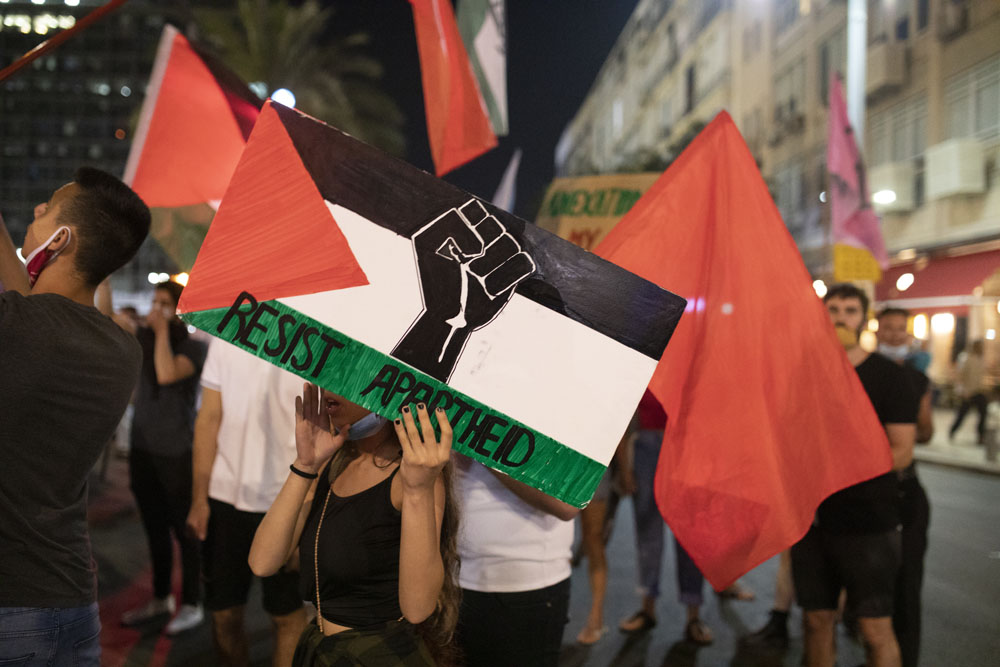


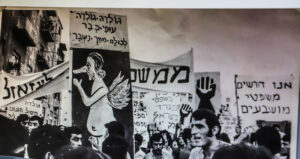


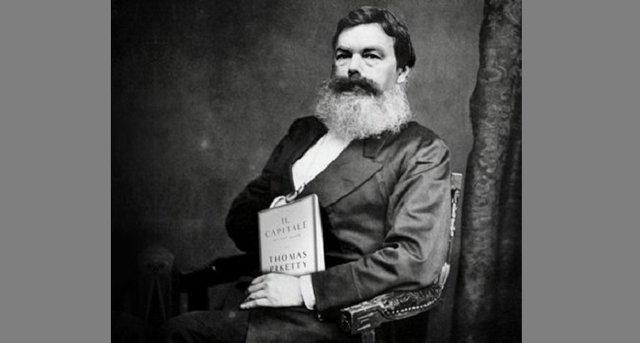
 In his book Capital in the Twenty-First Century,
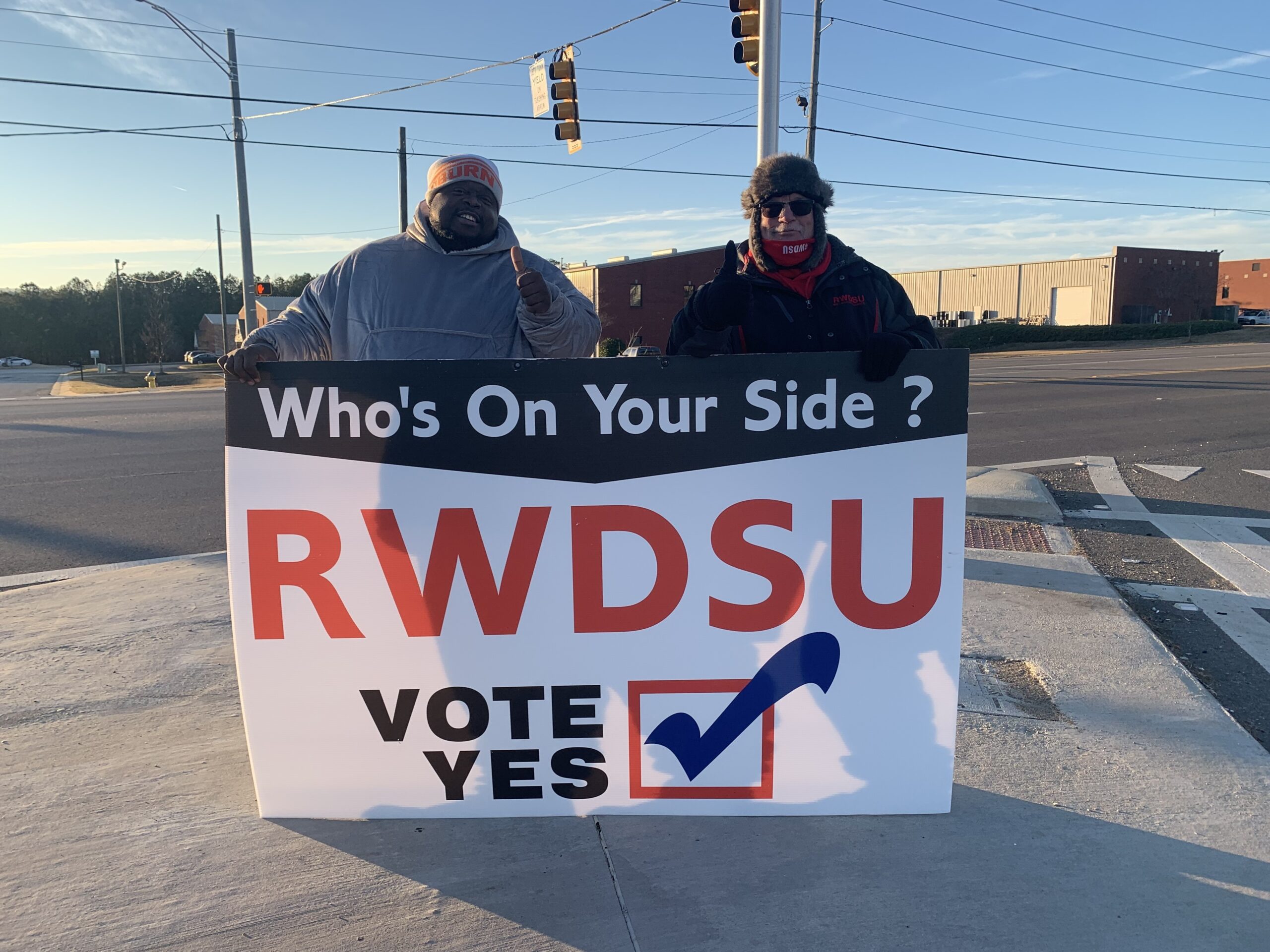
 This article was written for L’Anticapitaliste, the weekly newspaper of the New Anticapitalist Party (NPA) of France.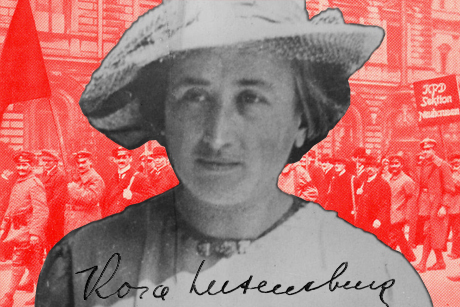
 Rosa Luxemburg, the Polish-born revolutionary of Jewish heritage who was born 150 years ago on March 5th this year, had no reason in her frenetic political, intellectual and literary activism to attend to an inconsequential island in the Indian Ocean.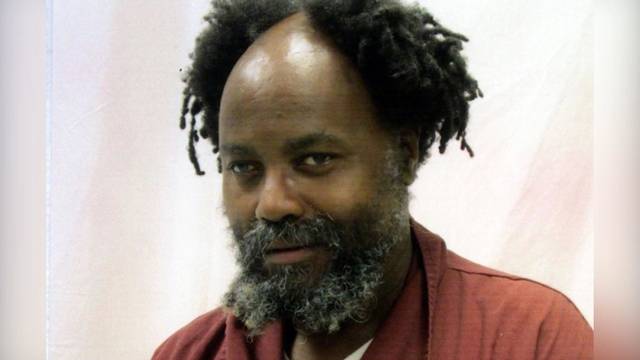

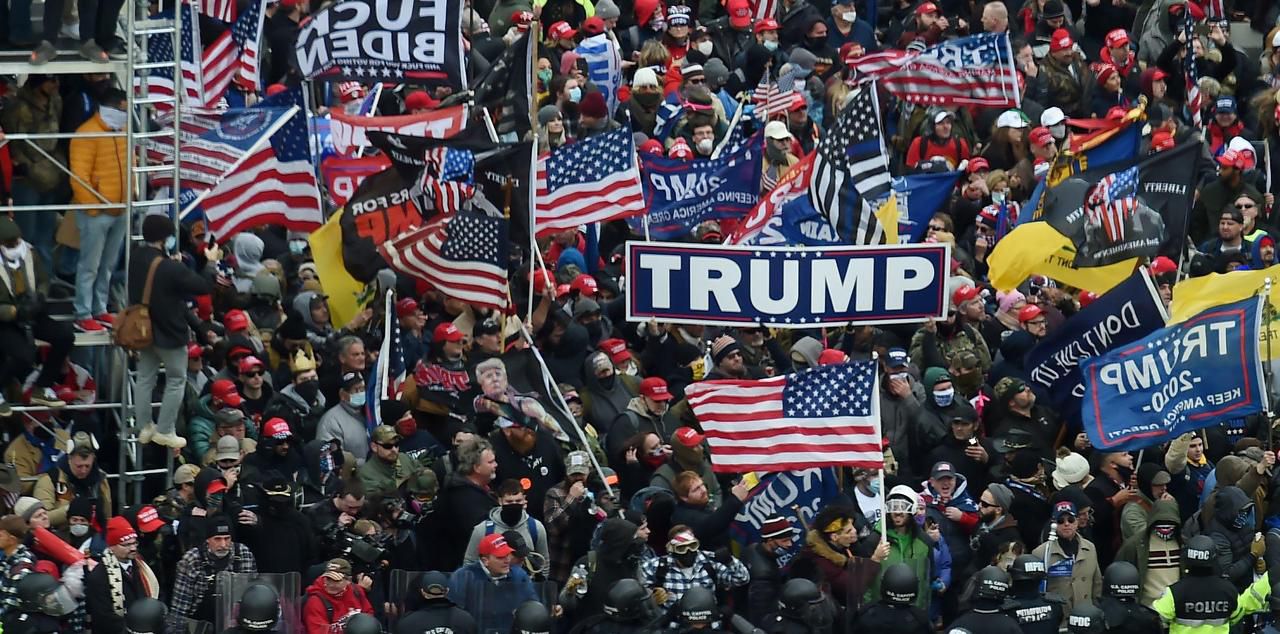
 Contrary to many expectations President Trump was unable to launch a coup d’etat in order to remain in power. The January 6, 2021 putsch against the U.S. Capitol demonstrated that violent fascists pose an ongoing threat to the left and to protest movements. However, the opposition of the entire Federal repressive apparatus and the capitalist class in the US, allowed a quick clamp down, even after some initial bungling. Put simply, the rioters are a threat to working people, but not to the state.
 Editors’ Note – We recognize that some U.S. readers will be familiar with some of the history, organizations, and other issues presented here, but we publish this translation of the article as it originally appeared in La Joven Cuba [Young Cuba] so that a U.S. audience can get a sense of this important discussion taking place in Cuba.

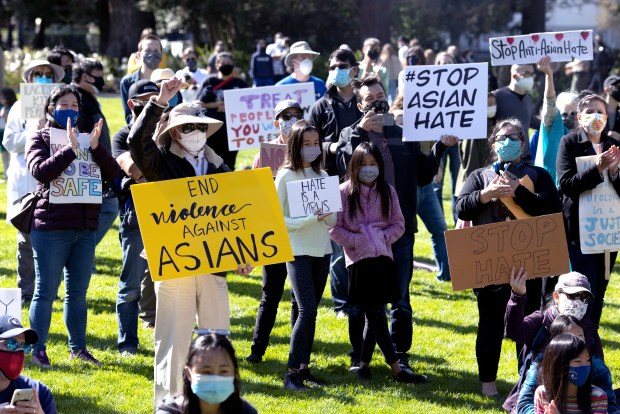
 This article was written for L’Anticapitaliste, the weekly newspaper of the New Anticapitalist Party (NPA) of France.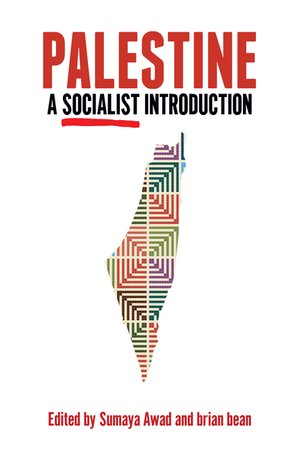

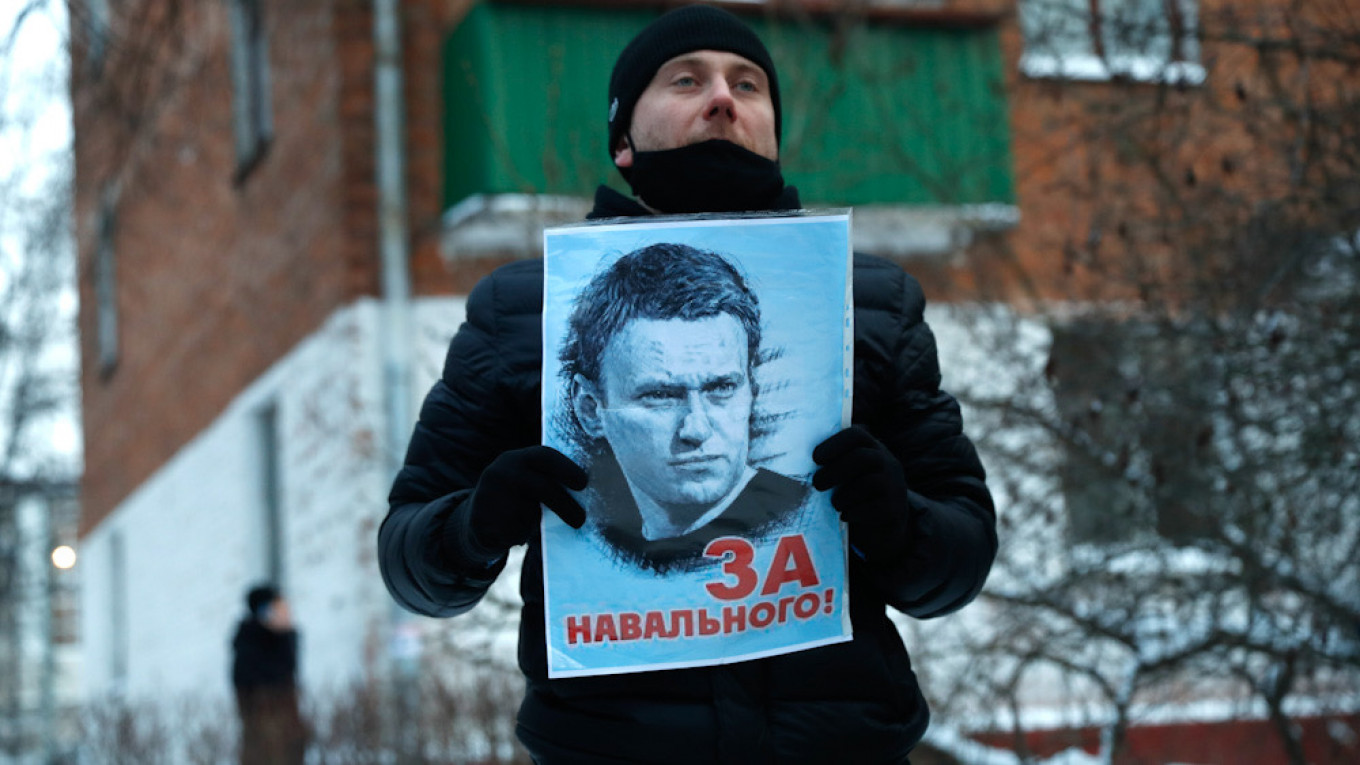
 Who is Alexei Navalny? We now hear nothing but good things said about him in the West, and the enthusiasm should probably be tempered. I personally have never been a fan of Navalny. At the same time, the guts he showed in returning to Russia when he knew he was threatened both physically and legally unmistakably raises him to the level of a modern hero.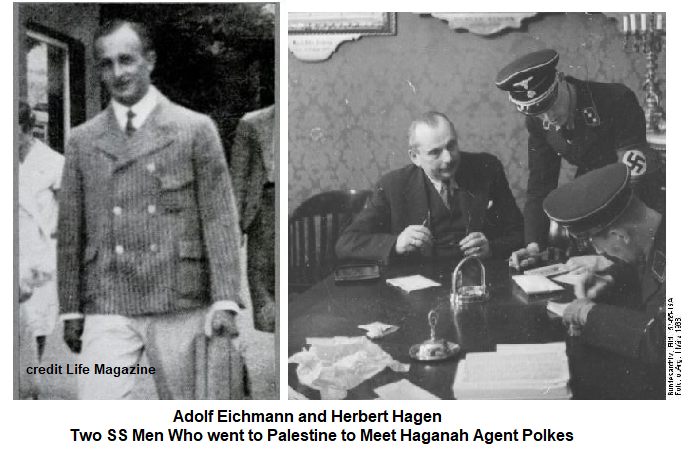

 This article was written for L’Anticapitaliste, the weekly newspaper of the New Anticapitalist Party (NPA) of France.
 It’s taken far too long time for me to write this. Many others who knew Leo Panitch – professor political science at York University in Toronto, longtime co-editor of the Socialist Register, and author of many important essays and books – for a longer period than I did and/or saw him more regularly than I did were able to write memorials to him fairly quickly. I couldn’t. For whatever reason, when Leo died suddenly on December 19th last year – of COVID-19, of all things! In the Toronto hospital he went to for cancer treatment! – I couldn’t get over the shock. The last year has been utterly hellish but for Leo to suddenly not be in it anymore…I couldn’t believe it. I still can’t. It doesn’t make sense.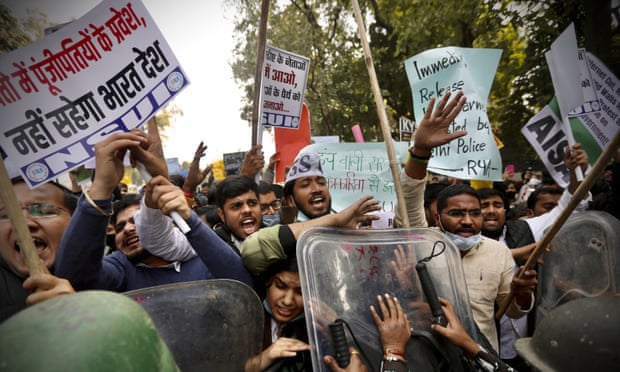
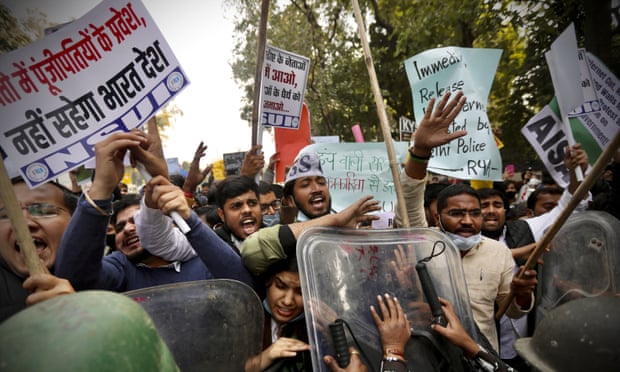

 Review of William I. Robinson, The Global Police State (Pluto Press, 2020)
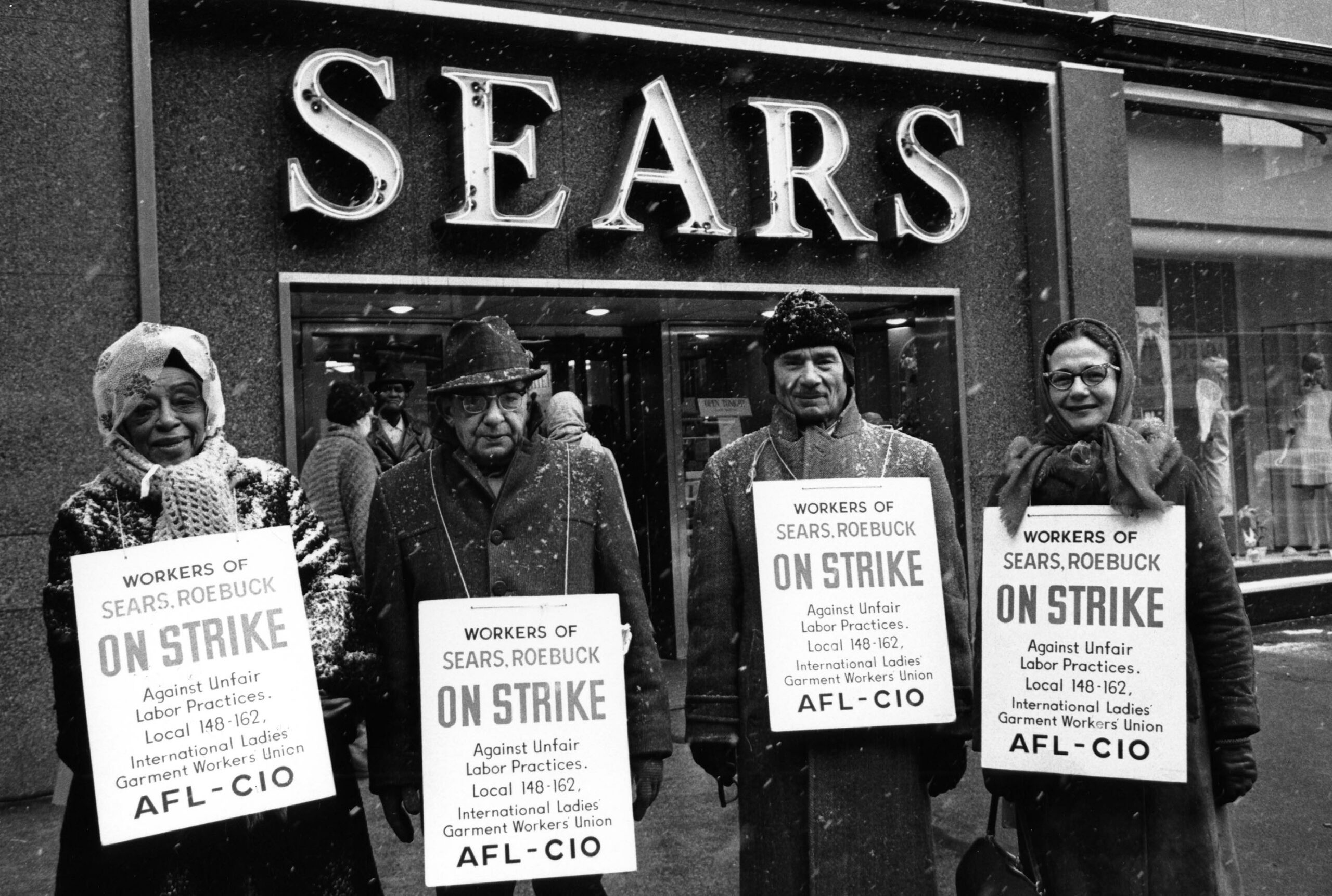

 The Wall Street establishment’s swift suppression of GameStop trading starkly exposed the most powerful elements of business rigging the market in favor of hedge funds. The episode has illuminated how the endless drive for profit, inherent in capitalism, extends not just to destroying the lives and jobs of the working class, but even to thwarting the market itself.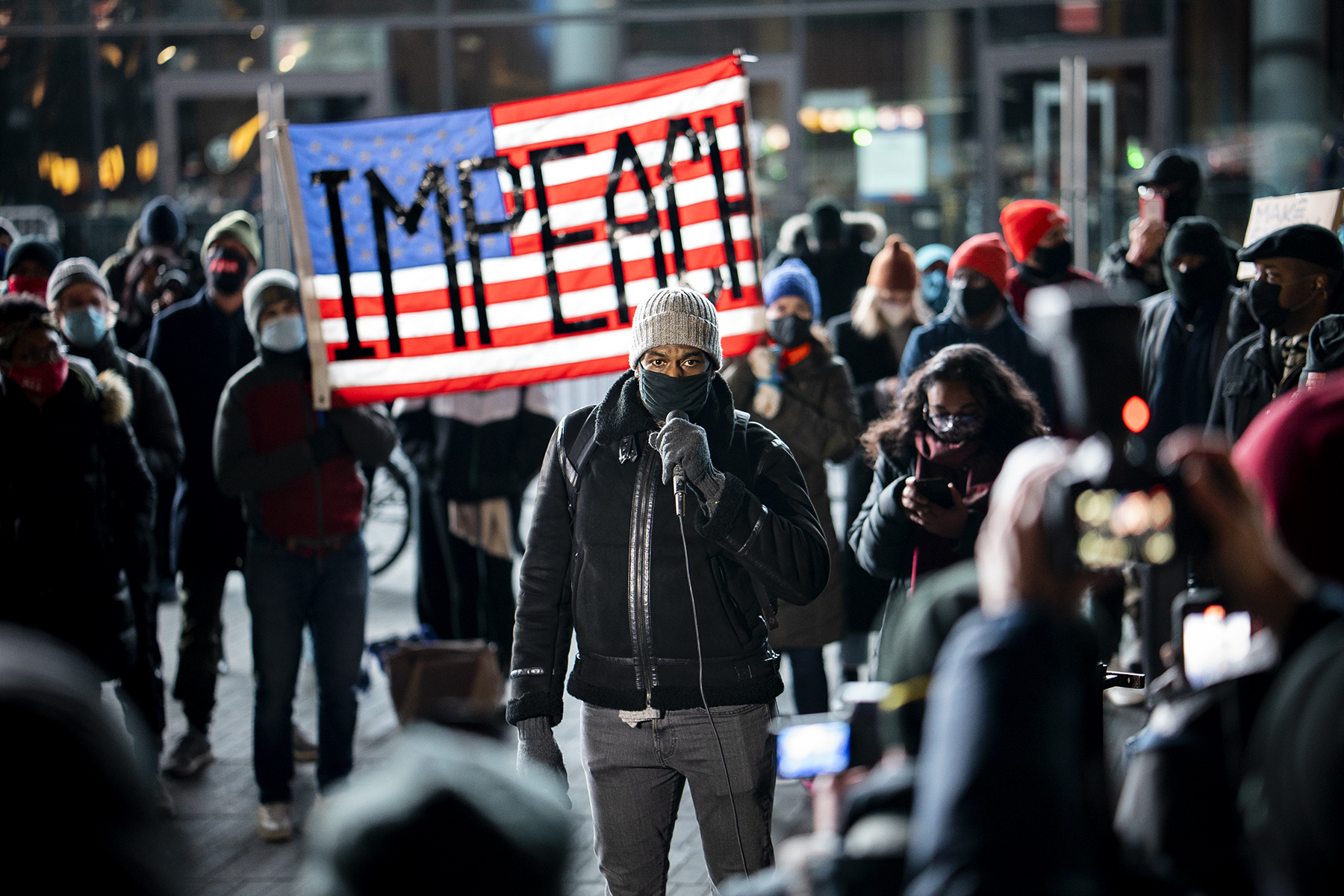
 This article was written for L’Anticapitaliste, the weekly newspaper of the New Anticapitalist Party (NPA) of France.