Blog

  • The radical right after Trump

    The radical right after Trump

    The nature of the American right was ill-understood during the Trump regime. The word “fascist” frequently circulated in liberal and left-wing circles. Yet, the only potential fascist was ousted from the White House before the Trump administration turned one. Now, the risk is forgetting that we still live under conditions favorable to right-wing extremism. The left needs to learn to operate in this Trumpism-prone world without, however, mischaracterizing it.

    The radical right lost the day Trump fired his “chief strategist” Steve Bannon. It will not have the capacity to decisively change this country unless it cultivates more Bannon-like figures, the counterparts of which have secured more sustainable regime change in countries such as Hungary and Turkey. The differentiating characteristic of Trumpism was not simply Trump’s incompetence, but his lack of cadres. Such cadres and the movement they built, not only the skills and charisma of Erdoğan, produced the longest lasting of the radical rightist regimes of the 21st century. How likely is the far right to manufacture an Erdoğan-like transformation in America?

    Any meaningful evaluation has to start with the “heartland.” The Rust Belt determined the fate of the presidency once again. The ex-industrial states of the Midwest had swung from the Democrats to the GOP in 2016. In 2020, they mostly went blue. One reason for this switch was Trump’s failure to deliver on his promise of jobs.

    The misleading employment figures of the last years fostered the impression that Trump was living up to his campaign message, at least before the pandemic. However, these jobs – scattered over the country rather than concentrated in the Midwest – were nothing like the jobs destroyed by the free market policies of the last forty years. Trump’s tax cuts created many fleeting, insecure jobs. Those could not deliver the 1950s-style America that the MAGA hats yearned for. Trumpism handed white workers the exclusion (of competitors and scapegoats) they desired, but could not include and mobilize them sufficiently.

    Within the Trump administration, the only person who consistently pushed for an alternative policy package was Steve Bannon – the far right nationalist who wrote the “American carnage” speech that sent chills down the spines of many. Especially after his exit from the White House, Bannon openly called for what he termed “economic nationalism,” laying bare what he was conspiring to do while he was a part of Trump’s close circle. He wanted the state to act as an entrepreneur and planner – not to abolish capitalism, but to take it under the control of an ideologically motivated government. The public spending spree he envisioned required higher, not lower taxes. He attempted to raise taxes on the wealthiest Americans in the summer of 2017. He was soon fired without getting an opportunity to fight for this plan. After that event, Trump’s promise of a “huge” infrastructural overhaul was reduced to dust.

    Only a massive economic transformation could decisively sever the Rust Belt from the Democratic Party and turn it into an unshakeable part of the Republican Party. However, business interests hold the GOP’s reins too tightly to permit any such overhauling of traditional Republicanism. As importantly, the radical right does not have sufficient organization, let alone a clear policy and ideological direction, to counter-balance entrenched commercial interests. Such were the social forces that bought America some time against a sustainable radical right wave.

    Yet, the problem remains. An atomized, racially fragmented, demoralized working class will always be prone to Trumpism (by any other name). If Biden and the Democrats stick to the policies they have implemented and backed ever since the late 1970s, disorganized workers will either further shift to Trumpism or (as is more likely with Blacks) simply abstain. These policies have rendered the Democratic Party an empty shell, without a loyal base in the working class. Trump’s hatred-driven presidency drove many people to the polls in 2020, both for and against him. But make no mistake. In the absence of an immediate perceived Trumpist threat, another lackluster four years of conservative liberalism (of the Bill Clinton-Obama variety) will keep minorities home more successfully than any campaign of voter intimidation, while the right gets more energetic.

    The question is: will the radical right be in a good shape to react to the increasing misery of the Midwest in a formative way? So far, the signals are mixed. The right-wing street is getting more and more active, without any transformative impact. After Bannon’s dismissal, the far right first fell silent, then had three bursts of activity that created the false impression of a fascistic threat. All crammed into an election year, the gun rallies, the anti-shutdown demonstrations, and the anti-BLM protests in 2020 did not take one step away from the conventional Republican line in the realm of economics. They only made it more viscerally racial. These bursts smacked of election year opportunism and did not feature any ideological agenda. They served Trump more than Trump served them, despite the liberal and left belief to the contrary. Having missed every opportunity to transform the Republican Party, the far right is once again, at the end of 2020, mobilized to save the presidency of a person who is mostly interested in himself and couldn’t care any less about their cause.

    The radical right needs two major dynamics to render it a real regime-changing force, one negative, the other positive. First, it needs an imaginary or overblown left-wing and/or racial threat to organize against. That is the negative dynamic. Second, it needs policies that can solidify a material base: a coalition of people with economic investment in regime change. That is the positive dynamic. With traditional conservatism so much in control of even the most violent of radical right waves, economic nationalist policies that would expand the GOP’s militant base are quite unlikely. Many workers can swing between the two parties and occasionally support right-wing fanatics, but that doesn’t make them fascistic militants. The lack of a positive ideological agenda leaves anti-left mobilization as the right’s safest bet to think and act outside the box.

    There is still a palpable menace that militias and other organizations can expand their constituency by mobilizing in response to the post-election legal process, and other crises that will surely unfold in the next four years. Many people are truly worried that BLM protestors and alleged “socialists” are taking over the country and wreaking havoc. Prior to the vote, commentators believed that such perceptions were restricted to ultra-conservative whites, as well as Cuban-Americans and Venezuelans, but the increasing Black and other minority vote for Trump now shows how influential the red/black scare is. Conservative Democrats are stoking these fears too. This conspiratorial thinking might indeed pull many people to the streets, and into violent organizations, in the coming years.

    However, just like it wasn’t anti-Semitism or the paranoia of “Judeo-Bolshevism” on their own that consolidated fascist regimes in interwar Europe, hatred and fear of Blacks, Mexicans, Muslims, or socialists cannot lead to sustainable regime change. Nazis provided secure jobs and other material benefits to the German people (at least for a while), not just a romantic “utopia” of racial purification. Their racial and political extermination of opponents and minorities was embedded in a larger project of popular economic transformation. The sustainability of contemporary extremist regimes too requires a mass base that has economic interests in the perpetuation and deepening of coercive authoritarianism, as the economic nationalist regimes of Orbán and Erdoğan show.

    Nevertheless, Turkey and Hungary are dependent on world markets and their economic nationalism has devastating limits. In the less dependent US, a similar regime would have a very late expiry date. If Bannon-like figures rise to the helm of the upcoming street action, the results would be disastrous. An institutionalized Bannonite mobilization, however, would necessitate not just an authoritarian politician more agile than Trump, but strategically seasoned cadres who can guide street action, and then keep the next authoritarian president under close scrutiny to prevent him from firing their ideologues. Although it is dubious that the American radical right has this capacity, the danger cannot be written off. So, even if the emergence of right-wing economic nationalism is not an immediate possibility, once it does emerge, there might be no chance of reversal for a very long time. What can we do to prevent such a scenario?

    For racial and ideological hatred to congeal into institutionalized mobilization, the left threat needs to be imagined and exaggerated more than real. When there is a truly organized left-wing alternative, many people who can become far rightists join the left. In other words, left-wing organization would halt the pendulum swing of the Rust Belt and once again make it a wall against reaction. That could start to happen even before there is comprehensive policy change – if and when the left can build solid organizations on the ground and propagate an agenda that clearly shows a way out of the mess of the last four decades – even though an unbreakable Midwestern-left coalition would require actual economic regime change.

    An organized left also has the potential to stop right-wing radicalization in its tracks. As sociologist Michael Mann has demonstrated, the Nazis became the strongest when the upper classes still feared losing their property and privileges, but when such loss was far from a realistic possibility. It is far from certain that there ever was a possibility of radical social transformation in Germany, but if there was, it was unquestionably over by 1923. We only know that thanks to hindsight. The German upper classes, not aware of how weakened the revolutionaries were, lived in perpetual fear for a decade, which pushed them to fund, logistically support, join, or at least tolerate the Nazis. By contrast, where there was solid organization on the left, anti-Semite death squads were put down even in the most culturally anti-Semite of the European cases of the time – the Russian Empire. Organized workers had started to repress these (quickly spreading) death squads as early as 1905 – twelve years before the left came to power.

    Among contemporary cases, Erdoğanism became truly radicalized as the Turkish people got more disorganized, but the further organization of the Kurds created the unfounded fear that Turkey was about to be Balkanized. Even if not as dramatic as Nazism and Erdoğanism, recent years are full of comparable examples. And let’s not get too carried away by apparent left-wing victories, or their fleeting possibility. A Sanders presidency in the absence of trained cadres could have led to more authoritarianism, as the Corbyn case indicates. If a radical government (or, as in Britain, a radical leadership of the main opposition party) is not backed by cadres and movements on the ground, it can easily prepare the scene for its mirror image. This applies to the radical right as much as it does to the radical left. An organizationally weak right-wing storming of the White House could hold its ground only for four years and now left its place to an unprepared liberal party; and an organizationally weak left-wing ascendancy in Britain created unnecessary panic among liberals, further solidifying the tenure of the Brexiteers who lack any vision for the country. The rise of the authoritarian, but ideology-free, populist Bolsonaro too is traceable back to Brazilian cadres’ and movements’ abandonment of political training, base-building, and strategizing after years of demobilization under the country’s increasingly corrupt leftwing government. In short, a disorganized left and a red scare conjointly pave the way for a shift to the radical right.

    We are, then, confronted with two realities that are only apparently contradictory: the far right needs to have a left-wing bogeyman to grow and root itself, and the current American left does not have the strength to stop right-wing militancy. This apparent contradiction dissolves in light of the analysis above, which carefully underlines the implications of an imagined and a real threat of social transformation. Ignoring this complexity, conservative Democrats insist that we should give up progressive demands in order to appease right-wing anger.

    On the surface, the liberal-conservative fantasy of uprooting any talk of socialism seems to make sense: in the absence of challenges to wealth concentration and white privilege, the far right would lose one of its motivations to organize. However, this objection to any mention of socialism ignores two important factors. First, there is so much frustration with the existing system that if the left does not organize it, the far right will, even if an imagined leftwing threat does not quicken that organization. Led carefully by ideologues and cadres, such organization could lead to an irreversible undoing of fundamental democratic rights. Second, as long as centrists keep on discouraging leftists from mobilizing, they are contributing to the disorganization of people who could fight the increasingly militant right-wing forces.

    It is not really possible to predict whether a new Bannon will emerge to give the far right a more consistent ideological direction. But we do know that organizing a real left, rather than letting the radical right further spread the mirage of a so far non-existent socialist threat, would definitively block any chance of a right-wing regime change.

  • Counter-historical Revolutionary: Dan La Botz’s “Trotsky in Tijuana”

    Counter-historical Revolutionary: Dan La Botz’s “Trotsky in Tijuana”

    Book Review

    Trotsky in Tijuana (Booklocker—Serge Press, 2020, 471 pages. $20.99)

    Dan La Botz, the author of some dozen non-fiction books on politics and history, has published this first novel eighty years after the murder of Leon Trotsky by an agent of Joseph Stalin in Mexico City on August 20, 1940. Trotsky was, after Lenin, the most important leader of the 1917 Russian Revolution: Chairman of the Petrograd Soviet, chief organizer and head of the Red Army curing the civil war of 1918-1921, and from 1924 leader of the Left Opposition against Stalin’s rise to power. In consolidating his bureaucratic counter-revolution, Stalin succeeded, step by step, in marginalizing Trotsky and in 1928 forced him into exile. Trotsky continued his political work in Turkey, France, and Norway before finally being invited by the reformist Mexican President Lázaro Cárdenas to settle in the Coyoacán area of Mexico City.

    It was there, a few months after a failed assassination attempt on May 24, 1940, that Ramón Mercader, a Spanish-born agent of the NKVD (forerunner of the KGB), attacked Trotsky in his home office and severely wounded him with a mountaineer’s ice axe. Trotsky died the following day at age 60 and was buried near the house where he lived. His mourners included large crowds of ordinary Mexican citizens.

    A statement by the publisher on the copyright page of Trotsky in Tijuana states that “While this is a counterfactual historical novel inspired by the lives of real people, all of the characters and events in this book are fictitious. Any similarity to real person, living or dead, is coincidental and not intended by the author.” La Botz provides a less confusing description in “A Note on Sources” that follows the final chapter: “In writing this counter-historical novel, I drew on many sources . . . to more accurately portray the period and my fictional characters” (p. 465). What this characterization implies is that “counter-historical” writing doesn’t exclude or avoid the “historical” (like, say, “fantasy”), but stands in dynamic relationship to it: the “counter-historical” depends on, even as it differs from and extends beyond, the “historical.” “Counter-historical” fiction inevitably calls attention to and provokes curiosity about the extent to which characters and events are either rooted in or independent of historical actuality.

    The relationship between history and fiction that I’m describing here is built into the narrative organization of Trotsky in Tijuana. We begin in the summer of 1939: Stalin’s “show trials” of 1936 have resulted in the deaths of thousands of old Bolsheviks; Fascist Italy has annexed Ethiopia and Albania and signed a treaty of cooperation with Nazi German; Hitler’s Anschluss has incorporated Austria and the Czech Sudetenland into the Third Reich and is about to invade Poland, marking the formal beginning of World War II. Trotsky and his second wife, Natalia Sedova, along with their young son Lev Sedov, arrived in Mexico in January 1937. At first they lived with the artists Diego Rivera and Frida Kahlo in La Casa Azul (The Blue House). But in April 1939, after Trotsky’s affair with Kahlo precipitated a break with Rivera, they moved a few blocks away to a residence in the same Coyoacán area of Mexico City. Trotsky’s work at the time was primarily focused on building the Fourth International, an organization of revolutionary socialists around the world dedicated to opposing Stalinism.

    The first seven chapters of Trotsky in Tijuana, by offering various perspectives on this period right before Mercador’s violent assault on Trotsky in August 1940, work in the usual ways of historical fiction. This includes the introduction of fictional characters into a narrative that we clearly recognize as historical. The most consequential of these fictional characters (at least I think he’s mainly fictional) is Ralph Bucek, a young working-class guy from Chicago’s Southside who, inspired by hearing a speech by a leading American Trotskyist, travels to Mexico City and joins the small group dedicated to protecting Trotsky and his family.

    Ralph is not just an important character in the novel, however: he is also represented as the author of the Preface, dated “Chula Vista, California, 1961.” After sketching out the main events of his life and his relationship with Trotsky, he says in this Preface: “I am uniquely situated to write what is a true account of Trotsky in those years in Tijuana and I can state sincerely that this novel is also history and that this fiction is also truth.” What La Botz has done here, we might say, is to create a fictional author who claims a fictional authenticity for a narrative that is actually a complex blend of fiction and history. Readers will no doubt have different responses to this opening move, which is in some respects at odds with what La Botz himself says in his “Note on Sources.” He might have made Ralph the narrator of the novel itself, but that would have produced a book very different from the one we have. Instead, after a Preface in which he identifies himself as the author, Ralph becomes a third-person character in a novel with an unidentified omniscient narrator.

    The crucial turn in Trotsky in Tijuana from “historical” to “counter-historical” fiction comes in Chapter 8, where Mercador’s historical assassination of Trotsky’s is transformed into an attempted assassination and escape. I won’t reveal exactly how this happens; I’ll just say that the details are surprising in many ways and that Ralph plays a key role in Trotsky’s fictional survival. The last two paragraphs in this chapter dramatically foreground the shift into counter-historical discourse. All the verbs are conditional–“would have happened,” “would have been taken,” “would have run,” “would have made,” “would have meant,” “would have been left,” “would have evolved”—until the final sentence: “But remarkably, Trotsky survived” (p. 46).

    The next chapter takes its title from words spoken by Natalia Sedova: “We shall have a little more time . . .” On August 21, 1940, the date of Trotsky’s actual death, President Cárdenas visits the counter-historical Trotskys and insists that conditions have become too dangerous in Mexico City. He has arranged for Trotsky, his family, and his guards to move to the small Baja California town of Tijuana, just across the border from San Diego some 15 miles to the north. We are told that the population of Tijuana at this time was around 15,000 (today it’s the sixth largest city in Mexico, with a post-NAFTA population well over 1.5 million). In 1940 Tijuana was already economically dependent on bars, nightclubs, and brothels that catered mainly to US navy and marine personnel stationed in and around San Diego.

    Imagining Leon Trotsky as a resident of this particular Mexican town is the source of much that’s entertaining as well as historically and politically challenging in this novel. We learn from a final note “About the Author” that from the age of 11 La Botz himself lived, studied, and worked in the area of California just north of Tijuana. His cultural attachment to and political understanding of this area, on both sides of the border, enables him to create a rich and unexpected counter-historical environment for the novel’s “what if” conjectures about Trotsky’s life and work.

    La Botz imagines Trotsky continuing his political work with tireless concentration and determination. Every day he reads newspaper in Russian, German, English, French, and Spanish as well as a constantly replenished library of books and articles; he maintains a vast correspondence with comrades around the world dedicated to the Fourth International project; he generates his own written interventions by using a Dictaphone to produce texts that will then be revised and edited for distribution or publication. Trotsky’s discipline and concentration are represented as astonishing—and inseparable from limitations in his personal relationships. He loves Natalia and Lev and feels affection for those who work with and for him. But the project of preparing and providing leadership for an international socialist revolution is always the priority.

    Trotsky’s most significant contribution during the 1930s was his analysis of the rise of fascism in Germany, Italy, and elsewhere around the world. Especially important in this respect was his updating of a “united front” strategy, first articulated in 1922, that would enable revolutionary organizations of the working class to build resistance alongside non-revolutionary anti-fascist forces without dissolving or surrendering their own independence. As the early stages of World War II developed, Trotsky came to assert two additional and more problematic positions. One was that the war would produce a near-total collapse of the global capitalist system. The other was that in the wake of this collapse, the working class would rise up in opposition to both fascism and capitalist war and begin the process of carrying out an international revolutionary transformation of society. The Hitler-Stalin pact of August 23,1939 showed that Stalin’s vision of “socialism in one country” was a corrupt lie. Trotsky continued to believe that the Soviet Union was a “degenerated” workers’ state—a workers’ state “with bureaucratic distortions.” He insisted that Stalin’s dictatorship would be swept away in a global wave of working-class self-emancipation.

    Trotsky in Tijuana isn’t exclusively devoted to Trotsky’s political work. More personal psychological concerns also make their way into the novel, particularly in a sequence beginning with Chapter 27, “Natalia Seeks Help for Trotsky.” Concerned that political isolation and frustration were causing Trotsky to become seriously depressed–and knowing that Trotsky was an admirer of Freud and, when he lived in Vienna in 1913-14, had begun psychoanalysis with Freud’s follower Alfred Adler–Natalia contacts an Austrian psychotherapist named David Bergman, now based in Los Angeles, and arranges for him to visit Trotsky in Tijuana. They have serious extended discussions—but Trotsky is adamantly unwilling to undergo treatment.

    These discussions are arranged through a mutual friend named Morrie Gold, a flamboyant nightclub promoter who also introduces the Trotskys to one of the novel’s most remarkable characters, a brilliant and extraordinary Jewish “comedienne”(as the novel refers to her) named Rachel Silberstein. Trotsky falls in love with Rachel and eventually has an affair with her, which precipitates a serious crisis in his relationship with Natalia. I have no clear idea of how to judge the historical or counter-historical significance of this part of the novel, but it makes for fascinating, and ultimately very painful, reading.

    La Botz’s novel shows Trotsky spending much of his time and energy trying to resolve factional disagreements within the international Trotskyist movement—disagreements that partly arose from Trotsky’s own exaggerated sense of terminal capitalist crisis and of the imminent strength and unity of the international working class. He also shows Trotsky stubbornly and proudly refusing to listen seriously to revolutionary socialists who disagreed with him and recurrently insisting on his own unique leadership. The central questions posed by Trotsky in Tijuana have to do not just with the character and direction of Trotsky’s influence at the time of his actual death in 1940, but with whether or not that influence would have changed had he lived another 13 years—that is, as long as Stalin himself.

    My own speculation is that Trotsky’s position would have been significantly affected by the unimaginable number of workers killed during the Nazi holocaust, by the German invasion of the Soviet Union and the Allied bombings of cities in Europe and Asia—and by the strength and influence of the U.S. economy following World War II. Reading La Botz’s novel has prompted me to rethink the effects of that war on the fate of revolutionary socialism in the latter half of the 20th century.

    The clearest indication of the novel’s underlying political perspective may perhaps be seen in Chapters 53 and 54, where Victor Serge, the Belgium-born former-Bolshevik, novelist, poet, and historian visit the Trotskys. An anarchist in his early years, Serge remained loyal to the 1917 Revolution and joined Trotsky and the Left Opposition after Lenin’s death. But he was always in some respects at odds with Leninist centralism and severe party discipline. La Botz writes: “While he became a Bolshevik, [Serge] remained a libertarian at heart” (p. 308). During his imagined visit to Tijuana in Chapter 54, Serge argues that Trotsky’s vision of an imminent international working-class revolution following World War II is “a utopian ideal for the future” (p. 318), not a realistic analysis for socialist advance in the present. In addition, Serge believes that, “Lenin’s democratic centralist model before the revolution was lost” (p. 322) in the course of the civil war and in the failure of Marxist revolutions to succeed in other countries. The only immediately feasible project for the mid-1940s, in Serge’s view, is “the laying of a humanistic foundation for a future democratic socialist movement” (p. 324). Trotsky furiously accuses Serge of having abandoned the revolutionary cause and turns his back on his former comrade. “And so in dusty Tijuana,” the chapter concludes, “two of the Russian Revolution’s great figures, the last two Bolsheviks, its leading theoretician and man of action and its great intellectual-artist, parted. They would never meet again” (p. 324).

    Trotsky in Tijuana is divided into four parts: “Saved,” “War,” “Post-War,” “Love and Death.” Within and across these divisions are chapters that focus, alternatingly, on Trotsky and on Stalin—and on the characters that the novel depicts as their future assassins. In Chapter 15 we are introduced to a member of Trotsky’s original Mexico City “team” named Jan van Heijenoort, called “Van,” a Dutch immigrant who had grown up in France, became a dedicated Trotskyist, and now insists that nothing short of the assassination of Stalin can restore the possibility of socialist revolution. Trotsky angrily disagrees, shouting “We will not resort to terrorism and assassination” (p. 83). The fictional Van is determined and finally carries out his plan in Chapters 77-78, poisoning Stalin with a large dose of the anti-coagulant warfarin secretly added to a bottle of wine. (Historically, though there were rumors that Stalin had been poisoned by his second-in-command Lavrentiy Beria, the medical conclusion was death primarily due to a massive brain hemorrhage.)

    Van’s counterpart and rival is Mark Zborowsky, who calls himself Étienne. He had worked with Trotsky’s and Natalia’s deceased son Lyova in France during the 1930s; in 1942 he presents himself as an admirer of Trotsky’s political positions and is invited to become Trotsky’s “Russian secretary.” He makes a brief and, as it turns out, sinister appearance near the end of the confrontation between Trotsky and Serge in Chapter 54. Étienne is really an agent of the GPU, Stalin’s intelligence and secret police service. He bides his time until finally, on March 5, 1953, he fatally poisons Trotsky by putting ricin powder in his orange juice. (The “real” Mark Zborowsky was an anthropologist and an NKVD mole in Paris and in the US. He served a four-year prison sentence in New York in 1962 for spying. Upon release he resumed his academic career and died in 1990 at age 82).

    For readers who may feel that by historicizing La Botz’s “counter-historical” novel I’m spoiling the plot, I can only restate my view that fiction of this kind inevitably provokes us to think about the history that’s being “countered” or re-imagined. So what are the consequences for our historical understanding of Trotsky and Stalin of having them both die at the hands of assassins on the actual day of Stalin’s death? This climactic move in Trotsky in Tijuana underscores the degree to which they represented antithetical political visions of the Russian Revolution and its aftermath. But I find myself resisting the political implications of making their deaths so starkly symmetrical. One of the seven quotations that follow the title-page of this novel is from Sketches for an Autobiography (1960) by A.J. Muste (1885-1967), a Dutch-born American clergyman and activist in the labor, pacifist, and antiwar movements: “Trotsky controlled his followers about as autocratically as Stalin controlled his, though of course Trotsky did not have at his command the crude disciplinary instrument which Stalin had in such abundance.” I find this seriously misleading. We can acknowledge Trotsky’s misjudgments and resistance to being challenged without seeing his influence as in any sense whatsoever the equivalent of Stalin’s genocidal oppression.

    Trotsky in Tijuana recognizes the importance of Trotsky’s revolutionary vision and leadership in the years before he was exiled from Russia. And it shows that the force of his commitment to the transformative power of the working class continued into the 1930s, especially in the fight against fascism. But both the historical and the counter-historical agenda of the novel emphasize the limitations and misjudgments of the last 4-5 years of his life. That being said, this is a skillfully written and politically engaging book—certainly among the best of the novels in English based on Trotsky’s life. (For an informative review of four such novels published fairly recently, see Paul Le Blanc, “Trotsky—truth and fiction,” International Socialist Review # 75, January 2011). Tony Cliff’s 4-volume biography of Trotsky (London: Booksmarks, 1989-1993) should, I believe, have been included in La Botz’s “Note on Sources.” Readers interested in an overview of Trotsky in Tijuana considerably fuller than that provided in the “Note on Sources” should read “On the 80th Anniversary of Trotsky’s Assassination—What If He Had Lived?” (New Politics, August 20, 2020).

    Bill Keach is a member of the Tempest Collective, Boston DSA, and Boston Revolutionary Socialists. His edition of Trotsky’s Literature and Revolution was published by Haymarket Books in 2005.
  • The Peru Power Grab

    The Peru Power Grab

    In Peru, democracy has been usurped. A political bloc made up of the most conservative and grotesque elements of traditional politics has in a completely capricious manner carried out the impeachment of the person who was only a few days go president of the republic: Martín Vizcarra.

    Since the Peruvian Congress decided on November 9 to remove the president for “permanent moral incapacity” by a vote of 105 in favor (out of 130 congresspeople), the response of the citizens has been unleashed in the form of a series of massive mobilizations, first in the capital of Lima and then the national level.

    The protests have not stopped and on the contrary they have increased in both their participation and their power to mobilize as a result of the establishment of the new defacto government of Manuel Merino (former president of Congress) who has neither social nor political legitimacy. He took office and holds power with the backing of a Congress rejected by 72 percent of the population, according to a survey by Ipsos, a Peruvian polling organization.

    It is important to mention that of the 130 members of Congress, 68 have pending investigations in the Peruvian judicial system for crimes such as embezzlement, abuse of authority, labor coercion, money laundering, aggravated usurpation, resistance to authority, and fraud among others; and this is a key point because it shows the enormous crisis of representation and of the institution of the parties that make up the legislature.

    The Origins of  the Current Crisis

    Peru’s current crisis is a result of a long and complex process that has sharpened in the last three years. Some critical political groups call it a crisis of the regime that has passed through several stage including the current on that could end up opening the door to certain structural changes.

    Ever since the Lava Jato (or Car Wash) investigation in South America that implicated the Brazilian Odebrecht firm in numerous bribes to presidents and influential officials in many Latin American governments, including Brazi and Peru, the traditional political classes of both countries have been exposed before public opinion. What burst out in 2016 as a political scandal called into question the institutional order and the rules of the game established by the state.

    The Lava Jato case in the Peruvian political situation brought in its wake in the last three years, three impeachments, including the investigation of three ex-presidents, the suicide of one former president, as well as investigations of two ex-mayor of Lima, and dozens of functionaries of various government agencies under investigation and house arrest. This explains in part a certain feeling of abandonment among the political class which began to feel cornered by the justice system and socially condemned, but that given the absence of normative and representative institutions continued to engage in its old practices of clientelism, corruption, and abuse of power.

    What is happening in Peru today is a consequence of that structural problem and Manuel Merino is not the cause of it, he is simply the expression of this crisis of the regime that is driven by its own agenda, completely separate from the interests of the majority of the country’s citizens. While these grotesque groups fight to make themselves the dominant political force ignoring the electoral process and arguing over the divvying up of governmental positions, while judges cover up teir crimes and politicians oppose an electoral reform that would control them, the citizens organize and mobilize themselves.

    Creating a National Scandal

    In the last few months, a corrupt political block has formed that has manipulated a story to justify the impeachment of the former president and the changes in the established political system. This bloc have developed a fictious interpretation of the Constitution in order to justify the illegitimate government. The first part of this plot to eliminate Martín Vizcarra involved the case of the singer Richard Cisneros, known as “Richard Swing,” who during Vizcarra’s presidency had received 175,000 soles (US$50,000) for a lecture tour. Opponents of the president argued that Swing’s employment was a case of political favoritism, an extradordinarily large payment to a narcissistic artist whose lectures were of dubious merit. A political opponent of the president recorded Vizcarra discussing ways in which to hide Swing’s visits to Lima and at the same time selfies of Vizcarra and Swing also surfaced.

    The bloc turned this situation into a scandal that ignited the public’s discontent at a time when Peruvian families were questioning decisions made by the government during the pandemic, among them the chaotic distribution of bonuses, the economic shutdown that led to upaid layoffs, the lack of hospital beds, respirators and othe issues. In this context, the Richard Swing case took on a significance in the media, as if one were talking about some historic issue such as the Dreyfus case. While it was completely irrelevant, it served as the first step in building a case for impeachment.

    A month later, three aspiring and useful collaborators agreed to that Martín Vizcarra received bribes and decided to testify to that. Regardless of whether or not that may be true, it was the second story that supported impeachment and soon became significant. The then government of Martín Vizcarra overestimated it popular support and trusted various political leaders. The isolation of his parliamentary delegation and of the party itself, which should have supported him in this tense situation, left him without maneuvering room to confront the hostile bloc.

    The leaders of the parties that today voted to impeach Vizcarra were those who at the time assumed a similar position with regard to former president Pedro Pablo Kuczynski, elected in 2016, with little parliamentary support in numerical terms and which ended up even weaker. Kuczynski had no option but to resign in favor of his vice president, Martín Vizcarra, who subsequently took office. Nevertheless, the executive-legislative conflict got to such a pont that it was necessary to dissolve Congress and call new elections. The new Congress was no guarantee of change.

    The Character of the Peruvian Right

    At this point, it’s important to explain to the foreign reader that in Peru there have always existed rightwing political groups who have been anxious to turn the government into a tool of private interests. And that in the last thirty years they have benefited from a clearly neoliberal economic, political and cultural model protected by the main obstacle that prevents certain changes and reforms in favor of public interests from being carried out in Peru: The Constitution of 1993.

    Then there are the most conservative, racist, and repressive sectors of the society, who hve the audacity to fire point blank at indigenous communities or to call the the people of the Andes llamas and vicuñas.” This the the group that has at this moment taken power by force and usurped the executive functions in circumstances that are seriously questionable from a constitutional and democratic point of view.

    However, they couldn’t have done it alone, that is, without some among the press that took charge of feeding the story that we mentioned earlier. The media is linked to another element of the right that controls banks, business associations, owners of clinics, insurance companies and universities, that has also contributed to this process. This sector of the right has greater influence in the means of communication, with those who manage public opinion, such as the networks of pundits who are regularly guest speakers on radio and television show who have a greater ability to make themselves heard. This group is the one that delegitimizes any citizen response and that preaches, at the encyclical level, the stigmatization of the sectors that are currently mobilizing.

    This is the group that during the pandemic preferred to charge ten or fifteen thousand dollars to hospitalize a Covid-19 patient in its clinics or to charge a patient one hundred dollars for a molecular test to rule out this disease. This is the group that had to disguise its entrepreneurial appetites so that its evident inability to collaborate and to express human sympathy would not look so bad.

    But as throughout history, the counterweight to theses powerful groups were initially left and progressive sectors that denounced in the legislature the breakdown of institutions and the profound corruption that Odebrecht had deepened, with all of the audio recordings that were distributed making clear the involvement of judges, politicians, businessmen, and former members of the National Council of Judges.

    This group raised up a new banner calling for the convocation of a constituent assembly and the writing of a new constitution. It dis not succeed in penetrating the mass of the citizenry which looks askance at the parties of this sector. It did,, however, find great support among the organized elements of progressivism which continue to this day to raise those slogans.

    There exists in Peru a long history of the use of popular demonstrations (the March de los Cuatro Suyos, the “Baguazo”, the “Pulpin” law, the “Repartija” y the Closing of Congress) that have served to put forward reforms in favor of a more just and inclusive nation. Manuel Merino’s illegitimate assumption of power together with his de facto cabinet is a new invitation to a transformation to be carried out on the threshold of the bicentenary of Peruvian independence.

    The Fight for a Genuine Republic 

    Peru has been experiencing massive protests in all of its cities. These are movements led by young people and other citizens, self-organized and spontaneous, who have gone into the streets to demonstrate against an illegitimate government. The heterogenous citizenry, made up of different social classes, of different economic conditions, different geographical regions, and with diverse cultural practices, succeeded in breaking the myth of fear of the street as well as the notion of an apolitical generation.

    The existence of popular power, despite what we believed for decades, has become explicit, it exists, and it expresses itself in a variety of protests that amplify the level of activism and he participaton of a generation that bases its organization in the social networks of Facebook, Instagram, and Tik Tok. In addition to the cacerolazos (the banging of pots and pans), they have projected images on buildings and wall, and issues multiple graphic manifestos and designs. This is a true representation of the “broad base” of this movement.

    At the same time, there are new social actors present in the demonstrations who emerge from the center of Lima and whose participation in the room where decisions are made is not permanent. I mean by that regional leaders, community groups, indigenous people, youth, and local people have been forced in their places of birth and who become in the end a social subject that gives us glimpse of another representation that goes beyond the usual official cast of characters. It is these people to whom not much attention has been paid who could nevertheless end up playing an important role in the next few years.

    On the other hand we have the representation offered by Señor Manuel Serino. His cabinet, formed after two days of uncertainty and anxiety, is made up of political figures linked to the parties of former presidents Alberto Fujimori and Alan García, and to the business sector represented by the National Confederation of Private Business Institutions (CONFIEP). It is a cabinet that turned its back on the reality and the crisis that Peru is experiencing.

    We state this for the following reasons. Within the Peruvian political system the irrationality of decisions and ephemeral alliances prevail. Those who direct the political parties that have a presence in the Congress are financiers of Peruvian politics who invest in taking over state positions, awarding public works, and in reducing to its minimum expression the rule of law. All of this to keep the state from meddling in their business affairs.

    A clear example of this is the case of the political party Podemos (We Can) headed by José Luna Gálvez and his private, low-quality university Telesup, which has been doing everything in its power to to prevent the passage of a rigorous and nobel univesity reform that would prevent them from scamming young Peruvians. But he isn’t the only one who doesn’t want a univesity reform; there is also Raúl Diez Canseco, a wealthy head of universities. And then too there is César Acuña, the owner of a conglomerate of universities and boss of a political party, Alianza para el Progreso (Alliance for Progress).

    But there interests also go beyond universities to shamelessly promote laws in favor of informal transport companies, illegal mines, churches against gender equality, the reduction of pension payments, and in general, changes in the rule of law. The end goal is to resore the old political order, of which they ceased to be a part years ago, together with impunity for the perquisites of office.

    Today they wnt to use a legitimate mobilization of the Peruvian people as a kind of lottery with which they might win again. The coming to power of Merino as president of the country extends the power of Congress over the executive branch, setting up an agenda completely opposed to the Peruvian population. And so the executive branch becomes simply a subcommittee of the Congress. Everyone in Peru is aware of this.

    It is in this way that Manuel Merino ends up being, in this process, the expression of a structural problem whose symptoms are political corruption and the deterioration of the relationship between politicians and the citizenry. Peru has still not been able to concretize its dream of life as a genuine republic as expressed in the classic historian Jorge Basadre and the essays of José Carlos Mariátegui.

    That promise is still pending and has not materialized for various reasons. One is them has to do with the behavior of the national elites and their economic perspective on public administration. Their vision is limited to the depredation of natural resources and to the delivery of these to foreign capital. Absent among them is any construction or management of a national project different from those that arise through politics, as well as a human outlook on the nation as a whole.

    It’s for that reason that when one makes comparisons with various other projects in South America–it’s only necessary to compare the Peruvian case with those of Chile or Bolivia—one sees their successes. While in Chile and Bolivia the crisis of the representativity of the political parties is an open debate and with some advances in that regard, in Peru one finds high levels of corruption and a terminal crisis of the political parties. The desired reforms speak to a country that does not exist and whose framework fits much better in societies with material living conditions different from those of Peru.

    The way out of this crisis that has taken place in Peru goes beyond the resignation or impeachment of Señor Manuel Merino, and neither is it to be founding Congress in political terms. In legal terms, Peru has no experience with this type of thing and therefore Constitutional /court will rule on November 18 on the legality or the illegality of the impeachment carried out against expresidnet Martín Vizcarra. That will be an historic precedent.

    The citizens’ discomfort demands changes and not for exchanges among the usual political actors who have at this time provoked an institutional and constitutional breakdown. Looming over this is the need for the construction of a national project that includes all and that ends putting forward legitimate representatives to carry out this popular project. There is a high level of responsibility in the progressive sectors of the country to reconstruct a new social pact based on the strongest defense of citizens’ rights and the values of equality and justice.

    The new correlate of this history goes beyond politics and indignation. It lacks a citizens agenda that could be a counterweight to those who defend the 105 congressional representatives who voted in favor of caos and disaster in the Peruvian government. A new promise or promises of republican life that can achieve unity in diversity and the beginning of the dismantling of the principal obstacle, that is, the Constitution of 1993, that impedes the carrying out of the urgent reforms needed by the people,.

    The proposal goes beyond the constitutional debate, and should instead begin with reality itself. The pandemic has revealed the enormous precariousness and inequality in a country with natural and cultural wealth. Peru deserved to see the dream of a genuine republican life fulfilled.

    Post Script: While this article was being edited, on the sixth day of protests there were reports of two youths, ages 22 and 24, killed in Lima. The Public Defender determined that both deaths were cause by projectiles fired at their faces and bodies by the Peruvian National Police. In addition, more tan a dozen people were detained, twenty young people have not been accounted for, and 17 people were wounded by the use of tear gas, pellets, or the use of force by the same police force. The social media have denounced arbitrary detentions, disappearances, and other human rights violations, as well as the use of force.

    On the morning of November 15, it was reported that ten governmental ministers had resigned because of public pressure. There have also been denunciations by cultural celebrities, journalists, and scientists who have walked off their jobs. They consider the Congress’ actions to be a coup d’état.

    At the same time, the leadership of Congress will meet to evaluate the resignation being demanded of Mr. Manuel Merino, as well as a motion of censure presented against the representatives who make up this leadership body.

    The protests do not stop, the slogan was unanimous: the resignation of Manuel Merino, the usurper president of Peru.

    [Photo – Sebastian Castaneda/Reuters in Aljazeera]

    Translated by Dan La Botz

  • After 2019 uprising, a new socialist formation and new political party, change the electoral game

    After 2019 uprising, a new socialist formation and new political party, change the electoral game

    Any attempt to address the electoral issue in Puerto Rico from a socialist perspective must begin by pointing out the limits of the electoral process in the island. It is important to recognize the broad restrictions that the colonial status imposes on the elaboration of a national policy. This limitation is stronger under the federally-appointed Fiscal Control Board, which oversees the fiscal policies of Puerto Rico’s government. 

    While acknowledging these limitations, we must also acknowledge that electoral politics and the electoral process attract considerable attention and that laws affecting the lives of the working-class majority are debated and adopted by the insular legislature. In addition, an important part of the colonial impositions (such as the Fiscal Control Board  itself and its austerity measures) are enabled by the parties that have dominated island politics, and have not been challenged in the only representative political space that the existing colonial status allows. Undoubtedly, we cannot be indifferent to the electoral process. Thus, it is a terrain of struggle in which the socialists can intervene, if they deem it opportune, a space through which a considerable part of the population could be reached. In what follows, we explain why Democracia Socialista chose to call for a vote for Movimiento Victoria Ciudadana (http://mvcpr.org) in the 2020 elections.

    The current historical context of Puerto Rico is that of a deep economic and structural crisis that began in 2006. This collapse, which represents the crisis of the existing Commonwealth status and its weak economic foundations, has also led to the crisis of the ruling traditional parties, the Partido Popular Democrático (PPD) and the Partido Nuevo Progresista (PNP). Although it is true that there are differences between them, they can be described as representatives of the same interests and the same ideology: both parties, since the second half of the 1980s, have internalized and represent the policies of the neoliberal capitalism, that is, policies that privilege the market, privatization, the downsizing of the public structures and the reduction of state intervention in the economy.

    This neoliberal process in Puerto Rico is part of the worldwide reconfiguration of capitalism. The processes of privatization and elimination of labor and social rights are not exclusive to Puerto Rico. However, the colonial condition of the island magnifies them. When the United States or Europe catch a cold, the poor, exploited and colonized countries get pneumonia.

    With neoliberalism as an ideological justification, important services in the country have been privatized, more than 30,000 public employees have been fired, bosses have dealt heavy blows against the rights acquired by the working class, all of this not to revive the economy, but rather to weaken the working class in the correlation of forces, favoring capital and its profits in an overwhelming way.

    The neoliberal model deepened the crisis in Puerto Rico: it implies an increase in the profits of some corporations and the accelerated impoverishment of the majority of the population. The contradictions resulting from the crisis have not gone unobserved by the majority in the island. Every year, the two dominant parties lose support, votes, and affiliates. In this sense, there is a space for an alternative movement that participates in the elections but is not limited to them, a movement that positions itself against the neoliberal ideology and encourages the struggle in the street. There is, therefore, the possibility of having an effective socialist intervention in the electoral process.

    But what does socialist intervention in the elections mean? The question cannot be answered out of context. At different times in the history of Puerto Rico, there have been socialist parties or parties that proclaimed themselves socialist, such as the Socialist Party of the first half of the 20th century and the Puerto Rican Socialist Party that participated twice in the electoral process (although their history and activities went beyond the electoral arena). At one point, the Puerto Rican Independence Party also adopted a socialist discourse. Socialist discourse is not a new phenomenon for electoral politics in Puerto Rico.

    The need for a transitional program is among the programmatic principles of Democracia Socialista: “We cannot settle for reforms to the existing society, on the one hand, nor for abstract revolutionary statements, on the other. The vast majority learn to question the existing society and discover their ability to transform it through experience and their own practice. To guide such experiences, a transition program needs to be elaborated and disseminated, which must be accessible of the great majority with their current level of consciousness, but which allows them to discover the limits that capitalism places on their aspirations for well-being.”

    It is of little use to shout in favor of the overthrow of the capitalist state while one is unable to mobilize the majority. But it would be even more dangerous to fall into reformist positions, which are satisfied with slight changes in society. Herein lies the importance of the socialist organization and the transition program, which always must be articulated and promoted with the revolutionary objective as a compass.

    We recognize that some people will opt for the electoral boycott. The electoral boycott could be a collective expression of discontent and a rejection of the two dominant parties and the neoliberal policies that they promote. It could also be a rejection of the colonial government structure as a whole. However, our goal, as revolutionaries, is not to put our rejection of existing institutions on record. Our goal is to attract ever wider sectors to question and reject these institutions. As Lenin suggested, as long as we cannot replace these institutions with more democratic ones, we must use them to present, promote and disseminate our ideas and program. A substantial part of our people, and of the working people in particular, participates in one way or another in the electoral process. Therefore, it must also be a field in which we present our proposals and it must be an objective to elect socialists to elective positions, from which, in constant contact with the struggles outside the legislature, they can contribute to the socialist project. We consider electoral participation, rather than boycott, to be the most appropriate form of participation at the present time. We add that the electoral boycott campaigns in Puerto Rico have been ineffective. A boycott requires real organizing work. Only rarely have massive boycott campaigns been organized.  Many times, the boycott becomes an individual act on election day. Nothing indicates that the 2020 elections will be different. The scope of a boycott in this context, therefore, is limited. Accordingly, we discard it as an option to follow.

    We are supporters of independence and socialists. As a new socialist organization, we try to recruit people who agree with our General Declaration that are willing to organize according to our norms. However, we understand that, at the present time, there is an increasingly broad sector in Puerto Rico that is abandoning the traditional parties of the bourgeoisie (the PPD and the PNP). They lose faith, respect, and loyalty for those parties. They question their styles and many of their policies. Many take or sympathize with progressive positions on environmental protection, the right to health and education, and other issues. They are open and looking for new political alternatives. However, at this time, the vast majority will not join socialist or pro-independence organizations. To promote our ideas, we have to transparently, openly and loyally state that together with these sectors we are willing to build a new political movement, with electoral projection, with a clearly defined program, committed to working people, to the fight against all forms of oppression, to environmental protection and decolonization. Building such a movement would be an extraordinary step forward in the political development of our people.

    We recognize that the Partido Independentista Puertorriqueño (PIP) has many good candidates. Furthermore, its program also has many points of contact with proposals that we consider should be promoted. They represent a rejection of the two dominant parties and of neoliberal policies. We understand why progressive and socialist people will support, with good reason, the PIP and its candidacies. The PIP plays a creditable and important role in representing the perspective of independence in the electoral process. As supporters of independence we recognize this. But the PIP, due to its closed and often sectarian policies, has been unable to incorporate the majority of the independence movement in Puerto Rico. More importantly, the PIP exerts little attraction on the increasingly large sectors that are abandoning the PPD and the PNP, who seek new options, but which at this time do not identify as pro-independence. In several consecutive elections, this historic party has failed to maintain its electoral franchise through the support received by its candidates for governor. It has largely succeeded in getting some of its legislative candidates elected. In 2020, at most, it will be able to elect a Senator and a Representative. We believe it can achieve this, and we want them to. But this alone is insufficient to begin to change the political game in Puerto Rico.

    Most members of the Democracia Socialista militancy (prior to its creation) supported the founding of the Partido del Pueblo Trabajador in 2010 and called on people to join it and support it in the 2012 and 2016 elections. The PPT functioned as a broad political movement that, while participating in the elections, was not limited to them. Under the slogan “in the streets and at the polls,” it adopted a program that promoted working class consciousness, militancy, and struggles, feminist and LGBT + struggles, and the environmental struggle. Without being a revolutionary party, it was a progressive party, which, in practice, stood for a transitional program. However, after two elections, and although it contributed to the public discussion on a number of important issues, it was clear that it had not been able to bring together a considerable part of the real and growing discontent against the two dominant parties and neoliberal policies. The electoral results were a reflection of the social isolation in a broad sense of the revolutionary left, on the one hand, and of the particular logic of electoral competition, on the other, in which factors such as the “usefulness” or “lesser evilism” of the vote are decisive.

    Recognizing these limitations, and after a series of discussions and assemblies, the PPT decided to pursue the creation of a new broader movement, with various sectors and individuals, with a program similar to the PPT. This process went through several stages, different names and the participation and withdrawal of several groups and organizations, but ultimately led to the creation of the Movimiento Victoria Ciudadana (MVC).

    Victoria Ciudadana included people with different perspectives, status preferences and experiences of struggles that have come together on the basis of a minimal program, known as the Urgent Agenda (Agenda Urgente). Although the Urgent Agenda has not yet been developed as a government program, it coincides with the fundamental ideas of the PPT’s program. 

    Some of the elements of this agenda are:

    • combat austerity policies promoted by both the PNP-PPD governments and the Fiscal Control Board.
    • challenge the Fiscal Control Board and PROMESA
    • fight to audit and cancel Puerto Rico’s debt
    • defend pensions
    • defend the budget of the University of Puerto Rico and the public-school system
    • fight for sustainable economic development that includes the development of agroecology
    • stop and reverse the privatization of essential services such as education and energy production
    • move immediately to renewable energy sources
    • attack corruption head-on by banning the “revolving door,” fighting impunity, eliminating private financing of political campaigns, among other measures
    • promote an electoral reform that democratizes our political system (second round, proportionality, allowing alliances, among others)
    • implement a labor reform that restores and expands rights to the working class, both in the public and private sectors
    • promote the organization of workers in the public and private sectors
    • develop a true process of decolonization that is transparent, binding and fair, through the mechanism of the Constitutional Status Assembly

    It is worth highlighting the double aspect of this program: it allows us to seek the support of broad sectors of our people, beyond the pro-independence and socialist sectors, at the same time that it constitutes a radical challenge to the dominant policies in Puerto Rico. Generalizing this program and implementing it would be an extraordinary step forward in our political development. For example: putting into practice the provision of the Urgent Agenda that proposes ending the financing by the people of Puerto Rico of the federal Fiscal Control Board would imply a confrontation with that body and with PROMESA.

    In this sense, we believe that, in the electoral field, Victoria Ciudadana is the project that has the capacity to challenge the current state of politics in Puerto Rico, given that there is no other option in these elections that could attract a significant number of people under a program against neoliberal policies and capable of delivering a distinct blow to the corrupt and colonial two-party system.

    We recognize the challenges and weaknesses of this movement. As an organization, it has not had the participation that it should in the various struggles in the island (which is not to deny the participation of its most progressive militants, many of whom are already well-known figures). On the other hand, it is a heterogeneous movement, in which, despite its Urgent Agenda, disparate and sometimes contradictory ideological visions coexist. But that heterogeneity and breadth are also its merit. Victoria Ciudadana has a large number of candidates with a recognized trajectory and militancy, and many young people or people new to politics who are on the right path of struggle and challenge of existing society. In all the districts, progressive people can be identified who are capable of challenging neoliberal politics and are contributing to the development of a resistance that favors changes in the correlation of forces. As socialists, we consider it important to strengthen ties and bond with these people, without renouncing our ideas, nor imposing them.

    For all these reasons, Democracia Socialista favored supporting Victoria Ciudadana in the 2020 elections. Recognizing its limitations, we understand that Victoria Ciudadana is the project that, at the present time, best allows us to promote our ideas and, together with people from different backgrounds, reject the two dominant parties and neoliberalism. It is a space in which we can advance our program and our ideas, get in contact with different people, make our voices heard and promote our candidates. We call on all to join the regional committees of the MVC or its thematic networks, like the Diaspora Network MVC Diaspora Network Public Group, to strengthen the movement and defend the principles outlined in the MVC’s Urgent Agenda.

  • School Reopening Fights Reveal Bitter Truths of Economic System

    School Reopening Fights Reveal Bitter Truths of Economic System

    In recent months, school reopening fights have increasingly been framed as a battle between parents and teachers. Parents need to get back to work and need schools to reopen to do so, or they’re already back to work and can’t find or afford anyone to watch their children. Yet teachers and their unions refuse due to misplaced fear of illness, misguided priorities, or just plain laziness – or so the story goes. A high-profile recent example of this framing comes from San Francisco, where Mayor London Breed falsely and cynically claimed that the local school district was working on renaming schools in the wake of Black Lives Matter protests at the expense of spending time developing a reopening plan, causing parents to suffer in the process.

    The fight represents a case study in our economic system pitting two groups of people with far more common interests than differences against each other in order to obscure the problems within the system itself.

    It’s Not Parents’ Fault

    Forcing parents back to work in the midst of global pandemic and putting them, their families, and their communities at risk of illness and death in the process is baldly immoral. There may indeed be a very few select jobs that must continue on throughout the pandemic to ensure our collective survival, including growing our food and providing our health care. Beyond that, the vast majority of people are going back to work because they are given no choice – they either return, or lose their means of providing their family food and shelter.

    Despite our country’s vast wealth, our economic system does not guarantee our citizens survival. Instead, survival is directly tied to the ability to work and contribute to the economy. We like to pretend that the “decision” to work is a choice, but the pandemic has exposed that lie. People are forced to work to survive, even when working exposes them to a brutal virus that has already killed hundreds of thousands of people.
    Ultimately, the pandemic has forced parents to choose between work and health, between a paycheck and taking care of their kids. They’re being forced to make this decision because businesses in this country don’t want to stop making money, and without workers, they can’t.

    Of course, our government could step in and ensure families survive despite their inability to work. A massive chunk of parents upset their children can’t go to school would simply not be upset if they were given the option to stop working during the pandemic, provided enough money to pay their bills, and a guarantee that they’d have a job to return to when the pandemic ends.

    Instead, however, these parents are left out in the cold, often turning their anger towards not towards an uncaring economic system or an unresponsive government, but to teachers – teachers who are often in the exact same situation as parents themselves.

    It’s Not Teachers’ Fault

    While parents are being asked to return to unsafe work environments, so are teachers – work environments, in fact, extremely likely to quickly spread COVID-19. Teachers must return to enclosed rooms, usually lacking ventilation or air circulation systems able to reduce risk of COVID-19 spread through providing classrooms fresh air. Teachers and students must stay in these classrooms for the majority of their day with a group of children who struggle with using the primary strategy for prevention science agrees upon – wearing a mask. And these teachers are often given little to no guarantee that the children they’re teaching do not have the coronavirus. Testing remains sparse and underfunded, contact tracing the same, and most screening systems rely on the flawed strategy of taking temperatures and trusting whatever parents tell the school about their child’s health.

    In a mirror image of what parents must face, teachers must return to work or lose their jobs. They’re being asked to do so not necessarily because it’s the best thing for children, but because the economic system we live in demands that parents have childcare so they can work. Being a parent and spending your days raising your children, it seems, has no real economic value in our current system, so we don’t pay parents to do it. Teachers fill the gap as a massive source of subsidized child care that allows parents to reproduce while continuing to produce profit for business owners.

    Again, workers certainly exist who need someone to watch their children while they perform the essential tasks necessary to keep people alive. Some teachers should indeed go back to work. But teachers should be able to decide for themselves if they are willing to take the risk of doing so, not be forced to simply because their school district tells them to. In addition, those that do want to return to work to care for and educate children should be promised that the institution they’re working for will provide every resource necessary to reduce risk of illness. That means new and improved ventilation systems, extensive testing and contact tracing resources, expanded spaces in which to teach, and any other resource a teacher might need to prevent contracting COVID-19.

    These measures would not just benefit teachers, but the entire community in which the children who need to go to school live. Children who spread the coronavirus amongst each other and then send it back to multiple homes in their communities put all residents at risk. Adults working at schools who then spread the virus further in their interactions with other adults outside of their work environment do the same.
    Teachers do in fact want what’s best for their communities. Yet in the tired logic of an economic system that forces everyone to fight for their own survival, we see teachers pitted against parents instead of these groups uniting as natural allies in the fight for safer and healthier communities.

    It’s the System’s Fault

    The pandemic has revealed some bitter truths about capitalism.

    First off, in our current economic system, our employers don’t really care about us. This system wants profit above all other outcomes, and ultimately, it’s willing to put all of us – parents, teachers, children, workers of all kinds – at risk in order to do so. Our economic system will not tolerate slow-downs of any kind, even if the slow-downs occur to keep people from dying. We are ultimately only valuable in terms of our ability to work, and if we can’t, our means of survival will be taken from us.

    Second, our government has become mostly uninterested in protecting us from an economic system in which our survival is entirely contingent on our ability to work. Early in the pandemic, the federal government sought to provide money to workers to compensate for their inability to work. Those attempts have largely dried up, and they may not be revived. Government has largely ceded the provision of our means of survival to corporations, and even if corporations aren’t willing to provide that survival, we can’t expect the public sector to step in and do so.

    Third, capitalism will use any tool available to pit workers against each other. Parents and teachers both find themselves in hopeless situations through no fault of their own, and are being encouraged to turn their anger upon each other. It’s a well-tested and reliable strategy that’s been used over and over with race, gender, and sexuality – while the specifics change, the strategy remains the same.

    Finally, Democrats won’t save us from the current situation. We need look no further than Mayor London Breed for proof. Centrist, corporate-funded Democrats have accepted the premise that corporations should rule our economy, and that government’s job should simply be to ensure these corporations have a ready supply of workers to keep profits flowing. Schools should reopen, they argue, and they’ll certainly claim it’s best for kids in the face of massive evidence to the contrary. Yet school reopenings are really not about kids – they’re about the economy. Politicians like Breed will continue to blame foot dragging on teachers and school districts, sidestepping the issue that many of the steps schools need to take to ensure they’re safe for reopening require additional funding – funding they’ve been denied for decades.

    Instead of the current ‘teachers vs. parents’ framing surrounding school reopenings, we must reframe this debate as a struggle of workers vs. bosses, people vs. profits, and humanity vs. an economic system that does not guarantee survival. Anything less would be to play into a narrative that divides us.
    In the fight over school reopenings, it’s not parents against teachers. It’s the people against our masters. We want our power back.

  • Trump Lost the Election, But What is the Future of Trump and Trumpism?

    Trump Lost the Election, But What is the Future of Trump and Trumpism?

    This article was written for L’Anticapitaliste, the weekly newspaper of the New Anticapitalist Party (NPA) of France. 
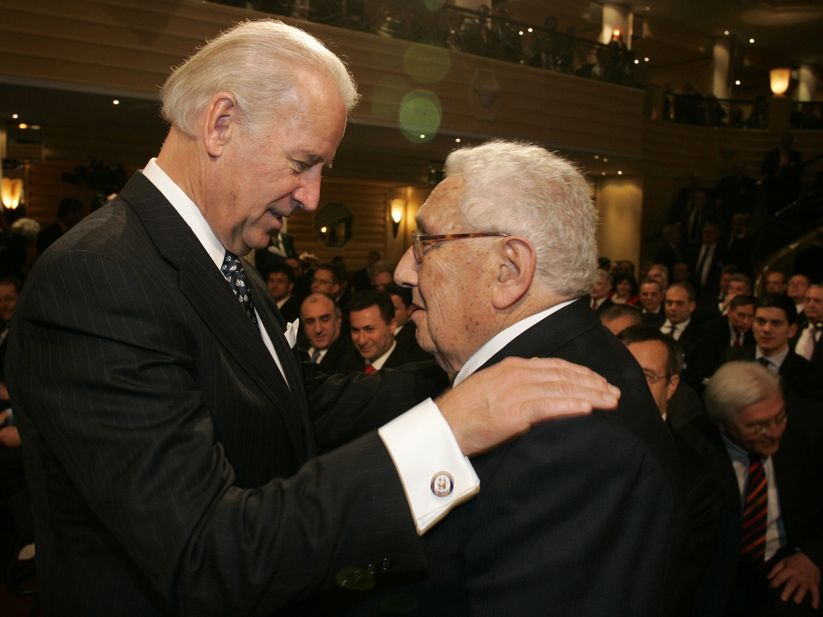
    Democrat Joseph Biden defeated Republican President Donald Trump by a popular vote of about 78.6 to 72.9 million votes and an Electoral College vote of 306 to 232, yet Trump has refuses to concede and calls the vote “rigged” and the election “stolen.” While he has not spoken publicly, his Tweets keep his supporters mobilized and has encouraged them to contribute to the political action committee he has created, supposedly to finance his lawsuits to overturn the election in various states, but actually to pay of his campaign’s debts. His intransigence encouraged tens of thousands of his supporters—including far right white nationalist groups—to march on Saturday in Washington, D.C. to protest the theft of the election.

    Meanwhile, Trump’s lawsuits in several battleground states—Arizona, Michigan, Pennsylvania, and Georgia—have been thrown out of court, mostly for lack of evidence of fraud or mishandling of the vote. His failure to win the lawsuits has made nearly impossible a second, higher stage of a political challenge, the attempt to get state legislatures to override the vote and send Trump delegates to the Electoral College on December 14. All of this had led some Republican leaders to begin to abandon Trump and recognize the Biden victory. The collapse of this legal strategy and the decline of support from his party therefore makes it impossible for Trump to stage some sort of coup.

    Having lost the election, what is Trump’s future? At the top of his agenda is arranging a pardon for himself, a pardon for crimes of which he has not been convicted. He might try to use the presidential pardon to pardon himself, which would almost surely end up in the Supreme Court. Some think he will resign before January 20, so that Vice-President Michael Pence can assume the presidency and pardon him. The precedent for this is the unconditional pardon of President Richard Nixon for any crimes that he might have committed by his vice-president and successor President Gerald Ford in 1978. Such a pardon, however, would only cover federal crimes, and New York State prosecutors are ready to indict him for financial and election related crimes.

    Trump has suggested that upon leaving the White House he might start a new TV program, since he has become furious with Fox News, which for years supported and promoted him but which early on recognized Biden’s victory. He could find a network for a TV show with himself as star, the income from which would be important, especially as he has some $900 million in debts coming due soon.

    Trump has also talked about running for president again in 2024. If he does begin to campaign for the election in four years, it would cause difficulties for the Republican Party whose leaders might like to free themselves from their vassalage to him. Some close to Trump think he would not run for fear of losing, and if Trump decides not to run, Pence or some other less flamboyant but equally rightwing Republican will run.

    The problem greater than Trump is Trumpism. Some 70 million people voted for Trump, and perhaps a third of those are the hardcore racists who rallied to the building of the border wall, the Muslim ban, and his call to Make America Great Again. More than half of the white working class supports Trump, which poses an enormous challenge to building a progressive working class movement. If Trump gets his TV show and his ”Trump 2024” campaign he will continue to feed his base misinformation, lies, and his racist, sexist, anti-immigrant views through his tweets and his mass rallies. There is also the possibility that some other even more virulent politician, a neo-fascist, rises to challenge him.

    In a historic shift, Republicans have become the party of the white working class. The task for the left will be to find a way to build a multi-ethnic working class movement to resist Trump and to pressure the neoliberal Biden.


  • Assessing the 2020 election: Where do we go from here?

    Assessing the 2020 election: Where do we go from here?

    A satirical headline from the day the presidential election was called, captures the feeling of much of the Left: “Jubilant Reaction to Trump’s Defeat Quickly Soured by News of Biden Win.”

    We take as given that the defeat of Donald Trump—misogynist and white supremacist, fragile and pathological solipsist, would-be-authoritarian and con-man, and proximate destroyer of hundreds of thousands of lives—is cause for celebration. However, the political landscape that the Left is collectively entering after January 20 will be incredibly challenging, and some of the damage that we have sustained is to some extent self-inflicted.

    The Results

    Considering Trump’s historically low popularity ratings, his disastrous handling of COVID-19, the strong support for the Black Lives Matter movement, and the Democrats’ huge advantage in fundraising, this should have been a landslide for Biden. Instead, he squeaked by. Biden is ahead by about 3.4 percent of the popular vote, but Trump increased his vote count by more than 9 million over 2016. And the margins in the battleground states that Biden flipped—Pennsylvania, Michigan, Wisconsin, and likely Arizona and Georgia—were wafer-thin.

    Take the example of Wisconsin, in 2012 Obama won the state by about a quarter of a million votes. Trump’s 2016 margin was 23,000. Biden won by 20,000—hardly a resounding victory. The key to Clinton’s 2016 loss was that turnout in Milwaukee—particularly among African Americans—was low, and that remained true this year. In 2016, that could be partly blamed on misogyny and voter suppression, but the main factor was Clinton’s centrist politics that offered nothing to vote for.

    That was even more true for Biden, who defined himself by a series of negatives. He was not for Medicare for All, not for a Green New Deal, not for defunding the police, not a socialist, and most importantly not Donald Trump. His main positive messages were technocratic and restorationist. In addition to promising competent management of the COVID-19 crisis, the Biden-Harris campaign was defined by the promise of (neoliberal) politics as usual and a return to imperial normalcy. Biden and his campaign built a coalition of so-called moderate Republicans, the national security state, the generals at the Pentagon, sections of big capital, and some of the more comfortable parts of the middle-class.

    For voters for whom COVID-19 was the main issue, exit polls showed a preference for Biden by a large margin, but those counties which have suffered the most COVID-19 deaths overwhelmingly voted for Trump. A dynamic at play internationally was also in evidence in Trump’s support from a base of small-business owners, a precarious lower-middle class, who have faced an existential threat from the closure of the economy. Voters who said that the economy was the main issue preferred Trump. This was true despite living through a period of seven months in which the U.S. experienced economic contraction and unemployment rates only comparable to the Great Depression, and in some cases worse.

    Biden’s campaign strategy was to stay out of sight, say as little as possible, lower expectations, and to depend on hatred for Trump. Given Biden’s notorious weaknesses as a candidate, this was arguably the optimal strategy for him, and it got him over the finish line, but only barely.

    The Biden Democrats

    In addition to the presidential race, the Democrats were expecting to increase their majority in the House and to flip the Senate. By way of comparison, Obama’s win in the aftermath of the 2008 financial crisis had come with a net increase of 28 House seats and 8 Senate seats. This time, instead, the Democrats have so far lost 5 net seats in the House. Flipping the Senate would require winning the two January special elections in Georgia, which seems unlikely.

    Biden ran as the anti-Bernie Sanders, establishment candidate, and in his defeat of Sanders, he was able to pull the whole left-wing of the party behind him. The defeat of Sanders was a blow to illusions about reforming and realigning the Democratic Party. Despite the meager showing by Biden-Harris, their victory as a centrist national unity ticket appears to have hamstrung the left-wing of the party, whose room for maneuver in the context of divided government is limited.

    Despite the near complete capitulation of the Left to Biden-Harris, the Democratic leadership has embarked on a campaign of attacking the left-wing of the party. South Carolina Rep. Jim Clyburn, New York Governor Andrew Cuomo, and party strategist, James Carville, have all taken turns blaming the Left for the poor election results. A New York Times interview with Alexandria Ocasio-Cortez (AOC) offered little comfort. While properly defending the movement for Black lives, and decrying the hostile environment inside the Democratic Party, and the failures of its campaign strategies, AOC’s own pessimism was palpable. The corporate Democrats appear firmly in control of their party.

    Between the election campaign and the current situation inside the Democratic Party, the likely make-up of Congress means that if policy expectations from a Biden administration were low before, they should be even lower now. Even the minor reforms that Biden does support—such as a slightly more progressive tax structure—are unlikely to get through the Senate.

    Biden will rejoin the World Health Organization and the Paris Climate Agreement. He will restore DACA, and reverse many of the executive orders and other symptoms of chaos which will be Trump’s gift as he leaves the White House. And given the demands of big business for more economic stimulus, there may be some modest immediate relief for the unemployed and another round of one-off direct payments. But in the absence of mass movements on the streets, that will be about as good as it gets.

    Meanwhile, the economic fundamentals and the context of a continuing public health crisis, especially for nearly bankrupted state and local governments, bodes poorly for the medium and long term.

    Trumpism, the Republican Party and the far right

    One lasting reality is that Trump has successfully remade the Republican Party into a hard right organization. A recent study concluded that they are “more similar to autocratic ruling parties such as the Turkish [Justice and Development Party] and Fidesz in Hungary than to typical center-right governing parties in democracies such as the Conservatives in the U.K. or [the Christian Democratic Union] in Germany.” The study rated the Republican Party as well to the right of the current incarnation of the National Front in France.

    Another reality is that Trump has encouraged the growth of the fascist Right on the streets. Their numbers are still relatively small, but they are a growing threat. This includes the active infiltration and ideological proclivities of local and state police forces, and the use of sections of the federal Homeland Security apparatus as presidential goon squads. Biden should not be expected to address any of this without an active movement forcing him to do so.

    Finally, regardless of his countless foibles, Trump has a fanatical personal following. The coalition that elected him in 2016 largely stuck with him, and he even expanded it, picking up additional support from African Americans and Latinos.

    It would be utterly reductive, and plain wrong, to write off more than 72 million Trump voters as all foot soldiers of fascism. But there is an absence of any real alternative from the Left. And the Democratic Party is seemingly committed to triangulation, avoiding any substantive confrontation with the core politics of the Right while remaining the hated party of the neoliberal establishment. The danger is that these voters will be pulled even more closely to the noxious, reactionary politics of Trumpism.

    Trumpism is definitely not going away and, indeed, Trump himself may not be going away. The idea that he had the support to somehow steal this election was always more of a liberal fear tactic than a reality. But Trump can use his Twitter account and continued rallies to attack Biden and he will try to remain the leader of the Republicans once he is out of office. He is already floating the idea of another run for the White House in 2024.

    Pro-Trump “Stop the Steal” protests in Pennsylvania.

    The election took place against the backdrop of the crisis of neoliberalism, which has defined U.S. politics since the financial crash of 2008. It is an ongoing crisis for both the ruling class and the working class, but in very different ways. For the ruling class, the crisis is about how to restore profitability and maintain imperial dominance, particularly in an accelerating conflict with China. For the working class, it is a crisis of growing poverty, falling living standards, and increased state repression.

    This, of course, is what is behind the polarization in politics not just in the U.S., but across much of the rest of the world. The bipartisan consensus which reigned for over 30 years does not work anymore. The Republicans have realized this and so they have shifted hard to the right.

    Centrist Democrats like Biden, whose political career was shaped by the old consensus, think they can turn back the clock—that is a fantasy. The centrist Democrats have only succeeded in marginalizing the left-wing of their own party. If they continue down this path, their prospects in 2022 and 2024 are not bright. Without significant advances from the Left and the social movements, the Right is poised to advance.

    The Left’s self-inflicted wounds; results and prospects

    So what are the prospects for the Left and the social movements?

    The multiracial Black Lives Matter protests of this past summer were historic both in size (over 23 million), and scope (2000 cities and towns in all fifty states, and five territories). The conditions giving rise to this uprising are not—unfortunately—disappearing. Nor is the experience of the last decade-plus—including the unfulfilled promises of the Obama-Biden administration—which brought so many into the streets, soon to be forgotten. Yet the decrease in activism in the months leading up to the election was notable, and the lack of significant national organization is a challenge that we will need to overcome.

    Similarly, the craven silence of sections of the feminist movement during an election when both candidates were credibly accused of sexual assault, is part of what leaves this movement in a weakened state. This damage has been done just as feminism is in a global ascendence; and when the fight over bodily autonomy is about to face—with the right-wing Supreme Court—an incredible fight.

    And the workers’ movement, both inside and outside the labor unions, has a contradictory appearance. We have seen an increase in worker militancy, going back to the teachers’ strikes and revolts, and the beginning of broader organizing efforts among the unemployed, the precarious, and the undocumented immigrant workforce. At the same time, close to forty percent of union voters supported Trump in key states. For their part, the leadership of the AFL-CIO seems committed to completing their apparent task of tailing the Democratic Party into effective oblivion.

    As for the socialist Left, we need to look at where we stood in the run up to this election and where that leaves us. The dynamic in the U.S. Left over the past few years has been one of unprecedented numerical growth, with the Democratic Socialists of America (DSA) expanding from 6,000 members before 2016 to somewhere in the region of 80,000 members today. This is part of an international process of radicalization and political polarization which has roots, as noted earlier, that go back to 2008.

    In the U.S., for understandable reasons, the political expression of the radicalization took shape in support for Bernie Sanders, AOC, and other electoral campaigns. But the reformist conclusions that many drew from this—that the strategic priority of the Left should be electoral, and that the Left can “build power” using the Democratic Party—are, in our view, mistaken. The pursuit of this strategy has left much of the socialist movement without a compass, and without a viable plan, heading into this next period.

    But DSA is not a monolithic organization. There are debates within it about the role of the Democrats and the role of electoral politics more generally. Many DSA members agree that the working class needs its own political party. Some argue for something called a dirty break—using the Democratic Party ballot line to contest elections now with the goal of eventually creating an independent political party. The problem with this is that as the break has been pushed into the distant future, the approach has become indistinguishable from the hopeless task of trying to transform the Democratic Party itself.

    Even more fundamental than an argument over the dirty break, however, is the question of the role of elections in bringing about social change. The historical record on this is quite clear. Radical progressive change always requires powerful social movements that make the cost of keeping things the way they are too high for the ruling class. In the 1930s, unemployment relief marches, bread riots, wildcat strikes, a mass anti-eviction movement, and other eruptions—often led by communists and socialists—pushed President Roosevelt and the Democrats into enacting the reforms of the New Deal. In the 1960s, the civil rights, Black liberation, anti-war, feminist, gay liberation, and environmental movements, won a new series of reforms, which continued even under the Nixon administration.

    None of this means that elections are unimportant, but if our goal is to fundamentally change the nature of our world, electoral campaigns need to represent social movements with the goal of making them stronger. At the very least, they must promote and defend the demands raised by the social movements, such as the demand that emerged this summer to defund the police. Historically, DSA has not prioritized political struggle outside of the electoral arena. But a new generation of socialists recognizes that democracy is about much more than elections. When the Black Lives Matter protests erupted around the country this summer, many DSA members participated as individuals or as members of local chapters. The AfroSocialists and Socialists of Color Caucus played an especially important role. Unfortunately, the national leadership of DSA did not attempt to orient the entire organization to advance that struggle.

    Of course, this is far from the end of the matter. The anti-racist struggle for abolition has not gone away, and movements provoked by a whole range of other issues are inevitable in the months and years ahead. Socialists both inside and outside DSA need to argue that there should be no support for the incoming Biden administration and that the Left must throw itself into political struggle on the streets and in workplaces. We are not organizing in conditions of our own choosing, but the potential for rebuilding a powerful Left has not disappeared and it is more urgent than ever that we realize it.

    First posted at Tempest.

  • #EndSARS in Nigeria

    #EndSARS in Nigeria

    A movement against police brutality has swept across Nigeria. Mass protests have brought out tens of thousands of people in cities across the country. At the center of the fury is SARS, a notoriously brutal special unit of the police. On October 11, the Nigerian Police Force announced it was dissolving SARS, but, wary of prior unfulfilled promises and convinced more has to be done, protesters continued street demonstrations. On the evening of October 20, after the imposition of a 24 hour curfew, the army opened fire on peaceful, unarmed protesters in Lagos, killing at least a dozen in what has been called the Lekki Massacre. Despite the violent crackdown, the movement is not deterred and demands have widened to oppose all forms of repression and intimidation by the state.

    The protests have tapped into deeply rooted social and economic issues. Nigeria has a sharp class divide, with one in every two workers unemployed or underemployed and lacking basic services despite the country’s massive oil wealth. The COVID-19 pandemic has only exacerbated the crisis and fueled anti-government sentiment. Earlier this summer, trade unions and health care workers pressured the government to provide economic relief during the pandemic. The recent protests have renewed calls for unemployment assistance, access to free health care, and an end to food and fuel price increases.

    Nigeria has not faced this level of upheaval in decades. The movement poses a significant challenge to the Nigerian ruling class and, by extension, those who support it. Military campaigns have strengthened the repressive arm of the Nigerian state, facilitated in part by foreign aid and training—including funds from the U.S.—in the name of the “war on terror” campaign against Boko Haram in Nigeria’s north. This dynamic has been on full display in the crackdown at Lekki and nationwide.

    Emma Wilde Botta spoke with Kasope Aleshinloye, a Nigerian activist who has participated in the Lagos protests, about the development of the #EndSARS movement and the expression of Black Lives Matter globally.

    ***

    EWB: Many people outside of Nigeria are hearing about SARS for the first time. Can you explain what it is, what it does, and its relationship to the Nigerian state’s repression?

    KA: Established in 1992, the Special Anti-Robbery Squad (SARS), sometimes referred to as F-SARS, was a branch of the Nigerian Police Force dedicated to tackling armed robbery, kidnapping and other violent crimes. As an elite unit with special privileges, its members typically operated in plainclothes, in order to blend in with the general population, so as not to arouse suspicion among the people they target.

    More recently, within a wider culture of police brutality in Nigeria, SARS has been known for abduction, torture and extra-judicial killings. According to Amnesty International, the unit is notorious for targeting young Nigerians, often detaining them at random and framing them for crimes in a bid to extort money from them. In some instances, detained persons have disappeared in SARS custody even after their families have paid bribes to secure their release. There is no greater irony than SARS committing the very crimes—kidnapping and robbery—the unit was set up to investigate and tackle.

    Young Nigerians have had enough. Photo courtesy of Aleshinloye.

    EWB: What sparked the recent protests, and how have they developed? Who’s involved? What have been the most prominent demands?

    KA: Although there were earlier iterations in 2017 and 2018, the current #EndSARS movement garnered massive support and participation largely through social media following the release of a video purportedly showing SARS officers fatally shooting a young man in Ughelli, a small city located in Delta State, before driving off in his vehicle.

    The foremost demand of the protesters is an end to the rogue unit’s activities and, in the spirit of accountability, justice for victims and survivors of its brutality. Both of these are contained within the most widely circulated list of demands—the #5for5 agenda—although this does not necessarily speak to all of the protesters’ asks. Additionally, #EndSARS seems to be a precursor to a larger call for far-reaching political reforms in Nigerian society.

    Protests are typically organized in real-time on Twitter to occupy strategic locations such as major interstate roads, seats of government, toll plazas, or other prominent landmarks. One of the earliest protests this October was a 72-hour occupation of the entrance to the Lagos State House of Assembly at Alausa. On occasion, when crowd numbers are low, protesters put out a call for reinforcements on Twitter, directing people on where to join the occupation or march as the case may be.

    And while their colleagues occupy the streets, online cadres were hard at work keeping #EndSARS at the top of trending topics on an almost daily basis, garnering 301 billion impressions during the first three weeks of October 2020. Early in the life of the protests, these online activists were responsible for drawing international media attention to the protests and pressuring brands, entertainers, sportspeople and other celebrities to weigh in on the cause.

    With the protests independently organized at multiple locations, the movement itself is decentralized and peculiar for its insistence on being leaderless, causing a somewhat bemused response from states and the federal government who do not know exactly who to engage with (or threaten).

    The protests themselves have been overwhelmingly peaceful, in some instances, evoking a carnival-like atmosphere that brought together young people from a wide range of ethnic groups and social classes. There is a sense of being in a giant meeting room, where questions about protest strategy are debated and implemented in real time. I personally attended protests at three locations around Lagos—Airport Road Toll Plaza, Surulere (National Stadium), and the Ojodu Berger interchange—and they were all marked by a spirit of defiance. Nonetheless, it was particularly chilling to hear the names of individual SARS victims read out, reminding all in attendance that it could have been any one of us.

    To sustain their momentum, revolutions must be fed, nursed, and documented. Thus, another key feature of the current #EndSARS movement is the mobilization of care for protesters. From the earliest days of the protests, independent organizers mobilized meals, legal assistance for detained protesters, emergency shelter, transportation for the stranded and even private security, when armed thugs threatened the protesters with violence in the absence of police protection. There was also a coordinated medical response in the form of ambulances, blood donations and dispatch, settling hospital bills for the injured, and mental health counselling. All of these mutual aid efforts culminated in the establishment of an #EndSARS helpline to support protesters’ online and offline. The most well-known of the organizing groups, the Feminist Coalition, served as a clearinghouse for donations for this mutual aid campaign, channelling funds to support more than 150 individual peaceful protests across 25 states in Nigeria.

    One final note on the emergence of the protests. Although the movement has primarily been powered by digitally savvy millennials and Gen Zs via social media, protesters have gradually expanded their campaign messaging to include outdoor billboards, offline WhatsApp broadcasts & voice notes, downloadable Youtube/Instagram explainers and skits performed by protesters themselves, and finally, pamphlets and fliers in multiple local languages to broaden the #EndSARS appeal. This quest for inclusivity is designed to generate maximum public sympathy, particularly when considering the physical disruption (often to traffic) and economic slowdown the protests have caused, and to convey the importance of the cause to a wider audience, including the less educated and older generations.

    EWB: What is the state of the movement outside of the major cities? Do you see the lockdowns widening beyond Lagos and Delta states?

    KA: Due to incidents of vandalism and looting across the country during the week of October 19, local curfews have been instituted in at least 11 states, including Lagos and Delta, and, as of October 25, other states like Cross Rivers, Enugu, Kaduna and Adamawa have joined their counterparts to announce restrictions on movement. In particular, there have been several incidents across the country where warehouses holding COVID-19 food palliatives, which were donated by the private sector and meant for distribution to vulnerable populations, were looted, precipitating many of these curfew announcements.

    EWB: How has President Muhammadu Buhari responded to the movement? How is his relationship to the military apparatus impacting the current situation?

    KA: The President’s response to #EndSARS has been lacking, belated, and more focused on ending the protests than taking concrete action on ending SARS. Among the proposals floated is one to replace the functions previously carried out by SARS with a new Special Weapons and Tactics (SWAT) squad, which is problematic to say the least. Meanwhile, as the Commander-in-Chief of Nigeria’s Armed Forces, he has been curiously silent regarding the alleged killing of unarmed protesters at the Lekki Toll Plaza by military personnel, despite extensive open source video evidence documenting the incident.

    Policing is federally regulated so deep structural reforms are required to implement effective responses to protesters’ demands. Even though the federal government has tentatively accepted the #5for5 list of demands and initially actioned some items on this agenda, it is instructive to note that SARS has already been reorganized (2017), overhauled (2018) and disbanded (2019) during President’s Buhari’s tenure alone. The non-implementation of these previous pronouncements has created a massive trust deficit between the Nigerian government and its citizens regarding police reform. Furthermore, there have been several reports indicating that SARS officers are still operating across the country. Thus, the absence of clear timelines and key priorities within this administration’s response to #EndSARS has sustained the 2020 protests, even though the unit has once again been scrapped.

    Meanwhile, at the state level, some governors joined the physical protests and engaged with protesters. Furthermore, at least 27 states, including Lagos, have set up judicial panels of inquiry to investigate cases of police brutality but given recent Nigerian history with panels whose recommendations are never implemented, it remains to be seen what tangible action will result from these investigations.

    EWB: What has been the response to the #EndSARS movement from other African leaders?

    KA: Beyond a series of tweets from Ghana’s President Nana Akufo Addo and cursory statements from the ECOWAS and AU missions, not many other African leaders have joined the international community to acknowledge the protests as well as advise the Nigerian government to respect human rights and take action on police reform. This is not surprising. They don’t want to encourage local protests in their own countries,

    On the other hand, it has been heartwarming to see the support from activists leading social movements across the continent (e.g. #ShutItAllDown on Namibia, #CongoIsBleeding in DRC, #AnglophoneCrisis in Cameroon, #ZimbabweanLivesMatter in Zimbabwe, #StopGBV in South Africa). These activists are also leveraging the popularity of #EndSARS to amplify their own domestic causes.

    EWB: Earlier this summer, the police murder of George Floyd sparked sustained anti-police brutality protests across the U.S. You’ve lived in the U.S. and in Nigeria. Do you have any thoughts on why we’re seeing movements like this now?

    KA: We can trace this climate of sustained protest that we’re seeing now in 2020 to earlier political and social movements within the last decade and a half. I see these international social movements as cyclical, and they often piggyback off each other to create this snowball effect at a certain period in time. To illustrate, during the Arab Spring and Occupy Wall Street protests, which both initially emerged as responses to economic inequality and anti-democratic regimes, I was in college in the U.S. This is the period within which I definitively associate my own personal political awakening and the spirit of these movements crossed international boundaries. In fact, Nigeria experienced its own Occupy moment in early 2012 with protests largely focused around a controversial fuel subsidy program.

    Similarly, just as the Black Lives Matter movement emerged in the summer of 2013 following Michael Brown’s murder in Ferguson, we are living in another protest moment centered around police violence on marginalized communities. I remember speaking with friends from college about this in the aftermath of the police killings of George Floyd and Breonna Taylor just as renewed Black Lives Matter demonstrations picked up steam in the U.S. Many Nigerians participated in global #BlackLivesMatter from the summer, by linking to local cases of police brutality. And we’re seeing similar solidarity from #EndSARS supporters in the U.S. and elsewhere. This is the expression of Black Lives Matter everywhere. It’s a very international movement.

    A demonstration in front of police headquarters. Photo courtesy of Aleshinloye.

    Moreover, we know what’s been happening in Thailand. Activists from Hong Kong have shared helpful tips for organizing sit-ins and marches in the face of riot police. Protesters are learning effective strategy from all of these movements and how best to articulate our demands for a Nigerian context.

    The Nigerian diaspora has also made a big push on #EndSARS with protests across more than 100 cities continuing to this very day and intense campaigns targeted at foreign governments like the United Kingdom to put pressure on the Nigerian government to respect our rights to protest and not to be killed by police or other security forces.

    EWB: What can activists outside of Nigeria do to support the #EndSARS movement?

    KA: Activists can help amplify #EndSARS and engage with the issues in the form of explainers like this that show why #BlackLivesMatter is global. Write to your Congressperson. Donate if you’re able to. Above all, keep applying pressure. This is a marathon, not a sprint, so we’re in for the long haul.

    Originally published by Tempest

  • Modest Proposals for a New Left

    Modest Proposals for a New Left

    The Biden/Harris election to the U.S. Presidency punctuates a morbid political cycle which has seen both of the big capitalist parties move even further to the right, working-class lives violently degraded by neoliberal capitalism, and the ancient American incantations of racism and xenophobia breathed new, pandemic life by an atavistic, ruling-class autocrat.

    Leftists should celebrate Trump’s defeat but reject Biden’s victory. He brings to the office a record of betrayal of every constituency panicked into supporting him on election day: women, people of color, immigrants, the working-class. Biden will normalize U.S. imperial hegemony globally, renew in soft-focus fashion U.S. Cold War with China, stand firm with apartheid Israel, Back the Blue, demonize dissent, and seek a neoliberal restoration over Trump’s economic nationalism.

    Yet of more immediate significance to this essay, the same period of Biden’s ascent to White House power (2008 to 2020) coincides with two intersecting but divergent stories of American Socialism: one the ascent of the Democratic Socialists of America to becoming the largest Socialist group in the U.S. since at least the 1960s, and the other the collapse of the largest revolutionary socialist group in the U.S., the International Socialist Organization (or ISO) last year.

    If a newer, more robust and invigorated independent socialist Left is to emerge in the U.S. to confront the ‘Biden era,’ it must begin by confronting all of the above facts. The aspirations of millions of Americans to radicalize uncannily match the objective conditions of their deracinated lives in ways Socialists can best explain. Indeed, the Left mantra that ‘no one is going to save us but ourselves’ has been painfully understood by hundreds of thousands who have used direct action, creative resistance, self-organizing and fearless militancy—from the Occupy movement to Black Lives Matter to the Women’s March to fighting fascism in the streets.

    Here I offer some modest proposals for ways a new revolutionary Left could begin to inhabit these conditions, revitalize itself and create a new history from the ashes of contemporary political life. They are intended to begin a latent but necessary discussion of how to assemble the scattered pieces of revolutionary socialism from below into a recognizable structure for confronting capitalism and beating it:

    1. As soon as COVID will allow, a national assembly of revolutionary socialists organized in collaboration between leading radical political organizations and currents should take place. It should occur in a location where Black Lives Matter protests have been strong, like Oakland or Minneapolis. The assembly should include militant unions and radical queer, immigrant rights, and feminist organizations. Its charge would be how to build a unified, independent socialist organization.  Independent in this context would mean independent not just of the Democratic Party but of either academic, publishing, or mutual aid institutions. Each and all of these have contributed in the past to split-thinking within revolutionary organizations about function, purpose, politics and loyalty.
    2. The national assembly should foreground debate about the role of the revolutionary party and revolutionary organization in building a mass socialist movement. Prior to the collapse of the ISO, and in response in part to the rise of the DSA, this conversation was beginning. It is critical to resume. The strengths and weaknesses of both the Leninist democratic centralist model and now the dominant DSA model are well-known to the Left. There are many others relevant to our moment to consider, like the Student Nonviolent Coordinating Committee of the early 1960s. There is no shortage of critical tradition on the question to draw from. Motivating the discussion should be a singular objective: defining a party structure that best speaks to the objective conditions of our time, and building that structure.
    3. A public reckoning with the facts of the collapse of international socialism in the Anglospheric world is necessary. It is a public secret on the broad Left that both the Socialist Workers Party in the U.K. and the International Socialist Organization in the U.S. fell apart over cover-up and mishandling of rapes by members. It is less well-known that the ISO’s implosion included a never-completed assessment of how a racist organizational culture intimidated, discouraged and muzzled many of its best members. To step forward, and win back hundreds or thousands of people alienated from the international socialist tradition, the equivalent of a Truth and Reconciliation process should begin.  A national assembly would be a good place to start.
    4. A national on-line revolutionary socialist daily newspaper is needed for a new Left. It should rival Jacobin for its frequency of publication but function primarily as a documentary space for the living conditions of politically conscious working-class people. The new, emergent socialist organization to come should deploy the new paper as the primary site of its practical and theoretical activity. It should be mainly an organizing tool for bringing new people to revolutionary socialism.
    5. A new framework is needed for the relationship between revolutionary socialism and electoral politics. Both the International Socialist “lesser of two evils” line and the DSA’s porous electoralism have revealed weaknesses in helping to build a strong socialism from below movement. The inevitable contradictions between elections and mass organizing are only likely to deepen given the recent success of groups like the DSA and Socialist Alternative in electing people to local office. A coherent and unified strategy is essential.
    6. The revolutionary left needs a new perspective on fascism and how to fight it. In recent times a number of writers and organizers have begun a discussion about the differences between fascism now and in history. The global authoritarian turn has not been sufficiently diagnosed by the Left. Nor has a satisfying strategy for how to fight it. Both are needed.
    7. The revolutionary left needs a rural strategy. The ‘country-city’ political divide in the U.S. is emblematic of degraded material conditions in vast swaths of the U.S. where neither industry nor agriculture sustains life. 82 percent of people who voted for Trump, nearly all of them in rural areas, cited the economy as their primary reason. We need assessment, perspective and understanding of this, a revisit of radical agrarianism and populism, and a sustained effort to build socialist education in the country side. We can begin by confronting the material deprivations that have made so many working-class rural people vulnerable to racism and xenophobia.
    8. When successful in the past, Communist and Socialist movements have had elaborate campaigns to build youth movements. A new such movement is needed. Young Americans are the most ready to become socialist of any demographic, according to polls. High schools in America are hotbeds of environmental, queer, and antifascist politics.  The significant achievement of the DSA in building a Youth wing (YDSA) is one model for a new revitalized independent revolutionary Left focused on youth. Others are available.
    9. Political education is central to rebuilding a broader revolutionary Left. History is dense with examples of radical pedagogy and models to follow, from Worker Schools of the 1930s, to the Freedom Schools of the early 1960s, to DSA Night Schools today. The pandemic has forced us to rethink political education on-line. We need a national real-time and virtual Socialist Education Program organized around some of the questions above and others not yet articulated here.
    10. Finally, a new revolutionary Left must become an Abolitionist Left. In its focus on eliminating policing, Black Lives Matter has been the most important political movement in the U.S. since the anti-Vietnam War movement in raising political consciousness about the role of the state under capitalism. It has inaugurated the deepest challenge to state power in a generation. More than any political development in our time, BLM provides fertile ground and example for the gestation of a unified, multiracial working-class revolutionary socialist movement that can challenge the power of capital and win.
  • Using an Award Ceremony to Support the Syrian Struggle

    Using an Award Ceremony to Support the Syrian Struggle

    What can be done to show solidarity with Syrians, Syrians who have risen up against their tyrannical government and its bloody allies? We in Promoting Enduring Peace have wrestled with that question for years. We’ve held educational meetings, written to politicians, shown the work of Syrian artists, marched in demonstrations and the like, but we wanted to do something more.  So we thought a great gesture would be to give our Gandhi Peace Award to Syrians doing humanitarian work.

    The Gandhi Peace Award has been presented since 1960. Its laureates include  Dorothy Day, Benjamin Spock, Cesar Chavez, Martin Luther King Jr., Bill McKibben, Ralph Nader, Amy Goodman, Jackson Browne and many more.  The Award comes with a $5,000 prize and a medallion fashioned from the most valuable metal on earth, “peace bronze” made of metals extracted from retired nuclear weapons systems.

    We especially wanted to honor the Syrian Civil Defense (better known in the West as the “White Helmets”). Those rescue workers are heroes who dig out survivors and bodies from under the rubble. They are often targeted themselves in “double-strikes” deliberate bombings of an area for a second time just when rescue workers arrive. The White Helmets were first informal groups of people who dug people out once it became clear that Assad government rescue workers were never going to help.  Later the White Helmets raised money for equipment from a variety of sources, including Western governments. The Assad regime has been most enraged not by their saving of lives, but by their making of videos, showing the devastation caused by Assad’s barrel bombs and his chemical attacks. They’ve been subjected to incredibly vile attacks in social media by Assad’s flunkies and the Western so-called “anti-imperialists”, who admire any dictator who seem to oppose the US.

    Promoting Enduring Peace (PEP) will be holding the Gandhi Peace Award ceremony online this year at 1 p.m. Eastern on Sat. November 21 on Zoom.  The award is being given jointly to a Syrian-American and a Syrian, Dr. Zaher Sahloul of Chicago and White Helmet Mayson Almisri who is now exiled in Canada.  The public worldwide may view the ceremony without charge.  The link to register for the webinar is at the website PEPeace.org.

    Honoree Dr. Zaher Sahloul is a co-founder and past president of the Syrian-American Medical Society, which has built and rebuilt hospitals in Syria under attack by Russian and Assad forces; some operating underground or in caves.  He’s now president of MedGlobal, which gives crucial help to victims in fourteen countries.  His day job is as pulmonary specialist in Chicago where his works includes treatment of patients suffering from the Covid-19 virus. He himself was inflicted with the disease for weeks this spring. He recently tweeted that “I will be dedicating the #GandhiPeaceAward to the doctors and nurses who were killed in #Syria while on duty including Dr. Hasan Alaaraj, Dr. Majed Bari Dr. Wasim Moaz and 930 other healthcare workers.”

    The other honoree is Mayson Almisri.  She is from Deraa, Syria where the mass demonstrations began in 2011. I interviewed her this February.  In 2011 she was a journalist for SANA, the official government press agency. She knew one of the families whose son’s notorious torture led to the demonstrations, but she couldn’t write truthfully about it for SANA.  Almisri said she would work at SANA in the morning and go with her face covered to strikes in the afternoon.  In 2012 she “escaped”, as she put it, form SANA and worked fully with the uprising.  For years demonstrations went on at a fearful price.  Her own brother was shot dead by a government sniper. Almisri helped out with first-aid after attacks and preparing material for sympathetic media. In 2014 rescue worker leaders (including Almisri) from several areas met in Jordan and formally joined together as the Syrian Civil Defense. When Deraa surrendered to Assad forces she fled to other parts of Syria and eventually to Jordan.  In 2018 was allowed into Canada as a refugee. (Recall Trump banned all refugees from Syria three years ago.).

    Artists and speakers will add to the ceremony.  Dr. Sahloul will be introduced by Linda Sarsour, noted Palestinian-American activist who co-chaired the 2017 and 2019 Women’s Marches and past executive director of the Arab American Association of New York. She’s probably the best-known Palestinian activist in the U.S. We hope her appearance will help heal the rift between certain segments of the Palestinian and Syrian left communities.

    Ms. Almisri will be introduced by Orlando von Einsiedel, the director of the film “The White Helmets”, a segment of which will be shown as part of the program. In 2017 this film won the Academy Award for “Best Short Documentary”.  Von Einsiedel has also directed “Virunga” which was nominated for an Academy Award in 2017 and “Lost and Found” about the persecuted Rohingya.

    Music will be provided by noted Syrian performer Wasfi Massarani and American musician Dylan Connor.  There will be narrated presentations of works by Akram Swedaan who opposes war by transforming ammunition remnants into canvases , Molly Crabapple, who illustrated the book about Syria “Brothers of the Gun”, Marc Nelson who updated Goya’s anti-war paintings into a Syrian context, and Adeebah Alnemar a Syrian refugee who arrived in the US on the day Trump was elected.

    A lot of Syrian, Left and Muslim groups are “partnering” to publicize the event.  They include:  Alliance of Middle Eastern and North African Socialists, Central Connecticut Democratic Socialists of America, Council of Islamic Organizations of Greater Chicago, Global Campaign of Solidarity with the Syrian Revolution, Heartland Alliance, Islamic Society of North America, MedGlobal, Middle East Crisis Committee (CT), Multi Aid Programs, MAPS, Muslim Public Affairs Council, Muslim Public Affairs Council, MPAC, New Politics magazine, Syria Faith Initiative, Syrian American Council, Syrian Association for Citizens Dignity, SACD, Syrian Community Network (SCN), Syrian Emergency Taskforce, Syrian Forum, Syrian Forum USA, The White Helmets, Transnational Solidarity Alliance, Tree of Life  Education Fund (CT), War Resisters League

    We think it will be an impressive event.  Please honor Sahloul and Almisri by attending the webinar.  Register at PEPeace.org.

  • Say #ByeBetsy – and organize now to fight against Biden’s education policies

    Say #ByeBetsy – and organize now to fight against Biden’s education policies

    Social media is abuzz about what teacher activists can expect from Biden’s education policy.  Alas, much of it is wishful thinking, on the order of hoping Jill Biden, a teacher, will shape her husband’s views on education. Other speculation has been about Biden’s likely choice for Secretary of Education. One candidate many liberals consider a progressive possibility, Linda Darling-Hammond, has said she doesn’t want the post.   We should expect and demand far better.

    The fact that Darling-Hammond, who often collaborates with both national teachers unions, is considered an advocate by activists who have led resistance to charter schools, standardized testing’s stranglehold over curriculum and teacher performance, and marketization of public education shows a dangerous political blind spot about the Democrats. Darling-Hammond’s connections show her embrace of  “reformy” policies, in organizations like  New Classrooms Innovations Partners, which is funded by a “who’s who” of billionaire-funded foundations,  the Bill and Melinda Gates Foundation, the Bezos Family Foundation, and the New Schools Venture Fund.

    While Trump’s election exploded the bipartisan consensus about how to privatize schools and control what was taught and how, the outline of what Biden expects to do is quite clear if we do not flinch from examining Biden and the Democrats critically, without blinders or wishful thinking.  The Center for American Progress (CAP) has endorsed the Trump/DeVos policy of  continuing standardized testing during the pandemic.  As a group of researchers noted in their analysis of CAP’s report “School closings and the ever-increasing number of deaths provide the backdrop” for CAP’s proposal  “to deny waivers of the federally mandated administration of standardized tests in spring 2021. Further, the federal government proposes to add to those assessments in ways that CAP argues would make the test results more useful… CAP sides with the Department of Education’s policy of denying such requests for waivers, and it calls for additional assessments [emphasis added] that ‘capture multiple aspects of student well-being, including social-emotional needs, engagement, and conditions for learning’ as well as supplementary gathering of student information.”

    Biden’s victory now requires confronting his advocacy of disastrous education policies during the Obama administration, enacted under Obama’s Secretary of Education, Arne Duncan.  While we say #ByeBetsy with pleasure, there is little time to celebrate Biden’s victory if that means shutting our eyes to what is in store for us. In another article I’ll explain what that project is,  already begun under Trump, with Democrats’ support. The new privatization onslaught, rooted in Silicon Valley and Wall Street collaboration, is even more sinister than what preceded it.

  • The American People Turn Trump Out of Office

    The American People Turn Trump Out of Office

    This article was written on November 7 for publication on November 8 in Viento Sur, a left journal in the Spanish state.

    In the most important American election in decades, the American people voted on November 3 to remove the authoritarian Republican Donald Trump from the presidency, a majority voting instead for Democrat Joseph Biden. While the electorate was deeply divided and the vote close in several states, still the election represents a rejection of Trump and his policies, a demonstration of confidence in democracy, and a deep desire to overcome the country’s several crises: the coronavirus pandemic, unemployment, and climate change producing violent weather.

    Speaking late on the night of November 6, Joseph Biden virtually claimed victory, pointing out that he was leading in several states yet to declare a winner and that he had so far received 74 million votes—more than any candidate in U.S. history—4 million more than Trump. “What’s becoming clear each hour is that a record number of Americans of all races, faiths religions chose change over more of the same. They’ve given us a mandate for action on COVID, the economy, climate change, systemic racism.”

    On election day Trump had already falsely claimed victory based on the earliest reports on the voting. This was a delusion that he himself had caused. It resulted from the fact that despite the risk of coronavirus, Trump had encouraged his voters not to use mail-in ballots, but rather to vote in person on election day. But in most states mail-in ballot are counted after election-day votes, so it appeared on election night—when most U.S. elections have been decided—that Trump was winning the election. But as the extraordinary number of mail-in votes were counted Biden caught up and eventually passed Trump in key states like Georgia and Pennsylvania. Trump has claimed without evidence that the Democrats were adding additional ballots to steal the election.

    While Trump continues to claim that the election has been stolen, Vice President Michael Pence failed to back that claim and several other important Republican politicians declined to rally to the president, though some other Republicans legislators did back repeat Trump’s false claims. To achieve a victory, Trump tried to stop vote counting in locations where he thought it would benefit him and to continue it in others for the same reason.

    (As of this writing on the morning of November 7, Biden leads with 253 to 214 Electoral College votes, based on the states he is winning. The election does not become official until all of the popular votes are counted and the results certified, which may take weeks, and then not until the electors of the Electoral College vote on December 14 and their ballot are received by the senate on December 23. At this point it does not appear that there will be a political fight over rival slates of state electors who are approved by state legislatures and generally reflect the state’s certified popular vote.)

    Many worried that Trump might try some sort of coup d’état, but, at least so far, he has not, and it becomes less likely and less possible with every passing day. The fear that Trump and Attorney General William Barr might use federal agents to intervene in polling places or counting locations and seize the ballots did not materialize, nor did the right wing’s armed militias interrupt the voting or counting process. While Trump supporters, some armed, did cause a commotion outside of a few locations where votes were being counted, far more important were the thousands of people in several cities who marched with the slogan, “Count all the Votes.”

    Apparently losing the election, Trump sent an army of lawyers to four battleground states—Pennsylvania, Michigan, Wisconsin, and Georgia—in an attempt to challenge the process, the count, and the ballots. Many of the lawsuits being filed appear to be baseless and the courts have already rejected some, but the Democratic Party will respond to those that the courts take up. Trump hopes to push the lawsuits through the courts and up to the U.S. Supreme Court to be settled by its nine justices, six of them conservative and three more liberal, the last three conservatives appointed by Trump. So far there seems no basis for such a Supreme Court case.

    An Extraordinary Election 

    The election has taken place under the most extraordinary circumstances, amidst great suffering and social turmoil. There are officially 240,000 coronavirus deaths and perhaps in reality as many as 300,000. The virus is surging throughout much of the country, with over 100,000 cases per day and 1,000 deaths per day. Many of those affected have suffered serious and in some cases permanent damage to their lungs or kidneys or other organs.

    The pandemic led to an economic depression that saw as many as 30 million unemployed, and today there are still at least 12 million unemployed and probably more because of uncounted discouraged workers. While some continue to receive state unemployment payments, the federal government’s assistance programs have ceased. With a total population of 330 million, it is estimated that 54 million do not have enough to eat. As many as 35 million families face the possibility of evictions when an eviction moratorium from the Department of Health and Human Services ends on December 31.

    In addition, due to climate change, several states in the West have suffered tremendously destructive forest fires, while the Gulf States and Atlantic States have experienced disastrous hurricanes. Finally, though the enormous anti-racist demonstrations and marches of the spring and summer against police racism and violence involving about 20 million people have subsided, Philadelphia and other cities continue to see protests against police killings of Black men and women, often then violently repressed by the police. All of these developments from the pandemic to unemployment and from the fires and tropical storms to the violent police attacks on the anti-racist protests created great anxiety throughout the society as election day approached.

    The Covid-19 pandemic meant that it was necessary to change the rules for the U.S. elections, rules that are set by each state. While absentee ballots, mail-in ballots, and early voting have existed in various states, those practices expanded enormously, with millions now voting early or by mail, or by new practices such as curbside voting. Over 100 million people voted early and it appears that 67 percent of all eligible voters voted, a record in modern U.S. history.

    Trump’s Heyday

    Had there not been a pandemic, Trump might have easily won the election. Before the arrival of Covid-19 in the United States in February and the first measures to control it in March, the American economy was booming. The Republican Party had passed and Trump had signed a two trillion dollar tax cut that principally benefited the capitalist class. The corporate tax rate has declined from 50 percent in the 1960s to 20 percent today. The GDP grew by only 2 to 3 percent, but that was enough. Unemployment fell to 3.5 percent, the lowest rate since the 1960s, and inflation was just 2 percent. Corporate profits grew as they were taxed less. Banks, corporations, smaller businesses, and most workers were happy with the situation, even if wages did not increase.

    Economic success meant Trump enjoyed political support. Many of the wealthiest continued to support him, as did those with medium and small businesses. Many white people, and certainly Trump’s social base of 40 percent of the population, were also fine with Trump’s racist rhetoric, regulations, and social policies. Most white business people and white working people approved or at least accepted Trump’s promise to build the wall to keep out Latino immigrants, as well as his ban of Muslim immigrants, and they did not object to his forcing asylees to wait in Mexico for appointments months later with U.S immigration authorities, and while they may not have been enthusiastic about the separation of undocumented immigrant families and the caging of children, neither did they protest. Even the Evangelical Christians so key to Trump’s coalition, accepted all of this, as they had accepted his financial shenanigans, philandering and cavorting with prostitutes, as long as he was “pro-life” (that is, anti-abortion) and anti-LGBT. Other whites would accept anything he did as long as there were no new gun regulations.

    The Tide Turns

    Then came Covid with city and state shutdowns, business failures, profit losses, and a depression that brought unemployment to as high as 30 million. The collapse of the economy also brought about a fiscal crisis that in turn led to government budget cuts and the layoff of government employees. Trump’s incompetence in dealing with the pandemic and the resulting economic depression was the beginning of the end. He never organized a national response, failed at testing, tracing, isolation, and quarantine. He refused to take the advice of health experts, offered contrary advice, talked about phony cures, and became the primary source for misinformation nationally. He pushed for and Republican governors carried out the reopening of states long before the virus had been contained, leading to new outbreaks. His criminal negligence led to millions of cases and hundreds of thousands of deaths.

    In addition to his poor policies, Trump very personally contributed to more sickness and death with super-spreader events held at the White House and then a score of campaign rallies of thousands, leading to thousands more cases and hundreds of deaths. He, his wife, and his young son all got Covid. Trump and his aides refuse to wear masks, ridiculed those who did, and encouraged their followers to ignore masks and social distancing.

    Toward the end, Trump’s chief aide, who was just reported to have contracted Covid-19, declared that the administration was giving up on attempting to control the pandemic and would wait for a vaccine meanwhile administering therapeutics. Trump himself told his rallies—completely contrary to what government health experts were saying—that the virus was disappearing. He promised he would reopen the economy and return the country to prosperity tomorrow. Biden on the other hand refused to hold mass rallies, always appeared masked, promised to rely on the scientists and to come up with a national plan to stop the spread of Covid-19. He said that he too was for reopening the economy, but while bringing the pandemic under control.

    As a result of all of this, the election became a referendum on the candidates’ attitudes about Covid-19, though of course it was also a referendum on Trump himself. He was still running on his 2016 principles the center of whose politics was the slogan “Make America Great Again,” which he suggested and his followers understood meant, “Make America Great Again for White Men.” (Some critics mocked his slogan as “Make America White Again.”) Racism and misogyny are the glue that holds together Trump’s cross-class coalition of wealthy capitalists, small business people, farmers, white workers, and the rural poor.

    Throughout his campaign, Trump also argued the election was about socialism. He claimed that Biden was controlled by Bernie Sanders and Alexandra Ocasio Cortez and that once elected he would implement socialist programs that would fundamentally change America and lead to an economic disaster and violence. Trump had the support of the police unions and border patrol agents. He was backed by the QAnon conspiracy followers—perhaps millions—who believe that the Democrats and government generally are controlled by satanic pedophiles who traffic in children or drink their blood. Then too the militant white nationalist and neo-fascist groups support him.

    Biden and his Backers

    Biden was far from the ideal candidate for progressives. As a U.S. Senator from Delaware, he had supported conservative welfare reform laws that took support away from the poor, women, and children, backed reactionary reforms to the legal system that filled prisons with Blacks and Latinos, voted for tax cuts for the right and helped carry out the Democratic Party transition to neoliberalism. As President Barack Obama’s vice president, he shares responsibility for the weak response to the 2008 recession, serving the banks better than he did working people. Yet today he runs with the rhetoric of liberal principles: support for labor unions, for Black and Latino civil rights, or women’s equality, and gay rights. Still, though he is a neoliberal, to most of the broad left he appears as far superior to the authoritarianism, racism, and reaction of Trump.

    After he won the Democratic Party primary election, the capitalist class began to make it clear that Biden was their candidate. More billionaires plumped for Biden than or Trump and in the last couple of months that group gave the Democrat more than twice as much money as they gave to his opponent. Renegade Republicans formed the Lincoln Project, criticized Trump and advertised in favor of Biden. Dozens of former high-level government officials, attorneys general, nearly 500 military generals, 70 Republican former FBI, CIA, and other national security officials, and many other in the highest reaches of the state came out against Trump and many made clear their support for Biden. The major media, which had often been critical of Trump, became more so, and in the last days of the election even Rupert Murdoch’s Fox News began to differ with the president.

    Biden has had the support of weighty sectors of the capitalist class, like tech and entertainment, as well as pharmaceuticals and real estate. Many professional organizations of doctors, lawyer, and others endorsed him. Like all Democrats he has had the support the AFL-CIO and all of the major labor unions with few exceptions, as well as most Black and Latino, women’s and LGBT organizations. Trump, of course, still had much support from other sectors such as casinos and gambling, oil and gas, contractors and manufacturers and his own networks of professionals.

    The election, as was to be expected, showed the country divided geographically along traditional lines, with the coasts going for Biden and the Midwest and South for Trump. Biden succeeded in flipping and winning two crucial states in the Great Lakes region, Wisconsin and Michigan, and he it appears he will win Pennsylvania. In the West, it also appears likely he will win Arizona and Nevada. And in a surprising development in the South he is poised to take Georgia. Almost everywhere, the Democrats won the cities and the Republicans the rural areas. Ninety percent of Black people and 65 percent of Latinos voted for Biden. Only in Florida, dominated by Cubans, Nicaraguans, Venezuelans and other exiles with anti-Communist politics, did Biden do badly among Latinos. Biden won more women’s votes, especially suburban women. The working class is completely divided, Trump winning 55 percent of men without a college degree while Biden won 43 percent. The majority of white workers support Trump, the overwhelming majority of Black and Latino workers back Biden.

    The broad left—liberals, progressives, and the small socialist left—had hoped for a “blue wave” repudiating Trump, that is for a massive vote for the Democratic Party and an overwhelming victory not only in the presidential election, but also winning the Senate and the House of Representatives. That, however, did not happen. Trump held on to has base and mobilized it; he also won a very small increase in support from Black men, and a larger increase in votes of Latino men, and some increase in LGBT voters. Biden succeeded in winning back some white working class voters, many suburban women, and young voters. Biden seems to be winning the presidential election, but it is unlikely the Democrats will win a majority of the Senate and the party has lost several seats in the House. Though the “squad,” the four new leftwing Representatives—Alexandria Ocasio-Cortez of New York, Ilhan Omar of Minnesota, Ayanna Pressley of Massachusetts, and Rashida Tlaib of Michigan—were all reelected. The election was a defeat for Trump, but not for the Republican Party. Not only did the Republicans win more House seats and seem likely to retain the Senate, but they also maintained control in many state legislatures.

    If he is finally elected and takes office, Biden will face a hostile Republican Senate, a reactionary Supreme Court dominated by Republicans, and will have a smaller majority in the House. The country will remain deeply divided. Trump’s rightwing block will remain, though whether it can retain its weight and coherence will depend on what he and others can do to maintain its political significance.

    Trump now claims that the election has been stolen, suggesting he will attempt to remain in office. He does not have to cede the presidency to his successor until January 20, and he might still attempt in some way to hold on to the office, but he will face massive resistance. Hundreds of thousands of Americans across the country have pledged to defend the vote, the count, and democracy. Several demonstrations have already occurred and large marches are planned for Saturday, Nov. 7. Many labor unions have also vowed to defend democracy and some have talked about organizing a general strike, something that has never happened on a national scale in the United Sates and not in any city since the 1940s. The plan of the social movements and of the unions is for massive peaceful civic resistance.

    The Left and the Election

    The small socialist far left in the United States, a few thousand people in a handful of organization, have historically stood for the building of a revolutionary socialist party, a labor party, or a social democratic party or all three in some combination or another. Several small groups still have this perspective. Others have for the last couple of decades supported the Green Party, a leftist if not a socialist party, which this year ran former truck driver and open socialist Howie Hawkins for president. The party highest vote came in 2000 when consumer advocate Ralph Nader received 2.7 percent of the vote but was accused of having cost Democrat Al Gore the election. The Green Party usually gets about 1 percent of the vote. While we have no figures yet, it seems unlikely that the Green Party will do better in this election, as most on the left seemed more likely to back Biden for fear of contributing to the reelection of Trump.

    Bernie Sanders 2016 campaign, when he ran as democratic socialist on the most progressive platform seen since the era of President Lyndon Johnson, revived the left in America, ending the post-war taboo on the discussion of socialism. Many young people rallied to Bernie and tens of thousands of them joined the Democratic Socialists of America, which supported his campaigns in 2016 and 2020. Sanders 2020 campaign proved to be weaker than his 2016 campaign because he no longer had Hillary Clinton as the embodiment of the Democratic establishment to campaign against and other progressives like Elizabeth Warren also put forward progressive platforms. There was also a fear among Democrats that a candidate who appeared to be as radical as Sanders could not defeat Trump. When Biden won South Carolina, all of the other 27 Democratic Party candidates lined up behind him. Sanders came to the conclusion that his staying in the race would not contribute to the defeat of Trump, and as promised Bernie endorsed Biden.

    At its 2019 convention, DSA had voted to back Sanders but if he lost not to support any other candidate, though many DSA members did as individuals work on the Biden campaign. Biden and Sanders created a joint task force to work on the platform and the campaign, but in truth Sanders could have little real influence. DSA had hoped that it would be the leftwing of forces supporting President Bernie Sanders, the left of a rising tide of progressivism. Instead, DSA now finds itself looking forward to a Biden presidency, a neoliberal presiding over the economic and social catastrophe that is the United States today. Biden will likely have a presidency of what might be called “social liberalism,” that is, fundamentally neoliberal, pro-business policies with large-scale programs to address the immediate disaster. Whether his pledge to carry out “action on COVID, the economy, climate change, systemic racism” becomes a reality will depend on the social and labor movement. The left will have to look forward to long hard fights to achieve reforms and to build a movement for more fundamental change.


  • Exhaustion of signifiers: the current political crisis in Bolivia

    Exhaustion of signifiers: the current political crisis in Bolivia

    “‘Pititas’, the wrong generation? They call the real vote fraud, they call democracy a dictatorship, they call dictatorship a democracy, they call the paramilitaries heroes, they call the patriots terrorists. They know nothing at all, but they believe they are superior.”

    The above text, by an anonymous author, appears as a meme in some political discussions about the current Bolivian situation on social networks. “Pitita” is the name given to the political actors who took the streets of Bolivian cities to protest the supposed electoral fraud that the MAS would have forged in the October elections last year. They are called “pititas” (“pitita” means “thin cordon”) because days before his resignation, Evo Morales referred in that way to the cordons that were used in those protests to block vehicle passages. Obviously the term is derogatory. Morales was making fun of the fact that the blockers, mostly from the urban middle classes, didn’t even know how to make good barriers as a form of protest.

    While the meme seems clear about its intention to show how wrong the “pititas” are, it shows, deep down, something more complex. It shows the struggle that is taking place in Bolivia in the field of political languages. Although the meme states that the “pititas” call things wrongly because “they know nothing at all”, it can be said that in reality what is at stake is the pertinence of calling things by a name when they have stopped being what they were. Moreover, the resounding nature of the meme lies in the fact that it sounds true. The State of MAS, which since its appearance has been considered by academics and politicians as one of the most democratic States in the history of the country, is, for the “pititas”, an example of an undemocratic State. The same happens with the mention of the “patriots”: for some, Evo Morales and various leaders of the MAS are considered incarnations of a project of national renewal without precedent, while for others they are simple bloodthirsty leftists who should be treated as drug traffickers and terrorists.

    This debate about how things are named, however, is not just important because it shows us two such opposing visions of the political spectrum, but, on the contrary, because signifiers such as “democracy” or “nationhood” to use the two named examples, are employed by both sides for similar purposes. It seems to me that this exhaustion of signifiers is one of the characteristics of the political moment Bolivia is living, in which, apparently, everyone wants the same things, but conceives them in opposite ways.

    Some leftists in Bolivia deny that MAS is a leftist party. The anarchist activist and artist María Galindo has gone so far as to say that in these last elections only different versions of the right were competing: a populist right (MAS), a liberal right (Comunidad Ciudadana) and the ultra-right (CREEMOS). While it seems to me that claiming that MAS is a right-wing party is exaggerated, it can be said that in terms of its economic policies, its cultural chauvinism or in terms of its policies on issues such as the environment and machismo, MAS is far from being a progressive party. But what seems undeniable to me is that in the spectrum of Bolivian political and social thought tradition, MAS still embodies the historical position of the left, which makes many left-wingers identify not necessarily with the party today, but with what it meant historically, at least in its beginnings.

    The fact that MAS still represents the “popular” in the national political tradition of the left should not be taken lightly. When we read in the meme that the “pititas … know nothing at all,” we should not assume that this “not knowing” means only ignorance. It is also referring to the fact that the “pititas” do not know concretely about Bolivian history. As a historian, I assume that all historical narratives are fictional in the sense that their construction has a particular purpose. However, the complexity of contemporary Bolivian historical narratives, as in most Latin American cases, is that they have often been made from a left-populist vision that centers historical facts on concepts such as nation, people (“pueblo”), and more recently, the indigenous as a “subaltern” subject. In that sense, it is logical that the “pititas” are claimed to be ignorant of national history, given that that history based on the popular and indigenous subject is alien to the thousands of middle class people who took the streets to overthrow Evo Morales in October and November of last year. In other words, “national history,” as told by academia, intellectuals, and collective representations, is more likely to favor MAS and what it represents historically than its liberal opponents, who “know nothing at all” about that history.

    What I have just said can be seen, for example, in the trend of current right-wing liberalism in Bolivia that claims that MAS has divided Bolivians in terms of class and race, a claim that denies the profound racism that persists in the Bolivian society. But while that discourse is spreading through the global right-wing liberalism and is typically conservative (don’t forget that the slogan of the dictatorship of Hugo Banzer was “peace, unity and work”), I don’t think this claim can be attributed solely to the right-wing tendencies of certain sectors. In fact, it seems to me that one of the mistakes of MAS and all the leftist-populist rhetoric with which it wrapped its chauvinism during its long time in government was to depoliticize the ethnic and class issues, turning both into just government slogans. That is why the new generations are incapable of rethinking those issues politically since they became “common sense” as Gramsci understood it. That is why many young people who grew up under the MAS government assume the claim of the liberal right as their own.

    The “indigenous issue” in MAS is paradigmatic of what I have just noted. Although Evo Morales and a large number of MAS state officials are from popular and indigenous sectors, indigenous movements have been repressed throughout his administration. The most notorious case, which led many on the critical left to distance themselves from MAS, was the repression of indigenous and environmental leaders in Chaparina in 2011. This occurred when those leaders and activists were leading a march to protest the highway project in the protected territory of TIPNIS (Indigenous Territory and Isiboro Secure National Park). But the internal contradictions within MAS regarding the ethnic issue do not only refer to the facts. It seems to me that one of the levels where these contradictions have had the greatest impact is the symbolic level. The MAS’s State and its rhetoric regarding ethnicity has shown the limits of ethnicity as a political category. That is, it has been seen that political actions carried out on the basis of indigenous ethnic identity do not ensure cohesion of political views with respect to a “popular” or leftist horizon thought in terms of class, or in terms of environmental and gender demands. In other words, the years of MAS government have shown that there can be indigenous self-assumed political subjects who are, at the same time, conservative with respect to the agenda of the global left or, conversely, that many of the points of the global left’s agenda are incompatible with the self-assumed indigenous political subjectivity.

    On the other hand, two recent acts that I consider much miscalculated on the part of MAS are sharpening a very marked polarization in the country. First, a judge annulled the arrest warrant against Evo Morales in order to let him return to the country to participate in the act of possession of Luis Arce. Second, some regulations of the legislative chambers were modified taking advantage of the fact that the MAS still had 2/3 of the senators and parliamentarians before the change of government. This changes were made in order to modify the requirement the 2/3 of the votes for certain chamber procedures. This is because in the next chamber composition, the MAS won’t have the 2/3 of the legislators, but it will have a simple majority. Although it is true that the order of apprehension of Morales was very arbitrary, given that he was blamed for terrorism (we return to the meme from the beginning), and although it is true that the chamber rules that MAS modified are more technical than legislative, both acts function as eloquent political gestures. Both gestures show that the MAS is returning to an exercise of power without concessions, which, in the face of the political crisis that the country recently experienced, gives the right-wing an opportunity to gain support among the undecided voters from the last election and among those who had hoped that the MAS had modified its authoritarian political inclinations.

    But the most important thing about this new polarization, accentuated by the first acts of power of MAS, is that it shows once again the deep regional divergence of the country. Currently, the most reactionary right-wing has begun to make public calls in the different cities of the country to take the streets again and demand a military government, because, according to them, the recent elections were also fraudulent. These calls have had almost no echo in the Andean cities, but the city of Santa Cruz, in a more torrid zone, is currently in a general strike that shows the forcefulness of certain right-wing discourses among its population. This polarization is historical and is related, it seems to me, to this “not knowing at all” of national history. It is eloquent, for example, that in Santa Cruz, a city with more than two million inhabitants, there is not a single history undergraduate department and almost none in the field of the social sciences. In other words, the historical narrative on which the emergence of a party like MAS is based has little influence in this region. In addition, it is clear that this national historical narrative is profoundly Andean and centralist, which determines its little influence in Santa Cruz, even though a large part of the population that inhabits the region is of Andean migrant origin.

    The MAS State has probably been the largest State in Bolivian history in terms of both its material structure and its influence on society. As I pointed out earlier, its emergence historically responds to a national narrative based on the popular and the “indigenous” that makes it being considered a leftist state until now. In this sense, it seems to me that the challenge for the Bolivian left today is to succeed in disassociating itself from MAS in order to offer a parallel version that takes into account both the emptying of political signifiers to which I referred and the limits to which certain identity policies have reached, especially those centered on ethnicity. I am not saying that ethnic political identity should be banished from the categorical repertoire of the left, but it seems to me that it should be repoliticized in new and creative ways. In this sense, a leftist political project in Bolivia cannot be understood without its links to the MAS State and the mark it is leaving on national history. I do not believe, as a certain culturalist left believes, that it is a matter of taking up the MAS project again from its origins back in 2005. To think that this is possible is to ignore the historical logic and is to not take into account that the mark left by the MAS State during its 15 years of government is today indelible. What is at stake, it seems to me, is to overcome MAS through the renewal of the social fabric on which it is based. And that will only be possible if the left begins to work now in view of future electoral processes, those of five years from now or even those of ten years from now.

  • The US Election and the Perils of Lesser Evilism

    The US Election and the Perils of Lesser Evilism

    In 2015, in the UK, Ed Miliband (Labour candidate) lost in a General Election to David Cameron (Conservative). Miliband’s politics were a form of rehashed centrism with the odd slightly more radical policy thrown in but he was very much a candidate of the establishment (in as much as he was prepared to continue the economic policies of austerity). In the weeks and months before the election, the majority of the people on the left used the lesser evil stratagem – that is to say, they argued that, despite his flaws, Miliband was better than Cameron (certainly true) and if we voted him into power we might be able to pull him more to the left (debatable). In the event Milliband lost because of his lukewarm politics, because he simply couldn’t provide any kind of credible or definitive alternative to the politics of the status-quo.

    But in the wake of that defeat, the space was opened up for something which broke with the political consensus and austerity economics. The Corbyn movement. In his early days, Jeremy Corbyn was everything that Miliband was not. Miliband had been an awkward speaker, a distinctive nasal honk married to the type of glib soundbite which was enough to make you cringe. Corbyn, on the other hand, was slower and more deliberate, but his words carried the weight of raw feeling, rather than the sense of having been crafted by the mechanics of a Public Relations team.

    And Corbyn could speak with pathos and authenticity, precisely because what he was bringing to light were genuine social truths; it was true that the bankers had ravaged the economy in wolfish and predatory fashion, and it was also true that the poorest and most vulnerable – the immigrants, the disabled, public-sector workers and those who eked out a living in the precarious economy – had been demonized and decimated, sacrificed at the altar of high-finance and the power of privilege. Corbyn for the first time, and on the back of a growing social movement, articulated a different political vision; one which was about recognizing the essential labor which was provided by those at the bottom, the importance of immigration both economically and culturally, and finally a sense that perhaps the real parasites were not those claiming benefits at the bottom, but those looting the economy at the top via the billions and billions which were being syphoned through tax-havens.

    Corbyn’s movement was closed down, in ways which were both brutal and insidious. But I think that had Miliband attained victory in 2015, had the ‘lesser evil’ tactic had succeeded – then the Corbyn movement would have never have been born in the first place. Instead the left would have mounted their energies getting behind a center-ground candidate, and their radicalism would have been absorbed by the parliamentary machine, rather than being able to pose a significant challenge to business as usual. Would they have succeeded in pulling the Milliband administration radically to the left? If the five years of Milliband’s stewardship of the Labour Party were anything to go by, it seems unlikely to say the least.

    And this brings us to the question of the upcoming US election. The argument against voting for Biden, against voting for ‘the lesser evil’ is not simply an argument in which the political differences between Trump and Biden are absolved, whereby one simply says that they are both establishment figures and therefore just as bad as each other. For what it’s worth, I think Trump is considerably worse than Biden – most significantly in as much as his presidency has helped mobilize far right groups across the US, groups such as the KKK and other fringe elements whose activities have spilled over into murderous violence on repeated occasions. But the argument against ‘lesser evilism’ does not depend on affirming some kind of moral equivalence between Trump and Biden. Rather it depends on showing that if we, on the left, push to channel our forces and our support into the Biden campaign, we simultaneously end up narrowing the horizons of the future; that is to say, we end up closing the space in which new forms of campaigning and political mobilizations can be created. We end up reducing the possibility of the type of genuine political alternative which might really challenge the Trumps of this world.

    Of course, there is a sense in which the Democratic Party has always functioned this way. By situating itself as the only possible alternative to the worst corruptions of establishment power as represented by the Republican Party – it also became a conduit through which building social and political pressure in society at large could be diffused and the established order can be more effectively maintained. In the words of Malcolm X, this ostensible opposition between the two major parties allowed the ruling classes to show the voter a ‘growling wolf’ precisely so that ‘he flees into the open jaws of the smiling fox’.

    Under the rubric of ‘moderation’, the Democratic Party was able to achieve the grisly honor of being the first political regime in history to have unleashed nuclear holocaust, bombing Japanese cities and annihilating the lives of hundreds of thousands. In that period too, the party was also responsible for organizing concentration camps to intern Japanese-US citizens on US soil. In addition, the same ‘moderate’ organization was responsible for escalating the conflict in Vietnam to a shrieking apex, while war in the time of Obama encompassed Pakistan, Somalia, Yemen, Syria, Lydia, Afghanistan and Iraq as the dronemeister extraordinaire brought smooth, automated death to thousands of men, women and children, courtesy of the latest sleek, gleaming military technology purring through the skies. When I talk to ardent Democrats who consider themselves progressives, who locate themselves to the left on the political spectrum, I am often tempted to ask them if there is any atrocity the Party could commit which might in some way stymie their loyalty to it. Based on its foreign policy record thus far, it is hard to imagine.

    Somehow, then, the party has managed to maintain the façade of progressivism, and it is this – one feels – which allows it to absorb and annul the possibilities of developing more radical political alternatives. The Party is ‘radical’ enough to allow the presence of an AOC or a Bernie Sanders in its ranks, i.e. someone with a somewhat more progressive agenda – but at the same time, the grinding internal mechanics of the party bureaucracy means that if such a candidate gets close to the leadership of the party they will automatically be closed down from above – by the superdelegates at the top who have the ability to nominate candidates irrespective of the way voting patterns on the ground dictate. In practice, such an elite layer is naturally calibrated to secure the interests of the elite candidate over and against the political outsider; in 2016, for example, ‘many superdelegates came out early in support of Hillary Clinton, a fact that caused Sanders to claim that the Democratic Party powers-that-be were manipulating the system… Sanders and his supporters thought her early endorsements from so many superdelegates might have swayed primary voters.’

    But it is not just the radicalism of individuals which the mechanics of the party machine have evolved to quash. In the depression era, the US Communist Party – no doubts driven by the same lesser evil stratagem – worked to weld the support of the most militant workers to the Democratic Party, and in so doing thwarted the development of an independent labor party which could have emerged on a mass basis and with genuine social roots in the working classes. A generation before, at the end of the nineteenth century, a radical party had indeed emerged (the Populist Party) with a left-wing agrarian program which clamored for a more democratic political system in and through the direct election of senators, restrictions on the railway barons through federal regulation, aid to small farmers and laborers along with legal measures to protect them from rapacious corporate interests. Ultimately, however, the growth of the party was stunted, first by its support for the Democratic nominee William Jennings Bryan in the election of 1896, and then by its assimilation into the Democratic Party more broadly; a fusion which extinguished the radical flame of the party, and left its more militant members beached in terms of an isolated rump.

    But there is yet another way in which the ‘lesser evilism’ argument in favor of a vote for the Democrats is problematic. It posits a rather mechanical opposition between the Biden-led Democratic Party and Trump’s Republicans – the only expedient and realistic way to defeat the latter is to back the former. But in so doing, such an argument fails to stress the symbiotic connection which exists between the two political parties. Trump did not win in 2016 because he came to power on the back of a broad right-wing social movement which was then translated into a vast hike in the number of votes in the electoral ballet. In actual fact, in as much as Trump ‘won’ at all (he didn’t, let us remember, gain the greatest amount of votes) he did only marginally better than McCain – the Republican nominee – had done almost a decade before. Trump won 46.1% percent of the popular vote, while McCain, for his part, had won 45.7% in 2008. The real difference was on the side of the Democrats themselves: in 2008 Obama had won 52.9% of the popular vote, while in 2016 Clinton only managed to procure 48.2%. In other words, the Democrat’s vote share had fallen by almost four million votes (and that is before we take into account the increase in population between 2008 and 2016).

    To say the same – Trump won because the Democrats ended up hemorrhaging votes. And the reason for this is little difficult to surmise. The eight years of Democrat administration which preceded the Trump victory were the years in which Obama’s abstract and facile exhortations toward ‘hope’ and ‘change’ were extinguished in the fiery wastelands of the battle-scarred Middle East, while at home Obama had time and time again confirmed himself as Wall Street’s man and a fervent friend to big business – whether it meant shoring up the commitment to bail out the banks, or a very public PR stunt in which he took a sip from a (filtered) glass of Flint water in an attempt to advertise the benevolence of the private company that had been poisoning Flint’s water supply through the lead contamination which was leaking out of substandard piping. The sheer, sleek corporate quality to Obama’s neoliberalism and its utter indifference to the lives of the poor now left a bitter taste in the mouth, the type of which Flint’s population were all too familiar with.

    More broadly speaking, however, the political system itself has narrowed down; the ability of the party in opposition to offer up a genuine economic alternative to the economics of neoliberalism is almost non-existent, such has the Democratic political machine been saturated by the campaign donations of big business. Indeed Biden himself, at the halfway point of 2020, boasted 106 billionaire donors to Trump’s 93. As absurd as it is, Trump is able to advertise himself as a political outsider, as an anti-establishment figure for precisely this reason – precisely because the Democrats are more and more seen to have been bought and paid for by Wall Street. Trump’s own rapacious brand of neoliberalism is packaged in a right-wing authoritarianism promoting the politics of the ‘strong leader’ and a state which draws upon the more antiquated and organic values of a religious nationalism which nostalgically looks back to the spirit of a ‘founding people’ (read white Protestants). This, in turn, acts as a dog-whistle to mobilize the more rabid and racist sections of the lower-middle classes along with considerable sections of the financial elite who appreciate the more prosaic economic motivations of Trumpism in terms of tax relief for the most wealthy. In the words of the philosopher Katie Terezakis, Trumpism represents a form of ‘romantic anti-capitalist ideology’ which, in reality, ‘only further privileges the capitalist elite it degrades in oratory alone.’

    A similar trajectory has been achieved elsewhere; the most infamous examples being Bolsonaro in Brazil and Orbán in Hungary. In these cases too, we are made witness to a creeping authoritarianism which is registered in and through the appeal to a religious-nationalism with a pronounced racial inflection, one which privileges white skin at the expense of the ‘outsider’. And in these cases too, the right wing administration has come into power – not on the back of a powerful far-right social movement which developed along fascist lines (despite ideological pretensions to the contrary) – but rather by having stepped into the void left by the previous administration, the so called ‘left’ or ‘alternative’ major party in the Democrat mold which had nevertheless signed up to years of neoliberal, austerity economics.

    What has been termed the ‘mounting tide of authoritarian neoliberalism’, then, is only conceivable in as much as the mainstream parties of ‘the left’ or ‘center-ground’ – the alternative which parliamentary democracy has come to pose – have rendered themselves almost completely defunct in terms of providing any kind of political or economic program which helps facilitate the interests of the poor majority. When one insists on a voting tactic which consistently privileges the ‘lesser evil’ at a time when liberal democracy on a world scale appears to be entering into a terminal crisis – one fails to go to the root of the matter; i.e. to understand that the rise of a figure like Trump is symbiotically connected to the failure of the Democrats to provide any type of credible opposition in the context of the crisis of parliamentary democracy which has played out against the backdrop of a global neoliberalism.

    Or to put it in another way – trying to get the left to marshal its forces behind the Democrats and Biden, not only narrows the prospects of developing genuinely left forms of political organization – moreover, such a strategy actively works to create the perfect conditions in which Trumpism itself can metastasize. Yes, Biden can prevent Trump from gaining a second term, but in so doing he merely prepares the ground for next time – another Trump, Trump mark II, a more effective, younger model. Ultimately, there is little to be gained for the left in encouraging the vote for the late-Joe Biden and his zombified brand of corporate politics, his stale empty slogans, the stench of blood and oil wafting in from distant, decimated lands. You needn’t attach yourself to these kinds of politics and policies – however indirectly, however much you are holding your nose. To paraphrase a great revolutionist, isn’t it time we let the dead bury the dead?

  • American Election Amidst Turmoil and Travail

    American Election Amidst Turmoil and Travail

    This article was written for L’Anticapitaliste, the weekly newspaper of the New Anticapitalist Party (NPA) of France. 
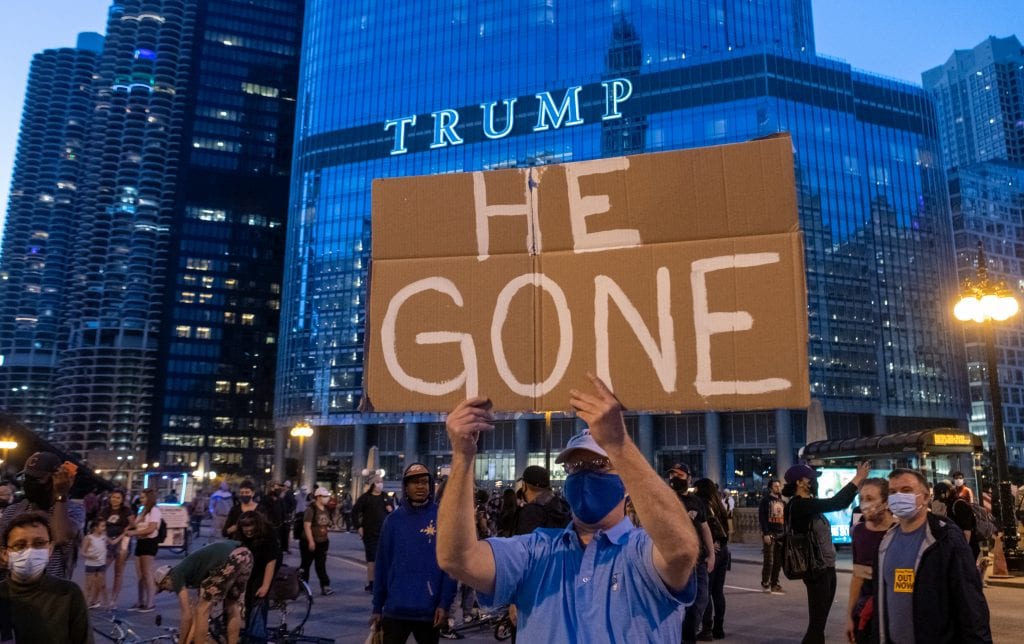
    The U.S. presidential election is taking place in unprecedented conditions. There is a surge of coronavirus overwhelming hospitals in several states; protests against police violence in others; and intimidation of voters by armed men in a few. In the country’s large cities department stores have boarded up their windows and hired security guards to prevent looting and arson. The Republican Party has brought dozens of lawsuits in the states (each of which has different voting laws) to try to suppress the vote, since large numbers of voters generally favor the Democrats.

    While the final day of the election is November 3, because of an enormous increase in early voting, mail-in voting, and drive through voting, it may take days to count the vote. If the vote is close, there is also the possibility of the election going to the courts and ending up in the Supreme Court, now with six conservative justices to three liberals.

    The contest itself between Republican President Donald Trump and Democratic Party challenger Joseph Biden has become a referendum on the coronavirus, now in the midst of the greatest upsurge so far. The United States now has about ten million total cases, 100,000 new cases each day, and 1,000 deaths per day. President Trump’s top aide announced, “We’re not going to control the virus.” He promised instead to quickly develop a vaccine and therapies and medicines to treat the disease.

    Trump has been holding massive packed and mostly unmasked rallies in several key states where he tells his followers that the virus is disappearing. A Stanford University Study found that 18 Trump rallies had led to 30,000 COVID infections and 700 deaths. Trump has called public health officials “idiots” and he claims that doctors are reporting deaths due to coronavirus in order to increase their salaries. On the other hand, Biden promises that if elected he will work with the scientists to bring the pandemic under control.

    Protests against police racism and violence have also become a campaign issue. Trump has condemned Black Lives Mattes as a violent movement, calling for law and order and support for the police. When on October 26 Philadelphia police were called because of a domestic dispute, they found Walter Wallace Jr., a mentally ill man, wielding a knife. When he moved toward the police, they shot him several times, killing him. Thousands of Black people came out to protest in what became violent conflicts between the police and the community, accompanied by riots and looting. Trump declared the protests “the most recent consequence of the Liberal Democrats war against the police.” Biden has recognized the racism present in the society and in police departments and has called for reform, though he opposes “defunding the police,” the principal demand of the recent anti-racist demonstrations.

    Voting is taking place not only amidst the virus, but also during the continuing economic depression with an official unemployment rate of 7.9 percent (in reality higher because of uncounted discouraged workers), that is, some 12.5 million jobless. Nevertheless, to avoid COVID and to ensure that their votes are cast and counted, thousands line up to vote early in cities around the country, wearing masks and keeping social distance. Some 95 million have already voted and more than 150 million are expected to vote, a record turnout. My wife, my children, and I voted at the Brooklyn Museum in a line of thousands that circled the enormous building three times to wait from two to four hours to make their voices heard. When night fell at the museum, volunteers distributed pizza and drinks were to the patient voters waiting in line.

    The count may go on for days or even weeks, and between November 3 and January 20 when the next president takes office, we expect widespread protests and fear violence will erupt. Pro-Trump militias are mobilizing to ensure his election. The social movements and labor unions are organizing to defend the vote and democracy and to continue the fight for social justice.


  • The Red Herring of Liberal Representational Feminism

    The Red Herring of Liberal Representational Feminism

    From the appointment of Justice Barrett, to the silencing of Malala Yousafzai’s socialism, and women’s leadership in the military industrial complex, individualistic, representational feminism proves both inaccurate and dangerous.

    The Appointment of Amy Coney Barrett

    Since Amy Coney Barrett was sworn in as Supreme Court Justice, another wave of disagreement over the goalposts of feminism has emerged. Some recognize her appointment as a victory for women, some view it as an assault on women. This debate has focused largely on Justice Barrett herself, and whether she can or should be considered a feminist. It is worth examining, however, the general celebration of representational feminism because it so often obfuscates the true material and relational issues at hand.

    One of Justice Ruth Bader Ginsburg’s most poignant and memorable quotes addresses the lack of women in governance: Women belong in all places where decisions are being made.” She’s right, of course, women do indeed belong where decisions are being made, not least in part because political decisions that impact women or women’s bodies are all too often made by men. This quote should always come with the context of Justice Ginsburg’s record of defending women’s rights. On its own, it suggests a representational feminism that would recognize any woman in leadership as an inherent victory. It should perhaps come as no surprise that following the appointment of Justice Amy Coney Barrett to the Supreme Court, conservatives hailed the moment as a win for women, and decried those who did not. Liberals have displayed a similar perspective, as seen in the individualistic feminism of Hillary Clinton.

    Additionally, many responses to the first presidential debate suggested that the debate demonstrated a need for women in politics. Among these takes were jokes that two female candidates would spend time complimenting each other’s clothes and hair or would incessantly apologize back and forth if there were confusion over who was meant to speak first. It’s clearly condescending to say two women presidential candidates would use debate time to discuss their outfits, but those sorts of lines were at least intended to be humorous. The problem really goes beyond sexist jokes; it seems like some people really believe two women would inherently have a friendlier, smoother debate.

    To treat an entire gender as monolithically humble and nurturing is both patronizing and inaccurate, and we should not conflate the need for women in power with the idea that women in power would be an inherent improvement. We certainly do see some female politicians, like New Zealand Prime Minister Jacinda Ardern, successfully empowering values that are traditionally associated with femininity – compassion, patience, emotion – but she is also assertive, strong, and bold. Additionally, there’s no reason why men couldn’t be compassionate, patient, and emotional; these traits are certainly societally stigmatized for men, but one way to counter that would be to encourage our male elected leaders to demonstrate values like empathy and generosity. So, the problem here isn’t that typically feminine traits are demeaning – masculine traits such as aggression, competitiveness, and toughness are clearly given too much credence in our politics. The problem is the underlying assumption that ‘women’ is a homogeneous category from which any candidate would be sensitive and kind. The reality is that some women would, and some wouldn’t. The same holds true for men. It is worth noting, however, that given their hierarchical status, white men certainly have greater latitude in terms of acceptable demeanors. Women, particularly women of color, face oppressive and demeaning criticism when they display almost any kind of personality. The recent racist commentary on Senator Kamala Harris by Peggy Noonan is only one example of the litany of assaults Senator Harris faces as a woman of color. Certainly, more diverse representation is needed to help break down these barriers – but pure representation cannot do it alone. It is simultaneously true that women in leadership positions should not be subject to criticism on the basis of their gender or skin color and that representational feminism is insufficient as a metric of success.

    The distinction between ‘we need more women in politics’ and ‘we need more traits traditionally associated with femininity in politics,’ may seem trivial, but the implications here are neither innocuous nor pedantic. It’s a dangerous mistake to assume that American politics would inherently improve if we had two female presidential candidates; likewise, it’s a dangerous mistake to assume Justice Barrett’s appointment will improve the Supreme Court. These assumptions play into a broader pattern of uncritically celebrating women’s achievements in male-dominated circles, when the better approach would be a nuanced recognition that it’s good to have more diverse leadership in all sectors, but it’s equally if not more important to implement systemic improvements for marginalized groups, including women.

    Promoting Liberal Feminism

    In October 2012, Malala Yousafzai was shot by the Taliban because she vocalized support for the right for girls to be educated. Since then, she has, rightfully, become a global inspiration. Through her synthesis of intelligence, compassion, and bravery, she has become perhaps the most recognized advocate for girls’ education, and the youngest ever Nobel Prize laureate. What is less recognized in America is her advocacy for socialism in Pakistan; in a message sent to Pakistan’s International Marxist Tendency, she wrote “I am convinced socialism is the only answer, and I urge all comrades to struggle to a victorious conclusion. Only this will free us from the chains of bigotry and exploitation.” Yet the selective publicity about Malala in both the U.S. and the U.K. would have her appear as a beacon for liberal feminism and foreign intervention. Malala also powerfully advised then-President Obama to end drone strikes: “I also expressed my concerns that drone strikes are fueling terrorism. Innocent victims are killed in these acts, and they lead to resentment among the Pakistani people.” Perhaps unsurprisingly, this part of the meeting was omitted in the corresponding White House statement.

    If our government were thoroughly committed to helping other women and girls like Malala, it certainly would not launch destabilizing and lethal military interventions to the very obvious detriment of the safety of women, who suffer disproportionately in destabilized, violent circumstances. This would not mean ignoring global gender issues; Malala has said herself that the driving cause of inequalities and violation of human rights is poverty. If the U.S. government wanted to, it could take substantial steps to decrease global poverty through, for example, foreign debt cancellation, investigating illicit trade, and more ambitiously capping carbon emissions that have directly harmful payoff elsewhere in the world. But it is far more convenient instead to select individual examples of successful women in America as signs that we’re achieving gender equality, and to associate the struggle for the rights of women on the global scale with the political system of American liberalism. While Malala’s socialism has thus far not been a driving focus of her activism or writing, ending global poverty certainly has been, and the selective coverage of her ideas has silenced this component of her voice.

    Liberal, individualistic feminism is often employed as an excuse for U.S. imperialist aggression. This brand of feminism is cast as a value of democracy, apparently free from the procedures of democracy, as unbridled executive war powers allow our government to launch military campaigns without consulting the people whom it represents. Of course, war zones, and their concomitant instability and impoverishment, do not implement systemic improvements for women.

    Women in the Military Industrial Complex

    The military industrial complex presents another example of uncritically celebrating representational feminism. Raytheon Technologies Corp., the third largest U.S. defense contractor by revenue, has partnered with Girl Scouts of the USA to encourage girls “to explore computer science careers and realize their potential to help make the world a better, safer place.” Earlier this year, Raytheon proposed to expand its manufacturing of weapons in Saudi Arabia as part of a $500 million sale of precision-guided munitions. The weapons would foreseeably be used by the Saudi-led coalition in the world’s worst humanitarian crisis in Yemen.

    Currently, four of America’s five biggest defense contractors, which include weapons manufacturers, are led by women. A Politico article celebrating women in this a win for women in leadership and women in STEM (Science, Technology, Engineering, Mathematics). In the article, Air Force Secretary Heather Wilson attributes the growing number of women in military leadership to their status as mothers, saying “If I ask everyone in this room to think about the most protective person you know in your life, someone who would do anything to keep you safe, half the people in this room would think about their moms. We are the protectors; that’s what the military does. We serve to protect the rest of you, and that’s a very natural place for a woman to be.” Of course, according to Francis Fukuyama, motherhood is also a reason why women would be more peaceful and cooperative. Women should be able to succeed without being associated with motherhood. That association is a needless promulgation of restrictive gender roles: we can applaud women as mothers, and people of any gender as parents, without assuming that all women everywhere embody motherly traits at all times. Yet it is seemingly all too easy to collapse women into stereotypical categories. The fact that ‘motherhood’ is a malleable enough rhetorical tool that it has been used as an explanation for women being tough and women being soft speaks for itself.

    Moreover, the US military continues to use and sell weapons that devastate communities, disproportionately destabilizing the lives of women in foreign countries, including Yemen; in other words, there has been neither normative nor empirical changes in our defense industry now that more women are in power. It’s a painful and tragic irony that Raytheon encourages girls in America to explore computer science while enabling a conflict that has killed tens of thousands of children in Yemen.

    Feminism under Capitalism

    The values of capitalism implicitly promulgate this reductive, representational feminism through treating people as atomistic individuals in competition with one another. Instead of viewing rights of women as a purely procedural concern, wherein a woman’s ability to be a Supreme Court Justice is inherently empowering to all women, we ought to employ a relational and substantive lens. We must recognize that our relations with one another are constitutive of our personal rights, and that our rights and freedoms therefore require substantive equality. In that sense, socialism does not run counter to liberty, but rather in tandem with it.

    Crucially, the takeaways from this complicated issue should not include the idea that women and non-binary people ought to be subject to more scrutiny than their male counterparts. We can expect and demand better representation from men in leadership positions. In the weeks since the passing of Justice Ginsburg, Massachusetts Senator Ed Markey has been a vocal advocate for reproductive rights and women’s health, standing in stark juxtaposition to Justice Barrett. While he is not the only man with a feminist platform, this kind of advocacy should be far more commonplace.

    What do the framing of Malala and women in the military industrial complex have to do with the appointment of Justice Barrett? The fact that the appointment of Justice Barrett is not a win for women should be seen as part of a wider constellation of unduly narrow, capitalist, representative feminism. Likewise, the 2018 appointment Gina Haspel, former chief of a torture black site in Thailand, as Director of the CIA was not a win for women. It was a win for Gina Haspel. And we should not limit out understanding of women, or of feminism, to blindly applauding individualistic triumphs of individual women. To do so not only reduces a vastly diverse range of personalities to one trope but also paves the way for an oversimplified vision of feminism.

    If we want leaders and decision makers who embody stereotypically feminine traits, we should elect people based on their values and irrespective of their gender. If we want to tackle women’s rights on both the domestic and global scale, we should consider a radical overhaul of patriarchal capitalism.

    To quote Cynthia Enloe, “feminism is the pursuit of deep, deep justice for women in ways that change the behaviors of both women and men, and really change our notions of what justice looks like.

  • QAnon and On and On

    QAnon and On and On

    Let me venture a prediction about next week that also applies to the months and years to follow: At no point will Donald J. Trump order the arrest of an elitist network of cannibalistic pedophile Satanists.

    These are parlous times; any unqualified declaration about the course of events to come verges on recklessness. Still, categorically and for the record: no elite cannibalistic pedophile Satanists will be detained, much less prosecuted. Not one!

    People in the QAnon movement have been waiting for the president to do so for a while now, of course. His supposed commitment to take down the sinister network was first announced on conspiracy theory message boards in late 2017. And were Trump to see it through now, his entire campaign staff would be deliriously happy, whatever the scheduling difficulties. No more impressive October surprise can be imagined. It would push COVID out of the news cycle for a long time. It’s hard to see a downside, really. But it’s not going to happen.

    Perhaps “the Storm” — as the day of reckoning has been dubbed by the mysterious Trump loyalist known only as Q — is on the agenda for the president’s second term? That seems imprudent, especially given how tight the race is in some places. Fulfilling the Q scenario would mean Trump could lose both the popular and the Electoral College votes and still remain in office for about as long as he wanted, pretty much by popular acclaim. Putting a bunch of Satanic pedophile cannibals behind bars would be the ultimate game changer.

    But — sorry to belabor the point — it is not going to happen. Tom Hanks, Lady Gaga and Bill Gates do not, in fact, quaff an elixir prepared using the adrenal secretions of children tortured to death for their gratification. No video was found on the laptop of an aide to Hillary Clinton showing them tearing the flesh off a girl’s face and using it as a mask. No one will be arrested for these atrocities, because they do not happen and there is nobody to arrest. But as an old principle in American social science has it, when people “define situations as real, they are real in their consequences.” The bloody fantasies about demonic “elitists” have already crept into the delirium of American political life.

    At least one open QAnon-ist is all but certain to take a seat in the next Congress. A recent survey found about half of Trump supporters interviewed agreed “that Democrats run an elite child sex-trafficking ‘cabal’ and that President Trump is making efforts to dismantle it” — although not all of them had heard of QAnon. An article in the July issue of CTC Sentinel, published by the Combating Terrorism Center at West Point, states, “QAnon is arguably no longer simply a fringe conspiracy theory but an ideology that has demonstrated its capacity to radicalize to violence individuals at an alarming speed.” (The article includes five case studies.)

    At the same time, Donald J. Trump will never meet the QAnon movement’s expectations of him, as even some fervent QAnon adherents must suspect by now. (Rare is the apocalyptic mentality that cannot work around cognitive dissonance.) No matter who is sworn in on Inauguration Day, a sizable cohort of American citizens will continue spending a lot of time vividly picturing horrendous depravities and building up violent hatred at the thought of how much the sinister elites are enjoying themselves.

    It is a political community dedicated to speaking about the unspeakable and to imagining the unimaginable — an effort that often becomes addictive and amounts to very bad mental hygiene at the least. Efforts to debunk QAnon as a deranged revival of anti-Semitic fantasies (which, in turn, resemble the horror stories that culturally conservative Romans once circulated about the early Christians) will do only so much good. You can’t talk an addict out of an addiction or a paranoid out of the dangerous place his mind has taken him. I don’t know what “hitting bottom” might look like for the QAnon movement, but I suspect it has a long way yet to fall.

    Joshua Gunn’s strange and insightful book Political Perversion: Rhetorical Aberration in the Time of Trumpeteering (University of Chicago Press) manages to be very pertinent to the phenomenon without ever mentioning it. The author is an associate professor of communication studies at the University of Texas at Austin; his approach to the mass-mediated politics of the last few years combines classical rhetorical analysis (he identifies the standard Trump tropes in terms that Quintilian cataloged in Rome not quite 2,000 years ago) with Lacanian discourse analysis and an occasional borrowing from the not-particularly-trendy cultural theorist Paul Virilio. The chances of Gunn serving as a talking head on MSNBC are approximately nil, but he approaches the Trump phenomenon from angles much more interesting than yet another reminder of how well the characteristics of narcissistic personality disorder apply.

    The angles Gunn plays are oblique, but here’s a rough overview of his approach. Traditionally the field of rhetoric focused on analyzing the conditions of, and cultivating the skills required for, persuasive oratory: establishing the speaker’s authority or credibility in presenting a given message to the public; finding language suitable for a given audience; framing an argument or a narrative (or both) in ways likely to elicit assent, interest, an urge to take action, etc. Rhetorical studies now encompass every form of communication, and the stock of theories and methods is much expanded. But some of the concepts and categories originally pertinent to, say, giving a speech to an ancient jury remain applicable to a culture of total media saturation.

    One of Trump’s preferred rhetorical moves is occultatio: introducing a topic by announcing you will not discuss it. Examples “are not difficult to come by,” Gunn writes, “because they are apparently compulsively manufactured. For example, after a debate in which a Fox News moderator questioned him about his misogynistic sensibilities, Trump tweeted, ‘I refuse to call Megyn Kelly a bimbo, because that would not be politically correct. Instead, I will only call her a lightweight reporter!’”

    This sort of thing counts as eloquent only by the standards of a 12-year-old bully, but Gunn finds Trump relying on occultatio as more than a reliable weapon in his arsenal of zingers. Disavowal is something like the standard template for his entire political approach: “a patterned disposition toward others” representing “an above-the-law sovereignty” that expresses both aggression and “an incessant denial of responsibility.” Every rally, press conference, and tweet from Trump carries an embedded message that Gunn paraphrases: “I am not going to speak about the reality I affirm by denying it, or I know what I am doing is bad, but I am going to do it anyway.”

    What looks like a trope proves really to be a set of mind games. The ancient rhetorical theorists made fine distinctions among the subspecies of occultatio, which has given their field a reputation for dry taxonomy. But the question of how and why a message is persuasive with a given audience is in large part a matter of social psychology — of how “a patterned disposition toward others” connects the speaker, the listener and the larger public.

    Trump’s political career is too often understood as the successful application of the art of the grift to a much larger market than real estate. Gunn instead returns to the venerable question of how an effective rhetorical performance implies complex affinities between speaker, audience and occasion. His tools for making this analysis draw heavily on Lacanian psychological categories (requiring, among other things, diagrams to explain) and his approach to the idiom is somewhat playful — meaning that quotation here would be asking for trouble. But aspects of Gunn’s argument are familiar from the work of other cultural critics.

    To wit: in both style and content, Trump’s rhetoric is congruent with a couple of trends or dynamics in effect throughout the industrialized world, namely: 1) the weakening or effective disappearance of widely acknowledged and implicitly legitimated forms of authority and 2) a need for speed — i.e. the tendency for communication, transportation, economic transactions and so forth to accelerate. The effect of either process (the distribution of costs and benefits) is not uniform — and calling the result “polarization” underestimates the layers of strain involved, both psychic and social.

    That sounds grim. But human beings are, in Freud’s terms, polymorphously perverse: able to derive all sorts of pleasures (not just erotic) from the most diverse and improbable stimuli, and prone to inventing new ones all the time. (An effort to which Silicon Valley, for one, applies itself constantly.) The bully’s enjoyment of his power to terrify is matched only by the various pleasure available to his friends at seeing him do so.

    Seen from a certain angle, then, Donald J. Trump looks like the consummation of all these trends: always ready to denounce expertise and established authority while no less frequently claiming to embody both; able to rev up the news cycle to insane speeds while spending most of his time watching television; able to cultivate an adoring public by mostly avoiding everyone else. Add to that a political career based on expressing racist sentiments while claiming to be the least racist person around, and you have the makings of a rhetorical genius of sorts.

    To be clear, QAnon was not one of his brainstorms. In a way, it is a form of Trump fan fiction: a way for part of his base to sustain a nonexistent but emotionally intense connection with him while: 1) imagining scenes worthy of the Marquis de Sade and 2) enjoying the pleasures of violent indignation. I was surprised that QAnon went unmentioned in the book, so I asked Joshua Gunn about it. The short answer is that QAnon only came to his attention after he finished writing the book. But it’s been on his mind since then, as we discussed in an email exchange, quoted here by permission.

    “QAnon is really the newest iteration of a centuries-old, blood-libel fantasy used to discriminate against, and ultimately harm, Jewish people,” he wrote. The resemblance has been much discussed, though by no means are QAnon supporters all aware of it. “What’s different in our time is the media infrastructure and speed of communication, which makes the space and time for reflection harder,” Gunn continued. “Wired and wifi life is geared toward reaction and stimulation — hyper cognition — not deep thought or deliberation: click and read this, react to that video (film yourself reacting and post it), follow this link into the rabbit hole, and so on. Images, sounds and words are reduced to an almost phatic core.”

    The term “phatic” applies to forms of communication which acknowledge a connection between people — saying “hey” or giving a nod of recognition, for example. The spread of QAnon materials may owe as much to the phatic pleasures of sharing than to firm belief. “For many who support Trump and/or QAnon conspiracy,” Gunn told me, “there is a kind of detachment from consensus reality and an obliviousness toward consequences. It seems to me QAnon and anti-masking activism are of a piece, both reflect a kind of death defying investment (as if there are two more lives to play [in a video game]).”

    As for Trump’s nods and winks of support to the QAnon milieu while denying any knowledge of the theory, Gunn sees it as likely a variant on the mode of disavowal embodied in the occultatio trope. “There’s evidence to suggest he does not believe it yet references it anyway,” Gunn wrote. “Doing or believing something you know is wrong, not allowed, against the rules, and so on, is the decision rule for perversity. If anons knew the conspiracy was silly yet promoted it anyway, that would be structurally perverse.”

    Gunn’s use of the term “perversion,” while ultimately deriving from Freud, is overlaid with Lacanian connotations that I have (however perversely) avoided discussing here, though it is in fact central to the book. Maybe that will inspire some readers to look for it.

    As for the history and future of QAnon — which, in an accelerated and viral culture, can only be expected to mutate sooner or later — Gunn sums it up well: “The only perversion I can sense so far is Trump’s handling of it.”


    This essay was originally published by Inside Higher Ed and is reprinted by permission.

  • Fighting for teachers unions that speak back to power, defend students and social justice

    Fighting for teachers unions that speak back to power, defend students and social justice

    Steve Zeluck, in New Politics, Winter 1968

    The fears, hardships, and dangers students, teachers, parents, and community have experienced in decisions made about school reopenings in the pandemic, in the shadow of continuing anti-racism protests,  have illuminated  the prescience of Steve Zeluck’s analysis about  the need for “self-mobilization of teachers, students and community to bring about serious, constructive changes in the educational system.”

    Writing in 1968 in New Politics about the brutal strikes of the United Federation of Teachers, representing New York City teachers, over community control and the “disruptive child,”  Zeluck criticized the UFT’s actions as “a blow against teacher unionism,” pitting teachers against the Black movement “determined to win a measure of the power so long denied it.” Zeluck observed the UFT (and AFT, the national union it controls)  had two choices: Aligning with the Black community, demanding justice, entering into “genuine and close cooperation with the insurgent forces of the ghetto around a wide range of issues, forging an alliance against the establishment whose interest in educational improvement or the welfare of the ghetto is minimal” – or forming “an unacknowledged bloc with the status quo and the educational bureaucracy against the ghetto community (and ultimately against the students).”

    Zeluck’s article contains too much to summarize, too much from which we can learn at this moment, as school reopenings have become a point of political conflict on a national level, as parent, student, and teachers’ rights to have healthy, safe, equitable schools have been subordinated to the bipartisan consensus to put the economy and profit over human need.  However, his conclusions are even truer today than they were in 1968: Teachers unions need to “not only face the facts of the monstrous conditions in the schools” but take the “lead in exposing them and placing responsibility for them where it belongs, with the real decision makers and wielders of power—those who determine the allocation of resources in our society.”  Unions need to consult “with the community in drawing up contract demands and in planning joint campaigns and united actions,”  and to “stop temporizing with the AFL-CIO and demand that the Federation launch a real campaign against racism within and without its ranks.”

    Here’s a special pitch because we are in the last weeks of our annual fund appeal:  Zeluck’s analysis is more pressing than ever for teachers unions throughout this country. His article deserves to be more easily available to readers. Towards that end the all-volunteer New Politics editorial board is working towards adding the journal’s earliest issues to our website. Those issues contain a priceless trove of material about labor and politics in the 1960s and 1970s, about the inseparability of democracy and socialism in the past and present. To augment our online archive, as well as to publish our print issue and maintain our website, we need your financial support.  You can make a tax-deductible contribution by clicking here.  Subscriptions also provide us with continuing support. Do both, knowing you will find analysis here you won’t elsewhere.


  • Why Isn’t Sexual Violence Being Talked About in This Election?

    Why Isn’t Sexual Violence Being Talked About in This Election?

    With allegations of sexual harassment against both Democratic Presidential nominee Joe Biden, and President Donald Trump, with 26 alleged victims of sexual violence having come forward, this is an obvious topic that needs a ton of light shed upon it.  For every 1,000 sexual assaults on women, 995 of those predators will walk free. So, why is it that this topic has been completely avoided during the election? Why is it that, in the year 2020, women still do not feel safe in the United States?

    As a female, I can personally attest to the many times I have been at the end of inappropriate comments, unwanted touching, and work place sexual harassment, beginning at the age of 14 years old. In particular, I can relate to why so many are passionate about this subject, as I’ve been sexually assaulted myself. It was something I kept to myself  for two years. I did not speak of it to a soul. I told myself, like many victims, it didn’t really matter. I tried to downplay the entire experience, but carrying it alone took a toll on me. The shame was insurmountable. I felt so exposed, emotionally raw, and terribly embarrassed. I worried I would be looked at differently. I worried people would judge me for not coming forward sooner, which is why it is so common that survivors often do not come forward  until years later.

    Society taught me that men assaulting women wasn’t a big deal, and nothing would be done. After all, our current President, former Presidents and lawmakers have been oppressing and violating women for years. They are the leaders and role models for not only our country, but the entire world. We are setting a dangerous global precedent. Complacency is not okay and enables rape culture.

    One would think that with the Women’s Rights and #MeToo movements, sexual crimes would lessen. One would also assume that our government would pass legislation and criminal justice reform surrounding sexual violence. However, this has not happened. This predator mentality is now trickling from the top of society down into our school systems. The Centers for Disease Control and Prevention reported that 7.4% of high school students had been physically forced to have sex when they did not want to. My own teen daughter and her female friends, who themselves have had to combat unwanted sexual advances from classmates, think it’s funny to shame and harass girls. The statistics almost double for college, where 11.2% of all undergraduate and graduate students have been the victim of rape or sexual assault.

    How can we be shocked when kids are subjected to a desensitized world, where congressman, senators and even Presidents, literally get away with rape and sexual harassment? Since 2017, over 90 allegations have been brought against state legislators.

    To unravel a culture, you must first start at the top. Sexual predators come in the form of Republican, Democrat and all colors of the political rainbow.  Below are some accounts of state legislators’ sexual transgressions in the past few years.

    1. Hawaiian Representative Joseph Souki, a Democrat. He was a part of a settlement in 2018, for unwanted touching, kissing and sexual language towards several women. His slap on the wrist was a $5,000 fine to the state and a public apology. He also had to wait two years before seeking public office again. He is again eligible for office.
    2. Republican Idaho Representative, Brandon Hixon. He resigned in 2017, and then killed himself in 2018, for being caught molesting two girls, including a young female family member
    3. Matt Manweller, a Washington state representative and a Republican. He resigned in January 2019 for having a relationship with a high school student in the 1990s and for being fired from Central Washington University in August 2018, for sexual harassment.
    4. Brian Ellis, Republican representative for Pennsylvania. He drugged a staffer’s drink while at a hotel bar, and then sexually assaulted her. The Dauphin County District Attorney at the time, despite admitting a crime was committed, decided not to press charges.
    5. Ruben Kihuen, a representative from  Nevada and a Democrat. It was proven that he groped women, put his hand up their skirts and kissed them against their will. He stated it was not rape so it was not a big deal. Despite this, he was still permitted to run for a city council seat in Las Vegas in 2019.
    6. Alcee Hastings, U.S. representative from  Florida and a Democrat. In 2012, Hastings was investigated for sexual harassment and employment retaliation. The House Committee on Ethics determined there was not enough evidence to remove Hastings from his seat. However, in 2014, a $220,000 settlement was paid, with taxpayer money, to the victim. Hastings is still in office and is up for re-election this year.

    These are just six examples out of numerous accounts, though there are many more.

    Between 1997 and 2017, $17 million dollars of taxpayers’ money went to settlements to keep legislators out of court and out of jail. The American people have been paying for the cover-ups of politicians for years. It is absolutely disgusting to think that the women who have been raped are paying their hard earnings in taxes to help government officials assault women without consequence. Currently, our Justice Department is spending American tax dollars to try and get Donald Trump out of a defamation law suit, concerning an Apprentice contestant he sexually assaulted.

    Twenty five other women have also accused Donald Trump of sexual misconduct, including assault. This is in addition to his “on the record” public interviews demoralizing women, and minimizing rape, since the 1970s. Not only has President Trump never apologized or admitted guilt, he has called all his victims “liars.” He consistently defends himself with sexist comments, saying that the women that came forward were not attractive enough for him to consider assaulting. In a video that was released in 2016 by Access Hollywood,  Trump was interviewed and bragged about grabbing women’s genitals in 2005. In his exact words, he told anchorman Billy Bush, “I don’t even wait. And when you’re a star, they let you do it, you can do anything… grab them by the pussy.” When Trump was confronted, he denied all accusations, saying during his presidential campaign that he was going to sue everyone who accused him. To date, he has not tried to sue any of the women, and on the contrary, two of the women are suing him. As soon as he leaves office, these legal battles are waiting for him.

    Here are but a few examples from the public records of Trump’s alleged sexual misconduct, prior to the 2016 election.

    1. Jessica Leeds: Came forward about Trump putting his hand up her skirt and groping her during a flight in the 1970s. She states she never came forward, as sexual harassment was common in those times. Just three years after the incident, she ran into Trump at a Gala in New York, where he approached her and called her a “c*nt.”
    2. Ivana Trump: Was recorded in a 1990 divorce deposition stating that Trump attacked and raped her in 1989, after a medical procedure she recommended to him, did not go according to plan. She later issued a statement saying she did not want any criminal charges pressed against him, and did not mean to construe it as rape.
    3. Kristin Anderson: Says that Trump grabbed her vagina under her skirt, in a club in the 1990’s in New York, without her consent.
    4. Jill Harth: States that in the 1990’s Donald Trump shoved her against a wall and put his hand up her skirt at the Mar-a-Lago resort. She sued him in 1997 for the assault and backing out of a business deal..
    5. Lisa Boyne: A health food business entrepreneur, told the Huffington Post that she attended a 1996 dinner with Trump and modeling agent John Casablancas during which several other women in attendance were forced to walk across a table in order to leave. As the women walked on the table, Boyne says that Trump looked up their skirts and commented on their underwear and genitals. Trump allegedly asked Boyne for her opinion on which of the women he should sleep with.
    6. Maria Billado and Victoria Hughs: Both participants in one of Trump’s teen pageants, recall Trump walking into the room while the teen girls were getting dressed. He did not walk back out but said, “Don’t worry, I’ve seen it all.” He later bragged on the Howard Stern show and was directly quoted saying: “I’ll go backstage before a show and everyone’s getting dressed and ready and everything else. And you know, no men are anywhere. And I’m allowed to go in because I’m the owner of the pageant,” he said. “You know they’re standing there with no clothes. And you see these incredible-looking women. And so I sort of get away with things like that.”
    7. E. Jean Carroll: Carroll recounts Trump pushing her in a dressing room in the 1990s and raping her. Her head hit the wall hard and before she could fight, his pants were unzipped and his fingers and penis went inside her.
    8. Samantha Holvey: She recounted being a part of Trump’s pageant in 2006 and all the girls having to line up for Trump to inspect and ogle them. After this incident, the 20 year old, Southern Baptist college student said she had no interest in winning and felt the “dirtiest” she ever felt in her life.
    9. Summer Zervos: She was a contestant on The Apprentice and currently has a defamation lawsuit against Trump, as he says she lied about an alleged sexual assault. In 2007, while having a meeting at the Beverly Hills Hotel, Zervos recounts: “He then grabbed my shoulder and began kissing me again very aggressively and placed his hand on my breast.” “I pulled back and walked to another part of the room. He then walked up, grabbed my hand, and pulled me into the bedroom. I walked out.” Zervos added that Trump thrust himself on her before she left the room.
    10. Alva Johnson: A former campaign staffer of Trump, has filed a federal lawsuit against the President for kissing her without permission at a Tampa Bay Rally in 2016.

    It is hard enough to read these accounts, let alone fathom that they were committed by the Commander-in-Chief of the United State of America. These women are coming out and sharing their sensitive stories, despite knowing the backlash they will receive. They know money and power make President Trump and other politicians immune to the laws of our country.

    To be fair, Joe Biden is no saint himself in the sexual allegations department. Most notably, Tara Reade has recounted her experience with Biden in 1993:“He’s talking to me and his hands are everywhere and everything is happening very quickly she recalled. “He was kissing me and he said, very low, “do you want to go somewhere else?” Reade said Biden penetrated her with his fingers before she was able to pull away. When she did, she says he appeared confused. ‘He looked at me kind of almost puzzled or shocked,” Reade told the New York Times.

    For those who ask, “why did it take the victims so long to come forward?” To put it frankly, this country glorifies sexual assault. Even when these women did the hardest thing possible and spoke their truth, an accused rapist still became president. These women are someone’s daughters, wives, grandmothers, etc., not just statistics. They are real people who have experienced soul-crushing violence.

    Will we remain silent as our society continues to perpetuate this cycle and send the message that a man has more rights over a woman’s body than she does herself? Political biases must be put aside. This has nothing to do with being Democrat or Republican or otherwise. It is about basic human rights and equal protection under the law. We the people should do what’s right and just for all. We the people must put basic human rights, and specifically a woman’s right to bodily autonomy, before politics. We the people must never be silent while injustice exists and our government does nothing. Our right to vote this year has never been more important. Together, our voices can be heard by exercising our constitutional rights and removing the corrupt from office. Together, we can create a safer future for our daughters and send a message to countries all over the planet. Women’s rights are human rights, and the oppression must stop now.

    Sources: 

    “90 State Lawmakers Accused of Sexual Misconduct Since 2017.” The Associated Press, 2 February 2019, https://apnews.com/a3377d14856e4f4fb584509963a7a223.

    Arnold, Amanda and Lampen, Claire. “All the Women Who Have Spoken Out Against Joe Biden.” The Cut, 12 April, 2020, https://www.thecut.com/2020/04/joe-biden-accuser-accusations-allegations.html.

    Associated Press. “Pa. prosecutor won’t charge ex-Rep. Brian Ellis over sex assault claim.” TribLiv, 26 August 2019, https://triblive.com/local/regional/prosecutor-wont-charge-ex-pa-lawmaker-over-sex-assault-claim/.

    “Campus Sexual Violence: Statistics.” RAINN, 5 May 2020, https://www.rainn.org/statistics/campus-sexual-violence.

    Connolly, Griffin. “Disgraced Rep. Ruben Kihuen tries to alter his sexual harassment record.” Roll Call, 26 February, 2019, https://www.rollcall.com/2019/02/26/disgraced-rep-ruben-kihuen-tries-to-alter-his-sexual-harassment-record/.

    Filipovic, Jill. “Our President Has Always Degraded Women — And We’ve Always Let Him.” Time, 5 December 2017, https://time.com/5047771/donald-trump-comments-billy-bush/.

    Lee, MJ, et al. “Congress paid out $17 million in settlements. Here’s why we know so little about that money.” CNN Politics, 16, November, 2017, https://www.cnn.com/2017/11/16/politics/settlements-congress-sexual-harassment/index.html.

    Relman, Eliza. “The 25 women who have accused Trump of sexual misconduct.” Business Insider, 1 May, 2020, https://www.google.com/amp/s/www.businessinsider.com/women-accused-trump-sexual-misconduct-list-2017-12%3famp

    “Rep Alcee Hastings.” GovTrack, 13 May, 2020, https://www.govtrack.us/congress/members/alcee_hastings/400170

    Salcedo, Andrea. “She Was Raped by a Classmate. She Still Had to go to School with Him.” The New York Times, 3 October, 2019, https://www.nytimes.com/2019/10/03/nyregion/niagara-wheatfield-rape.html.

    “The Criminal Justice System.” RAINN, 5 May 2020,  https://www.rainn.org/statistics/criminal-justice-system.

  • Lesser-Evilism in the 2020 U.S. Elections

    Lesser-Evilism in the 2020 U.S. Elections

    If there is one proposition that most anti-Stalinist socialists should agree on it is this: capitalism does not need democracy and democracy does not require capitalism. Only socialism does.

    Socialists in every struggle are the left-wing, the revolutionary wing of democracy. This is what distinguishes us from the left-wing of capitalism and why, in comparison to the small gaps that separate the conservative from the liberal wing of capitalist democracy, we as socialists stand a mile apart from both in irreconcilable opposition.

    Or to put it concisely, as long in the contest is between the left and the right wing of capitalist democracy, socialists have proclaimed and will continue to proclaim our unwillingness to leap over a mile for the sake of an inch.

    This is the crux of our refusal to capitulate to lesser-evil politics. For whatever wing of capitalist democracy prevails electorally, the working class and the oppressed are the losers. That is why we reject the blandishments of cooptation, of subordinating our organizations and our perspective to advance the cause of an enlightened, liberal capitalism.

    Socialism, in its drive to extend and empower democracy, is ultimately compelled to destroy the economic and social base of capitalist power; capitalist democracy is a contest about the minimal level of concessions the state can or must provide to maintain social peace while preserving the interests of the ruling class.

    And if this election were no different than most others, we would be foolish to advocate a vote for the Democrats. Whatever pressure we can place on the system to grant concessions can be waged more effectively from the outside, through mass mobilizations. But whether we sit out such “normal” elections or vote in protest for a “third” party, we should be clear. Such votes as we cast are not votes for independent politics. Only a mass working class party has the coherency to propel independent politics.

    The Green Party and previous movement oriented parties are cross class, issue oriented alliances, no different than the movements from which they arose. Votes for such parties are a vote of no confidence in the system. And nothing more. [1]

    But this election is like no other election and the insistence on a formulaic response based on past assumptions is woefully inadequate. Modern Republicans have always rooted their power in the institutional arrangements that are most hostile to democracy: voter suppression, gerrymandering, the unrepresentative Senate, the electoral college and the unelected federal judiciary. And this is true of the Trumpian Republican Party as well.

    But a Trump victory takes this miles further and is the harbinger of a post-democratic America. The pre-Trumpian Republicans availed themselves of the built-in constitutional holes in American democracy. Even they, however, drew a line at undermining the institutional safeguards of accountability. They released their taxes, turned their business interests over to blind trusts and acceded to the conventional norms of transparency. They were weak democrats, but democrats nonetheless, who never renounced the peaceful and orderly transition of power.

    I have no interest in navigating the competing claims that Trump is a fascist or a bonapartist. His authoritarianism has different roots. Trump’s narrow world view, if you can dignify it as such, was probably shaped more by the organized crime milieu that is a fixture of New York City real estate development scene and by his mentor, Roy Cohn – of Joe McCarthy fame, who guided him through the strong-arm labyrinths of that world – than it is by any past European dictator.

    We have already seen in terrifying embryonic form what a post-democratic America would look like. The justice department, intended as an independent agency, has been converted into Trump’s personal consigliore. Government has become a means for enriching his family. His emissaries are sent abroad to invent scandals made to discredit opponents. His crowds routinely demand that enemies be locked up. Bureaucrats unwilling to tow the line and whistle blowers are summarily fired, deprived of pensions and black listed. White nationalism and Qanon conspiracies gin up an ever roiled base, who are conditioned to see Trump as their knight on horseback defending them against real and invented threats from evil, Democratic pederasts who unleash Antifa to maraud cities and terrify its occupants. He has winked at the KKK, the Proud Boys and race war accelerationists such as the Boogaloo Bois.

    We have seen the Center for Disease Control and the National Institute for Health being strangled as reliable sources of scientific data and guidance. Environmental regulations are being torn up. And bureaucracies are warned not to collect data that contradict business interests. Democratic cities, with large minority populations, are being starved of federal assistance. Trump incites private armed goons to “open” the economy and intimidate elected officials of states run by the opposition party.

    Trump had administration officials employ military helicopters and military police clear a path through unthreatening BLM protesters for a Presidential photo-op.

    And he has dusted off the 1807 Insurrection Act, which permits the armed forces to suppress civil disorder when law enforcement is unable to. It was a law used to suppress the Pullman railroad strike in 1894, a strike led by Eugene Debs. Of course it has been used many other times as well. But rarely so ominously.

    Barr has deployed the Department of Homeland Security, the Department of Defense and the Department of Justice against demonstrators under the pretext of “protecting” federal property against demonstrators, who may have black bloc anarchists, looters or agent provocateurs in their midst. Federal intervention initiated by “operation Diligent Valor” unleashed hundreds of agents to the streets of Portland. 225 federal agents were sent to Kansas City, Missouri and over two dozen sent to Albuquerque, Chicago, Cleveland Detroit and Milwaukee. For personnel, Trump has drawn on the FBI, the Bureau of Alcohol, Tobacco and Firearms, Customs and Border Protection, the Drug Enforcement Administration, Immigration Enforcement, the US Marshals Service, the Federal Bureau of Prisons and the Federal Protective Service. They have been deployed in unmarked vehicles, wearing combat fatigues and with insignia of their affiliations obscured to pluck people off the street.

    In other words, Trump has created a veritable praetorian guard and provided us with a clear demonstration of what life will look like for the left in a Trumpian future. Are we paying attention?

    And as far as challenging the election results, he has pre-loaded the courts with compliant reactionaries, stated brazenly that he may not accept results that depend on mail-in ballots and is ready to deploy an army of election intimidators in contested districts to challenge minority voters and make sure that every vote does not count. He has made it clear that he will tie up the election in the courts in the hope of throwing the elections into the hands of state governments where Republicans outnumber Democrats. And he has hinted that he sees no reason for him to restrict himself to only two terms.

    So comrades, the question is whether you can make common cause with all other small-d democrats – the trade unionists, minorities, environmentalists, anti-militarists, alarmed citizens of all classes- who flock to the Democratic Party as a means to defend their and our hard won rights?

    Or are you going to insist that the defense of democracy is simply a lesser evil to authoritarianism and therefore not worth making common cause as the left wing of democracy with other democrats through the only electoral vehicle that can effectively mount that challenge within the next two weeks?


    [1] This is not to deny that they also have the potential for leveraging movement power by threatening the Democrats to take seriously pressing social issues such as climate change, Black lives, and LGBTQ+ rights or risk defection and possible electoral debacle. They are, in this sense, a form of pressure politics – an external faction of liberal politics – that willingly faces piecemeal dissolution to bolster the Democratic Party when the DP signals its willingness to accommodate their concerns. That is the fundamental reason why protest politics rarely gain traction. They can be picked apart by the Democrats, who privilege one movement against the other, until a leadership devoid of its base is all that remains.

    And, when unwilling to make concessions, they become the playthings of the two capitalist parties – Democrats who seek to deprive them of their ballot lines; and Republicans who seek to advantage themselves by cynically promoting the Greens through back door arrangements aimed at splitting the Democratic vote.

    Worse, socialists ourselves are often delusional about what hard-core Green members want. Along side the Howie Hawkins class-struggle wing is this sentiment, from Steve Welzer who predates Hawkins as a longtime Green activist.

    It’s not a question of socialism finally (after almost two hundred years!) gaining traction. Instead, we need to recognize that the movement for actual socialism is fading away (“actual socialism” being: generalized social rather than private ownership of the means of production, with the idea that the working class will be the agency of social change).

    Green politics has a growing degree of resonance worldwide due to the obvious ecological imperative to scale down and live more lightly. Old-paradigm leftists react to that with angst about “austerity.” But the gradual greening of society will be a source of liberation. Our current lifeways are stressful on both people and the planet.

    We don’t need “workers’ councils.” We need to rejuvenate local community life. The idea of working class revolution is delusional. The endeavor to (finally) create “a labor party that struggles for a working class government” is chimerical. The left needs to let go of its retrograde Red-worldview thinking. Green analyses and prescriptions are very different. The fate of the left depends upon shifting the paradigm.”

    So, if you think the Green Party has an educational role to play for socialism, perhaps this statement is worth mulling over. 

    The article above was originally published in Workers Liberty.

    Correction: The text has been changed to reflect the correction on the railroad strike led by Debs, as noted by Bennett Muraskin.

  • Once More on the Greater Evil

    Once More on the Greater Evil

    Ashley Smith and Charlie Post have replied to my critique of their piece on lesser evil voting. I continue to find their argument unconvincing.

    Smith and Post write that the defense of lesser evil voting in the current election is “oddly timed” because Trump’s poll numbers have been declining. But of course the defenses that they have criticized were written earlier, and even now, while Trump is a strong favorite to lose if poll numbers translate into actual votes counted, it is by no means a sure thing. My odds are high of surviving Covid if I contract it, but when the costs if things go wrong are dire, one doesn’t want to take chances. Trump’s odds of winning as I write today are low, only 1 in 8. That’s the odds of being dealt a pair of jacks or better in poker. Low, but not out of the game. Given the stakes, I’m still worried.

    Much of Smith and Post’s article evades the fundamental question. Adding to the list of ways that Biden is an inadequate candidate or that Democrats have failed us or that Republicans have sometimes responded to the pressure of social movements does not address the choices actually before us.

    The question is not whether “electing the lesser evil will defeat the far-right.” The question is whether electing the lesser evil will give us a better chance of defeating the far right than would an electoral victory by the far right. Likewise, the question is not whether changes invariably come when Democrats are in office. Nor is the question whether change is impossible under rightwing leaders. The question is whether there is a meaningful difference in progressive and movement possibilities to effect changes under the two different sets of leaders. (See Bob Master’s excellent article on whether Biden can be pushed left.)

    Is it a meaningful difference that movement pressure was able to get Obama to stop the Keystone and the Standing Rock pipelines, while despite massive environmental protests Trump re-started both? Some left commentators say these were “token” gestures, but if so, then we are dismissing the value of much environmental activism, which mobilized around these issues. Is it important that Obama enacted hundreds of environmental regulations and joined the Paris Climate Agreement while Trump has been undermining both? Or that Biden calls for rejoining the Paris Agreement? The question is not whether Obama or Biden are eco-socialists. It is whether we have a better chance to gain ourselves and our species the time we need to avert climate catastrophe.

    Of course, Smith and Post are right that a mass socialist movement is what we need to decisively defeat the far right in the long term and build a just society. But in the next week we’re not going to have that movement. Likewise, Scott McClarty of the Green Party says that what’s missing from the “Dump Trump, then Fight Biden” approach is that it doesn’t push for Ranked Choice Voting. But leftists who call for dumping Trump don’t oppose RCV. They support that and a thousand other improvements in our very flawed democratic institutions. But none of these are on the ballot next week.

    Some leftists – like six members of the New Politics editorial board – explicitly tell people not to vote for Biden (“we reject the … call for leftists to vote for Biden as a lesser evil”) and they tell us to reject voting for Biden not just in safe states, but “in any state.” How do they respond to the possibility that this advice might lead to the withholding of enough votes from Biden so that Trump wins re-election? They don’t. Their article makes zero reference to the constraints of the electoral college or the first-past-the-post voting system or the danger that their position might lead to what they say they oppose, Trump’s victory. I posed this question as a comment on their article; one author replied – and never actually addressed it, saying only that to urge a vote for Biden is to lie to the American people. But why is it lying to say that Biden is evil, but a much less-evil evil than Trump and that the difference is worth caring about?

    Smith and Post tell us that their argument is not about how people should vote in the privacy of the voting booth, but whether one should campaign for Biden. But what does it mean to “campaign for Biden”? Does it mean publicly urging people to vote for Biden? But how is that different from what Smith and Post have done urging people to vote for Hawkins (“we advocate voting for Howie Hawkins, despite the problems of the Green Party, as a protest vote”). And in what other situation does the left tell people that their political decisions are private matters, that shouldn’t be publicly discussed and challenged?

    And is it campaigning for Biden to tell people – as the letter from 55 activists (including me) does – that it is essential to defeat Trump? Right now, this week, there is simply no other way to defeat Trump than by voting for Biden. Recognizing this reality requires no illusions about Biden. Biden’s many failings and limitations are beside the point because the only way to stop the much greater evil, Trump, is to cast a vote for the lesser evil. This is not lying to people. What is wishful thinking is suggesting that there will be any lasting impact from voting for the Green Party in swing states, a party that will be lucky to get “more than a sliver of one percent” of the vote.

    Does urging people to vote for Biden undermine movement organizing? I think the opposite is the case. The left won’t be taken seriously by social movements if it seems to them that we don’t care about their issues. Those who are most heavily involved in the environmental struggle understand that defeating Trump is a necessary though not sufficient condition for preventing climate disaster. Those involved in struggles for $15-an-hour know that their chances of achieving their goal is much greater under Biden than Trump. And what does it do for our credibility with Black Lives Matter activists that we are not doing all we can to prevent the re-election of a white supremist. Will those whose lived experience of racism is made worse admire our courage in refusing to cast the deciding vote against Trump in a swing state? Will reproductive rights or LGBTQ+ activists consider us allies if our votes are what permit Trump to add a seventh justice to the Supreme Court? Will those fighting to defend basic democratic rights commend our refusal to unseat the greatest threat to American democracy in many decades?

    A Biden administration will have to be fought from day one. The left should never subordinate itself to Biden. But voting for Biden in a swing state, and calling on others to do the same, involves no subordination. It’s a recognition of the realities we face and of the fact that a Trump victory would have incalculable consequences for the left, for all Americans, and for our planet.