Category: Education
It’s hard for people who have never been on strike to understand how transformative the experience can be, especially if the job is one’s life work. All of sudden, power relations are reversed. Workers are calling the shots about what they will and will not do. Life in school is so routinized that anything new can cause shock waves, and a strike by teachers is a tsunami.
 We’re seeing social movement teacher unionism arise in the South, in NEA, in Organize2020, a hardy band of activists who intend to transform their NEA state affiliate, North Carolina Association of Educators (NCAE). I was invited to speak at their first state-wide conference but when we were iced

The following letter, to which I have added my name, is being circulated by education faculty. Dozens of education faculty have already signed and teachers at another Chicago school, with support of parents, have now decided to boycott the test. School administrators have threatened retaliation against the teachers, and support from outside the city is essential. The Chicago Teachers Union is supporting this teacher-led boycott.
(This blog was adapted from my remarks in a remarkable forum on Feb. 8 in NYC that critiqued current policies evaluating principals and teachers and examined possible solutions. The panel was videotaped and will be uploaded shortly. I’ll give readers the URL when that occurs.)

There’s no single recipe for building the social movement we need to make public education what it should be, to nurture and protect democracy and kids’ well-being. But we can see essential ingredients coming together in many different places.
In California a legal battle is being fought that has political implications for teachers everywhere. It’s being cast – incorrectly – as a confrontation between teachers’ jobs and students’ rights.
Is the push for preschool something we should celebrate? Yes and no.
I remember as a freshman in college making a boneheaded move. I didn’t feel like I had enough stuff. I was broke, and I had enough stuff to keep me alive and entertained, but I could never say no to acquiring more of it. I was fortunate enough that one day while exiting my dorm’s food court, some guy I never met—who looked like he was in his late 20s—offered me stuff and this of course piqued my interest.
This tale is not salacious. The “stuff” was not anything illegal or even unethical.
It’s hard to overstate how frightened US teachers are in many schools and districts. We know from research that many teachers in schools now chose this career because they love kids and/or their subject matter. Some of activists in social justice causes but many have never taken an interest in what they’ve viewed as “politics,” remote from their work. These teachers aren’t prepared for the ferocity of the attack they’ve experienced, and teachers unions have been so weakened, legally and politically, that teachers
Does appointment of Carmen Fariña signal a dramatic shift in policy for New York City public schools? Writing in the Indypendent, NYC teacher and union activist Brian Jones suggests, correctly I think, the situation is more complicated than supporters of Bill de Blasio want to believe.* On the one hand, Fariña is indeed different from her predecessors in the past decade.
Teacher activists have been buzzing in the blogosphere about AFT President Randi Weingarten’s shift, endorsing a moratorium on linking teacher evaluation to students’ scores on standardized tests and on the new national curriculum, Common Core.
 It remains to be seen whether NJ Governor Chris Christie will be able to avoid having his political career crash and burn.
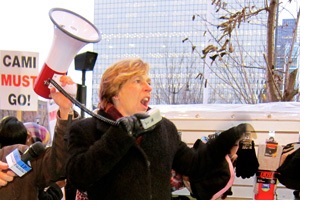
There’s no strict recipe we can follow to build social movement teachers unions though the process will require some indispensable ingredients, robust democracy for one. Another element is creating relationships among people who inhabit very different social spheres. While the principles on which we organize are key, so are the ways we struggle together, creating friendships.
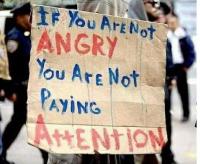
 One of the most confusing aspects of the last decade’s education reforms is that a reform that will do great harm often contains an element that’s useful, even progressive.
Union City, NJ had a brief minute in the sun as the liberals’ example of good school reform.
Nasty exchanges about “identity politics” in Left circles on FaceBook I’ve glanced at recently haven’t seemed very relevant to my work as a teacher educator or union activist. This is curious because I know one reason education is so contested is that schools reproduce (or change) the beliefs that underlie the society’s political and economic arrangements. Schools and teachers convey how we make sense of our identity, as a society and as individuals. So why does the debate seem tangential to me?
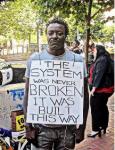 One question I’m frequently asked is what “social movement teacher unionism” looks like and how to get there.
The teacher activist blogosphere has been buzzing about the perfidy of the AFT’s and NEA’s endorsements of teacher evaluation tied to students’ standardized test scores and a new national curriculum, the Common Core. Both policies are key to the neoliberal dream of a national, privatized system of public education that will synchronize educational outcomes with an economic reality of growing joblessness and underemployment. (I know these are strong claims and I refer readers who want further verification and explanation to my analyses in New Politics and book.)
It was clear from the start that teachers had an uphill battle explaining why NJ Governor Christie’s educational policies, his vicious bashing of teachers, were harmful to kids and the state. One of the most serious obstacles is that media are captive to neoliberal propagandists. Conveying a different message requires concentrated, savvy use of social media.
Bill Keller’s op/ed piece in the NY Times about the mediocrity in teacher education deserved a political rebuttal that responses in the “letters” section didn’t provide. My letter, rejected, slipped in my doctoral work at Harvard and my book on urban teaching, which in the past has allowed my radical critique to pass as credible.
- « Newer Posts
- 1
- …
- 4
- 5
- 6
- 7
- 8
- 9
- 10
- 11
- Older Posts »