Category: Education
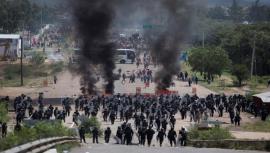
The Mexican Federal Police and Oaxaca State Police killed nine people and wounded more than one hundred others, while dozens more were beaten and yet others were arrested and jailed in what has been the most violent and bloody attack on teachers and their supporters in Oaxaca since the tremendous upheaval of 2006. Several teachers leaders have also been arrested and jailed on a variety of charges; warrants have also been issued for others.
To show support for Mexico's teachers, demonstrations are being held internationally, as they are in the U.S. In today's blog about the situation in Mexico, Mary Compton provides background to the current repression and information about how readers can support the teachers.
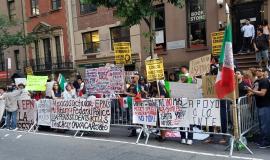
There were demonstrations yesterday at Mexican Consuls in several American cities protesting the Mexican government’s violent repression of teacher protests in Oaxaca. Many of the protests also criticized the U.S. government for supply the Mexican government with military equipment being used in military and police actions against the teachers.
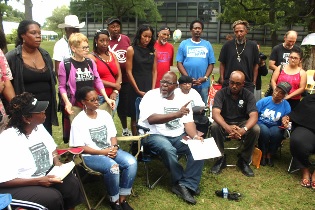
There were protests in New York, Chicago, Houston, and Los Angeles among other cities. The one pictured here, which grew to a couple of hundred people, took place in Manhattan at the Mexican Consul.

The good news is that the MORE/New Action slate won the seven seats on the UFT Executive Board elected by high school teachers. Furthermore, voter turnout increased across the board from roughly 18% in 2013 to roughly 24% in 2016. Finally, the absolute number of votes for the opposition increased in every division. However, still less than one-quarter of UFT members participated in this election. And the slight increase in voter turnout benefited the ruling Unity caucus at least as much as it benefited MORE/New Action.
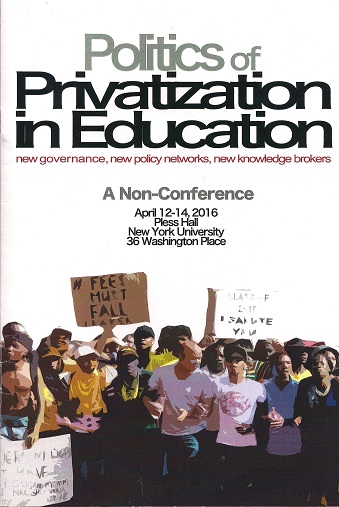
(These are my remarks at an evening panel of what its organizers referred to as a "non-conference" so as to convey the need for participants to interact with one another's ideas, rather than present papers. Sessions spanned two full days. The two evening sessions were videotaped. When they are made available I will post them on New Politics.)

A new Jacobin piece by Micah Uetricht and Sarah Chambers is a must-read to understand what's at stake in the April 1 walkout of Chicago teachers. (My own thoughts about the political implications of the strike are in a piece in press.) But for now I want to explain to teachers who may be considering crossing the union's picket lines tomorrow why that would be a very big mistake for them personally.

Reservation is an issue that only affects a small proportion of Dalits, says sociologist Vivek Chibber.
The ferment on campuses across the country following Rohith Vemula’s suicide and the recent crackdown on free speech at Jawaharlal Nehru University have drawn international attention, with many academics, students and activists across the world expressing solidarity.
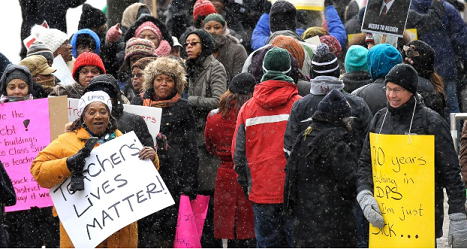 Much has been written about the harm the Supreme Court will wreak on US labor if it overturns the right of public sector unions to charge nonmembers a fee equal to the cost of the union’s expenses in representing them. Pundits on the left and the right have predicted a cataclysm.
Members of the Washington Education Association (WEA), an NEA affiliate in Seattle, are on strike this morning. Picketing has begun outside schools though bargaining has resumed. The demands in this strike show the power of a teachers' union to use the contract to make schools what they should be for all kids. The ones that I think are most significant:
This Labor Day, which sides are you on?
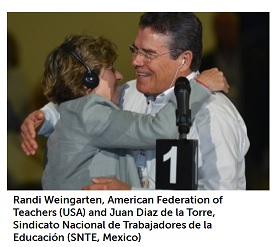 The Education International (EI), the international confederation of teachers unions, held its seventh World Congress in Ottawa over the summer. Though most teachers don’t know this organization exists, and few people write about its activity, what it do
 Mary Compton, who edits the informative and unique website www.teachersolidarity.com, tracking struggles globally to defend public education, teaching, and teachers unions, gives us a strikingly different – and more hopeful – take on Oaxaca and teacher unionism in Mexico than a recent New Politics blog. Compton’s analysis is in
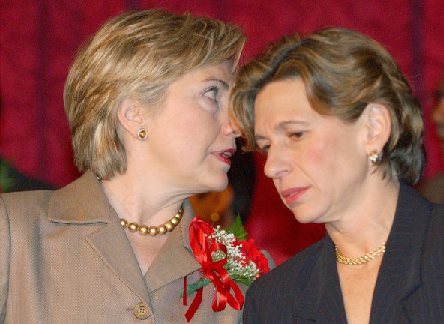 On July 11 the AFT announced its Executive Council “overwhelmingly” endorsed Hillary Clinton for the Democratic nomination for President. It did so, the official announcement reported, on the basis of interviews (not released to members) and the results of a poll.
A headline in a recent news story about Los Angeles teachers, calling the district’s teaching force “old and costly,” is a companion piece to the New York Times front page article about the Success Academy chain headed by Eva Moskowitz.
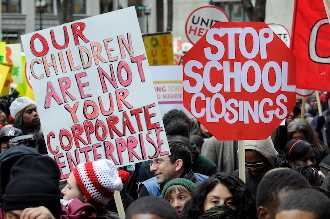 It’s encouraging that US unions are acknowledging the deep crisis facing labor and even the need for union democracy, as Labor Notes contributor Mark Brenner observes in his March 2015 column about the conference organized and hosted by the Albert Shanker Institute, an arm of the American Federation of Teachers (AFT).
A small group of Newark high school students Tuesday night seized the office of state-appointed superintendent Cami Anderson in a protest timed to coincide with her imminent re-appointment to another year, her fifth, as head of the state’s largest school district. The action, which is continuing through the night, stands in stark contrast to the failure of Anderson’s older–and, theoretically, more powerful–critics to do anything to dislodge her from her post.
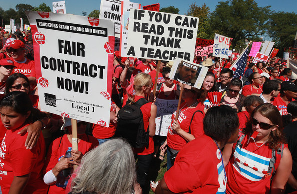 I’m struck by how many of the skills and understandings good teachers acquire can also make them fine union activists. Though they may not realize it, teachers have already learned a great deal about organizing – through their work as teachers.
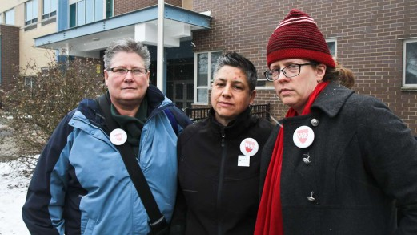 I have a long-time friend who recalls how, as a young teacher, she came to her Brooklyn school on November 7, 1960 to walk the picket line. She was terrified at breaking the law and was only one of a very few teachers in her school to strike. Fearful but also committed, she held hands with a gal pal for mutual support.
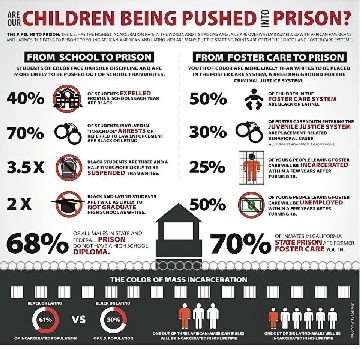
 When Rudy Giuliani blamed the deaths of unarmed Black men on teachers unions in appearances on Geraldo Rivera’s show and Fox News’ “Hannity,” Giuliani relied on the same logic that Rod Paige, Secretary of Education, employed in Read more ›
- « Newer Posts
- 1
- 2
- 3
- 4
- 5
- 6
- 7
- 8
- …
- 11
- Older Posts »