Author: Lois Weiner
LOIS WEINER writes widely about education, labor, and politics, specializing in teacher unionism. Her new book looks at lessons for the Left in capitalism’s alteration of work and education, and how teachers and their unions can resist with support to and of movements for social justice.
Sarah Chambers is an award winning special education teacher in Chicago’s Saucedo Academy. Sarah is a local leader a national figure in the fight to defend and transform public education against the corporate education reform attack. She is a relentless advocate for special education students and LGBTQ students. Sarah is a published author, organizer, and speaker on issues of education reform and social justice.
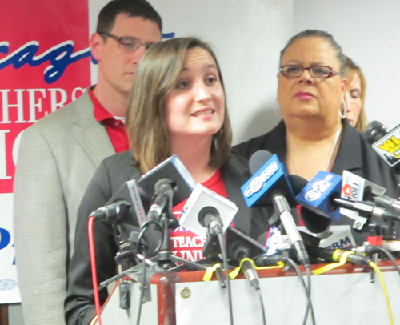
 During the Chicago Public Schools (CPS) spring break, Sarah Chambers, beloved to her special needs students, well-known (to staff and parents of her school), notorious (to CPS labor relations officials), received a letter saying she was suspended and had to stay away from the school. Though Sarah was an early member of the Caucus of Rank and File Educators (CORE) that is now the CTU’s elected leadership, she remained a teacher of special needs kids who represents her school in the House of Delegates and serves on the union’s Executive Board.
Public education is truly at a crossroads in the US, as are both the American Federation of Teachers (AFT) and the National Education Association (NEA).

 The Women’s March was glorious. Yes, I disagree with much said in the speeches, but that wasn’t an issue because like the vast majority of people who participated, I didn’t go to hear celebrities or politicians talk. I participated to show my rage and frustration at Donald Trump and the policies he and the GOP are preparing to impose on us. Women like me, disgusted, dismayed, enraged at Donald Trump’s misogyny, which the GOP has endorsed, flooded to this demonstration.
We brought family, friends, supporters, male and female, protesting the human rights and climate deniers whom Trump has brought with him into office. There was some diversity but this was primarily a march of young White women who carried signs about their bodies, “Pussy power” being the most prominent at the New York march. “Pussy power” strikes me as especially apt. Like women who fight patriarchy, it’s naughty. It evokes the strength in numbers. Most of all, the march birthed a new social movement which will owe its life to pussy.

What makes Nikhil Goyal’s analysis of the dangers in Trump’s selection of Betsy DeVos for Secretary of Education so useful, beyond its incisive discussion of education reform, is that it captures the essence of the conundrum liberals face about fighting Trump on his Achilles heel: the grip the wealthy and powerful have on government which he will tighten.
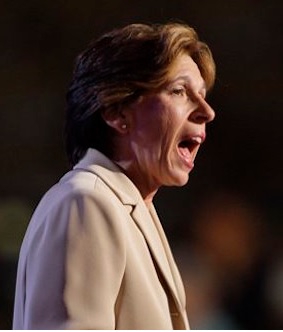 Randi Weingarten, who engineered the 1.6 million member union’s early endorsement of Hillary Clinton has issued a statement about the election, lamenting that voters chose to believe Trump about economic insecurity, rather than hearing the identical message, sent by Clinton and unions.
 In presidential election years, by Labor Day most US labor unions have long halted organizing, shifting most of their human and financial resources to elect a Democrat to the White House. Members are told having a Democratic president will give us — that is, union officials — access to politicians with whom they can negotiate over labor’s concerns.
An activist/scholar in the Mexican teachers union democratic opposition (CNTE) has asked me to publicize this statement (copied below). It explains the demands the movement is making on the government and fleshes out the short but excellent update on The Real News about the struggle. As this statement shows, CNTE and its supporters are struggling about far more than their jobs.
To show support for Mexico's teachers, demonstrations are being held internationally, as they are in the U.S. In today's blog about the situation in Mexico, Mary Compton provides background to the current repression and information about how readers can support the teachers.
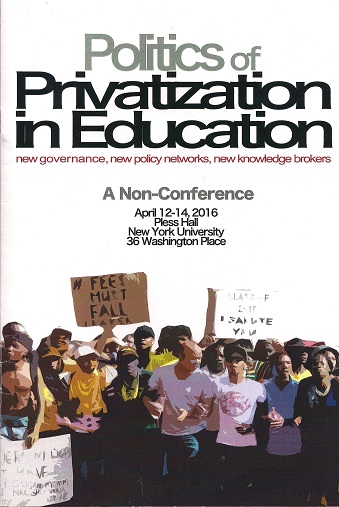
(These are my remarks at an evening panel of what its organizers referred to as a "non-conference" so as to convey the need for participants to interact with one another's ideas, rather than present papers. Sessions spanned two full days. The two evening sessions were videotaped. When they are made available I will post them on New Politics.)

The Chicago Teachers Union (CTU) strike April 1 is not primarily about increased school funding, standardized testing, pensions for teachers, or even just corporate taxation, though the union is fighting for all of these. The strike is about democracy, especially who owns our society’s resources and how decisions about those resources are made.
A new Jacobin piece by Micah Uetricht and Sarah Chambers is a must-read to understand what's at stake in the April 1 walkout of Chicago teachers. (My own thoughts about the political implications of the strike are in a piece in press.) But for now I want to explain to teachers who may be considering crossing the union's picket lines tomorrow why that would be a very big mistake for them personally.
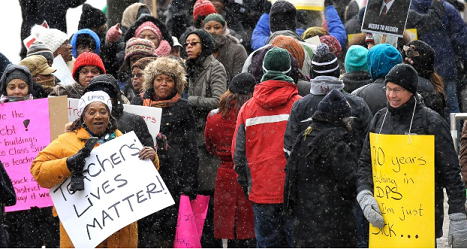 Much has been written about the harm the Supreme Court will wreak on US labor if it overturns the right of public sector unions to charge nonmembers a fee equal to the cost of the union’s expenses in representing them. Pundits on the left and the right have predicted a cataclysm.
Members of the Washington Education Association (WEA), an NEA affiliate in Seattle, are on strike this morning. Picketing has begun outside schools though bargaining has resumed. The demands in this strike show the power of a teachers' union to use the contract to make schools what they should be for all kids. The ones that I think are most significant:
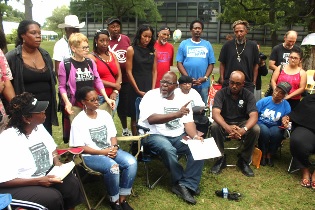
This Labor Day, which sides are you on?
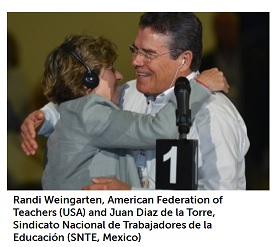 The Education International (EI), the international confederation of teachers unions, held its seventh World Congress in Ottawa over the summer. Though most teachers don’t know this organization exists, and few people write about its activity, what it do
 Mary Compton, who edits the informative and unique website www.teachersolidarity.com, tracking struggles globally to defend public education, teaching, and teachers unions, gives us a strikingly different – and more hopeful – take on Oaxaca and teacher unionism in Mexico than a recent New Politics blog. Compton’s analysis is in
 On July 11 the AFT announced its Executive Council “overwhelmingly” endorsed Hillary Clinton for the Democratic nomination for President. It did so, the official announcement reported, on the basis of interviews (not released to members) and the results of a poll.
A headline in a recent news story about Los Angeles teachers, calling the district’s teaching force “old and costly,” is a companion piece to the New York Times front page article about the Success Academy chain headed by Eva Moskowitz.
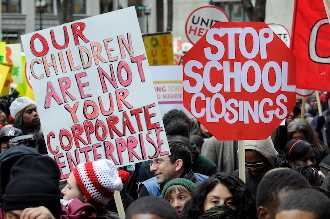 It’s encouraging that US unions are acknowledging the deep crisis facing labor and even the need for union democracy, as Labor Notes contributor Mark Brenner observes in his March 2015 column about the conference organized and hosted by the Albert Shanker Institute, an arm of the American Federation of Teachers (AFT).
- « Newer Posts
- 1
- 2
- 3
- 4
- 5
- 6
- 7
- Older Posts »