Place: Western Europe
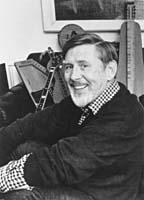
This year marks 100 years since the birth of Ewan MacColl. Born James Henry Miller in Salford on January 25,1915, he adapted the stage name of Ewan MacColl to acknowledge his strong Scottish heritage.
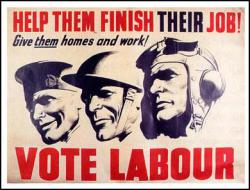
In the United Kingdom, we are accustomed to progressives conducting their arguments in confident terms of complete inevitability. Progress is a one way street, and we are marching ceaselessly along it towards the end of history, almost without trying.
We at New Politics were saddened to learn and are very sorry to have to inform our readers that our good friend and writer Özlem Ilyas Tolunay, 39, died on Nov. 16 of a heart attack. We are heartsick that this young woman, a fighter for social justice in Turkey, wife and mother of a young child, is no longer with us.
An extended interview with Joseph Daher, a member of the Revolutionary Left Current in Syria, living in Switzerland, will be published in the forthcoming Winter 2015 issue of New Politics. Here we just post the questions dealing with Kobanê and Turkey.
 On September 18, 2014, the Scottish people had the opportunity to withdraw from the United Kingdom and become an independent country. The unity of Scotland and England has existed since 1707, so the vote could have broken with three hundred years of history. After a long and bitter campaign, the proposal to leave the UK was defeated by a margin of 55% to 45%.
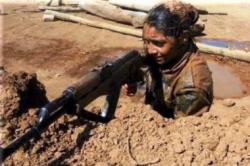
The whole world is just watching the forthcoming massacre in Kobane. US-led air strikes seem to be made only for show. When ISIS approached the oil-rich Erbil, the Kurdish Regional Government’s capital, the U.S.-led coalition forces immediately took action against ISIS. However they didn’t do the same for Kobane.
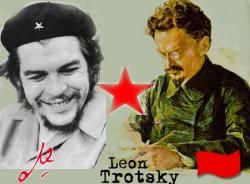
Daniel Bensaïd. An Impatient Life: A Memoir. Foreword by Tariq Ali. New York: Verso, 2013. Photos. Notes. 358pp. Hardback – $34.95.
Daniel Bensaïd, raised in his Algerian Jewish and French Communist family in Toulouse, was strongly affected as an adolescent by the revolutionary movements in Algeria, Cuba, and Vietnam. At the university, he became swept up in and was soon a student leader of university strikes that set off the great upheaval of May 1968 leading to the strike by 11 million workers.
We don’t think of philanthropists as ragged: louche, maybe even a tad shabby, as with
trust-fund hipsters or Palo Alto billionaires, but never ragged. In writing his early-twentieth-century British classic, The Ragged Trousered Philanthropists, Robert Tressell (the pen name of Robert Noonan) wanted to drive home his point. The biggest benefactors of the rich are workers. His is a portrait of hard-pressed working people and their counterintuitive respect and political and economic support for their rulers.
The workers of Punto Leather Factory, located at Kazliceşme in the district of Zeytinburnu in Istanbul, have been organized in their union, Deriteks, for a decent livelihood and decent working conditions. They stand against harsh working conditions, health and safety problems, denial of their constitutional right to unionize, disadvantageous health insurance plans, prohibitions against using their annual leave entitlements; in summary they stand against working in conditions of slavery.
In March 2010, a few months before his death, Mario Monicelli, the unforgettable director of the 1958 caper film Big Deal on Madonna Street (I soliti ignoti), was interviewed live on Michele Santoro’s program “Rai per una notte.”2 Disillusioned, Monicelli sketched the portrait of a subdued country, an Italy overcome with fear, which he then followed with expressing the hope of “a real blow [to the system], a revolution, something Italy has never experienced,” because, according to him, redemption only comes from sacrifice and
Since the Conservative-Liberal Democratic coalition came into power in Britain in 2010, there has been a vicious attack on both the public sector and the social welfare state that is being justified as a response to the “high deficit.” Austerity is being introduced for two related reasons. First, the low profitability and resulting stagnation following the economic crisis of 2008 led employers to squeeze wages in order to keep profits up.
Many misconceptions still exist in the mainstream about the ongoing economic crisis in Southern Europe. First, the crisis is often considered a direct result of the 2008 banking sector collapse in the United States, but it is becoming abundantly clear that it is a by-product, an expected outcome, of the current economic system, capitalism, which relies on continuing growth and competition, profit maximization, power and wealth accumulation by the oligarchy, commodification of public goods and resources, and the voracious exploitation of the environment.
 During the last ten years, a new Turkey has been created. The Justice and Development Party (AKP) government of Prime Minister Recep Tayyip Erdoğan has begun the establishment of an authoritarian regime built upon Sunni Islamic principles and neoliberal economics. We are in an era where the two have combined to create the worst of all worlds for women.
 The following is a response to an article trying to enlist the poet Homer on the side of hawks by the Boston Globe’s resident neocon right winger Jeff Jacoby. This letter was not published.
This essay is inspired by the recent article by Denis Godard titled: “The NPA in crisis: We have to explain because we have to start again.” His article is a review of the strategic orientation of the historically Trotskyist-origined tendencies that prioritize building independent class formations and which see electoral vehicles as expressions of anti-capitalist cum revolutionary socialist movements “from below” (that is, based in and directly responsive to grassroots and rank-and-file formations).
[New Politics readers will be interested in the following article by Dan Gallin, who advocates social justice unionism, international solidarity and the need for workers' movements that actually move.
Passionately watching last week’s election returns* at the Rosa Luxemburg Stiftung’s office in New York, without ever having been to Germany or learned more than a half-dozen German words, was an unusual experience. It was easy enough to orient my sympathies — as an American socialist they stood with the Left Party.
Both teachers unions and headline-writers seem to agree that the NUT (National Union of Teachers) and NASUWT (National Association of Schoolmasters Union of Women Teachers) joint strikes that start Tuesday 1 October are over pay and pensions. They’re wrong.
UK teacher Rob Price explains in this FB post why we should care about and support the upcoming joint strikes of the country’s two biggest teachers unions. (My post tomorrow will discuss why this is a strike over much more than pay and pensions.) You can tweet messages of support to @nutonline with the hashtag #teacherroar.
Martin Comack is absolutely correct to recognize that I wrote a Leninist critique of his book Wild Socialism about the revolutionary shop stewards or council movement that existed in Berlin at the time of World War I and on into the early 192
I would like to comment on the Leninist critique of my book Wild Socialism: Workers Councils in Revolutionary Berlin, 1918-21 by Dan La Botz on your website. His review contains several errors and misinterpretations.
- « Newer Posts
- 1
- …
- 10
- 11
- 12
- 13
- 14
- 15
- 16
- Older Posts »