Place: Western Europe
 While in Paris in mid-April, I had conversations with a number of mostly older, leftist intellectuals: professors, publishers, editors and writers. These are men and women who historically have had close ties and involvement in the labor and social movements. I also went to political protests and attended a socialist meeting. Here are my impressions, just impressions of a few days in Paris.
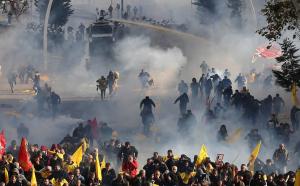
On March 11, 2016, a Turkish prosecutor dropped a complaint against officials for failing to take adequate security measures both before and after the bombing of a peace rally in Ankara that killed more than 100 on October 10, 2015. Two days later, suicide bombers struck in Turkey’s capital city for the third time in five months. A car bomb was exploded in the downtown neighborhood of Kızılay, killing 36 and injuring many more. As with other recent attacks, the government of the Justice and Development Party (AKP) quickly suggested the Kurdistan Workers Party (PKK) was responsible for the attack.
The following statement was made by the Revolutionary Communist League-Socialist Workers Party (LCR-SAP) of Belgium following the attacks in Brussels.
The LCR-SAP condemns in the most energetic fashion the cowardly terrorist attacks that were perpetrated on 22 March in Brussels. No political or religious motivation can be an excuse for these heinous crimes. The LCR-SAP expresses its support and its profound solidarity with all the innocent victims of this blind violence.
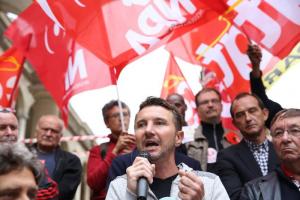
The following piece was written for Kojkkino, the theoretical magazine of the Greek organization DEA. Though quite long, it does not claim to cover all sides of the question. Indeed, it’s the kind of article that is never really finished and that has to be constantly reworked and supplemented. Its main objective is to stimulate collective thinking about the lessons of the successes and failures of the NPA from its birth to the present day.
Radical Left organizations in Europe have tended to focus their attention on the major political and electoral experiences that have stood out in the recent period – beginning with Syriza in Greece, Podemos in the Spanish State and the Left Bloc in Portugal, and often also including Die Linke in Germany, Rifondazione Comunista in Italy, the Red-Green Alliance in Denmark (RGA) and others. This is entirely justified. Still, other attempts at “doing something new” merit analysis, even where their successes were fewer or shorter-lived. They provide food for thought about a broader range of national contexts.
Agustín Guillamón is a dedicated anarcho-syndicalist activist whose partisanship has not affected his critical sensitivities nor prevented him from graphically outlining what he regards as the errors and inconsistencies of the Spanish libertarian left.
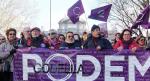 The Indignados (in English, the “outraged”), protagonists of what is called the Spanish May 15, or 15M, Revolution (2011-2013), concentrated a great deal of their political action on the construction of a shared conceptual and emotional understanding of the political reality around them.
In 2001, Professor Danny Dorling wrote an essay entitled “Anecdote Is the Singular of Data.” In it he explored how, during his teenage years, he grasped the idea that the places people live impact the lives they lead. Dorling opens the essay by describing a pedestrianized subway near his childhood home. The subway had four entrances, each leading from a different housing development.
 Today, a year after the heroic resistance of Kobani made it to the world news, it is hardly necessary to give an introduction to the Kurdish struggle, which has now taken a central place in the imagination of the international left, both vanguardist and anti-authoritarian.
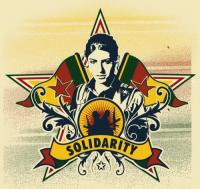 The siege of Kobani by Islamic State (ISIS) brought worldwide attention to the Syrian Kurdish PYD (Partiya Yekîtiya Demokrat, Democratic Union Party), the leading force in the Kurdish-majority areas in northern Syria. The PYD calls this region Rojava—literally meaning “land of the sunset” but also translated as “West Kurdistan.”
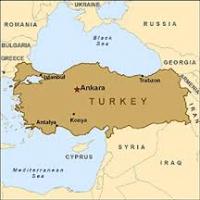 In a June 2015 election, the new People’s Democracy Party (HDP) of Turkey passed a highly undemocratic 10 percent threshold to enter the Turkish parliament.
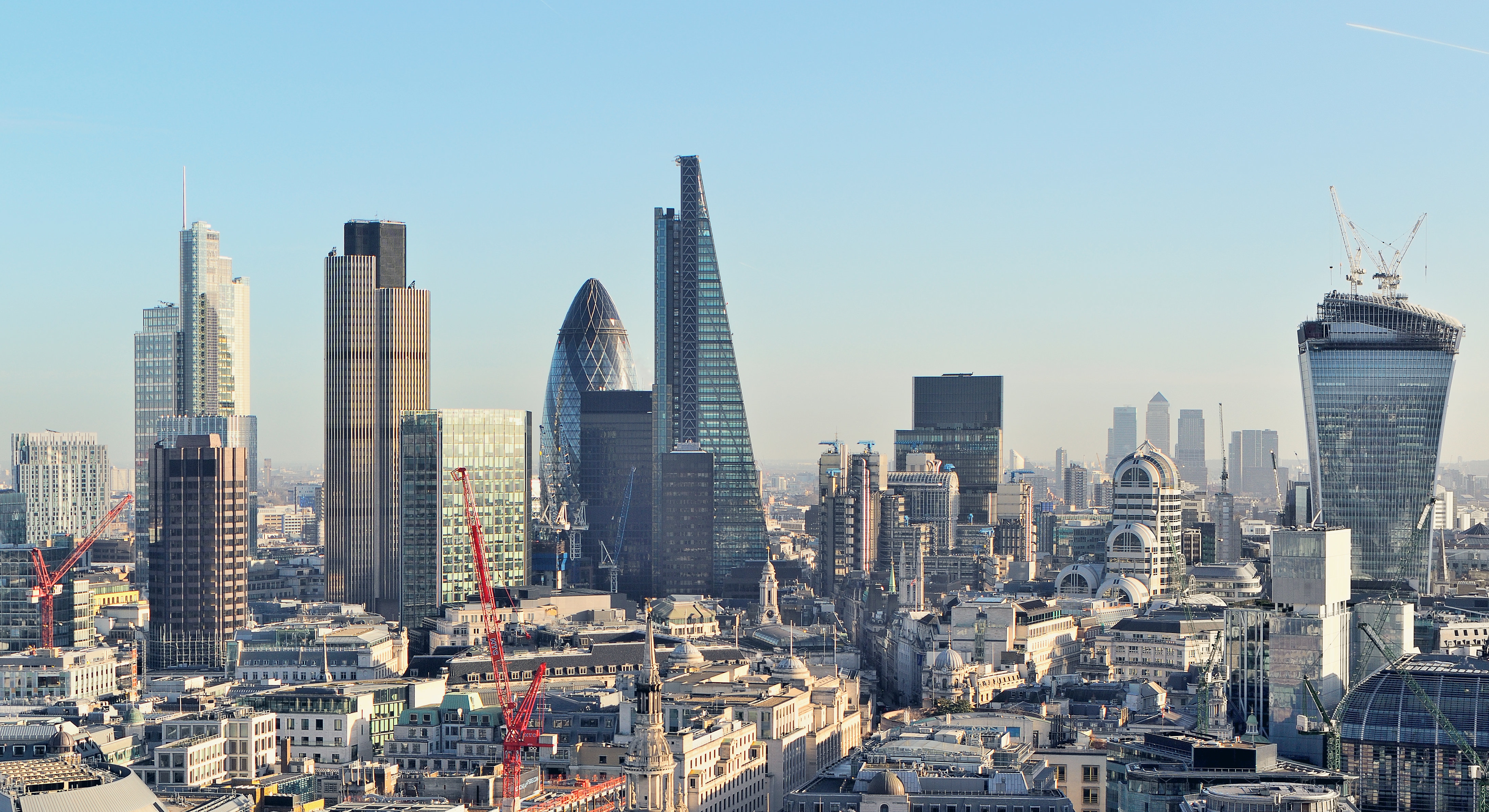
The figure of a gryphon, the legendary feral, clawed, winged creature that nests above the one-square mile City of London, Britain’s financial industry (akin to Wall Street, but with its own legal authority, too) is an apt symbol for an untrammeled center of global capital. A creature of prey, it is redolent as the guardian of ill-gotten, even murderous gain. What else is the financial center of the United Kingdom, which introduced the tax-free zone that modeled capital flight around the world? The City predates the Cayman Islands or Switzerland as tranches for tax avoidance and is a main locus for starving the welfare state.
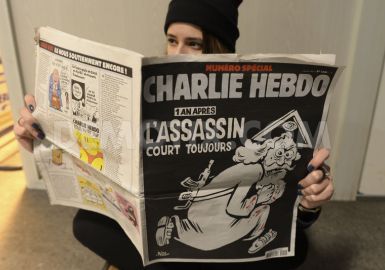
Two French Islamist gunmen of Algerian descent entered a newspaper office in Paris a year ago today and gunned down a generation of Europe’s greatest political cartoonists – many from an anarchist, anti-racist tradition – along with their co-workers and those protecting them, who also included people of Algerian descent. In case anyone is confused about the politics of this – it was a far right attack on the left.
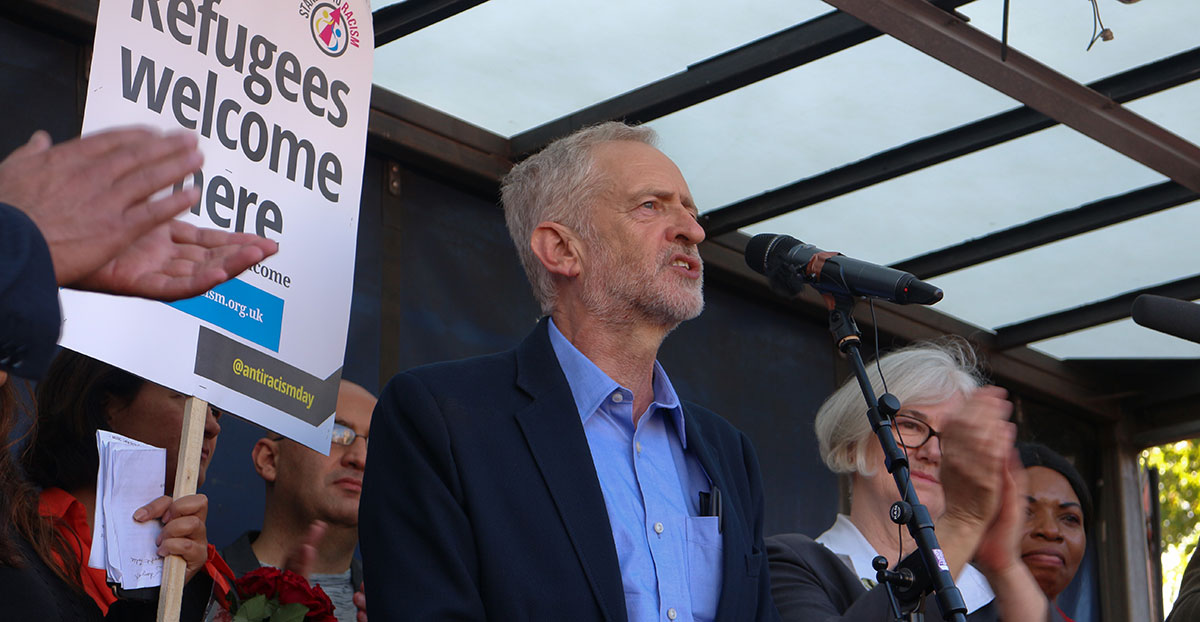
Leo: Your remarkable campaign for the leadership not only doubled the party membership but galvanised some 400,000 people overall to associate with the party. This is frankly unheard of anywhere in terms of party mobilisation on the left in recent decades. What do you think this reflects about the possibilities for a new politics, not only in Britain but more broadly – especially in Europe?
Jeremy: I think our campaign excited people who were very depressed by the election result and very depressed by the analysis that was being offered at the end of it, which was essentially that Labour wasn’t managerial enough and we had to be better managers in order to do better in the future. I only really got on the ballot paper because of a combination of people – from those who just absolutely wanted an alternative to be put, to those who thought that there ought to be a democratic debate in the party. This kicked off the social media campaign that encouraged others to get involved.
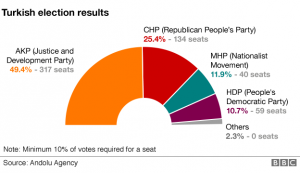
The November 2015 snap elections in Turkey have given back to the governing Justice and Development Party (AKP) the parliamentary majority that it lost just a few months ago, in the June 2015 elections. However, the election results can neither resolve the crisis of Turkey’s authoritarian and neoliberal order, which is being challenged by the spirit of Gezi Park and new developments in the Kurdish movement nor obscure its complexity.
In this article I will analyze the current situation of the Left in Spain, ahead of the forthcoming December 20, 2015 General Elections, by considering how four of its political actors (United Left, Podemos, The Municipalist Platforms and Anti-capitalist Left) have shaped their strategies and agendas in response to the political changes that the 15M Indignados movement brought about.
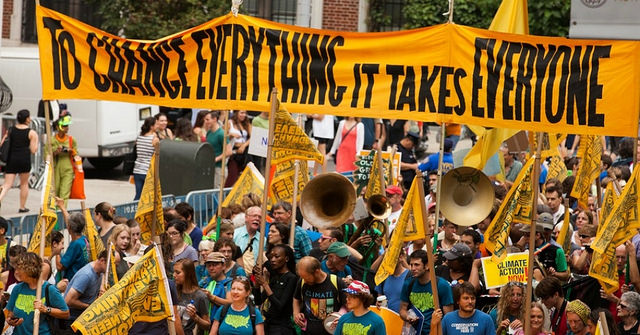
An international coalition of NGOs, civil society groups and political figures such as Naomi Klein and Susan George have called on the French president to lift the ban on protests during the COP 21 climate talks in Paris, which began on November 30th.
Following November’s terror attacks in Paris, the French government has imposed a temporary state of emergency that has prevented any protests from taking place in France. The local coaltion of NGOs and trade unions in in France, Climat 21, had planned a series of protests in Paris before, during and at the end of the climate talks which have now been banned.
It is a far from straightforward decision to found a union in a sector in which such an organisation has never existed before. For the most part, trade unions today have a (long) history: it may not be rare for workers to join a union, but it certainly is for them to participate in one’s founding and initial building. It is acutely challenging when the work itself to be organised is not entirely legal; when most of the workers are migrants in very precarious situations, who are regularly arrested and deported; when the legal context overlooks, and contributes to, high levels of violence and exploitation; and when, as if all of this was not enough, those who should be showing solidarity are on the other side, fighting to increase the criminalisation of the workers’ activity.
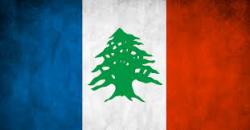
The November 13 attacks in Paris: the terror of the Islamic State, the state of emergency in France, our responsibilities
November 13 represents a change in the national and international political situation. The Islamic State (IS, Daesh) has struck again; and even more strongly. In January, the targets were the journalists of Charlie Hebdo, police and Jews. This time, it was the youth of the country that was the target. They did not kill just anyone, just anywhere: they attacked young people, young people in all their colours, whatever their origins, their religion (if they had one), their political beliefs. At least 130 dead, over 350 wounded – at the very least a thousand direct witnesses of the carnage. Many of us have relatives among the victims and, if not, we have friends who have. The shock wave, the emotion, is profound.
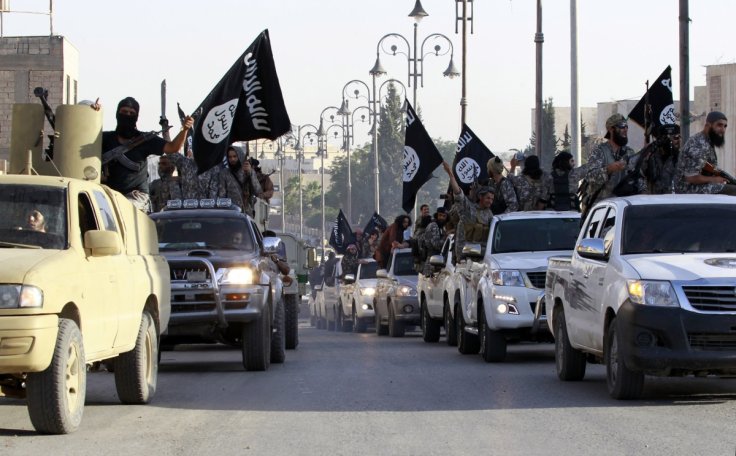
Militant Islamic State fighters parade on military vehicles along the streets of Raqqa (Reuters)
In the wake of the murderous massacres in Paris, the demand for violent retaliation against Islamic State (IS) is gaining momentum. David Cameron now plans a renewed bid to secure parliamentary approval for UK air strikes against IS in Syria.
At one level, this is an understandable reaction to the fascist-like tyranny and brutality of IS. But understandable reactions and effective reactions are often two different things. The desire for retribution, no matter how seemingly justifiable in response to the slaughter of so many innocents, is not a sound basis on which to frame political and military policy.
The despicable ISIS attacks on Paris and elsewhere have unleashed intensified war and imperialist machinations over Syria and Iraq, as well as repression of immigrants and renewed Islamophobia. Can the left oppose the carnage on all sides without losing sight of its emancipatory aims?
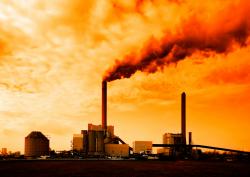
The pace of climate change is relentless. The projected date for the arrival of a 2°C rise in the global average surface temperature over pre-industrial levels is coming down all the time. It’s now estimated to happen by 2038. The earth will warm by at least 4°C by the end of the century, possibly 6°C.
The results of this are catastrophic: intensifying extreme weather events – heatwaves, droughts, floods, water shortages, hurricanes and tornadoes. The sea level is rising as a result of the melting icecaps.
- « Newer Posts
- 1
- …
- 7
- 8
- 9
- 10
- 11
- 12
- 13
- …
- 16
- Older Posts »