In choosing to ban the United Nations Relief and Works Agency for Palestine Refugees in the Near East (UNRWA), Israel has permanently branded itself as a pariah state. However, what is more important is what this ban means for millions of Palestinians who live under Israeli occupation and rely on UNRWA for daily essential services like education, medical care, and life-saving humanitarian aid in times of crisis.[1] The international community’s response to this travesty must be two-pronged; there should be immediate measures taken to force Israel to backtrack before more Palestinians die as a result of reduced humanitarian aid, but there should also be consequences for Israel’s other actions. This attempt to curtail UNRWA’s operations is part of a wider strategy and hence should not be seen in isolation of the atrocities that Israel committed in Gaza, Lebanon, and elsewhere.
How did Israel Justify the Ban? And was this Justification Merited?
Last week, the Israeli parliament passed two laws that essentially prevent UNRWA from carrying out its internationally approved mandate of providing life-saving relief and essential services to millions of Palestinians. The first law ordered an immediate halt of all Israeli government communication with UNRWA, while the second law prohibits UNRWA from conducting any activities within annexed Israeli territory.
These laws are part of a long-running campaign by the Israelis to discredit and destroy the agency, which failed to gather momentum for years, until Donald Trump cut funding to UNRWA in 2018 despite global outcry. The Biden administration resumed funding in 2021, only to cut it again after Israel claimed that a “significant number” of UNRWA staff were involved in the Gaza uprising of October 7, 2024 (in fact, the Israelis could only name 12 out of 13,000+ UNRWA staff in Gaza, which is hardly a significant number, and most of those named were only marginally implicated). Had it been true, such an accusation would have constituted a breach of the agency’s neutrality. However, an independent investigation absolved UNRWA of this accusation, showing that less than 0.001% of its Gaza staff had been implicated (even marginally) in the events of October 7—all of whom had their contracts terminated and none had any influence on the agency’s policies. Although the investigation did note that some UNRWA staff unions have become politicized, it is important to note that those unions are independent of the agency’s governing structure and have no bearing on its neutrality framework.
Unfortunately, however, Israel doubled down on its claim with the passage of these two laws, and the damage has already been done.
Repercussions of the UNRWA Ban
This ban comes at a time when the ethnically cleansed and plausibly genocided Palestinian communities of the Gaza Strip need aid and essential services more than ever. The ban is already hampering the deconfliction of humanitarian work in Gaza and complicating the agency’s activities in the occupied West Bank.
Israel strategically scheduled the ban to take effect right after the ascension of the next US president in January 2025. This was presumably done to minimize the global backlash against the ban, although that is turning out to be a failed strategy as the delay in implementation gave the other side an opportunity to rally and plan a counterstrategy.
Israel is already facing global condemnation for its actions against UNRWA, although it appears that its leadership has become desensitized to international sentiments thanks to political cover from a handful of complacent, hegemonic governments (namely the US, UK, Germany, France, and a few others).
The chief of the United Nations Children’s Relief Fund (UNICEF), Martin Griffiths, lamented the UNRWA ban in the harshest possible terms, saying that Israel found a “new way of killing children.” The spokesperson of the League of Arab States, Jamal Rushdi, said that the implications of this ban would amount to “confiscating the future of millions of Palestinians.” A group of sixteen countries including Ireland, South Africa, Norway, Jordan, and others also issued a joint statement in which they deplored the measures taken.[2] Even countries that Israel claims to have friendly ties with, like the United Arab Emirates, slammed Israel’s decision to ban UNRWA. Saudi Arabia’s foreign ministry described the move as emblematic of Israel’s “persistence in committing crimes of ethnic cleansing against the Palestinian people and erasing the Palestinian identity, and stifling efforts to achieve comprehensive and just peace.”
The condemnations go far beyond that; some of Israel’s closest allies – Germany, Canada, France, Australia, and the United Kingdom – who have shamefully defended its most atrocious actions in the last year, joined Japan and South Korea in calling on Tel Aviv to preserve UNRWA’s’ ability to provide “sorely needed basic services.” Even US state department spokesperson Matthew Miller—dubbed ‘Count Smirkula’ (a play on ‘Dracula’) on social media for smirking when questioned about reports that as many as 186,000 have died in Gaza in the past year—stressed that the ban of UNRWA could have legal implications for Israel under US law. But such tame, tone-deaf statements are reminiscent of the complacency of Western Europe and the US in the apartheid regime of South Africa. As Israel’s staunchest enablers, they should not be praised for doing the bare minimum.
However, there is cause for hope. The leniency of Israel’s western hegemonic allies is having an adverse effect on the country’s future. Israel is becoming more isolated and creating more mortal enemies. In doing so, Israel’s leaders are sowing the seeds of their own demise, which will resemble the demise of apartheid South Africa. However, ending this injustice will not be possible without the continued active involvement of the sympathetic masses and world leaders.
How to Respond to Israel
International solidarity is the most effective pathway to bringing justice to the Palestinian people after nearly a century of colonization, oppression, and daily humiliation. In addition to issuing condemnations, conscientious world leaders should finally cross the fear barrier and use all diplomatic leverage against Israel. Closing embassies in Israel is an essential first step, followed by issuing sanctions and endorsing popular boycotts. We must cross the point of no return: either Israel dismantles its repressive regime and ends the massacres, or the international community steps in to do that.
Arab countries should take the lead, with the United Arab Emirates, Bahrain, Morocco, and Sudan withdrawing from the Abraham Accords. Egypt and Jordan should also take measures to penalize Israel, although they are in a weaker position because Israel’s energy and water exports to Amman and Cairo give Tel Aviv significant leverage; Israeli prime minister Benjamin Netanyahu could inflict harm on Jordanian and Egyptian civilians by cutting off water and natural gas in response to the Jordanian and Egyptian governments choosing to annul their peace agreements with Israel. However, the Jordanian and Egyptian leadership should at the very least endorse the highly popular (and successful) boycott movements in their countries and step-up their support of South Africa’s genocide tribunal against Israel in the International Court of Justice.
Sympathetic countries throughout Asia, Africa, and South America should follow suit, closing their embassies in Israel and severing all diplomatic ties until Israel dismantles its repressive apartheid regime. This is necessary to give Arab countries cover when the expected backlash from the US and its allies comes. Joint action could be coordinated through the non-aligned movement, which is currently chaired by Uganda. Other multilaterals should also step up their solidarity efforts, particularly the League of Arab States and the Organization of Islamic Cooperation.
The horrifying acts of indiscriminate murder, domicide, urbicide, and ecocide in Gaza must have consequences. Otherwise, a dangerous precedent will be set for Sudan, the Democratic Republic of Congo, and other areas where grave human rights violations are being perpetrated. Additionally, failing to act on Gaza will delegitimize the international rules-based order in irreparable ways.
This is why it is important to hold Israeli officials at all levels accountable for the violence they sanctioned regardless of whether they cave in to global pressure and end their military campaigns in Gaza and Lebanon or not. The war has already gone on for too long and irreparable damage has been done. Therefore, Israeli leaders must answer for the crimes they sanctioned. Lower-ranked Israeli military commanders and soldiers such as those implicated in torture and sexual violence at the Sde Teiman concentration camp should also answer for their crimes.
Conclusion
What the UNRWA ban has shown is that Israel will not stop its onslaught until the Palestinians in Gaza and the West Bank are either killed, displaced, or completely subjugated. Israel is isolating itself through its own actions, but we still need to act to stop the flagrant disregard of human rights, international norms, and basic decency. The key to success here, as was seen in the case of apartheid South Africa, is in coordinated and sustained international action. If Israel is turning itself to a pariah state, then the rest of the world should treat it as one.
Notes
[1] It is assumed that UNRWA’s operations outside of Israeli-controlled territory will continue unimpeded, which is essential for the stability of Lebanon, Syria, and Jordan.
[2] The full list of sixteen countries is: Algeria, Belgium, Brazil, Guyana, Indonesia, Ireland, Jordan, Kuwait, Luxembourg, Norway, Portugal, Qatar, Slovenia, South Africa, Spain and the State of Palestine.
This past year’s new round of conflict and war between Israel and Hezbollah in southern Lebanon has once again plunged Lebanon into a dangerous predicament.
The recent war marks the fourth time that Israel has launched an invasion of Lebanon to secure its northern borders, intending to clear and control south Lebanon up to the Litani River. In each of the earlier military operations in 1978, 1982, and 2006, Israel succeeded in devastating the region, killing many Palestinians and Lebanese, and limiting their capacity for attack, but ultimately had to withdraw except in a few small areas along the Lebanese border. The first two invasions were directly related to the conflict with Palestinians, but the 2006 and particularly the current 2024 invasions are more related to confrontations with the anti-Israeli policies of the Islamic Republic of Iran (IRI). To clarify the circumstances that brought Lebanon into the arena of war between Israel and Palestine and also set the stage for the proxy war between Iran and Israel, it is essential to take a brief look at the very complex history of Lebanon.
Involvement in the Israel-Palestine Conflict
Lebanon was gradually dragged into the Israeli-Palestinian conflict. During the First Israeli-Palestinian War (1947-1949), which led to the displacement of over 700,000 Palestinians, about 100,000 sought refuge in Lebanon and were housed in 12 camps.
In the Six-Day War (1967), more Palestinian refugees entered Lebanon. Sporadic military clashes between the Lebanese army and Palestinian militants, who were now armed in all the camps, further destabilized the situation. In 1970, following the severe crackdown on Palestinians in Jordan (Black September), even more Palestinian refugees entered Lebanon. The leadership of the Palestinian resistance, which had moved to Jordan following the loss of the West Bank, was forced to Lebanon, turning it into the main base for the Palestinian movement.
Israel sought to find allies among Lebanese groups and intervene in Lebanon’s politics. The Maronites were considered potential allies, but they were not united. The Maronites of northern Lebanon had a close relationship with the Syrian Ba’ath leader, Hafez al-Assad, and were staunchly opposed to Israel. Southern and central Maronites, mostly from the landowning and traditional middle classes, were against Arab unity and the PLO. Some had formed the Kataeb Phalange Party, influenced by Italian fascists. Israel recognized this party as a potential ally and began providing it with financial and military assistance. In 1976, the Lebanese Forces (LF) was established to unify the right Christians. With the help of Israel, this faction became involved in military conflicts with Palestinian resistance and Syrian forces.
The horrific Lebanese Civil War, which lasted nearly 15 years (1975-90), went through several phases, and the balance of power shifted back and forth between the two main coalitions—Maronites on the one side and Druze and different left and religious groups on the other—with ongoing interventions by external forces like Syria and Israel.
In 1977, Israel’s elections brought the right-wing Likud party to power for the first time, strengthening the positions of right-wing Maronites. In response to a Palestinian attack on a bus in northern Israel that killed its passengers, Israel found a pretext to invade southern Lebanon. In March 1978, during “Operation Litani,” Israel launched a ground invasion after extensive bombing of south Lebanon, occupying the entire southern region up to the Litani River. Political differences and rivalries among the Maronites further complicated the situation. Multiple UN resolutions called for the immediate withdrawal of Israeli forces from southern Lebanon and established a new peacekeeping force, “UNIFIL.” Israel eventually had to retreat but handed over its positions to the violent Maronite militia known as the “South Lebanon Army” (SLA), equipping them with American weapons. This militia openly acted as Israel’s proxy.
In 1982, Israeli Prime Minister Menachem Begin and Defense Minister Ariel Sharon decided to expel the Palestine Liberation Organization (PLO) from Lebanon and were waiting for a pretext to invade. When the Abu Nidal group, a dubious Palestinian faction split from Fatah, attempted to assassinate the Israeli ambassador in Britain, the Israeli army, supported by Maronite Phalangists, launched one of its largest assaults against Lebanon. Alongside extensive bombing, the Israeli army advanced and besieged western Beirut, levelling the area. The intensity of the bombing was such that Theodore Arcand, the Canadian ambassador at the time, in an interview with the Sunday Times on 8 August 1982, stated that the destruction was so vast that the bombings of Berlin in 1945 seemed like a tea party in comparison! Israel ultimately succeeded in expelling the PLO from Lebanon to Tunisia, marking its fourth relocation. Under the watch of Israeli occupiers, Phalange forces attacked the Sabra and Shatila camps, massacring thousands of Palestinians.
The Emergence of Shiites as a Major Political Power and Iran’s Influence
Historically, Shiite Muslims in Lebanon were among the poorest and most marginalized ethnic-religious groups. Most Muslim groups and factions with Islamic origins in Lebanon had established their political and military organizations before the Shiites: The Druze, had founded the influential “Progressive Socialist Party” (PSP) in 1949; Sunnis had formed the Islamic Group in 1946 along with its military branch, “Al-Fajr”; a splinter group called the Islamic Unity Movement or “Tawhid Movement” had emerged in 1982, along with another Sunni faction known as the “Tripoli People’s Movement.” The Alawites, a relatively small community in northern Lebanon, had also formed their organization called the “Arab Democratic Party.”
Lebanese Shiites are Twelvers and, like the Maronites and the Druze, had escaped religious persecution and had settled in Lebanon centuries ago. However, they were increasingly marginalized over the centuries, especially after the Maronites and Druze established dominance in their regions during the Ottoman era. Colonial powers supported specific religious groups: the Sunnis were backed by the Ottomans, the Maronites by French, Russian, and American missions, and the Druze by Britain. Meanwhile, the significant Shia minority remained on the sidelines. In later periods, including during the French mandate, they also participated in military confrontations against the French. With a demographic ratio of about 30%, the Shia found significant representation in the agreements following the drafting of the constitution.
In 1974, Imam Musa Sadr, a charismatic Iranian-educated cleric with Lebanese family roots, travelled to Lebanon after studying in Qom, Tehran, and Najaf. He was crucial in organizing the Shiites in Lebanon and strengthening their position. With the help of Hussein al-Husseini, he established the “Movement of the Deprived of Lebanon.” At the onset of the civil war, it was the only religious faction without a military wing, so it formed the “Amal” (Lebanese Resistance Brigades) and engaged in the leftist front’s struggles but withdrew from that front after Syria entered the war. Musa Sadr mysteriously disappeared during a trip to Libya in 1978, invited by Gaddafi, and there is still no information on what happened to him. After Sadr, Hussein al-Husseini assumed leadership. He refused to engage in the war on behalf of the Palestinians and instead competed with them for control over Palestinian camps. Palestinians sought to assassinate him, and amid the civil war, Amal clashed with Palestinians, killing many of them. After al-Husseini, Nabih Berri became the leader of Amal in 1980 and engaged in warfare in favor of the Palestinians in southern Lebanon and the Bekaa Valley. With Berri’s rise to power, some main Amal leaders stepped down. Berri became the Speaker of the Lebanese Parliament in 1992 and continues to play an active role in the same position.
In 1982, Hezbollah was formed with military and financial support from the Islamic Republic of Iran. Over time, Hezbollah and leaders who had separated from Amal gradually gained significant influence within the Shiite community. The 1983 bombings, which killed American and French soldiers, brought more attention to Shiite groups. Starting in the mid-1980s, Hezbollah engaged in conflict with Israel’s proxy forces, the Maronite “South Lebanon Army”, inflicting substantial damage on them.
Following the resignation of Subhi al-Tufayli, an opponent of Iran, and the assassination of Abbas al-Musawi, Sayyed Hassan Nasrallah—who had closer ties with the Islamic Republic—assumed Hezbollah’s leadership in 1992 as Secretary General. Under his direction and with extensive Iranian support, Hezbollah became the most formidable force against Israel. That same year, Hezbollah decided to participate in parliamentary elections, expanding its political and social activities.
Repeated skirmishes, incursions into Israeli territory, hostage-taking, and missile attacks set the stage for another Israeli assault on southern Lebanon in 2006. The extensive bombardment targeted not only the south but also key infrastructure, including Beirut Airport. After enforcing a complete naval and aerial blockade of Lebanon, the Israeli army began a ground invasion.
During this conflict, the Israeli government implemented the “Dahiya Doctrine”—named after Dahiya, a large Shia neighborhood in southern Beirut. This brutal military strategy aimed to deliberately destroy civilian, residential, and economic infrastructure to demoralize the population and weaken their resistance to occupation. A similar, more extreme genocidal version of this policy is being implemented in Gaza today.
The United Nations, through Resolution 1701, called for the withdrawal of Israeli forces from southern Lebanon, the disarmament of all militia groups, including Hezbollah, the retreat of Hezbollah to the north of the Litani River, the deployment of the Lebanese army, and the expansion of UNIFIL’s activities. While Israel withdrew from the occupied areas, it retained—to this day—control of several border regions, including the Shebaa Farms and part of Ghajar village. Despite suffering significant losses and casualties, Hezbollah refused to disarm. This responsibility was assigned to UNIFIL at the request of the Lebanese army, but neither at that time nor afterward did any Lebanese government dare to enforce it.
Through this process, Hezbollah emerged as the most powerful political force in Lebanon, with successive Lebanese governments unable to function fully without its support. Hezbollah evolved into a highly organized entity with a clear hierarchy, led by the “Shura Council,” comprising senior Shia clerics responsible for appointing the Secretary-General. The organization established numerous specialized committees, a decision-making council, and, most notably, a military branch known as the “Jihad Council,” which commands tens of thousands of fighters. Hezbollah also enjoys broad support among the Shiite community, which benefits from its extensive network of social services and financial institutions.
Israel’s Two Objectives in the Current Invasion
The present ultra-right-wing Israeli government, taking advantage of the political and military mobilization following the post-October 7 Hamas terrorist attack, is pursuing broader goals in this round of the invasion of Lebanon: the complete elimination of Hezbollah and dragging its main supporter, the Islamic Republic of Iran, into war. In both cases, however, Israel knows it faces major obstacles and will not be able to achieve these goals alone.
To eliminate Hezbollah, Israel hopes to provoke civil strife and potentially civil war in Lebanon. While simultaneously conducting widespread killings and bombings in the Shiite areas of southern Lebanon and south of Beirut, Israel aims to draw the non-Shiite population into the conflict with Hezbollah. The recent bombing of part of a Christian neighborhood is linked to this strategy. Israel sees the current political moment, the world’s silence, and the unwavering support of the U.S. as an opportune time to depopulate southern Lebanon through massacres and the displacement of its residents. However, it is finding this task more difficult than anticipated. In southern Lebanon, in the Nabatiyeh and South Lebanon governorates that border Israel, about a million people live in over a hundred villages and several towns and cities, with over 60 percent of them being Shiite, a demographic with a significant grassroots base for Hezbollah. The South governorate also contains several Palestinian refugee camps. Evacuating or killing this population is impractical. Even the Christians in southern Lebanon, who make up about 20% of the area’s population, cannot necessarily be counted as allies or supporters of Israel due to the damage they incur. Israel can displace many of them with extensive bombardments, as it is currently doing across Lebanon, but it cannot fully clear the region.
Undoubtedly, Hezbollah, aside from its friends and supporters, has many foes among Lebanon’s political-religious factions. Its involvement in the Syrian civil war, in alignment with the Islamic Republic’s policy to keep Bashar al-Assad in power in 2012, raised doubts about its position as a national Lebanese force. Hezbollah’s anti-Israel policy has not necessarily been about assisting the Palestinians but is tied to its official stance on the destruction of Israel. A notable example of Hezbollah’s neglect of Palestinian conditions is the dire state of Palestinian camps in Lebanon, which I have addressed elsewhere. Like the Iranian regime itself, the issue of Palestine serves as a tool to further its policies, not to liberate the Palestinians. Hezbollah’s close ties to the Islamic Republic have drawn Lebanon into a proxy war between Iran and Israel, leading to more opposition against it within Lebanon. Despite this, Hezbollah still enjoys the support of many Lebanese, including some Maronites, and I have personally witnessed such positions in Lebanon.
The recent series of devastating blows to Hezbollah, particularly the killing of Hassan Nasrallah and many senior political and military leaders, as well as terrorist infiltration and the destruction of their communication devices by Israel, has undoubtedly weakened Hezbollah significantly. However, it has not destroyed the organization. Israel is also aware that Hezbollah is not just a military and guerrilla organization but also a major political force, a significant social service provider, and a financial entity. Accordingly, it has a broad popular base.
Although Israel has so far been unsuccessful in instigating internal confrontations among the Lebanese, the continuation of the current war may change the situation. Almost all the political and religious groups mentioned above, with some changes in their leadership, remain present, and it is unpredictable how each will react and what alliances and stances will emerge as the conflict continues. Furthermore, Lebanon is experiencing its most severe economic crisis, and its political system is on the verge of collapse: it has no president, and its government is temporary and lacks credibility and resources. The Lebanese army is also financially and militarily incapacitated. All these factors further complicate the situation, with unforeseeable consequences.
Hezbollah’s ability to reorganize and rebuild itself to its pre-assault level is linked to the military and financial support it can receive from the Islamic regime in Iran. Without this support, Hezbollah will not only be unable to continue its war with Israel but will also be unable to sustain its extensive social, medical, and educational services, which have been crucial in maintaining its popular base. However, the continuation of support from the Islamic Republic depends, on one hand, on Iran’s economic and financial capabilities and internal political situation, all of which are in severe crisis. On the other hand, it relies on behind-the-scenes dealings and negotiations with the U.S., which seek to prevent a large-scale Israeli attack and to lift certain sanctions. All this leaves Hezbollah in a state of uncertainty.
The return of Donald Trump to power would exacerbate the problems faced by the Islamic Republic of Iran. Trump, hoping to enforce a major compromise on Iran, will impose more pressure and sanctions on the country. These sanctions, particularly further restrictions on oil sales, would not only worsen Iran’s economic crisis but also significantly reduce its ability to provide financial aid to its proxy forces, including Hezbollah. This would inevitably diminish the Islamic Republic’s influence over these jihadist organizations. Additionally, because Trump withdrew from the JCPOA nuclear deal and was responsible for the killing of senior IRGC commander Qasem Soleimani, any compromise between the Islamic Republic and the Trump administration seems much more difficult. Yet, more than ever, Iran’s Islamic regime is facing a catch-22 situation it created for itself since its establishment in 1979. As mentioned elsewhere, to protect itself, aside from its nuclear ambitions, it created proxy militant Shiite groups in various neighboring countries. Yet, nurturing and maintaining these groups has proven to be financially and politically costly. Now, faced with major economic, political, social, cultural, and environmental crises—as well as crises of legitimacy and succession—the regime must confront the bullish Trump administration’s sanctions and threats. Under these circumstances, the Islamic regime has no choice but to accept humiliating concessions.
For a full-scale war with Iran, Israel recognizes that the geographic distance makes it difficult to send tanks and commando forces to Iran—if it would dare to do so at all. Moreover, it faces limitations in using the airspace of neighboring countries for its bombers and fighter jets. Israel needs to draw the U.S. into the war, but this is highly unlikely. Neither the Biden administration for its remaining period nor the upcoming Trump administration would want to enter such a war, partly due to the terrible experiences of fighting much weaker countries like Afghanistan and Iraq. Furthermore, given the numerous examples of post-‘regime-change’ failed states, the US is less eager to topple the current regime in Iran without first identifying a viable alternative. In any event, a Trump presidency will certainly strengthen the position of Israel’s present coalition government and further weaken the Islamic regime in Iran. However, it cannot resolve the conflict. Contrary to the policies of the present ultra-right-wing Israeli government and many elements within the Islamic regime in Iran, there is no military solution to the current conflicts.
Path to the Resolution of the Conflict
Eighteen years ago, during the 2006 war, I wrote an article titled “Is This the Last Arab-Israeli War?” In it, I stated: “Of all the gruesome, tragic photos of the Israeli invasion of Lebanon, one clip remains in my mind: that of an injured boy lying on the ruins of what was his home, raising his hand and showing a ‘V’ sign to the camera. Since the boy is so young, he may not know what ‘victory’ means. But, seeing his face and his gesture, there is a good chance that he will grow to be an enemy of Israel, perhaps a Hezbollah fighter.” I pointed out that Israel and its main supporter, the United States, mistakenly believed that this violent assault would lead to the defeat of Hezbollah and the Palestinians in Lebanon. However, after 34 days of war and heavy casualties, Israel soon faced reality and was forced to withdraw.
The UN Security Council Resolution 1701 is certainly a suitable basis for preventing the recurrence of Israel-Lebanon wars. However, it does not address the root causes and requires significant adjustments. Key preconditions for ending the conflict include, first, a complete ceasefire and the removal of all Israeli forces from Lebanon, the return of the Shebaa Farms and the Ghajar area—which remain under Israeli occupation—and the withdrawal of Hezbollah to the north of the Litani River. This would be a first step toward integrating Hezbollah’s military apparatus into the Lebanese Army and placing it under the army’s control.
A deliberately neglected issue is the delineation of the operational boundaries of UNIFIL peacekeeping forces. It is a bitter irony that all UN peacekeeping forces in the Middle East are stationed at the borders of Israel’s neighboring countries and not in Israel itself, implicitly suggesting that aggression always comes from neighboring countries and that Israel’s borders must only be protected and secured. Currently, UNIFIL has deployed 10,000 troops from 47 countries in southern Lebanon. In Syria, the UNDOF peacekeeping force, established in 1974, is absurdly located not on the border with Israel and the Golan Heights but on the other side of the Golan—an area that, despite condemnation by the UN Security Council, Israel has illegally occupied and annexed. (See maps.) If UNIFIL is to remain any longer, it is necessary for part of its forces to be stationed in southern Lebanon and the other part in northern Israel.
As this article was being prepared for publication, a “ceasefire,” similar to UNSC Resolution 1701, was announced. It called for the withdrawal of Israeli forces from Lebanon and for Hezbollah to pull back north of the Litani River over 60 days. It is hard to imagine that this temporary pause in military operations will last long. Israel will “retain complete military freedom of action,” while Hezbollah will not disarm and can launch its missiles and drones from the other side of the Litani River. The current ceasefire highlights the fact that, while Israel has severely weakened Hezbollah, it has once again failed in its stated goal of “eliminating” the group.
Overall, as long as the core issues of the conflicts between Israel-Palestine and the neighboring countries remain unresolved, wars and conflicts will continue to recur in various forms. Ultimately, hostilities between Israel and its neighbors should end with the resolution of the Palestinian issue. Israel must return to its pre-1967 borders with some agreed-upon land swaps. A genuine Palestinian state should be established within a two-state solution framework, with its capital in the eastern section of Jerusalem. Peace between Israel and regional governments should materialize, with recognition of Israel by all states in the region.
However, as long as Israel’s government is dominated by the most right-wing factions and religious extremists, and it continues to be unconditionally supported by the U.S., Western countries, and the powerful Israeli lobby, as long as the Palestinian movement is led by a corrupt and ineffective semi-autonomous administration and right-wing religious extremists, and as long as regional powers, including Iran, support proxy conflicts and wars, there will be no chance of resolving these issues. Consequently, we will continue to witness wars, massacres, and the destruction of infrastructure in the region.
Saeed Rahnema is a retired Professor of Political Science and Public Policy, and Founding Director of the School of Public Policy and Administration at York University, Canada. He taught, among others, the course “War and Peace in the Middle East.”
The longer original Farsi version was published in the pecritique, on 10 October 2024.
Amsterdam’s liberal mayor Femke Halsema declared that the clashes which followed the Maccabi Tel Aviv and AFC Ajax match at the end of last week were the result of ‘a toxic cocktail of antisemitism, hooliganism and anger over the war in Palestine and Israel’. Whilst the description is not wholly false, it is certainly misleading. This was made clear by the municipal council’s own executive report in which Halsema wrote the above statement.
Now, the Dutch right is using a distorted interpretation of the violence in the city, and weaponizing antisemitism, to further its racist agenda and to justify a crackdown on Palestine solidarity.
Already, prior to the game on Thursday evening, it was clear that Maccabi supporters had come to Amsterdam looking for a fight. They trooped through the city singing racist and genocidal chants and harassing people they assumed to be Muslim or Arab. Furthermore, given Amsterdam is generally a left-leaning city with a substantial Muslim community, it is not uncommon to see Palestinian flags hanging from balconies or in windows. Videos circulated showing Maccabi fans went around tearing them down.
Things further escalated when Tel Aviv team’s fans assaulted a taxi-driver, provoking a response from a closely knit and quickly mobilized group.
Tensions had run so high before the match, that the Amsterdam municipal council executive even considered banning it. However, they decided against this out of fear that the hundreds of Maccabi fans in the city would become even more uncontrollable. Instead, the executive tried to reach out to football clubs to ask their supporters to calm down. The Israeli ambassador was also asked to make a statement that football and politics should not mix, but whether he responded to this has not been made public.
Double standards
This entire situation was the result of blatant hypocrisy on the part of Dutch authorities when it comes to the suffering of Palestinians. Following Russia’s invasion of Ukraine, Russian teams were banned, yet when similar requests were made by Palestine solidarity organizations to ban Israeli teams, they were ignored. The Amsterdam executive even claimed that Maccabi fans, who in Greece had hospitalized a man for wearing a Palestine scarf, were not known to be dangerous.
When the match in Amsterdam finally started, Maccabi fans loudly disrupted the minute silence for the victims of the flooding in Spain. This is perhaps no surprise as the Spanish government is one of the more outspoken European states when it comes to being critical of Israel’s war.
After the match, houses with Palestinian flags were again beleaguered by groups of Maccabi fans.
Things escalated that night as groups of local youth got into fights with the Maccabi fans, seeking them out across the city. 62 people were arrested, ten of them were Israeli. After a day in which the police mostly took a hands-off approach to the Maccabi supporters, arrests disproportionately targeted local youth instead. The Jewish anti-Zionist group Erev Rav released a statement criticising the police force for targeting local young people of Moroccan background while ‘Maccabi fans who initiated provocations faced no consequences’.
Erev Rav had initially planned to commemorate the 1938 pogrom in Germany last weekend, but cancelled their event. They explained that they had little trust in the Amsterdam police keeping anti-Zionist Jews safe from the Maccabi supporters.
The group also denounced the instrumentalizing of Jewish identity by Maccabi supporters.
Political opportunism
The Dutch far-right unsurprisingly saw an opportunity in all of this. After the match, Geert Wilders, leader of the largest party in the Dutch parliament, declared that what had happened was a ‘pogrom of the worse kind‘ and called for Halsema to be sacked. He claimed that she had supposedly failed to protect Jews against antisemitic violence. It is undeniable that some people involved in the clashes threw around antisemiticinsults and it was said that people who ‘looked Jewish’ were ordered to show their passports, all of which must absolutely be condemned, but to call this a pogrom is totally disproportionate.
In reality, the right is instrumentalizing the issue of antisemitism by equating all Jews with the state of Israel – the same tactic often used by the Israeli government that cynically deploys it against its critics. Wilders knows well that antisemitic statements are unfortunately not unknown in Dutch football, but he seems to pick and choose when to speak out against it. For example, a particularly infamous chant that is often hurled at Amsterdam team Ajax, calls for the gassing of all Jews. But because this form of antisemitism comes from mostly white football supporters, there has been far less interest from the Dutch right which puts its energy towards linking antisemitism to Islam and migrants.
Wilders is also not the only culprit. Upon returning from visiting far-right Hungarian leader Viktor Orban, Dutch PM Dick Schoof declared that antisemitism results from ‘a failure to integrate‘ into Dutch society. For him, the problem is migrants, not the racist and fascist far-right rhetoric being peddled across Europe.
Where are left-wing politicians?
In the aftermath of the match the situation grew more tense. On Monday people clashed again with the police. This came after the executive had banned all demonstrations and a protest on Sunday had been dispersed. Between Sunday and Wednesday, scores of protesters were detained during heavyhanded dispersals of demonstrations by the police. Activists had called a rally in defense of democratic rights and in solidarity with Palestine.
Despite all of this repression, the parliamentary left has been mostly absent. Though this comes as no surprise. There have been significant Palestine solidarity efforts in the Netherlands from demonstrations to sit ins, yet left-wing parties – with the exception of the small radical party BIJ1 – have hardly been involved. Worse still, large parts of the Dutch Labour Party have also historically been strongly pro-Israel.
The silence of the parliamentary left is making it easier for the right to whip up a climate of hatred against migrants, to link antisemitism with Islam, and to label Palestine solidarity as hostility to Jews.
Green party Mayor Halsema has only added fuel to the fire in her insistence on comparing the events over the recent days with pogroms. Herimposition of the ban on protests in Amsterdam is also clearly an attempt to avoid further criticism from the right, but this has only legitimized an authoritarian crack down on Palestine solidarity in particular.
The longer term consequences of the recent events remain to be seen, but the general trajectory is clear. Aided by the silence and opportunism of the center-left, the far-right has been the main beneficiary.
A moral panic has taken hold in the country, and once again, Muslim youth, especially those of Moroccan descent, have been declared an existential threat to Dutch society. This time, it’s over their supposed innate antisemitism. As Right-wing parties float the idea of stripping them of Dutch nationality (at least for those who hold a dual nationality), as a punitive measure, the hooliganism by Maccabi supporters and their glorification of Israel’s genocide has fallen to the wayside.
In the coming weeks and months attempts to criminalize Palestine solidarity will likely to grow, and supporting Palestine liberation will be increasingly synonymous with antisemitism. Already just last month, a spokesperson from the Palestine solidarity organization Samidoun was banned from the country and the Dutch cabinet has asked for the organization to be entirely banned.
The only way to resist the right’s authoritarian policies and racism, is for the left and solidarity activists to stick together, tell the whole story of what happened in Amsterdam and defend the rights to organize and speak out in solidarity with Palestine.
Leonard Cohen, poet laureate of Canada’s 1960s, offered a closing anthem to the twentieth century in his 1992 lament “Democracy.” In an earlier year of revolt, 1968, Cohen had refused his country’s most prestigious literary prize, the Governor General’s Award. “The world is a callous place,” he reportedly said, “and he would take no gift from it.” He would later be the accepting recipient of many honours, including the Order of Canada.
Two decades later, confronted with the changing global landscape, the fall of the Berlin Wall, and the crumbling Soviet Union, Cohen reflected on how and where democracy might be realized. Now a celebrated songwriter, Cohen looked to the United States, where his music was produced and marketed for world-wide audiences. He saw the “sorrow in the street” of working-class grievance; “the holy places where the races meet” that were never far removed from white supremacy; the gender difference scratched into human relationships expressed in “the homicidal bitchin’/that goes down in every kitchen/to determine who will serve and who will eat”; and the deserts created domestically and internationally by an America confident in its imperial dominance. Yet for all of this, 1992 seemed a bridge to a better future. “Democracy,” yet to be realized, “is coming to the U.S.A.” Cohen insisted. Amidst turmoil, tension, and recognition of revolt’s righteousness, Cohen was nonetheless hopeful.
So, too, were others, albeit of a different bent. Proclamations of “the end of history” came from ideologues of the right and postmodernists of the ostensible left. Capitalism, finally victorious over its century-and-a-half nemesis – actually existing, and undeniably deficient, socialism – promised boundless prosperity and expansive profits for those pulling the now unrivalled levers of possessive individualism. Windows of political and economic opportunity opened widely, offering a luxuriating vision of a new world order.
“Third Way”: Seemingly Progressive Populism
This was the moment of Democratic Party revival in the United States. Bill Clinton ushered in a new era of seemingly progressive populism, the slogan “It’s the economy, stupid” propelling the Arkansas Governor into the White House. It was the beginning of a “Third Way.” The polarizations of the past were supposedly swept aside as a politics of social amelioration and advance adjusted to market realities. The political project designated democratic, now tethered to an unbridled regime of accumulation, would ironically usher into being new imperatives of inequality, especially pronounced at the intersections of race and class. The new regime of accumulation, premised on the ideology of austerity’s attack approach to social provisioning of all kinds, dismantled entitlements associated with the “Great Society” rhetoric of the 1960s, gutting the welfare state and undermining programs associated with health care, housing, and a host of other post-World War II liberal reforms. A prison-industrial complex and profit-driven mass incarceration criminalized poverty. The war on the working class, proclaimed with such ferocity by Ronald Reagan’s breaking of the Professional Air Traffic Controllers Organization (PATCO) 1981 strike, continued unabated.
History, of course, did not end. The Soviet Union imploded, to be sure, but it bounced back, proving something of a bête noire to its competitors in the capitalist west. The once-Soviet collectivized economy was pulverized by market imperatives; the apparatus of the state overtaken by ensconced apparatchiks. The result was a plundering of the primitive accumulation of the Revolution of 1917, a socialized economy looted to establish an unregulated, predatory market society orchestrated by oligarchs umbilically tied to an authoritarian state. This proved an irksome thorn in the side of hegemonic capital and its global agendas. China, following a course less drastic than the upheaval inside the Soviet Union, refused to succumb to the impulse of capitalist restoration that proved so destabilizing in the demise of the Soviet Union. As the People’s Republic kept a firm political grip on authority but opened the floodgates to enterprise and internationalization of trade and commerce, it surged economically. Planned economies, however compromised, remained a threat to capital’s quest for unimpeded dominance globally.
Moreover, as the 1990s progressed and transitioned into the twenty-first century, social democracy’s fading sun finally set. Faith in the infallibility of capitalist markets (now dubbed neoliberalism) decimated the politics of a moderate, parliamentary left and did little to resolve problems of wealth’s disproportionate distribution. In Britain, Tony Blair’s Labour Party gave up anything resembling the socialist ghost. The political economy of the new millennium wrote finis to the moderate, reform-oriented parties and programs of a left that had clearly lost its moorings.
The economic foundations of largesse on which democracy’s post-World War II promise rested precariously certainly wobbled. At times, they seemed to sink. The calendar of capitalist crisis took a quantitative leap forward. From 1945-71, the world’s capitalist economies suffered 38 economic recessions, downturns, and panics, but in the period 1973-97, this almanac of attack rose to 139. The regime of accumulation continued apace, concentrating wealth and power. In a crude capitalist variant of social Darwinism, periodic crises weeded out weaker, individual capitals. Businesses fell by the economic wayside. Authority and its material blessings continued to be concentrated in fewer and fewer hands. Democracy was apparently not forging ahead in the advanced capitalist nation states of the west, of which the US was first among un-equals. Instead, an economy increasingly recognized as unstable derailed it.
Financial Crisis of 2007-10
This mercurial, downwardly spiraling materiality culminated in a 2007-10 financial meltdown. It rocked the global economy: revelations of reckless financial practices at the pinnacle of corporate power and within seemingly secure state-backed institutions exposed just how vulnerable the well-being of masses of people had become. Their safety net of owning a dwelling, an asset with seemingly never-ending rising value that had provided the one protection many working families retained against decades of deteriorating economic well-being, suddenly disappeared. A sub-prime mortgage meltdown collapsed the housing market, wiping out what constituted many working-class families’ only substantial equity. Decades of ceding capital a free reign left the majority of the privileged nations of the Global North vulnerable, the façade of well-being behind which their lives unfolded perilously unhinged.
The crisis of 2007-10 revealed this and more. It cracked the edifice of the European Union, and convinced many who proclaimed Karl Marx and the socialist project dead with the 1989 demise of the Soviet Union to rethink their optimism of the capitalist will. A much-needed dose of intellectual pessimism appeared necessary. Perhaps the acquisitive, accumulative drive of the profit system was not all that it was heralded to be.
This kind of thinking had to be marginalized and sidelined, however. Capitalism’s infinite capacity to overreach in pursuit of profit was somehow different than those many households crumbling in debt and despair. This latter group could be left to pick individual selves up by their solitary bootstraps; large economic interests, however, were judged too big to fail. The bailouts for capital exposed the big lie at the core of neoliberalism. Markets could not govern. Corporations needed to be rescued from themselves. Less than a decade later, a pandemic-initiated economic recession dealt neoliberalism’s cherished repudiation of Keynesianism a final blow: money needed to be pumped into the market to save the capitalist system from collapse.
The political fallout from these years of escalating capitalist crisis registered in democracy – never historically realized – coming under increasing attack. Far right parties and authoritarian political sensibilities gained ground rapidly. An ideology of globalism, seemingly hegemonic, gave to way to nationalisms of the most bellicose and xenophobic kinds. Much heralded advocates of free trade quieted under the ideological tsunami of protectionism. Capital’s intransigence and state legislation took their toll on unions and working-class remuneration. Immigrants were vilified; racism ran rampant in the mainstreaming of white supremacy. The politics of right-wing populism, authoritarianism, shameless buffoonery, hucksterism, and audacious corruption were normalized, exemplified in the rise of figures such as Viktor Orbán in Hungary, Jair Bolsonaro in Brazil, Marine Le Pen in France, Boris Johnson in the United Kingdom, and Donald J. Trump in the United States. Explicitly and proudly defiant fascist movements, while undoubtedly galvanizing minorities, were on the march in many capitalist nation states. They even secured significant footholds in the now increasingly unstable political settings of what had been, prior to the political earthquake of 1989, homelands of actually existing socialism, however compromised.
Democracy Halted
Democracy, which Cohen thought on the march in 1992, seemed stopped in its tracks in the United States of the 2020s. Voter suppression gained a reinvigorated momentum. Riotous, threatening, and violent attempts to turn back electoral defeats of the political right sparked fears of insurrection and consolidated an undue faith in the rule of capitalist law that was itself destabilized by the robed authority of a now politically stacked and flagrantly unaccountable Supreme Court. A crescendo of conspiracy-driven theories and public demonstrations against attempts to ensure collective well-being, through combatting threatening public health crises with science-based campaigns of vaccination and the encouragement of socially responsible behavior, deformed political life. Many were fearful: it was not democracy coming to the U.S.A., but fascism.
Fear of fascism’s tightening grip on mainstream politics has paralleled, and is now associated with, the rise of Trump and his opportunistic right-wing populism. There are certainly grounds for being apprehensive. Trump, now described repeatedly as a fascist, has long defied easy categorization. Everyone from one-time Trump Chief-of-Staff, John Kelly, to high-ranking Generals and those Republican Administration officials fleeing the nightmare of the disorderly Make America Great Again White House, have jumped on this bandwagon of designation. It has become a rallying cry of the Democratic Party and its hopeful candidates for political office, high and low, an indication that the two-party system is showing signs of collapsing inward into a monolith. Liberal media outlets mass market the branding of Trump as a fascist. Many on the left echo this consensus: Trump, routinely likened to Hitler, is the new and ubiquitous face of American fascism, the lider maximo of a totalitarian movement.
An admitted authoritarian, and a shameless, self-promotional huckster, Trump’s eclectic mix of free marketeering, tax cutting, pop-culture alluding, isolationist nationalism certainly embraces much that fascism’s fetid program feeds on. That Trump embraces and enables racist, misogynistic, rabidly anti-communist, anti-labour views, and offensively promotes the entitlements of the rich, goes without saying. For many, this defines fascism: it is all that a progressive, mindful citizenry deplores. Trump is certainly deplorable. He is more than willing to pander to fascists – and virtually any political charlatan willing to bend the knee in loyalist supplication to his emperorship. Whether he dons the dress of a full-fledged fascist is nonetheless more of an open question than many are willing to admit, even as his recent rhetoric takes on more and more of the trappings of a “Blood and Soil” program.
Trump: Lining His Own Pockets
Trump’s aspirations, however, do not seamlessly fit with a fascist agenda: they do not quite appear to be those of a Hitler or a Mussolini, since they are far more brazenly about lining his own pockets. It is difficult to imagine Hitler taking time out from building the Nazi state to market chintzy merchandise from trading cards to self-promotional medallions, flog overpriced Bibles and $100,000 watches, or help launch a crypto-currency endeavor. Fascists traditionally utilized economic policy to prepare for and ultimately to wage war. Trump would prefer to avoid open war at all costs, although he is as bellicose as the next Republican hawk, not averse to dropping bombs on Afghanistan or engaging in the clandestine killing of those he considers the “terroristic” international enemies of his rule of the United States. But he banks on a message of withdrawal from orthodox foreign policy positions premised on America being a military leader of the “free world colossus” resonating with his mass base. Fascists abhor Communists, but Trump, who rhetorically follows suit in vilifying Marxists and wasting no opportunity to name-call his political rivals revolutionary leftists (and totalitarian fascists, as well!), is also willing to exchange “love letters” with heads of ostensible People’s Republics like North Korea. To the extent that Trump has a program, then, it is surely insufficiently coherent and consistent to qualify as resolutely fascistic. It defies even elementary adherence to the standard tenets of fiscal conservatism, to which Mussolini, after an initial short period of defiance, soon conformed. To be sure, there is much of the cult of the leader operative within Trumpism, but then this has always been a component of right-wing populism. Trump’s leadership, however, is long on free-wheeling performativity, and short on the structured development of consistent, grounded, and organizationally stable authority that is surely a hallmark of fascism. Fascism, like all forms of bourgeois rule, is about many things. The one element that it cannot do without is decisive leadership. Trump is rhetorically bombastic to be sure, but he lacks constancy.
The point that needs stressing is perhaps not how Trump is bringing fascism to America, but rather that his brand of governance inevitably culminates in chaos and accelerates the tendency toward crisis that is already built into capitalism, accelerating as the profit system confronts its growing contradictions. What capital foments economically, Trump stokes politically. The result is unquestioningly repugnant and dangerous, constituting a political mish-mash, a pastiche that certainly contains overtures to fascism. There are similarities, for instance, between Hitler’s “Beer Hall Putsch” of 1923 and Trump’s incitement of a Washington mob on 6 January 2022. The fundamental difference irrevocably separating these events is also obvious: Trump was in power but could not carry through anything approximating a full-fledged insurrection (for all the hue and cry raised subsequently by the liberal media and progressives of all sorts), let alone an actual coup d’état. Can anyone seriously suggest that Hitler or Mussolini in power would ever have allowed their grip on political rule to be threatened by electoral niceties and, if it was, that they would have acted with the wacky hope of winning through recourse to bizarre reliance on unorthodox understandings of how to manipulate arcane constitutional practices? Would either of these fascist strongmen have exhibited the vacillating indecision displayed by Trump during a transition of power he clearly wanted to reverse?
Bonapartism
Trump certainly exploits the escalating crises that have become endemic under late capitalism. In this, he shares the ground fascists have always cultivated. He is less the archetypal fascist, however, than an example of what might be called twenty-first century bonapartism. This bonapartism was described in its mid-nineteenth-century origins by Marx:
“Driven by the contradictory demands of his situation and being at the same time, like a conjurer, under the necessity of keeping the public gaze fixed on himself, … by springing constant surprises, that is to say, under the necessity of executing a coup d’etat en miniature every day, … [he] throws the entire bourgeois economy into confusion, violates everything that seemed inviolable …, makes some tolerant of revolution, others desirous of revolution, and produces actual anarchy in the name of order, while at the same time stripping its halo from the entire state machine, profanes it and makes it at once loathsome and ridiculous.”
Appearing as the benefactors of “all classes,” Marx stressed that bonapartists “cannot give to one class without taking from another.” With respect to the working class, bonapartism in the nineteenth century bears a striking resemblance to its equivalent in the twenty-first: “Dissolution of the actual workers’ associations, but promises of miracles of association in the future.”[1] This is Trump’s pledge to coal miners and service workers, with his simplified promise to restore the energy extractive industry and abolish taxes on tips.
There are, of course, different kinds of bonapartism. Their relations to fascism demand a certain nuanced assessment. As Leon Trotsky noted in 1934, however, bonapartists generally represent and appeal to “the strongest and firmest part of the exploiters.” This judgement surely goes a long way toward an explanation of Elon Musk’s conversion to Trumpism. The passage of bonapartism to fascism, in Trotsky’s view, was necessarily presaged by disorder and was “pregnant with infinitely more formidable disturbances and consequently also revolutionary possibilities.” The bourgeoisie, inevitably fragmented, seldom uniformly, relishes “the political victory of fascism.” But its disparate components can often coalesce to the point that they are more than willing to countenance a “strong power.” We are seeing this, in the current moment, in capital’s hedging of its bets on a potential Trump victory, as with Jeff Bezos moving to squelch an endorsement of Harris on the editorial page of the newspaper he owns, the influential Washington Post. Bonapartism and fascism can transition into one another, but Trotsky insisted it was necessary to distinguish the distinct forms that governing power might assume. Yet he was also adamant that these different methods of political management were hardly “logical incompatible categories” of bourgeois rule.
Many on the left have been prone to proclaim that with the arrival of Trump on the political scene, “Fascism is already here.” This kind of undiscerning labelling can be seen, in Trotsky’s words, as “an attempt to … make easier” the appeal of social democratic/liberal elements that the “lesser evil” of bourgeois democracy, however craven, should necessarily command the allegiance of the masses. With Trump about to assume power and vanquish democracy, establishing fascism, the liberal order and the crisis-ridden capitalism that is its economic counterpart – having given rise to the very bonapartist politics paving the way to fascism – must be shored up electorally and a program of class struggle deflected.[2]
This seems remarkably applicable to the current conjuncture in the United States. In the progressive stampede to block access to Trump’s second bid for the presidency, left-wing elements align themselves too easily with the Democratic Party, embracing a “lesser evil” that is then often elevated to unquestioned virtuousness. The credentials of this compromised politics turn relentlessly on defeating an incipient fascism. Problems with this political practice are legion.
The Biden/Harris Democratic Party
Many were willing to bloc with Joe Biden, for instance, despite abundant evidence demonstrating his obvious incapacities. Biden’s bumbling blunders and seeming senility cost him dearly, squandering credibility with a mass electorate, especially the young and the seemingly left wing. The answer was to parachute Kamala Harris into the 2024 Presidential campaign at the eleventh hour, ensuring that her opponents had little chance to mount an alternative opposition. Has there ever been a candidate for the American presidency who faced less in the way of interrogation from the left? Obama, perhaps, but even that assessment might be open to question.
As a United Auto Workers leader proclaims Harris “one of us,” she offers organized labour next to nothing, save for a continuation of the brokerage policies and practices of Biden’s tired and tottering regime. Biden’s approach to labour was of a piece with the Democratic Party’s complacent capacity to take for granted support from constituencies that have good reason to fear the governance of the Republican right. Outfitted with a union jacket on Labour Day, Biden proclaimed himself a backer of trade unions, talk and the fashion of the moment being cheap. His record, however, undressed the politics of representation exposing the bare-bodied economics of class allegiance. A contradictory, but unequal, dualism summed up the Biden administration’s labour practice: break a railway strike in 2022 and make a show of walking a picket line in 2023.
Harris, it is abundantly clear, will follow a similar class trajectory. She has now taken to proclaiming herself a proud capitalist. Small business and the ubiquitous if vaguely-defined “middle class,” loom large in her speeches, the working class far less so. Fuzzy promises to hold down the price of groceries will almost certainly falter and fail in the face of stiff capitalist opposition to the kind of deep regulatory incursions in the marketplace that would send the retail sector into coronary arrest. Raising the minimum wage, as she has convinced some she will do, is also likely to be another promise broken. For how can Harris claim, on the one hand, to stand for these reforms, at the same time as she is unable to answer persistent questions as to how she offers the electorate something different than the Biden years? Her hopeful coalition, uniting the likes of Bernie Sanders, Alexandria Ocasio-Cortez, and the Democratic Socialists of America with elements of the Republican Party notable for their past crimes against humanity, such as Dick Cheney, constitutes nothing less than a regroupment of the center-right political mainstream. Formed on the bedrock of Trump’s capacity to imperil democracy, this realignment is notable for its exorcism of anything carrying the faintest scent of radical, left-wing sensibilities. It appears to be dragging much of the broad left along in its wake.
A group of “Historians for Harris,” 400+ strong and many of whom undoubtedly consider themselves leftists, have recently prefaced a statement with the following, quite incredible, view of United States history: “As American historians, we are deeply alarmed by the impending election. Since 1789, the nation has prospered under a Constitution dedicated to securing the general welfare, under a national government bound by the rule of law in which no one interest or person holds absolute power.” This, surely, is an understanding of the history of the United States that even Leonard Cohen, as contradictory as his lament for democracy in 1992 was, would have retreated from, even refused. Cohen could not have countenanced this – and the term is used advisedly – whitewashing of America’s quest for democracy, forged from so much strife and struggle: “From the war against disorder/From the sirens night and day/From the fires of the homeless/From the ashes of the gay/…From the brave, the bold, the battered/Heart of Chevrolet.”
It is mandatory to recognize that political/economic actions speak volumes over symbolic stands and public presentations of convenience. As war ravages Palestine, and Israel engages in mass destruction of Gaza, extending its assault into Iran and Lebanon, Harris holds firm to the American commitment to support the Israeli state. She offers the dead of the southern Levant her condolences. Israel receives arms and the military defense of its airspace. That support comes carte blanche. The United States administration urges restraint, concern for non-combatants, and apparently presses for a ceasefire, while Benjamin Netanyahu, facing allegations of war crimes by the International Criminal Court, is fêted in Washington. Upon his return to Israel, Netanyahu then thumbs his nose at Biden, Anthony Blinken, and Harris, and simply ups the ante in his aggressive crusade of mass destruction and obliteration. No matter how brazenly and disproportionately the Israeli war cabinet pursues vengeance against all Palestinian peoples for the October 2023 Hamas act of terrorism, those governing the United States refuse to stop the flow of arms to Netanyahu or to forcefully bring his genocidal campaign to a halt. The war-mongering reactionaries who prop up Netanyahu’s leadership, keep him out of prison, and appear hell-bent on taking settler colonialism to new heights of vindictive violent dispossession have a free reign. Domestically, Trump and the Republicans concoct wild stories about illegal immigrants, their responsibility for violent crime, and decry the rampant barbarism that inevitably results from an ostensibly “open border” policy. Harris responds by promising to use her prosecutorial experience – which is receiving almost no critical scrutiny – to get tough on transgressors and tighten up things at the southern international boundary.
To be sure, on abortion Harris has been firm. The dismantling of Roe v. Wade by the Supreme Court and the epidemic of state legislation outlawing abortion remains perhaps the singular issue on which Harris offers an unambiguous rejoinder to what is widely perceived as an attack on a fundamental human entitlement. Yet even on this decisive matter, where Biden was reluctant to mouth anything of substance, Harris tends to zero in on the extreme medical consequences of abortion bans and unwanted pregnancies resulting from rape, incestuous or otherwise. It is less common to hear Harris offer an unequivocal defense of the right to choose, a language from the past that has seemingly gone into hibernation in the current cold climate. Fascism’s coming is feared, and this structures political opposition in a particularly skewed way.
A politics of confused positionings proliferates, however much one side is undeniably preferable to another: the moralism of a progressive but programmatically deficient left runs headlong into the chaotic meanderings of a bonapartist right-wing populism, decried as fascism. This opposition, elevated to a clash of righteousness among reactionary right wingers and sanctimonious progressives, structures choice along a spectrum of evil/less evil. When the smoke and mirrors of our distorted politics in 2024 are eventually placed in the rear-view of a future, it is likely that fascism will not have come to America. What will have survived, to the detriment of a genuine democracy and the realization of social justice will be a strengthened bourgeois hegemony, in which a rhetoric of aspiration, hope, and freedom masks the barriers to a truly egalitarian order. The greater danger to the struggle for a better world will then perhaps be recognized to have been those ostentatiously dressed in the garb of the lesser evil.
Stopping fascism that some see coming to America is indeed both necessary and laudatory. But to do that we need to know what fascism is and what it is not. Decrying attempts to define it, opting instead to catalogue characteristics that can then be associated with Trump, is not an answer. Moreover, if the means to stop what some claim is fascism proves to be a strengthening of the decrepit and crisis-ridden capitalism and its politics of championing a democracy yet to be delivered is the only way to turn back the far right, we need to seriously search out other ways of doing this.
If we are to sail on, in Leonard Cohen’s words, “To the Shores of Need/Past the Reefs of Greed/Through the Squalls of Hate,” it will not be in the sinking ship of capital, even if captained by a head of state singing loudly the praises of freedom and democracy. Flying flags of antifascism was once a dangerous occupation, undertaken by those willing to risk their lives in the armed struggle against totalitarianism in Germany, Italy, and Spain. Now the antifascist banner too often sags under the weight of bourgeois conventionality and the smug complacency it trades in. Any ship of state powered by the crisis-ridden profit system that has historically, if pushed to the brink, spawned actual fascist movements and elevated them to ruling regimes, will sink us all. The cost of sailing forward in this lesser evil vessel is likely to prove a bit of a Faustian bargain, a pricey proposition for any left worthy of the name. •
This article analyzes the vote breakdown, the pundits’ views, argues that Trump is a fascist and offers perspectives for the needed anti-fascist resistance.
The struggle for life is taking new and interesting twists in Puerto Rico. The last few months have seen an escalation in the confrontation between those that want to preserve the status quo and those that wanted to explore alternative roads with the November 5th election. And contrary to what some might believe, this is not necessarily about most people’s preferences changing regarding the colonial relationship with the United States. It turns out that some important elements have been mutating while others critically endure in the crisis-ridden 126 year old colony of the United States.
Give and Take
On September 24th, hundreds of Billboards flooded the capital city of San Juan delivering messages against the pro-statehood New Progressive Party (PNP) and its candidate for governor, Jennifer González. Later in the day a tweet with photos of the Billboards appeared declaring that they were “paid by Benito Antonio Martínez Ocasio”, better known as internationally renowned artist Bad Bunny. A couple of days later, another well-known artist, René Pérez, aka Residente,appeared in a video interviewing and endorsing González’ main rival in the November election, Juan Dalmau, who is the candidate for governor for the progressive electoral “Alliance,” a coalition comprising the Puerto Rican Independence Party (PIP), to which Dalmau belongs, the Citizen’s Victory Movement (MVC), and several other organizedpolitical and religious organizations.
The Alliance, which was recently endorsed by Democratic Congressmembers AOC and Nydia Velazquez, seeks to oust the decades-long stronghold of the PNP and the Popular Democratic Party (PPD) on electoral politics, political discourse, and the management of the finances of the colony. Status wise, the coalition is interested in developing bilateral and binding mechanisms for solving Puerto Rico’s colonial status, in contrast with the millions of dollars continuously wasted on sterile referendums that the traditional two party system has provided so far.
But the Alliance’s growing strength seems to reside in its focus on the local protagonists that facilitate and benefit from the institutional decay of the colony. This is a reflection of a growing wave of discontent with how the different government administrations of the PNP and PPD have dealt with the social crisis swallowing most Puerto Ricans. The island, which once upon a time was a celebrated story of rapid capitalist development, is suffering from a cocktail of austerity, debt-peonage, and extreme corruption. According to a recent study, 47% of households can’t afford a sudden and unexpected blow of $2,000 to their pockets, a relevant threat given the impact that the continuous power outages experiences in the island. These failures have been the order of the day since September of 2017, when hurricane Maria devastated the island, and have been more pronounced since 2021 as the production and distribution of electricity in the island were privatized. And well, some of the Bad Bunny Billboards were pretty clear that “Voting for the PNP is voting for LUMA”, with LUMA Energy being the current private monopoly that was awarded the distribution and transmission contract by the PNP, under the then governor, former Secretary of Justice, and now federally investigated Wanda Vazquez, in a contractual process full of sketchy instances.
Add to the above the imposition in 2017 of a Fiscal Control Board to manage the finances of the island and pay off the debt acquired by various governmental administrations of the PNP and PPD. These are the same administrations that for decades have made Puerto Rico a tax haven for corporations and wealthy individuals in an economic system that has developed into an immense mechanism of wealth transfer and extraction. This model benefits both local and international capital while creating substantial income inequality (top 10 worldwide) and poverty (higher poverty rate than any state of the United States) for a population increasingly dependent on federal transfers (Social Security, Medicare, Reconstruction Funds, Nutritional Assistance Funds, etc). These flows of income and resources coming from the US federal government, which had been increasing for almost a decade because of hurricanes, earthquakes and Covid, are continuously mismanaged and swallowed up, even though they are supposed to provide life support to many families in an island with a reported 43% poverty rate (the US poverty rate is 12%).
This is the reality confronting the Alliance, a historical conjuncture in which both main parties have been suffering a hemorrhage of electoral votes while their once fragmented electoral opposition has been slowly gaining ground. When they ran in the 2020 election as separate parties, the PIP and MVC, the main members of the Alliance, obtained a combined 28% of the vote, while the current PNP government got 33%, the lowest percentage in its history, with its historical rival PPD obtaining 32%, with all these results following on the heels of popular protests that ousted the PNP governor in 2019.
In that same 2020 election, a current member of the Alliance, Manuel Natal, who had been supported for a long time by important worker’s organizations, almost won the mayorship of the capital city of San Juan, in what was a process marred by irregularities. Natal is running again against the incumbent Miguel Romero, who was secretary of the department of labor under then governor-and now Trump advocate for latinos– Luis Fortuño. Fortuño’s tenure saw the firing of thousands of public employees in 2009 and the passing of more tax exemption laws that cost millions to the public coffers in the midst of a fiscal crisis, with some of these laws personally benefiting Romero (57% discount for buying luxurious property managed by firms enjoying benefits of the law he helped pass). Finally, Romero was a senator who endorsed the privatization of the power utility functions and the awarding of the contract to LUMA Energy, a private firm with no experience with the provision of electricity for such a large scale operation.
Response to Threat
It is not surprising that the weakening popularity of the PNP and PPD among voters has been accompanied by a concerted response, through the rotted institutions of the State, to try and stop what is the growing momentum of discontent anchored in a deteriorating society. Part of the new openings for this growth to happen might be explained by the fact that the whole living life of many new and potential young voters was not exposed to the brainwashing of the Cold-War era when these two parties were the main contenders. Instead their life has been consumed by the two decade socio economic crisis devouring the island. Some have been able to emigrate to the U.S., a process contributing to the island’s depopulation and aging, but for many of those that stay, there is a clear catastrophic horizon.There are various arrangements in place, like the policies approved by the Fiscal Control Board, that also contribute to the chronic institutional failures and continuing increases in the costs of life (ex. electricity) that are and will be the order of the day. Many of these young citizens and potential new voters confronted the rotten institutional scaffold of their decaying society when on September 3 a power outage interrupted the registration process of hundreds of students and citizens at the University of Puerto Rico’s Rio Piedras campus.
There was also the case of thousands of citizens encountering problems with the digital platform that the State Election Commission had purchased for $3.7million. At some point around 60,000 electoral transactions, many comprising requests by citizens to register to vote, were reported to not have been processed through what was advertised as an “efficient” digital platform. Then add to that other substantial and usual irregularities, like important delays in validating voting equipment, the use of public resources for private political campaigns, the leaking of private information, bribes, etc.
But of course institutional failure has to be given a name, especially when it turns out that thousands of dead people were still appearing in the official registry lists for voting in the upcoming election, a symptom of a recently unveiled fraud scheme uncovered by the Center for Investigative Journalism and published on September 24,the same day of the Bad Bunny billboards. According to this report, this scam, where the dead were able to cast ballots, could be traced to at least the 2016 election, when the now exiled Ricky Rossello of the PNP was elected governor of Puerto Rico in what later became a short-lived administration after historic popular protests ousted him during the summer of 2019.
For those that don’t remember, Rossello’s running mate in the 2016 election as resident commissioner, a non-voting position in the U.S. Congress, had been Jennifer González, who still holds that seat and, as mentioned before, is the PNP’s current candidate for governor after defeating the current governor, Pedro Pierluisi, in a primary for the upcoming November election. González, a self-identified Republican and fan of Benjamin Netanyahu, had endorsed Donald Trump in the 2020 elections, and like her current running mate for the capital’s majorship, Miguel Romero, she had also been a leader in the Legislative Assembly when the firing of thousands of public employees happened and when illegal debt was emitted.
Still, the war of words is just a complement to attacks on other fronts. The problems with the State Electoral Commission mentioned above regarding dead people potentially voting, were handled by the same commission, by threatening to file a lawsuit against the Center for Investigative Journalism for not making public their sources in what is the latest episode in that commission’s proactive role, in conjunction with local courts, and endorsed by local elites, to throw obstacles at the Alliance.
The enemy behind the enemy
It’s also not surprising that the PNPPD dictatorship has found an important ally in the use of anti-communist and anti-independence propaganda. Our very own creole capitalist class has stepped into the stage with yet another one of its institutional incarnations, this time via a Super Pac named “Democracy is Prosperity”. The influence of these “patriots” in local business affairs has usually been obscured by how politics and economics has been reduced to the eternal debates concerning the status of the island, while they have continuously found numerous ways to benefit within the colonial arrangement. Still, our modern robber barons revealed themselves when they announced that they were forming a Super Pac that would support only those candidates for electoral positions that were explicitly pro-capitalist in their programs. These self-proclaimed free-marketeers and assiduous defenders of private property have enjoyed for decades, with their foreign transnational capital counterparts, immense amounts of preferential tax treatment that have translated into gigantic fiscal losses in a colony with no monetary sovereignty.
When it comes to labor law reform, these sworn enemies of state control consistently have asked for regulatory laxity and endorsed labor market precarity. They are the modern representatives of a long historical line that dates to the first half of the 20th century,when the organized local capitalist class decided to not contest but instead mainly attach itself to American capital via commercial and financial activities.
Add to the above the barrage of opportunities that the Commonwealth’s fiscal autonomy opened up for creole capitalists in a dependent economy. This was happening in a society that had initially transitioned from being agricultural and rural to becoming industrial and urban in a much celebrated case of capitalist development via export-led industrialization in the postwar period. The yummy profit-increasing treats that the local bourgeoisie would receive would arrive via the economic policies of various PNP and PPD administrations, an arrangement that would face its first important challenge with the fiscal crisis of the 1970s, a crisis scared by the changing global circumstances that made the island’s economic model outmoded. Still, that model would outlive by decades its initial announced obsolescence in the mid 1970s and confront in 2006 the beginning of a two decade long economic depression. It was here that the creole capitalists now organized themselves as the “Coalition of the Private Sector” and soon experienced the beneficial tax exemption decrees that multiplied under the administration of Luis Fortuño (2009-2013) while the government took on more debt, some of it unconstitutional while other portions of it were guaranteed by a regressive sales tax.
The economic crisis that started in 2006 and the debt default that came in 2017 directly affected those that earned property income in the island. Their feast would continue, but the accumulation of rents, interest and profits would slow down with the arrival of the Fiscal Control Board and its purported focus on balanced budgets and happy creditors. In this new scenario many in the creole capitalist class decided to organize themselves as “Bonistas del Patio,” a group of local bondholders appealing to both the Fiscal Junta and the island’s citizens for priority in the payment of the public debt, because they were the fellow Puerto Ricans “most negatively affected” in what effectively was their collaboration in the dismantlement of the public welfare. And well, here we are again, with some of them now organized as a SuperPac that has actively endorsed members of the PNP and PPD that pushed forward a variety of obstacles on the electoral road for the Alliance, from not letting the PIP and MVC formally run together, to disqualifying currently elected members in the legislature from running under an official party banner.
Conclusion
The political coordinates keep redefining themselves among an increasing number of Puerto Ricans, where it’s becoming clear that legally solving the colonial situation might be a necessary but not sufficient condition for solving the immediate everyday problems suffered. It seems that many of those that do believe in statehood or preserving the colony are willing to give their votes to a pro-independence candidate, not because they suddenly support independence, but because they want the finances of the State used in more progressive ways. This road necessarily passes through the fields of the local two-party system and the imposed financial Junta, constraints that they seek to move, and which they know will require much more than a mere electoral victory.
Whatever the election outcome, we will then be able to grasp not only the pulse of the different electoral movements, but also take a look at the relative balance of strength at a more general level in this increasingly polarized society, where reality is exploding in the streets every day. As Bad Bunny reminds in his song Una Velita (“A Little Candle”), Puerto Rico has the recent experience of the popular protests that ousted the governor in the summer of 2019, in great part because of the complete mismanagement of the crisis brought upon by hurricane Maria two years earlier. But those protests also included groups that might have hated that particular governor but fundamentally still supported the PNPPD Dictatorship and its coalition with the creole capitalist class. And now you also have a surging ultra-conservative party that also dances to the tune of anti-communism and is also supported by the Super Pac. These and other groups are capable of also taking the streets en masse to defend the status quo against those they accuse of being communists in an election that has been described by Jennifer Gonzalez as an “election between the left and those that believe in a relationship with the United States”. For the Alliance and its leaders, who want to clean the house with regards to managing the colony to then push forward a real decolonization process, and whose electoral base, just like that of their enemies, has a multiclass constitution, the old man’s words seem to be in need of an urgent reappropriation: “The proletariat of each country must, of course, first of all settle matters with its own bourgeoisie.”
Donald Trump has won the 2024 presidential election. That means that we will have to fight many of the battles of 2017-2020 all over again. But first, in order to understand the scale of what we’re up against, let’s look at how we got here.
The Hot Potato Changes Hands Again
We have long argued that in the 21st century, state power is a hot potato. Because neoliberal globalization has made it difficult for state structures to mitigate the impact of capitalism on ordinary people, no party is able to hold state power for long without losing credibility. Indeed, over the past few months, upset defeats have undermined ruling parties in France, Austria, the United Kingdom, and Japan.
In the 2024 election, both Kamala Harris and Donald Trump were already tarnished by their relationship with state power, but Harris was the one associated with the reigning administration. This is one of the reasons she lost. Tens of millions of Trump voters support his program, yes, but the voters who pushed him over the edge into victory were essentially casting protest votes.
The Democrats have done everything they could to associate themselves with the ruling order: moving their politics to the right, shifting support away from supposed “leftists” within their ranks, demobilizing protest movements. It turns out that this was a losing wager at a time when people are hungry for change.
It remains to be seen how the rest of the country will respond. If the leadership of the Democratic Party are able to roll over and accept a position as the junior partners in fascism, the future could be bleak indeed. On the other hand, if it becomes clear that half the country is going to resist the Trump program, some part of the Democratic leadership will be forced to chase after their position as the representatives of that part of the population, as occurred in 2017.
What happens next will be decided in the streets.
The Party of Complicity
The Republicans have become the party of fascism. In the run-up to this election, the Democrats established themselves as the party of complicity with fascism.
What does it mean to acknowledge that Donald Trump is a fascist, and yet do no more than urge people to vote against him? If indeed, Trump intends to introduce fascism to the United States—if, as he has explicitly promised, he will round up millions of people (“the largest domestic deportation operation in American history”), put the military on the streets to suppress protests, and use the court system to attack anyone who opposes him—then limiting oneself to merely electoral opposition means welcoming fascism with open arms.
When fascism is on the way, the appropriate thing to do is to organize underground networks of resistance, as Italian and French anti-fascists did in the 1920s and 1930s. The appropriate thing to do is to prepare to resist by any means necessary. Anything less is complicity.
Beefing up the institutions through which the fascists will enact their policies is complicity. Normalizing violence against the people that the fascists intend to target is complicity. Turning over the communications platforms via which people share information is complicity. Discouraging people from the kind of tactics one needs to fight against a fascist regime is complicity. Over the past four years, the Democrats have done every single one of these things.
The Democratic party leadership is already prepared to coexist with fascists, to be ruled by fascists. They would prefer fascism to another four years of tumultuous protests. Having a more authoritarian party in power gives them an alibi—it makes them look good by comparison, even as they are the ones channeling people out of the streets and paving the way for Trump to carry out his program.
The Road to Fascism
Let’s spell out why the Democrats are culpable for this situation.
The Police
The Democrats began the Biden-Harris era by doubling down on their support for the police, precisely when millions of people around the United States were wondering whether it was time to look for a more effective way to address poverty and mental health crises than to continue channeling massive quantities of public funding towards militarizing police departments. When Trump takes office again in 2025, the police departments around the country that the Biden administration has funded and glorified will be at the forefront of imposing Trump’s agenda.
The Democratic Party’s pro-police turn helped bring ex-cops like New York City Mayor Eric Adams into office in 2020. Adams’s administration has been a disaster; he is currently the first Mayor of New York to face federal charges, including bribery, conspiracy, and fraud. Trump has since reached out to Adams, one corrupt strongman to another. This is what happens when you put state power directly in the hands of the forces of repression.
The Law
Starting early in the first Trump administration, Democrats focused their criticism of Trump on the idea that what he was doing was illegal, using the slogan “No one is above the law.” As we argued in 2018,
If you’re trying to establish the foundation for a powerful social movement against Trump’s government, “no one is above the law” is a self-defeating narrative. What happens when a legislature chosen by gerrymander passes new laws? What happens when the courts stacked with the judges Trump appointed rule in his favor? What will you do when the FBI cracks down on protests?
Now, with the Supreme Court controlled by Trump appointees and Trump preparing to resume power, we will see the answers to these questions. Anyone who is determined to prevent Trump from carrying out his agenda will have to be prepared to break the laws that Trump’s legislature will pass and Trump’s judges will apply.
To march under the banner “no one is above the law” is to spit in the faces of all those for whom the daily functioning of the law is an experience of oppression and injustice. It is to reject solidarity with the sectors of society that could give a social movement against Trump leverage in the streets. Finally, it is to legitimize the very instrument of oppression—the law—that Trump will eventually use to suppress your movement.
As we warned last July, a Trump victory means that all the institutions that centrists have counted on to protect them—electoral politics, the court system, the police, ordinary citizens’ inclination to obey the law and respect the authorities—are now weapons in the hands of their enemies.
The Media
When the owners of Twitter sold it to Elon Musk in 2022, they understood that they were putting control of the 21st century’s chief political communications platform in the hands of a far-right megalomaniac. One of the first things that Musk did was to ban some of the most well-known anarchist accounts that had helped to mobilize people during the first Trump administration. This was a step in the process of reducing Twitter to a vehicle for far-right propaganda.
As we argued at the time,
Musk’s acquisition of Twitter is not just the whim of an individual plutocrat—it is also a step towards resolving some of the contradictions within the capitalist class, the better to establish a unified front against workers and everyone else on the receiving end of the violence of the capitalist system.
Indeed, the funding of a coterie of billionaires was one of the chief factors that enabled Trump to win the 2024 election. The billionaires were able to shift their loyalties to Trump in part because, with communication platforms and street protests brought under control, they did not have to fear that a second Trump administration would create chaos that would be bad for business.
This brings us to the next point.
Emptying the Streets
The Democrats’ effort to discredit and demobilize the movement against the police played directly into the hands of their adversaries, preparing the way for Trump to return to power without resistance.
By competing with the Republicans to assert themselves as the party of law and order, the Democrats enabled the Republicans to drive discourse about “crime” so far to the right that Trump and his henchmen could run on rhetoric about crime even though violent crime has been decreasing for years. This contrasts dramatically with the way that Donald Trump refused to dial his talking points back one millimeter.
At the same time, Democrats have sought to prevent new movements from gaining momentum. When abortion access was curtailed around the country, for example, the Democrats did their best to prevent an effective grassroots mobilization in response.
Did it benefit the Democrats’ 2024 electoral prospects to empty the streets? Let’s go back to 2020 for an answer.
At the time, in op-ed after op-ed, centrists expressed concern that the street confrontations of May and June 2020 might swing the election to Donald Trump. In fact, Democratic voter registration in June 2020 increased by 50%, while Republican voter registration grew by just 6% that month. Those who cited the protests as a factor in determining how they cast their ballots in 2020 voted for Joe Biden by a margin of fully 7%.
In other words, the George Floyd Revolt helped get Biden elected.
And remember—the George Floyd Revolt did not begin with a voter registration drive. It got off the ground with the burning of a police precinct. According to a Newsweekpoll, 54% of those surveyed believed that this was justified. If that had not occurred, the movement would not have succeeded in pushing the murders of George Floyd, Breonna Taylor, and others into public discourse, and there would have been no electoral gain for the Democratic Party. There is no way to create powerful movements without taking real action against the causes of injustice.
As the party that coopts resistance movements, the Democrats would have benefitted from more powerful movements in 2021-2024. They preferred to lose.
The Political Ratchet
The Harris campaign received the support of former President George W. Bush, former Representative Liz Cheney, conservative talk-radio host Charlie Sykes and many other right-wing figures. This was not just because Trump’s agenda was shocking even to those who previously represented the face of the Republican establishment—it was also because Harris represented a centrist political project, letting Republicans determine the discourse on issues like immigration.
The US two-party system functions like a ratchet, with the Republican Party steadily pulling public policy and permissible discourse to the right while Democrats, in seeking to acquire power by chasing the political center, serve as a mechanism that prevents policy and discourse from shifting back.
This strategy has helped Republicans normalize what were once marginal ideas about immigration and crime, but it has not made the Democrats any more electable.
To pan back, we can see that Trump’s victory in 2024 marks a crucial turning point in 21st-century political discourse. When Trump was elected in 2016, the neoliberal consensus seemed invincible; his victory seemed to represent a fluke in which an outlier politician had come to power by coopting the rhetoric of the so-called anti-globalization movement. Today, it is clear that the heyday of the neoliberal consensus is over and something else will have to come next. Yet for decades, the Democrats have collaborated with Republicans to crush movements proposing an alternative. They suppressed the forces within their camp, such as the Bernie Sanders campaign, that represented a way forward; this was what made it possible for Trump to falsely present himself as a representative of rebellion.
This has rendered it inevitable that the far right will hold power in the next phase, since the Democrats helped to suppress anarchist, anti-authoritarian, and left alternatives.
Desensitizing the Public
Finally, heartbreakingly, the Biden administration has already done much of the work to desensitize the general public to the program that an emboldened second Trump administration will attempt to carry out. Above all, the Biden administration has accomplished this by supporting the Israeli military in carrying out a brutal genocide in Gaza. In so doing, Biden and Harris have accustomed millions of people to the idea that human life has no inherent value—that it is acceptable to slaughter, imprison, and torment people based on their status in a targeted demographic.
This is exactly the sort of environment that will enable Donald Trump to carry out the kind of brutal domestic policies that he intends to when he returns to office in two and a half months.
The Road Ahead
Ultimately, we cannot blame the Democrats for everything. We are the ones who failed to build movements powerful enough to survive their efforts to suppress us. We are the ones who are as yet unprepared to stop Trump from deporting millions of people and channeling billions of dollars more to billionaires and the security apparatus of the state.
Fortunately, this story is not over yet.
We have a responsibility not to let the election statistics demobilize us. As we wrote in 2016, in response to Trump’s first victory,
Elections serve to represent us to each other at our worst, distilling the most offensive, cowardly, and servile aspects of the species. Many people who would never personally wrest a mother from her children are capable of endorsing deportation from the privacy of a voting booth, just as most people who eat meat could never work at a slaughterhouse. Were it not for the alienation that characterizes government itself, most of the ugly policies comprising the Trump agenda could never be implemented.
There will be a brief window of possibility now when millions of people who had counted on the Democrats to keep them safe wake up and realize that we are each other’s only hope. We have to take action immediately to make contact with each other, to reestablish all that we have lost since the year 2020.
We have to undertake proactive projects that will distinguish us from the political parties, projects that show what everyone has to gain from our proposals, and that offer opportunities to people from all walks of life to get involved in the project of changing the world for the better.
The good news is that we can do this. We’ve done it before. See you on the front lines.
A decade ago, the Republicans won the US mid-terms. The fall in turnout was unprecedented. That was the point at which Thomas Ferguson, known for his investment theory of politics, foresaw the collapse of the dominance of funding cartels. In 2016, Trump was elected despite the overwhelming mobilisation of the big donors behind his opponent. Over the last eight years, but especially during the Biden administration, core aspects of Trumpism have been institutionalised.
Let’s take a look at the record. First, the ‘China problem’ identified by Steve Bannon and Peter Navarro, became a bipartisan obsession. It is now hegemonic to the extent that Harris attacked Trump from the right on this issue during their debate, condemning him for having ‘sold us out’ by selling chips to China. (He, in fact, limited sales of chips to China.) Second, economic nationalism – including protectionism, stimulus and a domestic industrial policy – was embraced far more vigorously by Biden than Trump. Ironically, he was enabled in this by pressure from the Sanders left, just as Trump was inhibited by pressure from the Republican right. Third, the far right’s borders agenda has been adopted uncontested, and now forms a major plank in Harris’s platform.
Fourth, in all essential ways, Biden adopted Trump’s foreign policy. The withdrawal from Afghanistan, the Abraham Accords and nationalist contestation with China, were all continuous with the previous administration. I suppose it could be argued that Trump would not have supported Zelensky as fulsomely as Biden. We can’t know what Trump would have done because in practice he is mercurial, but in office he deferred to the higher wisdom of the Pentagon. Fifth, Biden has – for different reasons than Trump – made unconditional support for the Likudnik-fascist coalition in Israel a bipartisan affair. That has rebounded into a growing domestic authoritarianism. The countersubversive thrust against the noisome ‘watermelon people’ also corroborates vigilante and racist ‘lone wolf’ attacks.
In the coming election, my hunch is that a Trump victory is nailed on barring some last-minute meltdown on his part. He’ll lose the popular vote and win the college vote on a low turnout. Harris leads, nationwide, by a fraction of a percent – far smaller than Clinton’s lead in 2016. She trails narrowly in most swing states. Her support among black voters is far lower than either Clinton’s or Biden’s. Harris has stalled at 49% of the popular vote since mid-September: roughly coterminous with the ‘debate’, which was the last sign of intelligent aggression from the campaign. Trump’s vote share has steadily climbed since then, suggesting the undecideds are falling in his favour.
Now I can’t honestly explain how the transient emotional contagions around ‘brat girl summer’ and ‘joy’ did not congeal into a more perdurable excitement and affection for Harris, why public appearances with Liz Cheney and Mark Cuban fail to enthral, or why her appearance on The View failed to charm those psephologically decisive suburban moms. Even were Harris to scrape through, however, it would be on terms that confirm Trumpism’s ascendancy both in the GOP and as a factor in the state, and the comprehensive defeat of the left’s populist insurgency within the Democratic Party. Official trasformismo thus leans far more heavily on thematics appropriated from the right than the left.
II.
I’m trying to think about the present historically – always historicise, as Jameson insisted – and find that I have to think against the surfeit of senseless data, the endless flow of emotionally devastating events, and the eternal present of capitalism where all that ever happens is new rounds of accumulation in altered conditions. I think we can understand the institutionalisation of Trumpism as a response to three or four basic trends, including relative imperial decline, problems of ‘secular stagnation’ (dixit Larry Summers) in the capitalist core, the rise of Chinese state-capitalism, and the energy crisis.
The nascency of the modern American empire coincides with the transition from coal to oil as the dominant energy source, and the birth of the People’s Republic of China. It also marked the transition from an imperialism of formal subsumption to an imperialism of real subsumption. In formal subsumption, capitalist markets were violently fashioned trough the colonial liquidation of natural economy and sustained by systems of racial sovereignty. In real subsumption, territorial empires gave way to empires based on control of market access, reshaping labour processes and supply-chains on a more consistently capitalist basis and incorporating workforces into financial and consumer systems to an unprecedented degree. America, following the advice of geographer Isaiah Bowman, pursued a global system of national sovereignty girded by global market rules and policed by anticommunist militarism and dictatorships. The state was internationalised, forced to organise domestic affairs to be consistent with patterns of global management. A new international division of labour dominated by Fordist capital in North America, Western Europe, and Japan, was instituted.
Oil, as Adam Hanieh suggests in Crude Capitalism, powered this transition. The whole system of commodity production was revolutionised by petrochemicals and plastics. Production was faster and commodities cheaper. Financial markets thrived on the enormous cash reserves accumulated by this sector, and birthed new financial structures such as trusts. Oil giants expanded to control vast dominions of manufacturing and construction. The American state expanded into the oil frontiers, effectively inventing the Saudi kingdom and exporting Jim Crow. When the British retreated from their ‘east of Suez’ commitments in 1968, the petrodollar handily replaced sterling and the US navy replaced the British navy. And, of course, the militarily triumphant state of Israel became an American client.
Yet the US was achieving its matchless oil dominance just as it was losing ground in other ways. Defeat in Vietnam, commercial competition from Japan and West Germany, the emergence of Islamism as an historical force, the persistence of hostile nationalist states, the upsurge of national liberation movements, the glut of Soviet oil threatening the dominance of US corporations and fuelling oil nationalism, Third World moves to nationalise Western assets, the much-mythologised oil shock (partly driven by the activities of the Seven Sisters trying to protect their advantage over smaller firms), social revolt, and domestic industrial malaise contributing to urban debt crises, all pointed to the need for a new phase of subsumption. The abandonment of Bretton Woods and the pivot to neoliberal global management under the leadership of financial markets, with their class objectives of militant counter-inflation, sound money, liberalisation of capital controls, and market discipline, was the answer.
Neoliberalism subsumed labour to capital in new ways, while bringing both capital and state under the sway of finance. Workers were paid in bank remittances rather than wages, and consumption was sustained through household debt and financialised housing assets. Corporations were financialised: larger manufacturers augmented their profits with financial investments. Sovereign debt was wielded by the IMF and World Bank as a disciplinary tool, levering neoliberal alliances to power, and enforcing structural adjustment. GATT and, later, the WTO globalised the priorities of the US Treasury.
Fortunately for those driving this transition, south-east Asia’s boom offered rich new seams of value to extract. The opening of Chinese markets by Deng Xiaoping after 1978 was particularly important. In this era, as John Smith suggests in his analysis of contemporary imperialism, labour in the global south ceased to be ‘peripheral’. Specifically, the share of the world’s industrial workers in ‘less developed’ nations rose from 34% at the inception of American dominance, to 53% in 1980, to 79% in 2010. The ingenuity of what Peter Gowan called the Dollar-Wall Street Regime was to ensure that those flows of value circulated through the financial systems of the capitalist core. The dominance of the dollar, meanwhile, allowed US policymakers to periodically restore the competitiveness of domestic producers by devaluing, while also allowing it to run a huge balance of payments deficit. This new Washington Consensus, defended by force where necessary, but usually fronted by economists and technocrats, took on and defeated all enemies. All but one.
III.
The People’s Republic of China, in the decades in which it was isolated from world markets, had undergone a brutal process of primitive accumulation not entirely dissimilar to that implemented by Stalin: as Isabella Weber points out, industrialisation had been achieved in China by squeezing resources from the countryside through a gruellingly exploitative central pricing mechanism. This worked up to a point.
By the time Mao died in 1976, however, China was lagging as south-east Asian economies were beginning to take off. Deng Xiaoping’s turn to market pricing, competition between state-owned enterprises, dissolution of the rural communes, and regulated opening to foreign trade, coincided with the neoliberal restructuring of the world economy: Harvey calls it neoliberalism ‘with Chinese characteristics’, where the main Chinese characteristic in question is the unchallenged and never-relinquished monopoly of the party-state, and its right to direct the overall lines of investment according to its political purposes.
The main way in which China’s market reforms ramified into the neoliberal transition, at first, was its huge workforce. Rural migrants living illegally and precariously in the cities provided corporations with a mass of labour at low unit cost. The US was ambivalent about this rapidly growing rival where the party-state remained in firm control. But it was a source of stability and low inflation thanks to the constant supply of cheap manufactures. When China was invited to join the WTO, it must have seemed that a dose of neoliberalism would weaken the regime and bind its capitalist class to the West. They could not have known how important China would become. It wasn’t until the mid-2000s that it became a major actor in the world economy. According to World Bank data, China represented 1.6% of world GDP in 1980, and 18.53% in 2021: most of that growth came after 2003, and the growth accelerated after the 2008 financial crash.
Nor could they have expected China along with other east Asian economies to go on a corporate and state savings binge after the 1997 Asian financial crisis, to insulate them from future instabilities. China’s aberrantly low household consumption is in part a direct result of this imperative to save, even as state owned enterprises were told to become profitable (which they did by laying off surplus labour). This armed the state with a huge balance of payments surplus. At the same time, China has rapidly progressed from being a source of cheap labour and raw materials to being an important market in itself. Household consumption is officially still only 38% of GDP in China, but there are reasons to suppose that this understates the real level today.
Above all, they could not have foreseen how China would use this accumulated capital to establish the basis for entire supply-chains domestically, while expanding into areas of production that would define the future: even as it burns enormous quantities of coal and funds fossil-fuelled growth through the ‘Belt and Roads’ initiative, it is also far ahead of the US in the development of renewable energy sources, the production of solar panels and the manufacture of electric vehicles.
By the time Trump won in 2016 and referred to ‘American carnage’ in his inaugural address, China already represented 14.86% of global GDP, was the second largest economy in the world, had cornered the market in rare metals, and was plausibly on track to replace the US as the world’s largest economy. You could see why the American far-right would worry that climate change was a ‘Chinese hoax’: while oil had been declining as a source of global energy for decades, the People’s Republic was ahead of its competitors in the energy of the future. The challenge of transitioning from a civilization based on a high-density fossil energy to a low-density renewable energy, was being met faster by an authoritarian party-state than by the supposed leader of the ‘free world’ (whatever that might be today). At the same time, the Democrats had evidently been wildly complacent about the political effects of letting the rustbelts decay, betting on cheap commodities to placate dissent. To be clear, most of the decay was due to corporate downsizing rather than offshoring production: but offshoring did occur, and did drive enormous growth in east Asia, and that is the kernel of truth in the reactionary lament for the American ‘middle class’.
On top of that, there had been several blows to US dominance. The ‘war on terror’ was a bloody debacle. Overstretch in Iraq and Afghanistan gave Putin space to lure Georgia’s Mikheil Saakashvilli into a humiliating military defeat. Russia asserted itself as an independent regional power. The global financial crash, despite neoliberal capitalism’s attempt to lumber on as if nothing had happened while passing the costs to the poor, eventuated in a crisis for the Washington Consensus and a muted trend toward relative ‘deglobalisation’. The political consensus supporting Washington’s leadership in allied states unravelled.
IV.
The strains between the US and China were already evident under Obama, whose ‘pivot to Asia’ centred on the failed Trans Pacific Partnership represented an attempted neoliberal solution to the ‘China problem’. Trump, deciding that the problem was the ‘globalist’ framework itself, pulled out. Meanwhile Xi Jinping finalised the Regional Comprehensive Economic Partnership, bringing countries representing about 30% of world GDP, including Japan, into a free trade bloc with China.
During the Trump era, while relatively little was accomplished, the congressional obsession with China became bipartisan. Biden, signalling his intentions early on with a campaign video calling Trump ‘soft’ on China’s Covid-19 response, sought to exploit the policy space created by Trump. In office, despite having called Trump’s tariffs economically ‘disastrous’ during the campaign, Biden intensified the tariff wars. While he routinely warned against China flooding world markets with ‘artificially cheap’ exports, Janet Yellen complained about Chinese industrial ‘overcapacity’ and cheap green energy exports: a kind of sour grapes way of describing superior competitiveness.
Internationally, the Biden administration tried to secure European acquiescence in a strategy of ‘decoupling’ from China. This failed because China had already become too important for European capital. After a visit to China, EU president Ursula von der Leyen made it clear that there would be no decoupling. Macron warned that Europe must not become a ‘vassal’ to US designs. In the global south, too, it made little impact. Lula, once a hero of the global Third Way, and still a moderate in most senses, now calls for a boost to renminbi and an end to dollar dominance. Under the last government, Britain did acquiesce somewhat in the China wars. The 2021 strategic review of defence and security described China as a ‘systemic competitor’ and the ‘greatest state-based threat to the UK’s economic security’. The UK passed laws blocking investment from Chinese owned companies where it was deemed a risk to (presumably economic) security. But the new government, both needing the US given the limited options after Brexit and unable to turn down possible Chinese opportunities, seems to be moderating the UK’s position.
Ultimately, even Biden’s tariffs are limited, affecting about 4 per cent of imports from China, and focused mainly on areas where there is limited trade anyway. In some ways, they are even self-defeating, since they limit the import of green technologies in which China is more competitive. Far more important than the tariffs, however, has been the return of industrial strategy. The early promise of a $6 trillion bill of social and climate provisions was scaled back substantially, but the Inflation Reduction Act still allocated hundreds of billions to state-subsidised manufacturing and green energy: the tariffs partly exist to create a space for this sector to grow. It is too early to say if the Act is a success, but it has created enough economic activity in Republican constituencies to make it difficult for them to overturn it. Concurrently, of course, Biden expanded oil and gas drilling even more rapidly than Trump: competing with China also means exploiting America’s edge in fossil fuels for as long as possible.
As I’ve said, the irony of Biden’s pivot is that it required pressure from an energised left to do it. The Sanders insurgency, though it had fallen apart by Spring, created a space for Biden to tack left in his campaign. Biden also incorporated a layer of economic advisors who were to the left of the Goldman Sachs crowd that Obama surrounded himself with, and recruited Sanders to help devise policy. But the net effect, after all the congressional wrangling – and one has to allow that Biden hoped for Senators Manchin and Sinema to obstruct most of the left’s policy goals – was to form a bridge beyond the neoliberal settlement toward a more statist capitalism, equipping the United States with the means to take on an efficient state-capitalist rival. It was also to drain the Democratic left of its radical energy and to tie it up in bonds of loyalty with a centrist presidency. The result, now, is that they are scarcely a factor in the 2024 campaign.
V.
This brings us back to the Middle East. Biden and Trump represent two iterations of American nationalism: the former mainly interested in external aggression, the latter in domestic civil war. But on Israel, they have converged. They have different rationales: Trump doesn’t ultimately care about Israel, but he admires a right-wing hardman; Biden may not particularly care for Netanyahu, but he regards Israel as integral to the next American century. Nonetheless, the policy continuity is remarkable.
A crucial part of Biden’s foreign policy legacy, building on the Abraham Accords, was to have been a security deal between Israel and Saudi Arabia. This would further isolate Iran and the ‘axis of resistance’ and effectively neutralise the laboursome Palestinian question. It would secure the political framework for regional oil extraction, and free American military and political force for re-deployment to south-east Asia. Even before 7thOctober last year, and even in American terms, Biden’s support for Israel was aberrant. Throughout the bombing of Gaza in 2021, the bloody suppression of the unity intifada, the ethnic cleansing in East Jerusalem, the settlements expansions and the wave of pogroms ripping through the West Bank in 2022 and 2023, the US tempered its unconditional allegiance and funding with only the mildest hints of concern. Until early 2024, amid the political crisis arising from Israel’s genocidal war, Biden maintained Mike Pompeo’s policy that Israeli settlements in the West Bank were ‘not inconsistent’ with international law. Obama, whose support for Israel was unconditional, did slightly better than that. Even Bush jr., who adored Ariel Sharon, did better than that.
I don’t want to rehearse every soul-murdering thing that has happened since last year. But, by way of explanation for Washington’s pivot to eliminationist Zionism, can we do better than appealing to Biden’s personal predilections, or the advisors he appointed? Oslo was dead for two decades when Biden was elected. The Palestinian national movement had been cleft in twain since 2006. The West Bank settlements grew apace without any major regional political consequence. Gaza appeared to be subdued. ‘Two states’ had become a tired shibboleth, and it had long since ceased to be a serious political option in Israel. But the American state had also undergone a change in composition. The tilt away from neoliberal globalisation, inaugurated by Trump, was always a rupture with the organising philosophy of liberal internationalism. Notwithstanding Biden’s foreign policy messianism over Ukraine, the real efficacy of the mainstays of liberal internationalism has sharply declined.
The fact that this is a moment of decay and decomposition can be seen in the chaos Biden’s policy has caused in the American alliance, accentuating the existing drift of Europe away from the United States. Most allies would not be drafted for the military operation against the Houthis. Italy, Canada, the Netherlands and Spain have formally suspended arms sales to Israel, though Canada remains a flow of ‘off-record’ sales. (Note that Italy, under a far-right and strongly pro-Israel leadership, went farther than the United Kingdom under a Labour government.) Several European leaders including Macron have called for a ceasefire, and at the United Nations the US has been isolated. Not everyone wants to follow Netanyahu into the abyss. It hardly seems worth the blood and treasure.
And so, to Harris, paralysed by the sitting president’s ongoing gambles, able to say nothing solvent, nothing beyond the usual American bromides, nothing that isn’t vague and reactive, and at the mercy of any foreign policy ‘surprise’ Israel might choose to deliver before the election as a gift to Trump. Freed from any dependence on the Democratic left, she is also completely incapable of connecting with the extra-Democratic left, for whom Gaza matters. The Democrats gained something from the momentum of Black Lives Matter in 2020; the pro-Palestine movement of 2023-4 can only cost them. Foreign policy issues usually don’t have an electoral impact. Gaza already did in the United Kingdom. And polling suggests that an arms embargo on Israel – unthinkably as a policy of the American state – would help her in the swing states. By way of contrast, look at the state of organising on the right: the ‘insurrection’ and ensuing crackdown led to a recession of the armed right, but also permitted the rise of a well-funded, middle-class civic right fronted by groups like ‘Moms for Liberty’. Trump has an emotional relationship to this base that Harris doesn’t have with anyone.
It is worse, though, than paralysis. Harris has made scant remark on the climate crisis despite two huge and lethally destructive storms. She has spent more time lauding Republican grotesques and billionaires than soliciting the votes she needs from unions, when her support in union households is lower than it was for Clinton. Her main gesture to those workers is a promise to sign the PRO Act into law. But that act has been blocked several times (by Republicans), and it is unlikely to make it to the White House in the next four years. The net effect is to make Trump’s offer to slap tariffs on all foreign competitors, while limiting competition from migrant labour, seem more realistic and immediately graspable. In a campaign where black support for the Democrat has shrunk by over ten points, her offer to black men – small business loans, legal weed and crypto – is insultingly vapid and might actually have been crafted as an offer to Elon Musk fanboys. The Democrats, having been jolted by Sanders into exhibiting a will to live, have truly reverted to their worst form.
This is the historical meaning of the current election campaign: imperial decay, ramifying into secular trends toward democratic decay and authoritarian entrenchment, economic stagnation, and the ensuing turn to statist solutions, is producing a steady accumulation of force on the far-right in exactly those spaces where liberal civilization has effectively given up. Horkheimer famously said that ‘Whoever is not willing to talk about capitalism should also keep quiet about fascism.’ Poulantzas offered a useful addendum: ‘Strictly speaking, this is incorrect: it is he who does not wish to discuss imperialism who should stay silent on the subject of fascism.’
For the past month, the popular movement against the high cost of living in Martinique has been gathering momentum. Marcel Sellaye, an activist in the GRS (Groupe révolution socialiste) and a former leader of the Respé (Résistance ESPoir, Émancipation) list, explains the reasons for the anger and how the movement is continuing.
How did the movement against the high cost of living come about?
There have been some impressive mobilizations by the people of the French West Indies against the high cost of living in recent years: in 2009, they were initiated by the LKP in Guadeloupe and the K5F in Martinique, then, more recently, in the context of the covid pandemic and the less spectacular one of 2021. The movement launched on 1 September 2024 by RPPRAC (Rassemblement pour la Protection des Peuples et des Ressources Afro-Caribéens – Rally for the Protection of Afro-Caribbean Peoples and Resources) specifically targets food prices, which have soared by 40% according to INSEE.
In reality, the high cost of living in the French West Indies, in this case Martinique, is entirely due to the structure of the ‘Martinique economy’, which has been part of the global economy since 1957 (as part of the European Common Market). The structural high cost of living is aggravated by changes in the global inflationary context.
Martinique’s economy is dependent on the French market – a legacy of the colonial economic model based on the principle of exclusive trade with ‘metropolitan France’ to the detriment of local production. So not only are 80% of foodstuffs imported, but they also pass through the hands of fourteen intermediaries concerned about their profits!
This economic model is very costly for the population, particularly for the working and popular classes (35% of whom live below the poverty line). This market is dominated by the oligopoly GBH (Groupe Bernard Hayot), the leader in mass retailing since 1960 and whose owner is one of the 500 richest people in France. This same dependence also benefits the multinational CMA CGM (which has a monopoly on maritime transport), which contributes to the increase in the cost of purchasing products, which officially stands at around 7%.
What are the demands of the movement?
It all goes back to 2012, when measures were taken to regulate this market through a system of permanent promotions on basic products (the Price Quality Shield). A system managed exclusively by suppliers and distributors under the benevolent eye of the state.
In 2023, in the face of ever-rising prices, a ‘commission of enquiry into the cost of living in the territorial regional authorities governed by Articles 73 and 74’, led by Martinique MP Johnny Hajjar (Parti Progressiste Martiniquais, a Césairist party), revealed the opacity of the system and the exorbitant margins built up by supermarkets. It was against this backdrop that the RPPRAC, whose equivalent in France would be the Gilets jaunes, emerged.
Launched on social networks, its ambition was to mobilize simultaneously, on 1 September, the peoples of the colonies (Martinique, Guadeloupe, Guyana, Réunion) and West Indians living in France. But it is in Martinique, alongside its leaders (Rodrigue Petitot and Aude Goussard), that it is gathering the largest number of people (nearly 800 responded to the call on 1 September) and has since been leading blockades of supermarkets – in particular those belonging to the GBH group (Carrefour).
The movement has undoubtedly succeeded in highlighting this legitimate concern of the population, but it is a pity that, in the name of ‘efficiency’, it has sidelined the issues of low wages and pensions, health, public services and so on.
It was able to provoke several official ‘negotiation’ meetings on price cuts, notably at the prefecture and the Territorial Assembly. After more than a month of mobilization, the leaders officially acknowledged that they had been unsuccessful. In any case, this temporary failure has led its leaders to amend their hegemonic discourse and review their relationship with the trade union movement, which they initially claimed to do without, on the pretext in particular of its ‘failure in the 2009 movement’ and its responsibility for the current situation.
How have the authorities, including the French government, responded?
The government could not pretend to ignore the issue of the high cost of living, especially after the proven failure of previous measures – in which it was complicit – and especially after the publication of the report by the parliamentary commission of enquiry led by MP Hajjar.
What’s more, the prefect was careful not to invite the MP to any of the meetings held in the prefecture on the subject. He was firm in his opposition to the demand for transparency made by the RPPRAC, which wanted live coverage of the debates.
He was quick to impose a curfew, following the night-time violence perpetrated on the fringes of the movement and the exchanges of fire between police and demonstrators in the popular neighborhood of Sainte-Thérèse in mid-September.
But the most significant development was the return to France of the CRS (French riot police), who had been deemed undesirable after their misdeeds in Fort-de-France in December 1959. Against a backdrop of high living costs, unemployment, forced emigration, demands for autonomy and popular urban uprisings, three young people were shot dead by the CRS.
What action is the movement planning to take in the near future?
What seemed unthinkable until then, because of the anti-union stance, happened on 28 September, at a rally organized by the CDMT (Martinique Workers’ Democratic Federation) against the backdrop of a general strike called by the CGTM union at the Maison des syndicats: the ‘official’ meeting between the leaders of the RPPRAC and the activists and leaders of the two trade union federations, the activists of the UFM (Union des femmes de Martinique), the activists of the Respé list (Résistance ESPoir, Émancipation) during a meeting held in the same place in front of a hundred people. The structural high cost of living is aggravated by changes in the global inflationary context.
The meeting launched at the initiative of 3 unions (CGTM, CDMT and UNSA) on 4 October was a first attempt to initiate a collective and in-depth discussion on the relationship with the RPPRAC, but also and above all to think about the reconstruction of deteriorated relationships (at the top of the inter-union organization) and to prepare a popular mobilization, commensurate with the social and environmental stakes, with a guarantee of effectiveness.
Graphic: By TUBS – This vector image includes elements that have been taken or adapted from this file:, CC BY-SA 3.0, https://commons.wikimedia.org/w/index.php?curid=15882189
Femicide, the murder of women, take the lives of about 1,000 women each year. Most are murdered in their homes by their husbands or domestic partners. Many are young women coming and going from work. This year in several states and cities, the murdered women are being remembered and honored on the Day of the Dead (Nov. 1 and 2), a traditional day for families to visit cemeteries and speak with their deceased relatives. People construct ofrendas or altares where they place the favorite foods and memorabilia of the dead.- eds.
In order not to forget on the Mexican Day of the Dead, which is commemorated every November 1 and 2, feminist groups will honor the victims of femicide with marches, masses and offerings. It is about insisting, not forgetting, making visible the violence against women and keeping alive the memory of women whose lives have been cut short just because they are women.
They call it the Day of the Dead in Puebla and other cities in the country. Mexicans consider the placement of the offering to be of utmost importance, since it is believed that the souls of the deceased return from beyond to enjoy the dishes and flowers that they enjoyed in life. While for hundreds of Mexicans this day is remembered as love and joy for their loved ones who left this world to go to outer space, for the families of the victims of femicide it is a day to demand justice for the violent death of their daughters, mothers or sisters. For the writer and researcher of women’s culture who leads the collective “Yo soy” on the border of Ciudad Juárez and El Paso, Hilda Sotelo, it is time to recognize the active role of women in the fight for justice and memory using the Day of the Dead as a space to redefine death from a feminist perspective.
By integrating the names and stories of the victims of femicide into the altars, the ritual becomes an act of denunciation and resistance to gender violence. Text Automatically generated description In her opinion for La Verdad de Juarez.com, she points out that “the Day of the Dead has historically been a celebration imbued with patriarchal symbolism, but Kosmic Feminism allows us to redefine it to honor women and make their struggles visible,” she says.
Mass and offering in Mexico City for feminicides
On October 28, relatives of four victims of feminicide held a mass in a church in the Juan González Romero neighborhood in the Gustavo A. Madero municipality. Brenda Gabriel Olivera Sotelo, Rosalinda Viscarra T, Jazmín Arriaga Becerril and Yolotzin Guadalupe López Ayala were remembered by their relatives. Priest Evaristo prayed for justice for these crimes and asked them not to forget them, and regretted that they will end up in an investigation file. At the end of the mass, the memory of the victims was honored with a pre-Hispanic ritual and dances to the ancient gods. Mothers, sisters and relatives closed the street and placed photographs of their daughters in front of the altar and prayed for all the victims of femicide. Brenda Gabriel Olivera Sotelo, 22, was murdered on July 30, 2016 by her partner. In addition, three other women were killed in 2022 within months of each other. Map Automatically generated description The body of Rosalinda Viscarra Soto, 30, was found in Tecamác on July 8. Jazmín Arriaga Becerril, 33, was murdered on October 3, 2022, by her partner in front of her children, in the Laguna neighborhood of the municipality of Ecatepec. Yolotzin Guadalupe López Ayala, 30, was killed by her ex-partner on November 24, 2022.
Day of the Dead in Puebla, this year 47 women have been killed
In Puebla, which ranks 6th in feminicides in the country, more than 20 collectives are calling for a rally at 7 p.m. in the main square this Friday, November 1, as “a tribute to the comrades who were taken from us” with the title “Not One Less” in memory of the victims of femicide. Crosses will be placed and family members, collectives and civil society are invited to carry a white candle to light the way for victims of violence and wear a purple garment. “It is time to remember, honor and raise our voices, in a state marked by the gender alert, it is time to build community and demand justice.”
While the “March of the Whores” is scheduled for Sunday, November 3, in tribute to women murdered for “being whores, for being lesbians, for going out at night, for going out during the day, for being women, for being sex workers, for being trans”, which will be the 14th edition. “The women you murdered will not die” will be this year’s slogan, members of feminist collectives reported at a press conference. The march will have a route from the Gallito Clock located on Paseo Bravo to the Zócalo of the city of Puebla at least one kilometer away. The march is intended to commemorate and pay tribute to all the women who have been murdered, and they also recalled that so far in 2024 they have counted 47 feminicides that have been committed in the state of Puebla. At the end of the march, a monumental offering will be placed in memory of women who have been murdered.
Also to make visible the re-victimization of murdered women that authorities and comments from the population make for the simple fact of being workers, trans, bisexual, sex workers, for going out at night, among others.
In Morelos 352 embroidered portraits of victims of femicide in offering.
This year 100 women have been killed In Morelos the collective “We Exist because We Resist” that has documented more than 400 femicides since 2010, placed the offering for victims of femicide in the La Casona Spencer Museum in front of the Cathedral in Cuernavaca starting on October 30 with 352 portraits made by the members of “We Name Them by Bordando”. “There are no words to describe what we feel.
Today the project of embroidering silhouettes for the offering ends, the murdered companions were welcomed, we accompanied their families with love and respect. Once again today, her voice and her light will not go out. Thank you to the families for allowing us to fight alongside them, thank you to the embroiderers and artists for making this project yours, thank you, thank you” reads their Facebook page. Ruth Sandoval Ramírez of the organizing committee explained that this initiative also seeks to demand that the authorities do not forget the cases. “For the feminicide to materialize, silence, omission, opacity, negligence, impunity and collusion of the macho society and the authorities in charge of preventing, addressing, sanctioning and eradicating violence against women are criminally mixed,” she said.
For the third time, the collective will open this offering to the public until November 2 and everyone was invited to bring items such as marigold flowers, copal, confetti, food and more to complete the altar. They asked to bring a photo of their female relative who was a victim of feminicide, with the name, the date of the feminicide and the municipality. According to the groups, so far in 2024 they have registered 100 femicides in Morelos, while in the Executive Secretary of the National Public Security System, they only register 42 cases from January to September of this year.
Offering in the town of Miquixtli
The Independent Commission for Human Rights of Morelos on November 2 will pay tribute to all the women and girls who have been murdered in Morelos and will demand justice, and that all the measures established in the Declaration of Gender Violence Alert (AVG) in the entity be complied with. This celebration will be in the town of Miquixtli – where one of the most complete celebrations is held every year – for all women victims of sexist and misogynistic violence that destroys lives and deeply damages social relations.
Statement by the disappeared indigenous peoples of Chilapa, Guerrero
The Collective of Victims of Chilapa and Indigenous Peoples, accompanied by the Regional Center for the Defense of Human Rights “José Ma. Morelos y Pavón”, on this Day of the Dead call on the Mexican State so that the relatives of the disappeared are recognized as victims and that forced disappearance ceases to be a tool of control and dispossession, and so that there is not one more missing person, no more missing persons. At the state level, they call for the approval of the Law on the matter of forced disappearance of persons in the State of Guerrero and immediate regulation. That in the approval of the budget for 2025 they include a specific and sufficient item to comply with all the rights of the victims and their families who are also victims. At the national level, to create actions that make visible, as on this occasion that brings us together, the roots, trunks and branches of all the disappeared, of all the murdered in Mexico, so that all civil society knows that the forced disappearance of people continues to increase.
At the Ibero, an offering is made to victims of femicide “Altar of struggle and living memory” Students from the Iberoamericana University are dedicating the last days of October to remembering and dignifying the memory of those who died as victims of violence, and those who dedicated their lives to fighting oppression in all its forms with the altar ‘Voices of Rebellion: Altar of Struggle and Living Memory’.
Through this altar, the students who collaborate have decided to demand justice for women victims of femicide and other forms of gender violence; to demand clarification of cases of forced disappearance; to recognize the oppression against migrants and people who engage in sex work, and to highlight that this generates displacement and deadly conditions for their existence; as well as to honor those who, for defending the territory, have died, disappeared, or have faced persecution and lost their roots, relationships, traditions and daily life due to forced displacement.
The altar assembly includes 15 skulls, one meter high, made using cardboard; five Judas figures, two meters high, also made using cardboard; and three banners with a papel picado design, six meters high by one meter wide, hung on the esplanade, on which a video mapping made by students will be projected, with narratives and experiences alluding to the different struggles to which the offering refers. To prepare all these materials, the Coordination of Art and Culture, the Office of Community and Student Life, the Community of Representatives of Student Associations (CREA), and the Council of Representations and Societies of Students (CORSA), worked with specialists who for approximately five months taught the technique and collaborated in the creation and execution of the concept. The offering is part of a broad cultural festival of the Day of the Dead called Mictlanverso, with exhibitions, presentations by the artistic groups of the IBERO, a bazaar installed next to the offering, and a tasting of bread of the dead.
Offering to the Carrillo Gil family at the Museum of Art
The Ministry of Culture of the Government of Mexico and the National Institute of Fine Arts and Literature (INBAL) present a broad cultural program in the premises of the INBAL Museum Network, within the framework of the Night of Museums. At the Carrillo Gil Museum of Art, a Day of the Dead offering will be exhibited that will be dedicated to the family of Dr. Álvar Carrillo Gil, his wife Carmen Tejero and their son.
There will also be a tour of the exhibition “Atravesar el tiempo. Memorias y regalos” from the Carrillo Gil collection starting on Wednesday, October 30th at 7:00 p.m. The exhibition highlights the museum’s founding heritage and commemorates the 50th anniversary of the death of one of the most prominent collectors in our country, Dr. Álvar Carrillo Gil. The exhibition is made up of easel works by muralists José Clemente Orozco and David Alfaro Siqueiros, small-format paintings, drawings, engravings and some sketches for murals, as well as seven cubist works by Diego Rivera –very different from his mural work– and pieces by Wolfgang Paalen and Gunther Gerzso. At 6:00 p.m., the offering entitled La Catrina, from engraving to icon. Posada and Rivera will be presented at the Diego Rivera Mural Museum.
This event explores the importance and evolution of the Calavera Garbancera to give it a body and name it La Catrina –the name by which we know it today–, through the engravings of José Guadalupe Posada and the work of Diego Rivera. At the Ciudad Juárez Museum of Art, a dramatization of El luto eterna.
Historia del cuadro de la abuela en mournada (Eternal mourning. History of the painting of the mourning grandmother) will be held, about the donation of the painting La madre del artista (The artist’s mother), a work that has been part of the museum’s permanent collection since 1984. At the Museo Nacional de Arte, a guided tour XX en el XXI will be offered, which will allow visitors to tour the most representative works of the Munal’s modern Mexican art collection, under the guidance of Eduardo Ysita, from the Munal+Educa department, as well as a workshop entitled ¡Que viene los muertos… al Munal! (The Dead Are Coming… to Munal!), in which participants will be able to color the famous engraving La Calavera Garbancera, known as La Catrina, by María Loera.
At the Museo Nacional de San Carlos, visitors will be able to visit the MNSC Ofrenda and participate in a printmaking workshop, with a limited capacity of 100 people. Day of the Dead Exhibition in San Lázaro The Chamber of Deputies, through the San Lázaro Cultural Space directed by maestro Elías Robles Andrade, organized the Day of the Dead exhibition “Hanal Pixan” in the central courtyard of the Legislative Palace, alluding to an Uuchbenaj altar (old house), from the state of Campeche.
The Morena deputy Elda Esther del Carmen Castillo Quintana highlighted that there are 68 native peoples and among them is the Mayan, for which the Hanal Pixan is presented, whose tradition is ancestral, has been passed down from one generation to another and marks the time to prepare the altar where nothing should be missing to wait for them because they begin a journey, we remember their laughter, tears, hugs and so many moments that we spend in daily life and every year we wait for them with much love.
Calaveritas to 11 states of the country by Grupo Xcaret Grupo Xcaret commemorates the Day of the Dead, declared Intangible Cultural Heritage of Humanity by UNESCO, with a series of literary calaveritas in collaboration with the renowned writer Alejandra Flores. These calaveritas are dedicated to 11 states of the country that have been part of the different editions of the Festival of Traditions of Life and Death, an event that has established itself as a space to celebrate and preserve Mexican cultural traditions. The states that have been honored through these literary skulls have participated in previous editions of the Festival of Life and Death, sharing their roots and Day of the Dead traditions with Xcaret visitors: Chiapas (2010), Tabasco (2011), Campeche (2012 and 2013), Michoacán (2014), Puebla (2016), Yucatán (2009, 2015 and 2017), Zacatecas (2018), San Luis Potosí (2019), Tlaxcala (2022), Querétaro (2023) and Quintana Roo (2005, 2006, 2007, 2015, 2021 and 2024). Each literary skull can be downloaded on the Grupo Xcaret website.
In addition to being a symbol of friendship and gratitude, the skulls highlight the festival’s role in the dissemination and preservation of one of Mexico’s most important celebrations. The Festival of Life and Death Traditions, since its inception, has served as a space to preserve and disseminate the customs related to the Day of the Dead festivities, creating a bridge between generations and communities so that this tradition remains a fundamental part of Mexican identity.
One of the key decisions of the Sotsialnyi Rukh (Social Movement) conference, which took place in Kyiv on October 5-6, 2024, was the adoption of the resolution, “The path to victory and the tasks of the Ukrainian left”. Below is the text of the resolution:
1. An honest response to the challenges of war, not hypocritical politics
The uncertain prospects of Ukraine’s victory stem from the fact that the only reliable strategy to oppose the aggressor — mobilizing all available economic resources to support the frontline and critical infrastructure — contradicts the interests of the oligarchy. Due to the free market, Ukraine has a caricature of a war economy, and the concentration of luxury amid poverty becomes dangerously explosive. The unwillingness to nationalize production capacities, tax large businesses, and direct the budget towards rearmament makes it possible to prolong the war at the cost of significant human losses and constant mobilization.
We believe that the government should start a dialogue with the people about the achievable goals of the war, and most importantly, introduce a defensive economy or acknowledge the unpreparedness to fight for victory. We advocate for ending the uncertainty regarding the duration of military service, as it is a matter of elementary fairness. Gaining technological superiority combined with a careful approach to people is the path to victory.
Social Movement advocates for the development of the state sector of the economy, subordinated to the priorities of defense and full employment, and defends the rights of conscripts and servicemen to dignified treatment, demobilization after a defined term of service, and rehabilitation.
2. International solidarity as a way to overcome the crisis of the world order
The ongoing war in Ukraine is one of the signs of a crisis in the world order based on the neoliberal model. It is characterized by the exploitation of poor countries by the rich, inequality in access to fundamental goods, and the prosperity of financial elites at the cost of debt bondage for entire nations. All these features of the neoliberal system have undermined trust in international law and made global polarization inevitable.
To fight against Russian aggression and for a path to post-war reconstruction that benefits the working people, we need support from the global community, including humanitarian and military assistance. European integration should not serve as a justification for antisocial reforms but should take place on fair grounds, accompanied by improving the welfare of the Ukrainian people and strengthening democracy. We are confident that our ties with leftist movements across Europe will help Ukraine better defend itself. At the same time, we stand in solidarity with progressive movements in Asia, Africa, and Latin America in their struggle against imperialism. We condemn the aggressive and occupation policies of other states — be it the oppression of Palestinians by Israel, Kurds by Turkey, or Yemenis by Saudi Arabia. A new architecture of international relations is needed, where there are no privileges for “great powers,” G7, or permanent members of the UN Security Council, and the voices of the peripheral peoples are heard.
Social Movement advocates for nuclear disarmament, interaction with left-wing forces that recognize Ukraine’s right to self-defense, and supports the struggle of other nations for liberation.
3. Building a “Ukraine for All” as a space for solidarity and security
Although the war against an external enemy was supposed to unite the people of Ukraine, in reality, shameful attempts are being made to divide Ukrainians into “right” and “wrong.” Instead of uniting as many people as possible around ideas of justice, freedom, and solidarity, conflicts within society are being provoked. There are manifestations of linguistic chauvinism, justification of hostility towards national minorities, the queer community, and fostering ideological uniformity. This will not allow the global fight against Russian imperialism to gain traction and will complicate the reintegration of occupied territories.
Establishing equality is impossible without overcoming social vulnerability. Conversely, the state’s reduction of social spending and irresponsible deregulation are already affecting the resilience of society. It is time to end the promotion of policies that exacerbate inequality. Demands for women’s emancipation, inclusive spaces for people with disabilities, and support for victims of far-right violence can strengthen Ukraine’s ability to resist tyranny both externally and internally. Proving our humanity = gaining an advantage over the aggressor.
Social Movement will oppose policies that divide society and will protect social rights as a prerequisite for affirming human dignity. We will demand full state control over the protection of lives and the well-being of workers, who are at greater risk than ever.
4. Ecosocialist transformation — The key to survival
Russia’s eco-terrorism, combined with years of large-scale, predatory exploitation of natural resources by domestic oligarchs and the authorities’ neglect of environmental protection, poses a threat to Ukraine’s ecosystems, including its biodiversity, clean water resources, soil fertility, and the health and lives of the population. The war and the anti-environmental policy of capital negatively affect poor and discriminated groups, increasing their vulnerability.
We emphasize the need to harmonize social production and ecological reproduction based on the principles of ecosocialism. The green transition, first and foremost, should be fair, taking into account the interests of the workforce by creating new jobs, retraining workers, and ensuring social guarantees and compensation for those who may lose their jobs due to the closure of enterprises. Efficient use of energy resources requires a reduction in working hours, and the nationalization of energy companies will allow rational management of capacities without the influence of commercial interests. We support small, family farmers for food security and agricultural greening, the idea of deprivatizing common resources, and firmly oppose monopolistic agroholdings that destroy the ecosystem.
Social Movement will work together with trade unions and other progressive public organizations to develop a program of transformations that meet the long-term interests of workers, farmers, and other vulnerable segments of the Ukrainian population in the context of production, ecology, and energy.
5. Workers bore the burden of the war, therefore they deserve a voice
Since the beginning of the full-scale invasion, the core of resistance to aggression — both at the front and in the rear — has been the working class. Unfortunately, in conditions where the main burden of the war has been shifted to the working class, there is no left-wing political force in Ukraine that would voice the issues inherent to working people and act on the principles of inclusive democracy. Under the realities of oligarchic capitalism, restrictions on freedoms often serve the interests of the elites.
To build an ecosocial, independent Ukraine of equal rights and opportunities, there is a need for a political democratic platform that will unite workers and other oppressed groups, representing their interests in politics, including participation in elections. We are open to interaction with political parties that share our vision. The sooner a competitive political process is restored, the sooner trust in the state will be regained. Corruption, censorship, and other abuses by officials harm the defense efforts. The best remedy against this is the democratic renewal of power. Freedom is the foundation of security for all citizens.
Social Movement advocates for the restoration of electoral rights, the right to peaceful assembly and workers’ strikes, and the abolition of all restrictions on labor and social rights.
This article was written before the recent power failure and black-out and the accompanying protests in Cuba.
Many Cuban economists who argue for a bigger role for the market in the island, insist that they are not advocates for capitalism because according to them markets are not equivalent to capitalism given that they preceded it for many centuries. Although this is true, these economists do not mention that with the establishment and consolidation of capitalism markets not only became the economically dominant force in many societies, where they had never been so before, but that they also structured the economic life as well as the social, political and cultural relations of those societies.
These changes were brilliantly analyzed by the economic historian Karl Polanyi in his book The Great Transformation, which became a classic after its publication in 1944. Besides describing in detail how the precapitalist markets functioned, Polanyi develop a conceptual framework that distinguished the societies that had markets but were not capitalist, from those that had typically capitalist markets that he called “market societies”. For Polanyi, as Marxist scholar Ellen Meiksins Wood underlined in her book The Origin of Capitalism, in precapitalist societies economic practices and relations were embedded or submerged in non-economic relations based on kinship, communal, political and religious institutions. Material gain was not an important motivation; what people sought was to obtain status and prestige and to maintain and reinforce communal solidarity. Trading, whether in local or long-distance markets, was not guided by competition. Commercial activity in local trade was strictly regulated; in long-distance trade the role of the trader was to move merchandise from one market to another to take advantage of unequal exchange rates.
None of the above-mentioned distinctions imply in any way a proposal to adopt Polanyi’s precapitalist model for any contemporary economy or society including Cuba. They are mentioned to point out that the notion of capitalism as being as old as history itself might be “common sense” but is not “good sense” and is simply false. It is a fallacy that has had an echo among many people in Cuba due to exhaustion, disillusion, and the generalized scarcity being confronted every day in the island, reinforced by the sophistries propagated by some educated defenders and ideologues of the international economic status quo.
The Progressive Political Opposition and the Market
The progressive political opposition in Cuba has justifiably criticized the ruling regime in the political field for its antidemocratic authoritarianism that does not recognize the individual and collective rights of the Cuban people and has no qualms in repressing the resistance to its abuses with the arbitrary imprisonment of many hundreds of compatriots. Based on these criticisms, this progressive opposition has outlined many of the important features of the new democratic order to which it aspires. However, that is not the case in the economic field, where even though the critique of this opposition to the disaster of the bureaucratic order that prevails in the economy has been indispensable, it has written and said very little in respect to its general vision of the type of economy that it favors for the island.
Thus, whereas the right-wing opposition in Cuba has clearly come out in favor of a capitalist system for the island, the progressive opposition has not gone much beyond registering its support for very specific reforms and limited changes in the economic order. It is time, however, that the most progressive sectors of the opposition to the authoritarian regime begin to develop a general vision for the future of the island, beginning with asking themselves whether a democratic Cuba should include a dominant or complementary role to the market. The option for a market that plays simply a complementary role in the economy requires, as a minimum, the public control of the commanding heights of the economy, which to be democratic require the creation of a system of democratic planning to make crucial decisions for the economy such as how many resources should be allocated to consumption, in contrast to the quantity and quality of resources assigned to the savings and accumulation necessary for economic progress, especially in countries that like Cuba confront an unfavorable situation in the context of the enormous reconstruction needed for its economic recovery.
Democratic planning should not be primarily approached simply from a technocratic point of view, but from a perspective of political self-education through a national debate, especially among workers in the offices as well as in the workshops and factories that constitute the indispensable columns of today’s economy. Obviously, any planning at the national level must consider the possible conflict among various goals and priorities, the existing resources in the country, and the possibility of imports. But the inevitable conflicts regarding planning priorities make necessary a negotiating process among these differences in an open, public and democratic manner, especially among the most affected sectors.
A system like this can only function in the context of complete freedom of information and its widespread distribution, where the political and economic flaws, errors and the crimes of functionaries and institutions are openly expressed and denounced. Ample and free publicity is the best remedy for arbitrariness, abuse of power, inefficiency, poorly designed and produced consumer goods, and economic and administrative corruption. It is to be expected that the Cuban people justifiably associate any notion of economic planning with the so-called planning of the present regime, characterized by shortages of consumer goods and the poor state of public utilities, transportation, and housing, among other serious economic problems. These failures, however, are not surprising: while the U.S. economic blockade has obviously had a negative impact, this has been of relatively less importance compared with the disastrous consequences of an economic planning formulated and implemented by the government since the beginning, devoid of truthful and trustworthy information about the economy without the free and open discussion and debate of those plans at every level of Cuban society. This kind of bureaucratically centralized planning has always lacked transparency and has never been opened to any kind of free debate without the manipulation of the Cuban Communist Party. Information about the economy has not only been systematically distorted, but has been hidden and secret, as has occurred, to give an example, with data pertaining to poverty and inequality in the country, which has been suppressed for well over twenty years. This antidemocratic control, manipulated from above, blocked the transmission of the indispensable clear signals (as, for example, the real production of inputs needed by other enterprises) for the adequate functioning of an economic system. Neither the supposed “free” market nor democratic and rational planning can properly function in an environment where lies and bureaucratic falsehoods prevail.
This antidemocratic and bureaucratic control has also prevented, created obstacles and discouraged the solution of problems on the spot, because of the prevailing work culture of evading and passing on the responsibilities to others. The absolute lack of power that workers must have to make decisions at the local level, together with the absence of meaningful economic or political incentives – like for example, worker self-management, – has generated indifference, apathy, carelessness and lack of coordination of tasks especially at the local level.
That explains why, as the Cuban economist Carmelo Mesa-Lago reported about the Cuban economy in the 1970s, imported equipment was left to rot outdoors: the necessary structures to store them had not been prepared beforehand. Apparently, nobody dared to call attention to this “detail” and to criticize the administrators for such a serious lack of responsibility. In addition to the above considerations, is the irresponsibility and many instances of economic arbitrariness as in the case of Fidel Castro’s damaging interventions in the economy like the disaster of the ten-million-ton sugar crop in 1970, the failure of the F-1 cows, or of the Havana [agricultural] Belt, among other instances of economic capriciousness.
None of this is to suggest that democratic economic planning may not have its own problems, However, it is presented here as a reasonable alternative to, on one hand, the disaster of the bureaucratic planning of the regime, and on the other hand, to the great distortions, injustices, and dislocations of the capitalist “free” market. The notion of democratic economic planning expressed here is, in the last instance, an attempt to apply democracy to the economic world.
It is presented as an alternative to the prerevolutionary past where the mechanisms of the capitalist market inevitably led to economic and social inequality, as well as to the bureaucratic and economically disastrous regime of official Communism. With respect to the past, it was that type of capitalist market that determined that 60 percent of medical doctors and 62 percent of dentists were concentrated in Havana, where only 21 percent of the Cuban population resided. This signified the shameful abandonment of most of the population. Similarly, that same capitalist market determined that the boom in the construction of private houses and apartment buildings in the postwar period benefited the middle and upper classes, leaving other Cubans, especially Black Cubans, confined to the numerous deteriorated rooming houses and tenements buildings, and in the most extreme cases to the very marginal Havana neighborhoods such as Las Yaguas and Llega y Pon. That such phenomena have reappeared on the island does not deny in any way that it was the product of the “free” capitalist market before 1959.
This does not mean that planning by itself may be sufficient to remedy great social injustices, especially racism, unless there is the political will and democratic control throughout Cuban society to confront them and make the necessary changes. Currently, the poorest parts of the country, like the southeast part of the island, are inhabited by a clear majority of Black people, who continue to disproportionately suffer material scarcity and poverty. Social inequality is also visible inside the Havana metropolitan region, with the relatively better of neighborhoods, near the Gulf of Mexico shore on one hand, and, on the other hand, the poorer Cubans living in the quickly deteriorating area of “interior Havana”, farther from the sea, who live in neighborhoods that are becoming deteriorated at a much more rapid pace. It is very doubtful that such structural problems and inequalities could be eliminated by the capitalist system, even in its more moderate version of the ill named “welfare state.”
An essential element of a democratically planned economy is the workers’ control of their workplaces. Control over how things are produced and how to rationally use the available resources is a powerful political incentive for the worker to pay attention and get more involved in deciding how to carry out their jobs, which would generate a sense of self-fulfillment and responsibility for a job well done. In addition, workers control would facilitate the introduction of new and better ways of conducting the work process in the workplace since workers tend to be more familiar than management especially about the details of what happens and how things really function in the offices, workshops and factories.
So far, however, there have been no significant indications that Cuban workers are interested in such a perspective, perhaps because they see emigration and, to a lesser degree, self-employment as more reachable goals. Moreover, there is no doubt that under present circumstances, the poor state and often the de facto bankruptcy of state enterprises constitute a disincentive for workers’ self-management. The bureaucratic and antidemocratic government control of the unions, as well as the very legitimate fear of reprisals by the authorities, constitute a major obstacle for the free discussions that could stimulate a potential interest in workers to control their workplaces. Unfortunately, the Cuban opposition has been preoccupied with the expansion of private work and remained mostly silent regarding the problems faced by workers in the island’s state enterprises.
Cuba’s Urgent Situation
Cuba is going through a profound economic and demographic crisis, comparable and perhaps even worse than the crisis of the nineties after the collapse of the Soviet bloc. Crises, however, may have positive consequences; as the great scientist Albert Einstein is alleged to have said “in the midst of every crisis, lies great opportunity.” Yet, it is the social sectors in Cuba which are not interested in the future of democracy or in social equality and prosperity for all, that are the ones taking advantage of the opportunities offered by the present crisis. Thus, for example, it appears that the principal effect of the newly created PYMES (small and medium size private enterprises) has not been the very necessary increase in the country’s economic production and productivity, but the importation of consumer goods from abroad – including even automobiles – mainly intended for the owners of the new businesses and for people who have the possibility of obtaining dollars and euros, generally from family members living abroad. It is due to this kind of economic change that social and economic inequality is increasing without any growth in the productive apparatus of the country.
In turn, the government has reacted with the sterile and bureaucratic policy of harassing the very PYMES that they themselves authorized, instead of concentrating their efforts in increasing state production to effectively compete with those private enterprises. Meanwhile, GAESA (the business wing of the Cuban Armed forces that has long dominated the Cuban economy) has been squandering the country’s scarce resources to build more and more hotels without the tourists to fill them, while at the same time laying the basis and ensuring its dominant economic position in Cuba’s likely state capitalist future.
The Costs of a new capitalist market in Cuba
It is very important to begin to speak in very concrete terms about the impact of a new capitalism likely to be introduced by the high-ranking members of the regime, like the military officers that control GAESA, especially after the historic leaders of the revolution (already in their nineties) pass from the political scene. The introduction of that new capitalism will threaten many rights and social conquests which will need to be defended, included those that preceded the successful revolution of 1959, such as the defense of the strict separation of the state and religion, and the right to abortion, which in spite of having been illegal in that period, was widely practiced, although frequently under conditions that were far from suitable.
Medical services as well as public education are experiencing a very serious crisis too. But if a political change favoring privatization, which goes hand in hand with the capitalist market were to take place, these institutions would become a favorite target for a policy of an out-of-control privatization. Unsatisfied as all Cubans are with the terrible state of these public services, it would be the emerging social classes in the island such as the new bourgeoisie and middle class, that would mobilize to demand not an improvement of these services for everybody, but their privatization for their own advantage.
Inevitably, the new situation would lead to the creation of a Medicaid type service in the style of the United States – a public service that a lot of U.S. doctors don’t even offer because of the inadequate compensation they receive from the government to treat the poorest patients – to attend to poor Cubans. As in the United States, this division of medical care between the poor and the upper and middle classes would considerably weaken any political support to build and maintain a medical service that would serve in a competent and respectful manner not only the rich and the middle classes, but all Cubans.
The pressure to allow private education is likely to increase too. And as privatization starts it, it will rapidly increase, be it lay or religious. These new institutions will be able to recruit the best teachers and get the best facilities to educate the sons and daughters of the successful private proprietors, specialists, technicians and functionaries. It is important to clarify that the universality of obligatory public education does not need to interfere with religious freedom, since all creeds and religions should have the freedom to offer religious instruction provided this take place on their own premises during the free time of those public-school students that are interested in receiving it. After all, a public school system well financed by the nations’ public budget with a curriculum democratically controlled, not by the state but by teachers, the education faculties of Cuban universities and the student body would perhaps become the most important institution promoting the democratization, equity and the social, racial and gender integration of Cuban society.
The relevance of my political experience
Facing the present situation, I speak with the benefit of the experience of having lived in Cuba for four months in the summer of 1959, shortly after the revolutionary victory. This was an experience that profoundly radicalized me and in fact changed the course of my life. But, at the same time, having developed by then a certain amount of knowledge of the history of the USSR and of the countries it had conquered after World War II, I became concerned that young people like myself, who had no Communist past, were increasingly following uncritically the political direction, not as much of the PSP (Partido Socialista Popular, the old pro-Moscow Communist Party), but of the so-called “water melons” (green on the outside, but red in the inside), namely leaders such as Raúl Castro and especially Ernesto “Che” Guevara. These leaders were calling for authoritarian measures such as a “unity” of the Cuban people that stifled dissenting revolutionary voices and imposed silence regarding any mention of the growing antidemocratic decisions being taken by the revolutionary leadership. They argued that the only and real enemy was U.S. imperialism and that any critical stance regarding the regime also served the political interests of the Cuban bourgeoisie and landlords. This became unfortunately a widely shared attitude that facilitated the introduction by the leadership of the one-party state’s “tropical Stalinism.”
The exclusive concentration on the enemies of the present situation left the Cuban people politically unprepared to deal with the potential enemies to be confronted in the upcoming future. This is like the current position of many Cubans who, based on the old stage theory, argue for exclusively focusing on getting rid of the Castroite dictatorship and “them we will see,” avoiding any consideration of what comes next. It is a vision that ignores the fact that the political strength and influence that might be developed today can play an important role in fashioning the future that all of us would like to see as democratic upholders of social and economic democracy and equality.
This is the English language version of an article that appeared under the same title in the Cuban critical journal CubaXCuba on October 16, 2024.
Some people on the left make the following argument: we need to vote for a third party in this election, even or especially in swing states, as a way to punish the Democrats for their support for the genocide in Gaza. Only if the Democrats lose the election because of Arab-Muslim-leftist votes will they come to take seriously the concerns of the pro-Palestine movement.
There are, I think, five problems with this argument.
First, one should note the rather inconsistent left support for this argument among Stein voters. Some Stein voters, including Stein herself, go to great pains to argue that the Greens didn’t cost Gore the election in 2000 or Clinton the election in 2016, and that a vote for the Greens will not lead to Trump’s victory in 2024. For example, Howie Hawkins, who was the Green candidate for president in 2020, wrote the following in endorsing Stein this time around: “The risk that Stein votes will ‘spoil’ the election for Biden and elect Trump exists, but is very low.” But other Stein supporters, such as Kshama Sawant, celebrate the fact that we “have a real opportunity to win something historic. We could deny Kamala Harris the state of Michigan.” It will be interesting if Stein garners more votes than Trump’s margin in Michigan to watch Sawant cheering and Hawkins insisting her campaign didn’t have an effect.
Second, if one takes the “punish the Democrats” argument to its logical conclusion, then one should not only refrain from voting for Harris, but one should actually vote for Trump. After all, each vote for Trump would be twice as effective as a vote for Stein in achieving the goal of causing the Democrats to lose the White House. Now among some Arab Americans and a smaller number of Muslim Americans there is indeed support for voting for Trump, but many of these folks are not progressives. For example, the Muslim mayor of Hamtramck, Michigan, a city with an entirely Muslim city council, endorsed Trump, but he and the city council also supported an ordinance banning the flying of an LGBTQ+ flag on city property. But why do progressives balk at voting for Trump, given the logic of their argument?
Is it because they find it morally unacceptable to cast a vote for someone who is more supportive of Israel’s genocide than Harris? (Recall that Trump condemned the Biden administration for its microscopically positive suspension of a U.S. arms shipment to Israel, denounced Harris’s comments to Netanyahu expressing concern for Gaza civilians as “disrespectful,” charged that “Harris has worked to tie Israel’s hand behind its back, demanding an immediate ceasefire, always demanding ceasefire,” accused Biden of “trying to hold [Netanyahu] back” when “he probably should be doing the opposite actually,” and, when Biden discouraged Israeli attacks on Iran’s nuclear sites and oil facilities, urged Israel to “hit the nuclear first.”) But morality is not a matter of insisting on personal cleanliness. If it is morally wrong to vote for the greater genocidalist, how can it be right to enable the election of the greater genocidalist?
Is the reason to vote for Stein rather than Trump because a large Stein vote will quantify the protest vote? But if driving up the Green party total is the key, then Stein would have been well advised to spend her time campaigning in safe states where there is no spoiler issue.
A third problem with the punish the Democrats argument is that if the Democrats did feel chastened after losing the 2024 election, what would this mean for Palestine? What would be left of Palestine after four years of Trump’s presidency? What restraints would he impose on Israel? In his last term in office, Trump declared the Israeli settlements to be legal (reversing longstanding US policy, and reversed again by Biden in February 2024), moved the U.S. embassy to Jerusalem, and recognized the Israeli annexation of the Golan Heights. Now, Itamar Ben Gvir – Israel’s literally fascist minister of national security, who has publicly endorsed Trump – wants to extend the Nakba to Gaza and the West Bank, annexing much of what remains. Trump, like Israel’s leaders, rejects the notion of two states. So, if there are elections in 2028 and if the Democrats are able to win after all the voter suppression that Trump’s even more supine Supreme Court allows, would the victorious Democrats who now wanted to take seriously the views of Arab and Muslim voters find any Palestinians left to save?
The fourth problem with the punish the Democrats argument is that it assumes that the lesson of Harris’s loss will be self-evident. For example, Peter Daou, sometime campaign manager for Marianne Williamson and Cornel West, declared on social media: “If Kamala Harris loses, I will celebrate. I will celebrate a moment for justice for her Palestinian and Lebanese victims. I will celebrate the humiliating defeat of a genocider and the message it sends the world. Then I’ll oppose Trump as vigorously as I did in his first term.”
But why is Daou so sure that the message that the world will take from Trump’s victory won’t be that a genocider was beaten by a bigger genocider? That someone who ineffectually called for a ceasefire was beaten by someone who opposed calls for a ceasefire? (One also wonders at Daou’s confidence that he will be able to oppose Trump as vigorously as he did in his first term in the face of government repression with far fewer guardrails.)
The fifth problem is that there is no guarantee that a Trump victory will propel the Democrats to take the Arab-Muslim vote seriously. If a few percent of lost votes on their left causes the Democrats to lose the election, they have two options: they could move left to try to pick up additional votes, but at the risk of losing more votes in the center, or they could move even further to the center hoping there are more votes there than on the left. The left is a marginal force in American politics – big enough to affect the result in an evenly divided electorate, but not nearly big enough to compete head on with centrist forces. As long as this is the case, a strategy of torpedoing the Democrats is likely to make the left more irrelevant rather than less so. And if Trump wins, and decides to go forward with his pledge to expand the Muslim ban and bar Gaza refugees, will the Democrats come rushing to the aid of those who they believe cost them the White House?
The historical record lends little support to the claim that when Democrats’ campaigns are sunk by a small leftwing party, the party moves left. On the contrary, the left is vilified, assigning it exclusive blame for the loss that was much more a consequence of Democratic failings. After the narrow 2000 Gore defeat, the Democrats chose a 2004 nominee who had supported the Iraq war (John Kerry). And following the 2016 debacle, the Democrats didn’t turn to Sanders, but to Biden.
Biden administration policies on Gaza are vile. Given the level of U.S. support for Israel’s crimes, top officials in the administration are complicit in war crimes, and thus war criminals themselves. But it is not the left’s task to carry out retribution. Our goal has to be to try to accomplish the realistic outcome that will minimize human suffering and maximize the chances of future progress. In 2024 that means casting a vote for Harris in swing states to keep out a candidate who is and will be an even greater war criminal.
[This article represents the personal opinion of the author. New Politics, as a 501(c)3 organization, endorses no candidates.]
Every day we receive new confirmation that the two-party political regime of US imperialism is crumbling. Donald Trump, his minions, their Project 2025 and their Supreme Court herald the end of times.
Yet, many have hope that there is a savior for the wonderful two-party system: Kamala Harris. She has done what Biden and Bernie Sanders could not do: rallied the Democrats and raised the nearly dead party from the grave it was marching into. Harris is going to win the popular vote, and may even lead the Democrats to taking control of both houses of congress.
Nevertheless, Harris cannot heal the ruptured political system. It is on its last legs and will be replaced. The MAGA GOP sees an authoritarian one-party GOP system as its only way out of its long-term crisis while the Democrats may end up imposing its own one-party system when it fails to save the dead bipartisan system. Another possibility also exists: a crisis ridden multiparty system like the one that Colombia now has after it ditched its two-party system.
What happens will determine the future. So far, most of the left in the United States is acting out of fear rather than recognizing the historic opportunity presented in this crisis.
Why not dump lesser-evilism?
In moral terms, lesser-evilism means supporting evil. To get around this uncomfortable truth, DSA and other leftists who support the Democratic Party talk about the catastrophic consequences of a Trump presidency, just as their grandparents talked about the catastrophic consequences of a Goldwater or Nixon victory.
In 1964, the Students for a Democratic Society supported Lyndon Baines Johnson for President. Johnson’s slogan was “All of the way with LBJ”. The SDS came up with “Half of the way with LBJ.” They meant they supported Johnson’s domestic agenda and opposed his immoral, barbaric, colonial war against Vietnam. Following LBJ’s election, the antiwar movement became massive, the ghetto rebellions exploded, SDS splintered, and a leftist third party movement grew.
“Half of the way with LBJ” was morally bankrupt. Today, support for Kamala Harris is just as morally bankrupt.
Just as the left should have been 100% against LBJ and his criminal war in Vietnam, today, we must be unequivocally on the side of Ukraine, and unequivocally on the side of Palestine. These are the Vietnam Wars of our time.
Practically speaking, support for the Democrats demobilizes mass struggles. In contrast, a working-class party independent of the Democrats could use election campaigns to boost the struggle in the streets rather than demobilize it.
The Political Regime of the United States
The USA’s political regime was the result of four great events in human history: the Glorious Revolution of England in 1688, the American Revolution in 1776, and the American Civil War in the 1860’s, and the USA’s permanent genocidal war against Native America.
Even today, when the armies have drones that use AI, this bourgeois political regime exists to mobilize the common citizenry for warfare based on masses of rifle bearing foot soldiers.
With malice aforethought, the “Founding Fathers” excluded five groups from democratic full rights and participation in the state: indigenous people, enslaved people, all women, all children, and white men without property. These exclusions, essential to the new state, were “natural” to the founding fathers whose power was based on the principle of divide and rule.
The famous Constitutional “balance of powers” was predicated on divide and conquer, political exclusions, and the peculiar social regime of Great Britain’s North American colonies.
Their corollary was the unwritten 17th century social contract that promised “free” white men a share of the land expropriated from Native Americans in return for service in the colonial militias fighting the permanent offensive against Native America.
The original Jacksonian system that collapsed in the US Civil War was restored as today’s two-party system in the compromise of 1877. It ended reconstruction, instituted the rule of Jim Crow, and put Rutherford B. Hayes, the Republican’s candidate in the White House. Southern white vigilantes had used widespread terror to suppress the votes of black freedmen, drive black Republicans out of local government offices and Congress, and tilt the 1876 presidential elections towards the Democratic Party candidate. With the Electoral College unable to come a decision, the election was thrown into the House of Representatives.
This later became the model for Trump’s attempted coup in 2020, a model that is likely to be used again this year.
The compromise of 1877 restored the system of apartheid minus legal chattel slavery, and put Hayes in the White House where he predictably and reliably, called out the army to break the Great Railroad strike of 1877.
In other words, the current two-party system was established through Jim Crow in the South and the suppression of unions in the north and the West. It precluded the very notion of any sort of mass working-class party.
The struggle for the right to vote
Nevertheless, the exclusionary bases of the political regime have been steadily undermined by struggles for democratic and social rights.
Women finally gained the right to vote nationwide after the First World War. Black voting rights, guaranteed in word by Reconstruction era Amendments to the Constitution, were finally realized by the civil rights struggles and ghetto rebellions of the 1960’s.
Still, around 45 million people are excluded partially or completely from voting in the United States: 6 million Americans with felony and misdemeanor convictions; 3.5 million US citizens in the District of Columbia, Puerto Rico and other US colonies, 23 million documented and undocumented immigrants, and all politically active people under the age of 18 years.
Hard won voting rights gains have deep social consequences: they contribute to the breakdown of racial and gender barriers within the working class and undermine divide and rule, and political exclusion of the oppressed.
The extra-constitutional edifice
The two-party system functions through state and federal law, the rules of the two parties themselves, and de facto agreements within the ruling class to deny real ballot access to any other political party. Five basic mechanisms prevent the rise of third parties: an expensive and Byzantine bureaucracy that would-be parties must successfully thread to gain and maintain ballot status; a winner take all system of geographic districts and states; a mass media monopoly by the bourgeoisie; simple repression; and cooptation.
Both parties are cross-class alliances. Sectors of the working class and petty bourgeoisie, the masses of voters, are tied to coalitions of fractions of the bourgeoisie. The bourgeois coalitions set the policies and the rules of the game, and the working class and petty bourgeois voters are then allowed a choice of poisons.
The capitalist coalitions at the top provide the lion’s share of the money that pays the salaries of the parties’ professional cadre, choose the candidates, and have an outsized voice on platform and policy. Connecting those coalitions to their mass voter bases are thousands of party cadre including elected office holders, paid party officials, and the personnel of various think tanks and PACs.
From the earliest days, the heart of the Democratic Party has been merchants and bankers. They were the link for Southern slave agricultural exports to Europe and continued to be the link between the United States and Europe after the US Civil War temporarily disrupted that relation.
The Democrat’s added two mass voter bases: racist white southern small landowners and mostly Catholic Irish immigrants in New York and other antebellum cities. Their northern mass voter base later expanded to include most other Catholic immigrants and most Jewish and Eastern Orthodox immigrants.
As the USA grew through warfare and conquest, a new capitalist coalition became the heart of the new Republican Party: construction and operation of railroads in the newly conquered west, the new steel industry, and the part of finance capital based on western land speculation. Its mass voter base consisted of land hungry small settler farmers who wanted to expand into the great plains west of the Mississippi River and on to the Pacific. The great majority were Protestants immigrants or descendants of Protestant immigrants from Northern Europe.
The Republican Party, correctly so, called itself the party of business.
In 1860, the election of Abraham Lincoln on a platform of outlawing slavery in any new states admitted to the union blew the system up. The two-party system failed, and the Civil War began.
Since restoration in 1877, the two cross-class coalitions survived remarkably well.
One major change set the system onto the path towards the crisis it is now in. In the 1960s, the Democratic Party under John Kennedy and Lyndon Johnson betrayed southern white racists by making an alliance with the Civil Rights movement. By 1972, the almost the entirety of the Southern Democratic Party machine had moved into the GOP.
Die-hard white racist Democrats suddenly became the most vociferous Republican voters.
The Great Switch meant that the Republicans alone had both mass bases of reaction, and that the Democrats had almost the whole of the working-class voter base: black, white, Asian, and Latino.
The Gender Gap, Farmers, and Science
Both coalitions have also undergone major cumulative impacts that contribute to the political regime’s current crisis.
In 1920, the first presidential election in which women could vote, most women voted Republican. From 1932 to 1992, women slowly moved into the Democratic Party. Since that year, more women have voted for the Democratic candidate than the Republican candidate in every election. From 1980 to 2020, the majority of male voters have voted for the Republican candidate in every election except for two: those in 1992 and 2008.
As of this writing, Harris has a 21% advantage over Trump among likely women voters in the latest poll, while Trump has a 12-point advantage over Harris among likely male voters.
This change mirrors the decline of the patriarchal family system: more and more women work outside of the family household, more and more women exercise their right to divorce, and – with safe birth control and the right to choose an abortion – women gained control over their own bodies that had never before been experienced.
It also reflects a change in Republican political strategy. The extreme right wing of the Republican Party’s successful mobilization against the Equal Rights Amendment led to the 1979 foundation of the “Moral Majority” against women’s rights. Its appeal to Christian fundamentalism mobilized rightwing Protestant votes while splitting the Democrat’s Catholic voting block.
Its success put Ronald Reagan into the White House.
Currently, the gender gap is wider than at any time in recent history: 48% of women voters intend to vote for Harris while only 35% intend to vote for Trump, but 47% of male voters intend to vote for Trump while only 39% intend to vote for Harris.
Republican decline is also due to a decrease in the number of small farms to less than two million, and to the drift of the technical, professional, and scientific sectors of the working class and petty away from the Republicans, a result of the GOP’s turn to Christian fundamentalism and against science
The post WWII offensive against unions and the consequent decline of the post-WWII labor aristocracy undermined the Democrat’s mass voter base. It was intertwined with the movement of industrial capital out of heavily unionized US regions which, together with the container revolution and the computer revolution, has lately been dubbed globalization.
The results include a decline in unions’ bargaining power and union membership, and a decline in the standards of living of many sectors of the working class, especially the mostly white and male labor aristocracy.
Disaffection in the Democratic Party’s mass voter base led to the failed U.S. Labor Party project in the 1990s and then to Donald Trump’s experiment to mobilize these voters behind the GOP, a project that has had small but significant success.
Social Classes in the United States
If we define social class by relationships to social production and reproduction, it is evident that there are three main classes in the United States: the working class, the petty bourgeoisie, and the big bourgeoisie. Each is divided into various fractions and strata.
The big bourgeoisie consists of about four million households (owners of the top 10% of small businesses plus owners of the 20,000 largest businesses plus a factor for wealth). The main part of the petty bourgeoisie consists of the 29,500,000 small businesses owners and their families.
The heart of the working class is the 78.7 million workers who are paid hourly wages. The 70,274,000 people classified as professionals occupy the gray zone where the working class overlaps with the petty bourgeoisie. They include many union members in education and healthcare but also managers, business owners, and lawyers.
Another intermediate layer consists of workers who are homeowners, landlords, and/or small business owners.
Today, at the end of 2024, the working class of the United States appears to have almost no class consciousness. Our class identifies struggles as women’s struggles, immigrant struggles, black struggles, trade union struggles, student struggles, solidarity struggles, but it is not conscious of itself as one social class fighting on all of these fronts. Therefore, it sees no reason to form a socialist or working-class party.
Nevertheless, appearances can be deceiving. Slowly, the struggles of black people, women, immigrants, and LGBTQ+ people for equal rights have changed the whole working class. Today a black man, a white woman, and their child can go shopping without fear in Arlington, Texas. Today, two men can walk down the street holding hands without fear in many, but not all, parts of the United States.
The new working class of the United States is young, multiracial, multicultural and includes almost equal numbers of men and women. Today, unions reflect this, and new struggles to organize the unorganized reflect this even more.
The deeper problems of capitalist society
During the 20th century, capitalism produced two World Wars, a plethora of smaller but very deadly wars, one Great Depression and many social revolutions, the two most noteworthy of which occurred in the Russian Empire and China. Today, the very idea of independent “national” economies has become surreal, and arguments about “socialism in one country” have faded into the past: not only is socialism impossible in one country, capitalism has become impossible in one country.
Globalization has turned everything upside down everywhere, but on top of those changes,
capitalism has created an even greater threat to human society: global warming. Not surprisingly, the capitalist classes of the world have failed to seriously address our planet’s life-threatening condition.
Today’s two-party system
The Democratic Party has been loath to actively work for any kinds of serious reforms in the system that would alter capitalist relations of production and social reproduction to the benefit of its working class voter base. They have been able to maintain their appearance as the lesser evil mostly by appearing to defend the status quo of reforms won by the mass movements of the 1930’s to the 1970’s.
On the other hand, the Republican Party faces a serious and intractable long-term problem: “the party of business” can never be a majority party in a modern capitalist economy. They have two possible solutions to this permanent problem: disenfranchisement of working-class voters or enticement of sufficient numbers of working class voters to choose the GOP as the lesser evil instead of the Democrats.
The Republicans have tried both.
The GOP tries to attract the most backward and reactionary working-class voters to replace and enhance the stagnant, dying GOP voter base of farmers and small business owners. Their efforts have produced a reactionary and rotten salad of racists, religious fundamentalists, misogynists, anti-vaxxers, gun lovers, neo-fascists and conspiracy theorists.
By the 21st century, it was ripe for the eating by a reactionary demagogue. Several contenders appeared, but Trump was hired. He then pulled the GOP’s voter base out from under the feet of the traditional Republican Party business establishment. Later the voters fired him.
Now, older and even more reactionary, his comeback try is backed by an important minority of the wealthiest capitalists and large numbers of smaller capitalists.
Trump’s shrill appeals to the rotten salad are well known. Nevertheless, even the addition of rotten pieces of society has not stopped the decline of the GOP’s mass voter base.
A large majority of eligible voters are workers, and their great majority are young, women, and people of color. Past struggles broke down barriers of race, gender and ethnicity to the point that they are weaker now than they have ever been before, especially among younger workers.
Consequently, MAGA’s efforts to resurrect those barriers have failed, so it is desperately trying to restrict voting rights and steal this year’s election.
The crisis of lesser evilism
The Democratic Party’s quandary mirrors that of the Republican Party.
To maintain its mass voter base, the Democratic Party promises it will protect reforms won in the past, and that it will occasionally do something new to improve people’s lives. However, to keep its capitalist core happy, the Democrats have to chip away at the gains of the past, and rarely come through on promised new reforms.
The Democrats are able to get away with their ruse by blaming every attack on past gains and every failure of new reforms on Republican opposition.
In other words, the Democrats’ existence as the lesser evil party has always depended on having a nearly equal greater evil party: the Republicans. Without the GOP, the Democrats will simply become the evil party.
Now, the GOP’s abandonment of bipartisanship has set the USA on the path toward an even less democratic political regime. If successful, it will reduce the Democratic Party to a permanent national minority party through voter suppression and other undemocratic measures, and impose even greater barriers on the path to the formation of new political parties.
This is an existential crisis for the Democratic Party whose replacement of Biden with Harris shows that they have finally noticed. Still, they have no strategy to resolve the crisis. If Harris wins, it will continue.
The Party of No and the Excluded
In the United States, more eligible voters do not vote than vote for either of the two capitalist parties. Most of these nonvoters are young, working class, and not well educated. More often than not, they see the system as a powerful enemy whose representatives are the are well-armed and dangerous cops.
Potentially this sector of the working class could be mobilized in the class struggle, including its electoral front.
The Democratic Party fears mobilization of these masses of people as much as it fears MAGA. Nevertheless, this year, the Democrats have fearfully played with fire by trying to mobilize some of these voters. Needless to say, the Democrats are even more afraid of mobilizing the 45 million excluded to fight for themselves.
When non-voters and the excluded come into struggle in the streets, as in the mass immigrant rights movement and Black Lives Matter, the Democratic Party works overtime to repress them and/or coopt their leaders, channel movement remnants into elections, and then leave them with no significant reforms or changes.
A working-class party, independent of the Democrats, could offer something the Democrats cannot: using elections to boost the struggle in the streets rather than demobilize it.
The Great Fear
Large doses of fear to motivate voters have been used since elections began: fear of the Indians, fear of the slaves, fear of the British, fear of immigrants, fear of the coming Martian invasion. Trump’s entire campaign is just a reprise of old American fear mongering.
Fear is the bourgeoisie’s first choice because use of the carrot may require making good on promises.
The flip side of GOP fear mongering is the fear peddled by the Democratic Party. Overtime the Democrats have been afraid of slave revolts, slaves in general, Indians, Lindbergh’s America Firsters, Japanese Americans, McCarthyism, the John Birch Society, Barry Goldwater, Richard Nixon, Ronald Reagan, the Bushes, the Tea Party, and now MAGA.
Long before Joe Biden’s disastrous debate performance, the left had been gripped by fear of what another term of Trump in the White House might portend, so in this year’s election, fear mongering by Democrats is supposed to keep progressives and the left working in the Democrats’ barnyard.
Sometimes, fears are neither delusional nor misplaced. Fear of Trump is not unfounded, but it has been exaggerated. The idea that Trump can be fought in the streets and courts with or without the Democratic Party has been swept under the rug by Democratic vote herders.
The Democratic Party itself seems to be remarkably unafraid of Trump. Kamala Harris acts like she will win, and she has excellent reasons for her optimism. Her lead in the polls is growing, and even Republican states like Texas and Florida may be in play this year. All the results of early voting point to a Harris victory with massive turnouts of key working-class voter bases and especially of young women and people of color.
Scenarios
If they return to power, Trump and the MAGA GOP will try to reverse many reforms won in the past and establish a racist, misogynist, one-party system. Will they succeed? There are major reasons to believe that they will not.
The working class and the oppressed of the United States have gained strength and confidence from their low point of consciousness and organization around the turn of the century. The struggle against Trump will return to the streets.
Trump’s agenda does not have the support of most of the bourgeoisie which is clearly fighting itself within its two parties and outside of them.
Government employees, among Trump’s main intended victims, will resist.
Democratic Party controlled state and local governments will resist.
Institutions like the State Department, the miliary and remnants of the old GOP will resist.
The outcome will be uncertain, as all such struggles have been throughout history.
The left’s fear of a second Trump term in the White House is understandable, but campaigning for the Democrats is wrong because it defends the current genocidal regime of US imperialism.
The Left in the United States
Most of the organized left in the United States resides in and around the Democratic Party and are objects of the fear peddled by that party.
The Democratic Party is the largest single imperialist political party on the planet, yet the left in the United States mostly sees itself as anti-imperialist. The center of this left is the Democratic Socialists of America (DSA). It claims to have over 92,000 members and chapters in all 50 states, and it boasts members of Congress and many lesser elected officials among its members.
Outside of the Democratic Party are various left groups ranging from the more or less ecosocialist Green Party, the largest ballot qualified party outside of the Democrats and Republicans, to the neo-Stalinist Party of Socialism and Liberation (PSL).
How many left activists there are in the United States? 50,000 is a conservative estimate, but if you count up the activists of the movement in Solidarity with Palestine, the womens’, LGBTQ+, immigrant rights, and Black Lives Matter movements, and then add in a significant minority of union activists, the number is probably much larger.
Most of the left hopes the Democratic Party ship will not sink, but what if it does not? Will President Harris continue to arm Israel’s genocidal war against Palestine? Will she crack down on the border? Will she make good on her promises?
The left should finally break with the most important party of imperialism in the world. If it does, history and current circumstances tell us that it can rapidly become a mass party of the working class and oppressed.
I don’t get the fuss about the movie Civil War. Finally saw it on Prime when the price came down to a reasonable level. Is the shock about this film that a civil war could happen in the modern US, the “exceptional” USA? Time to wake up, America. The film is not about a civil war, per se, as much as it is about war photographers. What the film shows about them is pretty stereotyped when it doesn’t show them as callous. Crucially it completely ignores one big facet of war in a major modern country, the nuclear aspect.
We follow a team of three photographers and a young newbie they pick up along the way as they try to go to Washington D.C. to interview the president. There’s a rebellion going on with California and Texas in secession and Florida in its own rebellion. Because all the area around Philly is too dangerous their press car has to drive all the way to western Pennsylvania and then circle around to get to DC via Virginia.
After a few minutes of this crew on highways and empty roads I started feeling peculiar. Aside from one patch of burned-out cars they’re driving through pretty countryside with mostly untouched houses. My image of civil war is far from this. It’s of Syria with utter carnage and constant roadblocks and checkpoints manned by a myriad of forces.
[Plot spoilers ahead]
We never find out why this war is happening. If that’s a technique to make a statement against “all war” it doesn’t work. Civil war isn’t a game of checkers. There are passions at play, especially to justify atrocities (of which there are many in the film). There’s even a suicide bombing. We never find out why someone would be so angry or so self-sacrificing to do that. I guess we’re supposed to think January 6, but those fellas had grievances, as unhinged as they were.
About war journalists we get the usual. The young war photographer Jessie follows in the footsteps of her idol, Lee. Several of the journalists get a “rush” from getting right into a fight and not getting killed. A couple of them take crazy risks jumping from car to car just for fun. We never get a sense that the journalists have any inner purpose other than to get “the story”.
At the end [huge plot spoiler] Lee, played by Kirsten Dunst, knocks aside Jessie because the latter is in immediate danger of being shot. Lee then kind of stands there for a while and Jessie starts taking photos of her. PredictablyLee is shot. Right after the shooters are killed off Jessie just abandons Lee and goes on to take more photos, not even taking a look at Lee to see if she’s only injured.
One reason I wanted to watch the movie was to see if the question of nuclear power plants ever came up. We see in the Russian invasion of Ukraine the huge nuclear power complex at Zaporizhzhia is not considered untouchable and fell after a fight to Russia. In this year’s Ukraine strike into Russia in the Kursk region, Ukrainian forces are pretty near a nuclear power plant there, one without any concrete “cap”. So far luck has kept Europe away from another Chernobyl. If the movie had shown a real battle around a nuclear power plant with the release of nuclear radiation it would have done the world a service. But the fighting we see is pretty low caliber, mostly rifle shooting with some shots from a tank or a helicopter. Nuclear never comes up (not even, shall we say, the interesting question of whether either side threatened to use a nuclear bomb against the other).
It seems strange to me that these journalists can wander around freely and are immediately allowed to go right to the fighting by whichever forces are shooting. After all this is a civil war. Most everyone looks “American”. Anyone could be spying or gathering images for propaganda. From the little I know armies vet journalists and turn away those they think might be “trouble”. Now this was made mainly in 2022, a year before the Gaza genocide, but I can’t help thinking that journalists are nowadays are often killed on purpose. This brazen killing was pioneered by Assad and Putin in Syria around ten years ago. Certainly, the filmmakers should have known about that, but those shot or injured in the movie are only shot by accident or because they’re right in the middle of a fight.
There is some blood and gore but only one scene that is really disturbing, when the journalists are captured by a couple of soldiers. These fellows have a pit where they’re burying hundreds of bodies. That is shown graphically. Yet it’s never connected to any side in the war. Is this a civil war or a post-apocalyptic landscape?
A much better movie about war journalists was the 1982 movie Year of Living Dangerously. Mel Gibson (before he became known as a political buffoon) stars as a journalist who joins a group of foreign correspondents in Jakarta, Indonesia during the weeks leading up to a supposed attempted Communist coup in ’65 and the series of immense massacres by the Indonesian military. Initially apolitical, Gibson’s character starts to care. There were plenty of problems politically and plot-wise with the film, but it involved movements and passions, things that are at the heart of a civil war.
The systemic violation of students’ rights and freedoms has persisted for forty-five years under the Islamic Republic of Iran, including the current period under President Masoud Pezeshkian. The denial of the right to education among other marginalized groups such as Afghan refugees, and Baháʼí community is another chapter which has been consistently highlighted in UN reports. The Iranian government has a policy that explicitly bars Baha’is from attending university. Tens of thousands of young Baha’is from all parts of Iran, have been barred from university, depriving them not only of university education but employment and intellectual development.
The Story of Majid Dari
The story of Majid Dari, a “star student,” (star refers to being expelled) poignantly illustrates the devastating impact of deprivation of education and the legacy of violence and oppression on young lives. In 2006, during Ahmadinejad’s presidency (August 3, 2005 – August 3, 2013), Majid Dari was expelled from Allameh Tabatabai University ( ATU ) for two semesters due to his protests at a time when student associations were shut down. In response, he, along with Mahdiyeh Golro, Sadegh Shojaei, and Saeed Faiz Allahzadeh, other expelled students, staged a sit-in, leading to their arrest. After release on bail, they formed the Council for the Defense of the Right to Education. In 2008, Majid Dari was sentenced to 7 years in prison, Mahdieh Golroo to 2 years and 4 months, and Reza Nabavi to 10 years of exile. Tragically, Majid Dari was arrested again in October 2022 during the “Woman, Life, Freedom” uprising by security authorities, highlighting the ongoing struggle for education and human rights in Iran.
The Story of Mahdieh Golroo
During a recent conversation with Mahdieh Golroo, currently, a student and political activists in Sweden, I inquired about the personal impact of being deprived of education and becoming a “star student.” She stated, “The Islamic Republic has escalated repression to the point where expulsion from the university and education deprivation seem trivial compared to executions and long-term imprisonments. I felt isolated and eventually had to leave my country. Ask me which suffering has lingered the most, and I’ll say education deprivation. At 18, I entered ATU. I was preparing for my master’s exam in my seventh semester. However, due to student protests and gatherings, I was suspended, and my suspension was extended. In 1991, while in prison, I was expelled without attending a disciplinary committee meeting. One day, I was released from prison, and the next, I learned to live in exile. All these years, any person who had earned their degree felt like a dagger in my heart, reminding me of what I wanted and could have achieved if only I had been allowed. This deprivation felt like a heavy burden on my shoulders, never-ending! After 20 years, I have finally returned to university and laid this burden down, but I will never regain the 22-year-old woman who loved to study.” Mahdieh Golroo’s story, highlights the profound effects of being deprived of education by expulsion from university, which can have a lasting impact on individuals and the university community.
The Story of Reza Ghazinouri
In a similar conversation with Reza Ghazinouri who faced education deprivation, he also further emphasized the impact of the violation of his rights to attend university and complete his education: “In 2009, on the eve of defending my master’s thesis in social science research at the University of Tehran, I was unexpectedly expelled by the Ministry of Higher Education disciplinary committee. This event turned my life upside down in ways I never imagined. I was forced to flee Iran, leaving behind my entire life. It was a period of immense challenge, with moments of uncertainty and despair. I was fortunate to find the strength to rebuild my life, but many others in similar situations were not as lucky. Some tragically lost their lives, while others suffered from permanent disorders. Depriving someone of their right to education is more than just an administrative decision; it’s a form of social execution, a cruel eradication of a person’s future and potential.”
Students who are expelled from university may feel marginalized, oppressed, and discriminated against, leading to depression, isolation, anger, and mental turmoil. The financial consequences of exclusion from education and expulsion from university can be significant, including loss of tuition and inability to transfer to another institution. Overall, expelling students can have long-lasting and far-reaching consequences for both the individual and the university community.
United Nations Conventions
The right to education is a fundamental human right, and international laws and conventions protect it. The International Covenant on Economic, Social and Cultural Rights (ICESCR) is one such convention, which ensures the right to education for all citizens and emphasizes the importance of academic freedom. Additionally, the Universal Declaration of Human Rights (UDHR) supports academic freedom and the right to education, even though it doesn’t directly refer to it. The UDHR recognizes the right to freedom of opinion and expression, which is essential for academic freedom, as it allows professors and students to discuss their ideas and opinions without fear of censorship or punishment.
The UNESCO Convention against Discrimination in Education (1960) is another important international instrument that promotes the right to education and prohibits discrimination in education. The Convention has been ratified by many countries and is considered a cornerstone of international education law.
Global Trends and Retrogression
The global trends of the rise of extremism in religion, identity and politics along with the rise of populist movements, are aiming at redefining academic freedom not only in the Global South but also in the United State and EU countries. Despite international laws and conventions, states are altering higher education to undermine the academic freedom that is the founding principle of postsecondary education and research.
To address these violations, it is essential to hold governments accountable for their obligations to protect the right to education and academic freedom. International organizations, civil society, and individuals must work together to promote and protect these fundamental rights.
The truth of the matter is that Iran’s president Pezeshkian does not have the authority to make significant changes in policies. These policies are integral to the systems of oppression and human rights violations in Iran. The Supreme Leader’s Office and the Islamic Revolutionary Guard Corps hold most of the power in Iran, which limits the president’s ability to implement significant changes. The president’s role is limited to ensuring the precise and timely implementation of the Supreme Leader’s decisions. The student movement in Iran is an integral part of the struggle for democracy, human rights and social justice and will keep moving forward, never turning back!
The conference “Boris Kagarlitsky and the Challenges of the Left Today” is Tuesday, October 8.
This is an urgent request to you as sponsors of the conference to give it a last-minute plug on your social networks and newsletter lists.
At a time when inter-imperialist rivalry is producing increasingly atrocious wars, the conference is an important opportunity to address this burning issue for all humanity–one to which Boris Kagarlitsky himself has devoted years of thought.
The conference sessions–addressing with eminent speakers Kagarlitsky’s latest work, The Long Retreat, the state of the Left in Russia, the nature of contemporary imperialism and intellectual repression in Russian and elsewhere—all bear on this critical issue.
Please then, if at all possible, make a final effort to publicise the event, not least because it will launch the Kagarlitsky Network for Intellectual Freedom, a tool in our ongoing campaign to win the release of Boris Kagarlitsky and all other anti-war political prisoners in the Russian Federation.
I attach a graphic for advertising the conference for use on social media, to which should be added the link https://freeboris.info/events to allow quick access to the conference program and registration.
Thank you all for sponsoring the conference–we look forward to it making a contribution to the understanding and commitment of the left in these barbaric times.
In solidarity,
Dick Nichols
For the Boris Kagarlitsky International Solidarity Campaign
This article was originally written two weeks ago for publication in French in the European journal Adresses, internationalisme et démocratieand therefore explains some things that may be obvious to American readers.
The American people will go to the polls on November 5 to vote for the U.S. president—some in a few states will already have been able to vote earlier–choosing between former president Donald Trump, the authoritarian leader of what has become a far-right Republican Party, and Vice-President Kamala Harris, a somewhat progressive Democrat, who had now moved to the right and become a moderate, and who continues to support Israel unconditionally, despite its genocidal war on Palestine. The election poses several related dangers, from a Trump victory that could end American democracy to a close election that could lead to violent protests and perhaps another coup attempt, and then too the danger that if Harris wins, she will be unable to keep the United States out of a widening Middle East war. We’ll come back to these below.
The two-candidates are statistically tied in the polls in overall votes, but to win the election, a candidate must win not a majority of the popular vote, but a majority of the Electoral College vote. In this contest, the key thing becomes winning the “swing states,” that is, the states that are not decisively for one party or another, and might vote either Republican or Democratic. In this election the key swing states are Georgia, North Carolina Arizona, Nevada, , Wisconsin, Michigan, and Pennsylvania. There are three million undecided voters in those states, but the election in those states will be decided by a few hundred thousand or even only some tens of thousands of ambivalent or so far undecided voters. All the candidates’ attention, money, and travel plans are concentrated on getting those votes.
The election is taking place in an atmosphere characterized by violence. There have been two assassination attempts on Trump and shots have been fired into a Harris campaign office in Tempe, Arizona. And 40% of election officials, those who manage polling places or count the votes, have been threatened or harassed.
Trump campaigns largely on the economy, which includes the high cost of living, taxes, and foreign trade; and he promises to stop rising inflation, to cut taxes, and to improve foreign trade through huge tariffs—10, 20, 50%–on imported goods. But at his rallies and interviews, he offers little explanation of how his economic policies will work, and economists of all stripes say his tariffs could destroy the U.S. and perhaps the world economy. Most recently Trump speaking at a rally promised a “manufacturing renaissance,” attracting foreign investment by creating manufacturing zones, cutting taxes, and eliminating environmental regulations, and “stealing” millions of jobs from other countries.
Mostly, however, Trump in his rallies of thousands, rails against what he calls an invasion of immigrants who he says are “animals,” “vermin,” and “poisoning the blood of our country.” He claims that immigrants are criminals from the world’s prisons and insane asylums and that they have invaded and taken over some cities and are “destroying the fabric of our country.” That’s why he says crime is down in other countries but up in ours—though in fact crime is down in the United States. His claims about the immigrants being criminals and mentally ill and about rising crime rates in the United States are both false. He most recently claimed that Haitians had taken over the city of Springfield, Ohio, and that they were eating the cats, dogs, pets, and geese in that city, claims for which officials from the mayor to the state governor have said there was absolutely no basis. Trump’s son, Donald Jr., has said Haitians have lower IQs than other people. Trump has promised that the immigration authorities and the National Guard will be used—in violation of current law—to round up millions of immigrants, put them in concentration camps, and deport them to their homelands. And, he says, he will start in Springfield.
A Nation Divided from Top to Bottom
Who supports this reactionary, racist demagogue? Trump’s Make America Great Again (MAGA) base is made up overwhelmingly of white supporters at the core of which are small- and medium-sized business people—lawyers, realtors, store owners, salespeople, corporate middle managers, etc.—who live in the suburbs or rural areas. (Chris Dite, Jacobin, April 16, 2024) A high percentage of white workers, usually defined by the polls as those without college educations, also support Trump, though he has been losing the support of some of them recently. He has also won the support of some Black and Latino men. Many Trumpers are Evangelical Christians who, whatever his personal behavior, see Trump as a defender of their faith, a strong opponent of abortion and anti-gay and anti-trans. God is making use of him, they say. Over half of all Protestant pastors say they will vote for Trump, a quarter are for Harris, and almost a quarter undecided. (Aaron Earls, Christianity Today, Sept. 17, 2024). Some Trump supporters are Q-Anon followers who believe that a cabal of pedophiles runs the country and engages in sex-trafficking children. Gun manufacturers back Trump, as does the National Rifle Association which has endorsed him because of his promises to fight firearms control.
What about big business? Does it support Trump? The American capitalist class, historically divided between the two parties, often supports both of them to different degrees, and capitalists frequently shift from one side to the other, altering the balance. After president Ronald Reagan’s conservative “revolution,” the Republican Party put itself at the disposal of the corporations. Trump, despite his populist talks against the elites, has also served big business and the wealthy, cutting their taxes, removing regulations, and hampering unions. And he promises more of the same in his next term. In a meeting with oil executives in May of his year, for example, he told them that if they gave him a billion dollars to return to the White House, he would get rid of Biden’s environmental regulations.
The big corporations and the very wealthy are as always divided, some supporting Trump and some Harris, though she has done better. According to their official filings with the government, as of September 21, the Harris campaign and the Democratic National Committee go into the final two months of the 2024 election with $286 million in the bank, compared to the Trump campaign and the Republican National Committee’s $214 million. Political analysts have always looked closely at what sectors—finance, industry, commerce, etc.—form the bourgeois support for different U.S. political presidential candidates. For example, some historians argue that Franklin D. Roosevelt, the president who created the modern American welfare state, was backed by consumer industries—automobiles, petroleum, electricity, department stores—while his Republican challengers were backed by high finance and heavy industry, such as the Morgan Bank and U.S. Steel.
It is not clear what sector forms the base of Trump’s financial support. His biggest backers are high-tech industrialist Elon Musk, likely to soon become the world’s first trillionaire; Timothy Mellon, heir to an oil fortune; Miriam and the late Sheldon Adelson, casino operators; Linda and Vince McMahon of World Wrestling Entertainment;, Diane Hendricks of ABC, building supply; Kelsey Warren, a pipeline builder; Timothy Dunn, a Texas oilman; Richard and Liz Uhlein, owners of a packaging-materials company; Jeff Sprecher and wife Kelly Loeffler of International Exchange, which owns the New York Stock Exchange, and a variety of other big corporations and wealthy individuals from different financial and industrial sectors. Trump running mate J.D. Vance has the backing of tech billionaire Peter Theil.
As a former California Senator and a Democrat, it is not surprising that Harris’ biggest donors are the high teach corporations of Silicon Valley and Hollywood, which are in any case traditional Democratic financial donors. Among them Reid Hoffman, co-founder of LinkedIn, the social website; Dustin Moskovitz, a co-founder of Facebook; Melinda French Gates of Microsoft; Laurene Powell Jobs, former wife of Steve Jobs of Apple; Jeffrey Katzenberg, former chairman of Walt Disney Studios; James Murdoch, former CEO of 21st Century Fox; Jeff Bewkes of Time Warner; Barry Diller, former CEO of Paramount. In addition, George Soros, the billionaire businessman and investor and his son Alex Soros back Harris. More Hollywood stars back Harris than support Trump, most famously Taylor Swift. Of course, some Hollywood moguls and tech giants also support Trump, but Harris it seems is stronger in these most advanced sectors of the U.S. economy.
What will the U.S. government do in the event that there is a close election. There would not be a unified response. The United States today has a divided government. Joe Biden is the president, and Harris, is vice president, both Democrats. In the Senate, the Democrats have slim majority of 51 votes (from 47 Democrats and 4 independents) while the Republicans 49. The Republicans also have a very small majority in the House of Representative, 220 to the Democrats 211. The Supreme Court has effectively become Republican. Trump appointed three justices to the Supreme Court, giving conservatives a six to three majority, far more conservative than most other modern courts. This has made it possible for the Court to abolish Roe v. Wade, taking away women’s federally protected right to abortion and leading to the banning of abortion in 14 states and strict limits in another 13. The Court has also passed a number of other conservative measures and most significantly voted 6 to 3 that the president has presumptive immunity from most of his official acts. As the American Civil Liberties Union wrote, “At bottom, though, the court’s 6-3 majority freed presidents to use their official powers to engage in criminal acts substantially free of accountability.”
Harris’ Platform
Harris’ strongest issue, one that has won her a very large advantage among women voters, is her pledge to restore federally protected abortion and other reproductive rights. Harris has Democratic Party candidates’ usual coalition: labor unions, Black organizations, Latino, and Asian groups, but above all support of women’s organizations.
In terms of domestic policy more generally, Kamala Harris, replacing Joe Biden as the candidate and entering the election quite late, had not developed a full-fledged program. Having been Biden’s vice-president, she runs in large measure on the basis of his legislative achievements. Since the 1980s, under Republicans like Ronald Reagan and Democrats like Bill Clinton and Barack Obama, the United States and its allies had created a neoliberal, global economy based on deregulation, privatization, cuts in social spending, and the reduction of the power of labor unions. The Great Recession of 2008 was the crisis of that global neoliberal order, and led to both the conservative Tea Party movement and to Occupy Wall Street. The maverick campaigns of both Democrat Bernie Sanders and Republican Donald Trump in 2016 were reactions to that crisis and responses of those movements.
The crisis of neoliberalism that began in the Great Recession of 2008, then complicated by the COVID pandemic and its economic recession, led Joe Biden to adopt the most progressive economic and social programs since the era of Democrat Lyndon B. Johnson (1963-1969). Biden’s most significant economic and social programs were the American Rescue Plan Act ($1.9 trillion) to support business and workers during COVID, Infrastructure Investment and Jobs Act ($1.2 trillion), and the Inflation Reduction Act ($369 billion) to deal with climate issues. These measures restored the U.S. economy, which grew at a rate of 5.7% in his first year in office, generated the highest growth rate in 40 years; and brought down unemployment to 3.9%, as the country saw the lowest new unemployment claims in 50 years. (Joint Economic Committee).
Biden later faced the problem of high inflation, which grew from 1.4% in January 2021 to peak at 9.1% in June of 2022, a very serious problem, though inflation is now negligible. Harris, who as vice-president had no economic program of her own can claim the successes and accept the failures of the Biden administration. The problem is that many Americans judge the economy not in terms of business reports but quite personally. The cost of gas, food prices, and housing costs agove all. Y et, though gas in much of the country is now below $3.00 per gallon, interest rates have come down more than a percentage point, and grocery prices have fallen, half of all Americans believe the economy is doing poorly—and for most people, that’s the most important issue in the election.
Today Harris calls her economic program an “opportunity economy” that will lower costs for families. In short, it is a plan to stimulate American capitalism and it would take no measure that would fundamentally change the current economic structures. She calls for a tax cut for middle-class and working-class families; she pledges to build three million homes and apartment buildings; she promises more support for small business, offering them tax deductions; she says she will strengthen and expand the Affordable Care Act and protect Medicare and Social Security; she wants to bring families affordable childcare and also improve care for the elderly; and finally, she wants to “lower energy coats and tackle the climate crisis.” Once very progressive on energy and climate issues, she has moderated her positions, and, for example, now accepts fracking. Still unlike Trump she understands that fossil fuels are contributing to the climate crisis and her view is still moderately progressive.
Biden—and therefore also Harris—have had strong support from the unions, above all because of his support for the autoworkers’ strike last year when he became the first president to stand with workers on their picket line. The Biden administration also helped to settle a strike by the dockworkers of the International Longshoremen’s Association that represents 45,000 dockworkers at 36 ports on the East and Gulf Coasts from Maine to Texas. These workers handle about half of the national shipping industry’s freight. The strike was about automation and wages. Biden took the side of the union fro the beginning. ‘They [the corporations] made incredible profits, over 800% profit since the pandemic, and the owners are making tens of millions of dollars from this,” Biden said. “It’s time for them to sit at the table and get this strike done.” With pressure from the Biden administration on the corporations, he union won a big wage gain and the difficult issues around automation were postponed to future negotiations.
Harris has completely supported Biden’s foreign policy, backing Israel and its war on Gaza, supporting Ukraine’s war against the Russian invasion, and opposing China’s rival imperial ambitions. The big problem for Harris especially with liberals, progressives, and the left, as well as with American Arabs and Muslims is her complete support for Israel. Harris’ reputation for being more progressive than Biden on the question of Israel’s war on Gaza is based on statements like one she gave after meeting with Israeli Prime Minister Benjamin Netanyahu, “What has happened in Gaza over the past nine months is devastating,” she said. “The images of dead children and desperate, hungry people fleeing for safety, sometimes displaced for the second, third or fourth time — we cannot look away in the face of these tragedies,” she said, adding, “I will not be silent.” Her remarks in her acceptance speech were weaker: “The scale of suffering is heartbreaking. President Biden and I are working to end this war such that – Israel is secure – the hostages are released – the suffering in Gaza ends – and the Palestinian people can realize their right to dignity, security, freedom and self-determination.” Unlike Trump and Netanyahu, she supports a two-state solution.
Now, of course, the situation is complicated even more by the war between Israel and Hezbollah, the Israeli invasion of Lebanon, Iran’s attack on Israel, and the looming war between them.
Harris’ fine words, however, have not been accompanied by any proposal or action on her part. And this could cost her the election. Michigan has between 200,000 and 300,000 Arab American voters, and in the primary over 100,000 of them declined to vote for Harris and instead voted uncommitted. A Council on American-Islamic Relations poll released in September showed that in Michigan, 40% of Muslim voters backed the Green Party candidate, Jill Stein; 38% supported Trump; and only 18% would vote for Harris.
Trump’s Campaign and Project 2025
At Trump’s campaign rallies—and he has held scores of them over the last four years—he argues that the United States is a failing nation because it has not been able to defend its borders from what he calls the immigrant invasion. He argues that at the end of his first presidency he left the country in wondaful shape economically, but that the immigrants have brought crime and have taken the jobs of American workers, particularly Latinos and Blacks. Trump promises that as president he will launch a national effort to round up millions of illegal immigrants and deport them and then improve the economy. His central economic plan is to cut taxes for the wealthy and increase tariffs on imported good. He is a climate change denier and one of his mantras is “Drill, baby, drill,” expressing his commitment to rebuild the economy on coal, oil, and the internal combustion engine—though since he became friends with Musk, he is not so critical of electric vehicles. If he touches on foreign policy, it is to say that he would cut support for Ukraine, but on the other had he promises, “I will give Israel the support that it needs to win but I do want them to win fast.”
While Trump has no clear plan for the administration—he is not much of a planner—a number of his advisors working with the conservative Heritage Foundation, produced a 900-page plan for his next administration called Project 2025. Trump claims he knows nothing about it, but nine of his former cabinet secretaries helped to write it and another 140 former Trump administration officials and bureaucrats had a hand in it. The American Civil Liberties Union, long a defender of our rights, called it, “a roadmap for how to replace the rule of law with right-wing ideals.”
American democracy is by no means perfect—far from it—but while there are abuses, by and large we still have fundamental democratic rights and civil liberties. As the ACLU explains, Project 2025 proposes to reorganize the executive branch of government and to use it to further limit abortion; to target “immigrant communities through mass deportations and raids, ending birthright citizenship, separating families, and dismantling our nation’s asylum system;” to increase the power of police and to repress social protests; to limit access to voting; to censor discussions of race, gender, and carry out systematic oppression in schools and universities, and to roll back trans rights among other things. Project 2025 would also eliminate tens of thousands of federal civil service workers and replace them with political appointees loyal to the president. It represents the first step in dismantling American democracy and creating an authoritarian government. It will begin with Trump’s election or his seizure of power through a coup.
The Two Dangers
There are two looming dangers. One is that if Trump wins decisively, he will establish an authoritarian regime and could abolish democratic institutions and civil rights and usher in a truly fascist order. Democratic Senator Richard Blumenthal of Connecticut recently stated, “There are an array of horrors that could result from Donald Trump’s unrestricted use of the Insurrection Act. A malignantly motivated president could use it in a vast variety of dictatorial ways unless at some point the military itself resisted what they deemed to be an unlawful order. But that places a very heavy burden on the military.” (NBC news, January 14, 2024)
Remember that when Trump was president threatened to deploy the military to suppress the enormous national Black Lives Matter Protests of 2020, but both civilian and military officials resisted and checked him. They may not be able to next time. William Cohen, a former Republican senator from Maine and former Secretary of Defense, recently warned, referring to Trump, “We’re about 30 seconds away from the Armageddon clock when it comes to democracy.” (NBC news, January 14, 2024)
The other danger is that if the election is close, Trump and the Republican Party will use an array of tactics, legal and illegal, to carry out a coup and seize power. They are already prepared to make legal challenges to every aspect of the voting process, from challenging individual voters, to disputing the election count in every state, to raising objections to the certification by the U.S. Congress. Such legal challenges will likely be accompanied by militant protests and violence at the polls, at the offices authorized to count the votes, and at state legislatures. Trump will mobilize large Republican states with reactionary governors such as Texas and Florida to support his challenges and to slow or stop the post-election process. The might mobilize their state national guard forces to support Trump. There are also militant armed far right organizations—some 1,400 have been identified—that can be expected to take violent action in state capitals and at the national Capitol in Washington, D.C. Already during the COVID pandemic, armed groups opposed to masking took over some state capitals, for example in Michigan. Other militia groups went to the border in Texas and illegally arrested undocumented immigrants. The goal of all of this will be to prevent Harris from taking office and to install Trump in the presidency instead. Such action would lead to a political crisis of the federal government and might indeed lead to mass violence in some regions
Donald Trump, Republican right-wingers, and militia groups attempted a coup d’état on January 6, 2021, after Trump riled up a rally of thousands that then marched to the Capitol where hundreds invaded the building, searching for Democratic Party leader Nancy Pelosi and threating to hang Republican Vice-President Mike Pence for his failure to support Trump’s claim that he had won the election. The violent insurrection succeeded in delaying the counting of the Electoral College votes and the certification of the new president, took the lives of six people, left several police officers injured, and did millions of dollars in property damage. Subsequently 1,424 people were indicted, and hundreds were convicted and imprisoned. That coup attempt failed, but is another coup possible?
Could there be another insurrection? A coup? A civil war?
Many elected officials, military generals, and media commentators think it is. In December of 2021, three generals– Paul D. Eaton, Antonio M. Taguba, and Steven M. Anderson—in a guest editorial published in the Washington Post wrote, that in the event of a contested election result, where it is not clear who has become president, “The potential for a total breakdown of the chain of command along partisan lines — from the top of the chain to squad level — is significant should another insurrection occur. The idea of rogue units organizing among themselves to support the ‘rightful’ commander in chief cannot be dismissed…. Under such a scenario, it is not outlandish to say a military breakdown could lead to civil war.”
Public acceptance of a coup has also grown. A poll published in the Washington Post on January 6, 2022 found that, “The share of Americans willing to tolerate a coup increased from 28 percent in 2017 to 40 percent in 2021. That’s a 43 percent increase, and the highest rate we’ve seen in the United States since we began asking the question more than a decade ago.”
If Trump loses in a close election, it is possible that we could see another coup attempt, this one involving the military and possibly national in scope, and with the possibility of inciting a civil war. Some military officers might attempt to lead an uprising for Trump. But standing in the way of a military coup would be the Biden-Harris Secretary of Defense, Lloyd Austn, and their Joint Chiefs of Staff, the commanders of the military, and it is hard to conceive of them supporting a Trump attempt to seize power. Still, we would be foolhardy to ignore the dangers of another coup attempt.
What about the Left?
The American left—social democratic, socialist, anarchist—is quite small, perhaps 1% of the population, and it is divided into myriad groups and many individual activists with no affiliation. The Democratic Socialist of America (DSA), the Communist Party, and some former Maoists will support the Democratic Party’s candidate Kamala Harris, even if like DSA, they have not endorsed her. The far left—anarchists, Trotskyists, neo-Stalinists, and campists—will not participate in the election. Some small sects pretend to participate in electoral politics, such as Socialist Action, which in 2020 ran its leader Jeff Mackler for president. He did not appear on even one state ballot. This year the Party of Socialism and Liberation is running Claudia De la Cruz and Karina Garcia for president and vice president. They only appear on the Florida ballot. These are not really political campaigns but propaganda campaigns intended only to promote the party and recruit.
The two most important left candidates in this election are Jill Stein of the Green Party and Cornel West. The Green Party, founded in 1984, is a very real and serious party with a quite progressive quasi-socialist platform and a serious commitment to preventing global warming. It defines itself as “ecosocialist.” Its one serious political weakness is its lack of support for Ukraine’s defensive war against Putin’s Russia and in fact Stein often seems to be following Putin’s talking points. It appears that the Green Party will have gathered enough signatures to qualify to appear on the ballots in 38 of the 50 states though they hope to appear on ten more. The Democrats have everywhere worked to block the Greens and the Republicans have tried to help them get on the ballot. As Trump said, “Jill Stein, I like her very much. You know why? She takes 100% from [Democrats].” In the past, Stein has won about 1% of the presidential vote and zero Electoral College votes, of course. But, as already mentioned, this year she could win votes of Arabs and Muslims, perhaps taking enough votes from Harris to cause her to lose the state of Michigan and to guarantee the election of Donald Trump.
The other left candidate is Black theologian, Cornel West. He originally planned to run on a ticket of the crisis-ridden People’s Party, then switched to the Green Party, then decided on running independently, and finally created his own Justice for all Party, so far without a founding convention, with perhaps half a dozen state affiliates, and a very meager membership. He has done little campaigning and receives little publicity. At present is seems that he will appear on the ballot in 14 states. His campaign is a futile and rather pathetic gesture. Still, West’s campaign like Stein’s could take votes from Harris and deliver the election to Trump.
Many Americans, especially young people, Arabs, and Muslims, but also Jewish activists and many others have been appalled by the Biden-Harris administration’s support for Israel’s genocidal war against the people of Gaza and other Palestinians. Israel’s war with Hezbollah and invasion of Lebanon will only exacerbate the sense of alienation of these voters. But this may not be decisive for Harris, since politicized youth makes up only a small segment of the population, many young people don’t vote anyway, and those who do vote, may still well vote for Harris to defeat Trump.
On the other hand, many liberals, progressives, and non-sectarian leftists believe that there must be a united front in this election against Trump and fascism, and though they may be highly critical of Biden’s and Harris’ support for Israel’s genocidal war, they see Trump as an existential threat to American democracy. Like them, I will be voting for Harris, while still supporting the call for a cease-fire in Gaza and an end to Israel’s war with Hezbollah.
From his grave, Albert Shanker, or more accurately, the machine he built, controls the largest teachers union in the world, the United Federation of Teachers (UFT), which represents about 200,000 New York City teachers, and New York State United Teachers (NYSUT), with over 600,000 members, the largest state teachers union affiliate in the country. Parlaying this control of New York, the machine dominates the American Federation of Teachers (AFT), which punches far above its weight in the labor movement, from what its membership numbers would suggest. In the city, as in the state, the UFT exercises its power consistent with business unionism of the most corrupt variant: rejecting struggles on social justice issues like Black Lives Matter; making backroom deals with politicians in both parties, and funding their campaigns, even when they vote for legislation that undercuts public education and the public good; limiting the union’s vision and ask to the narrowest economic concerns; and quashing any legislation that might detract from the power of the union apparatus, like eliminating mayoral control. The AFT sets the political bar for the National Education Association (NEA), and with it dominates the international confederation of teachers unions, the Education International.
In the six decades since Shanker created the Unity caucus in NYC and the Progressive Caucus nationally, the machine has had no internal splits. No reform caucus has been able to dislodge its rule in a division, even for a single election cycle. Last Spring this changed. Victory came from a completely unexpected quarter—retirees—giving UFT reformers a chance to wrest UFT leadership from Unity. Building on outrage and fear about the UFT’s assistance to NYC’s mayor in sabotaging health care, a caucus of retirees, the Retiree Advocate (RA), defeated the UFT apparatus, winning leadership of the Retiree chapter. The prospect of an electoral coalition of retirees and active members creates a stunning possibility—overturning Unity and the UFT/NYSUT/AFT triumvirate’s suffocating influence on city, state, and national politics. To give readers a sense of the enormity of this victory and the scale of organizing needed now, consider that the UFT has 70,000 retirees who can vote. About 27,000 did so, about 2/3 of them for the RA. The number of voting retirees was about the same number of people that the third largest U.S. teachers union, the Chicago Teachers Union, counted as active members at that same time.
The challenge as well as the implications and possibilities of this opening cannot be underestimated: In every realm in which they operate the UFT/NYSUT/AFT are a powerfully conservative anchor, a force that can be counted on to advance one principle above all: sustaining their power by allying with politicians—and even our class enemies—despite the harmful effects on education, teachers unions, and working people.
THE TERRAIN OF A BATTLE WITH EXTRAORDINARY STAKES
The UFT/NYSUT/AFT machine, anchored by the Unity caucus, whose control was cemented by a “strike that changed New York,” the 1968 UFT strike over community control, is highly unusual, likely unique, in labor politics for some reasons particular to teacher unions, but also due to its uninterrupted domination of the union; its centralized control; and its ideological control over every aspect of union life. In contrast to other unions, those with a liberal or conservative bent, or ones that are gangster-ridden, Unity demands ideological fealty. A caucus member (all officers, full-time staff who are union members, and delegates to conventions must belong to Unity) who voices opposition to the leadership’s political positions, whether about education, war, social justice, or electoral politics is removed from office.[1]
The victory of the Caucus of Rank and File Educators (CORE) to leadership of the Chicago Teachers Union upended business unionism in Chicago and inspired reformers identified with “social justice teacher unionism” to win leadership of many city locals, but the reform current has not weakened the Unity/Progressive caucus machine though the AFT’s rhetoric has changed in the past five years and it contributes to social justice campaigns—as long as they play ball. Reformers have not developed a national reform caucus in the AFT, and their presidents sit on the AFT Executive Council, following its protocols for secrecy and the Progressive caucus prohibition against speaking out against the leadership’s positions. AFT continues to function like an imperial dynasty, with the current ruler anointing the next, as well as underlings who hold office in the UFT and NYSUT. Randi Weingarten currently occupies the throne, though informed insiders say she will soon step down for personal reasons and has selected her successor, from NYSUT. The AFT president’s power is unchecked by the convention or Executive Council. Weingarten can and does get what she wants, from union endorsements in presidential elections, to policy stances in Washington, Albany, and New York City. The victory of an electoral coalition in New York deposing Unity could do what AFT locals that self-identify as supporting a different kind of teacher unionism have not, democratize the national union, allowing real contestation of ideas, and in so doing likely altering national politics.
The AFT president is not directly elected by members (neither is the NYSUT president). The election occurs at biennial conventions, in a balloting procedure that allows the AFT to count heads in each delegation. All other policy issues, including constitutional amendments, are decided by delegates in voice votes that do not reflect their representative strength. Therefore, whoever controls the most delegate votes, controls the convention outcomes. The one local that always, always, sends a full contingent is the UFT, with about 800 voting delegates. This gives the UFT, that is to say Unity, control of NYSUT and AFT conventions and hence the organizational apparatus of both.[2]
The battle for leadership of the UFT is waged in New York City public schools. While description of this context goes well beyond my article, some mention is needed because this system itself will not be altered automatically by a successful challenge to Unity, and what awaits a new leadership should inform how we organize for the election and how we will wield the power for which we are fighting. The school system is chronically under-funded and has an organizational structure of fiefdoms/divisions that do not communicate or collaborate. Neoliberal reforms, especially the gutting of contractual rights about evaluation, have worsened a workplace that was harsh in the 1970s and 80s. An intensely racially-segregated system serves primarily low-income students of color, who are frequently denied services to which they are legally entitled, making teachers’ work harder and alliances with parents all the more essential. Classes are huge, even in comparison to other urban districts. Teacher turnover is high, especially in schools serving students who are the most vulnerable and have the greatest need for quality instruction. Administrators often exercise arbitrary power, leaving educators who show independence of thought, especially union activists, vulnerable.[3] Chapter chairs (the name for shop stewards) are elected by members and often do heroic work but they are not supported—and are in fact undercut—by union staff, who often will not challenge power relations in the schools.
Given these conditions, the fact that in-service members find the time and energy to try to reform the UFT is truly remarkable. Working well with kids in schools that undercut professional ideals is exhausting, more than a full-time job. Doing union work comes on top of that labor. Union reform and building alliances outside the classroom are an added layer that many educators with families can’t sustain for very long. Though an electoral victory can provide a base to support activism and in time improve conditions, winning office won’t eliminate hardship for working educators. We need to give some forethought to what resources we can tap and how to sustain them after we win. The way we win is related to and as important as the victory, which is one reason developing a new cadre of activists is vital in building for the election.
THE RETIREE REFORMERS’ VICTORY: RETHINKING CONVENTIONAL WISDOM
Its winner-take-all election system combined with slate voting[4] are a huge barrier for reformers opposing Unity. Members’ demoralization and alienation from the union results in fewer than half of the delegates who are eligible to attend the Delegate Assembly (DA) showing up. Since Unity caucus members (including 100 full-time staff who have voting rights) must attend and vote, and procedural rules suppress debate, reformers struggle to win any vote that the leadership opposes. However, the retirees’ stunning upset brings 300 non-Unity delegates to the DA, a change that can alter outcomes in favor of reforms Unity has successfully quashed.
In part, the retiree victory occurred in the classic mode in which reformers have won in many other unions—building the caucus on a program that has broad support, one that speaks not only to members’ dissatisfactions but to solutions, getting our supporters to vote, and campaigning strategically to increase turnout of members who will vote for us. I think the RA’s victory had another element, one seen in the Red State walkouts: tapping social networks among members no longer rooted in a single place, finding connections among members dispersed geographically, as are UFT retirees. The RA’s program is also reminiscent of the dynamic of the state-wide walkouts, which were spurred by demands for more school funding and higher salaries but created space for activists to raise social justice demands, especially in cities.[5]
Focusing squarely on protecting retiree health care, the RA also demanded protection of pensions and social security for retirees and health care and working conditions for active members. Its program conveyed a vision of new, progressive politics for the UFT, supporting the NYS Health Act that protects and expands health benefits for all, as well as a national single payer health plan, which the AFT refuses to endorse. Although the program did not include many ideas that RA activists sympathetic to social justice unionism would want, a major limitation being the absence of any mention of racism in the city schools, overall the program was good enough to accept because its commitment to union democracy created an organizing space that allows us to put forward our ideas, to make a new UFT leadership responsible to its members and to vie for our ideas as part of the leadership, pulling the union in the direction of social justice principles.
In my opinion, because of its public commitment to democratizing the UFT, expressed often by the RA President, the retiree movement will not be so easily contained, although some in the RA leadership want to exercise tight(er) control.[6] The far greater danger is that Unity will do everything it can to undercut and divide the movement, which is politically heterogeneous. We should not assume the RA will be able to win another election for chapter delegates and officers. The vulnerability of the retiree victory in its chapter election makes joining the coalition and building a progressive politics within it all the more urgent.
Proponents of union democracy and social justice teacher unionism should not wait out this election in anticipation of becoming stronger, more unified in shared principles, more democratic in functioning in time for the next election. The RA’s victory forces those who want a more militant, democratic union, in particular activists in the Movement for Rank and File Educators (MORE), a caucus inspired by CORE, to re-think the trajectory exemplified in CORE’s victory and its subsequent transformation of the CTU. CORE had and used the advantage of time we in the UFT do not have, time to build a unified caucus based on shared principles that fuse social justice with protection of economic protections for members, time to organize on its program to contend for leadership in a union election. Context counts. The comparative size of the school systems and their unions, along with decades of Unity’s rule, which has isolated reformers from possible allies in NYSUT, combined with the machine’s almost untrammeled exercise of power, its punishment of opposition and reward of those who take its orders, converge to make reformers’ task qualitatively different in New York than elsewhere, certainly in this country and possibly the world.
CORE’s victory and CTU’s transformation were inspirational, teaching lessons for all of labor. At the same time, CORE’s history is not a blueprint. In addition to learning from its success and how it achieved its victories, we should examine decisions CORE made when it assumed leadership that have, arguably, undercut its commitment to union democracy—for instance not amending the union constitution to allow proportional representation, as well as allowing the leadership to select members of the bargaining team from a pool of elected representatives from each unit, rather than having members in each unit elect the bargaining team directly, as some other reformers have done.
Joining a coalition while we are still setting our own house in order may seem counter-intuitive, reversing what has become the conventional wisdom: building the caucus then contending for power (a chronology I’ve advocated in my work about teacher union reform). To some, joining the coalition without having the caucus we want in place seems a violation of principle. However, our theory of practice has to be informed by conditions, and we do not control the conditions under which we struggle. The RA victory and its inclusion in the formation of a coalition presents us with a challenge and time-limited opportunity: to organize on the principles we think we share, using what we learn from seasoned reformers as well as energized activists we bring to the project, to build a better caucus, the one we will need after the election. In helping to form the coalition, campaigning for it, and being part of a new leadership after the coalition’s victory, those of us committed to a vision of a democratic union based on social justice ideals have to function as a minority. Our task is to hold the new leadership, including those individuals who represent MORE directly, responsible to an informed, mobilized membership. In doing this we make MORE the caucus we need and strengthen the union as a whole.
The “ask” we’re making of in-service members is considerable. There are still scars from the last election and coalition, and activists will face another bruising engagement over a coalition’s program and division of offices. Still, we should measure this “ask” against the price of abstention, forfeiting the opportunity to bring our ideals to bear in a historic struggle. This may be the only or the best chance in-service members see in their professional career to topple the UFT machine. Though it will occur in a coalition we do not control, with members whose ideas we do not share and may, in fact, detest, including passionate disagreements about foreign policy, we have the power to bring our own definition of the coalition demands, having our own principles drive the way we recruit activists and then get out the vote in the election. A victory over Unity even on a program that is barely “good enough” opens the door to realizing social justice in our schools and in the society, with a vision of a transformed union that is unimaginable for members who have for so long worked within the confines of a repressive union. MORE can use this election to excite the imagination and hopes of in-service members by pointing out that victory is not a long-range goal but an immediate possibility.
THOUGHTS ON PRINCIPLES AND STRATEGY: ORGANIZING IN AND FOR AN ELECTORAL COALITION AND VICTORY BEYOND
Leaders of RA’s victory who are committed to union democracy, from whom I have learned a great deal, including experienced and respected chapter chairs, have much to teach in-service members in this coalition. One strategic necessity for this election and beyond, suggested by the Red State walkouts and the RA’s success, is that organizing in the chapters is essential but also insufficient. Education workers have job-specific challenges as constituents and are in networks that are not defined solely by geography. For example, special education teachers in every borough and at all grade levels have interests in common about provision of services, or rather, their absence. Special ed teachers, who comprise a significant constituency in the UFT, (more than one in seven students in the city schools qualify for special education), bring to our struggle relationships with parents because of their job requirements. After the Spring election these relationships will be crucial in union-led campaigns for which we will need parent and community input and support. Teachers in bilingual programs are also a key group, insufficiently organized and tapped in reform work. The largest “minority” in the NYC schools is Hispanic students, and the trust of Hispanic parents is vital for success as we build a different kind of union. Paraprofessionals, who are more vulnerable to administrators’ victimization than classroom teachers, and who often must work two jobs or more to support themselves and families, deserve more and more sensitive assistance in their organizing. Black teachers, under-represented in in-service reform work as well as retiree ranks (due to discriminatory hiring until the 1990s), are an untapped resource, bringing insights and contacts with community that are irreplaceable.
We should fight for the coalition program to be an umbrella under which we can organize on our own principles, carrying out the coalition’s stated goals in the way we think will build the union we need. The coalition program is a (general) vision to which we bring clarity by organizing on our ideals. Defining what is “good enough” in this program has to be the work of in-service members but I do have suggestions as to what should be demanded. The coalition should present itself in positive terms as an alternative to Unity, intent on bringing this change: It aims to democratize the union; we want the UFT to fight for better conditions for all students and teachers in all schools; we demand the UFT protect and enhance the dignity of educators’ labor, which means better pay, pensions, health care, and working conditions, including class size and improved support services. That framework allows us to define “better conditions” in ways that boost organizing for social justice in the schools, supporting work with parents, students, and communities to fight systemic racism, ableism, and other forms of social oppression expressed in school culture, policy, and organization.
I suggest the other, related principle in forming this coalition is that any and all who agree with this program can join us, including those have been longtime supporters of Unity. Unity members need to announce in public that they have joined in the coalition because Unity cannot provide leadership for the union we need, the one our program announces. What about the few respected Unity staff who want to join—or lead—the coalition? Like all members of the coalition, they need to state that they agree the coalition provides leadership the union has not received under Unity, but in addition, people who hold staff positions should be asked to resign all of their paid work for Unity, all of their perks, and return to the classroom, to join in-service members as equals and to run for office from the position of working educators. This is a pre-condition of including them in the coalition, expected before we allow them to run for office on the coalition slate. Stipulating they resign as staff operationalizes a fundamental aspect of union democracy and rank-and file-control which we bring to a transformed UFT: In a democratic union, officers and members are equals, peers, and staff work for members.
In-service UFT members have a chance in the next months to alter the course of education in the New York schools and labor politics in the city. They’ll have a shot at changing New York state politics as well, by democratizing NYSUT. Together with retirees, they can force debate in the AFT that is honest and real about what union members think, want, feel, need. As I see the moment, we are obliged to use all of our energy, intelligence, and passion to defeat Unity in the Spring 2025 election.
Lois Weiner is a UFT retiree elected to the Delegate Assembly on the reform slate of the Retiree Advocate. She is Professor Emerita of education at New Jersey City University and a former career teacher who writes widely about teacher union reform, labor, and education politics. You can follow her on X (@drloisweiner) and find her work at https://loisweiner.net/.
Notes
[1] These are broad claims deserving documentation not in this article. Evidentiary support is in the articles I’ve published in New Politics, most of which are available online. Some early articles that have not been digitized are reprinted in Part 2 of my book, The Future of Our Schools: Teachers Unions and Social Justice. My critical obituary of Shanker suggests reasons for the machine’s ideological character. One irony I don’t explore in this obituary is how the cold warrior/pro-capitalist Shanker replicated characteristics of the ideological iron hand of the US Communist Party in the 1930s. Those characteristics are described in Irving Howe and Lewis Coser, The American Communist Party: A Critical History. In recommending it, I note Julius Jacobson, one of the founding editors of New Politics, was an unacknowledged co-author. Ideas he shared with Howe and Coser shaped the volume.
[2] The UFT leverages its power in NYSUT because of Shanker’s deal with the staff in the New York State affiliate of NEA, which he accomplished bypassing the NEA (and merger talks on the national level) to create NYSUT. The President of NYSUT is from upstate. The Executive Vice President is from the UFT. The real political power in NYSUT is not held by the President but by UFT/Unity, exercised in the Board of Directors. This arrangement was upended only once, when a sitting NYSUT President, Karen E. Magee, who opposed standardized testing and the punitive teacher evaluation policies based on them, was forced out of office after a single term. Her position on testing was included in news reports about revolts among teachers and their unions against policies the UFT/AFT defended nationally — and internationally. According to NYSUT, Magee “opted not to seek a second term,” and was replaced for her second term and another by Andrew Pallotta, a Unity operative. He served while NYSUT and the AFT were deciding how to respond to the uncontainable outrage from members. They did so by modifying their position on teacher evaluations but not standardized testing per se.
[4] There is no proportional representation in the UFT elections. Although the ballot allows members to check 800 individual names, voting for officers is overwhelmingly by slate. Even if 49 percent of the votes go to a reform caucus, all positions on the ballot go to the winner. Another element that solidifies Unity’s control is that all delegates on the Unity slate must pledge to vote for Unity’s positions at all times or be ejected from the caucus.
[6] Its first meeting, held in late August with Zoom, was organized to train the newly-elected delegates. Close to 200 of the 300 delegates participated. To reinforce the importance of DA attendance, one caucus officer noted last year’s DA defeated a motion to increase the ridiculously low dental benefits paid by the union Welfare Fund, which hoards millions of dollars in reserve. The motion failed by a few votes. Retirees, who like active members receive these abysmal reimbursements, asked in the chat “Can we reverse that with our votes this year?” The answer is, of course, yes. In the Zoom one could almost see mental lightbulbs lit as delegates considered what other changes might be possible with the reformed chapter’s votes at the DA.
The party fell into the trap set for it by Israel, through its insistence on continuing to exchange fire with it “until a ceasefire in Gaza”, while it became clear that the weight of the battle was shifting from the wracked Strip to Lebanon.
Last week, we wondered “whether the sudden escalation in what we called the ‘Israeli strategy of intimidation’ is paving the way for a full-scale aggression against Lebanon that would include indiscriminate heavy bombing of all areas where Hezbollah is present, including the densely populated southern suburb of Beirut”. This led us to another question: will US President Biden “pressure Netanyahu firmly enough to prevent war… or will he once again go along with his friend’s criminal endeavour, even if accompanied by an expression of regret and resentment meant to deflect the blame in his and his Secretary of State Blinken’s usual hypocritical way?” (“Strategic Reflections on the Escalation of Israeli Intimidation in Lebanon”, 24/9/2024).
The answer to these two interconnected questions was not long in coming: the Israeli ministry of Aggression (falsely called ministry of “Defence”) announced last Wednesday that its director general received a new aid package worth $8.7 billion during his visit to the US military command at the Pentagon. The ministry commented on the matter by saying that it confirms “the strong and enduring strategic partnership between Israel and the United States and the ironclad commitment to Israel’s security”. Two days later, on Friday night, the current onslaught by the Zionist armed forces on Hezbollah culminated in the assassination of the party’s Secretary-General Hassan Nasrallah and a number of its leaders, completing what turned out to be a systematic decapitation of the organization after having sabotaged its communications network, in preparation for new steps on the path to a comprehensive onslaught on the party’s areas, which have so far included intensive, concentrated bombardment and the gradual expansion of a ground invasion that Israeli sources claim will remain “limited”.
Thus, it becomes clear that the US administration’s call for a three-week ceasefire between Hezbollah and the Zionist state, which was issued after French prompting and announced in conjunction with Paris, was not sincere at all, as it was not accompanied by any actual US pressure. It is worth noting in this regard that the Washington Post published an investigation last Wednesday that showed that opinions regarding the ceasefire differed within the Biden administration, with some of its members seeing in the Israeli military escalation “a potentially effective means of degrading the Lebanese militant group”. The administration’s response to Hassan Nasrallah’s assassination, starting with Biden himself, was to applaud and praise the operation, describing it as “a measure of justice” by branding Hezbollah and its Secretary-General as terrorists. This reaction confirmed Washington’s total military and political complicity in the ongoing onslaught against Lebanon after its blatant complicity in the ongoing genocidal war in Gaza.
The Biden administration’s hypocrisy reached a new low with this, since labelling the Lebanese party as a terrorist organization is in stark contrast to the negotiations it has been conducting with it for several months, seeking what it called a “diplomatic solution” to the conflict between it and the Zionist state. How could Washington negotiate with a “terrorist group”, through the mediation of Lebanese Parliament Speaker Nabih Berri, Hezbollah’s political (but not military) ally, and seek a diplomatic settlement with such a group? Not to mention that there is no type of act that could be described as terrorist that the Zionist state has not committed with an intensity and murderous brutality that surpass everything that Washington has described and continues to describe as terrorist (ignoring what it itself has committed, of course).
Here is once again, after the genocidal war in Gaza, a malicious justification for a war aiming at the eradication of a mass organization that has several elected MPs and oversees a large civilian quasi-state apparatus, by branding it as a whole as terrorist, without even distinguishing between its military wing and its civilian institutions. In contrast to the case of Hamas, whose Operation “Al-Aqsa Flood” was widely exploited to stick that label to it, Hezbollah under the leadership of Hassan Nasrallah did not carry out any act that could be described as terrorist in the sense of deliberately attacking Israeli or US civilians or non-combatants. They therefore recalled the 1983 attacks that targeted the US embassy, and US and French troops participating in the “Multinational Force” in Lebanon, and even attributed these attacks to Hassan Nasrallah, who was not in the party’s leadership at the time and was only 23 years old! In fact, Nasrallah supervised the party’s transformation towards engaging in Lebanese political life by taking part in parliamentary elections for the first time in 1992, the year he assumed the position of Secretary-General.
Last week, we described how Hezbollah’s calculation in waging a limited battle against Israel in support for Gaza had begun to backfire on it, as it found itself “trapped in mutual, but unequal, deterrence” with the Zionist army. The truth is that the party fell into the trap set for it by Israel, through its insistence on continuing to exchange fire with it “until a ceasefire in Gaza”, while it became clear that the weight of the battle was shifting from the wracked Strip to Lebanon. It would have been more appropriate for the party to publicly announce its acceptance of the French-US call for a three-week ceasefire (especially since it was in dire need of catching its breath and restoring its leadership apparatus after its communications network was blown up) and a cessation of military operations on its part, which would have been an embarrassment to the Zionist government and would have exposed it to intense international pressure urging it to follow suit.
Recent days have made it clear that Hezbollah’s perception of “mutual deterrence” between it and the Zionist state did not sufficiently take into account the unequal nature of this deterrence (a miscalculation similar to Hamas’s, albeit much less serious), and that its perception of the commitment of its sponsor in Tehran to defending it was also illusory, as Iran responded to the repeated attacks that Israel has been launching directly against it only once, last April, and in a manner that was almost more symbolic than harmful.
It seems that Hezbollah has confirmed its willingness to return to implementing UN Security Council Resolution 1701 of 2006, which calls for the withdrawal of its forces to the north of the Litani River, thus acknowledging the imbalance of power between it and the Zionist state and accepting the condition that was imposed on it through US mediation. This willingness was confirmed by the Lebanese caretaker Prime Minister, Najib Mikati, following his meeting with Nabih Berri. It is therefore worth wondering about the utility of insisting on continuing to fight until a ceasefire is reached in Gaza, thus giving the Zionist government a pretext to further escalate its onslaught against Lebanon and against Hezbollah in particular.
Translated from the Arabic original published by Al-Quds al-Arabi on the 1st of October 2024. Feel free to republish or publish in other languages, with mention of the source.
As the U.S. election nears, there is considerable controversy, confusion, consternation, and sometimes recrimination on the left. But most of all, there is a lot of anguish over the terrible choices we have. Here we offer our take on the situation. Our basic view is that in swing states—where the outcome is not a foregone conclusion—it is crucial to cast ballots for Kamala Harris as a means of defeating Donald Trump. A Trump victory would be catastrophic in terms of the future of democracy, climate change, reproductive and LGBTQ rights, racial justice, immigration, labor rights, and a host of other issues. A Trump victory would also empower rightwing zealots on the state and local level, who want to do such things as monitor menstrual cycles and mandate the incorporation of the Bible into school lesson plans.
Why is Trump’s threat to democracy so worrying? We had four years of him before, amid dire warnings, and we survived that.
Last time around Trump was blocked from carrying out many of the policies that he and his most aggressive acolytes favored. The blocking came from courts, from his own vice president and top officials, and from the government bureaucracy. But this time, Trump faces a judiciary headed by a Supreme Court with a rightwing majority (half chosen by him) that has already given him “presumptive immunity” for any official acts he might carry out as president. He has learned from his mistake of choosing a vice president who was not 100% submissive, this time choosing the supine JD Vance as his running mate. And one can be sure that this time he will not appoint “adults in the room” as his cabinet officers and leading officials. More, Project 2025, which advances a thoroughly reactionary and even fascistic agenda, includes, for example, a plan to remove government officials from civil service protections and hire in their place thousands of MAGA advocates to staff his administration. (Trump claims no knowledge of Project 2025, despite having declared at the Heritage Foundation’s kick off of the project, “this is a great group. And they’re going to lay the groundwork and detail plans for exactly what our movement will do and what your movement will do when the American people give us a colossal mandate to save America….”) So when Trump says that he will be a dictator (“on day one”) and emphasizes retribution, we should believe him.
But hasn’t Harris been retreating from one progressive position after another?
She has. Distressingly, she has been running to the center, trying to secure wavering moderate voters rather than addressing the real needs of the American people. Nevertheless, even in their most centrist incarnation, her positions are qualitatively better than Trump’s. She has reversed herself on fracking, but her commitment to the environment—which activists have rightly warned is on a precipice—is light years ahead of Trump’s, who considers climate change a hoax, believes in “drill, baby, drill,” and withdrew the United States from the Paris Climate Agreement (reversed by Biden). Does anyone doubt that immigrants will be treated more humanely under Harris than under those who are trying to fan race war in Springfield, Ohio? Which candidate will better champion reproductive rights? Or protect transgender rights? Or labor rights? It is no surprise that the overwhelming majority of organizations advocating for the environment, immigration rights, labor unions, reproductive rights, racial justice, and gun control are supporting Harris. And as Harris supporters, these groups will be far better able to influence Harris in a positive direction on any of these issues than to influence Trump.
What about post-election activism? Does it matter whether Harris or Trump becomes President?
Yes, in two main ways. First, Trump would be far more aggressive than Harris in reacting to protests and would encourage local police to be far more repressive. Trump would implicitly, and maybe even explicitly, welcome citizen vigilantes to violently repress resistance in a throwback to the days of the “hard hat riots” against anti-war protestors in 1970, or even to KKK tactics against anti-racist organizers—or worse.
For example: In 2020, one week after the start of the Black Lives Matter protests, Trump “strongly recommended” that every governor deploy the National Guard to “dominate the streets.” If states or cities refuse to act, he said, “then I will deploy the U.S. military and quickly solve the problem for them.” Trump declared, “when the looting starts, the shooting starts.” And when demonstrators were protesting around the White House, Trump said to his Secretary of Defense: “Can’t you just shoot them?Just shoot them in the legs or something?” To be sure, he didn’t carry this out, but after Trump removes the obstacles to his will, what happens next time?
In November 2023, Trump said about immigrant rights activists: “For any radical left charity, non-profit, or so called aid organizations supporting these caravans and illegal aliens, we will prosecute them for their participation in human trafficking, child smuggling, and every other crime we can find.”
Trump called pro-Palestine activists “raging lunatics.” “To every college president, I say remove the encampments immediately.” After police were called onto the Columbia campus and protesters were roughly cleared out of a building, Trump said “It was a beautiful thing to watch. New York’s finest.” “Any student that protests,” he stated, “I throw them out of the country. You know, there are a lot of foreign students. As soon as they hear that, they’re going to behave.” Trump assured wealthy donors, “if you get me reelected, we’re going to set that movement back 25 or 30 years.” In the meantime, Trump allies in Congress have called on the IRS to revoke the tax-exempt status of many organizations, including American Muslims for Palestine, Students for Justice in Palestine, Jewish Voice for Peace, the Adalah Justice Project, and the Palestinian Youth Movement.
There’s a second reason that the election matters for activism. Imagine it is Election Day plus one. You wake up. Harris has won. Movements are eager to pursue positive aims they have been elaborating. There is no honeymoon for Harris, there is activism for society. The focus of protest is government, the two parties, racism, sexism, corporations, international relations, Israel’s widening war and attacks on Palestinians, and global warming. The overriding concern is attaining progressive gains and moving toward implementing still more progressive gains, and then more.
Compare that with waking up after Election Day and finding that Trump has won. Racism surges. Sexism explodes. People of good will are shell-shocked. Movements scramble to find voices to oppose a drastic shift rightward. Activists battle to preserve what, with Harris in office, they would have tried to go beyond. The focus of protest is Trump, his policies, and repression. Positive aspirations are back-burnered by the urgency to prevent gruesome reaction and even fascist violence. The overriding concern is survival, repelling reaction, and getting back to what is remembered as the relative sanity, albeit objective criminality, of Biden/Harris.
Under a Trump presidency, we will be fighting from day one to prevent the loss of our rights. Under a Harris presidency, we will be fighting from day one to expand our rights.
If we assume that Trump is a hell of a lot more evil than Harris, what should we do: try to stop the greater evil or avoid supporting the lesser evil?
Here is how this concern is generally broached: We have to do one or the other but not both. But why can’t we work to stop the greater evil without uncritically supporting the lesser evil? Is there fear that we will jettison our broader beliefs and commitments to be, what, loyal? Can’t one want Trump to lose and so vote for Harris to win (because if she doesn’t win, Trump will), but, at the same time, understand that Harris and the Democratic Party are not tribunes of the people, but huge obstacles to justice, equity, peace, and all that we favor? And if Democrats win, can’t we remember that our job is not to cozy up to them, but to critique and oppose them, to force them into choices they would not otherwise make? We believe we can. We think everyone who puts forth this concern can. Why do some doubt that?
But how can one vote for Harris given the Biden-Harris complicity in Israel’s genocidal violence again Palestinians?
The Biden-Harris policy on Palestine is indeed vile. The U.S. government is financing, arming, providing intelligence to, cheerleading, providing diplomatic support for, and otherwise abetting the spreading slaughter. For many leftists this is a bridge too far. One can talk all one wants about lesser and greater evils, but how can one be asked to vote for genocide? What is more evil than that?
But we are not being asked to participate in a referendum on genocide. (“Raise your hand if you are in favor of genocide.”) Rather we are asked to determine the occupant of the White House, which may offer different degrees of horrors for Palestinians (and Lebanon and the world). By refusing to choose, we may help consign Palestinians to their worst possible fate rather than their second worst possible fate. One might sneer at the difference, but to those living through it, the difference is rather significant.
On every aspect of the Palestine conflict, Trump is at least as vile as Biden-Harris, and often much worse. Yes, Harris’s expressed sympathy for Palestinians is just words in the absence of real actions to stop their being slaughtered. But Trump uses the word “Palestinian” as a slur. Yes, the Biden-Harris one-time suspension of 2000-pound bomb deliveries was meaningless in the face of the otherwise uninterrupted flow of arms. But Trump denounced the suspension as a betrayal and vowed to give Israel what it needed. Yes, Harris’s call for a two-state solution, with dignity and self-determination for Palestinians, bears tenuous connection to reality, but Trump rejects the two-state solution—and not because he favors a single democratic state. He recognized Israel’s annexation of the Golan, moved the US Embassy to Jerusalem, and declared Israeli settlements legal. We can compare the likely impacts of Harris and Trump by noting that Itamar Ben-Gvir, Israel’s fascist minister of national security, has endorsed Donald Trump. We note as well that the “Uncommitted” campaign declined to endorse Harris because of her Gaza position, but it also stated, “We must block Donald Trump, which is why we urge Uncommitted voters to vote against him and avoid third-party candidates that could inadvertently boost his chances.”
But even if none of these differences mattered, there is another question. Would uncompromising pro-Palestinian activism be more likely to have an impact on policy with Harris as president or with Trump? The argument that support for Palestine would be less effective with Harris as President rests on the idea that critics would be less willing to make demands of and demonstrate against Harris than they would against Trump. But pro-Palestine advocates have not been shy in the past year. Why would joy over stopping Trump morph into passivity regarding Harris? As you read this, do you think that would happen for you?
Yes, there are many wealthy Zionists backing Harris. But the wealthy Zionists backing Trump are even more reactionary. Harris will be presiding over a party 83% of whose supporters want a ceasefire, compared to 56% for Trump; only 47% of Democrats have a favorable view of Israel compared to 77% of Republicans. So, there is a greater potential to sway Harris than Trump.
But couldn’t a victory of the greater evil hasten progressive change?
Going backward to go forward can make sense when retreat is a shortcut that leaps ahead. But a path forward from a Trump-led society would—at best—lead right back to some Democrat, maybe even Harris herself. It would entail postponing progress for four or more years, and also the massive pain that a Trump administration would impose on many people, not to mention the delay in addressing global warming and all the consequences of that.
Has any labor organizer ever wished owners would cut salaries or worsen conditions so that labor can leap forward? Has any anti-war organizer, feminist organizer, anti-racist organizer, climate organizer, or other organizer called upon the establishment to make things much worse in order to arrive at much better? Of course not, and for good reason.
But didn’t the neoliberal Democratic Party pave the way for Trump, and wouldn’t having more liberals in office due to electing Harris lead to more “Trumps” later?
Yes, Democratic Party policies, particularly paying little attention to the declining income, increasing alienation, worsening health care, and even the plummeting lifespan of white working people have aided Trump’s rise, as has the Democrat’s unwillingness to comprehend and relate to working class issues in a sincere fashion. (Though, truth be told, leftists too have been comparably unsuccessful at reaching out to alienated angry white working-class constituencies, contributing to Trump’s rise.)
And yes, having Harris in office with no effective opposition to force better policies and develop lasting movements, could lead to a still worse and still more effective “Trump” running in the future, particularly if Harris in office were to effectively ignore or denigrate working class people, leaving them feeling even more estranged and angry than now.
But who proposes that scenario? And why should we expect it? If Harris wins, she will immediately confront an electorate and especially an activist community that will fight for change. Inside her own Party she will face a seriously divided base in which many, if not most, lean somewhat left and favor developing programs that benefit the working class.
On the other hand, if Trump wins, he will operate in a Party that backs his most aggressive choices, is utterly disdainful of all opposition, and is also hell-bent on delivering a worse “Trump” later.
It is relevant to note that Hitler surely arose from the terrible failures of the German capitalist and social democratic parties to deal with the Depression, but that doesn’t mean it was sensible for leftists to refuse an alliance with the social democrats to stop Hitler.
So what approach to voting do you recommend?
We recommend strategic lesser-evil voting. This means you vote in light of the implications of your choice for the future. It means, also, that you look not only at the short and long-term consequences for human well-being of each candidate winning, but also at the likelihood of each candidate winning. It means you consider, as well, the impact on yourself, not on how you feel at the moment, but on your ongoing capacities and inclinations.
Strategic lesser-evil voting means looking at the likely overall benefit and harms of casting your vote in a particular state for Harris versus the overall benefit and harm of abstaining or casting your vote in that state for a third-party candidate with no chance of winning. If polling in a state shows a close race between Harris and Trump, then a really small number of additional votes could determine which of the two candidates gets all the state’s electoral votes. On the other hand, if polls show that the race is not close, then a strategic lesser-evil voter can vote for the Greens or any other third party or abstain without impacting the Presidential outcome.
What is the impact on the Green Party of Green supporters voting for Harris or for Jill Stein in contested states? Suppose the Greens were to put all their energies into safe-state campaigning; they could win nearly as many and perhaps even many more overall votes, especially since they wouldn’t lose the support of safe-state voters who considered an all-states campaign irresponsible. But even if the Greens lost some votes by declining to campaign for presidential votes in contested states, the impact of these lost presidential votes on future Green prospects would be quite modest. And why wouldn’t Greens who vote for Harris emerge from the voting booth with the same views they would have had if their state had been safe and they had voted for Stein? Why wouldn’t they work just as hard for Green policy positions in either case? And if Trump went on to lose, great—but, in the horrible event that Trump won, Greens would not be called the cause of it, with disastrous results for the Party.
So even ignoring implications of a Trump victory for the country and the world, Greens would at most be marginally hurt by promoting a safe state strategy, and they might even benefit from doing so. And, of course, we should never ignore implications for others.
Some will argue further that there are three reasons why it also makes sense to vote for Harris in safe states: 1. To increase her popular vote, which may be a factor in deterring and resisting post-election challenges and even coups. 2. To communicate to the Greens and others that they will alienate safe state voters if they continue to campaign in swing states. 3. In the event of a Trump Electoral College victory, the biggest Harris popular vote margin would aid the campaign for a National Popular Vote. Our own mixed reaction to this argument reflects the difficulty of assessing the relevant costs and benefits. What is not difficult to assess, however, is that for Jill Stein or Cornel West to seek votes in contested states is not a good way to build the left. It won’t build the left any more now than it has in the past, and it may have horribly harmful consequences.
But if we’re always committed to lesser-evil voting, won’t that mean we’re always going to be voting for a reactionary capitalist party and therefore the development of an alternative will be impossible?
If all we do is vote every four years, then no matter how we vote, we will never get major change. What is crucial is whether we build effective movements to generate sufficient support for change throughout society to not only win changes in many realms but to carry a really worthy candidate into contention, and then to victory, whether in a mainstream party, as Sanders attempted, or in a third party. And what determines that is overwhelmingly what we are doing other than voting, like the work of Occupy, Black Lives Matter, MeToo, the poor people’s campaigns, pro-Palestine activism, climate organizing, labor organizing, and so many other projects. But it depends as well on whether our periodic voting creates conditions conducive to activist progress, and on whether our third-party work locally creates a steadily enlarging base.
Consider progressives and leftists in safe states who generally support strategic lesser-evil voting and who think the gain from more Harris votes is smaller than the benefit of more votes for Stein in those safe states. These progressives and leftists can vote their preference without concern that they will aid Trump. In contested states, however, lesser-evil votes for Harris will further the prospects for Greens by contributing to stopping Trump. In contrast, if progressives in contested states reject voting for Harris and it turns out that Trump wins, they would have helped consign people to four years of Trump and also impeded prospects for Green gains under the ensuing Trump administration.
But doesn’t advocating lesser-evil voting mean one doesn’t care about the long term and that one has, as some commentators suggest, abandoned one’s left values?
It can mean or lead to that, but we very explicitly propose and favor full revolutionary alternatives to existing political, economic, and social systems. Nonetheless, and even because of that, we also think voting for Harris in contested states will help block Trump’s horrible agenda and, in that way, simultaneously improve the prospects for greater activism to come.
We have the lesser-evil inclination in this election not because we are suddenly inexplicably beholden to the powers and institutions we have fought against for decades, nor because we have lost our nerve, nor our way, nor because we have disavowed our clear and fundamental desires for new institutions, but because we have for all our adult lives sought and will keep on seeking long term transformation of our society. We simply are convinced that in our country’s current circumstance, lesser-evil voting in contested states aids the struggle against wealth, power, racism, and misogyny at home and support of unjust war and oppression abroad.
Does refusing to vote for Harris even in contested states mean one doesn’t care about the well-being of constituencies that will suffer more under Trump than under Harris?
Callousness or ignorance of consequences can play a role, but we don’t assume that all or even most who refuse to vote for Harris even in contested states while agreeing that Trump is the far greater evil are callous or ignorant of consequences. Rather, we believe that many progressive and leftists, whom we respect, feel a tremendous urgency to transcend not just neoliberal policies, but the whole political, economic, and social system we currently endure, and that they just don’t want to—and would indeed feel sick to the core to—pull a lever that seems to ratify all that they justifiably despise.
The problem is, even with all these fully warranted and admirable feelings causing their refusal, the refusal itself could elect Trump and unleash horrifically worse outcomes on many, many people, and arguably on the whole species.
Does anyone believe a progressive, leftist, or revolutionary who pulls the lever for Harris in a contested state must in any way suffer diminished ability to fight on? Why can’t we hold our nose, cast our vote, and then go right back to the struggle for a new society? Why can’t we stop Trump and also build new political, organizational, and movement alternatives?
But isn’t voting for Harris a slippery slope? First you resolve to vote for her, then you don’t want to criticize her before the election (for fear you’ll help the greater evil), then you tone down your criticism of her after the election (because you’ll be helping some greater evil defeat her four years later)…
We all like to feel good about ourselves and we all at times rationalize our choices. But even so, this trajectory is not inevitable. We can vote for Harris while indicating we do not support her and that we will oppose her, and we can then do just that.
Indeed, if the overwhelming message of leftists in talks and writing in the coming weeks is that we should vote strategically and also fight on, it is hard to see why pulling the lever for Harris in a contested state should interfere with that voter becoming one of Harris’s most steadfast and effective opponents, or, for that matter, with that voter becoming one of the Green Party’s most steadfast and effective supporters and participants.
But I want to vote my conscience.
So should we all. But why isn’t part of voting our consciences taking into account the impact of our choice on the well-being of others and on future organizing?
But isn’t it harmful to vote based on fear rather than positive program?
It would be great if we had nothing to fear and the only question before us was which of various progressive programs we most wanted to positively support. But how can we not be fearful of climate catastrophe or nuclear war or mass deportations or racist and fascist violence or misogynistic culture, or widening income disparities?
Regrettably, we need to focus on both offense and defense. We need to advance positive programs while, by our vote in swing states, we block our most feared outcomes.
Isn’t it true that I don’t owe my vote to anyone, that politicians are not entitled to it, they need to earn it?
You are not voting as a favor or a reward to a candidate. You are not voting for a candidate because you think they are admirable; you may indeed abhor them. You are voting so as to benefit oppressed communities and enhance prospects for more benefits to come. A candidate may be totally unworthy of your support, but if voting for them lessens the dangers of climate catastrophe or mass deportations or the squelching of democracy, then it makes sense to vote for them. If voting for them provides the greatest opportunity for activism to win more positive change, then it makes sense to vote for them.
But Trump’s not going to win…
Pundits on the left and elsewhere have consistently underestimated Trump’s prospects. Today the polls are very tight, and it would be reckless to assume that Harris’s victory is a foregone conclusion. If, in early November, it is clear—taking into account the unreliability of the polls—that Trump has no chance of winning, then one can vote for a third party or abstain everywhere. If it is clear that some state that was previously considered up for grabs was now decisively in one column or another, voters there could likewise vote for a third party or abstain without concern.
A related claim is that it is unlikely that our votes will cause Trump to win. Obviously, the odds of any one vote making the difference in the election are infinitesimally small. But when swing states have been carried by far fewer votes than those cast for the Greens, when polls show that third parties are getting more votes than the difference between Harris and Trump, the danger of affecting the outcome is very real.
Isn’t it true that most of the people who vote for the Greens were not going to vote for a Democrat anyway?
Perhaps some would have voted for Trump though that seems highly unlikely, but some might have stayed home. In any case, isn’t it the obligation of a progressive third party to encourage its supporters to do what will yield the greatest social benefit? Is the prospect of getting 1.1 percent rather than 1.0 percent of the popular vote for a third party more important in terms of social benefit than what could be the difference between Harris or Trump winning?
The bottom line is, if you agree that Harris is the lesser of the evils, then a vote for her in a contested state, rather than for a third party, could have a dramatic effect on human well-being now and into the future.
Why are the Democrats more hostile to the Greens than the Republicans are?
The Democrats have tried hard to restrict votes for the Greens. Republicans, on the other hand, have done what they can to help the Greens get on as many state ballots as possible. The reason isn’t a mystery. It’s because everyone understands that the Greens take more votes from Harris than from Trump. As Trump explained, “Jill Stein, I like her very much. You know why? She takes 100% from [Democrats].” And that’s why we see reports such as the one in the Wall Street Journal that “some Republicans are supporting Green Party candidate Jill Stein’s long-shot bid for the presidency, attempting to bolster a campaign that could siphon liberal voters from Vice President Kamala Harris.” It is why right-wing lawyers have gone to work for Stein.
Needless to say, the GOP enthusiasm for Stein does not indicate a commitment to Green values or to third parties. They have worked hard to keep rightwing third parties off the ballot, while the Democrats have tried to help such parties.
Since the dilemma that voting for a third party might help your least favorite candidate win—the “spoiler” effect—could be solved by using ranked choice voting (RCV) or some such alternative, shouldn’t the blame for third party votes causing a Trump victory be laid at the doorstep of the major parties (who insist on plurality voting) rather than on third party voters?
RCV doesn’t necessarily solve the problem. Those who say they are voting for a third party because they can’t in good conscience vote for the lesser evil may well refuse to indicate a second choice on their ballot, thus still leading to the spoiler effect. But, in any event, blame can be shared. That the major parties are in part responsible for the spoiler effect doesn’t mean that those who vote for a third party in a swing state are not also morally responsible for the potentially awful outcome.
Even if one agrees that individually voting for Harris in a swing state is important, does that mean we should use scarce resources—time and money—to support Harris when these might be used instead for building the left?
The choice of either participating in the election or building the movement is a false dichotomy. For most people, participating in the election is just a question of taking an hour or so to go to the polling place to vote or to fill out a ballot and mail it. Even for those who decide to work for Harris, this may not take you away from your movement building, because you may be working with people in your environmental, women’s, LGBTQ, Black, or Latino movement or from your labor union. You may, through such a campaign, make new relationships and deepen the ones you have. But even if you gave up two months of putting time and energy into your movement work, it will still be there after November 5 when you return to it. Most of our movements are not so flimsy and feeble as to die in two months’ time.
There are obvious tradeoffs here that will depend on how effective one believes their investment of time and money will be in achieving a Harris victory or achieving left advancement. To take the two extremes, if you could use all your time between now and election day to sway the opinion of two swing voters who would flip the election—that would be an incredibly productive use of your time even in terms of helping the left (given how much better the left will fare under Harris than Trump). On the other hand, a $10 donation or really any donation from you to the Harris campaign that has already received gazillions of dollars will have no impact at all.
Every one of us is in a different situation, so there’s no fixed answer. We are writing this article on the election, rather than on some other left topic, because we believe that our potential impact in swaying progressive voters in swing states where the polls are very tight is a worthwhile use of our time. Others will have to draw their own conclusions based on their specific circumstances.
Sometimes there are opportunities to use one’s resources in a way that both builds the left and increases the chances of defeating Trump. For example, those with money to donate might consider Movement Voter PAC (http://movement.vote), which provides support to grassroots organizations engaged in local voter engagement. Similarly, those giving time to winning votes for Harris and/or removing votes from Trump, may seek to simultaneously raise broader issues.
What is most important, post election? Is it left unity? Is it who is president? Is it what new organizations and activism we have put in place to go forward? Is it successful outreach to wider and deeper constituencies?
All four are important. Efforts at progressive change in the United States cannot succeed, long or short term, unless all who favor these ends work together in a spirit of mutual aid. So we need left unity, and we have to be trying for it, not assaulting one another, even as we seek other gains as well.
Aside from affecting many people’s lives today, who is president empowers various views, establishes context, and also affects government responses to dissent. Will activists have to primarily fight against policies that seek to move us back in time, or will activists be able to focus on positive aspirations linked to long-term aims?
Change depends on the levels of activism and organization we have in place and the width and depth of our support, and these in turn depend on the extent to which we develop organization and activism as opposed to only immersing ourselves in seeking vote tallies. So, while we work to generate unity, and to expand popular support including from those who most disagree with us, Trump’s voters, and to prevent a Trump presidency, we need to also build new organizations that can sustain activism in the years ahead.
What is Trump’s appeal to white working-class people? How might it best be addressed? Why address it?
Trump partly creates and appeals to illegitimate racist and sexist fears, but he also appeals to legitimate though misdirected concerns about severely worsening life conditions.
Republicans cater to business owners and try to win over workers with lies, posturing, fear of terrorism, and racism/sexism, and anti-immigrant hysteria. Democrats serve business owners, cater to what might be called empowered employees, and try to modestly accommodate workers within system limits to gain their votes.
Not believing campaign speeches, people often vote for whom they feel understands their situation better. But if many of Trump’s working-class supporters are not supporting him because they want him and others like him to get even more disgustingly rich at working people’s expense, if they are not supporting him because he is a real estate tycoon, if they are not supporting him because he is abominably racist and sexist, then perhaps they are supporting him because he appears to them unafraid to say what he thinks. He is not polished and academic. He seems to talk straight. He does not appear to be the kind of person who looks down on workers and who day to day constantly exerts direct power over them.
If so, progressives need to speak directly to Trump’s supporters, to acknowledge their pain and respect their anger and to provide real but also believable policy answers to their concerns. This is both because it is right, and because future progress depends on enlarging progressive support. To stop Trump includes reaching out to his voters, roughly half the voting population.
What might a person seeking a comprehensive revolution in U.S. institutions do at a time like this? What ought such a person not do?
There are countless possible answers as to what one might usefully do in these times. Try to preserve and enlarge the momentum that has developed from past efforts to date, while we also ensure that Trump loses. Work to create new organizations. Work to develop and spread a revolutionary vision and consistent program feeding into that vision. Reach out to wider and wider circles of people, in particular those who do not yet support change. Support diverse movements and seek to mutually align them into larger endeavors.
As to what not to do, of course, that too has many answers, but the most germane might be—don’t escalate time-bound differences into hostile disputes and then into dismissals of allies and potential allies.
The New Politics Summer 2026 issue is now in the hands of subscribers, featuring articles on Democracy versus Degeneration in the United States (with contributions by Dan La Botz, Ellen Schrecker on McCarthyism Then and Now interviewed by Elizabeth Rapaport, Ben Silverman on the fascism debate, Samuel Farber on free speech, Samuel Barney on rural prisons, and Raoul Cansino and Bill Kelly on nativism), Imperialism Around the World (with articles by Lisbeth Moya González on Cuba, Husam Mahjoub on Sudan, Siyavash Shahabi and imperialism and the working class, and Matt Benson on the Mapuche in Chile), interviews on labor struggles and Russian political prisoners, a history of the International Socialists, review essays by Frieda Afary on AI, Javier Sethness on Western Marxism, and Peter Drucker on Molly Crabapple, as well as reviews on Ukraine, the Teamsters for a Democratic Union, white rage, South Asia, and Afghanistan, plus a letter on women under the Taliban.
You can help us by making your tax-deductible donation here. Or by subscribing (see options here). Or by doing both. If you’ve already done so, you can close this annoying box with the satisfaction of knowing that you’ve helped us to persist in defending and exploring “socialism from below.”


 Introduction
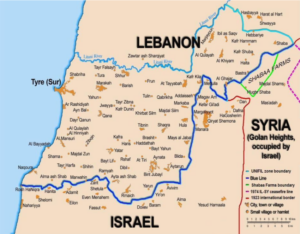 This past year’s new round of conflict and war between Israel and Hezbollah in southern Lebanon has once again plunged Lebanon into a dangerous predicament.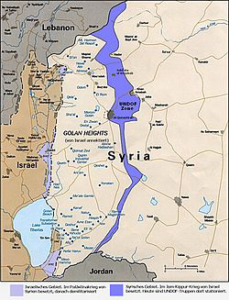
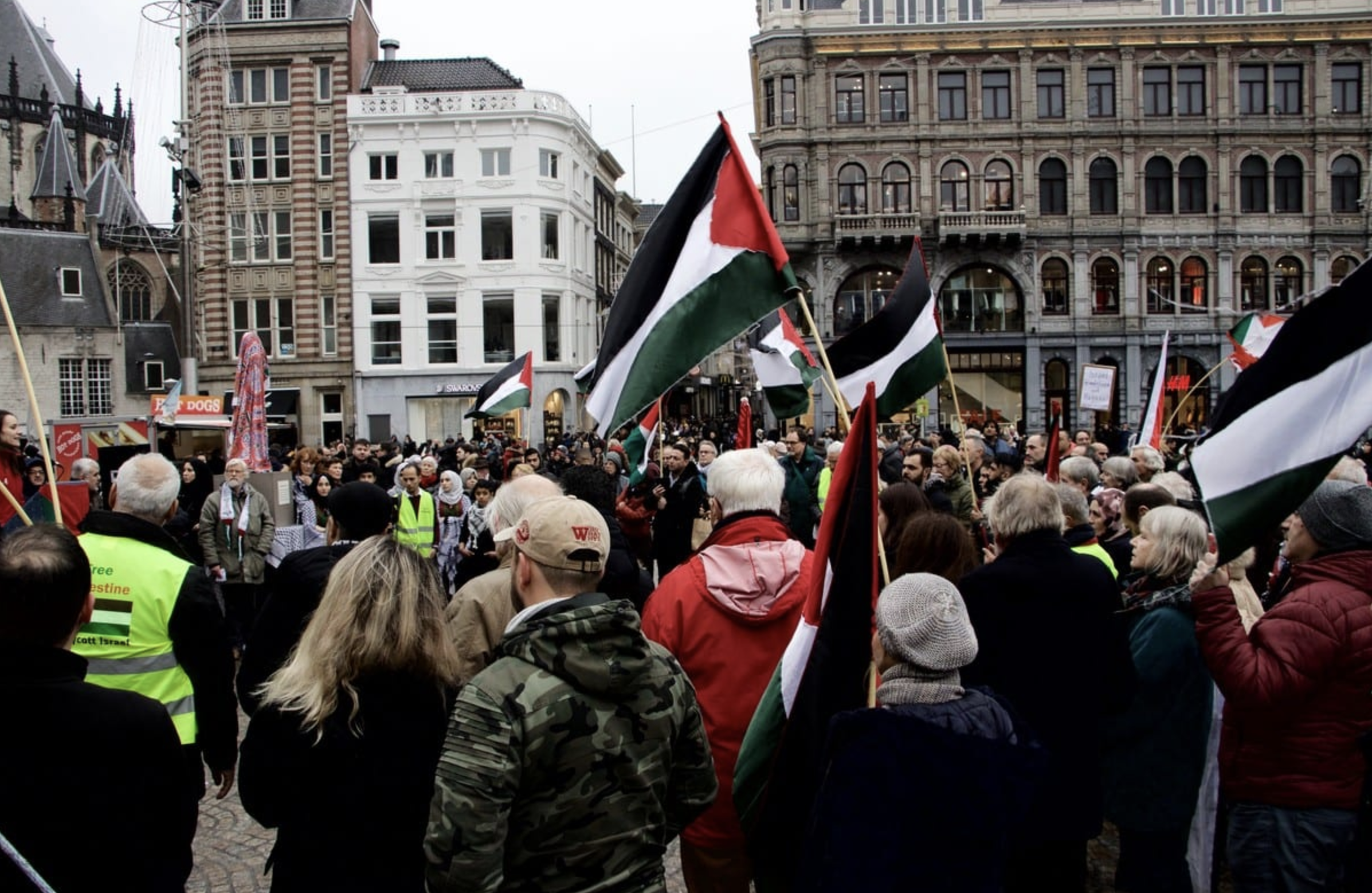
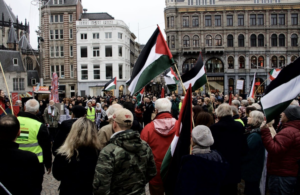
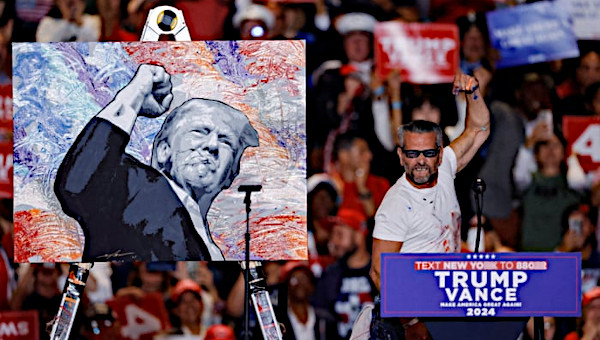
 Leonard Cohen, poet laureate of Canada’s 1960s, offered a closing anthem to the twentieth century in his 1992 lament “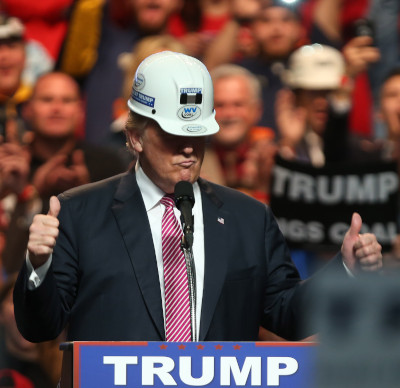
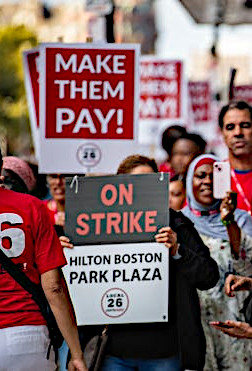
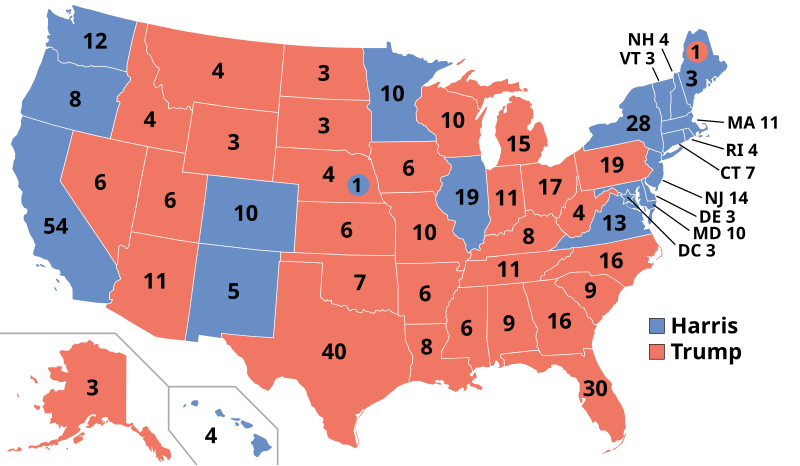
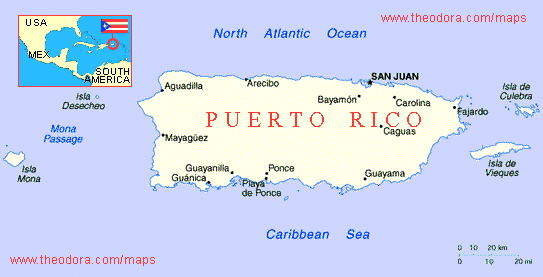
 The struggle for life is taking new and interesting twists in Puerto Rico. The last few months have seen an escalation in the confrontation between those that want to preserve the status quo and those that wanted to explore alternative roads with the November 5th election. And contrary to what some might believe, this is not necessarily about most people’s preferences changing regarding the colonial relationship with the United States. It turns out that some important elements have been mutating while others critically endure in the crisis-ridden 126 year old colony of the United States.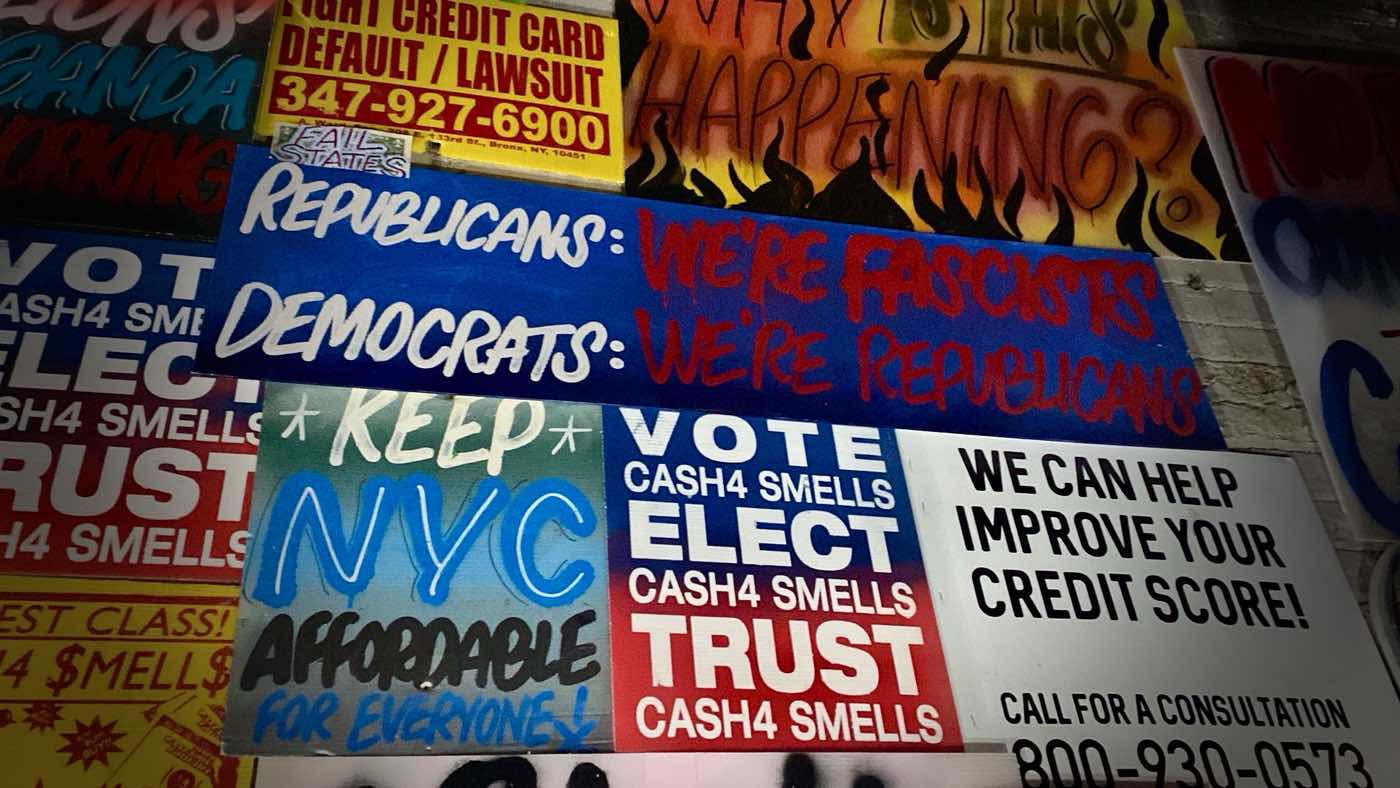




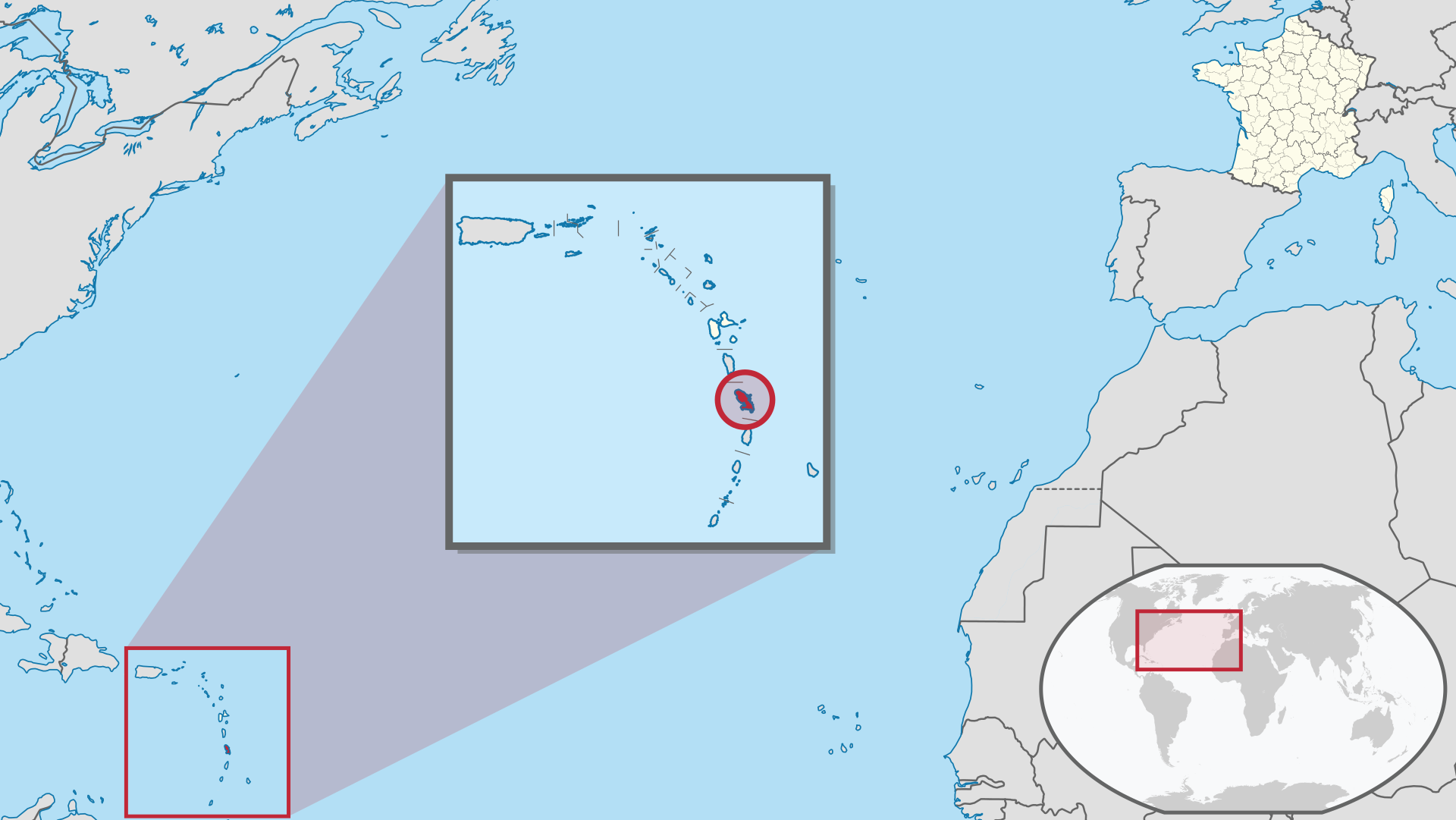
 For the past month, the popular movement against the high cost of living in Martinique has been gathering momentum. Marcel Sellaye, an activist in the GRS (Groupe révolution socialiste) and a former leader of the Respé (Résistance ESPoir, Émancipation) list, explains the reasons for the anger and how the movement is continuing.
 Femicide, the murder of women, take the lives of about 1,000 women each year. Most are murdered in their homes by their husbands or domestic partners. Many are young women coming and going from work. This year in several states and cities, the murdered women are being remembered and honored on the Day of the Dead (Nov. 1 and 2), a traditional day for families to visit cemeteries and speak with their deceased relatives. People construct ofrendas or altares where they place the favorite foods and memorabilia of the dead.- eds.
 First published in Ukrainian on

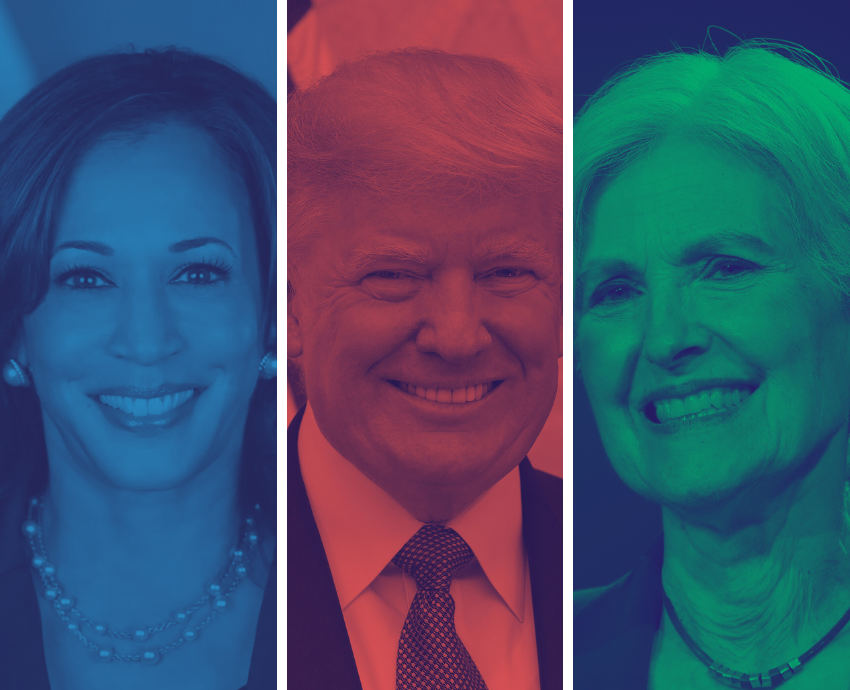
 Some people on the left make the following argument: we need to vote for a third party in this election, even or especially in swing states, as a way to punish the Democrats for their support for the genocide in Gaza. Only if the Democrats lose the election because of Arab-Muslim-leftist votes will they come to take seriously the concerns of the pro-Palestine movement.

 I don’t get the fuss about the movie Civil War. Finally saw it on Prime when the price came down to a reasonable level. Is the shock about this film that a civil war could happen in the modern US, the “exceptional” USA? Time to wake up, America. The film is not about a civil war, per se, as much as it is about war photographers. What the film shows about them is pretty stereotyped when it doesn’t show them as callous. Crucially it completely ignores one big facet of war in a major modern country, the nuclear aspect.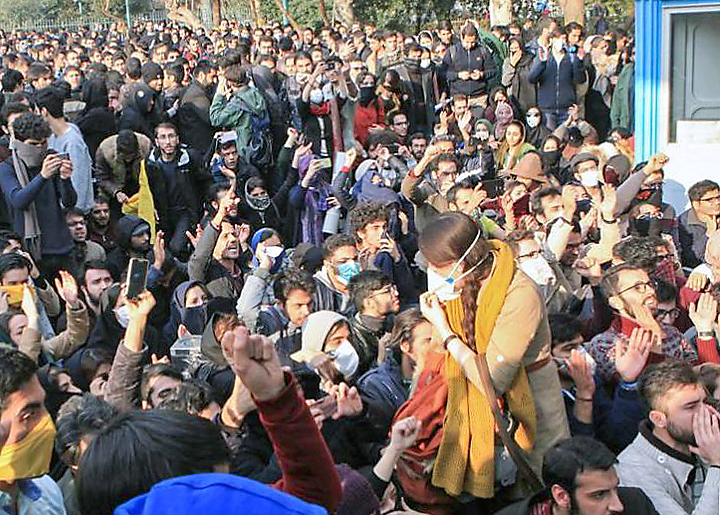


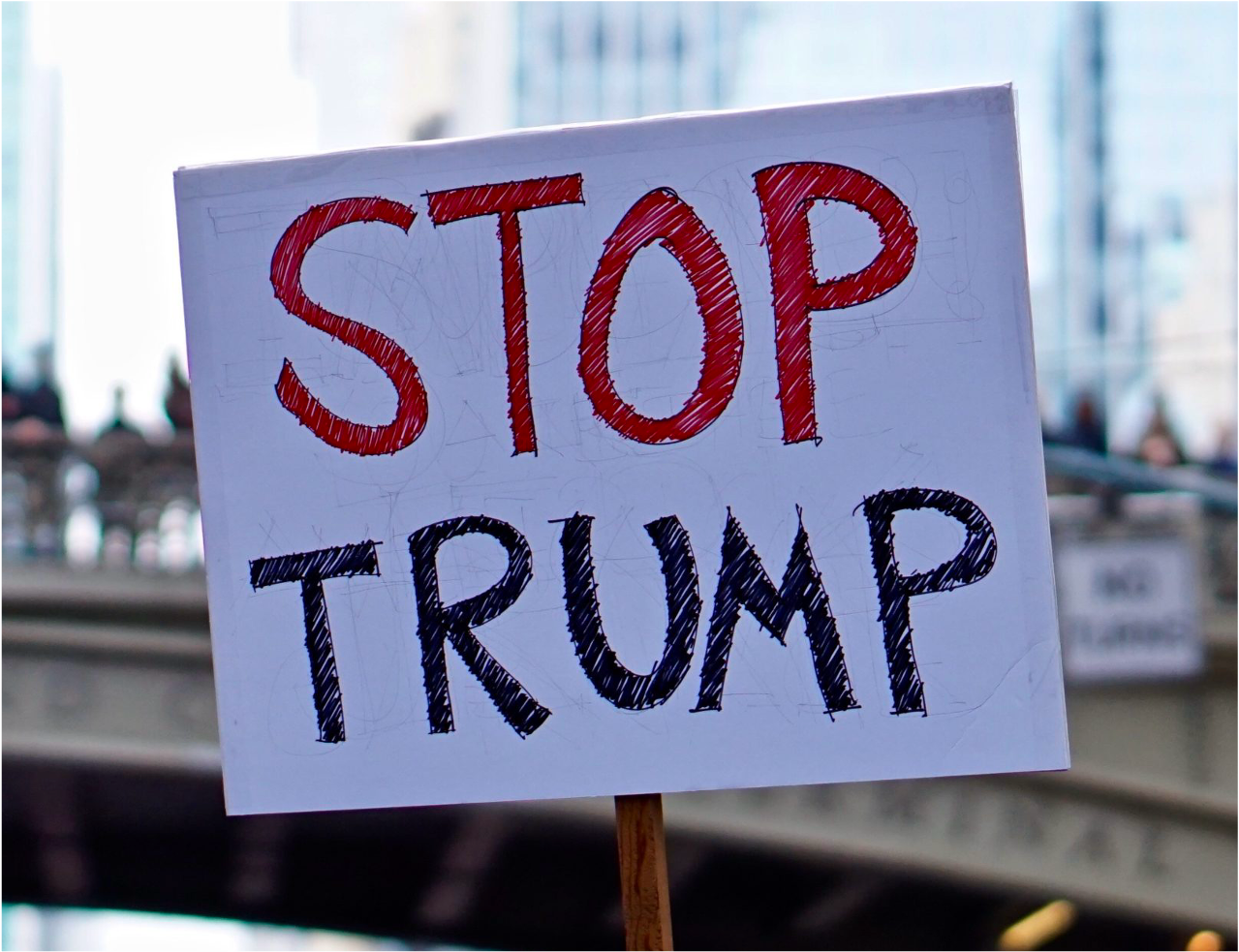
 This article was originally written two weeks ago for publication in French in the European journal
  Mostly, however, Trump in his rallies of thousands, rails against what he calls an invasion of immigrants who he says are “animals,” “vermin,” and “poisoning the blood of our country.” He claims that immigrants are criminals from the world’s prisons and insane asylums and that they have invaded and taken over some cities and are “destroying the fabric of our country.” That’s why he says crime is down in other countries but up in ours—though in fact crime is down in the United States. His claims about the immigrants being criminals and mentally ill and about rising crime rates in the United States are both false. He most recently claimed that Haitians had taken over the city of Springfield, Ohio, and that they were eating the cats, dogs, pets, and geese in that city, claims for which officials from the mayor to the state governor have said there was absolutely no basis. Trump’s son, Donald Jr., has said Haitians have lower IQs than other people. Trump has promised that the immigration authorities and the National Guard will be used—in violation of current law—to round up millions of immigrants, put them in concentration camps, and deport them to their homelands. And, he says, he will start in Springfield.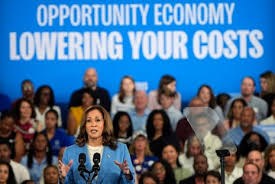
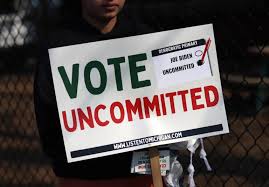 Harris’ fine words, however, have not been accompanied by any proposal or action on her part. And this could cost her the election. Michigan has between 200,000 and 300,000 Arab American voters, and in the primary over 100,000 of them declined to vote for Harris and instead voted uncommitted. A Council on American-Islamic Relations poll released in September showed that in Michigan, 40% of Muslim voters backed the Green Party candidate, Jill Stein; 38% supported Trump; and only 18% would vote for Harris.

 From his grave,
 The party fell into the trap set for it by Israel, through its insistence on continuing to exchange fire with it “until a ceasefire in Gaza”, while it became clear that the weight of the battle was shifting from the wracked Strip to Lebanon.