From as far back as 2012, Sean O’Brien wanted the media spotlight. That year he was the subject of a television pilot for a proposed A&E reality show titled The Teamsters, to be produced by Mark Wahlberg. Wahlberg, along with the Afflecks (longtime O’Brien friends), seem attracted to a certain image of the working class: white, male, and macho, the same image idolized by the American right. The series never aired and in 2014, O’Brien’s Local 25 was in the news not as the subjects of a reality show, but for yelling racial slurs and threats at the star of one, Padma Lakshmi of Top Chef.
That was back when O’Brien was a big fish in a small pond, the President of Local 25 and a member of the union’s international executive board. Now, as general president, he can afford to hire a staff to produce his own show. That podcast, Better Bad Ideas With Sean O’Brien, debuted January 15th with left-leaning Twitch streamer Hasan Piker as a guest. The second featured a discussion with Christian nationalist U.S. Senator Josh Hawley of Missouri.
The interview was nothing more than a love fest. This isn’t surprising. Last year O’Brien posted on Twitter that Hawley’s article assailing corporate America for “using [their] profits to push diversity, equity, and inclusion and the religion of the trans flag” was “100% on point.” O’Brien wrote his own piece for Compact, the publication Hawley’s diatribe ran in. It’s worth noting that the senior editor of Compact had to resign last year due to her promotion of antisemitic conspiracy theories and Adolf Hitler’s Mein Kampf.
O’Brien spent much of the interview gushing over Hawley. He runs through the man’s career as Missouri Attorney General and in the Senate like a devotee in thrall to a movie star. Under O’Brien, the Teamsters gave $5,000 to Hawley’s 2024 Senate campaign, despite his opposition to the Butch-Lewis Act that bailed out Teamster pensions and his 11% lifetime score from the AFL-CIO. “I’m a big fan,” he said, as if listeners couldn’t pick up on that fact. O’Brien expressed optimism over Trump’s victory, saying for Teamsters “there seems to be a sense of hope out there that didn’t exist prior to this election, regardless of the result that happened.” Hawley, who denies that Trump fairly lost the 2020 Presidential election, couldn’t agree more.
The two find further common ground discussing immigration. “I think the biggest problem,” O’ Brien said, “is people are trying to protect illegal aliens that come over here and commit crimes.” He continued, “Social issues are all well and good, but protecting illegal immigrants that come into our country to commit crimes and steal jobs, that’s a tough pill to swallow.” O’Brien’s professed distaste for criminals is laughable due to his own history of threatening Teamsters and his local’s past as a jobs program for the Boston mob.
O’Brien’s xenophobia is part and parcel of a recent turn towards Teamsters solipsism. In a social media post opposing flag burning he declared #usagainsteverybody. One wonders how Canadian Teamsters feel about that one. The Teamsters have begun selling merchandise boasting “Teamsters vs. Everybody.” “Everybody” includes the International Association of Machinists. The Teamsters ended a no raid agreement with them last year.
O’Brien’s comments are miles away from a true giant of the Irish labor movement, James Connolly. “Let no Irishman throw a stone at the foreigner; he may hit his own clansman. Let no foreigner revile the Irish; he may be vilifying his own stock.” O’Brien’s anti-immigrant rhetoric is no “better bad idea.” Stirring up nativism is a boon to the rich and multinationals, particularly as the Teamsters try to unionize the heavily immigrant Amazon workforce. At the JFK 8 Amazon workforce in Staten Island, the first unionized Amazon warehouse in the country, 50% of the workers are immigrants.
What is the purpose of Better Bad Ideas? Given the presence of advertising for blinds.com, the ABC cop drama The Rookie, and others, it seems like a moneymaking venture. But if it is meant to further expose Sean O’Brien to the wider public, there are problems. The debut episode with Piker notched over 100,000 views. By contrast, the follow up with Hawley, as of this writing, is stuck below 5,000. This viewership for the president of a union with over a million members. Clearly, it doesn’t seem like O’Brien is much of a draw.
This lack of viewership may have been a gift to O’Brien, since when people actually heard what he was saying the response was swift and negative. Teamsters Mobilize, a rank and file movement within the union, put out a statement saying O’Brien’s words are “an insult to everyone, especially all Teamsters and children of immigrants. There is no room for nationalism and xenophobia in the Teamsters.” Several Teamsters called into the Valley Labor Report taking him further to task for his statements. Teamsters for a Democratic Union (TDU) the reform movement of old released their own statement that the Teamsters fight “for the rights of all Teamsters regardless of their immigration status.”
Yet TDU have maintained their “see no evil, hear no evil” attitude as O’Brien has further ingratiated himself with the Trumpian right. Their statement does not mention him. They put out no statements on O’Brien’s speech to the RNC, his promotion of Hawley’s transphobia, or his piece for a far-right publication generously funded by plutocrat Peter Thiel.
What all of this has made abundantly clear is that O’Brien has not fundamentally changed from the man who took over his local union in 2006 as an anti-reform candidate. He is still following the same script. “We needed to go back to our old-school values,” he thundered. The Teamster reform movement, then, needs to go back to its own old school values and drop a bigot like O’Brien.
Looking back at the last sixty odd years, at different times and different places, I have to say I have been asked that question about once every year. Mostly by suspicious white folks. Take away the “no” and the “really” parts then it’s a question of curiosity. I mean, “no” implies I was answering the wrong question and “really” means, I was giving the wrong answer.
Occasionally, the question is accompanied by some curiosity about my “accent” and sometimes, when aggression is the better part of valor, followed by “Why don’t you go back to where you came from?” My answers have been different depending on the situation, the context, and then I recovered this article from The Guardian—with a direct reference to our master’s voice.
I realized too that like Malcom X’s “house negro” many among us deny hearing that voice. So, I thought further review and elaboration may be in order.
In the beginning was the word! About a month after I got to the US, (that would be midway between the Birmingham church bombing and JFK assassination) I was invited to a super-rich stockbroker’s house, with a kidney-shaped swimming pool and a museum-like kitchen. And with lots of guests with champagne glasses. At the end of the evening, as I was waiting for my hostess in that kitchen, birthplace of colossal shrimp, for a ride home, she arrived with a model-like woman, glistening and bejeweled. My hostess said to me, “This is our friend Sally, who’s in real estate,” and to Sally, “this is one of our student friends from India.” Sally’s smile was wide, welcoming and sexy. She lowered her voice and spoke thus: “you must be wondering why I didn’t speak to you earlier.” (I had noticed her stunning appearance of course, but also the shunning attitude.)
Sally continued, “I avoided you ’cause I thought you were Mexican.” I was dumbfounded now. “Oh, I have nothing against Mexicans,” Sally lowered her voice some more and added, “But you must admit they are kind of filthy.” On the way home, my hostess said, “Oh that Sally is a good soul. She owns several apartment buildings and sometimes her tenants are unruly!”
That was my first lesson about origins. I felt ashamed for being spineless and speechless, but learned that in 1960s California, a rare Indian was kinda okay, but Mexicans of all hues, not so much! Of course, the narrative has changed as more and more Indians have shown up in America, specially the rich ones, but by then I was not ready to go back. We had a war to resist.
About the other Indian. Years later, once when I was visiting the Taos Pueblo, evening arrived suddenly and the Pueblo, lit only by petromax-kerosene lamps looked like a ghost town. It felt a little eerie in a huge space with a “chiaroscuro” ambiance. Anyway, I entered a store to check out some artifacts and saw there wasn’t anyone at the counter, but a strong scent of ganja filled the air. I looked around and noticed a panel with various currency notes pinned very neatly behind the glass. The British Pound, Swiss Franc, Brazilian Real, Swedish Krona, Deutschemark, Japanese Yen, Mexican Peso… were all represented, but I couldn’t see any Indian Rupee. Then I heard a voice from the depths, “What d’ya think of my display, eh?”
I peered into the darkness and said, “It’s fine but I don’t see my currency there.”
“What’s that?” The voice asked.
“The Indian Rupee,” I answered.
“You from India?” The voice again.
“Yes.” Said I and there followed a long pause.
Suddenly a man leaped over the counter and stood in front of me. A man with shiny skin and long hair. He then gave me the warmest, most welcome hug I have ever got.
“You are the real Indian man, if it wasn’t for that fuckin’ Columbus and other assholes, I’d be called just Taos man or sumphin’ like that.”
This led to a soul-searching discussion of Indian history. Both kinds. In the end, my friend said with a lot of pain, only slightly alleviated by marijuana, “We were here first, you know. But our story has been wiped out forever.”
I have never forgotten that encounter, and over the years have had to contend with the various aspects of being, and occasionally of nothingness too. But the contradictions in a contemporary immigrant identity in the U.S., fostered yet denigrated by structural racism in the Western world, I understand best through an example from the twenty-first century.
One day, when I was driving in Bucks County, near Newtown, PA an aggressive van driver swung from my right to my left directly in front of me, causing me and other drivers to brake suddenly and honk horns. Then the van driver, now on my left slowed down a bit until I came alongside. A woman rolled down the passenger’s side window and tried to speak to me. So, I too rolled down mine. She shouted after a few tries, “Why don’t you go back to where you came from!” Said with much vehemence I should add. I caught a glimpse of her young white driver-companion as well.
Those days, I was teaching at Bucks County Community College in Newtown. About a week later, me and two colleagues were introducing ourselves and our team-taught course on “The Culture of Affluence” in an auditorium classroom that could hold about 200 students. As was my practice, I stood scanning the student faces when I noticed a familiar countenance around the tenth row. Our eyes met for a second. The student was the driver of the van, companion of the woman who wanted me to go back! The young man lowered his head and kept it lowered throughout the session. After that, we never saw him again. My colleagues thought this was good riddance. I thought the student, victim of false consciousness, might have learned something from a critique of the consumerist trap in America.
The beginning of Donald Trump’s second presidential term on January 20 was a crucial day in international politics and for Indigenous migrant communities in the United States.
The inauguration took place in the wake of the brutal fires in Los Angeles that began on January 5, devouring more than 37,000 acres, including large parts of Pacific Palisades, Altadena, and Pasadena.
The fires destroyed more than 12,000 structures, including homes, schools, churches and businesses, but they impacted far more than buildings alone. They killed at least 29 people, exacerbated the already existing housing crisis in the city and will likely worsen unemployment.
Comunidades Indígenas en Liderazgo (CIELO) set up food pantries and distributed masks to Indigenous migrants affected by the fires. This enabled them to appreciate that the fires will have a vast impact on people’s lives, given that countless jobs no longer exist: dishwashers; waiters; cooks; plumbers; window cleaners; house cleaners; gardeners and caregivers for children, the elderly and pets among other essential jobs.
To a great extent, Indigenous migrants from Guatemala, Mexico, Honduras, the Philippines and elsewhere do this work. Many have had to migrate because of the effects of structural adjustment or after extractivist policies displaced them from their territories.
Structural adjustment policies or extractivist policies that displaced them from their territories forced many to migrate, and Indigenous communal lifeways have long been antagonistic to the capitalist economic system.
Upon arrival in the United States, Indigenous migrants work two or three shifts, while also facing structural racism. Among Los Angeles’s large population of Indigenous migrants, Zapotec, Q’anjobal and K’iche peoples are the majority, according to a census that CIELO conducted in 2024. The survey also details the main areas in which Indigenous migrants from Mexico and Central America are employed. This includes restaurant, domestic, and janitorial work. They typically work in the most exploitative sectors and, because few have papers and many do not speak colonial languages, they have limited possibilities of career advancement and often face long periods of unemployment.
On the first day of his second term, Trump initiated a package of presidential actions against immigrants, enabling mass deportations and allowing Immigration and Customs Enforcement (ICE) to enter schools, child care centers, shelters and churches. He declared a national emergency on the U.S.-Mexico border, threatened family separation, and called for the elimination of birthright citizenship. These are just some of the actions that the white supremacist billionaires now running the country have implemented.
Discipline involves imposing norms and rules on social behavior in order to compel obedience and facilitate maximum exploitation. What migrants in the US are experiencing today is another phase of disciplinary anti-immigrant policy.
For the last three years, I have been in Los Angeles researching a new book titled No es por el sueño americano, es por el despojo [It’s not the American dream, it’s dispossession]. The book includes a series of interviews with Odilia Romero, a Zapotec woman who directs CIELO. I spoke with Romero the day after Trump’s inauguration, and she shared reflections on the impacts of the state of terror among migrants.
“The government’s announcement that immigration agents will be entering schools, hospitals and churches has sparked fear among undocumented Indigenous migrants and the children of migrant families, and has caused many migrants to stop going to work,” she said. This strategy of disciplining migrants is part of the scaffolding of migration governance: a political system that puts lives on a hierarchy, creating a system of differentiation and racialization among migrants, differentiating between those who are undocumented and those who are not.
Various people are among those considered undocumented: people who have work permits and those who do not, people awaiting an asylum or refugee claim, those who already have refugee or asylum status, and other categorizations that divide and fragment. In the lexicon of migration, undocumented people are a complicated and heterogeneous population.
According to Romero, there are several mechanisms for containing and disciplining migrants, but they have precedents in U.S. immigration policy. They are not new. “Anti-immigrant policies have always worked, and in fact, several deportation flights that took off on the day Trump took office were the result of processes initiated by the previous administration,” said Romero. “This was also true of the approval of the bill to deport undocumented immigrants who commit minor crimes.”
According to Romero, there is a continuum of anti-immigrant policies, although they will intensify in the Republican era.
Indigenous migrant communities in the US
It has been several decades since one could say that Mayan, Otomanguean or Quechua Indigenous communities live exclusively in Mesoamerica or the Andes. Today there are K’iche’, Zapotec, Mixtec, Miskito, Lenca, Kichwa, Garifuna and Ixil communities, among hundreds of others, in the U.S. They work in construction, agriculture and restaurants, in caregiving, delivery and many other industries across the country. Guatemalan consular records indicate that Guatemalans live in 50 states, including Hawai’i.
The Guatemalan Consular Network indicates that 3,256,047 Guatemalans live in the U.S. Of them, 1,152,699 live in Los Angeles, with the K’anjobal, Mam, K’iche’ and Kaqchikel peoples being the predominant among Indigenous peoples. With Guatemala’s population at 14.9 million, 21 percent live in the U.S.
Thus, K’iche’ people no longer only live in Momostenago, Totonicapán or Nahualá, in the western Guatemala, but also in Los Angeles, New York, Texas and Boston. Likewise, Chuj, Akateko and Q’anjob’al people live in Los Angeles, San Francisco, Atlanta, Kentucky, Chicago and New York. This is true of several other peoples, including the Garifuna, Miskito and Kichwa.
Information compiled by CIELO allows us to build a more complete vision of how these communities contribute to the economic stability of the places they’re from, where improved access to health, education and local living conditions are overseen by communally organized political systems. To do so, remittances from migrants are vital.
“Indigenous migrants do more than contribute to their communities of origin. They sustained the city before the fires and during the pandemic and they are the ones who will rebuild Los Angeles,” Romero said.
A time for reorganization
Migrant workers have responded to the persecution and terror in different ways.
Notably, agricultural workers in California, Florida and Texas have taken direct action by refusing to show up for work. There are poultry workers who did not go to their workplaces out of fear of raids. Worried about their parents’ arrests, children stayed home from school. Religious services have been moved online for the same reason.
“We should learn from the struggles of the African-American communities in the United States, who with their strength and organization managed to break the country’s segregationist system, because we are entering a new regime of segregation,” said Romero. “There is a precedent for this, because in 2022 our African-American comrades fought alongside us against racist and anti-Indigenous policies, when LA City Council members made statements against Indigenous migrants from Oaxaca.”
Mam, Ixil, Mixe and other Indigenous migrants from across the continent have, despite devastation, displacement and injustice, shaped our world. With their remittances and their knowledge they have supported their families, the defense of their territory, and the creation of important communal festivities and gatherings. In doing so, they have sustained the economies of their countries of origin.
It is urgent that we focus our attention on the struggle and strategies of resistance of migrant Indigenous communities, heed the call to learn from the history of people of African descent, support potential alliances and think beyond the terror and inter-elite disputes so that we can imagine the actions we want to take.
It is up to all of us to break the system of segregation and institutional racism.
Elon Musk, the multibillionaire and advisor to President Donald Trump who now heads a team called the Department of Government Efficiency (DOGE), has been taking over U.S. government agencies—the Treasury Department, the Office of Personnel Management (OPM), General Services Administration (GSA), and the United States Agency for International Development, and perhaps others—a process that at least in some cases appear to be illegal. Where officials have resisted, Trump has removed them from their positions. Musk’s take-over is tantamount to a coup, and far more effective, serious, and dangerous than the insurrection that Trump organized on January 6, 2021.
Controlling the executive branch, both houses of Congress, and the Supreme Court, Trump apparently believes that he and Musk have the power to carry out a coup with impunity. With Trump having purged the Justice Department, the FBI, the Inspectors General, there is, in fact, no one to call out and stop these attacks on the government bureaucracy from within. The Democrats and groups such as the ACLU have been filing suit in various courts with some success, but if they end up at the Supreme Court, given that the Supreme Court ruled in July 2024 that the U.S. presidents have absolute immunity for their official actions and broad immunity for most other actions, Trump is likely to win.
Trump and Musk, who have been calling for reducing the size and cost of government, now have the power with the push of a computer key to stop the two trillion dollars in payments made by Treasury each year affecting tens of millions of people from children to the disabled to the elderly, local and state governments, and private contractors. They now have their hands on the computers at OPM that handles the records of virtually all 2.5 million government employees. And have taken over the computers at the GSA oversees government real estate, land and buildings. Musk’s team now had its hands on computer that mange almost $43 billion in foreign aid for foreign economies, education, and health, such as for HIV programs.Trump and his pliant Secretary of Defense Pete Hegseth already control the U.S. military’s $820 billion budget.
We are witnessing a tech coup d’état. The Democratic Party has failed to stop Trump and Musk, and at the moment has no plan to do so. The social movements and the left are too weak and distant from power to do anything immediately and are only likely to develop a strategy when Trump’s attack on the lives of millions of Americans forces them to act.
In his first two week in office, President Donald Trump has violated the Constitution and broken the law to carry out measures that threaten millions working peoples’ jobs and the health, education, and social welfare programs of the elderly, children and the poor. Blocked at various points by the courts, Trump has given his advisor billionaire Elon Musk, now head of the team called the Department of Government Efficiency (DOGE), power to take over government computer systems in a move that looks like an electronic coup. The president is acting with the unanimous support of the Republican Party, while Democrats dither and fail to oppose him.
Trump’s actions are mind-boggling.
He attempted to impose a spending freeze on all government grants and loans that would have affected 20 million children who depend on school lunch programs, 2 million elderly people who receive meals-on-wheels at their home, 79 million Medicare recipients and 93 million who receive Medicaid and Children’s health insurance, and others. Two federal judges blocked Trump. But Musk and his team have taken control of the Treasury Department’s computer systems and could block payments. Is this a kind of e-coup?
Trump sent over two million federal government employees the “Fork in the Road” email—a virtual copy of Musk’s November 2022 emails to Twitter/X employees—telling them they can resign now and continue to work from home to receive pay, and benefits until September 30, 2025. If they choose not to resign, they must return to working in their offices, but have no guarantee that they will keep their jobs. One need only reply to the email with the word “Resign.” Depending on how many resign, this could result in depopulating various government agencies.
Trump plans to launch a trade war against Mexico, Canada, and China, imposing 25 percent tariffs on products from Mexico and Canada, and an additional 10 percent tariff on China. They are America’s three largest trading partners. Canada’s Prime Minister Justin Trudeau and Mexican president Claudia Sheinbaum have already announced that their countries will respond in kind. Given the integration of North American industrial production, these tariffs could, for example, lead to the shutdown of auto plants in Canada, Mexico, and the United States. The tariffs will also make more expensive the importation of lumber to the American construction industry.
Trump has begun the roundup and deportation of undocumented immigrants using military planes, only several hundred so far, but promising to deport all of them, which he estimates at 20 million though experts say there are 11 million. Many immigrants are now afraid to go to work, school, the hospital, or to their church or temple.
All of this forms part of Trump’s goal of reducing the size and cost of the federal government and ending the welfare state.
Trump has fired 17 inspectors general whose job was to stop fraud, abuse, and corruption, so there is little effective opposition within the bureaucracy. So far, the political opposition is using the courts to try to block Trump, with some success, but ultimately court cases will go to the conservative Supreme Court which has tended to support Trump.
The Democrats have failed to speak out in a unified and clear voice and have not been able to slow Trump’s onslaught. Progressive Democrats have called upon the party to reassert its historic claim to represent the working class which dates back to President Franklin D. Roosevelt in the 1930s. But the party just elected as its president Ken Martin, who talks about reaching the working-class, but is fundamentally a moderate apparatchik.
Because Trump’s attack has been so fast, so far reaching, and so intense, there is so far no mass response from below. Unions, Black and Latino organizations, women’s, LGBT groups, and the left are discussing and planning, but do not yet have a strategy.
This article was written for L’Anticapitaliste, the newspaper of the New Anticapitalist Party of France and will also appear on the website of International Viewpoint.
On his return to the presidency on January 20, Donald Trump rescinded his predecessor Joe Biden’s short-lived removal of Cuba from the State Sponsor of Terrorism (SSOT) designation. The SSOT designation will further isolate Cuba diplomatically and economically.
Biden only removed Cuba on January 14. Cuba was originally designated as SSOT in 1982. As the U.S. State Department explains, “Cuba was designated as a State Sponsor of Terrorism in 1982 because of its long history of providing advice, safe haven, communications, training, and financial support to guerrilla groups and individual terrorists.” Perhaps it would be more accurate to say that Fidel Castro and the Cuban government offered support to young revolutionaries fighting against reactionary governments, civilian dictators, and military juntas—so long as those groups reciprocated by adhering to Cuba’s political line.
The Cuban Revolution of 1959 had inspired revolutionary guerrilla groups throughout Latin America, and the Argentine-Cuban revolutionary Ernesto Che Guevara and the Cuban government of Fidel Castro encouraged and supported them. French intellectual Regis Debray popularized the concept of guerrilla warfare in Europe and beyond. Within a decade, however, the guerrilla movements had been crushed by military coups in Chile (1973), Uruguay (1973), and Argentina (1976), and in the 1970s in the Central American nations of El Salvador, Guatemala, and Honduras dictators and military juntas defeated the guerrillas there. Only Nicaragua’s Sandinistas were victorious, and only for a few years. Idealism and heroism were not enough to win. The guerrilla organizations generally had no base among the working class or the peasantry and their violent tactics often alienated the rest of society. Debray himself criticized the guerrilla warfare idea and listed its faults in his later book Critique of Arms. The moment passed and in the 1990s, Cuba stopped supporting guerrilla groups and hasn’t done so now for over 30 years. In any case these guerrilla organizations weren’t terrorists if terrorism means the use of political violence against non-combatant bystanders either deliberately or as a result of gross negligence. In general, they fought oppressive states and their military and police.
There was another issue, however, a big one. The U.S. government’s opposition to Cuba from the early 1960s to the 1990s was also once motivated by Cuba’s alliance with the Soviet Union and the Communist Eastern Bloc. In May of 1962, Russian Premier Nikita Khrushchev and Cuban leader Castro agreed to placing nuclear missiles in Cuba, leading to the Cuban missile crisis. While the missiles were withdrawn, Cuban and Soviet ties grew stronger. By the 1970s Cuba had been completely structurally and politically assimilated to the Soviet Union, a totalitarian one-party state controlled everything and secret police who rotted out opponents. Cuba supported the repression of the Czechoslovak Prague Spring, a movement for democratic socialism, in 1968. And it also backed the Polish Communist government’s crackdown on the Solidarity union movement of 1980 that was also fighting for democracy. The United States supported all sorts of other dictatorships in Latin America and elsewhere, but Cuba’s alliance with the Soviet Union justified a variety of embargos, trade restrictions, and other measures, including attempted assassinations of Castro. But of course, the Soviet Union fell in 1991, and the Communist Bloc disintegrated and are not an issue today.
The U.S. government also keeps Cuba on the SSOT list because of Cuba’s “subversion of U.S. justice.” This refers to Cuba having given sanctuary to a number of Black radicals of the 1960s and 70s, some of them Black Panthers, who were involved in violent incidents that included murder, among them Assata Shakur, Ismael La Beet, and Charles Lee Hill, all now in their late 70s and 80s. Some felt they could not get a fair trial in the United States. The U.S. suspects or criminals being harbored in Cuba include some CIA agents who defected. Cuba no longer has political relationships to groups like the Panthers, and these individuals no longer pose any threat to the United States. Certainly, Cuba’s having offered them refuge 30 or 40 years ago has nothing to do with supporting terrorism then and there is no such issue today.
Just before Trump came to power, the Cuban government, negotiating with Pope Francis, but also implicitly with the Biden administration in its last days, agreed to the release of 553 prisoners. Most had been arrested in July 2021 in the massive marches of thousands protesting high prices and, in some cases, demanding democratic rights and an end to Communist rule. Apparently 100 have already been released, but given Trump’s hardline on Cuba, what will happen to this amnesty now? Neither Trump nor the Cuban government can be trusted to see to their freedom, and Pope Francis has only moral suasion. As Stalin once remarked cynically, “How many divisions does the Pope have?”
Ironically, another U.S.-Cuban relationship is developing. Trump ordered the Pentagon and the Department of Homeland Security to prepare the U.S. base and prison at Guantanamo, Cuba (Gitmo) to receive 30,000 migrant prisoners. It was at Gitmo that the United States imprisoned 780 people, most from Afghanistan, Saudi Arabia, Yemen, Pakistan, and Algeria, and tortured many of them. This does not augur well. The location of the immigrant prison on a military base in Cuba but not Cuban territory, will make it difficult to monitor their conditions and provide them legal representation.
Finally, Cuban immigrants from Cuba, Nicaragua, Venezuela and Haiti who were living in the United States under a temporary humanitarian parole program set up by the Biden administration that allowed them to live and work here for two years, are being targeted for deportation as revealed by an Immigration and Customs Enforcement (ICE) document that became public last week. Cubans had once been a privileged and protect immigrant population, but no more. Now they are just “illegals” like the others—though obviously no human being should be called “illegal” and treated as a pariah.
Terrorism is a problem, state terrorism that is, and Trump is the terrorist.
Thanks to my good friend Samuel Farber for his suggestions.
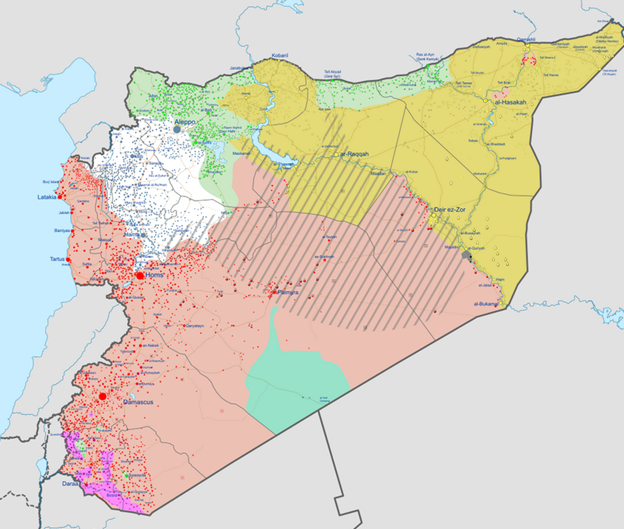
A few weeks after the epochal fall of the Assad dictatorship, Syria remains in flux. It could not be otherwise after 53 years of the strangulation of civil and political life under one of the world’s most murderous regimes. Nonetheless, some broad outlines of where Syria is going can be discerned.
But before entering into that, it is necessary to savor the moment. First, the fall of Bashar al-Assad (who ruled from 2000-2024, succeeding his father Hafez Assad, 1971-2000), constitutes a major historical turning point for the region and even the world. It shows above all that the spirit and reality of the Arab revolutions of 2011 have been smoldering underground all these years. This should give no comfort to local rulers who have snuffed out the 2011 revolutions in their societies, especially those in Egypt and Tunisia.
Second, the sudden collapse of the Syrian regime, within a matter of days, shows the fragile and brittle character of political class domination in general. Marxists have often repeated that, despite its unprecedented accumulation of wealth, capitalism is inherently unstable, a system where “all that is solid melts into air,” as Marx and Engels once wrote (Communist Manifesto, MECW 6, p. 487). We saw this in the 2008 economic collapse. But this is equally true of the capitalist state, no matter how solid and impregnable it might appear in a particular context, even in our era of state-capitalism. We saw this in 2011 in the Arab world, when the Tunisian and Egyptian governments fell to revolutionary youth and workers in a matter of days, and we have seen it in Syria today. (In 2023, we saw how another “strong” state, Israel, was taken by surprise not by a mass uprising but by a determined attack across one of the world’s most closely guarded borders.)
CLR James stressed, based upon a passage in Lenin’s Philosophical Notebooks, that radical change is characterized by “leaps” and breaks rather than gradualness (Notes on Dialectics: Hegel-Marx-Lenin, Westport: Lawrence Hill, 1986 [1948], p. 99). The years 2023-25 in the Middle East certainly exemplify that. But this is only part of the truth, for both the state and capital have a deep, structural existence, and such moments of collapse or breaks are rare enough. For as Marx intoned after the old order reasserted itself with a vengeance once the 1848 revolutions had met their defeat: “The tradition of all the dead generations lays like a nightmare upon the brains of the living” (Eighteenth Brumaire, p. 104).
The Unfolding of the New
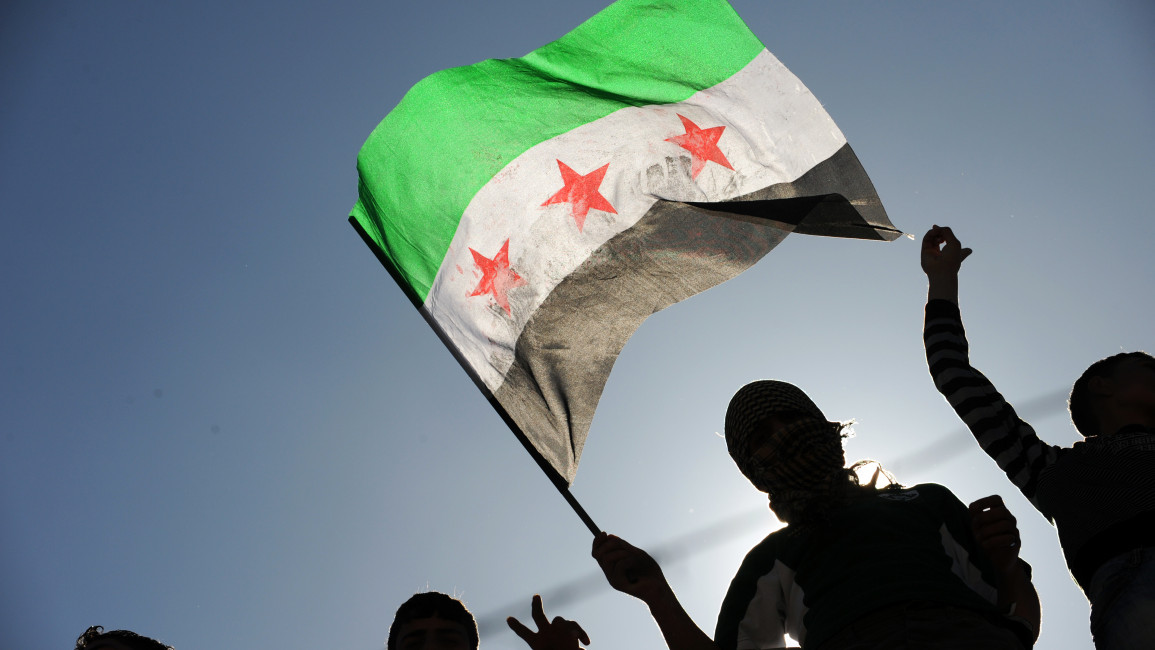
Keeping all this in mind, let us look at what is new in post-Assad Syria. Few noticed a year-and-a-half ago when the Syrian people surged into the streets for the first time in years with anti-regime, pro-revolution slogans as they targeted economic catastrophe and corruption. Notably, the predominantly Druze town of Suweida joined in in August 2023, breaking with the regime tactic of pitting ethno-religious minorities against the Sunni Arab majority. Demonstrators chanted, “One, one, one, the Syrian people are one.” Across a number of towns and cities, “the flags of the Druze and Kurdish communities were raised alongside the [2011] revolution flag. And there were numerous displays of solidarity with the Ukrainian resistance” (Leila Al-Shami’s blog, “Syria: Revolution reborn,” Aug. 29, 2023).
As late as last summer, many EU countries, among them Italy, Denmark, Poland, and Austria, were seeking to end the boycott of the Assad regime, to reopen relations with it, and, above all, to force out the hundreds of thousands of Syrian refugees who had streamed out of the country during the suppression of the revolution. These EU countries called for “a more realistic” policy, given that “Bashar al-Assad remains firmly it the saddle” (Jean-Baptiste Chastand, “Plusiers pays de l’UE veulent renouer avec la Syrie,” Le Monde, July 25, 2024).
Jumping to December 2024, when the 53-year-old regime tumbled after a six-day offensive spearheaded by a small Islamist-led force from the northern opposition enclave of Idlib, many have noted the almost complete failure of the large, well-armed regime forces to fight back. According to Middle East scholar Stephen Zunes:
“While it was the advancing military forces of Hayat Tahrir al Sham (HTS) who marched into Damascus as Assad and his family fled, there are indications that it was unarmed civil resistance led by the resurgent popular committees and local councils, which initially came to the fore in the early nonviolent phase of the revolution back in 2011, that actually wrested control of much of the local governance from the regime, particularly in Daraa and Suweida provinces in the south” (Daniel Falcone: interview with Stephen Zunes, “The Ousting of the Brutal Assad Regime Brings Euphoria and More Questions,” Counterpunch, Dec. 11, 2024).
In the town of Daraa, where the revolutionary uprising began in 2011, joy and sadness were mixed as crowds gathered to welcome home exiled revolutionaries. These included Sheikh Ahmad Al-Sayasna, whose sermon had helped galvanize the March 18, 2011, “Friday of anger” after local youths were imprisoned, tortured, and murdered. Too old and frail to give a full speech, he declared in just a few words, “We are a great people who deserve freedom and who know not hatred.” A young woman in the crowd cried out, “Syria is retrieving all its colors.” Another young woman who also experienced exile stated: “The Westerners are worried, but they need to understand that this is the first time decisions are in the hands of the Syrian people” (Eliott Brachet, “À Deraa, l’étincelle ravivée de la révolution syrienne,” Le Monde, Jan. 9, 2025).
In early January, the people of Suweida remained on revolutionary alert, holding onto the weapons they had wielded in December as the regime began to fall. As the Assad regime suffered territorial losses under the blows of HTS-led forces from the north, Suweida also rose up. Its armed networks, which had survived underground, reopened contact with a coalition of rebels from southern Syria, the region where the 2011 uprising first spread widely. “It was coordinated in secret. Once Aleppo fell, we formed the Operations Network [Chambre] of the South. Then, on December 7, we liberated our region as our allies marched on the capital,” stated a commander of the Druze Mountain Brigade, which claimed a force of 7,000 under arms. Also in Suweida, Druze, Christians, and Muslims gathered around a Christmas tree amid revolutionary slogans, especially, “A free, united, civic, and democratic Syria” (Eliott Brachet, “En Syrie, la circonspection des Druzes,” Le Monde, Jan. 7, 2025).
In Damascus, there was a pervasive sense of picking up where things had left off in 2011. At a December 12 funeral procession for a young revolutionary murdered in prison during the last days of the regime, one participant declared, “It is very moving to march again all together with citizens of Syria from all four corners of the country, on the same route that we took at the beginning of the revolution” (Hélène Sallon, “A Damas, les poignantes obsèques de l’opposant Mazen Al-Hamada,” Le Monde, Dec. 14, 2024).
In newly liberated Syria, as the poet Samar Yazbek has observed, the main slogan repeated incessantly by the joyous crowds was, “Syria is one and indivisible, it belongs to all Syrians, and everyone is entitled to the same rights.” She saw this as a clear repudiation of the Assad regime’s divide-and-conquer strategy and also of efforts by Israel, Türkiye, and other outside powers that are seeking to dominate the new Syria, even as others like Russia and Iran were exiting the scene (“Bashar al-Assad est tombé, mais la véritable révolution des Syriens ne fait que commencer,” Le Monde, Dec. 24, 2024).
These revolutionary crowds also entered en masse the regime’s notorious prisons, vile dungeons where tens of thousands met their deaths over the decades, this in addition to the 500,000 Assad and his allies killed in their repression of the 2011 revolution. In December 2024, the people freed those remaining and searched desperately for other survivors or evidence of what had happened to all those who disappeared into these houses of torture.
Summing up upon his return from exile, the noted Syrian intellectual Yassin al-Haj Saleh observed concerning the rapid collapse of the regime, “It’s the best thing that could have happened and it took place in the best way possible, without destruction, without massacres, without a great deal of human suffering” (Hélène Sallon, “Le retour doux-amer de Yassin al-Haj Saleh en Syrie,” Le Monde, Jan. 3, 2025).
Some Syrian Arab intellectuals have also begun to speak out more strongly in defense of the large Kurdish minority (10% of the population) than their earlier counterparts like Saleh. During the civil war the largely Kurdish Syrian Democratic Forces (SDF) established the progressive, pro-feminist autonomous zone of Rojava, now under threat from the Türkiye-funded Syrian National Army (SNA), which has been allied to HTS. As the young Marxist analyst Joseph Daher writes, “The uprising in 2011 allowed an unprecedented emergence of a deep Kurdish national dynamic in the history of Syria. The Kurdish question raises many other issues about the country’s future, including the potential for a pluralist identity not solely based on Arabness or Islam, as well as the nature of the state and its social model. Ultimately, these are all challenges that are intrinsically connected to the desire for true emancipation of Syria’s popular classes” (“The Kurdish Struggle Is Central to Syria’s Future,” New Arab, Dec. 29, 2024).
Internal Contradictions
Many in the Western media have noted the relative tolerance of minority religious communities on the part of the Islamist Hayat Tahrir al-Sham (HTS), whose quite small armed forces – probably less than 20,000 in a country of some 25 million – drove down from Idlib in the north to Damascus amid only token opposition, as the Assad regime and its military forces simply collapsed. Given that HTS originated as part of the ultra-fundamentalist Al Qaeda network, although those ties were severed about eight years ago, there is much apprehension about its agenda as it has begun to take over the state. This is especially the case within more secular, leftwing, and feminist sectors of the Syrian population. As Al-Haj Saleh asked upon his return from exile, “Who will be oppressed? People like us, democrats, liberals, people on the left.” He added that so far, there has been “a type of religious and cultural inclusivity but not a political one. I fear they may not accept political pluralism,” noting that HTS leader Ahmed al-Sharaa has surrounded himself with like-minded people in his administration (Sallon, “Le retour”).
In the new Syria, the negative role of HTS and other radical Islamist groups during the 2011-13 civil war continues to be noted, even as they seem to have moderated their perspectives somewhat. As Shireen Akram-Boshar noted recently: “Syrians within Syria and in the diaspora are wary of HTS. Syrian activists have long described Nusra and other Islamist groups as a second pole in the counterrevolution, after the Assad regime. Syrian activists for years have lifted the stories of Razan Zeitouneh, Wael Hamada, Samira Khalil and Nazem Hammadi — four democratic activists who opposed the Assad regime as well as the Islamist groups, and were kidnapped and disappeared at the end of 2013, most likely by another, similar Islamist militia” (“As Assad Regime Falls, Syrians Celebrate — and Brace for an Uncertain Future, Truthout, Dec. 11, 2024). This connects to one of Raya Dunayevskaya’s key dialectical insights, wherein “the discernment of the counter-revolution within the revolution became pivotal” (Philosophy and Revolution: From Hegel to Sartre and from Marx to Mao, p. 106).
HTS rule over the rebel enclave of Idlib over the past seven years, while not redolent of Taliban-style reactionary policies, is hardly reassuring. Funded to an extent by Türkiye, HTS developed an authoritarian system in which women’s rights were restricted, open sale of alcohol prohibited, and dissidents imprisoned and tortured. After protests in 2021 against repression, HTS loosened controls somewhat.
Now in control of Damascus, HTS has appointed an old Assad regime bureaucrat as chief of the national police and has tried to confiscate arms from the people, especially the youth. HTS has moved decisively to take control of the legal system, dispatching eleven of its minions from Idlib to take charge of the central body of Syrian attorneys. In response, a petition signed by 400 Syrians, 130 of them lawyers, has demanded that the legitimate purges taking place of corrupt and repressive Assad legal officials does not result in their replacement “by others also lacking any electoral legitimacy” (Hélène Sallon, “En Syrie, des avocats s’inquiètent de la mainmise du pouvoir sur le barreau,” Le Monde, Jan. 20, 2025).
Syrian women have also expressed grave concerns about the future. In Aleppo in December, a women’s demonstration was called off after threatening messages were received by organizers. The HTS-led government has also sent out mixed signals. After an HTS spokesman said in late December that women’s leadership roles would have to be limited to “functions that correspond to their nature and biology,” protest demonstrations broke out in several cities. HTS leader al-Sharaa has expressed a somewhat different line publicly, naming human rights leader Aisha al-Dibs to a bureau of women’s affairs, but the latter has denounced feminism and called for a society based upon Islamic law (Céline Pierce-Magnani, “En Syrie, la méfiance des femmes face au nouveau pouvoir,” Le Monde, Dec. 30, 2024).
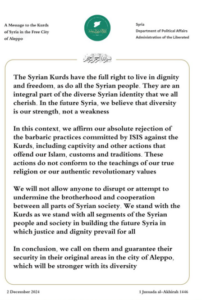
The strongest worries about the new Syria have been expressed by the Kurds, who have come under pressure from the Turkish-backed SNA as well as the Turkish military and air force. Kurds have already been forced out of some areas. The town of Kobane, where the SDF and its women’s units held off ISIS in 2014 in a legendary battle that broke the back of those Islamist reactionaries, is again in danger from SNA and Turkish forces. Recently, Commander-in-Chief of the Kurdish SDF’s People’s Protection Forces (YPJ), Rohilat Afrin, expressed concern about the direction of the new Syria, in terms of both Kurdish autonomy and women’s rights: “We believe that the war in Kobane was a war for humanity; a war to protect all women and land. We are confident that a state of public alert on a global scale will be raised and solidarity will be provided should Kobane be attacked again…. The mindset entrenched within the new government makes it clear that there is no place for women there — or only a place where women must accept to cover their heads and adopt a patriarchal mindset. Avoiding the above will require a great deal of organization and struggle. This is a serious danger that we need to recognize” (Rojava Information Center, “Syria: ‘We cannot hand over our weapons while attacks on women and our territories continue’ — An interview with YPJ Commander-in-Chief Rohilat Afrin,” Links: International Journal of Socialist Renewal, Jan. 12, 2025).
Imperialist and Subimperialist Threats… and Syria’s Future
The fact that the Assad regime since the 2011 uprising has been propped up by Russia, Iran, and the Iran-aligned Hezbollah militias from Lebanon, was shown in how quickly this five-decade-old edifice collapsed once these outside powers began to withdraw in late 2024. Russia pulled out most of its forces by then and refused to do what it had done a decade earlier, conduct indiscriminate air attacks on Syrian rebels and civilians. Here the determined resistance of the Ukrainian people played no small role in weakening Russian imperialism, while Ukraine’s drones gave actual material support. Hezbollah, weakened by Israel’s attacks in the fall of 2024, which had caught its leadership off guard, assassinating them in one swoop, was in no position to aid the regime either. And Iran, reeling from Israeli air attacks and expecting more especially with Trump’s election in the US, also refused to do anything for Assad.
It should also be noted that Russia and Israel had a tacit understanding under Assad, allowing Israel to attack Syria at will. In addition, after the fall of Assad and the weakening of Hezbollah and Iran, some in the Israeli and US governments are under the dangerous illusion that they can now move on to re-order the region by toppling the Iran regime from without.
But even as various imperialist and subimperialist powers – Russia, Iran, and Hezbollah – were leaving the scene, new ones were appearing, or at least appearing with greater force. Türkiye, whose President Recep Tayyip Erdogan harbors neo-Ottomanist ambitions for the whole region, not only backed HTS and its “own” SNA, but has also exercised huge direct influence on the new government. Erdogan wants the new Syrian government to leave the Kurds to him and the SNA, but here he comes up against other forces, not least the Kurds themselves, but also their tacit backers in the US military, who have seen SDF as a bulwark against the resurgence of ISIS.
Israel has intervened in post-Assad Syria in several ways, sinking the small Syrian navy out of the water, destroying from the air many military bases, and taking over a considerably expanded territory around the Golan Heights, which it already occupies illegally. The Israelis have given their usual alibi for their war crimes: fighting “terrorism.”
All of these powers, and others, are seeking to take advantage of Syria’s economic weakness, born of years of civil war and the exploitation of the country by the Assad family amid epochal levels of corruption. These powers are seeking to dismember or divide Syria into regions and enclaves they hope to dominate. Hence, the constant call by Syrians today for the unity of the country.
Some on the left, especially campists, have gone so far as to say that the collapse of the regime was orchestrated by Israel and the US and that all this serves imperialism and reaction, with little or no liberatory content to be seen. This logic is extremely questionable. For as longtime Marxist analyst of the region Gilbert Achcar observed in the wake of Assad’s fall, “There are those who believe that any local actor is but the puppet of some external actor. Such people can’t acknowledge any agency for local actors. That’s, of course, a very poor way of perceiving the situation” (Stephen R. Shalom, “The Collapse of the Assad Regime: An Interview on Syria with Gilbert Achcar, New Politics Online, Dec. 13, 2024).
Such a logic also fails at the human level. Who can defend, excuse, or minimize the brutality of a regime that turned the whole country into a giant torture chamber and death camp? Who can forget the regime’s watchword during the uprising and civil war, “Bashar or we burn the country”? When the time came, in December 2024, the long-suffering Syrian people shook off the regime, with the armed forces melting away as the leaders slinked off to Moscow.
The people of Syria now have an opening, of a type not seen since the early, heady days of 2011. Let us hope that they can make something positive out of this, not only for Syria, but also for the region and the world, which is in such great need of hope at a time when authoritarianism and fascism are descending on us in so many parts of the world. Let us also salute the persistence and the resilience of the Syrian people, who never gave up in the years since 2011, whether inside the country or in exile, and who continue on today amid myriad obstacles. Let that be a lesson for all of us, everywhere.
The greatest weapon which fascist thinkers have in their arsenal starts with misinformation and disinformation. That is an attack upon the mind by way of erasing historic memory.
A mural near Emeryville Shellmound, the burial site of the native Ohlone people in California | Peg Hunter/Flickr (CC BY-NC 2.0)
A previous version of this article appeared in India Forum on December 29th.
Introduction
On 15 January 2025, Qatar’s prime minister announced that Israel and Hamas had agreed to a three-phase Gaza ceasefire deal including an exchange of hostages and prisoners, and it would take effect on 19 January. As Israel’s bombing of Gaza continued unabated and the Israeli cabinet delayed ratifying the deal, well-informed commentators predicted that Benjamin Netanyahu and his extremist allies would make sure that the ceasefire would collapse after the first phase.i Indeed, ‘Netanyahu stressed that the ceasefire was “temporary” and Israel reserved the right to resume strikes in Gaza’.ii Despite such uncertainties, however, the ceasefire deal could provide an opportunity to move towards a just and peaceful future.
On 25 October 2024, Forensic Architecture released an interactive cartographic platform entitled ‘A Cartography of Genocide’ along with an 827-page text report entitled ‘A spatial analysis of the Israeli military’s conduct in Gaza since October 2023,’ providing conclusive forensic evidence of genocide in Gaza.iii On 5 December 2024, Amnesty International released a report which concluded that the Israeli state was committing genocide in Gaza in the strict legal sense of the term.iv On 19 December 2024, Human Rights Watch released a report on the Israeli state’s intentional deprivation of access to water, a necessity of life, from the population of Gaza, and concluded that this amounts to an act of genocide.v These reports confirm analyses by dozens of Holocaust and genocide scholars, the South African government’s testimony before the International Court of Justice, and the court’s own rulings.
In fact, what we have been seeing in Gaza is the inevitable consequence of the model of European colonialism chosen by the original Zionists: not just occupying a colony and dominating it, not even the apartheid form of settler-colonialism that needed the indigenous people’s labor, but the model of settler-colonialism that wanted the land without the people, as in the Americas and Australia. Their plan to create an ethno-religious Jewish state in a land where only 8 percent of the population was Jewish in 1914 required the remaining 92 percent of Palestinians to lose their homeland.vi
Raphael Lemkin, who lost 49 members of his family in the Nazi Holocaust and who coined the term ‘genocide,’ had studied the phenomenon historically, and found that settler-colonialism which engaged in what was then called forced displacement and is now called ethnic cleansing inevitably entailed genocide. Because how do you clear the land of the people living in it? By massacres and the threat of massacres, by taking away people’s homes and livelihoods and herding them into ghettos, by subjecting them to conditions that make life impossible, and finally by killing those who remain: exactly what has been happening in Palestine since 1948.vii
The ‘two-state solution’
Britain handed over the mess it had created by promising a Jewish national home in Palestine, which resulted in ‘an organized campaign of lawlessness, terror and sabotage’ by Zionist terrorist groups since the beginning of 1945, to the UN General Assembly in 1947. The UNGA accepted the Jewish Agency’s request to be heard, despite the fact that non-governmental organizations had not previously been allowed to present their positions. The Palestinian delegation withdrew from the proceedings in protest against being relegated to a position inferior to that of the Jewish Agency; their position was ‘The destiny of Palestine cannot be decided by outsiders. It is against the Charter. The destiny of Palestine shall be decided by its own people…’ The Palestinian viewpoint was thereafter represented by the Arab delegations, which deplored the deletion of references to a Palestinian state in the terms of reference of the Special Committee set up to look into the issue, while David Ben-Gurion stated the Zionist view that the whole of Palestine belonged to the Zionists.viii
The Special Committee was unable to agree on recommendations, with the majority of it in favor of partition (the two-state solution), a minority in favor of an independent federal state of Palestine. When the two plans were placed before the UNGA in August 1947, there was strong opposition to partition, and not only from Arab delegates. Rabbi Judah Leon Magnes, a leader of Reform Judaism and President of the Hebrew University in Jerusalem, wrote prophetically that ‘partition would not stop the terrorist activities of Jewish groups, and that having secured partition through terror, they would attempt to secure the rest of the country for the Jews in the same way’. The Pakistan delegate said, ‘In effect, the proposal before the United Nations General Assembly says that we shall decide – not the people of Palestine, with no provision for the self-determination, no provision for the consent of the governed…’ Thirteen delegations spoke against partition and only eleven in favour. Yet in the final vote on 29 November 1947, there were 33 votes in favour including the USSR and other Soviet Socialist Republics, 13 against, and 10 abstentions.ix
How was this result obtained? ‘Chaim Weizmann, the senior Zionist figure in London and Washington, asked Truman to intervene. “I am aware of how much abstaining delegations would be swayed by your counsel and the influence of your government,” he told the president. “I refer to China, Honduras, Colombia, Mexico, Liberia, Ethiopia, Greece. I beg and pray for your decisive intervention at this decisive hour.” The Philippines, Cuba, Haiti, and even France were also on the list of countries that needed a push. “We went for it”, Clark Clifford, Truman’s special counsel, said later. “It was because the White House was for it that it went through. I kept the ramrod up the State Department’s butt.” Herschel Johnson, the deputy head of the US mission at the UN, cried in frustration while speaking to Loy Henderson, a senior diplomat, head of the State Department’s Office of Near Eastern Affairs and strong opponent of the establishment of a Zionist settler state in Palestine. “Loy, forgive me for breaking down like this,” Johnson said, “but Dave Niles called us here a couple of days ago and said that the president had instructed him to tell us that, by God, he wanted us to get busy and get all the votes that we possibly could, that there would be hell if the voting went the other way.”’x
This is how the Philippine delegate ended up voting for partition after having earlier strongly rejected the partition proposal, saying, ‘The Philippine Government has come to the conclusion that it cannot give its support to any proposal for the political disunion and the territorial dismemberment of Palestine. We have assessed the legal arguments and found that they are not the decisive factors in shaping a just and practical solution. Whatever the weight we might choose to assign to the arguments of the one side or the other, it is clear to the Philippine Government that the rights conferred by mandatory power, even if subsequently confirmed by an international agreement, do not vitiate the primordial right of a people to determine the political future and to preserve the territorial integrity of its native land.’ The Lebanese government protested vehemently against the tactics being used to arm-twist delegates into voting against their conscience, and pressed its delegate to resist them: ‘I can also imagine how you have resisted all these attempts in order to preserve what we hold dearest and most sacred in the United Nations, to keep intact the principles of the Charter, and to safeguard democracy and the democratic methods of our Organization. My friends, think of these democratic methods, of the freedom in voting which is sacred to each of our delegations. If we were to abandon this for the tyrannical system of tackling each delegation in hotel rooms, in bed, in corridors and ante-rooms, to threaten them with economic sanctions or to bribe them with promises in order to compel them to vote one way or another, think of what our Organization would become in the future. Should we be a democratic organization? Should we be an organization worthy of respect in the eyes of the world? At this supreme juncture, I beg you to think for a moment of the far-reaching consequences which might result from such manoeuvres, especially if we yielded to them …”’xi
Indeed, far from stemming the violence, the UNGA resolution to partition Palestine, achieved by corruption and sordid self-interest, merely provided a fig-leaf for escalating violence that has led inexorably to genocide. Despite widespread references to the so-called ‘two-state solution’ even today, it was evident from the beginning, as David Ben-Gurion made clear at the UN partition discussion referred to above, that the Zionists had no intention of allowing a Palestinian state to be established on even a small fraction of Palestinian territory. The goal of establishing the Israeli state over the entirety of Palestine has been expressed more openly in recent years, with Benjamin Netanyahu displaying a map of the region in the UN in September 2023 with no vestige of Palestine.xii The ‘two-state solution’ was finally laid to rest by Israel’s Knesset voting overwhelmingly (68:9) on 18 July 2024 that Palestinian statehood would pose ‘an existential danger to the State of Israel,’ making it clear that so long as the Israeli state exists, there will be no Palestinian state.xiii Indeed, according to Finance Minister Belazel Smotrich, the Israeli state should encompass not just Palestine but also extend into Jordan, Lebanon, Syria, Egypt, Iraq and Saudi Arabia.xiv
Given that around 95 percent of the land controlled by Israel has been acquired through the forcible expulsion of the original Palestinian population, it is not surprising that it rejects both international law and UN principles, which would rule out such a course of action. The participation and complicity of Western leaders in such violations enabled the descent of ethnic cleansing into genocide. For example, while the Israeli bombardment of Gaza after the Hamas attack of 7 October 2023 was targeting civilians and slaughtering thousands of children, these leaders justified it by citing ‘Israel’s right to defend itself,’ trying to provide credibility to the flagrant lie that Hamas was the only target. In any case, ‘To suggest that the thief has any kind of “right” to “defend” stolen property is ludicrous. The right belongs to the person fighting for its return, as the Palestinians have been doing every day since 1948. Beyond the 5-6 percent the Zionist land purchasing agencies actually bought before 1948, the Israelis are living on and in stolen property. They will defend it but they have no “right” to defend what by any legal, moral, historical or cultural measure belongs to someone else.’xv
The only just and moral solution: one democratic state
So long as the Israeli state exists, its attempts to eliminate Palestine will continue, and so will its bombing, invasion and occupation of neighboring states like Lebanon and Syria. The war with Hamas will also continue, because resistance to genocidal settler-colonialism is inevitable, and if non-violent resistance is crushed, there will be violent resistance. Israel has murdered peaceful demonstrators in the West Bank, East Jerusalem and Gaza,xvi and Zionists in powerful positions in other countries have tried to shut down the non-violent BDS (Boycott, Divestment and Sanctions) movement.xvii They have arrested and beaten peaceful pro-Palestine demonstrators including Jews, and punished people expressing support for Palestine by taking away their jobs or university places. In their zeal to crush non-violent support for Palestine, Zionists have teamed up with neo-Nazis like the Alternative für Deutschland (AfD, Alternative for Germany), putting Jews in danger of their antisemitic violence.xviii
Israel has never been a democracy; no ethno-religious or ethnic state – whether Jewish, Christian, Islamic, Hindu, Buddhist or other – can be a democracy, because those who do not belong to the dominant group will not have equal rights. At best it will be an apartheid state, at worst a genocidal one. In the past, however, Jewish citizens of Israel enjoyed a fair range of democratic rights, but these have been drastically eroded as Israel descended from ethnic cleansing to genocide. Ofer Cassif, the only Jewish Member of the Knesset from the left-wing Hadash Party, says, ‘alongside genocide, ethnic cleansing, war crimes, atrocities, occupation, and persecution of Palestinians in their territories, there’s also fascism growing stronger in Israel by legislation and by the persecution of citizens, arresting people, beating people, etc. Israel is on the verge of a full-fledged fascist regime.’xix The Israeli state has become a menace even to its own Jewish citizens.
The solution proposed by the One Democratic State Initiative (ODSI) is a democratic, inclusive Palestinian state in the whole of Palestine, ‘from the river to the sea,’ in which all citizens would have equal rights regardless of ethnic or religious identity.xx ‘By identifying Zionism’s politicization of identity and Israel’s nature as a state exclusive to Jews as the root issue of the suffering and injustice in Palestine, the “One Democratic State” solution clearly defines liberation as the dismantling of the apartheid, settler-colonial state and the establishment of one democratic state in its stead.’ It thus identifies its twin goals as decolonization and democratization.
Wouldn’t this mean the ethnic cleansing or genocide of Israeli Jews? Not at all. ‘Although there is no universal consensus on the conditions that define one’s belonging to a society, the principles of jus soli (“right of soil”, the right of an individual born in a territory to be a citizen of its state) and jus sanguinis (“right of blood”, the right of an individual to hold their parents’ citizenship) are commonly applied… In accordance with the above, …Palestinian citizenship will be extended to all native Palestinians, including all who were expelled over the past century and their descendants.’ The new state would also extend ‘Palestinian citizenship to all Jews who have broken free from Zionism and who wish to remain in it as Palestinians.’ In other words, Israeli Jews who wish to remain in Palestine as Palestinian citizens would have the right to be citizens of the new democratic state on the basis of equal rights.
Doesn’t the state of Israel have the right to exist? ‘The Zionist project has disregarded the basic democratic rights of the (Jewish and non-Jewish) population of Palestine by effecting, with essential British colonial help, the mass immigration of non-Palestinians to Palestine prior to 1948 and by establishing a “state exclusive to Jews” in Palestine in 1948 with no democratic mandate to do so. The continued existence of a state exclusive to Jews rather than a democratic state of all its citizens means that the trampling of these democratic human rights is ongoing and is therefore not “right”.A transition to a democratic state of all its citizens would right this century-old wrong and would be a historic step in achieving just and lasting peace in Palestine and the Middle East.’ Not even members of an oppressed community have a ‘right’ to oppress others, and the existence of the state of Israel is premised on its supposed ‘right’ to oppress Palestinians.
In addition, this would be:
A democratic state, a state for all its citizens with no discrimination on the basis of religion, ethnicity, culture, language, sex or gender, thus preserving the distinctiveness of the Palestinian heritage in its cultural, religious, and ethnic diversity; not a duplicate of capitalist colonial models, but a state, i.e. a functional administrative tool, whose society actively takes part in politics and through which its society expresses its political will and chooses how to administer its affairs.
A secular state, that separates religion from politics, claims no religious legitimacy, safeguards the freedom of belief, the right to profess and practice religion, and all fundamental rights, and refuses to grant or deny rights on the basis of one’s religious, ideological or cultural background, in full rupture with Zionism and its sectarian nature.
A socially just state, whoseinstitutions are built on the principle of economic and social equality between segments of society and that builds a pluralistic, free and progressive society as an aspect of liberation. A state that frees popular classes from poverty, unemployment and marginalization and guarantees free quality education, social security and workers’ rights.
Is the establishment of a democratic state in place of Israel antisemitic? ‘Claiming that a democratic solution is antisemitic implies that Judaism is antidemocratic, and that is antisemitic… Zionism has used Judaism to justify its settler colonial project… and has effectively conflated Judaism and Jewishness with colonialism in the eyes of Jews and non-Jews alike.It is noteworthy that although Zionism is the only ideology to have succeeded at establishing a state for one identity over others in Palestine, the ODS solution does not single it out as the sole ideology to aim at doing so, and is also opposed to the creation of a state exclusive to Arabs, Muslims, or any other identity.’ This is an important clarification: ODS is as much opposed to an Arab or Muslim state as it is to a Jewish state.
Indeed, none of what has been suggested above is antisemitic according to the definition proposed by hundreds of Jewish scholars in the Jerusalem Declaration on Antisemitism, provided that ‘the same norms of debate that apply to other states and to other conflicts over national self-determination apply in the case of Israel and Palestine.’xxi Thus, for example, one would have to apply the same norms of debate that apply to Ukraine’s struggle against Russia for self-determination to Palestine’s struggle against Israel for self-determination.
ODSI suggests that supporters of Palestine carry on doing what they are already doing – taking part in demonstrations, educating themselves and others about what has been happening in Palestine for over a century, participating in the BDS movement, and so on – but, in addition, emphasise that One Democratic State is the goal, and coordinate their efforts with others who share that goal.xxii Among them is the Palestinian National Initiative (Al-Mubadara) led by Mustafa Barghouti, which is trying to unify Palestinians around the goal of decolonization and the establishment of a democratic Palestinian state.xxiii
Moving towards justice and peace
Anti-Zionist Jews who live in Israel need to retain Israeli citizenship in order to continue their struggle, but those who live in other countries have found another way: renouncing their Israeli citizenship. In the words of Nadav Gazit, ‘Modern Zionism, which emerged in the 1800s, is an unethical, immoral, and evil settler-colonial project, held together by lies, racism, propaganda, and the support of world superpowers with their own interests in the resource-richregion. It cannot provide a “safe haven” for Jews, and Zionism is antithetical to Jewish values… Every moral and ethical part of my bones, flesh, and soul leaves me with only one viable option: to unequivocally renounce my Israeli citizenship.’ He also said he was moved to tears after posting his letter of renunciation on social media, when he ‘received heartfelt messages from Palestinians inviting me to their homes and families,’xxiv reminding us that among the admirable qualities displayed by Palestinians in this dark time is their incredible generosity.
Another renouncer, Avi Steinberg, explains, ‘Citizenship, of the kind I hold, has been a material piece of a long-standing genocidal process. The Israeli state, from its inception, has relied on the normalization of ethnically determined supremacist laws to bolster a military regime whose clear colonial goal is the elimination of Palestine.’ He criticizes his parents, who ‘managed to become both American liberals who opposed the U.S. invasion of Vietnam, while also acting as armed settlers of another people’s land,’ and for being proponents of ‘a “peace” in which the original sin of the state, the ongoing process of ethnic cleansing, would remain firmly in place’. He believes that Jewish liberation is inseparable from broad social movements, and says that ‘As a traditional Jew, I believe the Torah is radical in its contention that Jewish people, or any people, have no right at all to any land, but rather are bound by rigorous ethical responsibilities… The only entity with sovereign rights, according to the Torah, is the God of justice, the God who despises the usurper and the occupier. Zionism has nothing to do with Judaism or Jewish history… Zionist colonization cannot be reformed or liberalized: Its existential identity, as expressed in its citizenship laws and repeated openly by those citizens, amounts to a commitment to genocide.’ Hence, decolonization is ‘both the path and the destination.’xxv
Preventing and punishing Israel’s genocide in Palestine is a priority right now; the sadistic cruelty of what the Israeli state has been doing constitutes an assault not only on the human rights of Palestinians, but also on the whole edifice of international law, and on humanity itself. 153 countries have ratified the Genocide Convention but it is considered to be binding even on those countries which have not done so, and political leaders in all of them are under an obligation to prevent Israel from resuming the genocide by imposing full sanctions on it, and punish all those involved in it, from the Israeli political and military leadership down to every soldier. Failing this, they would be guilty of complicity with genocide, which is also a crime under the Genocide Convention.xxvi Countries which have been colluding with Israel’s genocide owe reparations to the Palestinians, including compensation to the families of those who have been killed, payment for medical treatment and rehabilitation to those who have been injured, trauma counselling for all survivors, especially children, and rebuilding of all infrastructure and buildings that have been destroyed or damaged, along with re-equipment of hospitals, schools, universities, etc.
It is worth pointing out that although the United States and most Western countries have been most obviously supportive of Israel in its genocidal onslaught on Palestine, the BRICS+ countries, especially China, Russia, India and the UEA, have also been collaborating with it. Brazil and even South Africa, which has taken the commendable step of bringing the genocide case against Israel to the ICJ, have continued to supply oil and coal to Israel.xxvii Therefore we, the peoples of all these countries, who have been watching in anguish the carnage which Holocaust survivor Gabor Maté compared to Auschwitz,xxviii are under an obligation to put maximum pressure on our political leaders to abide by the Genocide Convention, while campaigning for boycott of and divestment from not just Western companies but all companies which have been colluding with the genocide, including China’s Hikvision and India’s Adani. Crucial to a just peace is an alternative vision of the ultimate goal in Palestine: From the river to the sea, freedom and democracy.
ixUnited Nations, ‘Origins and Evolution of the Palestine Problem: Part II (1947-1977)’ https://www.un.org/unispal/history2/origins-and-evolution-of-the-palestine-problem/part-ii-1947-1977/ The final vote was as follows: In favour: Australia, Belgium, Bolivia, Brazil, Byelorussian Soviet Socialist Republic, Canada, Costa Rica, Czechoslovakia, Denmark, Dominican Republic, Ecuador, France, Guatemala, Haiti, Iceland, Liberia, Luxembourg, Netherlands, New Zealand, Nicaragua, Norway, Panama, Paraguay, Peru, Philippines, Poland, Sweden, Ukrainian Soviet Socialist Republic, Union of South Africa, Union of Soviet Socialist Republics, United States of America, Uruguay, Venezuela.Against: Afghanistan, Cuba, Egypt, Greece, India, Iran, Iraq, Lebanon, Pakistan, Saudi Arabia, Syria, Turkey, Yemen.
Abstained: Argentina, Chile, China, Colombia, El Salvador, Ethiopia, Honduras, Mexico, United Kingdom, Yugoslavia.
x Jeremy Salt, 2024, ‘Not October 7 or any other date – This is all about 1948 now,’ Palestine Chronicle. https://www.palestinechronicle.com/not-october-7-or-any-other-date-this-is-all-about-1948-now/
xiUnited Nations, ‘Origins and Evolution of the Palestine Problem: Part II (1947-1977)’.
In 1965, then a 19-year-old sophomore at UC Berkeley, I invited my boyfriend to see Bob Dylan live at the Berkeley Community Theater. I had been a fan of Dylan’s since my senior year in high school and was full of anticipation and excitement. I wasn’t sure what my boyfriend would feel about the music; he knew of Dylan but would not have called himself a fan. Finally Dylan came on stage and immediately went into full electric “Like a Rolling Stone.” There were loud boos from the audience, and I was horrified. Not about the electric sound—I was fine with that. But the booing! What would this new boyfriend think?
Now, some 60 years later, I remembered that moment, among many memories, as I watched the new film, A Complete Unknown, directed by James Mangold, written by Mangold and Jay Cocks with my grandson, a 19-year-old sophomore in college. The film, based on Elijah Wald’s 2015 book, Dylan Goes Electric! Newport, Seeger, Dylan, and the Night that Split the Sixties, is about Dylan’s early years, 1961-1965, and his move from folk music to electric rock. And if you are looking for an enjoyable film experience, you will not be disappointed. It is entertaining, with the images and sounds of the early sixties. Iconic images of the Cuban Missile Crisis, and the Civil Rights Movement, and the anti-war movement, are effectively shown with actual newsreels shown on black and white television images. My grandson, like many of the young people who are seeing this film, was fascinated and excited by the times as well as the introduction to Dylan’s music. He was especially thrilled by Masters of War. I, like many of my generation, was pleasantly coddled by the nostalgia evoked by the film—the music, the politics, the emergence of Bob Dylan as the great songwriter and musician that he was and is. The world of Sixties Greenwich Village comes alive, and we see characters we knew or have heard of, running across the screen, Pete Seeger, well played by Edward Norton, Dave Van Ronk, Johnny Cash, Joan Baez. It is fun to watch. It is fun to see Dylan, here played by Timothee Chalamet, pick up a whistle on a street corner, the whistle that went on to open “Highway 61 Revisited”, and fun to see how the young Al Kooper provided the organ music that starts “Like a Rolling Stone”. The climax of the film is the uproar at the 1965 Newport Folk Festival, when Dylan went electric, and drove the fans and folk purists to near apoplexy.
Dylan’s relationships with Suze Rotolo, called Sylvia Russo at the request of Dylan, and Joan Baez, are depicted as manipulating and cold, really not so different from many relationships of the 60’s, before the women’s movement, when men were “cool” and women were “chicks.” Both these women, strong and highly accomplished in their own rights, are portrayed shallowly, neither given the heft that they carried in real life. Neither of the actresses, Elle Fanning as Sylvie Russo, and Monica Barbaro as Joan Baez was given much to work with, and neither came anywhere near capturing the people they portrayed. Dylan is portrayed by Timothee Chalomet, who has received lots of attention and Oscar noise for his role, who plays his own guitar and sings the songs in a decent facsimile of the real thing. But, as I told my grandson, why accept the ersatz when you can listen to the real Dylan so easily. Of Timothee Chalumet’s depiction, Dylan says, “I’m sure he’s going to be completely believable as me. Or a younger me. Or some other me.” (1)
Here is my problem with the film. While enjoyable, it is not a great film. It is pure one-dimensional fiction, a story about a character, perhaps based on Dylan, but in no way capturing the depth of the artist. It is a film of cliches, which is why it is so seductively enjoyable. There is the cliché of the brilliant artist who tramples over people, especially adoring women, on his way to fulfilling his unfettered ambition. It gives us cliches of women, clichés of those adoring women. It is sad to see the spirited and multi-faceted Suze Rotolo, an artist in her own right, deeply involved in civil rights politics, a Red Diaper baby of Italian Communists, but not Stalinists, as she points out in her own memoir (2), reduced to a simpering and pallid wisp of a woman. Similarly, Joan Baez is portrayed without much depth, important only as the troubled partner of Dylan, given only a few spunky remarks and some sarcasm, with a pretty voice that cannot rise to the exquisite heights of Joan Baez’s voice.
What is missing in this film, and what makes it derivative rather than art, is that there is no challenge to the viewer. There is nothing that compels viewers to look at themselves and ask the hard questions like, what is the meaning of this music in my life, then and now. What has it been about Dylan that so captured our souls? What is the meaning of the intense resistance to Dylan’s going electric? What did that have to say about the rigidity, the artistic straight jackets fans and purists were putting on artistic expression? Was this a new historic iteration of the Stalinist insistence on the purity of “proletarian art”? Did we, his fan base, become “Maggie’s Farm”?Today, in an era of social media, how do fans control artistic expression? None of these questions are posed by the film. The film is refined, pasteurized, and spoon fed.
As a fan, I’ve had to ask myself these questions. While I understood Dylan’s need to transcend the folk world, I must admit I, too, was caught in the desire to keep Dylan the way I wanted him. I saw him live in Chicago in the 1980’s. I couldn’t wait for him to sing some of my favorite oldies. He did sing them, but in a way I didn’t recognize, the rhythm was different, the tone was different, and I was very disappointed. It wasn’t until years later, when reading his memoir, Chronicles , that I understood why he did what he did: “By combining certain elements of technique which ignite each other I could shift levels of perception, time-frame structures and systems of rhythm which would give my songs a brighter countenance, call them up from the grave—stretch out the stiffness in their bodies and straighten them out.” (3) He wanted to challenge our entrenched and comfortable perceptions of his music.
Dylan himself, self-aware as always, believes in the responsibility of an artist to challenge through his or her art. He was initially drawn to folksongs because “folksongs transcended the immediate culture.” When that transcendence stopped, his music had to explore elsewhere. In a wonderful, almost Hegelian way, he says, “Opportunities may come along for you to convert something—something that exists into something that didn’t yet.” “You have to show people a side of themselves that they didn’t know is there.” “Art”, he says in The Philosophy of Modern Song (4) is disagreement.”
In the end, it is the words and the songs that matter most to Dylan. This film does not help us, regardless of our generation, look at our own lives in any way deeper than comforting nostalgia and the trivial, though enchanting, mythology of the times. As Dylan points out in The Philosophy of Modern Song, “Knowing a singer’s life story doesn’t particularly help your understanding of a song. Frank Sinatra’s feelings over Ava Gardner allegedly inform “I’m a Fool to Want You,” but that’s just trivia. It’s what the song makes you feel about your own life that’s important.”
For all these years, Dylan has never stopped his genius ability, in words and music, to speak deeply to my soul. The old man, now 83, still has what it takes. But the thrilling enigma of Bob Dylan cannot so easily be captured in a film—it’s like trying to paint the wind. However, after all this, do see this film, see how you feel and what you think about it. And other films to consider: Scorsese’s Rolling Thunder Revue: A Bob Dylan Story , 2019,(Netflix), and I’m Not There, 2007, (Amazon Prime) directed by Todd Hayes, with six actors portraying different aspects of Dylan’s life, none of whom are named Bob Dylan. Both these films challenge and stimulate in ways that this new film cannot.
“ Well, I try my best
To be just like I am
But everybody wants you
To be just like them” (5)
Notes:
In The Downey Patriot, Alistair Hunter Jan 5, 2025.
Suze Rotolo, A Freewheelin’ Time: A Memoir of Greenwich Village in the Sixties, Broadway Books, New York, 2008.
Bob Dylan, Chronicles, Vol.1 (there is no Vol 2), Simon and Schuster, New York, 2004.
Bob Dylan, The Philosophy of Modern Song, New York, 2022. Brilliantly written, this book shows the depth of Dylan’s understanding of music, and his deep appreciation of other artists, as well as his profound sociological and philosophic analysis of American culture.
“Maggie’s Farm,” Bob Dylan, on Bob Dylan Bringing It All Back Home, 1965.
Register at pepeace.org. Whether or not you can make it on Saturday at 4 pm ET, your donation goes to Community Movement Builders, Atlanta’s “collective of black people creating sustainable, self-determining communities.”
Though city authorities planned for the militarized training center to open in 2023, fierce resistance – ranging from canvassing and petitions to tree sits and arson – delayed deforestation and Cop City’s construction. Defense of the Weelaunee Forest continued despite severe repression including the assassination of eco-campaigner Manuel Terán who went by Tortuguita. Way behind schedule, the facility is finally built and will reportedly open soon.
This Saturday’s the Day of the Forest Defender, the anniversary of Tortuguita’s 2023 assassination.
Saturday’s webinar’s an opportunity to hear from organizers of the Stop Cop City struggle. Speakers are Mariposas Rebeldes’ co-founder Abundia Alvarado and Community Movement Builders’ founder Kamau Franklin, with Plant the Land co-founder Laura Schleifer as moderator. Atlanta’s lessons will be critical for all involved in struggles for decolonization, abolition, and ecology, and especially stopping planned Cop Cities. Here’s Stanley Heller‘s interview with Alvarado in preparation for the webinar.
A video “pinned” proudly to the top to the Top of the “Bronx Anti-War Coalition” Twitter feed shows a march for Palestine with a large two-star Assadist banner waving behind the main banner. This was December 15, 2024 a full week after the collapse of the regime and the liberation of the political prisons. It was no mistake. If you hold your nose and take a look at the feed you see multiple tweets mourning the demise of the “Forever” Assad kleptocracy.
Was this die-hard embrace of the King of Sednaya an outlier? Unfortunately, the U.S. Left has been dominated by campist thinking, opposing the U.S. “camp” and then supporting the other camps, i.e. any state or movement that was in the bad graces of the U.S. empire. Call it a stunted, deformed anti-imperialism or better an “Anti-Imperialism of the Fools”.
Campism is a mutation of principled socialist thinking. Instead of standing with the working classes of all nations against exploiters and tyrants, campism says we should oppose the strongest group of capitalists but act in solidarity with nations run by governments shunned by the most powerful clique of billionaires. That those in the “out-group” may be vicious exploiters, religious extremists, beastly torturers or hereditary despots makes no difference to campist thinking. “Hands off them.” Elaborate geopolitical gamesmanship comes to the fore. Solidarity of all the mistreated and cheated classes gets mere lip service.
Last fall the Syrian HTS started an offensive. Assad’s Torture/Capitgon Empire was so rotten it fell without any significant battles. Did that wake up the campists? Short answer, not at all. If we can quickly and mercilessly expose their analysis they’re going to fade and class conscious ecosocialist thought can prevail
Here’s a brief survey of campist responses post-Assad.
Start things off with the United Anti-War Coalition of the U.S.
Their response to Assad’s fall was to hold a conference “A Regime Change Operation & Israeli Occupation of Syria”. They’ve actually toned down their home page. Right after the regime’s demise the UNAC page was filled with links to articles show their “anti-imperialist” views about Syria. Each article was worse than the last.
Black Agenda Report
Its article can be summed up with this quote from it, “The forceful overthrow of the government in Syria represents a colossal defeat to the Pan-Arabists in the region and those who center the Palestinian national liberation cause.” Nothing about Syrians, of course, not even the hundreds of thousands of Palestinians in Syria.
George Galloway
“The Arab World Is Dead To Me – Gaza Is Done For. Netanyahu Wins” That was the episode of his so-called “Mother of all Talk Shows” MOATS with George Galloway His remarks are actually breathtaking. He called the recent events an ISIS-Alqaeda takeover of Syria and said, “There were only 25,000 fighters in Golani’s army and 5,000 of those were Chinamen. Chinamen, Uighurs, who don’t even speak Arabic don’t even know who the Arab music stars whose albums they’re burning right now, don’t even know who they are, never tasted Syrian humus or Shakshura, don’t care for it, they eat rice for their breakfast. You see 5,000 out of 25,000 are Chinamen.” Where to begin? “Chinamen” he says three times. Who in the last 50 years uses that term without being a racist? Does he know anything about all about Uighurs? Does he assume all one billion Chinese only eat rice? As the Uighurs (or Tukistani as some call themselves) are being forced to give up their religion and adopt Han Chinese ways on pain of torture isn’t the whole matter in bad taste? And who is Galloway to bring up the question of “foreigners” coming from Idlib? Do the Russians eat humus? Do the Iranians (mostly Persians) eat Shakshura?
One would think after that rant leftists would drop Galloway like a hot stone, but on December 17 Chris Hedges appeared. He said, “Yeah, the regime was corrupt, its human rights abuses were real, but at the same time this [attack on Assad] was a Zionist project long in the making and that’s why the Israelis have embraced the fall of Assad.” He says “I worked in Syria during Hafez al-Assad. I don’t want to pretend it was a flourishing democracy but at the same time I see what’s happening as catastrophic for the Palestinians and for the region.” What about for the Syrians? Hedges says “its human rights abuses were real”. Wow, that’s like saying, “Admittedly Hitler didn’t like Jews.” In the whole episode Hedges never talks about what Assad meant for Syrians, his totalitarian state, his prison gulag, his use of every weapon imaginable against protesters.
CodePink
In its statement after Damascus was conquered CODEPINK acted like they always supported liberation. A Palestinian staffer named Nour wrote, “Over the last few days, I’ve seen Syrian political prisoners run freely through the streets for the first time in decades as people celebrate the end of the Assad regime. Syrians in exile talk about returning home for the first time. I can’t help but feel joyful with them. How can I not, when the right of return is something I wish for my people every day?”
But then CodePink rationalized the fall of Assad by sponsoring an hour with their “anti-imperialist” go-to person … Vijay Prashad. He’s a former Trinity professor and now a fellow at the Chongyang Institute for Financial Studies, Renmin University of China who for years has excused away crimes of non-Western empires and countries. Prashad says we shouldn’t start understanding Syria by looking at the prisoners and prisoners. Instead, he says we need to go back to the U.S. war against Iraq and he starts a long geopolitical lecture. His description of 2011 in Syria? There are small groups that protest in Dera’a, the governor there acts “extremely harshly,” Assad apologizes and replaces the governor, the US ambassador comes out into the street in support of the uprising, and al-Qaeda sends Jolani to Syria to set up a branch. For Prashad that sums up 2011.
At 35:13 Prashad says, “Netanyahu made a decision to go and pummel all the Syrian military bases along road number M5 that’s the road that goes from Damascus all the way up to um basically to Aleppo through Hama, Homs and by bombing all these military bases, by bombing Iranian bases, by bombing logistical depots they basically destroyed the Syrian military effectively. The Israeli Air Force provided um air support for the former Al-Qaeda fellows that came down south and just walked into Damascus. It was a cakewalk.”
As description that’s rubbish. The Israeli Air Force has been bombing Iranian militias and Iranian troops and supply lines in Syria for years, but they it did not attack Assad’s Syrian Army or bases. Only after the success of the HTS and other forces and the fall of Damascus did Israel destroy the Syrian navy and facilities all around the country. By featuring Prashad’s mush, CodePink ignores the millions of Syrians hoping for liberation, and joins with other campists pushing the conspiracy theory that the overthrow of Assad was an Israeli, U.S., Turkish plot.
Stop the War UK
Stop the War UK had diminished over the years after its anti-Iraq war glories. It refused to be supportive of Syrians or Ukrainians. The genocide in Gaza has revived it.
This quote from a piece on its site from several years ago is instructive. “Nevertheless, it was clear quite early on in the war that some of the violence attributed to Assad was being deliberately exaggerated by the regime’s opponents – both Syrian and non-Syrian, in order to justify another ‘humanitarian intervention’.” Yeah, Sednaya was just an exaggeration.
On Dec. 13 of 2024 it put out this statement called Israel, Syria and the peace movement: we must not be divided. It made no comment about the monstrous regime that had disintegrated, merely recognizing there were “differences” among the Left about Syria. “[British imperialism’s] aim to exploit differences over events in Syria and the nature of the forces which have overthrown its state to split left opposition to imperialism and war….Our response must be to maintain our unity. Palestine is still the issue. British imperialism is still the enemy. We must not be divided.” Syria is never the issue for these peace lovers.
Communist Party (USA)
On December 13 published an article entitled “Peace and self-determination for the people of Syria.” It illustrated the piece with children holding two-star flags of the Assad regime. From the piece, “Beginning with the public demonstrations against the Assad government in 2011, NATO and the United States have continuously interfered in the affairs of the Syrian people….These efforts culminated in the displacement of millions of Syrians…Brought about by sectarian and jihadist forces, many of which are under the influence of U.S. and NATO imperialism, the collapse of the Assad government will not resolve …” So according to the CP it was the US that caused the mass displacement. Assad had no role.
Democratic Socialists of America
In 21018 on its “Democratic Left” site there’s a piece entitled “DSA Must Reject Regime Change Rhetoric in Syria” during a debate over a resolution professing opposition to Assad. It’s unclear if any resolution on Syria was passed. In2020 the site did recommend a couple of good books for “further reading.” That seems to be it on Syria for a group who international view on Ukraine and Venezuela is notoriously campist.
Green Party USA
During Trump’s first term the GP USA did comment on Syria. After Trump sent missiles after an Assad chemical attack the GP launched a petition that started with these words, “Far too often, the victims of US military intervention have been innocent civilians. Already, over 400,000 have been killed and millions more have been displaced in one of the worst humanitarian crises since World War II.” Staggering. We’re to believe the US and not Assad was responsible for the killing.
It also called for an “impartial probe of the Idlib gas attacks and emergency negotiations are necessary to stop further bloodshed.” It deliberately ignored the fact that the UN’s OPCW was an impartial agency and constantly did investigations. Not a bit of sympathy for Syrians being ground under Assad’s boot.
The Green Party USA apparently hasn’t made any comment since the fall of Assad.
Veterans for Peace
There doesn’t seem to be any statement since 2017. In that year their resolution included this gem:
Working with Russia in Syria, President Obama secured an agreement where the Syrian government willingly gave up its stockpile of mustard gas and nerve agents, a task that was completed in the summer of 2014. Syria also signed the international Chemical Weapons Convention. Diplomacy can work.”Realize they wrote this resolution four years after the sarin gas attack in Ghouta which killed 1,300 people.
In 2016 VFP Vice-President Gerry Condon took part in delegation to Syria where he and some Peace Council members and others met with Bashar Assad. Upon returning he said, “Almost everything we read about Syria in the media is wrong, the reality is that the U.S. government is supporting armed extremist groups who are terrorizing the Syrian people and trying to destroy Syria’s secular state.” In August 2018 Condon, then VFP President ,said “There is no proof yet of a Syrian government gas attack, only a video made by a fundamentalist rebel group that wants more U.S. intervention.” Except that the UN’s Organization for the Prohibition of Chemical Weapons had found that the Syrian army had used chemicals months earlier.
Condon remains on the VFP Executive Board.
Jonathan Cook
He writes, “The narrative of Syria’s ‘liberation’ currently dominates western coverage. But so far the takeover of Damascus by HTS appears only to have liberated Israel, leaving it freer to bully and terrorise its neighbours into submission.” So there were no prisoners liberated? No families were free to try to find out what happened to the hundreds of thousands of missing? No chance for democratic politics opened up? Tens or hundreds of thousands of refugees aren’t on their way home?
Common Dreams
There was a notable article on the Common Dreams site about Syria entitled: “How the US and Israel Destroyed Syria and Called it Peace”. It was written by one Jeffrey Sachs (whose “shock therapy” gave us the Russian depopulation of the 1990’s).
In the article “The fall of Syria this week is the culmination of the Israel-U.S. campaign against Syria that goes back to 1996 with Netanyahu’s arrival to office as Prime Minister.”
“Fall of Syria”?? How awful. It fell to its own people.
The Nation magazine
The post-Assad The Nation magazine had a piece about Syria. No Syrian was asked to write the column, instead a former US diplomat Chas Freeman and Pascal Lottaz penned it.
It was named “The Fall of Syria Changes Everything.” Once again with “The Fall of Syria.” The writers say, “Basically, the big winner from this is Israel and the Netanyahu government.” That’s a completely wrong analysis. The big winners were the Syrian people who overthrew a grotesque government which had killed and tortured them for 50 years.
Tariq Ali
In his New Left Reviewgeopolitical speculation Ali writes, “We are witnessing in Syria today is a huge defeat, a mini 1967 for the Arab world.” The “Axis of Resistance” is mourned. It never occurs to him that Hezbollah (and Palestinians) might have been much stronger if Hezbollah had never joined in the ransacking of Syria. About the magnificent liberation of the thousands of prisoners Ali sniffs, “Even if the rebels have freed some of Assad’s prisoners, they will soon replace them with their own.” Not one bit of hope that Syrians freed from Assad’s boot might revive the democratic impulses of 2011. Not one mention of “class” from this New Left Marxist.
The Grayzone Syndicate
Twitter influencer Dan Cohen 3000 is a Max Blumenthal associate with tens of thousands of human and bot followers. He writes, “There is no evidence of mass graves in Syria, let alone the outrageous ‘estimate’ of 100,00 to 150,000 human remains, as I’ve already demonstrated … This is how fake narratives are created by a cottage industry of NATO-friendly ‘genocide experts.’” He says, “It’s absolutely fascinating how the pro-Palestine crowd that supports the Syrian “revolution” is completely ignoring this video exposing their beloved “rebels” as tools for Israel. They’ll sympathize with Gaza but are objectively allied with Israel.
Speaking about the White Helmets he writes, “This is the group that is participating in exhuming bodies from alleged mass graves in Syria. They’re funded by the US, UK and Qatar, and have long worked with Al-Qaeda and ISIS. Do you trust them?”
On another day he wrote:
In the coming hours and days, we will be subjected to horrific images of bones and skeletons dug up from graves of all sizes in Syria. All of it will be pinned on the former regime, and little to none will be attributed to HTS (Al-Qaeda), ISIS, or the other numerous militant factions armed to the teeth by the West, Turkey and the GCC that terrorized the country
It’s hard to even get angry at these losers any more. But just because they are pathetic doesn’t meant they aren’t harmful. When my friends were under siege in Easter Ghouta, this douche used his Russia Today platform to try to get them killed by planting false stories about them
Aaron Mate also of the Grayzone
As of December 24, Aaron Mate was still maintaining that Assad did not use chemicals on “his” people.
He writes, “Three medical workers are now claiming that the Syrian government pressured them to say that there was no chemical attack in Douma in April 2018. Let’s assume they’re being truthful that the Syrian gov’t tried to coerce them. That doesn’t change the fact that, as leaked documents prove, the OPCW’s own investigation of Douma did not find evidence of a chemical attack – and was censored.”
If you want to go into the weeds on this, one or two chemical weapons UN researchers doubted whether Assad forces used poison gas in Douma in 2018. Their views were considered by the OPCW and were not found persuasive. Mate/Blumenthal and the rest of the Grayzone crew have been whining about this minority view ever since as some incredible coverup that their masterful skills revealed.
Roger Waters
Roger Waters hasn’t said boo about Syria since the fall of Assad. He supports Palestinian rights but only between the river and the sea. About the Palestinians in Syria he’s never said anything, but he said plenty about Syria, dismissing and slandering anti-Assad forces.
Do remember his hideous FB post on May 16, 2019 about the chemical attack mentioned above. It included these words: “The White Helmets probably murdered 34 women and children to dress the scene that sorry day in Douma, and …[he mentions writers and governments who protested what was done in Douma] who bought into the White Helmets callous and murderous fairytale are suitably haunted by the indelible images of those lost innocent Syrian lives. How do they sleep?”
Scott Ritter
At the bottom of the heap is Scott Ritter, a former military officer who had a few years of deserved glory opposing Bush’s Iraq invasion but who for decades now has been an apologist for Iran, Russia and Assad. On Dec. 11 he tweeted, “For all the Palestinians and their supporters who are crowing about how Assad betrayed your cause, understand that Assad’s Syria was the linchpin that held the Axis of Resistance—the only support of consequence your cause had—together. Assad’s downfall is, therefore, your downfall, once again underscoring the reality that the greatest threat to a Palestinian state are the Palestinians themselves.”
Here Ritter echoes the Israeli Foreign Minister Abba Eban’s nasty quip of yore, “The Arabs never lose an opportunity to lose and opportunity.”
In a reply to Ritter “Assaf_MD” responds: Palestinians don’t need Syrians living under the boot of a deranged leader to achieve freedom. Ritter replied:
Talk to me in three years. When Gaza has been depopulated. The West Bank cleared of Palestinians. When Greater Israel is re-embraced by those ‘friends of Palestine’ who proclaim their support today. When Iran has been pushed by geopolitics in a direction that does not include Palestine. I’ll repeat myself: Palestinians are their own worst enemy.
Finally on December 29 Ritter in a tweet called for the mass murder of thousands of Muslims, in fact all Muslims who support “what is going on in Syria today.” Ritter, a non-Muslim, declared them “kafir” and said they were “Apostates who should be eradicated with extreme prejudice. And the non-Muslim world should line up to help in this extermination.” Deranged.
All in all a pretty dismal swamp. Since it’s free let me quote Talleyrand, “They learned nothing and forgot nothing.”
But there is a bright spot [so far], Democracy Now! It’s not been uniformly campist but it’s been decidedly mixed over the years. It had on excellent Syrian voices like Razan Zeitouneh, Zaher Sahloul and Yasser Munif, but it also featured the analysis of Medea Benjamin, Vijay Prashad, Patrick Cockburn, Seymour Hersh and Stephen Cohen. Since December 8, DN! had on mostly Syrians to talk about Syria, notably the excellent Yassin Al-Haj Saleh and Joseph Daher. Hopefully they’ll continue down that path. Why not make suggestions to them for Syrians and others to interview. Write to them at producers@democracynow.org.
With the campists going down with the ship we the fully anti-imperialist Left have a big opportunity. Let’s work with the remnants of the Syrian Left in exile or on their way home. Publicize and join in solidarity with the democratic struggles that are sure to come, like the rights of Syrian Kurds, separation of religious and state, equality for women, LGBTQ, union struggles and the need for abandonment of neoliberalism in favor of ecosocialism. Push the US and the “West” to revoke the sanctions and expedite string-free aid.
This winter, push for a new ecosocialist “spring”.
President Jimmy Carter sits casually with his feet on the table at the Resolute desk in the Oval Office of the White House on April 18, 1978 (Public Domain)
A pious Sunday school teacher confessing to lust in his heart but swearing never to lie, he came to Washington to reestablish public faith in government just when popular disgust at monstrous U.S. crimes in Indochina had reached unprecedented heights. The big business agenda during his term in office (1977-1981) was to roll back the welfare state, break the power of unions, fan the flames of the Cold War to increase military spending, engineer tax breaks for wealthy corporate interests, and repeal government regulation of business. While portraying himself as a peanut-farming populist, Carter delivered the goods for Wall Street.
Having run as a Washington “outsider,” he immediately filled his administration with Trilateral Commission members, hoping that a coterie of Rockefeller internationalists could resurrect the confidence of American leaders and enrich business relations between Japan and the United States.
His Secretary of State was Cyrus Vance, a Wall Street lawyer and former planner of the Vietnam slaughter. Secretary of Defense Harold Brown was Lyndon Johnson’s Air Force Secretary and a leading proponent of saturation bombing in Vietnam. Secretary of the Treasury Michael Blumenthal was the standard rich corporation president. Attorney General Griffen Bell was a segregationist judge who disclosed that he would request “inactive” status as a member of Atlanta clubs closed to blacks and Jews [Carter himself stated that housing should be segregated]. Energy coordinator James Schlesinger was a proponent of winnable nuclear war. Transportation Secretary Brock Adams was a staunch proponent of Lockheed’s supersonic transport. National security adviser Zbigniew Brzezinski was an anti-Soviet fanatic who said in an interview with the New Yorker that it was “egocentric” to worry that a nuclear war between the U.S. and U.S.S.R. would entail “the end of the human race.” Since it was unlikely that every last human being would perish in such event, Brzezinski recommended that critics of U.S. nuclear policy abstain from narcissistic concern for the mere hundreds of millions of people who would.
In what William Greider, author of Secrets of the Temple (a study of the Federal Reserve Bank), called his most important appointment, Carter named Paul Volcker to chair the Federal Reserve Bank. Stuart Eizenstat, Carter’s assistant for domestic affairs said that, “Volcker was selected because he was the candidate of Wall Street.” The Wall Street agenda became clear when Volcker contracted the money supply and declared, “the standard of living of the average American has to decline.”
Wealth was funneled upward and wages and production declined. Unemployment and bankruptcy rose, unions shriveled and disappeared, Pentagon spending soared. For the first time ever American white collar families couldn’t save money. With urban housing costs zooming, workers fled to remote suburbs, but the increased commute expenses tended to cancel out cheaper mortgages. Moonlighting and overtime work increased, but added income disappeared in eating out, second commutes, and hired child care. As the cost of necessities outpaced wage gains, only credit cards could fill the widening gap. Hamburger stands and nursing homes proliferated while well-paid manufacturing jobs fled to the Third World. The workforce of the future was said to be a generation of superefficient robots.
Carter’s populist assurances simply whetted the public appetite for this kind of dismal anticlimax. While making a few listless gestures towards blacks and the poor, he spent the bulk of his energy promoting corporate profits and building up a huge military machine that drained away public wealth in defense of a far-flung network of repressive “friends” of American business.
The heaviest applause line in his Inaugural Address was his promise “to move this year a step towards our ultimate goal – the elimination of all nuclear weapons from this Earth.” But after his beguiling rhetoric faded away, he embarked on a program of building two to three nuclear bombs every day. Although he had promised to cut military spending by $5 to $7 billion, he decided to increase it after just six months in office, and his 5% proposed spending increases in each of his last two years in office were identical to those first proposed by Ronald Reagan. Furthermore, having pledged to reduce foreign arms sales, he ended up raising them to new highs, and after speaking of helping the needy, he proposed cutbacks in summer youth jobs, child nutrition programs, and other popular projects serving important social needs. Similarly, though he had campaigned as a friend of labor, he refused a request to increase the minimum wage and opposed most of organized labor’s legislative agenda while handing out huge subsidies to big business. He made much ado about “human rights,” but returned Haiti’s fleeing boat people to the tender care of “Baby Doc” Duvalier, and when a member of the American delegation to the U.N. Human Rights Commission spoke of his “profoundest regrets” for the C.I.A.’s role in General Pinochet’s bloodbath in Chile, Carter scolded him, insisting that the C.I.A.’s actions were “not illegal or improper.”
Carter came to Washington proclaiming his desire for a comprehensive Middle East peace, including a solution to the Palestinian question “in all its aspects.” Yet at Camp David he failed to grasp the root of the problem, let alone propose a mature way of dealing with it. He assumed that Palestinians were anonymous refugees whose nationalist aspirations could be safely ignored. He supposed a peace treaty could be signed in the absence of the PLO, world recognized as the Palestinians’ “sole legitimate representative.” He offered no apologies for negotiating an agreement that failed even to mention Jewish settlements in the West Bank, the Gaza Strip, and the Golan Heights. He did not protest Prime Minister Menachem Begin’s presentation of the Accords before the Israeli Knesset as a “deal,” one much more favorable to Israel than to “the Arabs.” He pretended not to notice that corralling Palestinians into Bantustans was not simply a tactic of war, but constituted Israel’s boasted final product of “peace”! Finally, his much praised Camp David accords were the death warrant for Lebanon, as Israel, its southern border secure with the removal of Egypt from the Arab military alliance, was freed to concentrate undivided attention on a long-planned invasion across its northern border. It was this invasion (June 1982) that convinced Osama bin Laden that only mass murder of Americans could ever change U.S. foreign policy.
Carter was effusive in his praise and blind support of the Shah of Iran, who was deeply unpopular in his country due to policies of supermilitarization, forced modernization, and systematic torture. By the time Carter arrived in the White House the Shah’s throne sat atop a veritable powder keg. Iranian cities were hideously unlivable with fifteen percent of the entire country crowded around Teheran in shanty dwellings lacking sewage or other water facilities. The nation’s incalculable oil wealth reached few hands and a restless student generation had no prospects. The country’s bloated bureaucracy was totally corrupt. While Shiite leaders rallied popular support, the Shah’s secret police threw tens of thousands of Iranians into jail, the economy gagged on billions of dollars of Western arms imports (mostly from Washington), and Amnesty International speculated that Iran had achieved the worst human rights record on the planet. Meanwhile, Carter declared that “human rights is the soul of our foreign policy,” though he added the following day that he thought the Shah might not survive in power, a strange expectation if indeed the U.S. stood for human rights around the world.
After the Shah was overthrown, Carter could not conceive of U.S. responsibility for the actions of enraged Iranian students who seized 66 Americans and held them hostage at the U.S. Embassy in Teheran, demanding the return of “the criminal Shah.” (He had admitted the Shah to the U.S. for emergency medical treatment for cancer, thus precipitating the “hostage crisis.”) To Carter, Americans were by definition innocent, outside history, and he dismissed Iranian grievances against the U.S. as ancient history, refusing to discuss them. In his distorted mind, Iranians were terrorists by nature, and Iran had always been a potentially terrorist nation, regardless of what they had suffered at U.S. hands. In short, without the Shah, Carter regarded Iran as a land of swarthy and crazed medievalists, what Washington today calls a “rogue state.”
Having “lost” Iran, a key U.S. ally in the Middle East, along with military outposts and electronic eavesdropping stations used against the Soviet Union, the Carter administration began supporting Afghan Islamic fundamentalists, not making an issue of their having kidnapped the American ambassador in Kabul that year (1979), which resulted in his death in a rescue attempt. While U.S. officials condemned Islamic militants in Iran as terrorists, they praised them as freedom fighters in Afghanistan, though both groups drew inspiration from the Ayatollah Khomeini, who was, in the eyes of official Washington, the Devil incarnate. In a 1998 interview Carter’s national security adviser Zbigniew Brzezinski admitted that the U.S. had begun giving military assistance to the Islamic fundamentalist moujahedeen in Afghanistan six months before the U.S.S.R. invaded the country, even though he was convinced – as he told Carter – that “this aid was going to induce a Soviet military intervention.” Among the consequences of that policy were a decade-and-a-half of war that claimed the lives of a million Afghans, moujahedeen torture that U.S. government officials called “indescribable horror,” half the Afghan population either dead, crippled, or homeless, and the creation of thousands of Islamic fundamentalist warriors dedicated to unleashing spectacularly violent attacks in countries throughout the world.
The list of disastrous policies can go on. For example, Carter continued the Ford Administration’s policy of backing Indonesia’s occupation of East Timor, which killed tens of thousands of Timorese during Carter’s years in office, and roughly a third of the Timorese population overall between 1975 and 1979. In 1977-1978 while Indonesia engaged in wholesale destruction in the form of massive bombardment, wiping out of villages and crops, and relocation of populations to concentration camps, the Carter Administration extended the military and diplomatic support necessary to make it all possible. In late 1977 Washington replenished Indonesia’s depleted supplies with a sharp increase in the flow of military equipment (Jakarta used U.S.-supplied OV-10 Broncos, planes designed for counterinsurgency operations) encouraging the ferocious attacks that reduced East Timor to the level of Pol Pot’s Cambodia. In a 1979 interview with the New York Times Father Leoneto Vieira do Rego, a Portuguese priest who spent three years in the mountains of East Timor between 1976 and 1979, said that “the genocide and starvation was the result of the full-scale incendiary bombing . . . I personally witnessed – while running to protected areas, going from tribe to tribe – the great massacre from bombardment and people dying from starvation.” In May 1980 Brian Eads reported for the London Observer that “malnutrition and disease are still more widespread than in ravaged Cambodia.” Relating the comments of an official recently back from a visit to Cambodia, Eads added that “by the criteria of distended bellies, intestinal disease and brachial parameter – the measurement of the upper arm – the East Timorese are in a worse state than the Khmers.” Another stellar achievement of the “Human Rights” administration.
Furthermore, during Carter’s brief reign he ordered production of the neutron bomb (which his administration praised for “only” destroying people while leaving property intact), endorsed “flexible response” and “limited” nuclear war, lobbied for the radar-evading cruise missile, developed a rapid deployment force for instant intervention anywhere, enacted selective service registration in peacetime, and advocated the construction of first-strike MX missiles for use in a nuclear shell game along an elaborate system of underground railroad tracks proposed for the Utah desert. While lecturing the Soviets on human rights, he escalated state terror in El Salvador, crushed democracy in South Korea, gave full support to Indonesia’s near genocide in East Timor, and maintained or increased funding for the Shah, Somoza, Marcos, Brazil’s neo-Nazi Generals, and the dictatorships of Guatemala, Nicaragua, Indonesia, Bolivia, and Zaire. He refused to heed Archbishop Romero’s desperate plea to cut off U.S. aid to the blood drenched Salvadoran junta, and Romero was promptly assassinated. Furthermore, he said nothing at all when the London Sunday Times revealed that the torture of Arabs implicated “all of Israel’s security forces” and was so “systematic that it cannot be dismissed as a handful of ‘rogue cops’ exceeding orders.” And though he presented himself as sympathetic to those who had opposed the Vietnam war, he refused to pay reconstruction aid on the grounds that during the devastating U.S. attack on the tiny country, “the destruction was mutual.” (Try arguing that the Nazi invasion of Poland wasn’t a crime because “destruction was mutual.”)
Carter turned domestic policy over to Wall Street, refusing to increase the minimum wage and telling his Cabinet that increasing social spending “is something we just can’t do.” According to Peter Bourne, special assistant to the president in the Carter White House, he “did not see health care as every citizen’s right,” though every other industrial state in the world except apartheid South Africa disagreed with him. He understood that liberals desired it, but, Bourne notes, “he never really accepted it.” Instead, “he preferred to talk movingly of his deep and genuine empathy for those who suffered for lack of health care, as though the depth of his compassion could be a substitute for a major new and expensive government solution for the problem.” In point of fact, money can be saved under a government funded plan, but Carter was uninterested. He insisted on controlling business costs rather than providing universal coverage, neglecting to note that under Medicare – universal insurance for the elderly – administrative costs were a fraction of those charged under private HMOs.
Carter simply could not comprehend the vast unmet social needs that existed (and exist) in the United States. He thought there was a way to maintain a global military presence, balance the budget, and keep business costs low while adequately meeting social welfare needs via reorganizing programs. When his Secretary of Health, Education, and Welfare, Joe Califano informed him that without increased funding many welfare recipients would be worse off after any reorganization than before, Carter erupted: “Are you telling me that there is no way to improve the present welfare system except by spending billions of dollars? In that case, to hell with it!” In response to a comment that his denial of federal funding for poor people’s abortions was unfair, Carter summed up the political philosophy that rendered him hopelessly un-progressive: “Well, as you know, there are many things in life that are not fair, that wealthy people can afford and poor people cannot.”
Like political candidates who do their bidding.
Sources.
Lawrence S. Wittner, Cold War America: From Hiroshima to Watergate, (Holt, Rinehart & Winston, 1978)
Laurence H. Shoup, The Carter Presidency and Beyond, (Ramparts, 1980)
Samuel Bowles et al, After The Waste Land: A Democratic Economics For The Year 2000, (M.E. Sharpe, 1990)
Peter G. Bourne, Jimmy Carter – A Comprehensive Biography from Plains to Postpresidency, (Scribner, 1997)
Doug Dowd, Blues For America – A Critique, A Lament, And Some Memories, (Monthly Review, 1997)
William Blum, Rogue State – A Guide to the World’s Only Superpower, (Common Courage, 2000)
William Blum, Killing Hope: U.S. Military and C.I.A. Interventions Since World War II, (Common Courage, 1995)
Edward W. Said, Covering Islam – How the Media and the Experts Determine How We See the Rest of the World, (Vintage, 1997)
Edward W. Said, The Question of Palestine, (Vintage, 1979)
Robert Fisk, The Great War For Civilisation – The Conquest of the Middle East, (Knopf, 2005)
Helen Caldicott, Missile Envy: The Arms Race and Nuclear War, (Bantam, 1986)
Why did Trump win? What did Harris and the Democrats do wrong?
Ignoring the advice of luminaries ranging from Sun Tzu, the Chinese general and philosopher to Star Trek’s Captain Kirk who recommended going on the offensive as the best defense, Kamala Harris ran a presidential campaign that was overwhelmingly defensive if not altogether in flight from the enemy. But it was not only Kamala. Democratic candidates for high office throughout the United States as in the cases of Montana, Ohio and Maine were more than defensive running away and openly disassociated themselves from Kamala’s and Walz’s presidential campaign.
These are just symptoms of the decline of the Democratic party as the supposed party representing the working class and social progress. In part this has been due to the party looking to the upper middle class, college educated section of the population as their new electoral audience. This strategy was put forward by Charles Schumer, the current Democratic leader of the Senate when he proclaimed in 2016 that “for every blue-collar Democrat we lose in western Pennsylvania, we will pick up two moderate Republicans in the suburbs in Philadelphia, and you can repeat that in Ohio, and Illinois and Wisconsin.” Rather than attempt to win over the large number of Trump sympathizers who are not hard right-wingers, Hillary Clinton dismissed them all as “deplorables.” Since then, major states like Ohio and Florida that were considered competitive have become unambiguously Republican, while Pennsylvania, Wisconsin and Michigan are becoming harder to maintain in the Democratic column. Finally Democratic advances in states like Virginia and Georgia are far from being fully consolidated.
One sector of the population that the Democrats are very active and anxious to recruit are the richest capitalists. Bernie Sanders, who seems to be reexamining his support for the Democratic Party responded to The Nation’s John Nichols as to whether the Democratic leadership will learn the lessons of their defeat and stand with the working class against the powerful interests that dominate our society, that such a change was “highly unlikely. They are much too wedded to the billionaires and corporate interests that fund their campaigns.” (The Nation, November 26, 2024) In this context, not much has been said about Tony West, Kamala’s brother-in-law and a major campaign adviser who is a senior vice president and chief legal counsel of Uber from which company he took a leave of absence to work for his sister-in-law’s presidential campaign. As we know, Uber has been involved in an extensive international campaign to make sure that its employees are considered contractors and not workers entitled to all the rights and protections of labor law.
The issue was placed on the California ballot in 2020 as Proposition 22 that if approved would have denied labor rights to all Uber workers. At the head of the campaign in favor of the proposition as Uber’s paid organizer was Laphonza Butler, a Black and LGTBQ former union organizer as well as former head of the California Service Employees International Union (SEIU). Proposition 22 won and Ms. Butler, aside from her victory in favor of the proposition got a big tribute when the Democratic governor of California Gavin Newsom appointed her as Dianne Feinstein’s replacement in the U.S. Senate in October of 2023. She will have served for well over a year as an unelected office holder, until Adam Schiff, the newly elected Democratic Senator, takes office in January of 2025. Besides being an insult to the California and U.S. labor movements, actions such as these put into great question the supposed Democratic loyalty to unions, let alone the capacity of the Democratic Party, who enthusiastically joined the neoliberal bandwagon decades ago, to recover the support of American workers.
The only important policy issue in which Kamala unambiguously held a progressive stand in her presidential campaign was to support women’s right to abortion. Otherwise, she ditched the traditional liberal (and left) opposition to fracking, leading inevitably to the greater production and consumption of oil and gas with their detrimental effect on the environment. On gun control, she made a big point of declaring that she owned a gun and was willing to use it against any intruders while in a much less prominent note restated her support for a ban on assault weapons and for a more thorough background checks on gun purchasers. The Economist, a journal critical of Trump but not known for its leftism predicted in its October 10, 2024, article “The Trumpification of American Policy” that “whoever gets to 270 electoral college votes on November 5th, Mr. Trump’s ideas will win. He, not Mrs. Harris, has set the terms of this contest, American policy has become thoroughly Trumpified.” As the journal further explained, on trade policy, Harris would have kept most of the tariffs Trump imposed in his first term. On taxes, she moved to the right of President Biden with her support of most of the cuts benefitting well off Americans signed by Trump in 2017 while promising to raise rates only for those earning over $400,000 a year. The Economist also pointed out that her immigration policy was to endorse the most conservative bipartisan reform proposal this century including shutting down asylum applications when the flow of irregular immigrants is high.
However, while The Economist was correct in its brief description of Harris immigration policy, it did not grasp the enormity of Harris and the Democratic Party’s betrayal of undocumented immigrants. We only need to consider Trump’s singling out of undocumented immigrants as one of the principal targets of his campaign, farcically accusing them of eating pets in Springfield, Ohio, and as being criminals and rapists, very much in line with his long-standing rhetoric degrading and dehumanizing immigrant populations. Despite her obvious distaste of Trump’s comments about immigrants during their only debate, neither Harris, her vice-presidential candidate Walz, nor any other prominent Democrat defended undocumented immigrants or challenged the veracity of Trump’s entirely false charges about the supposed criminality or economic parasitism of undocumented immigrants. These charges expressed Trump’s willingness to propagate big lies in the tradition of Dr. Joseph Goebbels, the Nazi propaganda minister.
Thus, for example, it has been known for quite some time that in fact the offending rate for undocumented immigrants is lower than the rate for U.S. born citizens. The reputable National Institute of Justice whose motto is “advancing justice through science” published a study on September 12, 2024 analyzing arrest records in the state of Texas, not a state likely to overlook suspected law-breaking on the part of documented or undocumented immigrants, that showed that during the period of 2012 to 2018 undocumented immigrants in that state were arrested at less than half the rate of native-born U.S. citizens for violent and drug crimes and a quarter of the rate for native born citizens for property crimes, according to the National Institute of Justice.
Moreover, the notion that immigrants, whether documented or not, constitute an economic burden on the country ignores that wide sectors of the economy such as agriculture (where more than half of its workers are estimated to be undocumented), construction and a whole series of services provided by hotels, restaurants, cleaning, care services and the delivery of all kinds of documents and objects depend to a considerable degree on immigrant labor, much of it undocumented. Nevertheless, the consensus among professional economists is that immigration has a small impact on the state of the economy as a whole although some economists have actually maintained that immigration may increase the GDP of the nation thereby helping to create employment for others besides themselves. Even the more “reasonable” expectation that immigration may have a negative effect on specific industries and localities even if it has little effect on the total nation’s labor force has been challenged by economists such as the Canadian American David Card. Card took advantage of the “natural experiment” provided by the large-scale entry of Cubans into the South Florida labor market during and shortly after the “Mariel” exodus in the spring of 1980 to find that it had no measurable effect on wage levels in the area.
The Rise of inflation as the Number 1 Issue
Throughout the 2024 presidential campaign the number 1 issue in the minds of a substantial section of the electorate was the high inflation that characterized the economic crisis affecting the country. It is worth noting that, at the national level, 39 percent of voters mentioned the economy and jobs as their most important issue, almost double the rate for voter concern with immigration, the second most important issue affecting 20 percent of the electorate.
The economic historian Adam Tooze has explained that the substantial increase in food and energy prices in 2021 and 2022 was worse than the inflation caused by the oil embargo caused by the 1973 Arab Israeli war and was only surpassed in recent decades by the effect of the Iran crisis of 1979. As Arun Gupta summed it up (Jacobin, November 19, 2024) from 2021 to 2023, auto-loan delinquencies surged 50 percent for households in the bottom half of income distribution, and credit card delinquencies rose 34 percent from the eve of invasion of Ukraine in February 2022 to October 2024 for the total population. In addition, gasoline prices rose from $3.41 in January 2022 to $5.03 a gallon by June of the same year. Many fast-food items have risen by 50 to 100 percent from 2021 to 2024, and grocery bills rose by 22 percent. Considering this truly disastrous situation, liberal commentators such as Nobel Prize winner Paul Krugman greatly emphasized in his New YorkTimes columns the decline of inflation’s rate of growth without taking at least equal notice of the stubborn consolidation, and its terrible effects, of the recently established high degree of inflation. It is hardly surprising that Krugman followed this analytical road because of his defense of the Biden/Harris presidential campaigns and at a deeper level, because of his unwillingness to advocate radical measures to reduce the class impact of the existing level of inflation such as indexing all wages and salaries and taxing the super profits feeding inflation.
The Mirage of Trump’s Capitalist Success
As consistently as inflation remained the top issue in the 2024 presidential campaign, so did Trump maintain a clear advantage over both Biden and Harris in public opinion polls as the candidate most likely to succeed in handling economic affairs presumably because as a multimillionaire investor he was most qualified to succeed in this area. Thus, for example, a working-class citizen of Latin American origin interviewed on television, expressed many reservations and objections about Trump but quickly concluded that he would nevertheless vote for him by uttering two words, namely “the economy.”
This political phenomenon calls for analysis on several levels. At the simplest, most obvious level, it is not the case that Trump was an unqualified success as a capitalist, let alone an American model of capitalist achievement. As I pointed out six years ago in my article “Donald Trump. Lumpen Capitalist” (Jacobin, October 19, 2018) Trump had declared bankruptcy no less than six times, five times for his casino investments and once for his stake in the New York Plaza Hotel. In the same article, I cited business historian Gwenda Blair in her account of the numerous difficulties that Trump faced in the nineties in negotiating his huge bank debts, so much so that as John Feffer noted in his article “Trump’s Dirty Money” there was only one bank left, the Deutsche Bank, then noted for its highly questionable legal and ethical behavior, willing to give him credit.
It was precisely Trump’s serious difficulties functioning as a relatively “normal” big capitalist in addition to his strong Lumpen inclinations going back to his close relationship with McCarthyite attorney Roy Cohn, a model specimen of amorality and cynicism, that led Trump straight to his shyster ways of making money such as his fraudulent Trump University and Trump Foundation, and more recently to promote and make money on trading cards, self-promotional materials, very expensive Bibles and $100,000 watches as well as becoming involved in crypto currency enterprises. We only need to imagine the reaction of many U.S. media organs if such activities had been undertaken by a woman candidate, or a politician with a Black or Latin American background. Finally, even as President of the United States, Trump engaged in corrupt practices to benefit himself and his family. As the Washington Post columnist John Rogin tells us in his book Chaos Under Heaven, Trump’s son in law Jared Kushner often sided with the Wall Street wing of the administration represented by Steven Mnuchin and Gary Cohn who were generally opposed to tariffs. At Trump’s first summit meeting with Chinese leader Xi in April of 2017, the threat of tariffs was put off and Trump desisted from his campaign promise to formally brand China as a currency manipulator. Xi had not yet left the summit meeting when the Chinese government approved three provisional trademarks for Ivanka Trump’s (Jared Kushner’s wife) company, allowing her to sell jewelry, handbags, and spa services in China. (Cited in Robert Kuttner, “The Import of Exports,” The New York Review of Books, December 19, 2024, 72)
Class Optics and Class Action
On a more complex, and less than obvious level, what if Trump had been something hard to imagine, an exemplary, flawless and clean big capitalist? Would it have then been appropriate to see such an ideal person elected as President on the grounds that it would be good for the economy? No, that notion would be equally groundless. Even the “best and nicest” big individual capitalist will tend to look at social reality through a capitalist ideological and political lens which will exclude some possible solutions to problems and include those “solutions” that are compatible with their capitalist ideological and political outlook. Thus, for example, raising interest rates to combat inflation is not merely the “neutral and technical” government measure often portrayed by the press. Although certainly complicated in its causes and effects, there is a class kernel, invisible to many, in that this apparently “neutral” measure can cool the economy in a way which is much more likely to increase unemployment and more generally depress working class living standards.
Thus, economic “solutions” must be compatible with capitalist class interests, and the outlook of big capitalists are generally rooted in the social circles (social clubs, trade associations, etc.) to which the individual capitalist belongs and from which he or she draws not only ideas and ways of life but also personal loyalties and even emotional support. In other words, the capitalist in question inhabits a different material (and psychological) world from that occupied by, for example, an industrial or white-collar worker.
It would be a mistake to think that the issue we are presently discussing resides in that Americans who think that Trump would be good for the economy may be ignorant or naïve. That may be so, but it misses the crucial issue of the hegemonic political culture in the country at large. Outside of the right wing and especially the extreme right of the political spectrum there is no oppositional culture in the U.S. except perhaps among the Black and other racial and ethnic communities and for a left that has grown since the end of the Cold War but is not yet a major, important force by itself. In the meantime, however, those who think that Trump “will fix the economy” are not significantly influenced by any progressive oppositional culture, which would almost “instinctively” reject the notion that multimillionaires could have the people’s interests at heart. In many other capitalist countries that lack the individualist background of U.S. political culture, the prevalence of an oppositional culture would lead most people to the opposite conclusion; namely, precisely because the candidate is a capitalist, he or she would not be good for the economy.
Of course, this is not a rigid and static situation but subject to change especially when crisis occurs, and movements develop that leave an ideological and political legacy behind them such as was the case, for example, with the millions of Americans who came of age during the Depression. This generation of Americans tended to be strongly guided by economic issues, especially economic security against uncontrolled greed and to “instinctively” reject and distrust those that even FDR himself referred to as “economic royalists.” In contrast, the sixties generation was more concerned with anti-imperialism, peace and rebellion against domestic authoritarianism than with the excesses of great economic power.
Finally, the very notion that presidential administrations are the principal or primary reason for a good or a bad economy is highly questionable. Under capitalism, profit making and capitalist accumulation are the primary objectives of the capitalist class and the great majority of its members, both at the national and, especially at the international level. It is true that the federal government has several tools at its disposal to have some effect on economic behavior such as monetary, fiscal and the economically relevant activity of the government itself such as arms spending, and public works among others. However, the power of those tools does not rise to the level of matching the national and international forces unleashed by the dynamic of business cycles and capitalist crises emerging from international capitalist accumulation and competition as witness depressions and recessions such as the great recession of 2007 to 2009.
Nevertheless, the capitalists and their media allies have a vested interest in greatly exaggerating the importance of government intervention particularly in regard to business regulation and taxation, where their immediate self-interest is most evident. Interestingly, a plain-spoken investor such as Warren Buffett, CEO of Berkshire Hathaway has declared that investors should not make investment decisions based on taxes and that holding an investment just to avoid paying taxes does not make a lot of sense. This sentiment is probably privately shared by many capitalists, although fewer would have agreed with Buffett that rich people are under taxed compared to the general population. Of course, Buffett’s frankness on these questions does not mean that he would be similarly unorthodox when it comes to other matters such as the undemocratic power conferred by business concentration exemplified in Berkshire Hathaway, jU.S.t to mention one obvious example.
In addition, the powers of government are politically and constitutionally limited in addressing serious economic crises. Thus, in a private economy that is still fundamentally separated from the public realm, the federal government, despite the wishes of the president, is unable to intervene in the actual investment and economic decision-making processes of capitalist businesses. This has been put to the legal test in many instances. One such critical instance involved President Harry Truman’s decision to nationalize the steel industry shortly before the steel workers’ union began a strike scheduled to start on April 9, 1952. In response, the U.S. Supreme Court ruled in Youngstown Sheet & Tube Co. v. Sawyer that the President lacked the authority to seize the steel mills. It must be noted that Truman was not interested in seizing the steel industry per se, except as a clearly temporary means to prevent the announced strike.
The Attack on Democracy and How to Defend It
As many observers have maintained, there is no doubt that Trump’s program is substantially oriented to attacking democratic practices and institutions as expressed in its repeated threats to avenge media organs that have dared to criticize him. The declarations made by his key appointees such as Kash Patel as the new head of the FBI are even more shocking in their crude threats against political freedoms such as press freedom. Missing in Mr. Patel’s pronouncements are even a hypocritical promise to enforce the rule of law, something J. Edgar Hoover, the head of the FBI for fifty years, had no qualms to verbally articulate even as he proceeded to persecute Martin Luther King Jr., the Black Panther Party and thousands of American radicals and fighters for equality and justice. Even so, in light of the existing political climate, that unfavorably compares to the situation in January 2017 when Trump first took office, Patel constitutes a bigger threat than Hoover ever did.
If so, how can most people defend democracy in this country? Educating ourselves in what democracy is and is not – and to study the imperiled institution and the social and political gains facilitated by it, can certainly help. But it is the political struggle to defend and extend democracy that will mobilize people to actually do something about it. It is here again, that the best defense is to take the offensive. And as it happens, there is plenty that needs to be changed to make this a more democratic country.
We can start by examining the United States’ claim to be the oldest democracy in the world. In fact, one can argue that while the American system is indeed old, it is arguably the least democratic (as well as having the least generous “welfare state”) among the democratic economically developed countries whether in Western Europe or elsewhere. Thus, the way the Electoral College is structured ensures that a successful presidential candidate can be elected with a minority of the popular vote as has occurred several times in recent history. This in turn is closely related to the fact that Wyoming, the least populated state in the country, has as much power in the U.S. Senate as California, the most populated state. For its part, the Senate has more power than the more popularly based House of Representatives with, for example, its exclusive right to approve the nomination of members of the Supreme Court and all other federal judges, a power the House lacks. In addition, the Senate allows a minority of senators, using the filibuster, to stop legislation they oppose.
Even the relatively more democratic House of Representatives must confront the phenomenon of redistricting, i.e., eliminating representatives, especially those representing Blacks and other racial minority groups, by changing the racial, social and political composition of their districts. The U.S. Supreme Court has declared that racial discrimination is not a legally valid reason for redistricting, but at the same time, it has considerably weakened the ability to remove racial bias in declaring unconstitutional important sections of the Voting Rights Act of 1965. In addition to gerrymandering districts, there are frequent efforts to limit the minority vote through eliminating people from the voting rolls using the flimsiest excuses, preventing former felons who have completed their sentences from voting, making it difficult to register to vote, and diminishing the number of voting locations forcing people to stay in line for hours thus encouraging them to give up and leave.
Finally, it is extraordinarily difficult to amend the U.S. Constitution. Since the first ten amendments (the Bill of Rights) were approved in 1791, only 17 additional amendments have been approved in the next 233 years, and some of these had become almost non-controversial, as in the case of the 26th amendment approved in 1971 that reduced to 18 years the age for exercising the right to vote.
It was precisely these long-established features of the U.S. political system that prevented the extension of democracy especially to Black people during the long struggle for civil rights that rose to a qualitatively new level in the decades of the fifties and sixties. Going as far back as Franklin D. Roosevelt refusal to support an anti-lynching bill in Congress during his presidency, many pro civil rights bills were introduced in Congress where they were sure to perish at the hands of the block of Southern Democratic Senators that were always eager to filibuster against such legislative proposals. Contrary to a widely disseminated mythology, it was not the efforts of John and Robert Kennedy that brought about the momentous Civil Rights Act of 1964, but the disruptions provoked by militant Civil Rights activism that accomplished that goal. In fact, Robert Kennedy tried to pacify the Civil Rights Movement by promising Foundation money to civil rights activists if they stayed off the streets and concentrated on voter registration. Civil rights groups like the militant Student Nonviolent Coordinating Committee (SNCC) rejected Bobby Kennedy’s offer outright.
Instead, it was the movement that greatly increased its political strength and activity starting with the southern sit-in movement in 1960 and culminating in the bombings and riots in Birmingham in May and June of 1963, that brought the contemporary civil rights struggle – which in the meantime had spread from the South to the U.S. as a whole – to a new pitch and intensity raising the specter of chaos and ungovernability in the then current imaginary of a highly stable United States of America. As a matter of fact, it was this concern, and the possibility of making inroads into the Black vote, that influenced the Republican Party whose Senate leader Everett Dirksen agreed to join Democratic liberals to break the Southern Democratic filibuster. It is important to note that when Martin Luther King Jr. led the Montgomery Movement for integration in December of 1955 marking the beginning of the contemporary Civil Rights Movement nobody would anticipate that in just 10 years dramatic victories would be achieved against racial segregation and for the right to vote. Unfortunately, civil rights groups did not develop long lasting organizations that would provide the continuity and strength to the development of successful long-term strategies of protest and change. Such was the case of SNCC – that was in reality an organizing committee – as well as of the very impressive Black Lives Matter movement of 2020. Unfortunately, neither movement left behind stable and enduring membership organizations to continue the struggle on an ongoing and regular basis.
The great breach opened by Civil Rights militancy in turn facilitated the surge of other movements to defend and extend democracy in this country such as the movement for women’s rights and somewhat later for ecological and gay rights that established the foundation for today’s LGBTQ movement. I should underline the fact that the very large movement against the Vietnam War was part of this historical process although it was not a democratic “rights” movement as such.
Moreover, the conservative reaction against the victories achieved by these movements was one of the principal factors bringing about the rebirth of the Right in the United States. Somewhat later neoliberalism became predominant as a response to increased competition from European and Asian capitalism. These developments, including a decline in the rate of profit in the late sixties, placed huge new pressures on U.S. corporations which translated themselves into new anti-labor offensives through increased productivity schemes, often at the cost of deteriorating working conditions, and the export of jobs abroad. These developments led in turn to a major decline in union strength.
Trump’s New Course
Trump begins his second term with a new approach. He has gotten rid of the conservative but respectable politicians such as Mike Pence and of respected high-up career military officers such as Jim Mattis, John Kelly and H.R. McMaster to install in their place cabinet members who will not stand in his way and create obstacles to the exercise of his executive powers. For that purpose, he has assembled a coalition of hard right wingers such as the richest man in the world Elon Musk, who recently expressed his support for the AFD, Germany’s neo Nazis, and big capitalists such as Howard Lutnick, the head of the Wall Street firm Cantor Fitzgerald, with a more visible number of lumpen politicians such as Kash Patel, Putin’s friend Tulsi Gabbard and Matt Gaetz, whose scandalous life as a sexual abuser, forced him to quit even before there was a congressional hearing to confirm him. If there is anything that seems to unite these various individuals and gangs is the cult of Bitcoin, a typically adventurist investment that major respectable banks and investment house refuse to touch. Whether Trump will succeed remains to be seen, although the recent clash among his leading supporters about allowing highly skilled foreigners to immigrate to the United States is not a good omen for Trump. Nevertheless, he does not have much to worry about as long as his liberal and left opposition remains as quiet as it has been since the November elections. Fortunately, Trump’s excesses will surely bring an end to that lamentable passivity.
I don’t think the election of Trump runs straight along the lines of White racism alone. It reflects racism, sexism and self-hate that includes Black, Brown and Women that voted for Trump.
Mónica Baltodano was a guerrilla commander in Nicaragua’s Sandinista National Liberation Front (FSLN) and participated in the country’s 1979 Revolution. She has a powerful presence and a gentle demeanor, she speaks quietly and with conviction. She describes herself as “in love with popular power.”
Baltodano joined the FSLN in 1972 and, in 1974, she went underground and participated clandestinely in the armed struggle. Five years later, when the Sandinistas triumphed over dictator Anastasio Somoza, she was named a “guerrilla commander” of the FSLN. She worked on building the revolutionary state in the 1980s and won election to Managua’s city council in 1990 and to congress in 1994. She also wrote a four-volume history of the Sandinista struggle.
Voters ousted the Sandinistas from government in 1990. For Baltodano, this was less a consequence of the failures of the young militants then running for office than of Ronald Reagan’s support for the Contras, the right-wing opposition. But scandals, such as the Piñata Sandinista affair in which party leaders—including Daniel Ortega—took for themselves properties and goods acquired through expropriation when they left office, created a legitimacy crisis for the FSLN.
“When Eduardo Galeano learned about all of that, he said that he was surprised that young people who had once been willing to die for the cause now lived in terror of losing what they’d acquired,” Baltodano told me over lunch in Quito, Ecuador in October. By the 1990s, Ortega, she said, was using social organizations focused on land reclamation to consolidate his power and wealth, creating what she calls a “red and black bourgeoisie” (these are the colors of Sandinismo).
She participated in the massive uprisings in 2018, during which police and paramilitaries killed at least 355 people. Over the following years, smaller protests have continued despite the fact that authorities have annulled the freedom of speech and assembly. Baltodano fled Nicaragua clandestinely in August 2021.
Her commitment to her ideals has never wavered and she continues fighting for her country, though today she does so from exile in Costa Rica. She is one of nearly 500 Nicaraguans whom the Ortega regime formally stripped of their nationality.
This fall I had the chance to sit down with Baltodano in a café bursting with leafy plants. Our conversation has been translated and edited for length and clarity.
DMP: I’d like to start with the Sandinista Revolution and the Contra war against it.
MB: We began the struggle convinced that Nicaragua as we knew it had to change. Nicaragua had an extreme concentration of wealth and land, it was the second poorest country in Latin America, with high illiteracy rates. The early years of the Revolution focused on that. I would say that we were a happy generation, being able to realize dreams that we had fought for with weapon in hand.
The revolution captured the imagination of the global left because we were not copying examples from actually existing socialism at the time. We supported a mixed economy, political pluralism and non-alignment. We would often say “social property and private property must coexist,” with limits, of course. We did not want a single party or to align with one of the blocs in the Cold War. Unfortunately the war forced us toward the socialist bloc, so that we could get weapons, wheat, and other necessities.
There was no Fidel or Raúl [Castro]. There wasn’t one person. There were nine commanders and a Sandinista Assembly made up of around 120 members. All the guerrilla commanders participated and we made decisions together. It became more of a consultative body in the 1980s, but it still had a lot of influence.
Unfortunately, our revolution triumphed just as Ronald Reagan took office in the US. He came with the Santa Fe Committee, which aimed to destroy any possible advance of socialism. We faced an army made up of as many as 20,000 soldiers fighting for the counterrevolution and armed by the United States. They filled the ports with landmines. They really blockaded us.
After the [electoral] defeat in 1990, Daniel Ortega began to take control of the Sandinista Front, undermining shared leadership and building a path for himself to the top of the party as a caudillo with unilateral power.
DMP: Can you tell us more about when the Sandinistas returned to power in 2007, this time with Ortega at the helm?
MB: Two very important events occurred in 1998. First, Zoilamérica [Ortega’s stepdaughter and the child of his wife, Rosario Murillo, who is currently co-president] declared that Ortega had raped her when she was a child. Murillo took Ortega’s side and that marked the beginning of her rise to power.
Second, there was a [Sandinista] congress in which Daniel Ortega achieved total control. At that same congress, he unilaterally announced negotiations for an agreement with then-President Arnoldo Alemán, one of the most corrupt presidents that Nicaragua has ever had. This was essentially a bipartisan power sharing agreement.
When Ortega returned to power [in 2007], there was no longer a transformative project. Their message was completely vacuous: they called for “love, peace and reconciliation.” There was absolutely nothing about the economy.
Ortega began to govern through clientelistic networks and to orient the economy toward big capital, especially financial capital, and to consolidate his own fortune. There are studies showing that capital has never done better in Nicaragua than under Daniel Ortega. Then came the surrender of territory for the inter-oceanic canal, for mining concessions, and all of that.
DMP: And what happened in 2018?
MB: Nobody could have predicted what was going to happen. There were two catalysts: the first was a forest fire. There was a degree of environmental awareness among students and, when a reserve called Indio Maíz began to burn, they demanded that the government react. At almost the same time, legislators passed a law cutting Social Security.
But it was the killings that fueled the uprising. Before that, during protests, the government would send shock troops to beat us, but this time they also shot at us. They killed two on the first day, 20 on the third and 30 the fourth day. On the fifth day, people began to set up barricades.
The massacre set the country on fire. There were dozens of barricades, in all the departments. Ortega called for dialogue but only to buy time so that he could organize paramilitary groups with the police to regain control. They killed over 300 people.
Since then, the government has outlawed organizing. It has suspended all of our constitutional guarantees—all of them. You can’t express your opinion or mobilize or meet. There is no independent media. Nothing!
DMP: And many people were incarcerated, even the leaders of the revolution, including Ortega’s former comrades.
MB: How can it be that they jailed the heroes of the struggle against the Somoza dictatorship, like Hugo Torres, and left them to die in jail? Similar things have happened to Dora María Téllez and Sergio Ramírez. The government stripped almost 500 people of their nationality and took it from many others de facto by denying them passports, birth certificates and the right to live in Nicaragua.
DMP: What’s the situation in Nicaragua today?
MB: This dictatorship is worse than it was under Somoza. In 1978–1979, Somoza bombed popular insurrections, the cities and the civilian population, but he had to contend with an armed guerrilla movement. Ortega faces a totally unarmed population. When Somoza was in power, we could mobilize, we could organize to defend our rights. That’s impossible now.
Today conditions have to be created in which Ortega and Murillo are removed from power and a transition process is generated that allows us to recover a minimum level of democracy.
We are in a difficult situation. We know that we’re not going to displace Ortega through the construction of a leftist project or movement, because he has taken over the words, he has taken over the ideology. Being on the side of the people in the struggle against dictatorship is the main task of the left with regards to Nicaragua.
[Gilbert Achcar has been a major left commentator on international affairs for many years. He grew up in Lebanon and has lived and taught in Paris, Berlin, and London. He is just retiring as professor of Development Studies and International Relations at SOAS, University of London. His many books include The Clash of Barbarisms (2002, 2006); Perilous Power: The Middle East and US Foreign Policy, co-authored with Noam Chomsky (2007); The Arabs and the Holocaust: The Arab-Israeli War of Narratives (2010); Marxism, Orientalism, Cosmopolitanism (2013); The People Want: A Radical Exploration of the Arab Uprising (2013, 2022); Morbid Symptoms: Relapse in the Arab Uprising (2016); and The New Cold War: The United States, Russia and China from Kosovo to Ukraine (2023). His new book on Gaza will be coming out from the University of California Press in the summer. He was interviewed Dec. 9 online by Stephen R. Shalom of the New Politics editorial board.]
Stephen R. Shalom: So, this has been quite an extraordinary week!
Gilbert Achcar: You could even say quite an extraordinary weekend.
SRS: Indeed.
Let me begin by asking about the role of Israel and the United States.
In the last few days, we’ve seen Israeli troops cross the border from the occupied Golan and seize further Syrian territory. This has led some analysts to say that this shows that Israel—and its main backer the United States—were the main driving forces in what’s happened in Syria in the last two weeks.
GA: That’s a very skewed interpretation of things, since if it shows anything, it is that Israel is very cautious about what is happening. If it is forcibly seizing the buffer zone which was created in 1974 as a result of the 1973 war, that’s to prevent those new forces that are now coming to the fore in Syria from getting closer to the border of the annexed Syrian territory, the part of the Golan Heights that was occupied by Israel in 1967. This territory was formally annexed by Israel in 1981, an annexation that Donald Trump, during his first term in office, recognized officially for the first time of any US president. So that’s what the Israelis are doing.
They’re also bombing the military capabilities of the old regime, some apparently related to the production of chemical weapons, to prevent the rebels from seizing them. By behaving in this way, Israel is actually creating conditions that are not conducive to good relations with any future government in Syria, if ever that possibility existed.
And as for the United States, Washington has been observing and monitoring developments with caution. They, like Israel, are happy that Iran has been dealt a severe blow, with the downfall of the Assad regime. But, like everyone, they have a big, big question mark about what will come next. They have worries about how the main rebel force, Hay’at Tahrir al Sham (HTS) will behave if it manages to control this big swath of territory that fell into its hands. And they are even worried that ISIS could seize the opportunity to launch a new offensive in the Northeast of Syria.
There are those who believe that any local actor is but the puppet of some external actor. Such people can’t acknowledge any agency for local actors. That’s, of course, a very poor way of perceiving the situation.
SRS: But surely the condition of Iran and Hezbollah and Russia—forces outside of Syria, external actors—did play a big role in the collapse of Assad.
GA: Of course. That’s beyond any doubt. And it is a powerful rebuttal to all those who claimed for so many years that Assad was a real popular leader, that the Syrian population was very supportive of the Assad family’s regime, and that that’s why this regime managed to survive. Well, now we have proof that the Assad regime fully owed its survival first to Iran’s intervention, which prevented its collapse in 2013—that was when Hezbollah entered Syria at the behest of Iran, sending thousands of fighters to prop up the regime. And even with Iran’s support, the regime was again on the brink of collapse two years later, which led Moscow to intervene in September 2015. Russia dramatically added to a key superiority that the regime already had, namely, the monopoly of the skies. It benefitted from this monopoly courtesy of the U.S. government, which under Barack Obama vetoed any delivery of anti-aircraft weapons to the Syrian opposition. This is why you never heard even of helicopters being shut down, let alone fighter jets. The opposition was unable even to counter helicopters. The regime extensively used its fleet of helicopters to drop barrel bombs—these were very barbaric, indiscriminate attacks on urban zones killing a huge number of people And the Syrian opposition fighters could do nothing. They didn’t have any anti-aircraft weapons; they didn’t have MANPADs, i.e. portable anti-aircraft weapons. The United States didn’t provide any and none of the countries neighboring Syria that were allied to the United States were allowed to send that kind of weapon. That includes Turkey, which actually produces these weapons. Recall the famous Stinger missiles that the United States provided to the Afghanistan Mujahideen when they were fighting the Soviet occupation? These are produced in Turkey under US license, but Turkey didn’t have the right to deliver a single one of them to the Syrian opposition.
So, Russia’s intervention in 2015 was the second time the regime was rescued by a foreign actor—first Iran, then Russia. And it survived with the combined support of Russia and Iran. Russia’s contribution was mainly its air force, with also a few troops there. And Iran’s was mainly troops from Lebanon, from Iraq, from Iran itself even including Afghan troops based in Iran. And that’s how the regime survived. For a long time, one could joke about Bashar Assad that the only territory upon which he had some sovereignty was his presidential palace. Beyond his palace, the Syrian regime’s territory was either under Russian or Iranian dominance. What happened in the recent period is that Russia had to remove most of its air force from Syria. According to Israeli sources, there were only some 15 Russian planes left there.
So very little was available to support Assad, since Iran’s main force in support of the Syrian regime, which was Hezbollah, was dealt a very heavy blow in Lebanon. It was no longer really in a position to rescue the regime. And that’s when HTS decided to seize the opportunity. They were preparing for it. They saw a window of opportunity in light of the Russian withdrawal and the severe setback that Hezbollah was experiencing starting in September. They therefore began preparing themselves. And once the ceasefire was concluded in Lebanon, they attacked. Of course, they did not want to attack while the war was going on in Lebanon, because that would have appeared as if they were joining Israel in combat. So, they waited until it was over and then attacked. Having been deprived of foreign support, the regime collapsed just like the U.S. puppet regime in Afghanistan in 2021. It was exactly the same kind of collapse.
We are against both American imperialism and Russian imperialism as well as Iran’s reactionary intervention abroad. And the result of foreign domination is always similar. Whether the puppet master is Russia or the United States, puppet regimes are puppet regimes. And the Assad regime had become one for a very long time, except that it was a puppet with two competing masters, giving it a little bit of space. All this has collapsed and is over now.
SRS: Previously, it seemed like Israel and Russia had an understanding that despite Russia’s backing of Syria, it would allow Israel to attack certain targets in Syria, without deploying its anti-aircraft systems against the attacking Israeli planes.
GA: Yes, that has been going on for several years. Israel has been quite frequently bombing Syrian territory—more specifically, Iranian concentrations or pro-Iran concentrations, like Hezbollah forces, within Syrian territory—without Russia, of course, intercepting any of these planes or firing any of the anti-aircraft missiles that it has deployed over Syrian territory. There was obviously an agreement between the two countries, Israel and Russia. This also explains why Israel did not take a position on the Ukraine war. It did not come out in support of the Ukrainians, like the Western bloc. Israel adopted a sort of neutral attitude towards the war because of this deal that existed between Israel and Russia. Now, of course, this is over because Russia’s presence in Syria has been very much reduced. Moscow is no longer in a position to greenlight or not any action by Israel on Syrian territory. And I wouldn’t bet on Russia being able to keep its two bases—air and naval—in Syria for long. Or else that would be almost like Guantanamo, where you maintain a base in a country with which you don’t have any friendly relations. The Syrian opposition can’t have friendly relations with Moscow, who’s got a lot of Syrian blood on its hands. That would be quite awkward.
SRS: Does Russia still physically have anti-aircraft missiles in Syria?
GA: Yes, it has, of course, if only to protect its bases. Any of their forces that were deployed in other parts of the territory I presume have been redeployed or brought back to the bases that they have in the coastal area. I can’t see them keeping isolated forces anywhere else. And likewise, the Iranians completely withdrew their troops into Iraq and from Iraq back into Iran. Hezbollah fighters that were still in Syria went back to Lebanon. And that’s it. Lots of articles in the media have been explaining that this is a huge defeat for Iran and its so-called axis of resistance. Well, that’s an accurate description of what happened. No possible question about that.
SRS: In terms of the victorious forces in Syria, aside from HTS, can you describe some of the significant players?
GA: Syria today is a patchwork, a full political-military patchwork. First, you have several foreign forces. Iran withdrew its forces, but you still have Russian forces there. Then you have Turkish forces on the northern border occupying bits of Syrian territory. You have U.S. forces, deployed in the northeast to back the Kurdish forces, which are dominant in a big part of the country. It’s a quite sizable part—one quarter of the Syrian territory. You have an area in the south on the Jordanian border dominated by opposition forces that are linked to the United States. And you have a genuine popular uprising in the Druze area of the south, Suwayda—the province of Suwayda, around the city of Suwayda—that linked up with local forces in Daraa province.
And, of course, there was the region in the northwest that was under HTS control. HTS forces have now spread to other parts of the country where the regime collapsed. However, HTS’s army is not large enough to control all the territory that fell into its hands. What happened is that the regime collapsed, exactly like you had in Afghanistan, except that HTS does not have the same force that the Taliban had. It’s smaller, weaker than what the Taliban were. And it would be hard for them to impose themselves on the Kurds, just as it would be hard for them to really get rid of those Syrian opposition forces that are completely dominated by Turkey, which are in the north. Likewise, I can’t see them managing to really exert full control over Damascus, Aleppo, Homs, and Hama and all these cities. Nor over the coastal area where you still have Russian forces. HTS has not really spread everywhere, although the state has collapsed everywhere.
There are areas where the state has collapsed and a vacuum was created. And this is related to the nature of the state. It’s of a kind of state akin to that of Libya or that of Iraq under Saddam Hussein which are states that are really family ruled, family owned—I call them, along with the monarchies in the region, patrimonial states. They function like monarchies, actually. The state apparatus is so much linked organically to the ruling family that when the regime collapses, it’s not only the regime, it’s the whole state. What we have witnessed in recent days in Syria is not a regime collapse. It’s a state collapse. The whole state collapsed, and any idea that there might be some smooth transition process is just an illusion.
It is just impossible, given the situation of the country and the number of occupation forces on its soil. The worst, of course, is the Israeli occupation. Israel is now in a very hegemonic position in the region after what they did starting from Gaza, then Lebanon, then Syria, and they are now planning to strike at Iran.
Let me be clear. I fully share the joy of the tens of thousands of people who got freed from jail, from the chains of the Assad regime. It is a huge relief that this carceral regime has ended, that so many people are able to go back to their cities, to their homes, that refugees can go back to their homeland. But this is not a revolution. This is the collapse of a regime that hasn’t been replaced by any form of popular democratic organization. And therefore, from a left-wing perspective, we should also be worried about the future.
At the very least, we must be very cautious and not fall into the kind of euphoria that led some people to characterize the events as the resumption of the Syrian revolution. The Syrian revolution, the one that started in 2011, has been dead for a long time unfortunately. The only possibility for a resumption of that uprising, was seen in 2020 in Suwayda, in this regime-controlled Druze area that I mentioned, where you now have some kind of popular power. There you had repeated popular uprisings against the regime since 2020, renewing the slogans of the 2011 popular uprising. They briefly spread to other parts of Syria, but there was no form of organization able to generalize this popular uprising to the whole country—or at least the whole Arab-majority territory of Syria because the Kurdish-majority part belongs to a different political category. So, unfortunately the Suwayda uprising did not spread, and the regime repressed it, quite harshly as usual. But now, with the collapse of the regime, they have revived their movement. But it is limited to only one part, one province of Syria.
There are progressives in other parts of the country who are trying to organize something at the level of civil society, from below, to fight for rights, democracy, and social demands. How far they will manage to do something is hampered by the fact that the regime has been such a terrible tyranny that little potential is left. Most of the opposition-minded people left the country. There has been a huge exodus from Syria over the years. One quarter of the population has left the country, if not more. Not to mention those that were internally displaced who represent close to one third.
There is little ground for optimism, I’m afraid. But there is still some ground for hope.
Over the past year, analysts and writers in the mainstream press as well as in some left-wing media have argued that China has upended its relationship with Israel in its defense of Palestine in the wake of October 7. But China’s relationship with Palestine is not so clear-cut: While it has offered moderate rhetorical criticism of Israel’s genocide in Gaza, China has maintained investments in Israel and cooperation with Israeli companies, and has attempted to increase its influence as a world power in the Middle East region at the expense of Palestinians.
Throughout the past year of Israel’s war on Gaza, China has repeatedly called for a return to the peace process and the implementation of the long-discussed two-state solution. But this rhetoric is far from signaling opposition to and defiance of Israel. Such calls are hardly very radical: They seek a return to a U.S.-led peace process and a two-state solution traditionally championed by the U.S. Both the peace process and the two-state solution have been sharply criticized by Palestinians and the Palestine solidarity movement globally as mechanisms that preclude the Palestinian right to return and take as their starting point the theft of the majority of Palestinian land. Nonetheless, China’s moderated criticism of Israel has not been matched by any efforts to advance such a flawed process.
Eli Friedman, a Cornell University professor who focuses on labor and development in China, explained some of the dynamics between China and Palestine in a recent webinar. It must be understood, he said, that “China is not responsible for the genocide” in Gaza; responsibility lies with Israel and the U.S., followed by other European powers. “The idea, though, that China is interested in the liberation of Palestine is also extremely problematic,” he added. “China is Israel’s second biggest trading partner after the United States, and actually not too far behind.” In particular, Israel and China cooperate extensively in technology and military sectors. “When the U.S. after 1989 in Tiananmen Square was saying, we can’t sell military equipment to China, Israel kept selling [them] military equipment — Israel is kind of a back door, and they’ve had a lot of cooperation in that respect.”
“China wants economic influence in the region,” he continued. “They want the system to continue to function smoothly.” Israel is a key player in the region that China wants to be able to relate to, therefore China “want[s] Israel to be able to continue to persist more or less as it is. Now, they also want an end to the occupation. China’s official stated position on Israel is a two-state solution … but they’re not going to do anything to fundamentally disrupt” economic relations with Israel.
Friedman explained that this is because China has much to lose economically if it does so.
“Chinese state-owned companies operate the port of Haifa, and they’re leading a big expansion of the port in Ashdod, which is just to the north of Gaza. They’re building an expansion of the Tel Aviv light rail system. So Chinese state capital is heavily invested in the literal infrastructure of genocide. If tomorrow, the Chinese companies said, ‘We’re going to shut down the port of Haifa and we’re not going to allow any weapons or materials to support the genocide,’ that would have an enormous impact on the development of things in Gaza. And they are not doing that. I think it’s important to note that, because there’s not a genuine, solidaristic interest in the liberation of Palestine.”
Indeed, the Chinese state has prohibited basic demonstrations of solidarity with Palestine, confiscating Palestinian flags displayed publicly and preventing mobilizations in support of Gaza.
Some have pointed to a decline in trade between China and Israel in 2023 as evidence that the relationship between the two has hit a turning point, if not a breaking point. But while the dip in 2023 was real, and likely due to a variety of factors, it is unlikely to mark a rupture in the relationship, which has been steadily growing. China’s collaboration with Israel in fields like technology, AI and energy have drastically expanded in recent decades. In 2020, China became Israel’s second largest trading partner globally, and its largest in Asia. Recently, Chinese-Israeli trade hit a record of $20 billion dollars per year. Chinese and Indian companies have privatized Israel’s Haifa port — which Netanyahu allowed against the wishes of the U.S. China’s Belt and Road Initiative (BRI), begun in 2013, encouraged more Chinese companies to invest in Israel or set up research and development centers in Israel. In 2014, Tel Aviv University and Tsinghua University of Beijing set up a $300 million-dollar research center. In 2015, Peking University and Tel Aviv University signed a memorandum of understanding to establish a joint research institute. That same year, Shantou University and Israel’s Technion Institute of Technology established the Guangdong-Technion Institute of Technology. As Chinese activists in solidarity with Palestine explained, “These collaborations are some examples of Chinese university students engaging with Israeli institutions as if they were neutral, without recognizing that Israeli universities are complicit in the ongoing genocide, occupation, and oppression of the Palestinian people.”
These same activists have outlined some of the collaborations between Israel and China on surveillance technology. In particular, the Chinese state-backed company, Hikvision, is complicit in policing and surveillance in Palestine, China and even the U.S. Israel uses Hikvision technology to surveil Palestinians in the occupied West Bank, logging the information in a database monitoring Palestinians in the West Bank specifically; Hikvision also provides technology to surveil and police the Uyghur Muslim population in the Xinjiang region of China; and Hikvision cameras are used in numerous other countries including the U.S. — by the NYPD, among others — despite federal bans of the technology in the U.S.
As Friedman pointed out, China is interested in playing a larger role in the Middle East region. It has been working to increasingly insert itself in the region following the Abraham Accords, and has maneuvered to take advantage of Israel’s genocide in Gaza to increase its influence.
China benefited from the normalization process that began in 2020, allowing it to further its influence and investments in the Middle East. With Israel integrated into economic cooperation more openly across the region, China became increasingly able to expand projects that encompassed both Israel and the Gulf region. The normalization process has opened up possibilities for the extension of China’s BRI project into the region, for example. And since the start of normalization, China, the UAE and Israel have all increased their collaboration in tech sectors including in AI research — bringing together, for example, China’s Beijing Genomics Institute and Abu Dhabi’s G42, both of which are also building labs and offices in Israel — as well as in energy and development. The normalization process and the thawing of Israel’s relationship with the UAE offers more economic openings for China, which has in recent years deepened its relationships with reactionary actors across the region including Saudi Arabia, the UAE and most recently Sudan’s army general. Clearly, the priority is stability for business, rather than justice for Palestinians or any beleaguered group in the region.
But China is also cognizant that, across the Middle East region, general opinion of the U.S. is extremely poor since it is — rightly — understood as responsible for the continuance of the genocide in Gaza. China hopes to use this crisis as an opportunity to portray itself as an alternative to the U.S., one more trustworthy to the Arab states and to countries in the Global South more broadly. In July, China brought various Palestinian factions together in Beijing to move towards “national unity” and to hash out differences between Fatah and Hamas. While it may have been largely symbolic, the event was part of China’s attempt to increase its status and role in the region. Many have praised China for facilitating this convening, but little has come as a result of it. Even before October 7, China established a “strategic partnership” with the Palestinian Authority (PA) and its president, Mahmoud Abbas, with whom it had been nurturing a relationship for years. The Palestinian Authority is also widely criticized by the Palestinian left and others across Palestinian society for its security coordination and collaboration with the Israeli occupation. China’s currying of favor with the PA also points to its goal of increasing its influence in the region rather than a sincere desire for justice for Palestinians.
In a similar vein, China mediated normalization between Saudi Arabia and Iran in early 2023, demonstrating its interest in both economic stability for its own gain across the region as well as an increased desire to hold the reigns in political negotiations — and perhaps to take the place of the U.S. in doing so. China clearly sees itself as a key player in a new, post-2011 status quo across the Middle East region, with more emboldened reactionary states looking to better interstate relationships for their economic benefit at the expense of the wider populations.
China’s position on Palestine is, in many ways, representative of much of the BRICS+ organization member countries. BRICS+ — representing Brazil, Russia, India, China, South Africa, Iran, Egypt, the UAE, and other states — claims to represent an alternative possibility, a bulwark against the U.S., and a defense of countries throughout the Global South. However, as in the case of China, BRICS+ countries often rhetorically support Palestinians and champion the two-state solution, while simultaneously furthering their investments and collaborations with Israel. This is most obvious in the case of India, the fifth largest trading partner with Israel globally, and which has actively supported Israel in its genocide on Gaza with arms sales and increased its partnerships with Israeli universities complicit in the genocide, after decades of nurturing close ties with Israel — going back at least to the 1980s and ‘90s — and championing similarly right-wing, violent Islamophobia. Russia, too, has strong economic relations with Israel, and has continued to provide coal to Israel throughout the duration of the genocide. Brazil and even South Africa — the country that brought Israel to the International Court of Justice — have refused to stop their coal and oil sales to Israel. To be clear, this approach is contrary to that advocated by the Boycott, Divestment, Sanctions movement. By cooperating with Israel rather than isolating it amid a genocide, these states — and their state-backed corporations and tech companies — are an obstacle to Palestinian liberation, rather than part of the solution.
The rebellion in Syria has taken the world by surprise and led to the fall of the Assad family dictatorship, which has ruled Syria since Bashar al-Assad’s father, Hafez, took power in a coup d’état 54 years ago. Neither the regime’s military forces nor its imperial sponsor, Russia, and its regional backer, Iran, were able to defend it. Cities under the regime’s control have been freed, thousands of political prisoners liberated from its notorious dungeons, and space opened for a new fight for a free, inclusive, and democratic Syria for the first time in decades.
At the same time, most Syrians know that such a struggle faces enormous challenges, beginning with the two key rebel forces, Hayat Tahrir Al-Sham (HTS) and the Turkish-backed Syrian National Army (SNA). While they spearheaded the military victory, they are authoritarian and have a history of religious and ethnic sectarianism. Some on the Left have claimed without foundation that their rebellion was orchestrated by the U.S. and Israel. Others have uncritically romanticized these rebel forces as rekindling the original popular revolution that nearly overthrew Assad’s regime in 2011. Neither captures the complex dynamics unfolding in Syria today.
In this interview, conducted amidst a rapidly changing situation in Syria, Tempest asks Swiss Syrian socialist Joseph Daher about the process that led to the fall of Assad’s rule, the prospects for progressive forces, and the challenges they face in fighting for a truly liberated country that serves the interests of all its peoples and popular classes.
Tempest:How are Syrians feeling after the fall of the regime?
Joseph Daher: The happiness is unbelievable. It is a historic day. 54 years of tyranny of Assad’s family is gone. We saw videos of popular demonstrations throughout the country, from Damascus, Tartous, Homs, Hama, Aleppo, Qamichli, Suwaida, etc. of all religious sects and ethnicities, destroying statues and symbols of the Assad’s family.
And of course, there is great happiness for the liberation of political prisoners from the regime’s prisons, particularly Sednaya prison, known as the “human slaughterhouse” which could contain 10,000-20,000 prisoners. Some of them had been detained since the 1980s. Similarly, people, who had been displaced in 2016 or earlier, from Aleppo and other cities, have been able to return to their homes and neighborhoods, seeing their families for the first time in years.
At the same time, in the first days following the military offensive, popular reactions were initially mixed and confused, reflecting the diversity of political opinion in Syrian society, both within and outside the country. Some sections were very happy with the conquest of these territories and the weakening of the regime, and now its potential fall.
But, some sectors of the population were, and are still, also fearful of HTS and SNA. They are worried about the authoritarian and reactionary nature of these forces and their political project.
And some are worried about what will happen in the new situation. In particular, wide sections of Kurds as well as others, while happy for the fall of the dictatorship of Assad, have issued condemnations of the SNA’s forced displacement and assassinations of people.
Tempest:Can you recount the sequence of events, especially the rebel advance, that defeated Assad’s military forces and led to his downfall? What has happened?
JD: Hayat Tahrir Al-Sham (HTS) and Turkish-backed Syrian National Army (SNA) launched a military campaign on November 27, 2024 against the Syrian regime’s forces, scoring stunning victories. In less than a week, HTS and SNA took control of most of Aleppo and Idlib governorates. Then, the city Hama, located 210 kilometers north of Damascus, fell into the hands of HTS and SNA following intense military confrontations between them and regime forces supported by the Russian air force. Following Hama, HTS took control of Homs.
Initially, the Syrian regime sent reinforcements to Hama and Homs, and then, with the support of the Russian air force, bombed the cities of Idlib and Aleppo and its surroundings. On December 1 and 2, more than 50 airstrikes hit Idlib, at least four health facilities, four school facilities, two displacement camps, and a water station were impacted. The airstrikes have displaced over 48,000 people and severely disrupted services and aid delivery. The dictator Bashar al-Assad had promised defeat to his enemies and stated that “terrorism only understands the discourse of force.” But his regime was already crumbling from everywhere.
While the regime was losing town after town, the southern governorates of Suweida and Daraa liberated themselves; their popular and local armed opposition forces, separate and distinct from HTS and SNA, seized control. Regime forces then withdrew from localities about ten kilometers from Damascus, and abandoned their positions in the province of Quneitra, which borders the Golan Heights, which is occupied by Israel.
As different opposition armed forces, again not HTS nor SNA, approached the capital Damascus, regime’s forces just crumbled and withdrew, while demonstrations and the burning of all symbols of Bashar al-Assad multiplied in the various suburbs of Damascus. On the night of December 7 and 8, it was announced that Damascus was liberated. The exact fate and location of Bashar al-Assad was initially unknown, but some information indicated that he was in Russia under the protection of Moscow.
The fall of the regime proved its structural weakness, militarily, economically, and politically. It collapsed like a house of cards. This is hardly surprising because it seemed clear that the soldiers were not going to fight for the Assad regime, given their poor wages and conditions. They preferred to flee or just not fight rather than defend a regime for which they have very little sympathy, especially because a lot of them had been forcefully conscripted.
Alongside these dynamics in the south, others have occurred in different parts of the country since the start of the rebels’ offensive. First, the SNA led attacks on territories controlled by the Kurdish-led Syrian Democratic Forces (SDF) in northern Aleppo, and then announced the beginning of a new offensive against the northern city of Manbij, which is under the domination of the SDF. On Sunday December 8, with the support of the Turkish army, airforce, and artillery, the SNA entered the city.
Second, the SDF has captured most of Deir-ez-Zor governorate formerly controlled by Syrian regime forces and pro-Iran militias, after they had withdrawn to redeploy in other areas to fight against HTS and SNA. SDF then extended their control over vast swaths of the northeast previously under the regime’s domination.
Tempest:Who are the rebel forces and in particular the main rebel formation HTS and SNA? What are their politics, program, and project? What do the popular classes think of them?
JD: The successful seizure of Aleppo, Hama, Homs and of other territories in a military campaign led by HTS reflects in many ways the evolution of this movement over several years into a more disciplined and more structured organization, both politically and militarily. It now can produce drones and runs a military academy. HTS has been able to impose its hegemony on a certain number of military groups, through both repression and inclusion in the past few years. Based on these developments, it positioned itself to launch this attack.
It has become a quasi-state actor in the areas it controls. It has established a government, the Syrian Salvation Government (SSG), which acts as HTS’ civil administration and provides services. There has been a clear willingness by HTS and SSG in the past few years to present themselves as a rational force to regional and international powers in order to normalize its rule. This has notably resulted in more and more space for some NGOs to operate in key sectors such as education and healthcare, in which SSG lacks financial resources and expertise.
This does not mean that no corruption exists in areas under its rule. It has enforced its rule through authoritarian measures and policing. HTS has notably repressed or limited activities it considers as contrary to its ideology. For instance, HTS stopped several projects supporting women, particularly camp residents, under the pretext that these cultivated ideas of gender equality that were hostile to its rule. HTS has also targeted and detained political opponents, journalists, activists, and people it viewed as critics or opponents.
HTS—which is still categorized as a terrorist organization by many powers including the U.S.—has also been trying to project a more moderate image of itself, trying to win recognition that it is now a rational and responsible actor. This evolution dates back to the rupture of its ties with al-Qaeda in 2016 and its reframing of its political objectives in the Syrian national framework. It has also repressed individuals and groups connected to Al-Qaida and the so-called Islamic State.
In February 2021, for his first interview with an U.S.journalist, its leader Abu Mohammad al-Jolani, or Ahmed al-Sharaa (his real name), declared that the region he controlled “does not represent a threat to the security of Europe and America,” asserting that areas under its rule would not become a base for operations abroad.
In this attempt to define himself as a legitimate interlocutor on the international scene, he emphasized the group’s role in fighting against terrorism. As part of this makeover, it has allowed the return of Christians and Druze in some areas and established contacts with some leaders from these communities.
Following the capture of Aleppo, HTS continued to present itself as a responsible actor. HTS fighters for instance immediately posted videos in front of banks, offering assurances that they wanted to protect private property and assets. They also promised to protect civilians and minority religious communities, particularly Christians, because they know that the fate of this community is closely scrutinized abroad.
Similarly, HTS has made numerous statements promising similar protection of Kurds and Islamic minorities such as Ismaelis and Druzes. It also issued a statement regarding Alawites that called on them to break with the regime, without however suggesting that HTS would protect them or saying anything clear about their future. In this statement, HTS describes the Alawite community as an instrument of the regime against the Syrian people.
Finally, the leader of HTS, Abu Mohammed al-Jolani, has stated that the city of Aleppo will be managed by a local authority, and all military forces, including those of HTS, will fully withdraw from the city in the coming weeks. It is clear that al-Jolani wants to actively engage with local, regional, and international powers.
However, it is still an open question as to whether HTS will follow through on these statements. The organization has been an authoritarian and reactionary organization with an Islamic fundamentalist ideology, and still has foreign fighters within its ranks. Many popular demonstrations in the past few years have occurred in Idlib against its rule and violations of political freedoms and human rights, including assassinations and torture of opponents.
It is not enough to tolerate religious or ethnic minorities or allow them to pray. The key issue is recognizing their rights as equal citizens participating in deciding the future of the country.
It is not enough to tolerate religious or ethnic minorities or allow them to pray. The key issue is recognizing their rights as equal citizens participating in deciding the future of the country. More generally, statements by the head of HTS, al-Jolani, such as “people who fear Islamic governance either have seen incorrect implementations of it or do not understand it properly,” are definitely not reassuring, but quite the opposite.
Regarding the Turkish-backed SNA, it is a coalition of armed groups mostly with Islamic conservative politics. It has a very bad reputation and is guilty of numerous human rights violations especially against Kurdish populations in areas under their control. They have notably participated in the Turkish-led military campaign to occupy Afrin in 2018, leading to the forced displacement of around 150,000 civilians, the vast majority of them Kurds.
In the current military campaign, once again SNA serves mainly Turkish objectives in targeting areas controlled by the Kurdish-led Syrian Defense Forces (SDF) and with large Kurdish populations. The SNA has, for instance, captured the city of Tal Rifaat and Shahba area in northern Aleppo, previously under the governance of the SDF, leading to the forced displacement of more than 150,000 civilians and many violations of human rights against Kurdish individuals, including assassinations and kidnappings. The SNA then announced a military offensive, supported by the Turkish army on the city of Manbij, home to 100,000 civilians, and controlled by the SDF.
There are, therefore, differences between HTS and SNA. The HTS has a relative autonomy from Turkey in contrast to the SNA, which is controlled by Turkey and serves its interests. The two forces are different, pursue distinct goals, and have conflicts between them, although for the moment these have been kept under wraps. For instance, HTS is currently not seeking to confront the SDF. In addition to this, the SNA published a critical statement against HTS for their “aggressive behavior” against SNA members, while HTS reportedly blamed SNA fighters for looting.
Tempest:For many who have not been paying attention to Syria, this came out of the blue. What are the roots of this situation in Syria’s revolution, counter-revolution, and civil war? What has happened inside the country over the recent period that triggered the military offensive? What are the regional and international dynamics that opened space for the rebel advances?
JD: Initially, HTS launched the military campaign as a reaction to the escalation of attacks and bombing of its northwestern territory by Assad’s regime and Russia. It also aimed to recapture areas that the regime had conquered, violating the de-escalation zones agreed upon in a March 2020 deal, negotiated by Moscow and Tehran. With their surprising success, however, they expanded their ambitions and openly called for the overthrow of the regime, which they and others have now accomplished.
The HTS and SNA have been so successful because of the weakening of the regime’s main allies. Russia, Assad’s key international sponsor, has diverted its forces and resources to its imperialist war against Ukraine. As a result, its involvement in Syria has been significantly more limited than in similar military operations in previous years.
Because of all its structural weaknesses, lack of support from the population it rules, unreliability of its own troops, and without international and regional support, [the Assad regime] proved unable to withstand the rebel forces advances and in city after city and its rule over them has collapsed like a house of cards.
Its other two key allies, Lebanon’s Hezbollah and Iran, have been dramatically weakened by Israel since October 7, 2023. Tel Aviv has carried out assassinations of Hezbollah’s leadership, including Hassan Nasrallah, decimated its cadre with the pager attacks, and bombed its forces in Lebanon. Hezbollah is definitely facing its greatest challenge since its foundation. Israel has also launched waves of strikes against Iran, exposing its vulnerabilities. It has also increased bombing of Iranian and Hezbollah positions in Syria in the past few months.
With its main backers preoccupied and weakened, Assad’s dictatorship was in a vulnerable position. Because of all its structural weaknesses, lack of support from the population it rules, unreliability of its own troops, and without international and regional support, it proved unable to withstand the rebel forces advances and in city after city and its rule over them has collapsed like a house of cards.
Tempest: How had the regime’s allies initially responded? What are their interests in Syria?
JD: Both Russia and Iran initially pledged to support the regime and also pressured it to fight the HTS and SNA. In the first days of the offensive, Russia called on the Syrian regime to pull itself together and “put order in Aleppo,” which seems to indicate that it was hoping for Damascus to counter-attack.
Iran called for “coordination” with Moscow in the face of this offensive. It has claimed that the U.S. and Israel are behind the rebel’s offensive against the Syrian regime’s attempt to destabilize it and divert attention from Israel’s war in Palestine and Lebanon. Iranian officials declared their full support for the Syrian regime and confirmed their intentions to maintain and even increase the presence of their “military advisers” in Syria to support its army. Teheran also promised to provide missiles and drones to the Syrian regime and even deploy its own troops.
But this clearly did not work. Despite Russian bombing of areas outside of the control of the regime, the rebels’ advance was undeterred.
Both powers have a lot to lose in Syria. For Iran, Syria is crucial for the transfer of weapons to, and logistic coordination with, Hezbollah. It was actually rumoured before the fall of the regime that the Lebanese party has sent a small number of “supervisory forces” to Homs in order to assist regime’s military forces and 2000 soldiers in the city of Qusayr, one of its strongholds in Syria near the border with Lebanon, to defend it in the event of an attack by the rebels. As the regime was falling, it withdrew its forces.
On its side, Russia’s Hmeimim airbase in Syria’s Latakia province, and its naval facility at Tartous on the coast, have been important sites for Russia to assert its geopolitical clout in the Middle East, the Mediterranean, and Africa. Loss of these bases would undermine Russia’s status as its intervention in Syria has been used as an example of how it can use military force to shape events outside of its borders and compete with western states.
Tempest:What role have other regional and imperial powers, particularly Turkey, Israel, and the U.S. played in this scenario? What are their ambitions in the situation?
JD: Despite Turkey’s normalization with Syria, Ankara has grown frustrated with Damascus. So, it encouraged, or at least gave the green light to, the military offensive and assisted it one way or another. Ankara’s objective was initially to improve its position in future negotiations with the Syrian regime, but also with Iran and Russia.
Now with the fall of the regime, Turkey’s influence is even more important in Syria and probably makes it the key regional actor in the country. Ankara is also seeking to use the SNA to weaken the SDF, which is dominated by the armed wing of the Kurdish party PYD, a sister organization of Turkey’s Kurdish party PKK, which is designated as terrorist by Ankara, the U.S., and the E.U..
Turkey has two other main objectives. First, they aim to carry out the forced return of Syrian refugees in Turkey back to Syria. Second, they want to deny Kurdish aspirations for autonomy and more specifically undermine the Kurdish-led administration in northeast Syria, the Autonomous Administration of North and East Syria (AANES, also called Rojava), which would set a precedent for Kurdish self-determination in Turkey, a threat to the regime as it is currently constituted.
With the fall of the regime, Turkey’s influence is even more important in Syria and probably makes it the key regional actor in the country. Ankara is also seeking to use the SNA to weaken the SDF…Turkey has two other main objectives. First, they aim to carry out the forced return of Syrian refugees in Turkey back to Syria. Second, they want to deny Kurdish aspirations for autonomy…
Neither the U.S.nor Israel had a hand in these events. In fact, the opposite is the case. The U.S. were worried that the overthrow of the regime could create more instability in the region. U.S. officials initially declared that the “Assad regime’s ongoing refusal to engage in the political process outlined in UNSCR 2254, and its reliance on Russia and Iran, created the conditions now unfolding, including the collapse of Assad regime lines in northwest Syria.”
It also declared that it had “nothing to do with this offensive, which is led by Hayat Tahrir al-Sham (HTS), a designated terrorist organization.” Following a visit to Turkey, Secretary of State Antony Blinken called for de-escalation in Syria. After the fall of the regime, U.S. officials declared that they will maintain their presence in eastern Syria, around 900 soldiers, and will take measures necessary to prevent a resurgence of Islamic State.
For their part, Israeli officials declared that the “collapse of the Assad regime would likely create chaos in which military threats against Israel would develop.” Moreover, Israel has never really supported the overthrow of the Syrian regime all the way back to the attempted revolution in 2011. In July 2018 Netanyahu did not object to Assad taking back control of the country and stabilizing his power.
Netanyahu said Israel would only act against perceived threats, such as Iran and Hezbollah’s forces and influence, explaining, “We haven’t had a problem with the Assad regime, for 40 years not a single bullet was fired on the Golan Heights.” A few hours after the announcement of the fall of the regime, the Israeli occupation army took control of the Syrian side of Mount Hermon in the Golan Heights in order to prevent rebels from taking it over the area on Sunday. Earlier, Israeli Prime Minister Benjamin Netanyahu had ordered the Israeli occupation army to “take control” of the Golan buffer zone and “adjacent strategic positions.”
Tempest:Many campists have come to the defense of Assad yet again, this time contending that a defeat for Assad would be a setback for the Palestinian liberation struggle. What do you make of that argument? What will it mean for Palestine?
JD: Yes, campists have argued that this military offensive is led by “Al-Qaeda and other terrorists” and that it is a western-imperialist plot against the Syrian regime intended to weaken the so-called “Axis of Resistance” led by Iran and Hezbollah. Since this Axis claims to be in support of the Palestinians, the campists claim that the fall of Assad weakens it and therefore undermines the struggle for the liberation of Palestine.
Alongside ignoring any agency to local Syrian actors, the main problem with the argument promoted by the supporters of the so-called “Axis of Resistance” is their assumption that the liberation of Palestine will come from above, from these states or other forces, regardless of their reactionary and authoritarian nature, and their neoliberal economic policies. That strategy has failed in the past and will do so again today. In fact, rather than advancing the struggle for the liberation of Palestine, the Middle East’s authoritarian and despotic states, whether aligned with the West or opposed to it, have repeatedly betrayed the Palestinians and even repressed them.
Moreover, the campists ignore the fact that Iran and Syria’s main objectives are not the liberation of Palestine but preservation of their states and their economic and geopolitical interests. They will put those before Palestine every single time. Syria, in particular, as Netanyahu has made abundantly clear in the quote I just cited, has not lifted a finger against Israel for decades.
The campists ignore the fact that Iran and Syria’s main objectives are not the liberation of Palestine but preservation of their states and their economic and geopolitical interests. They will put those before Palestine every single time. Syria, in particular, as Netanyahu has made abundantly clear…has not lifted a finger against Israel for decades.
For its part, Iran has rhetorically supported the Palestinian cause and funded Hamas. But since October 7, 2023, its main goal has been to improve its standing in the region so as to be in the best position for future political and economic negotiations with the U.S. Iran wishes to guarantee its political and security interests and therefore has been keen to avoid any direct war with Israel.
Its main geopolitical objective in relation to the Palestinians is not to liberate them, but to use them as leverage, particularly in its relations with the United States. Similarly, Iran’s passive response to Israel’s assassination of Nasrallah, decimation of Hezbollah’s cadres, and its brutal war against Lebanon demonstrate that its first priority is protecting itself and its interests. It was not willing to sacrifice these and come to the defense of its key non-state ally.
Similarly, Iran has proved itself, as at best, a fickle ally of Hamas. It has reduced its funding for Hamas when their interests did not coincide. It cut its financial assistance to Hamas after the Syrian Revolution in 2011, when the Palestinian movement refused to support the Syrian regime’s murderous repression of Syrian protesters.
In the case of the Syrian regime, the argument against their supposed support for Palestine is airtight. It has not come to the defense of Palestine over the last year of Israel’s genocidal war. Despite Israel’s bombardment of Syria, before and after October 7, the regime has not responded. This is in line with the regime’s policy since 1974 of trying to avoid any significant and direct confrontation with Israel.
On top of that the regime has repeatedly repressed Palestinians in Syria, including the killing of several thousands of them since 2011, laying waste to the Yarmouk refugee camp in Damascus. They have also attacked the Palestinian national movement itself. For example, in 1976 Hafez al-Assad, father of his heir and just-deposed dictator Bashar al-Assad, intervened in Lebanon and supported far-right Lebanese parties against left-wing Palestinian and Lebanese organizations.
It also carried out military operations against Palestinian camps in Beirut in 1985 and 1986. In 1990 approximately 2,500 Palestinian political prisoners were detained in Syrian prisons.
Given this history, it is a mistake for the Palestine solidarity movement to defend and align itself with imperialist or sub-imperialist states that put their interests before solidarity with Palestine, compete for geopolitical gain, and exploit their countries’ workers and resources. Of course, U.S. imperialism remains the region’s main enemy with its exceptional history of war, plunder, and political domination.
In the case of the Syrian regime, the argument against their supposed support for Palestine is airtight. It has not come to the defense of Palestine over the last year of Israel’s genocidal war…This is in line with the regime’s policy since 1974 of trying to avoid any significant and direct confrontation with Israel.
But it makes no sense to look reactionary regional powers and other imperialist states like Russia or China as allies of Palestine or its solidarity movement. There is simply no evidence to substantiate that position. To choose one imperialism over another is to guarantee the stability of the capitalist system and the exploitation of popular classes. Similarly, to support authoritarian and despotic regimes in pursuit of the objective of liberating Palestine is not only morally wrong but also has proved itself a failed strategy.
Instead, the Palestinian solidarity movement must see the liberation of Palestine as bound up not with the region’s states but with the liberation of its popular classes. These identify with Palestine and see their own battles for democracy and equality as intimately tied to the Palestinian’s struggle for liberation. When Palestinians fight, it tends to trigger the regional movement for liberation, and the regional movement feeds back into the one in occupied Palestine.
These struggles are dialectically connected; they are mutual struggles for collective liberation. Far-right Israeli minister Avigdor Lieberman recognized the danger that regional popular uprisings posed to Israel in 2011 when he said that the Egyptian revolution that toppled Hosni Mubarak and opened the door to a period of democratic opening in the country was a greater threat to Israel than Iran.
The Palestinian solidarity movement must see the liberation of Palestine as bound up not with the region’s states but with the liberation of its popular classes.
This is not to deny the right of resistance of Palestinians and Lebanese to Israel’s brutal wars, but to understand that the united revolt of Palestinian and regional’s popular classes alone have the power to transform the entire Middle East and North Africa, toppling authoritarian regimes, expelling the U.S. and other imperialist powers. International anti-imperialist solidarity with Palestine and the region’s popular classes is essential, because they face not just Israel and the MENA’s reactionary regimes, but also their imperialist backers.
The main task of the Palestine solidarity movement, particularly in the West, is to denounce the complicit role of our ruling classes in supporting not only the racist settler-colonial apartheid state of Israel and its genocidal war against the Palestinians, but also Israel’s attacks on other countries in the region such as Lebanon. The movement must pressure those ruling classes to break off any political, economic, and military relations with Tel Aviv.
In that way, the solidarity movement can challenge and weaken international and regional support for Israel, opening the space for Palestinians to free themselves along with the popular classes in the region.
Tempest:Will the rebels advance in Syria open space for progressive forces to renew the revolutionary struggle and provide an alternative to both the regime and Islamic fundamentalism?
JD: There are no obvious answers except more questions. Will struggle from below and self-organization be possible in the areas in which the regime has been expelled? Will civil society’s organizations (not narrowly defined as NGOs but in a Gramscian sense of popular mass formations outside of the state) and alternative political structures with democratic and progressive politics be able to establish themselves, organize, and constitute a political and social alternative to HTS and SNA? Will the stretching of HTS and SNA forces allow space to organize locally?
These are the key questions, in my opinion, without clear answers. Looking at HTS and SNA’s policies in the past, they have not encouraged a democratic space to develop, but quite the opposite. They have been authoritarian. No trust should be accorded to such forces. Only the self-organization of popular classes fighting for democratic and progressive demands will create that space and open a path toward actual liberation. TThis will depend on overcoming many obstacles from war fatigue to repression, poverty, and social dislocation.
No trust should be accorded to [HTS and SNA]. Only the self-organization of popular classes fighting for democratic and progressive demands will create that space and open a path toward actual liberation. This will depend on overcoming many obstacles from war fatigue to repression, poverty, and social dislocation.
The main obstacle has been, is, and will be the authoritarian actors, previously the regime, but now many of the opposition forces, especially the HTS and SNA; their rule and the military clashes between them have suffocated the space for democratic and progressive forces to democratically determine their future. Even in the spaces freed from regime control we have yet to see popular campaigns of democratic and progressive resistance. And, where the SNA has conquered Kurdish areas, it violated Kurd’s rights, repressed them with violence, and forcefully displaced large numbers of them.
We have to face the hard fact that there is a glaring absence of an independent democratic and progressive bloc that is able to organize and clearly oppose the Syrian regime and Islamic fundamentalist forces. Building this bloc will take time. It will have to combine struggles against autocracy, exploitation, and all forms of oppression. It will need to raise demands for democracy, equality, Kurdish self-determination, and women’s liberation in order to build solidarity among the country’s exploited and oppressed.
To advance such demands, that progressive bloc will have to build and rebuild popular organizations from unions to feminist organizations, community organizations, and national structures to bring them together. That will require collaboration between democratic and progressive actors throughout society.
This said, there is hope, while the key dynamics was initially military and led by HTS and SNA, in the past few days, we saw growing popular demonstrations and people coming out in the streets throughout the country. They are not following any orders of HTS, SNA or any other armed opposition groups. There is a space now, with its contradictions and challenges as mentioned above, for Syrians to try to rebuild civilian popular resistance from below and alternative structures of power.
In addition to this, one of the key tasks will be to tackle the country’s central ethnic division, the one between Arab and Kurds. Progressive forces must wage a clear struggle against Arab chauvinism to overcome this division and forge solidarity between these populations. This has been a challenge from the start of the Syrian revolution in 2011 and will have to be confronted and resolved in a progressive manner in order for the country’s people to be truly liberated.
There is a desperate need to return to the original aspirations of the Syrian Revolution for democracy, social justice and equality—and in a fashion that upholds Kurdish self-determination. While the Kurdish PYD can be criticized for its mistakes and form of rule, it is not the main obstacle to such solidarity between Kurds and Arabs. That has been the belligerent and chauvinist positions and policies of Arab opposition forces in Syria—beginning with the Arab-dominated Syrian National Coalition followed by the National Coalition of Syrian Revolutionary and Opposition Forces, the main opposition bodies in exile supported by the West and regional countries, that tried to lead the Syrian Revolution in its early years—and today those of the two key military forces, the HTS and SNA.
There is a desperate need to return to the original aspirations of the Syrian Revolution for democracy, social justice and equality—and in a fashion that upholds Kurdish self-determination.
In this context, progressive forces must pursue collaboration between Syrian Arabs and Kurds, including the AANES. The AANES project and its political institutions represent large sections of the Kurdish population and have protected it against various local and external threats.
That said, it too has faults and must not be supported uncritically. The PYD and AANES have used force and repression against political activists and groups challenging its power. And it has also violated the human rights of civilians. Nonetheless, it has scored some important achievements, in particular its increase of women’s participation in all levels in society, as well as the codification of secular laws and a greater inclusion of religious and ethnic minorities. However, on socio-economic issues, it has not broken with capitalism and has not adequately addressed the grievances of the popular classes.
Whatever criticisms progressives may have of the PYD and the AANES, we must reject and oppose Arab chauvinist descriptions of it as “the devil” and a “separatist” ethno-nationalist project. But in rejecting such bigotry, we must not uncritically romanticize the AANES, as some western anarchists and leftists have done, misrepresenting it as a new form of democratic power from below.
There has already been some collaboration between Syrian Arab democrats and progressives and AANES and institutions connected to it, and that must be built on and expanded. But, as in any kind of collaboration, this should not be done uncritically.
While it is important to remind everyone that Bashar al-Assad’s regime and its allies are the first responsible for the mass killing of hundreds of thousands of civilians, mass destructions, deepening impoverishment and the current situation in Syria, the objective of the Syrian revolution goes beyond what HTS leader, al-Jolani, said in his interview with CNN. It is not only to overthrow this regime, but to build a society characterized by democracy, equality, and full rights for oppressed groups. Otherwise, we are only replacing one evil with another.
Tempest:What impact will the fall of the regime have on the region and the imperial powers? What position should the international Left take in this situation?
JD: Following the fall of the regime, HTS leader al-Jolani, stated that Syrian state institutions will be supervised by former regime’s Prime Minister Mohammed Jalali until they are handed over to a new government with full executive powers, following elections, signalling efforts to secure an orderly transition. Syrian telecommunications minister Eyad al-Khatib agreed to collaborate with HTS’s representatives to ensure that telecoms and the internet would continue to function.
These are clear indications that HTS wants to carry out a controlled transition of power in order to appease foreign fears, establish contacts with regional and international powers, and win recognition as a legitimate force that can be negotiated with. An obstacle to such normalization is the fact that HTS is still considered as a terrorist organisation, while Syria is under sanctions.
A period of instability is nevertheless to be expected in the country. In Damascus, on the day after the fall of the regime, some chaos in the streets could be seen, the central bank was for example looted.
It is still hard to tell what impact the regime’s fall will have on the regional and imperial powers. For the U.S. and western states, the main objective is now damage control to prevent chaos extending into the region. Regional states are clearly not satisfied with the current situation, as they had entered a normalization process with the regime in the past few years. Regarding Turkey, its main objective will be to consolidate its power and influence in Syria and get rid of the Kurdish-led AANES in the northeast. Turkey’s top diplomat actually said on Sunday that the Turkish state was in contact with rebels in Syria to ensure that the Islamic State and specifically the “PKK” do not take advantage of the fall of the Damascus regime to extend their influence.
[The Left] must avoid the twin traps of romanticization and defeatism. Instead, we must pursue a strategy of critical, progressive, international solidarity among popular forces in the region and throughout the world.
The different powers have, however, a common objective: to impose a form of authoritarian stability in Syria and the region. That, of course, does not mean unity between the regional and imperial powers. They each have their own, and often antagonistic, interests, but they do not want the destabilization of the Middle East and North Africa, especially any kind of instability that would disrupt the flow of oil to global capitalism.
The international Left must not side with the remnants of the regime or the local, regional and international forces of counter-revolution. Instead, the political compass of revolutionaries should be the principle of solidarity with popular and progressive struggles from below. This means supporting groups and individuals organizing and fighting for a progressive and inclusive Syria and building solidarity between them and the region’s popular classes.
Amidst a volatile moment in Syria, the Middle East, and North Africa we must avoid the twin traps of romanticization and defeatism. Instead, we must pursue a strategy of critical, progressive, international solidarity among popular forces in the region and throughout the world. This is the Left’s crucial task and responsibility, especially in these very complex times.
Regions of control as of December 6, 2024: red – Assad regime; yellow – Kurdish/SDF-led Autonomous Administration of North and East Syria; light green in north – Turkish-backed SNA-led Syrian Interim Government; white – now greatly expanded HTS-led Syrian Salvation Government; green in south – ex-rebel forces working for US against ISIS; grey stripes – areas of sporadic ISIS activity; grey in southwest – Israeli occupied Golan. Author: RowanJ LP under Creative Commons license.
The lightning victories of the Syrian rebel coalition over the Assad regime forces in northwest Syria over a vast area – despite this not being their initial aim – demonstrates the complete hollowness of the regime, based as it is on little more than naked military superiority. Currently down to the mid-Syrian city of Hama, regime defenses simply collapsed everywhere, the rebels facing neither popular nor military resistance.
Within a day or so of the offensive launched on November 27, the rebels had not only taken vast areas of rural eastern and southern Idlib and western and southern Aleppo, but most of Aleppo city as well; even in the 2012-2016 period, the rebels only ever controlled half the city. By contrast, it had taken large-scale regime, Russian and Iranian offensives, with airpower, missiles and overwhelming military power, several years to conquer the half-city from the rebels. They then advanced south into northern Hama province, where it is now contesting the regime for Hama city.
Syrian social media accounts are full of scenes of joy as political prisoners are released, as people return to their towns and homes they were expelled from. As former mayor of East Aleppo Hagi Hassan writes, stressing the humanitarian aspects of the liberation, “The city’s liberation is allowing tens of thousands of families to return home after years of forced exile. These families, who lived in camps without essential needs, can now find a more stable and dignified life. … Hundreds of thousands of Syrians are still trapped in the regime’s jails, suffering unimaginable atrocities. The release of Aleppo has allowed the release of hundreds of prisoners, including women and children, marking an important step towards justice.” Fadel Abdul Ghany, of the Syrian Network of Human Rights, claimed that among the detainees and forcibly disappeared people who have been released were some who have been detained for 13 years, “and in one case a detainee that had spent 33 years in prison.”
Lebanese man Ali Hassan Ali, who was arrested when he was 16 years old, in 1985, was released from the Hama prison after 39 years!
According to Hassan Hassan and Michael Weiss, “events so far suggest HTS [the leading rebel faction] is behaving pragmatically. Its militants were dispatched right away to safeguard banks from looting. On the first night of its occupation, HTS turned off the electricity for factories, thereby affording civilian residences 16 hours of uninterrupted power, something they haven’t enjoyed since 2012. Similarly, Kareem Shaheen writes of “fascinating messages from Christian family/friends in Aleppo about the restoration of electricity and water, garbage collection (apparently the rebels are paying garbage collectors a 1.5 million SYP wage), bread everywhere, active market.”
Hagi Hassan also claims that “for the first time in years, the city knows some security. Infrastructure has been preserved, public institutions are functioning, and no civil rights violations have been reported since liberation,” stressing that “the military forces that have entered Aleppo have not committed any violations against civilians,” but rather, “they ensured their safety.” Another Syrian reporting from Aleppo, Marcelle Shehwaro, claims there have been violations, though “despite extensive networking around this issue, I’ve only been able to document three violations,” one an infamous Christmas tree incident, though she reports more serious violations between another rebel coalition, the Turkish-backed Syrian National Army (SNA), and the Kurdish-led Syrian Democratic Forces (SDF).
More seriously, Shehwaro noted that, apart from fear of regime and Russian airstrikes, the main fear at present is gun-related chaos, caused by the release of criminal prisoners in the rush to open jails to release political prisoners. However, she reports that “a complaints hotline was activated, and it appears the operations management room is taking this seriously so far. But this is far from a utopia.”
Importantly, she stresses regarding the head-scarf, given the radical Islamist ideology of some of the groups involved, “there are incidents happening related to being told, “Put a scarf on your head.” However, the scale is still very limited (compared to what might be expected). Wearing a hijab hasn’t yet become customary (and may God strengthen the women of Aleppo so it doesn’t become the norm). For now, women are still walking in the streets without hijabs—not as isolated acts of courage or rebellion, but simply because that’s how they dress.” However, she also stresses there should be no complacency on this.
She emphasizes that both “alarmist narratives” and “reassuring narratives” should be avoided. This is sensible nuance for any such situation. Revolutions are typically depicted as unmitigated bloodbaths, or as heroic, romanticized utopias. No revolution in history has been one or the other. And from all the above, and more below, what I want to stress here is precisely that this is a revolution, a revival of the Syrian revolution which many considered crushed, warts and all, not simply a “military conquest by Islamists” as some have depicted.
Hagi Hassan notes that “Yes, Hayat Tahrir al-Cham [HTS] is present, but the true liberators of the city are its inhabitants, its youth who, exiled children, returned today as adults to liberate their city from the yoke of oppression.” Shehwaro also stresses the role of ordinary people:
“The grassroots Syrian effort is remarkable. Aleppo is boiling, inside and out. From bread to communications, burial initiatives, pressing the military to take responsibility for every issue that impacts civilians, supporting organizations, bolstering the Civil Defense’s presence in Aleppo, and tracking the conditions of children—there is extraordinary grassroots effort.”
On December 1, an example of such a popular initiative was the Initiative “People of Aleppo for the sake of the Homeland,” which congratulated the Syrian people for being freed from the regime, but made a list of people’s requests including advising “the brothers in military factions to fully discipline the instructions” of their leaders “not to engage in any violation,” recommending “the brothers in military factions to adhere to military fronts, cord holes, military barracks, and complete ban of any armed appearance among civilians,” while calling for “forming a civil administration from Aleppo’s competencies as a transition stage in preparation for the elections.”
As if on cue, on December 4 HTS commander Abu Mohammed al-Jolani stated that “the city will be administered by a transitional body. All armed fighters, including HTS members, will be directed to leave civilian areas in the coming weeks, and government employees will be invited to resume their work.”
Jolani even suggested that that HTS may dissolve itself “in order to enable the full consolidation of civilian and military structures in new institutions that reflect the breadth of Syrian society.”
The rebel operations room also announced a total amnesty for Syrian regime troops, police and security forces in Aleppo, calling on them to submit their paperwork to receive their official clemency and identification cards.
And the surprise is that, after years of brutal suppression of the revolution, after the regime’s genocidal bloodbath of hundreds of thousands of people and its destruction of its own country with its airforce, after the degree of cooption of the popular uprising – either by the Turkish regime or by the hard-Islamist HTS now leading this operation – that such repression inevitably led to, we might have expected the results of a new offensive to be more retrograde, with more violations, more bloody, more divisive, than in the past. Yet so far, we can say that there were far, far more violations by rebel groups in Aleppo in the past compared to what is ensuing at present.
An aside: The question of return
Before going on to look at the rebel forces involved, and then the wider geopolitical framework, it is worth looking at the question of “return” of thousands, and perhaps soon hundreds of thousands, to their homes, which was touched on above.
If we just consider the 7 million plus displaced Syrians in northwest Syria or Turkey (and not even the millions in Lebanon and Jordan), they come from all parts of Syria, including from a string of Sunni-majority towns around Damascus in the south that were ethnically cleansed via starvation sieges in 2015-17, but also from these very regions now being liberated in Idlib and Aleppo provinces, especially after the regime and Russia reconquered about half of these provinces from the opposition in 2018-2020, leading the population to flee. Now, as a result of this current offensive, all the historic revolutionary towns of the region – Saraqib, Maraat Al-Nouman, Khan Sheikun, KafrNabl – which were captured by the regime in this final stage, have been liberated.
Even for those most cynical of the current HTS leadership of the offensive, what we need to recognize is that this has the potential to be a Gigantic March of Return!
United Nations Office for the Coordination of Humanitarian Affairs, Factsheet, Nov. 6, 2024
Who is involved
The offensive beginning on November 27 is being carried out by a wide coalition of rebel groups under the Military Operations Command, which arose from the Fath al-Mubeen Operations Room in Idlib. The leading force is the hard-line Islamist Hayat Tahrir al-Sham (HTS), while the other two major components are the National Front for Liberation (NFL) and Jaish al-Izzeh, both of which are independent ‘secular-nationalist’ Free Syrian Army (FSA) brigades, while the Islamist factions Ahrar al-Sham and Jabhat al-Shamiya also joined the offensive.
According to the New Arab, “participation of fighters from the secular nationalist Syrian National Army (SNA) factions, which is closely aligned with Turkey,” has been confirmed, but “while the SNA has supported the operation rhetorically, it has not officially confirmed its participation, which is likely due to the influence of Turkey.” That was written before the SNA did step in on November 30 with its own ‘Dawn of Freedom’ operations room (of which, more below), which at the outset was aimed more at the Kurdish-led SDF forces in northern Aleppo than at the regime.
Very broadly, we may divide the rebel groups in this region into three broad categories: HTS itself, which has become the dominant force in Idlib, and which dominates the Syrian Salvation Government (SSG); the factions of the SNA closest to Turkey, including both secular-nationalist and Islamist factions, which is dominant in parts of northern Aleppo province near the Turkish border, and which dominates the Syrian Interim Government (SIG); and organizations like Jaysh al-Izza which are independent, while the NFL, Ahrar al-Sham and Jabhat al-Shamiya have operated both as allies to the HTS-led command and as loose members or allies of the SNA, while maintaining operational independence.
Overwhelmingly, people join these groups not due to some ideological affiliation, which is more an obsession of western leftists, but to defend their liberated towns and regions from encroachment by the genocidal dictatorship. Who they join depends more on who is dominant in a certain region and thus can better effectively defend that region, who has money to pay wages and for better weaponry and so on. These people are mostly fighting in support of the original aims of the revolution, i.e. the overthrow of the dictatorship and the institution of a democratic Syria for all. What this means in practice is that, while the politics of the leaderships are not irrelevant, they are also not set in stone; to an extent they reflect the ideals and pressures of their fighting base.
And in a revolutionary situation such as this, many of these divisions break down again, are reconstituted along different lines; leaderships will try to dominate, but their need to keep leadership in a revolutionary struggle also means they will be carried by it. As seen above, popular initiatives play a big role. Even the question of government may end up having little to do with the two ‘governments’ discussed above which have ruled so long in their besieged de-facto statelets.
For example, one resident returning to the northern Aleppo town Tel Rifaat after “a forced absence of around 3205 days” was asked whether the town now will be run by the SSG or the SIG, after being liberated by “many of the Free Army’s factions.” He responded that “the people of the town of Tel Refaat have prior administrative experience, and they elect their council through a general commission composed of all the town’s families. This council administers the town’s affairs, whatever its affiliation.”
On the nature of HTS
Many observers are understandably nervous about both HTS, an authoritarian Islamist group which many years ago was affiliated with al-Qaida, and the SNA, given its control by Turkey and Turkey’s anti-Kurdish policy. There is no question that as a result of being bombed for years, driven into a corner, overwhelmed with displaced from all over Syria, and with virtually no support from anywhere in the world, the civil and military formations of the Syrian revolution have been heavily co-opted for years now, especially since the heavy defeats from 2018 onwards. In fact, all the famous revolution-held towns run by popular councils that continually resisted encroachment by HTS, such as Maraat al-Nuuman, Saraqeb, Karanbel, Atareb and others, were overrun by Assad in the final 2019-2020 offensives, removing important strength from the more independent sectors of the revolution.
People need to survive; and they need protection from the regime. Fighters need wages to feed their families. Western leftists often discuss these issues as if it were a market for different socialist and anarchist ideas on a western campus; it couldn’t be more different. In fact, there is much evidence that many of the fighters in HTS’s ranks today were previously fighters in FSA brigades that its predecessor, Jabhat al-Nusra, crushed at various times – they may not like it, but they still need to fight to regime. Nusra’s forces never constituted any more than 10 percent of the rebels’ armed forces; yet now HTS is overwhelmingly dominant, meaning the bulk of HTS fighters had no past in Nusra or al-Qaida.
HTS’s own rule in Idlib has been mixed to say the least. The leading cadre of HTS are mostly derived from the former Jabhat al-Nusra, which in 2012-2016 was affiliated to al-Qaida, a relationship it severed that year, before moving on to form HTS as a coalition with a number of other Islamist groups. On the whole, its rule is seen as repressive, if effective, but in practice this has gone back and forth. It has adopted a number of pragmatic positions, both in theory and in practice (e.g. in relation to social restrictions) since leaving the jihadist cloak behind. Part of this is simply due to the needs to running technocratic government effectively. On the whole HTS has tended not to use repression against popular protest, but it has been quite repressive against political opposition, probably more so than any other rebel group.
According to a recent report on Syria by the UN Human Rights Council:
“Starting in February [2024], unprecedentedly large protests, led by civilian activists and supported by military and religious figures, spread across HTS areas. Protestors called for the release of political and security detainees, for governance and socioeconomic reforms and for the removal of HTS leader Abu Mohammad Al-Julani. Demonstrations were triggered by reports of torture and ill-treatment of detainees by the HTS general security service, following months of arrest campaigns by HTS targeting their own members, as well as members of other armed groups and political parties, such as Hizb al-Tahrir.”
It notes that Jolani acknowledged the use of “prohibited and severe means of pressure on the detainees” and “pledged to investigate and to hold those responsible accountable.” It also noted that while demonstrations mostly proceeded without HTS state violence used against them, later HTS did begin using force against them.
Despite repressive rule and co-optation by both governments, the populations have engaged in mass popular demonstrations both against Turkey and against HTS at different times, suggesting that, while militarily defeated, the revolutionary masses still believe they have something to fight for and remain committed to the ideals which they rose up for in 2011. Indeed, while some of the demonstrations against HTS were simply against its attempt to impose its rule over areas it does not control, or against its repressive actions, others were against HTS attempting to open a trade connection with the regime; and similarly, the demonstrations against Turkey were against the growing convergence between Erdogan and Assad as they move to ‘bury the hatchet’. And now, just as repression and siege can lead to such co-optation, new revolutionary advances can again liberate popular energies.
It may well be that one of the secondary reasons for the offensive was indeed for HTS to attempt to break out of this increasing unpopularity. If so, there can be no doubt that the offensive has been massively popular, above all by allowing hundreds of thousands to return to their homes.
HTS overtures to Christians, Druze, Shiites, Alawites and Kurds
With this hardline past, it might therefore come as a surprise that HTS has actually come out with some very positive overtures towards the populations in the regions it is advancing into, and towards minority groups in particular, towards religious minorities – Christians, Druze, Shiites and even Alawites – and the ethnic Kurdish minority, despite previously bad relations with all five.
As the rebels advanced towards Aleppo, Jolani addressed his troops:
“We urge you to show mercy, kindness and gentleness towards the people in the city of Aleppo. Let your top priority be the preservation of their properties and lives, as well as ensuring the security of the city. Do not cut down trees, frighten children, or instill fear in our people of all sects [emphasis added]. Aleppo has always been – and continues to be – a crossroads of civilizations and cultures, with a long history of cultural and religious diversity. It is the heritage and present of all Syrians. Today is a day of compassion; whoever enters their home, closes their door, and refrains from hostility is safe. Whoever declares their defection from the criminal regime, lays down their weapon, and surrenders to the revolutionaries is also safe.”
This sounds nothing like the old Nusra, or like any kind of ‘Sunni jihadist’ organization. Neither does the following declaration from Bashir Ali, Head of the Directorate of Minority Affairs, Department of Political Affairs, of the Syrian Salvation Government (SSG), made as the rebels advanced:
“As many regions are liberated from the criminal regime, I want to assure all minorities, including Christians, that their lives, property, places of worship and freedoms will be protected. … This is your city too, and you are free to stay and live here in freedom and dignity, knowing that your safety and rights are a priority to us just as all other Syrians.”
The Department issued another statement aimed specifically at two Shiite villages of Nubl and al-Zahara, to the north of Aleppo city:
“Out of faith on our part in the principles of the Syrian revolution that are based on justice and dignity, we affirm the necessity of protecting civilians and guarding their property and lives. In this context, we emphasize that the people of the localities of Nubl and al-Zahara’, like other Syrian civilians, must not be targeted or threatened in any way on the basis of sect or ethnic affiliation. We also call on the people of Nubl and al-Zahara’, and all the Syrian regions, not to stand alongside the criminal regime and aid it in killing the Syrian people and deepening its humanitarian suffering.”
Traditionally, Sunni jihadists like Nusra saw other Muslim sects like Shiites and Alawites as worse than Christians and Jews, as they were considered apostates in Islam; this statement was therefore very significant. Given the extreme divisions from the past (caused by both sides) however, it appears that many of the Shia in these two towns decided to leave, but those that have stayed are reporting that there has been no looting or revenge attacks by the rebels.
Perhaps even more stunning for a formation arising from a Sunni jihadist background, on December 5 HTS issued a statement proclaiming the Alawites to be an indispensable part of Syrian society, calling on them to abandon the Assad regime which it claims “hijacked” the Alawites to conduct a sectarian battle against the opposition:
So far, reports from the ground suggest there have been very few violations, though of course some are inevitable in any war. Aleppo’s churches have continued their services and celebrations as normal this past week. Here is the first Sunday mass in Aleppo under Syrian rebels/HTS rule, for example:
However, as Syrian Christian Fadi Hallisso returning to Aleppo notes regarding the fears of many Christians, the assurances that the Islamic dress code will not be imposed on them and that there is no threat to their churches are “not helping at all,” because he claims, these are not the main concerns of Christians, but rather the fear of becoming second-class citizens in a new “Ottoman millet” system. Interestingly, Hallisso states that “the only way to reassure Christians in these circumstances is for Aleppo to be run by a civilian administration of the city’s notables after all armed groups retreat from the city” – i.e., precisely what has just been announced by the rebel leadership.
The Arab-Kurdish issue in the current conflict
Marcelle Shehwaro claims that “the Arab-Kurdish situation is catastrophic” and that “the polarization is costing lives, displacement, and a lack of any civil structure with even a minimal level of mutual trust.” She blames both “sniper fire from the SDF that claims civilian lives daily,” and “displacement, abuse, and violations [of Kurds] by the National Army [SNA].” It is very important here to distinguish the SNA from HTS.
As the HTS-led coalition approached Aleppo, Turkiye initially ordered the SNA not to take part. This is likely because if Turkiye gave any green light to the offensive (see below), the aim was for a limited operation in the Idlib/Aleppo countryside to pressure Assad; by all accounts, Turkiye was as blindsided as everyone by the speed of the fall of the city. But when the city did fall to the rebels, the SDF moved into some eastern and northern parts of Aleppo that the regime had fled from, which then linked up Aleppo to the SDF-controlled Rojava statelet in northeast Syria, obviously not Turkiye’s plan.
Therefore, Turkiye the next day sent in the SNA with its own ‘Dawn of Freedom’ operation, which began seizing territory from the SDF – it is important to underline that this was an SNA, not an HTS, action, and should not be confused with the main rebel operation. This demonstrated Turkiye’s anti-Kurdish priorities (though the SNA has also since taken former Assadist territory).
However, even with the SNA’s anti-Kurdish policy, it is not as simple as “Turkey-SNA attacking the Kurds,” as much media, and the SDF, suggest, although there clearly have been violations. The problem is that the main areas of northern Aleppo province that the SNA first seized from the SDF – around the Tel Rifaat region – were not Kurdish regions at all, but Arab-majority regions which the SDF had dishonorably conquered from the rebels in early 2016 with Russian airforce backing, uprooting 100,000 people who have been living in tents in Azaz to the north ever since! For the tens of thousands of expelled residents, this is now a homecoming. However again, even this reality is altered by the fact that two years later, in 2018, Turkiye conquered Kurdish Afrin, northwest of Aleppo, so much of the Kurdish population there fled to these now empty homes in Tel Rifaat, and it is now these people having to flee again.
It is striking that HTS – a former jihadist group which, when its core was Nusra, tended to engage in conflict with the SDF more than any other rebel group – is now engaged in “back-channel dialogue and negotiations with the SDF” which are “far more constructive and effective than with the SNA itself.”
On December 1, HTS issued a statement telling the SDF that HTS’ fight was against the Syrian regime, not the SDF, promising to ensure the safety of Aleppo’s Kurds, and describing the Kurds as “an integral part of the diverse Syrian identity” who “have full rights to live in dignity and freedom,” calling on them to remain in Aleppo; notably also is HTS’s condemnation of “the barbaric practices committed by ISIS against the Kurds:”
HTS then called on the SDF to withdraw from Aleppo, promising to take care of civilians in the Kurdish-held neighborhoods, and offering safe passage to the SDF fighters, possibly to avert an SNA-SDF clash; and the SDF quietly withdrew from the parts of Aleppo it had taken, while remaining in the actual Kurdish-populated regions it had long controlled in Aleppo city, Sheikh Maqsoud and Ashrafiyeh, where they have the support of the population. Any attempt to drive them from here would be a massive violation. At the time of writing, the SDF still controls these two neighborhoods, and much of the population has also remained.
Background: the evolution of HTS on minority issues
I don’t include all these quotes in order to suggest HTS will necessarily live up to all this, the future simply cannot be known; and the concerns that many Syrians have, including many who are ecstatic about the fall of the regime, are absolutely justified [indeed, some point precisely to what happened after the Iranian revolution of 1979]. Rather, the fact that HTS found it necessary to issue these statements is evidence at least of understanding what a revolutionary situation requires of it. The fact that so far it has been living up to this in practice is a very encouraging sign. Rather than declare in advance either that HTS will throw off all this “re-badging” once it has power and return to its dark past, or that it will surely lead a democratic utopia, it is better to cautiously watch and hope that the spread of the revolution continues to dilute HTS power and older HTS ideology; the broader it is, the more difficult it would be for a militia to put popular power back into a box.
However, the discourse stating that HTS is only saying all these things now to “re-badge” for western consumption to be taken off western “terrorism” lists and so on has the problem that very significant changes in relation to minorities have been taking place for a number of years now in Idlib. The oppression of the Druze minority under Nusra rule for example was particularly appalling; they were basically subjected a program of forced Sunnification, one of the ugliest features of Nusra rule.
However, as well-informed Syria-watcher Gregory Waters explains:
“ … the SSG has spent more than six years engaging with both the Christian and Druze communities in Idlib. An independent, region-wide administrative body was created to serve as a focal point for all communities, including those of minorities. Gradually, this body worked to address complaints and return the homes and farmland that had been seized by a variety of opposition groups in past years. This author has met with some of these community leaders, who told him that, while slow, significant progress has been made for their community in relation to security, property rights, economy, and religious discourse.”
This stepped up in 2022, when Jolani visited the Druze center, Jabal al-Summaq, after which HTS began returning homes and land earlier seized; and visited Christian residents of Quniya, Yaqoubiya, and Jadida, which was followed by the reopening of the St. Anne Church in Yaqoubiya village, for the first time since the rebels entered Idlib in 2015, attended by dozens of people, and then another large mass at the Armenian Apostolic Church, a decade after it was closed.
Just as surprising has been HTS’s outreach to the Kurdish community. After taking over the Kurdish region of Afrin in 2022 from the SNA, HTS declared that it “confirms that the Arab and Kurdish people… or the displaced are the subject of our attention and appreciation, and we warn them against listening to the factional interests… We specifically mention the Kurdish brothers; they are the people of those areas and it is our duty to protect them and provide services to them.”
While this may sound like rhetoric, in March 2023, HTS confronted the SNA after five Kurdish civilians were killed by members of a Turkish-backed faction during a Nowruz celebration in the town of Jenderes. Jolani met with the residents and HTS forces deployed in the town and seized control of headquarters of the military police and the SNA’s Eastern Army, which was accused of the killings.
This outreach has even proceeded to discussions with the Kurdish-led Syrian Democratic Forces (SDF), HTS hosting several delegations from Hassakeh in 2023. An agreement for the SDF to supply oil to HTS-controlled refineries was reached (the SDF already has a large-scale agreement of this kind with the regime). Intriguingly, HTS also proposed participating in the SDF’s anti-ISIS fight, and for the establishment of a joint civilian administration between HTS and the SDF if HTS could gain control of areas currently held by the SNA!
Apart from the needs of technocratic government getting the better of ideology, the evolution of HTS’s Kurdish policy was also partly driven by its rivalry and clash of perspectives with the Turkish-backed SNA. As Turkey’s priorities turned more to confronting the SDF in Syria, it held back the rebels it controlled from confronting the Assad regime, and continually made overtures to the regime for a joint war against the SDF as a basis for restoring relations. HTS however, whatever its past clashes with the SDF, and also the more independent FSA militia groups, continued to see the conflict with the regime as having priority, and were furious with Turkiye’s attempts to reconcile with the regime. This created a cautious, low-level convergence between HTS and SDF priorities.
Why now? ‘Deterring’ regime’s year-long ‘aggression’ waited for Lebanon ceasefire
This offensive did not come out of the blue; by all accounts, the rebels have been planning this for up to a year. However, there was little expectation their offensive would be so successful; the name of the offensive – Operation Deter the Aggression – instead informs us of the original aim: to push back against over a year of renewed aggression, mostly by regime and Russian bombing, against the opposition-controlled regions of Idlib and Aleppo provinces in the northwest.
However, surprised by the rapidity of regime collapse, the aims then widened, to liberating as much territory from the regime as possible.
From the onset of Israel’s genocidal war in Gaza, the Assad regime, while maintaining complete quiet on its southern frontier with the Israeli-occupied Golan, used the cover of Gaza to step up the slaughter of opposition-controlled Idlib right from the start, a stunning example of this part of the ‘Axis of Resistance’ lacking a compass. According to the Syria Response Coordinators, “266 educational facilities in northwestern Syria have been put out of service over the past three years,” with attacks on schools sharply increasing over the last year, with 43 attacks between September 2023 and November 2024.
All this time, people in opposition-controlled Idlib and Aleppo have continually demonstrated in support of Gaza, with ongoing protests, seminars, donation drives etc. Gaza (while the Assad regime bans pro-Palestine demonstrations). Assadist “resistance” to the Zionist onslaught was apparently carried out against this extremely pro-Palestine population of the northwest, demonstrating one of numerous examples of the use of phony “resistance” language by repressive and reactionary regimes who in reality have no interest whatsoever in “resisting” Israel’s genocidal campaign.
These attacks continued on a daily basis, systematically targeting villages, civilian infrastructure and agricultural zones, impacting some 55,000 families. This has led to new waves of displacement as people fled their homes to escape the bombardment; in late October, the Syrian Response Coordinators “recorded the forced displacement of over 1,843 people from 37 towns and villages in just 48 hours.” According to Ibrahim Al-Sayed speaking to the New Arab, about three-quarters of the residents of Sarmin have fled the town, which is “the largest displacement the city has experienced since the ceasefire agreement was signed in March 2020,” due to “daily artillery and missile shelling.”
It has been widely pointed out that Assad’s Iranian and Hezbollah backers have been weakened due to defeat in Lebanon by Israel. In reality, this makes little sense, and hardly explains the complete rout that the Assadist armed forces have undergone. Much has also been made of the fact that the rebel offensive began at almost the same time as the Lebanon ceasefire came into effect, as if the defeat of Hezbollah in southern Lebanon was the signal for the rebels to launch the attack, even leading to conspiracy theories that Israel greenlighted the attack.
In reality, the connection is somewhat different: it is precisely the fact that Hezbollah had to stop being a counterrevolutionary force in Syria but rather return to its resistance origins in its own country Lebanon – i.e., standing on the side of the region’s peoples resisting oppression rather than against them – that allowed for similar positive developments, i.e., the Syrian peoples’ offensive against the Assad regime.
After all, as demonstrated above, it is the regime that has been attacking the rebels for the past year rather than using its forces to open a front on the Golan to aid Palestine or even to aid its ally Hezbollah, while the rebels were trying to ‘deter’ this aggression. The question is rather why the rebels waited so long to resist regime aggression.
In fact, there is little doubt that the rebels purposefully waited until the Lebanon ceasefire precisely so as not to be seen breaking any transit of arms between Iran and Lebanon across Syria while the war lasted. While the regime’s ongoing offensive made the necessity of their operation more and more acute, they were reluctant to wage it as long as the conflict continued. As Aaron Y. Zelin, senior fellow at The Washington Institute, explained, HTS waited for a ceasefire “because they did not want anything to do with Israel … HTS is against Israel, it has praised the October 7 attacks, it is for the Palestinian cause, Israel has nothing to do with what HTS is doing.”
According to Hadi al-Bahra, head of the exile-based opposition leadership, the Syrian National Coalition (SNC), plans for the offensive were a year old, but “the war on Gaza … then the war in Lebanon delayed it” because “it wouldn’t look good having the war in Lebanon at the same time they were fighting in Syria,” and therefore waited till the ceasefire. While the SNC itself has no control over the fighters (especially HTS, which is not part of the SNC), the article further notes that “Rebel commanders have separately said they feared if they had started their assault earlier, it might have looked like they were helping Israel, who was also battling Hezbollah.”
This also raises an interesting question about Hezbollah’s intentions now. Hezbollah played a significant role in Assad’s counterrevolutionary genocide, acting as a proxy for the Iranian regime. Yet when it was in its existential struggle in Lebanon against Israel, the Assad regime did not lift a finger to help. The regime’s silence was stunning, it took it 48 hours to even issue a statement about the killing of Nasrallah. Meanwhile, the regime has been closing Hezbollah recruitment centers. Even in its statements on Lebanon it mostly didn’t mention Hezbollah.
Assad’s message to Hezbollah was: thanks for the help back then, was nice knowing you.
How likely then is it that Hezbollah will send its own battered troops back to save Assad’s arse again? Hezbollah has already stated, diplomatically enough, that it has no plans to do so “at this stage,” while a Hezbollah spokesperson told Newsweek, comically enough, that “The Syrian Army does not need fighters. It can defend its land.” And this was probably an added incentive for any Hezbollah cadre who did happen to still be in Syria, and perhaps even other Iran-backed forces, to flee with the rest rather than stand and fight; and on the whole, there has been surprisingly little action by these Iran-led forces over the last week.
The other “why now” question relates to Russia. While Russian warplanes did bomb the advancing rebels, this was not at a very decisive level. Bombing civilians all year while the population remained largely passive was easy enough for a ramshackle bully state like Russia, but is less effective against an advancing revolution when not used in full force. Of course, some of this is due to Putin’s catastrophic invasion of Ukraine, where most of the Russian airforce is needed to bomb Ukraine in order to maintain its illegal conquest of one fifth of that country, while Putin had thought that Syria was pacified. But, as with the Iranians, there has not been much to show for even the Russian air capacity that is present in Syria, apart from stepping up barbaric attacks on the civilian infrastructure in Idlib, such as the bombing of five hospitals, including a maternity hospital and the university hospital.
But the relatively low profile of both Russian and Iranian backers in the defense of the regime also has two other causes: firstly, the collapse of regime defenses itself means it is not just difficult but pointless to fight for a regime which will not fight for itself, indeed, as Mehdi Rahmati, a prominent Iranian analyst who advises officials on regional strategy put it, “Iran is starting to evacuate its forces and military personnel because we cannot fight as an advisory and support force if Syria’s army itself does not want to fight;” and secondly, it may also be related to frustration with the Assad regime itself, which in turn relates to their long-term work with Turkey on the Astana process.
The role of Turkiye
While Turkiye was a major backer of the rebels in the early years, by around 2016 it began prioritizing its conflict with the SDF in Syria over support for the uprising. Its series of agreements with Russia and Iran under the Astana process between 2017-2020 to freeze the frontlines in the northwest can be seen in this context. While Turkiye guaranteed rebel compliance, Russia supposedly guaranteed regime compliance. With the frontline quiet – well, quite on the rebel side – Turkiye invaded northeast Syria in October 2019 to drive the SDF from the border region, with the acquiescence of Trump and Putin; the reliance of the rebels on Turkish protection of their remaining enclave allowed Turkiye to coopt some in the SNA to take part in this invasion. The invasion in turn forced the SDF to allow the regime to send troops into part of the ‘Rojava’ region they controlled, especially the border region, thus extending regime control in Syria.
But the reason Turkiye could not simply betray the rebels outright and allow full Assadist reconquest of the northwest in exchange for alliance with Assad against the SDF is because Turkiye already has 3.6 million Syrian refugees within its borders, the largest refugee population on Earth; allowing Assad to completely take all of Idlib and Aleppo provinces would lead to another few million refugees pouring in, at a time when Turkiye actually wants to try to send as many as possible back to Syria. Refugees will not return to regime-ruled Syria as long as Assad remains in power. Therefore, Turkiye has to maintain support a certain amount of territory remaining under opposition control, and has to continue to push Assad to open a dialogue with the opposition under the terms of the Astana process and of UN Resolution 2254, which calls for a Syrian-led ‘political solution’ process, because such a political process, based on compromise, could also open avenues for safe refugee return.
However, while Russia and Turkey, together with Iran, had agreed to certain frontlines in 2017 under the Astana dialogue, between 2018 and 2020 the regime launched several gigantic offensives which cut the region controlled by the opposition in half, losing all of western Aleppo province, southern Idlib province and the parts of northern Hama and Latakia it had controlled. This added an extra 1.4 million displaced people to the 2.2 million already under opposition control, now squeezed into half the area. While Turkish action finally put a stop to the Assadist offensive in early 2020, this could not be satisfactory for Turkey: how could it begin sending refugees back into Syria when the liberated region was smaller than before with even more displaced?
Despite this, the Erdogan regime has continued to push for normalization with Assad for several years now, with proposals for launching a joint offensive against the SDF in the east, despite US forces stationed there who work with the SDF against any re-emergence of ISIS. Both Erdogan’s ultra-rightist ally, the Nationalist Movement Party (MHP), and the opposition Kemalist CHP, have been strongly pushing for normalization with Assad, a joint war with Assad against the SDF, and expulsion of Syrian refugees, on the absurd grounds that peace with Assad would allow refugees to return! [Interestingly, a number of European countries, led by Italy’s far-right Meloni government and Austria’s FPO, have been pushing much the same line, that refugee return requires reconciliation with Assad, with Italy recently sending an envoy back to the Assad regime].
Erdogan better understands the contradiction between those two stands: that refugees cannot be sent back if there is no opposition-held territory, that the only way to send them back to Assad would be violently, causing enormous upheaval, and that either expanding opposition territory, or reaching the compromise ‘political solution’, or both, are essential requirements for sending back refugees. Yet Assad, while open to normalizing with Turkiye, demands withdrawal of Turkish forces as a precondition – which would likely mean Assadist reconquest – and resists all pressure to engage with the political process of UN Res 2254.
This is why much speculation has it that Turkiye gave the green-light to the offensive, to pressure Assad on these issues.
However, on November 25, just days before the rebel offensive began, Turkish foreign minister Hakan Fidan stated that the withdrawal of Turkish troops was no longer conditional on either the regime reaching an agreement with the opposition, or the opening of the ‘political process’; seemingly, Turkiye was still making concessions to get the normalization process happening. The fact that the offensive was led by HTS, rather than the SNA which Turkey initially held back, also suggests that Turkiye had nothing to do with the operation.
Others note however that several days after that statement, Fidan stated that Assad is clearly not interested in peace in Syria, so perhaps exasperation did lead to Turkey giving a green light to a “limited operation.” Either way, once the operation began, Turkiye could see its value in terms of pressuring Assad on the issues dividing them and returning non-regime territory to 2017 lines.
Since then, Turkish statements have been cautious. Erdogan has said nothing, while Fidan said that Turkiye had no involvement, declaring pointedly that “We will not initiate any action that could trigger a new wave of migration [from Syria to Turkiye],” and telling US Secretary of State Antony Blinken that Turkiye was “against any development that would increase instability in the region.” On November 29, the Turkish Ministry of Foreign Affairs issued a statement saying that “the clashes experienced in recent days have caused an undesirable increase in tension in the region. It is of great importance for Turkey not to cause new and greater instabilities and not to harm the civilian population.”
One might think, OK, this was not Turkiye’s plan, but if the offensive does lead to the overthrow of Assad, then refugees would be able to return, and Turkish influence extended all over Syria. However, Turkiye has no control over HTS, nor will it be able to control a Syria after a successful revolution. With its main goal still to “leverage[e] the situation to push Damascus and its allies toward negotiations” via pressure from Russia and Iran, and to jointly fight the SDF, the Turkish regime would prefer a more controlled situation. On December 2, Erdogan stressed “the Syrian regime must engage in a real political process to prevent the situation from getting worse,” and that unity, stability and territorial integrity of Syria are important for Turkey.
For HTS, on the other hand, the very threat of a Turkish agreement with Assad, Russia and Iran in which it would be sacrificed was probably another reason to launch the offensive, and the independence it has gained by going so well beyond Turkey’s limited plan will be jealously guarded.
Furthermore, there is also the possibility that Assad, with Russian and Iranian support, may launch a furious counteroffensive if the rebel advance does not stop; Russia has vital strategic interests on the Syrian coastal region, and Iran in parts of the center and south, and it is unlikely they would give them up without a massive fight beyond a certain line. And if that happened, it could lead to a further refugee outflow into Turkey.
Both Russia and Iran appear to be bending towards the Turkish position, and indeed, frustration with Assad’s intransigence, which led to this explosion, could well be a reason for the lack of Russian and Iranian response. On December 1, Russia emphasized the importance of “coordinated efforts within the framework of the Astana Format with the involvement of Turkey.” On the same day Iran’s foreign minister Abbas Araqchi “held a joint press conference with his Turkish counterpart Hakan Fidan in Ankara, where both agreed that foreign ministers of Iran, Turkey and Russia should meet soon.” Both are rational enough to see that if they don’t try to salvage something through a political process, they may end up with nothing [update: somewhat comically, as Daraa and Suweida and Homs were falling, and hours before Assad and family fled and Damascus fell, and the whole of Syria was celebrating, that Astana meeting did place, with Russia, Turkiye and Iran demanding “an end to hostile activities” in Syria!].
An interesting side-point here is HTS’s unexpected November 29 appeal to Russia, aiming to neutralize support for the regime. While condemning Russia’s bombing, the Political Affairs Administration of the SSG affirmed that “the Syrian revolution has never been against any state or people, including Russia, and it is likewise not a party to what is happening in the Russia-Ukraine war, but rather it is a revolution that was started to liberate the Syrian people from … the criminal regime,” calling on Russia “not to tie [its] interests to the Assad regime or the persona of Bashar, but rather with the Syrian people in its history, civilization and future” as “we consider [Russia] a potential partner in building a bright future for free Syria.”
Egypt, UAE, Jordan, Iraq: Go Assad!
As is well-known, three of the ‘Abraham Accords’ states – UAE, Bahrain and Sudan – restored relations with the Assad regime during much the same time period as they established relations with Israel, while Egypt, which has had relations with Israel for decades, also established strong relations with the Assad regime following the bloody military coup of al-Sisi in 2013.
Not surprisingly therefore, Egyptian Foreign Minister Badr Abdelatty reiterated Egypt’s support for “Syrian national institutions” to his Syrian counterpart, stressing “Syria’s vital role in fostering regional stability and combating terrorism.” Similarly, UAE President Sheikh Mohamed bin Zayed (MBZ) told al-Assad that his country “stands with the Syrian state and supports it in combating terrorism, extending its sovereignty, unifying its territories, and achieving stability.” MBZ also recently put forward the idea to US officials of lifting US sanctions on the Assad regime if it cut off Iran’s weapons routes to Lebanon (an idea also put forward by Netanyahu’s Strategic Affairs Minister Ron Dermer during his early November discussions with Russian leaders in Moscow). Jordanian King Abdullah II similarly said that “Jordan stands by the brothers in Syria and its territorial integrity, sovereignty and stability.” Prime Minister Mohammed Shia’ al-Sudani of the US-Iran joint-venture Iraqi regime also stressed that “Syria’s security and stability are closely linked to Iraq’s national security,” while a number of pro-Iranian Iraqi militia groups declared they are sending forces to Syria to bolster the regime – curiously after not having sent forces to aid their Hezbollah co-thinkers in Lebanon when under existential attack by Israel.
Juan Cole runs the often very useful ‘Informed Comment’ site, but like everyone, he has his areas of expertise … and not. One of the problems with Syria is the tendency of people who know little about it to make up for its alleged “complexity” by making sweeping statements and buying to crass stereotypes that they normally wouldn’t. In his first piece on this uprising, while correctly discussing the alliance of states like Egypt and UAE with Assad, he then proceeds, based on nothing at all, to claim “these anti-Iran forces include Israel, Saudi Arabia, Bahrain and Azerbaijan, and, outside the region, the United States. All are delighted at the news.” He then goes on to warn them that in reality, this may not be good news for them – as if they don’t already know, since they do not hold the view he so groundlessly ascribed to them!
Saudi Arabia was slower than its main allies (Egypt, UAE, Bahrain, Jordan) in restoring relations with Assad, just as it was with Israel. Despite constant media declarations that Saudi Arabia was about to normalize with Israel, it still hasn’t, but in the meantime it fully normalized with the Assad regime, and even with its great rival Iran, and it played the key role in getting Assad back into the Arab League in 2023. On December 2, Saudi leader MBS met with UAE leader MBZ, for the first time in years – their alliance has been replaced by rivalry – to discuss the Syria situation. There is little doubt MBS shares his partner’s concerns. As for Bahrain, it was one of the first Arab states to normalize with the Assad regime, just after UAE in late 2018, and like Egypt, UAE, Jordan and Israel, Bahrain welcomed the Russian intervention in 2015 to save Assad, as did Saudi Arabia secretly. Cole’s confident speculations are clearly baseless.
“In general, GCC states are supportive of the Assad regime and are firmly against it being challenged or indeed replaced by a coalition of Islamist and jihadi factions formerly associated with al-Qaeda,” according to Neil Quilliam, an associate fellow with Chatham House, while Andreas Krieg, of the defense studies department of King’s College London, stressed the angle of them protecting growing Gulf, especially Emirati, investment in Syria.
USA – rebels “terrorists”
As for the US, on November 30, National Security Council spokesperson Sean Savett released the following statement:
“… The Assad regime’s ongoing refusal to engage in the political process outlined in UNSCR 2254, and its reliance on Russia and Iran, created the conditions now unfolding, including the collapse of Assad regime lines in northwest Syria. At the same time, the United States has nothing to do with this offensive, which is led by Hay’at Tahrir al-Sham (HTS), a designated terrorist organization. [emphasis added]. The United States, together with its partners and allies, urge de-escalation, protection of civilians and minority groups, and a serious and credible political process that can end this civil war once and for all with a political settlement consistent with UNSCR 2254. We will also continue to fully defend and protect U.S. personnel and U.S. military positions, which remain essential to ensuring that ISIS can never again resurge in Syria.”
So, the opposition is terrorist, and we want de-escalation at a time it is winning. Doesn’t sound “delighted” to me. On December 2, the US, France, Germany and the UK released a joint statement urging “de-escalation,” claiming the current “escalation” underlines the need to return to the “political solution” outlined in UNSC Res 2254.
Israel: Collapse of Assad regime could lead to military threats
Israel has always supported the Assad regime against the opposition; throughout the Syrian conflict, Israeli leaders (political, military and intelligence) and think tankscontinually expressed their preference for the Assad regime prevailing against its opponents, and were especially appreciative of Assad’s decades of non-resistance on the occupied Golan frontier. This put it on the same side as its Iranian enemy, with the difference that it prefers the regime without Iran – hence Israel’s strong decade-long partnership with Russia starting with its 2015 intervention to save Assad; since then, the Israel-Russia agreement has allowed Israel to bomb Iranian and Hezbollah targets anywhere in Syria at will, and the world-class Russian S-400 air defence system will not touch them.
But since Israel has just come through a successful war against Hezbollah in Lebanon, and the Assad regime betrayed its ally, Israel can see the opportunity to put even more pressure on Assad, to completely cut the Iranian lines into Lebanon. As such, Israeli foreign minister Gideon Saar’s view that “Israel doesn’t take sides” as “there is no good side there” is probably closest to the mainstream at present. Saar also said that Israel should “explore ways to increase cooperation” with the Kurds, “we need to focus on their interests,” which also seems to be a common view in Israel.
On November 29, Netanyahu held a security consultation with “defence” chiefs. He was told that Hezbollah’s forces will now be shifted to Syria, “in order to defend the Assad regime,” which will bolster the likelihood of the Israel-Lebanon ceasefire holding, meaning that these developments “appear to be positive” in the short-term, but “the collapse of the Assad regime would likely create chaos in which military threats against Israel would develop.” Channel 12, reporting on the meeting, also claimed concerns were raised that “strategic capabilities” of the Assad regime, including “the remnants of [its] chemical weapons,” could fall into the jihadists’ hands, so the IDF “is said to be preparing for a scenario where Israel would be required to act.”
So, not exactly “delighted.” This raises the question of why Israel apparently has no problem with these chemical weapons currently being in the hands of the regime! As far back as 2013, Israeli defence ministry strategist Amos Gilad stressed that while Israel “is prepared to resort to force to prevent advanced Syrian weapons reaching Hezbollah or jihadi rebels”, Israel was not interested in attacking Syria’s chemical weapons at present because “the good news is that this is under full control (of the Syrian government).”
It is interesting that the first point, that the blows suffered by the Assad regime “forces all members of the axis to focus on another theater that is not Israel,” is likewise considered “a net positive for Israel” by Nadav Pollak, a former Israeli intelligence official at Reichman University in Israel. In other words, Iran and Hezbollah being in Syria, fighting for Assad, is no problem for Israel, as long as they are not focused on Israel. This corresponds to the times when Israel’s support to the Assad regime against the uprising was something stated openly by Israeli political, military and security chiefs, except for the Iranian factor – yet at times it was even let slip that Israel supported Iranian and Hezbollah actions as long as it was focused on support for Assad.
For example, in 2015, IDF spokesperson Alon Ben-David stated that “The Israeli military intelligence confirms that the Lebanese Hezbollah and the Iranian Revolutionary Guard’s ability to protect the Syrian regime has dramatically declined, making the Israeli military command more cautious of a sudden fall of the Syrian regime which will let battle-hardened jihadist groups rule near the Israeli border;” as a result, military intelligence services are “working on the preparation of a list of targets that are likely to be struck inside Syria, after a possible fall of the Assad regime.”
Other prominent spokespeople in the Israeli media include Dr. Yaron Friedman at the University of Haifa, who penned an article in Maariv which claimed that HTS “controls internal terrorism over the entire province of Idlib” and “like Hamas,” receives the support of Turkey and Qatar. He notes that “the opposition consists mostly of Sunni fanatics from the Salafi Jihadi stream” who “look like Hamas terrorists.” He stressed that while “Assad is far from being Israel’s friend … he is the old and familiar enemy” under whom “Syria has not waged a war against Israel for more than fifty years,” while “Bashar al-Assad has not lifted a finger in favor of Hamas or Hezbollah since the beginning of the war in Gaza.” Therefore, “the Islamic opposition that aims to turn Syria into a center of global jihad is a much more dangerous enemy. The option of Syria under the rule of Assad under the auspices of Russia is still the least bad from Israel’s point of view.”
“The collapse of the regime in Damascus would pose a threat to the whole region, including Israel,” according to Yehuda Balanga, at the Department of Middle Eastern Studies at Bar-Ilan University. Nevertheless, Eyal Zisser of Tel Aviv University, while largely agreeing, thinks there are voices now challenging the “the traditional Israeli approach of preferring Assad — the devil we know,” with a view of delivering a blow to Iran by getting rid of the Assad regime, but, “for the moment at least, the Israeli leadership is not considering such a possibility.”
One of the problems for Israel is the same as the problem for Russia and Iran – if the despot you have relied on for decades to service your varied and even opposing interests can no longer maintain that “stability,” but on the contrary, his house collapses like a pack of cards, then continued support would not just be a bad investment, but be utterly pointless.
On possibility apparently discussed is for Israel to invade and establish a “buffer zone” in southern Syria if the rebels take Homs. Apparently the Golan Heights is not enough of a “buffer” for Israel.
What now? Prospects for the revolution
[NOTE: This section below was written on early December 7 after Hama had fallen but before the fall of Homs. Events moved so rapidly that it was already out of date within a couple of hours, as the southern provinces of Daraa and Suweida both fell to their own indigenous revolutions with slightly different flavors to the north – Daraa, the birthplace of the 2011 revolution, led by the Free Syrian Army with little Islamist influence, and in Suweida the revolution is led by the Druze minority – and Homs, another center of the 2011 revolution which the regime’s airforce had turned into Dresden, also fell, and then not much later, Damascus itself fell to the southern revolutionaries and the desertion of regime troops and the Assad monarchy disappeared into dust – but nevertheless the section points towards these outcomes but with a cautious tone]
With events moving rapidly, the rebels have now taken Hama before the article could be released, again the regime simply melting away, with massive scenes of celebratory welcome by the population. Hama was where Hafez Assad slaughtered 40,000 people and bombed the city to suppress another uprising back in 1982, a dress rehearsal for the slaughter of hundreds of thousands and the bombing and destruction of all Syrian cities by the regime airforce during the 2011-2018 round.
Now the rebels are on the road to Homs and may be there before you read this; former opposition fighters have already “launched a string of deadly attacks on regime forces.”
Meanwhile, former rebels in the southern province of Daraa have launched a new front called the Houran Free Gathering, which stormed police stations and local intelligence headquarters, disarmed regime checkpoints, seized weapons, and launched attacks on regime troops.” As of December 6, the Free Syrian Army (FSA) is in control of the Nassib border crossing with Jordan for the first time since 2018, leading Jordan to close the border. The same day, the FSA fighting groups announced the establishment of a Southern Operations Room for the south of the country.
Daraa was a major sector of the revolution, controlled by the democratic-secular FSA Southern Front, some 35,000 fighters at its height in over 50 brigades, but as Assad’s forces rolled in in 2018, many fighting units underwent forced ‘reconciliation’ with the regime under Russian auspices; many of these have reemerged.
The neighboring Druze province of Suweida was something of a prequel of the new revolution when the people rose against the dictatorship back in August 2023, which at the time also echoed around the country; now again people have taken to the streets and demand the fall of the regime. On November 28, the ‘Local Forces in Suweida’ issued a statement supporting the “battles to regain the lands in northern Syria against the regime.” On December 1, the spiritual leader of the Druze community in Syria, Sheikh Hikmat Al-Hajri, declared that Syrians were “at a historic turning point to end the conflict and stop the killing machine of Syrians and those who caused their displacement and migration over the years,” vowing support for the “the right of the owners of the land to return to their lands” mentioning Aleppo, Idlib and parts of Hama.” Meanwhile, a Druze militia called the Syrian Brigade Party issued a statement calling on Druze soldiers to defect and return home to Suweida.
In the east, the Arab-led Deir ez-Zour Military Council in the SDF launched the ‘Battle of Return’ and captured seven villages on the eastern side of the Euphrates from which regime militias had been launching daily attacks on the SDF. According to the SDF, this offensive was in “response to the appeals of local residents amid escalating threats from ISIS, which seeks to exploit the unfolding events in the western part of the country.” Now the SDF has taken control of the west side of Deir ez-Zour city from the regime and Iranian forces (it already controlled the east side).
At this stage it appears likely that the regime will collapse, in one of the most decisive and popular revolutions to date. At the same time, there is no certainty about this, since so far the regions taken or threatened are overwhelmingly the traditional base of the revolution. Aaron Y. Zelin, senior fellow at The Washington Institute believes “we will see more hardened lines in the core areas where the regime is strongest,” referring to Tartous, Lattakia, Homs, Hama and Damascus.
Of course this statement is already history in relation to Hama, and probably Homs, but there may still be parts of those two provinces where the regime could make a stand; Tartous and Latakia, ‘the Alawite coast’, is very unlikely to fall to the revolution, as a strong base of the regime but also where Russia would most likely put its foot down to defend its naval bases and airbases; the ring of Sunni-majority towns ringing south and east Damascus were a major base of the revolution, but with their defeats the populations were expelled to the northwest, while the regime repopulated them with supporters, including many Shia in a sectarian engineering program, so together with a number of Christian towns to the north of Damascus and in Homs, there is potentially a ring of defence of the regime.
If Assad’s allies rally to defend these core regions, then a stalemate is possible. Russia is said to be calling in its ‘Africa Corp’ of troops propping up juntas and exploiting the mineral wealth of northern Africa to defend Assad, the Iraqi regime is allowing militia to cross into Syria to back the regime, and Russia may decide to decisively use its airpower after all. Divisions run deep as a result of Assad’s deliberate sectionalization of the conflict in 2012-13, and the resultant rise in sectarian militia among the opposition then; if there really is a remaining ‘base’ of the regime, it may be a chance for Russia, Turkey, Iran and the West to finally force Assad to negotiate the ‘political process’ based on UN Res 2254, which calls for a constitutional commission with representatives of all sides to write a new constitution to hold elections; exile-based Syrian opposition leader, Hadi al-Bahra, declared he was ready to start negotiations with Assad on December 4 [postscript: talk about being out of touch with the people he claims to be a leader of!].
Even if that happens, the offensive will hardly have been a waste, because the outcome of negotiated solutions is dependent on the bargaining position of the sides. Needless to say, the opposition will be in a massively stronger bargaining position than before the offensive.
This scenario however may still be too optimistic for regime survival. Even if some regions remain in regime hands, the loss of Homs will cut the Damascus region off from the coast. But in any case the speed of collapse may well indicate that the regime’s base even in core areas has disappeared, that no-one is willing to fight for a genocidal and uber-corrupt hereditary monarchy any longer, and the markedly positive attitude towards minorities – supposedly one of Assad’s bases – has removed the fear that the acceptance of the dictatorship rested upon. HTS itself is a wild card that is not controlled by Turkiye, and may well reject being pushed into a political process that is now superseded, and regardless of HTS, the revolution itself, combined with the hollowness of the regime, may impose its own solution.
Syrians are under no illusions; whatever comes after Assad will be a mess. But for millions of Syrians nothing can be worse than this genocidal fascist regime, writes Leila al-Shami [photo credit: Getty Images]Originally published by The New Arab
Eight years after Aleppo was subjected to a brutal starvation siege, pounded by the Assad regime, Russian and Iranian bombs and thousands of its residents massacred or forcibly displaced, the Free Syria flag flies over the citadel.
The rebel advance and consequent crumbling of regime forces took everyone by surprise, rapidly changing the map of power across northern Syria which had remained largely frozen since 2020 power-sharing agreements between Russia, Turkey and Iran.
In a few days Aleppo and Idlib province came under the control of rebel groups dominated by Hayat Tahrir Al-Sham (HTS).
The Turkish-backed Syrian National Army meanwhile launched an offensive in and around Tel Rifaat, under the control of the Kurdish-led, and US-backed, Syrian Democratic Forces.
Clashes were reported between opposition factions and the regime in the southern province of Daraa, whilst in Druze-dominated Suwayda, popular protests were held in support of Syrians in the north.
Syrians inside the country and abroad, were taken by surprise.
Many celebrated – whilst holding their breath, not daring to hope that this could signal the endgame for the regime.
For years, Assad has raped, tortured, starved, bombed and gassed the populace into submission. He’s been kept in power by foreign support and foreign bombs. But today Russia is bogged down in Ukraine and Iranian military infrastructure in Syria (including its proxy Hezbollah) has been decimated by Israeli strikes.
In recent days, Assad, isolated and no doubt panicking, has been frantically calling upon his Gulf allies for support.
By contrast, the rebels, seizing on this moment of weakness, look stronger and more unified than ever before, using new drone weaponry and capturing weapons stores from retreating regime forces who have put up little resistance.
Assad’s vengeance: When, not if
The rapid liberation of territory has given millions of Syrians hope that they may soon return home, and some already are. Syrians were filled with emotion to see videos circulated of prisoners, including many women, liberated from regime prisons. Over 100,000 remain in Assad’s gulag or disappeared.
But Syrians are also fearful. They fear regime reprisals against civilians. The regime and Russia are now bombing hospitals and camps for the displaced in Aleppo and Idlib in retaliation.
Doctors at a hospital in Aleppo appealed for support as they lacked capacity to deal with the influx of injured.
There are reports Iranian-backed Shia militia are entering the country from Iraq to bolster Assad’s forces.
Syrians also fear what may come next. There is no longer an organised democratic opposition inside the country – Assad made sure of that. The militias that are reclaiming territory are diverse in their composition but include authoritarian, extremist and in some cases foreign backed groups. They don’t represent Syrian’s revolutionary aspirations.
The rebels which advanced out of Idlib united under Hayat Tahrir Al-Sham (HTS).
HTS is an authoritarian Islamist militia, dominant in northern Syria. It has its roots in Al Qaeda but has significantly moderated in recent years and is a Syrian nationalist, not foreign jihadist, organisation.
It is the de facto local administration in Idlib running institutions, services and humanitarian assistance through the Syrian Salvation Government.
There have been constant wide-spread popular protests against the militia and its leader Mohammed al-Johani for their abuses and authoritarian rule.
Those who wield arms do not represent the aspirations of the majority. Regardless, supporters of the regime repeatedly slander all opposition to Assad as ‘terrorists’ using cut and paste War on Terror, Islamophobic and Zionist narratives to dehumanise them, reduce their diverse struggle to its most authoritarian components and legitimise regime violence against them.
Minority groups in particular are fearful, despite attempts by the alliance to reassure them; issuing statements ensuring the protection of minorities and calling for unity amongst all Syrians.
HTS has even set up a hotline for citizens in Aleppo and Idlib, so they can report any abuses or security incidents.
So far, religious minorities have been unmolested and Christians in Aleppo as well as religious leaders such as Bishop Ephrem Maalouli have issued statements that they are currently safe and prayers continue in churches.
Syrian Kurds, meanwhile, fear the advances of Turkish-backed forces and threats to their hard-won autonomy, especially given concerns over an anticipated American withdrawal leaving them vulnerable and isolated. Already, disturbing videos have circulated showing abuses against Kurdish-led forces.
Turkish-backed groups are unpopular amongst Syrians in general due to corruption, abuses and constant infighting. The Turkish state, once seen as an ally of the revolution, is now viewed with disdain due to its efforts to normalise with Assad and the surge of xenophobic attacks on Syrian refugees in Turkey.
Once again dominant ‘left’ narratives seek to deny Syrians any agency and view all events through a never-changing geo-political lens. Conspiracies circulate of foreign machinations behind recent events.
But foreign states are not interested in the overthrow of the regime, much less in Syrian self-determination.
The US, despite its anti-regime rhetoric, has only given partial support to rebels, enough to pressure Assad to the negotiating table not change the balance of power. US military intervention focused on defeating ISIS, not the regime.
Israel has a useful partner in a regime which, despite its anti-Israel rhetoric, only ever used its weapons to crush domestic opposition (and in many cases Palestinian resistance) rather than liberate Syrian territory from Israeli occupation.
Turkey’s interests focus on crushing Kurdish autonomy and returning refugees. Undoubtably, all of these states will now scramble to influence the course of events, ensuring their interests are protected and any outcome works in their favour.
Syrians are under no illusions; whatever comes after Assad will be a mess. The whole region is engulfed in flames.
But for millions of Syrians nothing can be worse than this genocidal fascist regime which has murdered hundreds of thousands, completely destroyed the country, handed it over to foreign powers, devastated the economy, caused half the population to flee their homes, and which now runs the country as a drugs cartel exporting the amphetamine Captagon.
Should the regime fall, millions of Syrians will be able to return home, allowing civil activism to resume once more. If Assad falls, there is a chance to hope, and hope has been in short supply amongst Syrians.
Please Donate or Subscribe to New Politics!
The New Politics Summer 2026 issue is now in the hands of subscribers, featuring articles on Democracy versus Degeneration in the United States (with contributions by Dan La Botz, Ellen Schrecker on McCarthyism Then and Now interviewed by Elizabeth Rapaport, Ben Silverman on the fascism debate, Samuel Farber on free speech, Samuel Barney on rural prisons, and Raoul Cansino and Bill Kelly on nativism), Imperialism Around the World (with articles by Lisbeth Moya González on Cuba, Husam Mahjoub on Sudan, Siyavash Shahabi and imperialism and the working class, and Matt Benson on the Mapuche in Chile), interviews on labor struggles and Russian political prisoners, a history of the International Socialists, review essays by Frieda Afary on AI, Javier Sethness on Western Marxism, and Peter Drucker on Molly Crabapple, as well as reviews on Ukraine, the Teamsters for a Democratic Union, white rage, South Asia, and Afghanistan, plus a letter on women under the Taliban.
You can help us by making your tax-deductible donation here. Or by subscribing (see options here). Or by doing both. If you’ve already done so, you can close this annoying box with the satisfaction of knowing that you’ve helped us to persist in defending and exploring “socialism from below.”


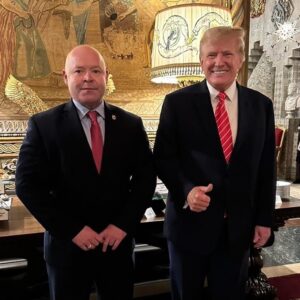 From as far back as 2012, Sean O’Brien wanted the media spotlight. That year he was the subject of a television pilot for a proposed A&E reality show titled The Teamsters, to be produced by Mark Wahlberg. Wahlberg, along with the Afflecks (longtime O’Brien friends), seem attracted to a certain image of the working class: white, male, and macho, the same image idolized by the American right. The series never aired and in 2014, O’Brien’s Local 25 was in the news not as the subjects of a reality show, but for yelling racial slurs and threats at the star of one, Padma Lakshmi of Top Chef.
 Looking back at the last sixty odd years, at different times and different places, I have to say I have been asked that question about once every year. Mostly by suspicious white folks. Take away the “no” and the “really” parts then it’s a question of curiosity. I mean, “no” implies I was answering the wrong question and “really” means, I was giving the wrong answer.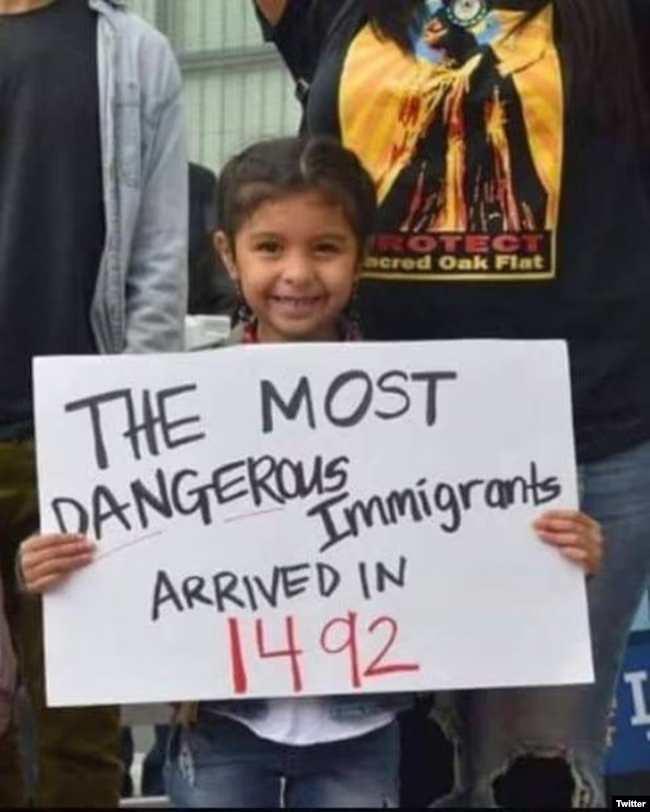
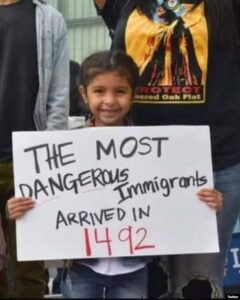 The beginning of Donald Trump’s second presidential term on January 20 was a crucial day in international politics and for Indigenous migrant communities in the United States.

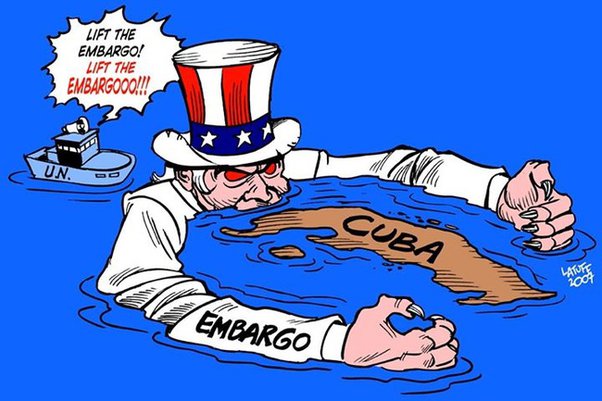
 On his return to the presidency on January 20, Donald Trump rescinded his predecessor Joe Biden’s short-lived removal of Cuba from the State Sponsor of Terrorism (SSOT) designation. The SSOT designation will further isolate Cuba diplomatically and economically.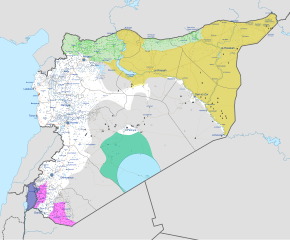


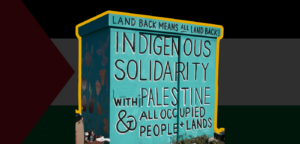












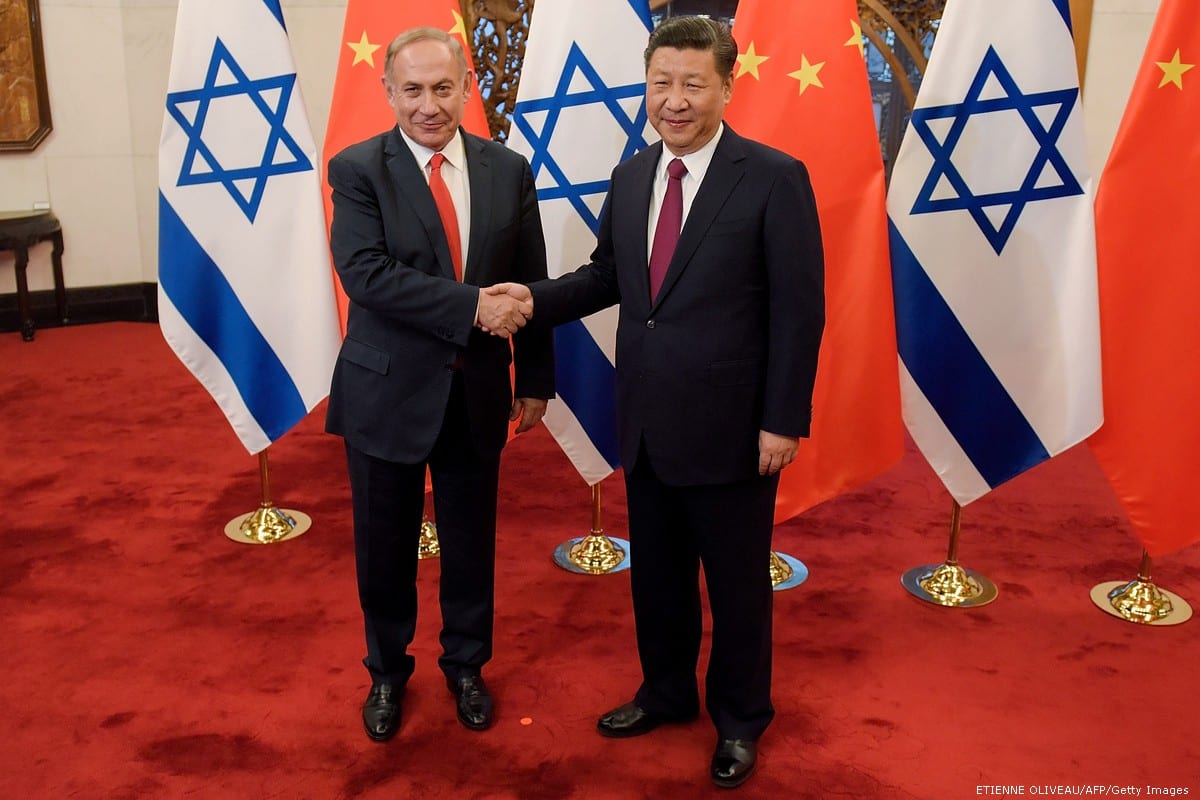
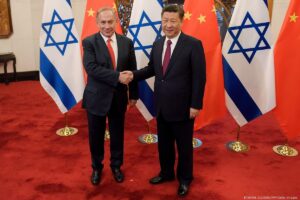 Over the past year, analysts and writers in the mainstream