Marine Le Pen, leader of the far-right Rassemblement Nationale. Now, the choice of a Prime Minister depends on the goodwill of the far right!
On 9 June, Emmanuelle Macron unexpectedly decided to dissolve the National Assembly, just as the Rassemblement Nationale (far-right National Rally party of Marine Le Pen) was gaining momentum. Three weeks later, the results of the first round of voting were unequivocal: the parties of the presidential bloc were crushed, and in the second round the National Rally could hope to win an absolute majority of seats in Parliament, or at least be the largest party. (The French electoral system uses two rounds of voting. If no candidate gets an absolute majority in the first round, the names of the top candidates go to a second round. The one with the most votes in the second round wins).
These hopes were dashed. After the second round, the far right ended up in third place, behind the Nouveau Front populaire (the New People’s Front formed by parties of the broad Left) and the presidential party.
The electorate wanted neither Macronism nor the National Rally in the corridors of power. Today, thanks to Macron, it has both. It took him eight weeks to choose a prime minister: Michel Barnier, a member of Les Républicains party, which won only 5% of the vote. He had previously negotiated this appointment with Marine Le Pen, to ensure that she would not immediately table a vote of no confidence against him. Madame agreed… conditionally.
Now, the choice of a prime minister depends on the goodwill of the far right!
Government and parliamentary crisis
The new parliament (577 MPs) is even more fragmented than the previous one:
The New People’s Front (NFP) came first, by a slim margin, with approximately 193 seats. It includes four main parties: the Greens, La France Insoumise (LFI), the Communist Party (PCF), and the Socialist Party (PS), and allies. But it was also supported by a vast mobilisation of trade unions and associations. By convention, the president first asks the largest group to present a candidate for Prime Minister. Macron could easily have respected this, betting that an NFP government would be brought down by a vote of no confidence. But he preferred instead to send a political message: the NFP’s questioning of Macron’s neoliberal measures was out of the question.
The ‘presidential camp’ got 168 seats, down from its previous 250. This “presidential majority” suffered an electoral disaster. With the next presidential election on the horizon, disunity and rival ambitions are becoming the norm (Macron cannot stand for a third term).
Les Républicains, the former governing party of the traditional right, is now only the fifth largest party (43 seats). Some members left to the National Rally. Now that the prime minister, chosen by Macron (and tolerated by the National Rally), belongs to their party, they are demanding full implementation of their programme! But Michel Barnier, as prime minister, will have to work with Macron’s party and assert some independence from Les Républicains.
The National Rally, with 143 seats, had a mixed result. Although far from what it had hoped, it almost doubled its number of MPs. This doubles its financial resources, as well as various parliamentary privileges.
No stable majority is in sight; new legislative elections cannot be held before June 2025.
Democratic crisis: marching towards a new authoritarianism
The constitution of the Fifth Republic is one of the most undemocratic in Western Europe. But this is not enough for Macron and the proponents of neoliberalism. The previous (minority) government had already distorted and abused an article of the Constitution (49.3) which allows a law to be passed without a vote, to legislate pension reform. This was rejected by 90% of active workers, by all unions, and by parliament. Millions of people took to the streets to oppose it. But the government remained inflexible, hoping to crush the will to resist.
This denial of democracy has become natural, a given, for a whole ‘social elite’ that has taken it upon itself to ensure the direct domination of capital over society. It is dismantling the social gains achieved in the aftermath of World War II and after May 1968. It is transferring all profitable activities to the private sector, while leaving the unprofitable ones to the public sector. And it is marginalising “intermediary bodies” (trade unions…), sites of counter-power—and more.
France’s surveillance society is one of the most developed in Western Europe. The powers of the security services have been reinforced. The police are militarised. The army is playing an increasing role inside the country. A shadowy centre of governance has been established. The environmental movement has been criminalised. The influence of dominant ideology is growing. Civil, social, and environmental rights are being curtailed. A preventive civil war apparatus is being put in place.
The regime crisis
The constitution was designed to protect those in power from any social or political disruption. It provides the framework for the hyper-presidential system driven by Emmanuel Macron. In the process, he is breaking the balance that has allowed this regime to endure: between the presidency and parliament, between the state and capital, between repression and reform… Convention dictated that, if millions of people protested, parliament, even a Gaullist one, would give something in return. That understanding is now over.
We are changing regimes. Macron has embarked on what many analysts call a “conservative revolution”, but in a chaotic manner. The National Rally fits into the same dynamic: the “confrontation-cooperation” combination we are witnessing is not accidental.
The formation of the NFP, and the unexpected success of its electoral campaign, have rekindled hope. But we know that this is only a reprieve. The rise of the National Rally continues, and the dynamic of popular mobilisation remains fragile.
A new opportunity for the Left?
The formation of the NFP, and the unexpected success of its electoral campaign, have rekindled hope. But we know that this is only a reprieve. The rise of the National Rally continues, and the dynamic of popular mobilisation remains fragile, but the time gained can be put to good use. After the summer holidays and the Olympic Games, the autumn began with demonstrations in France, on 7 September, against Barnier’s appointment (around 30,000 in Paris, mostly young militants). More are expected.
The unity in the NFP has been maintained, though not without crises and disputes that demoralised grassroots activists in June and again in September, with a violent polemic between François Ruffin, who left the LFI, and Jean-Luc Mélenchon’s staff. Such posturing is unwelcome. Unity is a struggle, but how it is pursued matters.
The initial success of the NFP was due, in part, to four factors: the state of emergency caused by the National Rally threat; the Left’s history of unity; decisive pressure from mobilisation of trade unions and popular organisations in favour of political unity; and the fact that the dissolution of parliament meant that there was little contestation over constituencies.
The political spectrum in the NFP was broad. All non-sectarian components of the far Left were able to join and campaign. On the right flank, former President François Hollande invited himself into the elections, and was elected under the NFP banner.
The Socialist Party, the Communist Party, and the Greens had all suffered resounding electoral defeats, although they have regained some momentum by displaying a ‘left’ profile. Conversely, LFI’s image was tarnished when its leader, Jean-Luc Mélenchon, excluded several outgoing MPs who had shown too much independence. Despite this, five of them were re-elected under the NFP banner, against Mélenchonist candidates. The purge was deeply resented in left-wing activist circles, and the defeat sounded a warning for Mélenchon.
Several well-known LFI MPs have denounced the lack of democracy in LFI, which continues to face internal criticism on this issue. The movement has managed to build an electoral base in popular neighbourhoods and suburbs by bringing abstentionists (often Muslims) to the polls. It has consistently advocated a programme of breaking with the neoliberal order (while prioritising state geopolitics internationally). It has been built as an electoral machine, with the presidential election as its permanent horizon. It is a ‘fluid’ movement, without formal membership lists or internal rules.
A limit may have been reached. Can LFI expand its territorial base without enriching its political discourse and organisational framework? Can it advocate democracy in society while failing to implement it within itself ? Can it oppose violence against women, but too easily cover it up internally? What happens to LFI is of concern to all components of the Left.
The current conditions favour the unity of the NFP. This will be determined in the coming weeks. Will the proliferation of local committees allow it to integrate all the available grassroots forces?
A new generation of young people is stepping onto the scene, bringing with them commitments to solidarity (with Palestinians, migrants, and people facing racism). Social precariousness and the impact of the climate-ecological crisis provide fertile ground for multiple forms of resistance. Everything must be done to encourage their convergence. But to achieve this, the Left must break with its presidential obsession. A real cultural revolution is needed.
The Teamsters Union has not officially endorsed any candidate, but Teamster President Sean O’Brien attended and spoke at the Republican Party Connection and praised Trump and other praised rightwing Republicans. Teamsters Joint Councils and Locals representing hundreds of thousands of workers voted to support Harris.
Until recently, “Christian Nationalist” was not a label U.S. politicians applied for themselves. Instead, it was a term applied derisively by opponents to those who wanted to tear down the wall of separation between church and state. There’s good reason why politicians were not lining up to name themselves “Christian Nationalists.” Christian Nationalism was a conscious attempt to wrap up fascism in the cross and the flag to make it more palatable to the American public. The first movement in this country to self-identify as such was led by Reverend Gerald L.K. Smith, an anti-Semite, a fascist sympathizer, and a segregationist. Smith’s Christian Nationalist Crusade existed from the 40s until his death in 1976, all the while railing against Blacks, Jews, socialists, and unions.
Today, there are politicians on the right who do choose the label “Christian Nationalist.” Among them are Missouri’s Senator Josh Hawley and Ohio’s Senator (and Donald Trump’s pick for Vice President) J.D. Vance. Both of these politicians have the anti-labor record you would expect from people following in Smith’s footsteps. Smith was paid off by auto tycoons like Henry Ford and Horace Dodge to rally workers against forming a union. Hawley has an 11% lifetime score from the AFL-CIO. Vance is stuck at rock bottom with 0%. The main labor legislation he has sponsored is Senator Marco Rubio’s proposal to legalize pro-management company unions. Yet both of these politicians have been touted by Sean O’Brien, the president of the International Brotherhood of Teamsters, one of the largest unions in the country. O’Brien went so far as to say Vance “has been right there with us on all of our issues,” despite the fact that the Senator voted against labor every time he was able to. This is a drastic change from how the Teamsters talked about far right politicians during the far right upsurge of the 1930s and 40s.
When the pro-fascist Silver Shirts, a group explicitly modeled on the Nazi brownshirts, threatened to crush Teamsters 544 in the 1930s, there was no talk about how the fascists had been right there with them on all of their issues. Instead, the union organized a union defense guard, practiced drills, and successfully prevented the Silver Shirts from so much as holding a rally in Minneapolis, let alone smashing the union in a vigilante attack. Teamsters 544 had the benefit of being led by militant, revolutionary socialists like Farrell Dobbs who knew exactly what fascist victory would mean for the workers movement.
Even the international union, led by the conservative Democrat Dan Tobin, was aware of the dangers of fascism and educated their members as to that danger. One issue of the International Teamster recommended John Roy Carlson’s book Under Cover, an expose of American fascists. The publication urged Teamsters: “If you want to see who is creeping up behind you with a knife, read Under Cover.” In his book, Carlson details how Smith’s Christian Nationalism was bankrolled by the super rich. One of Smith’s lieutenants says “I seen plenty of money comin’ in. I used to see checks for $2000 and $3000. Workers don’t send them in. No sir, it was the manufacturers.”
Another issue ran quotes of pro-fascist individuals and publications in the U.S. excerpted from Michael Sayers and Albert Kahn’s Sabotage! The Secret War Against America. Those quoted included Gerald L.K. Smith, anti-labor “Radio Priest” Father Charles Coughlin, and Parker Sage, head of the pro-Nazi “workers” organization, the National Workers League. The League didn’t do anything for workers. Its real purpose was to stir up racism and anti-Semitism in Detroit auto plants. All of these people were strongly opposed to any militant, independent labor unions. The labor organizations they wanted were modeled after those in Nazi Germany and Fascist Italy. They would be meek, compliant, and totally dominated by fascists and Nazis.
Finally, the Teamsters took pride in opposing Illinois Congressman Stephen A. Day in a piece entitled “Labor Fights Friends of Fascism” by Lester Hunt. Day was a particularly reprehensible member of the House who sent Adolf Hitler a congratulatory telegram upon der Fuhrer assuming power in 1933. Day also knowingly collaborated with Nazi German agent George Sylvester Viereck to publish the scurrilous bookWe Must Save The Republic. The piece in the International Teamster draws a direct line from Day’s sympathies for fascism to his anti-union politics. “No doubt Day knew that Hitler rose to power on the corpses of union men,” Hunt writes. “No doubt he also knew that Hitler’s first act was to disband the labor unions of Germany and imprison their leaders.”
It speaks volumes that the Teamsters have gone in full scale retreat from this early opposition to fascism. Sean O’Brien prostrated himself at the Republican National Convention before Trump, a man who has promised to be “a dictator on day one.” Politicians like Vanceand Hawley look to the autocracy across the Atlantic in Hungary as a model for the kind of society they want to build at home. All of this, to O’Brien, makes them “tough SOBs” who have “been right there with us on all of our issues.” They will be tough, that’s true enough. But they will be tough on behalf of the big businessmen and large corporations who send them campaign checks, not labor misleaders like Sean O’Brien and certainly not rank and file union members.
“Can a man be a friend of Hitler and a friend of labor at the same time?” That’s what Lester Hunt asked in 1944. The answer then was no. One cannot serve two masters, especially when they are so unalterably opposed. It is still true that no one can be a friend of fascism, of reactionary dictatorship , and organized labor. The Teamsters knew the right answer then. It seems they’ve forgotten it now.
This post is based on a talk I gave at an on-line event on the Roadmap to Ecosocialism, on 10 September. I have added some points at the end, arising from the discussion there. Simon Pirani
How might we develop a socialist approach to technologies, in the face of the threat of rapid, potentially uncontrollable, climate change?
Consider, first, the responses to the climate emergency by capital, and by the most powerful governments that represent its interests.
Climate demonstrators in London, November 2021
On one hand, these responses continue and redouble the exploitation of people in the global south. On the other hand, these policies are designed to slow down the transition away from fossil fuels, and to perpetuate the dominance of energy provision by the fossil fuel producers and other big corporations.
Among the most dangerous weapons they deploy are narratives that portray the move away from fossil fuels as a simple switch of technologies, without any deep-going social change (so-called “technofixes”).
To counter these narratives, we need to develop our own approach to technologies.
The starting point, in my view, is that socialists stand not only for common, social or public forms of ownership of the means of production, but also for changing what those means of production do.
We are for the development of technologies that meet human needs, and against technologies that enhance the power of capital (or against machinery that is “hurtful to commonality”, as the Luddites put it).
It will not be enough to take the means of production, as they have been developed by capital, into social or public ownership. We must aim to change what those means of production produce, and the way they produce it.
What does this mean, politically, here and now?
First, we need to ask, in whose interests is the development of particular technologies.
For example, carbon capture and storage. This is a mechanism that captures greenhouse gases from a power station or industrial process, and stores them, to stop them going into the atmosphere.
Oil companies have tried for 40 years, with little success, to make this mechanism work. And they have now convinced governments, including the UK and US governments, to spend billions of dollars on it.
A variation of this theme is direct carbon removal from the atmosphere, a type of geoengineering being tried by tech companies who hope to finance it with so-called carbon credits.
State funds are invested in these problematic techniques, for mechanically taking greenhouse gases out of the atmosphere, instead of in changes aimed at stopping those gases going into the atmosphere in the first place.
The idea of “net zero”, in the way that it is used by leading politicians, implies a gigantic role for these technologies. This false discourse runs right through the international climate talks, which have in recent years increasingly been captured by the fossil fuel industry and its lobbyists. Climate scientists have exposed the duplicity involved.
In my view these techniques are anathema to a socialist approach to climate change, but some socialist writers embrace them. So this needs to be discussed.
Another approach strongly supported by the fossil fuel companies is adaptation of their infrastructure for supposedly low-carbon fuels, such as hydrogen.
This is a grand technological deception. Producing hydrogen from fossil fuels simply perpetuates the use of those fuels. And hydrogen produced without fossil fuels has a very heavy energy cost, and so should always play a secondary role to genuinely zero-carbon technologies.
Again, governments are pouring money into hydrogen rather than into those genuine technologies. And a huge machinery of disinformation has been mobilised to greenwash this. Again, researchers have worked hard to rebut the falsehoods, and campaigners have raised awareness.
We need to go further, not only to reject the greenwash, but also to develop a coherent socialist approach to technologies. I do not think we have one yet.
I will suggest some starting points, with specific reference to tackling climate change – which is certainly not the only disaster in the making, caused by the deep rupture between humanity and its natural surroundings, but is for sure the most immediately threatening one.
Climate change is caused principally by the burning of fossil fuels. These fuels are consumed by, and through, big technological systems – by which I mean electricity systems; transport systems; built environments; industrial, agricultural and military systems, and so on. These technological systems are, in turn, embedded in the social and economic systems that we live in, which are dominated by capital.
Fossil fuel use needs to be reduced to zero in the next few decades, which will mean transforming all these systems.
It is useful, analytically, to break down exactly how fossil fuel use can be cut. There are essentially three ways to do it.
1. To reduce the final use of energy, by doing things differently.
This is not about individuals tightening their belts. It is about systems working better, with less.
For example, cities with more public transport and fewer cars are not only more socially equal, more healthy and less polluted. They also emit far fewer greenhouse gases.
Replacing cars with public transport gets people where they want to go in a better way, using less, and potentially no, fossil fuel.
There are many other examples, from cutting waste in construction and industries, to reducing the throughput of needless junk – plastic packaging, luxury jets, make your own list.
2. To reduce the throughput of energy, by changing the technological systems.
A good example of this is: insulating homes properly, and heating them with electric heat pumps instead of gas-fired boilers. This keeps people just as warm, with about one fifth of the amount of energy.
In the UK, with our cold winters, engineers have been recommending it for years and gas companies have lobbied hard against it.
3. To produce energy without burning fossil fuels.
The best ways, as you know, are to generate electricity from solar panels and wind turbines.
Once we have identified those three broad approaches, we still face a host of questions.
For example, when I say: reduce the throughput of energy, by changing technological systems, does that mean replacing petrol cars with electric cars? Does it mean switching steel making to electric arc furnaces?
In both those cases, because of the heavy material costs of those electrified techniques, it is better wherever possible not to switch technologies, but to reduce the final energy use by doing things differently – to promote public transport; to practice material-light construction.
When I say: produce energy without burning fossil fuels, does that include nuclear power, as well as renewables?
In my view, nuclear is inherently bound up with strong state machines and the military. So renewables should be preferred.
Again, there are socialist writers who argue differently. We need to have that discussion, too.
We also need to consider ways in which technology, even under capitalism, can better facilitate just and equitable ways to live.
In my view, decentralised renewable power generation has great potential: it is well-suited to municipal and local development, and to forms of common ownership, and is compatible with more effective, and lower, levels of final use of electricity.
We need to know more about the potentials of, and constraints on, such technologies.
To conclude. Public ownership of energy systems is not enough to deal with climate change.
Take China, where the energy technologies are overwhelmingly state owned.
China is the world leader in producing solar panels and wind turbines, and the world leader in generating renewable electricity. But it is also the world’s leading consumer of coal. China consumes more coal than all other countries combined; in recent times it has consumed as much coal every three years as the UK consumed in the 19th century.[1]
This disastrous misuse of fossil fuels (that some “ecosocialists” are reluctant to face up to) is not due primarily to energy use by Chinese people, but to energy use by industries oriented to exporting goods to rich countries.
Public ownership is not enough. It needs to be combined with a liberatory vision of the future, and of the ways that technologies, liberated from capital, can be re-made.
□ At the Roadmap to Ecosocialism meeting, I also said a little about political strategy, based on our experience here in the UK. (You can read what I think about that e.g. here or here.) Look out for the recording, which the organisers said will be available soon, and for many important points by the other speakers Sabrina Fernandes, Howie Hawkins and Rehad Desai. Here, I will pick up on points from the discussion at the meeting.
□ The claim was made, in discussion, that “we need direct carbon capture” to avert catastrophic climate breakdown. I said I did not agree, and that, if ecosocialism is to take on real meaning, this type of question, which is both political and technological, should be discussed in more detail. Here are some points for such a discussion.
First. David Schwartzman, who raised this issue, has written previously that direct carbon capture is “absolutely imperative”, and that the gigantic quantity of energy needed can be supplied by “a global solar power supply” that will replace fossil fuels.
Of course the word “gigantic” is not strong enough here, at all. Let’s suppose direct carbon capture is used, at some time in the future, to suck a noticeable amount of greenhouse gas from the atmosphere – say, 5 gigatonnes of carbon dioxide (CO2) equivalent per year, i.e. slightly less than one tenth of current annual global emissions. Not a game-changer, but helpful.
Using figures in a recent article that David co-authored, I reckon you would need up to three times the current global solar and wind capacity to remove that 5 gigatonnes/year.
A direct air capture plant in Iceland, owned by Climeworks
But David’s estimates of how much energy the carbon capture process would use are significantly lower than the consensus. A big, well-resourced team of climate scientists published estimates implying that not three times, but 12 times the current solar and wind capacity would be needed to remove 5 gigatonnes/year of CO2 equivalent. The difference seems to be largely down to the fact that they looked at life-cycle emissions of the whole process, including energy used in mining, energy and transport. David’s numbers refer to the chemical extraction process only.[2]
Certainly, these numbers should be interrogated, and updated, because technologies change. But, in any case, it is obvious that, because carbon capture is so devastatingly energy-intensive, it is never going to play any big part in preventing dangerous climate change. There would be huge land and infrastructure costs too.
Moreover, it could make no sense to use this process at any significant scale, unless and until humanity has almost unimaginable amounts of spare renewable electricity generation capacity.
And the reality is the very opposite. Now, and for the foreseeable future, renewable electricity generation is in desperately short supply. It will have to expand at mind-numbing speed, if it is to be substituted for fossil-fired power stations quickly enough to help avoid dangerous warming, let alone do anything else.
There ARE technologies that, combined with reducing throughput and in the context of social and economic change, can help to push fossil fuel use down fast. They are well known, and I mentioned some of them above. Insulation, and electrification of home heating. Building homes that do not require much heating and cooling in the first place. Public trains, bikes and walkways instead of private cars.
The substantial decarbonisation potential of such methods have been researched by climate scientists, alternative technology specialists, energy researchers, engineers, transport experts and others.
For ecosocialism to take on real meaning, it should engage critically with this discussion of actual carbon reduction technologies, and distance itself from the fantasies dreamed up by techno-modernists and beloved of tech and fossil fuel companies.
Second. In David Schwartzman’s view, ecosocialists should acknowledge that carbon removal needs to happen, in the first place, under capitalism; it “can not wait until fossil capitalism is replaced globally by ecosocialism”, he wrote. The writer Andreas Malm, by contrast, sees geoengineering as part of the transition to socialism: according to him, the “central transitional demand for the coming years” should be “for nationalising fossil fuel companies and turning them into direct air capture utilities”.
In my view, these are two sides of the same worthless coin. If society does not grow strong enough to nationalise fossil fuel companies (as Schwartzman fears), then encouraging social support for geoengineering technofixes simply reinforces those companies’ power. If society does become strong enough to deal with the companies (as Malm contemplates), why would it use their resources for carbon capture? Why not for geothermal heat production? For zero-carbon infrastructure? For offshore wind and/or tidal? Why not for the development of other techniques that undo the rupture between human society and nature?
Third. There is no immediate, near-term prospect either of society having an abundance of renewably generated electricity (on which Schwartzman’s argument entirely depends), or of it reaching a point where, globally, it has vanquished the fossil fuel companies (on which Malm’s argument entirely depends). I am almost irrationally optimistic about the medium- and long-term prospects for social change, and I think the latter (triumph over the companies) could happen much sooner than the former (spare terawatts of solar power) … but I don’t think either are the substance of near-term political concerns.
For that reason, the whole conversation about carbon capture can tell us nothing about what ecosocialists, or anyone else, should do in the coming months and years, to avert climate disaster.
It appears to me as a form of political displacement activity (“things that you do, in order to avoid doing what you are supposed to be doing” says the Oxford Learners Dictionary).
Maybe this is, in part, because climate change is probably the most difficult, intractable problem, with so many complexities, that my generation of socialists – and a couple of later generations – have faced.
To find ways out of this, we need not only to have a worked-out understanding of the relationship of socialism and technology, that I argued for above, but also to distinguish more critically between the different types of aims that we express.
This is a problem for socialists not only with regard to climate, or to cutting fossil fuel use, but more generally – a problem brought into sharp relief by the fantastic geoengineering narratives mentioned.
I see three fundamentally different types of aims, expressed by socialists:
(i) Aims that are attainable under capitalism, around which to mobilise broad alliances of working people and society more generally, bringing together climate issues and social justice issues and negating the right-wing myths that climate policies hurt ordinary people, e.g. “free public transport”, “a programme of insulation and heat pump installation”, or “support for municipal renewables”.
(ii) Demands for action by the state under capitalism that we can meaningfully make upon social-democratic, liberal, “Green” and other politicians, e.g. “no new oil production”; “stop road building”; or “a crash programme of state investment in renewables”.
(iii) Broader aims that express our hopes for social transformation, that take society past capitalism, e.g. “stop looting the countries of the global south”, “drastically curb material throughput to improve our lives”, or “supersede industrial agriculture with food production that serves human need in harmony with nature”.[3]
Clearly there are complex relationships between these three categories; they overlap and run into each other. But all too often I witness discussions about “ecosocialism” that pay little or no heed to the distinction between, and connections between, these different types of aims, nor to the timescales and geographical scales on which they might be achieved.
Enthusing about carbon capture – or other types of geoengineering, or mining other planets, for that matter – without thorough and careful reference to the timescales and social contexts in which we are operating, is a good example of how not to do things.
Another question raised at the Roads to Ecosocialism session underlined just how much these things matter. It was (roughly, according to my notes): can we look to non-fossil sectors of capital as allies, albeit temporarily?
I responded to this question with reference to tech companies. Not long ago, Google, Amazon, Meta and others claimed that the ubiquity of the internet and computerised communication would be a key to reducing energy consumption and “green growth”. So did many politicians.
I do not think many people in social movements or the labour movement were taken in by this guff. But then came crypto currencies and “artificial intelligence”.
The tech companies, along with data centres and others, rapidly and aggressively expanded their electricity use: in Ireland, data centres now consume more electricity than the country’s homes, and many similar shocks are on the way. Google et al’s carbon footprints are soaring, and they are fighting a Kafkaesque battle to redefine how they are calculated.
As far as I understand, this criminal misuse of technology carries a threat to climate action that has caught much of our movement unawares.
If ecosocialism is to become a social force, it will have to present effective responses to such frightful developments, rather than focusing on geoengineering technologies that – given the actual social and economic context in which we live – can only serve the interests of our enemies.
□ I thank the organisers of the Roadmap to Socialism session for initiating this discussion. I hope it will continue. SP, 13 September 2024.
[1] China burned 260.2 exajoules of coal in the three years 2020-22. In the decade 2013-22 it burned, on average, 247.5 exajoules every three years (according to the Energy Institute Statistical Review of World Energy). Historians estimate total UK coal consumption 1801-1900 at 225-270 exajoules (5-6000 million tonnes of oil equivalent). See: Roger Fouquet, Heat, Power and Light: revolutions in energy services (Edward Elgar, 2008) and Bouda Etemad and Jean Luciani, World Energy Production 1800-1985
[2] Schwarzman and Schwarzman, citing Snoebjornsdottir et al, “Carbon dioxide storage through mineral carbonation”, use energy input estimates of 3.4-10.7 gigajoules (GJ) per tonne of CO2 removed. Smith et al, in “Biophysical and economic limits to negative CO2 emissions”, estimate up to 45 GJ per tonne of CO2 removed. In a previous blog post, I also cited the National Academy of Sciences, who published a figure of 5-10 GJ/tonne, and Climate Advisers, who estimated 12.3 GJ/tonne. Assuming a 25% capacity factor (around the current figure for solar, while wind’s is higher), and some to spare, Schwarzman and Schwarzman’s numbers imply 2-6.5 TW of solar and wind capacity, Smith et al’s, 3-28.5 TW, for 5 Gt CO2eq removal annually. Current global wind capacity is 0.9 TW; solar, 1.4 TW (assessments by the International Renewable Energy Agency and Global Wind Energy Council)
[3] If any Trotskyists are reading, and object, “what about transitional demands?” – well, that is part of the discussion we need to have. The idea of “transitional demands” took shape in the framework established by Trotsky in the late 1930s, that assumed that the way forward for society out of capitalism was for revolution, modeled on and building on the Russian revolution of 1917, to spread. It had failed to do so in the 1920s, leading to the tragedy of Stalinism, but could do so in future, according to Trotskyism’s central political assumptions. I don’t think this schema works in the 21st century, for reasons I will not expand on in a footnote. Without it, the idea of “transitional demands” that cannot be fully achieved under capitalism and can then help to break it, must likewise be questioned.
Alisdare Hickson, Refugees Welcome… Fascists F… Off
In autumn 2024, the largest democratic republics in Europe and North America remain in extreme danger, amid ongoing and deepening fascist threats, especially in the U.S.
France: Centrists Betray July Vote, Allying with Neofascists.
In France, voters mobilized by the left defeated the neofascist National Rally party in the July parliamentary elections. But by September, the authoritative newspaper Le Monde published a somber editorial noting that by now the neofascists had been placed “in the position of arbiter or censor” of the government, with the left sidelined (“Matignon: Un choix qui ne referme pas la crise politique,” September 7, 2024).
How did this happen? July saw a surprising and exhilarating defeat for the fascists, one where the left took the lead in creating a “republican front” against them, forcing most of the centrists into line. In the event, the neofascists came in a humiliating third, after the leftist New Popular Front and after President Emmanuel Macron’s “centrist” Together bloc. However, France’s semi-authoritarian constitution, originating in De Gaulle’s 1958 coup, allows the president huge powers. Using these to the fullest, the increasingly rightwing Macron refused to allow the leftist New Popular Front even to attempt to form a government, likely with his Together bloc the minor partner. Instead, he appointed conservative politician Michel Barnier as prime minister, rather than even trying to negotiate with the left. Even though Barnier’s small party combined with Macron’s lacks anything near a parliamentary majority, he has entered into a corrupt informal agreement with the National Rally, which now has veto power over policies and legislation. This bodes ill for migrants and refugees, people of color, the working class, as well as for Ukraine, and most of all for the future of French democracy.
Evidently, French centrists and conservatives have finally moved far enough to the right to do what has been feared over the last several decades. They have decided to side with the fascists against the left, in order to preserve austerity, avoid even the mildest tax increases on high incomes or wealth, and because they are also becoming increasingly anti-immigrant, more openly racist and Islamophobic, and repressive. They have also slid to the right in the face of mounting unrest from the left, from labor, from youth of color in the banlieus, and from a new generation of students determined to defend Gaza in the face of an Israeli genocide in which the French state is complicit.
In response, the left held large protest demonstrations around the country on September 7. Tens of thousands took to the streets, with their white-hot anger expressed by slogans like “Barnier, go f—yourself, you did not get the votes.” With larger labor demonstrations scheduled for October, it could be a hot autumn. But for now, the left has been defeated and the fascist threat in France is looming larger.
Germany: Fascist Surge in the East
September 1 state elections in the east showed dramatic gains for the neofascist Alternative for Germany (AfD). In Thuringia, AfD garnered a third of the votes and in Saxony, over 30%. Moreover, leftwing parties saw their vote sharply diminished, with the Left Party going down below the level for any representation in the state parliament in Saxony, and dropping to 13% in Thuringia, where it had held power in a coalition. The Social Democrats and the Greens did equally poorly. The new red-brown Sahra Wagenknecht Party (BSW), which recently split off from the Left Party, received 12% in Saxony and 16% in Thuringia. Overall, the BSW represents another type of shift to the right, in this case from parts of the left with Stalinist roots. While still in the Left Party, Wagenknecht opposed the COVID vaccine. Today, BSW attacks some aspects of capitalism and claims to support labor, but is hostile to immigrants and refugees, climate justice, and sexual minorities. Like AfD, it opposes Ukraine.
At a national level, the Thuringia and Saxony elections have already driven the governing coalition government — comprising the Social Democrats, the Greens, and the liberal Free Democrats – to the right, as seen in the September 9 announcement that Germany will require border checks from other European Union countries. This rolls back freedoms of circulation within Europe going back three decades. Germany will also begin to deport Syrian and Afghan refugees to their respective countries, despite the extreme levels of danger facing them under these horrific dictatorships. In addition, the Free Democrats have shifted right in a particular way, against environmental restrictions, now declaring that they cannot support “anti-automobile” policies.
Over the past year, Germany has seen an upsurge in labor actions and a series of large street demonstrations against the fascist threat represented by AfD, implicitly if not actively supported by the ruling coalition. Yet under the same coalition government, pro-Palestine voices have been muzzled to a greater extent than even in the U.S., including the rescinding of invitations to renowned international scholars who have criticized Israel and bans on demonstrations by students and youth. This is another type of rightwing politics, put forward in the name of democracy and largely spurious charges of antisemitism. (And while some progressive intellectuals like Hartmut Rosa have defended pro-Palestinian voices, others like Jürgen Habermas have simply and shamefully echoed Israeli war propaganda.) With this, and their anti-immigrant politics, the centrist democrats are making it increasingly difficult for any kind of united front against fascism with the very popular forces that would be able to confront it in the streets, should it come to that.
In contrast to France, Germany now lacks a substantial electoral or labor voice to the left of the Social Democrats. On the other hand, the neofascists are polling at around 20% of the vote at a national level, half their level of support in France and less than half that in the U.S.
Britain’s Race Riots
The British political system has not so far evidenced a neofascist surge in terms of parliamentary or local elections. One reason lies in the fact that the Conservative Party, especially since Brexit and even more so since Boris Johnson, has absorbed many of these tendencies into its own ranks. Another factor is how the electoral system makes it very difficult for minor parties to win political office. Be that as it may, British far right extremism and racism were on full display in the July anti-immigrant riots, when mobs attacked people and property after false rumors on social media attributed a July stabbing attack at a school that killed 3 children to an immigrant of Muslim origin. (In fact, the perpetrator was born in the UK to a Rwandan immigrant family with a Christian religious orientation.)
As the Marxist-Humanist writer Seamus Connolly reported, “In scenes not seen for decades, people of color are being randomly attacked on the street. The ‘P-word,’ an insult aimed at those of Pakistani heritage has been a common refrain, as have Nazi Flags, Nazi salutes, chants of ‘Allah, Allah, Who the Fuck is Allah?’” (“Race Riots in the UK: Fascist Thugs Take to the Street in a Wave of Violent Clashes,” International Marxist-Humanist, August 5 2024).
For its part, the new and very “centrist” Labor government of Keir Starmer condemned the violence but failed to single out racism, xenophobia, or Islamophobia. Starmer is also doubling down on austerity policies, hardly a way to lessen the appeal of neofascist politics among sectors of the working and middle classes that have seen their living standards decline. He also praised Italian neofascist Prime Minister Giorgia Meloni’s immigration policies, saying she has made “remarkable progress.” Even before taking office, Starmer purged the Labor left, going to far as to expel the internationally renowned former party leader Jeremy Corbyn, who nonetheless kept his seat in the July elections that brought Starmer to power. Starmer is also keeping his distance from the mass anti-racist demonstrations in August in response to the mayhem in July.
The Trumpist, Neofascist Threat in the U.S.
As dangerous as the above developments are, it has to be said that today it is the U.S. that exhibits the greatest fascist threat. Donald Trump and vice-presidential candidate JD Vance seem bent on fomenting the kind of race riots that broke out in the UK with their concocted stories about Haitian migrants in Springfield, Ohio. This is just one example among hundreds. Trump dominates the Republican Party almost completely, and even if he loses the election in November, it is doubtful he would receive a popular vote much below 47-48%. That this is happening to a political leader who staged a violent coup attempt in 2021 after he was defeated at the polls represents a grave danger not just to democracy, but also to our very existence on the planet of our species given his anti-environment stance.
For all its erratic nature, Trumpism has been consistent in terms of its Islamophobia, misogyny, xenophobia, and hostility to climate justice at a domestic level, and in terms of antagonism toward Iran and China and friendliness toward Putin’s Russia at an international level. It is important to note that Trumpist forces already control a number of U.S. states, including large ones like Texas and Florida, the U.S. House of Representatives, and the Supreme Court. Even if Trump loses in November by traditional measures, it is very possible that Texas, Florida, and other states would not recognize such a defeat and threaten secession, that the House would refuse to recognize the vote, and/or that the Supreme Court would find ways to undermine the election as well. In these senses, a constitutional coup is possible, either instead of or alongside one in the streets as in January 2021.
At the same time, as in the other countries governed by centrists, the Democratic Party of Joe Biden and Kamala Harris has armed and abetted politically Israel’s genocidal war against the Palestinian people, while also undermining if not repressing dissent and opposition from student youth, the Arab community, and other progressive constituencies. In doing so, they have also ignored much of organized labor and a large coalition of Black churches, which have also come out strongly for a ceasefire, if not more decisive measures against Israel’s genocide. The Democrats have also turned to the right on immigration, crime, and the environment (fracking everywhere). At the same time, they support to an extent bodily autonomy, LGBTQ rights, voting rights, environmental protection, and labor.
In the U.S., it is particularly notable how the holders of some of the largest capitalist fortunes, most notably the white South African immigrant Elon Musk, have gone Trumpist, while others are openly leaning toward Trump or remaining openly neutral. Large universities like Harvard have also bowed out of confronting the fascist threat by declaring they will no longer make moral statements about social justice or human rights issues.
The Democratic Party’s support of outright genocide in Gaza, all the while making slight verbal criticisms while continuing the flow of arms and money to Israel, plus their crackdown on campus protest, has convinced many youth and progressives that it would make no large difference were Trump to assume power a second time.
This is utterly false, and goes against over a century of leftwing politics and principles whereby the genuine left (leaving off authoritarian and ultra-leftist currents) has always distinguished between democratic republics and militarist, fascist, or monarchical rule. This was true in the late 1870s, when Karl Marx supported the French republicans, some of whom had put down the Paris Commune, vs. the Bonapartist military. (This kind of issue was central to Marx’s attack in the Critique of the Gotha Program what he insisted on calling the socialist “sect” founded by Ferdinand Lassalle.) It was true as Nazism was rising before 1933, when Leon Trotsky called for a united front with the reformists, even though just a few years before, they had been complicit in the murder of the great revolutionary Rosa Luxemburg and in the repression of the 1919 socialist workers’ uprising she helped to lead. And it is true today, when we need to unite to oppose Trumpism with every fiber of our bodies.
But like our revolutionary predecessors, we need to unite with other forces to fight Trumpism – and fascism everywhere – in ways that make clear our own anti-capitalist politics. We need to show that the economy is not “strong” when one considers the vast poverty and homelessness, and on a larger scale, the decline in real wages since the 2008 crisis. We need to point out that centrist liberals or social democrats have not only helped create the conditions for fascism, but in places like France, are actually forming alliances with the neofascists. We need to show how social democrats, liberals, centrists, and conservatives in Germany, the UK, and the U.S. are adopting many neofascist policies themselves.
Overall, we need to consider the fact that the global fascist threat has been rising over the past decade, as a response to a whole series of revolutions and protests, from the Arab revolutions and Occupy in 2011 to the rise of Bernie Sanders and Corbyn, and from the global movement for Black lives of 2020 to the Gaza protests of 2023-24. Equally importantly, the 2008 global economic crisis exposed the fact that the higher profit rates of the 1950s/1960s were never coming back. Not only has this turned working people against the neoliberal consensus, but it has also led a section of the dominant classes to support outright neofascism in order to recover lost ground, or at least gain something before the deluge, or out of fear of revolution or even redistribution.
Thus, fascism in the U.S. will remain a threat even if Trump loses the 2024 election and is unable to stage a coup. For as in Germany, even a 20% support level for such politics is extremely dangerous, and Trump’s is at over twice that level.
One thing we need everywhere is a coalescence of revolutionary, anti-racist, and anti-authoritarian leftists. For the long haul, we may need to create a pole of opposition to both centrist liberalism and social democracy, the lesser threat, and to neofascism, the clear and present one. Such a pole of opposition, which would have to be international, would also need a politics separate from the campists as well. It would not seek hegemony over the anti-fascist movement but would form a revolutionary and democratic pole within it. A politics of combining class/race/nationality/gender issues, or one that says the true defense of democracy means opposing capitalism as well, or more specific watchwords like, “From Ukraine to Palestine, Occupation Is a Crime,” would be of the utmost importance. But so would forming some real organizations, probably via regroupment. Here, the French left, which voted in a disciplined manner for all non-fascist candidates in July, while also keeping its coalition together and its political independence, has done the most to fulfill its responsibilities in the present period.
We need more serious thinking on these issues and more action. The hour is late and the danger is great!
Pencil crayon drawing of feminists and queer activists surrounded by shadowy officers by Citlali Potamu for Ojalá.
[This article is reposted with the kind permission of Ojalá, where it originally appeared on Sept. 13, 2024. Leer en castellano.]
It would have been near impossible for a gay man or a lesbian woman born in 1960s Cuba to have imagined parading down Havana’s main avenue shouting slogans as part of the LGBTIQ+ community. But beginning in 2008, with the annual celebration of Cuba’s pride march—which is also known as La Conga—this became reality.
Queerness wasn’t on the radar at the time of the Cuban revolution. On several occasions Fidel Castro made statements to the press referring to homosexuality as pathological behavior. Even so, thanks to the hard work of activists on the island, the National Center for Sex Education (Cenesex) was created in 1989. Under the leadership of Mariela Castro, Fidel’s niece, it is now dedicated to gender education and research.
But the existence of Cenesex did not create the possibility for activists to develop independent initiatives outside of the institution. There has long been tension between the state and civil society over the monopoly of gender discourse. A delicate balance that fluctuated between compliance with Cenesex guidelines and criminalization was reached.
This tension reached its peak in 2019, when the aforementioned march against Homophobia, Biphobia and Transphobia was arbitrarily suspended. Cenesex justified the cancellation by claiming the march was not relevant due to the country’s economic situation.
Faced with a government ban, part of the LGBTIQ+ community held an independent march in 2019. As a result, several activists were beaten and detained by police. May 11 went down in history as the first act of massive, public repression of queer activists in Cuba.
“The cancellation of the 2019 Conga, held every year by Cenesex as part of the activities of the Cuban Day against homophobia and transphobia, was a government action to placate anti-rights groups,” wrote activist Angela Lakshmi in an article published in Q de Cuir. In the years following the 2019 repression, the Conga took place normally.
The cancellation and repression of the 2019 march took place as the Cuban government was in the process of updating the Family Code. Three years later, a new Family Code was approved, recognizing the rights of queer people, including equal marriage and adoption.
The Code was a government proposal that went to referendum. This decision was widely criticized by members of civil society, as other laws such as the Penal Code were not approved by the population. Feminist and LGBTIQ+ collectives campaigned for the passage of the law, and faced intense opposition from fundamentalist churches on the island. Activists believe the referendum was held in order to offset protests on the part of fundamentalist groups.
But even with the recognition of some rights, the criminalization of gender focussed and queer activism in Cuba continues. And in this context, feminist organizing in Cuba continues.
Understanding of Cuban feminism
The ecosystem of independent feminist spaces in Cuba is made up in large part by independent media outlets. Among them are Subalternas, Alas Tensas, Afrocubanas, La Potajera, and Muy Marika, and others, all of which were preceded by media outlets that no longer exist, including Q de cuir and Tremenda Nota.
There are also organizations like Yo Sí Te Creo en Cuba (I believe you Cuba – YSTCC), Alianza Afrocubana, Red Femenina de Cuba, Casa Palanca, Grupo Translúcidos and others. These groups weave their actions and demands around feminist organizing. They call out femicides, engage in Black feminist struggles, seek to protect women’s right to dissent, organize against the criminalization of independent journalism and raise awareness of issues faced by transgendered people.
Then there is Cenesex and the Transcuba network, both which are part of the government. There is also the Federation of Cuban Women (FMC), which has operated since August 1960 as a mass organization that aims to represent all women in the country.
In 1993, a group of Cuban women journalists founded Magín, the first independent feminist collective in post-1959 Cuba. Three years later, after unsuccessfully trying to register Magín as an association, its members were called in by the Central Committee of the Cuban Communist Party. The co-optation was immediate.
“They were told that they had to deactivate immediately, since a feminist organization could be used to try to penetrate the revolution,” explained Alina Bárbara López in a text in the magazine La Joven Cuba.
Pencil crayon portrait of the members of Magín drawn by Citlali Potamu for Ojalá.
Being a feminist and organizing in Cuba is a challenge. Beyond ideological affiliation, the level of organization or the kind of feminism practiced, Cuban feminist activists and organizations—both on and off the island—have long had a conflictive relationship with the state. This relationship stems in part from the lack of legislation on freedom of association allowing for the existence of independent organizations, as well as from the systematic criminalization of activism.
This year, independent activists and organizations did not march on March 8 as they did in the rest of the continent. Many women who are members of feminist organizations, as well as human rights defenders and independent journalists have had to leave the island due to the political persecution.
This March 8th, a discussion about the rising rate of femicides and political violence against women was desperately needed inside Cuba. Instead of marching, the diaspora organized a virtual march, as took place the year previous.
The Cuban state vs. feminism
Laura Vargas’ case illustrates the Cuban government’s fear of feminism. Vargas is a feminist activist who has been persecuted by state security forces since 2021 because of her participation in various Cuban feminist organizations such as Red Femenina de Cuba, Casa Palanca and the independent media outlets Alas Tensas and Subalternas.
Vargas tells Ojalá that the first time she was hauled into a police station and interrogated was in October 2021. Her interrogation took place after the July 11, 2021 uprising in Cuba and as the persecution of independent journalism began to amp up. At the time Vargas was a regular contributor to a media outlet called El Toque. “State security began to subpoena all women journalists,” she said in an interview.
“They became very interested in me because of my feminist activism and because, together with my colleagues from Subalternas magazine, we were planning a dinner for trans women at the end of 2022,” said Vargas. The dinner was independently organized by civil society activists. Several of its organizers were interrogated.
In 2019, the I Believe You Cuba (YSTCC) platform was launched when six Cuban feminists agreed to work together in support of singer Dianelys Alfonso, the Goddess of Cuba, who accused the late singer José Luis Cortés of gender violence.
“What began as a specific act of support grew: we opened social networks to do education and raise awareness about gender violence, then began to carry out political advocacy in support of the passage of a Comprehensive Law against Gender Violence in Cuba in November 2019,” YSTCC members explained to Ojalá via email. For security reasons, members of YSTCC do not give interviews by audio or video, or use their real names.
Pencil crayon drawing of feminists being followed by police by Citlali Potamu for Ojalá.
“In March 2020, we created the Support Line for People in Situations of Gender Violence as part of our response to the isolation imposed due to the Covid-19 pandemic, and in November of the same year, the Observatory of Femicides in Cuba was launched,” they wrote. At the end of 2023, the Alas Tensas Gender Observatory and Yo Sí Te Creo en Cuba found 73 femicides had been committed that year. “That figure is double the 36 [femicides] in 2022, and is the highest reported number since record keeping began,” according to their official website.
In Cuba, femicide is still not typified as a crime in the Penal Code and there is no Comprehensive Law against gender violence. Despite efforts by independent organizations pushing for the recognition of feminicide and the creation of a Gender Law, the government does not dialogue with independent feminist organizations or activists. Rather, it represses them and accuses them of being enemies or counterrevolutionaries.
Mayde and Yeniset were victims of femicides in Cuba. As a tribute to them, YSTCC established alerts that are activated when girls or women disappear, in order to prevent femicide, or so that it does not go unpunished. “Our platform supported the publication of alerts related to the disappearances of children since 2020, and in 2023 established the Mayde (for children and adolescents) and Yeniset (for women) alerts in a collaborative effort,” according to YSTCC members.
The Cuban state’s intolerance towards activism stems from its view that any civil society group that does not emerge from the mass organizations overseen by the government are an enemy of the state. A year ago, YSTCC denounced an escalation of repression against women activists, which has impacted some of its members.
“Several of our members have been persecuted and followed in the street, they have had police surveillance in front of their homes and suffered cuts to Internet and telephone service,” wrote members of the platform. “The most difficult consequence has been that we cannot provide one-on-one support as we did when we first launched the Support Line”.
We beg forgiveness for beginning this review with a block quote from a Wikipedia article:
The horseshoe theory asserts that advocates of the far-left and the far-right, rather than being at opposite and opposing ends of a linear continuum of the political spectrum, closely resemble each other, analogous to the way that the opposite ends of a horseshoe are close together. The theory is attributed to the French philosopher and writer of fiction and poetry Jean-Pierre Faye in his 1972 book Théorie du récit: introduction aux langages totalitaires, in relation to Otto Strasser.
Otto Strasser was a dissident Nazi who objected to Hitler and Goebbels abandoning their anti-capitalist and populist rhetoric as they came closer to power. In many ways, Strasser and his brother Gregor were the original “Red-Browns” or “Third Positionists”, the tradition which seeks to reconcile anti-capitalist and fascist ideas.
But then; what’s wrong with this picture?
The Fishhook Theory is the equal-but-opposite counterpart to the Horseshoe, which argues that in fact it is the political centre (aka “the Establishment”, or even “the Libs”) who are close to or even identical with fascists. This harks back to the infamous “Third Period” analysis of German Communists in the 1930s, who described the centre-left Social Democrats as “social fascists”, and accordingly downplayed the threat of the actual fascists taking power; much like the edgy online Left today mock those worried by the threat of “Trump 2.0” or military victories for Putin.
What the Horseshoe and Fishhook theories have in common is that they both deny that fascism is a phenomenon in and of itself. The Fishhook argues that fascism is just capitalist politics, or at least the politics of one kind of capitalist, with the mask taken off. The Horseshoe argues that it’s simply one “flavour” of illiberal, anti-democratic politics, and not really different from revolutionary socialism.
Analysis of fascism which rejects both these models is a tradition stretching back decades or more. Three Way Fight: Revolutionary Politics and Antifascism gives an excellent overview of that long tradition.
II
The introduction to Three Way Fight: Revolutionary Politics and Antifascism explains things succinctly:
In 2004, a small group of revolutionary antifascists started the Three Way Fight blog and website[1] as a project to share information and analysis about political movements and the context in which they operate…
Its supporters rejected the conventional liberal model that portrayed authoritarian extremists threatening a democratic center, but they also challenged the standard leftist binary that saw fascism and liberalism as arrayed together in defense of capitalism against the working-class left…
Leftists need to confront both the established capitalist order and an insurgent or even revolutionary right, while recognizing that these opponents are also in conflict with each other. Hence the term “three way fight”. (Kindle locations 185, 187, 198, 200)
The basis of this approach is that fascism is neither just a mask for the worst forms of capitalism, nor a possible partner in a fight against capitalism, but something independentfrom and hostile to both the state and the working-class movement.
Although the Three-Way Fight model is traditionally associated with anarchists, the introduction to the book traces the early origins of the concept to the Sojourner Truth Organisation (STO), a “post-Maoist” organisation which traced the theory out in the early 1980s.[2] The STO’s analysis (reproduced in full in the book) made the vital insight that while fascism has “intimate connections with the needs of the capitalist class,” it also
contains an anti-capitalist ‘revolutionary’ side that is not reducible to simple demagogy… It represents a revolutionary challenge to capitalist power—not revolutionary in any liberatory sense, but in that it aims to seize power and systematically transform society along repressive and often genocidal lines. (222)
This is a crucial point for a generation of socialists who might have been using “revolutionary” as an unproblematic good thing: there are worse things than bourgeois “liberal democracy”. Autonomist Marxist and STO veteran Don Hamerquist argues:
I think that fascism has the potential to become a mass movement with a substantial and genuine element of revolutionary anti-capitalism… fascism is not merely a blunt instrument used to prop up industrial capitalism but is, rather, a whole new form of barbarism, one that quite disconcertingly comes with mass support. Fascism has its own independent political life, and as such, while the bourgeoisie can influence it, it is ultimately independent of it. (1124, 1128, 1130).
It is precisely the sincere revolutionary vision and bottom-up dynamic of fascism that makes it so acutely dangerous for socialists to consider “Red-Brown” alliances, especially in times of political backwardness and defeat. The Marxist tradition has traditionally described “Caesarism” or “Bonapartism” – an authoritarian populist movement backing a charismatic leader, of which fascism is a variation – as arising in times of political exhaustion and deadlock, where neither “elite” nor “popular” forces are able to achieve a real victory. This looks very familiar from the vantage point of 2024, as Don Hamerquist suggests:
Although these popular upsurges are increasingly frequent, widespread, and disruptive, their capacity to expand working-class power and autonomy is undermined by an atomized hopelessness and cynicism that also reflects the increased precarity of working-class life. (3277)
Thus, fascism offers the contending classes some way forward out of stasis, “beyond left and right” in the words of its traditional slogan. As rowan, “a friend of Three Way Fight” says in an interview:
It is incredibly attractive to believe that the world is neatly divided with bad guys on one side representing oppression and exploitation, racism, patriarchy, bigotry, empire, and fascism, and good guys on the other representing liberation, feminism, decolonization, and a free society….
A lot of the time it feels like radical analyses of the far right just start from the assumption that they’re lying. Thus, when folks on the right oppose economic exploitation of the working class, prioritize ecology and defending the earth, or even oppose white supremacy, leftists often dismiss these as lies or attempts to trick people. The three way fight perspective helps us to listen, to be open to the possibility that they speak the truth about their visions, and to recognize that our enemies are complex, which makes them all the more dangerous as we struggle to defeat them.[3] (926, 939, 943)
In the early years of the millennium, antifascists involved in the antiglobalisation movement
found themselves confronting not only global corporations and intergovernmental bodies but…the wider spread of fascistic ideas such as antisemitic conspiracism—within the movement’s own ranks… The September 11 attacks showed even more dramatically that global capitalism’s enemies could be found not only on the radical left but also on the far right… Kdog’s “Fifth Column Fascism,” written shortly after 9/11, declared “All resistance [to US imperialism] ain’t liberatory and all fascists ain’t aryan,” (265, 270, 280)
Many on the radical Left were not politically prepared for a world in which, as Michael Staudenmeier puts it, “the most significant attack on the global power of the United States in at least a generation came from the right, not from the left” (6101); some even decided that maybe the Right weren’t such bad fellows. More recently, many of the same forces have been drawn into a Red-Brown form of “anti-imperialism” sponsored by the Russian state, exemplified by the notorious “Multi-Polar World” conference held in Moscow in 2014 (2992). “Multi-Polar World” is of course an expression originating with the esoteric fascist philosopher Aleksander Dugin (3011). Matthew Lyons, co-editor of this collection[4], notes:
Marxist academician Efe Can Gürcan, for example, recently discussed Eurasianism (specifically including Duginism) as an ideological challenge to NATO and US imperialism but didn’t mention that Aleksandr Dugin is a fascist. When I objected, Gürcan replied, “One should not avoid potentially transformative dialogue with such movements [as Dugin’s] merely because they are not leftist or because their practices are in some areas objectionable.” As a self-deluding rationale for red-brown coalition building, this is hard to beat. (3090)
In explaining fascism’s relative independence from capitalist politics, Three Way Fight emphasises its middle-class base. American Maoist author J Sakai notes that the German Nazi movement was “primarily formed by men of lower middle class and declassed backgrounds ‘that are abandoned on the sidelines of history’.” (1134) This replicates the insights of Leon Trotsky, whose analysis of fascism a previous Fightback article[5] summarised as “a bottom-up movement, which while it might be funded by some parts of big business, is based on the support and activism of the insecure middle classes and the most impoverished layers of society” – the atomised layers of fearful individuals whom Trotsky referred to as “human dust”.[6] Later in the book, Devin Zane Shaw identifies this as precisely the class composition of the January 6, 2021 rioters in Washington DC (2265) – as the popular stereotype has it, “dentists and used car dealers”.
It is this revolutionary, or even insurgent, side to fascism which distinguishes it from other forms of reactionary politics. Matthew Lyons makes the distinction between anti-systemic and system-loyal variants of Right-wing popular politics. A fascist movement, as a revolutionary movement, wants to smash the system, as opposed to conservative forms of Right-wing politics which seek to defend the existing system against real or imagined threats from “outsiders”. So there is a difference between
a genuine fascist movement, which is a movement of insurgents, and the system-loyal right-wing nationalist populism of the Trump presidency. While Trump drove home the slogan “Make America Great Again,” it was not fundamentally premised on the idea that the American project has failed. (1316-7)
Devin Zane Shaw also notes the contradiction between “system-loyal vigilantism and system-oppositional armed organization” (2307), in suggesting that it is too simplistic to argue that State security forces are always going to be supportive of fascists, or vice versa.
The political movement behind Donald Trump is understandably at the focal point of many modern debates on the Left about what “fascism” is. It seems doubtful that Trump himself can be described as a fascist in any meaningful way; the US Twitter commentator Sami Gold is probably closest when he describes Trump as a “personalist”, that is, someone whose main principle is that he personally should be in charge. But it is indisputable that, as Rowland Keshena Robinson puts it, “a number of explicitly white nationalist organizations, theorists, and influencers have been highly motivated and emboldened by Trump”. (1062)
Thus, this book points out the slippage in the Trump movement between “system-loyal” and “anti-system” positions – in a similar way that the Ku Klux Klan historically moved between defending and attacking the US establishment (2347). To be crude: when Trump’s in power, his followers pledge allegiance to the United States; when it’s not, they talk about “burning it all down”. In fact, the line was crossed specifically during the January 6, 2021 attempted putsch, during which “millions of people … moved—at least temporarily—from system loyalty into system opposition, as symbolized by Proud Boys stomping on a Thin Blue Line flag”. (4572) As Matthew Lyons puts it:
there’s been this larger shift of a large section of the right which had been system loyal into a much more directly oppositional stance of rejecting the legitimacy of the system because they see the election that put Biden on top as illegitimate, and that from their standpoint it robbed Trump of his rightful position as president. (4337)
It seems plausible that this is what led the Republican establishment to briefly desert Trump and even to not fight against his second impeachment very hard; and that their return to him over the last three years was predicated precisely on his retreat to a “system-loyal” position.
Matthew Lyons characterises fascism as “as a disparate array of forces, which can sometimes find themselves in coalition with one another but which do not necessarily share the same constellation of goals. What is essential is the question of supremacy” (1146). This does not necessarily mean white supremacy, although that is of course how fascism has generally presented itself in the United States. Robinson’s chapter expands on Aimé Césaire’s observation that fascist politics look a lot like settler-colonial politics, brought back to the metropolis:
Geographically speaking, on its own soil fascism is imperialist repression turned inward… [insurgent fascist forces] all desire for a new frontier, for recolonization, for territories, for a white homeland. (1172, 1313)
Similarly, Shaw quotes J Sakai’s observation that “white settler colonialism and fascism occupy the same ecological niche. Having one, capitalist society didn’t yet need the other” (2352). It was only with the growth of the Civil Rights movement that liberalism began to shift to a position of redressing the wrongs of white supremacy at the margins, and where fascism could then coalesce as its insurgent enemy, seeking “the rebirth of the settler-colonial project” (2368).
However, several commentators have also noted the increase in Black and Latino members of fascist and other far-right movements in the United States, leading to the glib comment on the infamous 4chan that this movement “honestly doesn’t care what race you are, as long as you’re racist”. This diversification of the fascist base across racial lines goes along with, not only a “nativist” opposition to immigration, but the growing importance of anti-feminism to the far Right. Tammy Kovich’s chapter describes the importance of the “Gamergate” and “manosphere” movements to this new development:
Sexism, rather than racism, is the gateway drug that has led many to join the alt-right… These various online communities and the different patriarchal orientations they represent have led many insecure, marginalized, and otherwise struggling men to broader fascistic politics. They function to create a culture united in the belief that white male masculinity is under attack and the status of men must be protected at all costs. (1456, 1520)
Although not all fascists are necessarily homophobic (and several prominent figures are gay men), Kovich describes the basis of fascist gender politics as “(1) gender essentialism; (2) gender difference; and (3) gender hierarchy” (1545). The growing transphobic movement – accurately characterised by libcom.org as “the women’s division of the global far right”[7] – indicates that any position of supremacy in contemporary society can, should the beneficiaries of that supremacy feel under threat, evoke a fascist movement to defend it.
III
The chapters of Three Way Fight divide neatly between theoretical approaches to the problem of antifascism, written at various points throughout history, and reports on various aspects of practical antifascism. In places, these confirm that certain features of the modern antifascist struggle have been pretty much the same for the last forty years. A research bulletin from 2001, for example, identifies the Workers’ World Party as building a “de-facto Red-Brown alliance” (740) with supporters of the Serbian National Front in the antiwar movement. The WWP are still at it today – giving anti-imperialist cover for mass murder in Syria and Ukraine – although their splinter party the PSL is now the more prominent culprit.
Tammy Kovich’s article on “Antifascism against Machismo” takes issue with the stereotype of antifascist politics as based on macho street fighting: “an antifascism rooted in machismo is the political equivalent of a bar fight—as haphazard and chaotic as it is incoherent and often sloppy”. (2079)
In contrast, an antifascism oriented toward militancy instead of machismo is concerned with commitment, collectivity, and effectiveness… A vibrant movement would have a place for a two-year-old child up to their eighty-two-year-old grandparent. (2081, 2086)
But she also rejects the alternative of “a pacifying liberal feminism of ‘pussy hats’ and ‘protective policing’”.[8] (1405)This is also the lesson of Suzy Subways’ reflections on the history of radical defence of abortion clinics in the 1990s US. After the Clinton administration made it a crime to blockade clinics, the direct action movement to physically confront anti-abortion radicals was “dismantled” by liberal feminist NGOs, who were much happier relying on the police and courts. (5206)
The Three Way Fight analysis suggests that state action to “protect” women or queer/trans people under threat from fascism will not end well. Historically in the United States, barbaric racial violence was excused as necessary to keep white women safe from rape: “calls for the safety of women were answered with the expansion of a racialized penal state… More recently, the trope of “the immigrant rapist,” “the barbaric refugee,” and “the Muslim extremist” have been central” (1737, 1754). The family resemblance that this trope bears to TERF memes about trans people as abusers is striking.
Kovich insists on the need for a broad community anti-fascism which goes beyond traditional ideas of what antifascist organising looks like:
Antifascist gyms are great, and antifascist football clubs can be useful. But what about an antifascist neighborhood association? Or antifascist storytelling time for children, or an antifascist food program? Or maybe, antifascist day at the nail salon or an antifascist roller derby league?[9] (6887)
The need for this to also reach beyond self-described radicals is emphasised by Devin Zane Shaw:
many militants have worked to create a broader social atmosphere of everyday antifascism, which brought those who I would call “liberal antifascists” into the broader struggle against far-right groups. Fostering everyday antifascism makes it possible to organize a broader movement in opposition to far-right groups when they mobilize in our cities. (2163)
As Shaw puts it, “Antifascism seeks to raise the cost of fascist organizing, and that is the most obvious reason why the diversity of tactics plays an important role in organizing.” (2382) That is, while physical confrontation with fascist mobilisations is not the correct tactic in every situation, it is something which must always be an option. Kieran, an Industrial Workers of the World organiser, agrees in a discussion of the successful deplatforming of Milo Yianniopolous at Berkeley in 2017:
Militant tactics is a part of our strategy, but it’s not the only part. A big part of it is a battle for the hearts and minds that the fascists are trying to recruit for their base…we don’t want to be what Lorenzo Kom’boa Ervin called a “vanguard versus vanguard,” where people just see two street gangs fighting with each other and don’t really see their needs or demands met by either one of them. Instead, we want to try to organize ourselves and our coworkers and our neighbors into a popular response to the fascists. (5313, 5396)
In other words, reducing antifascism to a single tactic (be it non-violent community organising, pressuring elected officials, or street confrontation) always works to demobilise and dismantle the mass “united front” necessary for victory. Asked whether media coverage of physical confrontation might alienate parts of a united front, Kieran argues:
most working-class people respect folks who stand up and are willing to defend themselves and are willing to take risks… People who are already suspicious of the way the mainstream media talks about anything are likely to have a more positive response seeing a group of people standing up and fighting back. (5323)
Thus, the “united front” approach requires that militant antifascists know when to “go it alone” without liberal allies. An essential element of Three Way Fight analysis, as Shaw points out, is that “each ‘corner’ of the three way fight struggles against the other two while at the same time this struggle offers lines of adjacency against a common enemy” (2293) Thus, the temporary alliance between militant and liberal antifascism is based on “the line of adjacency between militant antifascism and the egalitarian aspirations of bourgeois democracy” (2298). But, once the immediate fascist threat is withdrawn, liberal anti-fascists will tend to return to a Horseshoe Theory analysis and see their former militant allies as the new threat:
under normal conditions, liberal ideology writ large—and liberal antifascists as a whole are typically no exception—condemns insurgent organizing, whether it is the militant left or the far right, as political “extremism”…
liberal antifascists set aside the framework of “extremism” in order to enter the struggle between militant antifascism and the far right…. However, when the threat of fascism seems to have passed… we should expect, and must prepare for, liberal antifascism to revert to its normal institutional habits.
The extension of law enforcement powers that followed in the wake of far-right actions related to the Capitol riot will redound against left-wing militants, because the repressive state apparatus specifically frames its work in this domain as a fight against extremism. (2212, 2223, 2230)
“Diversity of tactics” refers not only to how militant antifascists react to other parts of a united front, but to how they relate to the communities which they defend and which they want to mobilise. Kieran gives an example of the IWW General Defence Committee working with a Black community in Minneapolis, who reacted badly to antifascists masking up (5446). A similar reflection comes from IWW GDC members who confronted a mobilisation by alt-Right agitator Richard Spencer in Auburn, Alabama, one of the “deep Red” parts of the American South. In this case, antifascists coming from metropolitan Atlanta made the mistake of wearing “Black Bloc” and using chants that only confused the crowd and alienated popular support:
Auburn’s “White Students Union” had been agitating against “Atlanta Antifa” ahead of time. They put up posters around campus warning people against “Atlanta Antifa” as scary outsiders who might attack bystanders. The spectacle that the black bloc provided played right into this…. The spectacle of specialized antifascism undermined the concrete possibility of mass antifascism. (5590, 5619)
…to many of the students, the antifascists looked much more like the fascists (especially the “Traditionalist Worker Party,” who were dressed in all black, with helmets, and keeping a bloc formation) than they looked like Auburn students. There were some times where even we couldn’t easily tell which side people were on.[10] (7809)
As it turned out, the university students at Auburn – characterised by some of the visiting activists as “stupid liberals” (5600) – were the ones who successfully shut down the Spencer speech:
Most of us would probably say that we think mass antifascism is an ideal, preferable to a “squad-versus-squad” style of antifascism. However, in practice we tended to write off the possibility that large numbers of Alabamians might actually agree with our program for fighting fascism if we actually presented it to them…. If even Southern, white football “bros” are open to running fascists out of town, then our approach and program could inspire and unite a lot more people than we expect. (5580, 5732)
It is extremely refreshing to read militant antifascists who understand that adopting an activist “uniform” and writing off whole communities as “normies” or “spectators” is part of the problem. It is precisely “the normies” who must be persuaded to become antifascists: “to prevent fascism from normalizing, we have to normalize antifascism… to keep fascism from developing a mass base, we need to build a mass base for antifascism.” (5725, 5728)
Among other helpful contributions, Matthew Lyons deals with the importance of antisemitism to fascist narratives (and its infiltration of Left-wing circles by disguising itself as anti-Zionism) by presenting a structural analysis by Jews for Racial & Economic Justice, “in which Jews (a) become concentrated in highly visible positions of relative privilege, (b) are used as scapegoats to divert popular anger away from the real centers of power and oppression, and (c) experience alternating periods of relative acceptance and intense, violent persecution” (2660). The categorisation of Jews as “abstract power” (2728), an alien presence distorting the system, is a potent source of Red-Brown crossover, even as the more conventional reactionary Right characterise Leftism and liberalism as a Jewish plot.
Finally, M., Roberto Santiago de Roock, and Joel D. Lovos give a very thoughtful and timely exposition of the need for antifascist organising in and around video games – extremely important given the role of Gamergate in giving birth to the modern radical-Right movement, and very timely considering current efforts to spark “Gamergate 2.0”.[11] While the present author is not a gamer, you don’t need to read much social media to know how much of the aesthetics of contemporary “meme politics” (on both Left and Right) come from games such as Hearts of Iron IV or Disco Elysium. The authors make the excellent point that anti-disinformation and anti-fascist tactics focus so much on Twitter, while young people spend far more time in games or in game-related spaces like Discord servers – and that fascists are actively organising in such spaces: “One survey found that among those who play online multiplayer games, 23 percent were exposed to extremist white supremacist ideology while playing.” (5804)
The authors replicate the observation in the gaming/online world that “official” or “liberal” anti-fascism often takes on the guise of State-sponsored “anti-extremism” – that is, extending the net of policing and surveillance to shut down not only fascist but Left-wing anti-system organising.[12] Again, the Three Way Fight is the model:
We think that abolitionists should organize to oppose both fascist recruitment in games and capitalist policing of games… The left is the only part of the three way fight that’s (mostly) not taking games seriously; fascists and the state have both been using games to organize, surveil, etc., as they fight each other and as they fight us. Antifascists should take gaming seriously as a space for learning, organizing, building friendships, imagining liberated futures, practicing skills needed in these futures, and mobilizing both online and in the real world. If we don’t do it, the fascists and cops will use games against us. (5762, 5776)
One very interesting observation the authors make in passing is a defence of LARPing:
We should not make fun of people for LARPing (live action role playing) as revolutionaries, as long as they know when a situation is a game and when it is a real-life conflict with life-or-death consequences (e.g., an actual riot or an actual street brawl with fascists). LARPing in low-stakes settings can be a way for people to practice and to learn from their mistakes so they’ll be more prepared to handle situations that are not games, where the consequences for failure are much higher. (5947)
A diagram of the Three Way fight, with Devin Zane Shaw’s “lines of adjacency” added
IV
What I would see as a lurking danger of the Three Way Fight analysis is a temptation to abstentionism – to simply sitting out political confrontations which are analysed as being “the State vs the fascists”. Being against both fascism and the bourgeois State offers clearer lines of action when the Left is an independent force with real political power which can manoeuvre on its own terms. This was classically the position in previous decades when “anti-fascism” meant not much more than physically keeping the fascists off the streets; or, a century ago, when a mass workers’ movement and mass workers’ parties were forces to be reckoned with.
When it comes to mass politics in the present day, however, is there any place that antifascist forces (in the core capitalist countries) are capable of simultaneously challenging both an emboldened fascist movement and State forces on the other? What, then, are the contemporary alternatives to abstention, to letting the State and the fascists fight?
Let’s examine this in terms of the Russian invasion and occupation of Ukraine. In 2022, according to the book’s introduction,
Three Way Fight proponents were in fact divided between some who advocated support for Ukraine’s popular resistance forces against Russian imperialism, others who rejected such support as implicit endorsement for Ukraine’s capitalist state, and still others who were conflicted or unsure about how to respond. This division pointed to an underlying lack of theoretical clarity: beyond rejecting simplistic claims that any opposition to US or Western imperialism is progressive, supporters of three way fight politics have not developed a general framework for navigating geopolitics, particularly for situations where forces supported by the United States face imperialist aggression by rival powers. (451)
This seems strange given a couple of pages earlier, where Matthew Lyons is quoted as having come to an eminently defensible position on the Israel-Hezbollah conflict of 2006: “Lyons criticized Hezbollah as right wing while urging that leftists should nonetheless support it against the Israeli military.” (426)
Lyons seems to have reproduced the distinction, made by Hal Draper and others in the Trotskyist tradition,
between military support of a given armed struggle and political support to a given political organization including a government) which may be officially “in charge” of that armed struggle…
For most people, including liberals, social democrats and opportunists of every stripe, “support” means support, period. For Marxists, it never has. This is one reason why, not infrequently, political leaders of a national struggle have been almost as unhappy about being supported by revolutionists as by being opposed.[13]
The most trivial example of this approach would be that working for Allied victory in the Second World War did not require socialists to defend Winston Churchill or Joseph Stalin; only the working peoples who would have had it much worse under an Axis victory. Or, to be more contemporary –support for the military defence of Gaza against IDF genocide should require no political support for Hamas theocracy and atrocities against civilians.
In those terms, Lyons’ support for the Israeli military machine getting pushed back from southern Lebanon in 2006, even by a right-wing militia acting in cahoots with the Iranian theocracy, makes perfect sense. The only difference in the Ukrainian situation is that the United States and its NATO allies are backing the Ukrainian resistance (however half-heartedly and cynically). Even though Lyons rightly rejects “simplistic claims that any opposition to US or Western imperialism is progressive”, in the hothouse atmosphere of Western radical politics, there is strong social pressure against any analysis which might suggest taking the same side as United States foreign policy.
In fact, the pressure to always see State/establishment forces as the main enemies – leading to an abstentionist Fishhook analysis, or to actual Red-Brown alliances – is huge. Take for example Matthew Lyons’ chapter on the Network Contagion Research Institute (NCRI), a think-tank supported by not only the liberal billionaire George Soros but the more right-leaning Koch brothers,[14] which promotes itself as opposing “extremism” of both Left and Right – that is, the classical Horseshoe model. Lyons discusses its recruitment as a senior research fellow of Alexander Reid Ross, geography professor and author of Against the Fascist Creep.[15]
[T]he combination of Soros and Koch support evokes an attempt to foster a broad—but anti-Trump—coalition within the ruling class… [B]y signing on with NCRI [Reid Ross] has repudiated the left, yet his background helps burnish the NCRI’s image as an inclusive home for anti-“hate” scholars of every persuasion. (3214, 3229, my emphasis)
While the NCRI’s “anti-extremism” framework is to be rejected,[16] the question of whether accepting funding from it means a repudiation of the Left may be debated by reasonable people. The common factor here is that, just as the Horseshoe and Fishhook models are both based on binary oppositions, the insistence that we choose between them, or that if we reject one we must accept the other, is another such opposition.
V
Another danger arises in a perverse downgrading of reactionary trends in capitalist politics which are not strictly speaking fascist. Notwithstanding his excellent analyses elsewhere in the book, Don Hamerquist’s 2020 article, “Distinguishing the Possible from the Probable” is a disturbing example of this.
Hamerquist’s analysis starts from a cogent rebuttal of arguments from some activists that the whole global ruling class is moving towards fascism, or even some kind of “neoliberal fascism” (which seems a contradiction in terms). So far, so plausible. But Hamerquist – writing four years ago – goes on to argue that transnational capital has a more complicated relationship with “populism”: that while transnational capital is generally hostile to (right-wing) populism (3383), it
has a variety of incentives and opportunities to provide tactical latitude to either right or left populist movements (and governments), in order to saddle them with the responsibility for dealing with emerging crises in circumstances where even partial success is quite unlikely. … The broad campaigns to hamstring Trump or remove him from office, to reverse Brexit, to limit the successes of anti-EU campaigns, as well as the successful strangulation of the feeble Greek social democracy are all related parts of this hostile response of transnational capitalist elites to potentially disruptive populisms. (3443, 3516, emphasis added)
Hamerquist seems to be arguing that populist successes (never allowed to go too far) act as something of a safety valve for transnational capital. But if transnational capital is decisive in the final analysis, and transnational capital is hostile to all populism, Right-wing forms included, why did the economically damaging “hard Brexit” prevail? Are we supposed to condemn globalist capital and the neoliberal establishment seeking to undermine Trump’s programme?[17] And – if Hamerquist is right that Left-populism and Right-populism are equally likely to be cynically propped up then scapegoated – which section of global capital is supporting Left-populist forces?
To his credit, Hamerquist allows that
significant parts of the military-industrial complex and some extractive industries face specific competitive and ecological challenges that give them a compelling interest in economic nationalism. … The supportive attitude of this bloc of capital for Trump’s regime has been obvious, as are its defining impacts on Trump’s MAGA variant of nationalism. (3398)
So surely it makes more sense to argue that there is in fact a split in transnational capital, with one part of it being sincerely in favour of reactionary, nationalist politics. Yet Hamerquist goes on to argue that these factions of capital are “generally motivated by perceptions of their short-term, largely economic interests, not by some larger ideological purpose” (3803). This is definitely not the case, however, for a section of capital which Hamerquist does not mention at all: “tech reactionaries” such as Elon Musk or Peter Thiel who sincerely believe in a “woke mind virus” thwarting their plans for interplanetary expansion powered by artificial intelligence, and are heavily backing “National Conservative” politics. In fact, some authors have gone as far as arguing that, yes, Peter Thiel is literally a fascist.[18]
Hamerquist’s thesis that the interests of Right-populism are counterposed to those of transnational capital has led him to what in retrospect is a shockingly incorrect prediction of the future course of the Trump movement:
As his original nativist and protectionist policies are forced to become more concrete, at penalty of losing plausibility, both ruling-class and popular attitudes toward Trump’s administration will undergo further changes. The most predictable outcome is the erosion of support from the overtly reactionary and fascist-tending populist components of his initial base…
It can’t be repeated too often that when the global socioeconomic situation deteriorates … a substantial and rapid fragmentation of the current “Trumpism” is inevitable. (3493)
None of this has happened. The Trump coalition has in fact become stronger and deeper over the last four years, to the extent that it has eliminated all opposition within the Republican Party itself. Hamerquist is half-right that Trump has built substantial trust and support among the ruling classes since 2016. He is wrong that this has been at the expense of the support of his popular base.[19] To some extent, this seems to be an instance of a common misconception among radical theorists, that people react mainly to material rather than psychic or status-driven incentives. Trump’s messaging, the “permission” he gives for reactionary mobilisation and even violence, is more decisive for his ability to build a base than whatever material gains might result from him being in office, in other words.
But given this “inevitable” divorce between Trump and his fascist-infused base, Hamerquist seems to have talked himself into a position – not an unprecedented one, as we will see – that Trump and his movement are not a real danger:
Despite Trump’s evident willingness to compromise on any and all of the significant challenges to the international and domestic capitalist status quo that his 2016 campaign intimated—and despite his slide toward orthodox Ameri-centric conservatism—for the anti-Trump so-called “resistance” he remains a dangerous rebel and disrupter.
The strange polarization between a dubious personalized populism and the bizarrely exaggerated opposition to it is only one potential interpretation of our current circumstances. (3531, 3538, emphasis added)
There is an old Muppet Show sketch where a scientist invents a Gorilla Detector, then allows himself to be attacked by a gorilla because the detector isn’t going off. Don Hamerquist’s apparent distinction between fascism (a real threat) and Right-wing populism (ostensibly a paper tiger, hyped up by global capital and contemptible “resist libs” to scare us) seems similar, and to lead to a similarly painful conclusion.
Although not an anti-system, insurgent movement like fascism (except on its conspiratorial fringes), Right-populists are perfectly capable of using harassment, abuse, verbal and physical violence to make vulnerable populations’ lives miserable, and to “tilt” the field of electoral politics their way. The “stochastic lynch mobs” riled up by social media entrepreneurs against Drag Queen Story Hours and pro-Palestine demonstrators (or, more recently, against migrant and Muslim communities across England and northern Ireland) are clear and present dangers to working people and their communities, regardless of whether these mobs include actual fascists or “only” Right-wing populists. Hamerquist’s analysis would have us looking the wrong way in the face of clear and present threats to working class and marginalised communities, having persuaded ourselves that the real threat is global elites posing as Leftists.
If, as the cynical saying goes, “programme generates theory” (that is, analysis tends to confirm the wisdom of what you wanted to do anyway) what is the “programme” behind this analysis? There seem to be two answers.
The first is that, bizarrely and surely unconsciously, Hamerquist is reproducing the “Third Period” analysis of capitalism which sent the Comintern down the suicidal path of abstention from the fight against fascism. This was essentially a miscomprehension that capitalism was on its last legs; that the only serious obstacle to world Communist revolution was a social-democratic and labour movement with a stake in propping up the unreformable and doomed system. This made it an equally deadly opponent as the fascists; hence they were decried as “social fascists”, or in Stalin’s own words, “the moderate wing of fascism”.[20]
Similarly, Hamerquist seems to be arguing that the global capitalist system is so imminently threatened by rebellions from below, that not only will transnational capital cynically promote both Right and Left populisms in an attempt to stave this off, but for this reason social democracy and “official anti-fascism” are the strategy they are more likely to use to do so. Perhaps the authors would not be happy about me quoting Trotsky again, but the following quotation is right on the nose about the problems with mistaking an upward for a downward trajectory:
On ascending the stairs a different type of movement is required from that which is needed to descend. Most dangerous is such a situation as finds a man, with the lights out, raising his foot to ascend when the steps before him lead downward.[21]
It might be unfair to take Hamerquist to task for, four years ago, advising us to step up when the stairs were leading down. In the context of mid-2020, when burning down police stations was broadly approved of and city councils in the US were voting to abolish their police departments, it was probably a good call that the immediate danger was the liberal establishment co-opting the movement and draining it of its life – and that this is what actually happened. But the world is simply different in 2024, and this analysis should not have been republished in this year without a serious look as to whether its predictions had been borne out or falsified.
This brings us to a second potential motivation for Hamerquist’s incorrect strategic outlook, one that might not be obvious to those who haven’t been ploughing this furrow for years. One passing comment in this article would send alarm bells ringing for such people:
Matt Taibbi notes “the danger posed by Facebook, Google, and Twitter—under pressure from the Senate—organizing with groups like the Atlantic Council to fight ‘fake news’ in the name of preventing the ‘foment of discord.’” (3819)
Matt Taibbi is a name very familiar to those who have studied the Red-Brown phenomenon. He is a former radical journalist and documenter of Occupy Wall Street who, in recent years, has pivoted to an “anti-woke” position; for example, acting as an outlet for Elon Musk’s campaign to convince the world that Twitter (before Musk bought it and turned it into X) was “censoring” Right-wing views at the behest of various “Deep State” agencies.[22] This quote uncritically reproduces the framework that anti-disinformation campaigns sponsored by Western states or liberal factions of capital are in fact a reprehensible campaign of censorship –that reactionary or authoritarian disinformation is not a real threat, but a bogey meant to excuse establishment surveillance. Just like Trump, or Putin’s Russia.
It gets worse. In a footnote meant to downplay the extent to which Bolsonaro’s government in Brazil or Meloni’s government in Italy are expressions of a fascist creep, Hamerquist cites – on Brazil – Glenn Greenwald; and on Italy, the Spiked website. (7334-5) What do Taibbi, Greenwald, and Spiked have in common? They all promote a narrative to the Left that Right-wing populist movements are not only not dangerous to the radical movements, but are in fact positive phenomena expressing disgust with “woke” global capital. They also tend to say admiring things about Vladimir Putin’s Russia. They are, in fact, prime movers in the Red-Brown ecosystem.[23]
Although (to paraphrase Orwell) some things are true even if Glenn Greenwald says them, you’d better have a better source than Glenn Greenwald if you want to convince people. In previous articles I have argued that socialists whose ideas were formed before the neoliberal era tend to unconsciously assent to and promote Red-Brown narratives because opposition to neoliberalism and opposition to Western imperialism are “good enough” to be convincing. What I am arguing, then, is certainly not that Hamerquist is a Red-Brown or “soft on fascism”. It is that his impulse to argue that Trump and his movement are not fascist and therefore not a real danger (born perhaps out of a commendable instinct not to line up with liberal capital) has propelled him, perhaps unconsciously, to line up with people who want to give alibis and apologies for Right-wing populism, in a direction which actively contradicts the Three Way Fight approach. And, accordingly, that the editors of this collection should have been more alert to that.
VI
This book is simply a must-read for anyone involved in antifascist activism, but also more broadly in organising communities against both Right-wing threats and State violence, online and in meatspace. A better introduction to the basic issues could not be imagined (unless, perhaps, it took a few more sources from the Trotskyist tradition to give an alternative viewpoint to the anarchist voices).
But the real point of a political review has to be – what are the lessons to be drawn for political activity in the here and now?
1. Independence from the state is a must
The Three Way Fight model is difficult to operate in that it poses a difficult question of strategy: how can the organised working class fight two different (and conflicting) enemies at the same time, while itself remaining independent from both of them? This requires building not only practical independence – that is, working-class and community organisations for debate and action which can take action regardless of what the cops or the NGOs think – but political independence, in the sense of building analysis and strategy which comes out of the practical experiences of those movements, rather than waiting for a lead from the State or any bourgeois political party.
Although Three Way Fight is clear-sighted that we have to provide a “better insurgent option” for the victims of the State and of capital than that offered by fascism, it also rejects point blank any “Red-Brown” suggestion that there can be “unity [with fascists] over seemingly shared militancy”. (4484) The problem is, then, how to compete with fascism in its appeal to those who want militant action.
The collection’s co-editor Xtn Alexander makes this excellent point, in the context of Right-wing mobilisations against COVID lockdowns:
We should really be asking if there is a growing sense on all sides that the state is becoming more—or being seen as more—illegitimate in all its branches and attached institutions….
We have to be developing, maintaining, and helping to expand class and social movements that are independent of the state. And not just independent of the state, but movements that are defined by liberatory visions, that are directed popularly and democratically, that have an intransigence to the system, and that are militant…
To some people [fascist vigilantism] looks attractive, like, “Oh, there’s people who are fighting the police. They’re fighting the state. They’re taking on the rule of the government.” That’s dangerous if we think through any kind of shared militancy there can be a connection. (4303-4310)
Matthew Lyons agrees:
neoliberalism, as a strategy of the ruling class and as a system of control, is in profound crisis. It’s failing most people in this country, not to mention other parts of the world, and it’s getting harder and harder for its proponents to patch that over. And the far right knows that, and that’s where a lot of their energy and dynamism comes from… To me, that speaks to the need for a radical alternative that refuses to cede the oppositional role to the far right. (4526-4530)
This probably goes even more in recent years in the United States, given the unelected and unaccountable Supreme Court majority’s increasing appetite to strip the remaining democratic rights (and limits on executive power) out of the system. Lyons again:
This is a situation where, just as it would be dangerous to side with anti-state rightists against the state, it would also be dangerous to side with the forces of liberal repression, even if the initial target of that repression is far rightists… Because something that we’ve seen repeatedly in this country is that state repression, even in the guise of antifascism, is dangerous to our movements. (4360-2)
There is a regrettable but understandable temptation, when our forces are weak, to act as “the left wing of liberal democracy”. The “left wing” of the State closing down schools, business and playgrounds for people’s own good; or the “left wing” of organisations like NGOs funded by the state and capital which want increased surveillance of all “extremists”. But that is not going to cut any ice in a situation where increasing numbers of people no longer see existing State institutions as legitimate.
2. The United Front, and diversity of tactics
However, it is also vital to remember that the Three Way Fight is against the fascists and the State. It is not against the fascists and “the liberals”. It is difficult to remember this in an era where, on both sides of the political divide, “liberal” (or the pejorative “shitlib”) is pretty much the worst anyone can accuse each other of. But liberals (of whatever class) are allies in the Three Way Fight insofar as they actively oppose fascism; and our opponents insofar as they want to rely on cops, courts, and Big Capital to do so.
Part of the sectarianism towards “liberals”, especially in the United States, is hostility to the idea that there is anything in the current neoliberal-globalist order which is worth defending (even if you don’t believe it’s all going to fall apart someday soon). When Matthew Lyons, in his critique of the NCRI’s “Horseshoe” model anti-extremism, talks of “reproducing the myth that the United States is a democracy” (3240), it is exactly this collapse of context which is at risk. There exists some level of “bourgeois democratic rights” in the United States – very limited and very unequally divided, of course – which fascism (not to mention the reactionary sectors of capital) wants to eliminate entirely, and are therefore worth defending. The belief that there is nothing of value to the working class in the existing order – that “things couldn’t be worse” – is a form of inverted “American exceptionalism” which not only reflects the narcissism of small subcultures, but is extremely dangerous in its lack of imagination, and therefore its perception of the real stakes in the Three Way Fight.
Defence of “bourgeois democratic” rights and institutions – no matter how impotent or hypocritical they might be – is the basis for practical alliances with liberals. “Practical and political independence for working-class anti-fascism” does not mean sectarian opposition to liberal antifascists; nor does it mean subsuming our forces in a Popular Front whose limits of action are whatever won’t scare the most conservative opponents of fascism. As Xloi and B. Sandor put it in the aftermath of January 6, 2021:
We think we should be developing a political pole that opposes both insurgent and government-backed far-right forces… We need an antifascism that doesn’t ultimately back up the state or ignore the right altogether in the hopes that the state will simply smash it. (4663)
As we explored above, when antifascists such as Devin Zane Shaw refer to “the diversity of tactics”, this usually means making sure that the options of physical confrontation (in extremis, armed community self-defence) remain on the table. But it can also refer to the great benefit of a United Front formation – a non-sectarian alliance between independent forces means that each component of the alliance can “do what it does best”. For example, when Zhandarka Kurti says:
One of the lessons of previous moments of heightened struggles, whether in the 1930s or 1960s, has been the need of radical movements to maintain their independence from the official institutions of liberal bourgeois society and to rely on mass direct action as a means of forcing reforms instead of pursuing the usual dead-end channels of electoral politics. (5091)
But, as the meme puts it, why not both? In a broad and successful antifascist coalition there will be more moderate forces who will want to put their energies towards participation in elections, lobbying elected officials, even working with NGOs founded by liberal capital or State agencies.
3. It’s a hard idea to hold on to
The Three Way Fight model, once again, is complicated. Even in this book embodying 40 years of its development, and arising out of debates in the movement stemming back forty years or more, the model itself seems to slip out of the grasp of some of the contributors, collapsing into a binary. Even though, earlier in the book, Matthew Lyons dismisses the Marxist-Leninist idea that fascism is a weapon to be cynically used by capitalism in extremis, Don Hamerquist’s article discussed in Part V of this review ends up arguing that Right-wing populism is precisely that; the line of distinction between that and fascism proper seems somewhat arbitrary. Thus, the contesting parties boil down to “us” and the global capitalist order – something uncomfortably close to the Fishhook theory.
The flipside of this is a kind of perverse “millennialism” – a “faith-based” politics which tells us: of course neoliberal capitalism cannot survive much longer, against the fascist threat, the imminent collapse of the biosphere, and so on. A recent posting to Three Way Fight by Jarrod Shanahan – not reprinted in this book – puts it this way:
Built on slavery and genocide, sustained by ruthless imperialism, and riven by intrinsic antagonism that constantly erupts into seemingly senseless violence, American society was always going to come apart; the wondrous thing is how long it has lasted. The liberal democracy that Sharlet mourns is inseparable from the white supremacy and settler colonialism he rightfully decries. The end of America is nothing to be sad about; the indefinite perpetuation of the American state as it has existed for two and a half centuries would simply be a continuing humanitarian and ecological disaster.[24]
The appeal of a perspective of an imminent “end of America” is obvious to radicals – but it negates the need for a Three Way Fight analysis, just as much as the Horseshoe and Fishhook Theories do. It assumes that one “corner” of the triangle – the bourgeois democratic state – will, someday soon, collapse under its internal contradictions. This will then leave a refreshingly uncomplicated two-way fight, good guys versus bad guys, as rowan puts it (926), and we won’t have to pretend to respect “stupid liberals” anymore.
Problem is, anti-capitalists have been expecting the final crisis of capitalism “someday soon” for almost 200 years now. Trotsky was predicting it in 1938. And yet, somehow, in the absence of working-class revolution, global capitalism keeps reforming itself; sometimes increasing or decreasing the level of liberal-democratic rights, sometimes favouring one social layer while expropriating another. It would be easier if Right-wing populism wasn’t a real threat (i.e. if global capital had it “all sewn up” behind the scenes); or if global capital was going to dissolve on its own someday soon. But reality is not easy, which is why we need to hold on to the Three Way Fight analysis.
In the end, fascism is a chameleon and takes on whatever shape it needs to blend into its environment. Perhaps all the spatial metaphors are inadequate, and we should go with this Twitter comment:
I subscribe to the black hole theory of fascism. Fascism sucks people of any other political affiliation into its crushing gravity well.[25]
Thirty years ago, Stewart Home used the very similar image of a “sucking pit” to describe the attractions of ecofascism.[26] But this is why it’s so easy for those analysing fascism to take shortcuts where “programme determines theory”. If you want to hope the bourgeois state will defend us, you will be motivated towards Horseshoe Theory, arguing that anyone to the Left of Kamala Harris is a Red-Brown. If, conversely, you sincerely want to build a Red-Brown alliance, you take up the Fishhook Theory, arguing that fascism is a tool of the State and therefore your new friends in the MAGA hats can’t be fascists since they’re against the neoliberal order. And if you’re impatient for a straight fight with fascism, winner-takes-all for the future of humanity, you might be attracted by analyses suggesting that the bourgeois state is doomed to imminent collapse, after which life and politics will suddenly become much simpler.
The Three Way Fight model – the model where fascism and the bourgeois state are separate and conflicting threats – is a hard model to intellectually grasp, and hard to put into practice on the ground. But this book does the invaluable service of showing several examples of exactly how to do that in practice. Read it, debate it, act upon it.
This review is an edited version of one which originally appeared in the Fightback newsletter in Aotearoa/New Zealand; see Part 1 and Part 2.
[3] On the subject of “defending the earth” in particular, antifascist theoreticians have long warned against “ecofascist” tendencies (based on a veneration of “the natural” combined with anti-humanism) among green anarchist or primitivist tendencies (756); the “anti-immigration” Deep Ecologist movement was praised by the Red-Brown operative Tom Metzger (2505) and has more recently become an entry point for transphobic ideas into radical spaces. For more on the Deep Green Resistance group, see https://www.politico.com/news/2022/02/06/nevada-transgender-rights-environmentalists-lithium-00001658. The provocative author Stewart Home conducted an amusing running battle with ecofascist tendencies in the UK in the mid-1990s; see edited highlights at https://www.stewarthomesociety.org/ga/index.htm
[4] Lyons has been a central figure in the Three Way Fight website throughout its two decades of existence –at one stage, it was his personal project (347).
[6] There is a strange elision of Trotsky’s work in most of Three Way Fight; when the “Marxist” analysis of fascism is referred to, it’s Dimitrov’s “Fishhook” version as explained above. The exception is in a footnote which argues that Trotsky’s analysis is not much different to Dimitrov’s, in that Trotsky argued that the “historic function of fascism is to smash the working class…directed and financed by big capitalist powers” (6437). But we might put it another way: the function of a system is what it does. Despite its programme, as Lyons recognizes (2273), no fascist movement has ever actually replaced capitalism; it has only ever come to power through an alliance with a nationalist, conservative section of capital who, as the STO put it, “discover, too late, that their ox, too, will be gored” (615), but only in the sense that other factions of capital benefit, not that the system fundamentally changes.
[8] The repeated use of “pussy hats” in the text as a pejorative for liberal feminism is somewhat jarring, as a meme from 2017 which has gone out of use and whose referent might need explaining to modern audiences.
[9] Perhaps “antifascist storytelling time” can be combined with militant community defence of Drag Queen Story Hours.
[10] This observation must be balanced by the later one by Paul O’Banion, who argues that the “politics and tactics of the black bloc” are necessary to mark out militant antifascists as distinct within the united front and to act as a physical line of defence (6014). The question is one of appropriateness to time and place.
[12] The limits of this approach, often lazily implemented through AI, are well illustrated by the occasion when the present author caught a ban from Facebook for posting a picture of Mussolini in a satirical context.
[14] As Lyons correctly points out: “Contrary to what some leftists have claimed, the Koch network never supported Trump and rejected his positions on both immigration and trade.” (3215)
[15] DISCLAIMER: this author liked Against the Fascist Creep, and is friends on social media with Reid Ross.
[17] Amazingly, this does seem to be the implication of what Hamerquist says in a dialogue with Matthew Lyons further on, where he describes “the organised ruling-class effort to replace Trump” as “a thinly disguised attempted coup that risks the viability of the party system and parliamentary structure in this country”. (4115) The shocking resemblance of this analysis to a FOX News editorial will be taken up further below.
[19] Matthew Lyon’s 2019 article in this collection, “Trump’s Shaky Capitalist Support”, gives what I feel is a more nuanced and accurate description of the Trump administration as “an unstable coalition” of neoliberals and Right-populists. (3967) It’s good to remember that many Right-authoritarian regimes, such as those of Franco and Pinochet, have featured similar coalitions.
On 29 July, after the announcement of the election results that declared President Nicolás Maduro victorious, a wave of protests broke out in the barrios and poor neighborhoods of Caracas and many other cities across the country. Convinced that electoral fraud had taken place – given the facts surrounding the announcement, and especially the untimely official proclamation of the ‘winner’ a few hours later, without finalizing the vote count, without audits or evidence of any kind – thousands took to the streets to express their rejection.
The overwhelming popular protest was quelled by a brutally repressive response. From the afternoon of Monday 29 onwards, the government imposed its order. Squads of state security forces (police and parts of the Armed Forces, such as the National Guard) together with armed paramilitary groups, violently repressed the demonstrations. Their occupation of the gates to the neighborhoods and innumerable house raids have completed the offensive.
Twenty-five people were killed between Monday 29 and Tuesday 30 July, according to human rights organizations and the Attorney General’s Office itself. There are around 2,200 prisoners according to President Maduro, or 1,406 according to non-governmental organizations. 95 percent of those imprisoned are from poor neighborhoods, as are almost all the fatalities. This repression is being unloaded on the working class in particular. The prisoners include 117 teenagers, 185 women, 17 people with disabilities and 14 indigenous people. They face possible sentences ranging from 25 to 30 years in prison under charges of alleged ‘terrorism’ and 10 to 20 years in prison if charged with ‘incitement to hatred’.
We, the undersigned, intend to carry out a national and international campaign in defense of our democratic rights and for freedom to those being prosecuted for protesting, for expressing their discontent on social media, or for simply living in a poor area.
We do so with total political independence from the capitalist factions that are currently fighting for power in the country: the Maduro government and the right-wing opposition.
We confront Maduro’s political regime, which is clearly deepening its authoritarian and repressive character. At the same time we oppose the bosses’ opposition led by María Corina Machado, whose political objectives and interests are also opposed to those of the working people. We do not support either of these reactionary camps.
Squads of state security forces together with armed paramilitary groups violently repressed the demonstrations / Image: Confidencial, Wikimedia commons
As we campaign against state repression, we also reject the idea that being a member of the state or the ruling party’s structures in the neighborhoods is an automatic motive for stigmatization or even murder, as seems to have been the case of two women in Bolivar and Aragua.
Working class and poor neighborhoods bear the brunt of repression
In addition to the direct repression, hundreds of workers in different companies and public sector jobs have been laid off, in some cases after illegal searches of their mobile phones and social media. People from the barrios make up the vast majority of the prisoners, not only for having been the protagonists of the protests of 29 and 30 of July, but also because that’s where the raids have been carried out. Just because they live in these popular areas, many workers and young people have been arrested and charges brought against them, with the aim of increasing the number of detainees or for plain and simple police extortion.
In the massive detentions we have seen violations against the most basic guarantees of the rights to personal liberty, defense and due process. We highlight the raids on homes and arrests without warrants; periods of detention without communication for several days; restrictions on the appointment of their trusted defenders; as well as the lack of communication between the detainees and the public defenders appointed by the government itself to prepare their legitimate right to defense. The presentation hearings have been carried out remotely, through summary and collective procedures, without clear individual charges. In the vast majority of cases, preventative detention measures have been ordered, in clear contravention of the constitutionally established right to be tried in freedom. Furthermore, the detainees are being transferred to prisons far from their families’ residences, which increases both their isolation and the difficulties for their support networks to attend to and supplement their dietary and/or medical needs during the time they remain in detention. In the cases of adolescent detainees, they have been found to have been held in the same places of detention as adults, violating their right to receive legally established differentiated treatment.
In these circumstances, poor prisoners bear the brunt of the situation. They are the least visible, the most anonymous, and those who have the least resources and ability to make their cases public. Economic precariousness makes it infeasible for them to bear the costs in a deeply corrupt prison system where one has to pay for everything. Given the class-based nature of ‘justice’ and the stigmatization of the poor – especially the youth – judges, prosecutors and prison guards are even more vicious in their attacks on them. The employers’ right-wing parties, having limited themselves to denouncing the arrest of their political leaders and supporters, have also assisted in making these poor prisoners invisible. They have said little about the repressive offensive deployed in the barrios, showing their total disinterest in the poor who came out to protest.
We call on human rights organizations, trade unions, and community and political organizations that defend democratic rights, both in the country and internationally, to pay special attention to this situation and to join forces for the cause of the freedom of those imprisoned for protesting and/or living in a poor neighborhood. Protesting is not a crime. Neither is being poor!
Stop the repression!
Freedom for those imprisoned for protesting!
Popular protest is a right, repression is a crime!
Caracas, 19 August 2024.
Signed by,
El Comité de Familiares y Amigos por la Libertad de los Trabajadores Presos
PPT-APR
Liga de Trabajadores por el Socialismo (LTS)
Partido Socialismo y Libertad (PSL)
Lucha de Clases–RCI
Marea Socialista
enComún
Partido Comunista de Venezuela (PCV)
Mujeres en Lucha
Pan y Rosas Venezuela
Encuentro Nacional en Defensa de los Derechos del Pueblo
On August 29, a press conference was held for the national and international campaign to free prisoners imprisoned for protesting. The statement was read from various left-wing organizations and struggle movements that have been promoting the campaign, in response to the repressive and authoritarian leap by the Maduro government after July 28. “The vast majority of prisoners are from the popular sectors and they are the ones who bear the brunt,” they declared.
The campaign “Enough repression! Free the prisoners for protesting!”, which has been promoted by various organizations and movements, is being carried out in response to the escalation of the repressive situation by the authoritarian government of Maduro and the arrest of more than 2,000 prisoners for protesting, especially from working-class areas and particularly young people.The press conference was called by the Committee of Family Members and Friends for the Freedom of Imprisoned Workers, the Homeland for All Party (PPT-APR), the League of Workers for Socialism (LTS), the Socialism and Liberty Party (PSL), Class Struggle, Socialist Tide, enComún, the Communist Party of Venezuela (PCV), Women in Struggle and Bread and Roses Venezuela.
Luis Zapata, member of the Committee of Family Members and Friends for the Freedom of Imprisoned Workers, together with leaders of the organizations that promote the campaign, read the statement, which emphasizes that “The vast majority of prisoners are from popular sectors and are the ones who bear the brunt.” The statement outlined what has been done so far and the activities that are proposed to be carried out.
Here you can read the Statement / Petition and add your signature :
[Presented at American Sociological Association meeting, Montreal, August 2024 and partially drawn from introduction to my new book, A Political Sociology of Twenty-First Century Revolutions and Resistances (Routledge 2024)]
It has become a commonplace to call out the burgeoning fascist threat, as seen in Trumpism in the U.S., the “tropical Trump” Jair Bolsonaro in Brazil, the vicious neoliberal Javier Milei in Argentina, the high-handed Recep Tayyip Erdogan in Turkey, the racist Marine Le Pen in France, and so many others. In all too many places, hard-won gains on the part of women and racial or ethnic minorities have come under attack in ways thought inconceivable only a decade ago. Think of the U.S. under Obama or Brazil during the first Lula administration, the era of the Pink Tide, when some forms of oppression seemed to be receding. Today instead, a murderous frenzy is being whipped up against immigrants and sexual minorities, especially transgender people, and environmental science and even basic human rights principles are being ignored or opposed outright. All of this has also caused misdirection at an ideological level, disorienting not only intellectuals but also parts of the working and lower middle classes. It has turned their attention away from how four decades of neoliberal economic restructuring and attacks on labor have led to a vast polarization of wealth and declining living standards. Many are warning that our situation is comparable to the 1930s/1940s in Europe.
In the spring of 1940, the vaunted French army collapsed suddenly before the onslaught of Nazi Germany, giving the fascists effective control of Continental Western and Central Europe. At what amounted to the nadir of the twentieth century, the Jewish Marxist German refugee Walter Benjamin took note of the naïveté of leftist intellectuals during the rise of fascism. In a searing declaration penned only weeks before his suicide in the face of capture by the Nazis, he declared, “The current amazement that the things we are experiencing are ‘still’ possible in the twentieth century” amounted to an attitude that was, above all, “not philosophical” (Benjamin [1940] 1968, p. 259). The retrogression of the 1930s had deep roots, and not only in European antisemitism or capital’s fear of the socialists. It led the French writer Victor Serge, also a refugee from France after the Nazi takeover, to ask famously, “Is It Midnight in the Century?”
After the war, the Black writer Aimé Césaire declared that the Nazi genocide “applied to Europe colonialist procedures which until then had been reserved exclusively for the Arabs of Algeria, the ‘coolies’ of India, and the ‘n——’ of Africa” ([1955] 1972, p. 36). Looking from this side of the Atlantic, one could add that fascism was also rooted in the politics of race and slavery in the U.S., an issue I took up in an essay on Donald Trump’s fascism-tinged attempted coup of January 6, 2021 (Anderson 2022).
None of this is reassuring, especially concerning the U.S. It is certainly true that most of us – at least in those countries dubbed “liberal democracies” – are not (yet) living under the type of fascism faced by Benjamin. But it should also be noted that today’s authoritarian and neofascist upsurges are rooted not only in the politics of race, colonialism, misogyny, and heterosexism, but also in the failure of global capitalism to truly recover from the shock waves emanating from the Great Recession of 2008. The continuing slide – always relative if not absolute – in the living standards of working people is connected to a persistent slide in the profit rate of capital, each experiencing a sense of desperation, albeit at very different levels of society. In addition, today’s fascist threat goes hand-in-hand with widening environmental disaster and the ever-present threat of pandemics. Moreover, as a result of Russia’s Ukraine invasion, the world is probably closer to a nuclear war than at any time since the 1960s. The fact that Putin’s Russia is repeating, two decades later, the disastrous 2003 U.S invasion of Iraq in no way lessens the danger. Nor, of course, does Israel’s genocidal war on Gaza in 2023-24, supported to the hilt by the U.S., and which also carries with it the danger of a wider war.
In short, we live in a time of extreme danger, where not only hard-won democratic and social rights, but also human existence itself, hangs in the balance.
All this needs to be approached dialectically, however, for the dangers outlined above do not constitute the totality at the present juncture. We also need to hone in on the possibilities – and realities – of positive change and revolution that have also burst forth in the first decades of this century.
Over the past fifteen years, we have witnessed a number of revolutions and uprisings across the Middle East and North Africa. Looking at these and other creative, world-shaking upheavals, among them the Arab Revolutions of 2011-12 and their aftermath; the massive Iranian upheavals of 2009 and especially the “Woman, Life, Freedom” movement of 2022; Sudan’s partial revolution of 2019 and the impasse of post-apartheid South Africa; Ukraine’s 2014 uprising and its amazingly unexpected resistance to the 2022 Russian invasion; the parallel struggle for national existence in the face of Israeli genocide on the part of the Palestinian people; and the incessant class struggles in France up through the 2023 strike wave and the uprising of marginalized youth that same year. All this led to the New Popular Front, which was able to stop – at least for now – the neofascist drive to take over the government through electoral means. What stands out in 2024 most of all is not only Israel’s genocidal war against Gaza, but the new revolutionary student movement it has kicked up, the strongest and most widespread since 1968.
I hope these examples will serve to illuminate the situation that faces all of those fighting to replace the oppressive realities of the capitalist order with a new, human one founded on the deepest democracy, the overcoming of production for value and profit under worker self-rule, and the elimination of all forms of racism, sexism, heterosexism, and environmental destruction. But that is not enough. We have to find a way to cut through the despair that not only leads some into Trumpist and other forms of fascism but also discourages and demobilizes members of those social groups that form, at least potentially, the sources of real opposition not only to the right, but also to capitalism itself.
Going back to 1940 and the midnight of the century once again, I want to mention a terrific article last January on the present crisis by French sociologist Edgar Morin, writing at age 102! Morin begins by asking Victor Serge’s question, “Is it the midnight of our century,” the 21st century, what with two genocidal wars taking place, in Ukraine and Gaza, plus the ecological crisis. Circling back to his youth in 1940, when the Nazis had occupied France and he joined the Resistance at an early hour, Morin noted that the biggest obstacle they faced then was “The absence of any real sense of hope,” this after not only the Nazi victories but also the fact that the Hitler-Stalin Pact meant that even the Communist Party was refusing to resist fascism. (Morin 2024).
Over 80 years later, we too have to deal with despair, which confronts us from two angles. First and most obvious is the sense of things going backward, of retrogression, as seen in how Trump and his ilk have already done things like banning abortion, enacted a legal framework making a presidency immune from prosecution, or directly attacked gains in racial justice going back to the 1950s. Often, we feel helpless to stop these developments.
But there is also a second type of despair, the one Morin lived through as well when, after the first Popular Front in France lost power, after the fascist victory in the Spanish Civil War, the Soviet Union betrayed the global left by making its 1939 pact with Hitler, and even joining him in dismembering Poland. These raised the question: Why struggle if even those who lead the fight for social justice end by betraying the movement? Of late, we have experienced this type of despair based upon betrayal and other internal contradictions as well, albeit less dramatically. Most importantly, we have seen the rollback of the Arab revolutions of 2011, where in Egypt the coming to power of General Sisi involved not only outright repression, but serious misjudgments by the secular and leftist forces. We have seen even Bernie Sanders temporize about supporting the Palestinians, or worse, liberal Zionist hawks like the clownish Senator John Fetterman of Pennsylvania for whom progressives campaigned hard in 2022, or the “radical” law school dean at Berkeley, Erwin Chermerinsky. Most dramatically, we have seen Sean O’Brien, the reform leader of a post-Hoffa Teamsters Union, whom Teamsters for a Democratic Union supported, betray labor and so many other constituencies by speaking at the Republican Convention and thus giving them a veneer of connection to organized labor, in contravention of his own members’ views, especially workers of color.
How to combat this? One, we need to simply continue and deepen the struggle, not always as easy as it sounds. Did the Abolitionists give up after the Dred Scott decision, or did Gene Debs do so after the patriotic wave of World War I? Two, we need to analyze better in real time, using Marx, critical theory, and above all the dialectic. As Benjamin reminds us, we can never take for granted any so-called progress under capitalism, which can always, always be rolled back, plus a turn toward fascism is always possible. But nor can we allow ourselves to fall into despair. This is what Morin surely meant when he said we lacked a sense of hope in 1940, but also note that his biography shows that he joined the French Resistance as soon as that became possible.
This is clear as day when one considers the magnificent campus occupations for Palestine of today’s youth. They have created a really revolutionary movement for which they are willing to be jailed, to lose job prospects, even to be deported. They are not strong enough to stop the genocide, but they are fighting the good fight, not only against the Trumpist right but also against the Zionist right in this country. One of these fascist streams has spawned the Proud Boys, and the other the pro-Zionist mob that was allowed to attack the UCLA encampment with impunity on May 1, 2024. Their encampments have also exhibited forms of mutual aid that have incipient communist dimensions and in my own work I’ve linked to the late Marx’s notions about indigenous communism and its relationship to the Western labor movement. If we need to theorize fascism, we also need to theorize these new types of resistance, and to bring our theoretical and strategic insights into dialogue with the movement.
Anderson, Kevin B. 2022. “The January 6 Insurrection: Historical and Global Contexts.” Critical Sociology, Vol. 48:6, pp. 901–907.
Benjamin, Walter. [1940] 1968. “Theses on the Philosophy of History.” Pp. 253-264 in Illuminations, ed. Hannah Arendt, trans. Harry Zohn. New York: Schocken.
Césaire, Aimé. [1955] 1972. Discourse on Colonialism. New York: Monthly Review Press.
Morin, Edgar. 2024 “Face à la polycrise que traverse l’humanité, la première resistance est celle de l’esprit,” Le Monde (Jan. 23).
This is the latest in a series of articles on Black candidates for President or Vice-President of the United States. Links to all of the articles in the series can be found at thi end of this one. – DL
Cornel West for President
Dr. Cornel West, one of America’s most distinguished Black intellectuals, announced in June that he was running for president of the United States. West is a 71-year-old theologian and leftist social critic who has been associated with several of America’s most important institutions of higher learning, among them: Harvard, Yale, Princeton, and the Union Theological Seminary. He is the author of some twenty books, the teacher of popular courses on philosophy and African American studies. He has often joined social demonstrations, been arrested several times in such protests, and he has served as an honorary chair of the Democratic Socialists of America. He is a big, public personality, having made appearances in the “Matrix” films and in the comedy series “30 Rock,” as well as singing John Mellencamp’s “Jim Crow” and recording hip hop music with his group Cornel West Theory. He has appeared on scores of television shows debating social issues and advocating left positions in his often long-winded and flamboyant style that combines high-flown theory with down-to-earth practical arguments. He speaks in the stye of a Biblical prophet, a Baptist preacher, but informed by his Christian socialist politics and humanitarian values.
Upbringing and Education
West was born in Tulsa, Oklahoma, and grew up in Sacramento, California. His family was middle class; his mother was a school teacher and principal and his father a subcontractor for the U.S. Defense Department. A teenager in the 1960s, he attended John F. Kennedy High School where he organized to demand Black Studies programs and joined civil rights demonstrations. In a first foray into politics, he was elected student body president. Already in those years he was influenced by Malcom X, the Black Panthers, and James Cones’ Black theology.
His grandfather, Clifton L. West, Sr., had been pastor of the Tulsa Metropolitan Baptist Church, and perhaps that influenced him to pursue studies that would lead to his career as a theologian. As an undergraduate at Harvard, he studied philosophy and graduated with a degree in Near Eastern languages and civilization, foundational for Biblical studies. Attracted to the Black Panther Party, he hesitated to join and instead he did social work through the churches, such as breakfast programs and prisoner support. In explaining why he didn’t become a Panther he said,
I could never join because of my Christian faith, You had to be an atheist. My whole life as a person on the left, I’ve been saying, I’m with you, but I’m a Christian. I’m with you in part because I’m a Christian. But I’m never fully with you because I’m a Christian.
After Harvard West went on to Princeton where he earned an M.A. and Ph.D. in philosophy in 1980, the first Black student to do so. He wrote his dissertation on the topic Ethics, Historicism, and the Marxist Tradition, later published under the title The Ethical Dimensions of Marxist Thought. He went on to teach at Harvard, the Yale Divinity School, and the Union Theological Seminary.
He had an academic career that was both stellar and tumultuous, with occasional conflicts with the institutions. Hired by Harvard in a tenure track position, he resigned in 2002 after a dispute with university president Lawrence Summer, though later he returned in 2016. In 2021 he again resigned from Harvard claiming that he had been denied tenure because of his criticism of Israel and sympathy with the Palestinians. He accused Harvard of “intellectual and spiritual bankruptcy of deep depths.” He wrote that the university suffered from “decline and decay” as well as “spiritual rot.” He complained that the university administration had been unsupportive and unsympathetic to him when his mother died. In another place he wrote, “Is Harvard a place for a free Black man like myself whose Christian faith and witness put equal value on Palestinian and Jewish babies – like all babies – and reject all occupations as immoral?”
West’s personal life is as complicated as his academic career. He has been married five times, all of which ended in divorce. With his wife Irene B. West he had a son, Clifton. He also had a “love relationship” with a Kurdish journalist that produced a daughter, Zeytun ,who lives in Germany. And there were other affairs and children. He reportedly has few friends, but among them is the media entrepreneur Tavis Smiley who serves as his business manager, publicist, and sometimes his book publisher.
Political Activism
Throughout most of his life, West had been a progressive, or better, a social democrat whose politics were very similar to those of the old Democratic Socialists of America (DSA) in which organization he held an honorary chair. Unlike DSA, which nearly always endorses Democrats for partisan office, West vacillated between supporting Democrats and independent candidates. In 2000, West was an enthusiastic supporter of Ralph Nader’s Green Party campaign for president, calling him the “Grand Captain of the ship of freedom.” Four years later, however, he joined a group of liberals in urging progressives to turn their back on Nader and support Democrat John Kerry. Their open letter read: “We urge support for Kerry-Edwards in all swing states, even while we strongly disagree with Kerry’s policies on Iraq and other issues….For people seeking progressive social change in the United States, removing George W. Bush from office should be the top priority.”
Not surprisingly, in 2007 speaking at the Apollo Theater in Harlem alongside Barack Obama, then running for president, West told the crowd, “He’s an eloquent brother, He’s a good brother, he’s a decent brother.” But then West found Obama’s first term in office terribly disappointing and in May of 2011 he declared in an interview in Truthdig, that Obama was “the black mascot of Wall Street oligarchs.” He also called him “a Rockefeller Republican in black face.” Asked in 2017 if he regreted what he had said about Obama, he replied, “Oh, no. I told the truth. When I said drone strikes are crimes against humanity, when I said Obama bailed out Wall Street rather than Main Street — I shall forever support that.”
But his break with Obama did not represent a definitive break with the Democratic Party, not in the face of the rise of Donald J. Trump. In 2016, West endorsed Senator Bernie Sanders, but critically and with reservations:
My endorsement of Brother Bernie in the primaries is not an affirmation of the neo-liberal Democratic Party or a downplaying of the immorality of the ugly Israeli occupation of Palestinians. I do so because he is a long-distance runner with integrity in the struggle for justice for over 50 years. Now is the time for his prophetic voice to be heard across our crisis-ridden country, even as we push him with integrity toward a more comprehensive vision of freedom for all.
Once Sanders was out of the race, West endorsed Green Party candidate Dr. Jill Stein. Taking an opportunity to dis Hillary Clinton, he called Stein “the oly progressive women in the race.”
In 2020, West again backed Bernie Sanders. After the 2020 election, West explained why he had not supported Joe Biden: “What we got to vote for [was] the mediocre, milquetoast neoliberal centrist because he’s better than fascism, and a fascist catastrophe is worse than a neoliberal disaster.”
Now, finally West seems to have broken with the Democrats. In August of 2023 West explained on Meet the Press on NBC why he was running an independent campaign. “Neither patty is speaking to the needs of poor and working people,” he said. “The two-party system is becoming an impediment to flowering of American democracy. There is increasing rot in the system with two parties connected to big money, Wall Street, Silicon Valley, and militarism abroad.” Earlier this year, West told Al Jazeera, “I’m running to be head of the American empire in order to dismantle the American empire.”
West defended himself—extremely ineffectively—against the charge of being a spoiler who would help Trump saying, “The vast number of voters who would vote for the Green Party and myself either would not vote at all, or would never, ever, ever vote for Biden or Trump.”
West’s campaign as he imagines it. Image courtesy of Cornel West.
The 2024 Presidential Campaign
In June 2023, West announced that he would seek to be the presidential candidate of the People’s Party in 2024. “I have decided to run for truth and justice, which takes the form of running for president of the United States as a candidate for the People’s Part. And the presidency is just one vehicle we pursue that truth and justice.”
The Movement for a People’s Party, led by former Bernie Sanders staffer Nick Brana, was formed in 2017 as a leftist pressure group aimed at getting Bernie Sanders to leave the Democratic Party and run an independent political campaign. When that effort failed, the People’s Party became an independent political party. In December of 2020, the PP announced that both West and media personality Jimmy Dore had joined the new party. The party claims to have 150,000 members, though it appeared on the ballot of only one state, Florida.
Signing up with The People’s Party would prove to be a demonstration of very poor judgement. The PP maintains its progressive program, but it has taken some stands and suffered some internal conflicts that call its ideals into question. The PP made a move to the right, forming an alliance with the rightwing Libertarian Party in the Rage Against the War Machine demonstrations held on the first anniversary of the Russian invasion of Ukraine calling for an end to U.S. military support for Ukraine and a stop to Ukraine’s war for its sovereignty against the Russian aggressor.
Party leader Brana wrote on Twitter on Feb. 20, 2023, “Rage Against the War Machine was incredible! Thousands of people rallied and our march stretched several blocks. We brought left and right together to stop this war in Ukraine. The anti-war movement is BACK!” This is what is sometimes called a “red-brown” alliance, nominally leftist parties joining with rightist parties, now a disturbing phenomenon around the world. Whether the PP will establish closer ties with the Libertarians or other rightwing groups is not clear.
Brana, who has led the party since its founding, also faced a serious charge in 2022 of sexual assault against Zana Day, with Paula Jean Swearengin saying she had witnessed the event. All three were PP leaders. With Brana still leading the party, a ten-member investigative committee was formed (Brana and his father were members). One of the committee’s members says that several on the committee, “believed the accuser,” but then three of its members were expelled from the party. So far as we know, no legal charges appear to have been filed against Brana.
Zana Day, the alleged victim of the assault, wrote on Twitter on July 10 last year, “The Board majority, staff, and Vols [volunteers] were removed to cover up. Multiple stories, with even audio recordings, show the People’s Party and the abuser lying about the investigation.” The People’s Party has posted statements claiming that the allegations against Brana were part of a smear campaign and an attempt at a liberal takeover of the party. Whatever may be the truth, the handling of the matter was far from ideal. That was the outfit that West had joined.
On June14, West announced that he had left the People’s Party and would seek the nomination of the larger and better-known Green Party as the vehicle for his campaign. Then he changed his mind again, and on October 5, 2023, he announced that he was ending his candidacy for the Green Party nomination and would run as an independent candidate. Then on February 1, 2024, he announced the establishment of the Justice for All Party and that he would be its candidate. In April he chose as his running mate Melina Abdullan, college professor and author of books on race and women’s reproductive rights. The Justice for all Party has chapters in only a few states and has not yet held a convention and so far, no date is planned. West as of this writing at the end of August appears on fewer than ten state ballots and has been disqualified in some states. Republican firms that collect ballot signatures have helped his campaign, but this is a common Republican tactic that has occurred with other left-leaning candidates intended to take votes from the Democrats, so West can’t necessarily be held responsible for that.
West is running on a social democratic platform titled “Policy Pillars For A Movement Rooted In Truth, Justice, & Love” that is far to the left of anything that moderates in the Democratic Party would entertain but not so different from Senator Bernie Sanders’ campaign platform. Two strong planks call for the nationalization of the fossil fuel industry and the nationalization of the health care industry. Regarding the Middle East the platform calls for:
Ending Military Funding to Israel and advocating for Palestinian dignity and liberation mark a significant stance against oppression and for the rights of all people to live in peace and security. This policy is a call for the United States to lead with moral clarity in promoting justice and an end to apartheid conditions.
Good principles and positions.
The problem is that West and the Justice Party do not represent any significant social movements. The Black, women’s, LGBTQ, and labor organizations all support Kamala Harris and the Democrats. The uncommitted movement in support of Palestine, for a ceasefire, and for an end to U.S. funding of Israel, has expressed no significant interest in West. So far his campaign has been limited mostly to interviews by the media or social media. He has held a few small rallies: one in in Harlem amd another in Las Vegas. And hejoined a Palestine solidarity rally at Harvard. Three quarters of the American people have never heard ofhim and only about 10 or 15 percent are favorably inclined. A poll in January said he could receive 2% of the vote—and polling experts say that candidates generally fall short of their standing in early polls.
West, who has burnished his image as the Christian socialist candidate, the one man who stands for economic, social, and political justice, will have to convince the public to ignore a few blotches on his escutcheon. One stain on his reputation has to do with his financial problems. Zach Everson of Forbes magazine who has researched West’s finances, learning a lot from several divorce filings, says that West, whose salaries as a professor ran between $115000 to $230,000, but who had other sources of income from books, recordings, and speaking engagements, has earned about $500,000 each year and has made about $15 million over the past 30 years. Yet he is deeply in debt and owes the U.S. government and some state governments more than $500,000 in back taxes, which has resulted in tax liens against his property.
In part, this has to do with his lifestyle. As he has said himself in his autobiography, he spent his money on women. He owned a Mercedes and a Cadillac at the same time and owned a condo in the Four Seasons while he also maintained an apartment for extramarital affairs. He took his women companions to expensive restaurants and shows. He has been married five times, and has had to pay alimony and child support. Throughout his high-rolling times, he failed to pay his taxes on his earnings and real estate. While running for president, his sabbatical will end and he will have no income for part of this year. As commentators have pointed out, West, who is himself in the 1% of earnings and wealth, calls for higher taxes on the rich, but then doesn’t pay his. West says the question of his taxes is irrelevant and is only raised to distract voters from the issues of inequality and poverty that he raises.
There are other problems as well. West has always called himself a Christian socialist and a democratic socialist, but he has in recent years increasingly aligned himself with campist or Stalinist political groups. As as an article in Mother Jones noted, “West is moving beyond the DSA and forging bonds with far-left activists who call for the revolutionary overthrow of capitalism, who support the Chinese and North Korean regimes, and who are associated with communist organizations and Russian state propaganda operations.” The author, David Corn, explains, “What has brought West into this circle is his opposition to US military assistance for Ukraine.” This has brought him into a milieu that includes the Party of Socialism and Liberation and the Workers World Party, both campist organizations that have nothing to do with democratic socialism.
Since West changes his party every few months, one wonders how he now feels running against Kamala Harris, the first Black woman candidate for president, a nominee who has the chance of defeating Donald Trump and saving us from an era of authoritarianism and perhaps from a longer-term turn to fascism. Cornel West was among pro-Palestinian protestors demonstrating at the opening of the Democratic Party National Convention that nominated Harris and running mate Tim Walz. “She and I come out of a long tradition of Black folks from both Jamaica and the United States with Martin Luther King, Jr., Fannie Lou Hamer, and Malcolm X who always made the connection between having a moral authority, which means if you have any moral authority, you call a genocide into question,” West told reporters. “If you have any moral authority, you speak to the issues of poverty and wealth inequality in a substantiative way and mass incarceration. So, in that sense, I’m just clashing with Sister Harris. I come out of a different corner of the Black (tradition).”
Is West’s Campaign Good for the Left?
One has to ask if West’s campaign will advance the progressive movements that he claims to speak for. His poetical history has been inconsistent, sometimes supporting independent candidates and sometimes Democrats. His campaign has been erratic: first the candidate of the People’s Party, then of the Greens, then an independent, then creating his own Justice Party. His checkered academic career, personal life, and financial problems make one wonder what sort of president he would be, had he half a chance. After reading his narcissistic as-told-to autobiography, some might wonder if he runs principally because he loves the sound of his own voice. As reviewer Scott McLemee wrote, “He is deeply committed to his committed-ness, and passionately passionate about being full of passion.”
And, after all, there is another candidate, Jill Stein of the Green Party, who has practically the same platform as West, including unfortunately the same failure to support Ukraine in its war of self-defense against Russian aggression. And the Green Party’s Stein, a physician, is if less famous, as serious candidate as West. While West may end up appearing on a dozen or perhaps a score of state ballots, Stein and the Green Party, which has state affiliates and decades of experience, will likely be on twice as many. And the problem now is that Stein and West together might take just enough votes away from the Democrats to bring victory to Trump, to Project 2025, and to a period of authoritarianism and reaction.
Black Candidates for President Series:
George Edwin Tayler, candidate of the National Negro Liberty Party 1904 – Not yet posted.
Fascism is terrifying. The sight of hundreds of racists tearing through your community and intimidating racialised minorities strikes you with an almost paralysing fear. It disempowers you, recasts where you live in a darker light and breeds a disabling paranoia about the people you share the world with. I fucking hate fascism.
On Saturday 3rd August, a demonstration of over two hundred fascists marched through my town centre, intimidated communities, waged hours of street fighting, laid siege to a local Mosque and closed down small businesses. Five days later, a far smaller number of fascists were repelled from attacking an immigration lawyer’s house by community mobilisations, and on Saturday 10th August, a Unity Rally brought hundreds together in defiance of racism and fascism. There is an onus upon us nationally to analyse the situation we are in and how we overcome it. The following four points are in part a dialogue with Alberto Toscano’s Late Fascism: Race, Capitalism and the Politics of Crisis and the theoretical resources it excavates. I had decided to read this text as the reports of riots in Southport and elsewhere were emerging. I think it serves as a useful text for antiracists to think alongside in this troubling moment.
1. Street fascism has benefitted from a perfect storm.
Despite the electoral defeat of a Tory Party which had spent six years lurching increasingly rightwards, the election of Nigel Farage and three other Reform MPs has legitimated and emboldened the far-right. Reform’s electoral success strengthens the fascist movement’s national ecology and provides it with an opportunity for expansion and popularisation. A complementary dynamic between far-right influencers and a “networked fascism” on X, Telegram channels and Facebook groups thrives. This is stoked by the favourable climate Elon Musk has created for fascist digital activism. Steadily over the past five years, the far-right has been rebuilding through anti-lockdown protests, mobilisations against climate reforms such as ULEZ, and the violent intimidation of refugees with a particular focus on those in hotels. That the past week’s pogroms have taken place in the early days of a Labour government, wildly imagined on the far right as favouring “open borders”, is no accident. With the Tories in power, the far-right’s rhetoric was being reproduced in the corridors of power, even if it felt its policy aims were being betrayed. Under Labour, characters such as Tommy Robinson feel freer to paint an antagonistic story of collusion between violent and predatory Muslim men and their Labourist enablers. Although these claims are ludicrous, they are not new.
Undoubtedly, the prime responsibility for creating an environment which ignites violent race riots lies with the political class. Both Labour and Tory politicians have spent decades enacting policy and sermonising that the problems with this country are the fault of the nation’s racialised minorities. The War on Terror’s domestic front saw the Muslim population criminalised, spied on and harassed. New Labour’s triangulation of the Murdoch press and its creation of a new social codification of “asylum seeker” was followed by Theresa May’s Hostile Environment and its conversion of public sector employees into legally obliged border cops. The Brexit referendum, dominated by anti-migrant racism, heralded a rupture with Fortress Europe and the eventual embrace of the Rwanda scheme as a violently disastrous rendition of Fortress Britain. Underpinning this cross-party pact on official state racism is the sense that the nation’s “household budget” cannot accommodate new arrivals and must cater to its own, especially in a time of imperial and climate catastrophe. But what drives contemporary British racism is the notion that the Muslim minority is an invasive threat to Western civilisation, its cultural fabric and the innocence of white women and children. The feverishly insurrectionary explosions of the past week may have been sparked by the tragic murder of three children, but the febrile environment which led to these pogroms has long been hardwired into British political culture.
2. Palestine doesn’t just teach us.
Reckoning with the contribution of the Black radical tradition to theories of fascism, Toscano details the prison exchanges between George Jackson and Angela Davis. Jackson, a member of the Black Guerilla Family and inmate at San Quentin prison, diagnosed fascism as an “episodically logical stage” in the development of capitalism, encompassing a restructuring of state power taking advantage of a revolutionary miscarriage. Davis, on the other hand, identifies an “incipient fascism” mobilising intensified “forms of terror and pre-emptive repression against racialised and subaltern populations.” In the vision of this renowned Marxist-Feminist, the pre-emptive violence of liberal democracy rouses and stimulates extra-parliamentary forces. Toscano explains how these forces assert that:
“state and culture have been occupied by the left, that discrimination is now meted out against formerly dominant ethno-national majorities and that deracinated elites have conspired with the wretched of the earth and deviant others to destroy properly national populations that can be rescued only by a revanchist politics of security and protectionism.”
It seems to me that the recent incarnation of fascist revival in Britain resembles the fascist insurgency mobilised against the 2020 US Black Lives Matter movement in its latter phases. The presence of multicultural, proletarian mass demonstrations, with a large Muslim contingent, in solidarity with the Palestinian people has become a dreaded fixation of the political elite. Suella Braverman’s labelling of the Palestine solidarity marches as “hate marches” and Nigel Farage’s perpetual call for them to be banned; the Labour Party’s unsubstantiated insistence that pro-Gaza election candidates were guilty of harassing Labour MPs; the rolling out of tough sentences for direct action activists; the increased profiling and harassment of local Palestine solidarity activists; and the inflaming of the far right to assault movement activists in tandem with Zionists – all of these factors taken together constitute an effort to delegitimise one of the largest, most multiracial, internationalist social movements in British history. The contention that Palestine teaches us how to liberate ourselves is accompanied by the growing reality that it condenses the British Right’s murderous anxieties about the wretched of the earth at home and abroad.
Socialists should bear this in mind. I was recently struck by a point made by a Facebook friend in response to the Southport riot. They were adamant that neither liberal anti-racism as a personalising brand of social action, nor an anti-racism which evades the mass mobilisations of the Palestine solidarity movement will produce any lasting results. In the imagery of the far-right, Israel is an outpost of white European civilisation against Islamic barbarism. For us, the Palestinian freedom struggle cuts against the imperial, nationalist and racialised features of global capitalism. To not thread solidarity with Palestine through our antifascism is to weaken our battles with the far right and the state. When you see localised crowds of Muslims defending themselves against fascist pogroms, the Palestinian flag is almost always present. One way in which liberal antiracism distinguishes itself from the crowd today is precisely in its disavowal of the centrality of the Palestinian freedom struggle to the global fight against racism. The antifascist movement should heed this lesson.
3. The racist rot starts from the top?
It can be satisfying to comfort ourselves. When I stalk through the Facebook pages of the most visible fascists in my city, I see that some of them occupy the subject position of the squeezed petty bourgeoisie we are warned about in classic Marxist theories of fascism such as Leon Trotsky’s Fascism: What it is and how to Fight it. We may feel validated when we read that a company owner who participated in the riots ended up sobbing forlornly in the courtroom. One may even feel a sense of confirmation when drawing connections between the events in Tamworth, a Staffordshire town which saw a hotel housing refugees set on fire, and its large population of military personnel. But having your worldview corroborated is not quite the same as having it confirmed. Although it’s true that it is the state and the politicians who bear key responsibility for the reproduction of popular racism, we do have to explain why, according to YouGov, six in ten Britons have “sympathies for the views of the protesters”.
Perhaps fascism can be surmised, in the words of the great Black radical W.E.B Du Bois, as the “counter-revolution of property”. But one would probably be surprised how few of the young white men who have burnt down police stations and smashed through shop windows own their homes. In the allegory of activist antifascism, maybe these lads are simply the “monkeys” to the Faragist “organ grinder”. But if we are to truly diagnose this moment we cannot be content with an analysis that claims the white rioters as duped, a consequence simply of the left’s defeats and betrayals, liable to be rioting against the wealthy and the powerful were it not for such a weak socialist movement. We do actually have to grasp why it is that white youth would decide to unleash their rage by striking a lone South Asian man walking down the street. We have to diagnose why, after blockading a junction in Middlesbrough, whites would check the skin colour of drivers before allowing cars to pass. We cannot avoid staring the ideological roots of these pogroms frankly in the face.
Du Bois, in a one-off comment in his magisterial Black Reconstruction in America, described a phenomenon called the “psychological wage”. It is a kind of psychological compensation received by low-waged white workers in the American South, and delivered through material means: “public deference and titles of courtesy…” including “free admittal into public functions, public parks, and the best schools” alongside access to leniency, certain public jobs and voting rights. The question of what has happened to this “psychological wage”, particularly as the economic wage stagnates, has plagued my thinking since Brexit.
For some time, I have been sceptical of the idea that such a psychological wage meaningfully exists in contemporary Britain. White workers are certainly afforded a litany of racialised advantages compared to their non-white counterparts, most notably avoiding the worst consequences of a racially-stratified labour market, housing sector and racist state violence. But if the proletarian element of these race riots signifies anything, I would suggest it is an intermittent attempt to forge a psychological wage in the face of capitalist realism’s zero-sum abyss. The proletarian racist laments the image of a national social democratic moment when the white worker was a beneficiary of the racialised, imperial division of labour. This struggle to reinvent the psychological wage is a crisis impulse of proletarians drawn to rightwing politics, best understood in the words of Ernst Bloch, as “non-synchronous people”. Those whose space and time of reproduction and exploitation – atrophying towns and areas subject to decades of “organised abandonment” – sit out of step with the global rhythms of capital accumulation even as they suffer capitalism’s devastations. One may work part-time or even 9-5, but with seven of the ten most deprived areas in England experiencing riots according to the Financial Times, there is a palpable sense that time has stopped, and so with it the possibility for renewal.
According to Ipsos Mori’s post-election polling, not only did Reform garner 8% of 18-24 year olds, 13% amongst 25-34 year olds and 14% among 35-44 year olds, it also scored an impressive 25% amongst C2s (namely skilled workers) and 17% among DEs (working class and non-working). Despite the outdatedness of pollster methodologies and their approaches to class – namely the large number of Black and female workers who are lumped in with higher grades – this data, taken with the visible presence of young whites, should give us some cause for concern. So should the fact that Reform came second in a third of all seats that experienced riots. If Farage’s Reform can transcend its simple economic libertarianism, exploiting Tory decline and Labour failure, it could forge a worrying new bloc in British politics. A far-right electoral faction supplemented by an online culture and, in Richard Seymour’s language, “inchoate” street ecology, tying together propertarian middle class reaction with proletarian rage, would be dangerous. This heterogeneously classed fascist movement, tied together by a libidinal union, violently raging against Muslim communities and the “invasive boats” filled in Andrew Tate’s words with “military-aged men”, is precisely the growing possibility we have to smash.
Without encouraging complacency, it is worth noting that the psychological wage has been disembowelled in more ways than one. Multiple surveys show that the British public is becoming increasingly more progressive over race. According to the British Social Attitudes Survey, 45% of the public – up from 25% in 2000 – thought that equal rights for Black and Asian people “had not gone far enough”. Similarly, according to the UK in the World Values survey, British attitudes towards migration are amongst the most positive internationally. The resources for mass anti-racism do exist in the popular culture of large parts of the British population. The experience of everyday multiculturalism is cherished by many and struggles against racism have had significant effects on the consciousness of millions. The question is how to articulate these sentiments into a broader project that can halt fascism and racism.
4. What kind of Anti-fascism?
Inevitably, the antifascist movement is already stirring with the classic conversations about strategy. After a decade in which organised street fascism has been relatively weak, different wings of the antifascist movement had become pretty comfortable in their tactical and cultural siloes. The divide between an antifascism which prioritises physical confrontation and one which seeks peaceful community mobilisation has been allowed to grow, fostered by mutual sectarianism. Although I instinctively find the tension somewhat needless, it is the effect of real mediations which shape the way people behave. Black bloc antifascism and community self-defence are rarely attractive to a mass audience but their purchase is exacerbated by the inadequacies and discrepancies of a timid, liberal anti-racism which flinches from challenging structural racism. But nor are the constraints imposed upon antifascists who negotiate with the state and community leaders without consequence. Having to navigate official negotiations with community relations officials and the police can constrain unofficial organising and the ability to physically repudiate the fascists from our communities. My point is that these two wings could be contiguous, with genuine cooperation opening up the possibility of a dialectic of accountability, but they need to be conceived and practised as such. The priority needs to be mass community mobilisation in which you can outnumber and demoralise the fascists, emboldening those who seek to defeat the far right’s street presence, whilst also making the hardcore fascists look distasteful amongst their soft support.
This said, there have long been tensions in the British socialist movement between an antifascism which prioritises confronting organised street fascism and a Black radicalism which warns against stopping short of challenging state racism. Whilst this historic binary has always been susceptible to strawmanning, it’s a useful difference to think with. The British Left, from Cable Street and the Battle of Lewisham, to defeating the British National Party and marginalising the English Defence League, has had consistent success in challenging the rise of street fascism. Yet we have had notably less success challenging state racism. One of the many vital reasons we must begin to think about conjuring a dynamic whereby mobilisations against fascism can also be wielded against state racism is that it does also benefit antifascist and socialist politics. If we can disrupt the swing towards increasingly violent and extreme forms of state racism, it brings us closer to challenging the cycle of repeat far-right insurgency too.
As Daniel Trilling has written, the state’s border regime, dispersing the ‘migration problem’ to towns and communities where the zero-sum impulses of neoliberal defeat are keenly felt, actively emboldens the far right. As the Financial Timesreported, pogroms mostly occurred in towns and cities where large asylum seeker populations coalesced with high levels of deprivation. There is a truth to the idea – articulated compellingly by the Black radical tradition – that to be a racially oppressed minority, such as a refugee in this country, is to feel subject to a kind of fascism. It is true as well that the proliferation of state technologies which reproduce this structure of feeling also fuel the rise of the far right. British politics has long been trapped in a doom loop between accelerated state racism and concomitant fascist rage. This cycle needs to be broken.
This is even more important when one considers the depoliticised, law-and-order response of Keir Starmer’s government and its popularity amongst the public. 68% of the public agree that those who commit public damage deserve sentences longer than a year according to research from More in Common. The tendency to resolve the far-right threat with authoritarian solutions enacted by a probable austerian government is a recipe for disaster. Not only can the state not be trusted to use similar methods against antifascists and minority communities, but the incubation of far-right sympathisers as young as 14 into the country’s overcrowded, dehumanising prison system may not have the deterring effects many expect.
Across large swathes of the planet, we inhabit what Alberto Toscano describes as a “time for fascism”. This “crisis-time” is the terrain upon which fascism “appears as a possibility, a contender, a solution.” This by no means suggests that we in Britain are on the cusp of fascist governance. But what I have tried to convey in this piece is that the conditions for far-right insurgency are ripe. From the racist pogroms to the Harehill riots, the sense of pent-up frustration with the state of affairs is pronounced. We are governed by a Labour Party that seems determined to refuse a redistributive agenda. The party of government’s right flank is also determined to triangulate the anti-migrant sentiment visible in these past few weeks. Labour MP for Barking Margaret Hodge has already raised her head above the parapet to claim that the Labour Party is “too frightened to talk about immigration.” With this state of affairs, socialist politics needs to find the beat of its own “crisis-time”. The past week of antifascist mobilisation has seen off the immediate threat and perhaps highlighted the unevenness and porousness of street fascism in Britain. But we need to be able to construct a counter-hegemonic force that puts an end to the cycle of state racism and far-right violence. This will involve more than simply combining antiracist universalism with radical redistribution. The far right operates upon a libidinal economy which unevenly activates racialised outbursts of violent desire in the face of social catastrophe. Accustomed to its orthodoxies and routines, there is a question mark over whether or not the socialist movement can unleash a liberatory unconscious of its own onto the fabric of British politics. This will almost certainly require a vision of futurity currently absent on the Left.
This is the first of a series of articles about Black political candidates for the two highest offices of president and vice-president of the United States. The idea of writing this series originally begun when Cornel West announced his candidacy, the story of Black political candidates for the highest offices take on a new significance in light of Kamala Harris’ current campaign. This is the list of candidates that we discuss in this series, though the four candidates of 1968 are discussed in one article.
George Edwin Tayler, candidate of the National Negro Liberty Party, sometimes known as the National Liberty Party in 1904;
Clifton Berry, of the Socialist Workers Party in 1964;
Charlene Mitchell of the Communist Party in 1968;
Eldridge Cleaver with the Peace & Freedom Party in 1968;
Dick Gregory as a write-in candidate in 1968;
Channing Emery Phillips as a Democrat, all in 1968.
Shirley Chisholm, Democrat, in 1972;
Angela Davis, Communist Party for vice-president in 1984 and 1988;
Jesse Jackson, Democrat, for president in 1984 and 1988;
Ron Daniels, People’s Party candidate in 1992;
Cynthia McKinney, Green Party candidate 2008;
Cornel West, independent, in 2024;
Barack Obama, Democratic candidate in 2008 and 2012;
and finally Kamala Harris for vice president in 2020 for president in 2024.
George Edwin Taylor for President – 1904
George Edwin Taylor was the first African American candidate for president running in 1904 as the nominee of the National Negro Liberty Party. His father an enslaved man and his mother a free Black woman. Orphaned as a small child, Taylor led a life of extraordinary resilience, ambition, and achievement made possible by charity and solidarity of the Black people who cared for, raised, and educated him and by the initially racially tolerant attitudes of his hometown of La Crosse. The vast labor upheaval of the 1880s and Black populism capitulated him into politics and gave him his political program of workers power and Black civil rights. Almost completely unknown since the 1900s, he was rediscovered by historian Bruce L. Mouser and made known to the world when he published his book For Labor, Race, and Liberty: George Edwin Taylor, His Historic Run for the White House, and the Making of Independent Black Politics published in 2011. I based this essay almost entirely on Mouser’s book.
Birth, Childhood, and Youth
George Edwin Taylor was born in Little Rock, Arkansas, a slave state, on August 4, 1857, the son of Nathaniel or Bryant Taylor, an enslaved man and Amanda Hines, a free Black woman. His status as slave or free was unclear, because while some states said the mother’s status determined the child’s, in others it followed the status of the father. Two years after baby George’s birth, Arkansas passed the Free Negro Expulsion Act, ordering all free Black people to leave the state—there were about 700 at the time—or if they failed to lave to be hired out or enslaved and sold. Anxious to see that her child remained free, Amanda Hines fled the state.
Hines went to Alton, Illinois, a free state, where she was befriended by the abolitionists Owen and Joseph Lovejoy, conductors on the Underground Railroad, who helped escaped slaves move north on a trail paralleling the Mississippi River. But Hines died of tuberculosis in 1861 or 62 when George was only four or five years old. He became a waif who wandered around the city of Alton and slept among shipping crates in the warehouses, apparently supported by handouts from the townspeople. In 1865 at the age of seven he boarded the Hawkeye State, a sidewheel steamship, and several days later disembarked at La Crosse, Wisconsin. Members of the small Black community there took care of George. Albert Burt, a cook on the riverboat, and is wife Elizabeth took care of George for a while but then passed him on to another cook Henry Schooley and his white wife Anna Southall. When that family left the city, George stayed on in La Cross for a while but was then taken in by the family of a Black farmer named Nathan Smith who lived outside of La Crosse. He. Smith, who took in other orphans as well, was the only Black person recorded in La Crosse in the census of 1870. Taylor, except for his years in boarding school, stayed with Smith until he was twenty.
In both La Crosse and out on the farm, George attended public schools, but when he was a teenager, Smith sent George to study at Wayland Academy, a coeducational boarding school in Beaver Dam where he studied from 1877 to 1879. The school offered courses and English with an emphasis on oratory and debate and a classical curriculum in Greek and Latin, and George took the latter track, though after two years because of health issues and financial problems, he had to drop out and return to the farm.
Into the Newspaper Business and Labor Politics
So, in 1879, now twenty-two years old, George Taylor returned to La Crosse where he found work with the notorious newspaper publisher Matt “Brick” Pomeroy. A Democratic Party copperhead and fierce opponent of the Republican Party, Pomeroy published newspapers in several cities but eventually settled in La Crosse where he became a populist who sided with the working class. Taylor worked on Pomeroy’s Democrat first as a printer’s devil, that is, an apprentice, learning the newspaper business. The late 18770s and 1880 were a time of tremendous labor agitation with the growth of the Knights of Labor and strikes by railroad workers, brewers, lumberjacks, and other trades, and Taylor’s biographer believes that the young Black apprentice wrote some of the paper’s unsigned editorial supporting them.
Taylor moved on to work at Dr. Frank Powell’s Evening Star another paper with a pro-labor stand. When a few years later the incumbent La Crosse mayor decided not to run for reelection, surprising both the Republicans and Democrats, Powell decided to throw his hat into the ring, running as an independent. Powell chose Taylor to be editor as his newspaper effectively became his campaign’s publication and consequently Taylor learned not only editing skills, but also the art of political propaganda and agitation. Powell won election and when his second term election arrived, he advocated the formation of a labor party.
The White Beaver Assembly of the Knights of Labor met in 1885 and some 700 workers and farmers established the Workingmen’s Party of La Crosse, backing Powell. George Taylor became the party’s committeeman in the second ward and he was chosen to serve on the party’s executive committee and spoke to party meetings. He was referred to as “the brains of The Star and served as Powell’s campaign manager. Powell won this second election and became mayor just as the Knights of Labor was leading strikes for the eight-hour day in Milwaukee and other cities in Wisconsin, a movement spread throughout the Midwest from Minneapolis to Chicago, a movement supported by Powell who was charged with incitement to riot. Powell then announced he would be a candidate for governor and the La Crosse party, now named the Workers and Farmers Party, called for a state convention to be held in La Crosse to form a new statewide party.
The La Crosse Workers and Farmers Party Convention, with some 114 delegates in attendance, was completely overwhelmed by the delegates from the much larger city of Milwaukee who opposed deciding on a slate of candidates for the state elections. Powell then announced that he would run as an independent and Taylor likely authored the party’s program that took up and gave articulate expression to all of the major working-class issues of the day, from wages to tax policies. While it raised no particular demands of the Black citizens, it did call for equal rights for all. The program ended with the words:
Resolved: We favor law and order and condemn all officials, anarchists, and communists who seek to advance their interests in violation of the rights of man to life, liberty, and the pursuit of happiness.
How odd, but not really. Since the Paris Commune of 1871 and the great railroad strike of 1877 politicians, businessmen, and conservative newspapers had referred to militant workers as anarchists or communists.
Taylor was chosen as a member of the party’s temporary state central committee and took on the key role as the committee’s secretary. It was decided that the party would convene another convention in Neenah, Wisconsin in September.
With financial backing from Powell, Taylor established a new weekly newspaper, the Wisconsin Labor Advocate. In the inaugural editorial, Taylor proclaimed that the Republicans and Democrats had become controlled by the few as workers were being “reduced to a condition but little better than slavery,” and that his paper would be the voice of workingmen and whatever new party they created. His paper, speaking to workers, also announced that Susan B. Anthony had formed the Women’s National Association and that the Prohibition Party had nominated Charles Alexander of Eau Claire for governor. Yet Taylor hardly discussed race issues or the condition of Black people either locally or nationally and when he did his articles often suggest that Blacks were backward.
At the Neenah convention, the Milwaukee Knights of Labor dominated, the party’s name was changed to People’s Party of Wisconsin, and Greenbacker John Cochrane won the nomination for governor over Powell, who declined to become the candidate for lieutenant governor. But Powell was elected to the party’s executive board and as a delegate to a coming convention of the National People’s Party in Cincinnati meant to bring together all of the small minor parties around the country. Taylor’s Advocate became the paper of the new party and published its pro-labor platform.
Swimming Against the Stream
In the 1886 election, Wisconsin voters failed to turn out enthusiastically for the People’s Party and many split their tickets voting for Democrats for some offices, and so the Republicans won almost everywhere, though one People’s Party candidate was elected to Congress. Undeterred by the electoral defeat, Powell and Taylor were off to the National People’s Party convention held in Cincinnati, there were hundreds of delegates from the Knights of Labor, from the Agricultural Wheel and the Grange, Greenbackers, “colored” men, suffragists, met and established yet another new party, United Labor. The new party developed a platform that reflected this coalition’s diverse interests. Taylor returned to La Crosse to organize for the movement locally.
The labor movement, however, had begun to retreat. The Haymarket Affair in Chicago on May 1, 1886—a confrontation between police and workers in which seven police and four workers were killed, leading to the indictment of 31 workers in which eight were accused of being accessories to murder and seven sentence to death by hanging—signaled the end of period of winning strikes and labor parties. In Wisconsin the Unite Labor Party went down to defeat. Taylor, who had become involved in a fight between his patron Frank Powell and his brother George Powell who was also involved in politics, found himself without the patronage that had helped support his printing and newspaper business. And at the same time factionalism in the White Beaver Knight of Labor left him bereft of union support. The Union Labor Party dropped Taylor from the executive committee.
Racial justice was also being set back. In 1883, the U.S. Supreme Court struck down the Civil Rights Act of 1875. The 1880s were also the years in which the Reconstruction of the South was halted and Jim Crow established, meaning racial segregation and disfranchisement. The region’s Black share-cropping peasantry was driven into debt peonage and the Black population subjugated by fear and violence. There were hundreds of lynchings in that period, principally of Black people. At the same time, in the Northeast and the Midwest, racial segregation increased, racial discrimination spread in housing, school, public accommodations, and employment, and racist attitudes hardened.
In La Crosse, Taylor wrote that his opponent had begun to play the race card, or as he put it the “black hand” against him. He was now openly referred to as the “dusky” editor and one newspaper editor referred to him as “the descendant of the cannibal race.” In July of 1887, burglars robbed Taylor’s house and office, stealing his paper’s subscriber list. In August, his Wisconsin Labor Advocate ceased publication. As he had done for some time, Taylor continued to lecture to working-class and Black audiences on labor issues to earn a few dollars. But he was failing financially. And he had failed politically. Taylor now had to rethink everything and he transitioned from labor advocate to Black populist, perhaps motivated in part by the racism he had experienced for the first time in his hometown.
A New Beginning in Iowa as a Black Activist
We know nothing of the next few years, though he reportedly “traveled west,” whatever that means. In January of 1901 he moved to Oskaloosa, in the Southeastern corner of Iowa, where there was a sizable African American population, some involved in mining and meatpacking. Taylor declared himself a Republican, the party of the vast majority of Blacks, and set to work. He succeeded in getting selected to be one of Iowa’s give delegates to the Republican National Convention scheduled to meet in Minneapolis, June 7-10, 1892 and about the same time was elected president of the National Colored Negro Men’s Protective Association (NCMPA).
At the convention he joined a caucus of Black delegates pushing a militant Black agenda within the national party and joined Frederick Douglass and Charles Ferguson in presenting the caucus’ proposal to the platform committee—though the national committee incorporated none of their proposals. Taylor had favored William McKinley of Ohio to be the party’s nominee, but that failed too. So, Taylor left the party because it had rejected the Black delegates program and then wrote a broadside attacking the party.
His manifesto, “A National Appeal,” published in 1892, asked, “Can we wait three centuries longer for the time of grace for the states and territories of the United States to learn that we are human beings—American citizens.” He praised Abraham Lincoln for freeing the Black people but criticized the Republican Party which during the last 27 years for failing to deliver on the promises of citizenship. He wrote “10,091 Negroes have been shot down like dogs, skinned alive, hung to trees, or burned at stakes without the interference of the federal government only in one instance. But we are told to wait.” He criticized both parties for failing to protect Black people and their rights and concluded writing,
We appeal to the lovers of liberty everywhere, and to the American people especially, in whom we still have faith, to assist us in peacefully securing what the law of the land, as well as the divine law of God already accord us: Equality before the law, protection to our lives.
The NCMPA meeting in Indianapolis on September 22 and 23, 1892 endorsed Taylor’s appeal.
The NCMPA convention in Chicago, June 26-27, proposed joining with Black organizations throughout the country. The convention elected Taylor as its president, providing hm an opportunity to interact with upper- and middle-class urban Black intellectuals including some from England’s anti-imperialist movement. The convention condemned lynching, disfranchisement, and the Jim Crow system, as well as debating the annexation of Hawaii. Taylor proposed the “negro colonization” of the United States, that is the establishment of Black settlements throughout the country, in order to improve the situation of Black Americans. Taylor traveled to the South in 1894, at a time when Black populists in alliance with the Republican Party were growing. Yet, following the convention, virtually nothing was done to implement its plan for founding a new national Black movement. The organization, which changed its name to the Colored Peoples National Protective Association, then closed down in 1900. Several other national Black reform organizations al also foundered. Frederick Douglass had died in 1895, and Booker T. Washington had captured the attention of Blacks and won support from white philanthropists with his message of Black self-improvement and accommodation to the South’s system of segregation.
Locally, Taylor worked through the Afro-American League of Iowa, and he became the group’s “statistician” reporting on the conditions of the Black population and Black workers in particular. Taylor was also back in the newspaper business having revived a small local paper. But a rival Black activist claimed that Taylor had said that the Republican Party had bought up the Black church leaders, that he had referred to anti-lynching activist Ida B. Wells as a “young, Afro-American adventuress, that he had supported some white candidates over Black ones, and that Taylor had sponsored a train trip where beer was served and there were crap games. Whatever the truth of the allegations, they damaged his reputation, at least briefly. But Taylor weathered the storm and continued to speak at Emancipation Day celebrations, to chair lodge meetings of the Knights of Pythias (Colored), and he became involved in a Black cooperative business.
George Edwin Taylor
Into the Democratic Party
Frederick Douglass when he was the most prominent Black leader had once said, “The Republican Party is the deck, all the rest is the sea.” Republican Party leaders Abraham Lincoln and Ulysses S. Grant had fought for the liberation of the slaves during the Civil War and had protected them and their civil rights during Reconstruction. But in the 1880s and 1890s, after the overthrow of Reconstruction, some Blacks had turned to independent politics or even to the Democratic Party. The Republicans in the Gilded Age had become the party of big business, while in the Northeast and the Midwest the Democrats often championed labor’s causes, so it was not unreasonable that Taylor would now turn to the Democrats. After 1892, Taylor became an enthusiastic Democrat and campaigned for Grover Cleveland and his running mate Adlai I. Stevenson.
In a “National Appel to the Negro,” joining Black and labor concerns, he argued that to fulfill the ideals of Lincoln one had to for support the Democratic Party that in the struggle between capital represented the common man. “We now have the new man, the new woman, the political methods, the new republicanism, the new Democracy.” Taylor had at this time also become vice-president of the Negro National Free Silver League of America, convinced that easy money would help workers and the poor white and Black, and so he supported, Democrat William Jennings Bryant, a populist who campaigned on the issue of “free silver coinage—plentiful money. But Bryant was defeated by Cleveland in 1896, a defeat for the Democratic Party and for the populist movement of white and Black farmers.
Taylor now became president of the National Negro Democratic League (NNDL), which served as the Negro bureau of the Democratic Party—this at a time when the Democrats were supporting “states’ rights” and “separate but equal.” But some Democrats together with some Republicans were also involved in the anti-imperialist leagues that arose to protest the Spanish-American war and the taking of the Philippines and Puerto Rico and the protectorate over Cuba. Some Black activists formed an “Anti-expansion, Anti-imperialist, Anti-trust, and Anti-lynching League,” with Taylor as one of its 22-member executive committee. He traveled to the North and East speaking for the cause, sometimes sharing the stage with Booker T. Washington.
In August of 1894, Taylor married Cora E. Cooper Buckner, a well-educated woman fifteen years young then him. She became the coeditor of Taylor’s weekly The Negro Solicitor, taking responsibility for writing and editing during his absences on speaking tours. In his paper, Taylor criticized the Democratic Party for its failure to protect Black voting and civil rights, and some in the party turned against him. The populist movement was also in decline, and Taylor was forced to cease publication in 1898. Continuing to travel and speak for the movement, he now supported himself by free-lance writing for a variety of papers in the state and throughout the Midwest. Still, Taylor was elected president of the NNDL In 1900, though the organization was divided by a faction fight between Taylor and the man he had defeated, Frederick L. McGhee. Meanwhile, Bryant’s second defeat for the U.S. presidency in 1900 disappointed and demoralized Black populists, including Taylor.
The National Negro Liberty Party Chooses Taylor
Taylor largely faded from journalism, polemics, and politics for a period. He served as a Justice of the Peace for a couple of years in the farming and coal mining town of Hilton. He bought a farm and raised crops and livestock for three years, traveled and lectured, and wrote articles, and having long suffered from respiratory problems, he went to Ottumwa for medical treatment. In this period, he separated from his wife Cora. Once again, he paused to reconsider the nature of the period, the political possibilities, and his own future.
George Edwin Taylor in 1908
In 1904 the National Negro Liberty Party had chosen William T. Scott, a man whose career in Black politics resembled Taylor’s and even intersected it at various points. But then it had come to light that Scott had been arrested and convicted eight years before for operating “a disorderly house,” that is an illegal business engaged in prostitution or gambling. So, the executive committee of the party rescinded his nomination and in July chose Taylor, who resigned from the Democratic Party and accepted the nomination, while at the same time he gave up the presidency of the NNDL In August the party confirmed Taylor as the candidate and adopted a platform demanding Black voting and civil rights, freedom for the Philippines, and an end to the “anarchy of lynching.”. Given his involvement in the party’s Black caucus and his criticism of the Democrats, his willingness to run was not a surprising move. Still, it was a courageous decision because he was burning his bridges to both major political parties.
Taylor knew from the beginning that he could not win the election. He declared it was an “educational campaign” and that he expected to campaign in about a dozen states. He was campaigning at a time when both parties opposed any new civil rights bill as did president Theodore Roosevelt. Even educated Black people in the North looked down on and ridiculed their brethren, the former slaves and descendants of slaves in the South. He was the candidate of an all-Black party that called for pensions for former slaves, a demand almost universally derided. Relying almost entirely on himself, Taylor drafted a statement explaining the party program and sent it to papers round the country. The platform called for pensions for ex-slaves, independence for Puerto Ricans and Filipinos, representation for voters in the District of Columbia, and of course condemned the disfranchisement efforts then sweeping the South.
National Negro Liberty Party Program:
Universal suffrage regardless of race
Federal protection of the rights of all citizens
Federal anti-lynching laws
Additional black regiments in the U.S. Army
Federal pensions for all former slaves
Government ownership and control of all public services to ensure equal accommodations for all citizens
Home rule for the District of Columbia
The National Negro Liberty Party leadership claimed to be organizing in every state and to be working to get the party and Taylor’s name on the ballots. But the circulation of nominating petitions was costly, involving thousands of dollars, and various rules and regulations complicated the process. The electoral system was designed to exclude minor third parties. Even in Iowa where he was well known, Taylor couldn’t get his name on the ballot. And the campaign was distracted by newspaper accounts of the rearrest of Scott for failing to pay the fine he owed.
Booker T. Washington, who was extremely influential with the Black press, opposed all third parties, including Taylor’s, as threatening Black support from the two major parties. Taylor’s former colleagues in the Democratic Party would not support him and Republicans accused the National Negro Liberty Party of being paid for by the Democrats to take votes from the Republicans. So, on November 8, 1904, Taylor received only a few thousand write-in votes. He had expected to lose, but perhaps not to have so little support.
George Edwin Taylor in later life.
Out of the Fray
Taylor had made the good fight but had been defeated, ending his political career, in 1910 he moved to Florida, married Marion M. Tillinghast, and worked at a variety of jobs, some in the newspaper businesses. In 1922 he was a cofounder of a Masonic organization, the Progressive Order of Men and Women. Three years later he was found dead in his house on Duval Street in Jacksonville, and at his funeral he was reportedly mourned by citizens of all walks of life.
Taylor’s life embodied the difficulties faced by Black people in his times: the flight from slavery, the destruction of families, the extreme poverty. Yet thanks to the solidarity and charity of other Black people, he got a superior education and achieved a career in journalism and in politics. He had in his career, made some mistakes, suffered some defeats and even humiliations. But in n his time and in his heyday, Taylor represented an independent, working-class, Black politics that arose from his experience with the labor movement and Black organization. His biographer Bruce Mouser summarizes Taylor’s mature political positions:
He supported and eight-hour workday, equal pay for equal work, safe working conditions, a graduated income tax, public ownership of railroads, cheap money, free trade, voting rights for the District of Columbia, and pensions for impoverished and landless ex-slaves who had received no wages in slavery time—all issues that fundamentally separated him from those championed by his urban colleagues. He encouraged the development of economic cooperatives to provide capital for small owners. He called for an increase in the number of black officers in the military and proportionate patronage in government services. He opposed imperialism in all its forms. He believed that blacks could be power brokers in national politics, and he was convinced that it was possible to use voting numbers as leverage to protect civil rights and changes in the platforms of established parties and the actions of politicians.
But it wasn’t only his program but also his method that was important. As Mouser writes, “He championed the laboring masses and grassroots organizing style, while leaders in emerging and educated urban black communities were advocating a top-down leadership model.” His commitment to rank-and-file, bottom-up organizing were admirable at the time and still valuable in contemporary politics a century later.
It would be almost sixty years before there was another Black presidential candidate for president.
Sources:
Bruce L. Mouser, For Labor, Race, and Liberty: George Edwin Taylor, His Historic Run for the White House, and the Making of Independent Black Politics. Madison: University of Wisconsin Press, 2011.
Propositions for #DaysOfRage to protest hunger in the land, and #EndBadGovernance, started circulating on several social media platforms, in the wake of the revolt of the Kenyan youth.
Since 1 August, tens of thousands of people have trooped out onto the streets across Nigeria in nationwide #EndBadGovernance protests against hardship and hunger. This phase of the protest movement is expected to last until 10 August. Demonstrations have been held in the Federal Capital Territory, Abuja, and in 29 of the 26 states of the federation. In all eight states where there were no protests on the streets, residents joined the nationwide protest by sitting at home, as was the case in Enugu.
According to the organised private sector, the Nigerian economy lost N500bn ($305m) to the massquake on the first day alone.
At least 13 people were killed that day by security forces, who confronted protesters in some states with live bullets, according to Amnesty International. And by 3 August, the death toll, according to the Nigeria Labour Congress, might have risen to over 40. More than 1,200 people have been arrested. But all of this has failed to douse the mass anger driving the protests.
There were calls for the president to speak to the people, although the organisers stressed that they were more concerned with their demands being met than a mere presidential speech. Eventually, President Bola Ahmed Tinubu addressed the nation on Sunday. Not surprisingly, his speech was high on self-praise but low on any serious content about how people’s hardship would be ameliorated, beyond empty promises that these hard times would lead to greater prosperity in an undefined future.
In the course of his speech, he alluded to the protests being the design of “a few with a clear political agenda to tear this nation apart”, with a barely veiled threat to “ensure public order”. At the same time, he urged those protesters “who desired a better and more progressive country” to call off the protests and embrace dialogue.
Some reformists in the ranks of protesters, as well as some who are clearly fifth columnists, have echoed the call to end the protests in the wake of the president’s speech. Indeed, some, including a few ex-leftists, had asked the protesters to leave the streets after the first two days, saying their point had been made and, with violence in a number of states, there was no need to continue at the barricades.
But such positions do not represent the mood in the trenches of this movement. In Lagos, Abuja and across the country, the spirit of resistance has remained unbowed, despite increased attacks by the police and thugs aligned with the ruling party.
The road to #DaysOfRage
“We rather die of bullets than to die of hunger; we cannot stay at home and die of hunger.”
The main driver of this national protest is excruciating hardship and pangs of hunger driving millions of Nigerians to the edge of sanity and life itself, as a result of the economic policies of the current government. It has been the most thorough-going in implementing neoliberal policies. In fact, whilst speaking to business czars in Germany last November, President Tinubu declared that he deserved Guinness World Records recognition for economic reforms.
During his inauguration on 29 May 2023, he simply announced that the “petrol subsidy is gone”. This resulted in an immediate 240% increase in the fuel pump price. The currency also lost 70% of its value against the dollar, having been devalued in June 2023 and again at the beginning of 2024. An electricity tariff hike of upwards of 300% has devastated homes, businesses, schools and hospitals.
Consumer price inflation, which averaged 13% between 2002 and 2022, now stands at 34%. What this means in concrete terms to working people in the country is that millions of people can barely feed themselves, pay their rent, or afford healthcare in a country where over 76% of health expenditures are out-of-pocket. People now die from easily treatable ailments.
Meanwhile, the working class demand for a living wage, as the new national minimum wage, was treated with contempt. After much ado about nothing, organised labour settled for an increase in the national minimum wage from N30,000 to N70,000, which was signed into law in July. But real wages have actually declined and sharply so, once again. When N30,000 was agreed upon in 2019, its value was $83.50 (the value of the 2011 minimum wage of N18,000 was $115.68). But the new minimum wage of N70,000 is worth just $46.35.Working people in the informal economy are in an even more terrible state. There is hardly anywhere to turn to for credit. And other working people can hardly find money to pay for things purchased from them.
The generalised state of hardship and hunger of working people in the country was a recipe for rebellion.
The first wave burst out spontaneously at the beginning of February in the North Central state of Niger and Kano in the North West. Within two weeks it had spread to several states, including in other geopolitical zones, in both the Northern and Southern parts of the country. The entry of the Nigeria Labour Congress, when it declared 27-28 February as nationwide workers’ protest days, further generalised the momentum, even though the unions mellowed after only the first day. The wave continued into March in an atmosphere of an impending general strike, which the trade unions had created but failed to live up to. This contributed significantly to the petering out of that first act of an unfolding moment, of which the August #DaysOfRage is the second Act. But even at that time, it was clear to any discerning eye that the first round of protests heralded what could be a period of intense mass resistance to the state and its policies.
Propositions for #DaysOfRage to protest hunger in the land and #EndBadGovernance started circulating on several social media platforms in the wake of the revolt of the Kenyan youth. It was initially inchoate. The Take It Back movement, which was part of this discursive emergence online, stepped in, with Omoyele Sowore, its National Convener, conducting an online poll to distil out a shared set of demands. As calls for the action became sharpened, and the set date of 1-10 August drew closer, liberal reformists like the Labour Party’s Peter Obi, as well as the Nigeria Labour Congress and Trade Union Congress, made it clear that they were not going to be part of the protests, but urged the government to respect the protesters’ freedom of association and expression. Meanwhile, groups on the Left, with little if any traction in the emergent movement laid claim to being its ‘leaders’.
For its part, the Nigerian state brought out its whole bag of tricks to prevent the mass action from taking place. Several state officials issued threats that the government would smash any attempt to organise the #DaysOfRage protests. Blackmail and scaremongering were also thrown in for good measure. Pastors, bishops, imams, traditional rulers, academics and a host of such ‘well-respected’ people were brought in to echo the ruling class positions: the protests would lead to chaos, protests have never achieved anything, fifth columnists would hijack the protests even if they started as peaceful demonstrations, etc. The nefarious ethnic card was also shamelessly played, particularly in Lagos state, the metropolitan heart of Nigeria, A few days to the kickoff date of the #DaysOfRage, Lagospedia, an X account with over 41,000 followers which claims to proclaim the virtues of Lagos, launched an #IgboMustGo campaign.
All these did not work. The mood of a huge movement on the horizon was palpable. The state and its minions changed tactics. They started trending fake news that the protest had been postponed to 1 October, the Flag Independence Day. There were swift rebuttals from several quarters of people organising towards the protest movement.
The final card of reaction, before the movement was unfurled, was an attempt to tame it. Several tactics were brought to bear. The most strategic was a series of court orders on the eve of the protest, which limited demonstrations to designated venues where the state envisaged it would curtail disruption of public activities. Security forces’ show of strength was displayed in several major cities. And by the dawn of 1 August, they were strategically positioned in every state capital to nip the protests in the bud or at least kettle them into insignificance.
Dynamics, trajectories and prospects
The only consistent form of violence, across virtually all states, was that unleashed by the state and its sponsored agents.
There are peculiar dynamics to the demonstrations in different regions, as well as different states in the same regions. These partly reflect the nature of the social forces and the elements of differences in the histories of their repertoires of resistance. A lot has been said about the protests degenerating into violence, including by President Tinubu. Even Ebun-Olu Adegboruwa, who had stepped in as solicitor (attorney) for the organisers of the protest a few days earlier, issued an appeal to the protesters on 2 August to “withdraw themselves from the protest grounds” and “suspend the protests immediately and indefinitely”, because “the protests were said to have been hijacked with sponsored agents”.
What these sorts of appeals failed to appreciate is not only the diverse nature of violence but that the only consistent form, across virtually all states, was that unleashed by the state and its sponsored agents. In some instances, the police worked hand in hand with thugs to attack rallies. In most cases where the thugs acted alone, in the first few days, they were repulsed by the large numbers of demonstrators. Where the police acted alone, they were bolder, firing tear gas and even live bullets, resulting in fatal casualties. Violence was also unleashed by protesters in several Northern states, especially in response to police violence. A tragicomic case was that of a policeman who was killed by his colleague while firing at protesters in the North Western state of Katsina.
Once the genie of violence was let out of the bottle, burning and looting ensued. The state governments stepped in to protect property and reinstate order. Katsina state government declared a 24-hour curfew in Dutsinma local municipality and a 12-hour curfew in all other local government areas in the state. Five other states, spread across the three geopolitical zones in the North, have also put curfews in place. Organisers of the protests were arrested in their homes over the weekend, and police launched house-to-house searches to recover “looted properties”.
In the North East and North Central states affected, protesters defied the curfews after a few days of compliance. On 3 August, protesters took to the streets again in Kano, the second largest city after Lagos. One of the protesters is reported to have said, “We would rather die of bullets than die of hunger; we cannot stay at home and die of hunger”. Interestingly, several protesters in Kano marched with the Russian flag raised high. A similar situation played itself out in Katsina two days later, even though Russia has dissociated itself from this. Protesters were not only waving the Russian flag in these states, they were also calling for a military takeover to save the poor masses, like what they assumed is the situation in the Sahelian states, particularly Niger, with which they share history, culture and even kith and kin.
Violence in the southern states was largely one-sided, from the police and thugs. But this was not wholly so. In Delta state, a policeman shot and injured a protester on 2 August. The hitherto peaceful protest became violent. Youths and market women sought to lynch the local government chair, who luckily escaped unhurt.
In Lagos, the epicentre was around the Gani Fawehinmi Freedom Park at Ojóta, a major entry point into the state, with thousands of protesters coming from different parts of the state each day. It had also been the Lagos epicentre of the January 2012 #OccupyNigeria uprising, and it was designated as the place for the protest by the state, with a catch; protesters were to go into the gated park. They resisted, and the police were forced to concede. There were other rallying points, such as in front of the Lagos State House of Assembly at Alausa. But none drew the kind of crowd that was at Ojota.
The enthusiasm of protesters there was palpable. On Friday, the barricade coordinators suggested a weekend break; there was a loud shout of no, in response. The following day, there were up to 5,000 people at the rally ground. It was, however, agreed to have it low-key on Sunday. In the wake of President Tinubu’s speech on Sunday, fifth columnists tried to use the opportunity of the planned low turnout and the absence of most of the comrades who had provided leadership there to demobilise, claiming the protest had been called off. This deception, coupled with a much more massive anti-riot presence, resulted in declining numbers of protesters there on Monday. There were less than a thousand people, the least since the protest started.
Interestingly, Monday was when a protest could be held in Ondo state, where thugs had attacked activists rallying for a protest on Day 1 of the #DaysOfRage. This could inspire action in some of the remaining seven states.
Causes of protests not going away
The ongoing nationwide protest is the third massive protest movement in 21st-century Nigeria, after the 2012 #OccupyNigeria uprising and the 2020 #EndSARS Rebellion. But, while 2012 and 2020 started as largely spontaneous popular responses with no set time, these #DaysOfRage started with clearly defined commencement and end dates. Within the “structurelessness” and “leaderful” “leaderlessness” that defined #EndSARS and most of the unfolding autonomist-inspired social movements since #OccupyWallStreet, a sense of organisation is emerging. This is largely possible because of the role of a nationwide radical, non-sectarian Left platform: the Take It Back movement, which was equally central in cohering the demands and mobilisation of the #EndSARS movement.
Organised labour might also be losing its relevance as the social force representative of the working class. What happened on Day 1 and Day 2 was effectively a general strike. But it would be crucial for the emergent movement to be able to go beyond passive involvement ofrank-and-file workers to active engagement in building working people’s power.
It is also significant that this protest’s demands started where the #EndSARS demands ended before it was drowned in blood; #EndBadGovernance. Fostering an understanding of the necessity of system change and revolutionary democracy from below, rooted in working people’s power, to “end bad governance” is of utmost importance for the Left’s political work in the unfolding period. This would, amongst other things, help dispel the illusions in Putin, Russia and military vanguardism of any sort.
It is now past halfway through the #DaysOfRage. In light of the repression and chicanery thrown at it, the protest movement has, to a great extent, been a success. Much more important than the coming few days is the soil it has ploughed for the seeds of a coming storm, which is likely to come quite soon.
As the protest organisers pointed out when the state was finding people to hold responsible as mobilisers for the protest, the key mobilisers are hunger and generalised hardship in the land. And there is no sign that any of these are going away soon.
For the past several years Shane Burley and Kevin Van Meterhave engaged in a series of conversations on “Autonomous Anti-Fascism” and “Antifascism, Historically and in the Present.” Today they are joined by Ben Lorber for a conversation regarding the fight against antisemitism. Fighting antisemitism “through solidarity” doesn’t just create “safety” for “Jews and all people”; it allows us to directly confront the conspiratory core of contemporary fascist and rightwing arguments while building resilient antifascist and left movements. Safety Through Solidarity: A Radical Guide to Fighting Antisemitismby Shane Burley and Ben Lorber was released in June 2024 from Melville House and the authors are currently touring the United States.
Kevin Van Meter (KVM):During our prior conversations, in Spring 2021 and Winter 2022 respectively, Shane and I began by addressing the “interregnum” period of the first Trump administration, then moved to the specter of an “apocalypse” following the January 6th fascist insurrection. How would you characterize our contemporary period?
Shane Burley (SB): I think it has been primarily defined by recuperation andredefinition of the far-right, sort of a rearticulationof how they interpret their primary ideological mandates. With the death of the alt-right and the final transition of the old GOP to its new national populist form, we actually see a party more flexible to the needs of a more radical base. So now we are seeing two distinct wings that, in earlier years, would likely have been part and parcel of the same component of the party: the more conspiratorial “MAGA movement” defined by its support for Trump, and National Conservatives, a more openly nationalist contingent that still retains strong connections to the professional infrastructure of the Beltway. This means that as they develop a plan for a 2024 Trump victory, and intend to operationalize it with direction like the Heritage Foundation’s Project 2025, they have created a better working relationship between the radicals and the party. In that world, the groypers and their leader Nick Fuentes have become the most viable component of the earlier alt-right to survive, and the emerging “Dissident right” (which is ideologically similar to the earlier alt-right coalition) seems more prepared to speak to the rhetoric the base needs to hear.
All of this is to say that we have a frightening American far-right ahead of us with more opportunity to operationalize politics within the state system rather than to only exist as radicals outside of it, though we are also seeing a growth of neo-Nazi groups as well in the form of the Goyim Defense League, Blood Tribe, the Active Clubs, and Patriot Front.
KVM: Previously Shane argued, “We are living in a period like all periods when fascist movements try to redefine themselves.” What does organized fascism look like at this moment in the summer of 2024?
SB: I think it largely looks like it did in 2016 with some very particular cultural, rhetorical, and electoral changes simply to conform to the realities of this Trump candidacy. A more openly Christian nationalist rhetoric, a mandate to talk about Israel, a focus on the issues that have become central for the GOP in the last four years, such as youth gender medicine, “wokeness,” Critical Race Theory, public education, and public LGBTQ events. All of this leads me to be just as concerned, if not more so, than in the years past. Their great hope is that the organizing infrastructure that the great shock of Trump’s victory launched in 2016 is still intact enough to be used for even larger mobilizations in 2025.
Ben Lorber (BL): I would also say that many of the central tenets that characterized the Trump-era alt-right have moved openly into the mainstream. MAGA politicians and pundits now talk openly about the ‘great replacement’ of ‘legacy Americans’ by immigrants, and profess that the US should be a ‘Christian nation.’ Over the last few years, even as most of the organizations that led the older alt-right have faded, their ideas have won, and moved into the mainstream. ‘Organized’ fascism can sometimes appear more diffuse—for example, most Capitol insurrectionists, or street mobs confronting BLM protesters in 2020 or Gaza encampments in 2024 do not formally belong to far-right membership-based organizations. Rather, they’re much more likely to be organized via more ‘informal’ methods such as Whatsapp and Facebook groups, or by Instagram pages they follow. This more ‘decentralized’ fascist mobilization apparatus is no less dangerous—and of course, membership-based organizations like Patriot Front still exist as well.
KVM: To follow up, what role does antisemitism play in contemporary organized fascism and rightwing politics?
SB: Antisemitism has always been a major piece of most modern fascist movements because, as their ideology developed, they depended on using the specter of the Jew to mobilize resentment and anger. On the one hand, they have a closed vision of who the “us” is in their identitarian matrix, which often defines Jews outside of the white, Christian nation, and excluding Jews was always a major piece of the romantic European ethnic nationalisms from which fascist movements ultimately developed. Second, their revolutionary character depends on creating a type of populist wave that pretends to challenge capital while refusing to undermine the actual class position created by our economic system. They do this with conspiracism, and antisemitic conspiracies about cabals and bankers is the most fully realized version of this model of faux-class struggle. Additionally, as people like Eric Ward have written, they need a central conspirator to explain why if racial minorities are so incapable, as racists suggest, they have also organized effectively through social movements. The answer provided by the far-right is that the Jews are responsible, using non-white communities as a weapon against Aryan interests. And since fascist movements are mostly in continuity with one another, inheriting ideas, prejudices, and practical politics as the generations pass, antisemitism has become a common ideological scaffolding that they can transmute to new conditions, constituencies, and passions.
BL: So, on today’s fascist right, you have white nationalist movements trading in explicit conspiracy theories that the Jews are behind everything they oppose—BLM, non-white immigration, ‘Cultural Marxism,’ LGBTQ liberation movements, foreign wars, the political establishment, etc. These conspiracy theories have motivated deadly attacks on Jews and on Black, Latinx, and LGBTQ communities across the country in recent years. And whenever they appear, they are so to speak ‘intersectional’—the Pittsburgh synagogue shooter thought Jews were behind immigration; the Buffalo shooter attacked a Black community and claimed in his manifesto that Jews were his ultimate enemy, etc. At the same time, these conspiracy theories animate the broader MAGA right, even if not always in explicit form. For example, Fox News pundits and GOP politicians claim George Soros, ‘Cultural Marxists,’ or globalists are pulling the strings behind immigration, BLM, legal prosecution of Trump, and basically everything else. These conspiracy theories serve as a meta-narrative for the right, uniting everything they oppose under the aegis of a common enemy—and in this way they serve as a major mobilizing tool. It’s also getting more explicit—even in the last ninemonths, MAGA pundits have been dropping the dog-whistles and more openly railing against liberal Jews.
KVM: False narratives about “Jews” are at the center of conspiracy theories on the right and prevent the left, as they “creep in,” from understanding actuallyexisting power relations. Since we have addressed antisemitism on the right, how does it manifest on the left?
SB: There are a couple of ways that antisemitic ideas manifest on the left, and, in a sense, they aren’t different than on the right. They often take the form of a type of populist anti-capitalism, one that uses conspiracism as a replacement for a class analysis. So instead of concerning ourselves with the hyper consolidation of capital amongst a ruling class, a conspiracy theory may be hatched about these particular capitalists and their control over markets, workplaces, housing, governments, etc., such as George Soros or the Rothschild family. These then bring antisemitic ideas into a social movement space, both injecting bigotry into a movement that is supposed to be aiming for collective liberation and/or redirecting strategies from a viable pathway to change and in the direction of a mirage. The difference between the right and left on this question is that antisemitic conspiracy theories and beliefs are usually an aberration for the left, while on the right they are often structural, implicit, and inseparable from the right’s vision of economic populism. There are other ways this plays out as well, and it’s not dissimilar to the way any type of bigoted idea makes its way into the left, such as transphobia in the feminist movement or anti-immigrant xenophobia in environmentalism. People inside social movements are not immune from the same messages all of us receive, and they can bring those bad ideas into their organizing spaces as well, reproducing them at the same time as they are hoping to challenge the sources of power.
BL: Particularly relevant these days, is that these conspiracy theories can sometimes ‘creep in’ to anti-Zionist discourse on the left. For example, the mistaken analysis you see sometimes that the United States supports Israel because of ‘Zionist control’ of the government. In reality, this gets it backwards—support for Israel serves U.S. imperial interests of domination over the Middle East, bolsters shared settler-colonial mythologies, and plays into the End Times fantasies of tens of millions of U.S. Christian Zionists, who vastly outnumber American Jews. Conflating Zionism and Judaism—for example, targeting Jews or Jewish institutions as a result of generalized opposition to Israel, imposing political ‘litmus tests’ on Jews, or casting Jewish theology or culture as the ‘root cause’ of Israel’s oppression—is also antisemitic and can appear occasionally in left spaces, and needs to be condemned unreservedly. Of course, it needs to be said here that anti-Zionism is not inherently antisemitic and most left anti-Zionism does not make these mistakestoday. Opposing Israel’s genocide and settler-colonial apartheid is more necessary than ever. And all of these tendencies, in fact, are much stronger and deeply rooted on the radical right, as we would expect.
KVM: While uncovering and confronting antisemitism is a major undercurrent in Shane’s prior work—Why We Fight, Fascism Today, and the edited anthology ¡No pasarán! — what prompted you to write a full length “guide to fighting antisemitism”?
SB: This was actually Ben’s idea in the beginning, but once he suggested it, it made perfect sense. A lot of my work has been to try to build an alternative to the mainline discourse on an issue or cultural scene. So, whether it is neofolk or black metal or building an alternative union infrastructure, what I want to do is try to offer something novel where the mainline discourse has dropped the ball. And that has happened nowhere more than in the fight against antisemitism, which has been taken up mostly by the pro-Israel right. In that way, we now have an entire world of anti-antisemitism organizations that primarily wield accusations of antisemitism against Palestine solidarity organizations, which both undermines justice movements and makes us less able to fight antisemitism at a time when actual antisemitism, particularly coming from the far-right, is measurably growing.
BL: We also wanted to fill a gap in left analysis. Much of the left doesn’t have a rigorous understanding of how antisemitism works, how it intersects with other forms of oppression and helps uphold structural injustice in our world. This essentially cedes the terrain to the right, allowing our enemies to present themselves as the valiant defenders of the Jews. It also means, on a very basic level, the left can’t succeed in our project of collective liberation if we don’t have a full picture of the forces and systems of oppression we’re up against, if we miss the particular role antisemitism plays in upholding racial capitalism, nationalism, and reaction in all its forms.
KVM: Part of confronting antisemitic narratives is amplifying the “diversity of Jewish experience.” Why is this so vital to Safety Through Solidarity?
SB: As it stands, most organizations claiming authority on the subject of antisemitism are overwhelmingly white and Ashkenazi-centric. There are a lot of problems with this: it enables racist allegations about the alleged disproportionate rate of antisemitism in non-white communities, it erases the experiences of Jews of color around the world, and it provides an inaccurate picture for how antisemitism is being experienced by the majority of the world’s Jews. It also separates antisemitism from other forms of oppression by denying the intersectional reality of many Jewish experiences, and most Jews do not experience antisemitism in isolation but paired with other forms of bigotry and oppression. By maintaining a white, Ashkenormative position, many of these anti-antisemitism organizations maintain the status quo of political centrism, Israeli nationalism, and law enforcement partnerships that they seem to think are the cornerstones of Jewish safety, but which actually make a lot of Jews less safe. So, if we want to consider how antisemitism is related to structures of power, we need to hear from a diversity of Jewish communities so we can both get an accurate picture of how it works and we can build bridges of solidarity to do something about it.
BL: Too often, conversations around antisemitism present an over-simplified portrait of Jewish history derived from a caricature of the experiences of Ashkenazi Jews in Europe. Jewish history as a whole is imagined as essentially a never-ending repetition of Fiddler On the Roof-style pogroms, isolation, expulsions, and the like. This portrait, which scholar Salo Baron called the ‘lachrymose’ theory of Jewish history, is derived from the historical experience of Jews in Christian Europe, where antisemitism for many centuries was systemic, pointed, and often very intense, including of course the Nazi Holocaust. (Even there, however, it distorts European Jewish history, smoothing over nuances and complexities of experience.) But it completely erases the experiences of Jews outside of Europe. For millennia, Jews often found much greater acceptance, pluralism, co-existence, and thriving across the Middle East and North Africa, and in Muslim-majority civilizations. It wasn’t always rosy—Jews and Christians faced second-class status, and antisemitism still existed—but by and large, the experience was profoundly different. When we are able to de-center this European lens and broaden the scope, we can tell a different story about antisemitism, about the relations between Jews and non-Jews, and about the Jewish future. Because in fact, the ‘lachrymose’ story of Jewish history has a political purpose, as scholars like Ella Shohat have documented so well—it benefits Zionism by framing Israel as the supposed telos of Jewish history.
KVM: There is an entire “tradition of looking at antisemitism from the left.” What is this tradition?
SB: While the right has captured much of the contemporary conversation on antisemitism, this has not been the historical reality of the fight against antisemitism. There is a long tradition of left-wing critiques of antisemitism, heading back into the earliest debates amongst Marxist and anarchists. Since then, there have been significant pockets of the leftthat see fighting antisemitism as central to their work, such as antifascism, the Jewish New Left, Jewish feminism, Frankfurt School Marxists, and others. Within this model we understand antisemitism not as a unique pathology of Gentiles, or as an “eternal hatred,” but as a system of oppression like any other, tied to white Christian supremacy and the structural inequalities of capitalism. By looking at this in a non-exceptionalist way, we actually pick up on the larger strategic orientations of the left by looking at how to build cross-community solidarity to fight back against our shared sources of oppression. In this way, the leftist tradition is one that rejects technocratic non-profits, police partnerships, and Israeli nationalism as the solution to Jewish safety, and instead focuses on an alliance with other people facing marginalization.
BL: Yes, for over a century there has existed a strong, if sometimes subterranean, left analysis of antisemitism as the “socialism of fools,”as the phrase coined in the late-19th century European left puts it. Leftists have often been quick to understand that conspiracy theories are a central tool of nationalism and reaction, used to divert and subvert popular anger and discontent away from the root causes of oppression and onto a false mirage. At the same time, much of this analysis has been forgotten by major currents of the left over the last half-century. So, we understand our book as a memory project—bringing submerged analysis back into the open, to enrich our movements.
KVM: Moreover, one of the strengths of the book is delineating between “two traditions of fighting antisemitism.” What are these different traditions?
SB: In our final chapter we look at two distinct traditions of fighting antisemitism, though there are also others that may overlap. The first is the Jewish left, which aims to bring Jewish identity, experiences, and traditions into radical politics, ensuring that this perspective always remains a feature of the coalitions we build. Jewish radicals are disproportionately present in leftist movements, and they are also the people who often had to advocate to have antisemitism taken seriously within the left. Over the past thirty years the lefthas dealt with antisemitism more and more infrequently, and the recent revival of the Jewish leftis a positive development that can help to build up our moments’ capacity to take on this fight.
The next one we discuss is community self-defense and antifascism. This is part of the alternative we see to investing in police and prisons. Instead of outsourcing our safety to a state that doesn’t have our best interests at heart, we want to invest in each other: building models of safety by getting other communities to act in a multidirectional commitment of solidarity. What would it look like to create a community alliance of mosques, Jewish groups, and historically Black churches, all of which are targeted by hateful attacks? What would it mean to share our resources and interventions to ensure that synagogues remain safe places, without resorting to off-duty police or partnerships with the FBI? Part of this question is how to take seriously the concerns over safety while not reinvesting in the same structures of power that themselves further marginalize communities, particularly Jews of diverse backgrounds.
BL: So, in our last chapter we counterpose these powerful and promising left strategies of fighting antisemitism, to the tired and broken mainstream approach. We discuss how for decades, groups like the ADL have sought to ‘fight antisemitism’ by building vertical alliances with the State, policing, militarized surveillance, and nationalism. This strategy really accelerated after the 1967 Six Day War, when the global left lent solidarity to the cause of Palestinian liberation. After that, the ADL and others claimed that the ‘new antisemitism’ took the form of criticism of Israel, and they sought to work with the state and the right to repress Israel-critical speech and radical left social movements, in many different ways. Since October 7 of course, these efforts have intensified in the United States and around the world. In our view this makes it more important than ever for the left to change the narrative and build a new approach to fighting antisemitism alongside Palestinian liberation.
KVM: You book offers that “claiming the space to gather as Jews on the left to take on antisemitism, is itself liberatory and healing.” Can you expand upon this notion? And how can those outside of the Jewish experience aid in protecting this “space” and contribute to “tracing the connections between different forms of oppression we face”?
SB: This comes from the healing nature that identity politics can take if it is an opportunity to build connections, address where feelings are coming from, and help to transfer experiences into ideas for change. But it can’t stop there, as so much of contemporary Jewish responses to antisemitism do. Because a sense of inherent distrust has formed of the non-Jewish world, both from real and understandable experiences of trauma and because of the rhetoric of some major anti-antisemitism organizations seem to suggest the Gentile world is hopelessly antisemitic, we often lose that second piece, where we build alliances with non-Jews. But since we see our society’s basic institutions, capitalism, statehood, disenfranchisement, as the underlying cause of both ongoing antisemitism and other forms of oppression, it’s only logical to reach out beyond the Jewish quarter to build relationships that can evolve into a mass movement. Jews are not impacted by Western imperialism in some isolated way, these are the forces that have inculcated white Christian supremacy and colonialism globally, so we all have a vested interest in building the widest possible movement to take this on. We can’t expect half measures to ultimately result in the change we want to see, and because of that we quite literally must depend on non-Jewish comrades who share the same desire to uproot systemic injustice.
KVM: With ceasefire, peace, and Gaza solidarity demonstrations around the country being led by young Jews and Muslims, with the important role of second-generation Palestinian students, how do we envision “a future beyond nationalism” and antisemitism?
SB: The first is to stop assuming Zionism is necessarily a mechanism of Jewish safety. To prop up Israel as a colonial enterprise, it depends on the Israeli state moving further and further to the right, and to partner with both Christian evangelicals on the one hand, and far-right national populists on the other, so they can see a large enough global constituency of support for their project. But these are the two primary demographics that are making the Jewish diaspora (and, likely, Israelis as well) unsafe, and so we have to start rethinking the very foundations of a narrative that assumes unencumbered Israeli nationalism will ever be an answer to antisemitism. If it was, antisemitism would be a thing of the past.
So when we think about building movements, we have to avoid the fatalism of much of the rhetoric around antisemitism, and to refuse to assume that the Israeli stop-gap is the best we can hope for. We dream of something much bigger, the kind of world that can brush away systemic inequality and bigotry, and that requires partnering with other marginalized people, especially those who are being systematically dispossessed of their land by Western colonialism and imperialism. That is part of why we are seeing mass support for a ceasefire in Gaza from young Jews, because they know that enacting a genocide in Palestine does little for Jewish safety, and instead further entrenches the systems of Western colonialism that are also at the heart of perpetuating antisemitic conspiracy theories and Christian hegemony.
KVM: Now that we have discussed visions for the future, let us talk briefly about tactics and strategy. We agree that antifascist movements of the past decade have been right to follow the charge given to us by Anti-Racist Action when they declared “We Go Where They Go”. How does this apply to the fight against antisemitism today?
SB: Well, antifascism has always had a program for this, and in a way we need to trust a bit of that vision for how to prioritize the fight. While antisemitism may not be often discussed in large sections of the left, that’s not true in antifascist circles where it has always been of primary importance because antisemitism is a centerpiece of white nationalism. So, if we are thinking of tactics, actually expanding the presence of organized and trained antifascist groups is a good start. But also letting that consciousness bleed into the rest of the left is important, which means having trainings on this, holding some space for Jews to talk about experiences, and addressing antisemitism when it comes up.
But there is the more important question of offensive strategies, how we fight the institutions themselves. This is largely similar to the questions social movements always ask themselves: what institutions and people are responsible for a problem, and what strategies can a large mass of people employ to confront those sources? This may mean taking on demagogic leaders from the far-right, exposing them and undermining their efforts, or confronting people in business, housing, and other sectors who perpetuate the same kind of hateful ideas. It likely means taking on the underlying systems that create the alienation necessary for conspiracism to breed, such as by building labor unions and mutual aid networks, and it definitely means creating strong communities with coalitions that can rise up to fight the right together. Because we understand antisemitism as systemic, we know that it is a relevant question in every area of struggle, so we need to spread the ideas on it, add a nuanced understanding of how antisemitism works to all social movements, and think of how we can expand our work to address this particular uniqueness.
KVM: It’s hard not to be pessimistic as we engage in this dialogue during late-Summer 2024: there is the looming election, fascist rhetoric spewing from the stage at the Republican National Convention as part of the further mainstreaming of fascist positions and figures, continued timidity and collaboration of the Democratic establishment coupled with a lackluster extra-parliamentary left movement in the United States. What do you see on the horizon and how do we prepare our autonomous forces and the U.S. working-class to fight fascism?
BL: I think that in addition to grassroots strategies of mutual aid, communal self-defense, anti-fascist street confrontation and the like, a popular front strategy is necessary now and for the foreseeable future. The institutions of multiracial democracy won’t themselves free us, but we also can’t cede these spaces to the right. We also need to build movements that are broad and welcoming, where many different people can see their needs, their families, their interests reflected. It actually is in everyone’s self-interest to overthrow capitalism and build a radically different world, but too often our movements feel more like siloed subcultures, where we really aren’t embodying this. The far-right has been able to build a mass movement because their coalitions are broad, expansive and flexible. They welcome in, while we shut out. If we have any hope of defeating fascism in the long-term we have to become the majority.
SB: I think we can expect a more competent right in elected office the next time around, which means more attention paid to the actual state. That is important and we have coalitions for such things, but we shouldn’t forget the ground-level defensive work as well. Those two things come hand in hand, and at the same time as the state will try to engage in attacks on abortion rights, trans healthcare, immigrant rights, etc., it will also encourage vigilante violence against activists, which is where antifascism can act as the protective measure necessary to defend all movements.
The original impetus behind writing Frantz Fanon: Combat Breathing was the Black Lives Matter movement that exploded across the world after the 2020 police murder of George Floyd. Although the book was already at the publisher when the horrific Hamas attacks on Israeli citizens (as well as on military occupation facilities) took place, followed by Israel’s immediate catastrophic response (a collective punishment resulting in a genocide of Palestinians in Gaza), I felt compelled to add a short preface to this book as another global movement is emerging in support of Palestinian national self-determination.
There is a remarkable staying power and urgency to Fanon’s thought. Just short of one hundred years after his birth, he always seems to have something to say that connects with our contemporary moment. In the critique of orientalism expressed in one of his first articles, “The ‘North African Syndrome,’” he lays out the thesis that when North Africans (i.e., Arabs) come “on the scene,” they enter “into a pre-existing framework.” This pre-existing orientalist framework extending beyond North Africa is seen every day in the commentaries about the Arab’s constitutional inferiority, violence, fanaticism and lies. This ideology reemerged unmistakably after October 7, 2023 when Hamas fighters stormed into villages in southern Israel and killed civilians, young and old, many of whom were opposed to Netanyahu and the settlers. The prevailing orientalist discourse emanated not only from the Israeli state, but also became the dominant narrative across the Western media: Hamas came to represent the generic Arab. Of course, the violence and daily brutality required to police Israel’s Manichean world of colonizer and colonized was normalized and remained so even after October 7th as the world began to watch on a genocide.
Israel’s European “brightly lit” cities with their vibrant night life on the one-hand and the high-tech border fences and military guards of the occupied territories on the other, “a world without spaciousness”[1] harkens back to the Manichean geography of the colonial world described by Fanon. It is a juridical world of compartments, divided by the police and the military. However, after October 7, the survival of Gaza—an “open-air prison”—itself came into doubt as daily atrocities and massacres were unleashed against Palestinian civilians there who have nowhere to escape to. This obliteration is justified in the indisputable moral name of “never again.”
The reference to the Holocaust takes us back to Fanon’s first book, Black Skin, White Masks, in which in connecting anti-Semitism with negrophobia he is reminded of his philosophy teacher from the Antilles saying, “‘When you hear someone insulting the Jews, pay attention; he is talking about you.’ And I believed at the time he was universally right, meaning that I was responsible in my body and soul for the fate reserved for my brother.” It was around that time that Fanon left Martinique to join the Free French Army, which was committed to the anti-Nazi fight. “Since then,” he added, “I have understood that what he meant quite simply was that the anti-Semite is inevitably a negrophobe.”[2] Back in Martinique in late 1945, Fanon heard a speech from Aimé Césaire’s political campaign, “When I switch on my radio and hear that Black men are being lynched in America, I say that they have lied to us: Hitler isn’t dead. When I switch on my radio and hear that Jews are being insulted, persecuted, and massacred, I say that they have lied to us: Hitler isn’t dead” (Fanon, 2008: 70). Just a few years later, Césaire would argue that Nazism is the product of a “boomerang effect” of European colonialism, where the exclusive savagery, violence and brutality—the racism—toward non-European people rebounds with the largest holocaust in history, the systematic elimination of six million Jews. “At the end of formal humanism,” Césaire adds, “there is Hitler,”[3] making it clear that Hitler was not dead but would continue to appear in new forms.
After October 7th, the mention of the Holocaust in Israel became weaponized as a justification for the removal (and, indeed, the wished-for annihilation) of Palestinians. It is true that the idea of self-determination for Jews after the Holocaust contained contradictory tendencies, including liberal and socialist. More importantly, there is also a direct line of Zionism in power—from the Fascist-terrorist Irgun, through Manachem Begin to Benjamin Netanyahu—that from its inception cared more about consolidating land and power than adhering to the principle of the self-determination of nations that declares no nation can be free if it oppresses another nation.
In Les damnés de la terre (The Wretched of the Earth), Fanon describes the colonial world as Manichean (going back to the Persian religion of Mani, which viewed the creators of the world, God and the Devil, as still fighting it out). From the colonizer’s standpoint, the colonized do not lack values but are simply evil. Thus, the police and army play the role of containing the colonized and keeping them in place (and as Fanon critically points out, they play the same role in the post-independence neocolonial national regime).
To return to Fanon’s conception of colonial Manicheanism, its relevance now is borne out by the use of the term apartheid to describe conditions of life for Palestinians. Introduced after World War II in South Africa with genuinely fascist connections, apartheid was about “population control” (i.e., labor control) of South Africa’s Africans, including pass laws and the forced removal of people. The creation of Homelands or “Bantustans” for 87% of the population on 13% of the land was an attempt by late settler colonialism to develop a system of indirect rule based on apartheid state sanctioned and supported “tribal” rule outside of “White South Africa.” In apartheid Israel, the “Bantustans” of Gaza and the West Bank are not primarily about labor control—though the pass laws work similarly—but about keeping the Palestinian population fixed in their exiled place, as in Gaza where this surplus population is essentially locked down. Fanon’s writings, focused as they are on the lived experience of being denied freedom of movement, hemmed into “this narrow world, strewn with prohibitions” (1968: 37), have an immediate resonance. In Les Damnés de la terre, for example, he writes of a million Algerian hostages behind barbed wire and 300,000 refugees on the Moroccan and Tunisian frontiers forced there by the French. The unheard of levels of brutality, terror, and vengeance unleashed on the populace, creates a continuous “apocalyptic atmosphere” that he concludes is “the sole message [of] French democracy.”[4] In extreme poverty and precarious living conditions, Fanon continues, the colonized live in permanent insecurity; in flight from endless aerial bombardments, families are broken up and there is hardly anyone who does not suffer from mental disorders. This “shameless colonialism,” Fanon continues, is only matched by apartheid South Africa (1965: 26). Palestinians live under similar conditions and are also expected to express an emotional and affective control of the self that is situationally impossible. As Hamas’ bloody murders of Israeli civilians on October 7th dominated the news, it was quickly forgotten that those breaching the fences and breaking into “forbidden quarters” (1968: 40) were experiencing a physical moment of liberation. As a psychiatrist and political theorist, Fanon engaged these contradictory and dehumanized realities. While recognizing the role that Hamas’ October 7th attacks have played in putting the Palestinian question back on a global stage, Fanon would be critical of Hamas’ ideology and its authoritarianism. Concerned about the difficult question of how to rebuild a resistance that is democratic, his warning in 1959 could very much be directed at Hamas:
Because we want a democratic and a renovated Algeria, because we believe one cannot rise and liberate oneself in one area and sink in another, we condemn, with pain in our hearts, those brothers who have flung themselves into revolutionary action with the almost physiological brutality that centuries of oppression give rise to and feed (1965: 25).
In Fanon’s schematic mapping of anticolonial activity, he argues that resistance is determined by the colonizer. Fanon appreciated the power of this militant and Manichean anticolonial inversion, proclaiming that the colonized reply “to the living lie of the colonial situation by an equal falsehood” adding that in this colonist context “there is no truthful behavior: and the good is quite simply that which is evil for ‘them’” (1968: 50). While recognizing the logic of this inversion of colonial Manicheanism, Fanon also considered it incredibly problematic, warning that, along with the “brutality of thought and a mistrust of subtlety which are typical of revolutions … there exists another kind of brutality which … is typically antirevolutionary, hazardous and anarchist.” If it Is not “immediately combatted … this unmixed and total brutality … invariably leads to the defeat of the movement” (1968: 147). Political education, Fanon argues, is necessary to introduce “shades of meaning” and in doing so challenges the tendency among leaders to underestimate the people’s reasoning capabilities. This might sound almost idealistic, but it is essential to the cognitive break that Fanon argues can be brought about by a revolutionary moment. This is not the old but a new politics, he argues, where “leaders and organizers living inside of history … take the lead with their brains and their muscles in the fight for freedom. These politics are national, revolutionary and social” (1968: 147).
Warning of the degeneration of nationalism into chauvinism and ethno-nationalism, Fanon argues in Les damnés de la terre that national consciousness is not nationalism, quickly adding that national consciousness also has to open up during the struggle for freedom: “If it is not enriched and deepened by a very rapid transformation into a consciousness of social and political needs, in other words into humanism, it leads to a dead-end” (1968: 204). We continue to see these dead-ends reappear in brutal and nihilistic ways, reminding us that developing this radical humanism mediated through political and social (human) action and thought requires both intention and clarity. This radical humanism calls for not only political organization, but also crucially an image of the future society based on human foundations that must be worked out and discussed with the people (reflecting their social needs) in the struggle for liberation.
For Fanon, to perceive the reason in revolt—which will be discussed throughout this book—requires the development of new ways of thinking and new ways of understanding that seem implausible. The attitudes to the bombing of Al Ahli Arab Hospital in Gaza City in mid-October 2023 expressed the Manichean situation and thinking that Fanon describes. While Israel and the US immediately insisted that it could not have been an Israeli bomb, across the region, mass demonstrations and expressions of outrage (including against their own Arab leaders) rejected that assessment. As Fanon puts it, “the ‘truth’ of the oppressor” becomes “an absolute lie,” and is countered by “another, an acted truth” (1965: 76). Despite whatever proof was produced the masses had already made up their minds, connecting the violent destructive act directly to their experiences: the Palestinian experience of Israeli’s military might, as well as the fear of a genocide. They knew that this would happen, and that thousands upon thousands of Palestinian children would be killed by Israeli airstrikes.
To reiterate, the colonizer / colonized relationship is a Manichean one. The arming of the ultra-right wing Religious Zionists to steal Palestinian land and the silencing of opposition to the war inside Israel is a logical expression of the Manichean thinking. While there is some opposition among Israelis to the settlers, there is, at the same time, a widespread sense of existential dread of Arabs. Among these groups, it would not be surprising to hear them repeat what Fanon heard the Algerian colonists say, “Let’s each one of us take ten of them and bump them off and you ‘ll see the problem solved in no time” (1965: 56).
But colonialism is not only a simple occupation of a territory. It is also, argues Fanon, the occupation of body and mind where, “in its initial phase, the action … of the occupier … determine the resistance around which a people’s will to survive becomes organized” (1965: 47). After all the years since Fanon wrote these words, we keep returning to this initial phase, mediated by violence. As Gideon Levy put it in the liberal Israeli daily newspaper Haaretz immediately after the Hamas attacks: “They are already talking about wiping out entire neighborhoods in Gaza, about occupying the Strip and punishing Gaza ‘as it has never been punished before.’” Implicitly critical of the idea of Israel founding as a liberal democracy, he adds “Israel hasn’t stopped punishing Gaza since 1948, not for a moment … Gaza, most of whose residents are refugees created by Israel. Gaza, which has never known a single day of freedom.”
Fanon’s understanding of the pathology of colonialism is described in both L’an V de la revolution algérienne (A Dying Colonialism) and in Les damnés de la terre. At the same time, he recognizes the emergence of the new “reality of the nation” out of the process of decolonization. In L’an V de la revolution algérienne, he argues that a radical change in consciousness is taking place as a new reality of the nation is being born, and critically warns of the pathological excesses of violence. But Fanon’s relevance has to be understood in a context where no such new reality of the nation is emergent. Manicheanism reigns, reflecting and underlining Fanon’s discussion of violence as a ceaseless pathological dystopian reality of permanent social dysfunction manifested so vividly in Hamas’ politics of pathological violence. It is a politics which is held up to the world ostensibly as distinct from the religion-driven violence of ultra-orthodox Jewish settlers in the West Bank, the state-sponsored persecution of occupied Palestine, and the Arab state abandonment of the principle of Palestinian national self-determination. The massacre of Israeli civilians on October 7, 2023, a pathological act of anti-Jewish violence, exposed the multiple layers and facets of Palestinian oppression. And it is this dialectic which has elicited global responses of support for Palestinian national self-determination, as well as, not surprisingly, global anti-Semitic and Islamophobic rhetorical and actual violence. The images of Gaza as a graveyard of children have been seen around the world, motivating a global response, especially among youth, offering a challenge to both Israelis and Palestinians, as well as new possibilities. As Fanon puts it in the conclusion to Black Skin, White Masks, “to move away from the inhuman voices of their respective ancestors so that a genuine communication can be born … to touch the other, feel the other, discover each other” (2008: 206).
As you read this book, you will see how Fanon’s analysis and vision remain vital and speak powerfully to our situation. You will also read of Fanon’s consistent concern about human liberation and the crucial need for disalienation. In his 1960 speech “Why We Use Violence,” he responds to the colonist in Algeria who says that Algeria belongs to them, laying out his radical humanist challenges:
We do not say … “You are a stranger, go away.” We do not say … “We will take over the leadership of the country and make you pay for your crimes and those of your ancestors.” We do not tell him that “to the past hatred of the Black we will oppose the present and future hatred of the White” … We say … “We are Algerians, banish all racism from our land, all forms of oppression and let us work for the flourishing and enrichment of humanity.” We agree, Algeria belongs to all of us, let us build it on democratic bases and together build an Algeria that is commensurate with our ambition and our love.[5]
This is the “important theoretical problem” Fanon discusses at the end of Les damnés de la terre, which includes an existential self-critique, explaining that it is “necessary at all times and in all places to make explicit, to de-mystify, and to hunt down the insult to humankind that exists in oneself” (see 1968: 304). The theoretical problem concerns how to create a new society that supports and nurtures a liberating consciousness. It is a problem that Fanon addresses throughout his psychiatric and political work. Understanding that “people are imperceptibly transformed by revolutionary processes in perpetual renewal” he adds that “there must be no waiting until the nation has produced new people.” Consciousness, Fanon insists, “must be helped” by giving people back their dignity and what he calls “opening the mind to human things” (1968: 304, 205). Indeed, we should not forget that the beginning of the end of apartheid in South Africa—the Soweto uprising of 1976—was opened up by a philosophy of liberation called Black Consciousness, for which Fanon was an essential theorist.[6] Revolutionary theory (and this is what makes Les damnés de la terre a “handbook of revolution”), must contribute to total and complete human liberation.
November 20, 2023
The above excerpts were reprinted with permission from the author, Nigel Gibson, and Polity Books. For More information about this book, see the Polity Books website.
Endnotes
[1] Frantz Fanon, The Wretched of the Earth (translated by Constance Farrington) Grove Press, 1968, p. 39. Further quotations from this book are included in the text.
[2] Frantz Fanon, Black Skin, White Masks (translated by Richard Philcox) Grove Press, 2008, p. 100. Further quotations from this book are included in the text.
[3] Aimé Césaire, Discourse on Colonialism Monthly Review, 2000, p. 37
[4] Frantz Fanon, A Dying Colonialism, Monthly Review, 1965, p. 26. Further quotations from this book are included in the text.
[5] Frantz Fanon, “Why we use violence,” in Frantz Fanon, Alienation and Freedom edited by Jean Khalfa and Robert J.C. Young, London: Bloomsbury, 2018, p. 657.
[6] See Nigel C. Gibson, Fanonian Practices in South Africa: From Steve Biko to Abahlali baseMjondolo, Scottsville South Africa: University of KwaZulu-Natal Press and New York: Palgrave MacMillan.
Nicolás Maduro claims to have won the Venezuelan presidential election, though he hasn’t provided the proof.
Protests erupted after the July 28 presidential election as soon as the National Electoral Council (CNE) announced that Nicolás Maduro had won another six-year term. Media reports indicate that as of July 31, 2024, dozens of protesters have died and more than a thousand have been arrested.
In different parts of the country, demonstrators toppled statues of Hugo Chávez, marking the end of the Bolivarian emancipatory cycle. These actions underscore the symbolic bankruptcy of the anti-imperialist project that empowered the country’s poorest sectors, carried out dozens of social missions that dignified common people and significantly reduced poverty through a transformative project that enjoyed an level of popular support that was unprecedented in Venezuela’s history as a republic. The current leaders steered the process toward oligarchy, militarism and corruption, sustained by influence peddling, crude rentierism and privatization with socialist characteristics.
Nicolás Maduro’s photo appeared thirteen times on the ballot–his opponent’s just once.
The organization of presidential elections in Venezuela on July 28, 2024, took place after several rounds of talks between the government and the opposition, who reached an accord known as the Barbados Agreement. This led to a relaxation of the sanctions that the United States has imposed on Venezuela.
The electoral process began under a restrictive framework characterized by delays in the provision of updated voter registries that impacted those living abroad, especially those who emigrated for economic and political reasons. Authorities ratified the disqualification of opposition candidates, as was the case of liberal candidate María Corina Machado, who won the primaries for the right-wing coalition, Mesa de la Unidad Democrática, with 92.5 percent of the vote. Being a liberal in the twenty-first century, given the challenges of representative democracy, economic inequality and the disaster of neoliberalism implies complicity with hegemonic, conservative thinking. Machado shares perspectives with right-wing conservatives and has taken positions aligned with Christian fundamentalism and Israeli Zionism.
Authorities also disqualified the candidacy of Corina Yoris, a well-known academic who received the support initially thrown behind Machado as well as from an important sector of anti-Chavista militants. In the end, the opposition selected former diplomat and professor Edmundo Gonzalez Urrutia as its candidate. He promised to rebuild Venezuela’s economy, rescue democratic institutions and carry out a massive privatization plan.
Some leftwing critics of the ruling class, including the Communist Party of Venezuela, stated that they were stripped of the right to participate in the election. The Supreme Court of Justice and figures allied with the government prevented the Communist Party from taking part in order to ensure that President Maduro would be the only leftwing candidate.
Opacity and secrecy defined the electoral process. On May 29, 2024, the CNE revoked the European Union’s electoral observation mission. Then, only four days before the election, Brazil’s federal court said that it would not send observers due to Maduro’s disparaging comments about the democratic system in Brazil and Colombia.
Voting in the Dark
Election day, July 28, took place in relative calm in most of the country, although there were complaints about delays in the opening of some polling stations and restrictions imposed on witnesses in some voting centers. In the evening, there were reports of acts of violence and intimidation by groups traveling by motorcycle as well as delays in the transmission of voting data.
Equally concerning was that authorities prevented opposition observers from accessing the CNE’s vote counting room, according to opposition representative Delsa Solórzano. In addition, in a country with more than 7.7 million emigrants due to the economic crisis and authoritarianism, according to the United Nations High Commissioner for Refugees (UNHCR), only 6,528 of 69,000 Venezuelans registered to vote from abroad were able to exercise this right.
CNE President Elvis Amoroso announced in an initial press release that Maduro had won the election with 51.2 percent of the vote, followed by González Urrutia with 44.2 percent, while the rest of the candidates received 4.6 percent between them.
The CNE’s failure to publish tally sheets within the 48 hours, as required by the Electoral Processes Law, constituted a particularly flagrant irregularity. The Carter Center and other organizations overseeing the fulfillment of democratic guarantees demanded the publication of disaggregated tallies. This organization, which has observed more than 124 elections in 43 countries around the world, stated that the election “did not meet international standards of electoral integrity at any of its stages and violated numerous provisions of its own national laws.”
Popular classes expressed their outrage as soon as authorities announced the official result, given the strong indications of irregularities in the process. Governments from across the political spectrum demanded transparency, including Argentina, Chile, Costa Rica, Uruguay, Panama, Dominican Republic and Peru, to which the Bolivarian regime responded by ordering the immediate departure of its diplomatic personnel. The United States, Canada, Ecuador, El Salvador, Paraguay, Brazil and Colombia made identical demands of the Venezuelan government. For their part, the leaders of Nicaragua, Cuba, Honduras, Bolivia, Russia, China, Syria and Iran recognized Maduro as the victor.
Maduro’s Political Machine
Venezuela’s institutional leadership affirmed Maduro’s reelection. There were statements from Tarek William Saab, the Attorney General; Vladimir Padrino López, the Minister of Defense and Jorge Rodríguez, President of the National Assembly among others. They alleged that there had been a “coup attempt” with foreign—imperial—support, claiming to have dozens of pieces of evidence, including the confessions of those arrested, of such a conspiracy. Threats against Machado and Gonzalez Urrutia continue. Authorities blame the two for an alleged cyber attack originating in North Macedonia the government says caused the delay in the announcement of the election results.
The complex post-electoral situation, marked by internal violence and a diplomatic crisis, has prompted long-time supporters of the Bolivarian project on the Latin American left to make critical statements. This includes Cristina Fernandez, Luiz Inacio Lula de Silva and Gustavo Petro, highlighting the authoritarian, repressive and alienating character of post-Chavismo.
The crisis aggravates the structural inadequacies of the reformist left, given Venezuela’s economic dependence on the export of raw materials and the failure to achieve a regional integration that could confront predatory practices in economic, commercial and financial affairs.
In this context, social discontent is on the rise, and the dynamics of representative democracy offer no other path forward beyond police repression, the criminalization of protest and the policing of political dissidence. Maduro called those who demonstrated in the streets terrorists, drug addicts, criminals and delinquents. His statements fit squarely within this repressive logic. Militarization, concessions to private businesses and agreements with foreign transnationals, especially from Russia and China, have out popular sovereignty under seige.
Political and economic instability created by the authoritarianism of the United Socialist Party of Venezuela is terrible news for democracy, Latin American integration and leftists seeking to promote social change.
The repressive nature of Maduro’s regime has ruined the democratic, participatory and popular legacy that Chávez oversaw for years, with elections that were widely regarded as clean. Today, organizations that had once approved Venezuela’s elections now condemn them. This scenario stokes the interventionist yearnings of the United States, which has revived long held dreams of control over Venezuela’s natural resources.
Unidentified Artist, Daniel Shays and Job Shattuck, 1787.
This August marks the two hundred thirty eighth anniversary of Shays’ Rebellion – an uprising of small-holding farmers and Revolutionary War veterans that shook the foundations of the young American Republic in the years following its independence.
Yet despite the transformative role that Shays’ Rebellion and the movement it represents played in early American politics, few Americans today have any knowledge of the revolt past the twenty minute treatment the topic gets in most high school history classes. In these tellings, Shays’ revolt is regarded as a seemingly isolated incident. An unfortunate accident, that resulted from the poor policies of overly democratic, irresponsible state governments, and greedy farmers trying to get out of paying their debts. The rebellion revealed the “weakness” of the Articles of Confederation, thus demonstrating the need for the Constitution, and the strong central government that it created shortly after.
This half-truth is a severe distortion of historical reality. Far from an isolated incident, “Shays’ Rebellion” was accompanied by armed agrarian uprisings in more than half the states in the Union. Nor was the struggle purely limited to farmers’ debts, it was actually significantly wider. What began as a struggle between farmers and creditors over debt and tax relief quickly became a battle over the meaning and legacy of the American Revolution. On one side were the popular forces represented by Daniel Shays: debtors, farmers, and taxpayers who sought to defend the democratic spirit of the Revolution they had just fought in. Against them stood American elites, best represented at this time by James Madison and Alexander Hamilton. These elites sought to restrain what they called the “excess of democracy” unleashed by the Revolution, so as to defend the interests of America’s infant capitalist class.
A CRISIS BREWS
The life of Daniel Shays was pretty typical of smallholding American farmers during the period. Shays was a veteran, he saw action at many of the war’s early major engagements: he fought at Lexington, Bunker Hill, Ticonderoga, and Saratoga. At one point, he served under the Marquis de Lafayette, who gifted Shays an ornamental sword for his service on the battlefield.
That sword was probably the lion’s share of Shay’s payment for his five years of military service during the Revolutionary War. In his essential study of the post-revolutionary period, Unruly Americans, Woody Holton writes of how “every soldier in the Continental Army had received bonds to make up for the months when Congress… had fobbed him off with paper money that was worth only a fraction of the amount printed on its face.” (Holton p.33)
These bonds were essentially IOUs – backed only by a promise from the government to be redeemed after the war for their full value. They were used to placate not only the Continental Army, whose soldiers would often go months at a time without pay, but also farmers, merchants, and pretty much anyone else with supplies necessary for the war effort. But these bonds didn’t stay in the hands of soldiers and farmers for long. They quickly became monopolized by a new class of American elites – wealthy capitalists.
The economic crisis that followed the American Revolution was practically apocalyptic for freeholding American farmers, the largest single grouping of working Americans during the period. Gordon Wood estimates that nineteen out of twenty Americans worked in the countryside during this period. (Wood, p.59) If we account for the thirty-five percent of Americans that Herbert Aptheker asserts were slaves or indentured servants (Aptheker, p.11) and the roughly ten percent of Americans that Wood estimates would have made up the colonial aristocracy, (Wood, p. 25), then we come to the conservative estimate that about fifty percent of Americans would have lived and worked on small family farms on the eve of the Revolution. The large majority of these families owned their own land outright, though Wood acknowledges that there were significant minorities of tenant farmers in some areas. (citation needed) All of this to say that colonial America was still, in many ways, pre-capitalist. The “means of production” had not yet been monopolized by a tiny class of investors, and property ownership (in the form of land) was wider than any other part of the world at the time. As much as half of the population had not yet been dispossessed, and the class of wage-laborers that capitalism relies upon largely did not exist. Wood writes of how “the distribution of wealth in eighteenth-century colonial society was far more equal than it would become in the nineteenth century” – a transformation that would take place in part due to the political struggle that immediately followed the Revolution.
That political struggle was an offshoot of the economic crisis we’ve alluded to, which Woody Holton asserts may have been as severe as the Great Depression. (Holton, p.26) The root of this crisis lay in the fact that hundreds of thousands of men had abandoned their family farms for service in the Continental Army over the course of the war, going months or years at a time without substantive wages, or tending to their crops. The transatlantic trade that the colonies relied upon was also in disarray. Woody Holton reminds us that even after peace was concluded, British officials “had no intention of allowing American merchants to recover what had been one of their greatest sources of income before the war: the trade with the British sugar islands in the Caribbean.” (Holton, p.28) Farmers and merchants had lost an essential market for offloading their agricultural surplus in exchange for hard specie (gold and silver coins).
The result was a sort of ‘stagflation’ on steroids, farmers’ incomes flatlined while their cost of living skyrocketed. Despite having “fobbed off” farmers and soldiers with nearly useless paper money for years, in peacetime the federal and state governments decreed that most taxes and debts had to be settled with gold and silver – not paper currency. To meet their obligations, farmers would have to sell off their property for whatever specie they could get their hands on. Holton writes that “as the [hard] money supply tightened in the 1780s, livestock prices fell by roughly half, while land lost at least two-thirds of its value… a farmer who bought a horse on credit could raise sufficient funds to pay for it only by selling that animal and two others.” (Holton, p.31) Daniel Shays, himself an impoverished farmer, was reduced to the point of selling Lafayette’s sword for “a few measly dollars.” A contemporary tavern-keeper remarked that “the debtors in general now pay as much as three pounds for every one pound they owe.” (ibid)
So, it’s not surprising that most farmers and veterans sold the bonds they received for military service at the first opportunity. The dubious promise that those bonds would be redeemed in the future meant nothing to farmers desperate to survive in the present. Just two years after the war, the market price of federal bonds fell to one eighth of the ‘face value’ they were meant to be redeemed at. (Holton, p. 38) While this spelled disaster for farmers and debtors, investors and speculators smelled opportunity.
THE BIRTH OF CAPITAL
What made the American Revolution so transformative was not only that it radically democratized the state, it also helped transform the nature of the American ruling class. One of the more fundamental of these transformations was that it opened up new avenues for the rich to make money – in Marxist terms, the ruling class was discovering new ways of appropriating society’s surplus value.
Capitalism, as we think of it today, did not exist in colonial America. As we have already seen, the colonial aristocracy that dominated the thirteen colonies did not have an exclusive monopoly on the means of production, nor did they command armies of landless wage-laborers. Prior to the Revolution, “capitalist” forms of accumulation were largely frowned upon in polite society. In the words of John Locke, “trade” was “wholly inconsistent with a gentleman’s calling.” (Wood, p.37) In the colonies, just as in Europe, it was imperative that aristocratic elites were seen as “gentlemen who happened to engage in some commercial enterprises;” not as business men. (Wood, p.36) In The Radicalism of the American Revolution, Gordon Wood surveys a series of men who in fact made substantial sacrifices in their commercial enterprises in their effort to appear as “gentry,” such as Ben Franklin who famously “retired” at age 42 by selling his printing business, buying a landed estate, and going into politics.
But there wasn’t just social stigma standing in the way of capital, there were real legal and material barriers as well. In his book The American Revolution, Herbert Aptheker illustrates how British imperial policy, combined with fragments of feudal society that crossed over the Atlantic, posed serious obstacles to the advancement of capitalist society in colonial America. British law forbade not just the production of steel in the colonies, but also the building of slitting mills, trade in woolen products, or even the exportation of hats. (Aptheker, p.34) Whatever the colonies did manage to export had to be routed through England first, to pay British tariffs, before going on to the European continent. Feudal remnants in inheritance law like primogeniture and entail prevented the effective commodification of land, and fortified the power of the still largely hereditary aristocracy. (Aptheker, p.261) While true titles of nobility were non-existent in the colonies, the landed aristocracy was still politically supreme, even in the North. Aptheker thus concludes that one important aspect of the Revolution’s legacy was “significant progress in removing or weakening obstacles to capitalist development” through the destruction of policies designed to restrain it. (Aptheker, p.259)
The elimination of these obstacles, and the vulnerability of middling Americans in crisis, opened the floodgates for capital’s offensive during the “critical period” following independence. Wealthy speculators swooped in like vultures, buying up bonds and public securities for dimes on the dollar. John Adams was so disgusted with the frenzy, he made the odious claim that “Jews and Judaizing Christians are now scheming to buy up all our Continental Notes at two or three shillings in a pound, in order to oblige us to pay them at twenty shillings a pound” – this, despite him and his wife themselves privately participating in the hysteria. (Holton, p.39)
Ownership over these bonds was quickly consolidated into tiny slivers of American elites. In 1789, a Pennsylvanian newspaper reported that of the £111,000 it paid bondholders annually, £70,000 went to just twelve investors. In 1786, a Rhode Island legislative committee found that nearly half the state’s bonds were owned by sixteen people. By 1790, the bonds that still accounted for the majority of government expenditure in the states, and the plurality of federal expenditure, were owned by just two percent of Americans. (Holton, pp.21-45)
Since these bonds were redeemed at their face value, instead of the market value actually paid for them, investors reaped astronomical profits. Federal bonds sold at an eighth of their face value would yield an eightfold profit for their new owners before interest. Virginia’s military certificates paid an annual interest of six percent on their face value, but since they traded at one fifth of that value, speculators would earn as much as thirty percent interest annually. Massachusetts’ “Consolidated Note” securities, a favorite of Abigail Adams, also paid six percent interest on its face value, but were sold for one third that price – meaning investors like the Adams family were given eighteen percent interest annually. (ibid)
Servicing these debts required state and federal governments to jack up tax rates to a catastrophic extent. Holton reports that “after the war, taxes in most states remained three or four times higher than colonial levels.” One hundred thirty years before the implementation of income taxes, these taxes were remarkably regressive – flat “poll” taxes paid per person, taxes on property and land ownership (which, remember, was widely distributed at the time). (Holton, p.213) Holton reminds us that “the single heaviest government expense, at both state and federal levels, was the war debt.” (Holton, pp.31-32) As much as “two-thirds of direct tax revenue was earmarked for public creditors” in nearly every state. (ibid) At the federal level, the 1785 tax requisition set aside 40 percent of its real value for domestic creditors, even more than the French and Dutch creditors, whose funds and militaries were necessary to win the Revolutionary War. (Holton, p.66)
One can only imagine the feelings of farmers who, after making the colossal sacrifice of abandoning their families and farms to be paid little to nothing for service in the Continental Army, were now having their lands and property confiscated to pay off bonds that were originally meant for them. Considering the heavy, regressive nature of these taxes, and the hyper consolidated ownership of the bonds they were meant to pay, this represented a cataclysmic redistribution of wealth upward to the elite during this period. It was a terrible injustice.
AN “EXCESS” OF DEMOCRACY?
In response to what was seen as a fundamental threat to the Republic, popular unrest swept the nation. Farmers and debtors across the country understood that “high taxes and tight money eroded” what they considered “one of the foundation stones of American popular government: the roughly equal distribution of property.” (Holton, p.108) They were engaged in a struggle over the fate of the American Revolution, and they knew it.
Speculators and investors knew this as well, and “were acutely aware that the value of their investments hinged on the willingness of the state legislatures to impose taxes.” (Holton, p.40) What we today call the “critical period” was in fact a time of open class warfare – in which farmers and investors jostled for control of the thirteen distinct state legislatures that ultimately controlled the nation’s finances.
Farmers and taxpayers effectively employed a two-pronged strategy in that struggle: where possible, they organized electorally to seize control of state legislatures and install pro-taxpayer and pro-debtor policies, while the threat of violence was typically only resorted to where necessary. The most successful example of this was Rhode Island, where farmers and debtors organized a convention and a slate of candidates for statewide office under the motto “To Relieve the Distressed.” (Holton, p.130) In the election that followed, “Voters turned out in record numbers, and most of the men appearing on the country-proxe (proxe meaning slate) were elected.” The farmers’ newly found legislative majority wasted no time in “ordering the emission of £100,000 worth of paper money” that was legal tender, and could be used in place of gold and silver to pay off overdue taxes and debts. While Rhode Island was the only state where farmers successfully elected an independent slate to office, farmers did find success elsewhere as well. The state legislatures in Connecticut and New Jersey were so alarmed by the agrarian insurgency, both electorally and on the battlefield, that they simply refused to comply with Congress’ request for tax increases to pay off speculators.
Where electoral measures failed – often due to undemocratic state constitutions, or the many logistical obstacles in the way of farmers organizing for their candidates – voters took up arms against state governments that, in their view, were not democratic enough. Many of these farmers believed that their insurrections would actually make state governments more democratic. In the case of Massachusetts, Holton asserts that farmers knew the publicity around Shays’ Rebellion “might convince citizens throughout the state that a serious movement to redress grievances was afoot. If that happened, farmers would turn out to vote in record numbers.”(Holton, p.160) The voters did turn out, and in the 1787 elections the Massachusetts state governor and two-thirds of the state assembly lost their seats – just months after they had crushed the farmers’ uprising in the countryside.
Outside Massachusetts, farmers were taking up arms across the union. In Pennsylvania and New Hampshire, armed crowds numbering in the hundreds surrounded state legislatures to demand relief. The revolt of Pennsylvanian veterans in 1783 actually caused Congress to flee Philadelphia, before it was crushed by George Washington. Armed bands of debtors and taxpayers attacked, destroyed, or forcibly closed down county courts in half the states during the 1780s – which was done to both prevent creditors from seizing the property of delinquent debtors, but also to force state legislatures into granting tax relief. Farmers everywhere organized themselves into protective associations meant to guard against debt and tax collectors. Woody Holton found that “in Berks County, Pennsylvania, in 1780, more than seventy-five men signed an association agreeing to defend one another’s property from the sheriff” while in Virginia, there were 155 cases in just three counties where farmers prevented sheriffs and their deputies from seizing the property of debtors “by force of arms.” In their profit-making frenzy, wealthy speculators inadvertently triggered a mass popular uprising that challenged them for control of the young nation’s political institutions. (Holton, pp.145-61)
It was this popular uprising that led Alexander Hamilton to charge the American Revolution with unleashing “an excess of democracy.” In the minds of men like Hamilton and James Madison, it was the responsibility of governments to “protect the minority of the opulent against the majority,” The fact that state governments during the “critical period” not only struggled to contain the nationwide agrarian uprising, but in fact made many concessions to farmers and debtors, was unacceptable. Correcting this error was among the primary motivations of the “founding fathers” at the constitutional convention.
TWO REVOLUTIONS
In 1919, historian Carl Becker famously described the contradictory nature of the American Revolution as the collision of two long fought battles: the struggle for independence and home-rule, and the struggle over who would rule at home. While the Revolutionary War settled the first question, the “critical period” that followed it firmly settled the latter (Becker, p.22).
As we have seen, the economic crisis that followed independence opened the floodgates of class warfare. Farmers abandoned their families in the hundreds of thousands to fight in the Continental Army and did so at the cost of abandoning their farms and for little to nothing in return for wages. They returned home to an economy in free fall. The shortage of gold and silver in the countryside meant countless farmers had to sell their property for far less than its worth to settle their debts. At the same time, state governments began levying astronomical tax increases to pay off the war debt – debt that was originally owned largely by veterans and farmers, few of whom held onto their bonds during the economic downturn. In response, thousands of farmers across the nation took to the ballot box and the battlefield to “Relieve the Distressed” and save the democratic spirit of the American Revolution.
This prompted fifty-five of America’s wealthiest men to meet in Philadelphia to devise a plan to protect the “opulent minority” from the “excess of democracy” the American people had so wholeheartedly embraced. These men, whom we now call the “Founding Fathers,” devised a cleverly negotiated peace treaty that would “insure domestic tranquility” and would bring an end to the open class warfare that marked the “critical period.” They discovered that by granting significant tax relief, and addressing some of the nation’s economic woes, they could convince Americans to accept a significantly less democratic political order – one that more effectively secured the rule of capital.
The new federal constitution they created also granted the national government the ability to both implement taxes directly, and to regulate trade – powers that proved to be both useful and necessary. For example, this empowered Congress to implement a nationwide tariff that simultaneously protected local manufacturing and transferred much of the tax burden from impoverished farmers to foreign merchants. The tariff, in combination with new excise taxes on products like whiskey (which continued to be an issue for farmers in the West), meant the federal government could provide substantial relief to taxpayers while still placating bond holders.
But this relief came with strings attached. The House of Representatives was the only part of the new federal government that was elected by the people directly, despite that government’s enormously increased power. Senators were instead chosen by state legislatures up until 1913. The President to this day is chosen by the electoral college, while the Supreme Court still bears virtually no accountability to the electorate at all. Further, the average congressman “would represent about ten times as many voters as the typical state assemblyman.” (Holton, p.200) This was intentional on the part of James Madison, who would later write that large electoral districts were “favorable to the election of persons” with a “probable attachment to the rights of property.”
But there were limits on how far the “Founding Fathers” could go. Madison initially wanted to give the Senate full veto power over all legislation that came out of the state governments, to prevent any future attempts at debt or tax relief. Meanwhile, Alexander Hamilton wanted the President and Senators to serve lifelong terms and Gouvener Morris, author of the preamble of the constitution, had previously and explicitly called for a return to absolute monarchy. The fact that the founders didn’t go farther in curbing democracy was because they knew they would lose, the American people wouldn’t accept it. Even with the promise of massive tax relief, Holton reminds us as much as half of American citizens opposed the Constitution when they first saw it. It took a concerted, and at times deceptive ratification campaign – plus the list of concessions to farmers and opponents of the Constitution known as the Bill of Rights – for the document to be successfully ratified (Holton, p.251).
Ultimately, the Constitution represented two different, contradictory aspects of the American Revolution. It was an attempt to reconcile the popular drive of the American people for democracy, with the nascent drive of capital for profit. Neither side defeated the other entirely. Farmers and democrats had to suffer not only severe limitations on the democracy they had fought for but were also forced to pay for a massive accumulation of wealth by the richest Americans while looking down the barrel of a gun. The elites, on the other hand, were forced to accept the principle of popular sovereignty and government derived of, by and for the people – something many of them would have happily done without.
Works Cited
Herbert Aptheker, The American Revolution, 1763-1783 (International Publishers, 1960).
Carl Becker, The History of Political Parties in the Province of New York, 1760-1776. (University of Wisconsin Press, 1960).
Woody Holton, Unruly Americans and the Origins of the Constitution. (Farrar, Straus and Giroux, 2007).
Gordon Wood, The Radicalism of the American Revolution (Knopf, 1992).
This is the ninth of a series of articles about Black political candidates for the two highest offices of president and vice-president of the United States. The idea of writing this series originally begun when Cornel West announced his candidacy, but the story of Black political candidates for the highest offices take on a new significance in light of Kamala Harris’ current campaign. This is the list of candidates that we discuss in this series, though the four candidates of 1968 are discussed in one article.
George Edwin Tayler, candidate of the National Negro Liberty Party, sometimes known as the National Liberty Party in 1904;
Clifton Berry, of the Socialist Workers Party in 1964;
Charlene Mitchell of the Communist Party in 1968;
Eldridge Cleaver with the Peace & Freedom Party in 1968;
Dick Gregory as a write-in candidate in 1968;
Channing Emery Phillips as a Democrat, all in 1968.
Shirley Chisholm, Democrat, in 1972;
Angela Davis, Communist Party for vice-president in 1984 and 1988;
Jesse Jackson, Democrat, for president in 1984 and 1988;
Ron Daniels, People’s Party candidate in 1992;
Cynthia McKinney, Green Party candidate 2008;
Barack Obama, Democratic candidate in 2008 and 2012;
Cornel West, independent, in 2024;
and finally Kamala Harris for vice president in 2020 for president in 2024.
We are currently (first week of August) editing these pieces. The essay on George Edwin Taylor has yet to be posted.
Barack Obama for President – 2008 and 2012
With Kamala Harris now running for president, it seems particularly pertinent to look at the career of first Black president to whom she is often compared.
Today, fifteen years since he ran for president, it’s hard to remember that Obama was a candidate on the left. Not a leftist, of course, not even a radical, but he was perceived as a progressive. Elected on slogans of a vaguely inspiring character— “Hope” and “Change”—by voters who believed that he would end the Great Recession of 2008, withdraw the United States from the wars in Afghanistan and Iraq, do something to help the labor unions, deal fairly with the immigrants, and confront the environmental crisis. Eight years later it was clear that he either could not or would not do those things because he was fundamentally a centrist, corporate Democrat whose first allegiance was to high finance and big business. Obama was, despite his middle-class origins and unique multicultural upbringing, first and foremost a man of the Establishment. Given that he was the first Black candidate that won, we give here an extended account of Obama and his presidency.
In The Bridge: The Life and Rise of Barack Obama, David Remnick writes that when he ran for president “…what Barack proposed as the core of his candidacy was a self—a complex, cautious, intelligent, shrewd, young African American man.”[1] The self that Obama offered to the American people was the product of a father born in Kenya and a mother born in Kansas, as he says, “he was black as pitch, my mother white as milk.”[2] The persona presented to America was the result of a childhood spent in Indonesia and an adolescence spent in Hawaii, a young adulthood spent in some of America’s finest colleges and universities, a few years in Chicago’s Black communities and churches, and finally a very short and surprisingly successful political career. Obama’s complicated family and upbringing gave him the ability to adapt to various situations, to assess and evaluate diverse social possibilities, and to speak eloquently in a variety of styles. He could be alternately a Black American, a cosmopolitan citizen of the world, and spokesman for a possible post-racial national future. His unique biography, his elite education, and his political instinct would elevate him into the Establishment and propel him to its heights.
The Making of Barack Obama
Barack Obama’s mother Ann Dunham, a white woman from Kansas, met his father Barack Hussein Obama Sr., a Black man from Kenya, in a Russian language class at the University of Hawaii in 1960. They could not have been more different. Dunham’s family were Protestants in Republican Kansas, her father was a furniture salesman and her mother worked in pink collar jobs, eventually becoming a bank executive. Obama, Sr.’s Kenyan father had worked as a cook for a wealthy Briton, was a modest farmer, herbalist, and healer. Raised in the Unitarian church, Dunham became an atheist, while Obama, Sr. was a non-practicing Muslim. The young, liberal, idealistic Dunham, a product of the early 1960s, fell in love with Obama, Sr., a protégé of a left nationalist politician in Kenya. He kept secret from her the fact that he already had a wife, a child, and another baby on the way back home in Kenya. The two married in February of 1961 and Barack Hussein Obama, Jr. was born in August. Shortly thereafter Obama, Sr. went off to study at Harvard, abandoning his new wife and child.[3]
Two years later, still at the University of Hawaii, Dunham, now a student of anthropology, met and became enamored of Lolo Soetoro, and in 1967 set off with her son Barack to live with Soetoro in Jakarta, Indonesia. The young Barack Obama studied from the age of six to ten at St. Francis, a Catholic, Indonesian language school, while his father rose in the ranks of the American Union Oil Company and his mother studied village life and crafts. At about the time that Ann Dunham had a second child, Maya, the parents began to grow apart. Now with two divorces and a single mother, Dunham, concerned about the young Barack’s future, took him to Hawaii where he lived with his grandparents and with a good word from a family friend and a scholarship, was accepted at the finest private school on the islands, Punahou, a school comparable to Eastern Establishment schools such as Exeter.[4]
If Hawaii wasn’t the one true racial melting pot that people thought it was, it was more diverse. than most of the United States, with Hawaiians, Japanese, Chinese, Filipinos, Puerto Ricans making up about two-thirds of the population, it was less racist than many states in the union—though it had virtually no Black population.[5] Growing up in Hawaii as an adolescent in the 1970s, Obama was completely cut off from the experience of Black life and of the civil rights and Black Power movements on mainland America. But, while living in Honolulu and going to high school, Barack’s father introduced him to an older Black man named Frank Marshall Davis.[6] A former journalist with Black newspapers, a poet, and pornographer, Davis had probably been a member and was certainly a fellow traveler of the Communist Party active in several of the literary and activist party front groups on Chicago’s Southside in the 1930s.[7] Davis became Obama’s friend, a mentor who could teach Obama about Black life and about the old left as well. Perhaps it was Davis who stirred Obama’s interest later in becoming an organizer in Chicago.
Obama’s studies at the Punahou prep school, amidst its ethnically diverse student body, opened the doors to an elite higher education. With mediocre “B” grades Obama could not get into the Ivy League schools at first, as some of his classmates did, but being from Punahou he had his choice of private liberal arts colleges. He chose to go to Occidental College in Los Angeles, another school with a rather diverse student body but with few Black Americans. Like other students, but no doubt more so, he wrestled with his identity, experimented with alcohol and drugs, and briefly flirted with activist politics. Socialists and activists in other groups on Occidental’s campus joined together to organize a rally to push the college trustees to end investments in South African businesses. Obama spoke at the rally, perhaps his only moment as a college campus activist.[8]
Obama made the important decision in 1981 to transfer from Occidental to Columbia, in New York City, one of the Ivy League colleges. There he was a serious student, though he also took an interest for a short while in the nuclear-freeze movement. After graduating from Columbia in 1983, he worked for a year for Business International Corporation, a business and financial consulting firm, doing economic research; he was bored by the work but was paying off his debts. The following year he went to work for the New York Public Interest Research Group (NYPIRG), a reform organization founded by attorney Ralph Nader. For NYPIRG Obama organized college students to support a campaign to improve public transportation, a job he enjoyed and excelled at. But, having become inspired by the history of the civil rights movement, Obama wanted to become a community organizer.
So Obama moved to Chicago where Saul Alinsky had established community organizing as both a form of organizing working class neighborhoods and as a profession. Obama began work for a Catholic Church-based group on the Southside of Chicago, one of the country’s largest and most important black communities. Community organizations, usually funded by corporate foundations, directed by liberals, and staffed by earnest college-educated young people engaged in organizing for the most modest sorts of reforms, and often with little success. (I myself was a community organizer in Chicago during the same period and am all too familiar with the fundamentally liberal and ineffective nature of such work.[9])
While Obama lived in Hyde Park, the mostly white neighborhood around the University of Chicago, for the first time in his life he spent all day, virtually every day on the Southside with Black people, mostly working class or simply poor. Obama’s work, while it had a minimal impact on their lives, nevertheless provided him with a new Black identity. He joined the Trinity Church of Rev. Jeremiah Wright, the politically involved and progressive black preacher, becoming a Christian, a Protestant. The church would later be an important base of his activity, but it’s preacher’s radical prophetic pronouncements proved an embarrassment. He observed firsthand and critically the administration of Mayor Harold Washington, who had in 1983 become Chicago’s first Black mayor. And, after breaking up with a white girlfriend, Obama met and began to keep company with Michelle Robinson. After his experience in Chicago, he decided to pursue a career in politics, so in 1988 he left Chicago for the Harvard University Law School.
Harvard was the front door of the Establishment, and in walked Barack Obama. As his biographer Remnick writes, “At Harvard, he would join the world of the super-meritocrats of his generation, shifting from outsider to insider.”[10] With the law school more or less socially self-segregated—Blacks and whites eating separately—and bitterly divided between radicals, liberals, and conservatives, Obama always attempted to rise above the controversy and find consensus.[11] While he spoke at a public rally in support of a Black woman professor who was being denied tenure, everyone remembers Obama as being non-ideological and always a seeker of reconciliation. Obama joined the Black Law Students Association, and studied with professors, white and Black, who held a variety of political views, but he chose as his intellectual mentor Lawrence Tribe, a liberal professor for whom he became a researcher. Obama also joined the staff of the Harvard Law Review, the “inner sanctum of the establishment,” and was elected its first Black president, an event important enough to be reported in The New York Times.[12]
Roberto Mangabeira Unger, one of his professors who was a Brazilian socialist who later served in the government of Luiz Inácio “Lula” da Silva, wrote that at Harvard Obama achieved a style of “cheerful impersonal friendliness,” which Unger called, “the style of sociability most prized in the American professional and business class.” Unger goes on: “Together with the meritocratic educational achievements, the mastery of the preferred social style [turned] Obama into what is, in a real sense, the first American élite President—that is the first who talks and acts as a member of the American élite—since John F. Kennedy.”[13] With his law school record, Obama could have any job in the legal profession that he wanted.
Starting Life Over in Chicago
Obama moved back to Chicago where he took a job with the best-known civil rights law firm and became a lecturer in law at the University of Chicago Law School, moved in with and soon married his girlfriend, Michelle. He began to write his brilliant and politically important autobiographical book Dreams from My Father: A Story of Race and Inheritance. In 1992, a Democratic Party lawyer hired Obama to head Project Vote, aimed at registering the hundreds of thousands of unregistered Blacks in Chicago with the goal of electing Bill Clinton to the U.S. presidency. Funded by Black and white businesses, Project Vote contracted a Black public relations company, and hired eleven thousand registrars. Obama trained 700 of them himself. Using his contacts from his community organizing experience Obama was tremendously successful, contributing to the election of Bill Clinton and other Democrats, and giving Obama important contacts among Black leaders and also among the wealthy Lakefront liberals “who would help form the financial base of Obama’s political campaigns.”[14]
In 1997 Barack Obama entered his first political campaign, running for the Illinois State Senate. The most interesting thing about Obama’s entrance into electoral politics was the qualmless way in which he did it. Despite his brushing acquaintance with campus radicalism at Occidental and Columbia and his studies with some left wing Critical Legal Studies professors at Harvard, Obama completely, absolutely, and uncritically accepted the political system just as it was. His first campaign was largely financed by wealthy business people, organized through the Democratic Party’s formal structure, and largely carried out in the traditional manner with the usual door knocking, phone banks, public speeches, and campaign literature.[15] His campaign was not distinguished by a progressive program. There was nothing progressive, much less radical, about it. True he worked with the Lakefront liberal Democrats rather than the Chicago machine, but neither in form nor content did Obama question much less challenge the usual American relationship between corporate interests, the party, and the government. A skillful networker with a good organization he won 88 percent of the vote and became an Illinois State Senator.
The Illinois legislature, dominated by Republicans, frustrated and bored Obama. Throughout his years there from 1997 to 2004, his main concern was to establish a political career and to avoid controversy, so like many other legislators, he often voted “present” rather than “yes” or “no” on hot-button issues such as abortion. In fact, he did so 129 times, more than many others, giving him a reputation for spinelessness.[16] In his last couple of years in the state senate, however, he worked with party leaders to establish a left-of-center legislative record. Anxious to move ahead in his career, in 1999 Obama decided to challenge the incumbent U.S. Congressman, former Black Panther Bobby Rush, a man seen by his predominantly Black district as a hero of the civil rights and black power era. While Obama had adequate financing and organization, he was crushed in the 2000 election by Rush who won 60 percent of the vote to Obama’s 30, other votes going to minor candidates. Black voters felt that Obama was “not Black enough,” that he was elite, effete, and aloof to the point of arrogance.[17]
The one important political stance that Obama took in this period occurred following the terrorist attack on the World Trade Center and the Pentagon as George W. Bush was preparing to lead the United States into war against Iraq. Obama spoke at an anti-war rally in Chicago in September 2002 supporting Bush’s call “to hunt down and root out” the terrorists, but opposed the call for war against Iraq. “What I am opposed to is a dumb war. A rash war. A war based on passion, not on principle, but on politics.”[18] While Obama was not an outspoken or consistent opponent of the war, that speech would establish his underserved reputation as a peace candidate, a key to his future elections as senator and president.
Obama used his defeat by Black Panther Rush to redefine himself both racially and politically. Using the Biblical references of the Black church, Obama would refer to the famous civil rights leaders—Martin Luther King, Jr., Jesse Jackson, and others—as the “Moses generation,” a generation of leaders of protest, and to himself as part of the “Joshua generation,” a cohort of modern, non-ideological, young Black men and women who believed in negotiation, compromise, and reconciliation. Being in Chicago, home of the veteran civil rights leader, Rev. Jesse Jackson, twice candidate for president and omnipresent protestor whose angry words often alienated and frightened whites, Obama had to establish his identity vis-à-vis him. As David Remnick writes, “Obama’s manner, his accent, his pedigree, his approach to the issues, told white voters, among other things: I am not Jesse Jackson.” At the same time, Obama, “relentlessly channeled the legendary life and outsize oratory of Martin Luther King, Jr.”[19], even as he was moving away from that model of Black leadership. Most important, Obama developed his “signature appeal, the use of the details of his own life as a reflection of a kind of multicultural ideal, a conceit both sentimental and effective.”[20]
In 2004 Barack Obama, his carefully crafted political persona now completed and perfected, entered the race for the U.S. Senate. For this campaign he now had Chicago’s really big money, the Crown family, owners of the Hilton Hotels, Rockefeller Center, the Chicago Bulls, and the Pritzker family, proprietor, among many other things, of the Hyatt Hotels and the Caribbean Cruise Line. With a big treasure chest, Obama put together a large and highly professional team to capitalize on his base in the Black and liberal communities and to extend it to more conservative suburban and downstate areas. Obama’s big break came when, still just a candidate for national office, he was invited to give the keynote speech at the Democratic Party National Convention where John Kerry was being nominated for President.
Obama’s speech delivered in his “professorial and pastoral,” and yet passionate style electrified the audience both in the convention center and watching on television across the nation. People Black and white thrilled to the speech’s most famous lines.
Now even as we speak, there are those who are preparing to divide us…Well, I say to them tonight, there is not a liberal America and a conservative America; there is a United States of America. There is not a black America and white America and Latino America and Asian America; there is the United States of America.
He concluded by asking, “Do we participate in a politics of cynicism, or do we participate in a politics of hope?” Obama won the 2004 senate election with a spectacular 70 percent to the Republican candidate’s 30 percent.[21] Though he had just been elected to the Senate solely because of the impact of his keynote speech, and has just taken office, all that the reporters and the public wanted to know was, “Will you run for president?”
As a brand-new U.S. Senator, ninety-ninth out of one hundred in seniority, Barack Obama had little influence, but in any case, he kept his head down. He voted with the Democratic Party on virtually every issue, establishing one of the most liberal voting records in the Congress.[22] Yet, as two New York Times reporters wrote, “He was cautious — even on the Iraq war, which he had opposed as a Senate candidate. Though he spoke in favor of a drawdown, he voted against the withdrawal of troops.”[23] The one issue where he played a prominent role was an ethics bill.
Being Senator provided him an opportunity to establish his foreign policy credentials. He went with a bipartisan delegation to Ukraine, Russia, and Azerbaijan to inspect weapons storage facilities. Another political trip to Africa, with a stop in Kenya where he spent time with his grandmother, which led to by media around the world. As biographer David Remnick writes, “The extraordinary reception Obama received seemed to demonstrate the effect he could have in altering the battered image of America that had taken hold all over the word during the Bush Administration.”[24]
With the Bush administration in crisis internationally with the continuing wars in Iraq and Afghanistan, and domestically with the terrible mishandling of Hurricane Katrina—where 1,392 people had died in New Orleans—and with the beginnings of a recession, the Democrats had a good chance of winning the 2008 presidential election. Obama entered the race for the Democratic Party nomination for president in 2007, running against former First Lady and Senator Hillary Clinton. The election of either a woman or a Black American would be historic. Bill and Hillary Clinton had the most powerful political fundraising operation and many experienced political operatives, but in a closely fought contest, Barack Obama put together a nearly equally formidable operation. One of the most interesting and telling moments of the campaign came when in an unguarded moment, Obama, speaking to Californians about blue collar voters old factory towns in Pennsylvania, said, “They get bitter, they cling to guns or religion or antipathy to people who aren’t like them or anti-immigrant sentiment or anti-trade sentiment as a way to explain their frustrations.”[25] Clinton seized on the remark to condemn Obama’s “elitism,” and, while there was much truth in Obama’s remark, it also suggested the degree to which Obama and the Democratic Party had lost touch with the working class.
In the end, Obama defeated Clinton winning the Democratic Party nomination. He had raised more corporate money and more money through individual contributions that any previous candidate. Shepard Fairey’s striking poster with a stylized portrait of Obama and the word “HOPE ” caught the public imagination. Hope and change became the watchwords. Obama’s presidential campaign took on the character of a social movement, enthused young people, and inspired the nation. At the same time Republican candidate John McCain chose the rightwing populist Sarah Palin as his running mate and the two ran a down-and-dirty, red-baiting and race-baiting campaign. Obama won 53% of the popular vote to McCain’s 46%, and won the Electoral College vote 365 to 173. The Democrats also won both houses of Congress, putting Obama in a position to push his agenda and change the direction of the country.
Obama worked to create the impression that he was not only a Democrat, but also a progressive and even the candidate of the left. What did the voters who elected Obama expect of him? First, having heard his anti-war speech, they expected him to end the wars in Iraq and Afghanistan. With his liberal reputation, they expected him to help labor unions and working people, to find a solution to the immigration issue, and to face the looming challenge of environmental catastrophe. As a Black man, naturally they expected him to be better on issues of race and policing. But most importantly, at the moment he took office they wanted him to deal with the failure of the country’s financial institutions and the crash of the economy that had taken place just as he was elected. Tens of thousands of people were losing their jobs while some were losing their homes and they wanted the government to do something. Bush had signed a $170 billion stimulus package and the government had taken over Fannie Mae and Freddie Mac, the government-sponsored mortgage guarantee programs, but just before the election Lehman Brothers, one of the country’s largest financial companies, had filed for bankruptcy and other banks were on the verge of collapse.
Obama and the Great Recession
When Obama took office as president, the economic crisis was still unfolding, but it was clear from early on that many banks had engaged in dubious and perhaps illegal practices in the handling of mortgage securities. Speculation in bundled, securitized, subprime mortgages led to bursting bubbles in 2007 and 2008 and to the folding of a slew of mortgage lenders—more than a hundred of them—and then to the collapse or near collapse of several major banks and other financials including AIG, Bear Stearns, Citigroup, Fannie Mae and Freddie Mac, IndyMac, Lehman Brothers, Merrill Lynch, Wachovia, and Washington Mutual. The U.S. government—first under George W. Bush—intervened to arrange mergers, to take over banks temporarily, and to pump hundreds of billions of dollars into the financial sector, nevertheless, the financial crisis ramified through the economy sweeping away $19.2 trillion in household wealth as banks foreclosed on 12.5 million homes between 2007 and 2013.[26] The 2008 depression eventually wiped out more than two million jobs in the first year, affecting virtually every sector of the economy from mining to manufacturing to services and soon leading to an official unemployment rate of 10 percent, though many thought the real jobless rate might well be 16 percent.[27] Millions of Americans found themselves without work, some without homes, and many without prospects as the recession dragged on.
Obama meets with bankers. White House photo. Obama told them, “My administration is the only thing between you and the pitchforks.”
What would Obama do? A new president with a majority in Congress and with much support among the public could have used his power to do just about anything that he pleased with the banks and the bankers—short of nationalizing them, which in America would have been unprecedented and have required a major political battle. He could have placed himself firmly on the side of the people against the banks. He had, however, already dumped his more progressive advisors, Karen Kornbluh and Austan Goolsbee, and replaced them with Wall Street bankers.[28] Obama’s elite education and training prepared him, however, to see the financial crisis as a crisis of his class, the class of which he had become a part, the capitalist ruling class. He felt himself one with the political and economic Establishment, and moved to protect the common interests of the powerful and wealthy.
So, he moved methodically to back the bankers. Following the suggestions of his advisor Michael Froman of Citigroup, Obama chose central banker Timothy Geithner, an associate of the Rubin school of Goldman Sachs and Citigroup bankers, to be his Secretary of the Treasury. As David Dayen wrote in The New Republic, “The Rubin school dictated the Obama administration’s light-touch policy on bank misconduct…”[29] Meeting with thirteen CEOs of the country’s largest banks, Obama told them, “My administration is the only thing between you and the pitchforks.”[30] Obama proved to the bankers that he prepared to stand between the bankers and the angry public and ambitious public prosecutors.
Obama told the bankers, “Help me help you.”[31] And they did. With Obama’s aid the U.S. government put up the money to save the banks, but there were no serious legal or fiduciary consequences for any of the bankers. No bankers were prosecuted for their roles in the dubious, immoral, and in some cases illegal financial operations they had conducted. No banker went to jail. The U.S. government put up $700 billion for the Troubled Asset Relief Program, which both bailed out the banks and provided aid, though all too little, to homeowners facing foreclosure. And at least $150 billion went to save Fannie Mae and Fredie Mac. So, the banks were saved, while across the country demonstrators who had lost their homes chanted, “Banks got bailed out, we got sold out.”
Automakers were also failing and Obama moved quickly to save General Motors and Chrysler, though in that case he pressured the head of GM to resign. Obama’s salvation of the auto industry, much like Democratic President Jimmy Carter’s Chrysler bailout of 1979, came at the expense of workers’ jobs, benefits, and wages. Under Obama’s plan, which loaned $80.7 billion to the companies, the carmakers closed several dozen plants, made health insurance more expensive, and established lower wages for new workers, while also closing many dealerships.[32] Thousands of auto workers and dealership employees lost their jobs, and new hires in the auto plants came in at wages sometimes half those of their predecessors. With the government’s help and the United Auto Workers cooperation the industry’s corporations were saved, though for unions and workers the bailout was a tremendous defeat. The UAW ceased to bear any semblance to the militant, social democratic union it had once been, while many union members now made little more than non-union workers.
Some believed and others hoped that Obama would be another Franklin Delano Roosevelt, the Democratic Party president who during the Great Depression of the 1930s established public works programs that put hundreds of thousands of people to work. More liker Herbert Hoover than FDR, Obama saw his job as restoring the functioning of the economy and returning the corporations to profitability.[33] Obama’s stimulus program was estimated at a total of 2.8 trillion dollars, but about 40 percent of that was in the form of tax cuts that principally benefitted individuals and businesses.[34] Most of the rest, usually estimated at $800 billion, we have already accounted for was in the form of loans to the banks and the auto companies.
Nobel prizewinner Paul Krugman, a liberal, Keynesian economist, pointed out that FDR himself had failed to have much impact on unemployment during the Great Depression because he was not sufficiently bold.[35] Obama was far less bold. Beginning in January 2009 and for several years afterward, Krugman criticized Obama regularly in his New York Times column “The Conscience of a Liberal” for the inadequacy of his stimulus plan and its failure to help reduce unemployment significantly. Five years after the beginning of the Great Recession, 57% of Americans believed the United States was still in recession. At that point it was estimated that the economy still needed seven million jobs to recover from the recession.[36] Six years later one study found that 93% of U.S. counties had not fully recovered.[37] Barack Obama, the liberal, and the Democratic Party, the party of working people, were in power, and yet working people could see that their lives were deteriorating and their government wasn’t doing enough to help. Many would leave to join the Republicans and later support Donald J. Trump.
President Barack Obama, official portrait.
Obama’s Domestic Policy
While the economic crisis preoccupied Obama for his first several months in office, he also had to deal with the issues that concerned so many of his constituents: education, labor laws, immigrant rights, and the environment among others. Many Americans felt that the public schools were not meeting the students’ needs: too many students failed to achieve at grade level and many Black and Latino students dropped out of school before graduation. During the administration of Bill Clinton, Republicans and Democrats had joined together to create the “common core standards,” establishing basic standards for students’ knowledge of English and math. George W. Bush’s “No Child Left Behind” program, passed with bipartisan support, promoted “standards-based education,” which led to “teaching to the test,” rather than teaching to the student. Many urban schools concentrated on training students to pass tests, while eliminating physical education, music, and arts programs. Teachers and their unions rejected that approach and argued for more funding for education and for smaller class sizes.
The American Recovery and Reinvestment Act of 2009, the official name for Obama’s stimulus program, included an education program called “Race to the Top.” Secretary of Education Arnie Duncan oversaw and implemented the program. The heart of “Race to the Top” was the carrying out of performance-based evaluations for principals and teachers, relying on students’ test scores on the common core curriculum with records kept in a national database. All of this was reported in the biennial National Assessment of Educational Progress, a report card on reading and math. When schools didn’t improve within five years, they were closed, and thousands of teachers were fired along the way. At the same time Duncan encourage the expansion of private charter schools. Teachers’ unions and many parents hated the “Race to the Top,” which also proved ineffective in improving children’s schooling. In fact, though Duncan’s Department of Education spent $4.3 billion, there was no evidence that “Race to the Top” had done anything to improve students’ education.[38]
Obama’s principal presidential achievement, the Affordable Care Act or Obamacare as it came to be called, was signed into law in March of 2010, Republicans hated the plan because it taxed people with higher incomes to subsidize health care for those with low and middle incomes, carrying out a modest redistribution of wealth that also in a very small way acted to reduce income inequality. But it was not the “socialist” program that the conservatives claimed. A socialist program would have provided free, full medical coverage to the entire society financed by taxing corporations and the wealthy. Ironically, Obama’s plan was first proposed by the conservative Heritage Foundation.[39] The Obamacare law was written by the insurance, health care, and pharmaceutical industries,[40] and it didn’t create universal coverage, as many had hoped, but forced Americans to buy private insurance that was often too expensive. Nothing like the universal coverage in most European countries, this remained a capitalist market insurance system with caps on certain payments, co-pays, and select pools of doctors.
True, Obamacare extended and improved insurance coverage for 20 million Americans and made health insurance more comprehensive. But, while nine million previously uninsured people did get health insurance, some 33 million—about ten percent of the population—were still left without it. The health care system remained “complex and confusing” and health care continued to become more expensive, too expensive for many. As the New York Times wrote at the time, “The health insurers are the most direct beneficiaries of the law.”[41] A columnist for Forbes wrote an article the title of which told all: “Obama care enriches only the health insurance giants and their shareholders.” He stated there that, “the ramification of ObamaCare…was to multiply the profits of five giant insurance companies.”[42] Over the following years, the number of uninsured fell dramatically, yet last year, 25.6 million people, 7.7% of the population had no health care insurance.
Immigration was also on Obama’s agenda. President George W. Bush in 2004 pushed Congress to pass a comprehensive immigration reform, but failed, largely because of conservative opposition in his own Republican Party. Obama had promised immigration reform during the first year of his first term, but hopes for some sort of comprehensive immigration reform also soon evaporated.[43] Obama, claiming he was too busy dealing with the economic crisis in his first two years delayed his major legislative proposal until 2013, after he had lost his congressional majority in both houses.[44] The Republicans also blocked his plan. With massive immigration from Mexico continuing during his first six years in office, Obama turned to deportation to deal with the issue, winning the unofficial title of “deporter-in-chief.” Under Obama, Immigration and Customs Enforcement (ICE) deported more than 2.5 million people between 2009 and 2015, more than his predecessor Bush.[45]
Labor law reform had been on the Democratic Party agenda since the days of President Jimmy Carter (1977-1981). The idea that unions might win a law permitting card-check elections, where a simple majority of workers signing cards could establish a union, or some other sort of labor law reform also disappeared. Such a change was only possible during the first two years of Obama’s administration when the Democrats had a majority in Congress, but on the labor reform issue, as on so many others, Obama failed to strike while the iron was hot. Republicans, now with a majority, took advantage of their ability to paralyze the U.S. Congress then went on the offensive in the states, rolling back the unions’ gains of earlier years, in several states eliminating the agency shop among public employees, where all workers must either join the union or pay a fee, and ending the union shop in the private sector in a few. Republicans pushed for “right-to-work” laws, that is, the right to work for a government agency or private company without joining the union. West Virginia passed a right-to-work law in 2016, the twenty-sixth state to do so, joining Midwestern states such as Wisconsin, Michigan, and Indiana where such laws were unthinkable only a few years before.[46] With Obama in power, the American labor unions not only continued to decline but also experienced a qualitative loss of economic and political power. Union membership fell to 10.7 percent, but only 6.4 percent in the private sector, the lowest in American history since the 1920s.
On the question of the environment—which virtually all scientists believed was now in danger of catastrophic change because of greenhouse gasses—Obama made minimal reforms while failing to provide leadership to confront the looming planetary disaster. According to one report based on interviews with leading environmentalists, Obama was given credit for “setting strict vehicle mileage standards and funding energy efficiency and renewable energy projects.” But, “Most [environmentalists] felt the president’s greatest failures were his tepid support of climate legislation, which ultimately went down to defeat, and his refusal to rally the country to fight global warming.”[47] In the YaleEnvironment360 forum on Obama’s energy policy, Joseph Romm of Climate Progress made the harshest critique, writing that, while he principally blamed “the anti-science, pro-pollution ideologues” for the failure.
Obama’s overall record on energy and the environment deserves an F. Fundamentally he let die our best chance to preserve a livable climate and restore U.S. leadership in clean energy — without a serious fight. Future generations are thus still headed toward a world of 10 degrees F warming, widespread Dust-Bowl-ification, ever-worsening extreme weather, seas several feet higher and rising several inches a decade, and a hot, acidified ocean filled with ever-worsening dead zones.[48]
In the big picture, Obama’s vehicle mileage standards meant little. He failed his constituents, the country, and the planet.
Obama’s election as the first Black president was a source of enormous pride for the African American community—he won 96 percent of the Black vote in both elections and generally has an approval rating of 80 percent among African Americans. Black people, of course, hoped that the first Black president would do something to better their lives, to improve their economic conditions, and to protect their rights. By and large, those hopes were not fulfilled. Black Americans were, however, loath to criticize the president, still, a number of Black leaders—members of the Congressional Black Caucus, civil rights leaders, religious figures, intellectuals and activists—courageously complained that Obama had failed the Black community in terms of both economic issues and racial justice.[49] In 2013, Benjamin Jealous, head of the NAACP, told Meet the Press that Black people were no better off under Obama, and in fact they were doing worse.[50] Tavis Smiley, the radio and TV talk show host, argued in 2014 that during Obama’s presidency Black’s had “lost ground.”[51] Prof. Cornel West, the most radical and outspoken of Obama’s Black critics told Salon, “He posed as a progressive and turned out to be counterfeit. We ended up with a Wall Street presidency, a drone presidency.”[52] He was right.
Always more vulnerable than whites because they had far fewer economic assets to begin with, the Great Recession of 2008 stripped many Blacks of their homes and bank accounts because they had lost jobs and suffered foreclosures. Under Obama, the wealth gap between whites and Blacks not only persisted, it widened. In 2010, whites had eight times the median wealth of Blacks, but by 2013, whites had 13 times the median wealth of Blacks.[53] As William A. Darity, Jr., a Black scholar at Duke University explained in an article in The Atlantic, Blacks at every level of education had twice the unemployment rate of whites. Even when Blacks had some college education, they had higher unemployment rates than whites who never graduated from high school. Moreover, the relative economic position on virtually all indicators, including the racial unemployment rate gap, had not improved since the passage of the Civil Rights Act of 1964.[54] Black Americans saw little improvement in their economic life under Obama. Darity blamed Obama for accepting the white racist argument that Black culture was responsible for low educational levels, low employment, and low incomes, and that it was up to Black individuals and families to change their behavior and lift themselves out of poverty, with some government economic assistance but with no real structural changes.
Darity argued that,
The Obama administration never gave serious consideration to aggressive transformative universal policies like a public-sector employment guarantee for all Americans, a federally financed trust fund for all newborn infants with amounts dictated by a child’s parents’ wealth position, or the provision of gifted-quality education for all children. These are universal programs that can have a significant “disproportionate impact and benefit for African Americans,” in the process of helping all Americans—unlike the types of universal programs endorsed by the president. And the emphasis on exclusively universal programs yields the spectacle of a black president who opposes the most dramatic black-specific program of all—reparations for African Americans.
Obama should not be blamed for creating Black’s economic problems—the roots of which lay in the Reconstruction of the 1860s and 70s and in the decades of Jim Crow—but he was to be faulted for failing to ameliorate their conditions and for blaming Black people for their problems.
Obama also failed to make advances in the area of Black rights. In Obama’s first term, George Zimmerman, a volunteer in a neighborhood watch program, had apparently stalked, assaulted, and assassinated a boy name Trayvon Martin—and was found innocent. In that case, much to his credit, Obama spoke out first saying that Trayvon could have been his son and later, “Trayvon Martin could have been me thirty-five years ago.” As Dyson writes, he “threw the enormous weight of his office behind the black teen from Florida.”
During Obama’s second term a series of police killings of unarmed black men—Eric Holder in New York, Michael Brown in Ferguson, and Freddie Gray in Baltimore—led to mass protests across the country and to a new organization, #BlackLives Matter. Obama’s response to those police killings was mixed. In the case of Garner in New York, Obama called for a task force to study how to strengthen relations between the police and communities of color.[55] In Ferguson, Obama sent Eric Holder to investigate and Obama’s ally Rev. Al Sharpton also went in to try to tamp down the protests.[56] And, in the case of Baltimore where there was a full-scale black uprising, Obama referred to the protestors as the “criminals and thugs who tore up the place.”[57] By and large, Obama did not speak out consistently against racist police violence as he might have and did not speak up for the protest movement, no doubt for fear of losing his support from the Establishment and from many whites.
Black scholar Michael Eric Dyson, sometimes a critic but mostly an apologist for Obama, wrote something interesting in his book Black Presidency. “If Obama’s delivery on race is sad and disappointing, the failure of most black Americans to hold him accountable is no less so.” One of the results of this, as Dyson points out, was that “…it guaranteed that black Americans would continue to get what they did not deserve: a president who was afraid to address their concerns effectively.”[58] Because Black Americans were proud of Obama and afraid of the Republicans, most feared speaking out, much less protesting, which for several years—at least until #BlackLivesMatter—condemned them to a lower standard of living and less protection of their rights.
Obama’s Foreign Policy
Obama was elected in large measure because the people of the United States were tired of the continuing wars in Afghanistan and Iraq, wars in which thousands of Americans and hundreds of thousands of others had been killed.[59] Then too there was the financial cost: the Iraq War had cost $2 trillion,[60] while the Afghanistan War cost about $5 trillion.[61] And the damage to America’s reputation and image had been profound, while those wars also contributed to the continuing growth of terrorist networks throughout the region. In March of 2008, when he was still a candidate Obama promised, “When I am commander in chief, I will set a new goal on day one: I will end this war.” As president he vowed to defeat Al-Qaeda and the Taliban, and suggested that he would end the Afghanistan war too. While Obama did reduce troop commitments in Iraq and Afghanistan, he failed to withdraw all U.S. troops, and he actually expanded military operations to several other countries. By the time he left office, the United States was involved in significant military operations in eight countries—Iraq, Syria, Afghanistan, Libya, Yemen, Somalia, Cameroon, and Uganda, and the American government had troops deployed in some 82 nations.[62]
Not only did Obama continue the U.S. wars in Iraq and Afghanistan and expand them in Africa, he also continued to maintain the U.S. role as the dominant military superpower. Obama and his Secretary of Defense, Leon Panetta, published a document, “Sustaining U.S. Leadership: Priorities for 21st Century Defense,” in which Panetta wrote:
This country is at a strategic turning point after a decade of war and, therefore, we are shaping a Joint Force for the future that will be smaller and leaner, but will be agile, flexible, ready, and technologically advanced….It will have a global presence emphasizing the Asia-Pacific and the Middle East while still ensuring our ability to maintain our defense commitments to Europe, and strengthening alliance and partnerships across all regions.[63]
The most notorious example of this lean and agile approach was Obama’s use of drones, ostensibly to kill terrorists in Afghanistan or Pakistan, but often taking the lives of civilians.[64] While Obama carried out his “pivot toward Asia,” he also attempted to “reset” relations with Russia, to play the leading role in the Middle East during the Arab Spring of 2010, and to be the dominant power throughout the Americas. Nothing fundamentally changed in terms of foreign policy, except that Obama and his Secretary of State Hillary Clinton proved maladroit at times, particularly in the Middle East.
Besides the use of American military might, Obama continued to pursue the free trade policies of former presidents Bush and Clinton. His key trade program, the Trans-Pacific Partnership (TPP), was a bigger, broader version of the North American Free Trade Agreement (NAFTA) of 1994 between Canada, Mexico and the United States, but this time with 11 other countries–Australia, Brunei, Canada, Chile, Japan, Malaysia, Mexico, New Zealand, Peru, Singapore, and Vietnam. The proposed TPP, part of the pivot toward Asia, was meant to counter the growing economic power of China. As Public Citizen argued, “TPP will lead to more off-shoring, lower wages, and a weakening of environmental and health standards.”[65] TPP, like NAFTA and the Transatlantic Trade and Investment Partnership (TIPP), would also have given private corporations the power to sue national states before panels of corporate lawyers, thus violating national sovereignty and overriding democratically elected governments.[66] Obama’s TPP, which represented the program of the financial and corporate giants, not the interests of the working people of America, had little support among the population at large, yet the president continued to press for it until mid-2016, when it was clear that it would not pass Congress. President Donald J. Trump withdrew from it in 2017.
An account like this, simply running through the issues and explaining Obama’s position is not entirely fair to him. We have to remember that for the Republican Party, especially for the rightwing Tea Party movement and then the Tea Party caucus in Congress, and above all for the nativist base, Obama was the anti-Christ: a foreign-born Muslim, and somehow a socialist to boot. Obama faced a fierce racist attack from the Tea Party, some of whose members carried placards that depicted him as a gorilla or an African tribesman, that is, as a subhuman Black man. Michael Eric Dyson is probably right that, “Obama has faced levels of resistance that no president before him has confronted.” As Dyson points out, no other president faced so many death threats and no other had a representative in Congress shout, “You lie.”[67] The radical right grew and smaller Klan and Nazi groups proliferated. But one can argue that the far-right movements grew stronger in part because Obama failed to lead and build the liberal social movement that his 2008 campaign had nearly become. Obama’s constant attempts at conciliation and compromise with the right, repeatedly rebuffed, only helped to contribute to the decline of the Democratic Party and especially its left.
Democrats, especially white Democrats, who had placed so much hope in Barack Obama, hoping for the change that he had promised, began to desert the party. They had good reason to do so. As Robert B. Reich, former Secretary of Labor (1993-1997) in Bill Clinton’s administration, wrote in January of 2016:
Democrats abandoned the white working class.
Democrats have occupied the White House for sixteen of the last twenty-four years, and in that time scored some important victories for working families – the Affordable Care Act, an expanded Earned Income Tax Credit, and the Family and Medical Leave Act, for example.
But they’ve done nothing to change the vicious cycle of wealth and power that has rigged the economy for the benefit of those at the top, and undermined the working class. In some respects, Democrats have been complicit in it.
Both Bill Clinton and Barack Obama ardently pushed for free trade agreements, for example, without providing the millions of blue-collar workers who thereby lost their jobs any means of getting new ones that paid at least as well.
They also stood by as corporations hammered trade unions, the backbone of the white working class. Clinton and Obama failed to reform labor laws to impose meaningful penalties on companies that violated them, or enable workers to form unions with a simple up-or-down votes.[68]
The decline in working class support for the Democrats was remarkable. Between the economic crises of the 1970s and the age of War on Terror in the 2000s, many former union members and Democrats, independents, and Republicans moved into this world of conservative organizations and ideologies. So, it is not surprising that by 2015 it would be reported that, “Republicans hold a 49%-40% lead over the Democrats in leaned party identifications among whites. The GOP’s advantage widens to 21 points among white men who have not completed college (54%-33%) and among white Southerners (55%-34%).”[69]
Trump’s rise to the presidency cannot be understood without an appreciation of the role played by his predecessor Barack Obama. Obama’s presidency unintentionally contributed to Trump’s victory in several ways. First, the election of a Black man to the highest office in the country, galvanized the racist far right and conjured up the latent nativism and racism in a portion of the white population. Obama, remember, was accused by Donald Trump, other Republicans, and the conspiracy theorists known as the “birthers” of not being a U.S. citizen—as required by the U.S. Constitution in order to serve as president—but of being a citizen of either Kenya or Indonesia. Obama was also accused of being a Muslim, rather than a Christian, and perhaps associated with Muslim terrorists. In any case, Obama was made out to be a foreigner, unqualified for the presidency, and of dubious loyalty to America. The Tea Party demonstrations against Obamacare, with their signs depicting Obama as an ape, were in large measure racist rallies against the Black president. Much of the energy and animus of the Trump campaign came from the Tea Party’s earlier surge.
Second, beginning with his saving the banks and auto companies while neglecting the foreclosed and the unemployed, Obama proved to be a great disappointment to his followers. During his first two years in office Obama failed to take virtually any action on any of his platform planks and promises: labor law reform, and immigration reform, environmental legislation. He failed to end the wars in Iraq and Afghanistan, an implicit promise of his campaign. By year three he had let the opportunity for change slip by. In developing what would be his principal achievement, the Affordable Care Act, also known as Obamacare, he refused to consider a single-payer option and working with health corporations, the pharmaceuticals, and insurance industries he created an expensive and complicated plan that still excluded 30 million or 10 percent of the population. And throughout his term, as he said, he declined to be “the president of Black Americans,” while supposedly acting as the president of all Americans. He ignored the economic decline of the Black population, often blaming Black people for their own misfortunes, and he failed to speak out consistently and forcefully against police racism and violence in the Black communities. Obama’s utter failure to carry out a progressive agenda laid the basis for the challenge to his presidency by Hillary Clinton and Bernie Sanders and later the successful bid by Trump.
Third, and finally, Obama made it clear throughout his presidency that—though he was Black—he was the representative of the overwhelmingly white American Establishment. Obama, though his administration discovered wrongdoing among some of the country’s largest and most powerful institutions, never prosecuted, convicted or jailed a banker. He put financial insider Timothy Geithner in the central position of Secretary of the Treasury. Obama retained in the key role of Secretary of Defense Robert Gates, a hold-over from the George W. Bush administration. Many of Obama’s other cabinet appointments came from the dominant Democratic Party leadership, people like Hillary Clinton and John Kerry, both of whom served as Secretary of State. If he placed in positions of power Blacks like Eric Holder in the Attorney General’s office and Latinos like Hilda Solis as Secretary of Labor, they were people who posed no danger of challenging the fundamentals of the political and economic system. While the Democrats were better than the Republicans on many issues, from abortion to climate change, Obama’s record made it clear that his administration in no way represented any sort of progressive politics. His was the government of finance capital.
Obama hands over the office of president to Donald Trump, January 2017. VOA file. photo.
Many of those who had supported Obama, Black and white, were deeply disappointed. There was no change, and so from then on there was little hope for many. Obama’s victory demonstrates in every way the limitations of Black candidates who serve the Democratic Party, even when they come to lead it. The result was that millions of voters turned away from the Democratic Party to the Republicans, away from Obama and toward Donald Trump. A comparative study of various polls found that “estimates of the raw number of such Obama-Trump voters range from about 6.7 million to 9.2 million.” Trump won the presidency. That was the price we paid for Obama.
Notes
[1] David Remnick, The Bridge: The Life and Rise of Barack Obama (New York: Vintage, 2011), pp. 3-4.
[2] Barack Obama, Dreams from My Father: A Story of Race and Inheritance (New York: Crown Publishers, 2004), p. 10
[43] Obama speech video from BuzzFeed available at: https://www.youtube.com/watch?v=yUWJHmRjJy0 and Josh Hicks, “Obama’s failed promise of a first-year immigration overhaul,” Washington Post, Sept. 25, 2012, available at:
[52] Thomas Frank, “Cornel West: “He posed as a progressive and turned out to be counterfeit. We ended up with a Wall Street presidency, a drone presidency,” Salon, Aug. 24, 2014, available at:
Any protest against war in the Middle East that only focuses on the role of Israel and the U.S./U.S. allies, and does not oppose the role of the Iranian government, is a capitulation to Iranian imperialism and a betrayal of the ongoing popular struggles inside Iran.
Stop Israeli & Iranian Militarism
The people of the Middle East region and the world are holding their breath and expecting a full-scale regional shooting war as Iran promises to take revenge against Israel for its assassination of Hezbollah and Hamas leaders last week.
As an Iranian American socialist feminist who has been part of the movement against Israel’s genocidal invasion of Gaza, I want to emphasize that it is not enough to denounce Israeli militarism and demand that the U.S. government stop military aid to Israel. We also need to take a principled stand against the Iranian government’s instrumentalization of the Palestinian struggle which has been used to justify Iran’s regional imperialist ambitions and internal repression.
Recognizing Iran’s military and ideological support for Hamas and Hezbollah does not mean that we deny the agency of the Palestinian people and the importance of their struggle for self-determination. Rather, it means that we recognize that as several surveys before and after October 7 have shown, a majority of Palestinians in Gaza oppose Hamas and its reactionary misogynist terrorist views/actions.
Any protest against war in the Middle East that only focuses on the role of Israel and the U.S./U.S. allies, and does not oppose the role of the Iranian government, is a capitulation to Iranian imperialism and a betrayal of the ongoing popular struggles inside Iran.
What are some immediate ways in which social justice activists in the U.S. can help change the direction of events?
Weaken the extreme right in the U.S. by opposing Trump and Vance’s candidacy. Trump and Vance’s rule will massively strengthen the extreme right Israeli government of Netanyahu and will take away the basic civil rights that we have in the U.S. to protest injustice in the U.S. or around the world. Vote for Harris and Walz, who are currently the only viable presidential/vice-presidential team that can defeat Trump within the context of U.S. liberal capitalism, and have also shown more empathy toward the Palestinian struggle.
Weaken the Netanyahu government by supporting Palestinians and Israeli Jews who believe in peaceful coexistence of two peoples in one binational secular state or two independent secular states in confederation.
Weaken the Iranian government by opposing its main military backer, the authoritarian Putin regime in Russia.
Support the Ukrainian struggle for self-determination against Russia’s genocidal war in Ukraine.
Speak out in defense of Iranian feminists, human rights and labor activists in prison inside Iran, as they face long-term prison sentences and execution. Iran has the highest rate of executions in the world after China.
Issue slogans that clearly take a stand both against Israel’s genocidal war in Gaza, and Hamas and Hezbollah’s reactionary misogynist and terrorist views and actions. This is not both side-ism. This is the recognition that Hamas/Hezbollah with ideological/military support from Iran, oppose genuine liberation for Palestinians and will only make matters worse for Palestinians and the whole region.
The Left has focused on support for vouchers in Harris’ running mate but has missed that in either a Harris or Trump presidency, we’ll need to fight powerful elites to save public education
Harris’ clinching of the Democratic nomination altered the presidential election in a heartbeat, and in that respect changed everything. But in another way her candidacy illuminates what has not been altered, the need to see who our opponents are and what they have planned and accomplished. Progressive outrage and fear have focused on Trump’s platform Agenda47 and the GOP’s platform, Project 2025. As Diane Ravitch and others have warned, both threaten not only public education but democracy itself. Unlike the Teamsters, whose president Sean O’Brien has flirted with Trump, both national teachers unions, AFT (American Federation of Teachers) and NEA (the National Education Association), are moored firmly with most of the AFL-CIO, mobilizing members to help Democrats defeat the GOP and Trump in November.
In making breathtakingly rapid endorsements of Harris, unions have lost the possibility of educating their members about the possible rewards –- and risks — of a Democratic victory. The endorsements for Harris came from NEA’s board of directors and AFT’s executive councils, not members, not locals. Yet in the 2016 election, the last time AFT and NEA released statistics about members’ votes in national elections, close to one-third of NEA members and one-quarter of AFT members voted for Trump. Staff who worked in two battleground states in 2020 told me (on the pledge of anonymity) that though NEA had poured every available resource into the election, it had been unable to move the needle on members’ votes in key districts. Endorsements that don’t allow members direct voice is a strategic mistake: It cheats the union of one of its greatest strengths– a membership that trusts the union speaks for its members.
Failing to make demands on Harris before the endorsement is a terrible mistake for another reason: It ignores the Democratic Party’s history on “ed deform,” the bipartisan consensus on education, begun with Ted Kennedy and George Bush creating “No Child Left Behind” (NCLB), which made standards and standardized testing the only measure of academic achievement that mattered. Legislation that tied individual student, teacher, school, and district success to tests led to closings of “failing schools,” “merit pay” for teachers, and scaling up creation of charter schools and lucrative charter management organizations. Though education is a responsibility and right of the states according to the Constitution, standardized testing, based on Common Core standards, aligned with international comparisons of education to make nations and workers competitive in a new global economy, created a de facto national curriculum and a far more lucrative market. The liberal (and union) critique of Project 2025 and Agenda47 identifies its terrible dangers to education -– and ignores what has been lost, or rather, given away by both parties, to corporations.
While some Democrats can be persuaded to oppose charter school expansion and funding formulas that are vouchers in disguise, the party itself welcomes public/private partnerships, the gateway drug of privatization. Harris has signaled her alignment with Obama’s embrace of corporate influence of education policy, shown by her flirtation with Rahm Emanuel and the public re-entry of Democrats for Education Reform (DFER), a group of high-profile Democrats. DFER pushes “free market” policies advanced by the American Enterprise Institute, ideas taken and polished from the fusty Hoover Institution. Exploiting educational inequalities as a ruse for its policies, DFER’s campaign in Massachusetts to squash any limitations to standardized testing echoes the project to use educational technology to upend society and privatize public education propounded in 2009 by Chubb and Moe, Hoover’s two granddaddies of “free market” education policy. DFER’s push to protect standardized testing, using money that can’t be traced, shows us “Dark money isn’t back. It never left.”
Wall Street and Silicon Valley have become more open about a reconfiguration of the old plan to harvest profits from education, planning how venture capital will save public education. The most recent twist continues the chilling project, one supported by both parties, begun before Covid to use software and platforms to control learning and teaching. Accelerated during the pandemic, intensified since, the project has already rooted itself deep in the schools. A global market beckons, with the fastest growing and wealthiest companies concentrated in a few countries, primarily China, India, and the US, although European countries are starting to catch up.
This newest iteration of privatization ensnares education at all levels, from pre-K through higher education. While venture capital’s interest in the older forms of edtech may be drying up, hopes and money are pinned on AI. Indicative of the threat not even recognized is Microsoft’s deal to buy the rights of material in books and journals published by Taylor and Francis, without authors’ consent or knowledge, for use by AI. Huw Davies, a researcher at University Edinburgh on edtech and privatization, assessed the challenge: “I think this is the frontier now. If AI companies can capture and monetize all the free academic labor that’s gone into writing and reviewing research articles, especially for open access, and they also plagiarize the resources and lesson plans that teachers have shared in good faith, then education is in big trouble.”
In the US, much of the venture capital wing of “edubusiness,” hungry for more and bigger profits, is now allied with Trump and Trumpism. Billionaire trader and TikTok investor Jeff Voss, who has made huge donations to Betsy DeVos, exemplifies what seems a new, surprising coalition. In fact historically it’s a continuation: Since the late 19th century big business has joined anti-unionism with support of social reaction in defending its power and profits. Still, it would be a huge mistake to underestimate what we face with capital’s open support to Trump and Trumpism, a horrifying, proto-fascist mass movement headed by a demagogue, who have captured the GOP.
What’s missing in liberal analysis of Agenda47 and Project 2025 is what’s happened on our side since 2016. Powerful social movements drew hundreds of thousands of people, mostly young people, to the streets. A new generation has been radicalized. Another factor is internal divisions in the GOP alliance, especially in what capital and Trump and his followers want. The discussion this topic deserves about exploiting divisions on the Right takes me far beyond this article, but to defend public education we need to recognize the internal schism, some already articulated by Steve Bannon, the ideologue of Trumpism, who explains what the MAGA movement will want — bigger cuts in spending than Trump will make and “on artificial intelligence, we’re virulently anti-A.I. I think big regulations have to come.” Big cuts to education spending will mean less opportunity for edtech profit, as will regulations against AI. Loosening federal control over education through block grants to the states – returning pre-NCLB control of education to the states and districts – will destroy the national market needed for scale and profits. Rick Hess, the Far Right’s friendliest (sounding) sales guy for its toxic policies, has already explained why eliminating the Department of Education and Title I won’t happen.
FIGHTING SMART
One essential to win this fight is categorically rejecting the idea we can’t fight the “culture wars.” Aligning ourselves with movements against social oppression is not only a moral imperative, it’s one of our most powerful strategies. The Right’s “sudden obsession with race and gender in schools, as well as the ascendancy of book-banning efforts” is not “sudden” at all. Liberals often don’t want to face that since the inception of mass public education public schools have been marked by inequalities of social class, race, gender, ability, as well as repression of teachers’ rights on the job. These have been systemic inequalities, ameliorated but not eliminated by resilient opposition of social movements.
Educators’ labor activism has already demonstrated how we can win. Social justice teachers unions in cities have been organizing successfully with community groups on issues Trump and the GOP love to hate. And the idea that there’s an impossible urban/rural divide that should keep us from defending kids and truthful teaching was disproved by the “red state walkouts” in 2017, which electrified the country and altered the conversation about schools, educating colleagues and parents, many rural conservatives, in their militant movement. Educators broke the law by walking off the job, invaded state legislatures, fighting for more school funding. They reached out for support from labor, activists for single payer health care and the environment, and minority communities, joining defense of immigrant rights, anti-racism, and bilingual education to their struggle. The question is not whether to engage with Trumpism and big money front-groups, like Moms for Liberty, that pretend to represent parents about social values, but how to educate parents about why privatization can’t be separated from Right wing attacks on being “woke,” including virulent efforts to eliminate protections of young people’s sexuality, rights of children with disabilities, teaching history that corresponds to fact, and efforts to undo the ugly reality of racism in schools.
The Democrats and GOP are surely not the same, a statement I put in bold letters because I anticipate it will be lost or misrepresented when my next idea is presented. Neither party can be relied on to save public education. Both are owned by powerful elites, not the people who vote for them, and certainly not teachers unions, which have watched while the political “friends” we have endorsed and elected allow conditions in classrooms to deteriorate, pay and pensions to be cut. In this election education activists and the entire left confront the political bankruptcy of labor’s policy of “rewarding our friends, and punishing our enemies,” epitomized by the ostensible practicality of the Gomperism, depicted as driving Teamster President O’Brien’s speech at the GOP convention. O’Brien’s behavior and the analysis defending it are a stunning misappraisal of the danger we face, which comes not from robber barons of the Gilded Age, but from a racist demagogue who has a reciprocal relationship with a proto-fascist movement that has a program to turn back the clock to social conditions pre-Reconstruction.
What’s a strategy to defeat the project powerful elites have for public education, while we determine how to build the electoral alternative we must have? Key is defeating the edtech behemoth. One is curricular guerilla war in classrooms, using teaching methods that subvert aims of edtech billionaires to control what is taught and how. We can publicize those ideas and build them. One task we need to address immediately is educating ourselves and parents about the harm that has occurred in accepting standardized tests and curricula embedded in software and platforms, content over which those most affected have no voice. Most teachers and parents can’t recall a time when standardized tests didn’t control curriculum and many don’t know how the standards were set, or the harm they do to kids. Parent and teacher voice in curriculum is an issue the Right can exploit because our side has not made the case for democratic control of curriculum and how that upends aims of wealthy elites to control learning, while profiting from tax dollars and our children’s data.
To carry out political education of educators and parents, we need to win the fight within teachers’ unions for them to break from the liberal consensus that accepted the standards and testing as the basis of making the United States and individuals competitive in a global economy. It’s important to understand that this same bipartisan political consensus about unions collaborating to support business bound autoworkers to concessions and give-backs, weakening their strength on the job, encouraging a union atrophy that has now been turned back by a national rank-and-file movement for union democracy and the president it helped elect, Shawn Fain. Our challenge is to do the same in the NEA and AFT, building a national reform movement and organization, led by locals elected by reform caucuses pledged to social justice. We have no time to wait.
Many educators and parents see deleterious effects of technology in classrooms; most pushback has come in looking at curriculum and policies about screen time and social media. While these count in protecting kids, discussion has to be broadened to what’s not so apparent, the big political and economic picture and the project to use edtech to make profits and control what kids learn. As teachers have shown so well in their labor activism, we can use our teacher’s voice, our credibility with parents, students, and communities to flag the dangers we confront – in both parties. We can use our collective strength as workers, in collective bargaining, in taking to the streets, and going to the halls of power. Markets are global, as is the flow of money and technological change. So are political ideas, seen in the rise internationally of far Right movements, with authoritarian demagogues, and the longstanding global attack on teaching, teachers, and their unions. Our opponents’ project and power are global, and so must be our resistance. We have much to learn from each other. Teachers in Argentina are showing us how to fight if Trump is elected. Teachers in France are showing us we need to fight as workers if Harris wins, even if we turn back the GOP and Trumpism in November.
Our challenge as educators with all defenders of democracy is to speak truth to power. This is being done throughout the world, as authoritarian governments seize power and move to crush the force they know is one of the most powerful barriers to their exercise of control: teachers and their unions, aligned with social movements and unions that will fight with us.
Protests continue to erupt across Venezuela following the disputed presidential election of July 28. Demonstrators have faced tear gas and pellet shots. As of July 30, human rights NGOs had registered at least 11 deaths. Tarek William Saab, the Prosecutor General of Venezuela, claims that 749 detentions have been made, that the detainees are all “delinquents”, and that they will be prosecuted for terrorism and instigation of hate.
Nicolás Maduro of the United Socialist Party of Venezuela (PSUV) has ruled the country since the death of his predecessor Hugo Chávez in 2013. In Venezuela, votes are made via machine at voting centers. The votes are recorded in tallies (“actas”), the data is sent electronically to the National Electoral Council (CNE), and the CNE can stop the transmission at will. In the early hours of July 29, Elvis Amoroso, a key Maduro ally and president of the CNE, declared Maduro to have an “unassailable lead” of 51.2% of the vote against 44.2% for Edmundo Gonzáles, the candidate for Unitary Platform (PU), the main, right-wing opposition, after 80% of the votes had been counted. Later that same day, the CNE ratified Maduro’s victory.
The CNE did not provide a breakdown of the claimed results. According to Gonzáles and PU leader María Corina Machado, the transmission of information was interrupted an hour before Amoroso’s announcement, when they had received only 40% of the results (https://venezuelanvoices.org/2024/07/29/the-frauds-second-stage-begins/). Amoroso alleged that this was due to hacking, later claimed to have been traced to North Macedonia and coordinated by three opposition leaders, including Machado. Gonzáles and Machado assert that, at the point of the transmission’s interruption, Gonzáles was leading by a proportion of around two thirds to one third. This is consistent with the exit polls, which had projected a landslide victory for Gonzáles, and with opinion polls since 2015, which indicate the Maduro government’s popular support to be somewhere between 10 and 20% (https://venezuelanvoices.org/2024/07/28/presidential-elections-in-venezuela-what-to-expect/).
In the run up to the election, the government arbitrarily blocked the nomination of opposition candidates, including Machado, who had won the right-wing opposition’s primaries; her successor Corina Yoris; and Manuel Isidro Molina, who had been supported by leftist organizations, including the Communist Party (PCV). On the election day itself, there were reports of voting centers closing early, opposition witnesses being denied entry, CNE personnel preventing access to the actas, and people being denied access to citizen verification, a process required by law to reconcile the voting receipts with the data registered by each center’s scrutiny report. Out of the over 7.7 million Venezuelans who have left the country, only just under 68,000 are registered to vote, often due to bureaucratic obstacles designed to limit the vote abroad.
Aside from PU, the center-right candidate Enrique Márquez (supported by the PCV), the independent centrist candidate Antonio Ecarri, the left-oppositionist Socialism and Freedom Party (PSL), and the Fatherland for All party (PPT), which had previously been a longtime ally of Chávez, have all rejected the official election results.
Chávez and the PSUV’s predecessor, the Fifth Republic Movement (MRV), came to power in 1998. This means that Venezuela has experienced 25 years of near-uninterrupted Chavista rule. Since Maduro came to power in 2013, the economy has shrunk by an estimated 80%. While this is frequently blamed on U.S. sanctions, the economic crisis was underway well before those sanctions were imposed. In 2023, the inflation rate reached 360%. With low pay and chronic shortages of basic amenities, many Venezuelans struggle to buy food.
Despite its pro-worker posturing, the PSUV regime systematically attacks the working class through austerity measures, keeps a Mafia-like grip on the unions, and persecutes labor activists like Rodney Álvarez, who was imprisoned for over ten years. Most of the Communal Councils hailed as participatory venues for working-class democracy are little more than passive feedback mechanisms for the bureaucracy. For all of Maduro’s “anti-imperialist” rhetoric, his government is itself backed by imperialist powers like Russia and China. Under joint venture contracts, Maduro has permitted multinational corporations to conduct ecologically destructive mining for natural resources in Venezuela’s Amazon region. Last December, Maduro held a demagogic, nationalist referendum to annex the Essequibo region, which makes up around two-thirds of Guyana. In March he moved to sign this annexation into law and almost certainly intends to let Russian and Chinese companies extract oil in the region.
In the election, a number of Trotskyist organizations like the PSL, Socialist Tide (MS), and the League of Workers for Socialism of Venezuela (LTS), plus the PPT, called for a null vote under the slogan “The working class has no candidate”. They raised important political and economic demands like guaranteeing freedom of association and raising the minimum wage. Another section of the left grouped itself under the originally Zapatista slogan “The other campaign”, calling in a fairly abstract manner for an “alternative of the exploited ones”. The PCV hoped its integration into Márquez’s campaign could constitute an alternative pole and develop a “workers’ government” (https://venezuelanvoices.org/2024/07/28/presidential-elections-in-venezuela-what-to-expect/). How is anyone’s guess.
The real decider of who rules Venezuela is the military top brass https://tempestmag.org/2023/12/venezuelan-ambitions-and-guyanese-oil/. So far, they have remained in lockstep behind Maduro, as they did in the 2017 protest wave against the government’s increasing authoritarianism and in the presidential crisis of 2019-2022. Chavismo has long been based on an uneasy alliance between sections of the working class, the national bourgeoisie, and the military, with the latter playing a central role in state administration. This is why I regard Chavismo as a form of Bonapartism.The international left should support the Venezuelan working class against the attacks it faces from imperialist powers and the PSUV regime alike.
This means, among other things, pushing back against right-wing calls for foreign intervention while amplifying and making direct links with anti-regime socialists and trade unionists in Venezuela. In other words, to show genuine solidarity with Venezuelan workers, we must reject campism.
When International Brotherhood of Teamsters President Sean O’Brien announced he was going to speak at the Republican National Convention I was more ambivalent than many of those on the Left. Yes, Trump is abominable but the labor leaders speaking out for the Democrats are tying themselves to accessories to mass murder. They’re not exactly bringing honor to the House of Labor either. Presumably some of the 186,000+ dead in Gaza were union members. So it goes, “solidarity forever” again becomes “solidarity sometimes.”
What really irked me about O’Brien was his promotion on X (formerly Twitter) of a racist, transphobic article by Missouri Senator Josh Hawley that appeared in Compact. Hawley’s article, “The Promise of Pro-Worker Conservatism,” ran in an outlet whose senior editor recently had to resign due to her promotion of Mein Kampf and anti-Semitic conspiracy theories. The Senator assailed corporate America for “using the profits to push diversity, equity, and inclusion and the religion of the trans flag.” O’Brien’s twitter post read “@JoshHawley is 100% on point,” signifying complete and total agreement.
I am still a union member, but no longer a Teamster. When I was though, a part of Teamsters history that made me proud was the role of the union in fighting for LGBTQ+ rights. Yes, the same union of mafia domination and sweetheart contracts had a more honorable side to its history as well. In brief, when beer truck drivers in San Francisco were on strike they looked out to the community for support. The Teamsters approached well known gay activist Harvey Milk to enlist gay people to boycott the beer companies that wouldn’t sign a union contract. Milk agreed with the promise from the union to “bring gays into the Teamsters union.” When Coors busted its brewers union, future Pride at Work founder Howard Wallace helped get Coors out of San Francisco’s gay bars in a boycott that was extended to 13 other states. In 1978, the homophobic Briggs Initiative was on the ballot in California. This proposal would have banned gays, lesbians, or anyone who spoke out for gay rights from teaching in California. Fortunately, the Briggs Initiative was defeated through the mobilization of the queer community with help from organized labor, including the Teamsters.
Of course that happy ending neglects the whole story. The Teamsters endorsed the homophobic Ronald Reagan in both 1980 and 1984. Due to his closeness with the religious right, Reagan didn’t use the word “AIDS” publicly until 1985 and he didn’t give an address on it until 1987. In 1986 he did roar with laughter, though, at this knee slapper told by Bob Hope: “I just heard that the Statue of Liberty has AIDS but she doesn’t know if she got it from the mouth of the Hudson or the Staten Island Fairy.” In a conversation with biographer Edmund Morris, Reagan speculated that “maybe the Lord brought down this plague” since “illicit sex is against the Ten Commandments.” By the end of Reagan’s regime more than 70,000 Americans were dead of AIDS. Reagan’s “Morning in America” was a terrifying midnight for the queer community.
The most mobbed up, crooked elements of the Teamsters also worked with political cultist Lyndon LaRouche to smear and attack the Teamsters reform movement. LaRouche later campaigned for two ballot issues in California that would have mandated quarantines for anyone with HIV or AIDS, with the explicit goal of getting them “out of our schools, out of commercial food establishments…” The LaRouche movement used specious arguments that AIDS could be transferred by casual contact and mosquito bites, all in an ultimately failed bid to incite panic. In 2000, the Teamsters flirted with endorsing Reagan Administration Communications Director and anti-free trade crusader Pat Buchanan for President, before ultimately settling on Al Gore. Buchanan stated in an NPR interview “I oppose the gay rights agenda in its entirety.” In a 1983 column, he wrote gay people with AIDS “have declared war on nature, and now nature is exacting an awful retribution.”
I would have thought those bad old days were behind us. Today, there is a Teamsters LGBTQ+ caucus and Teamsters in San Francisco celebrate the Coors boycott and the solidarity it built. In 2020 the Teamsters hailed a Supreme Court decision ruling that Title VII of the Civil Rights Act protected people who were discriminated against because of their sexual orientation or gender identity. Then-president Hoffa, himself no reformer, said “No one should face discrimination for their sexual orientation, identity or for any other reason.” Contrast this with the bigotry O’Brien says he supports “100%.”
O’Brien Apology Letter
O’Brien did send an apology letter to Chris Fuentes of the Teamsters LGBTQ+ caucus. Parts of this apology are so circuitous they look like a lawyer or PR flack wrote them. O’Brien says he “in no way intended to support negative criticism of social issues” and that he apologized for “having caused consternation and confusion among members of the LGBTQ+ caucus.” He reassures Fuentes that he will “keep advocating for our LGBTQ+ members as I have from day one.” How O’Brien plans to do this while lauding such anti-queer politicians as Hawley and J.D. Vance (O’Brien said Vance has “been right there on all our issues,” despite his zero percent rating from the AFL-CIO) is unaddressed.
Much of the “left” media reaction to O’Brien’s promotion of anti-trans bigotry has been farcical. Even as a Teamsters communications staffer put out a swiftly deleted social media statement stating “Unions gain nothing from endorsing the racist, misogynistic, and anti-trans politics of the far right,” few have been willing to face the issue. At Jacobin, Teamster official Dustin Guastella didn’t see fit to bring it up. At Labor Notes, Teamsters for a Democratic Union steering committee member Dan Campbell mentions the “MAGA movement’s” attacks on trans people, but doesn’t acknowledge Sean O’Brien’s amplifying of same. At least Alexandra Bradbury, also at Labor Notes, called out that “divisive nonsense.”
In 2021, as a Teamster and TDU member, I campaigned for O’Brien. While handing out literature at one morning shift, I struck up a conversation with a gay man who was concerned that the shop steward was always wearing pro-Trump paraphernalia. He didn’t feel like the steward could represent him fairly, given the homophobia of the Republican Party. I agreed the union needed a new course and handed him some literature. Now I feel like I sold him a bill of goods.
Please Donate or Subscribe to New Politics!
The New Politics Summer 2026 issue is now in the hands of subscribers, featuring articles on Democracy versus Degeneration in the United States (with contributions by Dan La Botz, Ellen Schrecker on McCarthyism Then and Now interviewed by Elizabeth Rapaport, Ben Silverman on the fascism debate, Samuel Farber on free speech, Samuel Barney on rural prisons, and Raoul Cansino and Bill Kelly on nativism), Imperialism Around the World (with articles by Lisbeth Moya González on Cuba, Husam Mahjoub on Sudan, Siyavash Shahabi and imperialism and the working class, and Matt Benson on the Mapuche in Chile), interviews on labor struggles and Russian political prisoners, a history of the International Socialists, review essays by Frieda Afary on AI, Javier Sethness on Western Marxism, and Peter Drucker on Molly Crabapple, as well as reviews on Ukraine, the Teamsters for a Democratic Union, white rage, South Asia, and Afghanistan, plus a letter on women under the Taliban.
You can help us by making your tax-deductible donation here. Or by subscribing (see options here). Or by doing both. If you’ve already done so, you can close this annoying box with the satisfaction of knowing that you’ve helped us to persist in defending and exploring “socialism from below.”



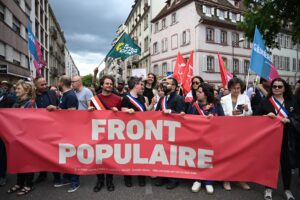
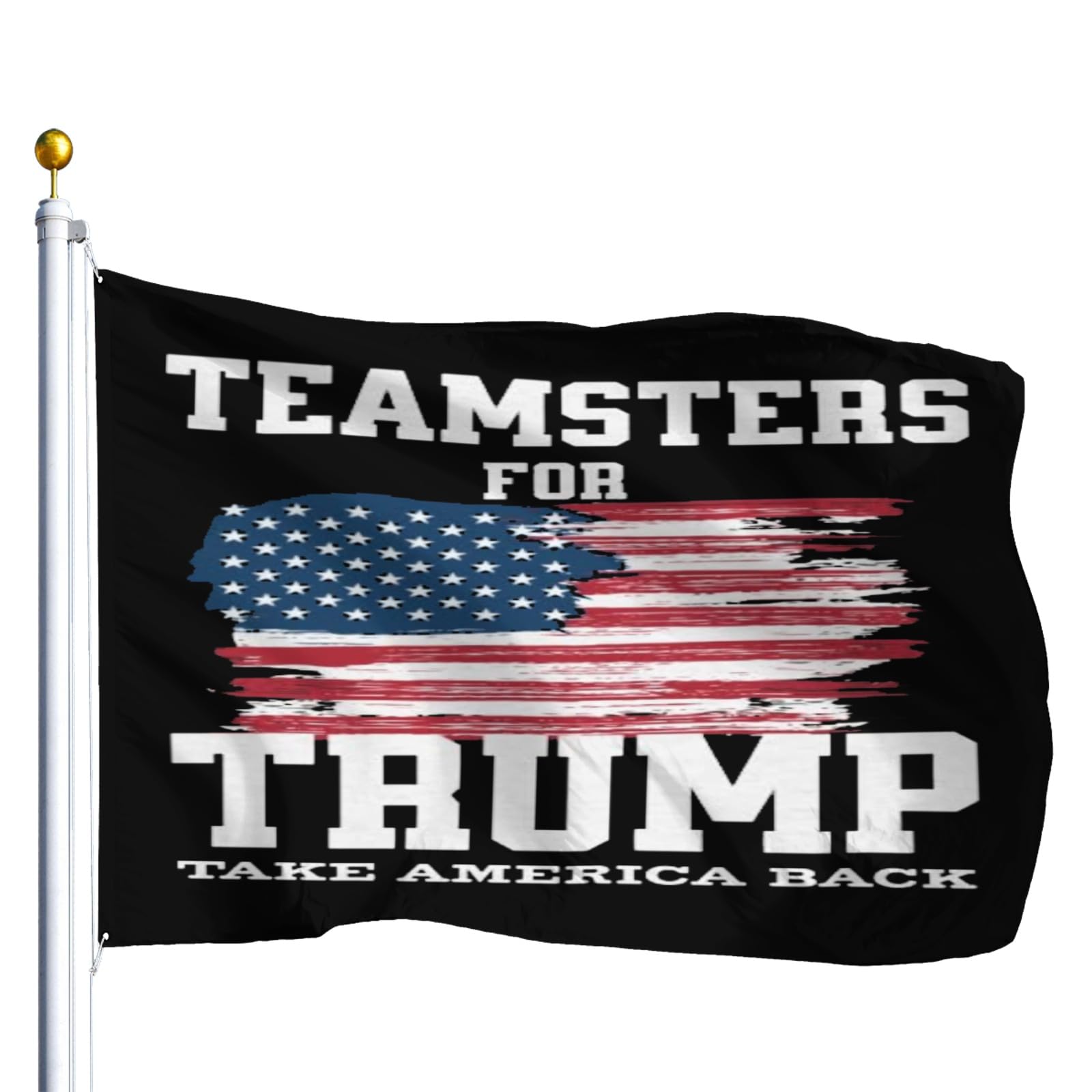
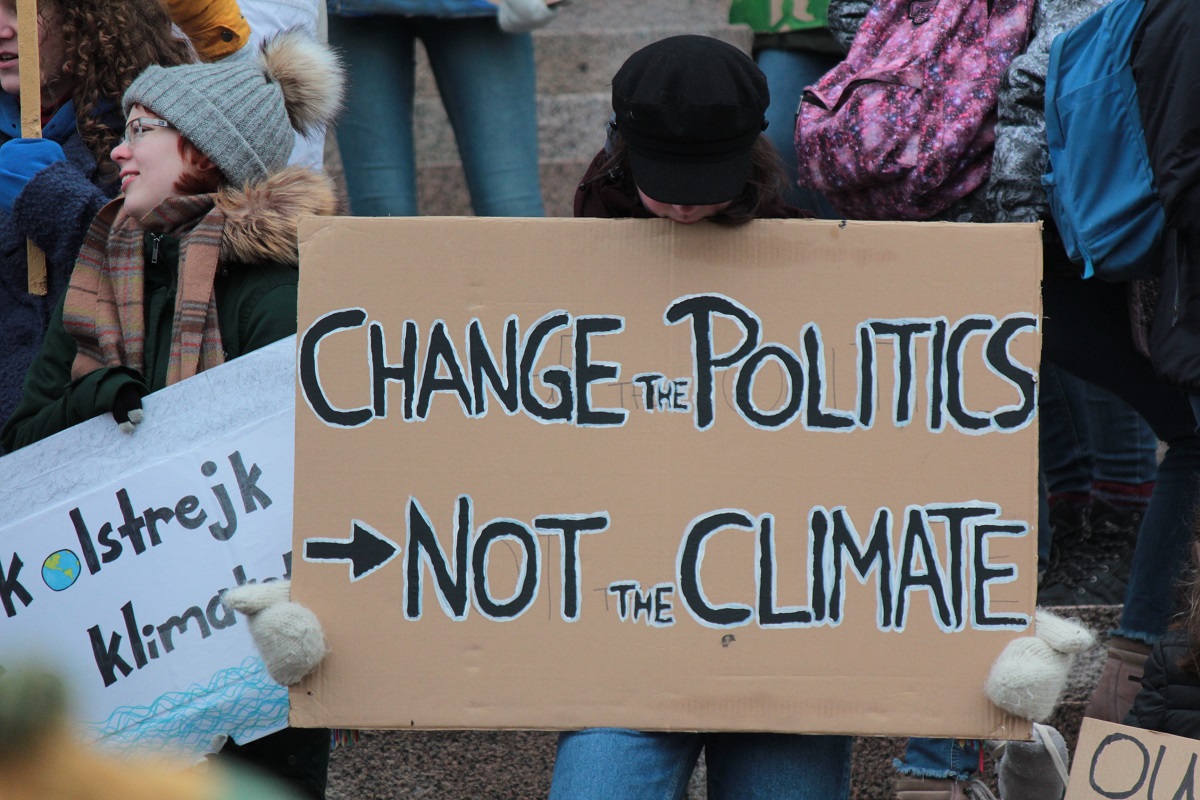
 This post is based on a talk I gave at an

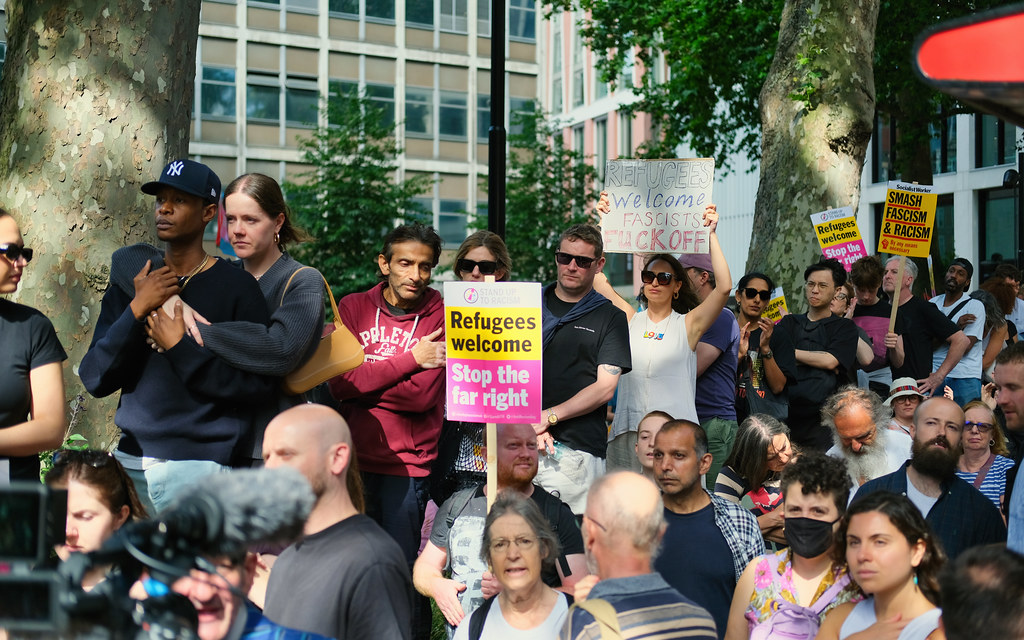
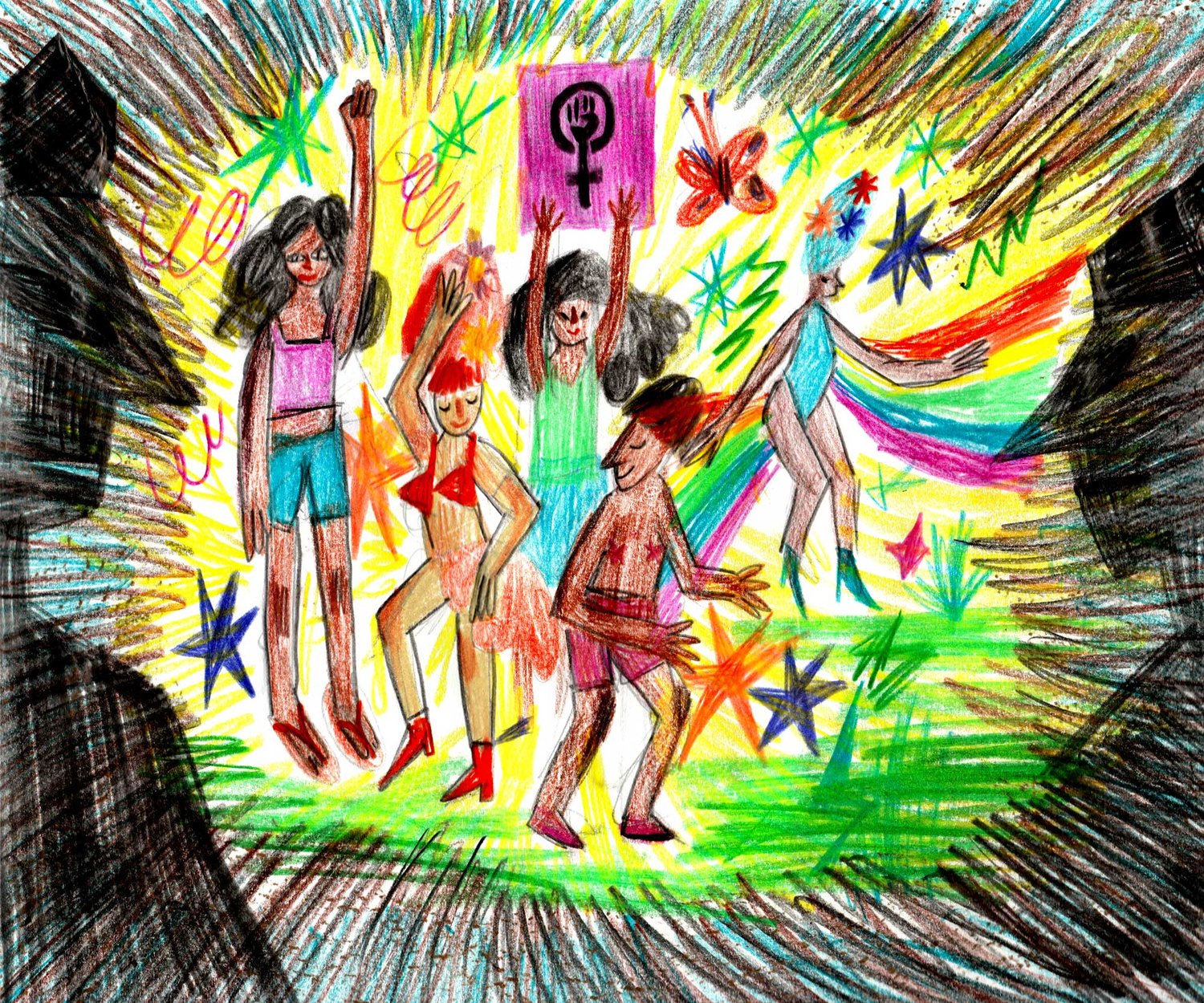
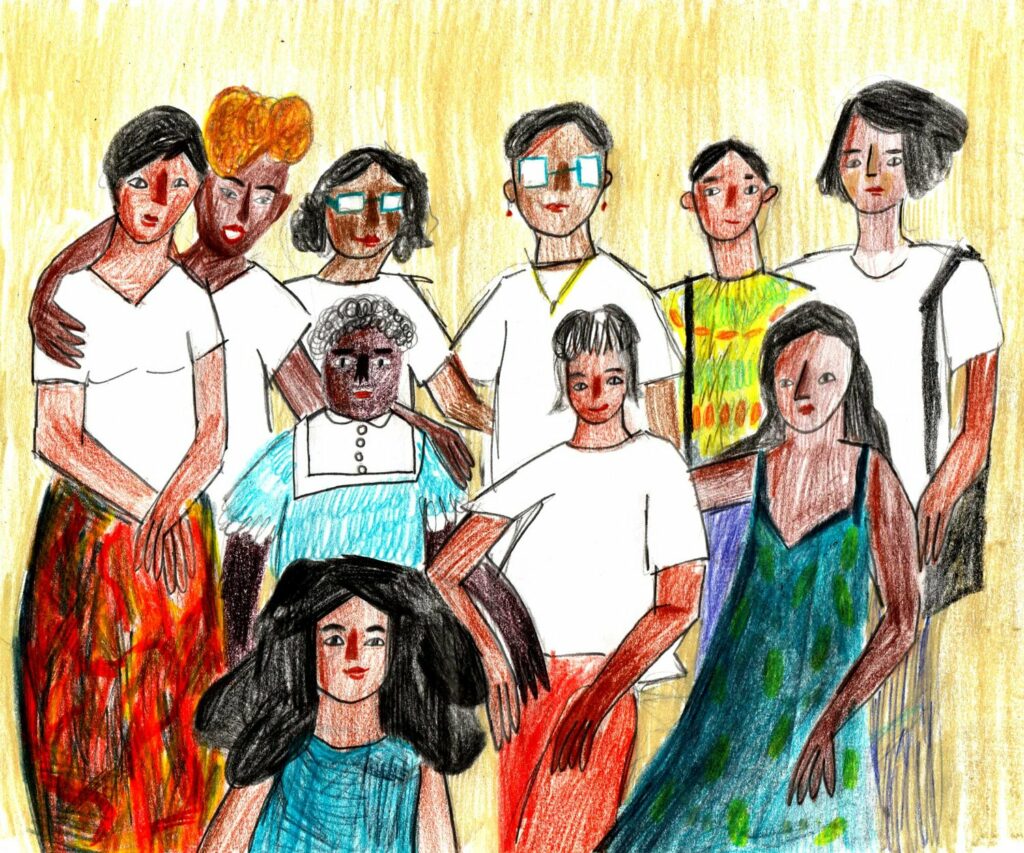

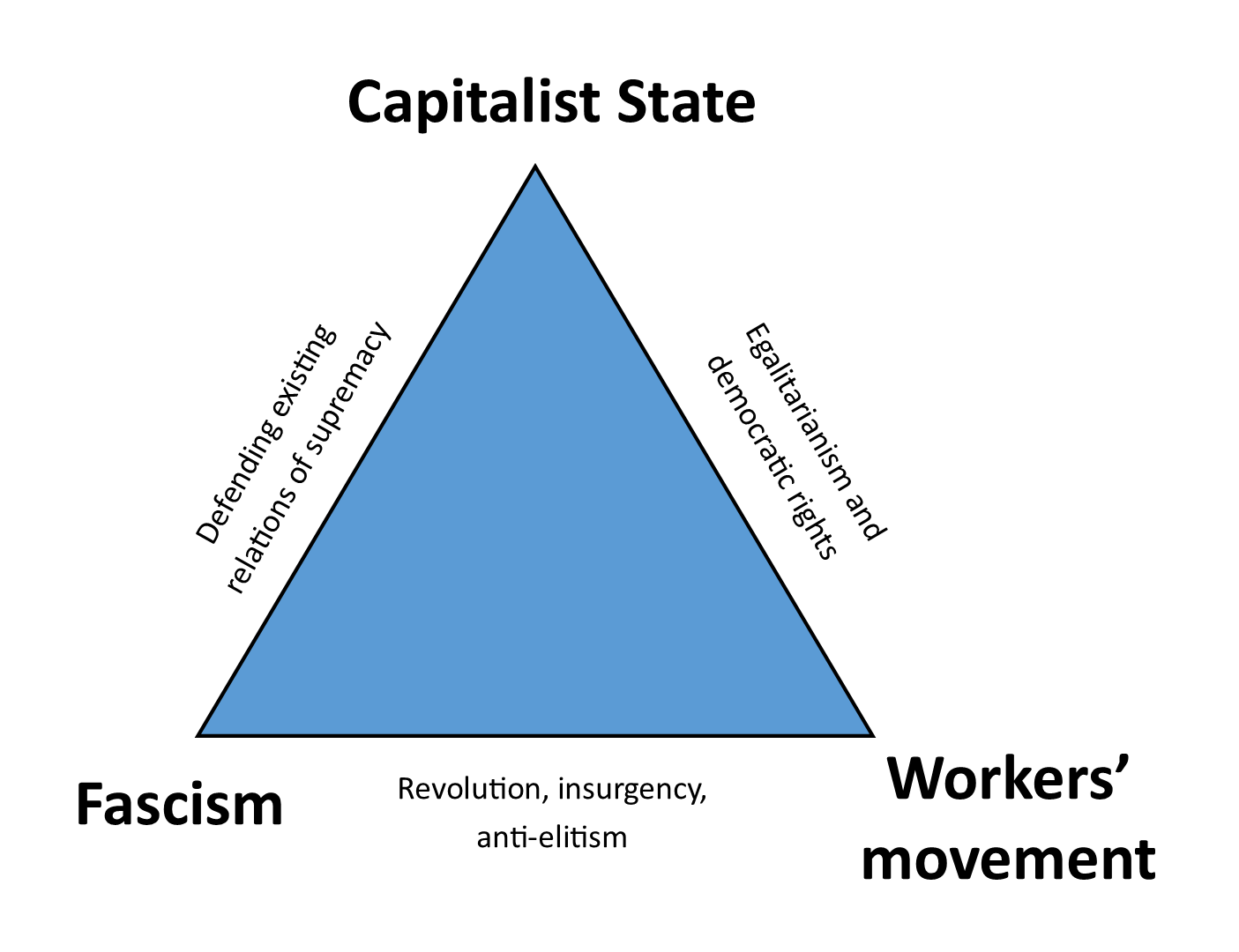

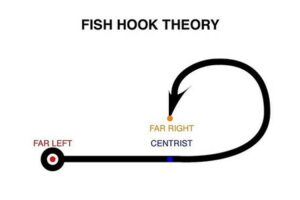 The Fishhook Theory is the equal-but-opposite counterpart to the Horseshoe, which argues that in fact it is the political centre (aka “the Establishment”, or even “the Libs”) who are close to or even identical with fascists. This harks back to the infamous “Third Period” analysis of German Communists in the 1930s, who described the centre-left Social Democrats as “social fascists”, and accordingly downplayed the threat of the actual fascists taking power; much like the edgy online Left today mock those worried by the threat of “Trump 2.0” or military victories for Putin.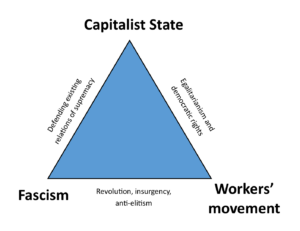
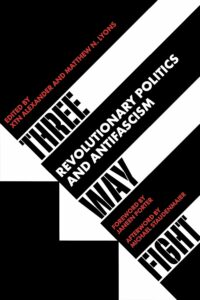
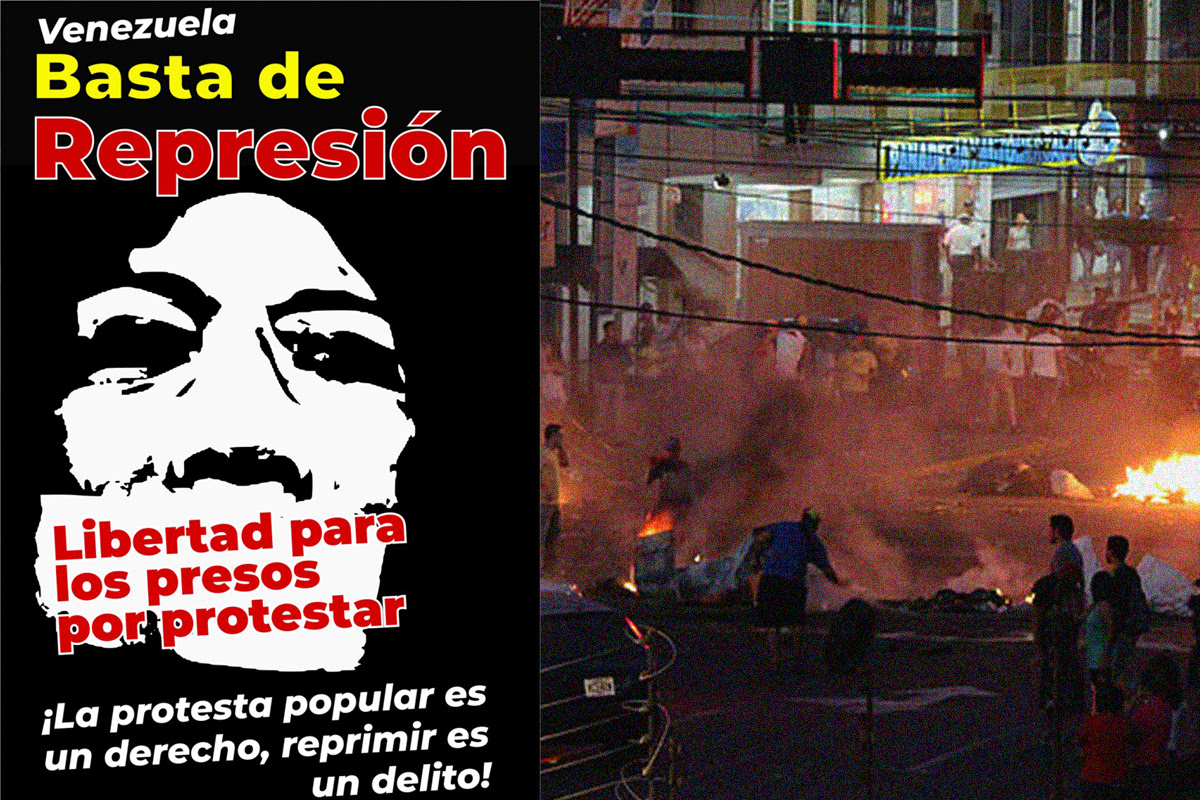
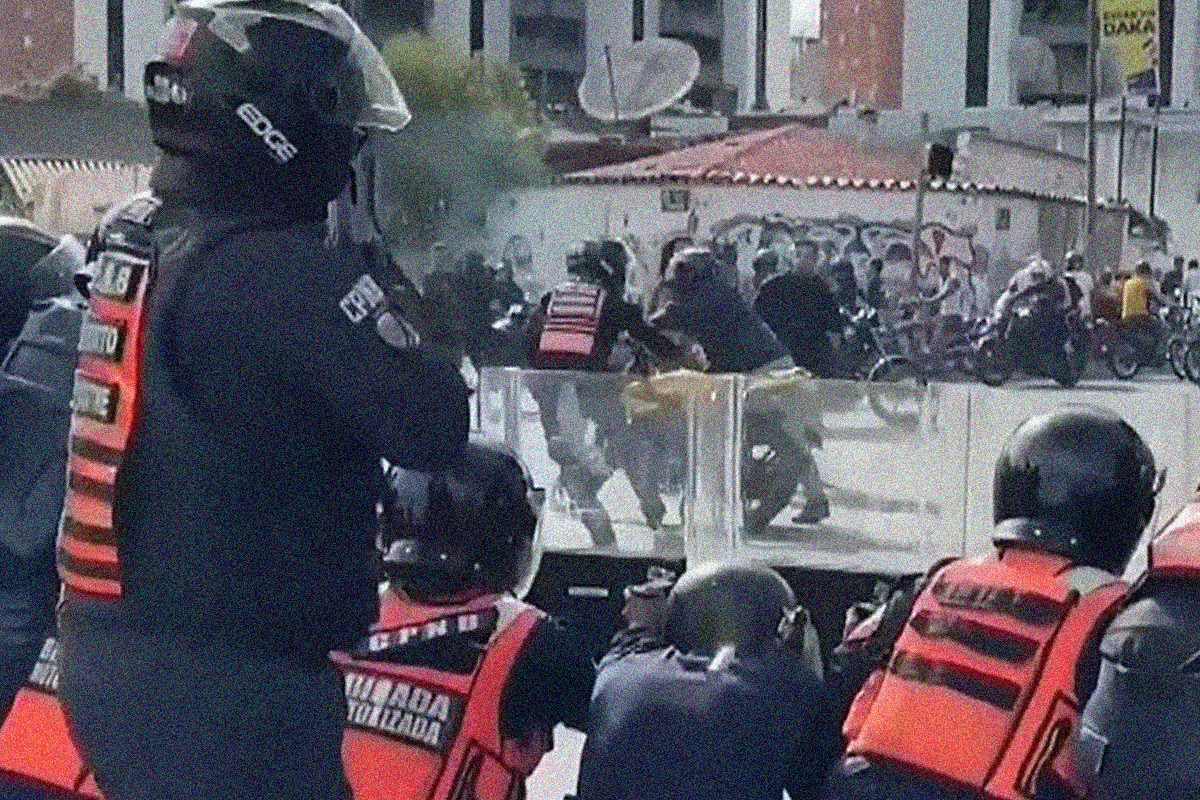

 [Presented at American Sociological Association meeting, Montreal, August 2024 and partially drawn from introduction to my new book, A Political Sociology of Twenty-First Century Revolutions and Resistances (Routledge 2024)]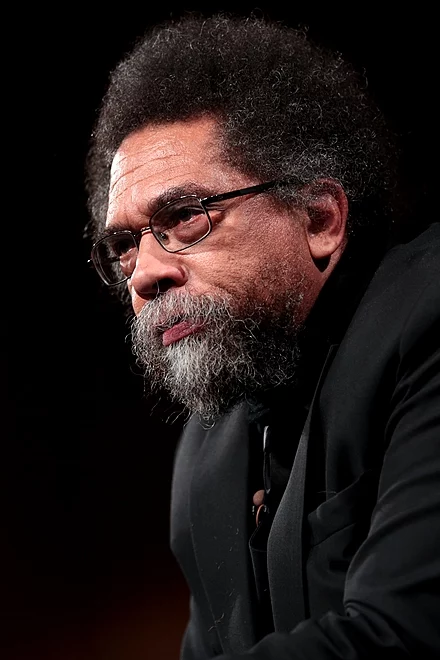
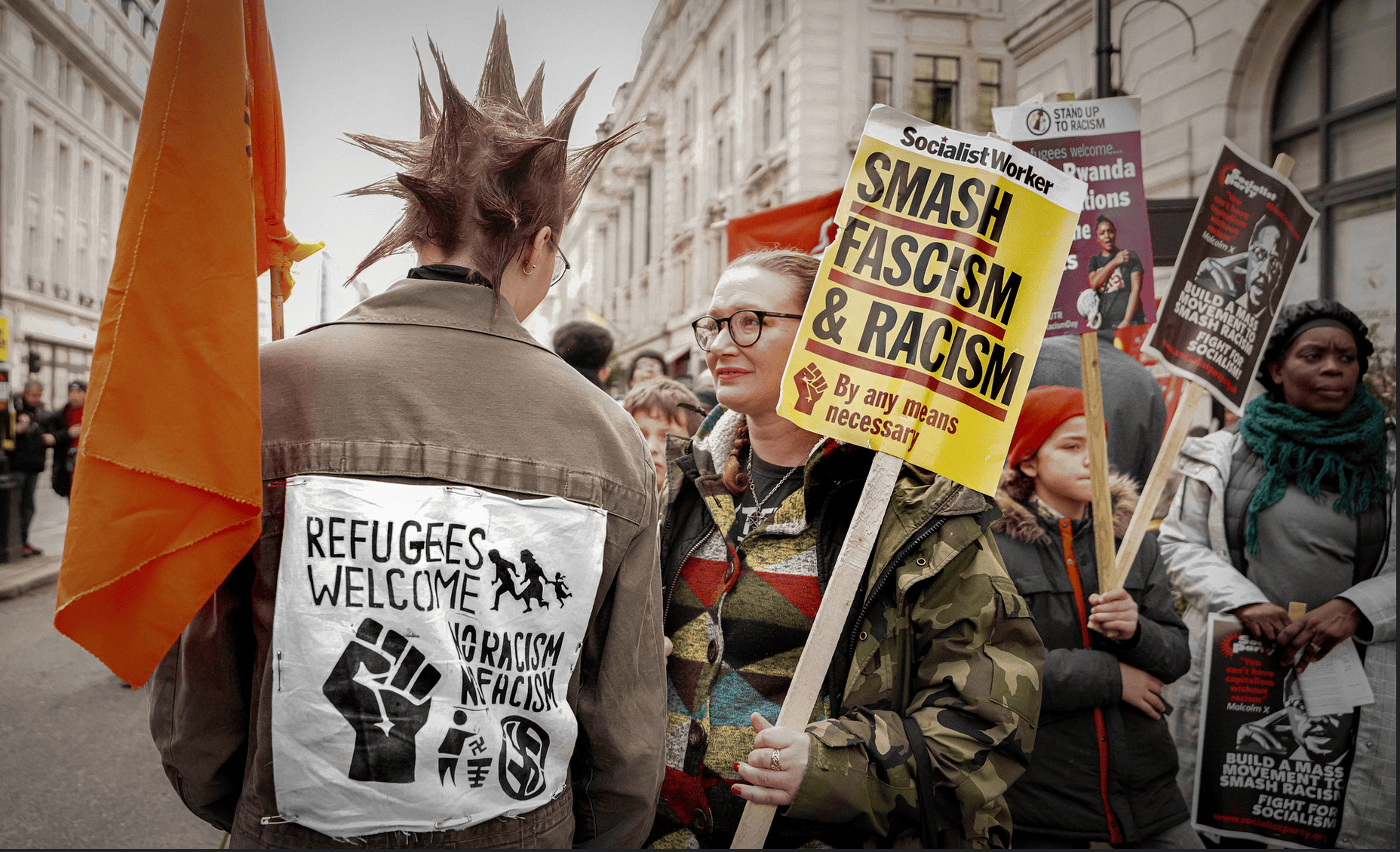
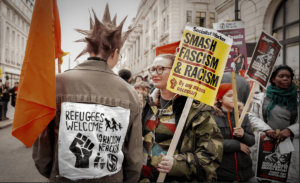 Fascism is terrifying. The sight of hundreds of racists tearing through your community and intimidating racialised minorities strikes you with an almost paralysing fear. It disempowers you, recasts where you live in a darker light and breeds a disabling paranoia about the people you share the world with. I fucking hate fascism.
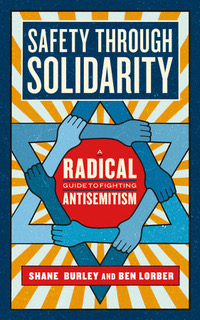
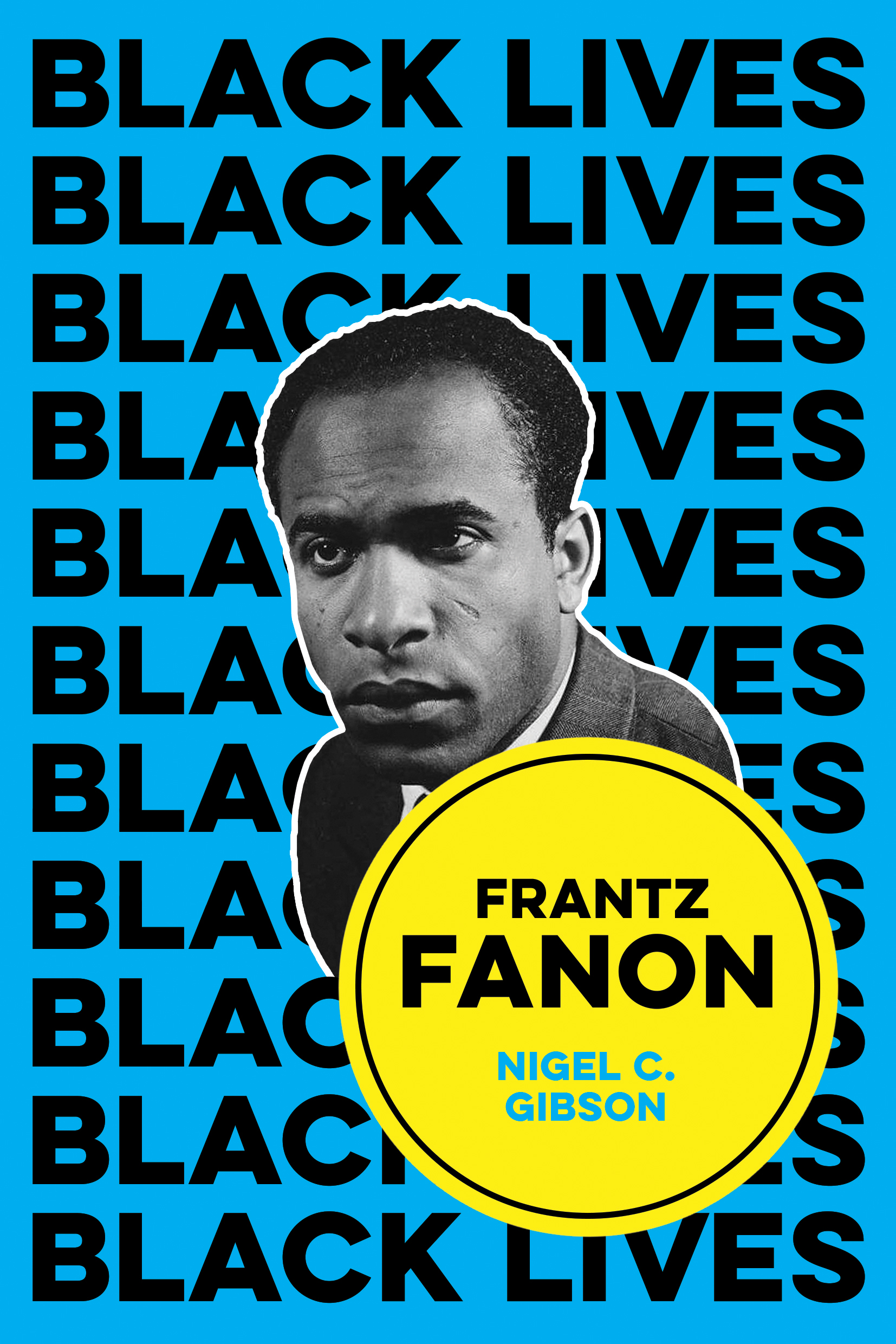



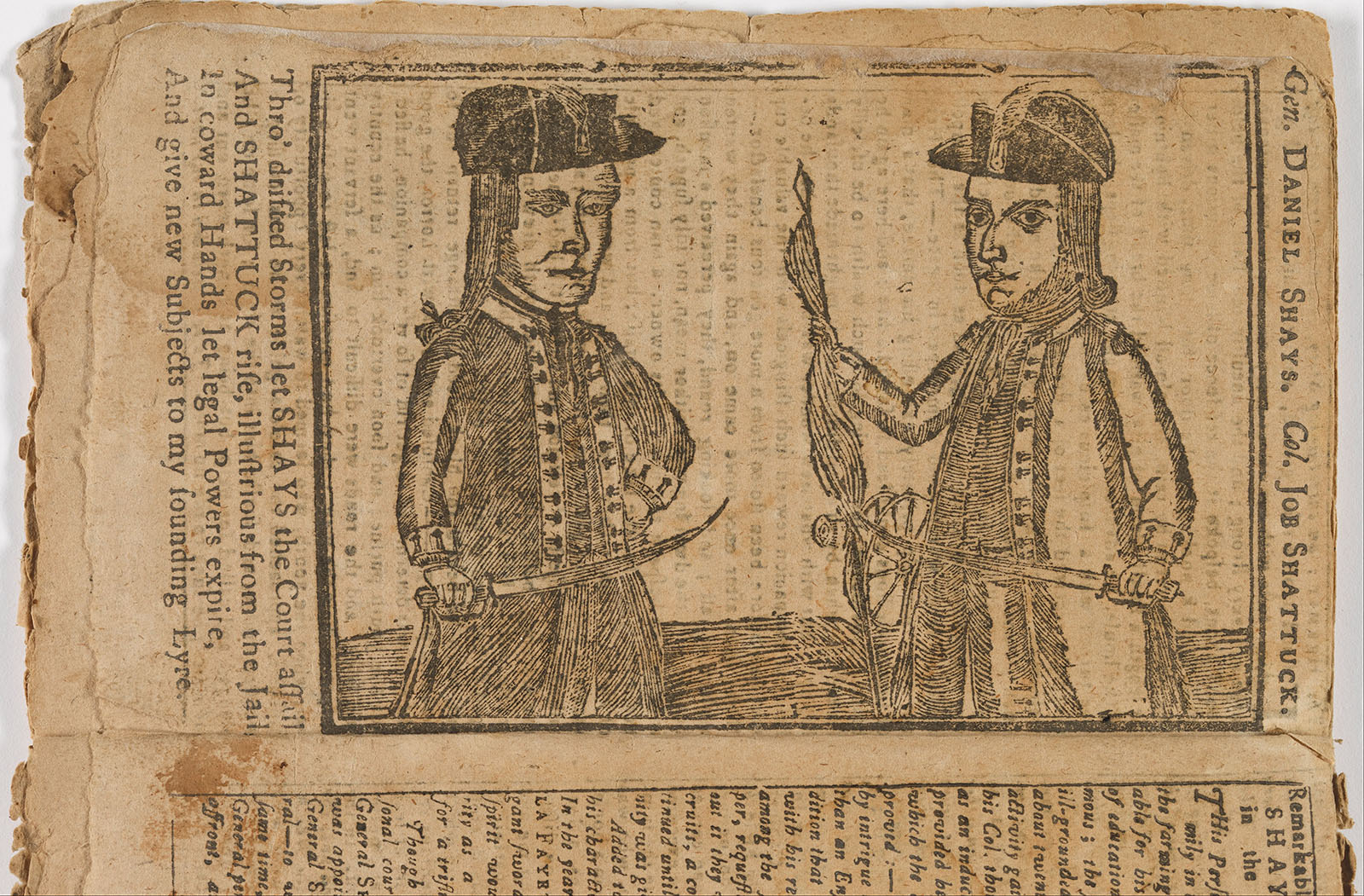
 This is the ninth of a series of articles about Black political candidates for the two highest offices of president and vice-president of the United States. The idea of writing this series originally begun when Cornel West announced his candidacy, but the story of Black political candidates for the highest offices take on a new significance in light of Kamala Harris’ current campaign. This is the list of candidates that we discuss in this series, though the four candidates of 1968 are discussed in one article.


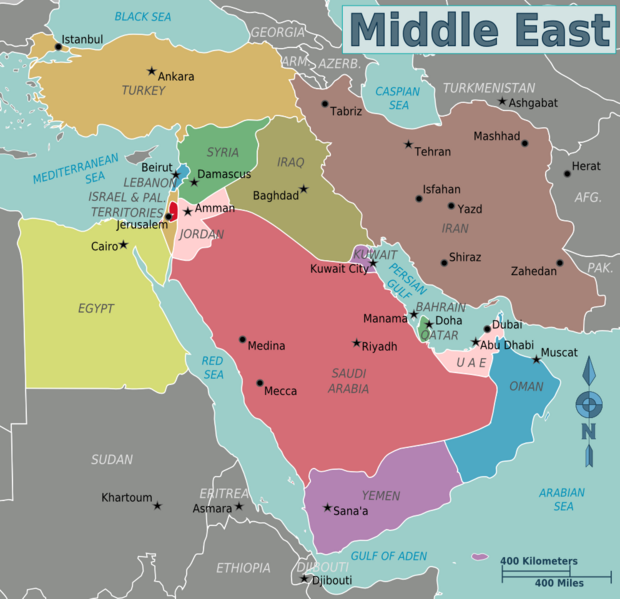
 Any protest against war in the Middle East that only focuses on the role of Israel and the U.S./U.S. allies, and does not oppose the role of the Iranian government, is a capitulation to Iranian imperialism and a betrayal of the ongoing popular struggles inside Iran.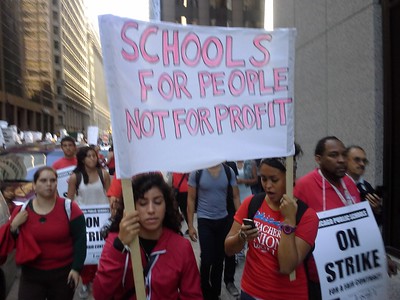
 The Left has focused on support for vouchers in Harris’ running mate but has missed that in either a Harris or Trump presidency, we’ll need to fight powerful elites to save public education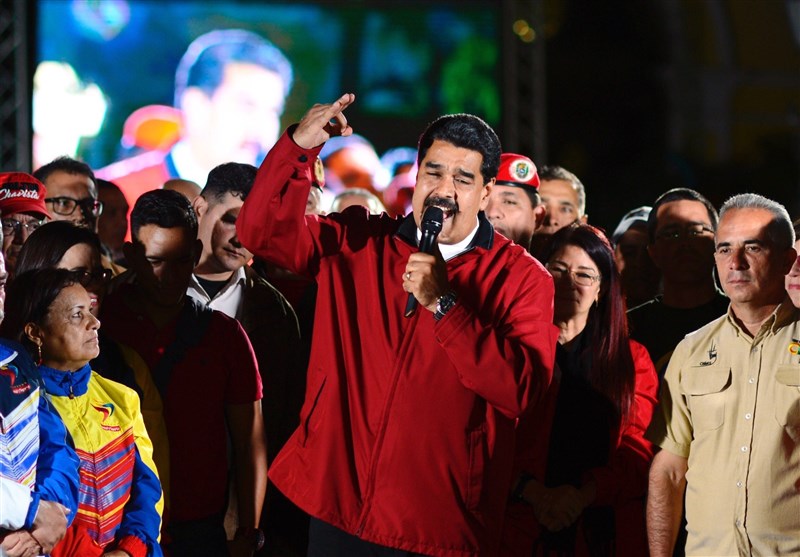
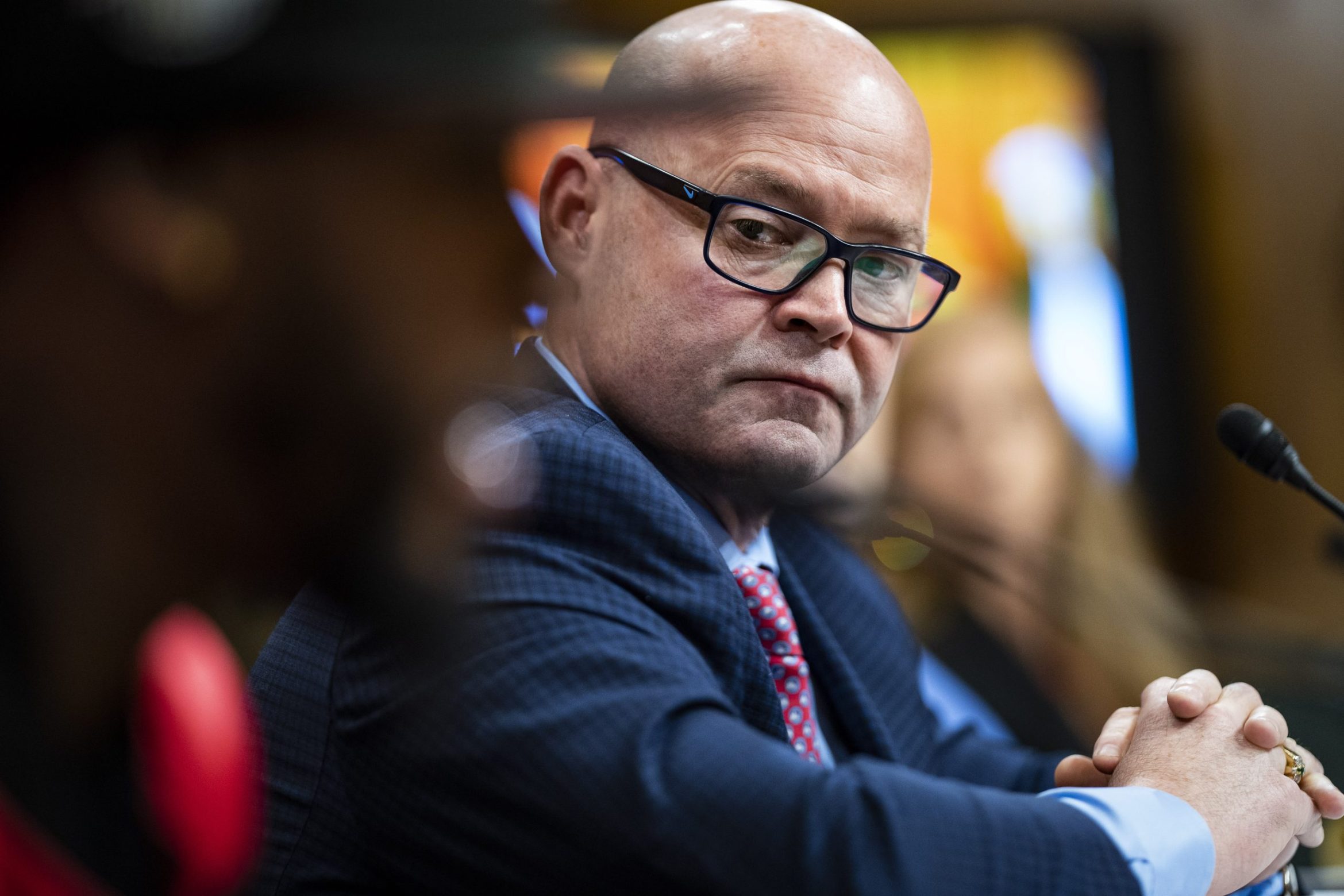
 When International Brotherhood of Teamsters President Sean O’Brien announced he was going to speak at the Republican National Convention I was more ambivalent than many of those on the Left. Yes, Trump is abominable but the labor leaders speaking out for the Democrats are tying themselves to accessories to mass murder. They’re not exactly bringing honor to the House of Labor either. Presumably some of the 186,000+ dead in Gaza were union members. So it goes, “solidarity forever” again becomes “solidarity sometimes.”