Blog

  • Cynthia McKinney for President – 2008

    Cynthia McKinney for President – 2008

    This is the eighth of a series of article about Black political candidates for the two highest offices of president and vice-president of the United States. The idea of writing this series originally begun when Cornel West announced his candidacy, the story of Black political candidates for the highest offices take on a new significance in light of Kamala Harris’ current campaign. This is the list of candidates that we discuss in this series, though the four candiates of 1968 are discussed in one article.

    • George Edwin Tayler, candidate of the National Negro Liberty Party, sometimes known as the National Liberty Party in 1904;
    • Clifton Berry, of the Socialist Workers Party in 1964;
    • Charlene Mitchell of the Communist Party in 1968;
    • Eldridge Cleaver with the Peace & Freedom Party in 1968;
    • Dick Gregory as a write-in candidate in 1968;
    • Channing Emery Phillips as a Democrat, all in 1968.
    • Shirley Chisholm, Democrat, in 1972;
    • Angela Davis,  Communist Party for vice-president in 1984 and 1988;
    • Jesse Jackson, Democrat, for president in 1984 and 1988;
    • Ron Daniles, People’s Party candidate in 1992;
    • Cynthia McKinney, Green Party candidate 2008;
    • Cornel West, independent, in 2024;
    • Barack Obama, Democratic candidate in 2008 and 2012;
    • and finally Kamala Harris for vice president in 2020 for president in 2024.

    We are currently (first week of August) editing these pieces. The essay on George Edwin Taylor has yet to be posted.

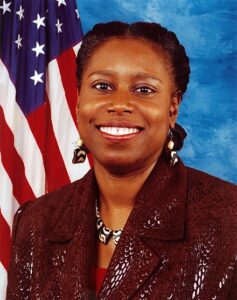
    Cynthia McKinney

    In 2008 Cynthia McKinney, who had served six terms as a Democratic Congresswoman for the state of Georgia, ran for president as the candidate of the Green Party. She was in many ways the ideal candidate for such a left party. She had earned a reputation as a fighter for civil rights and a sharp critic of America’s imperial foreign policy.

    A Black candidate with her experience in office, a knowledge of international affairs, and a reputation as a radical, she should have been a great boon to the Greens. But as it happened, a young Black Senator from Illinois named Barack Obama ran for president that same year on the Democratic ticket, defeating the Republican John McCain. McKinney ultimately received only 161,797 votes or 0.12 percent of all votes cast. And disappointingly, McKinney subsequently devolved into a trafficker in conspiracy theories and antisemitism.

    Cynthia McKinney was born in Atlanta, Georgia, in 1955 and raised in the well-off Black neighborhood of Collier Heights. Her mother Leola McKinney was a nurse and her father Billy McKinney a police officer and then a Georgia state representative. When her father returned from military service in Europe, still wearing his uniform, he used a “white’s only” water fountain in Florence, South Carolina, and was arrested. In reaction to his arrest, he became a civil rights activist, worked successfully to integrate the Atlanta Police Force, joined the Afro-American Police League and protested against the City of Atlanta’s discriminatory policies in law enforcement, picketing in front of the police station, taking the young Cynthia with him. Billy McKinney was subsequently elected a state representative serving from 1973 to 2003, and his daughter says he not only introduced her to the world of politics, but also taught her how to read legislative proposals.

    Cynthia McKinney studied at the University of Southern California where in 1978 she earned a B.A. in international relations and then earned an M.A. from the Fletcher School for Law and Diplomacy at Tufts University in 1979. Years later, in 2015, McKinney got her Ph.D. at Antioch University, writing a dissertation on Venezuelan president Hugo Chavez. The abstract of the dissertation says, “This study investigates the leadership of Hugo Chávez and his legacy on race as seen through the eyes and experiences of selected interviewees and his legacy on race.” The dissertation is a paean to Chavez as a transformative leader leading a fight for socialism and for the advancement of women and people of color.

    It was her father who launched her political career when in 1986 he urged a write-in campaign for her as a candidate for the Georgia House; she lost, but garnered 40 percent of the vote. She ran for the same seat again in 1988 and won, serving alongside her father.
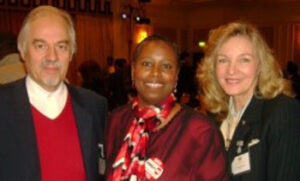
    She became an opponent of the Gulf War, speaking out against it in the legislature in 1991. Many of the other legislators left the chamber to protest her remarks. In 1992, McKinney was elected to the U.S. House of Representatives, retaining her seat there through several elections even though her district was repeatedly redrawn as a result of court cases. She served on several committees — Banking and Finance, Armed Services, and Foreign Affairs — and she criticized President Bill Clinton’s intervention in Kosovo, U.S. sanctions on Iraq, and U.S. policies in the Middle East.

    She gave voice to a theory, widely circulated on the political fringes, that President George W. Bush knew in advance of the Sept. 11 attacks but allowed them to happen because they would prove profitable to the global investment firm his father was associated with. In her final term, she introduced bills to impeach Bush, Vice President Dick Cheney, and Secretary of State Condoleezza Rice.

    In 2002 McKinney was defeated in the Democratic Party primary, attributing her defeat to Republicans who took advantage of the state’s open primary. Her father claimed she was defeated because, “Jews have bought everybody. Jews. J-E-W-S.” She was subsequently reelected to Congress in 2004. In 2006, when she was stopped by a capitol police officer who didn’t recognize her, she slapped the officer, an incident that damaged her reputation. She left the Democratic Party in 2007 and made a statement, identifying with the first American feminists, summing up her conversion to a more radical politics:

    And just like the women and men at the Seneca Falls Convention in 1848 who declared their independence from the Old Order, I celebrated my birthday last year by doing something I had done a dozen times in my head, but had never done publicly: I declared my independence from every bomb dropped, every threat leveled, every civil liberties rollback, every child killed, every veteran maimed, every man tortured, and the national leadership that let this happen.

    She became a strident critic of the U.S. electoral system and what she saw as its failure to protect the rights of Black voters. In 2008, citing the film “American Blackout” (in which she also appears) she declared that the 2000 and 2004 elections had been stolen. She asserted that one million Black voters were never counted. She also claimed that the electronic voting machines and mail-in ballots also led to a lack of election integrity.

    McKinney became the Green Party candidate for U.S. President in 2008, sharing the Green’s environmental views, its opposition to militarism and war, and its criticism of the state of Israel and sympathy for the Palestinians. She ran with Rosa Clemente, a Puerto Rican Afro-Latina journalist and activist making them the first all-female slate for president and vice-president. As already noted, McKinney, despite her experience as a member of Congress, did poorly in the election, coming in sixth in the race with only 161,603 votes.

    In the period after her campaign McKinney participated in two attempts to bring medical supplies to Palestinians in Gaza, the first in December 2008 on the ship Dignity and the second in June 2009 on the ship Humanity. She was deported from Israel. In 2011 McKinney appeared on state television in Libya opposing the U.S. intervention on the side of the forces opposing Muammar Gaddafi in the Libyan civil war. She said the U.S. intervention was “not what the people of the United States stand for and it’s not what African-Americans stand for.” (CNN May 21, 2011.) She praised Gaddafi and his Green Book as standing for “direct democracy.”

    In 2011 she appeared on Iranian state TV and said, “it is clear that the people of Iran have one thing in mind, and that is that they are a revolutionary state. And as a revolutionary state, they understand colonialism, neo-colonialism, and imperialism. They understand being under the foot of oppression and occupation—even if it is mental occupation—from an outside force or outside power, and that is what centers the resistance.” (The Atlantic, May 23, 2011.) That is, McKinney had evolved into a campist, supporting even reactionary authoritarian regimes so long as they opposed the United Sates.

    After the 2008 campaign and her adventures in Libya and Iran, McKinney gradually adopted an ever more antisemitic politics. She began to associate with antisemites and Holocaust deniers such as Mahathir Mohamad, the former prime minister of Malaysia, Michele Renouf, and David Pidcock whom she described as a “friend.” While McKinney argued that she was anti-Zionist and not anti—Jew, her arguments tended to become antisemitic. For example, she wrote an essay on the international economy in which she “…essentially accused financier George Soros and former Federal Reserve Chairman Alan Greenspan (both of whom are Jewish) of participating in a plot to destabilize the world economy to pave the way for ‘one-world government.’”

    Ex-Congresswoman Cynthia McKinney poses in London with “my London friend” David Pidcock, a prolific anti-Semitic writer, and another aquaintance, well-known Holocaust denier Lady Michele Renouf. – photo from Southern Poverty Law Center.

    She herself actively promoted antisemitic materials.  “On September 11, 2023, McKinney promoted a livestream called ‘Can Black People and White People Work Together to Defeat Our Common Enemy’ with the Star of David representing the ‘common enemy’ that is, the Jewish people.” The program she promoted would feature former KKK grand wizard David Duke and Black nationalist Ayo Kimathi.

    Beyond her dalliances with antisemites and Holocaust-deniers, McKinney became the purveyor of a variety of conspiracy theories. For example, during COVID pandemic McKinney claimed preposterously that the COVID vaccines made up of spike proteins actually gave people “COVID-AIDS” and that that caused long COVID and made them sicker. So, she has taken hydroxychloroquine, an anti-malarial not recommended for the treatment of COVID.

    She has also continued to be a campist, offering her service to Vladimir Putin’s fascist regime in Russia. In 2024 McKinney was “an election observer”—the European Platform for Democratic Elections calls her a “fake election observer” in the Russian national presidential election. As the group’s report “Fake Observers” says, there were “Kremlin-friendly” supposed “experts” brought in to legitimate the authoritarian police-state elections and to endorse Putin’s legitimate victory. Russian observers not linked to Putin’s government described the election as a fraud but said, “Even without fraud, the elections aren’t truly democratic.”

    For the last several years McKinney held the position of assistant professor at North South University, a private college in Bangladesh.

    Cynthia McKinney’s unfortunate degeneration from a leftist opponent of racism and imperialism to a conspiracy promoter, a campist, and an antisemite is a sad story. Even sadder is that marginal talk-show hosts continue to give her a platform from which to spew her dangerous views.


  • On the raging student movement in Bangladesh

    On the raging student movement in Bangladesh

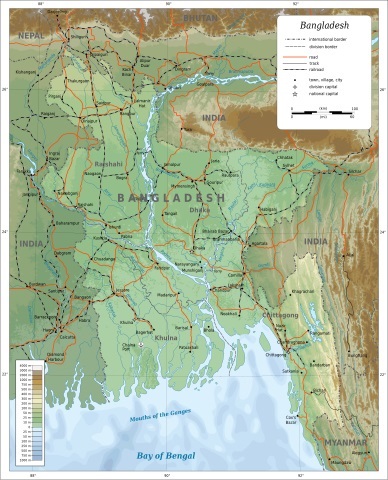
    Right now, Bangladesh has been functionally turned into a prison and a graveyard. Students have observed a nationwide strike across Bangladesh on Thursday (18th July 2024) which have been called “Bangla blockade”.
    What is the reason behind this movement? Is this primarily a movement of traitors, razakars? Is this protest just against quotas?

    This movement was sparked off by the recent judgement of the country’s high court that has ruled to bring back the quota system which was halted in the year 2018. Government education and jobs in Bangladesh are 56% under quota, out of which 30% consists of the freedom fighter quota. The Bangladeshi system is not a quota system for marginalized or deprived peoples, which we are used to in the Indian reservation system.

    Rather, this is an attempt by Awami League to permanently create a vote bank for themselves through the creation of a privileged class that receives preferential treatment. It is worth noting that this time many descendants of freedom fighters have spoken in support of the movement.

    In 2018, the government under pressure from a mass movement was forced to order a halt this quota. This order was challenged in court. Why had the government not passed a clear cut law regarding the same issue where affirmative action for genuinely deprived peoples is initiated and separated from the “muktijoddha quota” (trans: freedom fighter quota)?

    In 2018, students had demanded a reform of the 30% quota for the families of freedom fighters. And the Hasina government had completely removed the 26% reservations kept for marginalized and deprived peoples along with these quotas.

    When the same was taken to court, the quota system in its entirety has been brought back. It is not impossible that some people in the movement are conservative, and some are against quotas for women.

    However, the arrowhead of the movement is pointed at the freedom fighter quota.

    This movement is so strong because under late capitalism there are very few jobs in underdeveloped Bangladesh resulting in hundreds of thousands of young people hopefully applying annually for a few thousand secure government jobs.

    The Bangladeshi government does not look after the interests of the many. They serve international capital, including big capitalists of China and India and look to line the pockets of the ruling party and political leaders with profit. One of the slogans of the student movement is “Bhuya! Bhuya” (trans: Fake! Fake!). The underlying meaning is that “freedom fighter family” is often a bogus label given to those close to the Awami League.

    Sheikh Hasina has tried to label this movement as one of Razakars. In 1971, Razakars assisted the Pakistanis and were traitors to the Bangladeshi cause. The protesters have responded with the slogan “Ami ke? Tumi ke? Rajakar! Rajakar! Ke bolechhe? Ke bolecche? Shwoirachar! Shwoirachar!” (trans: Who am I? Who are you? Rajakar! Rajakar! Who says so? Who says so? Who says so? Dictator! Dictator!) The word “Razakar” from the mouth of Sheikh Hasina is similar to the utterance “antinational” or “terrorist” from the mouth of Narendra Modi.

    Masses of students have joined this movement in Bangladesh. As of 6 pm, 18th of July, 2024, 64 people have been martyred. But this movement has not been able to organize itself in a clear leftist direction. Organizations like Jamaat-e-Islami exist in Bangladesh.

    Haseena has labelled the movement as one completely of Razakars in order to exploit the presence of these organizations. This is of course a failure of left organizations that they have not been able to create a strong counter polarity in their favour. Out of these, the Workers’ Party (known to be close to the CPIM) and sections of JASAD/JSD are completely subservient to Hasina. Others are supportive of the movement but we cannot claim that they are giving any direction to it.

    We support the democratic movement of Bangladesh against unjust quotas and at the same time support the system of reservation directed at removing social discrimination. We support the democratic movement of the people against the authoritarian Bangladeshi government and support the demand for democratic and free and fair elections which was raised by a united left in 2023.

    It is an important task in India to stand in solidarity with the movement in Bangladesh for history will read the progressive movements of both countries as intertwined.

    We also strongly condemn the actions of the Kolkata police who detained protesters in solidarity with Bangladesh and sent them to Lalbazar (HQ of Kolkata police). May the democratic movement of the people stand strong against the union of dictators!

    [This article was published by Radical Socialist on July 19, 2024, and on International Viewpoint, July 21, 2024.]

  • 80 years since the Warsaw Uprising – a view from the Third Camp

    80 years since the Warsaw Uprising – a view from the Third Camp

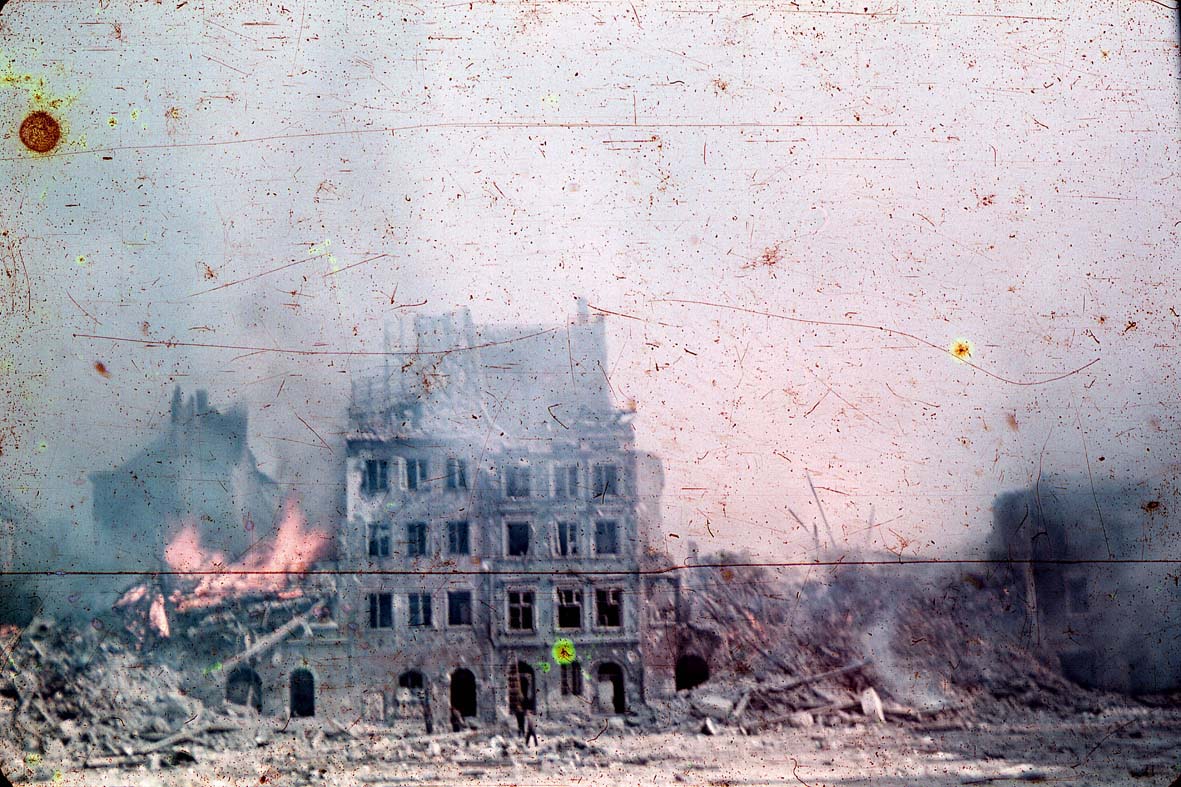
    Warsaw Old Town in flames during Warsaw Uprising (Ewa Faryaszewska – Museum of Warsaw)

    On August 1, 1944, the Home Army, the main underground resistance movement in wartime Poland, rose up against the Nazi occupation of Warsaw. The Home Army generals, linked to the Polish government-in-exile in London, had timed the operation to coincide with the German forces’ retreat ahead of the Red Army’s advance on the Eastern Front. For 63 days, the Poles fought valiantly, but in the end, the uprising was crushed. Around 16,000 Polish resistance fighters and between 150,000 and 200,000 civilians were killed. In a brutal reprisal, the Germans razed the city, destroying 80-90% of Warsaw’s buildings.

    The uprising was ordered from on-high by right-wing generals who hoped to welcome the Red Army in the Polish capital as the bourgeois government-in-exile’s representatives and to reassert Polish sovereignty before Stalin’s puppet Polish Committee of National Liberation could assume control. Nevertheless, for most of the Polish population, the revolt was a push for national liberation and for retribution against the Hitlerite troops after five years of bloody occupation. Viewing the uprising in national-liberationist and anti-Nazi terms, forces like the Socialist Fighting Organization (Socjalistyczna Organizacja Bojowa) and the Jewish Fighting Organization (Żydowska Organizacja Bojowa) threw themselves into the fray.

    Instead of reinforcing the Polish resistance fighters, Stalin ordered the Red Army to halt on the east side of the Vistula. There they stood idly by as the Poles fought and died, allowing the Nazis to regroup and put down the uprising. Declassified documents strongly suggest what many suspected at the time: that Stalin halted the advance on Warsaw to exhaust the Home Army, thereby helping establish a postwar, Soviet-aligned Polish government.

    The American Trotskyist group the Socialist Workers’ Party (SWP) had split in 1940 after intense debates over, amongst other things, the question of “defense of the USSR” in light of the Soviet invasions of Poland and Finland. The “Orthodox” Trotskyists, led by James P. Cannon, remained in the SWP. They were “critically” but “unconditionally” for the “defense” of the USSR, which they saw as a “degenerated workers’ state.”

    On August 19, 1944, in an editorial of the party’s periodical The Militant, titled “Warsaw betrayal,” the SWP condemned the Red Army’s actions. In their words, by launching the uprising, the Warsaw proletariat had proved that “five years of Nazi butchery have not tamed its fighting spirit nor destroyed its fighting powers.” By permitting the Nazis to crush the uprising, Stalin had shown “[t]hat his aims are counter-revolutionary, that he intends not to liberate the Polish people but to subjugate them.” The editorial called for Polish workers to organize independently from and in opposition to the Stalinists in order to “organize fraternization with the Red Army soldiers and help the Soviet masses to settle accounts with the bloody dictatorship of Stalin.”

    On August 23, 1944, Cannon, who was in jail at the time, wrote a scathing letter to the SWP leadership in response to the Militant editorial. He deemed it inappropriate to call for “fraternization” with Red Army soldiers because the latter were the Polish workers’ allies against Hitler’s armies, not “the rank and file of a hostile military force.” Cannon reiterated that, while “[o]ur program recognizes the vital necessity of overthrowing Stalinism in the Soviet Union,” this task is second in importance to “the defense of the Soviet Union against imperialist attacks.” He criticized the editorial for taking “as its point of departure the assumption […] that Stalin deliberately maneuvered to permit Hitler to crush the revolt.” In Cannon’s view, it was “the duty of guerilla forces – and in the circumstances that is what the Warsaw detachments are – to subordinate themselves to the high command of the main army, the Red Army, in timing such an important battle as the siege of Warsaw.”

    Underlying Cannon’s rebuke is the logic of Second Campism; that is, the idea that the world is fundamentally divided into two camps – the Western capitalist alliance (“First Camp”) and the Soviet-style societies (“Second Camp”) – and that socialists should support the latter against the former. In contrast, the Third Camp socialist tradition, which emerged from the “heterodox” side of the 1940 split in the SWP, came to view the Stalinist USSR as an exploitative class society that socialists should not support, even critically. In their view, socialists had to support the international working class against both the capitalist and Stalinist camps, hence their iconic slogan “Neither Washington nor Moscow, but international socialism!”.

    Certainly, the kind of Second Campism at work in Cannon’s letter criticized the USSR’s repression of the working class and supported workers’ revolts against the Stalinist bureaucracies like those of 1956 and 1968. Still, the underlying assumption remained that, relative to capitalism, Stalinism was historically progressive – that, in their own flawed and contradictory way, the Stalinist states represented a step towards socialism. The SWP sang the praises of “Trotsky’s Red Army,” clinging to a millenarian faith that the Soviet advance would boost the socialist revolution in Europe despite Stalin.

    Importantly, because Second Campist perspectives like the Orthodox Trotskyist one did not accept that the Stalinist bureaucracies were an exploitative ruling class in their own right, they could not recognize the USSR’s occupation of countries like Poland and installation of Soviet-aligned regimes in these countries as imperialism. While the end of the Cold War means there is no longer a Second Camp, one sees the continuing legacy of Second Campism on those parts of the left that support (“critically” or otherwise) regimes or movements purely because they are in conflict with Western imperialist powers, even if these regimes or movements themselves engage in imperialist predation or repress the working class.

    In present-day Poland, the Warsaw Uprising looms large in nationalist “memory wars”. For socialists, Stalin’s decision to let the Nazis crush the uprising and the US Trotskyists’ responses to that decision hold valuable lessons: lessons about Stalinism’s capacity for the betrayal and slaughter of workers and about the extent to which even the anti-Stalinist left can end up accommodating to it in the name of “anti-imperialism.”

  • Shawn Fain for VP!

    Shawn Fain for VP!

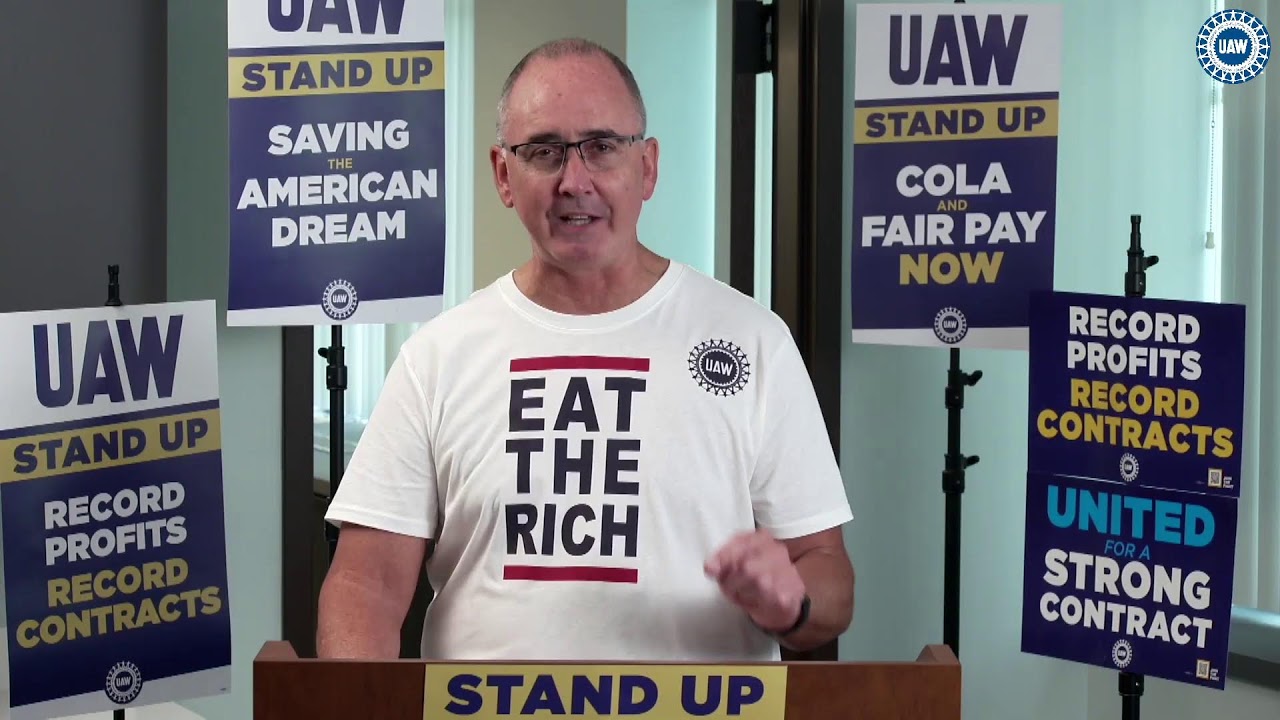
    In the short term, we are often caught between our dreams and realism. But there is a chance right now to offer a suggestion for the Democratic Party’s vice-presidential pick that would be both inspiring and eminently practical, namely, Shawn Fain, president of the United Auto Workers.


    Everyone understands that the Democrat’s presidential hopes depend on winning back the white working class. Sanders and others are certainly right that this requires an emphasis on the parts of the Democratic platform that work to reduce the huge inequalities that plague our country. It also requires, however, a vice-presidential candidate that can convince voters that Democratic promises will not be ignored after the election. Political insiders understand this and that’s why they are looking for a candidate who might appeal to these voters. But each of the names being bandied about as part of the “short list” in fact has serious handicaps.

    Josh Shapiro is the governor of Pennsylvania. In the words of the New York Times “The Morning Briefing,” “perhaps Shapiro’s biggest downside is that he could inflame divisions between moderate and liberal Democrats over the war in Gaza.” Senator Mark Kelly would, if he won, “trigger a special election in Arizona in 2026, potentially costing Democrats a Senate seat.” Michigan’s Gretchen Whitmer says she doesn’t want the job. Andy Beshear from Kentucky doesn’t offer the Democrats an extra state in the win column. And Gov. Cooper of North Carolina has the problem that every time he leaves the state to campaign, his lieutenant governor, a very conservative Republican who is running for governor, becomes the acting governor.

    Shawn Fain would electrify working class voters. He would thrill volunteers. He would be able to draw a sharp contrast between the fascistic faux populism of Trump and Vance and real pro-labor policies. As the leader of the historic UAW strike victories last year, there is no mistaking which side he is on. He has called for a general strike in 2028. And in May, he declared:

    “The UAW will never support the mass arrest or intimidation of those exercising their right to protest, strike, or speak out against injustice. Our union has been calling for a ceasefire for six months. This war is wrong, and this response against students and academic workers, many of them UAW members, is wrong. We call on the powers that be to release the students and employees who have been arrested, and if you can’t take the outcry, stop supporting this war.”

    But yet, Fain and the UAW endorsed Biden. Biden walked on their picket line. (In 2019, so did Harris.) So he is not so far beyond the pale that his selection would be inappropriate on a Democratic Party ticket. And when Donald Trump at the Republican convention called for Fain’s firing, he placed the union head in the national spotlight. Think of how Fain’s comments on Trump would resonate on the campaign trail:

    “Donald Trump is a scab. Donald Trump is a billionaire and that is who he represents. If Donald Trump ever worked in an auto plant, he wouldn’t be a UAW member, he would be a company man trying to squeeze the American worker.”

    Executive experience? He has run an organization of more than 400,000 members. Foreign policy experience? He doesn’t have much – but only Kelly on the list above does – and he’s been involved in trade issues, recently named to Biden’s Export Policy Council. Speaking ability? As Axios commented, “Fain speaks with the cadence and tone of an old-school preacher, calling on the world to embrace the UAW’s ‘righteous’ cause, referencing biblical heroes like Moses, and telling people to ‘stand up’ for justice.”

    Shawn Fain is an outside-the-box choice. A few other commentators have mentioned him as a possibility. He ought to be on everyone’s short list.

    And he ought to be the next vice president of the United States.


  • Another View on the 2024 French Legislative Elections

    Another View on the 2024 French Legislative Elections

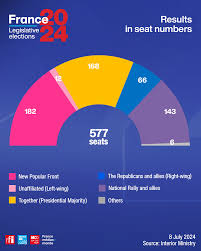
    Chart from France 24

    The absence of working-class parties in the US makes the 2024 elections here different from the 2024 legislative elections in France. But the French vote confirms what we see here: Elections do little to slow the rightward drift of capitalist politics. Mass action is needed.

    Left enthusiasts for the results of the French elections rightly celebrate the electoral defeat of the Rassemblement National (RN) and the placement of the Nouveau Front populaire (NFP) ahead of Ensemble, the governing coalition of President Emmanuel Macron. But Marxists need to confront the problem that the elections open no way forward for the working class.

    Popular vote

    Left enthusiasts focus on the number of seats the four main electoral blocs won. The popular vote is more revealing. Here’s a summary of the results, in order of the popular vote:


    Rassemblement National (RN)

    10,647,914 votes (33.21%) 1st round

    10,109,044 votes (37.06%) 2nd round

    142 seats


    Nouveau Front populaire (NFP)

    9,042,485 votes (28.21%) 1st round

    7,039,429 votes (25.80%) 2nd round

    180 seats


    Ensemble

    6,820,446 votes (21.28%) 1st round

    6,691,619 votes (24.53%) 2nd round

    159 seats


    Les Républicains (LR, the traditional center-right)

    2,106,166 votes (6.57%) 1st round

    1,474,650 votes (5.41%) 2nd round

    39 seats


    Compared with the results of the participating parties in the two rounds of the 2022 legislative elections, the RN gained 12.92 million votes, the NFP gained 3.69 million votes, Ensemble lost 0.35 million votes, and LR lost 0.5 million votes.

    The main story is the RN’s advance, not an NFP victory.

    Parliamentary impasse

    The results show the electoral strength of the NP and the NFP, but neither has enough deputies and allies to form a government. Only Ensemble has a path to forming a government.

    Prime Minister Gabriel Attal tendered his resignation after Ensemble lost its working majority in the National Assembly. President Macron asked Attal to stay on until a new government could be formed. If none can be formed, Macron will presumably appoint a caretaker government.

    The NFP is an electoral bloc of La France Insoumise (LFI), the Parti socialiste (PS), the Parti communiste français (PCF), and Les Écologistes (Greens). LFI, led by former PS minister Jean-Luc Mélenchon, is on the left of the bloc. The PS and the Greens are on the right. The bloc proposes modest reforms that would benefit the working class but not challenge French capitalism.

    Macron hopes to detach the PS and the Greens from the NFP with the offer of ministries. This could work. The previous incarnation of the NFP bloc, the Nouvelle Union populaire écologique et sociale (NUPES), came together for the 2022 elections and fell apart in October 2023, when the PS declared a “moratorium” on participation over the refusal of NUPES to condemn Hamas.

    Ensemble, allied with the PS, the Greens, and LR, would have a majority in the National Assembly. Macron could use the presence of LR to reject demands from the PS and the Greens, and their presence to reject demands from LR.

    With or without a new parliamentary majority, the 2024 elections are likely to mean a continuation of Macron’s anti-working-class policies, unless those policies are countered with mass action.

    Nouveau Front populaire

    The NFP is the fourth time around for the bloc. In 1981, François Mitterrand of the PS was elected president with second-round support from the PCF and the Greens.

    Mitterrand ran on a platform of resisting the neoliberal turn of Britain under Margaret Thatcher and the US under Ronald Reagan. Instead, his fifteen-year presidency saw France swept by the neoliberal tide.

    The bloc’s second incarnation was the Gauche Plurielle, which governed France from 1997 to 2002. Again, the bloc promised resistance to neoliberalism and failed to deliver.

    The bloc’s parties were in electoral exile until the 2022 legislative elections, when NUPES came in second, behind Ensemble. NUPES fell apart in 2023 and re-formed as the NFP in 2024.

    The NFP does not challenge French capitalism and imperialism. A surprise victory and a reprieve from the RN, an article by NFP supporter Léon Crémieux republished in International Viewpoint, summarizes the NFP platform as follows:

    The NFP said that if it were able to form a government, its first decisions would be to raise the minimum wage (SMIC) from 1400 to 1600 euros net, increase civil servants’ wages by 10%, index wages to prices, repeal the pension reform and increased retirement age of 64 imposed by Macron a year ago, introduce a freeze on essential prices, and increase housing benefit by 10%. This would obviously be a positive step.

    A positive step, yes. If the NFP were able to form a government, which it isn’t, and if it implemented its program, which its predecessors’ record suggests is doubtful.

    The victory in the elections is that 63-67% of voters rejected the RN, and 26-28% voted for candidates they perceived as anti-neoliberal, not any practical results likely to come from the NFP vote. Marxists should say this.

    Revolutionary candidates

    Left enthusiasts for the French results tend to be hostile toward the revolutionary socialists who ran against the NFP in the first round of the elections, even if they critically supported NFP candidates in the second round, as some did.

    For background, the NPA was formed in 2009 with 9,200 members. Almost immediately, it began to fragment over policy toward Mélenchon’s various political incarnations. The four main fragments of the NPA are, in order of split date, Ensemble! (2012, the exclamation point distinguishing it from Macron’s Ensemble), Révolution permanente (RP, 2021), the Nouveau parti anticapitaliste – L’Anticapitaliste (NPA-A, 2022), and the NPA-Révolutionnaire (NPA-R, 2022). Ensemble!, the NPA-A, and the NPA-R include members of the Fourth International (FI). RP is the French section of the Fracción Trotskista – Cuarta Internacional (FT-CI), whose US affiliate is Left Voice.

    Ensemble! is part of Mélenchon’s LFI. I don’t know whether it was allowed any candidates in the 2024 elections. The NPA-A joined the NFP and was allowed one candidate, Phililpe Poutou, in a district he couldn’t win. RP ran one candidate. The NPA-R ran 30. Lutte Ouvirère (LO) ran 550.

    Marxists have had a policy of running candidates in capitalist elections from the beginning of our movement. As Marx and Engels explained in the 1850 Address of the Central Committee to the Communist League:

    Here the proletariat must take care: 1) that by sharp practices local authorities and government commissioners do not, under any pretext whatsoever, exclude any section of workers; 2) that workers’ candidates are nominated everywhere in opposition to bourgeois-democratic candidates. As far as possible they should be League members and their election should be pursued by all possible means. Even where there is no prospect of achieving their election the workers must put up their own candidates to preserve their independence, to gauge their own strength and to bring their revolutionary position and party standpoint to public attention. They must not be led astray by the empty phrases of the democrats, who will maintain that the workers’ candidates will split the democratic party and offer the forces of reaction the chance of victory. All such talk means, in the final analysis, that the proletariat is to be swindled. The progress which the proletarian party will make by operating independently in this way is infinitely more important than the disadvantages resulting from the presence of a few reactionaries in the representative body.

    As the “1850 Address” further explains, revolutionaries should run on what the Third and Fourth Internationals called transitional demands. In the French elections, these would start from immediate demands like raising wages and lowering the retirement age, and extend to demands challenging French capitalism and imperialism, including nationalizations, open borders, abolishing NATO, French demilitarization, and freedom for Kanaky (New Caledonia). The anticapitalist and anti-imperialist demands would be largely educational for now, but they would show the way forward to workers’ power and a workers’ government.

    In my view, the NPA-R, RP, and LO were correct to run candidates in the first round of the 2024 French legislative elections as a way to present their views, even though they had no chance to win.

    Revolutionary socialists should have supported the NPA-R, RP, and LO candidates, as well as Poutou, saying they would support the candidates of the NFP in the second round. The latter both to help block the RN from gaining a majority in the National Assembly and to reach the workers and youth supporting the NFP.

    With the elections over, revolutionaries should turn to the trade unions and the movements to build the mass resistance needed to reverse the continuing rightward drift of capitalist politics.

  • The Veracity of Fiction

    The Veracity of Fiction

    Dan La Botz, Radioactive Radicals, BookLocker, 2024


     … people nowadays prefer to judge rather than to understand, to answer rather than to ask, so that the voice of the novel can hardly be heard over the foolishness of human certainties.  – Milan Kundera

    With Radioactive Radicals, Dan La Botz has written a bold and unique novel that is ultimately a novel of questions and uncertainties.  It is a novel that defies conventional literary genres: neither a roman a clef, an historical or political novel, or an autobiographical novel.  It is at once a novel that takes the reader through the turbulent decades from the 1960’s through the early 2020’s, and a novel of a generation, of friendship, of buddies, of organizational history and of labor history.  And while it can be read as encompassing all these genres, it is not merely any of them. It will be compared to novels like Harvey Swados’ Standing Fast, or Simone de Beauvoir’s, The Mandarins, but is unlike either.  It is a novel of questions that need to be asked, not answers.  The book is about consciousness and how it changes over time, and it is about the pain of transformation from certainty to uncertainty.

    Radioactive Radicals is a novel of vision.  We are given a clue with the narrator-protagonist’s name, Dirk Leeuwenhoek–Leeuwenhoek being the 17th century inventor of the microscope.  La Botz , with the insight of his narrator, looks through the lens of his literary microscope at what lies beneath the surface of particular histories, of the 60’s radicalism, of the 70’s and 80’s labor union struggles (Teamsters), and of a Marxist, anti-Stalinist but not quite Trotskyist, organization devoted to the slogan, “ no democracy without socialism and no socialism without democracy,” and “socialism from below”, the Independent Socialists (1) and of friendships and intimate relationships along the way.  Through Dirk’s own senses, over the course of 50 years, he probes some uncomfortable truths about the meaning of radical history. He casts a unique and provocative light on this history, a history in which many readers will have participated.  He does this with the additional use of interesting literary techniques and a touch of magical realism.

    The book is first about a generation, that of the “Baby Boomers”, born between 1942 and 1952, beneath the mushroom cloud of the atomic bombs dropped on Hiroshima and Nagasaki.  Dirk Leeuwenhoek and his friend Wes Kinsman are born under the shadow of that cloud, Wes on August 6, 1945, and Dirk on August 9, 1945. They, and the generation of which they are a part, are infused with the pervasive radioactive soot from the bombs, with radiocaesium, formed by the nuclear fission of Uranium 235 and Plutonium 239.  Radiocaesium , or cesium 137, is a real product, and has well documented effects on soil, plant life, and human bodies, including an association with pancreatic cancer.  However, in my own reading of the novel, La Botz uses radiocaesium as magical realism, a metaphor which draws all aspects of the novel together and over time. Dirk’s radiocaesium leads to a fantastical aura affecting all of us born under the nuclear cloud and causes a special glow, an altruism, a desire for justice and importantly, a pheromonic romanticism with strong erotic impulses.  Affected by this radioactive aura, Dirk tells us

    “…mere glances and the slightest touches produced orgasms and sometimes preposterous pledges of love forever…I came to believe that there was the right person out there, somewhere, the other half of the dyad. One searched for that person, found that person, fell in love and married, and then was happy ever after.”

    Both Dirk and Wes live through decades of radiocaesium induced romantic relationships and marriages which fail.

    Friendship and kindred souls

     Wes and Dirk are richly drawn characters, drawn so well, with glimpses into their psyches, that we feel we really know them—which is not to say they don’t surprise us.  They are born only days apart and become comrades who love each other and share confidences about their insecurities, their love relationships, and their politics.  Yet Wes and Dirk are very different.  Wes comes from the fields of Iowa, and Dirk from the urban life of Chicago. Wes is the passionate, down to earth, folksy, often emotional one (he cries easily) who is instinctively able to connect with people. His commitment to working class organizing is unimpeachable.  He also has some significant medical and mental problems.  Dirk is both a poet and an intellectual, with a keen mind that observes and analyzes.  He writes poetry, articles and books for and about union organizing. Both Wes and Dirk are politicized in the 60’s and initially subscribe to the I.S.’s turn from students and the middle class to the American working class.  They both became involved in union organizing, and in the Teamsters for Democracy movement formed within the Teamsters’ union. (2)  But Dirk’s poetic vision allows him to see the human toll of a down turning economy.  He sees beyond political positions and factional debates; he sees not only a class, but suffering human beings:

    People weren’t buying new cars, they weren’t repairing old cars, they weren’t getting their cars washed…If you paid attention, you also noticed that working peoples’ clothes didn’t look so good, the material was worn thin, the clothes were patched and mended…On the streets in working class neighborhoods one noticed that children’s clothes, too, looked poorly…a lot of people looked grim…This was all visible to the naked eye after 1975, if the eye was open.

    It is Wes, however, who internalizes his working-class involvement, in part due to his inherent humility. Even at the beginning of the “turn to the working class”, he is skeptical of the comrades who thought they were ready, after a short time on the job and in a union, to form a revolutionary party that would lead the working class to the overthrow of U.S. capitalism.

    …you and your comrades, just three or four of you, have been in the mills and plants for less than six months, maybe…You have no real first-hand experience with working class life.  You have to learn the job, get to know the other workers, find out what the issues are and see who is prepared to organize and fight.

    Here Wes is expressing the importance of real connections with workers, not just as workers, but as real people working together, similar to what Stan Weir called ‘informal work groups’. (3) Wes becomes a skilled organizer because he is willing to listen and learn. He is constantly questioning how socialism can connect with working class life.

    The evolution of consciousness

    It is Dirk’s voice that propels this novel, the voice of one who observes at the same time he is making his own history.   What he observes over time is, essentially, the negation of what he has believed for decades.  He watches the erosion of democracy from both the theory and practice of his ‘heroes’ and his organization.

    He follows Cesar Chavez into the agricultural fields of California and watches Chavez transform from a passionate organizer of farmworkers into an authoritarian leader who does not tolerate dissent. Wanting to help and support Chavez and the farmworkers, Dirk is heartbroken when he is expelled, along with other leftists, from Chavez’s group. (4)  He watches Fred Getz, founder of (fictional)Teamsters for Democracy, and respected I.S. member, transform from a skilled organizer into another authoritarian leader intolerant of dissent, who relates to people only in terms of their use to him and who viciously denigrates all who dare question him. He closes debates and crushes anyone who differs with his views. When Wes questions a particular strategy, Getz replies, “You know nothing about the Teamsters’ union.  No one knows as much as I do.”

    As Dirk watches these leaders turn into their opposites, he sees changes in his organization as well. First, he begins to realize that the I.S. leadership does not have its eyes open to what is happening to the working class in terms of how workers actually live their lives. Second, he sees anti-democratic tendencies and elitism in the certainty and arrogance with which I.S. leaders address issues.  This approach is personified by Lowenthal, the brilliant and articulate strategist/theorist, always seeing the next crisis as the opportunity for a revolutionary party to lead the working class to make a socialist revolution.  Lowenthal pushes to form a vanguard organization with militant cadres, ready to take up arms.  The cadre demands a single focus on politics/union organizing above all else in its members lives.   Dirk watches the leadership modeling itself after the leaders of the Russian Revolution.  The character Glen Wolfe, a British leftist who becomes a significant leader in the group, pushes for this “Bolshevization”, and wears clothes— leather jacket, harness boots, “modeled on the old Bolshevik Party leaders garb at the time of the Russian Revolution.”  Dirk perceives how the Russian Revolution and the soviets:

    became the inspiration for generations of leftists…Bolshevism became a part of rules and standards that regulated a not very democratic and usually quite authoritarian centralism…a vanguard party that was seldom in the van, a revolutionary party that…could not make a revolution, so that the whole idea weighed like the dead hand of the past in the minds of young radicals. (5)

    In his personal life, Dirk’s politics interfere with his relationships.  As yet another relationship falls apart, he realizes that “Here we were, idealists, socialists, she a feminist, and yet we failed to even be decent people.” (6)

    This is what Dirk witnesses: no attention to working class self-activity, no socialism from the below, no humility, and a lot of hubris. There is no vision of how socialism might look and what might happen the day after the revolution. The leadership of the organization sees itself, with undiluted certainty, as the builder of rank-and-file groups transforming them into class struggle organizations.  The working class becomes more a thing, an object to be transformed by the more elite, sophisticated and educated vanguard.

    As Dirk continues to witness what is happening in the lives of working men and women during the hard times of the 70’s and 80’s, he realizes how out of touch this political posturing is.  He finally recognizes the connection between the romantic view of love which told him there was only one true love, and the equally romantic political view that there is one crisis that will lead the working class to make a socialist revolution. Both views are unrealistic, idealistic and objectifying of either a sexual partner or the working class.  These observations shake him to his core.  And here Dirk breaks the Fourth Wall of the novel, speaking directly to the readers with soul searching interludes and asides, musing about what makes this book a novel and what it might be about.

    Breaking The Fourth Wall

    The concept of the Fourth Wall began as a theatrical technique.  It described actors breaking through the invisible wall which separated the performers from the audience.  In literature the Fourth Wall has been called “metafiction,” or self-conscious fiction, or “metalepsis”, the transgression of narrative levels. The literary technique makes the relationship between a character and the reader more intimate.  La Botz the author, and Dirk Leeuwenhooek, the fictitious author, break the literary Fourth Wall and use interludes and asides to talk directly to the readers. He wants us to grapple with the question of how much we, and the novel’s characters, are determined by the material conditions in which we find ourselves-the effects of radiocaesium and the Atomic Age, corporate America, and labor bureaucracy- versus how much we can listen to our own consciousness of inner questions and uncertainties to make significant changes in determining our conditions, our politics and our visions for the future. The hope is as sentient human beings, as thinking and feeling men and women, we will maintain our agency, listen to our internal and fermenting questions about politics, and in turn change ourselves and the conditions in which we operate.  This can only happen, Dirk says, if people can clearly see and understand the conditions around them by asking questions and challenging the certainty of the vanguard strategy. In the First Interlude he says:

    I want to grasp for myself what happened and then share with you the pattern into which everything fits. That is why I am writing a novel, because though truth may be stranger than fiction, fiction always has more veracity than mere facts…this is the method of fiction, where we recombine real events into new stories.

    Later, in the Second Interlude he says

    I had an opportunity to rethink who we were—the American people and my generation—where we had come from, what we believed and did, and what it all meant…I pondered why our leftists’ movements had not been more successful.

    La Botz is doing for us what Victor Serge saw as the essence of literary creation, that is “to liberate the confused forces one feels fermenting within…” (7) For me this rang true as I remember my own confused feelings and unsettling skepticism as a very young member of I.S., too intimidated by the leadership even to think of expressing those feelings.  Readers will decide for themselves whether they resonate with feelings of uncertainty, and skepticism. There will be readers who may not have questions and misgivings about their political history, or who feel that this book does a disservice to that history. However, I mention Victor Serge once again. In articulating the observations and confused thoughts and skepticism of Dirk and Wes, La Botz, the author, is fulfilling what Serge called the writer’s “double duty.” Serge wrote that

    If literature wishes to accomplish its entire mission…it cannot close its eyes to the revolution’s internal problems…(the revolution) therefore must be defended at one and the same time against its external and it internal enemies…the seeds of destruction it bears within itself. (8)

    The Richness of the novel

    An entire essay could be written about the novel’s depiction of women.  This is primarily a novel about men.  Women are not major characters and are mostly described by their physical attributes before their intellectual and/or political thinking.  But this is, in truth, how it often was on the left, and maybe still is.

    The sixties and seventies were confusing times for everyone. The women’s movement was happening, and here Dirk’s encounter with Shulamith Firestone is fascinating. He, and many male leftists supported the women’s movement and began calling themselves feminists—which they were not, as they did not grasp the depth of what the women’s movement was about and as they continued the objectification of women, and rarely challenged conventional women’s roles.  There were exceptions, of course.

    Women were caught between their desire for independence and their socialization as women in a patriarchal society. They were reflecting on their relationships with men, in bed, at work and in politics.  While one might remain critical of this reality, La Botz, through Dirk and Wes, does give us some unique insights into what men were actually feeling during those times. Men, too, operated in a patriarchal and macho culture, but like the novel’s characters, hidden in their psychic caves they felt vulnerable, and their egos depended not only on male approval, but also on female desire for them.  They idealized women at the same time they objectified them.

    The Subjunctive Mood

    La Botz , through his narrator, again subverts the traditional role of author in commenting on how the tone of the novel might have been different. In another “aside” Dirk muses on how his story could have been different had he written the novel in the subjunctive mood, looking at the “what ifs” and the “maybes”.    He tells us, “The subjunctive mood deals with matters of uncertainty and doubt, questions of fear and judgment, issues of necessity and obligation, opposition and possibility.”  Would the left, and his own organization, have been more successful had it acknowledged uncertainty, curiosity and questions about strategy, rather than putting forth strategies with absolute certainty.  Would uncertainty have allowed I.S. members and union organizers more creative space to develop real human, rather than instrumental, connections with other organization members and with members of the working class.  La Botz, through the subjective lens of his narrator Dirk, is asking whether socialism could benefit from a little less hubris and a little more humility.

    Radioactive Radicals raises questions that are so important today, given the current state of chaos, hysteria and fear that define the world we live in.  Trying to replicate the methods of the Russian Revolution seems not to have helped us work through the political miasma surrounding us.  Can our mistakes help a new generation of idealistic young leftists as they confront a world of increasing authoritarianism, the threat of a Trump presidency, and the existential effects of environmental climate change?  Can we help them recognize that reality is constantly changing, and political responses and political leadership must also change accordingly? Can we help young radicals express their concerns, their questions and their uncertainties.  Can our mistakes help them gain the strength to break free of old strategies, so they are free to create a new vision of how to transform themselves and the world? Can we help them treat each other with respect and realize that how we behave now has implications for the kind of socialism we want?

    There is so much more to this novel that could be discussed. I imagine and hope that readers will be discussing and arguing about it for some time.

    Notes

    1. Independent Socialists in the book, but surely International Socialists, I.S.
    2. Many of La Botz’s lengthy and detailed descriptions of the union movement, the labor bureaucracy and the influence of the Mafia, bring to mind the long and detailed descriptions of the whaling industry in Herman Melville’s Moby Dick. Both authors aim to immerse their readers in the meaning and importance of their subjects, giving more immediacy and context for the other parts of the narrative and the struggles of the characters
    3. Weir, Stan, personal letter 3/19/73, and “Working Class Cultures” in SingleJack Solidarity, U of Minnesota Press, 2004.
    4. It is interesting to contrast La Botz’s novelistic depiction of Chavez with Frank Bardacke’s historical account—they deal with the same subject and with the same perspective but in radically different ways. See, Bardacke, Frank, Trampling Out the Vintage: Cesar Chavez and the Two Souls of the United Farm Workers, Verso Press, 2012.
    5. Almost mirroring Marx’s statement,” The traditions of all dead generations weighs like a nightmare on the brains of the living.” “The 18th Brumaire of Louis Bonaparte”, in Karl Marx and Frederick Engels, Selected Works, Vol 1, (Foreign Lang Publishing House, Moscow 1962, p 247)
    6. Weir, Stan, “Anytime the organization demands loyalty without taking into account the need to maintain other, more primary loyalties, it is setting up a form of suicide.” Personal letter 3/22/1972.
    7. Serge, Victor, Notebooks , NYRB, 2012, p. 398. Most readers will know Victor Serge as a revolutionary oppositionist writer during and after the Russian Revolution.
    8. Serge, Victor, Notebooks, 124.
  • Iran’s Presidential Election Puts Spotlight on Domestic Situation

    Iran’s Presidential Election Puts Spotlight on Domestic Situation

    Image originally created by Zamaneh. https://www.radiozamaneh.com

    In a poll conducted by Zamaneh in June 2024, Iranians  overwhelmingly said that the presidential election will not improve their lives.   69%  wanted a fundamental transformation of the political system.

    (more…)

  • Ukrainian Union Says Russia Intentionally attacks Civilians

    Ukrainian Union Says Russia Intentionally attacks Civilians

    Mother comforts child after Russian bombing.

    An important Ukrainian union says tnat Russia is purposefully launching missile strikes on children, patients, and workers in Ukraine

    The Confederation of Free Trade Unions of Ukraine (KVPU), a member organization of the International Trade Union Confederation and the European Trade Union Confederation, calls on the international community, the ITUC, the ETUC, and their member organizations, as well as the governments of democratic states, to strengthen their support for Ukraine. This appeal comes as Russia continues its terrorist attacks and genocidal war in Ukraine.

    Today, July 8,2024, the Russian troops launched massive combined attacks throughout the night, morning, and day on several cities in Ukraine, including Kyiv, Dnipro, Kryvyi Rih, Slov’yansk, Kramatorsk, and Pokrovsk. During these attacks, Russia fired 40 missiles of various types, aiming to kill as many civilians as possible and intimidate the Ukrainian people who are fighting for freedom and democracy.

    Russian forces targeted the attack on Monday morning when workers were commuting to their workplaces when they were at work meetings, and while patients were either heading to medical facilities or receiving treatment.

    Only in Kyiv, 17 people were killed, and at least 41 were injured as a result of the July 8 attack.

    Today, during a Russian combined rocket attack in Kyiv, the city’s oldest and the main children’s hospital ‘Okhmatdyt,’ where seriously ill children from across Ukraine were being treated, came under attack. As a result of the strike on the hospital, there are casualties, and there may still be children, parents, and medical personnel trapped under the rubble, which is currently being cleared. This hospital was visited by the ITUC Mission on May 16, 2024, wen global unions leaders had an opportunity to meet with hospital management, trade union members and parents of children injured during the Russian attacks.

    On the same day, additionally, another medical facility in the Dnipro district of Kyiv was damaged during a missile attack at noon. Previously, four people were killed. Debris clearance and search operations are still ongoing

    On July 8, Russia launched a massive missile attack on Kryvyi Rih and the Dnipro. In particular, a Russian missile hit the administrative building of the Northern Mining and Processing Plant in Kryvyi Rih. As of 12:30 pm, 10 people were killed and more than 30 injured.

    On July 8, three more civilians were killed due to a rocket attack by Russian troops on the city of Pokrovsk, Donetsk region. As a result of the attack, the office of the local organization of the Independent Trade Union of Mineworkers of Ukraine in the city of Myrnograd and Pokrovsky district was damaged.

    Today, as a result of the missile attack on Ukraine, in addition to workplaces and hospitals, residential buildings and transport infrastructure were damaged.

    We emphasize that the Russian forces carry out drone and missile attacks on Ukrainian cities every day.

    Russia continues to purposefully target energy facilities to deprive Ukrainian civilians of electricity, communications, and medical services, and to halt Ukraine’s economy. Currently, in Ukraine all thermal power plants have already been destroyed, and hydroelectric power stations have been damaged by Russian forces. As a result, Ukraine is experiencing permanent power outages.

    Today, Russia once again cynically violated international humanitarian law, further confirming its goal to destroy Ukraine and its brave people.

    Today, Ukrainian workers, trade unionists, and the entire population of Ukraine resist the Russian aggressor and fight for the liberation of the occupied territories, where terror reigns and human rights are not guaranteed. Today, we appeal to the international democratic community with a call:

    • Continue to provide economic, humanitarian, and aid to Ukraine;
    • Support the provision of military aid to Ukraine to protect the population, energy infrastructure, workplaces, and the country;
    • Strengthen sanctions against the terrorist regime of Russia and those who support and finance it, as this can significantly limit the financial resources and export of technologies necessary for the continuation of the bloody war;
    • Ensure the possibility of using frozen Russian assets to direct them to help Ukraine;
    • Isolate and remove from positions in international organizations Russian political, public, and trade union figures, as representatives of a country that carries out terrorist activities against sovereign, independent Ukraine and its citizens, and who are trying to undermine the unity of the international democratic trade union movement.

    July 8, 2024

    KVPU – Confederation of Free Trade Unions of Ukraine

  • Teamsters President Sean O’Brien Should Not Speak at the RNC

    Teamsters President Sean O’Brien Should Not Speak at the RNC

    Sean O'Brien and the Mar-a-Lago Set | by Joe Allen | MediumA speaking engagement at the Republican National Convention by Teamster President Sean O’Brien, regardless of the message, only normalizes and makes the most anti-union party and President I’ve seen in my lifetime seem palatable. Teamster members and leaders have the right to demand an answer to the questions: What does the General President intend to say? What does he hope to achieve from such an appearance?


    Does O’Brien intend to remind the anti-union delegates that labor unions exist to ensure that workers – regardless of their race, sex, gender, gender identity, or religion – equally enjoy the security and fairness that a written labor agreement provides?  The Labor Movement from its inception has been about expansion of rights for all workers.

    Is he going to state the obvious fact that unions’ ability to achieve these goals is being stripped away by the current overzealous Supreme Court?  The majority of these Justices have been appointed by the same Republicans who will be at this Convention. This Court just overturned the decades old Chevron decision, paving the way for corporate challenges to rules adopted by administrative agencies like the Occupational Safety and Health Administration, the National Labor Relations Board, the EPA and others responsible for protection of the environment and workers’ safety and rights. That ruling will open the door for judges who have corporate backgrounds and biases to substitute their opinions for the expertise of these government agencies.  It will allow employers to bring meritless but endless lawsuits, effectively tying up the agencies’ efforts to prevent union-busting and the weakening of safety rules and environmental protections.

    Is O’Brien going to confront Donald Trump and his Republican Party for continuing to support Right to Work legislation across the country? Republican Governors in red states have openly and publicly opposed the unionization drives at Volkswagen and Mercedes Benz, going as far as to threaten to withhold state subsidies if employees exercise their democratic and legally protected right to vote by secret ballot to form a union. During his term, then-President Trump abandoned the historic practice of appointing at least nominally qualified career or academic professionals to positions of authority, substituting these professionals with ideologically driven lawyers from corporate firms or corporate-sponsored think tanks and lobby groups. The decisions issued during Trump’s term resulted in increased employer retaliation against thousands of union members and against Amazon workers attempting to form unions.

    Donald Trump openly attacks immigrants as criminals, an attack on many hardworking and loyal American citizens whom we as the Teamsters Union are proud to represent. His party and his Supreme Court have struck down the rights women have had to control their own bodies and protect their own health and wellbeing. Trump and his party have endangered the physical and medical safety of the LBGTQ community by turning a blind eye to repressive state legislation. As Teamsters, we owe a continued commitment to these communities, especially to those who are our members.

    Trump has supported the growth of armed rightwing forces that possess a radical racial ideology, including those that engaged in a violent insurrection at the US Capitol on January 6th. Trump calls these criminals “hostages” and “patriots.” The IBT headquarters overlooks the Capitol building. No one who saw those armor-clad, weapon-wielding rioters would call them anything other than what they were:  insurrectionists determined to stop the orderly and peaceful transfer of power to the legitimately elected President.  Trump foments blame and hatred against Blacks, Latinos, Asians, Muslims, Americans, and immigrants, accusing them of being responsible for many problems both real and imagined. He recently stated that immigrants are stealing Black and Latino jobs. What the hell is that? All of this is directly contrary to the goals of the Labor Movement. It is no surprise that Trump echoes language used by Hitler in Mein Kampf. Nor should we forget that labor unions and their leaders were among the early targets for elimination by the Nazi regime.

    What pro-worker accomplishments can O’Brien point to during Donald Trump’s term? Trump could have supported the Butch Lewis Act and saved multi-employer pension plans. But he could not be bothered. Not a single Republican senator voted in favor of the bill passed by the Biden administration with the help of two newly elected Georgia senators and supported by the Teamsters Union but which Trump opposed and belittled. This one bill saved pensions for hundreds of thousands of workers.

    Trump removed the US from the Paris Climate Accords and its protections. His reckless disregard for the climate has affected workers and communities everywhere. This resulted in the deaths of our members and other workers on the job due to the increasingly deadly heat waves hitting the US and the world. Putting a handful of air conditioners in a few UPS vehicles does not protect all drivers from 102-degree heat.

    Donald Trump supports corporate efforts to automate our industries, including the use of robotics and AI. The consequence of this automation is currently eliminating Teamster jobs at UPS, Grocery, Freight, and Warehousing as well as many other industries across the United States.

    Trump and his party support the privatization of public services and public education such as vouchers, charters, and the use of public monies for religious schools. What happened to the separation of church and state? This party actively supports the banning of books from schools and public libraries in red states.

    Trump passed and still supports major tax cuts for billionaires and huge corporations. Those billionaires oppose unionization and want to dismantle the National Labor Relations Board.

    These are not Democratic or Republican issues, or even union and non-union issues. They are issues that will determine the future of American workers – indeed, the well-being of the entire world’s population. It is unconscionable for any Labor leader to lend an air of legitimacy to a candidate and a political party, neither of which can be said to have done, or can be expected to do, anything to improve the lives of the workers we are pledged to represent.

    The Teamsters conducted a poll of which the majority of members chose not to support Donald Trump. Members should demand that President O’Brien not participate in the Republican Convention, nor allow himself to disgrace this Union by creating the false impression that Teamsters members support Trump and all he stands for. Remember the Mar-a-Lago “thumbs up” photo and the travesty in the IBT headquarters lobby? We have been used enough! If O’Brien is going to satisfy his ego, if he’s going to pander and beg for the Republicans to abandon their anti-union policies, then the Teamsters’ membership would be better served if O’Brien stayed home.


  • Socialists Should Advance Our Own Politics in 2024

    Socialists Should Advance Our Own Politics in 2024

    This article was written for an internal debate in Solidarity: A Socialist, Feminist, Anti-Racist Organization. – Eds.


    As socialists, how should we approach the 2024 presidential election? The two major parties, ideologically capitalist to their cores, present us with a choice between a neoliberal corporate militarist and a neofascist criminal maniac.

    As I write this (July 7), Democratic leaders and donors are fighting over whether to stick with Biden or replace him after his shockingly bad debate performance on June 27. Even if the physically and mentally declining Joe Biden is replaced by a younger, more vigorous candidate, he or she will still be a tribune for the neoliberal and imperialist policies of the Democratic Party and its big donors in the corporate power elite.

    The answer to the question of who is the lesser evil is easy. The Democratic corporate centrist is the lesser evil to Trump, the wannabe rightwing dictator. But does that mean socialists should support the Democratic candidate to stop Trump?

    I think Hal Draper had the right answer the lesser evil question in his 1967 essay “Who will be the lesser evil in 1968?” Looking at the cases of progressives who voted for the lesser evil conservative Von Hidenburg to stop the fascist Hitler in 1932 Germany or for the liberal cold warrior Johnson to defeat the conservative cold warrior Goldwater in 1964 America, Draper said, “The point is that it is the question which is a disaster, not the answer. In setups where the choice is between one capitalist politician and another, the defeat comes in accepting the limitation to this choice.”

    In both cases, the lesser evil carried out what progressive voters for the lesser evil feared that the greater evil candidate would do. Von Hindenburg put Hitler in power by appointing him German Chancellor. Johnson massively escalated the war in Vietnam that his progressive voters feared Goldwater would do. Draper advised socialists that “you can’t fight the victory of the rightmost forces by sacrificing your own independent strength to support elements just the next step away from them.”

    Biden beat Trump in 2020, but that didn’t beat Trumpism. Instead, Biden has normalized and legitimized Trumpism. He has constantly pursued bipartisanship with the party that tried to overthrow his 2020 election. Instead of fighting the far right, exposing their lies, and ridiculing their extremist policies, Biden and other Democratic leaders have compromised with them. They have embraced many of the racist and repressive anti-immigrant policies of Trump and the MAGA Republicans. Biden approved 50% more oil and gas drilling permits on public lands than Trump did in the first three years of both administrations. On international affairs, Biden has expanded Trump’s trade war with China, continued Trump’s Cuba policies of tighter economic sanctions and designating it a state sponsor of terrorism, and continued Trump’s anti-Palestinian policies, including moving the U.S. embassy to Jerusalem, closing the Palestinian consulate in Jerusalem, promoting the Abraham Accords to normalize relations between the Arab kingdoms and Israel without justice for the Palestinians, and no consequences for Israel’s continual expansion of illegal settlements in the West Bank. The expanded weapons supply and intelligence coordination with Israel for its war on Gaza makes Genocide Joe a full partner in the ongoing genocide.

    Yes, Trump would be even worse. But I contend that the best way for socialists to use their vote is to support the most positive independent alternative to this madness that is on the ballot. The best way in the presidential campaign to fight the right is to build progressive social movements and independent left politics by voting for the Green Party’s Jill Stein campaign for President. The risk that Stein votes will “spoil” the election for Biden and elect Trump exists, but is very low. Whatever happens in the presidential election, we should prioritize going forward working to change the electoral system to ranked choice voting and proportional representation to enable the independent left to win its fair and proportional share of representation and power in government. If Trump is elected, it is vital that we mount a visible and vigorous public opposition to the repression and reactionary social, economic, environmental, and foreign policies that Trump and his Project 2025 playbook have promised.

    The Green Party’s Jill Stein Campaign

    Jill Stein’s campaign is giving voice to the demands of the social movements we want to build. Her leading issue now is calling for a ceasefire and an end to US arms to Israel until Israel stops its war on Gaza and moves away from apartheid and occupation and toward a political accord with Palestine. Stein was arrested on April 28 supporting the students at the pro-Palestinian encampment at Washington University in St. Louis. Her campaign is where Palestinian solidarity supporters who won’t vote for who they call Genocide Joe can use their vote as their voice of dissent.

    Stein’s campaign gives voice to the most progressive demands of popular social movements and conveys to activists in those movements that the Green Party is with them while the Democratic Party is not. In the climate movement Stein is expressing the demand of the climate movement’s leftwing, including the Green Party, for an Ecosocialist Green New Deal featuring the large measure of the public ownership and planning that is needed coordinate and execute the complexities of a rapid transition to 100% clean energy and zero carbon emissions.

    Stein is also supporting a socialist program for universal health care. She is calling for National Health Service that fully socializes health care assets and democratizes the delivery system, going well beyond only socializing payments through National Health Insurance, or Medicare for All.

    These kinds of progressive and socialist positions on domestic policy are throughout her online platform, which is consistent with the Green Party platform that defines the party as ecosocialist.

    I believe our support for Stein should be critical, however, principally due to her position on Ukraine, which is as hypocritical as Biden’s is on Israel. Both talk about supporting human rights, democracy, and international law, but Stein makes an exception for Russia’s war crimes against Ukrainians just as Biden makes an exception for Israel’s war crimes against Palestinians.

    Stein’s Ukraine platform plank only says, “Stop fueling the war between Russia and Ukraine and lead on negotiating a peaceful end.” She has given that position more content in interviews where she calls for an end to U.S. arms to Ukraine for its self-defense and invokes the Minsk Accords as a model for a land-for-peace settlement where Russia keeps the Ukrainian lands it has occupied.

    Stein has articulated this position from the first day of Russia’s full-scale invasion through to a cringe-worthy July 3 interview with Newsweek, where she said the war in Ukraine is “very much of our own making.” Like too many campists among pseudo-socialists and pacifists, she condemns Russia’s invasion but immediately pivots to blaming the U.S. and NATO for provoking Putin. The second part of that non sequitur, which is one of Putin’s rationalizations for the war, in no way transforms Russia’s war of aggression into a just war of defense, but that is the implication.

    Stein has never spoken with, or acknowledged the views of, progressive activists in Ukraine and Russia with whom she should be an ally, including the Green Party of Ukraine; Sotsialnyi Rukh (Social Movement) and the Russian Socialist Movement, democratic socialist organizations in Ukraine and Russia respectively; and Ukrainian feminists, anarchists, LGBTQ people, environmentalists, and trade unionists. All of these movements call for solidarity from the western left in the form of support for military and economic aid for Ukraine, sanctions against Russia, cancellation of Ukraine’s unjust foreign debt, and freedom for Russia’s anti-war protesters and other political prisoners. Stein has never articulated any of these demands.

    The Green Party is divided on Ukraine. The national committee narrowly voted 48-44-8 in October 2022 to call on the U.S. to end arms for Ukraine and sanctions on Russia. However, from the many communications I receive from rank-and-file Greens as the 2020 Green presidential candidate and an advocate for Ukraine solidarity within the Green Party, I believe the majority of the Greens’ grassroots base supports Ukraine as does the majority of progressive-minded Americans, according to opinion polling. The position of Stein and the national committee are out of line with all the other Green parties of the world, which support Ukraine.

    Cornel West?

    What about the other independent candidacies on the left? The only two with any modicum of support are Claudia De la Cruz of the Party for Socialism and Liberation (PSL) and Cornel West, who is running an independent campaign. Both have similar platforms to Stein, including on Ukraine. PSL claims it will be on the ballot in over 20 states. West struggling to make the ballot on even a dozen states. Stein will be on upwards of 40 state ballots.

    PSL’s campist support for authoritarian governments like North Korea, Eritrea, and Syria puts PSL outside the realm of broad non-sectarian left politics aimed at building a mass party. If authoritarian one-party states are what American progressives are told is socialism, they will not support it.

    West sought the Green Party nomination from June until October 2023. He then decided to strike out on his own, saying he wanted to go directly to the people instead of having to campaign within the Green Party to win delegates state by state for the Green presidential nominating convention. His decision was baffling because he had no serious competition for the nomination and walking away from Green Party’s existing ballot lines and volunteer base for ballot petitioning in other states meant that West was walking away from ballot access in all but a relatively few states.

    An important difference between the Stein and West is that West is running a one-off campaign around his own candidacy whereas Stein’s campaign is helping to maintain and build the Green Party as an ongoing independent progressive alternative to the two-corporate-party system.

    After polling in the 3-4% range in 2023, Stein and West have settled down to the 1-2% in recent months in most polls, although they both got a 1% bump immediately after Biden’s June 27 debate debacle. The pressure for a lesser evil vote for Biden to defeat Trump will only intensify as the election approaches, so we can expect the Stein and West vote to continue to decline. Since West will not be on many ballots, much of his vote is likely to transfer to Stein. Robert F. Kennedy Jr, who is running on many rightwing Trumpian themes with a family name that invokes Kennedy liberalism, has been averaging around 10% in recent months, with a 5% bump up after the debate. Most polls show Kennedy drawing votes about equally from Trump and Biden. These numbers for independent candidates are not likely to determine who wins the national popular vote, but they could affect the Electoral College outcome in one or more battleground states.

    With most of the socialist left and broader progressive movements including labor unions giving unconditional support to Biden, most socialists and progressives are taking their own voices and demands out of the election. When the left and its demands disappear from the campaign, the left’s identity as a distinct alternative disappears from the consciousness of the public, including activists in progressive movements who should be part of an independent socialist left. The whole political dynamic moves to the right as the centrist Democrats take progressive voters for granted and appeal to more conservative voters.

    So balancing out all these considerations, I believe socialists should support Jill Stein’s Green Party campaign in order to promote independent left politics as the alternative to this rightward dynamic that flows from lesser evil voting for the Democrats. I see it more as a vote to support the Green Party as the only national independent party on the left than as a vote for Jill Stein as a candidate.

    Spoiler?

    The risk that Stein votes will “spoil” the election for Biden and elect Trump is very low. The outcome and thus the Electoral College votes are not in doubt in 44 safe states (including D.C.). Biden and Trump won’t even campaign in those states. Biden and Trump are competitive in seven battleground states – Arizona, Georgia, Michigan, Nevada, North Carolina, Pennsylvania, Wisconsin. So a vote for Stein in the safe states should not be controversial for socialists who advocate independent left politics.

    In the battleground states, many on the left feel that they must hold their nose and vote for Biden to block Trump. Although I disagree with that choice, I am not going to spend much effort on trying to dissuade people in those states who want to vote defensively for Biden to stop Trump. I would just state that I am voting for the Green Party in order to express my support for an alternative to the two-corporate-party system that gives us such miserable choices as Biden and Trump.

    I do think we should warn that Trump and today’s Republican Party are a neofascist danger to democracy with their authoritarian, racist, mysognist, xenophobic, and violent pronouncements and actions. We should be realistic and credible by acknowledging that the Green vote could be the margin of difference between electing Biden or Trump in the Electoral College. It is not a risk in the 44 safe states, but it could happen in one or more of the seven battleground states.

    Most Green voters are Green voters, not wayward Democrats. Most Green voters are irreparably lost to the Democrats. They are a hard core of about 500,000 judging by party registration figures and votes in the last three presidential elections. Most Green voters are disgusted former Democrats who found that the Democrats fought against them on issues they care deeply about, from universal health care and affordable housing to climate action and ending U.S. wars of aggression, from Vietnam to Iraq to Gaza. The Democrats have lost these Green voters for good.

    The claim that Stein cost Clinton the election in 2016 doesn’t hold up in light of the facts. The 2016 exit poll showed that if Stein had not run, 61% of her voters would not have voted, and only 25% would have voted for Clinton, with 14% voting for Trump. Plug those numbers into the three states where the Stein vote was bigger than the margin of difference between Clinton and Trump — Wisconsin, Michigan, and Pennsylvania — and Trump still would have won those states.

    What Biden does is a far bigger factor that what Stein does. The election hinges on whether the Democrats can mobilize their majoritarian base to the polls despite the party’s vapid centrism. The Trump base is smaller, but more energetic, enthusiastic, and committed.

    The Electoral College is also a much bigger factor than the Stein candidacy. Biden won the popular vote in 2020 by over 7 million, by 4.5% with an absolute majority of 51.3% to Trump’s 46.8%. If as few as 21,462 votes in Arizona, Georgia, and Wisconsin had flipped from Biden to Trump, the electoral vote would have been tied. The presidential election would have been thrown to the House for a one-state, one-vote decision where Republicans controlled a majority of 26 state delegations. The Republicans have only won the popular vote once in the 36 years since 1988.  The only way in the 21st century that Republican presidents have been first elected – George W Bush in 2000 and Donald Trump in 2016 – was by the Electoral College after losing the popular vote. One would think that the Democrats would realize they have problem and campaign to eliminate the Electoral College. Stein cannot be blamed for the anti-democratic Electoral College. Her platform calls for its abolition and replacement by a national popular vote using ranked choice voting.

    Electoral Reform

    Which brings up why I believe we should prioritize changing the electoral system to ranked choice voting and proportional representation to enable the left to win its fair and proportional share of representation and power in government.

    The Electoral College illustrates the problem of the winner-take-all election system that produce a two-party system that marginalizes challengers of the left as “spoilers.” We have an answer to the spoiler problem: ranked choice voting for single-seat executive offices like the President and proportional ranked choice voting in multi-seat districts for proportional representation in legislative bodies. By eliminating the spoiler problem, and in its proportional form also eliminating gerrymandering, widespread adoption of ranked choice voting is a reform that can replace the exclusionary two-party system with an inclusive multi-party system.

    The good news here is that we are making these changes at an accelerating rate. In 2000, there were just two municipalities that still used proportional ranked choice voting (also know as the single transferable vote), a legacy of Progressive Era reforms from the 1920s to 1940s when two dozen cities enacted proportional ranked choice voting. By 2020, there were two dozen jurisdictions using ranked choice voting. Today in 2024 there are over 50 jurisdictions, including two states, and several cases of proportional ranked choice voting, including Portland, Maine and Portland, Oregon. Ranked choice voting is on the ballot in November by initiative petitions in six states – Alaska (repeal), D.C., Colorado, Idaho, Nevada, Oregon. Ranked choice voting is on a streak of 27 straight wins in ballot measures.

    Ranked choice voting is a reform we are winning. Whatever one’s views on how to vote for president in 2024, I hope we can all agree that we should support the movement for ranked choice voting and, within that movement, advocate for proportional ranked choice voting for legislative bodies.

    The other thing I hope we can all agree on is that if Trump wins we must immediately build and sustain mass pubic opposition to the repressive and reactionary policies of his administration. After 9/11, social movements evaporated, most notably the rising global justice or alter-globalization movement against corporate-managed international trade and financial institutions. People were fearful and demoralized in the face of repressive legislation like the PATRIOT Act and the widespread jingoism in support of wars of revenge and regime change in Afghanistan and Iraq. In this absence of opposition, the Bush administration had two years to build support for its Iraq invasion before an opposition began to mobilize. We cannot afford a similar delay in opposition as a Trump administration begins its promised persecution of political opponents, purge of thousands of civil service workers, deportation of millions of undocumented immigrants, big tax cuts for the rich paid for by deep cuts in social programs, acceleration of fossil fuel exploitation and global warming, federal ban on abortion, and many other reactionary policies. We will need to make such measures, which are not what the large majority of Americans want, politically impossible to implement due to mass opposition in the streets and every possible public forum.


  • Why Socialists Must Work to Defeat Trump and Elect Biden or Candidate X

    Why Socialists Must Work to Defeat Trump and Elect Biden or Candidate X

    I am a member of Solidarity: A Socialist, Feminist, Anti-Racist Organization. A month ago, we had a debate in Solidarity on the question of the U.S. presidential election in which I argued the need to vote for Biden in order to defeat Trump. I was asked to provide a written version of my presentation, I had no notes from that talk and so wrote up the following text which presents the fundamental position that I took then, but with an update.

    Since that time, two events—Biden’s disastrous performance in the first presidential debate of 2024 and the U.S. Supreme Court ruling that grants U.S. presidents greater presidential immunity—have intervened. These events strengthen my belief that we stand on the threshold of a period of authoritarianism, the anteroom to fascism, so that more than before we must vote for Biden or his replacement, especially in swing states. We must vote for Biden or candidate X to prevent the increasingly rapid slide toward authoritarianism, the loss of our democratic institutions such as they are, and end to our civil rights.

    Let me say that I remain, like virtually every member of Solidarity, committed to the idea that we must create an independent working-class political party with a socialist program — though as we know from the experiences of the Labor Party (of the 1990s), now defunct, and the Green Party, the political rules of the game make it extremely difficult to do so. I do not believe, as DSA does, that the left should have a strategic orientation to the Democratic Party, because I believe that decades of attempts to reform or realign that party have failed and there is little likelihood of success in the future. Nevertheless, because of the threat of Trump, I believe today, as I argued back in 2020, that we must back Biden, or if he steps down, the Democratic Party candidate who replaces him.

    I am well aware of Biden’s appalling role in supporting Israel’s genocide and of his adoption of border policies much like Trump’s. I also know his terrible history in the U.S. Congress, especially in supporting the reactionary policies of Bill Clinton and Barack Obama. Yet, even with all of that, he is far less dangerous than Donald Trump who now threatens to end our democracy, such as it is.

    We are all well aware of Donald Trump’s character and his psychology. He is a selfish narcissist. He succeeded through his reality show “The Apprentice” in making himself first a household name and then a national, charismatic figure. He has a brilliant ability to read his ever-expanding base of followers and to make himself beloved by them. He holds misogynistic, racist, and xenophobic views and he has projected them toward and normalized them in American society. He has used fear to speak to the insecurity of white people and to evoke latent attitudes and feelings of resentment toward women, LGBTQ people, Blacks, and Latinos, or if they were not already present, he has instilled them. In this way he has built up a mass following among tens of millions, maybe half of the American people. While not easy to measure, Trump has the backing of a large percentage of white working-class voters, including many unions members.

    Over the last eight years, Trump’s personal political views have come to coincide with the ideology of white Christian nationalism. He has strong support from the white Evangelical churches and their largely working-class congregations. His allied rightist organizations, such as Miller’s America First Legal, Kirk’s Turning Point USA, and Michael Flynn’s America’s Future have received millions of dollars from the Bradley Impact Fund. He has won the backing of far-right militias and extreme rightwing groups such as the Oath Keepers and the Proud boys. Most important, he has completely taken over the Republican Party, given it greater discipline, and moved it to the right. He, from above, has been constructing a far-right political movement and party that is extremely dangerous.

    We also learned between 2016 and 2020 how Trump would govern. When elected then, he did not yet have a political team and had only moderate influence in the Republican Party. Yet he carried out some of the most significant attacks on American democracy and on the working class in decades. First, in 2017 he passed a $2.3 trillion tax cut that dramatically affected the distribution of wealth in the country. Second, he appointed three rightwing justices—Neil Gorsuch, Brett Kavanaugh, and Amy Coney Barrett—to the U.S. Supreme Court, who then overturned Roe v. Wade, ending federal protection of abortion rights. And he pulled the United States out of the Paris Climate Accords. There were also many other attacks on the social programs and federal regulations that benefitted the American people. We should not forget that he was also responsible for hundreds of thousands of unnecessary deaths during the COVID pandemic because he failed to follow the science, encouraging people to ignore and resist proper health practices such as masking and avoiding crowds. In 2020, he denied that he lost the election and worked to subvert the counting of the votes and the certification of Biden, and on January 6, 2021, he organized an insurrection and attempted coup to install himself in power.

    Upon taking office in 2025, Trump and his advisors plan to substantially remake the U.S. government, a plan made easier now by the U.S. Supreme Court. Coming into office this time, he will now have a detailed plan called Project 2025 and a dedicated and loyal team of advisors and officials to carry out his wishes. As The Guardian newspaper summarized what’s coming:

    The Project 2025 document makes recommendations across four broad fronts: restoring the family as the centrepiece of American life; dismantling the administrative state; defending the nation’s sovereignty and borders; and securing “God-given” individual rights to live freely. That would translate into a fresh crackdown on reproductive freedom and draconian immigration laws—including even religious tests—within the first six months of a Trump presidency.

    The New York Times and other publications have laid out the plans published by the Heritage Foundation and other advisors in great detail, but these are the some of the main points.

    • He will reorganize the Justice Department so that he can use it to wreak vengeance on his political opponents.
    • He will organize round-ups of millions of immigrants, confining them in concentration camps, and then carry out mass deportations. He also plans to end birthright citizenship.
    • Trump has proposed a new 10 percent universal tariff on all imports and a 60 percent tariff on all imports from China. This would disrupt world trade, raise the costs of goods on American consumers, and increase inflation. One could see it as a combination of tax increases and wage cuts.
    • Trump has said that he would dispatch U.S. troops to fight drug cartels in Mexico.
    • Trump has tacitly agreed with Vladmir Putin on many issues and has not expressed support for Ukraine, so he might press for negotiations and “peace” with a treaty that divides Ukraine, giving Crimea giving to Russia the provinces it claims—Donetsk, Kherson, Luhansk and Zaporizhzhia—that is 25 percent of Ukraine’s national territory.
    • He says that he will use U.S. troops in the United States, for example in the case of widespread protests such as Black Lives Matter.
    • He would end the civil service in Federal jobs, replacing civil servants with political appointees.

    We can imagine what will happen to the Bill of Rights, that is freedom of speech and the press, to assemble and protest, habeas corpus and the rest.

    Now with the Supreme Court decision on presidential immunity, if elected president, Trump will be even more dangerous. As Justice Sonia Sotomayor put it so eloquently and passionately in her dissent:

    Today’s decision to grant former Presidents criminal immunity reshapes the institution of the Presidency. It makes a mockery of the principle, foundational to our Constitution and system of Government, that no man is above the law… The President of the United States is the most powerful person in the country, and possibly the world… When he uses his official powers in any way, under the majority’s reasoning, he now will be insulated from criminal prosecution… Orders the Navy’s Seal Team 6 to assassinate a political rival? Immune. Organizes a military coup to hold onto power? Immune. Takes a bribe in exchange for a pardon? Immune. Immune, immune, immune.

    Let the President violate the law, let him exploit the trappings of his office for personal gain, let him use his official power for evil ends. Because if he knew that he may one day face liability for breaking the law, he might not be as bold and fearless as we would like him to be. That is the majority’s message today.

    Even if these nightmare scenarios never play out, and I pray they never do, the damage has been done. The relationship between the President and the people he serves has shifted irrevocably. In every use of official power, the President is now a king above the law.

    As Sotomayor makes clear, our rights as workers in our unions, as activists in the women’s, LGBTQ, Black, Latino, and immigrant rights movements, in our socialist organizing are all in danger. So, we must stop Trump.

    Biden’s weak performance in the debate and reports that he is generally weaker, slower, and more confused than realized, make it clear that the Democrats should replace him with another candidate. There are intelligent proposals by influential Democrats, such as that of James Zogby, a senior member of the Democratic National Committee to replace Biden with a more effective candidate. There have also been calls to build a movement that stretches from moderate to liberal and progressives to replace Biden with someone else. Certainly, it would be better for the Democrats, and for us socialists, if there were a younger, stronger, candidate, and perhaps even one with better politics than Biden. In any case, we socialists, in order to defend democracy and civil rights and to preserve the labor and social movements, must stop Trump.

  • Biden Must Withdraw for a Viable Challenge to Trump

    Biden Must Withdraw for a Viable Challenge to Trump

    If the current crisis within the Democratic Party does lead to Biden’s withdrawal from the race and a period of open debate and discussion to pick a viable presidential and vice-presidential team of candidates at the Democratic National Convention, that might  help regenerate the democratic process in the U.S. and bring back  young people and people of color who have become disillusioned with the U.S. elections.


    (more…)

  • France: We Need a Popular Front Based on the Social Movements

    France: We Need a Popular Front Based on the Social Movements

    In the recent elections to the European Parliament, the far-right National Rally (RN) did so well in France that French President Emmanuel Macron decided for some incomprehensible reason to call snap elections to the French parliament, elections that could change the dominant party in the government. In the first-round elections held on June 30, the RN almost doubled its previous total, receiving 33% of the votes. But in only 76 constituencies out of 577 did a party win an absolute majority, so the remaining 501 will be determined in another round on Sunday, which will pit the top two candidates in that constituency, as well as any candidate with more than 12.5% of the total number of registered voters. About 300 constituencies are facing potential three-way races. Jean-Luc Melanchon, the leader of the left New Popular Front alliance, which placed second in the first round with 28% of the vote, has pledged that the left would stand down in any district where it placed third. On the other hand, some of Macron’s centrists, who got only 21% in the first round, have been telling their supporters to reject both the right and Melanchon’s France Unbowed, the largest of the left parties. The following article puts the second-round election in the broader context not only of parties but of the social movements. – Eds.
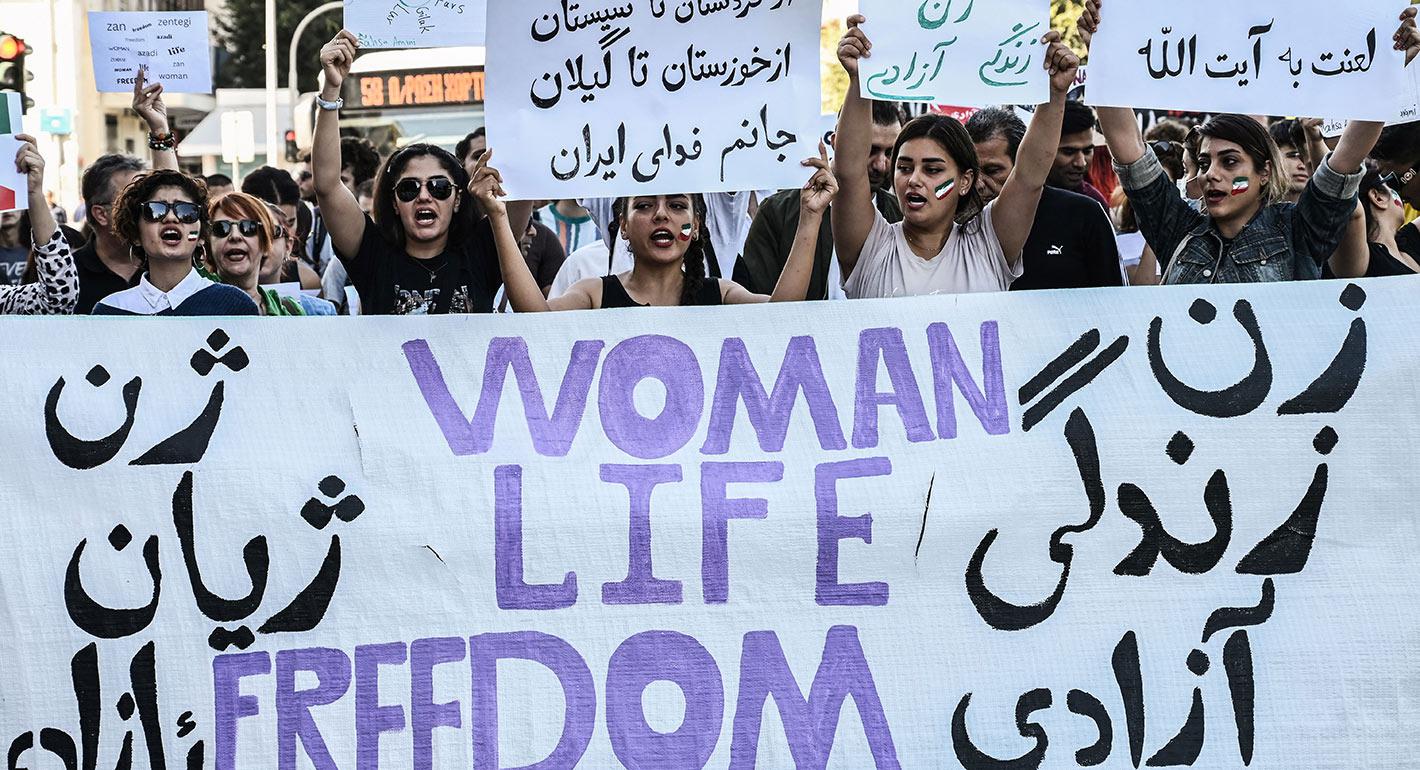
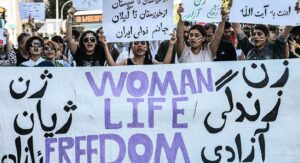
    The results of the 1st round of the French legislative elections have disappointed those of us who were hoping for a miracle. However, the polls conducted the day after the European elections gave 35% to the National Rally (RN) and 25% to the New Popular Front (NFP). After three weeks of campaigning, the gap has narrowed to 33.1% for the RN and its allies and 28.0% for the NFP. The gap has thus been reduced from 10 to 5 points. The count is certainly not there yet, but a dynamic is underway.

    With a view to the 2nd round next Sunday, we must not give up on a possible victory for the NFP, in particular by trying to mobilize the 33% of abstentions – and among them the 43% of young people aged 18 to 24, whose age group voted 48% for the NFP. However, it must be admitted that a relative majority for the NFP is very unlikely today, given the data from the first round.

    Preventing an absolute majority for the RN

    On the other hand, it is still possible to prevent the RN from winning an absolute majority of seats in the National Assembly, although this will not be an easy task. Indeed, the demonization of the NFP by the Macronist right (20.0% of the vote) and the Republicans (6.6%), as well as by most of the media, makes it more difficult for their candidates to withdraw and transfer their votes to the NFP when they come third.

    This objective is not comparable to that of electing Macron to defeat Marine Le Pen in the second round of the 2022 presidential elections, firstly because a victory for the RN was unlikely then, but also because a second Macron presidency could only prepare the RN wave that we are witnessing. Today, the challenge is to prevent the far right, on the verge of power, from taking control of the state apparatus and using it to its advantage.

    The results of this 1st round are a wake-up call for the left. The RN won 9.3 million votes (10.6 million with its allies). 57% of the blue-collar workers and 44% of the white-collar workers voted for the extreme right. This thunderclap, which had been widely announced, must lead the popular and democratic forces of the left to unite in order to fight the evil at its roots. It’s five minutes to midnight!

    What responsibilities?

    There is no need to recall the responsibilities of the “left” governments, which have not stopped pursuing right-wing policies since the 1980s. But the radical left must also question its inability to build a broad political force, outside the electoral period, beyond the big cities, rooted in the working class and democratically organized on the ground.

    It is not enough to proclaim the New Popular Front to win back the hearts of those who have felt abandoned by the left for several decades. But its programme must outline a horizon of expectations capable of capturing the minds of the broad masses. To do this, it must defend economic and social justice through concrete measures, including the restoration and expansion of public services and social security. These have been sacrificed by the neo-liberal policies of austerity and privatization, which are causing an explosion of social inequality and social exclusion.

    How can we fail to understand that a growing number of modest people today consider it more realistic, in the absence of any prospect of a break with the order of things, to exclude immigrants from an ever-diminishing redistribution of social benefits than to tax the profits and wealth of the capitalists more heavily?

    Left counter-populism

    Etienne Balibar has recently proposed some ways of transforming the New Popular Front from a desirable virtuality into a concrete instrument of repoliticization and to the rebuild a “people of the left”. To do this, he conceives of it as a “counter-populism” based on the self-activity of large sectors of society, whereas far-right populism relies on the passivity of the people and the following of leaders.

    What can be done? He suggests starting with the main social movements that have shaken French society from below in recent years. If they have been more or less stifled, they have not been destroyed. Of course, they cannot be reduced to homogeneous social groups or ideologies, but their strength lies in the fact that they were “popular”, by embodying in struggle the demands of the situation and the moment.

    Offensive struggles that show the way

    What are these movements?

    1) “Nuit debout”, in 2016, combining the defense of workers’ rights against the Hollande-Valls law and the demand for participatory democracy.

    2) The “yellow jackets”, in 2018-19, combining the defense of purchasing power, the symbolic occupation of territory and democratic aspirations (demand for a referendum by popular initiative).

    3) The mobilizations of care and social workers in the face of the Covid-19 crisis, against the lack of resources for basic public services, supported by large sections of the population.

    4) The revolts in the suburbs against institutional racism and police violence, which affected the whole country in June 2023 and are being extended by forms of self-organization in the neighborhoods.

    5) The mass movement against the pension reform, in January-March 2023, which mobilized the whole country and contributed to the reconstruction of an inter-trade union that gave voice to the class struggle.

    6) The “Earth Uprisings” and other mobilizations against the exploitation of land and the depletion of groundwater for intensive agriculture, which are the main ferment of internationalism in today’s world.

    7) Feminist movements that are not reducible to MeToo, even if this issue has revealed the importance of the fight against incest, rape and virilistic brutality for all women today.

    For my part, I would add the movement in solidarity with the Palestinian people, led by numerous self-organized grassroots collectives, which combines the fight against racism in France with international anti-colonial solidarity.

    The movement from below to overturn the status quo

    These movements, although certainly heterogeneous, have in common the ability to go from the defensive to the offensive and to transform anger or despair “into the affirmation of a right, solidarity and the desire to transform the ‘world’ towards equality and justice”. Each of them, in its own way, draws “a concrete utopia without which there is no emancipatory politics” (Balibar).

    The constitution of a united social front presupposes the lived perception that the demands of each of these movements have a universal scope because they respond to common causes. But this perception can only be achieved through the shared experience of many activists on several of these fronts, through their mutual exchange, as well as through their meeting shoulder to shoulder in the context of the broadest mobilisations, such as the one in defence of pensions.

    In this context, more than ever, the anti-capitalist left must reject abstract slogans and sectarian constructions, seeking to defend a set of demands that start from the essential concerns of the social sectors in struggle, to propose unifying responses that break with the logic of capital and the bourgeois state. To form a popular front with the social movement is to support, to paraphrase Marx, the movement of those at the bottom that abolishes the current state of affairs.


  • Iran’s Hijab Law and Electoral Scrutiny

    Iran’s Hijab Law and Electoral Scrutiny

    Amidst the sham or state-orchestrated presidential election in Iran, a grim reality unfolds. Women are being violently arrested by the Morality Police for refusing to comply with mandatory hijab rules or wearing “improper” hijab, dubbed “Bad Hijab.” This misogynistic backlash follows the historic 2022 Woman Life Freedom uprising, led by Iranian women. Despite severe punishments, fearless women persist in their resistance, marking a turning point in the fight against the mandatory hijab.
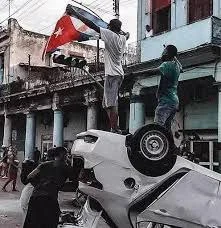
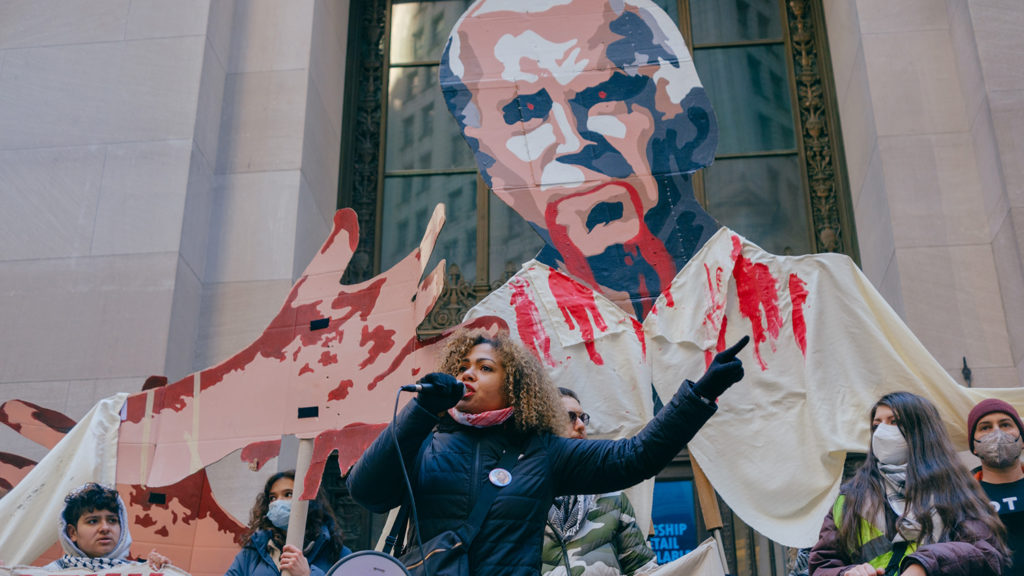
    As the presidential election proceeds, following the death of Ebrahim Raisi, a review of the candidates’ views reveals that none is likely to bring meaningful change to women’s rights and freedom of choice in clothing. Only one candidate refrains  from openly supporting the current crackdown. The state’s war on women extends beyond the mandatory hijab crackdown. It encompasses unjust court sentences and violations of women’s rights in prisons.

    The imprisonment of Nobel Peace laureate Narges Mohammadi and the harsh 21-year sentence imposed on Kurdish women’s rights activist Zhina Modares Gorgi demonstrate the regime’s unyielding stance. The enforcement of mandatory hijab has reached a point of no return, and Iran’s government has already lost the battle in the war on women and girls.

    The current crackdown in Iran, following the inspiring Woman Life Freedom movement, has unleashed a wave of violence and repression as harsh as one can imagine. The reality is that those in power in Iran have not only ignored the demands of women and youth, but have responded with even greater brutality, consistent with historical patterns: When governments face instability or weakness, they often resort to more repressive measures to maintain control. Iran’s rulers are no exception. The combination of corruption, polycrisis and popular discontent has led to a harsher crackdown aimed at preserving their grip on power.

    Over two months ago, in the  early morning  of Sunday April 14, the Islamic Republic of Iran launched an unprecedented attack on Israel, deploying over three hundred cruise missiles, ballistic missiles, and drones. This marked the first direct military engagement between the Iranian government and Israel. Coinciding with this military escalation, the Islamic Republic announced the implementation of the so-called “Light”  or “Noor” Plan or Campaign aimed at intensifying measures against opponents of mandatory hijab. The Iranian government justified this plan as a response to citizen complaints about the increasing number of women not wearing the mandatory hijab in public spaces. However, Iranian civil and political activists suggest that the true purpose of the Noor Plan is to preempt potential protests and opposition amidst the government’s current vulnerability. The plan aims to enforce Islamic Sharia laws, and the compulsory Hijab, in Iran, which mandate women to cover their hair and wear modest clothing, with non-compliance punishable by public reprimand, fines, or arrest. This development highlights the complex interplay between geopolitical tensions and domestic policies in Iran, warranting further academic, journalistic, and activist scrutiny and analysis.

    The recent wave of suppression against women not adhering to the mandatory Hijab has revived the 45-year history of repression, harassment, and denial of women’s rights for their presence in public spaces, particularly in the streets. The Noor campaign implemented to enforce the  mandatory hijab and disregard women’s share of the public space and safe streets, is repeating previous unsuccessful attempts since the establishment of the  Islamic Republic of Iran. The desire of the majority of Iranian society is freedom to choose one’s clothing, and hijab by choice!

    For 45 years, the story of imposing the mandatory hijab and resistance against it  has continued. The disturbing sounds of the slogan “either a headscarf or get hit on your head” still linger in the memories of those who protested  during  the first protest against the Islamic Republic on March 8, 1979. While prior to the 1979 revolution women faced harassment and sexual harassment in public places, they were not  being systematically arrested, beaten and detained.

    For 45 years ago, the mandatory hijab has been enforced through various plans, including the “Hijab and Chastity Plan” and the “Moral Security Plan,” using tools like green vans and Irshad (enlightenment) patrols to control public spaces, and create a gendered, tense, and unsafe environment for women. These plans have wasted significant funds on creating an atmosphere detrimental to safety and security, instead of empowering and improving people’s lives.

    The mental and physical well-being of half of society — women and girls — should not be bound by the obligatory hijab. History reminds us that wherever there is oppression, struggle is inevitable. As Langston Hughes poetically asked, “What happens to dreams deferred? Do they dry like a raisin in the sun? Or will they explode?”

    The struggle against oppression is a perennial phenomenon in human societies, as eloquently captured by Langston Hughes’ poignant query, “What happens to dreams deferred?” Do they wither like a raisin in the sun or explode in a burst of resistance? The Iranian women’s movement embodies this struggle. They have continuously contested the imposition of mandatory hijab and the erasure of their presence in public spaces since the inception of the Islamic Republic.

    The first wave of protests erupted on March 8, 1979, as women took to the streets in various cities, defying the authoritarian regime’s attempts to silence them. The revolutionary uprising in 2022, dubbed “Woman, Life, Freedom,” was the culmination of decades of suppressed anger and aspirations, as women and girls reclaimed their rightful place in public spaces and streets.

    Young women, in particular, have played a pivotal role in this struggle, courageously occupying public spaces and asserting their agency in the face of systemic repression. The Noor Plan is the latest iteration of this oppression, aiming to enforce the mandatory hijab and curtail women’s autonomy over their bodies and choice of clothing. However, this plan has been met with widespread domestic and international condemnation, with scholars like Tahira Taleghani (daughter of the deceased Ayatollah Taleghani) emphasizing that the compulsory hijab violates women’s freedom and dignity. Even some members of parliament have opposed the plan, recognizing its illegality and futility.

    Despite the regime’s efforts to suppress dissent through plainclothes police, facial recognition cameras, and security charges, the will of the majority of Iranians remains unbroken. The Noor Plan has only exacerbated social tensions and crises, deepening the chasm between the people and the government.

    In reality, the street belongs to the citizens. Women and girls, as half of Iranian society, demand their share of public space and safety. They seek a secure environment where their human rights, including voluntary hijab, gender equality, and social justice, are respected and protected by the government’s political will. Today, the street has become a platform for women’s agency, as they creatively and innovatively assert their presence, multiplying courage and planting seeds of hope in hearts.

    As Arundhati Roy remind us, “Another world is not only possible, she is on her way. On a quiet day, I can hear her breathing.”


  • Cuba since COVID: Communist Party represses social unrest

    Cuba since COVID: Communist Party represses social unrest

    Reposted from liberté ouvrière

    The last major protest in Cuba was on 17 March 2024. The government’s public response was to ease the situation by granting the protestors some of the demands they were making. They were not explicitly political. In the eastern part of the country, a food shortage was being aggravated by an electricity cut lasting from over 10 hours to even more than half of the day in small towns. Several days after the service was re-established and supplies delivered, police had detained up to 41 people according to Prisoners Defenders. Since 2020, there’s been more than 900 people jailed for various acts of dissent. The peak was reached during the demonstrations of July 11th 2021 when the Cuban state shut the door to any possible dialogue between the common people and the rulers. [Learn more about July 11th 2021]

    Many intellectuals found this to be a turning point. “For a time, I trusted with my good faith that the current Cuban political system could be reformed by its own initiative but then I got convinced that it won’t” says Alina Bárbara López, a professor and historian with a PhD. in History of Cuban Thought from Central University Marta Abreu of Las Villas. Since March 2023, she has been carrying out an act of civic protest on the 18th of every month. “Mechanisms of social pressure must be used to generate transformations”. As a prestigious scholar, her presence has been constant in the Cuban alternative media since 2017 when she started as a writer in La Joven Cuba and where she acted as a coordinator from January 2021 to January 2023. She also had appearances in Cuba Próxima, Cuba Posible and El Toque. Since July 24th of last year, she has been building up and co-directing “CubaXCuba – Civic Thought Laboratory”.

    What are her demands? In the first place, a democratically elected Constitutional Assembly to redact a new constitution that would be effective in all its parts. Right now, the Cuban constitution is full of contradictions. Though it recognizes all fundamental rights, they get subordinated to the interests of the Single Party and the so called “Socialism” without a clear separation of powers. A leaked video of the main figure of the Judicial Branch, Rubén Remigio, Presidente of the Popular Supreme Court, clearly stated it. He declared, as he gave instructions to his subordinates, that the Cuban judges act to favor the Party. The Criminal Code blatantly shows this. There’s a criminalization of every possible way of dissent under the guise of “mercenarism”. This does not imply that dissidents are receiving a payment in exchange of their political actions or declarations, but simply that their dissent is favorable to a foreign power. Even posting on social media could be subject to criminal prosecution. The application of the Law -which sometimes isn’t applied- corresponds to the “National Interest”. Which means the ruling class’ interest, not the Constitution’s interest itself. A clear example was Archipielago’s* call for a march. Even though that protest is a political right, and that the legal procedure was respected by the organizers, authorities denied its authorization and waged instead a campaign to discredit the most visible figures, who ended up exiled in order to avoid prison.

    The second demand directly appeals to the legacy of the Cuban Revolution. The state should not ignore the situation of the elderly, retired, pensioners and families in extreme poverty. Raúl Castro promised that “no Cuban would go helpless” when he announced the economic reforms. Since the COVID crisis, this has become empty words because the economy rests on tourism. In the summer of 2021, COVID reached its peak leading to the collapse of the Health System with a shortage of food and medical supplies. The results were the protests of 11, 12 and 13 of July. The biggest since 1959. Hurricane Ian’s devastation led to more protests as the whole country’s electrical system went into a blackout. That’s not to mention the persistent shortage of food, of medical supplies and oil. It’s been that way for the last couple of years. The Cuban state blames it on the embargo, on the financial persecution and on information campaigns. The truth is that they keep investing in hotels while putting almost no money into hospitals, transportation, production of food or in fixing the always broken thermo-electrics.  During April of last year, eleven ships were unable to unload their food cargo due to the Government’s lack of funds to pay them. Another cargo fled to another country after several days of sailing around the island. It was carrying oil that would have helped to lessen the electrical blackouts.

    The Cuban Communist Party instigated a dollarization of the economy through privatization. License is needed for private imports which has become the principal food supply for the population. At the same time, inflation is growing. If some make a living with three dollars a month, the prices are however almost the same as in Switzerland or even higher. All of it is possible assuming they have access to very cheap markets such as Brazil, Mexico, Canada, Panama or even the USA (which allows trade with private companies).

    The third demand is the liberation of all political prisoners without mandatory exile. As it’s been said already, the number of people incarcerated for political reasons has increased dramatically in the last four years. The allegations of conspiracy are proven wrong by the evidence used by the state. None of the many videos from July 11th show what could be called an organized protest without internal crowd security. Most protestors are unarmed, unmasked and highly dispersed. Yet many of them were accused of sedition. Several people were even condemned to the harshest penalty, up to 25 years in jail. Last April, a 21-year-old girl from Camagüey was sentenced to 15 years in prison. Her crime? Her Facebook Live stream of the August 2022 protest, was considered “enemy propaganda” and “sedition”. For many dissidents, the alternative to prison is fleeing. Many are encouraged by the State Security Department to abandon the country and others are not allowed to come back. Some are notified when they are about to board their plane, but a few pass the security control and are forced to return to where they came, without being able to land.

    The fourth demand is to put an end to the police harassment of those using their freedom of speech and protest. The last couple of years have been a testimony for Alina of how State Security treats Cuban dissent. She’s suffered a limitation of movement that goes from a police guard outside her house not allowing her to go out, to a non-legal detention in the check point outside Matanzas, where she lives, while she was heading to Havana on last April 18th. A video shows her held inside a police car under the sun. The air conditioner was off and she was forced and beaten inside which left a sprain on her shoulder. Her cell signal or internet were blocked. Her trial, where she was convicted of disobedience, could have led her to jail. She was fined instead, but she refused to pay. The State decided to seize the money from her personal accounts in a very foggy procedure since getting her to jail would create a scandal. [Edit: this article was written on June 17th 2024. The following day the author learned that Alina Bárbara was beaten again by the police. Her testimony in available below in the Youtube video]

    “The conditions in Cuba are tough for those dissenting” she says. “If one dissident is an intellectual, they will be excluded in every possible way and pushed to accept exile. I have refused to flee Cuba and that strengthens the pressure on me. Nevertheless, I believe it is possible to get involved even in this limited way. It would be important if we all coordinate our citizenship since we are isolated from each other. That would be a new challenge and most likely also create an increase of repression.”

    *Archipielago was an attempt to create a civic movement through Facebook

  • How Biden Mutated into a Dove

    How Biden Mutated into a Dove

    Photo: Wyatt Souers (Creative Commons)

    Thus, after eight months of genocide by means of intensive bombing of densely populated Palestinian areas, which has so far claimed the lives of nearly fifty thousand people, between those dead who have been counted and those who are still under forty million tons of rubble resulting from the destruction of no less than 300,000 housing units according to UN estimates, not to mention public buildings, after all this deadly and destructive ferocity by the “Jewish State” compared to which the ferocity of the “Islamic State” looks rather modest, and after continuous efforts to facilitate this genocide by objecting to any project of ceasefire, i.e. cessation of the massacre, especially by exercising veto right at the UN Security Council, here is Biden, the proud Zionist, suddenly insisting on obtaining a ceasefire to the point of submitting a draft resolution to this effect to the UN Security Council last Monday.

    So that no one may imagine that a divine revelation descended upon Biden and his administration, and that they repented of their collusion with the perpetrators of genocide, they were keen to portray their truce project, consisting of a temporary ceasefire along with an exchange of captives as a prelude to negotiations to end the Israeli aggression on the Gaza Strip, as if it were a project that had Israel’s approval, indeed an Israeli project, so that the blame for its failure to come into force would fall on Hamas alone. This is sheer hypocrisy, since Netanyahu has never officially announced his approval of the project, but has acted so far as if he wants to dissociate himself from it. On the other hand, the political leadership of Hamas has demonstrated shrewdness and awareness of the game in hastening to welcome the Security Council’s resolution and express its readiness to negotiate the terms of its implementation, thus returning the ball to the Zionist government’s court after the US administration tried to confine it to its own court.

    This is because the Zionist government is in a state of confusion. Had Netanyahu publicly agreed to the truce project, Gantz and his group would not have decided to end their participation in the war cabinet on Sunday. They attributed their withdrawal to Netanyahu’s reluctance to accept the truce project and set conditions for ending the war that are consistent with Israeli interests and the wishes of the US godfather. The truth is that the goal of Washington’s recent initiative at the Security Council is not to pressure Hamas, but rather to pressure Netanyahu to accept the project officially and publicly. This is in the second place, but in the first place, Biden has been deploying efforts to show that important segment of US public opinion which is upset by the genocidal war waged by the Zionist state, and which constitutes an important proportion of traditional Democratic Party voters, to show them that he is serious in his efforts to stop the war.

    The US administration will escalate pressure on Netanyahu to accept the temporary truce, which they all know will not last more than a few weeks (as explained last week in “Truce in Gaza and the Dilemmas faced by Netanyahu and Hamas,” 4/6/2024), and to end his reliance on the “neo-Nazis” in his government in order to accept the offer of his opponents Gantz and Lapid to form a national unity government that includes Likud, the two main opposition parties, and other Zionist groups less extreme than those of Ben-Gvir and Smotrich. Whether this happens or not, Biden needs to look like a hawk that turned into a dove, in order to mitigate the protests against him that are expected to disrupt the Democratic National Convention next August (19-22) in Chicago, which is when the Democratic Party officially adopts its candidates for president and vice-president.

    This is the secret of Biden’s metamorphosis from a key partner in the Zionist genocidal war to a peace advocate. While this mutation is a tribute to the importance of the protest movement against the war in the United States, we cannot ignore its opportunistic and hypocritical nature and the fact that Biden, Gantz and their entourages differ with Netanyahu on how to liquidate the Palestinian cause after they jointly perpetrated the “Second Nakba”, and not on the purpose of liquidation itself.

    Translated from the Arabic original published in Al-Quds al-Arabi on 11 June 2024. Feel free to republish or publish in other languages, with mention of the source. This translation was first posted on Gilbert Achcar’s blog.

  • Loren Goldner (1947-2024): Crossing Paths with a Revolutionary Internationalist

    Loren Goldner (1947-2024): Crossing Paths with a Revolutionary Internationalist

    Loren Goldner

    Loren Goldner, activist and writer [for New Politics, among other publications — NP eds.], passed away in Philadelphia on April 12, 2024. We first met through exchanging letters in July 1997 after he was laid off from his position as librarian for the Center for European Studies at Harvard University. On a whim, he decided to travel around East Asia for three months. He was fifty and I was a thirty-five-year-old itinerant radical who had been living in Seoul, South Korea since 1994, teaching English and living out of a backpack, but more importantly making contact with Korean revolutionaries and working-class militants. This is where Loren and I found instant affinity.

    In September, when I arranged to meet him at the airport, he told me to look for an “old guy in a blue windbreaker,” a seemingly trivial description that defined my lifelong image of Loren’s humbleness and lack of pretense. He literally had no interest in the spectacular consumer frenzy for commodities and lived a life of extreme frugality. In that spirit, I helped him find a cheap, tiny room in an old-style inn, called a yo-in-sook, in the historic and ungentrified center of Seoul, replete with sliding doors under a tiled roof supported with exposed log beams, that would be fitting for the most ascetic Buddhist monk. He loved it!

    Loren was fascinated by Seoul, so I took him on long walks and introduced my militant Korean friends, many of whom were veterans of the Great Strike of 1987. We found “gritty” workers’ districts, where during long talks over sumptuous – but cheap – dinners we discovered we had both been radicalized in Berkeley, albeit a half generation apart. We contrasted his experience of the tumultuous sixties with my coming of age in the Reaganite eighties. The highlight of his brief first stay in Seoul was attending the annual Jeon Tae-il rally, in honor of the garment worker whose self-immolation in 1970 sparked the modern Korean labor movement.

    Prior to the event in a massive sports arena, we sat on the ground outside, eating snacks and drinking with younger Korean militants. We marveled at a huge contingent of Hyundai auto workers — most of whom had just been driven across the country in charter buses from the company town of Ulsan — marching into the event with such swagger and confidence from their recent strike successes that it felt like watching a conquering army of larger-than-life heroes coming home to celebrate a decisive victory. Loren dubbed them the “workers’ 82nd Airborne,” an insider reference — about the most militant elements of the working class — that we shared for the rest of his life.

    When I left Korea in 1999, both Loren and I had left our marks. I worked with comrades to translate and print as a pamphlet Loren’s Communism is the Material Human Community: Amadeo Bordiga Today. It was very well received because our Korean friends knew next to nothing of this tradition, to the point that some had assumed Bordiga was a Stalinist. Due to our influence, these comrades were translating texts from other unorthodox radical perspectives, like Italian left communism, Dutch-German council communism, and the Situationist International, and publishing them for the first time. South Korea’s military dictatorships, which only ended in 1993, drove political radicals underground and the comrades we met were hungry to learn about revolutionary ideas that had been censored for decades.

    Our paths crossed again in 2001 in Berkeley, when I moved back and Loren was staying for a few months to take care of his elderly mother who was in poor health. When my mom, who was also living in Berkeley, died unexpectedly in her early sixties, Loren saw how hard I had taken it. He borrowed a car and we drove down Highway 1 along the California coast and simply talked. It was the best therapy for grieving imaginable. Several hours later, when we got to Big Sur, we bought burritos, a six-pack of beer and spent the afternoon at the beach, sitting on the sand, eating, drinking, and talking, and finally watching the sun set over the Pacific. There is no remedy that makes the process of mourning easier, but Loren really, really helped me get through that painful and emotionally difficult period.

    Since I knew Loren could not get the memory of those legendary Hyundai autoworkers out of his head, the “workers’ 82nd Airborne,” I was not surprised when he found an English teaching job at Yonsei University in Seoul in 2005. But before leaving, he needed to transport his library of over 10,000 books from California to his new U.S. base in New York City and I agreed to be co-driver. When we had met in 1997, we also bonded over a love of Beat Generation literature, especially Jack Kerouac’s On the Road, so we lived out our Sal Paradise and Dean Moriarty fantasy in our four-day cross-continental road trip (albeit in a huge rental truck). We even stopped in Chicago to visit Forest Home Cemetery to pay tribute to the Haymarket Martyrs. Loren remained in Seoul until 2009 and wrote several excellent accounts of class struggle in East Asia, especially about his visit to the 77-day occupation of the Ssangyong Motors factory at the end of his stay.

    I did not get to see him as often, except for a few short trips to New York City or during his infrequent visits to the Bay Area, but he was one of the only true friends and comrades with whom I have shared so many common interests and passions. We could talk into the wee hours – or for the entirety of a 2,900-mile drive – about anything under the sun, literally. I deeply miss those discussions, yet they have forever shaped my character. Loren’s keen intellect and passion for fighting for a better world will be missed by all who had the good fortune to know him.

    Whenever the working class rises up, with militant strikes or factory occupations, or people fight back against exploitation and oppression anywhere, I will remember Loren, raise my fist in solidarity, and cheer them on in the spirit of those Hyundai “82nd Airborne” auto workers we saw when our paths first crossed in 1997.

    On April 19, 2024, I facilitated a workshop called “Striking to Win: Identifying Chokepoints Along Supply Chains” at the Labor Notes Conference in Chicago. The room was packed with rank-and-file workers from various logistics sectors, like railroad, longshore, maritime, warehouse, and other related industries. I began the session by honoring my fallen comrade; in unison, all ninety of us chanted:

    “Loren Goldner — ¡Presente!”

  • How Israeli Universities Deny Palestinian Freedom

    How Israeli Universities Deny Palestinian Freedom

    Review of Maya Wind, Towers of Ivory and Steel: How Israeli Universities Deny Palestinian Freedom. New York: Verso Books, 2024.

    Maya Wind’s Towers of Ivory and Steel was published two months before the eruption of the U.S. University encampment movement against the Gaza genocide, but the book could serve as its manifesto. A scathing, meticulously researched study of the role Israeli universities have played in Israel’s colonization and occupation of Palestine, the book illuminates the direct relationship between ethnic cleansing and knowledge production, while explaining why Israel’s genocide in Palestine includes “scholasticide,” the destruction of Palestinian higher education that could conceivably help forge Palestinian resistance. The book is also a remarkable toolkit for the Boycott, Divestment, Sanctions movement, which since its inception has targeted the complicity of the Israeli university in the Occupation. Indeed, Wind’s is the most important book for the academic boycott movement since Omar Barghouti’s foundational 2011 book BDS: The Global Struggle for Palestinian Rights (Haymarket Books).

    Wind starts with a history of what she calls throughout the “Settler University” in Israel. She begins with the important fact that three Universities were built by the Zionist movement before statehood in 1948, each of them “directly recruited to support the violent dispossession required for Zionist territorial expansion” (13). The Haganah, a Zionist militia, opened bases on all three of the new universities to “research and refine military capabilities.” (13) The Hebrew University, founded in 1918 at the apex of Mt. Scopus, was meant to signify Zionist political claim to Jerusalem. The Technion in Haifa and the Weizmann Institute in Rehovot sought to advance science and technology in the building of a new state—“Science,” said later Prime Minister David Ben-Gurion, “is one of the most powerful weapons for the realization of Zionism.” (56) To this day, the Technion remains a primary target on the BDS list for its construction of drones and weaponized bulldozers used to raze Palestinian homes. Many Universities across the world—including my former employer Purdue—have formal relationships with Technion.

    Wind’s first chapter, “Expertise of Subjugation,” documents how a settler epistemology informs Israeli academic research and knowledge production. She shows how three fields of academic study—Archaeology, Legal Studies, and Middle East Studies—work in close relationship with the state and military apparatus to generate and legitimate Zionist domination of Palestinians. University-sponsored excavations of Palestinian land magically rename them as parts of Jewish history; legal scholars provide rationales for Israeli military’s bending and breaking of international law. Middle East Studies—the field Edward Said identified as the progenitor of “Orientalism”—in Israel functions to erase or stigmatize Arab or Palestinians and to discourage research or scholarship which challenges Zionist interpretations of the world. Even Arabic is considered a “foreign language” on some Israeli campuses, despite the fact that fully 20 percent of the Israeli population likely speaks it.

    Wind’s chapter “Outpost Campus” details the role of Israeli universities since 1948 in what is officially known as “Judaization,” the state-sanctioned name for settler-colony ideology and practice. Critical to this is the role universities play in the spatial conquest of historic Palestine. For example, Hebrew University’s location on Mt. Scopus was critical to the “Judaization” of West Jerusalem. The University was built on the ruins of the Palestinian village of Sheikh Badr, whose residents were forced out of their homes by the Haganah military. After the Nakba, workers at the National Library and Hebrew University appropriated 30,000 books left behind by fleeing refugees on topics like Islamic Law. (The Nakba is in a way the original scene of Israeli scholasticide: by late April of this year, Israel’s war had claimed 195 heritage sites; 227 mosques and three churches had also been damaged or destroyed, including the Central Archives of Gaza, containing 150 years of history.) The University of Haifa’s construction in Galilee helped Judaize a region wherein Palestinian presence had been considered a “demographic problem.” The University’s Judaization included research and planning for the “mitspim” (or “lookout”) project meant to build over Palestinian lands and create new sites of surveillance for Jewish settlers. Perhaps the most well-known example of Judaization by Israeli universities is Ariel University built on stolen Palestinian land in the occupied West Bank. The University offers academic credits to students volunteering for night shifts as guards in twenty-eight illegal outposts across the West Bank.

    This last fact amplifies Wind’s general thesis that in Israel the role of the University is so deeply embedded in military Zionism as to be almost indistinguishable from it. Her name for this is “The Scholarly Security State”:

    Universities run tailored academic programs to train Israeli soldiers and security forces personnel to enhance their operations.  University institutes and academic courses serve the state through research and policy recommendations, which are designed not only to maintain Israeli military rule but also to undermine the movement for Palestinians rights in the international arena. Departments and faculty collaborate with the Israeli military, government, and Israeli and international weapons corporations to research and develop technology for Israeli military use and international export. (93)

    A key example of the “Scholarly Security State” is the Institute for National Security Studies at Tel Aviv University. After 195 protesters were shot dead during the 2018 non-violent “Great March of Return,” INSS organized a conference to consider how best to “spin” reports of the shootings as a public relations problem. INSS researchers also formulate policy for the state about how to combat the BDS movement, including recommendations for disrupting BDS organizing, and maligning BDS activists for connections with groups described as “terrorist.”

    One of the most famous cases in Israeli academia provides a centerpiece of Wind’s next chapter. Historian Ilan Pappé famously left his position at the University of Haifa to teach at Exeter in the U.K. in part because one of his students, Theodore Katz, was attacked for research about the expulsion of Palestinians from the village of Tantura during the Nakba. Pappé is himself the author of The Ethnic Cleansing of Palestine, a groundbreaking account of how Jewish militias organized the massacres of thousands of Palestinians between 1946 and 1948. He has been a target of the Israeli state ever since. After the Second Intifada, Likud Party activists formed the group Im Tirtzu (“If you will it” in Hebrew) intended to “reinvigorate” Zionist ideology. Its tasks include monitoring Left-wing Israeli academics and intimidation of Palestinian students on campuses. In 2010, the Knesset Education Committee commissioned the group to create a report on “anti-Zionist bias” in Israeli academia. One result has been the continuous repression of any research by Palestinian or Mizrahi (North African) Jews which might challenge Zionist narratives about state formation or crucial events like The Nakba.

    Wind’s final two chapters focus on how the Israeli University represses and discriminates against its Palestinian and Arab student populations. Less than 20 percent of Palestinian women and less than 10 percent of Palestinian men gather degrees from Israeli Universities. Palestinians constitute only 3.5 of faculty at Israeli Universities. Israeli Universities themselves are heavily guarded and gated—Palestinians students often compare the experience of attending University to passing through a checkpoint. Palestinian students routinely face racist taunts, arrests, or discipline if they engage in political protest on campus. As Wind summarizes, “From their entry into Israeli higher education, Palestinian students have been criminalized, police, and targeted by their universities in collusion with the state. Academic freedom in Israeli higher education does not apply to Palestinian students.” (168)

    These conditions have only deepened and been exacerbated by events leading up to and including the current genocide. When the broad-based “Unity Intifada” broke out in 2021, Palestinian solidarity protests at Ben-Gurion University were violently suppressed both by the administration and Israeli settlers who surrounded students chanting “Death to the Arabs!” On-line campus forums were filled with death threats to Palestinian students, literally driving them off campus. Yet for many Palestinian students the overt repression of 2021 constituted a turning point. Said one graduate student organizer at Tel Aviv University, “The mask has come off. We learned that we ultimately can’t count on most of the Israeli academic institutions and students for support.” Said another, “We are a new generation of Palestinian students with a different understanding of our place at the university. We know we have to advocate for ourselves because no one else will protect us.” (192)

    These words could well be spoken by students on U.S. campuses currently engaged in what has been called the “global student intifada.” Wind’s book uncannily shows us past as prologue: that the alignment of Zionist forces in the Israeli government and university foreshadow what Robin D.G. Kelly has called the current “unholy alliance” between support for Israel at the level of the U.S. state, pro-Zionist forces on campuses, and an American version of the “settler” legacy in the form of far-right white nationalist forces who have attacked the student encampments. These, events, too, have produced a “new generation” of students worldwide who have learned to “advocate for ourselves.” This conjuncture has generated the most significant threat to U.S. imperialism since the Vietnam war, and the most vigorous challenge to U.S. support for Israel as a Middle East watchdog for empire.

    At the same time, Wind’s book should give a boost to students and BDS activists who have made both divestment from Israel, and a boycott of Israeli universities, primary targets. The book demonstrates how the U.S. settler University is a mirror up to Israeli higher education system right down to its own history of expropriation and theft of native lands. It shows how alliances between indigenous and racialized groups, anti-capitalist groups, and anti-Zionist movements are necessary for dismantling the settler University. The book also speaks to the immediate role of Israeli and U.S. universities in the current genocidal war: since October, Israeli universities have doubled down on their support for its student-citizen soldiers while U.S. universities have deployed state police and stood by at UCLA while right-wing white nationalists, Zionist forces and campus police cooperated in an assault on a student encampment.

    These events underscore how crucial it is that the global student intifada become its own prologue: to protests against the Democratic National Convention in Chicago, for example, where Palestinian coalitions have already organized a march against Genocide Joe and to wider challenges to U.S. racism and imperialism fed by U.S. support for Israel. The movement of trade unions towards criticism of Israel—like the American Postal Workers union and United Electrical Workers union support for ceasefire—is also an important step for expanding the potential of the Boycott, Divestment, Sanctions movement into workplaces. Because of the encampment movement, there has more progress towards actual University divestment in the past two months than the past 10 years.

    All these advances are necessary to dismantle the U.S.-Israel axis at its differential points of production. Maya Wind’s book has the potential to be a memorable and historic weapon in a war against Zionism that we now seem closer to winning.

  • South Africa: Hanging On

    South Africa: Hanging On

    This article was written before the results of South Africa’s election were known. It now appears that the ANC’s share of the vote has declined to about 42 percent. The country is now facing a period of political turbulence as the political parties in parliament maneuver to form a coalition government. –NP editors

    South Africa has a general election today [May 29] with 28m citizens registered to vote.  Since the end of the apartheid regime three decades ago, the African National Congress (ANC) has won all the elections with substantial majorities.  But this time there is the possibility that the ANC will poll less than 50% of those voting.

    The loss of the ANC majority, if it happens, will not be due to any increase in the vote share of the main opposition party, the mainly white-led liberal Democratic Congress (DC), whose strength is concentrated in Cape province.  The DC’s vote share is stuck at about 23%, more or less the same as in the last election in 2019.

    The potential loss of votes by the ANC is to two supposedly more radical parties, split-offs from the ANC. First, there is the party of ex-President Jacob Zuma called uMkhonto we Sizwe (MK) that is polling about 10% and would take votes away from the ANC in the eastern Zulu heartlands.  Zuma has been indicted for corruption and abuse of power when president.

    The real worry for the ANC and behind them, South Africa’s business elite, is the rise of Julius Malema’s Economic Freedom Fighters (EFF).  The EFF appeals to younger voters with its program to strip land from the wealthy, seize assets from the mining companies and spend the proceeds on education, free WiFi and electricity and 24-hour doctors’ clinics.  Both the MK and the EFF are showing around 11% of the vote in the opinion polls.

    Why is there the possibility that the ANC, the party of South Africa’s overwhelming black majority with the historic legacy of Nelson Mandela, will poll less than 50% of the vote for the first time?  When I covered the 2019 election in a post, I wrote that “In those 25 years, the majority have not seen any startling improvement in their living standards, education, health and public services.  Indeed, for many, particularly young blacks, things are even worse.  Inequality of incomes, wealth and land is extreme; corruption in government and in the party of the black majority, the African National Congress (ANC), is rife.”

    Now in 2024, the situation for most South Africans is even worse than in 2019.  Since 2019, there has been the brutal experience of the COVID pandemic, the ensuing economic slump and a feeble recovery since.  Economic growth has continued to slow almost to a stop. Indeed, real GDP per person is lower than in 2019 and even 2012.

    The official unemployment rate is still well over 30% (8m people) and near 60% for job-seekers between 15 and 24 years old.

    Manufacturing output is contracting and the deficit on international trade is widening.  Government debt to GDP after the experience of COVID has reached a record near 70% of GDP.

    In general, life for the majority of South Africans has worsened since 2019.  The World Bank has what it calls a Human Development Index (HDI) which measures key factors like life expectancy, health, education etc.  South Africa’s HDI has dropped sharply since 2019.

    Indeed, South Africa’s HDI level has been rapidly surpassed or equalled by its economic peers globally, like China, Brazil and even Indonesia.

    Only the high level US HDI has grown more slowly than South Africa since 1990, when the apartheid regime was coming to an end.

    Growth
    US 5.9
    Russia 10.8
    China 63.5
    Mex 17.3
    Braz 22.6
    S Afr 12.9
    Indo 35.6
    India 48.4
    Growth in HDI index since 1990

    And then there is inequality and poverty.  On World Bank levels, some 64% of citizens are living in poverty.  Progress on extending access to basic services (such as water, electricity, and refuse collection) has stalled. Vulnerability to hunger has increased since the COVID-19 pandemic. An estimated 12.9 percent of the population was at risk of hunger in 2022, despite the expansion of social grants.

    And South Africa remains the most unequal country in the world, having seen a widening gap between the haves and have-nots since the end of apartheid in 1994, according to the World Bank.  The bank’s report, titled Inequality in Southern Africa: An Assessment of the Southern African Customs Union (Sacu), released this week, shows that the union is the world’s most unequal region with a consumption inequality over 40 percent higher than the averages for both sub-Saharan Africa and other upper-middle-income countries, the report found.

    The World Bank report notes South Africa is characterised by “high wealth inequality and economic polarisation (particularly across labour markets)”. Wealth inequality is higher than income inequality, with estimates showing that the top 10% of the population hold 71% of its wealth, whereas the bottom 60% hold only 7%. This compares with 50% and 13% respectively for the OECD. No other country in the world can compete with South Africa’s inequality of income and wealth.

    That inequality isn’t only seen in income and wealth distribution; it also manifests itself in unequal access to opportunities—education, health, and jobs—and regional disparities. When the HDI is adjusted for inequality of income and wealth, South Africa looks even worse.  The World Bank’s HDI reduces South Africa to the level of India!

    The bottom line is that South African capitalism presided over by the ANC has failed.  It is decrepit and corrupt, generating power shortages and widespread crime.  Crime is estimated to reduce annual GDP levels by 10%.

    South African capital may have some large mining companies that make good profits, but the overall profitability of capital is low and falling. The big gains in profitability that arose after the end of apartheid have faded since the Great Recession of 2008 and ensuing Long Depression experienced globally.  South African capital is heavily dependent on world economic growth and trade and is being strangled accordingly.

    Source: Penn World Tables 10.01

    South Africa’s business elite is desperately hoping that the ANC under President Ramaphosa will manage to survive with a majority in parliament that avoids any forced coalition with the radical EFF.  The government is now claiming that it has resolved the electricity power outages, a perennial scourge for the daily lives of South Africans.  Eskom, the state electricity provider, has now been able to keep the power on for 50 days.  The government plans privatisation of power and transport on the grounds that this will ensure supply. After the election, the business elite will be pushing for more ‘business friendly’ measures on taxes, deregulation etc.

    For its part, in an attempt to reduce voter support for the radical parties, the ANC has taken the plunge to win votes with a promise to introduce state health insurance for all citizens and a ‘basic income’ grant for the unemployed (but only within four years of winning the election).  This would cost $17bn a year, which the ANC says will be funded by higher taxes, without specifying.

    There is certainly room to raise taxes on the wealthy.  An individual with a taxable income of ZAR100 000 used to pay tax at an effective rate of 33.8% in 1995; they paid tax at 19.8% in 2011 and 18% in 2022, on what the Alternative Information & Development Centre (AIDC) calls “the corporate income tax race to the bottom”. According to AIDC, a progressive net wealth tax of between 3% and 7% on the top 1% of the richest people in the country could raise more than R143 billion in revenue each year, which would cover most of the cost for a universal basic income grant.

    However, the ANC seems reluctant to go down that road to fund any basic income, in case the wealthy and foreign investors desert the country.  These measures will indeed worry the business elite and foreign investors.  But then big business’ own proposed policies of privatization, tax cuts and deregulation are anathema to the electorate.

    Indeed, the hopes of business for the improved health of South African capitalism are illusory.  The South African economy cannot progress on a capitalist basis, with its massive inequalities, weak productive investment and trade deficits.  The best forecasts for annual real GDP growth are for only 1.3% over the next parliament.  That will never create enough jobs for unemployed youth (even if they get some ‘basic income’) and nothing is proposed to deal with the massive inequalities. The trade deficit is expected to widen. Public investment is projected to fall further while the government debt ratio will rise to near 80% of GDP.

    Current President Cyril Ramaphosa is a former trade unionist who turned himself into a ‘businessman’ to make millions. He now presides over a corrupt administration in a weak and stagnant economy and a society with extreme poverty and inequality. South African capitalism is a basket case.  How long can it hang on without a massive reaction from its people?

    First published on Michael Roberts blog.

  • On the Mexican Election: Manifesto of the Revolutionary Workers Party (PRT)

    On the Mexican Election: Manifesto of the Revolutionary Workers Party (PRT)

    Memoria Política de MéxicoTHE ANTI-CAPITALIST AND ECOSOCIALIST ALTERNATIVE, BEYOND THE ELECTORAL PROCESS

    Manifesto of the XIV National Congress of the PRT

    On March 29 and 30, the XIV National Congress of the PRT (Revolutionary Workers Party), the Mexican Section of the Fourth International, met. The sovereign national assembly, militant of the PRT, was held in the Sierra Norte de Puebla to analyze the national political situation and our tasks, but also to update our perspective as a revolutionary party. There we ratify that we are a party for a revolutionary project of today’s society, that is to say, anti-capitalist and therefore ecosocialist, which does not determine its activity according to an electoral campaign, because a true radical transformation of the capitalist and patriarchal system is required, which knows that this can only be possible with the irruption of the masses taking their historical and social destiny into their hands.

    Our political tradition has historical antecedents in the struggles of the working class internationally against imperialism and in the organized participation from below in the struggles of our people. We are a socialist left that has not renounced its ideals of equality, justice and freedom, that continues to fight for a truly democratic society, without exploitation or oppression of any kind, that guarantees a dignified life for all workers, with a workers’ and peasants’ government, of conscious and collectively organized women and men.

    The dominant politics in the current spheres of power is marked by cynicism, pragmatism, opportunism and unprincipled chameleonism, by corruption and attacks, defamation, slander, legal warfare or the use of the legal apparatus to persecute opponents, and by the rule of money and individualism in party politics.  sometimes disguised as “citizen” or “new politics.”

    The empire of bourgeois neoliberalism in politics would like to limit all political options to two camps, to two parties or blocs of parties, but within the system, that is, excluding from the binary system the option proper to the working classes and therefore to the revolutionary left. Wanting to assimilate and manipulate the historical figures of the left and their symbols and proposals, but emptying their radical content. There are those who falsely flaunt themselves with a radical and Trotskyist past, forgetting that a central point of the Trotskyist project is a party with class independence from any bourgeois party, from any project of the system of privileges and exploitation against which we were born fighting since the mobilizations of 1968, in the era of the PRI of Díaz Ordaz and Echeverría.

    Enough of others speaking in the name of communism and Trotskyism to distort their content and their political proposal. The XIV National Congress of the PRT says its word and its proposal in the midst of this prevailing political and ideological confusion.

    IN THE FACE OF THE ONGOING ECOSOCIAL COLLAPSE: ECOSOCIALISM OR EXTINCTION

    The civilizational crisis of capitalism determines the conjuncture we are currently experiencing. This crisis is multidimensional because several recurrent crises converge, intersect and feed back into it: economic, productive, financial, food, health, migratory, political, climatic, war, cultural, and human relations. The productive forces of capitalism are becoming more and more destructive forces. We are facing not only the crisis of a civilization that is decomposing and in which barbarism is advancing, but a crisis that has two aspects that open up the possibility of the extinction of humanity and life on Earth in the short term:

    The first is that of inter-imperialist wars, with confrontations that could escalate to nuclear wars that would mean the end of life on our planet. The risk is not only from the war in Ukraine, but also from Israel’s war of occupation and genocide against Palestine. The possibility of moving quickly from regional wars to new world wars, but with nuclear weapons, which would be catastrophic.

    The second strand refers to the ongoing planetary eco-social collapse, determined by the increasing intoxication of the environment, global and accelerated ecocide, the exceeding of six of the nine planetary boundaries that allow life on Earth as we know it, including the one corresponding to climate change resulting from the rise in planetary temperature. They are factors that feed off each other and accelerate, advancing not in a linear and predictable way, but by untimely leaps, so that they only allow the definitions of possible scenarios, all of them catastrophic in the short term.

    This should not lead us to the search for individual solutions, for supposed humanizations of capitalism, such as green capitalism, or to abandonment due to despair, but to the political struggle for the perspective of ecosocialism. This is the civilizational alternative that aims to ensure a dignified and equal life for all human beings, as well as to save and care for nature of which we are an indissoluble part, with collective and democratic management by the associated workers of the society/nature metabolism, so as to preserve the integrity and restore the balance of ecosystems damaged by capitalist dynamics. True, the minimum program is already revolutionary in the face of the ongoing eco-social collapse. In the face of climate change, changing the system is the alternative, it is necessary to end capitalism to avoid the end of humanity.

    AFTER A SIX-YEAR TERM OF ANTI-NEOLIBERAL RHETORIC, WE CONTINUE TO FIGHT AGAINST NEOLIBERALISM

    The crisis, triggered by the pandemic in 2020, coincided with the beginning of the López Obrador (AMLO) government in Mexico. This crisis added complications and political polarizations to the experience of this government and the new political regime. Because it is a government, unlike the previous ones, which was not imposed by fraud, it has enjoyed electoral legitimacy from the beginning, but also popular support that it has managed to maintain until the end of the six-year term. That legitimacy and support have been the basis for the development of an ideological vision that has become hegemonic, which, in the popular imagination, after so many years of struggle against the neoliberal governments of the PRI and the PAN and the militarization initiated by Felipe Calderón, generated the illusion that it would really be the end of neoliberalism and the return of soldiers to the barracks as AMLO had said in the campaign. This illusion was reinforced by AMLO’s declaration that neoliberalism was ending with his government and that his was different from previous ones. But neoliberalism does not end with a decree, even less so when neoliberal governments for more than 30 years have woven an institutional framework that cannot be ended with a gesture, with partial reforms or with the fight against corruption. Neoliberalism is not limited to corruption; Corruption is part of the system itself and its logic of privatization and therefore of capitalist dispossession and exploitation.

    AMLO’s government and its probable prolongation in the next one with Claudia Scheinbaum, is characterized by being located in the wave of self-styled “progressivisms” in Latin America. The discrediting of neoliberalism and its crisis of legitimacy after decades was reflected in the emergence of political currents in Latin America, since the beginning of the 21st century, that enunciate an anti-neoliberal discourse, with which they propose themselves as a way out within the system itself. Some analysts called them post-neoliberal, “Citizens’ Revolution,” or simply “progressive” to distance themselves from the perspective of socialist revolution. That is why they resort to the Bonapartist expedient of pretending to place themselves above the social classes, although their commitment to the neoliberal structure maintains them as bourgeois states. In the first wave of “progressive” governments, they quickly showed their limitations, as they could not put an end to neoliberalism as they declared and even, in some cases, became involved in corruption. We have called AMLO’s government, which was fraudulent in 2006 and 2012, a “late progressivism” because it arrives in 2018, in the second wave of Latin American “progressivisms” already worn out by their experience in government and by the end of the prices of oil and other raw materials that allowed them to finance their social programs.

    The main contradiction of Latin America’s “progressivisms” is essentially shared by AMLO’s government: anti-neoliberal discourse with welfare-based policies, but maintenance of the central lines of neoliberalism. That is why he insists on affirming that everyone is happy with his economic policy, because the increases in minimum wages (and social welfare programs) are functional to capitalism, because as never before, the profits of the capitalists are extraordinary. Despite welfare, social inequality is maintained and increases at the top, as shown by the existence of Mexican capitalists among the richest in the world.

    At the end of the six-year term, two paradigmatic cases show the contradiction of López Obrador’s “progressivism.” The struggle of the CNTE against Peña Nieto’s education reform and the struggle of the movement for the 43 disappeared of Ayotzinapa. In both cases, the President has admitted that the objectives of these struggles will not be resolved. He has told the CNTE that there is no longer enough time to repeal Peña Nieto’s neoliberal education reform. In fact, both in the case of Ayotzinapa (and, in general, in the case of the disappeared politicians), and in the case of the problem of violence, there is indeed a turnaround. The creation of the National Guard, despite what was initially announced that it would be civilian in nature, is a continuation and deepening of the logic of militarization that began with Calderón. Confronted with this reality, AMLO had to admit that he had changed his mind.

    With regard to Ayotzinapa, the six-year term will end without resolving the case, because when the investigation ran into the army, no further progress was made. And justifying the armed forces, the President himself has dared to point to the movement of the 43, relatives, lawyers and friends as manipulated by the right. The case is more serious because at the same time this government has given more power to the armed forces, the army and the navy, by granting them positions within the state apparatus that were previously headed by civilians. But, in addition, these are positions and institutions where they will manage resources of state-owned enterprises. A new political regime implies a rearrangement of hegemonic sectors of the ruling class. In the case of Mexico, in the new regime in the process of consolidation, an already characteristic feature of this new form of political domination will be the fact that part of these hegemonic sectors in the new regime will be the armed forces, as administrators and representatives of state enterprises.

    The government also denounces feminism as manipulated by the right. The absurd accusation does not understand that anti-capitalist feminism has been fighting the patriarchal structure since before the AMLO government and that it will have to continue to do so after this government. The fight against high levels of femicidal violence and for the right to decide indicate this. It is not an electoral movement or manoeuvre, but an anti-system one and it is not reduced to vulgar manoeuvres, although at election time all parties opportunistically talk about it being women’s time. The fact that for the first time the two presidential candidates are women confirms that parity and affirmative action of women in public office is not a guarantee of feminist consciousness.

    The government’s discourse, trying to disqualify the main current struggles as if they were right-wing maneuvers, ignores the fact that these movements have been going on for some time and are not conjunctural in the face of this government. We have been fighting for the politically disappeared since the time of Echeverría with the emblematic figure of Rosario Ibarra, when many of the current government officials were in Echeverría’s PRI or in the successive PAN and PRI governments.

    The government says that it has launched a “Fourth Transformation” that has put an end to neoliberalism, but has maintained the economic structures (trade treaties and obligations, notably the United States-Mexico-Canada Agreement, continuation of NAFTA) and policies (in the state apparatus) that are properly neoliberal, limiting itself to disputing energy rent for its policies of individualized social assistance.  denying collective social organizations and to promote infrastructure projects. As for the dispute over energy rents, it does so through partial reforms, instead of radically repealing Peña Nieto’s neoliberal energy reform as a whole and with the renationalization of the electricity industry. Or without touching the payment of the public debt, in a relevant way the payment of the service and debt by FOBAPROA. The suspension of the payment of the public debt would be the radical measure that would allow the financing of all social programs and more.

    The other common thread with the “progressive” governments of the region is the continuation of neo-state extractivism, totally insensitive to the serious eco-social problem of the plundering of natural resources, which is related to the enormous wave of violence that covers our country, caused by powerful criminal groups in collusion with businessmen, politicians and the military. Violence and criminal groups at the service of extractivism and the development of capitalism in the countryside. Going to the causes of violence cannot be limited to giving scholarships to young people to serve as free labor for businessmen, but has to do with cutting short the capitalist interests of extractive companies, generally foreign, and the other businesses that develop in the countryside with the protection of hitmen and private armed gangs and collusion with politicians and the armed forces.

    All this shows that there has not been a “Fourth Transformation” in this six-year term. A revolutionary transformation would imply the organized participation of the masses and a questioning of the neoliberal and capitalist institutional scaffolding as a whole, by means of a new Constituent Assembly and a new Constitution. Instead, AMLO’s government applies a plebiscitary democracy that limits the participation of the masses to voting among options of the system, and at the same time, combats social organizations and autonomous collective movements by disqualifying them as corrupt or manipulated by the right. A new Constituent Assembly could have been convened at the highest point of rupture with the PRI and the PAN, when the 30 million votes of 2018. Instead, partial reforms that did not attack the core of neoliberalism and advanced individualized welfare policies were favored. When on February 5, 2024, AMLO proposed his 20 reform initiatives, 18 of them constitutional, he imposed them as the center of his government program on Morena’s candidate, Claudia Scheinbaum, who accepted them and committed to them. They say that the idea is to recover the social character of the 1917 Constitution. However, some of these proposals are reactionary, such as maintaining the role of the armed forces, and others are also debatable, but if we really wanted to recover the character of the 17th in this era, what would be conducive would be a new Constituent Assembly for a new Constitution and not continue with partial reforms. In short, the problem is that a “Fourth Transformation” would have to be revolutionary in the current context, that is, anti-capitalist. And for this, a party different from Morena is required, which is multi-class but with capitalist hegemony, an electoralist instrument (not a party for the struggle) marked by the careerist and bureaucratic dispute for positions, now experiencing a new wave of accommodating defectors from the PRI, the PAN, the PRD and other parties. That is to say, an anti-capitalist, ecosocialist and also feminist, democratic and internationalist party is required.

    BUILDING A REVOLUTIONARY PARTY TODAY

    The XIV National Congress of the PRT has reaffirmed the need for a radical, anti-capitalist and ecosocialist transformation, whose possibility and viability depends on certain objective historical conditions that are given (the civilizational crisis of capitalism) but also on the existence and organization of a broad anti-capitalist force linked to the struggles of the masses.

    It is possible, as has already happened in several Latin American countries, that fed up with neoliberalism, but also with progressive intermediate solutions, there will be new explosions, popular anti-systemic explosions. But as these experiences have also shown, the popular explosion is not enough if at the same time there are not present in the previous struggles and in the crisis, revolutionary militant organizations to overcome the spontaneity towards a radical, fundamental change. That is to say, the objective conditions marked by the capitalist civilizational crisis are not enough if there is not also an ideological struggle to win the masses to an anti-capitalist consciousness. It is necessary to build a counter-hegemonic pole to the current “progressive” consciousness in order to grow into the revolutionary anti-capitalist consciousness.

    A great deal of ideological and political confusion prevails in this area. The recomposition of the ruling classes in a new political regime with a discourse supposedly above class interests and rhetorically anti-neoliberal feeds this confusion, which is strengthened by the positions of those who were part of the socialist left and who today, demoralized by what they consider old unviable ideals, embrace a supposedly realistic and institutional perspective.  absorbed into the capitalist state.

    The PRT is committed to promoting a broad front of social movements and anti-capitalist forces that, while maintaining class independence, fight and resist, whoever governs, until they constitute a broad pole to dispute political power and initiate a real transformation that breaks with capitalism and restarts the interrupted Mexican revolution.

    At the assembly of the XIV Congress of the PRT we paid tribute to our dear comrade Rosario Ibarra, who passed away in April 2022. In these terrible years of the pandemic, many comrades have passed away and we pay tribute to them during the Congress. But in relation to our message and commitment, today it is appropriate to rescue the words of our comrade Rosario in her second presidential campaign as a PRT candidate, in 1988, when she said the following on June 22 at the University City of the UNAM:

    “We aspire to represent that generation of fighters who don’t give up or sell out… To those who, through their action, opened the way for the formation of mass democratic organizations; to those who took to the streets in 1968 with the portrait of Ernesto Che Guevara and saw in him an example of revolutionary stature” (…) “… we want to represent the heretics, those who were burned on the altars of the Inquisition, those who did not adapt to the grayness of the present reality, those who said ‘and yet it moves’, those who did not allow themselves to be intimidated by repression, nor were they seduced by the siren songs of the establishment; to those who keep alive the subversive flame of ’68 and ’86… We are the reddest part of the red flag, as the great Peruvian poet César Vallejo said. We are the ones who don’t want any more Hiroshimas, Auschwitz, Gulags or Military Camps No. 1. We are the ones who are not satisfied with the present, the ones who fight for socialism. Let the reformists and renegades keep their worn-out present. We fight for the socialist future, firmly supported by a present of struggle. We feel more optimistic than ever, at peace with our inner selves because we stand by our convictions. The same thing will happen to this cult of modernity and the reconciliation of rootless classes as happened to the liberal cult. History will regain morality. The memory of the struggles will break the conciliation of the great unanimous commemorations. Living tradition will confront morbid nostalgia. ‘It is by sowing in the darkness that the dawns germinate’ The future is ours!”

    With this spirit inherited from Rosario Ibarra, we continue the tasks of building a revolutionary party in Mexico. It is in this spirit that we call on new generations of militants to join the PRT.

    We understand that building a revolutionary party with mass influence is not a linear process. It is necessary to converge with other militant forces convinced of the socialist proposal and the need for an instrument independent of the bourgeois political forces that are hegemonic today.

    Without sectarianism, we have tried several times to achieve this convergence, as we did at the time with the call of the Mexican Union of Electricians to build a Political Organization of the People and the Workers. But at the same time that we will try every possibility of building a broad party of the working class , we understand the urgency and necessity of the concrete strengthening of the PRT to help that broader process that has the central challenge in this epoch of maintaining class independence.

    But before advances in the construction of a broad revolutionary party, it is necessary to respond to the difficult situation of the struggles of the working classes today, in trade unionism and strikes, in the struggle for justice for the Ayotzinapa 43 and for the political disappearances denounced by Rosario Ibarra and Eureka since the 1970s and the tens of thousands today.  It is necessary to respond to the struggle of anti-capitalist feminism and to the struggles of peoples and communities against ecocidal neoliberal megaprojects, as well as against the violence protected by extractive capitalism of mining companies and other businesses of so-called organized crime.

    These central struggles at this time, whose historical demands are not resolved, are pressured to be postponed or submitted to the rhythms and interests of electoral campaigns and candidacies. The response at this level is the one approved by the XIV Congress to promote an alternative social and political pole to the parties of the government, but also an alternative to the parties of the traditional right of the PRI, the PAN and the PRD. An alternative pole of struggle with a program of struggle for before and after the electoral processes independent of the blocs and parties in the campaign. From some of these movements there are already calls for unity in the logic or political line of what we call the alternative pole, but each movement names it in a particular way.

    In the federal and local elections of 2024 we note the absence of a true socialist left, the absence of a political party that at the institutional level expresses and represents the interests of the working classes of the city and the countryside. The current electoral system, with its exclusion of working-class parties, prevents the casting of a class vote and condemns people to vote as an individual, as a “citizen”, that is, condemned to choose between options of the system, between parties that, although multi-class in their composition, are determined by the hegemony of the ruling classes.

    Even if a new political regime is consolidated and AMLO’s government continues, the constant will be the same. Both the bloc of government parties and the traditional right-wing parties of the PRI, the PAN and the PRD have already demonstrated in practice their government policy, Morena itself is already a party of government.

    Claudia Scheinbaum promises to continue this six-year term of what they call 4T (building a second floor, she says), a government that began in 2018 saying that it would end neoliberalism, but that at the end of her six-year term it turns out that some of the same struggles that confronted neoliberalism continue to fight because the neoliberal reforms were not repealed. Obviously, it is clear that we are also opposed to the hypocritical campaign of the right wing of the PRI and the PAN that seeks the return of the old neoliberal oligarchy.

    The conflict at the end of the six-year term is taking two parallel courses: that of the electoral campaigns and that of the class struggle. For the working classes, peoples in resistance and the important struggles we have mentioned there is no alternative in the electoral process. The alternative lies outside the electoral process. It is the unity of the struggles, yes, but in an alternative social and political pole to the parties of the government and the parties of the traditional right. A pole with a program of struggle before and after the elections, because whoever governs, rights are defended. Beyond electoral promises and calls to vote, the struggle must continue and not be subordinated to the interests of the parties at stake. Only struggle pays.

    Contrary to the media’s versions of what the parties should do, the PRT is built as part of these struggles. This is how we were born in 1976, on the margins of institutionality, as a party for struggle. We will be consistent with this definition.

    On September 22, 2019, comrade Guillermo Almeyra, another paradigmatic reference of our party, passed away. Aware of the seriousness of his state of health, on September 20 he wrote: “To get through the weekend and improve my lungs: this could therefore be my last battle.” My Last Battle, that’s the title of his article published on Sunday the 22nd of that month in which he finally passed away. In this article he recapitulates his experiences of struggle and his militant commitment. In the end he concluded by saying: “If I cannot win this difficult battle that I am fighting, let these flags pass to those who follow me in the race. Long live the Mexican workers! Long live proletarian internationalism! Let’s all come together and build an alternative to capitalism!”

    The XIV National Congress of the PRT has taken up the banners bequeathed to us by generations of militant comrades who went ahead of us on the road and that comrade Almeyra passed on to us “to continue the race”. Its resolutions and the renewed impetus of the militant struggle of the PRT achieved with this Congress must be equal to the historical challenges of the present and the future.

    May 2024.

    PRT CENTRAL COMMITTEE

    On behalf of the XIV Ordinary National Congress


  • The War in Ukraine, International Security, and the Left

    The War in Ukraine, International Security, and the Left

    Update: The 2024 Daniel Singer Prize has been awarded to Taras Bilous for this essay. New Politics is proud to have been one of the original publishers.

    “The Russian invasion of Ukraine has no justification, but NATO…” It is difficult to describe the emotions I and other Ukrainian socialists feel about this “but” in the statements and articles of many Western leftists. Unfortunately, it is often followed by attempts to present the Russian invasion as a defensive reaction to the “aggressive expansion of NATO” and thus to shift much of the responsibility for the invasion to the West.

    One example of this is Susan Watkins’ editorial in New Left Review. In it, the author calls the Russian invasion of a country that is not now and is unlikely to ever become a member of NATO a “war of Russia against NATO,” effectively denying Ukraine’s subjectivity. In addition, Watkins argues that Biden “could no doubt have prevented an invasion had he been willing to negotiate a serious agreement on military frontiers.”

    Such a position has been met with criticism from Eastern European leftist authors, in particular Jan Smolenski and Jan Dutkiewicz. They pointed out that the Eastern European states joined NATO voluntarily, with the support of the majority of their populations, and did so given their own concerns, usually ignored by critics of NATO enlargement.

    Since these issues are often a stumbling block in leftist discussions of the war in Ukraine, let’s examine them in more detail – especially since, in my view, they are also important for shaping leftist strategy on international security issues.

    Finlandization

    Could this war have been avoided by agreeing that Ukraine would not join NATO? Any serious answer to this question must take into account the fact that in the run-up to the war, the Kremlin demanded far more than that. In particular, the draft treaty between Russia and the United States, published by the Russian Foreign Ministry on December 17, included a clause stating that the US would not develop bilateral military cooperation with states that were formerly part of the Soviet Union and not members of NATO (Article 4) – Ukraine, Georgia, and Moldova.

    Some readers may assume that this clause appeared in the draft treaties so that later there would be something to concede during negotiations, but there are good reasons to doubt it. Shortly before the draft treaties appeared, Dmitri Trenin, director of the Carnegie Moscow Center, and Alexander Baunov, a fellow at the same center, wrote that for Moscow’s elites, close military cooperation between Ukraine and the United States had become as unacceptable as Ukraine’s accession to NATO.

    Therefore, although the media often reduced Russia’s demands to Ukraine’s neutrality, they were in fact more serious. The European neutral states, in particular Switzerland, Austria, Sweden, and Finland, are not prevented by their status from developing cooperation with the United States in the field of armaments. All these states also take part in NATO’s Partnership for Peace program. Military cooperation between Ukraine and the United States also began when Ukraine declared its non-bloc status. Ukraine and the USA signed a treaty on military cooperation in 1993, Ukraine and the USA have been organizing the international military exercise Sea Breeze since 1997, and Russia took part in it in 1998.

    After 2014, military cooperation with the United States and NATO was an important factor in the modernization of the Ukrainian army. Without it, Ukrainian resistance to Russian invasion would have been significantly less effective. Had this cooperation ceased at Russia’s request, Ukraine would have been less secure, and therefore the Ukrainian government might have been forced to comply with other Russian demands. In this regard, the term “Finlandization,” used by many authors, better describes the essence of Russian demands. During the Cold War, Finland not only did not join NATO, but also took into account numerous “wishes” of the Soviet leadership, in particular, it rejected the Marshall Plan and extradited all fugitives from the USSR. (In addition, the Finno-Soviet Treaty of 1948 provided for military cooperation between Finland and the USSR in the event of an attack on the USSR through Finland.)

    Finland pursued this policy after its defeat in the war, in which it was allied with Nazi Germany. Realizing that the Soviet leadership could turn Finland into another satellite if it so desired, agreeing to certain restrictions in exchange for maintaining its political system and sovereignty was a rational solution for the Finns. At the same time, Ukraine was not in such a predicament before the current war, and most did not agree to Russian demands.

    Here the difference between the original “Finlandization” and the situation on the eve of the Russian invasion of Ukraine is obvious. The Finnish policy of neutrality and consideration of Soviet interests was based on agreements between Finland and the USSR, while in Ukraine the Kremlin wanted to negotiate with the United States and NATO. At the time, the Kremlin had apparently lost hope that it would be possible to force the Ukrainian authorities to comply with Russian demands, or that pro-Russian forces would come to power in Ukraine. Therefore, the Kremlin decided, against the wishes of Ukraine’s people, to negotiate the future of Ukraine with those whom it viewed as the “masters” of that power.

    It should be noted that the Kremlin may have needed the draft treaties not as a last attempt to negotiate, but to legitimize its invasion. We don’t know exactly when Putin made the decision to invade, and we will only be able to say for sure once the Kremlin archives are opened. But we can assess the information that is available to us. The essence of the Russian proposals was practically a division of Europe into spheres of influence between Russia and the US. I do not know if Susan Watkins understands this, but that is what she actually supported in her New Left Review essay, writing “In calling for a stable settlement of military borders, the Kremlin has a good case.”

    The Cuban Missile Crisis

    Imagine: A nationalist revolution takes place in a country near an imperialist state that regards the territory as its sphere of influence. The imperialist state attempts to prevent the ultimate loss of influence over the politics of the first country using  brute force and in league with opponents of the revolution. A post-revolutionary government regards an alliance with a rival superpower as a guarantee of security. The threat of nuclear war arises. This is a story not only about Ukraine, but also about another country with which many authors, including the aforementioned Dmitri Trenin, have compared Ukraine – Cuba.

    Of course, there are many differences between those two cases. The class and ideological nature of the revolutions and superpowers were very different. But as far as international security is concerned, these differences are not decisive. The Cuban Missile Crisis is indeed a good analogy for Russian aggression against Ukraine, so let’s look at it a little more closely.

    The Cuban Missile Crisis arose from the deployment of Soviet nuclear missiles in Cuba and ended with their dismantling in exchange for US guarantees of non-aggression against Cuba and the withdrawal of American missiles from Turkey. Did military cooperation between Cuba and the USSR cease after that? No. Were Soviet troops (which the Cuban government viewed as a guarantee of its security) withdrawn from Cuba? No.

    In Ukraine, on the other hand, there are no US missiles with nuclear warheads. Even participation in NATO does not necessarily imply the deployment of missiles – in this regard, the example of Norway, which was the only NATO country that shared a border with the USSR during the Cold War and therefore was wary of placing missiles on its territory, is quite telling.

    Moreover, the US, while rejecting Russia’s opposition to NATO’s enlargement, has at the same time offered new arms control arrangements. According to Alexei Arbatov, a member of the Russian Academy of Sciences and a leading Russian expert on security and disarmament issues, until recently these proposals were put forward by Russia as well and were of serious interest in terms of easing tensions and strengthening European security. However, this time, the Russian leadership dismissed them as “secondary.”

    U.S. President John f. Kennedy gave guarantees of non-aggression against Cuba and agreed to remove American missiles from Turkey. In this way, he showed that his primary concern in this case was security. Russian President Vladimir Putin, on the other hand, rejected the US offer and went to war. In doing so, he showed that his primary concern was not security, but his desire for the return of Ukraine to Russian control, or at least the conquest of new Ukrainian territories. Indeed, the caution Western states have shown toward Russia even after the full-scale invasion began shows the hollowness of Russian security concerns. Russia has the best security guarantee – nuclear weapons. The Kremlin itself never tires of reminding us of this.

    With regard to Ukraine, what if the US had made big concessions to Russia? What would they be? In the run-up to the invasion, there were numerous statements that Ukraine’s accession to NATO was not on the agenda. The most outspoken was former NATO Secretary General Jaap de Hoop Scheffer: “Everyone, including Putin, knows that Ukraine will not become a NATO member in the foreseeable and unforeseeable future. It’s already a buffer country. It’s something you’ll never hear NATO Secretary-General Jens Stoltenberg say; his position won’t allow it. But I can say that now.” Nevertheless, the Kremlin demanded a guarantee. Deputy Foreign Minister Sergei Ryabkov first responded to the idea of a temporary moratorium on NATO expansion by saying that it was unacceptable for Russia, and Putin himself spoke critically about it a few days before the invasion.

    Most likely, the Kremlin would only have been satisfied with the complete fulfillment of its demands. But what would that mean for Ukraine? On the eve of the invasion, things were not going well for Volodymyr Zelenskyy, now a political superstar. His popularity ratings were falling, while those of his main rival, former President Petro Poroshenko, were rising. US agreement to Russia’s demands would have greatly exacerbated the situation. And if the Ukrainian government, having lost US support, had met any of the Kremlin’s demands, it would have been guaranteed to lead to a political crisis and an escalation of violence. It is quite possible that this would have created better conditions for the invasion of Russian troops as “peacekeepers.” In this case, Ukrainian realities would have been much worse than they are now.

    I am not claiming that in the last months before the invasion, the West and/or Ukraine could not have prevented war. But a serious examination of this possibility requires deeper analysis and access to the Kremlin archives. I think this will be an interesting question for future historians. In the meantime, those Western leftists, so eager to criticize the US for what Russia did, should refrain from claiming that Washington should have simply complied with Russian demands. After all, it could very easily have been the decision of one man – Vladimir Putin – to prevent the war. All he had to do was not give the order to start the invasion.

    NATO expansion

    Fortunately, on the question of NATO expansion historians have already provided a convincing answer. One of the best analyses published so far is Mary Elise Sarotte’s book Not One Inch: America, Russia, and the Making of Post-Cold War Stalemate. Sarotte does a good job of showing that NATO’s open-door policy has indeed undermined US-Russian cooperation on arms control and the formation of a broader international security system. NATO expansion gave trump cards to Russian revanchists and hawks and buried the political prospects of liberals who advocated closer cooperation with the West, like Foreign Minister Andrei Kozyrev.

    In this sense, the growth of NATO did create favorable conditions for the outbreak of war. But how and why it happened is also important. Tony Wood, in an article in the same New Left Review, writes that the “emergence of an increasingly assertive and militarized Russian nationalism is inextricable from that process [NATO expansion], because it was in large part propelled and reinforced by it.” But what Wood fails to ask is why NATO expansion has caused such a reaction. In my opinion, the answer can easily be found in Sarotte’s book, to which Wood repeatedly refers.

    Was it a reaction to the fact that legitimate Russian security concerns were neglected, as many authors have claimed? I don’t think so. Seriously, how could the accession of the Czech Republic and Hungary to NATO create a threatening situation for Russia? It’s enough to look at the map to give the obvious answer: no way. Then why was their accession to NATO perceived negatively in the Kremlin? Because they recently belonged to the Soviet zone of influence. And also because their accession was part of the formation of a new international order in which Russia no longer had the status of a superpower equal to the United States.

    It was the pain of a lost empire that provoked revanchist sentiments. In Sarotte’s book this is repeatedly seen as, for example, when Yeltsin demanded special status for Russia under the Partnership for Peace (PfP) program, on the grounds that Russia was a “great country with a great army and nuclear weapons” (p. 190). And, Eastern Europeans, after all, could observe these emotions of the Russians with their own eyes. Therefore, instead of talking about the emergence of Russian nationalism, as Tony Wood does, in my opinion it is more appropriate to talk about the transformation of Russian great-power chauvinism as a reaction to NATO’s growth. When it became clear that Russia would not occupy as privileged a position in the new international order as Russian elites wanted, there was a growing desire among them to reconsider this order.

    Sarotte’s book also shows that, up to a certain point, the US tried to accommodate Russian sentiments so as not to obstruct the formation of a more secure international order. In particular, this manifested itself in the PfP program, which was designed to ensure that accessions to NATO would not happen too quickly, but would develop into something more. And characteristically, in President Bill Clinton’s words, “Ukraine is the linchpin of the whole [PfP] idea” (p. 188). In the 1990s, it was obvious to everyone that Ukraine could not join NATO. Ukraine’s accession to NATO was a red line for Moscow primarily because of the same great-power chauvinism, because of the special role Ukraine plays in Russian national mythology.

    According to Sarotte, it was through Ukraine that Eastern European governments who wanted their countries to join NATO agreed to participate in the PfP as a compromise. But events in Russia, such as Yeltsin’s anti-parliamentary coup in 1993 and the war in Chechnya, increasingly pushed Eastern European states to pressure the US to allow them to join NATO. They managed to get Article 5 extended to them to shield themselves from possible armed aggression from Russia. But the result was a new dividing line in Europe that separated Ukraine from its Western neighbors. Countries that were less threatened by Russian aggression became better protected, while Ukraine, for which the threat was greater, found itself in a “grey zone.” This is why in December 1994, after the publication of the communiqué on NATO’s open-door policy, Kyiv became nervous, while Moscow was furious (p. 201).

    Another negative consequence of NATO enlargement was that the process of transforming the CSCE/OSCE, a conference for East-West dialogue created in the 1970s[1] into an international organization was never actually completed. The US decision to make NATO the bedrock of security in Eu­rope has made the  strengthening of the OSCE irrelevant. Had NATO’s open-door policy started at least a few years later, it would have provided an opportunity to turn the OSCE into a more effective organization.

    After the start of the full-scale Russian invasion of Ukraine, the OSCE became a completely irrelevant and most likely dead organization. But this should not prevent us from seeing alternatives to the development of the international security system. The OSCE Special Monitoring Mission had played an important role in resolving the war in Donbas. But its influence could have been much greater if its mandate had been expanded. Ukraine constantly demanded this, but thanks to consensus decision-making in the OSCE, Russia constantly blocked this decision. Thus, the Kremlin sabotaged implementation of point 4 of the Minsk Protocol, which provided for monitoring by the OSCE mission of the entire section of the Ukrainian-Russian border in the combat zone (and not just at the two border checkpoints that Russia allowed until fall 2021).

    NATO and the CSTO

    Before turning to the results, let’s look some more at attitudes toward military alliances. It might help to compare NATO to its Russian counterpart, the CSTO (Collective Security Treaty Organization established in 1992).

    First, it is possible to argue that NATO is a contradictory phenomenon, which on the one hand serves as a cover for US imperialism, and on the other hand is an instrument of protection for many smaller countries. In the same way the CSTO is a cover for Russian imperialism and was recently used to suppress a popular uprising in Kazakhstan, but serves as protection for a relatively democratic Armenia. Acknowledging this fact does not make you a fan of either American or Russian imperialism.

    Second, Susan Watkins writes that NATO proved “dispensable” to invade Iraq, but she does not say that this was the case because of French and German resistance. It is also telling that Kazakhstan refused to send its troops to Ukraine, even though the invasion began a month and a half after the Kremlin helped suppress the uprising in Kazakhstan. But just as this was not an insurmountable obstacle for the United States – it created a Multi-National Force, bypassing NATO – so for Russia, Kazakhstan’s refusal did not prevent it from launching the invasion of Ukraine. It should not be forgotten that the key problem in both cases is imperialism (American or Russian), not NATO and the CSTO.

    Third, we should stop identifying all military actions of member countries of military alliances with the actions of these military alliances. It is not NATO as an organization that is now conducting a military operation in northern Syria, it is Turkey. And the problem here is Turkish hostility to the Kurds, not NATO. Likewise, if Turkey attacks Greece, it is not NATO attacking one of its members. Also, it is not the CSTO that is now at war against Ukraine, but Russia with the help of Belarus. Fortunately, Kazakhstan and Armenia are not involved in the war.

    In addition, one should not identify NATO and “the West” as Susan Watkins did in her statement “NATO won the Cold War without firing a single shot.” But it wasn’t NATO that won the Cold War, it was the West that fired many shots. NATO is only one of the tools. It is not surprising that a group of states, some of which had an aggressive neo-colonial policy, also had among their many instruments a defensive alliance, whose functions changed only after this group of states won the Cold War.

    Fourthly, the US and Russia can do without NATO and the CSTO for their imperialist policies, but there is no defense alternative for the Eastern European states and Armenia yet. And if you cannot offer an alternative to the people of countries that seek protection in such structures, it is better not to urge them to give up such protection.

    An outline of a leftist strategy for international security

    The decisions made in the 1990s–2000s have already become history, and the past cannot be brought back. Focusing on these mistakes now is the same as criticizing in 1939 the Treaty of Versailles, when it had already lost relevance. What are needed now are concrete solutions that can hasten Russia’s defeat and make today’s world a safer place. On the other hand, as with the Treaty of Versailles, old mistakes can provide lessons for shaping postwar policy.

    Did the expansion of NATO have an impact on the outbreak of this war? Yes. But there are very different ways of talking about this. When leftists and “realists” say that NATO expansion “provoked” Russia, they are thereby saying that to some extent the Russian invasion was at least partially justified, even if they deny it. Watkins does the same, arguing that the Russian invasion “was not unprovoked.” It is the same as saying that the Cuban Revolution and the cooperation of Fidel Castro’s government with the USSR provoked the United States. Of course, it is not a problem for “realists” to say so, but who on the Left would justify the aggressive US policy towards Cuba in this way?

    The fact that the Cuban Revolution was more progressive than the Ukrainian Maidan is no excuse for such a double standard. If any imperialist state saw a revolution in its sphere of influence as a threat to itself and a “bad example” for other countries in its sphere, socialists should not use the fact that this revolution was supported by a rival superpower to condemn the revolution. It should also be noted that this applies not only to the Maidan of 2013–2014, but also to Ukraine’s Orange Revolution of 2004. It was after the latter event, a few years before the NATO Bucharest Summit, whose declaration proclaimed that Georgia and Ukraine “will become members of NATO,” that there was a noticeable landslide in Russian politics, indicating that the Russian elite viewed the events in Ukraine as a threat to itself.

    The comparison with Cuba also tells us that we must treat different concerns differently. The deployment of nuclear missiles near a country’s borders and the entry of a neighboring country into a military bloc or military cooperation with a rival state are of a different order. We should support and call for mutual restrictions on the deployment of nuclear weapons (and for global nuclear disarmament in general). But sometimes the only real alternative to military cooperation with one imperialist state against another is the total subjugation by an aggressive imperial power. Privileged inhabitants of Western countries, who do not have to worry that their country might be conquered by Russia, have no moral right to criticize those who seek protection in cooperation with those Western states. And if one criticizes any military cooperation, then criticism should not turn into support for the division of Europe or the world into spheres of influence.

    Does this mean that the Left should have supported NATO expansion? No. Jan Smolenski and Jan Dutkiewicz argued that an intellectually honest critique of NATO expansion would lead to a critique of Eastern European politicians and voters who have embraced the ideals of democracy and national self-determination. But it did not. Eastern European democracies had the sovereign right to make the choice they considered best for their security. But a country’s entry into an international organization depends on the decision of both sides. And the US had to make a choice that would better ensure the security of not only those states that joined NATO, but also those that were not joining NATO. The addition of countries to NATO may have increased their security, while harming Ukraine’s. From this perspective, the rapid transition to NATO’s open-door policy was wrong.

    As Mary Sarotte and Ukrainian historian Serhii Plokhy pointed out in a joint article, in the 1990s the US had a much better and much less costly chance to solve the security issue for Ukraine than it did. First, they could have prioritized the development of the Partnership for Peace program over the rapid expansion of NATO. Second, they could have given Ukraine effective security guarantees in the 1994 Budapest Memorandum. Ukraine demanded this at the time, but under general pressure from the United States and Russia, the Ukrainian government was then forced to agree to a worthless piece of paper. Not giving such guarantees in exchange for nuclear weapons was a terrible mistake that, in the long run, dealt an even greater blow to nuclear disarmament than NATO expansion.

    However, that was more about the past. What conclusions can be drawn for the Left’s approach to international security for the future? For the Western European Left of recent decades, if there was any alternative to NATO, it was the idea of a common international security system that would encompass “West” and “East” after the end of the Cold War. But if it made sense in the 1990s, it already looked unrealistic after 2008 and more so after 2014. For some reason, however, these leftists stubbornly ignored the fact that Russia, which in the early 1990s advocated an enhanced role for OSCE, subsequently  became the main opponent of OSCE reform and strengthening. Another part of the European Left, particularly the Polish left-wing alliance Lewica, proposes a European security system as an alternative to NATO – a common army, a missile defense shield, an energy policy, etc. Such a system would help EU members but not those outside the EU. On the contrary, this project carries with it threats of “Fortress Europe” (the same could be said of the previous idea). Therefore, priority must be given to a global security system.

    In the recent Athens Declaration, Jeremy Corbin, Yanis Varoufakis, and Ece Temelkuran said that “lasting peace can be achieved only by replacing all military blocs with an inclusive international security framework.” It’s difficult to disagree with this, but they didn’t offer ways to create such a framework. At the same time, there is already a system that fits their description, although it performs its functions inefficiently: it is the UN. I know that many are skeptical of the idea of the United Nations. But so far, I have not seen any of the critics suggest a better alternative. And instead of looking for excuses for inaction, we should look for possible ways to push through changes. What is more utopian — to reform the UN, or to create from scratch a similar system that would unite the countries of the Global South and the Global North, but would be more effective?

    Unfortunately, even after Zelenskyy’s statement at the Security Council meeting about the need for UN reform, the only response I have seen in the left-wing media is an explanation of why this is impossible. But this article by Jon Schwarz is revealing for what it never mentions: the “Uniting for Peace” resolution as an alternative to Security Council unanimity. This resolution shows that reform is not so impossible. If the Council really cannot be reformed, its role must be marginalized. In fact, while I was writing this article, a step was taken in this direction: The General Assembly, at the initiative of Liechtenstein, adopted a resolution that provides for an emergency session of the General Assembly when a member of the Security Council uses its right of veto.

    We have the prospect of an escalating confrontation between the US and China ahead of us. And in this conflict, the international Left must not repeat the mistakes many of them have made against Russia. China may not mind sharing spheres of influence with the US, but this is not something the Left should support. Instead of worrying about considering China’s interests, as many leftists have worried about considering Russia’s interests, we should think about how to protect small states from domination by all imperialist states. In particular, the international Left should be thinking about how to protect Taiwan without allowing war, not about how to force Taiwan into submission to the PRC. (The fact that Taiwan is not a member of the UN is a problem to be solved, not a reason not to defend Taiwan.)

    Some leftist authors have pointed out that the population of states that abstained during the UN General Assembly vote on Russian aggression against Ukraine combined is nearly half the world’s population. But to suggest that this represents the position of half of humanity is to ignore Chinese imperialism and the Indian far-right government. In my view, more important was Barbara Crossette’s observation that small states, in particular India’s neighbors, have predominantly supported Ukraine. Obviously, they were feeling threatened by neighboring great powers.

    We do not need to idealize the UN at all. So far, it really is an ineffective instrument. And even without the problem of the veto power of the permanent members of the Security Council, there are other serious problems with the UN Charter. As Darrel Moellendorf has rightly pointed out, the principle of the sovereign equality of states under the UN Charter means not opposing armed incursions into the territory of other states at the invitation of the official government of that state to suppress revolution, but opposing states’ support for revolutionary movements in other states. This contradicts the ideas of socialist internationalism. And in this respect, those leftists who justified the Russian invasion of Syria by referring to the legitimacy of this invasion have actually betrayed socialist principles.

    But despite all its shortcomings, for now the UN is the only real alternative to military alliances to protect weaker countries from subjugation by stronger neighbors and the most promising instrument for democratizing the international order and increasing the influence of small and poorer states.

    As I wrote in another article, perhaps it is now because Russia is invading Ukraine that for the first time in all the years of the UN’s existence there is a real chance for reform. In past decades, this was almost impossible, and in a few years, the confrontation between China and the United States may become so acute that it will be impossible again. Therefore, we need to act on this now. And the greatest responsibility lies with the Left that resides in the countries that are permanent members of the Security Council.


    P.S. Methodological remark. In her article, Susan Watkins accused the press of “casuistic contortions.” In using the word in this sense, she follows the tradition established by Blaise Pascal’s Lettres provinciales, which sharply criticized Jesuit casuistry. But in fact, Catholic casuistry as a method of practical reasoning was not such a negative phenomenon. Incidentally, this year Verso Books published a work by Carlo Ginzburg on Pascal, Machiavelli, and casuistry. In a broader sense, casuistry is inherent in many cultural traditions. And in the past few decades casuistry has experienced rehabilitation and revival in moral philosophy. So, to forestall accusations of casuistry, I will write at once that my approach in this article was casuistic, in a good sense.

    [1] Conference on Security and Co-operation in Europe (CSCE) which became the Organization for Security and Co-operation in Europe (OSCE) in January 1995. Eds.