Category: U.S. Foreign Policy
The US administration has annexed the Syrian conflict to its own war on terror. It has tried to impose its battle on Syrians so that they will abandon their own battle against the tyrannical discriminatory Assadist junta. … [but] the war on terror is centred around the state; it is a statist conception of the world order which strengthens states and weakens communities, political organizations, social movements, and individuals… In the record of this endless fight against terrorism there has not been a single success, and thus far three countries have been devastated over its course (Afghanistan, Iraq and Syria).”[1]
– Yassin al-Haj Saleh, former Syrian Communist dissident who spent 16 years in Assad’s dungeons
Introduction
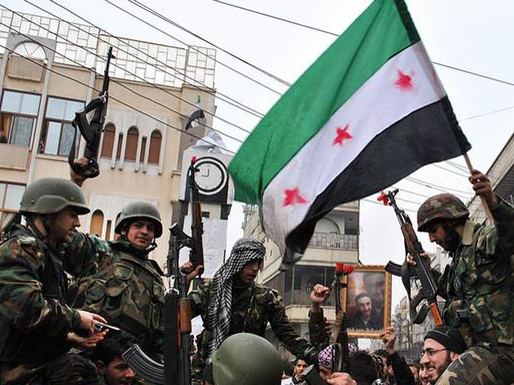
This article deals with a specific aspect of the US role in the Syrian conflict: its drive to co-opt the Free Syrian Army (FSA) into a proxy force to fight only the jihadist forces of Jabhat al-Nusra (now Jabhat Fatah al-Sham, or JFS) and the Islamic State (ISIS/Daesh), while giving up their fight against the Assad regime.
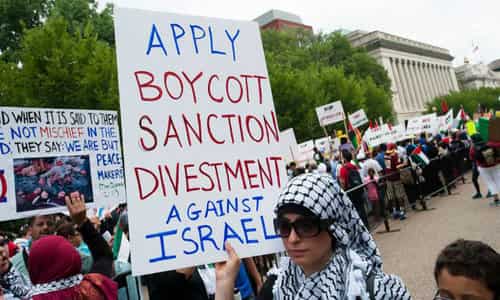
IF THERE WAS any “Israel-Palestine peace process,” Donald Trump torched it with his December 6 announcement recognizing Jerusalem as the capital of Israel and the transfer of the U.S. embassy to that bitterly contested city. But there are two more important underlying realities.
Congress was given a chance to stand up for basic humanity and the Constitution, but instead chose to lay an egg, a rotten one at that. It rejected a chance to use the War Powers Act to halt U.S. collaboration with Saudi Arabia’s ruthless war and siege tactics in Yemen. Instead it passed a resolution that could have been written by the Saudi kingdom’s lawyers and publicists.
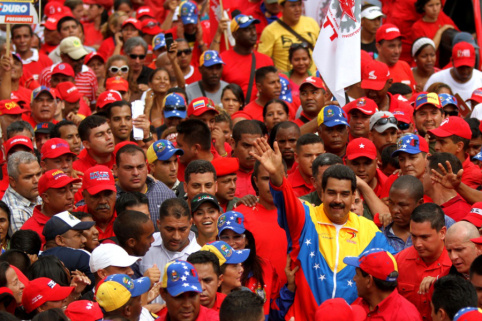
The political crisis that has been shaking Venezuela for months is at the heart of a war of information and propaganda, which is even inviting itself, albeit for other purposes, into the French political debate. Beyond binary discourses, we wanted to take the risk of complexity with Fabrice Andreani, doctoral student in Lyon-II University, who is working on the Bolivarian revolution. [CQFD]
 (Normally my writing, especially when facing new situations,is the result of discussions with my comrades. But these days we are practically incommunicado. That’s why even more than in other cases, this article is entirely my responsibility. And, at the same time, I write with incomplete informatioin, the result of the same lack of communication, and therefore everything that I write is, even more than usual, subject to future correction. – RB)
Crises raise new, sharp problems that unveil and accentuate both the admirable and the negative aspects of the societies they affect. They also pose new tasks and offer new perspectives on already established plans. The case of Puerto Rico and the effect and response to the strike by Hurricane María is no exception.
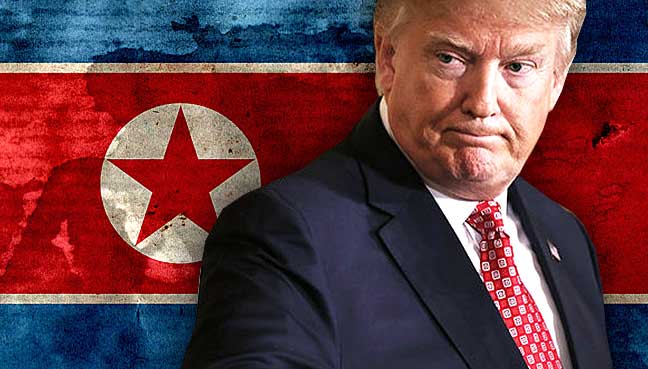 U.S. President Donald Trump crossed to new stage in the annals of warmongering in his United Nations speech of September 19 when he declared, “The United States has great strength and patience, but if it is forced to defend itself or its allies, we will have no choice but to totally destroy North Korea.” This threat to incinerate an entire nation of 25 million people amounts to nothing less than genocide. At the UN itself, the speech was met with stunned silence, with one major exception, vigorous applause from the militaristic Prime Minister of Israel, Benjamin Netanyahu.
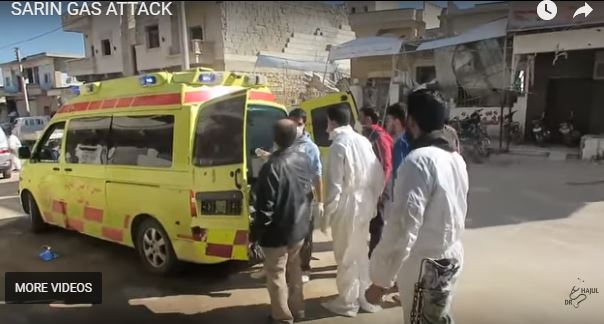
Journalist Seymour Hersh was interviewed by Aaron Maté of the Real News Network on June 26 after he wrote an article called "Trump's Red Line."
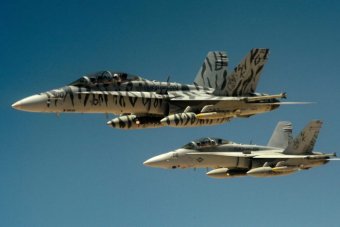
For the first time in the six-year Syrian war, the US shot down an Assadist warplane on June 18, in defence of its allies in the Syrian Democratic Forces (SDF), the US-backed military and political front dominated by the Kurdish-led People’s Protection Units (YPG). Assadist warplanes had carried out the highly unusual act of bombing the SDF in the town of Ja’Din, near Tabqa in Raqqa Province.
JUNE 2017 IS THE FIFTIETH ANNIVERSARY of the 1967 Middle East War—the June War or, as Israelis like to call it, the Six Day War.
Why should we care today about this historical event? For one, the war—with its resulting conquests, refugees, and shifting alliances—helped define the modern Middle East and make it one of the world’s great flash points for further conflict. But there are other reasons as well why this war bears re-examination.
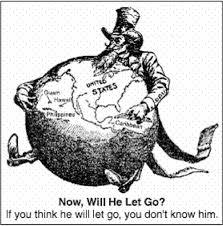
[The following article was written as a contribution to Solidarity’s pre-convention discussion.]
Foreign policy elites are freaking out:
“President Trump has accomplished an extraordinary amount in a short time. With shocking speed, he has wreaked havoc: hobbling our core alliances, jettisoning American values and abdicating United States leadership of the world. That’s a whole lot of winning — for Russia and China.”
Those are the lamentations of Barack Obama’s national security advisor and ambassador to the United Nations, Susan E. Rice (New York Times, Saturday, June 3, 2017, “To Be Great, America Must Be Good.”)
Fellow socialists and leftists, it is time to dispel that illusion that somehow Putin’s Russia of today is somehow positively connected to the USSR of yesterday. That simply is not the case.
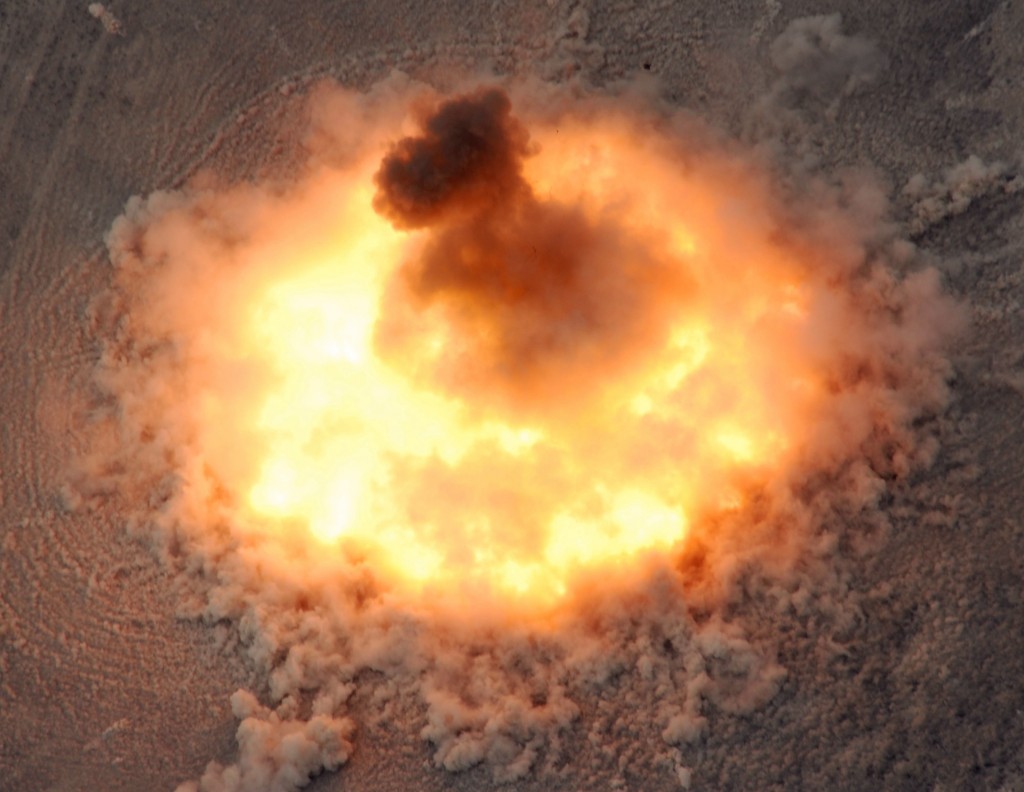 The GBU-43/B Massive Ordnance Air Blast (MOAB) or “Mother of All Bombs” was dropped in Afghanistan at a time of great international tension. Sarin gas had filled Syrian hospitals with civilians, threatening to draw Russia, the United States, and their allies into direct war. U.S. warships retaliated by striking one of Assad’s air bases while Donald Trump shared dessert with China’s President Xi Jinping. Hot on the heels of their meeting, Trump (erroneously) declared that another set of warships were en route to intimidate North Korea and its allies. Alarming rates of Syrian and Iraqi civilian causalities from coalition airstrikes were dominating headlines and before the dust had settled, the largest non-nuclear bomb in the U.S.’s mighty arsenal incinerated an ISIS encampment in eastern Afghanistan.
Iraq Veterans Against the War (IVAW) condemns in no uncertain terms the bombing of Sharyat airbase in Syria six days ago by Donald Trump’s administration. As veterans of the unending and expanding wars conducted over the last 16 years, we know intimately that U.S. military intervention exacerbates and further militarizes conflicts overseas and that the people who pay the greatest price are the everyday people of occupied nations. We also know that this is not the first time our military has been used in the Syrian conflict. U.S. bombs have been dropped on Syria under both the Trump and Obama administrations, resulting in more than a thousand civilian deaths.
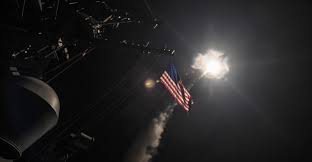
Within a few days in April, the Trump administration pivoted away from its nearly open support for the Assad regime to a military attack on it. This was followed by harsh language against Russia, the setting off of a huge bomb in Afghanistan, and the dispatch of an aircraft carrier armed with nuclear weapons toward North Korea.
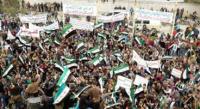 We are horrified by the relentless, cruel attacks of the Assad regime, aided by Moscow and Tehran, on the Syrian people. For sheer brutality the butchers in Damascus have few equals in the world today. But we also wholeheartedly condemn U.S. bombing and military forces in Syria, which will kill innocent people and contribute nothing towards a just solution to the Syrian conflict, while at the same time serving to deepen the reactionary U.S. military presence in the Middle East and reinforce Assad’s rhetorical claim that he is defending the Syrian people against Western imperialism, hollow though that claim may be.

What explains the enthusiasm in certain quarters of the left for Vladimir Putin and Russia?

“This is the end, my only friend, the end/Of our elaborate plans, the end/Of everything that stands, the end/No safety or surprise, the end.” – Jim Morrison, The Doors
Will Donald Trump’s ascension to the imperial presidency mark the nadir of the declension of the United States as the global hegemon? While Trump’s fantasies about “making America great again” do not explicitly rely on promoting the US as the “indispensable nation,” they, nonetheless, deploy strategies to resurrect the fossil fuel driven expansion of the military industrial state that marked the post-World War II period of US global dominance. Does Trump’s criticism of NATO and “nation building” suggest a less interventionist foreign policy, or does his commitment to white nationalism still augur a redeemer nation, primed to contest those who would challenge US global hegemony? Given the present contradictions of US global hegemony and the policies and posturing of a Trump and his proposed Administration, are we witnessing the end of the American Century and its institutional and ideological commitment to the US as the “indispensable” nation?

After tens of thousands of young people rushed to the streets to denounce Trump’s election, “Sanderista” Tulsi Gabbard’s made different kind of headlines. She answered Donald Trump’s call and went to a vetting meeting. Yes, after the election all the Democrat pols gave the usual clichés about cooperation with Trump on certain matters, as if Trump were just some other Republican. That’s bad enough, but this was something more. Gabbard was actually looking to join the Trump Administration. She denies it. She ludicrously claims this was just a meeting to talk about Syria and the need for peace. As if “peace” was uppermost in Trump’s mind now. As if he wasn’t spending all his time visiting Alt-Right sewers and billionaire clubs to staff his cabinet.
A refreshing, unconventional view, with none of the usual leftist idolizing of Castro. We talk about Fidel's popularity in Cuba among the older generation, his success in standing for Cubans against U.S. designs, the dictatorial power he seized and some of the huge moves he made in Africa, some good, some awful (Eritrea, Syria, Ortega's Nicaragua today).
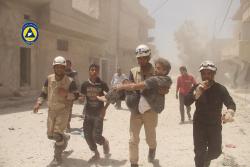
It’s painful to read Scott Ritter’s “The ‘White Helmets’ and the Inherent Contradiction of America’s Syria Policy” and see him joining the ranks of the conspiracists on Syria.
- « Newer Posts
- 1
- …
- 4
- 5
- 6
- 7
- 8
- 9
- 10
- …
- 14
- Older Posts »