Category: Ecology

A fast, when done in protest, is a call to arms. While eminently non-violent, it is a battle cry, issued in a whisper.

Since the 2015 UN Paris Agreement, climate geoengineering – the intentional large-scale manipulation of the earth’s natural systems – has shifted from the margins to the mainstream of climate policy discussions. The idea counts among its supporters both liberal technocrats and neoconservatives like U.S. Rep. Lamar Smith, a notorious climate denier who sees geoengineering as an alternative to “forcing unworkable and costly government mandates on the American people.”
A year ago at the World Economic Forum, China’s president, Xi Jinping, won plaudits from Davos elites for his commitment to open trade. Of course, because China’s economy is heavily dependent on exports, so-called “free trade” is in its interest, so President Xi’s stand was no surprise.

In an era when the federal government is increasingly dominated by fossil-fuel interests that limit regulation of oil rigs and pipelines, the environmental justice movement seems to have diminished significantly.
Ecosocialism: A Radical Alternative to Capitalist Catastrophe, while excellent and valuable in its own right, isn’t quite the introduction to “green Marxism” that one might have expected. Michael Löwy is a veteran for decades of the democratic revolutionary left in France and a frequent contributor to New Politics.
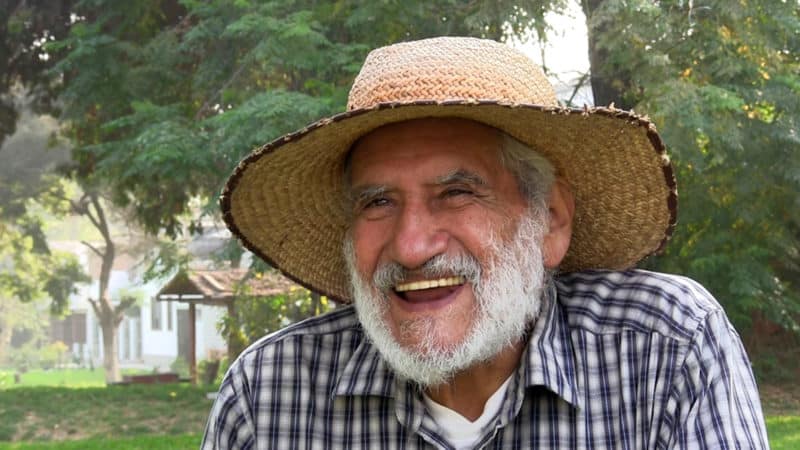
On a gray Saturday afternoon in Lima, Peru, this past April, I received a phone call from Hugo Blanco, veteran guerilla and survivor of multiple death sentences. “You wanted to talk?” he asked. “Come over now.” An hour later, after a ride through the city’s torturous streets, I was in the plaza in front of his house, an unpretentious single-level in a middle-class neighborhood north of the colonial center. I knocked and collected myself; I hadn’t actually expected him to respond to my request.
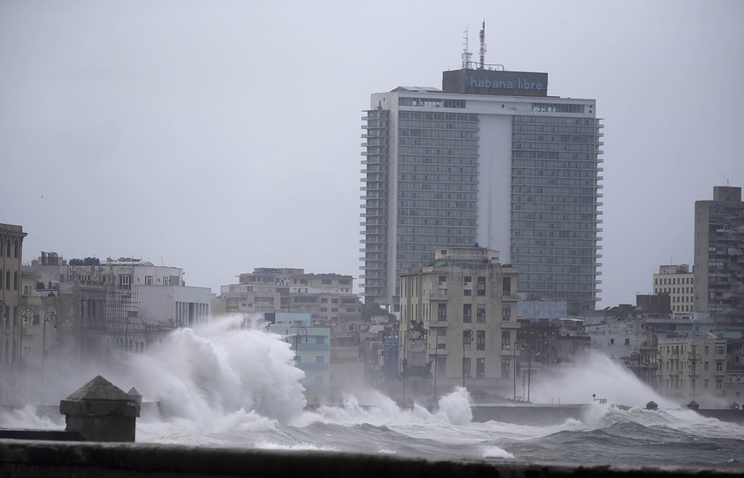
When the decorated “Hero of the Republic of Cuba,” General Ramón Espinosa Martín, rallied his forces in the province of Camagüey in September, it was against an enemy far more dangerous than those he had faced in the Escambray mountains in 1958 during the Cuban Revolution or even in Angola in 1975 resisting US and South African intervention. This enemy was nature itself.
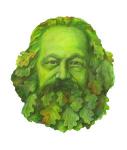
In “Militant Particularism and Global Ambition: The Conceptual Politics of Place, Space, and Environment in the Work of Raymond Williams” (1995), David Harvey discusses the challenges presented by moving from place out across time. In the midst of his involvement in a participatory research project within a high-stakes local struggle against the closure of an automotive plant, he was accused of being a “free-floating Marxist intellectual,” an outsider, and he was given the “evil eye” and asked to explain “where his loyalties lay.” (71) This is in an environment where people were losing jobs, and families and communities were being destroyed.
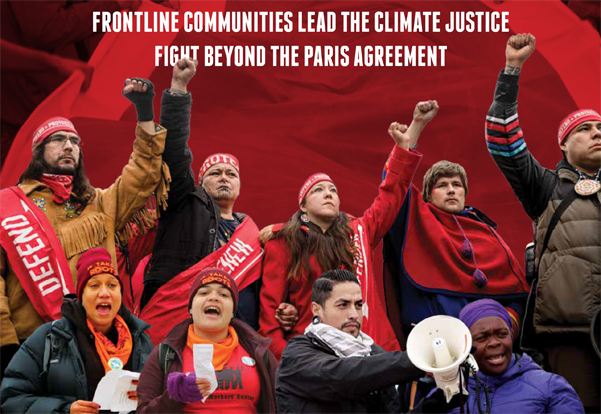
Grassroots Global Justice Alliance condemns Trump's announcement to withdraw the US from the Paris Agreement.

Tens of thousands, many of them scientists, joined the March for Science on Earth Day, April 22, in cities across the United States and around the world. There were some 400 marches in the US with crowds estimated at 20,000 in New York and Los Angeles, some 15,000 gathered on the Washington Mall, and 1,000 in Portland, Oregon. Other marches took place in hundreds of other cities around the world from London to Tokyo.

No one wants their retirement to be financed by companies involved in human rights violations and environmental destruction. But that is exactly what is happening to those of us with retirement funds invested in TIAA.
Victory….for now

The Black Workers for Justice support the struggles of the indigenous peoples to defend their land and treaty rights and their struggles for environmental justice. And in this moment we are in full support of the resistance of the Standing Rock Sioux to the construction of the Dakota Access Pipeline (DAPL). We call on all people to support them politically and materially.

Little has been written about the historical relationship between the movement against the Dakota Access Pipeline and the longer histories of Oceti Sakowin (The Great Sioux Nation) resistance against the trespass of settlers, dams, and pipelines across the Mni Sose, the Missouri River. This is a short analysis of the historical and political context of the #NoDAPL movement and the transformative possibilities of the current struggle.
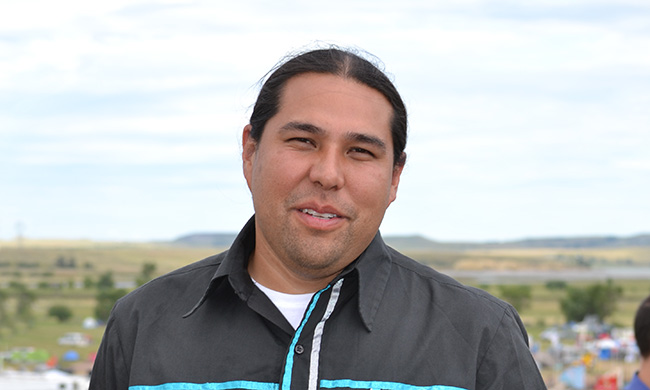
This year’s massive buildup of resistance to the Dakota Access pipeline follows closely on the heels of the victory over Keystone XL pipeline, something often credited to feverish organizing by 350.org. But years before 350’s involvement, there was the Indigenous Environmental Network, which launched that movement and its “Keep It In the Ground” messaging. This time, with nearly 200 tribes unified behind the Standing Rock tribe’s opposition to the pipeline and more than 3,000 people gathered at the Standing Rock Sioux reservation, Native Americans are clearly leading the movement.
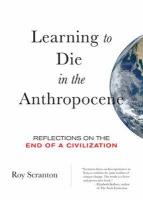 Rather than start his book about climate change with a solitary man contemplating a streambed run dry or taking in the eternal wonders of an old-growth forest, Roy Scranton begins Learning to Die in the Anthropocene in occupied Iraq in 2003, where Scranton served as a private in the U.S. Army.
 I don’t need to tell you we face an existential threat. Scientists tell us we face a “climate emergency.” Last year was the hottest year ever recorded, beating 2014, which beat 2012. We break new records every year. The fourteen hottest years ever recorded have been recorded since 2000. January and February temperatures were torrid.
In a small church in the Albany, New York's low-income, predominantly African-American South End, forty people were gathered for a community meeting. They were organizing a protest against trains carrying potentially explosive oil — dubbed by the residents "bomb trains" — that were running through their neighborhood. City Counselor Vivian Kornegay told the group that many municipalities had opposed the bomb trains and other dangerous fossil fuel infrastructure, but had little power to protect their residents; it was up to a "people's movement" to do so. "What we want is for all of us to be free, healthy, and safe — and for our planet to be a better place to live."
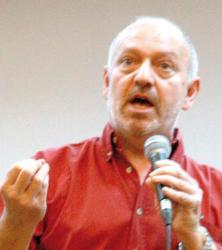
More than 130 of the leaders of the world’s nations are about to sign the Paris agreement on climate change. New Politics had the opportunity to interview Daniel Tanuro, the founder of Climate and Social Justice, a Belgian based environmental organization and author of Green Capitalism: Why it Can't Work. Tanuro’s writings on ecosocialism are well known to those in the European ecosocialist movements. New Politics co-editor Dan La Botz had an opportunity to interview Tanuro about the Paris agreement at the Swiss Solidarity Spring University.
- « Newer Posts
- 1
- …
- 3
- 4
- 5
- 6
- 7
- 8
- Older Posts »