
Category: Ecology
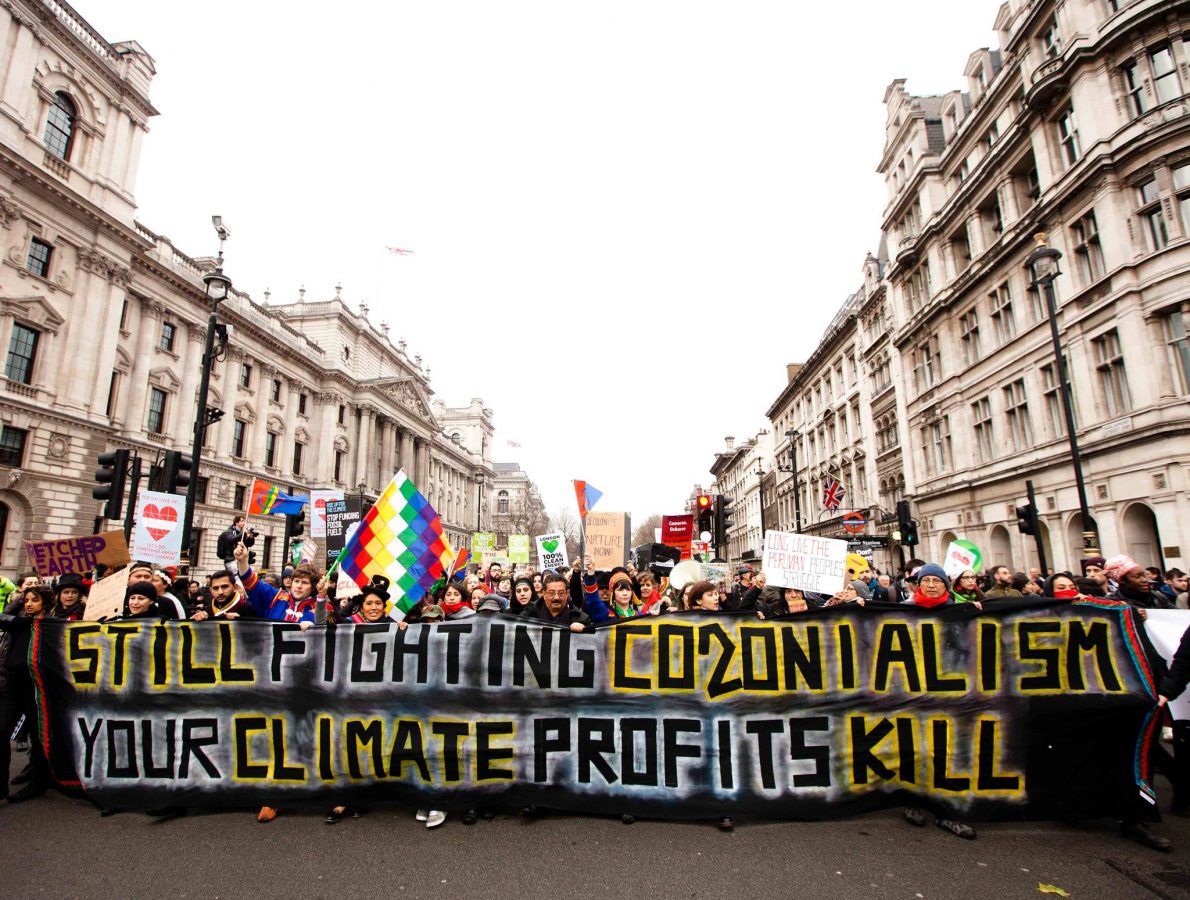
This letter was collaboratively written with dozens of aligned groups. As the weeks of action called by Extinction Rebellion were coming to an end, our groups came together to reflect on the narrative, strategies, tactics and demands of a reinvigorated
Unless drastic changes are made in very short order to the human social system that encompasses the planet, dire and frightening transformations that cannot be reversed will develop in the Earth’s climate, its ocean, and its biosphere.
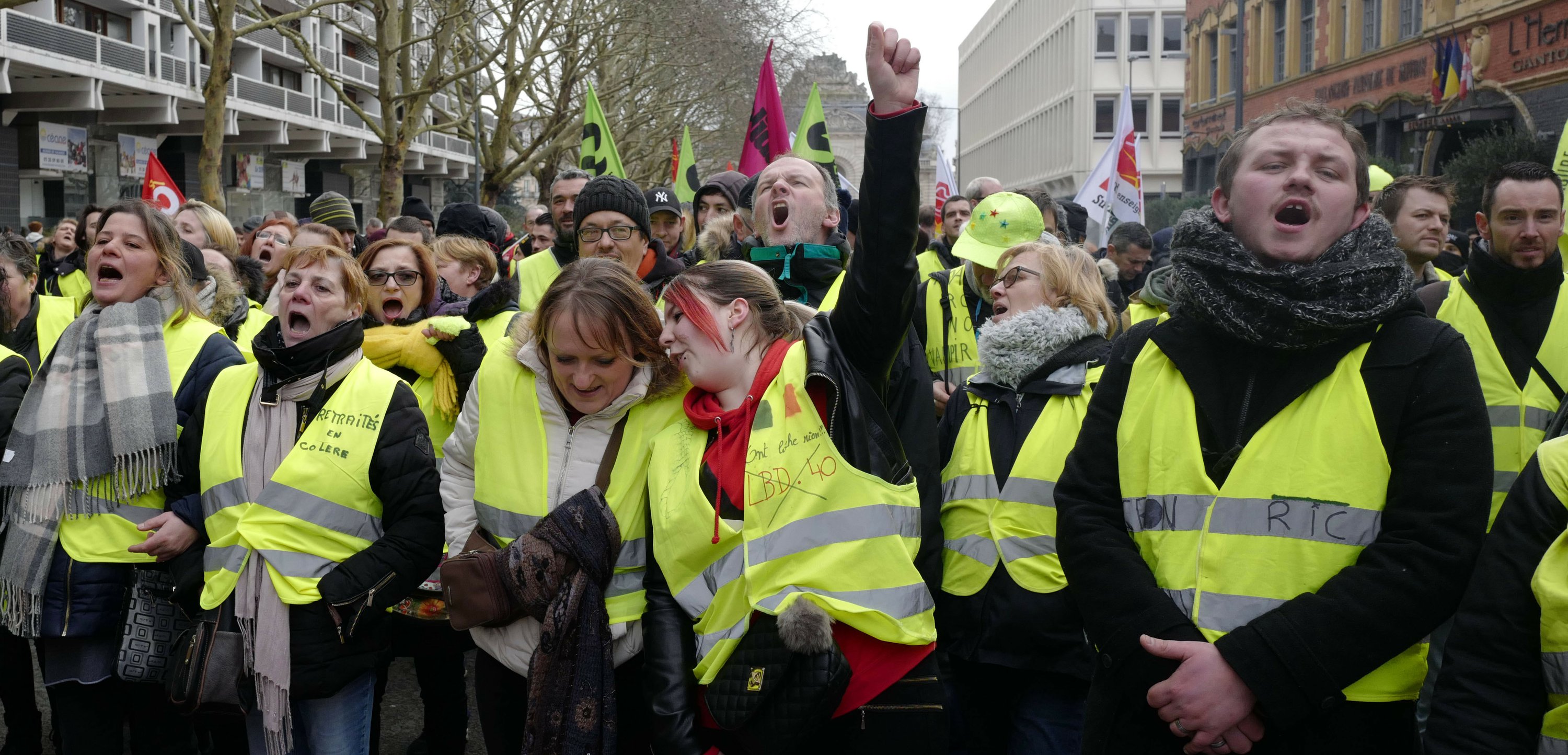
The situation here may be reaching a showdown between the Macron government, which is now considering using the Army against the Yellow Vests, and the social movement, to whose demands the regime continues to turn a deaf ear.
In the last
In the last
It is never comfortable to give up long-held beliefs and connections, but the impending climate crisis makes that a burning necessity. And the fact that, scientifically, it’s possible to avoid the worst of this climate disaster gives a positive incentive to do
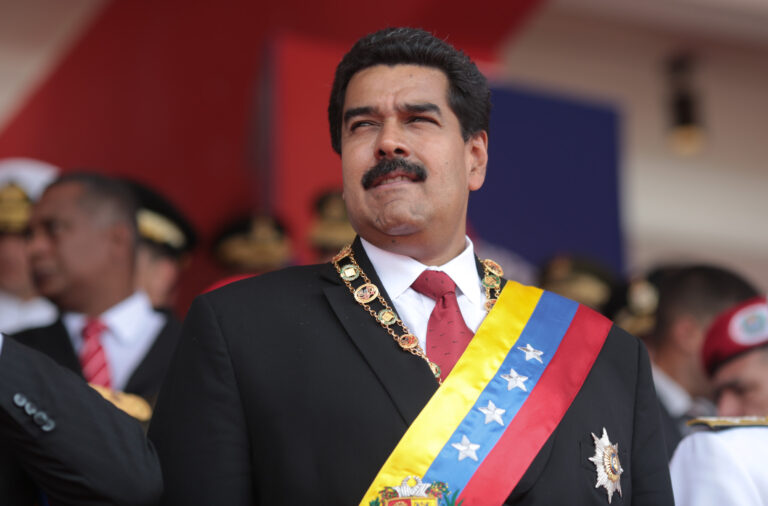
Venezuela has made headlines in the last few weeks, as Venezuelan opposition leader and National Assembly head Juan Guaidó has declared himself interim President, throwing the country into turmoil. Current President, Nicolás Maduro has called the effort a coup. Meanwhile,

There is a growing body of ecomarxist and ecosocialist literature in the English-speaking world, which signals the beginning of a significant turn in radical thinking.
To me the role of eco-socialists is to raise transitional demands, demands that bring a broader understanding of the role of capital in creating climate change and the ways that capital-ism can be challenged by working people and people most affected by the vast inequality it has created.

Climate scientists tell us we face a “climate crisis”: Since the 1990s, scientists have been trying to convince governments to keep atmospheric CO2 concentrations below 350 ppm in order to keep the global temperature below 1.5 degrees Centigrade above pre-industrial
Last month Branko Milanovic published a blog post about the Yellow Vest movement against the fuel tax in France. He was worried – like many analysts – that the uprising proves it will be virtually impossible to roll out the policies necessary

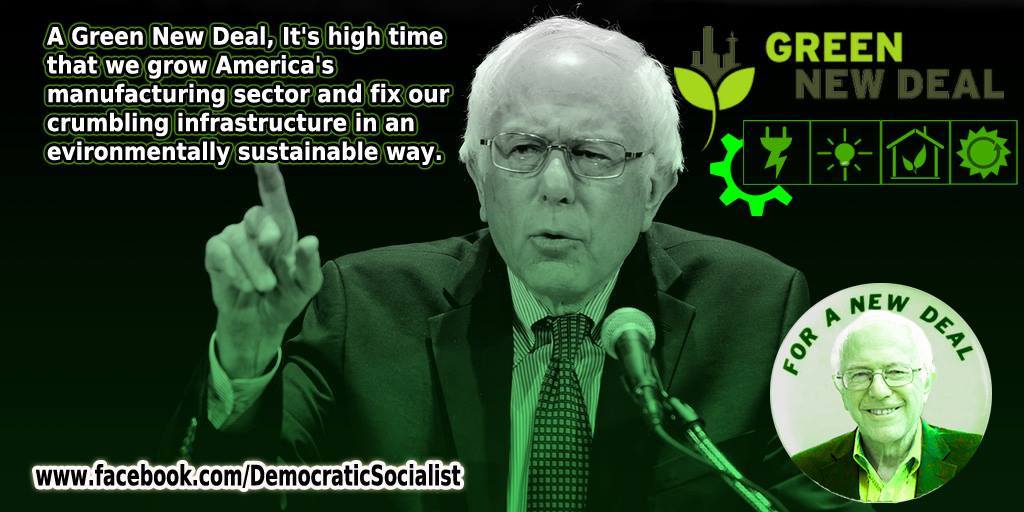
Demands for a Green New Deal (GND) are a beacon of hope in an otherwise dystopian contemporary landscape. In her platform document, for example, newly elected Representative and Democratic Socialist Alexandria Ocasio-Cortez states that “it’s time to shift course and

I campaigned for governor with the slogan of “Demand More!” because Gov. Cuomo has governed as a social liberal but as an economic conservative. Although he touts the agenda he outlined in his January 15 State of the State and Budget presentation as “progressive,” New York progressives should not be satisfied. It is still a conservative economic program. Progressives must demand more.
.png)
Rob Walsh, originally from a small town just outside Utica, is a material handler at the Tesla plant just south of Buffalo, New York’s downtown—dubbed Gigafactory 2—and part of the joint United Steelworkers/International Brotherhood of Electrical Workers organizing committee. One of plant’s earliest hires, he works 12-hour shifts three to four days a week, making $16.50 an hour. He is one of roughly 400 employees that work around the clock at the plant producing Tesla’s solar roof tiles. During those shifts, Walsh delivers production from the warehouse to the floor and then takes the finished product out to be shipped.
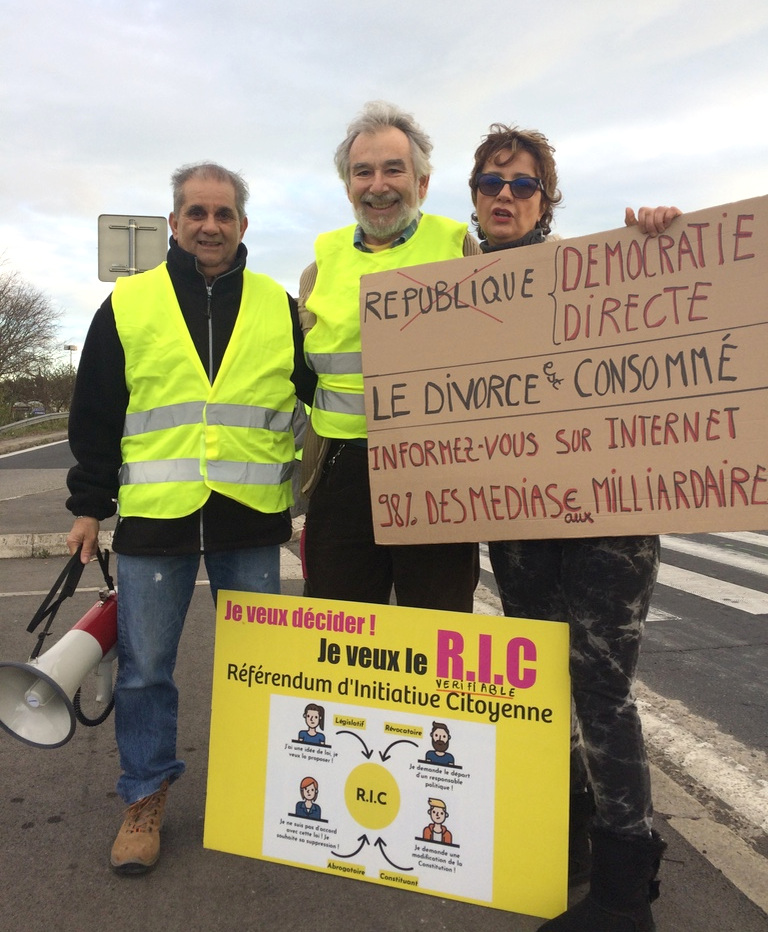 Is the Yellow Vest (Gilets Jaunes) rebellion, now in its seventh week, “petering out?” Such was the near-unanimous pronouncement of the mainstream media, when I returned home to Montpellier, France, eager to participate and to observe first-hand this popular insurrection which I had been afraid of missing.
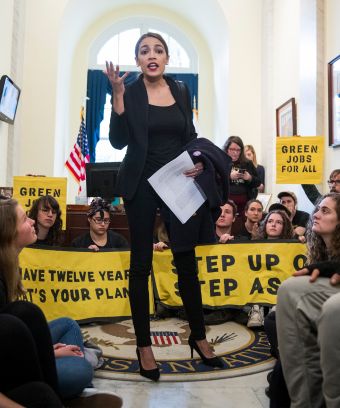
The environmental policy centerpiece of the incoming Democratic House of Representatives is what’s now known as “The Green New Deal.” But it’s already hit deeply polarizing pushback from the old-line Democratic leadership. And it faces divisive jockeying over the future of nuclear power.
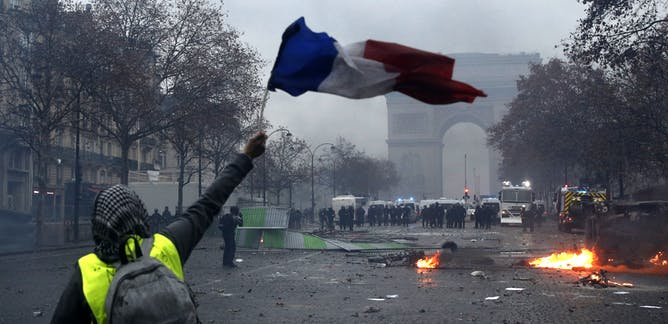
The White-Hot Anger of French Working People as a Real Fact
After rumbling on social media for weeks, the Yellow Vests (Gilets Jaunes) movement emerged suddenly on November 17, when no less than 300,000 protestors occupied roads, traffic circles in exurbs and rural areas. They wore the yellow safety vests the government requires all motorists to purchase, and which immediately became the emblem of the movement. That week and the next, Yellow Vests also ventured into the heart of Paris, blocking the gilded Boulevard Champs-Elysées and almost reaching the nearby presidential palace. From the beginning, women were unusually prominent in the local occupations and the street marches. At the same time, the Yellow Vests chased away many politicians who visited their protest sites, including some from the left.
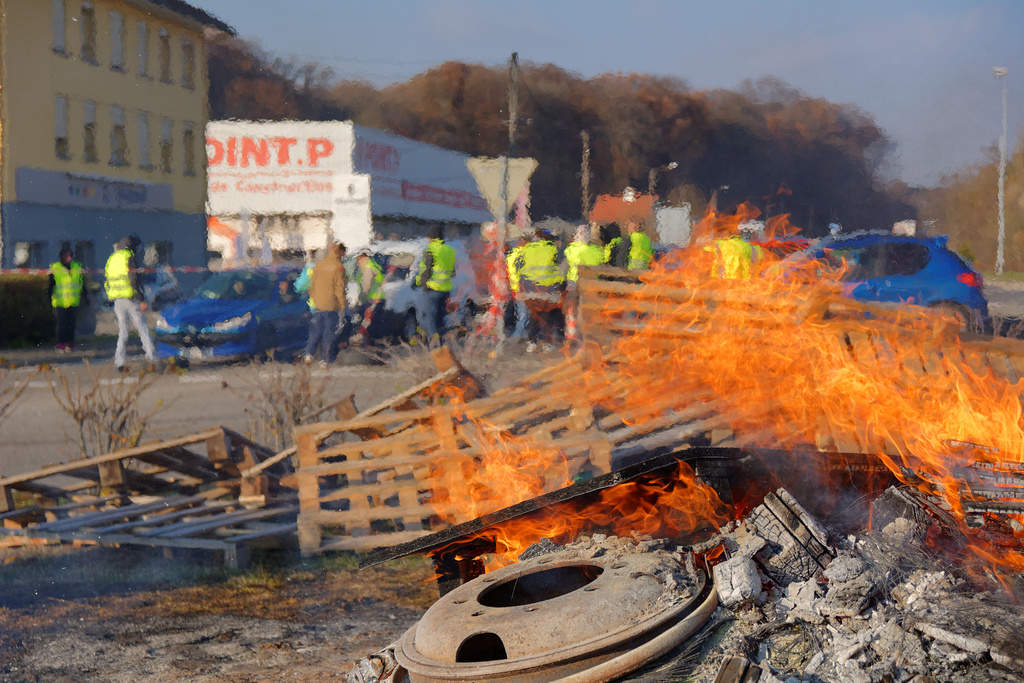
The French government has decided to suspend a planned eco-tax on fuel in response to mass protests. While the movement of the ‘yellow vests’ (gilets jaunes) has turned into a broader revolt against inequality and Macron’s neoliberal reforms, economist and climate activist Maxime Combes (Attac France) argues that as a way to tackle climate change, the tax is neither fair nor effective.
Analysis originally published on the daily internet journal of ideas AOC and translated by Taisie Tsikas.
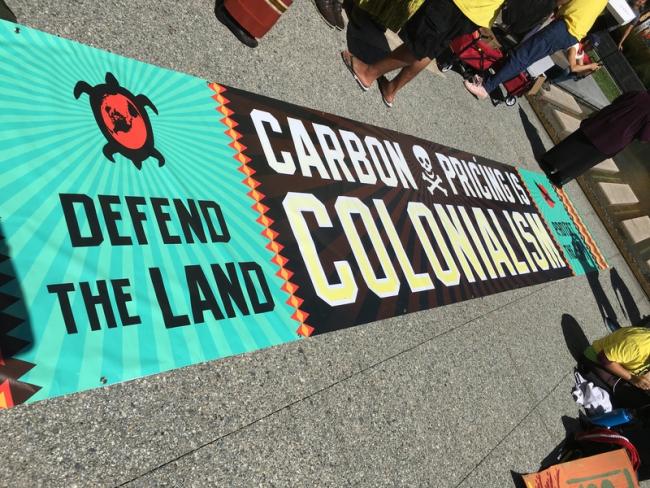 “The problem of the twentieth century is the problem of the color-line.” —W.E.B. Du Bois
Shortly before protesters gathered around the world on the eve of the Global Climate Action Summit, an ecosocialist friend commented on the pointlessness of engaging in more “feel good” marches. Something struck me as horribly wrong about this casual dismissal of mass actions in which we take to the streets to bear witness to the mounting opposition to global ecocide.
 “Deindustrialization.” That’s a word you virtually never hear in the debate around global warming. Not surprising. It’s a word that’s loaded with negative implications: economic collapse, mass layoffs, falling living standards. Who wants to think about those, let alone think about this as a strategy of suppressing CO2 emissions?
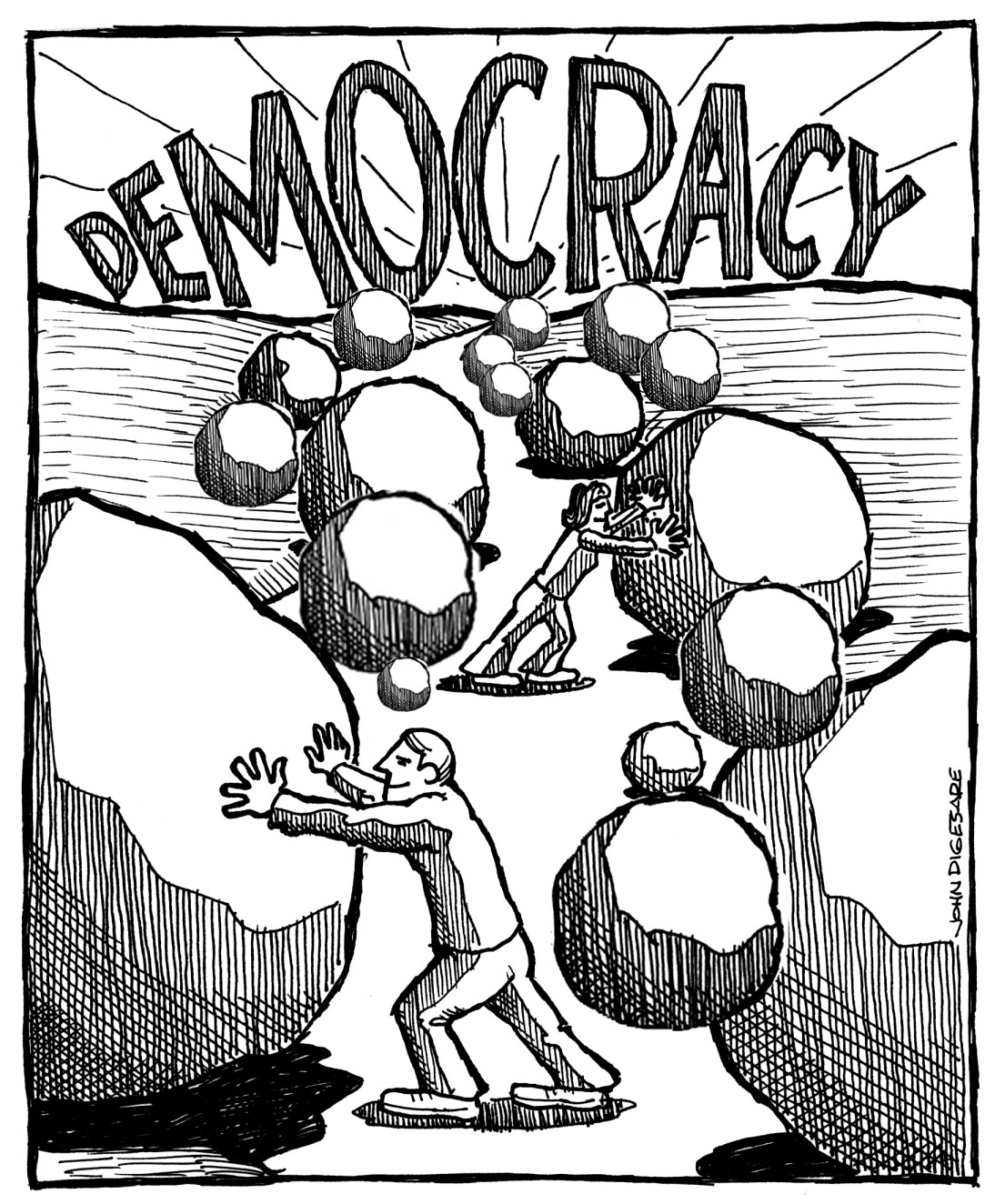
Last fall 15,000 scientists issued a second dire notice to humanity that we are on a collision course with the limits of our planet. They concluded, “To prevent widespread misery, humanity must practice a more environmentally sustainable alternative to business as usual,” including “reassess[ing]… the role of an economy rooted in growth.” That means that we have to challenge capitalism; there is no capitalism without growth. Rosa Luxemburg’s statement on the eve of World War I that the choice is between socialism or barbarism was never more true. But today our struggle is about our very existence.
It doesn’t take much imagination to associate climate change with revolution. If the planetary order upon which all societies are built starts breaking down, how can they possibly remain stable? Various more or less horrifying scenarios of upheaval have long been extrapolated from soaring temperatures.
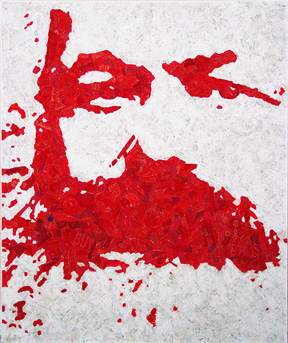
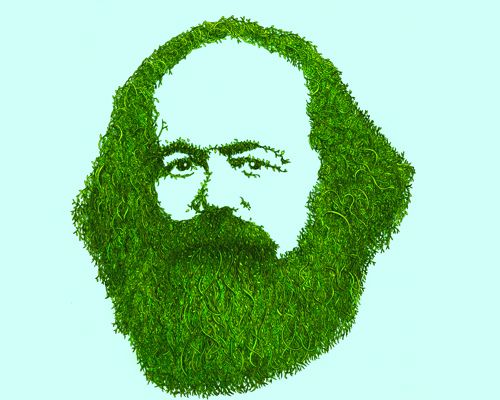
It is not surprising that Karl Marx is having a comeback today, after the 2008 financial crisis, the growing awareness of capitalism’s propensity to crises and ecological problems, and the fact that global inequality has increased to an obscene degree – all of which Marx foresaw.
- « Newer Posts
- 1
- 2
- 3
- 4
- 5
- 6
- 7
- 8
- Older Posts »