Blog

  • A New Politics in America – Part – 4 – Southern & Suburban Strategies

    Image

    This is the fourth part of A New Politics in America. Earlier parts of the series can be found here.

    The Republican Party responded to the white middle class and working class voters who had lost status, income, and pride in their country by working to turn their disappointment and depression into ressentiment and political power. Richard Nixon famously first saw how whites' resentment could be turned in the Republicans' direction during his 1968 presidential campaign, adopting the “southern strategy” of winning over the South’s racist white voters—the former Dixiecrats of the Democratic Party.

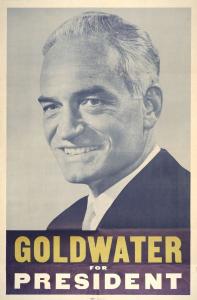
    Building on Barry Goldwater's relative success in the South in 1964 and learning from George Wallace's American Independent Party campaign, Nixon advocated "states' rights," code for racial segregation, and won several of the southern states and the 1968 election. In 1972 Nixon won 70 percent of the vote in the Deep South, the presidential election again, and a place in history as the creater of a new Repubican majority.

    Throughout the social turmoil of the 1970s and through the rest of the century, Southern white voters moved into the Republican Party in large numbers. Ronald Reagan continued this strategic focus on race and resentment in his 1980 election campaign, also endorsing “states’ rights.".[i] George W.H. Bush in his 1988 campaign transformed the southern strategy into a suburban strategy, appealing to the racism of white middle class and working class voters in the North. Bush senior attacked Democrat Michael Dukakis, governor of Massachusetts, for creating a prison weekend furlough program that had released Willie Horton, a convicted murderer, who had failed to return from his furlough and committed a robbery and rape. A photo of Horton with a large Afro became the racist centerpiece of G.W.H. Bush’s successful campaign for the presidency. Horton came to represent everything that many southern and suburban white resented, feared, and hated.

    Throughout those years, the Republicans succeeded by appealing to white voters’ racism in winning and holding middle class and working class voters. Certainly by the 2000s the Republican Party had become identified in the minds of most Black Americans as the party of racism, and few would vote for it.

    If white working class voters went over to the Republican Party, it wasn’t only because it seemed to have become their champion, but also because the Democrats seems to have neglected and spurned them. The Democratic Leadership Council, formed in 1985, and its Progressive Policy Institute worked to move the Democrats in a more conservative direction. Bill Clinton came to exemplify their “Third Way” approach, meaning a position between the social liberalism associated with Franklin D. Roosevelt and Lyndon Johnson and the Reagan Republicans’ arch conservatism. The DLC, while continuing to support the historically bi-partisan imperial foreign policy, advocated pro-business policies, welfare reform, meaning reduction of the welfare rolls, education reform that included charter schools, and backed the negotiation of the North American Free Trade Agreement (NAFTA).

    As Robert B. Reich, former Secretary of Labor (1993-1997) in Bill Clinton’s administration, recently wrote:

                Democrats also abandoned the white working class.

    Democrats have occupied the White House for sixteen of the last twenty-four years, and in that time scored some important victories for working families – the Affordable Care Act, an expanded Earned Income Tax Credit, and the Family and Medical Leave Act, for example.

    But they’ve done nothing to change the vicious cycle of wealth and power that has rigged the economy for the benefit of those at the top, and undermined the working class. In some respects, Democrats have been complicit in it. 

    Both Bill Clinton and Barack Obama ardently pushed for free trade agreements, for example, without providing the millions of blue-collar workers who thereby lost their jobs any means of getting new ones that paid at least as well.

    They also stood by as corporations hammered trade unions, the backbone of the white working class. Clinton and Obama failed to reform labor laws to impose meaningful penalties on companies that violated them, or enable workers to form unions with a simple up-or-down votes.[ii]

    So not surprisingly union members began to migrate out of the Democratic Party, with about 40 percent of labor union households regularly voting for Republican candidates in recent elections. While white workers turned in increasing numbers from the Democratic Party, Black Americans—despite Bill Clinton’s attack repressive criminal justice politics and attack on the social welfare system—continued to see the Democrats as the only possible alternative.

    When George W. Bush barely defeated Al Gore thanks to a Supreme Court decision on the Florida vote recount, becoming president in 2001, he was not a particularly popular. But Bush’s patriotic and militarist response to the September 11, 2001 terrorist attack on New York City and Washington, D.C., brought him sudden approval and support. But as the Afghanistan and Iraq wars dragged on, his popularity waned. Still, despite massive anti-war demonstration—one of them a global protest larger than any ever seen—Bush continued the expensive and death-dealing wars until they had eroded his popularity, while the Great Recession of 2008 destroyed it virtually completely. 

    The Economic Crisis of 2008

    The most important development driving the more recent polarization of American society and the rise of a new politics in America was the economic crisis of 2008, the Great Recession. Speculation in bundled, securitized, subprime mortgages led to bursting bubbles in 2007 and 2008 and to the folding of a slew of mortgage lenders—more than a hundred of them—and then to the collapse or near collapse of several major banks and other financials including AIG, Bear Stearns, Citigroup, Fannie Mae and Freddie Mac, IndyMac, Lehman Brothers, Merrill Lynch, Wachovia, and Washington Mutual. By the end of 2008 it seemed that not only the American economy but the world economy might collapse.

    The U.S. government—first under George W. Bush—intervened to arrange mergers, to take over banks temporarily, and to pump hundreds of billions of dollars into the financial sector, nevertheless, the financial crisis ramified through the economy sweeping away $19.2 trillion in household wealth as banks foreclosed on 12.5 million homes between 2007 and 2013.[iii] The 2008 depression eventually wiped out more than two million jobs in the first year, affecting virtually every sector of the economy from mining to manufacturing to services and soon leading to an official unemployment rate of 10 percent, though many thought the real jobless rate might well be 16 percent.[iv] Millions of Americans found themselves without work, some without homes, and many without prospects as the recession dragged on. While the government announced that the recession that had begun in 2007 ended in 2009,[v] for many it seemed even as late as 2014 that it had never ended.[vi] In many parts of the country it is still not over.

    The Great Recession finished off the reputation of George W. Bush, or what was left of it after the failed Iraq War. He left office having failed at both foreign and domestic policy, the lies about weapons of mass destruction in Iraq having utterly discredited his administration in the minds of many, while the 2008 recession that began on his watch turned him into a loathed public figure. Both liberals and conservatives turned against Bush, leaving the country disillusioned with politics as usual, hoping for change.


  • A New Politics in America – Part 3 – the New Right of the 1980s

    Image

    This is the third part of A New Politics in America. Part 1 looked at the Civil Rights movement and the White Backlash; Part 2 examined the impact of the economic crisis of the 1970s; Part 3 discusses the decline in American power, and then turns back to look at how all three elements contributed to the growth of a New Right from the 1960s to the 1980s.

    The United States: A Declining World Power

    While the United States remained a world power—and the greatest military power on earth after the fall of the Soviet Union in 1991—U.S. military might did not necessarily always lead to military victory and modern weapons could not always ensure its place as the leading world power.

    True, the United States easily defeated Iraq in Operation Desert Storm during the Gulf War of 1990-1991, but few in government noticed that America was walking through a mine field. In the next decade there were no such easy victories.

    Wars tended to become quagmires, swamps and quicksand—swamp metaphors that oddly enough worked well to describe the desert wars that sucked both significant numbers of fighters and enormous amounts of money and military hardware into a vortex of permanent insurgency and civil or religious war. The IED—the "improvised explosive device" made by amateurs out of industrial junk—turned out to be capable of defeating the most sophisticated army and of sending hundreds of soldiers home with amputations, cranial trauma, and often-permanent brain damage. The United States attempted to impose order on an expanded Middle East that came to stretch from Tunisia to Afghanistan and Pakistan, but the territory proved to be covered with landmines both literally and figuratively.

    The American government apparently easily overpowered Afghanistan in 2001—but fourteen years later the war continued with no end in sight. Similarly, the Iraq War of 2003 saw President George W. Bush declare victory in his shipboard “mission accomplished” speech, but the war soon turned into a disaster of enormous proportions, taking hundreds of thousands of lives, costing billions of dollars, virtually destroying the nation of Iraq. The War in Iraq still goes on today, now as a fight against the Islamic State of Iraq and Syria (ISIS), a vast geographic and intense ideological struggle that eludes resolution. Americans understandably have found the goals, methods, and developments of these wars incomprehensible, since neither the government nor the media had any clear explanation of their purpose or their objectives beyond stopping what Bush called “the bad guys.”

    The War on Terrorism, launched by Bush and continued by Obama, guided by no clear moral, ideological, or strategic goals, became a shifting, shiftless, and murderous affair. The more conservative among the American people, however, attributed the defeats in those imperial wars not to the Republican George W. Bush who had launched them, but to the Black, Democratic Party president, who some believed was a Muslim who had not been born in the United States. Many white Americans, especially the men among them, men who had lost their high paying jobs and their former role as patriarch, now also saw their country in what seemed like permanent defeat.

    Defeated on the battlefield, the United States was also being defeated it seemed to many in the world marketplace. Without a political labor movement, neoliberal globalization—global investment, production, and trade—became institutionalized in trade agreement and international organizations. President Bill Clinton negotiated the North American Free Trade Agreement (NAFTA) in 1994, a treaty that in essence formalized the economic integration of Canada, Mexico, and the United States that had been taking place. The banks and corporations of all three countries could now exploit the natural resources and the workers of the entire continent. U.S. unions demanded some protections, but the “labor side agreements” provided little enforcement of labor rights violations in any country. Many in the unions and in the working class came to believe that NAFTA had been the principal source of job loss and low wages in America.

    Similarly the Clinton government supported the admission of China to the World Trade Organization—and though Longshoremen, Teamsters other unions and environmentalists carried out militant demonstrations against it at the Battle of Seattle—China was admitted in 1999. China’s economic growth averaging over 10 percent a year between 1992 and 2008 made it the second largest capitalist economy in the world and a rival to both the United States and the European Union. Many in the American working class—who found that virtually everything they purchased in big box stores like Walmart had been made in China—now believed that Mexico and China represented their chief competitors and that the United States had to change its trade policies.

    While it was Bill Clinton who had negotiated NAFTA and supported admission of China to the WTO, it was George W. Bush who had granted “permanent normal trading relations” to China. And President Obama put the Trans-Pacific Partnership, a NAFTA-like agreement with 11 countries on four continents, at the top of his agenda for 2016, calling it a “made in America” agreement. Both major parties, it seemed to many workers, were unwilling to protect them from the movement of jobs abroad. Sections of the American ruling class of bankers and financiers, their political allies and ideologues also became concerned that the United States was losing the ability to dominate global developments. The decline of American power and the need either to reassert it or to transition to some new international order became a central concern among both conservative and liberal leaders, among both Republicans and Democrats.

    The New Right of the 1980s

    As during the 1970s the prosperity of the post-war period ended, social conflict increased, and America suffered defeat in Southeast Asia, the white middle classes—that is the small business people and the better paid layers of the working class—most of them living in the suburbs, found solace in a variety of places: in the Evangelical churches, in the right-to-life movement, in the National Rifle Association, and in the Republican Party. These organizations and a constellation other conservative religious and civic groups, often financed by wealthy rightwing foundations, constructed a “New Right” that in the 1980s and found a political home in the Republican Party, where Christian fundamentalists and right-to-life activists generally happily cohabited with the Chamber of Commerce, the National Manufacturers Association, and the anti-union Right-to-Work organizations of the economic conservatives.

    Basing their thinking on the culturally profound America belief in individualism inherited from Protestant forbearers, John Locke, and the authors of the U.S. Constitution, a wide variety of rightwing preachers, journalists, and intellectuals constructed a new ideology founded on the Christian religion, traditional family values, the American dream of homeownership, a conservative conception of community embodied in the segregated suburb, the right to bear arms to defend one’s home and family, the economic importance of small business, and a belief in America’s role as the indispensible nation. Conservative Evangelical ministers like Jerry Falwell and Pat Robertson and Christian commentators like Paul Weyrich became the leaders of the New Right, though other sorts of conservatism were growing too.

    Also living in the Republicans big house—for white people—were the Neocons, that is the neoconservatives—some are former anti-Stalinist leftists, others students of Professor Leo Strauss of the University of Chicago, yet others followers of American Ambassador Jeanne Kirkpatrick, or writers and readers of Commentary and The Weekly Standard. The Neocons included such figures as Elliot Abrams, John Bolton, Paul Bremer, Richard Perle, and Paul Wolfowitz, a small crowd of highbrow intellectuals, politicians, and activist bureaucrats who had learned their skills directing cloak-and-dagger skullduggery and the military intervention of the murderous wars against the poor and the left in Central America.[i]

    The Neocons advocated an aggressive foreign policy internationally to reassert what they called American leadership in the world, but what might be more accurately described as a return to American imperialism of the Golden Years. Remarkably their Weltanschauung formed at places like the University of Chicago largely coincided with the views of many of the Evangelicals and NRA members, and with the outlook of many white middle class and working class victims of industrial collapse and conversion: all looked back to the good old days and forward to the coming sunrise of American power and prosperity. “Let America be America Again,” one might say.[ii]   

    Another important ideological strand that also began to develop within the Republican Party, growing stronger in the 1990s and into the twenty-first century was libertarianism. The roots of libertarianism might be found in John Locke’s political and economic theory, some call him the “father of libertarianism,” though, of course, Republicans and Democrats also often trace their roots back to Locke whose ideas formed the basis of American constitutionalism and capitalism. It was the Russian-American novelist Ayn Rand, however, who popularized laissez-faire capitalism in her novels The Fountainhead (1943) and her popular Atlas Shrugged (1957), and who inspired many of the first American libertarians.

    A secular rationalist, Rand’s ideals appealed to those on the right who were not attracted to the moralism of Evangelical Christianity. Libertarians adopted classical economic views, arguing that government should be kept to a minimum, allowing citizens to do as they liked, not only in the marketplace but also in society. So, like other conservatives, libertarians opposed government regulations and government social programs, but different than others also took a hands-off position on questions of abortion and gay rights, which they considered matters of personal liberty. Some libertarians even criticized corporations on the grounds that they were government creations, while others opposed military conscription as an imposition on individual liberty.

    Libertarianism developed as a political force in the Republican Party several years later out of the presidential campaign of Republican Arizona Senator Barry Goldwater in 1964. Goldwater was, as Gary Wills argued in a recent article, the founder of the “hard right” that we see today in candidates like Ted Cruz. Goldwater’s book The Conscience of a Conservative (1960), became what Patrick Buchanan called the “New Testament” of conservatives of the time. Wills summarizes Goldwater’s remarkably rightwing agenda:

    Goldwater called for the elimination of Social Security, federal aid to schools, federal welfare and farm programs, and the union shop. He claimed the Supreme Court’s Brown v. Board decision was unconstitutional, so not the ‘law of the land.’ He said we must bypass and defund the UN and improve tactical nuclear weapons for frequent use.[iii]

    E.J. Dionne Jr., the Washington Post columnist, argues in his Why the Right Went Wrong: Conservatism—from Goldwater to the Tea Party and Beyond, that all of the basic elements of the future Tea Party movement could be found in Goldwater’s Conscience of a Conservative. But it would take decades more of economic crises and political conflicts before those ideas became politically viable and before a constituency for them to grow out of the wreckage of the industrial economy, out of white racial resentment, and out of the sense of insecurity created by the country’s decline both domestically and on the world stage.

    All of these conservative currents became increasingly attractive to Americans, especially to the white middle and working classes who had been threatened by the civil rights and women’s movements and battered by the economic upheavals of the 1970s and early 1980s. Between the economic crises of the 1970s and the age of War on Terror in the 2000s, many former union members and Democrats, independents, and Republicans moved into this world of conservative organizations and ideologies. Today then, it is not surprising that “Republicans hold a 49%-40% lead over the Democrats in leaned party identifications among whites. The GOP’s advantage widens to 21 points among white men who have not completed college (54%-33%) and white southerners (55%-34%).”[iv]


    [i] Greg Grandin, Empire’s Workshop: Latin America, the United States, and the Rise of the New Imperialism (New York: Holt, 2007), passim.

    [ii] As Langston Hughes pointed out in his poem titled “Let America Be America Again,” that America was never his.

    [iii] Gary Wills, “The Triumph of the Hard Right," New York Review of Books, Feb. 11, 2016, p. 4.


  • A New Politics in America – Part 2 – Economic Crisis of the 1970s

    Image

    This is the second part of an article about the new politics in America today. The first part can be found here.

    Deindustrialization and Downsizing Gut the Labor Movement

    The second development that led to a new far right was the economic crisis of the 1970s, or, to be specific, the two recessions of the 1974-75 and 1979-82. These two downturns caused employers to close steel mills, auto plants and other manufacturing plants throughout the Northeast and the Midwest with a devastating impact on the working class and on the labor movement.

    Unemployment reached 8 percent in 1974-75 and 10 percent in 1981. Labor unions began to decline in size, economic power, and political influence—a development that became a long-term trend from 1980 until today—weakening not only the unions themselves but also the labor base of the Democratic party. Employers took advantage of the economic downturns and labor’s disorientation and incomprehension to demand concessions, taking back from workers wage gains, health benefits, and working conditions.

    Deindustrialization, as it was called, was a result of foreign competition, and imported steel and cars played a role, but at the same time employers downsized many mills and factories and yet, because of an astronomical rise in productivity—due to the introduction of continuous process, computers, numerical control, and other forms of automation—they produced as many or even more steel, cars, and other products as before, some of those now made in non-union plants, because the downsizing was accompanied by running away to the South or to rural areas in the Midwest. Other plants moved abroad: to the Caribbean, to Mexico, and to countries around the globe, all part of the tendency toward global production.

    These developments—deindustrialization, downsizing, and runaway shops left hundreds of thousands of workers unemployed and meant that the next generation of workers would not have access to those prized, high-paying, union jobs. While the plant closing and unemployment affected white, Black, and Latino workers—and while Blacks arguably suffered the greatest economic loss—white industrial workers suffered a combined loss of social status and then of jobs and incomes that left many feeling especially devastated and aggrieved. The social and economic crises of the period also battered small- and medium-sized entrepreneurs, who were also mostly white men. The white middle class and working class threatened by the rising challenges of Blacks, Latinos, and women and devastated by the economic crisis, white people who mostly lived together in the suburbs, became the social base of a new, cross-class, rightwing political movement.[i]

    The government’s relationship to labor changed dramatically in this era. The New York City bailout of 1975 with its Emergency Financial Control Board, the closing of schools, libraries, and fire stations, and union pension funds put at risk to buy city bonds represented a model of what would come to be called neoliberalism. It was followed in 1979 by the Chrysler bailout, with Jimmy Carter’s administration and the U.S. Congress overseeing an agreement to loan Chrysler $1.5 billion, a deal that closed more than a dozen plants, reduced the workforce from 100,000 to 57,000, and forced not only a wage freeze, but also concessions and drastic changes in work rules. All of this culminated in the PATCO massacre. When in 1981 the 13,000 members of the Professional Air Traffic Controllers (PATCO) struck for a shorter workweek, higher hours, and better conditions, Ronald Reagan fired 11,345 who refused to return to work, replacing them with supervisors, scabs, and soldiers. The union was broken and decertified. While some unions had supported PATCO, there was no unified response from labor to the crushing of the union beyond a symbolic Solidarity Day demonstration in Washington. Reagan’s handling of PATCO sent the message to public and private employers as well as to unions and workers that a new era had begun.

    Labor leaders had no strategy and encouraged no generalized fight back against plant closings and concessions, or against the attack on PATCO, and while there were some rank-and-file struggles they tended to be isolated. The unions suffered a defeat without a battle. They surrendered to what appeared to them to be the inevitable. Their acquiescence defined the unions for years to come. Workers drew the conclusion: They no longer fight for us.[ii]

    These developments meant a profound change in the economic and social world of suburban working class whites. While men were losing their jobs, women were entering the workforce in larger numbers, and often becoming the principal wage earner. Men lost their role as the primary breadwinner, as head of the household and king of the castle, as the old saying goes. With industry declining and services growing, white working class and middle class men and their sons now found themselves competing for lower-paying jobs with women and with Black and Latino workers—as well as with an enormous immigration of undocumented workers coming principally from Mexico and Central America. With the Democratic Party seeking support from—and therefore more responsive to—the demands of racial minorities, women and immigrants, white males, including white male union members, now feeling betrayed by the Democrats, began to move into the Republican Party. Though white women, who had since the 1970s achieved greater access to jobs, higher salaries and wages, and more economic independence—with many of them single heads of households—tended to be less likely to accompany the white men as they moved to the right.

    White working class frustration in the 1960s to 1980s might have taken another direction. There were significant labor movements in this period made up of white, Black and Latino workers who fought both their own bureaucratic and corrupt leaderships and the employers. There were rank-and-file and reform movements in labor such as the Miners for Democracy in the United Mine Workers union, the Ed Sadlowski campaign for president of the United Steel Workers, the Teamster Union Rank and File, the Dodge Revolutionary Union Movement in the auto plants, and others too. The early 1970s saw one of the nation’s greatest strike waves as angry workers, some of them Vietnam veterans, shut down trucking companies, the U.S. Post Office, and the Bell Telephone Company.[iii] There were also anti-concessions movements in the 1980s, most important in the United Auto Workers.

    While those movements were quite impressive, they never became large enough and never united workers across industries and unions in such a way as to create a genuine working class movement. Nor did they ever become politically effective. Several major labor unions and rank-and-file activists founded a Labor Party founded in 1996 under the leadership of Tony Mazzocchi. But fearing that challenging Democrats would split the movement, it never ran candidates, became irrelevant and dissolved in 2007.[iv] Without a broad and political working class movement there could be no working class politics as an alternative to the Republicans and the Democrats as together they moved to the right.

    America Defeated in War

    It was also during these years that the United States began to decline from its position as the undefeated and dominant leader and organizer of world capitalism. The United States’ loss of the Vietnam War in 1975 was seen by a conservative sector of the society as the result of a stab-in-the-back by draft-dodgers, student protesters who burned their draft cards, and by the liberal establishment that itself eventually turned against the war. Rightwingers argued that the United States might have won the war in Southeast Asia had their been greater commitment of money, troops, and, some argued, the use of tactical nuclear weapons—but the liberals, they said, had given up. The Democratic Party, headed by Presidents John F. Kennedy and Lyndon B. Johnson, which had led the war in Vietnam, haddespite carpet-bombing much of North Vietnam and the commitment of 500,000 men—finally lost it. Democrats came to be seen by Republicans and more conservative Democrats as being afraid to fight, weak in foreign policy, and ceding territory to the Communist enemy.

    Even after defeat in Vietnam, of course, the United States remained an imperial power, with hundreds of bases around the world, hundreds of thousands of soldiers, sailors, and marines, and almost constant military interventions in one region or another. Jimmy Carter might have talked about human rights, but the United States ceded power nowhere. Still, after Vietnam, it seemed to conservative Americans that the United States was in retreat. Not until Republican Ronald Reagan invaded the tiny island nation of Grenada in 1983 did the United States begin again to act again more openly as a military power on the world stage. Reagan hailed his Star Wars program—the $200 billion Strategic Defense Initiative—that challenged the Soviets. He was seen as strong, assertive, and appropriately aggressive in claiming the United States’ dominant role in the world. When the crowds who adored him chanted, “We’re Number One,” that’s what they meant, that the United States was, is and, always should be number one in wealth, political hegemony, and military might. For middle aged white men who had lost social status and suffered economic loss in the deindustrialization era, identification with a strong male leader and a strong nation—with a Ronald Reagan or a George W. Bush—helped to recoup their self-esteem. With Ronald Reagan sitting tall in the saddle, one could feel like a white man again.


    [i] Dan La Botz, “What Happened to the Working Class?,” New Politics, Winter 2010, available at: http://newpol.orgwhat-happened-american-working-class

    [ii] Kim Moody’s An Injury to All: The Decline of American Unionism (New York: Verso, 1988) tells the story of the decline of the unions in this period.

    [iii] Aaron Brenner, Robert Brenner, and Cal Winslow, Rebel Rank and File: Labor Militancy and Revolt from Below in the Long 1970s  (New York: Verso, 2010).

    [iv] The story is somewhat more complicated because the Labor Party was associated with—though it did not officially support—Ralph Nader’s 2000 run for president. That discredited the Labor Party in the eyes of most union officials who saw Nader as a spoiler in the Bush-Gore contest. Les Leopold, The Man Who Hated Work and Loved Labor: The Life and Times of Tony Massocchi (White River Junction, Vermont: Chelsea Green Publishing Company, 2007), pp. 476-78.


  • A New Politics in America – Part 1 – Roots in the 1960s

    Image

    This is the first part of an article about the new politics in America today.

    The presidential election campaign of 2016 represents a turning point in American politics, raising issues and political agendas that would have been unthinkable in the United States only a few years ago. The major media and the public debate whether or not Republican Donald Trump is a fascist, while at the same time there is a discussion about whether Democrat Bernie Sanders’ version of democratic socialism is the answer to the country’s problems. Trump’s political rallies have, at his instigation, become violent and he now threatens to send his followers to disrupt Sanders’ rallies.

    These new political developments have deep historical roots going back to the 1960s, and they are arising principally a result of the decline of American hegemony internationally, a series of economic crises culminating in the deep economic crisis of 2008, the growing economic inequality in American society, and the failure of the major parties and establishment candidates to respond to the needs of middle class and working class people. The development of this new politics in America leads us naturally to ask: What in our society has led to this change? How significant is this new politics really? And what are its prospects for the future? And what can we do to bring about a better future of democracy, equality, and justice? For there is a radical alternative to these developments.

    The primary elections in both the Republican and Democratic parties have seen the emergence on a mass scale of political ideologies and social movements that until now had remained largely submerged. Ideas that were unthinkable in the past and virtually beyond discussion in mainstream society are now everyday topics. Bernie Sanders’ campaign has raised a far-reaching, progressive economic program aimed at recouping the position of the country’s working people while also initiating a debate about the previously taboo topic of socialism, a subject that has not been raised in the general public in the United States since the 1940s.[i] Sanders speaks a language unheard for decades, referring to the American “ruling class,” “the billionaire class,” and the need for a “political revolution.” He calls for rebuilding the labor movement and Labor for Bernie attracts thousands. What is most novel about Sanders is that his campaign questions not only the current administration, but—in part through its adoption of the term “socialism”—implicitly questions capitalism, just as his call for a “political revolution” questions American democracy.

    At the same time, Donald Trump’s xenophobic remarks about Mexican immigrants and proposals to exclude Muslims from the country—until now part of the lexicon of fringe rightwing racist groups—not to mention his quoting Benito Mussolini and failing for days after being asked to dissociate himself from David Duke of the Ku Klux Klan, have led to a debate among politicians and in the media about whether or not Trump is a fascist whose speechesincluding incitement to violence–are encouraging the development of a fascist movement in America.[ii] Trump’s program of economic nationalism, the call to end the trade treaties and to stop shipping American jobs abroad finds a positive response among workers, including many labor union members.[iii] Not since the 1930s has one seen in America large-scale debates over the meaning of socialism and fascism, and perhaps never anything quite like this at the national presidential level. We have a new politics in America.

    What’s taking place is not simply the one-off appearance of flamboyant, outlandish, or quirky candidates. Nor is it a fluke of this election. We are at a real turning point in contemporary American political life. A new American right and left have been incubating in our cities, suburbs, and rural areas for decades, engendered by earlier social upheavals and economic crises and born under the impact of the 2008 Great Recession. Since the end of the post-war’s Golden Years, a series of recessions—in 1975-75, 1979-82, 1990-91, 2001, and then the Great Recession of 2007-2008—have battered the notion of American exceptionalism, the myth of America’s economic invulnerability, and the fantasy of permanent capitalist prosperity. The recessions disturbed the comfort of the American middle class and whittled away at the standard of living of American workers generally, while pushing millions of whites, Blacks and Latinos into poverty. If before we were dreaming the American Dream, we are now wide-awake.

    The result of the return of regular recessions to the American economy beginning at the end of the 1960s, after the relatively smooth growth of the thirty Golden Years, brought about a long, slow, but growing political polarization. A Pew Research Center report found recently that, “Republicans and Democrats are more divided along ideological linesand partisan antipathy is deeper and more extensivethan at any point in the last two decades.”[iv] The report discovered that the American people have become more ideologically consistent, sorting out into opposing camps, and consequently have less in common with each other. “As partisans have moved to the left and the right, the share of Americans with mixed views has declined.”[v]

    A New York Times article described the situation: “Twenty-seven percent of Democrats and 36 percent of Republicans see the other party as a threat to the nation’s well-being. Consistent liberals and consistent conservatives, those who hold nearly uniform liberal or conservative beliefs, are even more alarmed: 50 percent of consistent liberals and 66 percent of consistent conservatives see the other party as a threat to the nation.” The Times article notes that Americans are now so divided that they would prefer to live in like-minded communities and would rather not have their children marry someone of the opposite camp.[vi] Americans are separating, pulling apart, and facing off.

    While the far left argues convincingly that the Republicans and Democrats represent what are fundamentally the same capitalist system and more specifically the same politics of economic austerity, at the same time it is also true that on many important issues—abortion rights, regulating firearms, labor unions, tax policies, immigration, affirmative action, social welfare programs, and questions of a religious versus a secular society—the two parties have quite different and often diametrically opposed positions. And while economic crisis and class issues may be driving the development of a new politics, it is race issues, especially the position and role of Black people in American society, that are often at the heart of the increasingly polarization. Working people’s declining incomes and growing economic insecurity may drive the process of political change, but race is the flashpoint of the conflict.

    Political polarization is both an expression of and the result of the changing racial make-up of the country, and the voting patterns of racial groups. Political scientist Alan L. Abramowitz writes in The Washington Post:

    Today, the Republican electoral coalition remains overwhelmingly white. Nonwhites made up only 10 percent of Romney voters according to the 2012 national exit poll. But the nonwhite share of Democratic voters has increased fairly steadily since the 1960s and that trend has accelerated since 1992. Nonwhites comprised 45 percent of all Obama voters in 2012, and a majority of Obama voters under age 40.[vii]

    Abramowitz concludes his article with the observation that, “The deep partisan divide in Washington clearly reflects a deep partisan divide within the American electorate, and for this reason, it is unlikely to diminish any time soon.”[viii] That is, there is not only a polarization in Congress, but also a political polarization in society, and it is one that is based fundamentally on issues of class, race, and gender. This new political situation has its roots in the radical changes that began to take place in America more than forty years ago and culminated in the 2008 Great Recession. And while it is often the so-called social issues that divide left from right in mainstream America, class issues are often at the root of things.

    Starting with the Sixties: Black Movements and White Backlash

    The starting point for understanding the new politics in America will be found in the late 1960s and early 1970s with two developments coincided that fundamentally changed American society.[ix] The first was the Civil Rights movement, followed by Black Power, lasting from 1955 to 1975, while the second was the opening of a financial crisis that began in the late 1960s and reached its nadir in the economic recessions of 1974-75 and 1979-82, definitively ending the post-war Golden Years. Each of these developments contributed to the reconfiguration of American politics in the succeeding decades, slowly producing a new right and a new left, a process that continues to unfold today.

    The Black civil rights movement in the South between its beginning in Montgomery, Alabama in December 1955 and President Lyndon B. Johnson’ signing of the Civil Rights Act in 1964 upended racial politics in the South and unsettled things throughout the nation. As Bill Moyers remembered, “When [Johnson] signed the act he was euphoric, but late that very night I found him in a melancholy mood as he lay in bed reading the bulldog edition of the Washington Post with headlines celebrating the day. I asked him what was troubling him. ‘I think we just delivered the South to the Republican Party for a long time to come,’ he said.”[x]

    At the same time, the civil rights movement’s frustrations with de facto racism and economic inequlity, especially in the North, gave rise to the Black Power movement, which was accompanied by the urban riots, and ghetto rebellions, destroying many of the country’s inner cities. The Black riots and rebellions accelerated white flight to the suburbs and provided justification for the tremendous white backlash that was already taking place. Many conservative whites of all social classes in all sections of the country became opponents of all that they identified as in any way Black: affirmative action, social welfare, and equal opportunities in employment and housing.

    Quite naturally the white backlash against the Black civil rights movement began in the South and in the Democratic Party. In 1968, George Wallace, a four-term governor of Alabama, one of the leading fighters for racial segregation, and a hero to many white southerners, decided to leave the Democratic Party (temporarily) and run as an independent candidate for the U.S. presidency. He established the American Independent Party and chose as his running mate U.S. Air Force General Curtis LeMay who had played a major role in directing the bombing of Japanese cities and civilians during World War II. LeMay was an advocate of the strategic use of nuclear bombs and had come into conflict with President John F. Kennedy when he wanted to drop atom bombs on Cuba in 1962. Later LeMay suggested that nuclear bombs might also be used in Vietnam. Wallace’s program called for defending segregation in the South, increasing Social Security and Medicare, and getting out of the Vietnam War if it could not be won—presumably by LeMay’s methods—within 90 days of his assuming office. Wallce and LeMay represented both a throwback to Old South’s fight against Reconstruction, but also an anticipation of a new right that would emerge in the 1980s. 

    Wallace lost, but it was the most successful third party campaign in modern American history. Republican Richard Nixon won the election with 31.7 million popular votes and 301 electoral votes; Democrat Hubert Humphrey got 30.9 million popular votes and 191 electoral votes. But Wallace, better than any other third party candidate before or since, won 9.9 million popular votes, carrying five southern states, and receiving 46 electoral votes. (By comparison, John B. Anderson’s Independent Party campaign in 1980 and Ralph Nader’s Green Party campaign in 2000 carried zero states and got zero electoral votes.) Most important Wallace’s campaign, demonstrating the political power of alienated Democrats, spelled the end of the old Solid South of the Democratic Party and opened the way to the Republican’s Southern Strategy.

    Over the next two decades, Southern whites left the Democratic Party en masse and became Republicans, a Solid South once again, but now as Red States. The ghetto rebellions led many northern, city-dwelling and especially suburban Democrats to move into the Republican Party as well. The country simultaneously underwent a re-segregation, as Blacks and whites, channeled by realtors into different neighborhoods, went in increasing numbers to separate (and because of tax laws) fundamentally unequal city neighborhood or suburban schools. The cities—having become largely Black, Latino, and immigrant—largely stuck with the Democratic Party, while the white suburbs and rural areas tended to become Republican strongholds. The roots of the contemporary racist and reactionary Republican Party, as well as the rightward drift of the Democratic Party and the emergence of the Blue Dog Democrats in the 1990s must be found in large measure in the white backlash of the 1960s and 1970s.

    The Black movement’s impact in that era was not simply in the area of race relations—it affected virtually every aspect of American society. The Black movement, as we know, opened the door to two decades of social protest, from 1956 to 1975. The Black movement for civil rights, legitimating social protest after the McCarthy era of reaction and repression, also made possible the anti-Vietnam War movement and the women’s movement, and the three together drove a wedge deep into the heart of America, separating much of the younger generation, some young white workers, many Blacks and Latinos, as well as a good many urban left liberals from the more conservative, white, suburban world. Blacks, Latinos, and women—and later gays and lesbians—demanded, fought for and won greater rights and power, while straight white men in particular experienced a loss of status. While males’ resentment against this loss of power and prestige in their homes, on their jobs, and in society became a powerful driver of the new right movement. As minorities and women challenged patriarchy and white power, middle-class and working-class white men felt increasingly under attack and many reacted by turning away from the Democratic Party.


    Thanks to my friends Dave Finkel, Rusty Gilbert, Joanne Landy, Bob Master, and Kim Moody for their suggestions. I alone am responsible for the views expressed in this article.

    [i] http://www.nytimes.com/politics/first-draft/2015/11/19/bernie-sanders-defends-democratic-socialism-calling-it-route-to-economic-fairness/

    [v] http://www.people-press.org/2014/06/12/political-polarization-in-the-american-public/

    [vi] http://www.people-press.org/2014/06/12/political-polarization-in-the-american-public/

    [vii] https://www.washingtonpost.com/news/monkey-cage/wp/2014/01/20/how-race-and-religion-have-polarized-american-voters/ Polarization also reflects a sharp division over religions, as Abramowitz observes: “By 2012, 69 percent of white voters who reported attending religious services at least once per week identified with the Republican Party compared with only 41 percent of white voters who reported rarely or never attending religious services—the largest divide ever recorded. Some 75 percent of religiously observant whites voted for Mitt Romney in 2012 compared with only 46 percent of non-observant whites.”

    [ix] The argument I advance in this section is hardly original. Others, for example Ruy Texeira and Alan Abramowitz, have made a similar case: http://www.brookings.edu/~/media/research/files/papers/2008/4/demographics-teixeira/04_demographics_teixeira.pdf

    [x] Bill Moyers, Moyers on America (  ), p. 167.


  • Protest Against Closing Down the Lukács Archive!

    Image

    [This petition was sent to us by Zsuzsa Hermann.]

    György Lukács (1885-1971) was a Hungarian Marxist philosopher, aesthetician, literary historian and critic. Best known for his essay collection History and Class Consciousness (1923), he initiated the tradition of “Western Marxism.” In 1919 he was the Hungarian Minister of Culture of the government of the short-lived Hungarian Soviet Republic (March–August 1919).]

    We, the undersigned, wish to express our deepest worries about the resolution of the Hungarian Academy of Sciences to close down the Lukács Archives in Budapest. György Lukács was one of the most significant philosophers of the 20th century, an author of modernity outstanding not only in philosophy but also in the fields of political-mindedness, theories of literature, sociology and ethics. An author of international renown, Lukács represented one of the intellectual peaks in Hungary’s history of civilisation; his works constitute a part of the treasures of humankind.

    For decades, the Lukács Archives has facilitated academic and non-academic circles to have access to the documents related to the philosopher’s life and professional achievements. As it is located in the philosopher’s home of his late years, it has also served as a memorial place devoted to a decisive personality of our era. Based on the above, we call on the authorities in charge to re-consider their decision, which has led the international community of science and art to consternation and sorrow.

    Link to petition: http://www.petitions24.com/protest_against_closing_down_the_lukacs_archiv

  • “Embrace of the Serpent”: The Continuing Conquest

    ImageWill we ever get over this thing called civilization? That’s what I wondered as I watched The Embrace of the Serpent, directed by Colombian filmmaker Ciro Guerra, a black-and-white film in several indigenous and European languages that has some of the qualities of a documentary. But this is a truer-than-history fiction, fabricated out of the travel diaries of two botanists, Theodor Koch-Grunberg (Jan Bijvoet) and Richard Evan Schultes (Brionne Davis), both of whom traveled in the Amazon region, the former in 1909 and the latter in 1940. The challenging and sometimes horrifying experiences of the two scientists are linked together by the character Karamakate who serves as guide to both and a challenge to each. (Nilbio Torres plays the young Karamakate and Antonio Bolívar the old Karamakate.) Both botanists are looking for yakruna, a rare, sacred, and hallucinogenic plant, and their search takes them into the jungles inhabited by peoples menaced by the encroaching modern world.

    The clash of the rational and the spiritual is embodied in the yakruna plant, the object of the scientists’ search for knowledge and the vehicle of the Indians engagement with the spirit world.[1] Director Ciro Guerra has said of Koch-Grunberg and Schultes, “These two were the first ones to treat them [the indigenous] humanely and the first to tell the world that this knowledge is important and that there is something we can learn from them.” But is that true? Or does it matter? While the apparently disinterested botanist who invades the indigenous world driven by scientific curiousity may even appreciate indigenous people, he is accompanied at the same time—whether he will or not—by the Christian missionary and the rubber company. Scientists are the product of civilization, and their science forms part of it. There is no escaping it. They are all part one long wave of western conquest, a tsunami that sweeps away everything in its path and leaves behind on the beach capital, wage labor, exploitation, and inequality, the state and its oppression.

    Koch-Grunberg and Schultes find themselves, of course, dependent upon the indigenous people to help them travel along the rivers, to locate villages, and to find food. Thousands of years of habitation of the jungles have made the Indians the experts in that natural world, which is coterminous with their religious beliefs, because for them everything is spiritual and imbued with religious significance. In stark contrast to the naked Indians, the botanists have not only clothing but also all their stuff. With their boxes full of equipment, their compasses, their guns, their maps, and books, the scientists—disinterested as they may be—are western civilization in miniature. They are rational and empiricist, collecting evidence and data, making drawings and taking photos of the animals and the Indians, and creating collections of the butterflies pinned on boards in a box. They are boxing up and writing up this world to take it home. Their knowledge of the region will be published. Others, armed with that knowledge, will go: busiessmen, anthropologists, the CIA, the military. They are not different than the conquest, they are its epitome.

    While Embrace of the Serpent is set in the twentieth century, one immediately thinks of the great films about the Spanish conquest of the Americas, particularly Werner Herzog’s Aguirre: The Wrath of God (1972), based loosely on the life of Lope de Aguirre and his Amazonian expedition in 1560, Roland Joffé’s The Mission (1986), about Jesuits who strive to protect Indians from enslavement by the Portuguese, and of Nicolás Echeverría’s Cabeza de Vaca (1991) about a survivor of the Spanish expedition of Panfilo Nervaez, who between 1528 and 1536, first as prisoner and then as shaman, traveled with Indians from Florida to Texas. These movies about the conquest come to mind when we watch Embrace of the Serpent because the conquest was not a time in the past but was rather an on-going process, one that still continues in some parts of the Americas (and some other parts of the world) even today.

    The conquest in the Americas, from when it began with Columbus in 1492 to the twenty-first century, has always had the same essential elements: the Europeans (or later Americans) with their more advanced technology and their firearms, the diseases to which the indigenous peoples have no immunities, followed by the enslavement of those who survive the epidemics, and the destruction of the native culture. Warned by Fray Bartolomé de la Casas, the Defender of the Indians as he is known, that the Spanish conquistadors were killing off the indigenous peoples, the Spanish Crown forbid their enslavement or mistreatment—but those laws proved impossible to enforce in a New World thousands of miles away. The madmen, like Aguirre “el loco,” wild for gold and delirious with power, run amuck.

    This is the situation presented to us by The Embrace of the Serpent—the violent ongoing encounter between Europe and the American Indians—and while it focuses on the two scientists and their search for the mystical plant of visions and revelations, the context is empire. If Spaniards of the sixteenth century were interested in gold and silver, the Europeans of the twentieth are interested, among many other things, in rubber and rubber meant slavery. In one horrifying scene Theo and his companions come across a rubber plantation and a worker whom the rubber lords have mutilated, cutting off an arm and a foot. He asks Theo and his comanions to put him out of his misery. The film summons up in our minds all that we have seen in the movies and read in novels and histories about the rubber plantations and their slaves.

    Latin America was the principal source of rubber throughout the nineteenth century, though later it was the Congo and then Southeast Asia, but everywhere the story was the same. Columbian rubber lords and the British-owned Peruvian Amazon Company (PAC) enslaved the Indians there. We are reminded of Nobel Prize winner Mario Vargas Llosa’s 2010 novel The Dream of the Celt, a fictional biography of human rights activist and Irish nationalist Roger Casement who challenged the PAC’s practices. We think too of Adam Hochschild’s King Leopold’s Ghost: A Story of Greed, Terror and Heroism in Colonial Africa (1998), the history of rubber in the Congo Free State controlled by King Leopold of Belgium, which produced rubber in the late nineteenth and early twentieth centuries.  There the African people were enslaved, their hands cut off if they failed to produce. Ten million died for rubber in the Congo. But we also think of Régis Wargnier’s brilliant 1992, Academy Award winning film Indochine, which deals with the woman owner of a rubber plantation in the early twentieth century—employing virtual slave labor—and her adopted Vietnamese daughter’s involvement in the Communist-led, national liberation movement in Vietnam. Like sugar and cotton, rubber meant slavery.

    As if capitalism were not enoughthere is also Catholicism. Koch-Grunberg and his indigenous traveling companions come across a Spanish mission. This is not the mission of the famous movie by that name where Jesuit fathers supposedly protected the indigenous. The friar in this film whips the boys who live there to stop them from speaking their native languages—the languages of the devil—and to force them to give up the practices of their indigenous culture. Schultes’ indigenous assistant interrupts a whipping, kills the priest, and they flee in their boat. But thirty years later, when Schultes and Karakamate come on the same village, we see that the one of the boys has grown up, declared himself the messiah king, and is reigning over the others in a bizarre community. The whole scene—indebted to Joseph Conrad’s Heart of Darkness and to Francis Ford Coppola’s Apocalypse Now—shows us the impact of civilization on the indigenous. Schultes and Karamakate are taken prisoner, but Karamakate cures the messiah’s wife, sick with leishmaniasis, then an orgy of cannibalism ensues as the messiah invites his followers to eat him. The Catholic priests and rubber barons have destroyed the old culture, but in its place we find a misbegotten societyneither at home in the natural world nor a modern civilization—corrupt, degenerate, and violent.

    Watching this remarkable film, one thinks, “What a horror it has been, civilization.” But there is no turning back to the world of the indigenous either, back to what Marx and Engels called “primitive communism.” We have to go forward, working to return to the world some of the balance and the beauty of our beginnings. Some of the humanity.


    [1] Schultes, who spent nine years in the Amazon and discovered some 30,000 plants, would later return to Harvard University and write his best-selling Plants of the Gods: Origins of Hallucinogenic Use (1979), though he never became as famous as his colleague Timothy Leary. And unlike Aldous Huxley, Leary, and William Burroughs who claimed that drugs such as peyote, ayahuasca, and LSD brought them religious experiences, Schultes, always the scientist was more matter of fact. When Burroughs described ayahuasca as having been a profound metaphysical experience, Schultes—always the rational scientist, replied dryly, “That’s funny, Bill, all I saw was colors.”


  • ‘Dalit movement has to see itself as part of a class-wide movement’

    Image

    Reservation is an issue that only affects a small proportion of Dalits, says sociologist Vivek Chibber.

    The ferment on campuses across the country following Rohith Vemula’s suicide and the recent crackdown on free speech at Jawaharlal Nehru University have drawn international attention, with many academics, students and activists across the world expressing solidarity.

    The mobilisation of Dalit students and the increasing awareness of caste oppression were some positive outcomes amid the troubling instances of attack on dissent and democratic rights. Vivek Chibber, Professor of Sociology at New York University and author of Postcolonial Theory and the Specter of Capital spoke about these developments. While appreciating the significance of struggles around identity in India and the United States, Prof. Chibber argues that movements of the oppressed can be sustained and strengthened only if they take up issues of economic justice.

    Meera Srinivasan – Following the death of Rohith Vemula, the Dalit scholar from Hyderabad Central University, several thousand students in India came together in protest. The incident also sparked spontaneous, nationwide mobilisation of Dalits, many of whom were already engaged in local struggles. Around the same time a strong criticism of the mainstream Left emerged that pointed to its perceived indifference to Dalit causes and, more broadly, caste-based discrimination in India. Here in the U.S., we see Black Lives Matter — a campaign against violence targeting black people in the U.S. — that has become a prominent movement in the last few years, drawing enormous attention and support. All the same, some activists within the movement are said to be questioning the exclusive emphasis on racial identity. Are there any parallels?

    Vivek Chibber – I think in India it is quite necessary, essential even, for Dalits to organise around their social marginalisation and the various forms of exclusion that they face — both within mainstream society and also within the Left, because it is real.

    But it is also the case that any Dalit movement, if it is actually going to address the needs of Dalits as a group, has to see itself as part of a class-wide movement. The reason for that is simple: the overwhelming majority of Dalits are wage labourers either in the rural areas or in the informal sector in the urban settings.

    The agitations that have been taking place in the cities are important, but it is important to recognise that the most visible ones have been around issues like reservations and discrimination in colleges, and these are issues that affect only a small proportion of the Dalit population. So, even if reservations were enacted with full force in government jobs and in universities, it would still only benefit a quite small section of the Dalit population.

    For Dalits therefore to make progress really requires that they take up issues around wage labour and they take up issues around economic justice.

    What has happened is that the Dalit movement, like identity movements across the world, has really narrowed its focus to forms of oppressions that are very real, but which still constitute only a small subset of the oppressions that the Dalits face.

    There is a parallel with the U.S. Black Lives Matter, if you think of it as a movement, has two layers to it. One is a layer of real organisers in urban areas, who were incredibly and very concertedly active around issues of economic justice. Because for them the most pressing issues are not so much discrimination in the labour market, but not having a job at all; not so much the exclusion in schools, but not having [access to] schools at all. These activists are very aware that their concerns as black people involve fundamental issues of economic justice, not just narrowly racial justice.

    Furthermore, these activists are also aware that what has become Black Lives Matter is as much a name brand and a commodified emblem as it is a movement. And in the past six months or so, we have seen Black Lives Matter has not been as visible as it was a year ago, on the streets. This is partly because many of the most prominent icons of Black Lives Matter are already moving into the Democratic Party, or into Teach for America, things like that.

    So it is an avenue that a certain section of the black middle class is using for its upward advancement. We have seen that happen in India too — with Dalit intellectuals and Dalit politicians. Therefore, I think for people who are progressive, there is a simple and clear position to take, which is that one cannot and should not set issues of Dalit identity against issues of Dalit class interests because what they face is not simply economic exploitation but many things on top of that.

    Secondly, unless a movement for justice for Dalits is fundamentally and solidly based in class and economic justice it will not address the needs of the vast majority of this section of the population.

    Srinivasan – It seems ironic that class politics and identity politics should be in conflict. Why do some of these movements demonstrate that sort of tension?

    Chibber – One reason is that, especially in India, the Left has not given issues of social marginalisation and exclusion the importance they deserve. So some of it is an expression of that frustration on the part of especially backward castes and Dalits, of what they faced in Left organisations. I think that has to be admitted.

    But that is not the fundamental reason. The fundamental reason is that, all around the world, one of the symptoms of the decline of the Left has been that movements for social justice have been captured by middle class and fairly elite people, who have genuine disdain for class politics and class movements. And they use the language of identity and some of the failures of the Left in the past as a way of setting the class interests of their own constituency aside. This is an inevitable consequence of the decline of the economic organisations of the poor because if and when Dalits or OBCs [Other Backward Classes] start organising as workers, they will inevitably have to confront and push aside many of the current representatives of their movements which have not very much interest in the real, long-term interests of their own constituencies.

    So what you are seeing here is a consequence of the fact that the representatives and the articulate exponents of identity politics around the world, especially the Indian intelligentsia, belong to a relatively privileged stratum that has a natural disdain for class organising, because those would affect their own status.

    Srinivasan – Do you think that points to a shift — away from a position where the mainstream Left appreciated social marginalisation more than it perhaps does now? I am thinking of the Communist engagement with Dalit farmers in the past — in Tamil Nadu in the 1960s, for example, around the time of the Keezhvenmani massacre.

    Chibber – The Indian and the American Left — their fundamental history is a positive one, on all these issues. The American Left in particular has had actually a very noble and very admirable history on taking up issues of racial justice; in fact all forms of social exclusion. The Indian Left did, I think from the 1930s onwards, take the problems of casteism and gender domination more seriously than any other part of the Indian political culture. Nevertheless, I think within its internal functioning and in its mass organisations it never confronted casteism with the force it should have.

    There are a variety of ways in which the Communist parties brought into their own culture the caste prejudices, both at the leadership and the mass organisations. I have talked to older members of the Communist movement who testified that there were separate matkas (pitchers) for the Dalits and Brahmins in the organisation. While they would encourage inter-caste marriages, at the same time, they incorporated many of the rituals of Hinduism. But the thing is that you really cannot separate Hinduism from casteism; it is quite impossible. And once you give Hinduism sanction inside your organisation, inevitably, those rituals are rituals around the exclusion of other castes. You just can’t separate those two. So yes, this was a real weakness.

    At the same time, we also have to see that within the sections of the self-styled progressive intelligentsia today this weakness on the part of the Left is being used as a reason to dismiss class politics. And that should give you ample indication that the people making such arguments for the dismissal of class politics are not doing it with the interests of Dalits and backward castes and Scheduled Tribes in mind, because it is simply impossible to address their situation without taking up issues of land, jobs, and structural transformation.

    So my view is that the appropriate response on the part of people who call themselves Left — and by Left I don’t mean just the mainstream Communist Parties — is to say that the Left was weak in these areas, but the solution is to have a better Left. Not to move away from the politics that the Left represents. It is not just because of class, it is also because the Left has been the most consistent cosmopolitan, universal, democratic force in India. It has been the only one to argue consistently for democratic rights, for women’s rights, and for social inclusion.

    And what we are seeing right now, the viciousness that is becoming part of Indian culture, in urban areas, rural areas, one reason for it is that even in the language of politics, sectionalism, narrow interests, nativism is not being challenged anymore. It has always been the Left that did it.

    Srinivasan – Even in the case of Jammu and Kashmir, the current political forces are mobilising predominantly on religious lines, polarising people, as the 2014 poll verdict showed us.

    Chibber – The Kashmir independence movement, you know the Jammu and Kashmir Liberation Front when it had real social power and social weight, was a secular and a democratic movement. It was partly undermined by its own shortcomings, but also because but also by the Indian state and the Pakistani state that worked very hard to make sure that it was marginalised by sectarian groups, because they were easier to handle than the secular ones. That is true across the rest of the country as well.

    Srinivasan – What hope do you see for movements, including the Dalit movement, seeking to mobilise people around identities of caste or religion to sustain themselves towards the goal of social justice?

    Chibber – I think there is a challenge, and an enabling condition. The challenge is that Left groups have to immerse themselves in the Dalit movement and other such struggles and show that they are fundamentally committed to the interests of marginalised groups. If they do this, then they can bring these movements into a broader agenda.

    The enabling condition, one that will help the Left make this happen, is that the political establishment, as a whole right now, is lined up against the rights and interests of poor people in India, it is not just [Narendra] Modi. It is important to remember that the law that Mr. Modi is using to crack down right now, the UAPA [Unlawful Activities (Prevention) Act], was not passed by the BJP [Bharatiya Janata Party] government, but by the Congress-led UPA [United Progressive Alliance].

    In 2004 when POTA [Prevention of Terrorism Act] expired, it was the Congress government that renewed its essentials with the UAPA. And the UAPA is the most draconian, anti-democratic legislation that we have seen in India — ever. It actually quite explicitly arrogates to itself the power to arrest and keep in detention anybody for simply maligning the Indian nation, for simply criticising it or “causing disaffection” against India. And the definition of what that is, is left open, and hence it’s for the state to decide. It was not the BJP that passed the legislation, it was the Congress. The Communist Parties should have quit the UPA right then. But they made a few noises and then stayed on, resigning later over the nuclear pact with the U.S., which in my view is less consequential than the UAPA as a threat to Indian democracy.

    What that tells you is that we have been witnessing for the last 12-15 years an enormous intensification of the crackdown on democratic rights in India. One of the consequences of that is that, I think, people who are committed to fighting for democratic rights see that no one party or no one organisation is behind it. It is a quite unified assault by Indian elites, the Indian establishment. And that is going to require a fairly broad and unified response on the part of ordinary citizens and working people in India.

    Srinivasan – How do you view the developments at JNU?

    Chibber – That is a straightforward issue. The one thing I’ll say is that it shows again the narrowness and complicity of the media and of so many sections of the Left in that there are a very few people who are challenging the very idea of a sedition law. Instead of arguing over whether or not Kanhaiya Kumar and these people uttered what they said, the relevant issue here ought to be, why does India have a sedition law at all? Even the Left, the mainstream Left parties, their position has been not to ask why is there a sedition law, but to say this was at most an act of a few hooligans, and the whole university should not be attacked or undermined because of it.

    But the thing is that the moment you say that a few people in a university can be arrested because of the slogans they are shouting or the views they espouse, you’ve effectively undermined the entire academic institution. You’re attacking the whole university. It seems to me that the fundamental issue here is notwhether or not Kanhaiya Kumar was complicit in shouting anti-national slogans, but the very idea of something being anti-national, and that the state gets to define what is anti-national. The very idea is a negation of the very essence of democratic rights.

    Srinivasan -You think that is not being challenged enough?

    Chibber – No, at least not in the mainstream media and certainly not by the political parties, especially the Left. To my knowledge, and I might not have the full information since I am in New York, the CPI (M)’s [Communist Party of India (Marxist)] position has been to call for an investigation and to call for concrete evidence for the charges. This implies that if the students did shout the slogans of which they are accused, the arrests are justified. But the arguments have to be that the law is illegitimate. This is what the issue ought to be.

    Srinivasan – Do you think that this government, which came to power on the promise of development, is using these issues to divert public attention from its own performance?

    Chibber – No doubt about it. No doubt. I think the fact is that the Modi government has basically failed in delivering any of its promises and sees that the Indian people are quickly rendering their verdict. Look at its quite humiliating defeat in Bihar. And I think Mr. Modi who initially was, in my estimation, giving a few sops to the Sangh Parivar while keeping his attention on economic issues, has basically thrown his weight behind this crackdown. Because the BJP is thinking this is the only way they will be able to survive, since there is nothing they can do to prop themselves up. But again, I would urge, let us not keep the focus on the BJP because both the BJP’s economic programme and its crackdown on democratic rights is an intensification of something that was already happening under the Congress government.

    (Meera Srinivasan is the IWMF Elizabeth Neuffer Fellow 2015-16)

    This article originally appeared in The Hindu on March 3, 2016.

  • Long Live the Syrian Revolution!

    When the head of al-Nusra declared back in November that the Free Syrian Army didn't exist, journalist Rami Jarrah went to north Aleppo and asked people what they thought about that and found that despite the claims of al-Nusra and some leftists who should know better, the FSA was still around.

    And now that there is a fragile ceasefire, many of the activists who had been forced underground by the barrel bombs have come out in the streets to make clear that they are still demanding Assad's ouster, calling for an end to the regime, and supporting a democratic Syria.

    Image

    Last week, I had a debate with my friend Justin Podur in which I argued that basic principles of the left should lead us to support and be in solidarity with the Syrian revolution. Here's the audio of that debate.

  • Berta Cáceres: ‘We are being targeted’

    Image

    “We are being targeted for contract killing ordered by the judiciary and the armed forces. Our lives are hanging by a thread.”

    These dramatic premonitory words were part of the last interview Berta Cáceres granted by to Il Manifesto. Cáceres, the feminist and coordinator of the Consejo Cívico de Organizaciones Populares e Indígenas de Honduras (COPINH), which she helped create in 1993, was killed around 1:00 a.m. on Thursday, March 3 by at least two gunmen. In her conversation with us, which has not been published until now, warnings of a state murder were already there.

    What is the activity of COPINH?

    Ours is an indigenous organization for territorial struggle that seeks to build an emancipation process to demolish the multiple forms of domination: capitalism, patriarchy, racism. After the coup against [President Manuel] Zelaya [in 2009], we had to face great risks and difficulties. We have lost many lives. But from all the misfortunes that have affected and continue to affect the Honduran people, we have drawn different lessons and tried to derive strength from them.

    Today we feel we are different, more united and organized, capable of greater articulation. We have capitalized on the work of more than 21 years. Today, COPINH groups 200 Lenca communities, native people who are organizing the resistance in defense of their ancestral territories.

    What is the situation now?

    We have been an enclave of colonialism for 500 years, and the situation is getting worse and worse. We are victims of a totally predatory energy model, which tramples on collective rights and violates human rights constantly. Thirty percent of Honduran territory was handed over to mining and hydroelectric multinationals. There are over 300 illegal businesses that thrive in the prevailing corruption and without the consent of the people.

    There is a lot of conflict. In Honduras, there is the largest U.S. military base in the region, and militarization has increased again after the coup of 2009 — especially in La Mosquitia region, an immensely rich region of Honduras, a territory that includes four original peoples. A place that holds a lot of hydro resources, oil and biodiversity. We were told that there is no oil in Honduras, but there is. This is why the transnational British Gas Group was given by concession much of La Mosquitia maritime and territorial platform. Fishing and aquaculture law allows even the granting of the sea to large companies.

    Honduras is a case study in the concession of sovereignty to multinational corporations and U.S. military bases. The country was given away in a new and little known phenomenon: the Special Economic Development Zones. Free zones, sort of capitalist model cities. A megaproject decided by legislative and executive decree despite the strong opposition in the territory and in the courts. But the judiciary power also gave up, creating a unique trans-nationalization process, which implies the autonomous government and without control of these areas, which are located well within the country. Capitalism has the nerve to call it “autonomy of the libertarian city.” in truth, it’s a state within a state with the outsourcing of justice, an almost private army, its own laws to crack down on immigration, high exploitation of labor without rights. Territories are been stolen for this. There are 12 “model cities” in mining and energy. A large financial investment and a tax haven to wash the dirty money of drug trafficking.

    In recent times, we have witnessed an unprecedented wave of violence: structural violence, planned to sow terror and militarize society. Honduras has the highest murder rate in the world: 89 per 100,000 inhabitants, higher than some of the countries where there are armed conflicts. A human carnage, mostly of young people. Because of hunger and misery, about 60,000 people a year flee the country. These migration policies are inhumane, particularly for women who undertake trips of death, toward a destination of discrimination and violence.

    The social and indigenous movements have organized themselves as the Liberty and Refoundation Party (LIBRE). What has changed since the last elections?

    The creation of a leftist party is an achievement. LIBRE brought to Congress about 30 deputies, in spite of fraud and the violence that we suffered. However, this has also de-energized the resistance movements in the territories. And anyway, the oligarchy, the real power in Honduras and the wires that control it from outside, is so aggressive that it does not tolerate any sign of real change. The electoral machine is completely under its control.

    In this landscape, we continue our efforts on territorial, cultural and autonomous resistance, starting from the vision of indigenous peoples. We bring forward refounding proposals, not by decree but by carrying out the daily challenge to humanize Honduran society, to organize the revolt, to defend our libertarian identity. It’s a difficult challenge. There is a lot of resistance but also a generally bleak landscape that leaves no glimpse of a short-term change.

    We combine our struggle with those of other peoples of Latin America, within ALBA, the alliance of peoples of our America that has generated a new supportive force, which has fueled the international reflection of movements. The prospect of COPINH is not only national, but global and it is feeding on the solidarity and struggle of the other peoples of our America: Venezuela, Cuba, Bolivia, Ecuador, Nicaragua. We feel them close and that gives us a lot of strength to resist the criminalization and brutality we face.

    We are under attack by the judiciary, that pursue us with unfair trials, and the contract killers of the oligarchy and the multinationals. There are many political prisoners and many more under investigation. But ending up in prison is the least that can happen. Recently, the car we were traveling in was sabotaged. They threatened my family. In Honduras there is no rule of law. Every day is a gamble.

    COPINH participated in meetings organized by Pope Francis. What were the expectations?

    The invitation by Pope Francis was a historical event, a significant opening gesture that has also irked the high ecclesiastical hierarchies. The movements have given support to the most advanced leaders of the church and Pope Francis has helped us to go further. However, one should not forget the nefarious role the Church had during colonial oppression. In Honduras, we do not forget the cardinal who supported the coup, those who supported the dictatorship. If the church takes a commitment, it needs to be consistent: Truly support the social struggles and those for justice, the rights of women against patriarchy and fundamentalism and for the defense of diversity. We do not want to tag after the church.

    This article was originally published in Il Manifesto – Global Edition.


  • Sandy Boyer, International Socialist, R.I.P.

    Image

    [Sandy Boyer, a veteran socialist, radical journalist and treasured contributor to Socialist Worker and New Politics (see his review in our current issue), died last month after a short illness. Joan McKiernan, a longtime comrade and friend, offered this tribute to Sandy that speaks so well for all of us at NP and SocialistWorker.org.]

    SANDY BOYER, socialist fighter, died last week. His death is a loss to all the working-class struggles and the social justice movements in the U.S., Ireland and, indeed, the world that he was involved in.

    Whether it was Teamsters or teachers in the U.S., political prisoners in Ireland, Puerto Rican independence activists, Palestinian solidarity campaigners or the Black Lives Matter movement, Sandy was tirelessly exercising his brilliant organizing skills on their behalf.

    Descended from what we might call American royalty, his mother, Sophia Ripley Ames, came from a family that participated in the American Revolution. She was born in the Old Manse in Concord, Massachusetts, now a national historic landmark, in whose backyard in April 1775, the first shot in the American Revolutionary War was fired–a shot described famously by Ralph Waldo Emerson, who also lived for a time in “the Old Manse,” as “the shot heard around the world.”

    Sandy’s parents went on to become revolutionaries of a different sort, supporting the working-class and Black struggles in the U.S. by joining the American Communist Party (CP), which they remained members of until the Khrushchev revelations of Stalin’s crimes in 1956.

    His parents were writers. His father, Richard Owen Boyer, was co-author of Labor’s Untold Story, author of The Legend of John Brown and a writer for The New Yorker and a host of other journals and newspapers. Both his parents traveled to Berlin in 1940 to chronicle life for ordinary Germans under Nazi rule.

    Sophia Ripley Ames was, for a while, secretary to future U.S. Supreme Court Justice Felix Frankfurter, and wrote a biography of Kwame Nkrumah, as well as Gifts for Greeks, a history of ancient Greek civilization for schoolchildren.

    – – – – – – – – – – – – – – – –

    WITH PARENTS in the Communist Party, Sandy was raised as what we call a “red diaper baby.”

    His family lived in Croton, New York, where many CP families lived, so Sandy was not on his own. In a radio program in 2014, Sandy discussed his life as a red diaper baby.

    His family paid dearly for their political activity, as did many others. His father was blacklisted, losing most of his employment. Although he had been hired by The New Yorker to write political profiles, he found great difficulty finding work after he was called and refused to testify at the McCarthy hearing in 1956. He ended up finding some work writing for a scientific journal.

    His mother was targeted by the Dies House Committee, the equivalent in the House of Representatives of Joe McCarthy’s Senate-based Permanent Subcommittee on Investigations, the principal vehicle for the blacklist. She headed the League of Women Shoppers, which was accused of being a Communist front.

    Sandy understood the hardship of the period, as he knew the Rosenberg children, whose parents were executed by the U.S. government in 1953.

    Sandy began his own political activity while he was still in high school in the 1950s, when he organized protests in nearby towns supporting the civil rights struggle in the U.S. At that time, pickets against Woolworths and other stores were growing in the North, protesting against segregated lunch counters in the South.

    By 1962, when he was about 18, Sandy had joined the Young People’s Socialist League (YPSL) in New York City. He was in the forefront of the building of a new socialist movement, rejecting the legacy of his parents’ generation.

    The organizations he supported rejected both capitalist societies, the U.S. and the USSR, as providing any basis for building a future workers’ state, and argued for the need for democracy from below. He worked with organizations that focused on the self-emancipation of the working class.

    They argued that workers and other oppressed groups had to organize to take control and reorganize society to meet their needs, not the needs of the rich and privileged. They argued that simply electing a new president or supporting an army to make the changes would not be sufficient. (Sandy recently continued that argument in this article on the Bernie Sanders campaign.)

    Sandy went on to join the International Socialist Clubs and then the International Socialists, for which he worked as New York organizer for several years.

    – – – – – – – – – – – – – – – –

    WITH THESE groups, he became immersed in working-class struggles and the fights of minorities–African Americans, women and LGBT people for justice and equal rights. He brought his excellent organizing skills and political acumen to help build rank-and-file union movements, working with Teamsters, postal workers, teachers, communication workers–all those fighting back.

    In the early 1970s, Sandy joined us–Irish Americans building American support for the civil rights movement in Northern Ireland. As the Troubles intensified in the North, Sandy was there through it all–anti-internment, the hunger strikes and support for political prisoners.

    He became immersed in the Irish American community and struggle; he was honored for this work, which continued until his death.

    His contribution to that struggle was invaluable. He organized speaking tours for Bernadette Devlin McAliskey and other Irish leaders to inform and educate the American public of the political situation in Northern Ireland.

    He built many successful campaigns in Irish America–supporting those, such as Malachy McAllister, who found themselves fighting the American government’s attempts to deport them back to Ireland where they were threatened by loyalist paramilitaries.

    Sandy led a successful campaign in 1996 to end the unjust incarceration of Roisin McAliskey, Bernadette’s daughter, who was three months pregnant when arrested.

    Since 1996, he joined John McDonagh and the late Brian Mor Ó Baoighill in presenting the popular weekly radio program “Radio Free Eireann” (RFE), which airs on WBAI. They have provided a provocative analysis of the continuing struggle of people in the north of Ireland for justice.

    They provided a venue for younger generations to learn about what had happened and what was really going on currently in Ireland–from a radical point of view. This was particularly important as the peace process grew and was established with a new power-sharing government with the participation of Sinn Fein.

    As the peace process solidified, press coverage in both Ireland and the U.S. became more narrow and less open to diverse opinion. John and Sandy provided a platform for those who did not conform with the new orthodoxy and did not get a hearing elsewhere.

    Sandy conducted interviews with Irish Americans, such as Pete Hamill, and with Irish journalists and activists to explore issues and events that would not be covered elsewhere in Ireland or in the U.S.

    He publicized the continuing struggles of Northern Irish people who are still seeking justice and supported the campaigns of the many political prisoners there, such as Marion Price and the Craigavon Two.

    As well as presenting the best of Irish music, supporting Irish musicians here in New York, they also provided coverage of the controversial political issues of the day here in the city.

    – – – – – – – – – – – – – – – –

    IN RECENT years, Sandy worked with the Brooklyn Green Party, where he was instrumental in organizing a meeting on the Black Lives Matter Movement, building support for the Howie Hawkins-Brian Jones New York state election campaign and for James Lane’s congressional run against the district attorney who made sure that Earl Garner’s killer was not indicted.

    Sandy’s life of activism was also based on gathering knowledge, seeking to understand our past in order to build the struggles of today and the future. His knowledge of American, Irish and world history–both labor history and the history of oppressed groups–was immense.

    He shared his extensive knowledge and experience by leading classes in Irish history and politics, American labor history and through his written contributions.

    The breadth of his interest is indicated in just a few of his recent works. His review of recent works on slavery–“Slavery, capitalism and imperialism”–was recently published by the International Socialist Review.

    He took up the issue of Puerto Rican freedom in one article. He particularly enjoyed exposing New York City’s supposedly “progressive” Mayor Bill de Blasio, as he did in this SocialistWorker.org article, when he asked shouldn’t New York City’s liberal mayor be focused on honoring his promises around affordable housing.

    One of my favorite memories of Sandy is of him on a picket line–any line, any cause of the many he was involved in. He wasn’t like the rest of us who marched around, shouting our slogans, and perhaps speaking among ourselves. Sandy turned out–to the passersby.

    He spoke directly to each person that came by. He explained why we were there, and why they should be supporting our cause. It was his calm and clear explanations and reasoning that often convinced people on a range of issues.

    As the tributes come flowing in, we can see the admiration that Sandy earned for his work in the antiwar movement, South Africa solidarity work and Palestinian solidarity, to name a few. He was respected and loved on both sides of the Atlantic for his deep commitment to the Irish political struggle.

    Sandy looked forward to building the successful American revolution, which he insisted had to be built on an integrated party encompassing the working-class organizations and the Black liberation movements confronting the current issues of criminal and social justice. Sandy is no longer able to contribute to those movements.

    We can all appreciate the contribution that he made. But more important is to continue to build and support the movement, extend his commitment and put into practice the lessons that we have learned from him.

    First published at The Broken Elbow.


  • Navigating The Storm

    Image

    The racist and utterly reactionary Republican legislative majorities that dominate the South are on an aggressive march this legislative session. From Texas to Florida, Arkansas to Virginia, and all the states in-between, they are employing cut-throat strategies and tactics to pass a package of regressive, exploitative and outright anti-human legislation drawn up by the likes of ALEC (the American Legislative Exchange Council)[1] and other right-wing think tanks. They are attacking the right to vote, Black voting districts, the right to education, access to housing, workers rights to organize themselves, wage protections, alternative energy plans, marriage equality, and the list goes on.

    While reactionary legislative initiatives are nothing new to the South, the moves being made in 2016 are rather exceptional. In many respects, the Republican initiatives of 2016 are reminiscent of their “Redeemer” predecessors from the Democratic Party from the 1890’s, when they systematically replaced all of the reconstruction based constitutions of the Southern states and formally instituted legally based “Jim Crow” regimes[2].  This reactionary assault is being driven by desperation in part. The settlers that form the base of the Republic Party are utterly terrified by the demographic trends projected for the US over the next 50 years[3]. They are scared of the day when the US is no longer a “white man’s country” that it will translate into the end of their social dominance and “way of life.” These reactionary initiatives are therefore maneuvers of position in preparation for long-term trouble, a “battening down the hatches” as it were, to secure their social rule and ability to exploit and oppress non-white people for as long as possible.  

    This assault is also part national election-year theater and the culmination of the brazenly racist backlash agenda against the Presidency of Barack Obama and what it represents in the minds of millions of settlers, which is the demise and decay of their “indispensable empire.”[4] They are determined to rollback and defeat the political and social gains attained for and by working people and oppressed communities during the Obama administration (most of which it did not author or actually support), like the Affordable Health Care Act, the Supreme Courts recognition of marriage equality, the repeal of various draconian drug laws, the challenges to containment policies like “stop and frisk”, the movement to remove Confederate symbols, and the rise of the Movement for Black Lives.

    The Republican legislative delegation in Mississippi is doing everything it can to be the standard bearer of this reactionary agenda. Despite that fact that Mississippi continues to have the most Black elected officials in any of the settler states, the state legislature is dominated by a white Republican supermajority, which unfortunately can and is legislating what it wills, however unconscionable, inhumane and undemocratic. Here is just a taste of what they have proposed and done since the start of 2016 legislative session. They have suspended “personal privilege” rules that allowed legislators to question legislation (HR39), they have eliminated the only Black supreme court district in the state (HB868), they are proposing to eliminate dozens of Black schools throughout the state (SB2494), to further punish struggling school districts with less funding (HB14), they are seeking to expand Charter Schools throughout the state (see SB216 and HB1044), they are allowing state workers and religious institutions to discriminate against LGBTQI individuals and communities (HB1523), are determining the gender identity of individuals based on their phenotypes (HB1523), are declaring that sex is only legal in heterosexual marriages (HB1523), and requiring transgender people to travel with apartheid-like papers to utilize public restroom facilities (HB1258). And this is just a glimpse of the madness. There are also bills attacking Planned Parenthood, initiatives that place more roadblocks in the path of parolees to reenter society, and efforts to create harsher prison sentences for more non-violent criminal offenses.

    Some of the most strategic initiatives being pursued by the Republican legislature this session aim at weakening the Black political and economic power vested in Mississippi’s capital and largest city, Jackson. Jackson became a majority Black city in the 1980’s. It elected its first Black mayor, Harvey Johnson, in 1997. Since the late 80’s and early 90’s Jackson’s Black community has been struggling to translate its numeric and electoral strength into economic power for the benefit of the vast majority of city’s working class people. This struggle took a radical turn in 2013 when Jackson elected the “most revolutionary Mayor in the United States”, noted revolutionary organizer and human rights attorney, Chokwe Lumumba[5]. Chokwe was elected in part to institute a program of economic democracy based on cooperative economics and participatory governance[6]. The Jackson Plan that Chokwe struggled to implement challenged white economic hegemony in Jackson and temporarily halted initiative on some of their major gentrification plans, like Vision 2022, the One Lake proposal, etc.[7] Chokwe’s Mayoralship demonstrated the real potential of Black political power translating into economic power. It was this potential that the reactionary political and economic forces that dominate the capitol and the state resolved themselves to never let occur again. These reactionary forces are seeking to destroy the potential of Black socio-economic power in Jackson by dismantling the city and seizing control over its strategic assets, assets that are a lifeline for the city and the potential basis for its self-determined redevelopment and revitalization.

    Seizing Jackson’s Airports

    One set of targets is the city’s airports. Senate Bill 2162, proposed by Republican Senator John Harkin from Flowood, calls for the elimination of the Jackson Municipal Airport Authority (JMAA), which is currently appointed by the Mayor of Jackson and confirmed by the City Council. The Bill calls for the Jackson controlled JMAA to be replaced by a new Jackson Metropolitan Airport Authority that would be primarily controlled by the Governor and commissioners from Rankin and Madison counties (Jackson is primarily situated in Hinds County, but it has incorporated parts in other counties, i.e. the Evers Airport which it owns is in Rankin County and Tougaloo College and adjacent lands which are situated in Madison County)[8].

    This takeover initiative is about weakening Black political power, ensuring ongoing white control over the city’s resources, and the acquisition of strategic property. Jackson has been in possession of two airport facilities since the early 1960’s, Hawkins Field and the Jackson Medgar Wiley Evers Airports. Jackson’s authority over these facilities was never questioned until the Mayoral administration of Chokwe Lumumba. During Chokwe’s short tenure as Mayor, from July 1st, 2013 through February 25th, 2014, he was able to install an entirely new, all Black, JMAA Board. In January 2015 the JMAA Board hired the airports first Black Chief Executive Officer, Carl Newman. Under the leadership of Mr. Newman and the JMAA Board, the airport became a fully solvent , “in the black” entity and redirected the majority of its contracts to contractors who live in Jackson, the majority of whom are Black[9]. Prior to this shift, the airport was often in the red and the vast majority of the contracts that were awarded by the airport were awarded to contractors from Rankin and Madison counties, the overwhelming majority of whom were white. It was this loss of income, and the projected loss of future profit, that prompted Senator Harkin and the Republican leadership to advance the takeover initiative.

    The original airport facility, Hawkins Field, constitutes some of the most prime real estate in the city because of its proximity to and potential interrelationship with the Medical Corridor Expansion Project[10]. The Medical Corridor Expansion Project is an expansive project that extends the existing medical corridor from its present boundaries between the 55 interstate to the east and State Street to the west, all the way to the 220 metro Freeway on the western outskirts of the city and an expanse from Northside Drive to the north and Fortification Street to the south. The Medical Corridor Expansion Project is the adopted child of former Governor Haley Barbour with the support of the University of Mississippi (Ole Miss) and the Greater Jackson Chamber of Commerce.

    The Medical Corridor Expansion Project is the driving force of real estate speculation in Jackson, which is beginning to fuel the gentrification and displacement of several Black working class communities. This project will basically devour the Black working class communities of West and Central Jackson, particularly the Mid-City, Georgetown, and Virden Addition communities.  The Medical Corridor Expansion Project is modeled in large part on the Medical Expansion Project in New Orleans, which is actively in the process of displacing tens of thousands of Black working class residents. If the Republicans are able to seize Hawkins Field they will be able to control its redevelopment process in connection with the Medical Corridor Expansion process.  This will create an extended zone of redevelopment that will be dictated and controlled almost entirely by economic and political forces outside of Jackson. They will control the contracts, the procurement processes, and the hiring processes. This will ensure that the lion’s share of the profits and wages generated from these developments will go to white bankers, developers, sub-contractors, and suppliers to the detriment of the City of Jackson and its predominantly Black working class residents.

    The Jackson Medgar Wiley Evers Airport was built by the City of Jackson in 1963 – 64[11]. The airport sits squarely in Rankin County, which is a predominantly white working class community that is a direct outgrowth of white flight from Jackson. For decades, white contractors from Rankin and Madison counties have dominated the airports contract awards. The interruption of this gravy train is what fueled the ire of these forces. But, what has the Republicans up in arms is the threat of missing out on the future profits projected to be generated over the next several decades from the growth and expansion of Medgar Wiley Evers Airport. Over the last two years, several transnational companies have decided to open new manufacturing plants in Jackson and Hinds County. The two largest manufacturers are Seraphim Solar, a Chinese owned solar company, and Continental Tire the Americas, LLC[12]. Building on these new developments, most regional business forecasts anticipate further business and economic growth in the central Mississippi region, as each of these businesses will facilitate the growth of spin off businesses, like resource suppliers and service providers. Economic growth means more business for the Evers Airport (both airports actually, as Hawkins will accommodate more executive and light freight transport for these and other businesses), which will facilitate and sustain the growth of more goods and services that can be situated at the airport, which has ample room to expand. The white capital interests that presently dominate the economy of the region are determined to retain their control over all the capital accumulating processes that define the local political economy. In order to do so, they have to strip Jackson of its political control over the airport and other strategic assets, as these assets could be used to facilitate Black economic equity, which would foster the end of Black exploitation in the city and region.

    The Trojan Horse: the Capitol Complex Improvement District 

    An initiative just as threatening to Black political power in Jackson as the seizure of its airports is the Capitol Complex Improvement District Bill, docketed as Senate Bill 2525 (and its House companion, House Bill 1564)[13]. Senator John Horhn, a Black Democrat who represents a part of Jackson located in the 26th Senate District, allegedly introduced this bill according to many local political lobbyists and insiders as a sacrificial trade to the Republicans to save the city’s airports. The logic behind such a tactic is that because the Republicans possess a supermajority in both houses, and can basically legislate what they want, the Black legislative delegation and the Democratic party overall must play ball with them and surrender various concessions to the Republicans in order to defend old gains and some fundamental rights, like the right to vote.

    It must be said that not only is this logic extremely faulty, it is premised on the internalization of white supremacy. This logic accepts the notion that Black people cannot “develop” their own communities, that they must rely on white people and resources controlled by white people to improve the conditions in their communities and their lives. Regardless of the logic, what this initiative will effectively do is surrender more territory and control over to the Governor, the Republican party, white economic forces, and ultra-conservative social forces who will try to legislatively enforce their morals onto the predominantly Black working class residents of Jackson. If passed, SB2525 will take a large swath of the most valuable real estate in the city of Jackson stretching from Jackson State University through the Downtown Area and connecting to the Medical Corridor Expansion Project, and put it under the direct authority of the Governor via a newly created Improvement District Board that he or she would appoint. This Board, not the Mayor or the City Council, will manage and administer this project and control all of its finances.

    To add insult to injury, this Bill would “divert 12-1.5% of the total sales tax revenue collected on business activities within the city of Jackson and to distribute 15% of the revenue so collected to the city of Jackson to compensate the city for general police and fire protection provided by the city in the capitol complex improvement district”, and “..to provide that the remainder of such revenue so collected shall be deposited into the capitol complex improvement district project fund.” This is critical because Jackson has been struggling to get the Governor and State Legislator to pay for the police and fire services they have utilized for decades basically free of charge. This would now create a special zone of protection that will be paid by the residents of Jackson, who will have no democratic say so over this District!

    Because of how stealthily this Bill was introduced, with little to no fanfare and initial opposition, and how it innocently appears to be offering to improve conditions in Jackson, it is a real Trojan Horse. If it is not defeated this Bill will basically hand over all the “keys to the kingdom”, that are the fundamental drivers of Jackson’s economy – the medical, administrative, and educational industries that are situated in this improvement district. Further, most of this new “Republican Zone” will not be taxable by the City of Jackson, which will only exasperate the financial crisis of the city, which has been struggling with a declining tax base for decades.

    Other drastic consequences of the Capitol Complex Improvement District Bill is that it will assuredly drive property taxes through the roof, foster more repressive policing to protect the new investments, rapidly gentrify large sections of West and Central Jackson, and displace tens of thousands of Black working class residents. This will reduce the city’s Black population, which will undermine Black political power, and ultimately threaten the economic viability of the municipality.

    “Flint”, Mississippi

    On Tuesday, February 2nd, former Secretary of State and Democratic Party presidential candidate, Hillary Clinton put Jackson, MS in the national spotlight by issuing a statement of concern about lead levels detected in the city’s water supply by Mississippi State health officials[14]. Suddenly, Jackson’s water woes were put on par with those of Flint, Michigan – and rightfully so. Jackson’s poor water quality is legendary in the region. Because of antiquated lead pipes our water is perennially brown, water main breaks are near daily occurrences, and the city government is forced to issue dozens of “boil water” notices each month[15].

    Like Flint, Michigan, Jackson’s water woes stem from environmental racism, capital flight, and the ruthless application of neo-liberal policies. Jackson’s water system has been recommended for a thorough overhaul since the late 1980’s. The white political leadership that guided the city in the 1970’s and 80’s sat on the issue, and sometimes blatantly refused to address it, as the forces of white capital made it clear that they would not pay for the improvement of a rapidly growing Black polity. Since Jackson became a majority Black city in the 1980’s, it has struggled to figure out how to overhaul the city’s crumbling infrastructure with the limited revenues it possessed as a direct result of a declining tax base, which largely evaporated as result of white flight and all of the capital transferred with their relocation to the suburbs.

    The Black administrations that have governed Jackson since 1997 stalled on dealing with the water crisis for as long as they could. That day came to an end in 2012, when the city of Jackson, under the Mayoralship of Harvey Johnson, entered into a consent decree agreement with the Environmental Protection Agency (EPA) to overhaul its water filtration, processing, and delivery system, specifically to eliminate waste water overflows and untreated raw sewage entering the system[16]. The City of Jackson was given 18 years to fully comply, but mandated that the vast majority of the work must be completed within 11 years of signing the agreement, which in practical terms means that the city has until 2023 to reverse the situation or else.

    The City of Jackson has been struggling with how to resolve the consent decree and the water crisis since it signed this agreement. The most pressing concern has been how to pay for repairs mandated by the consent decree. The solution that was reluctantly adopted by the Mayoral administration of Chokwe Lumumba in 2014 was to adopt the 1% Sales Tax measure originally put forward by Senator John Horhn. The Lumumba administration was reluctant to adopt the 1% sales tax because the resources it generated were not controlled by the city of Jackson, but by a specially constructed oversight board that was dominated by the Greater Jackson Chamber of Commerce and the Republican Party (via seats reserved for the Governor and Lt. Governor). In an attempt to try and challenge this imposition, the Lumumba administration held a public referendum on the question of its adoption, which passed by roughly 94% of the vote[17]. The purpose of the vote was to “let the people decide” directly, and to build a base of public support to eventually revoke the undemocratic board that was affixed to the legislation.

    The fundamental issue at play with Jackson’s water crisis is control. Jackson provides water to most of the suburban municipalities surrounding the city. The tax revenues generated from its water delivery provision account for a staggering 40% of the city’s overall revenues[18]. This has made it a primary target of regional capital interests seeking to either takeover or siphon off some of these resources. If the city of Jackson doesn’t resolve its water woes, the Federal government will be forced to intervene in a forceful manner, which is exactly what many of the local reactionary forces desire. The Republicans have crafted a slew of potential answers, and they are working on all of them simultaneously in the hopes that one of them will succeed in extracting this life sustaining resource from the city. One strategy is to create a regional water utility. Another is to replace Jackson’s water treatment facility with a new water treatment facility in a white majority municipality or county, which is exactly what the West Rankin Utility Authority received permission to do in 2015[19]. Privatization is another proposal in the Republican tool kit.

    The most insidious proposal put forth by the Republicans to seize control of Jackson’s water system was advanced in 2014, called the Municipal Government Responsibility Act, which was designated as House Bill 627[20]. The Municipal Government Responsibility Act was a carbon copy of Michigan’s Emergency Manager Law. It was being advanced in particular to undermine the administration of Mayor Chokwe Lumumba, as Jackson was and remains the only municipality that possesses a utility currently threatened by the EPA and the state. HB627 explicitly called for the state government to protect its credit and that of its municipal subdivisions, noting that it was “a valid public purpose for the state to take action and to assist a municipality that has failed to provide services to the citizens of the state.” It further stated:
    “If the Governor determines that an emergency exists, the Governor shall assign the responsibility for managing the local government to an emergency manager. The manager shall be chosen solely on the basis of his or her competence and shall not have been either an elected or appointed official or employee of the municipality. The emergency financial manager need not be a resident of the local government for which he or she is appointed. The emergency financial manager shall serve at the pleasure of the Governor and shall be compensated as determined by the Governor. The manager shall issue to the appropriate officials or employees of the local government the orders the manager considers necessary to accomplish the purposes of this act, including, but not limited to, orders for the timely and satisfactory implementation of a financial plan developed by such manager. An order issued under this section is binding on the local officials or employees to whom it is issued.”

    Although this Bill died in committee, it revealed some critical elements of the strategic thinking, planning, and tactical approach of the Republican forces relative to the city of Jackson. It was one of the many legislative initiatives that laid the groundwork for the all out assault we are experiencing this legislative session. And although there are no legislative bills directly threatening Jackson’s control over its water infrastructure, it is the “key” prize that will ultimately determine if Jackson will retain its municipal authority and economic viability, or whether it will become even more of an extractive colony of Rankin and Madison counties. In this context, the timing of the lead contaminant threat couldn’t have come at a worse time for the city, as it bolsters the narrative that Jackson cannot govern itself, and therefore should be put under receivership. We can rest assured that on the basis of this news, the Republicans are going to sharpen their knives and make the final push to seize Jackson’s water in 2017.

    Where do we go from here? The BDS and Buy Jackson Campaigns

    Desperate times call for desperate measures, and these are definitely desperate times for Black, Indigenous, working, and immigrant communities in Mississippi, particularly in Jackson. In the effort to try and meet the challenge posed by the aforementioned assaults, at least on the municipal level, the Malcolm X Grassroots Movement (MXGM), Cooperation Jackson, and the Jackson Human Rights Initiative (JHRI) took the initiative to form a broad coalition in January, called the Coalition for Economic Justice.

    The Coalition for Economic Justice is committed to doing everything within its power to galvanize the Black legislative caucus, and the greater Democratic Party delegation on a whole to defeat the aforementioned legislative assaults. However, given the fact that the Republicans currently possess a supermajority in the legislature we are clear that this initiative is largely for educational purposes, as the Republicans can pass what they will. We are not going to defeat these reactionary legislative maneuvers on the floor of the Mississippi legislature. We have to pursue another route to victory. The route we believe will be the most effective is a mass, multi-faceted, non-compliant civil disobedient movement determined to engage in a sustained campaign of economic warfare.

    Boycott, Divestment and Sanctions

    We believe that the only way that we are going to be able to push back, defeat, and eventually reverse these seizures is to punish the moneyed interests situated in Rankin and Madison counties that seek to seize Jackson’s infrastructure and control its political future. Both of these counties are extremely vulnerable to campaigns of economic reprisal because their economies are essentially dependent upon Jackson’s. Virtually none of the commercial enterprises in either of these counties can survive without patronage from the residents of Jackson. Neither county possesses the population density necessary to sustain their commercial and industrial enterprises on their own. They are fully dependent upon patronage from Jackson. This fact can and must be used in Jackson’s favor in this fight. To this end, the Coalition for Economic Justice is calling for a massive Boycott, Divestment, and Sanctions (BDS) strategy to be employed against Rankin and Madison counties, and if need be, the state itself.

    The aim of the BDS campaign is to financially cripple Senator Harkin, the Republican legislative delegation, and the regional capital forces (financers, developers, etc.) that support them, with the objective of having them return the assets that they are poised to seize back to the municipality and people of Jackson. We pursue this in the following manner:
    1.     Boycott. We call on all of the residents of Jackson and our allies throughout Mississippi, the United States and the World to cease and desist from any and all economic activities in Rankin or Madison counties. When our airports are seized, we implore all Jacksonians and any and everyone venturing to our city to bypass the Evers airport and instead fly into Memphis or New Orleans and utilize one of the cooperative transport services that we are going to construct to come to Jackson.
    2.     Divestment. We call on all of the residents of Jackson and our allies everywhere to remove any and all capital you have invested in banks, businesses, real estate, or other economic endeavors, such as municipal or county bonds, from Rankin and Madison counties. We need everyone to encourage your civic, spiritual, and economic associates and organizations to do the same.
    3.     Sanctions. We call on all of the civic and spiritual institutions based in Jackson and throughout the country and the world to censure Rankin and Madison counties for their support of the undemocratic seizure of Jackson’s resources. We also call on municipalities, counties (parishes), state and national governments to censure and sanction these counties for their egregious violations of the fundamental human rights of the residents of Jackson. All of these institutions should cease all trade and civic engagement with Rankin and Madison counties until Jackson’s resources are returned back to their rightful owners.

    We encourage everyone to join the Coalition for Economic Justice in making a public pledge to support our Boycott, Divestment and Sanctions campaign. Although, we are encouraging everyone to start engaging in this campaign of economic warfare immediately, we are going to officially launch the campaign on Friday, April 1st, 2016 to counter and contrast with Confederate History Month, which was proclaimed by Governor Phil Bryant to let the people of the world know what’s truly “going down” in Mississippi from the perspective of his party and supporters. We aim to SHUT THIS MADNESS DOWN! But, we need you to join us to make it happen. Send your pledges to info@coalitionjustice.org.  You can also pledge on Facebook and Twitter by making a public announcement that is linked to the Coalition for Economic Justice via the Jackson People’s Assembly at https://www.facebook.com/JxnPeoplesAssembly/ or @JXNPeoples.

    Buy Jackson!

    The Coalition for Economic Justice does not believe in creating a vacuum and leaving it unfilled to be further exploited by our enemies. As we are imploring people to stop shopping and engaging in any type of economic activity in Rankin and Madison counties, we must provide the people of Jackson with new means, methods and opportunities to address their consumer and leisure needs. To this end, we are encouraging the people of Jackson to make the upmost effort to secure all of their consumption needs in Jackson.

    We have to be on the offensive as much as we are on the defensive. The offensive initiative entails seizing the moment to rebuild Jackson’s commercial and retail economy, and to do it in a manner that will benefit the greatest number of people economically. To this end, we need to push for the revitalized commercial and retail base to be orientated towards community wealth building initiatives that are cooperatively developed and owned.

    Here are some means to pursue:
    1.     Increase Support for Existing Businesses.  This should be based on a criterion wherein we ask all businesses to officially endorse the BDS campaign and to prominently display our literature and educational materials in their businesses.  We will support these businesses by publicly listing them as supporters of the campaign and strongly encouraging the movement’s adherents to make a special effort to support these businesses as part of the resistance.
    2.     Launch new Cooperative enterprises. Our objective is to rebuild the city’s retail, entertainment, and hospitality industries along cooperative lines to ensure that they anchor themselves in the community and that they serve to create equity for the maximum number of people. This will help facilitate the rebuilding of our city’s tax base that will help revitalize our city’s essential services.
    3.     Initiate Community Wealth Building Initiatives in partnership with the City. In order for the proposed cooperative enterprises to work they will need support from the city. In the effort to help itself and its constituents the city should be encouraged to utilize its existing resources and assets to support cooperative enterprises by providing free or discounted office space, pooling financial resources, and facilitating collective purchasing policies of essential goods, etc., that would support the development of a genuine social and solidarity economy in Jackson.

    The Buy Jackson and BDS campaigns must be viewed as two sides of the same coin. The people of Jackson must equally support both in order to overcome and defeat the Republican seizure initiatives.

    Solidarity

    As an old African saying goes, “rice is best cooked in the pot!” The application of this saying in the Jackson context means that if this resistance initiative is going to work, it must be carried by a mass movement drawing its strength directly from the working people of Jackson. However, the people of Jackson should not and cannot wage this fight alone. If anything, Jackson should be viewed as an example of how reactionary forces in this society respond to radical upsurges as occurred here in 2013 when Chokwe Lumumba was elected Mayor. Investing time, energy and resources in the fight to save Jackson, must be viewed investment in your own future, because if we can stop this reactionary, racist, neo-liberal land grabbing assault here, we will build the collective movement muscle to defeat it elsewhere.

    We are asking all those interested in standing in solidarity with the people of Jackson and the Coalition for Economic Justice to support us in the following ways:
    1.     Resource Support. This fight is going to take some considerable resources to win. We need resources to support the organizing work necessary to wage the BDS and Buy Jackson Campaigns. And we need resources to build the Cooperatives and Solidarity Economy initiatives mentioned. If you would like to support the organizing initiatives please send a donation to Community Aid and Development, Inc. Mail to P.O. Box 68426, Jackson, MS 39286 or pay online at https://www.paypal.com/us/cgi-bin/webscr?cmd=_flow&SESSION=8PEBSvx4MZG5SEiqAjRg2yqcNbNVGQ2VzLWiJO8vnHWW0vH08iGSWCMlJse&dispatch=5885d80a13c0db1f8e263663d3faee8defcd6970d4fd9d661117ac2649af92bb. If you would like to support the cooperative development initiatives please send a donation to Cooperation Jackson. Mail to P.O. Box 1932, Jackson, MS 39215 or pay online at https://secure.squarespace.com/commerce/donate?donatePageId=547e1f1fe4b0142cf2a50b5e.
    2.     Mobilizing Support. The Coalition for Economic Justice will be calling for national days of action and action caravans to come to Jackson to support our mass mobilizations and direct actions as the campaign develops and progresses. We want to encourage all those interested in supporting our efforts to be alert for these action calls and to move in formation when they are issued. To stay abreast of the mobilization efforts follow these Facebook pages https://www.facebook.com/JxnPeoplesAssembly/https://www.facebook.com/MXGMnational/, or https://www.facebook.com/CooperationJackson/.
    3.     Media Support. We need this story told to the world. We encourage progressive journalists, documentarians, and academics to use all the communicative mediums at your disposal to share our story and help us build a resistance movement capable of defeating this reactionary onslaught. For narrative support and local guidance contact the Media and Communications Committee of the Coalition for Economic Justice at info@coalitionjustice.org.


    [1] See https://www.alec.org/.
    [2] See “The called themselves Redeemers – the Rise of White Supremacy,” https://www.americanhistoryusa.com/redeemers-rise-of-white-supremacy/.
    [3] See “US Demographic Shift will have Huge Political Impact,” http://www.voanews.comus-demographic-shift-will-have-huge-political-impact/2708774.html
    [4] See “The Myth of the Indispensable Nation” by http://foreignpolicy.com/2014/11/06/the-myth-of-the-indispensable-nation/.
    [5] See “Chokwe Lumuba: Remembering ‘America’s Most Revolutionary Mayor,” http://www.democracynow.org/2014/2/26/chokwe_lumumba_remembering_americas_most_revolutionary.
    [6] See “The Jackson Plan: A Struggle for Self-Determination, Participatory Democracy and Economic Justice, https://mxgm.org/the-jackson-plan-a-struggle-for-self-determination-participatory-democracy-and-economic-justice/.
    [7] See “Vision 2022: A Regional Vision,” http://www.jacksonfreepress.com/news/2013/sep/18/regional-vision/.

    [8] See https://legiscan.com/MS/bill/SB2162/2016.
    [9] See “Unfriendly Skies: Can Jackson Save its Airport?,” http://www.jacksonfreepress.com/news/2016/feb/03/unfriendly-skies-can-jackson-save-its-airport/ and “The Battle for the Jackson Airport: Can the State Take it Away?,” http://www.jacksonfreepress.com/news/2016/jan/06/battle-jackson-airport-can-state-take-it-away/.
    [10] See Greater Jackson Chamber of Commerce Healthcare Initiatives, http://www.greaterjacksonpartnership.com/pages/HealthcareInitiatives/.
    [11] See JMAA History, http://jmaa.com/jmaa-history/.
    [12] See “Seraphim Solar to build manufacturing facility in Jackson,” http://msbusiness.com/2015/07/seraphim-solar-to-build-manufacturing-facility-in-jackson-says-will-create-up-to-250-jobs/ and “Continental Tire to create 2,500 new jobs in Hinds County,” http://www.msnewsnow.com/story/31169417/continental-tire-to-create-2500-new-jobs-in-hinds-county.
    [13] See https://legiscan.com/MS/bill/SB2525/2016.
    [14] See “Hillary Clinton pushes for Jackson water issues action,” http://www.clarionledger.com/story/news/local/2016/02/02/hillary-clinton-pushes-action-jackson-water-issues/79689966/.
    [15] See “Residents complain of water woes throughout Jackson; city responds,” http://wjtv.com/2015/09/12/residents-complain-of-water-woes-throughout-jackson-city-responds/.
    [16] See http://www.epa.gov/enforcement/city-jackson-mississippi-clean-water-act-settlement.
    [17] See “9 in 10 Jackson, MS voters approve 1% Sales Tax,” http://www.usatoday.com/story/news/politics/2014/01/15/jackson-ms-sales-tax-vote/4489851/.
    [18] See “Troubled Water, Part 1: Explaining Jackson’s $91 Million Siemens Contract,” http://www.jacksonfreepress.com/news/2015/mar/11/troubled-water-part-i-explaining-jacksons-91-milli/.
    [19] See “Jackson: New Rankin County Wastewater Plant is Unlawful,” http://www.jacksonfreepress.com/news/2015/feb/11/jackson-new-rankin-county-wastewater-plant-unlawfu/.
    [20] See http://billstatus.ls.state.ms.us/2014/pdf/history/HB/HB0627.xml.

    Originally posted here.

  • France's New Anti-Capitalist Party, Seven Years Later: Project, Reality, Questions

    Image

    The following piece was written for Kojkkino, the theoretical magazine of the Greek organization DEA. Though quite long, it does not claim to cover all sides of the question. Indeed, it’s the kind of article that is never really finished and that has to be constantly reworked and supplemented. Its main objective is to stimulate collective thinking about the lessons of the successes and failures of the NPA from its birth to the present day.

    Radical Left organizations in Europe have tended to focus their attention on the major political and electoral experiences that have stood out in the recent period – beginning with Syriza in Greece, Podemos in the Spanish State and the Left Bloc in Portugal, and often also including Die Linke in Germany, Rifondazione Comunista in Italy, the Red-Green Alliance in Denmark (RGA) and others. This is entirely justified. Still, other attempts at “doing something new” merit analysis, even where their successes were fewer or shorter-lived. They provide food for thought about a broader range of national contexts.

    The key thing is that the attempt to “do something new” be real and not just cosmetic. This was the case with the 2009 launch of the New Anti-Capitalist Party (NPA) in France. No doubt, the initiative was launched by the Revolutionary Communist League (LCR) on its own, but the LCR dissolved itself at a special congress. We knew, or at least a number of us did, that we were crossing the Rubicon. Whatever was going to happen next, it wouldn’t be possible to return to the past. Subsequent developments proved that there would indeed be no turning back.

    The LCR itself had been a framework for regroupment. There had been mergers and not just splits! But it remained a “dated” organization, seen as a product of the radicalization of the 1960s and 1970s.

    In France, and unlike Portugal and Greece, all recent attempts to build a “contemporary” political expression of mass struggle have flopped. No workers party founded in whole or in part by a class-struggle trade-union movement, unlike South Korea and Brazil (the early PT). No left-wing split from the Communist Party or Social Democracy of a sort to enduringly affect patterns of radical political action. No “off the beaten track” wide-ranging social movement that sparks a new “Indignados-Podemos”-type dialectic.

    In the face of such gridlock, the LCR chose to go down a path never travelled – that of rebuilding from the bottom up by putting out a call to interested individuals, activist teams and organizations for the building of a new anti-capitalist party. The call was so warmly received that Jean-Luc Mélenchon [1] understood that the time had come to leave the Socialist Party (PS); he and his current created the Left Party (PG) immediately after. The two approaches were very different, with the NPA emerging out of a constituent process involving the huge number of local collectives created in response to the initial call. This has meant that we have been able to compare two different experiences since 2008-2009, one rather more innovative (the NPA), the other relatively conventional: the Left Front made up of the Communist Party (PCF), the PG and a number of smaller formations who have joined forces in the Ensemble! grouping.

    In November 2008, the South African journal Amandla! asked me for a piece on the reasons that led us to build an organization of a rather unusual type [2]. Seven years on, we can look at how things have actually played out. In the remarks that follow, I focus a great deal of attention on the question of relations between political generations. So I feel it might be useful to spell out exactly where I’m “coming from”. I joined the Fourth International while a student in 1965-1966 and participated in the founding of the Jeunesse Communiste Révolutionnaire in 1966 (and later of the LCR). From 1973 onward, I was active internationally for 20 years. After my return to France in 1993, I held a variety of positions but was never again a member of any national leadership body. This gives me a view from both the inside (with 50 years of continuity) and the outside (two decades during which I didn’t directly experience the incremental and then quite radical changes that my organization underwent).

    I was very supportive of the NPA project and continue to think that we were right to embark upon this daring new adventure.

    Debates in and about the NPA are often focused on tactical choices (and largely electoral ones at that). I look at an example below, but these questions are always complex and by definition very concrete and difficult to understand for those not well acquainted with the national context. In any case, this isn’t the key issue. All told, those to the left of the PS – the Left Front, PCF, PG, Ensemble! and the NPA, not to speak of smaller organizations – have deployed a wide variety of tactics and approaches. And yet, all of these organizations are now in serious crisis.

     I. The need to “do something new”

    The reason the LCR truly wanted to “do something new” was that we were aware of how radically times had changed and of what this meant for party-building. That being said, we probably didn’t grasp all the implications of this – or the extent to which that while the underlying factors were universal in nature they could sometimes assume particularly acute forms in France (and in Europe).

    A lengthy “interlude”. In the mid-1980s, my generation of activists within the Fourth International, of which the LCR was the French section, began to think through the strategic lessons of our experiences over the two decades that had passed since we first entered politics, often comparing notes with other far-Left currents. [3] Though fully aware that the LCR was not the nucleus of the future revolutionary party, we hoped to keep the lessons of the 1960s to the 1980s alive until a new crisis would make them somewhat more topical again – as a way of assessing the present without losing the memory of the past. A new crisis did indeed come, but the interlude had been too long. I didn’t personally realize this until after the 2010 passing of Daniel Bensaïd, whose stature and authority were immense. It became clear that he was the tree whose size hid the absence of a forest. The evolving continuity of Marxist thought and radical commitment was broken in France, perhaps more so than in other European countries. Coming just one year after its birth, Daniel’s death was a huge blow to the NPA.

    A breakdown of references. In private, we liked to say to one another that we were the “last generation of October” (1917 and 1949), and that it had been entirely natural for us to become part of the cycle of struggles inaugurated by the Russian and Chinese revolutions. Following the collapse of the USSR, failure of Stalinism and growing embourgeoisement of Social Democracy, young activists no longer related to history in the same way. The vast majority made a clean slate of history. To a certain degree, the precious experience of the World Social Forums and resistance to capitalist globalization was a new collective and international “foundational historic experience” for huge numbers of young people the world over. It helped us break out of our isolation (which had become unbearable by the early 1990s), to restore internationalism to its former glory, and to build a number of networks. But it ran out of steam before we could tackle the big strategic questions of the day together.

    The neoliberal order. We have yet to pay the full cost of our political generation’s defeat. Capitalist globalization and the neoliberal order have dismembered grassroots spaces, fragmented people’s consciousness (setting the individual against the collective), ravaged the social fabric, debilitated public policy, and brought “identities” into conflict with each other. The rules of the institutional game have changed. In the past, when the working-class movement brought three million people out into the streets, the French government would meet some of their demands. This is no longer the case and trade-union bureaucracies have not been able to deal with this newfound intransigence, just as they have been unwilling and unable to invest the required resources in organizing the precarious workforce.

    New social movements emerged in the mid-1990s: organizations of the unemployed and the undocumented, housing rights, defense of those “with no rights and no say”, the catalysing role of women’s struggles (especially in 1995) [4], to name a few. Radical Left political forces had to update their operating systems with the implications of all these ideological, social and institutional upheavals. No easy task! Among other things, it meant rolling out a new way of organizing around socio-economic questions, which is much harder than just changing political orientation.

    Social formation. In Europe, this necessary change in approach was bound to be particularly complex. People’s movements in “typical” Third World countries have to deal with the same paradigm upheavals as ours, and sometimes with generational gaps much wider than our own (especially between a generation engaged in armed struggle and the one that comes after it). Nevertheless, there is greater continuity with respect to organizing work. For example, their “quartiers populaires” (slums, informal sector, urban poor) existed before and continue to exist today. And they already have roots in these areas. In a number of European countries, including France, the discontinuity is striking. No organization had the know-how and experience required to organize the long-term unemployed, the precariously employed, poor and working-class neighbourhoods and the new urban poor. This was something that had to be learned, and we had to want to learn.

    Building a party? In France as in other countries, there is tremendous hostility toward political parties, especially among radicalized young people. In such a context, our call to build a new party seemed to be a pretty stringent criterion for self-selection. But it became quickly apparent that the very notion of a party had become so vague for so many that it couldn’t be much of a binding agent. At its founding, the NPA’s doors were flung wide open. Anyone who wanted to join could do so, and I don’t think we could have proceeded otherwise. We were surfing on the promising wave of optimism created by the extraordinarily successful 2002 and 2007 presidential campaigns of LCR candidate Olivier Besancenot. Some thought that we could occupy the entire political space to the left of the PS (which was preposterous) and that electoral success would continue well into the future. By the time the NPA founding convention was held, though, the wind had already turned. The party would have to be built against the current – with unexpected competition on “the left of the Left” (Mélenchon’s PG) and a raft of enemies who would stop at nothing to see us fail. We had to shift from building the “party that was possible” (consistent with its uneven levels of consciousness) to building the “party that was necessary” given that the future looked stormy – and actually turned out to be far more so than even the most clear-sighted among us feared at the time. This fundamentally decisive question was never seriously and collectively discussed.

    Only in France? Capitalist globalization, the end of superpower blocs, the shrinking of democratic spaces, geopolitical upheaval, the birth of new imperialisms and new forces of the far-Right, crises of “identity” and of citizenship, and on and on. In retrospect, the change in period appears to have been even more radical than we had initially imagined – and the emergence of something new on the Left far more complex. What’s more, for us an important question formed the backdrop: France had seen huge waves of social struggle between 1995 and 2010, if not longer. For the most part, they ended in defeat. They were reflected (albeit belatedly) in elections, with reversals for the Right and election success for the LCR’s Besancenot, followed by the Left Front’s Mélenchon, and by Arlette Laguiller of Lutte Ouvrière (LO) before both of them – but lacking anything resembling the Indignados movement in its nature and impact.

    There are few European countries where struggles have taken place on such a scale and produced so little that is “innovative” and enduring. One possible explanation for this could be that the system of social protection, though continually attacked, remains in place and has made the rise of precariousness more gradual. It is still the case in France, for example, that unemployment rates decrease as levels of educational attainment rise. There is no mass phenomenon of “unemployed post-secondary graduates” as in Spain, let alone Morocco! Of course, things are changing. A major offensive against the Labour Code and regulations concerning public-sector workers is now underway – in the wake of successive trade-union and social-movement defeats.

    One day, “all hell will break loose”. In Besancenot’s words,“what is missing now in France, beyond the issue of what form this will take (strikes, demonstrations, occupations, etc.), is for the social question to burst out onto the forefront of the political scene. There are […] demonstrations and mass mobilizations, and occasionally they may even succeed. But they are stage-managed and a little too conventional […] Social explosion is sorely lacking these days […] but eventually it will come, one way or another. The challenge is to prepare for this, and to be open to such a future turn of events. The struggle that sparks such an explosion won’t be decreed from on high, but all the ingredients required for such an explosion are already present. Which raises a problem: at the moment, everything we do is arguably more conventional and more routine than before. And the more things are held back, the more they are suppressed and repressed, the greater the explosion will be — and all hell will break loose.” [5]

    Generations. Accumulating forces, setting down roots, internalizing experience and building social ties all require time, which in turn requires continuity between activist generations. This continuity has been severed for the reasons mentioned above, but also due to older political reasons specific to France. While the British got Margaret Thatcher, we got François Mitterrand. So much the better for us, you might think. Think again! Having been elected on a PS-PCF “common programme” that in today’s climate would be decried as irresponsibly ultra-left (not to mention a violation of EU treaties), the government made a sharp austerity turn in 1983. So the new neoliberal order was officially inaugurated under a government of the Left, led by the Socialists and with ministers from the Communist Party, still basking in the glory of their victory against a Right that had been in power for a quarter century. This made it easy to take the wind out of the sails of any resistance that appeared, and the 1980s saw a lull in recruitment to far-Left organizations. It wasn’t merely a question of numbers. Compared to the past, it was a period of partial and measured commitment. Student unions ceased to be wellsprings of political radicalism. Even within our own ranks, rejection of the post-1968 “model” was intense. However, the “model” that replaced it would prove to be completely unsuited to dealing with the depth of the contemporary social crisis.

    The LCR and then the NPA were actually the organizations where generational renewal of leadership went the furthest – with the “young mailman” Besancenot being the obvious symbol of this. This was a real step forward. Still, the generational divide was much in evidence during the crisis that shook the NPA a year after its foundation. The solution was obviously not to let “old-timers” hold on to the reins of power. Indeed, in a recent retrospective piece, Roger Martelli, a former leader of the Refondateurs current of the PCF and current member of Ensemble!, looks at the experience of the Left Front and concludes that the entrenched role of “old-timers” was ultimately fatal to the project. “We have to step back in order to continue. Only the younger generations will produce something new.” [6] It would be interesting to compare the experiences of the NPA and the Left Front in this respect.

    Rebuilding? I’ll end this first section by looking back at our sense of what was possible at the time we put out the call that led to the founding of the NPA. In the wake of the two remarkably successful Besancenot presidential campaigns (2002 and 2007), we knew that we had to make a move, in contrast with the way LO had handled Laguiller’s strong showing in 1995. It was our responsibility to broaden out, and broadening out meant genuinely taking stock of the change in period. The way we would put it was to speak of the “New Period, New Programme and New Party”– without for all that wanting to jettison the essential lessons of previous decades. But we were definitely thinking in terms of a “new period” – and not the “end of an era”. We optimistically connected the dots between the big strikes of 1995, the surge of the global justice movement, the militant arrival of new generations capable of withstanding harsh repression (such as at the 2001 anti-G8 protests in Genoa), and the victory of the No side in the 2005 referendum on the first draft EU “constitution”.

    We were in the midst of a rising wave of resistance struggles, with a number of features that were truly remarkable. In reality, though, the class relationship of forces was rapidly deteriorating. On top of this, our electoral success had catapulted us into “big league politics”, but given the reality of our organization and its social base we were clearly punching above our weight. We had to take full advantage of the situation, but it couldn’t last. We felt the financial crisis of 2007-2008 would be a shot in the arm for anti-capitalism. In fact, it was a first missed opportunity; the call to topple the dictatorship of finance by making the banking system a public service never went anywhere. That should have been a warning signal.

    We had overestimated the momentum in favour of rebuilding something to the left of the Left. And we hadn’t grasped the difficulties we would confront as we tried to rebuild in a period of retreat. Optimism easily leads to triumphalism and to paying insufficient attention to questions of unity, political substance, organization and leadership.

     II. Success, stagnation, decline

    The initial founding process was a genuine success, confirming that the project corresponded to real expectation and hope. The NPA reached a paid-up membership of 9000 (not all of whom were necessarily active). Proceedings at the founding congress were remarkably serious. Basic political principles and provisional statutes were adopted. Former LCR members were barred from making up more than half of any leadership body on any level.

    In relation to the LCR, the numerical, geographical and social reach of the party was significantly greater. Left-labour leadership teams and “public figures” with whom we had traditionally worked declined to join the adventure, but others whom we often didn’t know as well did. The net result was a very diverse mix. Each collective was marked by the local activist landscape and the specific history that lay behind it. Groups and individuals (and especially the “public figures”) brought their idiosyncrasies, expectations and, in some cases, ambitions. They often expected that the NPA would provide national scope to their specific areas and methods of work. Some were banking on very strong and sustained election results, with Besancenot and the LCR’s strongest showings taken (rather unrealistically) as a minimum benchmark to be surpassed. Many had never had any previous experience in a political party. On top of this, the dissolution of the LCR enabled its internal factions and currents to spread their wings.

    This initial heterogeneity was unavoidable given the nature of the NPA’s constituent process. With no negative connotation intended, I like to use the image of a sack containing potatoes (the groups) and lentils (the individuals). The sack was the right size, but each time there was a little chaos potatoes and lentils risked falling out. Facing the threat of a progressive loss of substance, the party had to increase its coherence, collectivization, unity and level of commitment. The NPA leadership relied upon the sacrosanct “momentum” I mentioned earlier to fulfill this task, leading to organizational spontaneism.

    Elections. Shortly after it was founded, the NPA had to face its first electoral test, in the June 2009 European Parliament elections. The tactical and political coordinates of this contest were complicated. Both the Left Party and the NPA had just been launched and were in a phase of more or less triumphalist self-affirmation. And the question of alliances and inter-party relations is not posed in the same way in the EU parliament as it is in the “normal” national one. As such, in 1999-2005 the LCR had been able to join the European United Left-Nordic Green Left (GUE/NGL) group in the EU parliament, which included LO and the PCF (though we were opposed to the PCF in France on the question of its participation in PS-led governments).

    At the time, the President of the GUE/NGL group was Francis Wurtz from the PCF, and the LCR was able to freely carry out its activities, often receiving the group’s support. I was employed by the group at the time and worked closely with Wurtz, especially around the Social Forums. The fact of the matter is that the European Parliament isn’t a real parliament sitting face-to-face with a real government. Its entire modus operandi is rather peculiar and it actually took us some time to get our heads around it. But who in France knows this? For the average person, European elections are just part of the French electoral cycle leading up to presidential and legislative elections.

    It was legitimate to imagine a more united approach in line with these specific features of the European institutions, but any such tie-up would have been seen as a model to emulate in subsequent specifically French elections. As a pre-condition for unity, the NPA therefore wanted agreement on maintaining complete independence from the PS and any PS-led “social liberal” government, including (and especially) in upcoming elections. It was ferociously denounced for its sectarianism and lost this political battle. Many say that the NPA was wrong to take such a stand. And yet today everyone knows that the Left Front has tied itself up in knots precisely around (among others) this question of relations with the PS.

    We very nearly [7] elected one or two Members of the European Parliament (MEPs) in the 2009 EU elections, and this would have made a big difference in terms of credibility. Unfortunately, in such matters, even when you’re off by just a little, you’re still off. Close, but no cigar! The appeal of the NPA among left-wing activist sectors and “public figures” had suffered a serious blow.

    A missed opportunity. The NPA leadership (and that of the Left Front and, earlier, the LCR) was fixated on elections and political alliances to the left of the Left. In my view, this was an overly party-political and electoralist (or even short-sighted) ordering of priorities. The creation of the NPA gave us a vastly increased number of entry points into working-class neighbourhoods, providing an opportunity to begin to remedy one of our most important weaknesses. We could have brought together all these “entry points”: centres for the unemployed and precariously employed; shelters for battered women; teams of doctors and teachers working in “rough areas”; youth leaders from cultural centres and organizations involved in legal protection for youth and minors; social workers; anti-racist groups; movements of the undocumented and homeless and their supporters; and so forth. The point would be to exchange experiences, look at the demands of people living in these neighborhoods [8], find ways to help one another overcome difficulties specific to each area of activity and determine which activist and community groups to strike alliances with (local organizations were hoping that the NPA would provide its support to help them repoliticize from within those areas that had become derelict as a consequence of neglect and political patronage [9]), and so on.

    This work wasn’t done. The NPA established a commission on workplace intervention (which is now in crisis), even though a large segment of the wage-earning population (unemployed, precariously employed) can no longer be organized solely in this way. As for the “quartiers populaires” (poor and working-class neighbourhoods) commission, it sees its activity as being “theme-based” (and primarily focused on anti-racism). And this means that no mechanism exists to think and act around building common and local organizations for the working-class population in these areas focused on the (largely socio-economic) demands raised by the residents themselves – in spite of the fact that an outsider relationship to these communities (which is not new) is one of the radical Left’s main weaknesses.

    Avignon. We paid a heavy price for this missed opportunity when the “Avignon crisis” erupted. An organization, AJC REV, led by Abdel Zahiri, had joined the NPA in Avignon. In the run-up to the 2010 regional elections, AJC REV got one of its members, Ilham Moussaïd, a Muslim woman wearing a headscarf, on to the NPA ticket for the Vaucluse district. With the exception of a handful of very localized examples, such a candidacy was a first in France – not because women of immigrant origin are absent from French elections and politics, but because they don’t wear the headscarf. This has as much to do with the specific history of immigration in France as with the extent of the country’s secularization. (For example, no major party explicitly refers to religion, in spite of the very real influence of a deeply reactionary Catholic right-wing.)

    It was to be expected that such a candidacy would attract national attention. I was in Pakistan at the time and saw the story in a local newspaper. My Pakistani comrades asked me if this was a good thing, and I answered that the sky was going to come crashing down on our heads. Moussaïd instantly became the most famous person in the NPA after Besancenot. Unfortunately, the organization was totally unprepared for this turn of events, with members even learning of the candidacy through the media. With Sarkozy looking to ethnicize the elections, we had wanted to counter this by focusing on socio-economic questions. So much for that! We were crucified by our many enemies, who hurled groundless accusations at us. But we also faced a number of legitimate questions, including about the meaning of the headscarf for women’s emancipation – questions for which we didn’t have answers that had been collectively thought through and debated.

    Besancenot defended Moussaïd’s candidacy tooth and nail. In a recent interview, he recalled this episode and noted that “a part of the Muslim community resented us a little vis-à-vis Ilham. We were suspected, even in these circles, of trying to surf on the controversy […] The question they asked us was whether there were any concrete actions we could carry out together — they never demanded that we pass some kind of religious “test” first […] One track for dealing with this question may lie in the formation of new types of alliances — not with those that are considered representatives of a predetermined cultural and religious community, but with the local residents and activists themselves in these poor and working-class neighbourhoods.” [10] One of the problems was that the AJC REV’s project was precisely to get a foothold in these neighbourhoods from a (Muslim) religious angle. [11] Moussaïd’s name hadn’t been put forward because she had led a social struggle and just happened to wear the headscarf, but because the headscarf itself embodied the AJC REV’s political project. Once the said project came to an end in Avignon, Moussaïd left the NPA – and took off her headscarf.

    Anti-oppression politics. Instead of taking the reality of poor and working-class neighbourhoods as a starting point, the stormy debate in the NPA prompted by the Avignon episode was highly ideological (and emotional). Every possible position was aired – from “Get religion out of my sight – neither church towers nor minarets!” to arguing that the burqa (or full-face veil) is a symbol of the fight for women’s emancipation. Whatever the position put forward, among the thousands (or more) of e-mails and dozens of position papers, only a handful provided a well-constructed argument around crucial questions: how to connect and combine the fight against different forms of oppression (racist, sexist, socio-economic, and so on); and what approach to take to laïcité(secularism / separation of religion and state) in France today. [12]The end result was an utterly chaotic national conference – a traumatic experience for the young party.

    One sidebar to the debate concerned its international ramifications. Are the Taliban anti-imperialists? [13] One can hope that subsequent events have clarified everyone’s views on this matter. On everything else, the fault lines of the debate have not been erased and criss-cross practically all the NPA’s existing currents. Whatever the declarations of intent, people are often guided by a hierarchical approach to forms of oppression (ranking anti-racism over anti-sexism or vice-versa, for example) – and this makes defending all the oppressed that much more difficult.

    Personalization. The presidential system in France takes the personalization of electoral politics to outrageous extremes. There isn’t even a vice-president. The mystical belief in France is that it’s about the direct relationship that exists between a man (so far it hasn’t ever been a woman) and the people. Besancenot’s personality and political talent gave the LCR, and then the NPA, an unusually broad political reach. He nonetheless refused to become a lifelong candidate (which is what had happened to the LO’s Laguiller) or to see the future of the French people and nation as being synonymous with his own (which is Mélenchon’s view of himself). And Besancenot was clearly right regarding the core of the matter. In May 2011, he announced that he would not run again for the presidency in 2012. Given the way things were going in the organization, his decision provoked a leadership crisis in the NPA and plunged the broader organization into a crisis that had only been latent up to that point. With election prospects as their weathervane, a significant number of former LCR cadres concluded that the future lay with Mélenchon and inside the Left Front.

    Split. The NPA took a huge blow. In total, it lost two thirds of its paper membership as a result of a constant trickle of earlier departures and the turmoil that followed Besancenot’s decision not to run. Most former members returned to activist and trade-union work, while others left politics altogether. A new organization had been born, but not quite the one we had wanted. The 2011-2012 crisis split the central core of the former LCR leadership into two and similarly affected top-notch organizing teams throughout the organization. Expecting nothing more from the NPA, a minority wing of the organization joined the Left Front – initially as the Anti-Capitalist Left (GA) and then as co-founders of the Ensemble! current. Alas, the Left Front project itself was also plunged into a deep crisis. As for the Ensemble! current, it is bedevilled by contradictions – including around the issues of Islamism and electoralism – that are probably even more explosive than the NPA’s.

    In fact, the core leadership of the former GA has abandoned the perspective of building an independent “radical” organization – which was very much part of the LCR’s identity, and which remains something about which the NPA feels strongly. That being said, there are features common to “their” crisis and “ours” – in particular the chasm between leadership and rank-and-file activists. Leaderships have their own histories, so much so that local party activists increasingly have a life unto their own, one that is independent of national leadership bodies. This isn’t all very “political” if you reduce politics solely to questions of formal political orientation. It becomes very political, however, when you consider that questions of organization and commitment are eminently political too.

     III. Commitment and functioning

    The electoral law of gravity. Given its origins and aims, it’s not surprising that the history of the Left Front has revolved around elections. It’s stranger that this should also be the case for the leadership of the NPA. The paradox is that postal worker Olivier Besancenot – who was our best candidate ever (a thing of wonder, really) – connects to politics primarily through working-class struggle and social movements and worries about the powerful attractive force of electoralism: “The electoral cycle is omnipresent in France and it is suffocating. It’s not simply that it takes over political life during the few months, or even the whole year, before an election — it’s every single day. The electoral question casts a heavy pall over the political situation in France each and every day, especially with the constant stream of polling data. So if you’re thinking in terms of an emancipatory project, the problem becomes one of breaking out of that cycle, of trying to create another space, another time-frame, another calendar. This doesn’t necessarily mean that you boycott, but if you manage to create a mass movement with other forces, which can escape that electoral pressure, which approaches the whole matter from another angle, then you can think about standing in the name of a more general project.” [14]

    The currents, factions and blocs of the NPA delimit themselves primarily in relation to electoral issues and the electoral landscape: what “profile” to stand on, which candidates to run, what alliances to negotiate, and whom to call for a vote for when the NPA isn’t on the ballot, to name a few. To be sure, these positions reflect more “open” or more “closed” approaches on the ground, as well as different visions of the role our organization can play in the present context. Simply put, should we prioritize participation in the building of broad initiatives (on climate change, and against the state of emergency and revocation of citizenship, for example) or focus on demarcating ourselves and asserting our “anti-capitalist program” at every opportunity? Clearly, there are matters of substance involved in these quarrels. The problem is that they are posed in relation to electoral contests despite the fact that we are increasingly marginalized on that terrain – due to the increasingly harsh requirements for those wanting to run in elections, a lack of financial means, and the ability of the far-Right Front National to attract support from those hostile to political elites.

    Pervasive factionalism. We wanted the NPA to be a melting pot, merging the historical contributions of a variety of revolutionary traditions (“critical” Marxism, left-libertarianism, and others). The basic principles adopted at the founding congress were only meant as a starting point and various undefined points and omissions (for example, the NPA doesn’t describe itself as a Marxist organization) were to be dealt with by synthesizing different viewpoints at a later date. But the programme commission never got off the ground. To top it off, the party incorporated organizations which had no intention of participating in a common project, seeking only to build themselves by taking advantage of the larger framework that the NPA provided. One thing leading to another, factionalism ended up undermining and crippling the leadership.

    The method of leadership selection is the problem here. In the NPA, the executive committee is established proportionally to the share of votes each tendency receives at convention. These tendencies perpetuate themselves, becoming factions (in those cases when they weren’t already from the start). Someone can end up in the national leadership for the sole feat of having been the ideological leading light of their current – which might be sufficient for penning press releases, but not for organizing and building the organization. This internal logic was already at play in the final days of the LCR and developed still further in the NPA.

    Factions are conservative. To survive they have to endlessly force the same debates around which they were established in the first place. If discussion takes off from a different angle – which is indispensable! – factions fragment in every direction. So they shut down an organization’s political and democratic breathing space. The first consequence of which is paralysis. A section of the NPA leadership has now theorized this state of affairs: they argue that our organization is in reality (or should become) a “front” of “revolutionary” groupings. The polar opposite of a melting pot. In response to this, some in the organization reject outright the right to form tendencies, even temporary ones, equating all of them with destructive factions.

    The melting-pot question also arose in the Left Front: Could individuals join the Left Front (as opposed to one of its member organizations) and could there be collective structures that gave them their rightful place? The answer on both counts was no. The Left Front remained a prisoner of its dependence upon the electoral jockeying of its founding parties, the CGT trade-union bureaucracy and the overbearing personality of Jean-Luc Mélenchon.

    Revolutionary? Independence from the PS, and a determination to build a Left opposition to the Hollande government, are important markers in the French context. They are essential to any political stance worth its salt. In a different way, promoting an “anti-capitalist” alternative over a solely “anti-neoliberal” one is also key; it has concrete implications in the here and now. It’s not just a matter of having the “correct programme” but rather of ensuring that the party we seek to build measures up to the deep and widespread hostility toward the “system” that has become an enduring feature of the social and political landscape.

    On the other hand, the formal distinction that some make between “anti-capitalist” and “revolutionary” is not politically relevant. Nor is endlessly repeating revolutionary mantras, meanwhile forgetting that the art of persuasion is just that – an art.

    More importantly, fine words won’t fool anyone. It’s just not possible to build “revolutionary” organizations – in the true sense of the term – in France (or Europe?) today. A party is not defined solely by its programme, however important the programme may be, but by its actual practise (which can be very far removed from its proclaimed intentions). Even defined very modestly, there can be no embryonically revolutionary practise in the absence of a sufficiently propitious social and political context. When such a context exists, the “daily life” of a member of a “radical” organization differs substantially from that of a member of a reformist party. This was true in the 1960s and 1970s, but stopped being so afterwards. No doubt, it will become true again – one day.

    Commitment. Seen from the here and now, the building of a revolutionary organization is something that lies on the horizon. But this doesn’t mean that we can continue as if it were business as usual. With the crisis, the rise of precariousness and the security state, the 1980s and 1990s French “model” of “à la carte” party activism is null and void. Repression is beating down on social and trade-union movements, general insecurity is engulfing growing sectors of the population, humanitarian disasters are increasing the world over, and the global environmental crisis is becoming a reality. At such a time, continuing on with the humdrum daily routine is a sure fire recipe for dooming ourselves to the margins – and ultimately for throwing in the towel.

    At the very outset of the NPA, the problem came up in relation to a very specific question. Not a single member of the core leadership of the former LCR belonging to the generation that had come to embody its project, was willing to become a full-timer in the new organization. The point here is not to judge individuals – after all, it’s easier to make certain choices at the age of 20 than it is at 40 – but to raise a question that is collective in nature. We can’t always look to the “dynamic” of the broader situation. Without it, nothing significant is possible; but without deliberate organizational politics, the dynamic won’t magically solve all our problems.

    It was impossible to “steer” the building of the NPA without a small team making a 200 percent commitment to the project, enabling the leadership team to function effectively. Of course, becoming a full-time staffer, even for a limited period of time, is not without personal consequences for the future. However, we are living in times when being “radical” demands activist commitments with lasting implications.

    In fact, a segment of youth is making such commitments ungrudgingly. For example, the “Zadists” who set up camp wherever there are “zones to defend” against “useless prestige projects”. Or those who have taken to farming in Notre-Dame-des-Landes against the building of a new airport – as many did in the 1970s on the Larzac plateau in southwestern France against the extension of a military base. NPA local committees are involved in these struggles, but the Zadists are extremely leery of political parties.

    Reassessment. The crisis of the NPA has revealed the scale of the crisis that was brewing in an LCR that had reached the end of its historical tether. It would have broken up in any case, even if we hadn’t attempted to produce something “new” – a highly instructive attempt, though one that has come to a significant initial failure. The 2011 split was a turning point. Division won out over enlargement, giving an even wider berth to sectarian groupings within the organization. Nothing has been the same since.

    Today’s “NPA 2.0” is beset by conflict and contradiction. To be sure, there is still an “objective space” that it can occupy in France’s political landscape – and that no other organization is challenging it for. It currently only does so partially, lacking a capacity for initiative from its national leadership. While divisions are deep, its active membership remains its most precious asset and this mustn’t be squandered – especially since it will be revitalized when a context more favourable to struggle opens up. With this in mind, we should foster renewed thinking around big questions like building the organization’s social base; internal functioning and commitment; and the shoring up of activist networks in a defensive period, without depending too much on elections.

    * Translation from French: Nathan Rao.

    Footnotes

    [1] A former senator and government minister, Jean-Luc Mélenchon was part of the left current of the Socialist Party and quit in 2008 following the Reims party congress.

    [2] See ESSF (article 12228), “France : What is New in the Foundation of a New Anticapitalist Party?”:
    http://www.europe-solidaire.org/spip.php?article12228

    [3] This collective work was done in particular at the “Amsterdam schools” of the International Institute for Research and Education (IIRE), which I directed from 1982 to 1993.

    [4] See Josette Trat, ESSF (article 37036), “Luttes de femmes – La manifestation du 25 novembre et la grève de décembre 1995, un mouvement social puissant et « sexué »”:
    http://www.europe-solidaire.org/spip.php?article37036

    [5] See ESSF (article 36595), “Party and Movement – On the challenges facing the French left
    http://www.europe-solidaire.org/spip.php?article36595
    (Translator’s note: here and throughout this article, the original translation of this interview by Jacobin magazine has been slightly modified.)

    [6] See ESSF (article 36784), “Continuer, c’est renoncer… – “Le nouveau n’adviendra que des générations nouvelles”’”:
    http://www.europe-solidaire.org/spip.php?article36784

    [7] A list has to get more than 5 percent in a given region to elect a member.

    [8] For example, for the poor, working-class areas of north Marseille, see ESSF (article 35710), “101 propositions pour les quartiers populaires de Marseille”:
    http://www.europe-solidaire.org/spip.php?article35710

    and ESSF (article 35711), “23 propositions des habitants des quartiers populaires de Marseille
    http://www.europe-solidaire.org/spip.php?article35711

    and for proposals from the Paris region, see the proposals of the AClefeu organization:
    http://issuu.com/emanach/docs/propositions2012/

    [9] See ESSF (article 17473), “Guérilla politique intra-urbaine”:
    http://www.europe-solidaire.org/spip.php?article17473

    [10] Op. cit.

    [11] Jacques Fortin, who initially supported Moussaïd’s candidacy, nicely describes the project’s “reductionist” approach. See ESSF (article 19216), “Quelques réflexions à la suite du départ d’Abdel Zahiri du NPA”:
    http://www.europe-solidaire.org/spip.php?article19216

    [12] The ESSF website has a number of pieces on this debate.:
    http://www.europe-solidaire.org/spip.php?mot6425

    [13] See ESSF (article 16931), “Should we line up behind the Taliban in the name of internationalism?”:
    http://www.europe-solidaire.org/spip.php?article16931

    [14] Op. cit.


  • Drugs, War, and Capitalism

    Image

    Dawn Paley. Drug War Capitalism. Oakland: AK Press, 2014. Notes. Index.

    Dawn Paley’s Drug War Capitalism presents an overview of the drug wars in several Latin American countries: Columbia, Mexico, Guatemala, and Honduras. Mexico receives the most attention, and Paley provides a wealth of information from a variety of sources documenting the impact of the war-on-drugs on Mexican society and on the role of the United States. She focuses especially on the relationship between the drug business, government policies, and the militarization of Latin American societies, elucidating the role of U.S. policies such as Plan Mérida. She demonstrates the nefarious part played by the U.S. government’s overall structuring of both the drug market and the drug war by elaborating on both the military and civilian aspects of U.S policy in an attempt to prove her thesis, which is the war on drugs forms part of a plan—or if not a plan at least a process—that furthers capitalism, especially its expansion “…into new or previously inaccessible territories and social spaces.” (p. 15) Paley’s book contributes to, but does not resolve the debate over the relationship between drug dealers, capitalism, and the state.

    In particular, she argues that her book explains the ways that the drug war leads to increased foreign direct investment. She writes, “…in this war, terror is used against the population in cities and rural areas, and how, parallel to this terror and resulting panic, policies that facilitate foreign direct investment and economic growth are implemented. This is drug war capitalism.” (p. 16) In fact, she argues that drug war capitalism represents a possible counter-tendency to capitalist crisis. She writes: “The war on drugs is a long-term fix to capitalism’s woes, combining terror with policymaking in a seasoned neoliberal mix, cracking open social world and territories once unavailable to globalized capitalism.” (p. 16)

    Any one interested in Mexico and Latin America more generally or in the international issue of the drug wars will want to read Paley’s book.It is an impressive compendium of information about the drug war in several nations. But, at the same time, it is clear that Paley fails to prove her thesis that the drug wars advance globalization, capitalism, and particularly foreign direct investment. The exact relationship between capitalism, the U.S. and Latin American states, drug dealers and the drug wars remains to be explained to us. 

    The Case of Mexico

    Let’s take the case of Mexico, which forms the largest component of her book and which is at least at the moment the most important case of drug war militarization and violence. One has to ask: Why would American and other foreign capitalist turn to the drug wars to further their interests in Mexico? Was capitalism in trouble in Mexico? Was it facing some obstacle and, if so, how did the drug wars help capitalism overcome them? 

    In fact, capitalism in Mexico is well established and capitalists had long ago been given the keys to the kingdom. Mexico has been part of the world capitalist market since the 1600s when Spanish gold and silver flowed into Europe, much of it into the hands of German bankers like the Welsers and Fuggers. Spanish America became part of the global slave trade, with 250,000 Africans sold into Mexico between the colonial period and the end of the world slave trade in the mid-nineteenth century. Slaves laboring on plantations produced sugar for the domestic and world market while indigenous laborers collected the nopales the cochinilla beetles to be sold to make red dye in Europe.

    During the late nineteenth century, President Porfirio Díaz invited foreign capitalists from the United States, England, and France to invest in Mexico. They invested enormous quantities in railroads, mining, and petroleum and carried off the profits. While Díaz nationalized the railroads and Mexican Revolutionary governments nationalized oil and other industries, much of Mexican industry, agriculture, and services remained in the hands of foreign and domestic investors. U.S. companies—owned by the Rockefellers and the Guggenheims—continued to own mines in Mexico throughout the revolution and after. 

    During World War II, hundreds of thousands of Mexicans came to work in the United States under the bracero program, a step in the integration of Mexico into the American economy. When the bracero program ended in 1965, the United States and Mexico agreed to the maquiladora program, under which U.S.-owned corporations opened plants in Mexico along the border with the US. By 1975 there were scores of U.S. and other foreign-owned plants and tens of thousands of workers laboring in them. 

    After the Mexican economic crisis of 1982, the Institutional Revolutionary Party (PRI), which had ruled Mexico for more than fifty years, gave up its nationalist economic program and adopted the complete neoliberal agenda involving deregulation, privatization, foreign investment, cuts in the federal social budget and attacks on PRI’s labor unions. Billions of dollars poured into Mexico into the maquiladoras and other major manufacturing facilities, particularly auto plants. All of this was accomplished before the drug wars began. In almost 500 years capitalism had succeeded in penetrating virtually every pore of Mexico. Why then would the U.S. government or U.S. corporations want the drug wars?

    There is no doubt that the drug war has such high degrees of violence that it has disrupted social and economic life and led to displacement that facilitates land- and resource-grabs by the government or by corporations. Yet, compared to the vast investments carried out by Mexican, U.S. and foreign corporations these are largely incidental. The mining companies that want land in Mexico have historically taken it one way or another, legally or violently, whether or not there is a drug war going on.

    Paley suggests that the drug wars contributed to the growth of criminal gangs, paramilitary groups, and to the government’s militarization of society which lead to repression of working people. While there is some truth to that the drug wars repression of labor and social movements was incidental and relatively insignificant. The Mexican government has, since the revolution, the power to repress social movements wherever, whenever, and however it wished. The Mexican government suppressed the independent union movement in the late 1940s and early 1950s, in the period of the charrazos, using the police, army, and gangsters to replace independent union leaders with leaders loyal to the government. In 1958 and 59 when the Mexican railroad workers went on strike the government sent in the army to break the strike, killing several workers and convicting and imprisoning a dozen others. When students and many other Mexicans joined in a movement for democracy in 1968, the year of the Mexican Olympics, the army and police killed an estimated 300 to put down the movement. In 1974 and 1975 the government used the police and army to break the Democratic Tendency led by the Electrical Workers (STERM). 

    When the Zapatista Army of National Liberation (EZLN) led the Chiapas rebellion in 1994, Mexican President Ernesto Zedillo sent in the army to attack the rebels, only restraining the army when there were national protests. In 2006 unknown assassins, the police and the army suppressed the teachers union and the civic uprising in Oaxaca with approximately 20 related deaths. Why in a state such as Mexico why would the government need the drug war to justify or to facilitate repression? Employers, foreign and domestic, have found the state a willing partner and able to maintain order through beatings, imprisoning, rape, and murder.

    Drug War Creates Problems for Capitalism

    While it is true there is an overlap between the implementation of the neoliberal economic programs of the 1980s and the drug wars beginning in the 2000s, Paley fails to demonstrate that the one caused the other. Her book makes many references to the coincidence of U.S. drug policies and U.S. economic policies, but she makes no persuasive arguments showing a causal relationship between them. If anything, neoliberalism seems to precede the drug wars and some of its policies, such as greater international trade that facilitated the drug trade, but they were not key to it. 

    Paley also fails to address the question of how the drug war may actually create problems for capitalism. It is true that U.S. banks and corporations in Mexico have operated with few problems during the drug wars, while many ordinary Mexicans have suffered However, it is hard to believe that the U.S. and Mexican government and U.S. and Mexican corporations are happy to see the proliferation of armed groups in Mexico. In fact, companies have hesitated to invest, for example, in the city of Ciudad Juárez while the drug wars were raging a few years ago. U.S. corporate executives have been kidnapped and held for ransom in Mexico, one recently in Tijuana. There are undoubtedly many cases of kidnapping of executives and extortion of corporations that go unreported. In addition, the drug wars have disrupted transportation, delivery of parts and finished products, and they have kept workers from their jobs. Corporations in Mexico and Central America are forced to spend large amounts of money on security services to protect their plants, machinery, and employees. All of these problems from the drug war are costs, not benefits, to capitalists

    Capitalists prefer stability and freedom of movement for capital and goods, unless periods of instability or repression are necessary to battle workers rights movements and union organizing. Yet, this is not what the drug wars are about. 

    While some in the Mexican government, the army, and the police are engaged with the drug dealers, as well as with the forces fighting them, one has to ask if this is a policy that furthers the government’s interests or those of capital. Aren’t the drug wars a failure of corporate and government policy? If the drug dealers’ criminal gangs become powerful enough they become a threat to the government and whatever party is in power. The criminal gangs engage in murder, kidnapping, extortion and other crimes that work against the long-term interests of capital and of the capitalist state, political parties and politicians. It is why the United States federal, state, and local governments in the 1930s, for example, took action against the mafia and criminal gangs engaged in the illicit alcohol market and in other criminal activities such as gambling and prostitution. These crimimal elements took over or controlled some businesses and labor unions. At some point this became a threat to “legitimate” businesses and the state and, when that happened, the state took legal and police measures to crush it.

    Paley’s book contains useful information on the drug wars, but her thesis seems to fly in the face of the reality. I tried to look at this question, not entirely successfully, in a paper I presented at Left Forum last year but there remains much work to be done to explain the role of the drug cartels in Mexico and how they influence political parties, the state, and capitalism.


  • #FeelTheBe…trayal?

    Image

    A while ago, I wrote a piece here that, among other things, argued that if Bernie Sanders were to lose the Democratic primary he should not, as he has promised several times to do, support Hillary Clinton for President. Many people on the Left, most recently Chris Hedges in an article for Truthdig, have argued that this promise makes Sanders a wolf-in-sheep’s clothing for the Left, and that he will inevitably betray the movement supporting him and the ideals he has campaigned on. For Hedges and others, this promise (along with running as a Democrat) is precisely why the Left should not be supporting Sanders and his campaign at all. While I disagree with Hedges that we should not support Sanders because of this promise, we should absolutely be wary of the likely possibility that he will keep this terrible promise; Sanders if anything has a tendency to keep his word. This is what he is known for, after allbeing the rare honest politician.

    This is precisely why the position of organizations like Socialist Alternative (SA) is one of critical, distanced, but involved support for the movement that is being built around the Sanders’ candidacy. SA wants to build a genuine Left political movement and is hoping to use the energy spawned through the Sanders’ campaign to help accomplish that. They are not unqualified supporters of the candidate himself, nor should any of us be. However, as the election season moves forward and Sanders and Clinton make greater strides to distinguish themselves from each other (or as Clinton attempts to co-opt Sanders’ rhetoric…), there is reason to believe or at least hope that Sanders will renege on his promise.

    Sanders will need political cover to justify his decision to go back on his word, if indeed he loses—which is becoming increasingly unlikely as time goes on and the American people see just how conservative and status-quo-oriented Clinton’s platform truly is. Regardless, we can certainly understand that given the political climate of the US and the electoral process, it was certainly reasonable for Sanders to run for the Democratic nomination despite never being a member of the Party before he announced his candidacy. He needed the perception of legitimacy and publicity that comes from being a candidate from a major party. If Sanders loses, and if he wants to maintain his own perceived legitimacy and integrity, he will need new information and cause to go back on his word.

    A recent decision made by the DNC may well have just opened the door for Sanders to legitimately avoid supporting a Clinton candidacy for President should he lose the primary. The DNC has decided to lift the short-lived ban on federal lobbyists contributing to the Party. This policy was enacted during the 2008 Obama campaign, but now, federal lobbyists will be able to openly donate to the Democratic Party—as if they are actively attempting to be more corrupt. The justification from the DNC is that by abolishing the prohibition they will be able to compete more effectively with the Republican Party, which has no such restriction. Talk about a race to the ethical bottom…and why should we be surprised at all?

    While Sanders has come out against the policy, starting a petition, and calling on the DNC to reverse this decision, it has largely been ignored. He has not made it a campaign issue (at least not yet, but maybe he will surprise us). This should be the straw that broke the camel’s—or in this case, the promise’s—back.

    This decision, besides being just one more abrogation of the farce that is the democratic process in this country, is a slap in the face of everything that Sanders has campaigned on in regard to campaign finance reform. If Sanders does lose, he should cite this decision and the corporate funding of the DNC as his political cover to either run as an independent candidate or support Jill Stein.

    What happens if Sanders wins though, given the corporate funding that comes with being a major party nominee in the U.S.? We still have yet to hear from Sanders on what he will do with respect to the funding mechanisms that support the DNC if he does in fact win the nomination. That was true even before this new offense to the dignity of the American political system. Will he require the DNC to cease its use of corporate financing and Super PACs? We just don’t know right now, but it is an important question that needs to be asked—and answered.

    This is where we see the importance of an organized Left putting pressure on Sanders, whether he wins or loses. The Left needs to pressure Sanders whether he wins or loses. If he wins, he needs to be pressured to compel the DNC to immediately cease its acceptance of corporate and lobbyist donations. If he loses, I cannot see how he could, in good conscience, support Hillary Clinton, no matter who the Republicans nominate or what might be at stake with the potential Supreme Court vacancy. If Sanders does lose, this decision by the Democratic Party to openly allow lobbyists to make campaign contributions, is one more reason Sanders can point to for why he will not be supporting Hillary Clinton. It will likely take pressure from the Left to make this happen as well.

    I am just pessimistic enough to think that Sanders will keep this loathsome promise he needed to make, but never should have intended to keep. We should all hope to be wrong though. Chris Hedges is certainly not wrong to be upset about the likelihood that Sanders will betray the people who supported him and his platform, but this is precisely why being a part of the movement supporting him is so important. Where else could the pressure on him to renege on his promise to the DNC come from?

    [This article was not written in consultation with Socialist Alternative and should not be construed to represent the official position of that organization.]

    Bryant Sculos is a Ph.D. candidate in political theory at Florida International University, where he also teaches. His research engages with the social-psychological understandings of capitalism developed by Theodor Adorno and Erich Fromm to criticize contemporary theories of cosmopolitanism and (post-)Marxism. Bryant is a regular contributor to the open-access journal Class, Race, and Corporate Power, and he is also an at-large member of Socialist Alternative-CWI in the U.S.

  • Help Needed to Produce Rosa Luxemburg’s Complete Works

    Image

    The effort to issue The Complete Works of Rosa Luxemburg has reached a critical phase, and we appeal for your help in enabling future volumes to be published.

    The Complete Works was inaugurated in March 2011 with the 600-page Letters of Rosa Luxemburg, the largest collection of her correspondence ever published in English. Volume I of the Complete Works, entitled Economic Writings 1, was published in 2013 and contains the first full English translation of one of her most important books, Introduction to Political Economy, as well as eight newly-discovered manuscripts on anthropology, economic history, and the theory of crises. Volume II, entitled Economic Writings 2, was published in 2015 and contains a new translation of The Accumulation of Capital and the Anti-Critique.

    We are now raising funds to cover the costs of translation of her Political Writings, beginning with three volumes (Vols. 3, 4 and 5) devoted to “On Revolution.” They will contain all of her writings on the 1905-06 Russian Revolution, 1917 Russian Revolution, and 1918-19 German Revolution. These reveal Luxemburg at her finest—as a fierce supporter of revolutionary democracy, with a sensitive grasp of spontaneous freedom struggles as well as of non-hierarchical forms of organization. Many of these writings—a large number of them translated from Polish—have never appeared in print since their initial publication, and most have never before appeared in English.

    The Complete Works will make her entire body of work available for the first time in any language. All of the writings will be newly translated, with the highest level of scholarly editing. But we cannot continue to commission translations without your support. We need to raise an additional $35,000 to help pay for the translation costs of the next three volumes.

    We urge you to make a contribution to the Rosa Luxemburg page of the Toledo Fund, at https://toledo.nationbuilder.com/complete_works_rosa_luxemburg

    There is no better way of celebrating Luxemburg’s birthday on March 5 and International Women’s Month.

    —The Editorial Board, Rosa Luxemburg Complete Works

  • Liberal Red-Baiting

    Image

    The Sanders campaign has certainly sharpened the contradictions, hasn’t it? It’s been very clarifying to see Hillary Clinton and her surrogates running against single-payer and free college, with intellectual cover coming from Paul Krugman and Vox. Expectations, having been systematically beaten down for 35 years, must be beaten down further, whether it’s Hillary saying that to go to college one needs some “skin in the game,” or Rep. John Lewis reminding us that nothing is free in America. A challenge from the left has forced centrist Democrats to reveal themselves as proud capitalist tools.

    Latest to step up is Paul Starr, co-founder of The American Prospect. Normally the dull embodiment of tepid liberalism, Starr has unleashed a redbaiting philippic— a frothing one, even, by his usual standards—aimed at Bernie Sanders. Sanders is no liberal, Starr reveals—he’s a socialist. He may call himself a democratic socialist to assure us that he’s no Bolshevik—Starr actually says this—but that doesn’t stop Starr from stoking fears of state ownership and central planning. Thankfully the word “gulag” doesn’t appear, but that was probably an oversight.

    Starr does have one substantial point—Sanders’ tax proposals wouldn’t be up to financing a Scandinavian-style welfare state. Taxing the rich more could raise substantial revenue, but nowhere near enough. And part of the point of steepening the progressivity of the tax system is hindering great fortunes from developing and being passed on. A good part of the reason that CEO incomes have gone up so much since the early 1980s is that taxes on them have gone down; stiffen the tax on them, and there’s far less incentive to pay überbosses so much in the first place. It’s like taxing tobacco or carbon—you can raise revenue by doing it, but you’re also trying to make the toxic things go away.

    But, really, you don’t need a Swedish or Danish tax structure to pay for free college tuition and single-payer health care, which are highly achievable first steps of a Sanderista political revolution. As I wrote back in 2010:

    It would not be hard at all to make higher education completely free in the USA. It accounts for not quite 2% of GDP. The personal share, about 1% of GDP, is a third of the income of the richest 10,000 households in the U.S., or three months of Pentagon spending. It’s less than four months of what we waste on administrative costs by not having a single-payer health care finance system. But introduce such a proposal into an election campaign and you would be regarded as suicidally insane.

    That last sentence turned out to be not a bad prophecy.

    Starr really loses contact with earth when he writes about single-payer.* In one sense, this is surprising, since he wrote a fat book on the history of medicine in America, and, although it was 34 years ago, is presumably still familiar with the territory. But the pressures of a political campaign often dislodge an apologist’s higher cerebral functions. That’s the only plausible explanation for why he wrote this:

    Sanders’ single-payer health plan shows the same indifference to real-world consequences. The plan calls for eliminating all patient cost sharing and promises to cover the full range of services, including long-term care. With health care running at 17.5 percent of gross domestic product, Sanders’ plan would sweep a huge share of economic activity into the federal government and invite that share to grow. Another way of looking at single payer is that it would make Washington the sole checkpoint, removing the incentive for anyone else—patients, providers, employers or state governments—even to monitor, much less hold back, excessive costs. It would leave no alternative except federal management of the health sector.

    Where to start with this? Why, as a matter of principle, should patients “share costs”? They’re already paying for the services with their tax dollars. According to Hillary’s “skin-in-the-game” theory, forcing patients to pay up will reduce demand, thereby keeping spending down, but this is a brutal form of cost-control. Co-pays often force people to forego needed care, resulting in higher costs down the road, and more importantly, needless suffering. (See this Gallup poll, and references 6, 7, and 8 here.)

    A far more effective form of cost control is having the government use its buying power to demand lower prices from hospitals and drug companies. That’s the way it works in civilized countries, though that fact looks to have passed Starr by, probably because he was too busy trying to make precisely the opposite, and wrong, argument: single-payer would “invite that share to grow” by “removing the incentive for anyone else…even to monitor, much less hold back, excessive costs.” Just what is wrong with “federal management of the health sector”? Medicare does it for the 0ver-65 portion of the population; it works very well and is enormously popular.

    Starr cites the 17.5% of GDP we devote to health care without putting that figure into any reasonable context—the sort of move that is supposed to provoke a “gee-whiz” moment of surrender. There’s an interesting graph based on data from the Organisation for Economic Cooperation and Development (OECD), a Paris-based quasi-official think tank for the world’s rich countries. It shows the share of GDP devoted to health care for a subset of the OECD’s 34 members, divided into public and private. (Put them together and you get the total.)

    There are several striking features in this graph:

    ·      Most striking of all is how far ahead of the pack the U.S. is: we spend 16.4% of GDP on health care, compared to a 10.1% average for all the other countries shown. (That’s the dotted vertical line on the right.) And recall that all those other countries cover almost their entire populations, unlike the U.S., where a tenth of the population is uninsured (and many of the insured have terrible coverage), with little change since the drop when Obamacare first took effect. (Gallup has 12% of the population uninsured, slightly higher than the Census Bureau, though with a similar trajectory of initial decline followed by flatlining.)

    ·      Another striking, though less obvious, thing is that U.S. public spending alone, 7.9% of GDP, is just 0.1 point below the average of 8.0%. In other words, the government already spends as much as many other countries do while accomplishing far less. That 7.9% is also not much less than the entire health bill for Italy, Australia, and Britain, public and private combined.

    ·      Yet another striking thing is the outlandishly large share of private spending on health care: 8.5% of GDP, more than four times the average of the other countries and almost three times Canada’s private share.

    ·      Does all that spending produce better outcomes? Seems not: our life expectancy, 78.8 years, is three years shorter than the average of all the other countries.

    So just about everything in Starr’s quoted mini-lecture about the real world is at odds with the real world.

    There’s a perverse form of American exceptionalism circulating around the Clinton camp: just because things work in other countries doesn’t mean they can work here. As Hillary herself put it, “We are not Denmark. I love Denmark, but we are the United States of America.” True enough, but that has no bearing on why single-payer couldn’t work here. The only obstacles are political—elites, which include Hillary and Starr, don’t want it.

    The rest of Starr’s piece is a highly unsubtle rant about socialism and how bad it is, even though Sanders isn’t really a socialist. That sort of thing may resonate with people who grew up during the Cold War—though not with all of us!—but it seems not to move the younger portion of the population, many of whom seem charmed by socialism. It’s not like capitalism has been treating them all that well. But Starr doesn’t want to hear about that.

    Starr also finds the style of Sanders’ politics in bad taste: "Sanders is also doing what populists on both sides of the political spectrum do so well: the mobilization of resentment. The attacks on billionaires and Wall Street are a way of eliciting a roar of approval from angry audiences without necessarily having good solutions for the problems that caused that anger in the first place."

    But people have a lot to resent—why shouldn’t it be mobilized politically? And free tuition and single-payer are pretty good solutions for some of those problems. Starr just doesn’t like them. Best leave the tuition issue to some vague, incomprehensible scheme (that apparently involves lots of work–study and online learning) and health care to a lightly regulated and generously subsidized insurance industry.

    Establishment Democrats haven’t merely gone post-hope—they’ve declared war on it.

    _________

    *Single-payer is just one way of organizing a public health insurance system. Under such a model, providers remain private and the government pays the bills. That is, only the insurance function is socialized. This is how it works in Canada. Under Britain’s National Health Service, everything is socialized: doctors are public employees and hospitals are government-owned. Sanders is proposing the former, even though the British system is cheaper to run than the Canadian, as the graph shows.

    LBO News by Doug Henwood is licensed under a Creative Commons Attribution-Noncommercial-No Derivative Works 3.0 United States License.

    Doug Henwood edits the Left Business Observer, a newsletter he founded in 1986, He also hosts Behind the News, a weekly radio show covering economics and politics on KPFA, Berkeley, that is rebroadcast on several other stations across the U.S., and has a worldwide audience via its Internet archive. His book Wall Street is now available for free download here.

    Originally posted at http://lbo-news.com/2016/02/24/liberal-redbaiting/.


  • Fernando Cardenal, Nicaraguan Christian Revolutionary– Presente!

    Image

    Fernando Cardenal, the revolutionary Jesuit priest who served as Secretary of Education in the Sandinista government of Nicaragua, died in Managua on February 20 following complications arising from heart surgery. He was 82 years old.

    Cardenal, joined the Sandinista Front for National Liberation (FSLN) before the Nicaraguan revolution of 1979, having been like his brother the poet Ernesto Cardenal, also a priest, recruited by top Sandinista leaders. Cardenal played a key role in the 1970s, before the revolution, in building the Christian Revolutionary Movement and after the revolution he was the leader and organizer of the National Literacy Campaign. When in 1984 Pope John Paul II insisted that the Cardenal leave the Sandinista government, he refused, writing that he could not believe that God would want him to stop serving the poor.

    In the early 1990s Cardenal broke with Daniel Ortega’s increasingly authoritarian Sandinista government, returned to the Jesuit order in 1997, and continued his work among the poor.

    Sandinista Revolutionary

    At the time Fernando Cardenal joined the Sandinistas, Anastasio Somoza Debayle, a dictator who used torture and murder to maintain his grip on power, ruled Nicaragua, as had his father and brother, with the support of the United States. A few former Communists and admirers of Fidel Castro’s Cuban revolution joined together to create the Sandinista Front for National Liberaton (FSLN) with the goal of creating a guerrilla army and installing a government such as Cuba’s in Nicaragua. The Sandinistas attracted Nicaraguans from all walks of life: workers and peasants, business owners and professionals, and also several Catholic priests.

    Cardenal, was recruited by Sandinista Oscar Turcios, with whom he held several discussions. Cardenal wrote in his memoir Priest in the Revolution,

    His ideas about religion and believers were totally different than the theory and practice that had been being carried out for more than 50 years by the Communist parties of the Soviet Union and Eastern Europe and by Cuba’s for decades. It was clear that in those parties one could not be a Christian and be a party militant [ie., a party member]. In some of those countries there had been real persecution of the Church. The Sandinista Front in this respect began its revolutionary life with a complete originality and in a way that was really appropriate for our profoundly religious people. This position was very satisfying and calmed me tremendously.

    Later after being invited to a left event in Managua and finding himself there with many Sandinistas, Cardenal wrote, “I knew that we were sharing profound ideas of justice and solidarity with the oppressed, with our people.” Through such conversations and gatherings the FSLN won over not only the two Cardenal brothers, but also other Catholic priests and lay people.

    A Christian Revolutionary Movement

    By the early 1970s Nicaragua Catholic priests had initiated Christian base communities (comunidades eclesiales de base) made up of grassroots people in poor neighbourhoods, served by priests or catechists. Delegates of the Word, as they were called, offered short courses (cursillos) based on what was called “consciousness raising,” that is, using the Bible as a way to interpret contemporary social reality. The Gospels and the Old Testament story of Exodus in particular were used to question and criticise the Somoza regime, the repression, the lack of democracy and the country’s backward economic and social situation. Through the Christian base communities and consciousness-raising groups, some priests and a number of lay activists and parishioners would come to join the Sandinista organisation or at least to support the FSLN-led movement.

    Catholic activists also became involved in the revolution through the Jesuit University and Catholic high schools. Father Fernando Cardenal and other Jesuit priests organised consciousness-raising groups among college and secondary school students. Much like the Christian base communities, these student groups discussed the country’s social situation using not only the Gospels but also the writing of Karl Marx. Cardenal mentions study groups that read eclectically: Marx, Marta Harnecker, Mao Tse-tung, and liberation theologians such as Leonardo Boff, Gustavo Gutiérrez and Helder Cámara, among others.

    The students, many of whom came from upper class and middle class homes, became radicalised through these discussion groups and some became convinced revolutionaries, leading to the formation in 1972 of the Christian Revolutionary Movement (MCR). Radical, humanitarian, and in a broad sense socialist, the Christian revolutionaries, however, had no distinct revolutionary socialist theory of their own, consequently they tended over time to fall under the sway of the FSLN, which modelled itself on Castro’s Cuban Communist Party.

    By the early- to mid-1970s the Christian base communities and the Christian Revolutionary Movement had turned to activism, joining with working people and the poor to protest increases in bus fares and in basic food prices as well as marching with teachers protesting Somoza’s expulsion of the teachers’ leaders from their union. Throughout the decade, the Christian activists who participated in protests were photographed, identified, arrested, jailed, tortured, and often murdered, their bodies thrown into the volcanoes or into the lakes. For these reasons, “Being involved in the urban protest movement was often more dangerous than being involved in the guerrilla,” wrote Fernando Cardenal in his memoir.

    The MCR recruited a number of activists to the Sandinistas, or, when Somoza’s repression threatened to kill them, the young Christian revolutionaries ran away to the mountains to join the guerrilla movement. While these students considered themselves socialists, they did not have the Stalinist, Fidelista, or Guevarist politics of the original Sandinistas and they grew to represent a distinct Christian current of socialist politics within the FSLN. Though they did not have a very clearly elaborated socialist theory, they had their Christian principles, their common history in the MCR, and their shared commitment to the movement.

    While Catholic priests such as Fernando Cardenal became secret members and leaders of the FSLN while another priest, another, Gaspar García Laviana, actually joined the guerrilla and was killed in combat. García wrote, “With a gun in hand, filled with faith and love for the Nicaraguan people, I must fight to my last breath for the advent of the reign of justice in our country.” Many other priests worked with the Sandinistas and significant numbers of young Catholics eventually joined the Sandinistas, participated in guerrilla operations, or more typically as civilians supported the FSLN in one way or another.

    The National Literacy Campaign

    After the triumph of the Nicaraguan Revolution in 1979, Cardenal was chosen to head up the National Literacy Campaign that aimed to eradicate illiteracy in revolutionary Nicaragua. The National Literacy Campaign represented in many ways the highpoint of the Sandinista Revolution and of the government of 1979-1990. Morally inspiring and uplifting, pedagogically innovative, logistically challenging, the campaign of 1980, in a nation of just three million people, involved 100,000 volunteers, most of them youth from 14 to 18, in the education of 400,000 illiterate men, women and children in the cities, towns and in the countryside. It was conceived of as a second liberating army, but far larger and with a far greater scope than the guerrilla army that had fought in the mountains or even than the masses who had participated in the insurrection.

    Under the Somoza dictatorship, religious schools and other private schools had educated the rich, as they had done since colonial times, while his expanded public education system provided basic education to some in the large cities and small towns. Most of those in the countryside had very little if any education. Few students went beyond primary school and most did not finish sixth grade, while only a handful attended and fewer finished high school. University education was for the children of the elite only. Consequently, illiteracy in 1980 was estimated to be more than 50 per cent, and probably significantly higher, since few polled wanted to admit they were illiterate.

    Carlos Fonseca, the founder of the Sandinista Front for National Liberation (FSLN) had early on adopted the slogan “And also teach them to read.” The initiative for the National Literacy Campaign came from the Sandinista government almost immediately after the Triumph of July 1979. The new government asked Father Fernando Cardenal to assume leadership of the campaign under the aegis of the Ministry of Education headed by Carlos Tünnerman, who gave it his full support and bestowed upon the campaign virtually complete autonomy.

    This would be a second army and a second revolution. The Sandinista government and Cardenal worked to create an air of excitement and enthusiasm about the campaign. The government declared 1980 ‘The Year of Literacy’. The campaign itself was officially called ‘The National Literacy Crusade: ‘Heroes and Martyrs of Nicaragua’’. Carlos Mejía Godoy composed a Crusade’s hymn with the famous line, ‘Fist held high! Book open!’ The volunteers who would go forth to conduct the campaign were called ‘The Peoples Literacy Army’ (El Ejército Popular de Alfabetización or EPA).

    Departmental and municipal commissions were established throughout the country. In order to be able to travel to all of these locations, Cardenal boldly asked Mexican President José López Portillo to give him helicopters for the campaign. López Portillo gave him the helicopers, Mexican pilots, and paid for the fuel. The helicopters and a couple of planes provided by the Nicaraguan Air Force made it possible to visit the departments to supervise the work as well as to respond to emergencies.

    The sheer scale of the operation was daunting. The Campaign would send 60,000 volunteers into the countryside and 40,000 adults and young people into the cities. The primer titled ‘Morning of the People’ contained 23 lessons organised around Nicaraguan history and issues. Each class would begin with a general discussion, followed by the reading lesson. The lesson might deal with “Who was Sandino?” or the word “revolution.” One lesson dealt with the Church, with a sentence reading, “There is religious freedom for all churches that defend the interests of the people.” Since many of those who could not read were also incapable counting, adding or subtracting, in addition to the reading primer there was also a book to teach arithmetic. There were special materials for the Atlantic Coast where people were taught to read in their native languages: Creole English, Miskito, Sumo and Rama.

    The campaign had the support not only of the Sandinista leadership, but also of all of the Sandinista mas organisations: Association of Rural Workers (ATC), the Sandinista Workers’ Confederation (CST), the ‘Luisa Amanda Espinoza’ Association of Nicaraguan Women (AMNLAE), the Sandinista Defence Committees (CDS) the National Association of Nicaraguan Educators (ANDEN) the Sandinista Children’s Association (ANS) and the “19 of July” Sandinista Youth, the Sandinista Peoples Militias (MPS). Unlike the Cuban experience, where the mass organisations had actually carried out the literacy campaign, in Nicaragua they were only the supporters of the youth who would carry out the work.

    The training program, which eventually trained 200,000 literacy workers, was based on what has come to be called a ‘train the trainer method’. A group of 80 teachers from ANDEN and 80 youth from the Sandinista Youth trained the first 200 trainers, who in turn went off in groups to train others, the numbers expanding geometrically until they trained 200,000 literacy workers, of whom 100,000 participate in the campaign.

    The young volunteers of the Peoples Literacy Army were loaded up on buses and trucks and sent throughout the country, most of them going to the rural farming areas. There each day for five months they worked alongside the farmers and their families doing the daily chores and in the afternoon they held their classes. Most of the volunteers came from Nicaragua’s cities and this was their first encounter with the peasantry and with rural poverty and hunger. The National Literacy Campaign provided food for the volunteers, 120,000 rations of rice, corn and beans per month, but the volunteers often shared the food with the families, just as they shared the medicines in their first aid kits. Many of the young people formed strong attachments to their host families while living in the towns and villages, working alongside the families, and teaching them to read, write and count.

    Throughout the campaign, Cardenal and the other directors boarded their helicopters and flew to cities, towns and rural areas to deal with problems and emergencies. The campaign was not without its tragedies. The Contras murdered a number of the volunteers; altogether seven volunteers were killed, forty-one died in accidents and eight died of natural causes. Yet despite the murders intended to demoralise and disorganise the campaign, not one of the volunteers asked to return home. When the five months had been completed, the Literacy Campaign had taught 400,000 Nicaraguans to read and write and had lowered the illiteracy rate from 51 per cent to 12.9 per cent, Cardenal reported. For ten days returning volunteers were greeted in Managua’s Plaza of the Revolution by family and friends, an army of returning veterans of the war against ignorance.

    The Literacy Campaign led by Fernando Cardenal, which in one way or another involved 500,000 people or one-sixth of the country’s entire population, had a profound impact on the nation, creating a sense of national unity around the commitment to improve the lives of working people and to uplift the poor. Because it involved such a large proportion of the country’s population, it created a tremendous new national consciousness and a strong sense of patriotism. Led by the Sandinista government, the campaign also tended to strengthen the FSLN and the government and the party-state’s influence throughout the country.

    The National Literacy Campaign created a tremendous élan as the country’s youth confronted and defeated the great enemy before them: ignorance. The literacy campaign would provide a model for other projects such as the inoculation campaigns against polio and other diseases, the coffee brigades of the 1980s, and the initially voluntary military mobilisation against the Contras. The Sandinista Revolution would, however, unfortunately prove incapable of creating such an extraordinary national sense of commitment, mission and accomplishment again. Nor would subsequent governments be able to maintain high literacy rates.

    The Pope Demands Cardenal Resign

    In the early 1980s, Fernando Cardenal found himself under attack by Pope John Paul II for his role in the Sandinista government as it planned to hold the country’s first elections since the overthrow of Somoza. The context for the Pope’s attack on Cardenal and other Sandinista priests was the government’s decision to hold elections in 1984 in the midst of both civil war and foreign intervention.

    When Ronald Reagan became U.S. president in 1981, he threw the support of his government behind the Contras, the Nicaraguan counter-revolutionaries who were attempting to overthrow the Sandinista government through violent attacks on rural communities, schools, and hospitals, attacks that took the lives of hundreds. Reagan’s principal charge against the Sandinistas was that they were establishing a Communist government in Central America, and that, like Fidel Castro’s Communist government in Cuba, the FSLN government had never held elections and never allowed the people of Nicaragua to choose their own leaders.

    Faced with this criticism of their government, not only from Reagan but also from their domestic critics, American liberals, and European and Latin American social democrats, the Sandinistas decided to create a government along more liberal democratic lines. The Sandinistas decided to hold elections in 1984 for president and vice-president and to create a congress made up of elected representatives of political parties. This would be the first elected leadership since the triumph of the revolution five years before and it opened the first major public, society-wide debate of the revolution’s success or failure in Nicaraguan society.

    During this period, under both domestic and international pressure, the Nicaraguan Catholic Church had split. Archbishop Miguel Obando y Bravo, a very popular figure in a country that was 95 per cent Catholic, played the leading role as spokesperson for the anti-Sandinista forces throughout the entire election period, mobilising the church to oppose the Sandinistas. He received economic assistance from USAID and secret funds from the CIA and other foreign sources to help finance the Church’s anti-government activities. Obando attacked the Sandinistas for suppressing political liberties and for challenging the Church’s authority as well as for drafting the country’s youth to fight the Contras. On the other hand he never criticised the Contras, despite emerging reports of their many atrocities, including the murder of health workers and schoolteachers. His attitude exacerbated the division among Nicaraguan Catholics, between those loyal to the institutional Church and those who supported what they called the “popular church” and backed the Sandinistas.

    The split in the Church came into the open in March of 1983 when Pope John Paul II, a staunch anti-Communist, visited Nicaragua. The Christian Base Communities of the popular church prepared for the Pope’s visit with the slogans: “Welcome to free Nicaragua, thanks to God and the Revolution” and “Between Christianity and Revolution, there is no contradiction.” The Pope responded by condemning the popular church as “absurd and dangerous” and demanding obedience to the bishops. The differences became public when during the Pope’s open air mass members of the popular church shouted slogans such as “Popular Power!” and “We Want Peace!” and, though the Pope called for “Silence!” the mostly poor congregations continued their chants. The public confrontation with the Pope proved a public relations disaster and an enormous political problem for the Sandinistas.

    In 1985, the Pope, infuriated by the Nicaraguan popular church, suspended Cardenal—who had already been expelled from the Jesuit order in 1984—as well as three other priests in the Sandinista government, including Fernando’s brother Ernesto. In response Fernando Cardenal wrote an open “Letter to my Friends” in which he defended his continued his participation in the Sandinista government. “I cannot conceive of a God that would ask me to abandon my commitment to the people,” he wrote. Shortly thereafter the Pope elevated Obando to the rank of Cardinal in 1985. Archbishop Obando, now clarly the dominant figure in the Nicaragua Church led the right in its attack on the Sandinistas in the 1984, raising the dominant themes of the campaign: the lack of political freedom, the decline of the economy, and the draft. Still, Ortega and the Sandinistas won the election and remained in power.

    Resignation from the FSLN

    During the 1980s and 1990s, the Ortega and his clique in the Sandinista government took power completely into their own hands. At the same time, though the U.S.-backed Contra war had ended, the combination of continuing political turmoil, violence, and the calamitous economic and social situation meant that the FSLN continued to be under tremendous pressure from both the wealthy elites above and the working class and the poor below. The political tendencies that had emerged at the time of the FSLN First Congress held in 1991 developed into full-blown factional organisations over the next few years, creating a genuine debate over theory, politics, and strategy within the organisation. No longer able to support the Sandinista leadership of Daniel Ortega, Cardenal resigned from the government.

    Rival factions first appeared in the FSLN at the First Congress’s Extraordinary Session held in 1994. Subsequently, Sergio Ramírez, leader of the FSLN National Assembly delegation, comandante Dora María Téllez, Carlos Fernando Chamorro, editor of the FSLN daily paper Barricada, and the poet priest Ernesto Cardenal wrote a document titled “For a Sandinismo that Returns to the Majorities,” leading their tendency to be called “The Majorities” (though they would prove to be a minority). On the other hand, Daniel Ortega, Tomas Borge, René Nuñez, and Henry Ruíz, all members of the National Directorate, joined by the party ideologue Julio López Campos, called their group the “The Discussion Forum of the Sandinista Democratic Left” and produced a set of documents laying out their positions. Ironically Ortega’s group, all advocates of Cuban-style Communism, titled of their document “The Democratic Left.”

    The Majorities, who were in essence social democrats, wanted to build a party capable of winning elections and, beyond that, building a new social consensus for democracy and socialism. Ramírez and his comrades criticised the FSLN leadership’s historic tendency to see the state-ification, that is, the nationalisation of property, as the solution to the country’s problems. The so-called Democratic Left, on the other hand, still inspired by the Soviet Union and Cuba, defended state property and the organisation of the working class and peasant masses in a socialist and anti-imperialist movement that would return to power through mass actions and electoral success. The Democratic Left put great emphasis in the language of its document on representative and participatory democracy, though these had never been strong points in the FSLN leaderships practice.

    Stripping away the rhetoric, the 1994 debate was one between the social democratic critics led by the party’s outstanding intellectuals such as Sergio Ramírez and Ernesto Cardenal on the one hand, and the historically Stalinist, Fidelista, and Guevarista leaders of the FSLN such as Ortega, Borge and Ruiz on the other. The latter won the votes and were reconfirmed as the FSLN leadership, strengthening the historic tendencies of vanguardism, democratic centralism, and the top-down dictation of directives to the party membership. With the social democratic tendency having lost the fight over the leadership and the future direction of the FSLN, Fernando Cardenal resigned from the party.

    Though no longer directly involved in politics, Fernando Cardenal remained deeply committed to the Theology of Liberation, the organization of Christian base communities, and the education of the poor. In 1997 Cardenal was reinstated by the Jesuit order and became head of the Nicaragua office of Fe y Alegría (Faith and Happiness), a Jesuit program providing schools and education to the poor of Nicaragua. When I met and talked with Fernando Cardenal in 2013, he remained an opponent of both capitalism and bureaucratic communism, a man committed through his faith to democratic socialism.

  • Let Them Drink Salt Water

    Image

    Emphasizing with serious concern the urgent need to address the significant gap between the aggregate effect of Parties’ mitigation pledges in terms of global annual emissions of greenhouse gases by 2020 and aggregate emission pathways consistent with holding the increase in the global average temperature to well below 2 °C above preindustrial levels and pursuing efforts to limit the temperature increase to 1.5 °C above pre-industrial levels”

             – Paris Agreement, 21st Session of the Conference of the Parties

    The Stockholm Resilience Center, an internationally recognized research center on sustainability, considers Earth to have nine planetary boundaries. Staying within these boundaries is key to species survival and ecological sustainability. One of the boundaries is climate change, which is forecasted to produce high global sea level rise. The effect will be that coastal life in general for the species will be highly degraded.

    By 2100, under any scenario, cities like New York City and Boston will in part be consumed by the oceans. The Inter-Governmental Panel on Climate Change, the leading global scientific committee on climate change, reports different sea level rise scenarios depending on mitigation strategies. Their baseline scenarios for global sea level rise, which lack “additional efforts to constrain emissions” range from .5 meters to .9 meters. By 2100 this would lead to at minimum some 72 million climate migrants, and possibly up to 187 million (2.4% of global population).

    More specifically, in North Carolina where we reside, the science shows that sea level rise will amount to 39 inches. In the same report, we are cautioned “that delayed positive feedbacks might result in the method underestimating the contribution from land ice, resulting in total rise of over 1.4 meters.” Whether we use the IPCC’s more conservative estimates or the frightening local projections, the general consensus is clear. And yet, none of the proposed mitigation strategies attack the core problem, the dynamics of capitalism.

    Let’s say we are owners of a mining company. This mining company has loans that accrue interest utilizing the resources it expects to extract as collateral. To continue operations, make a profit, and pay the interest on the loans, the mining company needs to constantly increase production and accumulation. Capitalism forces firms to maximize profit, just to have a portion of that profit reinvested back into the next production cycle, or risk going out of business. Capitalism then, can be considered an ‘open’ system, in that there is no end to accumulation.

    Nature, however, is a set of ecosystems that together form our biosphere. The dynamic cycles between ecosystems contain possibilities of disorganization, think geological shifts or events like the ice age. But capitalism is the first set of social relations that fosters an internal enmity towards nature. Nature is seen from the point of view of capitalists as something to be dominated for the sake of profits. These contradictory logics, of capital and of nature, remain eternally at odds. This logic extends even to dealing with the crises that capitalism produces. When the Maldives goes underwater, some 350,000 climate refugees will be denied any meaningful or impactful assistance from the developed countries. It won’t be considered profitable.

    This adds to the central ecological contradiction between capital and our biosphere, the uneven distribution of social benefits that the system has produced. These benefits have continuously accrued to the colonizers in the Global North. While developed countries have benefited historically from endless fossil fuel usage, the Global South has not. Rather, the Global South has been left to deal with the ecological crisis without resources to help form resilient communities. This raises serious questions about climate justice, questions that won’t be addressed within the current COP framework.

    In December, when the “good people” descended upon Paris and decided on a non-binding voluntary agreement, they did so assuming continued market and industry dominance. Neoliberal environmental policies are considered the only option. At COP 21, the utilitarian calculus of risk, the liability of externalities, and claims to loss and damages at international tribunals are agreed upon substitutes for real action. These policies are meant to mitigate and respond to the normal functioning of the capitalist system itself, rather than resolve its contradictions and environmental injustices.   

    To give some contemporary context, since COP 19 the main focus has been on “enhancing knowledge…strengthening dialogue…enhancing action and support” within the confines of a non-binding agreement that only “requests developed country Parties to provide developing country Parties with finance, technology, and capacity-building.”  In the COP 20 draft agreement there were options to strengthen this request for environmental justice. These were ignored for statements that did not assign blame in the adopted Paris Agreement at COP 21. There is no willingness to deal with the unequal ecological debt foisted upon the Global South.

    Further, in the Paris Agreement no specific mention of the actual impacts of sea level rise were included, even though it is understood to be a principal driver of climate refugees. Not only will a meter of sea-level rise displace coastal populations, but the encroachment of seas will further erode wetlands in places like Louisiana and Florida which serve to protect inland structures from storms. The increase in severity of storms, coupled with the higher base of sea level means infrastructure systems like septic tanks will be displaced into the oceans.

    As journalist Naomi Klein has recently reported, “ The emissions targets outlined in the deal still amount to increases of 3 to 4 degrees Celsius.” This is exactly what we noted earlier the IPCC considers to be an absence of action. It is exponentially higher than the 1.5 degrees Celsius that leading climate scientists say is fundamental for stable life on earth. That target would keep the global sea level rise mean to a manageable .4 meters. Instead, Capital’s spectacle prevailed in Paris, the millions of future refugees left to calculate their risk.

    An important historical analogy is poignant here. The Paris Agreement is as if COP President in Paris, Laurence Tumbiana, gleefully yelled at the crowds, “Laisse-les boire de l’eau salée!”

    Our very own 21st Century Marie Antoinette.

  • Can a Woman Worker Become Mayor of Juarez, Mexico?


    ImageAntonia Hinojos Hernandez is in a race against time. Known to her friends as “Tonita,” the Ciudad Juarez mayoral hopeful has until March 7 to gather nearly 30,000 signatures from eligible voters so her name can appear on the June ballot as an independent candidate.

    A former line worker at a border assembly plant, or maquiladora, Hinojos does not have the infrastructure of a political party, lacks money to pay signature collectors and is missing the endorsements of influential people and media outlets.

    What Tonita does have is a small but committed cadre of pre-campaign volunteers, a dedication to a larger cause and the conviction that activism can make a difference, whether it yields an election victory or not.

    A woman with a commanding but friendly voice and a generous mane of red-streaked hair, Hinojos paused from a busy day of signature gathering to talk to FNS about her pioneering run for the top political post of an important Mexican border city.

    “We’re a little behind. There’s a lot of (pre-campaign) work.  We’re workers, and all of us are fired,” the 45-year-old pre-candidate said. 'We're warriors going around all day long."

    Originally from Camargo, Chihuahua, Hinojos said she moved to Juarez decades ago, accumulating 20 years worth of experience as a factory worker while rearing two children and two grandchildren.  For many years, the struggling mom was among the hundreds of thousands of invisible Juarez factory hands who silently produce every gadget imaginable for the U.S. and global consumer markets.

    All that has changed.

    Last fall, Hinojos got involved in the new labor movement for living wages, improved working conditions and independent unions in Juarez, an ongoing fight she said cost her a job making electrical fuses at an Eaton company plant.

    “We’re demanding the return of our jobs. It was an abuse. We are workers and have rights,” Hinojos said. Like employees from other companies who have become involved in the labor struggle, Hinojos rattled off specific grievances at Eaton that included not getting paid for holiday work, the constant surveillance of a Big Brother-type surveillance of the labor force by security cameras and an exaggerated supervisorial monitoring of employee bathroom use.

    Hinojos recalled earning 125 pesos a day, or about nine bucks, when she was dismissed after three years of employment with Eaton.  Although the Juarez resident had ample experience, she said her job was contingent on the completion of three-month work contracts with strict provisions.  “If you don’t comply, you’re fired,” she added.  "They get rid of us the day they want to do it."

    The obligatory question: “How does a family provider make ends meet in an expensive border city with such low pay?” “We are children of God. We live by a miracle. We are good (budget) administrators,” the worker turned political activist said with a big laugh. She underscored that low wage workers get by purchasing second-hand clothing and the like. “That’s how we stretch the peso like gum.”

    So how does a working-class single mom with day-to-day survival worries transform into a political contender?  Determining that their demands were not being met, worker activists decided to use the upcoming municipal and state elections as a platform to publicize their cause. And Tonita was their choice for municipal president.

    Bursting with energy, Hinojos relies on a core of equally passionate activists from left, human rights and anti-gender violence movements. Among her enthusiastic supporters is Julian Contreras, who regards Tonita's pre-campaign as a historic milestone for Juarez.

    "The candidacy of a maquiladora worker has no precedence. In the 50 year history of the maquiladoras here there never has been a candidacy of a worker," Contreras told FNS.  "(Workers) are the only ones who can stop the chaos in which we are submerged.” Tonita's movement has national significance for Mexico, he said.

    FNS spent a good part of a weekend afternoon in February tagging along with the mayoral aspirant, Contreras and the rest of the crew on a mission of signature collecting in Juarez's Bellavista and adjoining neighborhoods. Reaching the people proved both a formidable physical and existential challenge.

    Located directly across the Rio Grande from El Paso, Texas, Bellavista is a working-class and low-income section of the city with a long history of drug dealing and consumption. During the Great Violence of 2008-2012, Bellavista, which means “Beautiful View” in English, was the scene of numerous killings.

    Paved and dirt streets wind past cement, brick and adobe homes, some well-maintained but others literally crumbling to pieces in abandonment. Graffiti adorns walls, and dry palm trees droop in the sun. An art gallery displaying colorful paintings, bouncing children and religious ministries project another side of the neighborhood.

    Displayed and fluttering in the breeze in front of residents' homes or on walls, second-hand clothing from the U.S. for sale is ubiquitous.

    Although Bellavista's streets are mapped out, this reporter joked to a driver escorting Tonita and a band of about 20 supporters that the abrupt dead-end streets and outlets blocked by street repairs and neighborhood get-togethers don't appear on the map. To meet the people, the working class activists sometimes had to brave big dogs and locked metal doors.

    Tonita's foray into Bellavista resembled more of a social movement than a typical jab at political office. Attired in red t-shirts and clutching bullhorns, supporters rode around in a truck waving pictures of Tonita.  A mobile sound system emitted jingles and the taped voice of their prospective working class mayor.

    "Hi, I'm Antonia Hinojos… show us the poor can govern," boomed one message.

    Dashing from street-to-street, Tonita wielded a stack of small flyers in one hand finessed with painted fingernails.

    "We have a project for a worker of the maquiladora industry to achieve an independent candidacy," the flyer read in part. "We are tired of the political parties. We do not want more of the same. For a government by the poor and for the poor!"

    If nothing else, the novice pre-campaign of a woman factory worker was mastering the political ground game. "It's our way of making ourselves known in the city since we don't have television or the mass media," Hinojos explained.

    At one home an older woman peeked her head out of a door to tell Hinojos she was sympathetic to the message of change, but hinted she was supporting another hopeful in the crowded field for the mayor's seat.

    A man walking across the street in the direction of Tonita's team was invited to sign but declined with a curt, "What For?" He had just left a home topped with a flag of the ruling PRI party.

    Asked about her specific proposals for Juarez, Tonita responded that the movement possessed concrete plans for changes in the city but could not publicly reveal them now because doing so would risk her disqualification for violating an election law that strictly distinguishes between the pre-campaign, or primary phase, and the shortened general election campaign that begins afterMarch 7.

    Simultaneous to the Bella Vista canvassing, another group of Hinojos' supporters, including former Lexmark plant workers who have maintained a months' long protest encampment outside the company's Juarez facility, staffed a downtown table at Avenida Juarez and Avenida 16 de Septiembre, an intersection which is once again among the favored destinations of the Juarez masses.

    As rock-n-roll songs from live bands lilted into the air,  passing crowds packed nearby restaurants,  surged around the human statue of a soldier, and halted for cell-phone snapshots in front  of  the two rows of the painted (and aesthetically controversial) horse statues that might be mistaken for giant sculptures of tutti-frutti candy. Some of the passerby signed their names for Tonita, table staffers reported.

    Tonita and her friends were on the streets a few days after Pope Francisco's historic visit to Juarez, where the Pontiff sympathetically addressed many of the issues at the forefront of the labor movement which gave birth to a history-making run for the mayor’s office-poverty, inequality and the dignity of the worker.

    Acknowledging that she did not see the Pope in person, Hinojos said the February 16 visit was viewed by many locals as a "hopeful" event. "It's good he is aware of the necessities that we have here in Juarez and other places," she added.

    Though people are signing her petitions, Hinojos recognized the challenges of Juarez political culture. "Some people are skeptical. They say, 'I am apolitical.' But I say it is time to wake ourselves up as workers,” she continued.  “It's time to support the working class. We want to arouse the consciousness of the people."

    Susana Prieto, Juarez labor lawyer and Hinojos’ pre-campaign advisor, criticized hurdles that make it "impossible for a common citizen to become a candidate." The Chihuahua State Electoral Institute's rule that to get in the general election independent mayoral contenders in Juarez must obtain valid signatures equivalent to three percent of the voter role, or about 1,000 signatures a day, is a burdensome requirement, Prieto insisted.

    The activist attorney calculated that one million pesos, or nearly $50,000, is needed to cover expenses to reach the 30,000 signature mark. The numerical threshold, she contended, favors wealthy individuals like the pre-candidate who is reportedly paying signature collectors 1500 pesos a week (approximately $85)  plus 10 pesos a signature. The purported pay is much better than the average maquiladora worker earns for a week’s sweat on the shop floor.

    "We're undertaking a superhuman effort," Prieto said.

    Under reformed election law, for the first time independents like Hinojos  can contest political power in Juarez and the state of Chihuahua. But Tonita is only one of seven pre-candidates attempting to make it on the mayor's ballot.  The political bets are that some of the hopefuls- or even most- will fail to strike the magic 30,000.

    With the clock ticking, Prieto said she was recently approached by two other pre-candidates who were interested in discussing a coalition of sorts behind a single candidacy, but doubted whether the new election regulations would allow such a fusion at this late stage in the primary game.

    Prieto's husband, Raul Pena, insisted that Tonita's bid was an all-volunteer initiative, with the necessary gasoline, water, food and paper paid for from supporters' own pockets. Added to the neighborhood canvassing, which has covered at least one-third of the city, Pena said supporters were reaching out to workers outside industrial plants and distributing petitions to friends and family members 'like a chain."

    Even if Hinojos does not make it to the general election, Pena judges the political experience a positive one that establishes a precedent for future people’s campaigns which could bear fruit.

    As for the pre-candidate herself, Hinojos speaks clearly about her roots and her vision.  "This came from the workers' movement, to ask for better working conditions. We want to awaken people to fight for their rights."

    This article first appeared in: Frontera NorteSur: on-line, U.S.-Mexico border news, Center for Latin American and Border Studies, New Mexico State University, Las Cruces, New Mexico.
    For a free electronic subscription emailfnsnews@nmsu.edu


  • The San Andrés Accords–Twenty Years Later


    Image

    Twenty years ago the Mexican government signed the San Andrés Accords Regarding the Rights and Culture of the Indigenous that granted autonomy to Indian communities. Yet today, some argue that the indigenous people of Mexico, who represent about 10 to 15 percent of the population of the country, are worse off than they were then. What happened and where are things now?

    The Chiapas Uprising of 1994, led by the Zapatista Army of National Liberation (EZLN), brought about, after a brief period of military conflict, negotiations between the Mexican government and Zapatistas. The government created the Commission for Peace and Pacification (Comisión de Concordia y Pacificación – COCOPA, made up of senators and representatives, to negotiate with the EZLN. The Zapatistas, based in the historically Mayan region of Chiapas, insisted that the negotiation involve not only themselves, but also representatives of indigenous people from all over Mexico as well as experts from civil society, largely university professors and social movement activists. After weeks of negotiation, both sides agreed on a document that recognized the indigenous people and their rights and granted the indigenous considerable autonomy. The accords were signed on February 16, 1996 with the presumption that, the government having signed them, they would become law.

    However, when the Accords reached the Mexican legislature they were modified, changing the language in ways that weakened the rights and the autonomy of the indigenous. The Mexican Congress passed the Bartlett-Cevallos Law—named after the senators of the Institutional Revolutionary Party (PRI) and the National Action Party (PAN) who had written it—with the votes as well of the left-of-center Party of the Democratic Revolution (PRD). The Zapatistas consequently repudiated the new law and broke off any relations with the government and have since then refused to support any of the country’s political parties.

    The Accords and the Bartlett-Cevalos law did contribute to the eventual passage of Article 2 of the Constitution, adopted in 2001, that established indigenous rights. While the Bartlett-Cevallos law did contain language that has been used by lawyers to defend the interests of indigenous communities, it by no means recognized the indigenous, their rights, and their autonomy in the way that the Accords had.

    R. Aida Hernández Castillo, a researcher at the Center for Research and Higher Studies in Social Anthropology (CIESAS), who was one of the civil society participants in negotiating the Accords, argues that the situation of the indigenous people is worse today than it was then in two ways in particular. First, there is a new capitalist offensive aimed at appropriating the land and resources of the indigenous. Second, legal reforms have led to the criminalization of social protest. She writes:

    “The indigenous people through their organizations have resisted the privatization and the commercialization of their resources, based on epistemologies and visions of the world that challenge the utilitarian and individualist capitalist outlook. It is because of this resistance that those in power have described them as being ‘backward and anti-progress’ and in the worst of cases as terrorists and violent. Their territories are being violated by the transnational mining company, by energy mega-projects, by the drug war, and by hydroelectric projects, often leading to displacements that leave their land ‘free’ for capital.” Hernández also argues that one will find a coincidence between the places where the drug war is being fought and the loss of indigenous territory.

    So today, twenty years later, the Zapatistas and the many indigenous groups in Mexico—150 different peoples and indigenous barrios and 50 communities of indigenous residents—continue to fight for recognition, rights, and autonomy throughout the country.  

  • Pope Francis in Mexico: The Last Come First


    Image

    The Pope in Mexico Criticizes the Government, Big Business, and the Church Hierarchy, While Siding with Working People, the Poor, Migrants, and the Indigenous

    Pope Francis, during his six-day visit to Mexico in mid-February, criticized the country’s political and economic elite as well as the Catholic Church hierarchy for their preoccupation with wealth and power, while simultaneously expressing support for the country’s working people and the poor. The Pope’s presence in Mexico constituted an indictment of Mexico’s ruling elite and of the society of inequality, violence, and corruption that they have created.

    The Pope also criticized Donald Trump and other Republicans who call for building a wall between Mexico and the United States calling their views "not Christian."  Said the Pope: “A person who thinks only about building walls, wherever they may be, and not of building bridges, is not Christian. This is not the gospel.”

    Without mentioning the term, the Pope revived the language and ideas of the Theology of Liberation of the 1960s and 1970s, while he also embraced the indigenous people and implicitly their social movements in Mexico. He was, however, criticized by the left for his failure to discuss the issues of priests’ sexual abuse of children, the issue of femicide (the murder of women), and the 43 Ayotzinapa Rural Teachers College students who were disappeared in September 2014.

    The Catholics remain the largest religious group in Mexico, some 83 percent, despite the growth in recent decades of Evangelical churches and other Protestant sects. While the Mexican state is officially secular and historically anti-clerical, in fact the government often favor the Catholic Church. During the Pope’s visit some officials, rather than shaking hands, even knelt and kissed the Pope’s ring, a Catholic obeisance.

    Criticizing the Government and the Catholic Hierarchy

    At a formal reception by Mexican President Enrique Peña Nieto, the Pope criticized Mexico’s economic elite and political leaders for the country’s economic inequality, lack of justice, and for creating the conditions that have brought about “corruption, drug dealing, the exclusion of different cultures, violence, human trafficking, kidnapping and death, causing suffering and impeding development.”

    Speaking to the country’s Catholic hierarchy—bishops, archbishops, and cardinals, often called the “princes” of the Church—the Pope criticized religious “fundamentalism” and “triumphalism” and called upon the religious leaders to instead emphasize personal relationship to Christ. Many interpreted him as criticizing the hierarchy when he said, “We do not need ‘princes,’ but rather a community of the Lord’s witnesses. Christ is the only light; he is the well-spring of living water; from his breath comes forth the Spirit, who fills the sails of the ecclesial ship.” Speaking in Morelia, Michoacán, he told parish priests that they must not become “bureaucrats of the divine,” most “not become comfortable in the sacristy,” and must not “resign themselves to an apparently unchangeable system.”

    Image

    Speaking to Workers, Migrants, and the Indigenous

    The Pope held mass and spoke to crowds at several cities in Mexico, from the working class city of Ecatepec in central Mexico where he addressed a million people, to Chiapas in the South, one of the country’s most indigenous states, to Ciudad Juárez in the north (across from El Paso, Texas) where he spoke to audiences that included maquiladora workers. In all of his talks the Pope put special emphasis on the exploited, oppressed, and marginalized, whether the indigenous, factory workers, the poor, or migrants. He also spoke out everywhere against drug trafficking, corruption, and violence, as well as on the environmental threat of climate change.

    Speaking in Juárez to several thousand, including many factory workers, he said:

    “The dominant mentality puts the movement of people at the service of capital, leading in many cases to the exploitation of employees who are treated as if they ere objets to be used and thrown away. And we have to do everything possible to make sure that these situations don’t happen any more. The movement of capital cannot determine the movement and the life of people.

    “What does Mexico want to leave to its children? Does it want to leave them the memory of exploitation, of inadequate wages? Of bullying in the workplace? Or does it want to leave them a culture of work with dignity, of a decent home, and land to work?”

    In Chiapas, Mexico, the Pope asked the indigenous people for forgiveness. “How good it would be for all of us,” said the Pope, “to examine our consciences and to learn to say, forgive us. Today the world, despoiled by the throwaway culture, needs you.” He began his mass in Chiapas with a short reading of a Psalm in the Tzotzil language, spoken by many Mayan people in the region, and he also made mention of the Popol Vuh, of “Book of the Community” of the ancient Mayan Quiché people. While in Chiapas, Pope Francis also signed a decree authorizing the saying of mass in Náhuatl, the most widely spoken indigenous language in Mexico.

    Reviving the Theology of Liberation

    While in Chiapas, the Pope said a prayer at the tomb of Bishop Samuel Ruiz García (pictured below), a believer in the Theology of Liberation and best known for his role as a mediator during the Chiapas Rebellion of 1994 led by the Zapatista Army of National Liberation (EZLN).

    Image

    Many conservatives accused him of encouraging and supporting the Zapatistas. The Theology of Liberation, with its “preferential option for the poor,” helped to inspire many progressive social movements in Latin America in the late twentieth century. Former Pope John Paul II and his right-hand man Cardinal Joseph Ratzinger (later Pope Benedict) worked systematically to eradicate the Theology of Liberation by firing professors, punishing priests, and closing down organizations inspired by that emancipatory philosophy.

    Still, La Jornada, the Mexico City leftist daily newspaper, editorialized

    “Without denying the force and the relevance of the Popes speeches, it’s necessary nevertheless to add that Francis avoided at all costs referring to three tragedies that are emblematic of the national reality today: the sexual buses committed by a number Catholic priests against minors, the scandalous persistence of femicide in the country, and the exasperating failure of the government to clear up the aggression carried out the year before last against the teachers college student from Ayotzinapa where 43 of them were disappeared and whose fate remains unknown to today.”

    Despite these critical limitations, the Pope’s visit represented a condemnation of the Mexican political and economic order, a call for greater justice, and a demand that the working people, the poor, migrants, and the indigenous, who are today the last, should come first.