Place: United States
1. Fiddling While Rome Burns
In the U.S. today, psychotherapy, or for that matter any study of the psychodynamics or interpersonal processes involved in mental and emotional difficulties in living, is on the wane. The cause of the decline is the subject here, but to understand it, it must be viewed in the context of the changes to health care in general that have taken place in the past several decades in the U.S.
Advocates on both sides of the abortion issue have made sure that the anniversary of Roe v. Wade on January 22 is highly visible. Supporters and opponents use the date to rally their forces. In contrast, September 30, the date in 1976 that federal Medicaid funding for abortion was banned by the Hyde Amendment, has not gained the same attention.
A country's economic system and its cultural practices shape its adoption practices. For example, in Western societies adoption practices are very different from those in the preliterate subsistence economies of Eastern Oceania.
Defining the Crisis
The idea that the Bush administration is imposing fascism on the United States has become increasingly commonplace in leftist and liberal circles. It's often taken as a given in political discussions, at protest rallies, and on the Internet. Sometimes this is little more than name calling, but over the past six years, a number of critics have offered serious arguments to back up the claim, and the claim deserves serious attention.
The Passive Revolution
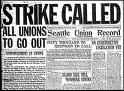
Sometimes the story is just an appendage to the back-story. What it means for Sisyphus to watch his rock roll back down the hill can't be understood unless we know it was not exactly the first time. Organized labor's recent effort to move the Employee Free Choice Act — popularly known as "card check" — up Capitol Hill involves a similar back-story.
Judi Chamberlin is one of the founders of the mental patients' liberation movement. In 1988, she wrote On Our Own, a book about her own experience with depression 43 years ago, when she was hospitalized against her will. That book became a kind of bible for the mental patients' liberation movement. Now the 64-year-old activist is dying of chronic obstructive pulmonary disease, an incurable lung disorder. Late last year she stopped hospitalizations and instead opted for home hospice care.
IN 1974, WOMEN IMPRISONED at New York's maximum-security prison at Bedford Hills staged what is known as the August Rebellion. Prisoner organizer Carol Crooks had filed a lawsuit challenging the prison's practice of placing women in segregation without a hearing or 24-hour notice of charges. In July, a court had ruled in her favor. In August, guards retaliated by brutally beating Crooks and placing her in segregation without a hearing.
The collapse of the financial sector of the United States detonated the current global economic crisis, and its auto industry was soon crumpling as well.[1] Yet, though it all began here, American labor unions and workers have been slow to respond and their response has been weak. Millions of workers in hundreds of French cities have struck and demonstrated repeatedly against their government and against the banks and corporations throughout the spring of 2009, and the story was similar in Italy and Greece.

By the early 1990s, it had become clear that the kind of feminist activity that had blossomed from the late 1960s through the late 1980s in the United States was no longer present. Consequently, many began to ask: what was the present state of feminism?
How many people can afford to take time off from work without being paid? Not many. When a worker gets sick or a child or parent gets sick; when a woman is giving birth or when a parent needs to go to a conference with a teacher, leaving work can not only cost a day's pay, but it can cost advancement in a career. Women, who do most of caregiving, are particularly disadvantaged.
In the 2008 Democratic Party platform, the only provision with women in the title was one promising "Opportunity for Women." The provision pledged "that our daughters should have the same opportunities as our sons,"1 confining measurement of women's equality to our access to men's jobs and men's wages. The nomination, then election, of the first African-American presidential candidate portended and promised great change.
"All the news that's fit to print" is, of course, the slogan of the New York Times. But who determines what's "fit" and why? We read much liberal hand-wringing about what will become of democracy without daily newspapers and reporters who serve as watchdogs of government. We need an independent press, for sure. But we don't have one. Consider today's post on Doug Ireland's blog, about a young Honduran LGBT activist, Walter Trochez, who was assassinated.
The New York Times provides a steady diet of glowing PR about the neoliberal policies implemented throughout the world to defund, privatize, and fragment public control of education.
Are all cultures are equally valid and commendable? asks Peter Tatchell. I just received an email describing speeches Peter Tatchell has delivered on this subject. ( You can follow him with twitter at http://twitter.com/PeterTatchell or Facebook at http://tinyurl.com/cj9y6s ).
Planning a Columbus Day radio broadcast this year with Native American friends from across the hemisphere brought back a childhood memory. We were talking about that unfortunate human capacity to regard groups of strangers as "others," as qualitatively different, strange, threatening and of lesser worth, and about the town that succeeded in getting rid of its “illegal aliens” only to discover that its workforce, consumers and everything that sustained its economy had been eliminated.
It seems doubly ironic that the Nobel Peace Prize Committee has given its 2009 award to Barack Obama — just a few months after Arizona State University declined to award him the customary, symbolic honorary degree as its commencement speaker. The ASU decision, on the grounds that president Obama “had not yet accomplished enough,” was fully understandable in view of the reputation which that esteemed University is committed to uphold. You don’t command a degree from ASU on academic credentials alone, or just from a decade of teaching at elite law schools.
A colleague involved in progressive struggles in education since the Civil Rights movement commented to me that changes in education in the past eight years make her feel like she’s standing on the beach at water’s edge and experiencing the sand being sucked out from under her feet. Standardized tests now control the curriculum in schools serving working class and poor kids. Teachers must often follow scripts – or be fired.
The extent to which a film, book, essay, meeting, or web posting will evoke the emotional immediacy of some contemporary disaster or the analysis of why and how it happened is an aesthetic issue and a political one as well. My analysis of the film tilts toward the latter, and not merely a result of my Victorian Marxist inclinations. Just recently, the University of California system has been visited by a round of disastrous cut backs and furloughs.
- « Newer Posts
- 1
- …
- 67
- 68
- 69
- 70
- 71
- 72
- Older Posts »