Place: Asia
In Bangladesh, the transnational corporations’ production system regressed into one of its most brutal manifestations. Most safeguards that could prevent or at least mitigate the exploitation of workers have been eliminated. While capital enjoys complete freedom, the working class, shackled by oppressive labor laws and a ruthless repressive apparatus, is struggling for bare survival.
One of the most inspiring examples of people fighting back against the predations of international capital is taking place in the Jagatsinghpur district of the Indian state of Orissa (also spelled Odisha).
The election last week of Xi Jinping to the chairmanship of the Chinese Communist Party (CCP), together with six others who with Xi constitute the Standing Committee of the Political Bureau of the party, represents entrenchment of what the Chinese Marxist intellectual Au Loong Yu has called “bureaucratic capitalism.”[1] The bureaucratic capitalists, many of them princelings, that is, sons of the founders of China’s Communist government, have through their control of the state and crony state-corporation relationships come to dominate the heart
To call this feature-length film xenophobic, fear-mongering and hysterical almost understates the case. The whole thing is so over-the-top that, like a bad horror movie where you can see the strings moving the monster, it leaves us numbed and bored or perhaps laughing. Yet it’s not funny.
In trying to assemble my thoughts on comparing Korean and American schools, I have to start with my personal experience. In fact, please keep the following in mind: I am not better than you in evaluating education systems; I am just a middle-aged man who lives next door and has 9- and 11-year-old kids. This article does not aim to define the Korean school system or rigidly evaluate its pros and cons. My own analysis of some of the ideology behind the Korean school system is entirely based on experience, rather than any formal knowledge.
[Reprinted from the History News Network.]
The publisher of Wang Hui’s book described it as follows: "arguing that China’s revolutionary history and its current liberalization are part of the same discourse of modernity, Wang Hui calls for alternatives to both its capitalist trajectory and its authoritarian past."
What follows is our review of the book in the light of this description: how far this assessment is correct, and how relevant it is for those social activists who are pursuing just such an alternative in China.
Ngo Van’s memoir of "those other movements and revolts caught in the crossfire between the French and the Stalinists" in the years before the American commitment in Vietnam reminded me, painfully, of an "editorial" I wrote on the fall of Saigon.
New Politics readers will be interested in reading Mina Hamilton’s sharp analysis of Japan’s nuclear crisis in her recent article on Dissident Voice. Since the article was published on March 16, Mina has added the following note:
This truly path-breaking book goes against the grain of the conventional wisdom which reduces Marx to an Eurocentric and economistic thinker; as Douglas Kellner comments, Kevin Anderson shows that Marx “is the sophisticated and original theorist of history some might not have ever expected him to be.” Analyzing a variety of Marx’s writings, including his journalistic work written for the New York Daily Tribune as well as unpublished material on non-European societies, it brings to the fore a global theorist whose soci
Obama’s decision to radically escalate the wars he was ostensibly elected to terminate is a measure of U.S. imperialism's desperation. It’s not just that our erstwhile peace candidate and future Nobel peace laureate is withdrawing exhausted U.S. troops from the frying pan of Iraq only to transfer them into the fire of Afghanistan, although that itself was an act of desperation. Many of these “volunteer” soldiers and reservists, shattered after several devastating tours of duty in Iraq, are being forced to remain in the service years beyond their contracts.
Max Lane. Unfinished Revolution: Indonesia Before and After Suharto. New York: Verso, 2008. 312 pages. Notes, index. $29.95
It would hardly be an exaggeration to suggest that, today, in the baleful shadow of the Great War on Terror, one central site of intra-progressive discord has been the question of the broad Left’s relation to political and militant Islam.
The left has always been a marginal actor on Pakistan’s national scene. While this bald truth must be told, in no way do I wish to belittle the enormous sacrifices made by numerous progressive individuals, as well as small groups. They unionized industrial and railway workers, helped peasants organize against powerful landlords, inspired Pakistan’s minority provinces to demand their rights, set standards of writing and journalism, etc.
Since George Bush launched Operation Enduring Freedom in October 2001 — the unjust, illegal, and unnecessary attack on Afghanistan — there have been constant US and NATO strikes on Afghan civilians, along with constant denials that such strikes have taken place.
Kathryn Bigelow, the director of The Hurt Locker, claims that many men in Iraq and Afghanistan are addicted to war. If this is true, could it have something to do with the fact that GIs today do not face the endless bombardment from airplanes, field artillery, and tanks that World War II soldiers did?
I served in the 88th Infantry Division in Italy and I never met anyone so addicted. Had we met someone like that we would have considered him “Section 8,” that is, seriously disturbed.
Does that mean that many gung-ho GIs now serving in Iraq and Afghanistan are Section 8?
In 1979, there were seventy women in prisons all over Pakistan. By 1988, this figure was six thousand. The reason — the Hudood Ordinances. Promulgated in 1979 by military dictator Zia-ul-Huq in an effort to Islamize the laws of the country, these have been the subject of much controversy and debate.
The General Elections 2009 have further entrenched the rule of neoliberal capital.[1] This entrenchment has happened due to certain factors, two discussed here in detail. These two factors include the distancing of the Left from working class politics towards electoralism, which resulted in absence of a long term mobilizational politics along class lines; and the role played by identity politics in the consolidation of the neoliberal regime.
Do elections of self-governing Village Committees in China's signify a major step towards democracy? How, if at all, do these elections affect power relations among various groups, class strata, and nascent or even actual classes in the Chinese countryside? Inside and outside of the villages, who makes decisions about how the village will evolve or develop?
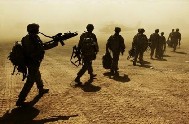
THIS MAY BE A TURNING POINT for the expanding U.S./NATO wars in Afghanistan and Pakistan, a time when speaking out clearly and unambiguously against war can make a crucial difference. Today we see signs all too reminiscent of the step-by-step deepening of the U.S. commitment to the war in Vietnam in the 1960s. In response, we declare ourselves firmly against military escalation in the region and for the withdrawal of all U.S. and NATO forces from Afghanistan and Pakistan now. We also call for an end to drone attacks in both countries.
- « Newer Posts
- 1
- …
- 6
- 7
- 8
- 9
- 10
- Older Posts »