Blog

  • Protests Against Racism; LBGTQ Pride; Continuing Crisis; Trump’s Decline

    Protests Against Racism; LBGTQ Pride; Continuing Crisis; Trump’s Decline

    This article was written for L’Anticapitaliste, the weekly newspaper of the New Anticapitalist Party (NPA) of France. 

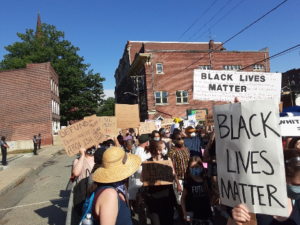
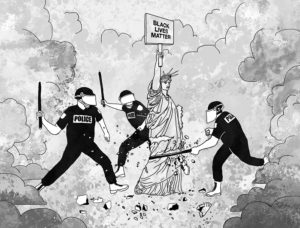
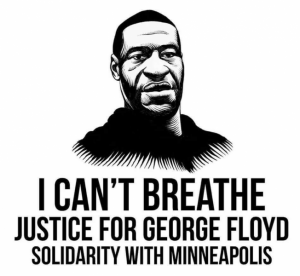
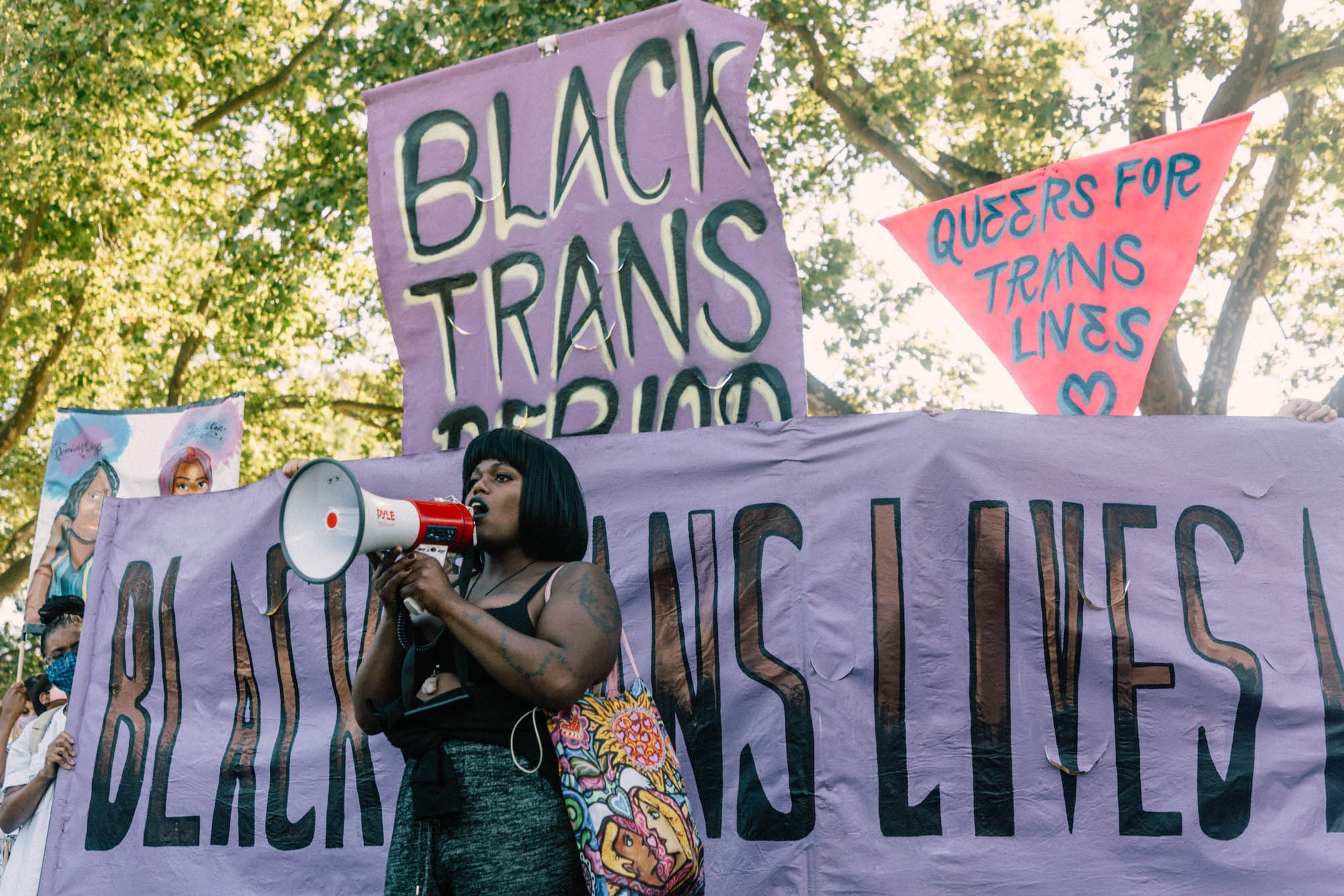
    Throughout June hundreds of thousands of Americans in hundreds of cities and towns protested the killing of George Floyd who had been murdered by police in Minneapolis. But there were also LGBTQ Pride Marches in support of the protests against racism. There were large Black Pride marches in New York and Los Angeles and in other cities, some for Black trans people who are often victims of police violence. Many in the LBGTQ movement pointed out the common origins of both civil rights movements—of Black and LGBTQ people—in resistance to discrimination and police violence.

    The rainbow banners flew this year in the midst of signs saying “defund the police.” The Pride marches began in June of 1970, but over the years as the LGBTQ movement became more successful, corporations began to sponsor the marches, which often cooperated with the police. This year, with the Reclaim Pride movement, LGBTQ spokespeople talked of breaking with corporate sponsorship going back to the roots of the movement that began with the fight at the Stonewall bar against police harassment.

    While the protests over racial injustice have largely subsided, many activists turned their attention to taking down statues of generals and politicians of the Confederacy, the government of the states that seceded to support slavery during the American Civil War. Many statues have been either taken down by state and local government or torn down by protestors. In response, Trump signed an executive order to protect monuments emphasizing that those who do tear them down could face ten years in prison.

    All of this took place in the midst of the continuing pandemic and economic crisis. The United States has suffered 125,000 COVID-19 deaths and tens of millions remain unemployed. After three months of a national lockdown from March to May, President Donald Trump and Republican governors in several Sunbelt states—arguing that the pandemic was all but over—had rushed to reopen the economy, leading to a resurgence of the virus and forcing Texas and Florida and many counties in California to close down again, while eight other states paused their re-openings.

    In the meantime, Trump has asked the Supreme Court to strike down the Affordable Care Act (ACA), popularly known as Obamacare, which would leave 23 million Americans without health insurance. Because most Americans get their health insurance through their employers, the economic crisis has already stripped millions of their health coverage and 450,000 have sought insurance through the ACA since the crisis began. While health insurance under Obamacare remains in the hands of private enterprise and for profit, Trump and the Republicans argue that it is a first step to government control and socialism.

    The Cares Act signed on March 27, which provided the jobless with an additional $600 per week in unemployment benefits will end on July 26, though tens of millions remain unemployed and the U.S. economy is predicted by the International Monetary Fund to shrink by 8 percent. This would leave most of the unemployed with an average of only $378 per week, not enough to support most workers. The Republicans have opposed an extension of the unemployment supplement on the ground that it will encourage workers to stay home rather than going back to work. Many workers fear going back to work, as long as the pandemic persists.

    With the pandemic and the economic depression continuing, and the movement against racism having shifted American opinion on that issue to the left, Donald Trump’s support has dramatically eroded. In six key contested states—Michigan, Wisconsin, Pennsylvania, Florida, Arizona, and North Carolina—Biden now leads by between 7 and 11 percentage points. Trump’s support has eroded among older voters, among voters without a college education, and in some states among white voters. He looks likely to lose, but it is five months until the election.


  • Adjudicating the Chomsky-Greenwald Dispute on Lesser-Evil Voting

    Adjudicating the Chomsky-Greenwald Dispute on Lesser-Evil Voting

    The rituals of the political left are as predictable as they are puzzling. It’s an election year, so we leftists have a sworn duty to reignite, for the 10,000th time, the debate about “lesser-evil voting.” Glenn Greenwald recently made some comments on the matter, as did Noam Chomsky, and Bruce Levine weighed in in a Counterpunch column on June 19th, and other corners of the facebooking, tweeting, youtubing, altogether self-flogging left have delved into the dull topic, so I can’t resist inserting my two cents too. In accord with my self-identification as #1 Fan of the Great Man, I want to defend the Chomskyan point of view.

    I won’t summarize everything Greenwald, Chomsky, and Levine (who links to the relevant videos) say. What I want to do is just to implore those on the left to heed the suffocating nausea in their gut when, say, watching some such performance as Trump’s in Tulsa on June 20th, and vote against the Infant Beast on November 3. Please. For the sake of the climate that Trump is passionate about destroying, and the children he is passionate about torturing, the immigrants he is passionate about excluding (including “legal” immigrants whom Obama and Biden never persecuted), the working class he is passionate about punishing, the public lands he is passionate about privatizing, the elementary decency he is passionate about violating—for the sake of all that is still worth salvaging in this broken world of ours, please vote against him. Vote to oust him. Which, by inescapable logic, means vote for Biden.

    Are the two political parties the same? No. Are they even approximately the same? No. They’re growing farther and farther apart, thanks to, on the one hand, the neofascism of the right, and on the other hand, the “democratic socialist” insurgency that has already elected leftists to Congress. The political center cannot hold; the momentum is on the right and the left, and the left has begun to drag even the most debased corporatists (Pelosi, Schumer, et al.) at least symbolically in its direction. Hence the ludicrous sight of capitalist minions draped in kente cloth kneeling on the floor of the Capitol. Hence Biden’s relatively progressive policy platform. Hence the progressive bills the House passed in 2019, even before the left-populist wave became as visible as it has been in 2020.

    The Democratic Party belongs to business, but there are different sectors of business. Just read Thomas Ferguson. There is “liberal” business and there is fascist business. Liberal business funded Franklin Roosevelt even after he had signed the Wagner and Social Security Acts in 1935 (in fact, it helped write them)—two legislative achievements that leftists have celebrated ever since. Liberal business supported the Great Society. If you look at history, every law that has significantly benefited the population was—of necessity—supported by some segment of the business community. Otherwise it wouldn’t have gotten anywhere. It would be nice if we didn’t need assistance or at least acquiescence from the liberal side of the ruling class in order to enact desperately needed reforms, but we’re not remotely close to that point yet.

    Biden is an obscenity, but he isn’t a neofascist. That consideration alone should be decisive. He’s done terrible things (so has Sanders, by the way), but the political context is changing. The Democrats of the 2020s will not be the Democrats of the 1990s. They won’t be socialists either (except in rare cases), but we have to live in the real world. We have to oust the aspiring fascists before we can make really constructive changes. At the absolute least, we have to prevent things from getting drastically worse—which they will if Trump is reelected, and if Republicans hold the Senate.

    What about Greenwald’s argument that regularly voting for Democrats causes you to lose any leverage you might have over them? It is a powerful argument, and it is a major reason the Democratic Party has been able to virtually ignore organized labor for decades. But, again, in a time of a newly energized left, there are other ways to pressure politicians than by not voting for them on election day. For one thing, you can try to remove them in the primaries. Or you can—here’s an idea—protest in the streets. (I wonder if that might have some success…) Or you can mob their offices or picket their homes or vandalize their neighborhoods or strike workplaces or flood their offices with phone calls or air negative advertisements or hire more lobbyists, etc. In the coming era of social crisis, the left will not lack for means of pressuring elected representatives.

    What about the argument one always hears that lesser-evil voting has enabled the rightward drift of the Democratic Party over the last generation? First of all, a few hundred thousand or more votes here and there for a third party wouldn’t have changed that, wouldn’t have accomplished anything except electing Republicans—as it sometimes did (I find it bewildering that Ralph Nader can sleep at night). Which itself contributed to the rightward drift of politics. So there goes that argument. The overwhelming cause of Democrats’ “rightward drift” hasn’t been lesser evilism but the business community’s massive mobilization since the 1970s against liberal policies. Hundreds of billions of dollars’ worth of propaganda, of institution-building and -dismantling, of investment in armies of lobbyists, has moved the whole political system to the right. You think a little non-lesser-evil voting (among the tiny minority of conscious leftists) would have changed all that?

    Here are just a few of the almost certain consequences of a Trump re-election: the judiciary will become ultra-reactionary for at least a generation; global warming and ecological destruction will accelerate, and may pass a point of no return; nationalism will triumph and the immigration system will be remade such that its sole purpose is to destroy as many lives as possible; higher education will become even more expensive and people will remain debilitated by debt their entire lives; in general, every social policy will veer into the domain of hyper-misanthropy. If you live in a swing state and you don’t vote for Biden, even if you don’t want any of these things to happen, you are increasing their likelihood.

    I know it’s appalling to contemplate submitting a ballot on which you’ve indicated support for a sexist, racist, imperialistic, business-loving fiend like Biden. But if you want to live in a world of moral purity, take a one-way trip on the SpaceX Starship.

    Bruce Levine, using a common talking point on the left, decries “fear-based decision-making.” Lesser-evil voting is fear-based decision-making. Horror of horrors. Personally, I think fear is rational when we’re faced with aspiring neofascism and the end of civilization in three generations. I freely admit I’m afraid of what Trump and the Republicans might do in the next four years. But I also have hope: I hope a leftist insurgency can pressure the Biden administration to make things better for a lot of people, and even to lay the groundwork for substantive action on global warming. As Chomsky is fond of saying, one can’t predict the specifics of what the future will bring. Institutions change and are susceptible to popular pressure.

    Levine’s praise of the “integrity” of Briahna Joy Gray, among others, for denouncing Biden after Sanders had endorsed him is misplaced. Nothing is easier than to denounce someone like Biden. Look how easy it is: I revile Joe Biden. See? That was easy. It requires more courage to buck the tide of popular opinion (on the left) and plead with people to vote for someone as unappealing as that corrupt old corporatist. There is no loss of “integrity” in doing so, if one of your principles is that you care about the predictable consequences of your actions.

    Chomsky’s position is vastly more reasonable than Greenwald’s.

    “Gene Debs, Ralph Nader, and Briahna Joy Gray,” Levine writes, “weren’t ready to grovel in the dust, and those of us who have any energy should consider expending it supporting courageous people like them, as well as maintaining our own integrity and helping one another from becoming too broken to fight.” What on earth is he talking about? Is it “groveling in the dust” to spend a few minutes voting for Biden and other Democrats on November 3? Does doing so make one too broken to fight? Maybe that’s not what he meant. But I don’t see why it arouses so much cognitive dissonance in so many people when you say: fight like hell all the time but vote to keep out the neofascists. There’s nothing remotely inconsistent in that imperative.

    There are, at long last, so many newly awakened leftists in this country that in the aggregate they can have a tangible effect on the elections. I hope they’re able to swallow their understandable revulsion for Biden—and other corporate Democrats—and vote to kick out the fascists, making possible progressive legislation in the future.

  • Socialists and the Uprising Against Racism – Sunday, July 5, 4-6 PM (EDT)

    Socialists and the Uprising Against Racism – Sunday, July 5, 4-6 PM (EDT)

    https://www.facebook.com/events/697015624426618/

    Sunday, July 5, 2020 at 4 PM – 6 PM EDT

    The mass protests in response to the police murder of George Floyd in Minneapolis constitute the biggest popular uprising in the US since the 1960s. What relationship have socialist organizations, including the Democratic Socialists of America, had to this movement? Join us for an online discussion of the opportunities and challenges that exist to making socialist politics relevant to the new rebellion against racism.

    Register for this call here: https://us02web.zoom.us/meeting/register/tZMrdOqtpjIvEtHohE9FulZWYl63j19Q7SUg

    After registering, you will receive a confirmation email containing information about joining the meeting.

    SPEAKERS

    Cinzia Arruzza teaches philosophy at the New School for Social Research and is the co-author of Feminism for the 99%. A Manifesto. She is a member of the Viewpoint Editorial Collective and of the editorial board of Spectre. She is an activist in DSA NYC-Emerge.

    Justin Charles is a member of DSA in New York City and active in the Emerge caucus.

    Michael Esealuka (she/her) serves on the steering committee of DSA’s national Labor Commission and is the former co-chair of New Orleans DSA. A decade plus veteran of the restaurant industry, she now works as an environmental and labor organizer in south Louisiana, uplifting frontline communities and petrochemical workers in their fight for clean air, soil, water and a sustainable green economy that works for workers.

    Haley Pessin is a writer for the forthcoming socialist magazine, Tempest. She is a member of the Afrosocialist and Socialists of Color Caucus of the Democratic Socialists of America and a rank-and-file member of 1199 SEIU. She organizes with the group Legal Workers Rank & File in New York City.

    SPONSORS

    DSA-Emerge Caucus (NYC), DSA-Madison, New Politics, Red Bloom, Rampant Magazine, Tempest magazine

  • Building the Party Through Struggle: A Response to French and Gong

    Building the Party Through Struggle: A Response to French and Gong

    The Black-led multiracial working-class uprising has radically changed US and global politics. It has become the outlet for all the rage built up by years of racist police violence, institutional racism, and the impoverishment of working people. These mass militant protests, which have swept through big cities and small towns in every corner of the country and stirred similar actions throughout the world, have won more victories in a short space of time than years of electoral campaigns for politicians inside the Democratic Party.

    The movement has cohered around the demand, pioneered by Black abolitionists, to defund the police and reinvest in communities of color, social services, education, healthcare and jobs. It has forced both capitalist parties, and the capitalist class as a whole, on to the defensive, forcing them to tear down statues of slave holders and conquistadors, cut the budgets of police departments, and in the case of Minneapolis go so far as to promise to disband the entire force. Black and white militants in the labor movement have seized the opportunity to stage solidarity strikes, demand that unions and union federations expel the so-called police unions from their midst, and King County Labor Council just voted to do so.

    This new political context frames our response to Nick French and Jeremy Gong’s article, “Why We Need a Political Party.” Written before the uprising, it defends the “Dirty Break” strategy—preparing for an independent worker’s party primarily by running socialist candidates inside Democratic Party. We believe that this strategy was mistaken before the uprising and is now out completely out of step with the new political period we have entered. Against this perspective, we argue that a new working-class party will be built primarily through mass struggles like the current uprising and the strikes and workplace demonstrations that took place amidst the pandemic, and through running candidates locally on independent ballot lines as a complement to, not substitute for, these struggles from below.

    Points of Convergence

    Despite our sharp differences, we find common ground with French and Gong. We agree that Bernie Sanders’ campaign had an enormous impact on mass consciousness. We also agree that the campaign ended disastrously with Sanders capitulating to the establishment and according to French and Wong, “destroying much of the organization and momentum his campaign built.”

    We share French and Gong’s rejection of the realignment strategy to transform the Democratic Party into a new workers party. History has demonstrated, time and again, that is a dead end. The Democratic Party is entirely controlled by its corporate donors, party bureaucracy, and elected officials—not its unorganized members. We too think that we need to build a new party, a mass workers party, whose purpose is to lead struggle, run candidates on its own ballot line, politically educate worker activists, and fight for socialism. Finally, we support their argument that DSA is the primary vehicle to advance that project, and their call for DSA to spearhead discussions among socialists and workers organization about forming a new workers party.

    The Dynamics of Radicalization

    However, we disagree with French and Gong over the fundamental question of how working-class and oppressed people radicalize. As admirers of pre-1914 socialism, French and Gong appear to believe that class consciousness is shaped, “from the outside” by a party whose main activity is electoral campaigns. They are quite explicit that the Sanders’ campaigns of 2016 and 2020 generated a new radicalization in US society.

    There are two problems with this contention—one theoretical and the other historical. First, we do not believe that workers and oppressed people primarily move to the left through parties and elections that provide them a program from above. Rather, popular radicalism is the product of mass, disruptive and often illegal class struggle and social movements. In the course of struggle, workers and oppressed people create their own organizations to fight for change, build new solidarities amongst themselves, challenge capitalist “common sense,” win reforms, gain confidence to fight for increasingly left-wing demands, and become a “class for itself.”

    The Civil Rights Movement is a case in point. It began over the moderate demand for integration and radicalized to challenge the racist foundations of US capitalism and imperialism. Today’s uprising started over protesting the racist police murder of George Floyd but rapidly adopted the abolitionist demand to defund the police.

    Electoral campaigns whose sole aim is to win office have a very different and more conservative logic. To win, all that a campaign needs to do is get out 50 percent plus one. No risks have to be taken, no new coalitions have to be built and more radical demands are actually counter-productive. These campaigns and their candidates usually adopt the “lowest common denominator” positions – those that are palatable to the largest, passive electoral constituencies.

    While mass social struggles can transform consciousness on a mass scale, politicians and their campaigns tail behind them, rather than lead on their issues. For example, Sanders opposes the uprising’s demand to defund the police, opposes their abolition, and has merely offered the standard liberal program for police reform with slightly more radical rhetoric. Sanders’ position highlights the dramatic contrast between moderating nature of electoral campaigns, especially ones inside a capitalist party, and the radicalizing nature of mass movements from below.

    Sanders as an Expression not Cause of the Radicalization

    The second problem with French and Gong’s position is historical – their contention that Sanders was the source of the mass radicalization. We believe this gets cause and effect backwards. Sanders’ two presidential campaigns were in fact the product of far deeper dynamics. They were made possible by the combination of nearly four decades of neoliberal attacks on workers and oppressed people, compounded by the Great Recession of 2008.

    These conditions led to the surge in the popularity of socialism well before Bernie Sanders ran for President. In the aftermath of the financial crisis and the election of Barack Obama, Newsweek announced on their cover in February 2009, “We’re All Socialists Now.” Of course, all it meant by “socialism” was the state bailout of failing corporations and the stimulus plan, but it nevertheless is an indicator of socialism’s new-found popularity, which has held steady at about 50 percent of young people since 2010.

    Even more important to shaping this leftward shift was the wave of struggles in the aftermath of the Great Recession. These have shaped the world view of an entire generation. The Arab Spring set an example of popular revolution; the Madison Uprising provided us a glimpse of class struggle in the US; Occupy gave us the popular language of class with its slogan of the 99 percent against the 1 percent; the Chicago Teachers Union (CTU) reversed the decades of union retreats and blazed the path of social justice unionism with its 2012 strike against “apartheid schools”; and Black Lives Matter protests swept the country in 2014. Combined with widespread disappointment with the Obama administration’s promise of change, these militant struggles from below fertilized the ground from which Sanders’ sudden popularity and his presidential campaign of 2016 grew.

    Moreover, these ongoing struggles forced Sanders far to the left in 2016. A longtime supporter of police unions, the movement for Black lives forced him to adopt and voice positions against racism and police brutality. Similar pressures from below compelled him to foreground women’s rights and demands of LGBTQ folks, shifting him to connect the fight against oppression to his “broad class” demands like Medicare for All and the Green New Deal.

    Sanders adoption of these so-called “fringe demands” did not undercut his popularity as Dustin Guastella has argued. Instead, as Keeanga-Yamahtta Taylor points out, Sanders was not aggressive enough in putting them forward, especially those against racism and police brutality, for fear of alienating more conservative voters. This is not a mistake, but the unfortunate logic of top-down election campaigns, especially those conducted in a capitalist party, whose main goal is winning office.

    Mis-crediting Sanders for Generating Class and Social Struggle Since 2016

    French and Gong double down on these claims about Sanders role when they “attribute the historically small but still-significant rise in class struggle in the United States from 2015-2020 to the fact that Sanders essentially ran a permanent campaign during those years.” In making this case, they tend to ignore the independent initiative of workers, the long term organizing that lay behind the upsurges, and the labor organizations, radical networks, and deep traditions that were as, if not more important than the Sanders campaign.

    French and Gong’s analysis of the red state teachers strikes hinges on the role of the Sanders 2016 campaign. While some of the militants in West Virginia and Arizona may have been brought together by the 2016 Sanders campaign, their organizing was far more deeply rooted. In all the states, teacher militants had built up networks through a variety of efforts over years of work– networks were far more important for the strikes than the Sanders campaign. These networks relied on support and training not from the Sanders campaign, but from Labor Notes and militant trade unionists.

    In the case of Arizona, its leaders drew on the experience and lessons of the CTU strike of 2012, in which one of their leaders, Rebecca Garelli, had participated as a teacher in Chicago. These militants learned to defy the union officialdom and take minority actions to build confidence from these organizers, examples, and traditions, not the Sanders campaign.

    A similar case can be made for the Emergency Workers Organizing Collective (EWOC). Again, some activists may have met one another in the Bernie 2020 campaign, but the precondition of this project was the decades of independent organizing by the United Electrical Workers (UE). The UE has been training workplace militants in “non-majority” unionism—collective action in the workplace in the absence of formal recognition of National Labor Relations Board elections—for decades. And, again, the politics and organizational skills necessary for this organizing to succeed, especially building a self-confident layer of workplace activists who democratically control their own organizations, were not and will not be learned in top-down electoral campaigns like that of Sanders.

    Finally, the claim that Educators of Bernie led the organizing for a wild-cat strike to shut down the NYC public schools at the start of pandemic in March is simply not true. While many activist teachers involved in that effort had participated in Educators for Bernie, it was not the main organization behind this activity. That was the Movement of Rank and File Educators (MORE) inside the UFT, which includes many militants who did not participate in Educators for Bernie and who were workplace organizers for years before either of Sanders’ presidential campaigns. MORE owes its militant strategy and tactics (and even its name) to the Caucus of Rank and File Educators (CORE) that transformed the CTU from the bottom up and led its historic strikes in 2012 and 2019.

    Unfortunately, electoral campaigns with radical speeches and large rallies are not enough to spur people into struggle or prepare them to lead it. Jesse Jackson staged similar radical rallies in his presidential campaigns during the 1980s. But far from stimulating a rise in struggle, the campaign coincided with a radical downturn in strikes and social movements. There’s a big difference between “inspiring” people to question the existing order, and the political and organizational tools and confidence necessary to build mass struggles that win.

    Confusing Sanders Campaign with Movement and Working-Class Party

    French and Gong also blur the lines between the Sanders campaign, class and social movements, and a working-class party. They contend that the campaign “brought countless workers into struggle on the basis of a shared working-class identity…. By mobilizing millions around demands like Medicare For All and debt forgiveness, Sanders convinced many that a better world was possible—and that there was a movement willing to fight for it.”

    We believe this fundamentally confuses distinct political logics. Attending an election rally and voting for a candidate are not the same as a participating in a strike or disruptive protest. In electoral campaigns, especially those with no democratic organization, working-class participants are reduced to the position of a passive spectator.

    Most do not attend rallies, those that do at most listen, and only a minority get involved in the ins and outs of campaigning. Such campaigning work is directed from above. That is dramatically different from an actual movement when people come together in meetings to decide on demands, develop strategy and tactics, and plan actions. That’s why we cannot call the Sanders campaigns movements.

    Nor can we agree with French and Gong’s claim that the Sanders campaign functioned like a worker’s party. Of course, the campaign got many workers to donate to it and Sanders did “espouse open struggle with capitalists.” But workers and their unions have been a source of funding for the Democratic Party since the 1930s, and left-wing Democrats then and Jesse Jackson in 1984 and 1988 supported strikes and demonstrations.  Unfortunately, these campaigns, especially in the 1930s and 1940s, derailed promising labor and social movements from launching an independent, mass working-class party and lured socialists and militants back into the Democratic Party.

    Finally, Sander’s campaign lacked the key characteristic necessary for the formation of a new workers party—democracy. Sanders, his staff, and hand-picked allies decided on the program, planning, and electoral strategy. There was no election of leaders, no open debates on platform and activity, and no democratic accountability of the candidate himself. The much vaunted infrastructure—finances, media and organizing apparatus—was not under the control of campaign and social movement activists, but the professional bureaucrats who ran the campaign and Sanders who had final veto power over everything. That’s why, unlike a mass party, it was dissolved over night at the whim of the candidate.

    Using our Enemy’s Ballot Line: Dirty Break or Dead End?

    Despite these realities, French and Gong persist in making the case that the Sanders’ campaigns provide a model to be emulated. They and their comrades in DSA’s Bread and Roses Caucus advocate a “dirty break” strategy in which DSA and other socialists use the Democratic Party ballot line to run candidates, win elected office, and build up a party inside the Democratic Party. Only when the time appears ripe, would they support a left break to form a new workers party. This strategy is based on a mistaken reading of the Minnesota Farmer Labor Party (MFLP), it underestimates the real and present danger of cooptation, and threatens to trap yet another generation of the left inside the Democratic Party.

    In his article, “’Dirty Break’ for Independent Political Action or A Way to Stay Stuck in the Mud,” Kim Moody questions  Eric Blanc’s use of the MFLP as a historical precedent for Bread and Roses’ strategy of using the Democratic Party ballot line. Moody points out the MFLP was part of a national movement to form a labor party. Where the “dirty break” was successful in getting candidates elected inside the Republican and Democratic parties, for example by Non-Partisan League (NPL) in North Dakota, the break never came, and no Farmer Labor Party (FLP) was ever formed. In other words, “had the Minnesota NPL been more successful in this strategy there might never have been a FLP in that state.”

    In fact, the successful FLPs were launched not through a dirty break strategy, but a clean break organized by socialists in a period of sharp social struggle. Moody therefore argues that “there has to be a significant pole fighting for a clean break if those attempting to work (in any way, with or without illusions) within the Democratic Party framework are to be drawn to a political break with that party. The social, economic, and political forces within the Democratic Party today, and the national spoiler effect to which they are so attuned, make a sui generis internally-based split a virtual impossibility.”

    Today, there is a real risk is that the “dirty break” strategy will lead, in practice, to a new realignment strategy, like that advocated by Sanders and AOC. They have no desire to launch a new party now or in the future, and instead call for socialists to take over the Democratic Party by contesting both national and “down-ballot” primaries. Most if not all of DSA’s candidates share this strategy and either reject or are indifferent to a future “dirty break.”

    Meagan Day admits in a recent tweet that the “dirty break” and realignment strategies seem indistinguishable in practice. After laying out three socialist strategies in relationship to the Democratic Party—1) realignment; 2) clean break; and 3) dirty break—she admits that “1 and 3 are going to look similar up to a certain point.”

    The Democrats will take advantage of this confusion to absorb leftists who work inside the party. While it is a capitalist party, the Democrats presents themselves as a broad tent, open to the left, workers, and oppressed people—but at the price of disorganizing our struggles and organizations.

    They are experts at using both the stick and the carrot. So, they will do everything they can to prevent socialists from winning or getting reelected. But if socialists do win, they work hard to absorb and coopt them. It offers them appointments, the illusion of influencing its policies, and even will trot them out to market the party as a broad party to unions and social movements.

    The Sanders campaigns are paradigmatic examples of how the Democrats neutralize and entrap the left. In both of his presidential runs, the establishment ensured that one of theirs won the nomination, first Clinton in 2016 and then Biden in 2020. In the second campaign, despite all the hullabaloo about the possibility of Sanders winning, Barack Obama and the rest of the establishment anointed Biden after South Carolina, cleared away all his mainstream competitors, and backed him in a crushing defeat of Sanders.

    Worse, in a tragic repetition of what the left always does inside the Democratic Party, when Sanders ended his campaigns in defeat, he rallied his supporters to support the neo-liberal, corporate establishment’s candidates–first Hillary Clinton and now Biden. This year Sanders has worked especially hard to co-opt and discipline a left that is growing in numbers and self-confidence in the midst of the current uprising. He drafted AOC and other leftists into joint task forces with Biden’s team, threatened to rescind the credentials of any delegate to the Democratic National Convention who engages in criticism of Biden, and chided those who refuse to support the “lesser of two rapists” as being irresponsible.

    In this context, it hard to see any real space for the “dirty break” strategy. Almost no DSA candidates support it, and most if not all DSA elected officials will follow Sanders in voting and campaigning for Biden. Given these realities, we fear that more and more advocates of the  “dirty break” will end up acting like “realigners”—contesting more and more “down-ballot” elections and being dragged further into the trap of Democratic Party politics.

    Missing the Moment

    French and Gong’s perspective and strategy could lead Bread and Roses and DSA to miss the enormous opportunities for socialists to play a role organizing and leading in class and social struggles as well as election campaigns. The Black-led multiracial working-class uprising should be the basis of a sharp reorientation for the entire left. This is our Civil Rights movement and it should become the primary focus of all socialist activity

    Rather than shifting to this focus, though, French and Gong’s perspective and strategy continues to prioritize electoral work as the main vehicle to build the new party. This leads them to adopt a conservative timeline, projecting a 10-year slog through the Democratic Party to launch “a workers’ party by, say 2030.” We believe their priority is mistaken, we should instead focus on struggle especially the uprising, and our timeline for building the party must be radically accelerated.

    Truth be told, independent working-class parties were never built through a slow accumulation of forces within a capitalist party. They have, historically, become possible during leaps in consciousness produced in the thick of struggles, often illegal, that challenge the existing order. It is in these struggles that socialists can cohere the militant minority of radical workers and oppressed people into parties that can challenge the capitalist parties and the system as a whole.

    The overwhelming emphasis on electoral activity within the Democratic Party in DSA helps explain why it has been, as an organization, caught so flat footed by the uprising. Individual members, the Afrosocialist and Socialists of Color Caucus, and some chapters have responded. However, DSA as an organization has not shifted as rapidly as it must.

    Why? We in DSA are still saddled with an organizational structure and political culture that is not set up to participate in and lead struggle from below. Our meetings are too infrequent to assess and participate in dynamic movements; we are fragmented into separate working groups; and most members only become active through electoral campaigns.

    DSA today is facing the same challenge SDS did in the mid-1960s.  In 1965, SDS faced the choice of continuing to follow the path laid out at its founding—the original realignment strategy of Michael Harrington—or to break with Harrington, the AFL-CIO officials, and the Democratic Party liberals and organize a mass demonstration demanding immediate and unconditional withdrawal of US forces from Vietnam. They choose the latter, and SDS became the main organization for a generation of radical young people.

    DSA today needs to make a similar choice—a continued focus on Democratic party election campaigns or active participation in the new movement, alongside the new generation of multi-racial radicals leading the uprising. If we don’t shift, and we believe that we can, DSA will no longer be the main organization of the new radicalization.  A new socialist organization—a new socialist party—can only be built in the middle of this uprising, debating its issues, strategies and tactics.

    An Alternative Perspective and Strategy for Party Building

    Prioritizing struggle does not mean adopting an ultra-left or anarchist position of abstention from electoral politics on principle. Such a position leaves the capitalist class unchallenged on the political terrain. However, the key task in electoral work is ensuring the political independence of the working class, even if in primitive form. Thus, in place of  a “dirty break” strategy, we should run our own “clean break” candidates in local elections on our own socialist or labor ballot line.

    We have no illusions that the human material—a significant minority of working and oppressed people that is ready to “waste” their vote on an independent party that gives a political profile to their struggle—exists today. However, in the context of an insurgent mass movement, there is more space than before to run independent socialist campaigns. This is especially true in single party municipalities controlled by the Democrats, where there will be no danger of being scapegoated for “spoiling” the elections. At the same time, we should back independent socialist campaigns like that of Howie Hawkins as a “place holder” for a national independent party of working people. We should do this with no fear of the spoiler charge.

    Local and state level campaigns, and especially any candidates elected, should be accountable to DSA and other socialist organizations. And they need to use their position in office to trumpet the demands of the movement and not adapt them to those of the capitalist parties. They need to resist the siren song of legislative “log-rolling” to get the least worst bill possible, and instead be advocates of our struggles and movement, supporting and advancing their demands in city councils, state houses, and federal government.

    The new socialist left in the US that has emerged in the last five years needs to seize this opportunity and adopt this alternative perspective and strategy. If we do not, we risk being bypassed by the surging struggle from below to the detriment of building what we agree we need—a new mass party of workers and oppressed peoples.

  • Punched in the Face: Minneapolis Labor and the Fight for #JusticeforGeorgeFloyd

    Punched in the Face: Minneapolis Labor and the Fight for #JusticeforGeorgeFloyd

    A protest for George Floyd in Minneapolis, Minnesota. Source: Wikicommons

    On the second day of what would eventually become the Minneapolis uprising in response to the murder of George Floyd, Adam Birch, a bus driver, got a message over his intercom that Metro Transit, the public transportation authority of the Twin Cities, needed volunteers at the 3rd Precinct. When Birch heard the message, he knew exactly what the request meant.

    “They potentially wanted people to transport cops and to transport arrested protesters to jail,” Birch told me. Back in 2016, before becoming a bus driver, he’d been arrested at a demonstration protesting the death of Philando Castille, a Black man killed by police outside of St. Paul. Birch was taken to jail on a Metro Transit bus. So, after his shift ended, he stuck around the garage to talk his coworkers out of volunteering to help the Minneapolis Police Department. “I said ‘hey, do you really want to be put in a dangerous situation for a police department that, you know, kills people?’” he recalled.

    Many of Birch’s coworkers—members of Local 1005 of the Amalgamated Transit Union—were uncomfortable with the idea and went home for the day. By the time the cops came to ask for assistance, the garage was almost empty. “One driver in particular was called up to the dispatch window. They said ‘we need somebody to take cops from here to here.’ And she was like, ‘No, I’m not gonna do that’ and she’s sat back down,” said Birch.

    A day after the 3rd Precinct burned to the ground, Birch created a petition called “Union Members for #JusticeForGeorgeFloyd” and organized a small rally of union members before joining the protest outside the 5th Precinct. “We are willing to talk to our co-workers about why the labor movement needs to take a stand against racist police violence of our brothers, sisters, and siblings,” the petition reads. ATU Local 1005 supported Birch’s action and also released a statement expressing support for the uprisings and criticizing the MPD’s request for drivers to help them move about the city.

    Minnesota unions and labor activists from different industries launched similar endeavors. Members of AFSCME Local 2822, which represents Hennepin County Clerical Workers, were out marching in the streets everyday. Minnesota Workers United, a grassroots labor organization that brings together workers from a variety of sectors, organized a protest outside of Hennepin County Attorney Mike Freeman’s home. The Minnesota AFL-CIO demanded that Bob Kroll, President of the Minneapolis Police Union and a known Trump supporter, step down.

    “Minneapolis Police Union President, Bob Kroll, has failed the Labor Movement and the residents of Minneapolis,” their statement read. “Bob Kroll has a long history of bigoted remarks and complaints of violence made against him. As union President, he antagonizes and disparages members of the Black community. He advocates for military-style police tactics making communities less safe and the police force more deadly.”

    When the University of Minnesota announced it would cut ties with the MPD, Robert Panning-Miller, former president of the Minneapolis Federation of Teachers, was reminded that there had been a contentious debate in Minneapolis three years earlier over whether Student Resource Officers should remain in public schools. “I went and looked and I realized that the contract is expiring this August and so I started putting out word that this is something we need to make sure is not renewed,” Panning-Miller told me. “What do the SROs do besides facilitate the school-to-prison pipeline?”

    After some quick research and a few Facebook posts, his call to end the relationship between Minneapolis public schools and the MPD became an uproar, amplified by other members of the MFT. On June 2nd, Panning-Miller and the union, along with parents and students, rallied outside the Davis Center in support of the new legislation. That same day, a unanimous vote by the school board terminated the $1.1 million contract.

    While much of the labor movement in Minneapolis has embedded itself in the city’s struggle against police brutality, union leadership at the national level has shied away from demands that it clean house. As criticism of the presence of police unions within the AFL-CIO grows, powerful leaders like Richard Trumka have hesitated, offering platitudes over concrete policy. “The short answer is not to disengage and just condemn. The answer is to totally re-engage and educate,” Trumka said during a press call on June 3rd. Likewise, AFSCME president Lee Saunders defended police officers’ right to unionize, while also arguing that collective bargaining shouldn’t “be construed as a shield for misconduct or criminal behavior.”

    In fact, shielding members from accountability is what police unions do. The strong collective bargaining agreements formulated by police union organizers have weaponized the philosophy of the union movement to protect officers from being fired for extrajudicially murdering people of color. For example, many police unions inked contracts with cities that prevent government agencies from immediately interviewing officers who brutalize suspects or engage in sexual misconduct with arrestees. These protections, enforced by police unions, play a vital role allowing police officers to enforce the racial stratification that permeates every aspect of American society; a phenomenon that unions have both fought against and been complicit in.

    The labor movement has long struggled with its own internal history of racial injustice and segregation. While Black workers make up the largest racial group within America’s rank-and-file and the decline of union membership in general has contributed to the racial wealth gap, the fact remains that modern labor institutions were shaped by racial prejudice; the influential Wagner Act, which granted private sectors right to organize unions, explicitly exempted farm hands and domestic workers—a tactic to keep Black workers from participating in collective bargaining. Throughout the 20th century and into the present, many white workers (even union workers) have viewed workers of color, especially Black workers, as a threat to their wages and privilege.

    Robin Kelley, an academic who focuses on the political and cultural aspects of Black history, cites the growing inclusion of Black workers into unions during the 50s and 60s as a key example of this phenomenon. Even unions like the United Steelworkers, which was integrated, fought changes that would have given more economic power to Black workers, Kelley told me. “They really become robust in terms of trying to keep so-called ‘unskilled workers’ from moving up the ladder,” he said. And despite the growing alliance between labor activists and civil rights organizers, union leaders failed to stop industrialists and racist bosses from utilizing racial tension to sow division. “They dropped this threat: ‘If you let these negros organize, they’re going to take your jobs. If they organize and take your jobs, you don’t think that those need to take less wages than you? You’re a skilled steelworker,’” Kelley explained.

    “For the vast majority of workers,” Kelley said, “including white workers, racial justice issues are the sort of fulcrum that gives capital even more weight, because they’re able to not just divide workers but create structural forms of racism that put downward pressure on all wages and all working conditions.”

    When labor organizations have placed a premium on racial equality and solidarity, they’ve often made huge strides in both workers rights and social justice. Toni Gilpin, a labor historian and author, points to the United Farm Equipment Workers of America as a key example of this: “The FE in Louisville, which was majority white, carried out a constant campaign to press for interracial solidarity in a town where segregation and white racism was endemic.”

    Throughout the 40s, the FE fought for racial solidarity in tangent with meaningful economic gains that didn’t benefit members based on race. Gilpin describes this being achieved through active inclusion of Black workers in leadership positions. “They had African Americans in top positions of leadership. And this was a period after WWII when that was not the norm. So they had two executive board members, one executive board member, one vice president who were African American at a time when most unions had no Blacks in such top leadership positions,” Gilpin said. “It also meant that they pressed for contract terms and negotiations with these powerful companies that specifically work to the advantage of African American workers. So for example, they push for plant wide seniority.”

    In Minneapolis, standing on the edge of a demonstration near the 5th Precinct, Doni Jones, the president of ATU Local 1005’s Black Caucus, said that Black bus drivers still deal with racist hiring practices and internal comportment aimed explicitly at Black bus drivers. “We’re still the last hired, first fired at Metro Transit,” he told me. “We’re suspended faster. Our punishment is harsher.”

    When white drivers are assaulted by passengers and defend themselves, Jones said, they usually keep their jobs; Black drivers, however, are usually fired. Metro Transit did not respond to a request for comment. Since 2016, there have been 200 assaults on Metro Transit bus drivers, and last year there were 46 incidents of spitting.

    Rather than provide all its drivers with better safety protocols, Jones said, Metro Transit punishes Black workers and lets white workers off the hook. “They say ‘it was overkill’ or ‘it was out of retaliation,” he continued. “How is it retaliation if someone punches you in the face?”

    Originally posted at The Strikewave.

  • Trump Rallies for Reopening as Biden Strengthens His Position

    Trump Rallies for Reopening as Biden Strengthens His Position

    This article was written for L’Anticapitaliste, the weekly newspaper of the New Anticapitalist Party (NPA) of France. 

    President Donald Trump held his first campaign rally in months on June 20 in an indoor arena in Tulsa, Oklahoma where speaking to a smaller than expected crowd of only 6,000 he minimized the seriousness of the coronavirus pandemic still spreading across the country and failed to address the police racism and violence that have led to protests by hundreds of thousands nationwide. He talked about reopening the economy and a return to American greatness, as long as the Democrats and anarchists don’t take over.

    Speaking to the nearly all-white crowd, almost none of whom were wearing the recommended masks or keeping social distance, he did not talk about Juneteenth, the holiday commemorating the end of slavery in America, nor did he mention the Tulsa Massacre of 1921 when whites attacked a black neighborhood, burning it and and killing 300 black people. And he did not did say the name of George Floyd whose murder at the hands of police spurred the recent protests. Instead he talked about the “left-wing mobs” who have been pulling down statues of Confederate generals who fought to preserve slavery. Trump suggested that if elected Joseph Biden and the Democrats would allow anarchists and rioters to run wild. Trump remarkably ignored the 122,000 who have died in the pandemic and new predictions that 200,000 may be dead by October, and he did not allude to the 40 million unemployed.

    Recent polls show Biden ahead of Trump by 11 points and the likely winner of the 2020 election in November. Trump has been on the defensive not only because of the coronavirus pandemic, the economic crisis, and the national protest movement over police racism and violence, but he has also recently lost two Supreme Court decisions. In the first, the court voted 6 to 3 that the 1964 Civil Rights Act that bars discrimination based on sex also applies to discrimination on the basis of sexual orientation and gender identity, a major victory for the LGBTQ movement. In the second temporary decision based on procedure, the court voted 5 to 4 against a Trump administration attempt to overturn DACA, Deferred Action for Childhood Arrivals, Barack Obama’s 2012 executive order that protects from deportation 700,000 young immigrants brought by their parents to the United States when they were infants or small children. Trump promises to make another attempt to overturn DACA and may be successful.

    Joseph Biden, the presumptive Democratic nominee, has not been holding any rallies and only attended one small public event near his home in Delaware a month ago when he placed a wreath on a monument at a ceremony on Memorial Day. Biden has promised to choose a woman as his vice-presidential running mate, and because of the recent protests he is under pressure to choose a woman of color. In May Biden for the first time raised more money, $80 million, than Trump’s $74 million.

    Biden has said that he would make DACA permanent on “day one” of his presidency. But while the new Black Lives Matter movement has demanded the “defunding” of police, Biden has said he does not support defunding. He calls instead for more money for police to carry out reforms, such as “community policing,” that is, police working closely with local neighborhoods. Biden is for reopening the U.S. economy, but wants to do so more gradually and carefully than Trump, who is for reopening now. Biden has assembled a team of economic advisors, many of whom are neoliberals from the Barack Obama administration, while others are said to be more progressive.

    Meanwhile, a month since Minneapolis police murdered George Floyd, the movement in the street continues, signaling a new era of demands for reform. The protest demonstrations have become celebratory, rejoicing in a newfound solidarity. Yet so far the proposals of both Republicans and Democrats are shallow and do not represent the demand for profound structural changes that the movement wants.

  • Belgium’s Colonial Crimes in the Congo: A Duty to Remember

    Belgium’s Colonial Crimes in the Congo: A Duty to Remember

    Historical context of the colonization of the Congo

    At the end of the 18th century, over a hundred years before the Congo was colonized by Leopold II, the thirteen British colonies in North America, were liberated from the British crown after fighting a war of independence. As a result the United States of America was created in 1776. In other parts of the globe such as South-East Asia and India the British Empire reinforced its colonial grip, which it maintained into the middle of the 20th century. The Dutch reinforced their domination over Indonesia. Liberation movements were not limited to recently arrived colonists of European stock. The courageous people of Haiti, direct descendants from Africans, won their independence from French domination in 1804. Over the following twenty years Latin America went through a phase of wars of independence led by revolutionaries such as Simon Bolivar, who succeeded in defeating the Spanish troops who were dominating much of the continent. At that time Sub-Saharan Africa was hardly colonized by the Europeans even if it was subjected to the effects of the colonizations on the other continents, being the principal victim of the triangular trade and slave transportation.

    Between the 17th century and the middle of the 19th century tens of millions of Africans were pressed into slavery and transported to the Americas. It was in the last quarter of the 19th century that Sub-Saharan Africa fell under the boot of European colonization: mainly British, French, German, Portuguese and in the case of the Congo, Belgian.

    Léopold II, second King of the Belgians wanted his country to have a colony too

    When Leopold II came to the throne of Belgium in 1865 he wanted his country to have a colony too, just like the others. Before becoming King, Léopold II had seen how colonialism worked in many regions: in Ceylon, India, Burma, Indonesia and he had particularly liked how it was done in Java, Indonesia by the Dutch, this became his guiding example, an example based on forced labour.

    He had considered colonizing a part of Argentina and then looked at the Philippines but the price that Spain asked was too high. Finally he decided to get hold of the Congo basin. To do this he had to be crafty so as to avoid conflict with the other European powers that were already present in the area and might not favorably view a new arrival wanting a piece of the cake.

    In the 19th century the Europeans justified their colonial policies with arguments of Christianizing the pagans, introducing free trade (still a current discourse) and in Sub-Saharan Africa, putting an end to the Arabs’ slave trade.

    “To open up to civilization the last remaining region of the globe where it has yet to penetrate, to throw back the shadows still enveloping entire populations, is, I dare to say, a crusade worthy of this century of progress”. —Léopold II, King of the Belgians

    In 1876, Leopold II organized in Brussels an International Geographical Conference with an objective that was quite coherent with the spirit of the time “To open up to civilization the last remaining region of the globe where it has yet to penetrate, to throw back the shadows still enveloping entire populations, is, I dare to say, a crusade worthy of this century of progress (…) It seems to me that Belgium, a central and neutral state, would be the right place to hold this reunion (…) Must I reassure you that when I called you all here to Brussels I was not motivated by Selfishness? No, gentlemen, Belgium may be a small country but it is happy and contented with her condition: my sole ambition is to serve it well”. He goes on to explain to the great explorers that he had gathered there that the objective of the International Geographical Conference was to build roads to reach the hinterlands, and to set up pacifying medical and scientific stations which would be the means of abolishing slavery and of creating harmony between Chiefs as they brought just and unbiased arbitration. That was the official discourse

    Shortly afterwards he engaged the British explorer Henry Morton Stanley, who had just crossed Africa from East to West by following the Congo River to its estuary / embouchure.

    The Berlin conference and the creation of the Congo Free State (CFS)

    In 1885 at the Berlin conference, after much diplomatic manoeuvring, Léopold II obtained authorization to create an independent Congolese State which became known as the Congo Free State. In his closing speech to the conference Chancellor Bismark said “The new state of the Congo will one day be a prime example of what we wish to achieve, and I express my deepest wishes for its rapid development and the realisation of the noble desires of its illustrious creator”.

    “The new state of the Congo will one day be a prime example of what we wish to achieve”. —Bismark, Chancellor of the German Empire

    Although he gave great speeches in great conferences Léopold II had a very different discourse elsewhere: in documents he sent to his delegates in CFS whose task was to extract the profits, or his declarations to the press. For example, in an interview with Leopold II which appeared in the New York paper Publisher’s Press on 11 December 1906 – twenty years after the Berlin conference – he said “When dealing with a race made up of cannibals for thousands of years, it is necessary to use methods that shake their laziness and make them understand the healthy aspects of work”.

    “When dealing with a race made up of cannibals for thousands of years, it is necessary to use methods that shake their laziness.” —Léopold II

    As from the moment in 1885 when Leopold II could create from nothing the Congo Free State as his own personal state he issued a first decree that declared all unexploited land as state property. He grabbed the land even though the reason for creating the CFS was to allow the chiefs to enter into agreements and to defend themselves against the Arab slave traders. With Stanley’s help, he passed a series of treaties with Congolese tribal chieftains by which the lands of their villages and of their territories came under the control of the head of State of CFS, Leopold II. Other lands, which were immense territories, were declared vacant and so also became the property of the CFS

    The Javanese model as applied by Belgium’s Leopold II in the Congo

    At this point Leopold II used the model applied by the Low Countries in Java to his country’s exploitation of the Congo: he systematically exploited the population, succeeding in dominating it particularly thanks to the creation of the ‘Force Publique’, requiring of said population the harvesting of latex (natural rubber), elephant tusks, and provision of the necessary food supplies to the colonizers. The king granted himself a monopoly on almost all Congolese activities and sources of wealth. His model involved harvesting a maximum of the Congo’s natural resources by strategies which have nothing in common with modern methods of industrial production. Indeed, the agenda compelled the Congolese population to harvest latex to fulfil a certain quota per capita, and to hunt in order to gather enormous quantities of elephant tusks. Leopold II maintained a colonial force with an army mainly consisting of Congolese but with Belgian officers, in order to impose respect for the colonial order and for the obligatory supply systems. He made systematic use of horrifyingly brutal methods. So much rubber was required per head. In order to compel village chiefs and other men to go and harvest, their women were imprisoned in concentration camps, where, regularly, they were sexually abused by colonists or by Congolese from the Force Publique. If the required results and quantities were not reached, people were killed ‘as an example’, or mutilated. Photographs from that era show the victims of such mutilations, and these photographs reveal a specific purpose. Force Publique soldiers had to prove that every cartridge had been used appropriately, and cutting hands was done with machetes and did not require shooting.

    The vision and the political strategy of Leopold II, king of the Belgians, representative of the country’s and of the people’s interests, were illustrative of a colonialist approach of extreme brutality. Moreover, on the subject of this policy, he states, To claim that all white-generated production in the country must be spent only in Africa and in order to generate profit for the blacks is pure heresy, an injustice, an error which, if actually implemented, would bring to a standstill the march of civilization in the Congo. The State, which could only have become a State with the active support of the whites, must be useful to the two races and allocate to each its fair share. Clearly, the share for the Congolese is forced labor, the leather whip and severed hands.

    “To claim that all white-generated production in the country must be spent only in Africa and in order to generate profit for the blacks is pure heresy.” —Leopold II

    On the subject of unrestrained exploitation of natural rubber resources, I shall only mention a few figures: rubber harvesting begins in 1893, and is linked to the demand for tyres by the early automotive industry and the development of the bicycle. Production figures show 33,000 kilos of rubber in 1895; 50,000 kilos in 1896; 278,000 kilos in 1897; 508,000 kilos in 1898… Such huge harvests generated huge benefits for private companies created by Leopold II, who was also their main shareholder, to manage the exploitation of the Congo Free State. The price of a kilo of rubber at the mouth of the Congo River is 60 times less than the market price in Belgium. One is reminded of the current issue of the price of diamonds or coltan (columbite-tantalum) mined today.

    The international campaign against the crimes committed in the Congo by Leopold II of Belgium

    This policy eventually triggered an enormous international campaign against the crimes perpetrated by the regime of Leopold II. Black pastors in the United States were protesting against this situation, then were joined by British activist E.D. Morel. Morel worked for a British company in Liverpool, and was regularly called on to travel to Antwerp. He observed that while Leopold II claimed that Belgium was undertaking commercial exchanges with the Congo Free State, ships were returning from the Congo with cargoes of elephant tusks and thousands of kilos of rubber, and the return cargoes were mainly arms and foodstuffs for the colonial forces. Morel considered this to be a very strange kind of trade, a strange kind of exchange. At the time, those Belgians supporting Leopold II never acknowledged this truth. They declared that Morel represented the interests of British imperialism and only criticized the Belgians in order to take their place. Paul Janson, a member of parliament who gave his name to the main auditorium of the Free University of Brussels, declared, I shall never criticize the actions of Leopold, because those who criticize him, especially the British, do so only in the spirit of ‘move over and make room for us’.

    However, criticism grew, with books such as Joseph Conrad’s Heart of Darkness, and The Crime of the Congo, a too-little known work by Arthur Conan Doyle, the creator of Sherlock Holmes. An international campaign against the exploitation of the Congo generated demonstrations in the United States and also in Great Britain, finally producing results. Leopold found himself obliged to set up an international commission of inquiry in 1904, which met on the spot, in the Congo, to take evidence. The testimonies received there are overwhelming. They are available in manuscript form in the Belgian state archives.

    We now have a duty to remember the crimes against humanity committed in the Congo

    During the last twenty years, many conferences have been held and books published to denounce the type of state established in the Congo by Leopold II, King of Belgium. In short, an ample corpus of serious literature has now been added to the documentation of the period.

    From this we learn, for example, that the portion of the Congo Free State’s budget destined to cover military expenses varied, year in, year out, between 38% and 49% of total expenditure. This demonstrates the importance of the leather whip, the importance of modern guns in establishing a dictatorship making systematic use of the weapons of brutality and assassination….

    One may consider it a certainty that the King of the Belgians, and the Congo Free State, which he ran with the agreement of the Belgian government and parliament of the time, are responsible for ‘crimes against humanity’ deliberately committed. These crimes are not blunders, they are the direct result of the type of exploitation to which the Congolese population was subjected. Some prominent authors have spoken of ‘genocide.’ I propose not to create a debate focused on this issue because it is difficult to agree on figures. Some serious authors estimate the Congolese population in 1885 to have been around 20 million, and write that in 1908 when Leopold II transferred the Congo to Belgium, thus creating the Belgian Congo, there remained 10 million Congolese. These estimates by reputable authors are, however, difficult to verify in the absence of a population census.

    … it is certain that Leopold II, King of the Belgians, is responsible for ‘crimes against humanity,’ deliberately committed.

    Whether Leopold’s colonial activity resulted in millions or in tens of thousands or hundreds of thousands of innocent victims, it would not change the fact that this was a case of crimes against humanity, and this is fundamental to re-establish the historical truth. Citizens, and notably the young, entering the town hall in the city of Liège, or going from the rue du Trône to the place Royale in Brussels, pass a plaque saluting the work of colonization, or pass by the equestrian statue of Leopold II. Citizens pass the statue of Leopold II erected on the Ostend sea-front. They see a majestic Leopold II with, at a lower level, grateful Congolese extending their grateful hands towards him. The only commentary there commemorates the civilizing role of Leopold in the liberation of the Congolese from the slave trade… It is urgent to re-establish historical truth, to stop telling lies to our children, stop lying to Belgian citizens, stop insulting the memory of the victims, and of their descendants, and of those descendants of the Congolese who were subjected in body and in spirit to truly terrible domination.

    This duty of remembrance must be undertaken elsewhere too. Let’s avoid any debate along the lines of ‘All you do is criticize Belgium and say nothing about what’s going on in other places’. Indeed the wider context is mentioned at the beginning of this paper: Britain dominated South Asia with extreme brutality ; the Low Countries dominated the populations of Indonesia with great violence; before that, three-quarters of the population of what was then called ‘the Americas’ had been exterminated and, in the Caribbean, around 100% in the course of the 16th and 17th century. The Belgian state certainly has no monopoly on brutality, but we are in Belgium and for us Belgian citizens, along with our Congolese friends, and with nationals from other countries now living in Belgium, it is fundamental that we not forget, and that we restore the historic truth.

    Translated by Kate Armstrong, Mike Krolikowski and Christine Pagnoulle.

    Originally posted at the CADTM website.

  • Breaking Immigration Norms Towards Refugees in the Age of COVID-19

    Breaking Immigration Norms Towards Refugees in the Age of COVID-19

    Capitalism and white supremacy, together the axes around which most of our contemporary existence has revolved, appear to have been dealt a rattling blow with the arrival of COVID-19. Maybe this is an unfashionably optimistic statement to make in the nascent tendency towards pessimism in the world in which we live, but a glance at recent events indicates the once unthinkable may have become possible.

    In the creation of the dystopian universe we presently inhabit, refugees, at one time shut out due to their (perceived) lack of value in capitalist terms, have seen their value abruptly begin to hinge on, dare I say it, more humanitarian considerations. Political parties which found popularity in jingoistic rhetoric have begun biting their words in the cogent awareness that isolationist logics may be harmful to all. “Us” and “them” have momentarily collapsed into one diseased body in the realization that individualism as a long-held principle of neoliberalism will not address the health crisis. Prospects of collective solidarity, devastatingly torn up by notions of individualism, no longer seem impossible as notions of the common good surface.

    As the virus first reared its ugly head in November 2019, those of us living in the United States were only vaguely concerned. COVID-19 was a world away from our busy suburban lives, our countless drives to and from school, the supermarket, yoga, and conference travel. By mid-March however, the virus joltingly inserted itself into the most intimate details of our life.

    At the time, I was in the middle of writing my doctoral exams in rhetoric and media studies, a rite of passage for doctoral students. My work delved into the rhetoric of transnational social movements, dashed with discussions of post-coloniality, imperialism, immigration, and borders. My writings had been haunted by the massive exodus of Syrians from Idlib, a humanitarian crisis of epic proportions in the long saga of Syrian war and genocide over the last nine years. Displaced Idlibans had been staying in make-shift camps, while others took refuge under olive trees in the sub-zero cold. Suddenly, my words were outdated in their inability to respond to the exigencies facing our existence. I found myself lingeringly re-evaluating my writing responses, wondering how my articulations would be read by a committee which would receive my work in a decidedly different climate than that in which it had originally been produced.

    Meanwhile, the United States catapulted into its own existential crisis, in a panicked frenzy over Trump’s ongoing ineptitudes as the health system collapsed under the virus’s strenuous pressure. In my eyes, all of this heightened the inherent imperviousness of the Global North to phenomena beyond its borders, in an on-going detachment from the material realities of refugees and other vulnerable migrants.

    In line with historical patterns, immigration bans continued to be fiercely enacted and punitive measures taken towards “diseased” refugees. In this sense, the virus has laid gruesomely bare the vulnerability of refugees, its microbial trail exposing the socio-economic disparities of our neoliberal system.

    For Syrians, currently the largest forcibly displaced population, COVID-19 is a death sentence. While the majority of Americans are able to shelter safely in their homes, Syrians are being shelled out of their homes and their health care system is simultaneously being decimated into oblivion. Those stranded in exile in no man’s land at the Turkish-Greek border are taking refuge in the open air as the virus rages unhindered between them. This situation is summed best by a young Syrian boy in a camp, holding a banner with the words “Fighting over toilet paper? We’re fighting for shelter.

    Nevertheless, elsewhere, the pandemic has eventuated a challenge to hegemonic neoliberal immigration tendencies. Contra to teleological narratives of western supremacy, the real crisis of COVID-19 became sacrosanct above the imagined crisis of refugee entry. A case in point: In Saxony, the heartland of the right-wing Alternative for Germany (AfD), which had notoriously harnessed anti-immigrant sentiment to gain political influence, the regional medical board has been calling on its social media platforms for migrant doctors without licenses to help combat the shortage of medical personnel. Though the AfD had vocally criticized Merkel’s decision to open borders to refugees fleeing the Assad regime’s tyranny, it found itself leaning on the very immigrants it had so callously shunned as sub-human.

    The far right is struggling to retain popular support–some are starting to note that their ideology of “nationalism spearheaded by fascism is precisely the wrong one for the period we are in.” The use value of citizenship, once so callously assigned according to capitalist metrics, is now viscerally weaved to other humanitarian considerations. This is not only due to the obvious fact that migrant doctors are needed to provide urgent medical care but arguably stems from the diminishing resonance of the “threat” of refugees to the community. As such, instead of calls to shield the population from refugees, the State Chamber of Physicians has stated that 14,000 Syrian refugee doctors are awaiting their qualifications to be approved to serve in the health system. In a similar vein, Portugal has taken the unprecedented move of providing asylum seekers and migrants full citizenship rights as the pandemic’s threat escalates.

    Such stories should not be taken as an allegorical emblem of the whole. But these conflicting accounts explicate the shifting nature of how refugees are rhetorically constituted in the disjunctive world of the contagion. On World Refugee Day [June 20—ed.], we must realize that the pandemic is an ideological crisis as much as a medical crisis which reveals the absurdities of our neoliberal logics, their tenuousness, and inherent fungibility. While neoliberal policy frameworks have created the global shortage of hospital beds, medical supplies and robust welfare, in other ways, neoliberal tendencies are being unraveled, and this too must be acknowledged.

    The pandemic’s long-term productive potential in disrupting neoliberal frameworks of immigration is still debatable. As we respond to a virus that knows no borders, the pandemic will no doubt refract the distance between “us” and “them” in an interconnected world. One thing is certain: The disdainful discourse of neoliberal immigration rhetoric can no longer find comfort in the same tired spaces of yesteryear. What remains to be seen is how far the current ecological crisis will succeed in viscerally “breaking” hegemonic immigration norms towards refugees after the epidemiological decline of COVID-19.

  • What Would Abolition Look Like?

    What Would Abolition Look Like?

    In recent days, with the spread of increasingly militant Black Lives Matter protests across all 50 U.S. states and beyond, it is little wonder that abolition of the police is a common demand from the left. For many it is clear why abolitionist politics are gaining traction, given that a recent poll showed 54 percent of the U.S. public supported the Minnesota protests and burning down of the local police precinct. The brutal murder of George Floyd was sadly just the latest in a long line of racist violence committed by the police but the protests that have been sparked by the murder have been historic in their scale. What’s perhaps not clear is what abolishing the police might look like in more concrete terms. In a world dominated by procedural police dramas and Hollywood cop heroics it is often difficult to imagine justice and security could be any other way.

    To understand police abolition, it is important to firstly look at the historical and structural role of the police and the wider criminal justice system. This also helps us understand why reforms have repeatedly failed in the past and stand little chance of succeeding in the future. Similarly, a historical analysis can demonstrate how criminal justice systems play a central role in supporting capitalist exploitation. Given the criminal justice system’s propensity to disproportionately target communities of color (especially black communities) and working-class communities it is no surprise that policing historically arose as a social phenomenon at the same time as the West embarked on colonial and capitalist ventures.

    In the United States, the police’s historic roots in slave-catching and union-busting is a clear example of such origins. Similarly, in the UK the first establishment of publicly funded professional police forces was in Glasgow and London; two key ports for the British slave trade. As colonial profits and plunder filled these ports, protecting these riches from growing thefts became increasingly important.

    Colonial looting also helped kick the industrial revolution into overdrive. To keep these factories running capitalists needed large numbers of workers desperate to work long hours in terrible conditions. To achieve this, the common land farmed by the peasant majority of the British population was enclosed by force. Common land was seized by private owners and dispossessed peasants were driven to the cities by hunger or the force of vagrancy laws designed to criminalize the newly homeless who refused to join the urban exodus. All of this was enforced under the aegis of new criminal acts which began to approximate the modern criminal justice systems we see today.

    With rampant industrialization came trade unions and demands for universal suffrage. In 1829 the British home secretary Robert Peel set up the London Metropolitan Police in response to such revolts. Peel’s new police force was directly informed by his experience policing colonial unrest in Ireland. This new constabulary was widely unpopular earning them nicknames like ‘Raw Lobsters’, ‘Blue Devils’ and ‘Peel’s Bloody Gang’.

    Angela Davis’ seminal work on prison abolition further highlights the capitalist logic of this new mode of criminal justice. She notes how the shift towards punishment computed in time-units mirrored the rise of commodified labor measured in hours and minutes[1]. The disciplining of workers into alienated individuals whose lives can be quantified based on labor time is clearly embedded into the modern criminal justice system.

    Crucial to understanding the modern system of criminal justice is the abolitionist notion that crime is based on a ‘false ontology.’ This is the idea that there is no underlying ethical or philosophical justification for what makes certain acts a ‘crime’ and others merely ‘unlawful’ or completely legal. In essence then, the concept of criminality links a wide variety of acts, from “violence in an anonymous context” to “different types of conduct in traffic”, together[2]. The only unifying factor being the state’s choice to designate an act as a criminal one. This matters because it means that the criminal justice system is an attempt to address a host of vastly different social issues with the same approach, i.e. the punitive brute force of policing and carceral systems.

    The notion of ‘crime’ focuses on individual acts classifying these as the unifying aspect of wrong-doing and often erasing the socioeconomic context behind the act. Even within the same category of crime, e.g. homicide, there is not necessarily a unifying social cause. Compare the killing of a domestic abuser in self-defense to the murder of an innocent citizen by a cop and this becomes fairly obvious. The necessary ethical response to these two acts is very different because the underlying social conditions that caused or enabled them are also very different.

    This is why the abolitionist answer to ‘what would we replace the police or prisons with?’ cannot be one simple solution. The solution to these myriad social issues must be a correspondingly diverse set of radical social programs and institutions. A good illustration of this is the way drug addiction for the rich leads to rehab whilst for the poor the result is often criminalization by the state[3]: in fewer words, prison. A public health system with access to rehabilitation facilities free of charge is clearly a more effective approach to the social problem of drug addiction than the violent policing and incarceration imposed on communities of colour by the War on Drugs.

    The carceral state of course is not really interested in addressing such social issues, whatever their rhetoric might claim. The purpose of criminal justice has always been social control over working classes and colonial subjects. Whilst this role has always been historically important to continued capitalist expansion, it has taken on a special importance in the context of post-industrial states like the UK or US.

    A crucial part of the criminal justice system’s purpose has always been in the management of the ‘surplus population’. Capitalist production necessitates having a section of the population unemployed and in competition with wage-laborers to ensure wages remain low and labor power never becomes too powerful. However, with the outsourcing of production to the Global South beginning in the 1970s and a general rise in automation, the size of this unemployed or under-employed population ballooned.

    Capitalist managers of course ensured that it was non-white workers who would be disproportionately affected by the collapse of industry. With factories in communities of color often being the first to be outsourced, and neighborhoods most populated by people of color often being the ones facing the harshest austerity measures[4]. This expansion of the ‘surplus population’ required a corresponding rise in criminal justice measures to ‘manage’ communities affected by de-industrialization. For example, in the US Davis notes “the massive prison-building project that began in the 1980s” to concentrate and manage “what the capitalist system had implicitly declared to be……human surplus”[5].

    The racialized and class-based nature of this de-industrialization has also been a key component in justifying this expansion of the criminal justice system. The ‘law and order’ rhetoric of politicians like Reagan had its roots in the ‘Southern strategy’ of using racist dog-whistles to create hysteria around crime in order to justify an expansion of heavy policing and punitive incarceration[6]. Expansion of Nixon’s war on drugs cemented the racist and classist narratives still used to justify aggressive militarized policing today. Such policing helps fill the prison industrial complex, even when crime rates fall. This prison-industrial complex adds a further facet to the ‘management’ of the ‘surplus population’ with the expansion of prison labor giving corporations access to what is essentially slave labor.

    This focus on policing and prisons means diverting public funds from social programs (which often help reduce crime by addressing conditions of poverty). As Davis argues, the criminal justice system generates “profit as it devours social wealth, and thus it tends to reproduce the very conditions that lead people to prison”[7]. The exploitation of prison labor also undermines the wages of workers on the outside, further exacerbating the poverty that leads to criminalization in the first place.

    Whilst the U.S. is the most glaring and heinous example of such corrosive carceral systems, this trend of criminalization and racialized criminal ‘justice’ is not unique to the U.S. The sociologist Loic Wacquant notes that a common trend in the UK, France and the U.S. has been the justification of such carceral logics through a potent mix of political rhetoric and media narratives blaming growing social issues on “the (dark-skinned) figure of the street delinquent”[8]. This is well evidenced by Davis’ observation that whilst U.S. homicide rates halved in the period between 1990 and 1998, coverage of homicide by major TV news networks tripled[9]. Inflating the threat of the ‘criminal’, a figure often used as a racist dog-whistle, helps to continue the justification of militarised policing and the prison-industrial complex.

    In the UK this came with a conscious police strategy of ‘over-policing’ non-white communities, especially Caribbean immigrants. Thus, the 1970s saw a rise in British police targeting black communities with tactics like “mass stop and search, semi-militarized riot squads, excessive surveillance, unnecessary armed raids, and police use of racially abusive language”[10].

    This racialized policing continues today with the disproportionate use of stop and search against people of color. Similarly, black people are four times more likely to have the police use force against them than white people. People of color are also over-represented when it comes to deaths in custody. When it comes to sentencing, research suggests that BAME [Black, Asian, Minority Ethnic—ed.] defendants often face significantly harsher sentences than white defendants committing similar offenses. This is especially true of drug related offenses where BAME individuals are 240% more likely to face imprisonment.

    The colonial history of British policing is also informed by the British state’s use of repressive policing strategies in Northern Ireland. For example, between 1970-2005 over 125,000 rubber and plastic bullets were fired by the police force, the Royal Ulster Constabulary (RUC), and the British Army. This resulted in 17 murders by rubber bullets including 8 children as well as countless injuries often including the blinding of victims. Victims were overwhelmingly catholic civilians. This history of colonial policing is often forgotten in the UK but it has been a key influence on the structure of the British criminal justice system.

    An analysis of ‘criminal justice’ therefore reveals its historic roots in colonial capitalism and its continued role in systems of neoliberal capitalism and neo-colonialism. Its failure to solve the social problems it claims to address is clear, but of course the purpose of ‘criminal justice’ has always been the ‘management’ of marginalized communities. This coercive purpose is written into the very DNA of these systems.

    The militarization of policing might be the strongest example of the influence of neo-colonialism and imperialism on criminal justice systems. Most clearly, this can be seen in the US where the surplus of tanks, Humvees and other weapons from the ‘War on Terror’ abroad have flooded into police departments around the country. The ranks of the US police are also disproportionately filled with the veterans from these wars[11]. If this wasn’t enough to instill the attitude of the occupying invader, the military-style ‘Close-Quarters Combat’ training common in many police departments surely is[12]. More egregiously, many police departments in the U.S. receive training from the IDF, thus learning to replicate the military tactics of an occupying force. Such training is not limited to the U.S. either, the Metropolitan police in London have also received IDF training.

    If as Michael Novick argues “fascism can best be understood as bringing the methods of imperial rule in the colonies into the metropole”, then the growing militarization of the police both ideologically and in terms of equipment is a serious threat. As we face a new wave of global fascism which has manifested itself as a creeping tide of authoritarianism, the police’s increasingly empowered role in the growing surveillance state cannot be underestimated. Reports suggesting deep links between the far-right and the police especially in the U.S. further underline this threat. In recent protests, Police have looked on with little response as growing numbers of far-right terrorists have attacked protesters. This all suggests that the threats of increasingly common far-right terrorism and militarized policing are part of the same trend of resurgent far right politics.

    If all of the above isn’t enough evidence that we cannot reform criminal justice systems, we need only look at the repeated failure of liberal reform programs. Police departments across the United States have had millions invested into educating police about racism and following proper procedure[13]. Stricter rules on procedure, like bans on chokeholds, have gone completely ignored. The effect of such reforms then has simply been more funding for policing with no de-escalation of police violence.

    As well as diverting funds from social welfare, the carceral logic of the criminal justice system has also invaded these welfare systems. Angela Davis notes the “perilous continuity” between the way black and Latino men in the United States are disciplined in schools, criminalized on the streets by police and then treated in prisons.

    A similar trend has been noted in French and British schools with programs that encourage schools to treat minor misbehavior as legal infractions, so that schoolyard squabbles become akin to criminal offenses. These programs are of course mostly aimed at schools in the poorest neighborhoods, which often means an overrepresentation of people of color too[14]. The most obvious out-growth of such logics has of course been the increased presence of police officers in schools.

    A similar trend of growing carceral logics can be seen in the UK with medical staff, social workers and housing associations being asked to check the immigration status of patients and residents. Similarly, the Prevent program encourages teachers and academics to report students who display support for ‘extremism’. Even school-children have been visited by police after expressing support for environmental activism and others have faced police questioning through Prevent for supporting solidarity with Palestine.

    This means we must be clear about what kind of education, housing and healthcare projects we are advocating for when we talk about them as abolitionist alternatives to criminal justice. Clearly, the presence of carceral schemes forcing nurses and teachers to turn informant against the people they are meant to be helping must be resisted. There is also, however, a deeper need to make such projects democratically accountable to the communities they serve. A more democratic vision of such work is also more likely to be able to effectively meet the needs of communities; such projects could draw on people’s understandings of their specific contexts to properly address issues and be held accountable more effectively when they fail.

    This means that the multiple solutions posited by abolitionists can broadly be categorized into three key areas. Firstly, removing police presence by defunding and demilitarizing policing, ending programs which inflict carceral logics beyond the criminal justice system, abolishing prisons, legalizing sex work and ending the war on drugs. It is important here to include immigration enforcement agencies in our definition of policing. Secondly, abolitionist demands require a shift towards investment into education, housing, food sovereignty, healthcare (physical, mental and social), restorative justice and other social programs as a broad range of solutions to social issues which the criminal justice system claims to address. Finally, all such measures need to be rooted in a move towards local self-governance and grassroots democracy ensuring that all programs are accountable to the communities they aim to protect and serve.

    Many of these demands are derived from the long history of abolitionist work carried out by groups in the US and beyond. Such a movement has been able to draw on the historic experience of revolutionary groups, like the Black Panthers, with a long history of social programs supporting communities and resistance to the police.

    More recently, campaigns like 8toAbolition have formulated such demands in an accessible way, outlining 8 material steps towards abolition in the US. And as Black Lives Matter protests have made it impossible to ignore the militarized violence of the police, abolition has suddenly entered mainstream political discourse. Minnesota’s city council has moved towards disbanding their police department and cities like Los Angeles have promised cuts to police budgets. We are a long way from the actual implementation of such policies, but abolition should not be seen as an impossibly radical demand.

    A key question that must be answered by abolitionists is of course that of community security, justice and self-defense after abolition. After all, social programs may greatly reduce crime rates, but they will not necessarily eliminate all conflict.

    Here we can learn from the revolution in Rojava (Northern Syria), a movement based in direct democracy and the ideology of ‘democratic confederalism’. The democratic system in Northern Syria is based on a confederation of neighborhood assemblies and communes with quotas to ensure representation for women and ethnic minorities, including parallel assemblies for women and minorities with veto powers. Key here is the application of such democratic principles to all areas of life including justice and security.

    Communities elect the members of the Civil Defence Forces (HPC) who will serve in their neighborhood and can remove these HPC members when they go against the wishes of the community. HPC membership rotates so that as many people as possible have some security training with the ultimate aim of fully abolishing policing (a difficult task in the context of civil war and an ISIS insurgency). HPC members also undergo regular criticism sessions where community members can air any complaints or criticisms they have. Such methods ensure that community security becomes a collaborative process whereby no-one can become too powerful thanks to processes of democratic accountability. Such a model provides a concrete image of what security beyond policing could look like.

    Similarly, the justice system in Rojava takes a communal and democratic approach. This includes a strong emphasis on restorative justice, a justice process focused on dialogue between victims and perpetrators to help offenders understand the impacts of their actions and work out an appropriate way to make amends to their victims. Trials of restorative justice across the world have often reported higher levels of satisfaction with the outcome of the process for both victims and perpetrators than with conventional criminal justice procedures. In Rojava this has also included specific support for marginalized groups. For example, issues of domestic and gendered violence are handled by women’s groups specifically.

    There are many similarities between these democratic structures for security and justice and those proposed by Kali Akuno for the specific context of black communities organizing in the US. The Handbook on Organizing New Afrikan and Oppressed Communities for Self-Defense lays out an exhaustive example of how community self-defense could be rooted in democratic structures with specific provision for the protection of women’s rights and LGBTQ rights through democratic organizations and educational workshops for communities. The key difference here perhaps being the specifics of organizing in a context where self-defense against white supremacist violence, and state repression by the Police and intelligence agencies is of vital importance.

    Clearly this anti-capitalist vision of abolition means abolitionist work would need to be part of a broader political effort to overcome global capitalism. The integral nature of the criminal justice system under capitalism means it is unlikely that a full abolitionist program would be achievable under capitalism. However, as recent events have shown, this does not mean that abolitionist demands should take a backseat. In fact, they appear to be a key part of the puzzle when it comes to building radical infrastructure and fostering belief in the possibility of a better world beyond capitalist modernity.

    Such examples of abolitionist politics provide us with a potent political argument for why a world without policing is a real possibility. More than that, it is an urgent and pressing part of any anti-capitalist project. Abolition, then, has a clear structure of demands and workable alternatives that are sorely needed. Defunding the police and diverting funds back to social welfare is a good start, but that should only be the beginning. Change will require a concerted abolitionist agenda dedicated to alternative visions of justice and security. Essential to such change will be broader struggles for increased local and economic democracy.

    Policing and the wider criminal justice system thus have a long history as an integral part of capitalism and colonialism. That history informs their continued function of ‘managing’ marginalized communities who might resist the expansion of capital, especially in the case of post-industrial ‘surplus populations’. This function explains the repeated failure of attempts to reform the system and the need for abolitionist alternatives. There are already a growing number of concrete examples of how this might look that can be drawn upon by movements that stand a real chance of delivering change with today’s political climate radically opening up discussions about a world beyond policing.

    Notes

    [1] Angela Y. Davis, Are Prisons Obsolete? (Open Source Media 2003) Pg 44

    [2] Louk Hulsman, ‘The Abolitionist Case: Alternative Crime Policies’ (1991) Israel Law Review, 25: 681-709

    [3] Angela Y. Davis, Are Prisons Obsolete? (Open Source Media 2003) Pg 109

    [4] Jalil Muntaqim, ‘The Criminalization of Poverty in Capitalist America’ (1996) in Joy James (Eds), The New Abolitionists: (Neo) Slave Narratives and Contemporary Prison Writings (State University of New York Press 2005) Pg 33

    [5] Angela Y. Davis, Are Prisons Obsolete? (Open Source Media 2003) Pg 91

    [6] Katherine Beckett and Bruce Western, ‘Crime Control, American Style: From social welfare to social control’ in Mary E.Vogel (eds), Crime, Inequality and the State (Routledge 2007) Pg 168

    [7] Angela Y. Davis, Are Prisons Obsolete? (Open Source Media 2003) Pg 17

    [8] Loic Wacquant, Punishing the Poor: The Neoliberal Government of Social Insecurity (Duke University Press, 2004) pg 3

    [9] Angela Y. Davis, Are Prisons Obsolete? (Open Source Media 2003) Pg 91

    [10] Coretta Phillips and Ben Bowling, ‘Racism, Ethnicity, Crime and Criminal Justice,’ in Mary E. Vogel (ed), Crime, Inequality and the State (Routledge, 2007) Pg 378.

    [11] Alex S. Vitale, The End of Policing (Verso Books, 2018) Pg 15

    [12] Alex S. Vitale, The End of Policing (Verso Books, 2018) Pg 20

    [13] Alex S. Vitale, The End of Policing (Verso Books, 2018) Pg 19

    [14] Loic Wacquant, Punishing the Poor: The Neoliberal Government of Social Insecurity, (Duke University Press, 2004) Pg 35

  • A Global Black Call to Action

    A Global Black Call to Action

    After 40 years of neo-liberal policies that uniquely punished Black communities, the rise of neo-fascist governments, and four centuries of forced servitude, theft and genocide, Black people around the world are once again rising up. The same corporations and military that uniquely harms Black people in the United States plays a role in repressing and killing Black people globally. Wherever you live, the police, the military, and men with guns serve to uphold hierarchies, preserve capital, and maintain various forms of oppression. We also know that patriarchal violence — whether it be at the hands of the state or individual people — continues to wreak havoc on the lives of Black people, especially women and LGBTQ people. Oftentimes, those first and most harmed are cis and trans women, children, and those regularly denied access to true safety.

    Whether it is in fighting police brutality in the United States, Brazil, or Europe, or calling for an end to European control over western and central African economies, this is a historic moment that centers the legacy and ongoing work to defend Black lives.

    This moment in time reminds us of the Soweto Uprising that took place more than 50 years ago when Black youth rose up in defiance of white supremacy and were met with a deadly police response. Their stance permanently shifted the momentum of the anti-apartheid struggle for the next two decades. We are also reminded of June 19, 1865, when enslaved Africans in Galveston, Texas were notified of their freedom two years after the emancipation proclamation. This day is known as Juneteenth.

    In the legacy of both of these events, this Juneteenth 2020 in the USA, we will be gathering by the tens of thousands in Washington, DC and by the millions around the world, to defend Black life, mourn our dead, celebrate Black resistance and recommit to building and winning a new world. We are the children of uprisings, a generation standing on the shoulders of those that came before us, and a people united to usher in a new world.

    We call on our siblings across the world to join us on June 19th. You can do this by taking action in your home or in your community. If you plan to join us please share what you are doing by going to sixnineteen.com. You can also email partners@m4bl.org.


    In Struggle,

    The Movement for Black Lives
    Global Black Victory Lab
    Africans Rising
    Crossborder Network for Justice and Solidarity
    Black Alliance for Just Immigration
    Black Lives Matter Berlin
    Unemployed People’s Movement
    Jamaica Peace Council
    Afroecuadorian Youth Colective A&C
    European Network of People of African Descent (ENPAD)
    Fresh Anointing Ministries
    Scope Non-Profit Organisation
    Jewish Voice for Peace – DC Metro
    Campaign Against Racism – Nashville Chapter
    Seed Scholars
    Oxfam South Africa
    Alternatives to Violence Project
    Iranti
    Just Associates
    DITSHWANELO – The Botswana Centre for Human Rights
    Family Promise Mat-Su
    Youths for Government Changes
    UNEAFRO Brasil
    Social Medicine Consortium Campaign Against Racism
    Arab Resource & Organizing Center (AROC)
    Groundwork Partners
    Students for Choice
    ActionStation
    Southern Soul Wellness

    Representatives of organizations may endorse the call to action here.

  • Are We Also Ready to Confront the Wages of Complicity?

    Are We Also Ready to Confront the Wages of Complicity?

    America has seen almost two weeks of protests against the murder of George Floyd. The anger and disappointment against this hate crime and a spate of others over the last few months are palpable. Floyd’s death appears to have sparked a civil rights movement the likes of which Americans have not seen in decades. Even mainstream media are acknowledging the need to address systemic and structural racism in this country.

    But as this movement against systemic anti-blackness continues to take shape, and while we protest the brutalities of individual anti-black actors and the institutions they represent, it’s really important that we call out this “system” by its name–racial capitalism, which has always functioned through racial domination and class hierarchies, on appropriated land. Regardless of our race, ethnicity, gender identities, and class positions–and whether we are American citizens, aspiring citizens, permanent residents, or temporary immigrant workers in this country–it’s vital that we confront this truth that, to some of us, might still appear to be “too left-wing” and/or “mere academic talk.” Following the decimation of the Native American tribes and the legacies of the Atlantic slave trade, “democratic” capitalism in America has, since its inception, fed on racialized violence and devalued labor.

    This argument, while not novel, is worth reviving and bringing into the public conversation about systemic racism, simply because it still remains unpalatable to many American citizens and immigrants in this country, including some progressive liberals protesting Floyd’s murder and the racial injustice it represents. And in the spirit of making black lives matter, it also makes sense to turn to W. E. B. Du Bois, one of the first black voices to diagnose the workings of racial capitalism.

    Written during the Great Depression, Du Bois’s short essay “Marxism and the Negro Problem” remains a hard-hitting primer on this topic. In this essay, Du Bois stresses the importance of racialized labor, specifically the division between African American and white labor that had begun to shape American capitalism since the abolition of slavery in the nineteenth century: “It is white labor that deprives the Negro of his right to vote, denies him education . . . expels him from decent houses and neighborhoods, and heaps upon him the public insults of open color discrimination.” For Du Bois, whiteness is not just a skin color but the system that values the work done by white bodies far more than the work done by African American and other non-white bodies. Non-white labor is integral to the “flourishing” of this system, but it must also be devalued by the system. It is this systemic privileging of white labor that drives a wedge between the black and white working classes, even as both groups are exploited by the white owners of capital. Thus, Du Bois does not romanticize the “American dream.” For him, this dream is also a narrative of exploitation and cutthroat opportunism: “In America, we have seen a wild and ruthless scramble of labor groups over each other in order to climb to wealth on the backs of black labor and foreign immigrants.”

    The engine of racial capitalism, then, is not just racism but the desire for socioeconomic mobility that remains bound up with the class and racial status that whiteness represents. Racial capitalism is successful because it is able to sow this desire in the working class. As Du Bois writes: “Common labor in America . . . far from being motivated by any vision of revolt against capitalism has been blinded by the American vision of the possibility of layer after layer of the workers escaping into the wealthy class and becoming managers and employers of labor.” Class mobility becomes a lure for a new managerial “petty bourgeois” class that emerges from the American working class. Crucially, African American and other non-white workers–while having to work much harder than their white counterparts to become petty bourgeois–are not immune to this lure of lucre. The more privileged among the racially oppressed thus come to occupy a contradictory social position. Du Bois sees this group as emulating white labor, exploiting and devaluing “Negro labor . . . here and there” while also facing racial discrimination “since they express . . . the aspirations of all black folk for emancipation.”  Thus, in addition to blatant discrimination, racial capitalism also creates a situation where some minorities (and some progressive whites) protest racism but are unwilling to challenge class hierarchies that sustain divisions both across and within racial categories. Racism and liberal antiracism work together to keep intact the value of whiteness and white capital.

    George Floyd was lynched not in 1933 but in 2020. And yet, the fact that he was murdered over a $20 bill tells us that the devaluation of black life and labor remains endemic to what Stephen Gill calls “disciplinary neoliberalism.” The brutal force of the “law” – representing, above all, the interests of individual and white capital–is produced by the same system that ensures that the wealth gap between blacks and whites is still as wide as it was in 1968. This is also the system that acknowledges America’s reliance on the labor of undocumented immigrant  farmworkers, workers whom it calls “essential,” and yet whose health it refuses to protect during a pandemic. Fighting this horrific exploitation and deprecation of racialized labor has to be a priority of any movement to change the system.

    At the same time, non-white complicity needs to scrutinize itself while protesting white supremacy. Take the police force for instance. BIPOC [Black, Indigenous and people of color – ed.] activists and scholars are rightly reminding us that the origins of policing lie in slave patrols in the American South. But we also need to confront the reality that the police in its current form, while being primarily white, includes black and other minorities in its ranks. According to a 2015 New York Times report, 25% of America’s police officers are minorities. We don’t need statistics or studies to argue that this diversity has not made the police more racially sensitive. In fact, a 2017 study demonstrated that, as a minority in the police force, African American officers are likely to adhere to the racist and repressive norms of this institution, to prove that they “belong.” Minority police labor serves the interests of white capital, and perhaps not least because it bears the promise of rising above poverty and oppression by representing the law, along with an income that, in 25 of 50 American states, is 150 percent or more than the median salary.

    Think here of the complicity of the Hmong American police officer Tou Thao who was managing the crowd while his superior white officer Derek Chauvin asphyxiated Floyd. We cannot, for obvious reasons, equate Thao’s actions with the white privilege and supremacy that Chauvin demonstrated. Rather, Thao’s complicity needs to be viewed through the hierarchy between the Hmong American and the white American in Minneapolis, a long history of socioeconomic tensions between Hmongs and African Americans in that city, the low-income status of the Hmong American community among Asian Americans, and indeed the CIA’s recruitment of Hmong tribesmen to fight communist North Vietnamese in Laos during the Vietnam War.

    Dismantling white privilege and  “white fragility,” alongside rethinking policing, are no doubt essential for making black lives matter in the face of white supremacy. But these measures alone, while curbing manifestations of racism, won’t be enough to snuff out its systemic nature. We cannot undo the system of racial capitalism until we also take a hard look at our own complicities with the regimes of labor and profit within which our own lives–non-white and white–remain embedded. Let’s also not forget here the complicity of an administration led by the first African American president, one that contributed very significantly to the militarization of the police and, therefore, very directly to anti-black violence in America. As Keeanga-Yamahtta Taylor reminds us in a recent article in The New Yorker, “the weakness of the U.S. social-welfare state has deep roots, but it was irreversibly torn when Democrats were at the helm.” We cannot unsee this violence while talking about reforming or defunding the police.

  • Protests over George Floyd’s Murder Open National Debates on Racism

    Protests over George Floyd’s Murder Open National Debates on Racism

    This article was written for L’Anticapitaliste, the weekly newspaper of the New Anticapitalist Party (NPA) of France. 
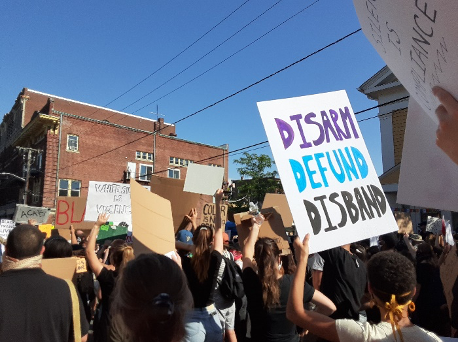
    George Floyd, the black man whose murder by white police officer set off weeks of national protests against police brutality and racism, was buried on June 9 in his hometown of Houston. Still demonstrations continued in myriad forms, from rallies and marches to car caravans and protest parades of hundreds of bicyclists. Local governments have now restrained the police who attacked earlier demonstrations so violently. In Seattle, after the mayor closed a local police station and removed police from the Capitol Hill neighborhood, local radicals and residents declared it an autonomous zone that some have compared to the Paris Commune of 1871. President Donald Trump, of course, has called upon the mayor to take back the city.

    Polls show that 80 percent of Americans support the protests that took place in 700 cities in all 50 states and which have fostered in virtually every institution, from public agencies to private businesses, a national discussion about racism.

    The entire country is involved in debates over the role of the police and the use of the National Guard in violently suppressing the demonstrations, as well as over Trump’s use of the Guard to attack peaceful protestors at the White House and his threat to use the Army to crush the movement. Both the secretary of defense and the top American general broke with Trump on those issues. Many retired military leaders have spoke out against Trump’s threat to use the Army. Political leaders, mostly Democrats but also some Republicans, criticized Trump’s posturing as a dictator.

    There is also a deeper discussion over demands to defund the police. The demand to defund the police comes from the left movement that calls for defunding, disarming, and abolishing the police and prisons. While a majority of the Minneapolis city council says that it will abolish its current police force and create a new public safety organization, almost everywhere else the slogan defund is interpreted by politicians, the press, and many in the movement to mean cuts in the police budget and the reallocation of funds to mental health, drug programs, and other social services. The Democratic Socialists of America have launched a national campaign to defund the police. And in Congress the Democratic Party has introduced legislation for police reform.

    Also being debated is the role of police unions that defend police officers who are accused of racist behavior and violent acts. The police unions, many of which support Trump, also often take conservative positions on criminal justice issues, such as opposing parole. Some on the left want the AFL-CIO, the national labor federation, to expel the police unions, but the AFl-CIO has called for their reform.

    Other institutions have begun to take steps on questions of race. NASCAR, the corporation that organizes car races, where nearly all of the drivers and 80 percent of fans are white, has banned the Confederate flag, the flag of the southern slave states in the Civil War, which has often been flown by drivers and fans. Top generals in the U.S. Army expressed a willingness to rename ten U.S. military bases in the South that now bear the names of Confederate generals. There is also renewed debate over removing statues of Confederate generals, some in Southern states and others in the national Capitol building.

    Meanwhile, in the midst of the national reopening of the economy, the coronavirus surges once again in the southern Sunbelt from Florida to Arizona as 22 of 50 states have rising case numbers. And 40 million workers remain unemployed, as Trump is about to restart his presidential campaign with mass rallies, further endangering public health. At present only 38 percent of voters approve of Trump’s while 57 percent disapprove; and the president has fallen 10 points behind Joseph Biden, the Democratic Party candidate. At the moment, Trump seems headed for defeat.

  • From Passionate Uprising to Sustained Rebellion

    From Passionate Uprising to Sustained Rebellion

    The passionate uprising that began in Minneapolis after police murdered George Floyd quickly spread across the country and around the world, is now the biggest upheaval since 1968.  It beautifully illuminates the power and possibility for revolution in the raging fires of burning police precincts and cop cars.  But in order for this passion, this righteous rage, to succeed in the face of intensifying police repression, mobilized National Guards, and a military standing ready for urban warfare, the movement must transform itself for sustained rebellion.

    From the moment Trump announced his candidacy for president, many have warned that he is a fascist and of the broader threat he represents.  He admires dictators and wants to be president for life, uses phrases like “civil war” as trial balloons, asserts he has absolute power, and is blaiming Democrats for trying to steal the upcoming election, while the Attorney General weaponizes this rhetoric in a dangerous narrative of theocratic crusade.  Reacting to the uprising, Trump has incited white supremacist violence, branded anti-fascists as terrorists, deployed an unmarked army in DC, and wants to “dominate” the nation.  We must confront the possibility that this imperialist metropole, settler-colonial empire, and authoritarian state otherwise known as the US republic will further degenerate toward fascism.  Trump is using the passionate uprising as an excuse to continually intensify state repression, sowing chaos and fear as a means to remain in power.  Trump, like Hitler and his own coup, wants to “provoke the semblance of civil war.”[1]  The uprising may be his own “Reichstag fire moment.”

    During the government shutdown over border wall funding that ended January 2019, many raised concerns over Trump’s national emergency powers and a further descent into fascism.  In response to Michael Cohen’s congressional testimony, Robert Reich, Nancy Pelosi, and others worried that Trump may not leave office if he loses this November.  Using the pandemic and recession it triggered as cover, Trump and the death cult formerly known as the Republican Party are orchestrating a coordinated assault on whatever democracy still remains.  The threat of a broader fascist seizure of power continue to grow, as far-right paramilitary forces provoke the “semblanceTrump seeks.  If Trump refuses to leave after being defeated in November, if he seizes upon a “failedordelayedelection, takes us to war with Iran, Venezuela, and/or China to remain in power, or massively intensifies repression to quell dissent, including if he “winsreelection, we must be prepared.

    We need militant infrastructure organized as part of a growing systemic alternative; people’s assemblies rooted in the mutual aid necessary to sustain the rebellion and coordinate strike waves as the election draws near.  We are witnessing rising worker militancy in wildcat strikes, rent strikes with rapidly spreading tenant unions, mutual aid proliferating in response to pandemic, and now a passionate uprising in over 500 cities.  There is widespread recognition of the fascist threat that stands against us.  To not seize this moment to help sustain the passionate uprising in the streets, we risk annihilation.  In the recent words of a Jewish Auschwitz death camp survivor, “one day you wake up and it’s too late.”  We must make sure that day does not arrive, again.

    Prior to the murder of George Floyd and the passionate uprising sparked by his death, an organization in Mississippi called Cooperation Jackson put out a call for an ongoing series of monthly strikes.  Together with those who responded, they established People’s Strike with actions that began May 1st.  The monthly actions were not intended to be a general strike, a work stoppage at a singular point in time with the intent to sustain until demands are met.  They are a series of actions on the first of each month going forward; “non-violent direct action conducted in a coordinated campaign” in hopes of leading to a general strike in the future.  Against the threat of a broader fascist seizure of power, building a sustained rebellion capable of launching a general strike around the elections is critical.

    As part of their own efforts, Cooperation Jackson built what they call “People’s Assemblies.”  They are “a vehicle of democratic social organization that, when properly organized, allows people to exercise their agency, exert their power, and practice democracy…in its broadest terms.”[2]  Their first assembly came out of mutual aid work within the Mississippi Disaster Relief Coalition that emerged in response to Hurricane Katrina.[3]  Today, the disaster is white supremacist violence, a police state, and a fascist threat.  If People’s Assemblies were to spread within the passionate uprising as a form of self-organization, their role would likely fluctuate with the ebb and flow of a sustained rebellion itself, that is, for both offense and defense.

    They “can function as a genuine ‘dual power’ and assume many of the functions of the government,” while also to “defend the people…fight to maintain as many of the gains it won as possible, and prepare for the next upsurge.”[4]  People’s assemblies can be democratic spaces for the articulation of movement goals and demands, the coordination of mutual aid like solidarity kitchens to sustain the struggle, for community-based self-defense forces, and more.  The question becomes whether or not we will see these forms of democratic self-organization proliferate.  With Trump intensifying state repression as the threat of fascism barrels toward us with the November elections, time is fleeting.  We can, however, turn to numerous recent examples from around the world for inspiration and lessons, just as we can look to the history of struggles here.

    Mutual Aid, People’s Assemblies, and Strikes: Puerto Rico, Chile, and France

    In response to Covid-19, communities come together in mutual aid efforts throughout the so-called United States with widespread media coverage.  Practices include aggregating and delivering groceries, medicine, and other essential supplies.  Some make and deliver pre-packaged, prepared meals.  Some provide services including translation or interpretation, running general errands, childcare, eldercare, and mental health support.  Some have also taken on the DIY production of face masks, hand sanitizer, and cleaning solution.

    It’s Going Down and Mutual Aid Disaster Relief both maintain growing lists of these undertakings, while Resource Generation maintains a list of mutual aid funds.  Amidst the economic depression triggered by pandemic, mutual aid practices will only increasingly become necessary in order for this passionate uprising of righteous rage to sustain itself.  We are already seeing it emerge within protests in Brooklyn and DC, though it will take more than “ad hoc supply chains” to sustain this struggle.  To sustain, we will also need systems like People’s Solidarity Brigades.  Yet, it is within the experience of rage then passionately taking to the streets that imbues within us a feeling and recognition of our power, that the systems we put in place to sustain this rebellion are the tools of our collective liberation.

    In the aftermath of Hurricane Maria September 2017, mutual aid efforts proliferated throughout Puerto Rico.  Out of the horrific devastation, communities came together to provide immediate necessities that, coupled with longstanding political efforts, would eventually be utilized to support a mass uprising, forcing Governor Rossello to resign late July 2019.  Indeed, in the depths of trauma there is also passion, seared into our hearts, aching to be unleashed against those responsible.

    As part of the uprising, communities formed democratic assemblies as spaces for the coordination of mutual aid and to build popular power against the neocolonialist government.  Together, these neighborhood-based assemblies continually reproduced the capacity for sustained rebellion as the kernel of a systemic alternative.  To feel freedom in the streets is one thing.  To feel freedom in a growing system built for liberation is another and it is this feeling that sustains our passion.  Though mutual aid efforts arising in response to the pandemic across the 50 states are not yet accountable to or coordinated by neighborhood-based democratic assemblies, they could be.

    Recent strikes in Chile, temporarily halted only by pandemic, found support within a decades-long history of territorial assemblies.  Amidst the uprising, assemblies proliferated in neighborhoods throughout the country, providing space for the articulation of movement goals and demands.  Alongside these political dimensions, they were simultaneously spaces to coordinate mutual aid for neighbors to both survive an economy brought to a halt and to maintain capacity for sustaining collective struggle.

    These assemblies were also an “antidote to people’s anxiety and isolation” just like they were used to organize community self-defense forces and foster an “emerging culture of rebellion.”  Popular assemblies became the form of self-organization for the movement itself, rooted in a growing systemic alternative that not only fed and sheltered the uprising, but fueled its spirit, the passion to endure against all odds, and a feeling of liberation found in the struggle itself.

    With France and the movement of the Yellow Vests (YVs), weekly Saturday mass demonstrations began November 2018.  They included street blockades with some turning into occupations, while others were temporary measures to shut down main transportation routes.  By the end of January 2019, the movement had over a hundred autonomous assemblies across the country that sent delegates to the first “Assembly of Assemblies.”  As part of the ongoing struggle, assembly delegates gathered three more times; in April, July, and then November, where they ratified support for the December 5th general strike called by labor unions.

    The YV’s form of radical democratization became the system of self-organization for the general strike itself, keeping power in the hands of striking workers and communities, not established labor bureaucracies.  What began as mutual aid arising out of the blockades, occupations, and assemblies took on an additional form as well; that of democratically self-managed strike funds.  Emerging from and being controlled by strikers, these funds both ensured greater capacity to sustain the strike, while enhancing the movement’s autonomy.  To those who felt our collective power as they watched cop cars burn, imagine the feeling of being part of a rebellion sustained by a rising system that we, ourselves, govern.  When organized, we can “set fire” to everything.

    Each of these three examples point to an intimate relationship between mutual aid, democratic assemblies, and strikes.  They are, by far, not the only useful sources of inspiration or lessons.  The history of struggles for Black liberation is also a history of mutual aid in service of militant movements.  We can also go back through the entire history of the labor movement and find countless examples of mutual aid, including its role in general strikes.  But what this should really teach us is the power within us to build the world anew, even amidst its darkest moments.

    Mutual Aid in Struggles for Black Liberation

    Returning to Cooperation Jackson, Kali Akuno and Ajamu Nangwaya look to revolutionary Amilcar Cabral; advocating “cooperatives and the practice of democratic self-management, mutual aid and solidarity” for “the Black working class in Jackson (and well beyond)” in order to “respond to their here-and-now daily needs,” while offering “a vision of how to solve the major issues confronting society that limit their freedom and constrain their aspirations.”[5]  In addition to the People’s Assemblies, they are building a solidarity economy, defined as “a process promoting cooperative economics that promote social solidarity, mutual aid, reciprocity, and generosity.”  In part, it “is inspired by the Mondragon Corporation, a federation of mostly worker cooperatives and consumer cooperatives.”[6]  This is not Cooperation Jackson’s only inspiration by any means, but when it comes to building a solidarity economy to sustain a rebellion capable of defeating fascism today, emulating Mondragon now risks annihilation.  Fortunately, the history of mutual aid in struggles for Black liberation point to another approach, and one that can emerge from the uprising itself.

    Mondragon was started in Spain not to fight fascism, but to peacefully coexist with Franco’s authoritarian regime that had violently seized control, utilizing support from Hitler to defeat a revolutionary left that had gained power.  Amidst pandemic, economic depression, intensified state repression, and Trump itching to destroy the last democratic vestiges of the republic to remain in power, starting cooperative businesses that compete in the capitalist market will only heighten our vulnerability.

    Before he was assassinated in 1969, Fred Hampton warned us: “Nothing’s more important than stopping fascism, because fascism will stop us all.”  In this era of ascendant christian nationalism and white supremacy, the continuation of a long legacy of American fascism that inspired Hitler himself, Trump now has “The Surge;” militarized police allies standing with him and brutally repressing protests, yet this is further galvanizing public support for those in the streets.  We need a solidarity economy that emerges from this passionate uprising, becoming the infrastructure necessary for it to become a sustained rebellion.

    In RaceBaitr, Nakia S. argued that “Black life is a constant practice of mutual aid work” today.  Looking historically, Angela Davis argued there is an “unbroken line of police violence in the United States that takes us all the way back to the days of slavery.”  For political economist Jessica Gordon Nembhard, mutual aid in the struggle against this “unbroken line” of violence goes all the way back to at least 1780, organized as informal mutual aid cooperatives or assemblies.[7]   Importantly, “for two centuries,” collectively pooling resources for mutual aid was a constant practice, especially for those who “did not earn a regular wage or even own their own bodies.”[8]  For those today who “feel we are drowning, slowly going insane with rage,” not fighting to overthrow a white supremacist system risks death by despair.  In passionately rising, we each reconnect with our trauma, feel the pain passed down to us, harnessing it as a weapon to sustain rebellion and defeat the fascist threat that stands against us.

    Early mutual aid provided the means and structure for “maroon outlaw communes,” utilizing informal “cooperatives in the form of insurrection.”[9]  Mutual aid would eventually proliferate across many parts of the country as democratic assemblies for a solidarity economy.[10]  In these “mutual aid societies,” people each contributed an initial small sum of money to join, which would go into a common fund.  Communities came together to pool “‘meager resources’…that even the ‘poorest women managed to contribute’ to meet vital social needs.”  Each person would contribute an ongoing fee into this common fund as well, much like union dues.  Members would decide how funds were to be used based on the democratic principle of one member, one vote.

    Most often, funds would be used to provide “basic needs of everyday life – clothing, shelter, and emotional and physical sustenance.”[11]  In NYC alone, “By 1898, 15 percent of Black men and 52 percent of Black women…belonged to a mutual-aid society.”[12]  These democratically governed mutual aid societies were like People’s Assemblies, but with an organized capacity for mutual aid.  This could become the form of self-organization for a sustained rebellion.  Existing mutual aid efforts, especially newer efforts that emerged in response to pandemic, could look to this history and evolve.  In doing so, by becoming a radically democratic form of self-organization as incipient systemic alternative, they would more closely embody “solidarity not charity,” while building capacity to support a sustained rebellion.

    Looking to this history within struggles for Black liberation is not only something for existing mutual aid efforts to consider.  People’s Assemblies rooted in mutual aid could also emerge from sites of struggle in streets throughout the country.  This approach fosters autonomy and self-organization, including through the democratic governance of a grassroots fund whose usage can evolve with the needs of the rebellion.  This too can become a weapon for tough minds and soft hearts in the battles to come.

    Modeled after the Black Panther Party’s “National Committees to Combat Fascism,” communities are coming together for organized resistance.  Though the Panther’s approach was criticized as placating white liberals, for this new effort to become a “fighting united front,” it will require coordinated self-defense forces, which can be funded and organized through mutual aid assemblies.  In the Panther’s hometown of Oakland, we see a local food system reorient itself around sustaining the uprising, while addressing food deserts at the same time.  Those on the front lines of the struggle know what they need better than anyone and the formation of People’s Assemblies grounded in mutual aid can foster what is required to sustain this passionate rebellion.  We must imagine the collective power we would feel when thriving beyond the reach of toxic systems dedicated to our subservience, and build accordingly for our liberation.

    A sustained rebellion grounded in People’s Assemblies for the coordination of mass non-violent direct action, while being rooted in mutual aid, could become a systemic alternative that sufficiently addresses what Akuno and Nangwaya advocated; meeting the “here-and-now” and embodying the necessary “vision.”  Looking to mutual aid societies in historical struggles for Black liberation could do both from below and to the left.  Though it remains to be seen whether or not a united front would coalesce in support of a sustained rebellion, there are groups who would be well-positioned to help a solidarity economy grow out of these assemblies, empowering a sustained rebellion that amounts to what Huey P. Newton said with regard to the Black Panther Party’s “survival programs,” that is, “survival pending revolution.”[13]

    Mutual Aid, Assemblies, and Strikes: Historical Struggles of the Labor Movement

    Despite the fact that major labor unions remain mired in their support for cancerous police unions, the labor movement itself overflows with reasons to remain hopeful in the revolutionary potential of a sustained rebellion against fascism.  This is true today outside of the traditional union bureaucracies just as it is in the history of mutual aid, assemblies, and strikes in labor struggles.

    Labor militancy erupted in 2019 with a wave of wildcat strikes now spreading across the country in the wake of pandemic.  Workers at large corporations struck May 1st.  Outside the traditional labor unions, these self-organized workers are assemblies unto themselves, adding to an emergent systemic alternative.  Amazon workers in Chicago recently struck without a union for paid time off and won, a workers’ assembly of sorts that utilized mutual aid through a “solidarity committee” to ensure their capacity for struggle.  Coordinated mutual aid has been part of the labor movement from the beginning.  When systems of oppression inflict trauma upon us, we turn to those similarly afflicted and fight together.

    Workers in 1768 organized what historian John Curl called the “first recorded wage earners’ strike against a boss in America.”  Without union or strike fund, they built an informal cooperative based on mutual aid in order to democratically share resources to endure the struggle.[14]   The more formal unions that emerged in the 1830s began as similar mutual aid efforts.[15]  This same approach would even be used as the basis for their earliest political parties and could be used today for explicitly revolutionary “parties of autonomy.”[16]  During the strike wave of 1877, mutual aid spontaneously erupted as forms of self-organization among striking workers and communities, one prominent example being the “Pittsburgh Commune.”[17]   Even without the major unions, history shows us that sustained rebellion is possible and that the kernel of our revolutionary alternative can be but moments away.

    Out of this strike wave, the Knights of Labor would grow to prominence and, initially at least, regarded their local unions as autonomous mutual aid assemblies for the purpose of enhancing labor militancy.[18]  The revolutionary Socialist Labor Party would adopt a similar approach with Albert Parsons, a Haymarket martyr, calling these assemblies, these workers’ councils, “an autonomous commune in the process of incubation.”[19]  Their broader “Pittsburgh Proclamation” further codified this approach.[20]  With a passionate uprising taking place in streets across the country, this should give pause to every worker, recognizing both the necessity of struggle and the power to be found in one another.

    In the early twentieth century, the Indstrial Workers of the World would organize transitory “encampments with cooperative survival networks” to support and organize among migrant workers.[21]  During the 1919 Seattle General Strike, cooperative grocery stores provided food to strikers, while mutual aid efforts were organized across the city, including “twenty-one eating places” with “thirty thousand meals a day served to whoever needed one.”[22]  In the 1934 San Francisco General Strike, newly emerged self-help or mutual aid cooperatives like the Universal Exchange Association became a way for striking workers and communities to support one another.[23]  In those moments where we depend on one another for survival against tremendous odds, this history shows us that people rise to the occasion.

    What could emerge from workplace and community-based assemblies, supporting a sustained rebellion against fascism, is only limited by our imagination and preparation.  If these sorts of workers’ assemblies were to more prominently emerge within the increasingly militant grassroots labor movement, together with assemblies proliferating from the passionate uprising in streets across the country, this kernel of a systemic alternative could become a sustained rebellion with revolutionary potential, especially if Trump attempted a broader fascist seizure of power and we were ready to grind this country to a resounding halt.

    Broadening Support for a Sustained Rebellion

    The fascist threat Trump represents seeks to intensify all systems of oppression, while leading us down the path of climate destruction.  As long as this threat is widely felt and perceived, there is every reason to believe support for this passionate uprising will grow, along with the recognition that our future rests in each other’s gentle, yet powerful hands.  Without compromising the necessity of a sustained rebellion being Black-led, where else can we look for other terrains of struggle coalescing in support for a sustained rebellion?

    On May 1st, then again on June 1st, the largest rent strike in decades took place as the latest expressions of a rising movement around formations like We Strike Together and the Autonomous Tenants Union Network.  As it is being practiced today, mutual aid is necessary to survive these tumultuous times, including among tenants.  The proliferating tenants unions or councils are forms of community-based assemblies, mutual aid efforts much like early labor militancy.  With the pain inflicted by the pandemic and what will likely be a prolonged depression for many, the need for tenant organizing and rent strikes will only continue to grow.  Coordinated mutual aid and a sustained rebellion will no doubt be required in order to succeed.  We certainly cannot count on Congress.

    Amidst pandemic, recession, and the threat of fascism, climate devastation has not gone away.  We have now witnessed what Trump’s climate policies amount to, so him remaining in office will result in untold suffering.  Over 600,000 people in all 50 states joined the September 2019 climate strike.  350.org recently called on the climate movement to support the passionate uprising taking place in cities across the country.  A renewed climate strike effort supporting the formation of people’s assemblies, rooted in mutual aid to sustain a rebellion against the fascist threat, is necessary to avoid climate annihilation.  If the upcoming elections do amount to a tipping point in the rise of fascism, the struggle against climate crisis will either become impossible or require precisely this degree of militancy.  But what can emerge in even the most treacherous of circumstances can be as beautiful as it is powerful and profound.

    Standing Rock should remain a lesson for all of us in these trying times, as should other forms of indigenous mutual aid.  From April 2016 to February 2017, Water Protectors withstood massive state violence to stop the Dakota Access Pipeline.  Despite the powerful forces standing against them, mutual aid within the encampment proved stronger.  In “A Lesson in Natural Law,” Marcella Gilbert recounted the spirit that emerged in the heart of the movement as “people immediately began to resurrect our original systems of governance.”  What began as modest systems of social reproduction would eventually become “the fourth largest ‘town’ in North Dakota.”  Reflecting on it, Gilbert wrote that the “world of humanity hopes for proof: proof that life will sustain itself in the face of recklessness” and that “Standing Rock provided a place for life to thrive within a world of war, violence, and hopelessness.”[24]  The passionate uprising is more of this proof, yet it needs to be capable of sustaining itself, including to be able to hold territory like Water Protectors, who have fought white supremacy countless times before.

    Violent hate groups continue to reach record highs and the relentless murdering of trans folk must be combated.  LGBTQ communities remain particularly vulnerable to the pandemic and righteous calls to communize the family are growing again.  For those who lived through the HIV/AIDS crisis, governmental ineptitude is familiar, yet abounding threats drives them to fight harder, much like the legacy of the Stonewall Riot.  Coordinated assaults on Roe v. Wade are part of a multi-pronged attack on women that has intensified throughout Trump’s presidency, and now under cover of pandemic.  From the 2016 Women’s March to recent remarks by co-chair Tamika Mallory, the trauma inherent in Trump’s threat of hetero-patriarchy is palpable and interconnected, as is the fury to fight back.

    Women ran mutual aid societies in the struggle for Black liberation from the 18th to the early 20th century.[25]  It played a role in the Combahee River Collective in the 1970s as “an emotional support group” to learn from trauma.  With 19th century revolutionary socialist feminist struggles in France and Russian communist feminist movements in the early 20th, mutual aid has long been a critical component in the struggle for women’s liberation.[26]    In one example, women led rent strikes in NYC during the 1918 “Spanish flu” outbreaks, which also required mutual aid.  Women’s leadership in mutual aid efforts remains the case today as well, however, we must also communize care work to equitably, collectively, and emotionally sustain us in struggle.

    Horrific concentration camps now bring death by pandemic, yet hunger strikes continue.  ICE forces people to seek refuge in places of worship, so over 1,100 communities stand together in a Sanctuary Movement to build collective defense with the undocumented.  From the beginning, these efforts were grounded in mutual aid, exemplified in the Sanctuary in the Streets network.  Built by the Pioneer Valley Workers Center, this too is grounded in assemblies.  Furthermore, the Day Without Immigrants in 2017 could be organized again for the near future, rising with sociedades mutualistas.  From recent Supreme Court terror to Trump’s deployment of “border patrol tactical units;” the fascist threat is widely felt and perceived.  If the 2020 elections do amount to a tipping point and the threat standing against us is clear, with the right preparations, we could be unstoppable.  But we must sustain a passionate rebellion, including to strike when our enemy is most vulnerable to rid the country of fascism once and for all.

    Like in Charlottesville in 2017, countless communities have come together to protest against fascist marches and events, recognizing the inherent threat they pose.  After the white “Christian” supremacist murders at the Tree of Life synagogue in Pittsburgh 2018, thousands took to the streets when Trump came to town.  Violence against Jewish people has continued to rise, yet those like Never Again Action push forward with direct actions to shut down ICE and its concentration camps.  On January 27th, 2020, the 75th anniversary of the liberation of the Auschwitz death camp, over 200 survivors came together to remind the world that we must be prepared.  Meager impeachment attempts came and went, so will the plethora of progressive organizations that supported impeachment rallies now mobilize for a sustained rebellion?  Or will they choose vital electoral efforts at the expense of all other preparedness?

    There is tremendous power and potential now seething in anger out of the suffering forced upon us.  In preparing for the possibility of a broader fascist seizure of power, weaving together the kernel of our own systemic alternative, forging the mutual aid assemblies necessary for a sustained rebellion and strikes against fascism, we can emerge victorious.  Though the future is unwritten, counting on the republic being able to endure Trump and the “death cult” formerly known as the GOP is a dangerous gamble with people’s lives.  We must ensure we do not follow the path of the democratic socialists in Germany against Hitler, who “had dampened the powder so long, in their fear lest it should explode, that when they finally and with a trembling hand applied a burning fuse to it, the powder did not catch.”[27]  Supporting this passionate rising, building our collective capacity for a sustained rebellion as the November elections draw near, is the only guarantee we have against the fascist threat that seeks to plunge our world into darkness.  Fascism is like an animal afflicted with rabies; desperate and dangerous.  But it is not long for this Earth and the most humane thing to do is put it out of its misery.


    [1]  Leon Trotsky, The Struggle Against Fascism in Germany, (New York: Pathfinder Press, 1971). P. 341.

    [2]  Kali Akuno, “People’s Assembly Overview: The Jackson People’s Assembly Model,” in Jackson Rising: The Struggle for Economic Democracy and Black Self-Determination in Jackson, Mississippi, edited by Cooperation Jackson and Ajamu Nangwaya, (Ottawa, Daraja Press, 2017). P. 86-97.

    [3]  Ibid, “The Jackson-Kush Plan: The Struggle for Black Self-determination and Economic Democracy,” in Jackson Rising, 73.

    [4]  Ibid, “People’s Assembly Overview: The Jackson People’s Assembly Model,” in Jackson Rising, 96.

    [5]   Kali Akuno & Ajamu Nangwaya, “Toward Economic Democracy, Labor Self-management and Self-determination,” in Jackson Rising, 53.

    [6]   Kali Akuno, “The Jackson-Kush Plan: The Struggle for Black Self-determination and Economic Democracy,” in Jackson Rising, 76-77.

    [7]   Jessica Gordon Nembhard, Collective Courage: A History of African American Cooperative Economic Thought and Practice, (University Park, Pennsylvania State University Press, 2014), P. 40-47.

    [8]   Ibid, 31.

    [9]    Ibid, 34.

    [10]  Ibid, 31-47.

    [11]   Ibid, 43.

    [12]   Ibid, 44.

    [13]   David Hilliard, The Black Panther Party: service to the people programs, (Albuquerque: University of New Mexico Press, 2008). P. 3-4.

    [14]   John Curl, For All the People: Uncovering the Hidden History of Cooperation, Cooperative Movements, and Communalism in America, (CA: PM Press, 2009). P. 32-33.

    [15]    Ibid, 38-44.

    [16]    Ibid, 44-46.

    [17]    Ibid, 86.

    [18]    Ibid, 87-88.

    [19]    Paul Avrich, The Haymarket Tragedy, (New Jersey: Princeton University Press, 1984). P. 72-73.

    [20]    Ibid, 73-77.

    [21]     Curl, For All the People, 127.

    [22]     Ibid, 148-149.

    [23]     Ibid, 177-178.

    [24]     Ibid, 288.

    [25]     Nembhard, Collective Courage, 43.

    [26]     Carolyn J. Eichner, Surmounting the Barricades, (Indiana: Indiana University Press, 2004). P. 24-26. &  Alexandra Kollontai, Selected Writings of Alexandra Kollontai, (New York: W. W. Norton & Company, 1877). P. 54-55.

    [27]      Trotsky, The Struggle Against Fascism in Germany, 190.

  • Notes on the Black Lives Matter Uprising in Historical and Global Context

    Notes on the Black Lives Matter Uprising in Historical and Global Context

    This spring, as some countries began to reopen after months of COVID-19 lockdowns, youthful rebellions broke out inside the two most powerful states in the world, the USA and China. The Black youth of Minneapolis, their allies, and countless others across the USA expressed their anger on the streets over yet another police murder, which was one too many. During the same days, the youth of Hong Kong renewed their protests against new anti-democratic moves by the Chinese government. The US protests, which grew into a massive nationwide Black Lives Matter uprising, also had a major international impact. In both cases, the USA and China, the youth did not flinch in the face of brutal police repression, inspiring their elders and many others around the world. These youth face a world of mass unemployment, precipitous economic inequality, and growing racial oppression fueled by right-wing populism, all of it worsened by COVID-19 and the economic meltdown.

    From the beginning of the COVID-19 pandemic, workers also resisted attempts by capital and the state to keep production going, endangering their very lives. Here, the Italian working class, with its long militant tradition, led the way with mass strike actions. In March, according to a report from CGIL, the main union federation,

    “From the Dalmine steel mills of Bergamo to those of Brescia, from the Fiat-Chrysler plants of Pomigliano in Naples to the Ilva steel plant in Genoa, from the Electrolux factory of Susegana in Treviso to many small and medium-sized companies in Veneto and Emilia Romagna, from the Amazon warehouses in the provinces of Piacenza and Rieti, to the poultry and meat processing companies in the Po Valley, there were thousands of striking workers who came out into the squares and streets, strictly at a safe distance of one meter apart from each other, as prescribed by the government decree” (Leopoldo Tartaglia, “Dispatch from Italy: Class Struggle in the Time of Coronavirus,” Labor Notes, March 20, 2020).

    This forced the state and capital to concede, leading to better safety measures and for workers to be paid during safety-related work stoppages.

    This limited victory in Italy affected unionized workers, but not the most precarious and marginalized workers, many of them immigrants.  It was from this kind of milieu in the USA, the oppressed Black communities of Houston and Minneapolis, that George Floyd, murdered by four Minneapolis police, emerged. Like so many Black working-class women and men, Floyd was semi-unemployed due to COVID-19 at the time that police choked him to death in slow motion in broad daylight, as witnesses from the Black community looked on and pleaded for mercy. Floyd’s unconscionable death has been seen as a form of lynching, but it also recalls the torture and executions carried out for centuries inside US slave plantations, where the audience was other enslaved people, and the purpose was to create dread by “making an example” of someone.

    As many have also pointed out, the strangulation of George Floyd needs to be seen in the context of 400 years of slavery and the obdurate objective structures of racial oppression in the USA, from outright slavery, to Jim Crow, to today’s mass incarceration. The poison of racism oozes through the sectors of employment, housing, education, healthcare, and policing, among others. Racialized capitalism in the US actually began under British colonialism as part of their widely-used policy of “divide and rule,” from Ireland, to the Indian subcontinent, to Virginia. That strategy favored one sector of the populace against another, in order to prevent class unity against the rulers. In seventeenth-century Virginia, this meant arming poor but formally free whites and giving them police power over all Black people, most of them enslaved. This policy was enacted in order to prevent another outbreak uniting white and Black labor, as had occurred in Bacon’s rebellion in 1676. Today’s police forces originate in part in the white militias that received rewards for capturing fugitive slaves.

    But the racial history of the US needs to be understood subjectively as much as objectively, in short, dialectically, if we are fully to grasp the current juncture. For today’s rebellion on the streets can also trace itself to that uprising in early Virginia. In this sense, US history needs to be grasped as one of constant revolt and resistance in the face of racial and capitalist oppression. Here, one could mention (1) the slave revolts led by Denmark Vesey (1822) and Nat Turner (1831), (2) the whole period of Abolitionism, Civil War, and Reconstruction from the 1830s to the 1870s, (3) the southern rural Black Populists and their white allies in the 1890s, (4) the massive and socially progressive Black nationalist Garvey Movement after World War 1, (4) the mass interracial labor and Civil Rights movements of the 1930s, (5) the Civil Rights and Black liberation movements of the 1950s throughout the 1970s, and (6) the current period exemplified by movements like Occupy and the Sanders campaign against economic inequality and the development of Black Lives Matter, which preceded even the 2016 Sanders campaign, into a mass movement this spring that has drawn hundreds of thousands into the streets.

    Today, as with the greatest of those previous movements, the Black masses have taken a vanguard role, but a wider movement has emerged involving youth of all races and ethnicities. As so many times before, the rulers and their representatives have tried to distinguish between “good” protesters and “illegal,” “violent,” and “outside” ones. Thus, after the mass rebellion against police brutality in 1965 in the Black ghetto of Watts, Los Angeles, some tried to blame “Cuban agents,” but even the official McCone Commission led by a former head of the CIA could find none. Similarly, today’s far-right Trump administration blames left-wing agitators from the Antifa movement, although they can show no concrete examples. What is true is that hundreds of thousands came onto the streets all across the country under the slogan “Black Lives Matter,” that a police station was burned to the ground in Minneapolis, and that luxury shops in the Los Angeles area were attacked by protesters who scrawled slogans like “eat the rich” on walls. After over a week of rebellious actions across the land, all four Minneapolis police murderers were finally arrested, but this came after no less than 13,000 protesters had been detained.

    Demonstrators were cruelly gassed and clubbed near the White House by direct presidential command, in order for Trump to show “toughness” at a photo op after it had been reported he was cowering in the basement.  Even Trump’s threat to use the regular army on the streets did not deter the demonstrators, but it did cause dissension within the military leadership, especially after it was reported that officials had used the term “dominating the battle space.” As even retired General Martin Dempsey noted in protest, the law and military tradition restrict the use of such tactics to foreign enemies. But it is equally true that two decades of endless war abroad, of occupation and torture of civilians in Iraq and elsewhere, is blowing back into the USA itself, with police forces that are militarized as never before.  Another form of blowback can be seen in how Minnesota’s police have received training, at a half-day conference in Minneapolis, from the US-funded occupation police force of one of the most reactionary powers in the world, Netanyahu’s Israel, where chokeholds and other “physical pressure,” i.e., torture, of Palestinian detainees is totally legal. These facts show that moves in the USA toward an authoritarian state are not limited to the Trump administration, but can also be found in liberal Minneapolis.

    Less noticed but also extremely significant has been the resurgence of the youth movement in Hong Kong against Chinese government attempts to extinguish all democratic rights in that semi-autonomous city. As the threat of COVID-19 lifted a bit, the youth of Hong Kong were the first anywhere in the world to reassert their pre-COVID movement on a truly mass scale.  Inside China, quieter dissent exists amid deepening repression, especially in Wuhan, where the regime covered up the full extent of COVID-19 for weeks, thus extending the suffering in China and the world. On June 4, the 31st anniversary of the crushing of the China-wide student and worker uprising of 1989, tens of thousands of Hong Kong youth gathered for the annual commemoration, despite the event having been banned due to COVID-19. Thwarted by popular protest in their attempts to get a series of repressive measures through the Hong Kong legislature, China’s top leader, Xi Jinping, has decided to act directly, an extremely ominous turn. It should also be noted that the Hong Kong protests have never been only about political issues, as residents also face a precipitous increase in economic inequality, as investment capital from the rest of China has led to skyrocketing rents and other forms of heightened capitalist oppression. For its part, while some governments have issued verbal protests, unelected global capital is solidly backing Xi’s repressive measures, with all due cynicism: “There will be some unhappy people for some time,” said John L. Thornton, a former president of Goldman Sachs who has close ties with the Chinese regime, “But the drum rolls, the dogs bark and the caravan moves on. That’s the political judgment” (Alexandra Stevenson and Vivian Wang, “Why China May Call the World’s Bluff on Hong Kong,” New York Times, June 4, 2020). Thornton’s racist comparison of the Chinese people to dogs should also be noted.

    Particularly in the USA, spring 2020 marks the beginning of a new era of radical opposition to the status quo on the part of a generation of youth facing bleak prospects, in a world not of their making. A veil has been lifted by a wrenching series of events – COVID-19, economic depression, and racist police murder – and by the creativity and persistence of the uprising, revealing the putrescent, racist structure of capitalism for all to see.

  • Why Affluent Indians Speak Up about Race but stay Silent about Caste

    Why Affluent Indians Speak Up about Race but stay Silent about Caste

    Protesters in Los Angeles in the US and in Delhi in 2017. | Frederic J Brown, Sajjad Hussain/AFP

    The death of the African American citizen George Floyd on 25 May 2020 in Minneapolis at the hands of police has sparked off countrywide protests in the United States. Both Black and White citizens have taken to the streets to protest against the entrenched racism in public structures and prevailing attitudes of the American people. Police brutality and racism in America are being condemned globally, particularly from South East Asia and the Middle East, whose citizens have also suffered through racism and discriminatory immigration policies at the hands of the US administration and its people.

    Given South Asian solidarity with the African-American demand for political and social equality, Indians are amongst the first to speak against the racism that has now proven to be endemic in the US. However, the same Indians who abhor racism and protest racial discrimination in the US, choose to remain silent about caste and its practice in India and abroad. This is a virulent reality that is much closer to home and has been documented as a two-thousand-year-old form of discrimination practiced against Dalits (a term which means ‘oppressed’ or broken and has been self-appropriated by lower castes in India). It is practiced even today in the form of untouchability and remains uncontested by these apparently ‘woke’ Indians who publicly question race.

    That is because there are two types of Indians who have tried to express solidarity with the African-American cause. The first are the bourgeois, diasporic upper castes who stand to gain directly from the abolition of racism by getting sought after jobs in the U.S. from which they have been excluded because of systemic racism. They only question racism and not casteism because they speak from a position of upper-caste privilege which can only play a limited role abroad when confronted with racism. The second are Dalits who have historically drawn strength from the African-American struggle through organizations like Dalit Panthers inspired by the Black Panthers;  the solidarity between B.R. Ambedkar and W.E.B. DuBois; slogans such as #DalitLivesMatter and Dalit literature which is protest literature like African-American literature with which it has had a productive relationship.

    To White Americans who are asking why the slogan #AllLivesMatter is not preferable to #BlackLivesMatter, it must be pointed out that by subsuming black lives under all lives, the systemic discrimination against Blacks and the social construction of ‘race’ is made invisible. This invisibility produces, as the civil rights advocate and legal scholar Michelle Alexander asserts in her book The New Jim Crow, a “color blindness”, which prevents us from seeing certain acts, such as a policeman pressing down on the throat of an African-American, as effects of racist ideology. This is similar to the acts of upper caste Indians who wish to rewrite history from the perspective of the upper-caste and view the inclusion of caste politics in mainstream history as muddying or polluting of the hegemonic Indian image abroad. It results in, as the social psychologist Yashpal Jogdand stresses, a “caste-blindness”, which is the product of a deliberate refusal to see the role of caste in an individual’s professional and personal success or failure.

    ‘Black Reason’ is what the philosopher Achille Mbembe calls a set of practices “whose goal was to produce the Black Man as a racial subject and site of savage exteriority”. He argues that racism has the “power to distort the real and to fix affect”. Individual failures in society are attributed to Blacks and Dalits being naturally stupid, ugly and brutish, as opposed to their being subjected to centuries of racial discrimination. They are made to feel inferior in every way possible because of these failures. This is what the psychiatrist and philosopher Frantz Fanon referred to as the “psycho-affective” predicament of the Black and Dalit who has to look at himself or herself through the White man’s or the upper caste’s eyes. It would be insidious to see this failure as individual for it is deliberately caused through the structural implementation of race which ensures that the African American or Dalit cannot succeed.

    The particular problem of upper castes speaking against race while not speaking against caste is due to a host of factors. The Dalit has often been represented as abject, as an object of disgust, or at most pity, in upper caste literature and media. Hence, the Dalit’s thoughts and consciousness have been harshly under-represented for an upper caste audience who is not moved to protest at the repeated, horrifying torture, rapes and deaths of Dalits that occur across the country routinely. On 13 January 2020, a 19-year-old Dalit woman was hanged from a tree in Gujarat after her rape and murder by three men. On 16 February 2020, two Dalit youths were physically tortured in a village in Rajasthan on the petty and unverified account of stealing. On 25 May, a case was reported of 13-year-old minor Dalit girl who had been gang raped by three men of her village and had consequently become pregnant. On 31 May, a 17-year-old boy called Vikas Jatav was shot dead by upper caste men because he dared to enter a temple as a Dalit. On June 7, a 20-year-old man called Viraj Jagtap was lynched by upper caste men because as a Dalit he fell in love with an upper caste woman. These gruesome cases are barely discussed in the national media and are far from inciting national outrage and attracting the attention of international media. Despite being filmed by onlookers, the perpetrators of the crime often get away because of a penal and judicial system that does not incriminate those who commit crimes against lower castes.

    What stands apart is the rare case of Rohith Vemula, a Dalit scholar who was harassed by his university and forced to commit suicide. His death sparked off student protests all over the country. His death was seen as lost potential because he left a suicide note and his death came at a moment of productive contagion: increased campus protests and the rising consciousness of Dalit students. Notwithstanding this case, the kind of public outrage that George Floyd’s death received is unimaginable for Dalit deaths in India. This is because the Dalit life has been made to appear as superfluous (excessive and unnecessary) to the imagination of an upper caste Indian society. The Dalit’s life is not viewed as valuable, and this is a direct result of casteist ideology.

    Caste discrimination is still not recognized as an internationally occurring phenomenon. Intellectuals who are Dalit from B.R. Ambedkar in the last century to Suraj Yengde, Yashica Dutt and Thenmozi Soundararajan in the present day have helped to make caste an international issue and enabled it to be understood in racial terms. Achille Mbembe asserts that “race does not exist as a physical, anthropological, or genetic fact”. It is crucial to understand that caste is as much of a social construct as race. Caste has the scriptural backing of religious texts such as Manu-Smriti (The Laws of Manu) and Bhagavad-Gita, which make it appear as a holy, divine concept of Hinduism which must be followed. This ensures that the Dalit is stranded in the cycle of discrimination for perpetuity. The fact that average upper-caste Indians speak up about racism but not about caste shows their duplicity, hypocrisy and armchair activism for believing in a concept that should be discarded. The upper castes in India and abroad have deliberately blinded themselves to the question of caste so as to retain their own sense of superiority. This is what is challenged through Dalit literature and politics which shows the hypocrisy of upper castes who are only motivated by self-interest and not any genuine sense of activism for transformation.


  • Ten Days that May Have Changed the World: An Internationalist Perspective

    Ten Days that May Have Changed the World: An Internationalist Perspective

    Sparked by the police murder of George Floyd and fueled by Minneapolis authorities’ reluctance to arrest and charge the murderer’s three police accomplices, mass protests have been sweeping across the United States with an intensity not seen since the 1960s. In over 150 cities, African Americans and their allies have flooded the streets, braving the COVID-19 pandemic, braving police violence, challenging centuries of racial and class inequalities, demanding liberty and justice for all, day after day defying a corrupt, racist power structure based on violent repression.

    1. Breaches in the System’s Defenses

    Today [June 7—ed.], after ten consecutive days in the streets, this outpouring of popular indignation against systematic, historic injustice, has opened a number of breaches in the defensive wall of the system. The legal authorities in the state of Minnesota, where George Floyd was murdered, have been forced to arrest and indict as accomplices the three other policemen who aided and abetted the killer, against whom the charges were raised from third to second degree murder. A split has opened at the summit of power, where the Secretary of Defense and numerous Pentagon officials have broken with their Commander-in-Chief, Donald Trump, who has attempted to mobilize the U.S. Army against the protesters.

    This historic uprising is an outpouring of accumulated black anger over decades of unpunished police murders of unarmed African-Americans. It articulates the accumulated grief of families and communities, the sheer outrage over impunity for killer cops in both the North and the South. It reflects anger at capitalist America’s betrayal of Martin Luther King’s “dream” of non-violent revolution. and horror at the return to the era of public lynchings cheered on by the President of the United States. It impatiently demands that America at long last live up to its proclaimed democratic ideals, here and now. In the words of one African-American protester, William Achukwu, 28, of San Francisco: “Our Declaration of Independence says life, liberty and the pursuit of happiness. Right now, we are only dealing with the life part here. This is a first step. But liberty is what a lot of people out here are marching for.”

    2. Violence and Non-Violence

    It came as no surprise that local and state officials across the U.S. reacted to largely peaceful, spontaneous mass protests against police brutality and racism by unleashing a maelstrom of militarized police violence.[1] For a generation, the Federal government has been quietly gifting huge stocks of surplus military equipment, including tanks, to local police forces and sheriff’s offices eager to play with lethal new toys designed for counter-insurgency in places like Afghanistan. Under both Democrats (Clinton, Obama) and Republicans (Bush, Trump) the federal state has been arming law enforcement in preparation for a preventive counter-revolution. This is precisely what President Trump is calling for today: “full dominance” by means of military crackdowns, mass arrests and long prison sentences in the name of “law and order.” Thanks to the determination of these masses of militant but largely non-violent protesters, the military is divided and Trump will not have his way.

    Apropos of violence, it was feared at first that the numerous incidences of setting fires, smashing shop fronts, and looting, especially after dark when the large, orderly crowds of mixed demonstrators had gone home, would in some way “spoil” the uprising and provide a pretext for the violent, military suppression of the whole movement, as called for by Trump, who blamed it all on an imaginary terrorist group called “ANTIFA” (short for “anti-fascism,” in fact a loose network). At the same time, reports of gangs of young white racists wearing MAGA (“Make America Great Again”) hats committing vandalism, of “Accelerationists” systematically setting fires in black neighborhoods to “provoke revolution,” and of violent police provocateurs are not entirely to be discounted.

    Such actions play into Trump’s hands. On the other hand, the more reasonable voices of the hundreds of thousands of angry but nonviolent protesters, might not have been listened to by the authorities if it had not been for the threat of violence from the fringes if their voices were ignored. Instead of burning their own neighborhoods, as has happened in past riots, today’s militants are strategically hitting symbols of state repression and capitalism – lighting up and destroying police property, trashing the stores of million-dollar corporations, and even pushing against the gates of the White House. In any case, as far as “looting” is concerned, as the spokeswomen of BLM argued at George Floyd’s funeral, white people have been looting Africa and African-Americans for centuries. Payback is long over-due.

    3. Black and White Anti-Racist Convergence

    What is especially remarkable and heartening to see as we view the impassioned faces of the demonstrators through images on videos, newspaper photos, and TV reports, is the realization that at least half the demonstrators in the crowds proclaiming “Black Lives Matter” are white people! Here again, a serious breach has been opened in the wall of systemic, institutionalized racism that has for centuries enabled the U.S. ruling class to divide and conquer the working masses, pitting slave laborers and their discriminated descendants against relatively “privileged” white wage slaves in a competitive race to the bottom. Today, they are uniting in the fight for justice and equality. Equally remarkable is the continuing. leadership role of women, especially African-American women in the founding of both the #BlackLivesMatter movement and the Women’s March against Trump’s Inauguration. The participation of young and old, LGBT and physically challenged folks is also to be remarked.

    This convergence of these freedom struggles across deeply rooted racial divides promises to open new paths as U.S. social movements emerge from the COVID confinement. Even more remarkable, albeit limited, are incidents, also recorded on citizen video, of individual cops apologizing for police violence, hugging victims, and taking the knee with demonstrators. Public officials, like the Mayor of Los Angeles, have also been obliged to meet with the protesters and to apologize for their previous racist remarks. Moreover, as we shall see below, serious cracks have emerged in the unity of the U.S. military, both among the ranks, which are 40 percent people of color, and even among top officers. Such is the power of this massive, self-organized, inter-racial movement demanding “freedom and justice for all.”

    4. Cracks Within the Regime

    Today, after ten days during which the protests have continued to increase numerically and to deepen in radical content, cracks have opened in the defenses of the ruling corporate billionaire class and have reached the White House, where Donald J. Trump, the self-deluded, ignorant bully and pathological liar supposedly in charge, has finally been challenged by his own appointed security officials.

    It must be said that in Trump, today’s billionaire ruling class has the representative it deserves, and the Donald’s ineptitude, visible to all, is symbolic of its historic incapacity to retain the right to rule. Trump’s flawed, self-centered personality incarnates the narrow class interests of the 0.01 percent who own more than the bottom 70 percent of the population. His obvious selfishness exemplifies that of the billionaires he represents (and pretends to be one of). Out of his willful ignorance, Trump speaks for a corporate capitalist class indifferent to the global ecological and social consequences of its ruthless drive to accumulate, indifferent to truth and justice, indifferent indeed to human life itself.

    Trump’s clownish misrule has embarrassed the state itself. First came the childish spectacle of the most powerful man in the world hunkering down in his basement bunker and ordering the White House lights turned off (so the demonstrators outside couldn’t see in?). Then came the order to assault peaceful protesters with chemical weapons to clear the way for President Trump  to walk to the nearby “Presidents’ Church” (which he never attends and whose pastor he didn’t bother to consult) in order to have himself photographed brandishing a huge white Bible (which he has most likely never read) like a club.

    Trump, who’s only earned success in life was his long-running reality-TV show “The Apprentice,” apparently devised this bizarre publicity stunt to rally his political base of right-wing Christians and show how “religious” he is. But it backfired when the Bishop of Washington pointed out that Jesus preached love and peace, not war and vengeance. The next day, even demagogues like Pat Robinson of the far-right wing Christian Coalition spoke out against him, while the anti-Trump New York Times triumphantly headlined: “Trump’s Approval Slips Where He Can’t Afford to Lose It: Among Evangelicals.”

    Let us pause to note that American Christianity, like every other aspect of American civilization, is a knot of contradictions all rooted in the fundamental problem of “the color line.” Although the racist, conservative, pro-Israel, Christian right has been the core of Trump’s support, liberation theology and the black church have long been the base of the civil rights movement for equality. Indeed, George Floyd (known as “Big Floyd” and “the Gentle Giant”) was himself a religiously motivated community peacemaker. So are many of the demonstrators, white and black, chanting “No Justice, No Peace.”

    Trump’s phony populist act may have helped catapult him into office in 2016 (thanks to Republican-rigged electoral system and despite losing the popular vote by three million votes), but as Abraham Lincoln is often supposed to have said of the American public, “You can fool some of the people all of the time, and all of the people some of the time, but you can’t fool all of the people all of the time.” Today, Trump’s time is up.

    5. Police: The Vicious Dogs of the Bourgeoisie

    To me, the most emblematic image of the moment is that of a self-deluded Donald Trump, huddled (like Hitler) in his underground bunker with the White House lights turned off, shivering with fear and rage at the demonstrators outside, and threatening to sick (purely imaginary) “vicious dogs” on them. Trump has the Doberman mentality of the junkyard owner from Queens he incarnates; he is the spiritual descendant of the slave-catcher Simon Legree chasing the escaped slave Eliza with his dogs (see Uncle Tom’s Cabin).

    Vicious dogs of the bourgeoisie—that’s what the police are paid to be (even if a few of them may turn out to be basically friendly German Shepherds underneath, like those who took the knee with the protesters). Their canines are the sharp teeth of the American state. Along with the Army, cops are the essence of the actual deep state which Marx defined as “special bodies of armed men, courts, prisons etc.” (as opposed to “the people armed” in democratically-run popular militias).

    Although subservient to the bourgeois state, this police apparatus, like the Mafia with which it is sometimes entwined, has a corporate identity of its own based on omertà or strict group loyalty. This unwritten rule is the notorious “Blue Wall of Silence,” which prevents cops who see their “brothers” committing graft and violent abuses from speaking out or testifying against them. The blue wall assures police impunity, and it is organized through police “unions” that, although affiliated with the AFL-CIO, are violently reactionary, anti-labor and pro-Trump. The President of the International Police Union has been filmed wearing a red “Make America Great Again”  hat and shaking hands with Trump at a political rally, while protesters in Minneapolis have been calling for the ousting of Bob Kroll, the local police union president who has been widely criticized for his unwavering support of officers accused of wrongdoing.

    The Blue Wall of silence extends up the repressive food chain to prosecutors, District Attorneys and even progressive mayors, like New York’s Bill de Blasio, who defended N.Y. police driving their SUVs straight into a crowd of demonstrators, although his own mixed-race daughter was arrested as a Black Lives Matter demonstrator! De Blasio—like his reactionary predecessor, Rudy Giuliani, former “law and order” District Attorney and current Trump advisor—knows that his political future is dependent on the good will of the Police Union. (Even junkyard owners are afraid of their own vicious dogs.)

    This customary coddling of the police even extended to the New York Times initial coverage of violent police attacks on members of the press in Minneapolis and elsewhere. In its report, the Times hid behind a twisted notion of “objectivity” (blame both sides) to avoid pointing fingers at cops, thus observing the “blue wall of silence” even when reporters are victims. (At this writing over a thousand such attacks have been recorded). Using passive voice rather than naming the actual assailants (brutal racist cops), the NYT report conflated a single isolated incident where a crowd attacked news people from Trump’s FOX network, with systematic, nationwide police attacks on members of the media.[2]

    A week later, that sacrosanct Blue Wall is beginning to crumble. Not only have the D.A. and Governor of Minnesota been forced to escalate the charges against Derek Chauvin, George Floyd’s killer, to second degree murder and arrest his three police accomplices, the latter have begun to rat each other out. Facing 40 years in prison and a bail of at least $750,000, Thomas Lane and J. Alexander Kueng, both rookies, are blaming Chauvin, the senior officer at the scene and a training officer, while Tou Thao, the other former officer charged in the case, had reportedly cooperated with investigators before they arrested Chauvin.

    6. Cracks in the Military Wall

    Such is the power of today’s mass Black Lives Matter uprising, that it has opened a breach in U.S. capitalism’s most important defense wall: the military. For if the police are American capitalism’s junkyard Dobermans, the Armed Forces are the basis of its domination over the world. And if the cry for equal justice has opened a tiny crack in the Blue Wall of Silence, the breach in the ranks of the U.S. military, which is 40 percent people of color and recruited from the poorest classes of American society, is more like a gulf.

    The rank and file in today’s U.S. Army, Navy and Air Force are a reflection of American society, of a population of mainly poor and minority people for whom the military provides one possible solution to unemployment and discrimination. The mood of the troops reflects that of the communities they are recruited from, and their officers, who are responsible for their morale, discipline, and loyalty, must be sensitive to their feelings. This situation is epitomized by the following quotations from the New York Times:

    ‘“The Navy’s top officer, Adm. Michael M. Gilday, said in a message on Wednesday to all sailors: “I think we need to listen. We have black Americans in our Navy and in our communities that are in deep pain right now. They are hurting.”

    ‘And Chief Master Sgt. Kaleth O. Wright of the Air Force, who is black, wrote an extraordinary Twitter thread declaring, “I am George Floyd.”’

    Although Gen. Mark A. Milley, the chairman of the Joint Chiefs of Staff, released a message to top military commanders on Wednesday, June 3 affirming that every member of the armed forces swears an oath to defend the Constitution, which he said “gives Americans the right to freedom of speech,” the Generals and Admirals, retired and active, who have been speaking out for racial justice and the rights of demonstrating citizens this week are not all sudden converts to the cause of peace and justice. Rather, the American officer class is sharply focused on its global mission, which is to protect American domination around the world by leading these troops to kill and be killed in bloody civil war situations in mainly non-white countries.

    The New York Times article cited above also quotes an email from Adm. Sandy Winnefeld, a retired vice chairman of the Joint Chiefs of Staff:

    “We are at the most dangerous time for civil-military relations I’ve seen in my lifetime. It is especially important to reserve the use of federal forces for only the most dire circumstances that actually threaten the survival of the nation. Our senior-most military leaders need to ensure their political chain of command understands these things.”

    For the troops, policing the world for capitalism is an endless, incomprehensible and demoralizing mission of violent counter-insurrection from which they return physically and psychologically damaged, often haunted by guilt, only to face unemployment and lack of support from the public and the underfunded Veterans’ Authority. As for the officers, it is a question of maintaining discipline and morale. The top brass know that deploying troops trained in counter-insurrection to control civil disturbances on U.S. soil would inevitably have one of two negative results (if not both): 1. unacceptable violence against civilians and/or 2. fraternization with the protesters, mutiny, and disobedience among the ranks. Hence the Pentagon’s open break with their “law and order” Commander-in-Chief. The danger of fraternization is especially real in National Guard regiments, whose troops are drawn from the populations of the states their families live in. As another Times article noted:

    ‘Senior Pentagon leaders worry that a militarized and heavy-handed response to the protests, Mr. Trump’s stated wish, will turn the American public against the troops, like what happened in the waning years of the Vietnam War, when National Guard troops in combat fatigues battled antiwar protesters at Kent State… Adm. Mike Mullen, a former chairman of the Joint Chiefs of Staff, denounced the use of the military to support the political acts of a president who had “laid bare his disdain for the rights of peaceful protest in this country.”’

    Although the eternal showman Trump apparently appointed Mark Milley as chairman of the Joint Chiefs of Staff on the basis of the General’s physical resemblance to John Wayne, Milley happens to be a serious military historian. So is Secretary of Defense Esper. Both are aware that revolutions can only happen when there is a split in the ranks of the soldiers. In their West Point courses on counterinsurgency, they have certainly read of the classic example of Russia in 1917 when the Cossacks were sent to block the demonstrators in St. Petersburg. These fierce cavalry men sat passively still on their horses as the strikers dove between their legs, leading Trotsky to famously remark that “the revolution passes underneath the belly of a Cossack’s horse.” And indeed, not long after this incident the Russian soldiers formed “soviets” (councils) and joined the workers’ and peasants in overthrowing the Czar.

    Of course, in 1917 Russia was in the middle of a social crisis, ruled by an inept, self-deluded autocrat and an outdated, parasitical aristocracy, heedlessly bleeding lives and treasure into an endless, pointless, unpopular foreign war. Nothing even vaguely similar could ever happen in optimistic, triumphant, happy, America under the firm leadership and uniting presence of our loveable President, Donald J. Trump.

    7. Race and Class in U.S. History

    American society has been riddled with contradictions since its beginnings, and these contradictions, rooted in race and class, are still being played out today in the streets of over 150 U.S. cities. Today’s uprisings, interracial from the beginning, express popular frustration that after centuries of struggle against slavery, after a bloody fratricidal Civil War in the 1860s and after the “second American revolution” of Reconstruction, after the Civil Rights movement and the urban riots of the 1960s, the lives of the descendants of black slaves are still not safe in the land that first proclaimed the human right to “life, liberty and the pursuit of happiness.”

    The murder of George Floyd is said to be the “straw that broke the camel’s back.” It was the straw that set fire to the haystack of anger and frustration that was smoldering for generations. Will this blaze be yet another fire of straw, fated to die out? I think not. The context has changed. U.S. society, like the whole capitalist world, is in crisis. The economy, with productivity declining, with inequality and unemployment increasing, with debt and speculation ballooning was already in crisis. The pandemic pushed it over the top, and the resulting recession has only just begun. Thirty years after the post-Cold War “new world order” of democracy, peace and un-ending grown was proclaimed, few Americans believe that their lives and those of their children likely to improve, what with social and ecological doom impending. The system has little to promise them and its leaders little to inspire confidence in them. In other words, they are no longer politically and socially ‘hegemonic’ and must depend on coercion to hold power. Today, the credibility and legitimacy of that coercive power, the cops and army, is being called into question by the masses, white and colored, demanding justice and equality.

    The police may well continue to attack the demonstrators and while Trump and his followers call for militarization of the country in the name of protecting property, law and order, it is clear that a breach has been opened in the Blue Wall of Silence protecting the privileges of the billionaire class against the power of the working masses who today face not only a political crisis but also the crisis of an ongoing pandemic, the crisis of poverty and mass unemployment, and the impending climate crisis of which COVID is a symptomatic forerunner.

    Throughout U.S. history, from the white Abolitionists, to the Yankee Civil War volunteers, to the Northern “carpet-baggers” who worked for Reconstruction, to the white Civil Rights marchers of the 1960s to the millions of whites in the streets proclaiming Black Lives Matter today, the unity in struggle of America’s racialized peoples has brought about whatever progress in freedom and democracy this race-benighted Republic as ever known.

    Today’s “privileged” white demonstrators—themselves victims to a lesser degree of American capitalism—know in their hearts that they can “never be free” and never be safe from state violence until black lives really do matter. They know that “Black and White Unite and Fight” is the only possible way to block authoritarian government, prevent fascism, establish democracy, institute class equality, and face the future with a modicum of hope.

    *********

    [1] “Facing Protests Over Use of Force, Police Respond With More Force” https://www.nytimes.com/2020/05/31/us/police-tactics-floyd-protests.html. Videos showed officers using batons, tear gas, pepper spray, and rubber bullets on protesters and bystanders.

    [2] “A Reporter’s Cry on Live TV: ‘I’m Getting Shot! I’m Getting Shot!” https://www.nytimes.com/2020/05/30/us/minneapolis-protests-press.html. See the following phrases in italics: “From a television crew assaulted by protesters to a photographer struck in the eye, journalists have found themselves targeted on the streets of America. Linda Tirado, a freelance photographer, activist and author, was shot in the left eye Friday while covering the street protests in Minneapolis. Ms. Tirado is one of a number of journalists around the country who were attacked, arrested or otherwise harassed—sometimes by police and sometimes by protesters—during their coverage of the uprisings that have erupted nationwide after the death of George Floyd in Minneapolis… With trust in the news media lagging, journalists have found themselves targeted.”

  • Tail Can’t Wag the Dog: The DSA NPC Vote on Swing States and The Questions for Democracy

    Tail Can’t Wag the Dog: The DSA NPC Vote on Swing States and The Questions for Democracy

    Every week, the Democratic Socialists of America (DSA)’s National leadership, the National Political Committee (NPC), posts a brief report of the votes they take at their meetings on the DSA Discussion Board. Probably most members don’t follow this, either because they don’t know about the Discussion Board or have found the Board to be unpleasant and stopped looking, but since the 2019 NPC took office they have posted these regular updates as a measure of transparency, using the Discussion Bulletin to keep the information restricted to DSA members only.

    Roll Call of NPC Vote

    The NPC report posted on 5/4/20 showed an alarming question that had come to a vote: “Should DSA ask members in swing states to consider voting for Biden?”

    That the NPC brought this question to a vote raises both democratic and political issues, since the 2019 DSA National Convention – the highest decision-making body in DSA—had already decided our position: “the Democratic Socialists of America will not endorse another Democratic Party presidential candidate should Bernie Sanders not prevail.” Democratic, because of how it affects member democracy in DSA; political not because of dissent on a majority opinion, but because of the questionable motivations in pressing the issue.

    Method: Process For This Article

    Writing about internal DSA politics is always difficult, and there’s a high bar set for how you come by information and represent it. While I’ve never been a bystander in DSA politics, in this situation I’m closer to the events because the source of the conflict is a resolution I submitted to Convention in 2019; clearly I have an interest in defending that position. That said, I tried to get as objective an account of the events as I possibly could.

    In writing this article, I contacted the NPC on 5/11/20 and asked for details[i] on the vote that was reported on 5/4/20, asking about the discussion, process, who made the motion, who seconded, etc. Additionally, I invited NPC members to contact me for comment by Thursday, 5/14/20. I was called on the phone later on 5/11/20 by a representative of the NPC who asked me not to publish this article until minutes from the meeting were released on Friday, 5/15/20. No member of the NPC gave comment on the vote or the process, and minutes were not released on the promised time. On Sunday, 5/17/20 I followed up and asked the status, and was told the minutes were approved 5/15/20 and should be released by email to all members on Wednesday, 5/20/20. Minutes were finally sent Thursday evening, 5/21/20.

    The minutes themselves are sparse: there are few attributions on comments in the discussion, there is no explanation of process in how Loomio online votes are advanced, nor is there any clarification on the context of the vote (“Should DSA ask members in swing states to consider voting for Biden?”).

    For more, I used the only other sources of information available: the DSA discussion board reported posted by Jen M, with comments by Erika P and Jenbo, and public twitter posts by NPC members on this subject (Jenbo and Erika P). With no other comments to draw from, Jenbo and Erika are overrepresented in this article.

    As of 6/3/20, minutes have not been available for any meeting since October 2019 (the most recent NPC minutes were for October 12-13, 2019, released on 12/20/2019); my understanding is that staff are charged with posting minutes. For reference, 11 of the 16 sitting NPC members signed the NPC Transparency Pledge ahead of the 2019 Convention, which included commitments:

    Minutes for all regular and special NPC and NPC/SC meetings are posted no more than 7 days following the meeting they record; or

    A notice is published that the minutes release has been delayed within 7 days following with an estimated time of publication and reason for delay.

    List of NPC Meetings With Minutes. Blue have minutes available; black do not.

    What Happened with This Vote?

    At its biennial National Convention, delegates from DSA chapters elect a national leadership, the NPC, to serve until the next Convention. Sixteen members are elected to the NPC, with two representatives sharing a vote from YDSA, DSA’s youth section. The NPC meets quarterly and selects among them a smaller “Steering Committee” (SC) of five members to meet biweekly to make decisions, craft agendas and direct the staff.

    In addition to these official meetings, the NPC keeps an online vote through a service called Loomio; decisions made through Loomio aren’t tracked with formal rules of order or minutes the way that in person/video conference meetings are.

    The story seems to be this: the Steering Committee was preparing to issue statements on the 2020 Election and Joe Biden, as drafted by Kristian H of Socialist Majority, and invited the full NPC to the discussion[ii]. In their discussion, it became clear that there were some disagreements about how to frame the statement:

    “There would be a clear material difference between a Biden presidency and Trump presidency, what are we telling people who ask us how we’re voting and how our members are voting? We need to be realistic about our ever expanding base, we need to take political leadership, there is a material difference between Obama and Trump (ex. ICE, deportations). Need to be clear about coalition-building. Have also seen chapters retweeting Howie Hawkins. Chapters need to think about what they are doing, is it actually relevant and about power?…key questions: what segments of the working class are we alienating by not relating to this election at all? Are losing opportunities to relate to coalition partners? I think we need an answer for the press. Trump is materially worse for all oppressed people than a Democrat was. Should include in any statement that we ask members in swing states to discuss and consider voting for Biden” (no attribution)

    Natalie M noted that there were unresolved questions, including, “Should we tell our members in swing states to consider and discuss voting for Joe Biden?” The meeting concluded, but conversation continued over email, culminating in a vote on the Loomio online voting-system, “Should DSA ask members in swing states to consider voting for Biden?”

    NPC member Erika P, writing on the discussion board, explained the position of those advancing the argument was that: “[I]t would’ve been language telling members in swing states to consider and debate voting for Biden. The position was that encouraging a subset of members to engage with the question isn’t an endorsement.”

    There were some objections to the consideration of the question (unclear how many), with Jenbo writing to the rest of the NPC:

    “…the NPC guiding chapters to even consider voting for Joe Biden goes against the spirit of Resolution 15, “In the Event of a Sanders Loss,” passed at the 2019 National Convention. People can argue semantics of “endorsement,” but comrade [name] said it best when she very succinctly wrote during the NPC meeting, “This sounds like an endorsement to me.” It does to me, too, and will to our membership. As such, I am formally objecting to this even going up for a vote.”

    The vote was taken, with all the Socialist Majority Caucus members on the NPC (Abdullah, Hannah, Maikiko, and Kristian) voting “YES” and every other member voting “NO”: 4 for, 13 against, 0 abstain. None of the four who voted YES are in “swing states”, but in New York, Kansas, California and Texas respectively.

    In the aftermath, members of SMC tried to explain that this wasn’t a “formal motion” and was a harmless point of discussion. The minutes released do not make any distinction, and the result is the same: members of the NPC asked for a decision to be made about encouraging members to vote for Joe Biden.

    Democratic Organization

    What’s the problem? It got voted down!

    There are both political and organizational problems here. Let’s talk about organizational democracy first. DSA is a democratic socialist organization. As a historical marker, that’s emphasized to be a corrective to the perception of past undemocratic views of how socialism would function, but also how a socialist organization operates internally. If “democratic” is to mean anything, the organizational norms of DSA need to be taken seriously. In short: the NPC can’t just make decisions on whatever the fuck they want.

    Convention and Member Democracy

    DSA operates much more like a federation than a centralized group, and chapters are given a lot of leeway to make decisions for themselves, but we still maintain a national organization in common. DSA’s structure places the biennial National Convention as the “highest decision-making body” in the organization, and from there the National Political Committee is elected to execute the objectives the Convention has laid out and provide leadership in between Conventions. The Convention, not the NPC, is the ultimate authority, particularly because it is the most representative gathering of members; in 2019, this was over 1000 delegates representing 55,000 members – far more representative than 16 members of the NPC.

    The first and primary issue is that the National Political Committee cannot supersede or relitigate the decisions the Convention makes – it does not and should not have that power. When the Convention makes a decision it is imperative that we respect it as an organization.

    In the case of the Democratic candidate endorsement, the Convention made a clear resolution and yet the NPC considered a question that ran counter to the resolution. Whether they affirmed it or not is beside the point (though, let’s be clear, props to the 13 and 2 who voted to uphold our Convention position!) – they shouldn’t have held that vote in the first place. If the NPC could wield the power to override the Convention, then what is the political significance of the Convention? The body would cease to have any political weight and would only serve to perform the function of electing the NPC and approving committees.

    Consider for a moment if the vote had gone the other way: how would we feel if our Convention resolution were reversed by the NPC? The vote would create an existential crisis for DSA, undermining the democratic process that make us democratic socialists. Like the decision or hate it, DSA members should see this as an action that was out of order; it should be retracted post facto.

    Lastly, the “swing state” vote raises questions about the operation of the NPC. To be clear, I am not a person who believes the NPC is illegitimate or shouldn’t exist or something; it must and should. The comrades who serve on the national leadership do us a necessary service. But they also have serious responsibilities to the membership. Here we should ask how this process of online voting for the NPC functions where decisions are made when there is not a process that is clear and transparent. For an organization our size, the national leadership absolutely needs a decision-making method between meetings, but the process and relationship should be explicit and follow rules that govern consistently.

    The Politics of Non-Endorsement and Joe Biden

    The second part of this is a more directly political question. First, let us be clear: what they were suggesting is a tacit endorsement of Joe Biden; this is particularly clear in citing “seen chapters retweeting Howie Hawkins” as evidence of a problem. “You should vote for Joe Biden” is an endorsement, you’re saying that this candidate is acceptable and preferable – that runs exactly counter to the spirit of the resolution which anticipated this scenario (“Whereas, DSA should prepare a position in the event Sanders does not win the Democratic nomination for president”). The 2019 Convention decided that we would in fact not offer this kind of validation of a neoliberal imperialist candidate, let alone one who is the subject of a major sexual misconduct claim.

    What is the purpose of encouraging DSA members in swing states to consider voting for Joe Biden? It is not as though there are enough DSA members in any swing state that their individual votes could be the deciding factor on who wins or loses; we’re talking about members in the hundreds or low thousands. No, instead this is a gesture that has political motivations and is a signaling move to other organizations (particularly nonprofits) that DSA can be considered a “safe” organization to work with. Jenbo alludes to this in the email she sent to the rest of the NPC:

    As leadership of the organization, we have a duty to our membership, not to coalition partners. As socialists, every move we make must be toward class independence from capitalist politicians. Any support, even the most staunch critical support, of Joe Biden would be undermining the values and hard work of ourselves and our comrades…

    Imagining ourselves to be junior partners in a liberal-lefitst coalition against Trump is pure fantasy. This shit was rigged against us, it was in 2016, and if we cave we show we’re willing to let that happen again and again. Asking chapters to “grapple with the question” of bending to the goals of coalition partners who do not share our revolutionary vision in hopes of attracting them to socialism is not leadership. I refuse to advocate for chapters to compromise their values for the sake of peace and friendship. We should all refuse to compromise the socialist movement.

    This is the crux of the political issue. Who one person individually votes for, or even chapters with a few hundred members, is inconsequential. Elections in the United States have much more to do with how prominent figures, politicians and organizations broadcast public support, who they campaign for, and who they presume is a legitimate figure. What’s more, members don’t need to be told to “grapple” with the problem of who to support in swing states – I live in one: we do it all the time, and it is a fraught process where every member is going to make calculations in a highly personal way. Telling people to consider voting for Joe Biden is an endorsement, and the motivation has less to do with our socialist aims and more to do with politicking with “coalition partners”.

    The Convention resolution said we will abstain from endorsing. It intentionally left how individual members vote and campaign up to them – if one feels like they really have to vote for Joe Biden, at least they can do so knowing it was a transaction and that our socialist organization recognizes that this is the result of a broken system that we collectively reject.

    Where does that leave us? Democratic Issues With Democratic Socialism

    This ends up being a challenging issue because its at the intersection of process and politics – and people hate process. The difficulty in crafting this story had to do with lack of information: minutes have not been regularly posted for over half a year, information had to be requested and was delayed, NPC members did not give comment, and minutes did not explain what happened, who did it or why. I knew where to go and who to talk to, and still had trouble getting that information – most members will not have the benefit of that knowledge.

    These are democratic issues because members need access to information to participate in the organization – this has been the consistent theme of my writing about DSA, starting with Convention. When information is (chronically) unavailable, our ability to be democratic actors in our organization is limited. If we want our leadership to be accountable, we need a clear record of what they’re doing – I disagreed with the “NPC Transparency Pledge” when it came out because it looked to be more about posturing than politics, but as the majority of NPC members have signed it I find it ironic that it has not been observed. It concerns me that it appears to be a general silence among the NPC, and that much of the information has been provided by individual members of the NPC taking to discussion boards and social media for us to have some semblance of understanding. We still do not have clarity on some key questions regarding who raised this issue to be voted on, and if, as some have insisted, it was not a motion, what was it?

    As I mentioned above the right thing to do would be for the NPC acknowledge this was a problem and retract this vote post facto – it already happened, the mechanics of the process was messy, but it should be recognized that it was not appropriate for the NPC to consider the question since they didn’t have the power. We don’t need to go through the drama of saying anyone should be removed or that they’re bad people – these are our comrades, and let’s all learn together, but part of moving forward is correcting our mistakes when we’re able. Convention has to be preserved. The tail can’t wag the dog.

    …..

    • [i] “Please explain the context of this vote –
      • What happened that this came up?
      • How did it go down?
      • What was the process & procedure?
      • What was the discussion?
      • Was there any consideration of the 2019 Convention decision on nonendorsement?
    • Was this a motion? If it wasn’t, why is it a vote that is reported?
    • Who introduced the question? Was there a second?”

    [ii] Steering Committee Minutes, 4/24/20. “Discussion: Biden & the General Election (All NPC members encouraged to participate in the discussion)”

  • America’s Unfinished Revolution

    America’s Unfinished Revolution

    It takes but a few minutes for the ruling elite to recast collective calls for an end to state violence against blacks into images of criminality of black protestors and a call to end looting. How quickly the government wants us to get back to the status quo where the ruling elite has been looting from the working poor every single day of our lives. Looting from the labor of black workers over 200 years of slavery in our country. Looting from the labor of black workers in the 100 years of convict-leasing and forced contractual tenant-farming under the Black Codes. Robbing working people, and always the hardest hit black and brown people among them, their schools, their homes and communities, their labor, their health, their rights, and their lives. Even during the three months of this pandemic, a handful of billionaires have already looted $434 billion from the backs of the working people while people continue to suffer.

    If we’ve learned anything from the legacy of the Black Codes, which were created by former slaveholders after the Civil War to re-enslave freed blacks into a system of enforced labor, perpetual inequality and second-class citizenship, we know that all this looting by the ruling elite cannot occur without a legalized system of criminalization and state violence.

    In Policing the Crisis, Stuart Hall looked at the law-and-order policies that mirror Ronald Reagan’s manufactured campaign against drugs and muggings in the black community. Hall argued that at every turning point or crisis when people come together to challenge the legitimacy of the government, when we unmask the illusions of our “civil democracy,” that the ruling elite do two main things to hold on to their power in order to continue looting from working people: a) They refashion and rename the laws that criminalize sections of the working class, legally making them an underclass of second class citizens without rights. b) They will intensify state violence and terror. Law and order.

    While Derek Chauvin and his fellow police officers must be prosecuted and convicted for homicide, we must see what the real role of the police is in our society. It is to flex the muscle of the ruling class and to maintain ruling-class interests. To manage dissent as our collective exploitation deepens. To keep order as the disorder in our lives becomes unbearable. Police violence sets the stage for intensifying inequality so the ruling class can manage to maintain order as they continue to loot from us.

    Police power is sanctioned by laws of criminalization. Thus, the slave laws became the Black Codes after the Civil War, and then the Drug Reform Act after the Civil Rights and Black Power Movements. But during the same year that Reagan signed into law the Drug Reform Act and introduced the mass incarceration system we know today, he also signed into law the Immigration Reform and Control Act, including employer sanctions provisions.

    Following the same form of the slave laws and Black Codes, this law makes it a crime for undocumented workers to sell their labor freely, relegating them into an underclass of workers with no rights. At a time when workers across racial divides were just beginning to unite and fight for better conditions, not only did this law lead to the criminalization and incarceration of countless undocumented workers, but it pit undocumented workers against other workers, particularly poor black workers, forcing them into a cycle of unemployment, underemployment, mass incarceration, and poverty.

    So at this critical juncture, when we face another turning point, a crisis of legitimacy, what will be the result of the spontaneous actions of the multitudes of people that have united together to denounce our government:

    Will we release some steam for a few days, be satisfied with the prosecution and conviction of a few cops, accept a few reforms of a police system that will never be accountable to anyone else but its maker, the ruling class?

    Will we settle for mere survival, not to be killed, so that we can live under the peace of everyday violence and robbery forced upon our labor, our communities, our health, and our lives?

    Will we hang onto the illusions that equate equal opportunity to be as exploited as a vanishing group of white middle-class workers, or equal opportunity for a few black and brown faces to rise into positions of power and wealth to be the liberation of us all?

    If we’ve learned anything from our history, it is that our history’s turning points failed to turn towards true transformation and liberation for people because at each critical juncture, from Reconstruction to the Civil Rights Movement to the recent Occupy Wall Street movement, the ruling power has been able to disunite working people—poor white farmers from freed slaves, industrial from agricultural workers, citizens from immigrants, and consequently succeeded in deceiving people into accepting reforms that served only a fraction of the working class while undermining the collective unity of the 99 percent.

    We must see that these state-sponsored killings are a war not only on black people, but on all working people. And it is time that working people, the 99 percent, provide political leadership, starting with a clear demand to end the criminalization that divides working people, and fight for equal rights for all workers. Only then will we be able to unite together against our common oppression and exploitation and realize our unfinished revolution.

  • “Dirty Break” for Independent Political Action or a Way to Stay Stuck in the Mud?

    “Dirty Break” for Independent Political Action or a Way to Stay Stuck in the Mud?

    “Dirty Break” for Independent Political Action or a Way to Stay Stuck in the Mud? was written in response to an article by Eric Blanc that appeared on the Jacobin website in December 2017. Blanc’s article concerned the formation of the Minnesota Farmer Labor (MFLP) Party in 1922. Blanc argues that organized labor in Minnesota, under socialist leadership, ran in major party primaries in the 1920 election cycle, presumably for the purpose of gaining electoral support, prior to breaking and forming the MFLP. This, he argues, was a “dirty break” as compared to a clean break which would have avoided the major party primaries altogether. The purpose of Blanc’s article was to propose a similar “dirty break” approach to electoral political today by running in Democratic primaries with the idea of eventually breaking to form an independent working class-based party at some point in the future. This “dirty break” has since gained popularity within DSA. I have written extensively in New Politics, on the Jacobin website, and in books about why I think pursuing electoral action through the Democratic Party is a dead end or worse. I wrote this critique of Blanc’s article for the Jacobin website in 2018 because I thought his arguments were original enough to demand a response. Although a rebuttal from Blanc was promised, Jacobin has yet to publish my article after two years. So, I thank New Politics for putting this up on their website.

    Kim Moody, June 10, 2020

    Although the union-backed Working People’s Non Partisan League (WPNL) ran statewide candidates in the major party primaries in the 1920 elections, as Eric Blanc reports, “In the cities, where local electoral rules removed the need to run in primaries in the first place, the union-based WPNPL (Working People’s Non Partisan League) ran an independent slate of ‘Labor Candidates’ against Republicans and Democrats alike.” Since they didn’t have to run as independents, this points to a political desire to do so, a desire to break from the major parties, which they did in the next election round, while the primarily farmer-based Nonpartisan League (NPL) didn’t. And since, as Blanc argues, organized labor would become the organizational and financial backbone of the Farmer-Labor Party (FLP), the secret of its eventual success, it seems the scenario of major party primaries as a building block for the FLP is only one part of the story, perhaps not the most important part, and perhaps even a drag on the process of breaking with the old parties. The left-wing of urban labor made a break in practice in 1920, even as the rural wing of the movement didn’t, well before the FLP was formed. This, as we will see below, was a reflection of the division between the NPL and the labor party movements nationally in this period.

    The importance of the “dirty break” interpretation of the history of the FLP appears to be that it holds a precedent for today. Run or support candidates in the Democratic Party primaries and then you will have the forces to make a break—a neat two-stage strategy. Given the differences in the level of organization, funding, and professionalism of today’s state parties from those of the 1920s, the analogy is questionable, as I will argue below. Nevertheless, what is clear in Blanc’s account is that the NPL’s overall “inside-outside” strategy, as some would call it today, did not work in electoral terms in Minnesota. That is, as long as it ran “inside” the major party primaries it lost elections. Furthermore, the major parties grew tired of having their primaries invaded by candidates who refused to remain loyal to the party once they lost. So, in 1921 they passed a state law prohibiting those who ran in a major party primary and lost from subsequently running as an independent or candidate of another party. The “inside-outside” strategy not only failed in Minnesota, it was foreclosed. What next?

    After the 1920 elections, as Blanc reports, socialist William Mahoney and his supporters in the unions, abandoned the failed strategy, which he had apparently gone along with (the “dirty” part) and led the organization of an independent FLP backed by the unions and with the support of some NPL farmers in 1922, something Mahoney said he had wanted all along. In that year they made the break complete (clean?), rejecting a fusion-type alliance with the Democrats and forming a party that would run its own candidates. Eventually they turned this party into “a well-structured, mass workers party,” as Blanc writes, with organizational and financial backing from the unions—a classic labor party. In the 1922-23 midterm elections the FLP elected a US Senator and Congressman. The new independent strategy was working and the FLP went on to become the state’s “second party,” as one the FLP militants Blanc quotes put it until 1948 when it merged with the Democrats.

    A Look Back at the Farmer-Labor Party Movement

    To put Mahoney and Minnesota in context we need to look at the national farmer-labor party movement of the post-WWI years. This movement arose from the conditions of the time: the enormous strike wave and rise of union militancy in 1918-1919, general strikes in Seattle and Winnipeg, the break-up of the Socialist Party, a vicious employers’ offensive, and a recession in 1920-21. It could not have happened if hundreds of thousands of workers had not taken to the streets and workplaces of the US in opposition to capital’s post-war offensive. This movement for a labor or farmer-labor party was part of the international worker upsurge of strikes and revolutionary actions that followed WWI. In the US it received inspiration from the Russian Revolution, that in Germany, and above all the growth of the British Labour Party.

    From 1918 to 1923 the center of this movement in the US was the Chicago Federation of Labor (CFL), which labor historian Sidney Lens called “the hub of the labor movement at that time” and Philip Foner called “the hub of the labor party effort.” In 1918 the CFL led the formation of a Chicago and state-wide Illinois farmer-labor party with significant union backing in the wake of the huge, but unsuccessful meatpacking strike. While its initial electoral ventures were not very successful, it nonetheless set the tone of the national movement by opposing endorsement for or by either of the major parties, the so-called “Chicago Program”—a clean break strategy. Like most such developments in history the broader national movement was messy with plenty of factionalism, splits, failures, and successes. Nevertheless, by 1919 there were independent labor or farmer-labor parties in a dozen states and by the following year in 23 states. Minnesota was behind the learning curve.

    The national movement was backed in many states by progressive union leaders, members and former members of the Socialist Party like Mahoney, a little later by the Communist (aka Workers’) Party (CP) which jumped on the band wagon in 1922, and many of the important unions in manufacturing—the centers of Socialist, Communist, and “militant minority” strength—though not for the most part in construction and transport, which were bastions of “pure-and-simple” unionism. The idea of a labor party completely independent of the major parties was also put forth by the CP-backed, rank and file-based Trade Union Educational League (TUEL) inside the AFL beginning in 1922. The TUEL, which advocated industrial unionism via amalgamation of craft unions, had a large presence in several unions and influence far beyond those between its launch in 1920 and 1923 when CP sectarianism derailed this promising rank and file-based organization. In other words, from 1918 through 1922-23 there was a large movement within the broader labor movement and upsurge for a “clean” break.

    There was also, at that time, the Conference for Progressive Political Action (CPPA), which also had support from the NPLs, some union leaders, and even some FLP leaders, but mostly favored the “nonpartisan” approach of running in the major parties, which muddied the waters. Mahoney was one of those who fought within the CPPA for an independent direction.

    The Minnesota labor leaders around Mahoney were, thus, part of that broader movement and favored a break with the major parties. In the formative period of the FLP, in 1922, Mahoney worked with the Communists. When, in 1923, Mahoney proposed that the Minnesota FLP host a meeting to discuss creating a national FLP, there was a weak turnout from the unions and Mahoney argued against the Communists’ proposal for an immediate launch of a national FLP, most likely correctly, on the grounds that this was premature. In any case such a move was side-lined by the 1924 Progressive Party presidential campaign of Robert LaFollette, who won 5 million votes. The recession and the employers’ offensive saw union membership plummet from its highpoint in 1920 of just over 5 million to 3.6 million in 1923. This, of course, was a major factor in undermining the movement for a labor party in the 1920s.

    During these years the mostly farmer-based Non-Partisan Leagues and their national organization grew from 188,000 members in 1918 to 235,000 at its height in 1920. The NPL pursued the “nonpartisan” major party primary strategy everywhere it had strength, mostly in the Great Plains and upper Midwest. In its birthplace, North Dakota, where farmers greatly outweighed workers, the NPL had considerable success in electing its candidates in both the Republican and Democratic state-level parties—one reason why North Dakota did not develop a farmer-labor party. Had the Minnesota NPL been more successful in this strategy there might never have been a FLP in that state.

    Most of the NPL leaders who followed NPL founder Arthur Townley from North Dakota, opposed the formation of an independent farmer-labor party everywhere, including, as Blanc points out, in Minnesota. Despite their growth, politically in this context they were the major grassroots opponents of independent political action, not its predecessors. The minority of labor NPL affiliates, such as that in Minnesota, generally favored a farmer-labor party, according to Foner. Hence, the independent labor candidates of 1920. In Minnesota the farmer-based NPL and its strategy were probably a factor in that state’s delay in completing the break it had started in 1920. In other words, there were two, slightly overlapping, sometimes allied movements, which represented different social bases and presented opposed political strategies.

    Was the 1922 break in Minnesota clean or dirty? While Mahoney and other socialists who had generally supported the SP before the war temporarily embraced the “nonpartisan” strategy after the war, “in a great emergency” as Mahoney put it, my interpretation is that the 1922 break was a clean break with the past NPL practice of running in major party primaries. The new FLP did not run candidates in the major party primaries as far as I know. Blanc’s view is that it was “dirty” because the movement had built strength during the failed NPL strategy of running in the primaries. You choose.

    The point I get from this history, however, is that the old “non-partisan” strategy failed and the majority of the movement made a break from the muddy past by 1922, following the precedent set by the Minnesota urban unions in 1920, that in Chicago and Illinois earlier, and the farmer-labor parties in other states formed before that in Minnesota. It did this, in other words, in the context of a broader labor-based movement for a complete break with the old parties and the formation of a labor party. In this it opposed the forces, mostly in the NPL and CPPA, that pushed for continued work in the major parties despite some overlap in membership. Had there not been a large labor-based movement for a clean break, it is doubtful the NPL’s “inside-outside” phase of the Minnesota movement would have gone anywhere. Minnesota labor’s 1922 break seems pretty clear and clean to me.

    Indeed, concerning the “nonpartisan” strategy of the NPL, Blanc himself argues “Had there not been a sufficiently principled and influential political current willing to push back against these intense external and internal pressures, the farmer-labor party movement would have been absorbed back into the two-party system in 1922.” Agreed! So, why the positive emphasis on the NPL’s major party primary strategy and the alleged “dirty break?”

    For farmers, the NPL was only the latest in a series of such organized political efforts, going back to the Grangers of the 1870s and 1880s and the Farmers’ Alliances of the late 1880s and 1890s, both of which tried to work through the major parties in the states where they had strength. The Grangers never broke from this. The Farmers’ Alliance, on the other hand, became the major base of populism and the People’s Party of the 1890s. In this latter case, the break was made, if only for a few years. The failure of the People’s Party by 1896, just 21 years before the formation of the NPL, probably influenced the NPL leaders of the post-WWI period against another third party attempt.

    For labor from the mid-1880s, after the failure of the labor party movement of that period due to the collapse of the Knights of Labor, the unions of the new AFL typically engaged in “nonpartisan” major party electoral and legislative action through the city-based central labor councils and the state federations of labor. This labor version of the “nonpartisan” strategy was the policy of Samuel Gompers and the “pure-and-simple” wing of the AFL—not a means to a future break. So, the prior period of working through the major parties was not some Minnesota aberration, but the norm.

    It was generally the socialists of various stripes who led the push away from this norm for a labor-populist alliance in the 1890s, the formation of the Socialist Party in 1901, and the farmer-labor parties after WWI. The scenario of socialists leading the fight for independent political action to make a break with the older practice of working through the major parties was also the norm for the post-war period. It was no accident that it was those with experience in, and commitment to, independent working-class politics through the Socialist Party (SP) who often led the movement for a farmer-labor party once the SP had declined and splintered in the post WWI period.

    Minnesota was not an exception. Rather, it was the disillusionment with and opposition to the NPL strategy, not its advocacy, that allowed socialists and left labor leaders and activists to draw others into a break in two dozen states. They had to make a choice between the two directions for the movement. In American politics, by definition, there is always a prior ”dirty” phase of captivity in one or another major party or there would be nothing to break from. But he decisive force, as Blanc indicates, wasn’t those advocating the “inside-outside” “nonpartisan” strategy, but those calling for and organizing a clean break with that approach.

    The Lesson for Today

    The lesson for today is clear: there has to be a significant pole fighting for a clean break if those attempting to work (in any way, with or without illusions) within the Democratic Party framework are to be drawn to a political break with that party. The social, economic, and political forces within the Democratic Party today, and the national spoiler effect to which they are so attuned, make a sui generis internally-based split a virtual impossibility. (See Kim Moody, “From Realignment to Reinforcement”, updated in the Verso e-book Socialist Strategy and Electoral Politics.)

    Furthermore, the idea of a tendency that juggles both strategies simultaneously by advocating a “dirty” phase and only projecting a break somewhere in the future is a recipe for confusion and delay in actually making the break, if indeed it ever happens. In any case, it is not justified by the Minnesota NPL/FLP case where a break became possible because there was a labor-based tendency that fought for such a break. Furthermore, the “dirty break” approach does not overcome the spoiler effect that keeps people voting Democratic, and Democratic office holders loyal to the party’s caucus in state legislatures and Congress, because any split in the Democratic ranks or among its office holders will throw things to the Republicans—unless the socialist have taken over the entire Democratic Party (and it has a majority), in which case it tuns out the “realigners” were right all along.

    As to the city election rules that made independent labor candidates easier in Minnesota, I would argue that in today’s cities across the US there are few Republicans in limited election districts and hence little or no spoiler effect. Look at any electoral map of the US and you will see that the cities are blue and the countryside red, with the suburbs contested territory. Thus, in cities it is possible to by-pass the Democratic primaries in order to establish a “second party,” even if it loses elections for some time, if there is grassroots organization, and if there is a social base—this latter being the real question for socialist or “progressive” electoral action today. Unfortunately, we are not (yet?), despite some hopeful signs, in a period of mass upsurge such as spawned the FLP movement in the US and more revolutionary events abroad in the years following the First World War.

    Is there any evidence that running in Democratic primaries builds a social base for a break in today’s circumstances or at any time in the last half century or more? After all, socialists and union members have been running in Democratic primaries for some time. The AFL-CIO notes from time to time that hundreds of its members run for office, almost exclusively as Democrats, but we see no “regenerated labor movement” from that activity. Blanc argues that the “mass workers’ organizations” have the power to overcome co-optation by the Democrats, but since their leaders do not even dream of using that power for this purpose or even to impose the policies of the movement on the Democrats, this remains a non sequitur. The US labor leadership in entirely the captive of the Democratic Party. With a few possible exceptions, they will not lead a break. This appears to be the “dirty” or “inside-inside” strategy de jour. And it is unlikely they would abandon it unless there was a strong political pole of attraction working in the labor and social movements to demand a clean and clear break with the Dems, starting in the cities and states.

    Even with Blanc’s more positive interpretation, what does the Minnesota case tell us about today’s situation when the primaries are drenched in business and wealthy-donor organization and money to an extent unknown in the 1920s, and both national and state Democratic Parties are far better organized, (business) funded, professionally staffed, and disciplined in legislative votes than in the early 1920s or even the 1960s, and hence better able to repel or absorb dissident “progressives” as they have for decades. Or when scores of socialists and other leftists run in Democratic primaries with no idea of running as independents. And, most tragically, when there is no significant organized “influential political current” or pole demanding a clean break to attract labor and social movement activists. Unfortunately, it appears that Bernie, who is now focused entirely on electing Democrats, including Biden, will not be our William Mahoney.

    Isn’t it the job of socialists to help build an active mass social base, a “militant minority”, through work in the unions, workplaces, and social movements, on the one hand, and a clear political pole for independent political action that can attract activists, on the other hand, as Blanc states? Wouldn’t it be a big step forward if DSA, or at least a majority of it, composed such a clear political pole of attraction within the labor and social movements, instead of being stuck in the mud of the “inside-outside” treadmill in which there is no actual “outside”?

  • Covid-19: Aiding the Socially Vulnerable & Preventing a Second Wave in the UK

    Covid-19: Aiding the Socially Vulnerable & Preventing a Second Wave in the UK

    The decision to retain a senior advisor who broke lockdown rules during the Covid-19 pandemic has damaged Prime Minister Boris Johnson’s government, causing distrust at a time when trust is essential. Wider policies to aid the ‘socially’ as well as ‘clinically’ vulnerable would help prevent the feared ‘second wave’ of infections, and help regain trust.

    As many as 81 percent of the public believe that Dominic Cummings, a key aide to Johnson, broke lockdown rules through an undisclosed decision to relocate with his family and later take them on a thirty-mile outing, according to an Opinium survey for the Observer.

    The issue has seen Johnson’s approval rating collapsing into minus figures, while his party’s lead over the Labour opposition has dropped to only four points against 26 points two months ago.

    To understand his plunging approval, Johnson first needs to accept that it’s more than a result of political campaigning by the press. Over the last couple of months, the pandemic and the lockdown have prompted revisions in public beliefs and values, presumably because the death of tens of thousands of people and hundreds of health and other key workers has a way of deepening perspectives.

    There has been a nationwide increase in respect for the NHS, carers and key workers; greater awareness of the unfairness of social and financial inequality, more skepticism over anti-migrant rhetoric given the contribution of BAME [Black, Asian, and Minority Ethnic – Ed.] and migrant workers in fighting Covid-19 and saving lives. And now: zero tolerance of government misconduct.

    Albeit slowly, the government has taken some measures that show an appreciation of these new, changing circumstances. Among them, a ten-year-old ‘hostile environment policy’ bluntly aimed at ostracizing migrants, has had some of its most glaring aspects revised. This, however, does not go far enough.

    On 21st May, the government finally scrapped the visa surcharge for migrant NHS staff, extended a bereavement scheme to the families and dependents of NHS support staff and care workers who die as a result of the Coronavirus, and has increased temporary visa extensions for migrants. But more measures are needed to amend policies still in place that are harming the most vulnerable through preventing protection from Covid-19.

    Depending on wealth and living circumstances, conditions under lockdown might vary from ‘inconvenienced’ for some, to ‘barely surviving’ for others. It’s the latter category that needs greater attention with regard to both the current and future outbreaks, as well as for this government’s credibility.

    As we ease out of lockdown, the government would do best to pay special attention to the UK councils where infection and death rates were highest – most of which were the UK’s more deprived areas with poor living conditions and overcrowded housing. This is where second or third wave infections risk taking off quickly if councils are not adequately supported.

    By the same token, the government could easily do more to limit Covid-19 infections and deaths if it prioritized putting an end to the hostile environment policy that continues to put lives at risk through obligatory poverty and the fear of deportation.

    Asylum seekers and undocumented migrants in particular are not only likely to live in locations where adherence to social distancing rules are difficult or ultimately impossible – with the risk of Covid-19 infection much higher – but are also largely exempt from the government’s financial support schemes. Asylum seekers are expected to survive on a budget of just £5.39 per day, which currently plunges many into destitution.

    Increasing the financial support available to migrants – including asylum seekers and those with insecure immigration status — would not only protect their lives but those of the wider public.

    Last week, Johnson was questioned by Labour MP Stephen Timms on the matter of hundreds of thousands of migrants in the UK living under the No Recourse to Public Funds Policy. Those subjected to this policy have not been granted the right to permanent settlement, and as such are not entitled to any form of public funds whatsoever, including means-tested free school meals for their children. Under the lockdown – with job losses and furlough increasingly common – it is difficult to understand quite how they are expected to survive without access to the government’s financial schemes like the rest of the nation.

    The Scottish National Party has warned the Home Office that the policy should be scrapped because of the risks of spreading Covid-19 – those who cannot access financial support are being deprived of the option to self-isolate; they must work or starve. Alarmingly, Johnson seemed unaware of this policy in an infuriating display of ignorance within the hearing.

    In addition to the lack of financial support available to migrants as a result of the Hostile Environment, a change to the immigration rules in 2018 – which sees some migrants charged upfront for health care – has created significant barriers for many. Similarly, the government’s implementation of data sharing between the NHS and the Home Office is not only threatening but has actually contributed to the deaths of vulnerable migrants throughout the Covid-19 crisis who are afraid to seek medical help for fear of arrest or excessive bills.

    It has become clear that countries which were the quickest to respond to the Covid-19 pandemic have been the most successful in containing it. Portugal, for example, has had just under 1,400 deaths. But along with speed, the country instantly applied common-sense policies too, such as granting all immigrants temporary citizenship rights during a state of crisis to prevent the spread of the disease.

    The UK now has the world’s second highest death toll, with 8,000 new infections per day as it introduced an easing of lockdown rules on 1st June. The adoption of similarly humane policies – which prioritize migrant safety as opposed to hostility – is critical in avoiding a ‘second wave,’ and restoring some of Johnson’s now non-existent approval rating.

  • Trump, Sanders, and the Crisis of Neoliberalism (Part Two)

    Trump, Sanders, and the Crisis of Neoliberalism (Part Two)

    Part One of this article is here.

    Trump

    Trump not only invokes the past, he makes his reactionary nature explicit. His most memorable slogan, Make America Great Again (MAGA), recalls a distant, but unspecified and therefore mythic past—a past when white Christian families might prosper, pray, and act as they wished, an America whose military ruled over a free world, slaying the Communist dragon and its socialist spawn. Not simply the America of the neoliberal Reagan years, it is also the America of the 1924 immigration law. It is the America of the 1930s, identified not with the New Deal, but rather with America First and tariff-based isolationism. It is the America of 1950s anticommunism, an America where blacks, women, and immigrants knew their place in a time before political correctness.

    The politics of Trumpism is both a continuation and a negation of neoliberalism, personified in the authoritarian father figure of Trump himself. If neoliberalism equals markets + globalization + austerity, Trumpian post-neoliberalism equals markets + ethno-nationalism + qualified austerity, with a generous portion of religious fundamentalism thrown into the mix.

    Trump’s neoliberal continuity may be seen most clearly in his disruption of the regulatory state, eviscerating environmental protections (including withdrawal from the Paris climate accords), furthering the privatization of public education, attempting (so far unsuccessfully) to reverse Obamacare, attacking support for public housing and food security, just to cite a few of the most prominent examples. His judicial appointments at all levels have been carried out with clear ideological intent both to defend traditional (i.e., market-based, Christian fundamentalist) morality, especially with respect to abortion, and to provide a judicial backstop in support of deregulation and against state intervention in the economy. Anyone reading this surely will be able to provide their own favorite examples.

    Perhaps the most interesting thing about Trump, however, is not so much his continuity with neoliberalism, but rather his break with the neoliberal tradition, a break that reflects the neoliberal crisis of legitimacy.

    Trump’s ideological break with neoliberalism has been expressed in what might be called the politics of displacement. By his understanding of the ways in which neoliberalism has been experienced and perceived as failing his core constituencies, Trump has displaced class-based opposition into his reactionary program. Most importantly, this displacement takes the form of white American ethno-nationalism, expressed both through his consistent attacks on immigrants, Muslims and those who cross the southern border seeking work and safety. It is also represented by his abandonment of neoliberal globalization, in favor of trade wars (tariffs) and bilateral (as opposed to multilateral) trade deals.

    He displaces working-class consciousness away from confronting the capitalist class to the privileged coastal liberal elites, seen to be out of touch with the lives of real Americans in the heartland. The capitalist ruling class disappears into a geographic and cultural phenomenon, rather than an organic part of the economic system itself.

    Clearly, the politics of right-wing displacement have worked for Trump. His erstwhile advisor and chief strategist, Steve Bannon, has recently bragged that “[w]e’ve turned the Republican party into a working-class party,” implicitly identifying the US working class with the white, male, Christian and older members of both the working and middle classes. As Kim Moody points out, the relatively small working-class shift to Trump in 2016, although apparently real, is also more complicated. It continues a longstanding shift away from the Democratic Party going back at least to 1980, more than a shift specifically to Trump or the Republican Party.

    To phrase it differently, the failure of third-way centrism, especially on the part of Democrats like the Clintons, Obama, and (presumptively) Biden, has, in significant part, contributed to the electoral rise of the right. In 1984, for example, only 48 percent of union households voted for Mondale against Reagan. This was actually less than the 51 percent of a smaller, weakened union movement who voted for Hillary Clinton in 2016. Lest we forget, in a notorious lack of foresight in 1980, the air traffic controllers’ union, PATCO, endorsed Reagan, only to be unceremoniously destroyed by the very candidate that they had supported only weeks earlier.

    It would be overly generous to describe Trump’s eclectic economic policies as a plan. He is a neoliberal on deregulation, supply-side tax cuts, and privatization, On Federal budget deficits and interest rates, he governs like a neo-Keynesian. A wannabe isolationist on military strategy and foreign trade, he is a cynic when it comes to individual rights and family values. This eclecticism derives from Trump’s ignorance and arrogance in roughly equal measure, filtered through his experience as a real estate speculator.

    His economic policies, in other words, are a patchwork with three principal competing aspects. First, in the classic neoliberal tradition, there is deregulation, tax cuts for the rich, and cutbacks for the poor and working class. The effect of the tax cuts has been to further redistribute wealth upwards, fueling what appears to be an expanding speculative bubble in both securities (the stock market in particular, as became apparent in March 2020, and also corporate bonds) and in residential housing.

    Second, there has been a substantial rise in the federal deficit, since increased military expenditures have been far larger than cuts in the social wage. This is reminiscent of the Reagan economy of the early 1980s. Domestically, Trump’s economic policies appear to be an eclectic mixture of neoliberalism and neo-Keynesianism. Until the COVID-19 pandemic caused the global economy to crash, deficit spending, coupled with historically low interest rates, prevented the economy from falling into a new recession. However, this was insufficient to restore growth rates to earlier levels. The historic weakness of the labor movement (low union density and, at least until recently, relatively few strikes) has allowed this approach to proceed without the threat of potentially destabilizing inflation, even when confronted with apparently low unemployment rates.

    The third leg of Trump’s economic policies consists in international trade and investment, and, in particular, the tariff war with China. More broadly, this embodies a rejection of multilateral globalization. Based on his ethnonationalism, this is a rejection of trade policies at the heart of the neoliberal agenda going back to the end of World War II. Consequently, Trump’s isolationist trade policies may be the single largest cause of policy concern among the more farsighted members of the capitalist class, especially those in the financial sector.

    Figure 1: A. Profit share (net operating surplus as percent of gross domestic income), 1947-2019.

    In spite of all this, there has been a tendency since 2015 for profit share to fall while wages rise, as shown in Fig 1A. So far, this has not led to an increase in prices, probably due in large measure to international competition, the organizational and political weakness of the working class, and an exodus of workers from the labor market since 2000. However, this is an unstable situation. There will be significant pressure in the near term to reverse this trend in favor of increasing profits at the expense of wages, raising the likelihood both of inflation and of intensified class conflict.

    As the world faces the climate crisis, Trump’s policies, including his dilatory and dismissive response to the COVID-19 pandemic, his penchant for deregulation, and his withdrawal from the Paris accords (weak and inadequate as they might be), have been nothing short of a disaster. Trump, like a 21st-century Nero, tweets while the planet burns. In the absence of a devastating war (in the Middle East or East Asia, perhaps), his rejection of the reality of the climate crisis may be seen as his most important, and most damning, legacy.

    Sanders

    If Trump is inspired by a return to the halcyon days before Roosevelt’s 1932 election, Sanders sees his task as completing the Rooseveltian New Deal for the 21st century. Anyone wishing to gain an understanding of Sanders’ world view, would do well to pay careful attention to his speech on the 21st Century Bill of Rights. Although presented early in the 2020 campaign, it laid out a coherent perspective from which Sanders hardly deviated in the following months.

    Sanders identified his goal as taking “up the unfinished business of the new deal and carry it to completion.” As he put it last December, “It is about transforming this country, it is about creating a government and an economy that works for all people and not just the 1%” by confronting “unfettered capitalism” and “oligarchy.”

    The polarization in US politics in response to neoliberal attacks on living standards, especially the capture of the Republican Party by Trump and the ideologues of Christian ethno-nationalism, combined with the historically quiescent class struggle, has opened up the possibility for a social democratic left to emerge within the Democratic Party. It has also exposed deep ideological division within the party between the neoliberal centrist wing and the progressive wing, itself divided between the Sanders/Ocasio-Cortez social democrats and the Warren progressives.

    This ideological division is a reflection of the class divisions among supporters of these wings. The centrists (for lack of a better term) represent the vast body of party functionaries and office holders, whose material existence depends on the continued electoral success of the party. They depend on continued financial and organizational support from those more farsighted sections of the capitalist class (especially Wall Street), along with the bulk of the labor bureaucracy. The social democratic wing, on the other hand, depends for its support on a largely atomized working-class base. The centrists and social democrats also split along race, age, and gender lines. Older voters, both black and white, tend to support the centrists, while younger voters are inclined to support the Sanders/Ocasio-Cortez wing.

    As is well-known, Sanders self-identifies as a democratic socialist, effectively equivalent to a European social democrat. In brief, he stands for reforming the capitalist system in the interests of working people. Its systemic replacement, if such a thing is even considered, remains for the indefinite, but distant, future. The reforms that Sanders advocates have broad popular support, especially after decades of attack from the neoliberals. They represent both a defense of reforms won previously, now lost or diminished under neoliberalism (free public higher education, for example), or reforms once promised but not yet won, like universal health care. The realization of these reforms would represent important gains for working people. The Green New Deal, in particular, is an elementary necessity for the preservation of human civilization.

    These reforms, including his intention to strengthen organized labor, are widely supported, especially among the young, working-class and middle-class (e.g., teachers, nurses, engineers) voters, who provide the mass base, as well as the financial support, for the Sanders campaign. Among the Democratic candidates, Sanders gets the most support (measured by number of contributors) from working class donors, including some support from within the trade union leadership. Yet, by and large, the union bureaucracy has remained loyal to the Democratic establishment.

    It is not difficult to understand why Sanders, who started his political career independent of the two corporate parties, has nevertheless chosen to align himself in practice with the Democrats while still remaining nominally independent. By running in the Democratic primaries, he sought to overcome many of the limitations that make the US electoral system so profoundly undemocratic. These include winner-take-all elections[14], the electoral college, and the (informal yet real) media blackout of third-party candidates (a legacy, in part, of Reagan’s neoliberal repeal of the fairness doctrine, along with the exemption of independently hosted political debates from the equal time rule). These benefits, however, come at a price for the development of an independent working-class movement.

    What I and some others who identify with the tradition of socialism from below find most problematic in Sanders’ social democracy, is his choice to work within the Democratic Party, even to the point of endorsing Hillary Clinton in 2016 after Sanders lost the nomination at the Philadelphia convention, and now his endorsement of Biden in 2020.

    Sanders personifies an alternative politics of displacement, but in a radically different manner than does Trump. For Sanders, the left-wing displacement takes form by identifying the problems of capitalism as ones that can be addressed through policy changes within the existing system. They appear to be amenable to symptomatic relief, rather than as systemic, constitutive elements of capitalism itself. The problem that social democracy has faced historically with this approach is one that is faced by Sanders and his successors: the fight over the class division of the productive surplus (profit). Will the capitalist class meekly agree to relinquish its profits in the service of the people as a whole? This is exceedingly unlikely, at best.

    This results in the fundamental contradiction of social democratic reformism. In order to obtain the reforms that their program promises, they must rely on the continued profitability of the capitalist system to fund these programs. In periods of profitability crisis (which occur sooner or later, but whose onset is difficult to predict), social democrats are forced to choose between a rejection of capitalism or an abandonment of the reform program.

    The inequality that results from neoliberal profitability restoration at the expense of working-class wages justifies Sanders’ claims on the billionaire class. However, this redistribution is not politically and economically feasible without a strong, independent working-class movement. In such confrontations between labor and capital, it has been social democracy that has capitulated to the needs of capitalist profitability, choosing the side of renewed profitability through austerity. Hollande in France and Syriza in Greece may be the most notable post-2008 examples, but far from the only ones. This pressure is likely to grow as the COVID-19 depression lingers.

    It may be worth recalling in this context that although Sanders cites Eugene V. Debs as a role model, not only did Debs run on the Socialist Party ticket, he also ran on a revolutionary, rather than a social democratic, program. As Michael Zweig points out, “[e]economic problems arise not because some people are rich but because private profit and the power of capital are the highest priorities in the economic system.”[15]

    The two major periods during which reforms were won in the United States during the twentieth century, the 1930s and the 1960s, were periods of immense social struggle and class conflict. Roosevelt, the former governor of New York, was elected as a moderate in 1932, following the failure of Republican Herbert Hoover to overcome the worst aspects of the Great Depression (using pro-market austerity methods similar to those that would later be identified with neoliberalism). The working-class upsurge of the 1930s, especially the 1934 general strikes in Minneapolis, Toledo, and San Francisco, and the 1937 autoworkers’ factory takeovers that led to the creation of the CIO, were the foundation that made important reforms like Social Security and the Wagner Act possible.

    Similarly, the Black freedom struggle of the 1950s and 1960s made possible not only important civil rights legislation, but also the creation of Medicare and Medicaid in 1965. It is not an accident that the growing strength of the antiwar movement, the Black freedom struggle, the second wave feminist movement, along with a series of militant strikes, coincided with Nixon’s establishment of the Environmental Protection Agency (EPA) in 1970 and the Occupational Health and Safety Administration (OSHA) in 1971. In Howard Zinn’s memorable phrase, “What matters most is not who is sitting in the White House, but ‘who is sitting in’ and who is marching outside the White House, pushing for change.”

    Although there seem to be some recent signs of growing working-class militancy, the relatively low level of organized class struggle on the job, in the streets, and in the communities has displaced political resistance to neoliberalism into electoral reformism within a capitalist party. Can the Berniecrats both be the catalyst for a new wave of mass movements and also the standard bearer of the Democratic Party? If so, to what extent will it channel this potential into Democratic Party electoralism?

    To carry out this program, Sanders has famously called for a political revolution: “And let me also be clear, the only way we achieve these goals is through a political revolution where millions of people get involved in the political process and reclaim our democracy by having the courage to take on the powerful corporate interests whose greed is destroying the social and economic fabric of our country.”

    It appears from this that Sanders’ understanding of political revolution entails the reform of capitalism through the electoral (i.e., political) process. This understanding gains credibility by looking at Our Revolution, the organization created by Sanders supporters in the wake of his 2016 presidential campaign. The work of Our Revolution has been limited essentially to support for the Sanders campaign, along with endorsement of several progressive Democratic Party candidates. Over time, Our Revolution seems to have withered, as energy and funds have gone directly to the Sanders 2020 campaign itself.

    Bernie’s organizing approach is largely top-down, as was Jesse Jackson’s in 1984. This is not surprising, since he is organizing an electoral campaign, not a social movement. The energies of thousands of self-identified socialists were channeled into door-knocking for Sanders’ nomination by the Democratic Party.

    Looking forward

    With Trump’s unhinged and erratic behavior, with his obsessive lying and self-aggrandizement, with his failure to adequately address the COVID-19 pandemic, and with the Republican Party no longer representing the interests of the ruling class as a whole, control of the Democratic Party takes on greater significance than at any time in the last several decades.

    Fearful of the growth of social democracy within the Democratic Party, there has been an influx of billionaire support for centrist Democratic candidates, including, for example, Michael Bloomberg and Tom Steyer. The party establishment has united in support of the hopelessly inept and underpowered Biden, rather than risk the possibility of an arguably more popular Sanders nomination.

    Those of us who identify with the tradition of socialism from below have been divided over whether to support the Sanders campaign within the Democratic Party. The fundamental contradiction for many socialists when considering Bernie’s candidacy is simple. He ran as a socialist (or at least a social democrat) within a capitalist party. Furthermore, winning the nomination was a long shot at best, and he had pledged to support the Democratic nominee, whomever that may be, as he did in 2016, a promise that he has now fulfilled. As Chris Morrill writes, “intentionally or not, progressives are coaxing us back into a corporate party.”

    This is not the first time that an arguably social-democratic tendency has emerged within the Democratic Party. Jesse Jackson’s 1984 campaign was social democratic it all but name and was arguably stronger on race and support for third world liberation movements than is the Sanders campaign. Yet it died a bureaucratic death within the party.

    If we recognize that organization is a necessary mediating factor between theory and practice, what does this entail for work by socialists within the Democratic Party? Socialists have advanced several justifications for working on the Sanders campaign within the Democratic Party, including both the inside-outside and the dirty break strategies. Their ultimate success, however, depends on the emergence of a working-class alternative developing outside the Democratic Party. I would argue that on the electoral plane and at the present time, the Green Party is the best, actually existing, hope for nucleating an electoral alternative that can facilitate independent organizing in the workplaces and the communities.

    There are three principal reasons in support of this claim. First, the Green Party is not only independent of capital and its parties, it will be running ecosocialist candidates (presumptively Howie Hawkins and Angela Walker) on an ecosocialist platform in 2020. Second, it will be on the ballot in a majority of states in the 2020 election. Third, as Linda Thompson and Steve Bloom argue, the Green Party doesn’t have to win to have a significant effect on US politics. By supporting a credible candidate running an anti-capitalist, ecosocialist campaign, Greens can advance a real Green New Deal. At the same time, a Green campaign can effectively challenge the reactionary policies shared by both the Democratic and the Republican parties on war, racism, and their defense of a fundamentally undemocratic system.

    The Green Party’s advocacy of the Green New Deal for over a decade before its assimilation, dilution, and popularization by the Democratic left, is strong evidence of the success the party has had in influencing political perceptions. This has occurred despite its relatively low poll numbers, and the media blackout on its campaigns, relieved only occasionally by attacks on Greens as spoilers.

    Polling shows majority support in the US for a third party, albeit for a variety of reasons. As Thompson and Bloom argue, “[t]he stronger an alternative like the Green Party becomes, the more votes it has the potential to win, the greater the possibility that the U.S. ruling class will at some point be faced with a truly mass political force to the left of the Democrats which it cannot control.” Supporting a Democratic Party candidate, on the other hand, strengthens ruling-class ideological hegemony channeled through its captive organization, the Democratic Party.

    We need to work to build an independent alternative, while always remaining open to making the necessary strategic and tactical adjustments as circumstances change. As Bernie Sanders wrote in 1985, “What would be a tragedy, however, is for people with a radical vision to fall into the pathetic camp of the intellectually bankrupt Democratic Party.”


    [14] To his credit, Sanders has endorsed ranked choice voting, although one must search his website carefully in order to find it.

    [15] The Working Class Majority (Ithaca, NY: Cornell University Press, 2000) p.77.