Blog

  • Portland Protests: A Chronology of Police Repression

    Portland Protests: A Chronology of Police Repression

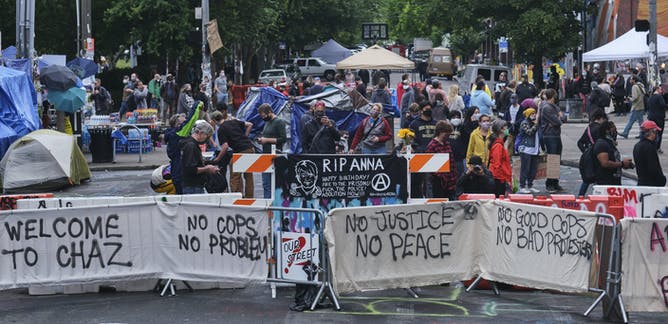
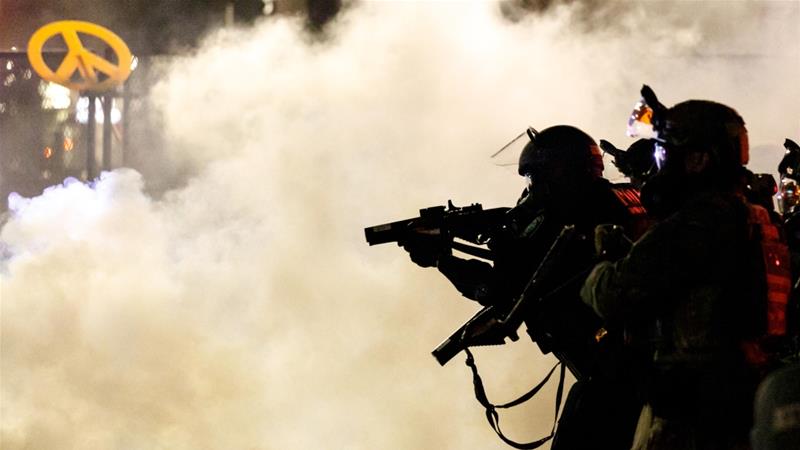
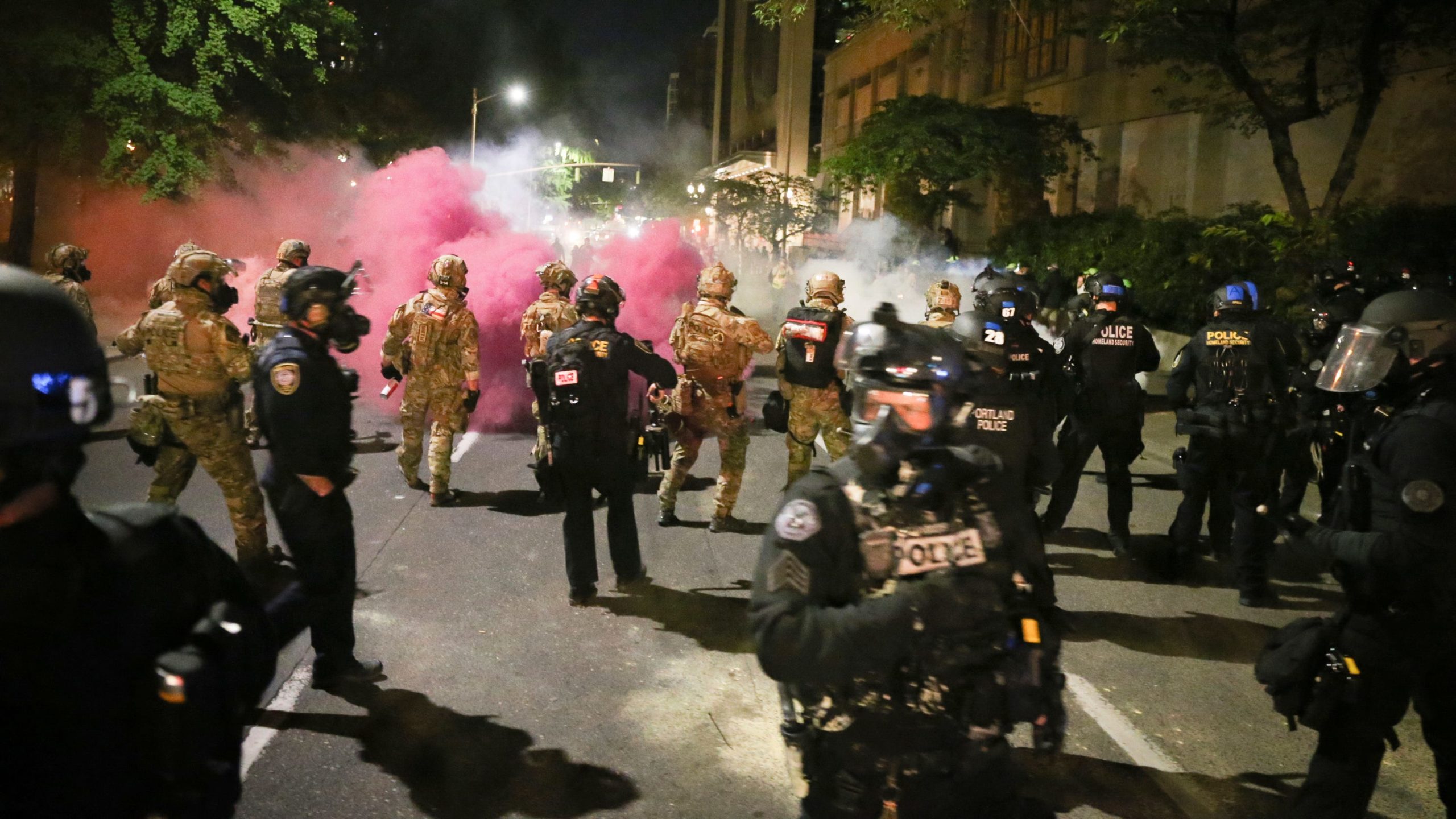
    May 28th was the first night protests were organized in front of the Multnomah County Justice Center, one of the focal points of the anti-police brutality actions taking place across Portland, Oregon, a city that sits on stolen indigenous Cowlitz and Clackamas land. JoAnn Hardesty, a Black Lives Matter activist who is now a City Commissioner, imposed a curfew of 8:00 pm on May 30. The Portland Police Bureau (PPB) decided to enforce the curfew an hour early, using tear gas.

    July 10 was the first day on record that federal forces brutalized activists according to the Portland Black Lives Matter Protests timeline of KOIN Channel 6 News, although it is possible that multiple federal agencies had been here already, making plans to participate in violent federal state repression in the form “less-than-lethal” munitions-based crowd control and outright kidnappings.

    Last night, July 22, was the fifty-fifth or -sixth night in Portland of protests in solidarity and in mourning with Minneapolis following the racist murder of George Floyd. Portland Mercury reporter Alex Zielinski sums up the feelings of many Portlanders in her piece cleverly titled, “Mayor Wheeler Condemns Feds’ ‘Indiscriminate’ Use of Tear Gas, Despite Portland Police Using Identical Tactics.” Zielinski writes:

    ‘After being repeatedly tear gassed Wednesday by federal police, Portland Mayor Ted Wheeler is in agreement with protesters: Law enforcement’s response to nightly demonstrations is disproportionately violent….“There are a lot of people out here who are not doing anything wrong,” he [Wheeler] added, looking over his shoulder at several hundred demonstrators. “They’re loud—they’re saying ‘Fuck you Ted’ a lot, but that’s legal. That’s constitutionally protected speech.” Wheeler’s concerns echo those of protesters who’ve experienced the same indiscriminate violence coming from Portland police officers since the city’s protests against police brutality began on May 29.’

    Department of Homeland Security, U.S. Customs and Border Protection, ICE, and possibly other federal agencies are deployed here as this article is being written. The excuse for sending them here is the alleged threat to federal property, listing graffiti as a reason to invade. They are assisting the PPB to brutally squash the rebellion against business as usual. Nameless agents stalk our city, practically indistinguishable from Proud Boys or other local or national fascist formations who don military uniforms in cosplay to intimidate. U.S. Customs and Border Protection’s reasoning is that “. . . names of the agents were not displayed due to recent doxing incidents against law enforcement personnel who serve and protect our country.” That is a hardly a valid concern for people who are as well armed as any local or federal police in this country.

    A kidnapping victim interviewed by the Washington Post reported that “federal officers who snatched him off the street as he was walking home from a peaceful protest did not tell him why he had been detained or provide him any record of an arrest… As far as he knows, he has not been charged with any crimes. And, Pettibone said, he did not know who detained him.”

    Kidnappings are terrifying. Anarchist organizer Lilith Sinclair on Democracy Now said, ‘We’re seeing these disappearances. I think it’s important to note that these unmarked cars that are going around in the street are unmarked rental vehicles. They are full of men in uniforms, no badges, no IDs. They refuse to even answer the question of “Are you or are you not law enforcement?”’ There are reports of sexual violence towards women and non-men. Interrogation, disorientation, infiltration all appear to form part of the goal of outright terrorism.

    Anti-insurgency tactics are what we Portlanders are being terrorized with, much as the people of Palestine, Iraq, Afghanistan, Pakistan, and Yemen have been experiencing while occupied by the blood-and-oil-thirsty U.S. war machine or one of its well-funded allies like Israel and Saudi Arabia. Police in the United States are often sent to Israel to train with the Israeli Defense Force. The black site kidnappings we’re facing here are not unlike the spiriting away of Muslim, Arab, and Southeast Asian people to Guantanamo or the disappearing of Black people in the prison industrial complex. And it resembles the family separations experienced by immigrants. Many people south of the U.S. border are indigenous to THIS LAND and not to the areas to which their ancestors fled to escape the mass genocide here in the United States.

    Federal forces have participated willfully in war crimes, just like their local counterparts the PPB, who were already tactically targeting with ruthless terror certain protesters such as medics and those carrying out food distribution or people they deemed “leaders.” Two nights ago, they ambushed a medic tent, spraying the supplies with pepper spray, making the equipment unusable. Feds and the PPB have stolen cooking equipment multiple times.

    There is hesitancy among many on the front lines to identify openly with any specific organization because of the backlash people have already experienced from cops showing up at their houses to question them about their activities. Doxing, which is publishing of personal information such as address or workplace on the Internet, along with political affiliations or activities, is another fear. While it may be frustrating for organizers attempting to learn from the tactics being used on the ground to see blurry or obscured videos or pictures, it is more important to the safety of the people being targeted to censor certain footage. The far right and the police have been using the footage from protests to identify people for doxing or arrest.

    Corporate news is focused solely on the Justice Center, a small part of the city in downtown, which is largely where the PPB, and now federal forces, have been starting riots and gassing people. Across the city there are dozens, perhaps hundreds, more projects that are being quickly strengthened by this fire.

    No stranger to racist violence, just last year Tete/Otis Gulley, Black transfeminine person, was found hung from a tree in Rocky Butte Park. Her family is sure that she was being stalked by a violent man who they believe staged her murder as a suicide. Gulley’s case has recently received national attention. Officially the last documented lynching in Portland was in 1988 when an Ethiopian student named Mulugeta Seraw was found beaten to death by members of East Side White Pride and White Aryan Resistance.

    Liberal white supremacy is the reigning politics of Oregon. Those who colonized and founded Oregon intended it to be a “whites only” state, as has been well documented by Oregon Black Pioneers in this Oregon Public Broadcasting piece and by The Atlantic. Patriot Prayer, 3%ers, Proud Boys, KKK, Volksfront, and more fascist gangs are documented to have engaged in collaboration with the local police. Fascists have engaged in “summers of terror” for several years. There have also been times when non-white people, houseless, or visibly gender non-conforming or non-heteronomative people were stalked, physically assaulted, and in some cases kidnapped for worse treatment. Huge community meetings have repeatedly been organized in Portland to address this terror to no avail.

    For Wheeler to act as if he, as the Police Commissioner, is not ordering, the exact response the federal agents are using is astounding in its absurdity. Demands that he and the entire city council remove themselves from office are widespread. “Resign Ted!” is a popular sign, chant, and hashtag since before these Black Lives Matter protests, as he has proved himself useless against the fascist terror. Take for example the case of the terror that resulted in the stabbing death of two white men and the severe wounding of a third who came to the defense of Black girls on a Max train at the Hollywood Transit center. That blood is on Wheeler’s hands

    Gains and Good News

    Portland Public Schools’ decision to remove PPB officers from their campuses is an important gain that was begrudgingly ceded early on. Pride NorthWest, responsible for the Portland Pride Parade, released a statement: “Beginning in 2021, uniformed and armed law enforcement officers will be disallowed from marching in the Portland Pride Parade and from exhibiting at the Portland Pride Waterfront Festival. The various agencies that typically include law enforcement in their contingents and booths were notified last week. We are now making this decision public, so as to assure our community that we have been paying attention and taking action.”

    Another piece of good news is that Portland Fire & Rescue have ceased to allow PPB or federal agents to use their facilities as of July 19th.

    Teressa Raiford founder of Don’t Shoot PDX, a mother and relentlessness supporter of Black Youth, is running for Mayor against the incumbent Wheeler. Raiford has been stalked, assaulted, and profiled by the PPB for being a Black organizer. Don’t Shoot PDX was the very first Black Lives Matter organization in Portland. She is not included on the ballot for mayor in the special runoff election between incumbent “Teargas Teddy” and urban policy consultant Sarah Iannarone. Raiford announced a write in campaign that could win the election as there is increasing pressure for Iannarone to drop out.

    Crowds have not gotten smaller with this federal occupation. Last night may have been one of the largest turnouts—people reported being packed tightly together at certain points due to the mass of people in the street. “Stolen people on stolen land!” rings out into the teargas clouds for another night.

  • The Debate in the Left on the Elections in the United States

    The Debate in the Left on the Elections in the United States

    This article was written for L’Anticapitaliste, the weekly newspaper of the New Anticapitalist Party (NPA) of France. 

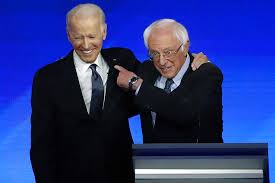
    The Democratic Socialist of America (DSA), which now claims 70,000 members, will go into the November 2020 national presidential election endorsing no candidate. The last DSA Convention voted if Bernie Sanders was not the nominee, it would endorse no one. The motion, however does not stop DSA members as individuals from working for or voting for Biden, and some will work for him while many can be expected to vote for him, despite the fact that virtually no DSA members actually support him politically.

    For the far left, socialists, anarchists, and anti-capitalists—who make up less than one percent of the population—Biden is problematic. The far left joined the progressives in supporting Senator Bernie Sanders, a liberal in the New Deal mold who ran as a “socialist” against the “billionaire class.” But since Sanders dropped out of the race and endorsed Biden, many on the far left have felt they have no candidate.

    Biden is aptly characterized as a neoliberal. As a legislator Biden supported Bill Clinton’s reactionary and racist policies reducing social welfare and creating new criminal codes that increased imprisonment of Blacks and Latinx. He also faces an allegation of sexual assault, though it has not much affected his support.

    Some say Biden is now moving to the left, and they give two reasons. First, Biden and Sanders created a Unity Task Force that has written a political program, which is at least rhetorically to the left of Biden’s historic positions. Second, the coronavirus crisis and the accompanying economic crisis may force Biden if elected president to adopt large-scale government economic interventions. Yet the Democratic Party platform has seldom had a significant influence on presidents once they are elected. Nevertheless, most people in the broad left will vote for Biden in November.

    Outside of DSA are those who support the Green Party, a left party whose candidates for president and vice-president are Howie Hawkins, a retired truck driver, and Angela Walker, working class activist. The Green Party candidate Ralph Nader was the party’s highest vote getter with 2.7 percent of the vote in 2000, when he was accused of having cost former vice-president Al Gore the presidency by taking votes from the Democrats. In the November election, some will vote for Greens in “safe states” where the Democrats are sure to win, but many will be reluctant to vote for the Green Party in contested states. DSA members are mostly uninterested in the Green Party, which they see as irrelevant and ineffective.

    All of this is part of a bigger debate within DSA about the Democratic Party. Historically, from the 1980s to the 2010s, DSA generally supported the Democratic Party nominee. DSA founder and political leader, Michael Harrington, believed the labor unions and the black movement could take over and “realign” the Democratic Party turning it into a socialist party. A new generation of DSA members in their 20s and 30s supported Bernie Sanders, but opposed the Democratic Party as a whole. The dominant view within DSA is that it is possible for DSA to use the Democratic Party ballot line to run socialist candidates or support other progressive candidates, looking forward to a future when DSA would break away and form a socialist party. A minority wants to create a socialist party now and some of the old guard prefer to focus on making the Democrats a more progressive party.

    At the moment, with Sanders out of the race and with Biden the candidate, the debate about the future of the Democratic Party seems abstract. Fundamentally pragmatic, most DSA members will quietly vote for Biden, work to reelect Congresswoman Alexandria Ocasio Cortez and other socialist or progressive candidates, and continue their work in the social movements. The question of building a socialist party is postponed. Others on the left will vote Green or, ignoring the election, work on the movements.


  • Imagining a Socialist Presidential Candidate Winning the African American Vote

    Imagining a Socialist Presidential Candidate Winning the African American Vote

    If the activists that Bernie Sanders inspired are to continue to consider winning the presidency as a pivotal condition for transforming democratic power and the state, that achievement entails winning the African American vote in the Democratic primary (which Sanders lost handily in 2016 and in 2020). And it involves emphasizing a politics wherein all racial identities share freedom, and struggles for freedom, in empathetic and egalitarian ways.

    As to winning the presidency, taking the past two primary contests as indicators that a popular socialist could actually become president, those chances should not be sold short of one in three.  That was what the race boiled down to, when either Sanders or Hillary Clinton, or Sanders or Joe Biden were poised to face Donald Trump. This political calculus also seems plausible, because polls consistently showed Sanders and Biden beating Trump in the general election.

    What does this have to do with the African American vote, freedom sharing struggles, and socialist presidential aspirations?

    It’s not just Sanders, but the groundswell he inspired, that came to a reckoning in the primaries. This reckoning concerns the relationship between engaging a vitalizing anti-racist politics and losing the African American vote. And it concerns a type of multiracial politics that was crowded out of his campaign.

    In moving forward in the vein of the Sanders revolution – which is also about ending encroaching authoritarian governance and de-fanging ultra-nationalist tactics of racial polarization – a pertinent reflective question can be offered.

    If overcoming the political pummeling – by Biden via the Black vote – was not about going negative on Biden on race, could it have been about focusing on a racial justice politics where people extended freedom, heart, and hand between all large-scale identities?

    When the African American Vote became Sanders’ Achilles Heel

    This exploration begins in South Carolina.

    While the lead up to that primary was the wakeup call for the Democratic elites. After the defeat of Sanders in Carolina, they consolidated behind Biden.

    They did this, in no small measure, by crafting variants of a left-impugning, waiting-in-lying argument: ‘How could a socialist expect to create Party unity by losing the African American vote by those numbers?’

    As to Biden versus Sanders and some of the exit poll numbers of the African American vote: 61% to 17% in South Carolina; 56% to 17% in the Super Tuesday states combined; 72% to 10% in Alabama; and 87% to 10% in Mississippi.

    From then on, a chain of race-anchored, Democratic-elite supported propositions, led to the conclusion that Biden was exclusively electable; this, despite larger majorities favoring Sanders’ policies. The chain of logic went something like this:

    African Americans are the most steadfast Democratic voters. When Sanders lost the black vote by such numbers, he lost the heart of the Party (if there were a brokered convention, for instance, the numerical and moral politics behind these propositions, would ignite a formidable multiracial force against him). Because Biden won hands down – only he can restore party unity. Without Party unity, Trump cannot be defeated.

    Crowding Out Sanders Empathetic Multiracial Message

    Sanders’ explanations for his poor showing included his acknowledgment to Rachel Maddow, that, “Biden is running, you know, with his – with his ties to Obama, and that’s working well.” (links added)

    This observation, plus his refusal to go negative on Biden on race were predated by his announcement that his previous effort was “too white.”

    To address these concerns, he expanded his anti-racist politics. Among other positives, it attracted young voters and activists.

    However, the way Sanders articulated these politics (e.g., with stentorian certitude), gave the press the telegenic rawmaterials to crowd out or minimize the multi-racial freedom sharing parts of his message.

    As to those parts: they could be heard in the conclusion of his Nevada victory speech. It was embodied in the Green New Deal, which focuses on racial and environmental justice for all distressed communities, and ecological restoration for all of humanity. And it could be heard in his critique of identity politics unity-appeals that included the 1%.

    As to crowding out this message: Before his appearance at the Apollo Theater in Harlem, hundreds of news outlets parroted his statement against Trump without saying a peep – that it was also about disempowering the ruling elite. What people read in that newsprint, also summarized in the leads, was: “It’s hard to believe that we have a president of the United States who is, in fact, a racist.”

    At the North Charleston Coliseum and Performing Arts Center, another compartmentalized Trump-impugning quote hit the media echo-chamber. ‘“He’s a “pathological liar,” a “racist,” a “sexist” a “homophobe and a xenophobe.”’

    This reductionistbiased reportage was also connected to a portrayal of Biden, as anything but strident. The spider web of Sanders-as-the-grand-divider messages was also spun with titles such as this one by NBC News: “Sanders divided Democrats and handed Biden the lion’s share.”

    Tensions Between Anti-Racism and Winning the African American Vote

    A related challenge for the Sanders campaign, as well as for future efforts, is that Sanders did not clearly account for a catch-22 dilemma, regarding race and Democratic voters.

    According to University of California professor Ian Haney López:

    It’s incredibly important that we not get bogged down in questions of whether Trump is a bigot or not, and that we really focus on this question: …Is [Trump] strategically, intentionally, purposely and with calculation manipulating racial division in the broader public?

    …When we ask it that way, then it makes sense when we come up against some really startling results.

    Ninety percent of Republicans reject the idea that Donald Trump is a racist. Even more startling than that, when we tested dog-whistle messages that talk about terrorist countries and undocumented immigrants in sanctuary cities, and all that sort of rhetoric that commonly comes from Trump’s mouth, the majority of Democrats found those phrases, those messages convincing.

    A majority of African Americans found those messages convincing. A majority of the Latinx community found those messages convincing.

    In one way of looking at these findings, the Democrats that López and his colleagues polled could be called racist. Alternatively, Obama-supporting Democrats, like these respondents, don’t think they’re racists.

    On the one hand, these matters could be seen as indicators of conservative tendencies in African American voting communities. On the other hand, if that view becomes the preeminent strategy-guiding nostrum, it can shift the focus away from the appeal of sharing good will and freedom – rather than enmity – between large-scale identities. This speaks of a strategy wherein hate speech is detested as much as political correctness. 82% and 80% respectively, support these positions, according to the 8,000-person survey by More in Common.

    This is to observe that running a successful socialist presidential campaign, anytime soon, also redounds to the reasons why López says that it’s “incredibly important that we not get bogged down in questions of whether Trump is a bigot or not.”

    Whether it’s described pejoratively as being politically correct or it’s called hate speech, public accusations that brand a group as racist (e.g., deplorable) – or as channeling the thought police, are impossible to prove across the board. Nor is this mode of redress fruitful – for reducing identity-group polarization, or as per López, tagging it to dog-whistling presidential figures who have tens of millions of voting supporters. What’s more, huge majorities across the races don’t like it.

    The Challenges of (de)Polarizing Freedom in Identity Politics

    Former press secretary of the Sanders campaign, Briahna Joy Gray, adds to López’s insights by examining identity shaming in relation to defusing large-scale identity-group polarization. Gray observes that,

    Applying shame to an entire category of people, rather than conducting a more nuanced assessment of why people feel the way they do and did what they did, means we might miss those among the blameworthy who might be identified as something more mutable, more persuadable than a “deplorable”—someone who might be convinced to join our side next time.

    Shame-insinuating impacts and freedom-sharing depolarizing possibilities of these identity-oriented politics can be further considered along the lines of Gray’s insights. Consequently, there’s the moral-political question:

    How many people who claim to be oppressed in respect to their identity, and want to end their oppression, want to end it, only to be widely labeled as privileged beneficiaries of supremacy, rather than free?

    If people, across all large-scale identities, who consider themselves oppressed by identity, would not want to move into that freedom-constricting condition – and, evocatively speaking, if one group does not want to be the other, i.e., free, and privileged – how, then, would it be an effective part of a president winning, unity-exhorting strategy to assign a morally-compromised state of privilege to all whites, for example (projected as 66.7% of the 2020 electorate)?

    White privilege is generally posed as a significant part of many people’s subjectivity and social experience. Like racial oppression, its magnetic pull energizes the body politic. Both attract and repel the coloring of being(s) – as it is often debated, portrayed, and publicized as continuously if not totally saturating people’s existence.

    Enter a wily clown-biking, power-yikes-ing blowhard, honking his counter totalitarian nozzle: in the form of the candidate, ‘larger than life,’ who’ll thwack an exaggerated, buffoon blown-up slight – that a ‘yuge group of (his) good people’ are privileged in life. In the name of freedom and ‘give me a break’ tolerance, free speech, and freedom from being the oppressor, he’ll smack it so hard, it’ll swallow its own stuffing: it’s ‘The Left’, it’s the ‘Washington swamp occupying establishment’; it’s the fake news media; it’s the social justice activists on campus: one group’s authoritarian whacker becomes another’s freedom fighting cracker.

     Pressed Between Oligarchy, Identity Politics, and Authoritarian Malarkey

    The trick of this racial – and anti-political correctness – dog-whistle politics has been played throughout the ages. As López observes:

    …dog-whistling has an ideological project. Not just stir racial panic; but convince people that the real threat in their lives is government; get white voters to turn against government in a way that allows the right to hijack government for their corporate donors.

    Getting multitudes to identify the (longtime austerity-corrupted) social sustaining part of government with handouts to anyone but them, forms a cornerstone of identity-polarizing racial dog-whistle strategies.

    Yet, as López, Gray, and polling research indicates, vilifying/shaming ultra-nationalist-supporting voters for the person they voted for, inflames more than just those who voted for Trump. Plus, it makes the corporate media truckloads of money.

    This also speaks of the Democratic establishment’s austerity-imposing authoritarian-infesting politics. Not wanting to admit to sewing inhospitable/authoritarian bureaucracies into the fabric of everyday life (or going the extra mile to don the Republican elites’ Janus-faced authoritarian cryo-smile), the Democratic elites’ modus operandi becomes: blame anyone but themselves; blame the white working-class; blame Russia; blame the Republicans: impeach the liar in the grass. With half-baked imitations of Sanders’ policies in hand, they serve trays of identity-inclusiveness souffles that include (and provide cover for) the oligarchs and their valets (qua moderates).

    Unfortunately (for Sanders-allied movements going forward), this politics of elite capture, finds a 99% split – near 49.5-49.5 in the electoral college. The irony of this is that so many people end up fighting against each other, through gigantic-scale identity group constructions, less aware that this is the way they’re fighting the ruling class’s authoritarian embroilments.

    Liberating Identity Freedom-Sharing in Presidential Policy and Politics

    In moving forward with the Sanders-inspired revolution and future presidential campaigns, some identity freedom-sharing policy, ideology, and base-building elements would include:

    1. Shifting from mutually-disparaging large-scale identity-dividing politics towards sharing freedoms between all large-scale identities (regarding, e.g., democratic freedoms; freedom of speech; freedoms realized through economic security and well-being; and freedom from environmental discrimination); and turning the term privilege on the 1%, instead of the masses.
    1. This can be done, for instance, by moving away from presidential campaign-promoted policies that economically redress societal privilege of all whites, in relation to benefiting from white supremacy. One example is to shift away from emphasizing cash reparations for African Americans in favor of oppressed identity-responsive reparative policies that empower and are shared by all distressed communities (and as Sanders did, supporting a study on reparations). According to Gallup, cash reparations – polls at 67% against, and 29% in favor. Importantly, “73% of black respondents were in favor” of cash reparations. At the third Democratic debate however, Biden gave a “stunningly” racially insensitive answer to the question of reparative policies for African Americans. Yet his support by African American voters was miles above other contenders well after that debate.
    1. Focusing on Trump and other ultranationalist candidates’ 1%-benefiting manipulation of racism, rather than their imputed racist/evil subjective essences; and doing this by:
    1. Shifting the onus of who has knowledge about the racism of Janus-faced populist-nationalists. This would be done by tenaciously detailing how self-proclaimed supremacists/“racists believe [these politicians are] racist.” This approach (deftly wielded by Mayor Andrew Gillum in Florida) offers the majority between the polarized sides more common ground to agree about these candidates’ manipulation of racism.
    1. Engaging multiracial freedom-sharing politics, inspired by the leading symbolic and activist role of black people in transforming the carceral state. This speaks of a politics that has currently expanded into a huge national groundswell against racism and the militarizing carceral state. It has coalesced, moreover, through the raising of the Black Lives Matter slogan. The Black Lives Matter thematic does not focus on shamefully impugning a large-scale identity because of its racial privilege (it does, however, effectively use race-focused shame against the authoritarian dynamics of police and carceral systems). These politics instead focus on the call to all to share the struggle for racial parity-making for African Americans in police treatment – in the larger freedom cause of all people, to transform carceral systems.
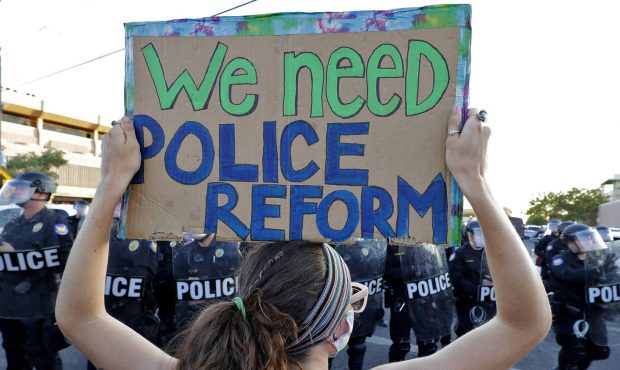
    1. Engaging a police-system reforming strategy that also emphasizes expanding the freedom-sharing coalition, and leading roles, to people in other groups by identity, who do not experience parity of treatment in relation to the carceral state (e.g., people by race, religion, disability, gender, sexual-orientation, and economic standing).

    Conclusion

    This is not to say that it’s comparatively more, or less morally compelling, to refrain from impugning all people categorized as white, for their racial privilege. Nor is the argument for cash reparations less morally persuasive than the one favoring repairing all distressed communities. Nor does this shift mean that calling Trump racist is less morally compelling than emphasizing his manipulations of race to benefit the 1%.

    But,if a goal of a socialist presidential campaign is to defeat authoritarian creep, and the potential for race-dividing, fascist populism, this national politics must also be about winning state power through thoroughgoing majoritarian victories. Along with a 99%-championing program, another guiding strategy can therefore be added via a simple proposition: it’s time for people across all large-scale identities to be empathetically generous to each other by sharing a little more freedom between them.

  • The Syrian Revolution: A History from Below

    The Syrian Revolution: A History from Below

    Online Summer Institute

    June 20th – August 5th

    The Syrian Revolution: A History from Below 

    Syria has been the focus of much regional and global attention following the massive eruption of popular revolt in mid-March 2011. The Syrian revolution gradually developed into a war involving multiple local, regional and international actors. As a result, the revolution and its massive protest movement, as well as the resistance from below that have sustained them, has been mostly ignored or silenced. Hegemonic narratives centered around geopolitical rivalries and sectarian conflicts have dominated much of international and Western discourse stripping the Syrian popular classes of any social, political or revolutionary agency.

    Against these narratives, the organizers of this webinar series propose a radically different approach. The Online Summer Institute titled “The Syrian Revolution: A History from Below” is a webinar series about grassroots politics, class struggles, and state violence in Syria since the 1970s up until the present. The 12-part series (June 20th – August 5th) includes presentations from activists, organizers, academics, and writers, who will discuss an array of topics ranging from grassroots movements, imperialism and anti-imperialism, political economy, international solidarity, feminist struggles, the prison system, healthcare weaponization, Palestinian solidarity, Kurdish self-determination, refugees, revolutionary art, and the future of the Syrian and regional uprisings (2011 and today). The Online Summer Institute highlights local struggles, lived experiences, and the expertise of Syrians with diverse backgrounds (political prisoners, doctors, activists, intellectuals, artists, students, refugees, academics, etc…). Participants will discuss the history of violence in Syria, the pitfalls of a besieged revolution, and the future of a country in ruins. We are proud to say that more than half of our panelists are Syrians. (More Syrian voices would have been included but that would have meant a longer webinar series and translation from Arabic, both of which would have postponed and extended the series further.)

    This webinar will challenge the mainstream, orientalist, and manichean perspectives that have come to dominate narratives surrounding the events that have transpired in Syria since 2011. That includes a mainstream perspective that often ignores the revolutionary dimension of the revolt focusing instead on what it perceives and presents as “irrational violence”. This orientalist narrative reduces all struggles in the region to supposed millennium old conflicts between various sects, religions, tribes, and ethnicities. Left-wing orientalists, dismissive of any struggle that doesn’t speak the language of social movements in the West or that deviates from the Western history of labor organizing, are in turn complicit in this narrative silencing. The manichean or campist viewpoint we are combating suggests that the world is composed of imperialist and anti-imperialist countries and thus one need simply support so-called anti-imperialist countries while ignoring class conflict and state violence within those very same societies. Needless to say, all these narratives work to deny the role of the Syrian people as actors in their own popular struggle. The webinars propose an alternative to these hegemonic narratives; a people’s history of the Syrian revolution. This type of history provides an entry point to understanding the Syrian revolution, its popular protests and local struggles. The curriculum webinar will work to center the interests of popular classes, subjugated communities and marginalized groups while providing an alternative analysis of the revolution by emphasizing progressive and internationalist perspectives.

    More information:

    Website

    Facebook

  • Herman Benson (1915-2020): No Socialism Without Democracy

    Herman Benson (1915-2020): No Socialism Without Democracy

    Herman Benson, veteran socialist activist and fighter for rank-and-file democracy in the labour movement, died on 2 July, aged 104.

    Herman was the second-to-last survivor, at least to my knowledge, of the “first generation” of “third camp” socialists – the Trotskyists who, in the late 1930s, had broken with the orthodoxy that the Soviet Union still represented some kind of “workers’ state”, worthy of defence, and founded the political tradition summarised by the slogan “Neither Washington nor Moscow, but international socialism”, and which, since the mid-1980s, Workers’ Liberty has increasingly come to identify.

    Along with Max Shachtman, Hal Draper, and others, Herman founded the Workers Party (later the Independent Socialist League, ISL), working for it as an organiser in New York and Detroit, and as an editor of its paper, Labor Action. He was the Workers Party candidate in Detroit’s mayoral election in 1947, and he had experience of shop-floor class struggle, working as a skilled toolmaker.

    Like many former Workers Party/ISL leaders, Herman moved away from explicitly revolutionary socialism, and the project of building a Marxist party. But unlike some, he never abandoned the class struggle and the cause of socialism, dedicating himself to fighting for rank-and-file democracy in the trade union movement.

    Working with Clyde Summers, a professor of law at Yale University, Herman helped secure the passing of the Labor Management Reporting and Disclosure Act in 1959, legislation which protected rank-and-file union members’ rights to free speech, voting rights, and civil liberties within their unions. This was a labour movement led not merely by inept or conservative bureaucrats, but often by profoundly corrupt officials, sometimes backed up by or directly involved in organised crime.

    Herman founded the newsletter Union Democracy in Action, and later the Association for Union Democracy (AUD), to support rank-and-file reform efforts inside trade unions, lending vital support to campaigns inside numerous unions, perhaps most famously the United Mine Workers, in the wake of the assassination of pro-reform official Joseph Yablonski; and the International Brotherhood of Teamsters, where the Teamsters for a Democratic Union network took on corruption and organised crime. AUD is still active, and publishes the Union Democracy Review.

    Although I was born and brought up in Britain, I have American citizenship via an American mother, and regular visits to the USA mean I maintain some connections on the US left. Since becoming a railway worker and trade union rep, I have often looked to what might be called the “rank-and-fileist” milieu in the US labour movement, including the AUD and Labor Notes, also founded by socialists emerging from the third camp tradition, for inspiration and education. The fundamental political lesson of Herman’s long years of service to the cause of union democracy is that the trade union movement is a terrain of struggle, and that if we, rank-and-file workers, want our unions to be fit for the purpose of fighting the class struggle, we must be prepared to organise insurgent, oppositional, transformational struggles within them.

    My first direct contact with Herman was in 2012, when I edited a symposium of testimonies and recollections of activists who’d be involved with the WP/ISL tradition and its offshoots and successors on the US left. Herman’s contribution was a sober account of the origins of the tendency and why, in his view, it had failed to hold its shape a distinct political tradition. I later interviewed him about the second volume of The Fate of the Russian Revolution, a book series published by Alliance for Workers’ Liberty (AWL) anthologising what we have called “the lost texts of critical Marxism”, the attempts by the “heterodox” Trotskyists, and some of the “orthodox”, to come to terms with the political and ideological implications of Stalinism. Herman was the only writer whose work was included in the anthology to be still living. In our interview, he said, “reading it at 100, it activates the juices of a 24-year old zealot.”

    I had the honour of meeting Herman in 2016, in his New York apartment. I remember him expressing his surprise – pleasant, I think – that we had published the Fate books. I must have appeared to him as a kind of ideological archaeologist, attempting to excavate a semi-submerged political tradition and put it to use. I was fascinated to hear his stories of organising Workers Party branches in New York and Detroit, and the party’s industrial and union activity, which he remembered with astonishing clarity for a centenarian.

    I cannot say, on the basis of our occasional correspondence and one meeting, that I knew Herman, but from my contact with him, and what I know of his work, it seems to me there is a clear, consistent foundation to his political life, which connects his earlier work as a founder of the heteredox-Trotskyist, third camp tradition and his 60-plus years of dedicated struggle for union democracy: the idea that, without democracy, there can be no socialism.

    Herman understood that neither an authoritarian state controlled by “Communist” bureaucrats, nor bureaucratic trade unions controlled by corrupt officials, could ever be instruments for the advancement of workers’ rights, still less the socialist transformation of society. The struggle for democracy as an irreplaceable element of the socialist project was foundational for Marx and Engels – democracy not as a technocratic or administrative procedure, but a process of empowerment and instrument of self-emancipation. Both statist reformism and, even more barbarically and grotesquely, Stalinism, have ripped radical democracy out of its rightful place in the endeavour of socialism, in what it means to be a socialist. Herman’s whole political life can be seen as an attempt to restore it to its central position. He saw a rediscovery of the debates recounted in the Fate books as a contribution to that, writing that “those discussions restore the defence of democracy in society as a central theme not only for socialists but for all who seek social justice.”

    And as he wrote in his review of volume two of Fate for New Politics: “Heterodox Trotskyists emphasized the need for democratic control over nationalized property. From there to the explicit goal of democratic control over productive property—national, social, or private—is no giant ideological leap. As I see it now, the lesson is that no form of property guarantees social justice; the key to social justice lies in the control of the state, that is, in the battle of democracy. Such is the inseparable link between socialism and democracy.”

    It was an honour to fight alongside Herman in “the battle of democracy”, albeit for a relatively short time in the context of his long political life, and even though our primary theatres of combat were separated by an ocean. I was deeply honoured and proud, as I know many other comrades were, when Herman sent greetings to the Workers’ Liberty AGM in 2016, writing: “In the great cause of socialism, you emphasise the need to defend democracy. Keep up that good work.”

    The fundamental ideas he fought for are as urgent now as they ever were. There are those on left who defend and cheerlead for China, Russia, Iran, Cuba, or other authoritarian states or movements claiming some form of opposition to the global hegemon; and there those in our movement content to let our unions stagnate into passive service-providers run by inert bureaucracies (sometimes staffed, perhaps not coincidentally, by apologists for the Chinese and Cuban states). Against these approaches, the principles that animated and shaped Herman Benson’s political life can help provide what he called “an antidote to Stalinist thinking”, and reorient and refound a consistently-democratic, working-class socialism that can allow us to remake our movement in order that, through it, we can remake society.

    Daniel Randall and Herman Benson, New York, 2016

    Originally posted at the Alliance for Workers’ Liberty website.

  • Lessons From Gezi Park

    Lessons From Gezi Park

    Throughout the summer of 2013, Turkey witnessed the largest wave of protests in its history. It all started when a small group of protesters began to camp at Gezi Park in Istanbul, in order to protect the park from privatization. After the first night of the encampment, the police viciously attacked protestors which sparked a nationwide rebellion.

    Although the protests exploded in reaction to the police violence, they also created a platform for a broader critique of austerity, tightening media censorship, high levels of youth unemployment, anti-women and anti-LGBT+ policies and the ecological destruction the Erdogan administration oversaw since 2002. It also opened the way for ongoing, democratic political breakthroughs in opposition to the regime; opposition, which while experiencing many challenges,  would not otherwise have been possible.  

    Since 2013 the legacy of “Gezi Park” has been attacked and rewritten by President Erdogan and his allies, while the government has imprisoned or forced into exile many faces of the movement. Conspiracy theories tying the protests to George Soros and foreign countries have been spread by the regime and its supporters through mainstream media. Nowadays, the very right to protest on the streets is under threat as the Erdogan government criminalizes peaceful demonstrations and hires neighborhood guards to patrol the streets and prevent spontaneous uprisings. Some were quick to warn those who are currently protesting police violence in the US about “the coming reaction” based on the Turkish experience. Yet Turkey offers other lessons for the U.S. than simply a deepening of authoritarian trends. 

    Although the Gezi Park protests grew in reaction to police violence, they were not caused by it. The Justice and Development Party (AKP) government was initially welcomed by many in the West as Islamist democrats, but the AKP in power began to show its authoritarian tendencies throughout the late 2000s as it increased media censorship and targeted journalists and opposition figures. At the same time, the AKP oversaw a massive wave of privatizations and a construction boom that destroyed large swaths of the country’s green spaces. The increasing authoritarianism of the AKP and its neo-liberal economic and ecological policies were the driving causes of the Gezi Park protests. 

    Just as with the movements of the squares – in Spain, Greece and with Occupy in the U.S. –  and reflecting a process of political polarization and radicalization that was   seen internationally, e.g. the Arab Spring,  the Gezi Park protests had a major impact on all aspects of Turkish politics. In many ways the protests re-shuffled the cards for the major political players in the country. It is in this impact, and specifically with the rise of a multi-national/ multi-racial struggle in Turkey, that there are possible lessons for the U.S.

    The largest racialized group in Turkey are the Kurds, a national minority making up 20% percent of the overall population of Turkey. The Turkish state systematically imposed forced assimilation and dispossession policies on the Kurdish populations in order to suppress secessionist tendencies until the 1990s. The forced dispossession policies imposed on Kurdish majority regions led to waves of Kurdish migration into western parts of Turkey, where Kurdish workers were racialized and pushed into working low paying jobs and living in slums. State officials often rejected the very existence of Kurds until recently. Because of the repressive nature of the Turkish state, the Kurds maintained their own political parties and structures that were relatively independent. These parties have been and continue to be criminalized by the Turkish state. The 10% electoral threshold that was imposed after the coup of 1980 also prevented pro-Kurdish parties from gaining ballot access as parties, and forced them to run as independents. The criminalization of Kurdish politics, and the anti-Kurdish state policies and ideology led to widespread denial of the reality of Kurdish oppression and strict opposition to pro-Kurdish parties in the western parts of Turkey where Kurds have been a tiny minority until recently. Many Turks view Kurdish nationalism as synonymous with terrorism even today.

    However, there have been major changes to race politics in Turkey since the Gezi Park protests. One of the most recent iterations of Kurdish political parties, the Peace and Democracy Party (BDP) played a major part in the Gezi Park protests. The participation of pro-Kurdish groups transformed the way many Turkish protesters perceived Kurdish politics. 

    The political terrain for the alliance of pro-Kurdish parties and the Turkish radical Left began to be formed during the mid-1990s as segments of the Kurdish movement began to participate in local and national elections as independents. Prior to this, the primary vehicle of Kurdish politics was the Kurdistan Workers Party (PKK), which engaged in armed conflict with the Turkish state in order to build a Kurdish state. The PKK is labeled a terrorist group by the Turkish state, hence an alliance between the PKK and legal parties is not feasible. The local successes of the legal Kurdish parties since the 1990s moved the mainstream of Kurdish politics from Kurdish national liberation initially to strengthening local governments run by Kurdish parties, and eventually towards democratic confederalism which argues for a confederation of autonomous Kurdish entities within  the existing nation-state structures, and centers direct democracy. 

    The Democratic Society Party (DTP) was founded in 2005 around the demands for a democratic constitution, recognition of all racial, ethnic, and religious minorities by the state and increased autonomy and democratization of regional governments. The DTP was banned in 2008 but regrouped through the BDP. Even as the Kurdish movement moved into the boundaries of legality, they have been criminalized over their ties to the PKK. That is why until Gezi, the Kurdish movement remained relatively separate from the Turkish Left as they were viewed as a trojan horse for the “terrorist” PKK.  In this context the participation of the BDP in the Gezi Park protests helped reshape the political coalitions in the country in important ways.  Gezi Park protests changed the party coalitions in three major ways. 

    First, the main opposition party, the Republican People’s Party (CHP) – self-proclaimed social democrats – shifted rightward throughout the AKP rule and since the Gezi Park protests. This was evident in the fact that they nominated a far-right presidential candidate against Erdogan in the 2014 elections, the first elections after the Gezi Park protests, in an alliance with the fascist Nationalist Movement Party (MHP). The CHP had always been primarily a secularist Turkish nationalist party, but it shifted in a more social democratic direction in the 1970s and 1990s in order to co-opt a militant labor movement. Under AKP rule, as a result of privatizations and changes to the labor law, the labor unions have been weakened significantly which accelerated the right-wing shift of the CHP and moved them to centering nationalism against the Kurds and secularism against the AKP’s Islamism. Under these conditions the CHP began allying with the nationalist parties that opposed the AKP from the right.

    Second, the ongoing right-wing shift within the CHP and its unwillingness to respond to Gezi through a broad political program created an opening for pro-Kurdish parties as they could become the left-wing opposition to the CHP in the Western parts of Turkey and the party of the Gezi Park protests. The participation of the BDP in the Gezi Park protests increased the credibility of pro-Kudish parties in the western parts of Turkey. 

    The alliance between pro-Kurdish parties and the Turkish radical Left materialized in the formation of first the People’s Democratic Congress (HDK) and then the People’s Democratic Party (HDP) which became a broad coalition of pro-Kurdish parties in the Kurdish majority areas and the smaller left-wing, socialist, and communist parties,  supported by many younger Turkish people in the Western parts of Turkey. The politics of direct democracy and democratic constitution pushed by the HDP appealed to many on the far Left as well as those on the social democratic wing of the CHP. Following Gezi, the HDP candidate Selahattin Demirtaş won nearly 10% of the vote in the 2014 presidential elections and the HDP became the third largest party in Turkey in the June 2015 general elections. Since its inception the HDP won a notable percentage of the vote in the western cities of Turkey through winning the support of minorities and the Left. 

    Third, the Gezi Park protests intensified the infighting within the AKP coalition. Gülenists, a group of pro-US Islamist liberals within the AKP coalition, have been wary of Erdoğan’s tightening grip of the Turkish state. Following Gezi Park, as Erdoğan’s popularity reached all-time lows, Gülenists began to openly dissent against Erdoğan’s leadership through a series of corruption investigations that led to the arrests of multiple Erdoğan allies in December 2013. Erdoğan characterized these arrests as a coup and began to remove Gülenists from the judiciary and the police. The conflict between the Gülenists and Erdoğan reached its climax in the failed coup of July 2016, as the Gülenists in the military bureaucracy attempted to seize power. The failed coup was followed by what some characterized as a “counter-coup” by Erdoğan, as he declared a state of emergency and began to move the country towards a presidential system where he would have near absolute authority. Throughout the state of emergency thousands were purged from the state bureaucracy, members of parliament and mayors were removed from office and the presidential system was established through a referendum and a general election both of which took place under circumstances that were far from democratic. 

    As the conflict between Erdoğan and Gülenists intensified and the HDP became a major player in Turkish politics following a decline in AKP’s popularity, Erdoğan shifted to a more repressive approach towards the HDP. Since 2015, the HDP has faced brutal repression by the AKP government while the CHP and other “opposition” parties enabled this repression. The regime justified the repression using the same anti-Kurdish rhetoric that was mobilized by previous administrations. The opposition to the HDP intensified as it truly provided a new possibility for left-wing politics in Turkey which was an alternative not just to the AKP but also to the other right-wing opposition parties. 

    Currently thousands of HDP members, including the former co-chairs of the party, are in prison. HDP mayors and members of parliament are repeatedly removed from office over bogus charges. Within the last weeks, two more HDP members of parliament were removed from office and arrested. HDP members also face a media blackout even when the topic of discussion is the HDP itself. However, HDP continues to persist as the largest radical opposition to what now is a one-man rule under Erdogan’s presidential system and Gezi Park protests played an essential role in the formation of the HDP. As the mainstream opposition parties continue to enable Erdoğan’s authoritarianism and/or oppose him from the right, HDP increasingly appears as the main opposition party in the country. 

    In the US, the George Floyd protests exploded in reaction to racist police murders. The racialized impact of Covid-19 and the recession it triggered also served as catalysts. Many young black people that are leading the protests have also been further radicalized by the failure of Bernie Sanders’ presidential campaigns to gain power and deliver transformative change. Race is a unique aspect of American politics, hence the comparison between the two waves of protests might seem shallow. In contrast to the Kurdish political parties, most racialized people in the United States either have no political affiliation or support the Democratic Party. However, the current moment and the push for police abolition could create new possibilities as the Democratic Party leaders and mayors refuse to defund the police even marginally. 

    Many large cities in the United States have racialized majorities who experience racialized policing and police brutality as a part of their day to day lives. If the current movement persists it could create the possibility of an abolitionist alternative to the Democrats on a local level. Of course we are currently extremely far from such a possibility, but the HDP model could be even more effective in the US than in Turkey if working class parties could emerge on the local level to provide an independent abolitionist alternative to the police states the Democratic mayors continue to administer in all major cities. 

    The initial step towards building an alternative to racial capitalism lies in building independent abolitionist organizations through these movements. Only through building our own independent institutions will we build the power to disarm, defund, and abolish the police and also abolish ICE and all other repressive state apparatuses. For the Kurds and the Turkish Left, the possibility of a major political alternative to neoliberal and nationalist parties only became possible through carrying the alliance that was built on the streets back into a new party. Prior to this, Kurdish parties remained only a regional alternative, but their candidates could only run for elections as independents due to the 10% threshold required for them to get ballot access as a party. The alliance of the Turkish Left and pro-Kurdish parties helped the Left defeat the electoral barriers, even as the state continued to criminalize the HDP. A similar process could take place in the US through an alliance built on the streets between abolitionists and socialists in order to defeat the US electoral system which is more restrictive than the Turkish system in many ways. 

    It is always easier to act as if spontaneous uprisings like the Gezi Park and George Floyd protests end up in absolute failure and brutal reaction. However, these uprisings reshape political alliances and create possibilities for larger political transformations as they persist. It is unclear how far the George Floyd inspired protests will go but it is important to explore the HDP model as it might provide an alternative to the two-party impasse we face in the US by centering justice as the core of oppositional politics.

  • Keep Your Eyes on the Prize of an Independent Party

    Keep Your Eyes on the Prize of an Independent Party

    Detroiters demonstrate against the closing of a GM plant | Photo by Jim West

    Many DSA members agree that the working class needs our own party. Not all are on board, but a lot. We debate how to get there: “Realign” (that is, reform) the Dems? A “dirty break,” where the goal is a new party but class-struggle candidates make use of the Democratic ballot line for now, while shunning the Democrats’ internal machinery? A few think we should be talking now about a Democratic Socialist Party, a “clean break.”

    Some members speculate about a “party surrogate,” a membership organization that would function like a party without actually forming a new party, a strategy articulated most fully by Jared Abbott and Dustin Guastella. They urge us to be agnostic about whether a new, or different, party will come about through realignment or a dirty break. They argue correctly that a new party “will only have a realistic chance of electoral success if the insurgents have made sufficient inroads within one of the major parties — and a significant section of the labor movement — to attract a large portion of its supporters.”

    They emphasize that the Democratic Party is “oligarchic and impenetrable” and discuss the “hyperconcentration of power in the hands of party and economic elites,” resulting in “increased party discipline, which in turn has dramatically raised the cost of internal party dissent.” They are clear that the Democratic Party is not set up to allow insurgencies and counsel against attempts at local takeovers. Yet they hold open the possibility that after sufficient organizing by the Left, “the establishment may abandon the party, effectively producing realignment.”

    But I’d like to suggest that whether you have one foot in the realignment-is-possible camp or your eyes are firmly on the prize of workers’ own party makes a difference in how you organize and on what you’ll do at crucial forks in the road. The Democratic establishment will fight back. What is our plan when they do?

    Here’s an analogy: Consider a union leader who accepts capitalism as the way things will always be. She takes for granted management rights in the union contract; in the best case scenario, the union tries to nibble away as best it can. When the employer asserts its right to close a plant, what can she do? The usual response is to negotiate a soft landing for laid-off workers, maybe to file a suit that will be thrown out by a judge who also believes capital’s rights are sacrosanct. It’s their plant, after all.

    Then consider a union leader who doesn’t think the owners have the right to own, who’s for the overthrow of capitalism. Yes, both leaders are constrained by members’ fears, by the laws, by capitalists’ actual power regardless of their right to that power, by all sorts of handcuffs. But the difference in outlook will color everything the two leaders do, from the shop floor up. A Marxist outlook produces different approaches to countless daily practical decisions as well as to big political strategy; the difference is not just far away and abstract.

    Consider a real-life plant closing scenario. General Motors announced in November 2018 that it would shut its Poletown plant in Detroit. Local and national United Auto Workers officials barely peeped, and even shut down a Poletown member’s motion to create a fight-back committee (he was also a DSA member). Detroit DSA, not constrained by allegiance to GM’s profits, showed what class-struggle unionists might do, mounting a campaign, backed by Rep. Rashida Tlaib, to demand the city government take the plant over through eminent domain and use it for green manufacturing.

    POLITICS MAKES THE DIFFERENCE

    The contrast between the two outlooks is clear in Toni Gilpin’s The Long Deep Grudge, new this year, about the Farm Equipment Workers union, the FE. (Gilpin is a DSA member in the Chicago chapter.) Gilpin shows how the socialist politics of FE leaders played out in practice, greatly to the benefit of FE members.

    The FE represented workers in the agricultural implement industry from 1938 to 1955, when it was forced by McCarthyism to merge with its rival, the UAW. FE leaders, though they didn’t openly say so, were “profoundly influenced” by the Communist Party. That refusal to be overawed by the rights of capital made for a union that was significantly different from most others of its era.

    Gilpin details how UAW officials, who backed McCarthyite purges of CP-affiliated labor leaders, bought the notion that increasing productivity (i.e., speedup) would produce a bigger pie for owners and workers to share. The UAW’s Walter Reuther signed a National Planning Association code that said union leaders should promote “employee practices which will increase productivity and improve the competitive position of the company.”

    The FE, in contrast, resisted productivity pay and long contracts (long contracts meant fewer opportunities to fight the boss for a better one). “Through their Marxist lens,” says Gilpin, “they saw wage levels not as reflective of ‘objective’ realities but of relative power, and they maintained a conviction that profit, in fact, did represent the surplus value extracted from the workforce. For the FE leadership, the equation remained simple and unchanging: for workers to enjoy more, the corporations and the people who controlled them must get less.”

    Between 1945 and 1954 International Harvester plants represented by the FE saw more than 1,000 work stoppages, compared to 200 at UAW IH plants. (Two hundred is still an astonishing number by today’s standards.) One reason was the high ratio of stewards to workers, about one to every 35 or 40. IH officials complained that these stewards continually tried to “promote unrest, stir up ill will, harass the company, and convince as many members as it can that labor relations with Harvester is and must be class warfare.” Damn straight.

    The FE was also unusual in its insistence on complete equality at International Harvester’s Louisville, Kentucky local, where Black members were 15 percent of the membership. A united Louisville local won a 42-day strike against IH’s “Southern differential” — a third-tier pay scale in a city where most considered Black or white workers lucky to have such a job.

    Famed civil rights activist Anne Braden, who lived in Louisville, said of the Harvester workers, “People really enjoyed getting up and going to work in the morning” because of the FE. “You knew there was going to be something interesting at the gate, there was going to be a leaflet, there was going to be people out about something, and there was a real esprit de corps that I think made it bearable to go to work.” Gilpin says the “fierce and sustained loyalty of the FE’s rank and file” was the result of “the precepts of proper trade unionism” as practiced by its socialist leaders.

    As a former UAW member at GM and Chrysler, and as one who covered the UAW for decades at Labor Notes, I can also personally testify to the difference. When I was at GM in 1976 the shop committee instigated one of those wildcat strikes so rare today; the whole plant was down. Agreeing with management that stopping production was the worst of sins, the UAW International agreed to let management fire 10 rank and filers with no recourse to the grievance procedure. The letter informing me was signed by an international rep. “Dear Sister Slaughter…”

    OUR PARTY AND THEIRS

    What’s the connection to electoral politics as practiced by DSA members? It’s that idea of a guiding star — basing our practice on where we want to go.

    Yes, it’s theoretically possible to imagine there being so many insurgents inside the Democratic Party that its bosses would leave (about as possible as imagining Trump will resign). But it is on the proponents of realignment and those who take a wait-and-see approach to explain why the world’s most powerful capitalist class would decide to give up control of one of its most powerful tools. Short of a breakdown of the state itself, in what situation would capitalists actually do this? Would the owners of GM just decide one day to abandon the company to members of the UAW? These both strike me as unrealistic scenarios.

    If you think it is possible capitalists would abandon the Democratic Party under less extreme circumstances (how?), your guiding star is likely to become an internal takeover. Hey, turns out it’s easy to become a precinct delegate! Isn’t this what the Tea Party did? It worked for the Republicans. If we can get on Committee X we can change Rule Y, which will help Candidate Z. All this time we’re interfacing with party elites and their loyal activists, rather than with members of the working class we might win over.

    And if you think that in the future the Democratic Party is going to become our party, your campaign speeches will tend toward “we have to improve this party which has a glorious history of fighting for workers and the poor” rather than “we need our own party; this one is owned by the machinery of capitalism.”

    The wait-and-see approach rightly advocates that the Left build enough power to threaten the Democratic Party elites, but what then? Surely they will fight back before we’re strong enough to oust them; they already are. Think about how quickly Joe Biden became this year’s presidential nominee. If we’re doing our jobs, things will only escalate from here. Without a plan for forming a new party, and a base we’ve spent time organizing towards it, our forces will be thrown into disarray by the establishment’s attacks, right at the moment we should be most organized.

    When we’ve built that power all of us agree we want, what happens when we come to the next fork in the road — say when a much larger labor movement and all the social movements have backed the next Bernie but the Democratic bosses have stolen the nomination? We don’t want to be shilly-shallying over “shall we stay or shall we go?” all over again.

    Far better for us to decide from the start that our goal is workers’ own party, because that will color everything we do on our way there.

    First published in The Call.

  • Puerto Rico Faces Crises: COVID, Hurricanes, Earthquakes, Drought

    Puerto Rico Faces Crises: COVID, Hurricanes, Earthquakes, Drought

    This article was written for L’Anticapitaliste, the weekly newspaper of the New Anticapitalist Party (NPA) of France. 

    The United States has suffered 135,000 deaths from COVID-19 and has tens of millions of unemployed and both crises continue now into the fifth month, but nowhere has the economic crisis been greater than in the U.S. colony of Puerto Rico.

    Governor Wanda Vázquez was the first governor in the United States to order businesses to close and to tell people to stay home, which helped to contain the virus. At present there are only 9,336 coronavirus cases and only 167 deaths out of a population of 3.2 million. But the economic shutdown has devastated the island. With a civilian workforce of 1.05 million, 300,000 have filed for unemployment compensation and the official unemployment rate is 23 percent.

    Only last year Puerto Ricans rose and drove from office governor Ricardo Rosselló after it was learned that an Telegram app chat he had used misogynistic and homophobic language, joked about people who died in Hurricane María, and appeared to threaten the life of the mayor of San Juan, Carmen Yulín Cruz. Demonstrations grew in numbers from tens of thousands to one million, forcing Rosselló to resign in August of 2019.

    While the trigger of the uprising was Rosselló’s text message, there were other issues as well. Puerto Rico had an incredible $72 billion debt. The island had an unemployment rate then of 14.2 percent and a poverty rate of 45 percent. The U.S. government established a Financial Oversight and Management Board of Puerto Rico (FMOB) to run the economy. The financial problems resulted both from economic mismanagement and natural disasters.

    Hurricane María with winds of 100 miles per hour, struck the island in September of 2017, leaving 3,057 dead and doing $90 billion in property damage. Many homes lost their roofs, leaving thousands living under tarps for a year or more; and some went without electric power, food, or water. U.S. President Donald J. Trump told advisors that, “he did not want a single dollar going to Puerto Rico, because he thought the island was misusing the money and taking advantage of the government.” The Federal Emergency Management Agency failed to provide adequate assistance. Trump callously threw rolls of paper towels to Puerto Ricans storm survivors at a public event, infuriating many Puerto Ricans. Just a couple of days ago we learned that as the storm approached, Trump speculated to aides about selling the island.

    Since the hurricane, 500,000 Puerto Ricans have left the island to live in the United States, most settling in Florida. A total of 5.8 million Puerto Ricans now live in the United States, most in New York and the Northeast but also in Chicago, California, Hawaii and elsewhere.

    Disasters continue to strike the island. In late December 2019 and early January 2020 a series of earthquakes hit the island, the largest a 6.4 magnitude quake that badly damaged the city of Ponce. And now 60% of Puerto Rico suffers from drought and some areas do not have a daily water supply.

    The FMOB allotted $13 billion for COVID-19 issues, and Governor Vazquez has announced a $787 stimulus package, with $350 for businesses to help pay workers. Many Puerto Ricans, however, labor in the informal economy and will not be entitled to unemployment insurance.

    Puerto Rico, once a Spanish colony, was taken from Spain by the United States in the war of 1898. In 1917 the United States made Puerto Ricans U.S. Citizens and in 1947 the U.S. Congress gave Puerto Ricans the right to elect their own governor. But unlike other U.S. territories, Puerto Rico did not become a state and it has no representatives or senators in Congress, only a non-voting resident commissioner in the House of Representatives. As citizens, Puerto Ricans in the United States can vote in all local, state, and national elections.

    We know from the people’s history that Puerto Ricans will continue to fight on the island and in the United States. Most Puerto Ricans can be expected to vote for Joe Biden in the national election.

  • Poland Chooses between Two Right-Wing Politicians

    Poland Chooses between Two Right-Wing Politicians

    Polish President Andrzej Duda (top) flashing V-signs after addressing supporters as exit poll results were announced during the presidential election in Lowicz, Poland, on June 28, 2020 and Candidate in Poland’s presidential election, Warsaw Mayor Rafal Trzaskowski flashing V-signs to supporters as exit poll results were announced during the presidential election in Warsaw, Poland, on June 28, 2020. – Poland’s right-wing President Andrzej Duda topped round one of a presidential election on June 28, 2020, triggering a tight run-off with Warsaw’s liberal Mayor Rafal Trzaskowski on July 12, according to an Ipsos exit poll. (Photos by Wojtek RADWANSKI and JANEK SKARZYNSKI / AFP)

    In less than few days there will be a second round of a presidential election in Poland that may affect not only the politics in Poland but also other regions of Europe. Poles are choosing between two right-wing politicians. What is the cause of this situation and what role does the left play in all of it?

    It is easier to understand current situation in Poland if you are a Canadian or American than a European. Most of European countries got used to a power structure with at least several strong political parties, including a strong left. For more than 15 years in Poland two right-wing parties have been taking turns in charge: Law and Justice and Civic Platform. The first one – after having won the parliamentary election in 2015 – has thoroughly dominated almost the entire Polish political stage: they have had a president, a prime minister and a majority in the parliament. The opposition has been holding only the Senate and local governments in most of big cities, including the capitol. Both parties’ origin was in the Solidarity movement of the 1980s and a significant number of their members consider themselves conservative or right-wing.

    Civic Platform is unambiguously pro-European and democratic and many politicians from this fraction have been holding main European offices such as the President of the European Parliament or the President of the European Council. Voters of Civic Platform come from big cities and the west of Poland, they are the ones – to put it simply – in a better economic situation, those whom the political transformation of 1989 treated quite well. On the other hand, people voting for Law and Justice defend Catholic or conservative values and live in the south and the east of the country.The  Law and Justice party got their support through numerous well-diagnosed and effectively-carried-out social reforms such as the 500+ Program ensuring parents with 500 PLN (equivalent of about 170 Canadian dollars) a month from national resources.

    Polish politics has been dominated by a conflict between these two political formations for many years now. It escalated in 2015 when Law and Justice took full power and launched a series of reforms described as not democratic by both the opposition and a significant part of foreign observers and commentators. Also in 2015, the president, Andrzej Duda, vetoed the appointment of judges of the Constitutional Court that led to a crisis lasting many years and eventually made the Constitutional Court subordinate to the parliament. Two years later the government forced changes in the functioning of the National Council of the Judiciary to protect the independence of the courts and judges. As a consequence of these actions there were demonstrations in many cities and towns in Poland, gathering tens of thousands of protesters, and the decision of the government raised concerns from international bodies such as the Venice Commission and the Court of Justice of the European Union.

    Simultaneously, many incidents happening during the last five years may point to authoritarian tendencies in the government and in Polish society. A great number of artistic events have been censored (in a soft or hard way) by the authorities and the public media has been turned into a tool of propaganda for the government. The authorities have also been stimulating xenophobic and homophobic sentiments within a large part of Poland. They have criticized a previous government (led by Civic Platform) for its willingness to help refugees from Syria, Afghanistan or Iraq. Many Law and Justice members have been speaking against the LGBT+ community. Local governments arising from this party symbolically announced their territories to be LGBT-free zones and just a few weeks ago president Andrzej Duda compared LGBT+ postulates to Soviet indoctrination.

    In this year’s presidential election Law and Justice put Andrzej Duda in the running for the second time and – despite major criticism from the opposition – he still has strong social support. His main antagonist from the Civic Platform had initially been Małgorzata Kidawa-Błońska, a former Marshall of the Polish government; however, due to disturbances caused by the epidemic of the SARS-CoV-2 virus the election was postponed and Civic Platform nominated a new candidate, Rafał Trzaskowski – a representative of a liberal part of this formation who won the election for the Mayor of Warsaw in a first round in 2018 gaining 56.67% of the vote.

    Two weeks ago both parties proved to still be dominant on the Polish political stage – in the first round almost 3/4 of Poland’s electorate voted for their candidates. Duda obtained the highest score (43.50%) and Trzaskowski placed second (with 30.46%). Before the second round surveys showed that all bets were off – the difference between the results of both candidates remains in the limits of statistical error and the winner depends on the kind of poll.

    This is why it is crucial for Duda and Trzaskowski to take votes from the rest of the candidates. The third place (13.87%) belonged to Szymon Hołownia – a celebrity, a host of the Polish edition of “Got Talent” who ran as an independent candidate. During the campaign Hołownia appeared as a moderate candidate in every way and his programme consisted of a populist mix of leftist and rightist demands. Undoubtedly he managed to convince those who felt sick and tired of the choice between Law And Justice and Civic Platform but at the same time he was distancing himself from the actions of the present authorities. His weeping over the Constitution – a new symbol of resistance to non-democratic decisions of the government – went viral on the Polish Internet.

    The fourth result (6.78%) belonged to Krzysztof Bosak, a candidate of the extreme right with a nationalist programme and radically free-market views. Władysław Kosiniak-Kamysz, a member of the Polish People’s Party – a centrist party representing farmers and citizens from smaller towns co-ruling with “Civic Platform” in the past for many years – obtained less than 2.5% of the votes.

    The result for Robert Biedroń, a candidate of the left trying to find their place in this polarized political stage, was even worse. How could this happen?

    For many years the strongest left-wing party in Poland was Democratic Left Alliance. It originated from a Communist party, but, in contrast to a great number of European parties with similar backgrounds, Democratic Left Alliance managed to evolve into a social democratic party and its politicians succeeded in making Poland a member of the European Union and the North Atlantic Treaty Organization. At the turn of the century Democratic Left Alliance had support from the majority of Polish society. Over time this formation completely lost the ability to communicate with its supporting groups such as factory workers and miners and as a result its support began to decrease. Controversially – from the standpoint of the left-oriented supporters – decisions like overeager involvement in the war in Iraq and introducing a flat tax for companies didn’t help their case either.

    At the same time over the years numerous political initiatives on the left wing have been emerging. Two of them seem to be the most crucial. The Together party (now Left Together) was established in 2015 by a group of young leftist activists as a protest against the entrenched Democratic Left Alliance. Left Together succeeded in “dusting off” Polish political discussion, injecting certain themes such as the struggle for workers’ rights and profound tax reform. On the other hand, in 2019, Robert Biedroń – one of the most important Polish LGBT+ activists and a former MP – formed the Spring party. Unlike Left Together, this formation was supposed to address the mainstream, moderate electorate by mixing leftist and liberal views together. In fact, Biedroń avoided using the word “leftist” and was replacing it with the word “progressive”.

    It was about a year ago that all the three formations – Democratic Left Alliance, Together, and Spring – were in deep conflict. In May 2019, Spring and Together ran for the European Parliament elections separately, gaining 6.06% and 1.24% of the vote. Democratic Left Alliance ran in a coalition with a few other parties where Civic Platform played a leading role. The aim of this group – named “European Coalition” – was to keep Law And Justice from winning the election at all cost. The mission was a partial success because their result was decent (38,47%) but Law And Justice won the election anyway with support of more than 45%.

    Less than six months later all three left-wing parties were standing together shoulder to shoulder in the parliament election and their collective result was 12.56% of the parliamentary vote. This was regarded as a success because in the previous term the left failed to bring its politicians to parliament. They formed a “club” together, uniting 49 members. Cooperation of these parties is pretty good, but they face numerous problems resulting from diversified expectations of their electorates. The leftism of the supporters of Democratic Left Alliance is significantly different than the leftism of Spring or Together. A large number of the Alliance’s voters don’t share an interest in matters like LGBT+ rights or environmentalism.

    The three parties decided to nominate one candidate for the presidential election – the leader of the Spring party, Biedroń. A few years ago he seemed to be a natural political leader. Unfortunately, Spring’s result wasn’t what they expected. Additionally, Biedroń lost credibility due to an unfulfilled promise to give up the mandate of being a Member of the European Parliament. This was the reason that this nomination was not received with great enthusiasm.

    During his campaign Biedroń had to face many unfavorable situations. It stands to reason that supporters of Democratic Left Alliance found it difficult to fully accept him as an openly gay LGBT+ activist. Meanwhile, he might have seemed unreliable for the general leftist electorate because of his tendency to soften his views and ideas. However, in the end, it was ideological supporters of the left who turned out to be the most loyal voters for Biedroń – mostly due to lack of a credible alternative.

    Also, the left parties got stuck in a narrative trap. They stridently distanced themselves from the two similar conservative candidates. This kind of rhetoric is sadly confusing for much of the electorate even though it is based on substantive premises. For plenty of voters “right wing” is synonymous with Law And Justice and refers to particular issues such as disrespect for the rule of law, a commitment to Catholic values or skepticism towards the European Union. For most Polish people equating Law And Justice with Civic Platform is totally incomprehensible.

    The election showed that this rhetoric wasn’t convincing for left-wing voters either – Biedroń obtained a score of only 2.22%. Over 300, 000 people supported the left in October 2019 while before last Sunday just over 430,000 voted for the candidate nominated by the left. As the exit poll shows, 44.1% of the left-wing voters from October chose Rafał Trzaskowski and only 21.2% cast their vote for Robert Biedroń. It is almost as much as left-wing electorate supporting Szymon Hołownia (19.8%). At the press conference after the first round of the election Biedroń expressed his strong support for Trzaskowski in the second round.

    Since 2005 a first-round presidential election turnout has never exceeded 50%. This time, however, it was 64.51%. This proves the extraordinary engagement of Polish society in political matters. It also shows that the political fraction winning on July 12th will receive full and credible social legitimization. Though reigning unchallenged since 2015, Law And Justice has never received support from the majority of Polish society. Andrzej Duda won under completely different circumstances when a certain percentage of his voters were not aware of the consequences of their choice. Now, all cards are on the table and the next election probably will not be held until 2023. The winner of this presidential election will symbolically take over – even if they don’t possess actual power. And the left will gain some time to think to whom and how to address their message.

  • Pacifism by Every Other Name: The Political Ethic of the Anti-Racist Movement Against Systemic Violence

    Pacifism by Every Other Name: The Political Ethic of the Anti-Racist Movement Against Systemic Violence

    Living through the current anti-racist, anti-police protests around the US and around the world now, we’re hearing a lot of talk about non-violence and non-violent protests, including invocations of the distorted, deradicalized, liberalized “legacy” of Martin Luther King, Jr. However, what we’re not hearing a lot about is pacifism. While pacifism has historically been interpreted as a political philosophy of non-violent resistance, what is more essential to the pacifist tradition is what it fights against, not necessarily its tactics. A genuine pacifist movement is a movement against systems of violence, and in that sense the on-going wave of anti-racist movements are decidedly pacifist—even including instances where protesters engage in looting, burning, and tactical violence in response to the direct state violence practiced by police forces globally.

    From Non-Violence to Anti-Violence

    Pacifism is always anti-violence, but not necessarily non-violent in tactics. And a crucial dimension of the distinction here is connected to a broader distinction between direct and structural, or systemic, violence—to say nothing for the difficulty of clearly analytically categorizing what counts as violence (which is also always a political determination). On this latter point, more specifically, some may consider private property destruction a kind of violence; the use of force in self-defense is also considered by some to be violent. These may be useful academic arguments to have at some point, but they are not the important debates at the moment.

    Instead, by focusing on the anti-violence goal of these anti-racist movements, and other similarly radical movements, we can see the protest movement thinking and acting with a pacifist political ethic that avoids being hamstrung by any pacifism that is reducible to passivity in tactics or strategy.

    Non-violence and pacifism are often used interchangeably, but they shouldn’t be. While non-violence can be thought of as a category of tactics for achieving political change without violence of any kind, pacifism is best understood as a political philosophy rooted in an ethico-political commitment to achieving a world without violence—usually with the caveat that the best way (or perhaps the only way) to achieve this transformation is through non-violent tactics. However, the determination of the most effective tactics is a strategic judgement not necessarily inherent to pacifism.

    Pacifism is anti-violence, and because its proponent actively oppose violence it would make sense that they would want to avoid violence if at all possible. Does this mean pacifists don’t engage in active self-defense? Perhaps, but I am unaware of any strict form of pacifism that would prohibit such self-defense. The implication of all of these points taken together is that pacifism is often interpreted as prohibiting the tactical use of violence to achieve the abolition of violence. It also has further led to the reproduction of a rigidly individualized and direct conception of violence. That is, violence means when one person or group of people directly physically harm another (e.g., a stabbing, shooting, or beating)—and structural violences are ignored (e.g., policies that limit access to health care or laws that protect domestic abusers or protect killer cops from legal consequences—the latter two of which often overlap).


    Anti-Racism that is Not Merely Anti-Racism

    It should also be noted that direct violence and structural violence are analytically distinct categories, but only abstractly. In reality, structural violences are often the root causes of most direct violence. For example, laws that fund the military and empower unaccountable use of heinous, human rights violating warfare often, unsurprisingly, lead to the use of heinous, human rights violating acts of war by individual soldiers, bomber pilots, and drone operators. A more everyday example would be policies that deny people the right to a living wage lead people to engage in behaviors (like “side hustles” or joining gangs) that are considered illegal and can occasionally (though not as often as the media would have us believe) lead to interpersonal conflicts than can become violent. However, structural violence is violence, nonetheless. It is violence when a doctor “streets” a stable but still-unhealthy patient without insurance who then dies because of the lack of necessary further treatment. This is, as Engels called it, “social murder.” The doctor is following the rules, even engaging in legal or otherwise required behavior. In this case, the rules themselves are the violence. This is the structural violence of racist, cisheterosexist capitalism, which points us to another word that I hear a lot at these protests, though less so in the mainstream media, and that is (the need for) “socialism.”

    It is absolutely no surprise at all that people, particularly people of color, are increasingly acting on their understanding that the capitalist order rests on deeply entrenched racism and white supremacy; that, as Malcolm X famous said, you can’t have capitalism without racism. While there remain real concerns about what Keeanga-Yamahtta Taylor and Cornel West have repeatedly criticized as “Black faces in high places” discourses, which suggest that what is really needed for equality and racial justice is to have more Black people in leadership positions within the existing system, I’ve not seen a lot of this kind of problematic symbolic rhetoric in the current wave of protests. Symbolic representation is important to achieve the deeper substantive representation that will be vital to the achievement of racial justice, but this approach (perhaps best represented by the presidency of Barack Obama) often functions to redirect, and indeed limit, the more transformative demands of the multi-racial working class—and the radical Black working class in particular.

    What has heartened me from my experiences during these recent protests is the lack of this kind of approach (often referred pejoratively, and not without reason, as liberal identity politics). These protests are offering systemically-oriented demands that express a deep pacifist political ethic rooted in an increasing dissatisfaction with “Black faces in high places” and an overt acknowledgement that police violence, and white supremacist violence itself, is maintained and reproduced by other related systems of violence, but the capitalist system in particular. For many protesters, (democratic) socialism is being rearticulated, as it has always been at its best, as a direct critique—and alternative to—racism itself. This is not to suggest that any protesters (at least that I’ve come across) are of the belief that socialism, understood in its more reductive form, would somehow automatically abolish racism. Such fanciful thinking is more often an accusation that socialists have not historically taken racism seriously enough, and that is a fair critique. Pacifism then, at its strongest, requires that all systems of violence be opposed and struggled against—and that is exactly what we’re witnessing in our streets. These protests, the eventual outcomes of which are still unknown, are reflecting a development in radical activism: people are making a pacifist critique against all structures of violence with loud demands for systemic change aimed at a world without violence—which means, for many, a world without police and a world without capitalism.

    These protests are more deeply pacifist though, because they reflect the knowledge that what is being struggled against is systematic; they are not primarily oriented towards ending direct violence as such. They are focused on the structural causes of direct violence; that is, they are primarily opposed to the structural violence of policing and the broader criminalization of black and brown skin and poverty. In this context, to be pacifist is not to be primarily concerned with whether a building is burned or a cop gets hit with a water bottle, but it means being hyper-focused on doing whatever is necessarily to achieve a world without violence—a world without racial capitalism and its badged enforcers.

    Rising Systemic Consciousness

    It is this radical opposition, combined with the visceral preference for, without a fetishization of, non-violence in tactics, and even with the occasional tactical use of property destruction and symbolic—albeit somewhat dangerous—physical force (what we might more casually refer to as “direct violence”) that makes these movements pacifist. On the one hand, tactics are important, but only insofar as they connect to a strategically delineated goal—and the goal of these protests is structural non-violence; that is to say, they are anti-violence.

    The police and their defenders on the other hand know only violence. The social function of policing is entirely violent. It cannot be otherwise without ceasing to be what it is. Even in the moments when specific police officers aren’t engaged in direct violence (e.g., police brutality), their social function is a product of structural violence (the legal empowerment of armed defenders of capitalist property relations, patriarchy, and white supremacy, supported with resources that are otherwise desperately needed to keep people alive and living decent humane lives). The use of public resources for policing means poverty is increased and therefore “crime” is increased, which tautologically “justifies” the existence of policing.

    Among the protesters, with whom I’ve spent countless hours over the past month, people understand this. Their slogans reflect this. The recent “addition” of “Defund the Police” to the Black Lives Matter street mural in Washington D.C, is just one example of the emergent pacifist consciousness within this movement. The dissatisfaction of cops taking a knee with protesters also reflects a deep awareness that this moment is not about individual behaviors, the direct violence, of police officers. It is about the structural violence that policing in America entails.

  • Austerity’s Future: Higher Education and COVID-19

    Austerity’s Future: Higher Education and COVID-19

    Don Tuski, President of the College for Creative Studies, Detroit

    “Obviously, this week was not about collaboration, but moving forward, this has to be about collaboration.”

    These were the words Don Tuski, President of the College for Creative Studies (CCS), chose to use at an end-of-semester meeting with faculty and staff after announcing a 5% reduction in workforce at the Detroit Fine Arts college.

    CCS is a private college in Detroit offering bachelor’s and master’s degrees in fine arts to its over 1,400 students. At a cost of $44,000 a year, CCS’ $55 million annual budget should have kept it financially stable as they finished the 2019-2020 school year. However, the result COVID-19 pandemic became an opportunity to enact an austerity-driven “restructuring.”

    Since becoming president of the college in 2019, Tuski’s model for CCS has been driven by divide-and-conquer. Staff returned to campus for Fall classes that year to learn that they had been classified into one of three bands. These bands were in part based on job classification – managerial, staff, and faculty – but the sections within those bands were primarily salary-based. So, for instance, staff members in completely unrelated areas of the college could be placed in the same band on the basis of their pay scale, rather than their job description.

    The challenge this presented became obvious when returning faculty and staff were told via email that they would be reporting to a Fall meeting. Meeting times were based on band, and thus, each member in the room knew the approximate salary of every other member there as well. The complicated process was the result of an outside firm that was hired to conduct a survey based on job performance and salary scale. While at this meeting, members of each band inquired about compensation and the process for getting placed into separate band categories for salary bonuses. One individual that was interviewed stated that, “it was a very uncomfortable time and many people were upset. Rather than opening this up to everyone so you could see what the salary scales were and the job requirements for each category, the administration asked people to come to the band meetings but were told nothing about the other bands, so we had to stitch together classifications from conversations.”

    Frustrations at CCS continued throughout the school year, until COVID-19 forced the college to consider budget cuts. At the end of May, 19 individuals were notified with only thirty minutes’ notice that they had to attend a Zoom meeting with either the president, dean, or vice president as well as a member of Human Resources. At this meeting, they were calmly and coldly informed that their positions would be eliminated. One individual, who wished to remain anonymous, stated that the decision to eliminate these positions was “made at the top with Tuski and a few people – board members and such – but they never mentioned declining enrollment as a factor leading to that decision. It appeared to be retaliatory.”

    Faculty and staff were unaware of these cuts until a final annual meeting on Friday, May 22nd. At the meeting, Tuski informed everyone that, “Transparency is the goal, but only where possible.” He had been irritated at a Detroit Free Press story which had inside information on the state of CCS’s budget, something which he believed could damage their reputation in the city. Given the state of CCS at the time, Tuski stated that the board of governors had endorsed a plan to reduce the college’s budget between 10-30 percent, or $18-24 million in total.

    In addition to these cuts, Tuski relayed that no outside contracts would be given and that everything needed for transitioning to online education would be done by staff. However, at the same meeting, Tuski stated that Michigan Virtual, a K-12 online learning platform, would be responsible for the rollout of new course content, given that the online instructional designers had already been eliminated in the first round of budget cuts. Although no further cuts or reductions have been announced, Tuski stated that there may be future “tweaking” and “collaboration” in a desire for the college to remain “flexible” as it moved forward into Fall 2020. “Obviously, this week was not about collaboration,” Tuski stated at the meeting. “Moving forward, this has to be about collaboration.”

    Mistrust of this conclusion is not misplaced, however. Towards the end of the meeting, Tuski only permitted handpicked, pre-submitted questions from faculty and staff. This prevented irate faculty from voicing their concerns in an online group setting where their power to collectively show their distrust could be mitigated.

    At the moment, CCS has stated that the lowest paid professionals will not have a pay decrease and 403(b) contributions will continue, even as the college seeks to increase its financial performance with “outside partnerships” and a possible tuition decrease for incoming students.

    Tuski’s model for running CCS is one that will become all too common in smaller, private colleges across the country. Neoliberal austerity measures to reduce staff sizes provide an ample opportunity to eliminate the positions of those deemed to be ‘troublemakers’ under the guise of low program enrollment and expectations of a smaller student population. Outside contractors with ties to for-profit online platforms can now capitalize on the desire for smaller colleges to make their Fall 2020 semesters accessible. Positions that would otherwise be reserved for in-house staff can be more readily eliminated while other staffing positions, such as custodial, maintenance, and book stores, are considered non-essential at present.

    The history of Tuski’s tenure at CCS shows that the process of neoliberal reforms has been well-established long before COVID-19 hit the nation. The global pandemic has only further entrenched this model, and countless thousands of staff in smaller colleges throughout the U.S. will now suffer its ramifications.

  • The Whitney Took Down My Mural

    The Whitney Took Down My Mural

    The Whitney Museum recently took down our murals. True enough, they never asked us to paint on the plywood barrier built to protect the building during the recent protests. But for a few nights we painted. Mine was a mural about police brutality toward protestors. Now the Whitney has taken them all down.

    There is a certain irony here since the current exhibit is about the Mexican muralists and their influence on American painters. Diego Rivera is the most well known of those and there is a dramatic story of how John D. Rockefeller, Jr. took down Rivera’s mural “Man at the Crossroads.”

    Now, I’m not comparing myself to Diego Rivera, except that both of us had murals removed. Rockefeller didn’t like Rivera’s politics. The Whitney just didn’t care about mine.

    I was bicycling around one night when I saw people painting on the Whitney’s barriers and I joined them. At first I drew. The next day I brought house paint.

    I’ve always loved politically motivated murals like the Mexican muralists. I hadn’t felt the political urgency to paint one until the Trump era. Police brutality existed before Trump, of course, but it never felt like part of my life before. That’s privilege.

    I was thinking about the clearing out of Lafayette square, the tear gas and violence used on peaceful protesters. And I thought about my own recent experience at a demonstration here in New York at Columbus Circle. I was painting from those memories and feelings.

    I wanted to paint something hopeful and horrifying in black and white but with some nuance. In the painting there’s one cop trying to hold back the others, but it doesn’t matter.

    The security guards came by and took a look and liked what I was doing. Then the head of security came by and said, “It looks good. Just don’t make a mess.”

    As we were painting, people would come up and talk. People in the neighborhood would return often to see our progress. Many were members of the Whitney who couldn’t see the art inside. They said they were glad to see art outside of the museum and to talk to the artists. It was an interactive exhibit—and free! I liked talking to people while painting.

    I listened to James Baldwin’s “The Fire Next Time” while staying up all night to finish it.

    An engineer who worked at the museum came by and said to me, “This is illegal.” I told him I’d talked to David, the head of security. “Oh, okay,” he said. And he added, “I just don’t like the FTP,” referring to some graffiti tags around the building. “I don’t like those either,” I said.

    My painting is in black and white, but I don’t see the police issue in black and white.

    The police arrested me once during a protest. That was during Occupy Wall Street’s student debt day. I went to Cooper Square, climbed Cooper’s statue and made a speech and wouldn’t get down until the cops came with a cherry picker and took me down. I had just graduated from the Cooper Union art program and that year they began to charge tuition for the first time in 155 years. I thought that was wrong, so I protested, was arrested and spent a night in jail, was charged with four misdemeanors and did community service.

    I also took the police exam last year and I’m currently on the list to be called up. I could become a cop. I’m the son of a New York firefighter and I used to think that maybe if I joined the police I could be a force for good, say, if I found myself working with a psychopath like the guy that murdered George Floyd. But in the last month I’ve realized maybe that’s not possible. The way the system is now, the bad police can’t be restrained by the good ones. So now, I don’t think I could become a cop, even if I were called.

    I’m an artist. One of those artists influenced by Diego Rivera and the Mexican muralists whose paintings are in the current Whitney show. I painted my mural and if it didn’t get in the Whitney it got on the Whitney, appreciated by those who walked by, interested to see what I thought about the protests and the police. Meanwhile, the Whitney exhibit is still closed, locked up, and no one can see those muralists, while those of us who are painting murals have had ours taken down. Our murals trashed; so were Rivera’s. We’re in good company.


  • The Border’s COVID-19 Pandemic: Crisis Upon Crisis

    The Border’s COVID-19 Pandemic: Crisis Upon Crisis

    Ciudad Juarez has a long history of crises – foreign invasions, revolutions, economic recessions tied to the United States, the 9-11 border constriction and transnational gangland wars. Then there’s the perpetual crisis of putting food on the table in a high-priced, low-wage city while staying safe in a place where violence can surge at any moment.

    Heaped atop the struggles of daily life, the Mexican city of an estimated 1.5 million residents bordering El Paso, Texas, now grapples with the COVID-19 pandemic.

    Longtime Juarez resident and activist Paula Flores knows the dynamic too well. As part of the wave of rural migrants who gravitated to the NAFTA boomtown in the last years of the 20th century, Flores’ family scrambled to make a living and build a home.

    Her daughter, 17-year-old factory worker Sagrario, disappeared one day in 1998. Sagrario was later found murdered. Today’s pandemic, though, has left its own unique and ugly stamp on the city, Flores said in an interview.

    After COVID-19 struck, Flores and her family nervously navigated a 10-day municipal curfew and a two-person-per vehicle limit during which police were reputed to detain and “fine” violators. They watched the economy contract, endured hours-long lines at supermarkets and felt the sting of rising living costs.

    “All the food is expensive,” Flores said. “The only thing that’s gone down is gasoline. But many people don’t have cars, so what good is it?”

    Keeping the children appropriately occupied since public schools closed has been another emergency task. The on-line lessons delivered by the schools last only so long and don’t reach many people without ready access to the Internet, Flores said. “(Government) doesn’t do anything about this, to make sure there is something for the children to do besides school work.”

    Flores insists she hasn’t met anyone who contracted COVID-19 and blames the pandemic-driven business shutdowns and social restrictions for “killing people” by exacerbating emotional depression and creating joblessness.

    Rising Violence against Women

    The Juarez news site Laverdadjuarez.com recently reported that Juarez and the state of Chihuahua ranked first in Mexico for the number of emergency calls related to violence against women logged from January to the end of April this year.

    Citing statistics from Mexico’s National Public Security System, the news publication reported that 753.3 such calls were made per 100,000 women in Chihuahua–a rate far above the national average of 136.2 calls per 100,000 women.

    In another report, the official Chihuahua Women’s Institute informed that its statewide service centers had conducted 4,233 consultations and received 575 emergency calls from March 23 to June 7. Of the consultations, 924 were new cases, a 17 percent increase from the same period in 2019, according to the Institute.

    “We had been expecting this,” said Institute Director Emma Saldana. “One of the impacts of confinement for girls, adolescents and women is that, the more time they’re exposed to their aggressors, the violence increases…”

    According to Flores, the COVID-19 crisis undermined the broader effort to reduce gender violence in the area by suddenly consigning it to the back burner. The issue topped national discourse earlier this year, exemplified by the women’s movement that surged in Mexico prior to the pandemic and staged nationwide protests Mar. 8 and a strike Mar. 9.

    Juarez activists were in the streets before the March events, protesting the February murder of Isabel Cabanillas, a young Juarez artist and member of the feminist organization Hijas de su Maquiladora Madre. Cabanillas’ murder remains unsolved.

    COVID-19 prevented Flores and her allies from repainting the pink crosses on Juarez streets that call attention to the femicides that have taken the lives of so many Juarez women over the decades. The annual event had served as a reminder of the lack of justice.

    Other forms of violence have also gone up with pandemic. A decade ago, Juarez acquired the moniker “Murder City” for the daily slaughter that ensued in the conflict between the Juarez and Sinaloa cartels over control of the drug trade. The intervention of federal police and the Mexican army ostensibly to restore order actually paralleled a rise in killings and violence.

    The so-called hyperviolence coincided with the Great Recession, when tens of thousands of Juarez factory workers lost their jobs and a large segment of the population fled the city.

    From 2012 to 2016 violence subsided, but did not go away. The economy revved back up, people returned and workers began demanding better employment conditions.

    Violence began to escalate again in 2016-17, with recent killings linked to an arguably messier competition over control of illegal street drugs, especially methamphetamine, now waged by several underworld groups instead of just the former two dominant organizations.

    Official numbers cited in the local press reported 703 homicides from January to the end of May, a rate comparable to the period of hyperviolence a decade ago. But observers pointed out that the number was really 712 since the authorities did not include nine persons killed by police. The latest murder numbers reposition Juarez as the number-two city in the country for homicides, only behind Tijuana, another Mexican border city engulfed in illegal drug market violence.

    Criminal impunity is the constant in all manner of murders. The government ended p throwing one man in jail for Sagrario’s murder, but Flores has long maintained that others were involved. Nearly two years ago, she walked up to then-president elect Andres Manuel Lopez Obrador (AMLO) at a Juarez human rights forum and personally handed him information about Sagrario’s case. Flores said that no one from AMLO’s office ever contacted her to follow up.

    A Hierarchy of Virus Victims

    While violence revisits the streets of Juarez, the COVID-19 virus grinds away at the health and fabric of society in Juarez, in its sister city El Paso and other southern New Mexico cities. By mid-June, El Paso officially hit 100 deaths and almost 4,000 infections. Juarez, with approximately double the population of El Paso, reported slightly more than 1,800 infections and 388 deaths, according to a report in El Diario de Juarez based on state health department numbers.

    Due to the testing shortfall and inadequate manner of tracking deaths, the Juarez numbers in particular are widely considered an undercount.

    The disease has touched many Juarez families, including Mayor Armando Cabada, who tested positive for COVID-19. An early media narrative framed the pandemic as a health catastrophe that did not discriminate, but it soon became clear that segments of the population already at risk in “normal times”, including the poor, prisoners, the impoverished elderly, low income workers and migrants, were most vulnerable to a still incurable illness.

    In 2018 and 2019, Juarez attracted thousands of people from Latin America and other parts of the world attempting to cross the border and seek U.S. political asylum. While waiting for their cases to be called up, many were forced to stay in Juarez by the Trump Administration’s Remain in Mexico policy, agreed to by AMLO’s administration

    Asylum seekers, stranded in Juarez, crowded into hotels, apartments and privately or government-run migrant shelters. In May, El Diario reported that two workers and 12 Central and South American refugees had contracted the COVID-19 virus at the Leona Vicario Migrant Integration Center shelter operated by the Mexican federal government. Last December, the facility suffered a chickenpox outbreak that reportedly infected 180 people and led to weeks of quarantining. The center was built to house asylum seekers deported from the United States in large dormitory-style rooms.

    Inaugurated in the summer of 2019, the new center was initially viewed by Mexican federal officials as a job recruitment center for the foreign-dominated maquiladora assembly plants and agricultural industries of northern Mexico, which had 50,000 open positions, according to the federal government.

    “We are collaborating with the governments of Chihuahua and Ciudad Juarez and hope that many migrants collaborate in the economy of border cities,” Horacio Duarte, federal undersecretary of employment and labor productivity, was quoted in a press release.

    In early April, New Mexico’s Congressional delegation sent a letter of concern to the acting director of the U.S. Immigration and Customs Enforcement (ICE) agency after at least one employee and one detainee at ICE’s Otero County Processing Center (OCPC) in nearby southern New Mexico had fallen ill from COVID-19. The OCPC, which detains migrants and asylum seekers, is operated for ICE by the for-profit, Utah-based company Management and Training Corporation.

    In their letter, the elected representatives requested detailed information on how the federal agency was prepared to safeguard against the pandemic in the facility.

    Prior to the pandemic, a 2018 report on the OCPC written for the Detained Migrant Solidarity Committee and Freedom for Immigrants documented over 200 complaints of unhealthy living conditions, abuse and exploitation, social isolation and mental anguish, and barriers to justice and legal access.

    El Paso Bishop Mark Seitz and local immigrant advocacy organizations demanded that ICE release the inmates at OCPC and its other prisons to avert a health disaster. Despite the flurry of statements and demands, COVID-19 infections at the OCPC tracked by the New Mexico Department of Health soared from the original two cases to 146 as of June 21, according to the state government agency.

    Disposable Workers

    While migrants involuntarily languished in risky quarters on both sides of the Paso del Norte border, other “virus greenhouses,” in the words of Juarez labor advocate Elizabeth Flores, were sprouting in the maquiladoras that drive the border’s economy.

    Between March and May, some but not all maquiladoras shut down, partly because of the closure of U.S. auto plants. Workers at scores of foreign-owned factories in Juarez and northern Mexico that were still up and running staged wildcat strikes demanding full stay-at-home pay, as encouraged by the Mexican federal government.

    Arguing that their production met essential criteria, other corporations simply kept running their assembly lines. Word then began filtering out of sick and dead employees. Worker demands met with varied success, and conflicts mounted over the definitions of essential vs. non-essential business operations.

    Intervening on the side of business, the Trump Administration, U.S. Congressional leaders and U.S. corporations with Mexican factories all wielded their clout to keep the factories rolling and producing for the NAFTA 2.0 economy.

    As May progressed, mounting reports of dead and sick workers trickled out of Juarez and other Mexican border cities. Dr. Arturo Valenzuela, Chihuahua state health director for the northern zone, claimed that 25 maquiladora workers had perished from COVID-19. Labor advocates like attorney and activist Susana Prieto said the real number was upwards of 200 workers from factories in Juarez alone.

    By June 1, most maquiladoras were reported back in operation, though at reduced capacity and with announced social distancing arrangements. As deaths continued to mount in the region, many factory workers were unconvinced that the plants were safe.

    Maquiladora employees weren’t the only workers to speak out for their health and safety. In both Juarez and El Paso, health care workers staged protests demanding Personal Protective Equipment. Vital health workers made a public plea for face masks and gloves in the heart of a zone that unites Mexico, Canada and the U.S. in an economic bloc marketed as one of the world’s advanced industrial power houses.

    Mexican seasonal farmworkers who live on both sides of the border in the Juarez-El Paso-Southern New Mexico borderlands have also taken a stand. Recruited to work the onion and chile fields of southern New Mexico, many are elderly, don’t collect Social Security despite years of working U.S. agriculture, and face difficult working conditions under extreme heat even during “normal times.”

    Preexisting health problems like diabetes and hypertension expose the aging workers to much higher risks from COVID-19. Workers from El Paso and Juarez are crammed into vans that transport them to the adjacent New Mexico fields with no attempt at social distancing.

    As the annual onion harvest loomed, veteran cross-border activist Carlos Marentes checked a couple of fields in southern New Mexico recently. He found that many had no bathrooms, water or hand-washing stations as mandated by New Mexico state law, an unsanitary omission in the best of times, but doubly deadly now.

    Enforcement of the employment regulations was “very bad” before the crisis and has deteriorated into one of “total abandonment” on the part of authorities, Marentes said. Offices that receive complaints have been shuttered by the pandemic and, compounding the problem, some workers do not have Internet or phone access to contact officials and submit complaints, he said.

    Like Juarez factories who questioned safety conditions as the pandemic spread, farmworkers were also told “if you don’t want to work, go home,” Marentes said.

    The co-founder and longtime director of El Paso’s Border Agricultural Workers Center, Marentes said his agency closed the building at the outset of the pandemic to visitors while keeping it open as a shelter for farmworkers. For weeks, no known cases of COVID-19 appeared among the clients until one individual, a 76-year-old man known as Don Manuel, sickened in May, slipped into a “grave” condition and later died.

    For Marentes, societal hypocrisy surrounds the lot of farmworkers who are exalted as heroic, essential workers while still exposed to potentially life-endangering risks. “The (farmworkers) aren’t so much essential as they are disposable,” the labor activist lamented.

    Worker Health, Safety and Democracy on the Line

    Especially for Mexican workers, the pandemic has presented a crucial test case for labor rights under the trinational successor accord to NAFTA, the United States Mexico Canada Agreement (USMCA), set to go into effect on July 1.

    Attorney Susana Prieto, who vociferously protested for the health and safety of maquiladora workers during the COVID-19 pandemic was arrested June 8 in Matamoros, Tamaulipas. The state government of conservative National Action Party Governor Francisco Cabeza de Vaca accused her of riot and other charges stemming from an incident at a state labor agency in March of this year. Prieto was transferred to the Tamaulipas capital Ciudad Victoria and imprisoned at the peak of the pandemic to await trial.

    Although the state government maintains Prieto broke the law, supporters in Mexico and abroad assert the outspoken labor advocate’s arrest is a repressive act aimed at squashing independent worker movements. In early 2019, Prieto led the 20/32 wildcat strikes in Matamoros maquiladoras that resulted in some wage gains and the formation of a new union, the Sindicato Nacional Independiente de Trabajadores de Industrias y Servicios (SNITIS). The SNITIS emerged as an alternative to government and company-friendly unions.

    The timing of Prieto’s arrest has fueled suspicions of political persecution. As the COVID-19 pandemic spread, the El Paso-Juarez based lawyer emerged as a leader of groups of maquiladora workers demanding the immediate closure of plants across the border region and full wage and benefit compensation for workers while they remained at home.

    Her detention occurred only weeks before the activation of the USMCA, an economic accord proponents claim improves labor rights and the ability of Mexican workers to organize. The pact is seen by both Washington and Mexico City as essential in giving renewed impetus to an integrated North American economy.

    In his June 12 morning press conference, the Mexican president disassociated his administration from the arrest, calling it a “local matter” of the Tamaulipas state government. He nonetheless pledged that federal officials, including the National Human Rights Commission, would review the case and lend their good offices to “conciliation.” AMLO denied that pressure from the United States government played a part in Prieto’s jailing, but skirted a question about the possible involvement of U.S. corporations.

    Prieto’s jailing rapidly surpassed the confines of a localized legal dispute, synthesizing issues of worker health and safety, human rights, economic sovereignty and labor democracy. The case is now seen by many as a test for Mexican labor rights and the Mexican federal government’s obligations under the USMCA.

    In a statement supporting Prieto’s immediate and unconditional release, AFL-CIO President Richard Trumka called the lawyer-activist’s arrest on “trumped up charges of ‘inciting riots’”, an “outrage.”

    The U.S. labor leader said “Prieto is a fierce advocate whose tireless advocacy on behalf of workers in Mexico’s maquiladoras has made her a thorn in the side of powerful companies and corrupt officials”. He concluded, “As we approach entry into enforcement of the United States-Mexico-Canada Agreement, Mexico must live up to its commitments to respect fundamental workers’ rights.”

    In Mexico, scores of labor, left and popular organizations demanded Prieto’s freedom, as did prominent Mexican academics, writers and actors. Supporters in El Paso and across the globe also rallied on Prieto’s behalf. Even as international pressure mounted on the Mexican government, the labor health and safety issues that Prieto raised so forcefully shortly before her jailing remained unresolved. On June 22, hundreds of workers at the Erika medical equipment manufacturing maquiladora in the border city of Reynosa, Tamaulipas, staged a work stoppage and demanded sanitation of their work areas. The action came after COVID-19 infections and deaths were reported at the factory.

    Prieto’s daughter, Maria Fernanda, posted on Facebook that the continued detention of her “warrior” mom would allow the governor of Tamaulipas and businessmen to proceed with “robbing, intimidating and abusing all those who don’t know their rights, specifically the right to struggle and to demand a dignified life.”

    This article originally appeared on the page of the America Program.

    Resources:

    Report on Otero County Processing Center (English):

    https://www.freedomforimmigrants.org/report-on-otero

    Susana Prieto Case (Spanish):

    https://www.facebook.com/Lic-Susana-Prieto-Terrazas-308683619477612/?ref=py_c

    SNITIS Union (Spanish, English)

    https://www.facebook.com/SNITISM2032/

  • A Green Recovery and the Fight Ahead to Avoid a Return to Business-as-Usual 

    A Green Recovery and the Fight Ahead to Avoid a Return to Business-as-Usual 

    Even before healthcare systems, mainly in Europe and Asia, finally had a chance to breathe, we saw the emphasis of the pandemic response shift from health to economics. Post-COVID-19 recovery scenarios are now a matter of debate as long-term economic pain is likely to remain, unless stronger recovery plans are set on the table.

    Neoliberal elites, financiers, corporate leaders and their lobbyists, are on the offensive to take control of the recovery ahead. The same elites that meet every year at Davos to continue pushing for the well-known recipe of deregulation, free trade and free capital movement and who want the decarbonization of the economy to be done at a snail pace, if at all, are back at it again. Their initial fear of higher taxes, in order to pay for the fiscal stimuli undertaken by governments across the world has however vanished as they see an opportunity to hijack the recovery that any future stimulus is meant to accomplish. They are, one must not forget, the same think tanks, politicians and business leaders who have successfully persuaded people that good governments are those that are limited in their responsibilities and starved of revenues. They now realize that hijacking the economic recovery is not only possible, but ideal, because it can come with the added benefit of ditching the emission targets set in the Paris Accords.

    Yet, making sure that those targets remain can make the difference between recovery and dystopia. Keeping those targets in place can be the fastest way to end and revert the neoliberal route of the past four decades as well as to shift power back to governments. The leading role that governments take now against the current crisis, as well as in the achievement of the Paris Accords, is a steppingstone in dispelling the ideological core behind ineffective governing.

    We know that greenhouse gas emissions must fall to net zero by mid-century to meet the goals of the Paris Accords. The Atlantic Council has already warned that the pandemic will weaken global investments in clean energy and, as result, the broader efforts to reduce emissions. European Union leaders have already come under pressure to abandon the block’s Green Deal initiative, to focus on shoring up airlines and in the US oil and gas companies. This scenario would send us down a path of greater emissions over the medium and long-term. The next three years will determine whether the decade will be lost and whether the 1.5°C target, set for the turn of the century, has any chance of being met.

    The economic panic that has accompanied the pandemic, with hundreds of millions of jobs lost worldwide, has given corporate elites and alt-right movements a unique chance to leave their differences behind and work together to ensnare the economic recovery. Nationalism and nativism are common tropes of the alt-right which have, in the past, clashed with the globalizing mindset of the Davos’ elites and have kept the two groups at odds with each other. Today, however, they both see in active governments and the renewed interest in international cooperation a common enemy. Both groups detest the idea of fiscal stimuli strengthening investments in renewable energy and of governments having an active role in directing that investment. A prompt return to business as usual, either side has concluded, is their shared political objective.

    We’ve already seen a return to business as usual become the rallying call of the alt-right’s denunciation of lockdowns as seemingly motivated by environmentalist forces. Such presentation of social conflict as an essential battle between traditional cultural values and progressive liberal values is certainly not new, but rather the continuation of the culture wars that have defined American politics for the past half a century. Yet, beyond that, what the rest of us must recognize is the stark choice we face. The business as usual response to the COVID-19 crisis presents a real risk of using the recovery to hurl us towards a truly dystopian form of inequality and asymmetry of power. At the same time the crisis, and this is what the elites and the alt-right fear, also presents a unique opportunity to use the recovery for setting a tangible path towards decarbonization and the demise of neoliberal capitalism.

    One of the lessons of Foucault’s The Birth of Biopolitics was that unlike classical liberalism, Neoliberalism understands that creating a free-market society required both the transformation of physical markets, as well as the reconstruction of moral and cultural values that would be antithetical to its project. From think tanks to political movements Neoliberalism has been very successful in deploying a multilayered strategy to advance its interests, understood as the combination of Austro-libertarian economics, popular culture and technocracy.

    The constant stream of Austro-libertarian economics channeled through think tanks and academic institutions, what Mirowski calls a thought collective, has granted authority to its ideology, but most importantly has created an revolving door between such think tanks and policy makers. The use of popular culture to present consumerism as essential to individual fulfillment lies at the core of the experience of capitalism of so called Millennials. Next to this, one of the consequences of consumer culture has been the reduction of citizens to consumers which, in turn, alienates citizens from political debate. Technocratic government has been Neoliberalism’s response to this separation of civic duty from politics, making up the third element of its layered deployment. Ganesh Sitaraman in The New Republic defines it as “an ideology that holds that the problems in the world are technical problems that require technical solutions”. The consequence of technocracy is the adoption of a mode of governance that presents itself as free of politics and the disappearance of political debate as a positive outcome; consumers can give up their duty as citizens by handing over government to an enlightened circle of supposedly benevolent and apolitical bureaucrats.

    Neoliberalism’s approach to the present crisis is no different in this respect: it still uses those three elements to take control of the crisis and steer the policy response. What has changed is its alliance with alt-right movements and the inclusion of their tactics to form a consolidated front. In our current context, where a global economic depression is still a very likely scenario without strong government intervention, neoliberals and the alt-right will attempt to hijack the recovery, while burying the emission targets of the Paris Accords, by paying little more than lip service to those commitments. I will argue there are 3 phases to the strategies they are already deploying to achieve this: 1) Shifting gears on the assault on environmental science, 2) persuading the middle-class that green investments are inadequate amidst an economic depression and 3) presenting a return to business as usual as the only desirable form of recovery.

    1. Shifting gears on the assault on environmental science and the climate movement

    Typical disinformation campaigns against climate science have been losing steam, pushing the right towards a change in tactics. They have moved from a typical defense of culture and tradition towards the adoption of postmodern rhetorical analysis and deconstruction as a way to sow doubt about the objective nature of climate science.

    Angela Nagle’s Kill All Normies argued that the new right or alt-right has coopted some of the transgressive tactics used by postmodern forms of critique against institutionalized authority. While in the past transgression has been associated with the left, with figures like Bataille or Debord, this same strategy is becoming appropriated by the alt-right today. Nagle argues that although seemingly successful in challenging moralism in the past, transgression was always a bargain with the devil. It was always a double edge sword, because making the case against economic inequality, among other forms of inequality, has always been essentially a moral stance. Today, she claims the alt-right has realized that it can use the same tools to excuse and present skepticism of science as transgressive and scientific production as ideologically motivated. In short, she argues the rise of people like Milo, Molyneux, McInnes and the alt- right is not a return of conservatism, but the “absolute hegemony of the culture of non- conformism, self- expression, transgression and irreverence for its own sake– an aesthetic that suits those who believe in nothing but the liberation of the individual and the id”. Nagle has recently been highly criticized, and rightly so, in my view, for her anti-immigration stance. Notwithstanding, her understanding of alt-right tactics remains valid and her latest misstep should probably not be seen as a rapprochement with right-wing politics.

    It is not difficult to find alt-right figures today fully embracing rhetoric and intertextuality as valid forms criticisms against climate science. In perfect postmodern guise they create a long prose focused on the terms and the language used to describe climate phenomena rather than on the actual science. For example, instead of challenging the methodology or conclusions from climate science they point out the supposed alarmism of terms like “climate emergency” and conclude, for instance, that an IPCC report uses language that is entirely subject to interpretation, while obscuring authoritarian motivations behind a thick curtain. In other words, their strategy is to sow doubt on the integrity of scientists rather than on the validity of their claims.

    Self-described Marxist Libertarian and columnist to a variety of alt-right and conservative publications, Brandan O’Neill, states, along these lines, that there is something profoundly ugly in this headline from the Guardian: “Covid-19 is nature’s wake-up call to our complacent civilization”. It is ugly and violent, he continues, because its ultimate message is to somehow suggest that “disgusting mankind” needs to be punished.

    Claims of misanthropy and symbolic violence have by now become almost tropes of the alt-right’s critique of climate science. In a separate article O’Neill uses the same logic to claim that what we must learn from the pandemic is that a world under lockdown, where most activities are restricted, is precisely the type of world that environmental activists dream of. He argues, “The truth is that if the Covid-19 crisis has shown us anything, it is how awful it would be to live in the kind of world greens dream about. Right now, courtesy of a horrible new virus, our societies look not dissimilar to the kind of societies Greta Thunberg, Extinction Rebellion, green parties and others have long been agitating for”.

    Ultimately, O’Neill wants us to believe, that Monbiot, the Guardian and environmentalists are nothing more than Misanthropes in disguise: “It’s ideology masquerading as science, or rather using science as a cover for its seemingly unspeakable black heart; which is misanthropy, a feeling of disgust for modern human society and its psychologically immature inhabitants.”.

    There is no longer even the slightest interest in actually criticizing the science. Instead, all efforts are redirected into what the alt-right has realized is probably a more effective way of breeding unfounded skepticism. It is an approach that allows them to be highly hyperbolic, going as far so as to state that organizations like the IPCC are nothing but a secular version of Iran’s Guardian Council.

    It can be difficult to take such arguments seriously, but we must take them seriously, because whether it is about protesting the use of masks during Covid-19, the supposedly totalitarian nature of a modest program like Obamacare or the dismissal of Black Lives Matters as a movement funded by George Soros and the elites, this brew of transgressive counter culture, in the name of freedom, is highly effective at keeping their bases rallied. It is the effectiveness of such type of ad hominem criticism that allows them to claim, without raising any eyebrows, that the problem with the idea of a climate-crisis is that weather data does not support it.

    They know that when a form of transgression, which reduces freedom to nonconformity and skepticism, becomes a political goal, actual political discourse goes out the window. They know too that by using this form of transgression that portrays all collective endeavors as essentially authoritarian and oppressive, then this opens the door towards opposing any economic recovery guided by collective concerns. In practice this means supporting even greater deregulation, opposing fiscal stimulus and policy coordination across borders. These practical implications are precisely what makes the alt-right a great ally of Neoliberalism.

    1. Persuading the middle-class that green investments are inadequate amidst a depression

    Neoliberal elites realize, given the magnitude of the recession we face, that pushing for austerity could spell disaster. It would certainly generate immense political backlash but, most pressingly, austerity could throw the global economy into a lost decade, as was the case for much of the EU after the 2008 crisis. It is for this reason that this time around they see fiscal stimulus as inevitable and their goal is to capture it and shape it, rather than try to avoid it.

    One of the ways in which they are already mobilizing to do this is through their network of thinktanks like the CATO institute, Americans for Prosperity and The Global Warming Policy Foundation (GWPF). These think tanks use technocratic recipes and their seemingly scientific tone to erode support for the environmental movement. Their strategy is not to deny global warming, but to argue that the left is not serious about climate change. To accomplish this they argue, for instance, that if environmental movements are not open to nuclear energy or carbon capture it must be because they are more worried about political posturing than about climate change.

    This accusation of insincerity is used, in particular, when creating a message for those in the political center. Those who, in the past, have been most susceptible to the façade of impartiality and presumed benevolence of technocratic jargon. A perfect example is Carbon Taxation, which even the Washington Post has in the past called a bipartisan solution to achieve a reduction of emissions. While it is true that carbon taxes are a commonsense first step to emission reduction, it is absolutely disingenuous, as the WaPo suggests, to say that it is a solution embraced by the right. Even its support by the center-right is doubtful as the fight for initiative 732 in Washington State has clearly shown. Yet more dishonest, however, is to see how these same thinktanks (CATO and GWFP) criticize environmental movements for supposedly not being open to carbon taxation, while also opposing recently passed carbon taxes in Canada.

    Deploying technocratic arguments may be little more than a rhetorical tool meant to persuade those who believe in benevolent technocracies. It is, nonetheless, anything but harmless. It is still being used to effectively sow doubts on the sincerity of environmental movements and on the effectiveness of initiatives like the Green New Deal (GND). Take for instance the inflated assertion that the GND would cost almost 7 trillion a year (over 30% of the US economy), which is presented as an impartial technocratic concern, but is clearly intended to scare those who tend to carry the largest burden of taxation; namely the middle-classes.

    This very same technocratic clout is already being used by Neoliberal thinktanks to argue that green investments are an inadequate tool to spark the type of economic recovery that is needed to overcome the pandemic recession. They claim that allocating future stimulus money to renewable energies is inadequate for the task of kickstarting the economy, because they are low productivity investments. They are investments that have a long-term return, rather than the short-term boost that is needed today. In other words, you have the same people that criticize Keynesian economic policies for being short-sighted, turning around and dismissing initiatives like the GND, because — as Keynes once put it — in the long run, we are all dead.

    1. Presenting a return to business as usual as the only desirable form of recovery

    In the best-case scenario, Neoliberal elites would appear to concede that climate change is real, and it would be a good idea to prevent it. I say they only appear to do so, because they also argue that in order to kick-start the economy, we need cheap energy sources, namely coal, oil and gas. Turning away from these resources at these times, they continue, would risk prolonging the recession. This is of course a terrifying prospect for people who are already jobless, indebted or both. As the story goes, if we want to get the economy back up and running, we need to return to business as usual ASAP and double down on it, while we are at it. To do this, they claim after having received unprecedented bailouts, market forces need to be set free, entirely doing away with regulations. Deregulation has been the trojan horse of Neoliberalism since its inception, so it’s not surprising to see it entering the debate today. More worrying, however, is to see that their efforts have already succeeded in the US, where previously banned land has been open for fossil fuel drilling in Alaska and pollution standards have been watered down, next to an array of additional policies intended to increase fossil fuel production as well as mining and logging.

    But deregulation alone will not do the trick. Using the horrific impact on healthcare providers to get their point across though seems to be now their preferred choice. They want us to willingly accept that we can either strengthen the economy and prepare for the next pandemic or keep the emission targets, but we cannot do both.

    Rupert Darwall, senior fellow at the Real Clear Foundation and author of “Green Tyranny: Exposing the Totalitarian Roots of the Climate Industrial Complex” recently stated that “resilience against the next pandemic is only possible if we put a hold on emission targets.” He argues that, if we take Singapore and South Korea as successful examples of how to best manage a pandemic, then we should consider that their responses were successful because they could afford to get prepared. It sounds obvious, yet this argument is a bizarre case of conflating causation with correlation. Darwall states that both countries have built very strong economies, whose strength is primarily measured apparently, by the ballooning size of its carbon emissions in the past thirty years. He claims, the only way in which a country can prepare itself for the next pandemic is by building equally carbon-intensive economies. The absurd conclusion he arrives at is that in order to prepare for the next pandemic a country must not just allow, but also encourage soaring greenhouse emissions. The higher its greenhouse gases the stronger its economy. Fool-proof logic. Even if one wanted his argument to hold, it is very much out in the open that the richest and very carbon-intensive US economy was grossly unprepared for the pandemic. Its soaring emissions in the past decades did absolutely nothing to create resilience against it.

    Yet, there is not only stupidity behind a claim like this. There is the persistence of an ideology that dictates that economic growth is the unquestionable goal of modern societies, that such growth can only be achieved in the same way that it was achieved in the past century and, most absurdly, that the effects of climate change will not have a negative impact on future economic growth.

    Peddling the need to return to business as usual, against all common sense, is becoming so transparent that even in the advertising industry a creative writer claimed, in an article that went viral, that “What is about to be unleashed on American society will be the greatest campaign ever created to get you to feel normal again.” He’s right, except this is not only true in America.

    The path to progress is not closed and we must make our stand

    Under the demands of social distancing, teenage activist Greta Thunberg shifted her growing climate movement online, where it has, to a great extent, dropped out of public sight. The UN ended up deciding to cancel this year’s COP meeting. Both things have certainly decreased the visibility that climate change has across mainstream media today.

    On the policy front, Brussels has been feeling upward pressure to delay and even freeze green regulation. Czech prime minister Andrej Babiš has been a loud voice in this respect, telling reporters that the EU should scrap its €1 trillion plan to achieve a net-zero economy by 2050. His and other loud voices seem to be jointly shouting the same message: Europe should forget about its Green Deal and focus on the pandemic recovery.

    Under such pressure and given the enormous imbalance of power it would seem that the cause is lost and all we can do is brace for the consequences. This is not an option.

    There are glimmers of hope that should help us gather strength and refocus some of our attention. In the US support for the GND has increased and jobs and economic growth have become the main reasons behind such support, signaling it is not simply a key issue for environmentalists. The EU recently announced its interest in producing 1 million tons of clean hydrogen. Hydrogen is a source of energy with enormous application potential particularly in vehicles and the byproduct of its exploitation is uniquely clean: drinking water. Producing hydrogen is today possible, but it hasn’t been a carbon friendly alternative, because it is done through the gasification of coal or the reformation of methane. It is precisely the switch of this production towards water electrolysis what could truly make it a green alternative. Shifting gears to ensure that big electrolyzers, currently in short supply. and more plentiful supplies of renewable electricity become available through this initiative could be a steppingstone in the right direction.

    Along these lines, the currently under discussion EU stimulus plan, set to be the block’s pandemic rescue plan, has been built around its Green Deal and its aim is to make the union carbon neutral by 2050.

    Such policies, while imperfect, can be conducive to more decarbonization initiatives becoming viable, as well as helping us do away with the myth of government intervention being inherently bad, as mentioned earlier. Beyond that, being able to use green investments to directly tackle unemployment and precarious employment conditions (gig economy) will help us erode the support that far-right parties have amassed among the working poor. Without such support the uneasy alliance between the alt-right and Neoliberalism is unlikely to last

    Opposition from the alt-right to the GND in the US was expected. In Europe coal producers like Poland on one side, as well as from the infamous frugal four on the other, are putting the spoke on the wheel. Yet the momentum is there and pressure by climate movements, as well as from green parties within the block, could make a difference.

    The Green Block with ten percent of the European Parliament has already important leverage and the political gains by green parties in France, Germany and the Netherlands make them a force to reckon. As lockdowns ease, we must restart our efforts turn up the volume. We must restart our presence on the streets, solidifying movements like Extinction Rebellion, and we must not allow the Neoliberal elites and their alt-right allies to coopt the conversation around the economic recovery. We must keep in mind that their tactics are predictable, but ours are not. If there was ever a time to mobilize social discontent, it is now.


  • On the Attack on Robert Cuffy at the Mass March to Defund the NYPD

    On the Attack on Robert Cuffy at the Mass March to Defund the NYPD

    Statement of Solidarity, 
    Call for Information Accountability and Action 

    Foley Square, New York, NY, 8:55 pm –

    While leading Monday June 29th’s  Mass March to Defund the NYPD & Abolish the Police from Washington Square to Foley Square, Robert Cuffy was filming the march when he was blindsided and tackled by an unidentified man who then slammed Robert into another car, dislocating his shoulder. Prior to this moment Robert was straining his voice by calling out to marchers “We’re going to City Hall!” but he was not able to continue due to the severity of his injuries.

    Police nearby observed the assault, and joked with the attacker before walking him to the Foley Square subway station, where they released the attacker without charges. The NYPD didn’t even document the attacker’s identifying information.

    Robert is a well-known revolutionary socialist in NYC, and an effective organizer for Black Liberation. He is a member of the DSA Afrosocialist Caucus, a leader of the NYC Fight for Our Lives Coalition (which is part of People’s Strike, a National coalition organized by Cooperation Jackson), and a founder of the Socialist Workers Alliance of Guyana. He is also a leader of the DSA Labor Branch. This made him a target.

    Robert was put into an ambulance, and was told that he would be taken to New York Presbyterian. Instead, he was driven a few blocks away where Robert waited over an hour inside the ambulance, which did not budge from its location at Spruce and Nassau Streets. Fearing for his own safety, Robert texted marchers to gather at the intersection for support and to enforce transparency. Robert was provided no pain control for his injury. This punitive and callous treatment of Black patients, especially of movement fighters, is all too common.

    Robert had every reason to be afraid that medical neglect or overt violence at the hands of police could be life-threatening; from Ferguson to Baltimore to here in New York, incidents like this have ended with the deaths of far too many Black Liberation activists and of other working class people of color. Even when treatment is provided, individual EMTs who are aligned with police will often take activists and other Black patients past the closest hospitals, going out of their way to drop them off at the most overcrowded, underfunded, and dangerous facilities, as a particularly isolating and potentially lethal form of racist abuse and punishment. Robert was lucky to have a caring EMT named Nancy who kept him safe and even got Robert a blanket upon his request after arriving at the hospital

    On the short ride to the hospital, his fear, horrifyingly, began to come true; he had been left without a seatbelt and was nearly subjected to a “rough ride” of the kind that notoriously ended the life of Freddie Gray in the back of an ambulance in 2015. Without the use of his arm, Robert (just as Gray, handcuffed) wouldn’t be able to physically protect himself from being slammed into hard, sharp metal surfaces inside the vehicle.

    By responding quickly and collectively, activists can protect ourselves and each other from this treatment by disrupting that isolation. When dozens of  supporters mobilized and gathered outside the ambulance, the police were forced to take a statement from Robert, rather than ignore the attack, or worse—spuriously charge Robert, potentially making good on the continued threats spewed by his attacker immediately after the assault. That collective support gave force to Robert’s demand that his seatbelt be buckled.

    Too often, and for too long, Black victims of violence have been routinely subjected to exactly this sort of revictimization by cops and vigilantes, even in death. It is impossible to forget that Trayvon Martin was branded a “thug” by his killer, or that Mike Brown, described there as “no angel,” was blamed for his own murder in the press.

    The ambulance eventually transported him around the block to the hospital where his partner, mother, and other comrades were waiting for him. NYC Fight For Our Lives Coalition, Peoples Strike, and the DSA are SEEKING FOOTAGE AND DOCUMENTATION of the attack, the attacker, the license plate of his car, cars parked in that location, the ambulance, and its driver/EMT, as well as badge numbers and identification of the police involved. Any information, including witness statements, may be useful

    The attack on Robert Cuffy was not an isolated incident. Police and far-right vigilantes are threatening coordinated attacks on protestors, particularly as the calendar nears July 4. As the #GeorgeFloyd Uprising continues to flourish, and as protests and rallies nationwide call to defund, dismantle, and disarm police, law enforcement and their backers have been stoking the fascist fire, encouraging lone-wolf attacks to terrorize supporters of the fight against police brutality.

    This is a reminder that the movement will need to increase security measures and step up our game. We have to collectively prevent further attacks and protect ourselves as the movement grows, continues to win reforms, and pick up steam. Go out into the streets with your friends and comrades, use the buddy system, and coordinate security to protect the movement’s leaders as we continue this rebellion. Remember that we are all leaders in the fight to get free.

    We call on the NYPD to identify and to immediately fire and hold accountable the officers who not only ignored this attack, but aided the attacker. 

    If you have any relevant information, or to connect with and support the work that Robert has dedicated himself to, contact NYC Fight For Our Lives Coalition at: 

    Phone: (347) 433-8652

    Email: GeneralStrikeNYC2020@gmail.com

    Twitter: @fight_nyc

    Instagram: @fightforourlivesnyc

    Hashtags: 

    #FireAndThunder
    #DefundNYPD
    #DefundDisbandDisarm
    #AbolishNYPD
    #WeKeepUsSafe
    #FireFranciscoGarcia
    #ChargeVincentD’Andraia
    #WeCantBreathe
    #NoWorkNoRent
    #BlackLivesMatter
    #BlackLiberation
    #BlackPower
    #FightForOurLives
    #PeoplesStrike
    #GeneralStrike
    #FreeThemAll
    #StrikeForOurLives

    Organization Endorsers in Solidarity:

    NYC Fight For Our Lives Coalition

    Peoples Strike 

    DSA Afrosocialist Caucus 

    Socialist Workers Alliance of Guyana

    Cooperation Jackson 

    Red Bloom Communist Collective

    Amazonians United NYC

    Spectre 

    Emerge Caucus, DSA

    DSA Racial Justice Working Group 

    CounterPower /ContraPoder

    Unity & Struggle 

    May First Movement Technology 

    Marxist Center 

    Red Union 

    Revolutionary Socialist Network 

    Rank and File Action (PSC CUNY)

    Movement of Rank and File Educators (MORE )

    Mid-Hudson Valley DSA 

    Left Voice 

    Cooperation Northfield

    Denver Communists

    SVPRESS

    New Politics

    Venezuelan Workers Solidarity

    Solidarity Winnipeg

    Queens Club, Communist Party of NY

    Black Internationalist Unions (BIUs)

    Syria Solidarity New York City

    PoliFem

    Working Class Heroes Collective

    Global Prison Abolitionist Coalition

    The Local Fightback Coalition

    Solidarity, A Socialist, Feminist, and Anti-Racist Organization

    League for the Revolutionary Party

    Resistance Studies Initiative

    Socialist Resurgence

    The Abolition Collective

    Peace in Kurdistan Campaign

    Resistance Studies Initiative

    Jews for Palestinian Right of Return

    Revive the Peace Movement (RPM)

    Locust Review

    Social Service Workers Uprising Now

    Denver Communists

    Communist Party of New York

    Twin Cities DSA

    Resistance in Brooklyn

    The Abolition Collective

    NYU Law Prison Reform and Education Project

    Macalester College Young Democratic Socialists

    SENS-UAW

    Sixth Street Community Center

    Worker’s Voice / La voz de l@s Trabajadores

    To sign, and to see a full and updated list of signatories, click below.


  • Mexican President AMLO to Visit Trump, both Hope for a Boost Amid Crises

    Mexican President AMLO to Visit Trump, both Hope for a Boost Amid Crises

    This article was written for L’Anticapitaliste, the weekly newspaper of the New Anticapitalist Party (NPA) of France. 

    Failing at home, Mexico’s president Andrés Manuel López Obrador (AMLO) will visit U.S. President Donald Trump this week to celebrate the new North American trade pact. Each hopes to get a political boost from the visit. That seems unlikely, especially for AMLO. Most Mexicans and Mexican Americans loathe Trump who has called them “rapists and murderers” and wanted Mexico to pay for a wall to keep them out of the United States. Yet AMLO acts as accomplice to Trump’s anti-immigration policies.

    Mexico today has over a quarter of a million COVID cases and has lost 30,000 lives, half of these in Mexico City. Like the United States, Mexico failed to take adequate measure to deal with the virus because its president didn’t take the virus seriously. In March he told the Mexican people not to be afraid of the virus. “Live life as usual,” he said. “If you’re able and have the means to do so, continue taking your family out to eat … because that strengthens the economy.” Cases appear to be peaking, but Mexico is not doing a great deal of testing and hundreds and possibly thousands of deaths from COVID-19 have gone unreported.

    While the government’s policies have been ineffective, there was a shutdown between March and June and more than 12 million workers lost their jobs. The International Monetary Fund predicts that Mexico’s economy will shrink by ten percent this year, the biggest decline since the 1930s. Mexico’s stimulus program is quite weak, offering no support to large, medium, or small businesses and providing loans only to micro-businesses or the self-employed. AMLO’s programs have done little to staunch the economic bleeding.

    Gang violence also remains out of control. On Wednesday, July 1, gangsters from a drug cartel stormed a drug rehabilitation center in Irapuato, killing 26 people. Since Mexican President Felipe Calderón unleashed the government’s war on drugs in 2006, some 250,000 people have been killed and another 60,000 have disappeared, most of whom can be presumed to be dead. Such killings continue at the rate of about 3,000 per month. AMLO had originally talked about dealing with crime through social programs, but then decided to create a new militarized police force called the National Guard. Cooperating with Trump, AMLO has used the Guard to keep Central Americans and others from entering Mexico en route to the United States. During AMLO’s presidency the killings have not stopped.

    Among the many murders in Mexico are the femicides, the murders of women. Mexico recorded 1,000 last year, only the latest among thousands of others over the last thirty years in states throughout Mexico. In February Mexicans were horrified to learn to learn of the brutal murders of two more. Twenty-five-year-old Ingrid Escamilla was knifed, skinned and disemboweled, and seven-year old Fátima Cecilia Aldrighett was kidnapped from her school, her body later found in a plastic bag. Women took up the issue of femicide on March 8, International Women’s Day. Yet April proved to be the deadliest month in the last five years with a record 267 women killed. AMLO has not seemed concerned with the issue of violence against women, which goes on unabated.

    Mexicans are protesting all of these conditions. Health workers have protested in several states, demanding an increase in the government health budget. Doctors are threatening a national protest for August 1. The Indigenous Front of Binational Organizations (FIOB), active both in Mexico and the United States, is organizing protests against AMLO’s visit to Trump. Often described as a leftist, AMLO, two years into a six-year term, has failed to defend the Mexican people against disease, unemployment, or crime. And he fawningly deferred to Trump on the immigration issue. Not surprising then today 58 percent of the people don’t support him. The Mexican left criticizes AMLO’s austerity policies and calls for taxing the rich to pay for the crisis.


  • The Movement for Black Lives Is Different This Time

    The Movement for Black Lives Is Different This Time

    Daniel Del Toro

    [This article is forthcoming in the Summer 2020 issue of New Politics.]

    Late May and early June saw the biggest wave of mass rebellion in the United States since the 1960s. Protests erupted in every major city and in all fifty states, demanding an end to racist police brutality. The character of these uprisings has been less like protests and more like rebellions, with tens of thousands of people taking to the streets, blocking highways, and burning and destroying police cars along with other symbols of economic and racial oppression. At the time of writing, in New York City alone 47 police cars have been damaged or burned.1 More than 11,000 people have been arrested across the country.2 And, in Washington DC, protests outside the White House temporarily forced Trump to flee to his bunker—allegedly to “inspect” it and not in abject fear of the riots.3

    Meanwhile, the police, who already function as an occupying force in poor and Black neighborhoods, have responded as if they are at war, spraying tear gas and launching rubber bullets, even when confronted by peaceful protesters. In Dallas, a protester lost his eye after being hit by a “nonlethal” police projectile, as did a journalist in Minneapolis who was hit by a “foam” bullet and another one in Fort Wayne, Indiana, who was struck by a tear gas canister.4 In Louisville, police killed 53-year-old protester David McAtee, leading to the firing of the city’s chief of police.5 In Brooklyn, corrections officers at the Metropolitan Detention Center killed Jamel Floyd, who died after officers pepper-sprayed him in his cell.6 Cops regularly kill Black people with impunity even when there is no social unrest. There is little reason to believe they will stop unless we make them.

    Police killings of Black people are the sharp edge of American racism. They are the starkest testament to how little Black life matters in a society that devalues Black people in every other arena. Thus, the immediate cause of this rebellion is the murder of George Floyd at the hands of Minneapolis police. The viral video of Floyd’s death depicts an officer kneeling on his neck for nine minutes while Floyd repeatedly gasps, “I can’t breathe.” It is lost on no one that these are the same words Eric Garner uttered six years ago as a New York police officer choked him to death. Nothing has changed significantly in those six years to stop police from killing Black people, who are more likely to be viewed as a threat, even when unarmed.

    In many ways, this rebellion feels like a repeat of 2014, during which nationwide protests were organized in response to the police murder of Michael Brown and the subsequent rebellion in Ferguson, Missouri. Then as now, a succession of similar deaths at the hands of police made it devastatingly clear that Black people acting in entirely ordinary ways are, nevertheless, treated as uniquely criminal and dangerous: Ahmaud Aubrey was followed and lynched by racist vigilantes while out jogging;7 Breonna Taylor was killed while sleeping in her apartment.8 George Floyd was killed for having allegedly used a counterfeit $20 bill, a crime of poverty at a time when tens of millions have lost their jobs due to the pandemic and food lines around the country stretch for blocks.9 Meanwhile, Black people have been brutalized for violating social distancing orders and are more likely to face fines and arrest than their white counterparts.10 Pandemic aside, one could easily dust off a protest sign from six years ago without anyone batting an eye. It is damningly obvious that while large sectors of society were put on pause due to the health crisis, everyday racism was not.

    Yet, these protests are not just about police brutality. They are also a reaction to the utter failure of state governments and the Trump administration to respond to the horrific death toll and economic devastation caused by the pandemic. There is now a bipartisan push to reopen the economy, even as deaths due to COVID-19 continue to rise in a third of U.S. states.11 Virtually every medical expert has made clear that if we rush to reopen, many more people will die, and the ruling class has decided that this is a price they are willing to pay.

    That price is not being felt equally. There is ample evidence that the pandemic is disproportionately impacting Black communities around the country, with one study finding that Black people are dying from COVID-19 at a rate nearly three times higher than whites.12 This is no coincidence. The United States’ historic and ongoing forms of anti-Black racism ensure that Black people are concentrated in low-wage jobs, are less able to work from home, and are denied access to adequate health care.13 And on top of all this, racist police brutality has continued unabated. Black people cannot catch a break, not even at a moment when the whole country should be focused on how to protect our collective well-being and safety. This is nothing new.

    What is new is that today’s protests have been more militant and have spread more rapidly than those that occurred at the height of the Black Lives Matter movement, and they are occurring in defiance of curfews and stay-in-place orders imposed by mayors and governors. Today’s protests appear to be more multiracial, although most are decisively being led by young Black people and not by any existing organizations. What’s more, police repression has failed to dampen the turnout or win public sympathy. Instead, the protests are widely seen as justified, with one Reuters poll showing 64 percent of Americans support them.14 If the previous upsurge of anti-racist struggle helped expose the systemic racism of policing and the criminal “justice” system, then today’s protests are delegitimizing the economic and political actors who enable and abet those systems. After all, when the government responds this quickly to quell mass protest but cannot find the will or resources to fight a mass pandemic, it is clear that our health and safety are not its priority.

    As with other aspects of the pandemic, demands that were once confined to small pockets of anti-racist activists and the radical left are suddenly on the table. The call to #defundthepolice has become a central demand of the protests, as many draw the connection between bloated police budgets and the drive to cut back resources for health care, education, and adequate housing. There is a greater willingness to question the notion that armed agents of the state are the best response to a wide range of social problems, from mental illness to poverty and crime, or that police are necessary to keep us safe.15 In a move that would have seemed inconceivable two weeks earlier, on June 2 the Minneapolis Public School Board voted unanimously to terminate its contract with the city’s police department.16 Portland, Oregon, followed.17 On June 7 the Minneapolis City Council vowed to disband the police force entirely.18 We are not in a revolutionary situation in the United States, and we are far from a point where demands to abolish the police altogether are commonplace. But perhaps we’re not as far as one might think. None of this would have happened without the rebellion.

    Some on the left have argued that the political radicalization of the last few years is primarily attributable to the 2016 and 2020 presidential campaigns of Bernie Sanders.19 This same cohort tends to downplay the role of social movements in shifting consciousness, locating the main expression of this radicalization in Sanders’ campaign as a socialist and the growth of the Democratic Socialists of America. But this latest wave of anti-racist protest suggests that the radicalization goes much deeper than either the Sanders campaign or the DSA alone. If anything, the immediate, national response and the composition of these protests point to the significance of the Black Lives Matter movement in changing consciousness about the role of the police and the need for transformative, radical change. One sign of this growing consciousness is that 74 percent of Americans view Floyd’s death as an issue of racial injustice—a 30-point increase over how Americans responded following the deaths of Michael Brown and Eric Garner.20 Today, militant protests against police brutality have fundamentally changed the terrain of struggle and revived mass action as the way to win social change. The speed with which prosecutors charged all four officers involved in George Floyd’s murder, as compared to the months it took before Ahmed Aubrey’s killers were even arrested,21 can be attributed to this fact: Minneapolis fought back.

    That said, there are significant challenges to realizing the radical potential of this moment that we need to think through collectively. First, how can we make protests safer during a pandemic? The entire logic of protest runs counter to the requirements of social distancing, given that our power and safety lies in numbers. We will need to continue to build on creative methods of protest, like car caravans and virtual rallies, to amplify our physical presence in the streets and to navigate the danger of a possible resurgence of COVID-19 in the fall.

    Daniel Del Toro

    Second, Trump has doubled down on positioning himself as the president of law and order. He has given a green light for cops to use the utmost force, calling for looters to be shot22—a power he may not have, but which nevertheless puts a target on our backs.23 For now, the Pentagon has bucked Trump’s orders to send in the army. However, there is another danger that Trump has created with the charge of “outside agitators.” This effort to separate the “good” protesters from the “bad” protesters—such as Antifa, which Trump has threatened to designate as a terrorist group—is in fact designed to condemn us all. We should reject any such attempts to divide the movement. At the same time, it is unlikely that we will be able to sustain the current level of open rebellion without creating space for more of us to come out in large numbers, including those who are undocumented or otherwise cannot risk arrest. Strength in numbers helps us to better stand our ground, while greater preparation and coordination can be among our best safety measures against police violence.24 There is a lot to be learned from international struggles, as evidenced by the militants from Hong Kong, who have tweeted out from their own pro-democracy struggle advice on how to resist teargas and out-maneuver police.25 We must share their lessons, too.

    Finally, despite the nascent grass-roots organizations that have formed since 2014, there remains a vacuum of spaces where new layers of activists—particularly the Black youth leading these struggles—can contribute to developing long-term strategy through the ebbs and flows of protests. We will need to develop networks and infrastructure that can better coordinate national actions, campaigns, and demands, as well as share the lessons of our successes and failures across the country. There have been many inspiring examples of the role that organized labor can play in this fight. In Minneapolis and New York City, bus drivers and their unions refused to transport arrested protesters to COVID-filled jails.26 Rank and file educators, parents, students, and racial justice advocates are challenging the United Federation of Teachers, which refused to demand cops out of schools or to criticize liberal politicians for their complicity.27 Ultimately, activists and labor militants must find ways to connect labor actions against racism to the fight against a reopening that will only result in more deaths. Instead, we must insist on a humane response to the pandemic that addresses the communities most impacted by COVID-19, while taking power and funding away from the police. This goes hand-in-hand with the demand to make the real looters pay: We must tax the rich and insist that this country, founded on genocide and slavery, finally pay its due in reparations. While mainstream media have fixated on incidents of “looting” and property destruction, the wealthiest Americans became $400 billion richer during the pandemic.28 At a time when 40 million people are unemployed, this only serves to highlight the fact that this capitalist society puts a greater value on profit than on human life. The rebellion against racist police brutality has exposed these deadly priorities like no other force. All of us participating with rage and hope must take this struggle as far as it can go.

    Notes

    1. New York Times, May 31st, 2020
    2. Buzzfeed, June 2nd, 2020
    3. CNN, June 3rd, 2020
    4. CBS, June 4th, 2020, New Republic, June 4th, 2020, The Hill, June 1st, 2020
    5. CBS, June 2nd, 2020
    6. ABC, June 4th, 2020
    7. New York Times, June 4th, 2020
    8. Mother Jones, May 20th, 2020
    9. Vox, May 9th, 2020
    10. Vox, May 8th, 2020
    11. New York Times, June 6th, 2020
    12. Guardian, May 20th, 2020
    13. Economic Policy Institute, March 19th, 2020
    14. Reuters, June 2nd, 2020
    15. New York Times, June 5th, 2020
    16. Guardian, June 1st, 2020
    17. The Oregonian, June 4th, 2020
    18. Guardian, June 7th, 2020
    19. Jacobin, April 12th, 2020
    20. ABC, June 5th, 2020
    21. New York Times, June 4th, 2020
    22. TIME, May 29th, 2020
    23. Democracy Now, June 5th, 2020
    24. New Politics, May 31st, 2020
    25. GQ, June 4th, 2020
    26. Business Insider, June 1st, 2020
    27. New York Daily News, June 6th, 2020
    28. Forbes, May 21st, 2020
  • Defend the Hong Kong Democracy Movement!

    Defend the Hong Kong Democracy Movement!

    Protesters vs. police in Hong Kong in May. (Photo: Lam Yik Fei for The New York Times)

    In an act of retribution to the Hong Kong movement beginning last year, which has seen prolonged street clashes between the police and protestors, China has decided to unilaterally impose new national security laws to Hong Kong.

    These laws severely circumvent the city’s existing autonomy, mandating the establishment of Beijing-appointed security bureaus and more police to clamp down on individuals suspected of breaching ‘national security’ — defined very broadly and up to Beijing’s authority. The laws even threaten to target Hong Kong permanent residents living outside of Hong Kong.

    The details of these laws were scant to Hongkongers until after the bill was officially passed on Tuesday, including to Hong Kong’s highest officials: even the Chief Executive and Secretary of Justice have no say in the process to shape the bill.

    Many legal experts and activists have noted that these laws effectively spell the end of the “One Country, Two Systems” as the city knows it. These laws reflect Beijing’s eagerness to prioritize authoritarian state control at the expense of its constituencies’ right to determine their own political future. It is no coincidence that devotees of Nazi statecraft, like Jiang Shigong, have been increasingly appointed to influential positions in Beijing’s policymaking structures for Hong Kong.

    International socialists must stand with the people of Hong Kong’s struggle against Beijing’s state repression. The movement is extremely diverse, containing a number of different ideological elements, including pro-U.S. and left-wing factions. We condemn the Chinese government’s efforts to stoke up nationalist divisions to neutralize Hong Kong’s attempts at building links of solidarity with people in the Mainland and beyond. We also strongly oppose the xenophobia some in the movement exhibit toward Mainland Chinese people.

    Hong Kong’s movement is not one of national independence — a position that remains a minority in the movement — though undoubtedly one for self-determination, trying to stake its own voice in the inter-imperial rivalry between the U.S. and China.

    This new Cold War dynamic between Washington and Beijing covers up the real division of power in today’s world: between the capitalist state elites and the international working-class. China’s miraculous economic growth in the past decades has depended on super-exploiting its own working-class, and perpetuating the extraction of resources from the global South to provide low-cost commodities to the global North.

    Beijing’s accusation of Hong Kong protestors being backed by “foreign interference” is also hypocritical. It falsely generalizes the movement’s association with U.S. regime-change outfits like the National Endowment for Democracy (NED), while pro-Beijing groups have long had their own NED connections. The regime is more than happy to court U.S. surveillance and riot control technology firms — many of the same ones used to assist the murder of Black people and protestors against police brutality in the United States today — to assist its repressive campaigns in Hong Kong and Xinjiang.

    U.S. political elites’ response has been ineffectual and self-serving: the Hong Kong Human Rights and Democracy Act offered no substantial support for the movement, while insidiously implicating the movement in support of the U.S.’s inhuman sanctions on Iran and North Korea. On the other hand, the “Protect Hong Kong Act,” which would have prevented some U.S. firms from supplying teargas and other weaponry to the Hong Kong Police Force, has been stalled in the Senate.

    In addition, the Trump administration has shown that even the smallest gestural support for dissidents in Hong Kong, the Mainland, and Xinjiang takes a backseat to the interests of economic elites in the volatile U.S.-China trade relationship. With the interdependence of the U.S. and Chinese markets, Hong Kong would only be trapped in a vicious geopolitical bond; finding a third way is the city’s own chance of liberation.

    We condemn the U.S. political establishment from intervening in Hong Kong’s affairs for its own imperial designs. But we also recognize that links between the United States and a small minority of protestors do not delegitimate an entire mass movement’s fight against one of the most exploitative governments today. As Lenin writes, “the fact that the struggle for national liberation against one imperialist power may, under certain circumstances, be utilized by another ‘Great’ Power in its equally imperialist interests should have no more weight in inducing Social Democracy to renounce its recognition of the right of nations to self-determination than the numerous case of the bourgeoisie utilizing republican slogans for the purpose of political deception and financial robbery.”

    As the Hong Kong people enter an even darker phase of the struggle with these security laws, we call for other socialists to continue forging lines of support from below to support and empower the progressive elements of the movement.

    One immediate obstacle for solidarity comes directly from elements from the Western left, those who have spread disinformation to whitewash the Chinese government’s crimes in the name of “anti-imperialism.” These efforts are especially shocking in the midst of a global movement against policing, just as China continues to quietly learn from and adopt U.S. counter-insurgency and policing methods. The left must vigilantly combat these narratives to truly build an effective mass movement against all imperialisms.

    Lastly, we invite unions, community organizations, and other mass movement organizations to show Hongkongers that there are practical alternatives to lobbying the U.S. government for support. Just as anti-democratic governments from the U.S. to China continue to work in tandem to suppress people’s voices and rights for capitalist profit, mass movements must reach beyond national borders toward building a democratic, revolutionary and socialist future.

    Originally posted here.

  • A Review of Claudia Rankine’s ‘Citizen, An American Lyric’

    A Review of Claudia Rankine’s ‘Citizen, An American Lyric’

    Claudia Rankine’s provocative and polyphonic work, Citizen: An American Lyric, has spurred much-needed conversations around race and racism both in academia as well as in more informal discourse. In the wake of the recent protests following the death of George Floyd at the hands of a Minneapolis police officer, this book—winner of the National Book Critics Circle Award for Poetry and the PEN Open Book Award—finds itself all the more relevant and also unnervingly prescient. Black Americans, to this day, Rankine reminds us, continue to be sidelined and deprived through residential isolation and through diminished access to housing, education, healthcare, and structural facilities. They are regularly subjected to racism and colorism, at times when they least expect to be—while driving to work, taking the subway, meeting a real-estate agent, or visiting a therapist, among other mundane routines—and such prejudices can be confounding, destabilizing, and painfully hard to make sense of. These violations settle in black bodies and are passed on as generational trauma, a trauma largely repressed but occasionally finding vent as hurt, embarrassment, horror, and rage, the kind now sweeping America.

    Through a recounting of her own experiences as well as reflections on the injustices meted out to other black Americans, especially black women like her, Rankine lays bare the systemic as well as interpersonal, intimate racisms that have led to a continual othering of black Americans. She explores racism’s myriad manifestations, never losing sight of its historical roots, highlighting how it affects not only entire communities collectively but also their individual members, in different, physically and psychologically scarring ways. She suggests that racial discriminations exist as a variegated spectrum: Some take the form of blatant aggressions, like hate crimes, state-sanctioned infractions, and controversial laws (like “Stand Your Ground” and voter-registration laws), many of which function like de facto Jim Crow laws. Other discriminations, however, are more cloaked and covert in nature, and manifest as insidious microaggressions, as indirect and quotidian indignities ranging from averted gazes at traffic stops, casual slurs at coffeehouses, misunderstandings and misconceptions between friends and colleagues, to careless, stray remarks like “I didn’t know black women could get cancer,” discriminations that are harder to spot because they’re often unintentional, sometimes even well-meaning, that appear innocuous on the surface but are just as detrimental and denigrating as more egregious forms of harassment and hostility.

    Rankine’s pastiche intersperses hybrid prose-poems with excerpts from news and pop culture and with visual images—photographs, artwork, a YouTube screen grab—that examine the social and cultural representations of the black body. Some visuals (like Kate Clark’s sculpture Little Girl) highlight the dehumanization and animalization experienced by black bodies; others (like J. M. W. Turner’s oil painting The Slave Ship and an altered photograph of the 1930 lynching) depict the horrors that the black body has been subjected to throughout America’s tumultuous history. Rankine examines black bodies in white-perceived, white-dominated spaces—spaces that reinforce a normative sensibility, that range from tennis courts, recreation centers, neighborhood drugstores, to the hallowed halls of prestigious universities—echoing Zora Neale Hurston’s words: “I feel most colored when I am thrown against a sharp white background.” Blackness is not an essential category, she reminds us, but rather an encounter emergent through specific experiential and discursive conditions that are constantly constructed through interactions with whiteness.

    On the one hand, these constant and relentless negations of blackness have led to the invisibility of the black body, the black body as being treated as safely disattendable, as being erased, devalued, and dismissed. Ironically, and on the other hand, the hyperscrutiny trained on racialized bodies—such as on unarmed black youth like Trayvon Martin by the police, or on black women like Serena Williams by critics and sporting organizations—hints at hypervisibility and violent stereotyping, at the black body as being deemed sinister, threatening, volatile, and demonic and demanding surveillance and control. “And you are not the guy and still you fit the description because there is only one guy who is always the guy fitting the description,” Rankine writes, recounting an interaction with the police that is one among a litany of police abuses including profiling and unwarranted searches. The hood on the book’s cover, a reference to Rodney King, could also refer to Michael Brown, Eric Garner, John Crawford, Tamir Rice, Walter Scott, Freddie Gray, Alton Sterling, Stephon Clark, Elijah McClain, or De’Von Bailey—all victims of race-motivated shootings, beatings, and other brutalities often also followed by compromised justice. “Because white men can’t police their imagination,” Rankine laments, “black men are dying.”

    Post-racial America is a myth, and colorblindness counterproductive. Racism—both at the institutional and individual levels—is pervasive, its grip on contemporary society tenacious and bruising. We are born into systemic racism and many of us, the racially entitled ones, frolic about our lives without ever bumping up against it or getting tripped up by it the way that black Americans inescapably do. We assimilate into American culture, a culture inseparable with racism, and we advance this racism often without acknowledging our knee-deep complicity. We—nonblack liberals—are dismayed by the recent deaths of Ahmaud Arbery, Sterling Higgins, Breonna Taylor, Rayshard Brooks, Riah Milton, and Dominique “Rem’Mie” Fells, but is expressing shock enough or do we, as beneficiaries of race, class, and/or heterosexual privilege, need to do more? “why and why and why should i call a white man brother?” asks Lucille Clifton in her poem “jasper texas 1998, bearing witness to James Byrd’s murder by three white supremacists. “who is the human in this place, the thing that is dragged or the dragger?”

    Citizen can help us make sense of and better grapple with the grief that we are now experiencing. George Floyd’s death didn’t come out of nowhere; racism is fundamental to America through the institutionally racist ideologies, policies, and practices that this country was built upon and is undergirded by even today. His death was not a wound but rather a rupture—the wound has always been there. The inflammatory tweets and speeches of state leaders aren’t created in a vacuum but are informed by and stem from a complicated history. To be born black in America is to be born disadvantaged due to the historicized structures of hegemony enacted through systems of colonialism, capitalism, imperialism, heteropatriarchy, and white supremacy. “The past is a life sentence, a blunt instrument aimed at tomorrow.” Racism then, Rankine suggests, needs to be reframed and redrafted not as a black American issue but rather an American issue. We cannot afford to regard Floyd’s death as a one-off incident but must see it for what it is—the culmination of decades of oppression by the state, an oppression that traces its roots to slavery and enforced segregation, an oppression that white Americans are inescapably imbricated and tangled in.

    Ultimately, Rankine challenges the assumptions that we—the citizens of America, white Americans in particular—harbor and heightens our awareness of our implicit, ingrained biases. She urges us to speak out against the hurtful slights and affronts that black Americans have been swallowing all these years, and also to, just as importantly, address our blind spots and remove our blindfolds. She nudges us to consider and empathize with the struggles of those with peripheral citizenships and marginalized belongings (as norms of citizenship have often been a cover for privilege and a means of reinforcing that privilege). Her language—in particular her use of the universalizing second person—evokes a strong emotional response, as it includes us readers in the text, urging us to consider black experiences and thereby confront the plight of dispossessed and disempowered bodies. She shifts the burden of the racialized experience onto politically entitled Americans, onto those who assign blackness through the exercise of labelling and observing others, and her self-reflexive mode of inquiry appears grounded in Toni Morrison’s assertion that the critical gaze needs to be averted from the racialized object to the racializing subject, “from the described and imagined to the describers and the imaginers,” in the words of Morrison.

    We are invited to situate ourselves in positions different from our own, to try and imagine different possible “yous.” We are encouraged to recognize our problematic socialization and also self-critique our participation in the maintenance of discriminatory hierarchies, our perpetuations of structural injustices. “How do you make a body accountable for its language, its positioning?” Rankine asks us, exposing our collective ignorance and indifference, questioning the silence, invisibility, and normalcy of whiteness. “How difficult is it for one body to feel the injustice wheeled at another?” Are the tensions, the recognitions, the disappointments, and the failures that exploded in the riots too foreign?” Are we responsible for the failure of America’s policing system? Are we, as citizens, failing one another? How do we bridge the spaces between white and nonwhite bodies? How do we forge a path toward a shared community, humanity, and citizenship? — These are some of the unspoken, unanswered questions that this book leaves us with.

  • Another Martyr and a Call for Mass Rallies to Inspire the CT Legislature

    Another Martyr and a Call for Mass Rallies to Inspire the CT Legislature

    George Floyd, Breonna Taylor, Rayshard Brooks, are names made famous in their martyrdom, blacks killed this year by police. Another name should be added, a young black man named Mubarak Soulemane. The 19-year-old was shot dead in West Haven, Connecticut on January 15 by a state trooper. Soulemane’s name should be better known because the killing was an outrage.

    He allegedly hijacked a car at knifepoint in Norwalk, CT and was chased by state police thirty miles along I-95 until he exited in West Haven, a small city next to New Haven. We know what happened next because of body cams of the state police.   There the car he was in was surrounded by state and city police vehicles within a minute of him leaving the highway.

    A few seconds later a trooper got out of his car, drew his gun and demanded that Soulemane get out of the car. Soulemane remained in the driver’s seat with the windows up. Within a half-minute the trooper told someone on the other side of the car to shoot the 19-year-old with a taser. An officer (likely a West Haven policeman) broke the passenger side window and a taser was shot. Then seconds later Soulemane was shot from the driver’s side seven times with live fire by State Trooper Brian North.

    If the facts alleged are true, Soulemane committed offenses, but by the time the car had been surrounded he was helpless. He had nowhere to go. Why the haste to get him out of the car? Why not let him sit for some minutes until he realized his position and gave up? Why not speak to him from a distance and offer to have him speak to a parent or member of the clergy? Why rush to bust a window and then almost immediately shoot him dead?

    In Connecticut an investigation by a state attorney has been ongoing since January. That shouldn’t give anyone much comfort. Of the 76 police killings in CT since 2001 only one resulted in a criminal charge and that officer was acquitted. Police have “qualified immunity” according to the U.S. Supreme Court.  Since 1967 their killings are improper only if they knowingly violate “clearly established” law. Good luck with that.

    In Minneapolis to his credit the mayor, Jacob Frey, took no time in condemning what he saw on video. He connected it up with race and said, “Being black in America should not be a death sentence.” The policeman who killed Floyd and the three other police officers who assisted him were all fired.   The mayor called for the arrest of Chauvin, the officer whose knee terminated Floyd George’s life.

    In CT there has been silence by public officials. Governor Ned Lamont has said nothing. The local mayor, Nancy Rossi, has only expressed sympathy to the family. 

    Neither the governor of the mayor has criticized any member of the police or state troopers. Whatever investigation West Haven police made about the incident has not been made public. The West Haven City Council has made no resolution about the matter and launched no investigation. City police refuse to say whether proper procedure was followed or even what proper procedure is in this kind of case. We don’t know if any member of either police force has been disciplined. We don’t know the names of the other troopers or local police involved in the incident. The minutes of the West Haven Board of Police Commissioners do not show that the commissioners even had a discussion of the homicide.

    The family is suing the state police and the city of West Haven for its potential liability in the incident. On June 10, Mark Arons, the attorney for the family, told the New Haven Register that he had not received any responses to his requests for information from the West Haven police. The paper reported that the corporation counsel for the city, Lee Tiernan made the only statement about the attitude of the city about the homicide.  He stated, “At present I have no information or data to suggest that any member of the West Haven Police Department has engaged in any action that would create any legal liability by the City of West Haven or Police department concerning any Connecticut State Police shooting of any individual.” 

    The public has demonstrated. In the winter scores of people marched from the killing site to the local police station. Smaller rallies took place in New Haven, where Soulemane lived.  After the Floyd killing several hundred at a Soulemane rally took over city streets.  In West Haven that day the Register reported 1,000 people marched in a Black Lives Matter rally that was addressed on the local city green by Soulemane’s mother.  On June 24, a date that would have been Soulemane’s 20th birthday, members of his family and several score people held an event on the West Haven Green to honor “Mubi,” as his friends called him.

    Perhaps solutions for this kind of killing can come at the state level. After many protests in CT cities and even in CT small towns and capped by an eleven-day morning to night fast by a group of Connecticut clergy the governor was persuaded to hold a Special Session of the legislature to deal with police brutality issues. You can be sure the politicians will make the agenda as narrow as possible.  But if, say, 10,000 Connecticut residents demonstrated daily outside the Capitol during the session, the pols might make more of an effort. 

    Here are some measures worth considering:

    *** Defund the CT State Police. It appears the base pay for troopers is $100,000 with some making another $250,000 in overtime pay. It seems there’s room here for cutbacks. The Society for Professional Journalists has criticized the CT state police for “blatant disregard” for Freedom of Information Laws. Some legislation or firings of top brass might help in this regard.

    *** Take guns away from police. Only allow a certain number of highly trained squads around the state to have firearms. Follow the British model.  The fewer deadly weapons police have the more they’ll work to deescalate matters.

    *** Require that all positions on local police commissions be elected.  Have a procedure for replacement of incompetent police commissioners.

    *** Deal with the issue of mass incarceration. End the racist “War on Drugs,” at least in the state. Free those in prison for drug possession or sales.  Don’t dump ex-prisoners on a community. Find or build suitable housing, provide social services and create state jobs for the former offenders.  Amnesty prisoners who have served decades in prisons for crimes that took place when they were teenagers or young adults.

    *** Ban any municipality from taking part in police exchange training programs with Israel. Being trained by a notorious human rights offender only trains police in how to militarize their forces and to see all minorities as suspected enemies.

    *** Expend funds to create model public safety programs that could replace policing.

    *** Create 100,000 useful state jobs to deal with the soon-to-be catastrophic jobless situation once federal emergency programs run out. These workers could deal with the other emergency, the rapidly closing window to limit greenhouse gas emissions. They could build the housing we need for a low carbon, but disease-ridden world and labor in the industries that would clean-up and replace plastics.

    Go big. Ignore the stifling rules of “the practical.” Rise up and seize the day.

  • Rethinking Socialism From Below in the Age of COVID-19 and Black Lives Matter

    Rethinking Socialism From Below in the Age of COVID-19 and Black Lives Matter

    On April 9, the day after Bernie Sanders announced he would suspend his campaign for the U.S. presidency, the newly formed Greater Lafayette Indiana chapter of Democratic Socialists of America (DSA) held its biweekly Zoom meeting. The chapter had come to life in the midst of the COVID-19 pandemic, made up of long-time local radicals and activists, and an upstart contingent of college students who had built a vital and dynamic YDSA (Young DSA) on the local college campus. The Zoom call that night was dedicated mainly to figuring out how to raise money to buy plastic bottles for an environmentally safe hand sanitizer created by one of the members. The plan was to distribute the bottles in public places to raise consciousness and public health standards during the pandemic. No one on the call talked at all about Sanders’ withdrawal, except to note that the local student group backing Sanders had decided in the wake of his campaign suspension to cast its support for the new YDSA group.

    Fast forward to June 6, the day of a second Black Lives Matter protests in Lafayette, Indiana. About 300 local people turned out at the local courthouse to agitate and demand for police abolition and defunding. More than 30 members of the same local DSA contingent were present, almost all of them white. They had come to march, and had brought water bottles, medical supplies, surplus masks and snacks to distribute to a teeming crowd on a sweltering summer afternoon.

    We begin with these two anecdotes because they complicate and challenge recent discursive analysis on the U.S. left about the shape of class-conscious politics in our time. Facebook hot takes and articles written for publications like Left Voice have floated a tenuous thesis that DSA as an organization has been hijacked by Berniecrats and “class reductionists,” narrowing the group’s political perspective in dangerous ways. Similarly, arguments have been floated that DSA, especially its sometimes mouthpiece Jacobin, have class-first politics that have kept the organization from full-throated support for the massive rebellions against racist police violence that have energized and thrilled so many of us. We are not interested here in defending DSA as an organization, or Jacobin as a publication from these criticisms. Yet we are interested in how they emblematize a running problem, or challenge, to members of the U.S. revolutionary Left. That challenge is both to make peace with, and make sense of, something of far more political significance than the plight of DSA or Jacobin: namely, the messy and unruly shape of socialism in our time as a political theory and lived practice.

    Our thesis, simply put, is that conventional assessments of what constitutes socialism and socialism from below in the U.S. in this historical moment need to begin with participatory observation of how in fact socialism is being conceived of, thought of, debated, and most importantly practiced by a new, radicalized generation. As evident from our opening anecdotes, careful attention to the granular detail of political practice in the U.S. on the broad socialist Left indicates a vast variety of creative, exuberant political meaning-making that has exceeded easy explanatory frameworks of how anti-capitalist and anti-racist politics work. Indeed, if we have learned anything from the past few months, it is that political consciousness is, as Walter Benjamin reminded us, quite capable of self-actualizing “leaps” that both synthesize our experience of capitalist history, and rupture our “concept” of what that history can mean.

    This brings us to our second, fundamental thesis on the urgency of the task before us: namely, that since 2011, the major revolutionary socialist groups in the global north—a vast swath of human political activism—have splintered and fragmented into a near state of institutional insignificance (or disappearance) just as socialism as an idea has enjoyed the greatest fluorescence of the past 100 years for working-class people, people or color, LGBTQ, trans, immigrant and other people. Put another way, revolutionary socialist organizations—especially those in the tradition coming down to us from the International Socialist Tendency—have sped down one train track of history, while radical history has gone in a different direction altogether.

    Here we wish to think more on why this is so, and how, in the name of a stronger, more vital and more expansive revolutionary socialism, we can help converge these moments. We think doing so begins with an appreciation of where this new revolutionary consciousness of which we speak comes from, and where it does not. We will pose this difference, for the sake of argument, as a difference between an idealized theory and version of socialism and socialism from below, and one rooted in a materialist account of how the current moment of socialism in the U.S. has arrived.

    We think that the current socialist radicalization has roots in places underappreciated by the revolutionary Left. The first is the 2007-2008 financial meltdown. That generational event disrupted and displaced the lives of many young people born just before or around the turn of the 21st century who now constitute a wide swath of those in the American streets and in groups like DSA. For the sake of argument and convenience, let’s call them Generation TV (Teen Vogue). They are, like the generation that experienced 2007-2008, multiracial and multi-gendered, but welded together as a political class partly by the experience of permanent downward mobility, and a profoundly lowered ceiling and horizon of expectations. Note that this generation has been crucial to both the swelling of the Occupy Movement in 2011-2012 (about which more in a moment), to the Black Lives Matter movement of 2014-216, and to the surge of DSA membership from 2016-2018.

    We argue for this generation as fundamental to the current uprisings because the uprising itself shares the political shape, even tactics, of all of those prior movements and moments. The vast, spontaneous scope of the George Floyd protests across big and small-town America, for example, looks a lot more like the shape of Occupy protests from 2011, than the BLM protests of 2014. Put another way, the geographical scope (and racial diversity) of these recent protests represents a kind of fusion of the politics of Occupy and Black Lives Matter: fundamentally “horizontal,” but deeply informed by a simultaneous appreciation of the conjuncture of anti-racist with anti-capitalist politics. It’s as if the recent abolitionist movement has helped give full shape and totality to the political consciousness of both of those earlier moments.

    Significantly, too, socialists of a wide stripe have participated in both of these movements, and been made by them. They have in turn made the protests more radical, more racially diverse, and most importantly more confident about their prospects. Thus, to stigmatize or scold this generation or its prospects as either too beholden or not beholden enough to anti-racism, or to Jacobin, is to miss the more important political point: consciousness is shaping itself in and through historical experience into a new, massive, radicalized class force.

    The centrality of Black Lives Matter leadership to the current wider radicalization cannot be underestimated and should be contextualized with the current remaking of socialist consciousness. An entire generation of Black political activists and leaders has been trained in this country since 2014. Their “sudden” reappearance in the minutes and moments after the George Floyd killing in Minneapolis is the proof in this pudding. Much like Rosa Parks’s Highlander training inspired her “spontaneous” sit-down strike in Montgomery, BLM activists were already prepared for a history in waiting that appeared in the shape of Breonna Taylor and George Floyd’s murders. Here, to return to Benjamin, the concept of history is not linear, but citational: images of a radical past—from the Tulsa race riots of 1921, to the Rodney King riots of 1992, to the Trayvon Martin and Michael Brown riots of 2014-2015—were seeds of history coming to full flower in an instant of historical cognition prepared by history itself. That Black leadership so rapidly pulled millions in its wake speaks to the altered consciousness described in the preceding paragraph by events like Occupy.

    Yet two interpretations of the BLM leadership tendered by some quarters of the Left on the current moment will not suffice, we think: either that it is a moment of independent Black self-determination politics as described by thinkers like C.L.R. James, or it is within the socialist Left still a “belated” moment of recognition or appreciation. Both the size, diversity and scope of these protests—and the massive presence of socialists within them—challenge these analyses. Rather, the conjuncture is a synthesis at a higher level of two mutual but mutually-informing lines of dissent in the post-2000 political generation: both anti-racist and anti-capitalist. Put another way, the conjuncture reveals that consciousness has shaped itself through recent struggle into a stronger, tempered and tested fighting tool. While publications such as Left Voice and Jacobin have a role to play, they cannot alone capture, or contain, the complexity of this consciousness.

    Indeed, we think that some of the restrictive thinking about contemporary political consciousness owes to normative ways contemporary socialists sometimes understand “class” as an organizational principle, as something static and abstract, as a “noun and not an adjective” as one Marxist thinker put it. As socialists, we have a class focus in the broadest sense: we recognize that capitalism is unequal and violent, and that inequality and violence stems from, is in a complex relationship with, the fact that most are forced to sell their labor to survive in such a system. Yet, as New Left theorist Louis Althusser argued against the tendencies of economism and determinism, moments of upsurge are constituted by a “fusion” of “overdetermined contradictions.” Despite a common experience working for wages, the end of the 20th century has witnessed a crisis of capitalism along multiple, intersecting fronts:  the biosphere, the racialized state, the national border, the predatory logic of financialized capitalism, and sexual violence.

    What is increasingly clear to both members of DSA as well as the masses of most young people on the street is how their fates are intertwined. While white people are far, far less likely to face murder at the hands of police, witnessing a capitalist state defund colleges, enforce student debt, violently shut down Occupy Wall Street, let nurses and food service workers die in a pandemic, and do nothing while the planet burns, prepared this new working class to see George Floyd’s life, unemployed, already a survivor of COVID-19, as not reducible to but nonetheless wrapped up in the dispossessions of their own. It would be shockingly dishonest to fail to see that the many white people in the streets to protest Floyd’s murder were there not because they fear death from the police so much as because they had come to see the police as the emblem of a predatory state preying on them, too.

    Indeed, one of the problems with the recent discursive critiques of class/race debate within DSA is how narrowly they articulate both. As an example from Chicago DSA: when the newly formed South Side Branch’s steering committee after the 2016 explosion in membership, we asked: what is a largely white organization going to do in Chicago, especially on the South Side? We knew that we could not organize on our own without being seen as interlopers, and so we built bridges with two working-class South Side organizations, the Kenwood Oaklawn Community Organization (KOCO) and Pilsen Alliance, by working on their newly launched rent-control campaign. Rent control is at once a working class demand and yet it is also a demand that focuses on the one of the primary engines of a racialized capitalism, real-estate markets, gentrification, and urban segregation. To some socialists that may have appeared as a demand for the working class; to many members of these community organizations, rent control was the front line against gentrification. And it was through these connections, complexly articulated around class and race, that Chicago DSA was able to also to participate in the coalitions that elected six socialist aldermen, who it should be noted, are all but one people of color, with strong ties to their communities. We argue that this is a case of electoral politics in a complex articulation within and without a socialist movement, rather than a political co-optation of a mass movement which is determined to function independently of the former.

    The current revolutionary upsurge should cause further reflection on the recent demise of revolutionary organizations. While we do not gloat or wish to dump ashes on the International Socialist Organization, until 2019 the largest revolutionary socialist group in the U.S. (and to which one of the authors here was a ten-year member) we have to acknowledge the organization made a number of egregious misreadings of political history that were in fact idealizations of its own “socialism from below” politics. The most significant one was its dismissal of the Bernie Sanders campaign in 2016 and its failure to productively engage with Sanders supporters turning rapidly towards Socialism. The ISO’s rigid rejection of electoral politics tethered to the two-party system made it appear increasingly irrelevant and tone deaf to a generation of rising radicals. To return to our example of Chicago above, we have to acknowledge in a moment of crisis, electoral politics both absorbs revolutionary movements and also becomes their expressions simultaneously. A crisis, as Antonio Gramsci notes, occurs when political parties and the people they represent are “detached” from one another, when “the men who constitute, represent, and lead them, are no longer recognized by their class (or fraction of a class) as its expression.”  While Sanders did not win, he, along with Alexandria Ocasio-Cortez, Rashida Tlaib, Kshama Sawant, Ilhan Omar, Lee Carter and the six aldermen elected to the Chicago city council have all widened these rifts and expanded the affective and political horizons of radical politics.

    Thus, today’s socialism’s relative independence from “orthodoxy” (including within DSA) of any kind has emancipated people to jump on the revolutionary bus whenever and wherever they want. This comes with its own problems—comrades have joked that DSA is the first large-scale organization with too few reading groups—but it also comes with the surge of creative meaning-making and self-activity described at the start of this piece. In addition, the new radical conjuncture is decidedly not led by bureaucratic political elites, or whites, especially white men. Rather, the new movement’s politics of identity, if we may put it this way, are as yet unknown to us: constituted by numerous crisscrossing strands of gender non-conformity, multiracialism, anti-imperialism (Palestine solidarity and its rise in the U.S. is yet another coordinate of this new radicalism), reproductive rights feminism, radical queer and trans politics, new proletarianization and new lumpenproletarianization. Rather than fretting over the Leninist thesis on national self-determination struggle or the legacy of Stalinism—now far too far in the rear view mirror of history for Gen TV—this new generation is making socialism anew in its own image. We should be grateful, and show our appreciation by organizing on the ground with and alongside these new social movement theorists.

    Finally, the new socialist movement has for the moment put questions of organizational form secondary to building a movement. This is historically appropriate. The Bolshevik Party, after all, came after the idea of Bolshevism. We will not be so bold as to declare the next Comintern is right around the corner, but we should appreciate the fact that the form of the new socialist upsurge is for the moment happily secondary to the project of actually tearing the head off of the state.

    The new socialist movement is centered in the workplace and on the streets, not the University. This is a good thing, and a sign of its vitality. Too clearly, the revolutionary socialist current that dominated the Anglosphere since 2000 had disproportionate representation, both theoretically and politically, in University settings. This helped to foster the growing gap between theory and practice (or, in terms of this essay, idealism and meaning-making). As it drifted further into self-preservation, the revolutionary Left also drifted away from organizational practice, especially in the labor movement and working-class communities. A form of substitutionism crept into the revolutionary Left’s historic role. This moment has been exploded. It is quite clear that Generation TV’s revolutionary apparatus, which includes Tik Tok, Teen Vogue, K-Pop and hip-hop have become their own theoretical tools of social change. The revolutionary Left should be humbled by this disjuncture, and give mad effort to understanding how to learn from it.

    Finally, about the working-class: if self-emancipation of the working-class is its historic task, according to the revolutionary Left, then the latter’s task is to study and understand the shifting composition of class and class relations since 2000. This is a manifold project, encompassing rethinking again the decline of union power; the logistics economy; the economic meltdowns of 2007-2008, and the global recession fostered by the global pandemic. It will also require further comprehension of the upsurge in wildcat strikes, teacher walkouts, organizing in the informal sector, the super exploitation of Black, immigrant, and women workers in the care economy; virtually, everything. What is clear about this new working-class formation is its sudden new potential for reinvention. The move by the Seattle King City Labor Council to expel a police union; the meaning-making new tactics of labor solidarity around the Dakota Pipeline, Palestine, and BLM; the bold vitality of nurses and teachers not just striking but taking on the far right—all indicate a nascent attempt to build from the ashes of the old labor world a new moment. As important to a sturdy new class analysis on the revolutionary Left is the fate of the sudden new massively displaced unemployed, more than 30 million strong in the U.S. since the pandemic. This group historically is positioned to move either right or left in expressing its social dislocation. Thus far it must be said that Round One goes to our side: it is impossible to quantify how many newly proletarianized and unemployed people were in the streets during and after Minneapolis, but we know that they were many. Harnessing this group into permanent political alliance through campaigns against police violence, but also for expanded social provisioning, for redistributive justice, and for an end to capitalism should be a first stop in the revolutionary Left’s reconstruction.

    Yet what will also be needed first before that step is still more serious reckoning with the question we posed at the start: why and how did the organized revolutionary Left essentially fail within the single most incendiary political decade (2010-2020) since the 1960s (or the 1930s) depending on your point of view. We think the answer is more than a victory of “reformism.” Reform versus revolution does not adequately capture the dialectics of the current moment, any more than class and race as binary oppositions. Even the Bread and Roses Caucus, the supposed “class reductionist” vanguard of DSA, placed defunding the police as a top campaign demand, and Chicago DSA is currently coordinating with prison and police abolitionist networks to create a program for the city. The hardest thing, as C.L.R. James writes in his Notes on Dialectics, is to capture the nature of a thing in motion, in the moment of its change. This is harder than even knowing if a moment is revolutionary or a movement has legs—neither of which we can know. But we do know we are in a moment of transition, and all the old paradigms are falling away.