Historically, the American justice system has refused to hold accountable police officers responsible for murder. This reality, and the fact of abuse and brutality as the modus operandi of policing in poor and working-class areas, was the catalyst of many of the “race rebellions” of the twentieth century. This century has been no different.
The killings have not stopped. The murders of Walter Scott in South Carolina and Freddie Gray in Baltimore are just the two latest atrocities to grab national attention, sparking protests and demonstrations for justice across the country. Admittedly, these are only the publicized cases; data on the number of people killed by police is not recorded.
In the last two years, courts and juries have basically approved the murders by police (or vigilantes) of Trayvon Martin, Michael Brown, and Eric Garner. In response to this, and to the continual killing of Black people and other people of color, we present a symposium seeking to examine the relations between the colonial situation inflicted on people of color by militarized law enforcement, structural racism, and the creation of the carceral state, and to explore the rise of a possible new Black Liberation Movement.
We begin with Donna Murch, who places Ferguson in a historical context and traces the development of a movement against state violence. Then, in an interview with Amber A'Lee Frost and Saulo Colón, journalist Raven Rakia discusses how this movement can be an agent not only for channeling dissent but also for combating the structures that underpin racism in our neoliberal society.
Kali Akuno, in an interview with Riad Azar and Saulo Colón, discusses the relevance of Black Nationalist theory and organizations in the fight for human rights and self-determination. Francis Shor discusses the similarities and differences between the current movement and its historical precedents in the civil rights and Black Power movements of the 1960s and 1970s.
These are followed by reflection pieces from two activists, what James Baldwin would have called “dispatches from occupied territories.” Femi Agbabiaka, who was in Ferguson, relates his experience to the growth of the prison-industrial complex and the profit motive under racialized capitalism. Gabriel Kilpatrick, who protested in New York City, uses his experiences to explore relations between today’s demonstrations and what happened fifty years earlier in Watts. We conclude our symposium with a piece by Alan Stowers, who, writing on the fiftieth anniversary of the assassination of Malcolm X, reminds us why Malcolm’s voice is so important today in order to diagnose and demand systemic change.
Four book reviews in this issue also relate to our theme. Martin Oppenheimer reviews a study of how murders in the civil rights era were addressed; Linda Braune discusses Greg Grandin’s examination of the slave trade; Reginald Wilson looks at the career of pioneering Black politician Shirley Chisholm; and Jamie Munro considers the lessons of the film “Selma.”
We present these articles not only to describe and explain the current crisis and its roots, but also to explore the prospects for movements that can bring about the changes necessary for socialist democracy.
Riad Azar, Saulo Colón, Amber A"Lee Frost, and Stephen R. Shalom

 Raven Rakia is a journalist based in New York City. Her work is usually focused on cities, police, and prisons, and she has been published in the Nation magazine, VICE, Gothamist, Truth-Out, Medium.com’s MATTER, and The New Inquiry. You can follow her work at @aintacrow. She was interviewed by email by Amber A'Lee Frost and Saulo Colón.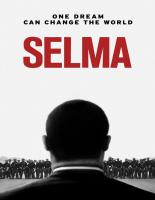
 Raising the slogan of “Black Lives Matter,” protests have erupted across the United States. Behind this slogan is a proliferation of new organizations and networks composed of engaged millennial activists of color. On one level, it might appear that what is being constructed is an effort to address the lack of civil rights protections for African Americans.
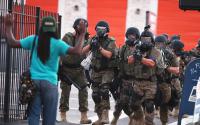 Anyone who has participated in direct action can tell you that your first time is going to be scary, but it comes more naturally after that.
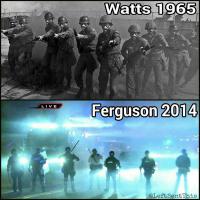 "Someone threw a rock, and like monkeys in a zoo, they all started throwing rocks.” This remark was not made in the wake of the Michael Brown grand jury verdict. It was the account of Chief William Parker, spoken decades before and 1,500 miles away, on the unrest of the 1965 Watts Riots.
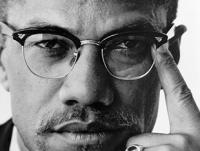 I attended an event for the 50th anniversary of Malcolm X’s assassination that was held in the same room where the visionary leader was murdered.
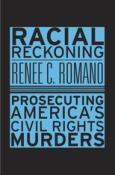 Jimmie Lee Jackson was shot by an Alabama State Trooper in Marion, Ala., on Feb. 26, 1965, following a civil rights march. He died two days later. This killing sparked the Selma marches depicted in the now-famous film (the Jackson shooting is shown with a slight change in locale).
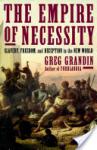 In his newest book, historian Greg Grandin provides background to Herman Melville’s classic Benito Cereno, an 1855 short novel about a slave rebellion. Reflecting on this story written almost two centuries ago, Grandin opens up space for further research by those investigating the Black Atlantic.
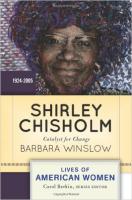 Shirley Chisholm: Catalyst for Change by Barbara Winslow brings back to our attention one of the most notable and esteemed African-American women of the 1960s and 1970s. Winslow reports that “a 1974 Gallup Poll listed her as one of the top-ten most admired women in America.” She was the first black woman elected to Congress.
 If you’ve read this far, you were pretty interested, right? Isn’t that worth a few bucks -maybe more? Please