Place: Russia/USSR
One hundred years ago the most democratic revolution in history took place. Led by the Bolshevik Party, the Russian working class, allied with the peasantry and organized into mass democratic institutions—the soviets—took power.
One hundred years ago, in exile in Zurich during the spring of 1916, Lenin started writing one of his most important and influential works, his pamphlet on imperialism. What is the relevance of this work today?
Fred Leplat and Alex de Jong, eds. October 1917 – Workers in Power. London: Merlin Press, the IIRE and Resistance Books, 2016. 256 pages
Nearly a century ago, the workers and peasants of Russia overthrew the Provisional Government and established the world’s first socialist republic. It was a seminal moment in human history. For the capitalists of the world, it was an event to be feared and they marshaled their forces to contain Bolshevism.
I
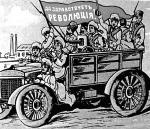
During the tumultuous years that followed the horrors of World War I, especially in the period of 1917 to the early 1920s, the Russian working class became an inspiration to workers around the world.
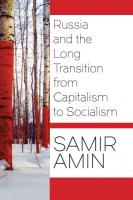 For some time now, many of us have wondered how it is that a number of left-wing writers and some political organizations could support Vladimir Putin and the Russian government’s role in international affairs.
When the Stalin-Hitler pact triggered World War II in 1939, and Soviet troops occupied half of Poland and then invaded Finland, the Socialist Workers Party in the United States was plunged into crisis.

What explains the enthusiasm in certain quarters of the left for Vladimir Putin and Russia?
[Note: This article is forthcoming in the Winter 2017 issue of New Politics.]
What explains the enthusiasm in certain quarters of the left for Vladimir Putin and Russia? Why do some cheer on Russian bombing in Syria, dismissing out of hand the evidence from Physicians for Human Rights, Amnesty International, and Human Rights Watch1 that they are criminally targeting hospitals? Why do some try to justify Russia’s takeover of Crimea or its blatant intervention in Ukraine?

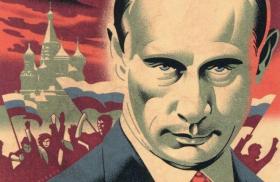 Michel Eltchaninoff. Dans la tête de Vladimir Poutine. Arles: Solin/Actes Sud, 2015. 171pp.
Michel Eltchaninoff’s prize-winning Dans la tête de Vladimir Poutine—In the Head of Vladimir Putin—is a fascinating examination of the development of the Russian president’s ultra-conservative and nationalist ideology from assuming the presidency in 2000 until today.[1] Eltchaninoff, the author of two books about Russian novelist Fyodor Dostoyevsky and many essays, might seem like an unlikely candidate to write an intellectual biography of the twenty-first century president Putin, but as it turns out, Eltchaninoff’s knowledge of nineteenth and twentieth century Russian philosophers makes him the ideal author, because that is where Putin’s ideas come from, Russia’s conservative, religious past.
We reproduce here the political resolution of the Sixth Congress of the Russian Socialist Movement (RSD), which was held in Moscow on May 8 and 9, published on May 12 on the RSD website [1] with the following statement:“This is our analysis of current trends in the evolving political system of Putinism (the ”patriotic consensus“), its socio-economic course, its growing militarization, its fears in the face of social revolt, as well as the state of the forces opposed to the regime.”
First, allow me to come clean: I count Paul Le Blanc as a friend and comrade and am in his debt—along with Peter Hudis, author of Marx’s Concept of the Alternative to Capitalism (Haymarket, 2013)—for inviting me to join the editorial board of the Complete Works of Rosa Luxemburg being published by Verso Books. And I am in agreement with many of the positions on politics and historical matters that Le Blanc expresses in Unfinished Leninism.
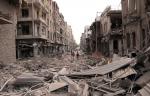 Outside powers have had a long and shameful history of cynically supporting dictatorships in the Middle East because maintaining friendly autocratic states in the region suits their geopolitical objectives. And today those criminal policies are flagrantly on display.
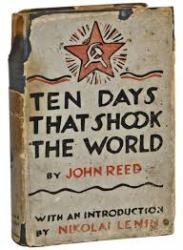
In celebration of the 98th anniversary of the Russian Revolution we are publishing this short extract from John Reed’s brilliant eyewitness account, Ten Days That Shook The World. Reed was a socialist journalist from the USA, who described the revolution as: “Adventure it was, and one of the most marvelous mankind ever embarked upon.”
This section is from the night before the insurrection of November 7th, 1917. The full text is available on Marxists.org.
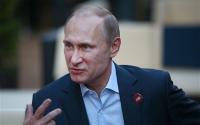 Putin’s Russia is an imperialist state dominated by a capitalist oligarchy that controls the state and that has developed a bellicose attitude toward its neighbors, whom the oligarchy reproaches for having taken advantage of the collapse of the Soviet Union in order to escape its century-long tutelage.
The “Russian question,” that is, the question of the nature of the Soviet Union, dominated much of Marxist debate throughout the twentieth century as first anarchists and Leninists, and later Trotskyists and Stalinists, and then Maoists argued about the economic, social, and political character of Soviet Russia (and then also of Eastern Europe, China, Cuba, Vietnam, and North Korea).
[This article, titled “A Chapter of Russian Reaction,” translated into English here for the first time, was written in German by longtime homosexual activist Kurt Hiller (1885–1972) from London and published in the Swiss gay journal Der Kreis in 1946. Hiller had been active in Germany’s first homosexual-rights organization, the Wissenschaftlich-humanitäre Komitee (Scientific Humanitarian Committee), headed by Magnus Hirschfeld (1868–1935). Founded in 1897, the committee was Germany’s most prominent gay group.
The governments of the United States and Russia are attempting to shape events in Ukraine in their own interests, not for the benefit of the Ukrainian people. Ukrainians have long suffered from domination by Moscow, under the Russian czars and later in the Soviet Union, most horrifically under Stalin. With the end of Communism in the Soviet Union and Eastern Europe, millions hoped for freedom and a new beginning.
This is in response to an earlier comment on Dan La Botz’s review of Jean Marot’s The October Revolution in Prospect and Retrospect. I agree that the review is excellent, though I’d say in response to Gasper that the book is more than merely “interesting”.
Review of John Eric Marot. The October Revolution in Prospect and Retrospect: Interventions in Russian and Soviet History. Chicago: Haymarket, 2013. References. Index. 274 pages. $28.00.
ONE OF THE CONCERNS that supposedly brought the House Committee on Un-American Activities (HUAC) to Hollywood was that the Communist Party-U.S.A. had quietly infiltrated the film industry. Members of the CP and fellow travelers were charged with having surreptitiously inserted ideological messages into mainstream American cinema. Screenwriters were considered particularly culpable. Among the primary HUAC concerns was what it considered grossly flattering and inaccurate depictions of the Soviet Union.
Seventy years ago, Victor Serge put the finishing touches on his masterpiece — Memoirs of a Revolutionary: 1903-1941 — which he (correctly) considered “unpublishable” in his lifetime. On February 28, 1943 he wrote the following entry in one of his Carnets (Notebooks), which recently came to light in Mexico and were published for the first time in France in 2012.[1]