Place: Eastern Europe
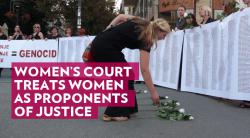
The Women’s Court on war crimes against women during the war in the 1990ies formally started in Sarajevo, Bosnia on May 7.
Women came together from all the corners of the former-Yugoslavia to participate in the Women’s Court in Sarajevo, to demand justice for the crimes committed against them during the wars and the enduring inequalities and suffering that followed.
Nina Potarskaya is one of the leading Ukrainian leftist feminists, founder of the feminist squadron at Maidan, and member of the Left Opposition, which helped organize three successive conferences of left forces in Kiev, in November 2013, March 2014, and September 2014. The most recent conference decided to build a new democratic Left party, which is the first electoral effort of its kind in Ukraine. She was interviewed in Geneva by Jean Batou, with the help of Kirill Buketov, for solidaritéS.
JULY 21, 2014 — Since the writing of my effort to analyze the Obama foreign policy (“Droning On, Fracking the Planet,” New Politics Summer 2014), a confluence of events – in various ways, all blowback from ravages of U.S policies past and present – combined to transform much of world politics in nasty and dangerous directions, with huge tolls in destruction and human misery. To review very briefly:
Ukrainian capitalism today is distinguished by the most fortified oligarchy of the post-Soviet states. Politics in Ukraine have been subject to volatile lurches over the last decade, driven by the direct involvement of masses of Ukrainians. Meanwhile, shaping the economic, political, and ideological aspects of society and daily life in Ukraine is a ubiquitous inter-imperialist competition between Russia on the one side and the United States and the European Union on the other.
Ukraine constitutes a test not only for democratic movements, or the unevenly matched imperialisms of the U.S./EU and Russia, but also for the global left. As with other “difficult” moments like the wars in Bosnia and Kosovo, Iran 2009, or the Libyan uprising, our support for democracy and human rights has in some quarters come into conflict with the long held stance that neoliberal capitalism, led by the United States, is the main danger confronting humanity.
The governments of the United States and Russia are attempting to shape events in Ukraine in their own interests, not for the benefit of the Ukrainian people. Ukrainians have long suffered from domination by Moscow, under the Russian czars and later in the Soviet Union, most horrifically under Stalin. With the end of Communism in the Soviet Union and Eastern Europe, millions hoped for freedom and a new beginning.
The author's view of the strength of the right is not universally shared among UK progressives. – DL
I am Zakhar Popovych a member of the Left Opposition initiative, and I have been on the Maidan under my red flag from the very first day of its emergence. I don’t sleep there in tents but I have been visiting the square virtually every day during these months.
Euro-Maidan is mass popular and grassroots movement, not a manufactured one
I view the recent events in the Ukraine rather simply – everything hangs on the answer to a central question: Were the events in Ukraine a revolution? If one agrees, as I do, that the overthrow of Yanukovych was the product of a genuine, popular uprising against a corrupt and thuggish regime, then progressive people of all stripes should be supportive of the events in Ukraine – even with reservations.
The following article is reprinted from LeftEast.
The socialist union “Left Opposition” offers its assessment of the Russian aggression in Crimea and the destructive role of Ukrainian nationalists. The intervention of Russian armies was made possible as a result of a split in Ukrainian society. Its unity is impossible with the oligarchs and chauvinists in power. Only solidarity will save Ukraine.
The Ukraine is no longer ‘in flames.’ With the hurried flight of the detested Yanukovich, peace and order have descended on Kiev (except for some fistfights in the Parliament!) There is no looting. Self-organized popular militias protect the luxurious Presidential Palace (privatized by Yanukovich) as crowds of citizen file through to gape at his collections of antique and modern automobiles.
While this statement was published a week ago, on February 19, we think it important to call it to the attention of our readers as a statement of the Ukrainian labor movement. – Dan La Botz
UKRAINE’S PRESIDENT Viktor Yanukovich appears to have been driven from power after the mass protest movement that has occupied Kiev’s Maidan (Independence Square) since November survived a deadly crackdown last week. In a matter of days, the country’s corrupt and autocratic regime was overwhelmed.
My problem with Julia's analysis is that it repeats the standard line that is being repeated throughout the press regardless of political point of view. I think there are two main problems with this party line.
While we recognize that the following statement represents the point of view of a small minority both within the Ukrainian rebellion and in Ukraine at large, we reprint it here nonetheless, thinking that it is an important statement of the left. – Editors.
Euromaidan and a Program for the Left
Euromaidan’s popularity has nothing to do with Ukrainians finding the question of free trade with the European Union so significant that it emboldened them to survive sleepless nights on the square. The country’s socioeconomic problems, which are much more acute than those of its neighbors to the East and West, gave the protest its meaning.
Dear Friends,
As the uprising in Ukraine seems to be coming to a crisis after weeks of mass demonstrations and occupations, I would like to translate for you the following letter received last week from Julia Gusseva, the Russian translator of Victor Serge and co-organizer of the International Conference of Independent Labor Unions in Kiev last November. Julia, an activist since the ‘80s, is one of the founders of the Praxis Center in Moscow, and writes from an anarcho-syndicalist viewpoint.
For most Jews in the United States, the legacy of the Soviet Union is linked to anti-Semitism. This is understandable, given not only the targeting of Jewish writers, doctors, and others by Stalin’s terror but also the quotas and petty persecution of the Khrushchev and Brezhnev years. Some people remember that the Russian Revolution freed Jews from the pogroms and segregation of czarism. But few have any conception of the extraordinary flourishing of Yiddish-language culture under the Bolsheviks in the 1920s.
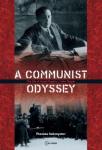 Review: Thomas Sakmyster. A Communist Odyssey: The Life of József Pogány / John Pepper. Budapest-New York: Central European University Press. 2012. Photos. Bibliography. Index. 249 pp.
On January 9, 1992, as the Socialist Federal Republic of Yugoslavia splintered, the Serbian citizens of Bosnia and Herzegovina (BiH) announced the independence of the Republika Srpska (RS). The precipitous announcement of Serbian autonomy could be considered the diplomatic origin of the RS quest to ethnically cleanse Bosnia, thereby making it suitable for inclusion in a Greater Serbia as was the goal of the RS’s first president, Radovan Karadžić.
"When they broke through the front line, up there, we only had 4 or 5 hours to leave the village. We left in a hurry, a bag on our shoulders, to save our lives."
Duško looks up at the hill behind his house. On September 15, 1995, when Vozu´ca in the adjacent valley fell, he abandoned all his belongings and became a refugee. Over two million people, during the war in Bosnia Herzegovina (BiH), from 1992 to 1995, suffered the same fate.
Bikernieki forest on the outskirts of Riga is where the three to five thousand Jews who had managed to survive starvation, the freezing cold, and random executions of the Riga Ghetto were put to death in 1941. Not long after, the same fate would be met by some 30,000 additional Jews from numerous cities in Germany, Austria, and Czechoslovakia who had in the intervening months been transported there to be temporarily warehoused in the newly vacant ghetto.
In a surprisingly warm and positive obituary, the New York Times noted the death of Michael Wreszin in August of this year. The obit says of Wrezin’s writings, “His subjects were cosmopolitan, humanist thinkers who saw a growing militarism in American political culture but whose scrupulous habits of mind could make them misfits in the ideological camps they joined.” Mike Wreszin was a frequent contributor to New Politics. We miss him already.