
Blog

  • California Teachers on the March: An Interview with Joel Jordan

    California Teachers on the March: An Interview with Joel Jordan

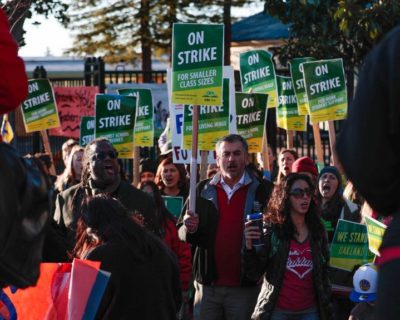
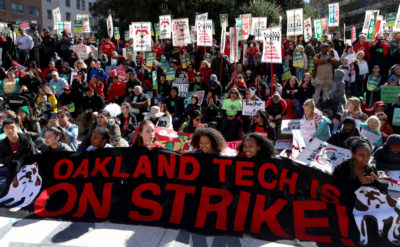
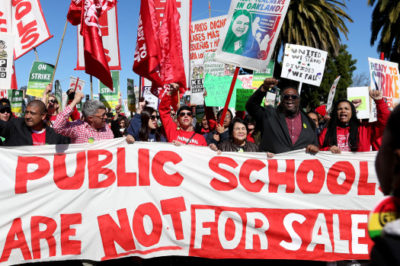
    Johanna Brenner (JB): On February 21, Oakland’s 3,000 teachers went out on strike after two years of failed negotiations with the Oakland Unified School District.  Clearly, the strike got the District’s attention and a deal was won after teachers held strong for seven days.  What did the teachers fight for and what did they win?
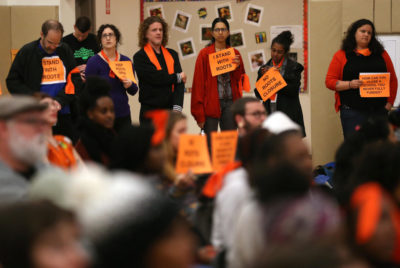
    Joel Jordan (JJ): Oakland teachers struck for three main demands.  The first was salaries: Oakland teachers are the lowest paid teachers in the county; they hadn’t had a raise in many years; they demanded 12% over 3 years and they won 11% over 4 years. The second demand not in order of importance was class size. The OEA, unlike other locals in California– or elsewhere– has a history of fighting for lower class size, although without any success since 1982. This time around, the union was able to win a reduction of 1 student per class/period next year in 45 schools with high needs students and a reduction of 1 student per class/period for all schools in 2021-22. Certainly a step in the right direction, though not very close to the union’s demand to reduce class size by 2 students for all schools and 4 students for high needs schools.

    The third demand was for increased students supports – counselors, nurses, resource specialists, psychologists, and speech therapists.  The union won reduction in caseloads for all these categories, the only exception being for nurses where the union negotiated a sizeable increase in nurses’ salaries to attract more nurses to the district without specifically addressing nurses’ caseloads. The union reasoned that since nurses are required to serve all students in need within the district, their caseloads could not be reduced without addressing the causes for the shortage of nurses in the district. The nurses themselves did not agree and were among the most vociferous opponents of the negotiated contract.

    Those three demands had been the union’s established negotiating position.  But a fourth demand emerged just as the union was about to go out on strike: a moratorium on the district’s plans to close 24 schools, mostly in low-income communities of color.  This plan was part of a long-term strategy on the part of the school board to expand charter schools in Oakland.  While Los Angeles has by far more charter schools than any other district in the country, Oakland has the highest percentage of charter schools in the state.  With almost 30% of the students in charter schools, Oakland is the poster child for charter school expansion.  A pro-charter school board runs the Oakland school district.  The Board would like to see Oakland become what has been called a portfolio district where students can choose between charter schools and public schools, which will in fact lead to an increase in the percentage of students going to charter schools in Oakland.

    If the district goes through with its plan to close 24 schools over the next few years, many of the students now in those schools will have no public school to go to that is close by them—they might have to go thirty, forty blocks to the public school so instead they will attend charter schools in their area.  As a result, the 30% charter school figure will rise to 40-50% as this process develops. And I understand from sources in administration that the announced closing of 24 schools is just the beginning and that they intend to close as many as forty schools out of the eighty-eight schools in the entire district.

    Supporters protest the closure of the Roots Elementary.  Photo: Jane Tyska/Bay Area News Group

    The first school to be shut down was the Roots International Academy.  It’s in a low income, mostly African American community.  And the community rose up to protest the way that this was done and there was a lot of sympathy toward the school and other schools that were going to be closed, most if not all of which were in low-income communities of color.  So there was an anti-racist component in the union’s demand to call a moratorium on school closing until a more rational process could be put in place for how to deal with schools that are under-populated or performing poorly.

    I considered the demand for a moratorium to have been the key demand because it was directed at saving the district from piece-meal destruction. Not only would it hurt the workers, students and families from the schools being closed, but also the entire district, because the money that follows students into charter schools would be lost to the district and there would be a dwindling pie from which teachers would have to bargain salaries, benefits, working conditions, and learning conditions.

    The union, to its credit, took this on as a major issue in the strike, even though it came up at the last minute and even though many members protested about raising this demand saying that “we didn’t vote to strike over this.”  On the other hand, there were many members who wanted the union to make this a demand.

    Johanna: So are you saying that when the strike vote was taken, school closings were not part of the proposed negotiating demands, but the leadership added this demand later on during the strike?

    Joel: Yes, the strike authorization vote was taken in late January and the school closing demand was put to a vote, and passed unanimously, at the last Rep Council – the highest decision-making body of the OEA composed of site representatives, or shop stewards – that was held a few days before the strike began. So, although the Rep Council is a democratically elected representative body, the rank and file never had the opportunity to vote to agree with raising this as a strike demand.

    During the strike, the union almost got the district to agree to a one-year moratorium on school closings, but the Superintendent of Schools fiercely resisted this and in the end the union agreed to a five-month moratorium, which is essentially no moratorium at all.  Come August, 1919, the district can go ahead and close schools before the start of the next school year.  So, the union lost on this demand though it was always a long shot to oppose the district’s key strategic initiative.

    Still, over all, the strike made important gains, including additional support for schools with newcomers from other countries, substantially increased pay for substitutes, improved paid parental leave, and teacher training on restorative justice programs, and more. The strike also forced the Oakland school board to pass a resolution, similar to what was passed by the Los Angeles school board, calling on the state legislature to institute a moratorium on new charter schools. All this was especially impressive given the short time the union had to prepare the rank and file for the strike.

    Johanna: In the past, the Oakland Education Association has not been a fighting union.  What changed over the last few years that led the OEA to strike?  How was the strike organized internally among teachers?  How was community support mobilized?  What difference did that make in terms of the pressure the strike brought to bear on the school district leadership?

    Joel: The leadership of the OEA in the past has been militant in rhetoric but not in deed. For the past six years—before a new leadership came into office in July of 2018 – the OEA leadership simply negotiated for whatever contract they thought it could get without organizing the membership.  This time was no different.  They appointed a bargaining team that was set on making concessions so they could reach an agreement without a strike. This changed when the new leadership came to power.

    The new leadership was the product of an electoral alliance between Classroom Struggle – a progressive rank and file caucus coming out of the Occupy movement in 2012 – and a number of key black activists and officers in the local, including Keith Brown. The resulting Building Our Power slate, headed by Keith running for President and Ismael Armendariz (from Classroom Struggle) for Vice President, put forward a comprehensive social justice platform stressing the need for school site organization, deep relations with parents and community, and fighting for the schools Oakland students deserve. Building Our Power won the election overwhelmingly and immediately got to work, focusing first on school-site based organizing.  Two full time officers systematically went to schools that were not well organized.  They identified what they called organic leaders in each school who would be able to organize the rest of the faculty.  They did this very successfully, to the point where in January they were able to get a 95% yes vote for strike authorization with 84% of the membership voting.

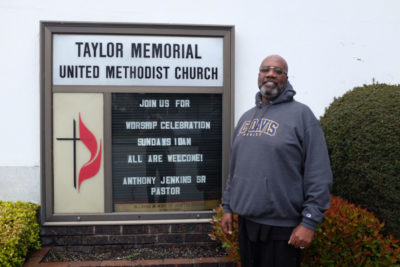
    Pastor Anthony Jenkins, Sr. at Taylor Memorial United Methodist Church, serving as a “solidarity school” during the Oakland teacher strike. Photo: Cirrus Wood

    The new leadership also set up a committee for organizing in the community led by two co-chairs from Classroom Struggle. The committee contacted community organizations throughout Oakland who were very supportive and organized solidarity strike schools that parents volunteered to lead. Strike schools or solidarity schools have a history in Oakland.  In all previous strikes since the 80’s strike schools have always been set up; it’s a tradition.

    The most dramatic fact that emerged from this wide-spread parent support was that less than 5% of students actually attended school. Parents chose to keep their kids with them at home, in the solidarity schools or with them on the picket line rather than sending them to school.  This put the most pressure on school district because they were losing hundreds of thousands of dollars of state funding a day, because this funding is based on daily attendance.

    So how much did this teacher power and community support influence the results of the strike?  I would say it influenced it greatly.  The district had offered nothing to the OEA before the strike began so the power that was generated can only be attributed to the strike.

    Johanna: How does the OEA contract compare to what UTLA was able to win with their strike?

    Joel: UTLA overall made many more contract gains than did OEA.  One important difference between UTLA and OEA is that UTLA very judiciously brought in the Mayor of Los Angeles at a critical point when the strike had the most power. The Mayor appointed two of his staff members who were pro-labor to engage in the negotiations with the Los Angeles school district.  OEA also reached out for help to the newly elected (and supposedly pro-teacher) State Superintendent of Public Instruction Tony Thurmond who could have brought some pressure to bear on the district, but either did not have the necessary experience or the motivation to push the district toward meeting the union’s demands.

    Another difference is the matter of size. The UTLA strike shut down over 900 schools in the second largest city in the U.S. Oakland, while not a small town, is only one tenth the size of L.A. So, the very magnitude of the LA strike gave it more leverage than the Oakland strike was able to generate.

    Finally, UTLA’s leadership had over four years to meticulously prepare for their strike. The fact that the OEA leadership, after only being in office for a matter of months, was able to lead such a unified and militant strike was an amazing accomplishment. At the same time, the leadership’s inexperience showed up in some important ways we’ll discuss later.

    Johanna: Clearly, the OEA rank and file were fired up during the strike, but not everyone was happy with the contract that was negotiated –42% voted no.  Why were they disappointed in the contract?  Did the large no vote have a demoralizing effect on the members?

    Joel: There were several reasons for the “no” vote.    First the strike was so powerful and so solid that any agreement would be in some ways anti-climactic for many of the teachers who experienced the strike.  The strike raised expectations enormously; and most rank and file teachers did not have a clear idea of what could/could not be won by the strike.  The union had not produced an analysis of the District budget to show how realistic the teachers’ demands were and then to measure how much they had accomplished in light of budget realities.  Getting an accurate read on the budget is not easy because the District’s finances are so opaque.  So no one knew for sure how much money the district actually had in order to meet the union’s demands.  That lack of information led to widespread speculation all the way from “the district has no money and we have to go to the state,” to “the district has all kinds of money and we should have been able to win a lot more” and everywhere in between.  This lack of clarity contributed to the no vote.

    Second, the lack of progress on school closures especially was obvious to all and for many this was the key demand.

    Third, many were sympathetic to the nurses, who organized against the contract very publicly.

    A fourth reason for the no vote was that the leadership ended the strike in a very peculiar way.  When the tentative agreement was announced, the union was picketing a school board meeting in an attempt to shut it down, because the Board was meeting to consider cuts in student programs and classified staff in order to qualify for a 22 million dollar boost from the state.  So when the leadership asked members to withdraw the pickets from the school board meeting once the tentative agreement was signed, many rank and file members thought that the union was throwing the students and classified workers under the bus.  Even though the cuts that were being made had nothing to do with the union contract, the confusion surrounding pulling the pickets angered many of those who were picketing.

    Students rally with teachers during strike. Photo: Anda Chu/Bay Area News Group

    One other thing: many high school students were involved in supporting the strike and very much against the agreement though it is not clear why, since the union was not bargaining about student demands that had emerged from the students themselves.  In Los Angeles, students had demanded that the District end random searches for weapons in many district high schools and UTLA had included this in their contract bargaining.  There was nothing like this in the Oakland strike.  Of course, OEA’s demands around class size and student supports were directed at improving students’ learning conditions and the union had also put forward a demand, which it won, that the district support training teachers to implement restorative justice practices, something that high school students are very supportive of.

    Johanna: Was the controversy around the ratification of the contract demoralizing for the most activist teachers?

    Joel: It’s too soon to say for sure, but there are many indications that the dissatisfaction with the contract is not carrying over into dissatisfaction with the leadership or the union.  For example, during the contract ratification process, the Rep Council had split almost 50/50.  But the Council meeting immediately following the strike was very positive, with no recriminations and no hostility toward the leadership.  Another indication that people were not demoralized is that the organizing committee which had met during the strike held a post-strike meeting with more people attending than had attended during the strike.  Many teachers who had not been involved in the union now want to be involved.

    The union is also moving to repair relations with those who voted no.  The no vote was centered in the high schools, where the wildcat movement was strong before the strike began.  The leadership is organizing meetings at those schools, to debrief and discuss lessons learned– positive and negative– and how to take the next steps forward.  How that turns out, in my opinion, will be key to evaluating the long-term success of this strike.

    Johanna: Could you say more about these wildcats?

    Joel:  A few weeks before the strike began, as many as 12 schools, mostly high schools, wildcatted by holding two one-day sickouts, calling for better pay and conditions.  These actions were led mostly by younger teachers.  To some extent, at least at the beginning, the strikes occurred out of frustration with the slow pace of bargaining.  The union had been in bargaining with the district for almost two years with nothing to show for it.  The wildcatters were mostly unaware of the new leadership and its attempts to organize the rank and file since the summer of 2018.  Many of the wildcat leaders were dismissive of the union, believing that their own self-organization was sufficient.  But as the strike grew closer, many of these same leaders became active in the union, leading demonstrations and so forth.  Hopefully, even though many of these leaders voted against the contract, they will continue to be active in the union.

    Johanna:  What are the challenges facing the OEA in terms of expanding the depth and reach of teacher self-organization and developing rank and file leadership?

    Joel:  The leadership of this strike did an amazing job activating previously uninvolved members of OEA. They built structures, such as a sizable organizing team before the strike began, and held meetings of around 100-120 strike captains during the course of the strike. They also created a strategy team of around eight people who made the decisions on actions during the strike. This produced a problem as many of the strike captains disagreed with some of the strategy decisions and pushed back against them. But there was no institutional means by which the opinions of the strike captains had to be taken into consideration.  The opportunity to build a larger strike committee with better connections to the rank and file was therefore lost.

    Also, even though the rep council of OEA had directed the bargaining team to provide daily summaries of negotiations with the district during the strike, this didn’t happen.  In fact, the bargaining team, which was inherited from the old leadership of OEA and continued under the new leadership, invoked confidentiality in the contract negotiations—this even though the Rep Council had made clear its opposition to confidentiality which it considered a tactic for keeping the rank and file in the dark and disempowered.

    So what we had was a leadership that courageously fought and organized a social justice battle against the district, but did so too much from the top down.  Some of the reasons for this have to do with inexperience: the elected leaders had never negotiated a contract before, much less led a strike.  OEA had a tradition of compartmentalizing the work, so the right hand did not know what the left hand was doing.  Establishing a strategy team to centralize strike activities was a step in the right direction, but it was done at the cost of two-way communication with the rank and file and its most active leaders.

    Another factor in this top down process has to do with what I think is an inevitable tendency of leadership, even the most militant, to trust its own knowledge rather than risking opening up decision-making to members who may or may not agree with the leadership’s point of view.  This is why having a check on the leadership from a well-organized rank and file is so important.

    For the OEA leadership to build confidence in the entire membership after this strike, it will need to reevaluate the manner in which it conducted the strike. It will need to open up not just avenues for activity but for real leadership. It will need to develop committees, led by rank-and-file members, that take up the important projects coming out of this strike– projects like fighting the upcoming school closures, fighting against cuts in restorative justice programs with students, and organizing statewide actions with other locals for increased funding and against charter school expansion. All committees would involve work with students and parents as well. The union should be encouraging school site organizing and making space for school sites to share organizing ideas across the district based on the sense of empowerment that students, teachers, and parents feel as a result of the strike.

    Johanna:  United Teachers of Los Angeles has followed a similar trajectory to OEA—a rank and file caucus comes into power, transforming the union and broadening its mission to striking for the schools our students deserve.  What challenges do these two unions share?

    One of the challenges facing the leadership of both unions is the challenge of capacity.  In both cities, a rank and file reform caucus successfully won either all or a part of the elected leadership. This inevitably means that those who were caucus leaders now have key roles to play in the union – as officers, Exec Board members, organizers, and so forth – leaving them less time to build the caucus. Unless the caucus has a secondary leadership that can pick up the ball and keep the caucus growing, it tends to stagnate. This is especially true as many members tend to question the need for the caucus once a progressive leadership is elected. This is what has happened in UTLA, though the Union Power caucus is making efforts to turn that around.

    Joel: The situation is a bit different in Oakland. While Classroom Struggle is allied with OEA President Keith Brown, the Building Our Power slate unfortunately never did evolve into a broader progressive caucus. At the same time, several of the Classroom Struggle activists played key roles in the union before and during the strike, and will continue to do so. How this will play out for Classroom Struggle following the strike is not clear. Given the unprecedented member activism and politicization that the strike unleashed, the caucus has many opportunities to grow. But the lack of a deep bench of activists within Classroom Struggle makes that a challenge.

    Another challenge facing the OEA leadership is how to repair historic racial divisions within the union.  One of the great achievements of the new leadership is that now a number of teachers of color, especially African American teachers, are playing primary leadership roles. The new President of OEA, Keith Brown, belongs to many African American organizations and has deep roots in Oakland’s black community.  Ismael Armendariz is the new First Vice President.

    It could not have happened at a better time in a city that is primarily Black and Latino to have the two top officers of the OEA be Black and Latinx. At the same time, there has been a history in OEA of racial antagonism between black and white teachers and this has led the current leadership to mistrust sharing power. This was one reason that the new leadership kept the strike strategy committee to a small and trusted group.  Building a multi-racial leadership with teachers of color in the lead is essential; overcoming the historic racial divides that inevitably arise in urban districts will be another important challenge for the OEA.

    OEA and UTLA face similar issues arising from their urban locations experiencing skyrocketing rents, displacement, homelessness, growing inequality, and so forth.  Both LA and Oakland school districts are targets for privatization. Both districts are already underfunded and becoming further underfunded by charter expansion.

    Teachers and community supporters protest charterization on day 2 of Oakland strike. Photo: Ray Chavez/Bay Area News Group

    Another commonality is that as urban school districts, they are disproportionately impacted by the need for special education funding.  Poorer communities, low-income communities of color, have a higher percentage of special ed students and among those a higher percent of the most severely disabled and therefore more costly students.   The federal government mandates that schools serve these students, but refuses to pay for these mandates.

    What all this means is that no matter how powerful a strike that either local can muster, by themselves they are even less able to win substantial improvements in school conditions than other districts with relatively more resources.

    Johanna:  In many states teachers have engaged in political strikes aimed at state legislatures who control school funding.  Is this something that OEA is working on?  With UTLA? With other teacher locals?

    Joel: Actually, conventional wisdom would tell you that California should definitely be a prime candidate for militant statewide action. California is ranked 43rd in per pupil funding and has among highest class sizes of any state. Teacher salaries in absolute terms are higher than the national average but not when you factor in cost of living, especially housing costs. The state provides 90% of education funding. Yet, the RedForEd movement has yet to reach California except in support of the recent local strikes in L.A. and Oakland.

    Ironically, one reason that teachers have not organized statewide around funding and privatization issues is that California has local wall-to-wall collective bargaining.  That means that by law if teachers unionize, districts have to recognize the union and engage in collective bargaining. On the other hand, in the states where we’ve seen statewide teacher strikes, collective bargaining is either “permissive” (Oklahoma), meaning that districts can legally refuse to bargain with the union, or is outlawed altogether (West Virginia and Arizona). Just as important, the legislatures in these states play a much more direct role in determining teacher salaries and working conditions, unlike California, where salaries, etc., are set through local district/union negotiations. So, with weak unions and state determined salaries, the rank and file in the Red States were able to organize themselves, primarily through social media, and strike statewide. In California, however, because of the pervasive practice and culture of local collective bargaining, teachers have tended to see the districts as their primary target even though the state controls the purse strings that each district depends on.

    This local parochialism is encouraged by the California Teachers Association (CTA), which, with 320,000 members, is arguably the most potentially powerful public sector state affiliate in the National Education Association.  However, the CTA has failed to organize a fight back around funding, starting way back in 1978 with the passage of Proposition 13—the law which limited property tax increases on all property, both commercial buildings and private homes and has been a disaster in terms of the state budget—for all state services, not only public education. Nor has the CTA organized a fightback against the growing privatization of education in California whereby privately run charter schools now enroll over 10% of California students, mainly in low income urban areas. This is because CTA is a staff-dominated organization with a service union orientation that prioritizes cultivating cordial relationships with Democratic Party politicians and school board members rather than organizing its own members to take action—whether at their school sites, in their community, or at the state level.

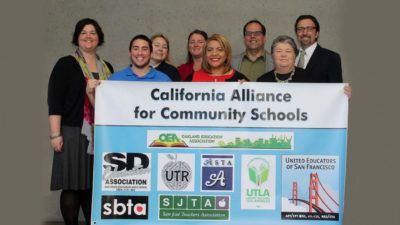
    To overcome local parochialism and the CTA’s conservatism, about two years ago, UTLA, OEA, and the San Diego Education Association (SDEA) formed what later came to be called the California Alliance for Community Schools (CACS).

    Now a consortium of ten of the largest locals in California, CACS is committed to building toward coordinated statewide mass actions and working with community organizations to fight for increased school funding and against further charter school encroachment on the public school system. It has also played a key role in moving CTA to take action on a number of fronts.

    On the issue of funding, CACS has been working with community organizations to place an initiative on the 2020 California ballot that would reform Proposition 13 with a “split-roll” property tax whereby commercial property and homes would be taxed differently.  Prop 13 limits would stay in place for homeowners but lifted for commercial property, potentially raising over $11 billion a year for schools and other needed services. The top leadership of CTA resisted joining this effort. They wanted to protect their treasury rather than spend the millions it would take to counter the big money the real estate industry will pour into the No campaign.  The Democrats don’t want to take on the real estate industry either.  But recently, through the organizing within CTA by CACS locals, the CTA State Council voted overwhelmingly to support this effort. Also, as a result of the powerful UTLA strike, L.A. Mayor Garcetti publicly endorsed the initiative.

    While the Red State teacher strikes have been a source of inspiration throughout the country, CACS understands that it will take a combination of political education and action to overcome local union parochialism and CTA conservatism. One way CACS has promoted this is through linking local contract struggles with the need for state intervention. In both the Los Angeles and Oakland strikes, the union leaderships raised the need for expanded state funding and deepened the anti-charter narrative.  The strikes helped to turn around public attitudes about charter schools and about school funding. At the same time, in order to foster cross-local solidarity and coordinated action, CACS locals successfully urged CTA to call for simultaneous “walk-ins” and “RedForEd days” in support of those strikes throughout the state.

    Following the UTLA and OEA strikes, CACS is currently attempting to build momentum for a mass lobby and rally day in Sacramento on May 22 to support legislation for a moratorium on charter school expansion as well as for increased public education funding. Some CACS locals, especially in the Bay Area, may very well encourage member sickouts to ensure mass participation. Not surprisingly, CTA leadership is resisting building such an action, consistent with its “inside the beltway” strategy of not embarrassing Democrats. As of this writing, CACS is bringing a motion to the CTA State Council to get full CTA support.

    One encouraging development has been the recent emergence of California Educators Rising (CER), a statewide rank-and-file grouping centered on its facebook page with many of the same goals as CACS. During the UTLA and OEA strikes, California Educator Rising successfully developed an adopt a striking school program whereby schools throughout the state paired up with a striking school to offer whatever support was needed – financial assistance, moral support, etc. While CER has not come close to matching the size of the red state facebook audiences – not surprisingly given some of the challenges mentioned previously — it has definitely helped to spread the word and involve more people. CER is also pushing for a big turnout on May 22 in Sacramento.

    There is plenty of work to do, obviously, but grass-roots momentum is building among California teachers.

    Originally posted at Against the Current.

    Joel Jordan is a retired teacher activist who spent many years organizing with the Los Angeles teachers’ union (UTLA) before relocating to Oakland where he helps coordinate the California Alliance for Community Schools.

  • Yellow Vest Movement Struggles to Reinvent Democracy as Macron Cranks Up Propaganda and Repression

    Yellow Vest Movement Struggles to Reinvent Democracy as Macron Cranks Up Propaganda and Repression

    (Montpellier, April 10)  After five months of constant presence at traffic circles, toll-booths and hazardous Saturday marches,  the massive, self-organized social movement known as the Yellow Vests has just held its second nationwide “Assembly of Assemblies.” Hundreds of autonomous Yellow Vest activist groups from all over France each chose two delegates (one woman, one man) to gather in the port city of St. Nazaire for a weekend of deliberation (April 5-7).

    After weeks of skirmishing with the municipal authorities, the local Yellow Vests were able to host 700 delegates at the St. Nazaire “House of the People,” and the three-day series of general meetings and working groups went off without a hitch in an atmosphere of good-fellowship. A sign on the wall proclaimed: “No one has the solution, but everybody has a piece of it.”

    Their project: mobilize their “collective intelligence” to reorganize, strategize, and prolong their struggle. Their aim: achieve the immediate goals of livable wages and retirements, restoration of social benefits and public services like schools, transportation, post offices, hospitals, taxing the rich and ending fiscal fraud to pay for preserving the environment, and, most ambitious of all, reinventing democracy in the process. Their Declaration ends with the phrase “government of the people, by the people, and for the people.” I often wonder if they know who coined it.

    Yellow and Green Unite and Fight

    Particular attention was paid to the issue of the environment, reaffirming the popular slogan: “End of the week. End of the world. Same logic, same struggle.” (It rhymes in French.) The Assembly went further and called on “All persons who wish to put an end to the expropriation of the living to take up a conflictual stance against the present system in order to create, together, a new ecological, popular social movement.”

    This shows growth from the original Yellow Vest uprising which began as a protest against a hike in taxes on Diesel fuel imposed in the name of the “saving environment.” (Less well known is that only 17% of that tax was actually earmarked for the environment. In any case, Macron rescinded it in an early attempt to pacify the movement.) Since then, the Yellow Vests have tentatively converged with the environmental groups, whom many poor and working-class Yellow Vests can’t help seeing as bourgeois on bicycles wanting to be nice but unwilling to struggle directly against the establishment.

    So their call for unity is also in part a challenge to the environmental movement: “join us in the struggle for social equality and be ready to fight the whole system.” Brilliant! Who said an unstructured autonomous movement of ordinary, not well-educated people, could not come up with strategies and tactics? Psychologists explain that this “wisdom of crowds” emerges whenever people are on an equal footing and free of constraint.[1] It grows through experience. And discussion. A dialectical process leading to its emergence. “No one has the solution, but everybody has a piece of it.” This was the basis of direct democracy in Athens, from which the Yellow Vests have also borrowed the idea of choosing representatives by lot.

    Autonomy

    The Assembly of Assemblies reaffirmed the Yellow Vest founding principle of keeping clear of political parties. Also of leaders. To my mind this is a genius stroke. Every popular mass movement I have participated in over the past 60 years has been co-opted by the establishment (or crushed). Leaders set up an office, they try to raise money and gain access to power, end up compromising; they treat the rank and file activists like a mailing list and the power and dynamic of the mass movement melts away – like the Nuclear Freeze which once mobilized millions. Eventually, the Democratic Party lures them. Here, the Socialist Party swallowed SOS Racism, the embryo of a much-needed Civil Rights movement here in France.

    Instinctively, from the beginning, the Yellow Vests seem to have assimilated and put into practice the profound criticism of representative democracy that goes back to the 18th century and was applied during the Paris Commune in 1871. There delegates were given limited mandates, subject to instant recall, regularly rotated, and paid at workmen’s wages. The Communards also called on other cities to rise and link up as a federation. This is precisely the Yellow Vests modus operandi.

    Europe

    This critique of representation explains the Assembly’s attitude toward the upcoming elections for the European Parliament, which will play out as a rehearsal for the next legislative elections when parties will be competing seriously for votes. The fear of being manipulated for political purposes as strong. Last month Yellow Vests at a Paris demonstration recognized a Yellow Vest who had just declared her candidacy to great media fanfare, apparently in the name of the Yellow Vests. They were furious and yelled at her until she withdrew, shaken. Ugly, but a necessary example to anyone else who would rather be a politician than a Yellow Vest (without resigning first).

    As far as Europe is concerned, the Assembly, far from calling for a “Frexit,” reached out to social movements in the other countries of the European Union in a call to come together and struggle against its neoliberal policies. The Assembly saw no point in voting in this sham election. As everyone knows, the European Parliament has no power or even visibility. It’s not even in Brussels, where the important decisions are made by representatives of the German banks and multinational corporations. Moreover, it limits the deficit spending of its member countries, thus making it illegal for France to finance the social services and environmental reconstruction the people are demanding.

    Restructuring and Reflection

    Last weekend’s Assembly of Assemblies coincided with Act 21 of the Yellow Vests’ long struggle to occupy public spaces and freely proclaim their hopes and angers, and it brought out only 23,400 people (government count) across France, the lowest number so far. Small wonder after five straight months of bloody repression. The police were as usual out in force, and they stopped and frisked 14,919 people according to the Paris Prefecture. After twenty-one weekly battles, many of us are too tired, too scared and/or too old to continue “running with the bulls” through the streets dodging gas canisters.

    “We thought we were off for a sprint. In fact we were involved in a marathon and we need to prepare ourselves,” admitted one speaker.”  We realize we need to vary our tactics, refine our goals, organize our democratic structures better for the movement to last, and last weekend’s Assembly attempted to face this challenge, starting with three weeks of discussion and a number new approaches.

    Among the new tactics was a call for a huge nationwide protest against the increasing repression being imposed by the Macron government, the liberation of all those in jail, whether Yellow Vests or in other “criminalized” struggles and refers directly to the oppressed North African and immigrant communities in France, whose 2005 youth rising was brutally put down. “[The violent repression] we are experiencing today now has been for decades the daily experience in the popular quarters [ghetto-like “suburbs” –Ed.]” and concludes: “Now authoritarianism is being generalized to the whole society.”

    Macron’s Response: Propaganda and Violent Repression

    In contrast to these deliberations, last weekend the Macron government delivered the results of its official “Great Debate,” a publicity stunt organized by his government at a cost of 12 million Euros to showcase the President articulately answering questions from selected audiences of mayors and local notables in towns and villages across the country. In all, Macron logged 92 hours of speaking.

    France’s elected monarch concocted this “Debate,” whose limits were set in advance (taxing the rich and the corporations was off the table), as his “answer” to the Yellow Vests’ demand for participatory democracy. The results were unsurprising: the French want “lower taxes, no cuts to services” (NYT April 9). Asked if the “Great Debate” was a “success for Macron and his government,” only 6% of those polled by BFM-TV answered “yes.” Another poll revealed that 35% of French people still approve the Yellow Vests (down from 70% last December) while only 29% approve of Macron.

    PR aside, the Macron government’s real answer to public opposition posed by the Yellow Vests has been brutally stark: slander, violent repression and strict new laws limiting the right to demonstrate – a right enshrined in the Declaration of Human Rights and the French Constitution. Macron and his ministers have publicly denounced the Yellow Vests as “anti-Semites,” “fascists,”  “a hateful mob,” and a violent conspiracy of “40-50,000” terrorists “of the extreme left and extreme right,” out to destroy French institutions.

    This vicious caricature, echoed endlessly by the media and reinforced by scary images of violence and vandalism against the symbols of wealth and power in Paris, is designed to dehumanize the protesters, otherwise easily recognizable as poor provincials who are tired of being ignored. Thus demonized, the Yellow Vests’ actual demands for dignity and justice can be ignored.  As a threat to France, they must be repressed by any means necessary.

    Since November 2018, when the Yellow Vest movement suddenly sprung up 300,000 strong, the government has unleashed unprecedented police brutality, using military grade weapons against unarmed demonstrators, provoking hundreds of serious injuries (including blindings, loss of limbs, and broken faces). Although invisible on French mainstream media (government subsidized and corporate owned), this French government violence has been repeatedly condemned by human rights panels in France and the European Union, as well as by Michelle Bachelet, former President of Chile and UN High Commissioner for Human Rights.

    Government Violence At Last Exposed

    On Saturday March 23, as President Macron was visiting the Riviera, 73 year-old Geniève Legay, local spokesperson ATTAC (the 20-year-old international NGO that proposes taxing financial transactions for social purposes) joined the Yellow Vest demonstration at Nice to speak out against this repression. Interviewed on local TV carrying a rainbow peace flag, she declared “We are here to say we have the right to demonstrate …We will leave this square when we choose. And if they use force… Then we’ll see. I’m not afraid. I’m 73 years old, what could happen to me? I’m fighting for my grandchildren. Against tax havens, and all the money the banks are laundering, against fossil energy.”

    Moments later, Police Commander Souchi ordered his heavily armed riot police to charge the peaceful group in which Geneviève Legay was standing, and she found herself on the ground, surrounded by riot cops, bleeding profusely, with a cracked skull and broken ribs. She is still in the hospital with serious injuries.

    On Monday, the Public Prosecutor and President Macron categorically denied that she had had any contact with the police, and the President, interviewed by the local paper, made a hypocritical apology, “wishing her a speedy recovery and hoping that she might learn some ‘sagesse” (literally “wisdom” but typically applied to children in the sense of learning to “behave”).

    According to the President of France, as a fragile elderly person Mme Legay should have known better than to go out to the square in the first place, and so had got herself trampled in the crowd. (The haughty Macron, like the arrogant Trump, seems to enjoy adding insult to injury.) But, as her TV interview makes clear, Geneviève Legay knew very well she was risking her life to defend the democratic freedom to demonstrate and foresaw such an attack moments before it was ordered by police Commander Souchi.

    Indeed, videos taken on the spot and the testimony of street-medics and other eyewitnesses (including policemen) told a different story. Apparently a policeman wielding a shield hit her in the head and knocked her down, whereupon he and other cops straddled her and dragged her away bleeding, refusing to allow street-medics to attend her. They may also have kicked her when she was down, which would explain her cracked ribs.

    Later, police entered her hospital room, where Mme Legay was alone (her daughters having been barred without explanation). They repeatedly tried to get Mme Legay to admit that a “cameraman” had pushed her down, but when she repeated that it was a policeman, they stopped taking notes.

    Meanwhile, videos of the attack were all over the Internet, and the independent, subscriber-supported news site Médiapart gathered eyewitness evidence and presented it to the Public Prosecutor, who on March 29 was obliged to reverse himself and affirm police involvement.

    Then, on April 8, Médiapart exposed the deliberate official cover-up of this attack. It turns out that the person placed in charge of the investigation, Hélène P, one of the policewomen who had pressured Mme Legay in her hospital room to declare that she had been pushed down by a “cameraman,” was none other than the common-law wife of Commander Souchi, who had shouted the order to “Charge! Charge!” at the peaceful group in which Mme Legay was standing.

    This scandal has finally broken official silence on French police brutality after five months of violent, indiscriminate attacks on Yellow Vests – visible on YouTube but not on TV. Even the death, during a housing demonstration in Marseille, of  Zaineb Redouane, an 80-year-old woman who was killed on Dec. 4 at her upstairs window when shot directly in the face with tear-gas grenade, went unacknowledged. (She was only an Algerian.)

    Macron’s Lies and Cover-ups

    Thus, the President of the Republic was caught outright lying to cover up police brutality. Not as strange as one might think, given the scandal that has clung to him like a tick since last summer, also uncovered by Médiapart, is the Benalla Affair – named for Macron’s Security Chief, who last year was captured on a video, wearing a borrowed riot police uniform, viciously clubbing a demonstrator lying on the ground – apparently for the fun of it. It then emerged that Macron’s protégé and left-hand man Benalla was also involved in a variety of international intrigues and scams, which continue tarnish Macron’s Mister Clean image in France as new evidence emerges.

    Nonetheless, Macron,  a former Socialist, is still seen internationally as a progressive, democratic leader, efficiently modernizing France’s archaic “exception” to neoliberal dogma, basically a friend to human rights. The extraordinary violence of his regime has remained hidden behind a smokescreen of demonization of the Yellow Vests and de facto censorship by the mainstream media. Even the liberal New York Review of Books, which in the 1960s printed a diagram of a Molotov cocktail on its front page, has clung to this line, placing the blame for “violence” on the protestors. So before leaving this subject, let’s look at some unpleasant statistics and then examine the role of the Black Block of so-called casseurs (“trashers”) in sustaining this image.

    Whose Violence?

    The official narrative is that the Yellow Vests have been attacking the forces of order, and indeed they are often seen on TV throwing teargas canisters back at the police. Interior Minister Castener has been categorical: “I know of no policeman who has attacked the Yellow Vests.” Here are the statistics.

    No policemen have been reported as seriously injured during the five months of weekly clashes with the Yellow Vests.

    On the other hand, the latest official Interior Ministry figures list 2,200 wounded demonstrators, 10 eyes permanently put out, 8,700 arrests, 1,796 convictions, 1,428 teargas canisters fired, 4,942 dispersion grenades fired, 13,460 Flashballs (LBDs) fired.

    Flashballs, manufactured in Switzerland, are listed as “sub-lethal military weapons” but when they cross the French border they magically become crowd-control devices. They are extremely powerful and accurate at 50 yards, and the number head-wounds indicate that they have been deliberately aimed at demonstrators’ heads, as have been tear-gas canisters and grenades.

    Médiapart’s list counts 606 demonstrators wounded including one death, 5 hands ripped off, 23 blinded in one eye, 236 head wounds (including jaws ripped off) and 103 attacks on journalists. Among the wounded 464 were demonstrators, 39 minors, 22 bystanders, 61 journalists and 20 medics.[2]

    What About the Violent Vandals?

    Concerning the Black Bloc and other casseurs (“trashers”) they are certainly guilty of property damage on a fairly significant scale, but have as far as I know not wounded, blinded or crippled any human beings. That, to me (but apparently not to the French media) is a significant difference. I have never eaten at Fouquet’s restaurant, and I’m sure they have insurance.

    My problem with the Black Bloc at Yellow Vest demonstrations is that they never get arrested or struck by flashballs. Go on YouTube and you can see dozens of videos of masked, black-clad guys with crowbars smashing banks and trashing stores in plain sight. No one ever stops them. Why?

    A certain number of casseurs have been spotted (and videoed) as police provocateurs, infiltrating the demonstrations, smashing stuff, and then being filtrated through police lines. This is an old French police tactic designed to spoil the image of a demonstration and justify violent repression, but the whole truth is that Europe is full of angry young men, self-styled anarchists, deeply invested in fighting the establishment by smashing its symbols. They come in from all over Europe.

    So the cops leave them alone and concentrate on their main mission: brutalizing the crowds of ordinary demonstrators to scare them off and stifle dissent. Moreover, the Black Bloc folks are more likely to kick the shit out of the cops who try to stop them than are high-school kids, parents with children, and old folks like me and Geneviève. I’d like the Black Bloc much more if they would fight the cops themselves, instead of using us as human shields while expressing their quite understandable rage while we get gassed and shot at.

    Libertycidal” Legislation

    The new “anti-casseurs” laws that Macron is pushing through the legislature will legalize and set in stone for the future the repressive practices used against the Yellow Vests, making them permanently available to his successors (for example Marine Le Pen). They have nothing to do with actual casseurs (who are obviously breaking existing laws and need only to be apprehended under them) and everything to do with making it nearly impossible for ecologists, trade unionists or Yellow Vests to demonstrate.

    For example, if you are a small-town Yellow Vest and take the train to Paris on a Saturday, you are likely to be stopped several times between the station and the Champs Elysées. If you have in your backpack Vaseline, eye drops, ski goggles, a bicycle helmet, a face-scarf or God forbid a gas mask, you can be arrested, brought to summary trial, and convicted the very same day for being part of a “group organized for the purpose of destroying public order and obstructing the forces of order.”

    Of course if you insist on a real trial with lawyers and everything, they will gladly hold you over in jail, but if you’re not at work on Monday you’ll lose your job and meanwhile who is minding the kids? And if you eventually  do get to demonstrate and the demonstration leads to property damage, you may also be made legally and financially responsible. You may also be placed on a list of dangerous people and barred from demonstrating again at the whim of the local Prefect.

    The chilling prospect of turning these absurd police-state practices into law is what brought pacifists like Geneviève Legay out into the streets with the Yellow Vests. Interviewed in the hospital, where she is still in pain and recovering slowly from multiple injuries, she declared: “Today I am determined to carry on the fight. It is ever more necessary to do so when you see the anti-democratic drift of this government […] The Yellow Vests support me and I will continue supporting them. I am not going to stop fighting to defend our rights, as I have for 50 years, and to struggle against State repression whatever form it may take.”

    The Cat Is Out of the Bag

    She will not be alone. The League for the Rights of Man and more than 50 other civil liberties groups, religious associations, trade unions, civic associations and far-left parties have just called for a massive national demonstration for the right to demonstrate, along with the Yellow Vests this Saturday, April 13. I hope it will be massive.

    The choice of Saturday is significant as an act of solidarity with the Yellow Vests, who alone have been defending the public’s right to assemble in public places, and this at considerable personal risk. For 22 weeks, the Yellow Vests have been acting out this basic democratic right through their principled refusal to beg the police for special  permission for citizens to gather in a public square or parade through the streets. Imagine “Occupy Wall St.” happening all around the country, in cities and on traffic circles, on a weekly basis. All alone, the Yellow Vests have sustained thousands of injuries and thousands of arrests through this weekly act of civil disobedience, proclaiming the right to the city. Now, at last, they have recognition and allies.[3]

    This convergence of other groups, along with the new perspectives flowing from the Yellow Vests’ Assembly of Assemblies, may mark a new phase in their long and lonely struggle against Macron’s harsh, anti-democratic, neoliberal regime in its implacable drive to wipe out the relative advantages in living standards, social services and personal liberties won by previous generations of French people in 1936 (the general strike), 1945 (the Liberation) and 1968 (the general strike and student uprising). Indeed, since 1789 (the Declaration of the Rights of Man, which enshrines the people’s right to demonstrate grievances).

    P.S. Meanwhile, the Algerian people, having suffered a century of French colonial rule, a long and bloody war for independence, and more than 60 years of corrupt police-state rule, are carrying on a similar struggle for dignity and democracy, filling the streets once a week (but on Friday, not Saturday) in so-far peaceful massive demonstrations. (The Montpellier Yellow Vests immediately voted their support.) The irony is that the Algerian police have held back on violence, whereas here in France, the level of state repression against the Yellow Vests reminds me of the oppressive atmosphere of police repression I experienced as a student in Paris during the Algerian War.

    P.S. In my next report from Montpellier, I will try relate, as a participant-observer, what it’s like inside the Yellow Vests. Meanwhile, don’t hesitate to send me any questions you may have about this under-reported but much-maligned autonomous popular movement.

     [1] See James Surowiecki, The Wisdom of Crowds: Why the Many Are Smarter Than the Few and How Collective Wisdom Shapes Business, Economies, Societies and Nations (Anchor, 2005).

    [2] https://www.mediapart.fr/studio/panoramique/allo-place-beauvau-cest-pour-un-bilan

    [3] Typical of Yellow Vests’ sense of autonomy, our Montpellier/Peyrou group, although happy to join the Oct. 13 demonstration (which has received an actual permit) reserves the right to break off from the official group, march around where they please, and return when they choose. You can only « have » a right if you use it. During Act 21, after chasing around town with the cops on their heels, they ended up on the main square and spontaneously formed a very long line and began dancing an improvised Medieval dance to the rhythm of drums, flutes and noise makers.

  • Yet Another Turkish Election

    Yet Another Turkish Election

    In February of 2019, districts in the Turkish cities of Ankara and Istanbul began selling produce directly to consumers at local markets in an effort to bypass retailers, who had been characterized by President Recep Tayyip Erdoǧan as “terrorizing” society for private gain. Over the course of 2018 inflation had skyrocketed as the value of the Turkish lira plummeted; the decision to set up subsidized municipal markets followed a 31 percent year-on-year surge in food prices in January 2019. In Istanbul’s Bayrampaşa district, crowds waited for an hour to purchase items selling at half the private market prices.

    Many were well aware that the state-run markets were a new manifestation of what are called “election economics” in Turkey—government policies of tax breaks or increasing welfare benefits just prior to elections to increase votes. The opening of the subsidized markets in early 2019 just happened to precede municipal elections scheduled for March 31.

    It was also clearly no accident that the urban markets were established only in Ankara and Istanbul. Residents of the nation’s two largest cities both voted “No” in a 2017 constitutional referendum to make Turkey an executive system, a blow to the apparent hegemony (if not political power—the referendum succeeded) of Erdoǧan and his Justice and Development Party (AKP). Selling basic necessities at reduced prices while lambasting the greed of individual vendors would, it was hoped, encourage enough electors to cast their votes for AKP mayoral candidates in March.

    The opening of the produce markets was ironic considering the government’s release of the New Economic Program, a three-year plan unveiled in September by Finance Minister (and Erdoǧan son-in-law) Berat Albayrak. Though mainstream media has emphasized the plan’s primary aims of revising exaggerated growth estimates and restoring investor confidence in Turkish markets, the Program intends to address the current economic crisis by, among other things, imposing austerity measures. Government-subsidized produce during a recession would of course hardly be in keeping with “fiscal discipline.” Perhaps unsurprisingly, in the interest of election economics the Program was shelved—until after the election, that is.

    Electoral tactics were not confined to the economic sphere, though for most people material concerns were foremost. Brazen attempts by Erdoǧan to invoke a religion-inflected, neo-Ottoman nationalism included campaign speeches showing footage of the massacres of worshippers in two mosques in Christchurch, New Zealand, by a white supremacist from Australia. In addition to asserting authorities had failed to protect Muslims, Erdoǧan claimed people traveling from Australia and New Zealand to Turkey with anti-Muslim sentiments would be sent home “like their grandfathers” in the Gallipoli Campaign—a reference to the World War I battle in which over 100,000 soldiers, including approximately 9,000 Australians, were killed.

    Other tactics included simply accusing opponents of corruption or slandering them with the label of “terrorist” (or, more commonly, of propagandizing for terrorists). While accusing pro-Kurdish parties of supporting terrorism has been a consistently successful way for a number of Turkish governments to repress the left since the 1990s, in 2019 even members of the People’s Republican Party (CHP), the party of Mustafa Kemal and the nation’s oldest, were accused by the AKP of terrorist propaganda.

    ***

    The AKP’s strategy of attack failed. In Ankara, CHP nominee Mansur Yavaş overcame allegations of corruption from the AKP and won that city’s mayoral race, returning the party to power in the capital for the first time in twenty-five years. Though it was highly unlikely inhabitants of the coastal Aegean town of Izmir, Turkey’s third largest city, would elect an AKP candidate for mayor, the CHP’s Tunç Soyer defeated the AKP’s Nihat Zeybekçi by close to twenty points, a remarkable trouncing. And at the time of this writing it appears even Istanbul, a city of 18 million, will go to the CHP’s Ekrem Imamoǧlu, who defeated Binaldi Yıldırım, AKP stalwart and former prime minister.

    The loss of the capital city of Ankara is a major blow for the AKP; losing Istanbul would be even more demoralizing. Erdoǧan’s political career was forged in Istanbul in the Welfare Party (forerunner of the AKP) as mayor in the mid-1990s, and he has famously said that in elections “whoever wins Istanbul, wins Turkey.” For many AKP supporters, Istanbul stands as an Ottoman beacon of Islamic imperial civilization, in contrast to Ankara’s status as representative of Kemalist republicanism. Its loss to the Kemalist CHP would have tremendous symbolic significance. AKP losses were not confined to the three largest cities; the ruling party also lost control over the urban centers of Adana, Antalya, and Mersin.

    While hopeful assessments of the election as signaling the beginning of the AKP’s decline are therefore understandable, for the left caution is warranted. Most obviously, while in the immediate aftermath of the election Erdoǧan appeared uncharacteristically chastened, the AKP initially challenged results in Istanbul, Ankara, and in a number of other districts. Pro-government media (which is to say most media) are reporting stolen ballots hurt the ruling party—an ironic claim not lost on participants of recent elections who called for recounts and were denied. At the time of writing, the AKP has accepted the loss of Ankara, but is demanding the Supreme Election Council rule to re-run the election in Istanbul.

    Additionally, there is little that is radical about the CHP, and even less about the Nation Alliance which it established in 2018. Though nominally center-left, last year the CHP joined forces with the nationalist IYI (“Good”) Party to form the Nation Alliance. The IYI Party is a breakaway faction from the Nationalist Action Party (MHP), an ultra-rightwing group whose ideology is largely premised on a mythological, racist pan-Turkism. (Incidentally, Mansur Yavaș, the new CHP mayor of Ankara, spent more than two decades of his political career as a MHP member). In 2017, the MHP joined forces with the AKP to create the rightwing People’s Alliance, leading anti-AKP nationalists to leave and establish the IYI Party.

    The IYI Party officially describes its political orientation as nationalist, “liberal-conservative,” and secular. While “iyi” means “good” in Turkish, “IYI” also functions as an acronym for the seal of the Kayi tribe, one of the twenty-four tribes of the Turkish tribal union of Oghouzes in existence during the fourteenth-century founding of the Ottoman Empire. While presenting itself as a center-right alternative to religious conservatism, the party’s name represents one form of a recent resurgence in ultra-nationalist Turkish racism—especially prominent among youth—that hardly bodes well for left politics, let alone everyday life for Kurds, refugees, and other minorities.

    The political spectrum of the two main political coalitions thus ran from the centrist nationalism of the CHP to the far right nationalism of the People’s Alliance. It is also difficult to see how the CHP can use its local electoral gains to become more than the “main opposition party.” The party remains ideologically split between social democratic and nationalist factions, leading to paralysis when it comes to offering anything more than a commitment to laicism. While evoking both its origins as the nation’s founding secular party as well as its more recent turn to social democracy when expedient, in recent years it has done little more than emphasize the abuses and corruption of the AKP.

    For millions of people in Turkey’s southeast, the fiction of Turkish democracy has long been apparent. Since 2016, 95 municipalities co-chaired by the Democratic Regions Party’s (DBP), an affiliate of the leftist People’s Democratic Party (HDP), have simply been seized and put into trusteeship by Ankara. Ninety-four elected co-mayors have been arrested; currently, 38 are under arrest or have been sentenced to prison terms. Prior to the election, with 94 of 102 municipalities in Kurdish-majority cities run by Ankara-appointed trustees, Erdoǧan warned that if townspeople elected HDP-backed candidates “we shall appoint trustees with no delay.”

    As in 2015, 2017, and 2018, detentions and arrests of HDP (or BDP) members took place in the weeks before the March election. During the election campaign, at least 713 HDP administrators and members were detained; 107 were arrested. Since 2016, more than 6,000 HDP members—including co-chairs, MPs, and mayors—have been arrested. Such actions are justified by mainstream media who now openly claim the HDP is simply a front for the Kurdistan Workers’ Party (PKK).

    Though under serious attack, the HDP maintained its relevance. In large western cities the party didn’t field mayoral candidates; its suggestion supporters vote against the People’s Alliance translated into large numbers voting CHP. Hence pro-government media accused CHP candidates of an unstated alliance with the HDP—and therefore of support for terrorism. Without HDP votes there is no way the CHP could have won Istanbul or the southern cities of Adana and Mersin. While the party lost a number of former districts, it importantly held onto the strongholds of Diyarbakır, Van, and Mardin, and also took back 48 communities from the AKP. HDP officials have also noted election irregularities in a numbers of places, and have rightly questioned why their recount requests have been denied while those of the AKP are invariably approved.

    ***

    Despite the many enthusiastic representations of the election in Western mainstream media, some have pointed out that the AKP and the People’s Alliance still received the most votes. Autocrats from across the world in fact called Erdoğan to congratulate him on winning yet another election. And with parliamentary elections four years off, it will be a long while before any national electoral challenges to AKP rule can occur.

    For the election to be more than merely symbolic and defensive, concrete measures by municipal assemblies will need to be taken that impact people’s lives in a positive way. This could be the positive flip-side of the election being merely municipal. There is not much local democracy in Turkey; stimulating neighborhood, village, and town political participation and decision-making would be a good way to foster civic consciousness on a non-national level.

    Crucial to any such process will be the building of bridges between party branches with a commitment to progressive politics and social movements on the ground. The HDP encourages the formation of local assemblies and alliances with social movements; CHP mayors and assemblies might similarly promote grassroots democratic processes and interactions with civil society organizations. Whether the new mayors of Ankara and Istanbul, a lawyer and businessman, respectively, are up to the task is a very open question. Retreating to the bunker of secular Kemalism, however, is a dead-end option.


  • Hands Off Venezuela! For Socialist Democracy!

    Hands Off Venezuela! For Socialist Democracy!

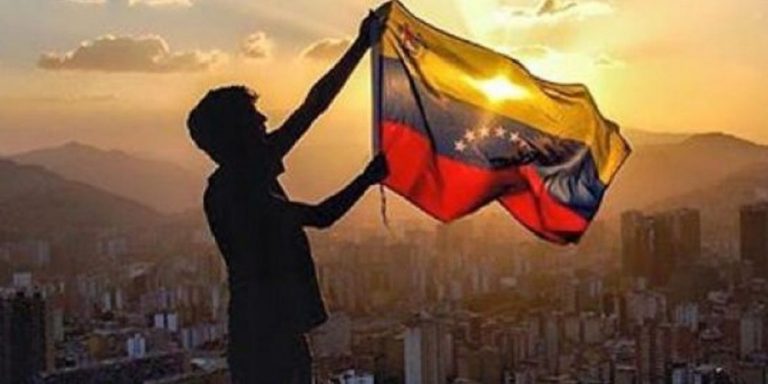
    The foul, brutal hands of U.S. imperialism and its allies are tightening around Venezuela, and there is a strong possibility that a far-right takeover will occur in the near future.  This would extinguish the last vestiges of the left-of-center Pink Tide in South America. If this occurs, an entire region, from Argentina to Brazil to Venezuela, would be in the hands of the far right in a manner not seen since the military coups of the 1960s and 1970s that produced a Southern Cone of torture and murder. While the situation today is different, it is virtually certain that a brutal crackdown on left-wing and labor movements, as well as on indigenous communities, would follow the overthrow of Venezuela’s Maduro government. This would especially be the case if there is armed resistance, which there is very likely to be, since while Maduro’s authoritarian policies and the economic collapse have alienated many working people, even low estimates suggest the government retains about 20% popular support.

    The sanctions imposed by the Trump administration in January are the severest ever used against another country, way beyond those on Iran or North Korea, but in keeping with the longstanding U.S. imperial attitude of “ownership” toward Latin America.  The sanctions threaten to literally shut down Venezuela’s oil exports, its economic lifeline. It is expected that the Venezuelan economy will contract a further 25% in the next 90 days as a result of the U.S. sanctions.

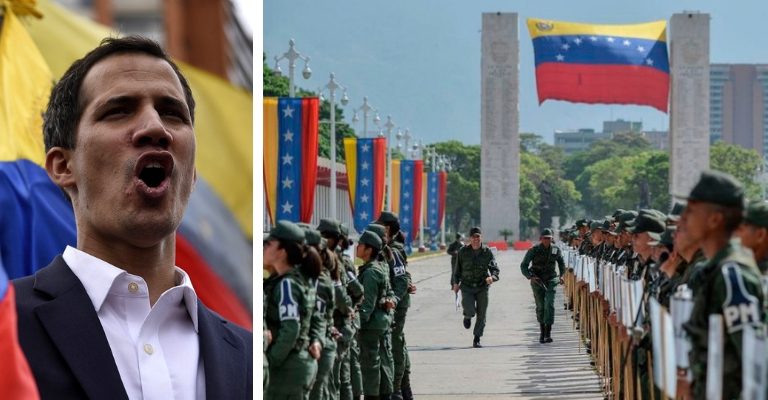
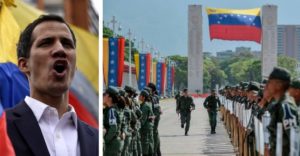
    It is true that the opposition movement is massive. But in a move reminiscent of the old gunboat diplomacy, its new leader, Juan Guaido, has been officially recognized as the legitimate president by the US, Western Europe, and some Latin American governments.  However, just because a movement is massive and includes some working people does not it itself prove that it is democratic or revolutionary. Consider its political agenda, both open and secret.  Openly, Guaido talks democracy, but appears alongside Vice President Mike Pence of the far-right Trump administration. But behind his youthful visage lurks not only the ill-concealed interests of U.S. imperialism, but also the shadow of Leopoldo Lopez, the founder of Guaido’s party and the one surely pulling the strings today from house arrest. Lopez is the most right-wing leader of an already right-wing opposition movement, much of which repudiated him due to his support for the anti-democratic coup of 2002 against the legitimately elected government of Hugo Chavez.

    And it is certainly true that both the Latin American Pink Tide, with its concessions to neoliberalism, and Venezuela’s Bolivarian Socialism, are deserving of critique, not least because Chavez and later Maduro kept the existing military and state apparatus in place. They simply redistributed oil revenues without seriously developing industry or agriculture. As with the Pink Tide, this had some success until China’s economy slowed down. Even before that, a worrisome sign was that Venezuela was importing more food and medicine over the past two decades than before. In addition, the very notion of creating socialism in one country was non-viable. And we certainly oppose the Maduro government’s restrictions on democratic expression, even though it is hardly the dictatorship the U.S. claims it to be.

    But is now, when Venezuela faces the full force of U.S. sanctions, and possible military intervention, the time to point a finger by putting that kind of criticism at the forefront?

    Thus, in addition to attacking the U.S.’s nefarious plans and criticizing the idiotic slogans of knee-jerk anti-imperialists like “Venezuela Is Not Divided,” we need to criticize equally firmly those parts of the left, however well-intentioned, and however much they use terms like socialist humanism, that support without qualification the Venezuelan “democratic” movement, equating it with the uprisings against the Assad regime in Syria or the Iranian regime. Those resistances and uprisings have significant left-wing, feminist, or labor dimensions, unlike Venezuela’s far-right-dominated opposition.

    Therefore, we need to concentrate our fire on U.S. imperialism and other reactionary forces in Latin America and Europe that are trying to bring this right-wing opposition to power, not least to protect their property interests and to extinguish any anti-capitalist aspirations in the region and globally.

  • Moldova — Like Nothing Happens

    Moldova — Like Nothing Happens

    It’s been more than a month since the crucial event in political life of Moldova took place – the February parliament elections. The elections define the future development of the country, which is a parliamentary republic.

    This small Eastern European state (the size of Maryland) emerged on political map after the collapse of the Soviet Union in 1991, but it still hasn’t figured out its trajectory or its foreign policy, while its population continues to suffer from poverty.The average monthly salary in the economy is 300 EUR (2018), GDP of Moldova is $11.435 billion (139th in the world, 2018). Agriculture and services are key sectors of the economy, which is plagued by corruption. There was a famous case in 2014 when $1billion (then 12% of GDP) was stolen from the budget.

    A decade ago the local Communist Party lost control of the political steering wheel when president Voronin was forced out by street protesters supported from abroad in 2009. Today, the political landscape of the Republic is shaped by four main political parties: PSRM (socialists), PDM (democrats), ACUM (liberals), SOR (eurosceptics).

    The results of those elections were rather uncertain. All of the competing parties simultaneously won and all of them lost the elections. None of the parties that are currently represented in the main legislative body possesses a sufficient number of representatives to form its own government, not even the Socialists who received the most votes. The only possible solution in a such situation is to create a parliamentary inter-party coalition, but the parties are far from reaching a compromise. It looks like the start of a new parliamentary crisis is under way.

    Nevertheless, those who are in power today seem not to worry about the coming political impasse. The prime-minister Pavel Philip (concurrently PDM party vice-president) reassures: “Delaying negotiations on forming coalition is not going to weaken the government”, he explains: “inasmuch as the state secretaries will be conducting their duties properly …They continue working like nothing has happened in Moldova, appointment of new ministers doesn’t matter…”. This might sound reassuring in any other European country. Yet this phrase has an ambiguous even ominous meaning in Moldova.

    It’s not a secret that in Europe Moldova is called “captured state”.The majority of Moldavian citizens agree with this unpleasant definition. Everybody in the republic knows who controls government institutions, which is why Vlad Plahotniuc, a powerful oligarch has the nickname “Puppet master”. His party PDM is running the country today.

    Hardly surprising, that PDM representative Pavel Philip does not bother about the ongoing parliamentary chaos. In fact, the longer there is no new government the longer the current government will exist. In the meantime, experts believe that in case of any coalition scenario Plahotniuc will come out a winner again, as a coalition is possible only in alliance with PDM. Consequently parliamentary elections do not affect Moldavian political life de facto…

    Thus, not only insiders realize the irony of the phrase “captured state,” emphasizing that the state secretaries (appointed with the consent of “Puppet master”) fulfill their duties like nothing has happened.

    Роман Арделяну <romanardelyanu@gmail.com>

  • Coming to Terms with Actually-Existing Black Life

    Coming to Terms with Actually-Existing Black Life

    Over the last five years, Black Lives Matter has served as a broad banner uniting citizens from all walks of life against the most egregious and visible use of police force against black civilians.  Until the election of Donald Trump, who made his “Blue Lives Matter” commitments well-known from the very moment he announced his candidacy, popular demonstrations against police killings spread like prairie fires across the country from Oakland to Ferguson, Missouri, and on to Baltimore, Chicago, Dallas, and Baton Rouge.  As a rallying cry, Black Lives Matter opened up public space for disparate campaigns, networks of grieving families, criminal justice reform organizations, and localized struggles against the carceral state that had been in motion for decades.  At the same time, however, like most great slogans, #BlackLivesMatter advanced a rather straightforward, if not simplistic analysis of the issue at hand, that the problems of policing were primarily racial.  Black Lives Matter fervor also unleashed a torrent of historical misinformation, conspiracy theory, and wrong-headed thinking about politics. In elevating a race-centric interpretation of American life and history, Black Lives Matter has actually had the effect of making it more difficult to think critically and honestly about black life as it exists, in all of its complexity and contradictions.  Rather than clearing a path through the thickets, some left intellectuals have made peace with this overgrowth of bad historical thinking, even though it threatens to choke out the possibility for cultivating the kind of critical left analyses of society we so desperately need.

    Mia White’s “In Defense of Black Sentiment,” offers criticism of my 2017 Catalyst essay, “The Panthers Can’t Save Us Now:  Anti-Policing Struggles and the Limits of Black Power,” and Kim Moody’s “Cedric Johnson and the Other Sixties’ Nostalgia” addresses that essay, and my more recent New Politics essay, “Who’s Afraid of Left Populism?”  I appreciate that both White and Moody have taken time to craft responses to my work. I first came to know White as part of a growing, dedicated community of scholars researching the 2005 Hurricane Katrina disaster and the long process of reconstruction and recovery that followed.  White’s work stood out because of its focus on the Mississippi Gulf Coast, often neglected by the urban-studies bias towards the plight of New Orleans.  I’ve never met Moody, but during the aughts, when my economist colleague Chris Gunn and I routinely co-taught a labor course at Hobart and William Smith Colleges, Moody’s writings on American working-class history were instrumental in shaping our approach to the course, and were a mainstay of our assigned readings.  His 1997 book Workers in a Lean World was especially helpful for making sense of the painful impact of globalized production on the once-bustling manufacturing towns surrounding us in Western New York.  While I think we are all on the same side politically, and there are definite points of agreement between our essays, White and Moody rehearse some errant arguments about race, politics, and class power that have become orthodoxy on the contemporary Left. In what follows, I want to contest some of their core claims regarding the character of black political life, the role of contemporary policing in managing surplus population, New Deal social democracy, and African American progress, and finally, the relationship between electoral politics, the Democratic Party, and the future of the American Left.

    Both authors abide some version of Black Lives Matter sensibility, sharing a suspicion of class-conscious politics as always reproducing racial disparities historically and into the future.  My central contention with both White and Moody lies in their reluctance to engage in meaningful class analysis of black political life.  Their use of clichés and anachronisms when addressing black life reflects a broader affliction of the contemporary Left.  This difficulty in discussing black life in a critical-historical manner filters out and contaminates interpretations of labor and capital, and ultimately undermines strategic political thinking.  At the start of his essay, Moody says that he “will not attempt to present a different analysis of ‘black exceptionalism’,” but in fact, his and White’s essays are both defenses of black exceptionalism, the very interpretative and discursive sensibility that I have criticized in recent writings.  Black political life is and always has been heterogeneous, a complex of shifting ideological positions and competing interests.  Black political life has always been shaped by broader conflicts between labor and capital, even in the contexts where black non-citizen or second-class citizen status was the norm.  When White and Moody turn to black political life, however, these basic empirical-historical facts of African American political development are minimized, or vanish altogether. This is not a new problem.

    Black Life Beyond the Barricades

    In his 1962 essay, “Revolutionary Nationalism and the Afro-American,” Harold Cruse complained “American Marxists cannot ‘see’ the Negro at all unless he is storming the barricades, either in the present or in history.”[1] The World War II veteran and ex-Communist partisan put the matter even more bluntly saying that American Marxists—his euphemism for his former party comrades—wrongly view blacks as “a people without classes or differing class interests.”  Cruse also denounced the falsehood of the “Negro Liberation Movement” a favored term of his left contemporaries, as an “’all-class’ affair united around a program of civil and political equality . . .”[2] I don’t evoke Cruse here because I think he had all the answers to what ails us—the same is true for my discussion of Bayard Rustin below.  Cruse is frustrated by the oversimplifications and occlusions of African-American life and history he has witnessed within the Communist Party.  From this acknowledgement of a more complex, class-stratified world beyond the desks of Herbert Aptheker and his old CP comrades, Cruse pivots towards a defense of a revolutionary black leadership. What he desires is that the black bourgeoisie act as a truly national bourgeoisie. Setting aside the problems of this argument, which Cruse would enlarge in his 1967 book The Crisis of the Negro Intellectual, his basic criticism of the Left may be as insightful today as it was when he first wrote it.

    In the age of Black Lives Matter protests, many activists and academics seem unable to see the complexity of black life beyond the barricades, or outside the frame of the latest viral video killing of a black civilian.  Neither White nor Moody engage in much substantive discussion of actually-existing black political life, the fact of differing black class interests, and the fundamental demographic and cultural changes within black life and American society of the last half century.  While White attempts to marshal normative theory and autoethnography to build a case for a redemptive black power sensibility, Moody either explains away class conflict among blacks as inconsequential, or assumes the familiar, deferential posture of white New Leftists towards the “self organization of the oppressed.” In both cases, their prose remains lodged in the literary conventions emerging from decades-gone social conditions. White’s essay rehearses black power sentiment, the black population as a socially coherent and unified political constituency deriving from twentieth century conditions of black ghettoization and Jim Crow segregation.  Moody’s essay, on the other hand, recalls New Left anxieties and attempts to navigate the spatial and cultural gulf between the middle-twentieth century urban black ghetto and the expanding white suburban middle class and its deepening commitments to capitalism.

    White employs the racial “we,” to drive her analysis, and throughout she engages in a form of ventriloquism that has long been a problem within black political life and scholarly and popular interpretations thereof.  “We are still where we are, surveilled and killed while walking, breathing, doing our jobs, leaving a vacation, visiting friends, or driving a car,” White writes, “Thus, to ask Black readers to shrug off race as a central analytic is to ask them to 1) do what they already do on a regular basis to survive as good liberal subjects as if they don’t, and 2) pretend that the very reason survival is so fraught has nothing to do with the same reason we are ignored as an electorate.”[3]  Aside from how the second half of her statement mischaracterizes the intent and conclusions of my argument, there are two immediate problems with this passage.  First, while her use of the first-person plural has dramatic impact, it obscures the actual dynamics of police killings, advancing the falsehood that all blacks regardless of class position are equally likely to be victims of daily surveillance, harassment, detainment, and arrest.  White abides the popular New Jim Crow accounting of the carceral state as fundamentally racist in motives and effects, but this is hyperbolic and misleading.  Blacks are disproportionately represented among the victims of arrest-related incidents in most years since the start of this century, but blacks are not the majority of victims.  As I argued in the 2017 Catalyst essay and recent New Politics essay, contemporary policing has a class character that is not reflected in viral videos, which only capture some police-civilian conflicts and are circulated through social media networks and practices that are governed by standing assumptions and ideological predispositions of users and their social and psychological needs, often at the expense of other evidence like national Justice department statistics, killings undocumented by cell phone cameras, and deaths that do not conform to the New Jim Crow frame.  The blackness of the victims is visible, evocative, and foregrounded in popular understandings of why they were targeted, their common position among the most submerged elements of the working class is not as readily legible for some audiences.

    Second, this use of the racial “we” preempts politics, and by that I am not simply referring to the arena of elections and party politics as White implies, but the broader contexts where social power is mobilized and contested.  The very real diversity of black experiences and political sentiments of the carceral state are lost in White’s essay, and in much Black Lives Matter discourse, both of which retreat into abstraction.  In other words, black people do not merely interface with police departments as suspects and offenders, but also as crime victims, lawyers, witnesses, public defenders, social workers, judges, corrections officers, probation officers, beat cops, city administrators, and wardens, especially in cities like Baltimore, Washington, D.C., Chicago, and others with sizable black populations.  White’s defense of black sentiment, against my critique, forces these differences out of view, and gives the impression that all blacks, “we” view the problems of crime and punishment in the same ways, and are ready to prioritize the same raft of solutions.  In fact, she concludes, “the well-being of Blacks always also requires—as a means to attend to accumulating, historical, unfair disadvantage—a collective sense of Black self-determination.” This view that the black population constitutes a cohesive political constituency with commonly held interests was not true during the Jim Crow era, and it is certainly not a useful way of thinking about black political life now.

    Black life was complex under Jim Crow segregation, albeit cramped by de jure and social constraints imposed on black political will in the North and South.  Black political life was and is animated by competing interests and different visions of what society should be. Such dynamics took on a unique character in different epochs given the broad experience of slavery and Jim Crow segregation, but the fact of non-citizen or second-class citizenship status did not generate a unified set of aspirations and interests among blacks, even if some projected the sense of common black passions and strivings to suit their particular interests as black leaders (or scholars), white benefactors, or white supremacists.

    The black population has experienced profound demographic and political changes since the fifties. Poverty has decreased since the landmark 1954 Brown v. Board of Education decision, which overturned the “separate but equal” precedent on which the Jim Crow edifice stood, from the plight of the vast majority of blacks to the experience of roughly a quarter of the black population.  The black middle class expanded after World War II, and black integration into mass culture as consumers and producers, integration in higher education, employment, corporations, the non-profit world, and public sector employment was spurred by omnibus civil rights legislation as well as opportunities provided by New Deal, Fair Deal, and Great Society programs.  In many locales black governance became a reality.  By the late 1980s, the three largest American cities elected black mayors, and by then, the presence of black mayors and black-city council majorities were the norm wherever there was a sizable black electorate.  These changes were the consequence of popular pressure and the public policy it produced, the initiatives of the New Deal Democratic coalition and the Johnson White House.  Somehow in our contemporary moment, the New Deal coalition has been recast as the villains of history. However, that narrative, now orthodox among many on the Left, silences the actually existing historical voices and experiences of blacks who benefited from, supported, and fought to expand the policies of the New Deal, Fair Deal, and Great Society periods. Even worse still, this narrative breeds cynicism, leaving us with a wrong-headed view of the political process, and what the Left might do now, under very different social and political conditions, to abolish poverty, decommodify housing, health care, transportation, education, and other basic needs, and expand popular democratic power within the economic realm—all of which, like the eradication of police brutality would disproportionately—though not solely—benefit black citizens.  It does not take much thought to conclude that the form of social democracy produced by the New Deal coalition was limited, especially compared to other industrialized nations, but it takes a particular type of bad faith to conclude that the horizon of contemporary left aspirations should be limited by the history of the New Deal.

    The sheer size of the black population today should in and of itself render such talk of “black self-organization” and “black sentiment” obsolete.  At nearly 46 million, the black population in the US is greater than the population of Canada, three times the size of the population of Greece, and slightly larger than the combined population of Oceania (i.e., Australasia, Melanesia,  Polynesia, and Micronesia).  Why are so many incapable of thinking about the black population with the same complexity they would afford those populations?  To his credit, Moody does briefly acknowledge the fact of different class interests among blacks, but he does not provide the kind of historical-materialist analysis that you might expect from someone who has dedicated most of his adult life to the study of class struggle.  Despite his posturing about the “right to black self-organization” it is interesting that when Moody encounters such self-activity in all of its contradictory, historical motion, he has difficulty realizing its import.  Rather than a full-bodied class analysis of black political life, his claims instead resemble the more familiar culturalist arguments of class from the Black Power lectern.  In other words, all the black elites are either dupes or sell-outs, the black working class and poor are victims, and somewhere, lurking around the historical corner is the revolutionary black subject waiting to be born.

    Moody recognizes the “contradictory and even reactionary role” of black elites in shaping punishment policy, only to shrug off their influence, concluding they played “most certainly a subordinate role in terms of federal and state policy and practice.”[4]  Here Moody mischaracterizes the actual dynamics of the carceral build-up, a process that took place largely at the local and state level, the very contexts where black political power and mobilization mattered.  The role of black public officials within the contexts of cities like Washington, D.C., Detroit, New Orleans, and elsewhere was anything but subordinate.  Subordinate to whom?  Moody misses the very powerful role that these black elites played, and continue to play in formal party politics and local economic growth regimes, in legitimating neoliberalization and, at times, insulating such forces from criticism even when they embark on policy decisions that will have negative social consequences for black constituencies.  More troubling, Moody diminishes the role that various black constituencies, neighborhood groups, landlords, business owners, clergy, educators, and activists, not simply political elites, played in shaping the carceral expansion.  The sense of different subject positions among blacks, which cannot be reduced simply to the “petty bourgeoisie” and the “long struggle for black freedom” as Moody does, is totally lost.  Moody refers to the demands of working-class blacks for more police protection and tougher crime policy, but in a manner that returns quickly to the victim narrative, disconnecting their conscious actions as citizens from their unintended consequence, mass incarceration.  James Forman, Jr., Michael Javen Fortner, and Donna Murch among others have provided a more useful sense of how these processes unfolded in real time and space, and the different motives that animated distinct black political choices.[5]  There were liberal and progressive blacks and whites in Washington, D.C. who supported decriminalization of marijuana and a handgun ban, and black nationalist community activists who opposed both measures. We would never know these details that if we adhere to Moody’s generalizations about black life.  More importantly, black opposition to both of those measures, policies which most urban dwellers would champion as progressive today, actually mattered.  The legislation was defeated, marijuana arrests over the next few decades contributed mightily to the carceral expansion, and the proliferation of handguns made the District of Columbia one of the most dangerous cities in the U.S.

    As my comrade Adolph Reed, Jr. has cautioned, “taxonomy is not critique.” Merely addressing the alleged excesses and missteps of black elites, without much concern for what class means in daily lives, organizational contexts and real political fights, cannot stand in for serious analysis of how black life is organized in myriad ways, like that of all other Americans, by the processes of production and realization of surplus value.  A first basic step in a critical-left analysis is acknowledging the actual forces at play within black political life, rather than falling back on Black Power rhetorical formulas.  These problems in Moody’s essay come into even sharper relief when he attempts to defend the liberal racial justice frame.

    Policing Surplus Population

    “This is my eleventh year of being shoveled into every major prison in the most populous state in the nation, and the largest prison system in the world . . . Hidden are the facts that, at each institution I’ve been in, 30 to sometimes 40 percent of those held are black, and every one of the many thousands I’ve encountered was from the working or lumpenproletariat class.”

    George Jackson, Blood in My Eye (1972)

    The argument that contemporary policing in the United States is fundamentally about managing relative surplus population has been advanced by neo-Marxist and socialist thinkers over the last fifty years from George Jackson’s prison writings to Stuart Hall et al.’s Policing the Crisis, and Ruth Gilmore’s Golden Gulag among others. [6]  Although they do not employ a Marxist analytical framework, other critical social scientists have drawn similar conclusions regarding the class character of mass incarceration. Loïc Wacquant’s notions of the hyperghetto and hyperincarceration focus on submerged segments of the black urban population who are most heavily targeted by police and most likely to be incarcerated.[7] In a similar vein, Brett Story critically engages the concept of the “million dollar block,” which denotes the spatially concentrated origins of the nation’s 2.3 million prisoners in a handful of dense urban neighborhoods that are the target of massive state investments in policing and incarceration. [8] All of the aforementioned works acknowledge very visible racial inequalities, and begin from a basic sense of racial justice as a cherished political value.  What they also share, however, is a more discerning interpretation of which portions of the black population have borne the brunt of the carceral expansion, and what those segments share with similarly-situated prisoners, parolees, and ex-offenders across ethnic and racial groups.

    Thinking about mass incarceration in terms of surplus population helps us to name precisely those who are most regularly surveilled and harassed by police, and who are the most likely to have their livelihoods as ex-offenders determined by the long reach of the carceral state. Unlike the New Jim Crow framing, discussing relative surplus population focuses our attention on which portions of the black population are most likely to be subject to intensive surveillance and policing.  Although many blacks experience racial profiling in policing practices and in retail consumer contexts, class is a much more powerful determinant of who is actually arrested, assigned a public defender, convicted, sentenced, and incarcerated.  Moody notes that the carceral state is “very selective of which white people are most likely to be arrested, tried and incarcerated.”  These same selective dynamics, however, are at play across other U.S. populations including African Americans.  Blacks are disproportionately represented among those who are arrested, convicted, incarcerated, and under court supervision because blacks are still disproportionately represented among the nation’s poor. Hence, if poor neighborhoods and communities are overpoliced, then it is no wonder as Moody notes that  “blacks are almost six times and Latinos three times more likely to be sentenced to ‘hard time’ in prison than whites.”  I have never denied these racial disparities, but what I have argued instead is that these racial disparities regarding policing and incarceration mirror the demography of the most vulnerable segments of the working class. Moody pins the disproportionate sentencing of blacks and Latinos to prison time compared to whites on discrimination, but without much consideration of other underlying dynamics.  Namely, he neglects how poverty and the compulsory use of underfunded and overextended public defender’s offices produce the kinds of disproportionality in conviction rates across race. What appears as racial disparity is underneath it all, a function of class power and dispossession.  By focusing on the broader problem of relative surplus population, we might well connect these discussions of mass incarceration to the broader problems of capitalist society, as well as make common cause with the millions of overpoliced Americans who do not fit into a Black Lives Matter framework.  In other words, the problem of mass incarceration as we know it is not an aberration, but rather a constitutive part of governing in the aftermath of welfare state liberalism.

    In an odd interpretative move for a veteran labor historian, Moody seizes on employment status at the time of arrest as though that moment tells us all we need to know about the lives of this segment of the working class. Moody offers a rather selective reading of incarceration statistics, one guided by an understanding of class that seems closer to behavioralist social science than historical materialism. He contends that those who are sentenced to prison are not primarily drawn from the surplus population.  To evidence this point he refers to a study by the National Center for Education Statistics, although the full citation for this study is not provided.  Moody reports “nearly two-thirds of the prison population were employed prior to incarceration.  49% of all prisoners were employed full-time and another 16% in part-time work before entering prison, while another 8% were students, retired, or permanently disabled.”[9]  Moody then notes “only 19% of prisoners in 2014 were unemployed at the time of incarceration.”

    The statistics that Moody attributes to the National Center for Education Statistics were drawn from a 2014 survey conducted by the Program for International Assessment of Adult Competencies, a research initiative of the Organization for Economic Cooperation and Development that assesses literacy and skill levels for workforce development.  That survey was taken between February and June 2014 and included 1,315 inmates—1,048 males and 267 females.  I am not sure why Moody chose this data when there are other sources that provide decidedly fuller and more rigorous portraits of the pre-arrest experiences of those who are incarcerated.[10]  I am also not as confident as Moody that we can make useful generalizations from this sample, one that was drawn from a selection of prisons.  This is especially a concern regarding any conclusions about women, who constitute a fast-growing incarcerated population.  Most importantly, we should not make historical generalizations about carceral dynamics that have taken shape slowly and unevenly across the country over the last half-century based on one year’s worth of data, no matter how fulsome it might be.  Like so much analysis in this vein, complexity and context, be it within black political life or in the differing policies of states ranging from Louisiana to Minnesota, seem to fall away in favor of easy moralism. Still, there are bigger interpretive problems here with both this particular use of employment statistics to discuss class, and his sense of the argument we have made regarding relative surplus population and policing.

    As Moody well knows, class is not merely a matter of employment or income, but rather it is more fundamentally about the social relations of production.  The relative surplus population, or reserve army as Marx developed the concept, cannot be reduced to latter-day metrics of unemployment.  Class is set in historical motion, and the reserve army represents a relative, contingent condition of the working class, rather than an ascriptive status. Marx denoted four fluid layers of the reserve army, a floating reserve of the temporarily employed, a latent segment made up of those not actively looking for work, but who may be mobilized to meet capital’s shifting valorization requirements, a stagnant portion of those with “extremely irregular” employment, and lastly, the sphere of pauperism, which is the “hospital of active labor-army and the dead weight of the industrial reserve army.”[11]  These populations are not fixed, but rather their composition is expanding and contracting relative to the dictates of capital’s need for living labor.

    Employment status at the time of arrest is only part of the story in the lives of those governed through incarceration.  For too many, it is after their sentence has been served that the real work of management of surplus population begins.  The prospects of gainful employment for ex-offenders is greatly diminished by the combined force of the social stigma and discrimination they face, mandatory conviction self-reporting on job and college admissions applications, and the denial of access to public relief, unemployment insurance, and housing assistance in some states.[12] Ex-offenders are also compelled to take low-wage work to meet the requirements and avoid punishment under an elaborate, manipulative probation system.[13]  In their empirically-rich study of the ex-offender employability crisis, Jamie Peck and Nick Theodore focused on Chicago’s majority-black, west side neighborhoods of North Lawndale, East and West Garfield Park, and Austin, which are home to the highest concentrations of returning ex-offenders in the nation.  They conclude that upon returning home to Chicago ex-offenders face a “profoundly inhospitable labor market.”[14] Moreover, Peck and Theodore contend “the prison system has become a labor market institution of considerable significance . . . configuring prevailing definitions of employability, shaping the social distribution of work and wages, prefiguring the terms under which different segments of the contingent labor supply enter the job market, and shaping their relative bargaining power.”[15]  A growing swell of policy activism has been dedicated to toppling these barriers to economic mobility facing formerly incarcerated persons.  Such political efforts have bore some fruit in recent years, with many states passing “ban the box” legislation, ending mandatory self-reporting of prior convictions on job applications and college admissions, but critics rightly argue these policies do not go far enough to eliminate discrimination against ex-offenders.  The fact remains that the carceral state contributes greatly to the reproduction of the industrial reserve, and in a manner that is intimately connected to the postindustrial urban economies.

    Moody lifts my discussion of policing surplus population out of the context of the gentrifying city, missing the ways that aggressive policing is central to urban real-estate development and the tourism-entertainment sector growth, both of which serve as central economic drivers in the contemporary landscape.  Moody seems to forget that since the late eighties and the accelerated, broad adoption of zero-tolerance strategies, the overwhelming resources of contemporary policing are dedicated to the routine surveillance, targeting, arrest, and prosecution of those whose activities are a means of basic survival and who are only nominally or infrequently employed in the formal wage economy.  Much of routine policing activity is focused on regulating criminalized forms of work—pan-handling, busking, sex work, the drug trade, property crime, operating as an unlicensed vendor, the illegal trade in stolen merchandise, and to be frank, robbery, and mugging, keeping in mind that slightly more than half of the incarcerated were convicted of violent offenses.  There is also ample evidence that such deployments of more aggressive policing tactics are meted out in explicitly segregative ways that maintain the class order, insuring perpetual accumulation on one hand by defending middle-class and affluent consumer spaces, tourism districts, office parks, and gentrifying neighborhoods, and on the other, regulating the poor, homeless, so-called “disconnected youth,” non-citizen workers, and criminalized forms of work.[16]

    Finally, Moody’s defense of the New Jim Crow sensibility neglects recent and well-publicized trends in carceral demography, changes that further erode the claim that the carceral expansion of the last four decades was primarily driven by racial disparity in anti-drug policy. Between 2000 and 2015, the black male incarceration rate dropped by more than 24 percent, while rates for white men climbed slightly.[17]  During the same period, the incarceration rate for black women declined by nearly 50 percent, while the inverse was true for white women, who experienced a 53 percent increase.  This is progress on the racial justice front, perhaps a consequence of the sharpening public debate and intensity of local and state-level organizing.  Yet at the same time, such changes are a reminder that the carceral state’s underlying motives are not fully captured in slogans like the “New Jim Crow” or “Black Lives Matter.”  A dogged fixation on racial disparities only provides a narrow window on the carceral crisis. That is a window that we are familiar with, it connects rather easily to liberal interpretations of American society and organizing strategies that survived the Cold War, while other modes of working-class analysis and social action were criminalized and eviscerated.  Shifting our attention to the problem of relative surplus population allows us to see the connections between the plight of black teenagers from Chicago’s “wild hundreds” arrested for their part in a “flash mob” robbery of a Magnificent Mile clothing store, and that of a white middle-aged mother, her son and his live-in girlfriend who are arrested for selling oxycontin in their small town in Southern Missouri. Marxist analyses of mass incarceration should be able to account for such situated experiences of the working class in the post-Fordist economy.

    Mythologizing the New Deal

    White and Moody advance and enlarge popular fictions about New Deal social democracy and its racial limitations that have become new orthodoxies on the American Left. And true to form, their attempts to root out the limitations of the New Deal silence black citizens’ historical responses to New Deal policy, reflected in part by the large-scale migration of black voters into the Democratic Party ranks from the Depression onwards.  “The benefits of universal programs such as the New Deal,” White declares, “cannot be misremembered as materially transforming for the better the lives of the most marginalized Black Americans.”

    White contends, “the New Deal is widely critiqued for failing Black people, specifically because most New Deal Programs discriminated against Blacks, authorized separate and lower pay scales for Blacks, refused outright to support Black Applicants (for example the Federal Housing Authority refused to guarantee mortgages for Blacks who tried to buy in white neighborhoods), and the Civilian Conservation Corps maintained segregated camps.” She then turns to the familiar claim that the farm and domestic worker exemptions of the 1935 Social Security Act are irrefutable evidence of the racist limitations of the New Deal policy legacy.[18]  This is a falsehood repeated so many times that it is now widely accepted as true.

    While Southern Democrats certainly sought to exclude black workers from protections, as historian Touré Reed argues; however, “the most obvious problem with the claim is that it ignores the fact that the majority of sharecroppers, tenant farmers, mixed farm laborers and domestic workers in the early 1930s were white.”[19]  Some 11. 4 million whites were employed as agricultural laborers and domestics compared to 3.5 million blacks. As such, Reed reminds us, the Social Security exemptions excluded 27 percent of all white workers nationally.  As an historical explanation of the New Deal’s limitations, the Jim-Crowing of national social policy thesis does not hold up nor is it based in the preponderance of actual research by historians themselves. Rather, the power of particular capitalist blocs prevailed, in this case the landed interests represented by the Farm Bureau, insuring the vulnerability of the most submerged and dispossessed workers.

    This New Deal mythology also wipes clean the record of black support and influence over the subsequent trajectory of Roosevelt era reforms, and those pursued after the Second World War. There is little mention in their account of the massive public works programs that employed thousands of blacks, namely the Civilian Conservation Corps (CCCs) or the Works Progress Administration (WPA). [20]  These public works projects were publicly funded and publicly managed, employing millions of Americans from all walks of life.  The CCC workers built roads and bridges, refurbished portions of the Appalachian Trail, and developed numerous public amenities of the US parks service.

    There was no doubt discrimination in the CCC program.  Black enrollment was capped at ten percent of total enrollment, which mirrored the black proportion of the national population.  As Nick Taylor points out, this level of CCC employment did not meet the high demand for relief among African-Americans who were especially hard hit by the Depression.  White nevertheless overreaches in claiming that all CCCs were segregated.  In the Deep South CCC camps were segregated, sadly in conformity with the Jim Crow order, but beyond the Mason-Dixon line, many CCC work camps were integrated.  All told, between 1933-1941, some 250,000 blacks were enrolled in the Corps.  Luther Wandall summed up his experience in the CCC this way in the pages of Crisis Magazine: “On the whole, I was gratified rather than disappointed with the CCC. I had expected the worst. Of course, it reflects, to some extent, all the practices and prejudices of the U. S. Army. But as a job and an experience, for a man who has no work, I can heartily recommend it.”[21] Wandall’s comments, which are unsentimental and critical, and the scores of similar testimonies by other black men and boys who joined the CCC camps, should caution us against interpreting the meaning of New Deal social policies for its historical constituencies against the din of contemporary debates and preoccupations. There is a parallel dissonance between the actual experience of the G.I. Bill’s educational and training provisions by black servicemen nationally, and contemporary efforts to impugn the policy as evidence of meta-historical white supremacy. [22]

    In the case of the WPA, it undertook a range of projects that provided work and income to millions of Americans, who were employed in the construction of public buildings, public art, music and theater projects, literacy programs, and the development of tourist guides for every state in the union. In 1935, blacks constituted around 15% of the WPA workforce, some 350,000, at least in raw numbers disproportionately benefiting from the program vis-à-vis whites.  Ironically enough, many black writers who are now canonized by contemporary anti-racist liberals, writers like Dorothy West, Richard Wright, Margaret Walker, and Zora Neale Hurston to name a few, were employed through the Federal Writers Project.  Likewise, one significant but forgotten achievement of the WPA was the oral history project undertaken by John Lomax and Sterling Brown that collected the stories of hundreds of antebellum slavery’s survivors, by then in their eighties and nineties, providing us with a priceless audio archive of their perspectives on bondage and freedom. These clearly anti-racist dimensions of the New Deal are buried underneath convenient and often errant readings of the motives behind certain policies, their implications for black citizens and the actual responses from black publics who lived and worked in the context.

    It should be noted as well, that thousands of black workers were unionized in the steel mills, automotive plants, packinghouses, and ports across the U.S. during the Depression, World War II, and after because of the right to collective bargaining under the Wagner Act.[23]  The wages they earned in these industries, and in many cases their unions themselves became the key economic bulwark of the later Civil Rights Movement.

    More evidence of the complex relationship between black popular struggles and the Roosevelt administration can be seen in the passage of Executive Order 8802.  This measure desegregated the defense industries drawing thousands of blacks into the wartime workforce and was signed under the threat of a national protest, the original “March on Washington” movement organized by black trade unionist A. Philip Randolph. [24]

    In attempting to characterize it as a type of “identity politics,” Moody misreads the context of A. Philip Randolph’s leadership of the original March on Washington Movement. Moody contends that Randolph and Rustin were committed to black self-organization, but this is a rather superficial and anachronistic reading of the historical moment and the choices Randolph made in his attempt to desegregate the defense industries.  Moody refers to Randolph rather dismissively as a “self-proclaimed socialist” before claiming that the planned March on Washington, and later formations such as the Negro American Labor Council represent commitments to “identity politics” before the term came into existence.  “Was this ‘identity politics’ without the label?,” Moody asks, “Or was it the recognition that in the struggle for black freedom and equality black self-organization was an indispensable tool even (or perhaps particularly) where unity and solidarity with whites was expected as in the labor movement but often denied?”  The simple answer is no, it was not identity politics.  Randolph was clear in his opposition to the most nationalistic styles of politics among blacks, as evidenced in his vocal support for the “Garvey must go” campaign.  Moody’s reliance on the white New Left and more contemporary radical fetish of black self-organization also gets in the way of useful interpretation of this moment.  Of course, Randolph demanded full black participation, and crisscrossed the nation to stoke black citizen commitments, precisely because the black population was an expanding bloc of the Democratic Party coalition.  It was the New Deal after all that began the process of black exodus from the Party of Lincoln.  Somehow, Moody glosses this important fact of national political context and why it would be important for Randolph and his allies to prepare for a strong show of force of the emerging black electorate.  For the record, whether the Left should acknowledge black self-organization or not is someone else’s battle, one with origins in the white New Left’s nearly pathological search for political relevancy and authentic revolutionary subjecthood as they stood uneasily between concomitant black political struggles in the fifties and sixties, and the growing social conservatism that accompanied the expansion of the mostly white, suburban middle class.

    Public works projects, black workers participation in union struggles, and the desegregation of the defense industries altered public perceptions about race and gender equality, brought Americans from different backgrounds into real and often unprecedented contact with one another, and presaged the expansion and new assertiveness of civil rights campaigns after the war.  These reforms also meant real, tangible improvements in the lives of millions of African Americans and so frequently provided the material context in which they could more easily participate in Civil Rights struggles.  Rather than seeing the era of New Deal reform as a great exception, and as yet another episode where American politics is hemmed in by the “original sin” of race, we should situate the era more firmly within domestic and international class struggle, the historic effort of the US capitalist class to save the system from its own contradictions amid the Depression, and the countervailing movement of popular and labor forces to impose a more just order.[25]  This was exceptional in the sense that it marked a period when capital was forced to take responsibility for the costs of social reproduction of labor, a function it has abandoned with far-reaching and disruptive social consequences under decades of neoliberalization, the dismantling of the welfare state apparatus, and the privatization of formerly public goods and services.

    As they have migrated from the scholarly studies of Ira Katznelson, Jefferson Cowie, and others to the popular renditions of Ta-Nehisi Coates, and into the realm of Left common sense, the “New Deal was racist” narrative has often conflated the Depression-era New Deal policies with work of the New Deal Democratic coalition after the Second World War.  In the process, such accounts run together and roundly condemn policies that were produced through distinct geo-political contexts, characterized by a shifting balance of class forces, changing partisan and Congressional leadership, and different strategic logics.  The first and second New Deal enacted under Franklin Roosevelt reflected the growing power of organized labor, and concessions made by capital for the assurance of continued social stability and uninterrupted compound growth. The Fair Deal enacted after the war under the leadership of Harry Truman set in a motion a commercial Keynesian transformation of urban society through the 1949 Housing Act.  The expansion of federally-backed mortgage lending, massive investments in urban renewal and inner-city public housing construction shifted away from the state-funded and state-managed public works of the Depression creating a bonanza for real-estate capital, local construction trades, architectural firms, and manufacturers of industrial building materials. If there is a policy initiative of the New Deal coalition that should be roundly condemned it is this 1949 measure that entrenched racial and class inequalities into a new metropolitan spatial order.  The sixties saw efforts of New Deal Democrats to rectify these inequalities, again an important historical detail that is obliterated in the sweeping brush strokes of the “constraint of race” narrative.  The result was a wave of national anti-racist and anti-poverty legislation that produced major social progress, but inasmuch as Great Society legislation avoided direct, aggressive market interventions, such measures failed to create the same structures of employment for the black urban poor that had been produced over time for many whites through public works, defense contracting and industrialization, and the right to collective bargaining.[26]

    Why Rustin Still Matters

    Both White and Moody attempt to cast doubt on the prospects of universal public policy in our times. They both abide the “constraint of race” thesis, that is that any and all attempts to create social policy that might benefit the greatest number of Americans will ultimately fail because of racism, or in a slightly different iteration, universal public policies will only retrench existing racial disparities of wealth, income, health care, housing, and education.

    Moody concludes that my politics are afflicted by nostalgia for the realignment theory touted by Rustin and Michael Harrington.  Mind you, he extrapolates this claim from a passing reference to Rustin in my 2017 Catalyst essay, where I briefly criticize Rustin’s turn to “politics of insider negotiation” before touting the merits of the 1966 Freedom Budget for All Americans he co-authored with Randolph, and lamenting its being eclipsed by Cold War liberals’ rather narrow focus on institutional racism and the alleged cultural pathologies of the poor.  Somehow, Moody interprets my embrace of that agenda with a wholesale acceptance of Rustin’s increasingly conservative commitments to the Democratic Party. In the process, he misreads both Rustin’s politics and mine.

    I have criticized Rustin’s conservative turn in various places, characterizing him as a tragic figure in my 2007 book, Revolutionaries to Race Leaders, and that argument largely channeled Stephen Steinberg’s analysis which appeared here in New Politics a decade earlier.[27] Moody doesn’t attempt to contextualize and explain Rustin’s increasing conservatism, so I will here.  It is no secret now that Rustin was a marginalized figure during the early stages of the postwar civil rights movement, he was forced to play an offstage role, serving as a mentor to Martin Luther King and a key strategist in various demonstrations that would prove pivotal to the growing movement to topple Jim Crow.  He was held at bay by clergy because of his gay sexuality and youthful Communist commitments, which made him an easy target for segregationists, the FBI, and other foes of racial progress looking to derail the southern campaigns.  After having been closeted within the leadership circles of the postwar movement for years, Rustin finally found himself taking on a more public role as broker between the movement and the Kennedy White House.  He justifies his choice of insider-negotiation over popular protests in his 1965 Commentary essay, but in the process Rustin wrongly confines popular struggles to an expired stage in black political development.

    Rustin’s problem was two-fold.  He simply misread his times, and perhaps more fatally, he jettisoned mass mobilization and civil disobedience, which had been fundamental to the postwar civil rights movement, in favor of brokerage politics with the Democratic Party.  He thought the passage of major civil rights legislation was the beginning of a new political stage, one that would make it possible to push for deeper, broader social reforms exclusively through the formal democratic process.  As I said in 2015, in an extended interview with UIC graduate student Gregor Baszak, “I doubt Rustin’s wisdom at that historical moment. His belief that participation sans protest could steer the Democratic Party during the middle 60s towards more extensive commitments to social democracy seems even more foolhardy in hindsight. He had reason to be optimistic about the prospects given the Johnson administration’s civil rights reforms and the War on Poverty, but there were very real reactionary tendencies within the Democratic Party at that time. The party included Vietnam hawks, Southern segregationists, and legions of voters who were firmly committed to the middle-class consumer society. Rustin cedes too much ground to them. And, again, his fatal flaw is that he no longer seems to appreciate the role of movement pressure.”[28]  Hence, Rustin surrendered the repertoire of movement strategies that might have enabled African Americans and other more progressive elements in American society to press for more substantial policy reforms, such as those contained in the 1966 Freedom Budget.

    Despite his strategic missteps and rightward drift, Rustin’s criticisms of black separatism and black power militancy remain relevant in this tide of Black Lives Matter. His claim, cited by Moody, that the “future of the Negro struggle depends on whether the contradictions of this society can be resolved by a coalition of progressive forces which becomes the effective political majority in the United States” remains powerful, and unfulfilled.  Rustin was clear, and we should be as well, that every major political advance of blacks in US history was not merely the outcome of “self-organization” of the oppressed, but rather the result of a diverse cast of political actors.  The abolition of slavery, the short-lived advances of Federal Reconstruction, the discrete gains of blacks during the Roosevelt administration, and the toppling of the Jim Crow system were achieved through the self-activity of some blacks, the principled commitment of non-blacks to historically concrete forms of social justice, and the begrudging acceptance of still others that the status quo, whether slavery or Jim Crow, was no longer sustainable.

    In slightly different ways, White and Moody both characterize me as some sort of Democratic loyalist who sees the future of blacks or the laboring classes more generally in closing ranks with the Democratic party.  In an odd conclusion, Moody claims that the Sanders wave and surging interest in class analysis and socialism, especially among millennials, may in fact lead to a mass migration of the Left into the Democratic Party ranks.  “With this renewed hope,” Moody writes, “has come a demotion of race as a subject of socio-economic analysis in the name of class that is, in reality, a return to America’s quintessential business-funded, neoliberal-dominated, undemocratic, cross-class social construction: the Democratic Party.”  White reaches a similar conclusion, “whereas the pivot to support class political interests along party lines with the kind of power and influence Johnson seeks has not demonstrated to Black Americans the kind of mutuality and support required in an ongoing, historically and cumulatively race-class reality.”  They both fear that emphasizing a class-conscious politics, and organizing around commonly-felt needs, that is, those basic necessities that we all require for reproduction, such as food, clothing, housing that is safe and appropriate to our specific needs and life stage, health care, education, time, and space for creative expression and recreation, will consolidate power among the Democrats, and likely produce policies that retrench racial inequalities.  I could not disagree more with their conclusions in this regard.

    What should be clear to anyone paying attention is that the New Democrats are much more willing to embrace versions of liberal anti-racism than they are willing to make substantial commitments to broadly redistributive public policy.  The Bill Clinton administration pioneered this combination of socially liberal public relations and pro-capitalist national economic and social policy, which included workfare reform and the demolition of public housing via HOPE VI legislation.  The Obama administration perfected this combination of socially liberal public relations and neoliberal governance, drawing on his claims to racial authenticity to deflect public criticism and popular outrage over black employment and police killings.  The current field of Democratic presidential hopefuls features more of the same, with some like Corey Booker, Elizabeth Warren, and Kamala Harris already floating their version of black reparations, in concert with a growing list of neoliberal reparations devotees including Forbes magazine contributors and New York Times columnist David Brooks.[29]  Far from opposing a politics of recognition and racial justice, Democratic centrists are in full embrace of underrepresented minorities, as evidenced in triumphant public and partisan interpretations of the 2018 mid-term elections.  Equally, they are committed to addressing wealth inequality so long as the proposed policies do not disrupt the sanctity of private property.  Put another way, the New Democrats are prepared to do what they have done for the last few decades, continue their low-frequency war against the working class, while embracing racial and gender justice for those who are the most integrated and ideologically-committed to neoliberalism.

    The only way I think we can reverse this process, and contest the power of capital, which is enshrined in both parties, is to build working class-centered popular struggles and fight to achieve universal, concrete forms of social justice that improve the lives of the greatest number of Americans.  Unlike these authors I believe that politics and context matters, that addressing the expressed needs and desires of working class Americans need not forever be haunted by the alleged and real failings of the New Deal, Fair Deal, or Great Society regimes of national policy-making.  This is an ahistorical point that I wish so many on the Left would stop making.  It is wrong in terms of historical analysis and politically defeatist as an operating logic. We know that universal policies like Social Security and the national public works programs of the Depression era made life better for millions of Americans. We also know that national anti-discrimination regulation improved the lives of African Americans, expanding the middle class, reducing poverty, and integrating blacks more fully into American life.  The lives of millions more could be improved through a combination of universal policies that decommodify housing, education, health care, and transportation, effective anti-discrimination laws that prohibit racist behavior in housing, job markets, and higher education admissions, and federal, state, and local policies that address inequalities in K-12 school district funding, and that strengthen the right to collective bargaining and raise wage floors. As I and others have argued before, broad swaths of the black population have long supported universal, progressive social policies, often with greater intensity than other segments of the US population. Although we recall the sixties as a heyday of black “self-organization“ and the reactionary unionism of George Meany, African Americans were the most likely to join a union during that period. We need a left analysis of American history and contemporary life that proceeds from a clear-headed sense of actually-existing black life.  We should not shy away from pursuing these policies because of perceived historical failures, or worse, because of some paranoia of cooptation by the Democratic Party.  Both of those concerns seem academic in the worst way to me, divorced from the daily realities and tough choices that many Americans are forced to make at the ballot box and on pay day.  The nominal Left is already an adjunct to the Democratic Party, largely because of prevalent antipathy among remnants of Occupy Wall Street and Black Lives Matter towards constituted power, and the real difficulty of building popular power in the pro-capitalist and anti-public environment that neoliberalization has produced.  In places where the infrastructure and organizing networks exists, socialists should run for public office and build an independent political base, but this is not possible in some parts of the country.  We need a left politics that organizes for power, and draws a keen distinction between supporting Democratic candidates in specific locales where they are a better option, and building a Left politics that cannot be subsumed under the Democratic Party and is ultimately capable of emancipating labor and empowering the masses of Americans.  Rustin’s basic majoritarian claim that the Left can only win—and implicitly African Americans can only win—by building powerful alliances capable of imposing popular will and contesting the demands capital makes on the planet and our lives, remains very much in front of us.

    Notes

    [1] Cruse, “Revolutionary Nationalism and the Afro-American,” Studies on the Left, Vol.2, No.3, 1962, 85.

    [2] Cruse, “Revolutionary Nationalism and the Afro-American,” 78.

    [3] Mia White, “In Defense of Black Sentiment,” New Politics 27 (Winter 2019), no. 2.

    [4] Moody, “Cedric Johnson and the Other Sixties’ Nostalgia,” New Politics 1 March 2019.

    [5] James Forman, Jr. Locking Up Our Own:  Our Crime and Punishment in Black America  (New York: Farrar, Straus and Giroux, 2017); Michael Javen Fortner, Black Silent Majority: The Rockefeller Drug Laws and the Politics of Punishment (Cambridge and London: Harvard University, 2015); Donna Murch, “Crack in Los Angeles: Crisis, Militarization and Black Response to the Late Twentieth-Century War on Drugs,” Journal of American History 102 (June 2015), no. 1: 162-173.

    [6] Stuart Hall, Chas Critcher, Tony Jefferson, John Clarke, and Brian Roberts, Policing the Crisis: Mugging, the State and Law and Order (Palgrave-Macmillan, 2013 [1978]); Ruth Wilson Gilmore, Golden Gulag: Prisons, Surplus, Crisis, and Opposition in Globalizing California (Berkeley & Los Angeles:  University of California, 2007); Theodore G. Chiricos and Miriam A. Delone, “Labor Surplus and Punishment:  A Review and Assessment of Theory and Evidence,” Social Problems 39 (November 1992), no. 4: 421-446; Todd Gordon, “The Political-Economy of Law-and-Order Policies: Policing, Class Struggle, and Neoliberal Restructuring,” Studies in Political Economy 75 (Spring 2005): 53-77.

    [7] Loïc Wacquant, “Class, Race and Hyperincarceration in Revanchist America,” Daedalus (Summer 2010): 74-90; Loïc Wacquant, Punishing the Poor: The Neoliberal Government of Social Insecurity (Durham and London: Duke University, 2009).

    [8]Brett Story, “The Prison in the City:  Tracking the Neoliberal Life of the ‘Million Dollar Block,” Theoretical Criminology 20 (2016), no. 6: 257-276.

    [9] Moody, “Cedric Johnson and the Other Sixties’ Nostalgia,”

    [10] Employing the National Longitudinal Study of Adolescents to Adult Health, Nathaniel Lewis has found that “class appears to be a larger factor than usually reported when studying racial disparities” and surprisingly for some, “race is not statistically significant factor for many incarceration outcomes, once class is adequately controlled for.” See Nathaniel Lewis, “Mass Incarceration: New Jim Crow, Class War or Both?” People’s Policy Project, 30 January 2018; Nathaniel Lewis, “Locking Up the Lower Class,” Jacobin, 30 January 2018.

    [11] Karl Marx, Capital Volume I (New York: Penguin, 1990), 794-797.

    [12] Lucius Couloute and Daniel Kopf, “Out of Prison and Out of Work:  Unemployment Among formerly Incarcerated People,” Prison Policy Initiative, July 2018.; Bernadette Rabuy and Daniel Kopf, “Prisons of Poverty: Uncovering the pre-incarceration incomes of the imprisoned,” Prison Policy Initiative, 9 July 2015; Adam Looney and Nicholas Turner, “Work and Opportunity before and After Incarceration,” Brookings Institution, March 2018.

    [13] Zhandarka Kurti describes this process in some detail, while remarking on the futility of probation as a reformist strategy given the fact of structural unemployment:  “ The requirements to find work and housing and to avoid contact with the police are often basic conditions.  The few people who meet these conditions are mostly funneled to low-wage work in the service industry. Probation officers are ill equipped to find people jobs; they can only recommend numerous job-training and workforce programs in the hopes that participating in these dissuade young folks from a life of crime . . . Today more than ever, the idea that work can transform ‘criminals’ into ‘productive citizens’ is dubious at best.  Increased economic insecurity and low-wage jobs make ‘productive citizenship,’ the penal-welfarist goal on which probation was founded, seem like a pipe dream. Instead, the function of community supervision resembles more that of the prison: a way to manage poverty and growing surplus populations in deindustrialized urban cores. The success of second chance programs that rely heavily on probation depends not on how well rigid organizational bureaucracies embrace ‘change,’ which is how many liberal reformers frame it, but the extent to which each state and county can absorb surplus populations.” See, Zhandarka Kurti, “Second Chances in the Era of the Jobless Future,” Brooklyn Rail, 5 March 2018.

    [14] Jamie Peck and Nik Theodore, “Carceral Chicago:  Making the Ex-offender Employability Crisis,” International Journal of Urban and Regional Research 32 (June 2008), no. 2: 251-81; On the broader context of low-wage work in Chicago, see Marc Doussard, Degraded Work: The Struggle at the Bottom of the Labor Market (Minneapolis: University of Minnesota, 2013).

    [15] Peck and Theodore, “Carceral Chicago,” 276.

    [16] Neil Smith, The New Urban Frontier: Gentrification and the Revanchist City (London: Routledge, 1996); Neil Smith, “Revanchist Planet: Regeneration and the Axis of Co-Evilism,” Urban Reinventors Paper Series, 2005-2009; Mike Davis, City of Quartz: Excavating the Future in Los Angeles (New York:  Penguin, 1992); Don Mitchell, “Against Safety, Against Security: Reinvigorating Urban Life,” Michael J. Thompson, Fleeing the City: Studies in the Culture and Politics of Antiurbanism (New York:  Palgrave Macmillan, 2009), 233-248; Timothy Gibson, Securing the Spectacular City:  The Politics of Revitalization and Homelessness in Downtown Seattle (Lanham:  Lexington Books, 2004);  Alex Vitale, City of Disorder: How the Quality of Life Campaign Transformed New York Politics (New York:  New York University, 2008);  Ayobami Laniyonu, “Coffee Shops and Street Stops:  Policing Practices in Gentrifying Neighborhoods,” Urban Affairs Review 54 (2018), no. 5: 898-930;  Elaine B. Sharp, “Politics, Economics and Urban Policing: The Postindustrial City Thesis and Rival Explanations of Heightened Order Maintenance Policing,” Urban Affairs Review 50 (2013), no. 3: 340-65;  Stuart Forrest, Down, Out and Under Arrest:  Policing and Everyday Life in Skid Row (Chicago: University of Chicago, 2016).

    [17] Eli Hager, “A Mass Incarceration Mystery: Why Are Black Imprisonment Rates Going Down? Four Theories,” The Marshall Project, 15 December 2017.

    [18] Ira Katznelson, When Affirmative Action Was White: An Untold Story of Twentieth Century Racial Inequality in Twentieth Century America (New York and London: W.W. Norton, 2005); Ta-Nehisi Coates, “The Case for Reparations,” The Atlantic, June 2014.

    [19] Touré Reed, “Obama and Coates:  Post-racialism’s and Post-post-racialism’s Yin-Yang Twins of Neoliberal Benign Neglect,” Catalyst (2018);  see also, Larry Dewitt, “The Decision to Exclude Agricultural and Domestic Workers from the 1935 Social Security Act,” Social Security Bulletin 70 (2010), no. 4: 3-4.

    [20] Neil M. Maher, Nature’s New Deal: The Civilian Conservation Corps and the Roots of the American Environmental Movement (Oxford and New York: Oxford University, 2008); Nick Taylor, American-Made: The Enduring Legacy of the WPA: When FDR Put the Nation to Work (New York:  Bantam, 2009).

    [21]  Luther C. Wandall, “A Negro in the CCC,” Crisis 42 (August 1935): 244, 253-54; from the New Deal Network, “African Americans in the Civilian Conservation Corps.”

    [22] Another favored target of the “constraint of race” discourse is the G.I. Bill.  I can’t say how many times in the last decade I’ve had a student in my courses, or an audience participant after a lecture make the claim that blacks did not benefit from the G.I. Bill’s provisions. This claim runs a close second to the myth about Social Security as a rhetorical move to short circuit any talk of fighting for universal public policy in our times.  Suzanne Mettler offers a healing balm against this contagion.  In her study of the G.I. Bill and African American veterans, she concludes: “Contrary to the assumption that African Americans had little access to the G. I. Bill, Veterans’ Administration records verify that, over the first five years of the program, higher proportions of nonwhites than whites used the law’s education and training benefits . . .[By] 1950 49 percent of nonwhite veterans had used the benefit compared to 43 percent of white veterans.  The provisions were used at especially high rates in the South, where 51 percent of all veterans had entered some kind of education or training by 1950. Strikingly, nonwhite southern veteran’s usage surpassed that of white veterans in the region, at 56 percent compared to 50 percent. Similarly, in the West, 46 percent of nonwhite veterans went to school on the G. I. Bill, compared to 42 percent of white veterans.  Nationwide, black World War II veterans numbered 1,308,000; already by 1950, 640,920 of them had benefited from the G.I. Bill’s education and training provisions.”  Suzanne Mettler, “’The Only Good Thing Was the G. I. Bill:’ Effects of the Education and Training Provisions on African-American Veterans’ Political Participation,” Studies in American Political Development 19 (Spring 2005), 31-52; See also, Michael J. Bennett, When Dreams Came True: The GI Bill and the Making of Modern America (Washington: Brassey’s, 1996).

    [23] Lizabeth Cohen, Making a New Deal: Industrial Workers in Chicago, 1919-1939 (Cambridge: Cambridge University, 1990); Ahmed White, The Last Great Strike: Little Steel, the CIO and the Struggle for Labor Rights in New Deal America (Oakland: University of California, 2016); Charles D. Chamberlain, Victory at Home: Manpower and Race in the American South during World War II (Athens and London:  University of Georgia Press, 2003).

    [24] Will P. Jones, The March on Washington: Jobs, Freedom and the Forgotten History of Civil Rights (New York:  W.W. Norton, 2014).

    [25] See, Rhonda F. Levine, Class Struggle and the New Deal: Industrial Labor, Industrial Capital and the State (Lawrence: University of Kansas, 1988);  Meg Jacobs, “’Democracy’s Third Estate’: New Deal Politics and the Construction of a ‘Consuming Public,’” International Labor and Working-Class History (Spring 1999), no. 55:  27-51.

    [26] Judith Stein, Running Steel, Running America: Race, Economic Policy and the Decline of Liberalism (Chapel Hill:  University of North Carolina, 1998).

    [27] Cedric Johnson, Revolutionaries to Race Leaders: Black Power and the Making of African American Politics (Minneapolis: University of Minnesota, 2007), 35-39; Stephen Steinberg, “Bayard Rustin and the Rise and Decline of the Black Protest Movement,” New Politics 6 (Summer 1997), no. 3.

    [28] Gregor Baszak, “Marxism Through the Backdoor: An Interview with Cedric Johnson,” Platypus Review 79 (September 2015).

    [29] David Brooks, “The Case for Reparations,” New York Times, 7 March 2019; Christian Weller, “Only Large Interventions Such as Reparations Can Shrink the Wealth Gap,” Forbes 21 March 2019  ; Callum Paton, “Kamala Harris Says Slavery Led to Untreated ‘Physiological Outcomes,’ Supports Reparations as Mental Health Issue,” Newsweek, 14 March 2019.

  • Open Letter to Costas Lapavitsas and Grace Blakeley

    Open Letter to Costas Lapavitsas and Grace Blakeley

    Comrades Lapavitsas and Blakeley,

    Political movements define themselves by the stories they tell about the world. The story that is presently being told by the global white supremacist far right is one of a conspiracy between global elites and non-white ethnic minorities to undermine white, Christian, family values. Using “political correctness” to silence and intimidate hard-working, salt-of-the-earth white Christian families, sinister elites set about swamping them with immigrants. Generally, the culprits are liberal elites, which in their world means Jewish; and the far right’s imagination is fired by the figure of one Jew in particular: George Soros.

    Stories have a life of their own. Merriam-Webster describes a meme as “an idea, behavior, style, or usage that spreads from person to person within a culture”. It doesn’t matter who the carrier of the meme is or the way that they pass it on: all that matters is that the story is reproduced and given new life with each telling.

    So, comrades, you should be alarmed – indeed the whole labour movement should be alarmed – to see these far-right stories being retold by the speakers at a left-wing rally which you also addressed.

    At the “Full Brexit” rally held in London on 26 March, RMT activist Eddie Dempsey spoke from the platform to denounce the betrayal of Leave voters by a left-liberal elite. He said that the key issue was the abandonment of the working class. He said: “too many in the Labour Party have made a calculation that there’s a certain section at the top end of the working class, in alliance with people, they calculate, from ethnic minorities and liberals, that’s enough to get them into power.”

    An alliance of the comfortably-off, liberals and ethnic minorities, to deliver power to those “calculating” people who wish to betray the honest working class.

    Speaking at your event, standing at your top table, Dempsey said that “whatever you think of people that turn up for those Tommy Robinson demos or any other march like that – the one thing that unites those people, whatever other bigotry is going on, is their hatred of the liberal left and they are right to hate them”.

    Comrades, isn’t this scandalous? A speech that sees the working class not as international and multi-ethnic but being pitted against “people from ethnic minorities”, led by liberals. Sympathy for the far right’s hatred of “the liberal left” – a hatred that stems from the liberal left’s role in ‘the great replacement’, the charge that they have chosen foreigners over whites and Britons – and a hatred shared by Thomas Mair, who murdered Labour MP Jo Cox with the cry of “death to traitors”.

    Challenged about this online after the meeting by Another Europe is Possible campaigner Michael Chessum, Dempsey responded by throwing in the last piece of the alt-right narrative. He shot back at Chessum that he was a “posh student with pockets full of Soros money”.

    It is public knowledge that AEIP has received some funding from Best for Britain, and other sources which get money directly or indirectly from George Soros. But in the context of a worldwide anti-Semitic campaign by the far right from Hungary to the US that sees Soros as the paymaster of “the great replacement”, ranting about political opponents taking “Soros money” is irresponsible at best.

    It is possible but unlikely that Dempsey is unaware of the anti-Semitic agitation around Soros. He has apologised for “causing offence” with the Soros line, but he has offered no further explanation for the comment. But regardless of Dempsey’s private motivations, we think that you should act.

    You are prominent voices of the left. We think that on the question of Brexit you are profoundly mistaken. But the issue of Brexit is a legitimate and necessary debate for the left. We are writing to you because we think that through tolerating speeches like Dempsey’s, you run the risk of making your “Full Brexit” tour a Trojan horse for far-right influence to seep into the labour movement and gain respectability. We know you to be better than that.

    Dempsey is not the only associate of yours smuggling right-wing ideas into the labour movement and the socialist left. Signatories to the “Full Brexit” campaign group include Maurice Glasman, the founder of Blue Labour project. Blue Labour’s slogan is “Family, faith and flag” and he has written against “uncontrolled and uninvited demographic change”.

    He is joined by Paul Embery, an advocate for state discrimination against LGBT people, who accuses the modern left of conspiring to “undermine the family” and that “children are generally better-served by being brought up by both biological parents, and that it should be the job of government to use every available lever available to encourage this outcome”.

    The coming century will see tremendous upheavals. The horrors of climate change will generate mass migration on an unprecedented scale and social emergencies that will shake our society. In the decades to come, we need a labour movement that responds to crises with the politics of solidarity, compassion, and rationality. We have to fight the far right’s siren call of nativism, denial and retreat into traditionalist fantasies, and that means keeping the left clean of far-right narratives.

    The far right and its ideas rely on ambiguity, dog-whistles, and innuendo. Socialism and democracy need plain-talking, truth-telling and clarity. You should offer some clarity now, by making your position on Dempsey’s remarks clear. We urge you to break with him and his co-thinkers. Do not offer the far right a door into the labour movement.

    Labour for a Socialist Europe
    info@labourforasocialisteurope.org

    Originally posted at Labour for a Socialist Europe.

  • Facing The Heat

    Facing The Heat

    In all the long duration of human history, from the ancient sacred crypts of Egypt to the glistening towers of our coastal megapolises, there has never been a crisis as severe, as devastating, or as cataclysmic as the one unfolding now. Unless drastic changes are made in very short order to the human social system that encompasses the planet, dire and frightening transformations that cannot be reversed will develop in the Earth’s climate, its ocean, and its biosphere. Never has a generation faced a challenge of this magnitude. The fate of all present and future humans, and of the millions of species that share the Earth with us, now hinges on the choices and actions taken immediately by the present generation alive on the planet today.

    This is not hyperbole. Scanning the daily news brings only alarm and foreboding. Crocodiles and snakes swimming down the flooded streets in Queensland, Australia after four feet of rain fell in ten days.1 Rising temperatures in the Himalayas will melt at least one-third of the glaciers by the end of the century, even if the most ambitious climate change targets are met; if they are not and greenhouse gas emissions continue at their current rates, the Himalayas could lose two-thirds of its glaciers by 2100, exposing billions to droughts and forcing massive immigration from the region.2

    Even what appears to be good news on the climate front turns out to spell disaster. A headline in the online journal CleanTechnica reports that the the pace of global warming has slowed, thanks to higher carbon prices and increased political ambition to tackle climate change, according to Schroders, a global asset manager that publishes a Climate Progress Dashboard. Reading further we find that their tracking of the progress of limiting global warming to the the 2℃ above pre-Industrial levels set by the Paris Agreement had us on a path to a 4℃ rise but that recently “with higher carbon prices being implemented and increased political ambition to tackle climate change . . . the pace of global warming has slowed, slightly, and the world is now currently on course for a long-run temperature rise of 3.9°C”! 3 This is not progress, this is the road to hell. A 4°C world is not a place anyone would care to exist in. It would result in sea levels a half meter or more above current levels. If tipping points are triggered, further destabilizing the Antarctic and Greenland ice sheets, sea levels would rise even higher, flooding many of the world’s most populous cities, causing hundreds of millions of people to flee inland, and sparking a massive world-wide wave of migration that would dwarf today’s migrant crises. It could lead to a sea level rise of as much as 25 meters within the next few centuries. A 4°C world would devastate the world’s agricultural production, with many of the world’s breadbaskets becoming untenable due to desertification. Ocean circulation would slow down or stop, producing wild, unpredictable weather and storms of unimaginable ferocity. Summers will be longer, hotter, and dryer, causing huge wildfires and unlivable conditions in many areas.4 It is important to realize that not only would these changes be irreversible on any meaningful human timescale, but once the 2℃ level is breached, cascading tipping points would almost assuredly kick in, producing a runaway temperature escalation that would not stabilize again until it reached the 4℃ mark or beyond.

    The Intergovernmental Panel on Climate Change (IPCC) issued a revised report in January 2019 on the impacts of global warming of 1.5℃ above pre-industrial levels. It tells us that due to human activities we are now at 1℃ above pre-industrial temperature. CO2 levels are higher than at any time in the past 400,000 years, that is, since well before homo sapiens evolved. Global warming is likely to reach 1.5℃ by 2030 to 2052, if it continues to increase at the current rate, and reach 2℃ by 2045 to 2065 if emissions are not reduced. The IPCC report presents a graph of two possible future pathways, one limiting temperature rise to 1.5℃ and another to 2℃, both of which require the world to reach net zero carbon emissions. The faster net zero is achieved the better the chances of stabilizing the temperature rise. If we can attain zero emission by 2040, there is high confidence of limiting the warming to 1.5℃ by that year whereas a slower reduction, not reaching zero until 2055, will increase the probability of not leveling off before 2℃ is reached. Both these scenarios also involve reducing the net non-CO2 greenhouse gases such as methane, nitrous oxide, aerosols and other anthropogenic agents.5 The consequence would still be severe even if the temperature rise is halted at 1.5℃ and truly abominable at 2℃. The pain will not be spread evenly either, with the poorest and most vulnerable people being the most effected. Furthermore, the CO2 that is in the atmosphere and oceans when net zero is met will stay there. The elevated global temperature and the climate changes it produces will become the new normal for the planet. It will not be naturally reduced back to present levels for thousands, perhaps hundreds of thousands, of years.

    It becomes clear to any reasonable person absorbing these facts that the governments, institutions, and businesses of the world must strive to effect the necessary reductions in emissions and reach net zero by mid-century or earlier. It is also clear that we are nowhere near achieving this level of commitment and in fact the international energy consortiums are continuing to extract, refine, and burn fossil fuel at an expanded rate. Even as investment in renewable energy is increasing and wind, solar, and geothermal sources of energy production continue to grow, it is shrinking relative to that in fossil fuels. Global fossil fuel consumption has increased by 40% from 2000 to 2016, with most of the increase due to natural gas from fracking.6

    We have been told over and over again that while it is technically possible to bring our emissions down, the political will to do so is lacking. The political will will never materialize, however, as long as the richest corporations continue to exert their power over the world’s governments and public institutions. Of the ten largest corporations in the world, eight are oil and gas companies, automotive companies, and the giant state-owned Chinese electrical utility, State Grid.7 The fossil fuel corporations continue to roam the world financing new drilling and mining of carbon, carbon that must not be allowed to leave the ground if we are to avoid the worse-case scenarios. While they take advantage of new and more extreme forms of extraction such as deep water drilling, fracking, and tar sands which are more intensive producers of greenhouse gas and lay waste to the environments and communities they exploit, they engage in massive P.R. campaigns touting their commitment to renewable energy. Shell and Exxon Mobil have even invested in wind and solar energy projects in the past, although many of these projects have since been scuttled. As the Swedish environmentalist Andreas Malm has said, “For the world’s climate it doesn’t matter much if the market for renewable fuels is booming. What matters is that we stop using fossil fuels, right now.”8

    But it is more than just the power and profit of fossil fuel companies that keeps the world careening down its reckless path to Hothouse Earth. It is the dynamics of the entire economic system itself that compels this behavior. This is what must be addressed if we are to achieve a net zero economy. The climate scientists who have done the research and raised the warning are far more familiar with natural science than they are with social science. More and more, however, their reports come with recommendations for the participation of the humanities and social sciences in helping to deal with the human piece of the Earth System. They recognize that it is human society that has brought this problem on itself, and human society that so far has been unable to curtail the behavior that is exacerbating the problem: the continued burning of massive quantities of fossil fuel. They understand that society must be changed, but understanding the dynamics of human social organization is a different matter from deducing the physical processes involved in climate change. Calls for radical changes to the way that energy is produced, changes that would surely disrupt the present business as usual, have led to political backlash against the whole project. As climate science struggles to understand the complex system that entangles human society and the Earth System, it ventures into the unfamiliar waters of political economy and ideological battle.

    Scientists are not usually embroiled through their work in political and ideological struggles. This would seem to have been especially true of climate scientists until fairly recently. Environmental protection and energy conservation were accepted by both political parties in the United States up until the Reagan era, when the corporate elite began to see the environmental movement as part of a threat to their free-market policies and instituted a campaign against the social reforms that had been promoted in the ’60s and ’70s, funding right-wing think tanks, journals, and media outlets. The solar panels that Jimmy Carter had installed on the roof of the White House were ordered removed when Reagan assumed office. However, as Naomi Klein has pointed out, taking measures to control global warming and reduce CO2 emissions was still a somewhat bipartisan project as recently as 2007, but since then the Tea Party-controlled Republican Party has increasingly attacked climate science as a UN-orchestrated plot to take away individual freedoms. Klein makes a telling point, that “as soon as they [hard core conservatives] admit that climate change is real, they will lose the central ideological battle of our time—whether we need to plan and manage our societies to reflect our goals and values, or whether that task can be left to the magic of the market.”9 The right wing’s fear that climate change will become a vehicle for overhauling the market-regulated economy that has produced global warming may be a more accurate assessment of the situation than the mainstream belief in market-based solutions such as cap-and-trade and faith in reckless and dangerous geoengineering projects.

    The failure over the last 30 years of market-based solutions to slow the growth of CO2 emissions is an indication that the measures needed to put an end to fossil fuel combustion and transform the world’s energy system are beyond the ability of the market to effect. Time is fast running out and the longer the wait to reduce emissions, the more drastic the measures needed to reach net zero in time. In the absence of a market-generated remedy, government intervention on a large and drastic scale will be advocated to put a stop to all oil, gas, and coal extraction, and to build the needed renewable energy infrastructure. This is the great fear of much of corporate America and its right-wing minions and while that level of government action does not appear to be a serious issue at the present moment, the reality of the climate crisis will increasingly insert itself into politics as usual.

    The Green New Deal proposes to achieve net zero emissions in time to prevent runaway global warming. After decades of inaction from the national government it is a welcome sign. There is little reason, however, to believe that the radical reforms it calls for will be accepted without a massive movement behind it. Stricter regulation of corporations, expansion of the public sector, and higher taxes for the affluent will not only be bitterly fought by those in power, they are quite possibly incompatible with the system’s requirement of continuing capital expansion, an expansion that has been premised throughout the world on unimpeded access to fossil fuel, avoidance of restrictive environmental regulations, and the weakening of labor laws allowing for the expanded exploitation of labor. What’s missing from the debate over the Green New Deal is a critical understanding of the dynamics of capitalism. Without it, calls for the changes necessary for a sustainable economy and thus a sustainable planet will be rejected as impossible economically as well as politically, given that the health of the capitalist economy, its continued unending economic growth, is a sine qua non of any political policy that seeks to be a player.

    The reaction to the Green New Deal from Trump and Fox News was apoplectic as expected, but much of the liberal establishment was dismissive as well, though more on pragmatic grounds. Ken Caldeira, an atmospheric researcher had this to say on NPR: “In my own subjective assessment, getting to near-zero emissions over the next decade would be physically possible but sociopolitically infeasible.” So what does it mean if, with the fate of the Earth hanging in the balance, the means to save us is physically possible but the sociopolitical system rules it out?

    Climate change is not a consequence of human nature, it is not the result of personal greed or ignorance, and it is not the failure of individual resolve. It is the result of a system of human interactions on a planet-wide scale that follow laws of motion undirected by conscious planning but that require the constant expansion of human social production. From the beginning, that growth entailed the unimpeded consumption of the “free gifts” of nature as capitalists spread their system throughout the world, gobbling up the natural resources of colonized peoples, including in many cases the people themselves.

    The continued growth of capital has always been hampered by periodic crises that have thrown the economy into recessions and depressions in which businesses failed, workers lost their jobs, and massive amounts of capital lost value. Those crises led after much suffering to new periods of growth and renewed capital expansion, but the present ecological crisis is something entirely different that will soon destroy the conditions in which any advanced society can operate. There will be no recovery and return to another round of growth once planetary conditions rule out the possibility of complex human society. Before that, however, the costs of mitigating the growing disasters will severely limit the ability of the capitalist system to accumulate the surplus needed for its continued expansion and world wide economic collapse will loom.

    Meanwhile, today, as catastrophic climate events continue to run rampant across the planet, policy in the world’s largest economy is directed by people who deny human-caused global warming. They plan to increase as much as possible the extraction and burning of fossil fuel and do all they can to block any attempts to transition to renewable energy at a time when it is imperative that the vast quantities of fossil fuel held in reserve by energy companies remain in the ground. Their denial of human causes of global warming, despite the overwhelming evidence, is founded on their own blatant self interest. However, there are other more subtle forms of climate change denial as well. Many who acknowledge the danger are nevertheless in denial about the need to radically change the way human society impacts the planetary system, the metabolic relationship between society and environment. They hold on to an unreasonable faith that technology can save us. Schemes for dumping huge amounts of sulfur dioxide into the upper stratosphere or launching reflective material in order to block sunlight are considered by most scientists to be open to dangerous unforeseen consequences, like severe droughts and the rapid warming of the atmosphere to even greater temperatures if it were ever halted. Nevertheless, the longer the termination of greenhouse gas emissions is forestalled, the greater will be the push for these types of desperate and perilous measures. Others retain a blind faith in the market’s ability to somehow mysteriously solve the problem. Both approaches represent attempts to continue with a policy of dominion over the planet rather than coming to terms with our place in it, as a part of the Earth System in which we must learn to live sustainably.10 They are denials of the gravity and extent of the predicament. It is a delusion to see climate change as anything other than a total threat—not just to human life but to all life on the planet. To face the problem squarely, the present generation will have to overthrow the climate deniers of all stripes and institute a new global order capable of ending completely the combustion of fossil fuels, limiting the non-CO2 greenhouse gas emissions and providing relief and mitigation for the effects of climate change that are on the way.

    Climate change has already happened. It is not something that is coming in the future. Further changes that will happen in the next decades and into the coming centuries have already been baked into the climate. The increased carbon in the atmosphere since the industrial revolution, more than half of it produced in the last 30 years, has not only already warmed the planet 1°C but will continue to warm it even further if no more carbon is added because it can take approximately 40 years for the atmosphere to catch up to the heat energy absorbed in the ocean.11 Because of this thermal inertia, our fossil fuel emissions today will continue to raise the atmospheric temperature into the 2060s even if we were to go to net zero immediately.12

    We are not used to dealing with events like this. We are much more familiar with simple contemporaneous cause and effect. Human social organization is now understood to be an essential component of the Earth System. It is responsible for the dire changes in the atmosphere that are warming the climate, heating up and acidifying the ocean, and depleting the biosphere. Just as future warming of the planet has already been baked in, so too has future change in human social organization. There is no way that the fossil fuel economy can exist in the future. There is no way that our present lifestyles of conspicuous consumption, air travel, internal combustion engines, air conditioning, etc.—all premised on carbon—will survive into the future. Either humans will reorganize their society and do away with fossil fuel combustion or the Earth System will do away with human society.

    Capitalism was the driving force of the original conversion of the world’s energy system from sustainable sources—wind, water and the muscle power of humans and animals—to the extraction and combustion of buried carbon-based fossil fuels in the form of coal, petroleum, and natural gas.13 It is the cause of the continuation of this process, which alone is responsible for increasing global warming and the current catastrophic climate crisis. There is a growing awareness of the complicity of capitalism in global warming. Some have suggested changing the term Anthropocene so as to point the blame to the particular form of human social organization responsible rather than to humans as a species. As Andreas Malm has said, “a more scientifically accurate designation, then, would be ‘the Capitalocene’. This is the geology not of mankind, but of capital accumulation.”14

    Capitalists are fighting against this awareness on two fronts. On the right, conservative think tanks and nationalist political parties, including the Republican Party, peddle false information about climate science, spreading doubt on the human causes of global warming while aligning this issue with other right-wing cultural causes like opposition to abortion, gun rights, and anti-immigration measures. These concerns are used to create a base of support for policies, like decreased corporate regulation and the privatization of the public sphere, that enrich the upper stratum and maintain power in the hands of a corporate elite who can perceive the threat to their very existence posed by the kinds of measures that would be needed to deal effectively with climate change.

    On the left, those critical of capital’s hand in causing and furthering the climate crisis, are content to put the onus on unregulated capitalism. They deceive themselves into thinking that the problem stems solely from the greed and lack of morality of the wealthy corporate owners and managers. They insist that the system of profit derived from continuous growth can be reformed sufficiently to be able to contain further climate change while allowing for the continuation of our comfortable modern lives.

    The measures called for in the Green New Deal are proposed as a model for the kind of changes needed to halt the slide to an uninhabitable planet and to institute equitable policies to redress the injustices served out to the innocent victims of the fossil fuel economy, including those affected by a transition to renewable energy. As radical as these reforms may seem to some, they pale before the transformations that will be required to avert the catastrophe. Alexandria Ocasio-Cortez speaking on NPR admitted, “Even the solutions that we have considered big and bold are nowhere near the scale of the actual problem that climate change presents to us.”15 It will take more than a New Deal to bring about the required transformation in energy use. Ultimately it will take a revolutionary change in the social system of the planet and the political structure that supports it. While it is true that we cannot wait for a socialist revolution to begin cutting emissions, we cannot rule out the possibility that the capitalist system is incapable of making the necessary reforms in time. Andreas Malm has argued that “the immutable arithmetic of climate change . . . tightens the screws on Marxists as much as on everyone else” and “at this moment in time, the purpose of an inquiry into the climatic destructivity of capitalist property relations can only be a realistic assessment of the obstacles to the transition.”16 Christian Parenti, writing in Dissent magazine in the summer of 2013, acknowledged the fundamental conflict between the infinite growth of capitalism and the limits of a finite world but still felt that capitalism could institute reforms to solve the climate crisis in the same way it has dealt with specific public health issues in the past. Since he wrote that, however, carbon emissions have continued to grow each year and we are no closer to ending the fossil fuel economy. Meanwhile, the pain we are inflicting on this and future generations increases day by day.17

    The question then is this: can this society stop emitting CO2? Can the nations of the world convert to a totally renewable energy system by mid-century? Technically, it can be done. Mark Delucchi and Mark Jacobson, Berkeley and Stanford researchers respectively, have demonstrated that it is possible to transform the energy infrastructure of the world to all renewable energy, wind, water and solar by 2050 or earlier. They have worked out in minute detail how such a transition could be implemented in 139 countries of the world. Others, too, have shown how this is possible for different cities and regions.18 Despite this, some climate scientists teach their students that it is not possible because, in the world as it is, demand for energy is accelerating, carbon emissions are increasing, and as a result we are headed to an unavoidable increase of 4℃ or even 6℃ above pre-industrial levels and we must prepare ourselves for such a world.19 However, the fact that the present social use of energy is sending us into Hothouse Earth does not mean that it is impossible to avoid it. Unlike the immutable arithmetic of climate change, the arithmetic of human social organization can be altered by the conscious actions of its members.

    Human social organization is the strength of the human species, not its weakness. Consciousness was the defining step in our evolution. It was an emergent trait arising out of the developing social interactions and cohesiveness of the earliest bands of hunter-gatherers. Individual consciousness is both a product of social/cultural development and a force in directing it. In the evolution of societies, greater conscious direction was a powerful development. Having one individual be the head of a hierarchical society allowed for conscious control over a greater number of subjects. The development of capitalism allowed for the emergence of a world-wide social organization in which individual consciousness was subsumed, not under the leadership of a hierarchical ruler but under the rules of a game in which individual welfare depended on ownership of property. This was a game that was ultimately beyond the control of conscious individuals, whose actions were channeled into directions determined by the expanding market economy. This arrangement has led among other things to greater cultural transfer and allowed for the fluorescence of science, which is nothing more than the enhanced consciousness of the universe that produced us and in which we live as a species. Capitalism has allowed for the integration of social interactions on a global scale but it functions as an unconscious process in which individual and social knowledge is constrained by the rules of the game we find ourselves playing. Human beings have the power to change the rules and to end the game before it ends us.

    If the transformation we need to save ourselves, our species, and our fellow members of the biosphere is not possible within the current political economic system, then that system must be changed and that change may very well lie beyond the boundaries of capitalism. Capital must expand to create profit and make money. That is its function. As long as oil, gas, and coal continue to produce exorbitant profits that is where capital will flow. As long as the owners of capital continue to wield unparalleled power and influence over the governments of the world then any policies that conflict with their material interests will be stifled. When the welfare of all the world’s people is assumed to be totally dependent upon the continuing growth of the economy, the expansion of capital, and the accumulation of profit, any measure harmful to growth and profit will be deemed unacceptable, even, apparently, when that measure—the achieving of zero emissions—is indispensable to human survival.

    A movement to halt global warming must force these boundaries, wrest control of governance from the hands of fossil capital, and establish a road to a sustainable future free from further greenhouse gas emissions and runaway climate change. It will take a widespread, militant, dedicated, and sustained social movement to demand the immediate conversion away from fossil fuels. It will require forcing an end to unsustainable capitalist practices and replacing them with a sustainable socialism that unites the people of the planet in the cause of mutual survival and assures an equitable and viable future for all. The crisis can only begin to be alleviated when the minds and the common effort of this entire generation are put to the service of the stewardship of the Earth and the benefit of humankind as a whole and no longer to that of capital and private gain. What needs to be done is clear. How to break through the impediments to achieving it is the difficult task at hand.

    Notes

    1. Adam Morton and Ben Smee, “Floods, fire and drought: Australia, a country in the grip of extreme weather bingo,” The Guardian, Feb. 9, 2019. https://www.theguardian.com/australia-news/2019/feb/10/floods-fire-and-drought-australia-a-country-in-the-grip-of-extreme-weather-bingo
    2. Report of the Hindu Kush Himalaya Assessment. The Hindu Kush Himalaya Assessment: Mountains, Climate Change, Sustainability, and People.
    3. https://cleantechnica.com/2019/02/08/pace-of-global-warming-slows-says-schroders-climate-progress-dashboard/
    4. Mark Lynas, Six Degrees: Our Future on a Hotter Planet, 2007 Fourth Estate.
    5. Global warming of 1.5°C An IPCC Special Report on the impacts of global warming of 1.5°C above pre-industrial levels and related global greenhouse gas emission pathways, in the context of strengthening the global response to the threat of climate change, sustainable development, and efforts to eradicate poverty. https://www.ipcc.ch/site/assets/uploads/sites/2/2018/07/SR15_SPM_version_stand_alone_LR.pdf
    6. https://ourworldindata.org/fossil-fuels#fossil-fuel-production-consumption
    7. https://en.wikipedia.org/wiki/List_of_largest_companies_by_revenue
    8. Andreas Malm, interview. https://climateandcapitalism.com/2018/02/05/andreas-malm-without-a-mass-movement-we-dont-stand-a-chance-against-fossil-capital/
    9. Naomi Klein, This Changes Everything: Capitalism vs. The Climate, Simon & Schuster, 2014, pp. 38-40.
    10. John Bellamy Foster, Brett Clark and Richard York, The Ecological Rift: Capitalism’s War on the Earth, Monthly Review Press, 2010.
    11. Richard B. Rood, “If we stopped emitting greenhouse gases right now would we stop climate change?,” July 4, 2017, https://theconversation.com/if-we-stopped-emitting-greenhouse-gases-right-now-would-we-stop-climate-change-78882
    12. Alan Marshall, “Climate Change: The 40 Year Delay Between Cause and Effect,” September 22, 2010, https://skepticalscience.com/Climate-Change-The-40-Year-Delay-Between-Cause-and-Effect.html
    13. Andreas Malm, Fossil Capital: The Rise of Steam Power and the Roots of Global Warming, Verso Books, 2016.
    14. Ibid, Loc 7880
    15. NPR Morning Edition, 2/7/19 “Ocasio-Cortez to Unveil Ambitious Plan to Combat Climate Change.”
    16. Andreas Malm, Fossil Capital: The Rise of Steam Power and the Roots of Global Warming, Loc.7712, emphasis in original.
    17. https://www.dissentmagazine.org/article/a-radical-approach-to-the-climate-crisis
    18. Malm, Fossil Capital Loc 7383; Mark Z. Jacobson, Mark A. Delucchi et al., 100% Clean and Renewable Wind, Water, and Sunlight All-Sector Energy Roadmaps for 139 Countries of the World. https://web.stanford.edu/group/efmh/jacobson/Articles/I/CountriesWWS.pdf. Also see John Cassidy, “The Good News About A Green New Deal,” The New Yorker, March 4, 2019.
    19. Richard B. Rood, The Conversation, 7/7/17 https://theconversation.com/if-we-stopped-emitting-greenhouse-gases-right-now-would-we-stop-climate-change-78882 “In any event, it’s not possible to stop emitting carbon dioxide right now. Despite significant advances in renewable energy sources, total demand for energy accelerates and carbon dioxide emissions increase. As a professor of climate and space sciences, I teach my students they need to plan for a world 4℃ warmer. A 2011 report from the International Energy Agency states that if we don’t get off our current path, then we’re looking at an Earth 6℃ warmer.”

    Originally posted at The Brooklyn Rail.

  • Call for the Formation of a Transnational Socialist-Humanist Solidarity Network

    Call for the Formation of a Transnational Socialist-Humanist Solidarity Network

    April 2, 2019

    Dear Friends:

    Critical developments around the globe compel the creation of a new type of transnational socialist and anti-authoritarian solidarity network.

    Objectively, we are facing the growth of authoritarian capitalist governments, an increasing economic and military competition between the U.S. and China, and the ominous consequences of climate breakdown. In addition, we confront insurgent white-supremacist and other racist ethno-nationalist movements which, similar to ISIS in their extremist views, are willing to employ mass-violence against Muslims, Jews, and other marginalized people.

    Subjectively, a new generation of youth is getting interested in socialism because capitalism’s inhumanity and exploitation does not offer it a better future. The Me Too movement challenging sexual abuse is growing among women around the globe and targeting the abuse of women in government, all fields of work, and the family. The Black Lives Matter movement which emerged in the U.S. in response to state-sanctioned police murder and abuse of Black people has struck a chord internationally. There is no lack of popular protests and strikes around the world, from Sudan, Algeria, Iran and Palestine to Europe, and from China and India to Latin America, Haiti, and the U.S. However, some of these struggles are  being crushed by various authoritarian and imperialist forces, and others face the danger of right-wing populism.

    In response to these struggles, the international Left has been disappointing. The Syrian revolution was not only crushed by the Assad regime with the help of Russia and Iran. It was also abandoned or rejected by the majority of the international Left. The poor and starving masses in Iran and Venezuela are being told by supposed “socialists” and “peace and justice” advocates that their miseries are only caused by U.S. imperialism and that they have to live with authoritarian regimes like the Islamic Republic or Maduro’s state as the “lesser of the two evils.”

    There is no doubt that U.S. imperialism and settler colonialism are the cause of much misery and death in the world both presently in the actions of the Trump administration and historically. Nonetheless, the U.S. is not the only capitalist-imperialist power exploiting and oppressing humanity. We live in a world of various imperialist and sub-imperialist power rivalries. In particular, Chinese and Russian imperialism are competing with U.S. imperialism for global dominance.

    In the face of this reality, however, many leftists are rationalizing the actions of authoritarian regimes such as those of Putin in Russia, Assad in Syria, Khamenei in Iran, Ortega in Nicaragua, and Maduro in Venezuela—simply because these governments use the rhetoric of anti-U.S. imperialism. Some socialist observers have named this rationalization or support the “red-brown alliance” which follows the “campist”  approach of dividing the world into competing military camps, and negating the role of the working class and oppressed peoples within those “camps.”

    Given the evidently sordid and bloody history of U.S. imperialism, many Western leftists justifiably endorse Karl Liebknecht’s declaration, made in 1915 amid the depths of World War I, that “the main enemy is at home.” Liebknecht was expressing what he thought should be the position of socialists in an inter-imperialist war. His statement should not be used as an excuse to abandon working-class struggles around the world. Unfortunately, today, many on the Left have twisted this principle to minimize or deny well-documented chemical-weapons attacks by the Assad regime in Syria; murders of protesters in Russia, Venezuela, and Iran; mass-internment concentration camps such as those holding a million Uyghur Muslims in China’s Xinjiang region; and other heinous attacks of state violence carried out by regimes that claim to be against U.S. imperialism. Such views greatly violate the core ethical principles of humanism, egalitarianism, and human solidarity with oppressed peoples, and confuse the struggles of workers and the oppressed against capital and the State with inter-imperialist intrigues.

    We need a transnational socialist and anti-authoritarian solidarity network that breaks with such careless and undiscerning views of the world and instead sets human emancipation, not inter-imperialist rivalry, as its aim. We need to create a network that offers in-depth analyses, genuine grassroots socialist solidarity, and forums for working out real solutions—such as alternatives to capitalism, tackling climate breakdown, and overcoming patriarchy, racism, homophobia, transphobia, and xenophobia.

    We believe that the essence of socialism is humanism, the idea that human beings have the potential to use their reasoning capacity to move forward, establish intercommunication and relations free of domination and servitude.

    The signatories of this call include a variety of socialist and Marxist humanists, anarchists, and anti-authoritarians. We reject the systems that existed in the former USSR and the People’s Republic of China as authoritarian. We oppose capitalism both in private and state form as well as racism, sexism, and heterosexism. We seek humanist, intersectional, and sustainable ecological alternatives to oppression and ecocide.

    Please join us in an effort to create a transnational and anti-authoritarian socialist-humanist solidarity network with the initial aim of organizing speaking tours and building a speakers’ bureau with a related website aimed at the following:

    1.     Concrete expressions of solidarity with ongoing progressive and revolutionary popular struggles on the basis of opposition to capitalism, racism, sexism, heterosexism, transphobia, and xenophobia.

    2.     Genuine dialogue and debate on humanist alternatives to capitalism, visions of a free and sustainable society, liberation of women, and LGBT persons, the right to self-determination, and a commitment to truth, reason, and human emancipation.

    We propose a speakers’ bureau that would offer a resource list of speakers/topics and coordinate speaking tours which would bring together local, national, and international issues and struggles.

    This is an international effort aimed at concrete solidarity work and dialogue on the burning questions of our day, and hopes to prove that the idea of emancipatory socialist solidarity can be credible in theory and practice.

    If you agree with these ideas and would like to be part of this effort to form a Transnational Socialist-Humanist Solidarity Network,  please contact us at  transnationalsolidarity@protonmail.com

    Signatories:

    Abou Jaoude, Elias, Sofware Developer, Lebanon

    Alliance of Middle Eastern Socialists

    Afary, Frieda, Producer of Iranian Progressives in Translation, member of Alliance of Middle Eastern Socialists, U.S.

    Afthinos, Pantelis, Internationalist revolutionary socialist website, e la liberta, Greece

    Al-Saadi, Yazan, Syrian Canadian writer

    Amina, Syria solidarity activist, U.S.

    Ayoub, Joey, writer, editor and researcher, IFEX, Global Voices, Scottland

    Independent journalist and activist, Argentina

    Castro, María, Professor of Spanish and French Studies, U.S.

    Chelliah, Lalitha, Maternal and Child Health Nurse – Socialist, Australia

    Cuffy, Robert, Socialist Workers’ Alliance, Guyana

    Dehkordi, Sara, Manjanigh Collective, Germany

    Fareid Eltayeb, Amgad, Spokesperson of Sudan Change Now movement & producer of Sudan Seen blog

    Fischer, Dan, graduate worker, U.S.

    Galyon, Shiyam, Syrian American feminist and campaigner

    Hensman, Rohini, writer, independent scholar and author of Indefensible, India

    Hirsch, Michael, New Politics editorial board member, U.S.

    Kousinatas, Kostas, internationalist revolutionary socialist website, e la liberta, Greece

    La Botz, Dan, teacher, writer, co-editor of New Politics, U.S.

    Language professor, Seattle, U.S.

    Lopez, Rocío, Mexican-American writer, U.S.

    LeFage, Shanelle, climate activist, U.S.

    Leonard, Ralph, writer and student, U.K.

    Maria, Eva, Independent Venezuelan Socialist Feminist, U.S.

    Masjedi, Fatemeh, Iranian feminist and history scholar, Europe

    Melcher, Thorne, transgender activist, writer and coder, U.S.

    Munif, Yasser, Syrian Sociology Professor, U.S.

    Noor, Yalda, psychologist, U.S.

    Petersen-Smith, Khury, socialist and geographer, U.S.

    Quiquivix, Linda, community scholar and farmer, U.S.

    Ram, Joshua, writer, U.S.

    Ramírez, Krys Méndez, Disability Justice organizer and Ethnic Studies scholar, U.S.

    Reid Ross, Alexander, geography professor, and author of Against the Fascist Creep, U.S.

    Reimann, John, Former Recording Secretary of Carpenters’ Local 713 and current producer of OaklandSocialist.com blog, U.S.

    Rizzo, Mary, Editorial Staff of Le Vocci de la Liberta, Italian blog for the Syrian Revolution, Italy

    Ruder, Eric, socialist and journalist, U.S.

    Saravi, Jose, writer and translator, Argentina

    Schulman, Jason, New York City Democratic Socialists of America, U.S.

    Sethness, Javier, Family Nurse Practitioner and author, U.S.

    Shurmand, Azadeh, Iranian women’s studies scholar, Europe

    Sloughter, Tristan, Denver Democratic Socialists of America, U.S.

    Soeller, Peter, anti-fascist activist and writer, U.S.

    Smith, Ashley, socialist writer and activist, U.S.

    Weston, Matt, Social Worker, U.S.

    Wind, Ella, Middle East Studies scholar and member of Democratic Socialists of America, U.S.

    Zekavat, Sina, Alliance of Middle Eastern Socialists, Germany

    Zuur, Cheryl, former president, American Federation of State, County and Municipal Employees, Local 444, U.S.

  • Can the Military Be Reformed?

    Can the Military Be Reformed?

    It happens all the time in small towns and big cities across the country. A young person from a poor or working-class family can’t find a good job or afford to pay for higher education. Other family members, a teacher, coach or guidance counselor—who have been in the armed forces themselves—encourage them to enlist. Military service promises an escape from the dead-ends and disappointments of civilian life. It offers steady employment with benefits, now and later. By signing up, you can learn a skill, see the world. Overcome challenges. Make yourself into a leader. Become an army of one.

    Unfortunately, going to war—or even just training for it—can be a life-changing experience in ways never mentioned by military recruiters with a quota to fill. Former Marine Captain Anuradha Bhagwati, the author of Unbecoming: A Memoir of Disobedience (Simon & Schuster) and the multi-generational cohort in Michael Messner’s Guys Like Me: Five Wars, Five Veterans for Peace (Rutgers University Press) all left active duty deeply scarred. Their service-related conditions, emotional and physical, landed them in Veterans Health Administration (VA) treatment programs, based on varying degrees of disability. Their troubled feelings of anger, betrayal, sadness, or remorse often laid waste to their personal lives. But their common experience in uniform also transformed them into public advocates for peace or gender equality.

    A Moral Burden

    In Messner’s book, we first meet World War II veteran Ernie Sanchez who survived, as a 19-year old, heavy German shelling in the Hurtgen Forest. For the rest of his life, Sanchez carried “a jagged scrap of shrapnel lodged near his spine.” But, far more grievously, he also suffered from PTSD, long untreated, and “the moral burden of having mowed down, with his Browning Automatic Rifle, between fifty and a hundred German soldiers.”

    Just a few years after Sanchez (who is now deceased) mustered out, Wilson (“Woody”) Powell joined “the three-year armed conflict in Korea that was an initial flash point of the Cold War between the U.S. and the Soviet Union.”

    There, his complicity with “acts of cruelty and atrocities committed against Korean civilians” left him guilt-stricken as well. His response, later in life, has been to make amends wherever he can, by “letting people know that wars have very personal, very harmful consequences.”

    After winning medals for his war-time duty in the Navy in the late 1960s, Gregory Ross “fell into a depressive and sometimes suicidal state.” To this day, he suffers from partial hearing loss due to “the clamor and thunder” of the “7th Fleet gun line, a floating artillery unit, that hammered the coast of Vietnam.” His personal healing process led to a twenty-year career as an acupuncturist in a Bay Area public hospital—a way of “paying off karmic debt for my part in the war, for the people I killed.”

    Like Powell and Ross, Army lieutenant David Craig followed in the patriotic footsteps of a father who served before him. “For lack of common sense, I liked the military,” he confesses to Messner. “I liked the structure. I was a little kid playing war: I’m twenty-one, twenty-two but without an adult brain.”

    During his deployment in Operation Desert Storm (aka the First Gulf War), Craig ended up “inhaling the smoky air from burning oil wells, ingesting the PB pills that troops were given to protect against expected nerve gas attacks, being exposed to depleted uranium found in tank rounds, and being in proximity to stockpiled Iraqi chemical weapons that U.S. military engineers had destroyed in place.” The experience wasn’t healthy for his body or brain. By age 52, Craig is practicing yoga, leading a Veterans for Peace chapter, and sporting a T-shirt with the provocative message: “Military Recruiters Lie.”

    Unlikely Recruits

    Jonathan Hutto, an African-American former student body president at Howard University, faced a “toxic workplace environment” below deck during Operation Iraqi Freedom (aka the Second Gulf War). “Women and men were groped in what they call in the Navy ‘grab ass,’” he recalls. Black sailors were subjected to derogatory remarks about Rev. Martin Luther King, praise for Adolph Hitler, and, in Hutto’s case, the experience of having a hangman’s noose dangled in front of him by three white Navy men, all of higher rank.

    After enlisting in the Marines, Anuradha Bhagwati discovered that being a highly-educated bisexual, immigrant woman of color made life difficult, on the job and off.  “The Corps” is a branch of the military only 8 percent female and a known breeding ground for military sexual trauma (MST). As such, it was a very bad career choice for someone previously assaulted in civilian life.

    Bhagwati never got a chance to test, in actual combat, the “violent edge” she developed in “a culture in which degradation and humiliation were entwined with belonging.”  She did reach the rank of captain and, like several of the “guys” in Messner’s book, earned a VA disability rating for the trauma she experienced in uniform.

    Both Bhagwati and Hutto were unusual recruits because of their political leanings. A Yale University graduate and Columbia grad school drop-out, Bhagwati was, according to her memoir, “immersed in leftist politics growing up.” She protested police brutality as a teen-ager, visited the Zapatistas in Mexico before joining the Marines, and voted multiple times for Ralph Nader.

    Hutto organized his college dorm mates to participate in Louis Farrakhan’s “Million Man March” in Washington, DC. A political science major and undergraduate visitor to Cuba, he arranged for one of Howard’s most distinguished alums, the civil rights and Black Power movement leader formerly known as Stokely Carmichael, to address the student body. Seeing Kwame Ture speak and meeting him personally, nine months before his death, changed the trajectory of Hutto’s life, but not on a straight line for sure.

    Hutto went from Howard to public school teaching, fathering a child and struggling to pay off $65,000 worth of student loans. When a Navy recruiter promised that enlistment would make him debt-free, Hutto “started listening” despite his awareness that the U.S. was already engaged in disastrous open-ended wars in the Middle East. While serving in the Navy in 2006, he helped initiate “An Appeal for Redress,” signed by more than 2,000 active duty personnel who favored “prompt withdrawal of all American military forces and bases in Iraq.”

    G.I. Jane

    Bhagwati had more complicated reasons for enlisting. She was escaping abusive parenting by two Ivy League professors of economics, who subjected her to cruel belittling and relentless pressure for academic success. Their privileged daughter’s reaction formation was shaped in part by watching G.I. Jane, a 1997 Hollywood action film. It features a buff and buzz-cut Demi Moore, who “pushed feminist boundaries” in her quest to join an elite Navy Seal-type unit. The author “was riveted” by the movie.

    Real life in the Marines exposed Bhagwati to “fierce misogyny and sexual harassment,” which inspired her to create the Service Women’s Action Network (SWAN) after she was discharged. At SWAN, Bhagwati became, according to her publisher, a “radical activist effecting historic policy reform.” It would be more accurate to say she was Sheryl Sandberg in camo—an “equal opportunity feminist,” demanding fair treatment and more leadership opportunities for women in the military, neither of which changes anything problematic about its fundamental mission.

    With funding from corporate law firms and foundations, SWAN has won much needed improvements in the federal government’s treatment of current and former military personnel suffering from MST. But Bhagwati’s book includes far more criticism of the under-funded VA than our $700 billion a year Department of Defense. Under Presidents Bush, Obama, and now Trump, the DOD is, after all, responsible for the open-ended warfare that has flooded the VA with hundreds of thousands of new patients suffering from PTSD, MST, traumatic brain injuries, lost limbs and the effects of burn-pit exposure.

    No Soldier Left Behind?

    To deal with this burden of care, Trump wants to privatize VA services, rather than strengthen or expand public provision. In a recent New York Times op-ed piece based on her book, Bhagwati loudly applauded this right-wing initiative (See “Donald Trump is getting it right on Veterans Affairs.”)

    In Unbecoming, the author also rejects the peace activism so bravely embraced by four of Messner’s five male interview subjects. “I avoided antiwar partnerships,” Bhagwati explains, because “activists in a post-9/11 world” often approached SWAN “with mixed agendas that started with opposition to the wars in Iraq and Afghanistan.” According to the author, “imposing an antimilitary ideology” or “writing off the military in broad brushstrokes” wasn’t going “to win over mainstream flag-waving Americans, whom we needed on our side in order to reduce sexual violence in the ranks.”

    As Messner, a sociology professor at the University of Southern California, documents in Guys Like Me, a broader social justice and peace movement approach is much preferable to Bhagwati’s narrow focus on “military culture” reform. Like Bhagwati, the veterans in his book have combined activism “with deeply personal efforts to heal their own emotional wounds, sustain sobriety, and help other veterans” who suffer from interpersonal violence, poverty, or homelessness.

    Yet, they manage to do that while also opposing U.S. military intervention “as an act of moral necessity and patriotism.” And their national organization, Veterans for Peace, strongly opposes Trump’s undermining of veterans’ hospitals and clinics because it threatens nine million patients and the 100,000 veterans who are part of the workforce caring for them. Privatization will have its greatest impact on former military personnel who are poor, working class, and non-white (most of whom never served as an officer, like Bhagwati did).

    Consistent with her own former rank and neoliberal politics, the author of Unbecoming thinks that this VA out-sourcing is just fine. For-profit medicine will produce more “positive outcomes” for veterans, particularly women, than a system favored by all major veterans’ organizations (other than the Koch Brothers-financed Concerned Veterans of America). Leaving no soldier behind was part of Bhagwati’s military training, now apparently forgotten. The market solutions to veterans’ health care that she champions will leave many of her former comrades very far behind, even those she professes to care the most about.

  • Fidel Castro: His Political Origin, Rule, and Legacy

    Fidel Castro: His Political Origin, Rule, and Legacy

    Cuba has not been at the center of world attention for a long time, particularly after the collapse of the Soviet bloc considerably diminished the island’s importance to US imperialism. For the international left, political developments in other Latin American countries, especially Venezuela, have surpassed Cuba as a primary focus of attention. That does not mean, however, that the Cuban model has ceased to be a desirable, even if at present unrealizable, model for significant sections of the left, particularly in Latin America. For larger sections of the left, there is still considerable misinformation and confusion about the true nature of Cuba’s “really existing socialism,” a confusion that far from being of merely academic interest has a significant impact on the left’s conception of socialism and democracy. The lack of democracy and therefore of authentic socialism in Cuba is not only a problem of interest to Cubans, but also a critical test of how seriously the international left takes its democratic pronouncements.

    Origins

    The Cuban Revolution was an unexpected and welcome surprise to many. After the rebel army, supported by an important urban underground, smashed Cuba’s regular army, what began as a political revolution quickly became a social revolution, the third in Latin America—after those of Mexico in 1910 and Bolivia in 1952. For the anti-imperialist left in Latin America and elsewhere, it represented a successful defeat and comeuppance of the US empire, which had recently frustrated the Bolivian revolution and overthrown the reform movement of the democratically elected Jacobo Árbenz in Guatemala in 1954.

    The Cuba of the 1950s shared many traits with the rest of Latin America: economic underdevelopment, poverty, subjection to US imperialism, and after the military coup of March 10, 1952, a corrupt military dictatorship that became increasingly brutal as resistance to it increased. Military dictatorships were particularly common in Latin America at the height of the Cold War when they enjoyed the full support of Washington in the name of opposing “Communist subversion” in the region. Besides General Fulgencio Batista’s Cuba, this was also true for such dictatorships as those in Venezuela, Colombia, Paraguay, Perú, Nicaragua, and the Dominican Republic.

    Yet Cuba was the only one among this group of nations that had a successful multiclass democratic revolution that less than two years after having taken power was well on its way to joining the Communist1 bloc of countries led by the USSR, right in the backyard of the United States. This dramatic change plus the social gains that were made by the Cuban people in education, health, and other social-justice issues, particularly in the early decades of the revolution, elicited the support of the old and new generations of anti-imperialist women and men.

    What made that revolution possible? An answer to this question requires a discussion, on one hand, of the social structural conditions that facilitated a revolution, and on the other hand, of the political figures, particularly Fidel Castro, who harnessed those conditions to implement their own revolutionary goals. This particular combination of social structural conditions and political leadership also explains the overwhelming power that Fidel Castro was able to obtain as a revolutionary head of state.

    On the Eve of the Revolution: Combined and Uneven development

    The Cuba of the 1950s occupied a relatively high economic position in Latin America. With a population of 5.8 million people, the island had the fourth highest per capita income among the twenty Latin American countries after Argentina, Uruguay, and Venezuela, and the thirty-first highest in the world.2 Cuba also ranked fourth in Latin America according to an average of twelve indexes covering such items as percentage of the labor force employed in mining, manufacturing, and construction; percentage of literate persons; and per capita electric power, newsprint, and caloric food consumption.3 Yet, its economy was characterized by a highly uneven and combined development. Its relatively high economic position in Latin America hid substantial differences in living standards between the urban (57 percent of Cuba’s population in 1953), and rural areas (43 percent), and especially between the capital city, Havana (21 percent of Cuba’s population) and the rest of the country. Thus, for example, 60 percent of physicians, 62 percent of dentists, and 80 percent of hospital beds were in Havana,4 and while the rate for illiteracy for the country as a whole was 23.6 percent, the rate for Havana was only 7.5 percent in contrast to 43 percent of the rural population that could not read or write.5

    One important feature of this uneven economic development was the significant growth and advance of the mass media, which turned out to play an important role in the revolution. These included newspapers, magazines, radio, and particularly television, of which Cuba was a pioneer in Latin America.6 The largest weekly magazine Bohemia—with its left of center politics—counted its circulation in the hundreds of thousands, including its significant Latin American export audience. Bohemia published many of Fidel Castro’s exhortations to revolution during those periods when there was no censorship under the Batista dictatorship. After the revolutionary victory, television became an important vehicle for Fidel Castro’s interviews and speeches oriented to win over and consolidate support for the revolutionary government. Contrary to the African American poet and singer Gil Scott-Heron’s 1971 prophecy, this revolution was televised.

    No oligarchy

    Perhaps the most politically important distinguishing feature of Cuba’s social structure in the 1950s is that it lacked an oligarchy, that is the close organic relations among the upper classes, the high ranks of the armed forces, and the Catholic Church hierarchy, which had effectively acted as the institutional bases of reaction in many Latin American countries. In 1902, with the formal declaration of Cuban independence from the US occupation that had replaced Spanish colonialism in 1898, a half-baked and fragile Cuban oligarchy came into being, represented by the classic duopoly of the Liberal and Conservative parties that relied on the support of a weak, sugar-centered bourgeoisie devoid of a national project. At the same time, a class of predominantly white army officers—many of whom had served as generals in the Cuban war of independence in the 1890s—with organic ties to the Cuban upper classes, ran the army.

    As in the rest of the Spanish-speaking Caribbean, the Catholic hierarchy, while influential, was not then, nor later, a major and decisive political actor, in contrast with the more crucial role it played in many other Latin American countries. One of the main causes of the weakness of this oligarchy was the sharp limits on Cuban independence established by the United States through the Platt Amendment imposed on the Cuban Constitution of 1901 granting the United States the legal right to intervene in Cuban affairs, which the Cubans were forced to accept as a condition of the “independence” of the island.

    This half-baked oligarchic arrangement came crashing down with the 1933 revolution that succeeded in overthrowing the Machado dictatorship and established for a short time a nationalist government—strongly supported by the popular classes—that introduced labor and social legislation, and with it the foundations of a Cuban welfare state.7 The US government refused to recognize this government, which was soon overthrown with US support by the new plebeian army leadership of sergeants led by Fulgencio Batista who eliminated the old officer class. After the overthrow of the progressive nationalist government, the United States, in an attempt to provide some legitimacy to the unpopular government controlled by the former sergeant now turned Colonel Batista, agreed in 1934 to abolish the Platt Amendment. In return for a greater degree of political self-rule, Batista accepted, in addition to concessions such as maintaining the US naval base at Guantánamo Bay, a new reciprocity treaty that perpetuated the reign of sugar, thereby hindering attempts to diversify the economy of the island through which other Latin American countries, such as Mexico, had achieved some success with their import substitution policies.

    This is how the 1933 revolution produced no permanent resolution of any of the major social questions affecting the island, including badly needed agrarian reform, and led instead to open counterrevolution and then, under the contradictory pressures of US capital and the world market on one hand, and of the ever-present threat of working class and popular unrest on the other hand, to a variety of state-capitalist compromises involving the significant state regulation of the economy that discouraged foreign investment. The most important example was the case of the sugar industry where the state established, in 1937, a corporate entity to oversee the industry (Instituto Cubano de Estabilización del Azúcar—ICEA) and a detailed set of regulations of labor conditions, wages, and production quotas for the industry as a whole as well as for each sugar mill. These were the kinds of institutional arrangements that framed the social and political modus vivendi of the next two decades of Cuban history.

    No major social class emerged totally victorious after the 1933 revolution, and although capitalism and imperialism strongly consolidated themselves, a capitalist ruling class of equal strength did not, in part because of its reliance on the US as the ultimate guarantor of its fate against any possible internal threat to its power and privileges. Instead, there was a numerically important Cuban business class that did not really rule but bolstered its privileged position and benefited as much as it could from the governments of the day. This Cuban business class initially supported the Batista dictatorship in a purely opportunistic fashion, but later abandoned it as the very corrupt government shook down businesspeople without even being able to guarantee law and order and a predictable legal and business climate. This helps to explain why prominent members of the business class, such as the very wealthy sugar magnate Julio Lobo, helped to finance Fidel Castro’s 26th of July Movement before it came to power.8

    The Batista sergeants’ coup also led to the emergence of a new army headed by the former sergeants suddenly turned into colonels and generals, who never recognized or ceded their control to the newly trained professional officers schooled in the island’s military academies, to serve the Constitution in a nonpartisan manner. Instead, the Cuban army remained a fundamentally political, mercenary army whose rank-and-file members served on a voluntary basis in exchange for a secure job and salary, devoid of any purpose or ideology except for the personal enrichment of its leaders and the meager benefits that trickled down to its ranks.9 This explains the failure of the attempt by the academy-trained professional military officers—the so-called puros (the pure)—to overthrow the Batista regime in 1956 and, more important, the general apathy and unwillingness of the soldiers to fight the 26th of July Movement rebels.

    Meanwhile, the traditional Liberal and Conservative parties lost much of their power and influence and were relegated to a less important role as new parties came into existence, which also failed to create a strong and stable role for themselves and collapsed as they were unable to face the new realities created by the Batista military dictatorship. In contrast, in Venezuela, the social-democratic Acción Demócratica (AD) and the Social-Christian Party (COPEI) managed to survive the dictatorship of Marcos Pérez Jimenez and emerged as strong and stable parties of the social and economic status quo after the Venezuelan dictatorship was overthrown in January 1958.

    In 1944, Batista’s candidate lost the elections to the first of two liberal­democratic, but very corrupt, governments. These governments preserved, on the whole, the democratic features of the progressive 1940 Constitution, and introduced institutional changes such as the creation of a national bank to regulate the monetary and financial systems in the island. Nevertheless, they were unable to change the fundamental features of the social-political structure of the post-1933 Cuba. These were the features that remained unchanged all the way up to the eve of the revolution of 1959.

    A large but weak working class

    One of the main features of the large working class in Cuba on the eve of the revolution was that a substantial part of it was rural and centered on the seasonal sugar industry. The great majority of these sugar workers were wage-earning agricultural workers cutting, collecting, and transporting the cane, with a minority of industrial workers working on the processing of sugar and the maintenance, repair, and upkeep of the sugar mills. As we shall see later in greater detail, this made Cuba different from other less­developed countries where peasants dominated the rural landscape engaged in self-subsistence agriculture. It is true that in the 1950s new sectors of the working class had emerged as a result of a degree of diversification of the economy away from the sugar industry despite the constraints imposed by economic treaties with the United States. These included, besides the extraction of nickel and cobalt in eastern Cuba and oil refineries, the production of pharmaceutical products, tires, flour, fertilizers, textiles such as rayon, detergents, toiletries, glass, and cement.10 Nevertheless, sugar continued at the heart of the Cuban economy with the most important sector of the agricultural proletariat associated with it.

    A study published in 1956 by the US Department of Commerce based on the 1953 Cuban census, cites farm laborers, including unpaid family workers, as constituting 28.8 percent of the labor force in the island, which could be considered as a rough approximation of the size of the rural working class in the 1950s. The same study also cites a group classified as farmers and ranchers as constituting an additional 11.3 percent of the total labor force. It is likely that the figures of both groups fluctuated through time as a result of movement between those two groups of poor farmers and ranchers seeking to seasonally supplement their income by selling their labor in the sugar industry, and also as a result of substantial migration from rural to urban areas. Even so, those figures indicate a much higher proportion—more than double—of salaried rural workers compared to peasants in the countryside.

    It is thus ironic that the peasants that Fidel Castro came into contact with in the Sierra Maestra were not representative of the Cuban rural labor force. (Sugar is typically planted in flat rather than mountainous lands.) The structure of Cuba’s rural labor force in the 1950s also helps to explain why once Fidel Castro and his close associates adopted the Soviet system, they had a much easier time collectivizing agriculture into state farms than was the case in other Communist countries with large peasantries.

    Besides the agricultural proletariat, Cuba also had a larger and more important urban working class. The same 1956 study classified 22.7 percent of the Cuban labor force under the category of craftsmen, foremen, operatives, and kindred workers, 7.2 percent as clerical and kindred workers, and 6.2 percent as sales workers. Service workers, except private households, constituted 4.2 percent of the urban working class, and private household workers 4.0 percent. These categories could be considered a rough approximation of the urban working class, for a total of 44.3 percent of the total labor force in the island.11

    Over fifty percent of this two million rural and urban labor force was unionized, mostly under the control of the very corrupt Mujalista union bureaucracy, whose leader Eusebio Mujal had supported Batista since his second military coup in 1952, promising to keep labor peace in exchange for being ratified as the principal union leader. For its part, Batista’s government refrained from an immediate attack on labor’s gains, although it did not take long for it to gradually, but substantially, erode labor’s wages and working conditions. Mujal became even more bound to Batista after the dictator outlawed the Popular Socialist Party (PSP), the name adopted by the Communists at the time of the Soviet alliance with the United States during the Second World War, a move that increased Mujal’s control and that further eroded the already limited influence of that party on the organized working class in the island. According to an internal survey conducted in 1956 by the PSP, only 15 percent of the country’s two thousand local unions were led by Communists or by union leaders who supported collaboration with the PSP.12

    The Communist Party’s influence on the Cuban working class had its militant heyday in the late twenties and early thirties, at the time of its “third period” ultra-left and sectarian politics. Its growth displaced the hold that the anarchists had on the working class from the late nineteenth century until the mid 1920s, both in Cuba and in the predominantly Cuban tobacco enclaves in Key West and Tampa in Florida to which Cuban tobacco workers would migrate—before there were immigration controls—because of strikes or poor economic conditions in the island. That growth allowed the CP to play a leading role in the 1933 revolution against the Machado dictatorship, a revolution in which the working class played a significant part. However, the CP “third period” policy against supporting the new nationalist revolutionary government that the Roosevelt administration refused to recognize significantly contributed to the failure of that revolution. Moreover, under the popular front policy adopted by the CP later on, and as a result of the nationalists refusing to work with the CP because of its conduct in the 1933 revolution, the Cuban Communists made a deal with Batista in 1938 providing him with political and electoral support in exchange for the CP being handed the official control of the Cuban labor movement. The defeat of the candidate supported by Batista and the Communists in the 1944 elections and the Cold War that began a few years later, dealt a severe blow to Communist political influence in general and their trade union influence in particular.

    It was then that the labor representatives of the Auténtico Party—the former revolutionary nationalists of the 1930s—with Eusebio Mujal among them, who, along with other independent labor leaders who could be loosely identified as nationalist, took over the unions, sometimes based on the use of force and other assorted gangster methods. Soon after, Mujal emerged as the top leader of the only trade-union confederation, a role that he continued to play under Batista.

    Opposition to the dictatorship grew among the large majority of Cubans. The working class found itself under the yoke of the double dictatorship of Mujal in the unions and of Batista in the country as a whole. Remarkably, as some authors have shown, there were many labor struggles that took place in that period, some with an open anti-Batista agenda.13 The Mujalista bureaucracy did not have total control of working-class unrest and there were some militant unions—like that of the bank workers—that managed to escape Mujal’s vise. However, these struggles did not translate into a strong and visible independent working-class organization opposed to the government. This was due to the fragmentary character of these struggles that lacked the continuity and cumulative impact that would have made a strong and independent working-class organization possible.

    This was the context in which Fidel’s 26th of July Movement called for a general strike in April of 1958. The strike was a total defeat: the majority of the workers, union and nonunion, did not respond, and the minority who did was violently repressed by Batista’s police. This had very serious consequences for the revolutionary movement, as well as for the role that the working class would play in the revolution. On May 3, 1958, less than a month after the defeat of the April strike, the leadership of the movement met with Fidel Castro at Altos de Mompié in the Sierra Maestra to discuss the strike failure and how to proceed with the struggle.14 One result of this meeting was that Castro solidified his control of the movement by being named general secretary and commander- in-chief of the rebel army. The other was that the movement adopted guerrilla warfare as its central strategy and assigned the general strike to a secondary role only as the popular culmination of the military campaign. After Batista and his immediate entourage fled the country on New Year’s Day in 1959, Fidel Castro and the 26th of July Movement called for a general strike to paralyze the country to prevent a military coup. As the possibility of a coup greatly receded less than twenty-four hours after Batista’s departure, the planned general strike rapidly turned into a huge, multiclass national festival to celebrate the victory of the rebels and to greet Fidel Castro and his rebel army in its long east-to-west triumphant procession towards Havana where they arrived on January 8. This is how the active, organized fragments of the Cuban working class, and even more so the far larger number of workers who sympathized as individuals with the revolution, ended up as supporting actors instead of being the central protagonists in the successful struggle to overthrow the Batista dictatorship. The FONU (Frente Obrero Nacional Unido)—a broad workers’ front formed and led by the 26th of July Movement in 1958, which included every anti-Batista political formation, and especially the Communists—was no political or organizational match for Fidel Castro and the broader 26th of July Movement, and only played a secondary role in the overall anti-Batista struggle. Neither the urban nor the rural working class played a central role in that struggle.

    How Fidel Castro emerged:
    The interface of social structure and political leadership

    When the Batista coup took place on March 10, 1952, Fidel Castro had graduated two years earlier from the law school at the University of Havana. He was one of the many children of Ángel Castro, a turn-of-the-century Galician immigrant who became a wealthy sugar landlord in eastern Cuba. Although he never showed any political inclination while studying at the elite Jesuit Colegio Belén high school, after he entered the University of Havana in 1945 he became involved with one of the several political gangster groups at the university, for the most part formed by demoralized veterans of the 1933 Revolution battling each other for the no-show jobs and other kinds of sinecures used by the Auténtico governments then in power to coopt and neutralize the former revolutionaries.15 Then, while still in law school, he participated in two important events that came to have a deep influence on him: one was the 1947 Cayo Confites expedition that intended to sail to the Dominican Republic from a key off the Cuban coast to provoke a revolution against the Trujillo dictatorship. The expedition never got off the key due to Washington’s pressure on the Cuban army to squash it. The other event was the so-called “Bogotazo,” the massive rioting that took place in Bogotá, Colombia, after the assassination of Liberal Party leader Eliecer Gaitán in 1948. For Fidel Castro, the Cayo Confites expedition of some 1,200 men was an example of what he regarded as bad organizing and sloppy, hasty recruitment methods that led to the incorporation of “delinquents, some lumpen elements and all kinds of others.”16 Concerning the “Bogotazo,” although Castro had been impressed by the eruption of an oppressed people and by their courage and heroism, he remarked that

    there was no organization, no political education to accompany that heroism. There was political awareness and a rebellious spirit, but no political education and no leadership. The [Bogotazo] uprising influenced me greatly in my later revolutionary life . . . I wanted to avoid the revolution sinking into anarchy, looting, disorder, and people taking the law into their own hands. . . . The [Colombian] oligarchs—who supported the status quo and wanted to portray the people as an anarchic, disorderly mob—took advantage of that situation.17

    It was the disorganized and chaotic nature of these failed enterprises that shaped much of Fidel Castro’s particular emphasis on political discipline and suppression of dissident views and factions within a revolutionary movement. As Fidel Castro wrote to his then close friend Luis Conte Agüero in 1954,

    Conditions that are indispensable for the integration of a truly civic movement: ideology, discipline and chieftainship. The three are essential, but chieftainship is basic. I don’t know whether it was Napoleon who said that a bad general in battle is worth more than twenty good generals. A movement cannot be organized where everyone believes he has the right to issue public statements without consulting anyone else; nor can one expect anything of a movement that will be integrated by anarchic men who at the first disagreement take the path they consider most convenient, tearing apart and destroying the vehicle. The apparatus of propaganda and organization must be such and so powerful that it will implacably destroy him who will create tendencies, cliques, or schisms or will rise against the movement.18

    While still at the university, Castro later joined the recently formed Ortodoxo Party. It is clear that he was already involved in leftist politics and was interested in not only national but also international issues, such as the Puerto Rican independence movement and opposition to Franco’s Spain. The Ortodoxo Party was a broad political formation that had been created as a split off the increasingly corrupt Auténtico Party that held national elective office from 1944 until Batista’s coup in 1952. It was a progressive reform party that focused on the fight against official corruption and, among its various political positions, opposed Communism on democratic political grounds while also defending the democratic rights of the Cuban Communists against the local version of McCarthyism. Most important, it attracted a large number of idealistic middle- and working-class youth that later became the most important source of recruitment for Fidel Castro’s 26th of July Movement.

    Castro became a secondary leader in that party and eventually ran as a candidate for the Cuban House of Representatives in the 1952 elections that never took place because of Batista’s coup. It was in response to that coup that Fidel Castro began to advocate and organize the armed struggle against Batista within the Ortodoxo Party itself. However, the party soon split into various factions, some of them abstentionist and some others favoring unprincipled coalitions with traditional, discredited parties opposed to Batista. None of them were able to prosper under the unfavorable conditions of a military dictatorship that differed dramatically from the functioning of an electoral party in a constitutional, even if corrupt, political democracy. The other anti-Batista parties were, for a variety of reasons, no better than the Ortodoxos. That is why Fidel Castro and his close associates started to act on their own and secretly began to recruit sections of the Ortodoxo Party and unaffiliated youth for the attack on the Moncada barracks scheduled for July 26, 1953. The political vacuum in the opposition to Batista considerably helped his recruitment efforts, since from the very beginning his consistent and coherent line of armed struggle against the dictatorship attracted the young people who had become thoroughly disillusioned with the irrelevance of the regular opposition parties.

    Along with his emphasis on armed struggle as the strategy to fight against Batista, Fidel’s attack on the Moncada barracks was premised on a social program that included agrarian reform—a widespread popular aspiration—with compensation for the expropriated landlords, and a substantial profit-sharing plan for workers in industrial and commercial enterprises. These measures were not socialist or, aside from the nationalization of public utilities, collectivist, but were radical for the Cuba of the 1950s. Castro explicitly outlined this radical program in the speech that he gave at his and his fellow fighters’ trial after the Batista forces defeated the attack, which was later published under the title History Will Absolve Me, the final sentence of that speech.

    It did not take long before Castro concluded that the combination of armed struggle with a radical social program was an obstacle to widening support for his 26th of July Movement—which he had founded after he and his Moncada companions were amnestied by Batista in 1955—and increasing his group’s influence within the anti-Batista movement, which on the whole was liberal-populist and progressive but not radical. That is why, although he continued to insist in the armed struggle to overthrow Batista (a position he never abandoned), by 1956 he had significantly modulated his social radicalism. This became clearly articulated in the politically militant but socially moderate Manifesto that he co-authored with Felipe Pazos and Raúl Chibás, two very prestigious figures of Cuba’s progressive circles, in the Sierra Maestra on July 12, 1957.19

    The Manifesto, which rapidly became far better known than Castro’s History Will Absolve Me, conferred an enormous degree of legitimacy among the progressive anti-Batista public to Castro’s 26th of July Movement at a time when it had not yet fully consolidated itself in the Sierra Maestra. It turned out to be, in conjunction with a number of small but significant military victories against Batista’s troops, a major step in Fidel Castro’s journey towards becoming the hegemonic figure of the opposition camp. Moreover, the publication of the Manifesto in Bohemia, the Cuban weekly with the largest circulation in the island, during a period when Batista’s censorship had been suspended, deeply affected thousands of people, further propelling the 26th of July Movement towards their unrivaled hegemony over the other groups engaged in armed rebellion who had failed in their own confrontations with Batista’s armed forces. The Manifesto fell on fertile ground in a political culture where the notion of revolution, in the sense of a forceful overthrow of an illegitimate government, had wide acceptance, especially when the potentially divisive issue of a revolutionary, as distinct from a progressive reformist, social program, was set aside.

    It is also worth underlining that Fidel Castro, like other left-inclined Cuban oppositionists (except for the Communists), kept his anti-imperialist politics to himself throughout the struggle against Batista, both in his more socially radical and moderate periods. Although he revealed his anti-imperialist sentiments in private to close associates such as Celia Sánchez,20 in public he limited himself to the democratic critique of US foreign policy for its support of Batista and other Latin American dictators. And when his younger brother Raúl Castro, as head of the Frank País Second Front elsewhere in Oriente province, ordered the kidnapping of American military personnel from the Guantánamo Naval Base to stop the United States from assisting the Batista dictatorship in its bombing of the rebel areas in June 1958, Fidel immediately ordered their release.

    For a variety of reasons, anti-imperialism had become dormant in the Cuban political scene since the 1930s. Only the Communists and their close periphery used the term to describe and analyze US policies towards Cuba and Latin America.21 Yet, the Communists contributed to the fading of the anti-imperialist sentiment with the Soviet alliance with the United States in World War II, and their support for the Roosevelt administration, a popular policy in the island in the Communist and non-Communist left alike.

    It was Fidel’s tactical ability to retreat from potentially divisive programmatic social issues that revealed him as the thoroughly political animal and master political operator and tactician he was, endowed with an acute sense of Cuban political culture and an uncanny ability to understand and to take advantage of specific political conjunctures to broaden his political base and support.

    Part of what gave him room to tactically maneuver substantive political issues was that the inner core of the people he relied on was an heterogeneous group of militant “classless” individuals, in the sense of their not having a connection to any of the then existing organizations of any class. They were therefore not committed to, or bound by, any particular social program. And those who did, such as Raúl Castro and Ernesto “Che” Guevara, knew Fidel well enough to trust him to move the political dynamic of the movement in a generally left direction.

    Confirming the class heterogeneity of the group of people closest to Fidel, historian Hugh Thomas notes that the people who joined Fidel in the attack on the Moncada barracks on July 26, 1953, came from a wide variety of social backgrounds, including accountants, agricultural workers, bus workers, businessmen, shop assistants, plumbers, and students. Thomas further notes that the group of eighty-one persons that accompanied Fidel in the Granma expedition to Cuba in late 1956—nineteen of whom had participated in the Moncada attack—might have had an overall higher education than the Moncada group, but that it was socially heterogeneous, too. According to Thomas, both of these groups comprised Castro’s inner group of loyal followers.22 This inner group was later enlarged by people selected from the new urban volunteers and from a few thousand peasants in the Sierra Maestra and elsewhere in eastern Cuba. It should be noted that, with a small number of important exceptions, the peasant recruits had little or no history of organized peasant struggles and that in contrast with the rebel army recruits from towns and cities in Cuba’s eastern Oriente Province, the peasant recruits did not generally play any major leadership roles after the revolutionary victory.23

    In addition to his political talent, Fidel Castro’s ascendancy in the anti­-Batista movement benefited from the occurrence of events beyond his control that cannot be explained either in terms of the characteristics of Cuba’s social structure or his own extraordinary political skills. To begin with, he physically survived the armed struggle against Batista without any significant injury, something that cannot be taken for granted when considering that out of the eighty-one people who accompanied him to Cuba in the boat Granma, no more than twenty survived the invasion and its immediate aftermath. Even more important was the failure of the other revolutionary groups to overthrow Batista by force, and the death of other revolutionary leaders who could have potentially challenged his leadership. One of them, José Antonio Echeverría, was a popular student leader who founded the Directorio Revolucionario, another political group engaged in the armed struggle against Batista. He was killed in a confrontation with Batista’s police on March 13, 1957 after attempting to simultaneously capture a radio station (where he managed to broadcast a brief speech shortly before being shot after he left the station) and carry out an assault on the Presidential Palace. The other potential rival was Frank País, the national coordinator of the 26th of July Movement, killed by Batista’s police in the streets of Santiago de Cuba on July 30, 1957. País was an independent-minded revolutionary who emphasized the importance of a clear political program and a well-structured 26th of July Movement, in contrast with the unclear, weakly structured organization more easily subject to the control of the top leader model that Fidel favored.24

    But Fidel Castro’s emergence and ascendance to the top of the anti-Batista movement, his victory over Batista on January 1, 1959, and the great deal of political power he acquired after victory cannot be accounted for based only on his undisputable political talents and his good fortune. It was the interface between those two factors with Cuba’s social structure of that time—devoid of an oligarchical ruling class with firm organic ties to an ideologically committed army hierarchy, which could have effectively repressed attempts against its power, and of stable political organizations and parties that could have channeled the popular discontent—that made his trajectory possible.

    Fidel Castro in power

    Fidel Castro’s victory surpassed anybody’s expectations—his forces managed to eliminate the army from the Cuban political scene on January 1, 1959—and led him to power with an immense and virtually unchallengeable popularity. All other political groups and personalities had either been discredited or lagged far behind Fidel in popular support and legitimacy.

    Once in power, Fidel behaved in a remarkably similar manner as when he was in the Sierra: as the unquestionable leader of a disciplined guerrilla army controlled from above that strictly follows the military orders of their superiors. To this he added, once in power, his extremely intelligent use of television and the public plaza to appeal to the widespread radicalization and growing anti-imperialist sentiment of the people at large.

    Although he undoubtedly consulted with and listened to those in his inner circle, he acted on his own, even disregarding previous agreements while often refusing to accept criticism. He treated his close comrades as consultants and not as full peers embarked in a joint project.25 His key consideration was to be the one decision maker and remain in control of the political situation.

    That is why, after victory, Fidel Castro prevented any attempt to transform the 26th of July Movement from the amorphous, unstructured group it had been during the struggle against Batista into a democratically organized, disciplined party. Doing so would have limited the room for his political maneuvering, particularly early in the revolution when his movement was still politically heterogeneous. At that time, such a party would have inevitably included the political tendencies that he abhorred. It was only in 1965—long after all the major social-structural changes had already been implemented and the liberals, social democrats, and independent anti-imperialist revolutionaries of the 26th of July Movement (see below) had either left the country or had been marginalized—that a so-called “democratic centralist” Communist Party uniting the 26th of July Movement with the Communists (and with the much smaller Directorio Revolucionario) was finally established in Cuba. However, for reasons discussed later, this party did not significantly impinge on Fidel’s ultimate control of what happened in Cuba.

    Fidel’s turn to Communism

    Even today, most American liberals and many radicals contend that it was the United States’ imperialist policies that “forced” Fidel Castro into the hands of the Soviet Union and Communism. To be sure, the United States responded to the victorious Cuban Revolution in a predictably imperialist fashion similar to the way it had responded, earlier in that decade, to the democratically elected reform government of Jacobo Árbenz in Guatemala in 1954 and the Iranian nationalist regime of Mohammad Mosaddegh in Iran in 1953. However, the view that Fidel Castro was “forced” or “compelled” to adopt Communism is misleading because it deprives him and his close associates of any political agency and implicitly conceives them as politically blank slates open to any political path had US policy towards Cuba been different.

    In fact, Fidel and the other revolutionary leaders did have political ideas. This became clear soon after the victory of the Cuban Revolution with the creation, in the revolutionary camp overwhelmingly composed by members of the 26th of July Movement, of a powerful pro-Soviet tendency oriented to an alliance with the PSP (Popular Socialist Party), the old pro-Moscow Cuban Communists. This tendency was led by Raúl Castro, a former member of the Juventud Socialista (the youth wing of the PSP), and by Che Guevara, who had never joined a Communist Party but was then pro-Soviet and an admirer of Stalin, notwithstanding the fact that more than two years had elapsed since Khruschev’s revelations of Stalin’s crimes in 1956. The new revolutionary government also had in its ranks an important non-Communist, anti-imperialist left (e.g., Carlos Franqui, David Salvador, Faustino Pérez), plus liberal (Roberto Agramonte, Rufo López Fresquet) and social democratic (Manuel Ray, Manuel Fernández) tendencies.

    Fidel Castro did not immediately commit (at least in public) to any of those tendencies. Although he had been a leftist for many years and intended to make a radical revolution, he left it to the existing relation of forces inside Cuba and abroad, and to the tactical possibilities available to him given the existing relation of forces, to determine the path to follow while maneuvering to ensure that he remained in control. Had he gone in a different direction, Che Guevara would have immediately left the island and Raúl Castro would have gone into the opposition. Information found in the Soviet archives show that Raúl Castro briefly considered breaking with his older brother Fidel during the first half of 1959 when Fidel’s commitment to working with the Communists was in doubt.27

    By the fall of 1959, less than a year after victory, it became clear that Fidel Castro was moving in the direction of an alliance with the USSR and, months later, towards the transformation of the Cuban society and economy into the Soviet mold. While he later claimed that he had been a “Marxist-Leninist” all along, this was more likely a retrospective justification of the political course he took later, rather than an accurate account of his early political ideas. His decision was probably influenced by the fact that the victory of the Cuban Revolution coincided with the widespread perception in the late 1950s and early 1960s that the balance of world power had shifted in favor of the USSR. The Soviet’s test of its first intercontinental ballistic missile and the launch of Sputnik in 1957 had generated serious concerns in the US regarding Soviet supremacy in those key areas. And while the US economy was growing at a rate of 2 to 3 percent per year, various US government agencies had estimated that the Soviet economy was growing approximately three times as fast.28 Also, quite a few things were happening in the Third World that favored Soviet foreign policy, such as the Communist electoral victory in Kerala, India in 1957,29 and a left-wing coup that overthrew the Iraqi monarchy in 195830 (countered by a US invasion of Lebanon that followed shortly thereafter). Successes in Laos31 and a domestic turn to the left by Nasser in Egypt and by Sukarno in Indonesia (both allies of the USSR) further bolstered Soviet power and international prestige.32 This constellation of events may have persuaded Fidel that were he to follow the Communist road, he could count on the rising power of the USSR to confront the growing US aggression against Cuba, support a total break with Washington, and implement a Soviet- type of system for which he had an affinity given the great social and political control that it would confer on him.

    As an early step in his path towards Soviet-type Communism, in November 1959 Fidel Castro personally intervened in the Tenth Congress of the Confederation of Cuban Workers (CTC—Confederación de Trabajadores de Cuba), the union central established in 1938, to rescue the Communists and their allies within the 26th of July Movement from a serious defeat in the election of the Confederation’s top leaders. Consistent with the findings of their 1956 survey, the PSP had obtained only 10 percent of the votes in the union elections that had taken place earlier that year as well as in the delegate elections to the Congress itself. Fidel Castro’s intervention allowed the 26th of July unionists friendly to the Communists to take control of the Confederation in what proved to be the short term. That was followed, in the subsequent months, by the purge of at least half of the union officials elected in 1959—some were also imprisoned—who were hostile to the PSP and their allies within the 26th of July Movement, thus consolidating the control of the latter two groups over the union movement. Shortly afterwards, in August 1961, new laws were enacted bringing the functioning of the Cuban unions into alignment with those of the Soviet bloc by subordinating them to the state and treating them primarily as a means to increase production and as conveyor belts of the state’s orders. In November 1961, at the eleventh congress of the CTC, the hard polemics and controversies that had gone on in the Tenth Congress were replaced with the principle of unanimity.

    Then, topping it all, Lázaro Peña, the old Stalinist labor leader who, with Batista’s consent, had controlled the trade-union movement in the early forties (during Batista’s first period in power) was elected to the top post of secretary general of the CTC. With this move, Fidel Castro dealt the last blow to the last vestiges of autonomy of the organized working class and subjected it to his total control. It should be noted that notwithstanding the loss of some of their pre-revolutionary labor conquests, most Cuban workers were pleased with the gains they obtained under the young revolutionary regime, and therefore they did not protest the state takeover of their unions.

    The Sovietization of the island proceeded to encompass other areas of Cuban society, all under Fidel’s direction. In May 1960, the government seized the opposition press and replaced it with government-controlled monolithic media. This was clearly a strategic, long-term institutional move since the country was not facing any kind of crisis at that particular time. Other pro-revolutionary but independent newspapers, such as La Calle, were shut down some time later, as was Lunes de Revolución, the independent cultural weekly of Revolución, the 26th of July Movement newspaper. The abolition of additional independent autonomous organizations continued with the institution, by Fidel, of the Cuban Federation of Women (Federación de Mujeres Cubanas—FMC) in August 1960, which led to the disbanding of more than 920 preexisting women’s organizations, and their incorporation and assimilation into the FMC which became, by government fiat, the sole and official women’s organization.

    Earlier, toward the end of 1959, Fidel’s government started to limit the autonomy of the “sociedades de color,” the mutual-aid societies that for many years constituted the organizational spine of Black life in Cuba. Few “sociedades” remained after that, but they totally disappeared by the mid-­sixties, after Fidel’s government proclaimed that, given the gains that Black Cubans had made under the revolution on the basis of class-based reforms and the abolition of racial segregation, the problems of racial discrimination and racism had been resolved. For the next thirty years, total silence prevailed on racial questions, notwithstanding the evident institutional racism in a society that was being ruled by whites, and that lacked any significant affirmative action programs to address the situation.33 That silence basically continued the pre-revolutionary taboo avoiding any open discussion of race that harked back to the so-called race war of 1912, which in fact never was a real war, but a massacre of Black Cubans.34

    On April 16, 1961, shortly before the US Bay of Pigs invasion of Cuba, Fidel Castro proclaimed the “socialist” character of the revolution. By that time, all of the above-mentioned changes, along with the nationalization of most of the Cuban economy—a process that ended in 1968, with the nationalization of even the tiniest businesses in the island probably making Cuba the most nationalized economy in the world—had set the foundations of a Caribbean replica of the Soviet system.35 The finishing touch was the formation of a single ruling party, a process that was finalized, after two previous provisional organizations, with the official foundation of the Cuban Communist Party in October 1965. Structured in the Soviet mold, this party allowed no internal dissent or opposition, and in effect ruled over the economy, under the leadership and control of Fidel Castro, through: (1) its “mass organizations,” such as the FMC (the women’s federation) and the CTC (the union central), that served as conveyor belts for its decisions and orders; and (2) its control of the mass media—all the newspapers, magazines, radio, and television stations in the island—based on the “orientations” that came from the Ideological Department of the Central Committee of the Cuban Communist Party.

    Although the Cuban Communist Party followed the fundamental outlines of the Soviet-style parties in the USSR and Eastern Europe, it also had characteristics of its own. One was the great emphasis it placed on popular mobilization—a device introduced by Fidel Castro—devoid, however, of any real mechanisms of popular democratic discussion and control (a feature that it did share with its sister parties in the Communist bloc). Another feature present in many of those mobilizations was pseudo-plebiscitarian politics, also introduced by Fidel, of having the participants “vote” right then and there, raising their hands to show popular approval for the leadership’s initiatives.36

    Originally published in International Socialist Review. Part II will appear in a future issue of Against the Current.


    1. I use the term Communist for the sake of clarity, but I do not link present-day Communism with the communism of Marx, Engels, and many other revolutionaries who predate the rise of Stalinism. I also use Communism in a generic sense to describe a class and socioeconomic system even though each Communist country had its own peculiarities. Marxists use the term capitalism similarly, even though capitalist states, like the United States, South Korea, and Norway, are not identical.
    2. Pedro C. M. Teichert, “Analysis of Real Growth and Wealth in the Latin American Republics,” Journal of Inter-American Studies I, April 1959, 184–185.
    3. Ibid.
    4. Marifeli Pérez-Stable, The Cuban Revolution: Origins, Course and Legacy, 2nd ed. (New York: Oxford University Press, 1999), 29.
    5. Jorge Ibarra, Prologue to Revolution: Cuba, 1898–1958, trans. Marjorie Moore (Boulder, CO: Lynne Rienner, 1998), 162.
    6. Yeidy M. Rivero, Broadcasting Modernity: Cuban Commercial Television 1950–1960 (Durham, N.C.: Duke University Press, 2015).
    7. See Samuel Farber, Revolution and Reaction in Cuba, 1933–1960: A Political Sociology from Machado to Castro (Middletown, Connecticut: Wesleyan University Press, 1976).
    8. John Paul Rathbone, The Sugar King of Havana: The Rise and Fall of Julio Lobo, Cuba’s Last Tycoon (New York, Penguin, 2011), 210–211. Rathbone claims that Lobo gave $25,000 to the 26th of July Movement because the Movement threatened to burn his cane fields. However, shortly after the revolutionary victory the Cuban press, freed from any government censorship, reported that Lobo financially supported the revolution out of his own free will.
    9. One of Batista’s first decrees after his successful military coup on March 10, 1952, was to order a substantial increase in the salaries of soldiers and policemen.
    10. Jorge Ibarra, Prologue to Revolution, 18–19.
    11. US Department of Commerce, Bureau of Foreign Commerce, Investment in Cuba: Basic Information for United States Businessmen, Washington, D.C.: Government Printing Office, 1956, 183.
    12. Jorge Ibarra, Prologue to Revolution: Cuba, 1898–1958, 170.
    13. Steve Cushion, A Hidden History of the Cuban Revolution: How the Working Class Shaped the Guerrillas’ Victory (New York: Monthly Review Press, 2016).
    14. Julia Sweig, Inside the Cuban Revolution: Fidel Castro and the Urban Underground (Cambridge, MA: Harvard University Press, 2002), 150.
    15. See the more detailed discussion of political gangsterism in Cuba in Samuel Farber, Revolution and Reaction in Cuba, 1933–1960, 117–122.
    16. Fidel Castro, My Early Years, ed. Deborah Shnookal and Pedro Alvarez Tabío, (Melbourne, Australia: Ocean Press, 1998), 98. For more details about the Cayo Confites expedition and the politics behind it see Charles D. Ameringer, The Caribbean Legion. Patriots, Politicians, Soldiers of Fortune, 1946–1950 (University Park, Pennsylvania: The Pennsylvania State University Press, 1996).
    17. Ibid, 126–127.
    18. Luis Conte Aguero, 26 Cartas del Presidio (Havana: Editorial Cuba, 1960), 73. These letters were published before Conte Aguero’s break with Fidel Castro. Castro’s emphasis.
    19. For the text of the Sierra Maestra Manifesto see Rolando E. Bonachea and Nelson P. Valdés, eds., Revolutionary Struggle 1947–1958, vol. 1 of The Selected Works of Fidel Castro (Cambridge, MA: MIT Press, 1972), 343–48.
    20. In June 1958, Fidel Castro privately wrote to Celia Sánchez that when the war against Batista finished, a bigger and much longer war would begin against the United States. Carlos Franqui, Diario de la Revolución Cubana, 473.
    21. Thus, for example, an official pamphlet of the 26th of July Movement published in 1957 danced around the term imperialism “as already inappropriate to the American continent” although there were still forms of economic penetration and political influence similar to it. The pamphlet proposed a new treatment of “constructive friendship” so Cuba could be a “loyal ally of the great country of the North and at the same time safely preserve the capacity to orient its own destiny.” Movimiento Revolucionario 26 de Julio, Nuestra Razón: Manifiesto-Programa del Movimiento 26 de Julio, in Enrique González Pedrero, La Revolución Cubana (Ciudad de México: Escuela Nacional de Ciencias Políticas y Sociales, 1959), 124.
    22. Hugh Thomas, “Middle Class Politics and the Cuban Revolution,” in The Politics of Conformity in Latin America, ed. Claudio Véliz (London: Oxford University Press, 1967), 261.
    23. See the detailed biographies of many revolutionary generals in Luis Báez, Secretos de Generales, Havana: Editorial Si–Mar, 1996.
    24. Unlike most other top leaders of the 26th of July Movement, Frank País had strong roots in the life of Cuban civil society. He and his family were very active in the Baptist Church, and his parents were among the tiny minority of Spanish Protestant immigrants to Cuba.
    25. Carlos Franqui, Diario de la Revolución Cubana (Paris: Ruedo Ibérico, 1976), 611.
    26. For a detailed analysis of Che Guevara’s politics see Samuel Farber, The Politics of Che Guevara: Theory and Practice (Chicago: Haymarket Books, 2016).
    27. Aleksandr Fursenko and Timothy Naftali, “One Hell of a Gamble,” Khrushchev, Castro, and Kennedy 1958–1964 (New York: W.W. Norton and Co., 1997), 18.
    28. Ibid., 77.
    29. Jerry F. Hough, The Struggle for the Third World: Soviet Debates and American Options (Washington, DC: Brookings Institution, 1986), 120.
    30. William Taubman, Khrushchev: The Man and His Era (New York: Norton, 2003), 402.
    31. Herbert Dinerstein, The Making of a Missile Crisis: October 1962 (Baltimore: Johns Hopkins University Press, 1976), 113.
    32. Jerry F. Hough, The Struggle for the Third World, 120; and Jean Lacouture, Nasser: A Biography (New York: Knopf, 1973), 230–35, 244.
    33. For a recent brief but thorough examination of “structural racism” in Cuba see Sandra Abd’Allah-Alvarez Ramírez, ¿Racismo “estructural” en Cuba? Notas para el debate,” Cuba Posible, September 6, 2017. https://cubaposible.com/racismo-estructu….
    34. Silvio Castro Fernández, La Masacre de los independientes de color en 1912, 2nd edition (La Habana: Editorial de Ciencias Sociales, 2008).
    35. For details of the “revolutionary offensive” that nationalized all urban businesses see my article “Cuba in 1968,” Jacobin, April 30, 1968, https://jacobinmag.com/2018/04/cuba-1968….
    36. An authentic plebiscite, such as the “Brexit” elections in Great Britain, assumes extensive public discussion previous to the elections, ending with a “Yes” or “No” secret vote at the ballot box.
  • Solidarity with the Algerian People

    Solidarity with the Algerian People

    Solidarity with the Algerian people in their struggle for popular sovereignty

    Renaissance of the Algerian revolution

    Statement of Fourth International Bureau

    Algeria is experiencing a popular uprising that is unprecedented since the proclamation of national independence. Since 22 February 2019, following calls launched on the Internet, large rallies, with a massive presence of women, have been organized in all cities, followed by workers and young students.

    The trigger for this powerful popular anger was the obstinacy of the government in keepng Abdelaziz Bouteflika as President of the country for a fifth term – when he has already spent 20 years in office – by expanding his powers through successive amendments to the Constitution. The government’s desire to impose a very sick old man as nominal president is strongly felt as contempt for the people, and in effect as a transfer of his prerogatives to a behind-the-scenes faction.  This contempt has unleashed decades of pent-up anger against the policy of looting national wealth, dismantling the public sector, increasing domestic public debt, and further repression of democratic freedoms.

    The popular struggle is growing and attracting new layers of demonstrators united by the goal of ousting Abdelaziz Bouteflika from power as soon as his term ends on 28 April 2019 and refusing to allow his defenders and all government members to be involved in determining the country’s future.

    The ruling clique has so far tried to be unwavering faced with this popular uprising and manoeuvring to gain time to avoid its fall. After being convinced to hold elections to impose the sitting president’s candidacy, it decided to cancel the presidential elections and extend Bouteflika’s term in a way that violates the Constitution, which it amended at will in the hope of deceiving the demonstrators. It has even begun to implement its plan presented as a roadmap for a “new republic” built by the outgoing president.

    The popular response was expressed on 16 March 2019 at the largest demonstration of millions of Algerians throughout the country, calling for the rejection both of President Bouteflika’s continuation in office after the end of his term and of the clique behind him.

    This faction of the ruling regime will oppose attempts to overthrow it and will try by all possible means to escape the people’s verdict using one of the following ways:

    • temporarily withdrawing in order to then regain control over the Algerian people;
    • concluding an agreement with the liberal opposition parties to include them in the government in exchange for guaranteeing the interests of this corrupt clique;
    • direct intervention by the army, which would be justified by the dangers threatening the country, or by the legal vacuum left by the end of Bouteflika’s mandate if elections are not held
    • inviting a personality with a little credit to play the role of appeasing popular anger in the meantime.

    All these options constitute a major betrayal of the popular demands.

    Abdelaziz Bouteflika’s fourth presidential term is drawing to a close leaving Algeria on the brink of an economic crisis. Monetary reserves are declining at a record pace and may run out in the coming years. The budget deficit is growing significantly and the excessive printing of money will create inflation and a currency collapse that will lead to a sharp drop in purchasing power. The government wants to keep its material base by leaving the economy focused solely on specializing in the export of hydrocarbons and derived products, importing its main capital and consumer goods. It continues to benefit from oil rents, widespread corruption, and the monopoly of import and investment permits.

    The imperialist institutions will use their influence to take advantage of the current situation and force Algeria to implement quickly and fully neoliberal measures such as the opening of the market to imperialist capital, the privatization of the public sector, the liberalization of the energy sector, the abolition of public subsidies for mass consumption, and cuts in public sector jobs. This neoliberal doctrine converges with the project of the liberal bourgeoisie, which also opposes Bouteflika’s clique in power on the pace of this liberalization. The implementation of these neoliberal policies will constitute a profound regression for Algerian working and popular classes and a theft of their sacrifices. Hence the responsibility of socialist activists to join forces on the basis of a programme of demands with a perspective of class independence that will accompany the mobilization and organization of the working class, youth and women for a sovereign constituent assembly that will ensure a radical democratic regime and an independent economy to meet the basic needs of the population, based on collective ownership and grassroots control.

    Young people and the popular classes have played an important role in the ongoing popular struggle, as have workers, particularly public service workers. However, the intervention of workers with an independent class perspective and decisive economic strength requires the support and mobilization of workers in strategic sectors, such as petrochemicals, ports, banks, transport and logistics. This would profoundly change the balance of power and stifle the ruling clique and, more importantly, it would guarantee that the Algerian people decide the political and economic future of the country.

    The Fourth International expresses its full solidarity with the struggles of the Algerian people to bring down a regime, of dictatorship, corruption and dependence, and supports its right to popular sovereignty through a sovereign Constituent Assembly.

    We condemn the support of the imperialist governments for the ruling regime and their intervention in a matter that concerns the Algerian people exclusively. We hope that the dynamics of the struggles that are emerging in Morocco and Tunisia, which are also experiencing a political and social crisis, will mark the beginning of a victory of the popular revolutions that will revive the glory of the national liberation revolutions, of which the Algerian revolution was one of the symbols in the struggle against imperialism on an international scale.

    We call on all socialists and democrats in the world to support the Algerian people in their struggle and to prepare themselves for the duty of international solidarity in the face of the evolution of a great struggle that is still in its infancy.

    Long live the struggle of the Algerian people for their popular sovereignty!

    Down with the dictatorship of corruption and archaic dependence, for a sovereign Constituent Assembly!

    For international solidarity with the struggle of the Algerian people!

    Executive Bureau of the Fourth International
    27 March 2019

    Originally posted at International Viewpoint.

  • A response to an Open Letter from Professional Staff Congress leaders on “$7K or Strike!”

    A response to an Open Letter from Professional Staff Congress leaders on “$7K or Strike!”

    As members of the $7K or Strike Campaign (which includes City University of New York [CUNY] adjuncts, tenure-track/tenured faculty, HEOs, CLTs, students, and other NYC union members) we are deeply disappointed by the March 21, 2019 letter signed by PSC Principal Officers Barbara Bowen, Andrea Vásquez, Sharon Persinger, and Nivedita Majumdar, which has misinformed our fellow union members about our work. (more…)

  • The British Labour Party – The Largest Sect in the World

    The British Labour Party – The Largest Sect in the World

    “Destiny guides our fortunes more favorably than we could have expected. Look there, Sancho Panza, my friend, and see those thirty or so wild giants, with whom I intend to do battle and kill each and all of them, so with their stolen booty we can begin to enrich ourselves. This is nobel, righteous warfare, for it is wonderfully useful to God to have such an evil race wiped from the face of the earth.”
    “What giants?” Asked Sancho Panza.
    “The ones you can see over there,” answered his master, “with the huge arms, some of which are very nearly two leagues long.”
    “Now look, your grace,” said Sancho, “what you see over there aren’t giants, but windmills, and what seems to be arms are just their sails, that go around in the wind and turn the millstone.”
    “Obviously,” replied Don Quijote, “you don’t know much about adventures.”

    Many issues have been raised by the demonstration for a People’s Vote on Saturday 23 March. By any account, it was one of the largest political demonstrations in British history, likely rivaling in size the great anti-war demonstration on 15 February 2013.

    Other than their size, another striking similarity between these two mass demonstrations was the lack of any real official Labour Party support. While in the case of both the invasion of Iraq and the withdrawal from the European Union, the vast majority of Labour members and supporters were firmly opposed, and those active in the campaigns were overwhelmingly natural Labour Party supporters; the Labour leadership was conspicuously absent from the demonstrations. In the case of the Iraq War, this was an imperialist policy driven by the Labour government in power. In the case of the European Union, with the Labour Party in opposition, its absence from the largest mass oppositional demonstration in at least eighteen years is less explicable.

    Not only was Jeremy Corbyn not present at the demonstration, choosing instead to campaign in Morecambe, almost his entire leadership team was absent. There were, of course, Labour MPs present; most notably the Deputy Leader Tom Watson. This was not, however, as part of any official coordinated effort on the part of Labour. The demonstration was not built through official Labour channels. Organisers, Constituency Labour Parties and branches were not in any way mobilised for the march. In fact, rather than build the demonstration, the Labour Party instead encouraged its members to go out canvassing that Saturday, in what seemed an act calculated to encourage loyalists to stay away.

    Furthermore, those, such as Tom Watson, who did support the demonstration have been subjected to derision and attacks on the part of some Corbyn supporters. This fits a pattern where opposition to Brexit has come to be seen as a sign of disloyalty to Corbyn and to Labour. Accusations of “Blairism”, “neoliberalism”, and so forth have flown thick and fast. This has been accompanied by vulgar, and frankly embarrassing workerism, with opposition to Brexit being painted as some kind of middle class affectation.

    It should go without saying that much of the criticism of Corbyn with regards to his attitude towards the European Union has come from the right wing of the party. Some of this could be viewed as purely cynical – the right of the party has made no secret of its opposition to Corbyn’s leadership (just as the left made no secret of its opposition to Blair), and will use any excuse to attack him. The issue of Europe – where Corbyn is out of step with the majority of Labour members, supporters and voters, including those loyal to him – is an obviously fruitful line of attack. It is also, however, a matter of political principle. The Labour right has always been genuinely committed to the European project, and it should not be beyond the realm of comprehension that they are genuinely appalled by the leadership’s seeming acceptance of Brexit, and its refusal to engage with the People’s Vote campaign in any serious way.

    This absence from the demonstration has fitted a pattern with regards to the anti-Brexit movement, where Corbyn and the Labour leadership have dragged their feet on taking a clear oppositional stance on the matter. While the Labour Party has shifted slowly towards a position of, perhaps, supporting a People’s Vote, its entire approach since the 2016 referendum result has been one of feet dragging and equivocation. Any argument that it hasn’t been is disingenuous at best. The leadership supported the invocation of Article 50, committed to Brexit in the 2017 general election manifesto, and opposed the People’s Vote policy until it was forced into an ambiguous compromise position by its own loyalists at the 2018 party conference.

    There are a few reasons for this attitude on the part of the leadership. The first is simply ideological. The left of the Labour Party has traditionally been hostile to the European Union, seeing it as a vehicle for international capitalism. The second is, in a sense, pragmatic. The Labour Party believes that in order to win elections it needs to, in one way or another, keep Leave voters on side, and taking a clear anti-Brexit position would lose it support. I hope to return to both these issues in later posts.

    There is another reason for the Labour leadership’s approach, which very much shapes its attitude, and the attitude of its supporters, towards the People’s Vote campaign and the anti-Brexit movement as a whole. The Labour Party, throughout its history and continuing to this day, has been marked by suspicion and hostility to any movement outside of its control. It has traditionally viewed any opposition within its own ranks to be the result of hostile outside forces. It has been more concerned with machinations and manoeuvres within its own organisation than with politics outside of it. Any major political development is viewed through the prism of how it might affect the Labour Party – whether it will allow the party to make gains or cause it to incur losses. All other considerations are of secondary importance.

    This is the attitude of a sect, rather than a movement.

    Viewed in this light, the Labour leadership’s attitude towards the anti-Brexit movement makes a lot more sense. While the underlying reasons for its policies may be ideological and pragmatic, its thinly veiled suspicion of the movement stems from an organisational culture which long precedes Corbyn’s election to the leadership. Ever since the referendum, Brexit has been derided as a distraction by many within Labour, who argue we should concentrate on Labour’s domestic agenda. Its response to the turmoil that has resulted from May’s failure in the Brexit negotiations has been to demand a new general election, rather than an end to the withdrawal. Opposition to Brexit has been viewed as an act of disloyalty, orchestrated by Blairite traitors within the ranks.

    It is, however, wrong on the part of some of the leadership’s critics to blame this approach on Corbyn and the left. This attitude has been a feature of the Labour Party since its creation. It has always viewed itself as the one and only true expression of working class interests and progressive politics. Any deviation from the party’s line, any political demand which is not seen to be in the direct interest of the party, any support for a movement which is seen to be in competition with Labour, or just not under its control; is viewed as an act of treachery.

    This is often presented in quite basic and, on the face of it, pragmatic terms. When in opposition, we are told that our primary concern should be to “get the Tories out”. When in power, of course, our primary concern should be to “keep the Tories out”. Any opposition to the leadership, left or right, risks jeopardising this.

    These arguments have been used many times in Labour Party history. IN the 1980s, most notably during the Miners’ Strike, industrial militants were warned that strike action would undermine the Labour Party’s attempts to oust Thatcher. The Labour Party’s concern about its electoral hopes were the main factor in stifling the increasingly radical movement against the pit closures in 1992. These movements were at risk of growing outside of the control of the Labour Party leadership, and were therefore treated with suspicion and hostility. They were distractions and indulgences, of secondary importance to the Labour Party’s aim to “get the Tories out”. After the 1997 election victory, opposition to every betrayal of New Labour was accused of jeopardising the Labour Party’s hold on power. Whatever the New Labour government did, up to and including the slaughter of millions of innocent people in Afghanistan and Iraq, we had to “keep the Tories out”.

    The Labour Party, when all is said and done, is an institution, with its own interests to consider. Its whole existence is predicated upon seeking, gaining and consolidating power. The development of movements outside of its structures risks building alternative centres of power that threaten its own primacy within the working class. The movement against Brexit is considered a threat to the Labour Party precisely because it is not under its control, and because its aims are not seen as serving the leadership’s interests – namely, electing a Labour government. Worse, it is seen (not entirely unreasonably) as a vehicle for the leadership’s opponents.

    It is a common feature of any sect to view outside political developments that do not directly serve its interests as a threat, perhaps as a result of a conspiracy by dubious outside forces. In this case, the People’s Vote campaign is derided as a middle class movement whipped up by Blairites and other disreputable liberals, aimed at dislodging Corbyn’s socialist leadership. It is undeniable that some of those involved in this campaign are Blairites liberals (some of whom are no doubt disreputable); but to write off an entire mass movement due to the politics of some of its leadership is close to the textbook definition of sectarianism. If the anti-Brexit movement is dominated by opponents of the Labour leadership, it is only because the Labour leadership absented itself from it. If their primary concern is that the movement is being pulled to the right, they would involve themselves in order to pull it leftwards, not ignore it altogether, and abandon its millions of supporters to the “Blairites”.

    Brexit is one part of a growing international shift towards racist authoritarianism, where the old liberal democratic norms are being undermined and abandoned. Three of the world’s largest liberal democracies – the United States, India and Brazil – have elected far right governments. Right wing populist movements and political parties are sweeping Europe. Any left worthy of that moniker would make opposing and reversing this trend its absolute priority. In Britain, we have been lucky in that, as a right wing racist movement has grown, a left wing counterweight in the form of Corbynism has grown as well. Many of those who we will rely upon to defeat the far right will look to the Labour Party, and to Corbyn, for leadership. However, if for opportunistic, fractional reasons, opposition to the growth of right authoritarianism is made a lesser priority for the Labour Party gaining power, and furthermore, those who organise themselves independently to do so are isolated and even treated with hostility, we are at risk of falling into old patterns of behaviour, where we ignore or abandon the wider movement for the sake of short term institutional gain. Corbynism would cease to be a movement, and become nothing more than just another Labour leadership demanding our unconditional loyalty and failing to deliver us anything in return.

    Originally posted at Red Meridian.

  • Latest News From France: Online Discussion on Sunday

    Latest News From France: Online Discussion on Sunday

    The situation here may be reaching a showdown between the Macron government, which is now considering using the Army against the Yellow Vests, and the social movement, to whose demands the regime continues to turn a deaf ear.

    In the last week, we have seen a nation-wide strike of High School and other students demanding immediate government intervention to stop the global warming that threatens their future lives. The government response: police brutality against teenagers.

    On Saturday, there was a massive March for the Climate all over France, perhaps 150,000 demonstrators, which converged with the “19th Act” of the weekly Yellow Vest demonstrations, which have just celebrated their fourth monthly anniversary. Again, much police brutality, but only against the Yellow Vests, not the Climate people.

    On Tuesday (Mar 19th) the CGT and a coalition of other unions sponsored a one-day nation-wide interprofessional strike, which the Yellow Vests supported and joined in the name of “convergence” and common goals: restore public services, retirement, social security, salaries, and a demand to be listened to.

    Radio silence from Paris.

    Simultaneously, the Macron government has hastily passed several new repressive laws making demonstrations all but illegal. Macron has fired the Police Prefect for being too soft on demonstrators (!) and for not using enough of the Flashballs that have already killed an old woman on her balcony and seriously injured (blinded) over a hundred demonstrators, thousands of whom have been arrested. These weapons, made in Switzerland and labeled as weapons of war there, have been proclaimed ‘medium crowd control defense weapons’ by France, despite the protests of Michelle Bachelet and the European and UN Human Rights groups.

    The showdown is likely to happen tomorrow, Saturday, and frankly I have no idea what will happen if the government uses total military might to crush the still-popular Yellow Vests, who are unlikely to back down but may change their tactics.

    On Sunday, at 16 hours GMT, the Future Historians International Study Group will hold an online discussion on the situation in France, with participants from California to Moscow, including three of us here in France. You are welcome to join us. If you are not a regular, you can register by sending an email to AnotherWorldNYC@gmail.com.

    You will then receive an invitation to join a ZOOM conference call a few minutes before the broadcast time in your time zone. Please join us.

  • More on the Oakland Teachers’ Strike

    More on the Oakland Teachers’ Strike

    Editor’s note: This article responds to analysis New Politics has already published on the Oakland teachers’ strike. In hosting different viewpoints on the strike, New Politics continues its tradition of opening its pages (and now its website) to debates about labor struggles and social justice.  If you agree this is essential for the left, please help sustain New Politics by donating and subscribing now.

    Oakland teachers on strike. (Photo by Aric Crabb/Bay Area News Group)

    The Oakland Teachers Strike of 2019 was a victory for teachers and the movement for quality public education nationwide. It had tight organization, terrific multiracial local organizing led by new President Keith Brown, creative grassroots leadership at almost every school site, overwhelming teacher and community support, and inspirational tactics.  There is little doubt that the strength of the Oakland strike together with an equally strong Los Angeles strike and a looming Sacramento strike have shaken up the calculations of California power brokers about what is possible in the education battles ahead.

    However, one little understood fact about Oakland’s situation has left room for mainstream media to blame layoffs and program cuts on the teachers. Oakland has been under partial or total state control for sixteen years, and its state-appointed administrators ran up a $50 million debt at 8% interest with no input from Oakland residents and officials. The district is still paying off that debt and is still being managed in the background by a set of nearly invisible non-elected actors who are empowered to make decisions for what is arguably America’s most multi-racial and progressive city. Because few are aware of this reality there has emerged a post-strike narrative that the teachers’ settlement is responsible for cuts and layoffs which were actually demanded by the State long before the strike occurred.

    Oakland’s struggle with state control has important implications for every urban district, and every education-related union. The loss of local control gives state controllers the ability to demand  layoffs and cuts and even to impose union contracts.

    In 1988, a year after Oakland elected a majority African-American school board, a set of corporate-oriented Democratic politicians started trying to take over the district. Due to the courageous leadership of then school-board President Sylvester Hodges and a very small coalition of oppositional residents, the district was saved from state control for 15 years by maintaining a balanced budget and ignoring the racism of a state government far whiter than many of the cities it dominates. It is the only instance, I believe, where a district has been able to fight off state control.

    Soon after Director Hodges retired from the Board, a powerful State Senator, Don Perata, set his sights on state take-over. As I wrote in the S.F. Chronicle at the time, “Perata has a long-term plan for building a political machine powered in part with school district resources — the contracts, jobs and programs that he can steer in the direction of his allies and potential allies.” (Feb. 16, 2000)

    In 2003 Perata succeeded in getting a take-over bill (SB 39) through the California state legislature based on a debatable deficit. The school board had all its power taken away, and a state administrator, Randy Ward, trained in the superintendent’s academy sponsored by real estate developer, Eli Broad, took over the school district.

    The financial position of the district got worse every year the state was in charge, going from what was approximately a 39 million dollar debt to an 89 million debt, all of it spent by state administrators.  When a local district is said to have an unbalanced budget the punishment is state take over. But, when the state makes the district’s deficit worse, who get punished?  Not the state overseers obviously.

    Local control was supposedly returned to the district in 2009, but in fact, a state trustee and the Bakersfield-based Fiscal Crisis Management Assistance Team (FCMAT) have continued to have authority over district decisions.

    What was the impact of state control on the strike?  The district has claimed that the strike is responsible for possible layoffs of other workers that may occur next year.  In fact, the extra $50 million spent by state administrators with no input from Oaklanders would have prevented many layoffs and cuts.

    And what about the teacher demands?  Is an 11% raise enough? Given that the State had the power to impose a contract with no raise, it should be considered a big victory.  Is a 5-month moratorium on school closures enough?  No, but given that school closures is one of FCMAT’s biggest priorities, it is a victory, especially if teachers and community spend that five months organizing against those closures, and the Oakland Education Association has already declared that it intends to do just that.

    Few people in Oakland are fully aware of the extent of the state’s control. The community and the union were not able to win on preventing program cuts, because the state had already mandated that they must occur. FCMAT CEO Michael Fine told the school board in October 2018 “You will make these cuts or they will be made for you” referring to $20 million in program and personnel cuts being demanded of the district.

    And it does not take a conspiracy theorist  to note that the displacement of African-Americans from Oakland and the closure of schools with a disproportionate number of African-American students are more than a coincidence. The power to close schools, a major demand of FCMAT, is an important aspect of gentrification.  The schools attended by Oakland’s long-term residents are being made to disappear to make room for the more segregated and tracked schools likely to appeal to more affluent gentrifiers. One of the biggest losses of this year has been the district’s closure of a neighborhood middle school, Roots, leaving several hundred youngsters devastated and facing few choices beyond a middle school located 2 ½ miles away.

    The local Oakland community needs to do some investigation of its own into its non-elected overseers, and the Sacramento unionists will need to strategize against the threat of state takeover which has greeted talk of their strike.

    It is actually possible to turn these battles against the politicians who initiate anti-democratic takeovers. Don Perata was certain that his take-over of the district would lead to his being elected Mayor.  But by the time he ran in 2010, school activists were so angry with the results of state control, they put enormous energy into campaigning against him, and he lost, despite spending three times as much money as his nearest competitor. Other politicians are a bit more leery of being associated with take-overs as a result.

    For all the complications and impediments, the people of the U.S.  have a better chance now of getting to a strengthened and  transformed public school system than we have had in the several decades before this surge of grassroots-driven teacher strikes.

  • An Election Challenge: Time for Change at NewsGuild?

    An Election Challenge: Time for Change at NewsGuild?

    The 21,000-member NewsGuild, an affiliate of the Communications Workers of America (CWA), is a rarity in organized labor. It’s one of the few national unions that lets all members vote for its top officers, instead of choosing them at a convention limited to local union delegates.

    Unfortunately, this democratic union, which has recently experienced major growth, may be dimming its luster among journalists in newly organized workplaces by excluding some from a leadership vote that begins this week.

    The good news is that 3,000 staff members of sixty publications or “new media” outlets have won the right to negotiate with management in the last four years.The bad news is that two-thirds of them are still engaged in protracted struggles for a first contract, at papers like the Los Angeles Times.

    Members in Good Standing?

    Following standard U.S. union procedure, the Guild does not ask newly organized workers to start paying dues until such negotiations are concluded and a first contract has been ratified.

    In the meantime, if they’ve signed Guild membership cards, they can help choose local bargaining committee members and vote to approve (or reject) any contract settlement.

    But, if they haven’t paid dues money to the Guild yet, they are not considered “members in good standing.” So, if an election for national union leaders is underway, they have no say about who will direct Guild organizing and bargaining for the next four years.

    The contested status of new Guild activists has given rise to an unusual leadership challenge, mounted by one of their own. Jon Schleuss, a 31-year old reporter at the Los Angeles Times, who helped lead a successful organizing drive there, is running for Guild president against  61-year old Bernie Lunzer. The latter has been a full-time union official, at the local or national level, since the year his opponent was born. He has been re-elected president twice without opposition.

    For some Guild members, Lunzer’s three-decades of experience vs Schleuss’s three-years of union involvement makes the choice between the two a no-brainer. Guild Executive Vice-President Marian Needham, already re-elected by acclamation, warns about putting “this organization in the hands of a person who has never been a local president, never been to a [Guild] conference as a delegate, never served as a pension trustee, or as a steward, for that matter, in a shop with a contract” and “never had a day’s experience working as a union representative.”

    The incumbent’s campaign website—Buildingtheguild.org—stresses his involvement in past bargaining fights like the Detroit newspaper strike in the mid-1990s. As Guild president since 2008, Lunzer has “participated in multiple contract negotiations throughout the U.S. and helped locals in Canada and Puerto Rico on major issues.”

    Rank-and-File Campaigner

    At his own expense and assisted by small donations from fellow Guild members, Schleuss is visiting newsrooms and participating in candidate debates across the country, where he makes the case for generational change. At a March 12 campaign stop at the Minneapolis Star Tribune, where his opponent once worked, he spoke to about 60 day and night shift workers.

    He described his background as a campus activist and then fledgling daily newspaper reporter and local NPR show host in Arkansas. In 2013, he became an award-winning data and graphics reporter at the Los Angeles Times, a non-union bastion for 135 years. He played a key leadership role in organizing 460 LA Times coworkers, a breakthrough which inspired Guild campaigns among media workers elsewhere. While serving on his own local bargaining committee, Schleuss has taught journalism at the University of Southern California. He urged Minneapolis NewsGuild members to check out details of his platform at https://www.jonforpresident.com/.

    “The reaction to Jon at our paper was extremely positive,” says Randy Furst, a veteran reporter, Guild member for 46 years and past union vice-chair of the Star-Tribune. “Schleuss is a breath of fresh air. He’s committed to mobilizing members and organizing new media sectors. He is exactly the type of person we need to lead our union at this critical moment when newspapers and other news organizations are under attack.”

    According to Furst, workers in his 200-person bargaining unit have an election complaint of their own. Unlike many Guild dues payers, who will be voting by mail during a six-week period, Star Tribune staff will be allotted only one hour to cast their ballots, at work, on a single day. With no absentee voting permitted, Furst fears that turn-out will be greatly reduced. Since Schleuss’s visit, fired up Minneapolis Guild members have been circulating a petition demanding that voting opportunities be expanded, either through mail balloting, scheduling more time for walk-in voting, or making absentee ballots available.

    Dialogue Needed?

    On the issue of recently organized workers not being able to vote, Guild President Lunzer agrees that “we need a dialogue going forward on this issue” because “we’ve not been in this situation before.” He expresses confidence that the union can “devise a solution that would be approved by the membership” and “that would involve earlier payment of dues than expected in new units.” Becoming a member in good standing—prior to or without being covered by a Guild contract—“could be an individual’s decision.”

    In the meantime, the deadline for becoming an eligible voter in the current election was last December. So even reporters in several units that have ratified first contracts since then will be disenfranchised, a situation which Norfolk, VA. Guild member Brock Vergakis finds exasperating. “There’s lots of room for improvement [in the Guild] and it starts with making it easier for more people to participate,” he told PayDay Report.

    Unlike most unions, the Guild does provide space on its web-site for campaign statements from both candidates for national president. But, according to leaders of seven newly-formed Guild units—who call themselves “Journalists for a Democratic Union”—information about the Guild’s nominating convention in January only became available a few weeks before the meeting. When some new activists attended, they were seated as “guests,” not delegates. When Schleuss was nominated for president by duly credentialed delegates from three large locals, he was given two minutes to appeal for broader support.

    The challenger from Los Angeles, who can’t even vote for himself, favors “reforming the Guild’s constitution to increase democracy and transparency in our union.” According to Schleuss, “every member in good standing should be encouraged to vote in our elections, and we should make casting a ballot as simple and secure as possible.”

    Leading Not Easy

    It’s likely that many Guild loyalists—if they are eligible to vote—will be casting their ballots based on how they think the union is faring against powerful employers in a rapidly changing industry. Nolan Rosenkrans, president of the Toledo NewsGuild, favors Lunzer because of his past help battling “an ownership group that views its employees with contempt.” As Rosenkrans notes, “leading an international union is not easy. Each local has its own priorities, its own concerns, its own fights. Not only does Bernie care about each fight at each local, he knows how to unite those locals.”

    A Schleuss supporter in another local, who chose not to be identified, blamed Guild headquarters for being stuck, for too long, in a “defensive posture,” when dealing with a “corporate onslaught” of job cuts and contract concessions at traditional newspapers. According to this organizer, the union was “unprepared and ill- equipped” to recruit workers in “new media” jobs. He/she hopes that a leadership change, reflecting the union’s grassroots organizing surge, will help shake up the culture and functioning of the Guild.

    That kind of shake-up in other unions, like the American Federation of Teachers, hasn’t been the product of electing just one new leader. In Chicago and Los Angeles, AFT affiliates became more militant and democratic—and able to conduct successful city-wide contract struggles—only after years of work by a well-organized reform caucus and/or a full slate of new officers.

    Among Schleuss’s many disadvantages, in the Guild, is his last-minute entry into the race, without any running mates for two other top positions. (Lunzer is aligned with an “administration team” that includes two female Guild leaders.) If the “Journalists for a Democratic Union” supporting Schleuss evolve into a stronger, more broad-based network within the Guild as a result of his campaign, the organizational changes they seek will become far more achievable, whether their candidate wins or loses this time around.

  • Ortega Government Cracks Down on Peaceful Protesters, Carries Out Massive Arbitrary Detentions

    Ortega Government Cracks Down on Peaceful Protesters, Carries Out Massive Arbitrary Detentions

    Today, March 16, 2019, Nicaraguan citizens using their constitutional right to protest, gathered in various parts of the country to peacefully protest the Ortega-Murillo regime and demand the release of all political prisoners. Protesters were met with violent repression and were assaulted by police. (more…)

  • The New Politics of Disablement: The Contribution of Mike Oliver

    The New Politics of Disablement: The Contribution of Mike Oliver

    Mike Oliver, Emeritus Professor of Disability Studies at the University of Greenwich in England, has died at the age of 74 after a short illness. (more…)

  • Capitalism and the Reactionary Power of White Identity Politics

    Capitalism and the Reactionary Power of White Identity Politics

    Yet the end that planters and poor whites envisaged and, as the fight went on, the end that large numbers of the Northern capitalists were fighting for, was a movement in the face of modern progress. It did not go to the length of disfranchising the whole laboring class, black and white, because it dared not do this, although this was its logical end. It did disenfranchise black labor with the aid of white Southern Labor and with the silent acquiescence of white Northern labor.”

    — W.E.B. DuBois, Black Reconstruction in America 1860-1880

    Momentum for building a post-neoliberal U.S. has been gaining strength with each passing day. However, despite the rise of new and exciting figures, such as Alexandria Ocasio-Cortez and the tide of striking teachers in even GOP dominated states, we must remain aware that whenever there has been potential for revolutionizing government and politics, there has always followed a reactionary and brutal backlash.

    For instance, during Reconstruction, a counterrevolutionary force swept across the South, erecting a system of apartheid and which stripped away newly won economic and political rights for most African Americans. Similarly, in the late 1960s/early 1970s, as African Americans fought to end apartheid across the country, their efforts were met with violence and terror.

    Whenever there has been possibility for the U.S. to free itself from capitalist rule, there has always been a countervailing force allowing for the status quo to recover and regenerate. And often, that countervailing/counterrevolutionary threat that has time and time again cut short eras brimming with hope and promise has been white identitarian politics.

    Economic elites and the Right recognize the power of whiteness and its ability to stall major political and economic progress. Although there is now an energized Left in this country, there remains the opportunity for white identity politics to reemerge more potent than ever, especially as Donald Trump and his billionaire allies are desperate to maintain their power in the face of demographic change and the reality that many young people have become jaded with capitalism. If the Left hopes to succeed in turning their vision for economic and political liberation into reality, understanding the reactionary power of white identity politics is essential.

    Whiteness and the Project of U.S. Capitalism

    When the U.S. state was first forged by European American men of economic privilege like George Washington and Thomas Jefferson, their goal was to preserve their own interests. They did this by elevating the protection of property rights and in forging ahead in the development of a capitalist economy.

    What this meant, however, for the vast majority of Americans, who were also European but were at the bottom rung of the economic hierarchy, was that access to economic power was limited. Hoping to pacify the white masses and prevent them from uprising, the founding fathers allowed those defined as “white” the right to vote and the right to certain other freedoms while most African Americans and the indigenous were denied those very same rights and freedoms.

    As noted by Matthew Frye Jacobson and David Roediger, by restricting certain rights to mostly whites and denying them to African American and the indigenous, this cultivated a sense of superiority, even among white workers, and a feeling of cross-class “solidarity” between white workers and the white elite. Instead of viewing the world as divided between themselves and those who exploited them, many white workers soon accepted the premise that they, along with their white employers, shared in a struggle over resources against the “uncivilized” black and brown people.

    Over the years, the contours and shape of whiteness would shift to meet the needs of the economic and political elite. When the Irish and Italian first arrived, they were discriminated against by other European Americans. However, after the Civil War, Northern and Southern elites understood that to avert rebellion from a white and black alliance, the Irish and newer European immigrants must be integrated into the mainstream. Establishment politicians started to encourage other white Americans to accept them and the Irish and Italian immigrants learned to distance themselves from African Americans by refusing to work with them and by supporting explicitly white supremacist political candidates.

    Matthew Frye Jacobson writes in Whiteness of a Different Color: European Immigrants and the Alchemy of Race, “The contending forces that have fashioned and refashioned whiteness in the United State across time, I argue, are capitalism (with its insatiable appetite for cheap labor) and republicanism (with its imperative of responsible citizenship).”

    Whiteness provides for some to be included into the mainstream but on terms that preserves the overarching economic and political structure of capitalism, which means that the wealth produced by white and black workers is still to be siphoned off into the coffers of the capitalist class.

    The Reactionary Power of Whiteness

    The era of Reconstruction marked the expansion of political and economic freedom. Land was gradually redistributed to African Americans who had just been emancipated. Education and voting rights had finally become accessible as well, especially for African Americans.

    However, reactionary Northern and Southern economic elites feared that these changes could strip them of their power and lead to a dismantling of economic and political hierarchies. Therefore, to prevent any of these changes taking root, the elite exploited white resentment among the white masses, suggesting that if the previous economic and political hierarchy was to be overturned, then the “uncivilized” black population would reign over the “civilized” white one.

    “The race element was emphasized in order that property-holders could get the support of the majority of white laborers and make it more possible to exploit Negro labor,” DuBois explained in Black Reconstruction, his magnum opus on the conditions of race and class in the U.S. following the Civil War. He added, “But the race philosophy came as a new and terrible thing to make labor unity or labor class-consciousness impossible. So long as the Southern white laborers could be induced to prefer poverty to equality with the Negro, just so long was a labor movement in the South made impossible.”

    The strategy succeeded as whites terrorized their black neighbors rather than their white bosses. Southern legislators passed laws that stripped African Americans of their newly won freedoms, including the right to vote, while retaining it for whites, which reinforced the feelings of superiority and entitlement.

    Similarly, by the 1960s and 1970s, the U.S. was once more experiencing significant challenges to its political order. Black radicals were on the frontline demanding an end to exploitation alongside Chicano and Asian American activists as well as white radicals and allies. However, the right-wing and those invested in “protecting” property rights and other bourgeois values, including so-called republicanism, gradually developed a coalition of white Americans, including working-class to middle, whose white entitlement and aggrievement were once more activated.

    “Cartoonish rhetoric proliferated,” Jefferson Cowie explains in The Great Exception, “For example, the suggestion that working peoples’ taxes were being pipelined directly to black welfare recipients, a racist fantasy catalyzed by Reagan’s Cadillac-driving ‘welfare queen’ stories, which helped many people justify pulling the Republican lever for the first time in generations of their families’ history.”

    A white backlash politics was reenergized and sustained over several election cycles, elevating the political careers of men like Richard Nixon, Ronald Reagan and of course, Donald Trump. These right-wing politicians and their corporate allies have appealed to whiteness as they dismantle the welfare state and replace it with a neoliberal one in which the economic elite hordes the country’s wealth while everyone else has to work multiple jobs to survive. White Americans are told, implicitly and explicitly, that it’s their African American neighbors and immigrants of color who are making life difficult for them and that white businessmen and white politicians are the only ones to trust.

    A Radical Response

    The reality is those in power, the financial elite and their allies, realize that there is still a window of opportunity to maintain their influence and wealth for decades to come, even when the demographics shift. As Nancy MacLean and others like Wendy Brown and Quinn Slobodian have noted, those who have wanted to sustain their economic rule and believe in so-called “unfettered” free markets and capitalism have long understood that they must curtail democratic accountability and the ability for “ordinary people” to influence policy.

    Before white identity politics becomes less and less significant due to demographic changes, elites and their right-wing allies hope to weaponize whiteness in the interim to elect politicians who support anti-democratic and anti-egalitarian laws and measures, such as passing voter I.D. laws or appointing lifetime judges who are increasingly pro-business and anti-egalitarian. Consequently, it is in the interests of the anti-capitalist Left to inoculate enough white Americans, especially its working-class, against right-wing propaganda that appeals to white identity and racist demagoguery.

    One major way in doing this is through labor unions. Prior to deindustrialization and the purging of left-wing radicals from their memberships, unions had been a space in which different groups of people were drawn together, forced to see one another as allies rather than competitors. Radicals among them also pushed white union members to know more about issues surrounding capitalism and the importance of solidarity in the face of right-wing assault. This education was stopped once labor unions were gutted of their radicals by liberal reformers and when labor leaders themselves decided to allow its white members to maintain segregated unions and to essentially, retreat into their whiteness.

    As white labor activists seek to rebuild unions to what they once were decades ago, they must also, make efforts to reinvent unions as not only organizations fighting for better wages but as entities that can educate workers on important issues like white supremacy. In Solidarity Divided: The Crisis in Organized Labor and a New Path Toward Social Justice, long-time labor activists and political thinkers Bill Fletcher Jr. and Fernando Gapasin argue “Membership education is largely conceptual and secondarily technical. It aims to provide a framework that members can use to analyze their experiences and guide actions in their own interests. Thus, it deals with the big picture.”

    Whiteness is socially constructed and can be taken apart. If white radicals in the labor movement are serious about revolution, they must explain the dangers of white identity politics to white members in their community and in union spaces. Any hopes of building an anti-racist, anti-colonialist economic and political system requires white radicals pushing other whites in identifying that progress for African-Americans and other groups of color means that all workers benefit.

    “My rise does not involve your fall,” DuBois once stated about the last time when a new economic and political system appeared to be on the horizon.

  • Reminiscences of the First Sanders Campaign

    Reminiscences of the First Sanders Campaign

    The words jumped from the screen like the familiar opines of old love letters.

    ‘Single-payer healthcare’, ‘break up the banks’, ‘fifteen dollar minimum wage’, ‘tuition free college’.

    I had been surreptitiously scrolling through the news on a short break from my daily grind as a graduate-level Civil Servant, and landed upon the headline ‘Bernie Sanders Launches White House Bid’, printed above the iconic image of the disheveled septuagenarian and champion of the progressive wing of the Democratic Party.

    Clicking into the article, I was grabbed by the gruff fist of nostalgia, and pulled from my drab office in Dublin back three years to my own small role in the Bernie Sanders presidential campaign of 2016.

    At the time, I was living in New York, having just finished an arts degree and struggling, like so many others, to survive on the lowly returns of an American internship.

    In an acquiescence to the societal convention that offering cheap labour is a rite of passage, certain to lead to the fruits of eventual gainful employment, I applied for and accepted an internship with a murky ‘Not for Profit’ in Lower Manhattan. Here I was paid $219 dollars a month.

    Previously I had always considered myself ‘of the left’, but it was in the heartless cauldron of capitalist America that I decided I was a socialist.

    As I began to read into and engage meaningfully with the lives and contributions of a plethora of figures from the American radical tradition, from Henry A. Wallace to Huey P. Newton, my own political reawakening was coinciding with, and ultimately crystallizing around, the unlikely insurgent candidacy of Bernie Sanders.

    ‘Bernie’ spoke to ideas of economic fairness, wealth inequality and class-based esteem, substantiated by a suite of progressive policies considered fringe by the standards of America; an average living wage of $15 an hour, campaign finance reform, scrapping the Trans-Pacific Partnership, investing in infrastructure to create middle class jobs, paid parental leave…

    Unkempt in appearance and unvarnished in performance, Bernie captured the zeitgeist of a new generation of Americans demanding a different type of politics. While much has been written about the Sanders phenomenon, my experience was that the collective sense of energy and excitement surrounding the ascendant Bernie campaign was, on a personal level, uplifting. Walking around the gentrified enclaves of Bushwick or Williamsburg, and passing café windows displaying faded blue placards stridently declaring ‘Sanders 2016’, or knowingly nodding at one of the countless young people adorned in ‘Feel the Bern’ garb, there was a palpable sense of unity and an almost smug appreciation that we, here, in this moment, are on the right side of history and possibly at the start of something transformative.

    *

    It was in the context of this febrile atmosphere that, after one too many Brooklyn Lagers at a ‘Sanders 2016’ fundraiser, I volunteered to travel on a coach the next day from New York City to Columbia, South Carolina, to canvass voters ahead of the upcoming primary there.

    The South Carolina primary was the fourth contest of the election season, and it came on foot of an unexpected string of Sanders triumphs. Against all odds and to the chagrin of the establishment class, Sanders virtually tied the Iowa caucus, the first of the election, and followed this result up with a big victory in New Hampshire. The Sanders campaign was at fever pitch, and naturally determined to consolidate this momentum with a result in South Carolina, the next state to vote. The South Carolina primary was endowed with a further significance, in that it was the first time Bernie’s message of economic realignment, so resonant with young and blue collar voters, would be tested amongst a predominantly African American electorate.

    And so I found myself standing at the curb of the monstrous Port Authority Bus Station in the dark hours of the following morning, duffel bag slung over shoulder, trying to downplay my Dublin accent in the tentative small talk of strangers. ‘Well, I, erm, I’m not actually American myself technically, but I’m kind of living here, you know…’, I remember offering, as our group of maybe thirty watched a beaten down old brown coach sputter around the corner of 8th Avenue and squeak to a halt in front of us.

    This 1980s-era coach – the vehicle of revolution – would be both home and political incubator for the next fifteen hours. Hesitantly at first, then excitedly, our little group shared personal stories of frustration and expectation, as the clunky bus crawled from the iron grip of the city, traversed miles of anonymous New Jersey motorway, and eventually willed itself into the lush wheat farms of Virginia and southwards towards the Carolinas.

    While of varying genders and ethnicities, the traveling company were notably young, with one or two exceptions. One such out-lier was Beth, who was eighty-nine, wore dark sunglasses perpetually, and had the sort of waxen, plasticine complexion reminiscent of a long-faded Hollywood star. A veteran of the civil rights movement and many an ill-fated progressive campaign over decades of political activism, Beth was the self-appointed matriarch of the group, who commanded complete admiration and respect. She also took a particular fondness to me. Approaching me with outstretched finger, she beckoned me forward and whispered conspiratorially:

    ‘Brendan Behan.’

    I nodded solemnly, and thus our bond was forged.

    *

    Pulling up outside a small one-story home in the suburbs of Columbia –which served as the Sanders campaign headquarters for the entire state – the industrious old bus finally disgorged its bleary-eyed squatters into the balmy South Carolinian morning.

    With barely a minute to use the bathroom, we were shepherded into a convoy of awaiting vehicles and ferried to various drop off points around the city of Columbia and its surrounding environs. I was paired with Mariana, a William and Mary graduate of Mexican heritage.

    After a short drive we disembarked at a self-contained complex of low apartment blocks, each unit just three stories high, a single abode comprising each story. The blocks, painted a dazzling orange, were repeated in uniform rows, maybe fifty in total, circling around a disused swimming pool. It was unlike any accommodation I had seen before. This was the androgynous housing of South Carolina’s suburban working class.

    We got to work knocking.

    The response was middling. Most people were receptive to the message, but unconvinced of Sanders’ ability to actually prevail over Clinton. It was a skepticism which sadly presaged the eventual narrative of Sanders’ performance across the South. Nonetheless, there were also genuinely uplifting moments, where a voter would be particularly engaged and on occasion even appear converted. Such little snatches of hope oxygenated the sense that an upset was possible, and buoyed the will to keep going, keep knocking.

    There were also many moments of levity, due almost exclusively to the resident’s sheer bafflement at the appearance of a slender Irishman peddling the message of democratic socialism at their doorstep. On one occasion I was asked by a middle-aged woman to speak down a telephone to her cousin, just so he could hear me perform a series of arbitrary words and sentences. Leveraging this apparent exoticism, I would incorporate my Irish patois into the pitch: ‘I have come all the way from Dublin, Ireland to ask for your vote next Tuesday.’

    In all of these hijinks Mariana was the perfect foil, focusing the interaction back onto the issues with empathy and political acuity. I was grateful for her companionship. In between doors she would tell me about growing up as a young ethnic American, and I was reminded of how much higher the stakes of the campaign were for women and men like Mariana, for whom there was no Ireland, imperfect though it is, to eventually return to.

    As the sun set over Columbia, we wearily regrouped at campaign HQ and recorded our tallies in a central log book. An impromptu round of applause greeted the realisation that the 89-year-old Beth earned the day’s record for most houses canvassed.

    *

    The resolve of the human character to find a pub when in any new environment, whatever the level of tiredness, is apparently a transnational phenomenon.  And so, with any notions of sleep promptly shelved, our ragged group set out to locate a boozer. The only watering hole within stumbling distance of the motel was a dank Southern joint with Your Sleeping Heart’ seeping from the jukebox, complete with four flannel-wearing locals sitting at the bar sipping suds. A stitched sign hanging above them declared, ‘Never Mind the Dog, Beware of the Owner’, embroidered below the picture of a shotgun. As we burst in the door, boisterous and adorned in Bernie clobber, the barmaid eyed us silently before eventually declaring, perhaps foreshadowing future electoral realities, ‘I’m sure as hell glad y’all aren’t for Hillary!’ As we exchanged stories and debated ideologies over rounds of offensively cheap Coors, we ended the night swaying arm over shoulder, the Pogues blasting the sanguine cobwebs of Hank Williams from the jukebox.

    *

    The next morning was our final day of campaigning in South Carolina. The experience on this occasion was different from the relative bonhomie of the orange apartment complex. A perceptible sense of unease descended as our car retreated further from the metropolitan centre and beyond the suburbs. Leafing through the clipboard containing the addresses of registered Democrats for the day’s canvassing, I noticed the sheaf was significantly thinner than the previous day.

    Mariana and I were deposited on a dirt road, flanked by expansive scorched fields, with little evidence of human activity. Batting away midges in the morning sun as we ambled along, the stillness only punctuated by the bark of a far-off dog, I thought of summers in Kilcar and cousins and endless days of languid exploration.

    The first premises we came across was a trailer, ensconced in a large fenced lot, one of many along this road that stretched for miles. It was my first glimpse into the underbelly of America’s working poor, failed by decades of neoliberal governance.

    One particularly stark image endures from that day. It is of two trailer homes, both separated by a link fence, practically identical save for a Confederate Flag limply hanging atop one. In the porch of the other sat an African American woman in a wicker chair, as her children played in the lot. It was a blunt reminder of the power of race to distract from an economic system that oppresses all working people.

    We returned to the bus that afternoon – our paltry returns recorded in the log book – soberly reminded of the distance left to travel in redressing a system so sickened by the corrupting influence of unbridled capitalism.

    *

    When I reflect on the news that Sanders is running again in 2020 – to ‘finish the job’ he started four years ago – I feel predominantly optimistic. In a crowded field, which is expected to encompass over twenty pretenders to the Democratic candidacy, for me Sanders remains the most ideologically progressive and politically principled of the prospective nominees. He is also the least compromised, in a field which already enumerates leftist charlatans with murky ties to Wall Street cash.

    However, my excitement at another Bernie run is tempered with some trepidation. The United States in 2019 is a much changed country to the one I briefly lived in. The energising and ground-breaking electoral success of Democratic women was the talking point of the 2018 primary elections. This trend could herald a more inclusive and diverse political future. There will be those who argue that a younger, possibly female aspirant should carry the progressive flame into 2020.

    There is an old adage that ‘you can never step into the same river twice’. It remains to be seen if the Sanders 2020 campaign can ignite a generation of activists in the way its 2016 iteration did. Whatever the case, on this occasion, I will be watcher rather than participator; surreptitiously checking in on events from a drab office in Dublin.