

Issue section: Reviews
It is all too rare that an economist makes the case: socialism or barbarism. Or, in Alan Nasser’s more piquant alternatives, socialism or fascism. Economics is a hedging profession of carefully detailed countervailing forces and measured equivocation. Even the seemingly
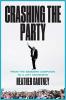 This memoir of sorts by Fordham University sociology professor Heather Gautney, who became a policy fellow in Bernie Sanders’ Washington DC office and a volunteer researcher and organizer for his unexpectedly popular 2016 presidential campaign, has a very specific focus: to “offer insights from up-close work with Bernie, mixed in with historical and sociological analysis, to perform an autopsy of the 2016 election” (2). Given the sheer number of insightless (to put it mildly) autopsies that have been proffered across the political spectrum—perhaps none more useless than Hillary Clinton’s own What Happened (Simon & Schuster, 2017)—Gautney’s book is more than welcome and even slightly overdue.
Why the United States has not developed a permanent socialist movement has perplexed activists and theorists for more than a century. Paul Le Blanc takes up that query as an activist who wants to see an anti-capitalism mass movement take shape in twenty-first century America. To that end, he investigates some of the moments when the possibility of a significant left presence in the United States seemed at hand. He focuses on what made those movements viable and what thwarted their long-term success. The volume’s fourteen essays were written over a period of thirty years, from 1986 to 2015.
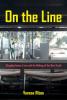
More than a hundred years ago, the muckraking journalist Upton Sinclair worked undercover for several weeks in the cattle slaughterhouses of Chicago. The result was his melodramatic but revelatory novel The Jungle, a work Jack London called the “Uncle Tom’s Cabin of wage slavery.” Sinclair’s narrative depicted the brutal working conditions endured by East European immigrants on the killing floor, engaging in back-breaking, dangerous, and tedious labor for subsistence wages.

Steve Fraser is a weathered veteran of the New Left and many subsequent movements, author of shrewd books on the acquisitive ruling class and also of the outstanding biography of famed left-leaning labor giant Sidney Hillman, among other works. Here he once again ranges far, but also comes close to home, his own personal home space.
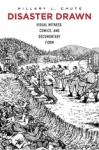
The closing of the era when comic art specialists, not people with PhDs, wrote the outstanding and recognized works on individual artists and genres may have arrived as recently as only a few years ago. Careful biographies of artistic giants, household names (in their own eras, at least) or famed only within the field, Al Capp or Will Elder, have continued to be written by people who could rightly be called “fans”—if the title did not seem insulting. Rather than university presses, Fantagraphics or the comics series at Abrams would be a typical outlet. With each year that passes and with each swelling enrollment in a college course, the scene shifts.
The mode-of-production concept that Marx develops in Capital (although the idea is present earlier) is the essential methodological tool for understanding history, different societies, and the possibilities for social change.
Social Inequality is not for the faint-hearted. It covers the major political-economic issues of our time, from the structural changes in the economics of capitalism, to class structure, the imperialist state, and the distortions of capitalist culture. The author, a veteran scholar-activist of the New Left generation who now lives in Costa Rica,1 ends with a plea for resistance to our oligarchic “hegemon” and suggests a series of tactics to help us on the road.
IN 1942 British economist John Maynard Keynes got an advance preview of Lord William Beveridge’s report, Social Insurance and Allied Services. In it, Beveridge proposed a comprehensive system of social security that ran the gamut from full employment to national health care so as to eliminate “Want, Disease, Ignorance, Squalor, and Idleness” from the United Kingdom.
Ecosocialism: A Radical Alternative to Capitalist Catastrophe, while excellent and valuable in its own right, isn’t quite the introduction to “green Marxism” that one might have expected. Michael Löwy is a veteran for decades of the democratic revolutionary left in France and a frequent contributor to New Politics.
- « Newer Posts
- 1
- 2
- 3
- 4